Visual abstracts
New randomized trials and meta-analyses from leading journals at a glance: who was studied, what was compared, and what was found. Every paper is free to read in full.
All specialtiesCardiology 4877Oncology 4138Gastroenterology & Hepatology 1942Infectious Disease 3837Neurology 1905Psychiatry & Mental Health 2273Pulmonology 2143Critical Care 1365Endocrinology & Diabetes 2580Pediatrics 2980Surgery 2559Orthopedics & Sports Medicine 931Neurosurgery 537Cardiothoracic & Vascular Surgery 674Plastic & Reconstructive Surgery 591Nephrology 1133Rheumatology 823Hematology 1109Dermatology 621Ophthalmology 543Obstetrics & Gynecology 1686Public & Global Health 1058Radiology & Imaging 648Anesthesiology 986Urology 764ENT (Otolaryngology) 503Emergency Medicine 511Allergy & Immunology 313Geriatrics 981Family Medicine & Primary Care 562Medical Genetics & Genomics 676Pathology & Laboratory Medicine 159Physical Medicine & Rehabilitation 757Palliative Care 444Nutrition 1588Digital Health & AI 2201General Medicine 321
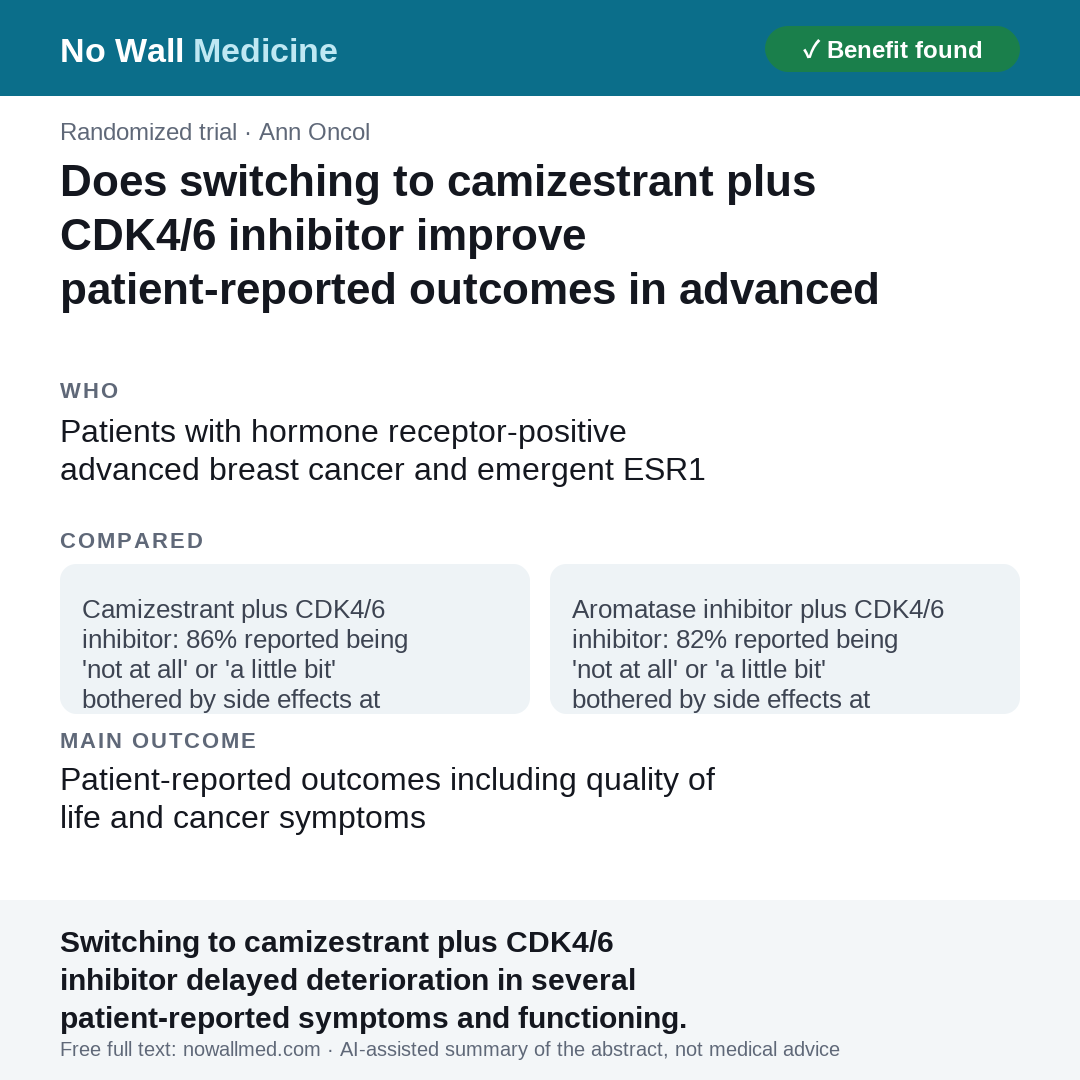
Patient-reported outcomes in the SERENA-6 trial of camizestrant plus CDK4/6 inhibitor in patients with advanced breast cancer and emergent ESR1 mutations during first-line endocrine-based therapy
Randomized trialBenefit found
Does switching to camizestrant plus CDK4/6 inhibitor improve patient-reported outcomes in advanced breast cancer?
Who
Patients with hormone receptor-positive advanced breast cancer and emergent ESR1 mutations
Compared
Camizestrant plus CDK4/6 inhibitor: 86% reported being 'not at all' or 'a little bit' bothered by side effects at week 2
Aromatase inhibitor plus CDK4/6 inhibitor: 82% reported being 'not at all' or 'a little bit' bothered by side effects at week 2
Main outcome
Patient-reported outcomes including quality of life and cancer symptoms
Result: hazard ratio 0.54 for risk of deterioration in global health status
Bottom line: Switching to camizestrant plus CDK4/6 inhibitor delayed deterioration in several patient-reported symptoms and functioning.
Ann Oncol · 2025-10-20Download image
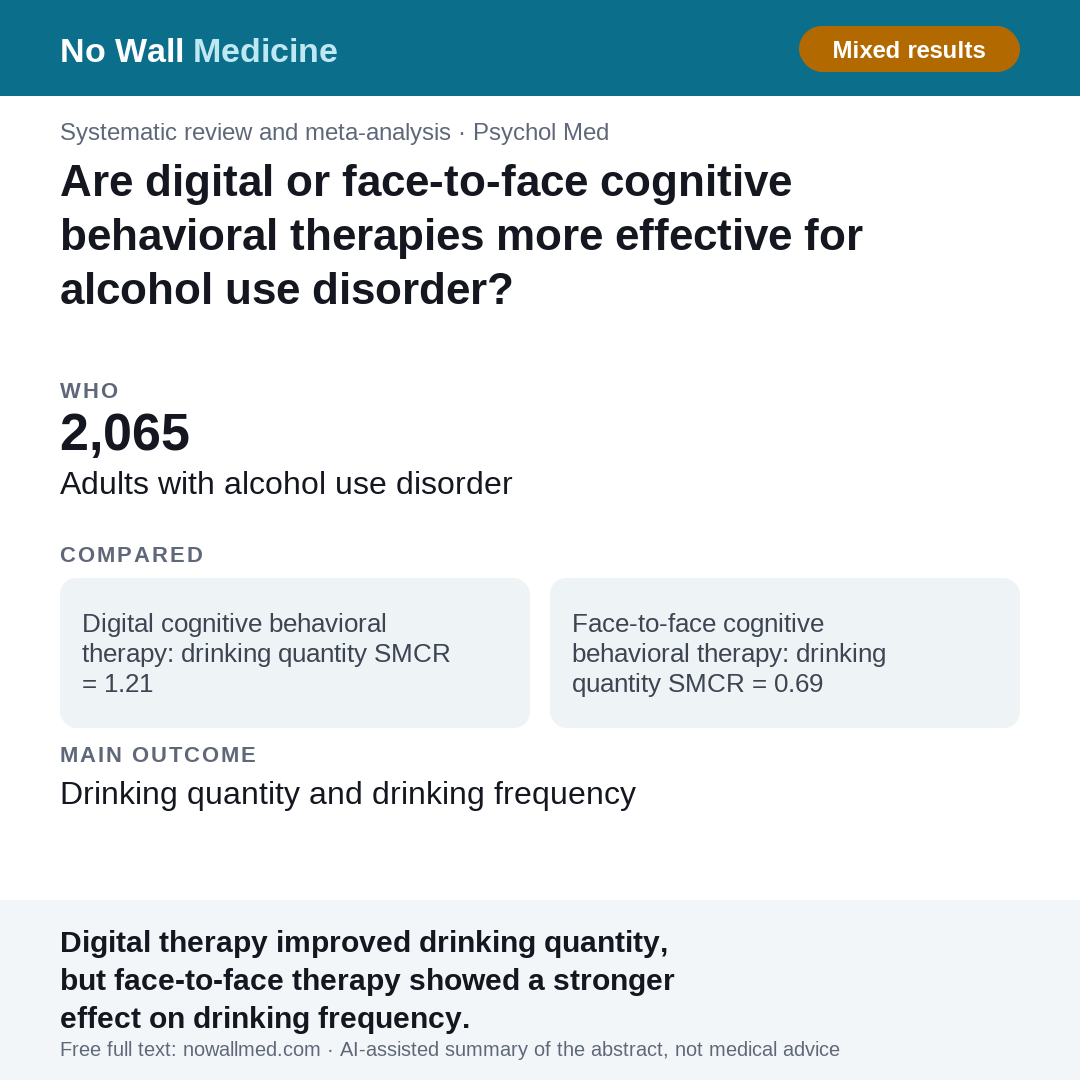
Comparative effectiveness of digital versus face-to-face cognitive behavioral therapy for alcohol use disorder: a systematic review and meta-analysis
Systematic review and meta-analysisMixed results
Are digital or face-to-face cognitive behavioral therapies more effective for alcohol use disorder?
Who
2,065
Adults with alcohol use disorder
Compared
Digital cognitive behavioral therapy: drinking quantity SMCR = 1.21
Face-to-face cognitive behavioral therapy: drinking quantity SMCR = 0.69
Main outcome
Drinking quantity and drinking frequency
Bottom line: Digital therapy improved drinking quantity, but face-to-face therapy showed a stronger effect on drinking frequency.
Psychol Med · 2025-10-20Download image
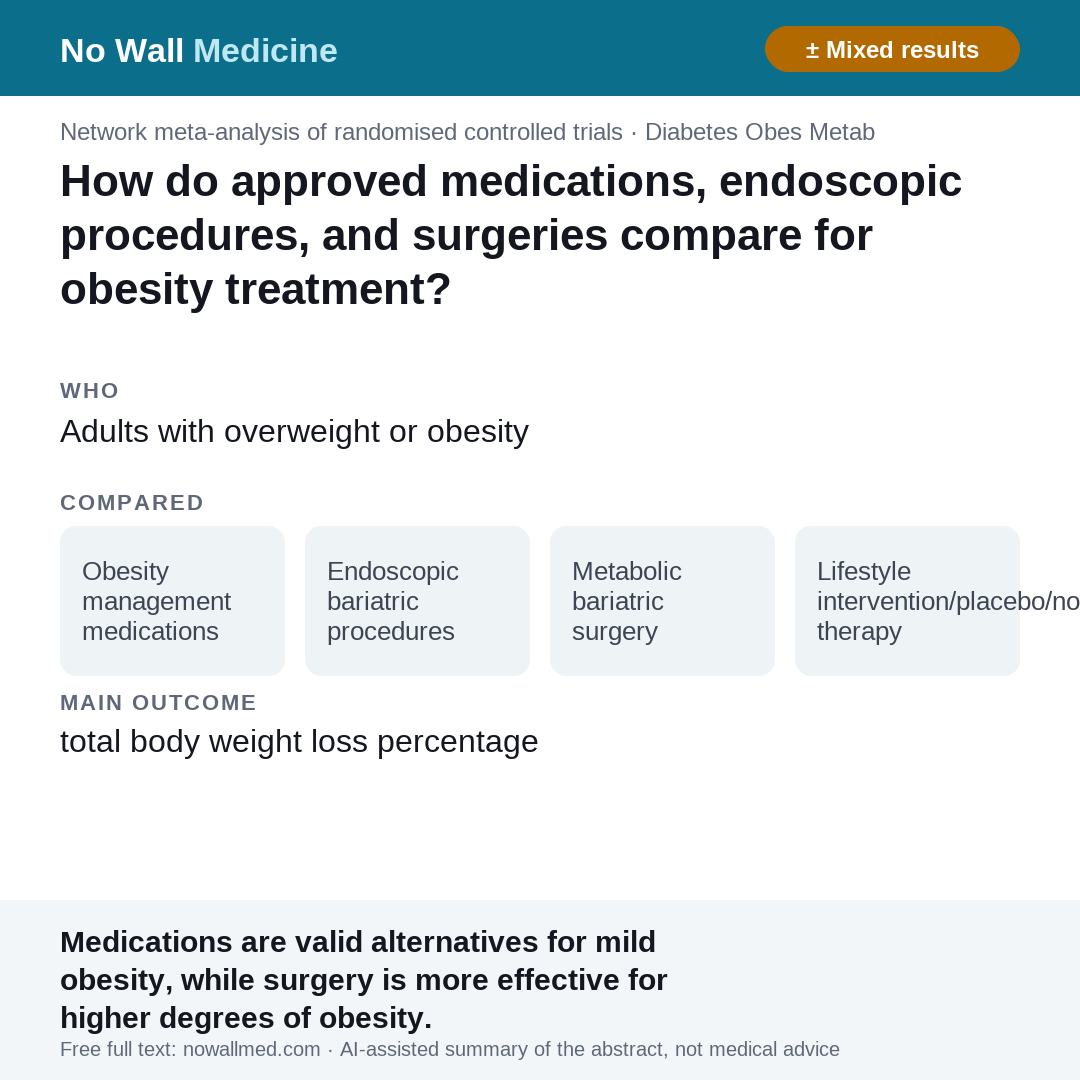
Efficacy and safety of European Medicines Agency (EMA)-approved pharmacological, endoscopic, and surgical treatments in different classes of obesity: A network meta-analysis of randomised controlled trials for the development of the SIO (Società Italiana Obesità) Italian guidelines for the diagnosis and treatment of overweight and obesity
Network meta-analysis of randomised controlled trialsMixed results
How do approved medications, endoscopic procedures, and surgeries compare for obesity treatment?
Who
Adults with overweight or obesity
Compared
Obesity management medications
Endoscopic bariatric procedures
Metabolic bariatric surgery
Lifestyle intervention/placebo/no therapy
Main outcome
total body weight loss percentage
Bottom line: Medications are valid alternatives for mild obesity, while surgery is more effective for higher degrees of obesity.
Diabetes Obes Metab · 2025-10-20Download image
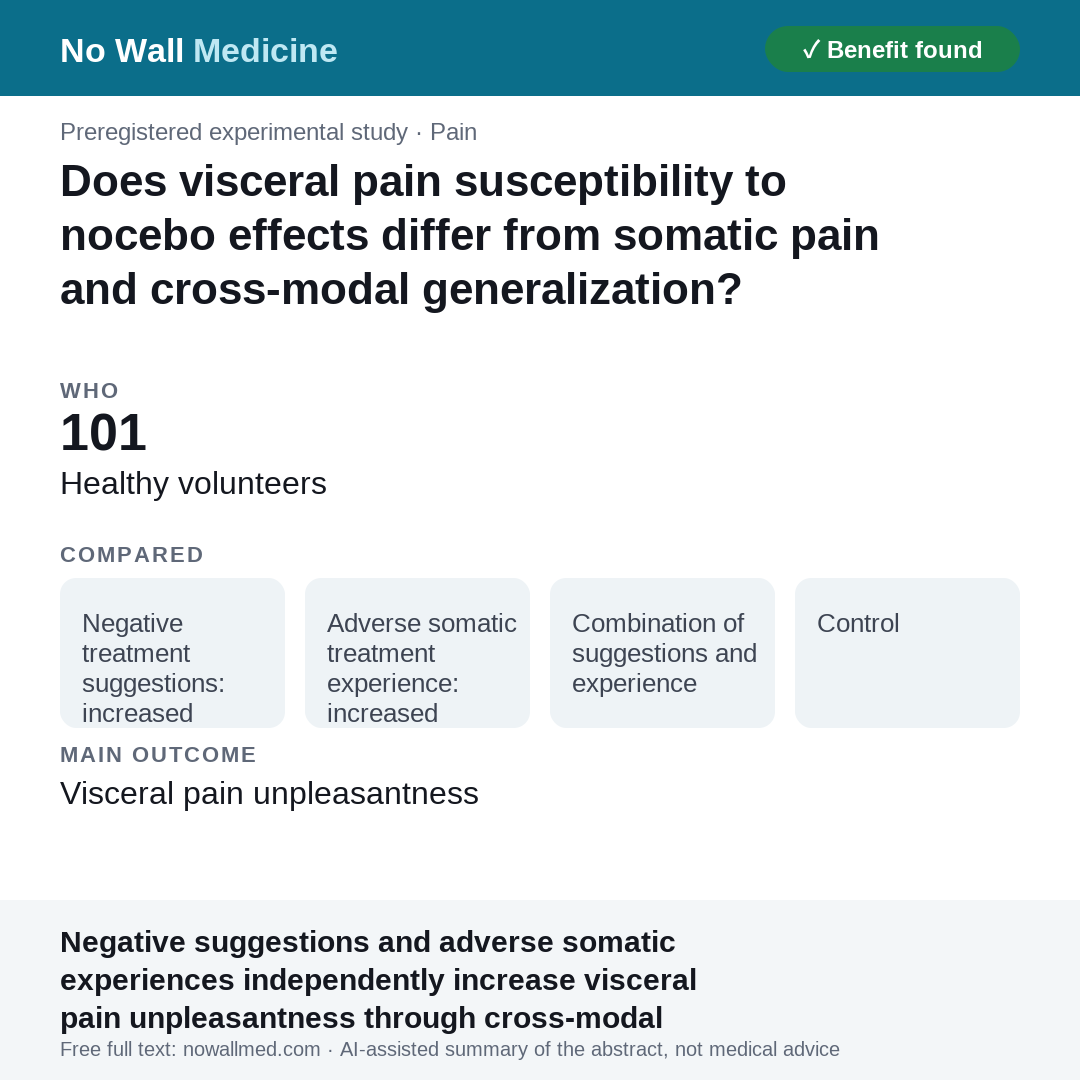
Unraveling nocebo effects in visceral pain: negative suggestion and adverse treatment experience uniquely shape visceral pain unpleasantness
Preregistered experimental studyBenefit found
Does visceral pain susceptibility to nocebo effects differ from somatic pain and cross-modal generalization?
Who
101
Healthy volunteers
Compared
Negative treatment suggestions: increased visceral pain unpleasantness
Adverse somatic treatment experience: increased visceral pain unpleasantness
Combination of suggestions and experience
Control
Main outcome
Visceral pain unpleasantness
Bottom line: Negative suggestions and adverse somatic experiences independently increase visceral pain unpleasantness through cross-modal transfer.
Pain · 2025-10-20Download image
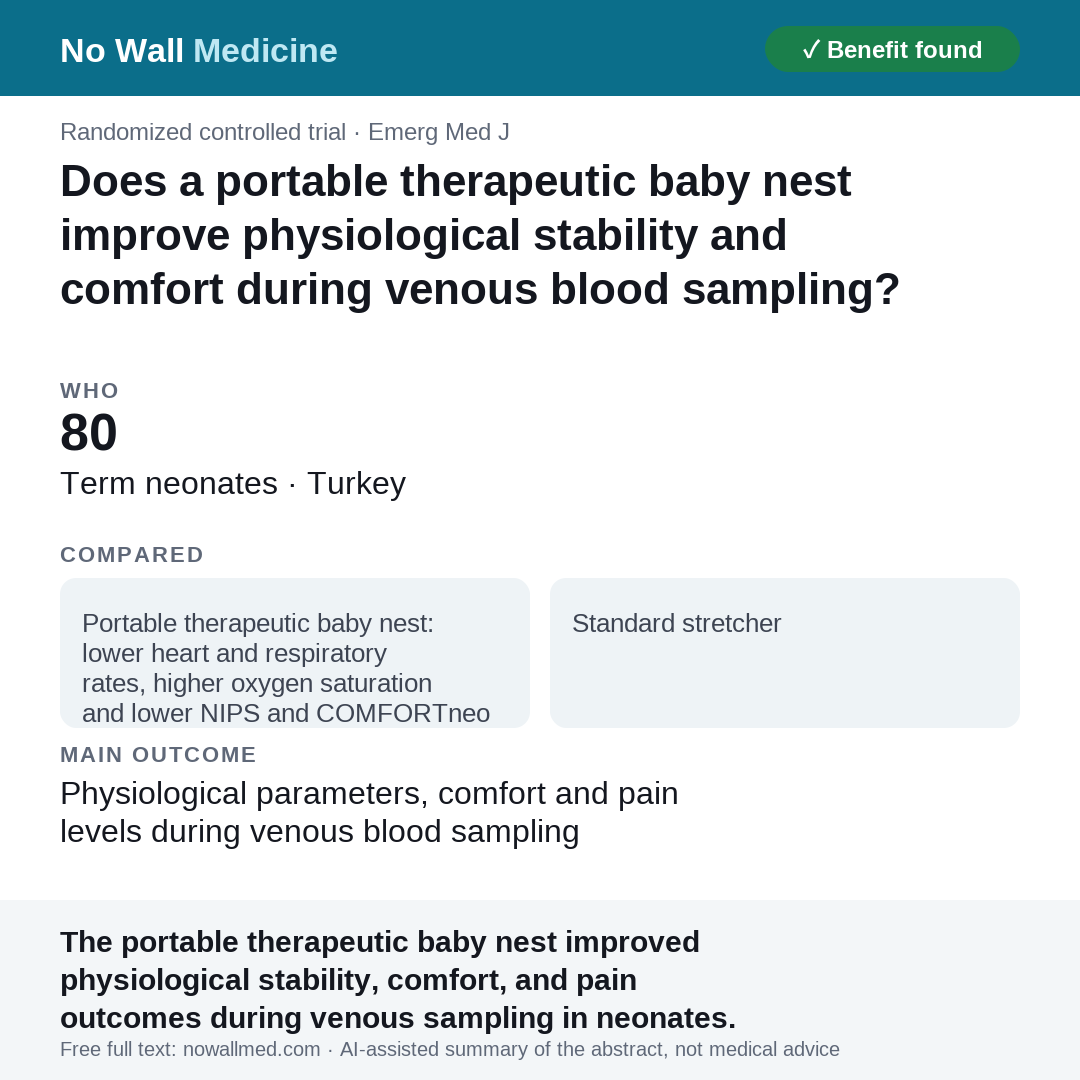
Effect of a portable therapeutic baby nest designed for neonates on physiological parameters, comfort and pain levels during venous blood sampling: a randomised controlled trial
Randomized controlled trialBenefit found
Does a portable therapeutic baby nest improve physiological stability and comfort during venous blood sampling?
Who
80
Term neonates · Turkey
Compared
Portable therapeutic baby nest: lower heart and respiratory rates, higher oxygen saturation and lower NIPS and COMFORTneo scores
Standard stretcher
Main outcome
Physiological parameters, comfort and pain levels during venous blood sampling
Bottom line: The portable therapeutic baby nest improved physiological stability, comfort, and pain outcomes during venous sampling in neonates.
Emerg Med J · 2025-10-20Download image
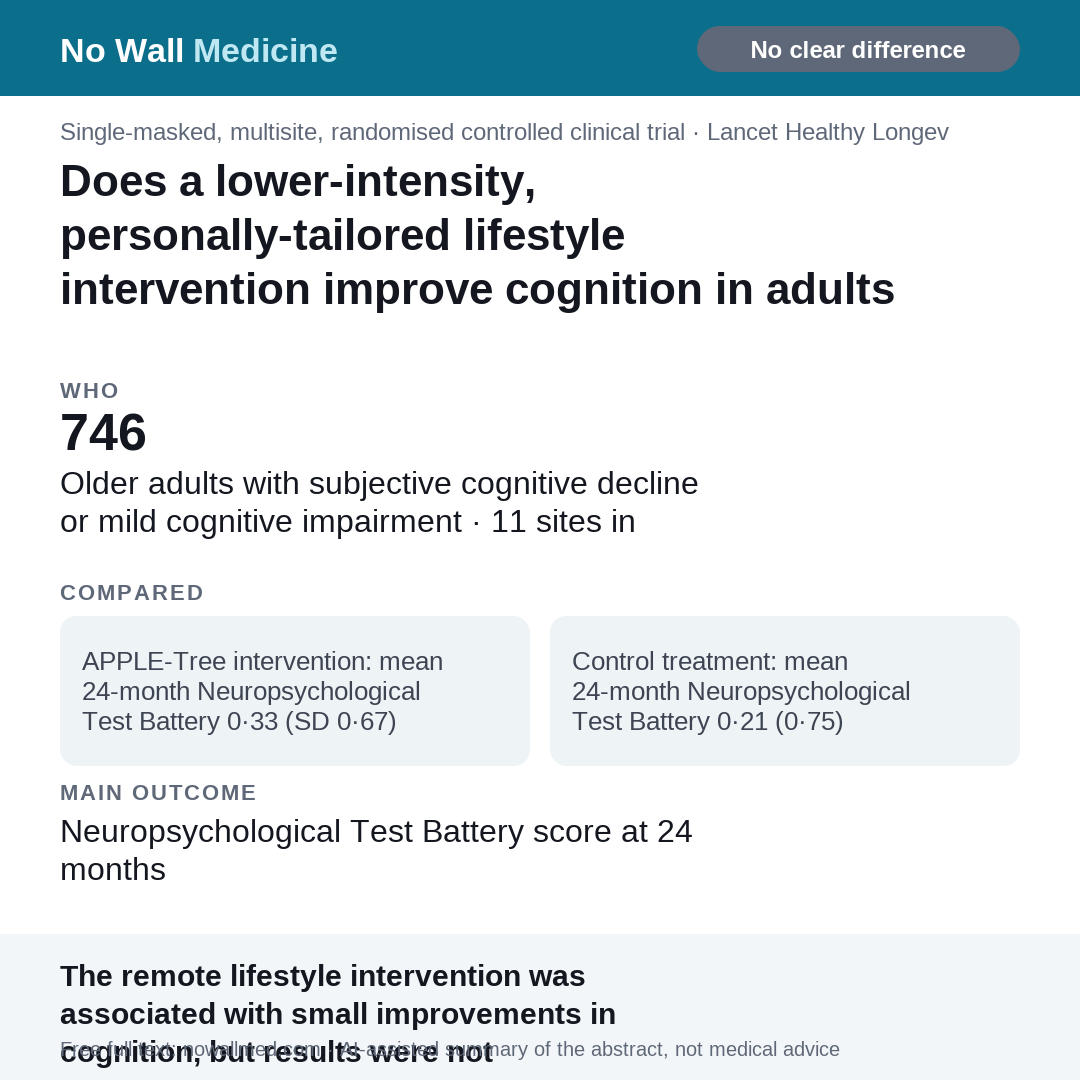
Remote, lower-intensity, multidomain lifestyle intervention for subjective cognitive decline or mild cognitive impairment (APPLE-Tree): a multicentre, single-masked, randomised controlled trial
Single-masked, multisite, randomised controlled clinical trialNo clear difference
Does a lower-intensity, personally-tailored lifestyle intervention improve cognition in adults with cognitive decline?
Who
746
Older adults with subjective cognitive decline or mild cognitive impairment · 11 sites in England
Compared
APPLE-Tree intervention: mean 24-month Neuropsychological Test Battery 0·33 (SD 0·67)
Control treatment: mean 24-month Neuropsychological Test Battery 0·21 (0·75)
Main outcome
Neuropsychological Test Battery score at 24 months
Result: adjusted mean difference 0·06 (95% CI -0·001 to 0·128)
Bottom line: The remote lifestyle intervention was associated with small improvements in cognition, but results were not statistically significant.
Limitation: further work is needed to optimise the intervention for delivery in routine settings
Funded by: Economic and Social Research Council and National Institute for Health and Care Research
Lancet Healthy Longev · 2025-10-20Download image
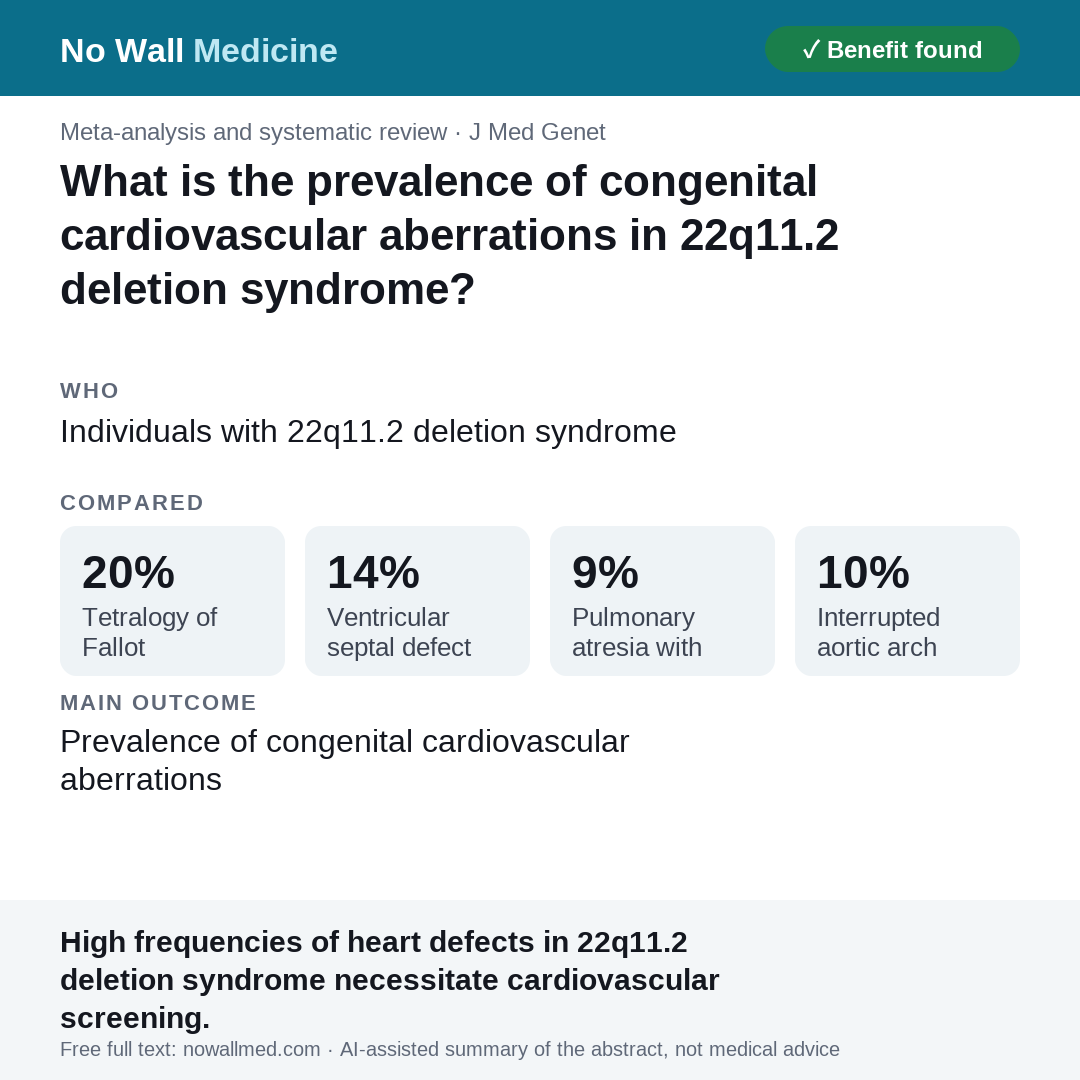
Congenital heart disease in 22q11.2 deletion syndrome: a meta-analysis and systematic review of the literature
Meta-analysis and systematic reviewBenefit found
What is the prevalence of congenital cardiovascular aberrations in 22q11.2 deletion syndrome?
Who
Individuals with 22q11.2 deletion syndrome
Compared
20%Tetralogy of Fallot (95% CI 0.17 to 0.23)
14%Ventricular septal defect (95% CI 0.12 to 0.16)
9%Pulmonary atresia with ventricular septal defect (95% CI 0.06 to 0.12)
10%Interrupted aortic arch (95% CI 0.06 to 0.15)
Main outcome
Prevalence of congenital cardiovascular aberrations
Bottom line: High frequencies of heart defects in 22q11.2 deletion syndrome necessitate cardiovascular screening.
J Med Genet · 2025-10-20Download image
Transaxillary Breast Augmentation: A Randomized Controlled Trial Comparing a New Semiendoscopic Video-Assisted Technique versus the Blind Technique
Randomized controlled trialBenefit found
Is semiendoscopic video-assisted transaxillary approach better than the blind technique for breast augmentation?
Who
118
Patients undergoing transaxillary breast augmentation
Compared
Transaxillary blind approach
Semiendoscopic video-assisted transaxillary approach: lower incidence of complications
Main outcome
Incidence of complications and operative time
Bottom line: Semiendoscopic video-assisted approach improved surgical outcomes with lower complication rates despite longer operative times.
Plast Reconstr Surg · 2025-10-20Download image

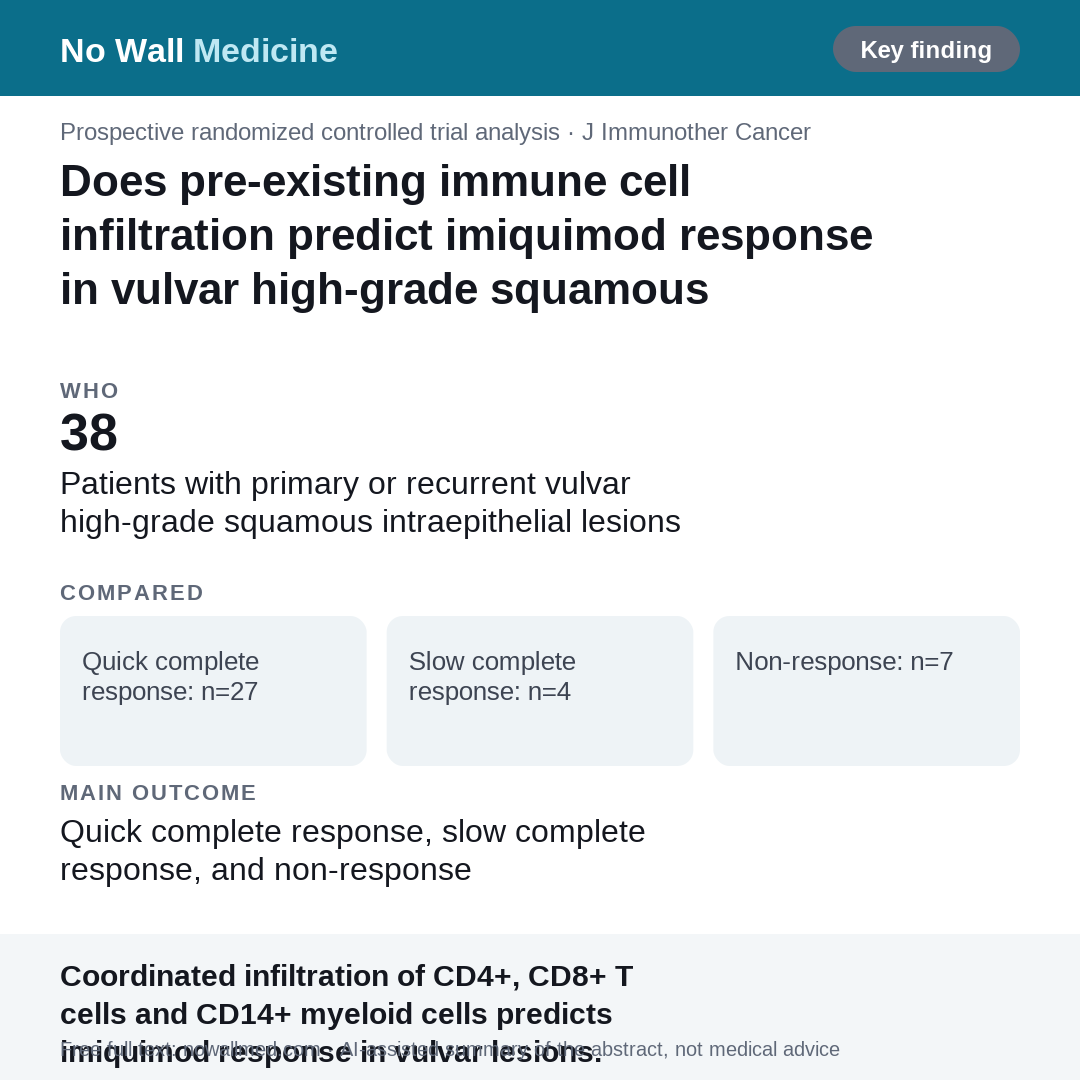
Pre-existing infiltration with T cells and CD14+ myeloid cells is associated with treatment response to imiquimod in primary and recurrent vulvar high-grade squamous intraepithelial lesions
Prospective randomized controlled trial analysisBenefit found
Does pre-existing immune cell infiltration predict imiquimod response in vulvar high-grade squamous intraepithelial lesions?
Who
38
Patients with primary or recurrent vulvar high-grade squamous intraepithelial lesions
Compared
Quick complete response: n=27
Slow complete response: n=4
Non-response: n=7
Main outcome
Quick complete response, slow complete response, and non-response
Bottom line: Coordinated infiltration of CD4+, CD8+ T cells and CD14+ myeloid cells predicts imiquimod response in vulvar lesions.
J Immunother Cancer · 2025-10-20Download image
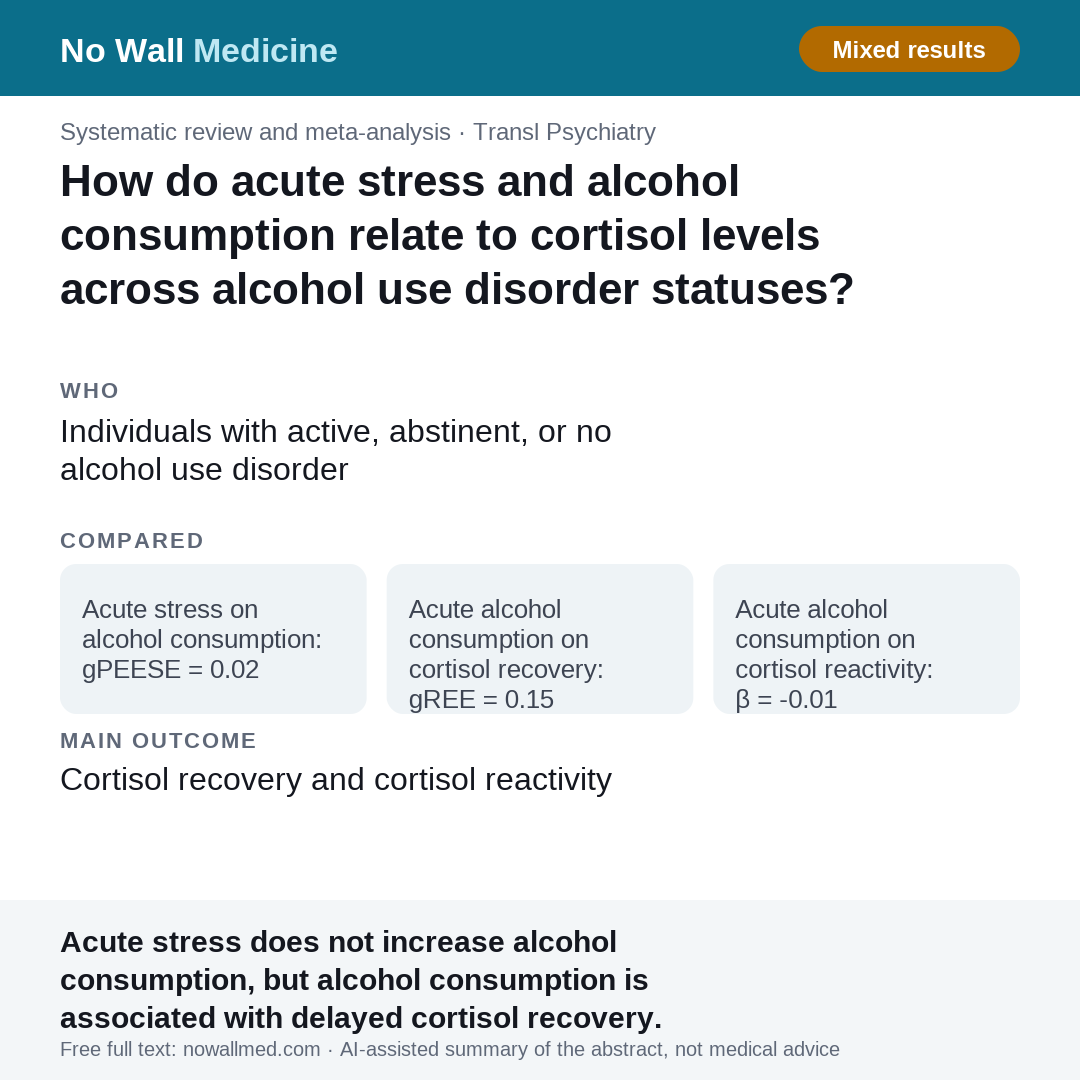
A systematic review with meta-analysis on the relation between acute stress, alcohol consumption and cortisol levels in individuals with a personal, familial or no alcohol use disorder
Systematic review and meta-analysisMixed results
How do acute stress and alcohol consumption relate to cortisol levels across alcohol use disorder statuses?
Who
Individuals with active, abstinent, or no alcohol use disorder
Compared
Acute stress on alcohol consumption: gPEESE = 0.02
Acute alcohol consumption on cortisol recovery: gREE = 0.15
Acute alcohol consumption on cortisol reactivity: β = -0.01
Main outcome
Cortisol recovery and cortisol reactivity
Bottom line: Acute stress does not increase alcohol consumption, but alcohol consumption is associated with delayed cortisol recovery.
Limitation: Small-study effects influenced initial findings regarding stress and alcohol consumption.
Transl Psychiatry · 2025-10-20Download image
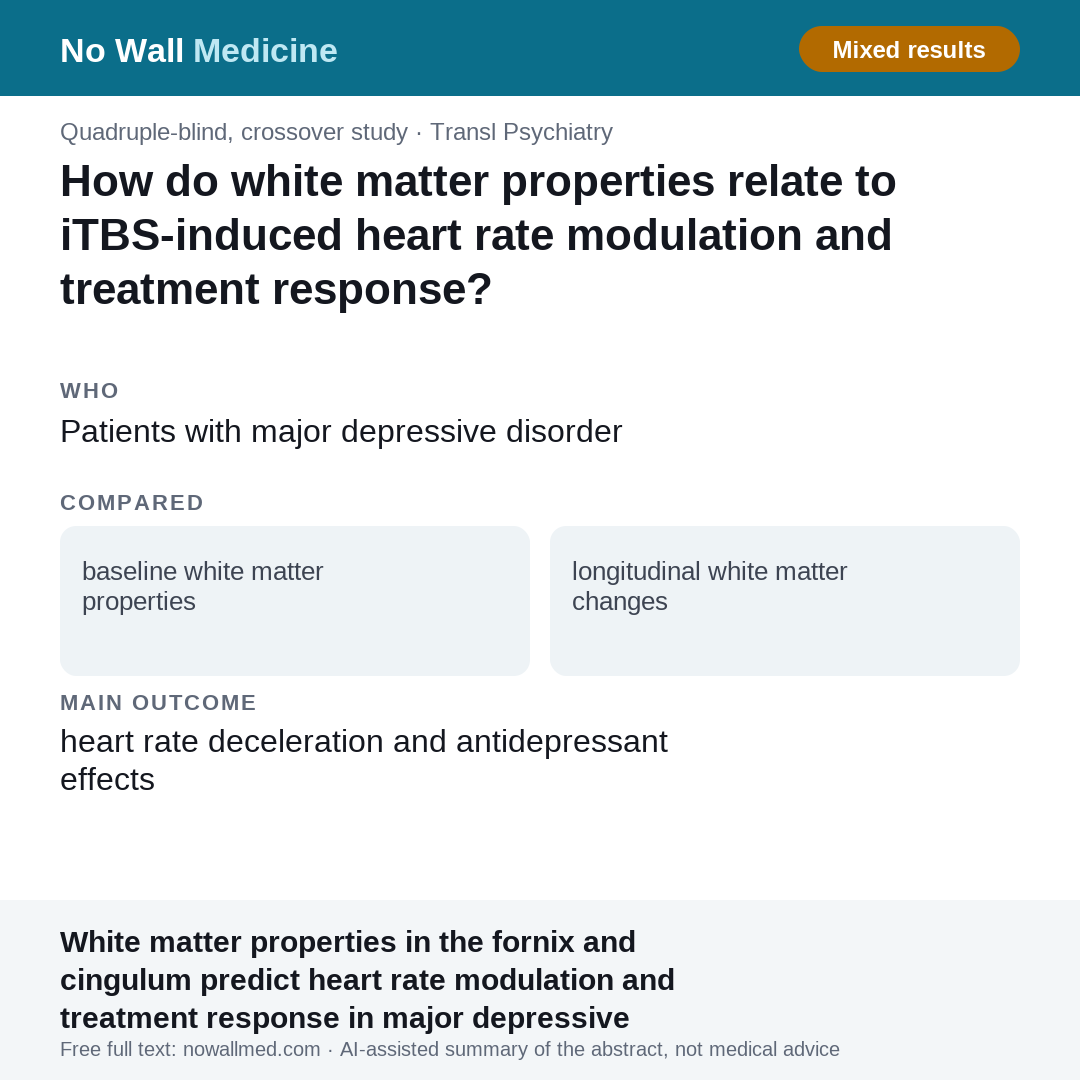
White matter tracts associated with iTBS-induced heart rate deceleration and treatment response in major depressive disorder
Quadruple-blind, crossover studyMixed results
How do white matter properties relate to iTBS-induced heart rate modulation and treatment response?
Who
Patients with major depressive disorder
Compared
baseline white matter properties
longitudinal white matter changes
Main outcome
heart rate deceleration and antidepressant effects
Bottom line: White matter properties in the fornix and cingulum predict heart rate modulation and treatment response in major depressive disorder.
Transl Psychiatry · 2025-10-20Download image
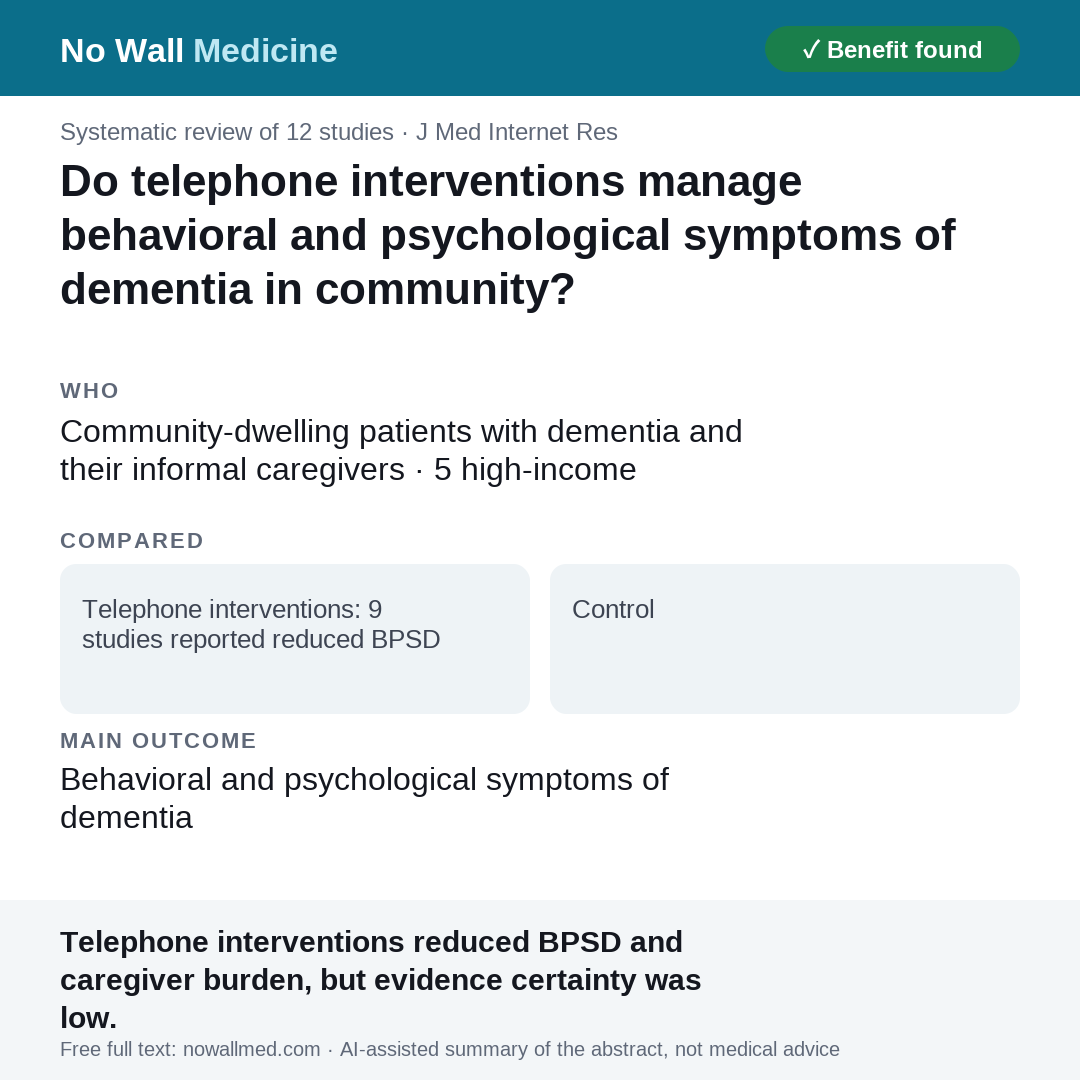
Effectiveness of Telephone Interventions for the Management of Behavioral and Psychological Symptoms of Dementia in the Community: Systematic Review
Systematic reviewBenefit found
Are telephone interventions effective for managing behavioral and psychological symptoms of dementia?
Who
Community-dwelling patients with dementia and their informal caregivers · 5 high-income countries
Compared
Telephone interventions
Control
Main outcome
Behavioral and psychological symptoms of dementia and caregiver burden
Bottom line: Telephone interventions show promise for reducing symptoms and caregiver burden, but the certainty of evidence is low.
Limitation: The certainty of evidence was rated as low according to the GRADE analysis.
J Med Internet Res · 2025-10-20Download image
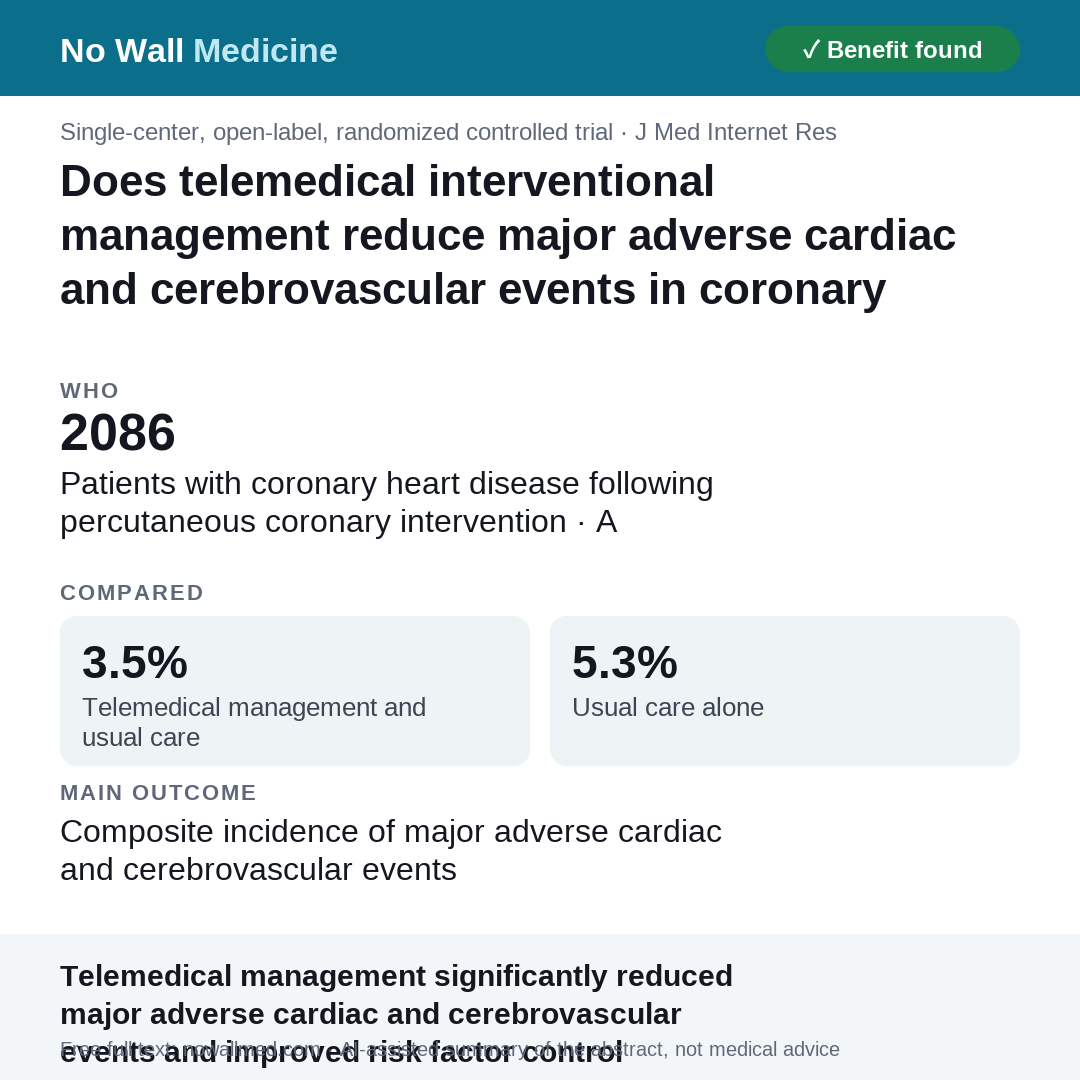
Efficacy of Telemedical Interventional Management in Patients with Coronary Heart Disease Undergoing Percutaneous Coronary Intervention: Randomized Controlled Trial
Single-center, open-label, randomized controlled trialBenefit found
Does telemedical interventional management reduce major adverse cardiac and cerebrovascular events in coronary heart disease patients?
Who
2086
Patients with coronary heart disease following percutaneous coronary intervention · A tertiary hospital in China
Compared
3.5%Telemedical management and usual care (36/1040)
5.3%Usual care alone (55/1046)
Main outcome
Composite incidence of major adverse cardiac and cerebrovascular events
Bottom line: Telemedical management significantly reduced major adverse cardiac and cerebrovascular events and improved risk factor control after percutaneous coronary intervention.
Limitation: Further multicenter studies are necessary to validate these results.
J Med Internet Res · 2025-10-20Download image
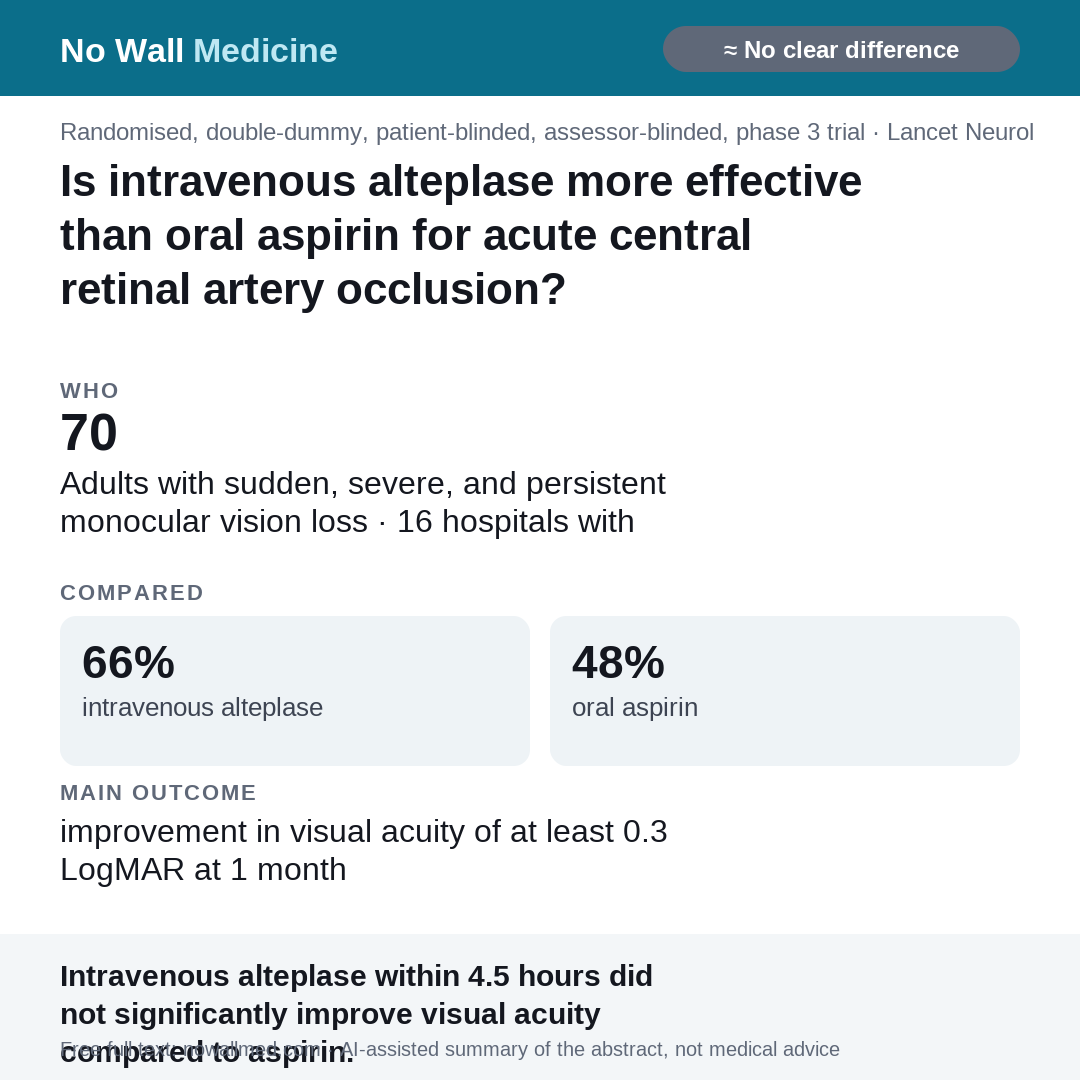
Intravenous alteplase versus oral aspirin for acute central retinal artery occlusion within 4·5 h of severe vision loss (THEIA): a multicentre, double-dummy, patient-blinded and assessor-blinded, randomised, controlled, phase 3 trial
Randomised, double-dummy, patient-blinded, assessor-blinded, phase 3 trialNo clear difference
Is intravenous alteplase more effective than oral aspirin for acute central retinal artery occlusion?
Who
70
Adults with sudden, severe, and persistent monocular vision loss · 16 hospitals with stroke units in France
Compared
66%intravenous alteplase (19/29)
48%oral aspirin (13/27)
Main outcome
improvement in visual acuity of at least 0.3 LogMAR at 1 month
Result: unadjusted risk difference 17.4 (95% CI -11.8 to 46.5)
Bottom line: Intravenous alteplase within 4.5 hours did not significantly improve visual acuity compared to aspirin.
Limitation: The study was likely underpowered to detect a statistical difference.
Funded by: French Ministry of Health and Boehringer Ingelheim, France
Lancet Neurol · 2025-10-19Download image
When are postpartum haemorrhages diagnosed? A nested observational study within the E-MOTIVE cluster-randomised trial
Nested observational studyMixed results
How does postpartum haemorrhage diagnosis timing and method vary across four African countries?
Who
2578
Postpartum women at 39 hospitals · Nigeria, Kenya, Tanzania, and South Africa
Compared
Nigeria and Tanzania: 15 min
Kenya: 17 min
South Africa: 30 min
Main outcome
Median time from vaginal birth to postpartum haemorrhage diagnosis
Bottom line: Diagnosis timing was faster in countries using a 300 mL threshold with clinical signs compared to a 500 mL threshold.
Funded by: Bill & Melinda Gates Foundation and Ammalife
Lancet Glob Health · 2025-10-19Download image

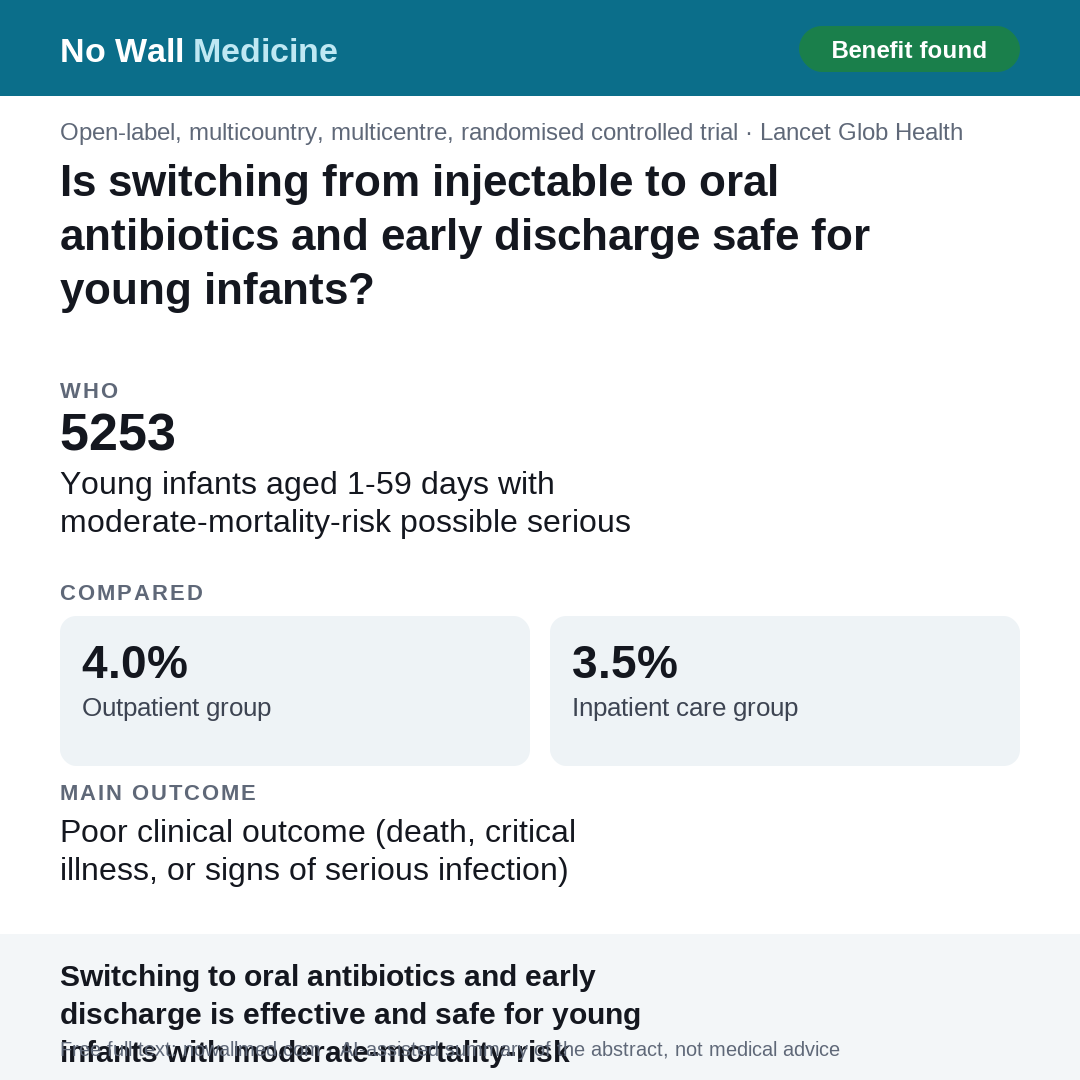
Switching antibiotic therapy from injectable to oral to optimise the duration of inpatient care for young infants presenting with moderate-mortality-risk signs of possible serious bacterial infection: an open-label, multicountry, randomised controlled trial
Open-label, multicountry, multicentre, randomised controlled trialBenefit found
Is switching from injectable to oral antibiotics and early discharge safe for young infants?
Who
5253
Young infants aged 1-59 days with moderate-mortality-risk possible serious bacterial infection signs · Bangladesh, Ethiopia, India, Nigeria, Pakistan, and Tanzania
Compared
4.0%Outpatient group (105 of 2616)
3.5%Inpatient care group (90 of 2603)
Main outcome
Poor clinical outcome (death, critical illness, or signs of serious infection)
Result: risk difference 0.0056 (95% CI -0.0047 to 0.0158)
Bottom line: Switching to oral antibiotics and early discharge is effective and safe for young infants with moderate-mortality-risk possible serious bacterial infection.
Funded by: Gates Foundation
Lancet Glob Health · 2025-10-19Download image
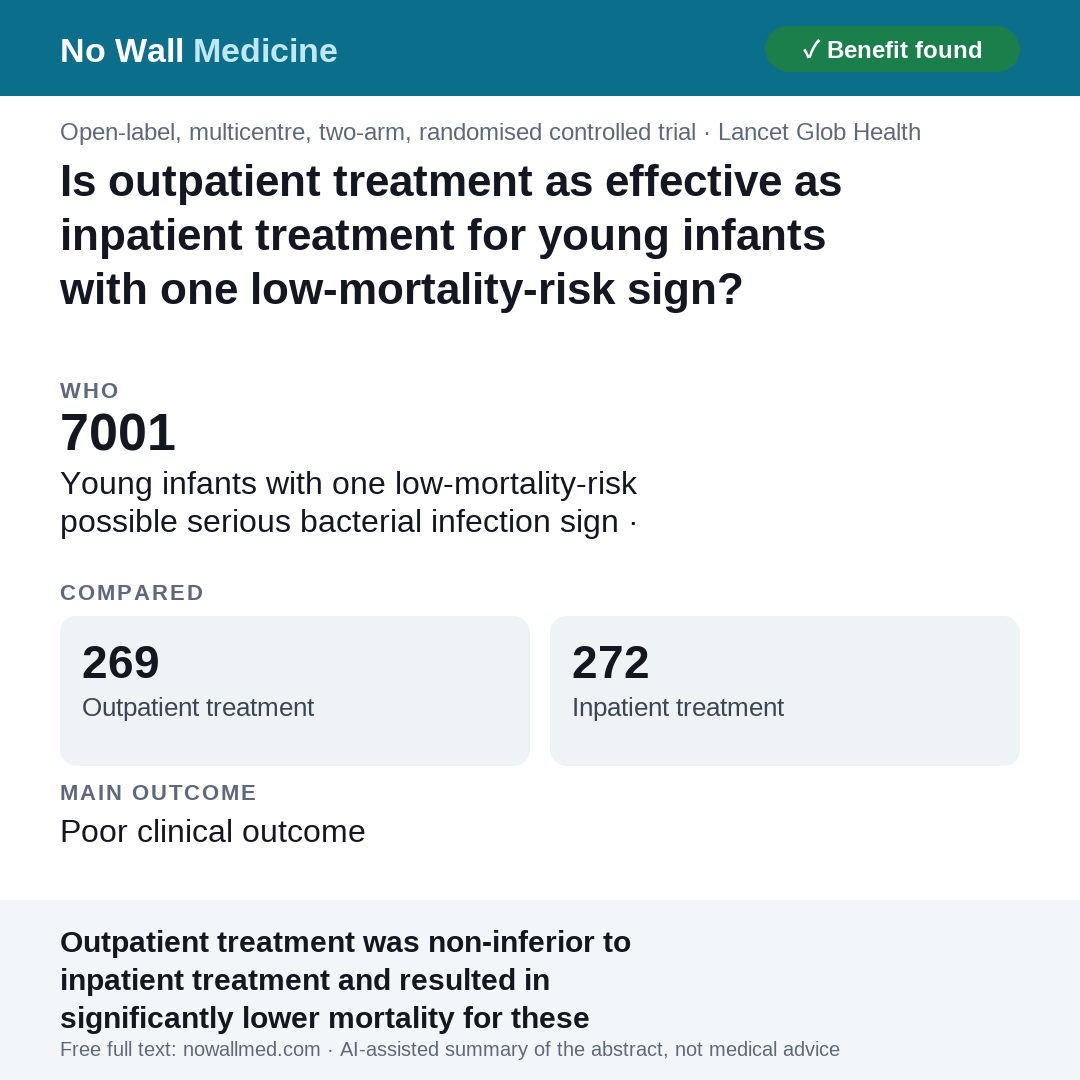
Inpatient versus outpatient management of young infants with a single low-mortality-risk sign of possible serious bacterial infection in sub-Saharan Africa and south Asia: an open-label, multicentre, two-arm, randomised controlled trial
Open-label, multicentre, two-arm, randomised controlled trialBenefit found
Is outpatient treatment as effective as inpatient treatment for young infants with one low-mortality-risk sign?
Who
7001
Young infants with one low-mortality-risk possible serious bacterial infection sign · Seven sites in Bangladesh, Ethiopia, India, Nigeria, Pakistan, and Tanzania
Compared
269Outpatient treatment (7·7%)
272Inpatient treatment (7·8%)
Main outcome
Poor clinical outcome
Result: risk difference -0·0009 (95% CI -0·0134 to 0·0116)
Bottom line: Outpatient treatment was non-inferior to inpatient treatment and resulted in significantly lower mortality for these infants.
Funded by: Bill and Melinda Gates Foundation
Lancet Glob Health · 2025-10-19Download image
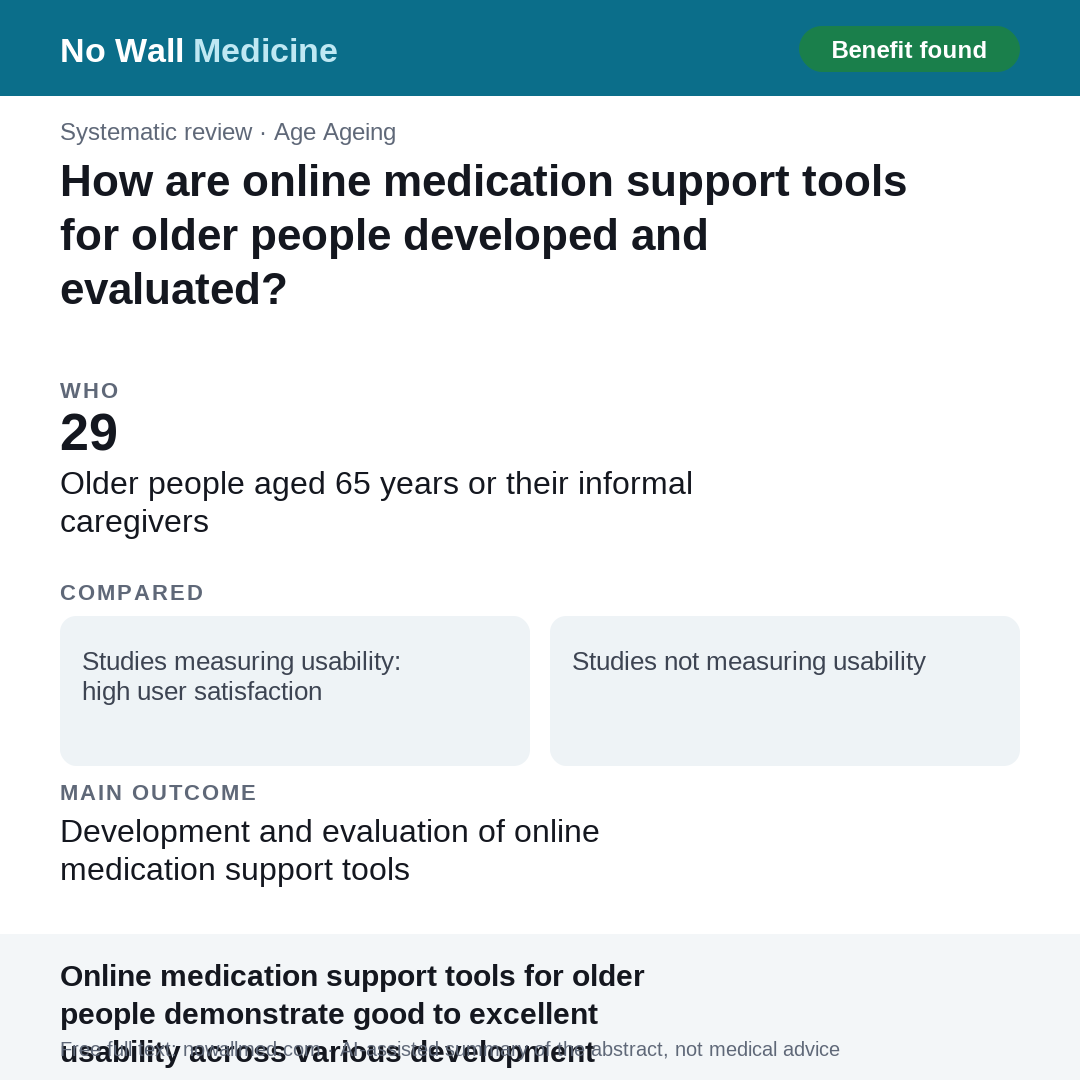
Development and evaluation of online medication support tools for older people: a systematic review
Systematic reviewBenefit found
How are online medication support tools for older people developed and evaluated?
Who
29
Older people aged 65 years or their informal caregivers
Compared
Studies measuring usability: high user satisfaction
Studies not measuring usability
Main outcome
Development and evaluation of online medication support tools
Bottom line: Online medication support tools for older people demonstrate good to excellent usability across various development methodologies.
Age Ageing · 2025-10-19Download image
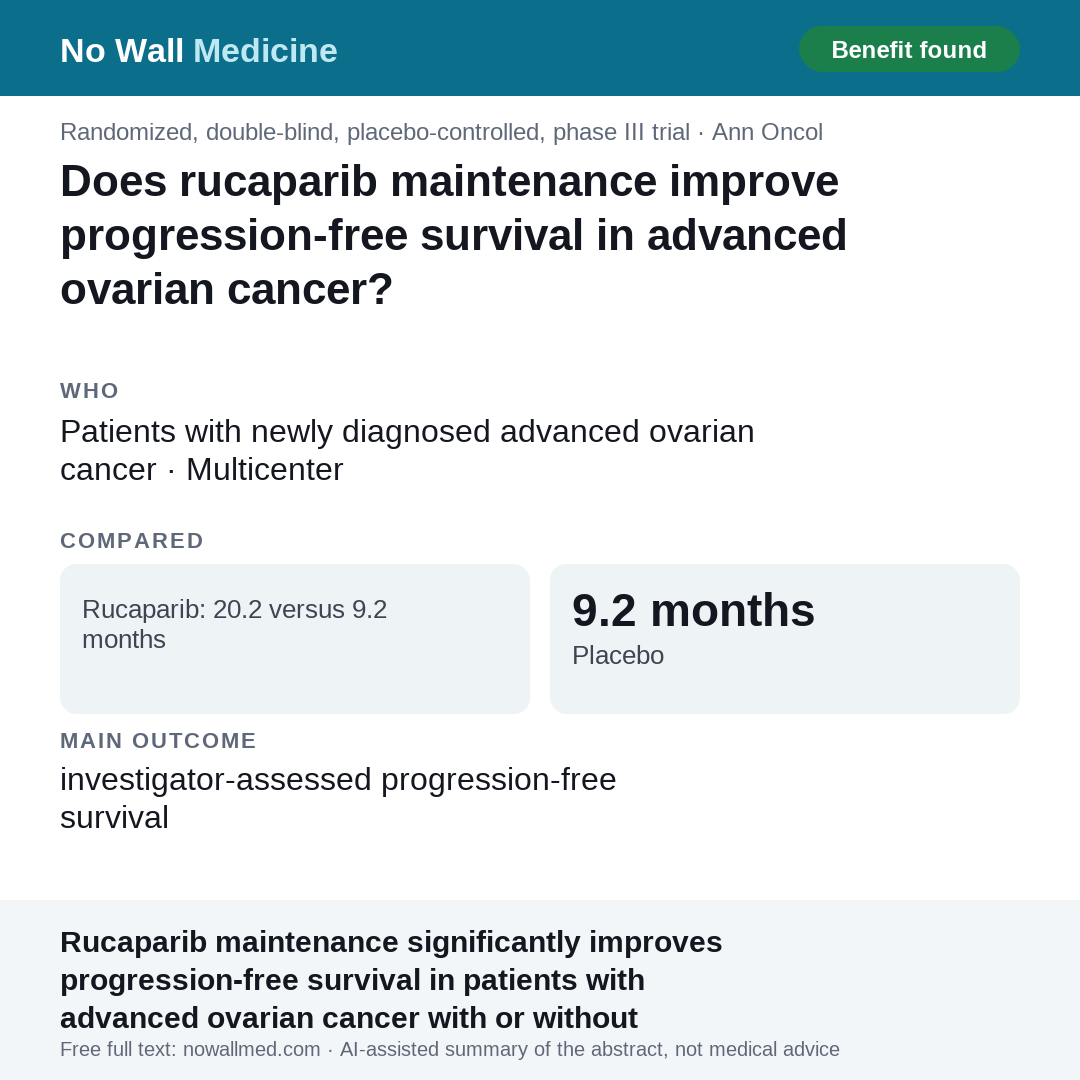
Rucaparib maintenance for newly diagnosed advanced ovarian cancer: interim overall survival, progression-free survival, and safety at 5 years of follow-up from the phase III ATHENA-MONO/GOG-3020/ENGOT-ov45 study
Randomized, double-blind, placebo-controlled, phase III trialBenefit found
Does rucaparib maintenance improve progression-free survival in advanced ovarian cancer?
Who
Patients with newly diagnosed advanced ovarian cancer · Multicenter
Compared
Rucaparib: 20.2 versus 9.2 months
9.2 monthsPlacebo
Main outcome
investigator-assessed progression-free survival
Result: hazard ratio 0.53 (95% CI 0.42 to 0.69)
Bottom line: Rucaparib maintenance significantly improves progression-free survival in patients with advanced ovarian cancer with or without homologous recombination deficiency.
Ann Oncol · 2025-10-18Download image
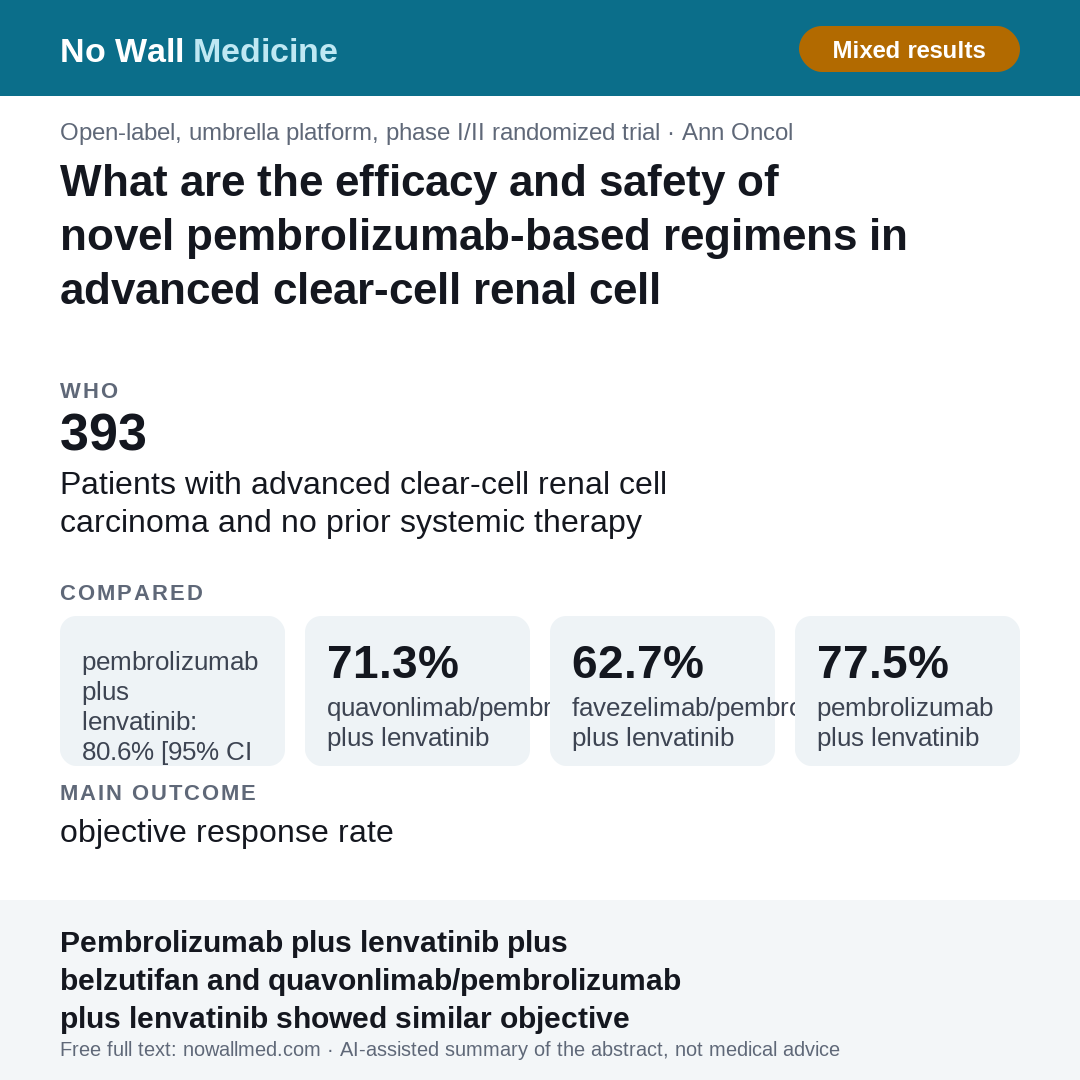
Novel pembrolizumab-based treatments as first-line therapy in advanced clear-cell renal cell carcinoma: substudy 03A of the open-label, umbrella platform, phase I/II KEYMAKER-U03 trial
Open-label, umbrella platform, phase I/II randomized trialMixed results
What are the efficacy and safety of novel pembrolizumab-based regimens in advanced clear-cell renal cell carcinoma?
Who
393
Patients with advanced clear-cell renal cell carcinoma and no prior systemic therapy
Compared
pembrolizumab plus lenvatinib: 80.6% [95% CI 68.6% to 89.6%]
71.3%quavonlimab/pembrolizumab plus lenvatinib (95% CI 60.0% to 80.8%)
62.7%favezelimab/pembrolizumab plus lenvatinib (95% CI 48.1% to 75.9%)
77.5%pembrolizumab plus lenvatinib plus belzutifan (95% CI 66.8% to 86.1%)
Main outcome
objective response rate
Bottom line: Pembrolizumab plus lenvatinib plus belzutifan and quavonlimab/pembrolizumab plus lenvatinib showed similar objective response rates to the reference treatment.
Ann Oncol · 2025-10-18Download image