Visual abstracts
New randomized trials and meta-analyses from leading journals at a glance: who was studied, what was compared, and what was found. Every paper is free to read in full.
All specialtiesCardiology 4832Oncology 4114Gastroenterology & Hepatology 1934Infectious Disease 3824Neurology 1899Psychiatry & Mental Health 2256Pulmonology 2082Critical Care 1345Endocrinology & Diabetes 2572Pediatrics 2940Surgery 2525Orthopedics & Sports Medicine 926Neurosurgery 534Cardiothoracic & Vascular Surgery 671Plastic & Reconstructive Surgery 591Nephrology 1124Rheumatology 823Hematology 1104Dermatology 620Ophthalmology 543Obstetrics & Gynecology 1684Public & Global Health 1056Radiology & Imaging 641Anesthesiology 962Urology 754ENT (Otolaryngology) 503Emergency Medicine 489Allergy & Immunology 313Geriatrics 981Family Medicine & Primary Care 541Medical Genetics & Genomics 675Pathology & Laboratory Medicine 157Physical Medicine & Rehabilitation 751Palliative Care 424Nutrition 1580Digital Health & AI 2195General Medicine 321
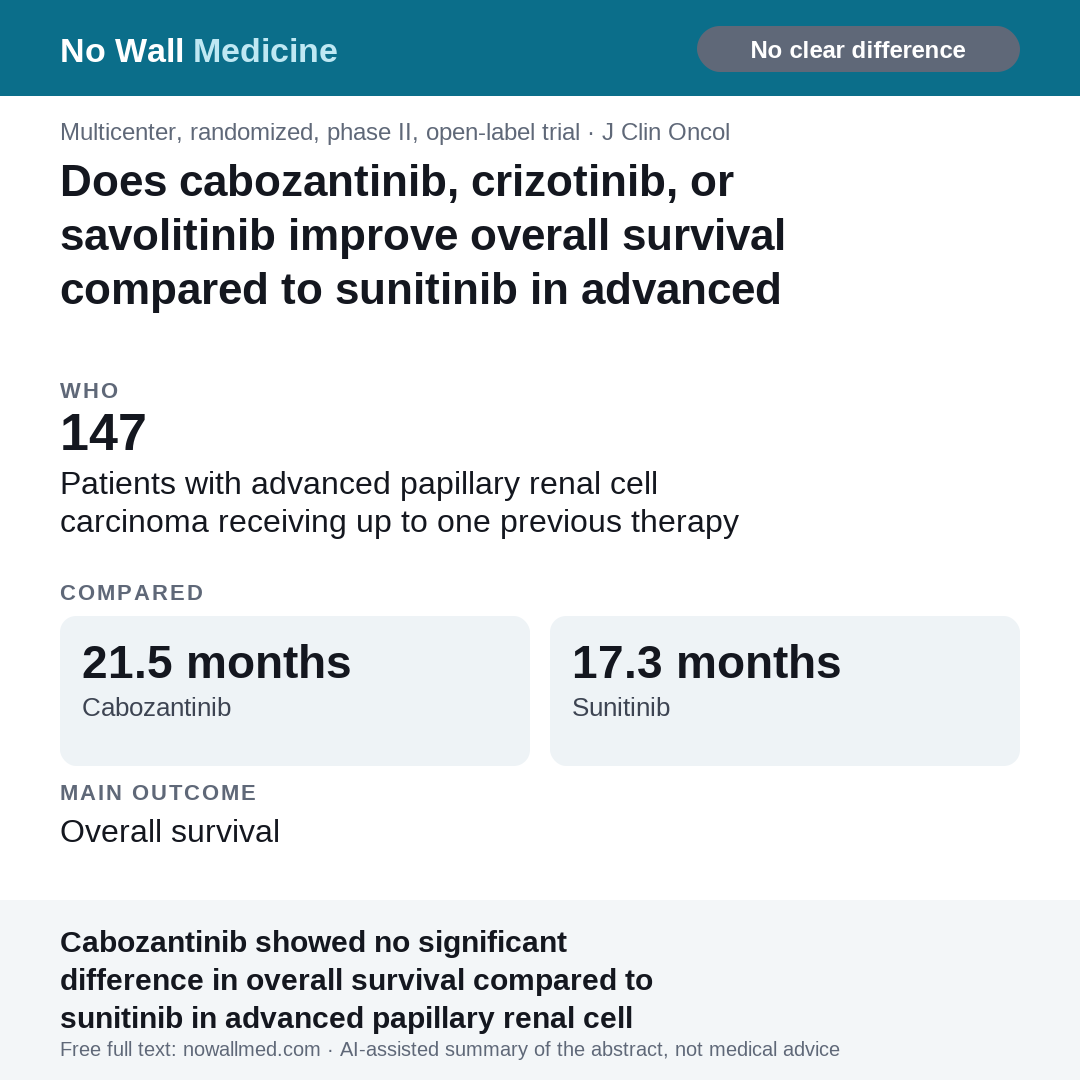
Final Overall Survival Analysis of S1500: A Randomized, Phase II Study Comparing Sunitinib With Cabozantinib, Crizotinib, and Savolitinib in Advanced Papillary Renal Cell Carcinoma
Multicenter, randomized, phase II, open-label trialNo clear difference
Does cabozantinib, crizotinib, or savolitinib improve overall survival compared to sunitinib in advanced papillary renal cell carcinoma?
Who
147
Patients with advanced papillary renal cell carcinoma receiving up to one previous therapy · Multicenter
Compared
21.5 monthsCabozantinib (95% CI, 12.0 to 28.1)
17.3 monthsSunitinib (95% CI, 12.8 to 21.8)
Main outcome
Overall survival
Result: hazard ratio 0.83 (95% CI 0.51 to 1.36)
Bottom line: Cabozantinib showed no significant difference in overall survival compared to sunitinib in advanced papillary renal cell carcinoma.
J Clin Oncol · 2024-09-10Download image
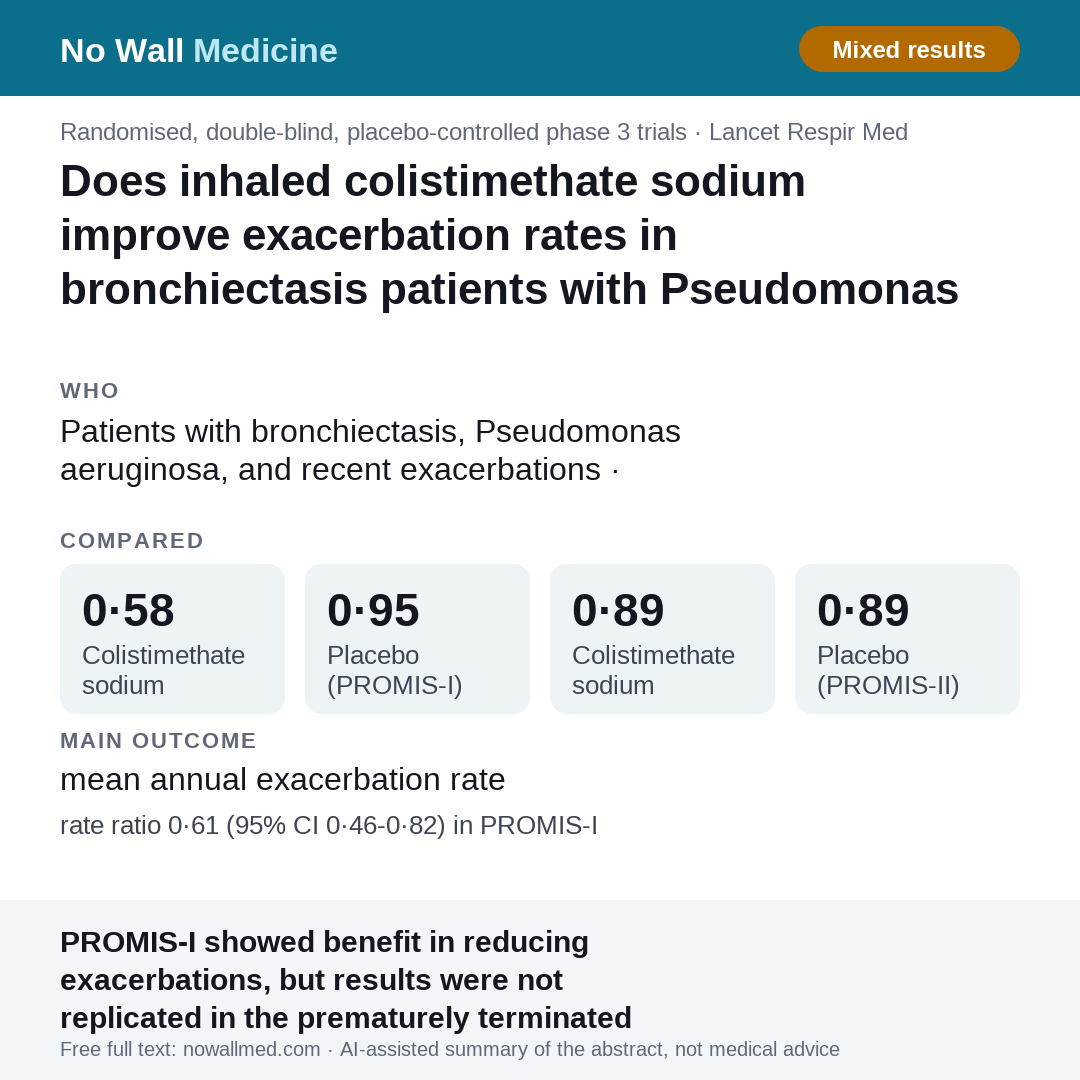
Inhaled colistimethate sodium in patients with bronchiectasis and Pseudomonas aeruginosa infection: results of PROMIS-I and PROMIS-II, two randomised, double-blind, placebo-controlled phase 3 trials assessing safety and efficacy over 12 months
Randomised, double-blind, placebo-controlled phase 3 trialsMixed results
Does inhaled colistimethate sodium improve exacerbation rates in bronchiectasis patients with Pseudomonas aeruginosa?
Who
Patients with bronchiectasis, Pseudomonas aeruginosa, and recent exacerbations · Multiple countries including Argentina, Australia, Canada, and USA
Compared
0·58Colistimethate sodium (PROMIS-I)
0·95Placebo (PROMIS-I)
0·89Colistimethate sodium (PROMIS-II)
0·89Placebo (PROMIS-II)
Main outcome
mean annual exacerbation rate
Result: rate ratio 0·61 (95% CI 0·46-0·82) in PROMIS-I
Bottom line: PROMIS-I showed benefit in reducing exacerbations, but results were not replicated in the prematurely terminated PROMIS-II trial.
Funded by: Zambon
Lancet Respir Med · 2024-09-10Download image
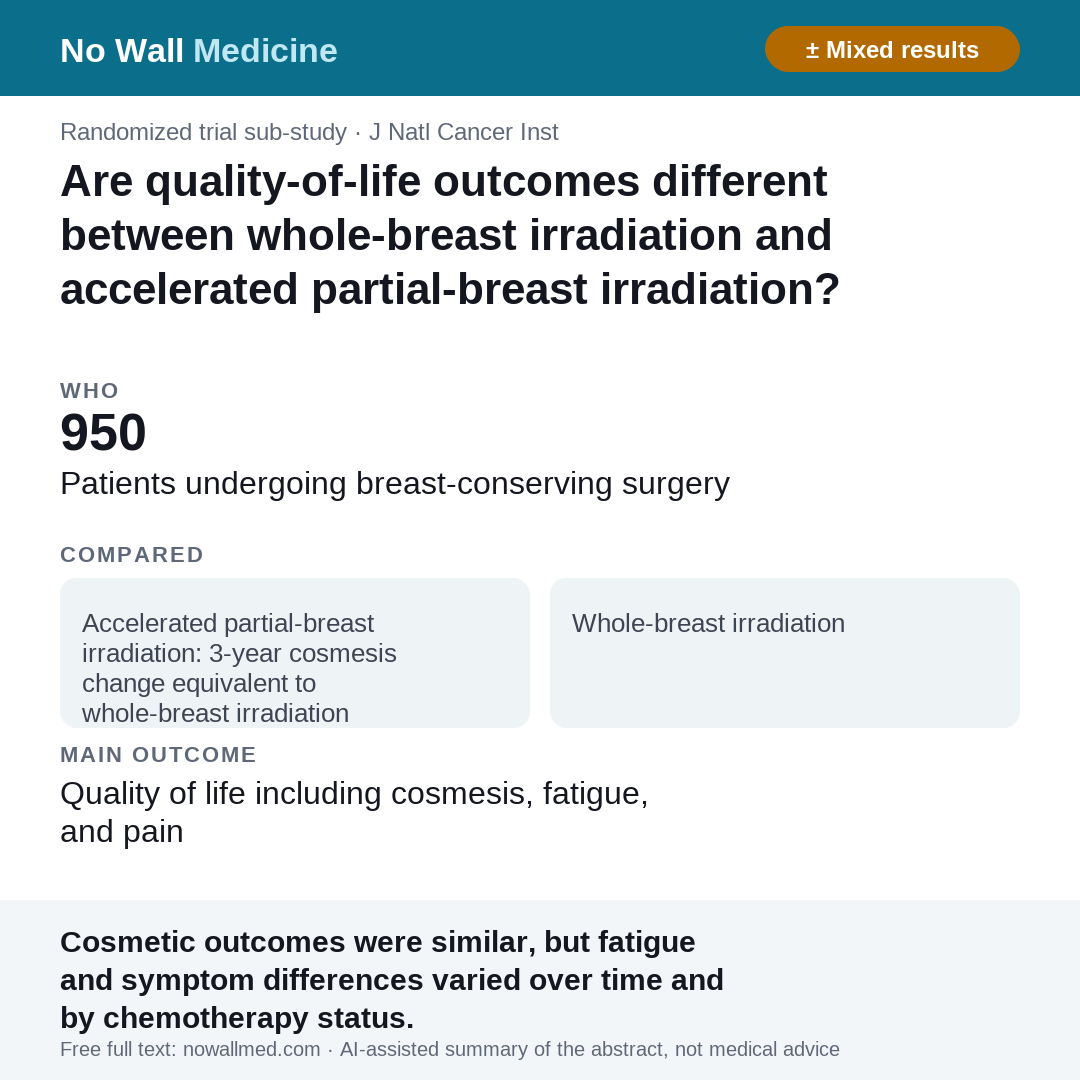
Quality-of-life outcomes from NRG Oncology NSABP B-39/RTOG 0413: whole-breast irradiation vs accelerated partial-breast irradiation after breast-conserving surgery
Randomized trial sub-studyMixed results
Are quality-of-life outcomes different between whole-breast irradiation and accelerated partial-breast irradiation?
Who
950
Patients undergoing breast-conserving surgery
Compared
Accelerated partial-breast irradiation: 3-year cosmesis change equivalent to whole-breast irradiation
Whole-breast irradiation
Main outcome
Quality of life including cosmesis, fatigue, and pain
Bottom line: Cosmetic outcomes were similar, but fatigue and symptom differences varied over time and by chemotherapy status.
J Natl Cancer Inst · 2024-09-10Download image
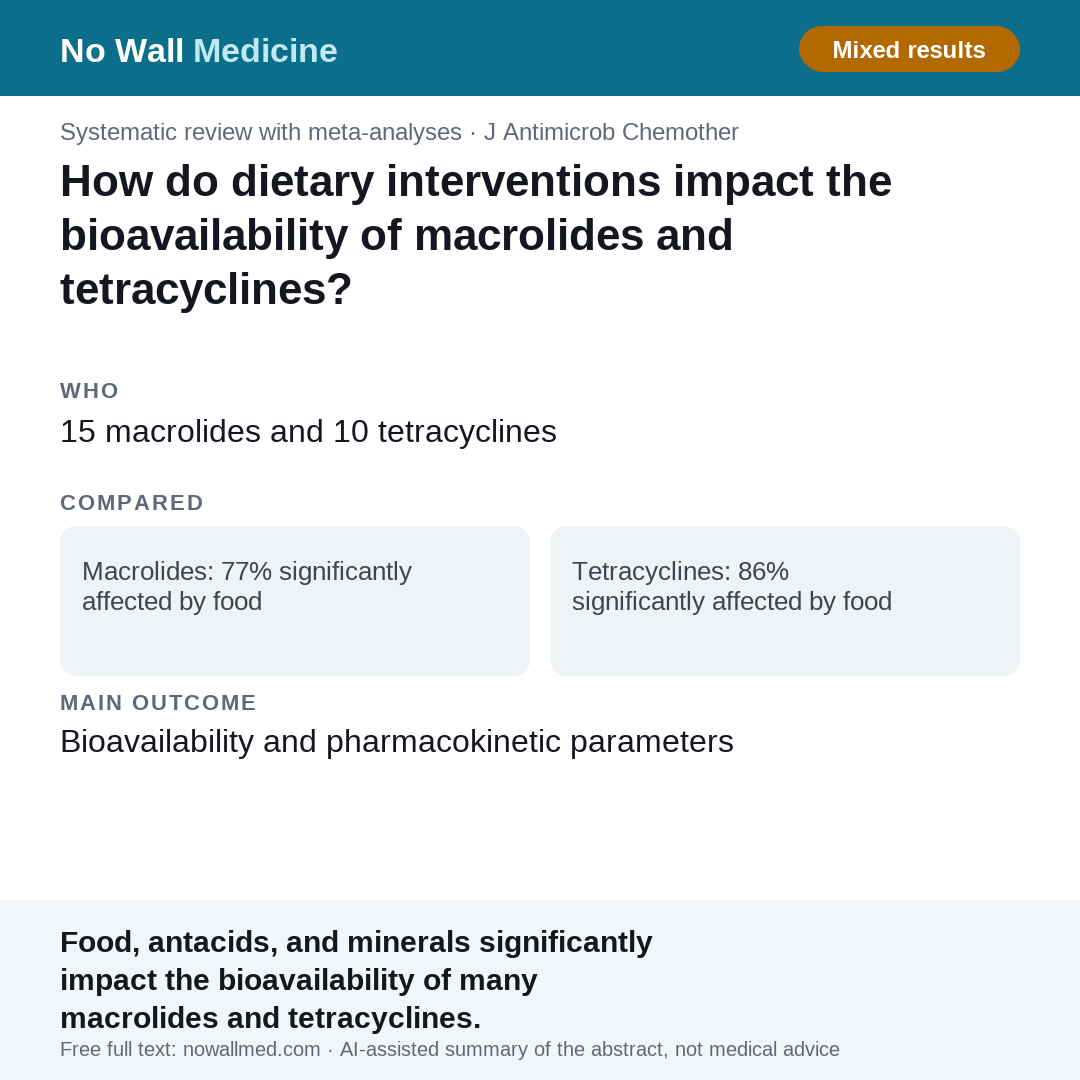
Clinically important interactions of macrolides and tetracyclines with dietary interventions-a systematic review with meta-analyses
Systematic review with meta-analysesMixed results
How do dietary interventions impact the bioavailability of macrolides and tetracyclines?
Who
15 macrolides and 10 tetracyclines
Compared
Macrolides: 77% significantly affected by food
Tetracyclines: 86% significantly affected by food
Main outcome
Bioavailability and pharmacokinetic parameters
Bottom line: Food, antacids, and minerals significantly impact the bioavailability of many macrolides and tetracyclines.
Limitation: Low quality of evidence due to outdated studies, methodological diversity, and unequal data availability.
J Antimicrob Chemother · 2024-09-10Download image
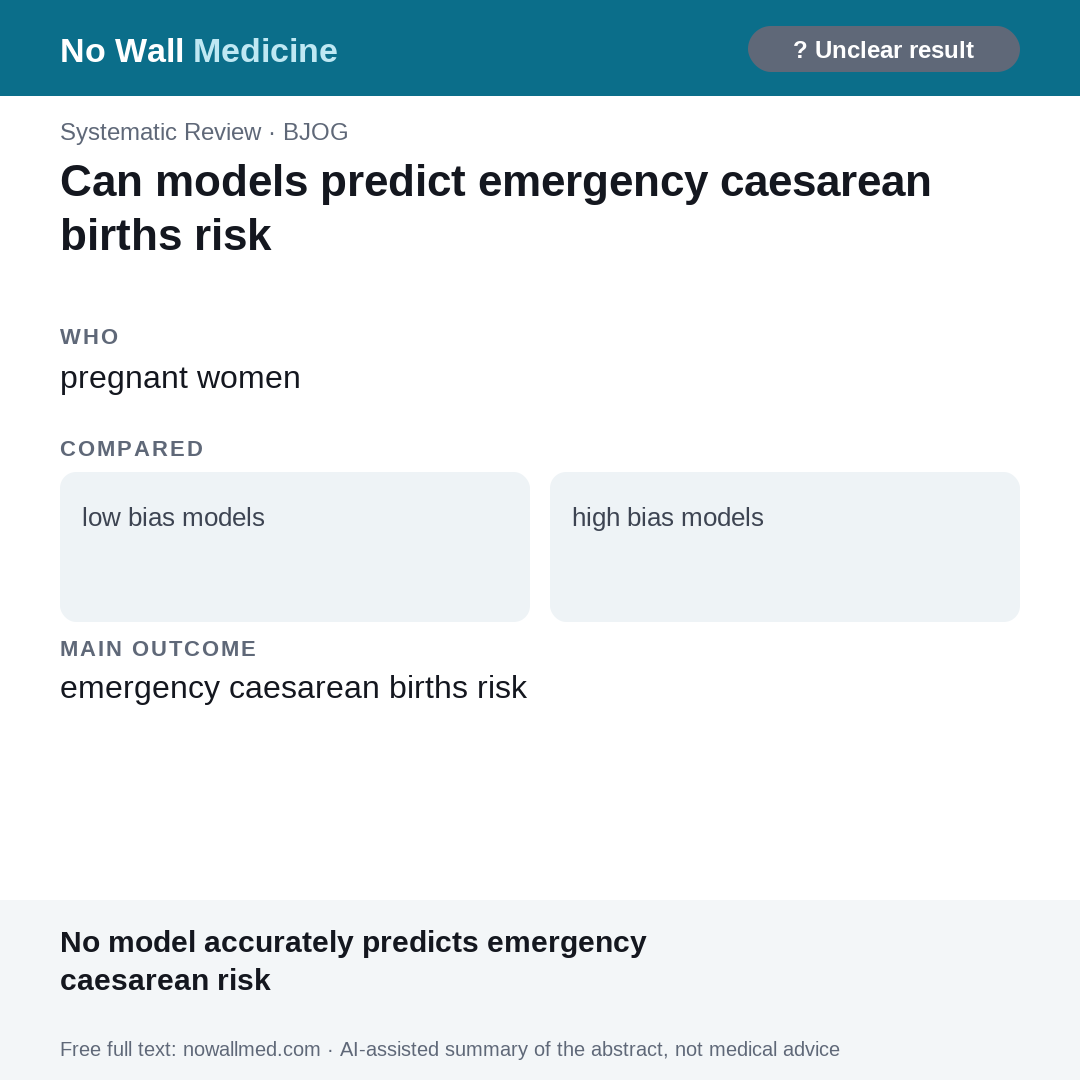
Systematic Review of Clinical Prediction Models for the Risk of Emergency Caesarean Births
Systematic ReviewUnclear result
Can models predict emergency caesarean births risk
Who
pregnant women
Compared
low bias models
high bias models
Main outcome
emergency caesarean births risk
Bottom line: No model accurately predicts emergency caesarean risk
Limitation: models not recalibrated since development
BJOG · 2024-09-10Download image
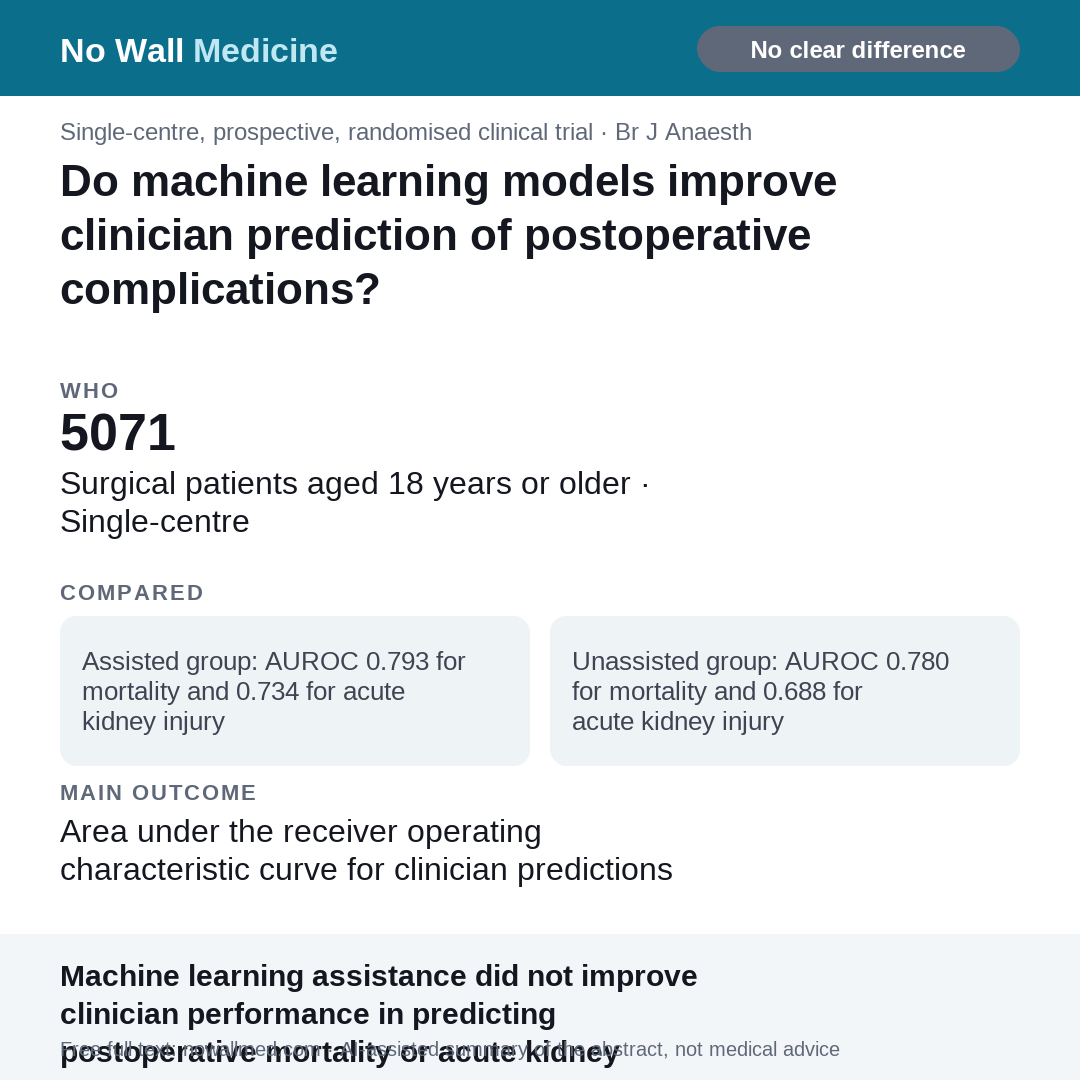
Effect of machine learning models on clinician prediction of postoperative complications: the Perioperative ORACLE randomised clinical trial
Single-centre, prospective, randomised clinical trialNo clear difference
Do machine learning models improve clinician prediction of postoperative complications?
Who
5071
Surgical patients aged 18 years or older · Single-centre
Compared
Assisted group: AUROC 0.793 for mortality and 0.734 for acute kidney injury
Unassisted group: AUROC 0.780 for mortality and 0.688 for acute kidney injury
Main outcome
Area under the receiver operating characteristic curve for clinician predictions
Result: mean difference 0.013 (95% CI -0.070 to 0.097) for mortality
Bottom line: Machine learning assistance did not improve clinician performance in predicting postoperative mortality or acute kidney injury.
Br J Anaesth · 2024-09-10Download image
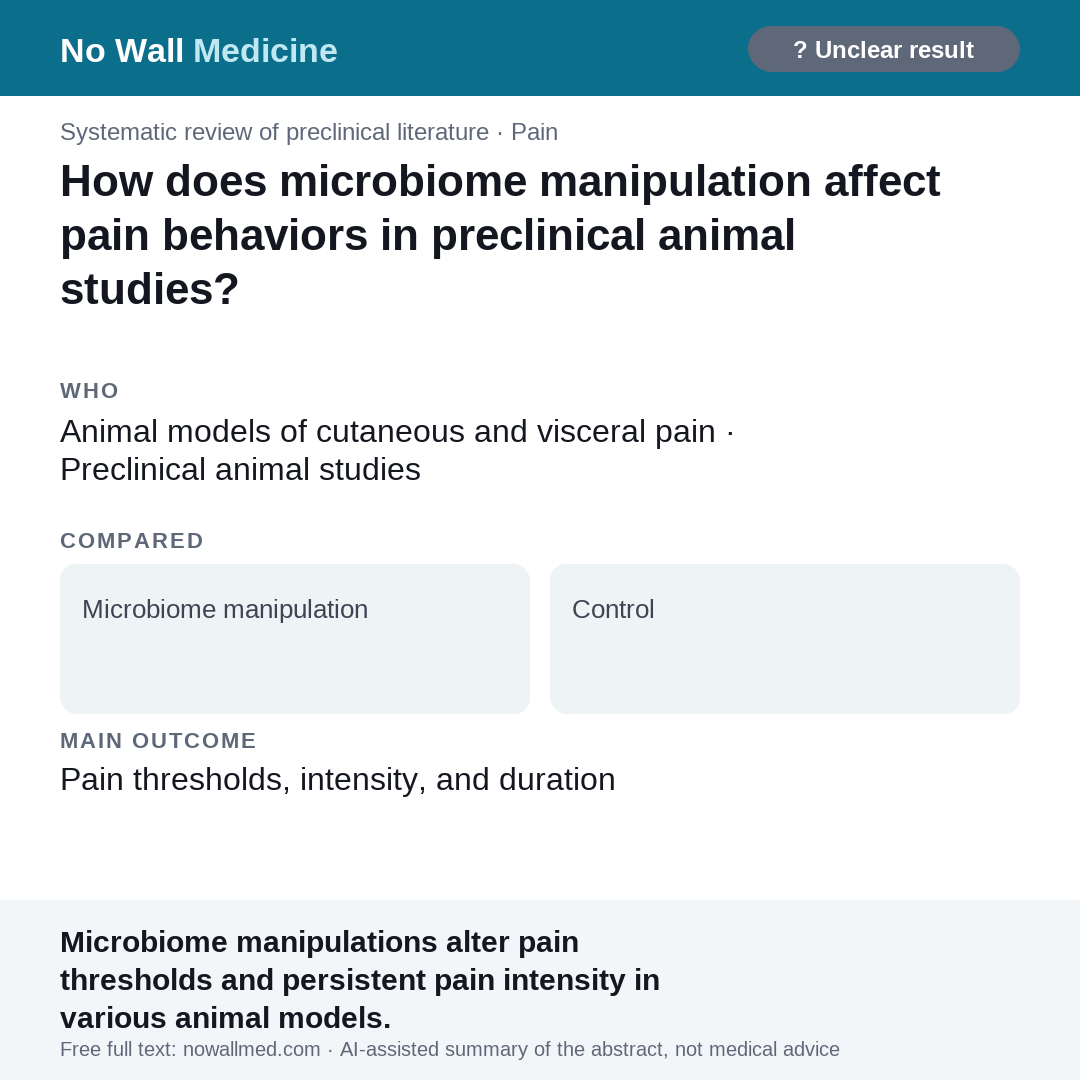
Microbiome contributions to pain: a review of the preclinical literature
Systematic review of preclinical literatureUnclear result
How does microbiome manipulation affect pain behaviors in preclinical animal studies?
Who
Animal models of cutaneous and visceral pain · Preclinical animal studies
Compared
Microbiome manipulation
Control
Main outcome
Pain thresholds, intensity, and duration
Bottom line: Microbiome manipulations alter pain thresholds and persistent pain intensity in various animal models.
Pain · 2024-09-10Download image
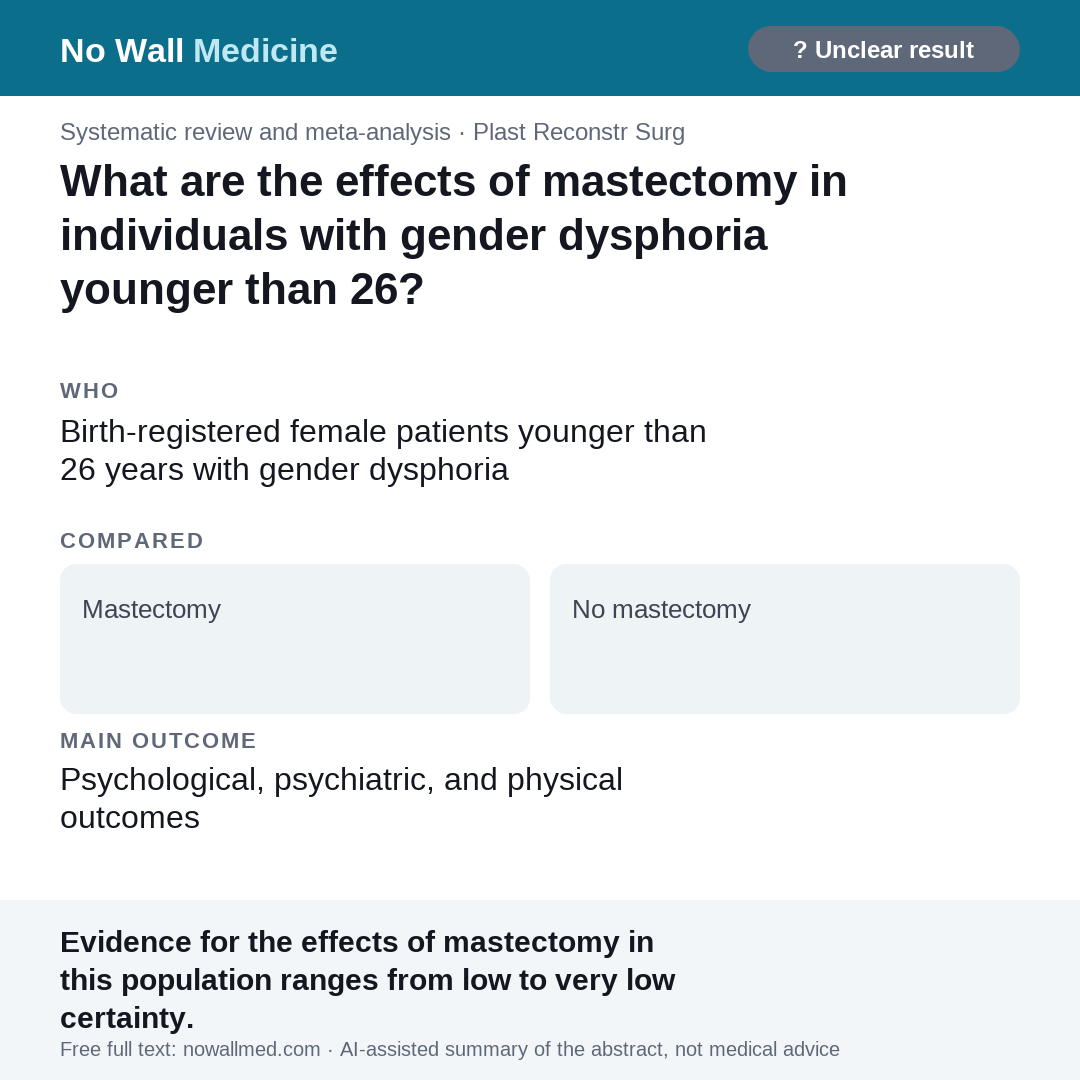
Effect of an exercise intervention or combined exercise and diet intervention on health-related quality of life-physical functioning after kidney transplantation: the Active Care after Transplantation (ACT) multicentre randomised controlled trial
Multicentre, open-label, parallel-group, randomised controlled trialNo clear difference
Do exercise or combined exercise and diet interventions improve physical functioning after kidney transplantation?
Who
221
People who have received a kidney transplant · Six hospitals across the Netherlands
Compared
Usual care
Exercise intervention: 5.3 arbitrary units
Exercise plus diet intervention: 5.9 arbitrary units
Main outcome
Health-related quality of life-domain physical functioning
Bottom line: Lifestyle interventions did not show significant improvements in physical functioning at 15 months post-baseline.
Funded by: Dutch Kidney Foundation, Innovation Fund, University Medical Center Groningen
Lancet Healthy Longev · 2024-09-10Download image
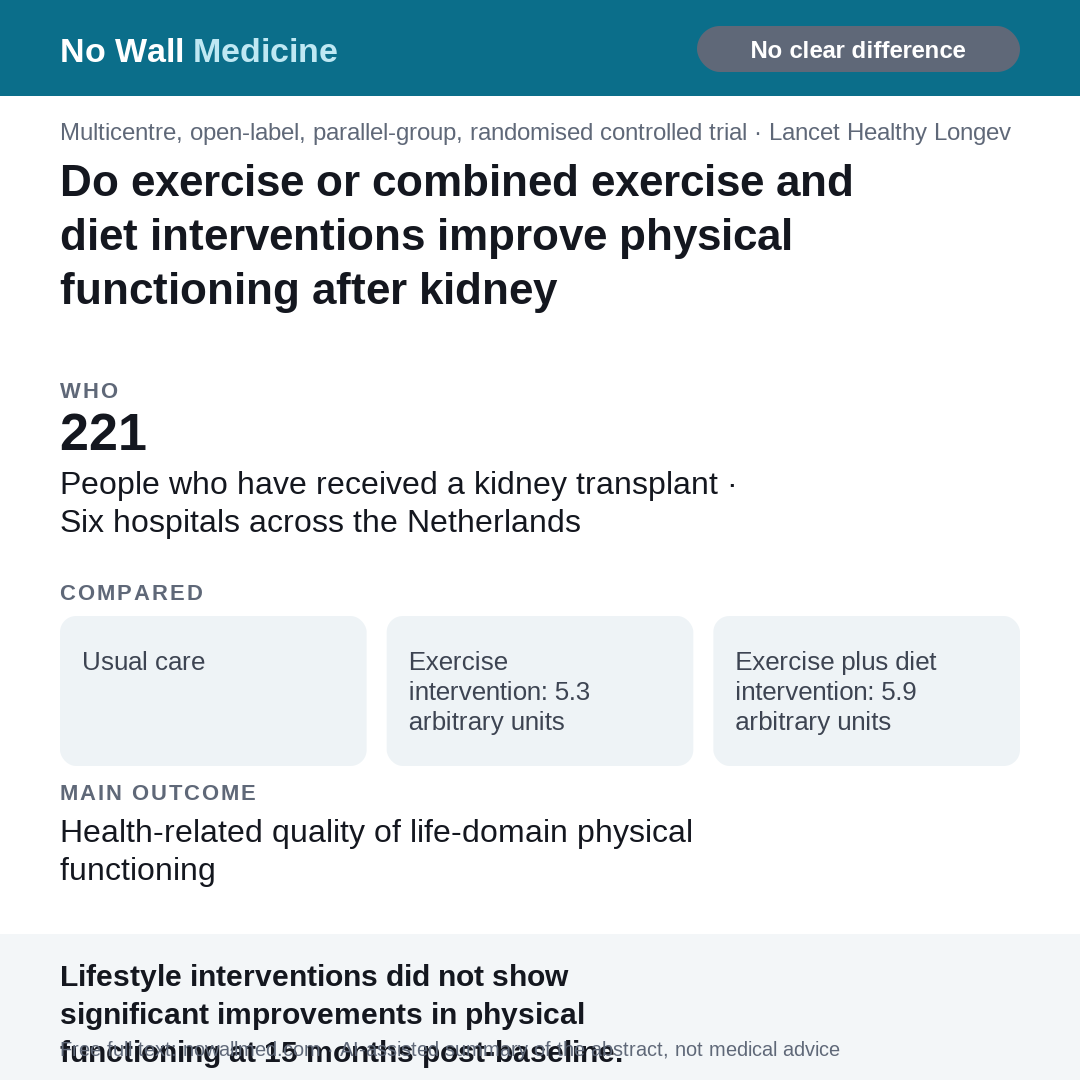
Effectiveness and safety of intra-articular interventions for knee and hip osteoarthritis based on large randomized trials: A systematic review and network meta-analysis
Systematic review and network meta-analysisMixed results
What are the effectiveness and safety of intra-articular interventions for knee and hip osteoarthritis?
Who
22,795
Patients with knee or hip osteoarthritis
Compared
Triamcinolone: SMD -0.48 (95% CrI,-0.85 to -0.10) at week 2
Placebo
Hyaluronic acid: SMD -0.04 (95% CrI,-0.19 to 0.11)
Tr14/Ze14: SMD -0.42 (95% CrI,-0.71 to -0.11) at week 6
Main outcome
pain intensity
Bottom line: Triamcinolone showed potential for pain relief, but most interventions were consistent with placebo effects.
Limitation: Lack of evidence of long-term effectiveness beyond 24 weeks.
Osteoarthritis Cartilage · 2024-09-10Download image
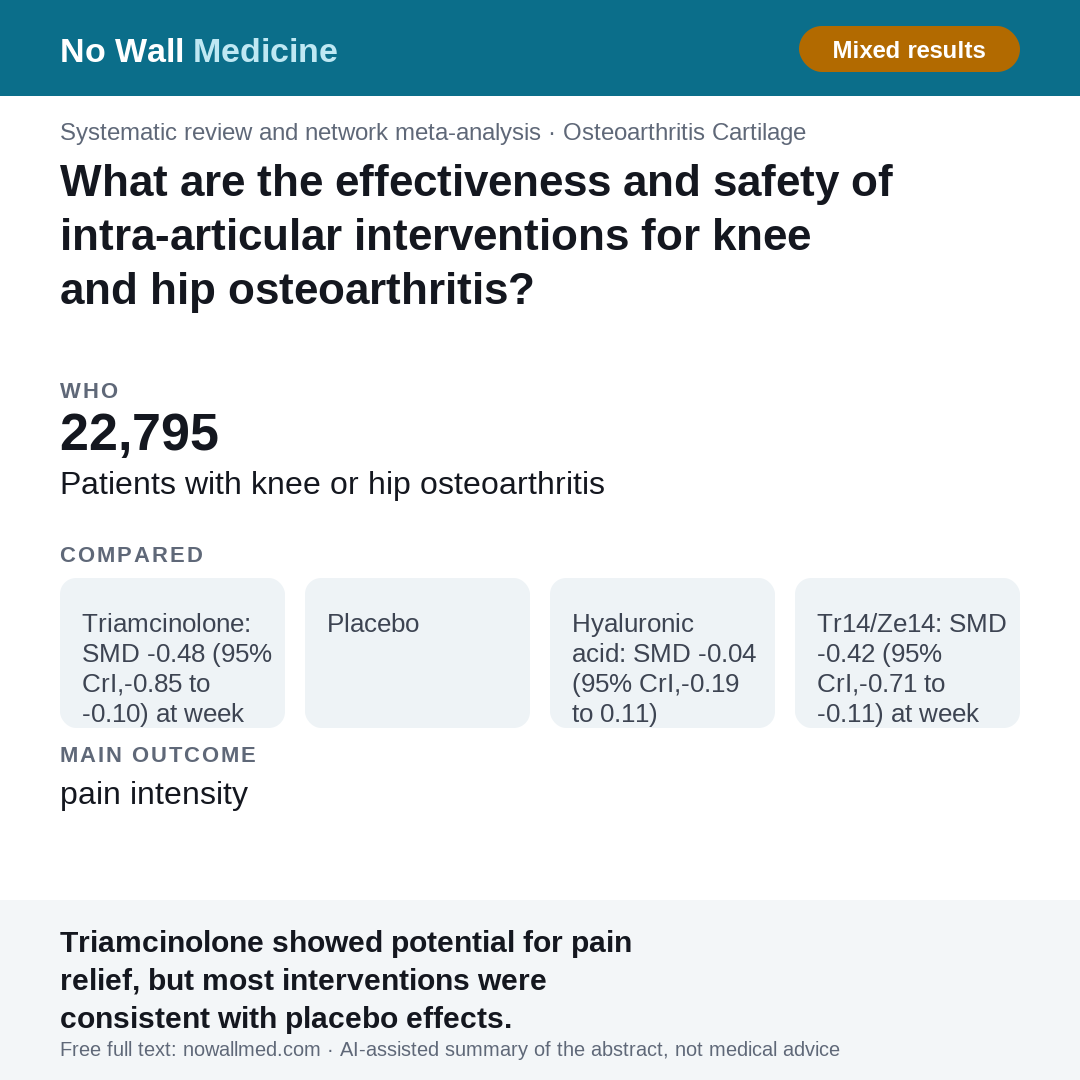
Comparative Efficacy of Cognitive Training for Post-Stroke Aphasia: A Systematic Review and Network Meta-Analysis
Network meta-analysisBenefit found
Cognitive training for post-stroke aphasia efficacy
Who
501
individuals with post-stroke aphasia
Compared
WM training with SLT
SLT alone
vrCT with SLT
AT with SLT
Main outcome
language function
Bottom line: Cognitive training enhances language function
Neurorehabil Neural Repair · 2024-09-10Download image
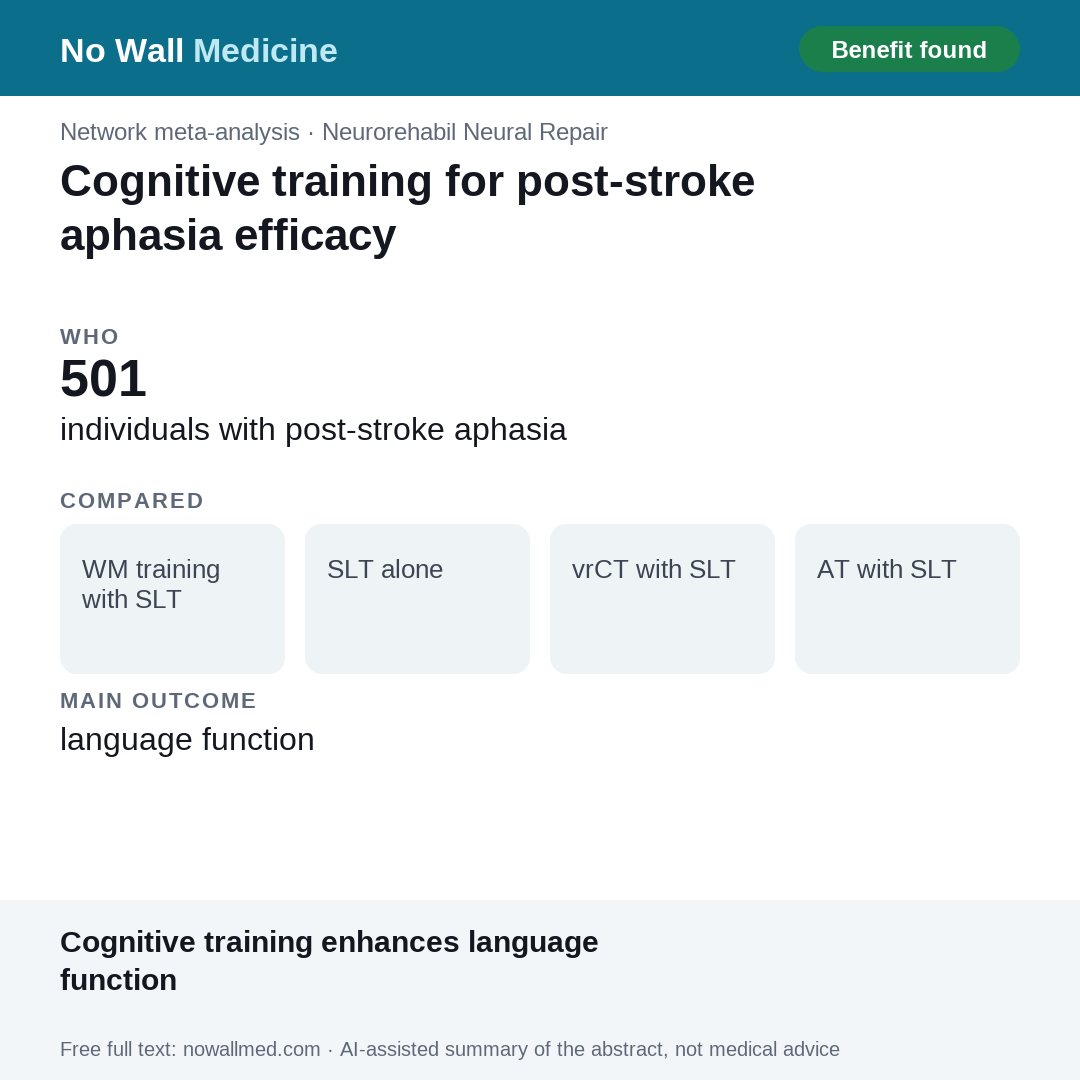
Mastectomy for Individuals with Gender Dysphoria Younger Than 26 Years: A Systematic Review and Meta-Analysis
Systematic review and meta-analysisUnclear result
What are the effects of mastectomy in individuals with gender dysphoria younger than 26?
Who
Birth-registered female patients younger than 26 years with gender dysphoria
Compared
Mastectomy
No mastectomy
Main outcome
Psychological, psychiatric, and physical outcomes
Bottom line: Evidence for the effects of mastectomy in this population ranges from low to very low certainty.
Limitation: Evidence certainty ranged from high to very low, with many studies being case series.
Plast Reconstr Surg · 2024-09-10Download image
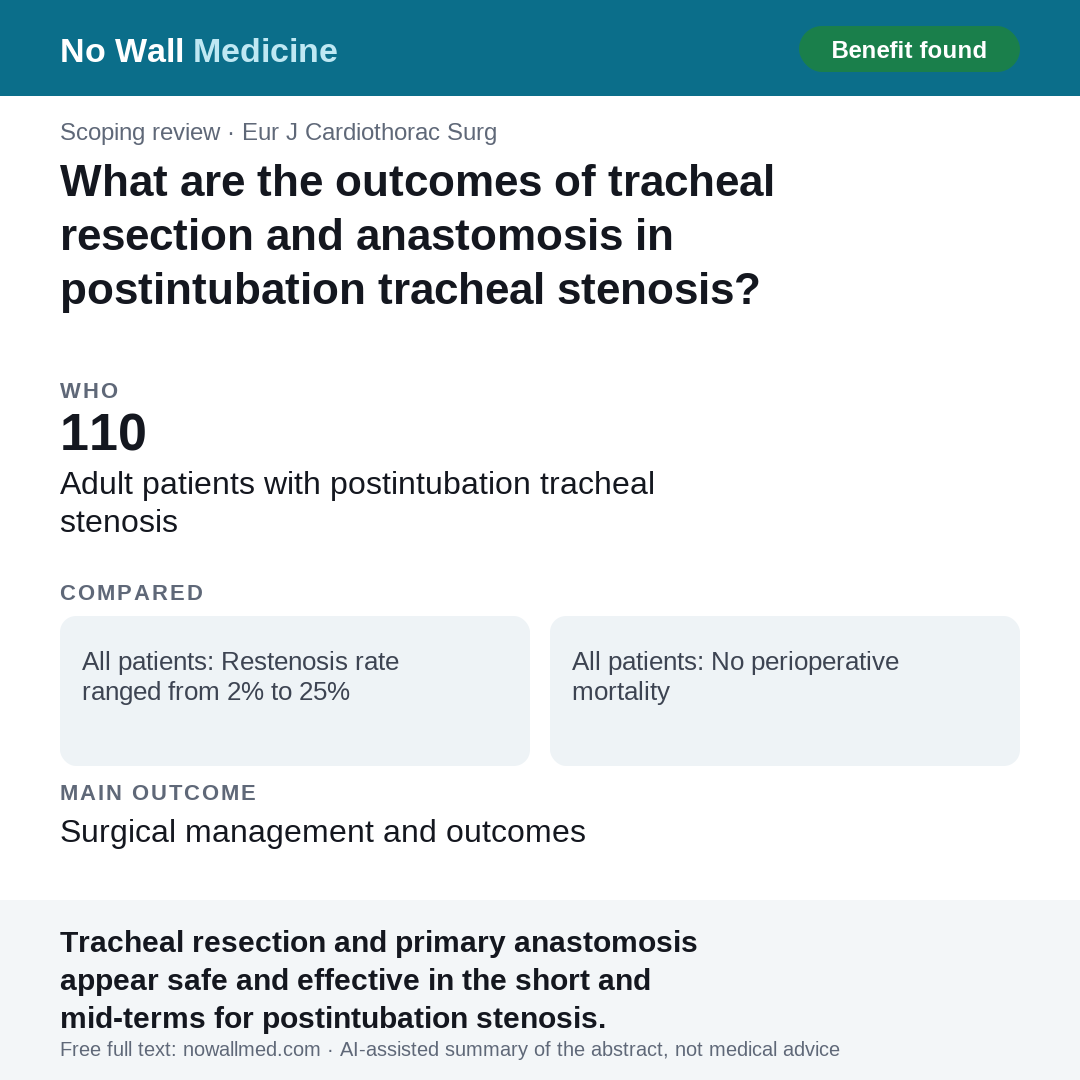
Tracheal resection and anastomosis in postintubation tracheal stenosis: a systematic review
Scoping reviewBenefit found
What are the outcomes of tracheal resection and anastomosis in postintubation tracheal stenosis?
Who
110
Adult patients with postintubation tracheal stenosis
Compared
All patients: Restenosis rate ranged from 2% to 25%
All patients: No perioperative mortality
Main outcome
Surgical management and outcomes
Bottom line: Tracheal resection and primary anastomosis appear safe and effective in the short and mid-terms for postintubation stenosis.
Limitation: Very low level of evidence from case reports and case series prevents definitive conclusions.
Eur J Cardiothorac Surg · 2024-09-10Download image
Fostering nurse-patient relationships in palliative care: An integrative review with narrative synthesis
Integrative reviewUnclear result
How nurse-patient relationships are fostered
Who
nurses and patients in palliative care · specialist inpatient palliative care
Compared
nurses
patients
Main outcome
nurse-patient relationship
Bottom line: Nurse-patient relationships are valued
Limitation: dominance of nurses' perspectives
Palliat Med · 2024-09-10Download image

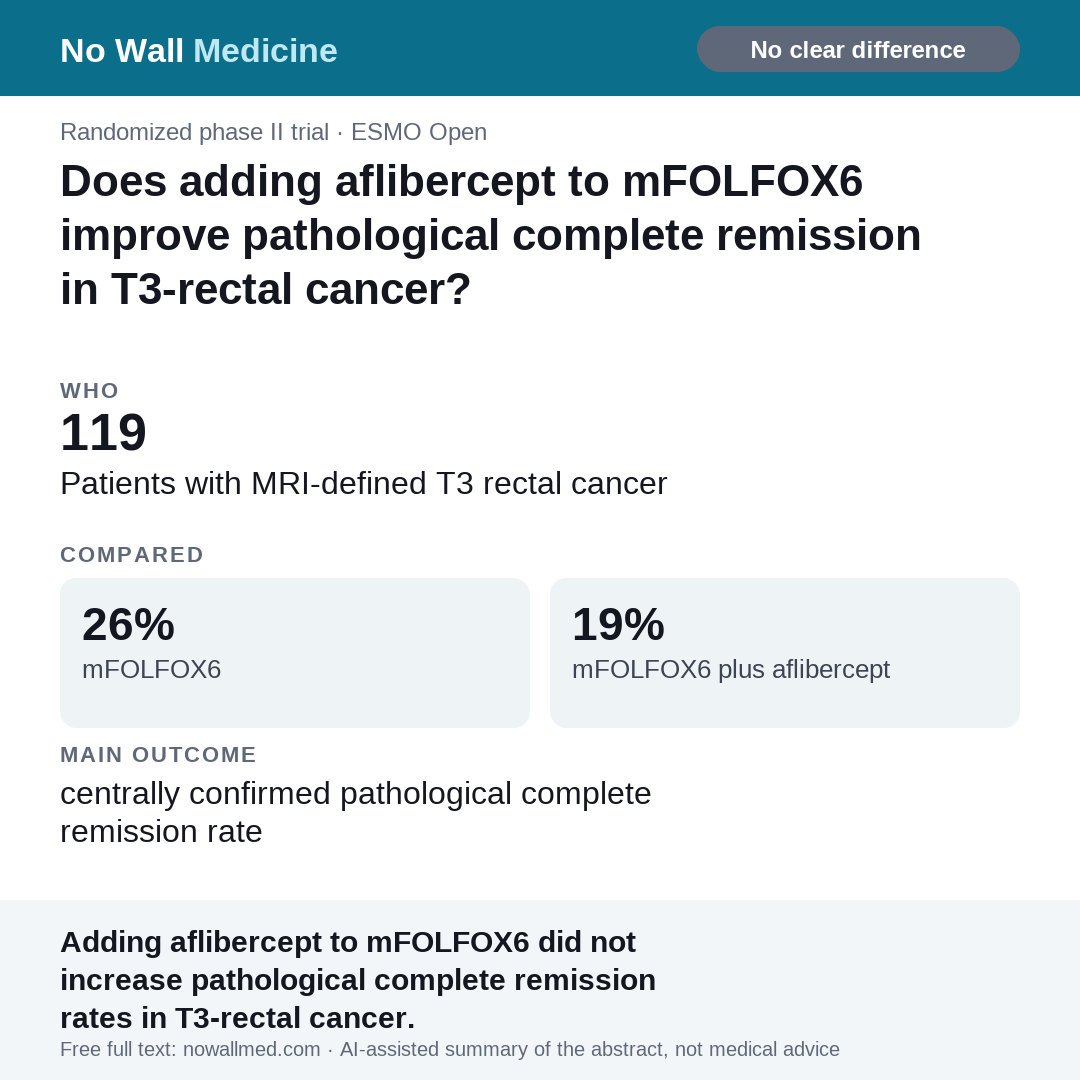
mFOLFOX6 versus mFOLFOX6 + aflibercept as neoadjuvant treatment in MRI-defined T3-rectal cancer: a randomized phase-II-trial of the German Rectal Cancer Study Group (CAO/ARO/AIO 0214)
Randomized phase II trialNo clear difference
Does adding aflibercept to mFOLFOX6 improve pathological complete remission in T3-rectal cancer?
Who
119
Patients with MRI-defined T3 rectal cancer
Compared
26%mFOLFOX6
19%mFOLFOX6 plus aflibercept
Main outcome
centrally confirmed pathological complete remission rate
Result: P = 0.47
Bottom line: Adding aflibercept to mFOLFOX6 did not increase pathological complete remission rates in T3-rectal cancer.
ESMO Open · 2024-09-10Download image
Ancestry-independent risk of venous thromboembolism in individuals with sickle cell trait vs factor V Leiden
Meta-analysis of genetic ancestry groupsBenefit found
Sickle cell trait risk of venous thromboembolism
Who
4184082
individuals with sickle cell trait or factor V Leiden · 23andMe research cohort
Compared
Sickle cell trait: 1.45-fold increased risk
Factor V Leiden: 3.30-fold increased risk
Main outcome
venous thromboembolism risk
Result: odds ratio 1.45 (confidence interval 1.32-1.60) for SCT, odds ratio 3.30 (confidence interval 3.24-3.37) for FVL
Bottom line: Sickle cell trait increases venous thromboembolism risk
Blood Adv · 2024-09-10Download image

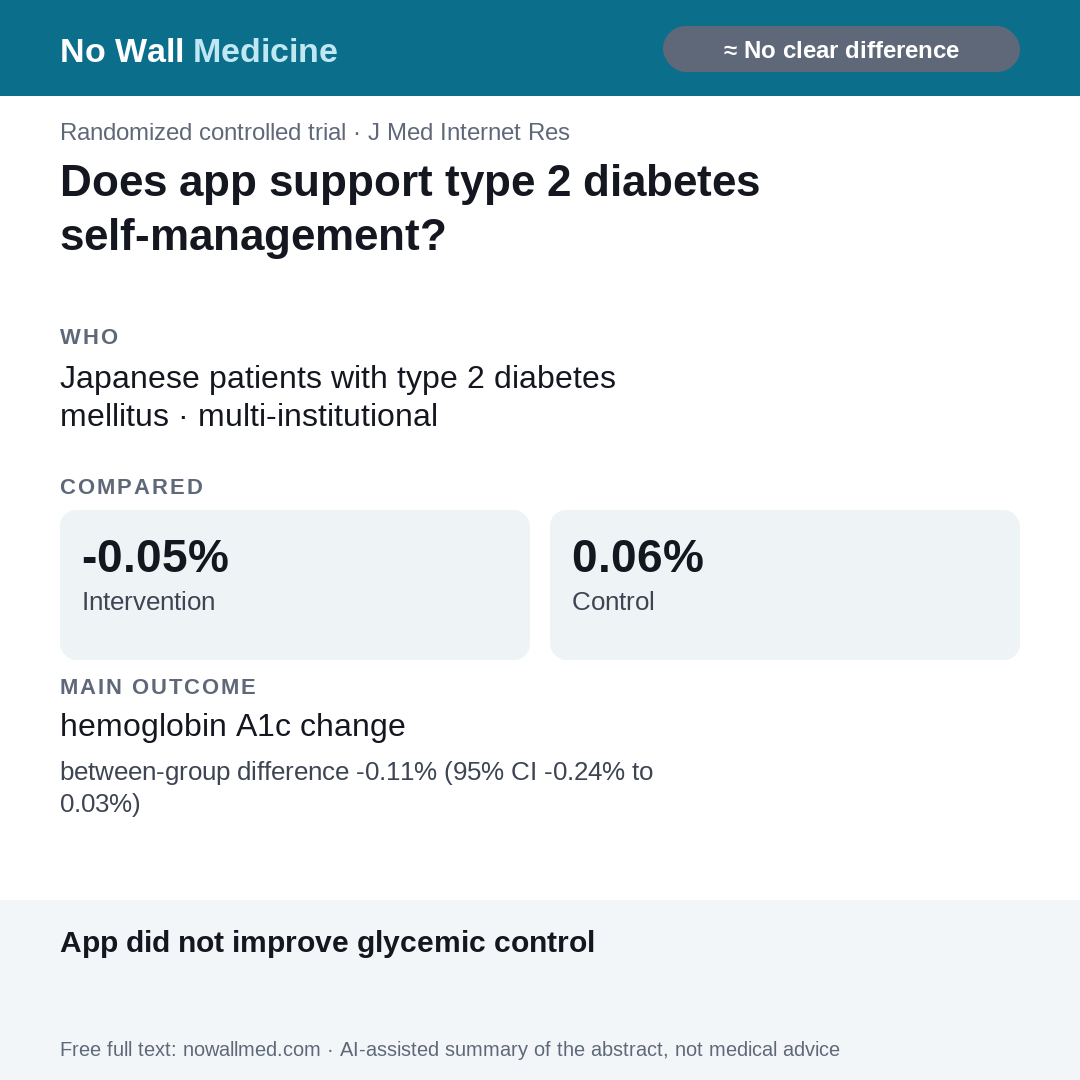
Efficacy of Save Medical Corporation (SMC)-01, a Smartphone App Designed to Support Type 2 Diabetes Self-Management Based on Established Guidelines: Randomized Controlled Trial
Randomized controlled trialNo clear difference
Does app support type 2 diabetes self-management?
Who
Japanese patients with type 2 diabetes mellitus · multi-institutional
Compared
-0.05%Intervention (95% CI -0.14% to 0.04%)
0.06%Control (95% CI -0.04% to 0.15%)
Main outcome
hemoglobin A1c change
Result: between-group difference -0.11% (95% CI -0.24% to 0.03%)
Bottom line: App did not improve glycemic control
J Med Internet Res · 2024-09-10Download image
A 25-Year Retrospective of the Use of AI for Diagnosing Acute Stroke: Systematic Review
Systematic reviewBenefit found
What are the methods and performance of artificial intelligence for diagnosing acute stroke?
Who
50
Articles on artificial intelligence for stroke prevention and diagnosis
Compared
Deep learning: superiority over machine learning in segmentation, classification, and risk prediction
Machine learning: good performance in stroke prognosis
Main outcome
stroke lesion segmentation, classification, risk prediction, and prognosis
Bottom line: Artificial intelligence technology has shown promising performance in stroke diagnosis over the past 25 years.
J Med Internet Res · 2024-09-10Download image

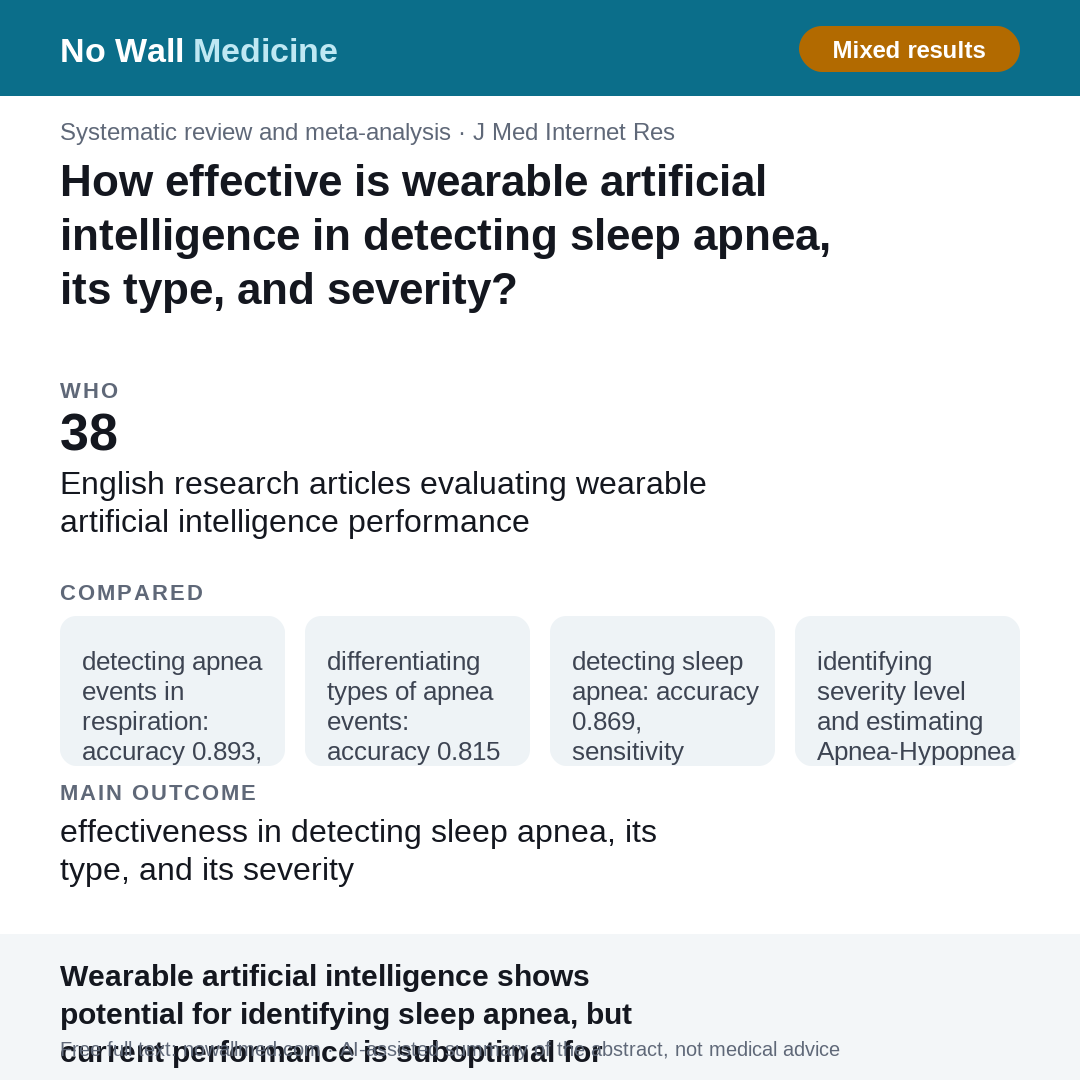
Detection of Sleep Apnea Using Wearable AI: Systematic Review and Meta-Analysis
Systematic review and meta-analysisMixed results
How effective is wearable artificial intelligence in detecting sleep apnea, its type, and severity?
Who
38
English research articles evaluating wearable artificial intelligence performance
Compared
detecting apnea events in respiration: accuracy 0.893, sensitivity 0.793, specificity 0.947
differentiating types of apnea events: accuracy 0.815
detecting sleep apnea: accuracy 0.869, sensitivity 0.938, specificity 0.752
identifying severity level and estimating Apnea-Hypopnea Index: accuracy 0.651 and 0.877
Main outcome
effectiveness in detecting sleep apnea, its type, and its severity
Bottom line: Wearable artificial intelligence shows potential for identifying sleep apnea, but current performance is suboptimal for routine clinical use.
Limitation: Subgroup analyses found different moderators of performance for different outcomes.
J Med Internet Res · 2024-09-10Download image
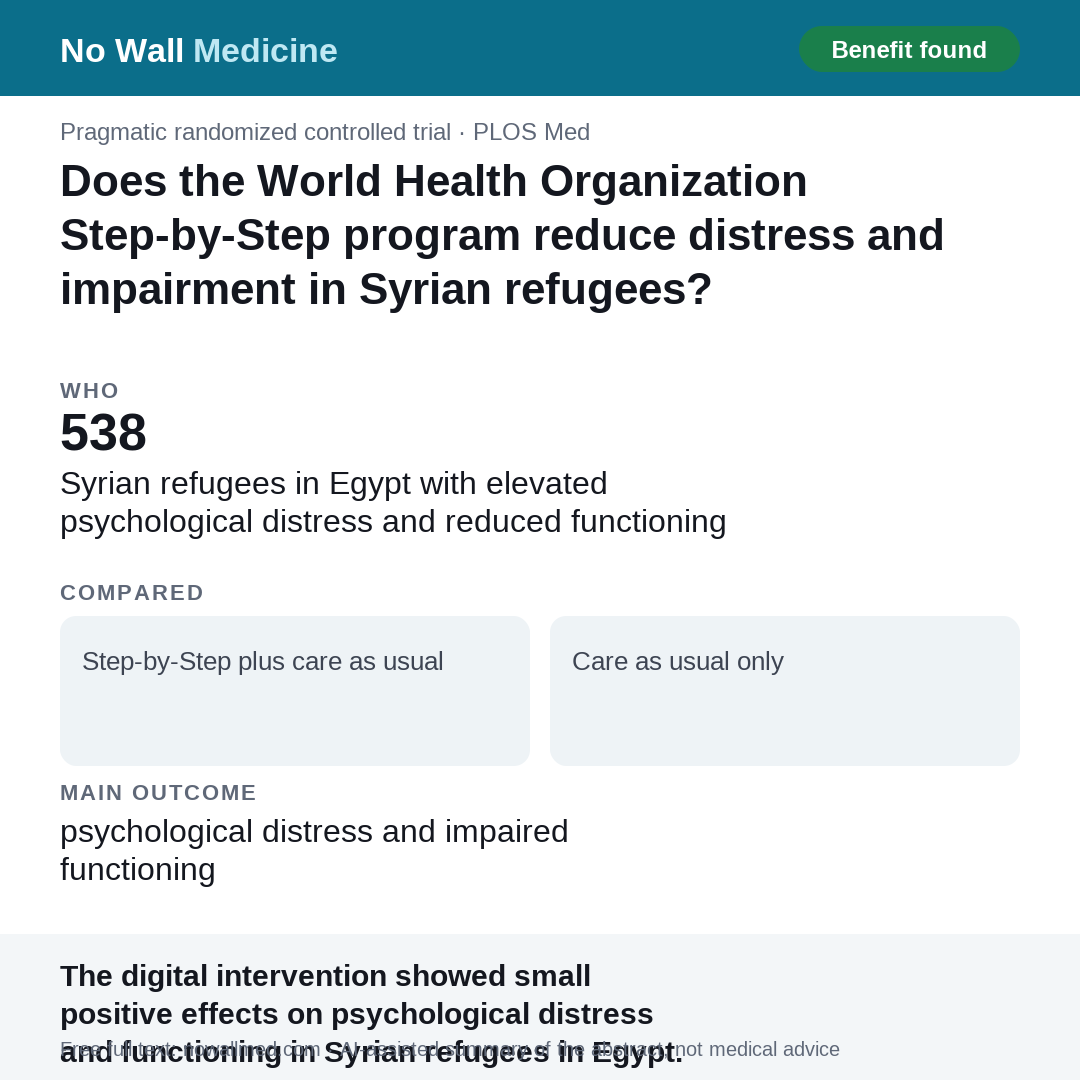
Effects of a self-guided digital mental health self-help intervention for Syrian refugees in Egypt: A pragmatic randomized controlled trial
Pragmatic randomized controlled trialBenefit found
Does the World Health Organization Step-by-Step program reduce distress and impairment in Syrian refugees?
Who
538
Syrian refugees in Egypt with elevated psychological distress and reduced functioning · Egypt
Compared
Step-by-Step plus care as usual
Care as usual only
Main outcome
psychological distress and impaired functioning
Result: mean difference: -0.15 (95% CI: -0.28, -0.02) for distress; mean difference: -2.04 (95% CI: -3.87, -0.22) for functioning
Bottom line: The digital intervention showed small positive effects on psychological distress and functioning in Syrian refugees in Egypt.
Limitation: High intervention dropout and low utilization of contact-on-demand support.
PLOS Med · 2024-09-09Download image
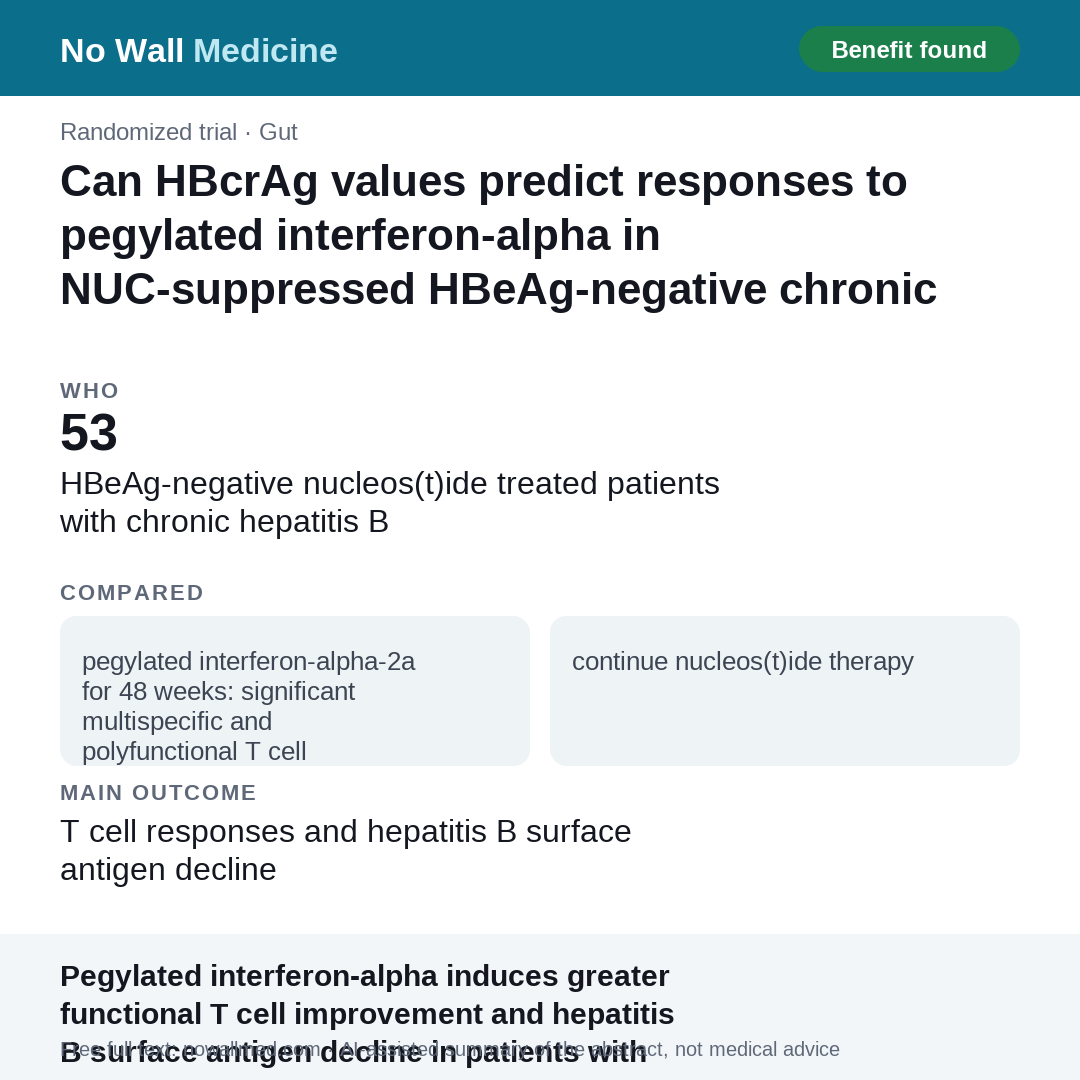
HBcrAg values may predict virological and immunological responses to pegIFN-α in NUC-suppressed HBeAg-negative chronic hepatitis B
Randomized trialBenefit found
Can HBcrAg values predict responses to pegylated interferon-alpha in NUC-suppressed HBeAg-negative chronic hepatitis B?
Who
53
HBeAg-negative nucleos(t)ide treated patients with chronic hepatitis B
Compared
pegylated interferon-alpha-2a for 48 weeks: significant multispecific and polyfunctional T cell improvement at week 24 post-treatment
continue nucleos(t)ide therapy
Main outcome
T cell responses and hepatitis B surface antigen decline
Bottom line: Pegylated interferon-alpha induces greater functional T cell improvement and hepatitis B surface antigen decline in patients with lower baseline HBcrAg levels.
Gut · 2024-09-09Download image