Visual abstracts
New randomized trials and meta-analyses from leading journals at a glance: who was studied, what was compared, and what was found. Every paper is free to read in full.
All specialtiesCardiology 921Oncology 826Gastroenterology & Hepatology 341Infectious Disease 656Neurology 377Psychiatry & Mental Health 451Pulmonology 399Critical Care 272Endocrinology & Diabetes 501Pediatrics 581Surgery 377Orthopedics & Sports Medicine 169Neurosurgery 117Cardiothoracic & Vascular Surgery 89Plastic & Reconstructive Surgery 145Nephrology 205Rheumatology 112Hematology 196Dermatology 87Ophthalmology 110Obstetrics & Gynecology 279Public & Global Health 185Radiology & Imaging 113Anesthesiology 145Urology 173ENT (Otolaryngology) 117Emergency Medicine 104Allergy & Immunology 63Geriatrics 168Family Medicine & Primary Care 116Medical Genetics & Genomics 93Pathology & Laboratory Medicine 28Physical Medicine & Rehabilitation 149Palliative Care 82Nutrition 229Digital Health & AI 467General Medicine 105
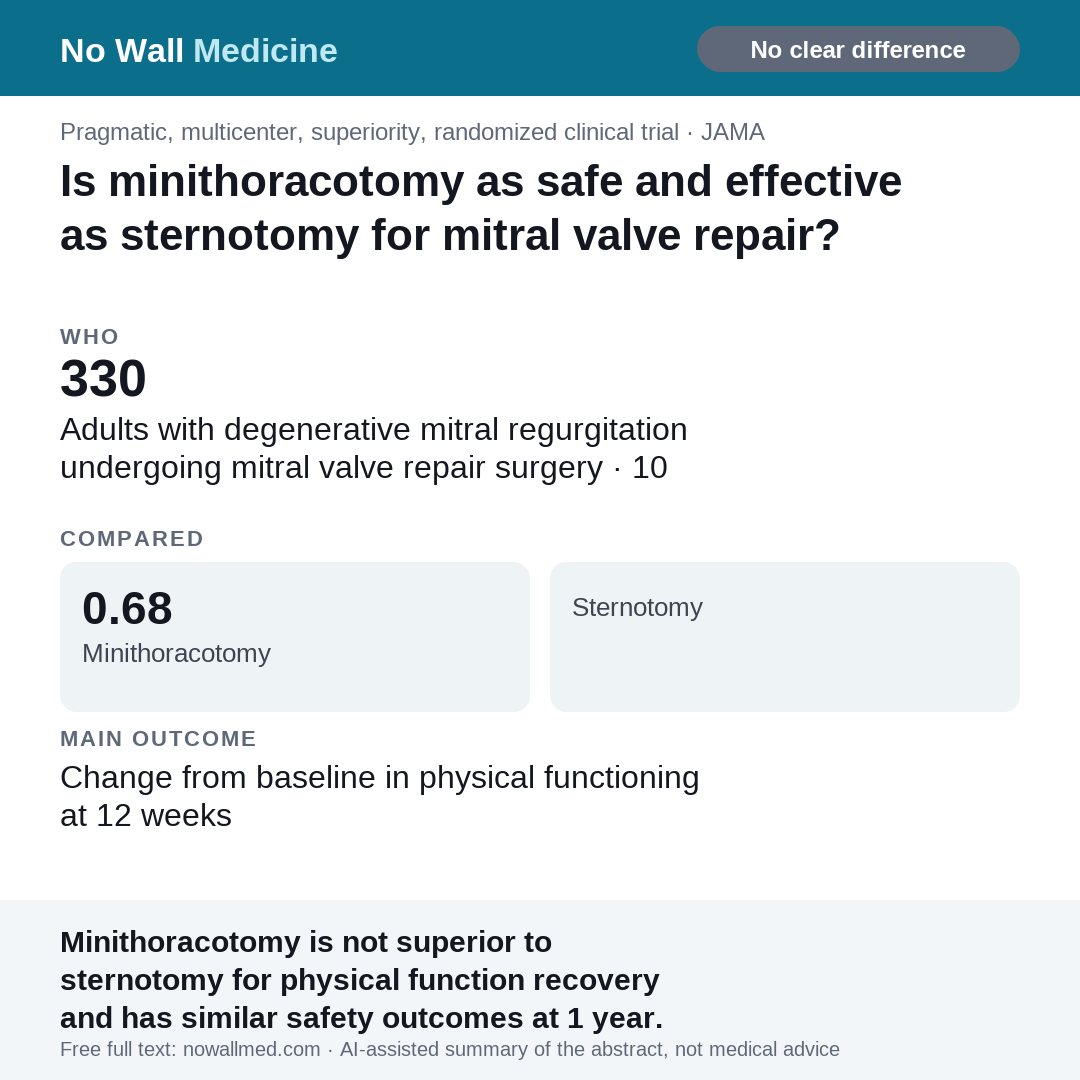
Minithoracotomy vs Conventional Sternotomy for Mitral Valve Repair: A Randomized Clinical Trial
Pragmatic, multicenter, superiority, randomized clinical trialNo clear difference
Is minithoracotomy as safe and effective as sternotomy for mitral valve repair?
Who
330
Adults with degenerative mitral regurgitation undergoing mitral valve repair surgery · 10 tertiary care institutions in the UK
Compared
0.68Minithoracotomy (95% CI, -1.89 to 3.26)
Sternotomy
Main outcome
Change from baseline in physical functioning at 12 weeks
Result: mean between-group difference 0.68 (95% CI, -1.89 to 3.26)
Bottom line: Minithoracotomy is not superior to sternotomy for physical function recovery and has similar safety outcomes at 1 year.
JAMA · 2023-06-14Download image
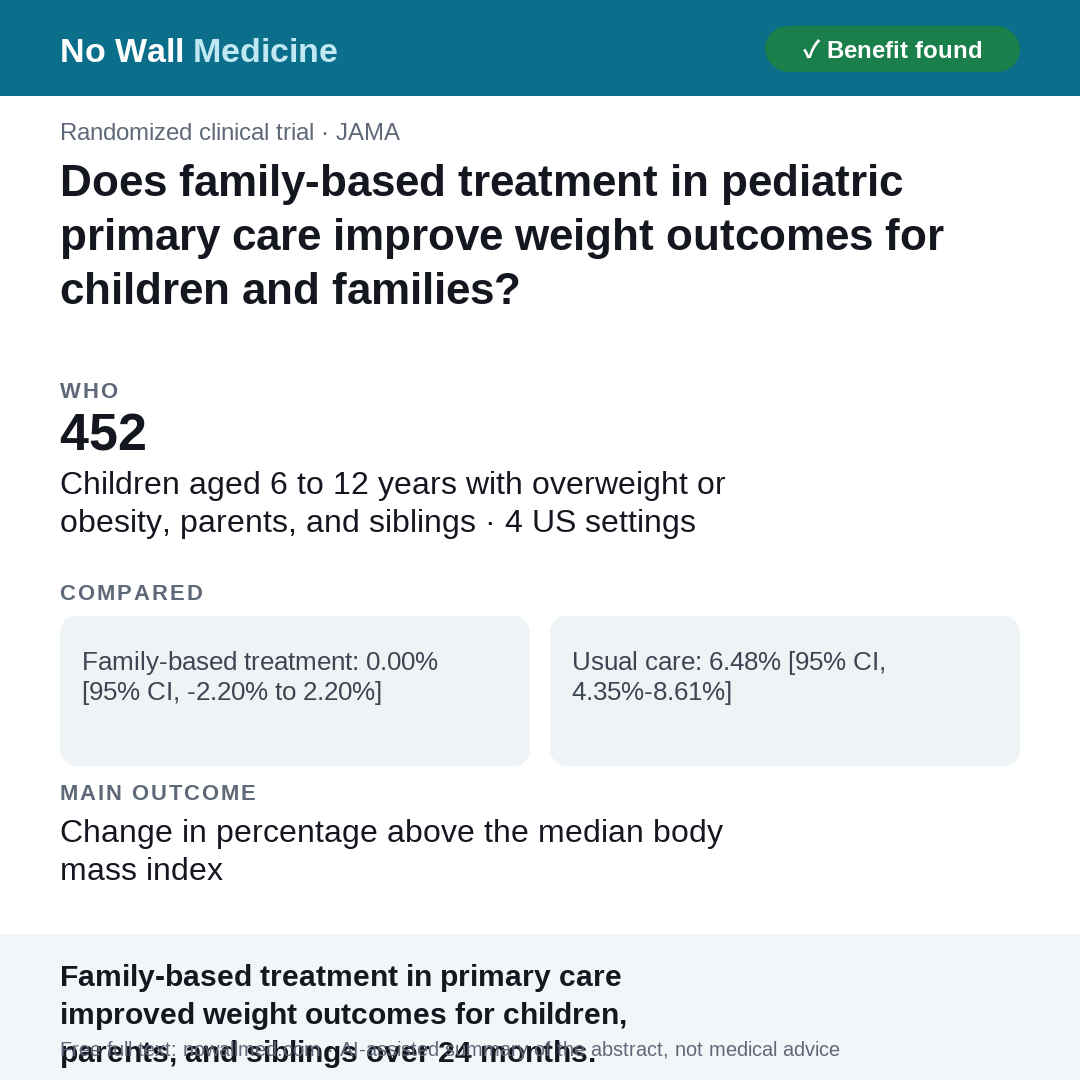
Family-Based Behavioral Treatment for Childhood Obesity Implemented in Pediatric Primary Care: A Randomized Clinical Trial
Randomized clinical trialBenefit found
Does family-based treatment in pediatric primary care improve weight outcomes for children and families?
Who
452
Children aged 6 to 12 years with overweight or obesity, parents, and siblings · 4 US settings
Compared
Family-based treatment: 0.00% [95% CI, -2.20% to 2.20%]
Usual care: 6.48% [95% CI, 4.35%-8.61%]
Main outcome
Change in percentage above the median body mass index
Result: -6.21% [95% CI, -10.14% to -2.29%]
Bottom line: Family-based treatment in primary care improved weight outcomes for children, parents, and siblings over 24 months.
JAMA · 2023-06-14Download image
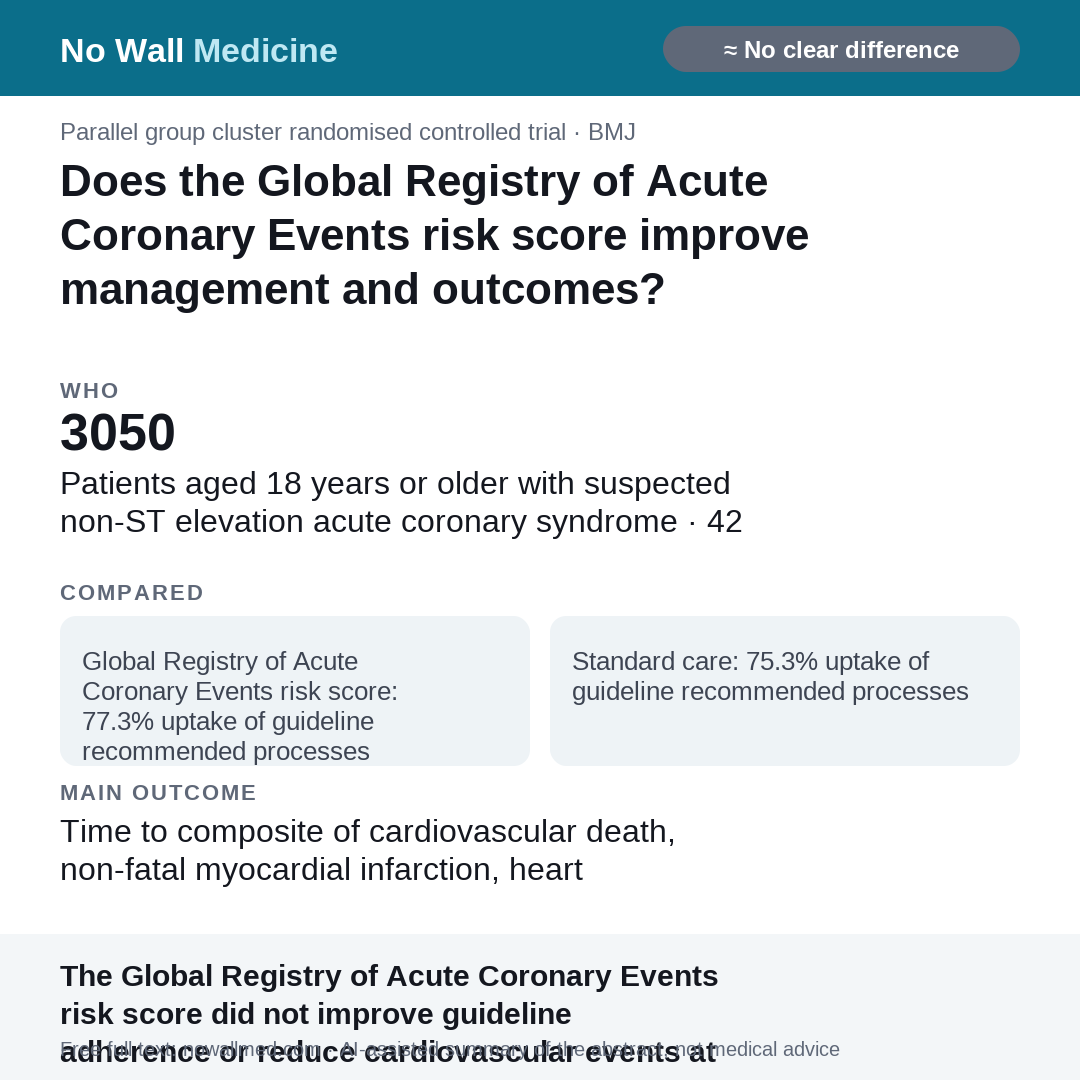
Effectiveness of GRACE risk score in patients admitted to hospital with non-ST elevation acute coronary syndrome (UKGRIS): parallel group cluster randomised controlled trial
Parallel group cluster randomised controlled trialNo clear difference
Does the Global Registry of Acute Coronary Events risk score improve management and outcomes?
Who
3050
Patients aged 18 years or older with suspected non-ST elevation acute coronary syndrome · 42 hospitals in England
Compared
Global Registry of Acute Coronary Events risk score: 77.3% uptake of guideline recommended processes
Standard care: 75.3% uptake of guideline recommended processes
Main outcome
Time to composite of cardiovascular death, non-fatal myocardial infarction, heart failure, and readmission
Result: hazard ratio 0.89 (95% confidence interval 0.68 to 1.16)
Bottom line: The Global Registry of Acute Coronary Events risk score did not improve guideline adherence or reduce cardiovascular events at 12 months.
BMJ · 2023-06-14Download image
Safety and immunogenicity of a single-shot live-attenuated chikungunya vaccine: a double-blind, multicentre, randomised, placebo-controlled, phase 3 trial
Double-blind, multicentre, randomised, phase 3 trialBenefit found
Is the VLA1553 vaccine safe and immunogenic in healthy adults?
Who
4128
Healthy volunteers aged 18 years and older · 43 professional vaccine trial sites in the USA
Compared
VLA1553 vaccine: 263 (98·9%) of 266 participants
Placebo
Main outcome
Seroprotective chikungunya virus antibody level at 28 days
Result: 98·9% (95% CI 96·7-99·8)
Bottom line: VLA1553 induced seroprotective antibody levels in almost all participants and was generally safe.
Funded by: Valneva, Coalition for Epidemic Preparedness Innovation, and EU Horizon 2020
Lancet · 2023-06-12Download image

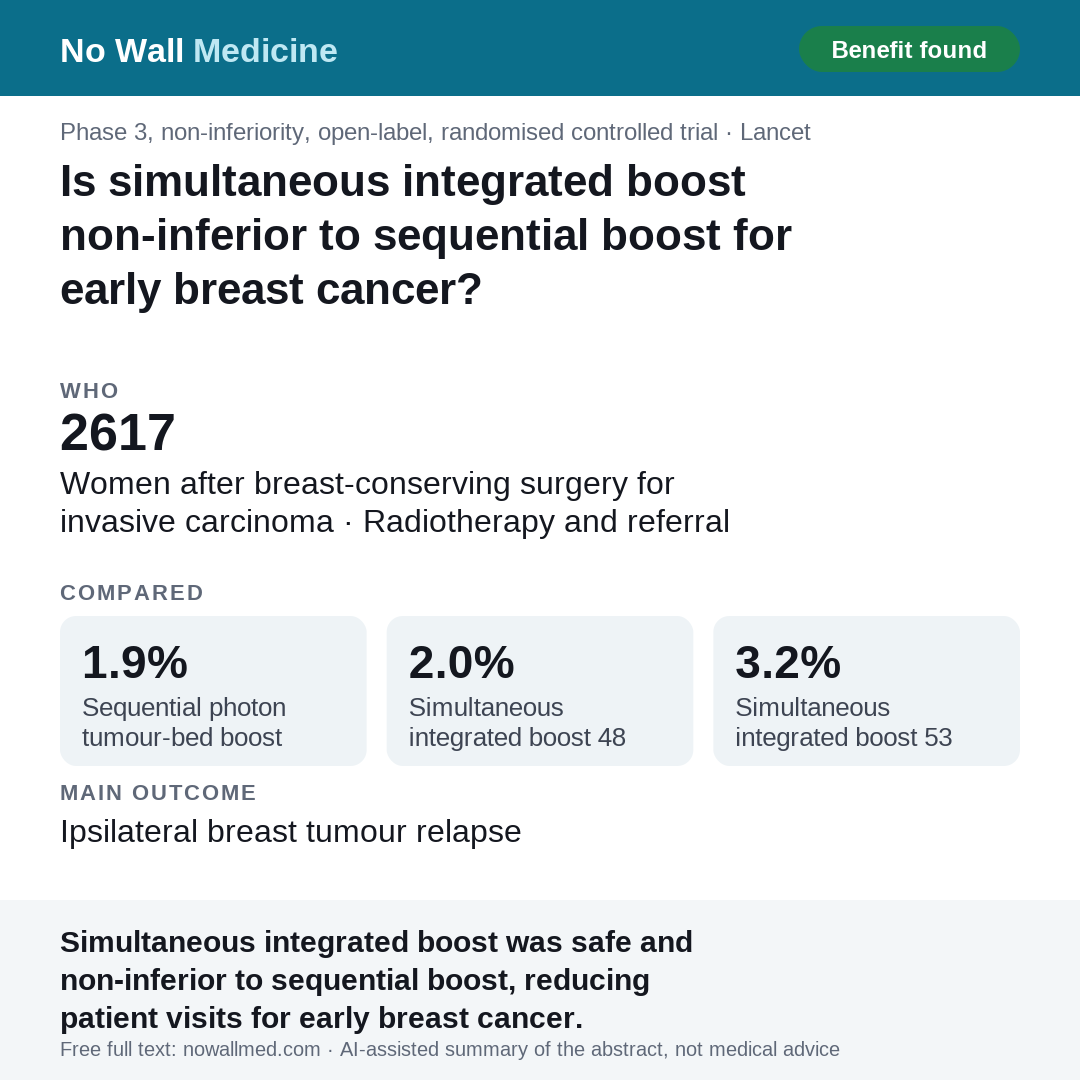
Dose-escalated simultaneous integrated boost radiotherapy in early breast cancer (IMPORT HIGH): a multicentre, phase 3, non-inferiority, open-label, randomised controlled trial
Phase 3, non-inferiority, open-label, randomised controlled trialBenefit found
Is simultaneous integrated boost non-inferior to sequential boost for early breast cancer?
Who
2617
Women after breast-conserving surgery for invasive carcinoma · Radiotherapy and referral centres in the United Kingdom
Compared
1.9%Sequential photon tumour-bed boost (95% CI 1.2 to 3.1)
2.0%Simultaneous integrated boost 48 Gy (1.2 to 3.2)
3.2%Simultaneous integrated boost 53 Gy (2.2 to 4.7)
Main outcome
Ipsilateral breast tumour relapse
Result: absolute difference 0.1% (-0.8 to 1.7) for test group 1; 1.4% (0.03 to 3.8) for test group 2
Bottom line: Simultaneous integrated boost was safe and non-inferior to sequential boost, reducing patient visits for early breast cancer.
Funded by: Cancer Research UK
Lancet · 2023-06-08Download image
Signaling-specific inhibition of the CB1 receptor for cannabis use disorder: phase 1 and phase 2a randomized trials
Phase 1 and phase 2a randomized trialsBenefit found
Is AEF0117 safe and effective for cannabis use disorder treatment?
Who
Healthy volunteers and volunteers with cannabis use disorder
Compared
AEF0117 0.06 mg: 19% reduction in cannabis positive subjective effects
AEF0117 1 mg: 38% reduction in cannabis positive subjective effects
Placebo
Main outcome
Safety, tolerability, and cannabis positive subjective effects
Bottom line: AEF0117 is safe and significantly reduces cannabis positive subjective effects in volunteers with cannabis use disorder.
Nat Med · 2023-06-08Download image

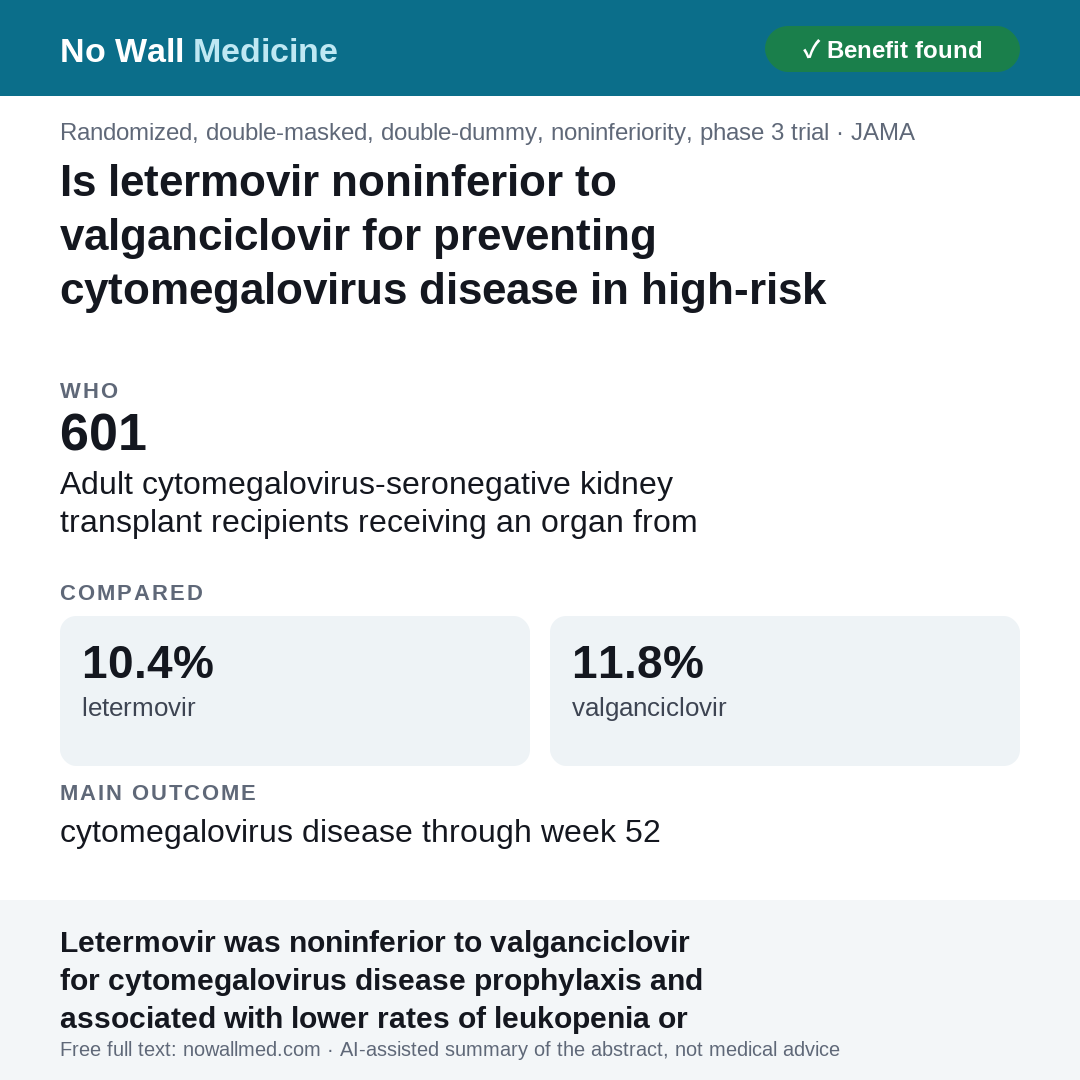
Letermovir vs Valganciclovir for Prophylaxis of Cytomegalovirus in High-Risk Kidney Transplant Recipients: A Randomized Clinical Trial
Randomized, double-masked, double-dummy, noninferiority, phase 3 trialBenefit found
Is letermovir noninferior to valganciclovir for preventing cytomegalovirus disease in high-risk kidney transplant recipients?
Who
601
Adult cytomegalovirus-seronegative kidney transplant recipients receiving an organ from a cytomegalovirus-seropositive donor · 94 participating sites
Compared
10.4%letermovir
11.8%valganciclovir
Main outcome
cytomegalovirus disease through week 52
Result: stratum-adjusted difference -1.4% (95% CI, -6.5% to 3.8%)
Bottom line: Letermovir was noninferior to valganciclovir for cytomegalovirus disease prophylaxis and associated with lower rates of leukopenia or neutropenia.
JAMA · 2023-06-07Download image
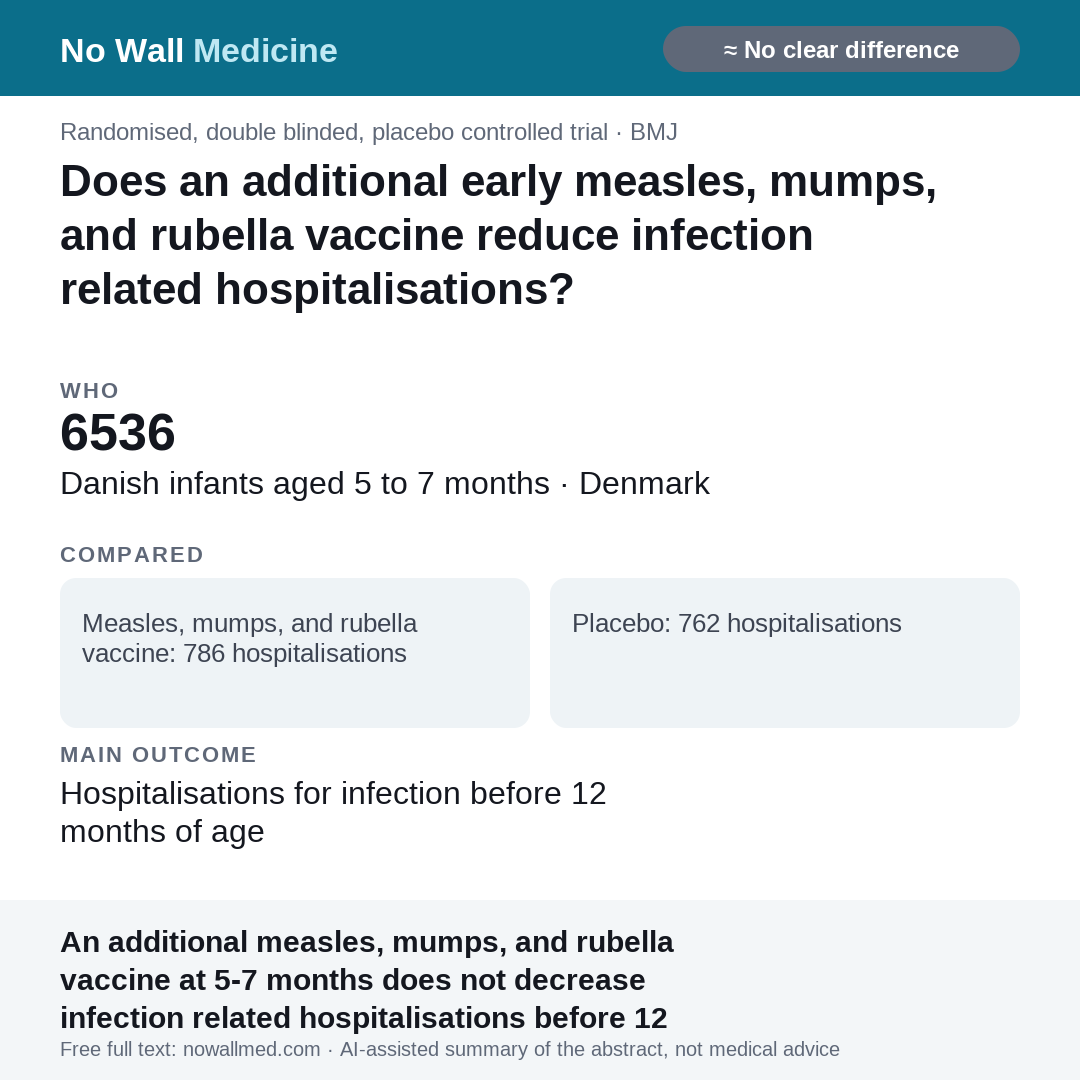
Measles, mumps, and rubella vaccine at age 6 months and hospitalisation for infection before age 12 months: randomised controlled trial
Randomised, double blinded, placebo controlled trialNo clear difference
Does an additional early measles, mumps, and rubella vaccine reduce infection related hospitalisations?
Who
6536
Danish infants aged 5 to 7 months · Denmark
Compared
Measles, mumps, and rubella vaccine: 786 hospitalisations
Placebo: 762 hospitalisations
Main outcome
Hospitalisations for infection before 12 months of age
Result: hazard ratio 1.03 (95% confidence interval 0.91 to 1.18)
Bottom line: An additional measles, mumps, and rubella vaccine at 5-7 months does not decrease infection related hospitalisations before 12 months.
BMJ · 2023-06-07Download image
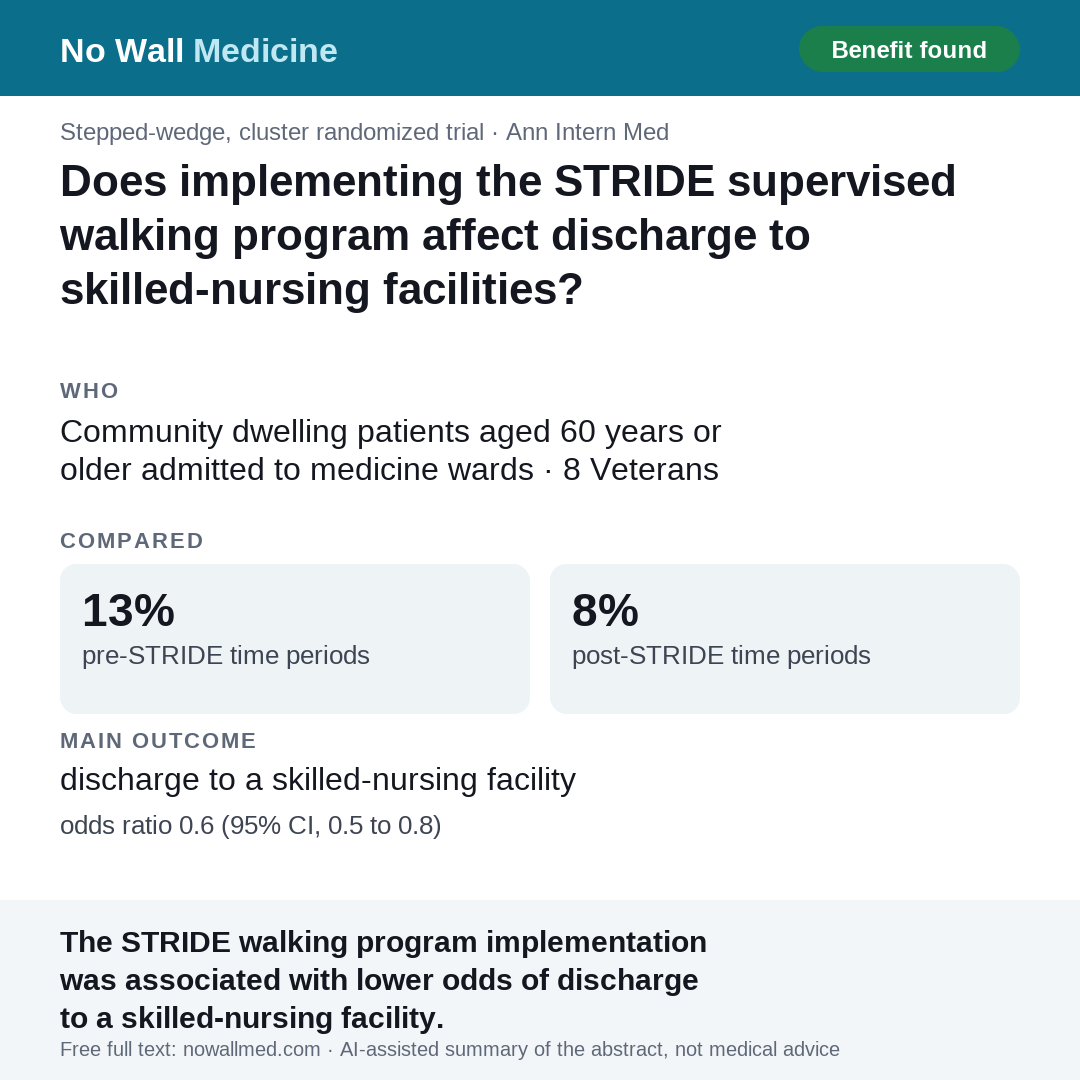
Effects of Implementation of a Supervised Walking Program in Veterans Affairs Hospitals : A Stepped-Wedge, Cluster Randomized Trial
Stepped-wedge, cluster randomized trialBenefit found
Does implementing the STRIDE supervised walking program affect discharge to skilled-nursing facilities?
Who
Community dwelling patients aged 60 years or older admitted to medicine wards · 8 Veterans Affairs hospitals
Compared
13%pre-STRIDE time periods
8%post-STRIDE time periods
Main outcome
discharge to a skilled-nursing facility
Result: odds ratio 0.6 (95% CI, 0.5 to 0.8)
Bottom line: The STRIDE walking program implementation was associated with lower odds of discharge to a skilled-nursing facility.
Limitation: Direct program reach was low.
Funded by: U.S. Department of Veterans Affairs Quality Enhancement Research Initiative
Ann Intern Med · 2023-06-06Download image
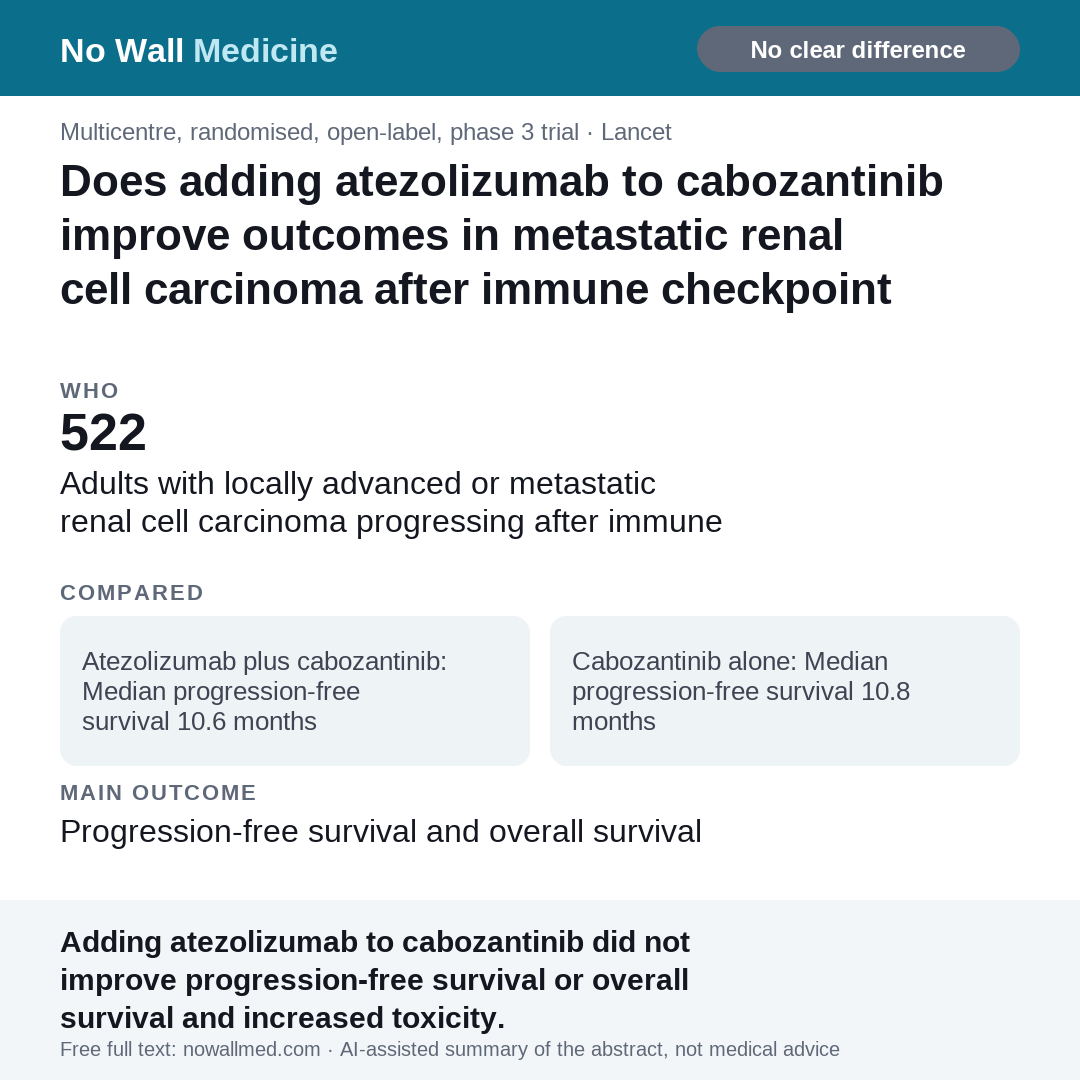
Atezolizumab plus cabozantinib versus cabozantinib monotherapy for patients with renal cell carcinoma after progression with previous immune checkpoint inhibitor treatment (CONTACT-03): a multicentre, randomised, open-label, phase 3 trial
Multicentre, randomised, open-label, phase 3 trialNo clear difference
Does adding atezolizumab to cabozantinib improve outcomes in metastatic renal cell carcinoma after immune checkpoint inhibitor progression?
Who
522
Adults with locally advanced or metastatic renal cell carcinoma progressing after immune checkpoint inhibitor treatment · 135 sites in 15 countries
Compared
Atezolizumab plus cabozantinib: Median progression-free survival 10.6 months
Cabozantinib alone: Median progression-free survival 10.8 months
Main outcome
Progression-free survival and overall survival
Result: hazard ratio 1.03 (95% CI 0.83-1.28) for progression-free survival
Bottom line: Adding atezolizumab to cabozantinib did not improve progression-free survival or overall survival and increased toxicity.
Funded by: F Hoffmann-La Roche and Exelixis
Lancet · 2023-06-05Download image
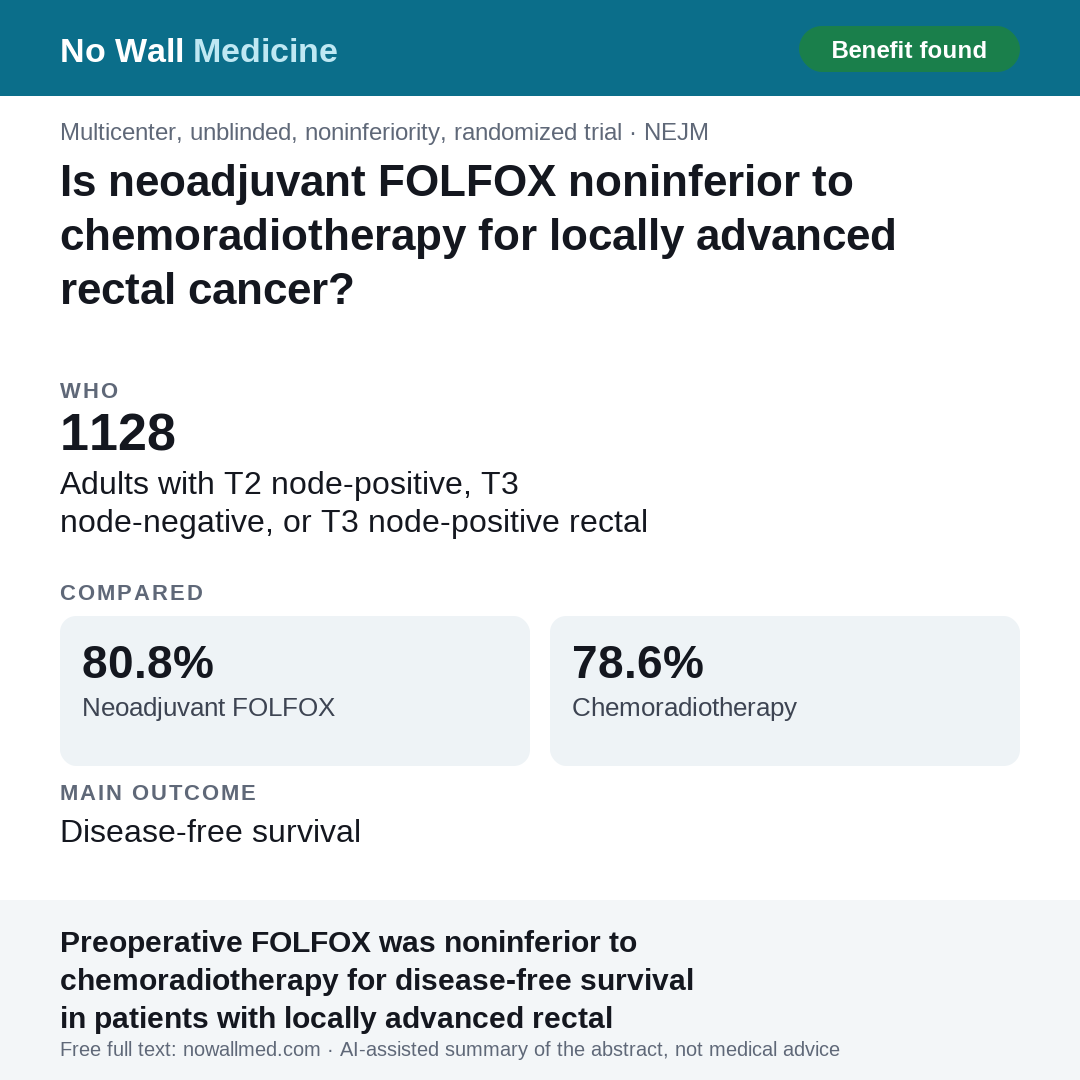
Preoperative Treatment of Locally Advanced Rectal Cancer
Multicenter, unblinded, noninferiority, randomized trialBenefit found
Is neoadjuvant FOLFOX noninferior to chemoradiotherapy for locally advanced rectal cancer?
Who
1128
Adults with T2 node-positive, T3 node-negative, or T3 node-positive rectal cancer · Multicenter
Compared
80.8%Neoadjuvant FOLFOX (95% CI, 77.9 to 83.7)
78.6%Chemoradiotherapy (95% CI, 75.4 to 81.8)
Main outcome
Disease-free survival
Result: hazard ratio 0.92; 90.2% confidence interval [CI], 0.74 to 1.14
Bottom line: Preoperative FOLFOX was noninferior to chemoradiotherapy for disease-free survival in patients with locally advanced rectal cancer.
Funded by: National Cancer Institute
NEJM · 2023-06-04Download image
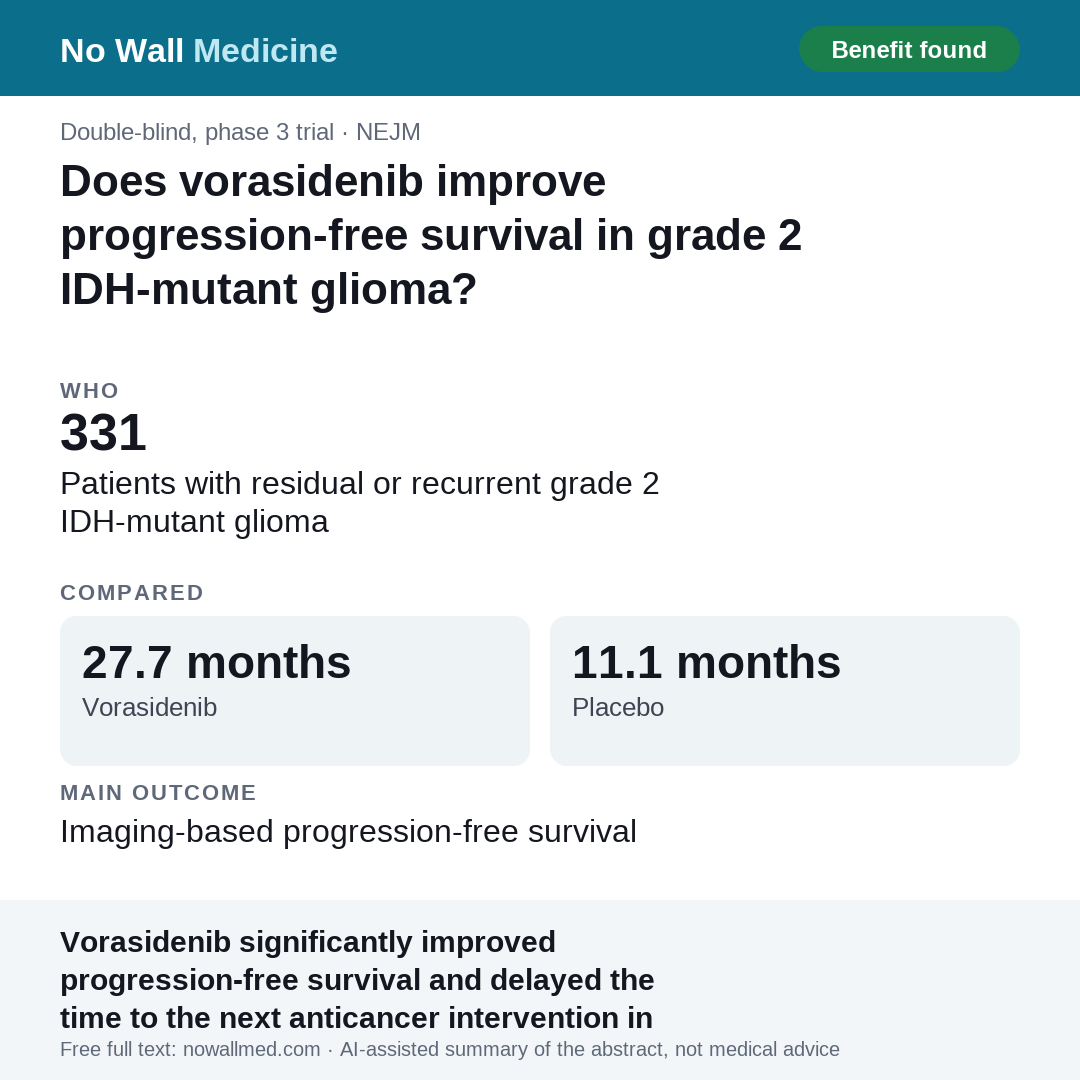
Vorasidenib in IDH1- or IDH2-Mutant Low-Grade Glioma
Double-blind, phase 3 trialBenefit found
Does vorasidenib improve progression-free survival in grade 2 IDH-mutant glioma?
Who
331
Patients with residual or recurrent grade 2 IDH-mutant glioma
Compared
27.7 monthsVorasidenib
11.1 monthsPlacebo
Main outcome
Imaging-based progression-free survival
Result: hazard ratio 0.39 (95% CI 0.27 to 0.56)
Bottom line: Vorasidenib significantly improved progression-free survival and delayed the time to the next anticancer intervention in grade 2 IDH-mutant glioma.
Funded by: Servier
NEJM · 2023-06-04Download image
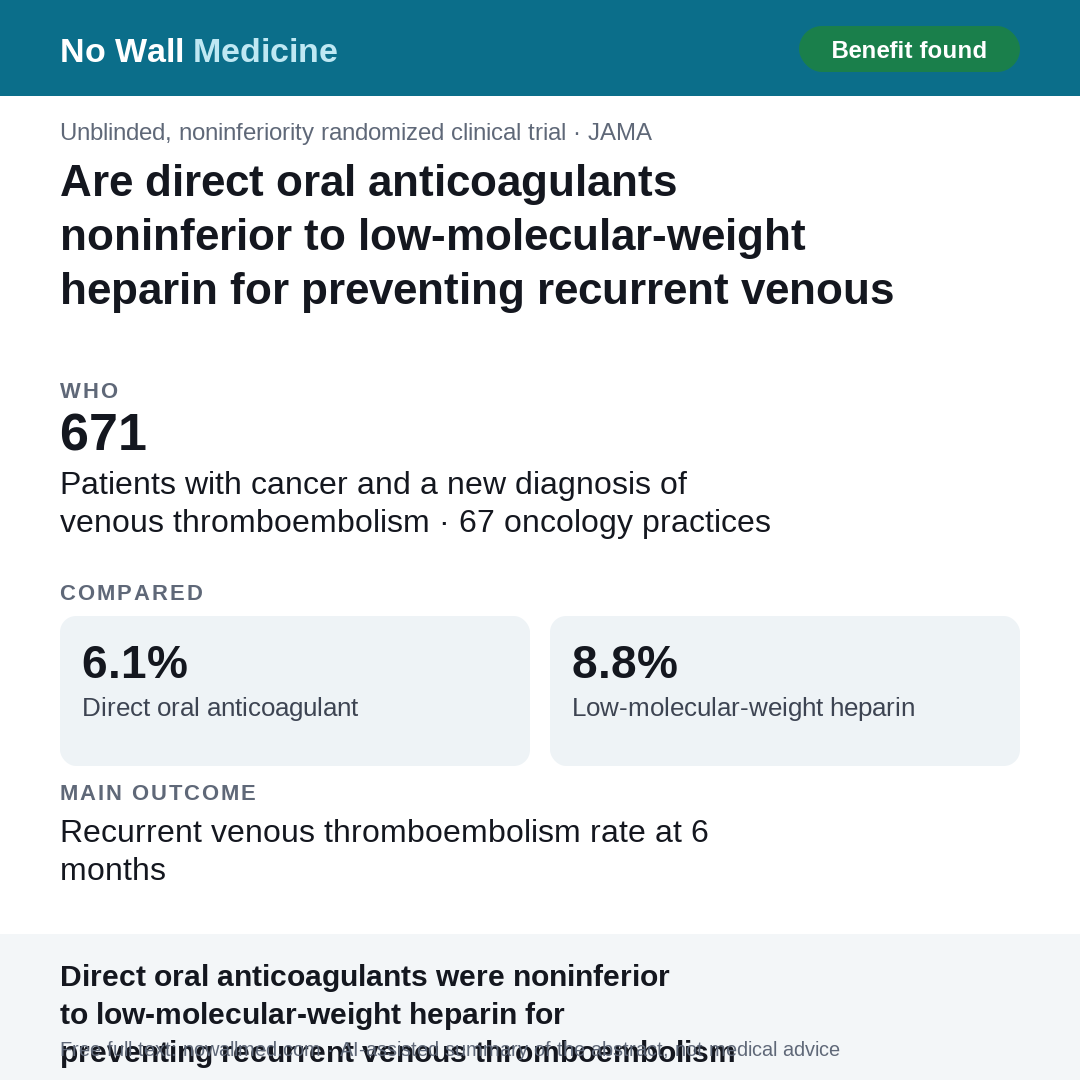
Direct Oral Anticoagulants vs Low-Molecular-Weight Heparin and Recurrent VTE in Patients With Cancer: A Randomized Clinical Trial
Unblinded, noninferiority randomized clinical trialBenefit found
Are direct oral anticoagulants noninferior to low-molecular-weight heparin for preventing recurrent venous thromboembolism in cancer patients?
Who
671
Patients with cancer and a new diagnosis of venous thromboembolism · 67 oncology practices in the United States
Compared
6.1%Direct oral anticoagulant
8.8%Low-molecular-weight heparin
Main outcome
Recurrent venous thromboembolism rate at 6 months
Result: difference, -2.7%; 1-sided 95% CI, -100% to 0.7%
Bottom line: Direct oral anticoagulants were noninferior to low-molecular-weight heparin for preventing recurrent venous thromboembolism in patients with cancer.
JAMA · 2023-06-02Download image
Genetically adjusted PSA levels for prostate cancer screening
Meta-analysis of menBenefit found
Does genetically adjusted PSA improve screening?
Who
95768
men of European ancestry and others
Compared
Genetically adjusted PSA
Unadjusted PSA
Main outcome
prostate cancer detection
Result: odds ratio 3.44 (no confidence interval given)
Bottom line: Genetically adjusted PSA improves screening
Nat Med · 2023-06-01Download image

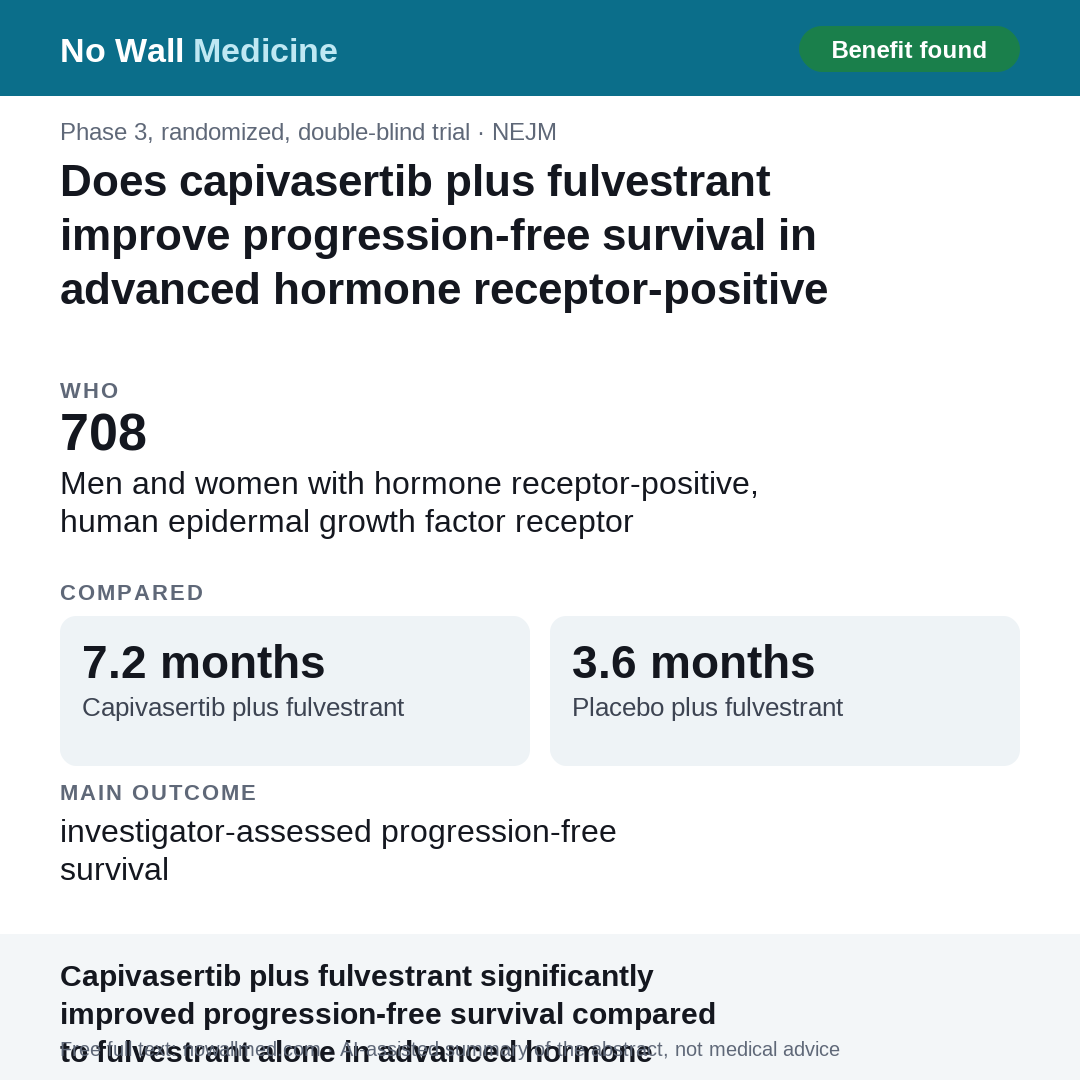
Capivasertib in Hormone Receptor-Positive Advanced Breast Cancer
Phase 3, randomized, double-blind trialBenefit found
Does capivasertib plus fulvestrant improve progression-free survival in advanced hormone receptor-positive breast cancer?
Who
708
Men and women with hormone receptor-positive, human epidermal growth factor receptor 2-negative advanced breast cancer
Compared
7.2 monthsCapivasertib plus fulvestrant
3.6 monthsPlacebo plus fulvestrant
Main outcome
investigator-assessed progression-free survival
Result: hazard ratio 0.60 (95% CI 0.51 to 0.71)
Bottom line: Capivasertib plus fulvestrant significantly improved progression-free survival compared to fulvestrant alone in advanced hormone receptor-positive breast cancer.
Funded by: AstraZeneca and the National Cancer Institute
NEJM · 2023-05-31Download image
Polygenic prediction of preeclampsia and gestational hypertension
Multi-ancestry meta-analysisBenefit found
Can polygenic risk scores predict preeclampsia and gestational hypertension?
Who
Maternal DNA sequence variants in cases and controls
Compared
Preeclampsia and eclampsia: 20,064 cases and 703,117 control individuals
Gestational hypertension: 11,027 cases and 412,788 control individuals
Main outcome
Association of maternal DNA sequence variants with hypertensive pregnancy disorders
Bottom line: Polygenic risk scores predicted hypertensive pregnancy disorders and reclassified eligibility for low-dose aspirin prevention.
Nat Med · 2023-05-29Download image

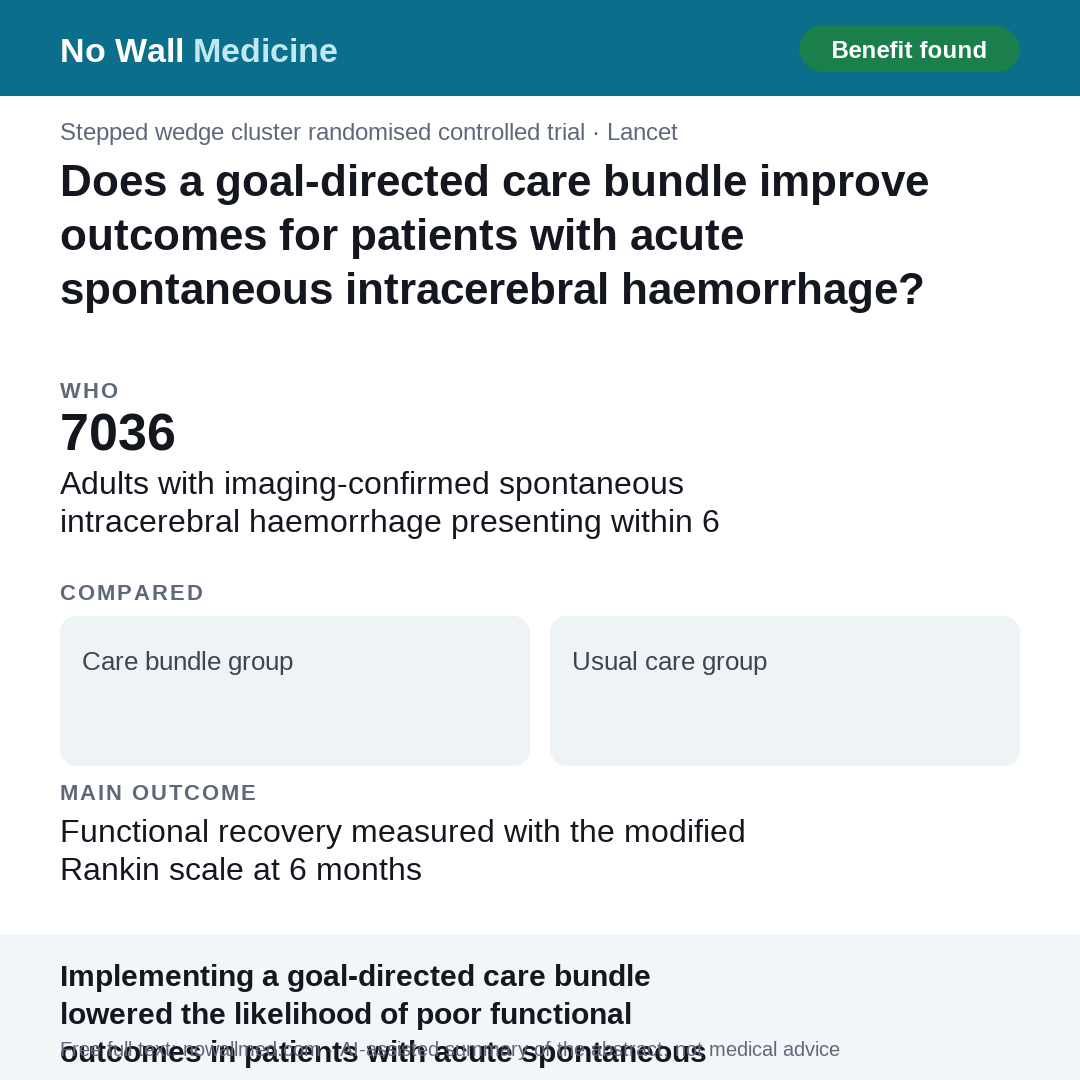
The third Intensive Care Bundle with Blood Pressure Reduction in Acute Cerebral Haemorrhage Trial (INTERACT3): an international, stepped wedge cluster randomised controlled trial
Stepped wedge cluster randomised controlled trialBenefit found
Does a goal-directed care bundle improve outcomes for patients with acute spontaneous intracerebral haemorrhage?
Who
7036
Adults with imaging-confirmed spontaneous intracerebral haemorrhage presenting within 6 hours · 121 hospitals in ten countries
Compared
Care bundle group
Usual care group
Main outcome
Functional recovery measured with the modified Rankin scale at 6 months
Result: common odds ratio 0·86 (95% CI 0·76-0·97)
Bottom line: Implementing a goal-directed care bundle lowered the likelihood of poor functional outcomes in patients with acute spontaneous intracerebral haemorrhage.
Lancet · 2023-05-25Download image
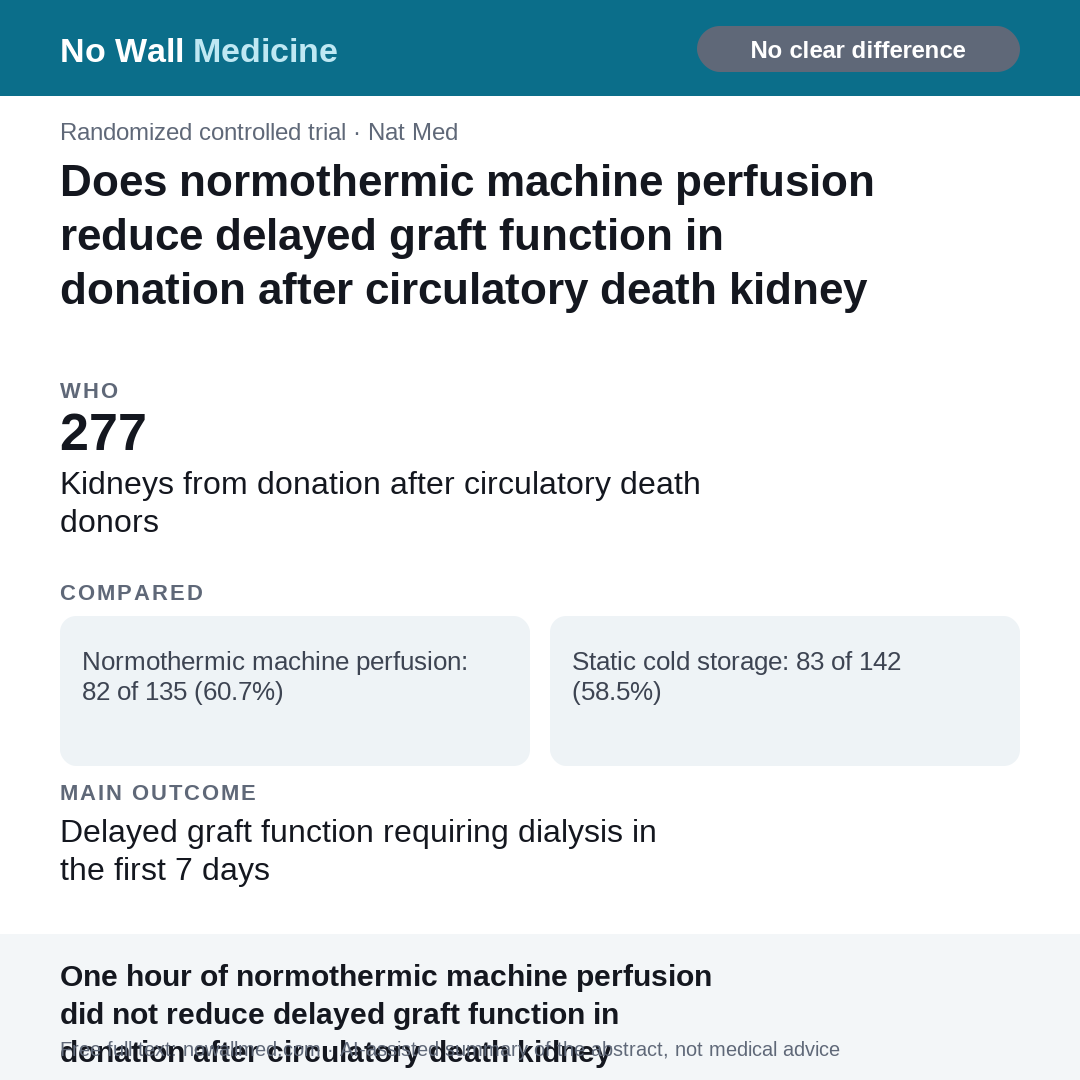
Normothermic machine perfusion versus static cold storage in donation after circulatory death kidney transplantation: a randomized controlled trial
Randomized controlled trialNo clear difference
Does normothermic machine perfusion reduce delayed graft function in donation after circulatory death kidney transplantation?
Who
277
Kidneys from donation after circulatory death donors
Compared
Normothermic machine perfusion: 82 of 135 (60.7%)
Static cold storage: 83 of 142 (58.5%)
Main outcome
Delayed graft function requiring dialysis in the first 7 days
Result: adjusted odds ratio 1.13 (95% confidence interval 0.69-1.84)
Bottom line: One hour of normothermic machine perfusion did not reduce delayed graft function in donation after circulatory death kidney transplants.
Nat Med · 2023-05-25Download image
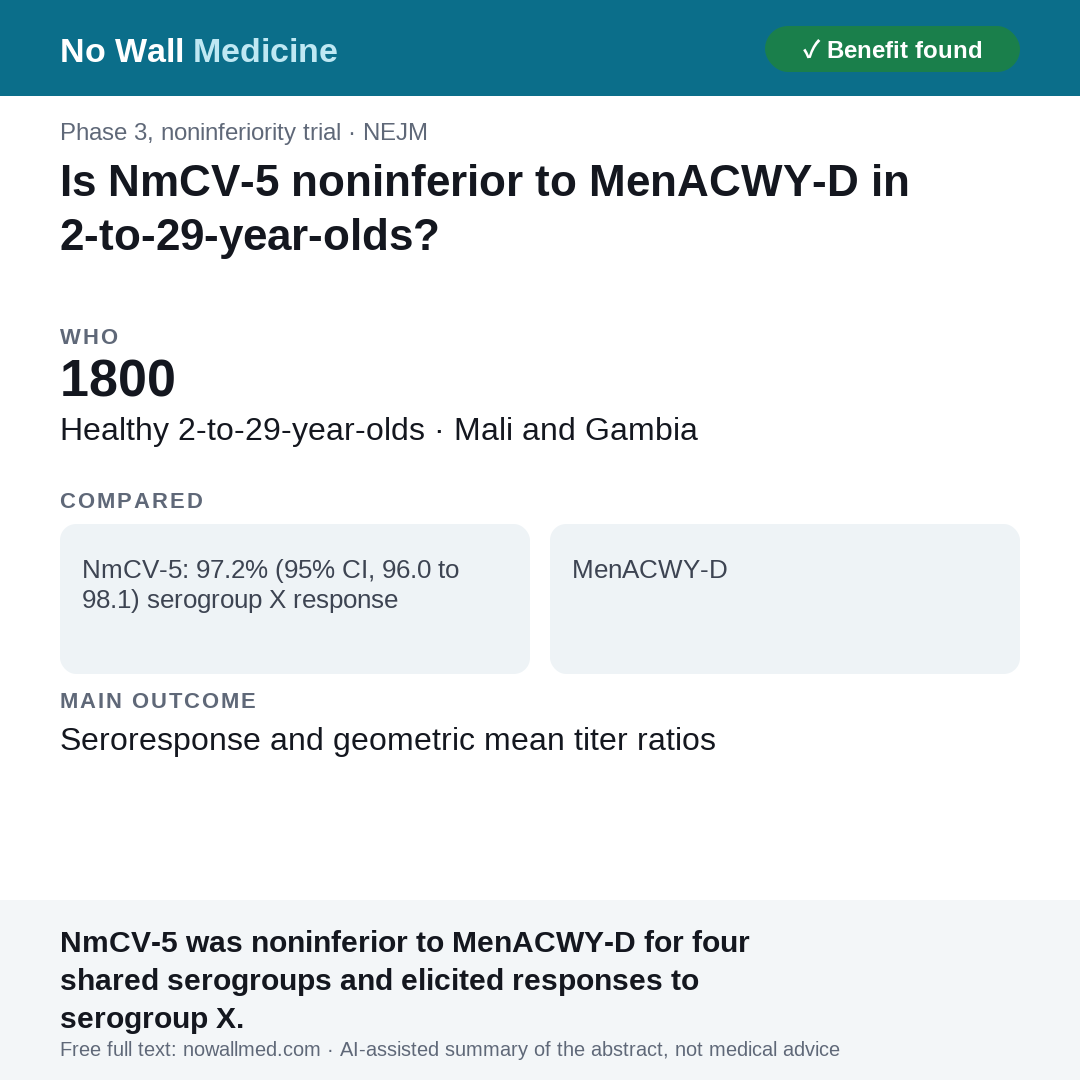
Meningococcal ACWYX Conjugate Vaccine in 2-to-29-Year-Olds in Mali and Gambia
Phase 3, noninferiority trialBenefit found
Is NmCV-5 noninferior to MenACWY-D in 2-to-29-year-olds?
Who
1800
Healthy 2-to-29-year-olds · Mali and Gambia
Compared
NmCV-5: 97.2% (95% CI, 96.0 to 98.1) serogroup X response
MenACWY-D
Main outcome
Seroresponse and geometric mean titer ratios
Bottom line: NmCV-5 was noninferior to MenACWY-D for four shared serogroups and elicited responses to serogroup X.
Funded by: United Kingdom Foreign, Commonwealth, and Development Office and others
NEJM · 2023-05-24Download image
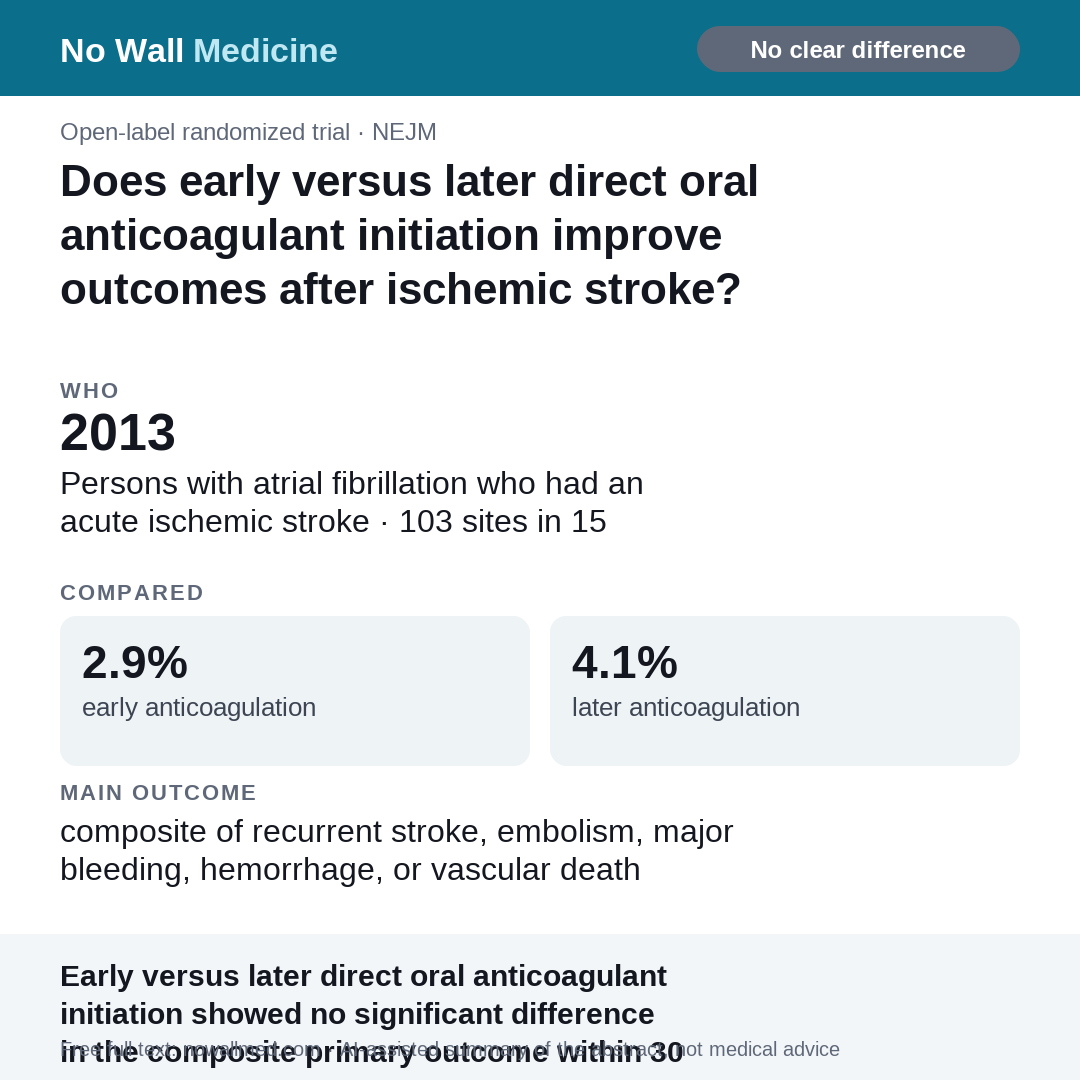
Early versus Later Anticoagulation for Stroke with Atrial Fibrillation
Open-label randomized trialNo clear difference
Does early versus later direct oral anticoagulant initiation improve outcomes after ischemic stroke?
Who
2013
Persons with atrial fibrillation who had an acute ischemic stroke · 103 sites in 15 countries
Compared
2.9%early anticoagulation
4.1%later anticoagulation
Main outcome
composite of recurrent stroke, embolism, major bleeding, hemorrhage, or vascular death
Result: risk difference, -1.18 percentage points; 95% confidence interval, -2.84 to 0.47
Bottom line: Early versus later direct oral anticoagulant initiation showed no significant difference in the composite primary outcome within 30 days.
Funded by: Swiss National Science Foundation and others
NEJM · 2023-05-24Download image