Visual abstracts
New randomized trials and meta-analyses from leading journals at a glance: who was studied, what was compared, and what was found. Every paper is free to read in full.
All specialtiesCardiology 4763Oncology 4042Gastroenterology & Hepatology 1902Infectious Disease 3756Neurology 1872Psychiatry & Mental Health 2214Pulmonology 2042Critical Care 1319Endocrinology & Diabetes 2544Pediatrics 2889Surgery 2479Orthopedics & Sports Medicine 917Neurosurgery 525Cardiothoracic & Vascular Surgery 656Plastic & Reconstructive Surgery 574Nephrology 1107Rheumatology 810Hematology 1090Dermatology 611Ophthalmology 532Obstetrics & Gynecology 1645Public & Global Health 1037Radiology & Imaging 617Anesthesiology 957Urology 745ENT (Otolaryngology) 494Emergency Medicine 481Allergy & Immunology 309Geriatrics 972Family Medicine & Primary Care 533Medical Genetics & Genomics 659Pathology & Laboratory Medicine 156Physical Medicine & Rehabilitation 734Palliative Care 421Nutrition 1560Digital Health & AI 2133General Medicine 318
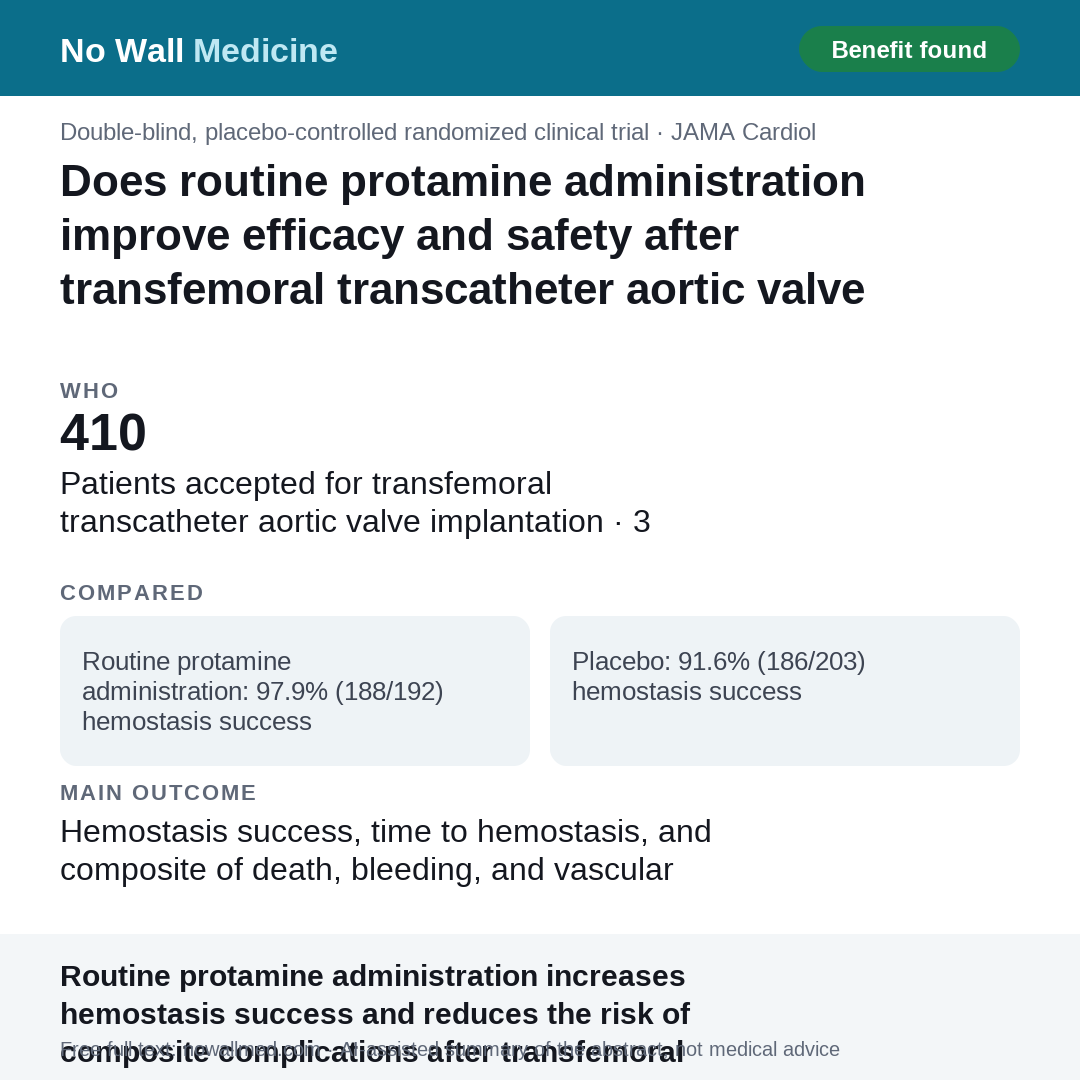
Routine Protamine Administration for Bleeding in Transcatheter Aortic Valve Implantation: The ACE-PROTAVI Randomized Clinical Trial
Double-blind, placebo-controlled randomized clinical trialBenefit found
Does routine protamine administration improve efficacy and safety after transfemoral transcatheter aortic valve implantation?
Who
410
Patients accepted for transfemoral transcatheter aortic valve implantation · 3 Australian hospitals
Compared
Routine protamine administration: 97.9% (188/192) hemostasis success
Placebo: 91.6% (186/203) hemostasis success
Main outcome
Hemostasis success, time to hemostasis, and composite of death, bleeding, and vascular complications
Result: OR, 0.37 (95% CI, 0.1-0.8)
Bottom line: Routine protamine administration increases hemostasis success and reduces the risk of composite complications after transfemoral transcatheter aortic valve implantation.
JAMA Cardiol · 2024-08-14Download image
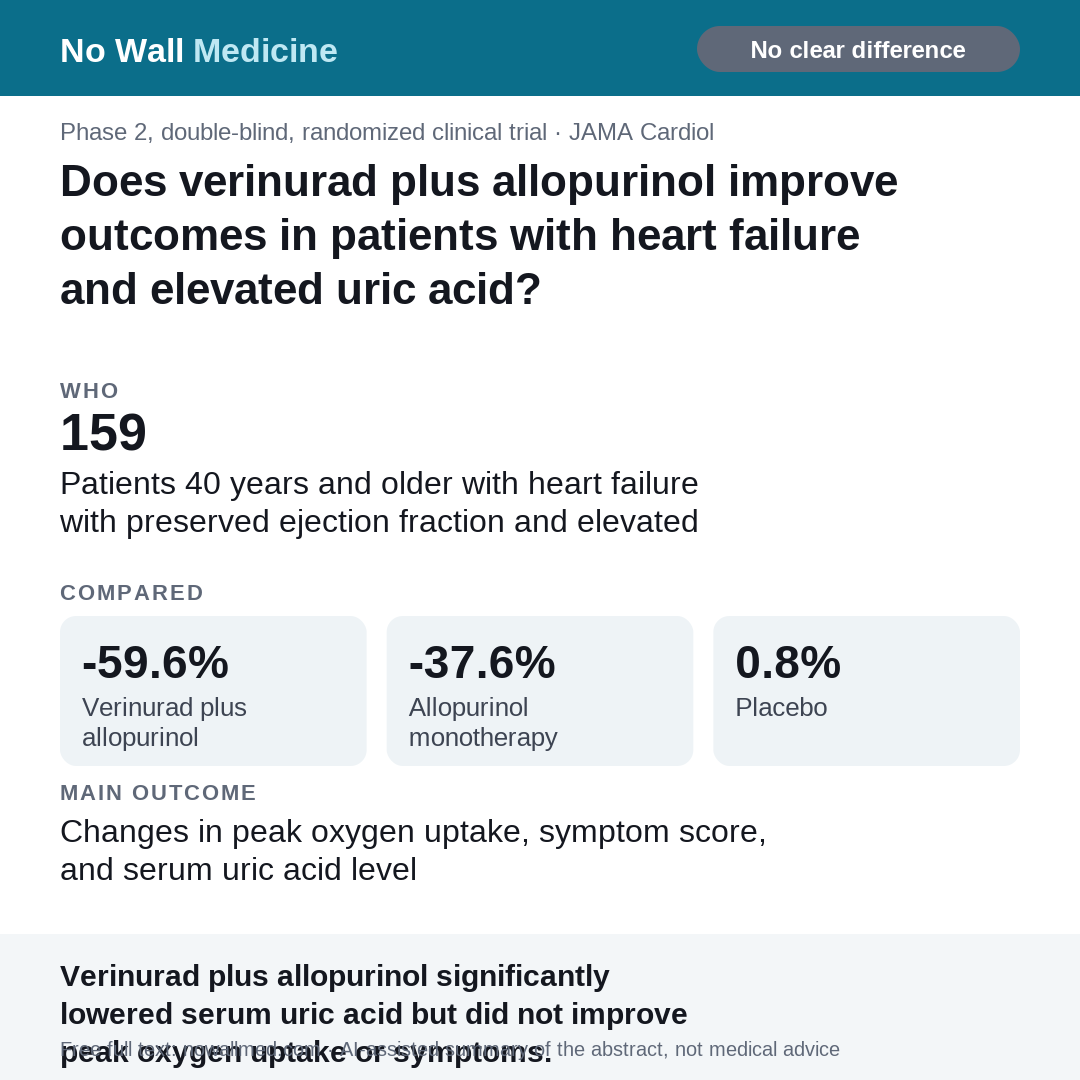
Verinurad Plus Allopurinol for Heart Failure With Preserved Ejection Fraction: The AMETHYST Randomized Clinical Trial
Phase 2, double-blind, randomized clinical trialNo clear difference
Does verinurad plus allopurinol improve outcomes in patients with heart failure and elevated uric acid?
Who
159
Patients 40 years and older with heart failure with preserved ejection fraction and elevated serum uric acid · 59 centers in 12 countries
Compared
-59.6%Verinurad plus allopurinol (mean change in serum uric acid)
-37.6%Allopurinol monotherapy (mean change in serum uric acid)
0.8%Placebo (mean change in serum uric acid)
Main outcome
Changes in peak oxygen uptake, symptom score, and serum uric acid level
Bottom line: Verinurad plus allopurinol significantly lowered serum uric acid but did not improve peak oxygen uptake or symptoms.
JAMA Cardiol · 2024-08-14Download image
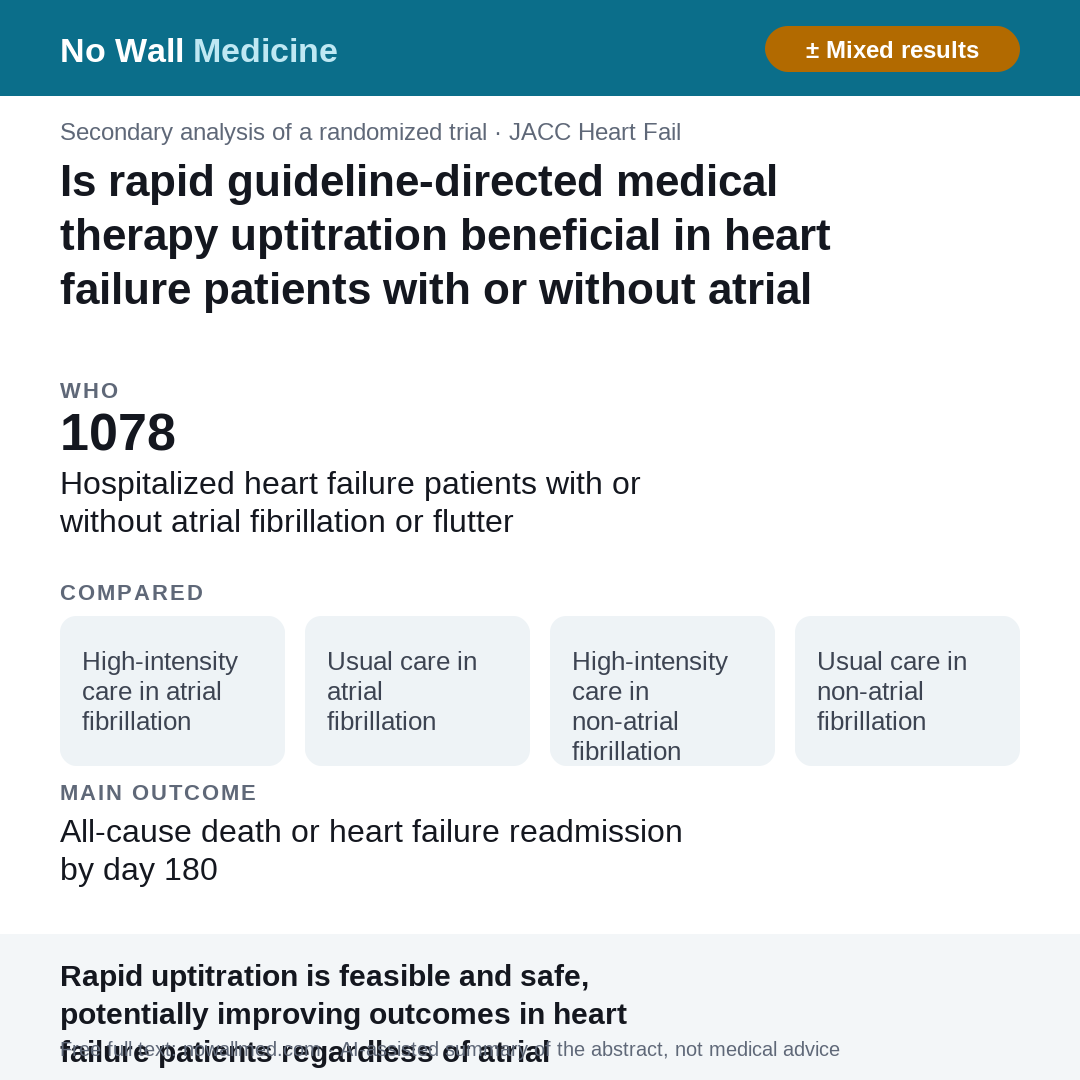
Rapid Uptitration of Guideline-Directed Medical Therapies in Acute Heart Failure With and Without Atrial Fibrillation
Secondary analysis of a randomized trialMixed results
Is rapid guideline-directed medical therapy uptitration beneficial in heart failure patients with or without atrial fibrillation?
Who
1078
Hospitalized heart failure patients with or without atrial fibrillation or flutter
Compared
High-intensity care in atrial fibrillation
Usual care in atrial fibrillation
High-intensity care in non-atrial fibrillation
Usual care in non-atrial fibrillation
Main outcome
All-cause death or heart failure readmission by day 180
Result: adjusted hazard ratio 0.75 (95% CI 0.48-1.19) in atrial fibrillation; adjusted hazard ratio 0.50 (95% CI 0.31-0.79) in non-atrial fibrillation
Bottom line: Rapid uptitration is feasible and safe, potentially improving outcomes in heart failure patients regardless of atrial fibrillation status.
JACC Heart Fail · 2024-08-14Download image
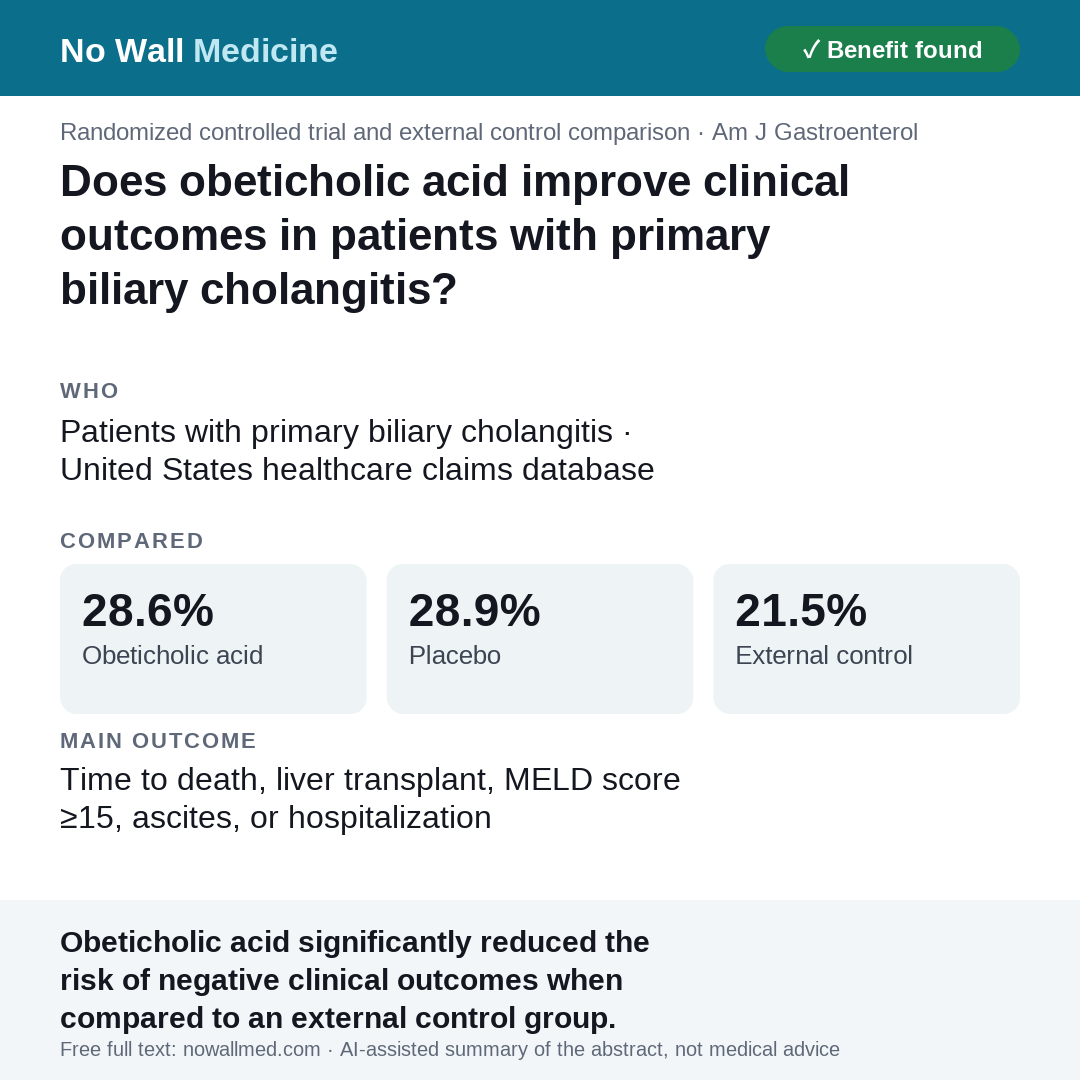
COBALT: A Confirmatory Trial of Obeticholic Acid in Primary Biliary Cholangitis With Placebo and External Controls
Randomized controlled trial and external control comparisonBenefit found
Does obeticholic acid improve clinical outcomes in patients with primary biliary cholangitis?
Who
Patients with primary biliary cholangitis · United States healthcare claims database
Compared
28.6%Obeticholic acid (in randomized controlled trial)
28.9%Placebo (in randomized controlled trial)
21.5%External control
Main outcome
Time to death, liver transplant, MELD score ≥15, ascites, or hospitalization
Result: hazard ratio 0.39 (95% confidence interval 0.22-0.69)
Bottom line: Obeticholic acid significantly reduced the risk of negative clinical outcomes when compared to an external control group.
Limitation: Functional unblinding and treatment crossover confounded the intent-to-treat estimate in the randomized controlled trial.
Am J Gastroenterol · 2024-08-14Download image
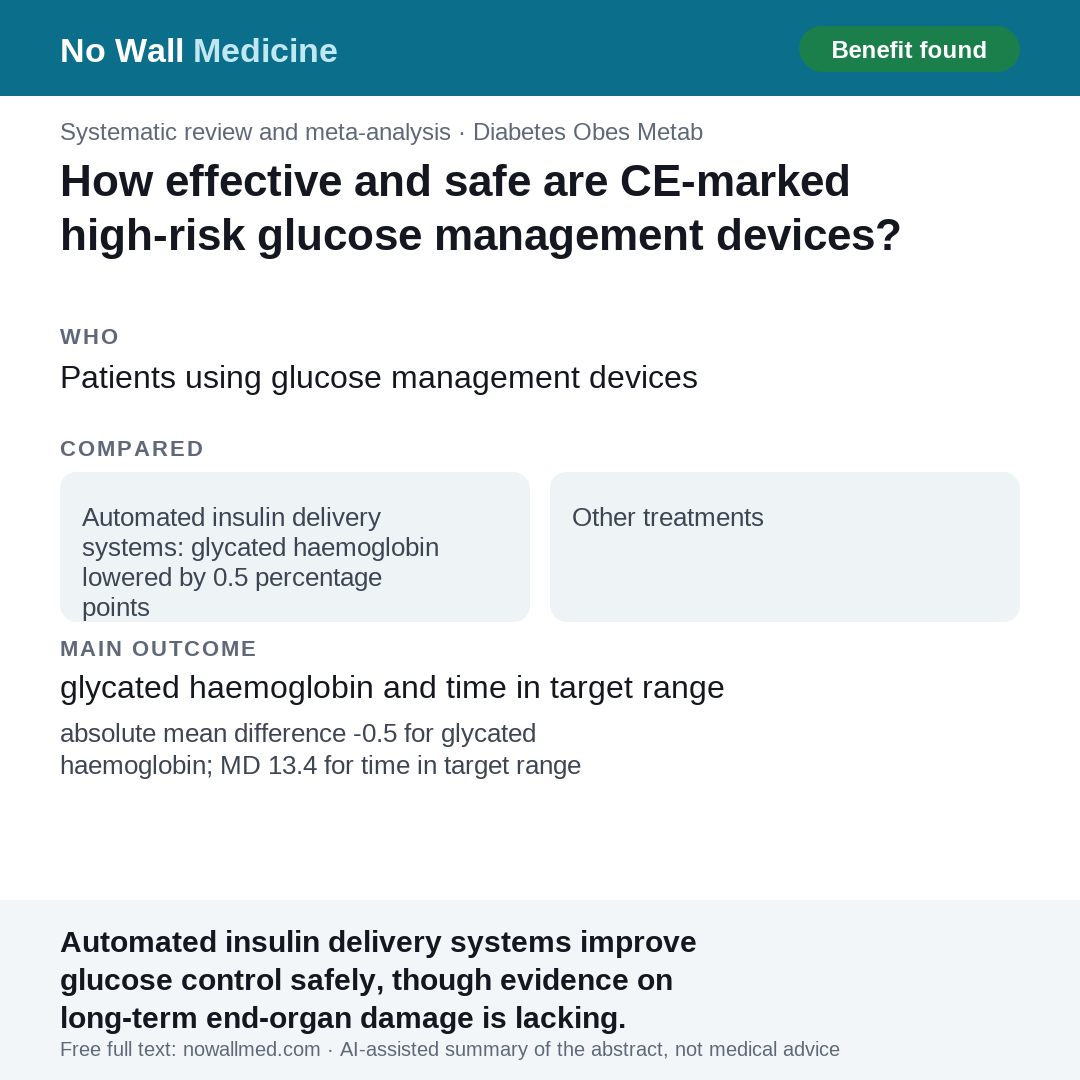
Clinical evidence for high-risk CE-marked medical devices for glucose management: A systematic review and meta-analysis
Systematic review and meta-analysisBenefit found
How effective and safe are CE-marked high-risk glucose management devices?
Who
Patients using glucose management devices
Compared
Automated insulin delivery systems: glycated haemoglobin lowered by 0.5 percentage points
Other treatments
Main outcome
glycated haemoglobin and time in target range
Result: absolute mean difference -0.5 for glycated haemoglobin; MD 13.4 for time in target range
Bottom line: Automated insulin delivery systems improve glucose control safely, though evidence on long-term end-organ damage is lacking.
Diabetes Obes Metab · 2024-08-14Download image
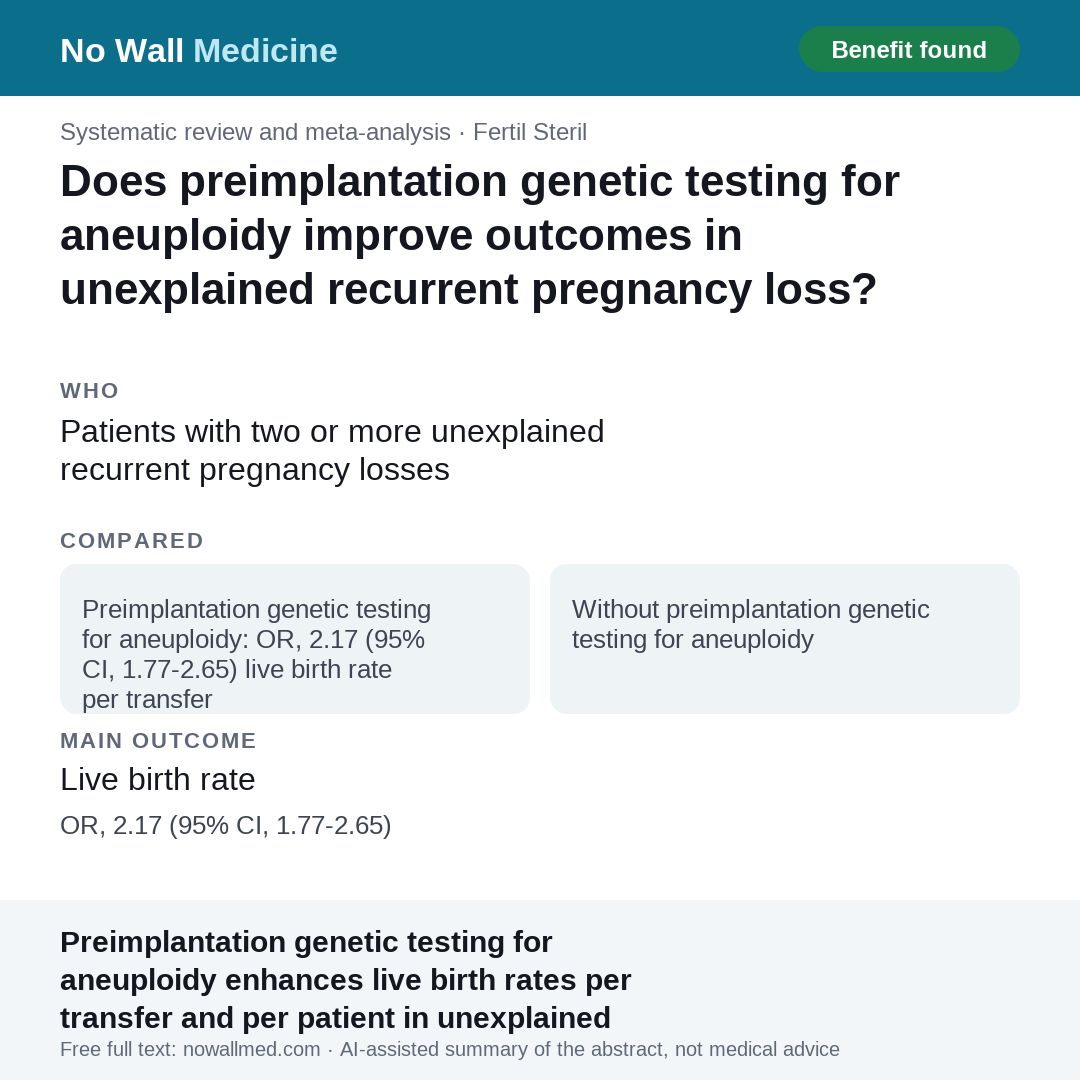
Preimplantation genetic testing for aneuploidy in unexplained recurrent pregnancy loss: a systematic review and meta-analysis
Systematic review and meta-analysisBenefit, low certainty
Does preimplantation genetic testing for aneuploidy improve outcomes in unexplained recurrent pregnancy loss?
Who
Patients with two or more unexplained recurrent pregnancy losses
Compared
Preimplantation genetic testing for aneuploidy: OR, 2.17 (95% CI, 1.77-2.65) live birth rate per transfer
Without preimplantation genetic testing for aneuploidy
Main outcome
Live birth rate
Result: OR, 2.17 (95% CI, 1.77-2.65)
Bottom line: Preimplantation genetic testing for aneuploidy enhances live birth rates per transfer and per patient in unexplained recurrent pregnancy loss.
Fertil Steril · 2024-08-14Download image
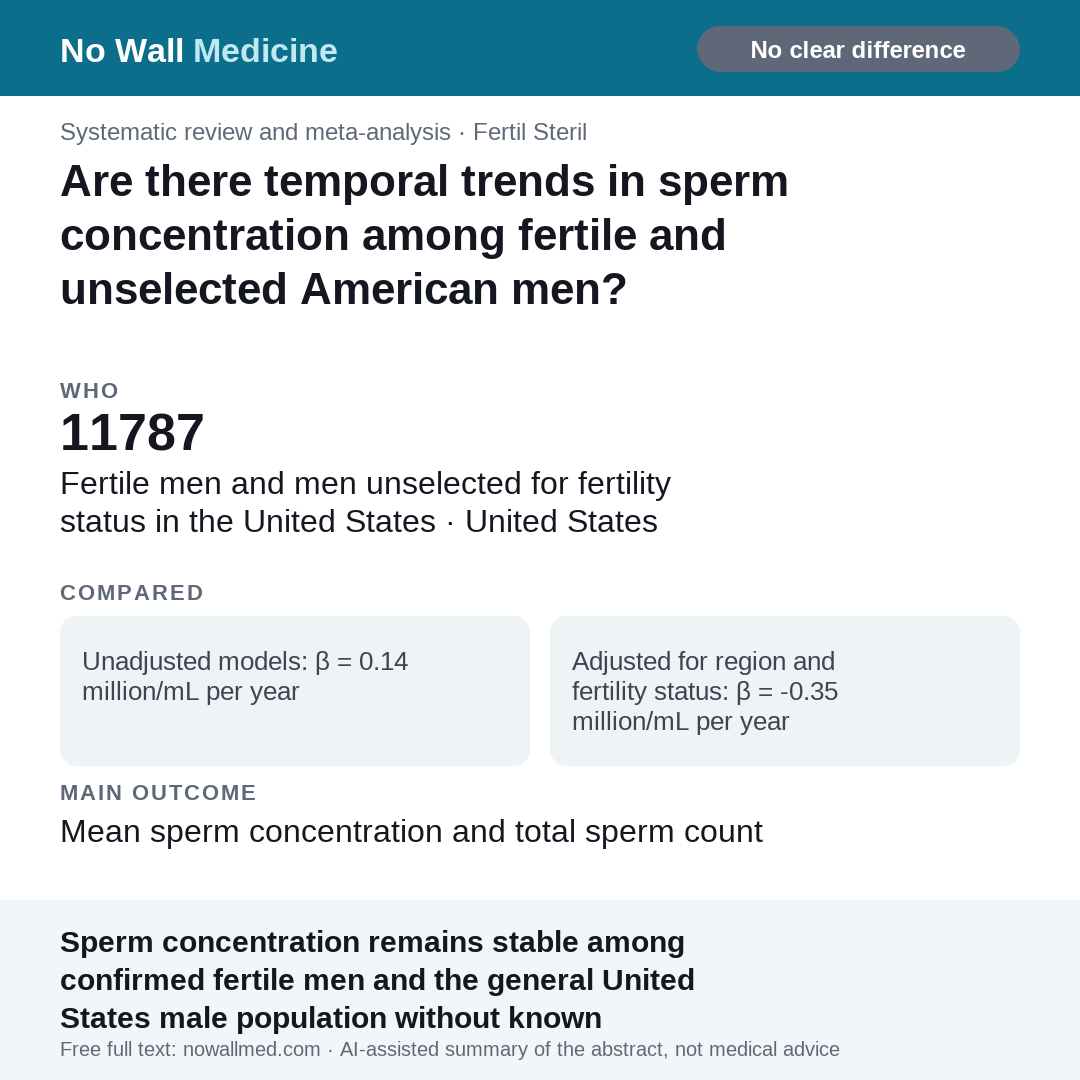
Sperm concentration remains stable among fertile American men: a systematic review and meta-analysis
Systematic review and meta-analysisNo clear difference
Are there temporal trends in sperm concentration among fertile and unselected American men?
Who
11787
Fertile men and men unselected for fertility status in the United States · United States
Compared
Unadjusted models: β = 0.14 million/mL per year
Adjusted for region and fertility status: β = -0.35 million/mL per year
Main outcome
Mean sperm concentration and total sperm count
Bottom line: Sperm concentration remains stable among confirmed fertile men and the general United States male population without known infertility.
Limitation: Further studies are necessary to better understand this important topic.
Fertil Steril · 2024-08-14Download image
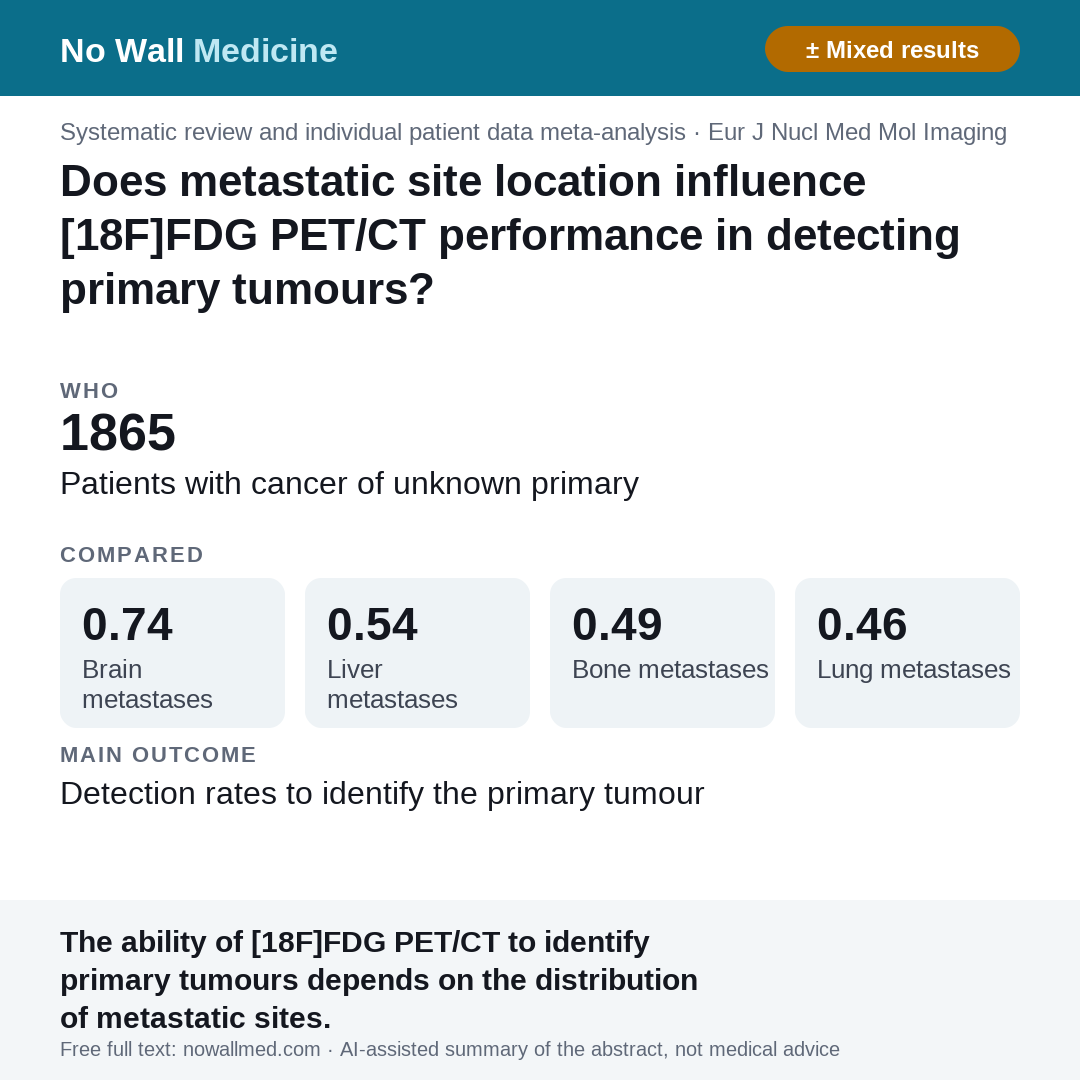
Identifying the primary tumour in patients with cancer of unknown primary (CUP) using [18F]FDG PET/CT: a systematic review and individual patient data meta-analysis
Systematic review and individual patient data meta-analysisMixed results
Does metastatic site location influence [18F]FDG PET/CT performance in detecting primary tumours?
Who
1865
Patients with cancer of unknown primary
Compared
0.74Brain metastases
0.54Liver metastases
0.49Bone metastases
0.46Lung metastases
Main outcome
Detection rates to identify the primary tumour
Bottom line: The ability of [18F]FDG PET/CT to identify primary tumours depends on the distribution of metastatic sites.
Eur J Nucl Med Mol Imaging · 2024-08-14Download image
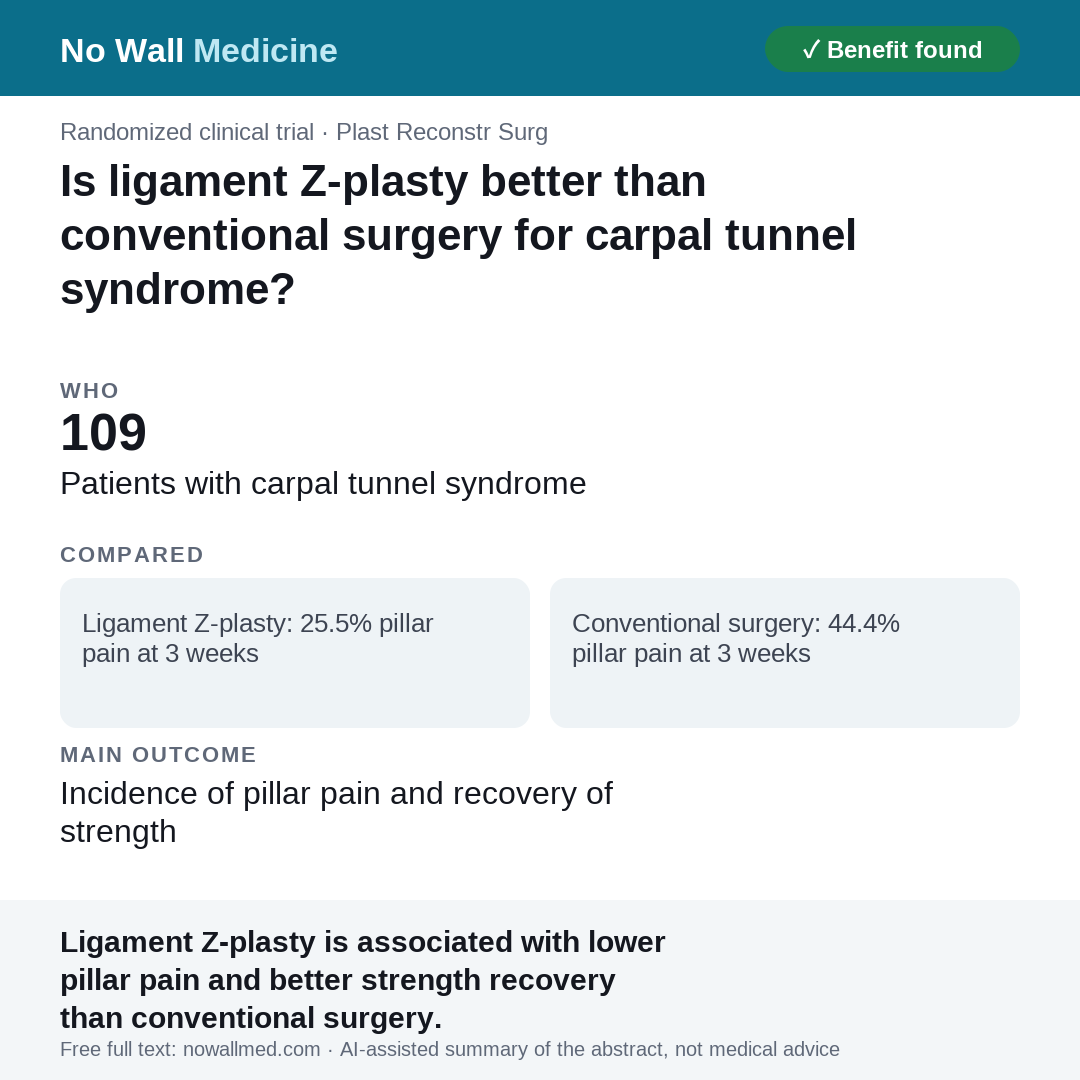
Comparison of Ligament Z-Plasty and Conventional Surgery for the Treatment of Carpal Tunnel Syndrome: A Randomized Clinical Trial
Randomized clinical trialBenefit found
Is ligament Z-plasty better than conventional surgery for carpal tunnel syndrome?
Who
109
Patients with carpal tunnel syndrome
Compared
Ligament Z-plasty: 25.5% pillar pain at 3 weeks
Conventional surgery: 44.4% pillar pain at 3 weeks
Main outcome
Incidence of pillar pain and recovery of strength
Bottom line: Ligament Z-plasty is associated with lower pillar pain and better strength recovery than conventional surgery.
Plast Reconstr Surg · 2024-08-14Download image
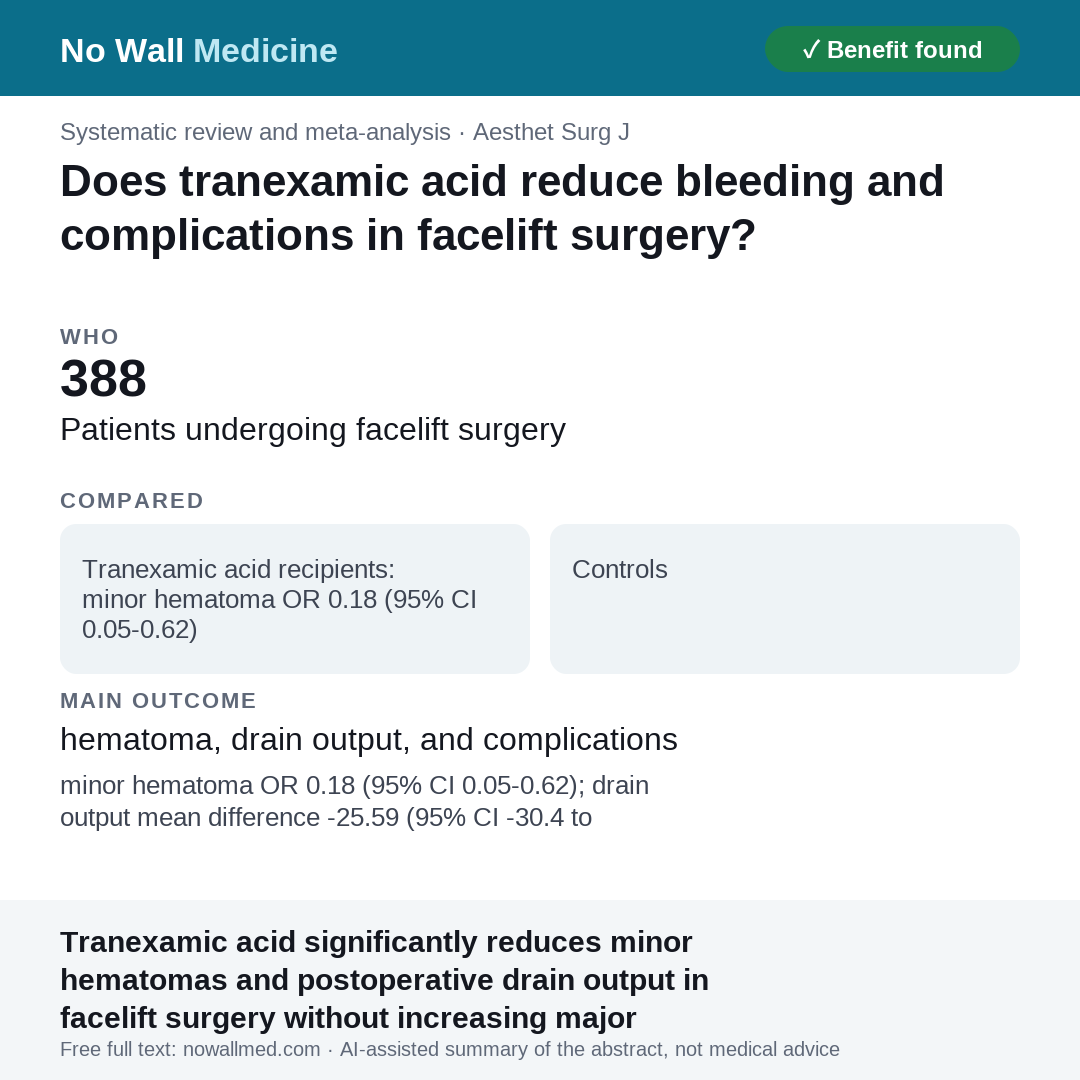
Impact of Tranexamic Acid on Bleeding Outcomes and Complication Rates in Facelift: A Systematic Review and Meta-analysis
Systematic review and meta-analysisBenefit found
Does tranexamic acid reduce bleeding and complications in facelift surgery?
Who
388
Patients undergoing facelift surgery
Compared
Tranexamic acid recipients: minor hematoma OR 0.18 (95% CI 0.05-0.62)
Controls
Main outcome
hematoma, drain output, and complications
Result: minor hematoma OR 0.18 (95% CI 0.05-0.62); drain output mean difference -25.59 (95% CI -30.4 to -20.77)
Bottom line: Tranexamic acid significantly reduces minor hematomas and postoperative drain output in facelift surgery without increasing major complications.
Limitation: further studies are required to explore efficacy with different dosages and administration routes
Aesthet Surg J · 2024-08-14Download image
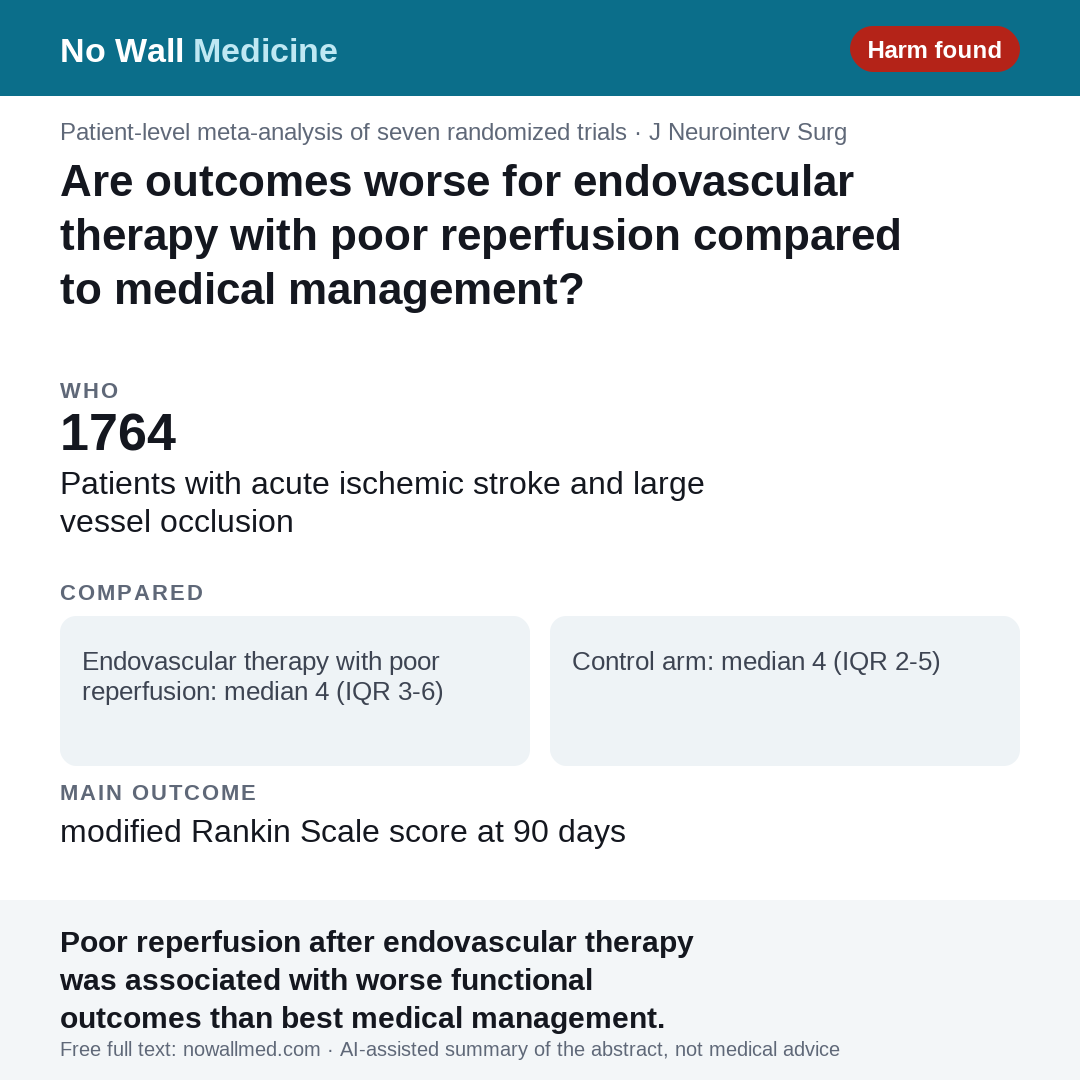
Endovascular therapy in acute ischemic stroke with poor reperfusion is associated with worse outcomes compared with best medical management: a HERMES substudy
Patient-level meta-analysis of seven randomized studiesHarm found
Are outcomes worse for endovascular therapy with poor reperfusion compared to medical management?
Who
1764
Patients with acute ischemic stroke and large vessel occlusion
Compared
Endovascular therapy with poor reperfusion: median 4 (IQR 3-6)
Control arm: median 4 (IQR 2-5)
Main outcome
modified Rankin Scale score at 90 days
Result: adjusted common OR 0.59 (95% CI 0.38 to 0.91)
Bottom line: Poor reperfusion after endovascular therapy was associated with worse functional outcomes than best medical management.
J Neurointerv Surg · 2024-08-14Download image
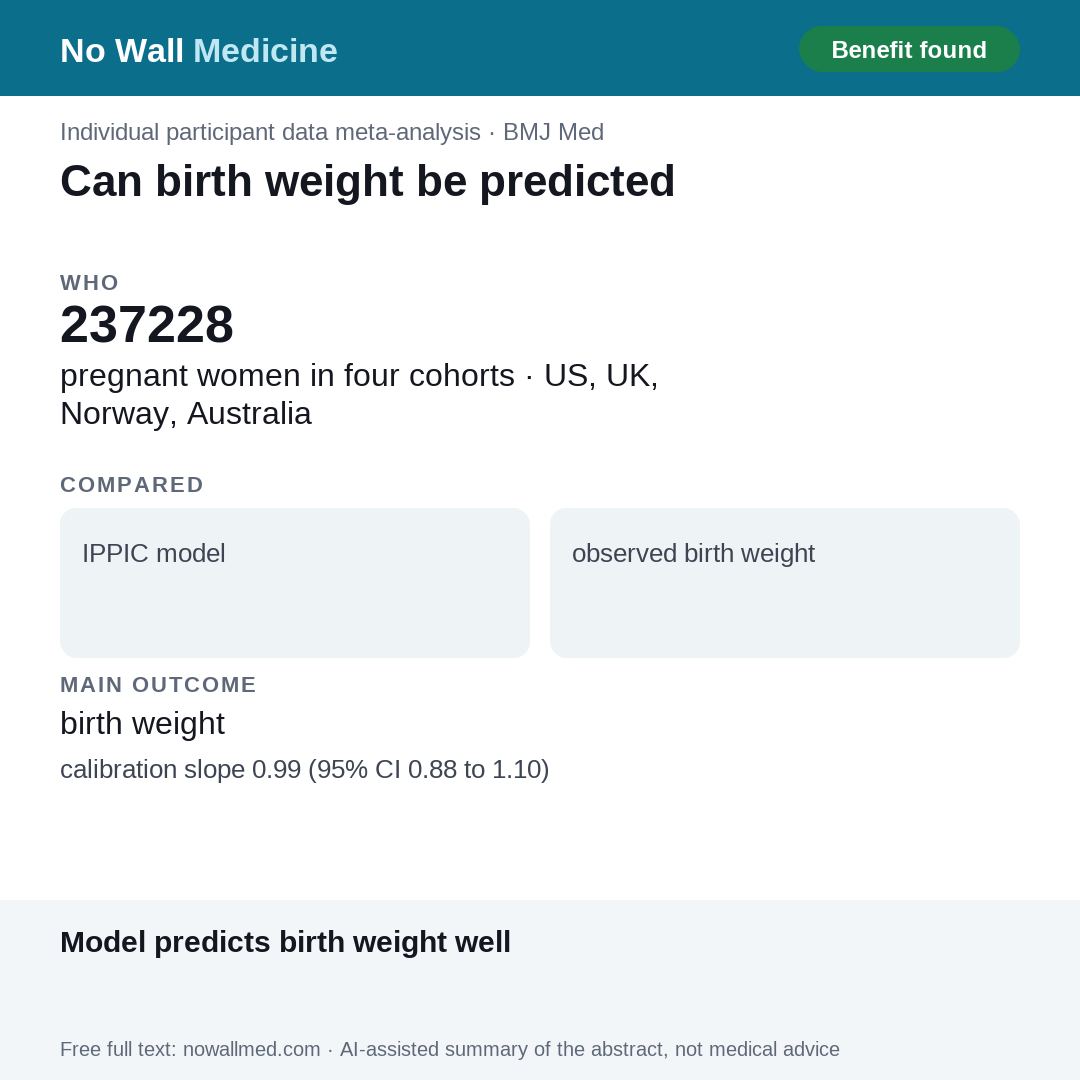
Development and validation of a prognostic model to predict birth weight: individual participant data meta-analysis
Individual participant data meta-analysisKey finding
Can birth weight be predicted
Who
237228
pregnant women in four cohorts · US, UK, Norway, Australia
Compared
IPPIC model
observed birth weight
Main outcome
birth weight
Result: calibration slope 0.99 (95% CI 0.88 to 1.10)
Bottom line: Model predicts birth weight well
BMJ Med · 2024-08-14Download image
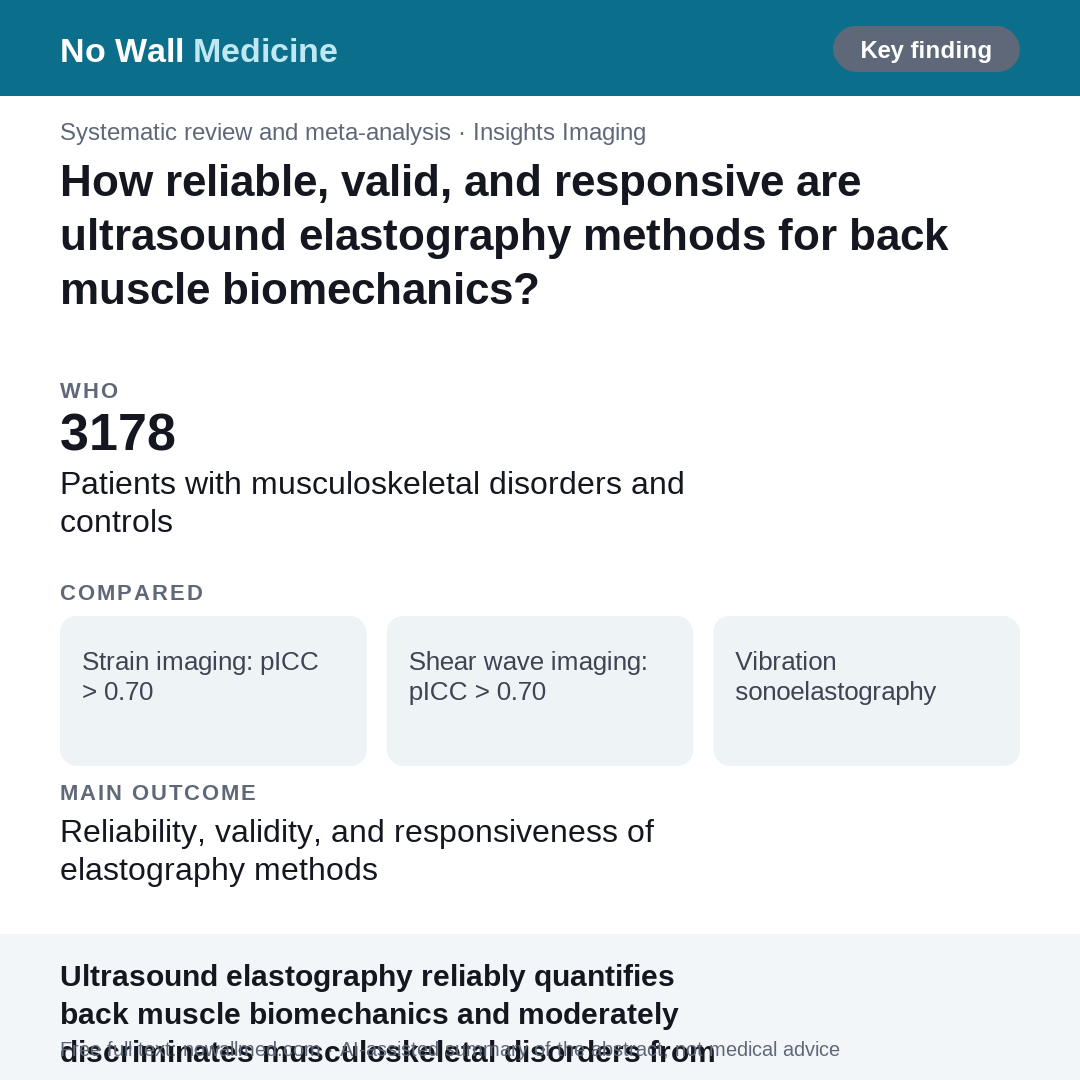
Ultrasound elastography of back muscle biomechanical properties: a systematic review and meta-analysis of current methods
Systematic review and meta-analysisKey finding
How reliable, valid, and responsive are ultrasound elastography methods for back muscle biomechanics?
Who
3178
Patients with musculoskeletal disorders and controls
Compared
Strain imaging: pICC > 0.70
Shear wave imaging: pICC > 0.70
Vibration sonoelastography
Main outcome
Reliability, validity, and responsiveness of elastography methods
Bottom line: Ultrasound elastography reliably quantifies back muscle biomechanics and moderately discriminates musculoskeletal disorders from control conditions.
Insights Imaging · 2024-08-14Download image
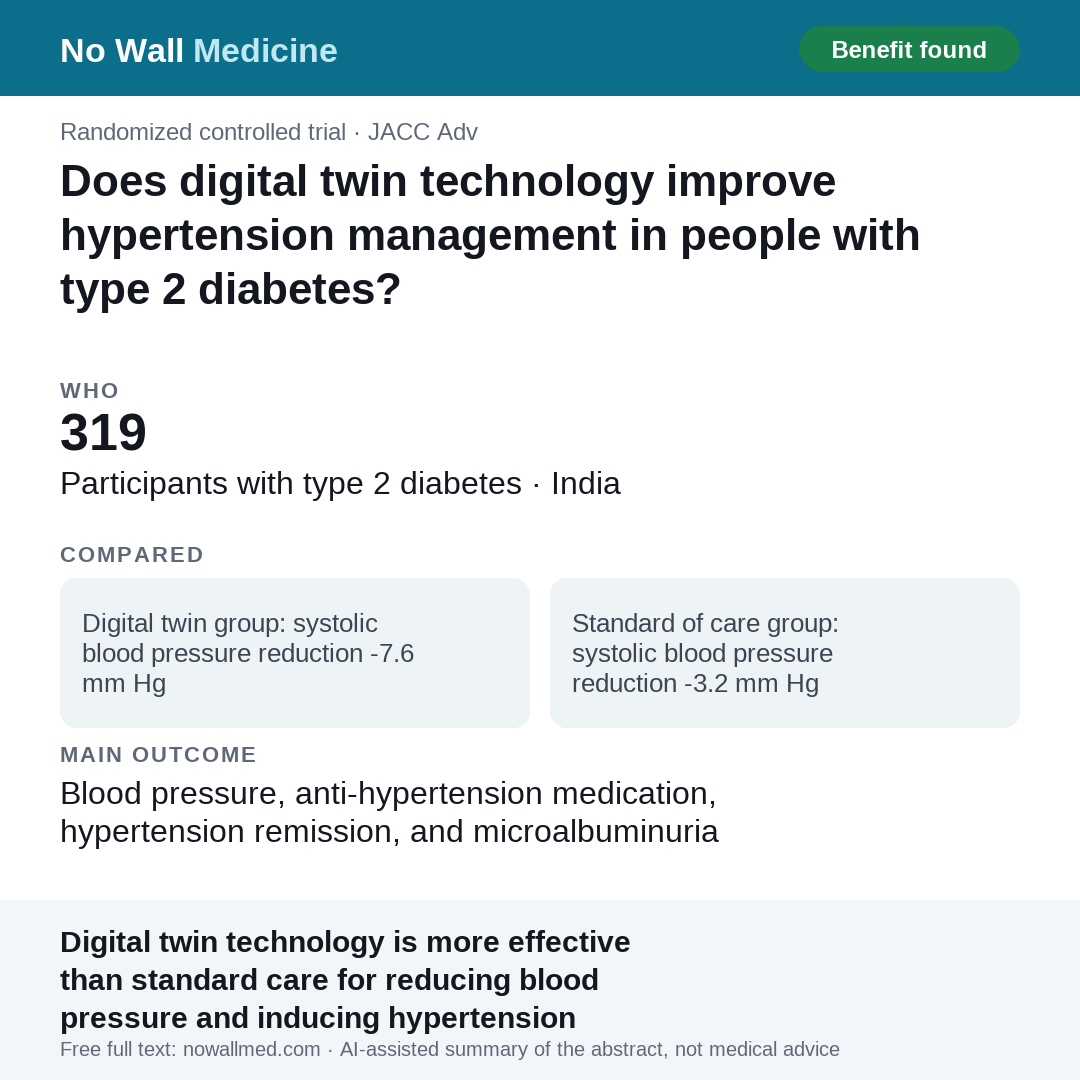
Digital Twin in Managing Hypertension Among People With Type 2 Diabetes: 1-Year Randomized Controlled Trial
Randomized controlled trialBenefit found
Does digital twin technology improve hypertension management in people with type 2 diabetes?
Who
319
Participants with type 2 diabetes · India
Compared
Digital twin group: systolic blood pressure reduction -7.6 mm Hg
Standard of care group: systolic blood pressure reduction -3.2 mm Hg
Main outcome
Blood pressure, anti-hypertension medication, hypertension remission, and microalbuminuria
Bottom line: Digital twin technology is more effective than standard care for reducing blood pressure and inducing hypertension remission.
JACC Adv · 2024-08-14Download image
Impact of an Online Discussion Forum on Self-Guided Internet-Delivered Cognitive Behavioral Therapy for Public Safety Personnel: Randomized Trial
Randomized trialNo clear difference
Does an online discussion forum improve outcomes in self-guided internet-delivered cognitive behavioral therapy for public safety personnel?
Who
107
Public safety personnel · Web-based
Compared
Self-guided internet-delivered cognitive behavioral therapy with forum
Self-guided internet-delivered cognitive behavioral therapy without forum
Main outcome
Changes in depression, anxiety, and posttraumatic stress
Bottom line: Adding a therapist-moderated online discussion forum did not change treatment outcomes for public safety personnel using self-guided therapy.
J Med Internet Res · 2024-08-14Download image

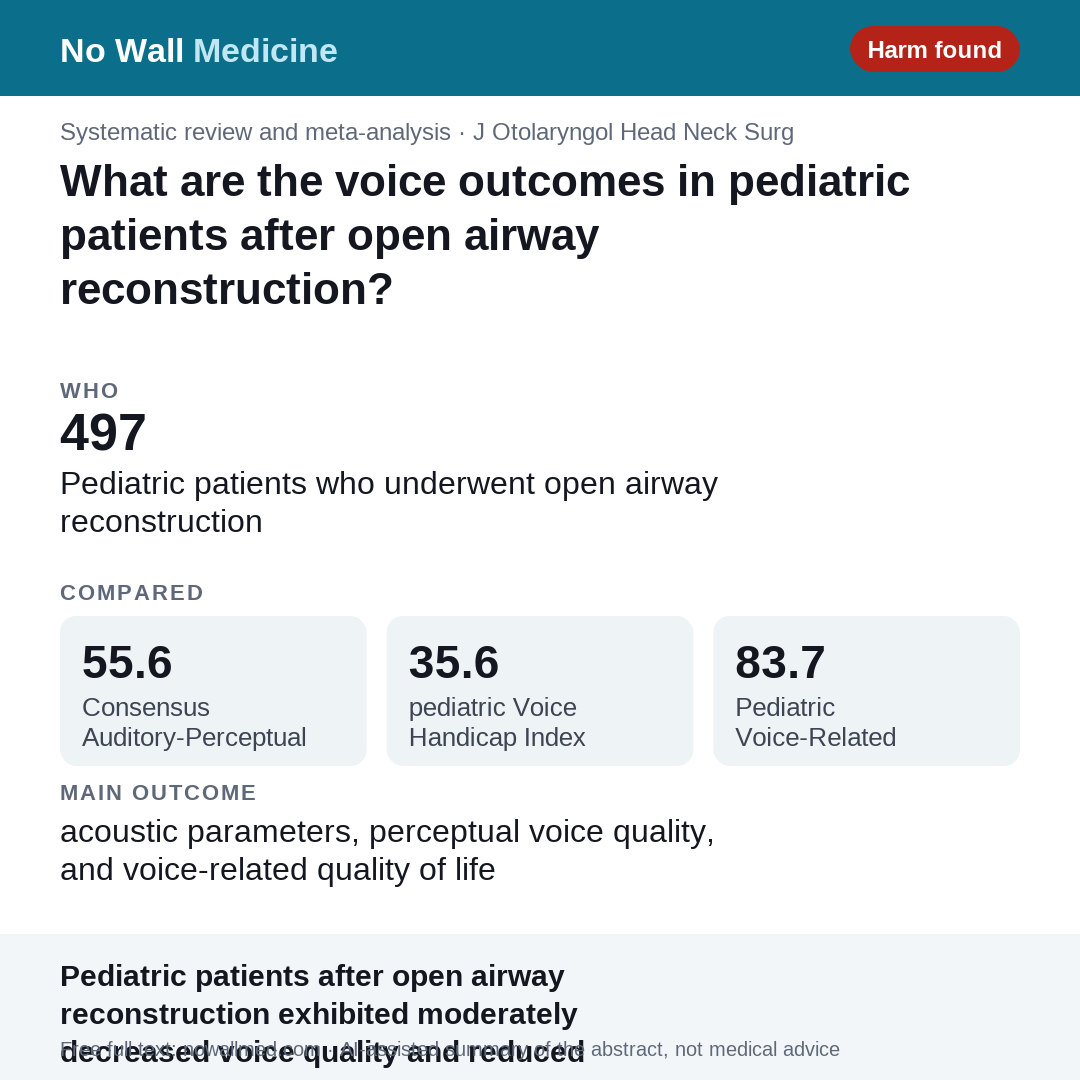
Characterizing Dysphonia After Pediatric Open Airway Reconstruction: Systematic Review and Meta-Analysis
Systematic review and meta-analysisHarm found
What are the voice outcomes in pediatric patients after open airway reconstruction?
Who
497
Pediatric patients who underwent open airway reconstruction
Compared
55.6Consensus Auditory-Perceptual Evaluation of Voice (95% CI: 47.9-63.3)
35.6pediatric Voice Handicap Index (95% CI: 21.4-49.7)
83.7Pediatric Voice-Related Quality of Life Survey (95% CI: 74.1-93.2)
Main outcome
acoustic parameters, perceptual voice quality, and voice-related quality of life
Bottom line: Pediatric patients after open airway reconstruction exhibited moderately decreased voice quality and reduced voice-related quality of life.
Limitation: There was inconsistency in study protocols and outcome measures used.
J Otolaryngol Head Neck Surg · 2024-08-14Download image
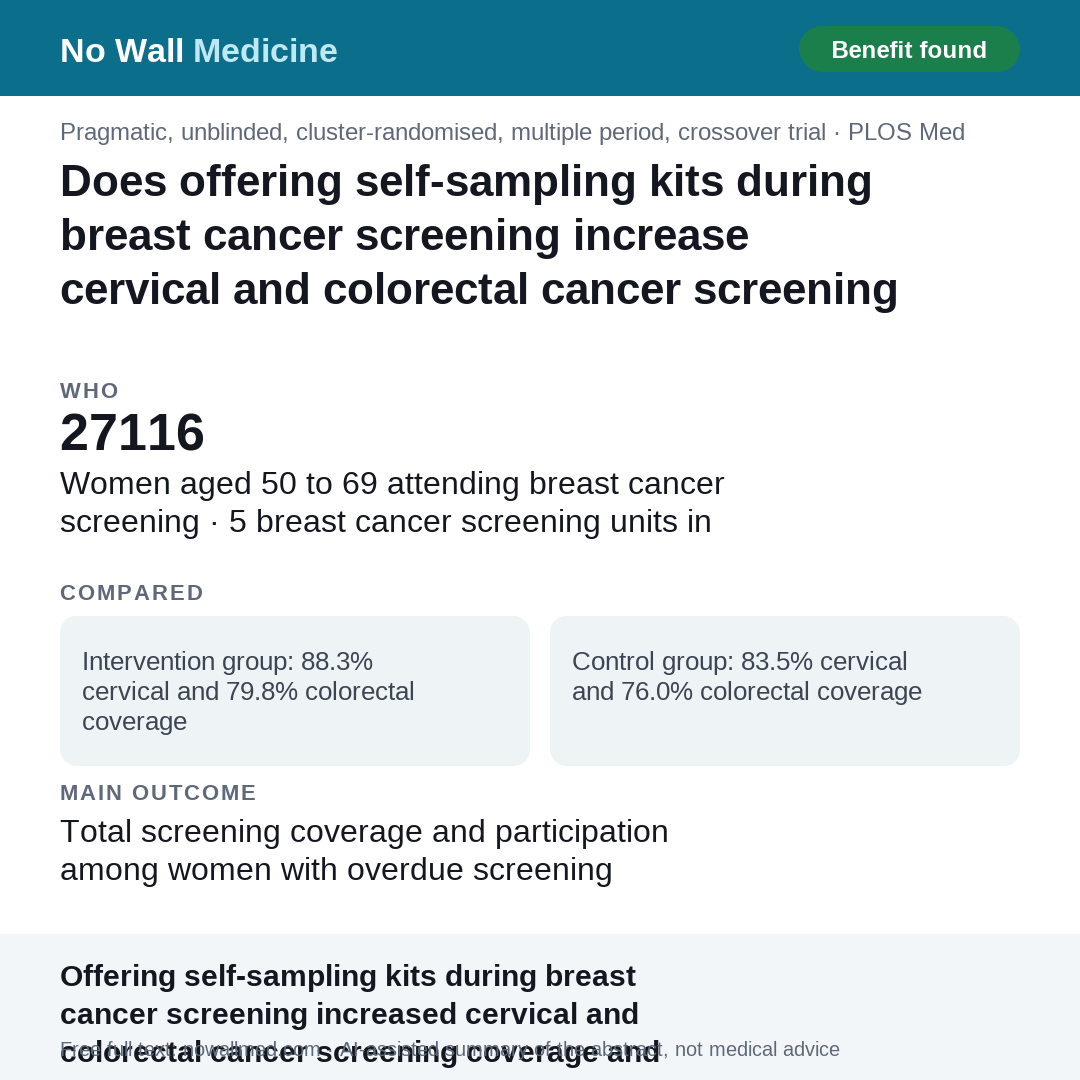
Increasing coverage in cervical and colorectal cancer screening by leveraging attendance at breast cancer screening: A cluster-randomised, crossover trial
Pragmatic, unblinded, cluster-randomised, multiple period, crossover trialBenefit found
Does offering self-sampling kits during breast cancer screening increase cervical and colorectal cancer screening coverage?
Who
27116
Women aged 50 to 69 attending breast cancer screening · 5 breast cancer screening units in Central Denmark Region
Compared
Intervention group: 88.3% cervical and 79.8% colorectal coverage
Control group: 83.5% cervical and 76.0% colorectal coverage
Main outcome
Total screening coverage and participation among women with overdue screening
Result: risk difference 4.8 percentage points (95% CI 3.6 to 6.0) for cervical screening
Bottom line: Offering self-sampling kits during breast cancer screening increased cervical and colorectal cancer screening coverage and participation.
PLOS Med · 2024-08-13Download image
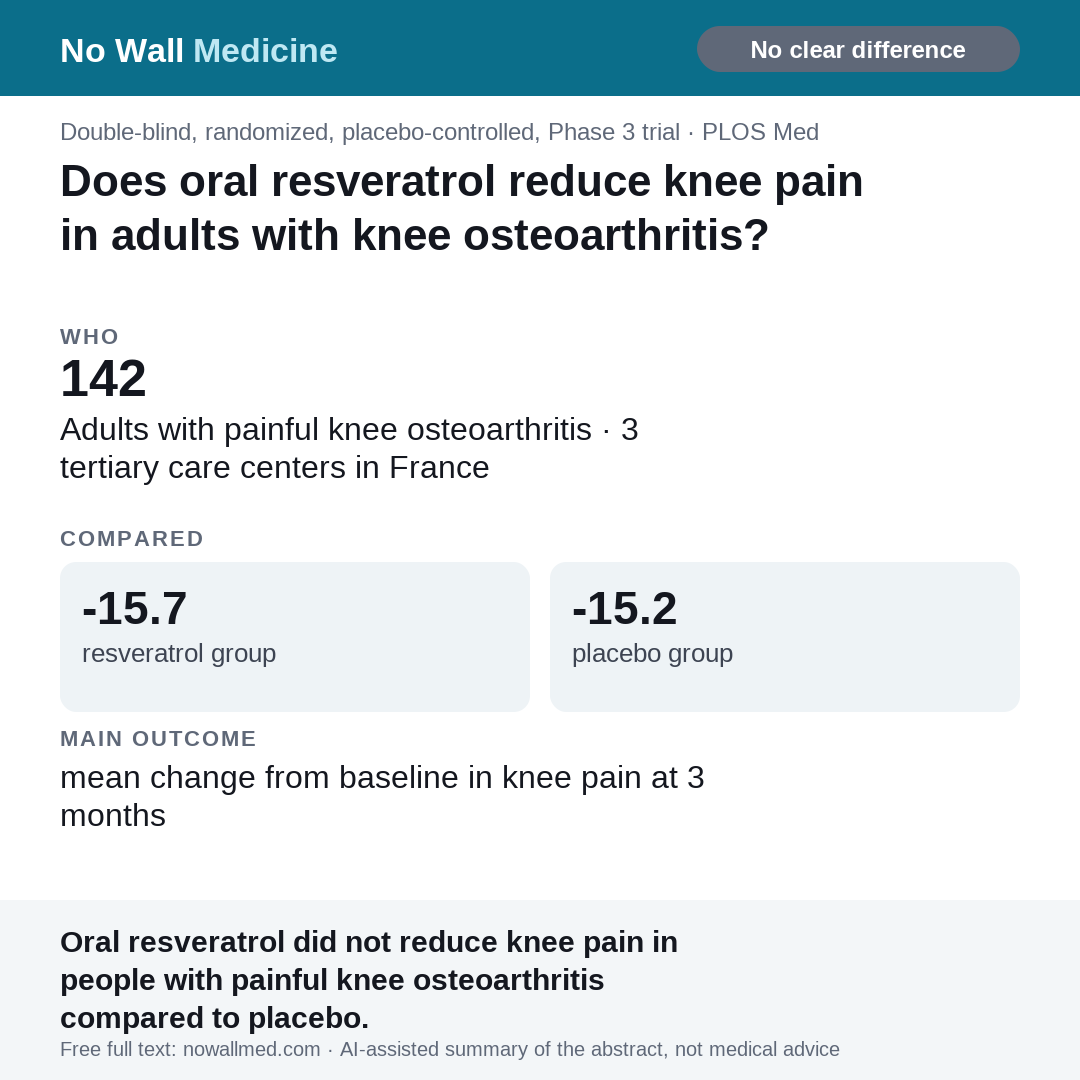
Oral resveratrol in adults with knee osteoarthritis: A randomized placebo-controlled trial (ARTHROL)
Double-blind, randomized, placebo-controlled, Phase 3 trialNo clear difference
Does oral resveratrol reduce knee pain in adults with knee osteoarthritis?
Who
142
Adults with painful knee osteoarthritis · 3 tertiary care centers in France
Compared
-15.7resveratrol group (95% CI, -21.1 to -10.3)
-15.2placebo group (95% CI, -20.5 to -9.8)
Main outcome
mean change from baseline in knee pain at 3 months
Result: absolute difference -0.6 (95% CI, -8.0 to 6.9)
Bottom line: Oral resveratrol did not reduce knee pain in people with painful knee osteoarthritis compared to placebo.
Limitation: The study was underpowered and the effect size was optimistically estimated.
PLOS Med · 2024-08-13Download image
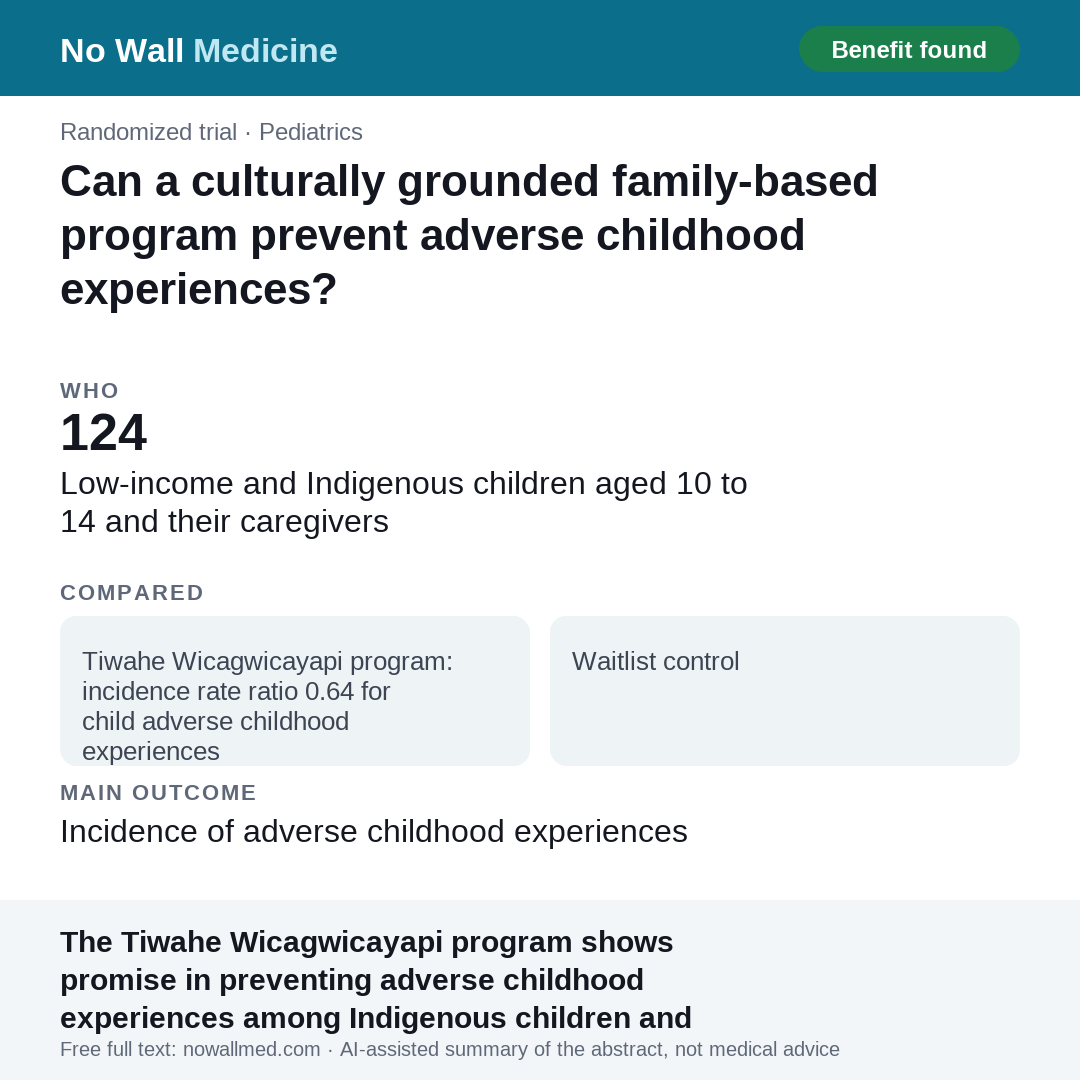
Preventing Adverse Childhood Experiences in a Sample of Largely Indigenous Children
Randomized trialBenefit found
Can a culturally grounded program prevent adverse childhood experiences in Indigenous children?
Who
124
Low-income and Indigenous children aged 10 to 14 and their caregivers
Compared
Treatment: IRR = 0.64
Waitlist control
Main outcome
Incidence of child adverse childhood experiences
Result: incidence rate ratio [IRR] = 0.64
Bottom line: The program reduced child ACEs, bullying, and depression, and increased parent-child communication.
Pediatrics · 2024-08-13Download image
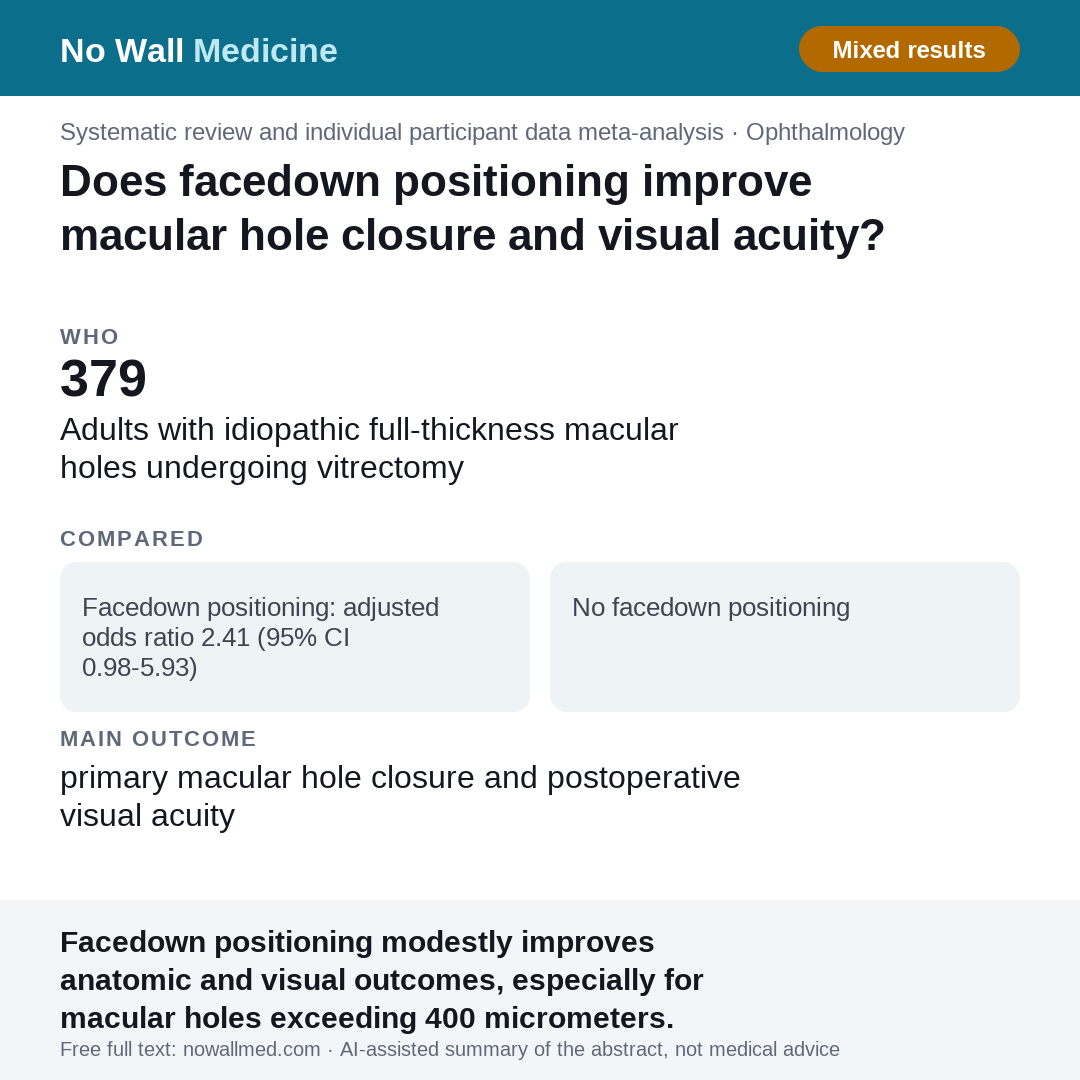
Facedown Positioning in Macular Hole Surgery: A Systematic Review and Individual Participant Data Meta-Analysis
Systematic review and individual participant data meta-analysisMixed results
Does facedown positioning improve macular hole closure and visual acuity?
Who
379
Adults with idiopathic full-thickness macular holes undergoing vitrectomy
Compared
Facedown positioning: adjusted odds ratio 2.41 (95% CI 0.98-5.93)
No facedown positioning
Main outcome
primary macular hole closure and postoperative visual acuity
Result: adjusted odds ratio 2.41 (95% CI 0.98-5.93)
Bottom line: Facedown positioning modestly improves anatomic and visual outcomes, especially for macular holes exceeding 400 micrometers.
Ophthalmology · 2024-08-13Download image