Visual abstracts
New randomized trials and meta-analyses from leading journals at a glance: who was studied, what was compared, and what was found. Every paper is free to read in full.
All specialtiesCardiology 2465Oncology 2096Gastroenterology & Hepatology 934Infectious Disease 1528Neurology 984Psychiatry & Mental Health 1148Pulmonology 1023Critical Care 680Endocrinology & Diabetes 1274Pediatrics 1439Surgery 1255Orthopedics & Sports Medicine 453Neurosurgery 300Cardiothoracic & Vascular Surgery 271Plastic & Reconstructive Surgery 370Nephrology 510Rheumatology 346Hematology 532Dermatology 280Ophthalmology 290Obstetrics & Gynecology 800Public & Global Health 447Radiology & Imaging 335Anesthesiology 490Urology 414ENT (Otolaryngology) 306Emergency Medicine 278Allergy & Immunology 153Geriatrics 516Family Medicine & Primary Care 283Medical Genetics & Genomics 266Pathology & Laboratory Medicine 77Physical Medicine & Rehabilitation 408Palliative Care 206Nutrition 640Digital Health & AI 1201General Medicine 181
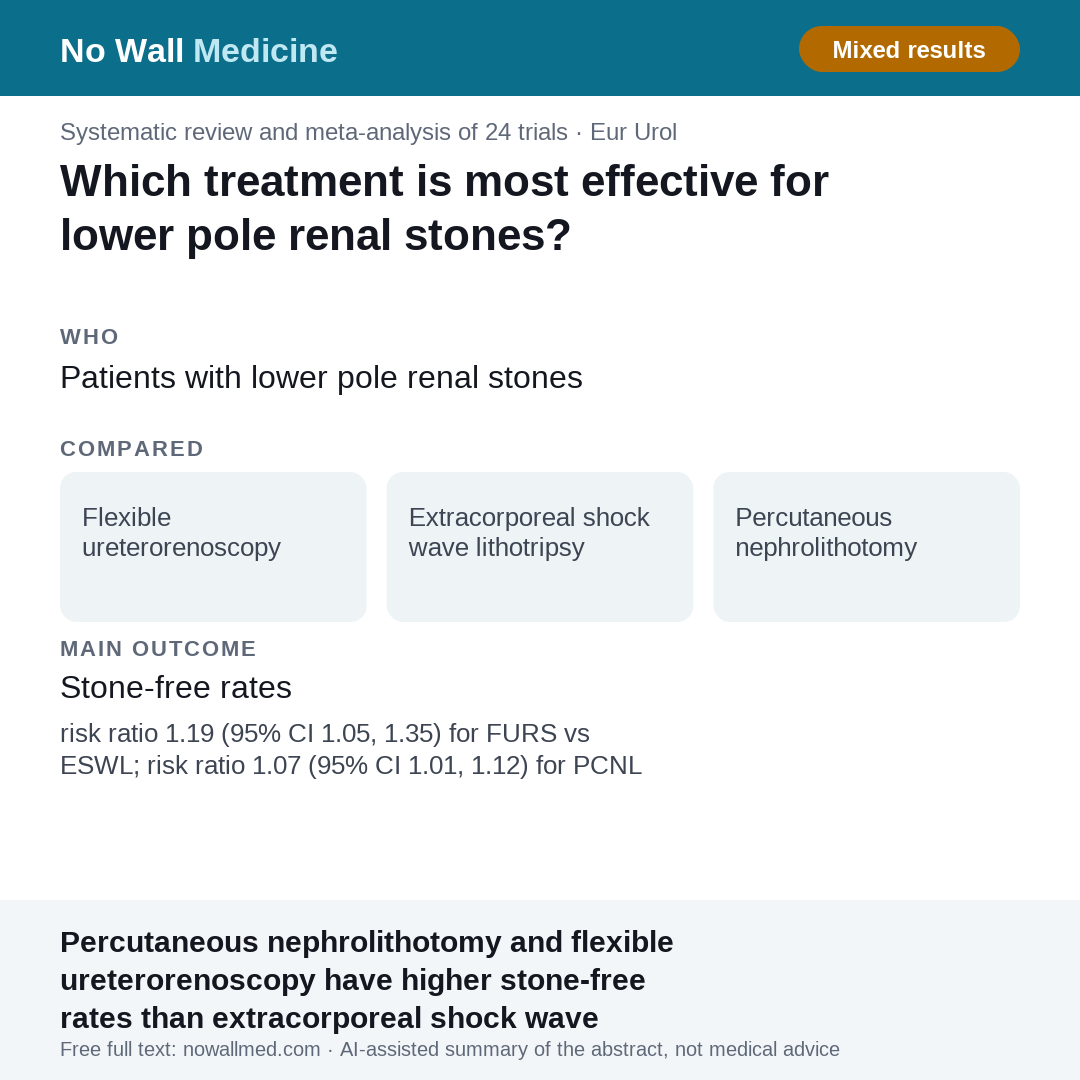
Updated Systematic Review and Meta-analysis of Extracorporeal Shock Wave Lithotripsy, Flexible Ureterorenoscopy, and Percutaneous Nephrolithotomy for Lower Pole Renal Stones
Systematic review and meta-analysis of 24 trialsMixed results
Which treatment is most effective for lower pole renal stones?
Who
Patients with lower pole renal stones
Compared
Flexible ureterorenoscopy
Extracorporeal shock wave lithotripsy
Percutaneous nephrolithotomy
Main outcome
Stone-free rates
Result: risk ratio 1.19 (95% CI 1.05, 1.35) for FURS vs ESWL; risk ratio 1.07 (95% CI 1.01, 1.12) for PCNL vs FURS; risk ratio 1.42 (95% CI 1.28, 1.58) for PCNL vs ESWL
Bottom line: Percutaneous nephrolithotomy and flexible ureterorenoscopy have higher stone-free rates than extracorporeal shock wave lithotripsy.
Eur Urol · 2025-03-13Download image
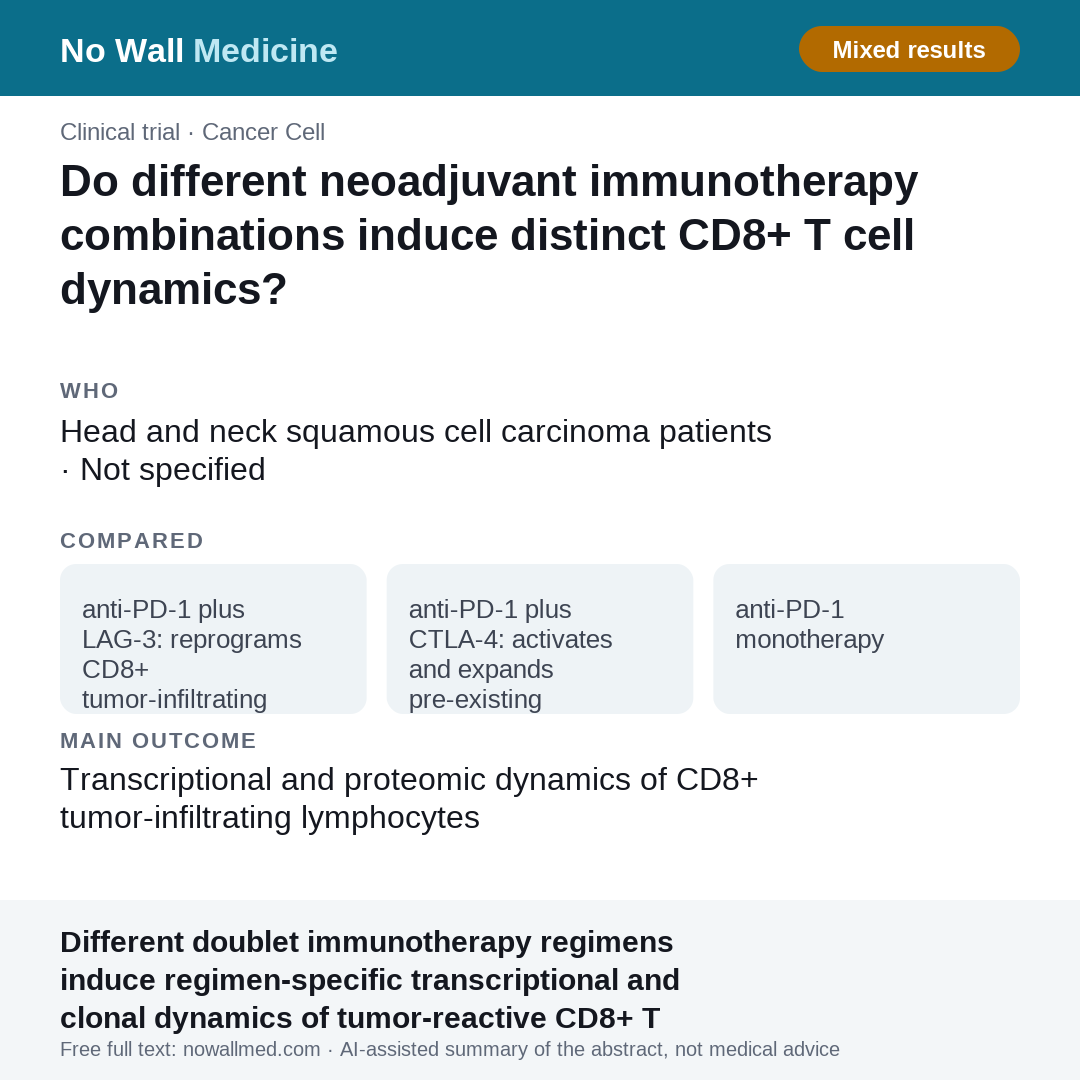
Distinct CD8+ T cell dynamics associate with response to neoadjuvant cancer immunotherapies
Clinical trialMixed results
Do different neoadjuvant immunotherapy combinations induce distinct CD8+ T cell dynamics?
Who
Head and neck squamous cell carcinoma patients · Not specified
Compared
anti-PD-1 plus LAG-3: reprograms CD8+ tumor-infiltrating lymphocytes into effector memory and resident memory
anti-PD-1 plus CTLA-4: activates and expands pre-existing effector memory and resident memory
anti-PD-1 monotherapy
Main outcome
Transcriptional and proteomic dynamics of CD8+ tumor-infiltrating lymphocytes
Bottom line: Different doublet immunotherapy regimens induce regimen-specific transcriptional and clonal dynamics of tumor-reactive CD8+ T cells.
Cancer Cell · 2025-03-13Download image
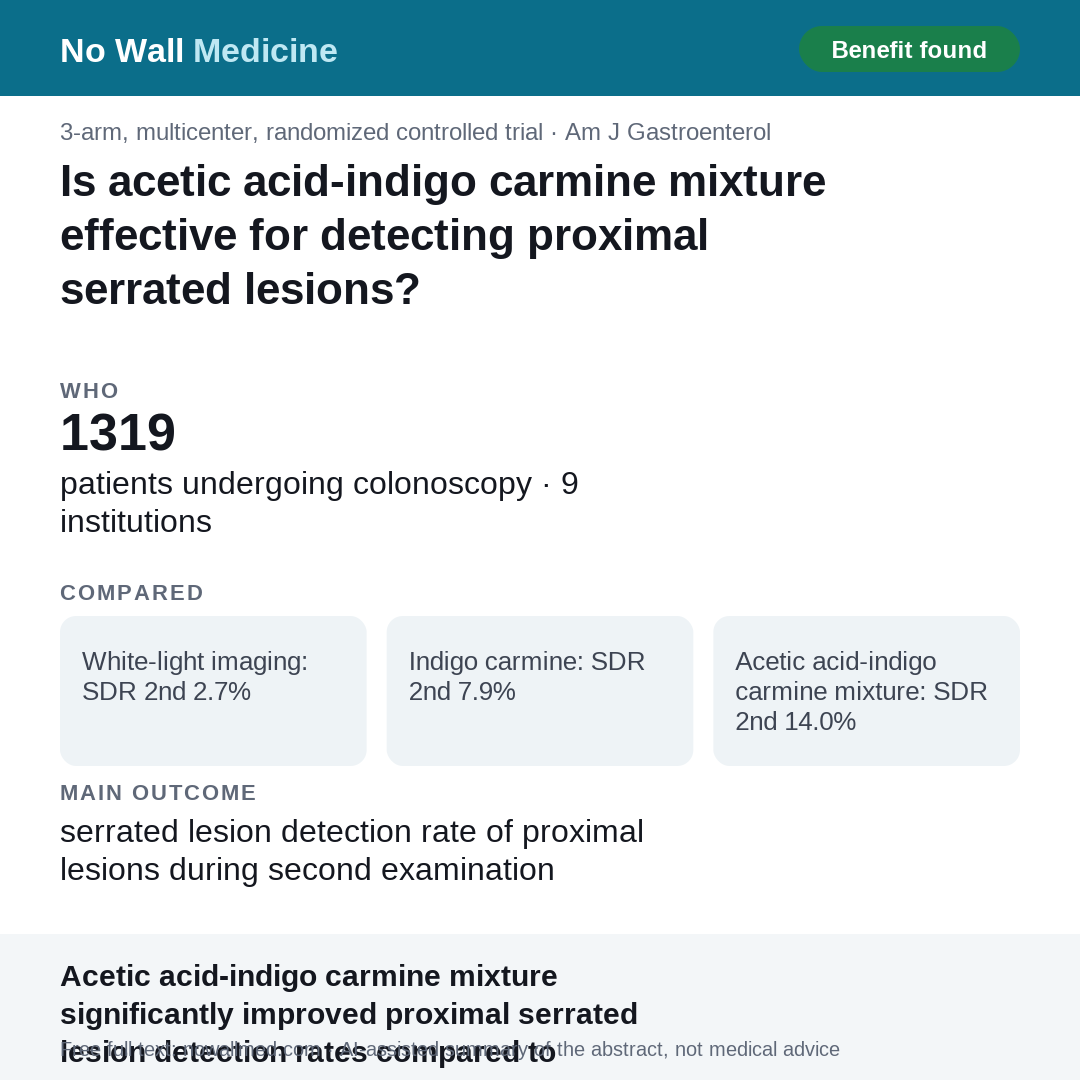
Acetic Acid-Indigo Carmine Chromocolonoscopy for Proximal Serrated Lesions: A Randomized, 3-Arm Colonoscopy Study
3-arm, multicenter, randomized controlled trialBenefit found
Is acetic acid-indigo carmine mixture effective for detecting proximal serrated lesions?
Who
1319
patients undergoing colonoscopy · 9 institutions
Compared
White-light imaging: SDR 2nd 2.7%
Indigo carmine: SDR 2nd 7.9%
Acetic acid-indigo carmine mixture: SDR 2nd 14.0%
Main outcome
serrated lesion detection rate of proximal lesions during second examination
Result: odds ratio 7.79 (95% confidence interval 3.76-17.08)
Bottom line: Acetic acid-indigo carmine mixture significantly improved proximal serrated lesion detection rates compared to white-light imaging or indigo carmine.
Limitation: The relationship between serrated lesion detection and colorectal cancer incidence warrants further investigation.
Am J Gastroenterol · 2025-03-13Download image
Cost-benefit of IAPT Norway and effects on work-related outcomes and health care utilization: results from a randomized controlled trial using registry-based data
Randomized controlled trialBenefit found
Does Prompt Mental Health Care affect work outcomes, health care use, and cost-benefit?
Who
738
Participants with anxiety and/or depression · Two Prompt Mental Health Care sites in Norway
Compared
Prompt Mental Health Care: more likely to be in regular work without welfare benefits
Treatment-as-usual
Main outcome
Work-related outcomes, health care use, and cost-benefit
Result: benefit-cost ratio 5.26 (90%CI -1.28, 11.8)
Bottom line: Prompt Mental Health Care provides societal economic benefits and improves work participation for people with anxiety or depression.
Psychol Med · 2025-03-13Download image

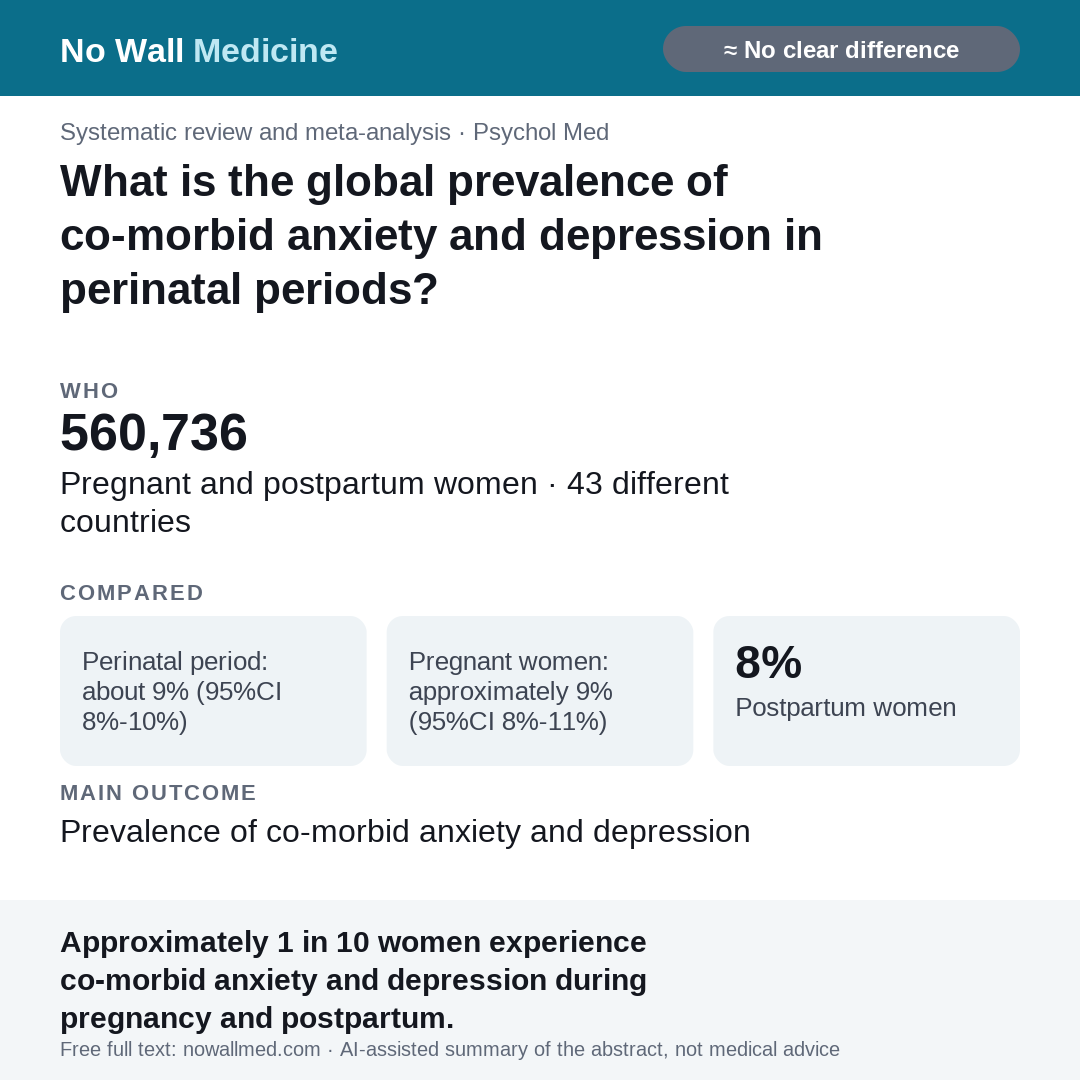
Prevalence of co-morbid anxiety and depression in pregnancy and postpartum: a systematic review and meta-analysis
Systematic review and meta-analysisNo clear difference
What is the global prevalence of co-morbid anxiety and depression in perinatal periods?
Who
560,736
Pregnant and postpartum women · 43 different countries
Compared
Perinatal period: about 9% (95%CI 8%-10%)
Pregnant women: approximately 9% (95%CI 8%-11%)
8%Postpartum women (95%CI 7%-10%)
Main outcome
Prevalence of co-morbid anxiety and depression
Bottom line: Approximately 1 in 10 women experience co-morbid anxiety and depression during pregnancy and postpartum.
Limitation: Prevalence varied significantly by assessment time points, country, study design, and assessment tool.
Psychol Med · 2025-03-13Download image
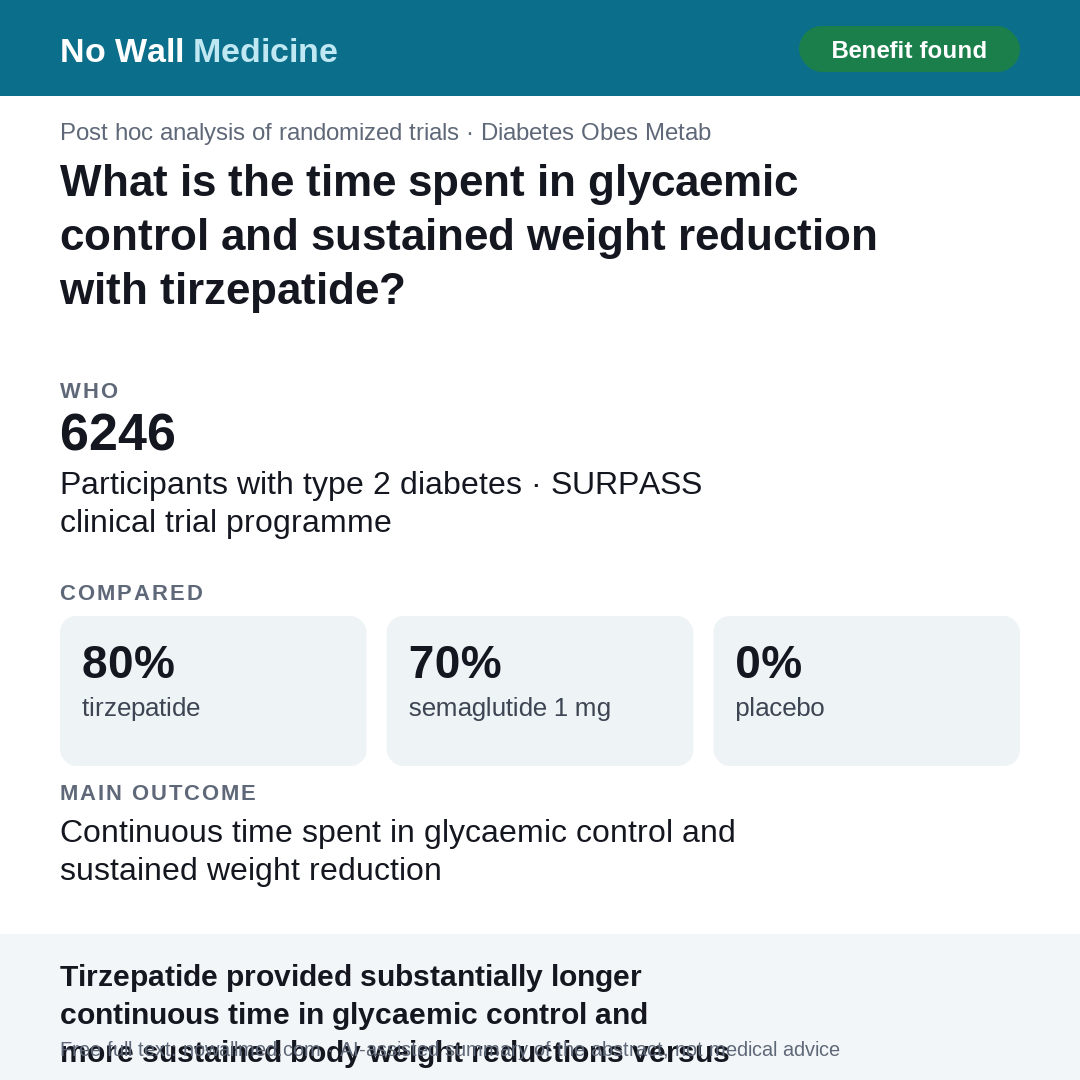
Time spent in glycaemic control with sustained body weight reduction with tirzepatide: A post hoc analysis of the SURPASS clinical trial programme
Post hoc analysis of randomized trialsBenefit found
What is the time spent in glycaemic control and sustained weight reduction with tirzepatide?
Who
6246
Participants with type 2 diabetes · SURPASS clinical trial programme
Compared
80%tirzepatide (40-week studies)
70%semaglutide 1 mg (40-week studies)
0%placebo (40-week studies)
Main outcome
Continuous time spent in glycaemic control and sustained weight reduction
Bottom line: Tirzepatide provided substantially longer continuous time in glycaemic control and more sustained body weight reductions versus comparators.
Diabetes Obes Metab · 2025-03-13Download image
Phase 2 Study of the Anti-High Temperature Requirement A1 (HtrA1) Fab Galegenimab (FHTR2163) in Geographic Atrophy Secondary to Age-Related Macular Degeneration
Phase 2, single-masked, randomized clinical trialNo clear difference
Is galegenimab effective for geographic atrophy secondary to age-related macular degeneration?
Who
337
Patients with geographic atrophy secondary to age-related macular degeneration
Compared
galegenimab every 4 weeks: 2.67 mm2
galegenimab every 8 weeks: 2.50 mm2
pooled sham arms: 2.38 mm2
Main outcome
mean change in geographic atrophy area from baseline to Week 72
Bottom line: Galegenimab did not show a difference in geographic atrophy area progression compared with sham.
Limitation: High rate of intraocular inflammation among treated patients.
Am J Ophthalmol · 2025-03-13Download image

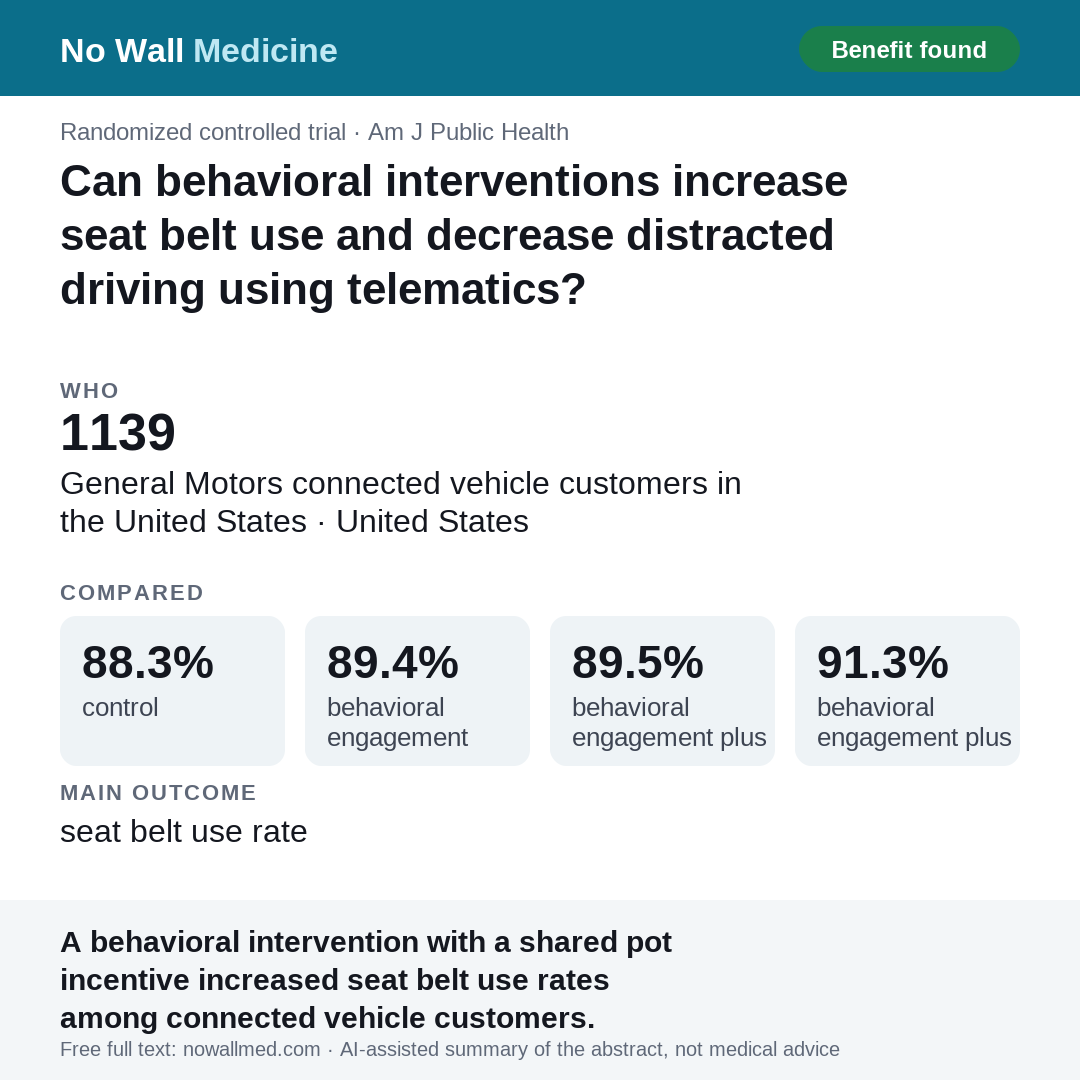
Behavioral Interventions for Increasing Seat Belt Use and Decreasing Distracted Driving Using Telematics: A National Randomized Trial
Randomized controlled trialBenefit found
Can behavioral interventions increase seat belt use and decrease distracted driving using telematics?
Who
1139
General Motors connected vehicle customers in the United States · United States
Compared
88.3%control
89.4%behavioral engagement
89.5%behavioral engagement plus raffle
91.3%behavioral engagement plus shared pot
Main outcome
seat belt use rate
Bottom line: A behavioral intervention with a shared pot incentive increased seat belt use rates among connected vehicle customers.
Am J Public Health · 2025-03-13Download image
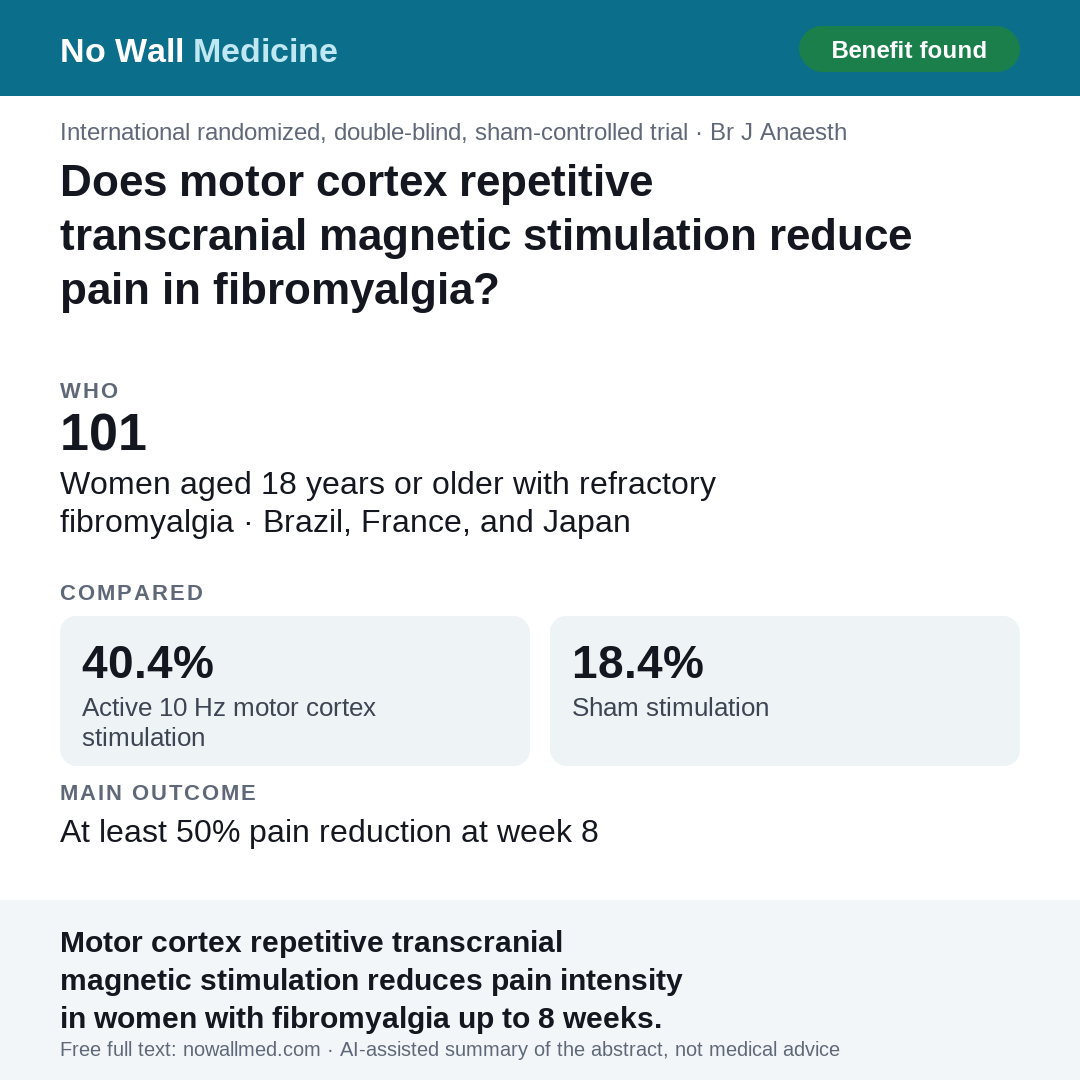
Motor cortex repetitive transcranial magnetic stimulation in fibromyalgia: a multicentre randomised controlled trial
International randomized, double-blind, sham-controlled trialBenefit found
Does motor cortex repetitive transcranial magnetic stimulation reduce pain in fibromyalgia?
Who
101
Women aged 18 years or older with refractory fibromyalgia · Brazil, France, and Japan
Compared
40.4%Active 10 Hz motor cortex stimulation
18.4%Sham stimulation
Main outcome
At least 50% pain reduction at week 8
Result: odds ratio 3.04 (95% credible interval 1.26-8.06)
Bottom line: Motor cortex repetitive transcranial magnetic stimulation reduces pain intensity in women with fibromyalgia up to 8 weeks.
Br J Anaesth · 2025-03-13Download image
Moderators of digital cognitive-behavioral therapy for youth with sickle cell disease pain: secondary analysis of a randomized controlled trial
Secondary analysis of a randomized controlled trialMixed results
What factors moderate digital cognitive-behavioral therapy effects on pain in youth with sickle cell disease?
Who
111
111 adolescents aged 12 to 18 with sickle cell disease
Compared
digital cognitive-behavioral therapy
education control
Main outcome
pain intensity outcomes
Result: P = 0.012 for pretreatment parent psychological distress
Bottom line: Digital cognitive-behavioral therapy was more effective for pain among those with elevated parental psychological distress.
Pain · 2025-03-13Download image
Data Quality of Resident Documentation in Long-Term Care: A Systematic Review and Meta-analysis
Systematic review and meta-analysisBenefit found
Do interventions improve data quality in resident documentation in long-term care?
Who
30
Resident documentation in residential long-term care · Residential long-term care
Compared
Interventions: 13% improvement in data completeness
Control
Main outcome
Data quality in resident documentation
Result: 13% (95% CI, 7%-20%)
Bottom line: Interventions provided small to moderate improvements in data completeness with very low quality of evidence.
Limitation: Most findings were limited to completeness; timeliness and accuracy remain understudied.
J Am Med Dir Assoc · 2025-03-13Download image
Effectiveness of My Tools for Care-in Care: A Pragmatic Randomized Controlled Trial
Mixed methods pragmatic randomized controlled trialNo clear difference
Is the My Tools for Care-In Care web-based intervention effective for care partners?
Who
234
Adult care partners of older persons living with dementia in care homes · Canada
Compared
Intervention group
Active control group
Main outcome
Mental health
Bottom line: The web-based psychoeducational intervention showed no effect on the primary outcome of mental health.
Limitation: Use of the intervention within the intervention group was low.
J Am Med Dir Assoc · 2025-03-13Download image

Energy intake is associated with dietary macronutrient densities: inversely with protein and monounsaturated fat and positively with polyunsaturated fat and carbohydrate among postmenopausal females
Observational study using biomarker equationsMixed results
How are macronutrient densities associated with biomarker-assessed energy intake in postmenopausal females?
Who
436
Postmenopausal females in the Women's Health Initiative subcohort · United States
Compared
20% carbohydrate density increment: 2.0% (0.1%, 3.9%) higher
20% protein density increment: 2.1% (0.5%, 3.7%) lower
20% polyunsaturated fatty acid density increment: 1.4% (0.3%, 2.6%) higher
20% monounsaturated fatty acid density increment: 1.5% (0.1%, 2.9%) lower
Main outcome
Biomarker-assessed total energy intake
Bottom line: Lower energy intake associates with higher protein and monounsaturated fat, while higher intake associates with polyunsaturated fat and added sugars.
Am J Clin Nutr · 2025-03-13Download image
Validation of the hotspot for dorsolateral subthalamic nucleus targeting in deep brain stimulation surgery for Parkinson's disease: a post hoc analysis of a randomised controlled trial
Post hoc analysis of a randomized controlled trialBenefit found
Does the dorsolateral subthalamic nucleus hotspot improve deep brain stimulation outcomes in Parkinson's disease?
Who
Parkinson's disease patients
Compared
Current cohort using hotspot: 13% average improvement in poor responders
Historical control group: -8% average improvement
Main outcome
Hemibody improvement on Movement Disorder Society-Unified Parkinson's Disease Rating Scale
Bottom line: Using the dorsolateral subthalamic nucleus hotspot improved motor response and medication reduction in Parkinson's disease patients.
J Neurol Neurosurg Psychiatry · 2025-03-13Download image
Food Insecurity and Its Cardiovascular Implications in Underresourced Communities
Cross-sectional analysis of a randomized studyHarm found
How does food insecurity influence cardiovascular health in underresourced communities?
Who
451
451 participants aged 12 to 80 years in Mediterranean communities · Underresourced Mediterranean communities
Compared
Participants with severe food insecurity
Participants without severe food insecurity
Main outcome
Cardiovascular health assessed using Life's Essential 8 score
Result: effect size, -2.83 (95% CI, -5.10 to -0.56)
Bottom line: Severe food insecurity is significantly associated with lower cardiovascular health scores in underresourced Mediterranean communities.
J Am Heart Assoc · 2025-03-13Download image

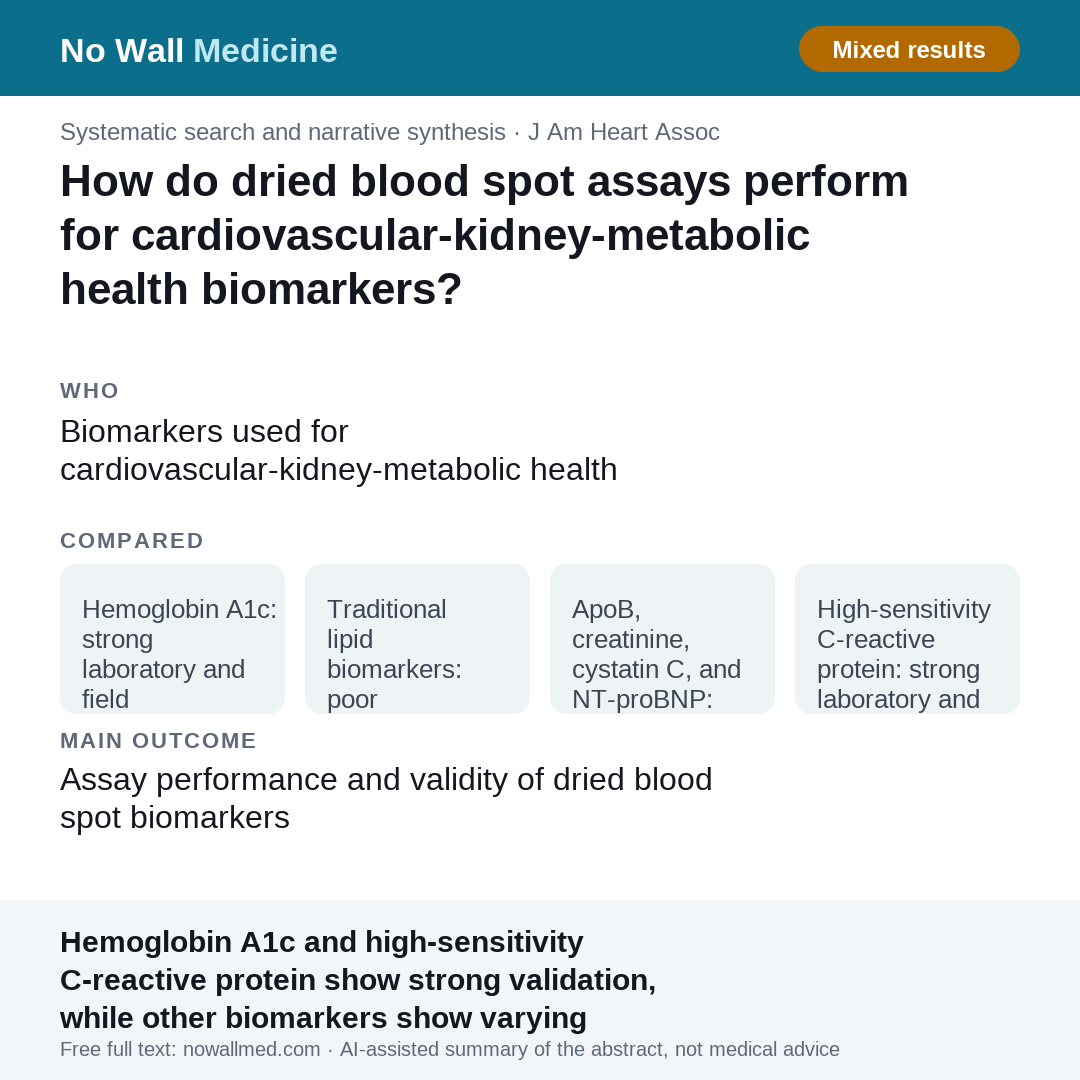
Dried Blood Spots to Assess Cardiovascular-Kidney-Metabolic Health
Systematic search and narrative synthesisMixed results
How do dried blood spot assays perform for cardiovascular-kidney-metabolic health biomarkers?
Who
Biomarkers used for cardiovascular-kidney-metabolic health assessment · Literature search through April 2024
Compared
Hemoglobin A1c: strong laboratory and field validation
Traditional lipid biomarkers: poor performance in field validation studies
ApoB, creatinine, cystatin C, and NT-proBNP: promising initial laboratory validation results
High-sensitivity C-reactive protein: strong laboratory and field validation
Main outcome
Assay performance and validity of dried blood spot biomarkers
Bottom line: Hemoglobin A1c and high-sensitivity C-reactive protein show strong validation, while other biomarkers show varying performance levels.
J Am Heart Assoc · 2025-03-13Download image
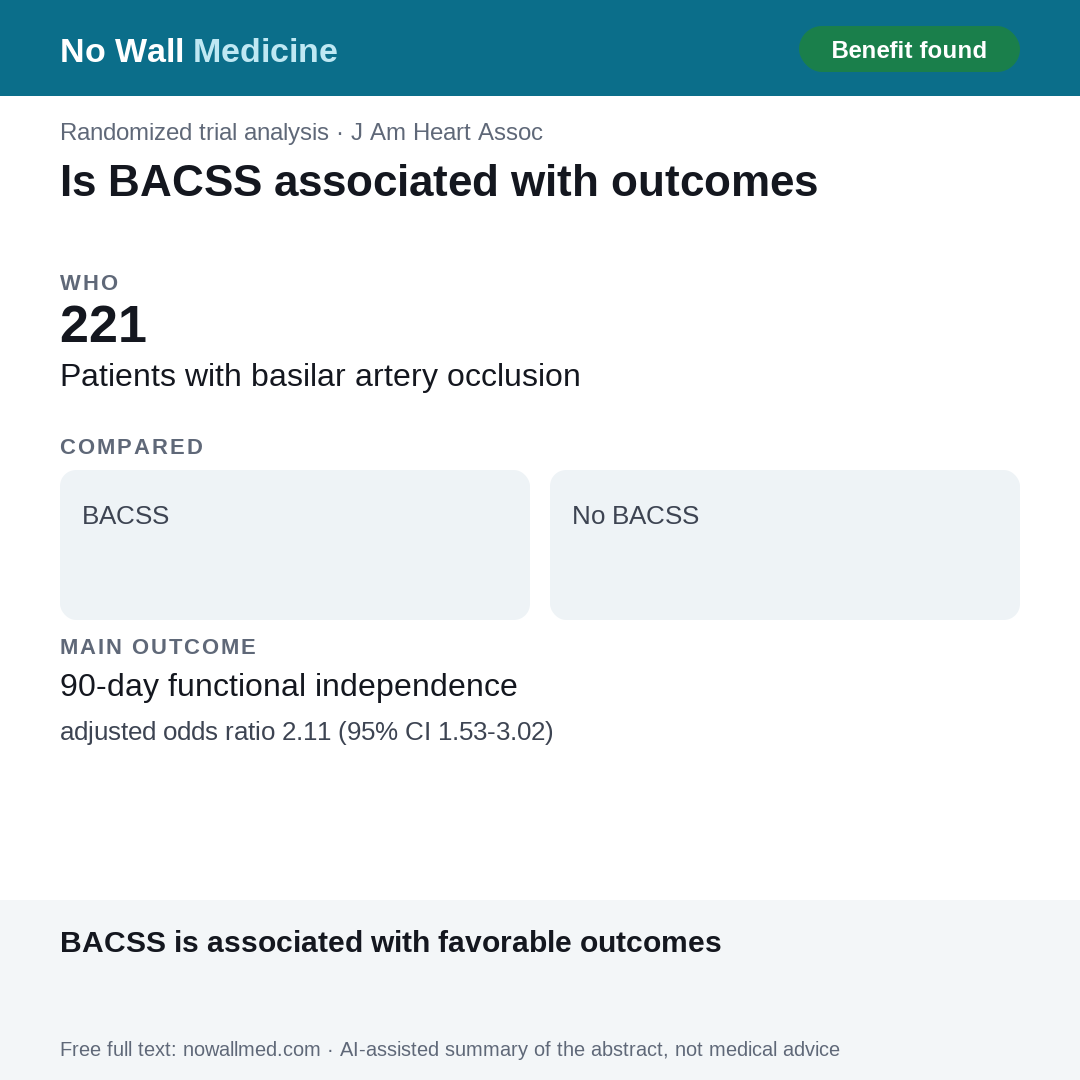
The Basilar Artery Collateral Simplified Score: a Novel Collateral Circulation Score Associated With Outcomes in Patients With Basilar Artery Occlusion: Results From the ATTENTION Study
Randomized trial analysisBenefit found
Is BACSS associated with outcomes
Who
221
Patients with basilar artery occlusion
Compared
BACSS
No BACSS
Main outcome
90-day functional independence
Result: adjusted odds ratio 2.11 (95% CI 1.53-3.02)
Bottom line: BACSS is associated with favorable outcomes
J Am Heart Assoc · 2025-03-13Download image
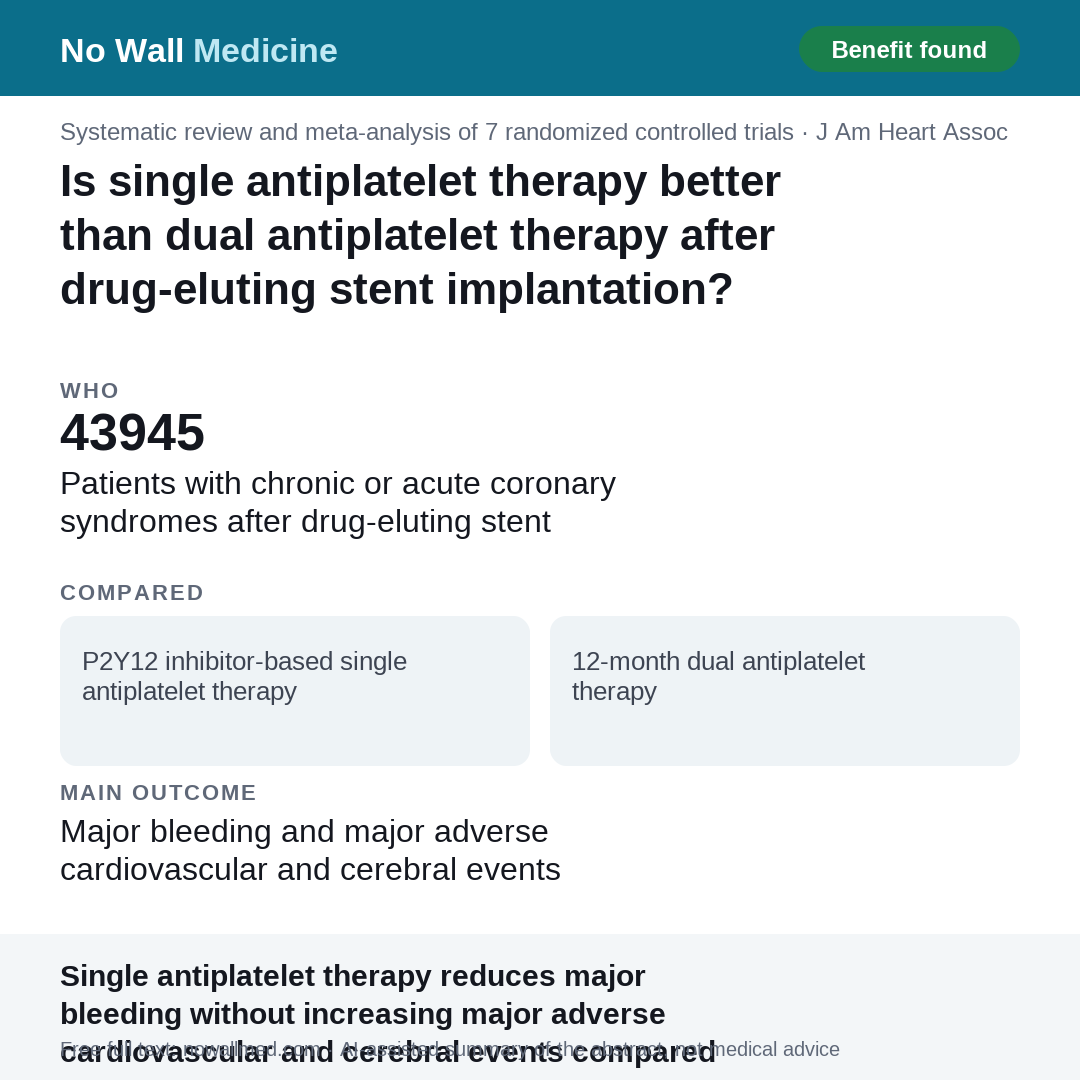
P2Y12 Inhibitor-Based Single Antiplatelet Therapy Versus Conventional Dual Antiplatelet Therapy After Newer-Generation Drug-Eluting Stent Implantation in Chronic and Acute Coronary Syndromes: A Systematic Review and Meta-Analysis of Randomized Clinical Trials
Systematic review and meta-analysis of 7 randomized controlled trialsBenefit found
Is single antiplatelet therapy better than dual antiplatelet therapy after drug-eluting stent implantation?
Who
43945
Patients with chronic or acute coronary syndromes after drug-eluting stent implantation
Compared
P2Y12 inhibitor-based single antiplatelet therapy
12-month dual antiplatelet therapy
Main outcome
Major bleeding and major adverse cardiovascular and cerebral events
Result: risk ratio 0.63 (95% CI 0.48-0.82) for major bleeding
Bottom line: Single antiplatelet therapy reduces major bleeding without increasing major adverse cardiovascular and cerebral events compared to 12-month dual antiplatelet therapy.
J Am Heart Assoc · 2025-03-13Download image
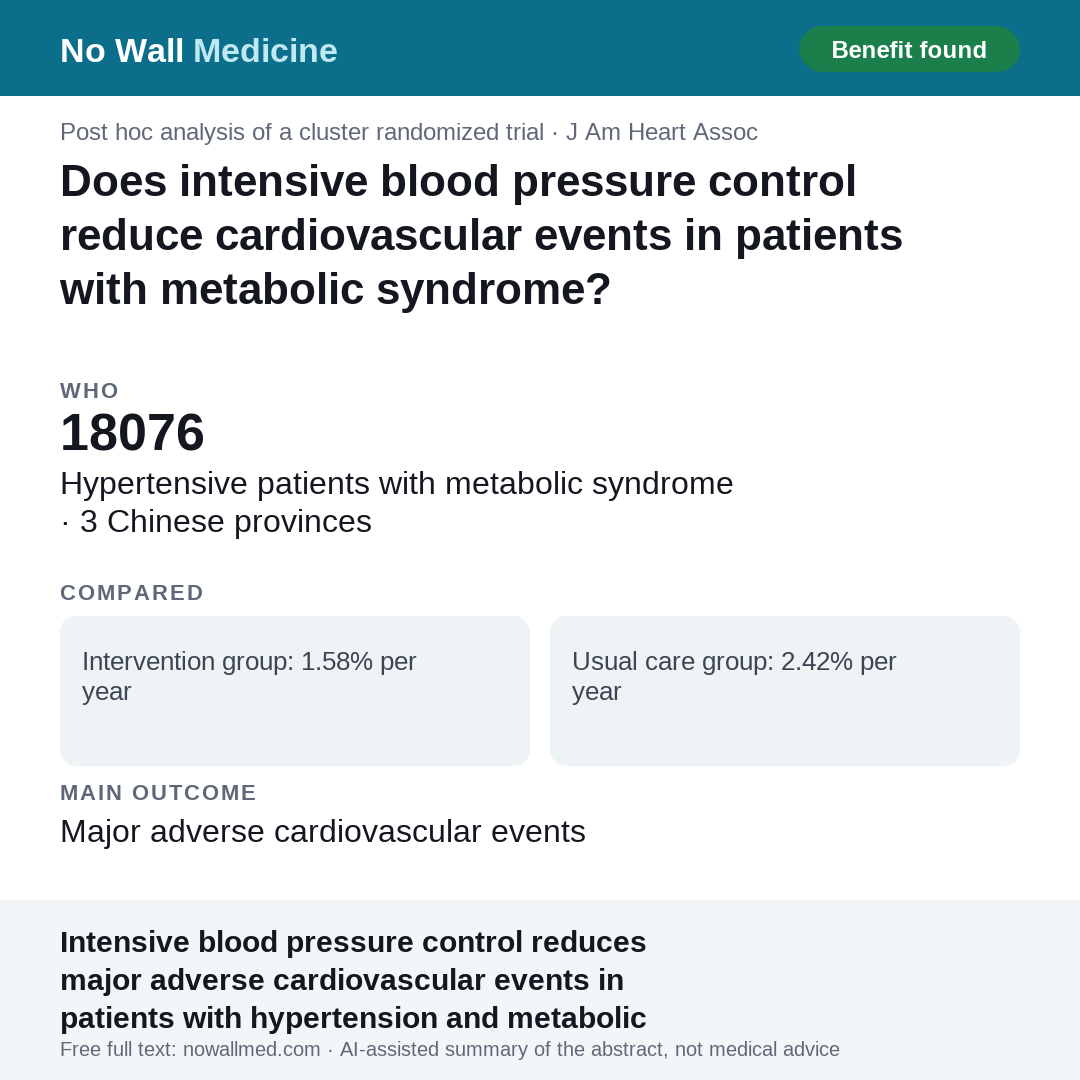
Intensive Blood Pressure Strategy on Cardiovascular Diseases in Patients With Metabolic Syndrome: Post Hoc Analysis of a Clinical Trial
Post hoc analysis of a cluster randomized trialBenefit found
Does intensive blood pressure control reduce cardiovascular events in patients with metabolic syndrome?
Who
18076
Hypertensive patients with metabolic syndrome · 3 Chinese provinces
Compared
Intervention group: 1.58% per year
Usual care group: 2.42% per year
Main outcome
Major adverse cardiovascular events
Result: hazard ratio 0.65 (95% CI, 0.57-0.74)
Bottom line: Intensive blood pressure control reduces major adverse cardiovascular events in patients with hypertension and metabolic syndrome.
J Am Heart Assoc · 2025-03-13Download image
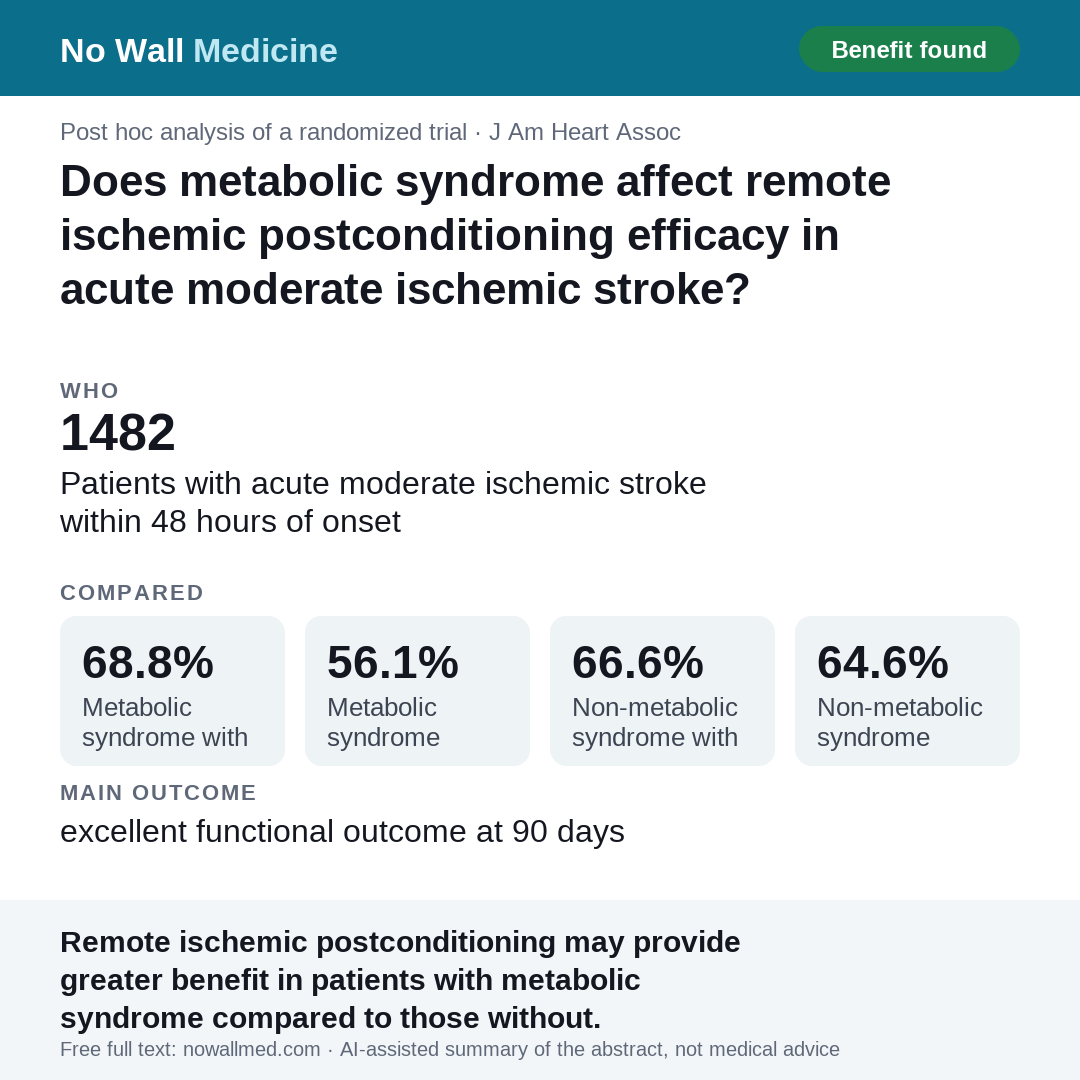
Metabolic Syndrome and Efficacy of Remote Ischemic Postconditioning in Acute Moderate Ischemic Stroke: A Post Hoc Analysis of the RICAMIS Trial
Post hoc analysis of a randomized trialBenefit found
Does metabolic syndrome affect remote ischemic postconditioning efficacy in acute moderate ischemic stroke?
Who
1482
Patients with acute moderate ischemic stroke within 48 hours of onset
Compared
68.8%Metabolic syndrome with remote ischemic postconditioning
56.1%Metabolic syndrome control
66.6%Non-metabolic syndrome with remote ischemic postconditioning
64.6%Non-metabolic syndrome control
Main outcome
excellent functional outcome at 90 days
Result: odds ratio 1.751 (95% CI 1.248-2.456) for metabolic syndrome patients
Bottom line: Remote ischemic postconditioning may provide greater benefit in patients with metabolic syndrome compared to those without.
J Am Heart Assoc · 2025-03-13Download image