Visual abstracts
New randomized trials and meta-analyses from leading journals at a glance: who was studied, what was compared, and what was found. Every paper is free to read in full.
All specialtiesCardiology 4011Oncology 3418Gastroenterology & Hepatology 1590Infectious Disease 2976Neurology 1583Psychiatry & Mental Health 1885Pulmonology 1731Critical Care 1126Endocrinology & Diabetes 2069Pediatrics 2404Surgery 2120Orthopedics & Sports Medicine 756Neurosurgery 460Cardiothoracic & Vascular Surgery 503Plastic & Reconstructive Surgery 534Nephrology 889Rheumatology 666Hematology 896Dermatology 510Ophthalmology 435Obstetrics & Gynecology 1398Public & Global Health 794Radiology & Imaging 543Anesthesiology 802Urology 644ENT (Otolaryngology) 432Emergency Medicine 428Allergy & Immunology 252Geriatrics 833Family Medicine & Primary Care 475Medical Genetics & Genomics 548Pathology & Laboratory Medicine 138Physical Medicine & Rehabilitation 614Palliative Care 358Nutrition 1219Digital Health & AI 1853General Medicine 278
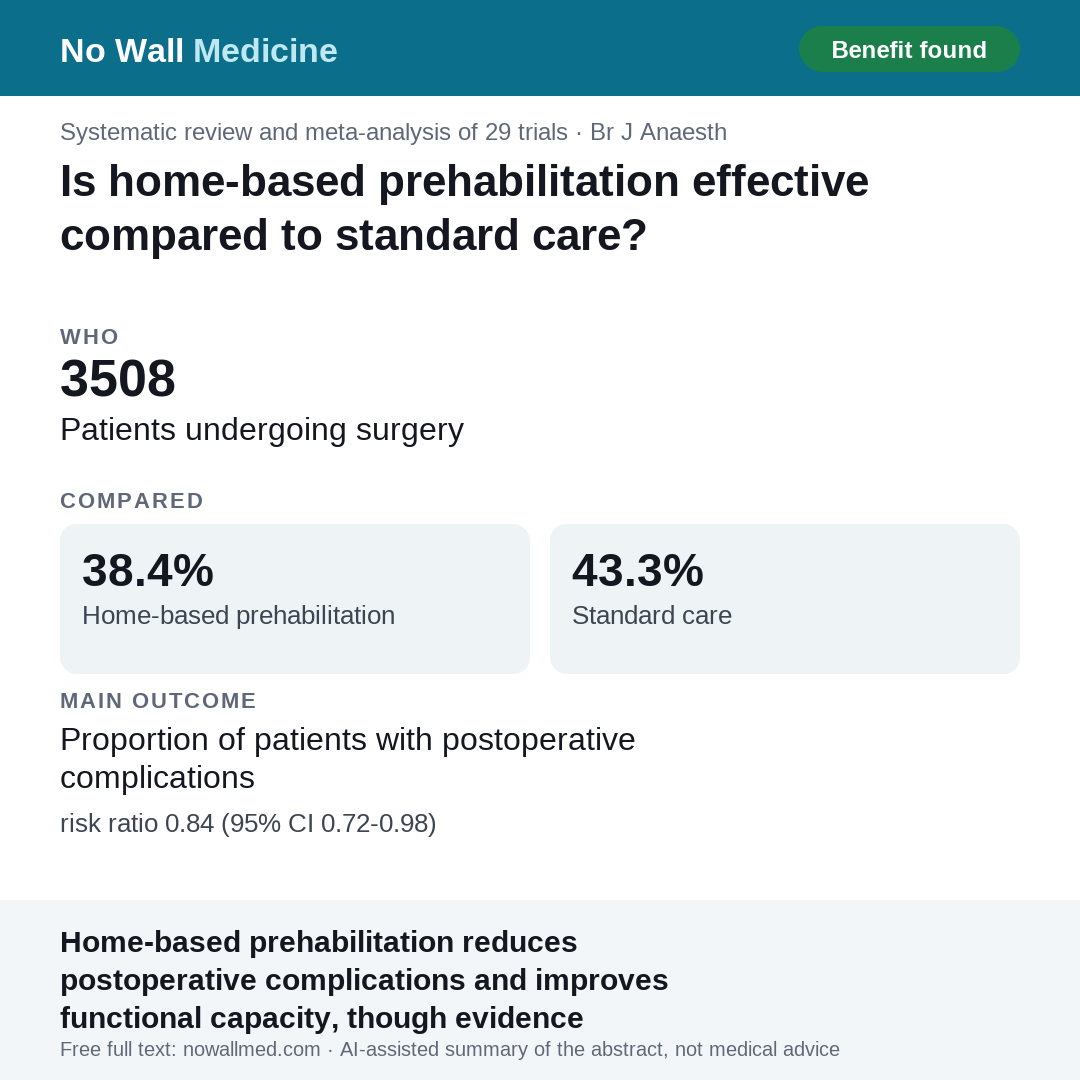
Home-based prehabilitation: a systematic review and meta-analysis of randomised trials
Systematic review and meta-analysis of 29 trialsBenefit found
Is home-based prehabilitation effective compared to standard care?
Who
3508
Patients undergoing surgery
Compared
38.4%Home-based prehabilitation (508/1322)
43.3%Standard care (578/1335)
Main outcome
Proportion of patients with postoperative complications
Result: risk ratio 0.84 (95% CI 0.72-0.98)
Bottom line: Home-based prehabilitation reduces postoperative complications and improves functional capacity, though evidence certainty is low.
Limitation: Low certainty of evidence
Br J Anaesth · 2025-02-06Download image
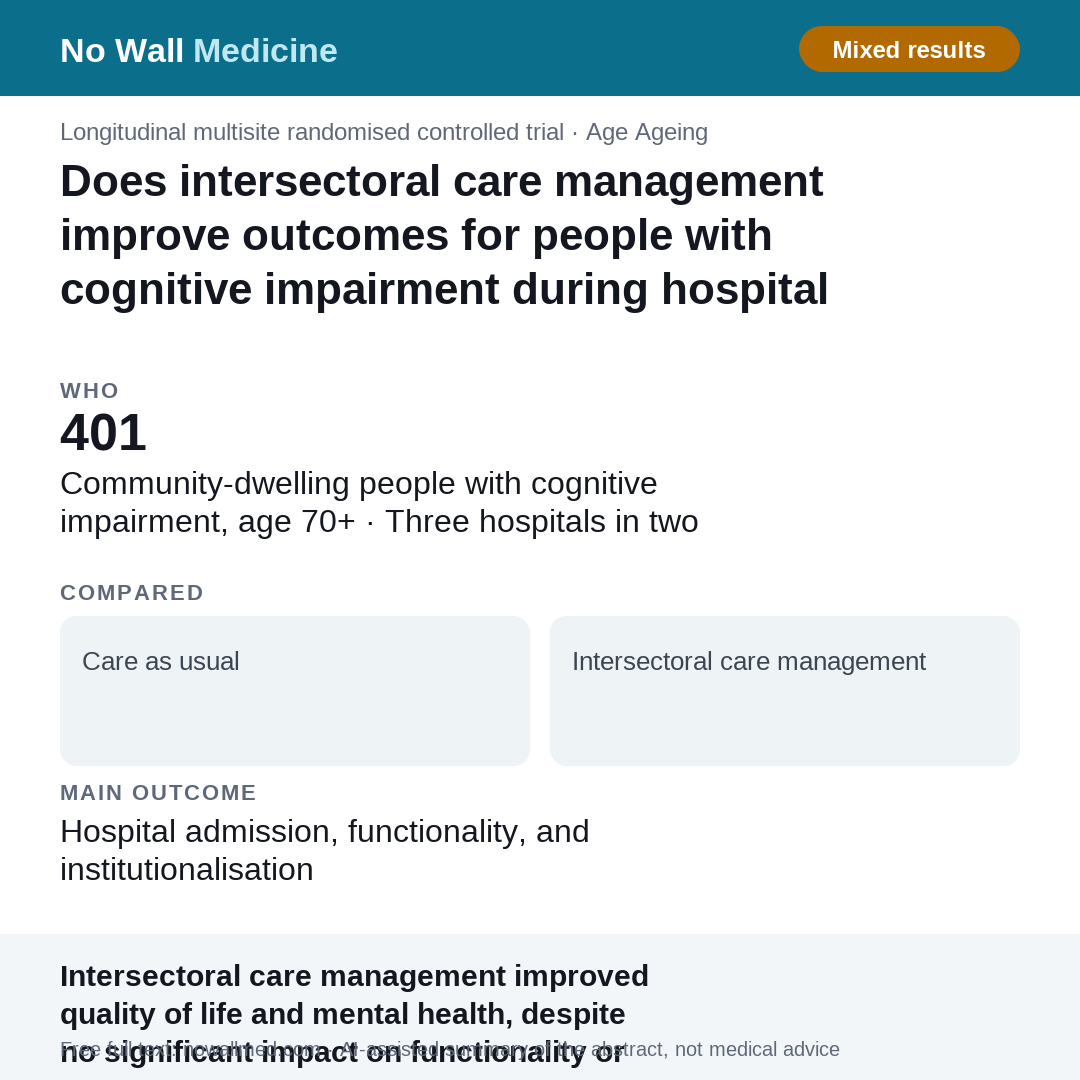
Supporting older people with cognitive impairment during and after hospital stays with intersectoral care management (intersec-CM)-results of a randomised clinical trial
Longitudinal multisite randomised controlled trialMixed results
Does intersectoral care management improve outcomes for people with cognitive impairment during hospital transition?
Who
401
Community-dwelling people with cognitive impairment, age 70+ · Three hospitals in two primary care regions in Germany
Compared
Care as usual
Intersectoral care management
Main outcome
Hospital admission, functionality, and institutionalisation
Bottom line: Intersectoral care management improved quality of life and mental health, despite no significant impact on functionality or institutionalisation.
Age Ageing · 2025-02-06Download image
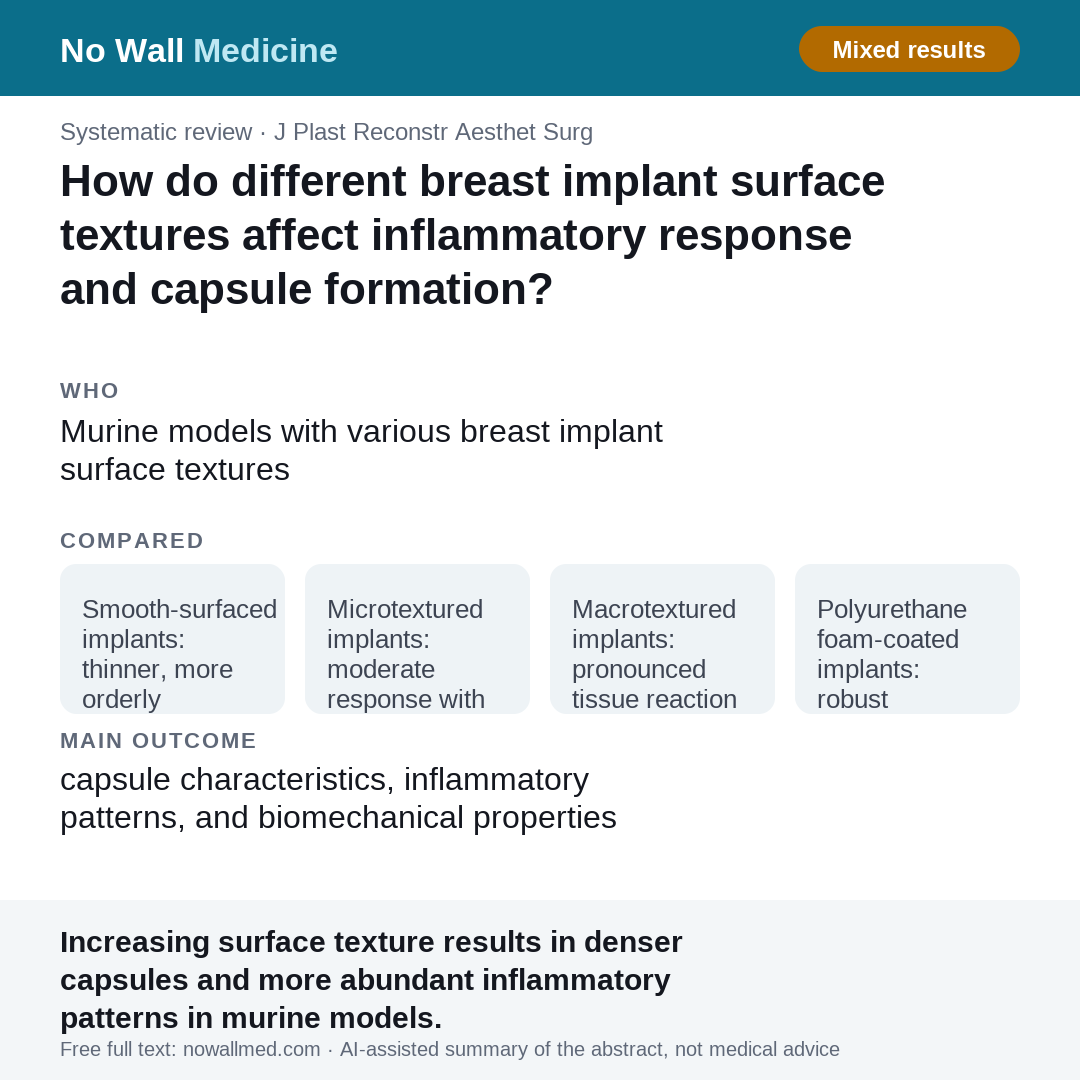
Inflammatory response to various implant surfaces in murine models: A systematic analysis
Systematic reviewMixed results
How do different breast implant surface textures affect inflammatory response and capsule formation?
Who
Murine models with various breast implant surface textures
Compared
Smooth-surfaced implants: thinner, more orderly capsules, with a subdued inflammatory reaction
Microtextured implants: moderate response with varying tissue integration and inflammation levels
Macrotextured implants: pronounced tissue reaction
Polyurethane foam-coated implants: robust inflammatory response, characterized by increased neoangiogenesis and thicker, more cellular capsules
Main outcome
capsule characteristics, inflammatory patterns, and biomechanical properties
Bottom line: Increasing surface texture results in denser capsules and more abundant inflammatory patterns in murine models.
J Plast Reconstr Aesthet Surg · 2025-02-06Download image
A systematic review of wide alveolar cleft repair techniques
Systematic literature reviewMixed results
What are the efficacies of different wide alveolar cleft repair techniques?
Who
332
Patients with wide alveolar clefts
Compared
Distraction osteogenesis
Orthognathic surgery: significantly higher osseous closure rates
Local flap
Free flap
Main outcome
Treatment efficacies and patient populations
Bottom line: Orthognathic surgery and free flaps appear to be the most effective techniques for wide alveolar cleft repair.
J Plast Reconstr Aesthet Surg · 2025-02-06Download image

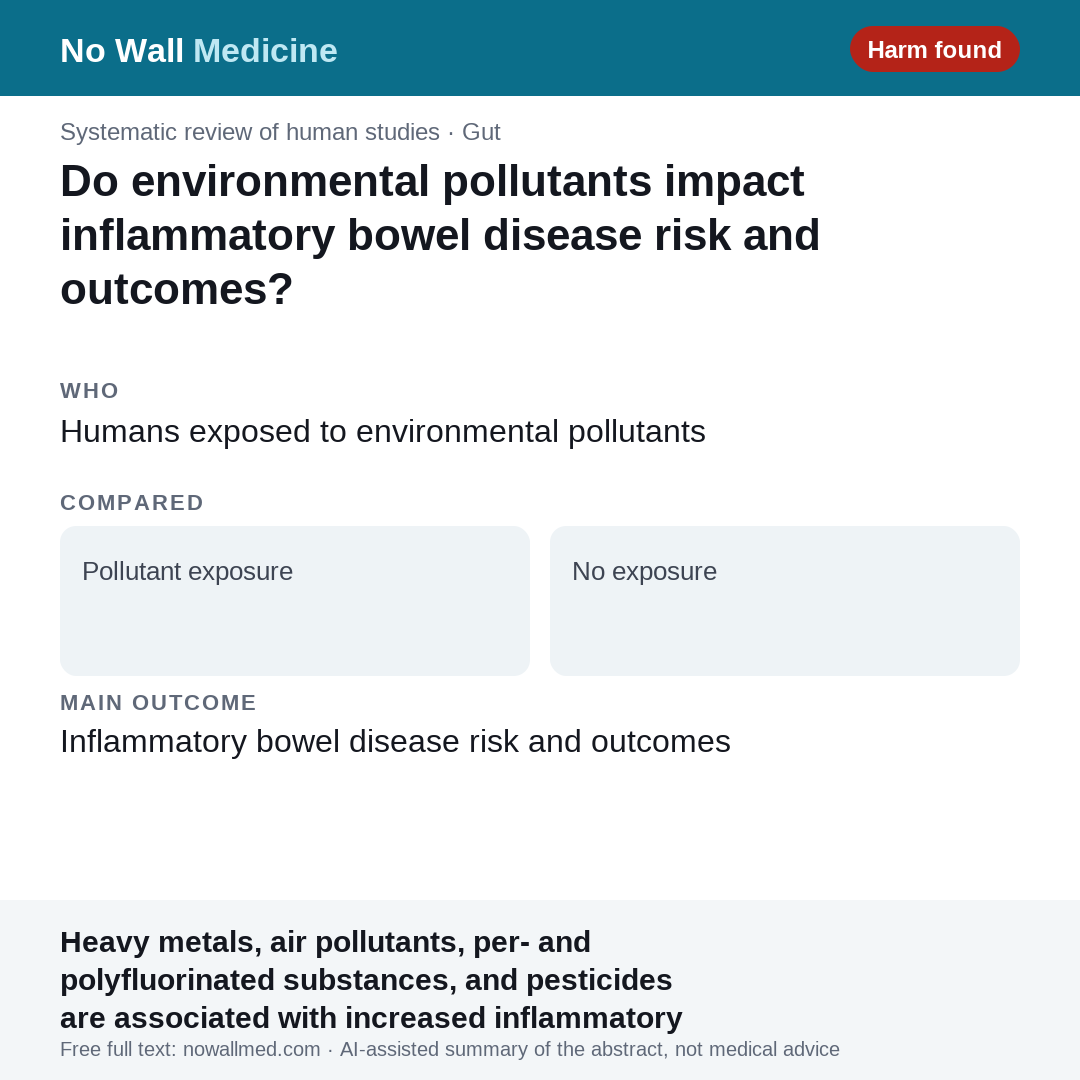
Emerging role of environmental pollutants in inflammatory bowel disease risk, outcomes and underlying mechanisms
Systematic review of human studiesHarm found
Do environmental pollutants impact inflammatory bowel disease risk and outcomes?
Who
Humans exposed to environmental pollutants
Compared
Pollutant exposure
No exposure
Main outcome
Inflammatory bowel disease risk and outcomes
Bottom line: Heavy metals, air pollutants, per- and polyfluorinated substances, and pesticides are associated with increased inflammatory bowel disease risk.
Gut · 2025-02-06Download image
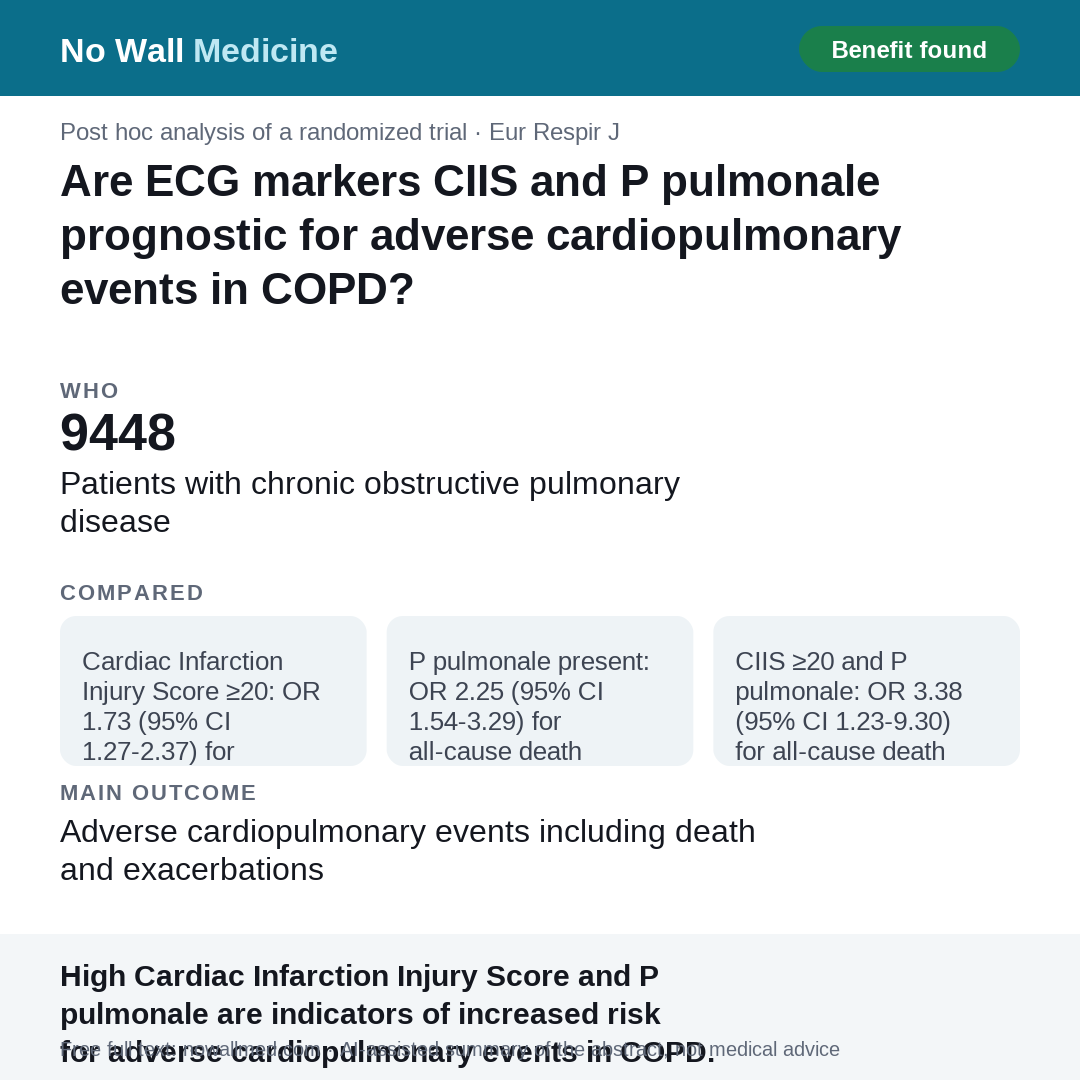
ECG-based risk factors for adverse cardiopulmonary events and treatment outcomes in COPD
Post hoc analysis of a randomized trialBenefit found
Are ECG markers CIIS and P pulmonale prognostic for adverse cardiopulmonary events in COPD?
Who
9448
Patients with chronic obstructive pulmonary disease
Compared
Cardiac Infarction Injury Score ≥20: OR 1.73 (95% CI 1.27-2.37) for all-cause death
P pulmonale present: OR 2.25 (95% CI 1.54-3.29) for all-cause death
CIIS ≥20 and P pulmonale: OR 3.38 (95% CI 1.23-9.30) for all-cause death
Main outcome
Adverse cardiopulmonary events including death and exacerbations
Result: OR 3.38 (95% CI 1.23-9.30) for all-cause death in combined model
Bottom line: High Cardiac Infarction Injury Score and P pulmonale are indicators of increased risk for adverse cardiopulmonary events in COPD.
Eur Respir J · 2025-02-06Download image
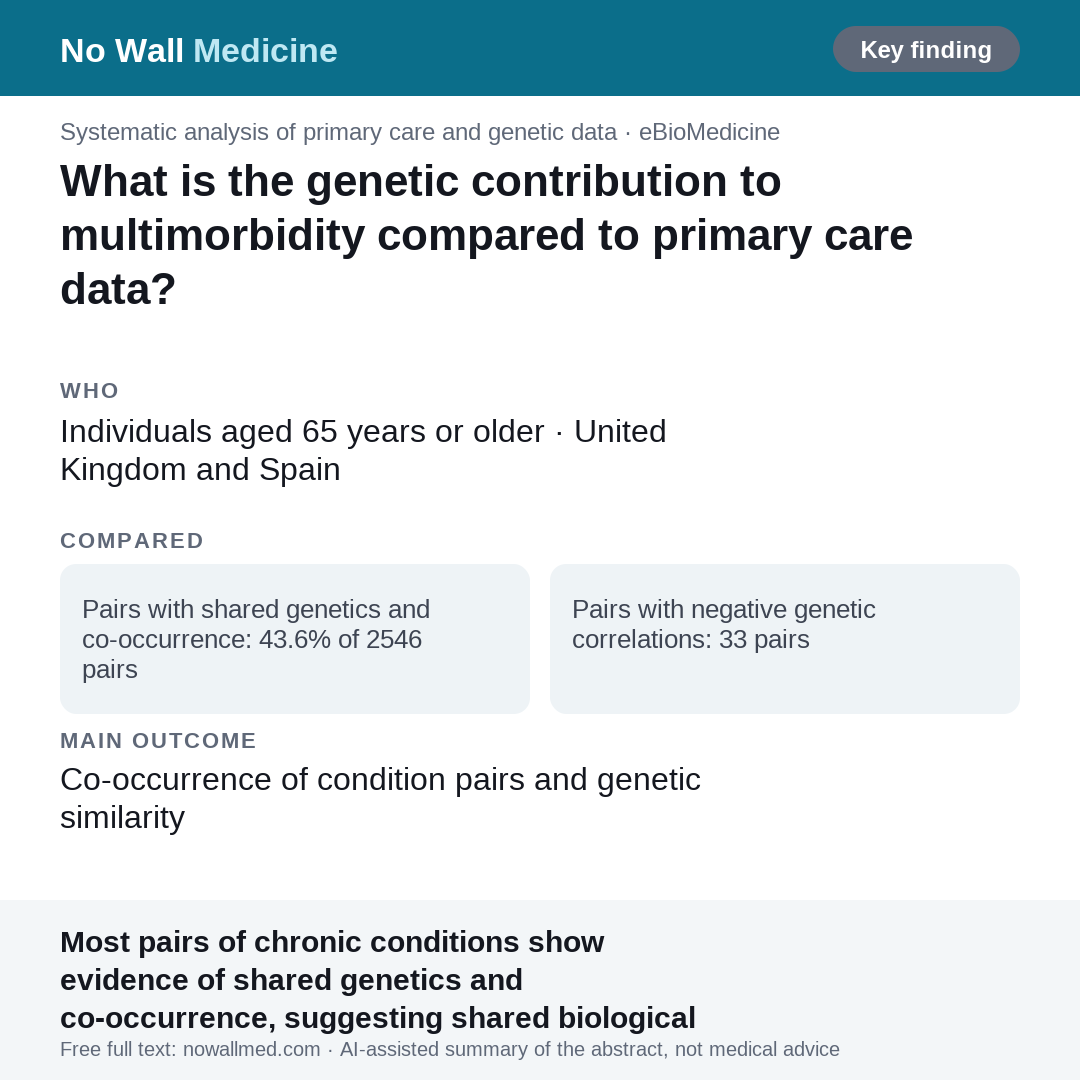
A systematic analysis of the contribution of genetics to multimorbidity and comparisons with primary care data
Systematic analysis of primary care and genetic dataBenefit found
What is the genetic contribution to multimorbidity compared to primary care data?
Who
Individuals aged 65 years or older · United Kingdom and Spain
Compared
Pairs with shared genetics and co-occurrence: 43.6% of 2546 pairs
Pairs with negative genetic correlations: 33 pairs
Main outcome
Co-occurrence of condition pairs and genetic similarity
Bottom line: Most pairs of chronic conditions show evidence of shared genetics and co-occurrence, suggesting shared biological mechanisms.
Limitation: Discordance was observed between genetic and primary care data for certain condition pairs.
Funded by: UK Medical Research Council
eBioMedicine · 2025-02-06Download image
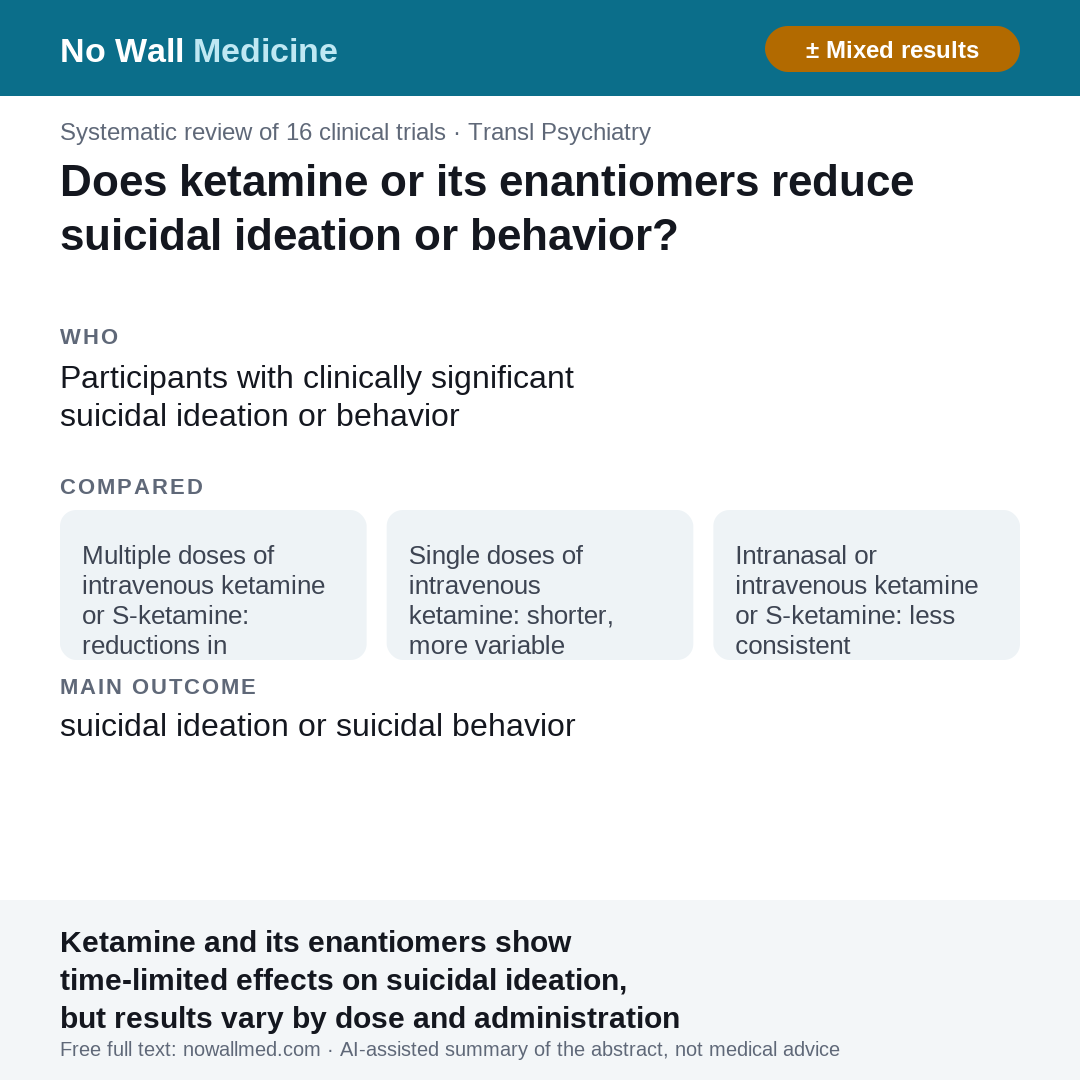
Clinical trials since 2020 of rapid anti-suicidal ideation effects of ketamine and its enantiomers: a systematic review
Systematic review of 16 clinical trialsMixed results
Does ketamine or its enantiomers reduce suicidal ideation or behavior?
Who
Participants with clinically significant suicidal ideation or behavior
Compared
Multiple doses of intravenous ketamine or S-ketamine: reductions in suicidal ideation for periods of several days to weeks
Single doses of intravenous ketamine: shorter, more variable effects
Intranasal or intravenous ketamine or S-ketamine: less consistent anti-suicidal ideation results
Main outcome
suicidal ideation or suicidal behavior
Bottom line: Ketamine and its enantiomers show time-limited effects on suicidal ideation, but results vary by dose and administration route.
Limitation: Study heterogeneity, small samples, and paucity of data for suicidal behavior or R-ketamine.
Transl Psychiatry · 2025-02-06Download image
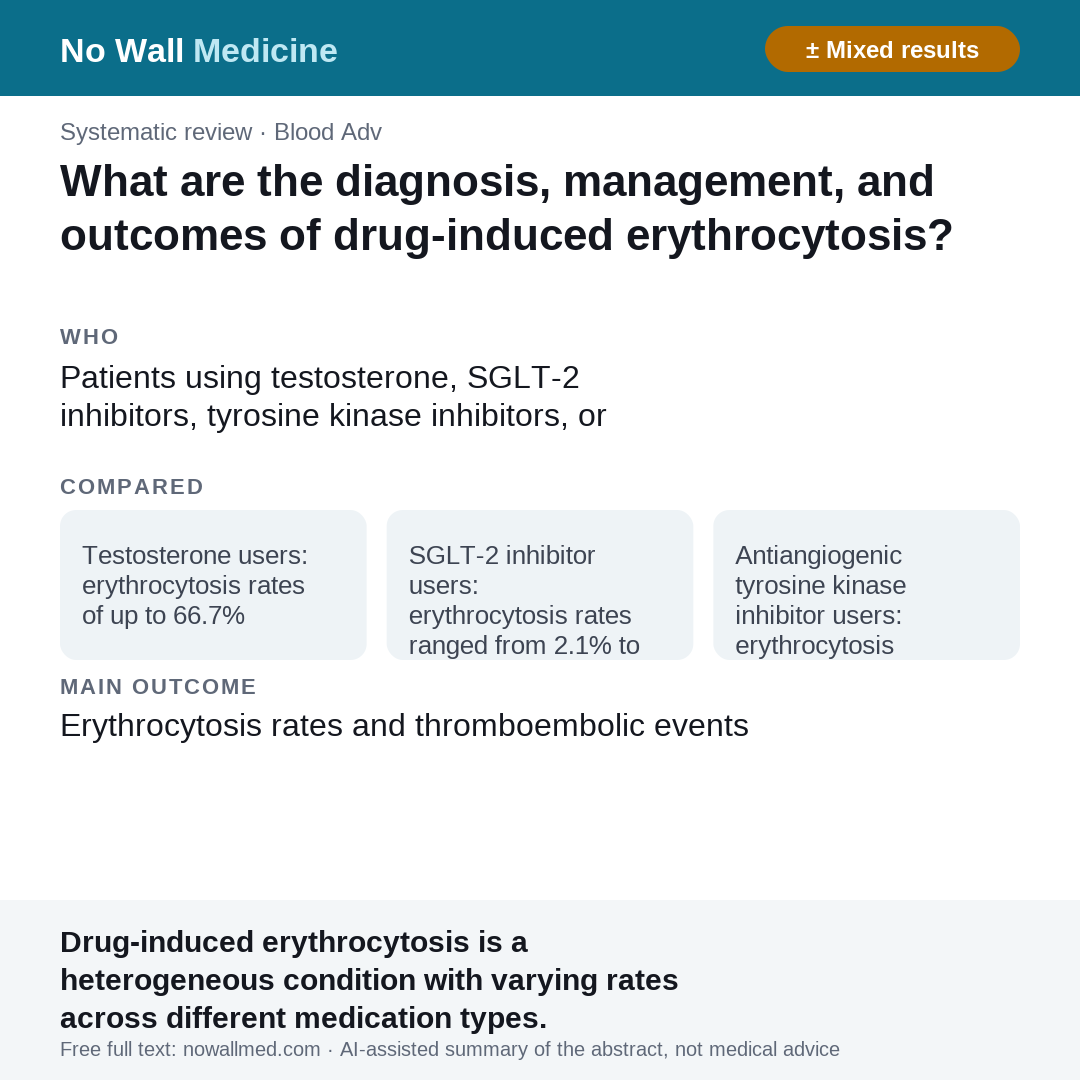
Diagnosis, management, and outcomes of drug-induced erythrocytosis: a systematic review
Systematic reviewMixed results
What are the diagnosis, management, and outcomes of drug-induced erythrocytosis?
Who
Patients using testosterone, SGLT-2 inhibitors, tyrosine kinase inhibitors, or other medications
Compared
Testosterone users: erythrocytosis rates of up to 66.7%
SGLT-2 inhibitor users: erythrocytosis rates ranged from 2.1% to 22%
Antiangiogenic tyrosine kinase inhibitor users: erythrocytosis developing in up to 43.5%
Main outcome
Erythrocytosis rates and thromboembolic events
Bottom line: Drug-induced erythrocytosis is a heterogeneous condition with varying rates across different medication types.
Blood Adv · 2025-02-06Download image
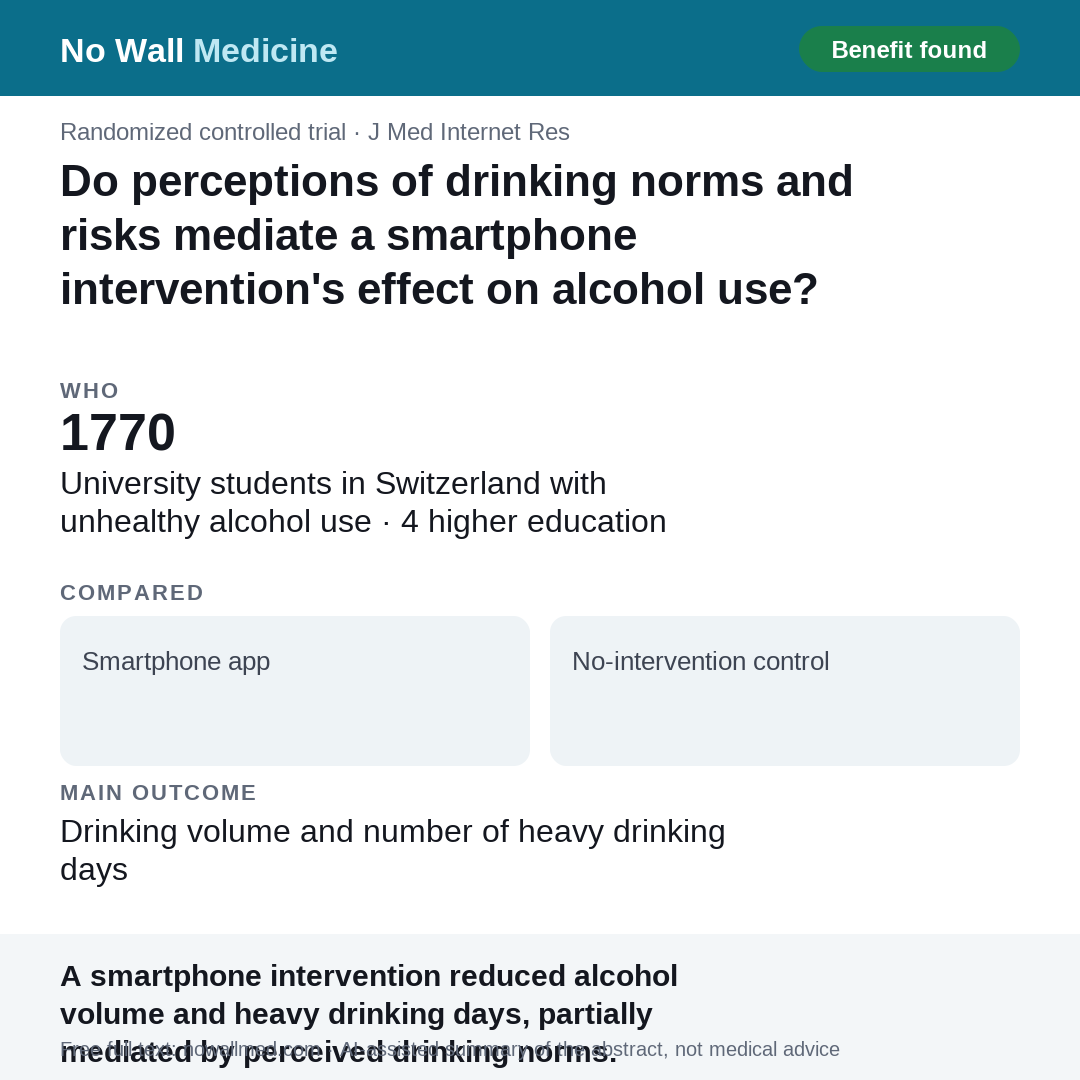
Smartphone-Based Intervention Targeting Norms and Risk Perception Among University Students with Unhealthy Alcohol Use: Secondary Mediation Analysis of a Randomized Controlled Trial
Randomized controlled trialBenefit found
Do perceptions of drinking norms and risks mediate a smartphone intervention's effect on alcohol use?
Who
1770
University students in Switzerland with unhealthy alcohol use · 4 higher education institutions in Switzerland
Compared
Smartphone app
No-intervention control
Main outcome
Drinking volume and number of heavy drinking days
Result: DV: b=-0.85, 95% bootstrap CI -1.49 to -0.25; HDD: b=-0.44, 95% bootstrap CI -0.72 to -0.16
Bottom line: A smartphone intervention reduced alcohol volume and heavy drinking days, partially mediated by perceived drinking norms.
J Med Internet Res · 2025-02-06Download image
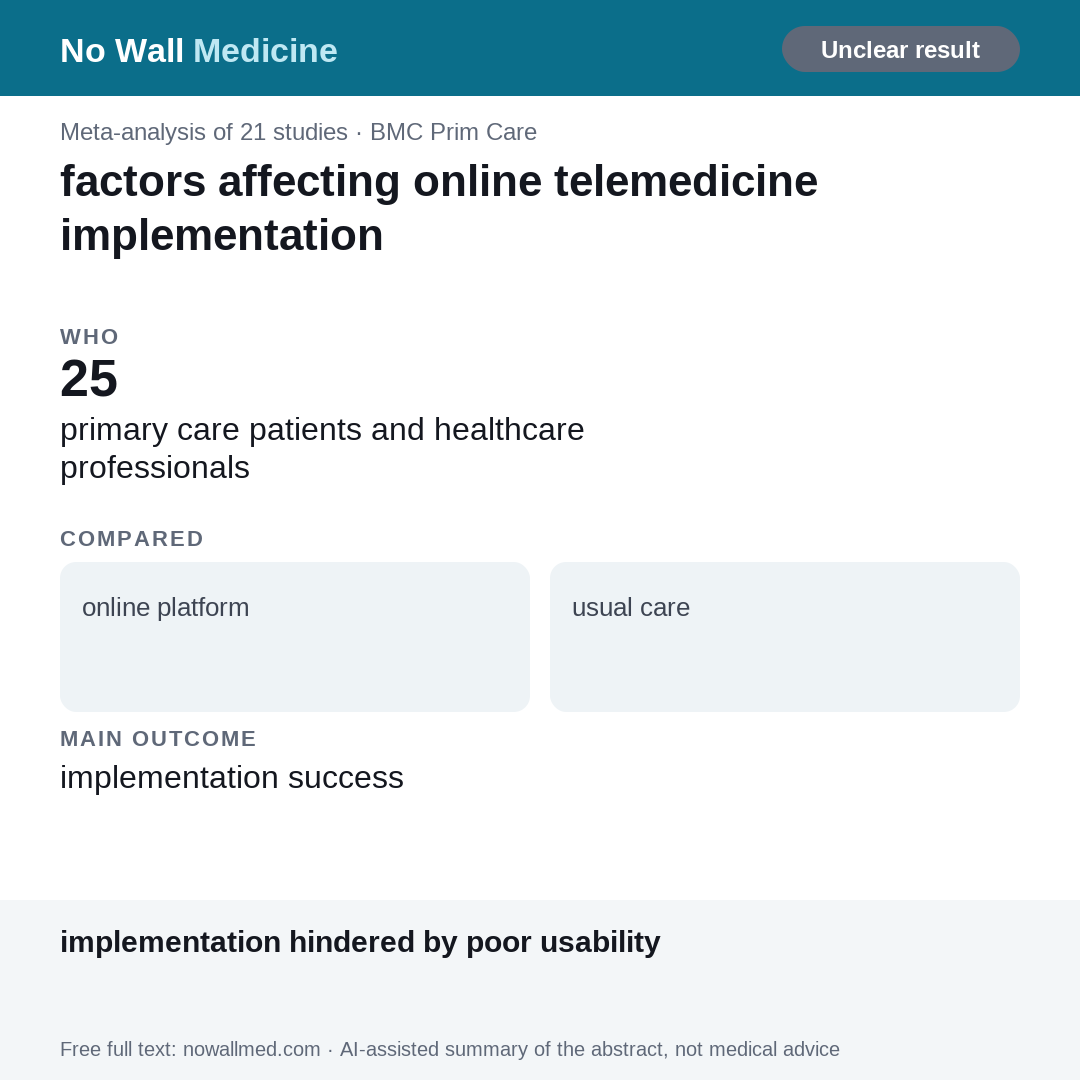
A theory-based analysis of the implementation of online asynchronous telemedicine platforms into primary care practices using Normalisation Process Theory
Meta-analysis of 21 studiesUnclear result
factors affecting online telemedicine implementation
Who
25
primary care patients and healthcare professionals
Compared
online platform
usual care
Main outcome
implementation success
Bottom line: implementation hindered by poor usability
BMC Prim Care · 2025-02-06Download image
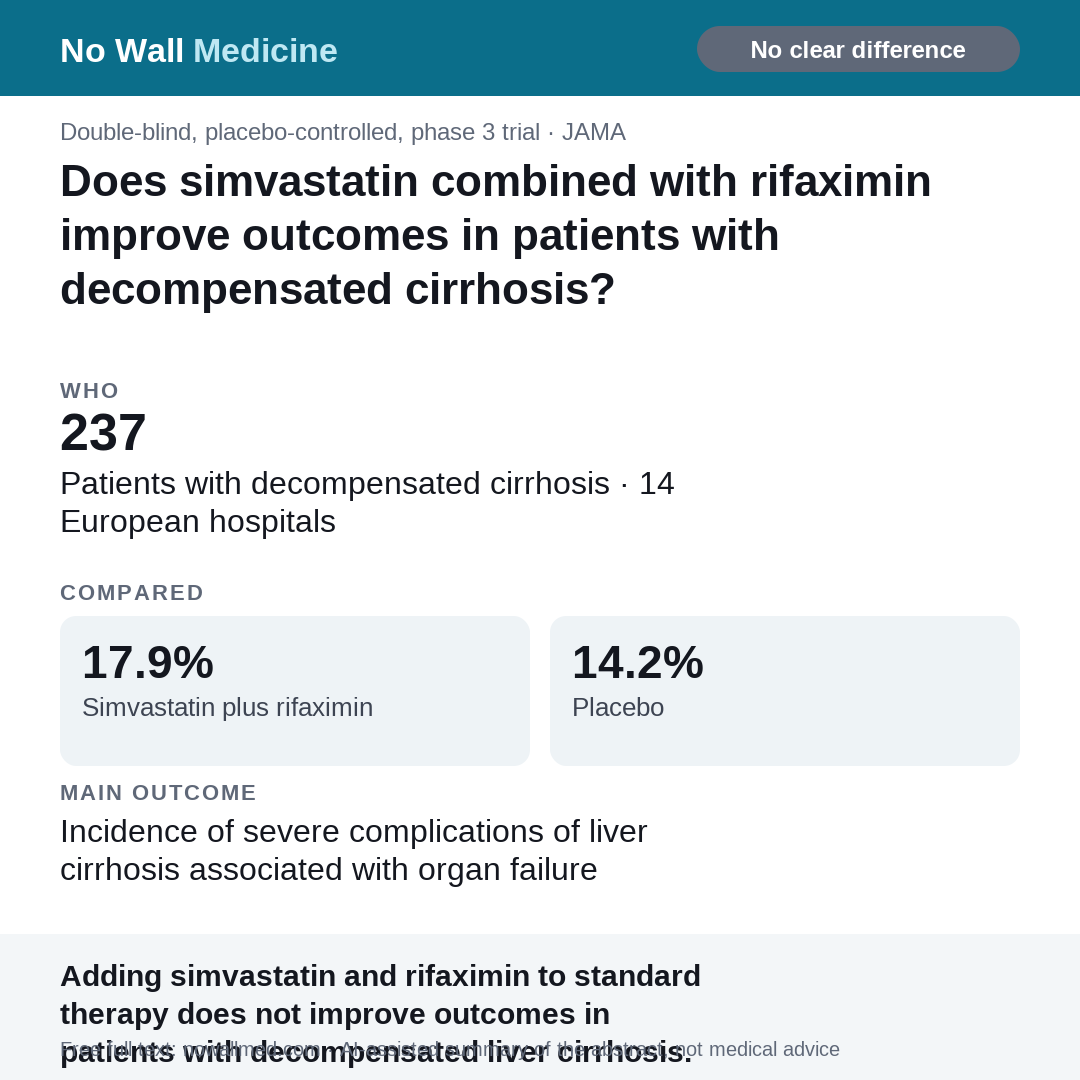
Simvastatin and Rifaximin in Decompensated Cirrhosis: A Randomized Clinical Trial
Double-blind, placebo-controlled, phase 3 trialNo clear difference
Does simvastatin combined with rifaximin improve outcomes in patients with decompensated cirrhosis?
Who
237
Patients with decompensated cirrhosis · 14 European hospitals
Compared
17.9%Simvastatin plus rifaximin
14.2%Placebo
Main outcome
Incidence of severe complications of liver cirrhosis associated with organ failure
Result: hazard ratio 1.23 (95% CI 0.65-2.34)
Bottom line: Adding simvastatin and rifaximin to standard therapy does not improve outcomes in patients with decompensated liver cirrhosis.
JAMA · 2025-02-05Download image
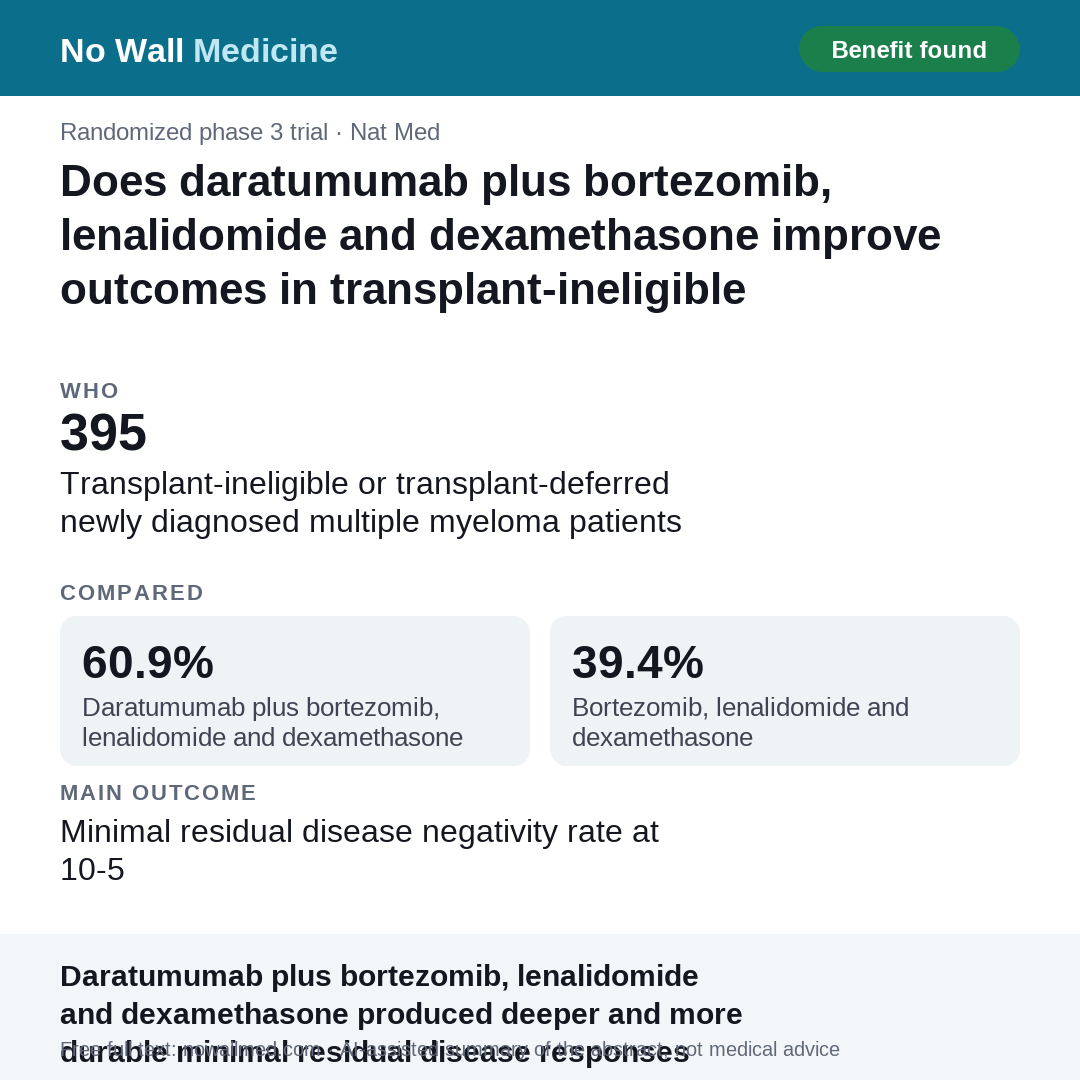
Daratumumab plus bortezomib, lenalidomide and dexamethasone for transplant-ineligible or transplant-deferred newly diagnosed multiple myeloma: the randomized phase 3 CEPHEUS trial
Randomized phase 3 trialBenefit found
Does daratumumab plus bortezomib, lenalidomide and dexamethasone improve outcomes in transplant-ineligible multiple myeloma?
Who
395
Transplant-ineligible or transplant-deferred newly diagnosed multiple myeloma patients
Compared
60.9%Daratumumab plus bortezomib, lenalidomide and dexamethasone
39.4%Bortezomib, lenalidomide and dexamethasone
Main outcome
Minimal residual disease negativity rate at 10-5
Result: odds ratio 2.37 (95% CI 1.58-3.55)
Bottom line: Daratumumab plus bortezomib, lenalidomide and dexamethasone produced deeper and more durable minimal residual disease responses than bortezomib, lenalidomide and dexamethasone.
Nat Med · 2025-02-05Download image
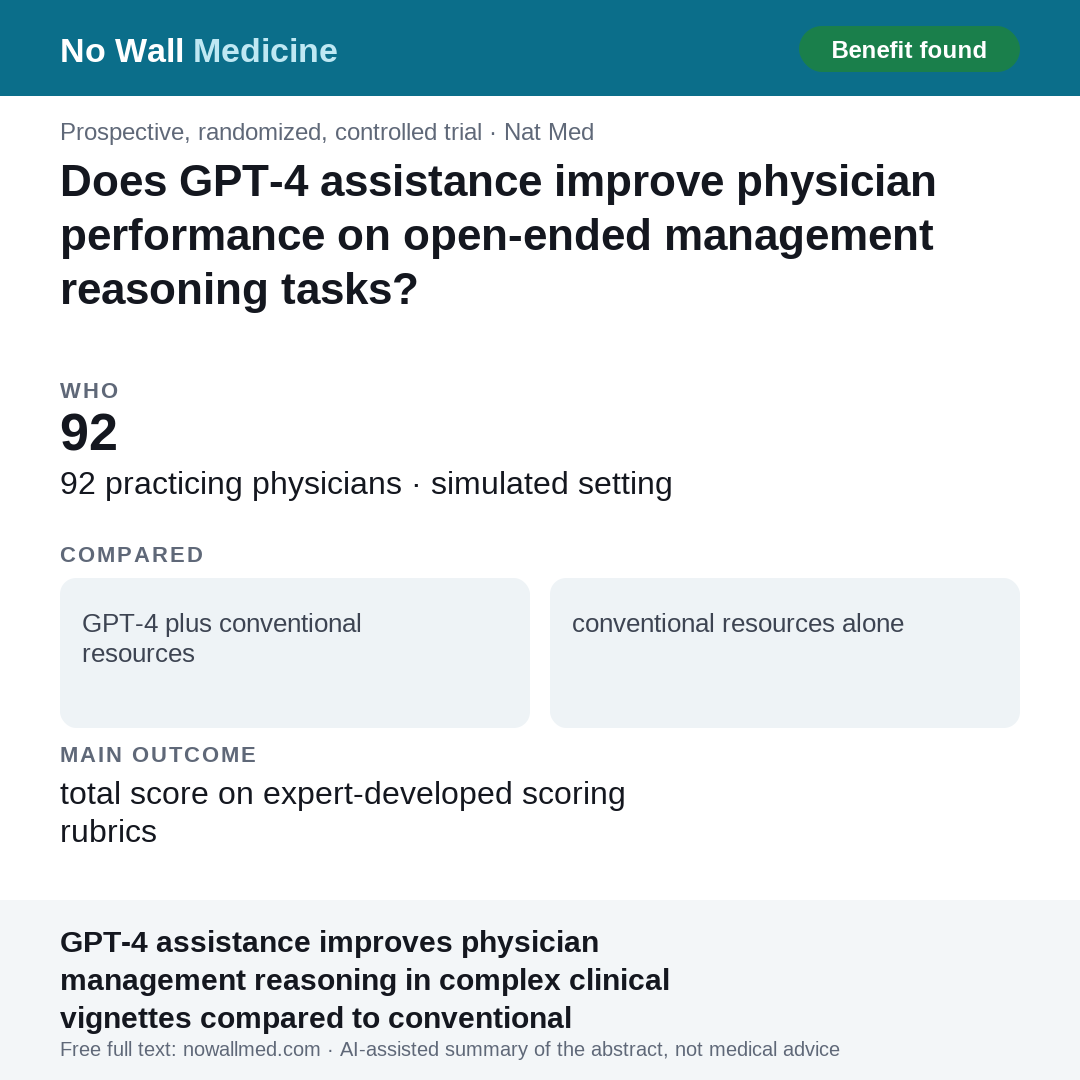
GPT-4 assistance for improvement of physician performance on patient care tasks: a randomized controlled trial
Prospective, randomized, controlled trialBenefit found
Does GPT-4 assistance improve physician performance on open-ended management reasoning tasks?
Who
92
92 practicing physicians · simulated setting
Compared
GPT-4 plus conventional resources
conventional resources alone
Main outcome
total score on expert-developed scoring rubrics
Result: mean difference 6.5% (95% CI 2.7 to 10.2)
Bottom line: GPT-4 assistance improves physician management reasoning in complex clinical vignettes compared to conventional resources.
Nat Med · 2025-02-05Download image
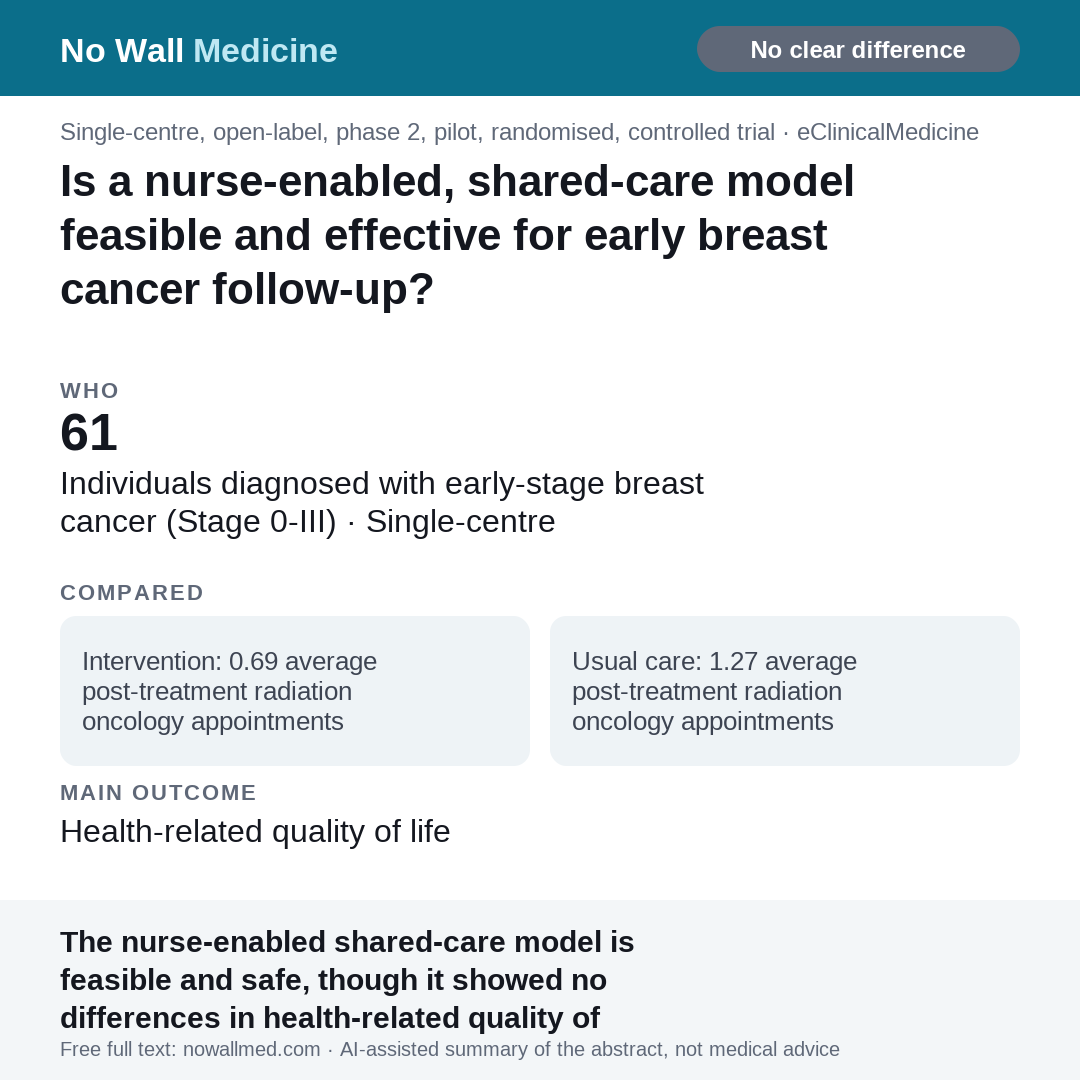
Implementing a nurse-enabled, integrated, shared-care model involving specialists and general practitioners in early breast cancer post-treatment follow-up (EMINENT): a single-centre, open-label, phase 2, parallel-group, pilot, randomised, controlled trial
Single-centre, open-label, phase 2, pilot, randomised, controlled trialNo clear difference
Is a nurse-enabled, shared-care model feasible and effective for early breast cancer follow-up?
Who
61
Individuals diagnosed with early-stage breast cancer (Stage 0-III) · Single-centre
Compared
Intervention: 0.69 average post-treatment radiation oncology appointments
Usual care: 1.27 average post-treatment radiation oncology appointments
Main outcome
Health-related quality of life
Bottom line: The nurse-enabled shared-care model is feasible and safe, though it showed no differences in health-related quality of life.
Funded by: Metro South Health Research Support Scheme Project Grant
eClinicalMedicine · 2025-02-05Download image
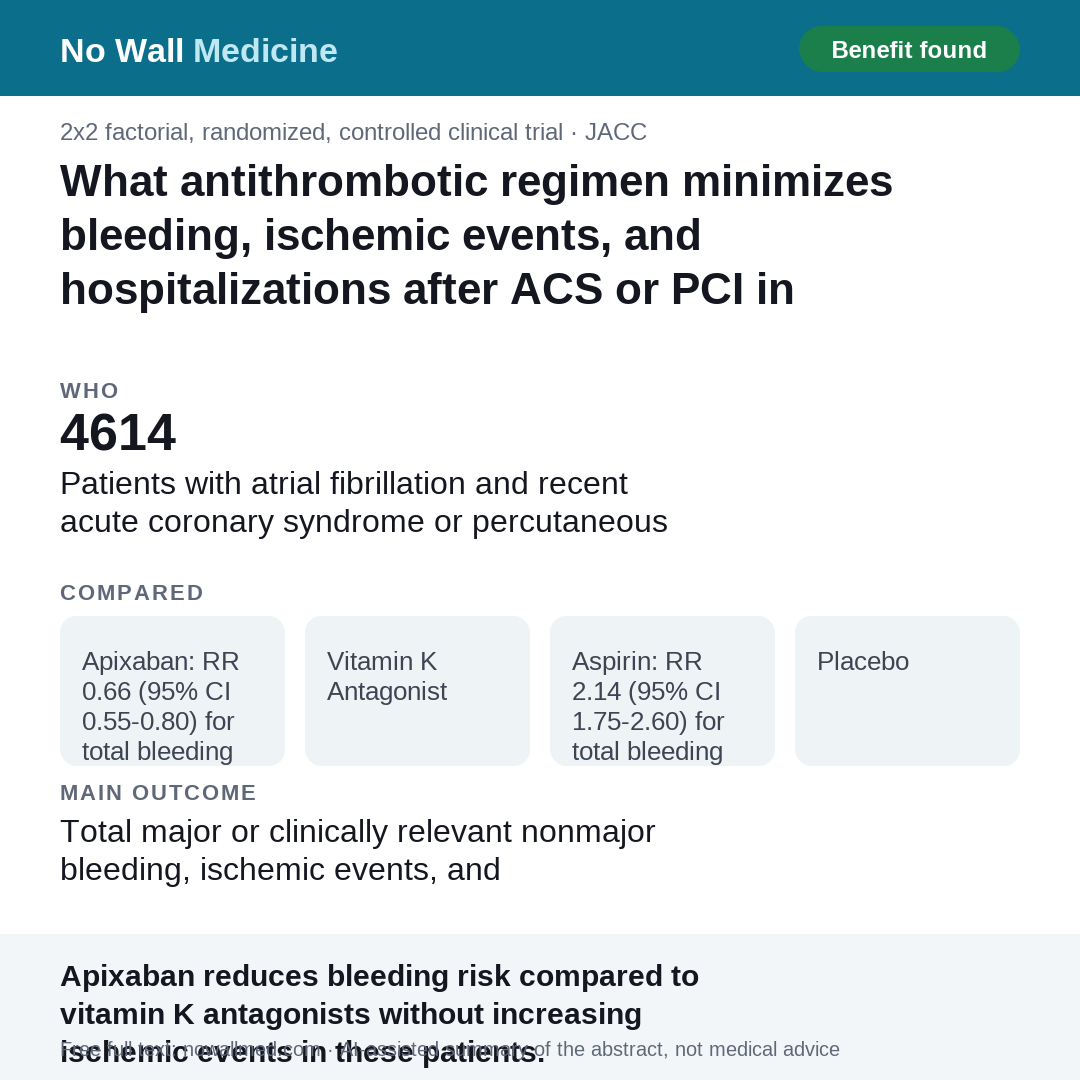
Antithrombotic Therapy to Minimize Total Events After ACS or PCI in Atrial Fibrillation: Insights From AUGUSTUS
2x2 factorial, randomized, controlled clinical trialBenefit found
What antithrombotic regimen minimizes bleeding, ischemic events, and hospitalizations after ACS or PCI in atrial fibrillation?
Who
4614
Patients with atrial fibrillation and recent acute coronary syndrome or percutaneous coronary intervention
Compared
Apixaban: RR 0.66 (95% CI 0.55-0.80) for total bleeding
Vitamin K Antagonist
Aspirin: RR 2.14 (95% CI 1.75-2.60) for total bleeding
Placebo
Main outcome
Total major or clinically relevant nonmajor bleeding, ischemic events, and hospitalizations
Result: RR 0.66 (95% CI 0.55-0.80) for bleeding (apixaban vs VKA)
Bottom line: Apixaban reduces bleeding risk compared to vitamin K antagonists without increasing ischemic events in these patients.
JACC · 2025-02-05Download image
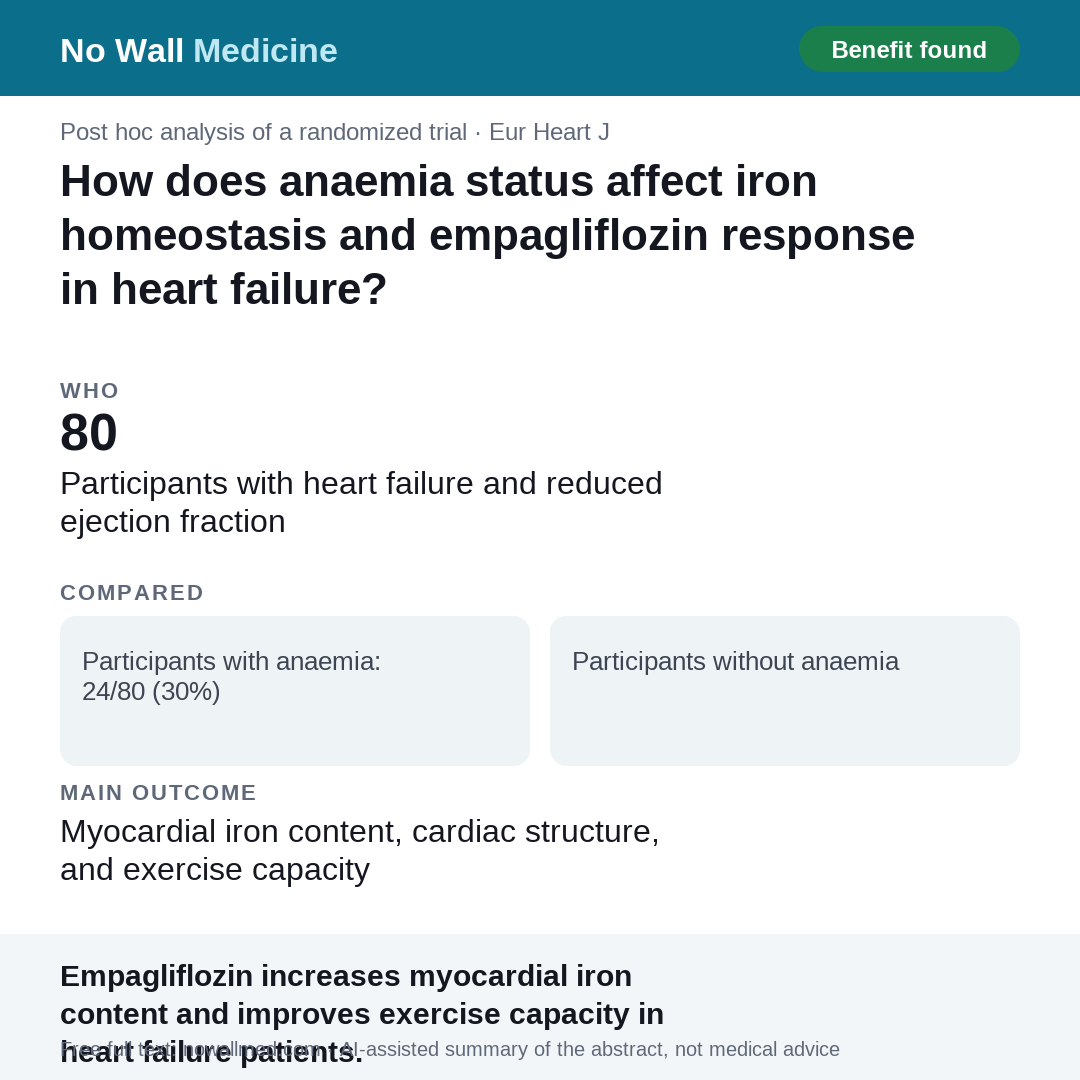
Anaemia predicts iron homoeostasis dysregulation and modulates the response to empagliflozin in heart failure with reduced ejection fraction: the EMPATROPISM-FE trial
Post hoc analysis of a randomized trialBenefit found
How does anaemia status affect iron homeostasis and empagliflozin response in heart failure?
Who
80
Participants with heart failure and reduced ejection fraction
Compared
Participants with anaemia: 24/80 (30%)
Participants without anaemia
Main outcome
Myocardial iron content, cardiac structure, and exercise capacity
Bottom line: Empagliflozin increases myocardial iron content and improves exercise capacity in heart failure patients.
Eur Heart J · 2025-02-05Download image
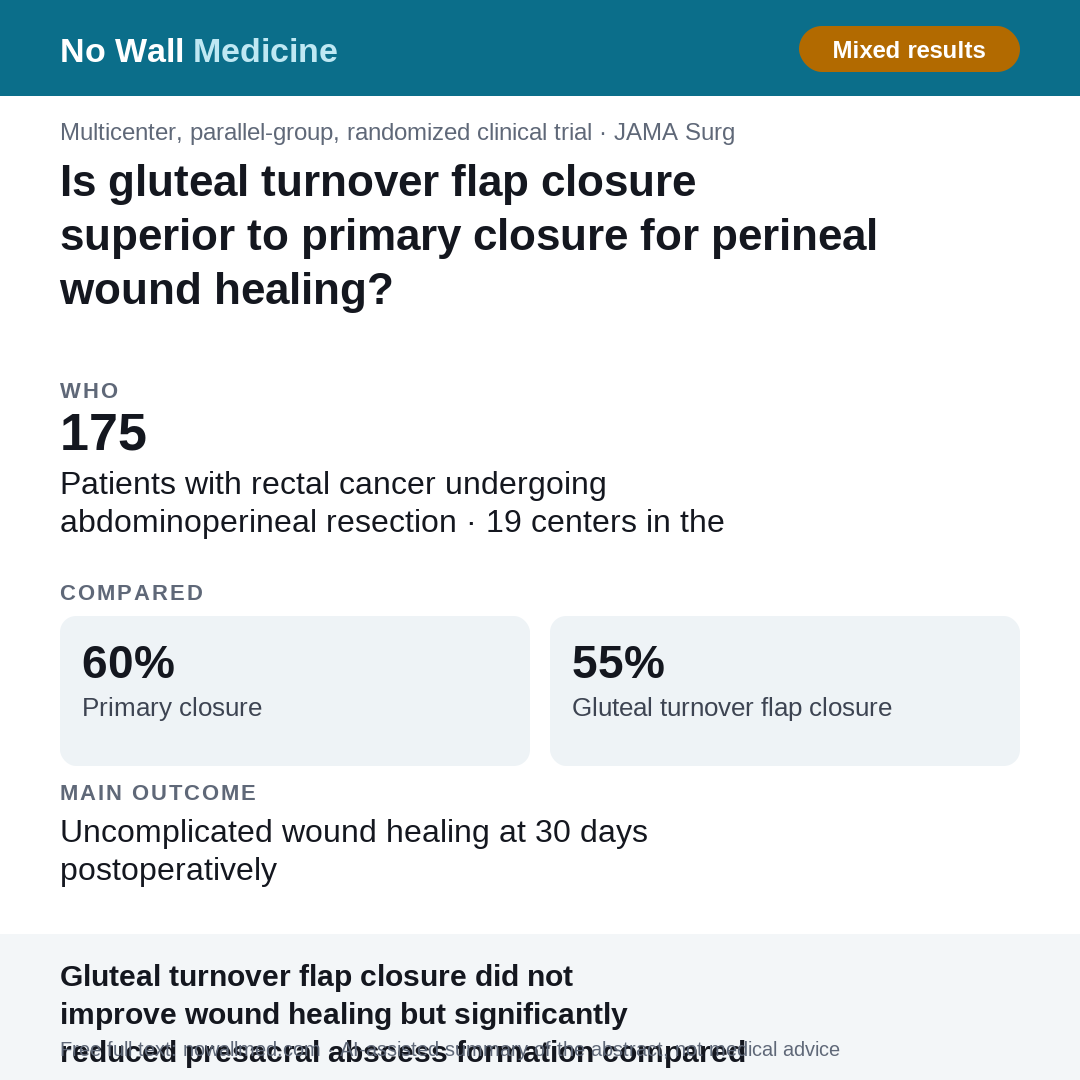
Perineal Wound Closure Using Gluteal Turnover Flap After Abdominoperineal Resection for Rectal Cancer: The BIOPEX-2 Randomized Clinical Trial
Multicenter, parallel-group, randomized clinical trialMixed results
Is gluteal turnover flap closure superior to primary closure for perineal wound healing?
Who
175
Patients with rectal cancer undergoing abdominoperineal resection · 19 centers in the Netherlands and the UK
Compared
60%Primary closure
55%Gluteal turnover flap closure
Main outcome
Uncomplicated wound healing at 30 days postoperatively
Bottom line: Gluteal turnover flap closure did not improve wound healing but significantly reduced presacral abscess formation compared to primary closure.
JAMA Surg · 2025-02-05Download image
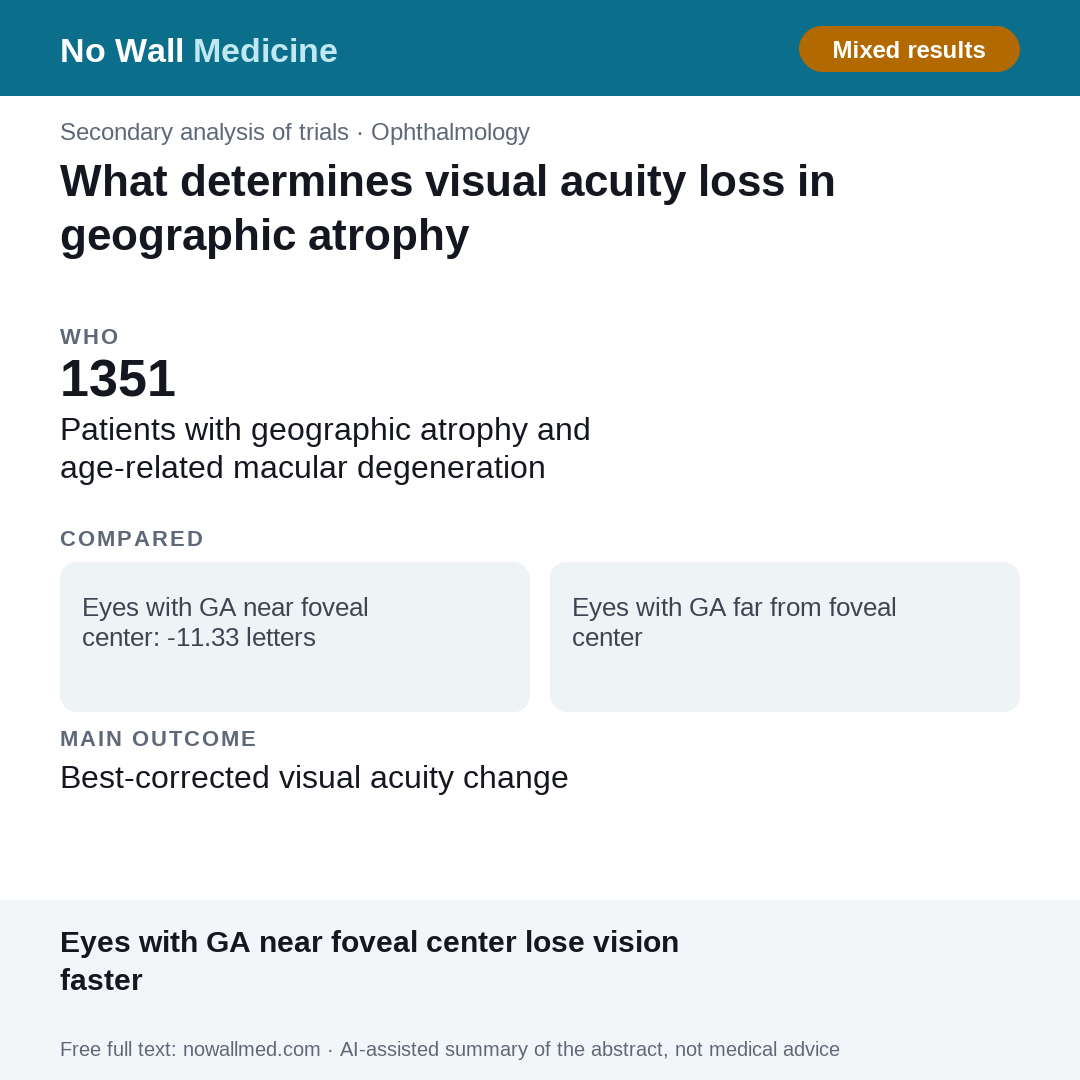
Determinants of Four-Year Visual Acuity Loss in Geographic Atrophy: An Analysis of Age-Related Eye Disease Study and Age-Related Eye Disease Study 2
Secondary analysis of trialsMixed results
What determines visual acuity loss in geographic atrophy
Who
1351
Patients with geographic atrophy and age-related macular degeneration
Compared
Eyes with GA near foveal center: -11.33 letters
Eyes with GA far from foveal center
Main outcome
Best-corrected visual acuity change
Bottom line: Eyes with GA near foveal center lose vision faster
Ophthalmology · 2025-02-05Download image
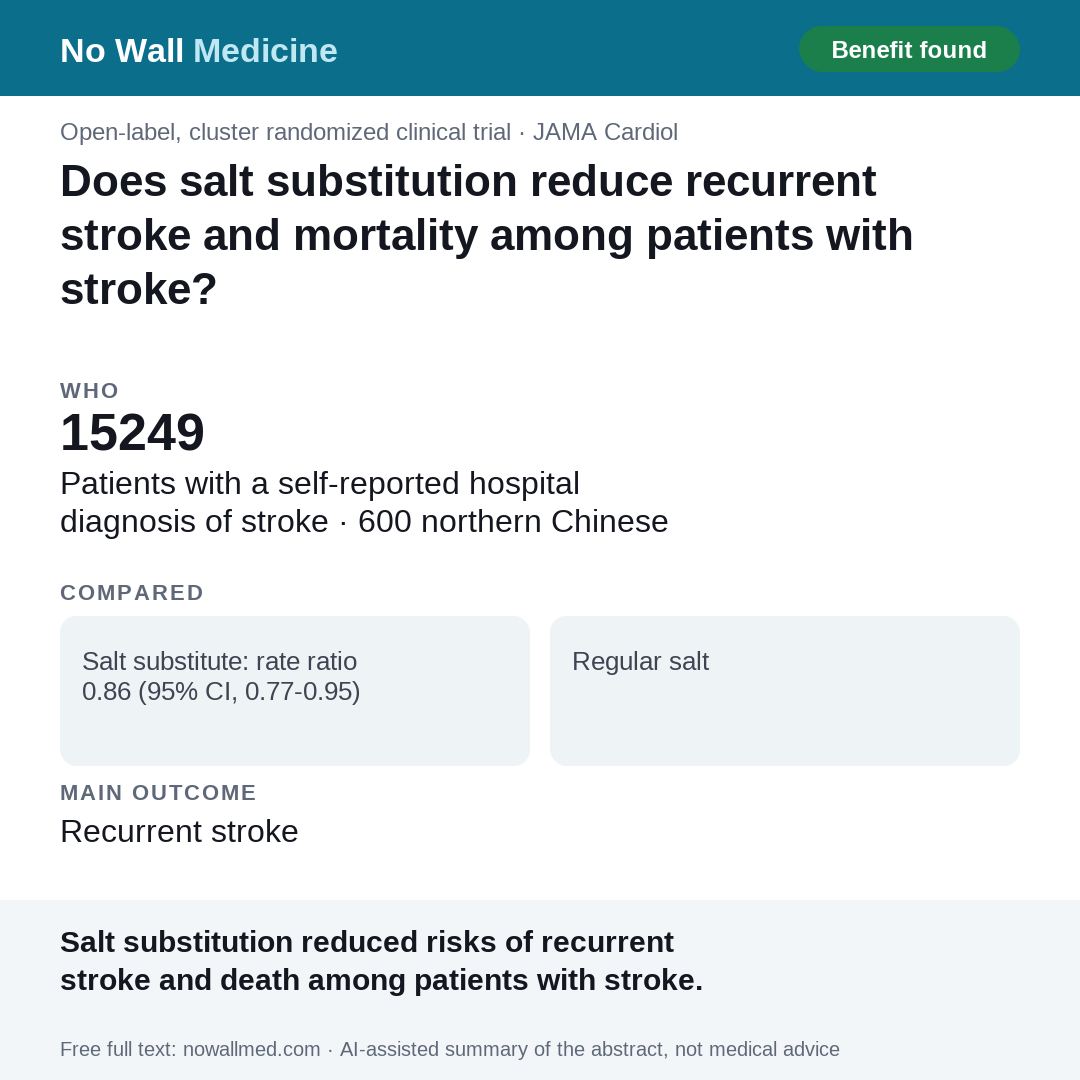
Salt Substitution and Recurrent Stroke and Death: A Randomized Clinical Trial
Open-label, cluster randomized clinical trialBenefit found
Does salt substitution reduce recurrent stroke and mortality among patients with stroke?
Who
15249
Patients with a self-reported hospital diagnosis of stroke · 600 northern Chinese villages
Compared
Salt substitute: rate ratio 0.86 (95% CI, 0.77-0.95)
Regular salt
Main outcome
Recurrent stroke
Result: rate ratio 0.86 (95% CI, 0.77-0.95)
Bottom line: Salt substitution reduced risks of recurrent stroke and death among patients with stroke.
JAMA Cardiol · 2025-02-05Download image