Visual abstracts
New randomized trials and meta-analyses from leading journals at a glance: who was studied, what was compared, and what was found. Every paper is free to read in full.
All specialtiesCardiology 1854Oncology 1599Gastroenterology & Hepatology 705Infectious Disease 1184Neurology 770Psychiatry & Mental Health 913Pulmonology 797Critical Care 540Endocrinology & Diabetes 1006Pediatrics 1106Surgery 943Orthopedics & Sports Medicine 348Neurosurgery 233Cardiothoracic & Vascular Surgery 204Plastic & Reconstructive Surgery 287Nephrology 382Rheumatology 260Hematology 404Dermatology 203Ophthalmology 222Obstetrics & Gynecology 610Public & Global Health 361Radiology & Imaging 255Anesthesiology 372Urology 319ENT (Otolaryngology) 249Emergency Medicine 209Allergy & Immunology 121Geriatrics 398Family Medicine & Primary Care 221Medical Genetics & Genomics 204Pathology & Laboratory Medicine 57Physical Medicine & Rehabilitation 327Palliative Care 168Nutrition 501Digital Health & AI 988General Medicine 144
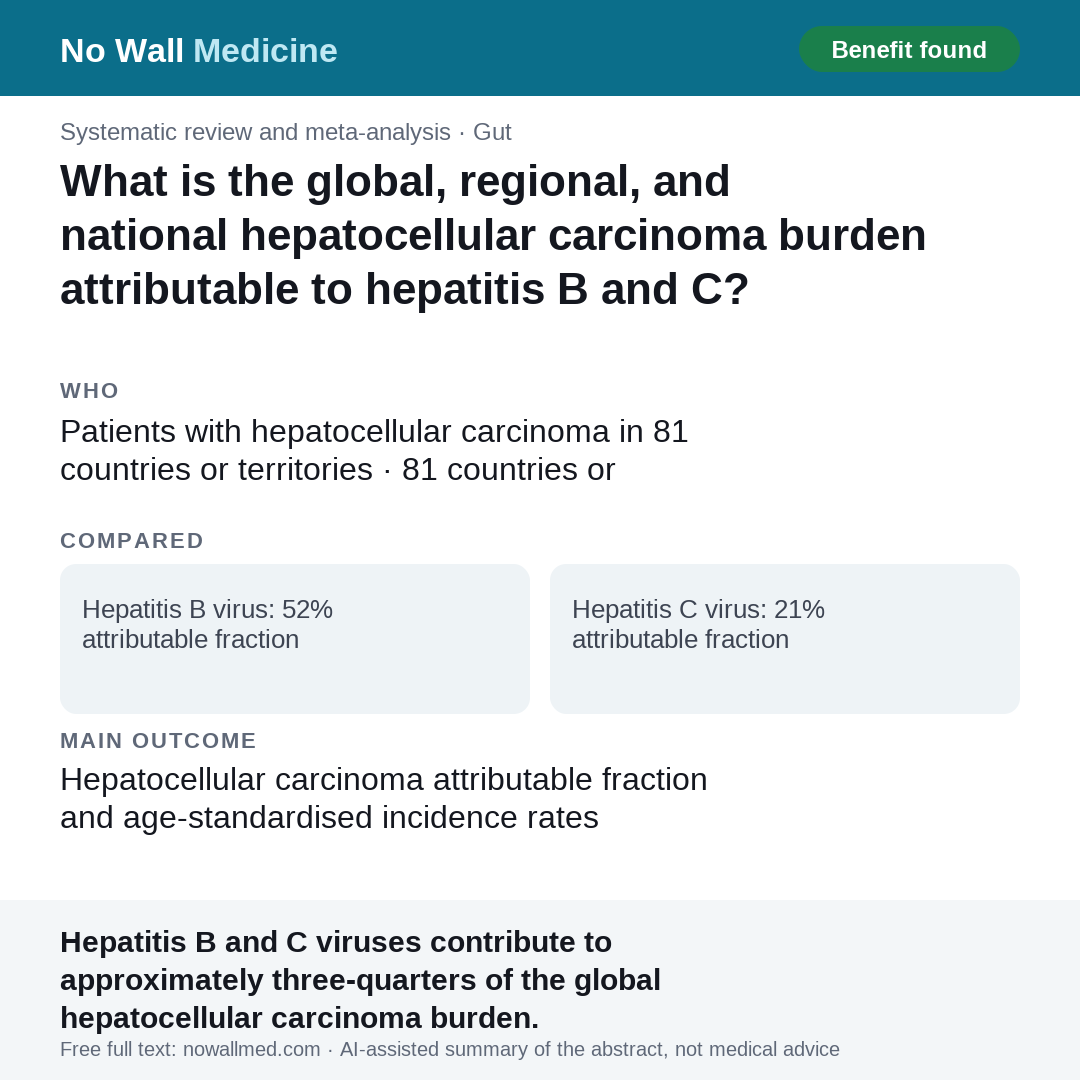
Hepatocellular carcinoma attributable to hepatitis B, hepatitis C and other risk factors at global, regional and national levels: an updated systematic review and meta-analysis
Systematic review and meta-analysisBenefit found
What is the global, regional, and national hepatocellular carcinoma burden attributable to hepatitis B and C?
Who
Patients with hepatocellular carcinoma in 81 countries or territories · 81 countries or territories
Compared
Hepatitis B virus: 52% attributable fraction
Hepatitis C virus: 21% attributable fraction
Main outcome
Hepatocellular carcinoma attributable fraction and age-standardised incidence rates
Bottom line: Hepatitis B and C viruses contribute to approximately three-quarters of the global hepatocellular carcinoma burden.
Gut · 2026-05-14Download image
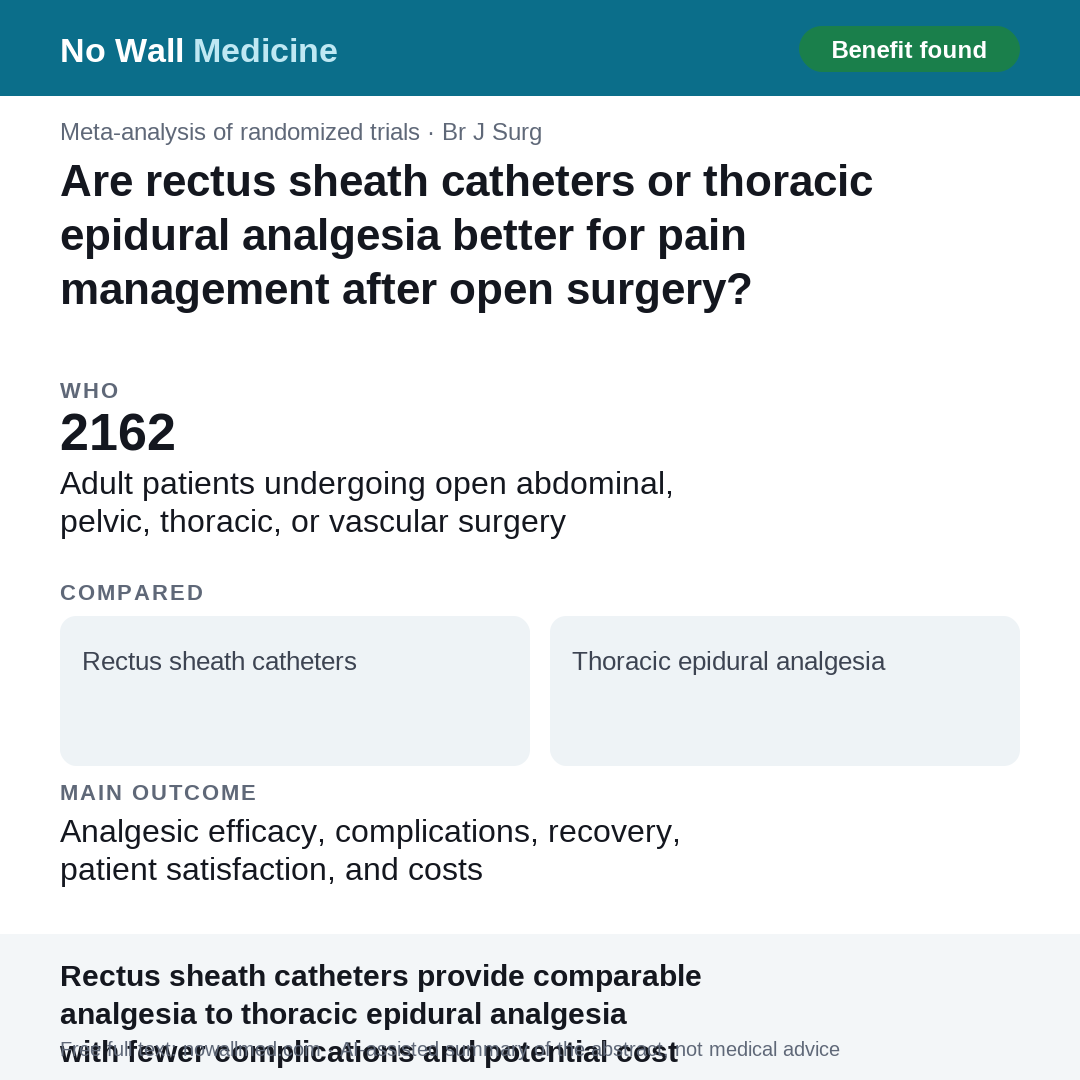
Rectus sheath catheters versus thoracic epidural analgesia for pain management after open surgery: systematic review and meta-analysis
Meta-analysis of randomized trialsBenefit found
Are rectus sheath catheters or thoracic epidural analgesia better for pain management after open surgery?
Who
2162
Adult patients undergoing open abdominal, pelvic, thoracic, or vascular surgery
Compared
Rectus sheath catheters
Thoracic epidural analgesia
Main outcome
Analgesic efficacy, complications, recovery, patient satisfaction, and costs
Result: standardized mean difference -0.35 (95% c.i. -2.01 to 1.32) for postoperative pain
Bottom line: Rectus sheath catheters provide comparable analgesia to thoracic epidural analgesia with fewer complications and potential cost savings.
Br J Surg · 2026-05-14Download image
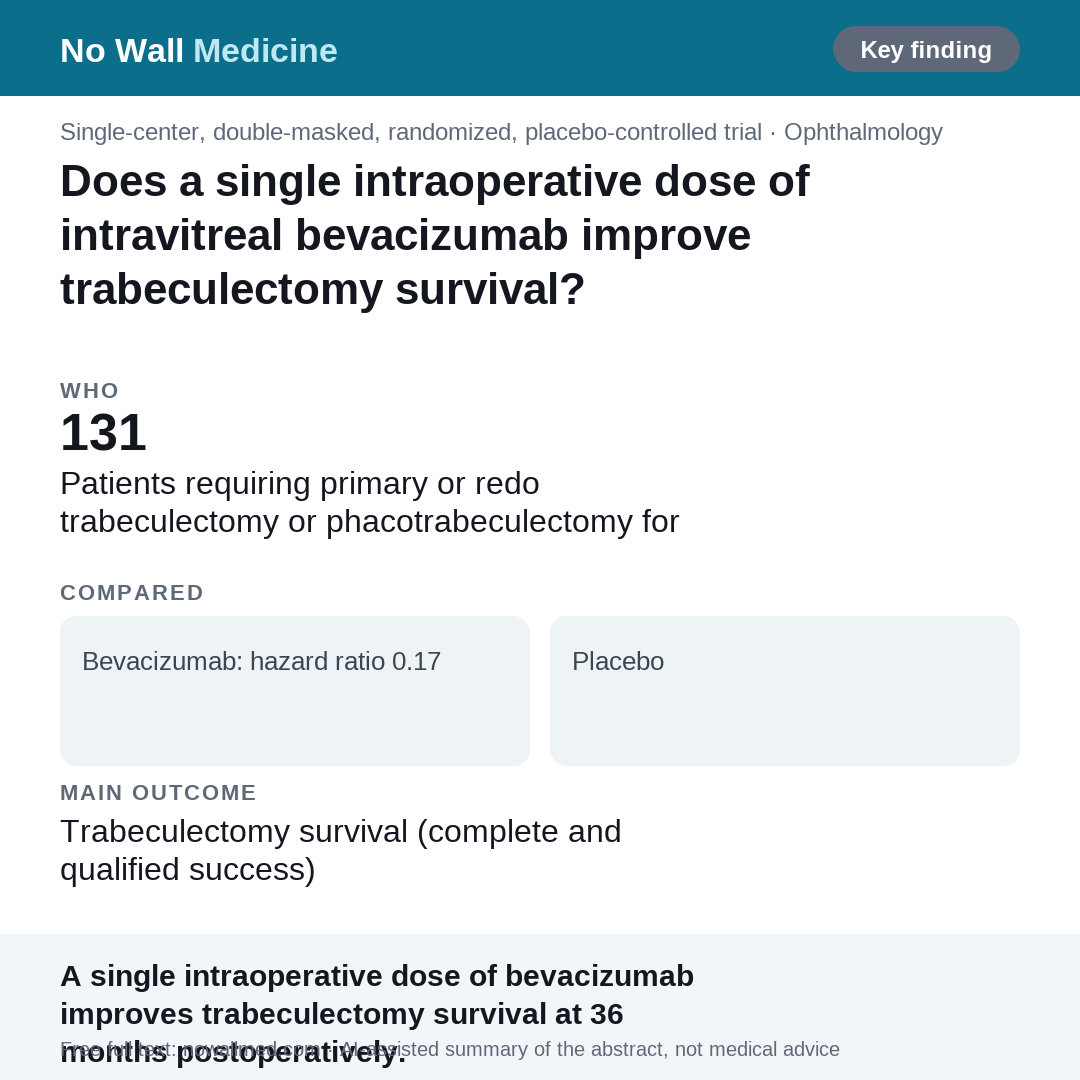
Intravitreal Bevacizumab Improves Trabeculectomy Survival at 3 Years: Long-term Follow-up from the Bevacizumab in Trabeculectomy Study
Single-center, double-masked, randomized, placebo-controlled trialBenefit found
Does a single intraoperative dose of intravitreal bevacizumab improve trabeculectomy survival?
Who
131
Patients requiring primary or redo trabeculectomy or phacotrabeculectomy for progressing glaucoma · Single ophthalmic outpatient referral center
Compared
Bevacizumab: hazard ratio 0.17
Placebo
Main outcome
Trabeculectomy survival (complete and qualified success)
Result: hazard ratio 0.17 (P = 0.002)
Bottom line: A single intraoperative dose of bevacizumab improves trabeculectomy survival at 36 months postoperatively.
Ophthalmology · 2026-05-14Download image
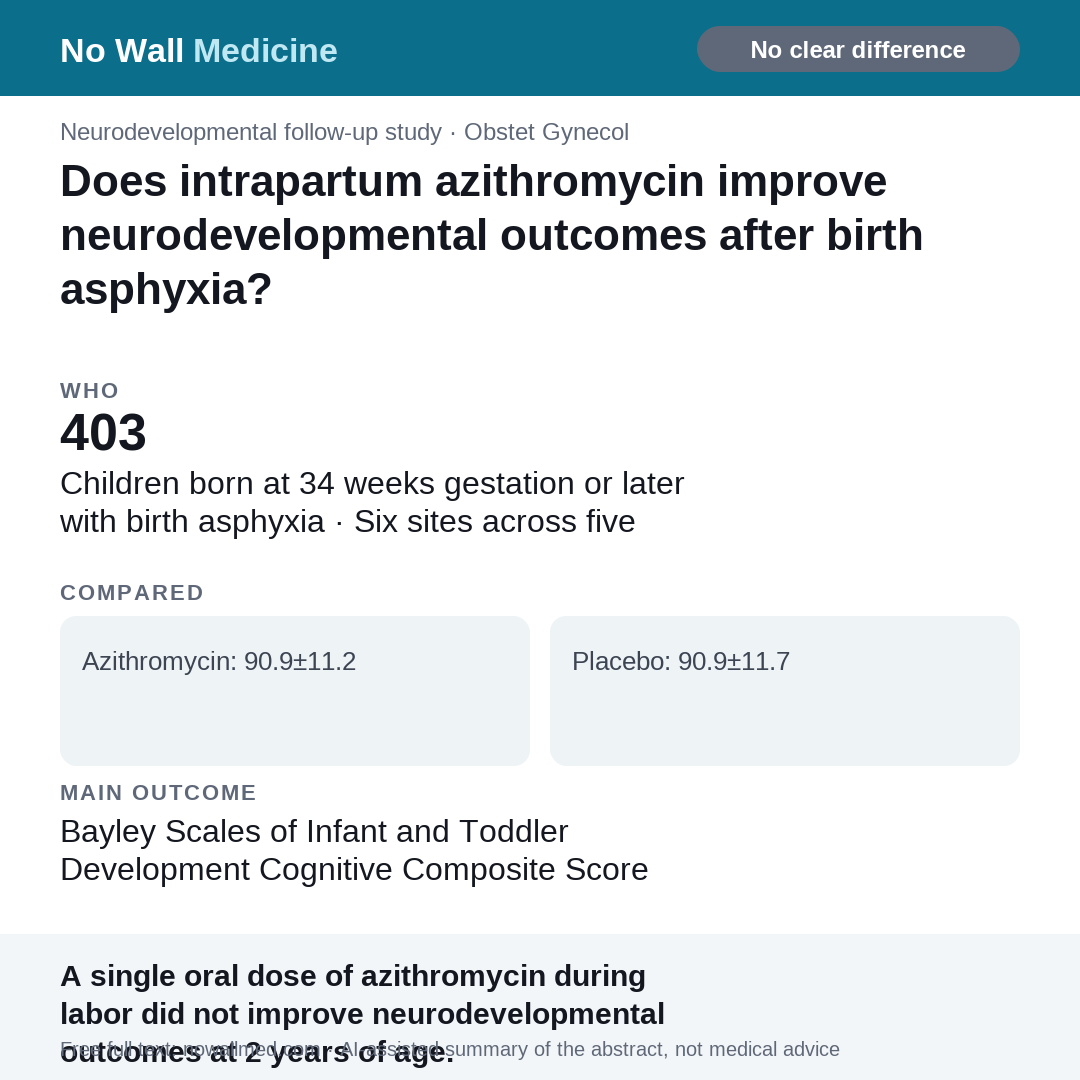
Neurodevelopmental Pediatric Follow-Up After the Azithromycin Prevention in Labor Use Study
Neurodevelopmental follow-up studyNo clear difference
Does intrapartum azithromycin improve neurodevelopmental outcomes after birth asphyxia?
Who
403
Children born at 34 weeks gestation or later with birth asphyxia · Six sites across five countries
Compared
Azithromycin: 90.9±11.2
Placebo: 90.9±11.7
Main outcome
Bayley Scales of Infant and Toddler Development Cognitive Composite Score
Result: mean difference: 0.29; 95% CI, -1.77 to 2.34
Bottom line: A single oral dose of azithromycin during labor did not improve neurodevelopmental outcomes at 2 years of age.
Obstet Gynecol · 2026-05-14Download image
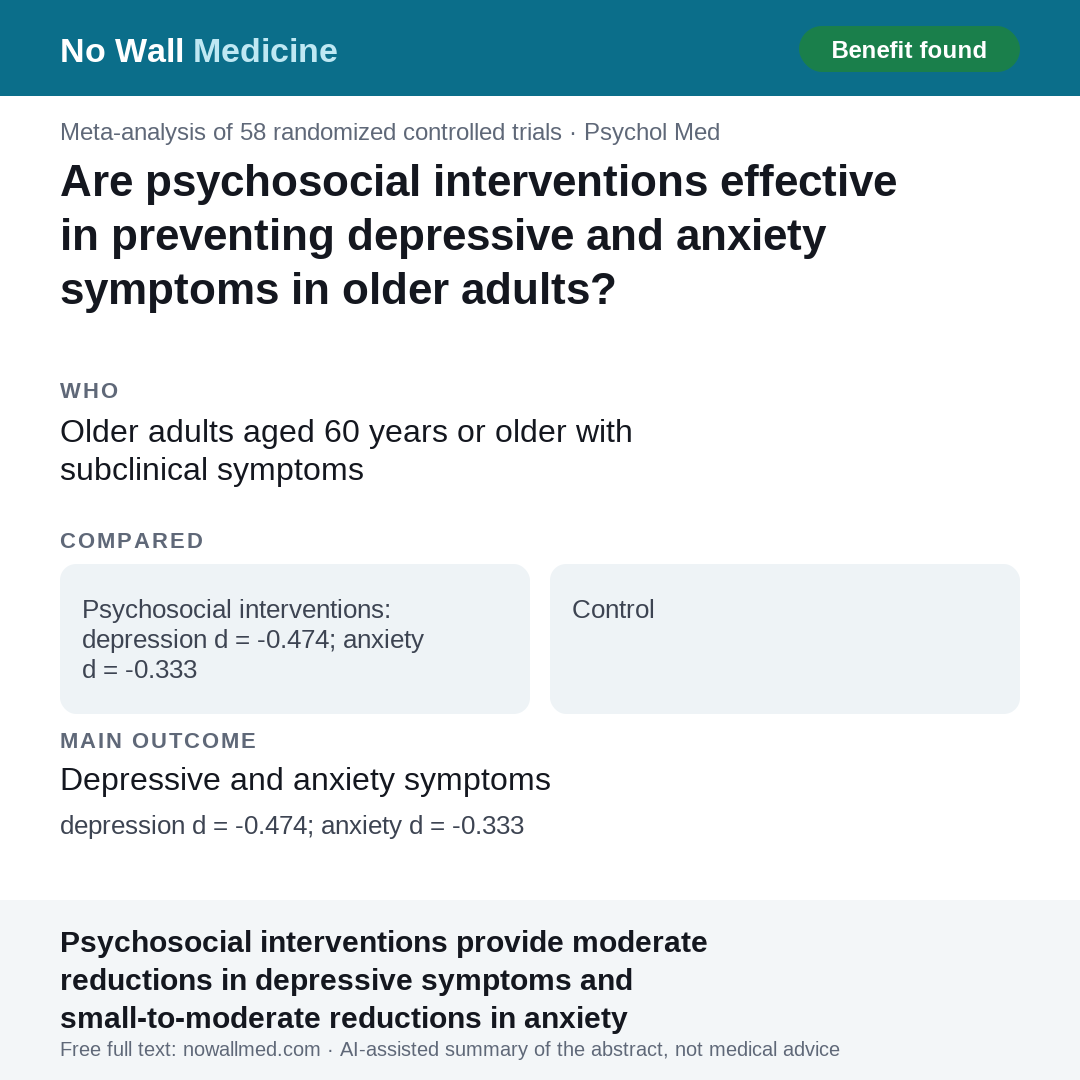
A meta-analysis of preventive psychosocial interventions against depressive and anxiety symptoms in older adults
Meta-analysis of 58 randomized controlled trialsBenefit found
Are psychosocial interventions effective in preventing depressive and anxiety symptoms in older adults?
Who
Older adults aged 60 years or older with subclinical symptoms
Compared
Psychosocial interventions: depression d = -0.474; anxiety d = -0.333
Control
Main outcome
Depressive and anxiety symptoms
Result: depression d = -0.474; anxiety d = -0.333
Bottom line: Psychosocial interventions provide moderate reductions in depressive symptoms and small-to-moderate reductions in anxiety symptoms in older adults.
Psychol Med · 2026-05-14Download image
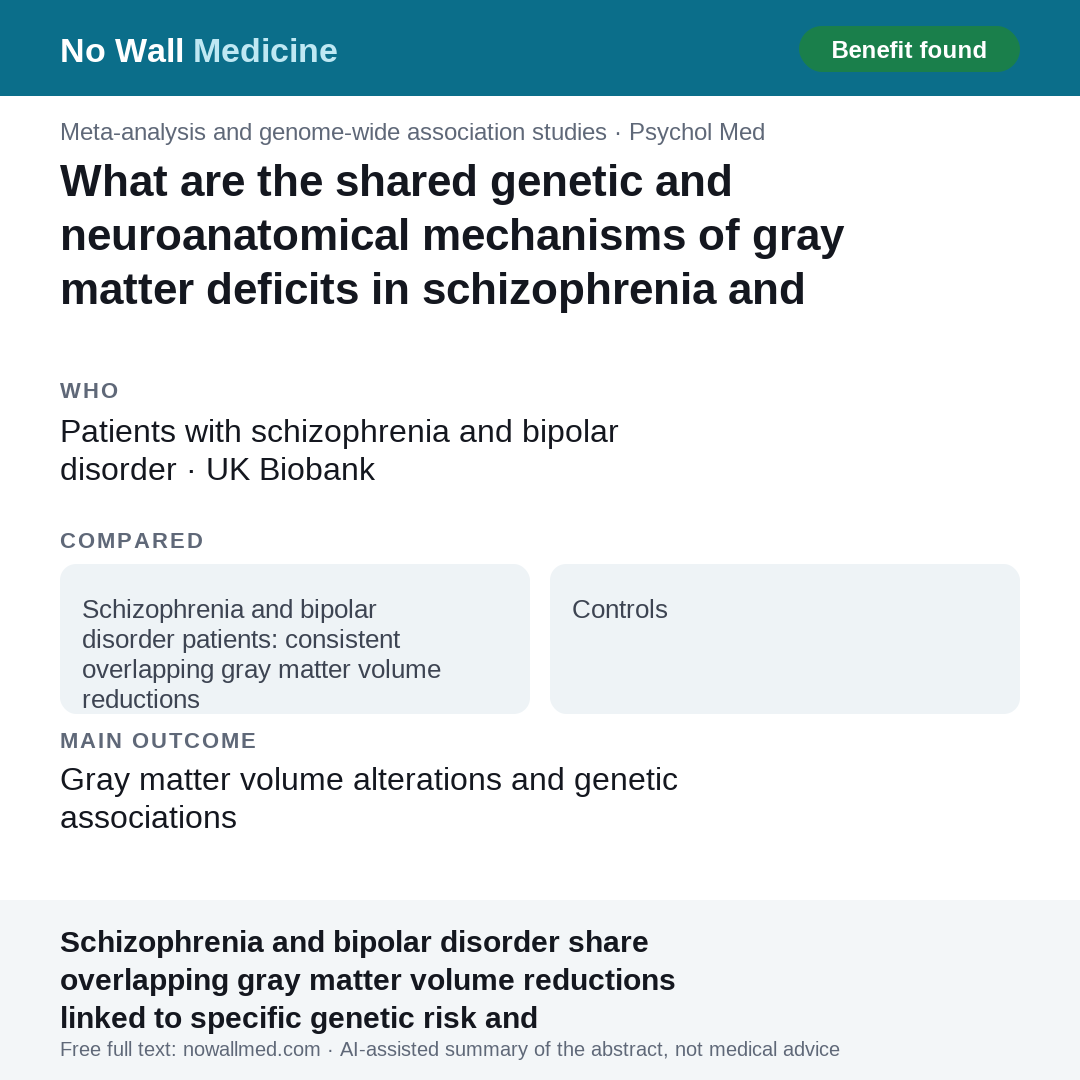
Shared genetic architecture of gray matter deficits in schizophrenia and bipolar disorder: evidence from structural neuroimaging-genetic analyses
Meta-analysis and genome-wide association studiesBenefit found
What are the shared genetic and neuroanatomical mechanisms of gray matter deficits in schizophrenia and bipolar disorder?
Who
Patients with schizophrenia and bipolar disorder · UK Biobank
Compared
Schizophrenia and bipolar disorder patients: consistent overlapping gray matter volume reductions
Controls
Main outcome
Gray matter volume alterations and genetic associations
Bottom line: Schizophrenia and bipolar disorder share overlapping gray matter volume reductions linked to specific genetic risk and pleiotropic single nucleotide polymorphisms.
Psychol Med · 2026-05-14Download image
The Effect of Peribulbar Block Volume on Intraocular Pressure Change: A Randomized Prospective Study
Prospective, controlled, 1:1 randomized, interventional studyBenefit found
Does peribulbar block volume affect intraocular pressure change and anesthesia effect?
Who
50
Ambulatory patients aged 18 to 79 undergoing planned intraocular surgery · Two ambulatory surgical centers
Compared
4 mL block volume
7 mL block volume: significantly higher surgeon satisfaction score
Main outcome
Intraocular pressure changes and surgeon anesthesia satisfaction rating
Bottom line: A 7 mL peribulbar block is safe and provides higher surgeon satisfaction than 4 mL.
Am J Ophthalmol · 2026-05-14Download image

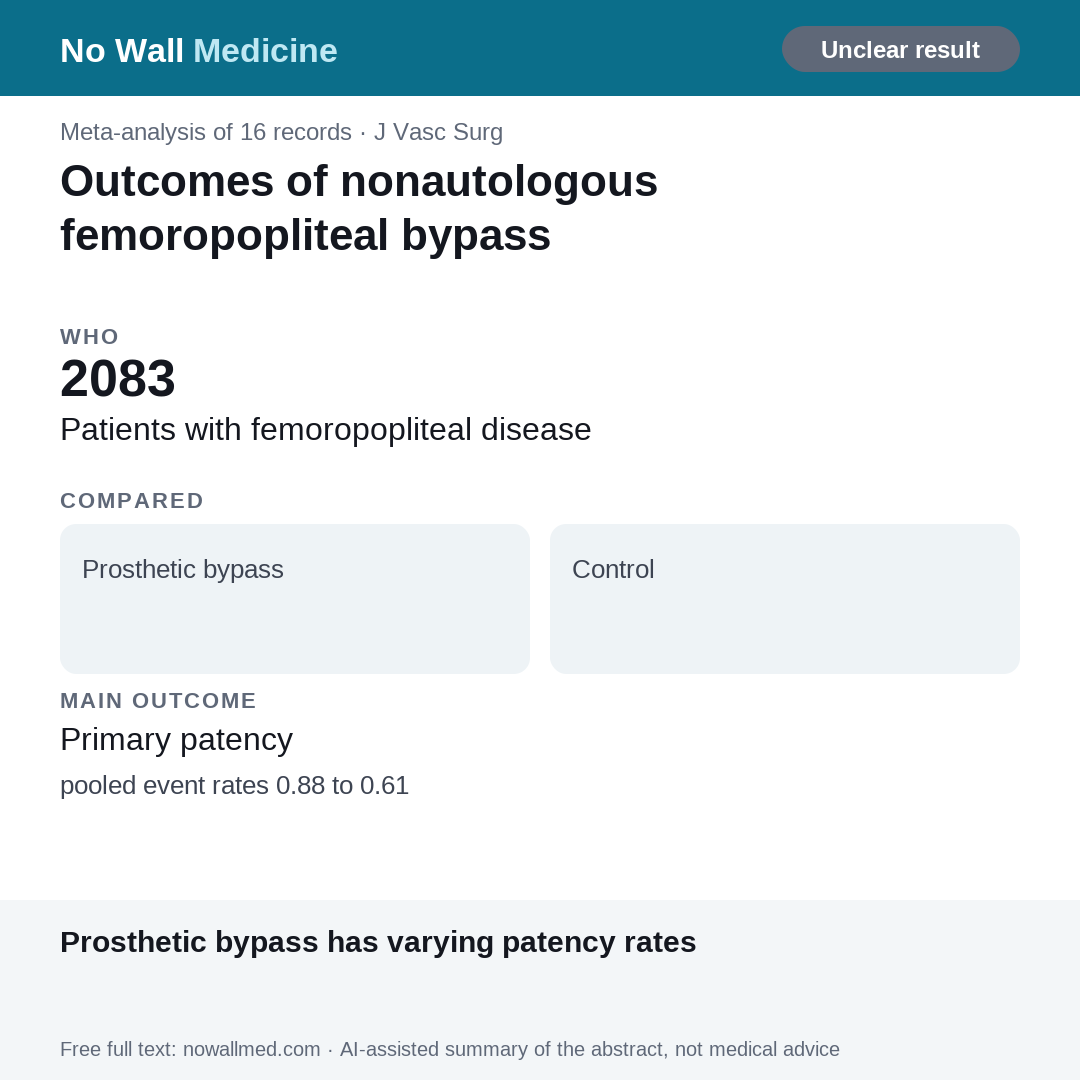
Contemporary systematic review and meta-analysis of outcomes associated with femoropopliteal above-the-knee nonautologous surgical bypass
Meta-analysis of 16 recordsUnclear result
Outcomes of nonautologous femoropopliteal bypass
Who
2083
Patients with femoropopliteal disease
Compared
Prosthetic bypass
Control
Main outcome
Primary patency
Result: pooled event rates 0.88 to 0.61
Bottom line: Prosthetic bypass has varying patency rates
J Vasc Surg · 2026-05-14Download image
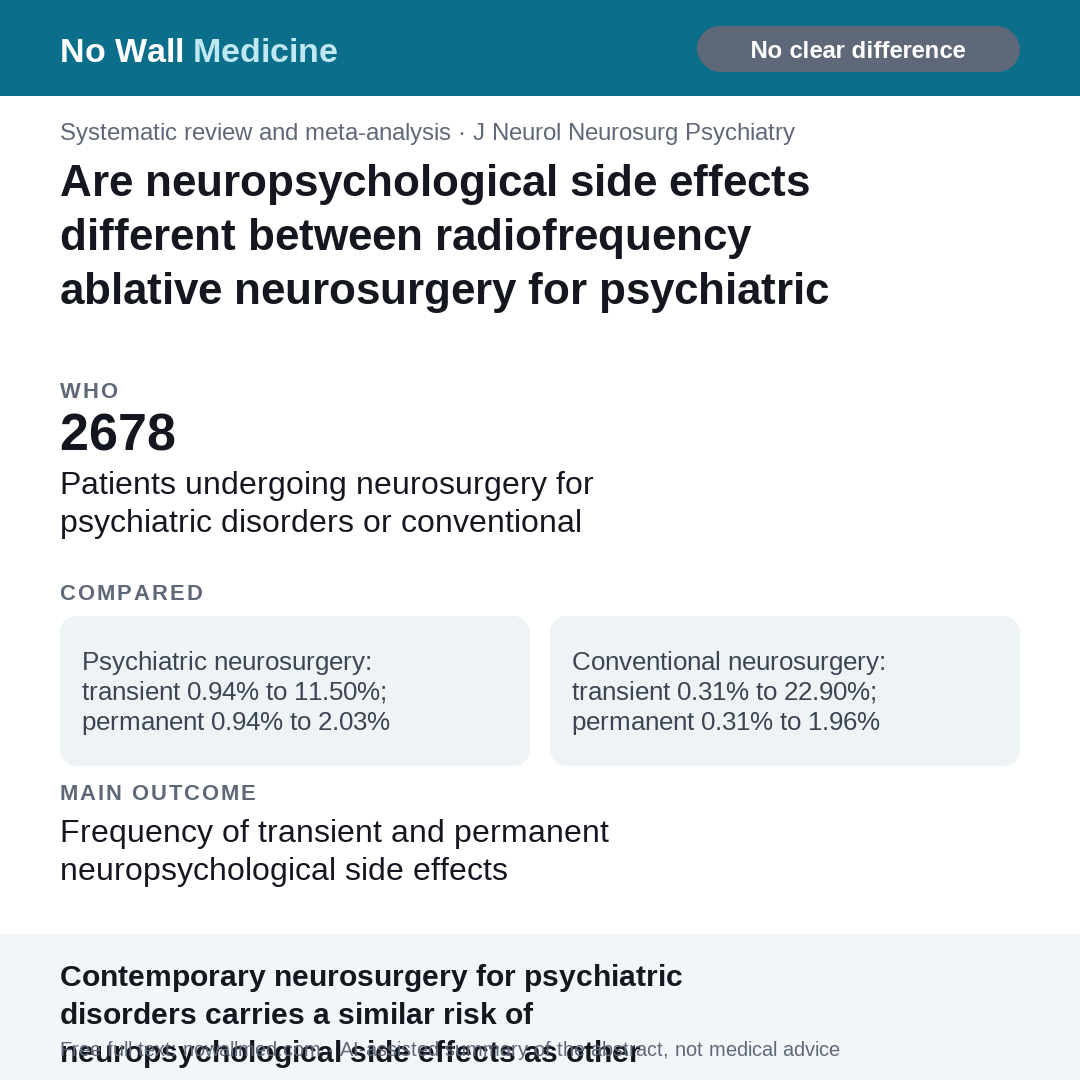
Comparison of neuropsychological side effects between contemporary radiofrequency ablative neurosurgery for psychiatric disorders and conventional neurosurgical procedures: systematic review and meta-analysis
Systematic review and meta-analysisNo clear difference
Are neuropsychological side effects different between radiofrequency ablative neurosurgery for psychiatric disorders and conventional neurosurgery?
Who
2678
Patients undergoing neurosurgery for psychiatric disorders or conventional neurosurgical procedures
Compared
Psychiatric neurosurgery: transient 0.94% to 11.50%; permanent 0.94% to 2.03%
Conventional neurosurgery: transient 0.31% to 22.90%; permanent 0.31% to 1.96%
Main outcome
Frequency of transient and permanent neuropsychological side effects
Bottom line: Contemporary neurosurgery for psychiatric disorders carries a similar risk of neuropsychological side effects as other conventional neurosurgical procedures.
J Neurol Neurosurg Psychiatry · 2026-05-14Download image
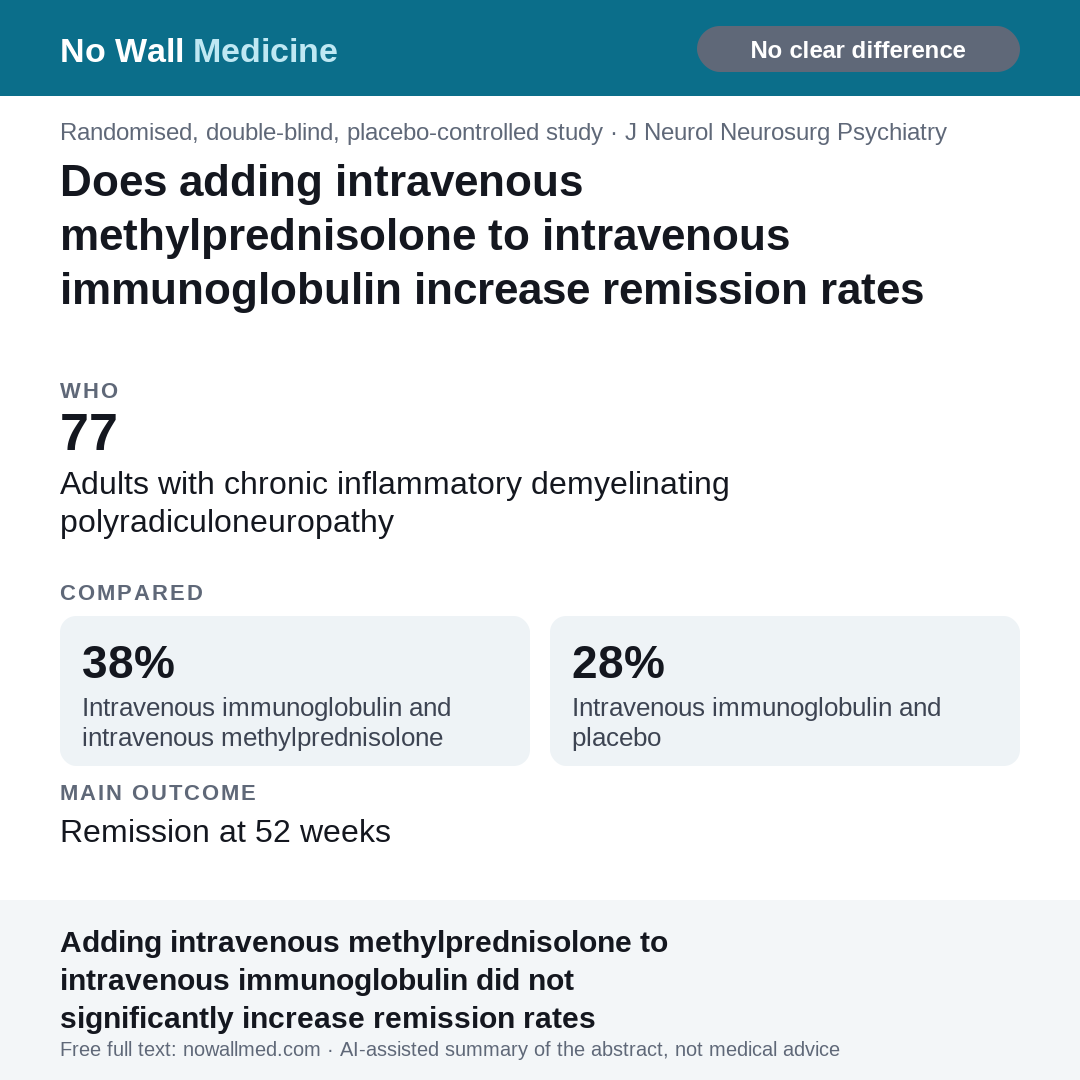
Intravenous methylprednisolone as add-on induction therapy for chronic inflammatory demyelinating polyradiculoneuropathy: a randomised controlled trial
Randomised, double-blind, placebo-controlled studyNo clear difference
Does adding intravenous methylprednisolone to intravenous immunoglobulin increase remission rates in CIDP?
Who
77
Adults with chronic inflammatory demyelinating polyradiculoneuropathy
Compared
38%Intravenous immunoglobulin and intravenous methylprednisolone (14/37)
28%Intravenous immunoglobulin and placebo (11/40)
Main outcome
Remission at 52 weeks
Result: difference of 10% (95% CI -11 to 31; p=0.47)
Bottom line: Adding intravenous methylprednisolone to intravenous immunoglobulin did not significantly increase remission rates compared to intravenous immunoglobulin alone.
J Neurol Neurosurg Psychiatry · 2026-05-14Download image
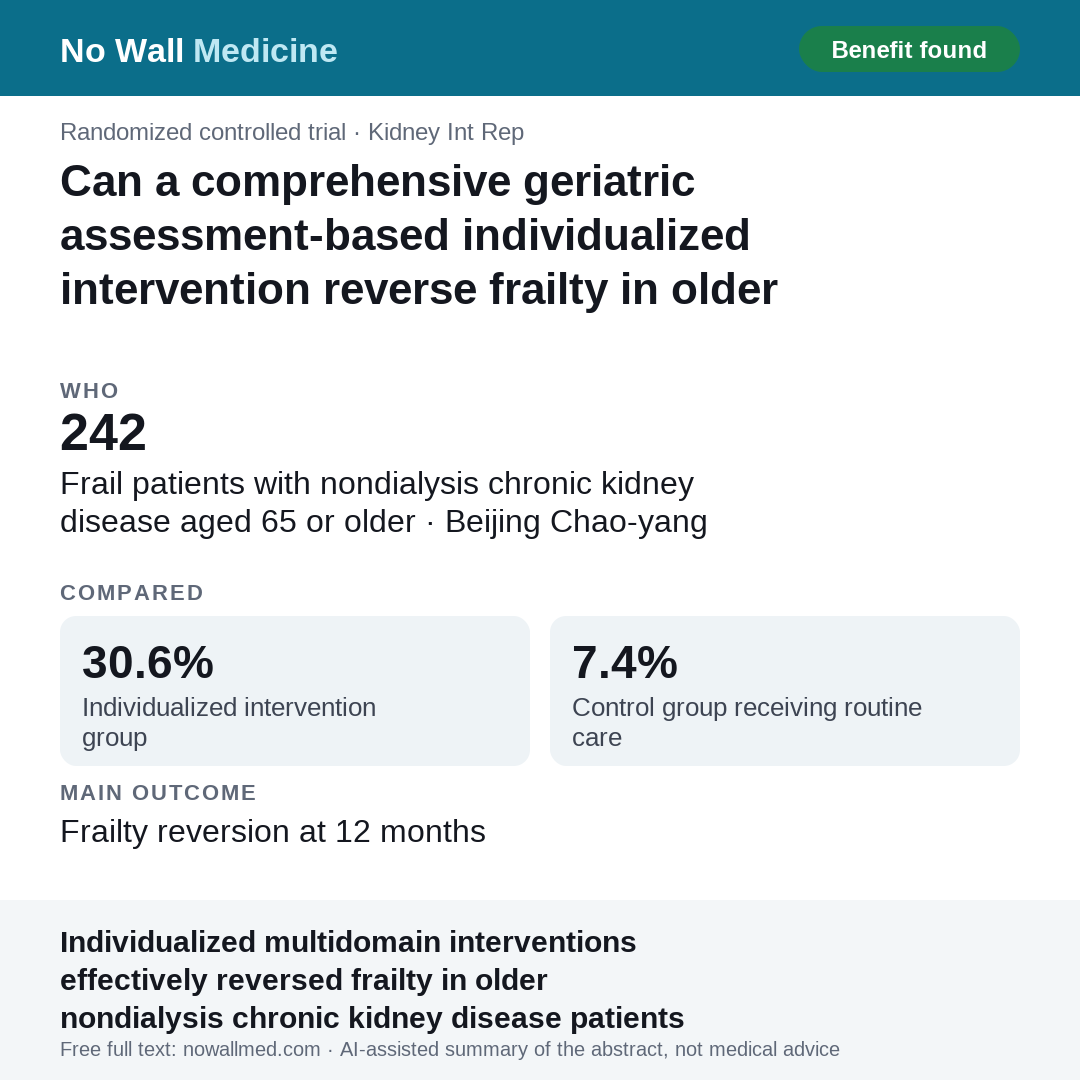
Randomized Controlled Trial of Individualized Intervention for Frailty Reversal in Older Patients With Nondialysis CKD
Randomized controlled trialBenefit found
Can a comprehensive geriatric assessment-based individualized intervention reverse frailty in older nondialysis chronic kidney disease patients?
Who
242
Frail patients with nondialysis chronic kidney disease aged 65 or older · Beijing Chao-yang Hospital
Compared
30.6%Individualized intervention group
7.4%Control group receiving routine care
Main outcome
Frailty reversion at 12 months
Result: odds ratio 5.22 (95% CI 2.37-11.49)
Bottom line: Individualized multidomain interventions effectively reversed frailty in older nondialysis chronic kidney disease patients at 12 months.
Limitation: Findings may not be generalizable to patients with more advanced chronic kidney disease.
Kidney Int Rep · 2026-05-14Download image
Assessing Pupil Light Reflex Metrics in Glaucoma: Insights from a Systematic Review and Meta-Analysis
Systematic review and meta-analysisBenefit found
Which pupil light reflex metrics are most affected in glaucoma?
Who
Glaucoma patients and healthy controls
Compared
Glaucoma
Healthy controls
Main outcome
Pupil light reflex metrics
Bottom line: Amplitude of constriction is the most affected pupil light reflex metric in mild and severe glaucoma.
Ophthalmol Sci · 2026-05-14Download image
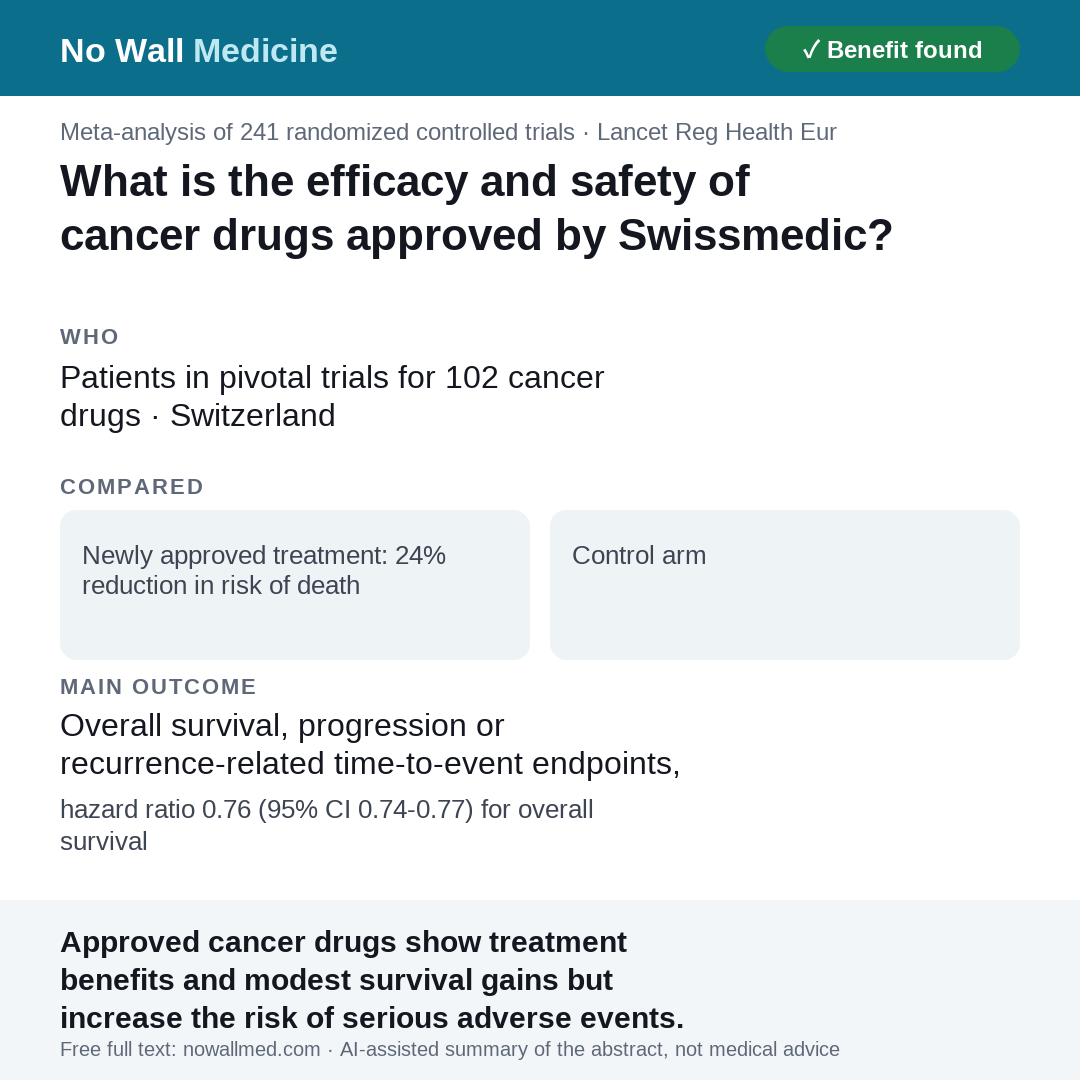
Efficacy and Safety Evidence Supporting Cancer Drug Approvals in Switzerland (2001-2020): A Meta-Analysis of Pivotal Randomised Controlled Trials
Meta-analysis of 241 randomized controlled trialsBenefit found
What is the efficacy and safety of cancer drugs approved by Swissmedic?
Who
241
Patients in pivotal trials for 102 cancer drugs · Switzerland
Compared
Newly approved treatment: 24% reduction in risk of death
Control arm
Main outcome
Overall survival, progression or recurrence-related time-to-event endpoints, and serious adverse events
Result: hazard ratio 0.76 (95% CI 0.74-0.77) for overall survival
Bottom line: Approved cancer drugs show treatment benefits and modest survival gains but increase the risk of serious adverse events.
Limitation: Reliance on early endpoints and limited availability of long-term overall survival data.
Funded by: University of Zurich
Lancet Reg Health Eur · 2026-05-14Download image
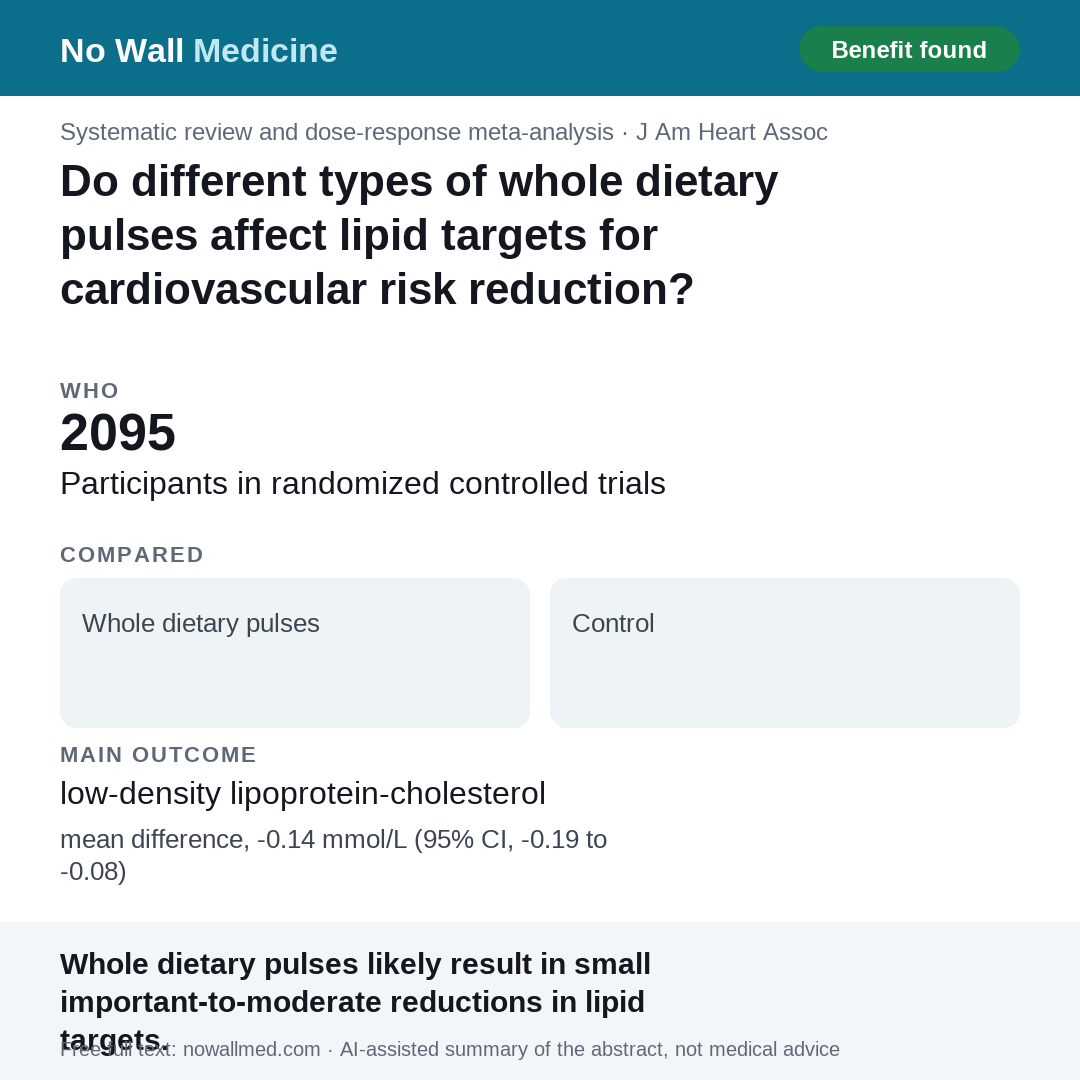
Effect of Different Types of Whole Dietary Pulses on Established Therapeutic Lipid Targets for Cardiovascular Risk Reduction: An Updated Systematic Review and Dose-Response Meta-Analysis of Randomized Controlled Trials
Systematic review and dose-response meta-analysisBenefit found
Do different types of whole dietary pulses affect lipid targets for cardiovascular risk reduction?
Who
2095
Participants in randomized controlled trials
Compared
Whole dietary pulses
Control
Main outcome
low-density lipoprotein-cholesterol
Result: mean difference, -0.14 mmol/L (95% CI, -0.19 to -0.08)
Bottom line: Whole dietary pulses likely result in small important-to-moderate reductions in lipid targets.
Limitation: Certainty of evidence was very low for apolipoprotein B.
J Am Heart Assoc · 2026-05-14Download image
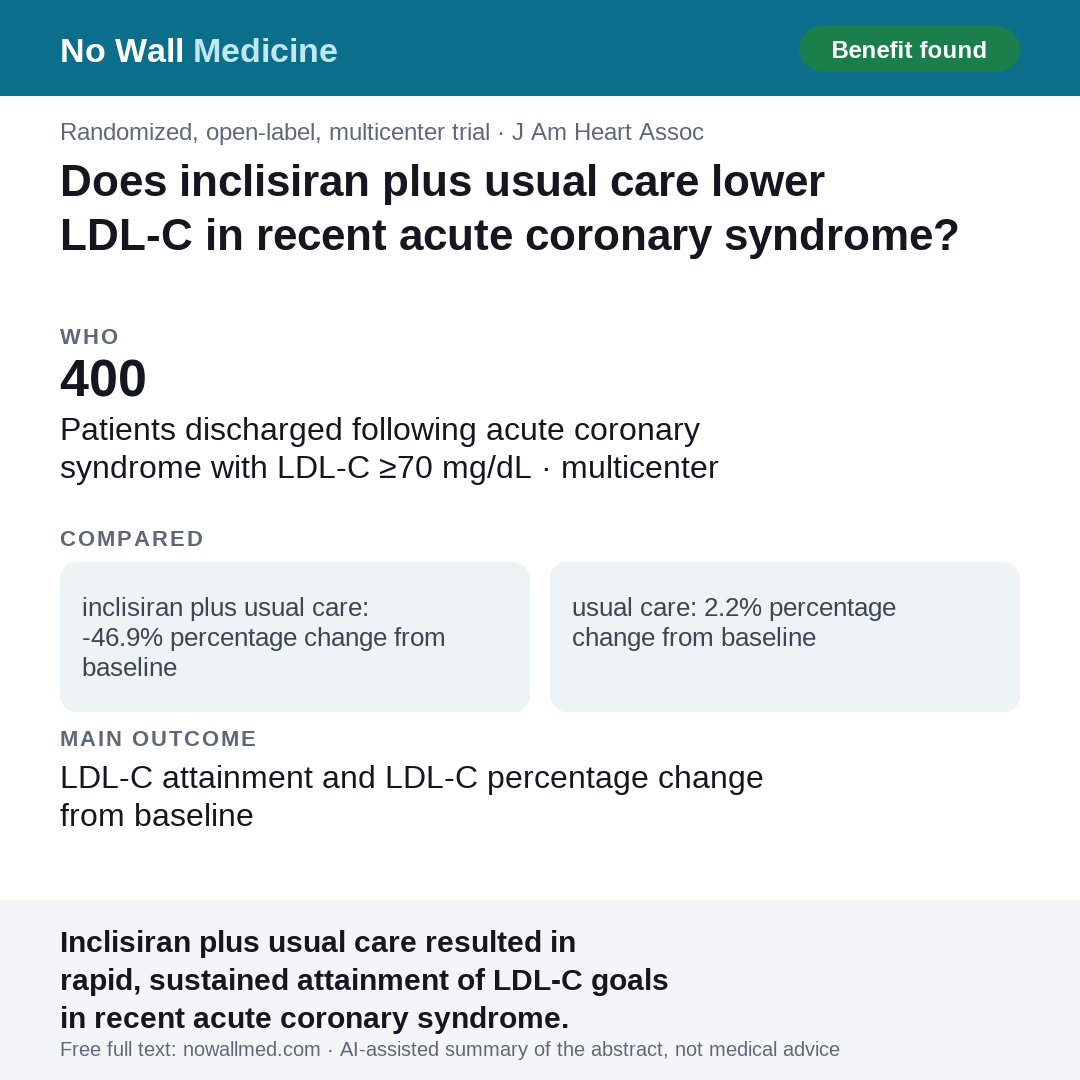
Low-Density Lipoprotein Cholesterol Lowering With Inclisiran Plus Usual Care in Recent Acute Coronary Syndrome: VICTORION-INCEPTION, a Randomized, Controlled, Open-Label Trial
Randomized, open-label, multicenter trialBenefit found
Does inclisiran plus usual care lower LDL-C in recent acute coronary syndrome?
Who
400
Patients discharged following acute coronary syndrome with LDL-C ≥70 mg/dL · multicenter
Compared
inclisiran plus usual care: -46.9% percentage change from baseline
usual care: 2.2% percentage change from baseline
Main outcome
LDL-C attainment and LDL-C percentage change from baseline
Result: percentage change: -46.9% difference (97.5% CI -55.4 to -38.5)
Bottom line: Inclisiran plus usual care resulted in rapid, sustained attainment of LDL-C goals in recent acute coronary syndrome.
J Am Heart Assoc · 2026-05-14Download image
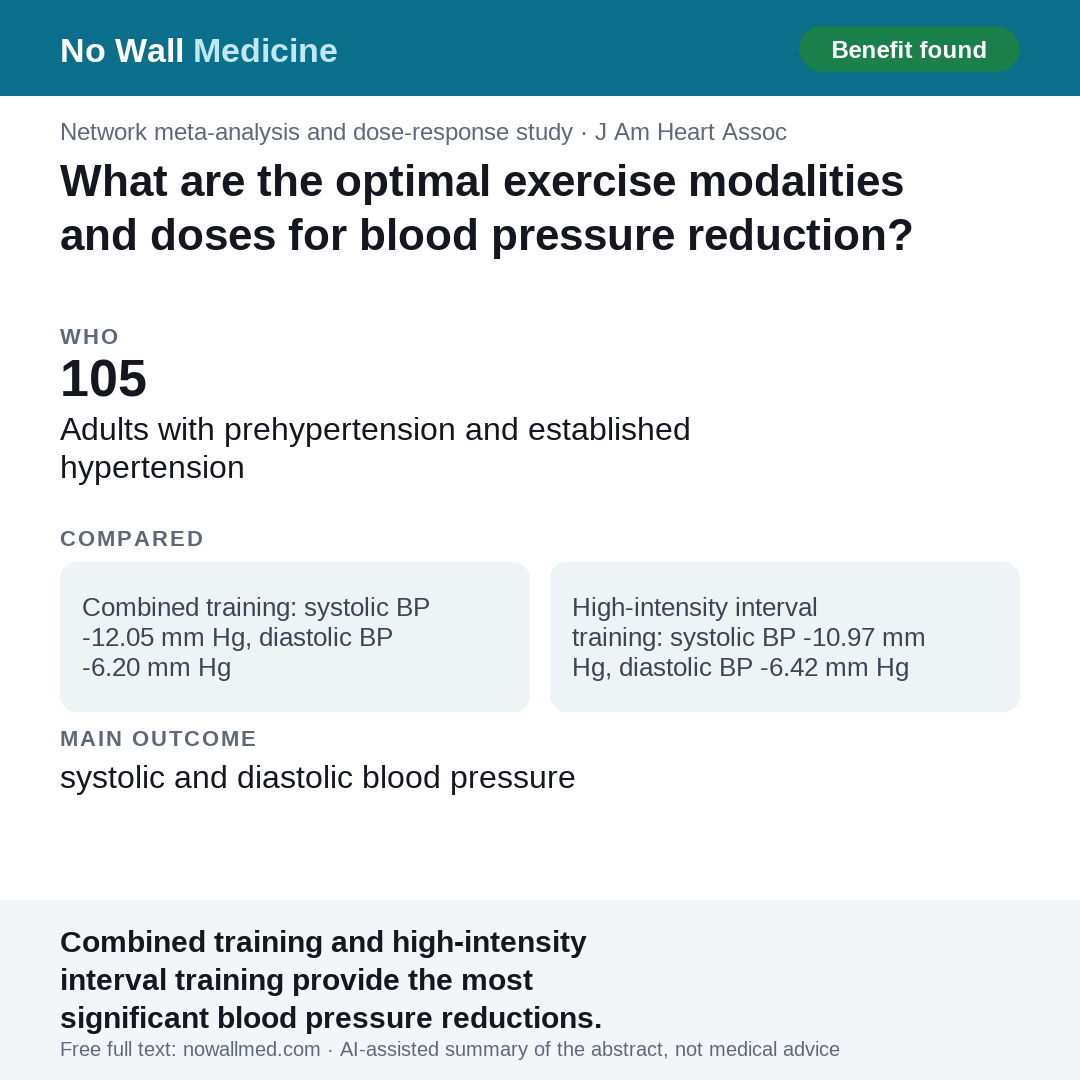
Optimal Exercise Modalities and Dosages for Blood Pressure Reduction in Adults With Prehypertension and Established Hypertension: A Network Meta-Analysis and Dose-Response Relationship Study
Network meta-analysis and dose-response studyBenefit found
What are the optimal exercise modalities and doses for blood pressure reduction?
Who
105
Adults with prehypertension and established hypertension
Compared
Combined training: systolic BP -12.05 mm Hg, diastolic BP -6.20 mm Hg
High-intensity interval training: systolic BP -10.97 mm Hg, diastolic BP -6.42 mm Hg
Main outcome
systolic and diastolic blood pressure
Bottom line: Combined training and high-intensity interval training provide the most significant blood pressure reductions.
J Am Heart Assoc · 2026-05-14Download image
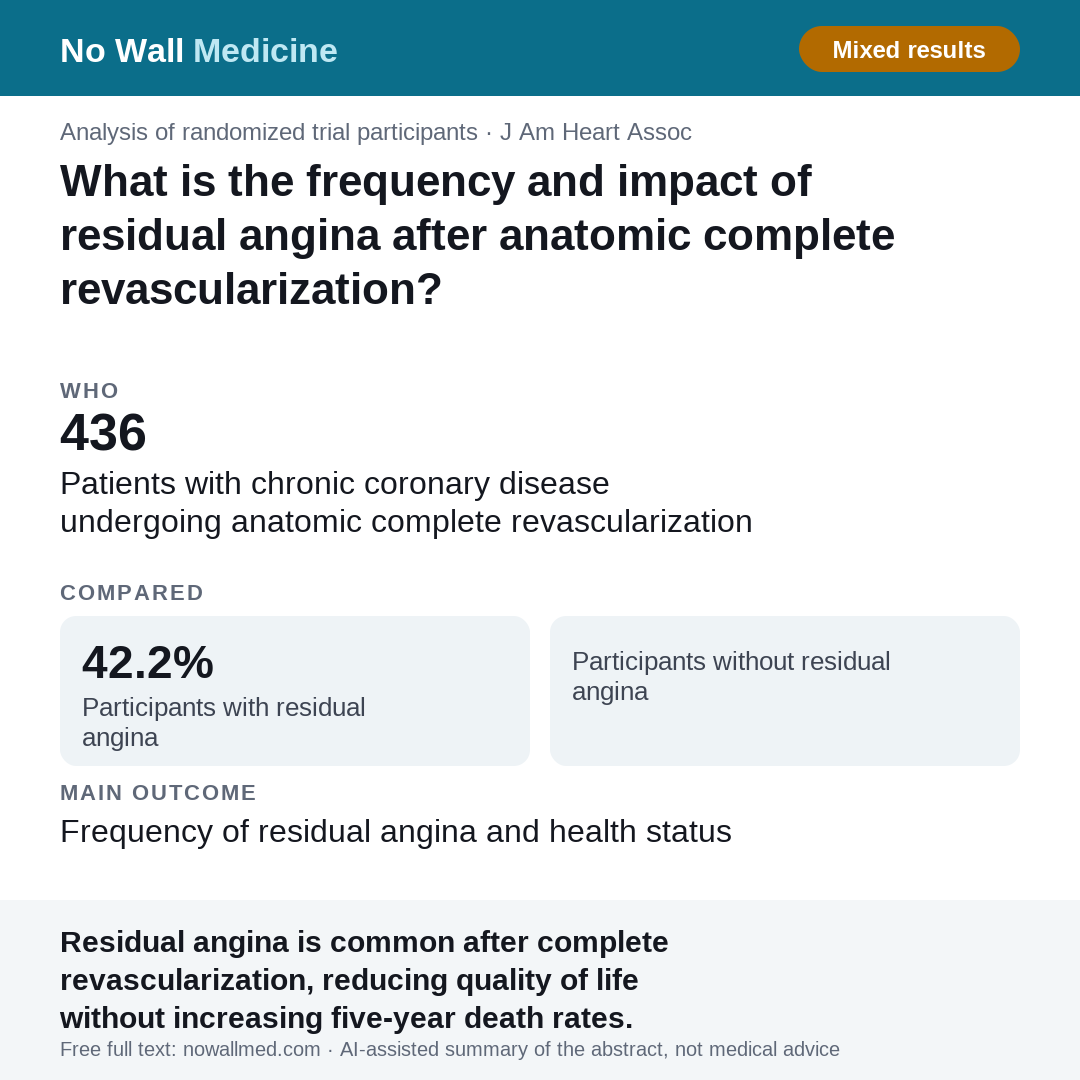
Residual Angina Following Complete Revascularization in the ISCHEMIA Trial: Frequency, Clinical Characteristics, Health Status, and Cardiovascular Outcomes
Analysis of randomized trial participantsMixed results
What is the frequency and impact of residual angina after anatomic complete revascularization?
Who
436
Patients with chronic coronary disease undergoing anatomic complete revascularization · International
Compared
42.2%Participants with residual angina
Participants without residual angina
Main outcome
Frequency of residual angina and health status
Bottom line: Residual angina is common after complete revascularization, reducing quality of life without increasing five-year death rates.
J Am Heart Assoc · 2026-05-14Download image
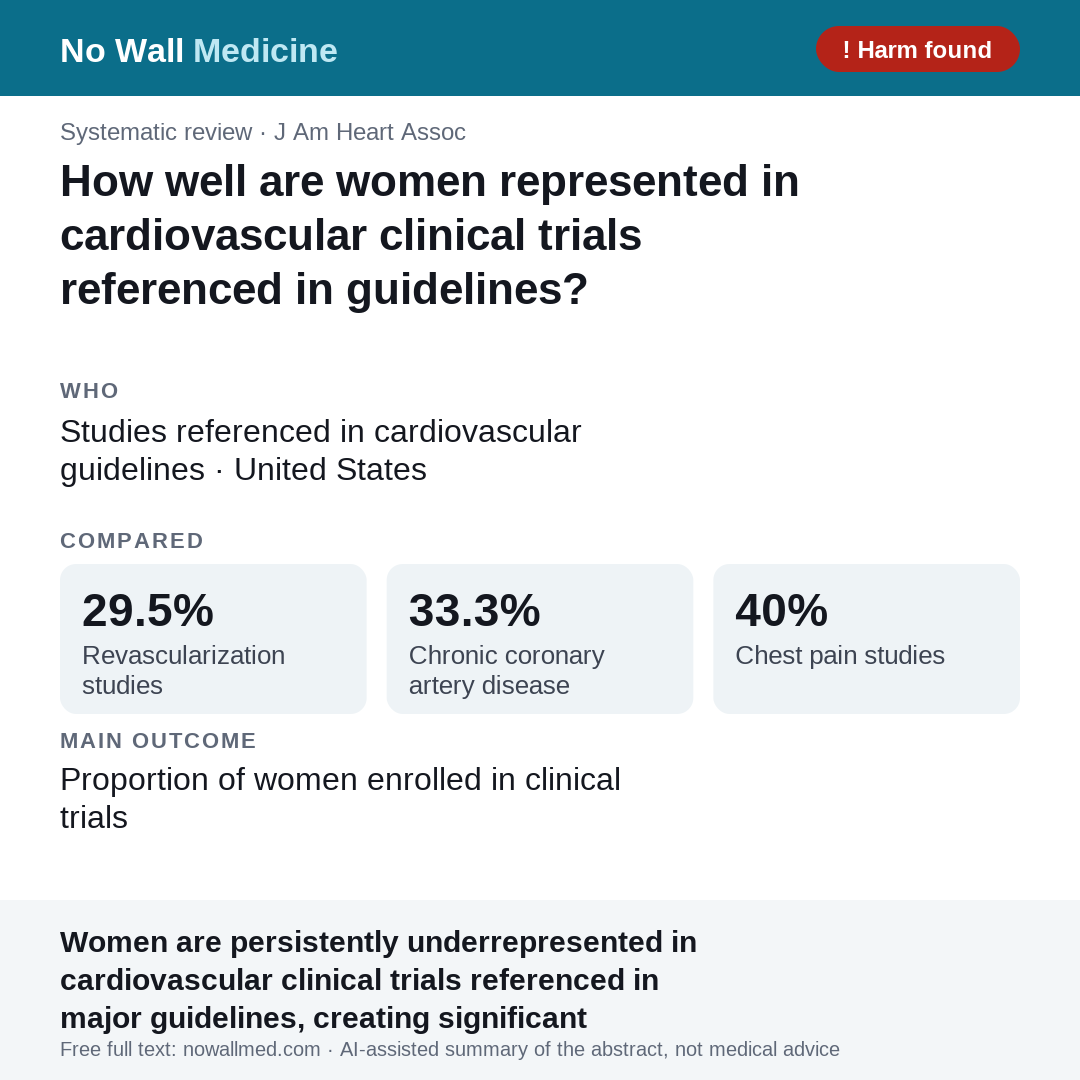
Closing the Gap: Examining Representation of Women in Ischemic Heart Disease Guideline Studies
Systematic reviewHarm found
How well are women represented in cardiovascular clinical trials referenced in guidelines?
Who
1690
Studies referenced in cardiovascular guidelines · United States
Compared
29.5%Revascularization studies
33.3%Chronic coronary artery disease studies
40%Chest pain studies
Main outcome
Proportion of women enrolled in clinical trials
Bottom line: Women are persistently underrepresented in cardiovascular clinical trials referenced in major guidelines, creating significant representation gaps.
J Am Heart Assoc · 2026-05-14Download image
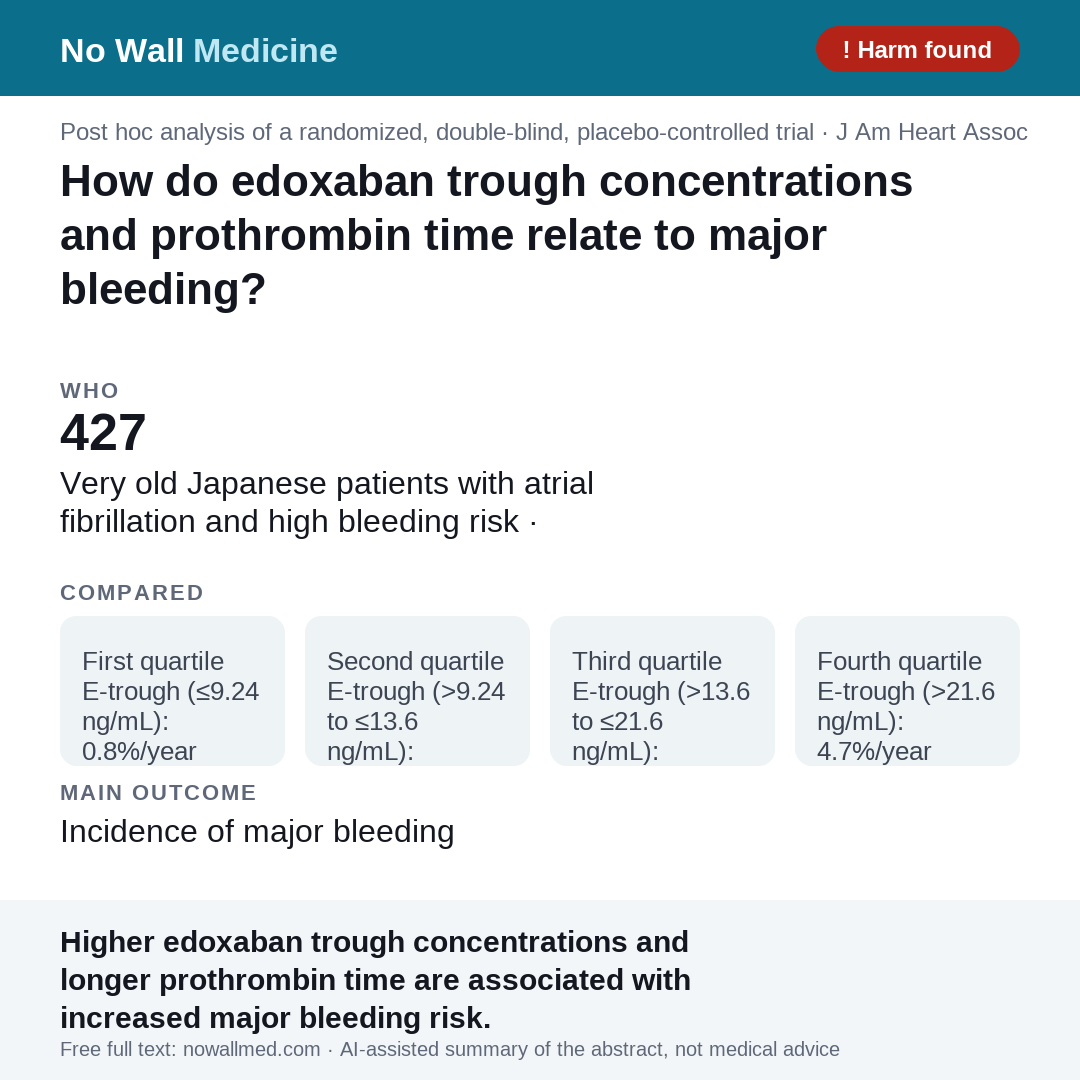
Association of Edoxaban Pharmacokinetics With Bleeding in Older Patients With Atrial Fibrillation Treated With Low-Dose Edoxaban: A Post Hoc Analysis of a Randomized Controlled Trial
Post hoc analysis of a randomized, double-blind, placebo-controlled trialHarm found
How do edoxaban trough concentrations and prothrombin time relate to major bleeding?
Who
427
Very old Japanese patients with atrial fibrillation and high bleeding risk · Multicenter
Compared
First quartile E-trough (≤9.24 ng/mL): 0.8%/year
Second quartile E-trough (>9.24 to ≤13.6 ng/mL): 1.9%/year
Third quartile E-trough (>13.6 to ≤21.6 ng/mL): 3.4%/year
Fourth quartile E-trough (>21.6 ng/mL): 4.7%/year
Main outcome
Incidence of major bleeding
Bottom line: Higher edoxaban trough concentrations and longer prothrombin time are associated with increased major bleeding risk.
J Am Heart Assoc · 2026-05-14Download image
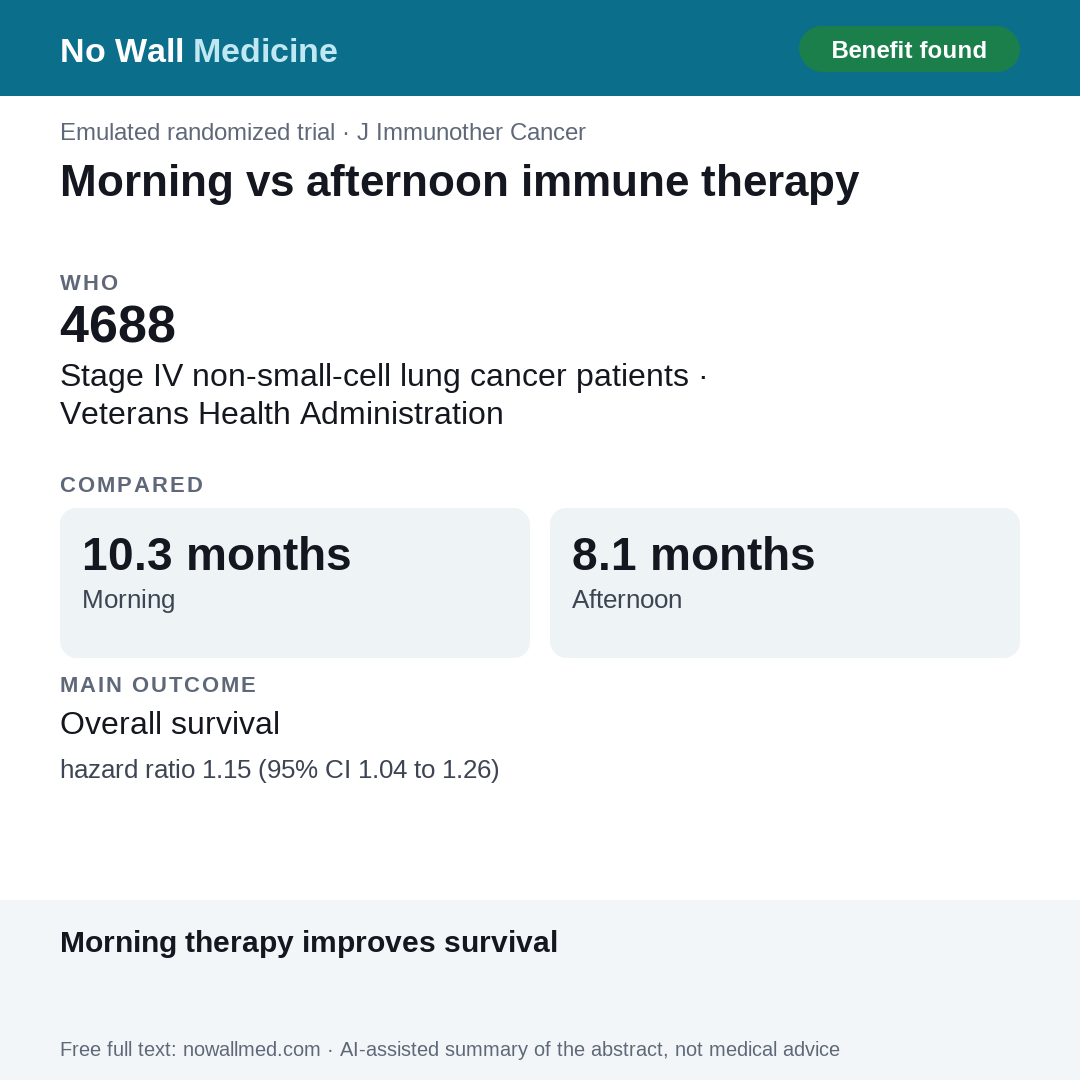
Morning versus afternoon administration of immune checkpoint inhibitors in metastatic non-small-cell lung cancer
Emulated randomized trialBenefit found
Morning vs afternoon immune therapy
Who
4688
Stage IV non-small-cell lung cancer patients · Veterans Health Administration
Compared
10.3 monthsMorning
8.1 monthsAfternoon
Main outcome
Overall survival
Result: hazard ratio 1.15 (95% CI 1.04 to 1.26)
Bottom line: Morning therapy improves survival
Limitation: not prospective
J Immunother Cancer · 2026-05-14Download image