Visual abstracts
New randomized trials and meta-analyses from leading journals at a glance: who was studied, what was compared, and what was found. Every paper is free to read in full.
All specialtiesCardiology 855Oncology 770Gastroenterology & Hepatology 311Infectious Disease 626Neurology 354Psychiatry & Mental Health 430Pulmonology 370Critical Care 259Endocrinology & Diabetes 484Pediatrics 542Surgery 349Orthopedics & Sports Medicine 166Neurosurgery 115Cardiothoracic & Vascular Surgery 87Plastic & Reconstructive Surgery 144Nephrology 197Rheumatology 108Hematology 183Dermatology 81Ophthalmology 97Obstetrics & Gynecology 266Public & Global Health 168Radiology & Imaging 104Anesthesiology 128Urology 162ENT (Otolaryngology) 114Emergency Medicine 103Allergy & Immunology 58Geriatrics 160Family Medicine & Primary Care 111Medical Genetics & Genomics 91Pathology & Laboratory Medicine 27Physical Medicine & Rehabilitation 149Palliative Care 81Nutrition 223Digital Health & AI 462General Medicine 101
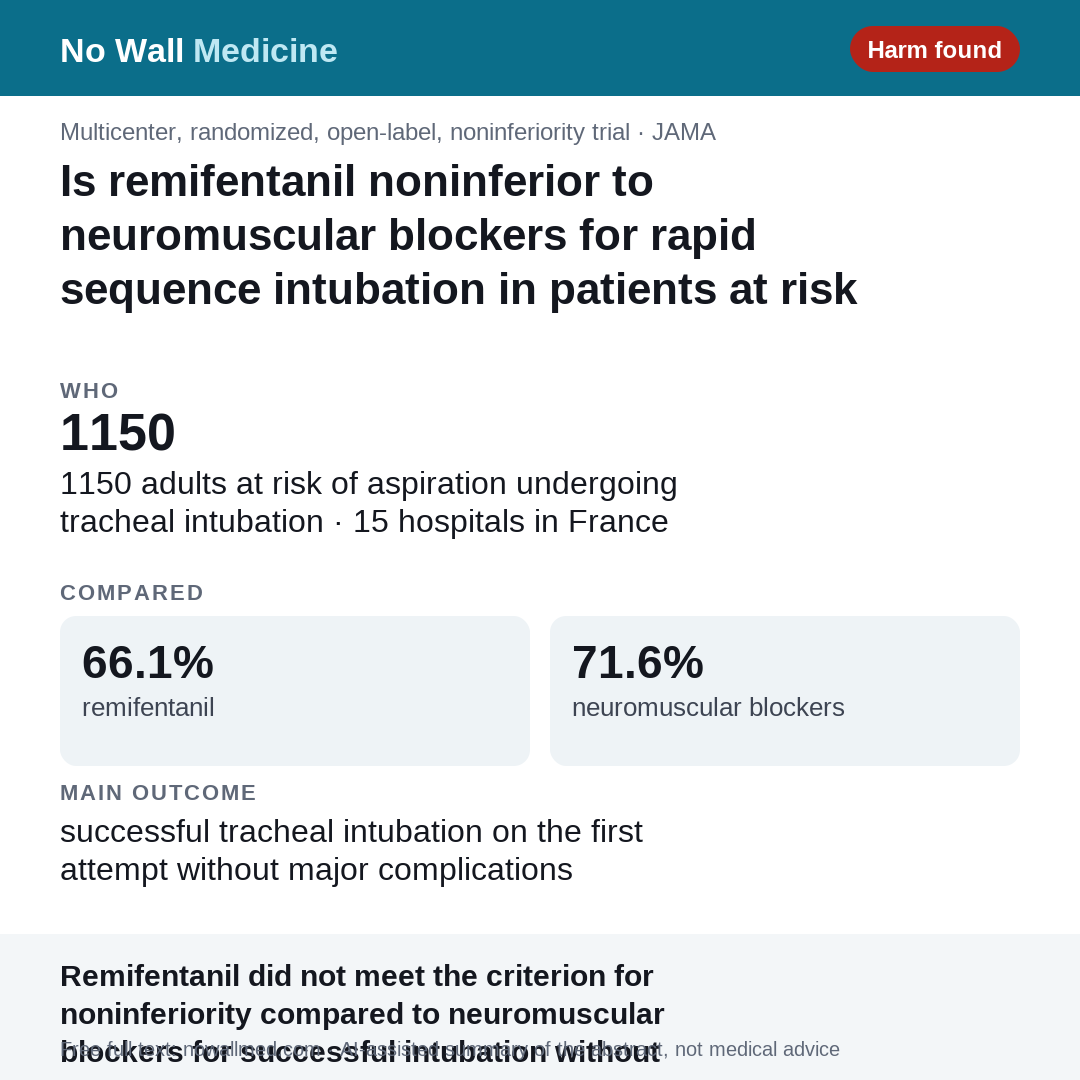
Effect of Remifentanil vs Neuromuscular Blockers During Rapid Sequence Intubation on Successful Intubation Without Major Complications Among Patients at Risk of Aspiration: A Randomized Clinical Trial
Multicenter, randomized, open-label, noninferiority trialHarm found
Is remifentanil noninferior to neuromuscular blockers for rapid sequence intubation in patients at risk of aspiration?
Who
1150
1150 adults at risk of aspiration undergoing tracheal intubation · 15 hospitals in France
Compared
66.1%remifentanil (374/575)
71.6%neuromuscular blockers (408/575)
Main outcome
successful tracheal intubation on the first attempt without major complications
Result: -6.1%; 95% CI, -11.6% to -0.5%
Bottom line: Remifentanil did not meet the criterion for noninferiority compared to neuromuscular blockers for successful intubation without major complications.
JAMA · 2023-01-03Download image
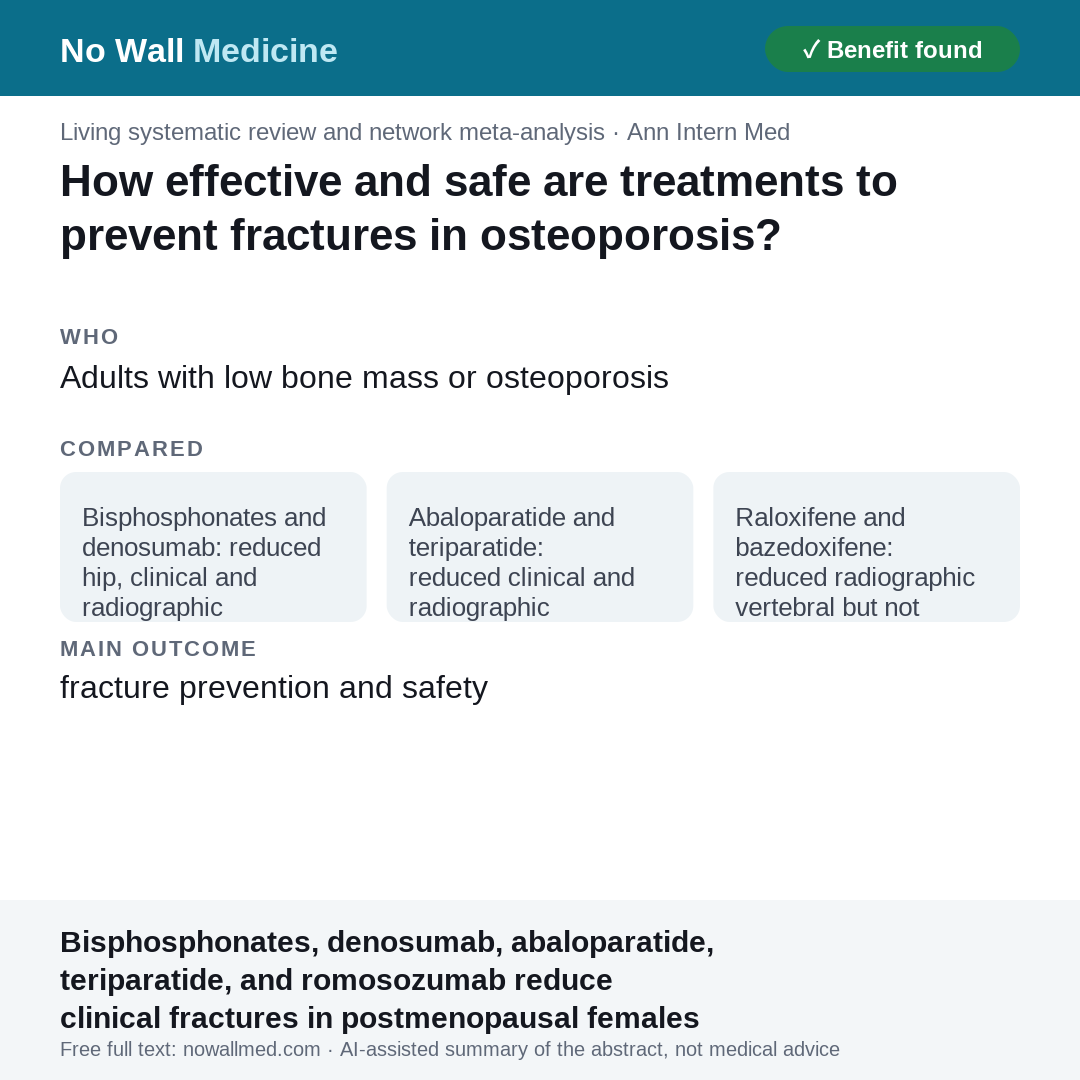
Effectiveness and Safety of Treatments to Prevent Fractures in People With Low Bone Mass or Primary Osteoporosis: A Living Systematic Review and Network Meta-analysis for the American College of Physicians
Living systematic review and network meta-analysisBenefit found
How effective and safe are treatments to prevent fractures in osteoporosis?
Who
Adults with low bone mass or osteoporosis
Compared
Bisphosphonates and denosumab: reduced hip, clinical and radiographic vertebral, and other clinical fractures
Abaloparatide and teriparatide: reduced clinical and radiographic vertebral fractures
Raloxifene and bazedoxifene: reduced radiographic vertebral but not clinical fractures
Main outcome
fracture prevention and safety
Bottom line: Bisphosphonates, denosumab, abaloparatide, teriparatide, and romosozumab reduce clinical fractures in postmenopausal females with osteoporosis.
Limitation: Few studies examined low bone mass, males, Black-identifying persons, or sequential therapy.
Funded by: American College of Physicians
Ann Intern Med · 2023-01-03Download image
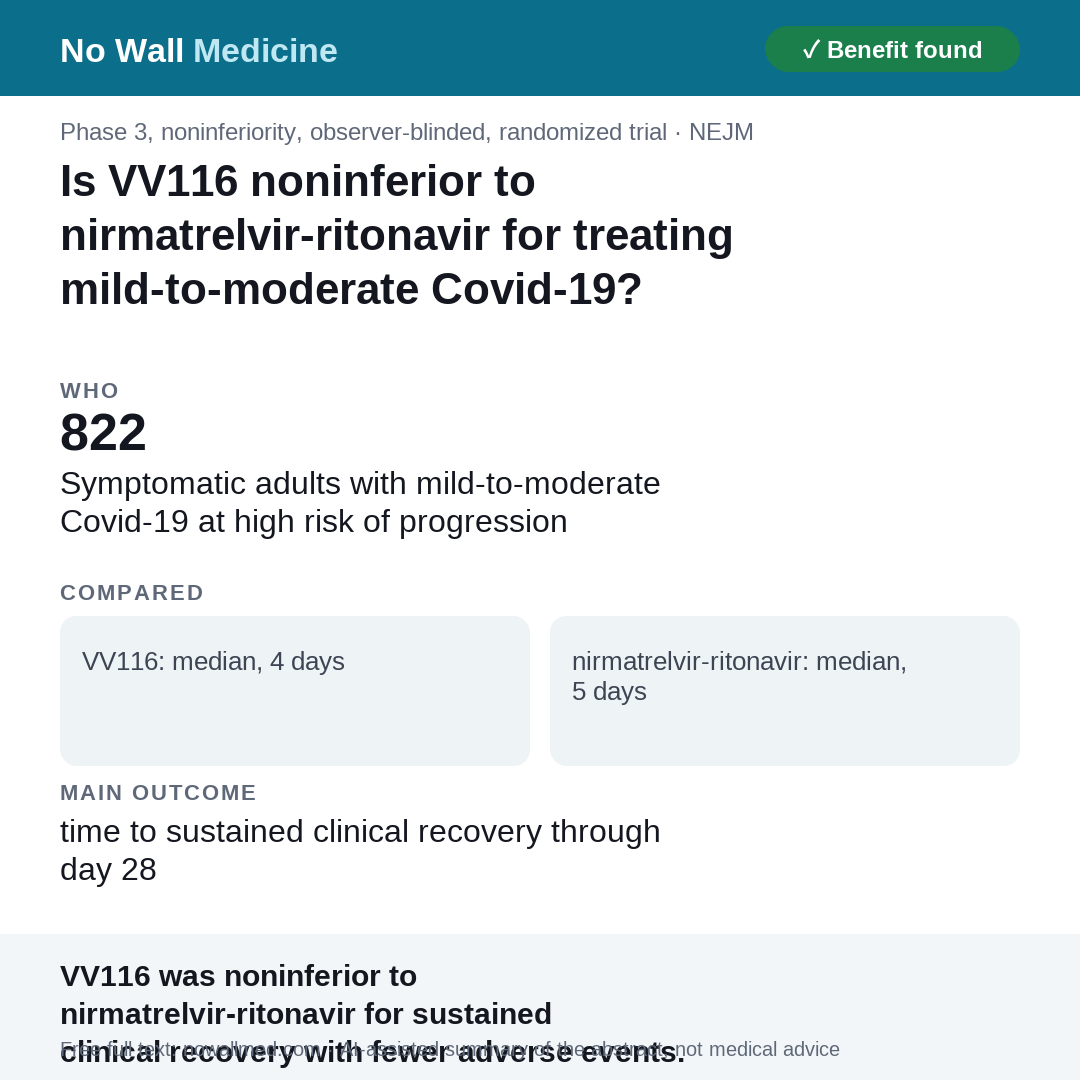
VV116 versus Nirmatrelvir-Ritonavir for Oral Treatment of Covid-19
Phase 3, noninferiority, observer-blinded, randomized trialBenefit found
Is VV116 noninferior to nirmatrelvir-ritonavir for treating mild-to-moderate Covid-19?
Who
822
Symptomatic adults with mild-to-moderate Covid-19 at high risk of progression
Compared
VV116: median, 4 days
nirmatrelvir-ritonavir: median, 5 days
Main outcome
time to sustained clinical recovery through day 28
Result: hazard ratio, 1.17; 95% confidence interval, 1.01 to 1.35
Bottom line: VV116 was noninferior to nirmatrelvir-ritonavir for sustained clinical recovery with fewer adverse events.
Funded by: Vigonvita Life Sciences and others
NEJM · 2022-12-28Download image
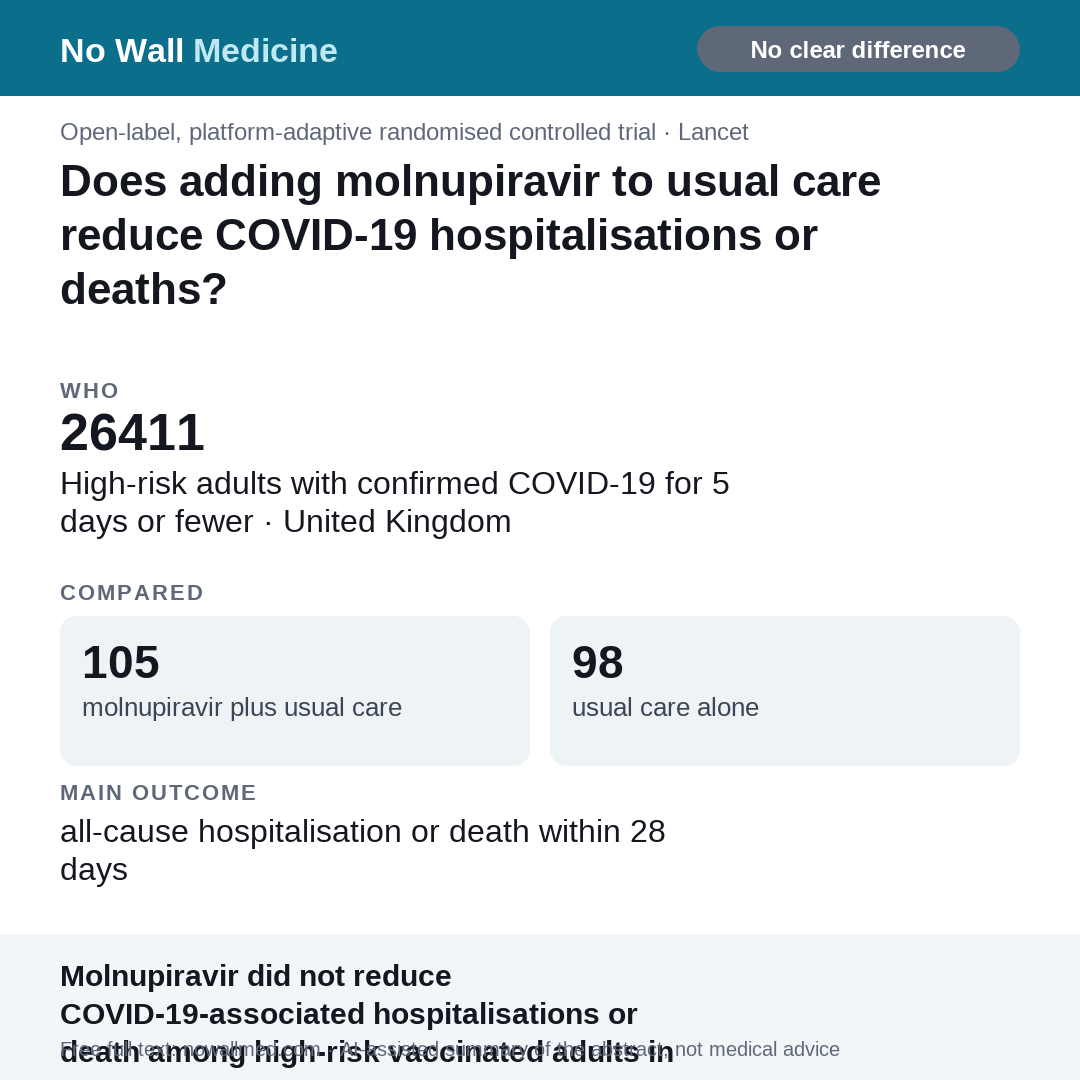
Molnupiravir plus usual care versus usual care alone as early treatment for adults with COVID-19 at increased risk of adverse outcomes (PANORAMIC): an open-label, platform-adaptive randomised controlled trial
Open-label, platform-adaptive randomised controlled trialNo clear difference
Does adding molnupiravir to usual care reduce COVID-19 hospitalisations or deaths?
Who
26411
High-risk adults with confirmed COVID-19 for 5 days or fewer · United Kingdom
Compared
105molnupiravir plus usual care (1%)
98usual care alone (1%)
Main outcome
all-cause hospitalisation or death within 28 days
Result: adjusted odds ratio 1·06 (95% Bayesian credible interval 0·81-1·41)
Bottom line: Molnupiravir did not reduce COVID-19-associated hospitalisations or death among high-risk vaccinated adults in the community.
Funded by: UK National Institute for Health and Care Research
Lancet · 2022-12-22Download image
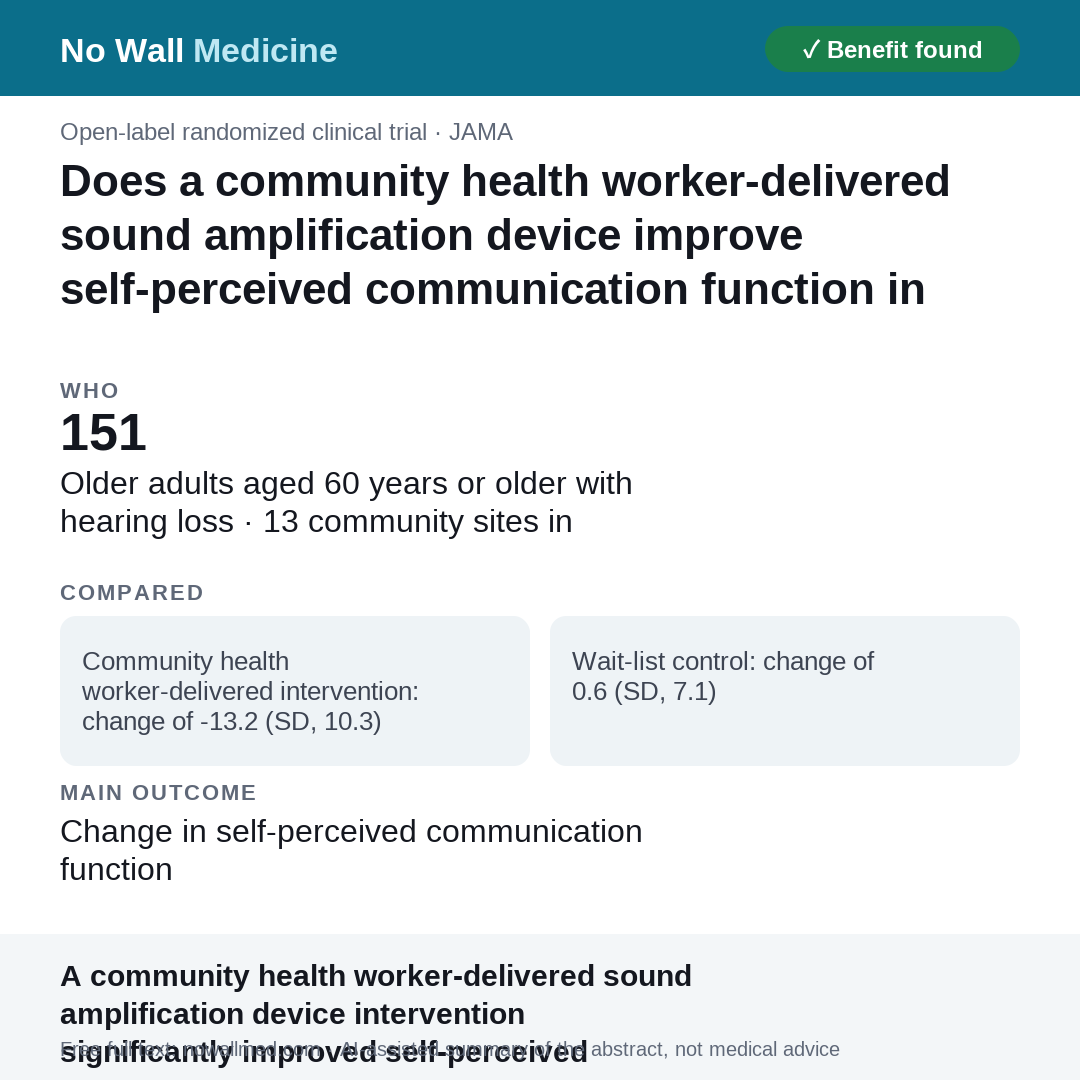
Effect of a Community Health Worker-Delivered Personal Sound Amplification Device on Self-Perceived Communication Function in Older Adults With Hearing Loss: A Randomized Clinical Trial
Open-label randomized clinical trialBenefit found
Does a community health worker-delivered sound amplification device improve self-perceived communication function in older adults?
Who
151
Older adults aged 60 years or older with hearing loss · 13 community sites in Baltimore, Maryland
Compared
Community health worker-delivered intervention: change of -13.2 (SD, 10.3)
Wait-list control: change of 0.6 (SD, 7.1)
Main outcome
Change in self-perceived communication function
Result: -12.98-point HHIE-S change (95% CI, -15.51 to -10.42)
Bottom line: A community health worker-delivered sound amplification device intervention significantly improved self-perceived communication function at 3 months.
Limitation: Findings are limited by the absence of a sham control.
JAMA · 2022-12-20Download image
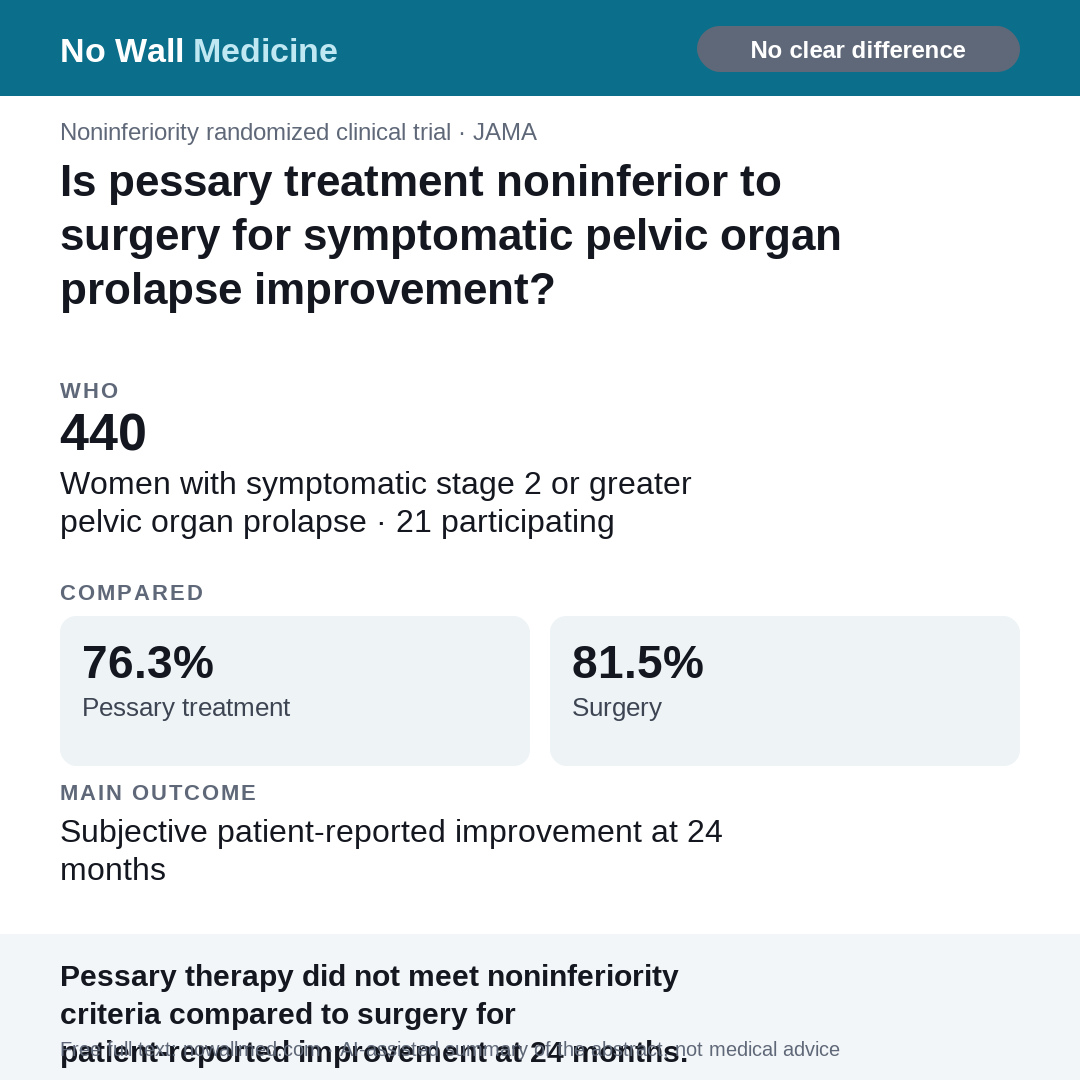
Effect of Pessary vs Surgery on Patient-Reported Improvement in Patients With Symptomatic Pelvic Organ Prolapse: A Randomized Clinical Trial
Noninferiority randomized clinical trialNo clear difference
Is pessary treatment noninferior to surgery for symptomatic pelvic organ prolapse improvement?
Who
440
Women with symptomatic stage 2 or greater pelvic organ prolapse · 21 participating hospitals in the Netherlands
Compared
76.3%Pessary treatment
81.5%Surgery
Main outcome
Subjective patient-reported improvement at 24 months
Result: risk difference, -6.1% [1-sided 95% CI, -12.7 to ∞]
Bottom line: Pessary therapy did not meet noninferiority criteria compared to surgery for patient-reported improvement at 24 months.
Limitation: Interpretation is limited by loss to follow-up and large amount of participant crossover from pessary to surgery.
JAMA · 2022-12-20Download image
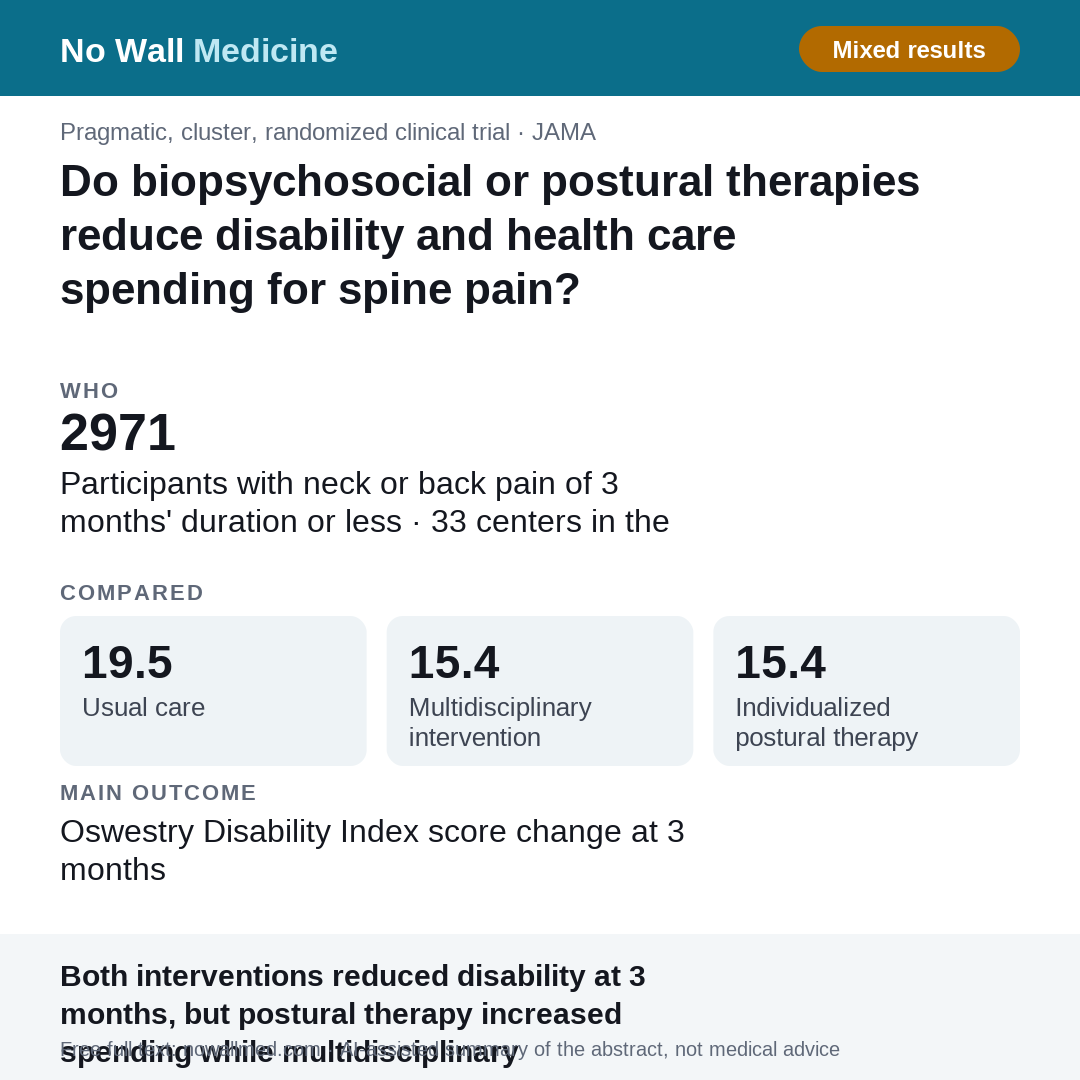
Effect of a Biopsychosocial Intervention or Postural Therapy on Disability and Health Care Spending Among Patients With Acute and Subacute Spine Pain: The SPINE CARE Randomized Clinical Trial
Pragmatic, cluster, randomized clinical trialMixed results
Do biopsychosocial or postural therapies reduce disability and health care spending for spine pain?
Who
2971
Participants with neck or back pain of 3 months' duration or less · 33 centers in the US
Compared
19.5Usual care
15.4Multidisciplinary intervention
15.4Individualized postural therapy
Main outcome
Oswestry Disability Index score change at 3 months
Result: -5.8 (95% CI, -7.7 to -3.9) for ICE and -4.3 (95% CI, -5.9 to -2.6) for IPT
Bottom line: Both interventions reduced disability at 3 months, but postural therapy increased spending while multidisciplinary intervention showed no significant spending difference.
JAMA · 2022-12-20Download image
A Christmas themed physical activity intervention to increase participation in physical activity during Advent: pilot randomised controlled trial
Pilot randomised controlled trialNo clear difference
Does a Christmas themed physical activity intervention increase participation in physical activity?
Who
107
107 inactive adults aged 18-75 years · United Kingdom
Compared
intervention: 20.6 minutes difference at week three
comparator
Main outcome
weekly minutes of moderate-to-vigorous intensity physical activity
Result: adjusted mean difference 20.6 minutes (95% confidence interval -29.7 to 70.9)
Bottom line: The Christmas themed intervention showed potential to increase physical activity and reduce sedentary time, though results were not statistically significant.
BMJ · 2022-12-19Download image
Long-term (180-Day) Outcomes in Critically Ill Patients With COVID-19 in the REMAP-CAP Randomized Clinical Trial
Adaptive platform randomized clinical trialMixed results
What is the effect of multiple interventions on 180-day outcomes in critically ill COVID-19 patients?
Who
4869
Critically ill adults with COVID-19 · 197 sites in 14 countries
Compared
IL-6 receptor antagonists
Control
Antiplatelet agents
Control
Main outcome
Survival through day 180
Result: adjusted HR, 0.74 (95% credible interval, 0.61-0.90) for IL-6 receptor antagonists
Bottom line: IL-6 receptor antagonists improved 180-day survival, while other interventions showed futility or potential harm.
JAMA · 2022-12-17Download image
Dapagliflozin in heart failure with improved ejection fraction: a prespecified analysis of the DELIVER trial
Prespecified analysis of a randomized trialBenefit found
Does dapagliflozin reduce cardiovascular death or worsening heart failure in heart failure with improved ejection fraction?
Who
1151
Symptomatic heart failure patients with left ventricular ejection fraction greater than 40%
Compared
Dapagliflozin 10 mg daily
Placebo
Main outcome
Composite of cardiovascular death or worsening heart failure
Result: hazard ratio 0.74 (95% CI 0.56-0.97)
Bottom line: In patients with heart failure and improved ejection fraction, dapagliflozin reduced the risk of cardiovascular death or worsening heart failure.
Nat Med · 2022-12-15Download image
Effect of a Remotely Delivered Self-directed Behavioral Intervention on Body Weight and Physical Health Status Among Adults With Obesity: The D-ELITE Randomized Clinical Trial
Randomized clinical trialMixed results
Does a remotely delivered self-directed behavioral lifestyle intervention improve weight and general health status?
Who
511
511 adults with body mass index of 30 to less than 45 · 30 Veterans Health Administration sites
Compared
Intervention group: unadjusted mean weight 99.8 kg
Control group: unadjusted mean weight 101.0 kg
Main outcome
Weight and self-reported general health status
Result: adjusted between-group mean weight difference -1.93 (97.5% CI -3.24 to -0.61)
Bottom line: The intervention resulted in significantly greater weight loss than usual care, but the difference was not clinically important.
JAMA · 2022-12-13Download image
Effects of Mindfulness Training and Exercise on Cognitive Function in Older Adults: A Randomized Clinical Trial
2 x 2 factorial randomized clinical trialNo clear difference
Do mindfulness training, exercise, or both improve cognitive function in older adults?
Who
585
Older adults aged 65-84 years with subjective cognitive concerns · 2 US sites
Compared
Mindfulness-based stress reduction: 0.44 vs 0.48 (episodic memory)
Exercise: 0.49 vs 0.42 (episodic memory)
Combined mindfulness and exercise
Health education control
Main outcome
Composites of episodic memory and executive function
Result: mean difference, -0.04 points [95% CI, -0.15 to 0.07]
Bottom line: Mindfulness training, exercise, or both did not significantly improve episodic memory or executive function in older adults.
JAMA · 2022-12-13Download image
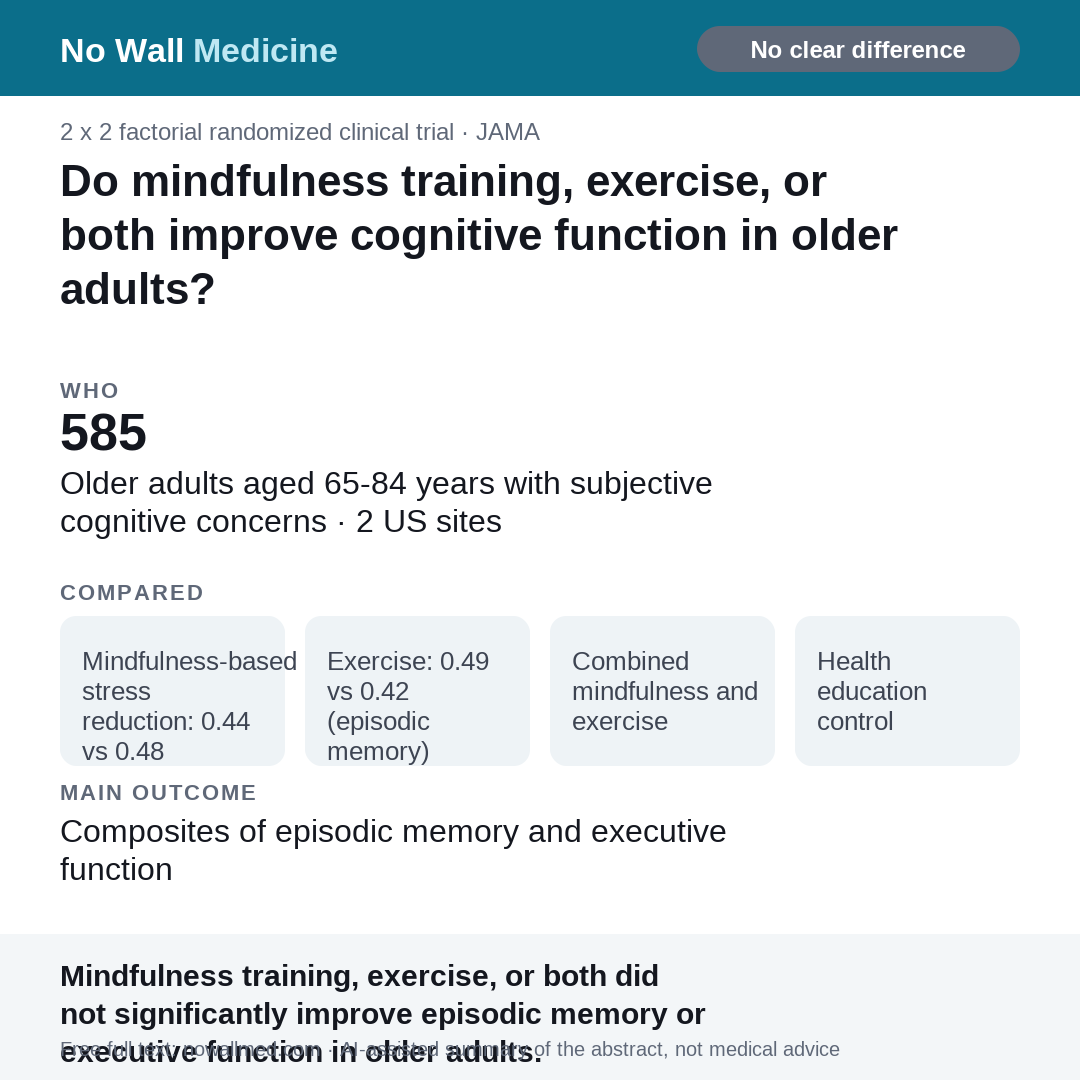
Effect of Diet and Exercise on Knee Pain in Patients With Osteoarthritis and Overweight or Obesity: A Randomized Clinical Trial
Assessor-blinded randomized clinical trialBenefit found
Does a community-based diet and exercise intervention reduce knee pain in osteoarthritis patients?
Who
823
Men and women aged 50 or older with knee osteoarthritis and overweight or obesity · Community settings in North Carolina
Compared
5.0Diet and exercise intervention
5.5Attention control
Main outcome
Western Ontario and McMaster Universities Osteoarthritis Index knee pain score
Result: adjusted difference, -0.6 (95% CI, -1.0 to -0.1)
Bottom line: Diet and exercise led to a statistically significant but small reduction in knee pain over 18 months.
JAMA · 2022-12-13Download image
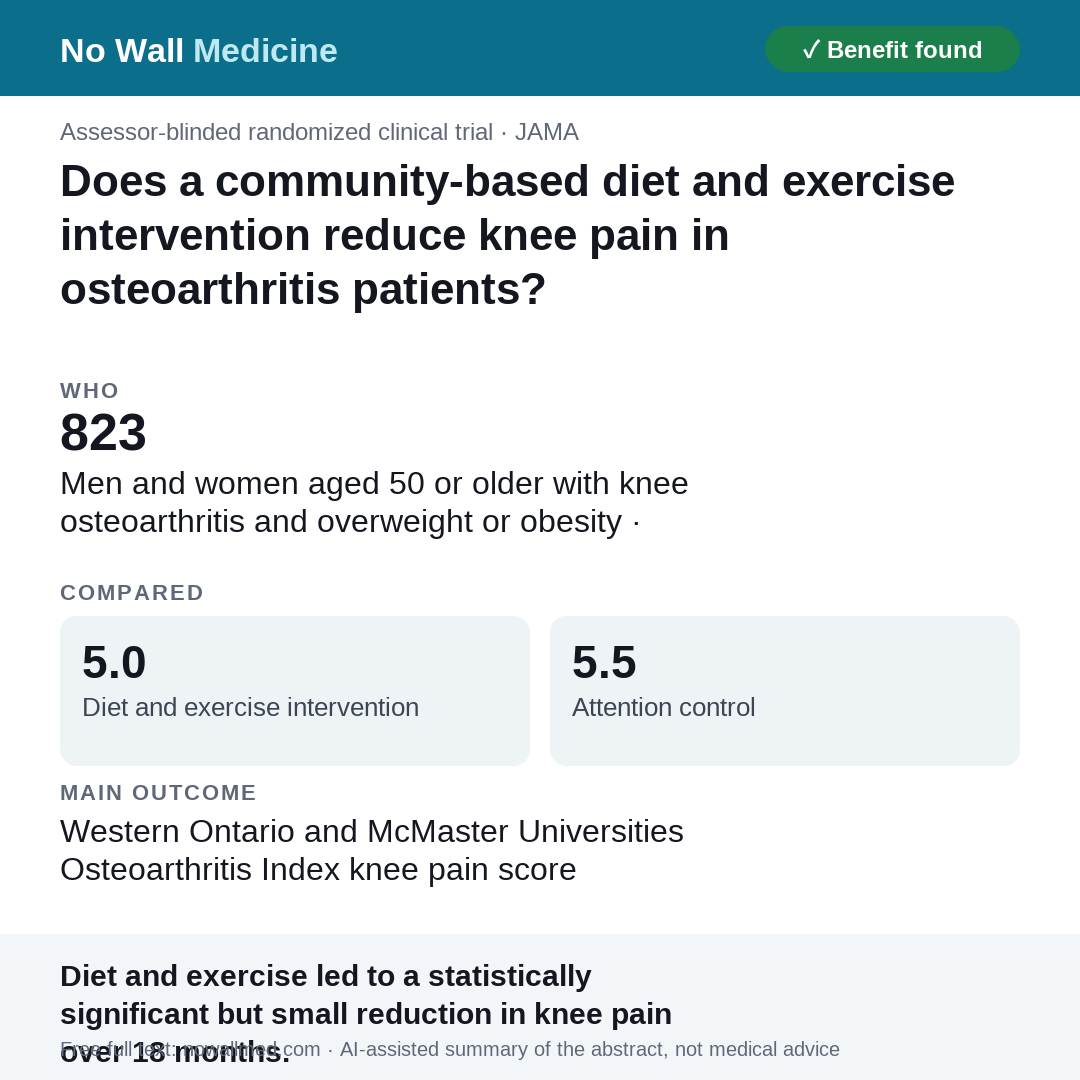
Prostate Cancer Screening with PSA and MRI Followed by Targeted Biopsy Only
Randomized trialBenefit found
Does MRI-targeted biopsy only reduce overdiagnosis compared to systematic and targeted biopsy?
Who
17980
Men aged 50 to 60 years with prostate-specific antigen 3 ng/ml or higher
Compared
0.6%Experimental group (MRI-targeted biopsy only) (66/11986)
1.2%Reference group (Systematic and targeted biopsy) (72/5994)
Main outcome
Clinically insignificant prostate cancer (Gleason score 3+3)
Result: relative risk 0.46 (95% CI 0.33 to 0.64)
Bottom line: MRI-targeted biopsy only reduced the risk of overdiagnosis by half compared to systematic and targeted biopsy.
Funded by: Karin and Christer Johansson's Foundation and others
NEJM · 2022-12-08Download image
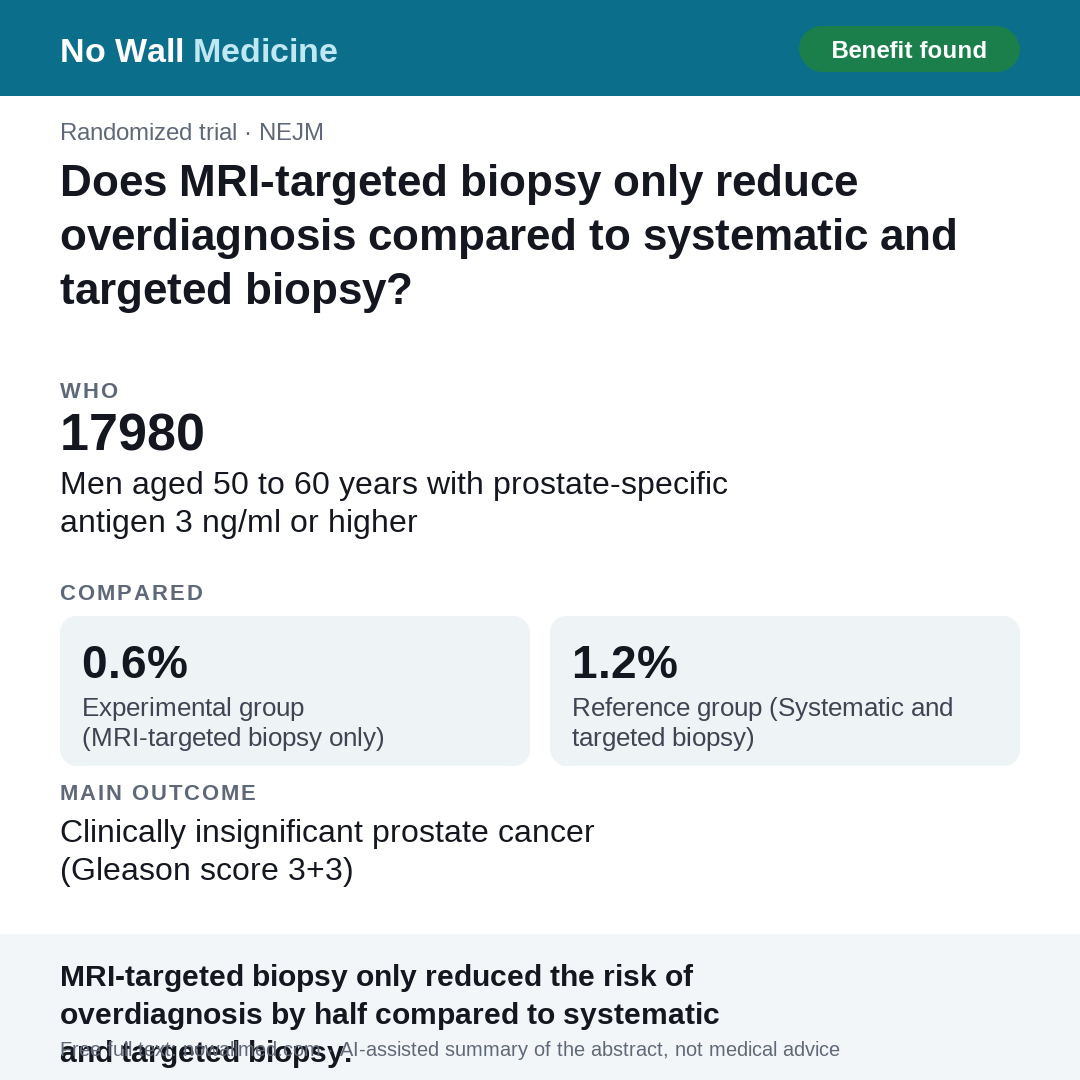
Atezolizumab plus anthracycline-based chemotherapy in metastatic triple-negative breast cancer: the randomized, double-blind phase 2b ALICE trial
Randomized, double-blind phase 2b trialBenefit found
Does adding atezolizumab to chemotherapy improve progression-free survival in metastatic triple-negative breast cancer?
Who
68
Patients with metastatic triple-negative breast cancer
Compared
atezolizumab plus chemotherapy: median 4.3 months
placebo plus chemotherapy: median 3.5 months
Main outcome
progression-free survival
Result: hazard ratio 0.57 (95% CI 0.33-0.99)
Bottom line: Adding atezolizumab to pegylated liposomal doxorubicin and cyclophosphamide improved progression-free survival in metastatic triple-negative breast cancer.
Nat Med · 2022-12-08Download image
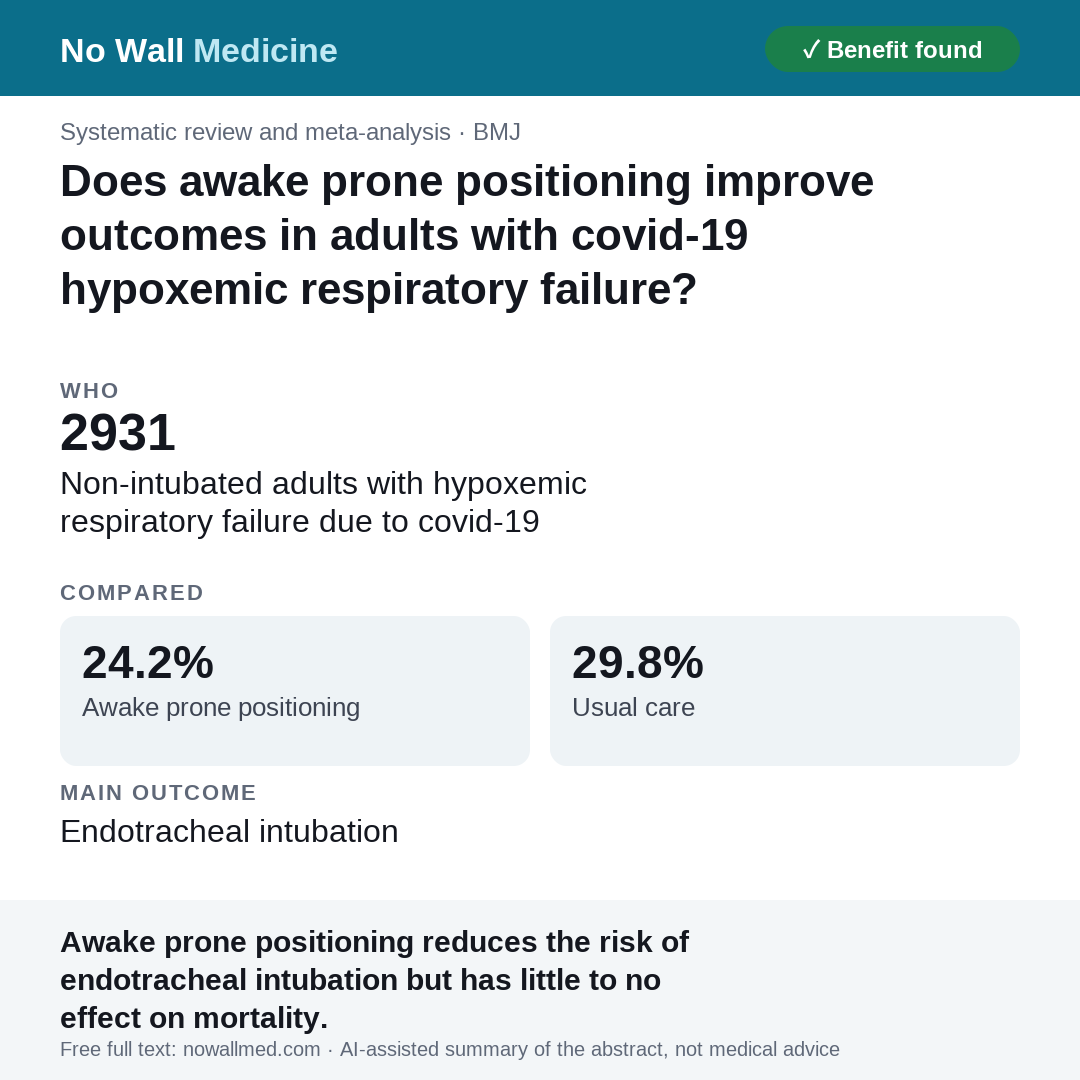
Efficacy of awake prone positioning in patients with covid-19 related hypoxemic respiratory failure: systematic review and meta-analysis of randomized trials
Systematic review and meta-analysisBenefit found
Does awake prone positioning improve outcomes in adults with covid-19 hypoxemic respiratory failure?
Who
2931
Non-intubated adults with hypoxemic respiratory failure due to covid-19
Compared
24.2%Awake prone positioning
29.8%Usual care
Main outcome
Endotracheal intubation
Result: relative risk 0.83 (95% confidence interval 0.73 to 0.94)
Bottom line: Awake prone positioning reduces the risk of endotracheal intubation but has little to no effect on mortality.
BMJ · 2022-12-07Download image
Evaluation of the safety, immunogenicity, and faecal shedding of novel oral polio vaccine type 2 in healthy newborn infants in Bangladesh: a randomised, controlled, phase 2 clinical trial
Randomised, double-blind, controlled, phase 2 trialBenefit found
Is novel oral polio vaccine type 2 safe and immunogenic in healthy newborn infants?
Who
330
Healthy newborn infants in Bangladesh · Matlab Health Research Centre, Chandpur, Bangladesh
Compared
novel oral polio vaccine type 2: 196 (90%) of 217 infants seroconverted by week 8
placebo: 58 (56%) of 104 in the placebo group at 8 weeks
Main outcome
safety, tolerability, and seroconversion rate for neutralising antibodies
Bottom line: Novel oral polio vaccine type 2 was well tolerated and highly immunogenic in healthy newborn infants.
Funded by: Bill & Melinda Gates Foundation
Lancet · 2022-12-07Download image

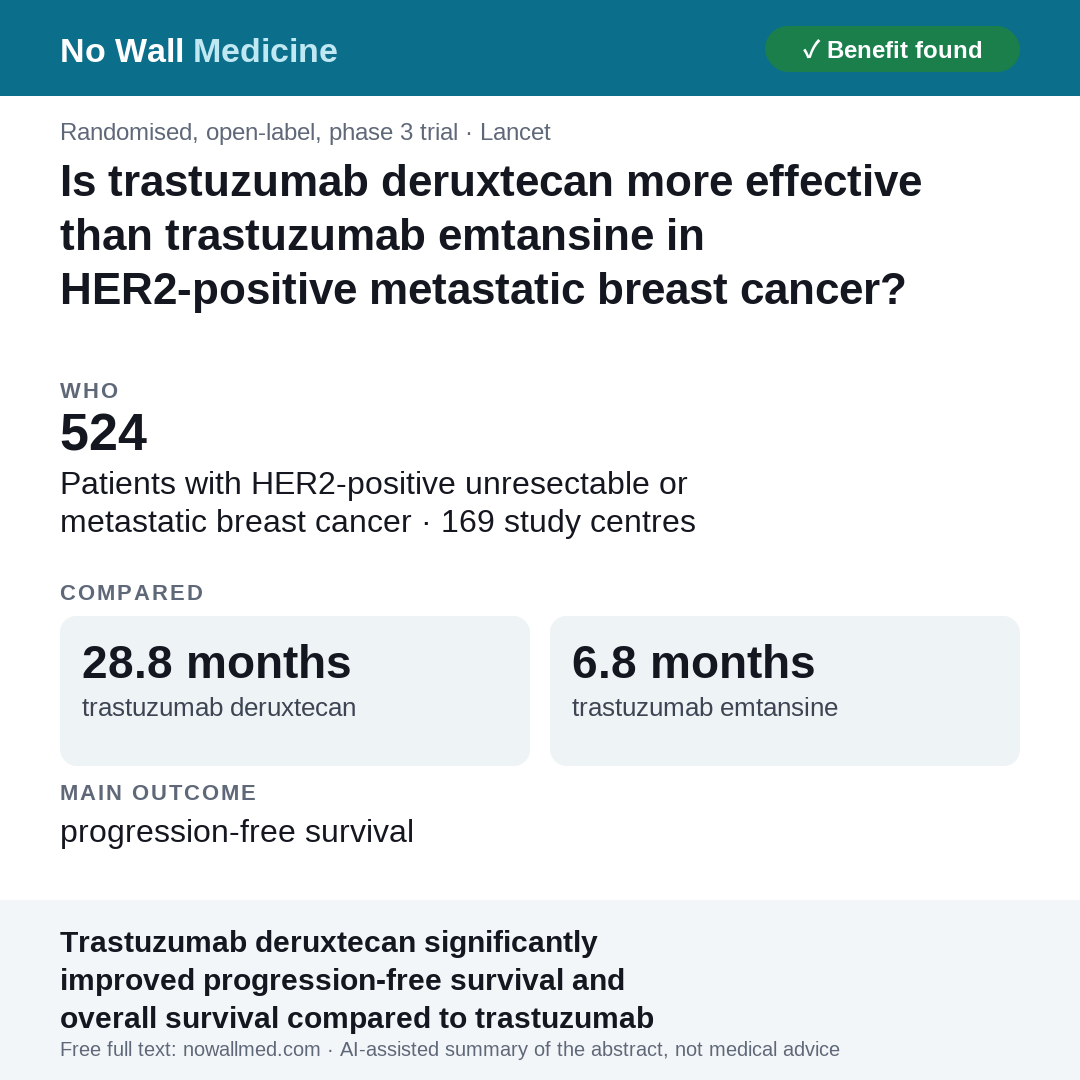
Trastuzumab deruxtecan versus trastuzumab emtansine in patients with HER2-positive metastatic breast cancer: updated results from DESTINY-Breast03, a randomised, open-label, phase 3 trial
Randomised, open-label, phase 3 trialBenefit found
Is trastuzumab deruxtecan more effective than trastuzumab emtansine in HER2-positive metastatic breast cancer?
Who
524
Patients with HER2-positive unresectable or metastatic breast cancer · 169 study centres in North America, Asia, Europe, Australia, and South America
Compared
28.8 monthstrastuzumab deruxtecan
6.8 monthstrastuzumab emtansine
Main outcome
progression-free survival
Result: hazard ratio 0.33 (95% CI 0.26-0.43)
Bottom line: Trastuzumab deruxtecan significantly improved progression-free survival and overall survival compared to trastuzumab emtansine in HER2-positive metastatic breast cancer.
Funded by: Daiichi Sankyo and AstraZeneca
Lancet · 2022-12-07Download image
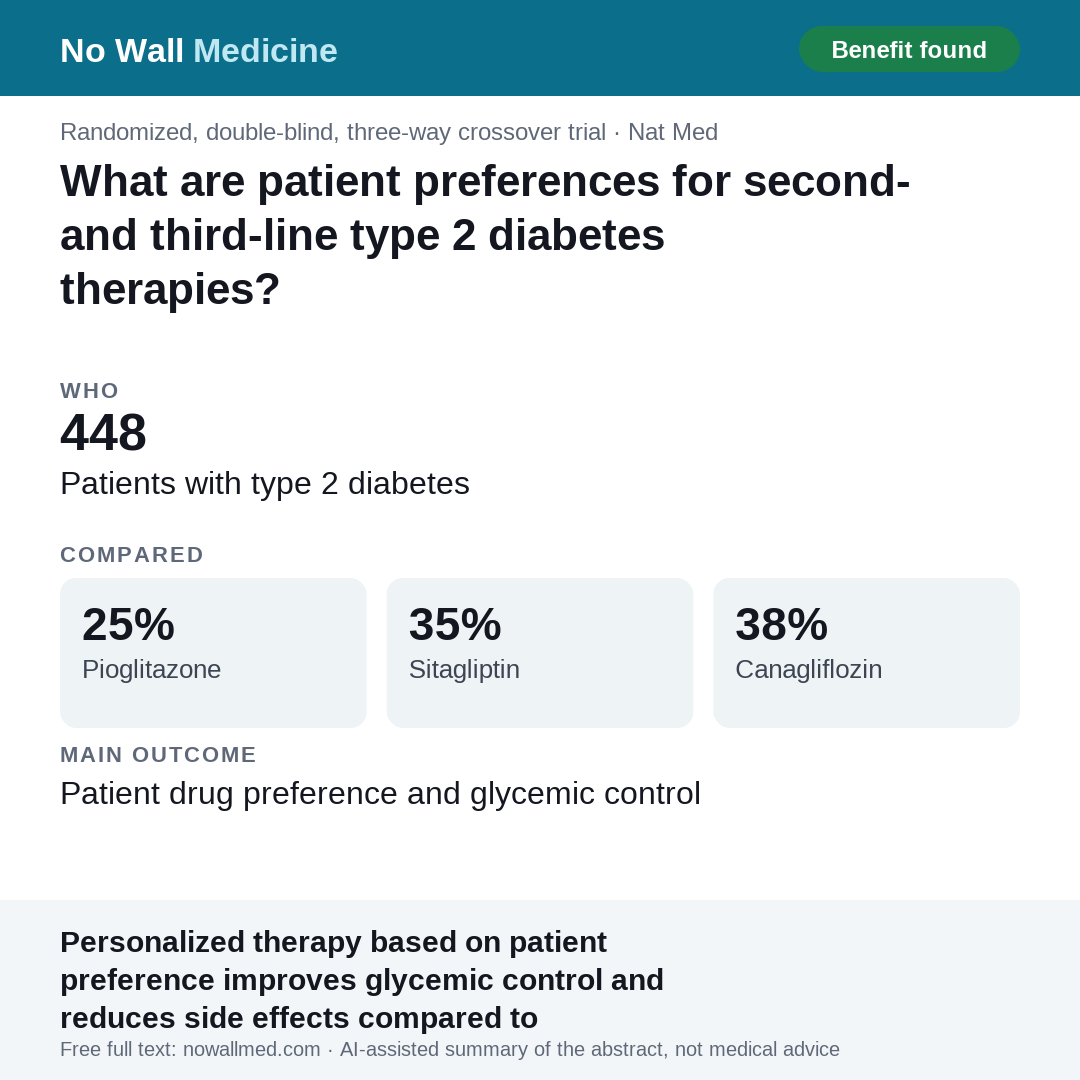
Patient preference for second- and third-line therapies in type 2 diabetes: a prespecified secondary endpoint of the TriMaster study
Randomized, double-blind, three-way crossover trialBenefit found
What are patient preferences for second- and third-line type 2 diabetes therapies?
Who
448
Patients with type 2 diabetes
Compared
25%Pioglitazone
35%Sitagliptin
38%Canagliflozin
Main outcome
Patient drug preference and glycemic control
Bottom line: Personalized therapy based on patient preference improves glycemic control and reduces side effects compared to nonpreferred drugs.
Nat Med · 2022-12-07Download image
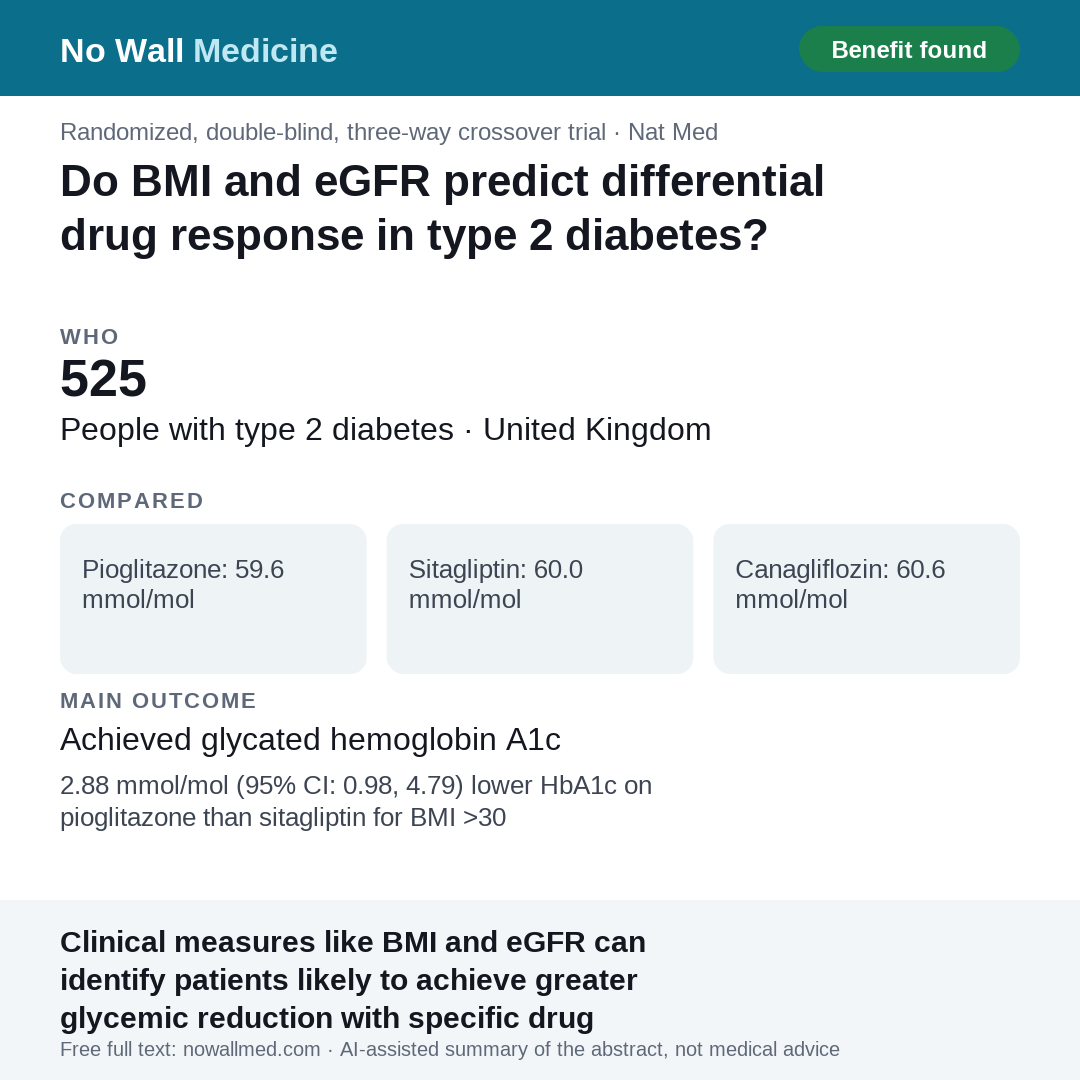
Patient stratification for determining optimal second-line and third-line therapy for type 2 diabetes: the TriMaster study
Randomized, double-blind, three-way crossover trialBenefit found
Do BMI and eGFR predict differential drug response in type 2 diabetes?
Who
525
People with type 2 diabetes · United Kingdom
Compared
Pioglitazone: 59.6 mmol/mol
Sitagliptin: 60.0 mmol/mol
Canagliflozin: 60.6 mmol/mol
Main outcome
Achieved glycated hemoglobin A1c
Result: 2.88 mmol/mol (95% CI: 0.98, 4.79) lower HbA1c on pioglitazone than sitagliptin for BMI >30
Bottom line: Clinical measures like BMI and eGFR can identify patients likely to achieve greater glycemic reduction with specific drug classes.
Nat Med · 2022-12-07Download image