Visual abstracts
New randomized trials and meta-analyses from leading journals at a glance: who was studied, what was compared, and what was found. Every paper is free to read in full.
All specialtiesCardiology 4877Oncology 4138Gastroenterology & Hepatology 1942Infectious Disease 3837Neurology 1905Psychiatry & Mental Health 2273Pulmonology 2143Critical Care 1365Endocrinology & Diabetes 2580Pediatrics 2980Surgery 2559Orthopedics & Sports Medicine 931Neurosurgery 537Cardiothoracic & Vascular Surgery 674Plastic & Reconstructive Surgery 591Nephrology 1133Rheumatology 823Hematology 1109Dermatology 621Ophthalmology 543Obstetrics & Gynecology 1686Public & Global Health 1058Radiology & Imaging 648Anesthesiology 986Urology 764ENT (Otolaryngology) 503Emergency Medicine 511Allergy & Immunology 313Geriatrics 981Family Medicine & Primary Care 562Medical Genetics & Genomics 676Pathology & Laboratory Medicine 159Physical Medicine & Rehabilitation 757Palliative Care 444Nutrition 1588Digital Health & AI 2201General Medicine 321
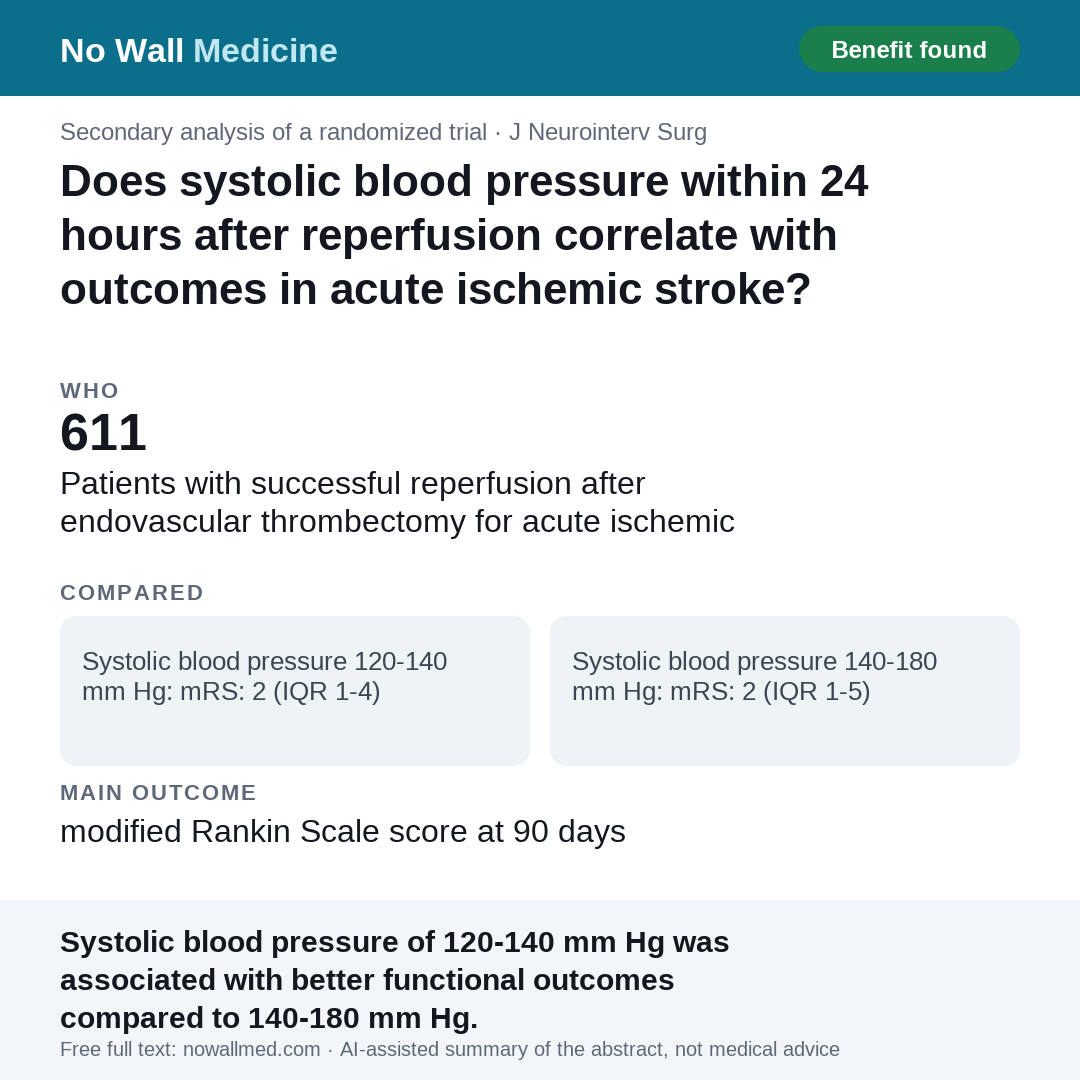
Systolic blood pressure within 24 hours after successful reperfusion correlates with outcomes in acute ischemic stroke: a secondary analysis of the EHCHANTED2/MT Trial
Secondary analysis of a randomized trialBenefit found
Does systolic blood pressure within 24 hours after reperfusion correlate with outcomes in acute ischemic stroke?
Who
611
Patients with successful reperfusion after endovascular thrombectomy for acute ischemic stroke
Compared
Systolic blood pressure 120-140 mm Hg: mRS: 2 (IQR 1-4)
Systolic blood pressure 140-180 mm Hg: mRS: 2 (IQR 1-5)
Main outcome
modified Rankin Scale score at 90 days
Result: adjusted OR 1.54 (95% CI 1.10 to 2.17)
Bottom line: Systolic blood pressure of 120-140 mm Hg was associated with better functional outcomes compared to 140-180 mm Hg.
J Neurointerv Surg · 2026-04-16Download image
Safety and efficacy of cerebral robot assisted angiography: randomized comparison of robotic versus manual procedures
Multicenter, randomized controlled non-inferiority trialBenefit found
Is robotic assisted cerebral angiography safe and effective compared to manual procedures?
Who
130
Patients receiving cerebral angiography · Four centers
Compared
Robotic procedures: 100% clinical success and 100% technical success
Manual procedures: 100% clinical success and 100% technical success
Main outcome
Clinical success, technical success, and radiation dose
Result: primary operator's radiation dose 1.67±3.49 μSv vs 43.63±38.95 μSv
Bottom line: Robotic cerebral angiography is safe and effective, significantly reducing the primary operator's radiation dose compared to manual procedures.
J Neurointerv Surg · 2026-04-16Download image

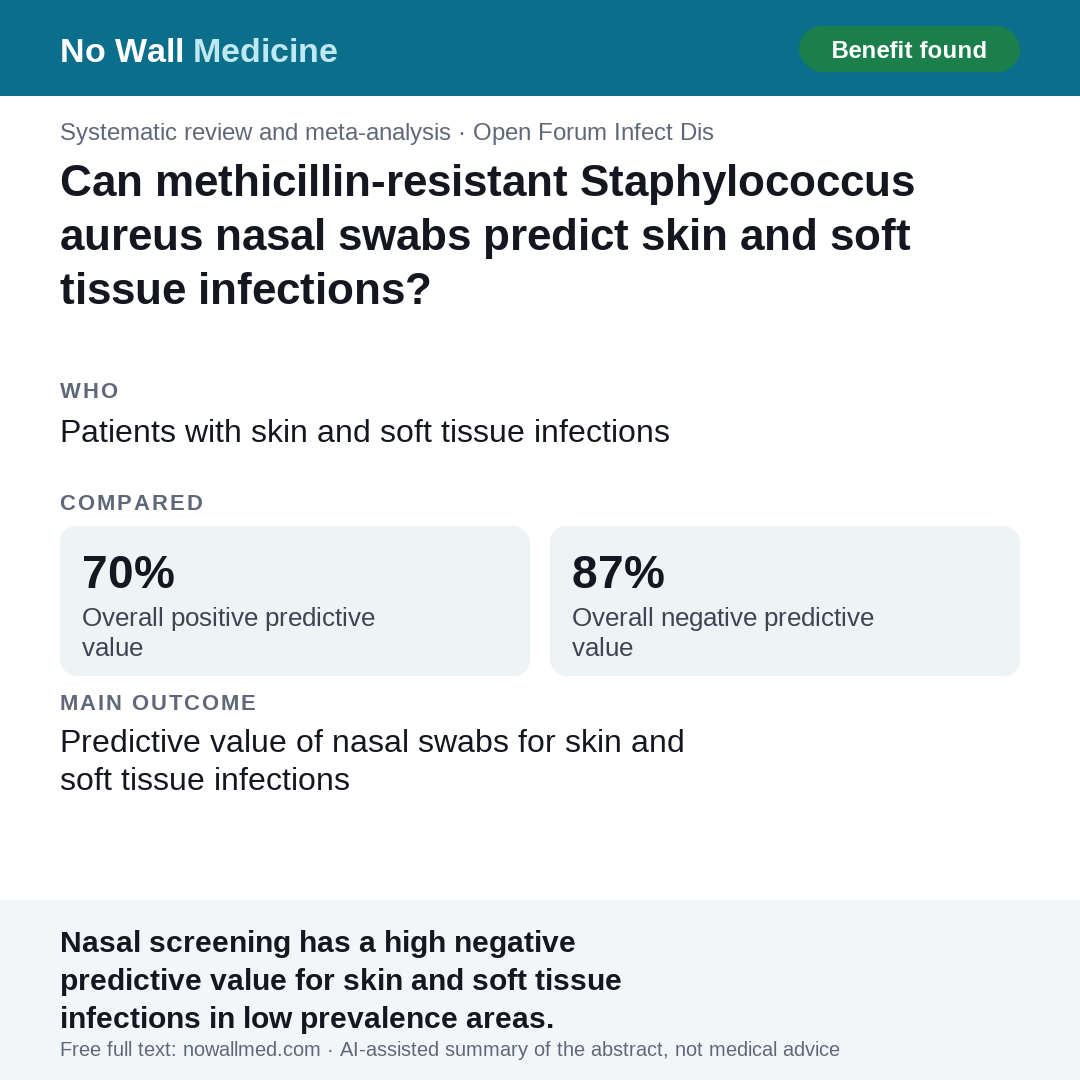
Methicillin-Resistant Staphylococcus aureus Nasal Swab Utilization as a Predictor for Methicillin-Resistant Staphylococcus aureus Skin and Soft Tissue Infections: A Systematic Review and Meta-analysis
Systematic review and meta-analysisBenefit found
Can methicillin-resistant Staphylococcus aureus nasal swabs predict skin and soft tissue infections?
Who
Patients with skin and soft tissue infections
Compared
70%Overall positive predictive value
87%Overall negative predictive value
Main outcome
Predictive value of nasal swabs for skin and soft tissue infections
Bottom line: Nasal screening has a high negative predictive value for skin and soft tissue infections in low prevalence areas.
Open Forum Infect Dis · 2026-04-16Download image
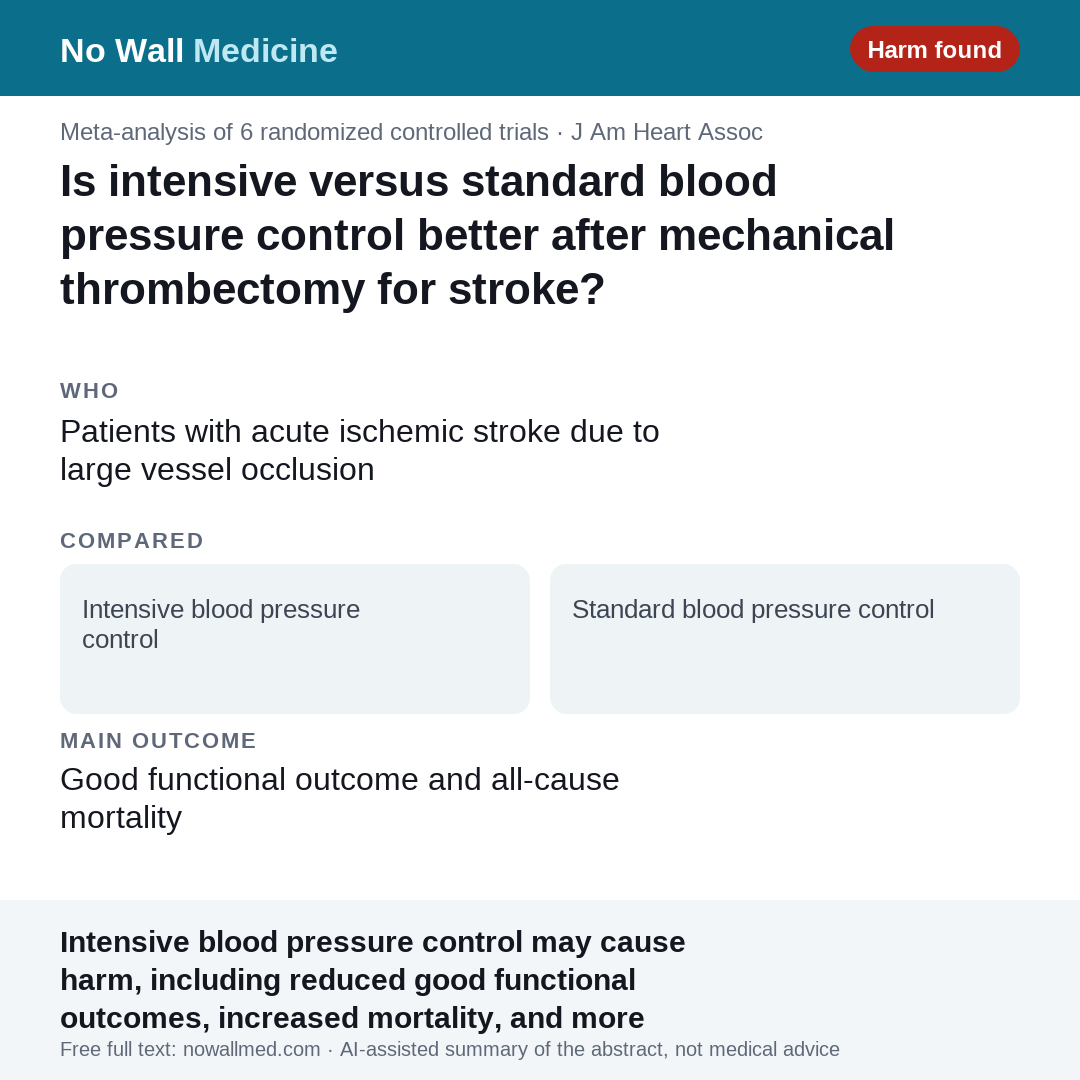
Intensive Versus Standard Blood Pressure Control After Endovascular Thrombectomy in Acute Ischemic Stroke: A Meta-Analysis of Randomized Controlled Trials
Meta-analysis of 6 randomized controlled trialsHarm found
Is intensive versus standard blood pressure control better after mechanical thrombectomy for stroke?
Who
Patients with acute ischemic stroke due to large vessel occlusion
Compared
Intensive blood pressure control
Standard blood pressure control
Main outcome
Good functional outcome and all-cause mortality
Result: OR 0.70 (95% CI 0.54-0.91) for good functional outcome
Bottom line: Intensive blood pressure control may cause harm, including reduced good functional outcomes, increased mortality, and more hypotensive episodes.
J Am Heart Assoc · 2026-04-16Download image
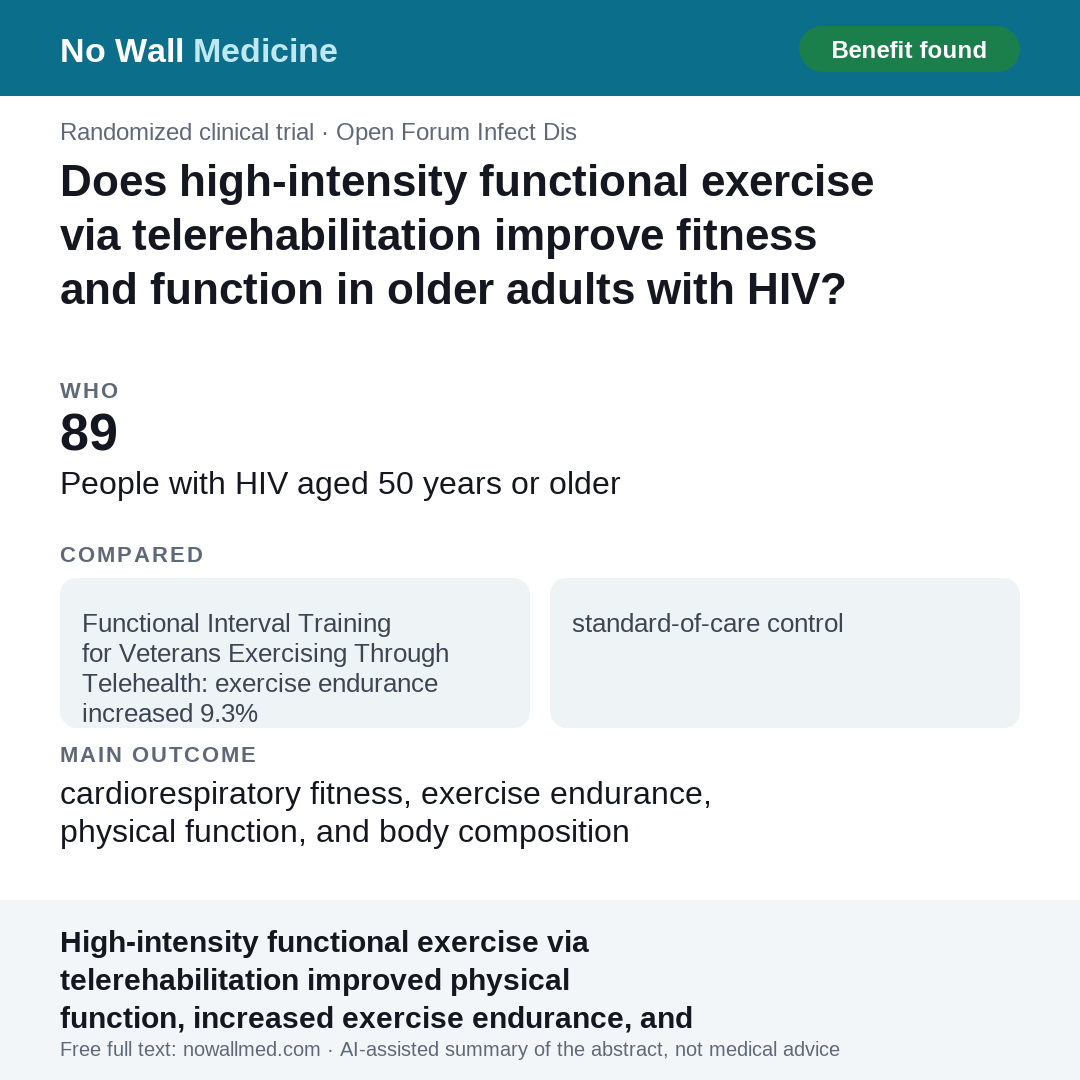
Effects of High-Intensity Functional Exercise on Cardiorespiratory Fitness and Physical Function in Older Adults With HIV: A Telerehabilitation Randomized Trial
Randomized clinical trialBenefit found
Does high-intensity functional exercise via telerehabilitation improve fitness and function in older adults with HIV?
Who
89
People with HIV aged 50 years or older
Compared
Functional Interval Training for Veterans Exercising Through Telehealth: exercise endurance increased 9.3%
standard-of-care control
Main outcome
cardiorespiratory fitness, exercise endurance, physical function, and body composition
Bottom line: High-intensity functional exercise via telerehabilitation improved physical function, increased exercise endurance, and reduced adiposity in older adults with HIV.
Open Forum Infect Dis · 2026-04-16Download image
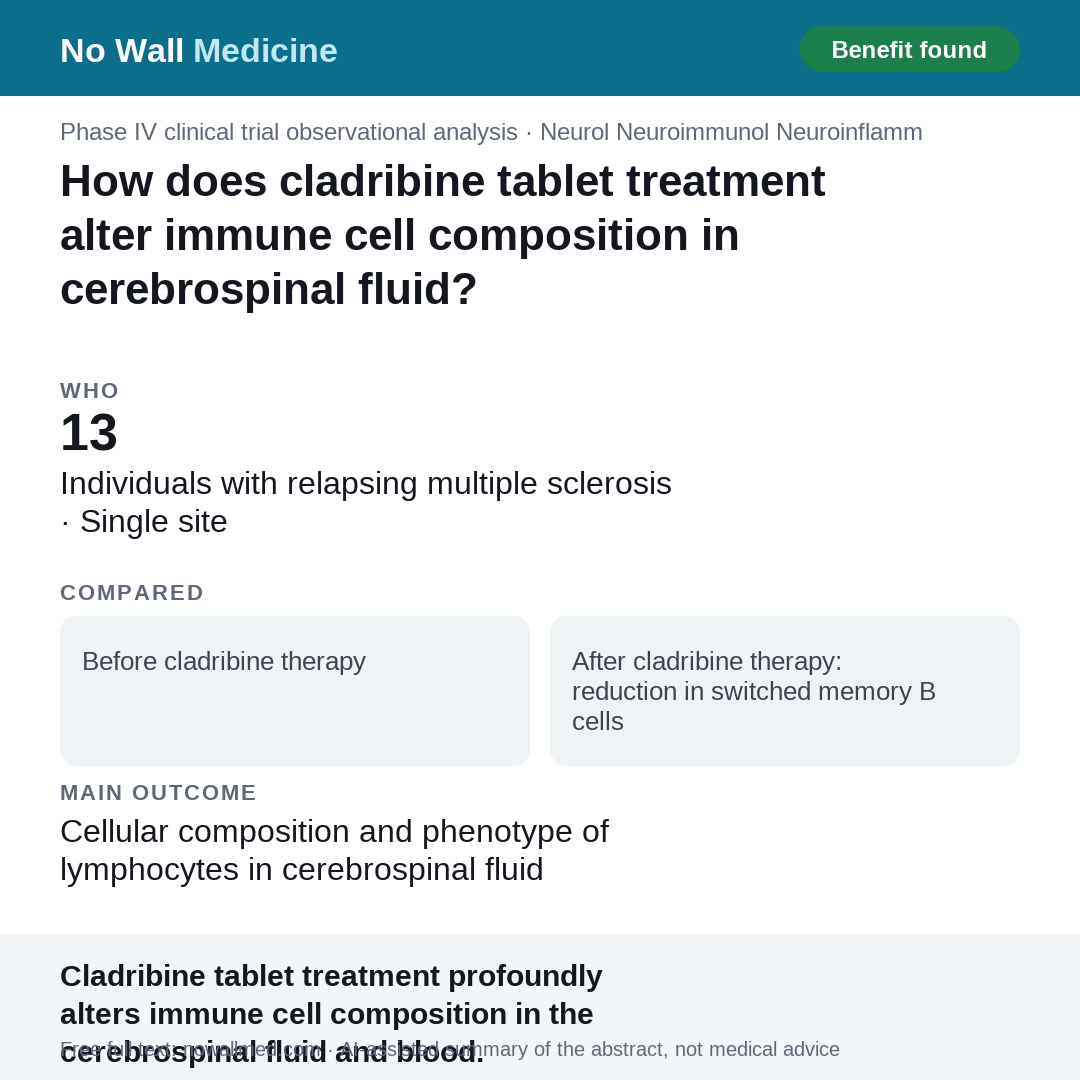
Dynamics of Spinal Fluid Immune Cell Alterations Following Cladribine Tablet Treatment in Multiple Sclerosis
Phase IV clinical trial observational analysisBenefit found
How does cladribine tablet treatment alter immune cell composition in cerebrospinal fluid?
Who
13
Individuals with relapsing multiple sclerosis · Single site
Compared
Before cladribine therapy
After cladribine therapy: reduction in switched memory B cells
Main outcome
Cellular composition and phenotype of lymphocytes in cerebrospinal fluid
Bottom line: Cladribine tablet treatment profoundly alters immune cell composition in the cerebrospinal fluid and blood.
Limitation: Small sample size of 13 individuals
Neurol Neuroimmunol Neuroinflamm · 2026-04-16Download image
Decoding kratom: molecular mechanisms and epigenetic factors in use and dependence
Systematic review of 20 studiesMixed results
What are the molecular, pharmacological, and epigenetic effects of kratom?
Who
20
In vitro and in vivo models · Scopus and Web of Science
Compared
Mitragynine exposure: reduced histone acetylation and increased HDAC2 expression
Safety concerns: inhibited cardiac ion channels and altered CYP450 enzyme expression
Main outcome
molecular, pharmacological, and epigenetic effects
Bottom line: Kratom shows analgesic potential but carries risks of cardiotoxicity and drug-drug interactions.
Limitation: limitations in pharmacokinetic data, standardized dosing, and long-term safety
Transl Psychiatry · 2026-04-16Download image

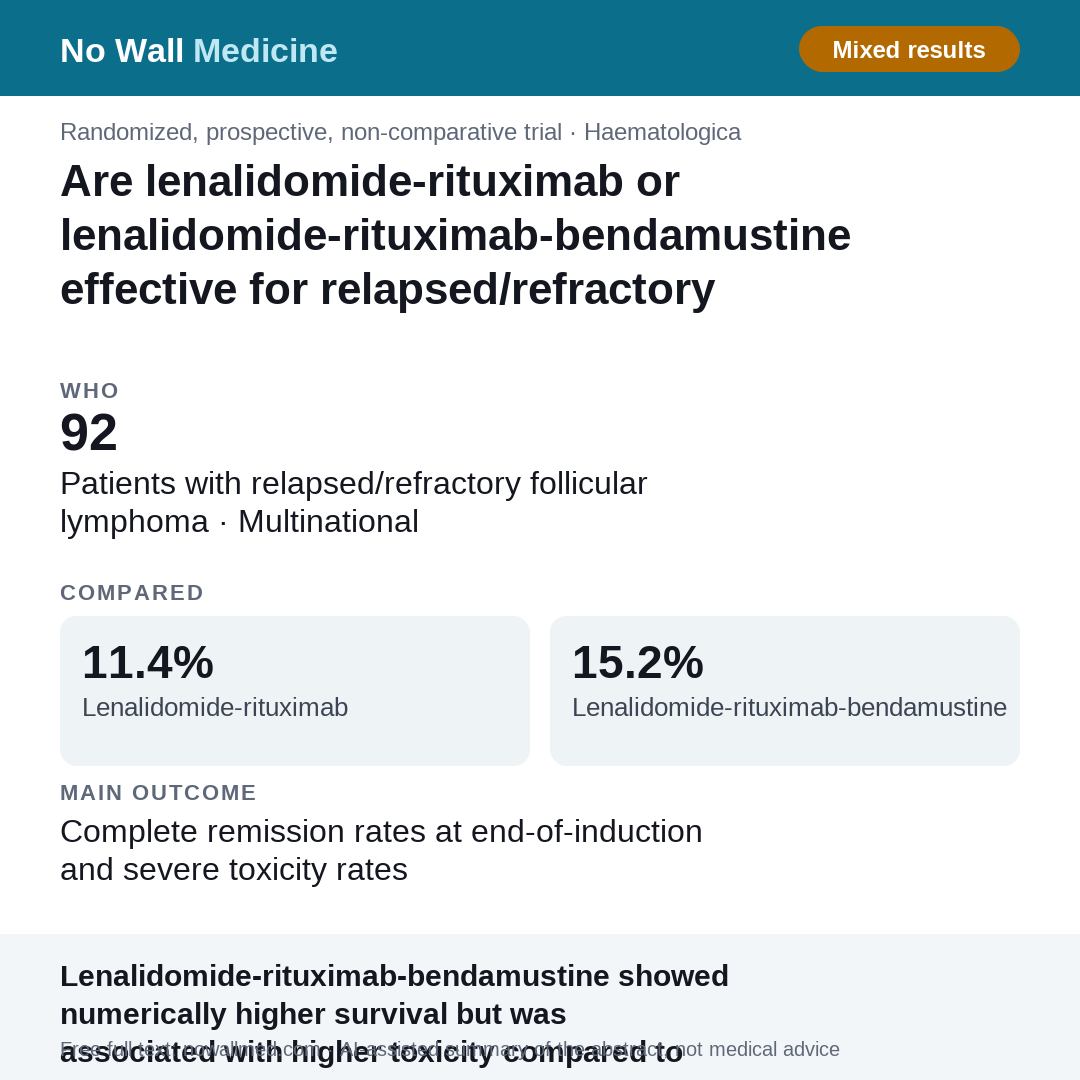
Lenalidomide-rituximab or lenalidomide-rituximabbendamustine for relapsed/refractory follicular lymphoma: primary and final analysis of the randomized phase II HOVON110/ReBeL study
Randomized, prospective, non-comparative trialMixed results
Are lenalidomide-rituximab or lenalidomide-rituximab-bendamustine effective for relapsed/refractory follicular lymphoma?
Who
92
Patients with relapsed/refractory follicular lymphoma · Multinational
Compared
11.4%Lenalidomide-rituximab (95% CI: 3.8-24.6%)
15.2%Lenalidomide-rituximab-bendamustine (95% CI: 6.3-28.9%)
Main outcome
Complete remission rates at end-of-induction and severe toxicity rates
Bottom line: Lenalidomide-rituximab-bendamustine showed numerically higher survival but was associated with higher toxicity compared to lenalidomide-rituximab.
Haematologica · 2026-04-16Download image
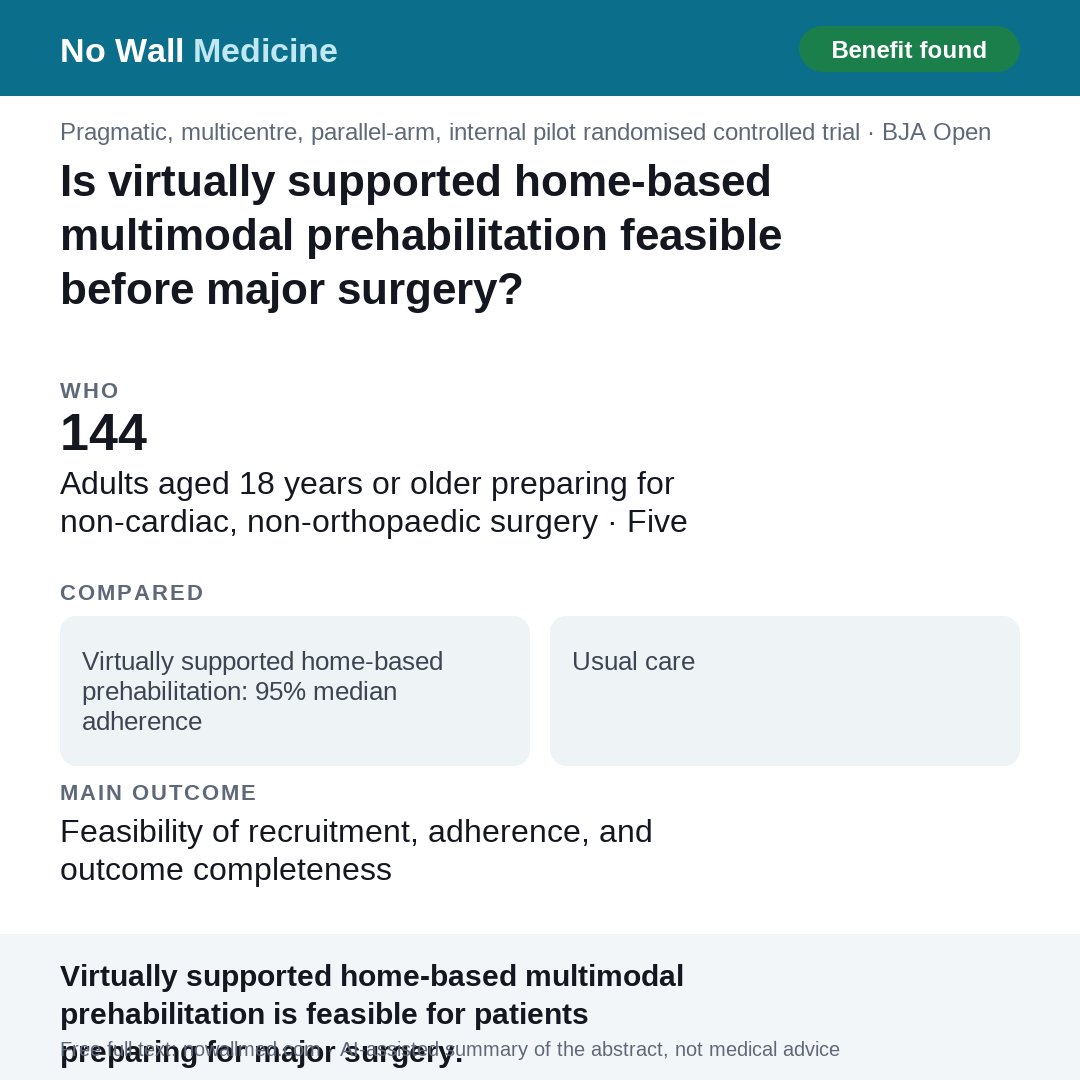
Home-based, virtually supported multimodal prehabilitation compared with usual care prior to major surgery: a multicentre, pragmatic pilot randomised trial
Pragmatic, multicentre, parallel-arm, internal pilot randomised controlled trialBenefit found
Is virtually supported home-based multimodal prehabilitation feasible before major surgery?
Who
144
Adults aged 18 years or older preparing for non-cardiac, non-orthopaedic surgery · Five Canadian centres
Compared
Virtually supported home-based prehabilitation: 95% median adherence
Usual care
Main outcome
Feasibility of recruitment, adherence, and outcome completeness
Bottom line: Virtually supported home-based multimodal prehabilitation is feasible for patients preparing for major surgery.
Limitation: This was an internal pilot trial; associations should be validated in a fully powered trial.
BJA Open · 2026-04-16Download image
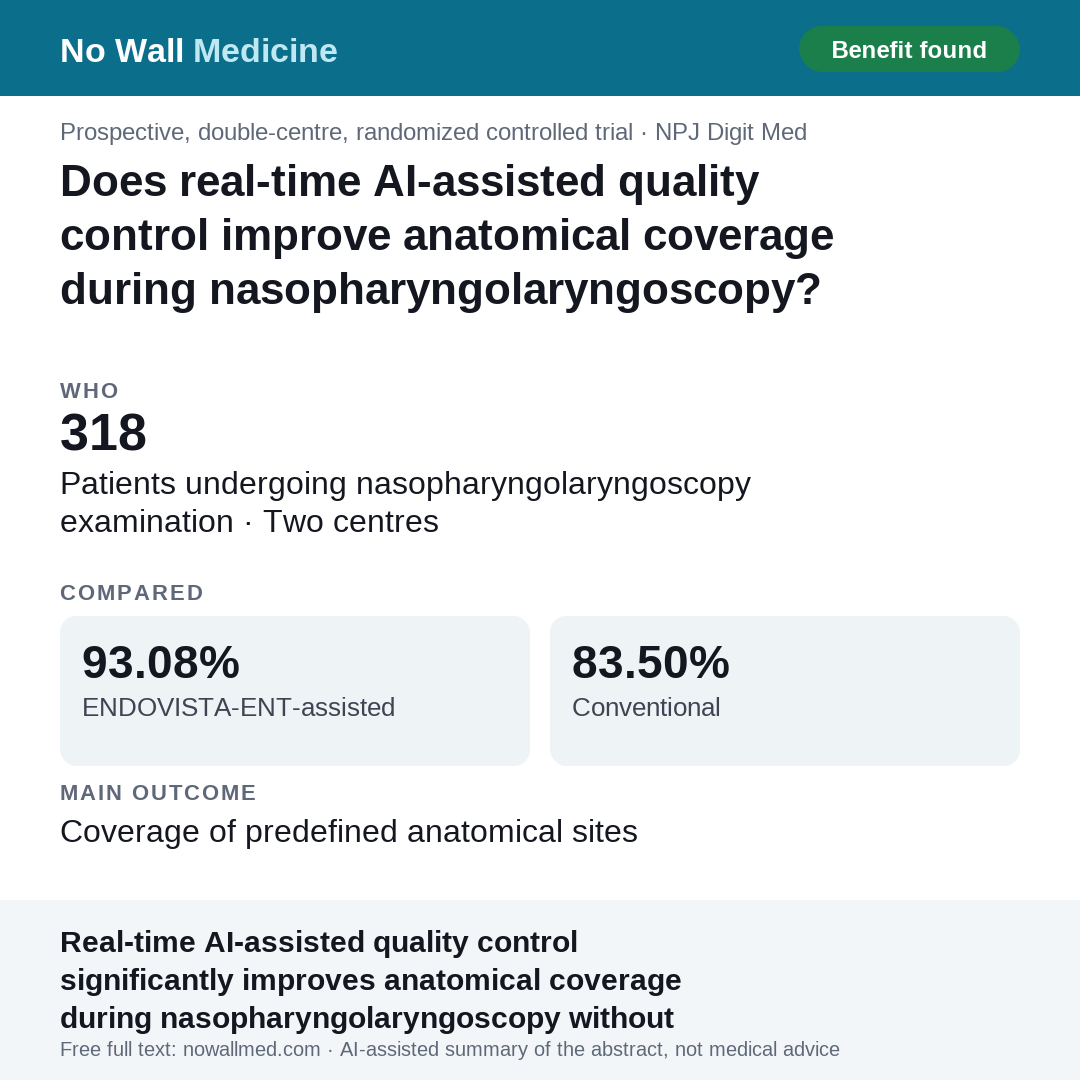
Real-time AI-assisted quality control during nasopharyngolaryngoscopy: a randomized controlled trial
Prospective, double-centre, randomized controlled trialBenefit found
Does real-time AI-assisted quality control improve anatomical coverage during nasopharyngolaryngoscopy?
Who
318
Patients undergoing nasopharyngolaryngoscopy examination · Two centres
Compared
93.08%ENDOVISTA-ENT-assisted
83.50%Conventional
Main outcome
Coverage of predefined anatomical sites
Bottom line: Real-time AI-assisted quality control significantly improves anatomical coverage during nasopharyngolaryngoscopy without increasing examination time.
NPJ Digit Med · 2026-04-16Download image
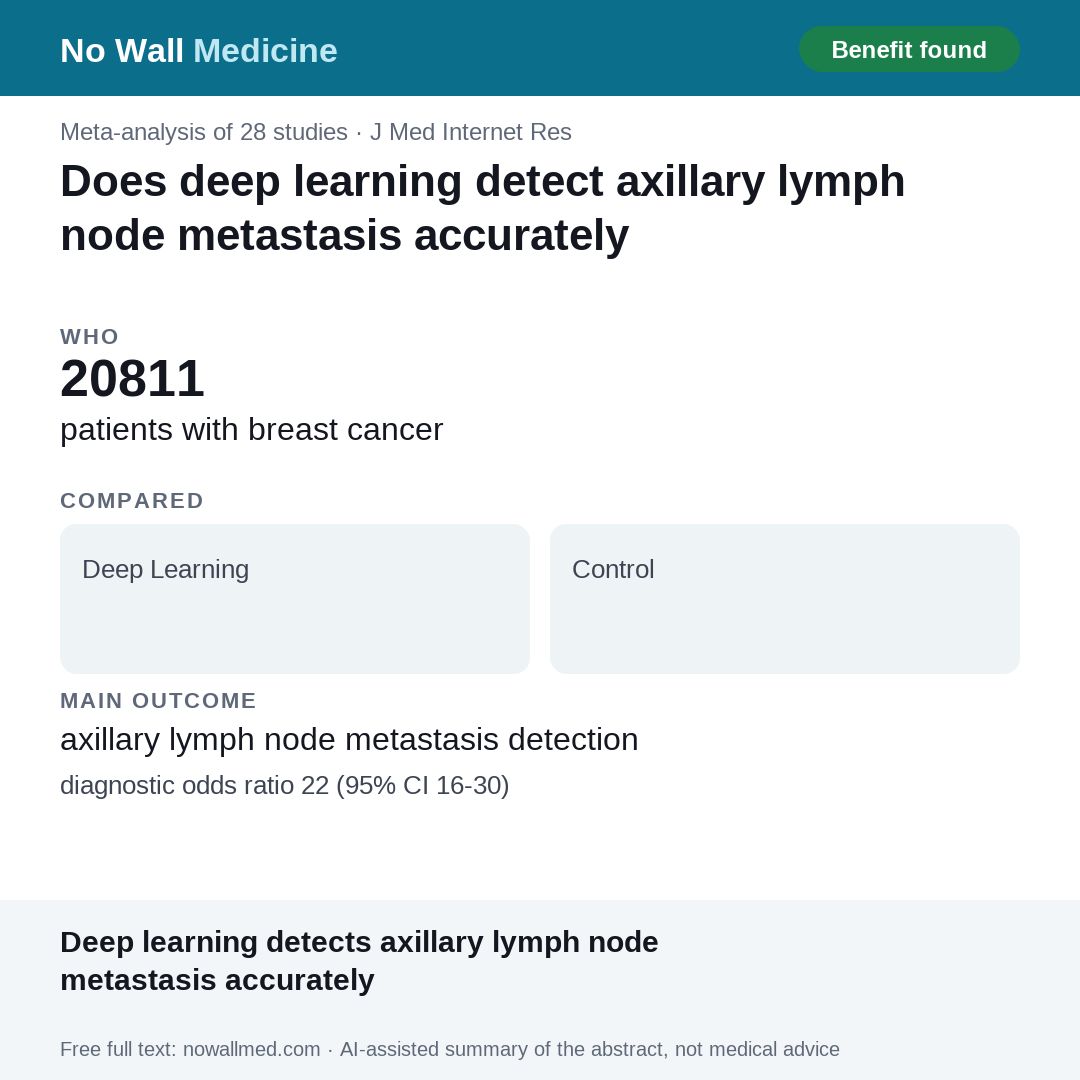
Accuracy of Deep Learning for Detecting Axillary Lymph Node Metastasis in Breast Cancer: Systematic Review and Meta-Analysis
Meta-analysis of 28 studiesBenefit found
Does deep learning detect axillary lymph node metastasis accurately
Who
20811
patients with breast cancer
Compared
Deep Learning
Control
Main outcome
axillary lymph node metastasis detection
Result: diagnostic odds ratio 22 (95% CI 16-30)
Bottom line: Deep learning detects axillary lymph node metastasis accurately
J Med Internet Res · 2026-04-16Download image
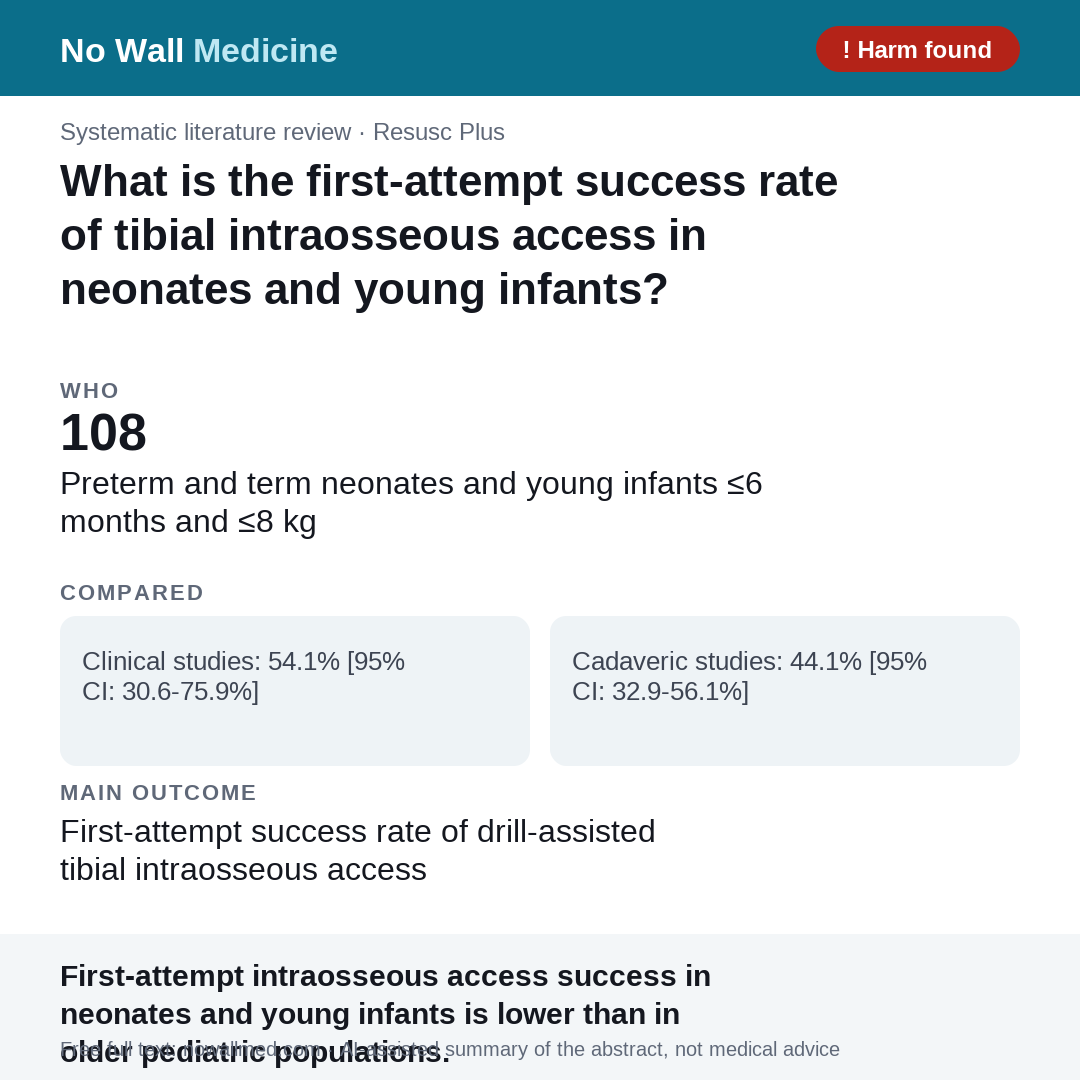
First attempt success rate of intraosseous access in preterm infants and neonates: a systematic review
Systematic literature reviewHarm found
What is the first-attempt success rate of tibial intraosseous access in neonates and young infants?
Who
108
Preterm and term neonates and young infants ≤6 months and ≤8 kg
Compared
Clinical studies: 54.1% [95% CI: 30.6-75.9%]
Cadaveric studies: 44.1% [95% CI: 32.9-56.1%]
Main outcome
First-attempt success rate of drill-assisted tibial intraosseous access
Bottom line: First-attempt intraosseous access success in neonates and young infants is lower than in older pediatric populations.
Limitation: Success rates are lower due to anatomical, technical, and procedural challenges unique to this population.
Resusc Plus · 2026-04-16Download image
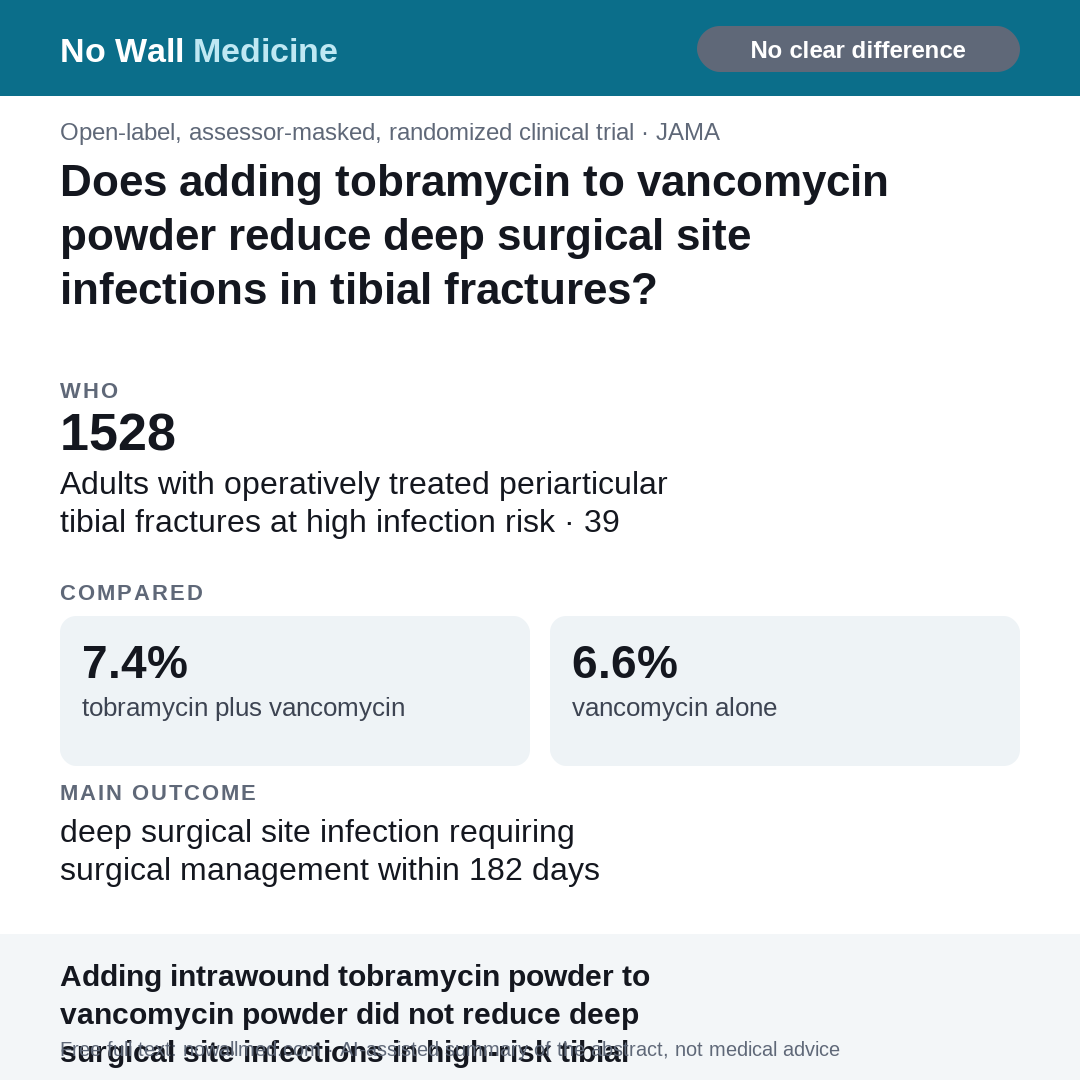
Intrawound Tobramycin Plus Vancomycin to Prevent Surgical Site Infection in Tibial Fractures: The TOBRA Randomized Clinical Trial
Open-label, assessor-masked, randomized clinical trialNo clear difference
Does adding tobramycin to vancomycin powder reduce deep surgical site infections in tibial fractures?
Who
1528
Adults with operatively treated periarticular tibial fractures at high infection risk · 39 US trauma centers
Compared
7.4%tobramycin plus vancomycin
6.6%vancomycin alone
Main outcome
deep surgical site infection requiring surgical management within 182 days
Result: hazard ratio 1.11 (95% bayesian credible interval 0.75-1.66)
Bottom line: Adding intrawound tobramycin powder to vancomycin powder did not reduce deep surgical site infections in high-risk tibial fracture patients.
JAMA · 2026-04-15Download image
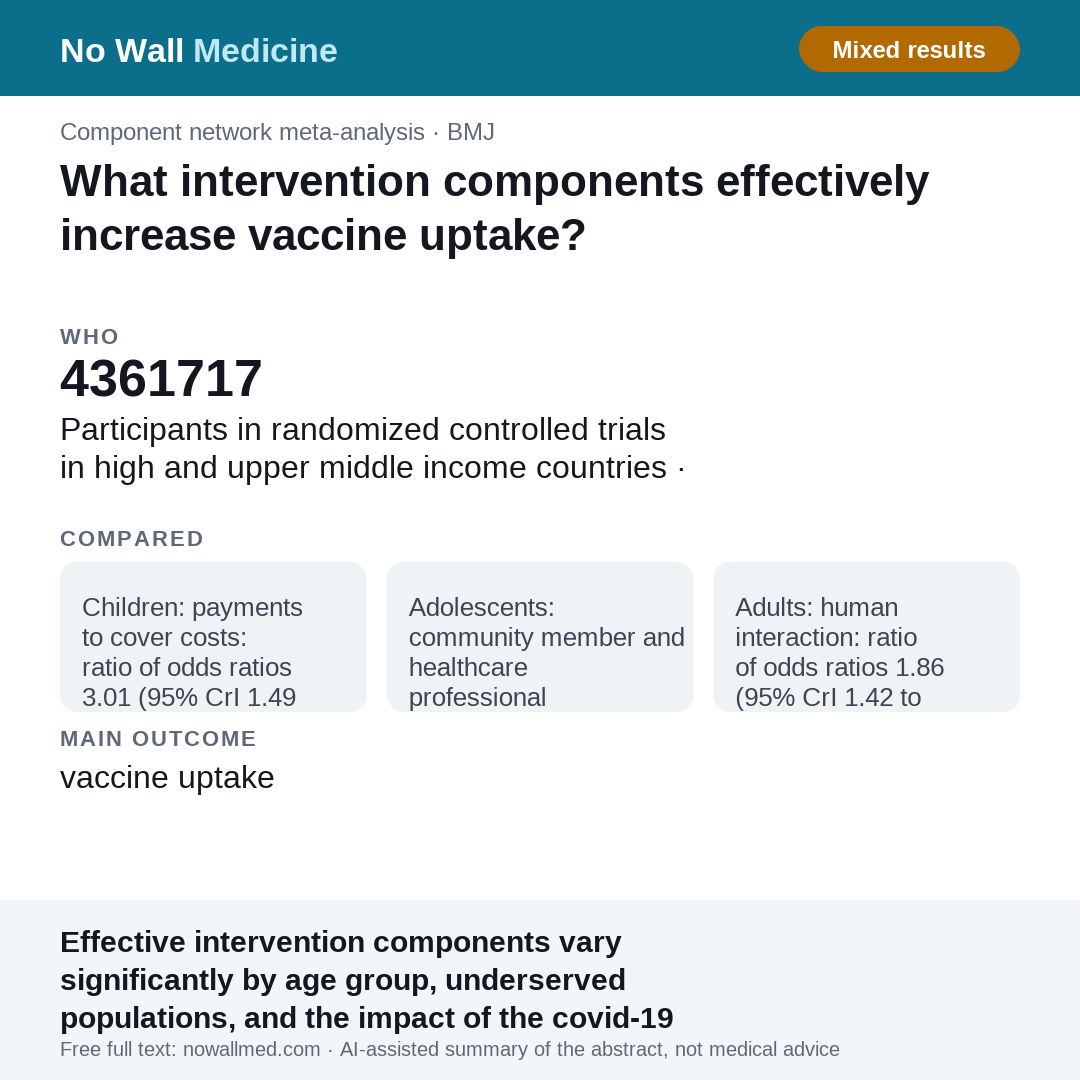
Effectiveness of interventions to increase vaccine uptake: component network meta-analysis
Component network meta-analysisMixed results
What intervention components effectively increase vaccine uptake?
Who
4361717
Participants in randomized controlled trials in high and upper middle income countries · High and upper middle income countries
Compared
Children: payments to cover costs: ratio of odds ratios 3.01 (95% CrI 1.49 to 6.06)
Adolescents: community member and healthcare professional delivery: ratio of odds ratios 6.42 (95% CrI 1.94 to 25.62)
Adults: human interaction: ratio of odds ratios 1.86 (95% CrI 1.42 to 2.45)
Main outcome
vaccine uptake
Bottom line: Effective intervention components vary significantly by age group, underserved populations, and the impact of the covid-19 pandemic.
BMJ · 2026-04-15Download image
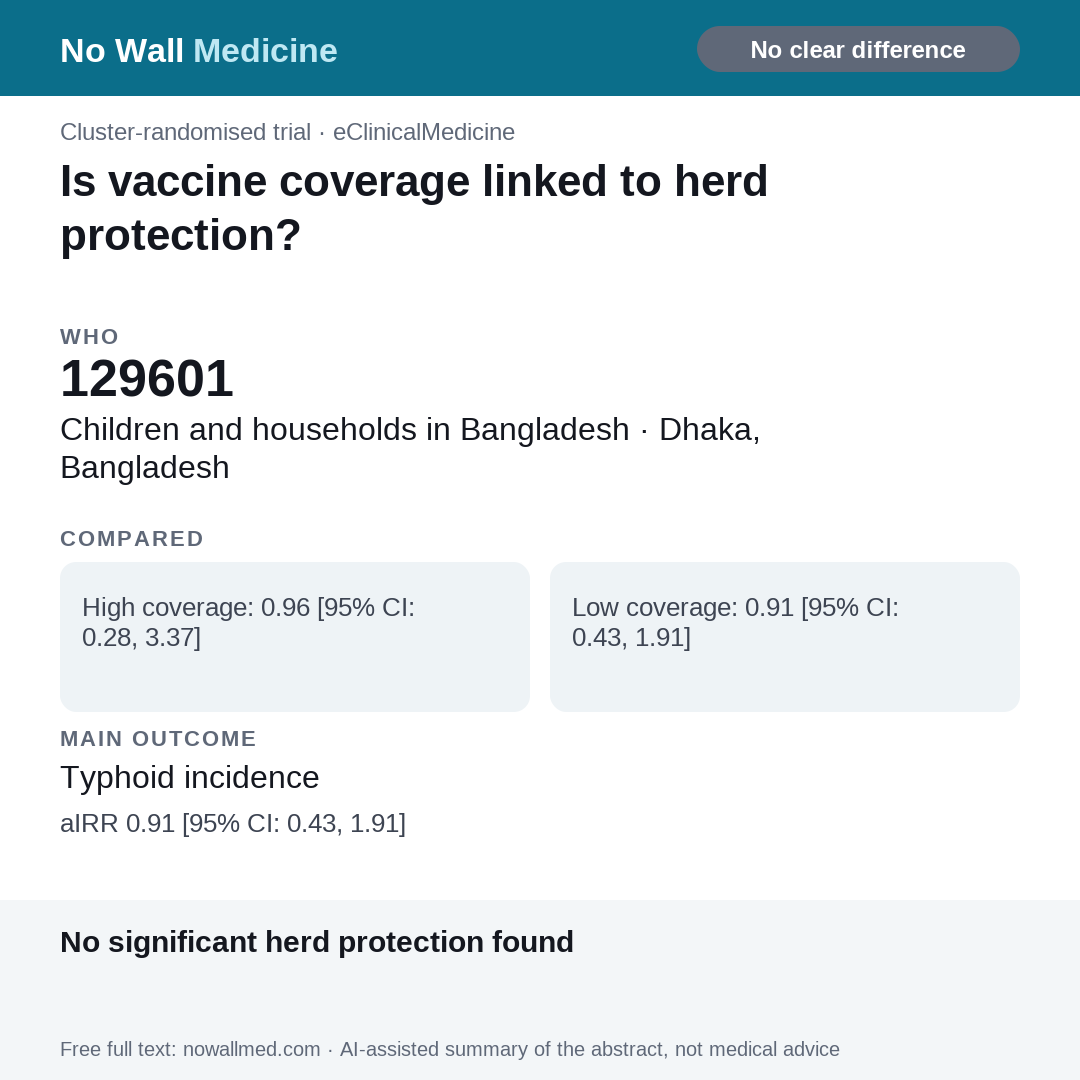
The association between vaccine coverage and herd protection: exploratory analyses of a cluster-randomised trial of Vi conjugate vaccine
Cluster-randomised trialNo clear difference
Vaccine coverage and herd protection
Who
150
Children and residents in Bangladesh · Dhaka, Bangladesh
Compared
TCV clusters: 0.91 [95% CI: 0.43, 1.91]
JE clusters
Main outcome
Typhoid incidence
Result: hazard ratio 0.91 (95% CI 0.43 to 1.91)
Bottom line: No significant herd protection found
Limitation: estimates were imprecise
Funded by: Gates Foundation
eClinicalMedicine · 2026-04-15Download image
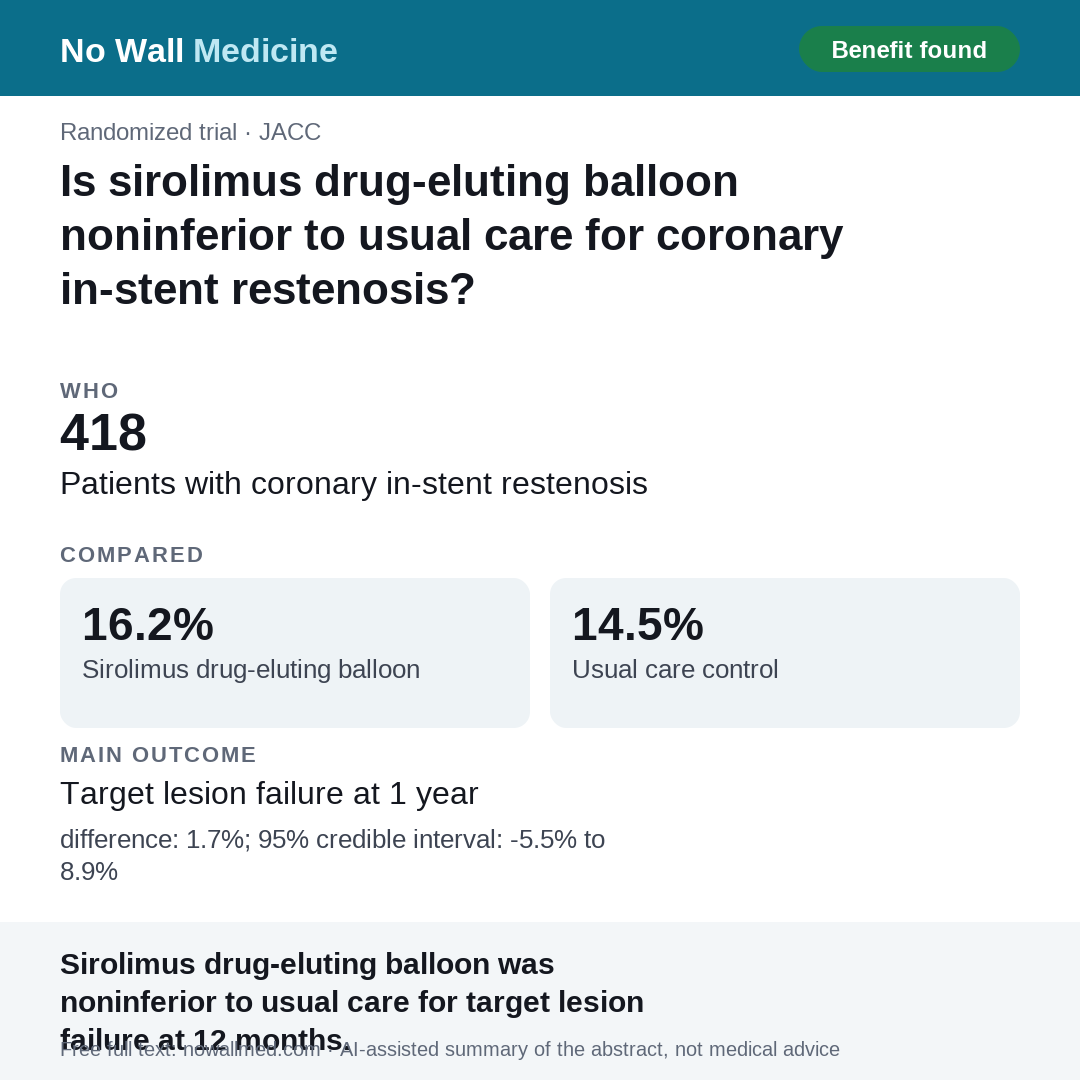
Sirolimus-Eluting Balloon vs Repeat Drug-Eluting Stent or Balloon Angioplasty for Coronary In-Stent Restenosis
Randomized trialBenefit found
Is sirolimus drug-eluting balloon noninferior to usual care for coronary in-stent restenosis?
Who
418
Patients with coronary in-stent restenosis
Compared
16.2%Sirolimus drug-eluting balloon (32/197)
14.5%Usual care control (28/193)
Main outcome
Target lesion failure at 1 year
Result: difference: 1.7%; 95% credible interval: -5.5% to 8.9%
Bottom line: Sirolimus drug-eluting balloon was noninferior to usual care for target lesion failure at 12 months.
Limitation: The drug-eluting balloon was not noninferior to drug-eluting stents for single-layer in-stent restenosis.
JACC · 2026-04-15Download image
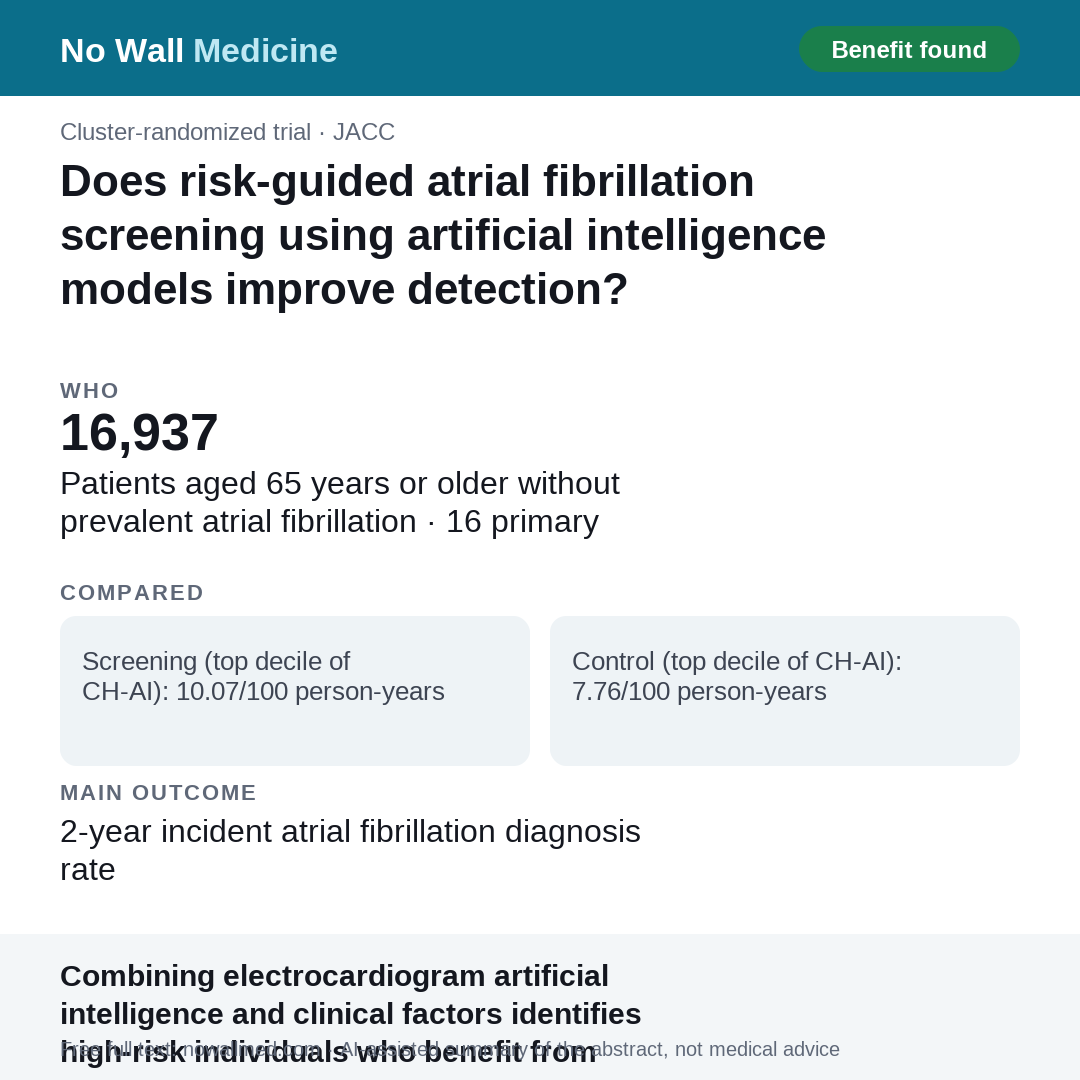
Risk-Guided Atrial Fibrillation Screening With Artificial Intelligence-Enabled Electrocardiogram Models: A VITAL-AF Trial Analysis
Cluster-randomized trialBenefit found
Does risk-guided atrial fibrillation screening using artificial intelligence models improve detection?
Who
16,937
Patients aged 65 years or older without prevalent atrial fibrillation · 16 primary care practices in Massachusetts
Compared
Screening (top decile of CH-AI): 10.07/100 person-years
Control (top decile of CH-AI): 7.76/100 person-years
Main outcome
2-year incident atrial fibrillation diagnosis rate
Result: difference in AF diagnosis rate 2.32/100 person-years (95% CI: 0.01-4.63)
Bottom line: Combining electrocardiogram artificial intelligence and clinical factors identifies high-risk individuals who benefit from atrial fibrillation screening.
Limitation: A trade-off exists between increasing screening efficiency and decreasing population coverage.
JACC · 2026-04-15Download image
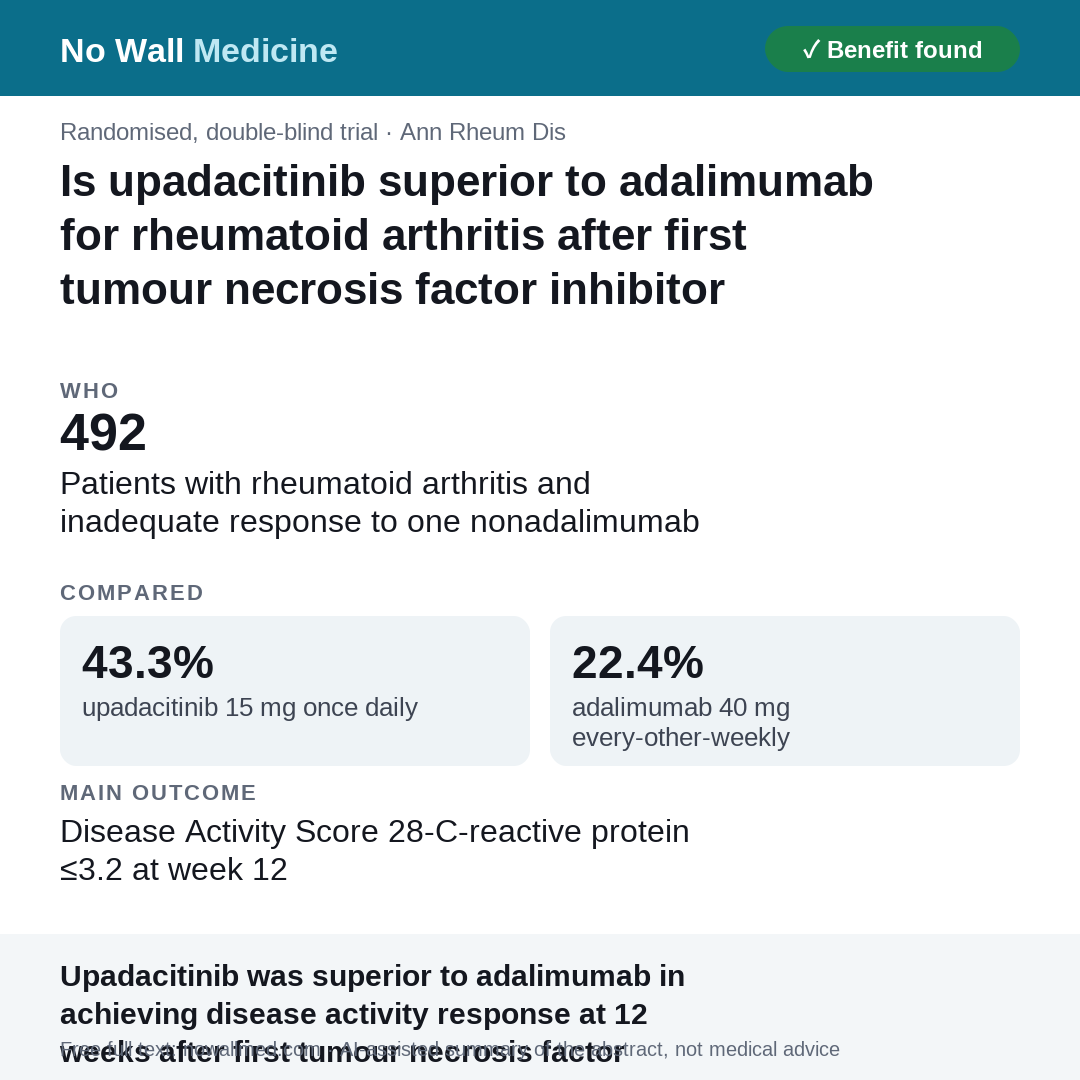
Upadacitinib vs adalimumab in patients with rheumatoid arthritis and a prior inadequate response or intolerance to a tumour necrosis factor inhibitor: 12-week results from the randomised, double-blind, SELECT-SWITCH study
Randomised, double-blind trialBenefit found
Is upadacitinib superior to adalimumab for rheumatoid arthritis after first tumour necrosis factor inhibitor failure?
Who
492
Patients with rheumatoid arthritis and inadequate response to one nonadalimumab tumour necrosis factor inhibitor
Compared
43.3%upadacitinib 15 mg once daily
22.4%adalimumab 40 mg every-other-weekly
Main outcome
Disease Activity Score 28-C-reactive protein ≤3.2 at week 12
Result: difference, 21.0% (95% CI: 12.9-29.1)
Bottom line: Upadacitinib was superior to adalimumab in achieving disease activity response at 12 weeks after first tumour necrosis factor inhibitor failure.
Ann Rheum Dis · 2026-04-15Download image
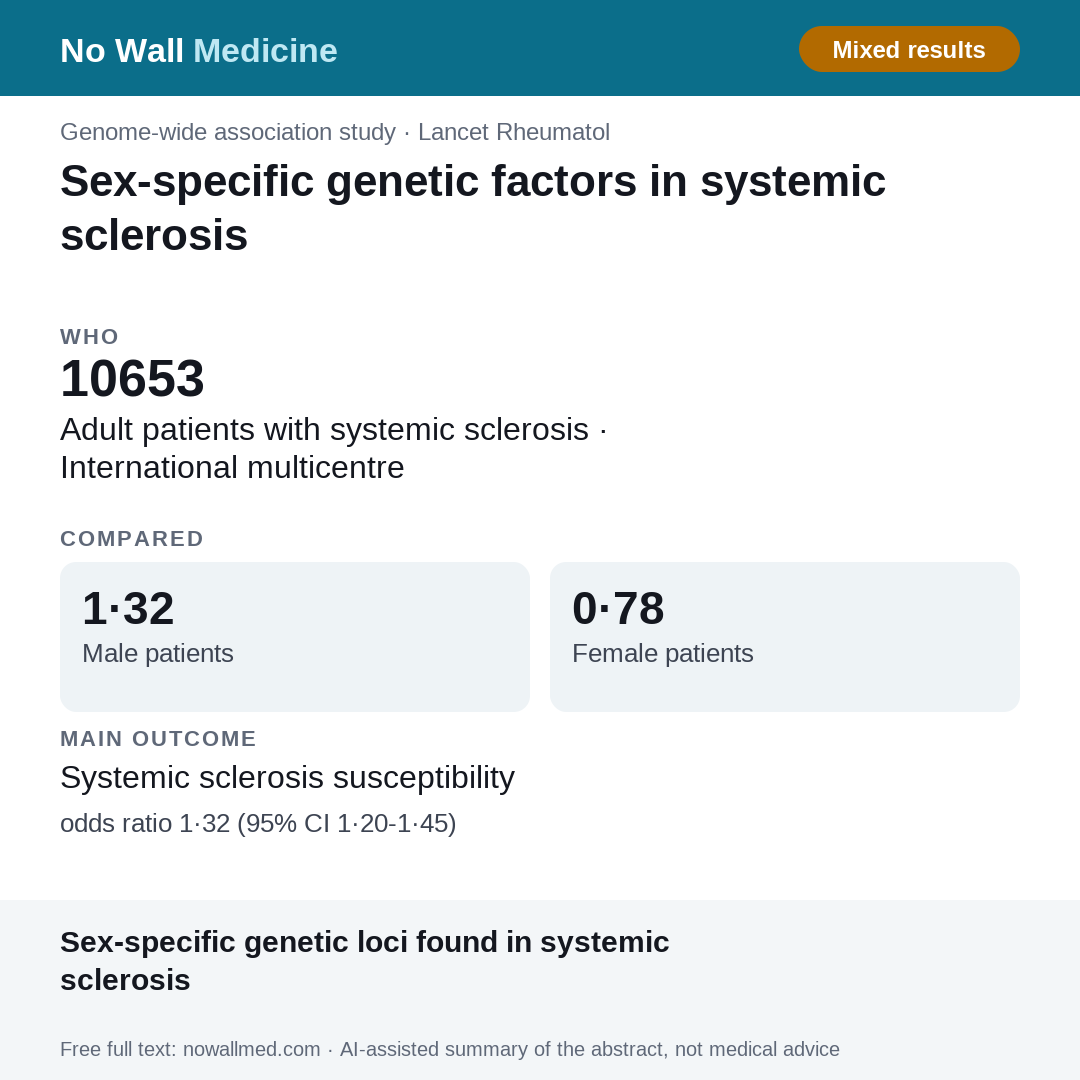
Sex-specific autosomal susceptibility loci in systemic sclerosis: a genome-wide association study
Genome-wide association studyMixed results
Sex-specific genetic factors in systemic sclerosis
Who
10653
Adult patients with systemic sclerosis · International multicentre
Compared
1·32Male patients (1·20-1·45)
0·78Female patients (0·71-0·85)
Main outcome
Systemic sclerosis susceptibility
Result: odds ratio 1·32 (95% CI 1·20-1·45)
Bottom line: Sex-specific genetic loci found in systemic sclerosis
Funded by: Instituto de Salud Carlos III
Lancet Rheumatol · 2026-04-15Download image
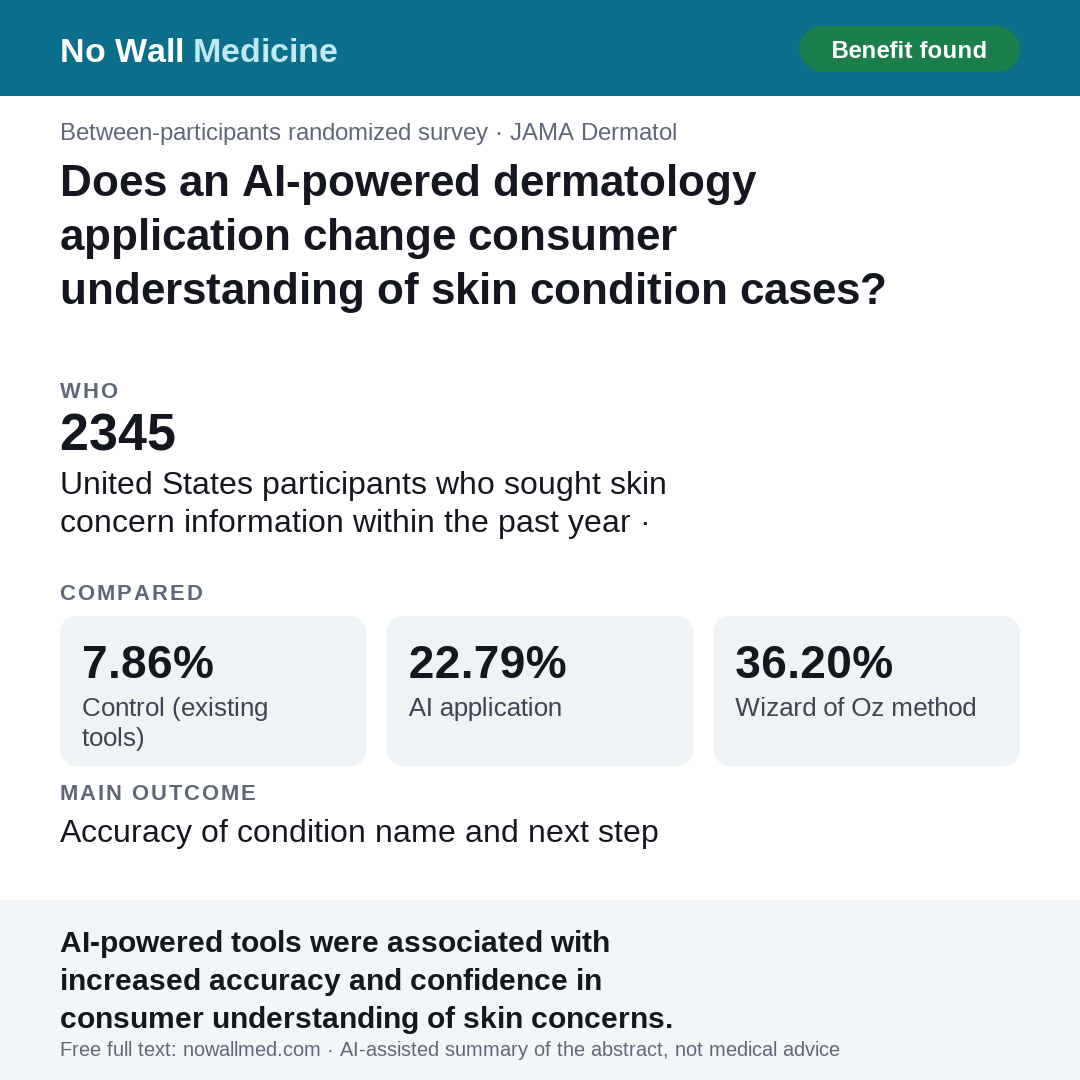
Consumer Understanding of Skin Concerns With an AI-Powered Informational Tool
Between-participants randomized surveyBenefit found
Does an AI-powered dermatology application change consumer understanding of skin condition cases?
Who
2345
United States participants who sought skin concern information within the past year · Commercial panel platform
Compared
7.86%Control (existing tools) (95% CI, 7.03%-8.71%)
22.79%AI application (95% CI, 21.48%-24.09%)
36.20%Wizard of Oz method (95% CI, 34.70%-37.73%)
Main outcome
Accuracy of condition name and next step
Bottom line: AI-powered tools were associated with increased accuracy and confidence in consumer understanding of skin concerns.
JAMA Dermatol · 2026-04-15Download image