Visual abstracts
New randomized trials and meta-analyses from leading journals at a glance: who was studied, what was compared, and what was found. Every paper is free to read in full.
All specialtiesCardiology 4877Oncology 4138Gastroenterology & Hepatology 1942Infectious Disease 3837Neurology 1905Psychiatry & Mental Health 2273Pulmonology 2143Critical Care 1365Endocrinology & Diabetes 2580Pediatrics 2980Surgery 2559Orthopedics & Sports Medicine 931Neurosurgery 537Cardiothoracic & Vascular Surgery 674Plastic & Reconstructive Surgery 591Nephrology 1133Rheumatology 823Hematology 1109Dermatology 621Ophthalmology 543Obstetrics & Gynecology 1686Public & Global Health 1058Radiology & Imaging 648Anesthesiology 986Urology 764ENT (Otolaryngology) 503Emergency Medicine 511Allergy & Immunology 313Geriatrics 981Family Medicine & Primary Care 562Medical Genetics & Genomics 676Pathology & Laboratory Medicine 159Physical Medicine & Rehabilitation 757Palliative Care 444Nutrition 1588Digital Health & AI 2201General Medicine 321
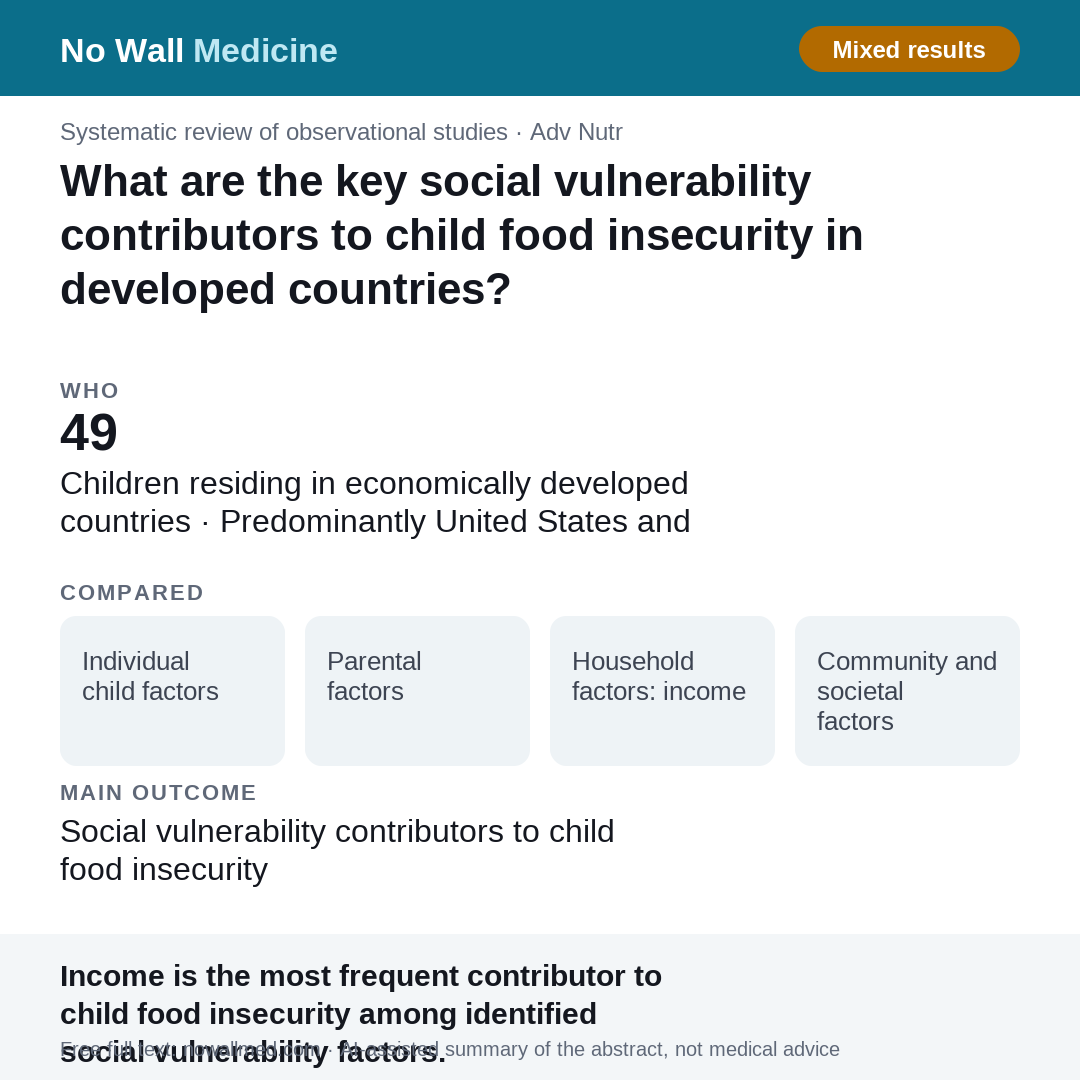
Social Vulnerability and Child Food Insecurity in Developed Countries: A Systematic Review
Systematic review of observational studiesMixed results
What are the key social vulnerability contributors to child food insecurity in developed countries?
Who
49
Children residing in economically developed countries · Predominantly United States and Canada
Compared
Individual child factors
Parental factors
Household factors: income
Community and societal factors
Main outcome
Social vulnerability contributors to child food insecurity
Bottom line: Income is the most frequent contributor to child food insecurity among identified social vulnerability factors.
Limitation: Lack of consistent measures to define social vulnerability and food insecurity impeded meaningful pooling.
Adv Nutr · 2025-01-10Download image
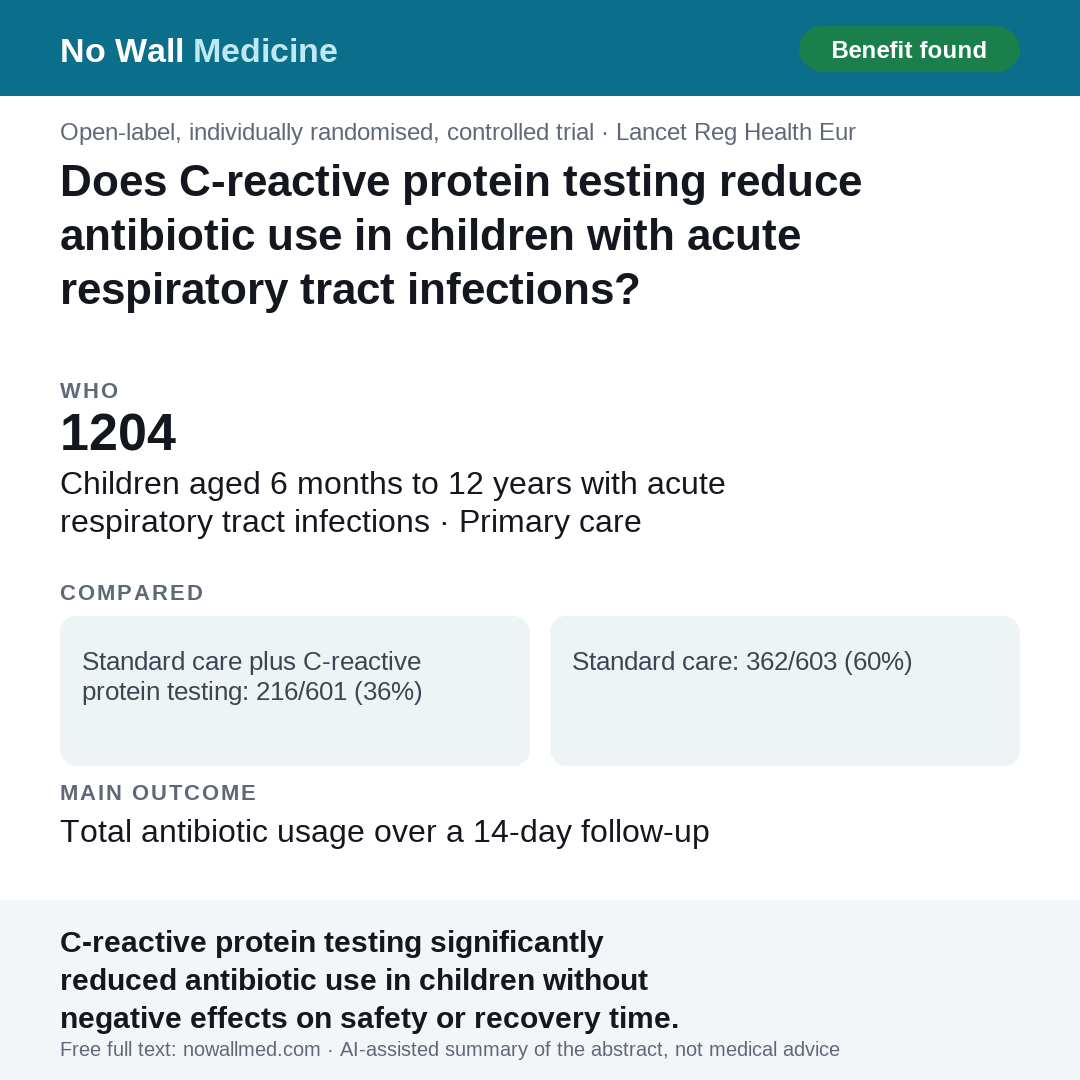
C-reactive protein testing in primary care and antibiotic use in children with acute respiratory tract infections in Kyrgyzstan: an open-label, individually randomised, controlled trial
Open-label, individually randomised, controlled trialBenefit found
Does C-reactive protein testing reduce antibiotic use in children with acute respiratory tract infections?
Who
1204
Children aged 6 months to 12 years with acute respiratory tract infections · Primary care settings in Kyrgyzstan
Compared
Standard care plus C-reactive protein testing: 216/601 (36%)
Standard care: 362/603 (60%)
Main outcome
Total antibiotic usage over a 14-day follow-up
Result: Risk difference: 24 percentage points (95% CI: 15-34)
Bottom line: C-reactive protein testing significantly reduced antibiotic use in children without negative effects on safety or recovery time.
Funded by: International Centre for Antimicrobial Resistance Solutions
Lancet Reg Health Eur · 2025-01-10Download image
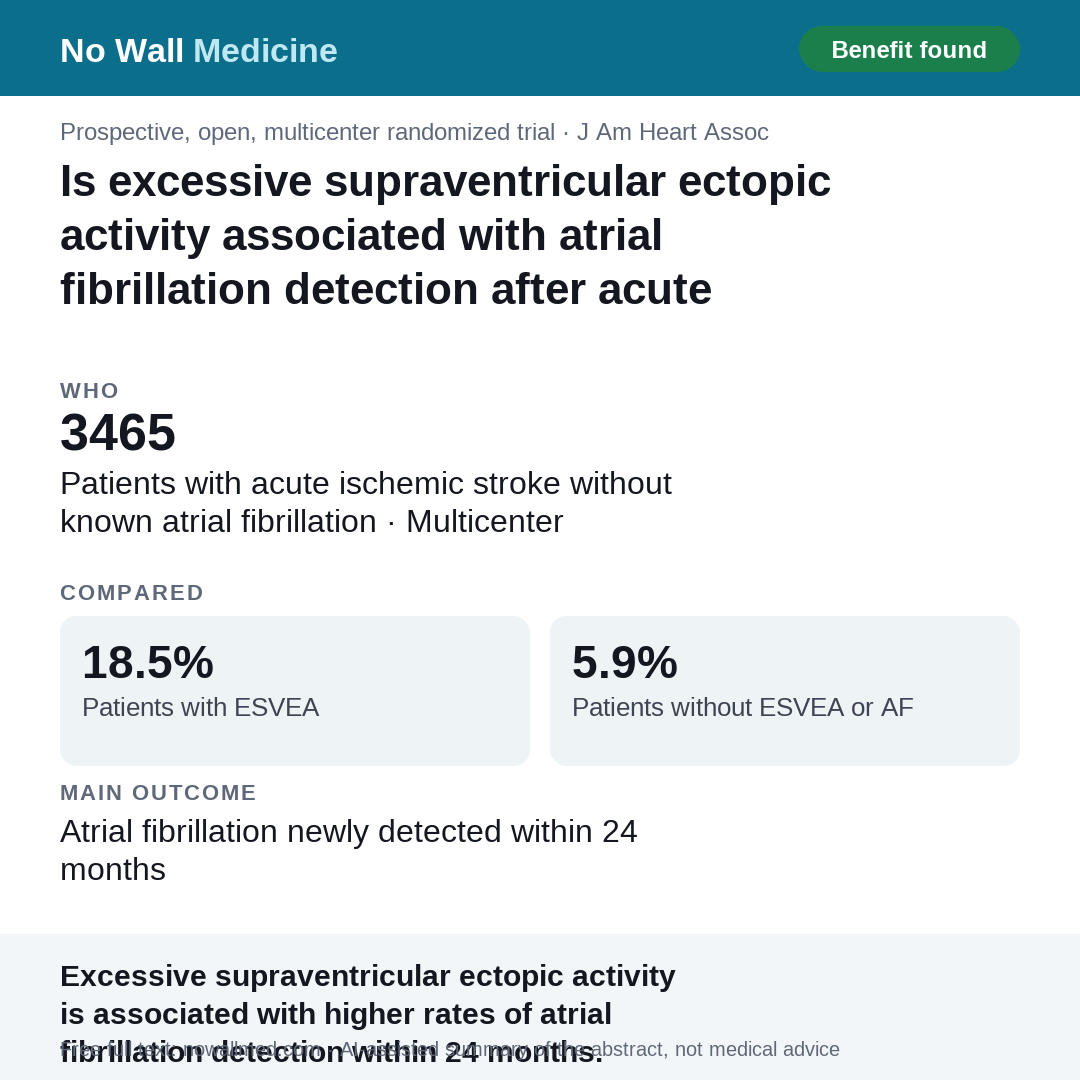
Excessive Supraventricular Ectopic Activity in Patients With Acute Ischemic Stroke Is Associated With Atrial Fibrillation Detection Within 24 Months After Stroke: A Predefined Analysis of the MonDAFIS Study
Prospective, open, multicenter randomized trialBenefit found
Is excessive supraventricular ectopic activity associated with atrial fibrillation detection after acute ischemic stroke?
Who
3465
Patients with acute ischemic stroke without known atrial fibrillation · Multicenter
Compared
18.5%Patients with ESVEA
5.9%Patients without ESVEA or AF
Main outcome
Atrial fibrillation newly detected within 24 months
Bottom line: Excessive supraventricular ectopic activity is associated with higher rates of atrial fibrillation detection within 24 months.
J Am Heart Assoc · 2025-01-10Download image
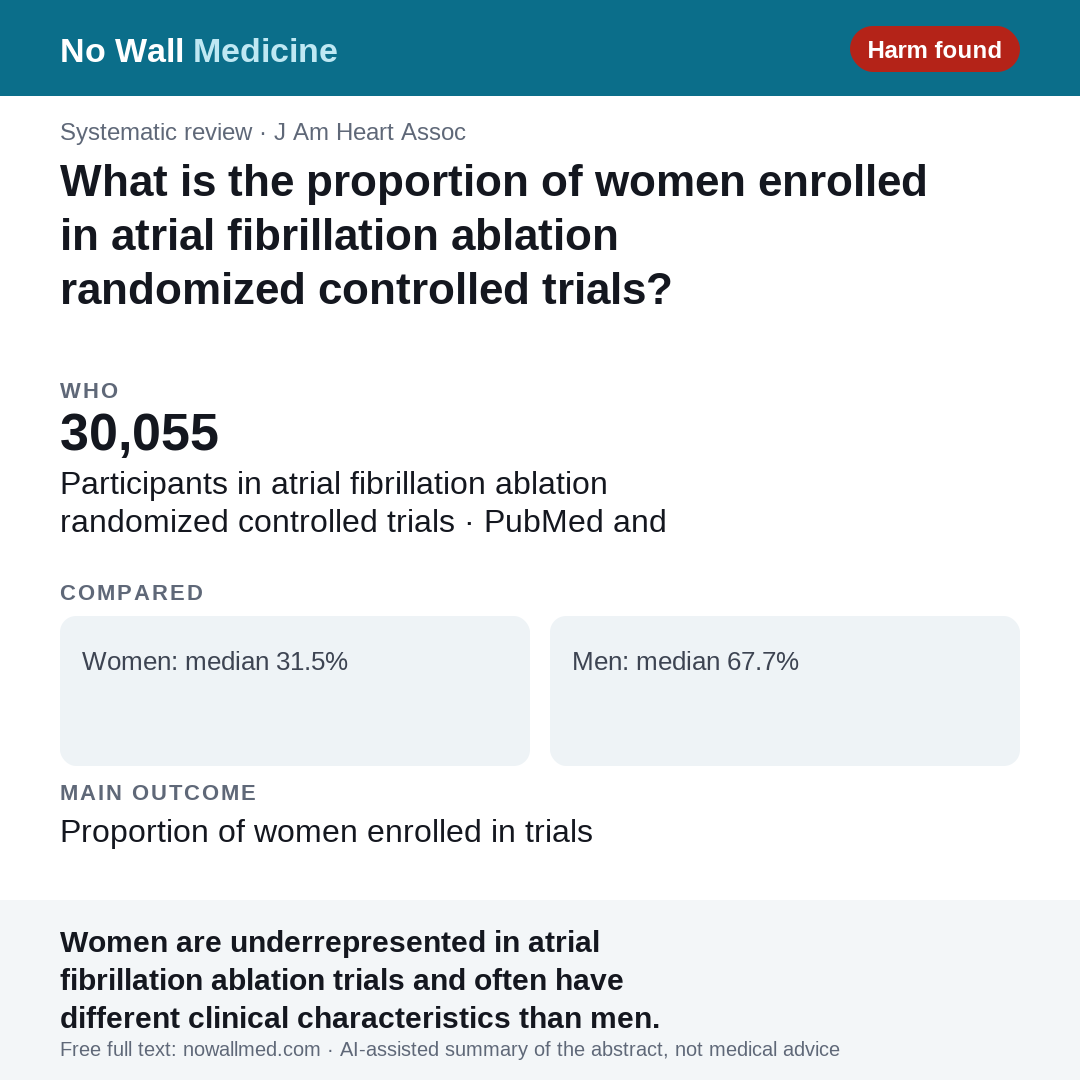
Representation of Women in Atrial Fibrillation Ablation Randomized Controlled Trials: Systematic Review
Systematic reviewHarm found
What is the proportion of women enrolled in atrial fibrillation ablation randomized controlled trials?
Who
30,055
Participants in atrial fibrillation ablation randomized controlled trials · PubMed and Embase
Compared
Women: median 31.5%
Men: median 67.7%
Main outcome
Proportion of women enrolled in trials
Bottom line: Women are underrepresented in atrial fibrillation ablation trials and often have different clinical characteristics than men.
J Am Heart Assoc · 2025-01-10Download image
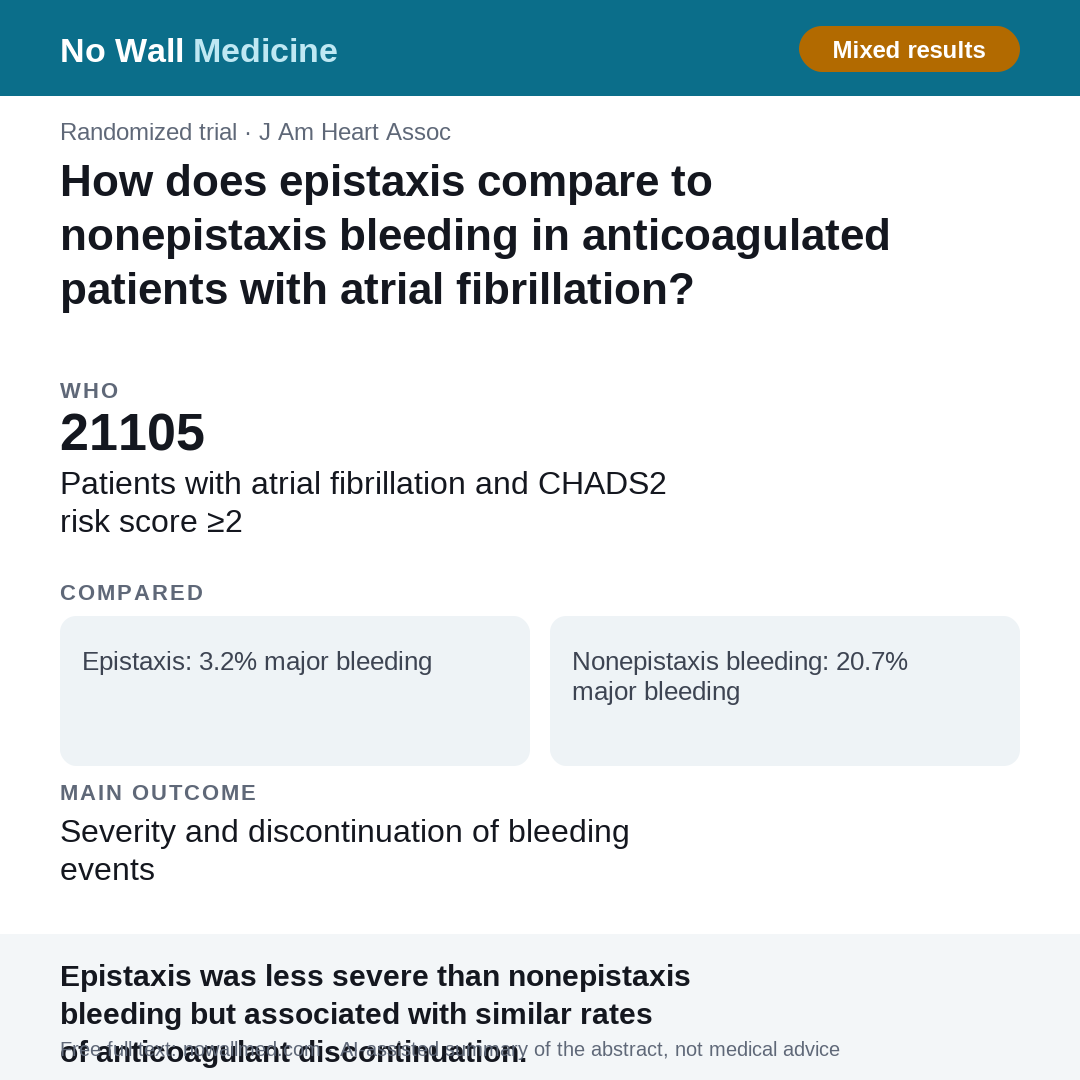
Epistaxis Versus Nonepistaxis Bleeding in Anticoagulated Patients With Atrial Fibrillation: Results From the ENGAGE AF-TIMI 48 Trial
Randomized trialMixed results
How does epistaxis compare to nonepistaxis bleeding in anticoagulated patients with atrial fibrillation?
Who
21105
Patients with atrial fibrillation and CHADS2 risk score ≥2
Compared
Epistaxis: 3.2% major bleeding
Nonepistaxis bleeding: 20.7% major bleeding
Main outcome
Severity and discontinuation of bleeding events
Result: hazard ratio 0.73 (95% CI 0.62 to 0.86) for lower-dose edoxaban
Bottom line: Epistaxis was less severe than nonepistaxis bleeding but associated with similar rates of anticoagulant discontinuation.
J Am Heart Assoc · 2025-01-10Download image
Bicalutamide 25 mg combined with minoxidil 1 mg versus minoxidil 1 mg for female pattern hair loss: A randomized double-blind clinical trial
Randomized, controlled, double-blind clinical trialNo clear difference
Does bicalutamide 25 mg plus minoxidil 1 mg improve female pattern hair loss?
Who
74
Participants with female pattern hair loss
Compared
bicalutamide 25 mg/d plus minoxidil 1 mg/d: mean increase of 18.1 hairs/cm2
placebo plus minoxidil 1 mg/d: 21.5 hairs/cm2
Main outcome
change in total hair density in the target area
Bottom line: Bicalutamide combined with minoxidil did not provide additional improvement in female pattern hair loss compared to minoxidil alone.
Limitation: Single-center study and short follow-up period (24 weeks).
JAAD Int · 2025-01-10Download image

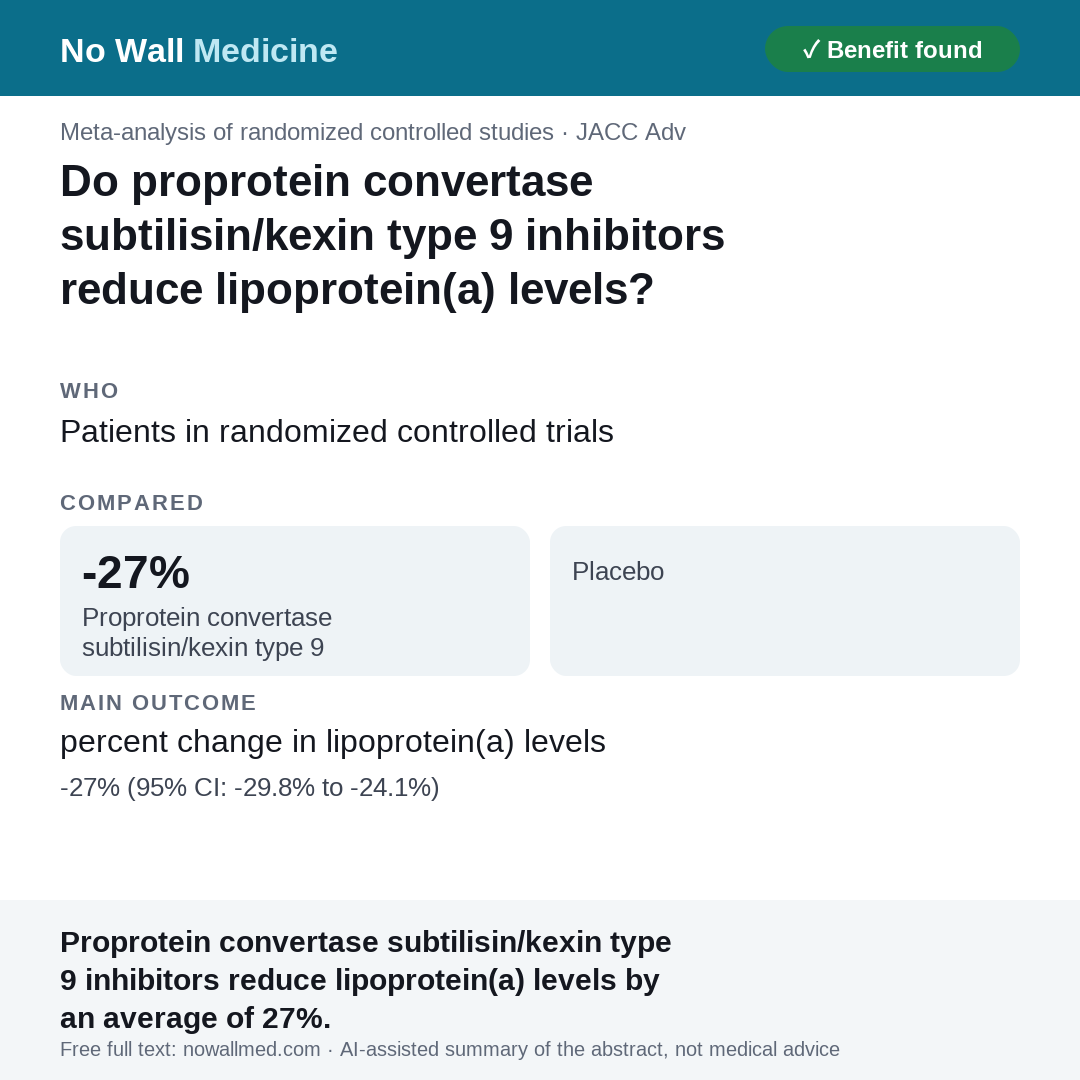
Impact of Proprotein Convertase Subtilisin/Kexin Type 9 Inhibitors on Lipoprotein(a): A Meta-Analysis and Meta-Regression of Randomized Controlled Trials
Meta-analysis of randomized controlled trialsBenefit found
Do proprotein convertase subtilisin/kexin type 9 inhibitors reduce lipoprotein(a) levels?
Who
Patients in randomized controlled trials
Compared
-27%Proprotein convertase subtilisin/kexin type 9 inhibitors
Placebo
Main outcome
percent change in lipoprotein(a) levels
Result: -27% (95% CI: -29.8% to -24.1%)
Bottom line: Proprotein convertase subtilisin/kexin type 9 inhibitors reduce lipoprotein(a) levels by an average of 27%.
JACC Adv · 2025-01-10Download image
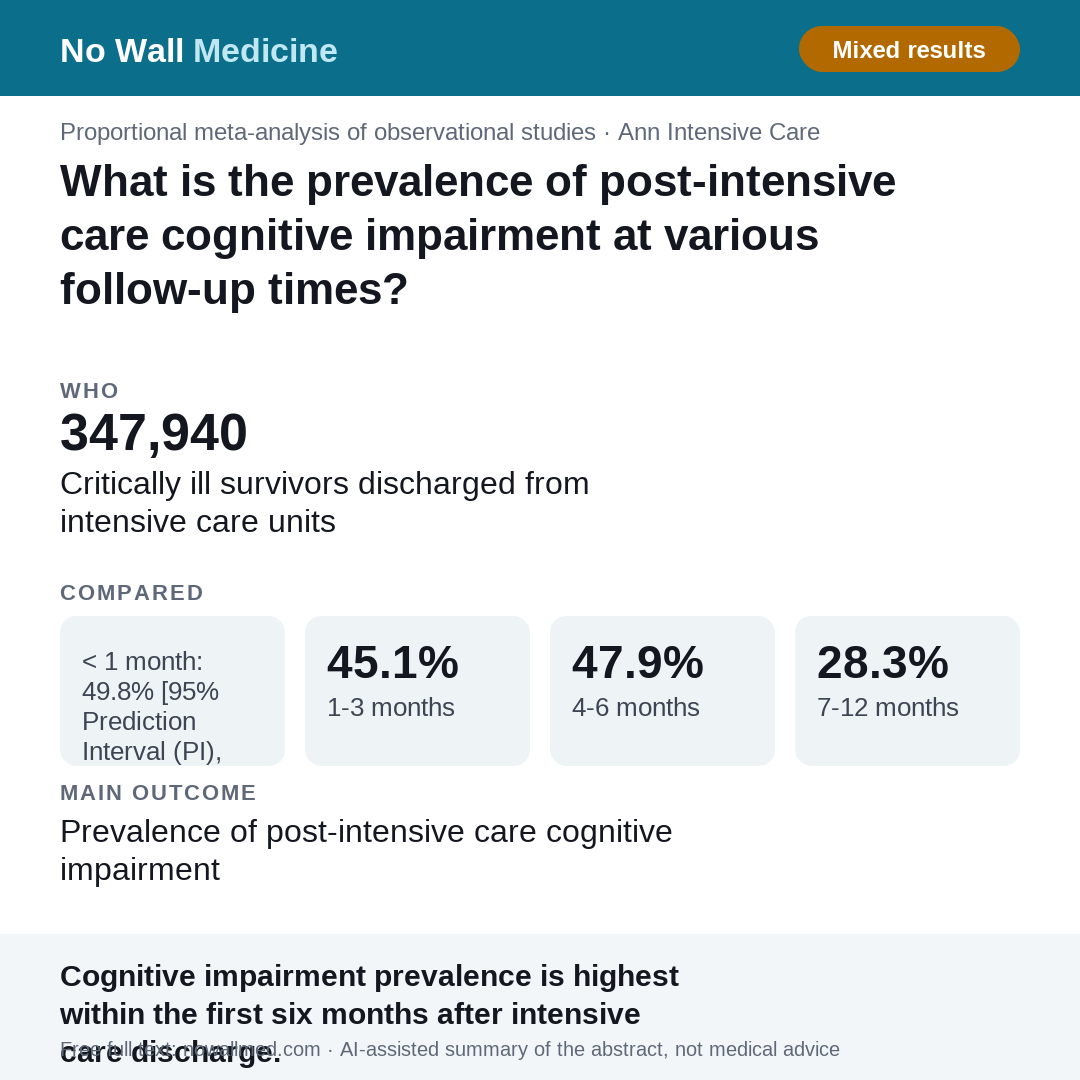
Estimated prevalence of post-intensive care cognitive impairment at short-term and long-term follow-ups: a proportional meta-analysis of observational studies
Proportional meta-analysis of observational studiesMixed results
What is the prevalence of post-intensive care cognitive impairment at various follow-up times?
Who
347,940
Critically ill survivors discharged from intensive care units
Compared
< 1 month: 49.8% [95% Prediction Interval (PI), 39.9%-59.7%, n = 19]
45.1%1-3 months (95% PI, 34.8%-55.5%, n = 23)
47.9%4-6 months (95% PI, 35.9%-60.0%, n = 16)
28.3%7-12 months (95% PI, 19.9%-37.6%, n = 19)
Main outcome
Prevalence of post-intensive care cognitive impairment
Bottom line: Cognitive impairment prevalence is highest within the first six months after intensive care discharge.
Ann Intensive Care · 2025-01-10Download image
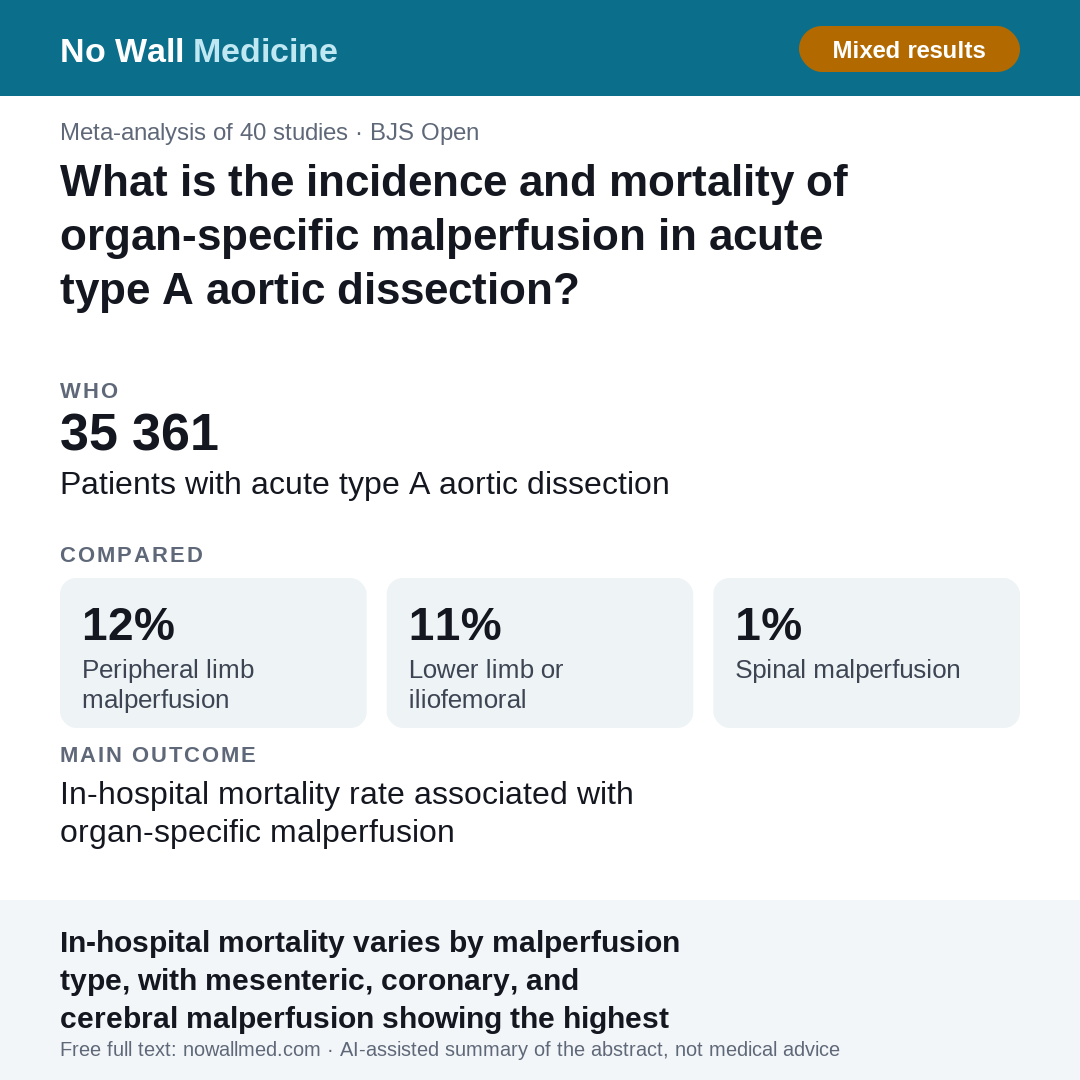
Organ-specific malperfusion in acute type A aortic dissection: epidemiological meta-analysis of incidence rates
Meta-analysis of 40 studiesMixed results
What is the incidence and mortality of organ-specific malperfusion in acute type A aortic dissection?
Who
35 361
Patients with acute type A aortic dissection
Compared
12%Peripheral limb malperfusion (95% c.i. 10 to 14)
11%Lower limb or iliofemoral (95% c.i. 9 to 14)
1%Spinal malperfusion (95% c.i. 1 to 2)
Main outcome
In-hospital mortality rate associated with organ-specific malperfusion
Bottom line: In-hospital mortality varies by malperfusion type, with mesenteric, coronary, and cerebral malperfusion showing the highest rates.
BJS Open · 2025-01-10Download image
Incidence and Risk of Thromboembolic and Cardiovascular Adverse Events with PARP Inhibitor Treatment in Patients with Metastatic Castration-resistant Prostate Cancer: A Systematic Review and Safety Meta-analysis
Systematic review and safety meta-analysisHarm found
What are the risks of cardiovascular and thromboembolic events with PARP inhibitor treatment?
Who
Patients with metastatic castration-resistant prostate cancer
Compared
PARP inhibitor treatment
non-PARP inhibitor treatment
Main outcome
Major adverse cardiovascular events, thromboembolic events, and hypertension
Result: high-grade MACEs RR 2.03 (p = 0.03), thromboembolic events RR 2.15 (p = 0.002)
Bottom line: PARP inhibitors are associated with higher risk of high-grade cardiovascular and thromboembolic toxicity compared to other treatments.
Limitation: cardiovascular and thromboembolic adverse events are uncommon
Eur Urol Open Sci · 2025-01-10Download image

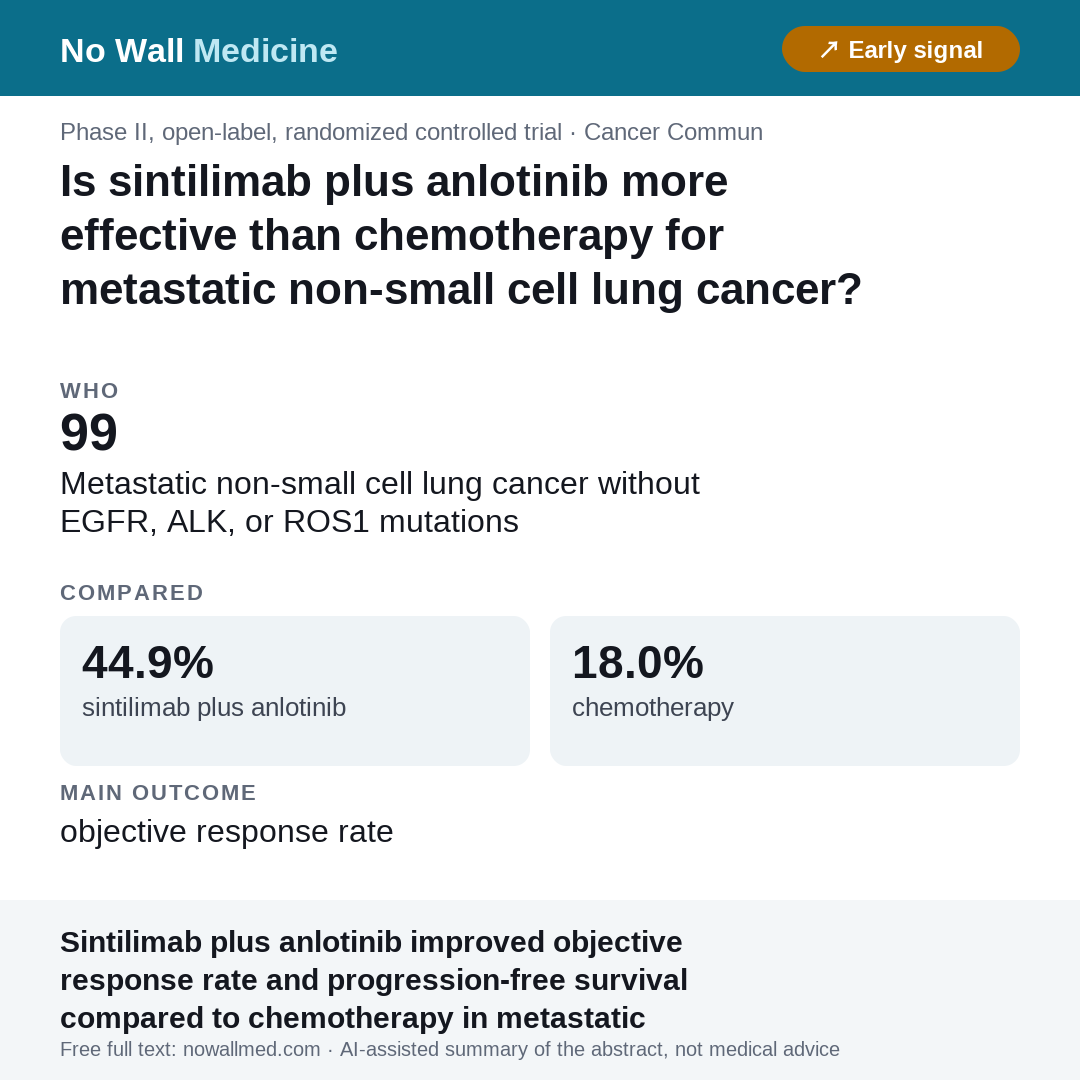
Efficacy and safety of first-line sintilimab plus anlotinib versus chemotherapy for metastatic non-small cell lung cancer: a phase II, open-label, randomized controlled trial
Phase II, open-label, randomized controlled trialEarly signal
Is sintilimab plus anlotinib more effective than chemotherapy for metastatic non-small cell lung cancer?
Who
99
Metastatic non-small cell lung cancer without EGFR, ALK, or ROS1 mutations
Compared
44.9%sintilimab plus anlotinib (95% CI 30.7%-59.8%)
18.0%chemotherapy (95% CI 8.6%-31.4%)
Main outcome
objective response rate
Result: hazard ratio 0.39 (95% CI 0.23-0.67)
Bottom line: Sintilimab plus anlotinib improved objective response rate and progression-free survival compared to chemotherapy in metastatic non-small cell lung cancer.
Cancer Commun · 2025-01-10Download image
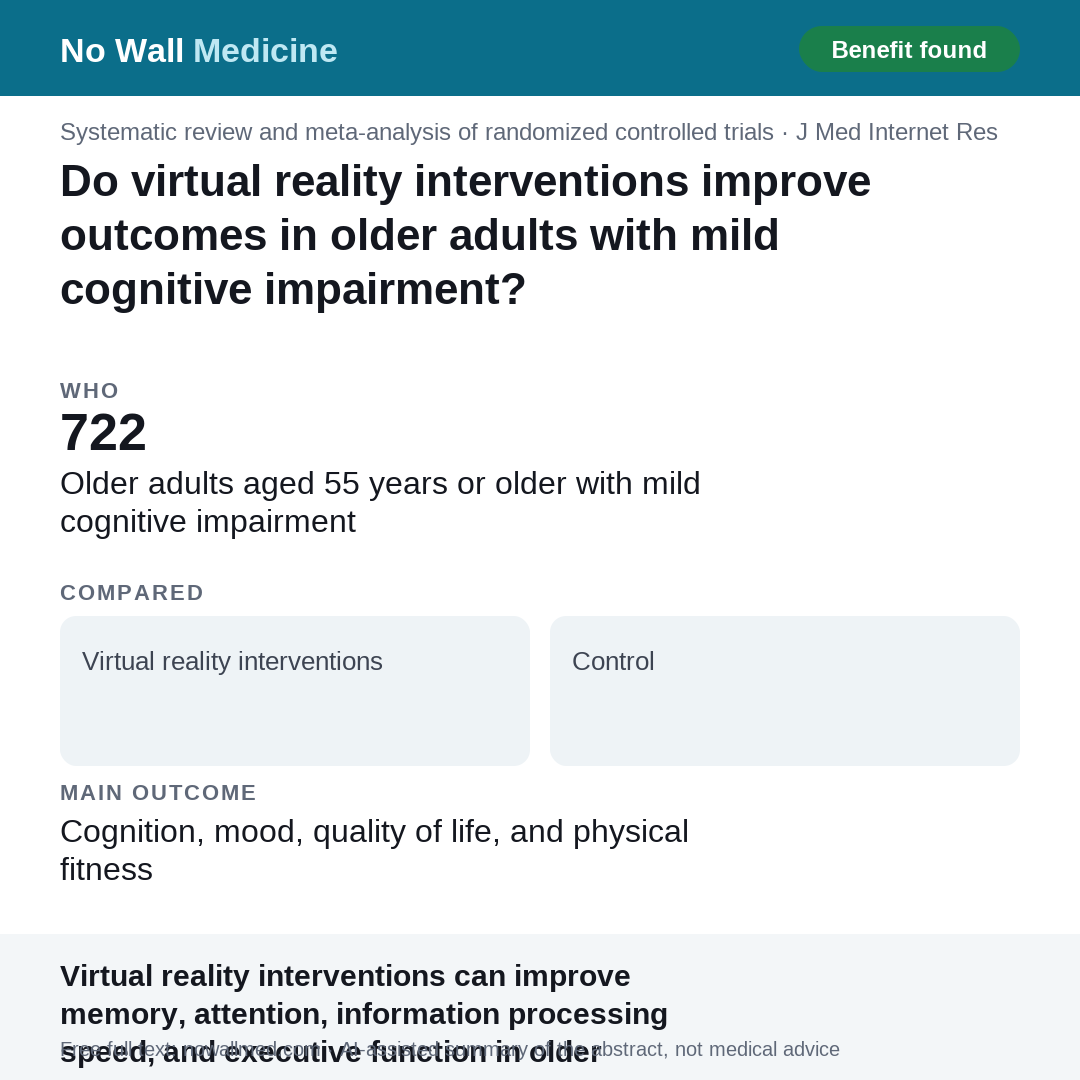
Virtual Reality Interventions for Older Adults With Mild Cognitive Impairment: Systematic Review and Meta-Analysis of Randomized Controlled Trials
Systematic review and meta-analysis of randomized controlled trialsBenefit found
Do virtual reality interventions improve outcomes in older adults with mild cognitive impairment?
Who
722
Older adults aged 55 years or older with mild cognitive impairment
Compared
Virtual reality interventions
Control
Main outcome
Cognition, mood, quality of life, and physical fitness
Result: memory SMD 0.2 (95% CI 0.02-0.38), attention and information processing speed SMD 0.25 (95% CI 0.06-0.45), executive function SMD 0.22 (95% CI 0.02-0.42)
Bottom line: Virtual reality interventions can improve memory, attention, information processing speed, and executive function in older adults with mild cognitive impairment.
Limitation: The quality of evidence is moderate to low for certain outcomes.
J Med Internet Res · 2025-01-10Download image
Preoperative smoking cessation interventions: a systematic review and meta-analysis
Systematic review and meta-analysisMixed results
Do preoperative smoking cessation interventions increase smoking cessation and reduce postoperative complications?
Who
2940
Smokers undergoing surgery
Compared
Smoking cessation intervention
Usual care
Main outcome
Smoking cessation and postoperative complications
Result: relative risk 1.64 (95% CI 1.30-2.07) for smoking cessation
Bottom line: Interventions increase odds of quitting smoking but do not reduce postoperative complications.
Limitation: High risk of bias and heterogeneity in the included studies.
Perioper Med · 2025-01-10Download image

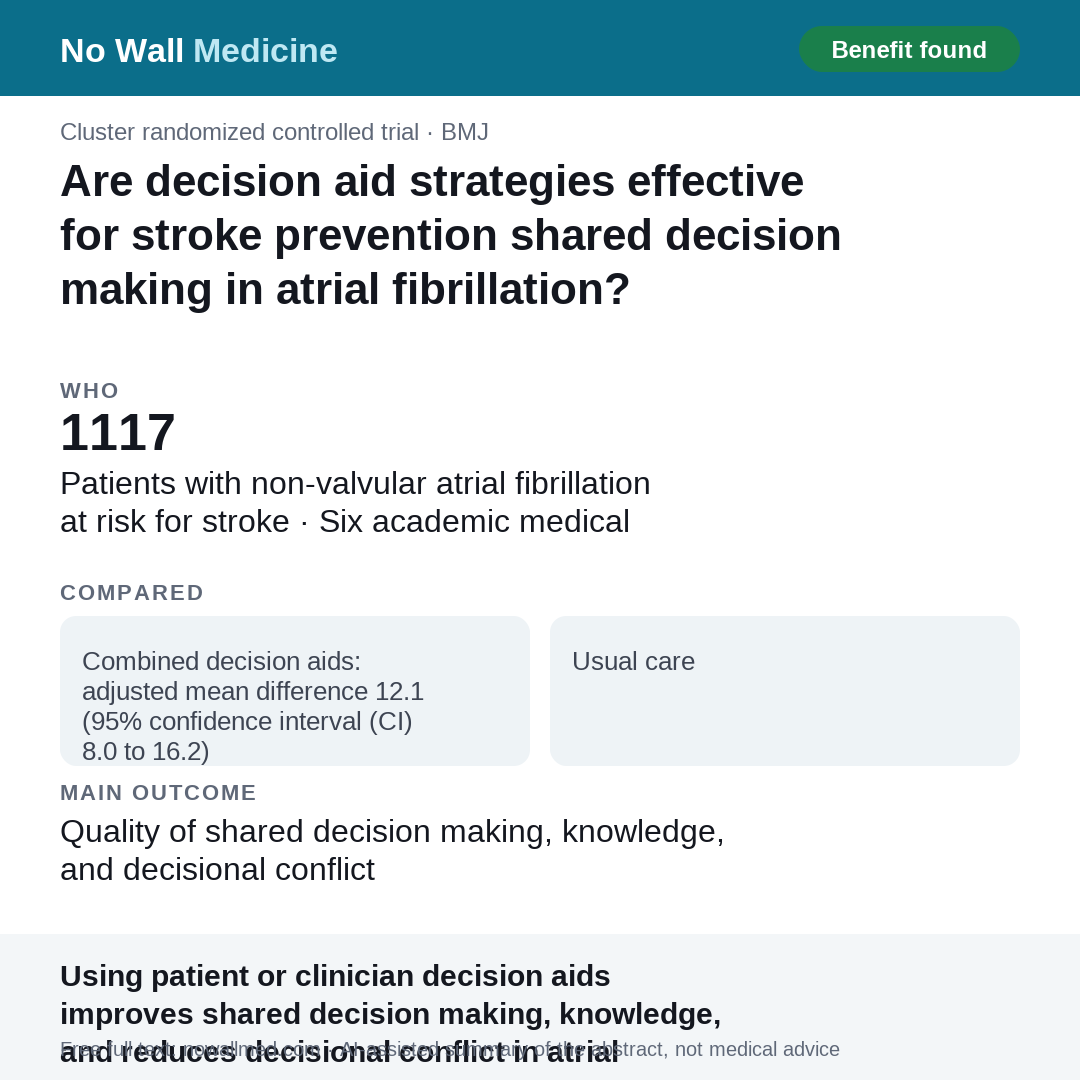
Effectiveness of shared decision making strategies for stroke prevention among patients with atrial fibrillation: cluster randomized controlled trial
Cluster randomized controlled trialBenefit found
Are decision aid strategies effective for stroke prevention shared decision making in atrial fibrillation?
Who
1117
Patients with non-valvular atrial fibrillation at risk for stroke · Six academic medical centers in the United States
Compared
Combined decision aids: adjusted mean difference 12.1 (95% confidence interval (CI) 8.0 to 16.2)
Usual care
Main outcome
Quality of shared decision making, knowledge, and decisional conflict
Result: adjusted mean difference 12.1 (95% confidence interval (CI) 8.0 to 16.2)
Bottom line: Using patient or clinician decision aids improves shared decision making, knowledge, and reduces decisional conflict in atrial fibrillation patients.
BMJ · 2025-01-09Download image
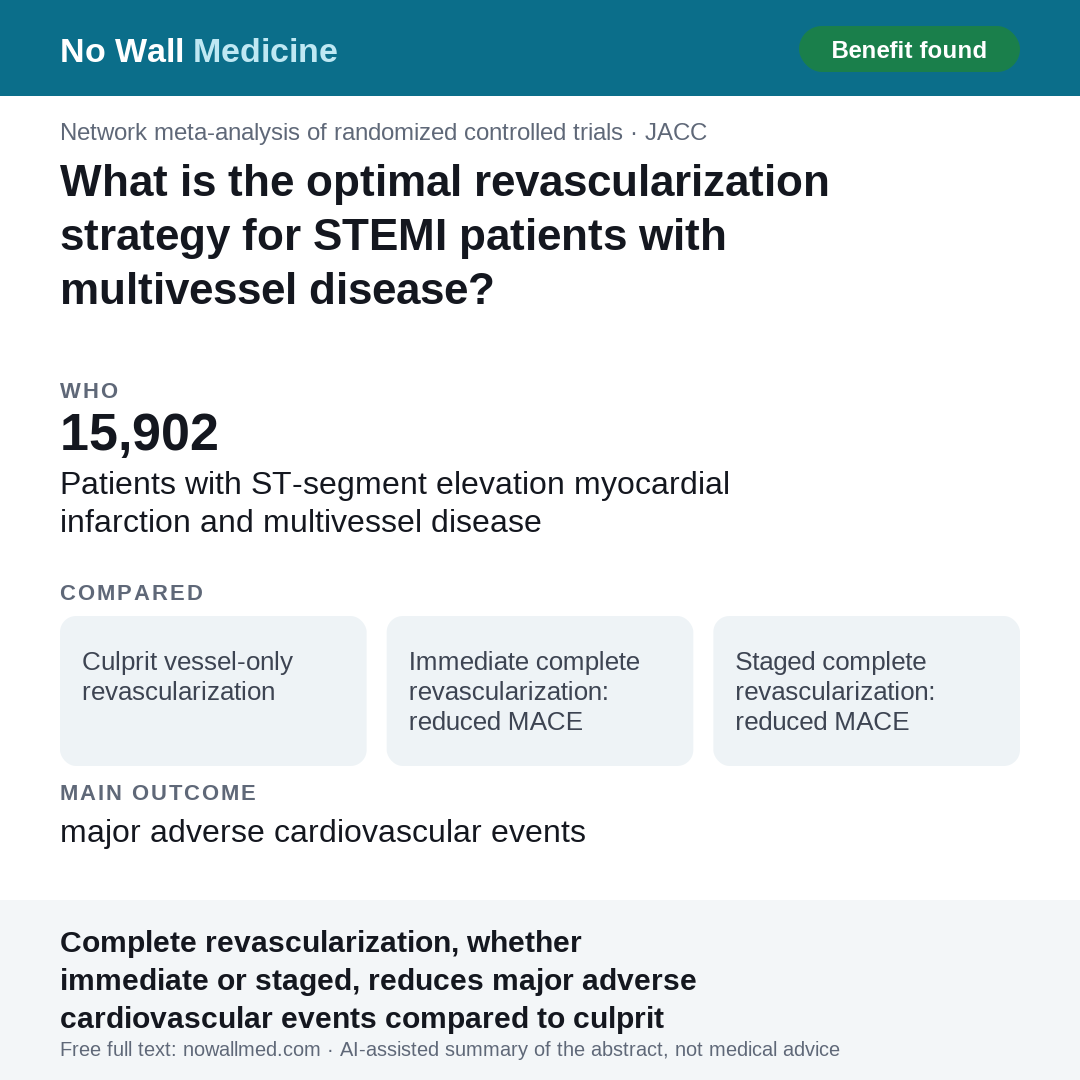
Optimal Strategy for Complete Revascularization in ST-Segment Elevation Myocardial Infarction and Multivessel Disease: A Network Meta-Analysis
Network meta-analysis of randomized controlled trialsBenefit found
What is the optimal revascularization strategy for STEMI patients with multivessel disease?
Who
15,902
Patients with ST-segment elevation myocardial infarction and multivessel disease
Compared
Culprit vessel-only revascularization
Immediate complete revascularization: reduced MACE
Staged complete revascularization: reduced MACE
Main outcome
major adverse cardiovascular events
Result: RR: 0.48; 95% CI: 0.36-0.64 (immediate CR) and RR: 0.65; 95% CI: 0.52-0.82 (staged CR)
Bottom line: Complete revascularization, whether immediate or staged, reduces major adverse cardiovascular events compared to culprit vessel-only treatment.
Limitation: The benefit of immediate versus staged revascularization for myocardial infarction was diminished when excluding procedural myocardial infarction.
JACC · 2025-01-09Download image
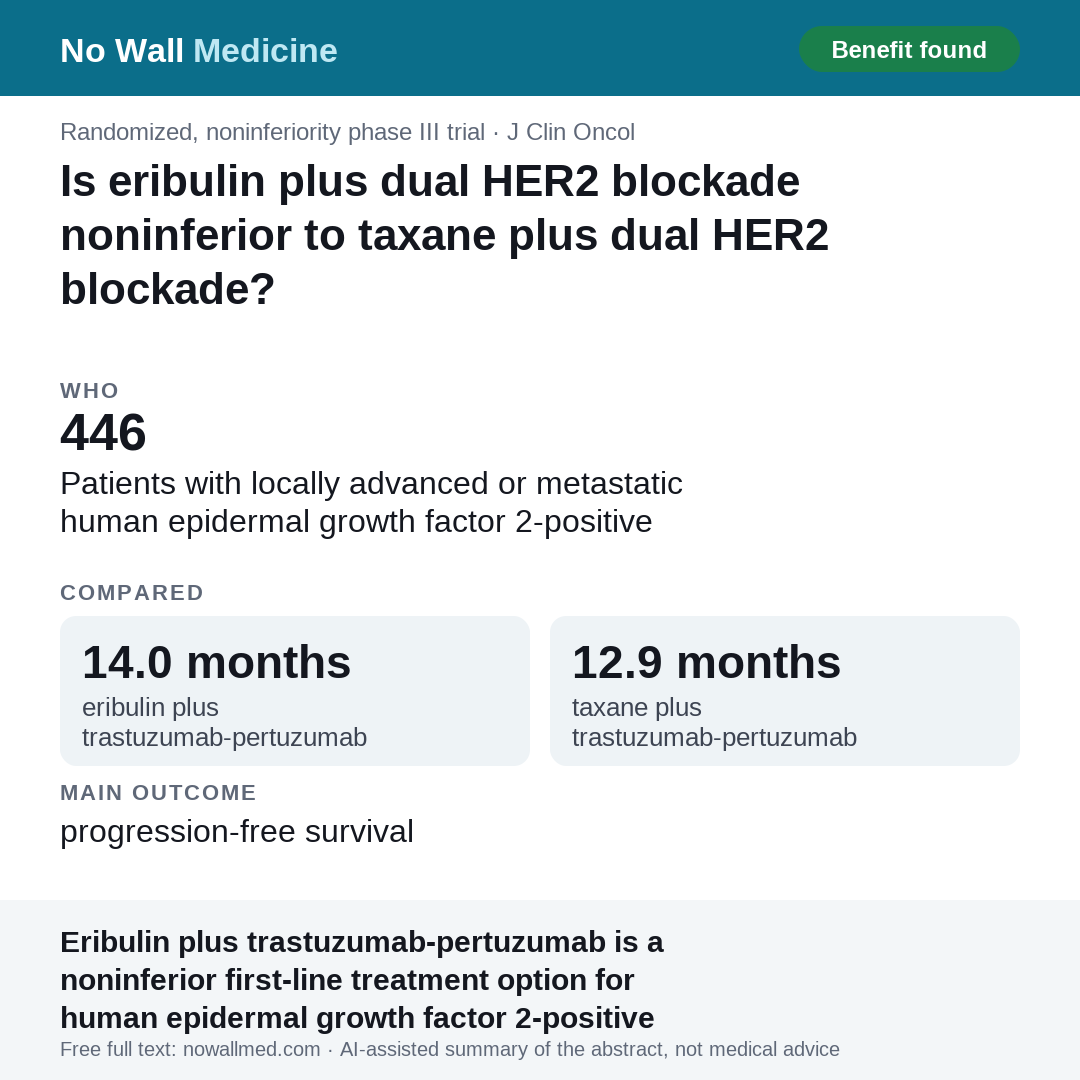
Trastuzumab-Pertuzumab Plus Eribulin or Taxane as First-Line Chemotherapy for Human Epidermal Growth Factor 2-Positive Locally Advanced/Metastatic Breast Cancer: The Randomized Noninferiority Phase III EMERALD Trial
Randomized, noninferiority phase III trialBenefit found
Is eribulin plus dual HER2 blockade noninferior to taxane plus dual HER2 blockade?
Who
446
Patients with locally advanced or metastatic human epidermal growth factor 2-positive breast cancer
Compared
14.0 monthseribulin plus trastuzumab-pertuzumab
12.9 monthstaxane plus trastuzumab-pertuzumab
Main outcome
progression-free survival
Result: hazard ratio 0.95 (95% CI 0.76 to 1.19)
Bottom line: Eribulin plus trastuzumab-pertuzumab is a noninferior first-line treatment option for human epidermal growth factor 2-positive breast cancer.
J Clin Oncol · 2025-01-09Download image
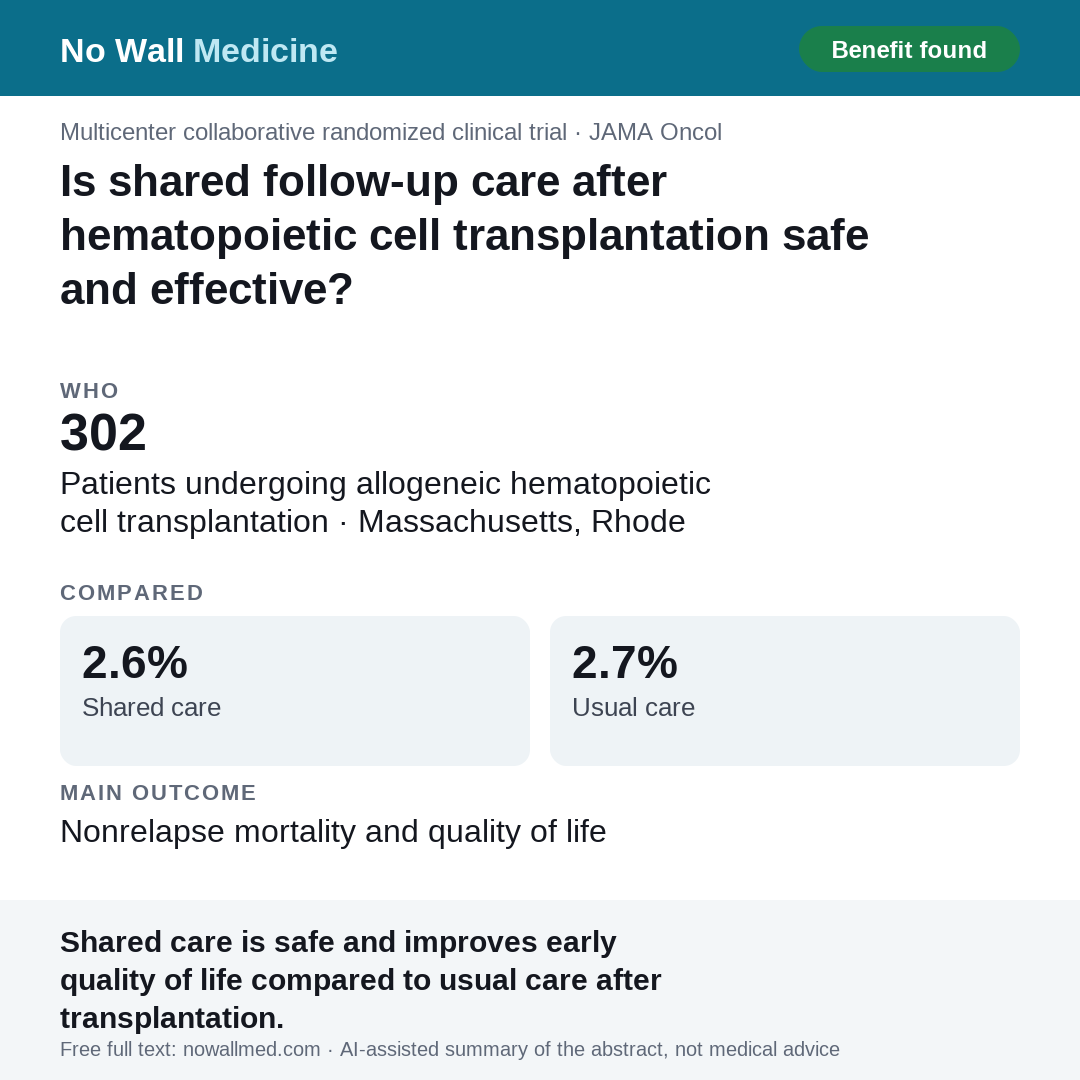
Shared Local Oncology Care After Allogeneic Hematopoietic Cell Transplantation: A Randomized Clinical Trial
Multicenter collaborative randomized clinical trialBenefit found
Is shared follow-up care after hematopoietic cell transplantation safe and effective?
Who
302
Patients undergoing allogeneic hematopoietic cell transplantation · Massachusetts, Rhode Island, New Hampshire, New York, and Maine
Compared
2.6%Shared care (95% CI, 0.7% to 6.6%)
2.7%Usual care (95% CI, 0.7% to 6.7%)
Main outcome
Nonrelapse mortality and quality of life
Result: noninferior NRM at day 100
Bottom line: Shared care is safe and improves early quality of life compared to usual care after transplantation.
JAMA Oncol · 2025-01-09Download image
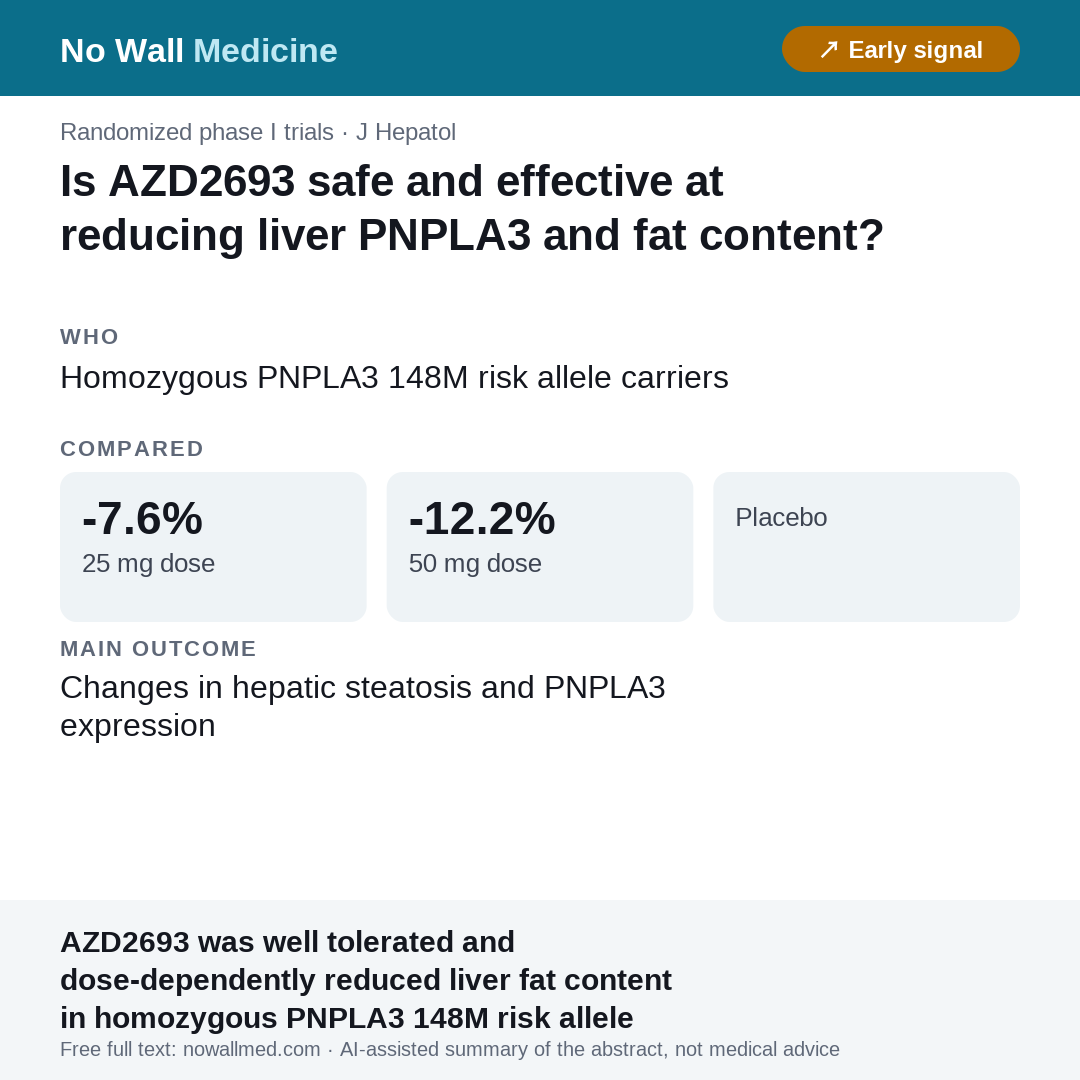
AZD2693, a PNPLA3 antisense oligonucleotide, for the treatment of MASH in 148M homozygous participants: Two randomized phase I trials
Randomized phase I trialsEarly signal
Is AZD2693 safe and effective at reducing liver PNPLA3 and fat content?
Who
Homozygous PNPLA3 148M risk allele carriers
Compared
-7.6%25 mg dose (placebo-corrected least-square means)
-12.2%50 mg dose (placebo-corrected least-square means)
Placebo
Main outcome
Changes in hepatic steatosis and PNPLA3 expression
Bottom line: AZD2693 was well tolerated and dose-dependently reduced liver fat content in homozygous PNPLA3 148M risk allele carriers.
J Hepatol · 2025-01-09Download image
Effect of mass drug administration on malaria incidence in southeast Senegal during 2020-22: a two-arm, open-label, cluster-randomised controlled trial
Two-arm, open-label, cluster-randomised controlled trialMixed results
Does mass drug administration reduce Plasmodium falciparum malaria incidence in southeast Senegal?
Who
Villages in the Tambacounda health district of southeast Senegal · Southeast Senegal
Compared
Mass drug administration: 126 cases per 1000 population
Standard of care: 146 cases per 1000 population
Main outcome
Plasmodium falciparum-confirmed malaria incidence in the post-intervention year
Result: adjusted MDA effect was 26% (-17 to 53)
Bottom line: Mass drug administration was safe and reduced malaria during the intervention year, but the sustained effect was weak.
Limitation: The sustained effect of mass drug administration was weak.
Funded by: US President's Malaria Initiative
Lancet Infect Dis · 2025-01-09Download image

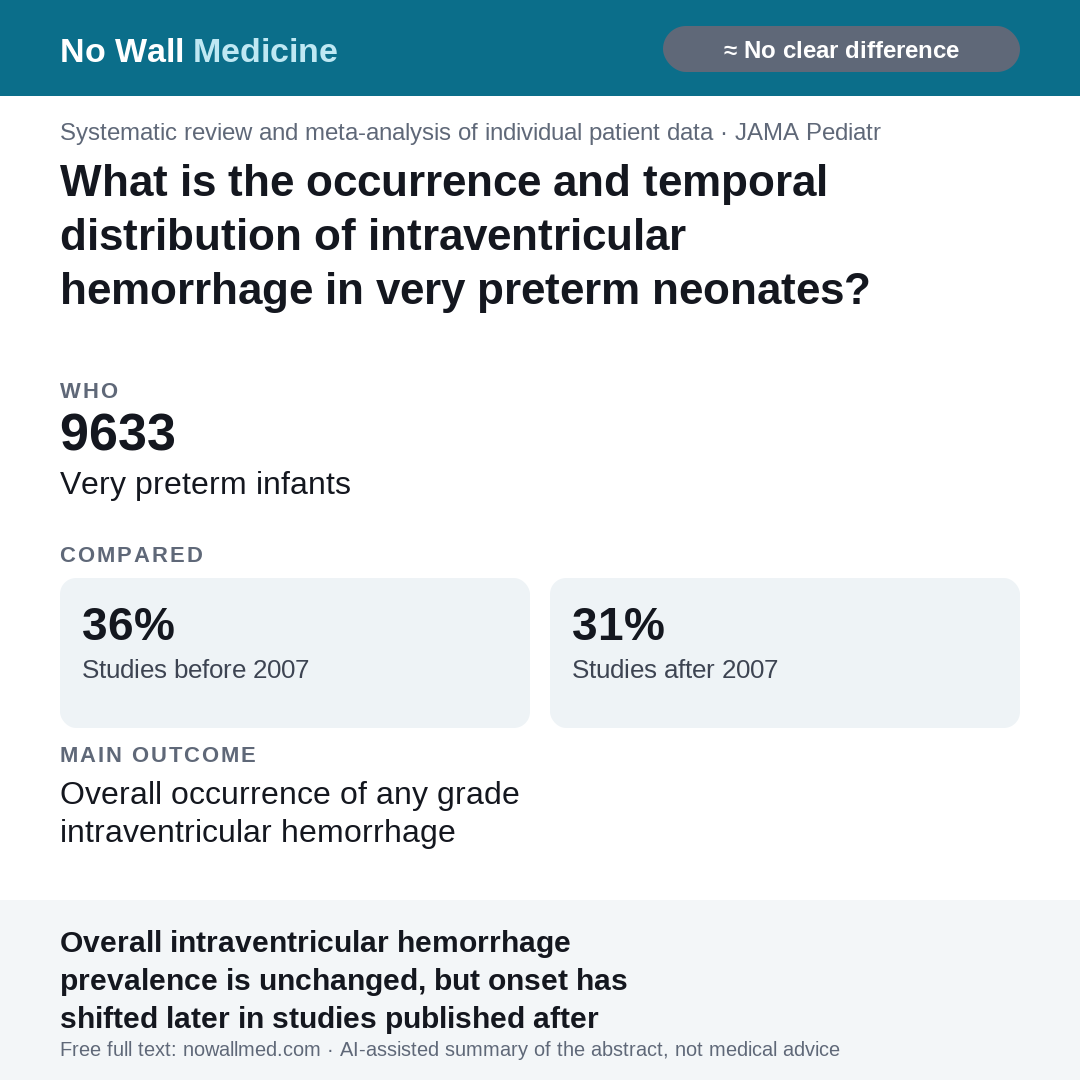
Occurrence and Time of Onset of Intraventricular Hemorrhage in Preterm Neonates: A Systematic Review and Meta-Analysis of Individual Patient Data
Systematic review and meta-analysis of individual patient dataNo clear difference
What is the occurrence and temporal distribution of intraventricular hemorrhage in very preterm neonates?
Who
9633
Very preterm infants
Compared
36%Studies before 2007 (95% CI, 30%-42%)
31%Studies after 2007 (95% CI, 25%-36%)
Main outcome
Overall occurrence of any grade intraventricular hemorrhage
Bottom line: Overall intraventricular hemorrhage prevalence is unchanged, but onset has shifted later in studies published after 2007.
JAMA Pediatr · 2025-01-09Download image