Visual abstracts
New randomized trials and meta-analyses from leading journals at a glance: who was studied, what was compared, and what was found. Every paper is free to read in full.
All specialtiesCardiology 4763Oncology 4043Gastroenterology & Hepatology 1903Infectious Disease 3756Neurology 1872Psychiatry & Mental Health 2216Pulmonology 2044Critical Care 1319Endocrinology & Diabetes 2544Pediatrics 2889Surgery 2480Orthopedics & Sports Medicine 917Neurosurgery 525Cardiothoracic & Vascular Surgery 656Plastic & Reconstructive Surgery 574Nephrology 1107Rheumatology 810Hematology 1090Dermatology 611Ophthalmology 532Obstetrics & Gynecology 1645Public & Global Health 1037Radiology & Imaging 619Anesthesiology 958Urology 745ENT (Otolaryngology) 494Emergency Medicine 481Allergy & Immunology 309Geriatrics 972Family Medicine & Primary Care 534Medical Genetics & Genomics 659Pathology & Laboratory Medicine 156Physical Medicine & Rehabilitation 734Palliative Care 421Nutrition 1560Digital Health & AI 2137General Medicine 318
Enhancing theoretical BLS knowledge with virtual reality: a randomized controlled trial in medical students
Single blind randomized controlled trialMixed results
Does a virtual reality session enhance basic life support knowledge and performance?
Who
126
Fourth-year medical students with prior basic life support training
Compared
Intervention group with virtual reality: significantly greater gains in knowledge at post-course and follow-up
Control group receiving standard preparation: no significant differences in OSCE performance
Main outcome
Theoretical knowledge and practical performance of basic life support skills
Bottom line: A virtual reality session enhanced theoretical knowledge but did not significantly affect practical performance in medical students.
Limitation: Further research is needed to evaluate long-term impact and optimal integration methods.
Resusc Plus · 2025-11-19 · Save PNG

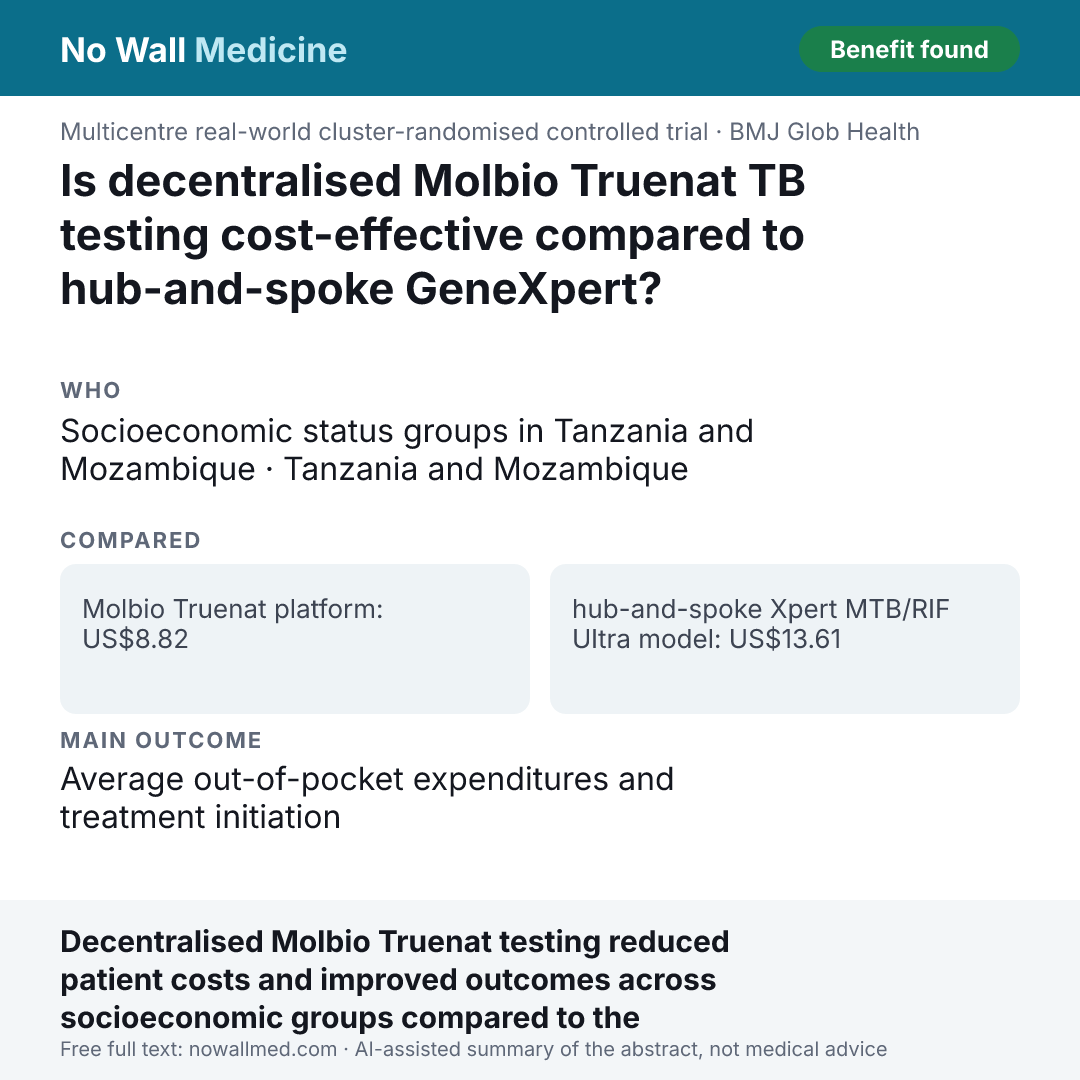
An extended cost-effectiveness analysis of decentralised TB diagnostic testing with Molbio Truenat MTB/RIF versus hub-and-spoke GeneXpert MTB/RIF in Mozambique and Tanzania
Multicentre real-world cluster-randomised controlled trialBenefit found
Is decentralised Molbio Truenat TB testing cost-effective compared to hub-and-spoke GeneXpert?
Who
Socioeconomic status groups in Tanzania and Mozambique · Tanzania and Mozambique
Compared
Molbio Truenat platform: US$8.82
hub-and-spoke Xpert MTB/RIF Ultra model: US$13.61
Main outcome
Average out-of-pocket expenditures and treatment initiation
Bottom line: Decentralised Molbio Truenat testing reduced patient costs and improved outcomes across socioeconomic groups compared to the hub-and-spoke model.
BMJ Glob Health · 2025-11-19 · Save PNG
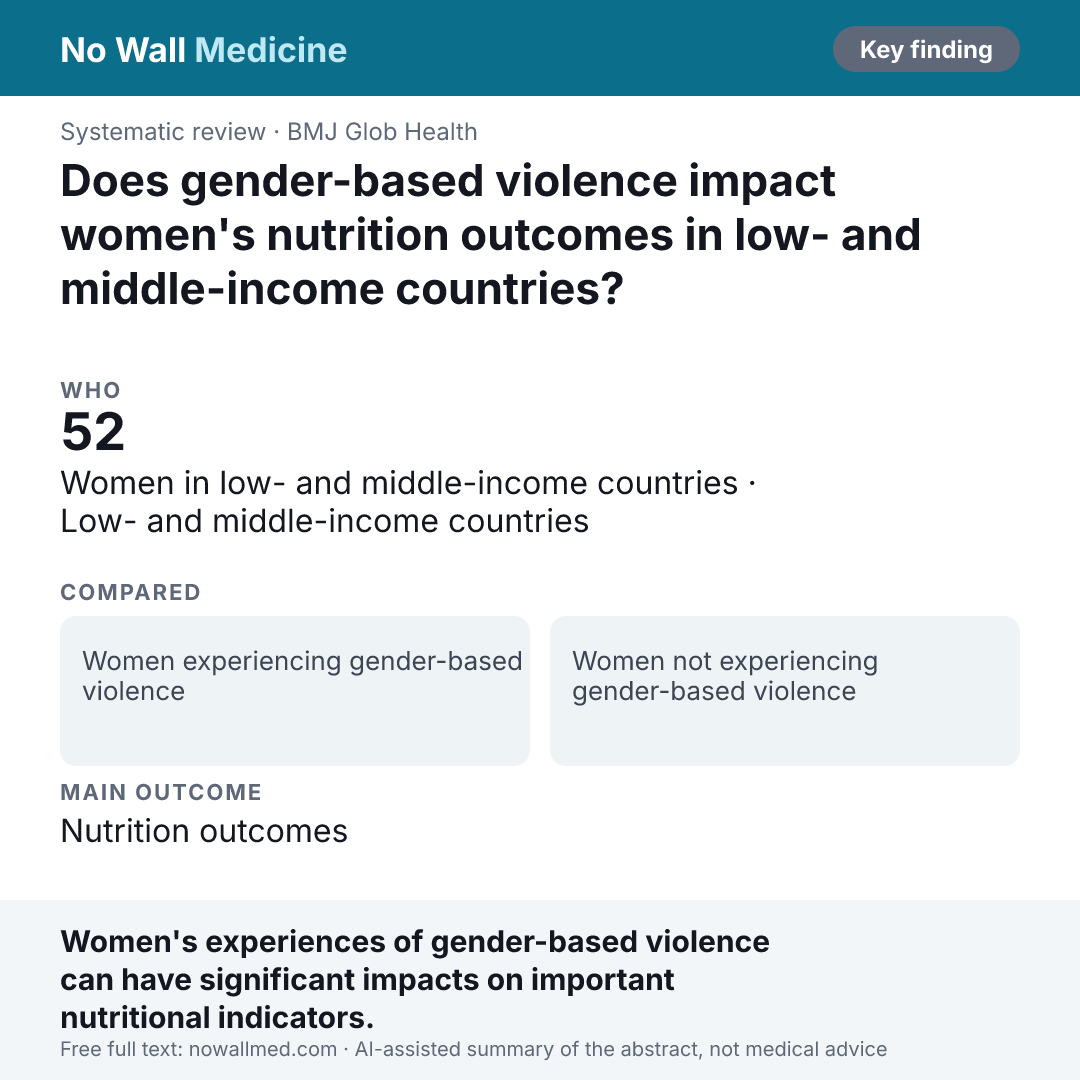
Gender-based violence and women's nutrition: a systematic review
Systematic reviewKey finding
Does gender-based violence impact women's nutrition outcomes in low- and middle-income countries?
Who
52
Women in low- and middle-income countries · Low- and middle-income countries
Compared
Women experiencing gender-based violence
Women not experiencing gender-based violence
Main outcome
Nutrition outcomes
Bottom line: Women's experiences of gender-based violence can have significant impacts on important nutritional indicators.
Limitation: Sparse consideration of role and need for study designs enabling understanding of causal mechanisms.
BMJ Glob Health · 2025-11-19 · Save PNG
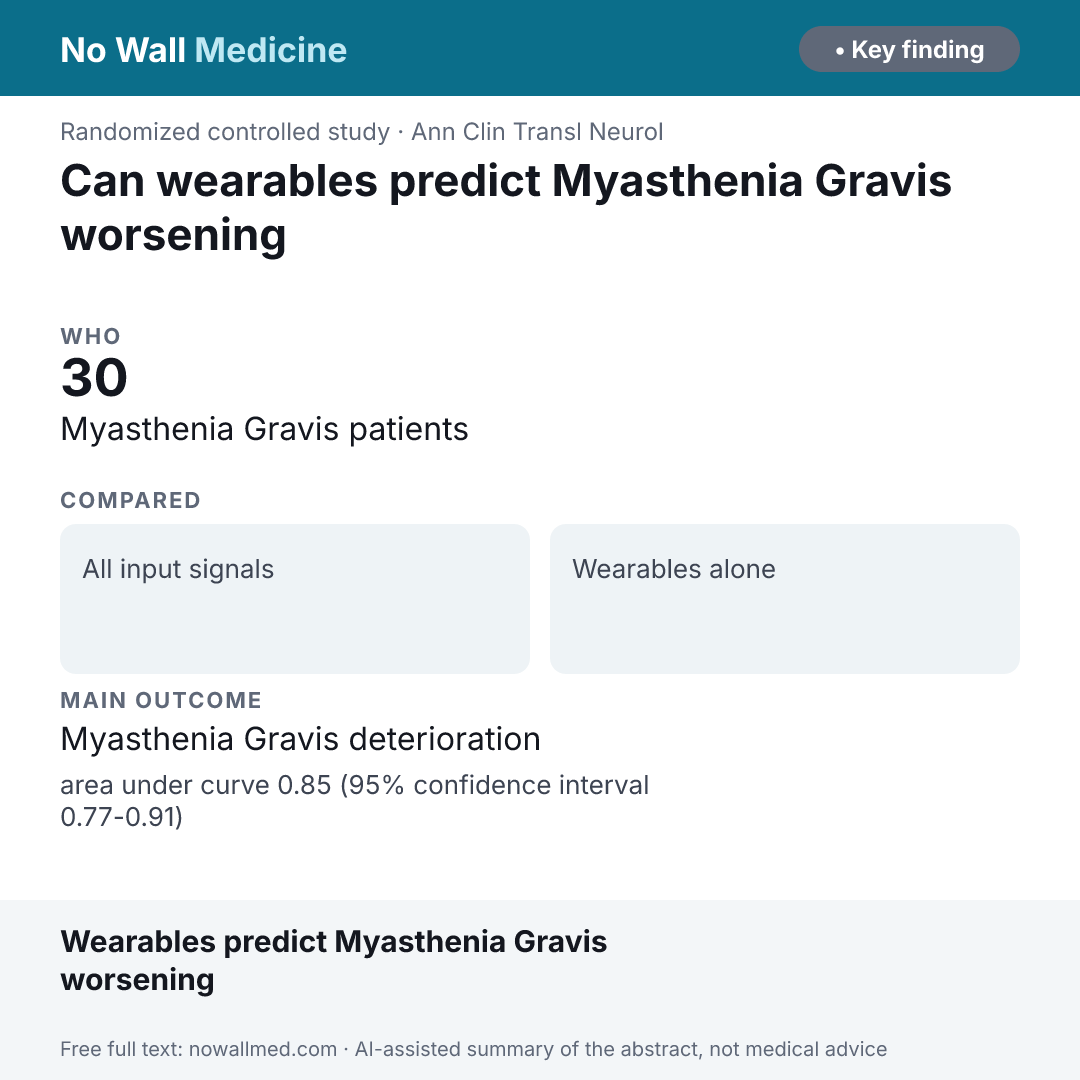
Prediction of Myasthenia Gravis Worsening: A Machine Learning Algorithm Using Wearables and Patient-Reported Measures
Randomized controlled studyKey finding
Can wearables predict Myasthenia Gravis worsening
Who
30
Myasthenia Gravis patients
Compared
All input signals
Wearables alone
Main outcome
Myasthenia Gravis deterioration
Result: area under curve 0.85 (95% confidence interval 0.77-0.91)
Bottom line: Wearables predict Myasthenia Gravis worsening
Ann Clin Transl Neurol · 2025-11-19 · Save PNG
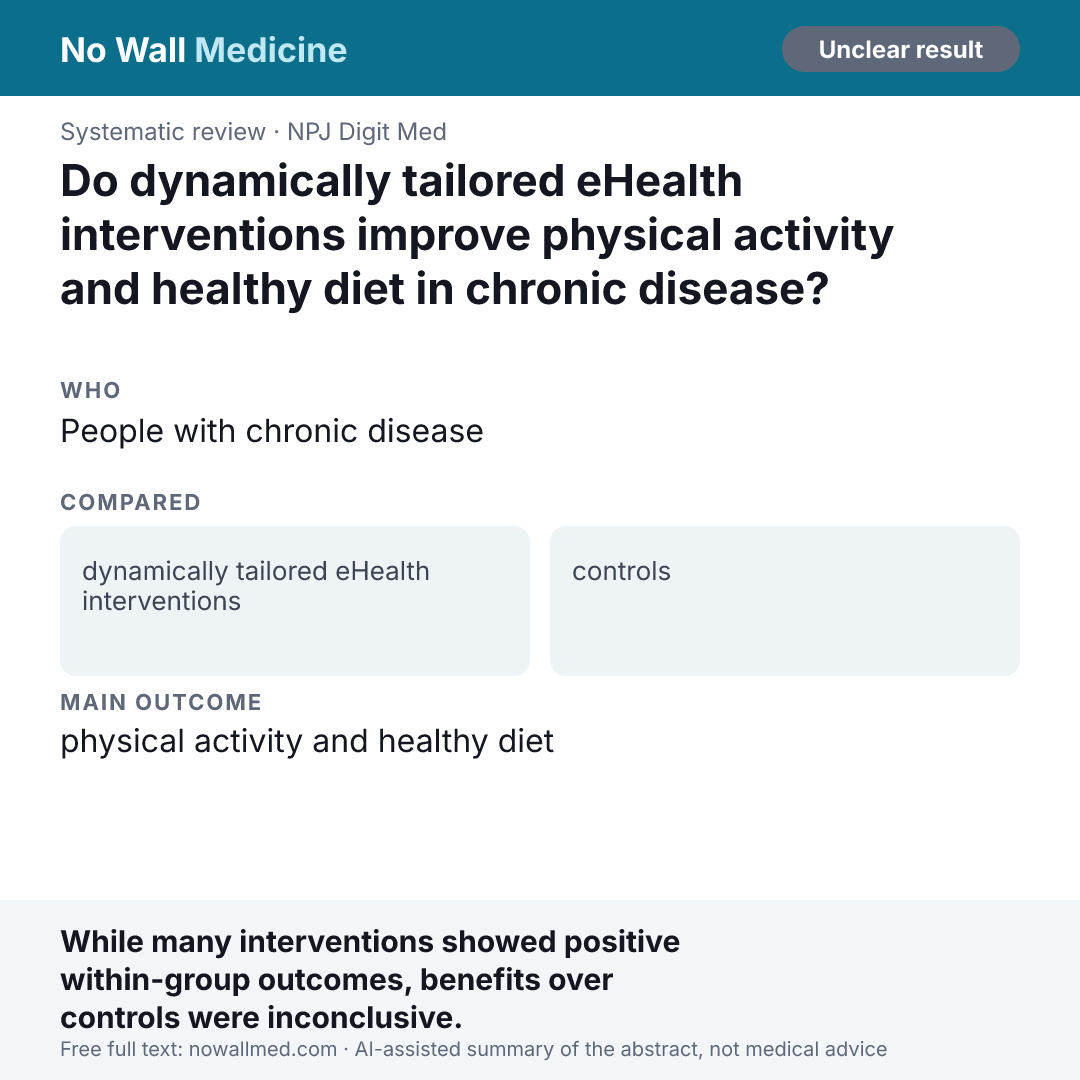
Systematic review of dynamically tailored eHealth interventions targeting physical activity and healthy diet in chronic disease
Systematic reviewUnclear result
Do dynamically tailored eHealth interventions improve physical activity and healthy diet in chronic disease?
Who
People with chronic disease
Compared
dynamically tailored eHealth interventions
controls
Main outcome
physical activity and healthy diet
Bottom line: While many interventions showed positive within-group outcomes, benefits over controls were inconclusive.
NPJ Digit Med · 2025-11-19 · Save PNG
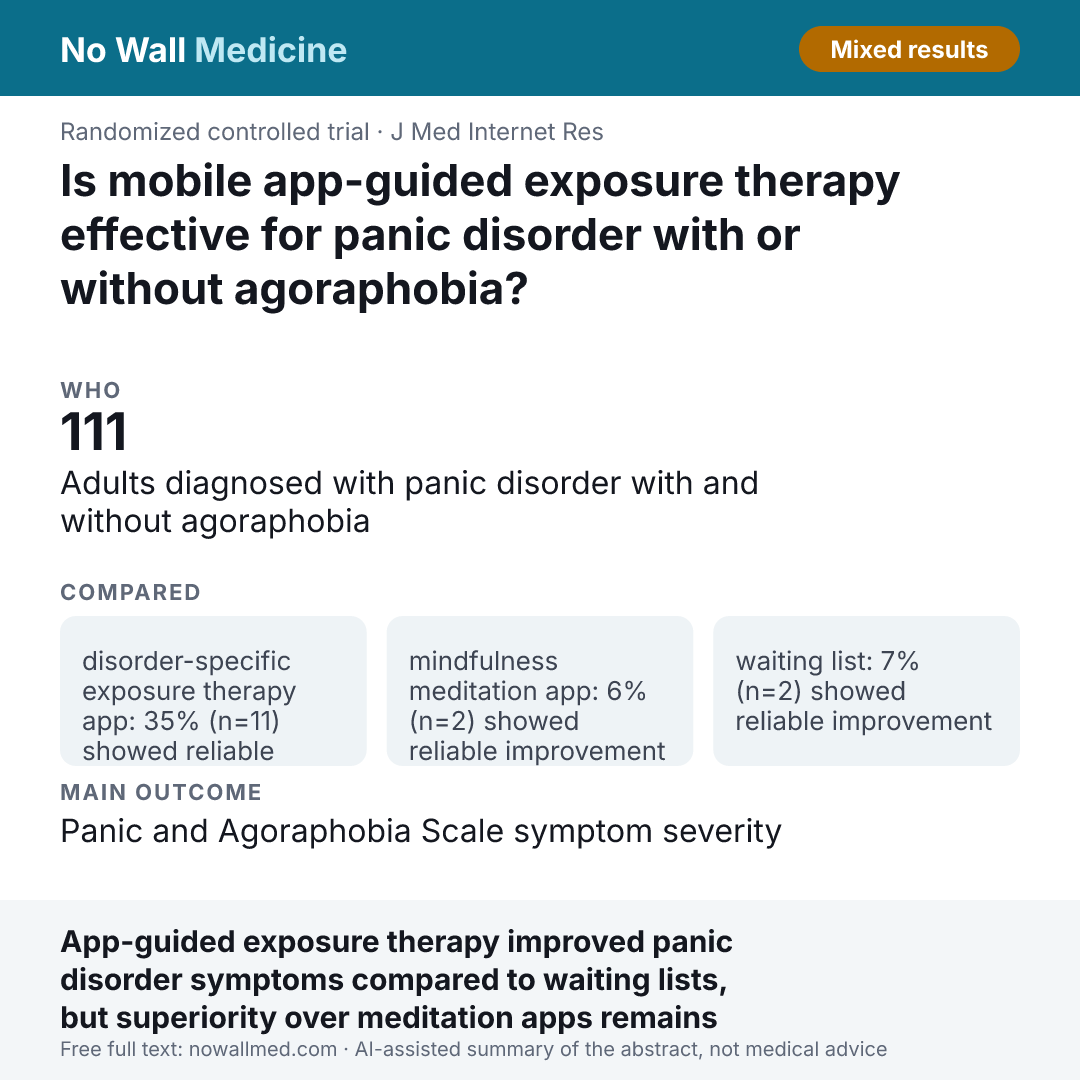
Mobile App-Guided Exposure Therapy for Panic Disorder With and Without Agoraphobia: Randomized Controlled Trial
Randomized controlled trialMixed results
Is mobile app-guided exposure therapy effective for panic disorder with or without agoraphobia?
Who
111
Adults diagnosed with panic disorder with and without agoraphobia
Compared
disorder-specific exposure therapy app: 35% (n=11) showed reliable improvement
mindfulness meditation app: 6% (n=2) showed reliable improvement
waiting list: 7% (n=2) showed reliable improvement
Main outcome
Panic and Agoraphobia Scale symptom severity
Result: Cohen d=0.55 (post-treatment) and Cohen d=0.60 (follow-up) vs waiting list
Bottom line: App-guided exposure therapy improved panic disorder symptoms compared to waiting lists, but superiority over meditation apps remains unclear.
Limitation: Superiority compared to the disorder-unspecific meditation app remains unclear.
J Med Internet Res · 2025-11-19 · Save PNG
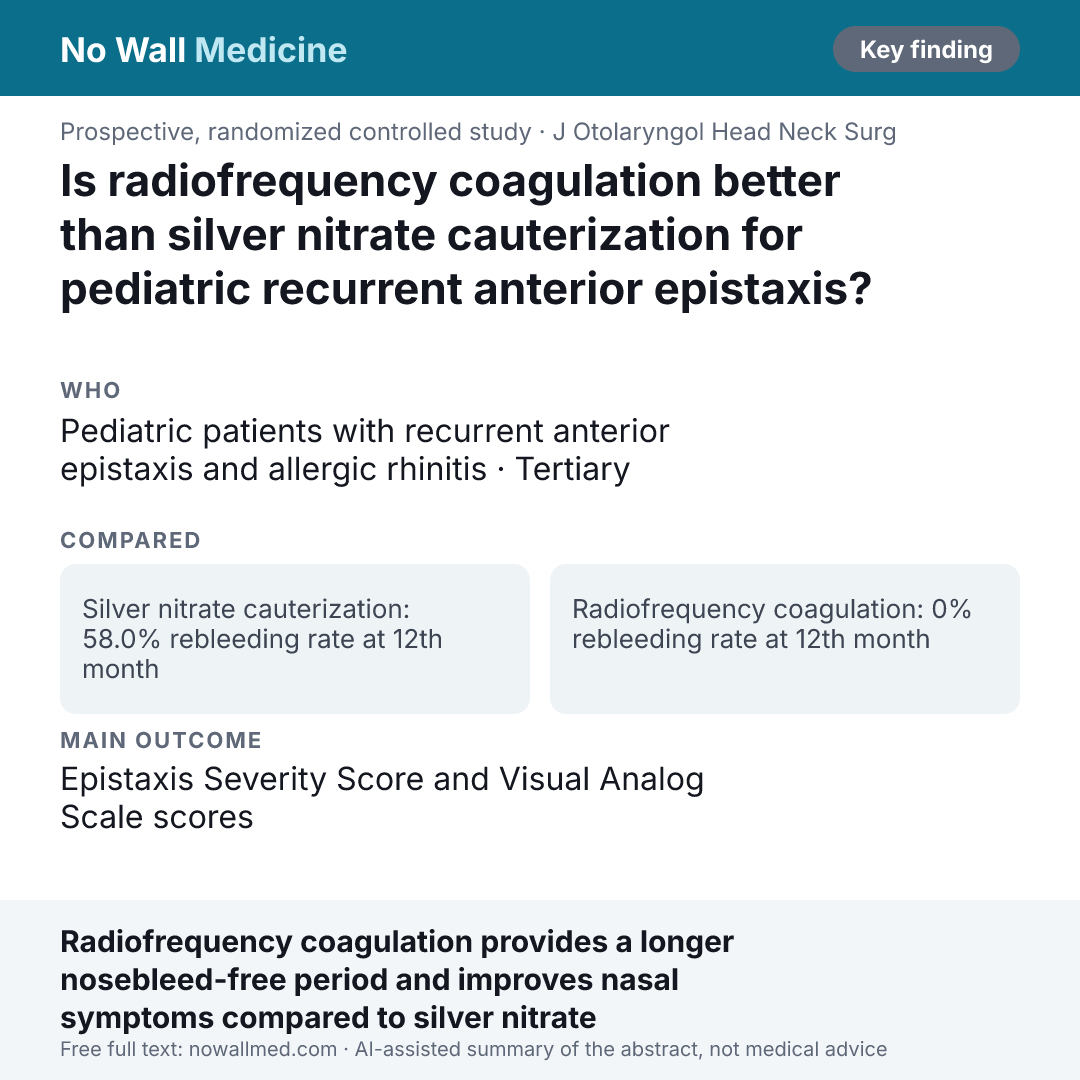
Comparison of Radiofrequency Coagulation and Silver Nitrate Cauterization for the Treatment of Recurrent Anterior Epistaxis Associated With Allergic Rhinitis in Pediatric Patients
Prospective, randomized controlled studyKey finding
Is radiofrequency coagulation better than silver nitrate cauterization for pediatric recurrent anterior epistaxis?
Who
Pediatric patients with recurrent anterior epistaxis and allergic rhinitis · Tertiary referral center
Compared
Silver nitrate cauterization: 58.0% rebleeding rate at 12th month
Radiofrequency coagulation: 0% rebleeding rate at 12th month
Main outcome
Epistaxis Severity Score and Visual Analog Scale scores
Bottom line: Radiofrequency coagulation provides a longer nosebleed-free period and improves nasal symptoms compared to silver nitrate cauterization.
Limitation: Septal perforation occurred in 1 patient among the 4 who underwent radiofrequency coagulation using ablation mode.
J Otolaryngol Head Neck Surg · 2025-11-19 · Save PNG
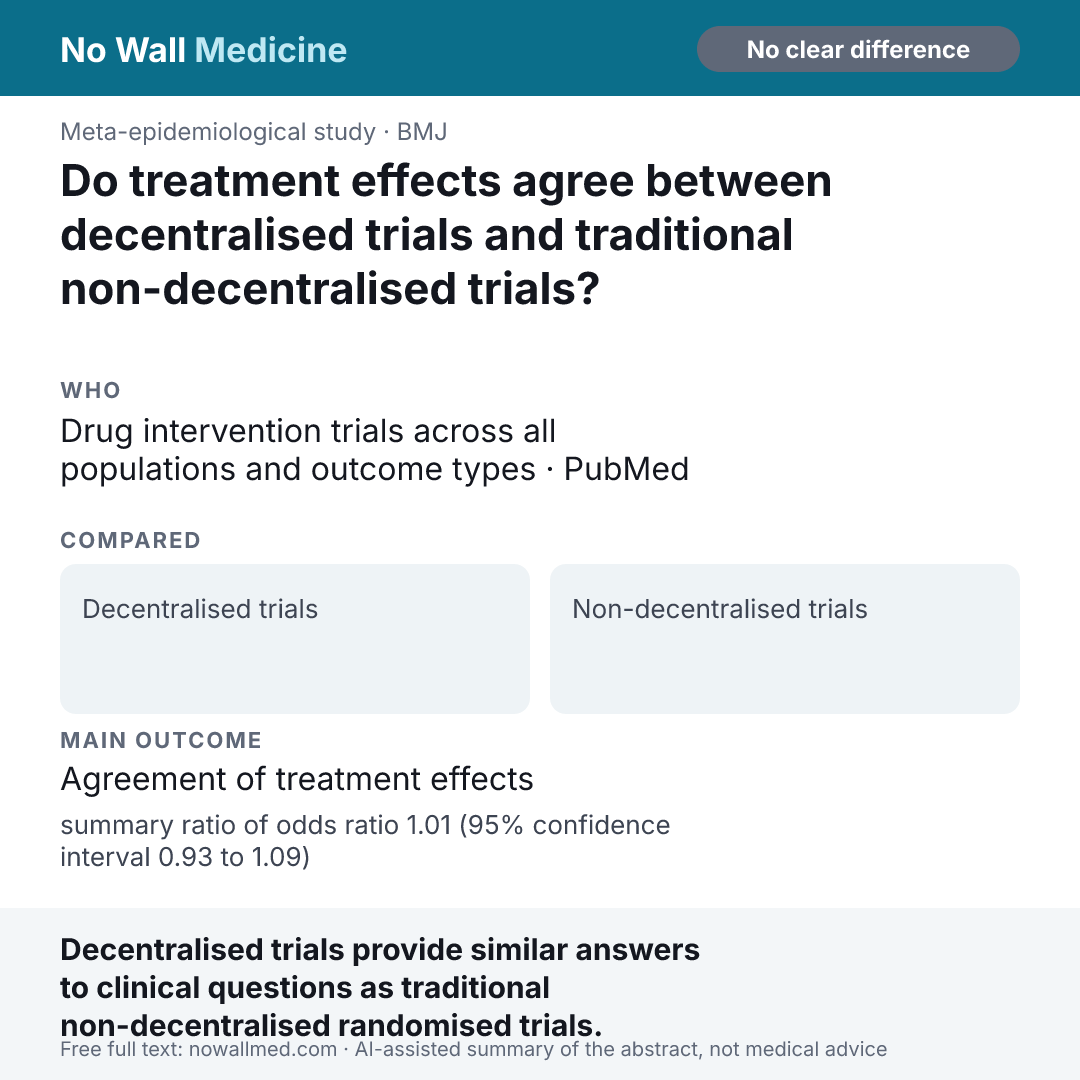
Agreement of treatment effects in decentralised trials versus traditional trials: meta-epidemiological study
Meta-epidemiological studyNo clear difference
Do treatment effects agree between decentralised trials and traditional non-decentralised trials?
Who
Drug intervention trials across all populations and outcome types · PubMed database
Compared
Decentralised trials
Non-decentralised trials
Main outcome
Agreement of treatment effects
Result: summary ratio of odds ratio 1.01 (95% confidence interval 0.93 to 1.09)
Bottom line: Decentralised trials provide similar answers to clinical questions as traditional non-decentralised randomised trials.
BMJ · 2025-11-18 · Save PNG
Comparative Effectiveness and Harm of Seasonal Influenza Vaccines in Adults Who Are Not Pregnant or Immunocompromised: A Rapid Review for the American College of Physicians
Rapid review of randomized controlled trials and nonrandomized studiesMixed results
How do standard, high-dose, recombinant, and mRNA influenza vaccines compare in effectiveness and harm?
Who
Nonpregnant, nonimmunocompromised adults
Compared
High-dose vaccines: reduced laboratory-confirmed influenza in adults aged 65 years or older
Recombinant vaccines: reduced laboratory-confirmed influenza in all adults and those younger than 65 years
mRNA vaccines: may increase serious adverse events in all adults and those younger than 65 years
Main outcome
laboratory-confirmed influenza, serious adverse events, and fever
Bottom line: High-dose and recombinant vaccines improve protection, but high-dose vaccines increase fever risk and mRNA vaccine evidence is limited.
Limitation: Limited randomized controlled trials for influenza-related hospitalization or death and broad definitions of serious adverse events.
Funded by: American College of Physicians
Ann Intern Med · 2025-11-18 · Save PNG

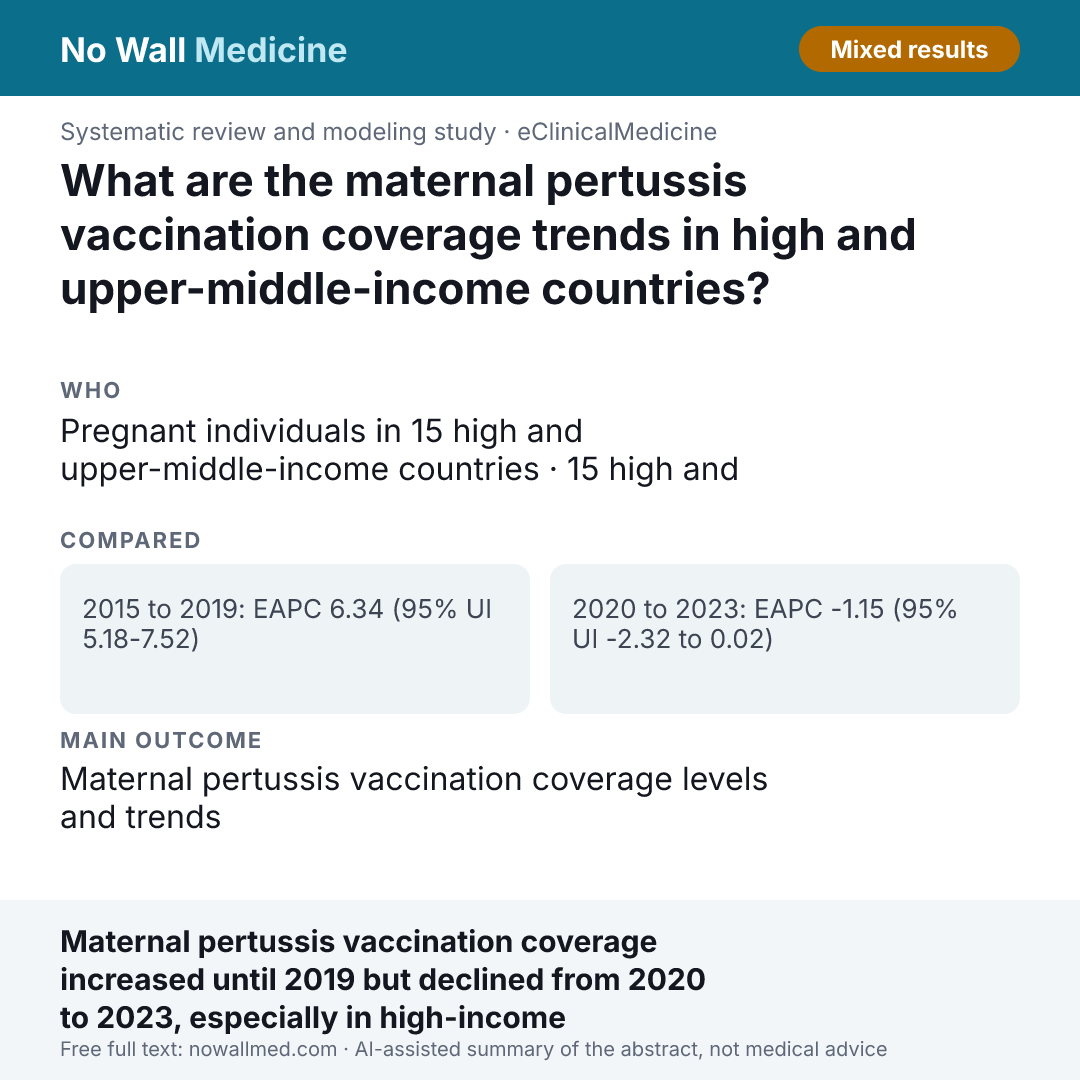
Tracking the progress of maternal pertussis vaccination coverage among upper-middle- and high-income countries and territories - a systematic review and modeling study
Systematic review and modeling studyMixed results
What are the maternal pertussis vaccination coverage trends in high and upper-middle-income countries?
Who
Pregnant individuals in 15 high and upper-middle-income countries · 15 high and upper-middle-income countries and territories
Compared
2015 to 2019: EAPC 6.34 (95% UI 5.18-7.52)
2020 to 2023: EAPC -1.15 (95% UI -2.32 to 0.02)
Main outcome
Maternal pertussis vaccination coverage levels and trends
Bottom line: Maternal pertussis vaccination coverage increased until 2019 but declined from 2020 to 2023, especially in high-income countries.
Funded by: National Social Science Foundation of China and others
eClinicalMedicine · 2025-11-18 · Save PNG
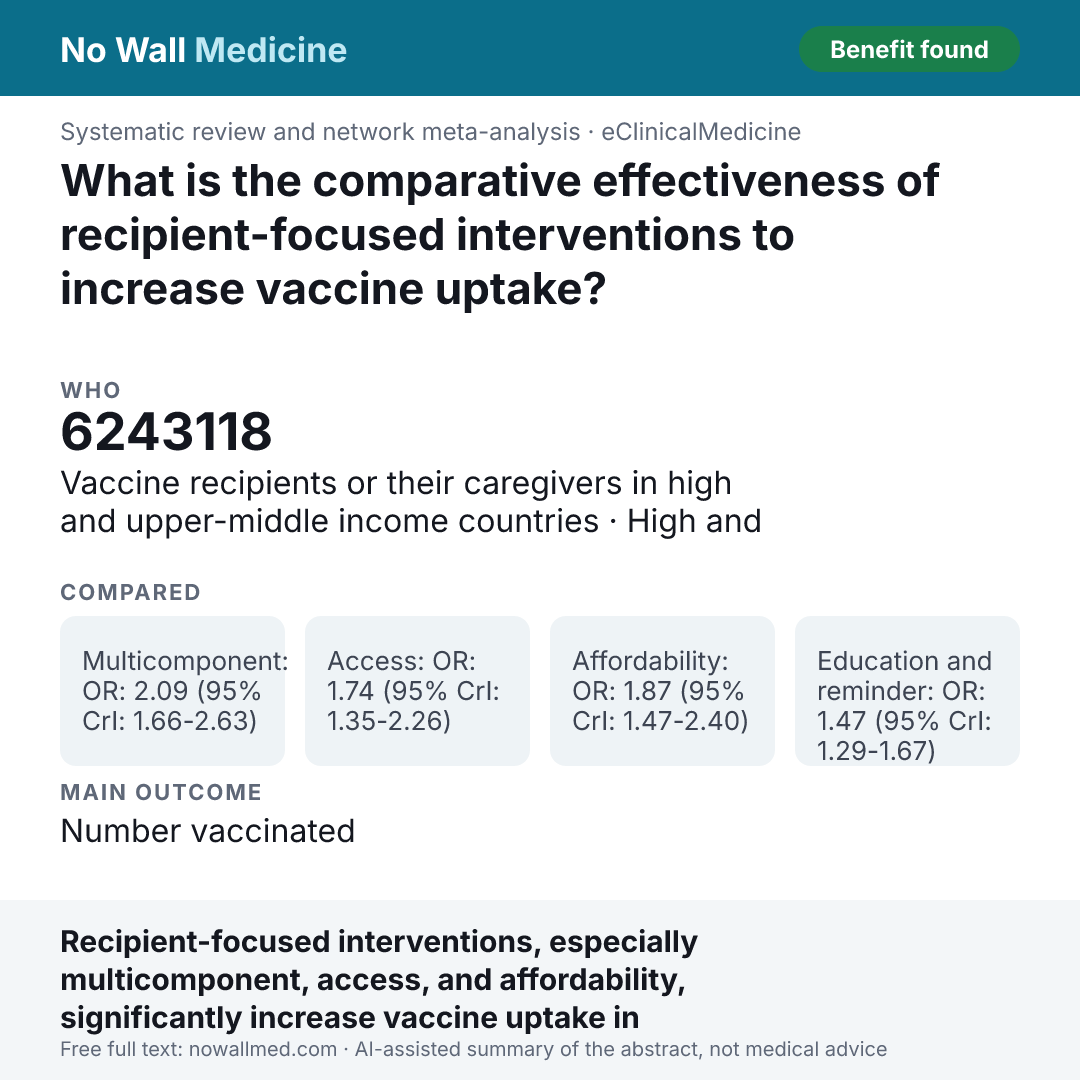
Recipient-focused interventions to increase vaccine uptake in high and upper-middle income countries: a systematic review and network meta-analysis
Systematic review and network meta-analysisBenefit found
What is the comparative effectiveness of recipient-focused interventions to increase vaccine uptake?
Who
6243118
Vaccine recipients or their caregivers in high and upper-middle income countries · High and upper-middle income countries
Compared
Multicomponent: OR: 2.09 (95% CrI: 1.66-2.63)
Access: OR: 1.74 (95% CrI: 1.35-2.26)
Affordability: OR: 1.87 (95% CrI: 1.47-2.40)
Education and reminder: OR: 1.47 (95% CrI: 1.29-1.67)
Main outcome
Number vaccinated
Result: ORs and 95% credible intervals > 1 for all six categories
Bottom line: Recipient-focused interventions, especially multicomponent, access, and affordability, significantly increase vaccine uptake in high and upper-middle income countries.
Limitation: The effectiveness of affordability and multicomponent interventions may have decreased post-2020 due to the COVID-19 pandemic.
Funded by: NIHR Public Health Research Programme
eClinicalMedicine · 2025-11-18 · Save PNG
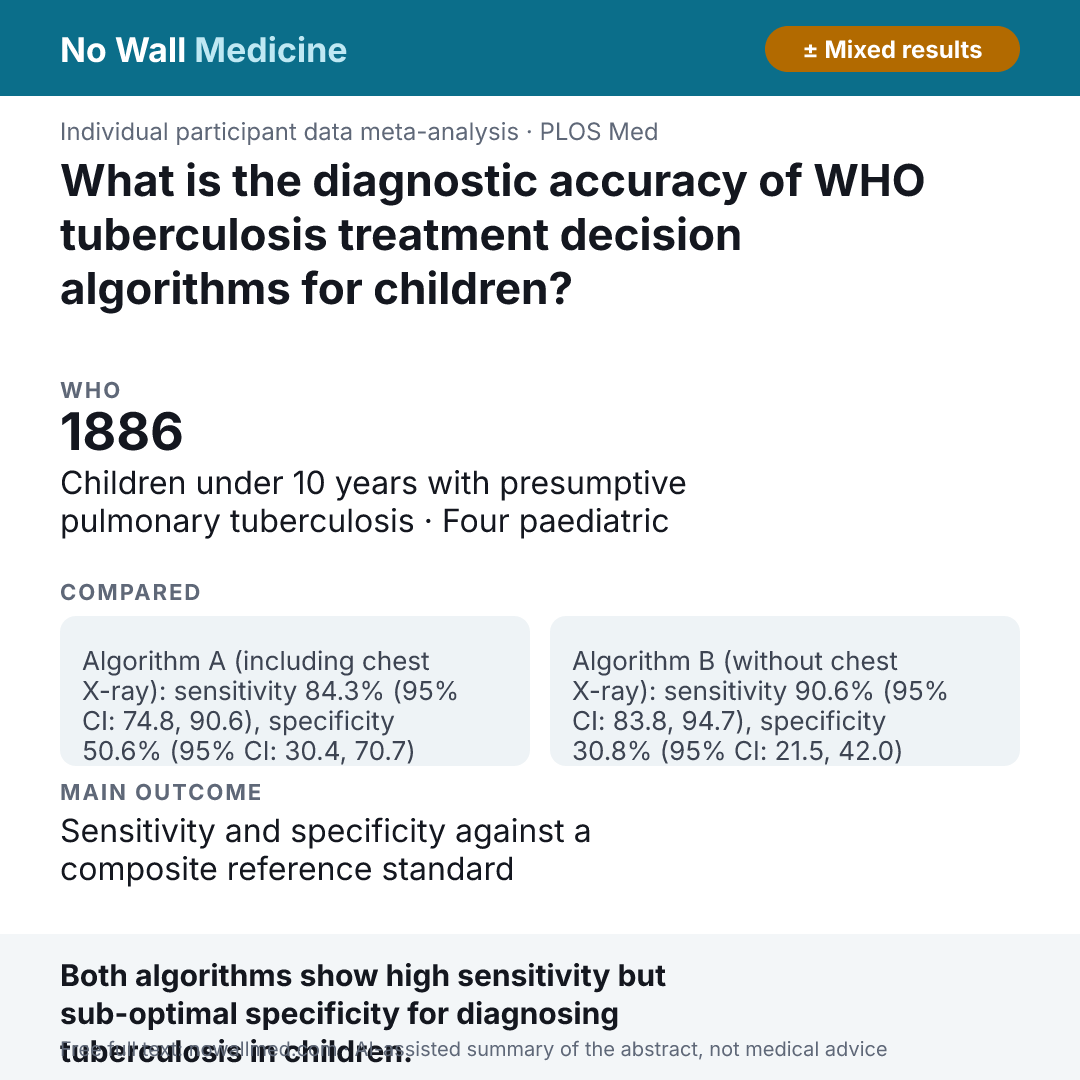
Diagnostic accuracy of the WHO tuberculosis treatment decision algorithms for children with presumptive tuberculosis: An individual participant data meta-analysis
Individual participant data meta-analysisMixed results
What is the diagnostic accuracy of WHO tuberculosis treatment decision algorithms for children?
Who
1886
Children under 10 years with presumptive pulmonary tuberculosis · Four paediatric cohorts
Compared
Algorithm A (including chest X-ray): sensitivity 84.3% (95% CI: 74.8, 90.6), specificity 50.6% (95% CI: 30.4, 70.7)
Algorithm B (without chest X-ray): sensitivity 90.6% (95% CI: 83.8, 94.7), specificity 30.8% (95% CI: 21.5, 42.0)
Main outcome
Sensitivity and specificity against a composite reference standard
Bottom line: Both algorithms show high sensitivity but sub-optimal specificity for diagnosing tuberculosis in children.
Limitation: Studies performed at secondary or tertiary hospitals might limit the generalisability of results.
PLOS Med · 2025-11-18 · Save PNG
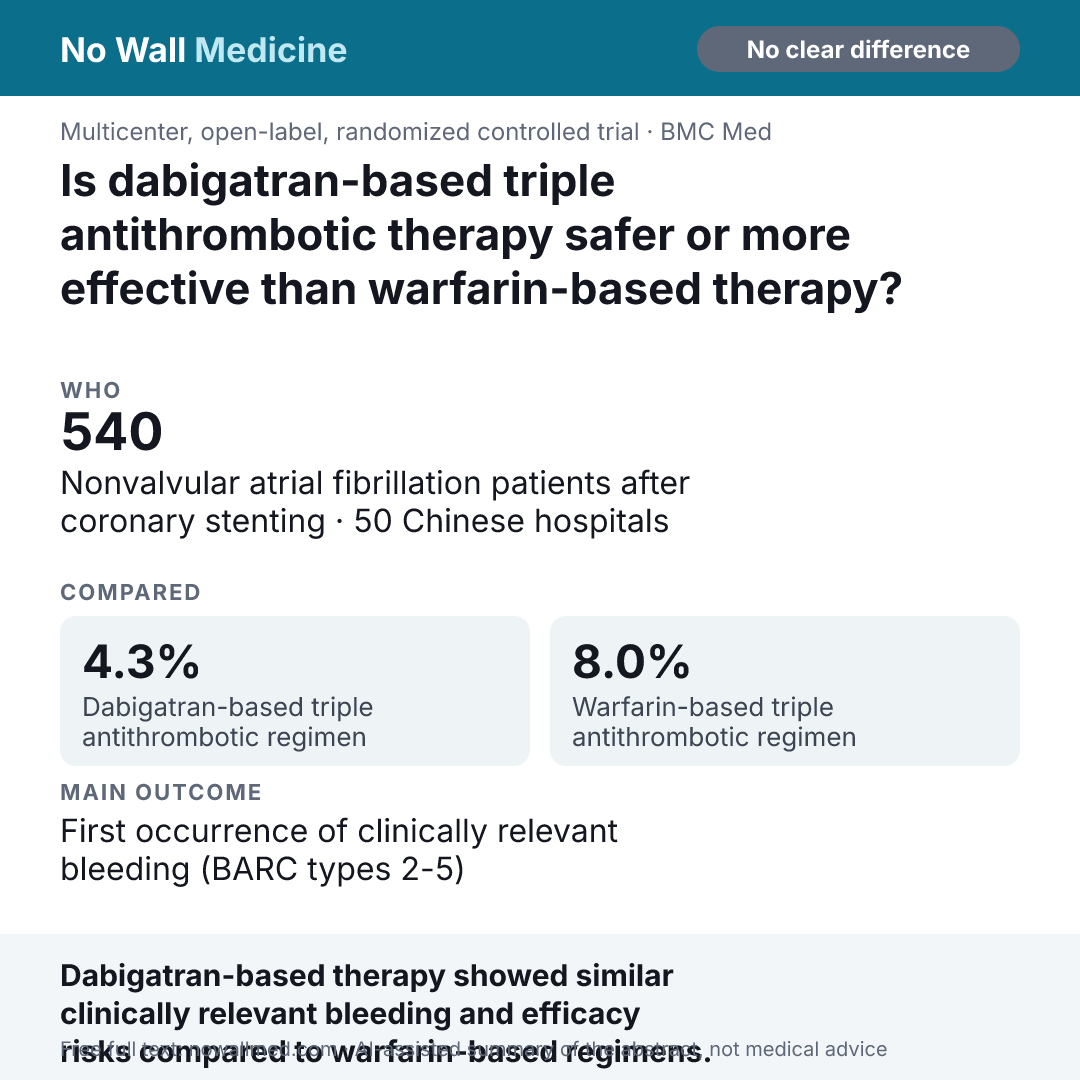
Dabigatran-based versus warfarin-based triple antithrombotic regimen with a 1-month intensification after coronary stenting in patients with nonvalvular atrial fibrillation (COACH-AF PCI)
Multicenter, open-label, randomized controlled trialNo clear difference
Is dabigatran-based triple antithrombotic therapy safer or more effective than warfarin-based therapy?
Who
540
Nonvalvular atrial fibrillation patients after coronary stenting · 50 Chinese hospitals
Compared
4.3%Dabigatran-based triple antithrombotic regimen
8.0%Warfarin-based triple antithrombotic regimen
Main outcome
First occurrence of clinically relevant bleeding (BARC types 2-5)
Result: hazard ratio 0.54 (95% CI 0.26-1.09)
Bottom line: Dabigatran-based therapy showed similar clinically relevant bleeding and efficacy risks compared to warfarin-based regimens.
BMC Med · 2025-11-18 · Save PNG
Assessing clinical and cost effectiveness of total versus partial knee replacement (TOPKAT): 10-year follow-up of a multicentre, randomised controlled trial
Multicentre, randomised, pragmatic comparative effectiveness trialNo clear difference
Is total knee replacement or partial knee replacement more effective and cost-effective at 10 years?
Who
528
Patients with medial compartment knee osteoarthritis · 27 United Kingdom National Health Service hospitals
Compared
Partial knee replacement: mean difference 0.27 (95% CI -1.59 to 2.13)
Total knee replacement: mean difference 0.27 (95% CI -1.59 to 2.13)
Main outcome
Oxford Knee Score at 10 years
Result: mean difference 0.27 (95% CI -1.59 to 2.13)
Bottom line: At 10 years, partial and total knee replacement show similar clinical outcomes, but partial replacement is more cost-effective.
Funded by: National Institute for Health and Care Research
Lancet Rheumatol · 2025-11-18 · Save PNG
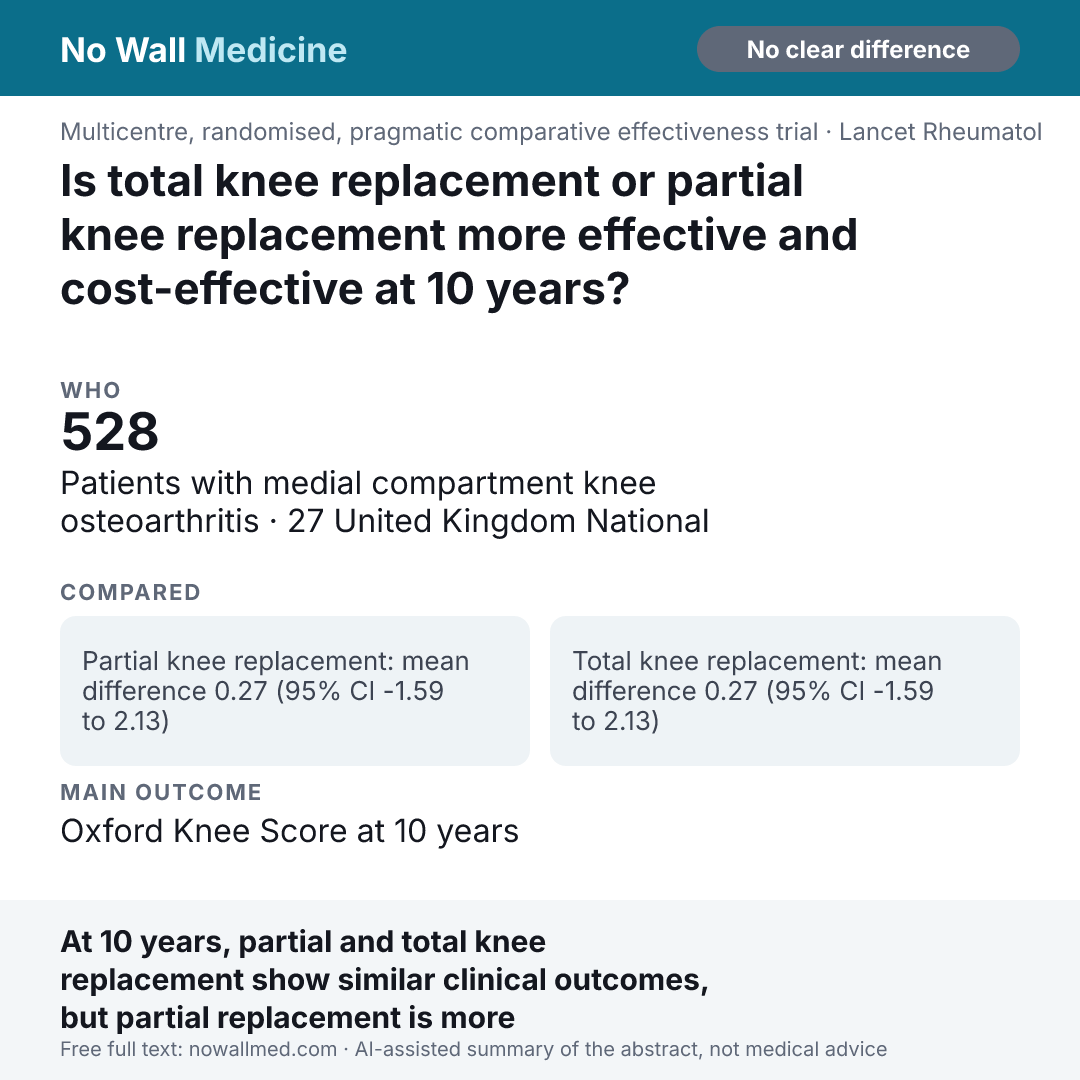
Effects of hypoxic training interventions on cardiometabolic health of adults with overweight and obesity: A systematic review and meta-analysis
Systematic review and meta-analysisNo clear difference
Is hypoxic training more effective than normoxic training for cardiometabolic health in obesity?
Who
278
Adults with overweight or obesity
Compared
Hypoxic training
Normoxic training
Main outcome
Glucose homeostasis, lipid profile, and blood pressure
Bottom line: Hypoxic training did not outperform normoxic training in improving cardiometabolic outcomes in adults with overweight or obesity.
Limitation: Considerable variability in intervention duration, hypoxic dose, and exercise intensity across studies.
Diabetes Obes Metab · 2025-11-18 · Save PNG
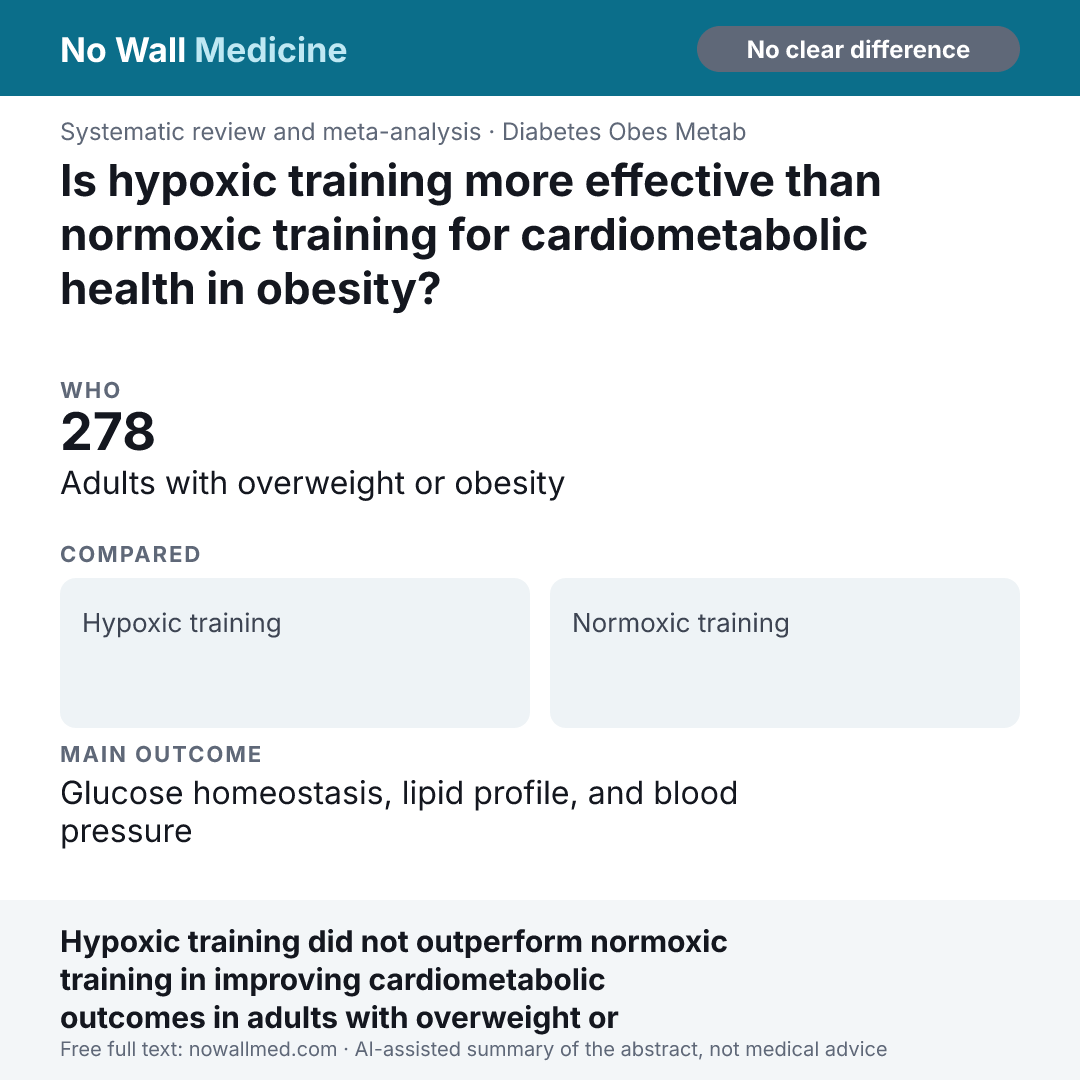
Nilotinib versus imatinib with early switch from imatinib to nilotinib to obtain treatment-free remission in newly diagnosed chronic myeloid leukemia patients: the analysis of the first co-primary endpoint
Randomized trialKey finding
Is nilotinib more effective than imatinib followed by a switch to nilotinib for deep molecular response?
Who
448
Newly diagnosed chronic myeloid leukemia patients
Compared
65nilotinib
42imatinib followed by switch to nilotinib
Main outcome
patients reaching an MR4.5 response at 24 months
Result: 65 vs 42; p = 0.02
Bottom line: Nilotinib therapy is more effective than imatinib followed by an early switch to induce deep molecular response.
Leukemia · 2025-11-18 · Save PNG
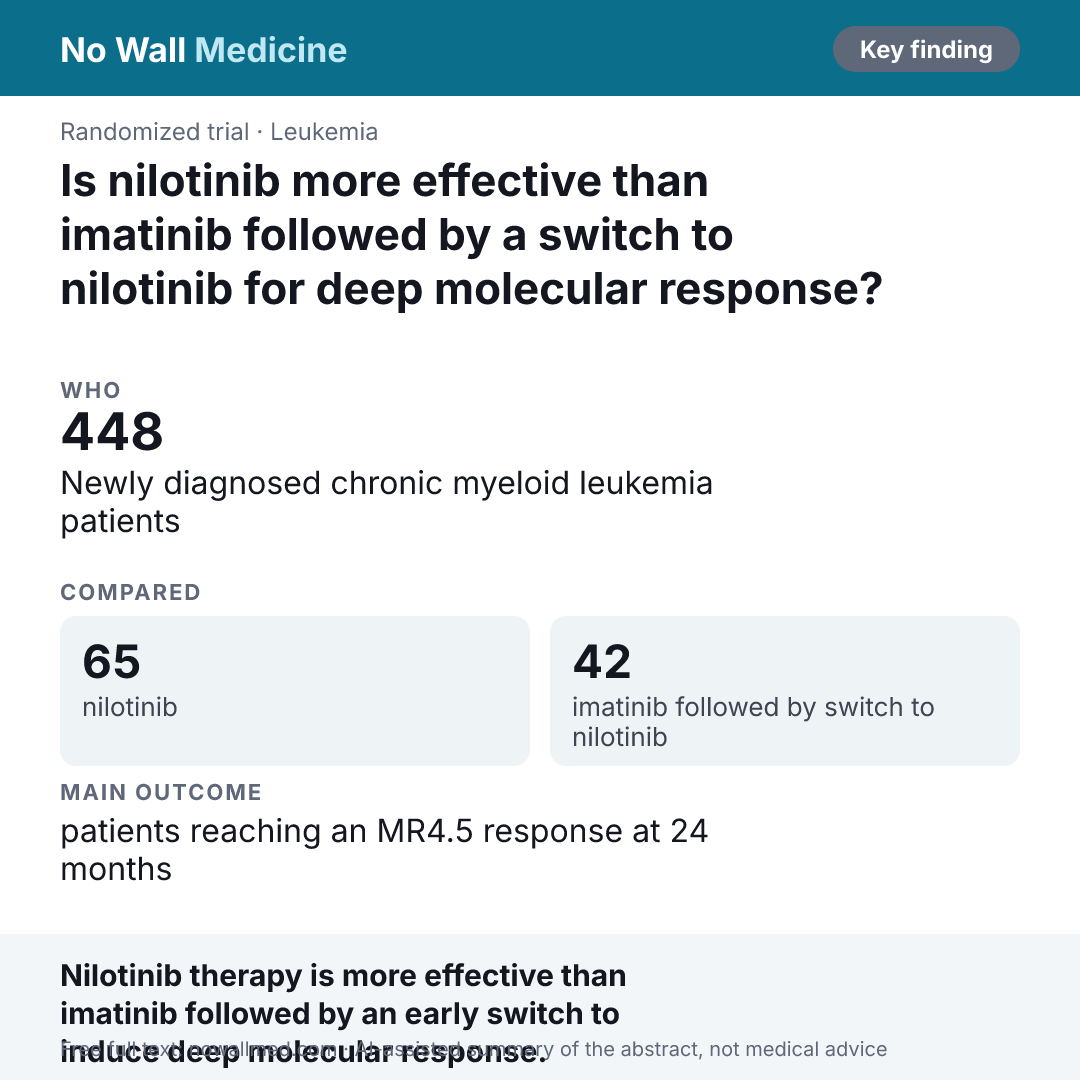
Does it save me money? The economic impact of mobile health interventions on medical expenditure of diabetic patients
Systematic review and meta-analysisBenefit found
Does mobile health intervention impact medication adherence and medical expenditure in Type 2 Diabetes?
Who
Patients with Type 2 Diabetes
Compared
Mobile health intervention
Control
Main outcome
Medication adherence and long-term medical expenditures
Result: standardized mean difference 0.21 (95% CI: 0.14-0.28)
Bottom line: Mobile health interventions improve medication adherence and could save $4400 per patient over 10 years.
J Am Med Inform Assoc · 2025-11-18 · Save PNG
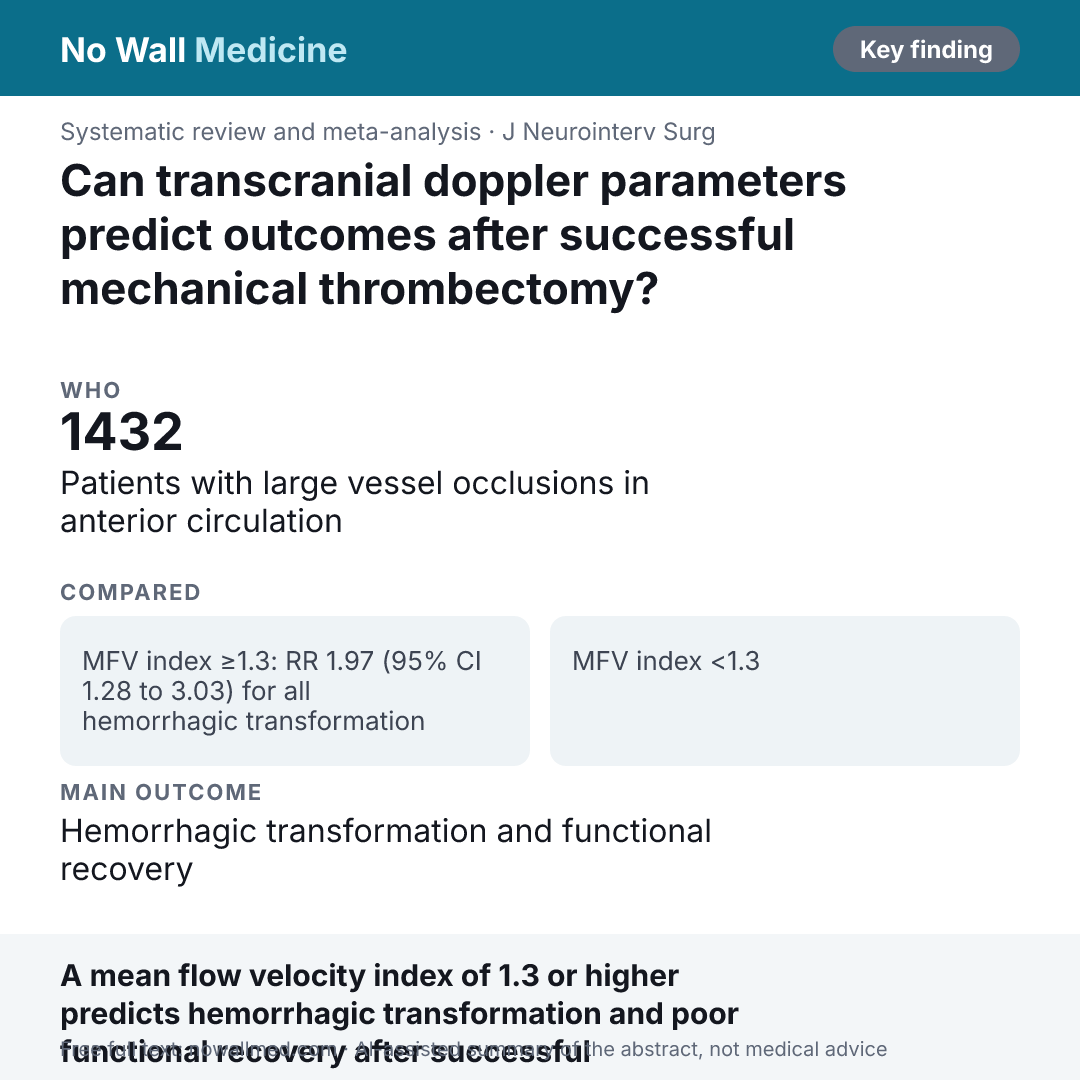
Transcranial doppler (TCD) in predicting outcomes following successful mechanical thrombectomy of large vessel occlusions in anterior circulation: a systematic review and meta-analysis
Systematic review and meta-analysisKey finding
Can transcranial doppler parameters predict outcomes after successful mechanical thrombectomy?
Who
1432
Patients with large vessel occlusions in anterior circulation
Compared
MFV index ≥1.3: RR 1.97 (95% CI 1.28 to 3.03) for all hemorrhagic transformation
MFV index <1.3
Main outcome
Hemorrhagic transformation and functional recovery
Result: RR 1.65 (95% CI 1.27 to 2.14) for poor functional status
Bottom line: A mean flow velocity index of 1.3 or higher predicts hemorrhagic transformation and poor functional recovery after successful mechanical thrombectomy.
J Neurointerv Surg · 2025-11-18 · Save PNG
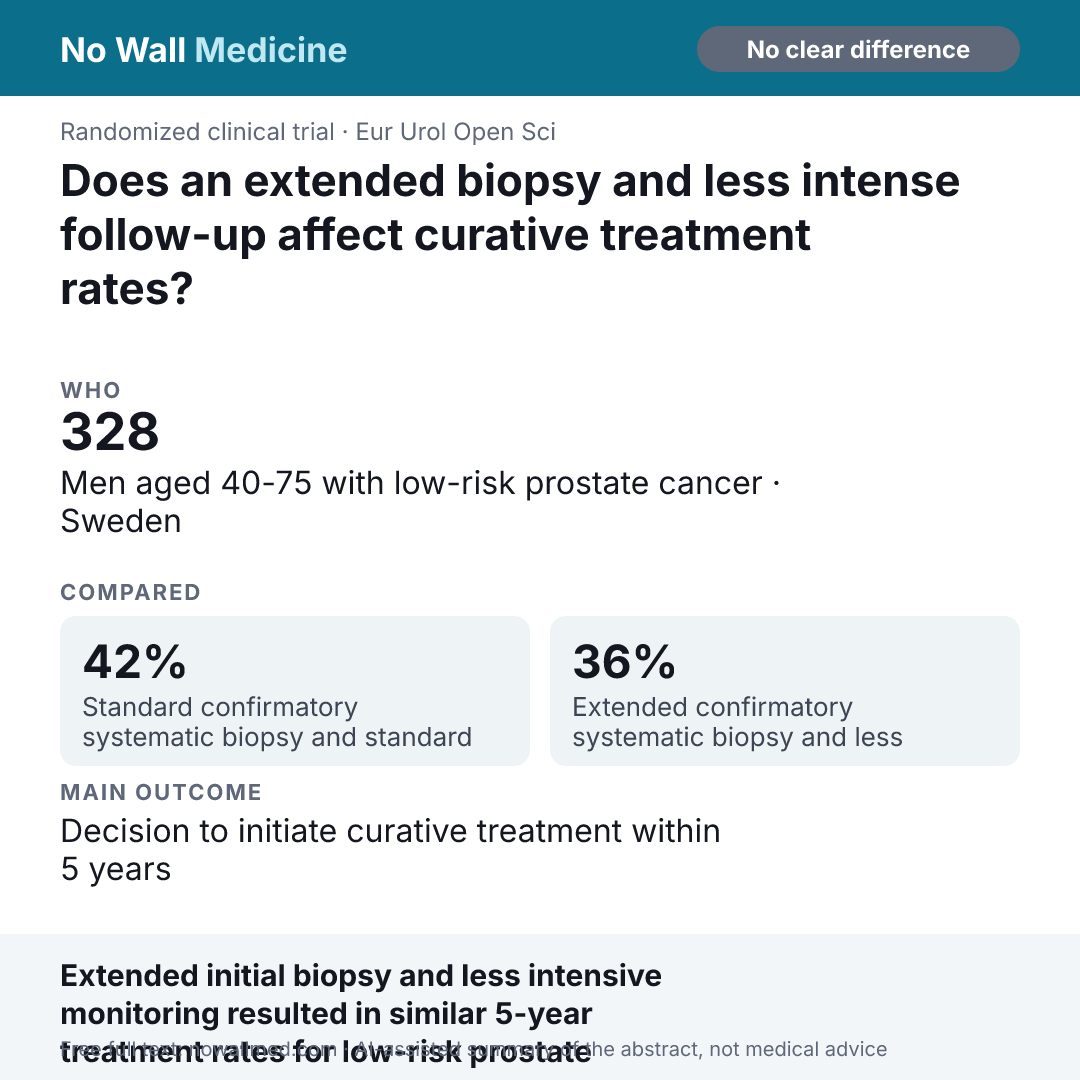
A Randomised Clinical Trial Comparing Two Biopsy Templates and Follow-up Schedules for Men on Active Surveillance for Low-risk Prostate Cancer: SAMS
Randomized clinical trialNo clear difference
Does an extended biopsy and less intense follow-up affect curative treatment rates?
Who
328
Men aged 40-75 with low-risk prostate cancer · Sweden
Compared
42%Standard confirmatory systematic biopsy and standard follow-up
36%Extended confirmatory systematic biopsy and less intense follow-up
Main outcome
Decision to initiate curative treatment within 5 years
Bottom line: Extended initial biopsy and less intensive monitoring resulted in similar 5-year treatment rates for low-risk prostate cancer.
Limitation: Inclusion was stopped before the target of 500 men was reached.
Eur Urol Open Sci · 2025-11-18 · Save PNG
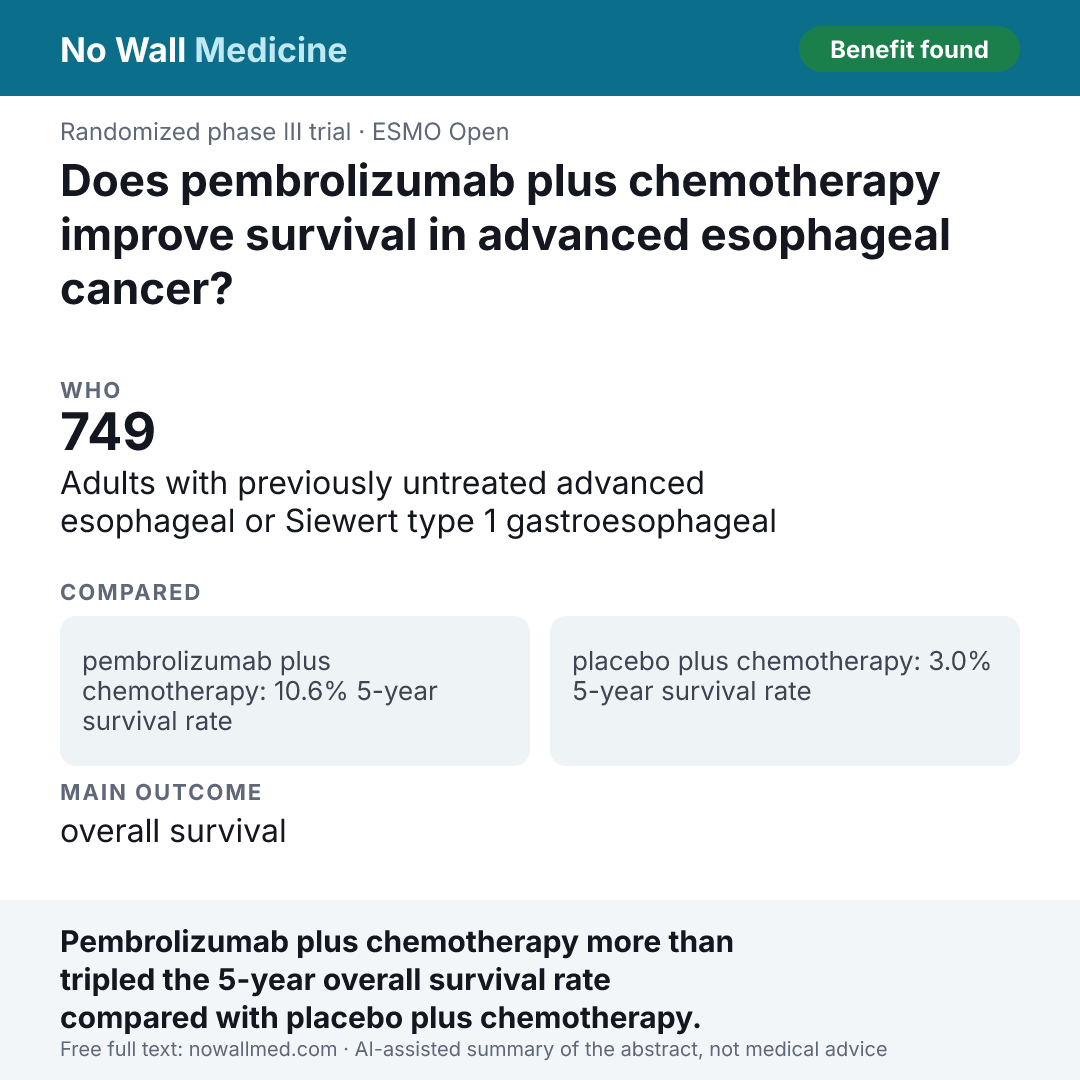
Pembrolizumab plus chemotherapy versus chemotherapy for advanced esophageal cancer: 5-year extended follow-up for the randomized phase III KEYNOTE-590 study
Randomized phase III trialBenefit found
Does pembrolizumab plus chemotherapy improve survival in advanced esophageal cancer?
Who
749
Adults with previously untreated advanced esophageal or Siewert type 1 gastroesophageal junction cancer
Compared
pembrolizumab plus chemotherapy: 10.6% 5-year survival rate
placebo plus chemotherapy: 3.0% 5-year survival rate
Main outcome
overall survival
Result: hazard ratio 0.72 (95% CI 0.62-0.84)
Bottom line: Pembrolizumab plus chemotherapy more than tripled the 5-year overall survival rate compared with placebo plus chemotherapy.
ESMO Open · 2025-11-18 · Save PNG