Visual abstracts
New randomized trials and meta-analyses from leading journals at a glance: who was studied, what was compared, and what was found. Every paper is free to read in full.
All specialtiesCardiology 1660Oncology 1442Gastroenterology & Hepatology 618Infectious Disease 1059Neurology 680Psychiatry & Mental Health 830Pulmonology 718Critical Care 487Endocrinology & Diabetes 906Pediatrics 975Surgery 828Orthopedics & Sports Medicine 311Neurosurgery 210Cardiothoracic & Vascular Surgery 190Plastic & Reconstructive Surgery 260Nephrology 343Rheumatology 227Hematology 363Dermatology 181Ophthalmology 195Obstetrics & Gynecology 537Public & Global Health 320Radiology & Imaging 224Anesthesiology 332Urology 298ENT (Otolaryngology) 225Emergency Medicine 189Allergy & Immunology 107Geriatrics 360Family Medicine & Primary Care 205Medical Genetics & Genomics 179Pathology & Laboratory Medicine 53Physical Medicine & Rehabilitation 288Palliative Care 147Nutrition 443Digital Health & AI 875General Medicine 134
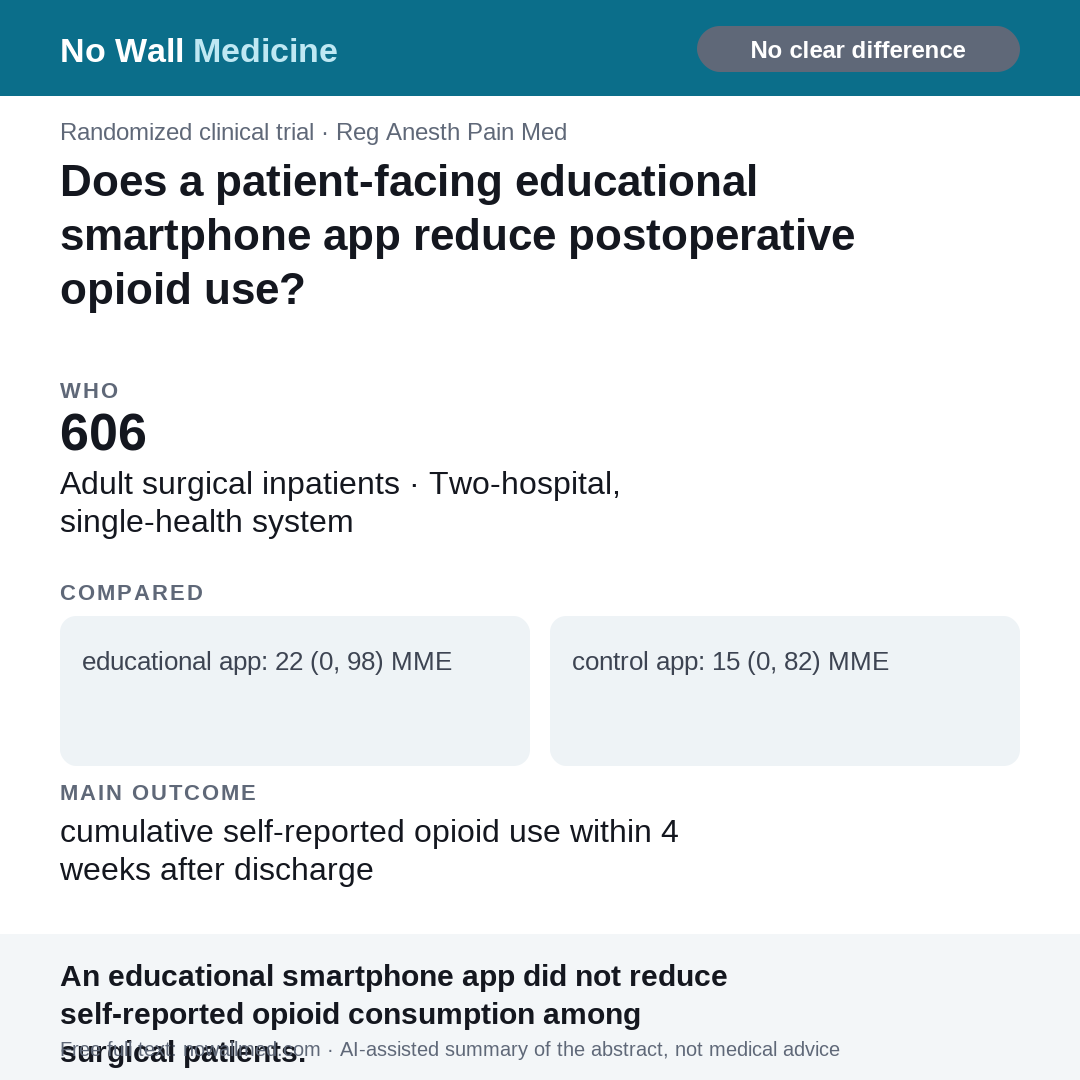
Postsurgical Medication Awareness, Recovery, and Tracking using a Phone-Based App (SMART-APP): a randomized clinical trial
Randomized clinical trialNo clear difference
Does a patient-facing educational smartphone app reduce postoperative opioid use?
Who
606
Adult surgical inpatients · Two-hospital, single-health system
Compared
educational app: 22 (0, 98) MME
control app: 15 (0, 82) MME
Main outcome
cumulative self-reported opioid use within 4 weeks after discharge
Result: ratio of geometric means 1.21 (95% CI 0.87 to 1.69)
Bottom line: An educational smartphone app did not reduce self-reported opioid consumption among surgical patients.
Reg Anesth Pain Med · 2025-07-02Download image
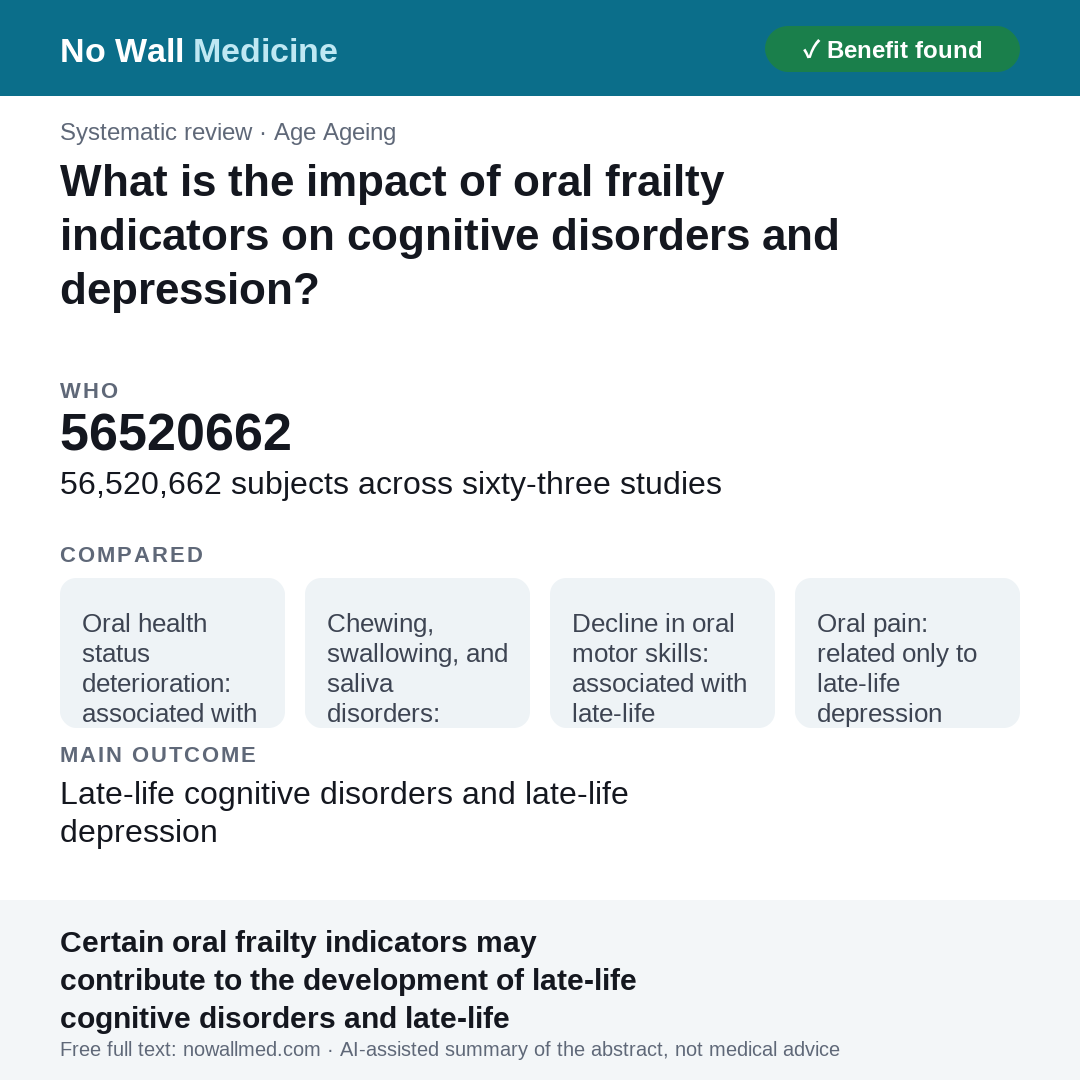
Targeting oral frailty indicators of late-life cognitive disorders and depression: a systematic review
Systematic reviewBenefit found
What is the impact of oral frailty indicators on cognitive disorders and depression?
Who
56520662
56,520,662 subjects across sixty-three studies
Compared
Oral health status deterioration: associated with cognitive impairment, mild cognitive impairment, dementia, and late-life depression
Chewing, swallowing, and saliva disorders: associated with cognitive impairment, mild cognitive impairment, dementia, and late-life depression
Decline in oral motor skills: associated with late-life cognitive impairment/decline
Oral pain: related only to late-life depression
Main outcome
Late-life cognitive disorders and late-life depression
Bottom line: Certain oral frailty indicators may contribute to the development of late-life cognitive disorders and late-life depression.
Age Ageing · 2025-07-02Download image
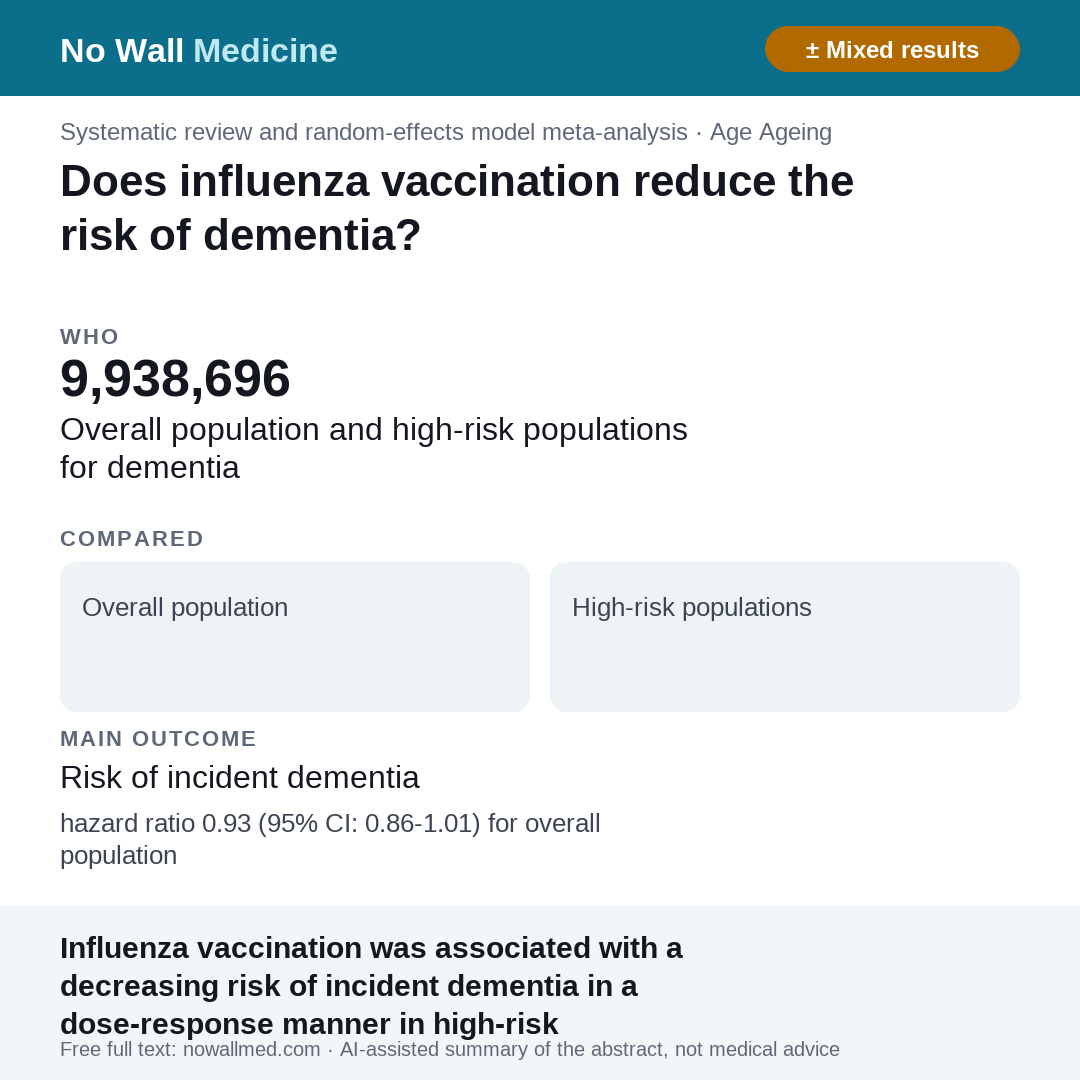
Influenza vaccination and risk of dementia: a systematic review and meta-analysis
Systematic review and random-effects model meta-analysisMixed results
Does influenza vaccination reduce the risk of dementia?
Who
9,938,696
Overall population and high-risk populations for dementia
Compared
Overall population
High-risk populations
Main outcome
Risk of incident dementia
Result: hazard ratio 0.93 (95% CI: 0.86-1.01) for overall population
Bottom line: Influenza vaccination was associated with a decreasing risk of incident dementia in a dose-response manner in high-risk populations.
Age Ageing · 2025-07-02Download image
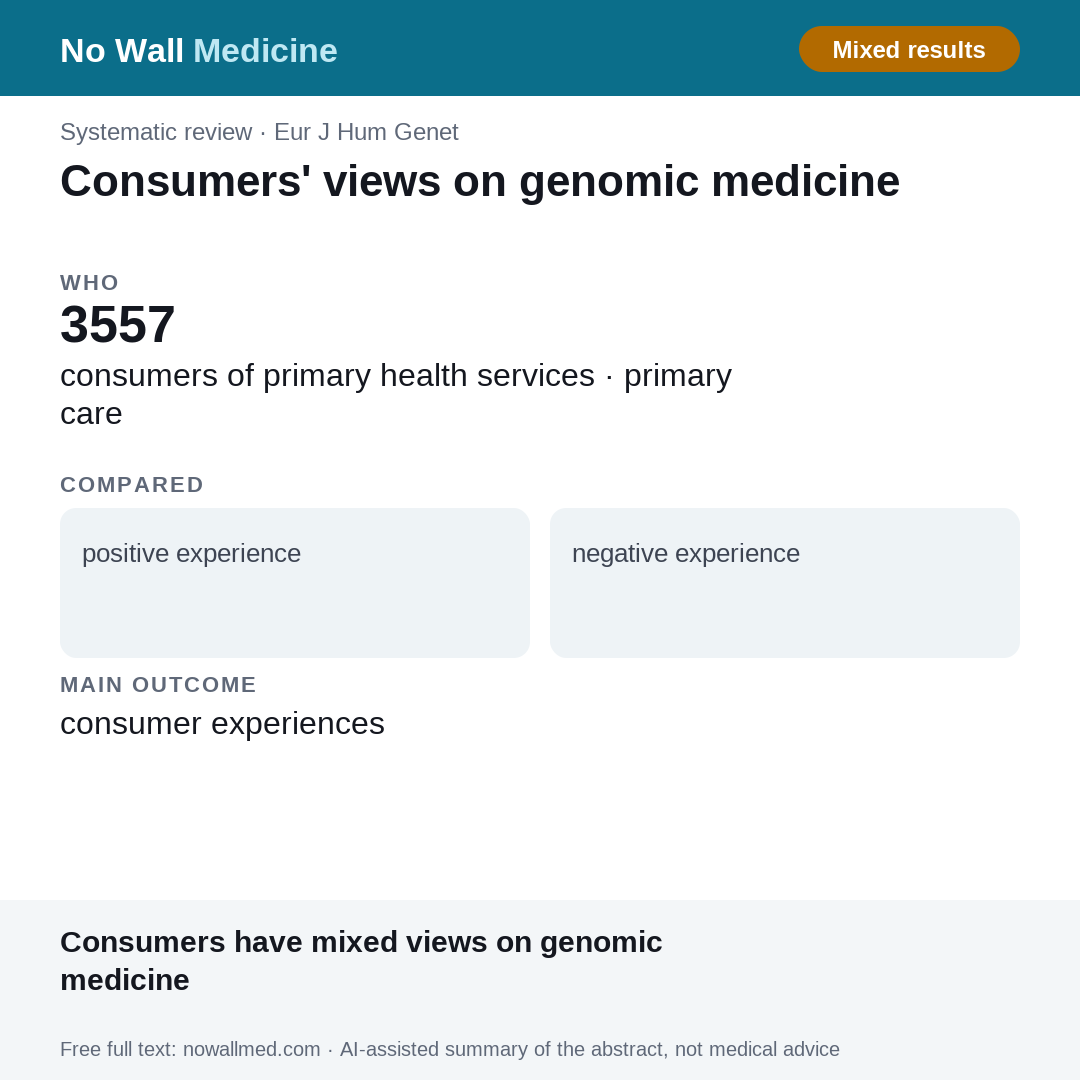
A systematic review of consumers' knowledge, attitudes and experiences of primary health professionals' role in genomic medicine
Systematic reviewMixed results
Consumers' views on genomic medicine
Who
3557
consumers of primary health services · primary care
Compared
positive experience
negative experience
Main outcome
consumer experiences
Bottom line: Consumers have mixed views on genomic medicine
Eur J Hum Genet · 2025-07-02Download image
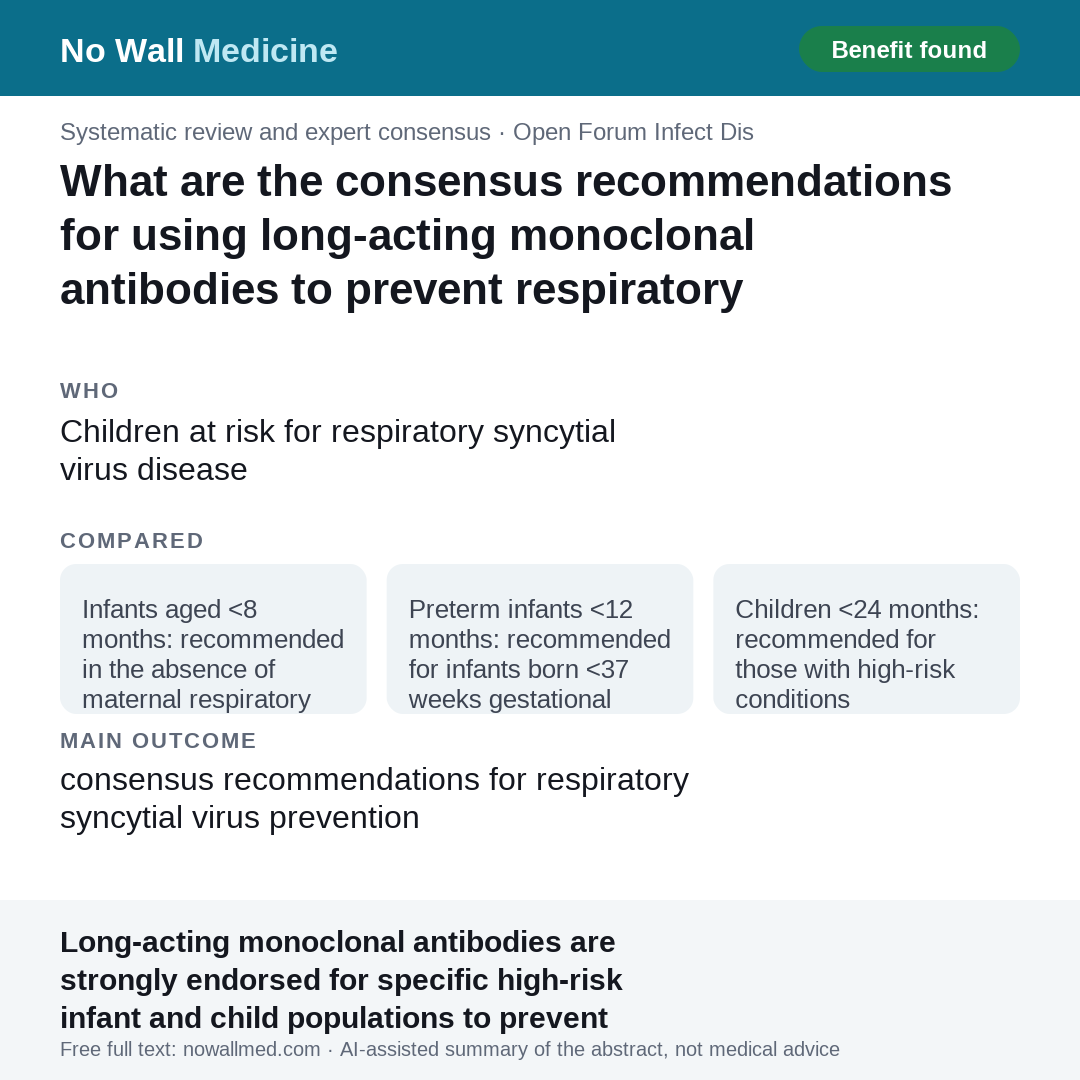
Systematic Review and Expert Consensus on the Use of Long-acting Monoclonal Antibodies for Prevention of Respiratory Syncytial Virus Disease: ARMADA (Advancing RSV Management And Disease Awareness) Taskforce
Systematic review and expert consensusBenefit found
What are the consensus recommendations for using long-acting monoclonal antibodies to prevent respiratory syncytial virus?
Who
Children at risk for respiratory syncytial virus disease
Compared
Infants aged <8 months: recommended in the absence of maternal respiratory syncytial virus vaccination
Preterm infants <12 months: recommended for infants born <37 weeks gestational age
Children <24 months: recommended for those with high-risk conditions
Main outcome
consensus recommendations for respiratory syncytial virus prevention
Bottom line: Long-acting monoclonal antibodies are strongly endorsed for specific high-risk infant and child populations to prevent respiratory syncytial virus.
Open Forum Infect Dis · 2025-07-02Download image
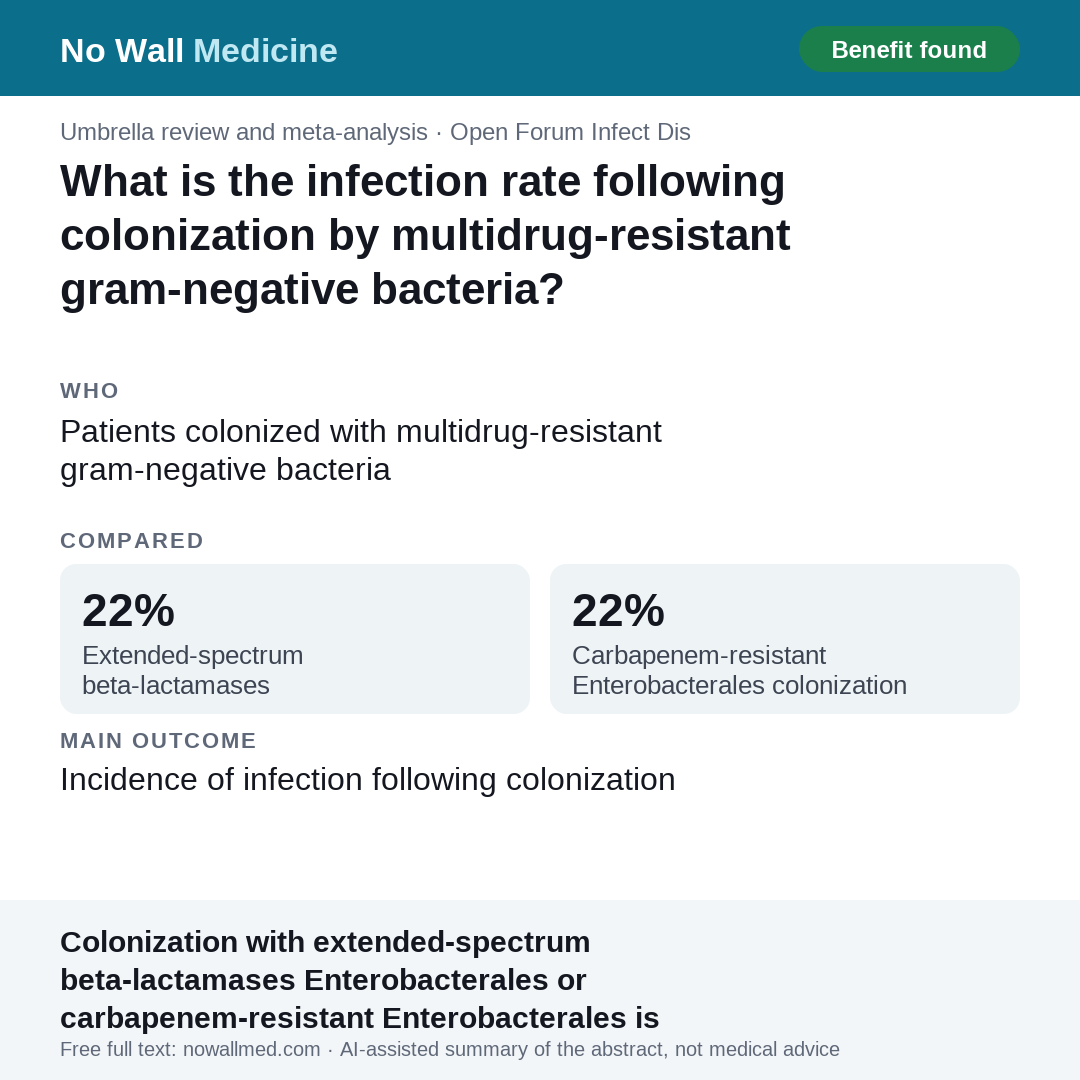
Infection Risk Associated With Colonization by Multidrug-Resistant Gram-Negative Bacteria: An Umbrella Review and Meta-analysis
Umbrella review and meta-analysisBenefit found
What is the infection rate following colonization by multidrug-resistant gram-negative bacteria?
Who
Patients colonized with multidrug-resistant gram-negative bacteria
Compared
22%Extended-spectrum beta-lactamases Enterobacterales colonization
22%Carbapenem-resistant Enterobacterales colonization
Main outcome
Incidence of infection following colonization
Bottom line: Colonization with extended-spectrum beta-lactamases Enterobacterales or carbapenem-resistant Enterobacterales is associated with a 22% infection rate.
Limitation: Heterogeneity of the included populations may limit the generalizability of these findings.
Open Forum Infect Dis · 2025-07-02Download image
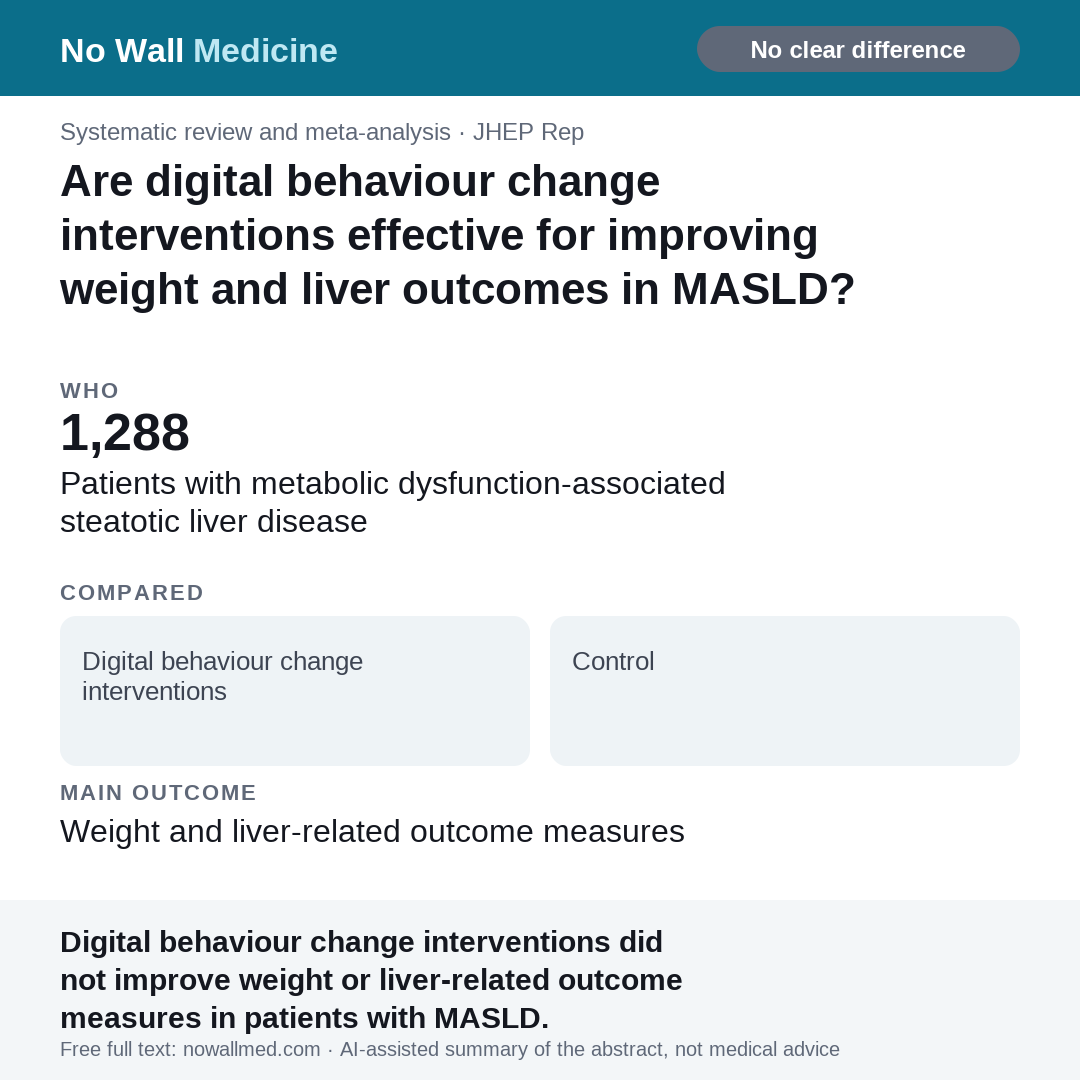
Effectiveness and active ingredients of digital behaviour change interventions for MASLD: A systematic review and meta-analysis
Systematic review and meta-analysisNo clear difference
Are digital behaviour change interventions effective for improving weight and liver outcomes in MASLD?
Who
1,288
Patients with metabolic dysfunction-associated steatotic liver disease
Compared
Digital behaviour change interventions
Control
Main outcome
Weight and liver-related outcome measures
Result: weighted mean difference -2.07 kg [-6.08 to 1.94 kg]
Bottom line: Digital behaviour change interventions did not improve weight or liver-related outcome measures in patients with MASLD.
Limitation: Significant heterogeneity between interventions in delivery, content, duration, and frequency.
JHEP Rep · 2025-07-02Download image
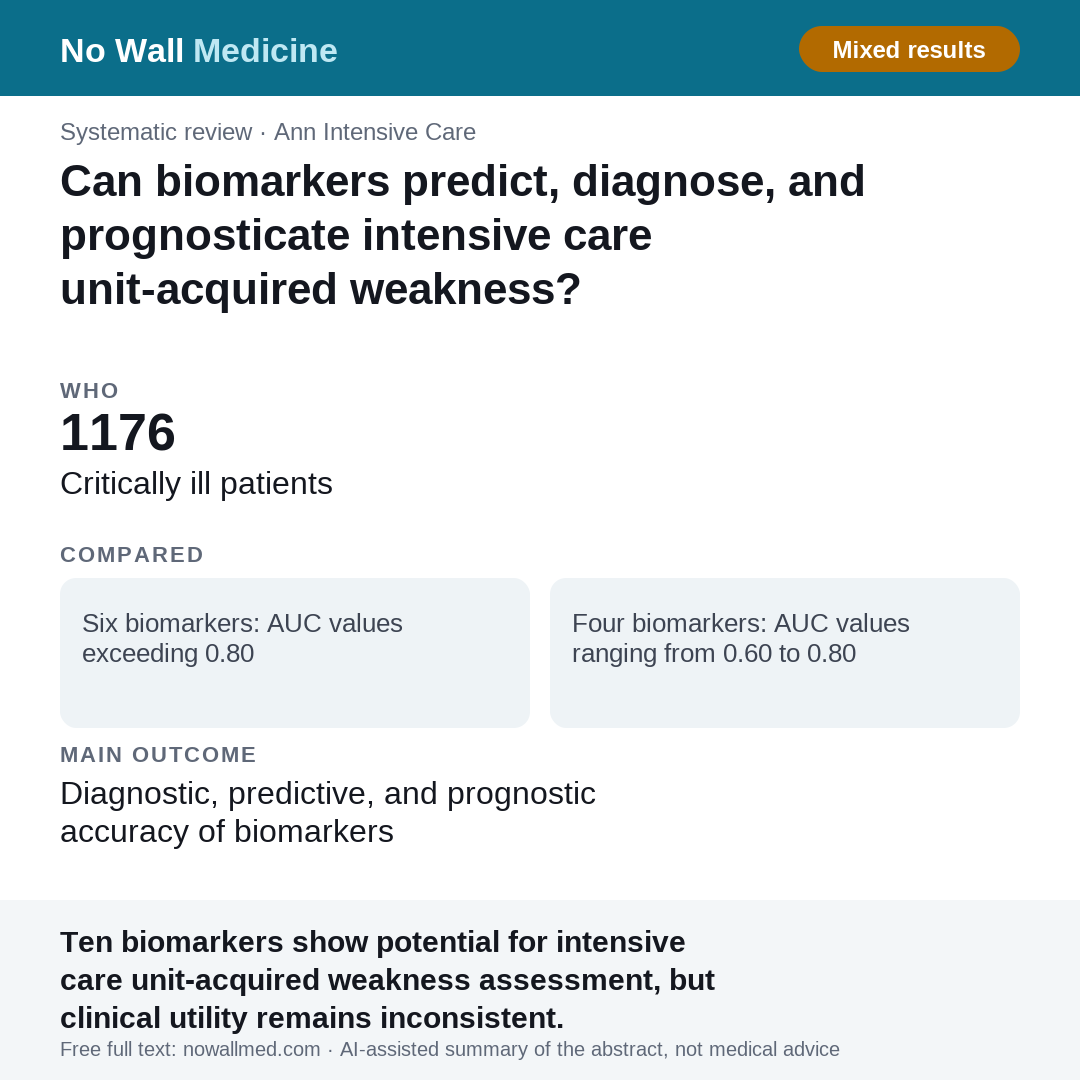
Biomarkers for intensive care unit-acquired weakness: a systematic review for prediction, diagnosis and prognosis
Systematic reviewMixed results
Can biomarkers predict, diagnose, and prognosticate intensive care unit-acquired weakness?
Who
1176
Critically ill patients
Compared
Six biomarkers: AUC values exceeding 0.80
Four biomarkers: AUC values ranging from 0.60 to 0.80
Main outcome
Diagnostic, predictive, and prognostic accuracy of biomarkers
Bottom line: Ten biomarkers show potential for intensive care unit-acquired weakness assessment, but clinical utility remains inconsistent.
Ann Intensive Care · 2025-07-02Download image
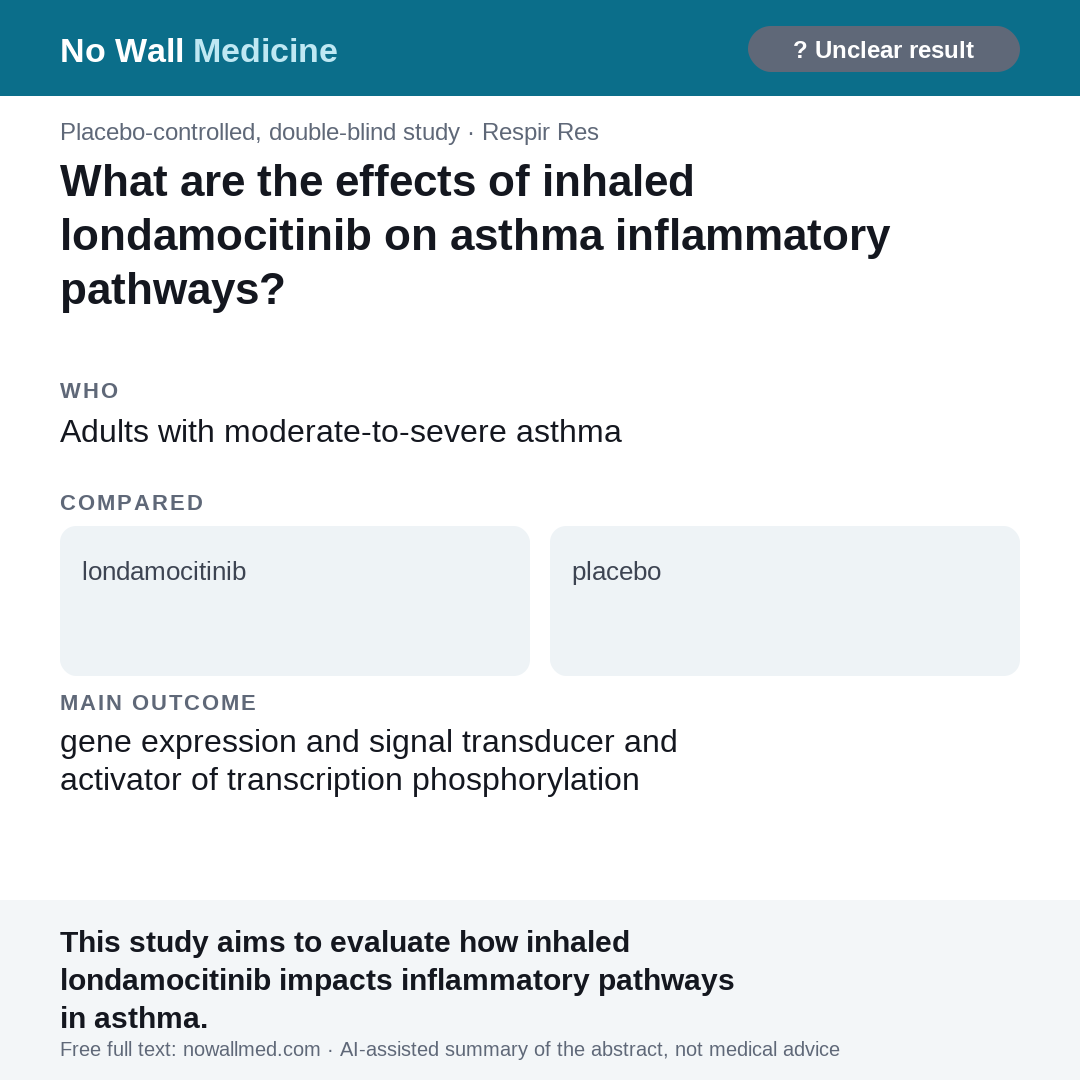
ARTEMISIA: a mechanistic study of a novel Janus kinase 1 inhibitor to advance molecular understanding and precision medicine in asthma
Placebo-controlled, double-blind studyUnclear result
What are the effects of inhaled londamocitinib on asthma inflammatory pathways?
Who
Adults with moderate-to-severe asthma
Compared
londamocitinib
placebo
Main outcome
gene expression and signal transducer and activator of transcription phosphorylation
Bottom line: This study aims to evaluate how inhaled londamocitinib impacts inflammatory pathways in asthma.
Respir Res · 2025-07-02Download image
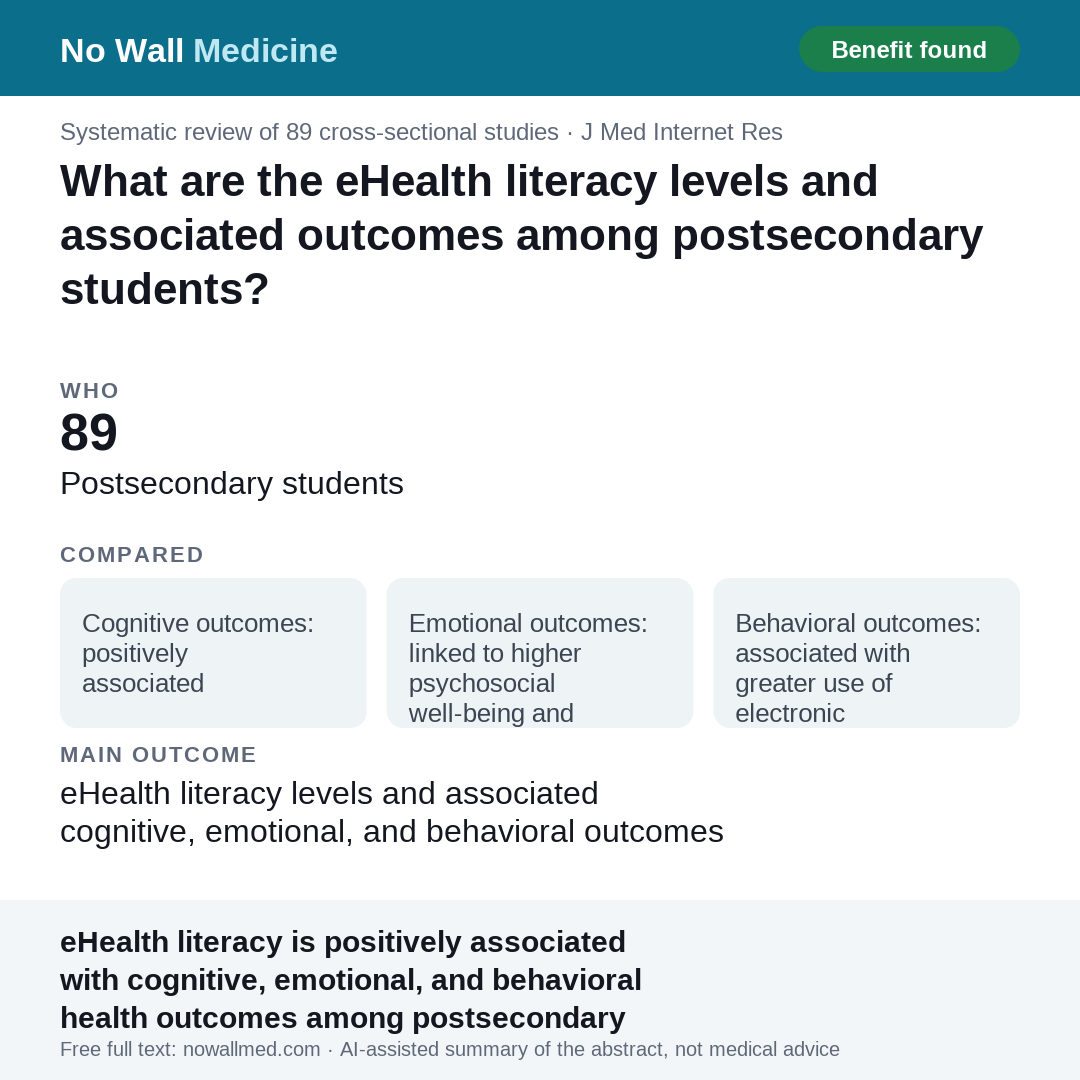
eHealth Literacy and Its Outcomes Among Postsecondary Students: Systematic Review
Systematic review of 89 cross-sectional studiesBenefit found
What are the eHealth literacy levels and associated outcomes among postsecondary students?
Who
89
Postsecondary students
Compared
Cognitive outcomes: positively associated
Emotional outcomes: linked to higher psychosocial well-being and positive emotions
Behavioral outcomes: associated with greater use of electronic information and disease prevention
Main outcome
eHealth literacy levels and associated cognitive, emotional, and behavioral outcomes
Bottom line: eHealth literacy is positively associated with cognitive, emotional, and behavioral health outcomes among postsecondary students.
Limitation: Variations in results due to inconsistent assessment tools.
J Med Internet Res · 2025-07-02Download image
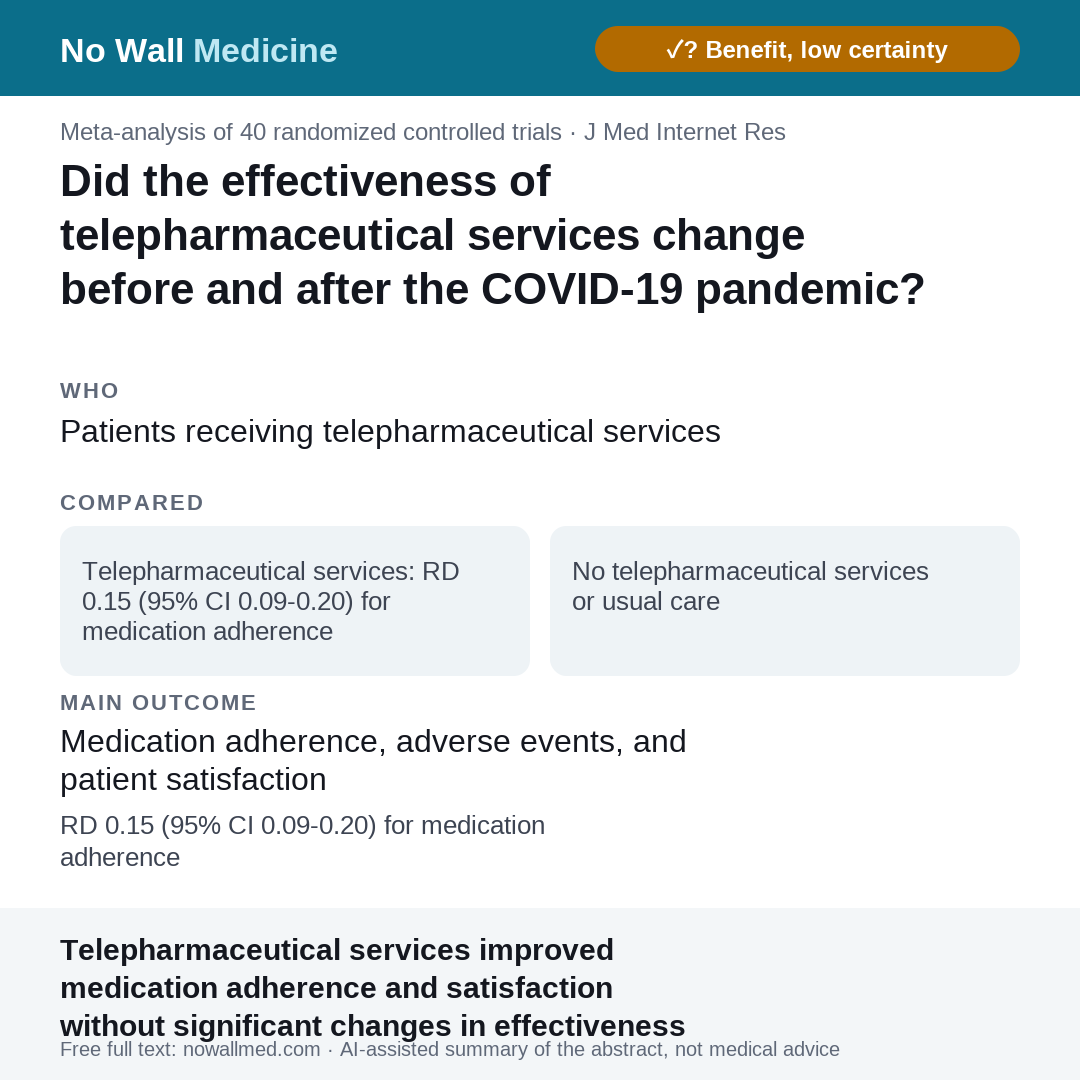
Evaluating the Impact of the COVID-19 Pandemic on Telepharmaceutical Service Effectiveness: Systematic Review and Meta-Analysis
Meta-analysis of 40 randomized controlled trialsBenefit found
Did the effectiveness of telepharmaceutical services change before and after the COVID-19 pandemic?
Who
Patients receiving telepharmaceutical services
Compared
Telepharmaceutical services: RD 0.15 (95% CI 0.09-0.20) for medication adherence
No telepharmaceutical services or usual care
Main outcome
Medication adherence, adverse events, and patient satisfaction
Result: RD 0.15 (95% CI 0.09-0.20) for medication adherence
Bottom line: Telepharmaceutical services improved medication adherence and satisfaction without significant changes in effectiveness after the COVID-19 pandemic outbreak.
J Med Internet Res · 2025-07-02Download image
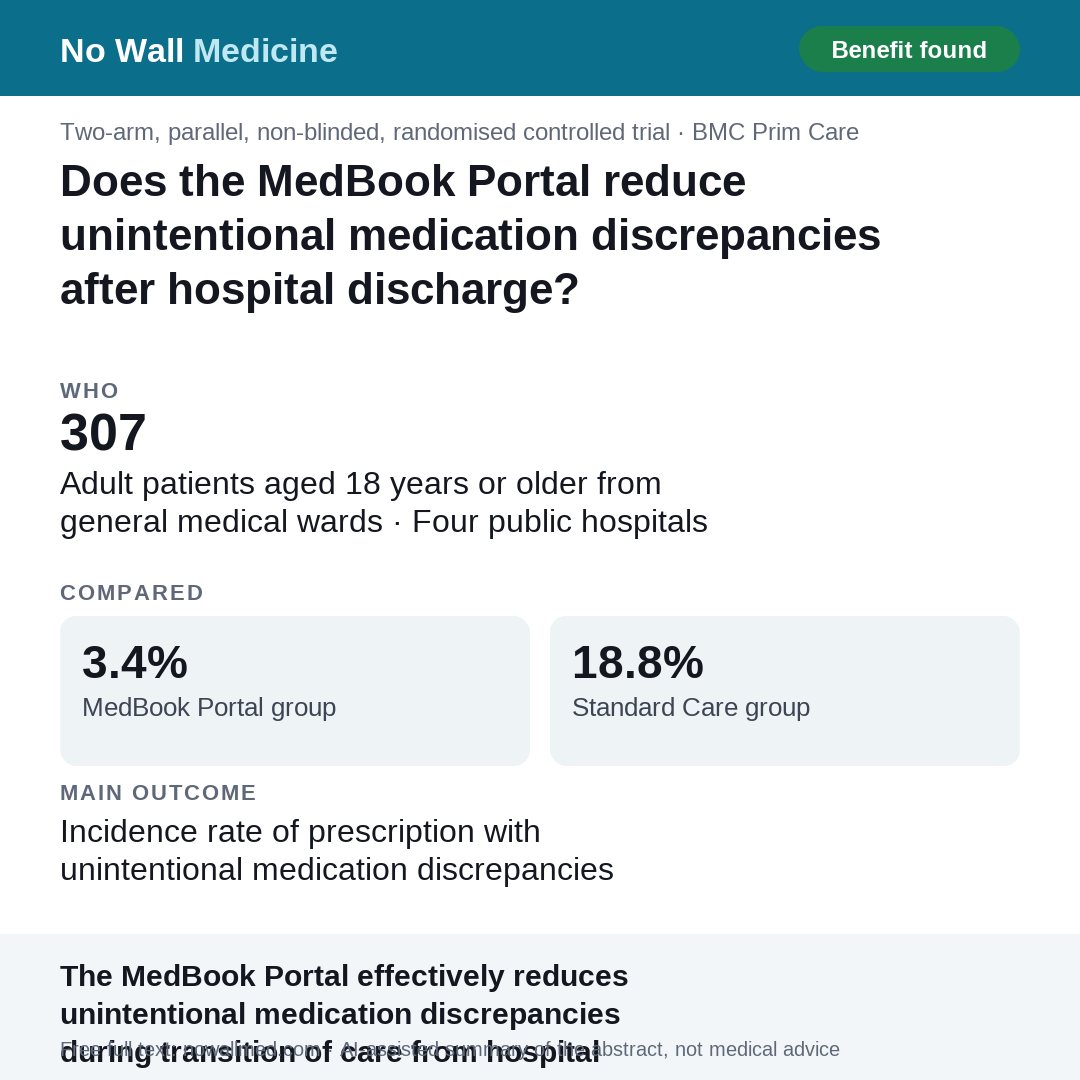
Effectiveness of digital platform in reducing unintentional medication discrepancies at transition of care from hospital discharge to primary healthcare settings: a randomised controlled trial
Two-arm, parallel, non-blinded, randomised controlled trialBenefit found
Does the MedBook Portal reduce unintentional medication discrepancies after hospital discharge?
Who
307
Adult patients aged 18 years or older from general medical wards · Four public hospitals and ten public primary health clinics, Malaysia
Compared
3.4%MedBook Portal group
18.8%Standard Care group
Main outcome
Incidence rate of prescription with unintentional medication discrepancies
Result: adjusted odds ratio 0.134 (95% CI 0.049-0.336)
Bottom line: The MedBook Portal effectively reduces unintentional medication discrepancies during transition of care from hospital discharge to primary health clinics.
BMC Prim Care · 2025-07-02Download image
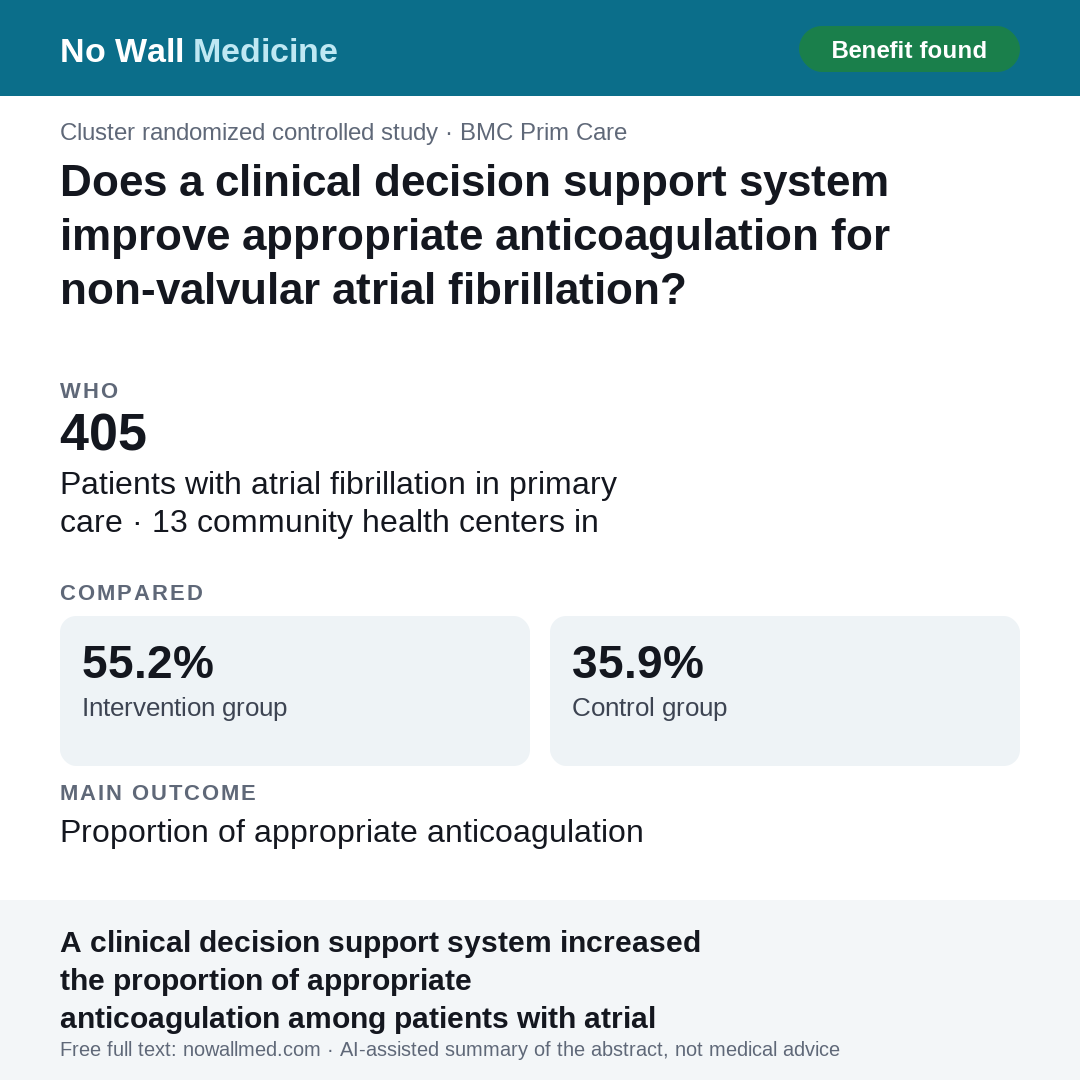
Effect of a clinical decision support system for non-valvular atrial fibrillation on improving appropriate anticoagulation treatment in China's primary care: a cluster randomized controlled trial
Cluster randomized controlled studyBenefit found
Does a clinical decision support system improve appropriate anticoagulation for non-valvular atrial fibrillation?
Who
405
Patients with atrial fibrillation in primary care · 13 community health centers in Shanghai, China
Compared
55.2%Intervention group
35.9%Control group
Main outcome
Proportion of appropriate anticoagulation
Result: relative risk 1.441 (95% CI 1.429-1.453)
Bottom line: A clinical decision support system increased the proportion of appropriate anticoagulation among patients with atrial fibrillation in primary care.
BMC Prim Care · 2025-07-02Download image
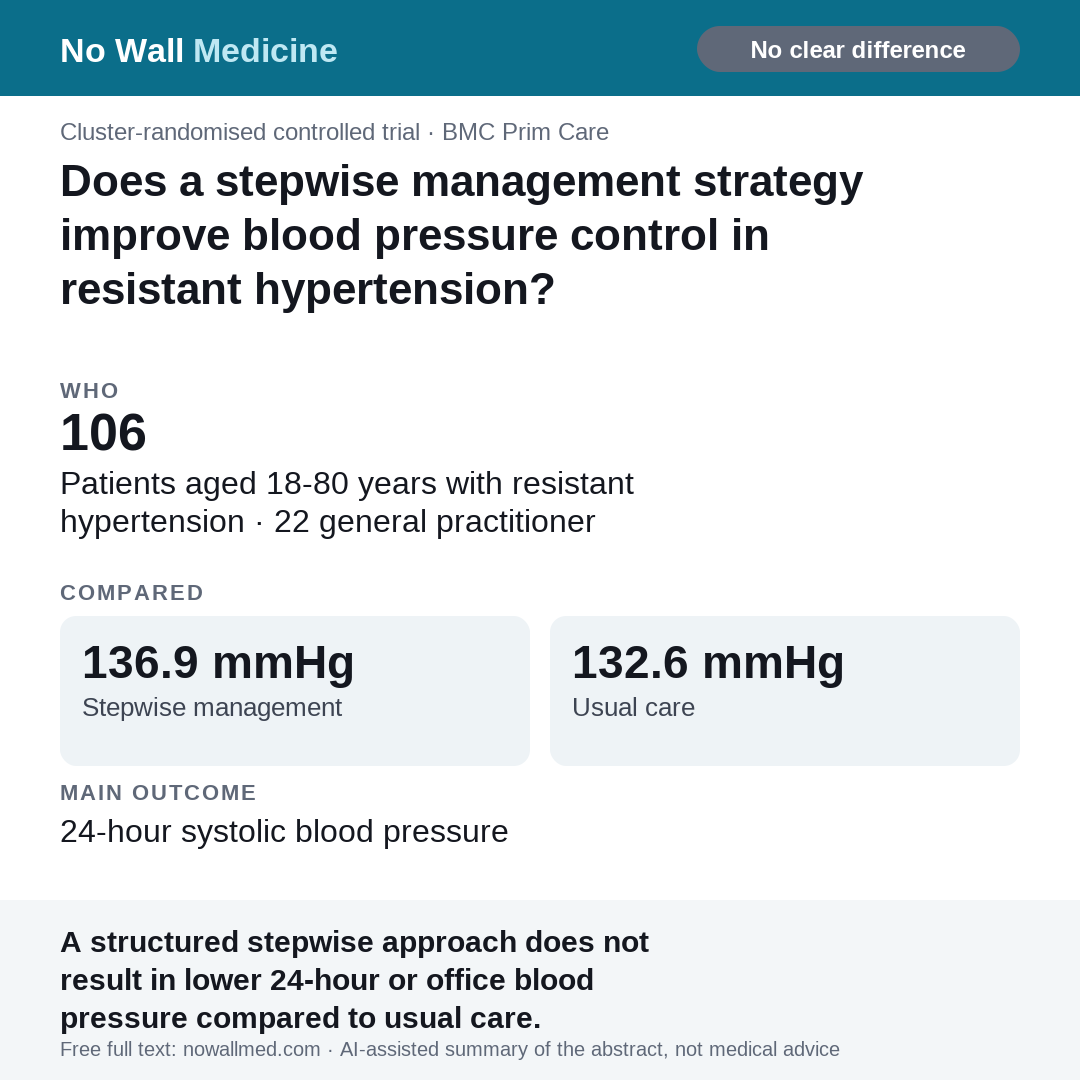
STEPWISE management of clinically apparent resistant hypertension in primary care: a cluster randomised controlled trial
Cluster-randomised controlled trialNo clear difference
Does a stepwise management strategy improve blood pressure control in resistant hypertension?
Who
106
Patients aged 18-80 years with resistant hypertension · 22 general practitioner practices
Compared
136.9 mmHgStepwise management
132.6 mmHgUsual care
Main outcome
24-hour systolic blood pressure
Bottom line: A structured stepwise approach does not result in lower 24-hour or office blood pressure compared to usual care.
BMC Prim Care · 2025-07-02Download image
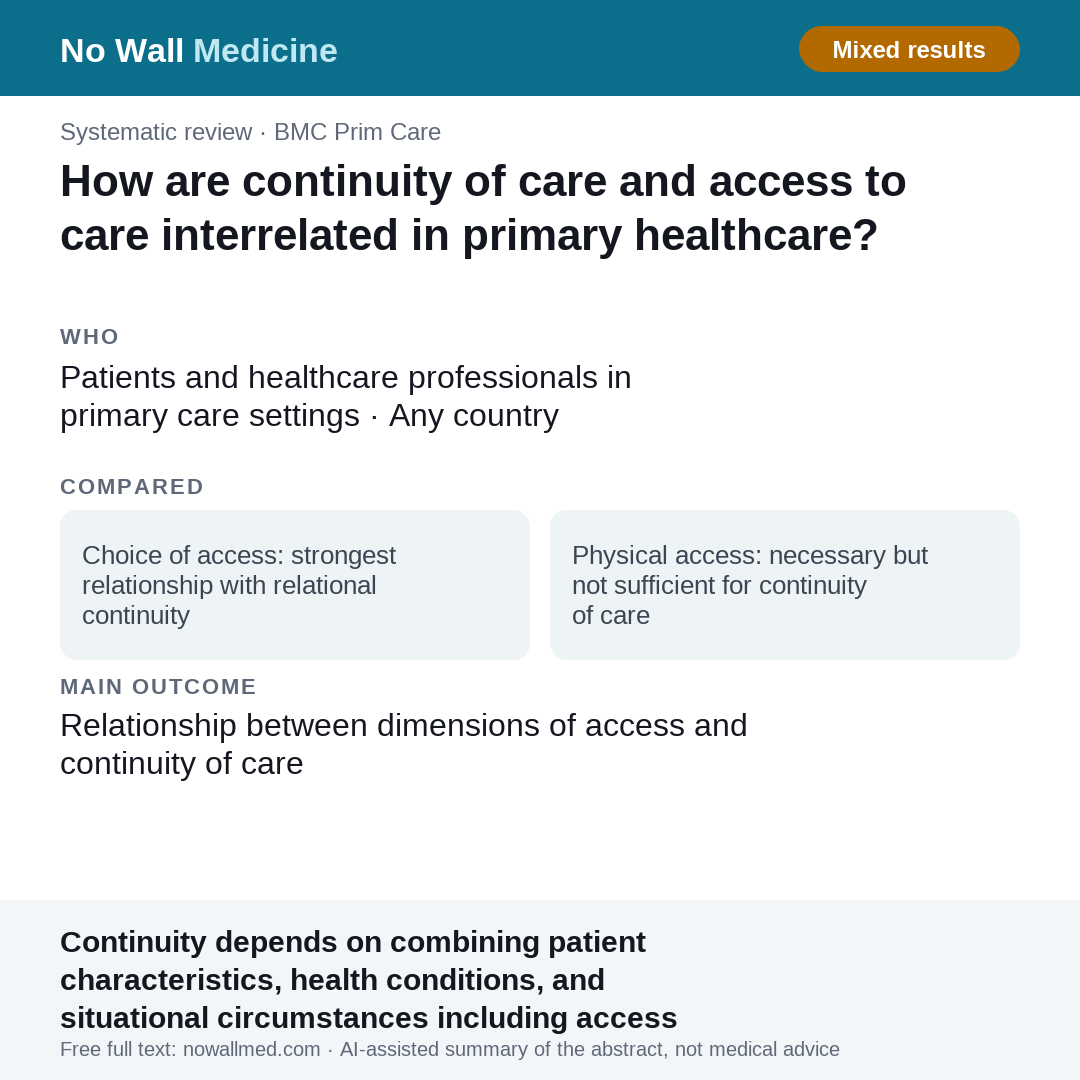
Access or continuity: a zero sum game? A systematic review of the literature examining the relationship between access and continuity in primary healthcare
Systematic reviewMixed results
How are continuity of care and access to care interrelated in primary healthcare?
Who
Patients and healthcare professionals in primary care settings · Any country
Compared
Choice of access: strongest relationship with relational continuity
Physical access: necessary but not sufficient for continuity of care
Main outcome
Relationship between dimensions of access and continuity of care
Bottom line: Continuity depends on combining patient characteristics, health conditions, and situational circumstances including access dimensions.
BMC Prim Care · 2025-07-02Download image
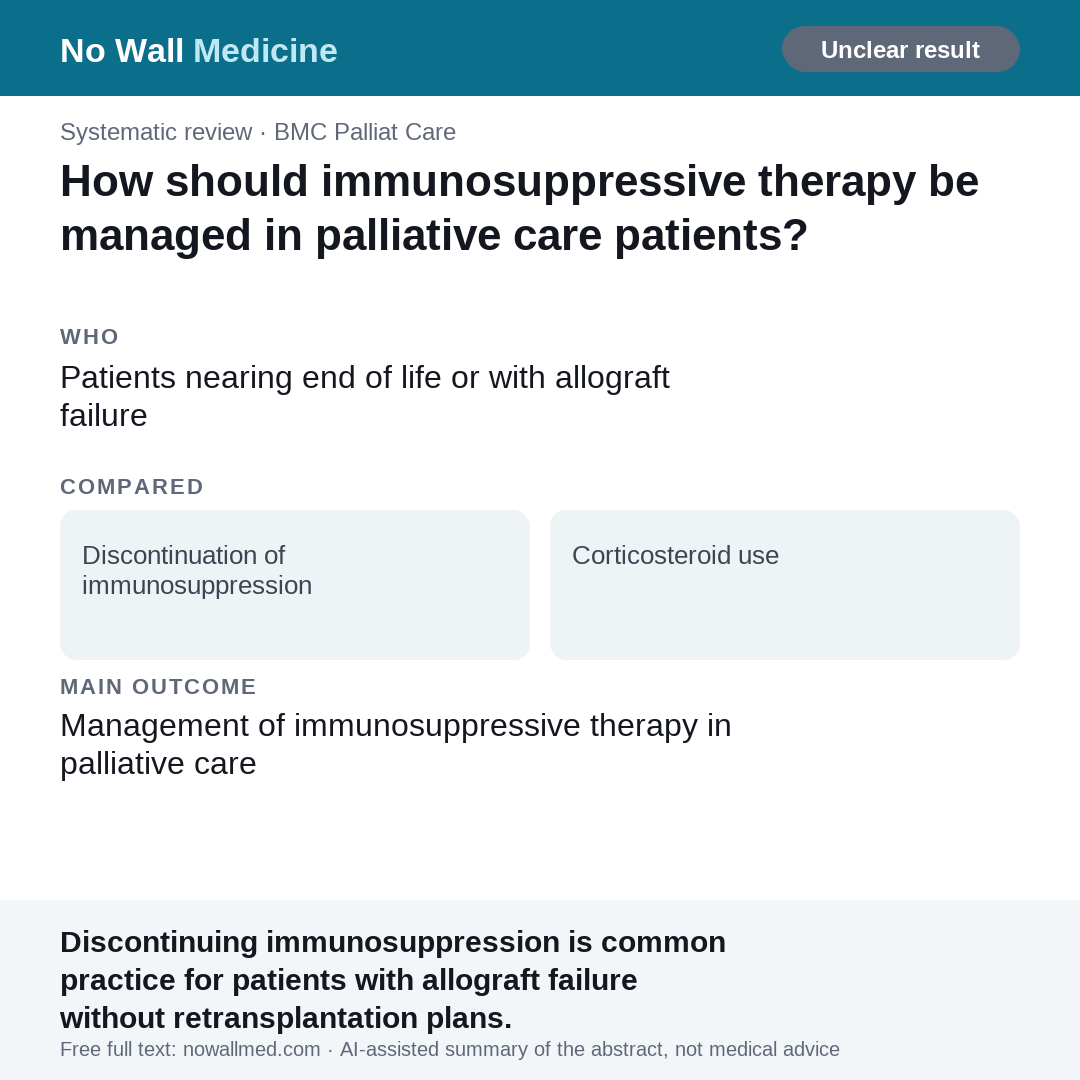
Immunosuppressant management in palliative care: a systematic review
Systematic reviewUnclear result
How should immunosuppressive therapy be managed in palliative care patients?
Who
Patients nearing end of life or with allograft failure
Compared
Discontinuation of immunosuppression
Corticosteroid use
Main outcome
Management of immunosuppressive therapy in palliative care
Bottom line: Discontinuing immunosuppression is common practice for patients with allograft failure without retransplantation plans.
BMC Palliat Care · 2025-07-02Download image
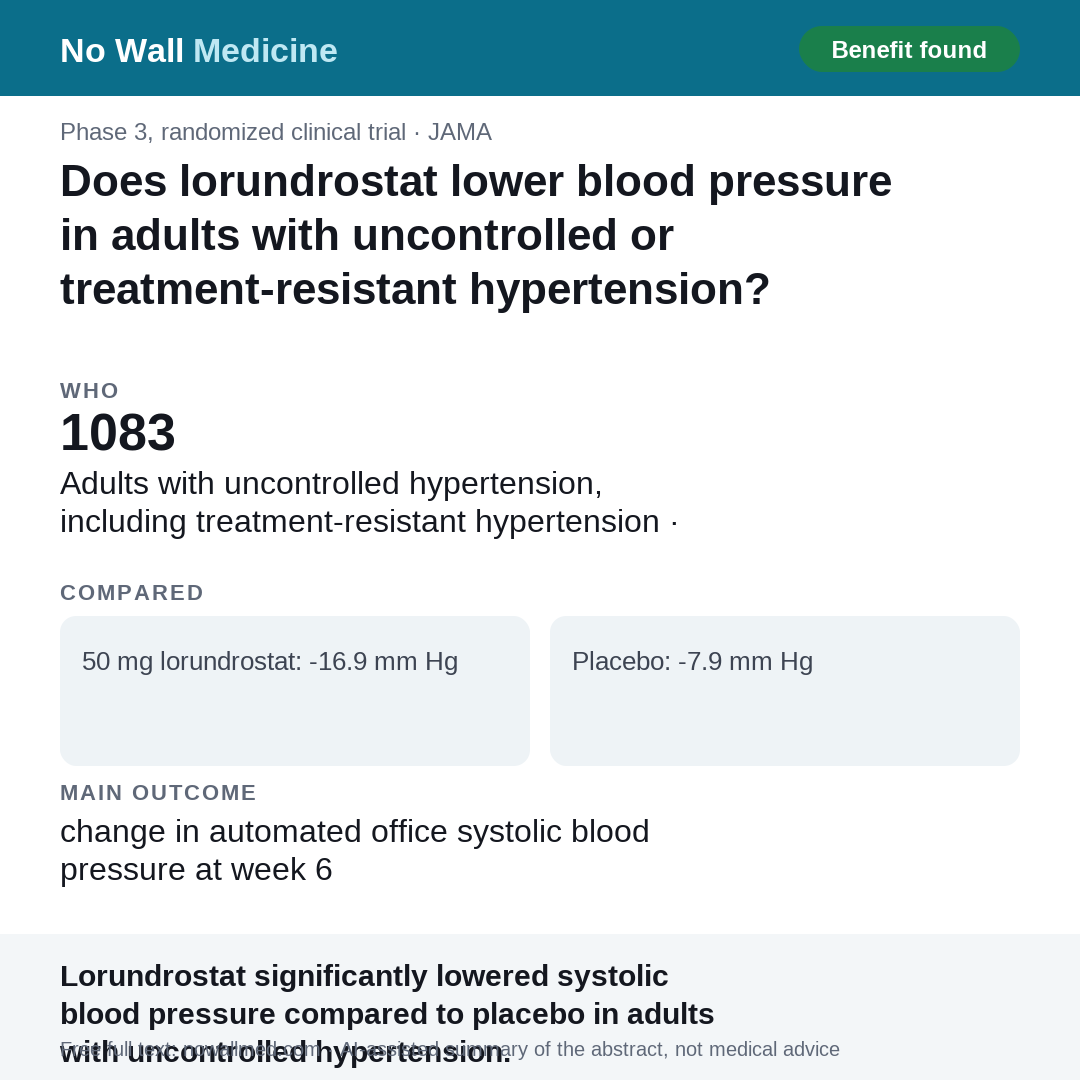
Lorundrostat in Participants With Uncontrolled Hypertension and Treatment-Resistant Hypertension: The Launch-HTN Randomized Clinical Trial
Phase 3, randomized clinical trialBenefit found
Does lorundrostat lower blood pressure in adults with uncontrolled or treatment-resistant hypertension?
Who
1083
Adults with uncontrolled hypertension, including treatment-resistant hypertension · 159 clinic sites across 13 countries
Compared
50 mg lorundrostat: -16.9 mm Hg
Placebo: -7.9 mm Hg
Main outcome
change in automated office systolic blood pressure at week 6
Result: least-squares mean difference, -9.1 mm Hg (95% CI, -13.3 to -4.9 mm Hg)
Bottom line: Lorundrostat significantly lowered systolic blood pressure compared to placebo in adults with uncontrolled hypertension.
JAMA · 2025-07-01Download image
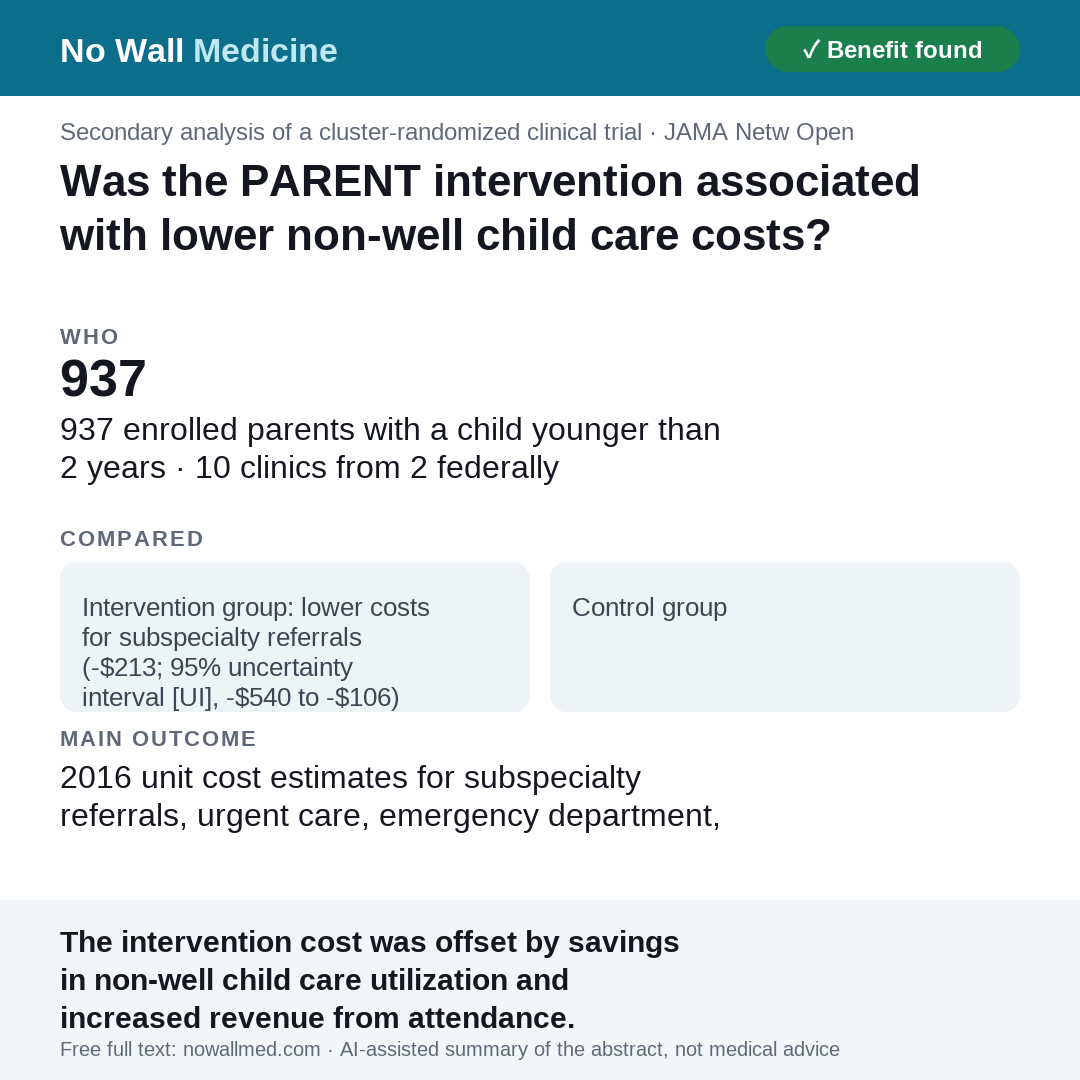
Cost Analysis of the PARENT Trial of Community Health Workers in Early Childhood Preventive Care: A Secondary Analysis of a Cluster-Randomized Clinical Trial
Secondary analysis of a cluster-randomized clinical trialBenefit found
Was the PARENT intervention associated with lower non-well child care costs?
Who
937
937 enrolled parents with a child younger than 2 years · 10 clinics from 2 federally qualified health centers
Compared
Intervention group: lower costs for subspecialty referrals (-$213; 95% uncertainty interval [UI], -$540 to -$106)
Control group
Main outcome
2016 unit cost estimates for subspecialty referrals, urgent care, emergency department, and hospitalizations
Result: -$70; 95% UI, -$150 to -$13 for total cost of urgent care, emergency department, and hospitalizations
Bottom line: The intervention cost was offset by savings in non-well child care utilization and increased revenue from attendance.
JAMA Netw Open · 2025-07-01Download image
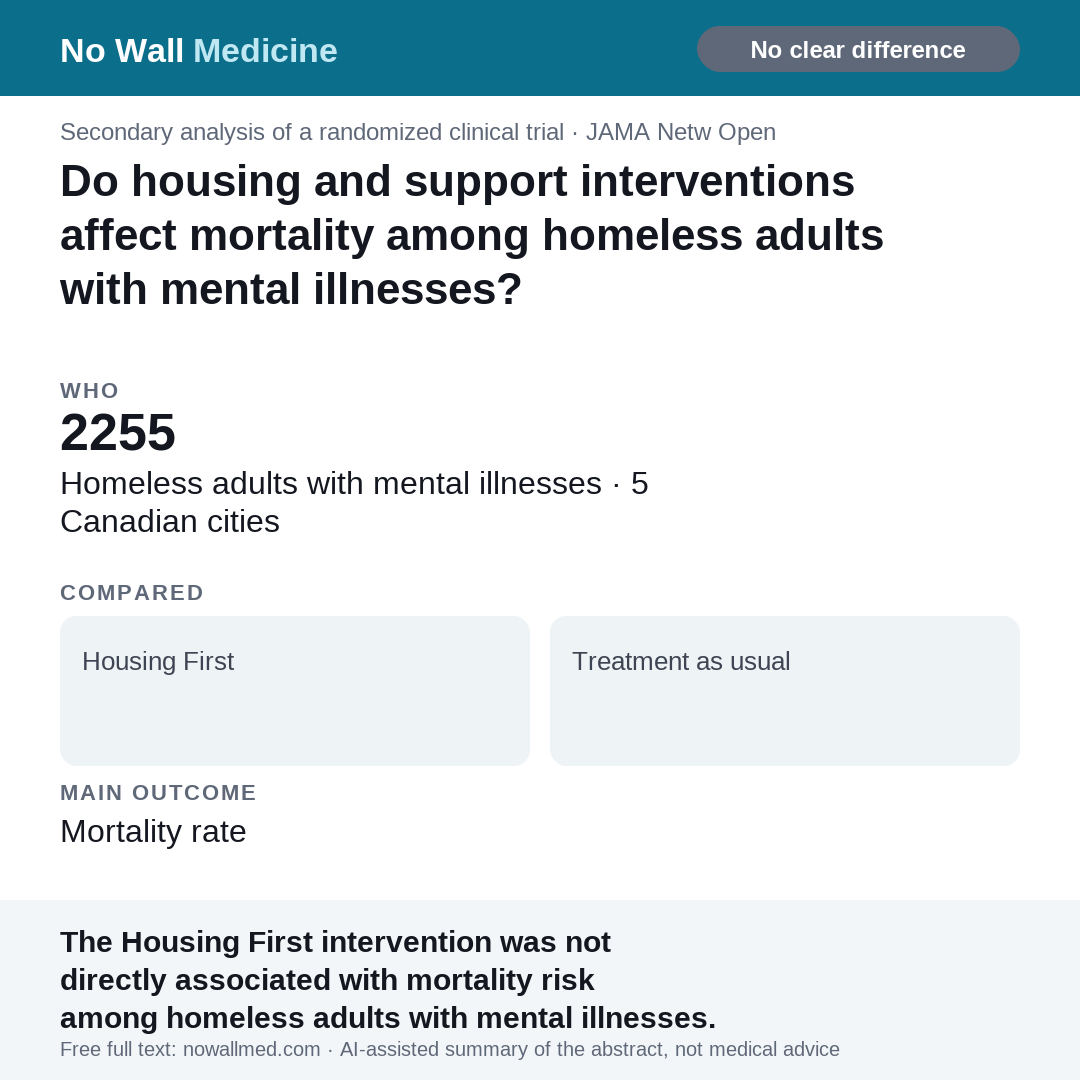
Housing and Support Intervention and Mortality Among Homeless Adults With Mental Illnesses: A Secondary Analysis of a Randomized Clinical Trial
Secondary analysis of a randomized clinical trialNo clear difference
Do housing and support interventions affect mortality among homeless adults with mental illnesses?
Who
2255
Homeless adults with mental illnesses · 5 Canadian cities
Compared
Housing First
Treatment as usual
Main outcome
Mortality rate
Result: adjusted hazard ratio 0.83 (95% CI 0.43-1.22)
Bottom line: The Housing First intervention was not directly associated with mortality risk among homeless adults with mental illnesses.
JAMA Netw Open · 2025-07-01Download image
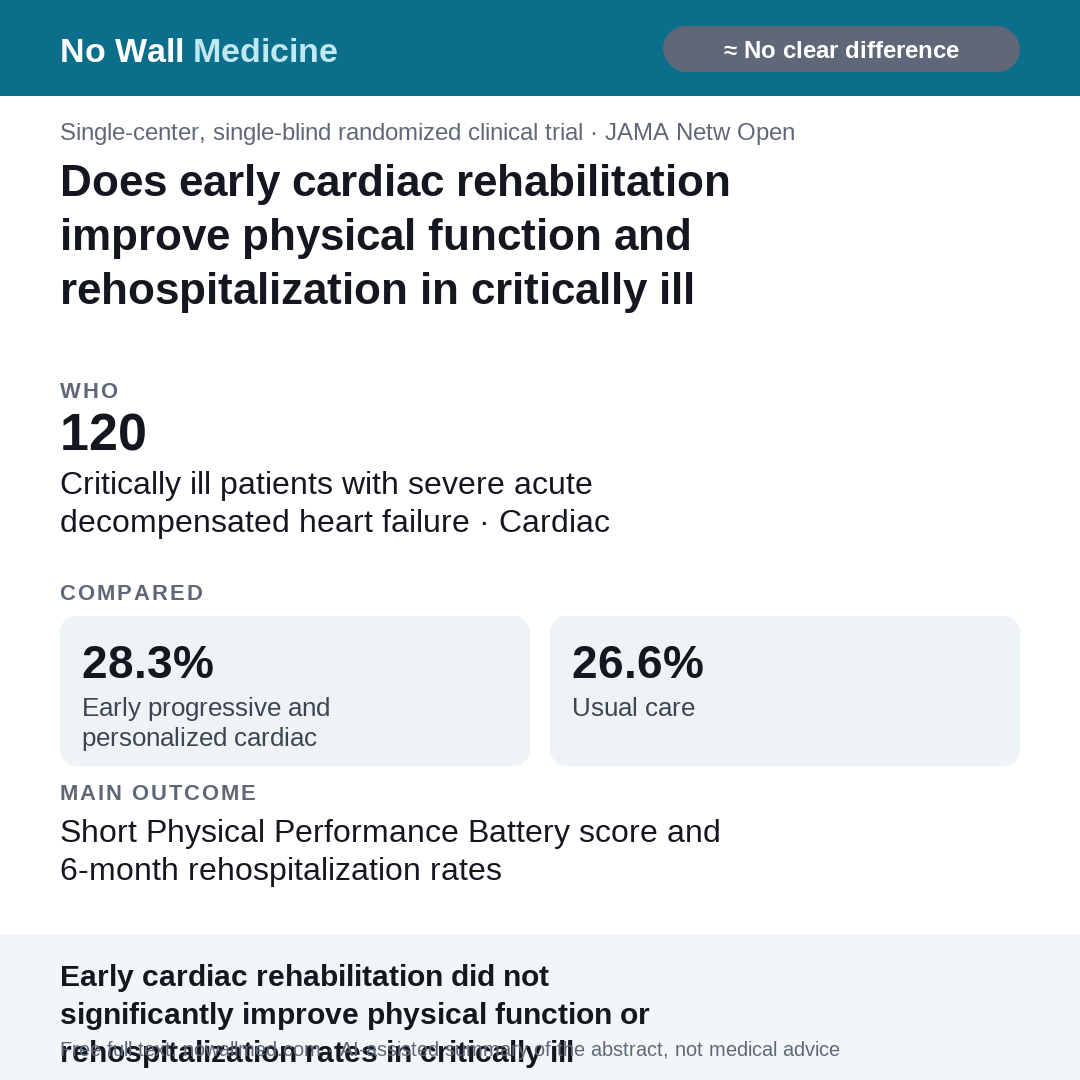
Early Cardiac Rehabilitation for Critically Ill Patients With Acute Decompensated Heart Failure: A Randomized Clinical Trial
Single-center, single-blind randomized clinical trialNo clear difference
Does early cardiac rehabilitation improve physical function and rehospitalization in critically ill heart failure patients?
Who
120
Critically ill patients with severe acute decompensated heart failure · Cardiac intensive care unit in China
Compared
28.3%Early progressive and personalized cardiac rehabilitation
26.6%Usual care
Main outcome
Short Physical Performance Battery score and 6-month rehospitalization rates
Result: hazard ratio 1.00 (95% CI 0.51-1.99)
Bottom line: Early cardiac rehabilitation did not significantly improve physical function or rehospitalization rates in critically ill heart failure patients.
JAMA Netw Open · 2025-07-01Download image