Visual abstracts
New randomized trials and meta-analyses from leading journals at a glance: who was studied, what was compared, and what was found. Every paper is free to read in full.
All specialtiesCardiology 1857Oncology 1599Gastroenterology & Hepatology 705Infectious Disease 1185Neurology 771Psychiatry & Mental Health 913Pulmonology 798Critical Care 540Endocrinology & Diabetes 1006Pediatrics 1107Surgery 943Orthopedics & Sports Medicine 348Neurosurgery 233Cardiothoracic & Vascular Surgery 204Plastic & Reconstructive Surgery 287Nephrology 382Rheumatology 260Hematology 404Dermatology 203Ophthalmology 222Obstetrics & Gynecology 610Public & Global Health 361Radiology & Imaging 255Anesthesiology 372Urology 319ENT (Otolaryngology) 249Emergency Medicine 209Allergy & Immunology 121Geriatrics 398Family Medicine & Primary Care 221Medical Genetics & Genomics 204Pathology & Laboratory Medicine 57Physical Medicine & Rehabilitation 327Palliative Care 168Nutrition 501Digital Health & AI 989General Medicine 144
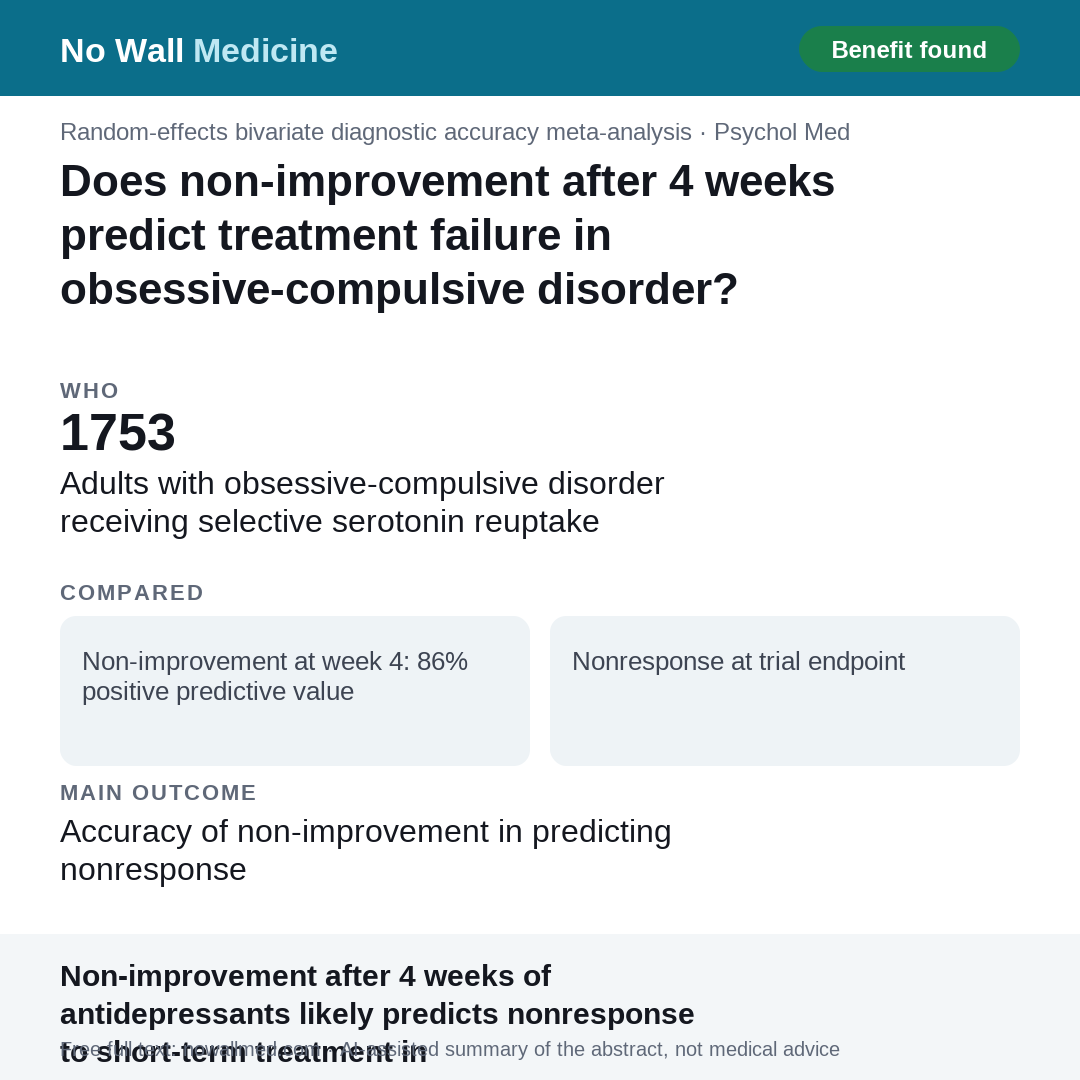
Does early non-improvement predict treatment failure in pharmacotherapy for obsessive-compulsive disorder? A diagnostic test accuracy meta-analysis with individual participant data
Random-effects bivariate diagnostic accuracy meta-analysisBenefit found
Does non-improvement after 4 weeks predict treatment failure in obsessive-compulsive disorder?
Who
1753
Adults with obsessive-compulsive disorder receiving selective serotonin reuptake inhibitors or clomipramine · Industry-sponsored short-term trials
Compared
Non-improvement at week 4: 86% positive predictive value
Nonresponse at trial endpoint
Main outcome
Accuracy of non-improvement in predicting nonresponse
Result: positive predictive value 86% (95% CI 83-88%)
Bottom line: Non-improvement after 4 weeks of antidepressants likely predicts nonresponse to short-term treatment in obsessive-compulsive disorder.
Funded by: Industry-sponsored
Psychol Med · 2025-08-15Download image
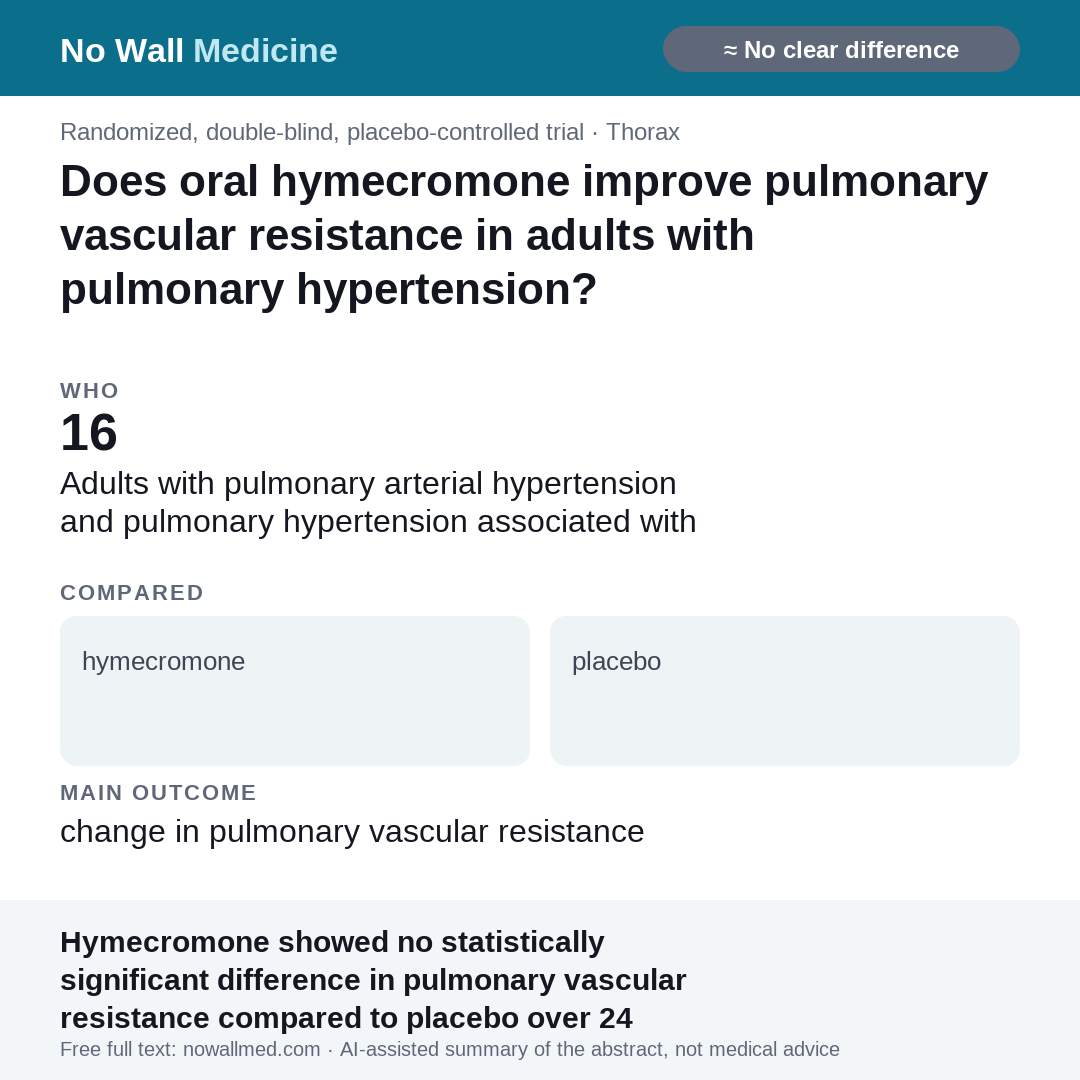
Randomised, placebo-controlled trial of oral hymecromone in adults with pulmonary hypertension
Randomized, double-blind, placebo-controlled trialNo clear difference
Does oral hymecromone improve pulmonary vascular resistance in adults with pulmonary hypertension?
Who
16
Adults with pulmonary arterial hypertension and pulmonary hypertension associated with interstitial lung disease
Compared
hymecromone
placebo
Main outcome
change in pulmonary vascular resistance
Result: mean difference 0.61 Wood unit, 95% CI -1.5 to 2.7
Bottom line: Hymecromone showed no statistically significant difference in pulmonary vascular resistance compared to placebo over 24 weeks.
Thorax · 2025-08-15Download image
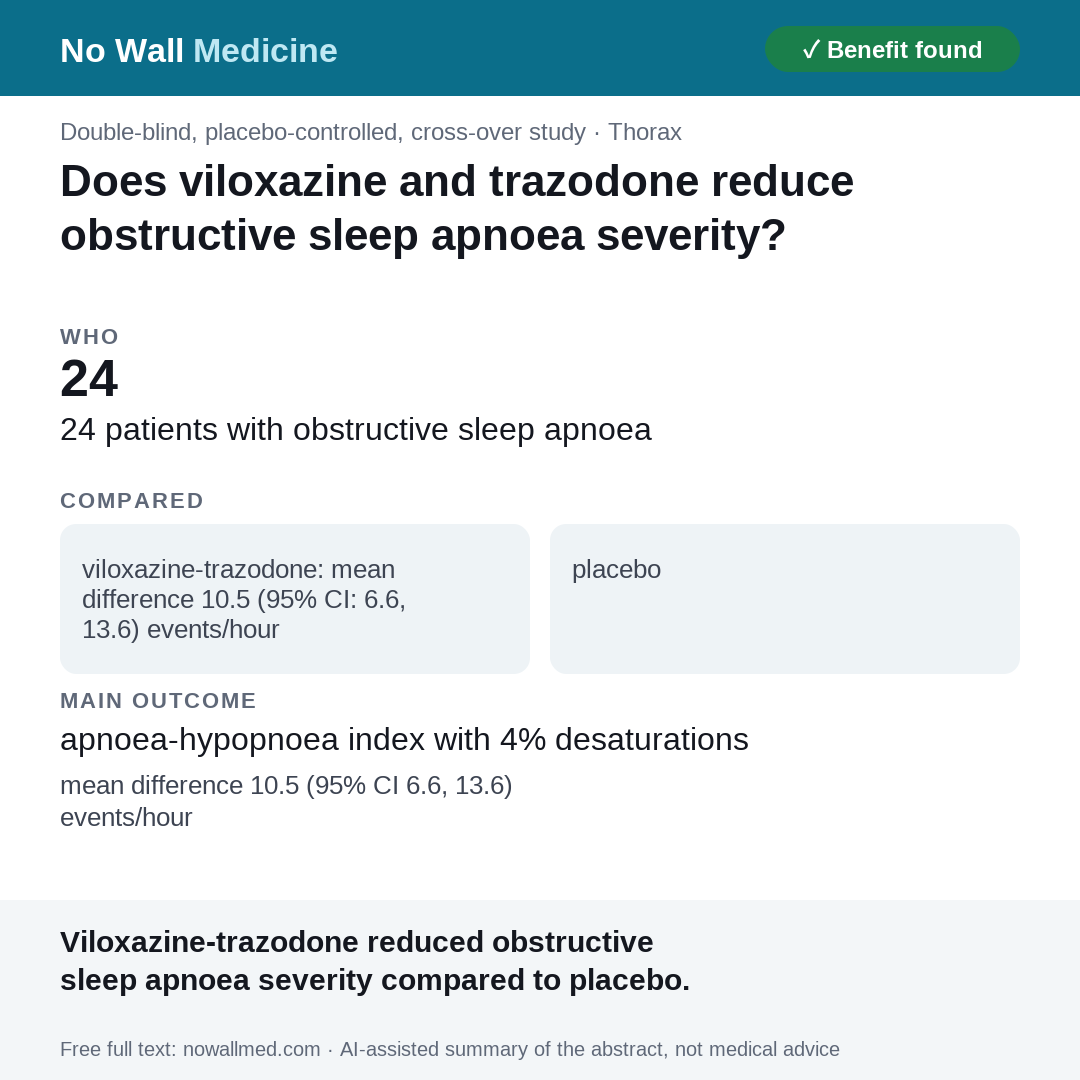
Effect of viloxazine and trazodone in obstructive sleep apnoea: a randomised, placebo-controlled, cross-over study
Double-blind, placebo-controlled, cross-over studyBenefit found
Does viloxazine and trazodone reduce obstructive sleep apnoea severity?
Who
24
24 patients with obstructive sleep apnoea
Compared
viloxazine-trazodone: mean difference 10.5 (95% CI: 6.6, 13.6) events/hour
placebo
Main outcome
apnoea-hypopnoea index with 4% desaturations
Result: mean difference 10.5 (95% CI 6.6, 13.6) events/hour
Bottom line: Viloxazine-trazodone reduced obstructive sleep apnoea severity compared to placebo.
Thorax · 2025-08-15Download image
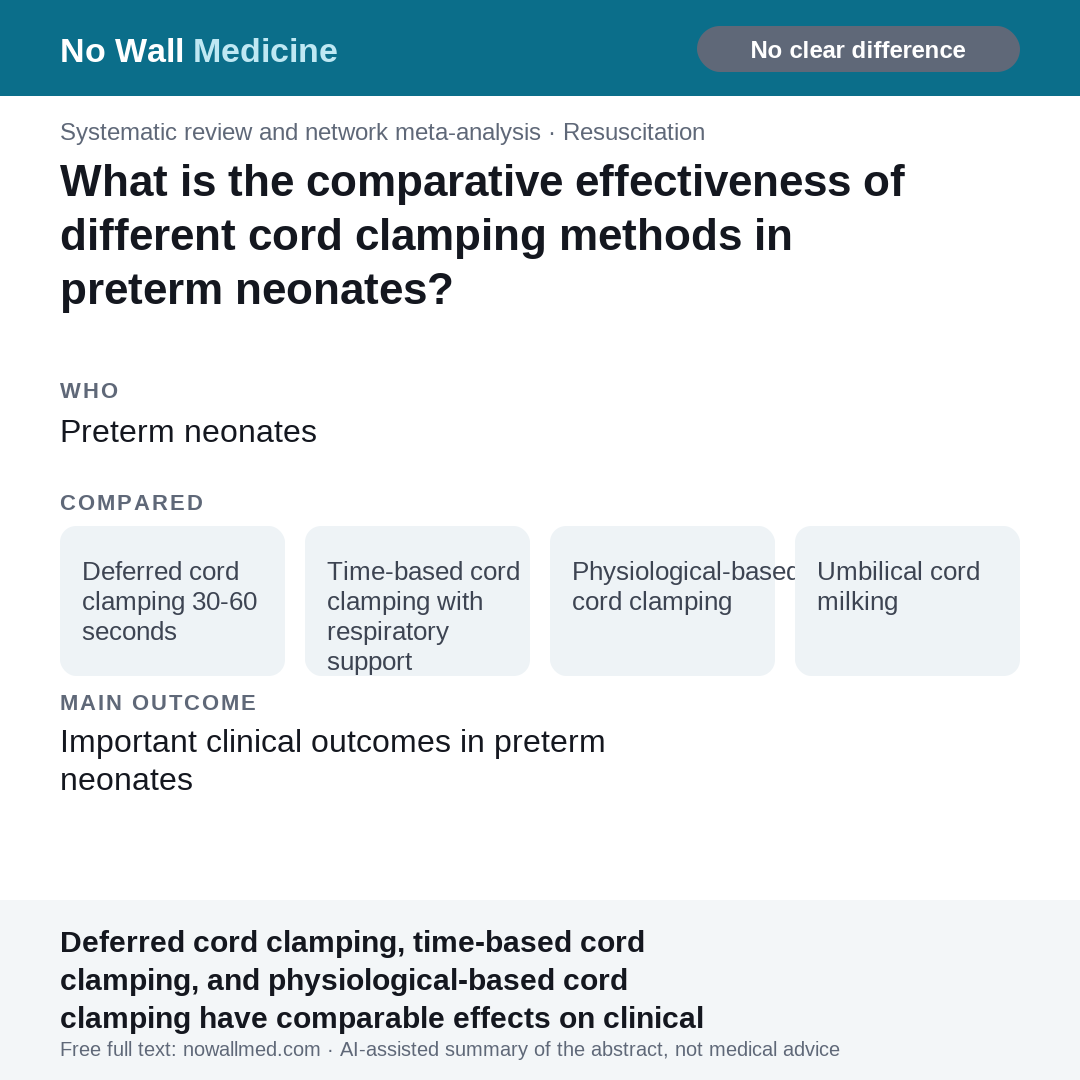
Respiratory stabilization before umbilical cord clamping in preterm neonates: a systematic review and network meta-analysis
Systematic review and network meta-analysisNo clear difference
What is the comparative effectiveness of different cord clamping methods in preterm neonates?
Who
Preterm neonates
Compared
Deferred cord clamping 30-60 seconds
Time-based cord clamping with respiratory support
Physiological-based cord clamping
Umbilical cord milking
Main outcome
Important clinical outcomes in preterm neonates
Bottom line: Deferred cord clamping, time-based cord clamping, and physiological-based cord clamping have comparable effects on clinical outcomes.
Resuscitation · 2025-08-15Download image
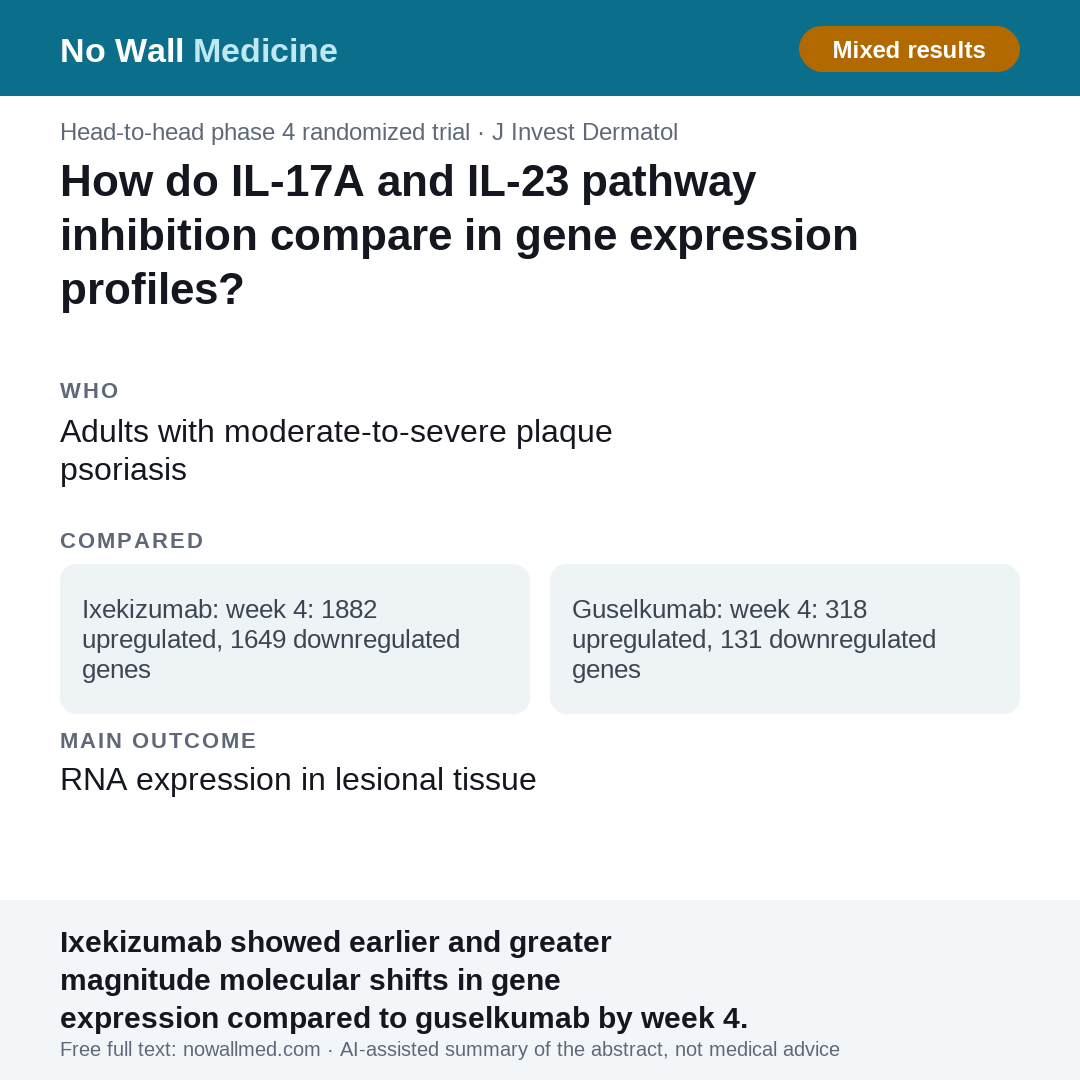
Comparative Molecular Analysis of IL-17A and IL-23 Pathway Inhibition in Moderate-to-Severe Psoriasis: 4-Week Results from IXORA-R
Head-to-head phase 4 randomized trialMixed results
How do IL-17A and IL-23 pathway inhibition compare in gene expression profiles?
Who
Adults with moderate-to-severe plaque psoriasis
Compared
Ixekizumab: week 4: 1882 upregulated, 1649 downregulated genes
Guselkumab: week 4: 318 upregulated, 131 downregulated genes
Main outcome
RNA expression in lesional tissue
Bottom line: Ixekizumab showed earlier and greater magnitude molecular shifts in gene expression compared to guselkumab by week 4.
J Invest Dermatol · 2025-08-15Download image
Anxiety and Depression in Adults With Vestibular Disorders: A Systematic Review and Meta-Analysis
Systematic review and meta-analysisHarm found
What is the prevalence and risk of anxiety and depression in adults with vestibular disorders?
Who
764,403
Adults with common vestibular disorders
Compared
Patients with vestibular disorders: anxiety 31.4%, depression 28.3%
Controls: anxiety 8.3%, depression 4.7%
Main outcome
Prevalence and risk of anxiety and depressive disorder
Result: anxiety RR 1.50 (95% CI 1.1-2.0), depression RR 2.9 (95% CI 1.8-4.4)
Bottom line: Adults with vestibular disorders have significantly higher rates and risks of anxiety and depression compared to controls.
Laryngoscope · 2025-08-15Download image

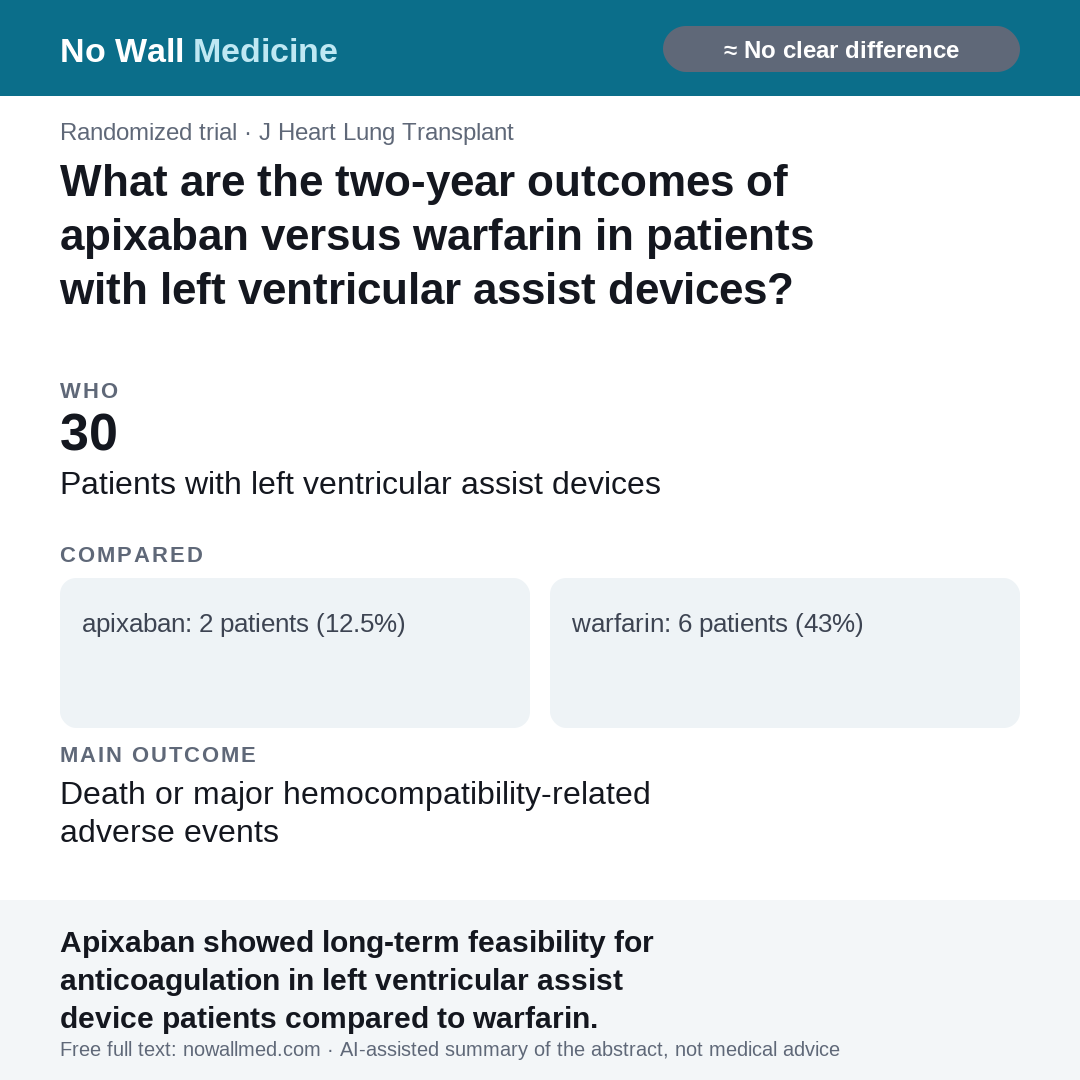
Two-year outcomes in the direct oral anticoagulant apixaban in left ventricular assist devices (DOAC LVAD) study
Randomized trialNo clear difference
What are the two-year outcomes of apixaban versus warfarin in patients with left ventricular assist devices?
Who
30
Patients with left ventricular assist devices
Compared
apixaban: 2 patients (12.5%)
warfarin: 6 patients (43%)
Main outcome
Death or major hemocompatibility-related adverse events
Bottom line: Apixaban showed long-term feasibility for anticoagulation in left ventricular assist device patients compared to warfarin.
J Heart Lung Transplant · 2025-08-15Download image
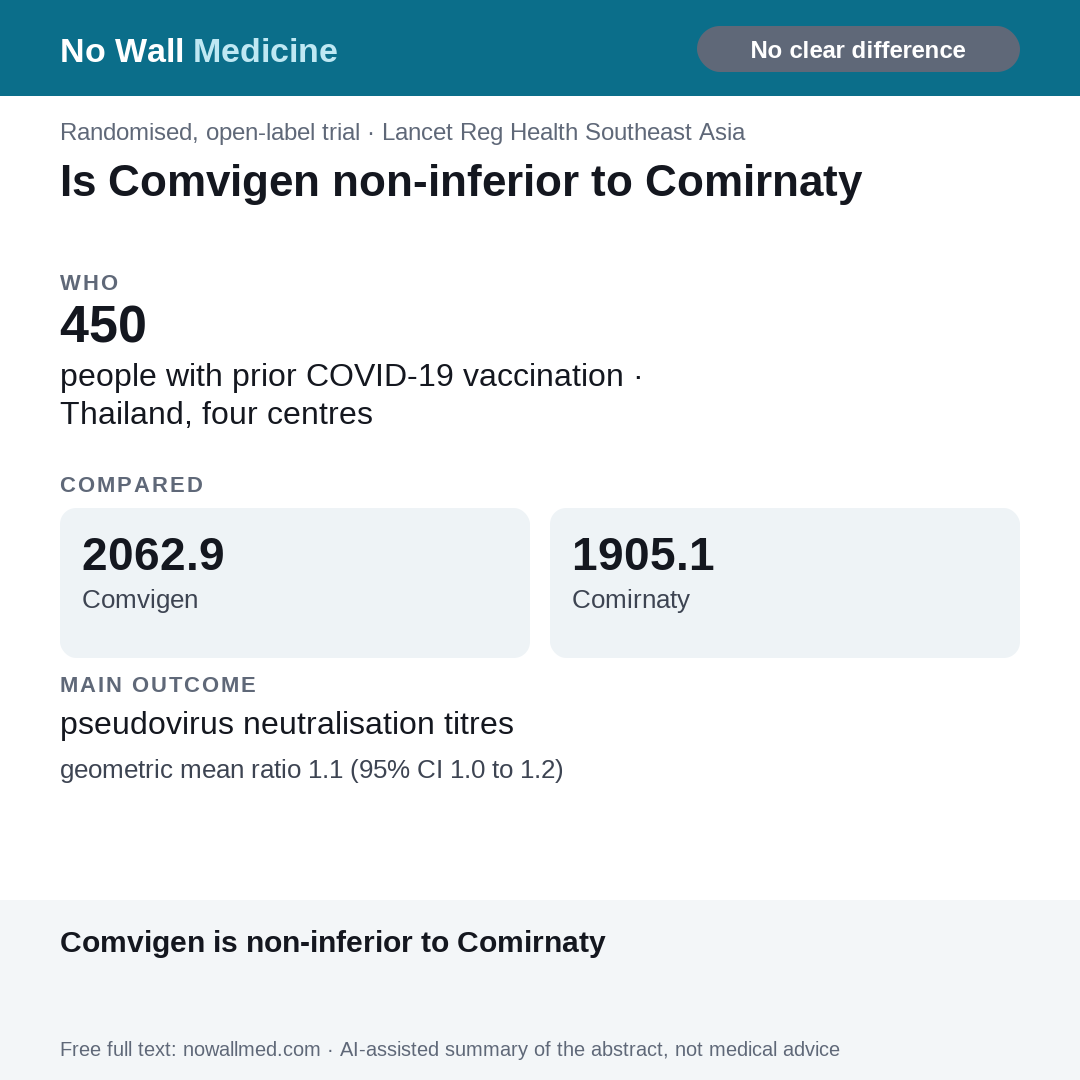
Immunogenicity and safety of 'Comvigen', a bivalent SARS-CoV-2 vaccine, in comparison to Comirnaty bivalent vaccine in Thailand: a phase 2, non-inferiority randomised trial
Randomised, open-label trialNo clear difference
Is Comvigen non-inferior to Comirnaty
Who
450
people with prior COVID-19 vaccination · Thailand, four centres
Compared
2062.9Comvigen
1905.1Comirnaty
Main outcome
pseudovirus neutralisation titres
Result: geometric mean ratio 1.1 (95% CI 1.0 to 1.2)
Bottom line: Comvigen is non-inferior to Comirnaty
Funded by: Thailand's National Economic
Lancet Reg Health Southeast Asia · 2025-08-15Download image
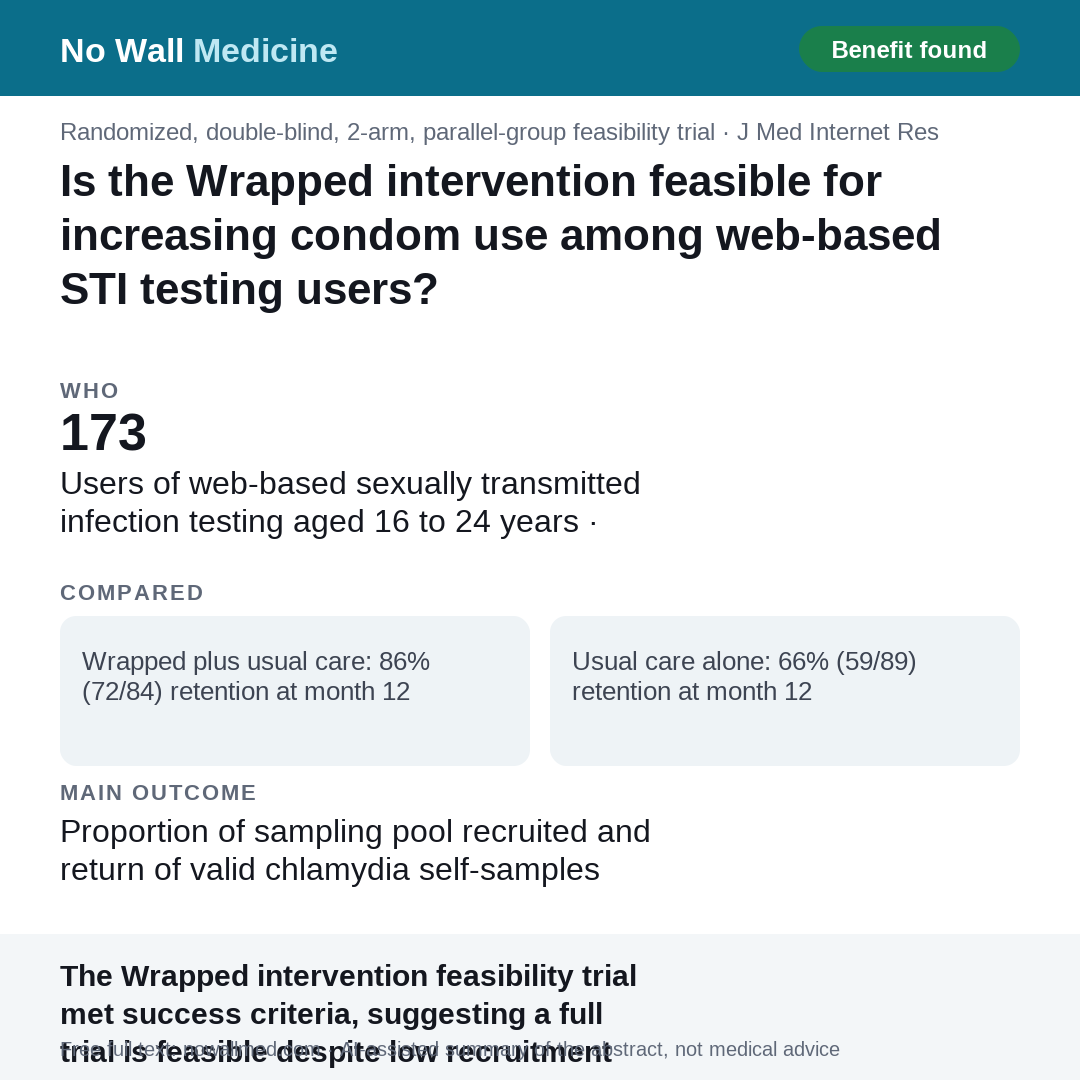
Intervention to Increase Condom Use Among Users of Sexually Transmitted Infection (STI) Self-Sampling Websites (Wrapped): Feasibility Randomized Controlled Trial
Randomized, double-blind, 2-arm, parallel-group feasibility trialBenefit found
Is the Wrapped intervention feasible for increasing condom use among web-based STI testing users?
Who
173
Users of web-based sexually transmitted infection testing aged 16 to 24 years · Web-based sexually transmitted infection testing services
Compared
Wrapped plus usual care: 86% (72/84) retention at month 12
Usual care alone: 66% (59/89) retention at month 12
Main outcome
Proportion of sampling pool recruited and return of valid chlamydia self-samples
Result: 75.7% (131/173; 95% CI 68.6-81.9) valid chlamydia self-samples at month 12
Bottom line: The Wrapped intervention feasibility trial met success criteria, suggesting a full trial is feasible despite low recruitment rates.
J Med Internet Res · 2025-08-15Download image
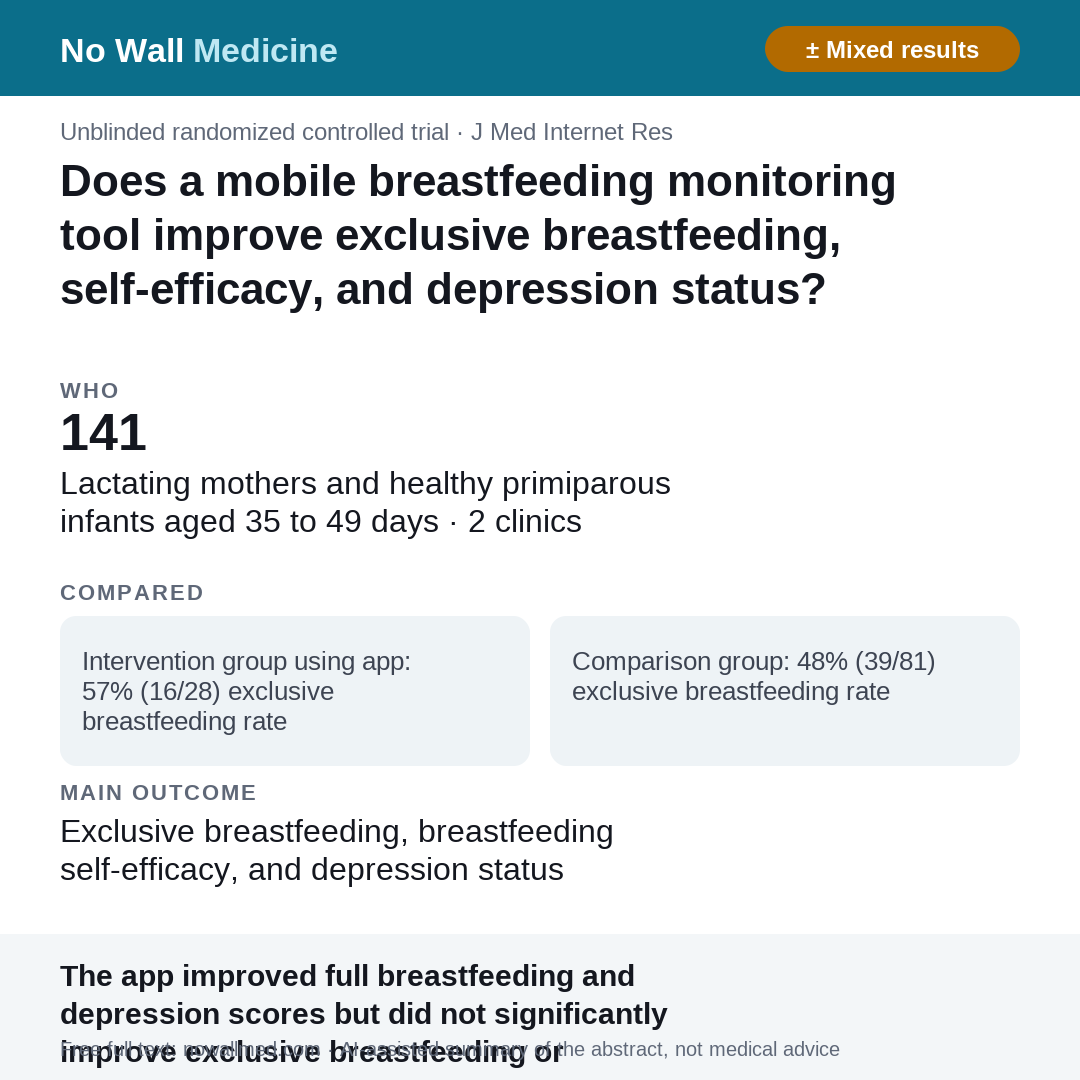
Effectiveness of a Mobile Breastfeeding Monitoring Tool Among Mothers in WeChat Groups on Breastfeeding Exclusivity and Self-Efficacy: Intention-to-Treat and Per-Protocol Analyses of a Randomized Controlled Trial
Unblinded randomized controlled trialMixed results
Does a mobile breastfeeding monitoring tool improve exclusive breastfeeding, self-efficacy, and depression status?
Who
141
Lactating mothers and healthy primiparous infants aged 35 to 49 days · 2 clinics
Compared
Intervention group using app: 57% (16/28) exclusive breastfeeding rate
Comparison group: 48% (39/81) exclusive breastfeeding rate
Main outcome
Exclusive breastfeeding, breastfeeding self-efficacy, and depression status
Result: odds ratio 1.44 (95% CI 0.60-3.41)
Bottom line: The app improved full breastfeeding and depression scores but did not significantly improve exclusive breastfeeding or self-efficacy.
J Med Internet Res · 2025-08-15Download image
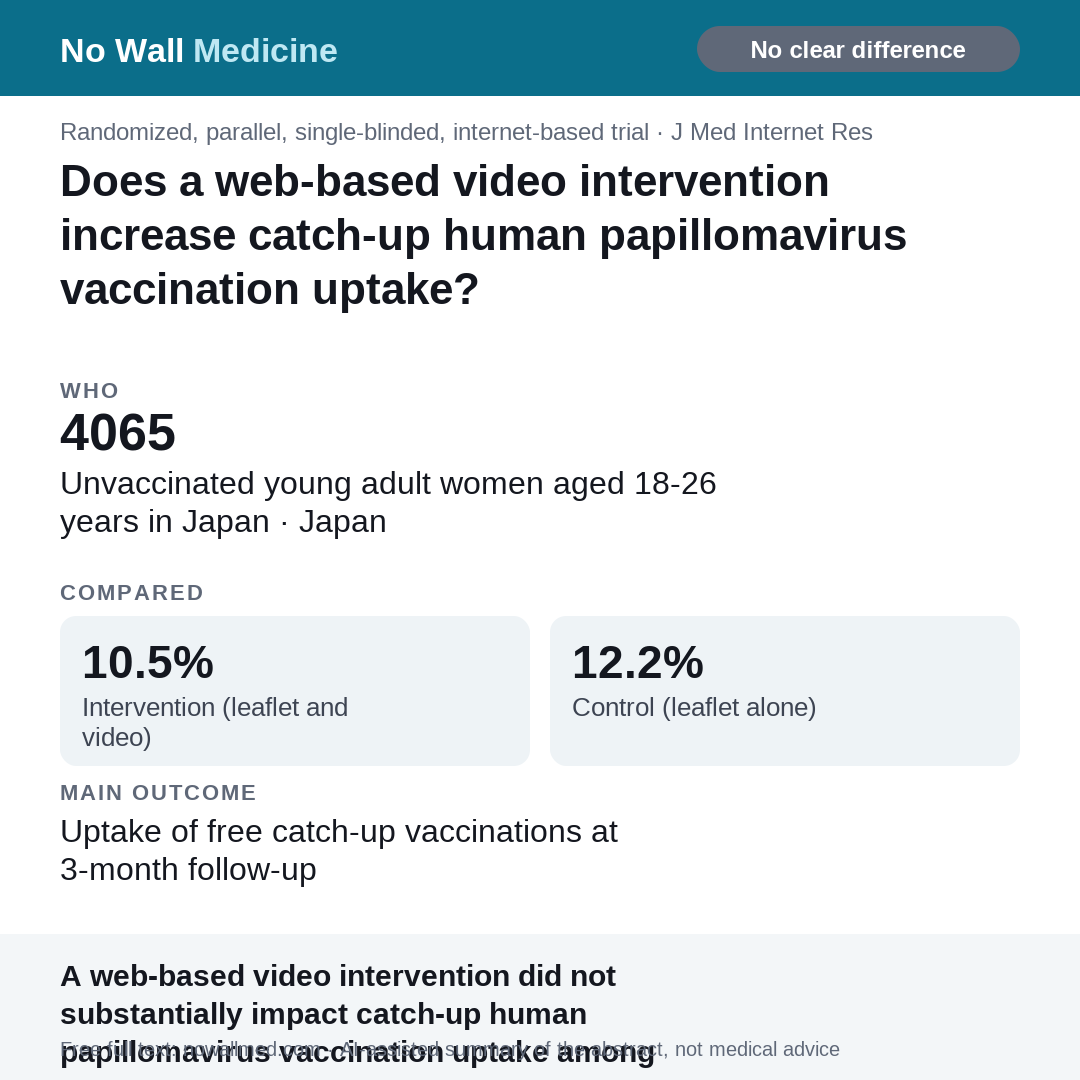
Web-Based Video Intervention and Associated Factors for the Uptake of the Catch-Up Human Papillomavirus Vaccination in Japan: Randomized Controlled Trial
Randomized, parallel, single-blinded, internet-based trialNo clear difference
Does a web-based video intervention increase catch-up human papillomavirus vaccination uptake?
Who
4065
Unvaccinated young adult women aged 18-26 years in Japan · Japan
Compared
10.5%Intervention (leaflet and video) (107/1017)
12.2%Control (leaflet alone) (121/993)
Main outcome
Uptake of free catch-up vaccinations at 3-month follow-up
Result: -1.7% (95% CI -4.5 to 1.2%)
Bottom line: A web-based video intervention did not substantially impact catch-up human papillomavirus vaccination uptake among young adult women.
Limitation: 63.8% of women did not respond to the follow-up survey
J Med Internet Res · 2025-08-15Download image
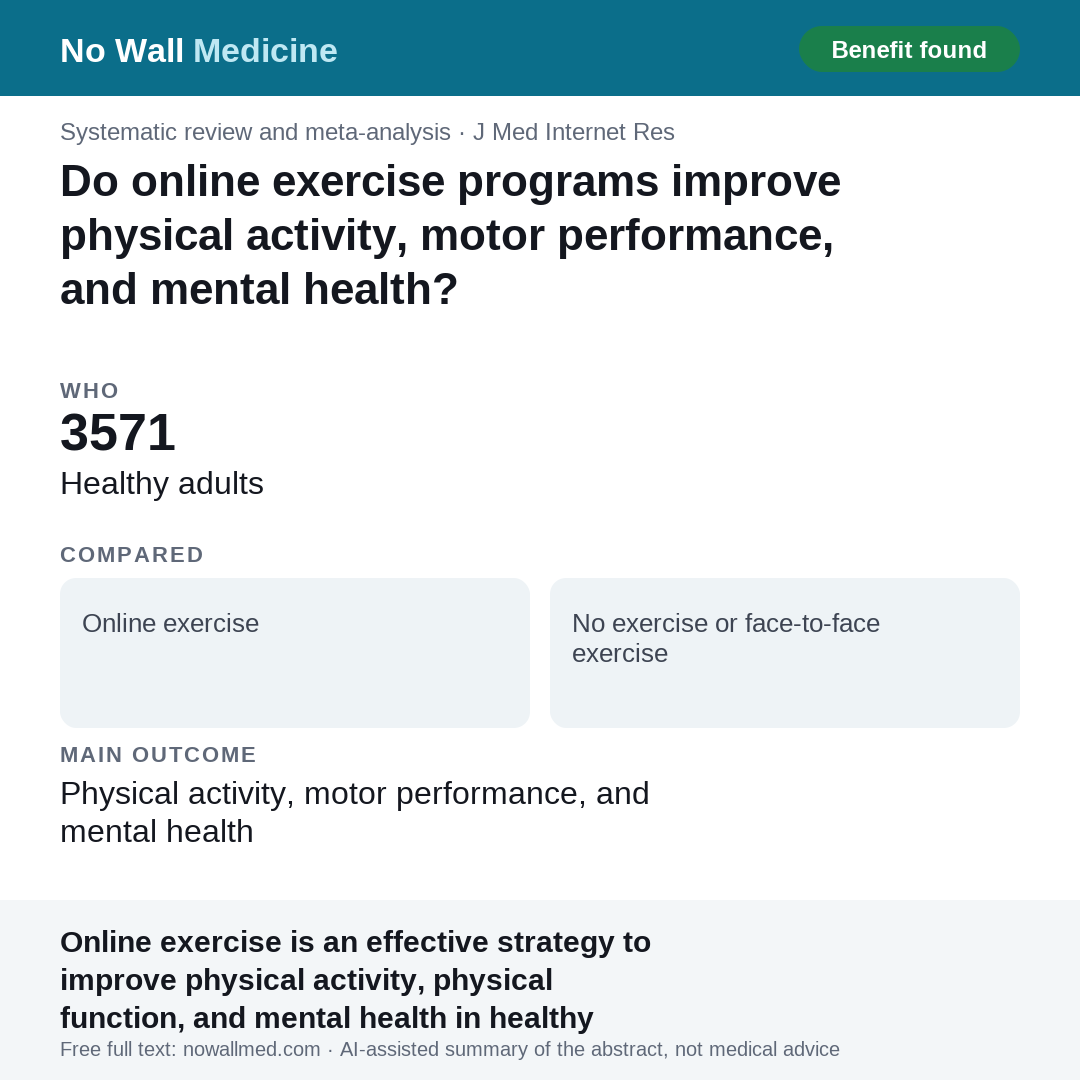
The Effectiveness of Online Exercise on Physical Activity, Motor Function, and Mental Health: Systematic Review and Meta-Analysis
Systematic review and meta-analysisBenefit found
Do online exercise programs improve physical activity, motor performance, and mental health?
Who
3571
Healthy adults
Compared
Online exercise
No exercise or face-to-face exercise
Main outcome
Physical activity, motor performance, and mental health
Bottom line: Online exercise is an effective strategy to improve physical activity, physical function, and mental health in healthy adults.
Limitation: Small total number of studies and substantial between-trial heterogeneity for some outcomes.
J Med Internet Res · 2025-08-15Download image
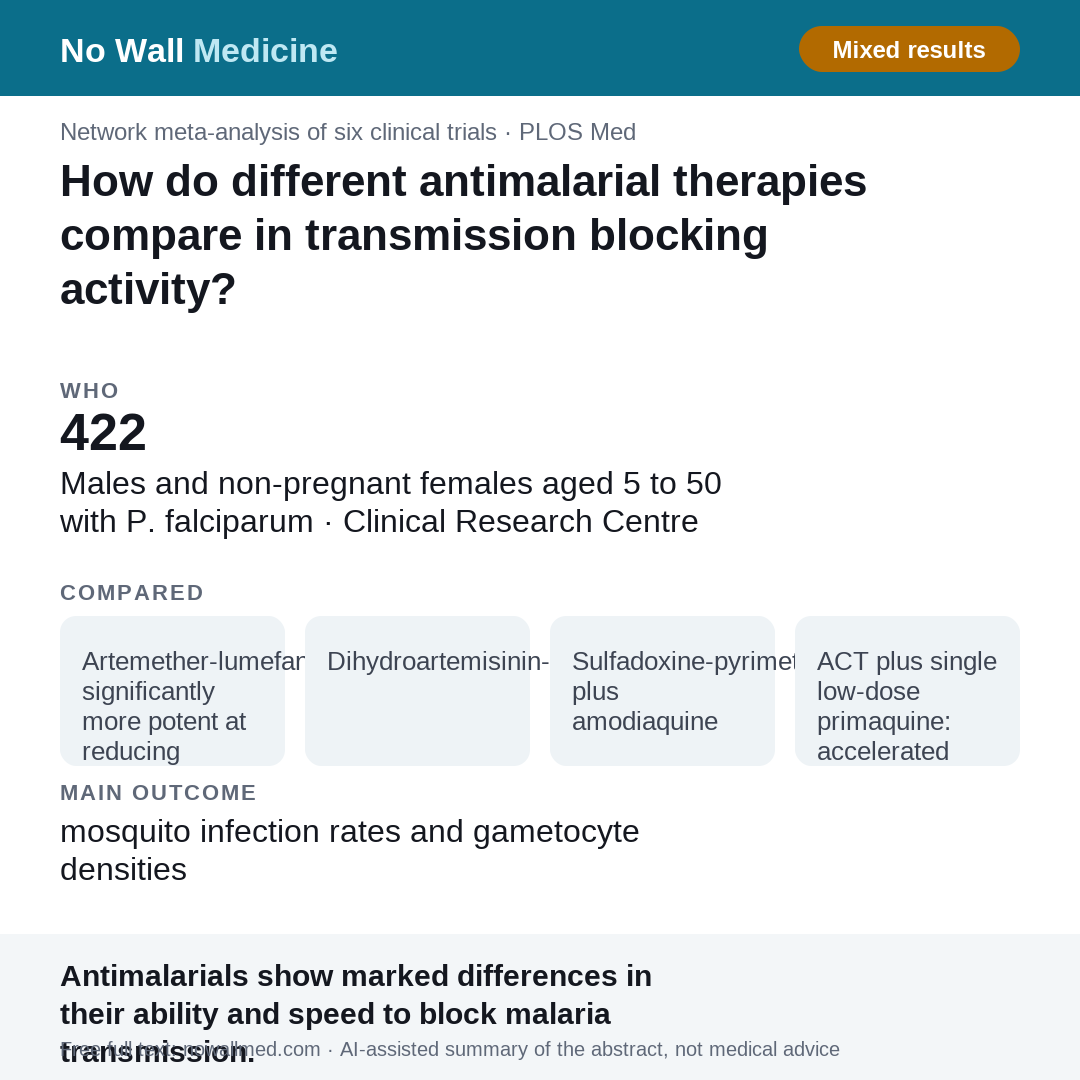
The transmission blocking activity of artemisinin-combination, non-artemisinin, and 8-aminoquinoline antimalarial therapies: A pooled analysis of individual participant data
Network meta-analysis of six clinical trialsMixed results
How do different antimalarial therapies compare in transmission blocking activity?
Who
422
Males and non-pregnant females aged 5 to 50 with P. falciparum · Clinical Research Centre in Mali
Compared
Artemether-lumefantrine: significantly more potent at reducing mosquito infection rates within 48 h
Dihydroartemisinin-piperaquine
Sulfadoxine-pyrimethamine plus amodiaquine
ACT plus single low-dose primaquine: accelerated gametocyte clearance and greater reduction in mosquito infection rate
Main outcome
mosquito infection rates and gametocyte densities
Bottom line: Antimalarials show marked differences in their ability and speed to block malaria transmission.
Limitation: Inclusion of highly infectious individuals and small sample sizes in some treatment groups.
PLOS Med · 2025-08-14Download image
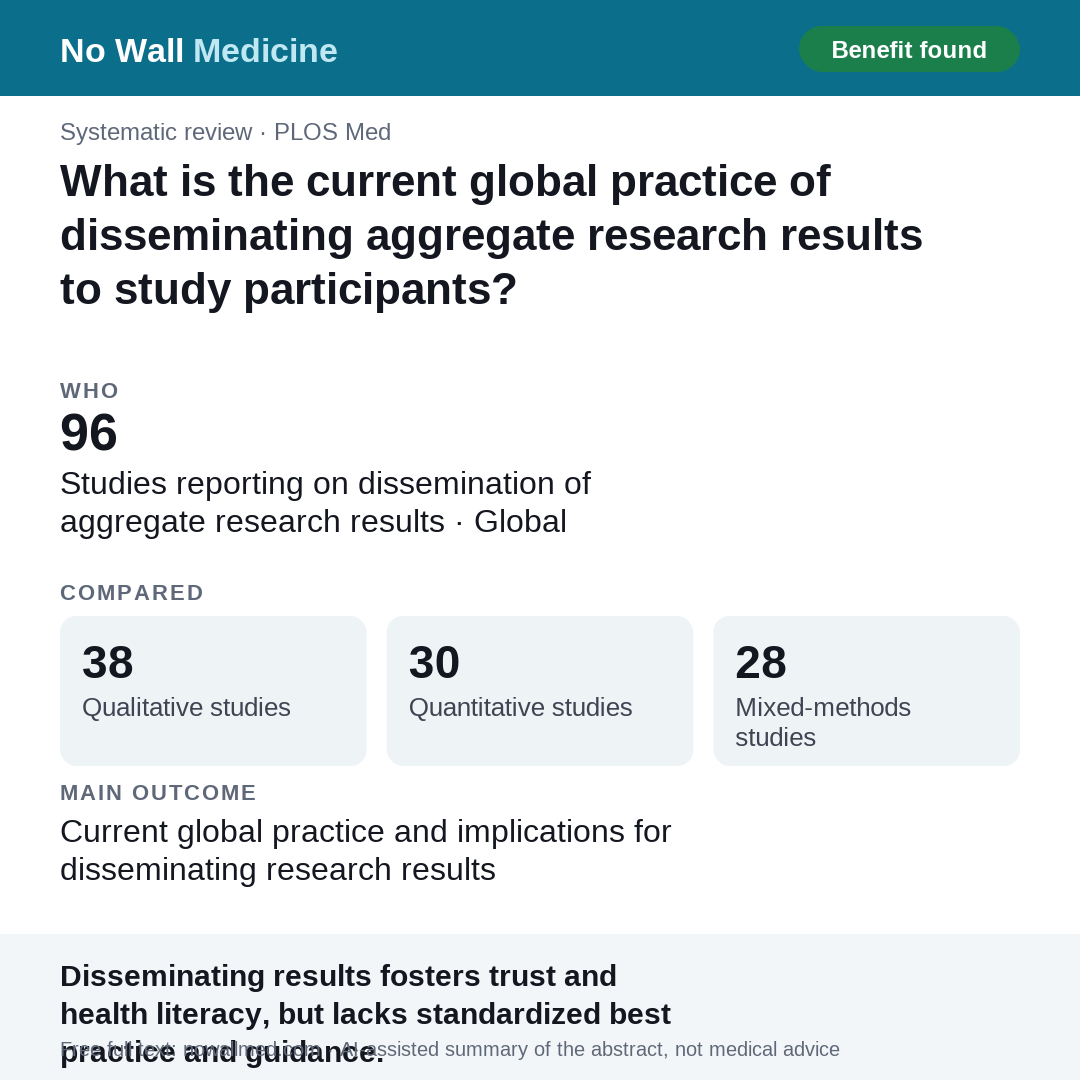
Current global practice and implications for future research on disseminating health research results to study participants: A systematic review
Systematic reviewBenefit found
What is the current global practice of disseminating aggregate research results to study participants?
Who
96
Studies reporting on dissemination of aggregate research results · Global
Compared
38Qualitative studies
30Quantitative studies
28Mixed-methods studies
Main outcome
Current global practice and implications for disseminating research results
Bottom line: Disseminating results fosters trust and health literacy, but lacks standardized best practice and guidance.
Limitation: Synthesis of the literature is challenging given the heterogeneity of the studies included.
PLOS Med · 2025-08-14Download image
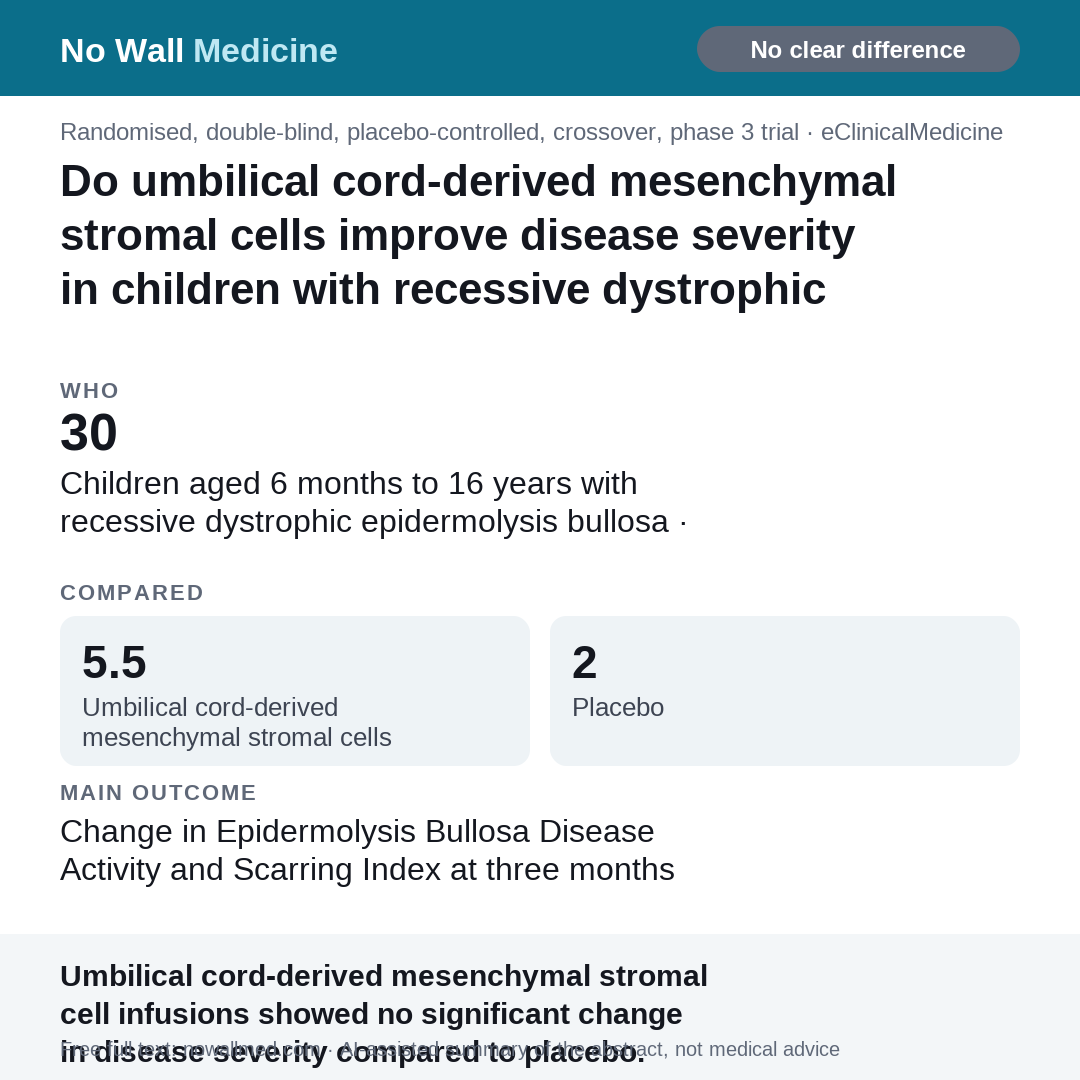
Mesenchymal stromal cell infusions of umbilical cord-derived mesenchymal stromal cells in children with recessive dystrophic epidermolysis bullosa (MissionEB): a randomised, double-blind, placebo controlled, crossover, phase 3 trial with an internal phase 1 dose de-escalation phase
Randomised, double-blind, placebo-controlled, crossover, phase 3 trialNo clear difference
Do umbilical cord-derived mesenchymal stromal cells improve disease severity in children with recessive dystrophic epidermolysis bullosa?
Who
30
Children aged 6 months to 16 years with recessive dystrophic epidermolysis bullosa · Two United Kingdom specialist centres
Compared
5.5Umbilical cord-derived mesenchymal stromal cells (95% CI -2.53 to 13.53)
2Placebo (95% CI -5.33 to 9.33)
Main outcome
Change in Epidermolysis Bullosa Disease Activity and Scarring Index at three months
Result: 3.75 point difference (95% CI -1.46 to 8.96) in favour of placebo
Bottom line: Umbilical cord-derived mesenchymal stromal cell infusions showed no significant change in disease severity compared to placebo.
eClinicalMedicine · 2025-08-14Download image
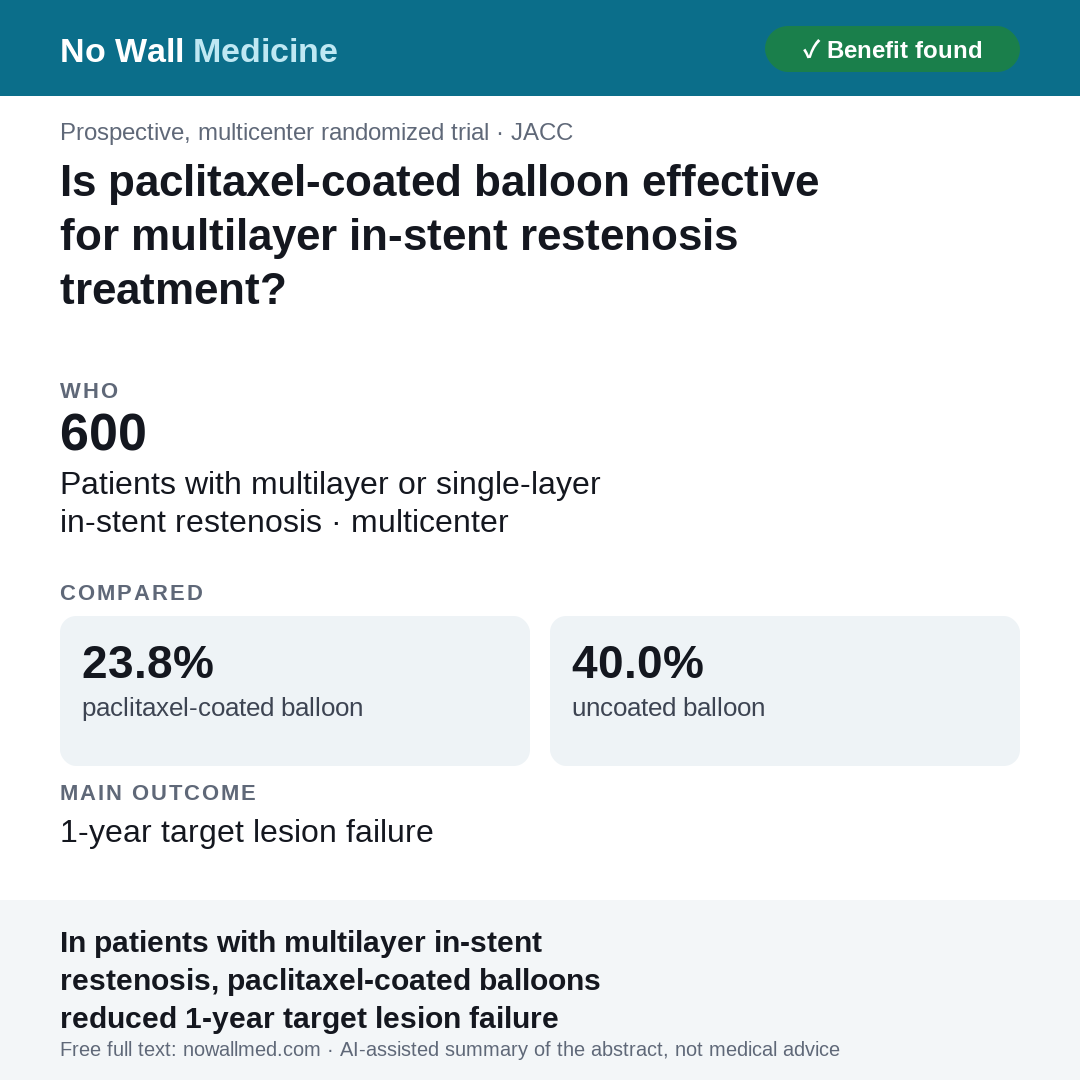
Paclitaxel-Coated Balloon for the Treatment of Multilayer In-Stent Restenosis: AGENT IDE Subgroup Analysis
Prospective, multicenter randomized trialBenefit found
Is paclitaxel-coated balloon effective for multilayer in-stent restenosis treatment?
Who
600
Patients with multilayer or single-layer in-stent restenosis · multicenter
Compared
23.8%paclitaxel-coated balloon
40.0%uncoated balloon
Main outcome
1-year target lesion failure
Result: hazard ratio 0.55 (95% CI 0.34-0.87)
Bottom line: In patients with multilayer in-stent restenosis, paclitaxel-coated balloons reduced 1-year target lesion failure compared to uncoated balloons.
JACC · 2025-08-14Download image
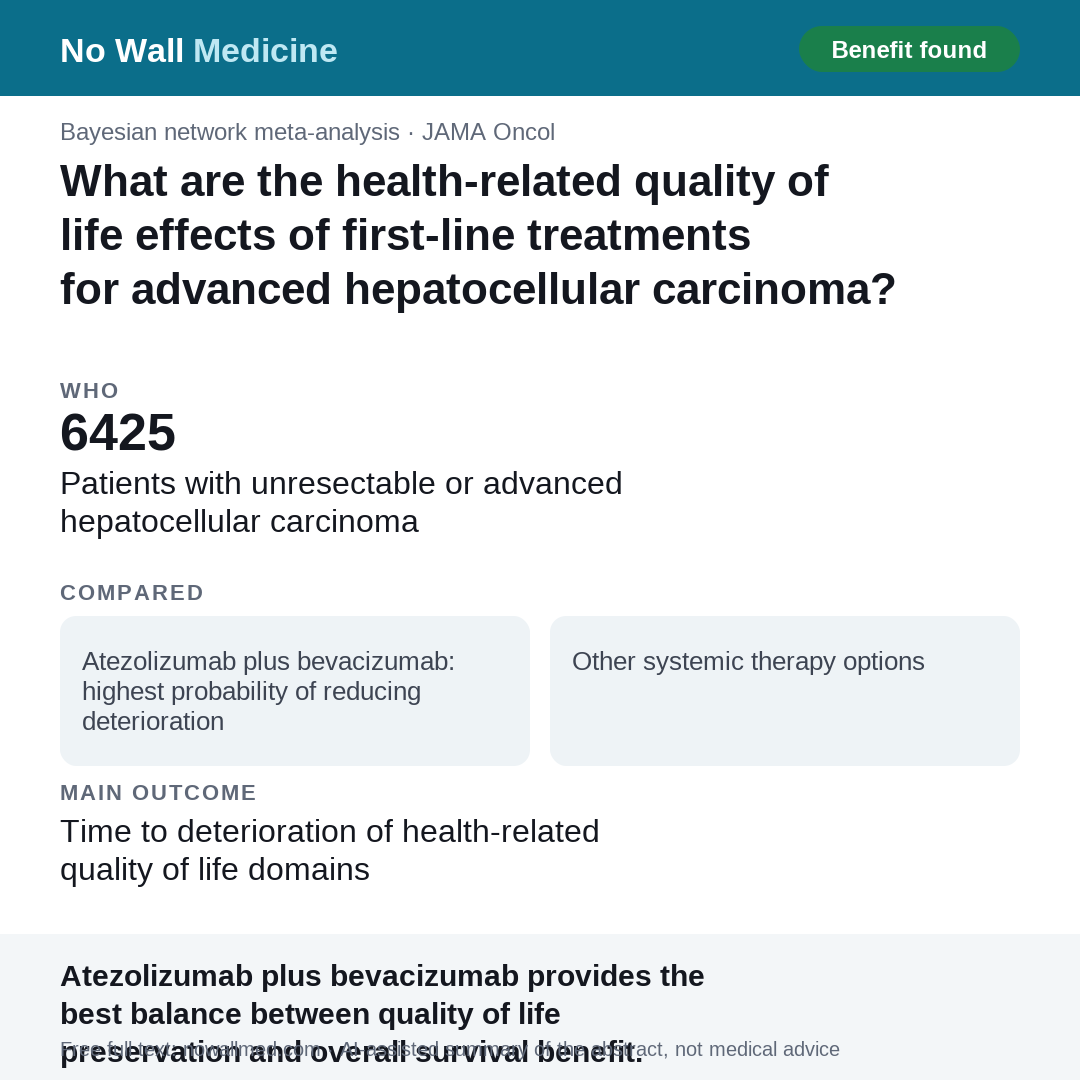
Integrating Quality of Life and Survival in Systemic Therapy for Advanced Hepatocellular Carcinoma: A Network Meta-Analysis
Bayesian network meta-analysisBenefit found
What are the health-related quality of life effects of first-line treatments for advanced hepatocellular carcinoma?
Who
6425
Patients with unresectable or advanced hepatocellular carcinoma
Compared
Atezolizumab plus bevacizumab: highest probability of reducing deterioration
Other systemic therapy options
Main outcome
Time to deterioration of health-related quality of life domains
Bottom line: Atezolizumab plus bevacizumab provides the best balance between quality of life preservation and overall survival benefit.
JAMA Oncol · 2025-08-14Download image
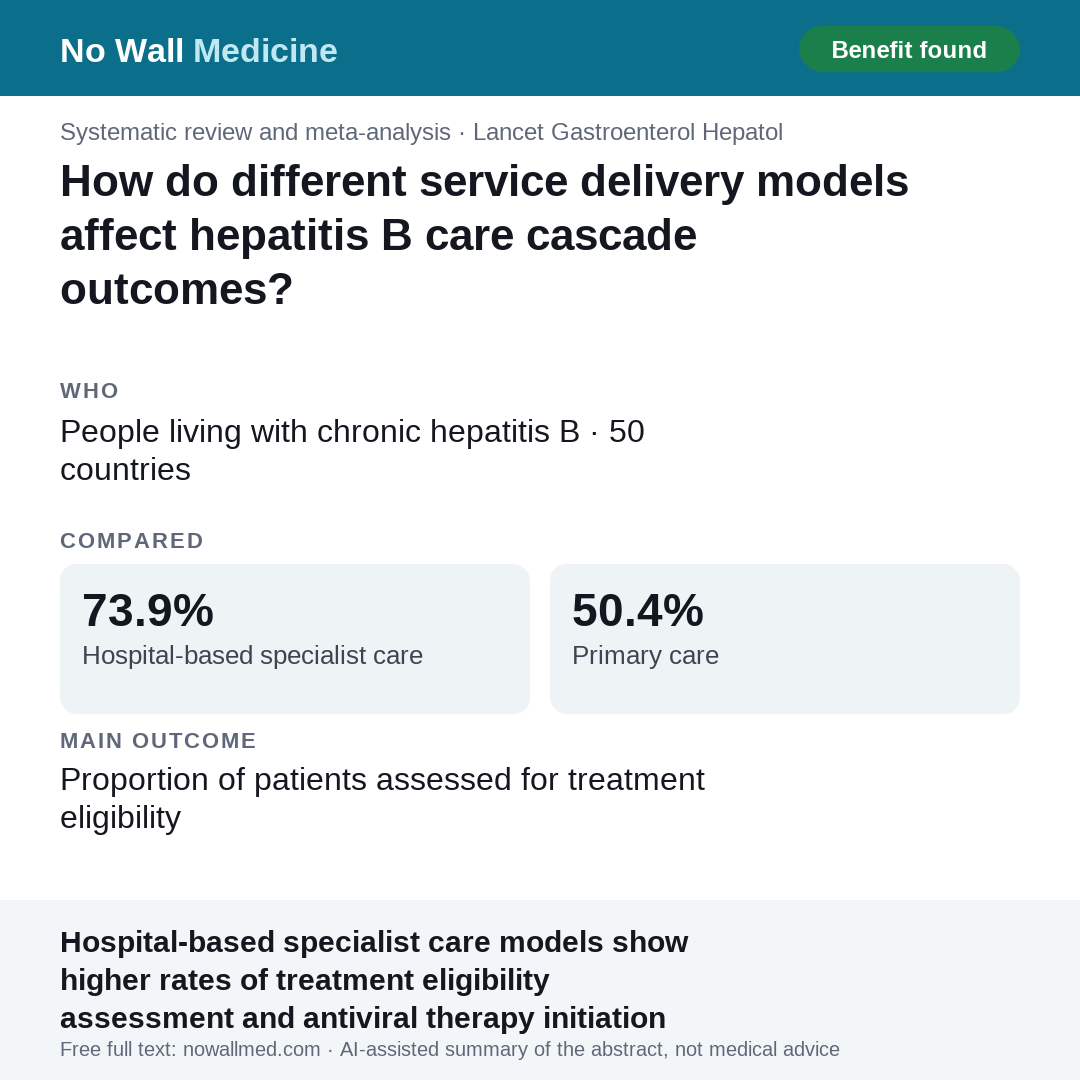
Service delivery models and care cascade outcomes for people living with chronic hepatitis B: a global systematic review and meta-analysis
Systematic review and meta-analysisBenefit found
How do different service delivery models affect hepatitis B care cascade outcomes?
Who
People living with chronic hepatitis B · 50 countries
Compared
73.9%Hospital-based specialist care (95% CI 65.8-80.6)
50.4%Primary care (25.9-74.8)
Main outcome
Proportion of patients assessed for treatment eligibility
Result: risk ratio 2.07 (95% CI 1.65-2.59)
Bottom line: Hospital-based specialist care models show higher rates of treatment eligibility assessment and antiviral therapy initiation compared to primary care.
Lancet Gastroenterol Hepatol · 2025-08-14Download image
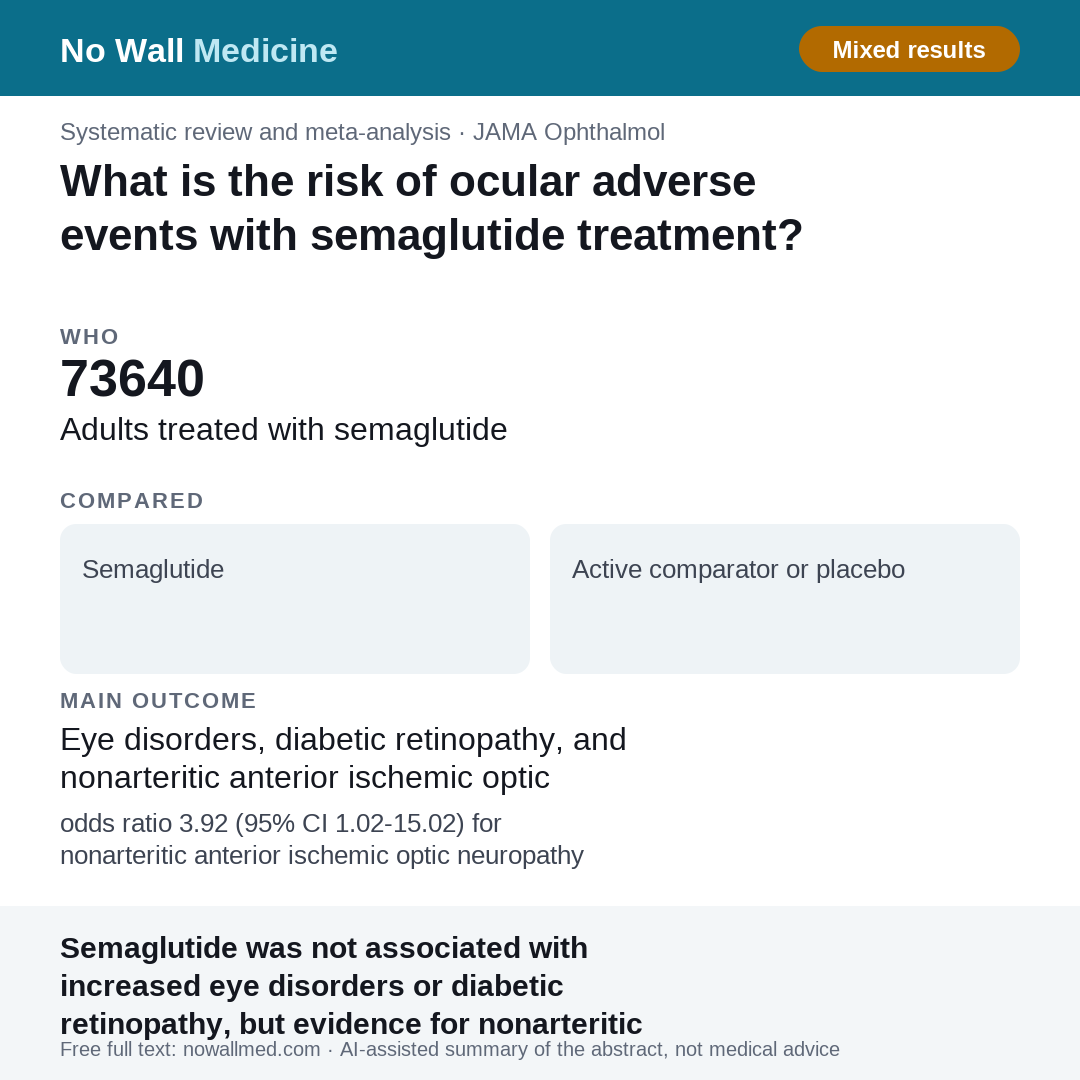
Ocular Adverse Events With Semaglutide: A Systematic Review and Meta-Analysis
Systematic review and meta-analysisMixed results
What is the risk of ocular adverse events with semaglutide treatment?
Who
73640
Adults treated with semaglutide
Compared
Semaglutide
Active comparator or placebo
Main outcome
Eye disorders, diabetic retinopathy, and nonarteritic anterior ischemic optic neuropathy
Result: odds ratio 3.92 (95% CI 1.02-15.02) for nonarteritic anterior ischemic optic neuropathy
Bottom line: Semaglutide was not associated with increased eye disorders or diabetic retinopathy, but evidence for nonarteritic anterior ischemic optic neuropathy is insufficient.
Limitation: Sample size was insufficient to avoid missing alternative results for nonarteritic anterior ischemic optic neuropathy.
JAMA Ophthalmol · 2025-08-14Download image
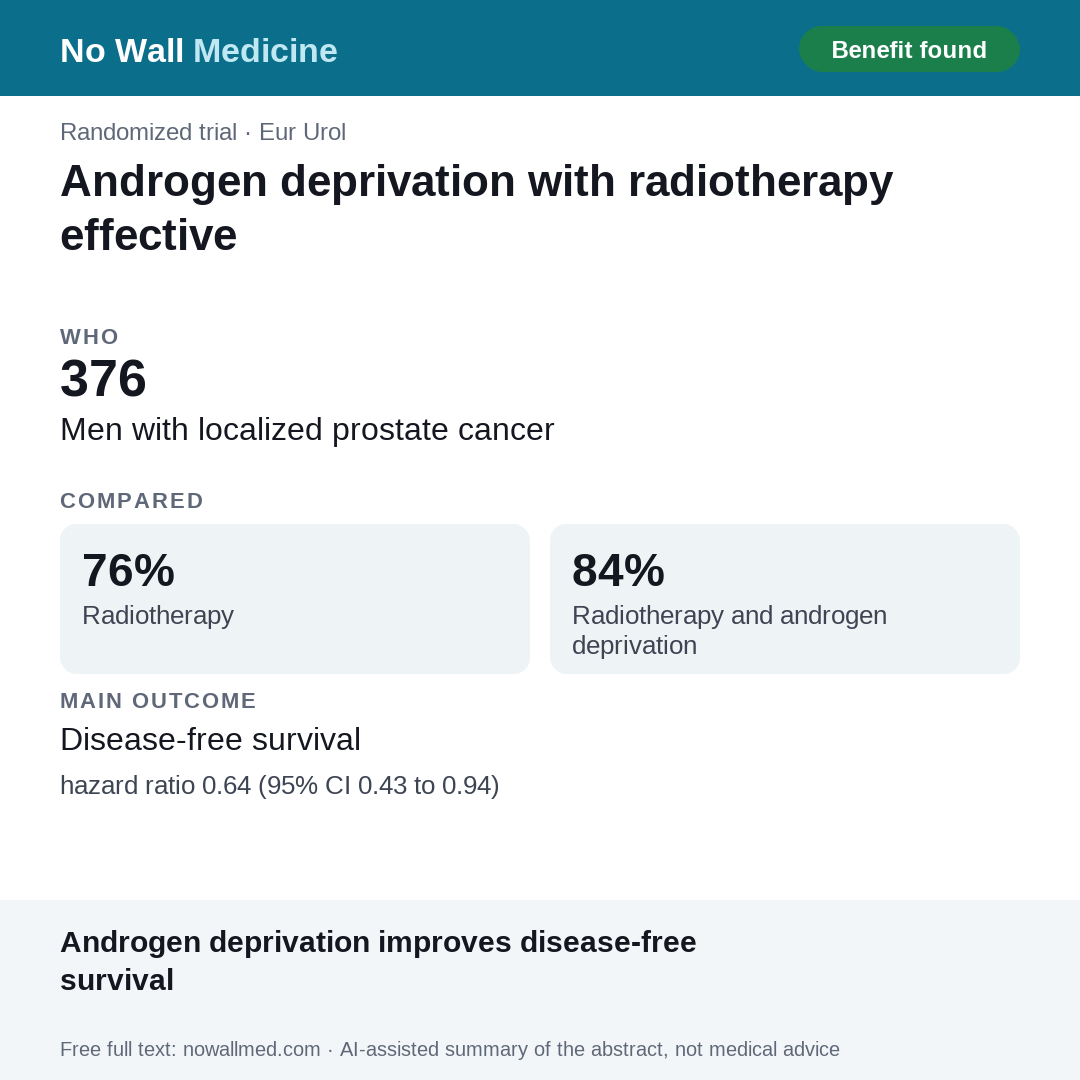
Short-term Androgen Deprivation Therapy and High-dose Radiotherapy in Intermediate- and High-risk Localized Prostate Cancer: Results from the GETUG 14 Randomized Phase 3 Trial
Randomized trialBenefit found
Androgen deprivation with radiotherapy effective
Who
376
Men with localized prostate cancer
Compared
76%Radiotherapy
84%Radiotherapy and androgen deprivation
Main outcome
Disease-free survival
Result: hazard ratio 0.64 (95% CI 0.43 to 0.94)
Bottom line: Androgen deprivation improves disease-free survival
Eur Urol · 2025-08-14Download image