Visual abstracts
New randomized trials and meta-analyses from leading journals at a glance: who was studied, what was compared, and what was found. Every paper is free to read in full.
All specialtiesCardiology 1953Oncology 1672Gastroenterology & Hepatology 742Infectious Disease 1240Neurology 808Psychiatry & Mental Health 955Pulmonology 840Critical Care 565Endocrinology & Diabetes 1050Pediatrics 1171Surgery 985Orthopedics & Sports Medicine 364Neurosurgery 248Cardiothoracic & Vascular Surgery 214Plastic & Reconstructive Surgery 304Nephrology 406Rheumatology 279Hematology 423Dermatology 223Ophthalmology 229Obstetrics & Gynecology 635Public & Global Health 382Radiology & Imaging 270Anesthesiology 392Urology 339ENT (Otolaryngology) 263Emergency Medicine 219Allergy & Immunology 126Geriatrics 414Family Medicine & Primary Care 230Medical Genetics & Genomics 212Pathology & Laboratory Medicine 64Physical Medicine & Rehabilitation 340Palliative Care 171Nutrition 526Digital Health & AI 1026General Medicine 152
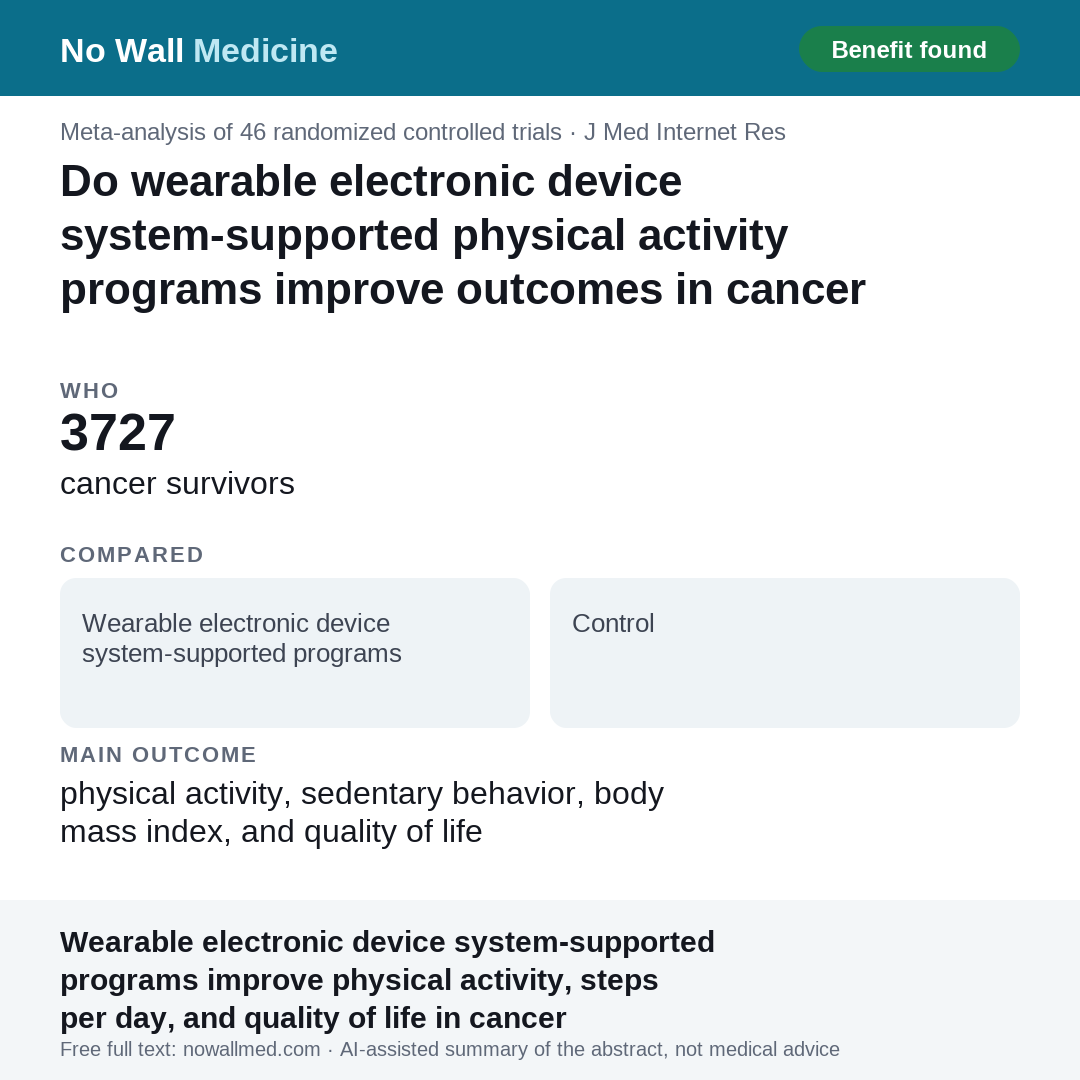
The Effectiveness of Wearable Electronic Device System-Supported Physical Activity Programs for Cancer Survivors: Meta-Analysis of Randomized Controlled Trials
Meta-analysis of 46 randomized controlled trialsBenefit found
Do wearable electronic device system-supported physical activity programs improve outcomes in cancer survivors?
Who
3727
cancer survivors
Compared
Wearable electronic device system-supported programs
Control
Main outcome
physical activity, sedentary behavior, body mass index, and quality of life
Result: SMD 0.66 (95% CI 0.47-0.86) for moderate-to-vigorous-intensity physical activity
Bottom line: Wearable electronic device system-supported programs improve physical activity, steps per day, and quality of life in cancer survivors.
J Med Internet Res · 2025-08-14Download image
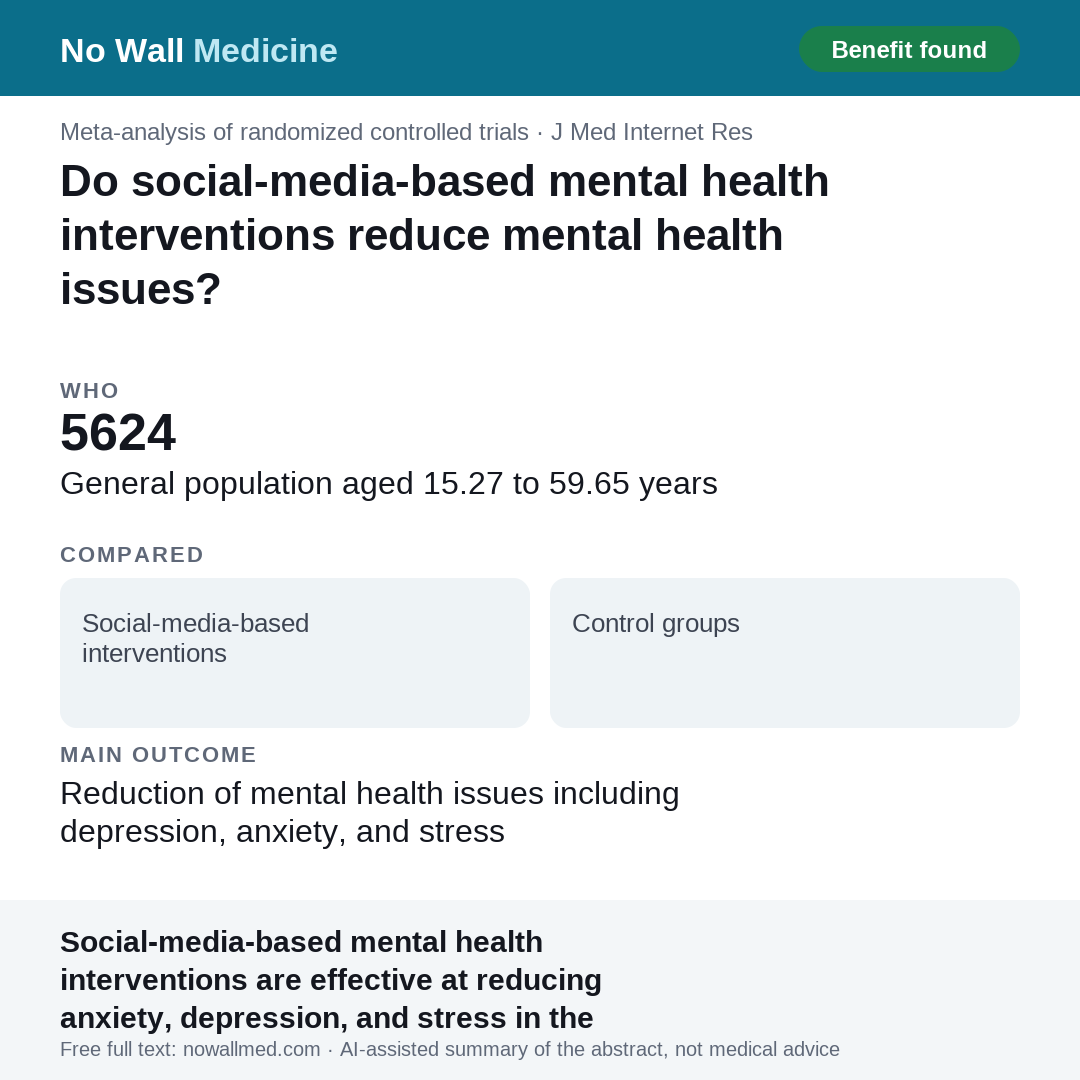
Social-Media-Based Mental Health Interventions: Meta-Analysis of Randomized Controlled Trials
Meta-analysis of randomized controlled trialsBenefit found
Do social-media-based mental health interventions reduce mental health issues?
Who
5624
General population aged 15.27 to 59.65 years
Compared
Social-media-based interventions
Control groups
Main outcome
Reduction of mental health issues including depression, anxiety, and stress
Result: effect size 0.32 (95% CI 0.24-0.45)
Bottom line: Social-media-based mental health interventions are effective at reducing anxiety, depression, and stress in the general population.
Limitation: The small sample size of 17 included studies restricts the power of the models.
J Med Internet Res · 2025-08-14Download image
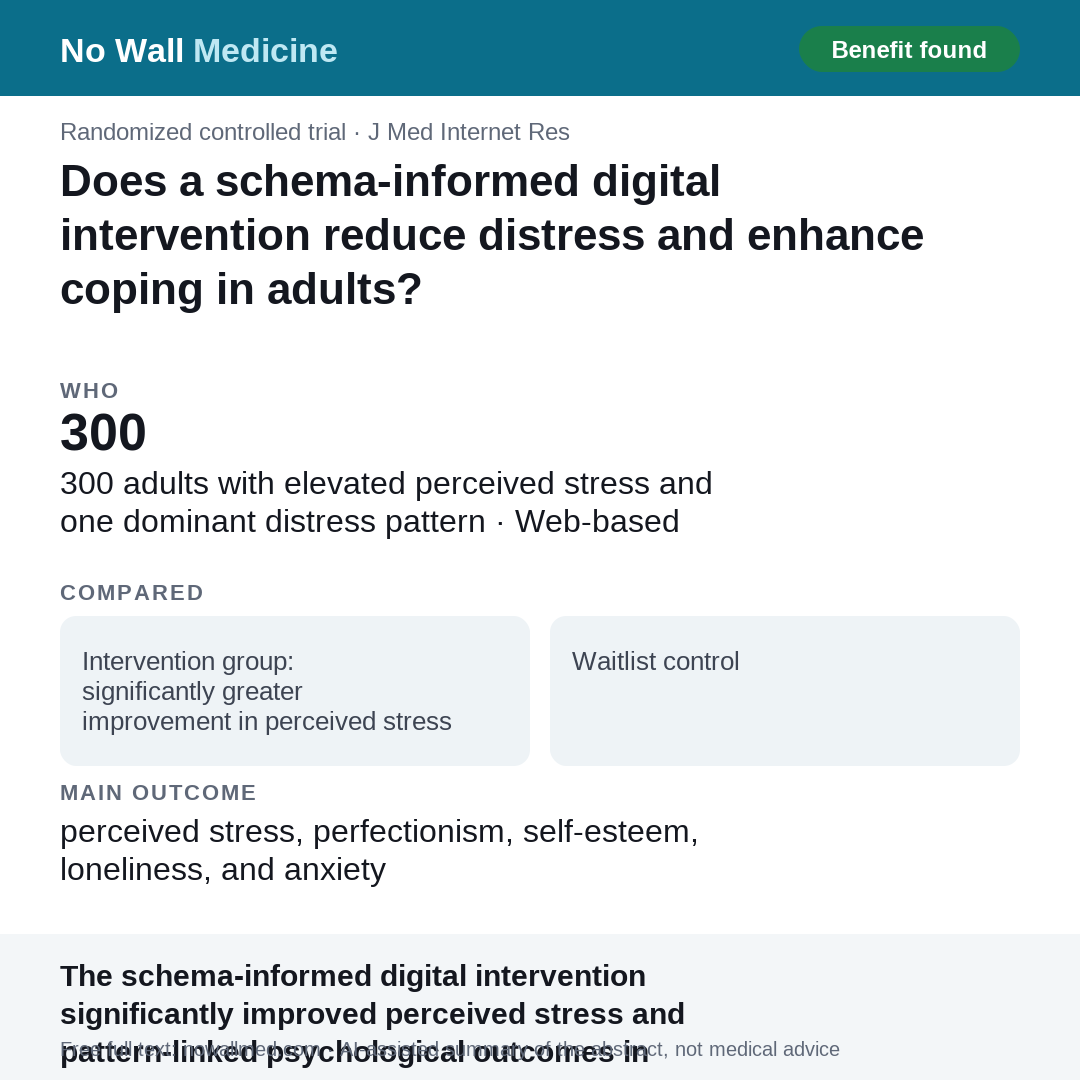
Schema-Informed Digital Mental Health Intervention for Maladaptive Cognitive-Emotional Patterns: Randomized Controlled Trial
Randomized controlled trialBenefit found
Does a schema-informed digital intervention reduce distress and enhance coping in adults?
Who
300
300 adults with elevated perceived stress and one dominant distress pattern · Web-based recruitment in South Korea
Compared
Intervention group: significantly greater improvement in perceived stress
Waitlist control
Main outcome
perceived stress, perfectionism, self-esteem, loneliness, and anxiety
Bottom line: The schema-informed digital intervention significantly improved perceived stress and pattern-linked psychological outcomes in adults.
Limitation: Limitations in study design, sample representativeness, and follow-up duration.
J Med Internet Res · 2025-08-14Download image
Dalbavancin for Treatment of Staphylococcus aureus Bacteremia: The DOTS Randomized Clinical Trial
Open-label, assessor-masked, randomized clinical trialNo clear difference
Is dalbavancin effective for treatment of complicated Staphylococcus aureus bacteremia?
Who
200
Hospitalized adults with complicated Staphylococcus aureus bacteremia · 23 medical centers in the US and Canada
Compared
47.7%Dalbavancin (95% CI, 39.8% to 55.7%)
Standard therapy
Main outcome
desirability of outcome ranking at day 70
Result: 47.7% (95% CI, 39.8% to 55.7%)
Bottom line: Dalbavancin was not superior to standard therapy for desirability of outcome ranking in complicated Staphylococcus aureus bacteremia.
JAMA · 2025-08-13Download image
Virtual reality-based versus standard cognitive behavioral therapy for paranoia in schizophrenia spectrum disorders: a randomized controlled trial
Assessor-masked, randomized parallel group superiority trialNo clear difference
Is virtual reality-based cognitive behavioral therapy more effective than standard therapy for paranoia?
Who
254
Participants with schizophrenia spectrum disorders
Compared
Virtual reality-based cognitive behavioral therapy
Standard cognitive behavioral therapy
Main outcome
Ideas of Persecution subscale from the Green Paranoid Thoughts Scale
Result: 2% in favor of VR-CBTp; 95% confidence interval: -11% to +17%
Bottom line: Virtual reality-based cognitive behavioral therapy was not superior to standard cognitive behavioral therapy in reducing paranoia.
Nat Med · 2025-08-13Download image
Radiation dose escalation in locally advanced oesophageal cancer: a systematic review and hierarchical Bayesian meta-analysis
Systematic review and hierarchical Bayesian meta-analysisBenefit found
Does radiation dose escalation improve survival in locally advanced oesophageal cancer?
Who
8379
Patients with locally advanced oesophageal cancer
Compared
High-dose radiotherapy: median difference: 18.6% (95% CrI: 10.7-26.1%) for 1-year LRPFS
Standard dose
Main outcome
overall survival, progression-free survival, and locoregional progression-free survival
Result: median difference: 18.6% (95% CrI: 10.7-26.1%) for 1-year LRPFS
Bottom line: High-dose radiotherapy improves locoregional control and may enhance overall survival, especially in squamous cell carcinoma.
Limitation: Most included studies were retrospective with moderate risk of bias.
eClinicalMedicine · 2025-08-13Download image
Remote ischaemic conditioning improves outcomes of ischaemic stroke treated by endovascular thrombectomy: the SERIC-EVT trial
Participant-blinded, randomized controlled clinical trialBenefit found
Does remote ischaemic conditioning improve outcomes of ischaemic stroke treated by endovascular thrombectomy?
Who
488
Patients with acute large vessel occlusion ischaemic stroke · 25 hospitals
Compared
61.1%Remote ischaemic conditioning
48.9%Sham remote ischaemic conditioning
Main outcome
Proportion of patients with modified Rankin Scale score 0-2 at Day 90
Result: unadjusted risk ratio 1.25 (95% confidence interval 1.06-1.47)
Bottom line: Remote ischaemic conditioning for 7 days improved functional outcomes at 90 days compared with sham conditioning.
Eur Heart J · 2025-08-13Download image
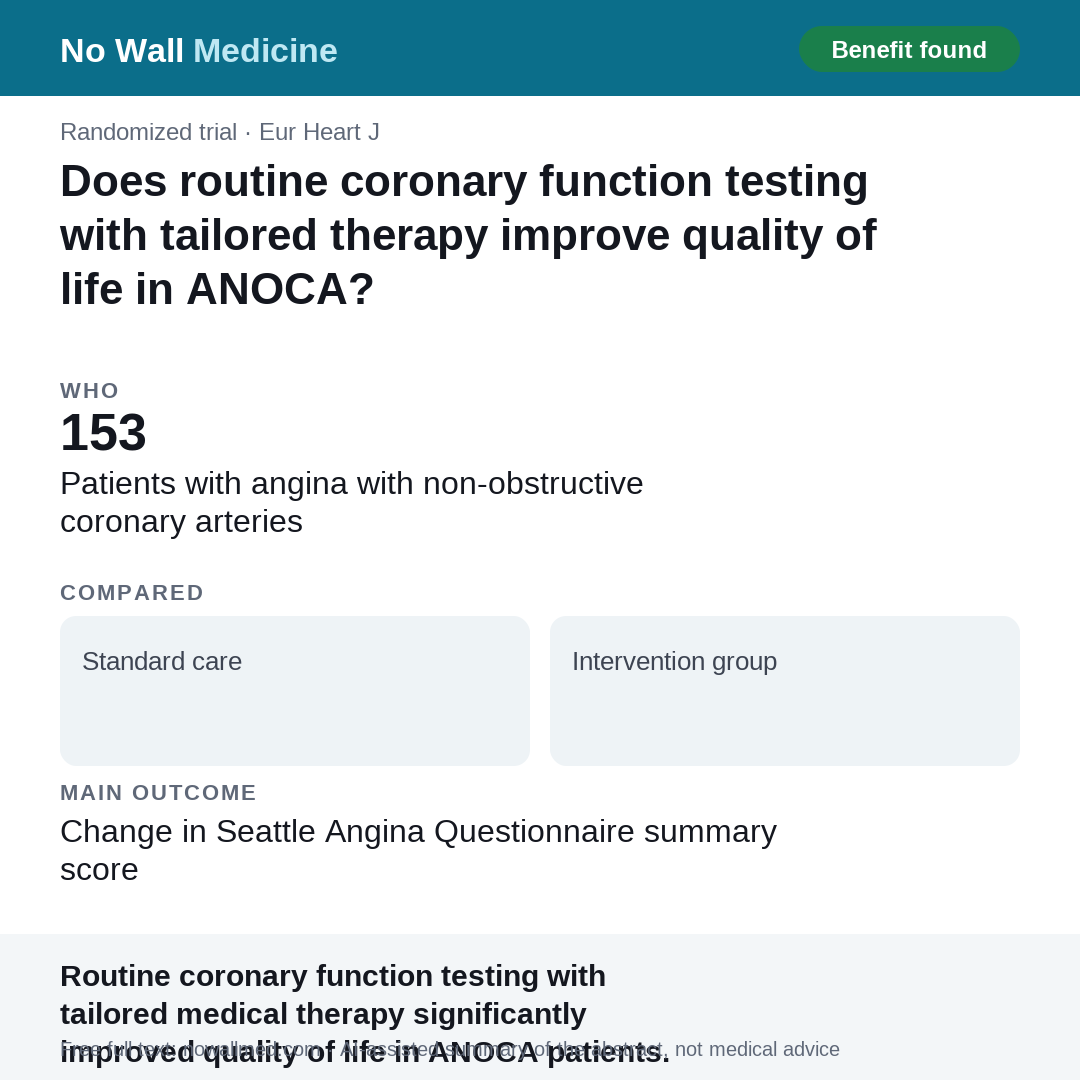
Coronary function testing vs angiography alone to guide treatment of angina with non-obstructive coronary arteries: the ILIAS ANOCA trial
Randomized trialBenefit found
Does routine coronary function testing with tailored therapy improve quality of life in ANOCA?
Who
153
Patients with angina with non-obstructive coronary arteries
Compared
Standard care
Intervention group
Main outcome
Change in Seattle Angina Questionnaire summary score
Result: 9.4 units (95% confidence interval 3.9-14.9)
Bottom line: Routine coronary function testing with tailored medical therapy significantly improved quality of life in ANOCA patients.
Eur Heart J · 2025-08-13Download image
Safety and immunogenicity of novel live attenuated type 1 and type 3 oral poliomyelitis vaccines in healthy adults in the USA: a first-in-human, observer-masked, multicentre, phase 1 randomised controlled trial
First-in-human, observer-masked, multicentre, phase 1 randomised controlled trialBenefit found
What are the safety and immunogenicity of novel live attenuated oral poliovirus vaccines in healthy adults?
Who
205
Healthy adults in the USA · Four centres in the USA
Compared
nOPV1
mOPV1
nOPV3
mOPV3
Main outcome
Safety, immunogenicity, and faecal viral shedding
Bottom line: Novel oral poliovirus vaccines were well tolerated with similar immunogenicity and shedding profiles to Sabin-strain vaccines.
Funded by: Bill & Melinda Gates Foundation
Lancet Infect Dis · 2025-08-13Download image

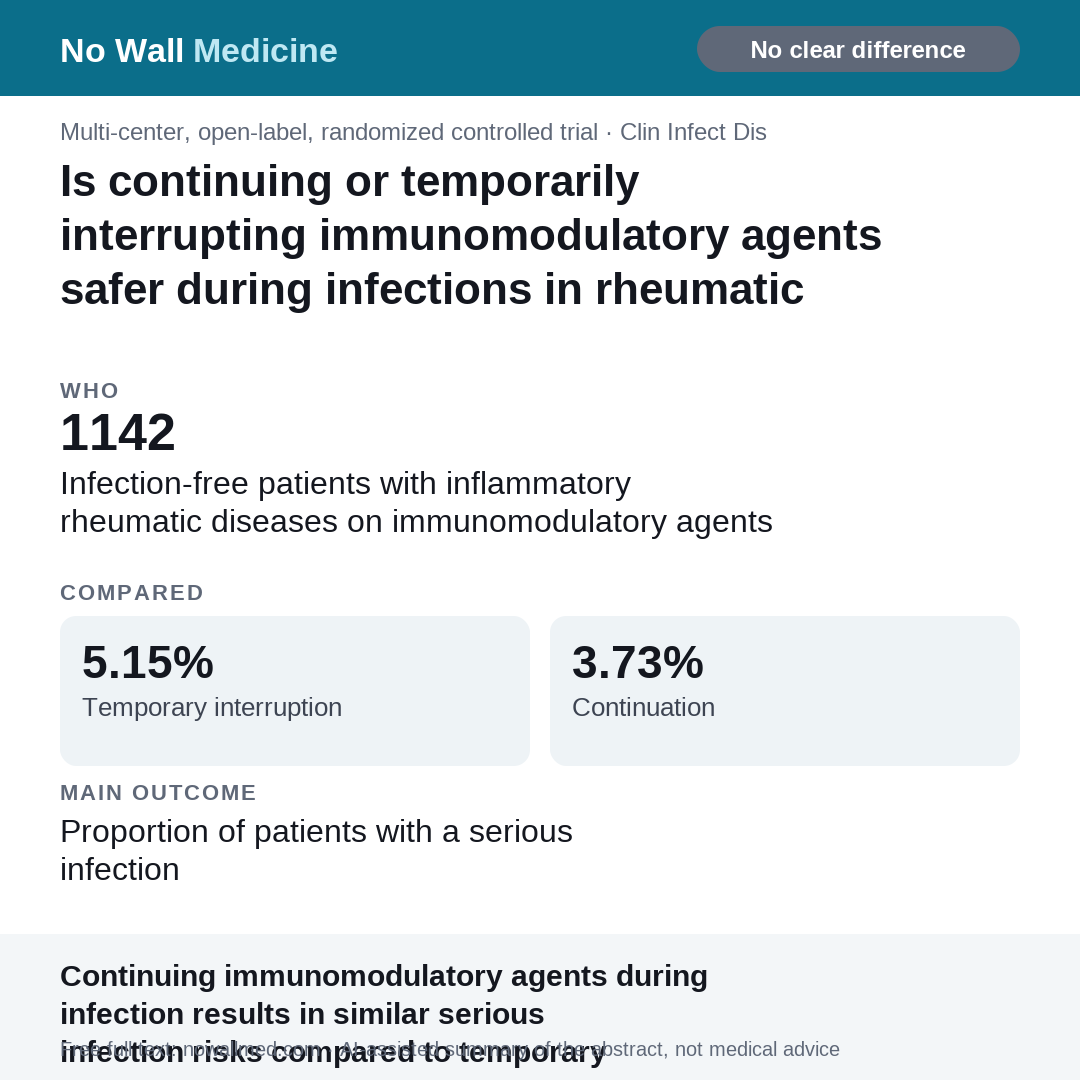
Continuation Versus Temporary Interruption of Immunomodulatory Agents During Infections in Patients With Inflammatory Rheumatic Diseases: A Randomized Controlled Trial
Multi-center, open-label, randomized controlled trialNo clear difference
Is continuing or temporarily interrupting immunomodulatory agents safer during infections in rheumatic disease?
Who
1142
Infection-free patients with inflammatory rheumatic diseases on immunomodulatory agents · Multi-center
Compared
5.15%Temporary interruption (12/233)
3.73%Continuation (9/241)
Main outcome
Proportion of patients with a serious infection
Result: adjusted risk difference 1.71% (95% CI -1.99 to 5.39)
Bottom line: Continuing immunomodulatory agents during infection results in similar serious infection risks compared to temporary interruption.
Limitation: The study is limited by low statistical power.
Clin Infect Dis · 2025-08-13Download image
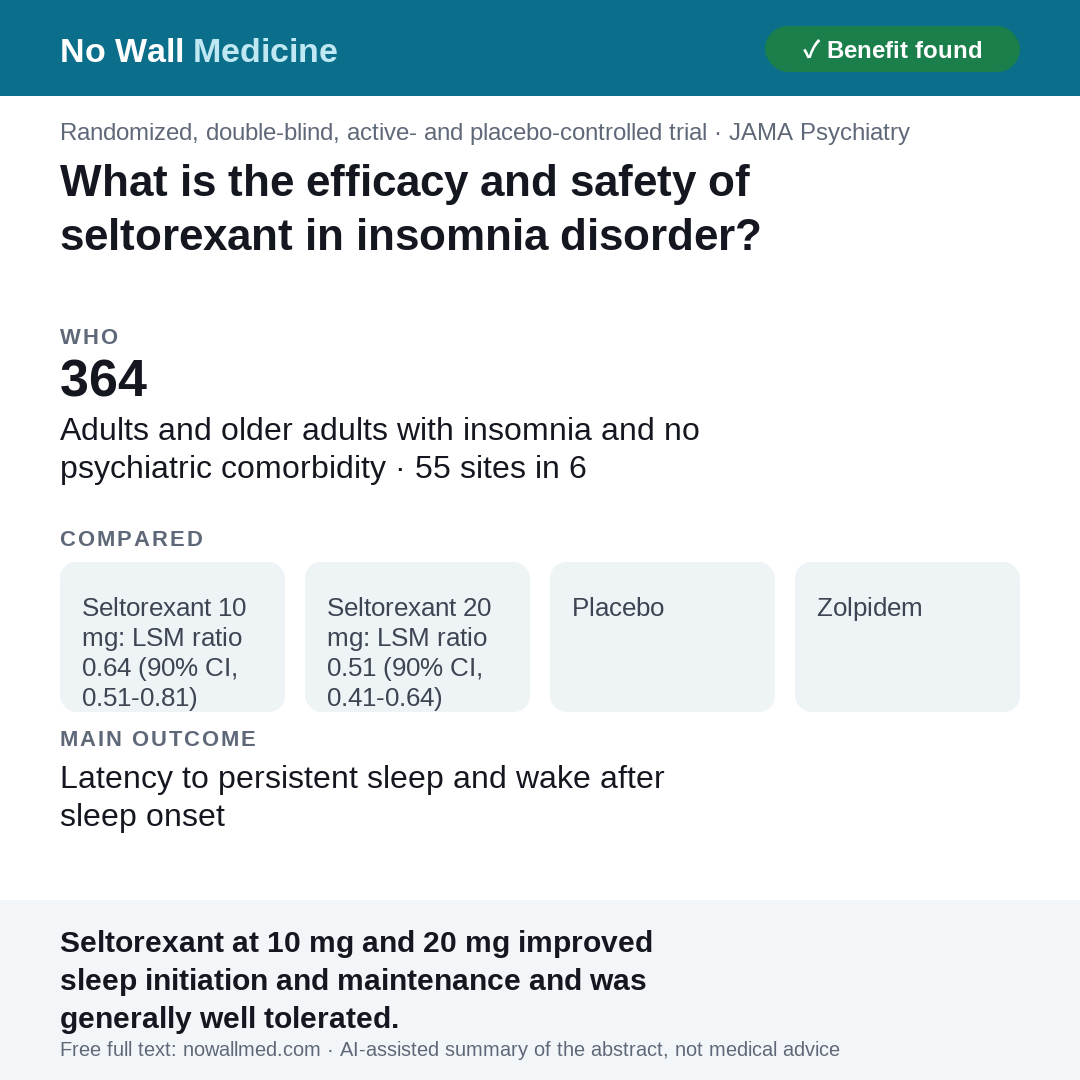
Efficacy and Safety of Seltorexant in Insomnia Disorder: A Randomized Clinical Trial
Randomized, double-blind, active- and placebo-controlled trialBenefit found
What is the efficacy and safety of seltorexant in insomnia disorder?
Who
364
Adults and older adults with insomnia and no psychiatric comorbidity · 55 sites in 6 countries
Compared
Seltorexant 10 mg: LSM ratio 0.64 (90% CI, 0.51-0.81)
Seltorexant 20 mg: LSM ratio 0.51 (90% CI, 0.41-0.64)
Placebo
Zolpidem
Main outcome
Latency to persistent sleep and wake after sleep onset
Result: LSM ratio 0.51 (90% CI, 0.41-0.64)
Bottom line: Seltorexant at 10 mg and 20 mg improved sleep initiation and maintenance and was generally well tolerated.
JAMA Psychiatry · 2025-08-13Download image
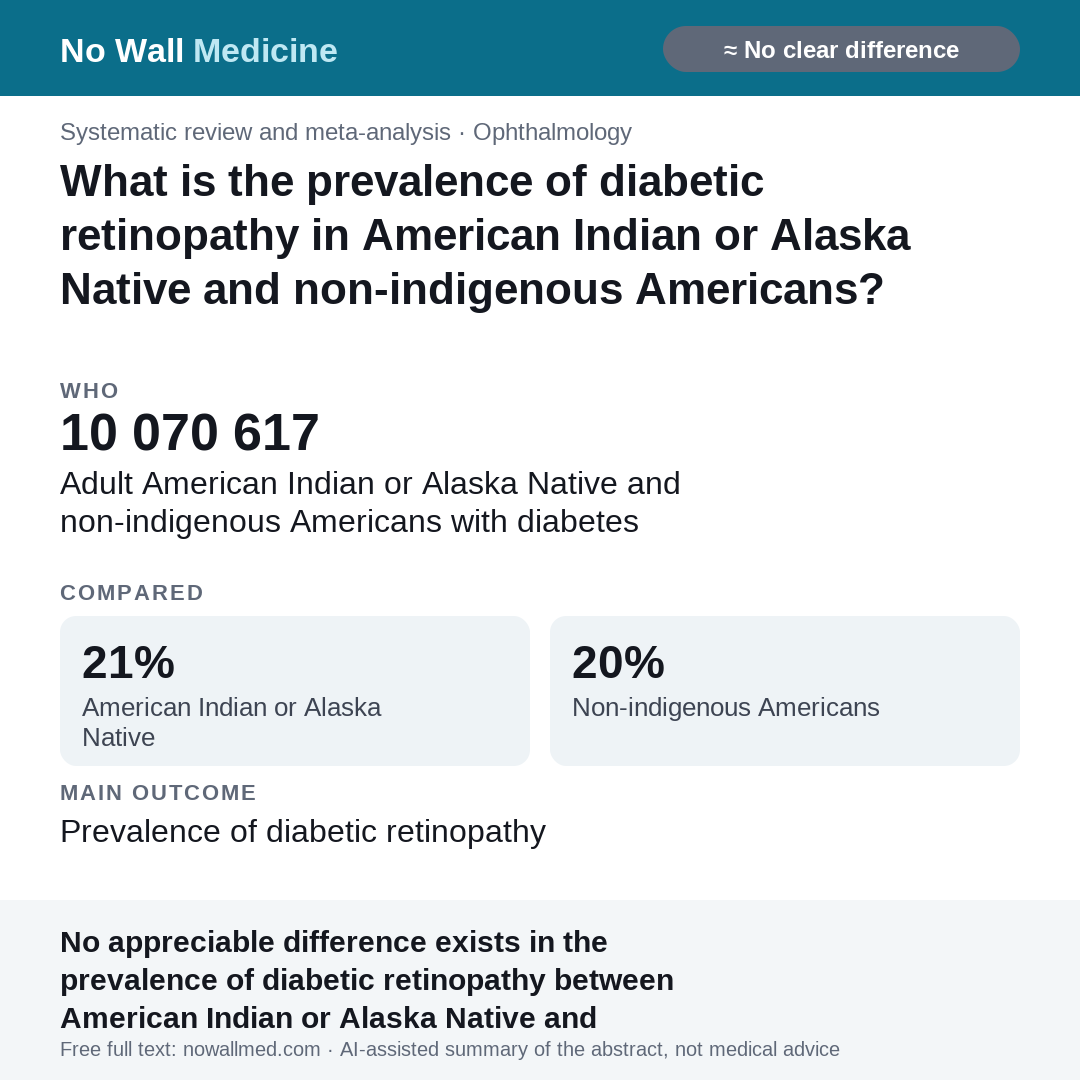
The Prevalence of Diabetic Retinopathy in American Indians or Alaska Natives and Non-Indigenous Americans: A Systematic Review and Meta-Analysis
Systematic review and meta-analysisNo clear difference
What is the prevalence of diabetic retinopathy in American Indian or Alaska Native and non-indigenous Americans?
Who
10 070 617
Adult American Indian or Alaska Native and non-indigenous Americans with diabetes
Compared
21%American Indian or Alaska Native (95% CI, 13%-30%)
20%Non-indigenous Americans (95% CI, 16%-25%)
Main outcome
Prevalence of diabetic retinopathy
Result: odds ratio 0.67 (95% CI, 0.31-1.48)
Bottom line: No appreciable difference exists in the prevalence of diabetic retinopathy between American Indian or Alaska Native and non-indigenous patients.
Limitation: Evidence is limited by the heterogeneity of studies and low certainty of evidence.
Ophthalmology · 2025-08-13Download image
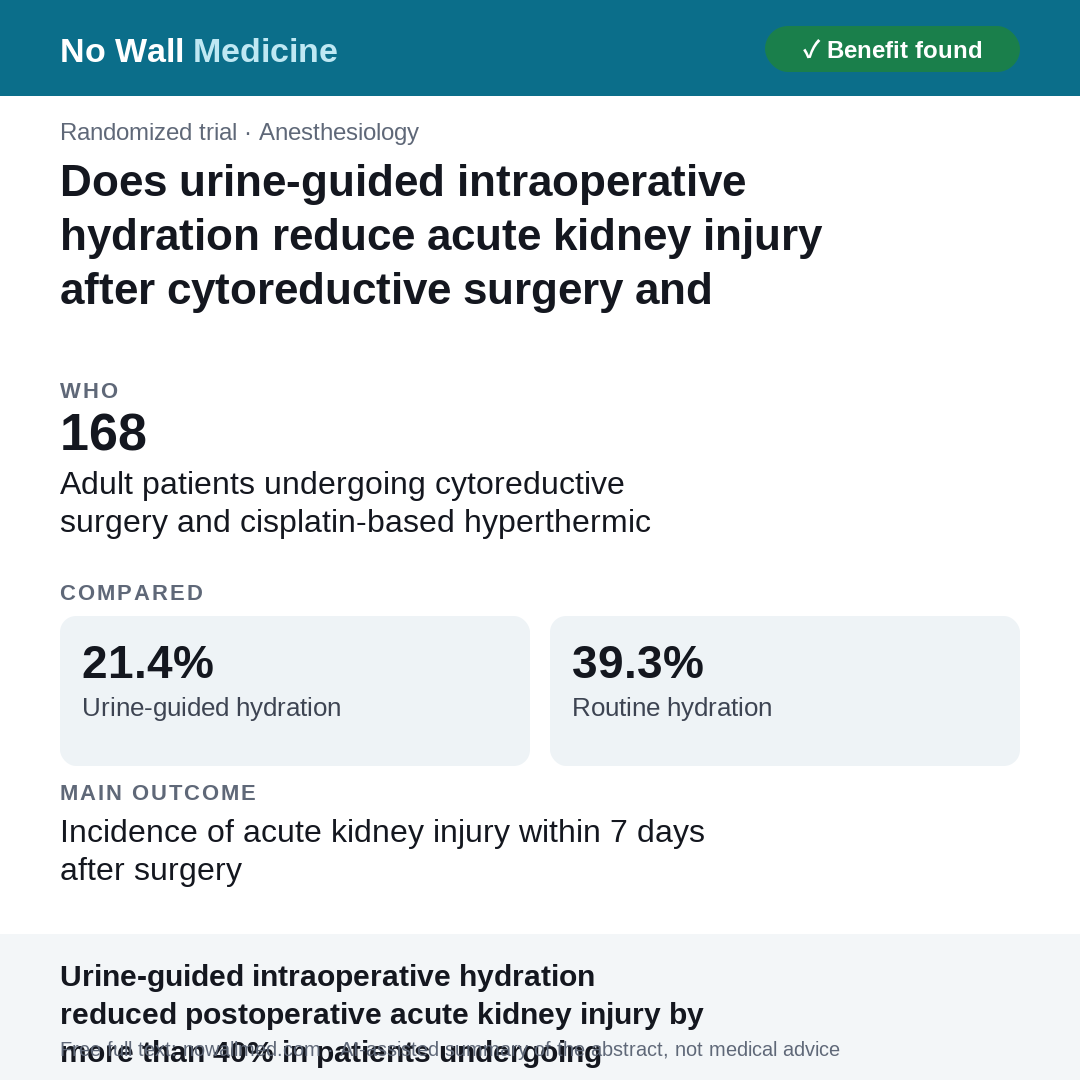
Effect of Urine-guided Intraoperative Hydration on Incidence of Acute Kidney Injury after Cytoreductive Surgery and Hyperthermic Intraperitoneal Chemotherapy for Pseudomyxoma Peritonei: A Randomized Trial
Randomized trialBenefit found
Does urine-guided intraoperative hydration reduce acute kidney injury after cytoreductive surgery and hyperthermic intraperitoneal chemotherapy?
Who
168
Adult patients undergoing cytoreductive surgery and cisplatin-based hyperthermic intraperitoneal chemotherapy
Compared
21.4%Urine-guided hydration (18 of 84)
39.3%Routine hydration (33 of 84)
Main outcome
Incidence of acute kidney injury within 7 days after surgery
Result: relative risk 0.55 (95% CI 0.33 to 0.89)
Bottom line: Urine-guided intraoperative hydration reduced postoperative acute kidney injury by more than 40% in patients undergoing cytoreductive surgery.
Anesthesiology · 2025-08-13Download image
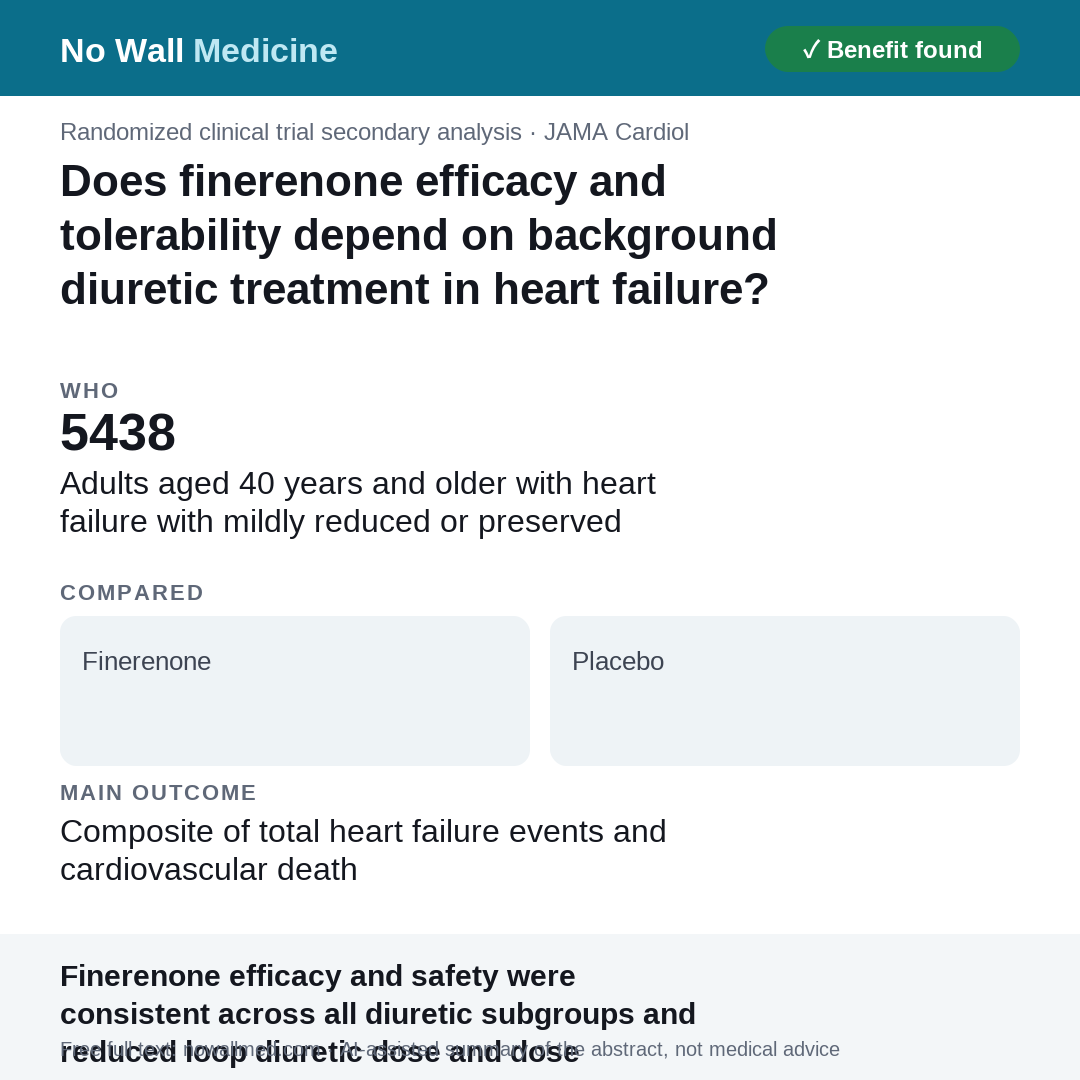
Efficacy and Tolerability of Finerenone According to the Use and Dosage of Diuretics: A Prespecified Analysis of the FINEARTS-HF Randomized Clinical Trial
Randomized clinical trial secondary analysisBenefit found
Does finerenone efficacy and tolerability depend on background diuretic treatment in heart failure?
Who
5438
Adults aged 40 years and older with heart failure with mildly reduced or preserved ejection fraction · 653 sites in 37 countries
Compared
Finerenone
Placebo
Main outcome
Composite of total heart failure events and cardiovascular death
Result: rate ratios were 0.84 (95% CI, 0.47-1.51), 0.86 (95% CI, 0.72-1.02), 0.98 (95% CI, 0.78-1.24), and 0.54 (95% CI, 0.35-0.83)
Bottom line: Finerenone efficacy and safety were consistent across all diuretic subgroups and reduced loop diuretic dose and dose intensification.
JAMA Cardiol · 2025-08-13Download image
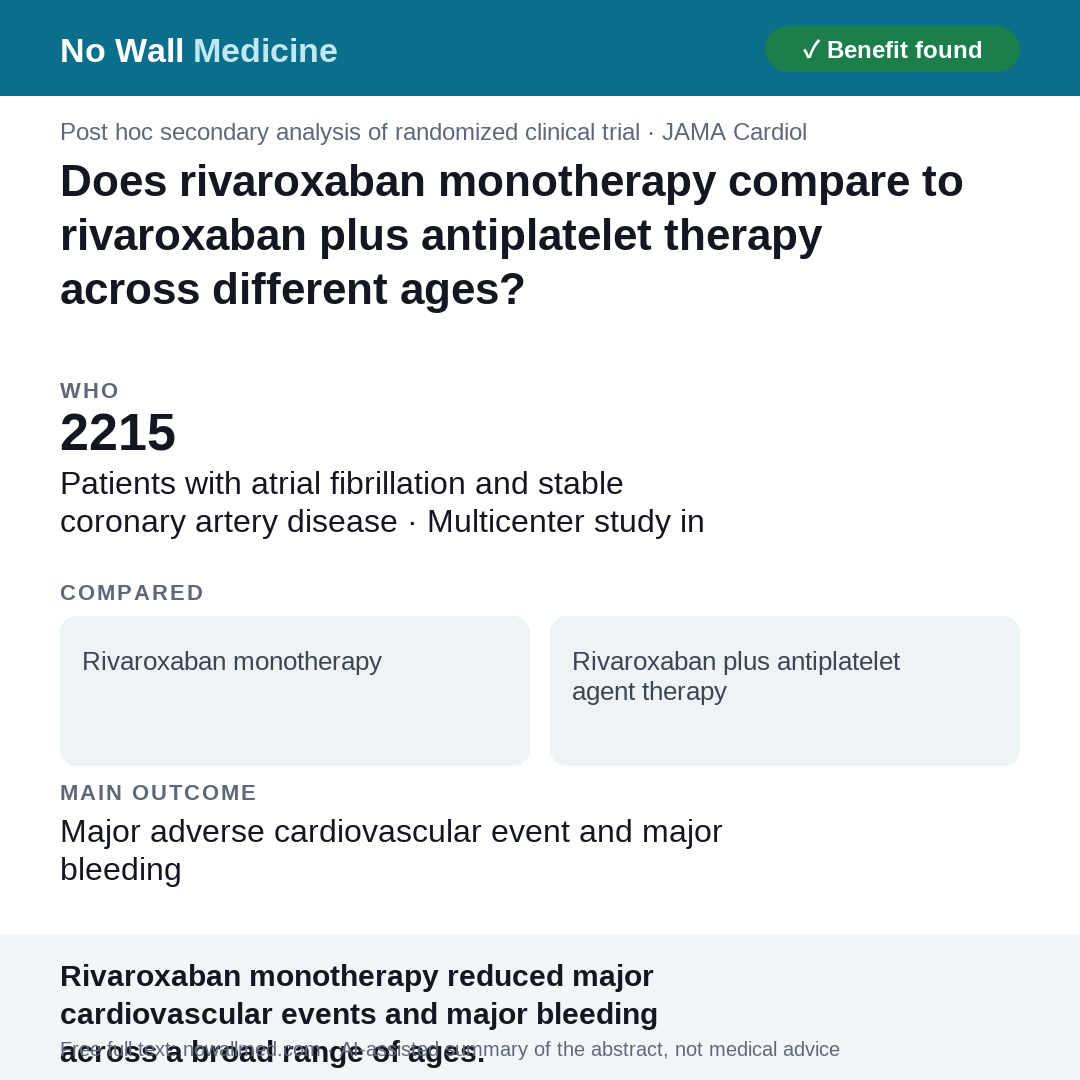
Age-Stratified Effect of Rivaroxaban Monotherapy for Atrial Fibrillation in Stable Coronary Artery Disease: A Post Hoc Analysis of the AFIRE Randomized Clinical Trial
Post hoc secondary analysis of randomized clinical trialBenefit found
Does rivaroxaban monotherapy compare to rivaroxaban plus antiplatelet therapy across different ages?
Who
2215
Patients with atrial fibrillation and stable coronary artery disease · Multicenter study in Japan
Compared
Rivaroxaban monotherapy
Rivaroxaban plus antiplatelet agent therapy
Main outcome
Major adverse cardiovascular event and major bleeding
Bottom line: Rivaroxaban monotherapy reduced major cardiovascular events and major bleeding across a broad range of ages.
JAMA Cardiol · 2025-08-13Download image
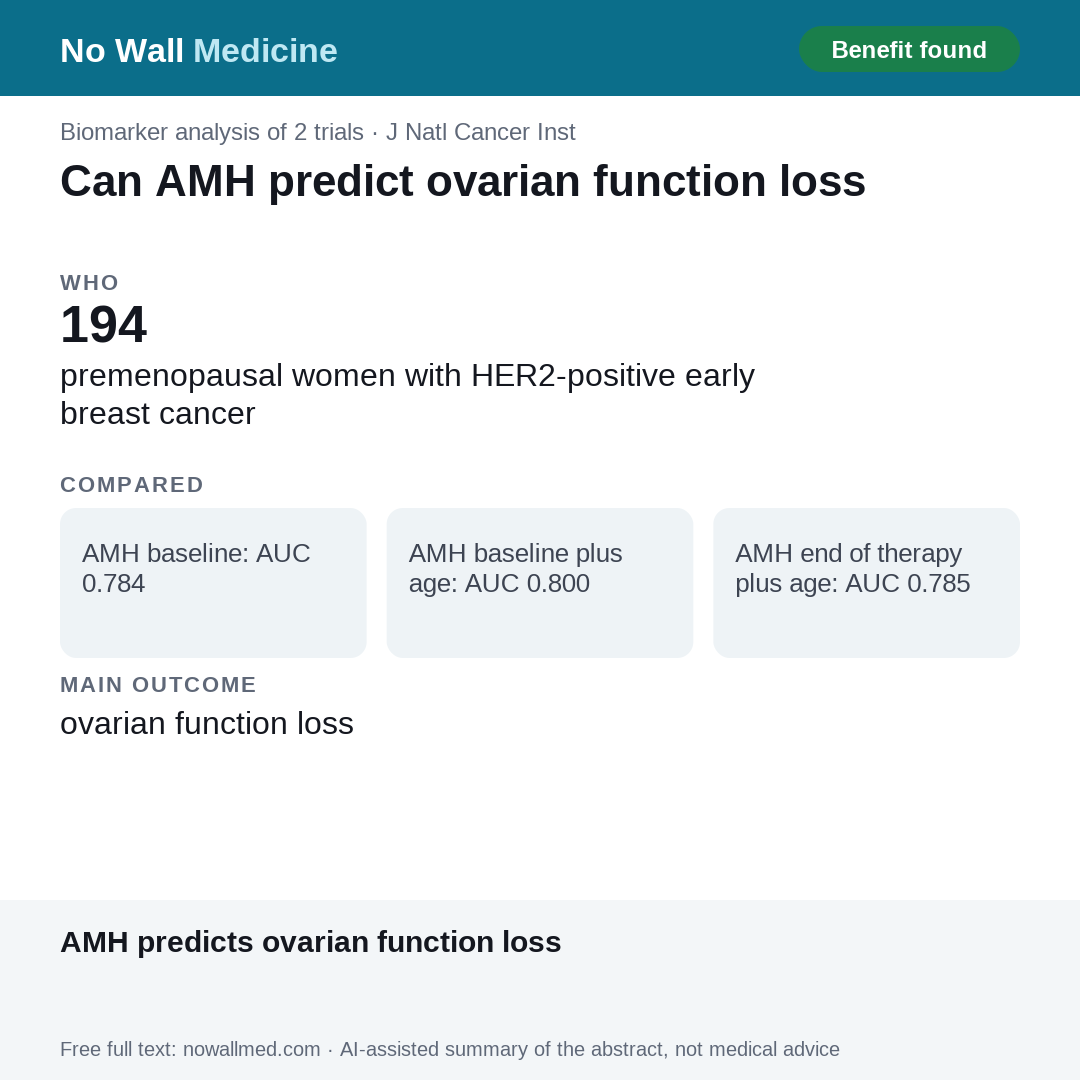
Predicting ovarian function loss after chemotherapy and anti-HER2 therapy in young breast cancer patients
Biomarker analysis of 2 trialsBenefit found
Can AMH predict ovarian function loss
Who
194
premenopausal women with HER2-positive early breast cancer
Compared
AMH baseline: AUC 0.784
AMH baseline plus age: AUC 0.800
AMH end of therapy plus age: AUC 0.785
Main outcome
ovarian function loss
Bottom line: AMH predicts ovarian function loss
J Natl Cancer Inst · 2025-08-13Download image
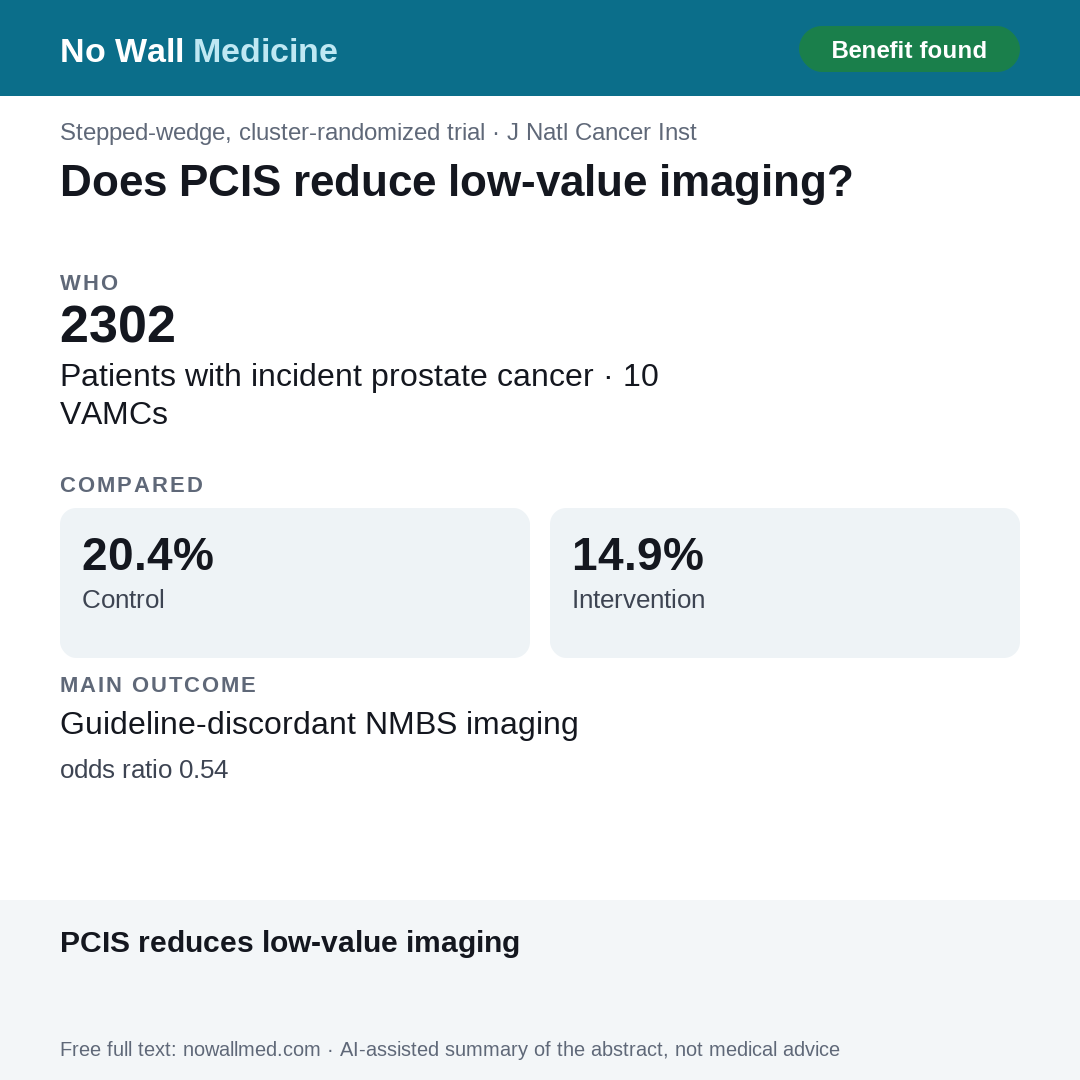
Prostate Cancer Imaging Stewardship: a multimodal, physician-centered intervention for guideline-concordant imaging
Stepped-wedge, cluster-randomized trialBenefit found
Does PCIS reduce low-value imaging?
Who
2302
Patients with incident prostate cancer · 10 VAMCs
Compared
20.4%Control (141/690)
14.9%Intervention (109/734)
Main outcome
Guideline-discordant NMBS imaging
Result: odds ratio 0.54
Bottom line: PCIS reduces low-value imaging
J Natl Cancer Inst · 2025-08-13Download image
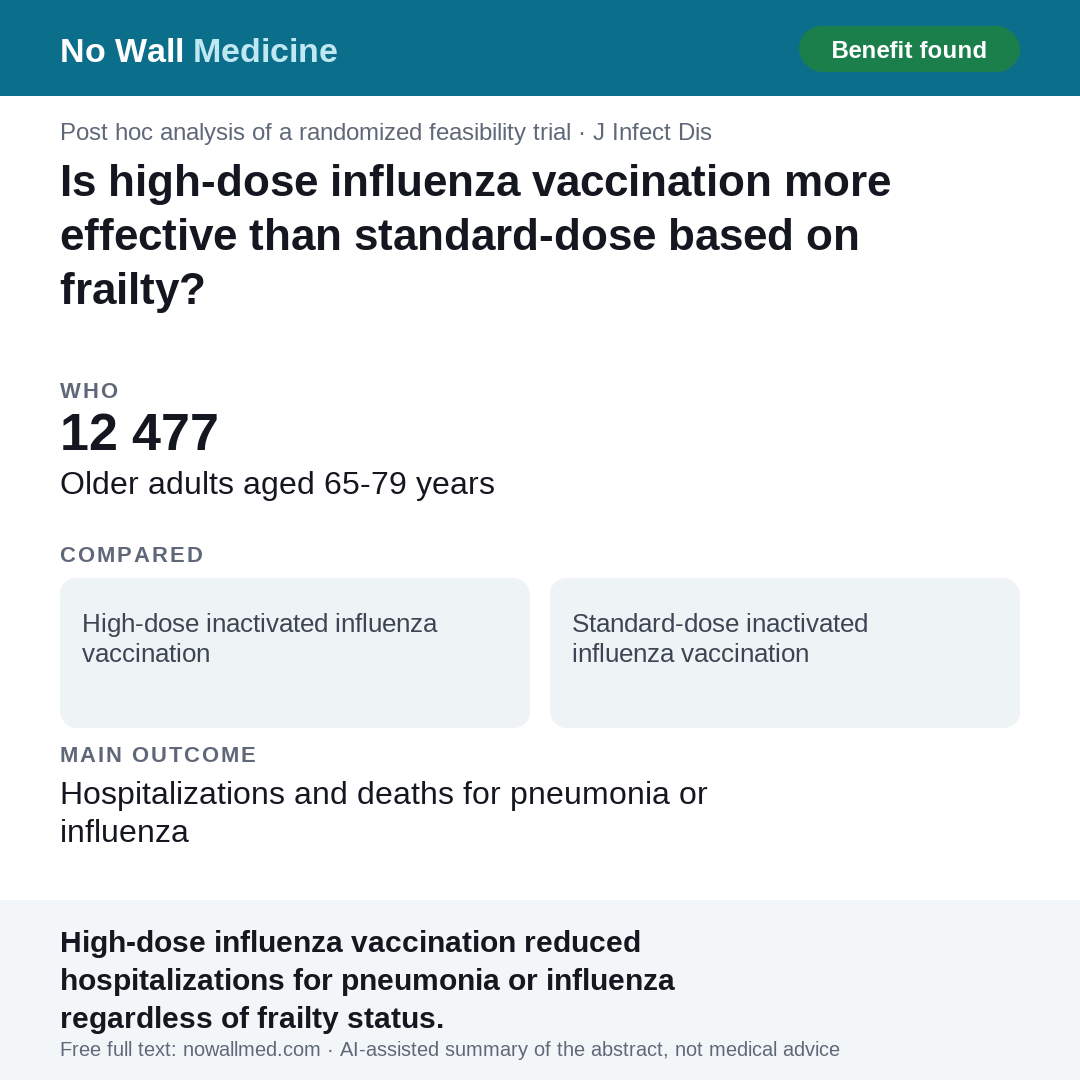
Relative Effectiveness of High-Dose Versus Standard-Dose Influenza Vaccination Against Hospitalizations and Deaths According to Frailty Score: A Post Hoc Analysis of the DANFLU-1 Randomized Trial
Post hoc analysis of a randomized feasibility trialBenefit found
Is high-dose influenza vaccination more effective than standard-dose based on frailty?
Who
12 477
Older adults aged 65-79 years
Compared
High-dose inactivated influenza vaccination
Standard-dose inactivated influenza vaccination
Main outcome
Hospitalizations and deaths for pneumonia or influenza
Bottom line: High-dose influenza vaccination reduced hospitalizations for pneumonia or influenza regardless of frailty status.
J Infect Dis · 2025-08-13Download image
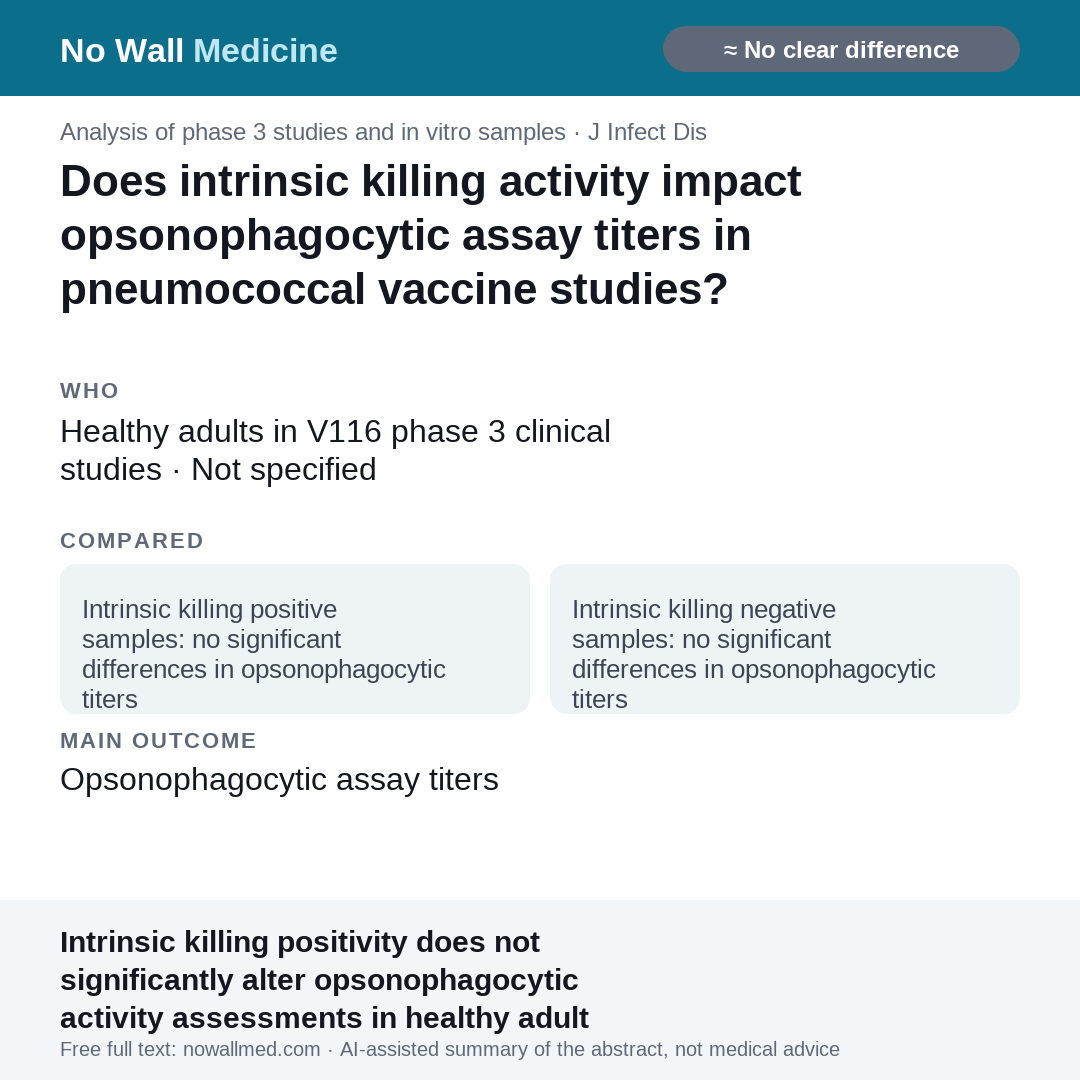
Low Intrinsic Killing Activity and no Impact of Its Positivity on Phase 3 Pneumococcal Vaccine Adult Studies
Analysis of phase 3 studies and in vitro samplesNo clear difference
Does intrinsic killing activity impact opsonophagocytic assay titers in pneumococcal vaccine studies?
Who
Healthy adults in V116 phase 3 clinical studies · Not specified
Compared
Intrinsic killing positive samples: no significant differences in opsonophagocytic titers
Intrinsic killing negative samples: no significant differences in opsonophagocytic titers
Main outcome
Opsonophagocytic assay titers
Bottom line: Intrinsic killing positivity does not significantly alter opsonophagocytic activity assessments in healthy adult vaccine studies.
Limitation: The study suggests results apply where antibiotic use is well-regulated.
J Infect Dis · 2025-08-13Download image
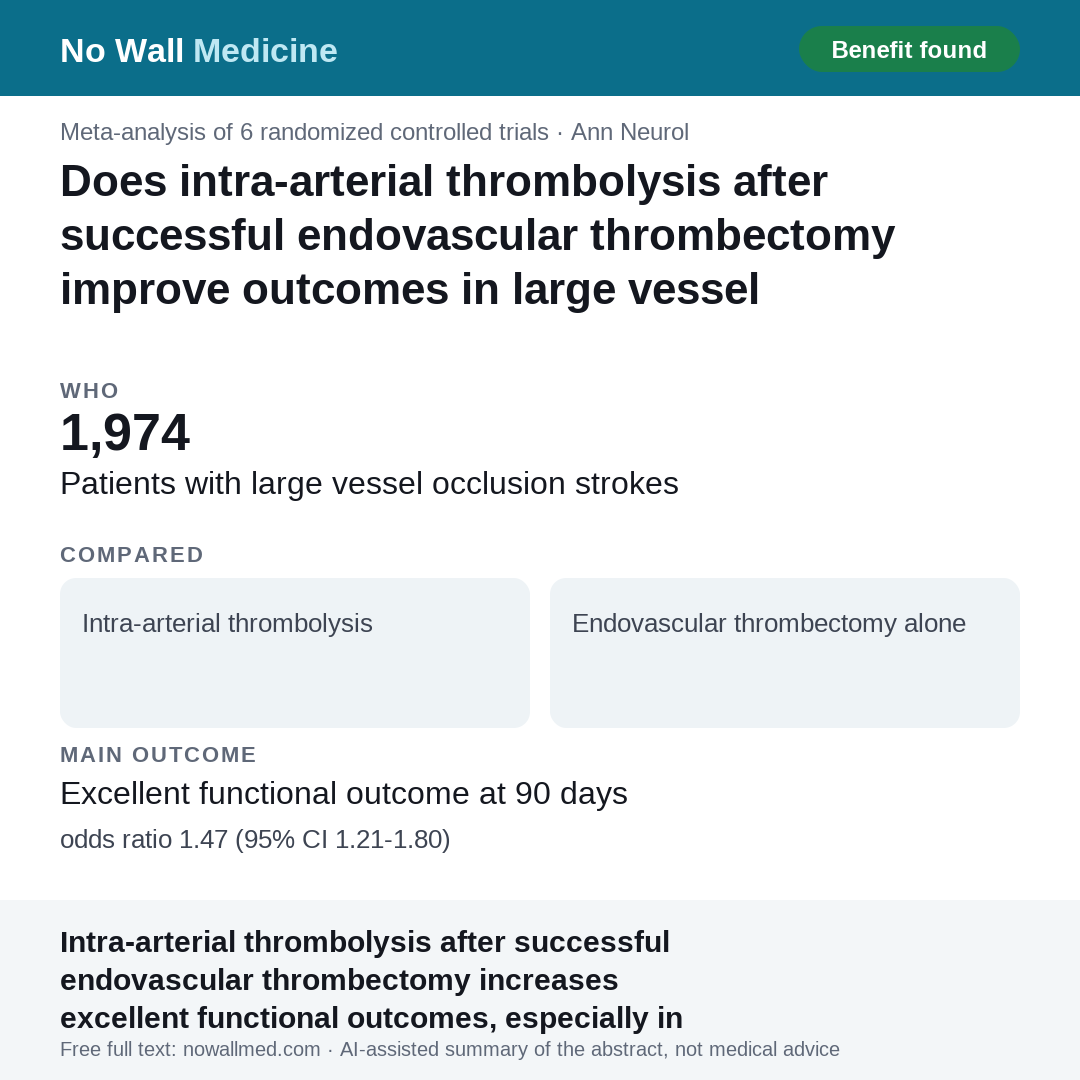
Adjunctive Thrombolytics After Successful Endovascular Reperfusion: A Systematic Review and Meta-Analysis of Randomized Controlled Trials
Meta-analysis of 6 randomized controlled trialsBenefit found
Does intra-arterial thrombolysis after successful endovascular thrombectomy improve outcomes in large vessel occlusion strokes?
Who
1,974
Patients with large vessel occlusion strokes
Compared
Intra-arterial thrombolysis
Endovascular thrombectomy alone
Main outcome
Excellent functional outcome at 90 days
Result: odds ratio 1.47 (95% CI 1.21-1.80)
Bottom line: Intra-arterial thrombolysis after successful endovascular thrombectomy increases excellent functional outcomes, especially in anterior circulation strokes.
Ann Neurol · 2025-08-13Download image