Visual abstracts
New randomized trials and meta-analyses from leading journals at a glance: who was studied, what was compared, and what was found. Every paper is free to read in full.
All specialtiesCardiology 1953Oncology 1672Gastroenterology & Hepatology 742Infectious Disease 1240Neurology 808Psychiatry & Mental Health 955Pulmonology 840Critical Care 565Endocrinology & Diabetes 1050Pediatrics 1171Surgery 985Orthopedics & Sports Medicine 364Neurosurgery 248Cardiothoracic & Vascular Surgery 214Plastic & Reconstructive Surgery 304Nephrology 406Rheumatology 279Hematology 423Dermatology 223Ophthalmology 229Obstetrics & Gynecology 635Public & Global Health 382Radiology & Imaging 270Anesthesiology 392Urology 339ENT (Otolaryngology) 263Emergency Medicine 219Allergy & Immunology 126Geriatrics 414Family Medicine & Primary Care 230Medical Genetics & Genomics 212Pathology & Laboratory Medicine 64Physical Medicine & Rehabilitation 340Palliative Care 171Nutrition 526Digital Health & AI 1026General Medicine 152
Peripheral Artery Disease and Atrial Fibrillation: A Systematic Review and Meta-analysis on 763,919 Patients
Systematic review and meta-analysis of observational studiesBenefit found
Is peripheral artery disease associated with new-onset atrial fibrillation risk?
Who
763919
763,919 patients including 56,207 with peripheral artery disease
Compared
Peripheral artery disease: HR: 1.34
No peripheral artery disease
Main outcome
new-onset atrial fibrillation
Result: hazard ratio 1.34 (95% CI 1.18-1.50)
Bottom line: Peripheral artery disease is associated with a 34% increased risk of new-onset atrial fibrillation.
Limitation: The certainty of the evidence according to GRADE was low.
JACC Adv · 2026-08-07Download image

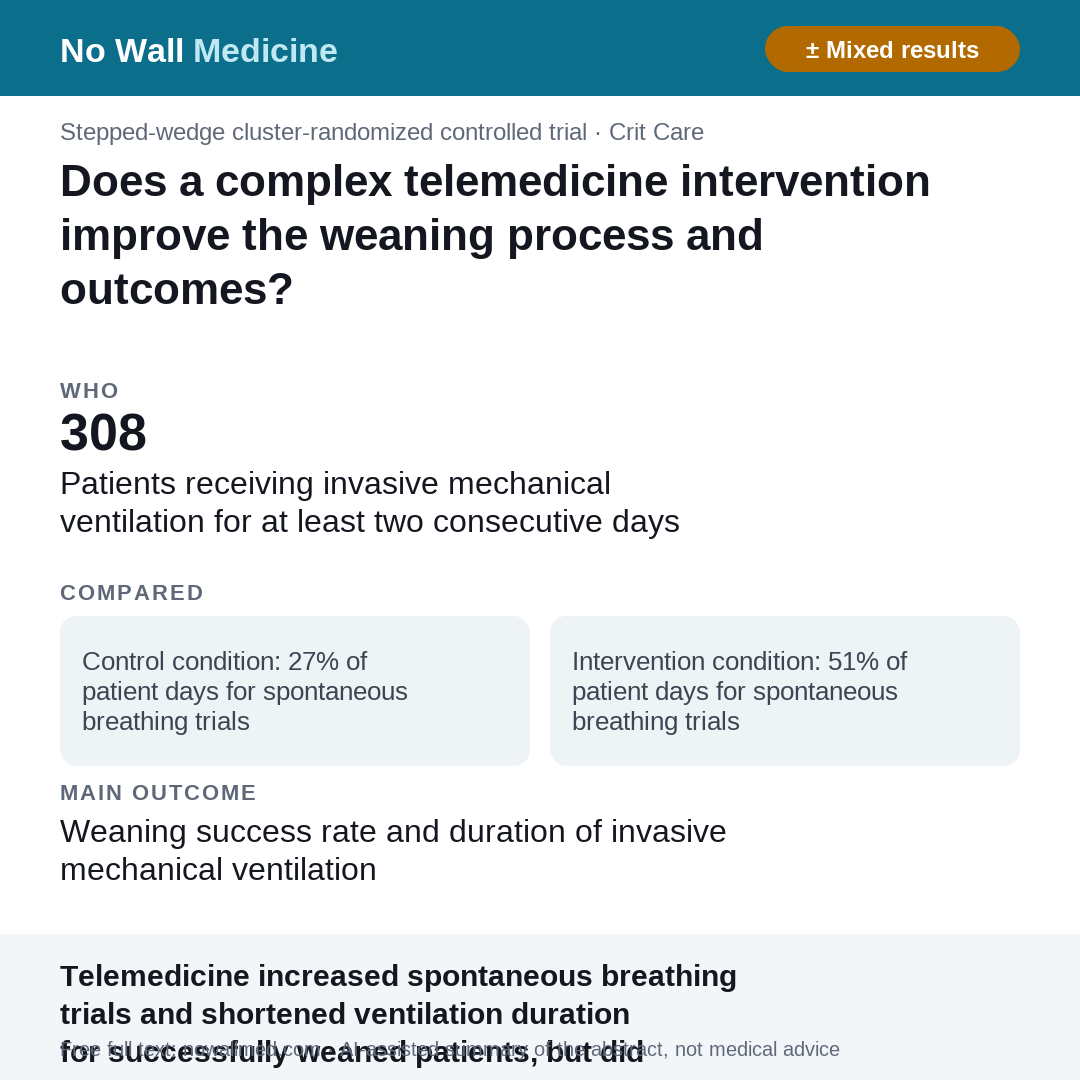
The impact of an intensive care telemedicine program on weaning from invasive ventilation: a secondary analysis of the ERIC trial
Stepped-wedge cluster-randomized controlled trialMixed results
Does a complex telemedicine intervention improve the weaning process and outcomes?
Who
308
Patients receiving invasive mechanical ventilation for at least two consecutive days · Ten intensive care unit clusters in Berlin, Germany
Compared
Control condition: 27% of patient days for spontaneous breathing trials
Intervention condition: 51% of patient days for spontaneous breathing trials
Main outcome
Weaning success rate and duration of invasive mechanical ventilation
Result: OR for weaning failure 1.45 (95%-CI 0.71-2.95)
Bottom line: Telemedicine increased spontaneous breathing trials and shortened ventilation duration for successfully weaned patients, but did not improve weaning success.
Crit Care · 2026-08-07Download image
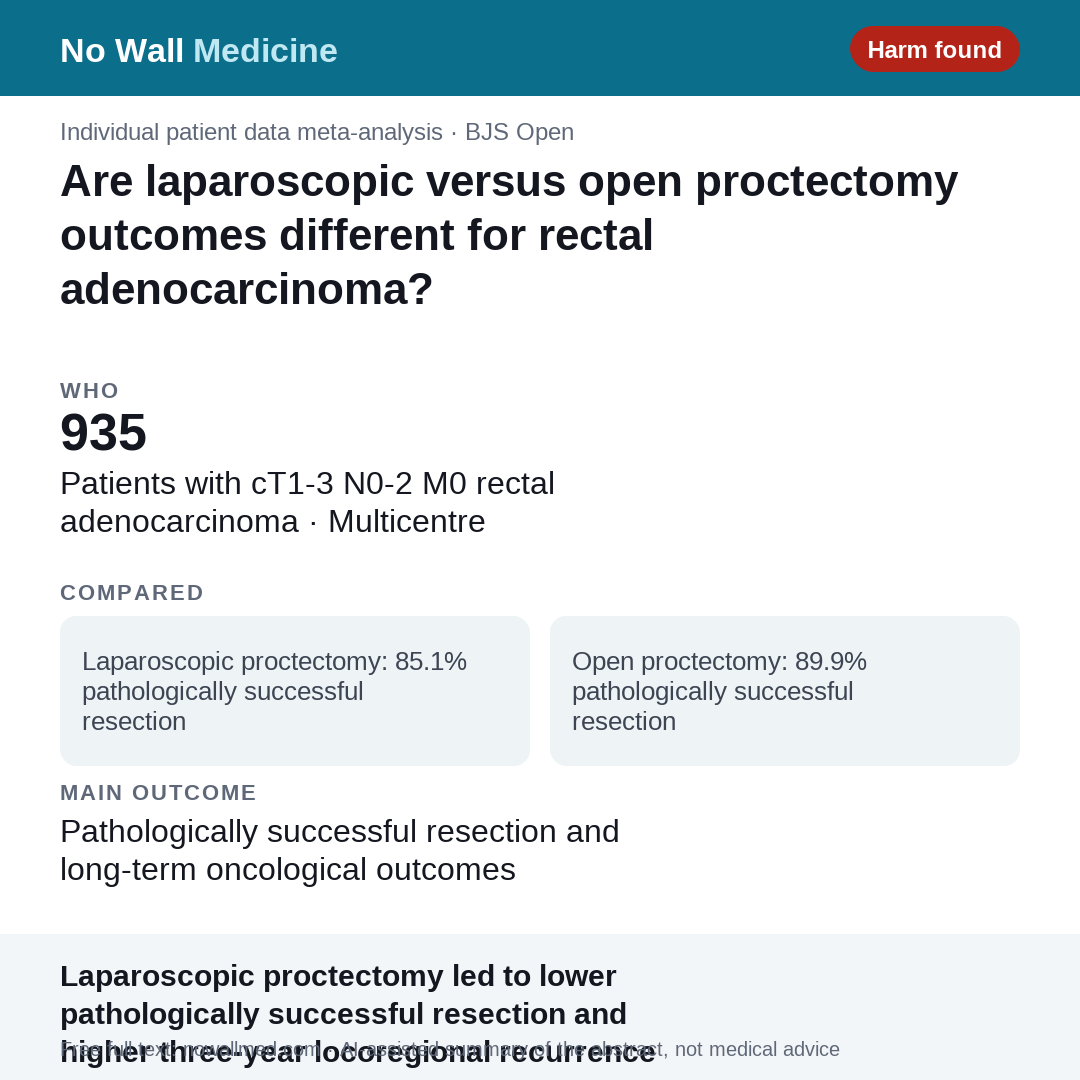
Laparoscopic versus open surgery for rectal cancer: individual patient data meta-analysis of the ALaCaRT and Z6051 randomized trials
Individual patient data meta-analysisHarm found
Are laparoscopic versus open proctectomy outcomes different for rectal adenocarcinoma?
Who
935
Patients with cT1-3 N0-2 M0 rectal adenocarcinoma · Multicentre
Compared
Laparoscopic proctectomy: 85.1% pathologically successful resection
Open proctectomy: 89.9% pathologically successful resection
Main outcome
Pathologically successful resection and long-term oncological outcomes
Result: pooled estimate difference -1.5%; 95% c.i. -7.2% to 4.2%
Bottom line: Laparoscopic proctectomy led to lower pathologically successful resection and higher three-year locoregional recurrence compared to open surgery.
BJS Open · 2026-08-07Download image
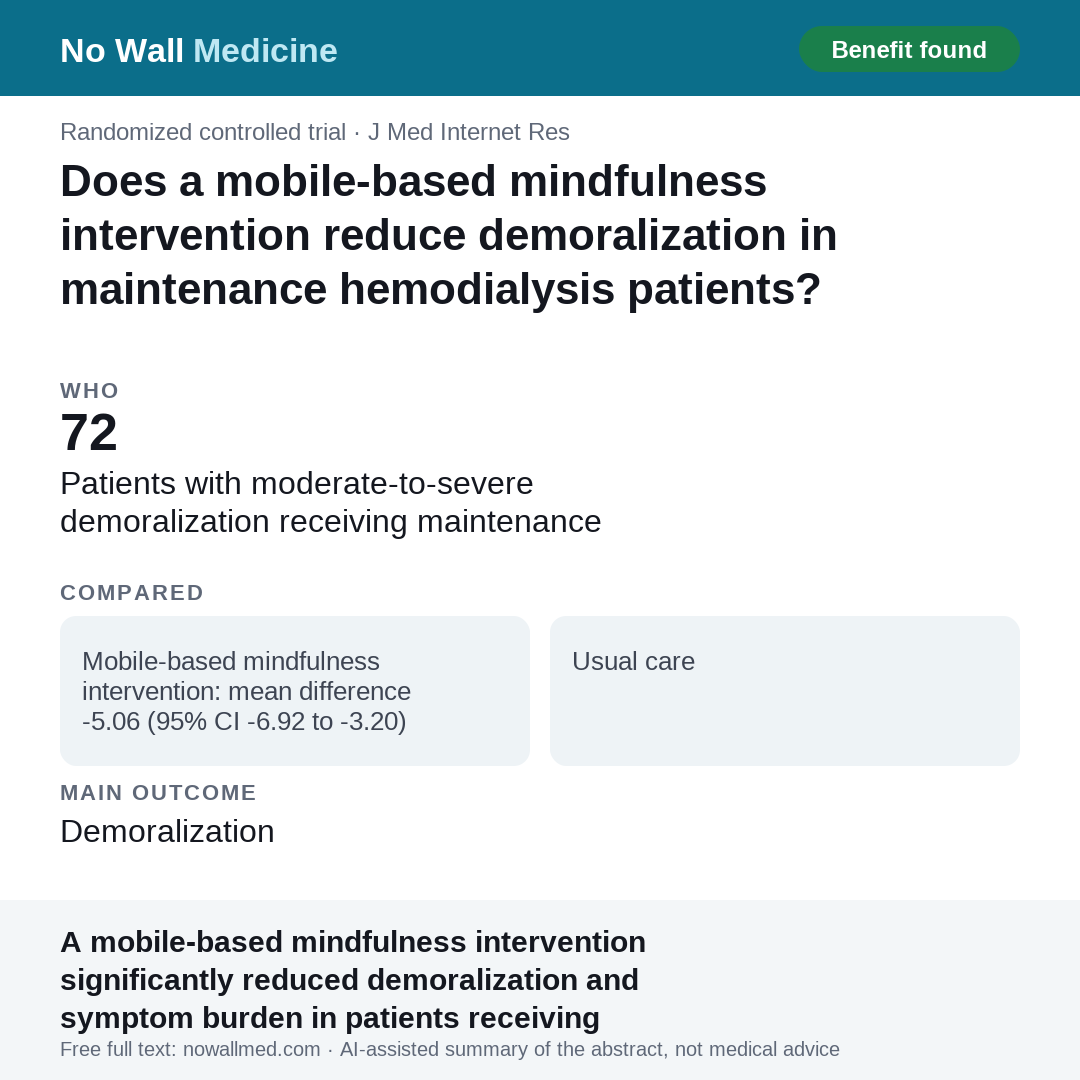
A Mobile-Based Mindfulness Intervention for Reducing Demoralization in Patients on Maintenance Hemodialysis: Randomized Controlled Trial
Randomized controlled trialBenefit found
Does a mobile-based mindfulness intervention reduce demoralization in maintenance hemodialysis patients?
Who
72
Patients with moderate-to-severe demoralization receiving maintenance hemodialysis
Compared
Mobile-based mindfulness intervention: mean difference -5.06 (95% CI -6.92 to -3.20)
Usual care
Main outcome
Demoralization
Result: mean difference -5.06 (95% CI -6.92 to -3.20)
Bottom line: A mobile-based mindfulness intervention significantly reduced demoralization and symptom burden in patients receiving maintenance hemodialysis.
J Med Internet Res · 2026-08-07Download image
Effectiveness of a Brief Internet-Based Workplace Training Program to Support Help Seeking for Mental Ill-Health: Cluster Randomized Controlled Trial
Cluster randomized controlled trialBenefit found
Does online training increase help seeking?
Who
487
Australian employees aged eighteen and over · Australian workplaces
Compared
Helipad program
Control program
Main outcome
professional help seeking intentions
Result: significant difference in change over time
Bottom line: Online training increases help seeking intentions
J Med Internet Res · 2026-08-07Download image
Effectiveness of Interactive Remote Rehabilitation After Total Knee Arthroplasty: Systematic Review and Meta-Analysis of Randomized Controlled Trials
Systematic review and meta-analysis of randomized controlled trialsNo clear difference
Is interactive remote rehabilitation effective compared to conventional rehabilitation after total knee arthroplasty?
Who
2607
Adults after total knee arthroplasty
Compared
Interactive remote rehabilitation
Conventional rehabilitation
Main outcome
Pain, function, range of motion, strength, mobility, and quality of life
Result: mean difference 0.26 (95% CI 0.04-0.48) for short-term active extension range of motion
Bottom line: Interactive remote rehabilitation does not show statistically significant advantages over conventional rehabilitation for most clinical outcomes after total knee arthroplasty.
Limitation: Heterogeneity was substantial, prediction intervals were frequently wide, and certainty of evidence was low to very low.
J Med Internet Res · 2026-08-07Download image
Laser disc decompression in the management of lumbar disc herniation: A systematic review and meta-analysis
Systematic review and meta-analysisUnclear result
What is the efficacy of various laser therapy modalities for lumbar disc herniation?
Who
Patients with lumbar disc herniation
Compared
Percutaneous laser disc decompression: SMC 3.54 (95% CI -2.87 to 9.94)
Epidural laser disc decompression: SMC 2.00 (95% CI 1.67 to 2.33)
Main outcome
Standardized mean changes in pain and function
Result: SMC 2.32 (95% CI -0.75, 5.39)
Bottom line: Laser therapy may reduce pain and improve function, but evidence shows extreme imprecision and uncertainty.
Limitation: Significant heterogeneity, methodological inconsistency, and low study power were present.
Brain Spine · 2026-08-07Download image
Ventriculoperitoneal shunt versus transverse sinus stenting in idiopathic intracranial hypertension: A systematic review and meta-analysis
Systematic review and meta-analysisNo clear difference
Are ventriculoperitoneal shunting and transverse sinus stenting comparable for idiopathic intracranial hypertension?
Who
Adult idiopathic intracranial hypertension patients
Compared
Transverse sinus stenting: 84.1% visual improvement
Ventriculoperitoneal shunting: 83.3% visual improvement
Main outcome
Visual improvement, headache improvement, and revision rates
Bottom line: Ventriculoperitoneal shunting and transverse sinus stenting provide comparable clinical outcomes in idiopathic intracranial hypertension.
Limitation: Evidence derived from non-randomized, indirect comparisons with substantial indication bias.
Brain Spine · 2026-08-07Download image
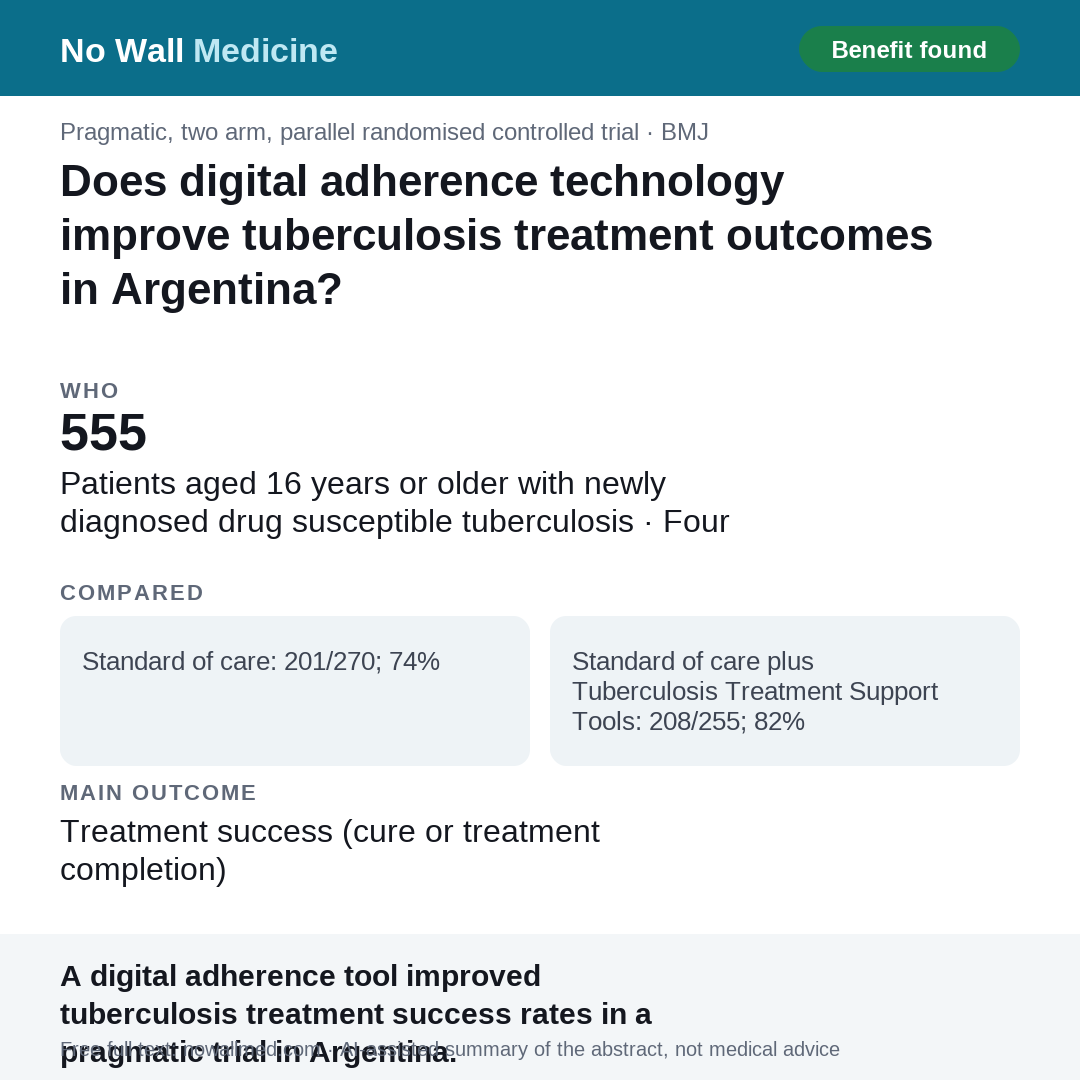
Evaluation of patient centred digital adherence technology for tuberculosis treatment outcomes: pragmatic randomised controlled trial
Pragmatic, two arm, parallel randomised controlled trialBenefit found
Does digital adherence technology improve tuberculosis treatment outcomes in Argentina?
Who
555
Patients aged 16 years or older with newly diagnosed drug susceptible tuberculosis · Four public reference hospitals in Buenos Aires, Argentina
Compared
Standard of care: 201/270; 74%
Standard of care plus Tuberculosis Treatment Support Tools: 208/255; 82%
Main outcome
Treatment success (cure or treatment completion)
Result: risk ratio 1.10 (1.00 to 1.20; P=0.04)
Bottom line: A digital adherence tool improved tuberculosis treatment success rates in a pragmatic trial in Argentina.
BMJ · 2026-08-06Download image
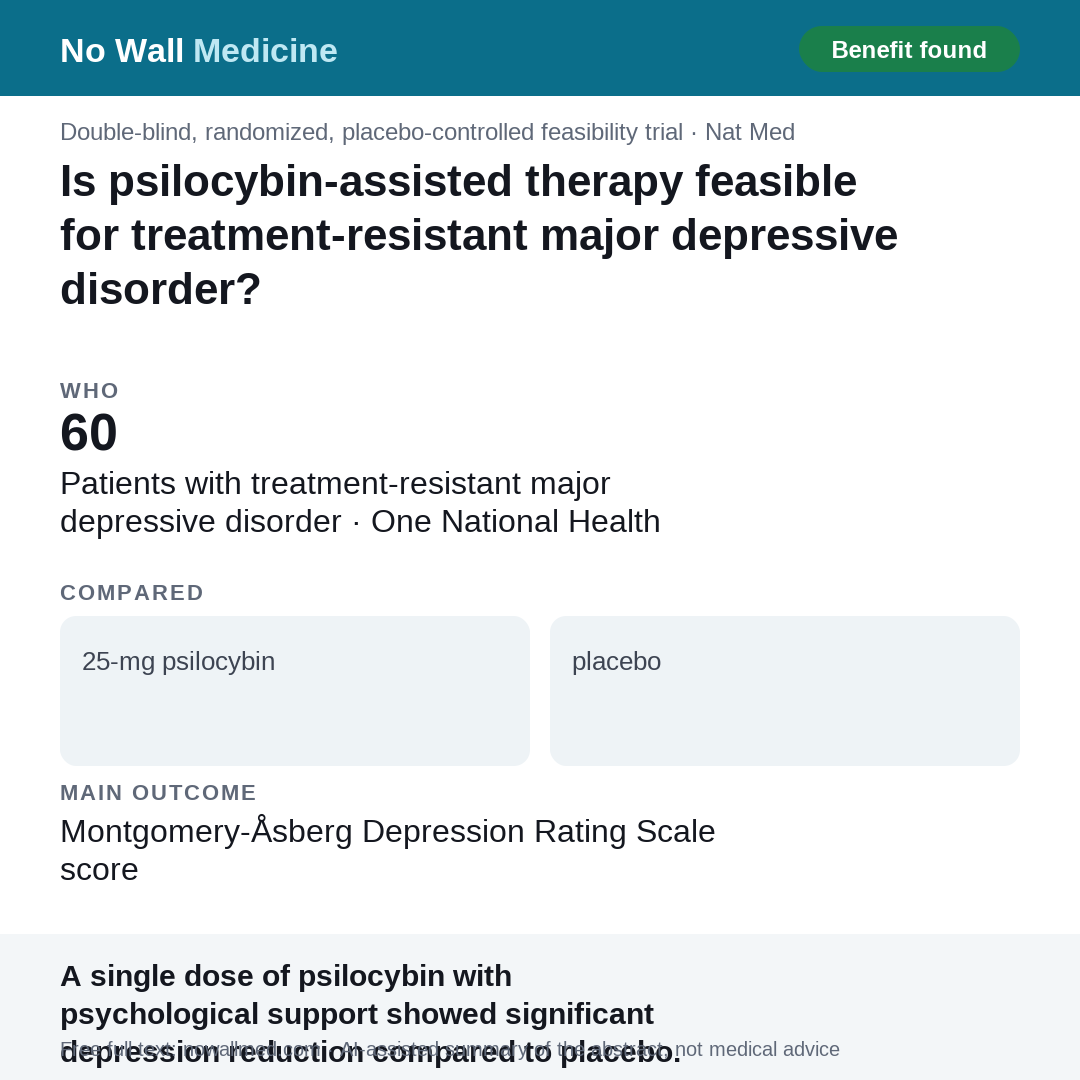
Psilocybin-assisted therapy for treatment-resistant major depressive disorder in a public healthcare setting: a randomized controlled trial
Double-blind, randomized, placebo-controlled feasibility trialBenefit found
Is psilocybin-assisted therapy feasible for treatment-resistant major depressive disorder?
Who
60
Patients with treatment-resistant major depressive disorder · One National Health Service site in England
Compared
25-mg psilocybin
placebo
Main outcome
Montgomery-Åsberg Depression Rating Scale score
Result: -10.41 (95% confidence interval: -14.86 to -5.95)
Bottom line: A single dose of psilocybin with psychological support showed significant depression reduction compared to placebo.
Nat Med · 2026-08-06Download image
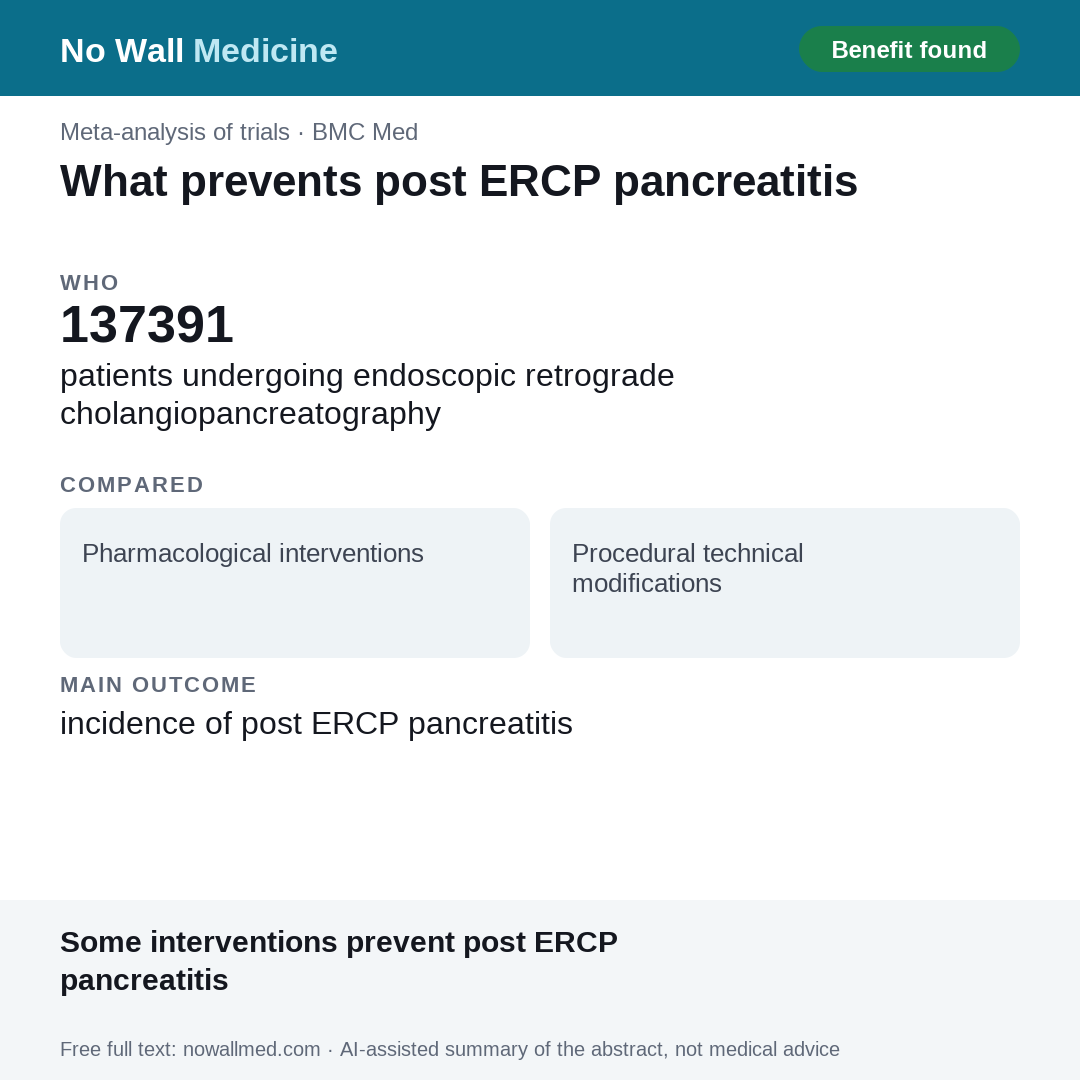
Pharmacological and procedural strategies to prevent post-ERCP pancreatitis: an umbrella review of meta-analyses of randomized controlled trials
Meta-analysis of trialsBenefit found
What prevents post ERCP pancreatitis
Who
137391
patients undergoing endoscopic retrograde cholangiopancreatography
Compared
Pharmacological interventions
Procedural technical modifications
Main outcome
incidence of post ERCP pancreatitis
Bottom line: Some interventions prevent post ERCP pancreatitis
BMC Med · 2026-08-06Download image
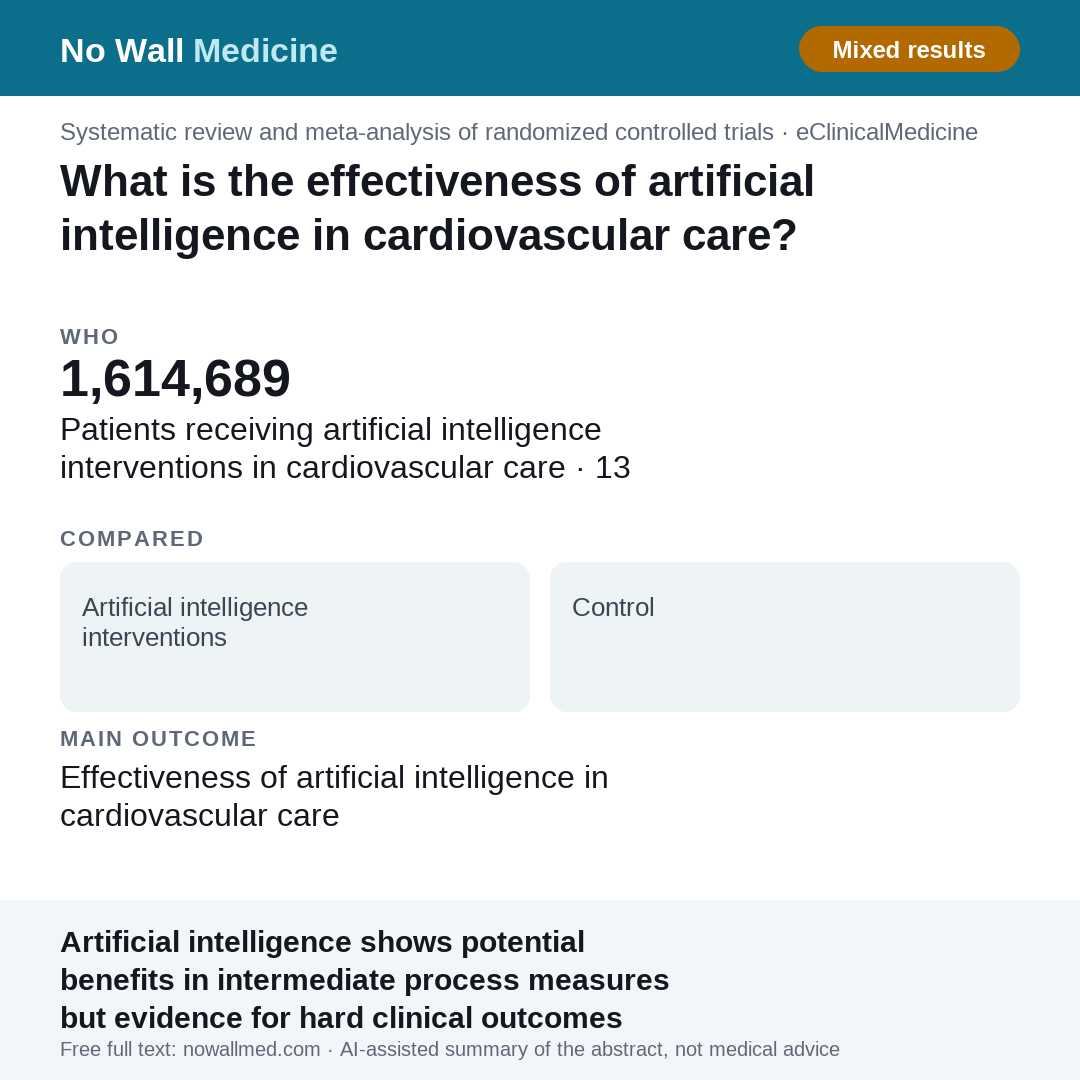
Artificial intelligence in cardiovascular care: a systematic review and meta-analysis of randomised controlled trials
Systematic review and meta-analysis of randomized controlled trialsMixed results
Is artificial intelligence effective in cardiovascular care?
Who
1,614,689
Patients in cardiovascular care · 13 regions
Compared
Image-based artificial intelligence clinical decision support system: significant effect on major adverse cardiovascular events
Routine care
Main outcome
Effectiveness of artificial intelligence interventions in cardiovascular care
Result: risk ratio 0.74 (95% CI 0.58-0.96)
Bottom line: Artificial intelligence shows potential benefits in intermediate process measures, but evidence for hard clinical outcomes remains limited.
Limitation: High risk of bias, trial heterogeneity, inadequate reporting, and scarcity of trials with clinically meaningful endpoints.
eClinicalMedicine · 2026-08-06Download image
Efficacy and safety of flow diverter therapy for unruptured intracranial aneurysms compared to conventional endovascular therapy: a multicentre, randomised, open-label trial in South Korea
Multicentre, randomised, open-label trialHarm found
Is flow diversion more effective than conventional endovascular therapy for unruptured or recurrent intracranial aneurysms?
Who
160
Patients aged 19-75 with unruptured or recurrent intracranial aneurysms ≥7 mm · 13 tertiary institutions in South Korea
Compared
96.3%Conventional endovascular therapy
75.0%Flow diversion
Main outcome
Complete or near-complete aneurysm occlusion at 12 months
Result: adjusted odds ratio 6.46 (95% CI 1.94-29.98)
Bottom line: Conventional endovascular therapy resulted in higher rates of complete aneurysm occlusion compared to flow diversion without increased risk.
Limitation: Long-term follow-up is required to assess the durability of flow diversion.
Funded by: Korean Ministry of Health and Welfare
eClinicalMedicine · 2026-08-06Download image
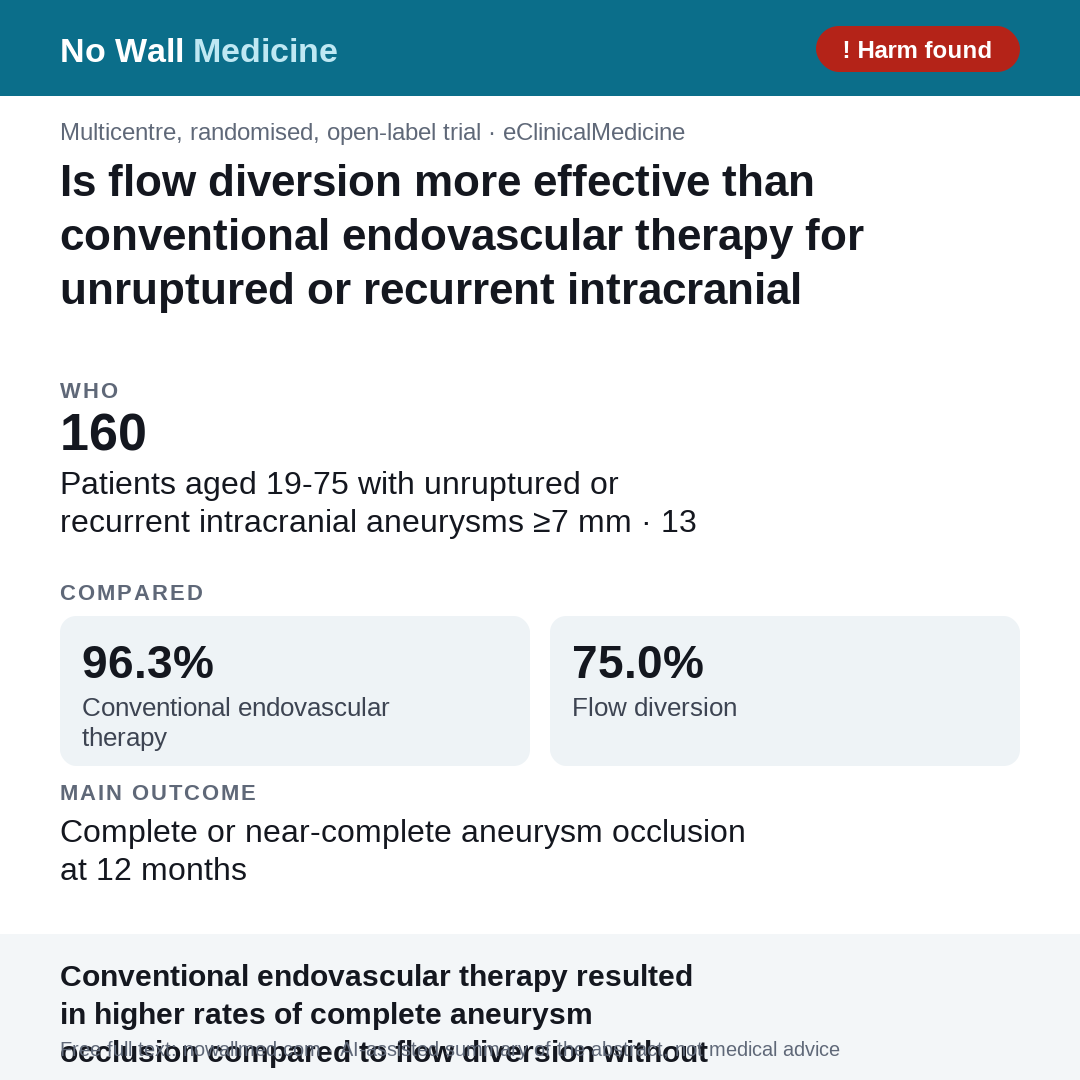
An expanded breakfast buffet increases daily energy and protein intakes in hospitalised patients: A prospective crossover quality improvement study
Prospective crossover quality improvement studyBenefit found
Does an expanded breakfast buffet increase daily energy and protein intakes in hospitalised patients?
Who
188
Hospitalised adults who consumed breakfast · Seven inpatient wards at a tertiary university hospital
Compared
Standard breakfast
Expanded breakfast: +198 kcal/day (95% CI 44 to 352) energy and +6.8 g/day (95% CI 1.0 to 12.5) protein
Main outcome
Total daily energy and protein intakes
Result: energy +198 kcal/day (95% CI 44 to 352); protein +6.8 g/day (95% CI 1.0 to 12.5)
Bottom line: An expanded breakfast buffet increased total daily energy and protein intakes in hospitalised patients without reducing other meal intakes.
Clin Nutr · 2026-08-06Download image
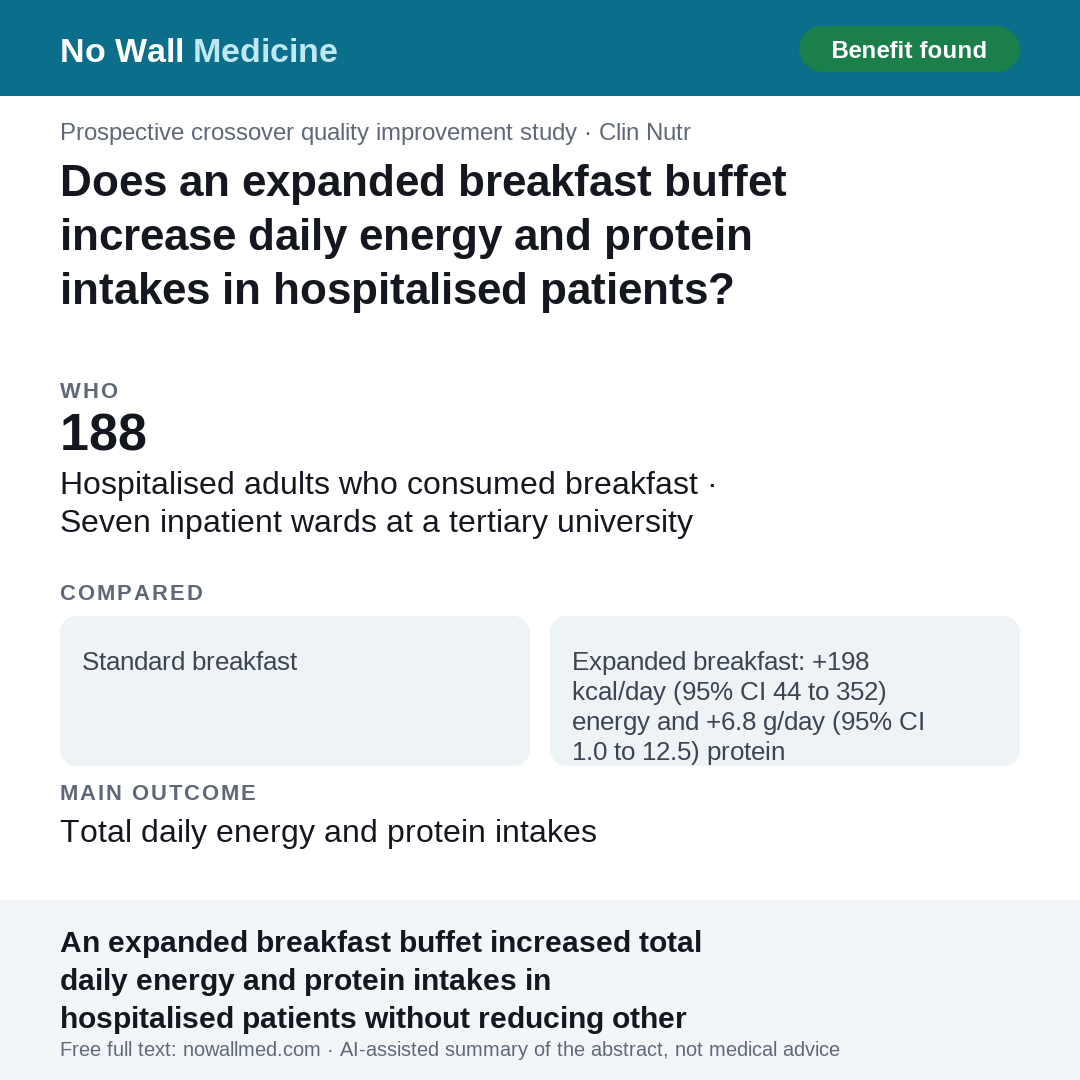
Electronic Patient-Reported Outcome Monitoring With Alert-Based Interventions in Metastatic Breast Cancer: A Randomized Clinical Trial
Multicenter randomized clinical trialBenefit found
Does digital patient-reported outcome monitoring with alert-based responses reduce fatigue in metastatic breast cancer?
Who
909
Women aged 18 years or older with metastatic breast cancer · 52 breast cancer centers in Germany
Compared
54.5Intervention group (95% CI, 53.7-55.4)
59.9Control group (95% CI, 59.0-60.8)
Main outcome
Fatigue at 6 months
Result: mean difference of -5.4 points (95% CI, -6.6 to -4.1)
Bottom line: Digital patient-reported outcome monitoring with alert-based responses significantly reduced fatigue and improved physical functioning in metastatic breast cancer.
JAMA Oncol · 2026-08-06Download image
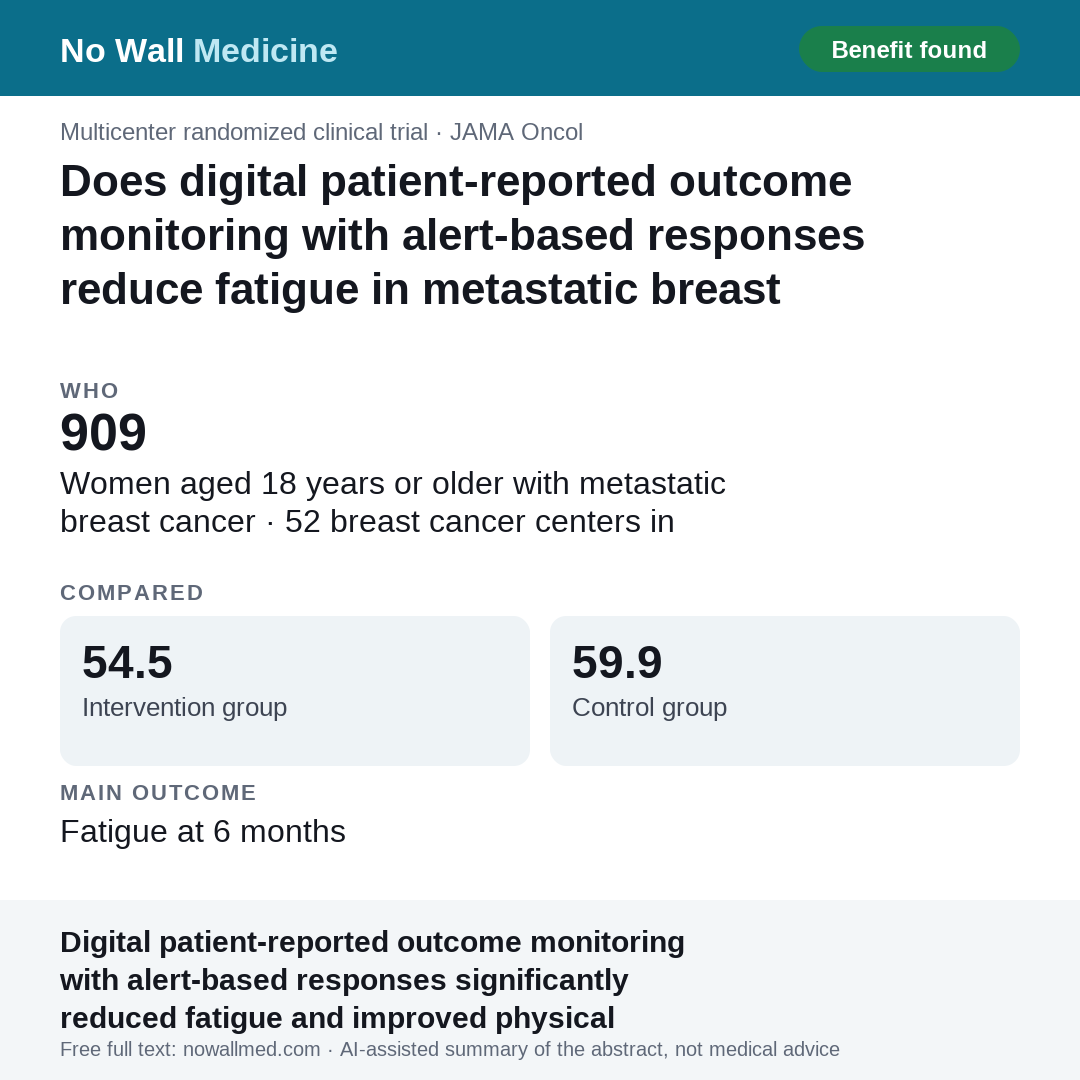
Effects of a community-based intervention bundle on household transmission of extended spectrum β-lactamase-producing Escherichia coli in rural Burkina Faso to target community-level drivers of antimicrobial resistance in sub-Saharan Africa: a cluster-randomised trial
Cluster-randomised controlled trialMixed results
Does a community-based intervention bundle reduce household transmission of extended spectrum beta-lactamase-producing Escherichia coli?
Who
1203
Individuals in 22 village clusters in Nanoro district, Burkina Faso · Nanoro district, Burkina Faso
Compared
Intervention group: 3.8 per 100 person-days
Control group: 3.5 per 100 person-days
Main outcome
Extended spectrum beta-lactamase-producing Escherichia coli acquisition
Result: hazard ratio 0.82 (95% CrI 0.56 to 1.14) in months 6-9
Bottom line: The intervention showed a modest, inconclusive reduction in Escherichia coli acquisition during months 6 to 9.
Funded by: EU Joint Programme Initiative on Antimicrobial Resistance CABU-EICO
Lancet Microbe · 2026-08-06Download image
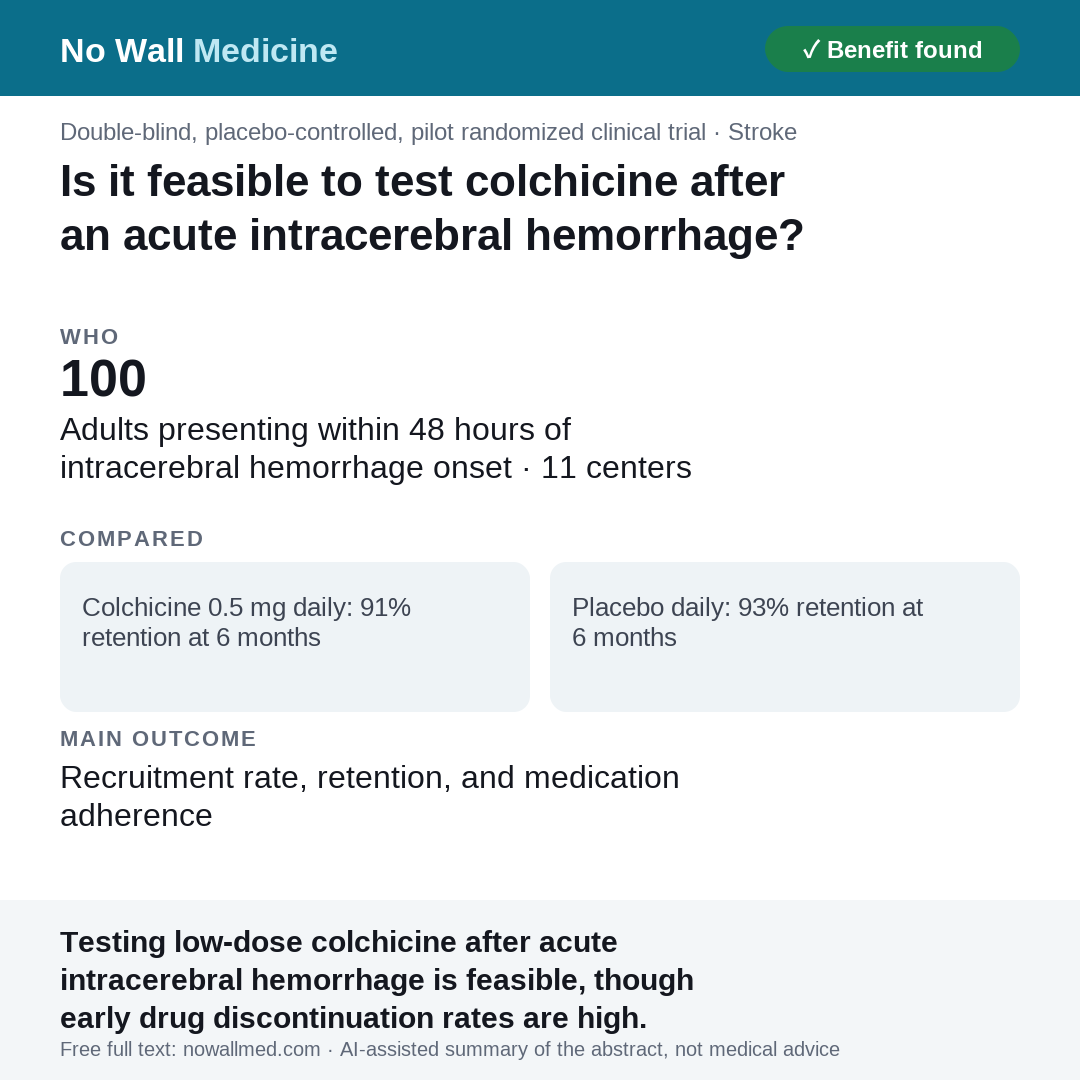
Colchicine for the Prevention of Vascular Events After an Acute Intracerebral Hemorrhage: A Placebo-Controlled Trial
Double-blind, placebo-controlled, pilot randomized clinical trialBenefit found
Is it feasible to test colchicine after an acute intracerebral hemorrhage?
Who
100
Adults presenting within 48 hours of intracerebral hemorrhage onset · 11 centers across Canada
Compared
Colchicine 0.5 mg daily: 91% retention at 6 months
Placebo daily: 93% retention at 6 months
Main outcome
Recruitment rate, retention, and medication adherence
Bottom line: Testing low-dose colchicine after acute intracerebral hemorrhage is feasible, though early drug discontinuation rates are high.
Stroke · 2026-08-06Download image
Growth dependence of welfare states: a semi-systematic review of drivers and policy responses
Semi-systematic reviewUnclear result
Can welfare states be growth independent
Who
all within planetary boundaries
Compared
growth dependent
growth independent
Main outcome
welfare state growth independence
Bottom line: Welfare states may not be growth independent
Lancet Planet Health · 2026-08-06Download image

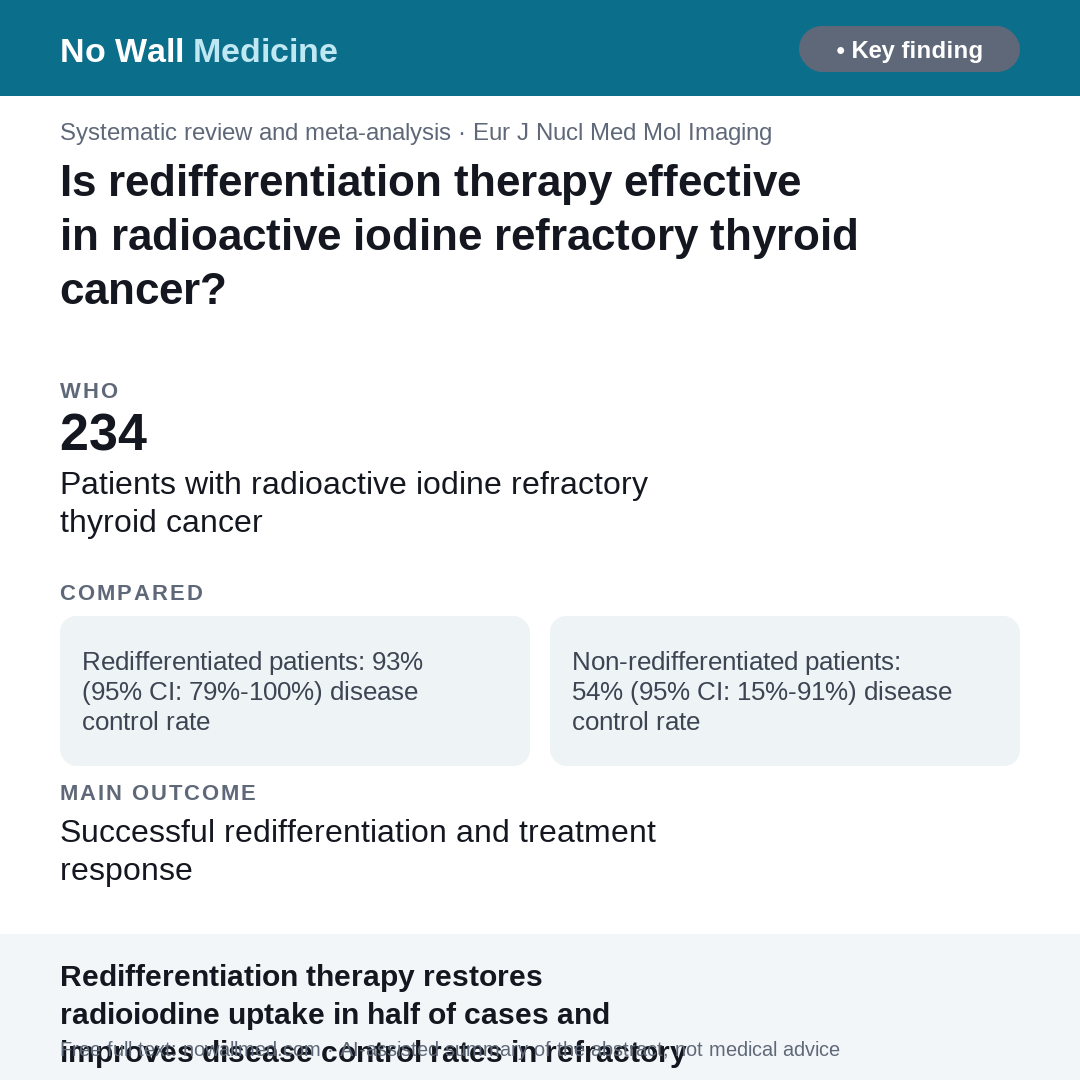
Efficacy of redifferentiation therapy in radioactive iodine refractory thyroid cancer: a systematic review and meta-analysis
Systematic review and meta-analysisBenefit found
Is redifferentiation therapy effective in radioactive iodine refractory thyroid cancer?
Who
234
Patients with radioactive iodine refractory thyroid cancer
Compared
Redifferentiated patients: 93% (95% CI: 79%-100%) disease control rate
Non-redifferentiated patients: 54% (95% CI: 15%-91%) disease control rate
Main outcome
Successful redifferentiation and treatment response
Result: 93% (95% CI: 79%-100%) vs 54% (95% CI: 15%-91%)
Bottom line: Redifferentiation therapy restores radioiodine uptake in half of cases and improves disease control rates in refractory thyroid cancer.
Limitation: Statistically significant prognostic differences and long-term survival benefits remain to be demonstrated.
Eur J Nucl Med Mol Imaging · 2026-08-06Download image
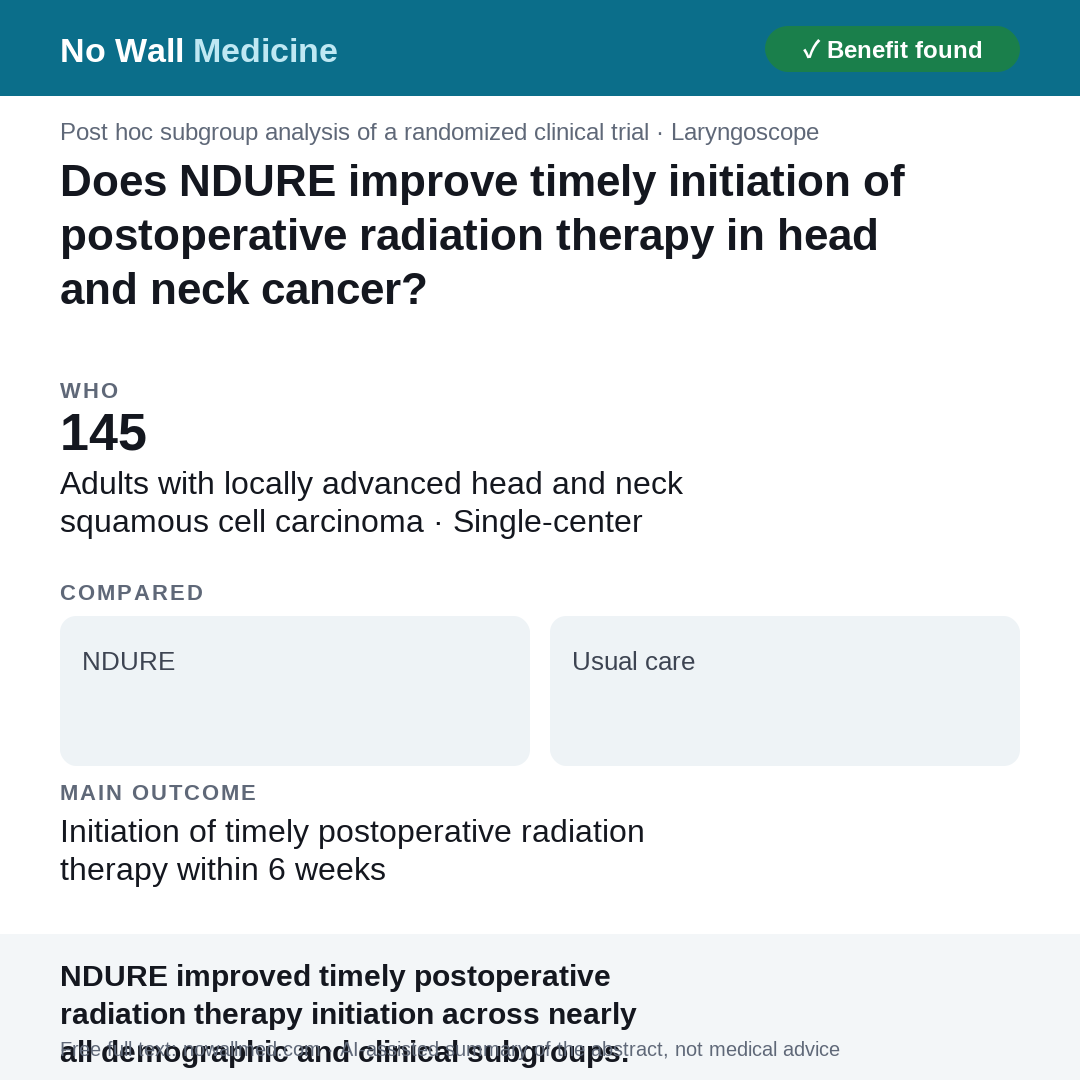
Effects of NDURE on Timely Adjuvant Radiotherapy in HNSCC: Subgroup Analysis of an RCT
Post hoc subgroup analysis of a randomized clinical trialBenefit found
Does NDURE improve timely initiation of postoperative radiation therapy in head and neck cancer?
Who
145
Adults with locally advanced head and neck squamous cell carcinoma · Single-center
Compared
NDURE
Usual care
Main outcome
Initiation of timely postoperative radiation therapy within 6 weeks
Bottom line: NDURE improved timely postoperative radiation therapy initiation across nearly all demographic and clinical subgroups.
Limitation: This was an exploratory, post hoc subgroup analysis
Laryngoscope · 2026-08-06Download image