Visual abstracts
New randomized trials and meta-analyses from leading journals at a glance: who was studied, what was compared, and what was found. Every paper is free to read in full.
All specialtiesCardiology 4031Oncology 3443Gastroenterology & Hepatology 1599Infectious Disease 3006Neurology 1594Psychiatry & Mental Health 1900Pulmonology 1740Critical Care 1135Endocrinology & Diabetes 2084Pediatrics 2416Surgery 2130Orthopedics & Sports Medicine 758Neurosurgery 461Cardiothoracic & Vascular Surgery 504Plastic & Reconstructive Surgery 536Nephrology 897Rheumatology 671Hematology 903Dermatology 514Ophthalmology 438Obstetrics & Gynecology 1406Public & Global Health 806Radiology & Imaging 543Anesthesiology 807Urology 650ENT (Otolaryngology) 435Emergency Medicine 431Allergy & Immunology 252Geriatrics 837Family Medicine & Primary Care 480Medical Genetics & Genomics 554Pathology & Laboratory Medicine 138Physical Medicine & Rehabilitation 617Palliative Care 360Nutrition 1226Digital Health & AI 1867General Medicine 280
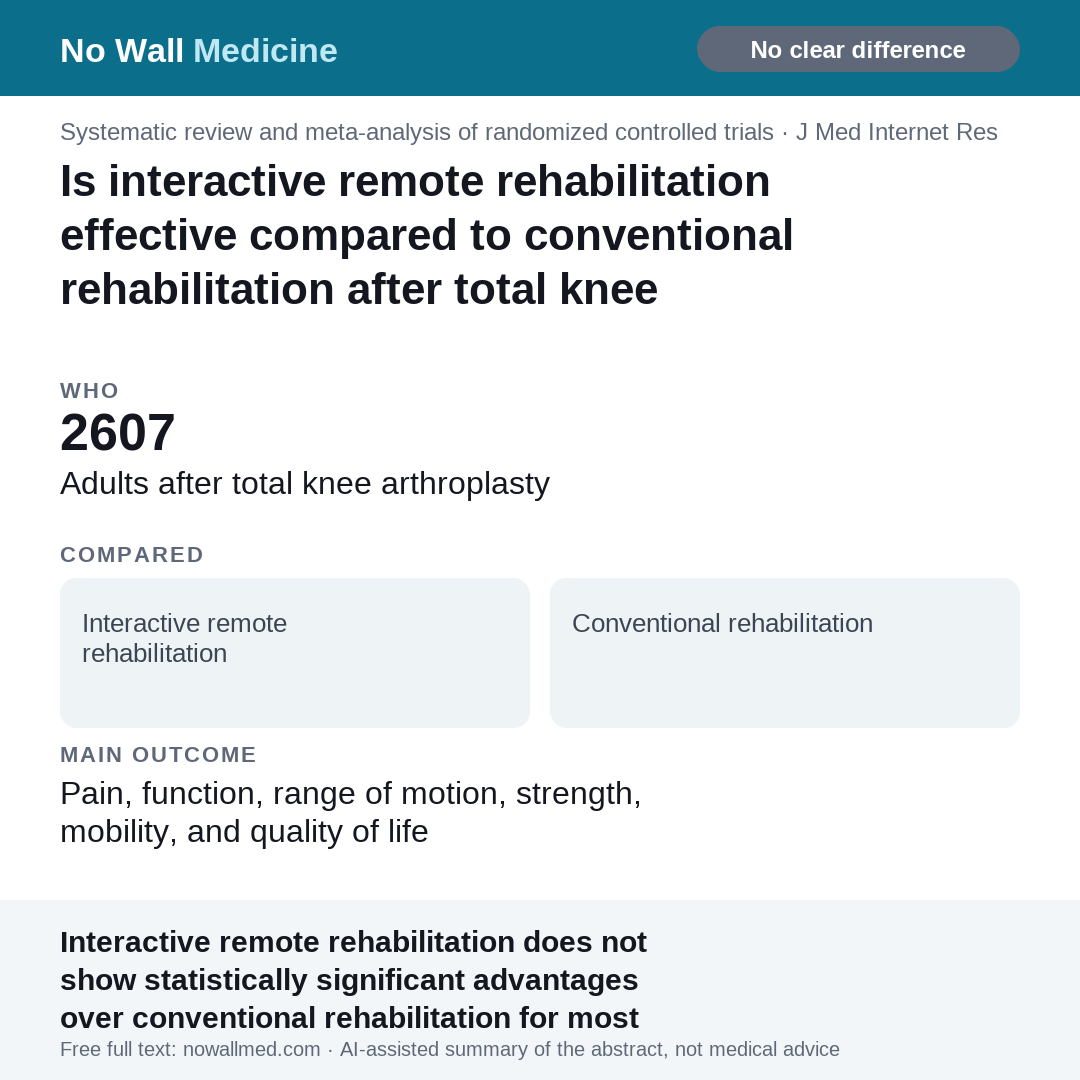
Effectiveness of Interactive Remote Rehabilitation After Total Knee Arthroplasty: Systematic Review and Meta-Analysis of Randomized Controlled Trials
Systematic review and meta-analysis of randomized controlled trialsNo clear difference
Is interactive remote rehabilitation effective compared to conventional rehabilitation after total knee arthroplasty?
Who
2607
Adults after total knee arthroplasty
Compared
Interactive remote rehabilitation
Conventional rehabilitation
Main outcome
Pain, function, range of motion, strength, mobility, and quality of life
Result: mean difference 0.26 (95% CI 0.04-0.48) for short-term active extension range of motion
Bottom line: Interactive remote rehabilitation does not show statistically significant advantages over conventional rehabilitation for most clinical outcomes after total knee arthroplasty.
Limitation: Heterogeneity was substantial, prediction intervals were frequently wide, and certainty of evidence was low to very low.
J Med Internet Res · 2026-08-07Download image
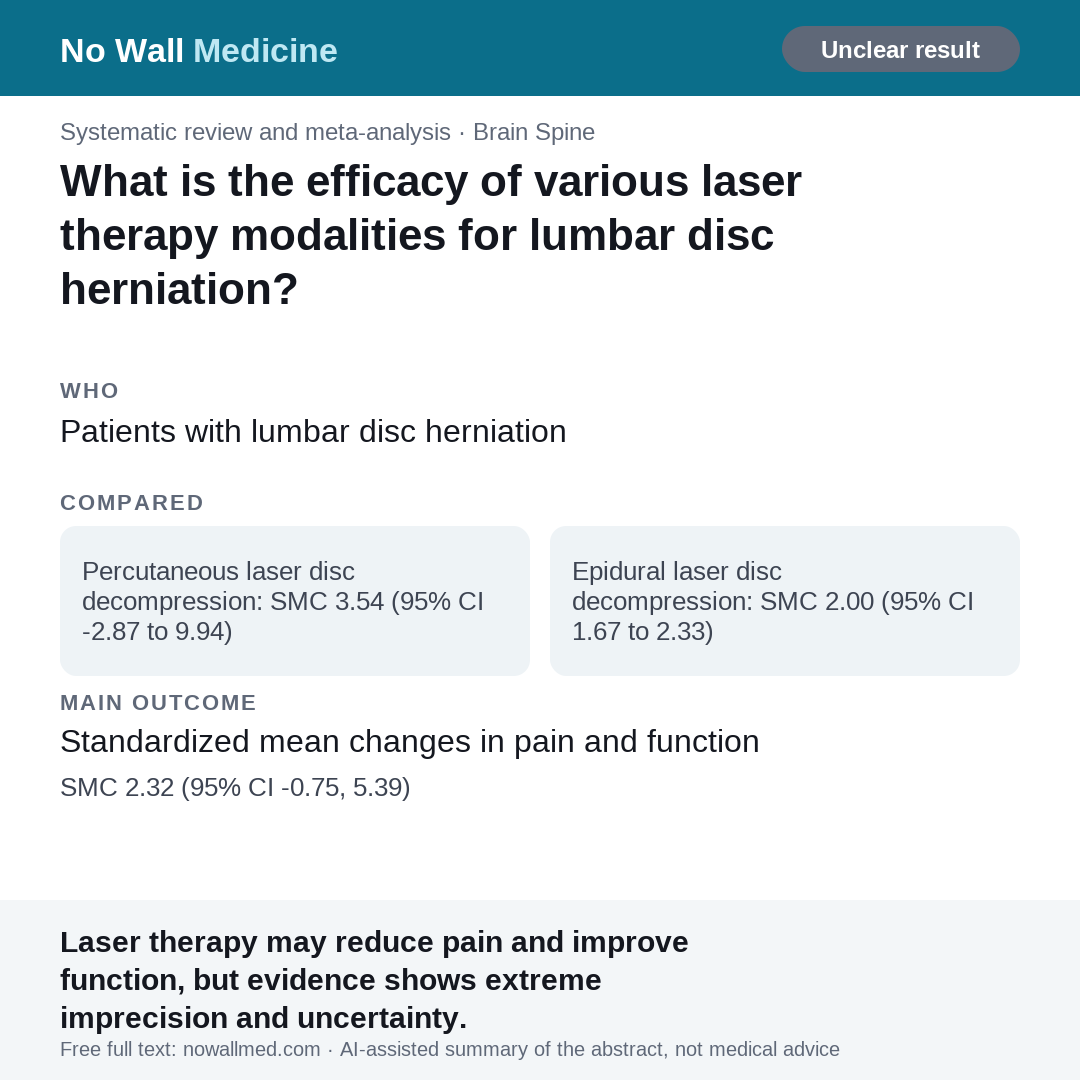
Laser disc decompression in the management of lumbar disc herniation: A systematic review and meta-analysis
Systematic review and meta-analysisUnclear result
What is the efficacy of various laser therapy modalities for lumbar disc herniation?
Who
Patients with lumbar disc herniation
Compared
Percutaneous laser disc decompression: SMC 3.54 (95% CI -2.87 to 9.94)
Epidural laser disc decompression: SMC 2.00 (95% CI 1.67 to 2.33)
Main outcome
Standardized mean changes in pain and function
Result: SMC 2.32 (95% CI -0.75, 5.39)
Bottom line: Laser therapy may reduce pain and improve function, but evidence shows extreme imprecision and uncertainty.
Limitation: Significant heterogeneity, methodological inconsistency, and low study power were present.
Brain Spine · 2026-08-07Download image
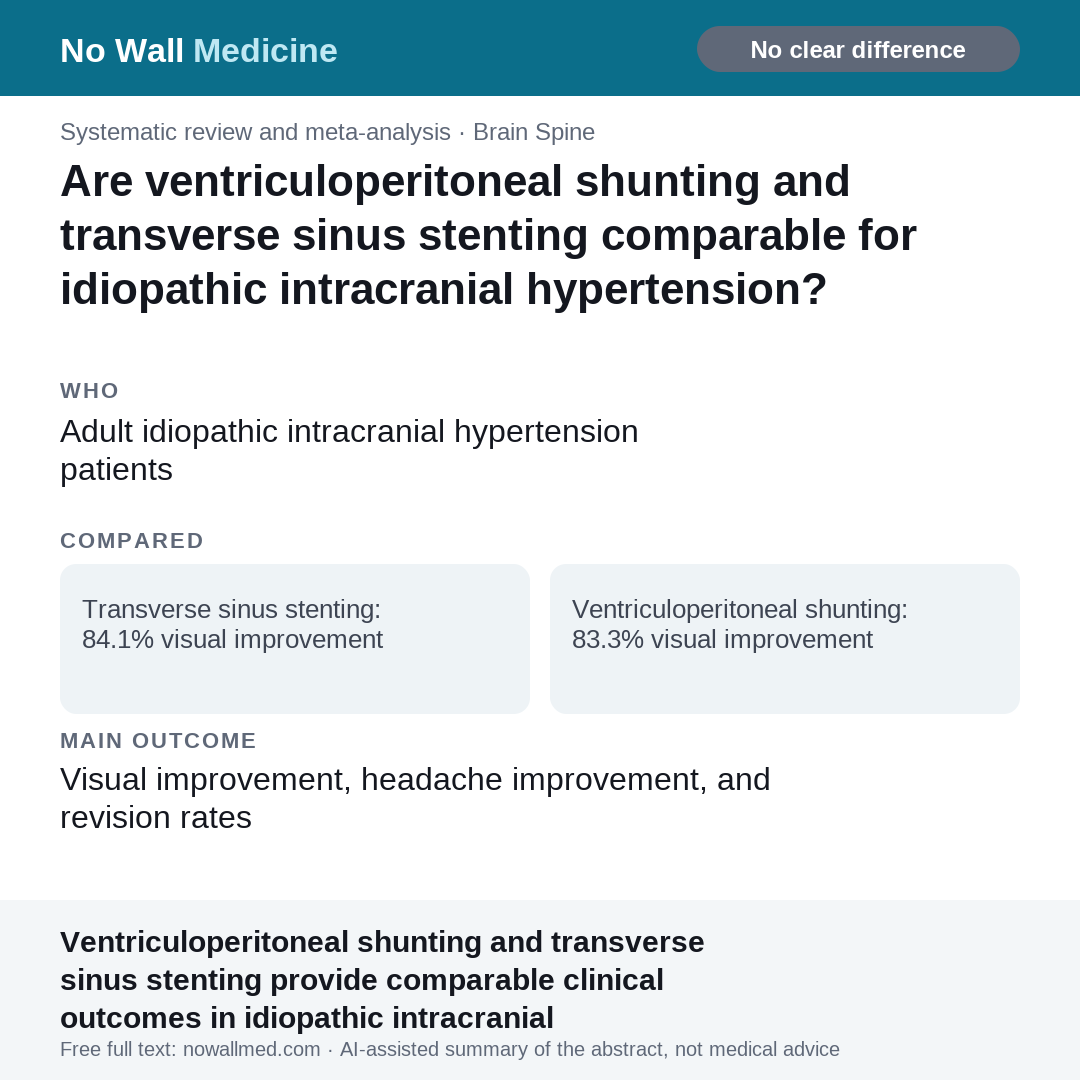
Ventriculoperitoneal shunt versus transverse sinus stenting in idiopathic intracranial hypertension: A systematic review and meta-analysis
Systematic review and meta-analysisNo clear difference
Are ventriculoperitoneal shunting and transverse sinus stenting comparable for idiopathic intracranial hypertension?
Who
Adult idiopathic intracranial hypertension patients
Compared
Transverse sinus stenting: 84.1% visual improvement
Ventriculoperitoneal shunting: 83.3% visual improvement
Main outcome
Visual improvement, headache improvement, and revision rates
Bottom line: Ventriculoperitoneal shunting and transverse sinus stenting provide comparable clinical outcomes in idiopathic intracranial hypertension.
Limitation: Evidence derived from non-randomized, indirect comparisons with substantial indication bias.
Brain Spine · 2026-08-07Download image
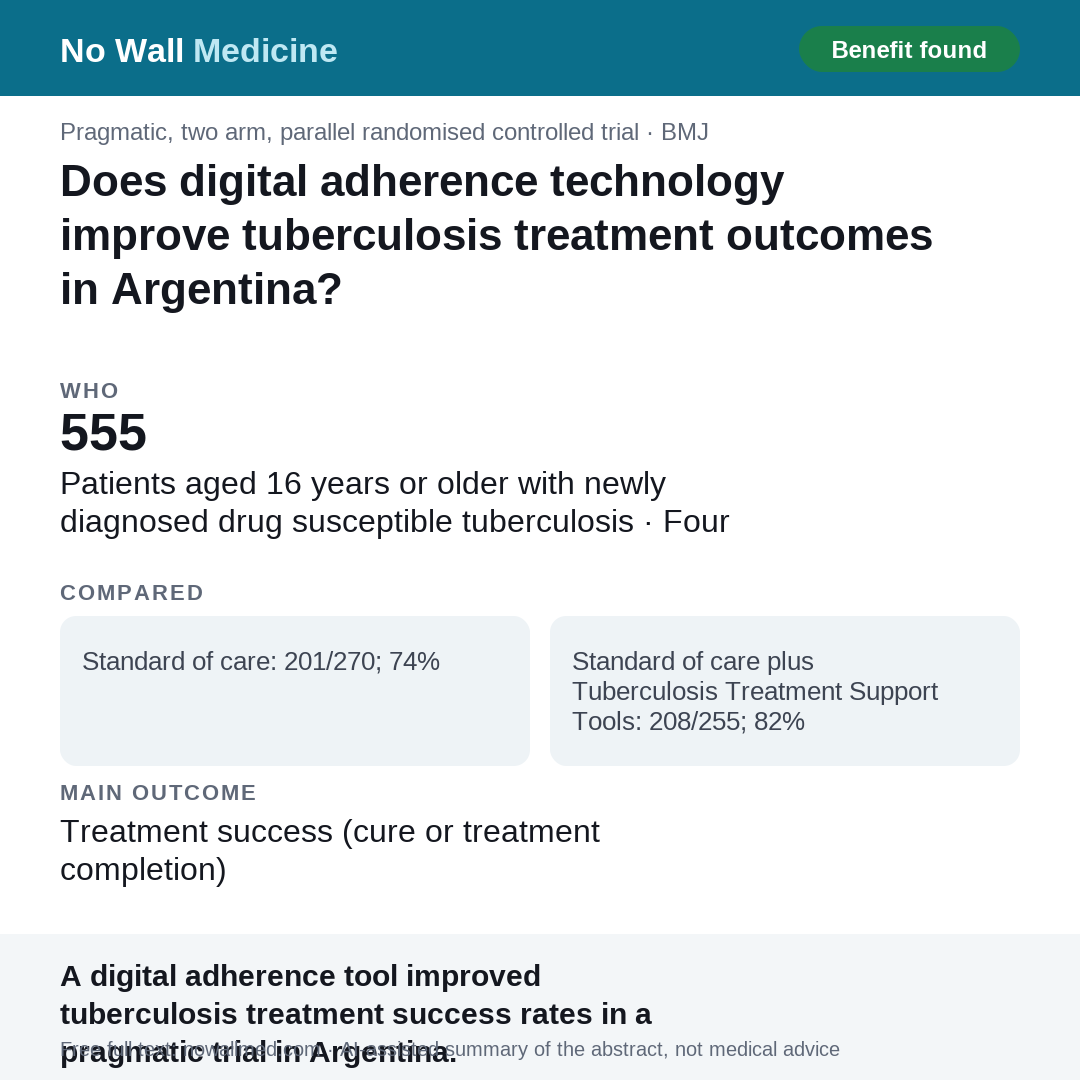
Evaluation of patient centred digital adherence technology for tuberculosis treatment outcomes: pragmatic randomised controlled trial
Pragmatic, two arm, parallel randomised controlled trialBenefit found
Does digital adherence technology improve tuberculosis treatment outcomes in Argentina?
Who
555
Patients aged 16 years or older with newly diagnosed drug susceptible tuberculosis · Four public reference hospitals in Buenos Aires, Argentina
Compared
Standard of care: 201/270; 74%
Standard of care plus Tuberculosis Treatment Support Tools: 208/255; 82%
Main outcome
Treatment success (cure or treatment completion)
Result: risk ratio 1.10 (1.00 to 1.20; P=0.04)
Bottom line: A digital adherence tool improved tuberculosis treatment success rates in a pragmatic trial in Argentina.
BMJ · 2026-08-06Download image
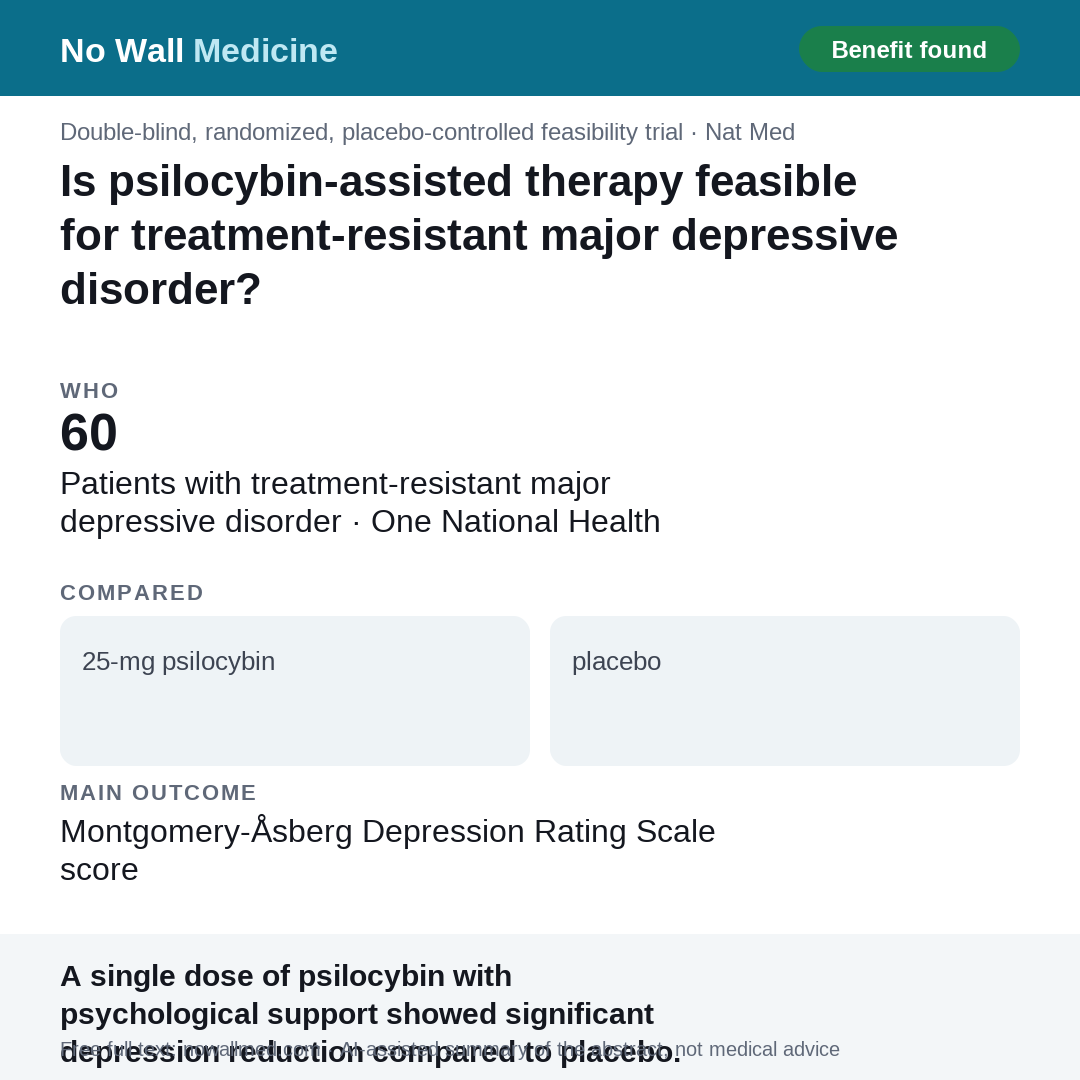
Psilocybin-assisted therapy for treatment-resistant major depressive disorder in a public healthcare setting: a randomized controlled trial
Double-blind, randomized, placebo-controlled feasibility trialBenefit found
Is psilocybin-assisted therapy feasible for treatment-resistant major depressive disorder?
Who
60
Patients with treatment-resistant major depressive disorder · One National Health Service site in England
Compared
25-mg psilocybin
placebo
Main outcome
Montgomery-Åsberg Depression Rating Scale score
Result: -10.41 (95% confidence interval: -14.86 to -5.95)
Bottom line: A single dose of psilocybin with psychological support showed significant depression reduction compared to placebo.
Nat Med · 2026-08-06Download image
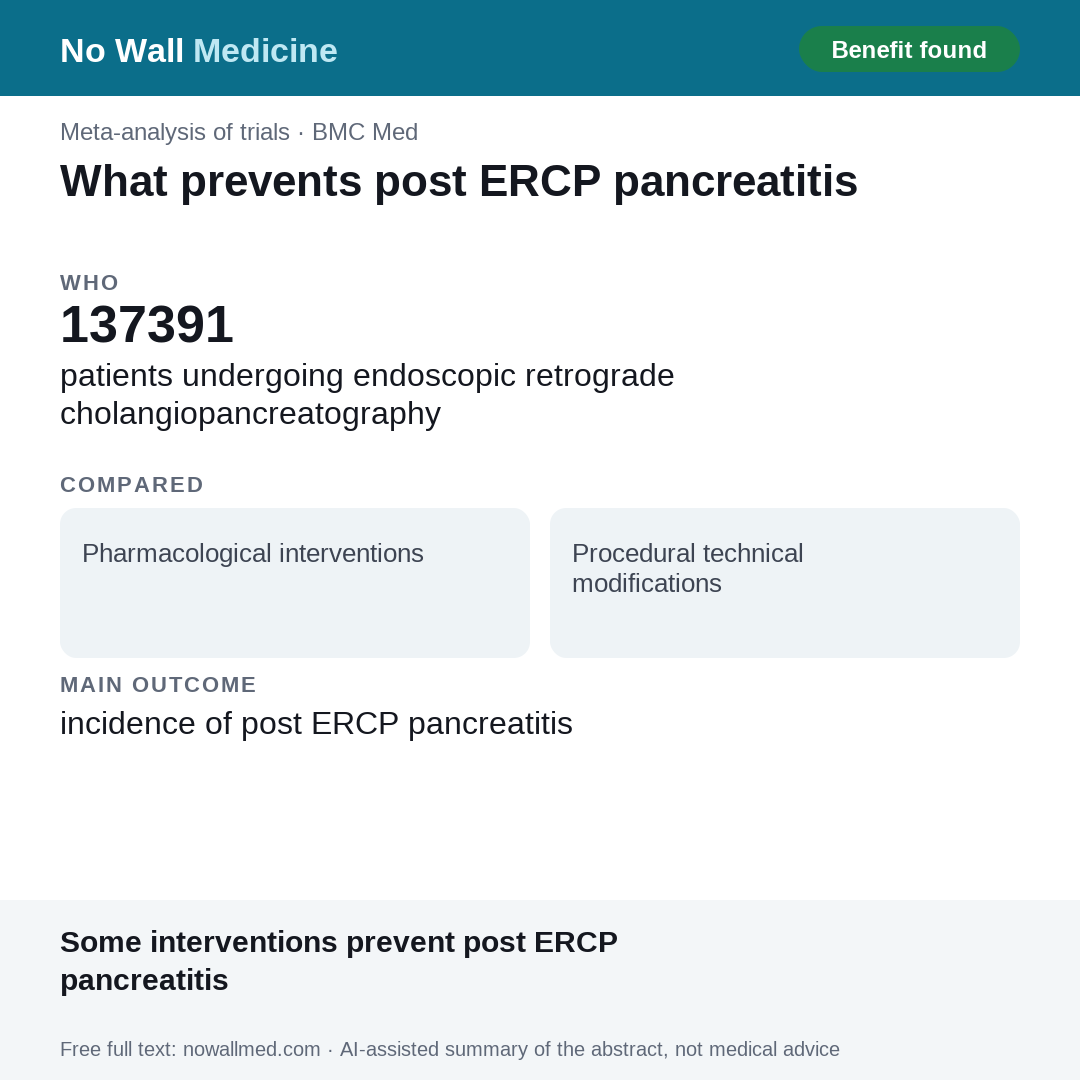
Pharmacological and procedural strategies to prevent post-ERCP pancreatitis: an umbrella review of meta-analyses of randomized controlled trials
Meta-analysis of trialsBenefit found
What prevents post ERCP pancreatitis
Who
137391
patients undergoing endoscopic retrograde cholangiopancreatography
Compared
Pharmacological interventions
Procedural technical modifications
Main outcome
incidence of post ERCP pancreatitis
Bottom line: Some interventions prevent post ERCP pancreatitis
BMC Med · 2026-08-06Download image
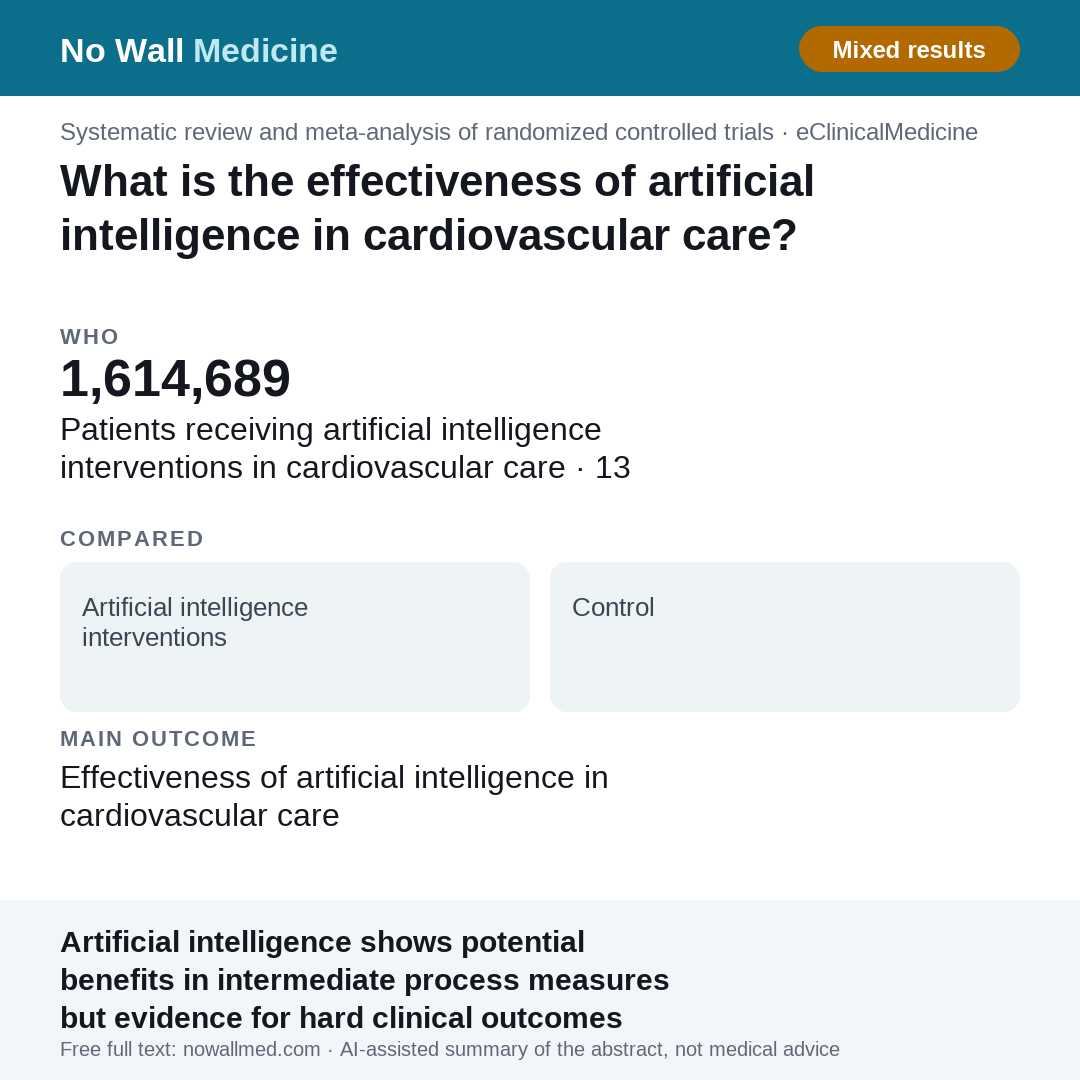
Artificial intelligence in cardiovascular care: a systematic review and meta-analysis of randomised controlled trials
Systematic review and meta-analysis of randomized controlled trialsMixed results
Is artificial intelligence effective in cardiovascular care?
Who
1,614,689
Patients in cardiovascular care · 13 regions
Compared
Image-based artificial intelligence clinical decision support system: significant effect on major adverse cardiovascular events
Routine care
Main outcome
Effectiveness of artificial intelligence interventions in cardiovascular care
Result: risk ratio 0.74 (95% CI 0.58-0.96)
Bottom line: Artificial intelligence shows potential benefits in intermediate process measures, but evidence for hard clinical outcomes remains limited.
Limitation: High risk of bias, trial heterogeneity, inadequate reporting, and scarcity of trials with clinically meaningful endpoints.
eClinicalMedicine · 2026-08-06Download image
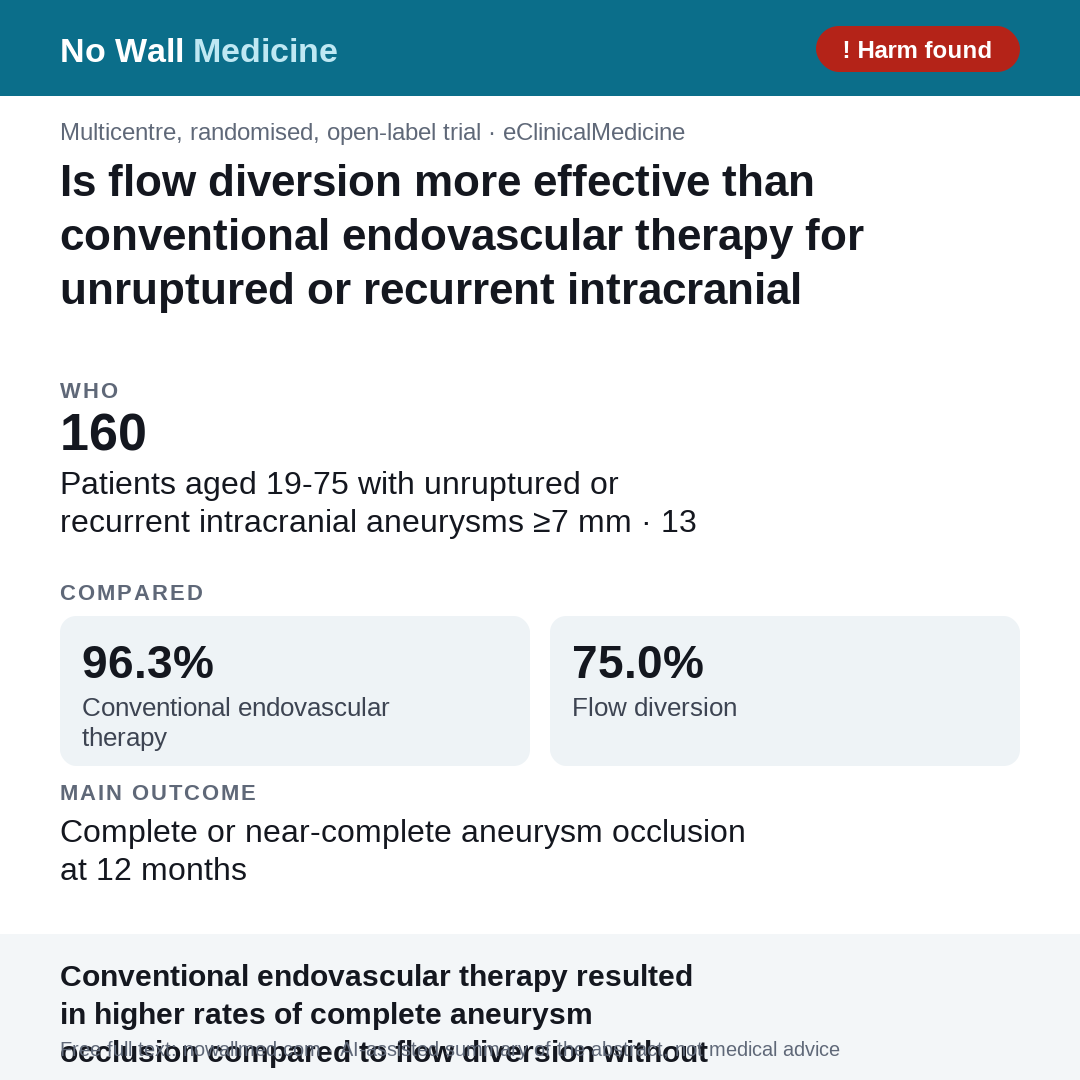
Efficacy and safety of flow diverter therapy for unruptured intracranial aneurysms compared to conventional endovascular therapy: a multicentre, randomised, open-label trial in South Korea
Multicentre, randomised, open-label trialHarm found
Is flow diversion more effective than conventional endovascular therapy for unruptured or recurrent intracranial aneurysms?
Who
160
Patients aged 19-75 with unruptured or recurrent intracranial aneurysms ≥7 mm · 13 tertiary institutions in South Korea
Compared
96.3%Conventional endovascular therapy
75.0%Flow diversion
Main outcome
Complete or near-complete aneurysm occlusion at 12 months
Result: adjusted odds ratio 6.46 (95% CI 1.94-29.98)
Bottom line: Conventional endovascular therapy resulted in higher rates of complete aneurysm occlusion compared to flow diversion without increased risk.
Limitation: Long-term follow-up is required to assess the durability of flow diversion.
Funded by: Korean Ministry of Health and Welfare
eClinicalMedicine · 2026-08-06Download image
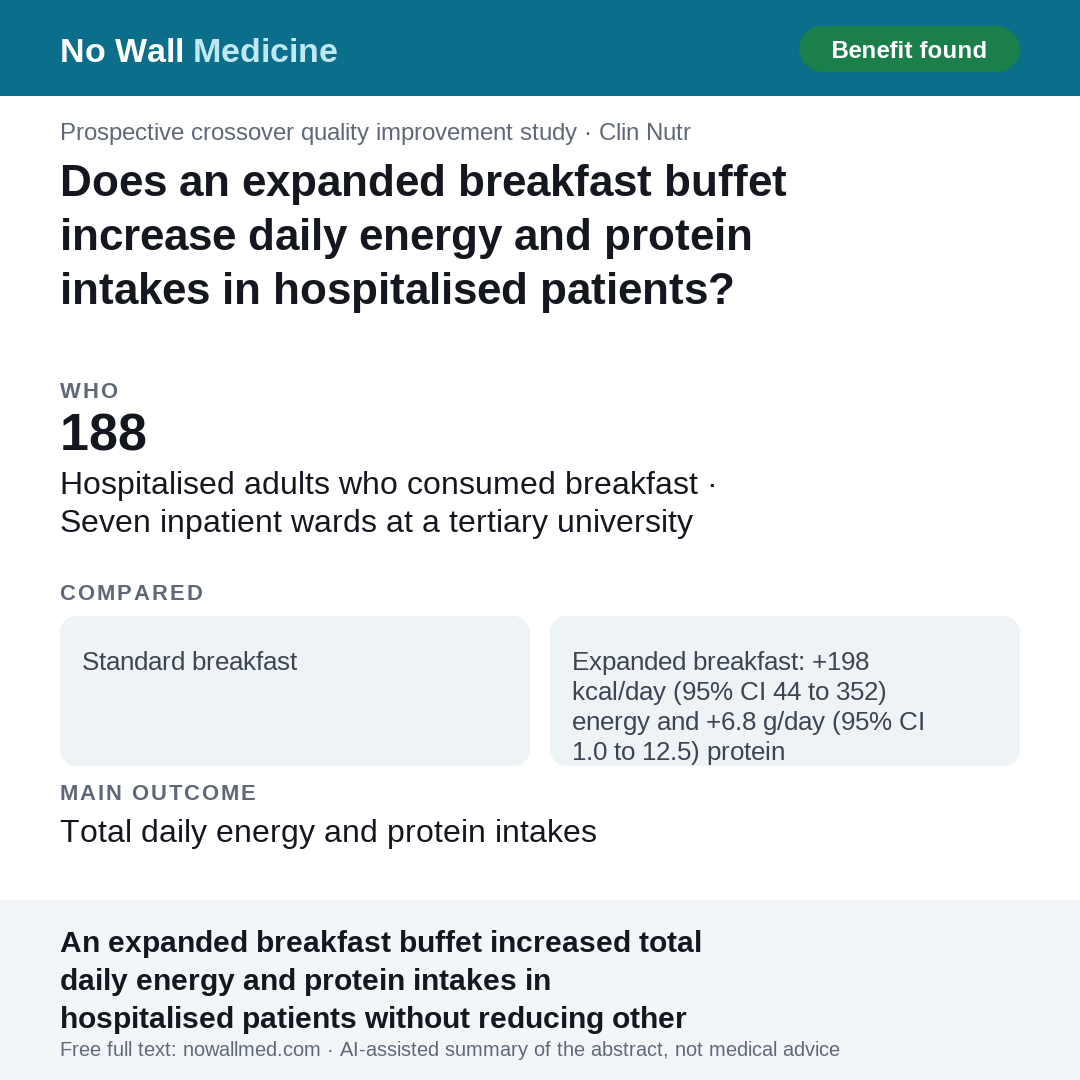
An expanded breakfast buffet increases daily energy and protein intakes in hospitalised patients: A prospective crossover quality improvement study
Prospective crossover quality improvement studyBenefit found
Does an expanded breakfast buffet increase daily energy and protein intakes in hospitalised patients?
Who
188
Hospitalised adults who consumed breakfast · Seven inpatient wards at a tertiary university hospital
Compared
Standard breakfast
Expanded breakfast: +198 kcal/day (95% CI 44 to 352) energy and +6.8 g/day (95% CI 1.0 to 12.5) protein
Main outcome
Total daily energy and protein intakes
Result: energy +198 kcal/day (95% CI 44 to 352); protein +6.8 g/day (95% CI 1.0 to 12.5)
Bottom line: An expanded breakfast buffet increased total daily energy and protein intakes in hospitalised patients without reducing other meal intakes.
Clin Nutr · 2026-08-06Download image
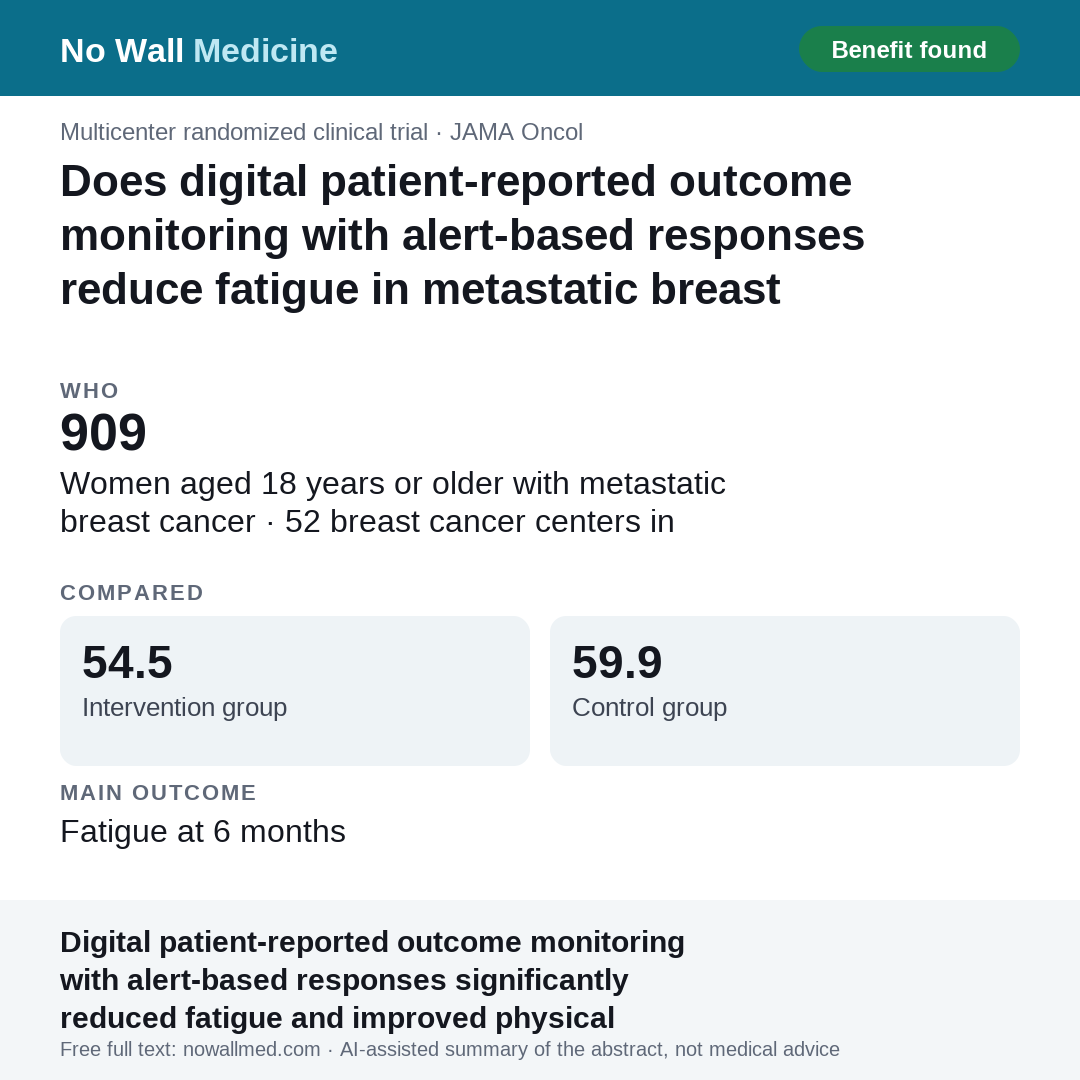
Electronic Patient-Reported Outcome Monitoring With Alert-Based Interventions in Metastatic Breast Cancer: A Randomized Clinical Trial
Multicenter randomized clinical trialBenefit found
Does digital patient-reported outcome monitoring with alert-based responses reduce fatigue in metastatic breast cancer?
Who
909
Women aged 18 years or older with metastatic breast cancer · 52 breast cancer centers in Germany
Compared
54.5Intervention group (95% CI, 53.7-55.4)
59.9Control group (95% CI, 59.0-60.8)
Main outcome
Fatigue at 6 months
Result: mean difference of -5.4 points (95% CI, -6.6 to -4.1)
Bottom line: Digital patient-reported outcome monitoring with alert-based responses significantly reduced fatigue and improved physical functioning in metastatic breast cancer.
JAMA Oncol · 2026-08-06Download image
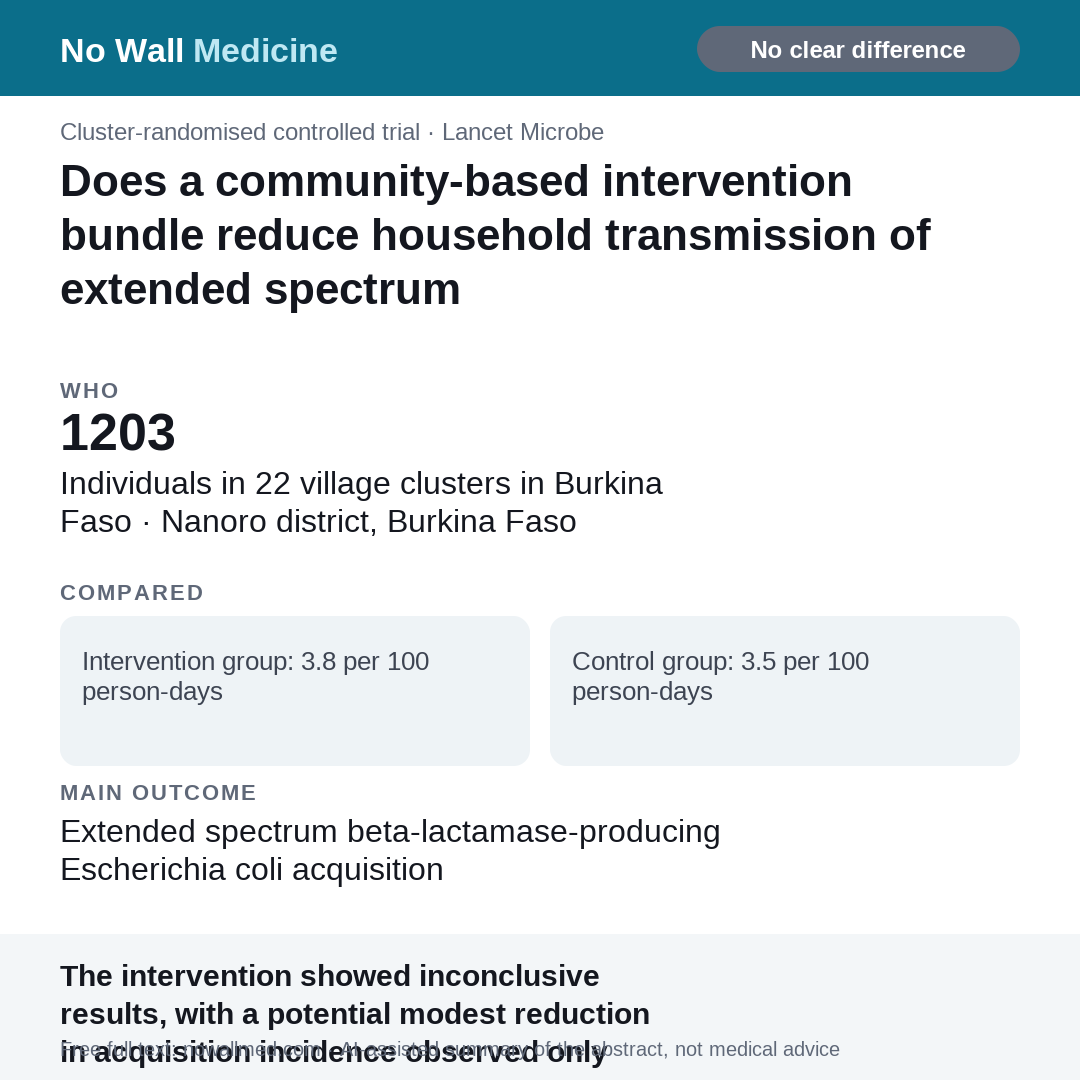
Effects of a community-based intervention bundle on household transmission of extended spectrum β-lactamase-producing Escherichia coli in rural Burkina Faso to target community-level drivers of antimicrobial resistance in sub-Saharan Africa: a cluster-randomised trial
Cluster-randomised controlled trialMixed results
Does a community-based intervention bundle reduce household transmission of extended spectrum beta-lactamase-producing Escherichia coli?
Who
1203
Individuals in 22 village clusters in Nanoro district, Burkina Faso · Nanoro district, Burkina Faso
Compared
Intervention group: 3.8 per 100 person-days
Control group: 3.5 per 100 person-days
Main outcome
Extended spectrum beta-lactamase-producing Escherichia coli acquisition
Result: hazard ratio 0.82 (95% CrI 0.56 to 1.14) in months 6-9
Bottom line: The intervention showed a modest, inconclusive reduction in Escherichia coli acquisition during months 6 to 9.
Funded by: EU Joint Programme Initiative on Antimicrobial Resistance CABU-EICO
Lancet Microbe · 2026-08-06Download image
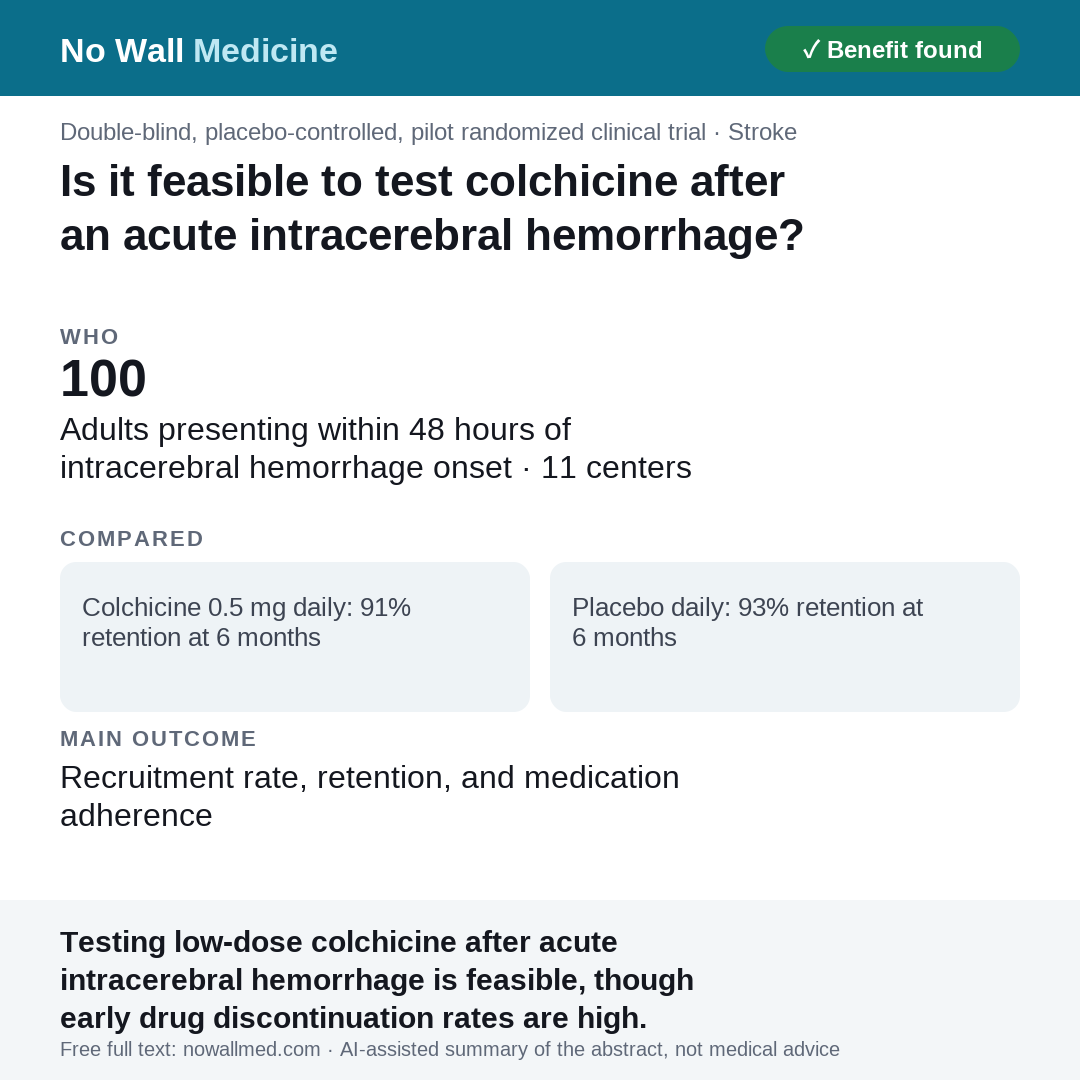
Colchicine for the Prevention of Vascular Events After an Acute Intracerebral Hemorrhage: A Placebo-Controlled Trial
Double-blind, placebo-controlled, pilot randomized clinical trialBenefit found
Is it feasible to test colchicine after an acute intracerebral hemorrhage?
Who
100
Adults presenting within 48 hours of intracerebral hemorrhage onset · 11 centers across Canada
Compared
Colchicine 0.5 mg daily: 91% retention at 6 months
Placebo daily: 93% retention at 6 months
Main outcome
Recruitment rate, retention, and medication adherence
Bottom line: Testing low-dose colchicine after acute intracerebral hemorrhage is feasible, though early drug discontinuation rates are high.
Stroke · 2026-08-06Download image
Growth dependence of welfare states: a semi-systematic review of drivers and policy responses
Semi-systematic reviewUnclear result
Can welfare states be growth independent
Who
all within planetary boundaries
Compared
growth dependent
growth independent
Main outcome
welfare state growth independence
Bottom line: Welfare states may not be growth independent
Lancet Planet Health · 2026-08-06Download image

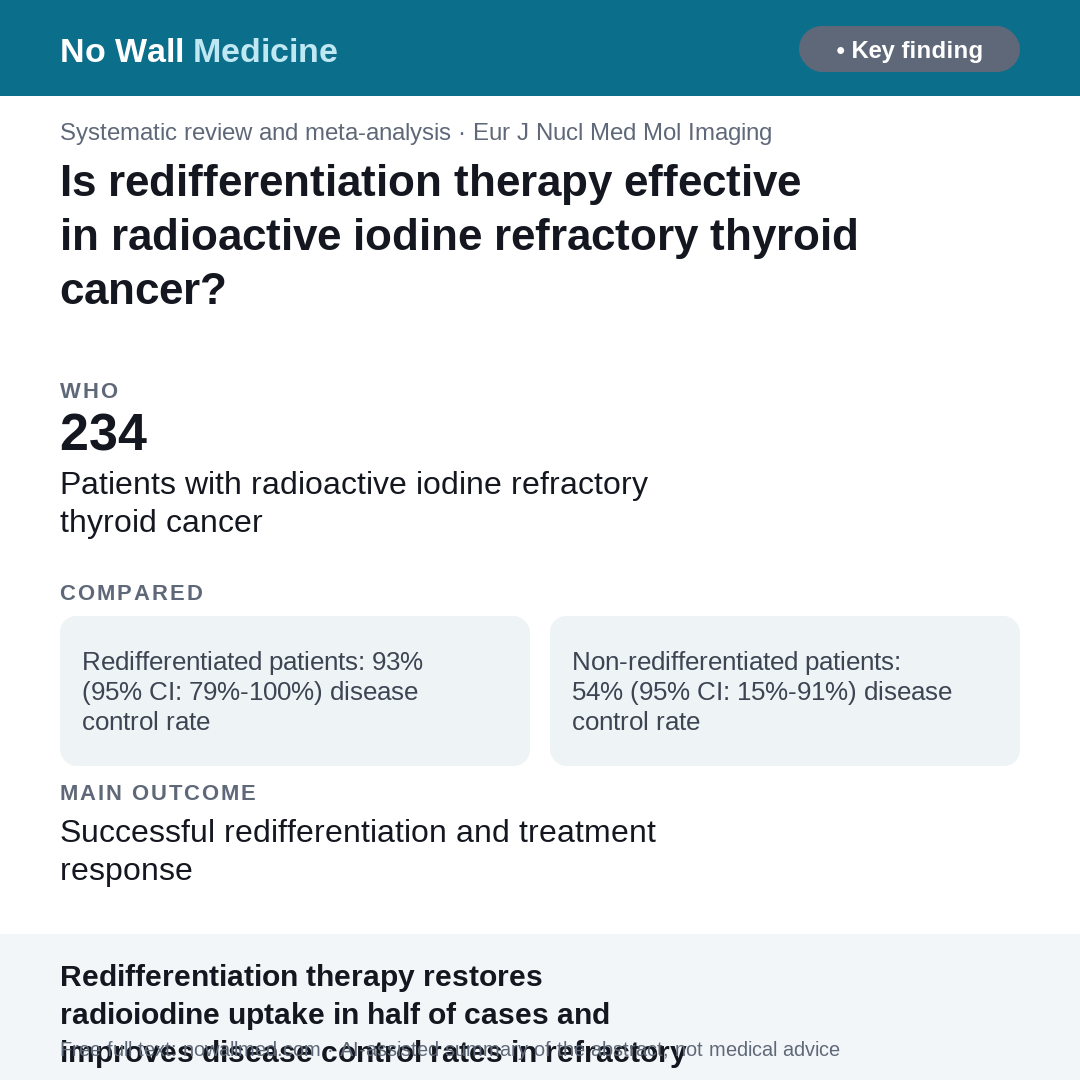
Efficacy of redifferentiation therapy in radioactive iodine refractory thyroid cancer: a systematic review and meta-analysis
Systematic review and meta-analysisBenefit found
Is redifferentiation therapy effective in radioactive iodine refractory thyroid cancer?
Who
234
Patients with radioactive iodine refractory thyroid cancer
Compared
Redifferentiated patients: 93% (95% CI: 79%-100%) disease control rate
Non-redifferentiated patients: 54% (95% CI: 15%-91%) disease control rate
Main outcome
Successful redifferentiation and treatment response
Result: 93% (95% CI: 79%-100%) vs 54% (95% CI: 15%-91%)
Bottom line: Redifferentiation therapy restores radioiodine uptake in half of cases and improves disease control rates in refractory thyroid cancer.
Limitation: Statistically significant prognostic differences and long-term survival benefits remain to be demonstrated.
Eur J Nucl Med Mol Imaging · 2026-08-06Download image
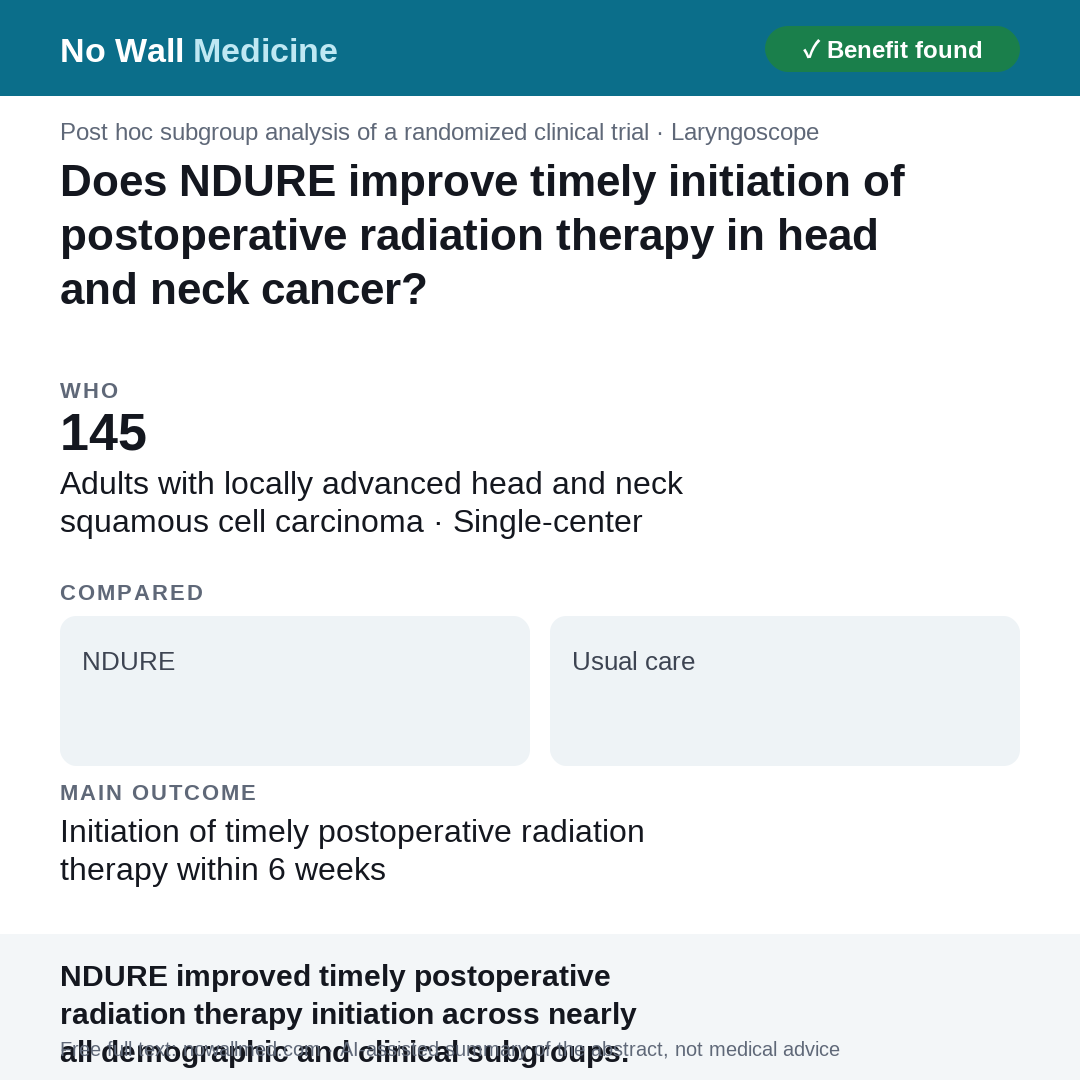
Effects of NDURE on Timely Adjuvant Radiotherapy in HNSCC: Subgroup Analysis of an RCT
Post hoc subgroup analysis of a randomized clinical trialBenefit found
Does NDURE improve timely initiation of postoperative radiation therapy in head and neck cancer?
Who
145
Adults with locally advanced head and neck squamous cell carcinoma · Single-center
Compared
NDURE
Usual care
Main outcome
Initiation of timely postoperative radiation therapy within 6 weeks
Bottom line: NDURE improved timely postoperative radiation therapy initiation across nearly all demographic and clinical subgroups.
Limitation: This was an exploratory, post hoc subgroup analysis
Laryngoscope · 2026-08-06Download image
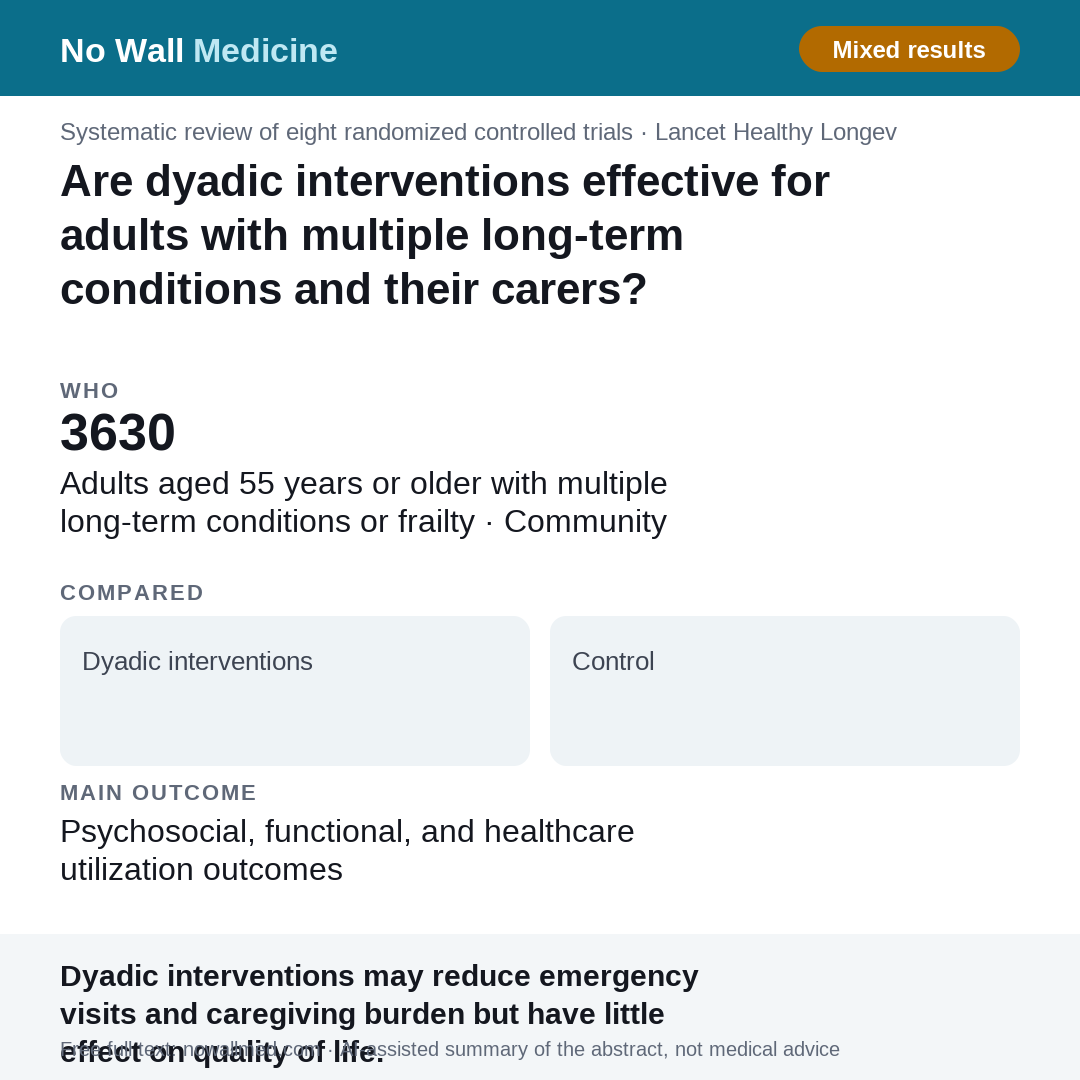
Effectiveness of dyadic interventions in improving outcomes for adults with multiple long-term conditions or frailty and their informal carers: a systematic review
Systematic review of eight randomized controlled trialsMixed results
Are dyadic interventions effective for adults with multiple long-term conditions and their carers?
Who
3630
Adults aged 55 years or older with multiple long-term conditions or frailty · Community
Compared
Dyadic interventions
Control
Main outcome
Psychosocial, functional, and healthcare utilization outcomes
Bottom line: Dyadic interventions may reduce emergency visits and caregiving burden but have little effect on quality of life.
Limitation: Low or very low certainty of evidence for most outcomes.
Lancet Healthy Longev · 2026-08-06Download image
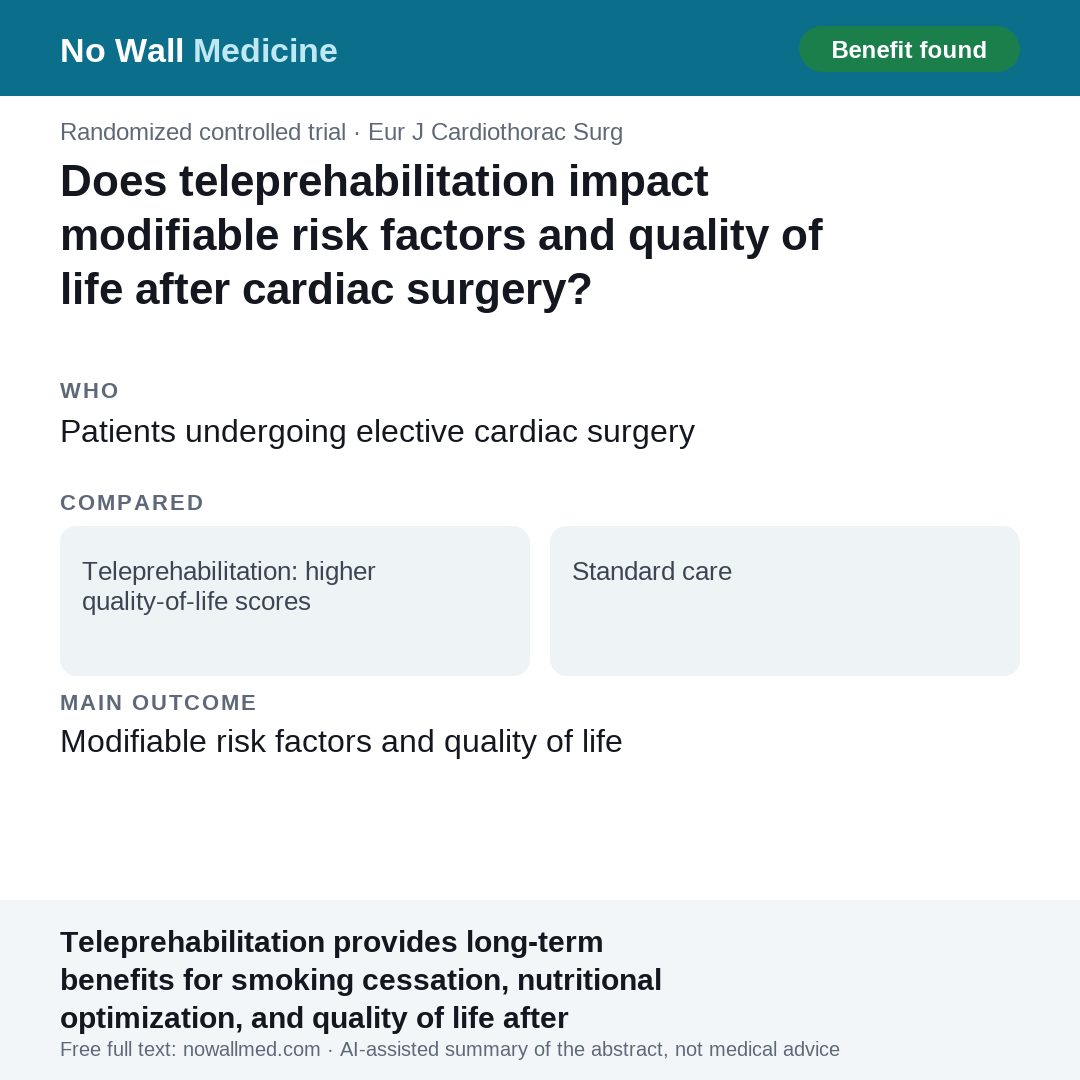
The Long-Term Impact of a Teleprehabilitation Programme on Modifiable Risk Factors and Quality of Life After Cardiac Surgery
Randomized controlled trialBenefit found
Does teleprehabilitation impact modifiable risk factors and quality of life after cardiac surgery?
Who
Patients undergoing elective cardiac surgery
Compared
Teleprehabilitation: higher quality-of-life scores
Standard care
Main outcome
Modifiable risk factors and quality of life
Bottom line: Teleprehabilitation provides long-term benefits for smoking cessation, nutritional optimization, and quality of life after cardiac surgery.
Eur J Cardiothorac Surg · 2026-08-06Download image
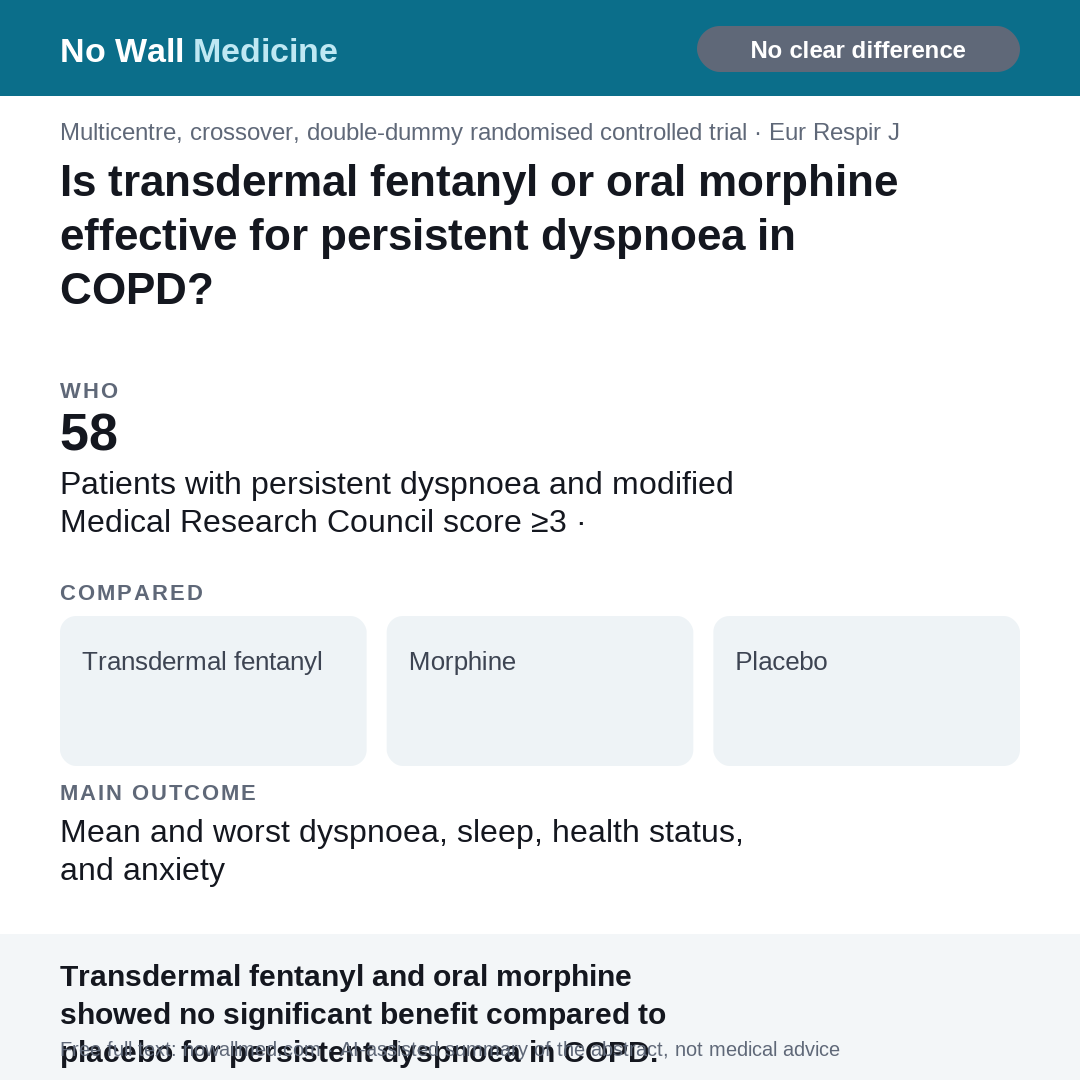
Fentanyl or morphine for persistent dyspnoea in COPD: a multicentre randomised crossover trial
Multicentre, crossover, double-dummy randomised controlled trialNo clear difference
Is transdermal fentanyl or morphine effective for persistent dyspnoea in COPD?
Who
58
Patients with persistent dyspnoea, COPD, and FEV1 <50% predicted
Compared
Transdermal fentanyl
Morphine
Placebo
Main outcome
Change in mean daily dyspnoea score on Numeric Rating Scale
Bottom line: Transdermal fentanyl and oral morphine showed no significant benefit over placebo for persistent dyspnoea in COPD.
Limitation: Study discontinuation due to exacerbations and side-effects.
Eur Respir J · 2026-08-06Download image
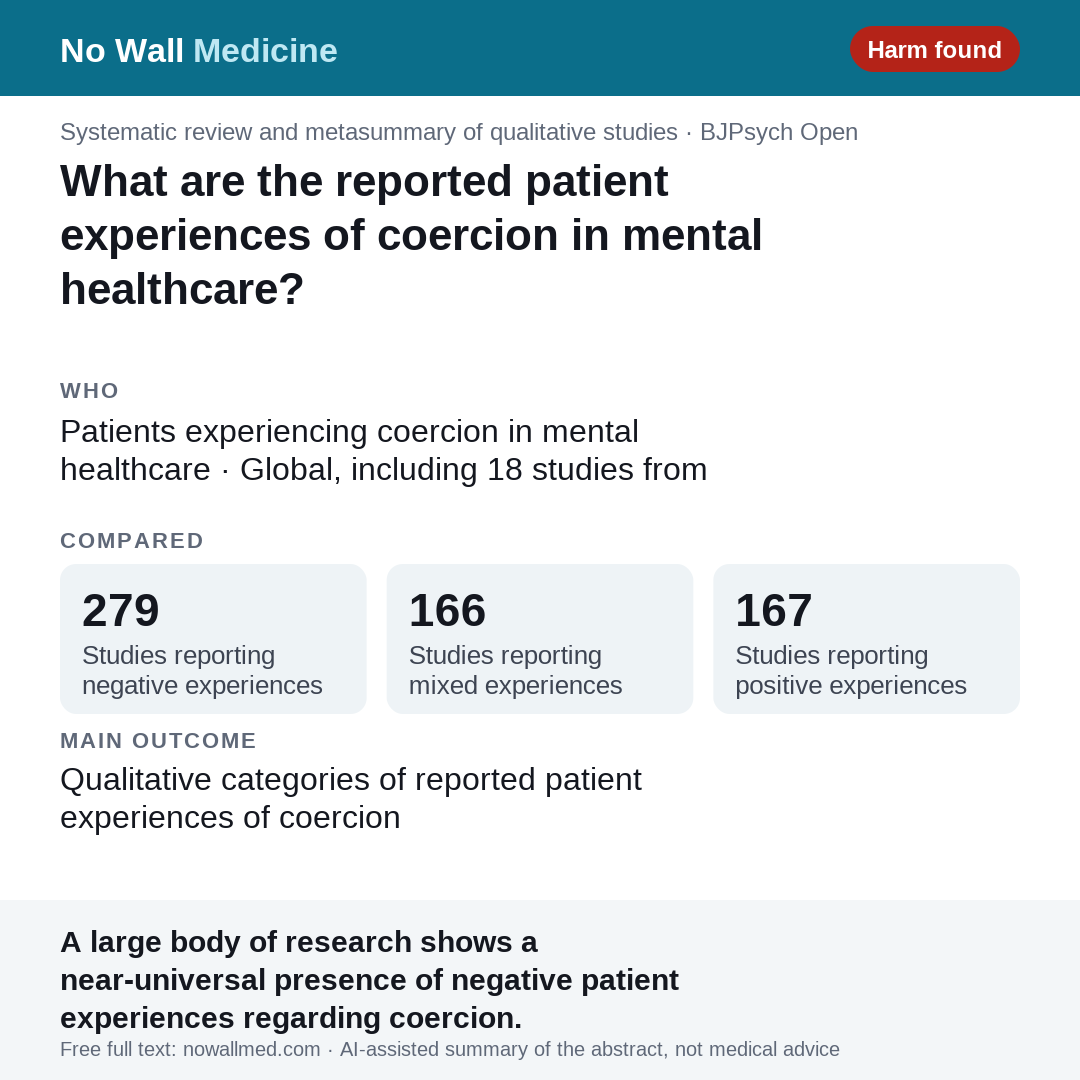
Patient experiences of coercion in mental healthcare: systematic review and metasummary of qualitative studies from 1991 to 2025
Systematic review and metasummary of qualitative studiesHarm found
What are the reported patient experiences of coercion in mental healthcare?
Who
291
Patients experiencing coercion in mental healthcare · Global, including 18 studies from low-and middle-income countries
Compared
279Studies reporting negative experiences
166Studies reporting mixed experiences
167Studies reporting positive experiences
Main outcome
Qualitative categories of reported patient experiences of coercion
Bottom line: A large body of research shows a near-universal presence of negative patient experiences regarding coercion.
Limitation: Limited author reflexivity and lack of involvement of experts by experience.
BJPsych Open · 2026-08-06Download image
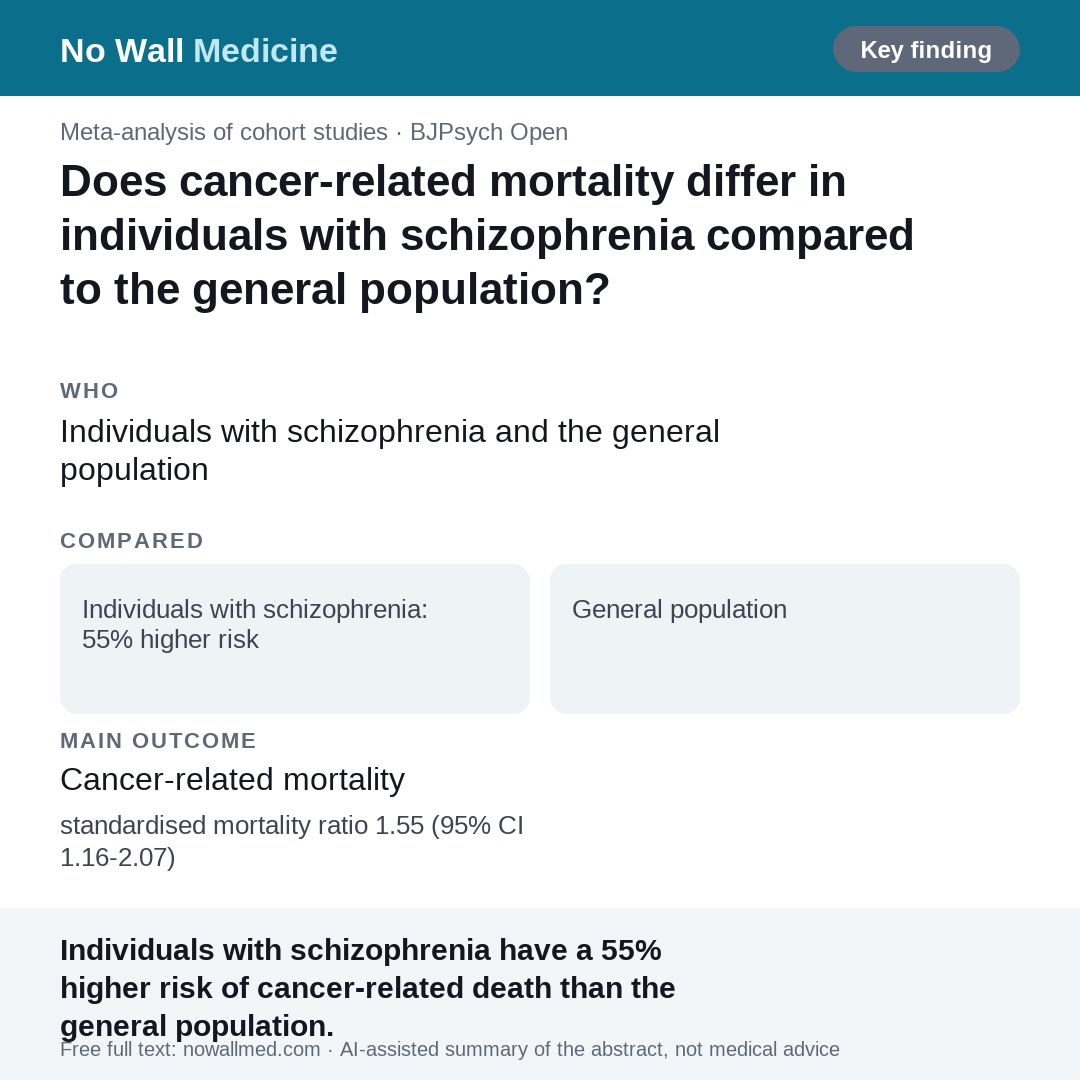
Cancer-related mortality among individuals with schizophrenia: systematic review and meta-analysis of cohort studies
Meta-analysis of cohort studiesHarm found
Does cancer-related mortality differ in individuals with schizophrenia compared to the general population?
Who
Individuals with schizophrenia and the general population
Compared
Individuals with schizophrenia: 55% higher risk
General population
Main outcome
Cancer-related mortality
Result: standardised mortality ratio 1.55 (95% CI 1.16-2.07)
Bottom line: Individuals with schizophrenia have a 55% higher risk of cancer-related death than the general population.
BJPsych Open · 2026-08-06Download image