Visual abstracts
New randomized trials and meta-analyses from leading journals at a glance: who was studied, what was compared, and what was found. Every paper is free to read in full.
All specialtiesCardiology 4877Oncology 4138Gastroenterology & Hepatology 1942Infectious Disease 3837Neurology 1905Psychiatry & Mental Health 2273Pulmonology 2143Critical Care 1365Endocrinology & Diabetes 2580Pediatrics 2980Surgery 2559Orthopedics & Sports Medicine 931Neurosurgery 537Cardiothoracic & Vascular Surgery 674Plastic & Reconstructive Surgery 591Nephrology 1133Rheumatology 823Hematology 1109Dermatology 621Ophthalmology 543Obstetrics & Gynecology 1686Public & Global Health 1058Radiology & Imaging 648Anesthesiology 986Urology 764ENT (Otolaryngology) 503Emergency Medicine 511Allergy & Immunology 313Geriatrics 981Family Medicine & Primary Care 562Medical Genetics & Genomics 676Pathology & Laboratory Medicine 159Physical Medicine & Rehabilitation 757Palliative Care 444Nutrition 1588Digital Health & AI 2201General Medicine 321
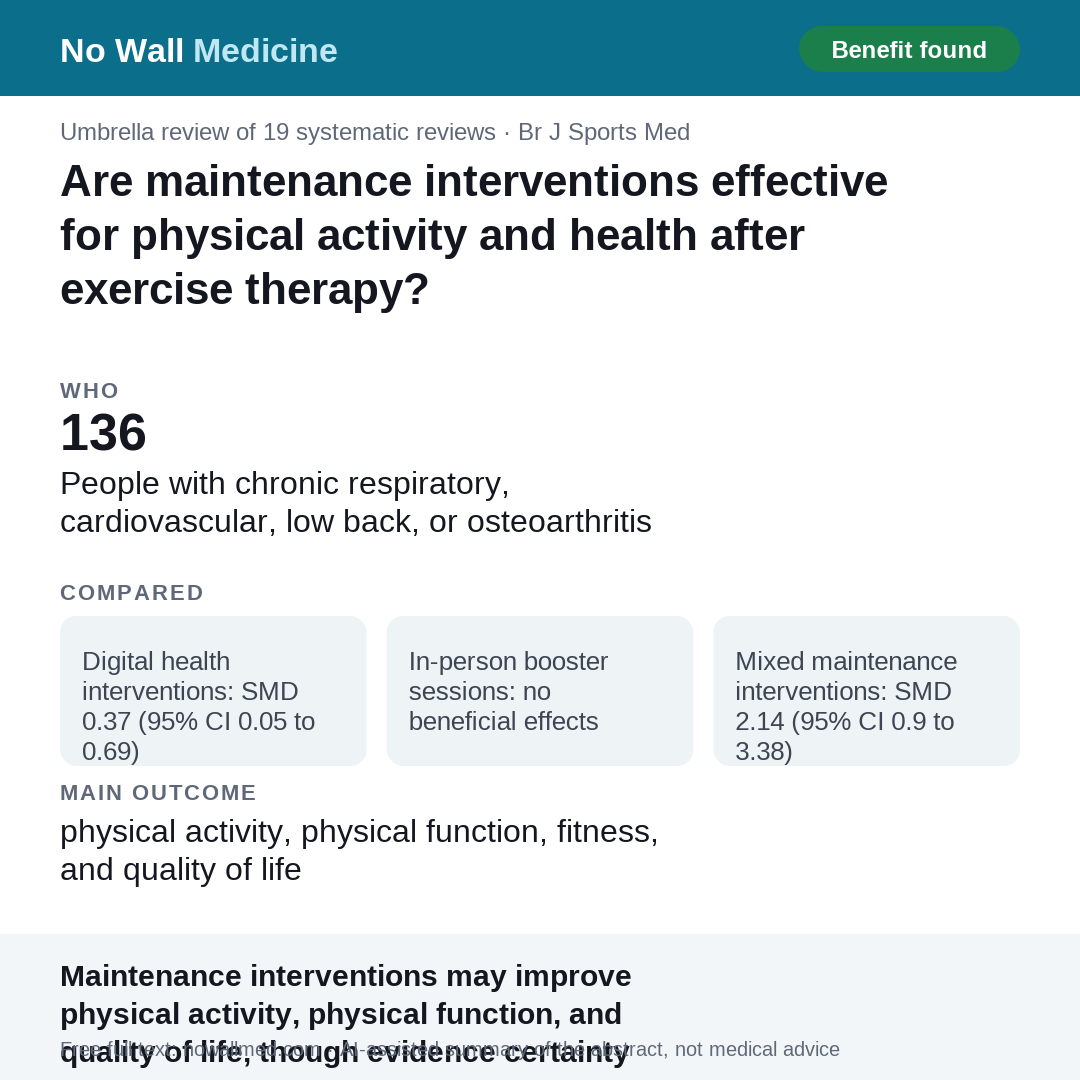
Effectiveness of maintenance interventions promoting physical activity following exercise therapy for chronic conditions: an umbrella review
Umbrella review of 19 systematic reviewsBenefit found
Are maintenance interventions effective for physical activity and health after exercise therapy?
Who
136
People with chronic respiratory, cardiovascular, low back, or osteoarthritis
Compared
Digital health interventions: SMD 0.37 (95% CI 0.05 to 0.69)
In-person booster sessions: no beneficial effects
Mixed maintenance interventions: SMD 2.14 (95% CI 0.9 to 3.38)
Main outcome
physical activity, physical function, fitness, and quality of life
Result: SMD 0.37 (95% CI 0.05 to 0.69)
Bottom line: Maintenance interventions may improve physical activity, physical function, and quality of life, though evidence certainty is low.
Limitation: Most reviews had an unclear risk of bias and evidence certainty was low.
Br J Sports Med · 2026-06-12Download image
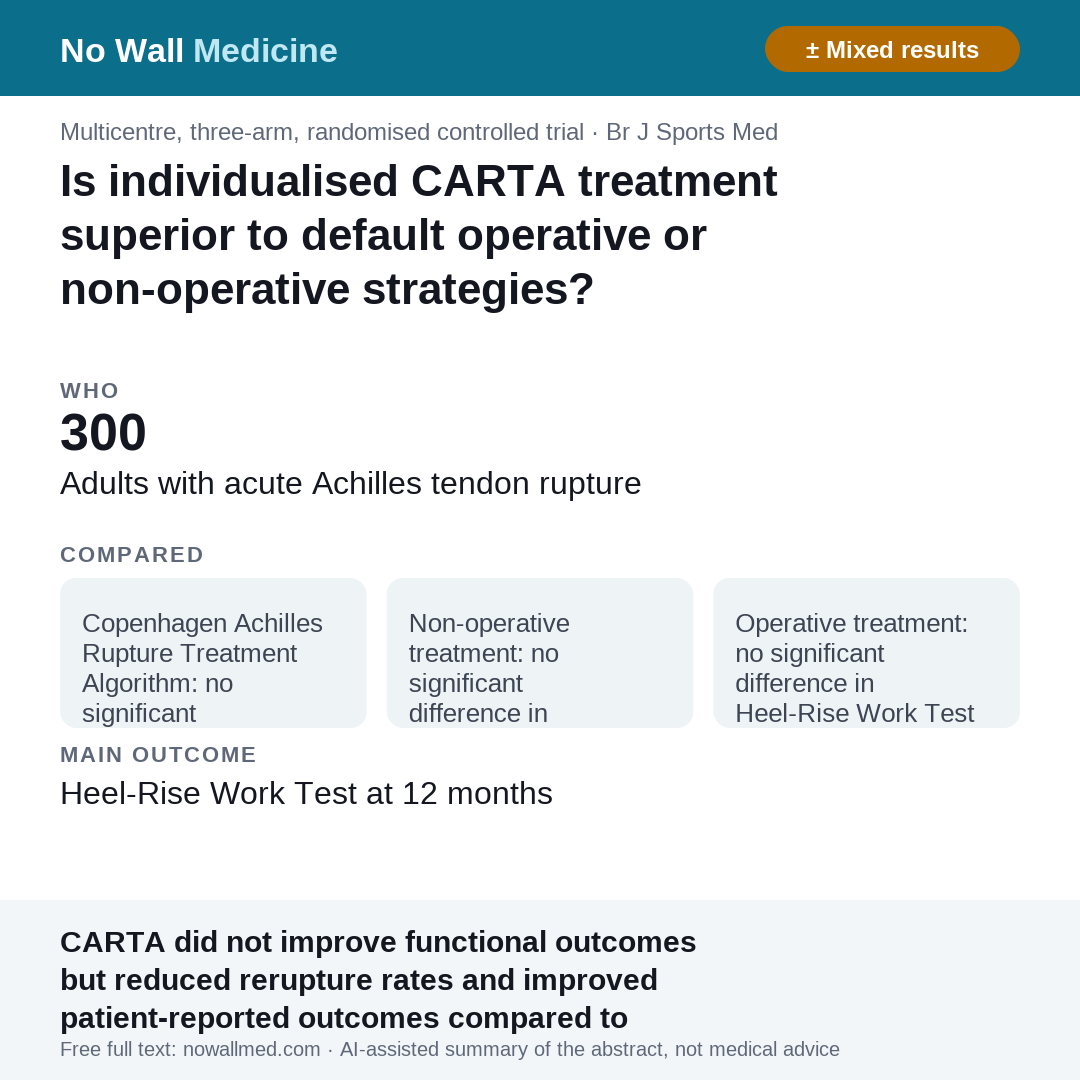
Randomised three-armed trial investigation of the Copenhagen Achilles tendon Rupture Treatment Algorithm (CARTA) for individualised treatment of acute Achilles tendon rupture
Multicentre, three-arm, randomised controlled trialMixed results
Is individualised CARTA treatment superior to default operative or non-operative strategies?
Who
300
Adults with acute Achilles tendon rupture
Compared
Copenhagen Achilles Rupture Treatment Algorithm: no significant difference in Heel-Rise Work Test
Non-operative treatment: no significant difference in Heel-Rise Work Test
Operative treatment: no significant difference in Heel-Rise Work Test
Main outcome
Heel-Rise Work Test at 12 months
Bottom line: CARTA did not improve functional outcomes but reduced rerupture rates and improved patient-reported outcomes compared to non-operative treatment.
Br J Sports Med · 2026-06-12Download image
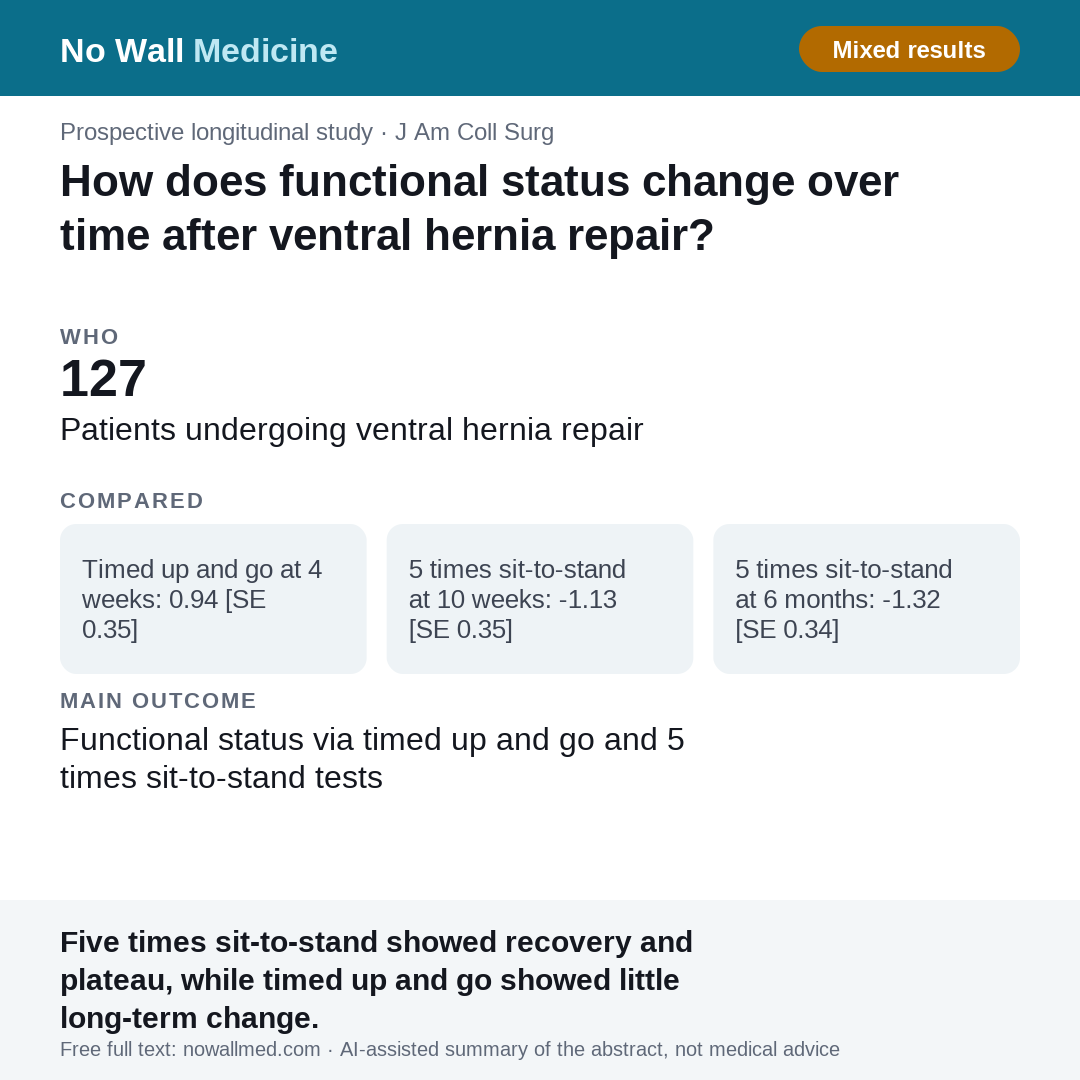
Functional Status after Ventral Hernia Repair: Longitudinal Trends and the Limits of Improvement
Prospective longitudinal studyMixed results
How does functional status change over time after ventral hernia repair?
Who
127
Patients undergoing ventral hernia repair
Compared
Timed up and go test: little long-term change
5 times sit-to-stand test: plateau by 1 year
Main outcome
Functional status via timed up and go and 5 times sit-to-stand tests
Bottom line: Five times sit-to-stand showed early decline, progressive recovery, and a plateau, while timed up and go showed little change.
J Am Coll Surg · 2026-06-12Download image
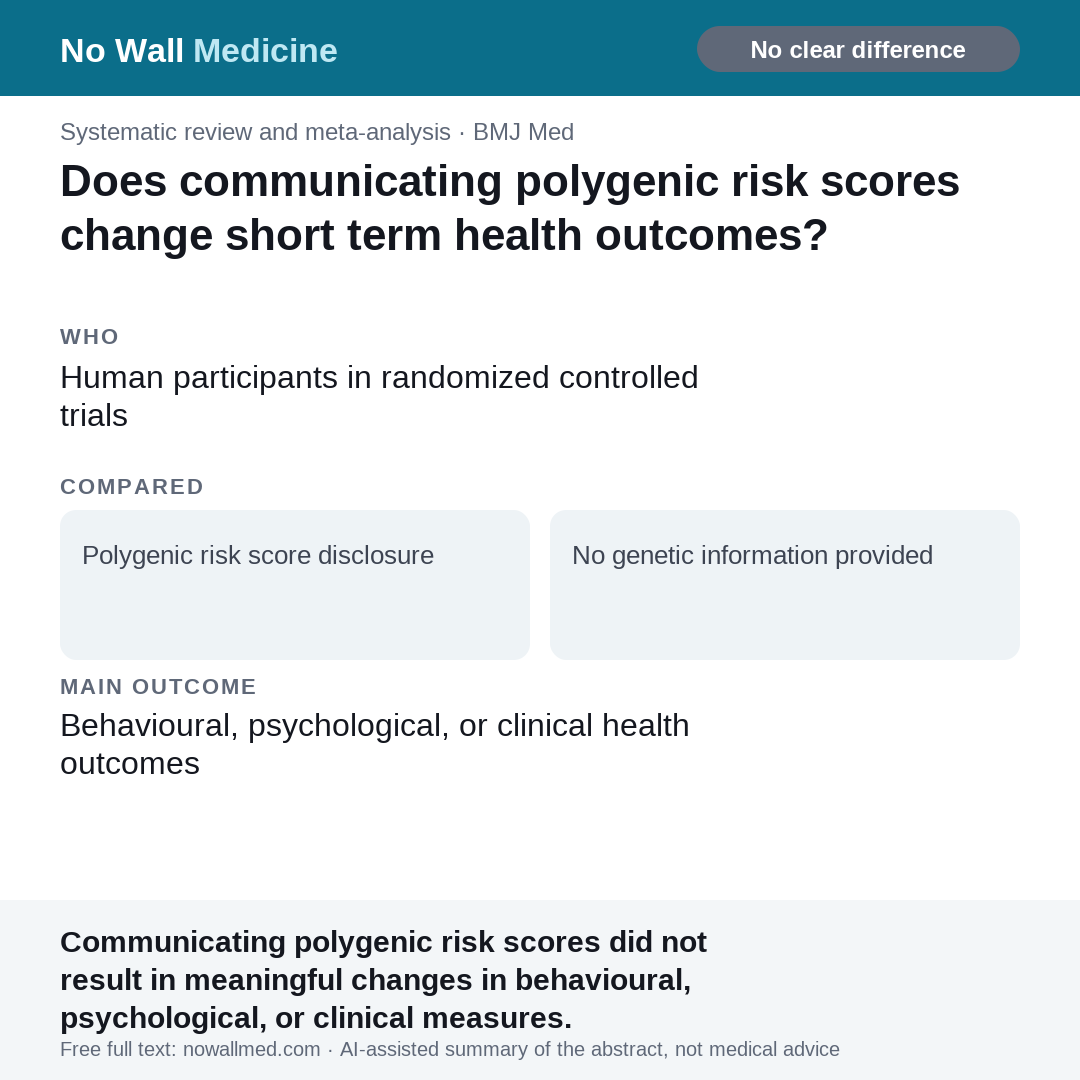
Effects of polygenic risk score communication on short term health outcomes: systematic review and meta-analysis
Systematic review and meta-analysisNo clear difference
Does communicating polygenic risk scores change short term health outcomes?
Who
27
Human participants in randomized controlled trials
Compared
Polygenic risk score disclosure
No genetic information provided
Main outcome
Behavioural, psychological, or clinical health outcomes
Bottom line: Communicating polygenic risk scores did not result in meaningful changes in behavioural, psychological, or clinical measures.
Limitation: High risk of bias in nine trials and significant heterogeneity.
BMJ Med · 2026-06-12Download image
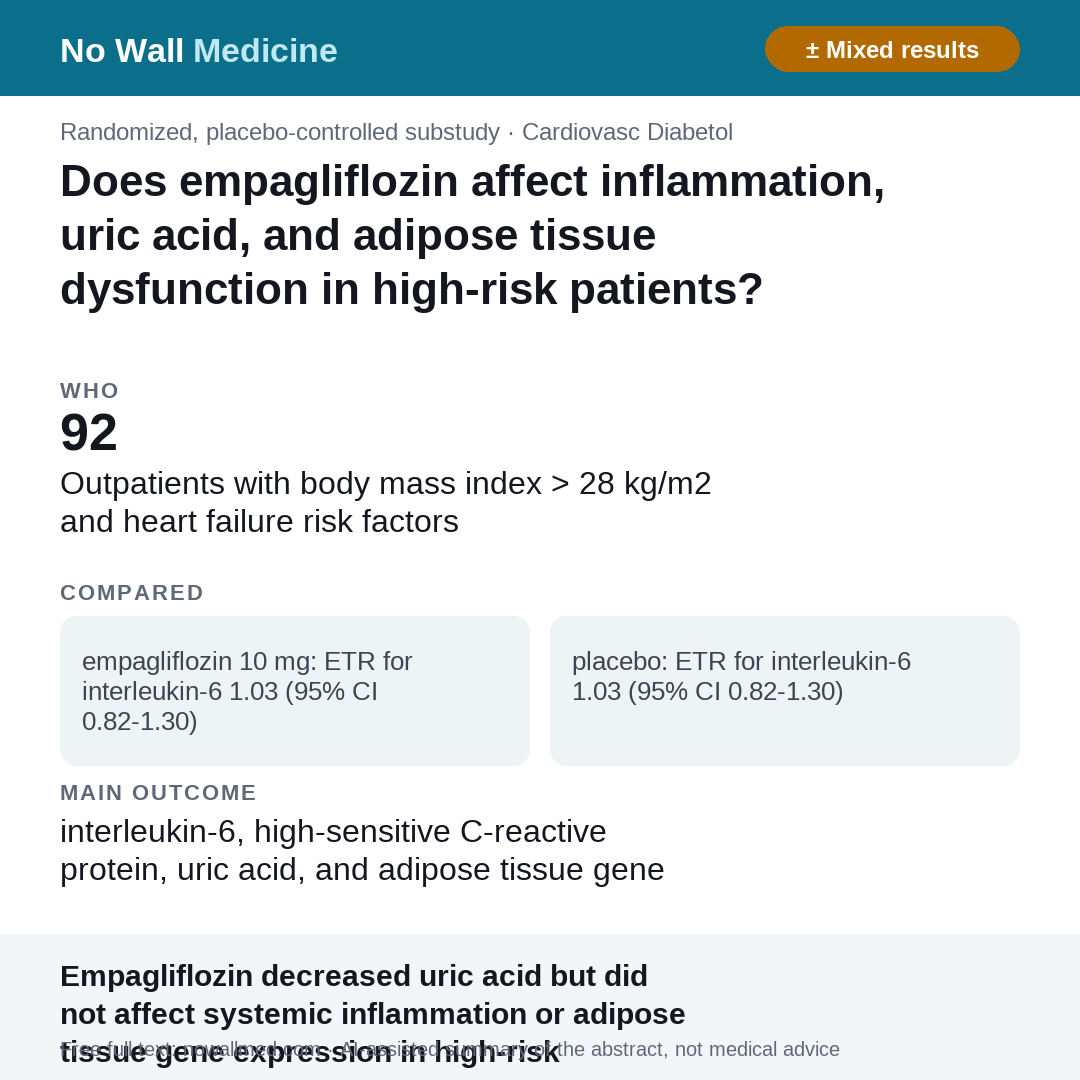
The effect of empagliflozin on inflammation in patients with overweight or obesity and risk of heart failure: a substudy from the Empire Prevent Metabolic trial
Randomized, placebo-controlled substudyMixed results
Does empagliflozin affect inflammation, uric acid, and adipose tissue dysfunction in high-risk patients?
Who
92
Outpatients with body mass index > 28 kg/m2 and heart failure risk factors
Compared
empagliflozin 10 mg: ETR for interleukin-6 1.03 (95% CI 0.82-1.30)
placebo: ETR for interleukin-6 1.03 (95% CI 0.82-1.30)
Main outcome
interleukin-6, high-sensitive C-reactive protein, uric acid, and adipose tissue gene expression
Result: ETD for uric acid -0.06 mmol/l (95% CI -0.08 to -0.04)
Bottom line: Empagliflozin decreased uric acid but did not affect systemic inflammation or adipose tissue gene expression in high-risk patients.
Cardiovasc Diabetol · 2026-06-12Download image
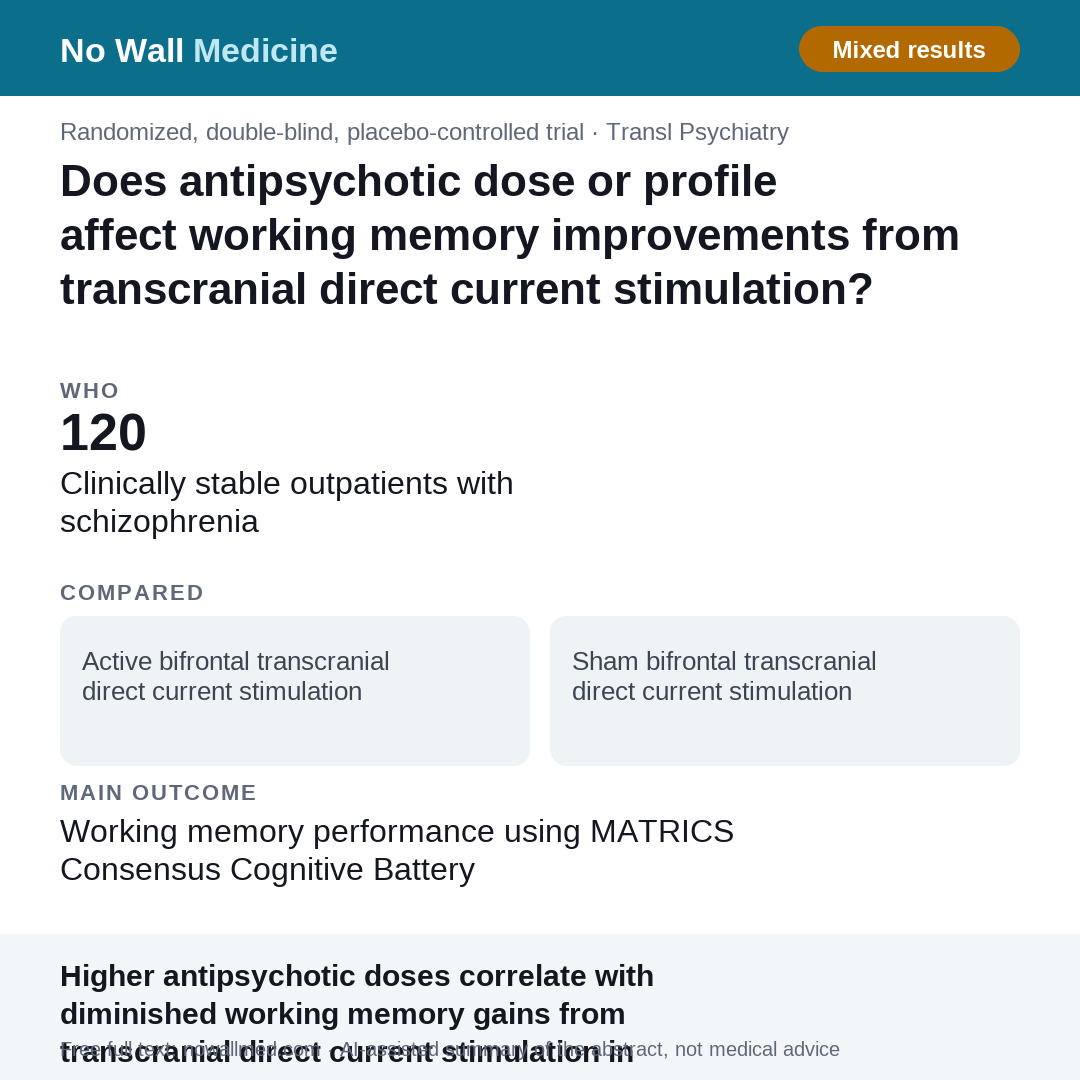
Optimizing tDCS cognitive outcomes in schizophrenia: the role of dopaminergic tone and antipsychotic load
Randomized, double-blind, placebo-controlled trialMixed results
Does antipsychotic dose or profile affect working memory improvements from transcranial direct current stimulation?
Who
120
Clinically stable outpatients with schizophrenia
Compared
Active bifrontal transcranial direct current stimulation
Sham bifrontal transcranial direct current stimulation
Main outcome
Working memory performance using MATRICS Consensus Cognitive Battery
Result: r = -0.197, p = 0.031
Bottom line: Higher antipsychotic doses correlate with diminished working memory gains from transcranial direct current stimulation in schizophrenia.
Transl Psychiatry · 2026-06-12Download image
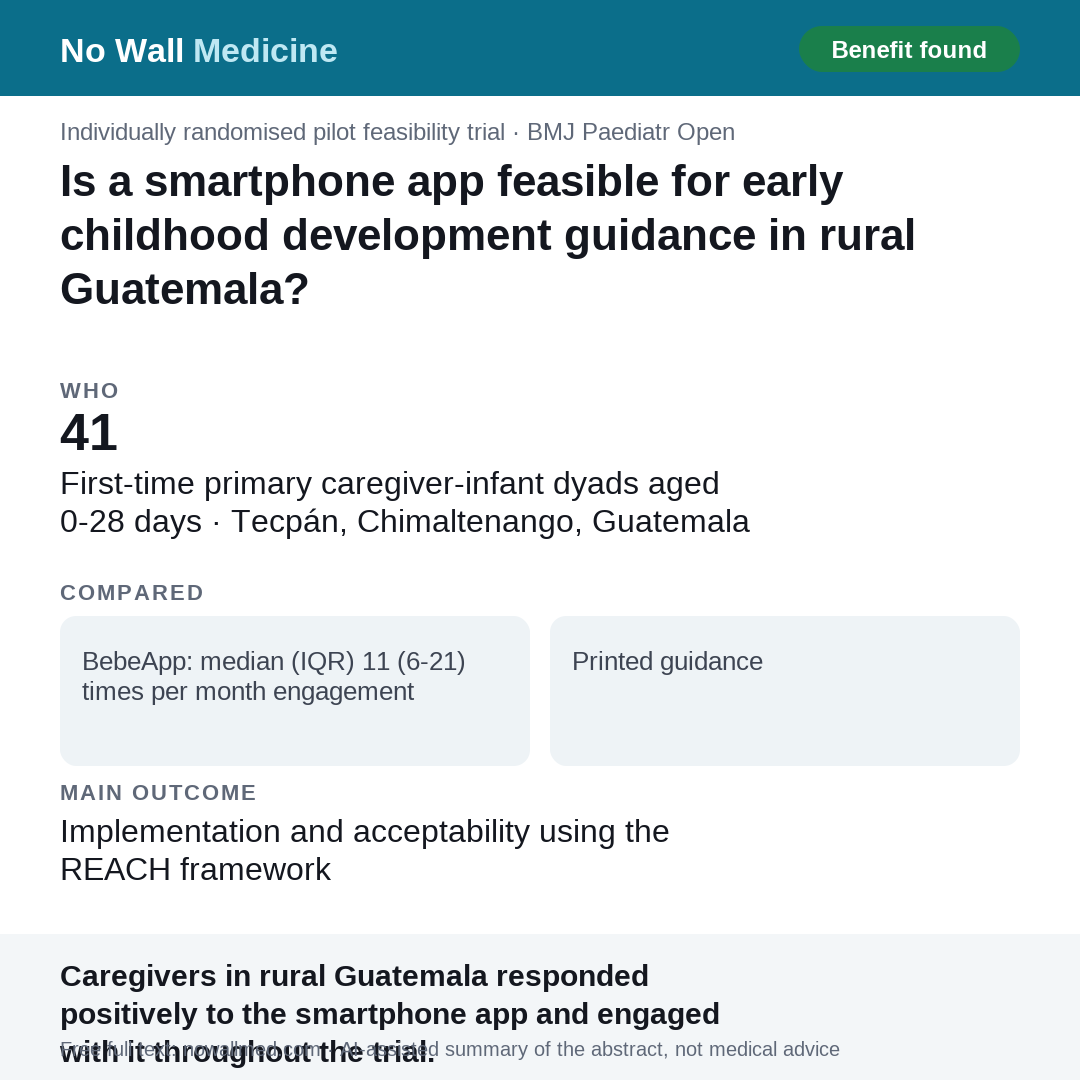
Smartphone-based support for early childhood development in a rural low-resource setting: an individually randomised pilot feasibility trial from Guatemala
Individually randomised pilot feasibility trialBenefit found
Is a smartphone app feasible for early childhood development guidance in rural Guatemala?
Who
41
First-time primary caregiver-infant dyads aged 0-28 days · Tecpán, Chimaltenango, Guatemala
Compared
BebeApp: median (IQR) 11 (6-21) times per month engagement
Printed guidance
Main outcome
Implementation and acceptability using the REACH framework
Bottom line: Caregivers in rural Guatemala responded positively to the smartphone app and engaged with it throughout the trial.
BMJ Paediatr Open · 2026-06-12Download image
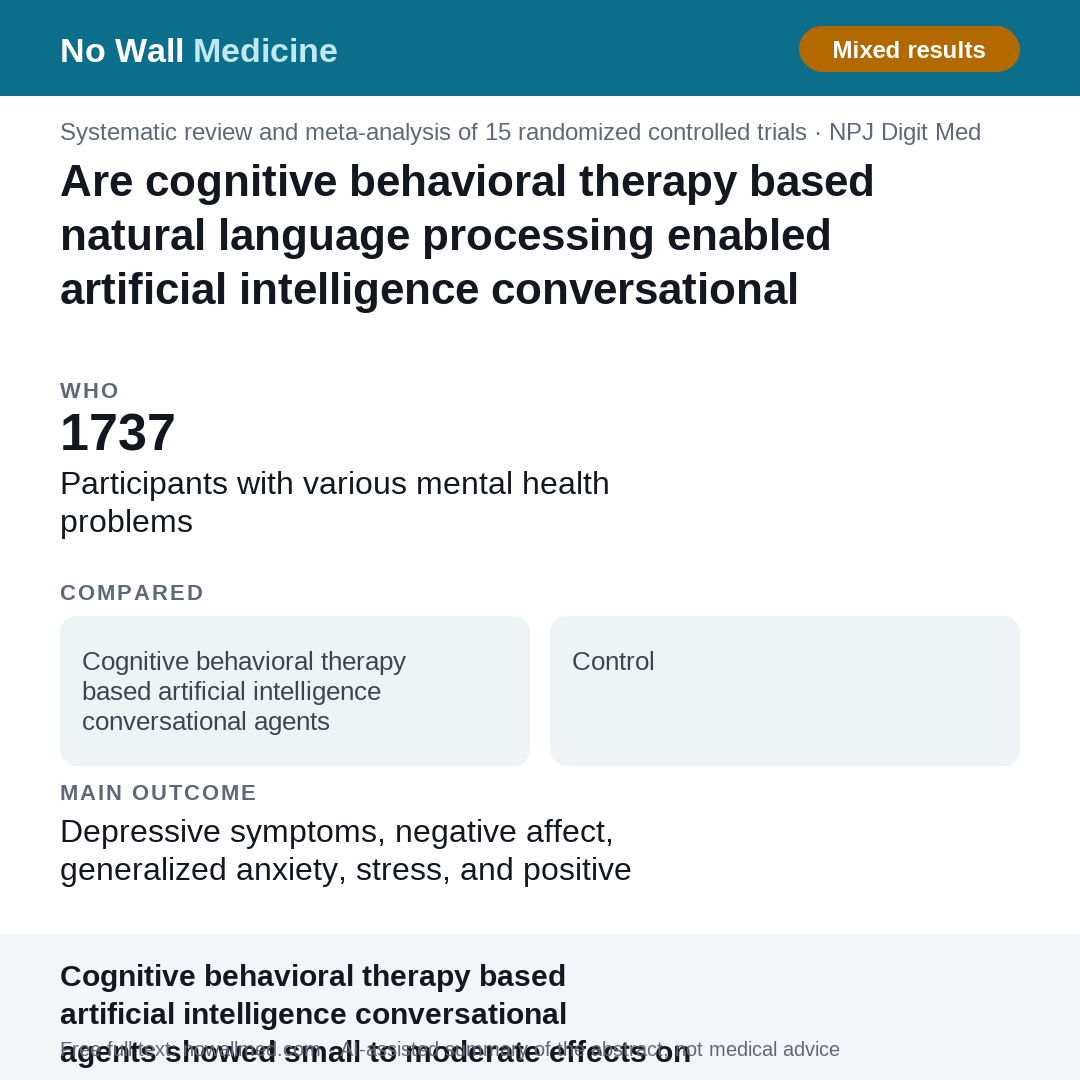
The effectiveness of CBT-based NLP-enabled AI conversational agents for mental health intervention: a systematic review and meta-analysis
Systematic review and meta-analysis of 15 randomized controlled trialsMixed results
Are cognitive behavioral therapy based natural language processing enabled artificial intelligence conversational agents effective?
Who
1737
Participants with various mental health problems
Compared
Cognitive behavioral therapy based artificial intelligence conversational agents
Control
Main outcome
Depressive symptoms, negative affect, generalized anxiety, stress, and positive affect
Bottom line: Cognitive behavioral therapy based artificial intelligence conversational agents showed small to moderate effects on depressive symptoms and negative affect.
Limitation: Higher quality studies reported larger effect sizes, suggesting true efficacy may be underestimated.
NPJ Digit Med · 2026-06-12Download image
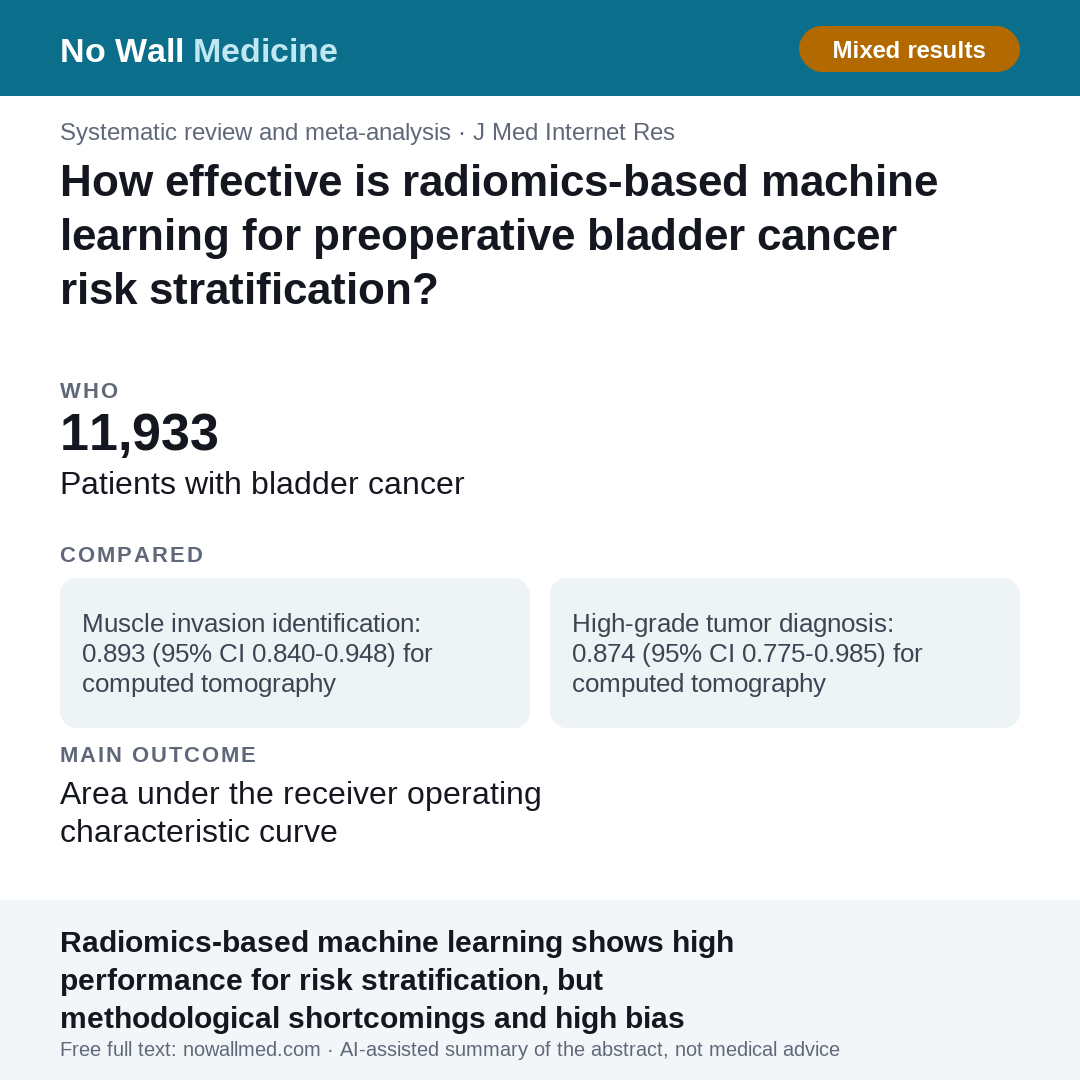
Application Value of Radiomics-Based Machine Learning for Preoperative Risk Stratification of Bladder Cancer: Systematic Review and Meta-Analysis
Systematic review and meta-analysisMixed results
How effective is radiomics-based machine learning for preoperative bladder cancer risk stratification?
Who
11,933
Patients with bladder cancer
Compared
Muscle invasion identification: 0.893 (95% CI 0.840-0.948) for computed tomography
High-grade tumor diagnosis: 0.874 (95% CI 0.775-0.985) for computed tomography
Main outcome
Area under the receiver operating characteristic curve
Bottom line: Radiomics-based machine learning shows high performance for risk stratification, but methodological shortcomings and high bias preclude clinical translation.
Limitation: Methodological shortcomings, high risk of bias, and low GRADE level of evidence.
J Med Internet Res · 2026-06-12Download image
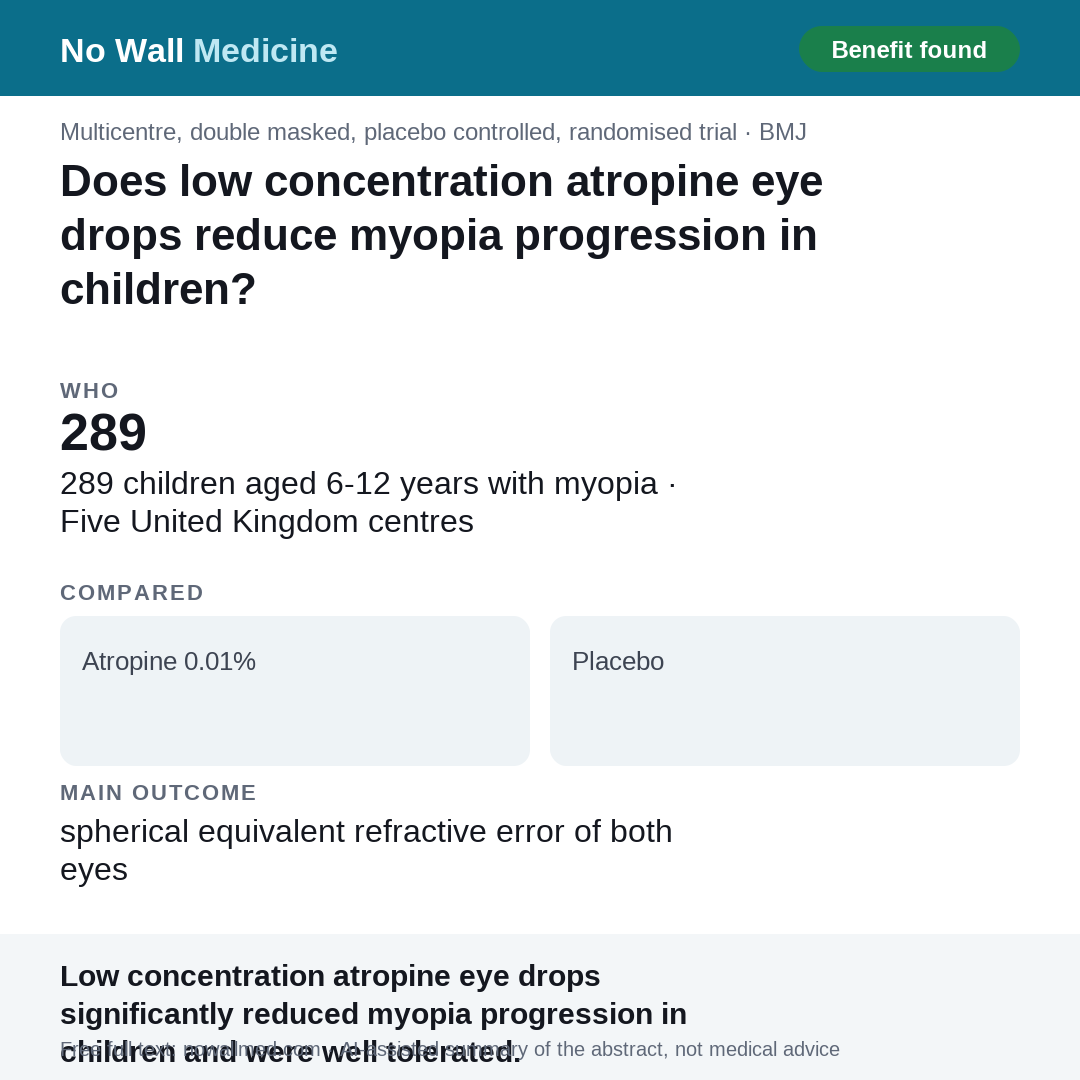
Low concentration atropine eye drops and progression of myopia in children: multicentre placebo controlled, double masked, randomised trial in the UK (CHAMP-UK)
Multicentre, double masked, placebo controlled, randomised trialBenefit found
Does low concentration atropine eye drops reduce myopia progression in children?
Who
289
289 children aged 6-12 years with myopia · Five United Kingdom centres
Compared
Atropine 0.01%
Placebo
Main outcome
spherical equivalent refractive error of both eyes
Result: mean difference 0.33 D, 95% confidence interval 0.17 to 0.49 D
Bottom line: Low concentration atropine eye drops significantly reduced myopia progression in children and were well tolerated.
BMJ · 2026-06-11Download image
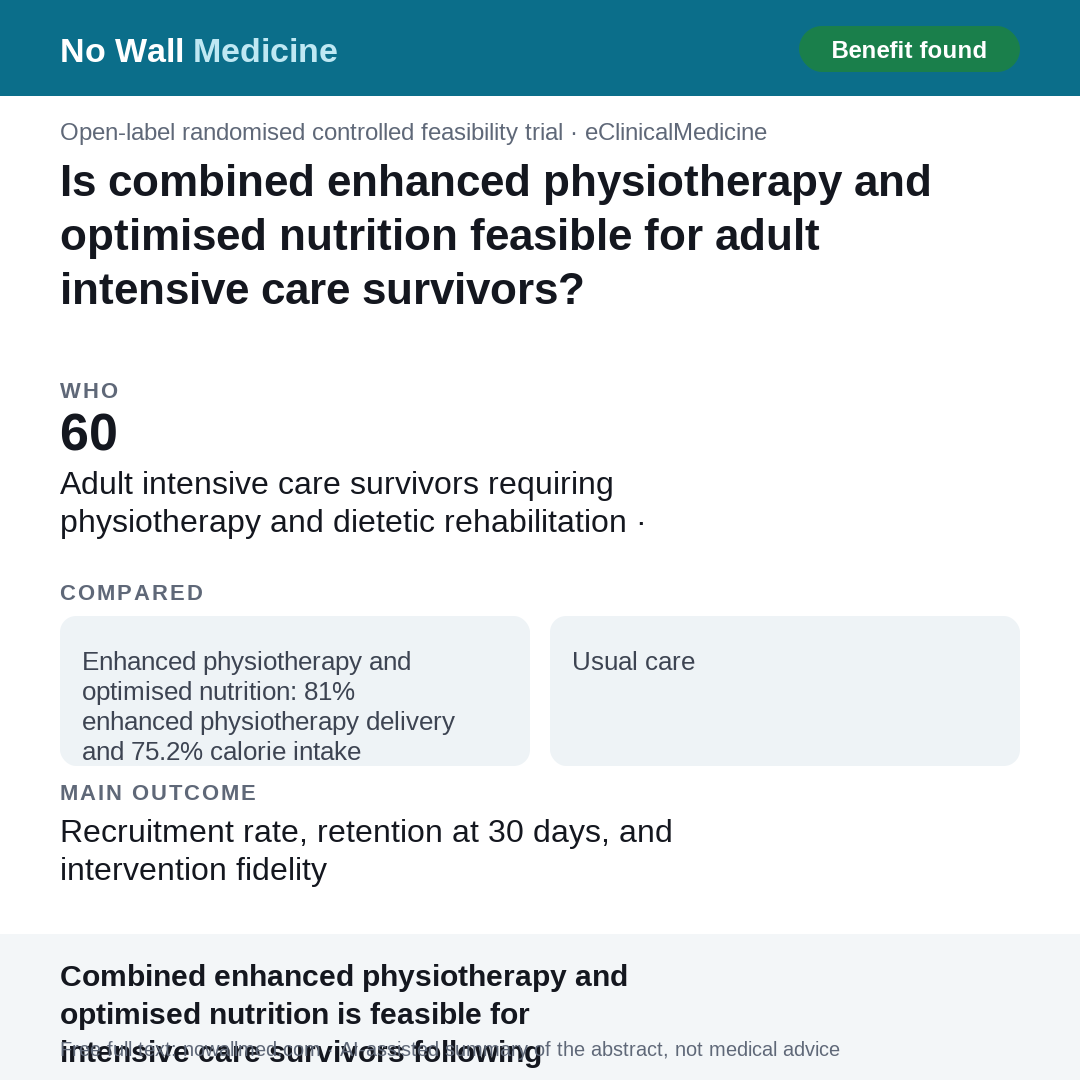
Physiotherapy and optimised enteral nutrition in the post-acute phase of critical illness (PHOENIX): a randomised controlled feasibility trial
Open-label randomised controlled feasibility trialBenefit found
Is combined enhanced physiotherapy and optimised nutrition feasible for adult intensive care survivors?
Who
60
Adult intensive care survivors requiring physiotherapy and dietetic rehabilitation · Two United Kingdom university hospitals
Compared
Enhanced physiotherapy and optimised nutrition: 81% enhanced physiotherapy delivery and 75.2% calorie intake fidelity
Usual care
Main outcome
Recruitment rate, retention at 30 days, and intervention fidelity
Bottom line: Combined enhanced physiotherapy and optimised nutrition is feasible for intensive care survivors following discharge.
Funded by: National Institute for Health and Care Research
eClinicalMedicine · 2026-06-11Download image
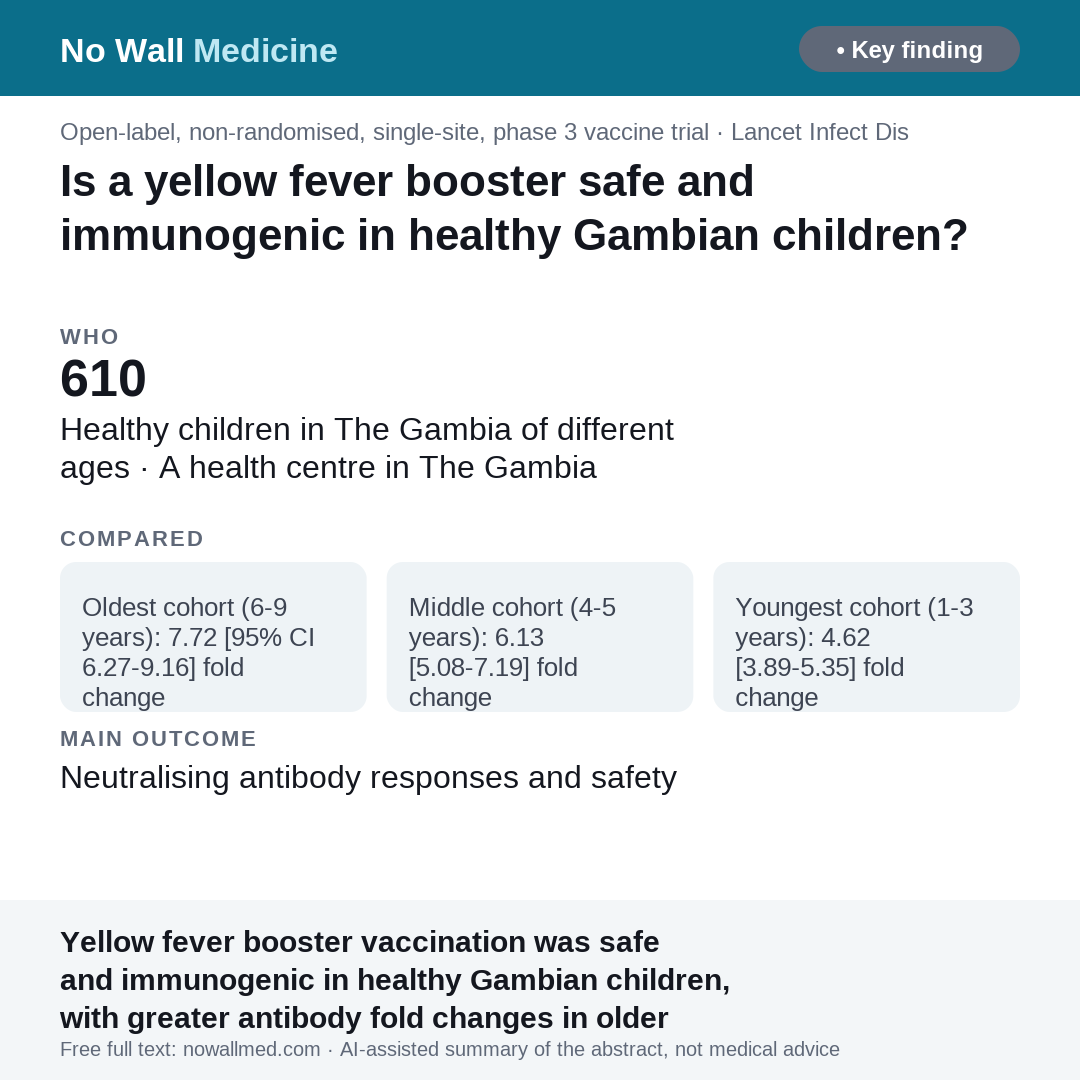
Yellow fever vaccination in healthy Gambian children of different ages to establish safety and immunogenicity of a booster dose: a open-label, non-randomised, single-site, phase 3 vaccine trial
Open-label, non-randomised, single-site, phase 3 vaccine trialBenefit found
Is a yellow fever booster safe and immunogenic in healthy Gambian children?
Who
610
Healthy children in The Gambia of different ages · A health centre in The Gambia
Compared
Oldest cohort (6-9 years): 7.72 [95% CI 6.27-9.16] fold change
Middle cohort (4-5 years): 6.13 [5.08-7.19] fold change
Youngest cohort (1-3 years): 4.62 [3.89-5.35] fold change
Main outcome
Neutralising antibody responses and safety
Bottom line: Yellow fever booster vaccination was safe and immunogenic in healthy Gambian children, with greater antibody fold changes in older cohorts.
Funded by: Wellcome Trust
Lancet Infect Dis · 2026-06-11Download image
Anticoagulation with the mechanistically distinct FXI/FXIa antibodies amrecibart (REGN9933A2) and cenvacibart (REGN7508Cat)
In vitro, in vivo, and first-in-human studiesBenefit found
How do amrecibart and cenvacibart affect coagulation and bleeding risk?
Who
Human and nonhuman primate plasma and healthy volunteers · Not specified
Compared
Cenvacibart: greater increase in activated partial thromboplastin time
Amrecibart: dose-dependently inhibited intrinsic pathway-triggered coagulation
Main outcome
intrinsic pathway-triggered coagulation and extrinsic pathway coagulation
Bottom line: Both antibodies inhibit intrinsic pathway coagulation without affecting the extrinsic pathway or increasing bleeding risk.
Blood · 2026-06-11Download image

Association of cognitive impairment and APOE ε4 with Centiloids in Hispanic and non-Hispanic White cohorts
Meta-analysis of five source studiesMixed results
Does APOE ε4 and cognitive impairment associate with amyloid load differently in Hispanic and non-Hispanic White cohorts?
Who
17017
Hispanic and non-Hispanic White participants
Compared
Hispanic participants: lower Centiloids
non-Hispanic White participants: higher Centiloids
Main outcome
brain amyloid load measured by Centiloids
Bottom line: Cognitively impaired and APOE ε4 positive Hispanic participants had lower amyloid Centiloids than non-Hispanic White participants.
Alzheimers Dement · 2026-06-11Download image

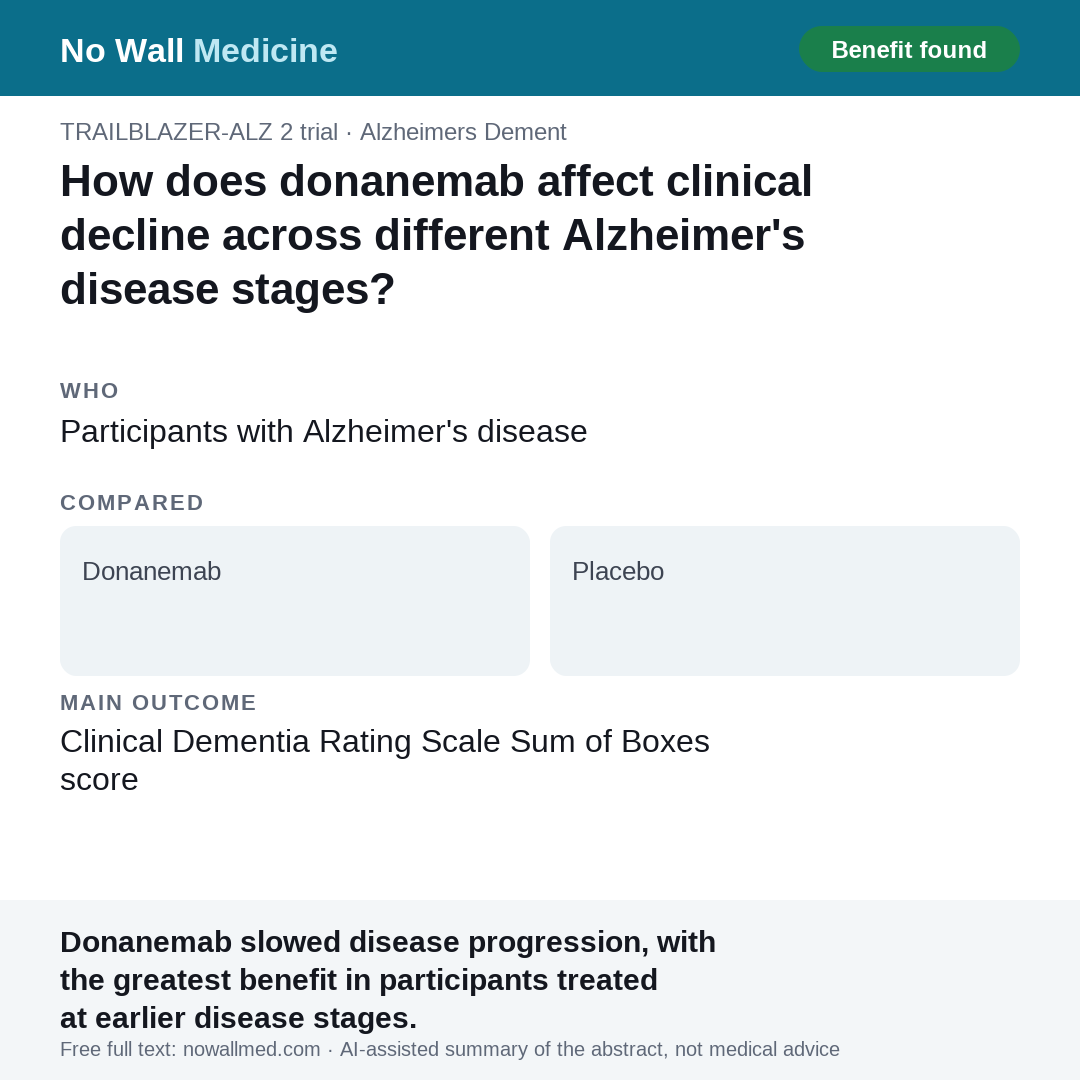
Donanemab treatment effect by baseline tau burden and disease severity: Observations from the TRAILBLAZER-ALZ 2 trial
TRAILBLAZER-ALZ 2 trialBenefit found
How does donanemab affect clinical decline across different Alzheimer's disease stages?
Who
Participants with Alzheimer's disease
Compared
Donanemab
Placebo
Main outcome
Clinical Dementia Rating Scale Sum of Boxes score
Bottom line: Donanemab slowed disease progression, with the greatest benefit in participants treated at earlier disease stages.
Alzheimers Dement · 2026-06-11Download image
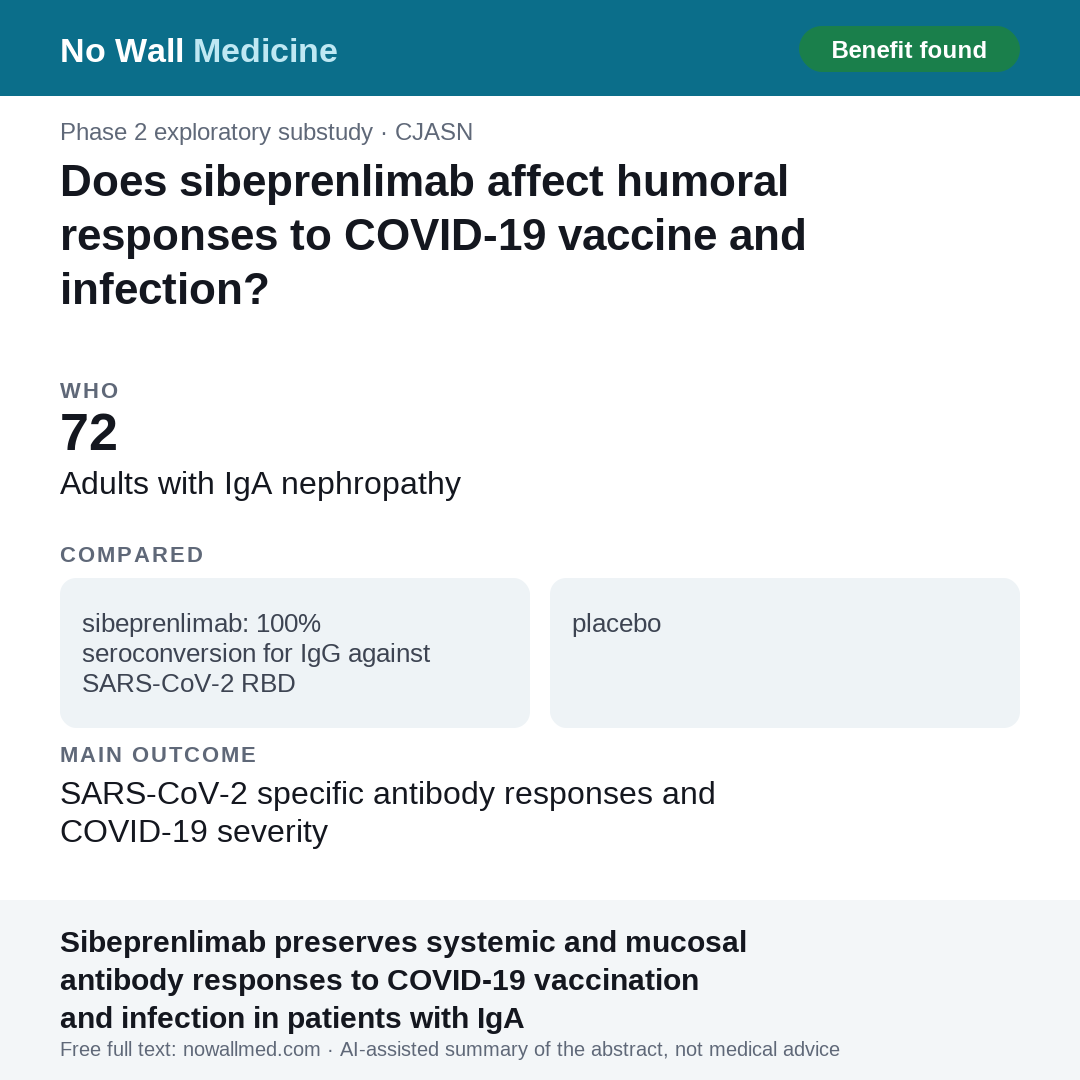
Humoral Response to COVID-19 Vaccines and Infection during Sibeprenlimab Treatment of IgA Nephropathy: Data from the ENVISION Trial
Phase 2 exploratory substudyBenefit found
Does sibeprenlimab affect humoral responses to COVID-19 vaccine and infection?
Who
72
Adults with IgA nephropathy
Compared
sibeprenlimab: 100% seroconversion for IgG against SARS-CoV-2 RBD
placebo
Main outcome
SARS-CoV-2 specific antibody responses and COVID-19 severity
Bottom line: Sibeprenlimab preserves systemic and mucosal antibody responses to COVID-19 vaccination and infection in patients with IgA nephropathy.
CJASN · 2026-06-11Download image
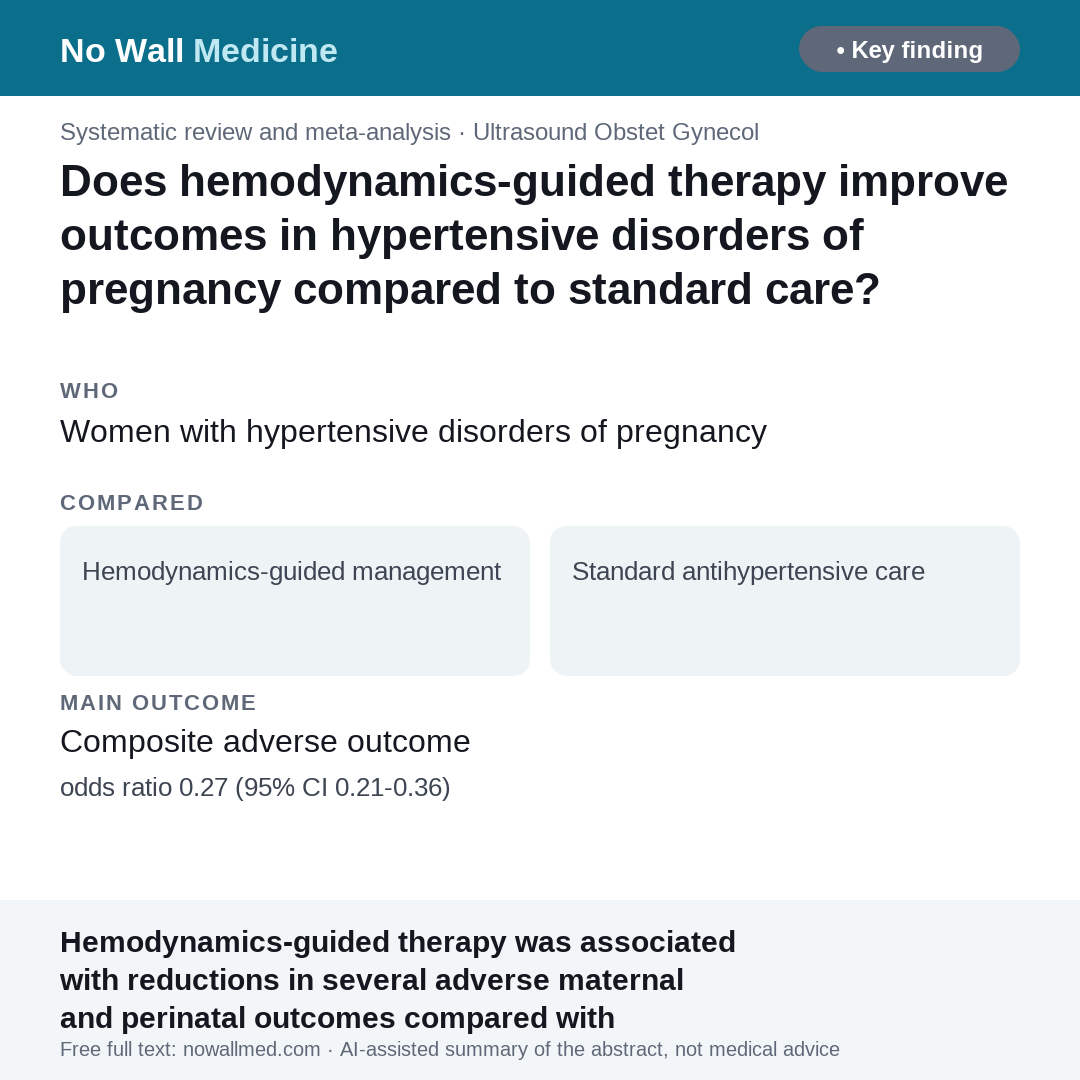
Hemodynamics-guided treatment of hypertensive disorders of pregnancy: systematic review and meta-analysis
Systematic review and meta-analysisBenefit found
Does hemodynamics-guided therapy improve outcomes in hypertensive disorders of pregnancy compared to standard care?
Who
Women with hypertensive disorders of pregnancy
Compared
Hemodynamics-guided management
Standard antihypertensive care
Main outcome
Composite adverse outcome
Result: odds ratio 0.27 (95% CI 0.21-0.36)
Bottom line: Hemodynamics-guided therapy was associated with reductions in several adverse maternal and perinatal outcomes compared with standard care.
Limitation: Predominance of non-randomized study designs, measurement heterogeneity and risk of residual confounding.
Ultrasound Obstet Gynecol · 2026-06-11Download image
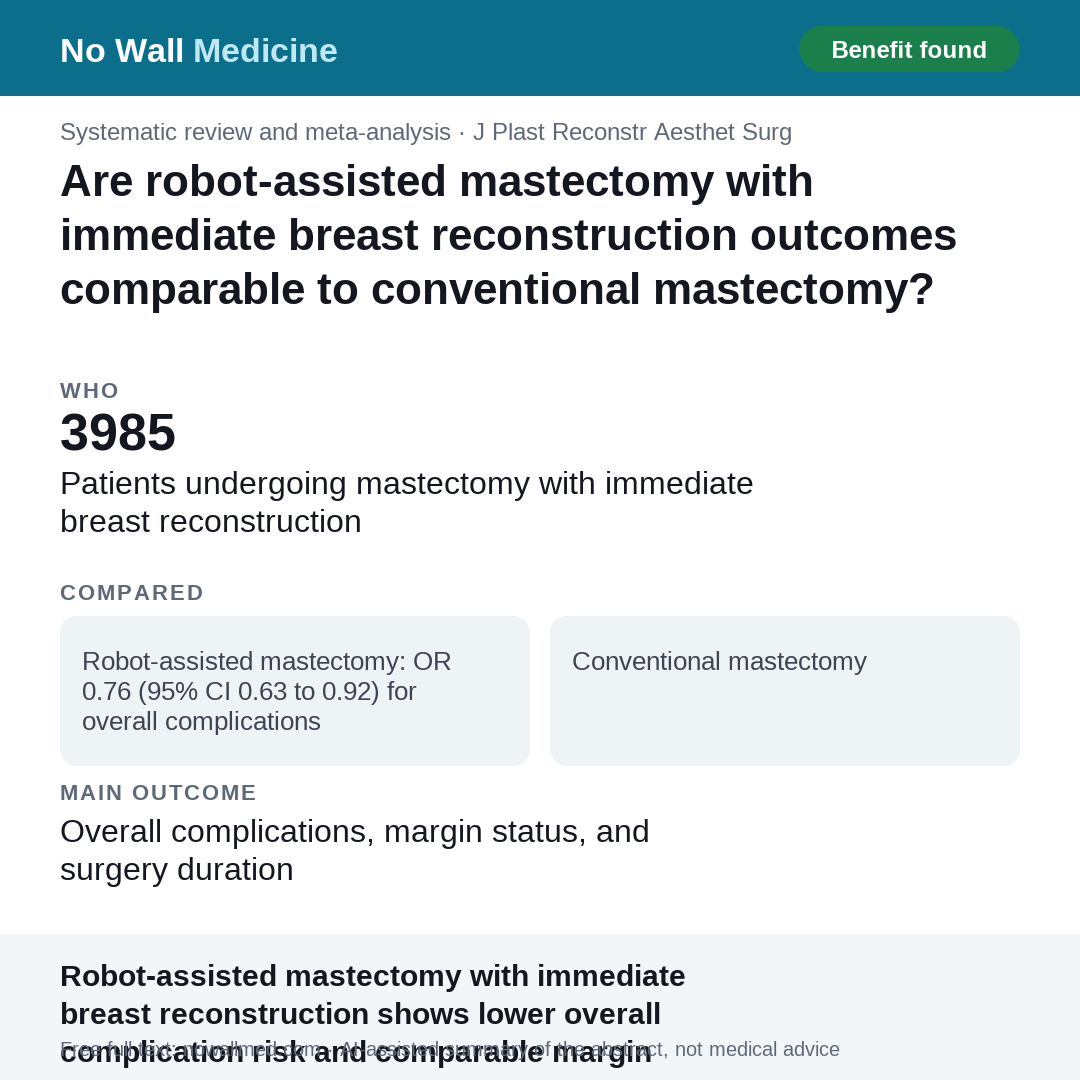
Robot-assisted versus conventional mastectomy and immediate breast reconstruction: A systematic review and comparative and single-arm meta-analysis
Systematic review and meta-analysisBenefit found
Are robot-assisted mastectomy with immediate breast reconstruction outcomes comparable to conventional mastectomy?
Who
3985
Patients undergoing mastectomy with immediate breast reconstruction
Compared
Robot-assisted mastectomy: OR 0.76 (95% CI 0.63 to 0.92) for overall complications
Conventional mastectomy
Main outcome
Overall complications, margin status, and surgery duration
Result: odds ratio 0.76 (95% CI 0.63 to 0.92)
Bottom line: Robot-assisted mastectomy with immediate breast reconstruction shows lower overall complication risk and comparable margin status to conventional mastectomy.
Limitation: Substantial heterogeneity, potential selection bias, and lack of long-term oncologic data.
J Plast Reconstr Aesthet Surg · 2026-06-11Download image
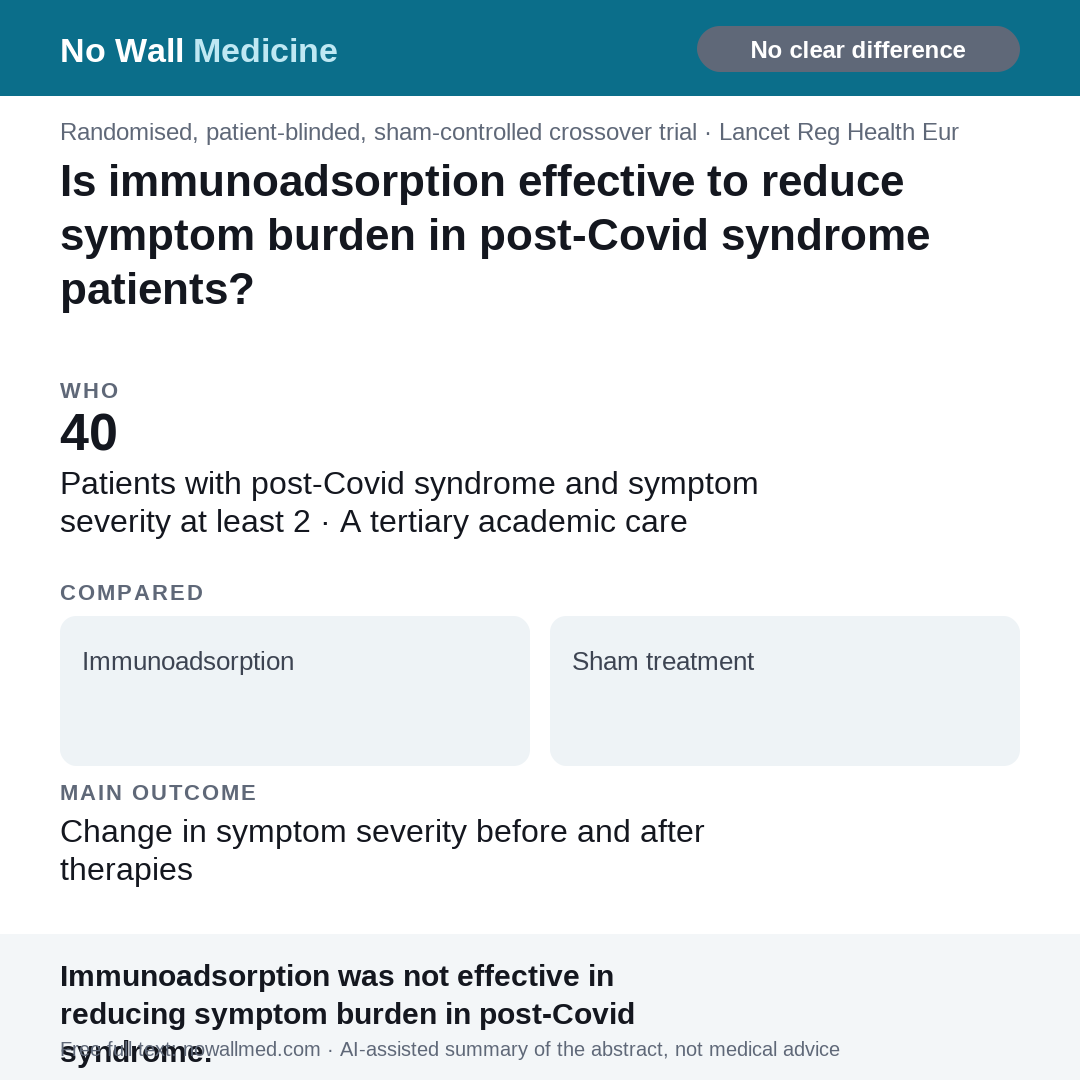
Immunoadsorption Versus Sham Treatment for Post-COVID Syndrome: A Randomised Sham-Controlled Crossover Trial
Randomised, patient-blinded, sham-controlled crossover trialNo clear difference
Is immunoadsorption effective to reduce symptom burden in post-Covid syndrome patients?
Who
40
Patients with post-Covid syndrome and symptom severity at least 2 · A tertiary academic care centre
Compared
Immunoadsorption
Sham treatment
Main outcome
Change in symptom severity before and after therapies
Result: odds ratio 1.17 (95% CI, 0.41-3.36)
Bottom line: Immunoadsorption was not effective in reducing symptom burden in post-Covid syndrome.
Funded by: Ministry of Health, Rhineland-Palatinate; Mainz University Medical Centre; DIAMED Medical Technology
Lancet Reg Health Eur · 2026-06-11Download image
Clinical Spectrum of Anti-SEZ6L2 Syndrome: A Case Report With Brain Volumetry and Systematic Literature Review
Case report and systematic reviewMixed results
What are the clinical features and outcomes of anti-SEZ6L2 syndrome?
Who
22
Patients with anti-seizure-related 6 homolog like 2 antibodies
Compared
Anti-SEZ6L2 syndrome patients: 86% cerebellar atrophy
Healthy controls
Main outcome
Clinical features, diagnostics, treatment, and outcomes
Bottom line: Anti-SEZ6L2 syndrome causes severe cerebellar dysfunction and progressive cerebellar atrophy, with substantial long-term disability often persisting.
Limitation: Evidence is limited to case reports and case series due to disease rarity.
Neurol Neuroimmunol Neuroinflamm · 2026-06-11Download image
