Visual abstracts
New randomized trials and meta-analyses from leading journals at a glance: who was studied, what was compared, and what was found. Every paper is free to read in full.
All specialtiesCardiology 4877Oncology 4138Gastroenterology & Hepatology 1942Infectious Disease 3837Neurology 1905Psychiatry & Mental Health 2273Pulmonology 2143Critical Care 1365Endocrinology & Diabetes 2580Pediatrics 2980Surgery 2559Orthopedics & Sports Medicine 931Neurosurgery 537Cardiothoracic & Vascular Surgery 674Plastic & Reconstructive Surgery 591Nephrology 1133Rheumatology 823Hematology 1109Dermatology 621Ophthalmology 543Obstetrics & Gynecology 1686Public & Global Health 1058Radiology & Imaging 648Anesthesiology 986Urology 764ENT (Otolaryngology) 503Emergency Medicine 511Allergy & Immunology 313Geriatrics 981Family Medicine & Primary Care 562Medical Genetics & Genomics 676Pathology & Laboratory Medicine 159Physical Medicine & Rehabilitation 757Palliative Care 444Nutrition 1588Digital Health & AI 2201General Medicine 321
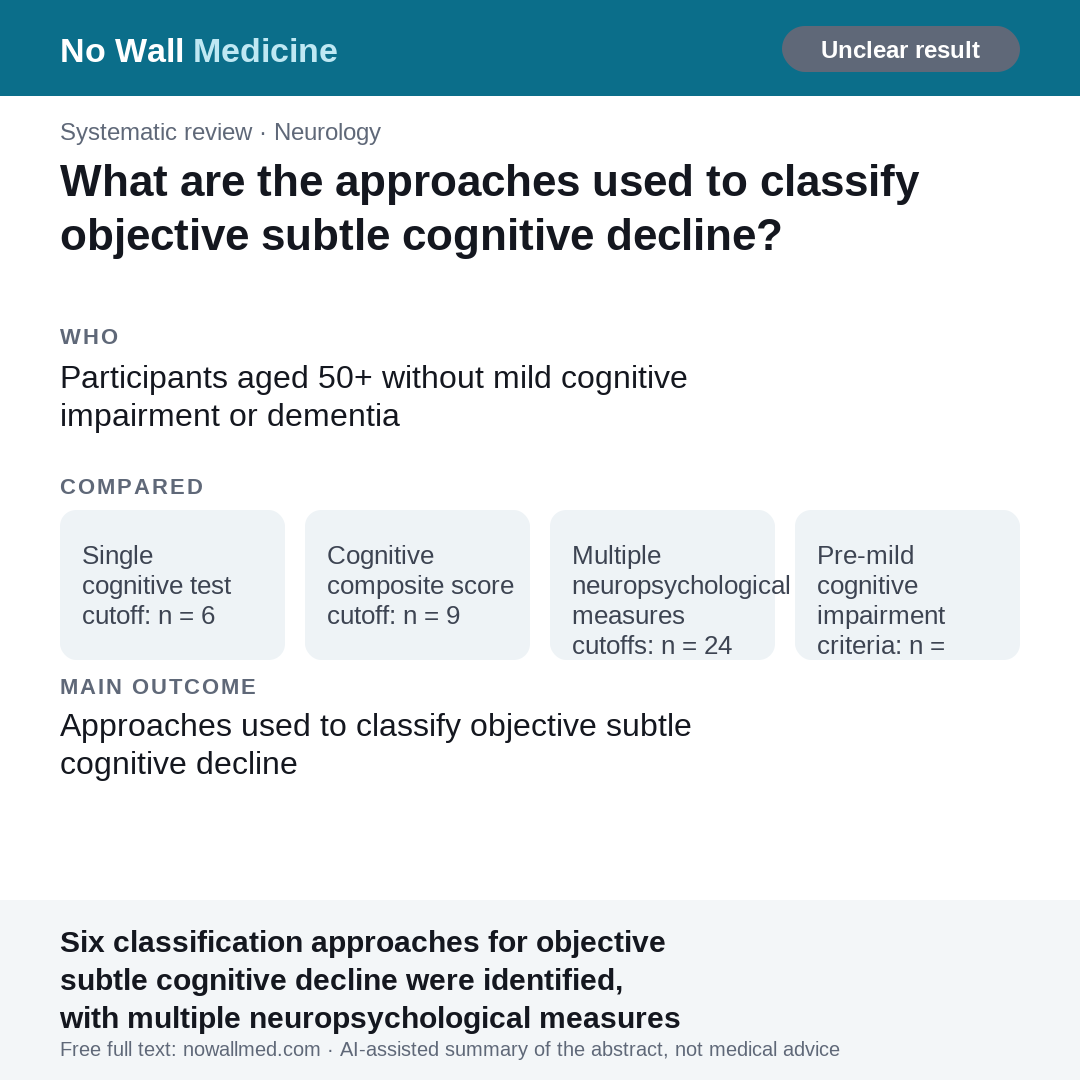
Objective Criteria for Subtle Cognitive Decline in Aging and Preclinical Alzheimer Disease: A Systematic Review
Systematic reviewUnclear result
What are the approaches used to classify objective subtle cognitive decline?
Who
Participants aged 50+ without mild cognitive impairment or dementia
Compared
Single cognitive test cutoff: n = 6
Cognitive composite score cutoff: n = 9
Multiple neuropsychological measures cutoffs: n = 24
Pre-mild cognitive impairment criteria: n = 12
Main outcome
Approaches used to classify objective subtle cognitive decline
Bottom line: Six classification approaches for objective subtle cognitive decline were identified, with multiple neuropsychological measures and pre-mild cognitive impairment being most common.
Neurology · 2025-04-08Download image
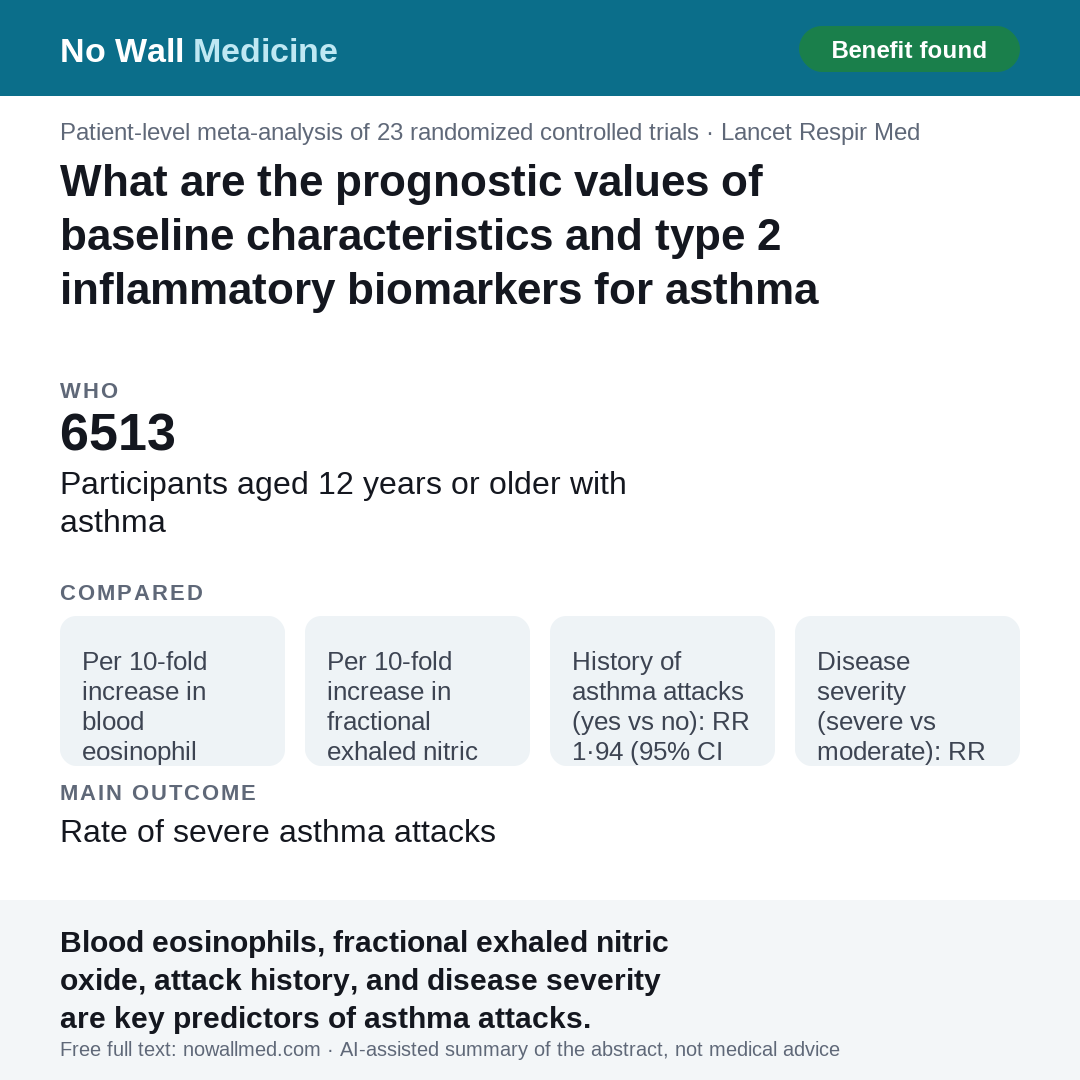
Inflammatory and clinical risk factors for asthma attacks (ORACLE2): a patient-level meta-analysis of control groups of 22 randomised trials
Patient-level meta-analysis of 23 randomized controlled trialsBenefit found
What are the prognostic values of baseline characteristics and type 2 inflammatory biomarkers for asthma attacks?
Who
6513
Participants aged 12 years or older with asthma
Compared
Per 10-fold increase in blood eosinophil count: RR 1·48 (95% CI 1·30-1·68)
Per 10-fold increase in fractional exhaled nitric oxide: RR 1·44 (95% CI 1·26-1·65)
History of asthma attacks (yes vs no): RR 1·94 (95% CI 1·61-2·32)
Disease severity (severe vs moderate): RR 1·57 (95% CI 1·22-2·03)
Main outcome
Rate of severe asthma attacks
Result: RR 1·48 (95% CI 1·30-1·68) for blood eosinophil count
Bottom line: Blood eosinophils, fractional exhaled nitric oxide, attack history, and disease severity are key predictors of asthma attacks.
Limitation: Major differences in patient and disease characteristics between studies were indicated by the concordance statistic.
Lancet Respir Med · 2025-04-08Download image
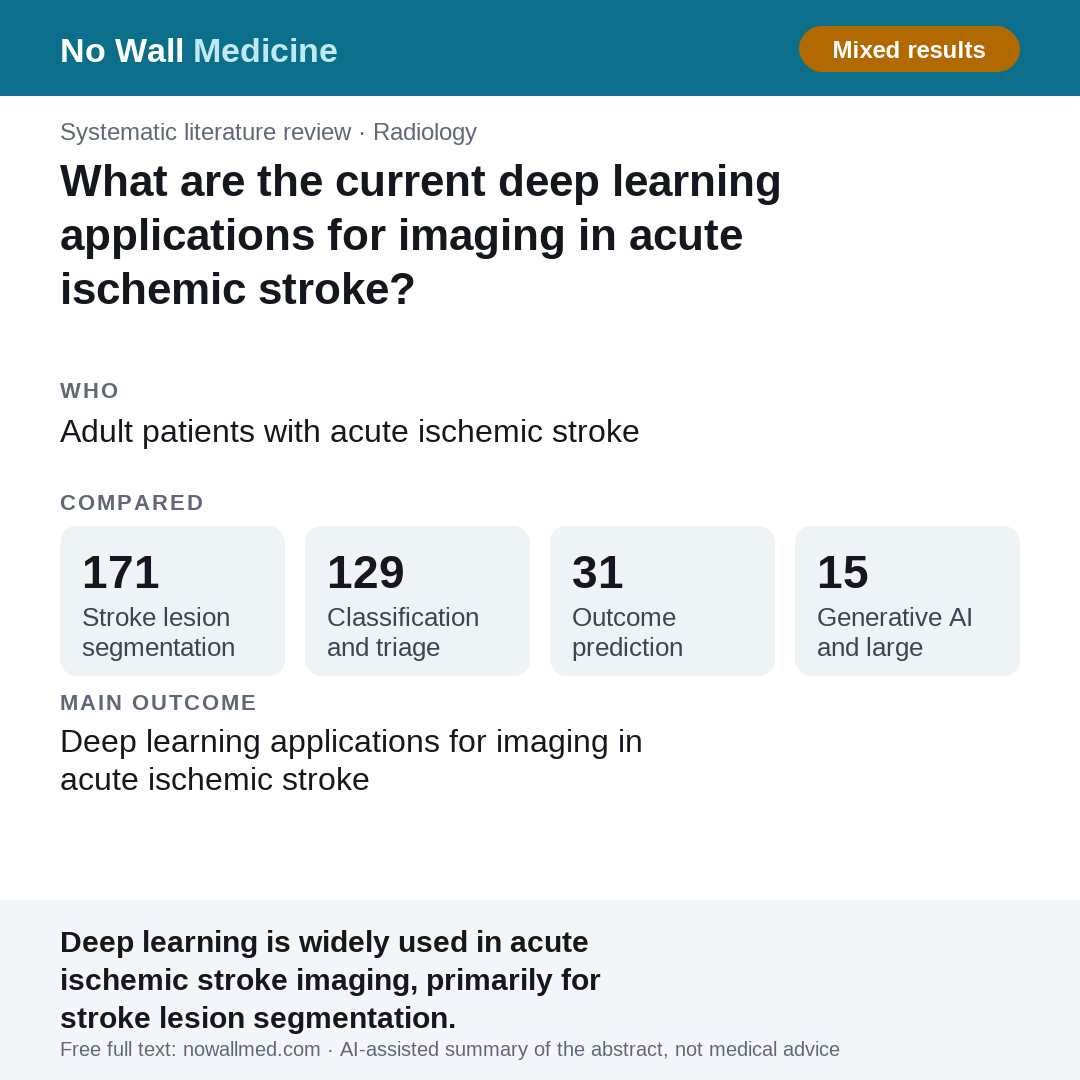
Deep Learning Applications in Imaging of Acute Ischemic Stroke: A Systematic Review and Narrative Summary
Systematic literature reviewMixed results
What are the current deep learning applications for imaging in acute ischemic stroke?
Who
Adult patients with acute ischemic stroke
Compared
171Stroke lesion segmentation (45.0%)
129Classification and triage (33.9%)
31Outcome prediction (8.2%)
15Generative AI and large language models (3.9%)
Main outcome
Deep learning applications for imaging in acute ischemic stroke
Bottom line: Deep learning is widely used in acute ischemic stroke imaging, primarily for stroke lesion segmentation.
Limitation: Need for standardized protocols, test sets, larger datasets, and real-world validation.
Radiology · 2025-04-08Download image
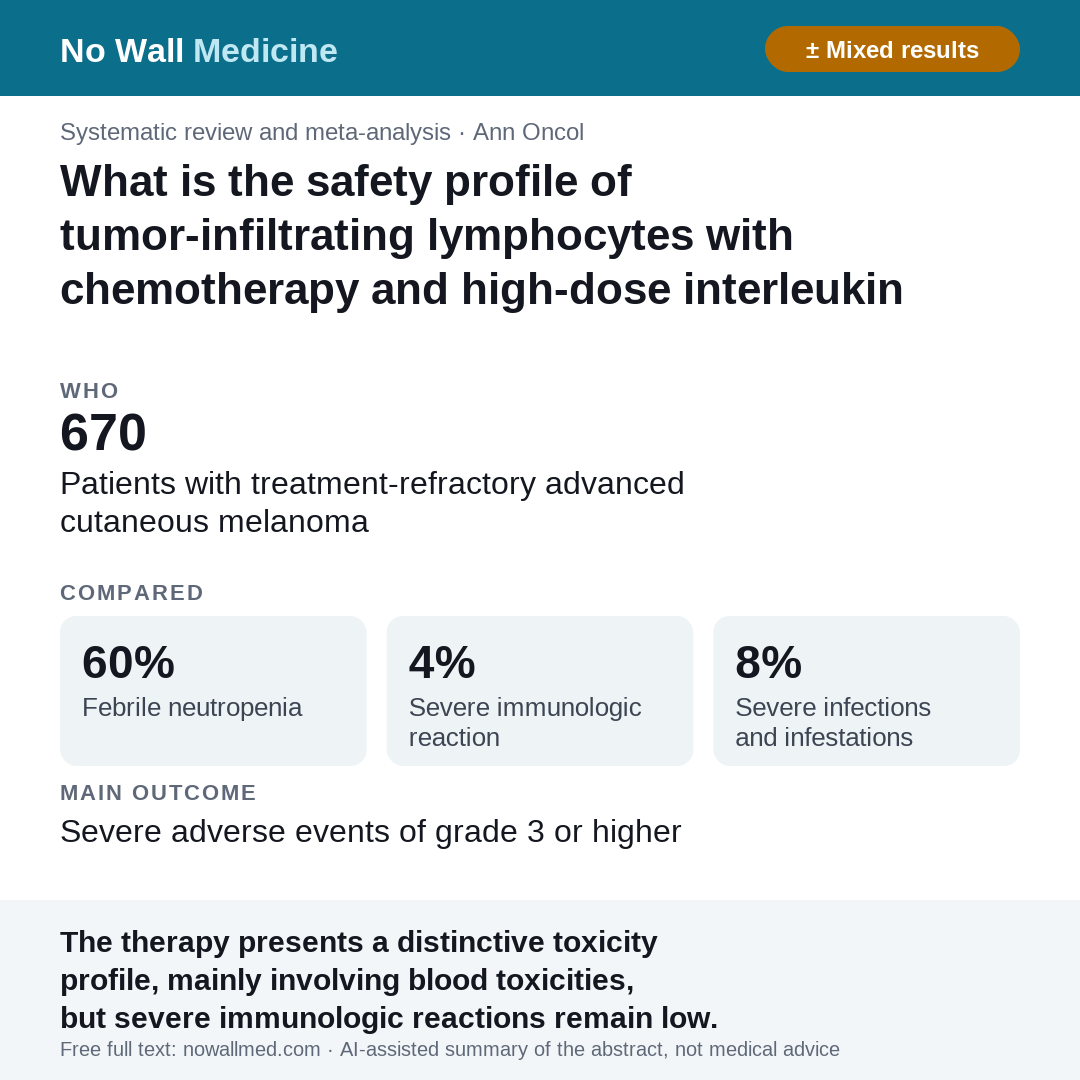
Safety of adoptive therapy with tumor-infiltrating lymphocytes and high-dose recombinant interleukin 2 in advanced cutaneous melanoma: a systematic review and meta-analysis
Systematic review and meta-analysisMixed results
What is the safety profile of tumor-infiltrating lymphocytes with chemotherapy and high-dose interleukin 2?
Who
670
Patients with treatment-refractory advanced cutaneous melanoma
Compared
60%Febrile neutropenia
4%Severe immunologic reaction
8%Severe infections and infestations
Main outcome
Severe adverse events of grade 3 or higher
Bottom line: The therapy presents a distinctive toxicity profile, mainly involving blood toxicities, but severe immunologic reactions remain low.
Ann Oncol · 2025-04-08Download image
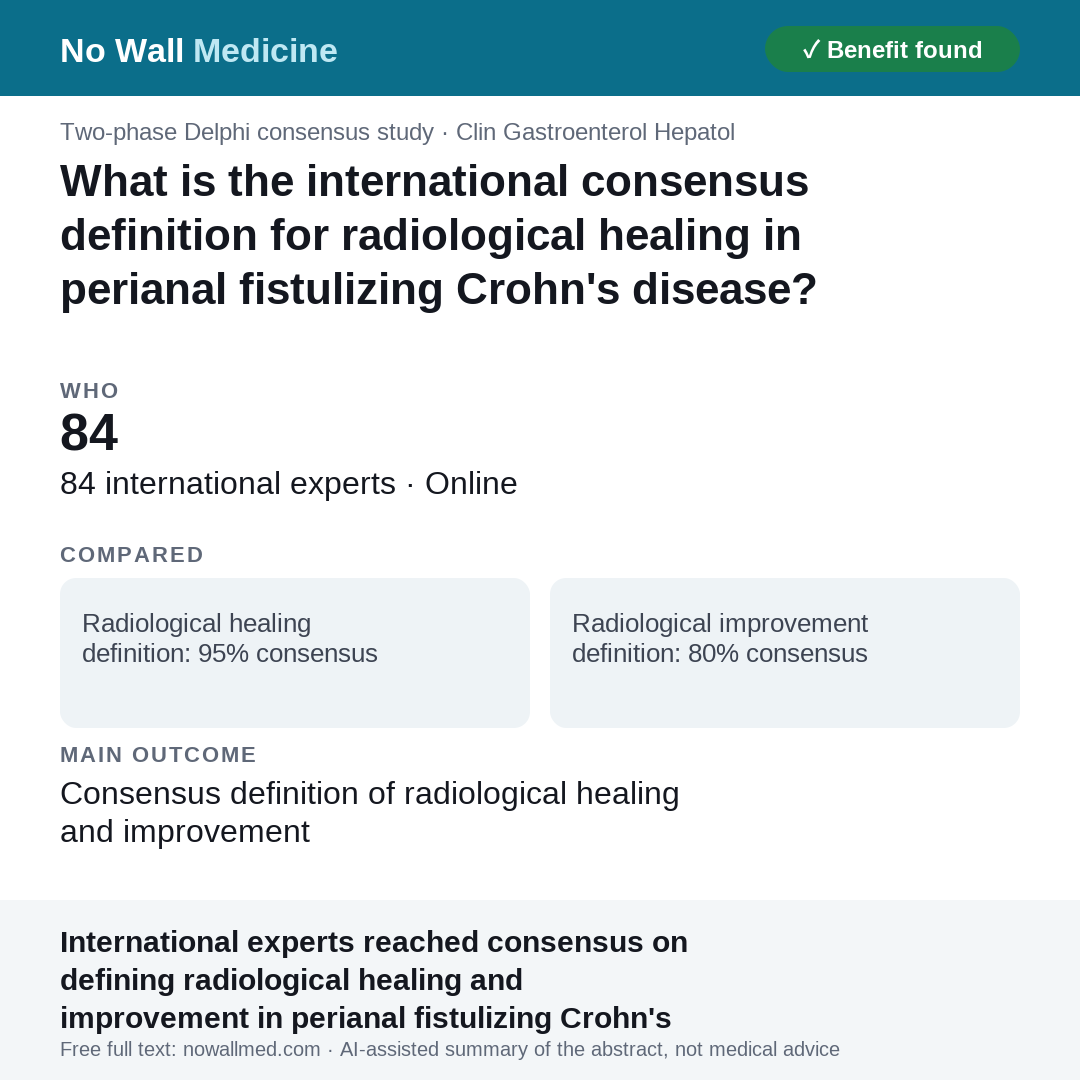
Defining Radiological Healing in Perianal Fistulizing Crohn's Disease: A TOpClass Global Expert Delphi Consensus
Two-phase Delphi consensus studyBenefit found
What is the international consensus definition for radiological healing in perianal fistulizing Crohn's disease?
Who
84
84 international experts · Online
Compared
Radiological healing definition: 95% consensus
Radiological improvement definition: 80% consensus
Main outcome
Consensus definition of radiological healing and improvement
Bottom line: International experts reached consensus on defining radiological healing and improvement in perianal fistulizing Crohn's disease.
Clin Gastroenterol Hepatol · 2025-04-08Download image
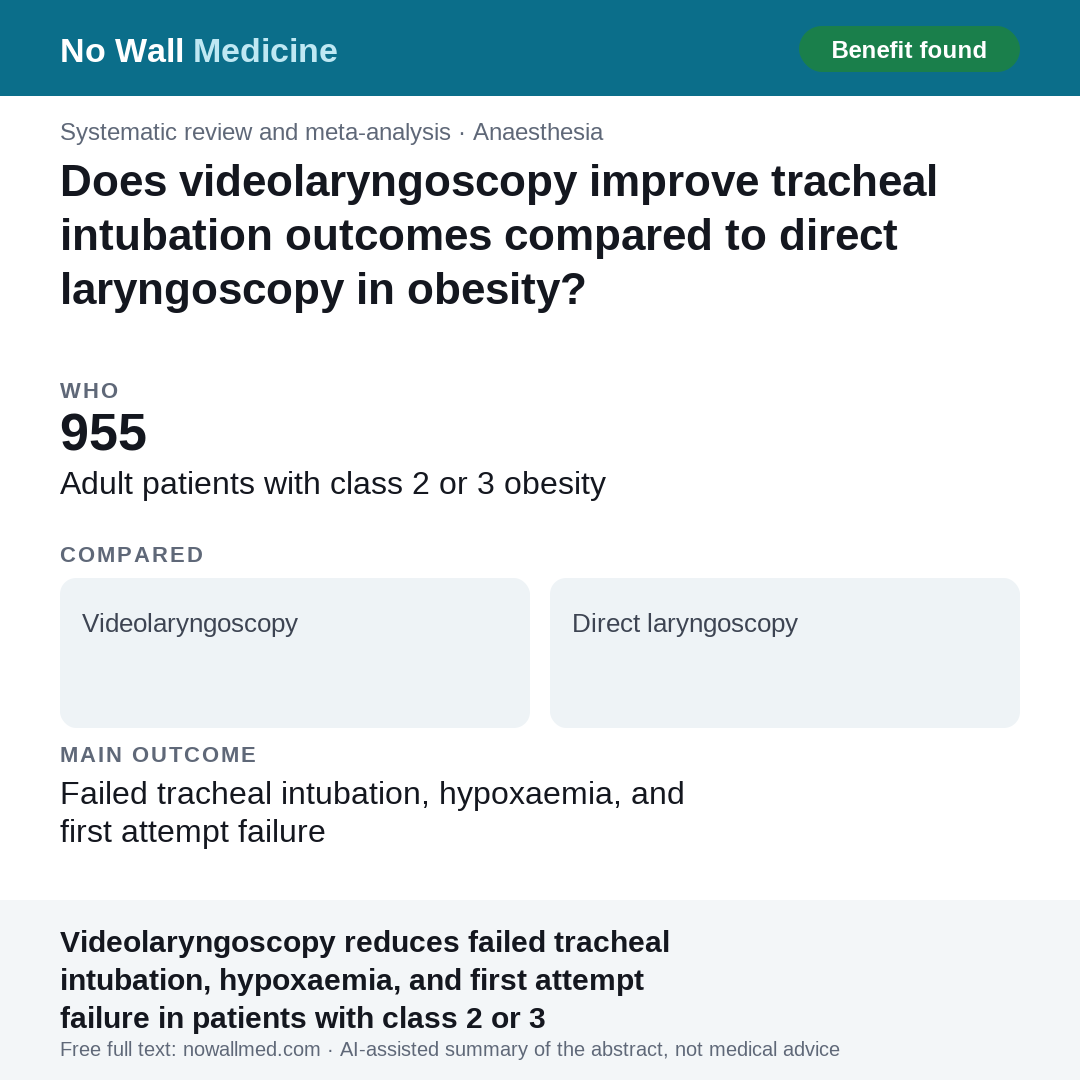
Videolaryngoscopy vs. direct laryngoscopy in class 2 and 3 obesity: a systematic review, meta-analysis and trial sequential analysis of randomised controlled trials
Systematic review and meta-analysisBenefit found
Does videolaryngoscopy improve tracheal intubation outcomes compared to direct laryngoscopy in obesity?
Who
955
Adult patients with class 2 or 3 obesity
Compared
Videolaryngoscopy
Direct laryngoscopy
Main outcome
Failed tracheal intubation, hypoxaemia, and first attempt failure
Result: failed tracheal intubation relative risk 0.15 (95%CI 0.05-0.35)
Bottom line: Videolaryngoscopy reduces failed tracheal intubation, hypoxaemia, and first attempt failure in patients with class 2 or 3 obesity.
Anaesthesia · 2025-04-08Download image
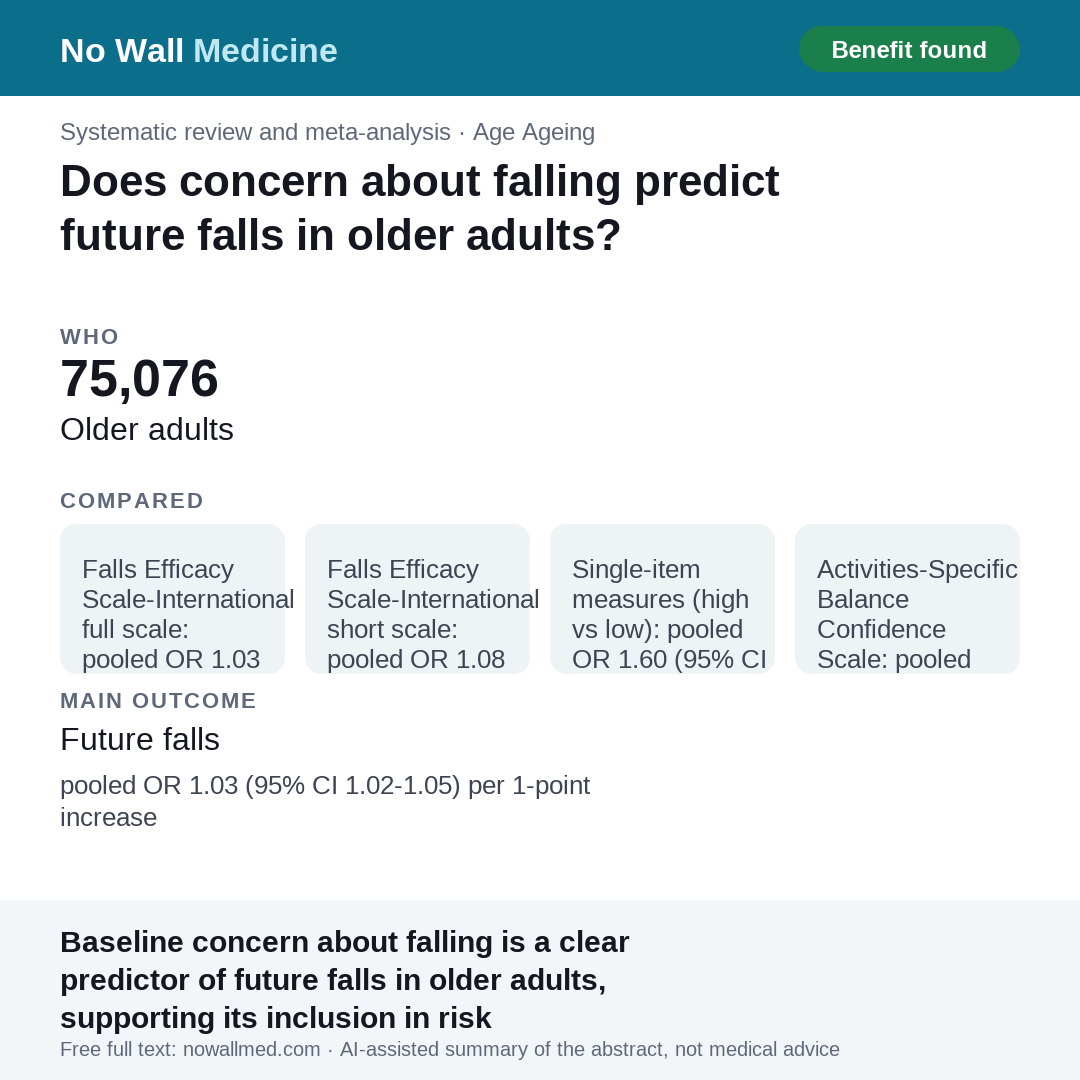
Does concern about falling predict future falls in older adults? A systematic review and meta-analysis
Systematic review and meta-analysisBenefit found
Does concern about falling predict future falls in older adults?
Who
75,076
Older adults
Compared
Falls Efficacy Scale-International full scale: pooled OR 1.03 (95% CI 1.02-1.05) per 1-point increase
Falls Efficacy Scale-International short scale: pooled OR 1.08 (95% CI 1.05-1.11)
Single-item measures (high vs low): pooled OR 1.60 (95% CI 1.36-1.89)
Activities-Specific Balance Confidence Scale: pooled OR 0.97 (95% CI 0.93-1.01)
Main outcome
Future falls
Result: pooled OR 1.03 (95% CI 1.02-1.05) per 1-point increase
Bottom line: Baseline concern about falling is a clear predictor of future falls in older adults, supporting its inclusion in risk assessments.
Limitation: 26 studies were rated as poor quality.
Age Ageing · 2025-04-08Download image
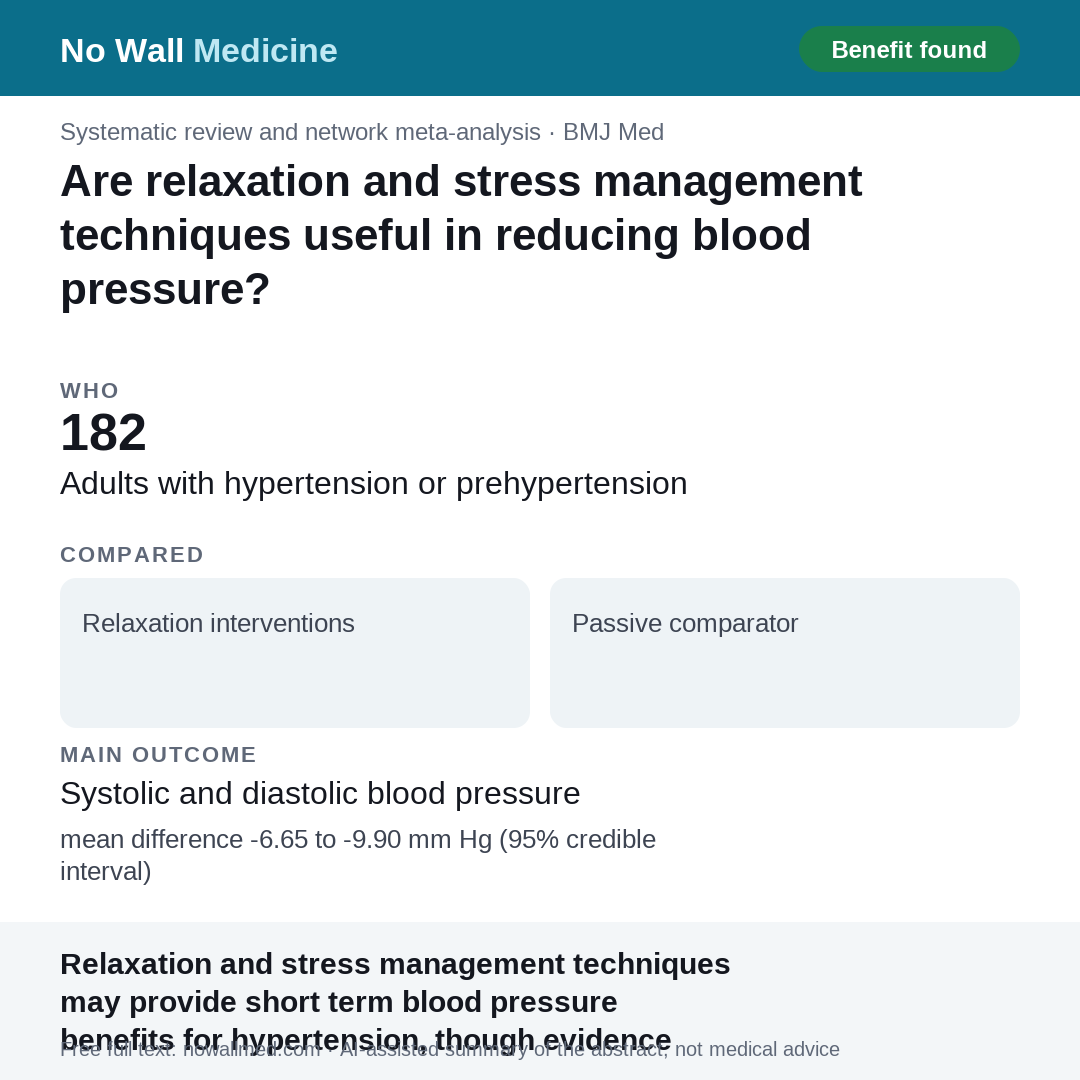
Effectiveness of stress management and relaxation interventions for management of hypertension and prehypertension: systematic review and network meta-analysis
Systematic review and network meta-analysisBenefit found
Are relaxation and stress management techniques useful in reducing blood pressure?
Who
182
Adults with hypertension or prehypertension
Compared
Relaxation interventions
Passive comparator
Main outcome
Systolic and diastolic blood pressure
Result: mean difference -6.65 to -9.90 mm Hg (95% credible interval)
Bottom line: Relaxation and stress management techniques may provide short term blood pressure benefits for hypertension, though evidence certainty is very low.
Limitation: Very low certainty due to risk of bias, potential publication bias, and imprecision.
BMJ Med · 2025-04-08Download image
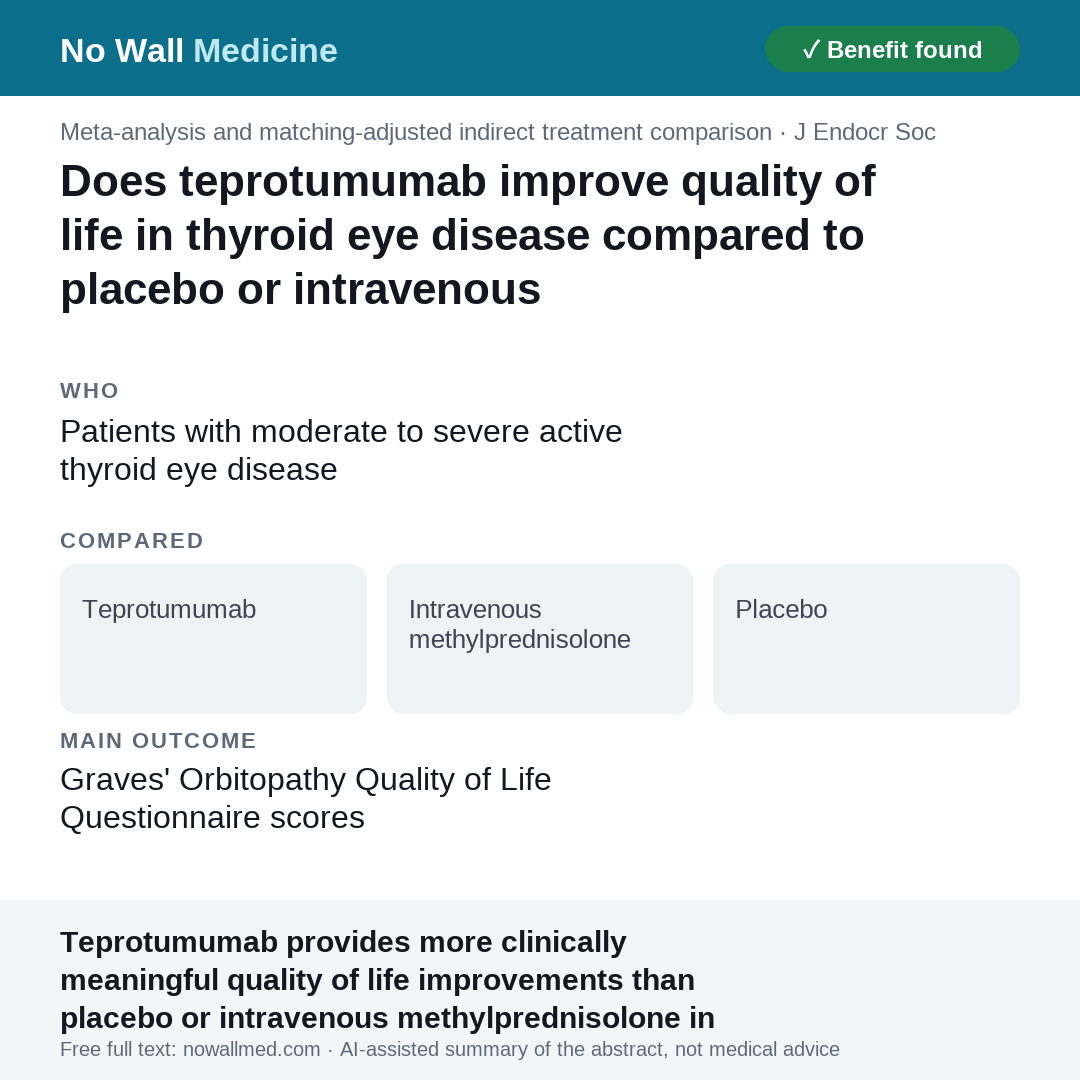
Teprotumumab Improves Quality of Life in Thyroid Eye Disease: Meta-analysis and Matching-adjusted Indirect Comparison
Meta-analysis and matching-adjusted indirect treatment comparisonBenefit found
Does teprotumumab improve quality of life in thyroid eye disease compared to placebo or intravenous methylprednisolone?
Who
Patients with moderate to severe active thyroid eye disease
Compared
Teprotumumab
Intravenous methylprednisolone
Placebo
Main outcome
Graves' Orbitopathy Quality of Life Questionnaire scores
Result: mean difference 13.26 (95% CI 7.44 to 19.09) vs intravenous methylprednisolone
Bottom line: Teprotumumab provides more clinically meaningful quality of life improvements than placebo or intravenous methylprednisolone in thyroid eye disease.
J Endocr Soc · 2025-04-08Download image
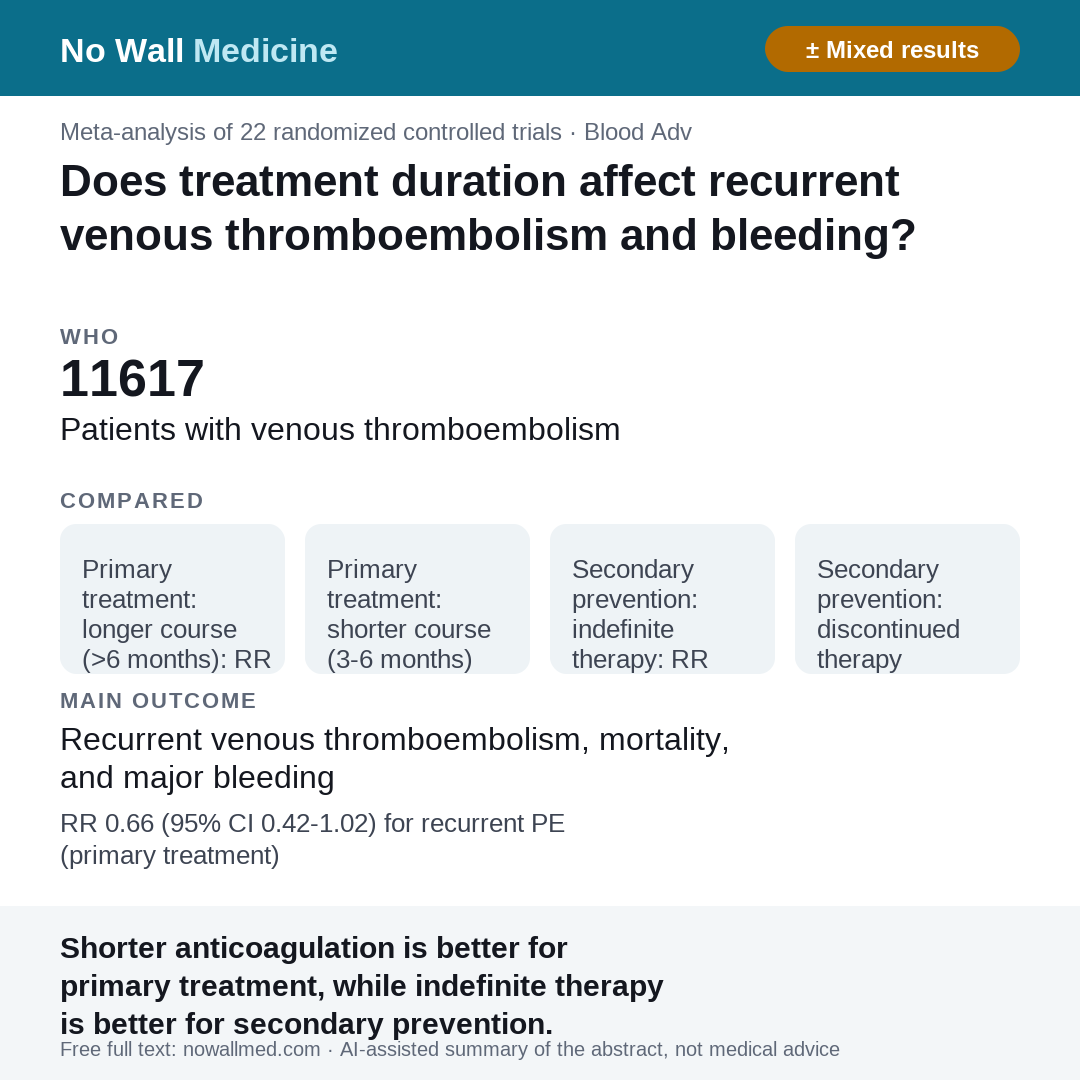
Duration of primary/secondary treatment to prevent recurrent venous thromboembolism: a systematic review and meta-analysis
Meta-analysis of 22 randomized controlled trialsMixed results
Does treatment duration affect recurrent venous thromboembolism and bleeding?
Who
11617
Patients with venous thromboembolism
Compared
Primary treatment: longer course (>6 months): RR 0.66 for recurrent pulmonary embolism
Primary treatment: shorter course (3-6 months)
Secondary prevention: indefinite therapy: RR 0.54 for mortality
Secondary prevention: discontinued therapy
Main outcome
Recurrent venous thromboembolism, mortality, and major bleeding
Result: RR 0.66 (95% CI 0.42-1.02) for recurrent PE (primary treatment)
Bottom line: Shorter anticoagulation is better for primary treatment, while indefinite therapy is better for secondary prevention.
Blood Adv · 2025-04-08Download image
Media Framing and Portrayals of Ransomware Impacts on Informatics, Employees, and Patients: Systematic Media Literature Review
Systematic media literature reviewMixed results
How does news media frame and portray ransomware attack impacts on health systems, employees, and patients?
Who
48
News articles regarding ransomware attacks on healthcare provider information systems · Academic news databases
Compared
Geographic prevalence: United States: 34/48 (71%)
Geographic prevalence: India: 4/48 (8%)
Geographic prevalence: Canada: 3/48 (6%)
Main outcome
Media framings, impact portrayals, and NIST Cybersecurity Framework 2.0 discussions
Bottom line: Media portrayals emphasize human interest, responsibility, and organizational response to cascading ransomware impacts on healthcare systems.
J Med Internet Res · 2025-04-08Download image

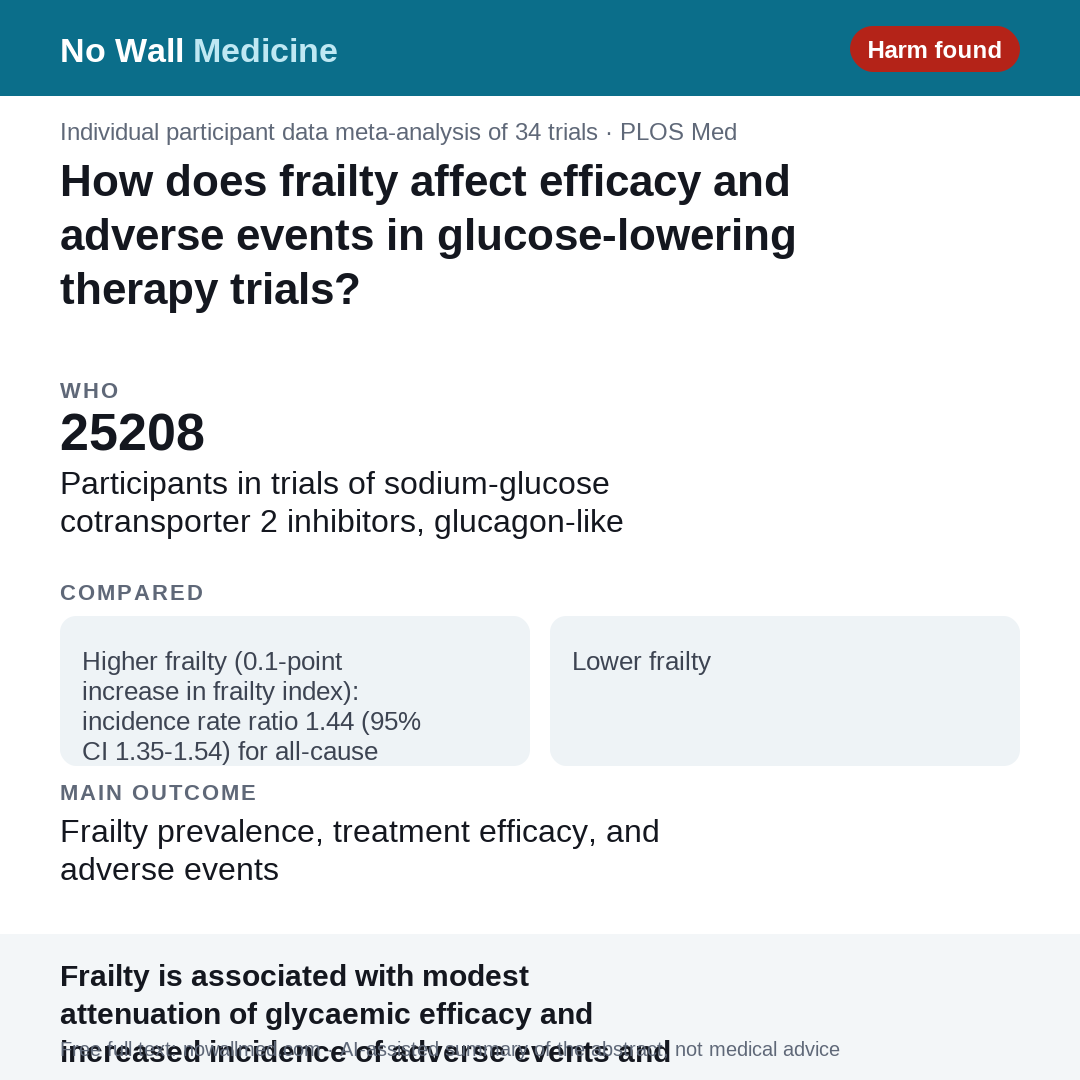
Frailty in randomized controlled trials of glucose-lowering therapies for type 2 diabetes: An individual participant data meta-analysis of frailty prevalence, treatment efficacy, and adverse events
Individual participant data meta-analysis of 34 trialsHarm found
How does frailty affect efficacy and adverse events in glucose-lowering therapy trials?
Who
25208
Participants in trials of sodium-glucose cotransporter 2 inhibitors, glucagon-like peptide-1 receptor agonists, and dipeptidyl peptidase 4 inhibitors
Compared
Higher frailty (0.1-point increase in frailty index): incidence rate ratio 1.44 (95% CI 1.35-1.54) for all-cause adverse events
Lower frailty
Main outcome
Frailty prevalence, treatment efficacy, and adverse events
Result: incidence rate ratio 1.44 (95% CI 1.35-1.54) for all-cause adverse events
Bottom line: Frailty is associated with modest attenuation of glycaemic efficacy and increased incidence of adverse events and cardiovascular events.
Limitation: Large cardiovascular outcome trials did not include data on functional status to assess frailty.
PLOS Med · 2025-04-07Download image
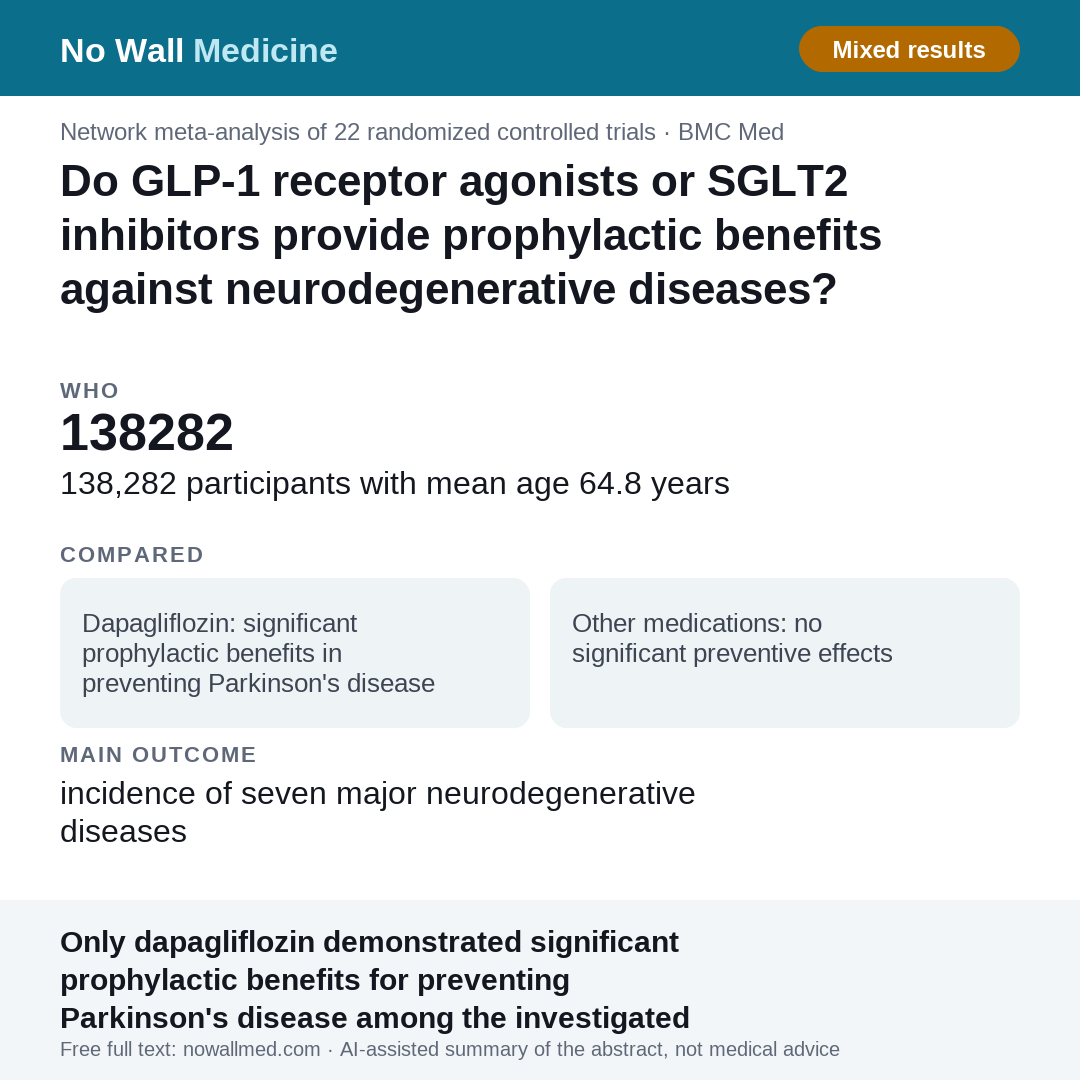
The pharmacodynamics-based prophylactic benefits of GLP-1 receptor agonists and SGLT2 inhibitors on neurodegenerative diseases: evidence from a network meta-analysis
Network meta-analysis of 22 randomized controlled trialsMixed results
Do GLP-1 receptor agonists or SGLT2 inhibitors provide prophylactic benefits against neurodegenerative diseases?
Who
138282
138,282 participants with mean age 64.8 years
Compared
Dapagliflozin: significant prophylactic benefits in preventing Parkinson's disease
Other medications: no significant preventive effects
Main outcome
incidence of seven major neurodegenerative diseases
Result: odds ratio 0.28 (95% confidence intervals 0.09 to 0.93)
Bottom line: Only dapagliflozin demonstrated significant prophylactic benefits for preventing Parkinson's disease among the investigated medications.
BMC Med · 2025-04-07Download image
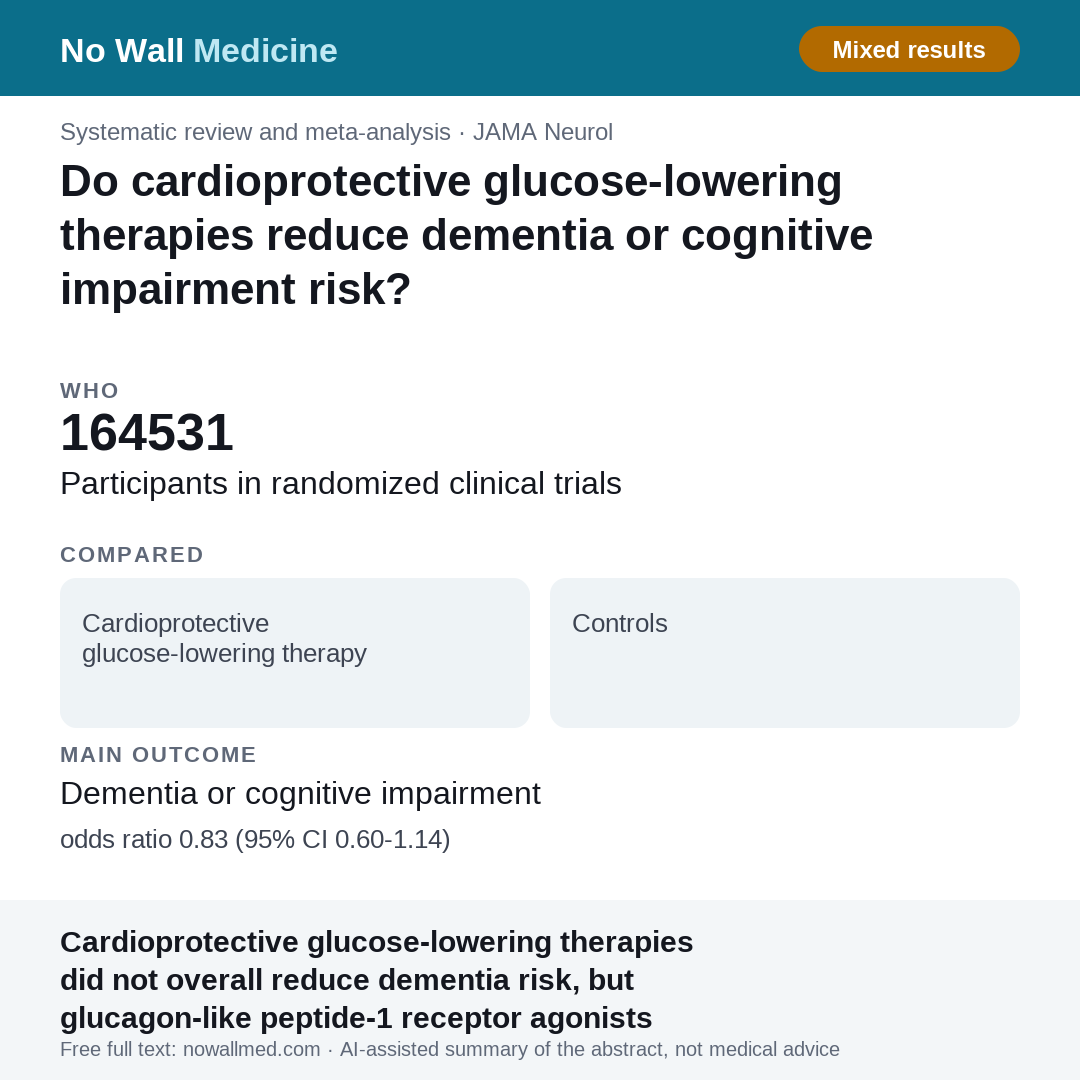
Cardioprotective Glucose-Lowering Agents and Dementia Risk: A Systematic Review and Meta-Analysis
Systematic review and meta-analysisMixed results
Do cardioprotective glucose-lowering therapies reduce dementia or cognitive impairment risk?
Who
164531
Participants in randomized clinical trials
Compared
Cardioprotective glucose-lowering therapy
Controls
Main outcome
Dementia or cognitive impairment
Result: odds ratio 0.83 (95% CI 0.60-1.14)
Bottom line: Cardioprotective glucose-lowering therapies did not overall reduce dementia risk, but glucagon-like peptide-1 receptor agonists were associated with a reduction.
JAMA Neurol · 2025-04-07Download image
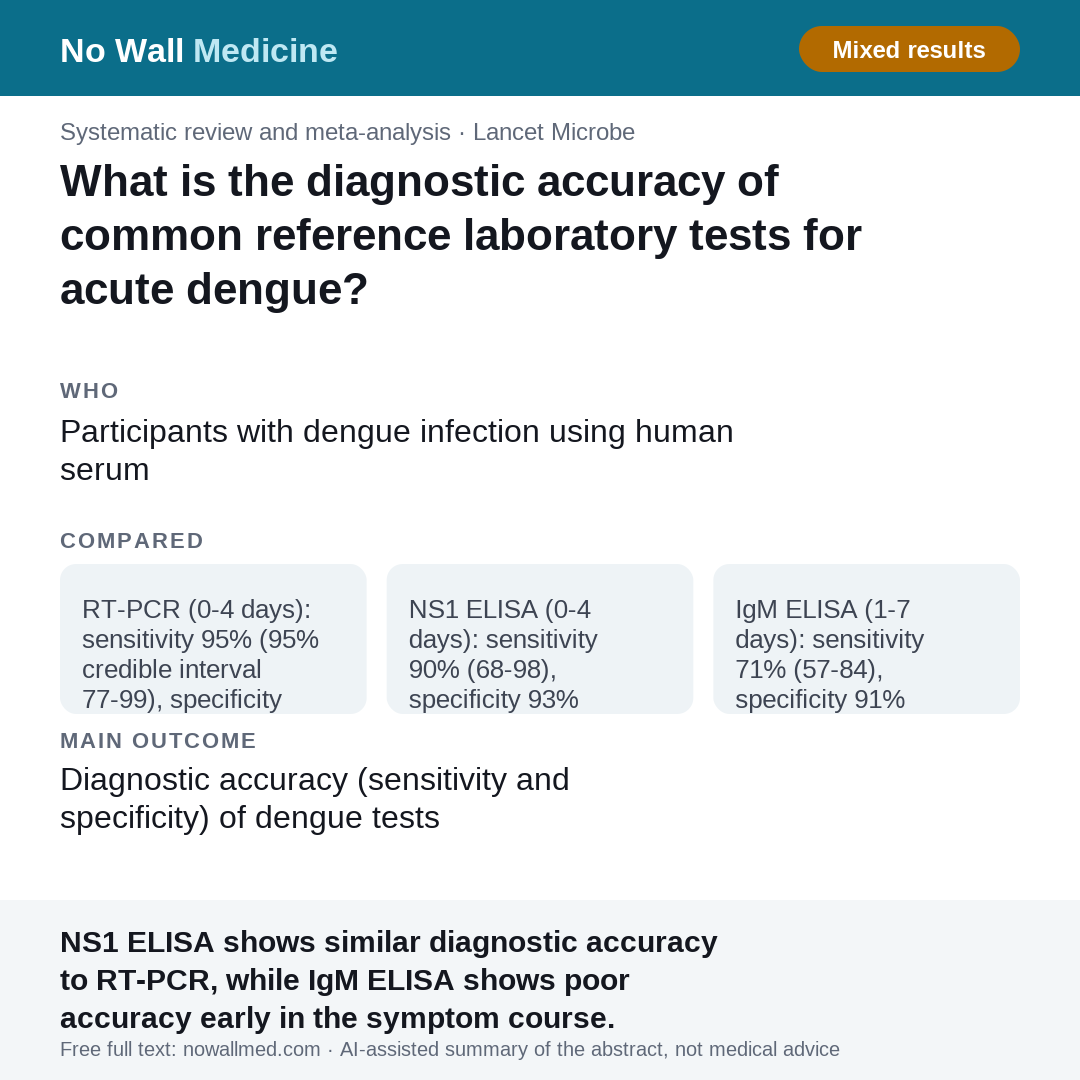
Evaluating the performance of common reference laboratory tests for acute dengue diagnosis: a systematic review and meta-analysis of RT-PCR, NS1 ELISA, and IgM ELISA
Systematic review and meta-analysisMixed results
What is the diagnostic accuracy of common reference laboratory tests for acute dengue?
Who
Participants with dengue infection using human serum
Compared
RT-PCR (0-4 days): sensitivity 95% (95% credible interval 77-99), specificity 89% (60-98)
NS1 ELISA (0-4 days): sensitivity 90% (68-98), specificity 93% (71-99)
IgM ELISA (1-7 days): sensitivity 71% (57-84), specificity 91% (82-95)
Main outcome
Diagnostic accuracy (sensitivity and specificity) of dengue tests
Bottom line: NS1 ELISA shows similar diagnostic accuracy to RT-PCR, while IgM ELISA shows poor accuracy early in the symptom course.
Lancet Microbe · 2025-04-07Download image
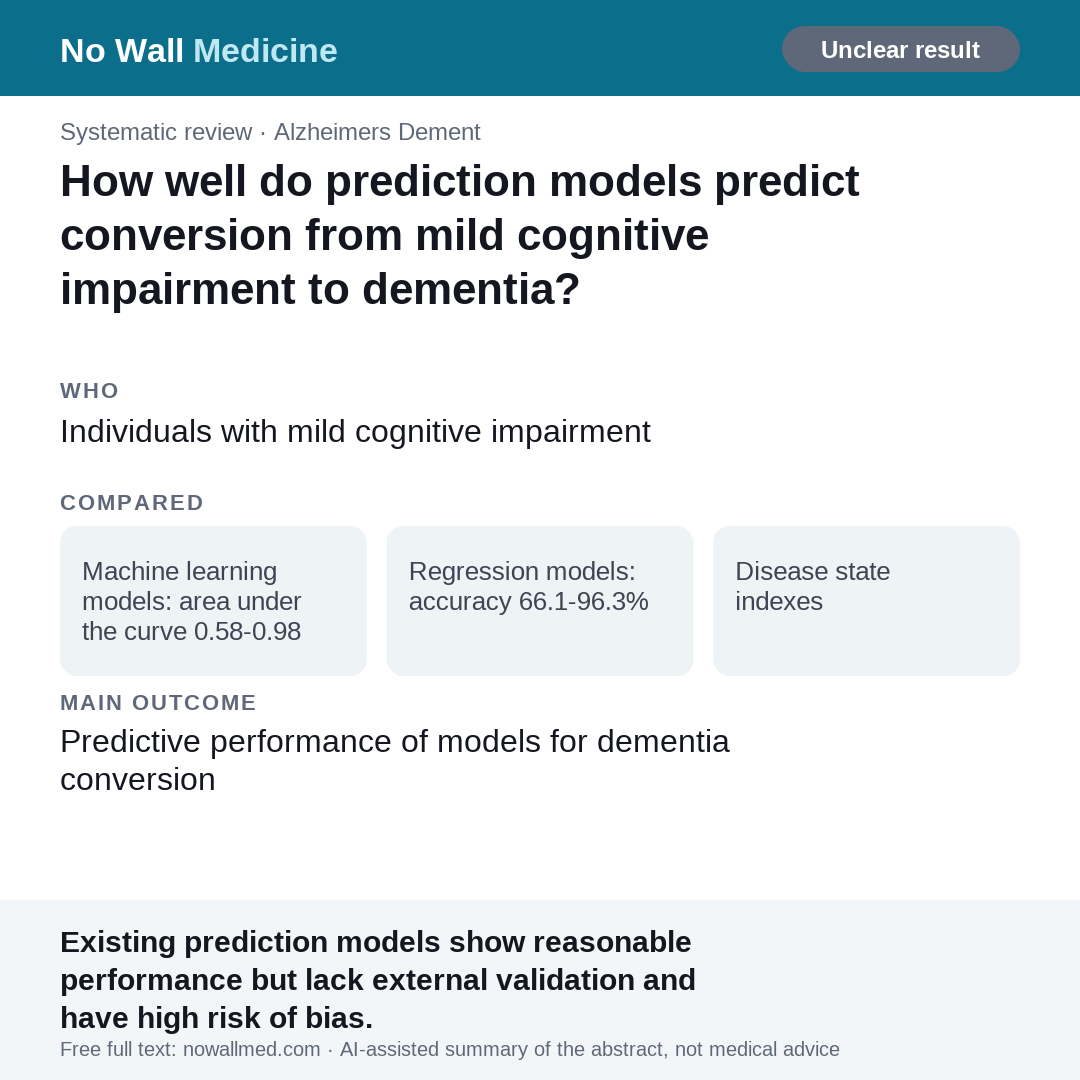
Limited generalizability and high risk of bias in multivariable models predicting conversion risk from mild cognitive impairment to dementia: A systematic review
Systematic reviewUnclear result
How well do prediction models predict conversion from mild cognitive impairment to dementia?
Who
62
Individuals with mild cognitive impairment
Compared
Machine learning models: area under the curve 0.58-0.98
Regression models: accuracy 66.1-96.3%
Disease state indexes
Main outcome
Predictive performance of models for dementia conversion
Bottom line: Existing prediction models show reasonable performance but lack external validation and have high risk of bias.
Limitation: Most studies are at high risk of bias and 47 studies lack external validation.
Alzheimers Dement · 2025-04-07Download image
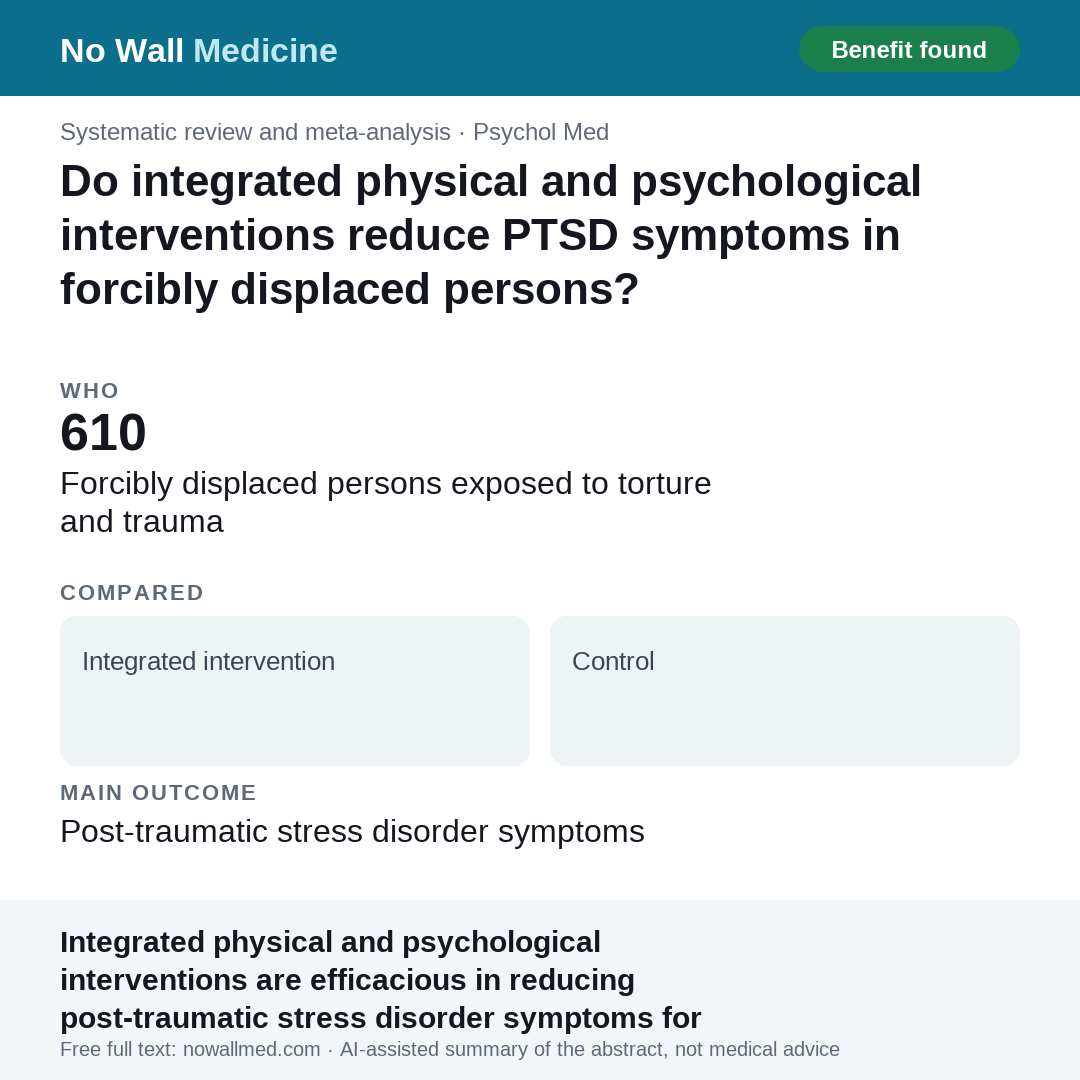
Efficacy of integrated physical and psychological interventions on PTSD among forcibly displaced persons: a systematic review and meta-analysis
Systematic review and meta-analysisBenefit found
Do integrated physical and psychological interventions reduce PTSD symptoms in forcibly displaced persons?
Who
610
Forcibly displaced persons exposed to torture and trauma
Compared
Integrated intervention
Control
Main outcome
Post-traumatic stress disorder symptoms
Result: Hedges' g = -0.46 (95% CI -0.80 to -0.12)
Bottom line: Integrated physical and psychological interventions are efficacious in reducing post-traumatic stress disorder symptoms for forcibly displaced persons.
Psychol Med · 2025-04-07Download image
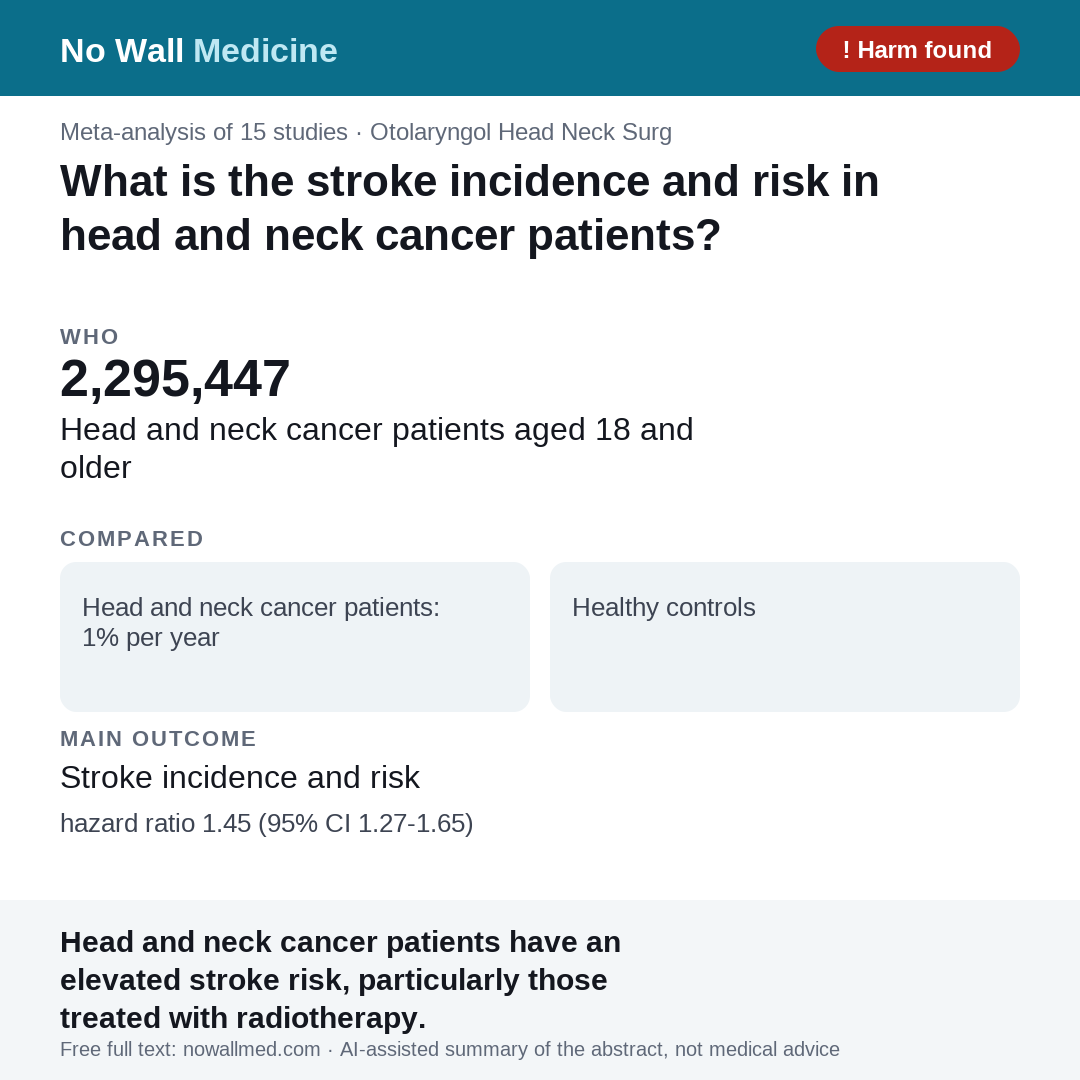
Stroke Risk in Head and Neck Cancer: A Meta-analysis of Reconstructed Individual Patient Survival Data
Meta-analysis of 15 studiesHarm found
What is the stroke incidence and risk in head and neck cancer patients?
Who
2,295,447
Head and neck cancer patients aged 18 and older
Compared
Head and neck cancer patients: 1% per year
Healthy controls
Main outcome
Stroke incidence and risk
Result: hazard ratio 1.45 (95% CI 1.27-1.65)
Bottom line: Head and neck cancer patients have an elevated stroke risk, particularly those treated with radiotherapy.
Otolaryngol Head Neck Surg · 2025-04-07Download image
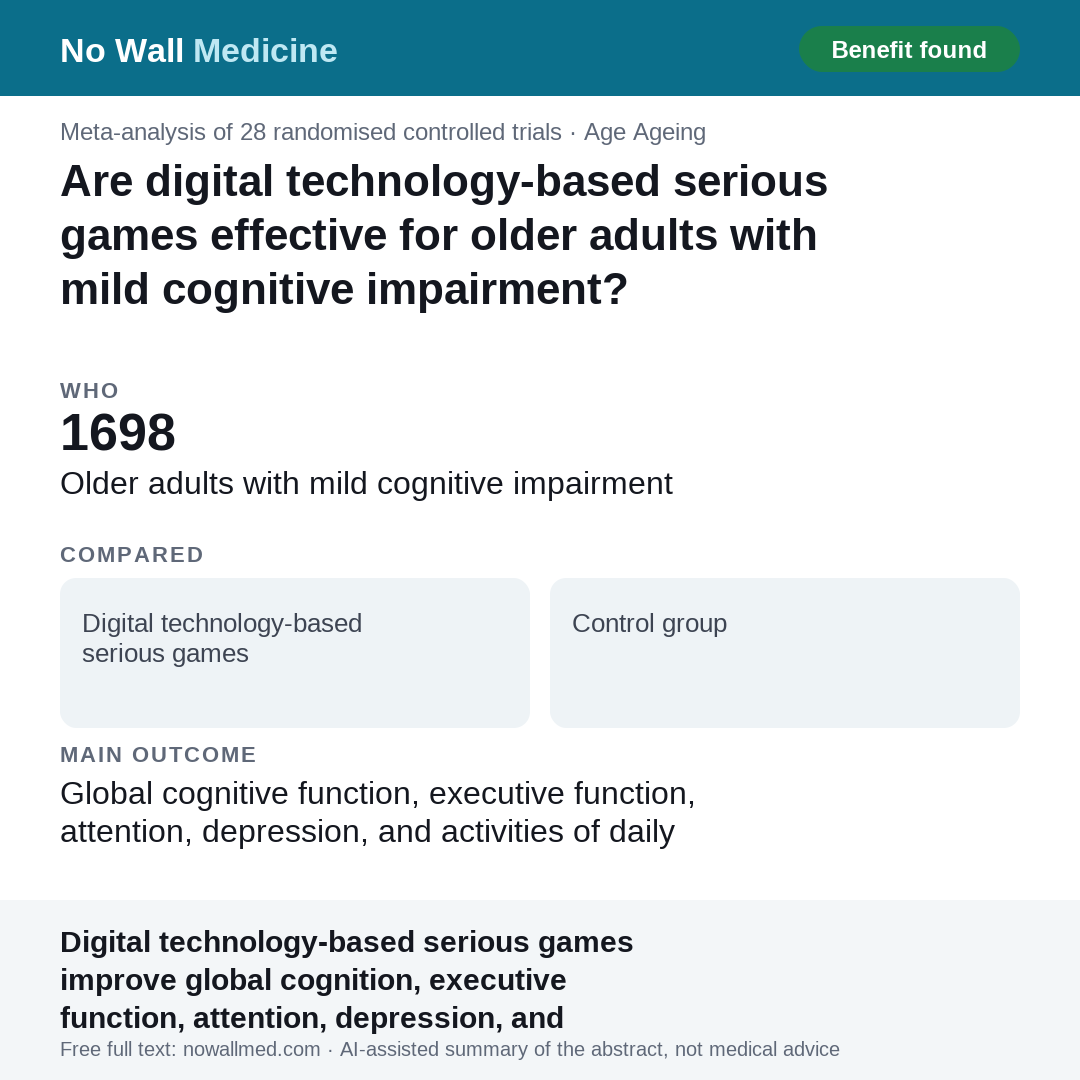
Effects of digital technology-based serious games interventions for older adults with mild cognitive impairment: a meta-analysis of randomised controlled trials
Meta-analysis of 28 randomised controlled trialsBenefit found
Are digital technology-based serious games effective for older adults with mild cognitive impairment?
Who
1698
Older adults with mild cognitive impairment
Compared
Digital technology-based serious games
Control group
Main outcome
Global cognitive function, executive function, attention, depression, and activities of daily living
Bottom line: Digital technology-based serious games improve global cognition, executive function, attention, depression, and activities of daily living in mild cognitive impairment.
Limitation: The certainty of evidence was low or very low for several outcomes.
Age Ageing · 2025-04-07Download image
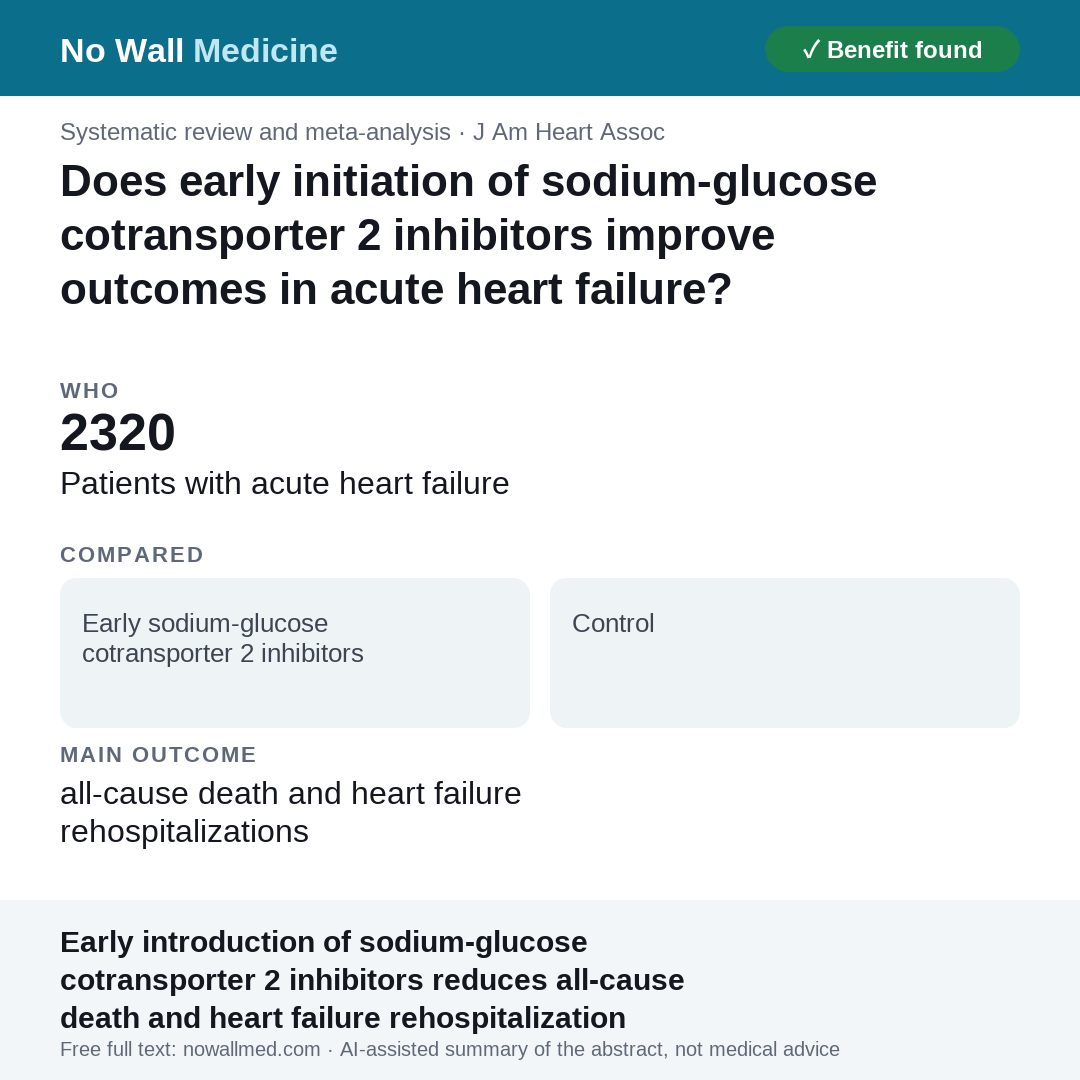
Early Initiation of Sodium-Glucose Cotransporter 2 Inhibitors in Acute Heart Failure: A Systematic Review and Meta-Analysis
Systematic review and meta-analysisBenefit found
Does early initiation of sodium-glucose cotransporter 2 inhibitors improve outcomes in acute heart failure?
Who
2320
Patients with acute heart failure
Compared
Early sodium-glucose cotransporter 2 inhibitors
Control
Main outcome
all-cause death and heart failure rehospitalizations
Result: odds ratio 0.71 (95% CI 0.55-0.92) for all-cause death
Bottom line: Early introduction of sodium-glucose cotransporter 2 inhibitors reduces all-cause death and heart failure rehospitalization rates.
Limitation: Safety outcomes could not be determined due to low event rates.
J Am Heart Assoc · 2025-04-07Download image