Visual abstracts
New randomized trials and meta-analyses from leading journals at a glance: who was studied, what was compared, and what was found. Every paper is free to read in full.
All specialtiesCardiology 4877Oncology 4138Gastroenterology & Hepatology 1942Infectious Disease 3837Neurology 1905Psychiatry & Mental Health 2273Pulmonology 2143Critical Care 1365Endocrinology & Diabetes 2580Pediatrics 2980Surgery 2559Orthopedics & Sports Medicine 931Neurosurgery 537Cardiothoracic & Vascular Surgery 674Plastic & Reconstructive Surgery 591Nephrology 1133Rheumatology 823Hematology 1109Dermatology 621Ophthalmology 543Obstetrics & Gynecology 1686Public & Global Health 1058Radiology & Imaging 648Anesthesiology 986Urology 764ENT (Otolaryngology) 503Emergency Medicine 511Allergy & Immunology 313Geriatrics 981Family Medicine & Primary Care 562Medical Genetics & Genomics 676Pathology & Laboratory Medicine 159Physical Medicine & Rehabilitation 757Palliative Care 444Nutrition 1588Digital Health & AI 2201General Medicine 321
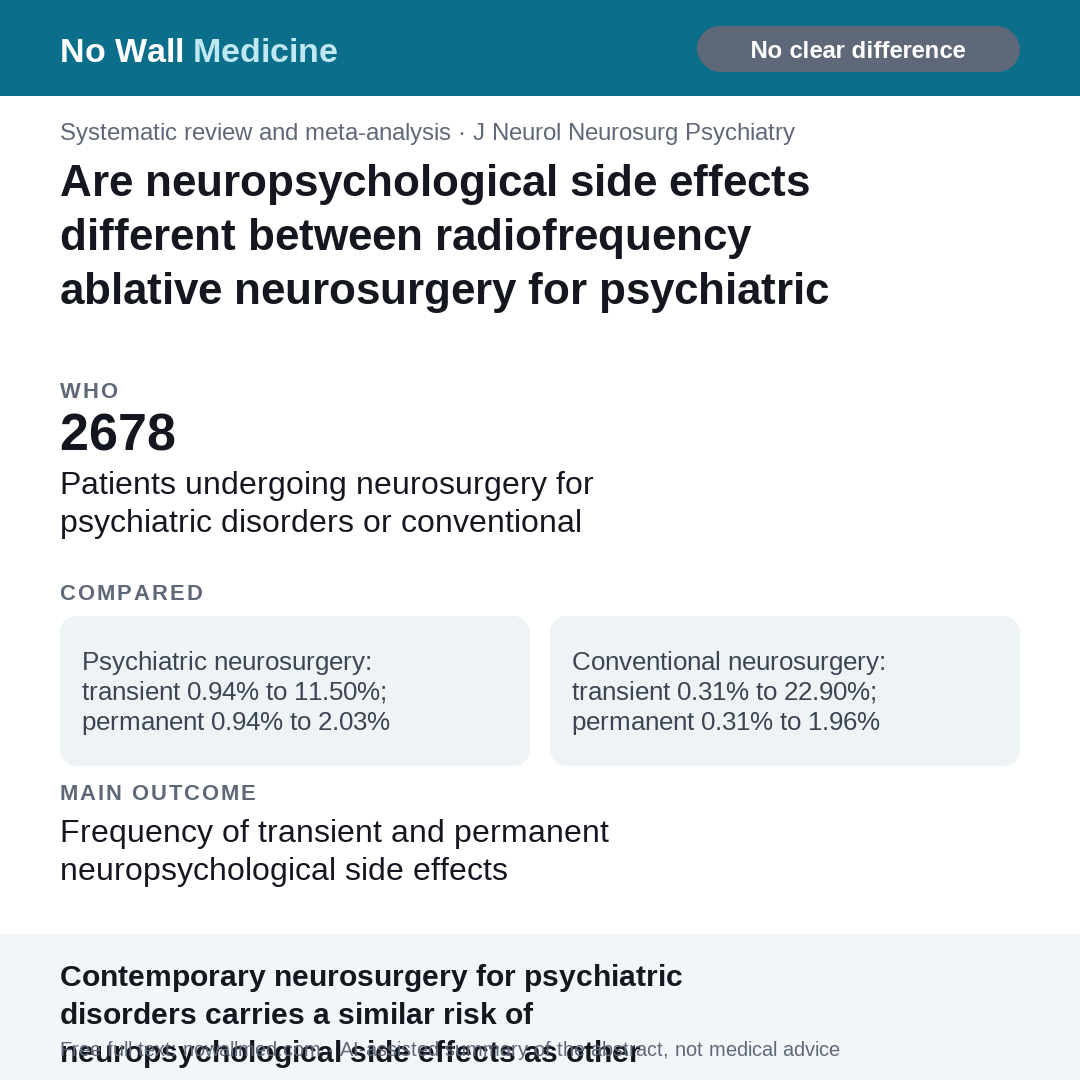
Comparison of neuropsychological side effects between contemporary radiofrequency ablative neurosurgery for psychiatric disorders and conventional neurosurgical procedures: systematic review and meta-analysis
Systematic review and meta-analysisNo clear difference
Are neuropsychological side effects different between radiofrequency ablative neurosurgery for psychiatric disorders and conventional neurosurgery?
Who
2678
Patients undergoing neurosurgery for psychiatric disorders or conventional neurosurgical procedures
Compared
Psychiatric neurosurgery: transient 0.94% to 11.50%; permanent 0.94% to 2.03%
Conventional neurosurgery: transient 0.31% to 22.90%; permanent 0.31% to 1.96%
Main outcome
Frequency of transient and permanent neuropsychological side effects
Bottom line: Contemporary neurosurgery for psychiatric disorders carries a similar risk of neuropsychological side effects as other conventional neurosurgical procedures.
J Neurol Neurosurg Psychiatry · 2026-05-14Download image
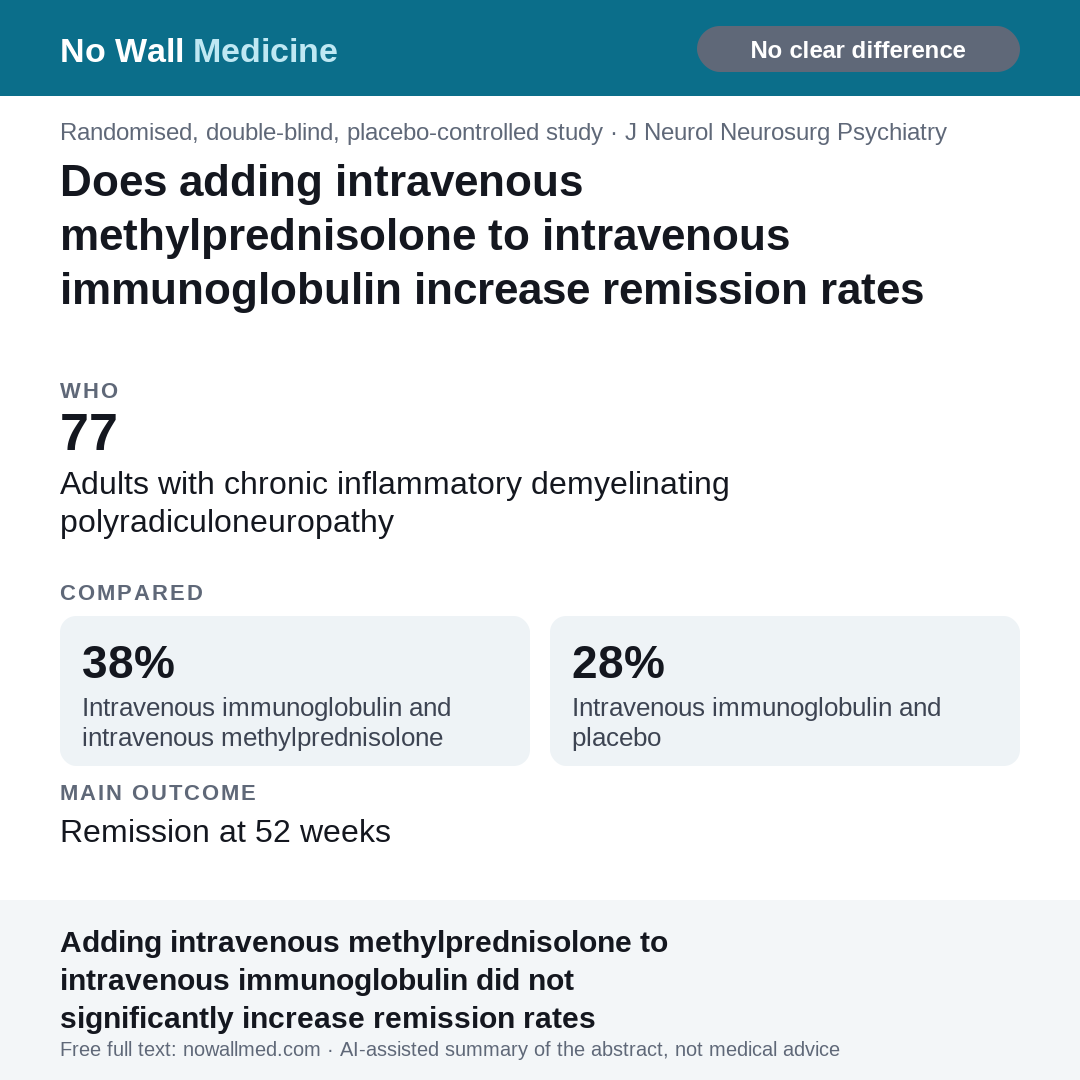
Intravenous methylprednisolone as add-on induction therapy for chronic inflammatory demyelinating polyradiculoneuropathy: a randomised controlled trial
Randomised, double-blind, placebo-controlled studyNo clear difference
Does adding intravenous methylprednisolone to intravenous immunoglobulin increase remission rates in CIDP?
Who
77
Adults with chronic inflammatory demyelinating polyradiculoneuropathy
Compared
38%Intravenous immunoglobulin and intravenous methylprednisolone (14/37)
28%Intravenous immunoglobulin and placebo (11/40)
Main outcome
Remission at 52 weeks
Result: difference of 10% (95% CI -11 to 31; p=0.47)
Bottom line: Adding intravenous methylprednisolone to intravenous immunoglobulin did not significantly increase remission rates compared to intravenous immunoglobulin alone.
J Neurol Neurosurg Psychiatry · 2026-05-14Download image
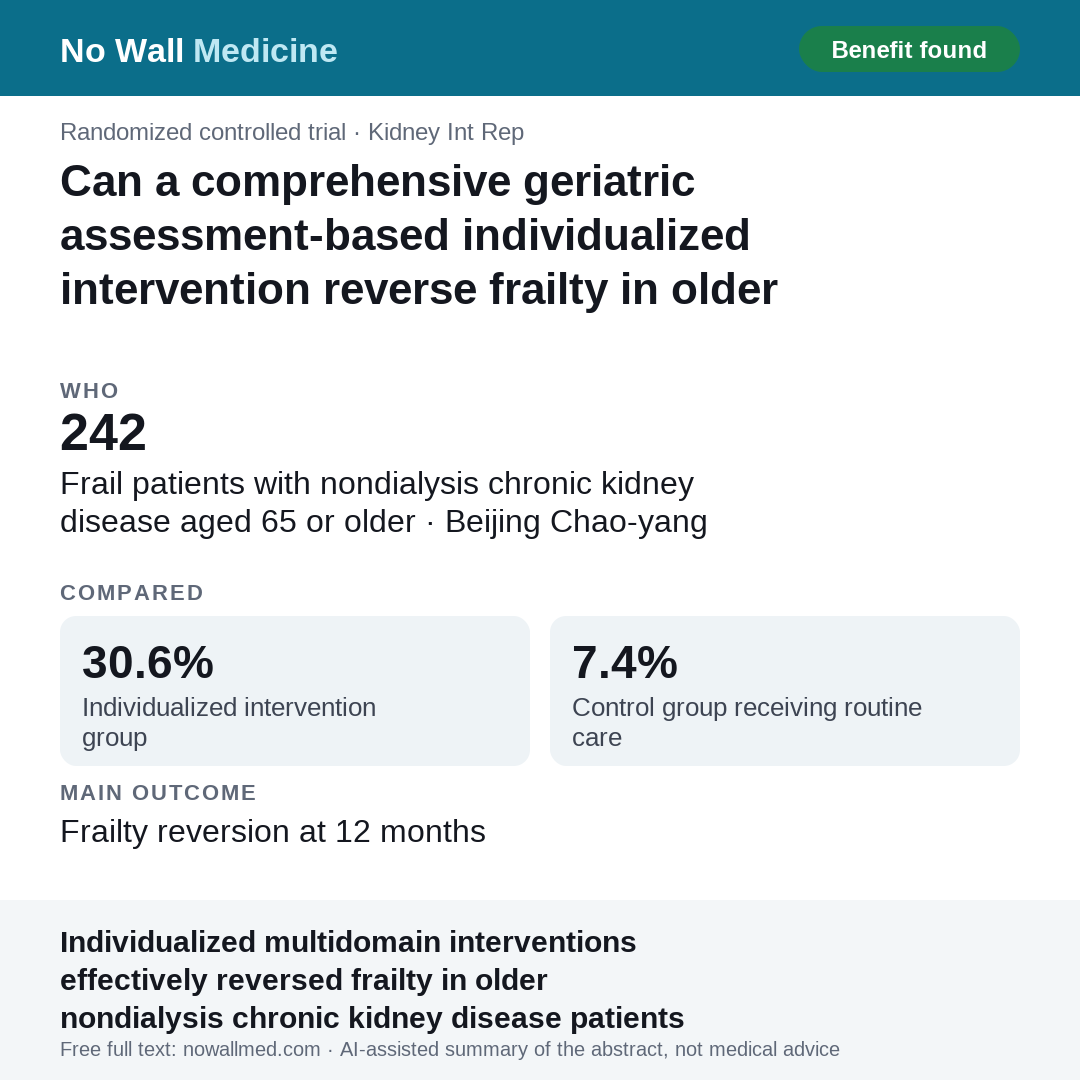
Randomized Controlled Trial of Individualized Intervention for Frailty Reversal in Older Patients With Nondialysis CKD
Randomized controlled trialBenefit found
Can a comprehensive geriatric assessment-based individualized intervention reverse frailty in older nondialysis chronic kidney disease patients?
Who
242
Frail patients with nondialysis chronic kidney disease aged 65 or older · Beijing Chao-yang Hospital
Compared
30.6%Individualized intervention group
7.4%Control group receiving routine care
Main outcome
Frailty reversion at 12 months
Result: odds ratio 5.22 (95% CI 2.37-11.49)
Bottom line: Individualized multidomain interventions effectively reversed frailty in older nondialysis chronic kidney disease patients at 12 months.
Limitation: Findings may not be generalizable to patients with more advanced chronic kidney disease.
Kidney Int Rep · 2026-05-14Download image
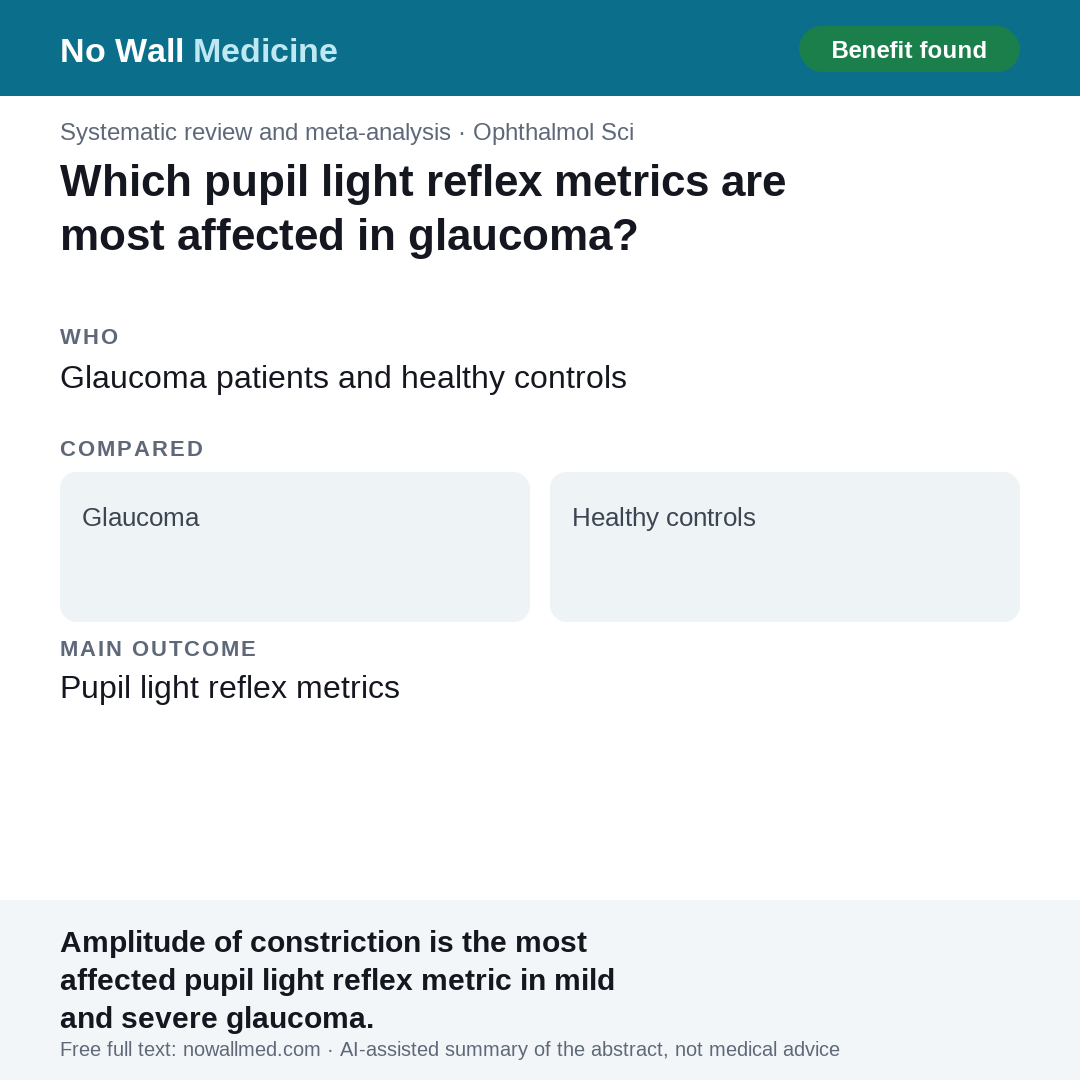
Assessing Pupil Light Reflex Metrics in Glaucoma: Insights from a Systematic Review and Meta-Analysis
Systematic review and meta-analysisBenefit found
Which pupil light reflex metrics are most affected in glaucoma?
Who
Glaucoma patients and healthy controls
Compared
Glaucoma
Healthy controls
Main outcome
Pupil light reflex metrics
Bottom line: Amplitude of constriction is the most affected pupil light reflex metric in mild and severe glaucoma.
Ophthalmol Sci · 2026-05-14Download image
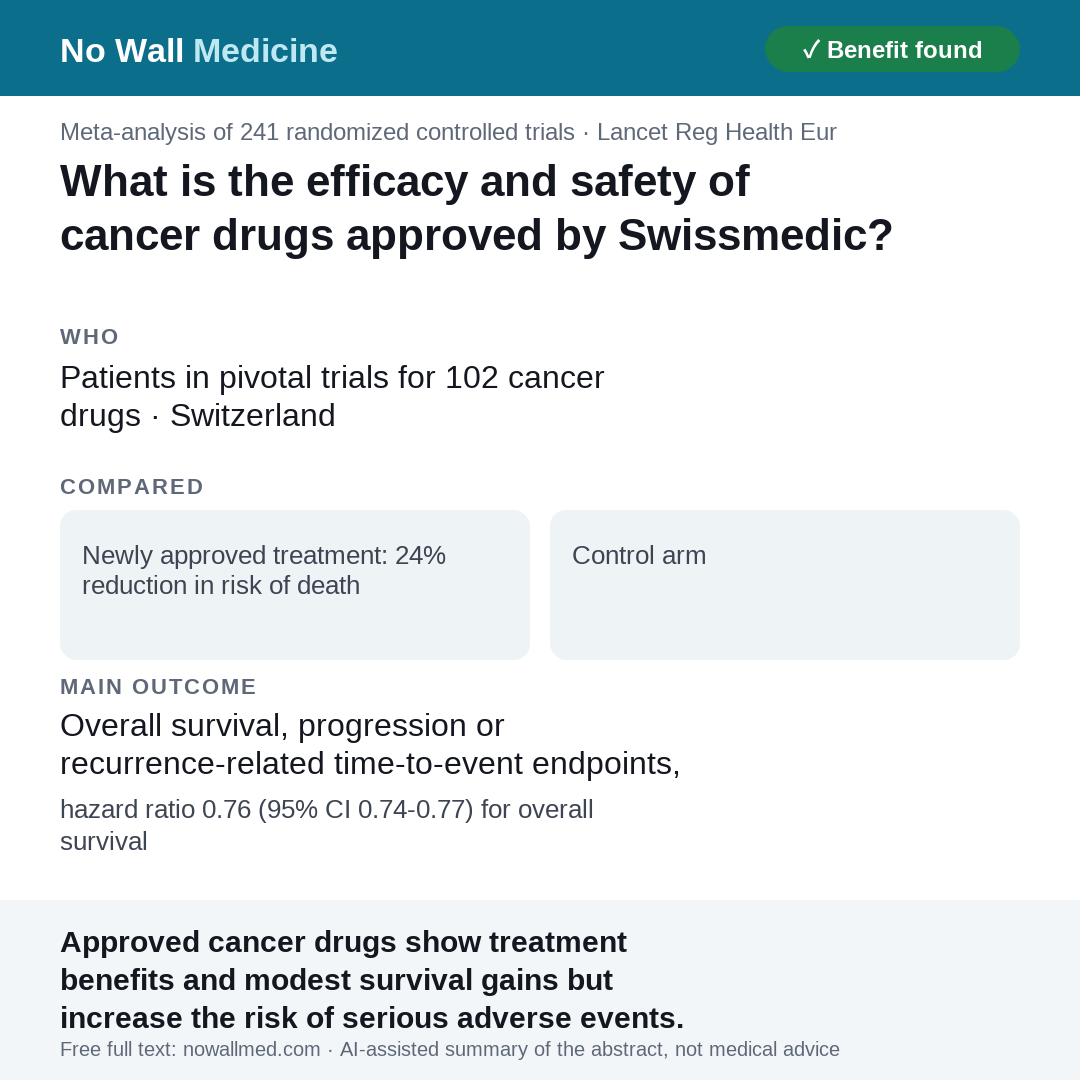
Efficacy and Safety Evidence Supporting Cancer Drug Approvals in Switzerland (2001-2020): A Meta-Analysis of Pivotal Randomised Controlled Trials
Meta-analysis of 241 randomized controlled trialsBenefit found
What is the efficacy and safety of cancer drugs approved by Swissmedic?
Who
241
Patients in pivotal trials for 102 cancer drugs · Switzerland
Compared
Newly approved treatment: 24% reduction in risk of death
Control arm
Main outcome
Overall survival, progression or recurrence-related time-to-event endpoints, and serious adverse events
Result: hazard ratio 0.76 (95% CI 0.74-0.77) for overall survival
Bottom line: Approved cancer drugs show treatment benefits and modest survival gains but increase the risk of serious adverse events.
Limitation: Reliance on early endpoints and limited availability of long-term overall survival data.
Funded by: University of Zurich
Lancet Reg Health Eur · 2026-05-14Download image
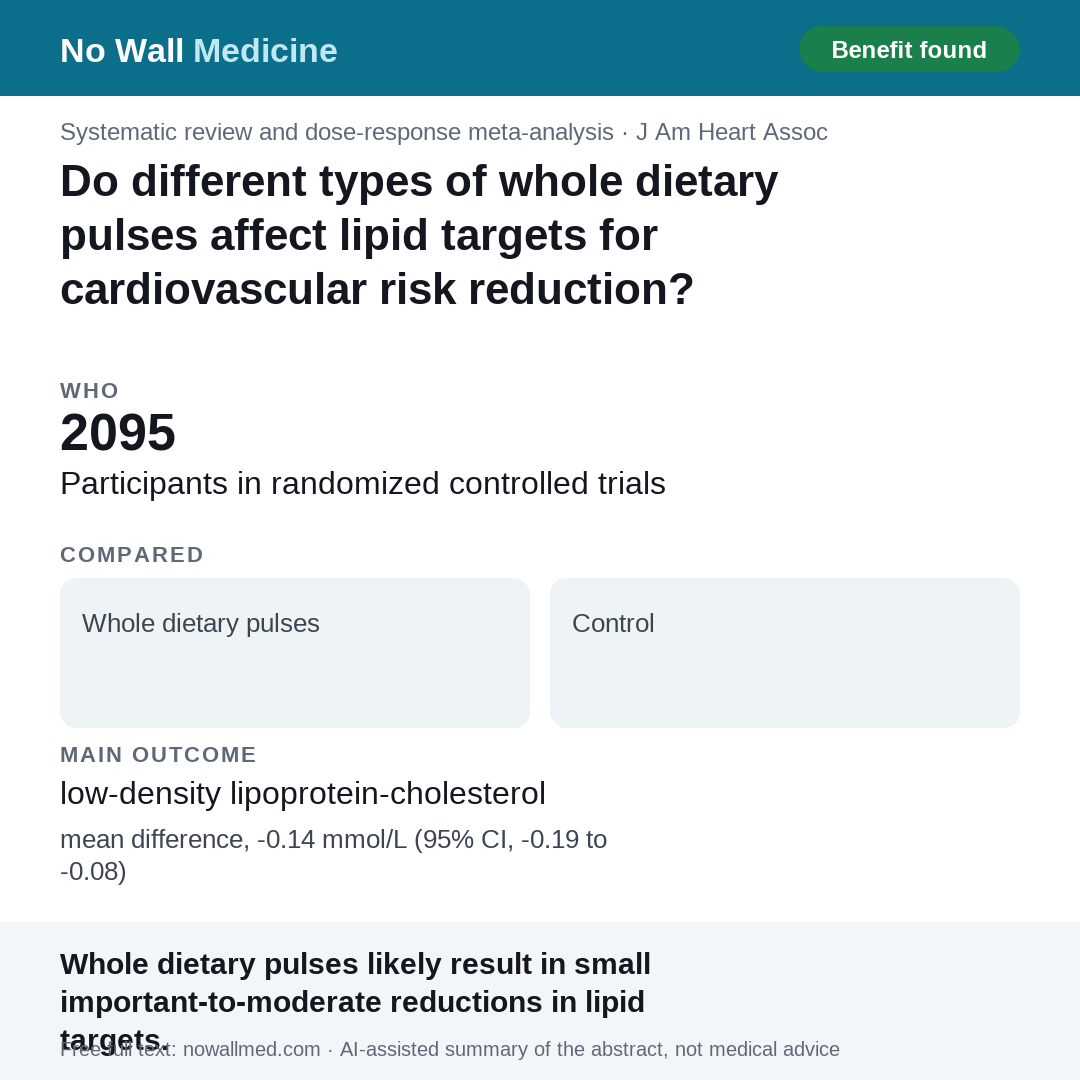
Effect of Different Types of Whole Dietary Pulses on Established Therapeutic Lipid Targets for Cardiovascular Risk Reduction: An Updated Systematic Review and Dose-Response Meta-Analysis of Randomized Controlled Trials
Systematic review and dose-response meta-analysisBenefit found
Do different types of whole dietary pulses affect lipid targets for cardiovascular risk reduction?
Who
2095
Participants in randomized controlled trials
Compared
Whole dietary pulses
Control
Main outcome
low-density lipoprotein-cholesterol
Result: mean difference, -0.14 mmol/L (95% CI, -0.19 to -0.08)
Bottom line: Whole dietary pulses likely result in small important-to-moderate reductions in lipid targets.
Limitation: Certainty of evidence was very low for apolipoprotein B.
J Am Heart Assoc · 2026-05-14Download image
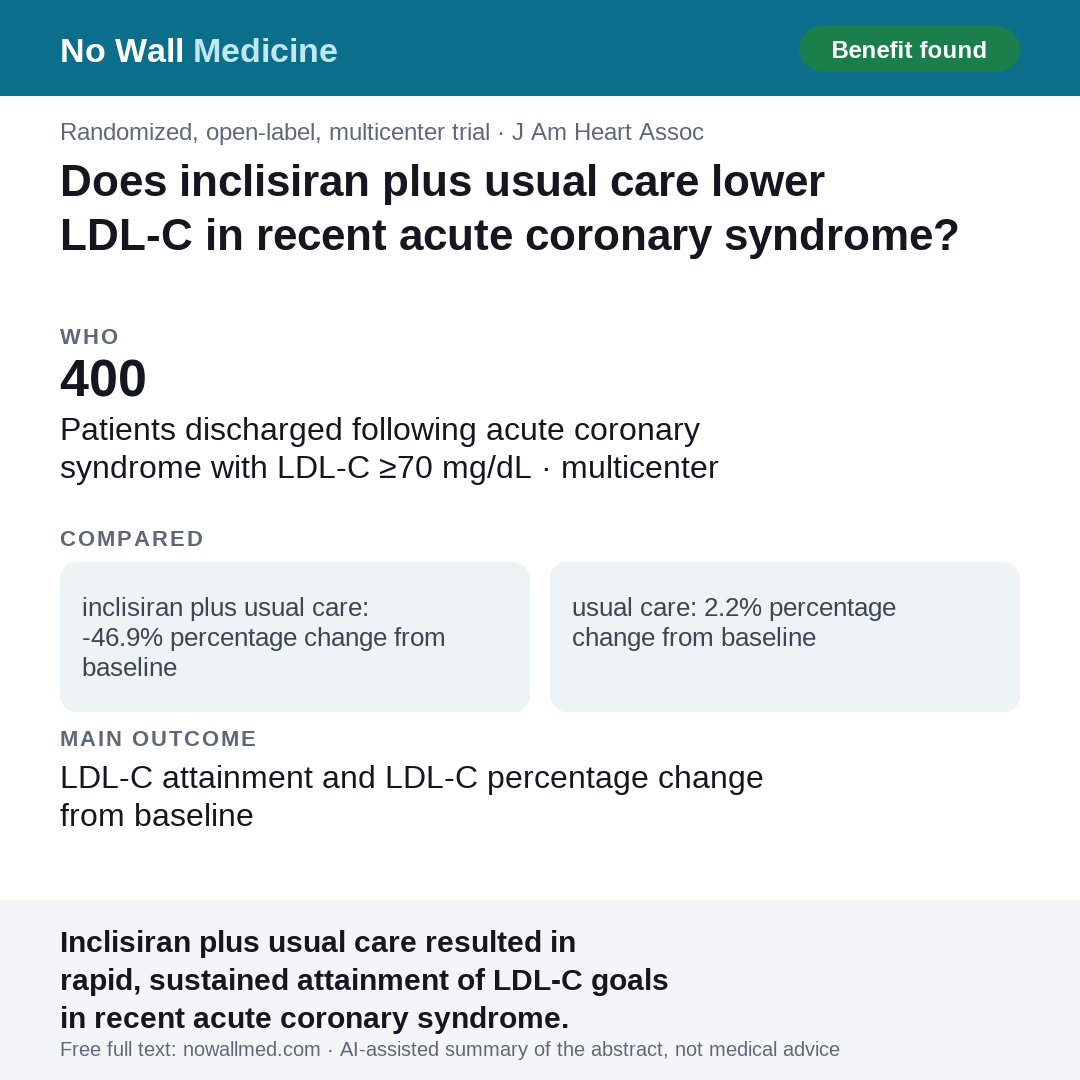
Low-Density Lipoprotein Cholesterol Lowering With Inclisiran Plus Usual Care in Recent Acute Coronary Syndrome: VICTORION-INCEPTION, a Randomized, Controlled, Open-Label Trial
Randomized, open-label, multicenter trialBenefit found
Does inclisiran plus usual care lower LDL-C in recent acute coronary syndrome?
Who
400
Patients discharged following acute coronary syndrome with LDL-C ≥70 mg/dL · multicenter
Compared
inclisiran plus usual care: -46.9% percentage change from baseline
usual care: 2.2% percentage change from baseline
Main outcome
LDL-C attainment and LDL-C percentage change from baseline
Result: percentage change: -46.9% difference (97.5% CI -55.4 to -38.5)
Bottom line: Inclisiran plus usual care resulted in rapid, sustained attainment of LDL-C goals in recent acute coronary syndrome.
J Am Heart Assoc · 2026-05-14Download image
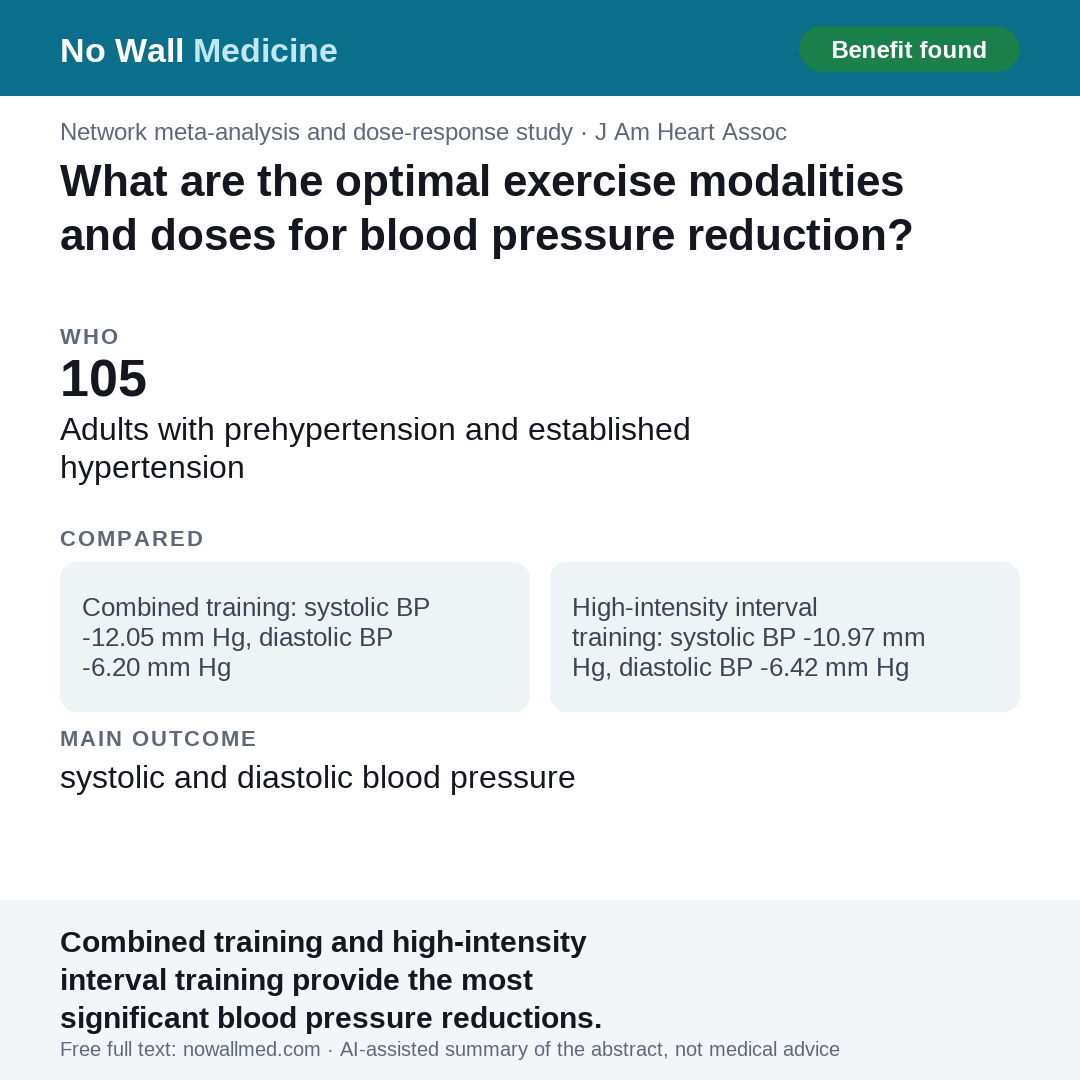
Optimal Exercise Modalities and Dosages for Blood Pressure Reduction in Adults With Prehypertension and Established Hypertension: A Network Meta-Analysis and Dose-Response Relationship Study
Network meta-analysis and dose-response studyBenefit found
What are the optimal exercise modalities and doses for blood pressure reduction?
Who
105
Adults with prehypertension and established hypertension
Compared
Combined training: systolic BP -12.05 mm Hg, diastolic BP -6.20 mm Hg
High-intensity interval training: systolic BP -10.97 mm Hg, diastolic BP -6.42 mm Hg
Main outcome
systolic and diastolic blood pressure
Bottom line: Combined training and high-intensity interval training provide the most significant blood pressure reductions.
J Am Heart Assoc · 2026-05-14Download image
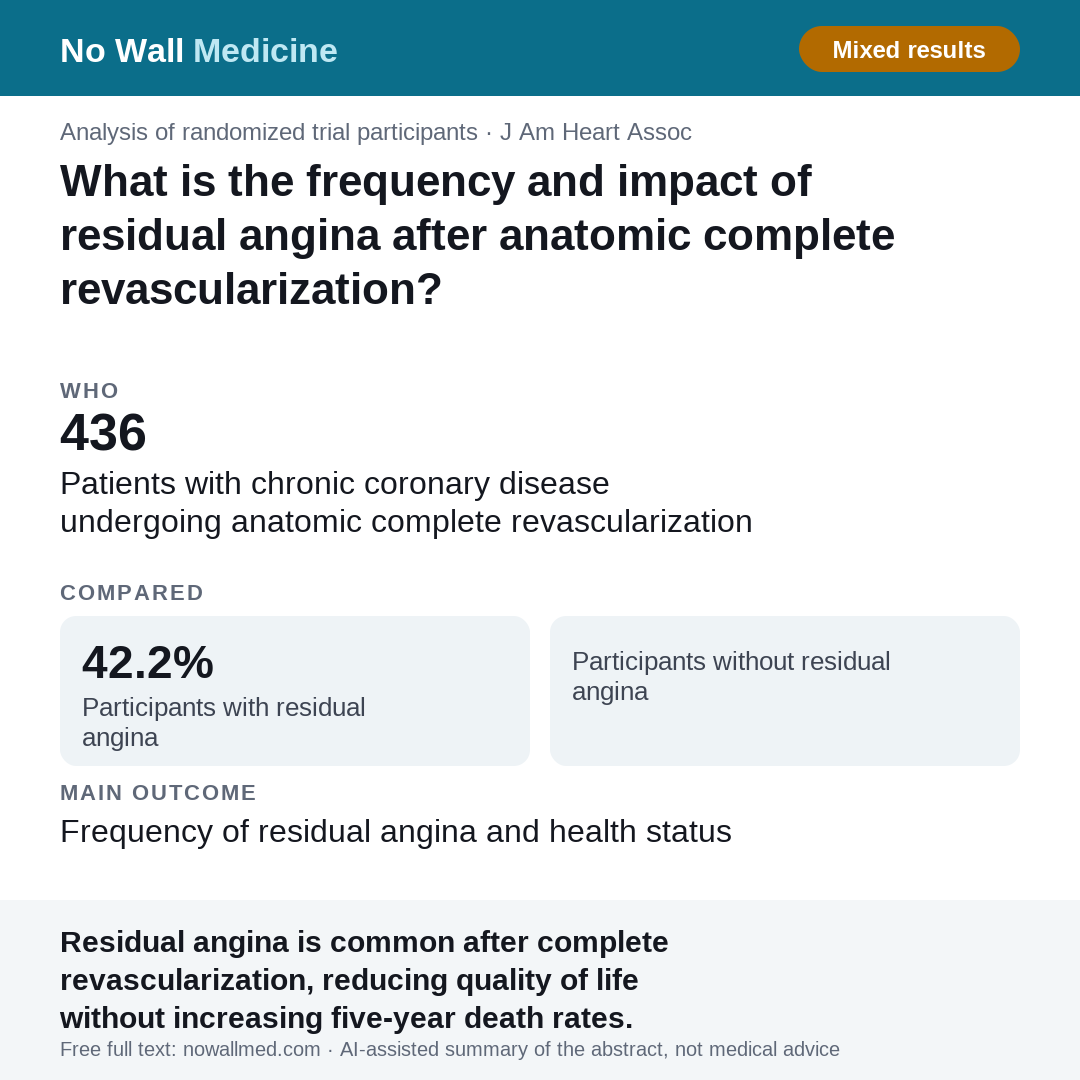
Residual Angina Following Complete Revascularization in the ISCHEMIA Trial: Frequency, Clinical Characteristics, Health Status, and Cardiovascular Outcomes
Analysis of randomized trial participantsMixed results
What is the frequency and impact of residual angina after anatomic complete revascularization?
Who
436
Patients with chronic coronary disease undergoing anatomic complete revascularization · International
Compared
42.2%Participants with residual angina
Participants without residual angina
Main outcome
Frequency of residual angina and health status
Bottom line: Residual angina is common after complete revascularization, reducing quality of life without increasing five-year death rates.
J Am Heart Assoc · 2026-05-14Download image
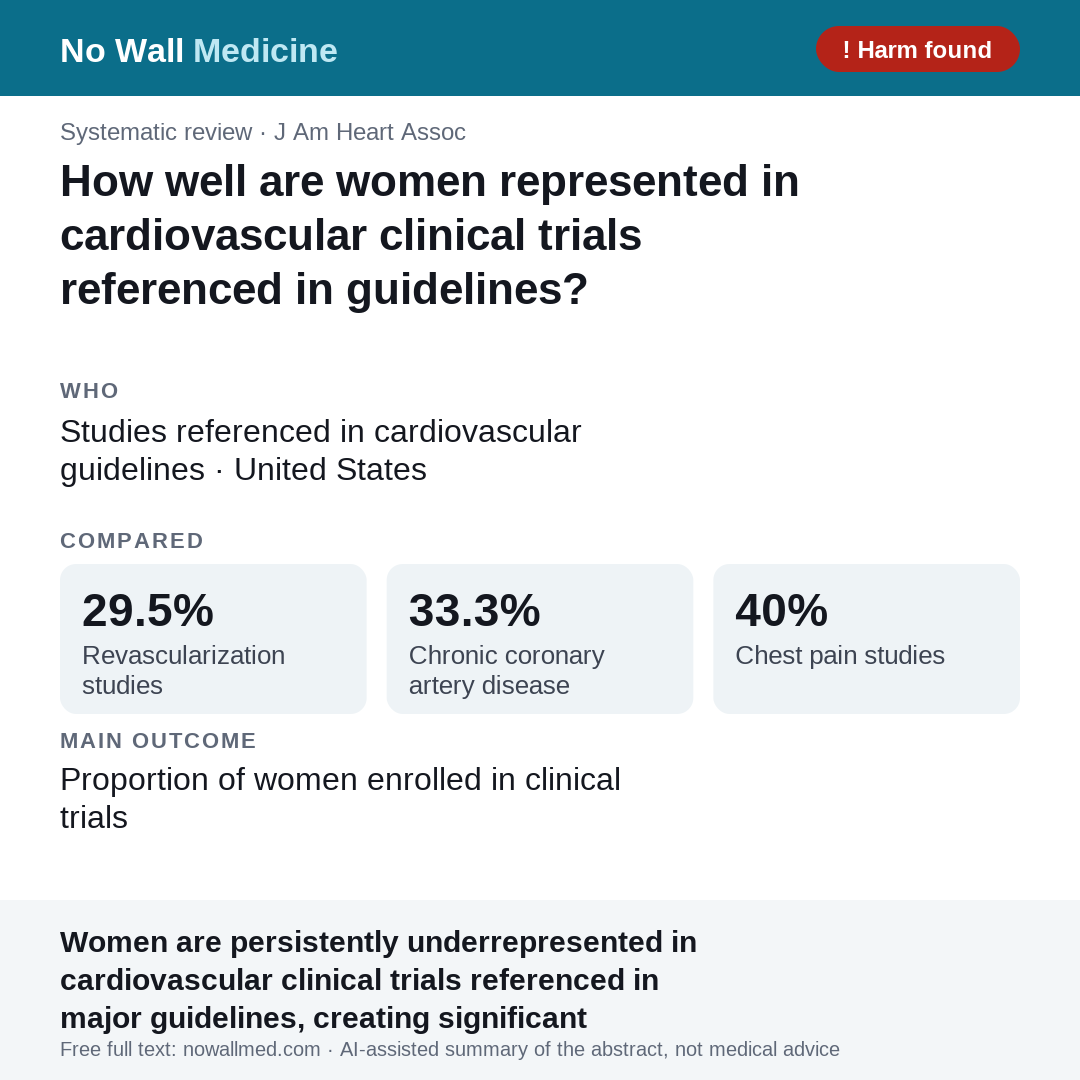
Closing the Gap: Examining Representation of Women in Ischemic Heart Disease Guideline Studies
Systematic reviewHarm found
How well are women represented in cardiovascular clinical trials referenced in guidelines?
Who
1690
Studies referenced in cardiovascular guidelines · United States
Compared
29.5%Revascularization studies
33.3%Chronic coronary artery disease studies
40%Chest pain studies
Main outcome
Proportion of women enrolled in clinical trials
Bottom line: Women are persistently underrepresented in cardiovascular clinical trials referenced in major guidelines, creating significant representation gaps.
J Am Heart Assoc · 2026-05-14Download image
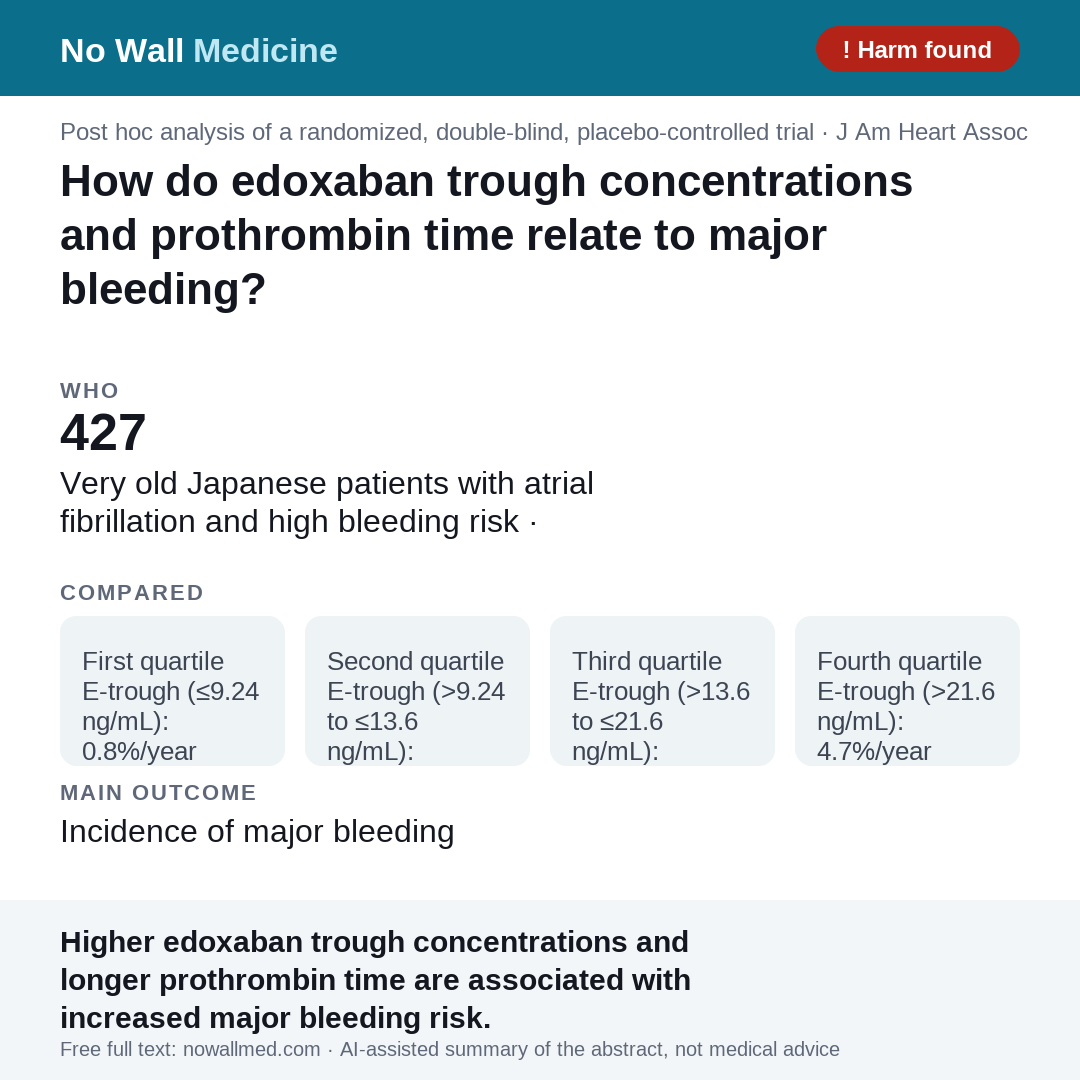
Association of Edoxaban Pharmacokinetics With Bleeding in Older Patients With Atrial Fibrillation Treated With Low-Dose Edoxaban: A Post Hoc Analysis of a Randomized Controlled Trial
Post hoc analysis of a randomized, double-blind, placebo-controlled trialHarm found
How do edoxaban trough concentrations and prothrombin time relate to major bleeding?
Who
427
Very old Japanese patients with atrial fibrillation and high bleeding risk · Multicenter
Compared
First quartile E-trough (≤9.24 ng/mL): 0.8%/year
Second quartile E-trough (>9.24 to ≤13.6 ng/mL): 1.9%/year
Third quartile E-trough (>13.6 to ≤21.6 ng/mL): 3.4%/year
Fourth quartile E-trough (>21.6 ng/mL): 4.7%/year
Main outcome
Incidence of major bleeding
Bottom line: Higher edoxaban trough concentrations and longer prothrombin time are associated with increased major bleeding risk.
J Am Heart Assoc · 2026-05-14Download image
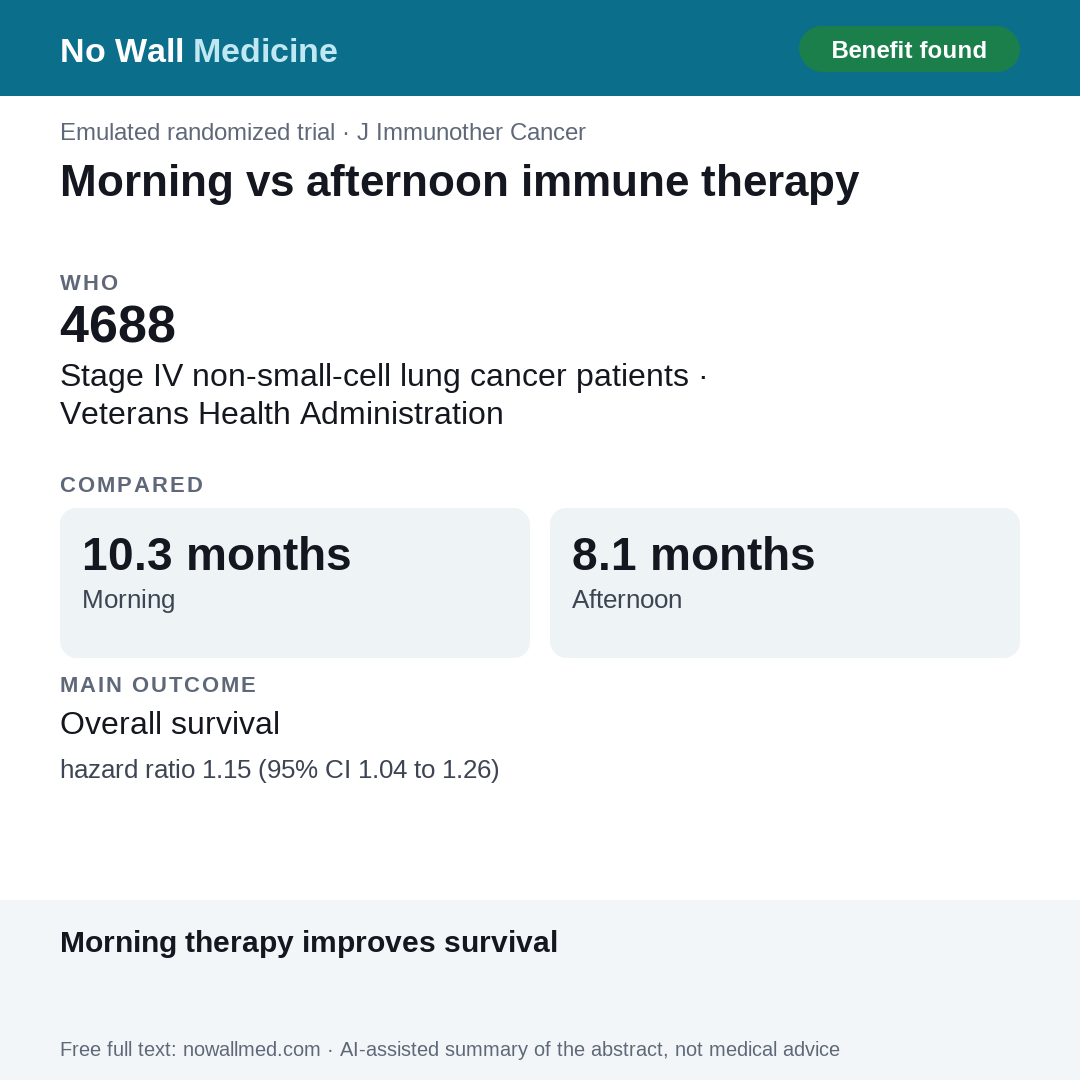
Morning versus afternoon administration of immune checkpoint inhibitors in metastatic non-small-cell lung cancer
Emulated randomized trialBenefit found
Morning vs afternoon immune therapy
Who
4688
Stage IV non-small-cell lung cancer patients · Veterans Health Administration
Compared
10.3 monthsMorning
8.1 monthsAfternoon
Main outcome
Overall survival
Result: hazard ratio 1.15 (95% CI 1.04 to 1.26)
Bottom line: Morning therapy improves survival
Limitation: not prospective
J Immunother Cancer · 2026-05-14Download image
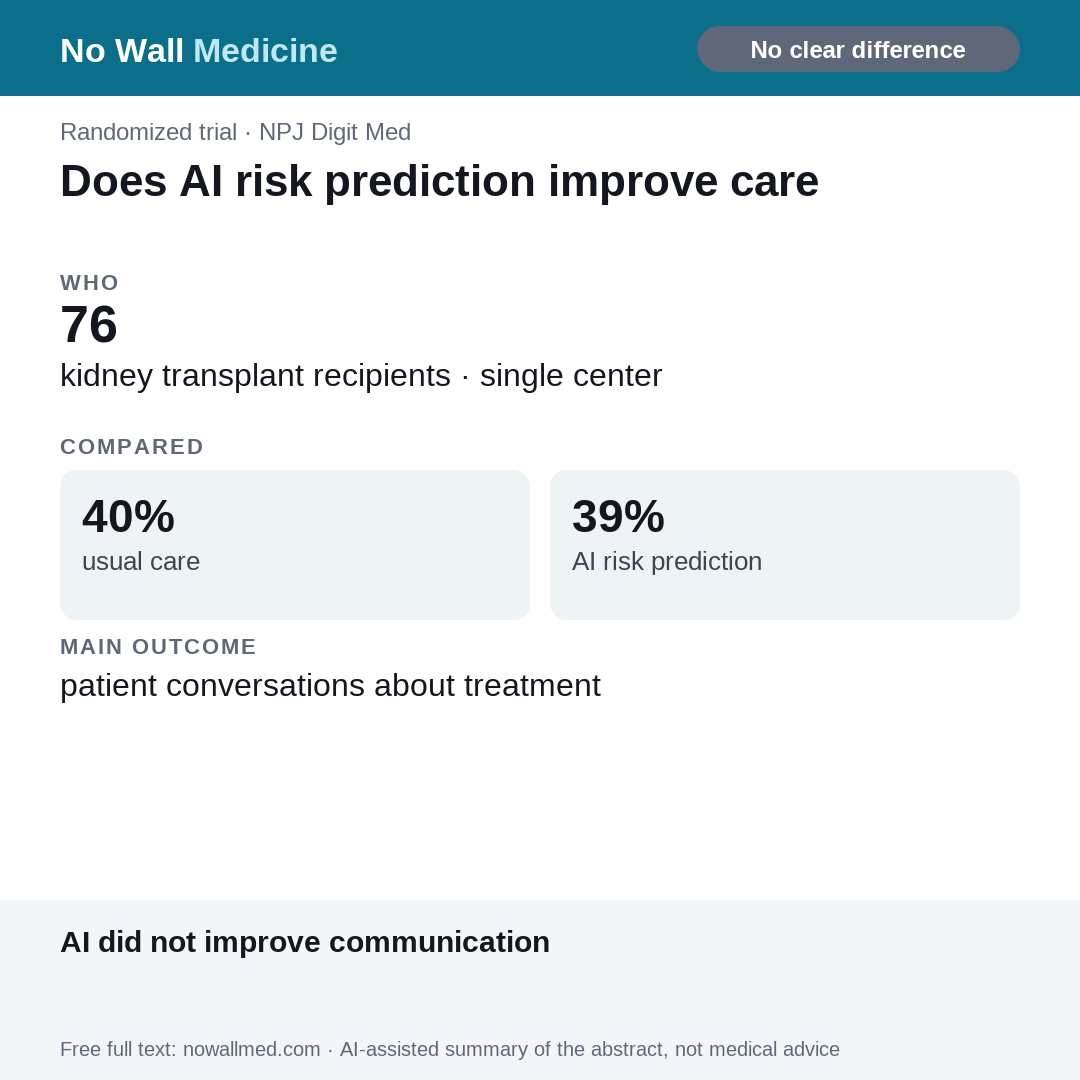
Randomized trial of electronic health record implemented AI risk prediction in kidney transplant care
Randomized trialNo clear difference
Does AI risk prediction improve care
Who
76
kidney transplant recipients · single center
Compared
40%usual care (16/40)
39%AI risk prediction (14/36)
Main outcome
patient conversations about treatment
Bottom line: AI did not improve communication
Limitation: low tool uptake and workflow barriers
NPJ Digit Med · 2026-05-14Download image
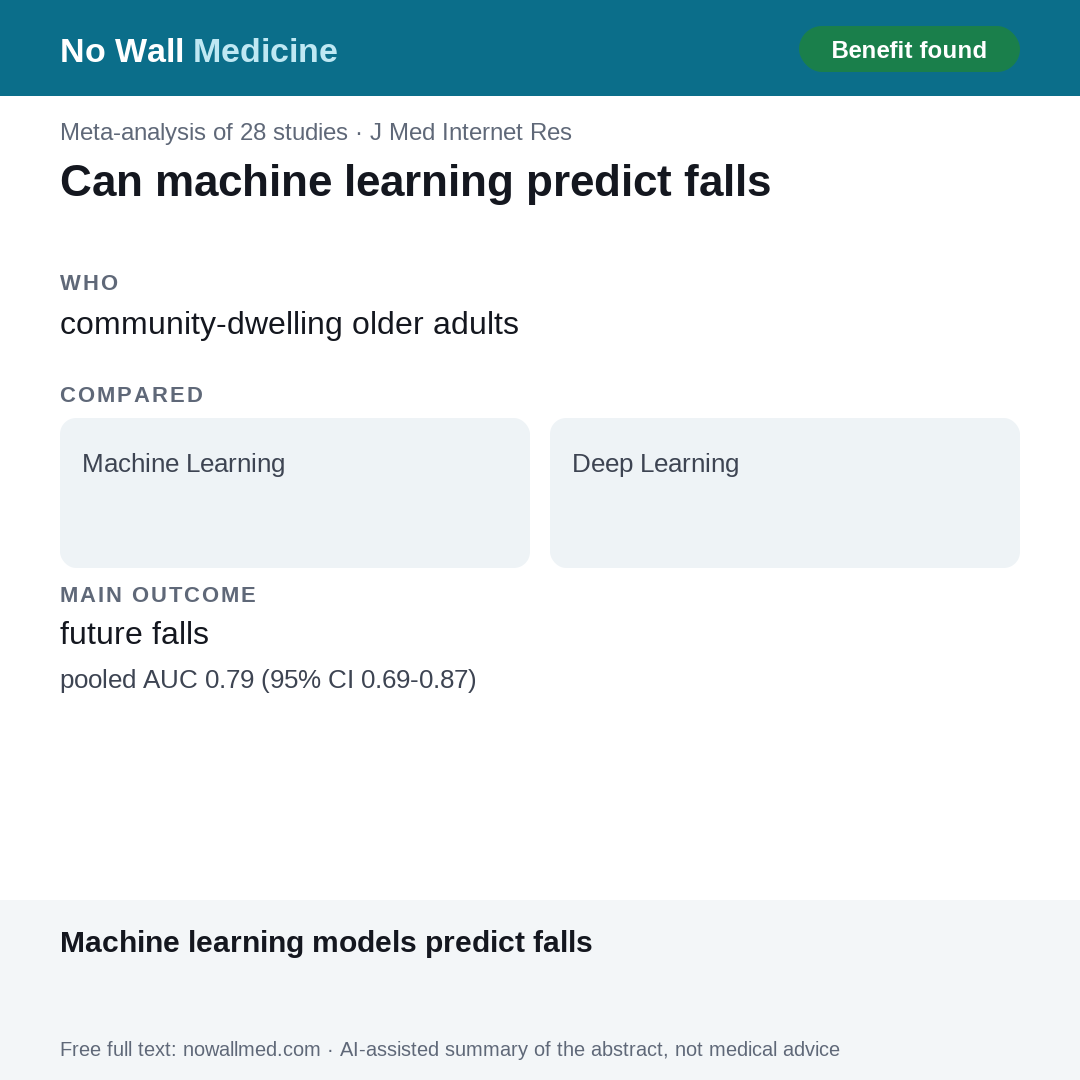
Machine Learning and Deep Learning Models for Predicting Future Falls in Community-Dwelling Older Adults: Systematic Review and Meta-Analysis of Longitudinal Evidence
Meta-analysis of 28 studiesBenefit found
Can machine learning predict falls
Who
community-dwelling older adults
Compared
Machine Learning
Deep Learning
Main outcome
future falls
Result: pooled AUC 0.79 (95% CI 0.69-0.87)
Bottom line: Machine learning models predict falls
Limitation: high risk of bias and limited validation
J Med Internet Res · 2026-05-14Download image
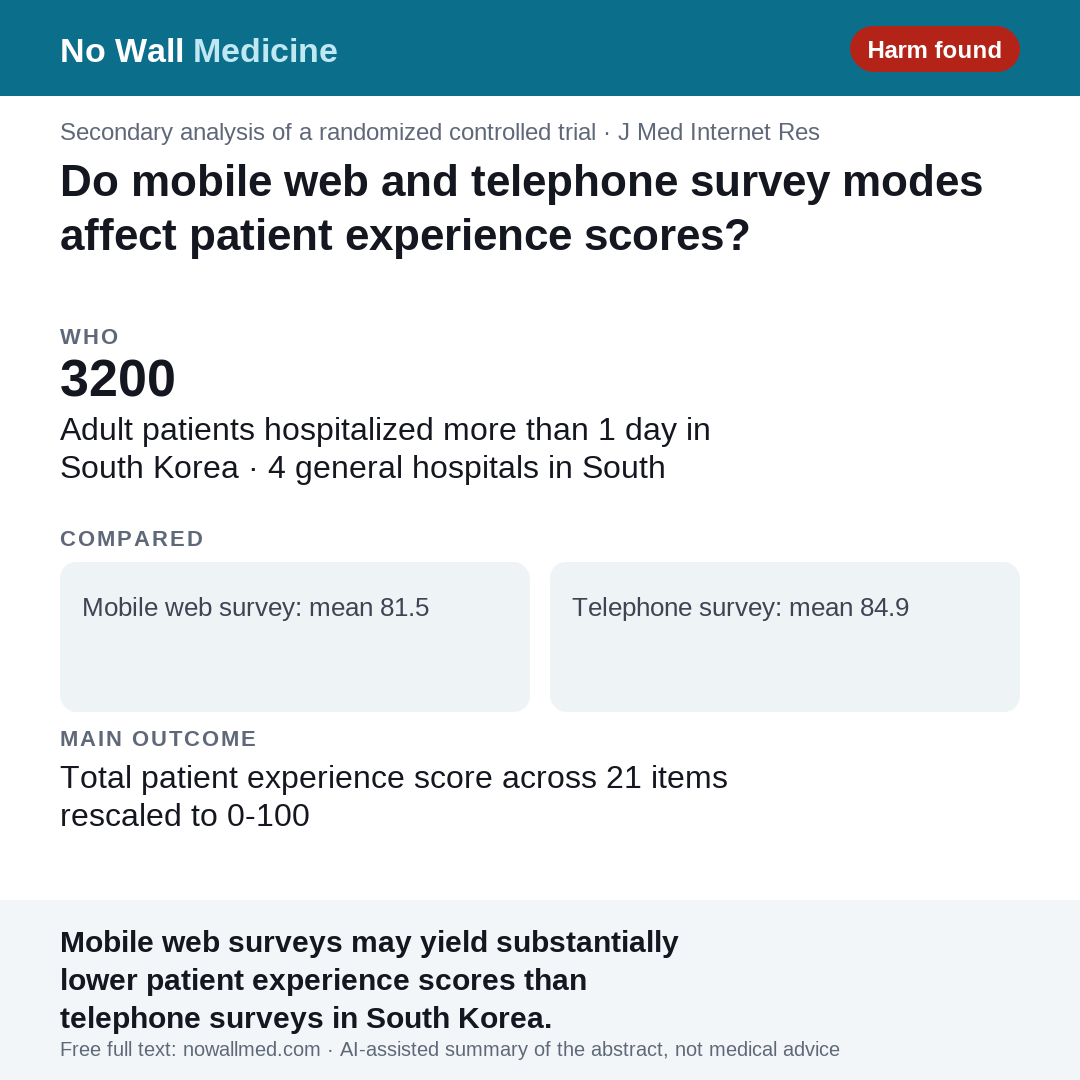
Mode Effects Between Mobile Web and Telephone Surveys on Patient Experience Scores in South Korea: Secondary Analysis of a Randomized Controlled Trial Under Various Missingness Scenarios
Secondary analysis of a randomized controlled trialHarm found
Do mobile web and telephone survey modes affect patient experience scores?
Who
3200
Adult patients hospitalized more than 1 day in South Korea · 4 general hospitals in South Korea
Compared
Mobile web survey: mean 81.5
Telephone survey: mean 84.9
Main outcome
Total patient experience score across 21 items rescaled to 0-100
Result: unadjusted difference -3.41 points, 95% CI -5.51 to -1.31
Bottom line: Mobile web surveys may yield substantially lower patient experience scores than telephone surveys in South Korea.
Limitation: Blinding of participants, interviewers, and outcome assessors was not feasible after assignment.
J Med Internet Res · 2026-05-14Download image
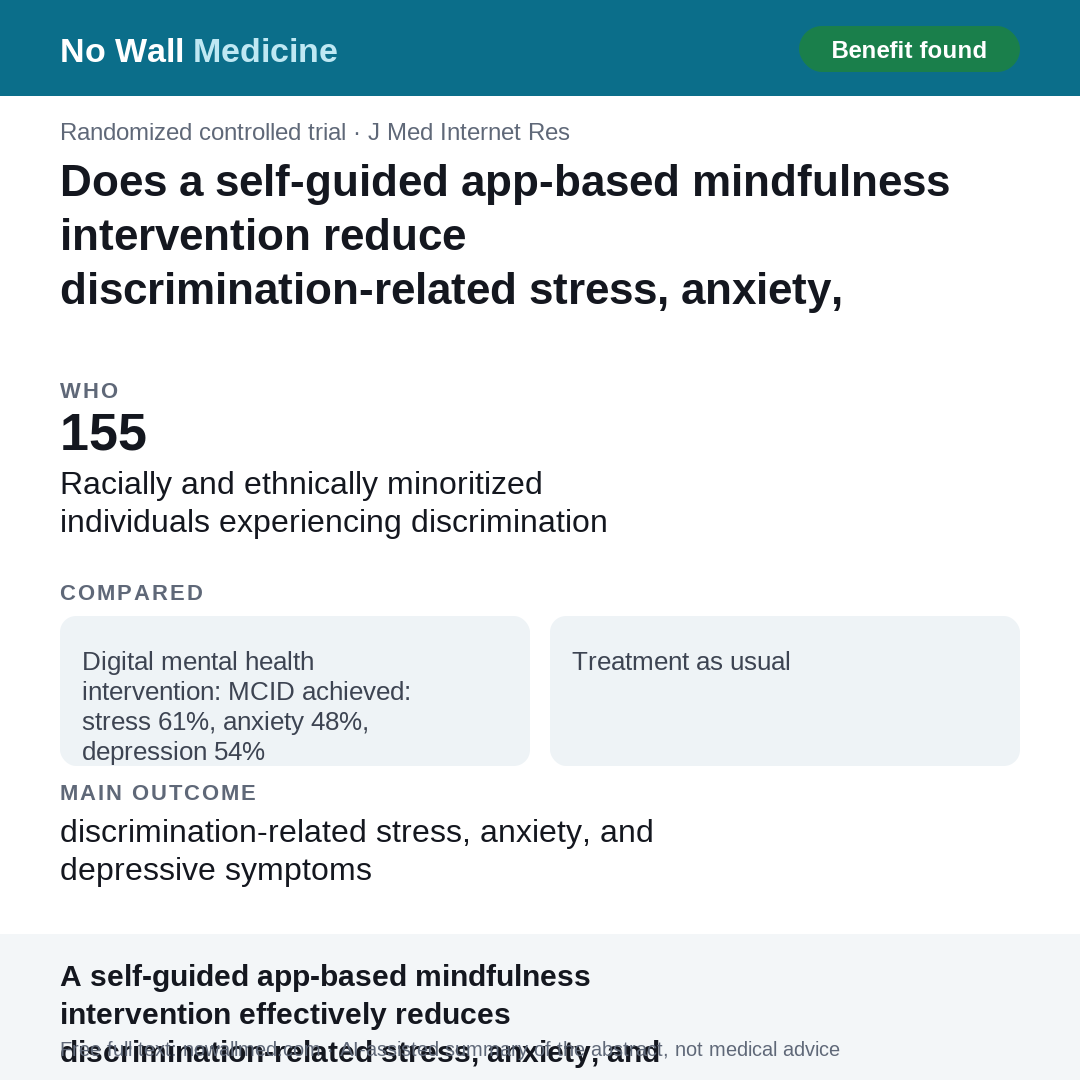
A Self-Guided App-Based Mindfulness Intervention for Racially and Ethnically Minoritized Individuals Who Experience Discrimination-Related Mental Health Symptoms: Randomized Controlled Trial
Randomized controlled trialBenefit found
Does a self-guided app-based mindfulness intervention reduce discrimination-related stress, anxiety, and depressive symptoms?
Who
155
Racially and ethnically minoritized individuals experiencing discrimination
Compared
Digital mental health intervention: MCID achieved: stress 61%, anxiety 48%, depression 54%
Treatment as usual
Main outcome
discrimination-related stress, anxiety, and depressive symptoms
Result: stress β=-4.52 (95% CI -6.54 to -2.51), anxiety β=-3.31 (95% CI -4.89 to -1.74), depression β=-2.84 (95% CI -4.57 to -1.12)
Bottom line: A self-guided app-based mindfulness intervention effectively reduces discrimination-related stress, anxiety, and depression among minoritized individuals.
J Med Internet Res · 2026-05-14Download image
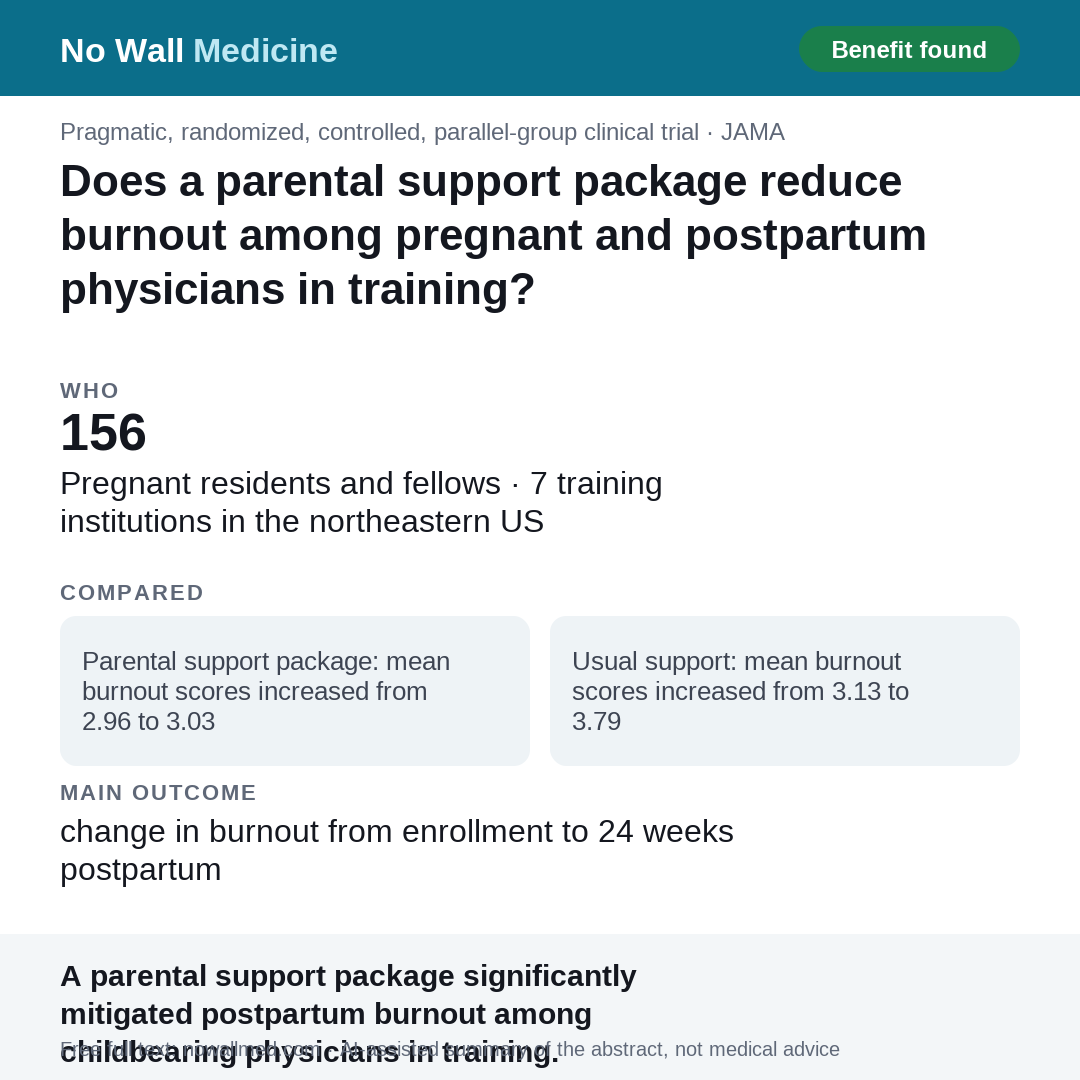
Pragmatic Parental Support to Mitigate Burnout Among Pregnant and Postpartum Trainees: A Randomized Clinical Trial
Pragmatic, randomized, controlled, parallel-group clinical trialBenefit found
Does a parental support package reduce burnout among pregnant and postpartum physicians in training?
Who
156
Pregnant residents and fellows · 7 training institutions in the northeastern US
Compared
Parental support package: mean burnout scores increased from 2.96 to 3.03
Usual support: mean burnout scores increased from 3.13 to 3.79
Main outcome
change in burnout from enrollment to 24 weeks postpartum
Result: adjusted between-group difference in change, -0.58 (95% CI, -1.10 to -0.07)
Bottom line: A parental support package significantly mitigated postpartum burnout among childbearing physicians in training.
JAMA · 2026-05-13Download image
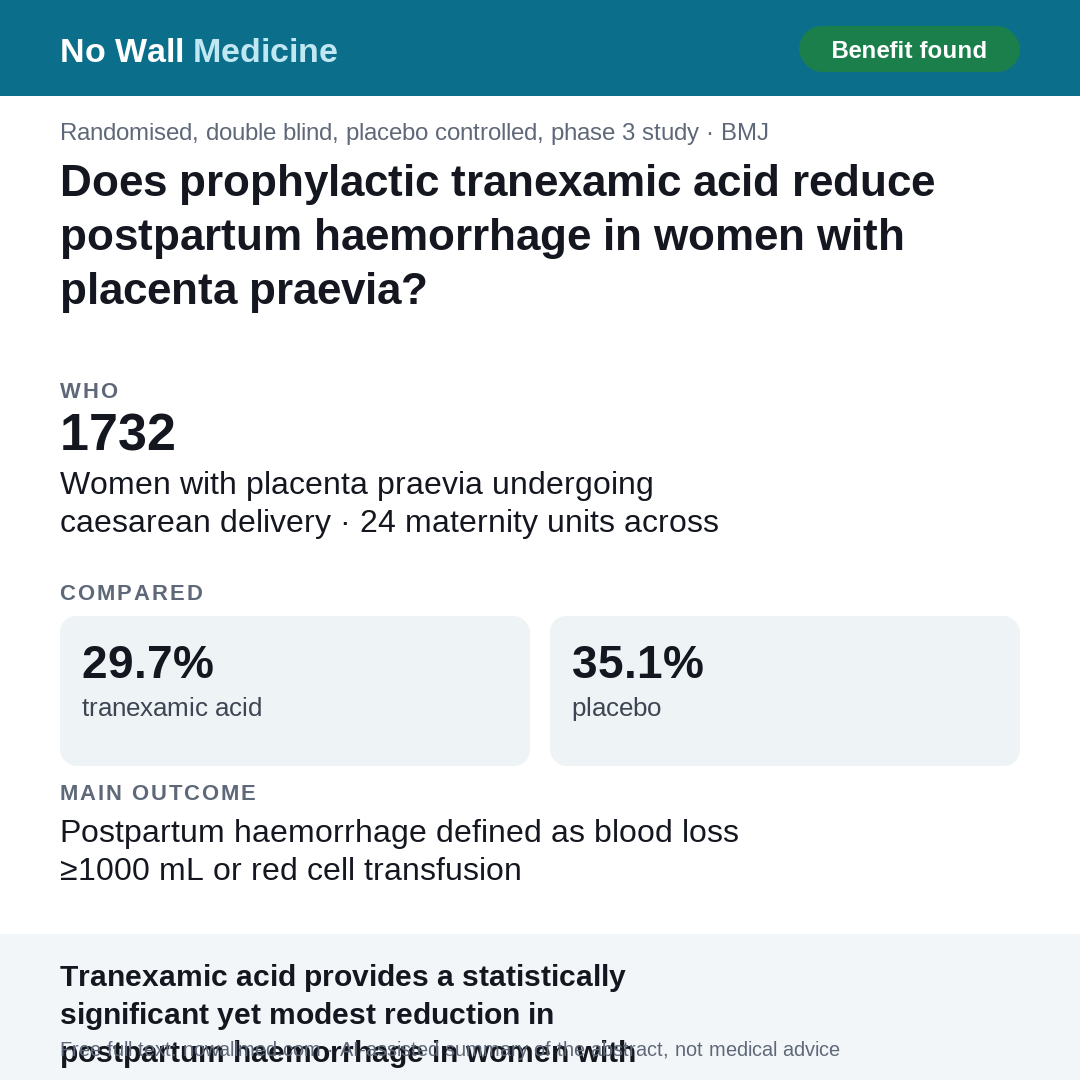
Prophylactic tranexamic acid for the prevention of postpartum haemorrhage in women with placenta praevia: multicentre, double blind, randomised, placebo controlled, phase 3 trial
Randomised, double blind, placebo controlled, phase 3 studyBenefit found
Does prophylactic tranexamic acid reduce postpartum haemorrhage in women with placenta praevia?
Who
1732
Women with placenta praevia undergoing caesarean delivery · 24 maternity units across China
Compared
29.7%tranexamic acid (251/845)
35.1%placebo (297/846)
Main outcome
Postpartum haemorrhage defined as blood loss ≥1000 mL or red cell transfusion
Result: relative risk 0.85, 95.2% confidence interval (CI) 0.75 to 0.96
Bottom line: Tranexamic acid provides a statistically significant yet modest reduction in postpartum haemorrhage in women with placenta praevia.
BMJ · 2026-05-13Download image
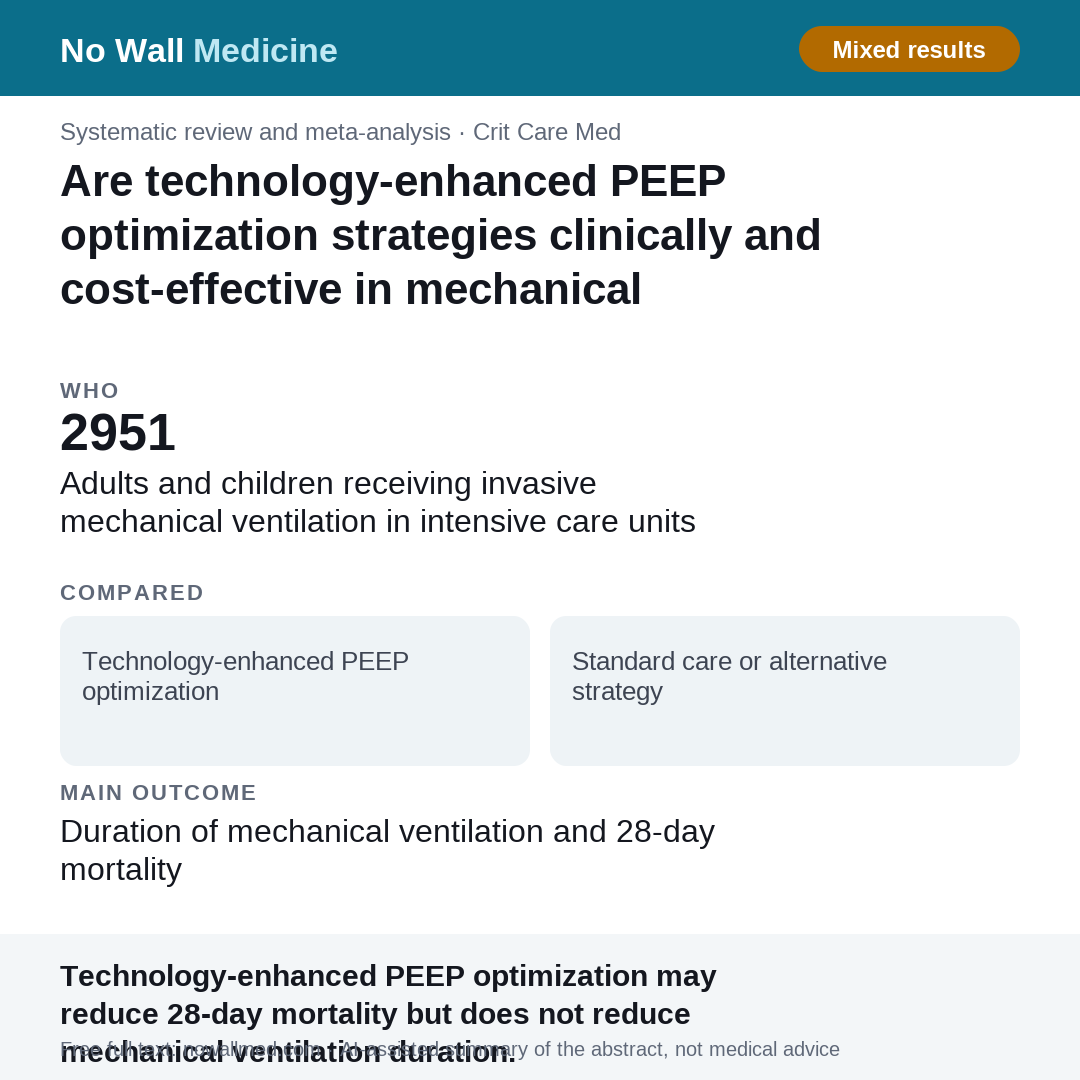
Technology-Enhanced Strategies to Optimize Positive End-Expiratory Pressure in Patients Receiving Invasive Mechanical Ventilation: A Systematic Review and Meta-Analysis
Systematic review and meta-analysisMixed results
Are technology-enhanced PEEP optimization strategies clinically and cost-effective in mechanical ventilation?
Who
2951
Adults and children receiving invasive mechanical ventilation in intensive care units · Intensive care units
Compared
Technology-enhanced PEEP optimization
Standard care or alternative strategy
Main outcome
Duration of mechanical ventilation and 28-day mortality
Result: risk ratio 0.69 (95% CI, 0.52-0.93)
Bottom line: Technology-enhanced PEEP optimization may reduce 28-day mortality but does not reduce mechanical ventilation duration.
Limitation: Evidence certainty was low or very low, requiring adequately powered randomized trials.
Crit Care Med · 2026-05-13Download image
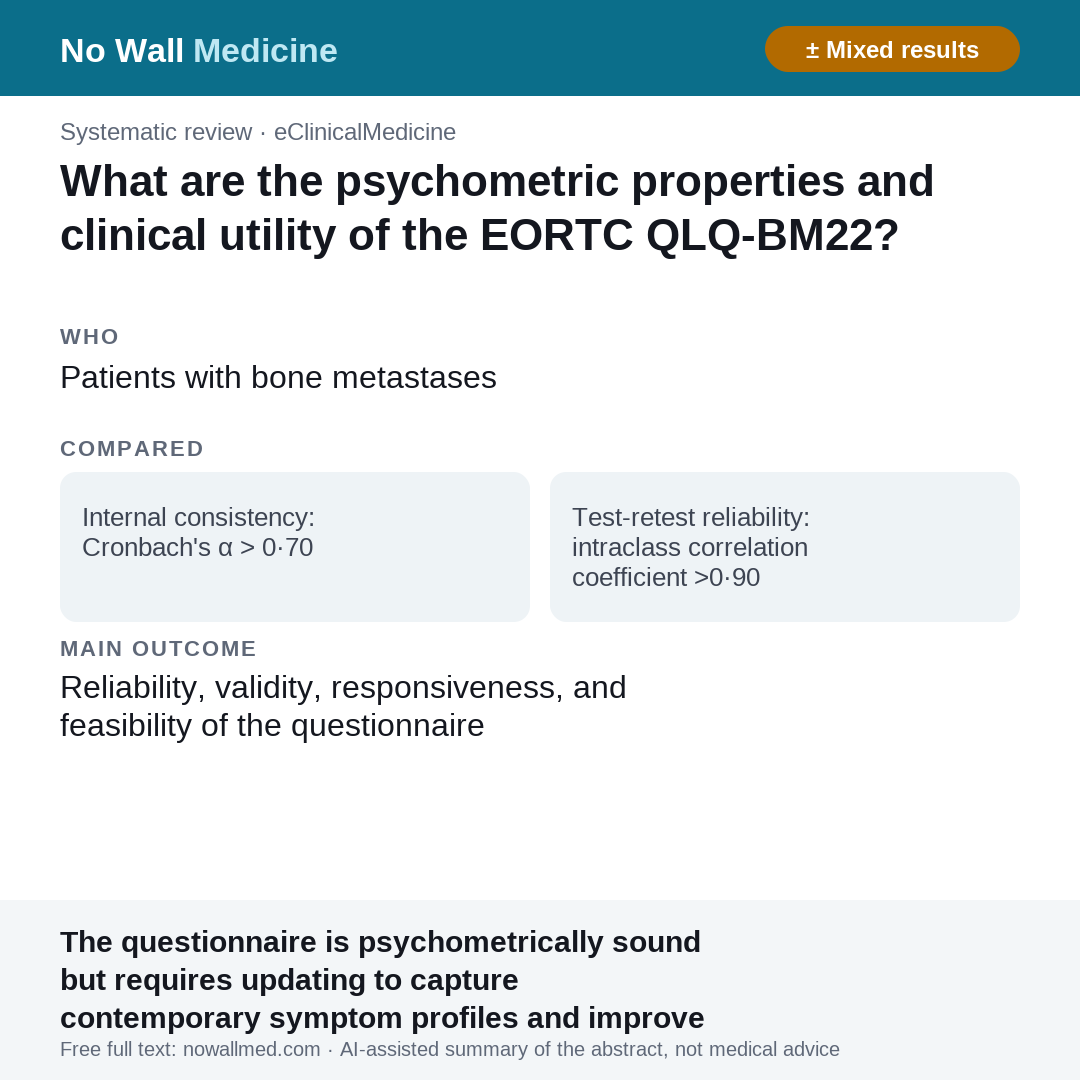
Psychometric properties and clinical utility of the EORTC QLQ-BM22 in patients with bone metastases: a systematic review
Systematic reviewMixed results
What are the psychometric properties and clinical utility of the EORTC QLQ-BM22?
Who
Patients with bone metastases
Compared
Internal consistency: Cronbach's α > 0·70
Test-retest reliability: intraclass correlation coefficient >0·90
Main outcome
Reliability, validity, responsiveness, and feasibility of the questionnaire
Bottom line: The questionnaire is psychometrically sound but requires updating to capture contemporary symptom profiles and improve subscale reliability.
Limitation: Reliance on historical validation data, limited cross-cultural validation, and inconsistent reliability in the Painful Sites subscale.
Funded by: EORTC Quality of Life Group
eClinicalMedicine · 2026-05-13Download image