Visual abstracts
New randomized trials and meta-analyses from leading journals at a glance: who was studied, what was compared, and what was found. Every paper is free to read in full.
All specialtiesCardiology 4763Oncology 4042Gastroenterology & Hepatology 1902Infectious Disease 3756Neurology 1872Psychiatry & Mental Health 2214Pulmonology 2042Critical Care 1319Endocrinology & Diabetes 2544Pediatrics 2889Surgery 2479Orthopedics & Sports Medicine 917Neurosurgery 525Cardiothoracic & Vascular Surgery 656Plastic & Reconstructive Surgery 574Nephrology 1107Rheumatology 810Hematology 1090Dermatology 611Ophthalmology 532Obstetrics & Gynecology 1645Public & Global Health 1037Radiology & Imaging 617Anesthesiology 957Urology 745ENT (Otolaryngology) 494Emergency Medicine 481Allergy & Immunology 309Geriatrics 972Family Medicine & Primary Care 533Medical Genetics & Genomics 659Pathology & Laboratory Medicine 156Physical Medicine & Rehabilitation 734Palliative Care 421Nutrition 1560Digital Health & AI 2133General Medicine 318
Service delivery models and care cascade outcomes for people living with chronic hepatitis B: a global systematic review and meta-analysis
Systematic review and meta-analysisBenefit found
How do different service delivery models affect hepatitis B care cascade outcomes?
Who
People living with chronic hepatitis B · 50 countries
Compared
73.9%Hospital-based specialist care (95% CI 65.8-80.6)
50.4%Primary care (25.9-74.8)
Main outcome
Proportion of patients assessed for treatment eligibility
Result: risk ratio 2.07 (95% CI 1.65-2.59)
Bottom line: Hospital-based specialist care models show higher rates of treatment eligibility assessment and antiviral therapy initiation compared to primary care.
Lancet Gastroenterol Hepatol · 2025-08-14Download image

Ocular Adverse Events With Semaglutide: A Systematic Review and Meta-Analysis
Systematic review and meta-analysisMixed results
What is the risk of ocular adverse events with semaglutide treatment?
Who
73640
Adults treated with semaglutide
Compared
Semaglutide
Active comparator or placebo
Main outcome
Eye disorders, diabetic retinopathy, and nonarteritic anterior ischemic optic neuropathy
Result: odds ratio 3.92 (95% CI 1.02-15.02) for nonarteritic anterior ischemic optic neuropathy
Bottom line: Semaglutide was not associated with increased eye disorders or diabetic retinopathy, but evidence for nonarteritic anterior ischemic optic neuropathy is insufficient.
Limitation: Sample size was insufficient to avoid missing alternative results for nonarteritic anterior ischemic optic neuropathy.
JAMA Ophthalmol · 2025-08-14Download image

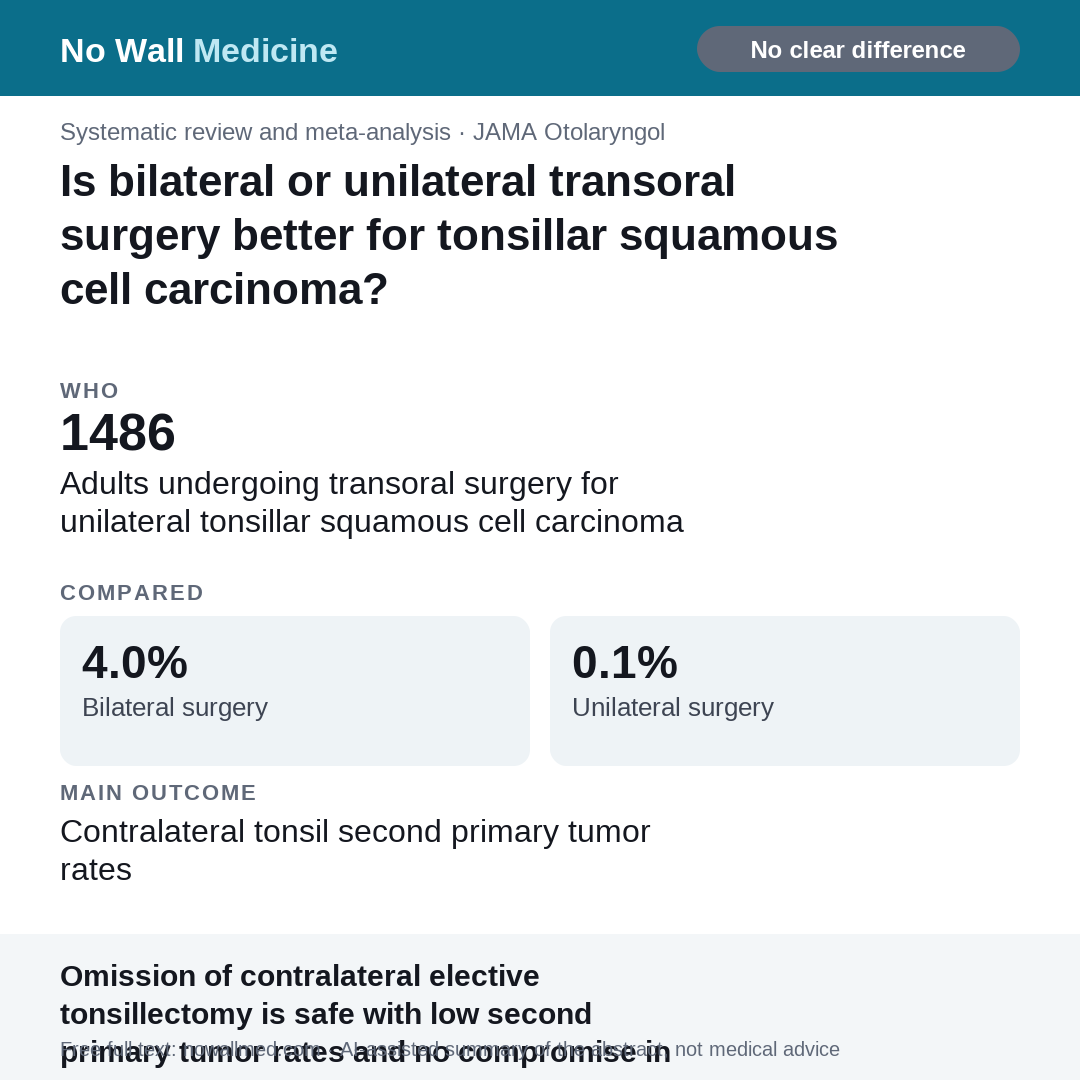
Unilateral vs Bilateral Transoral Surgery for Tonsillar Squamous Cell Carcinoma: A Systematic Review and Meta-Analysis
Systematic review and meta-analysisNo clear difference
Is bilateral or unilateral transoral surgery better for tonsillar squamous cell carcinoma?
Who
1486
Adults undergoing transoral surgery for unilateral tonsillar squamous cell carcinoma
Compared
4.0%Bilateral surgery (95% CI, 2.0%-5.0%)
0.1%Unilateral surgery (95% CI, 0%-1%)
Main outcome
Contralateral tonsil second primary tumor rates
Bottom line: Omission of contralateral elective tonsillectomy is safe with low second primary tumor rates and no compromise in survival.
JAMA Otolaryngol · 2025-08-14Download image
Informal caregiving for people with dementia and hearing or vision impairment: A systematic review
Systematic reviewUnclear result
Challenges of caregiving for dementia and sensory impairment
Who
Caregivers of people with dementia and sensory impairment · Five countries
Compared
Dementia and sensory impairment
Comparison group
Main outcome
Caregivers' challenges and needs
Bottom line: Caregivers face increased challenges with dual impairments
Alzheimers Dement · 2025-08-14Download image

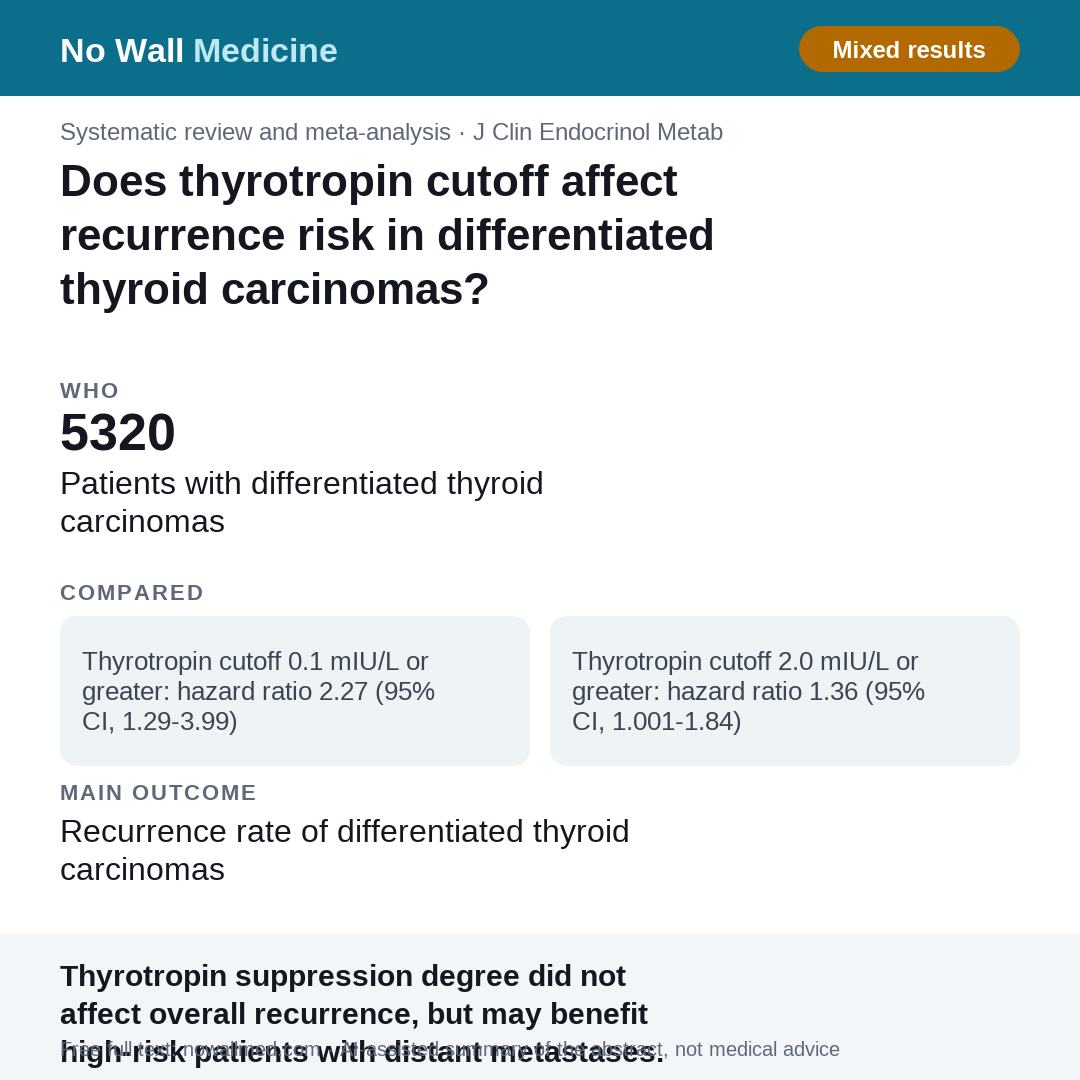
TSH Cutoffs and Recurrence Risk in Differentiated Thyroid Carcinomas: A Systematic Review and Meta-Analysis
Systematic review and meta-analysisMixed results
Does thyrotropin cutoff affect recurrence risk in differentiated thyroid carcinomas?
Who
5320
Patients with differentiated thyroid carcinomas
Compared
Thyrotropin cutoff 0.1 mIU/L or greater: hazard ratio 2.27 (95% CI, 1.29-3.99)
Thyrotropin cutoff 2.0 mIU/L or greater: hazard ratio 1.36 (95% CI, 1.001-1.84)
Main outcome
Recurrence rate of differentiated thyroid carcinomas
Result: hazard ratio 2.27 (95% CI, 1.29-3.99)
Bottom line: Thyrotropin suppression degree did not affect overall recurrence, but may benefit high-risk patients with distant metastases.
J Clin Endocrinol Metab · 2025-08-14Download image
Prognostic models for cardiovascular and kidney outcomes in people with type 2 diabetes: living systematic review and meta-analysis of observational studies
Living systematic review and meta-analysisMixed results
How well do prognostic models predict cardiovascular and kidney outcomes in adults with type 2 diabetes?
Who
Adults with type 2 diabetes mellitus
Compared
RECODe model: 0.79 for cardiovascular mortality
UKPDS-OM2 model: 0.64 for myocardial infarction
Main outcome
discrimination and calibration for cardiovascular and kidney outcomes
Bottom line: RECODe showed acceptable discrimination and calibration for most outcomes, while UKPDS-OM2 showed unacceptable discrimination for some outcomes.
Limitation: additional studies directly comparing models are needed
BMJ Med · 2025-08-14Download image

Corticosteroids for reducing tuberculosis mortality in persons living with HIV: a systematic review and meta-analysis using reconstructed individual patient data
Systematic review and meta-analysisBenefit found
Do adjunctive corticosteroids reduce mortality in persons living with HIV treated for tuberculosis?
Who
873
Persons living with HIV being treated for tuberculosis
Compared
Corticosteroids
Placebo
Main outcome
All-cause mortality
Result: hazard ratio 0.33 (95% CI 0.26 to 0.41)
Bottom line: Adjunctive corticosteroids were associated with reduced mortality among persons living with HIV treated for tuberculosis.
BMJ Glob Health · 2025-08-14Download image

Equity in protection: bridging global data gaps for an EBV vaccine-a systematic review and meta-analysis
Systematic review and meta-analysisMixed results
What is the Epstein-Barr virus seroprevalence by age, region, and country income level?
Who
Global populations across different age groups and income levels · Global
Compared
59%Middle-income countries (0-4 years) (95% CI 28 to 91%, I2=99%)
29%High-income countries (0-4 years) (95% CI 16 to 41%, I2=99%)
Main outcome
Epstein-Barr virus seroprevalence by age
Result: 30% absolute increase in 0- to 4-year-olds in middle-income than in high-income countries
Bottom line: Middle-income countries show a quicker rise in Epstein-Barr virus seroprevalence in young children compared to high-income countries.
Limitation: Data variability and limited consistency of methodologies and seroprevalence measurements hindered comprehensive meta-analyses.
BMJ Glob Health · 2025-08-14Download image

Impact of oxygen and carbon dioxide levels on mortality in moderate to severe traumatic brain injury: a systematic review and meta-analysis
Systematic review and meta-analysisKey finding
How do oxygen and carbon dioxide levels affect mortality in moderate to severe traumatic brain injury?
Who
41,980
Adults with moderate to severe traumatic brain injury
Compared
Hypoxia: aOR, 1.39 (95% CI 1.11-1.75)
Hypocapnia: aOR, 1.64 (95% CI 1.25-2.15)
Hypercapnia: aOR, 1.74 (95% CI 0.91-3.32)
Main outcome
mortality
Bottom line: Hypoxia and hypocapnia are independently associated with increased mortality in adults with moderate to severe traumatic brain injury.
Crit Care · 2025-08-14Download image

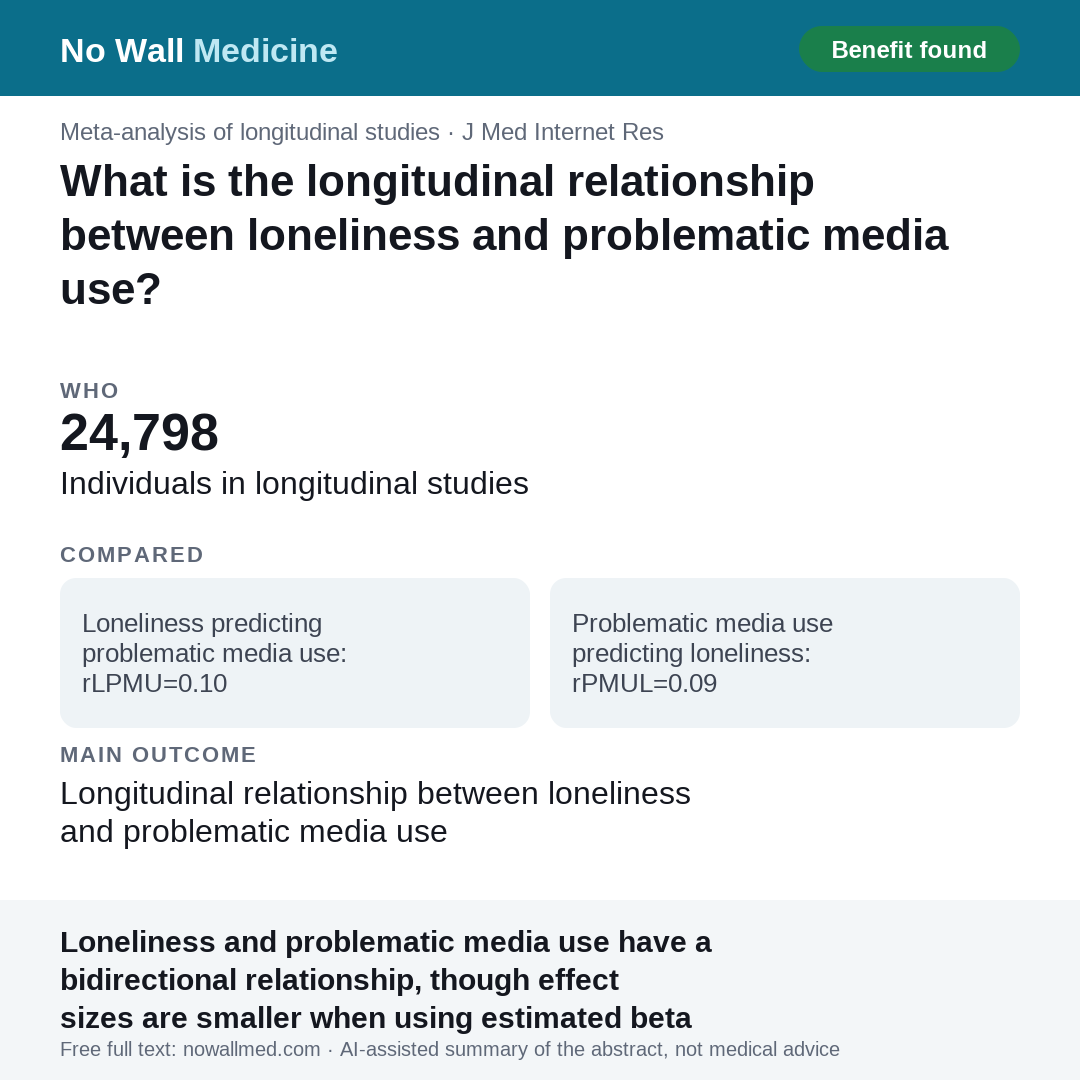
Loneliness and Problematic Media Use: Meta-Analysis of Longitudinal Studies
Meta-analysis of longitudinal studiesBenefit found
What is the longitudinal relationship between loneliness and problematic media use?
Who
24,798
Individuals in longitudinal studies
Compared
Loneliness predicting problematic media use: rLPMU=0.10
Problematic media use predicting loneliness: rPMUL=0.09
Main outcome
Longitudinal relationship between loneliness and problematic media use
Bottom line: Loneliness and problematic media use have a bidirectional relationship, though effect sizes are smaller when using estimated beta coefficients.
Limitation: Asymmetrical pattern in funnel plot and Egger regression test suggests need for more studies.
J Med Internet Res · 2025-08-14Download image
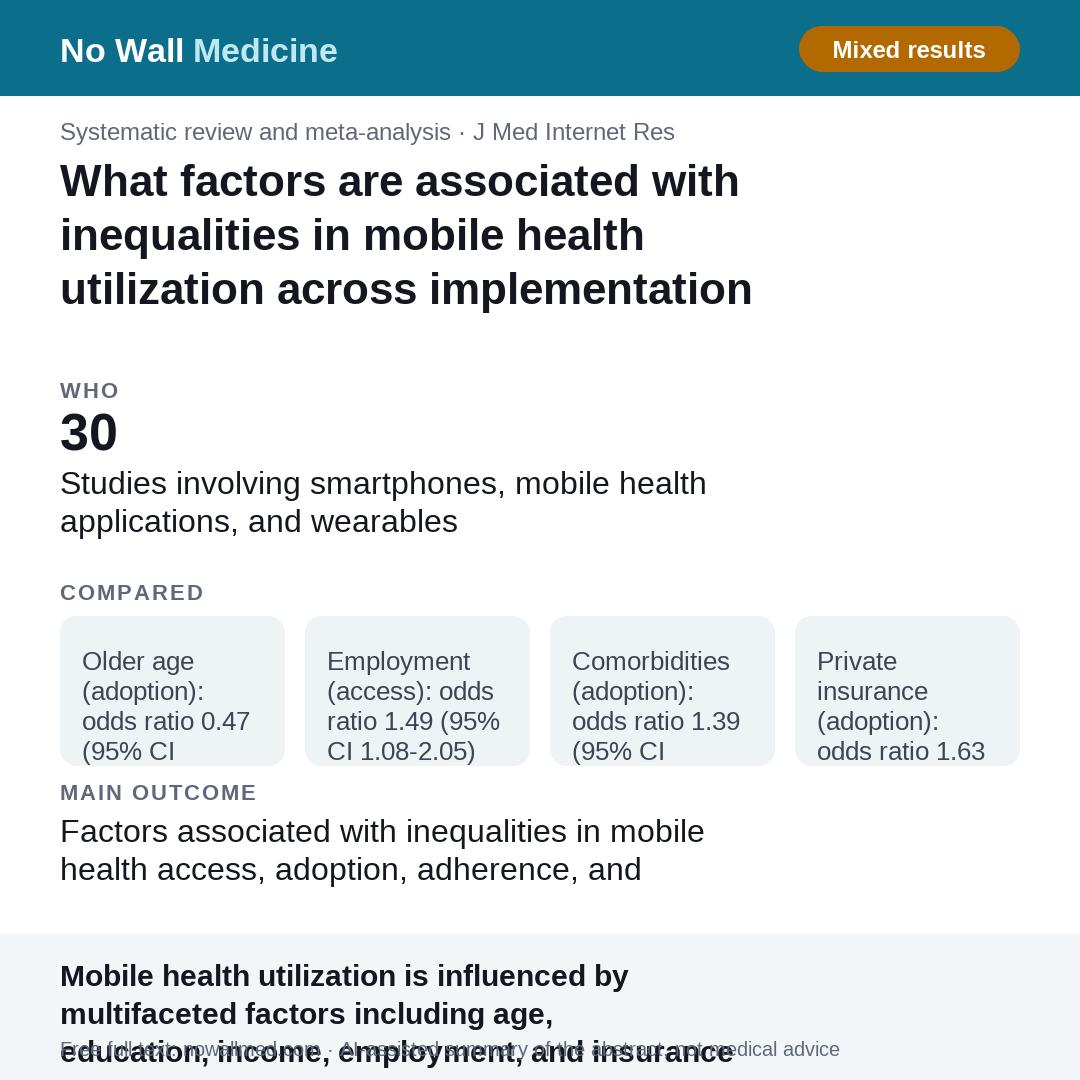
Understanding Inequalities in Mobile Health Utilization Across Phases: Systematic Review and Meta-Analysis
Systematic review and meta-analysisMixed results
What factors are associated with inequalities in mobile health utilization across implementation phases?
Who
Studies involving smartphones, mobile health applications, and wearables
Compared
Older age (adoption): odds ratio 0.47 (95% CI 0.23-0.93)
Employment (access): odds ratio 1.49 (95% CI 1.08-2.05)
Comorbidities (adoption): odds ratio 1.39 (95% CI 1.03-1.86)
Private insurance (adoption): odds ratio 1.63 (95% CI 1.07-2.48)
Main outcome
Factors associated with inequalities in mobile health access, adoption, adherence, and maintenance
Bottom line: Mobile health utilization is influenced by multifaceted factors including age, education, income, employment, and insurance across different implementation phases.
J Med Internet Res · 2025-08-14Download image
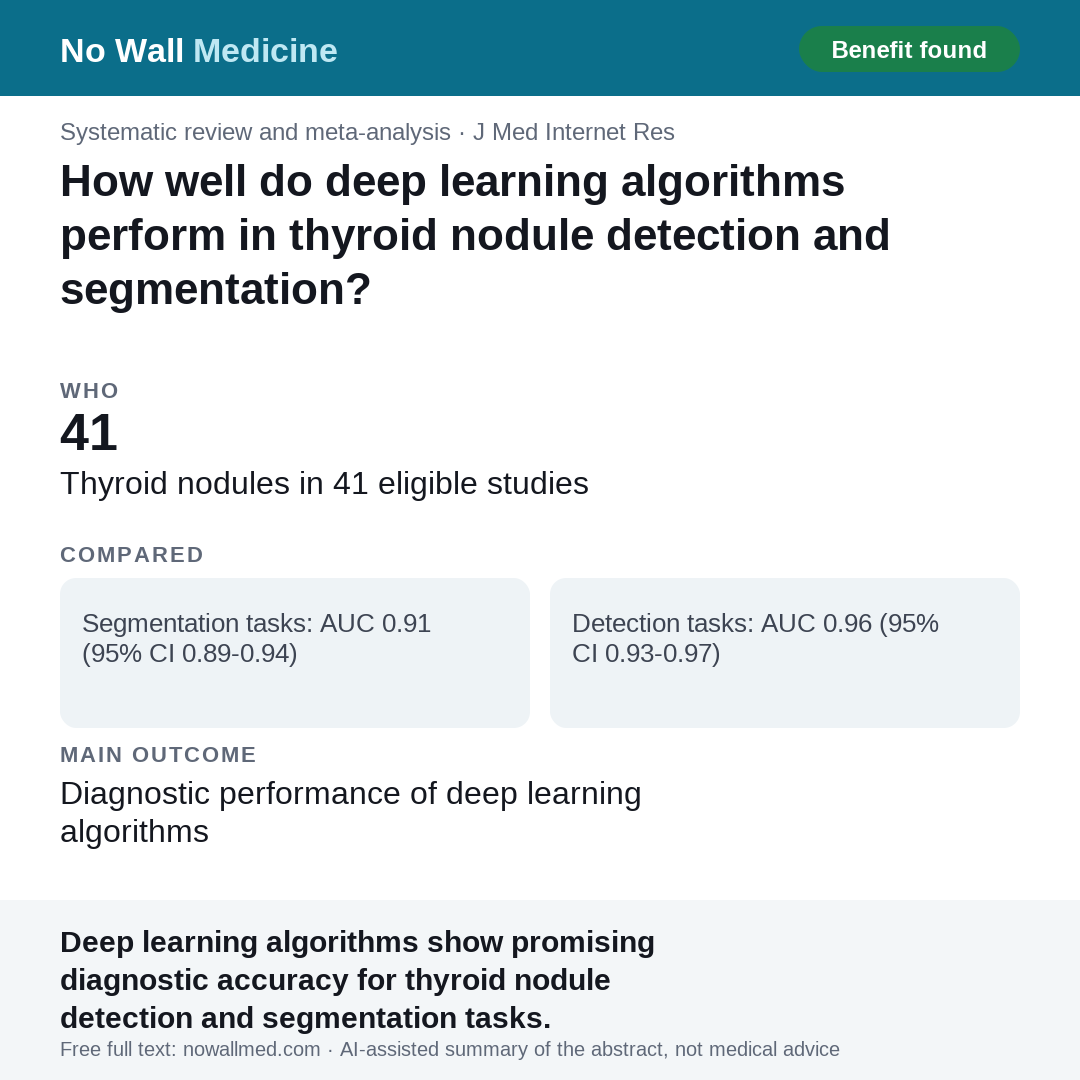
Performance Evaluation of Deep Learning for the Detection and Segmentation of Thyroid Nodules: Systematic Review and Meta-Analysis
Meta-analysis of 41 studiesKey finding
How accurate are deep learning algorithms for detecting and segmenting thyroid nodules?
Who
Patients with thyroid nodules undergoing imaging
Compared
Deep learning algorithms: AUC 0.96 (95% CI 0.93-0.97)
Clinicians
Main outcome
Diagnostic accuracy for thyroid nodule malignancy
Result: AUC 0.96 (95% CI 0.93-0.97)
Bottom line: Deep learning algorithms showed high diagnostic accuracy, with some models performing comparably to or better than clinicians.
Limitation: Suboptimal methodological design, inconsistent image quality, and insufficient external validation.
J Med Internet Res · 2025-08-14Download image
The Effectiveness of Wearable Electronic Device System-Supported Physical Activity Programs for Cancer Survivors: Meta-Analysis of Randomized Controlled Trials
Meta-analysis of 46 randomized controlled trialsBenefit found
Do wearable electronic device system-supported physical activity programs improve outcomes in cancer survivors?
Who
3727
cancer survivors
Compared
Wearable electronic device system-supported programs
Control
Main outcome
physical activity, sedentary behavior, body mass index, and quality of life
Result: SMD 0.66 (95% CI 0.47-0.86) for moderate-to-vigorous-intensity physical activity
Bottom line: Wearable electronic device system-supported programs improve physical activity, steps per day, and quality of life in cancer survivors.
J Med Internet Res · 2025-08-14Download image

Social-Media-Based Mental Health Interventions: Meta-Analysis of Randomized Controlled Trials
Meta-analysis of randomized controlled trialsBenefit found
Do social-media-based mental health interventions reduce mental health issues?
Who
5624
General population aged 15.27 to 59.65 years
Compared
Social-media-based interventions
Control groups
Main outcome
Reduction of mental health issues including depression, anxiety, and stress
Result: effect size 0.32 (95% CI 0.24-0.45)
Bottom line: Social-media-based mental health interventions are effective at reducing anxiety, depression, and stress in the general population.
Limitation: The small sample size of 17 included studies restricts the power of the models.
J Med Internet Res · 2025-08-14Download image

Radiation dose escalation in locally advanced oesophageal cancer: a systematic review and hierarchical Bayesian meta-analysis
Systematic review and hierarchical Bayesian meta-analysisBenefit found
Does radiation dose escalation improve survival in locally advanced oesophageal cancer?
Who
8379
Patients with locally advanced oesophageal cancer
Compared
High-dose radiotherapy: median difference: 18.6% (95% CrI: 10.7-26.1%) for 1-year LRPFS
Standard dose
Main outcome
overall survival, progression-free survival, and locoregional progression-free survival
Result: median difference: 18.6% (95% CrI: 10.7-26.1%) for 1-year LRPFS
Bottom line: High-dose radiotherapy improves locoregional control and may enhance overall survival, especially in squamous cell carcinoma.
Limitation: Most included studies were retrospective with moderate risk of bias.
eClinicalMedicine · 2025-08-13Download image

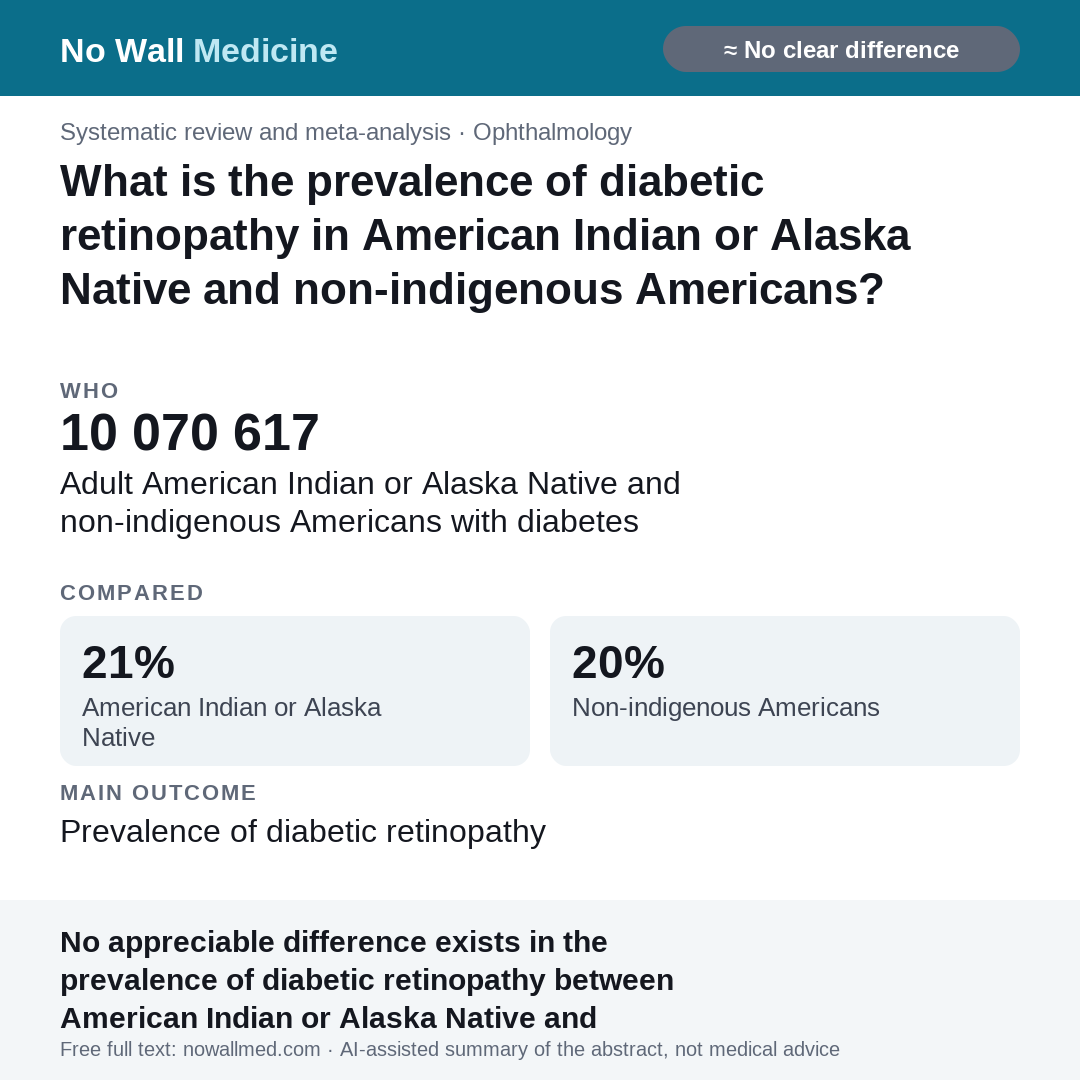
The Prevalence of Diabetic Retinopathy in American Indians or Alaska Natives and Non-Indigenous Americans: A Systematic Review and Meta-Analysis
Systematic review and meta-analysisNo clear difference
What is the prevalence of diabetic retinopathy in American Indian or Alaska Native and non-indigenous Americans?
Who
10 070 617
Adult American Indian or Alaska Native and non-indigenous Americans with diabetes
Compared
21%American Indian or Alaska Native (95% CI, 13%-30%)
20%Non-indigenous Americans (95% CI, 16%-25%)
Main outcome
Prevalence of diabetic retinopathy
Result: odds ratio 0.67 (95% CI, 0.31-1.48)
Bottom line: No appreciable difference exists in the prevalence of diabetic retinopathy between American Indian or Alaska Native and non-indigenous patients.
Limitation: Evidence is limited by the heterogeneity of studies and low certainty of evidence.
Ophthalmology · 2025-08-13Download image
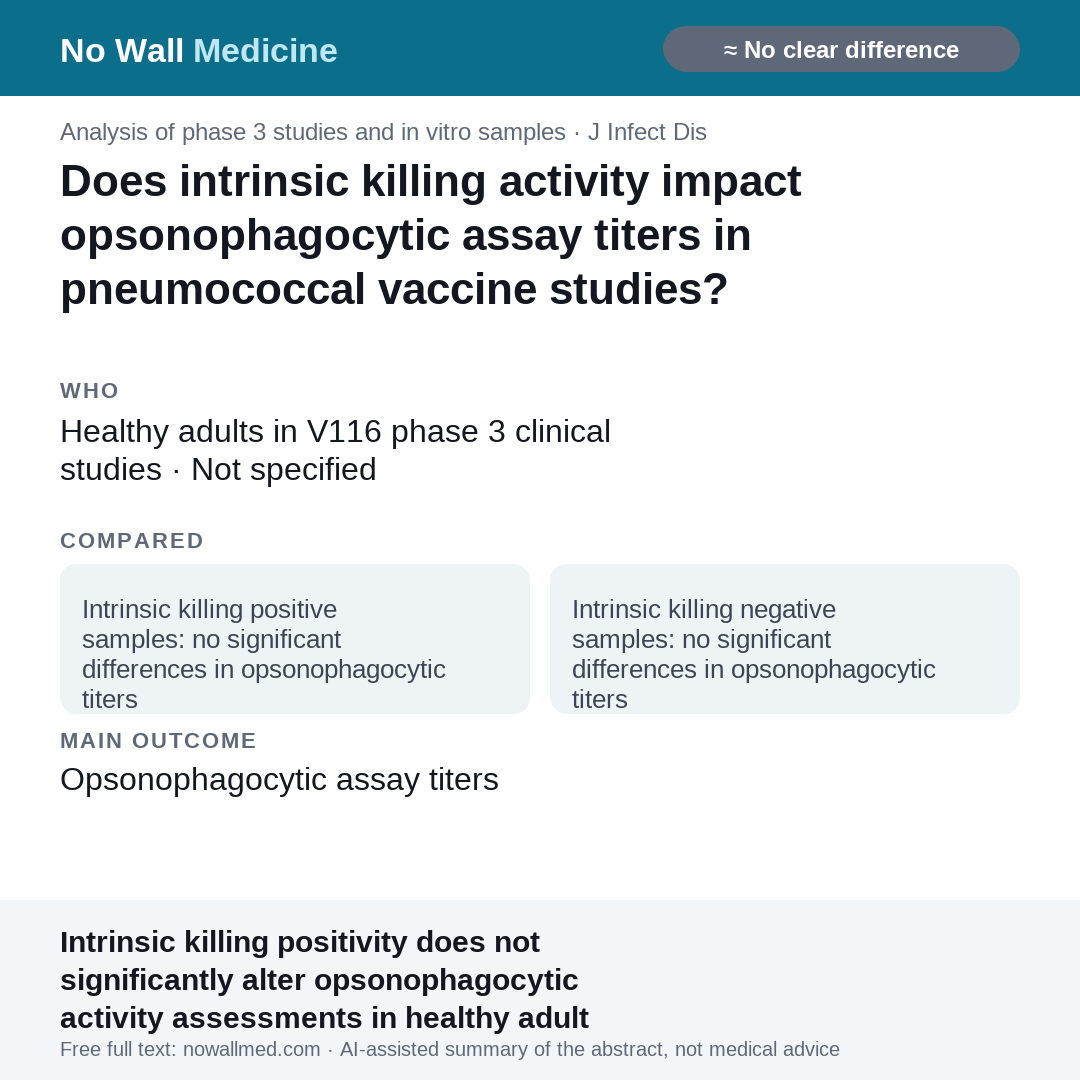
Low Intrinsic Killing Activity and no Impact of Its Positivity on Phase 3 Pneumococcal Vaccine Adult Studies
Analysis of phase 3 studies and in vitro samplesNo clear difference
Does intrinsic killing activity impact opsonophagocytic assay titers in pneumococcal vaccine studies?
Who
Healthy adults in V116 phase 3 clinical studies · Not specified
Compared
Intrinsic killing positive samples: no significant differences in opsonophagocytic titers
Intrinsic killing negative samples: no significant differences in opsonophagocytic titers
Main outcome
Opsonophagocytic assay titers
Bottom line: Intrinsic killing positivity does not significantly alter opsonophagocytic activity assessments in healthy adult vaccine studies.
Limitation: The study suggests results apply where antibiotic use is well-regulated.
J Infect Dis · 2025-08-13Download image
Adjunctive Thrombolytics After Successful Endovascular Reperfusion: A Systematic Review and Meta-Analysis of Randomized Controlled Trials
Meta-analysis of 6 randomized controlled trialsBenefit found
Does intra-arterial thrombolysis after successful endovascular thrombectomy improve outcomes in large vessel occlusion strokes?
Who
1,974
Patients with large vessel occlusion strokes
Compared
Intra-arterial thrombolysis
Endovascular thrombectomy alone
Main outcome
Excellent functional outcome at 90 days
Result: odds ratio 1.47 (95% CI 1.21-1.80)
Bottom line: Intra-arterial thrombolysis after successful endovascular thrombectomy increases excellent functional outcomes, especially in anterior circulation strokes.
Ann Neurol · 2025-08-13Download image

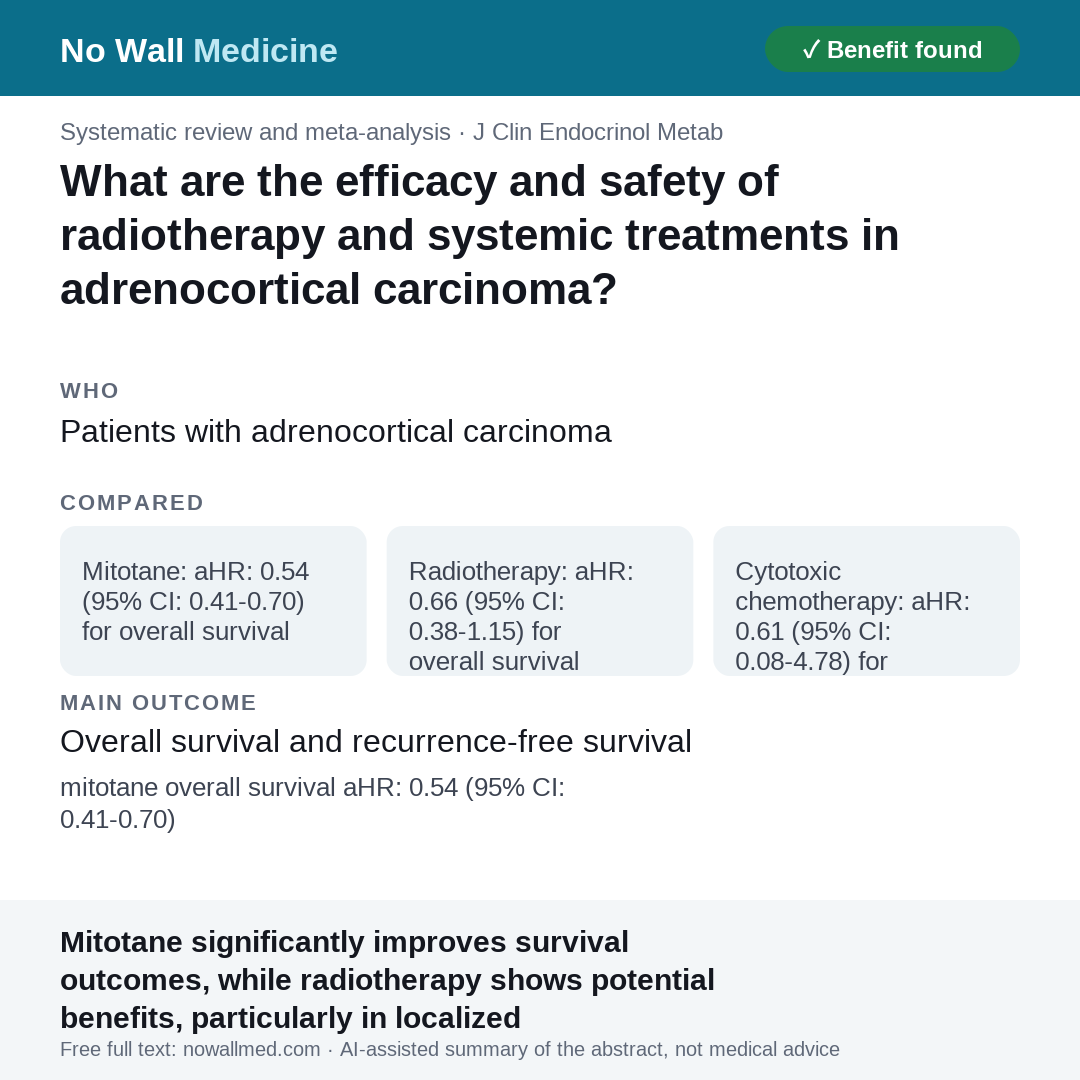
Efficacy and Safety of Radiotherapy and Systemic Treatments in Adrenocortical Carcinoma: Systematic Review and Meta-Analysis
Systematic review and meta-analysisBenefit found
What are the efficacy and safety of radiotherapy and systemic treatments in adrenocortical carcinoma?
Who
Patients with adrenocortical carcinoma
Compared
Mitotane: aHR: 0.54 (95% CI: 0.41-0.70) for overall survival
Radiotherapy: aHR: 0.66 (95% CI: 0.38-1.15) for overall survival
Cytotoxic chemotherapy: aHR: 0.61 (95% CI: 0.08-4.78) for overall survival
Main outcome
Overall survival and recurrence-free survival
Result: mitotane overall survival aHR: 0.54 (95% CI: 0.41-0.70)
Bottom line: Mitotane significantly improves survival outcomes, while radiotherapy shows potential benefits, particularly in localized adrenocortical carcinoma.
J Clin Endocrinol Metab · 2025-08-13Download image
Association between higher serum uric acid levels and cognitive function: a systematic review and meta-analysis
Systematic review and meta-analysisKey finding
Is there an association between serum uric acid levels and cognitive function?
Who
Not specified
Compared
Higher serum uric acid: better global cognition (SMD 2.27, 95% CI, 1.18-3.35)
Lower serum uric acid
Main outcome
Cognitive function domains
Result: SMD 2.27 (95% CI, 1.18-3.35) for global cognition
Bottom line: Higher serum uric acid levels were associated with better global cognition, executive function, learning, memory, attention, and language.
J Gerontol A · 2025-08-13Download image