Visual abstracts
New randomized trials and meta-analyses from leading journals at a glance: who was studied, what was compared, and what was found. Every paper is free to read in full.
All specialtiesCardiology 4800Oncology 4084Gastroenterology & Hepatology 1917Infectious Disease 3789Neurology 1886Psychiatry & Mental Health 2240Pulmonology 2061Critical Care 1335Endocrinology & Diabetes 2553Pediatrics 2914Surgery 2500Orthopedics & Sports Medicine 923Neurosurgery 532Cardiothoracic & Vascular Surgery 665Plastic & Reconstructive Surgery 585Nephrology 1115Rheumatology 815Hematology 1099Dermatology 619Ophthalmology 539Obstetrics & Gynecology 1661Public & Global Health 1044Radiology & Imaging 637Anesthesiology 959Urology 751ENT (Otolaryngology) 497Emergency Medicine 484Allergy & Immunology 310Geriatrics 974Family Medicine & Primary Care 538Medical Genetics & Genomics 662Pathology & Laboratory Medicine 156Physical Medicine & Rehabilitation 746Palliative Care 422Nutrition 1566Digital Health & AI 2191General Medicine 319
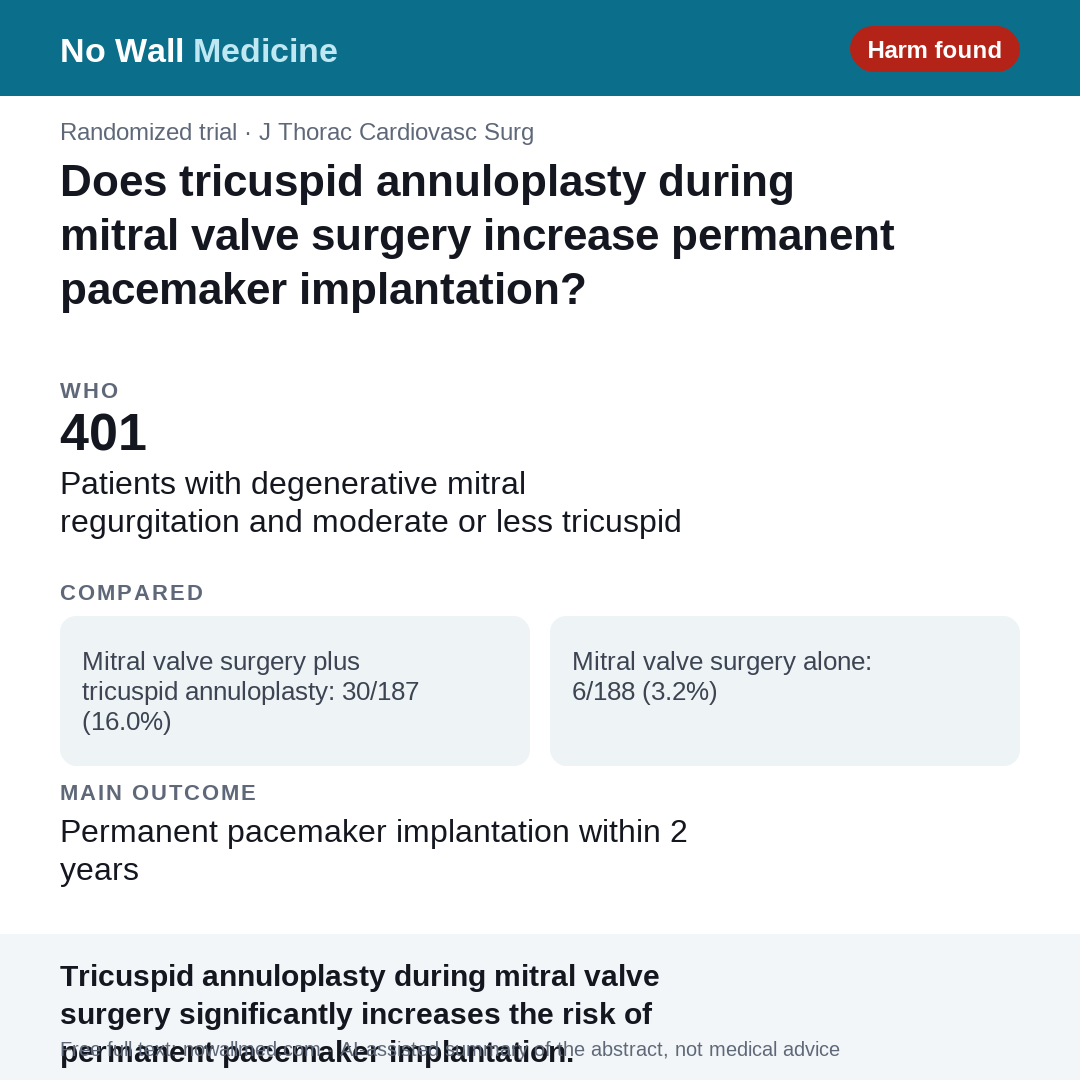
Pacemaker implantation associated with tricuspid repair in the setting of mitral valve surgery: Insights from a Cardiothoracic Surgical Trials Network randomized trial
Randomized trialHarm found
Does tricuspid annuloplasty during mitral valve surgery increase permanent pacemaker implantation?
Who
401
Patients with degenerative mitral regurgitation and moderate or less tricuspid regurgitation
Compared
Mitral valve surgery plus tricuspid annuloplasty: 30/187 (16.0%)
Mitral valve surgery alone: 6/188 (3.2%)
Main outcome
Permanent pacemaker implantation within 2 years
Result: rate ratio 5.08 (95% CI 2.16-11.94)
Bottom line: Tricuspid annuloplasty during mitral valve surgery significantly increases the risk of permanent pacemaker implantation.
J Thorac Cardiovasc Surg · 2022-12-08Download image
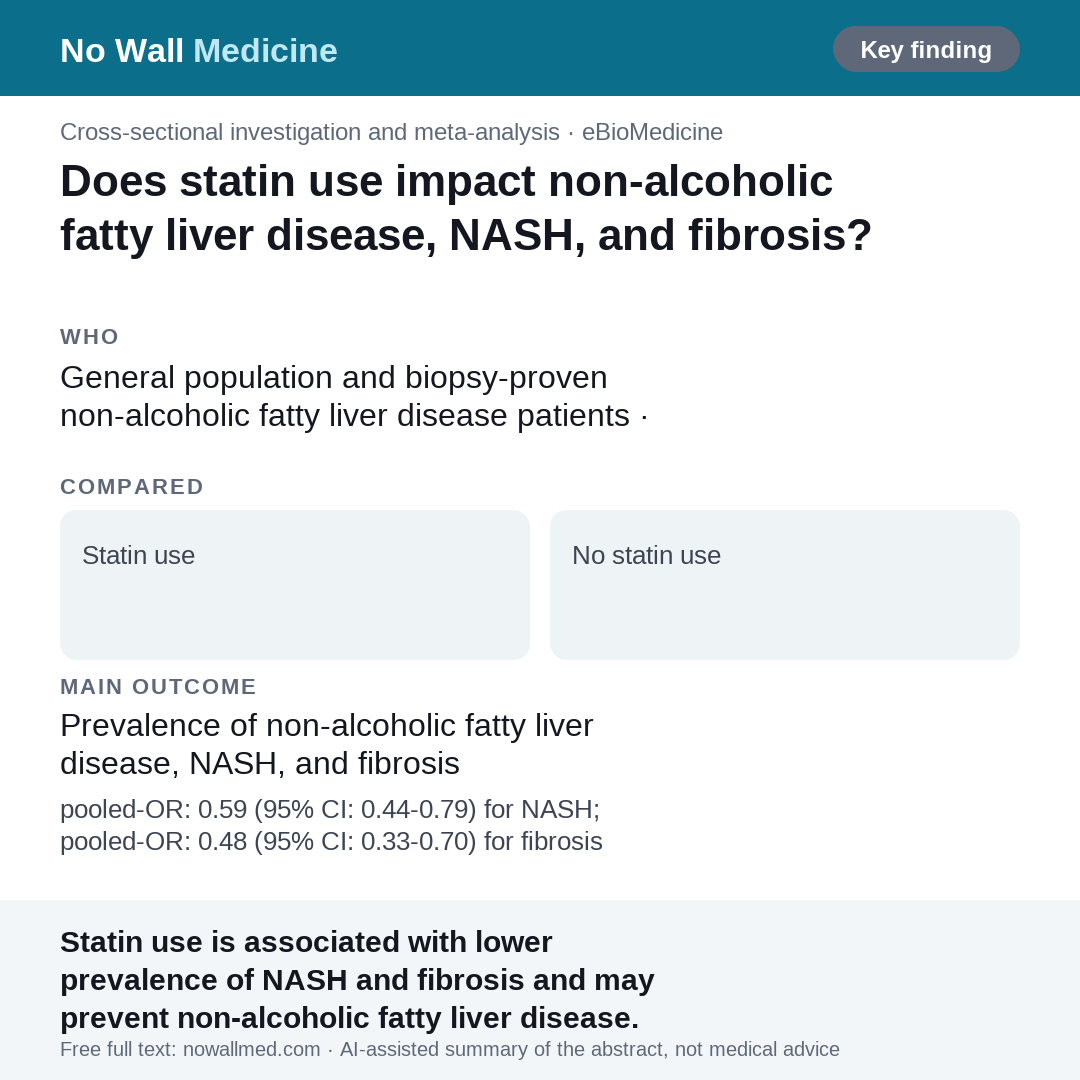
Dissecting the multifaceted impact of statin use on fatty liver disease: a multidimensional study
Cross-sectional investigation and meta-analysisBenefit found
Does statin use impact non-alcoholic fatty liver disease, NASH, and fibrosis?
Who
General population and biopsy-proven non-alcoholic fatty liver disease patients · Rotterdam Study and PERSONS cohort
Compared
Statin use
No statin use
Main outcome
Prevalence of non-alcoholic fatty liver disease, NASH, and fibrosis
Result: pooled-OR: 0.59 (95% CI: 0.44-0.79) for NASH; pooled-OR: 0.48 (95% CI: 0.33-0.70) for fibrosis
Bottom line: Statin use is associated with lower prevalence of NASH and fibrosis and may prevent non-alcoholic fatty liver disease.
Funded by: ZonMw, KWF, NWO, SLO, DGXII, RIDE, Erasmus MC
eBioMedicine · 2022-12-08Download image
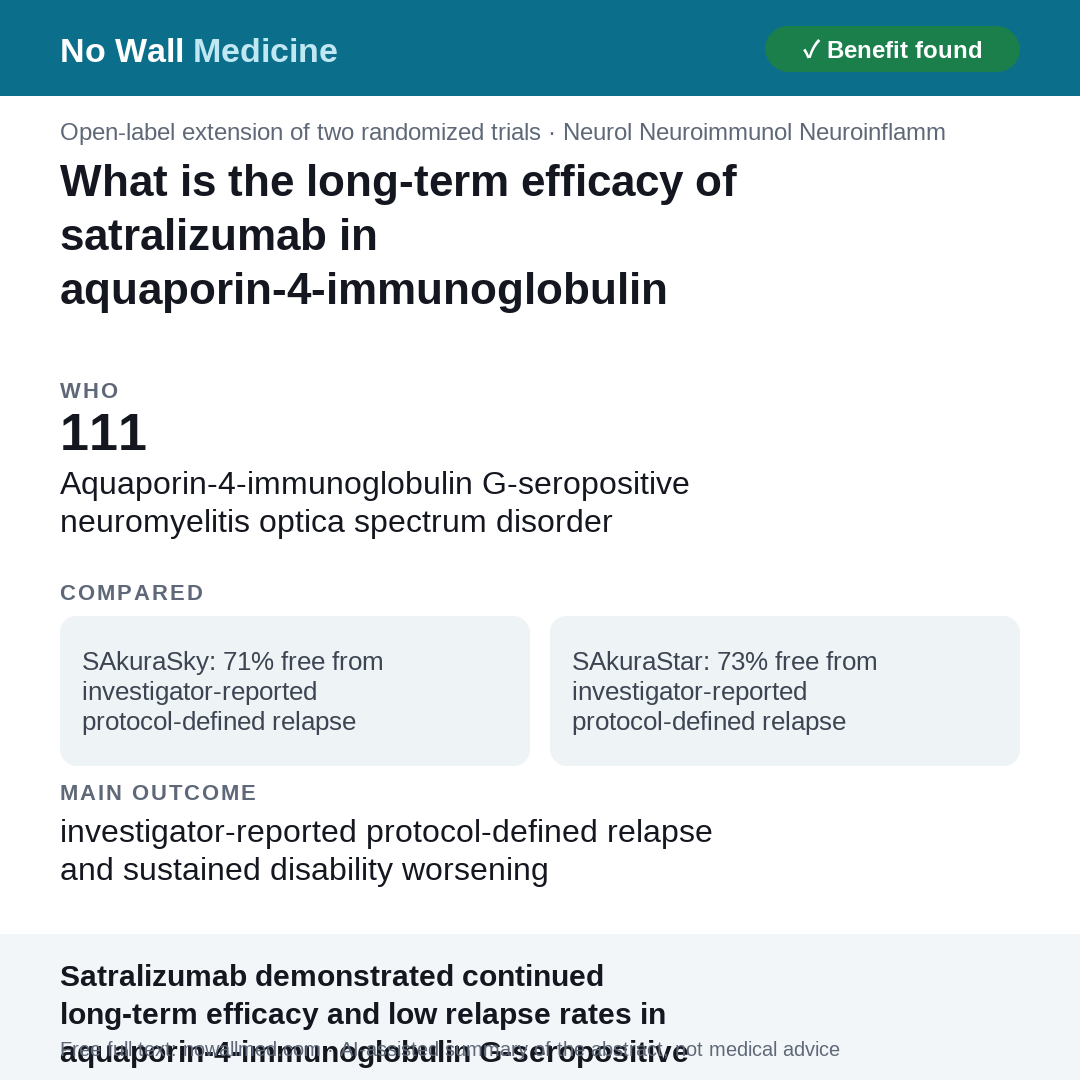
Long-term Efficacy of Satralizumab in AQP4-IgG-Seropositive Neuromyelitis Optica Spectrum Disorder From SAkuraSky and SAkuraStar
Open-label extension of two randomized trialsBenefit found
What is the long-term efficacy of satralizumab in aquaporin-4-immunoglobulin G-seropositive neuromyelitis optica spectrum disorder?
Who
111
Aquaporin-4-immunoglobulin G-seropositive neuromyelitis optica spectrum disorder patients
Compared
SAkuraSky: 71% free from investigator-reported protocol-defined relapse
SAkuraStar: 73% free from investigator-reported protocol-defined relapse
Main outcome
investigator-reported protocol-defined relapse and sustained disability worsening
Bottom line: Satralizumab demonstrated continued long-term efficacy and low relapse rates in aquaporin-4-immunoglobulin G-seropositive neuromyelitis optica spectrum disorder patients.
Neurol Neuroimmunol Neuroinflamm · 2022-12-08Download image
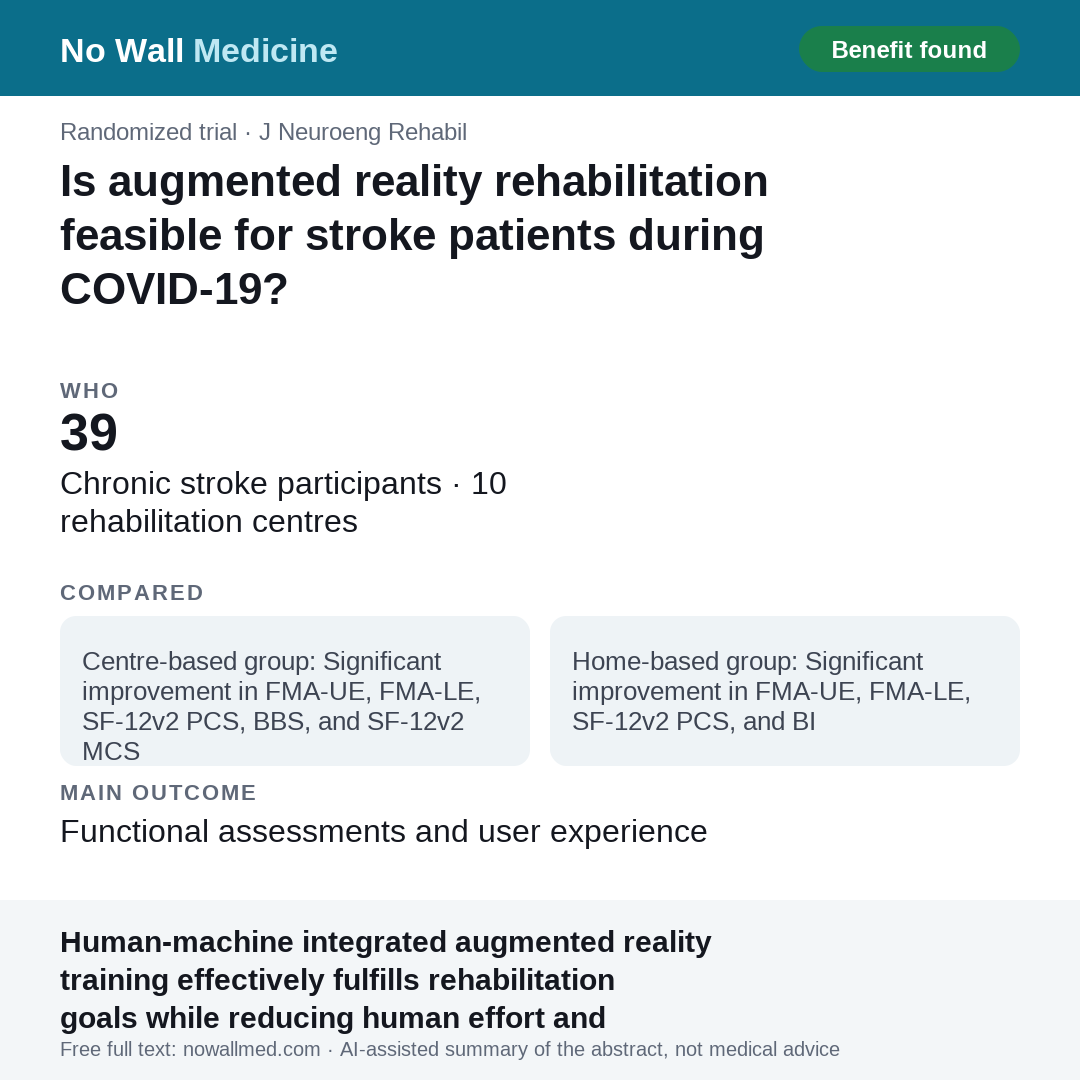
Augmented reality for stroke rehabilitation during COVID-19
Randomized trialBenefit found
Is augmented reality rehabilitation feasible for stroke patients during COVID-19?
Who
39
Chronic stroke participants · 10 rehabilitation centres
Compared
Centre-based group: Significant improvement in FMA-UE, FMA-LE, SF-12v2 PCS, BBS, and SF-12v2 MCS
Home-based group: Significant improvement in FMA-UE, FMA-LE, SF-12v2 PCS, and BI
Main outcome
Functional assessments and user experience
Bottom line: Human-machine integrated augmented reality training effectively fulfills rehabilitation goals while reducing human effort and contact rates.
J Neuroeng Rehabil · 2022-12-08Download image
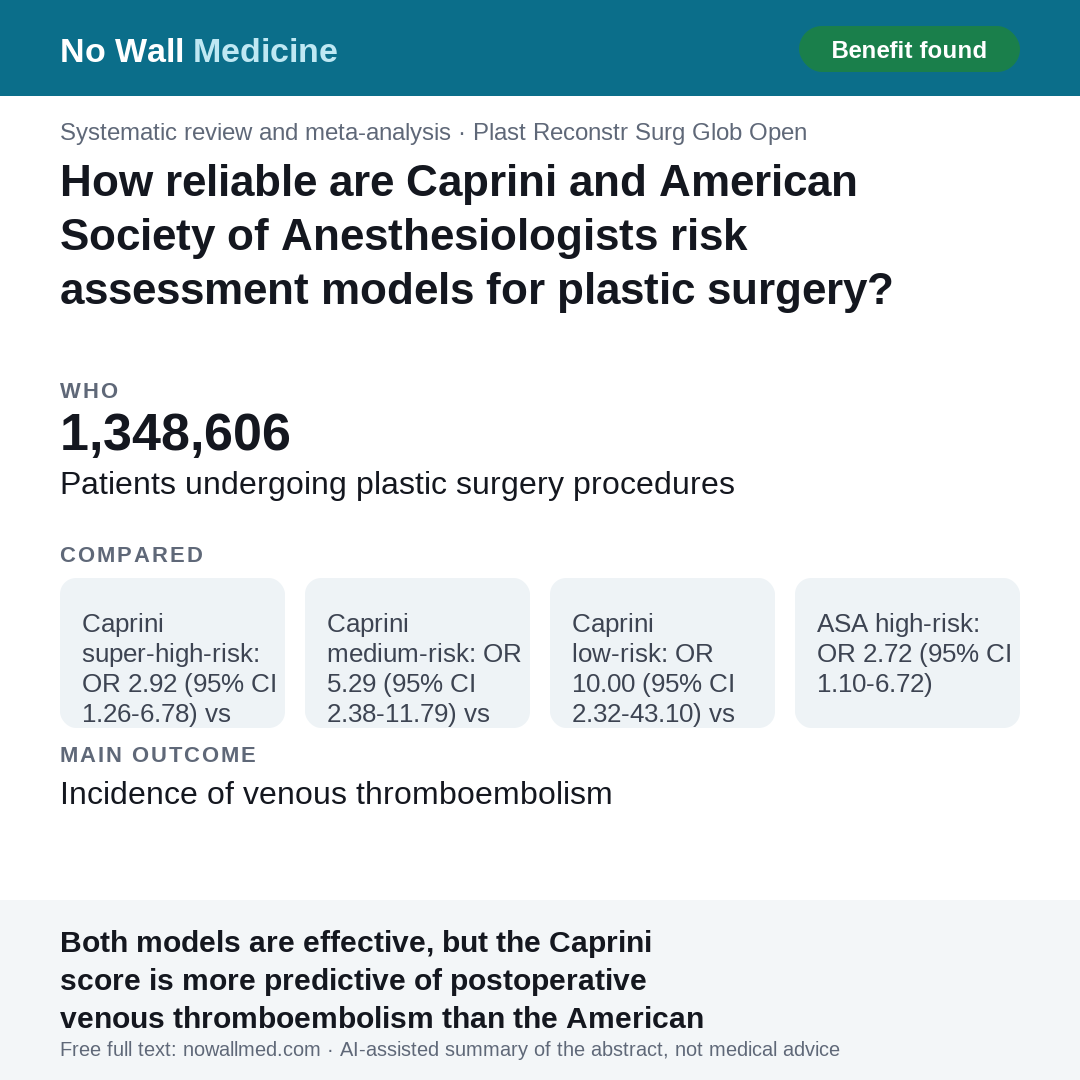
Venous Thromboembolism Risk Assessment Models in Plastic Surgery: A Systematic Review and Meta-Analysis
Systematic review and meta-analysisBenefit found
How reliable are Caprini and American Society of Anesthesiologists risk assessment models for plastic surgery?
Who
1,348,606
Patients undergoing plastic surgery procedures
Compared
Caprini super-high-risk: OR 2.92 (95% CI 1.26-6.78) vs high-risk
Caprini medium-risk: OR 5.29 (95% CI 2.38-11.79) vs low-risk
Caprini low-risk: OR 10.00 (95% CI 2.32-43.10) vs counterparts
ASA high-risk: OR 2.72 (95% CI 1.10-6.72)
Main outcome
Incidence of venous thromboembolism
Bottom line: Both models are effective, but the Caprini score is more predictive of postoperative venous thromboembolism than the American Society of Anesthesiologists grading.
Limitation: Lack of high-quality evidence and heterogeneity in risk assessment model data
Plast Reconstr Surg Glob Open · 2022-12-08Download image
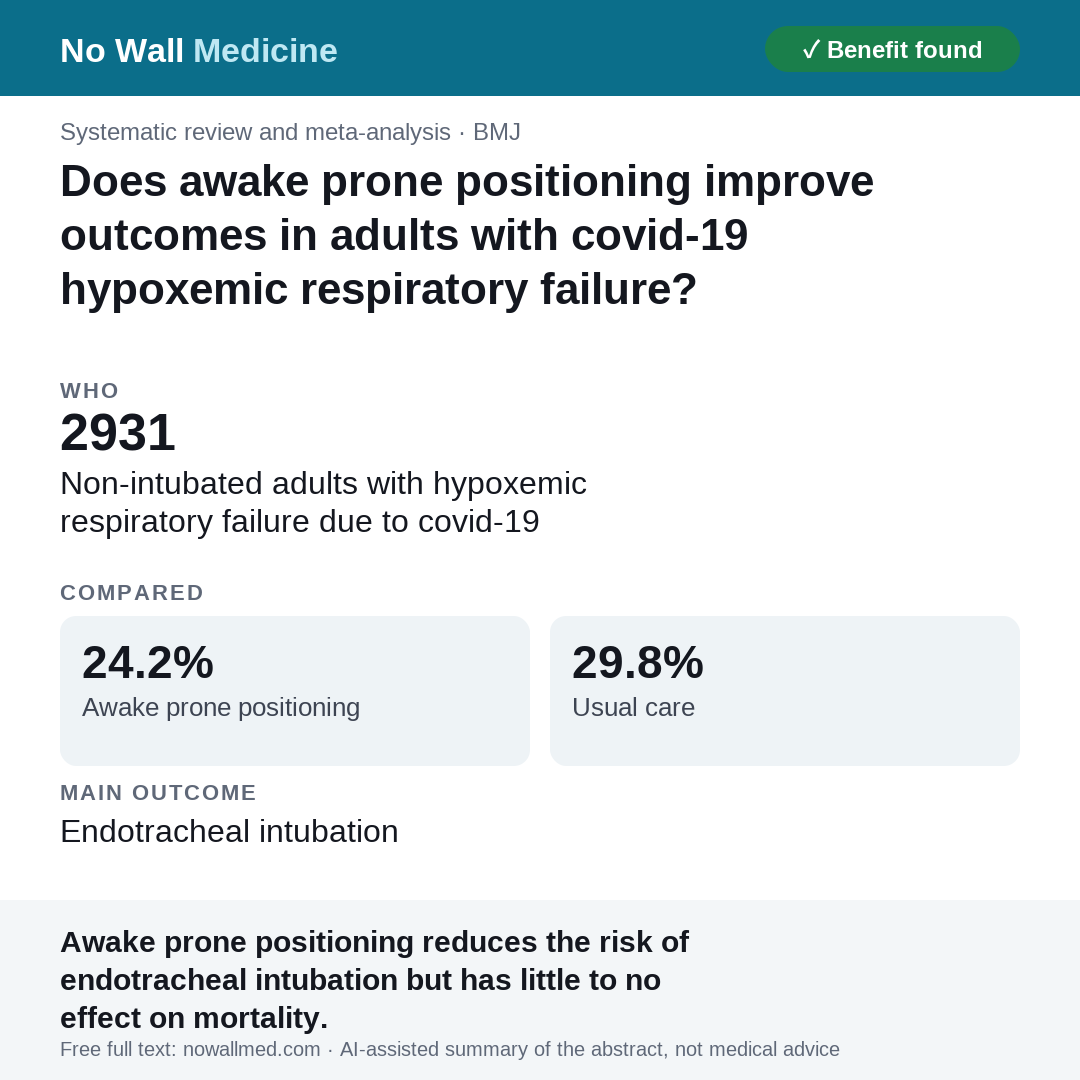
Efficacy of awake prone positioning in patients with covid-19 related hypoxemic respiratory failure: systematic review and meta-analysis of randomized trials
Systematic review and meta-analysisBenefit found
Does awake prone positioning improve outcomes in adults with covid-19 hypoxemic respiratory failure?
Who
2931
Non-intubated adults with hypoxemic respiratory failure due to covid-19
Compared
24.2%Awake prone positioning
29.8%Usual care
Main outcome
Endotracheal intubation
Result: relative risk 0.83 (95% confidence interval 0.73 to 0.94)
Bottom line: Awake prone positioning reduces the risk of endotracheal intubation but has little to no effect on mortality.
BMJ · 2022-12-07Download image
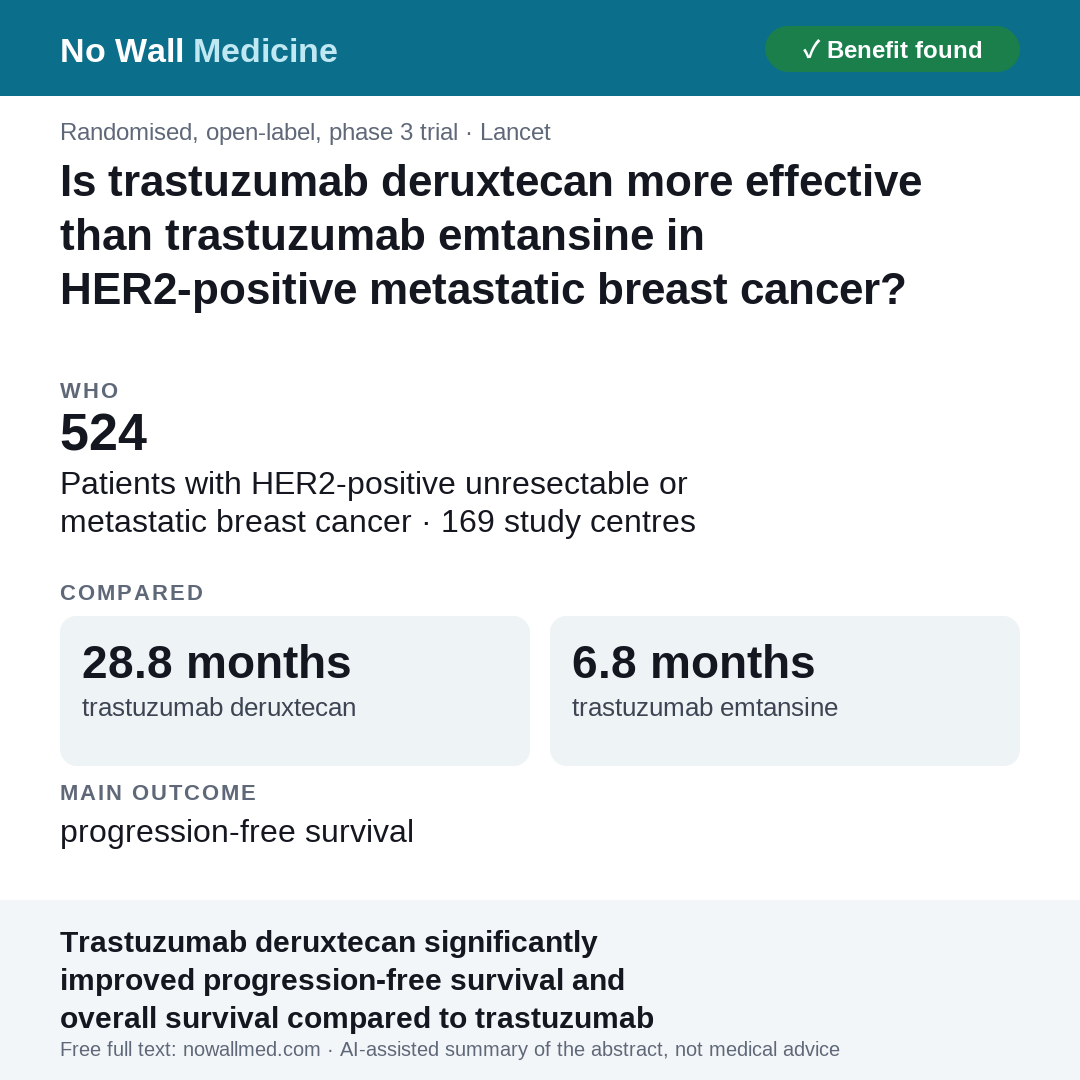
Trastuzumab deruxtecan versus trastuzumab emtansine in patients with HER2-positive metastatic breast cancer: updated results from DESTINY-Breast03, a randomised, open-label, phase 3 trial
Randomised, open-label, phase 3 trialBenefit found
Is trastuzumab deruxtecan more effective than trastuzumab emtansine in HER2-positive metastatic breast cancer?
Who
524
Patients with HER2-positive unresectable or metastatic breast cancer · 169 study centres in North America, Asia, Europe, Australia, and South America
Compared
28.8 monthstrastuzumab deruxtecan
6.8 monthstrastuzumab emtansine
Main outcome
progression-free survival
Result: hazard ratio 0.33 (95% CI 0.26-0.43)
Bottom line: Trastuzumab deruxtecan significantly improved progression-free survival and overall survival compared to trastuzumab emtansine in HER2-positive metastatic breast cancer.
Funded by: Daiichi Sankyo and AstraZeneca
Lancet · 2022-12-07Download image
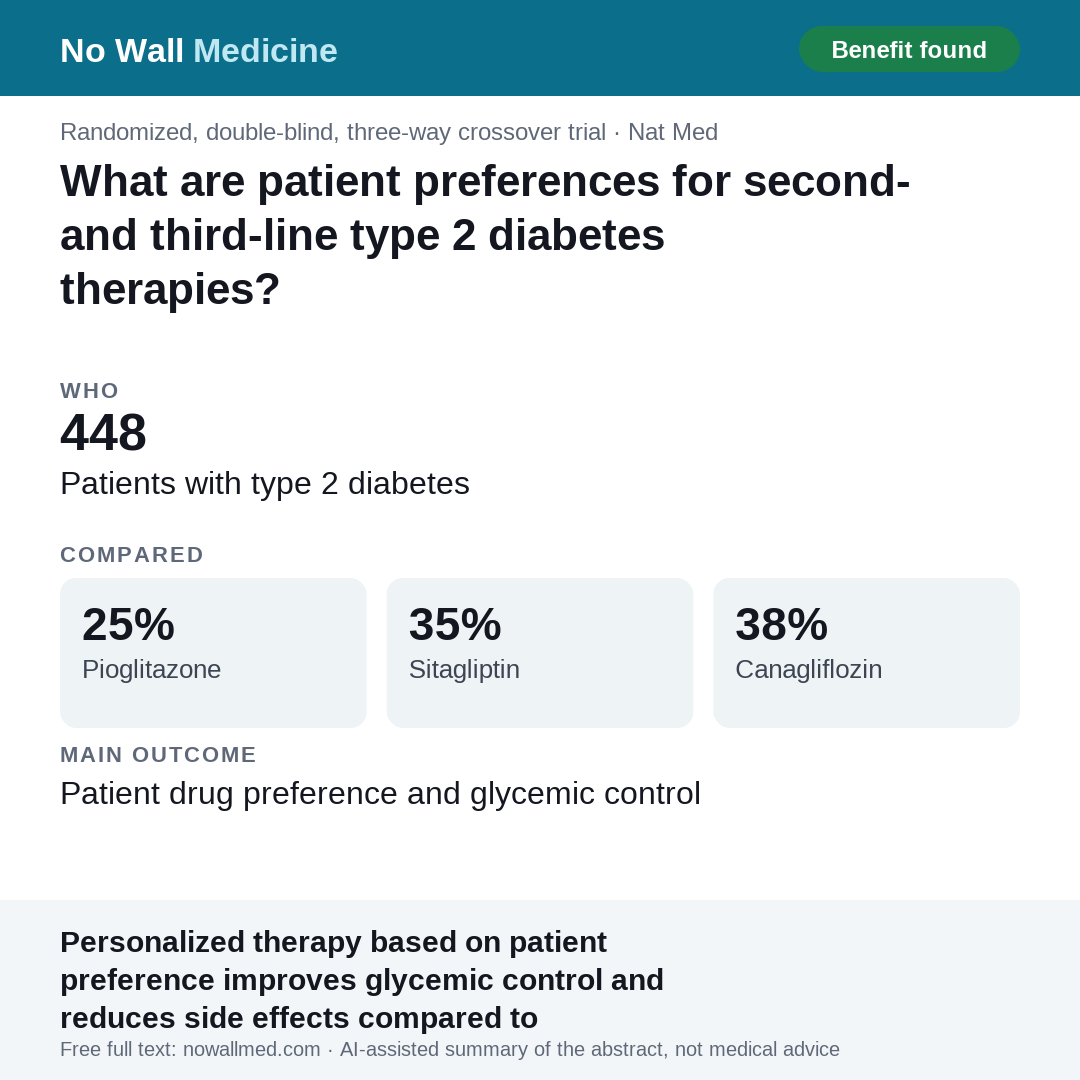
Patient preference for second- and third-line therapies in type 2 diabetes: a prespecified secondary endpoint of the TriMaster study
Randomized, double-blind, three-way crossover trialBenefit found
What are patient preferences for second- and third-line type 2 diabetes therapies?
Who
448
Patients with type 2 diabetes
Compared
25%Pioglitazone
35%Sitagliptin
38%Canagliflozin
Main outcome
Patient drug preference and glycemic control
Bottom line: Personalized therapy based on patient preference improves glycemic control and reduces side effects compared to nonpreferred drugs.
Nat Med · 2022-12-07Download image
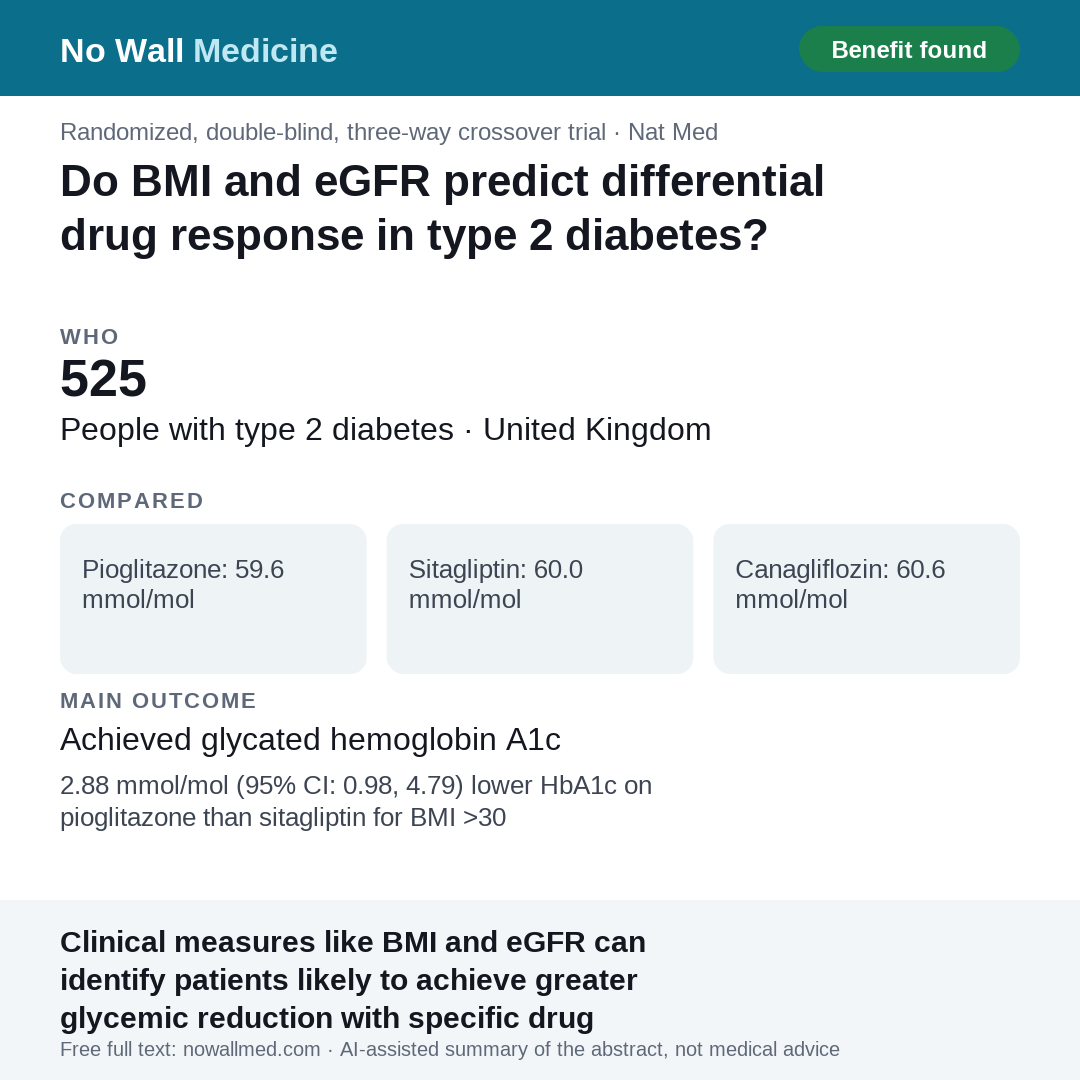
Patient stratification for determining optimal second-line and third-line therapy for type 2 diabetes: the TriMaster study
Randomized, double-blind, three-way crossover trialBenefit found
Do BMI and eGFR predict differential drug response in type 2 diabetes?
Who
525
People with type 2 diabetes · United Kingdom
Compared
Pioglitazone: 59.6 mmol/mol
Sitagliptin: 60.0 mmol/mol
Canagliflozin: 60.6 mmol/mol
Main outcome
Achieved glycated hemoglobin A1c
Result: 2.88 mmol/mol (95% CI: 0.98, 4.79) lower HbA1c on pioglitazone than sitagliptin for BMI >30
Bottom line: Clinical measures like BMI and eGFR can identify patients likely to achieve greater glycemic reduction with specific drug classes.
Nat Med · 2022-12-07Download image
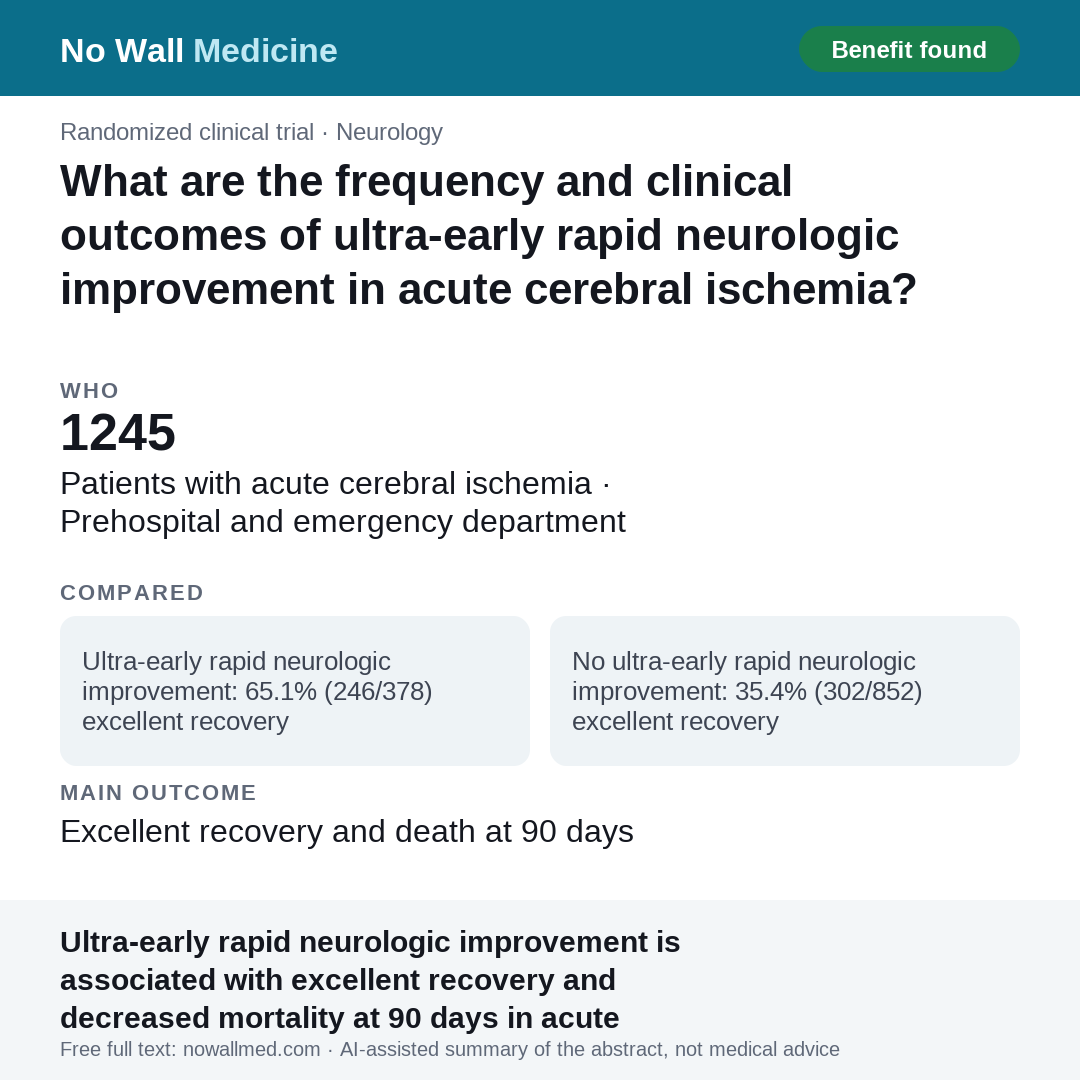
Neurologic Improvement in Acute Cerebral Ischemia: Frequency, Magnitude, Predictors, and Clinical Outcomes
Randomized clinical trialBenefit found
What are the frequency and clinical outcomes of ultra-early rapid neurologic improvement in acute cerebral ischemia?
Who
1245
Patients with acute cerebral ischemia · Prehospital and emergency department
Compared
Ultra-early rapid neurologic improvement: 65.1% (246/378) excellent recovery
No ultra-early rapid neurologic improvement: 35.4% (302/852) excellent recovery
Main outcome
Excellent recovery and death at 90 days
Bottom line: Ultra-early rapid neurologic improvement is associated with excellent recovery and decreased mortality at 90 days in acute cerebral ischemia.
Neurology · 2022-12-07Download image
In Search of Biomarkers to Guide Interventions in Autism Spectrum Disorder: A Systematic Review
Systematic reviewUnclear result
Biomarkers for autism spectrum disorder
Who
people with autism spectrum disorder
Compared
molecular biomarkers
neurophysiology
Main outcome
autism spectrum disorder symptoms
Bottom line: No biomarker has sufficient evidence
Am J Psychiatry · 2022-12-07Download image
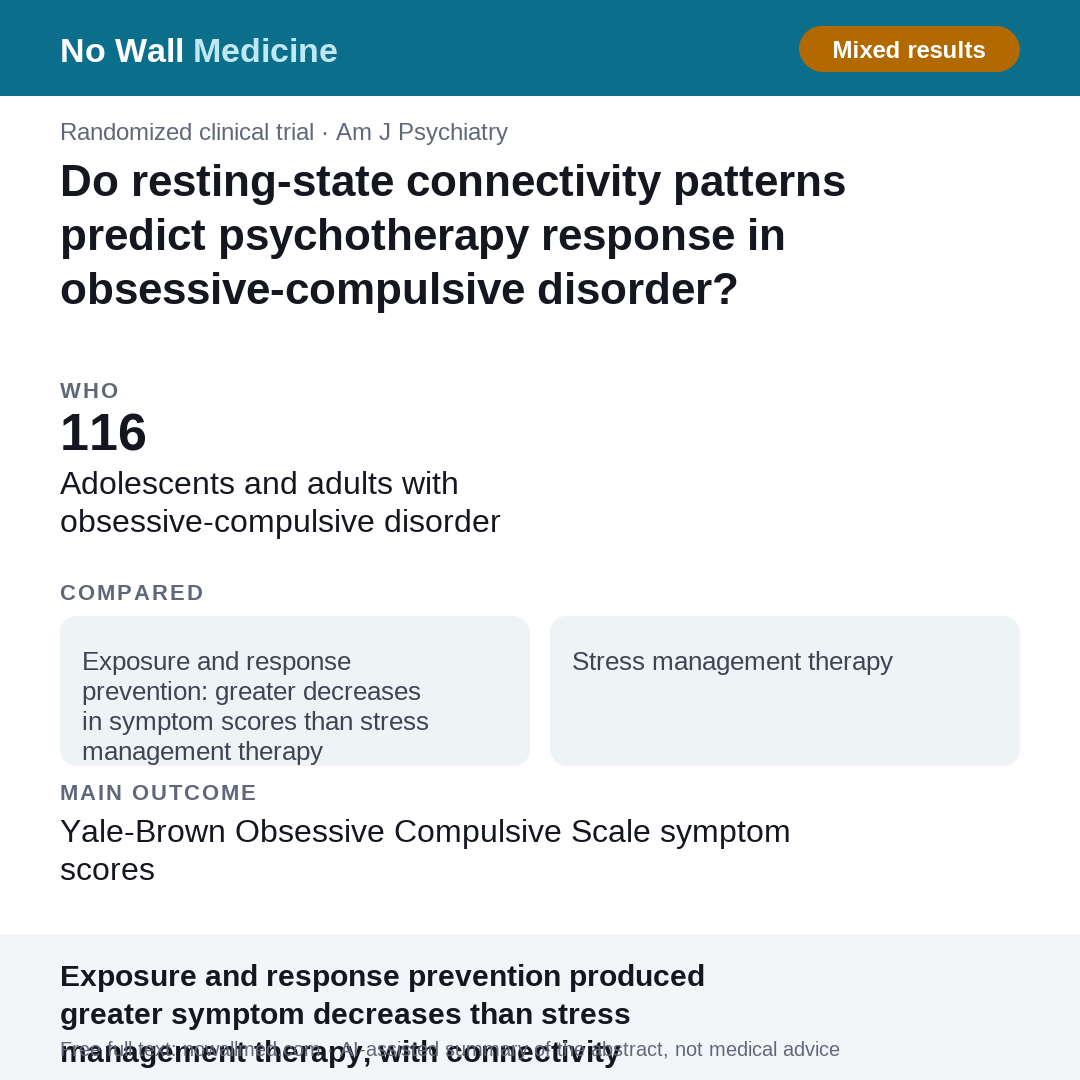
Resting-State Connectivity and Response to Psychotherapy Treatment in Adolescents and Adults With OCD: A Randomized Clinical Trial
Randomized clinical trialMixed results
Do resting-state connectivity patterns predict psychotherapy response in obsessive-compulsive disorder?
Who
116
Adolescents and adults with obsessive-compulsive disorder
Compared
Exposure and response prevention: greater decreases in symptom scores than stress management therapy
Stress management therapy
Main outcome
Yale-Brown Obsessive Compulsive Scale symptom scores
Bottom line: Exposure and response prevention produced greater symptom decreases than stress management therapy, with connectivity patterns predicting response.
Am J Psychiatry · 2022-12-07Download image
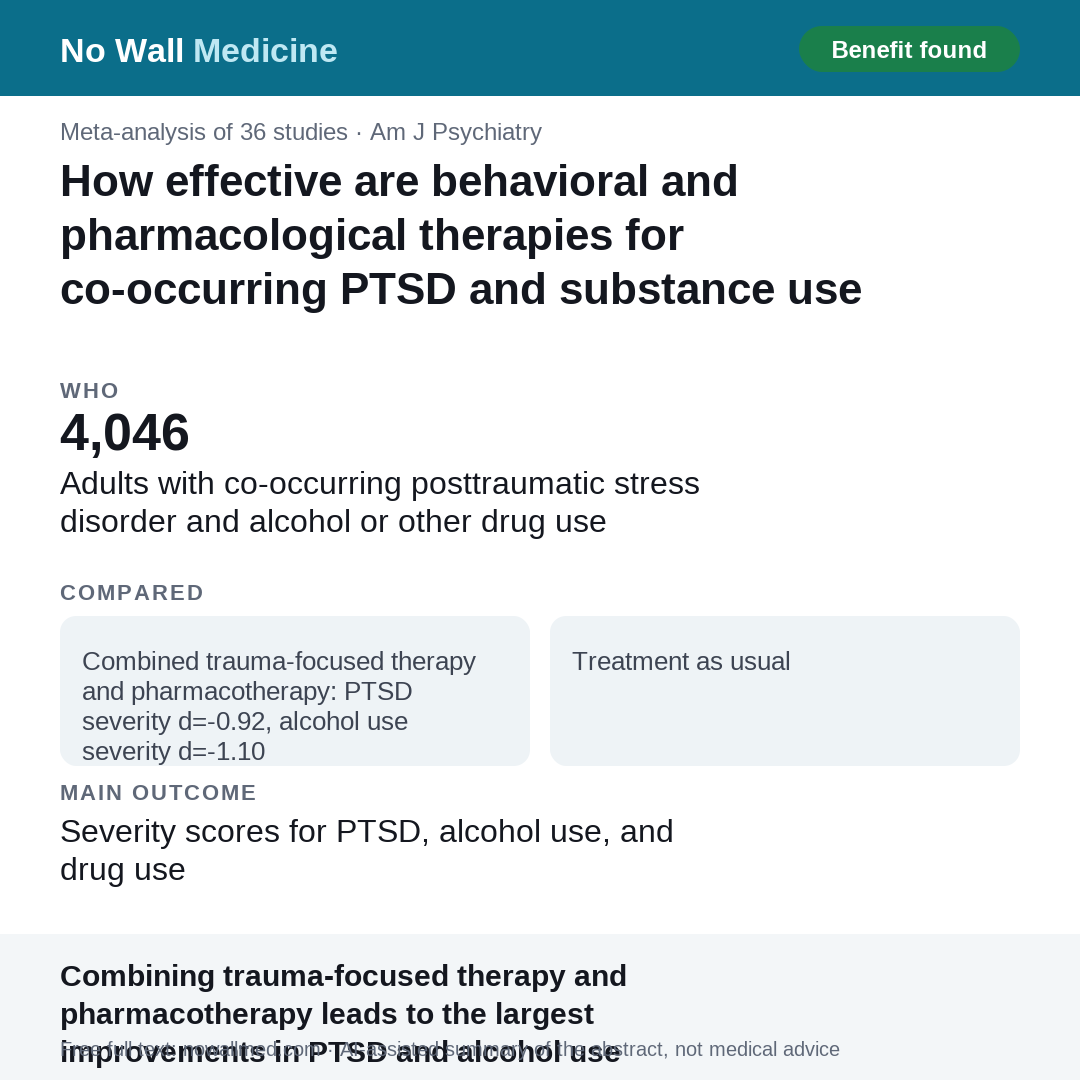
Project Harmony: A Meta-Analysis With Individual Patient Data on Behavioral and Pharmacologic Trials for Comorbid Posttraumatic Stress and Alcohol or Other Drug Use Disorders
Meta-analysis of 36 studiesBenefit found
How effective are behavioral and pharmacological therapies for co-occurring PTSD and substance use disorders?
Who
4,046
Adults with co-occurring posttraumatic stress disorder and alcohol or other drug use disorders
Compared
Combined trauma-focused therapy and pharmacotherapy: PTSD severity d=-0.92, alcohol use severity d=-1.10
Treatment as usual
Main outcome
Severity scores for PTSD, alcohol use, and drug use
Result: PTSD severity d=-0.92 (95% CI=-1.57, -0.30); alcohol use severity d=-1.10 (95% CI=-1.54, -0.68)
Bottom line: Combining trauma-focused therapy and pharmacotherapy leads to the largest improvements in PTSD and alcohol use severity.
Am J Psychiatry · 2022-12-07Download image
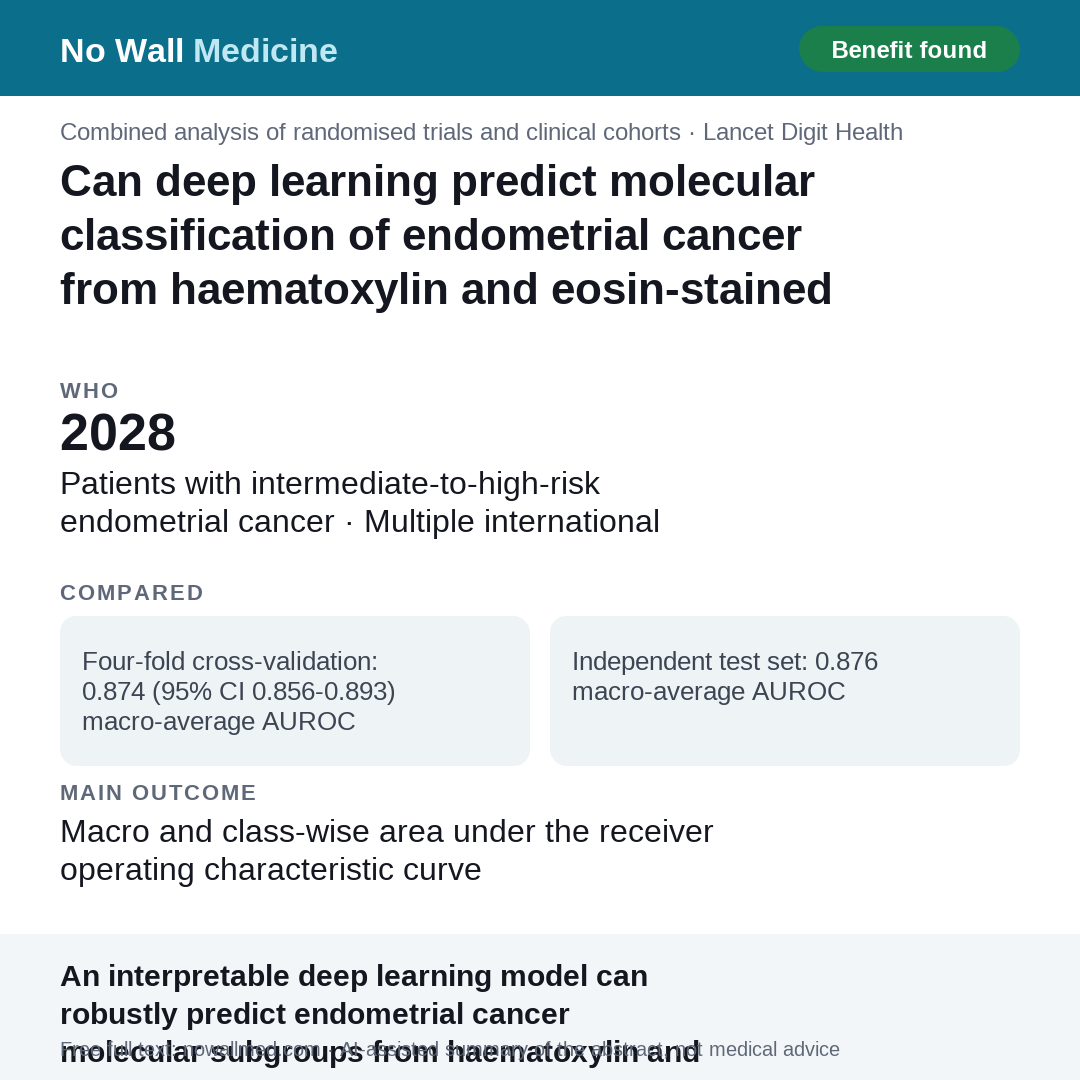
Interpretable deep learning model to predict the molecular classification of endometrial cancer from haematoxylin and eosin-stained whole-slide images: a combined analysis of the PORTEC randomised trials and clinical cohorts
Combined analysis of randomised trials and clinical cohortsEarly signal
Can deep learning predict molecular classification of endometrial cancer from haematoxylin and eosin-stained images?
Who
2028
Patients with intermediate-to-high-risk endometrial cancer · Multiple international cohorts and randomised trials
Compared
Four-fold cross-validation: 0.874 (95% CI 0.856-0.893) macro-average AUROC
Independent test set: 0.876 macro-average AUROC
Main outcome
Macro and class-wise area under the receiver operating characteristic curve
Result: macro-average AUROC 0.874 (95% CI 0.856-0.893)
Bottom line: An interpretable deep learning model can robustly predict endometrial cancer molecular subgroups from haematoxylin and eosin-stained whole-slide images.
Funded by: Hanarth Foundation, Promedica Foundation, and Swiss Federal Institutes of Technology
Lancet Digit Health · 2022-12-07Download image
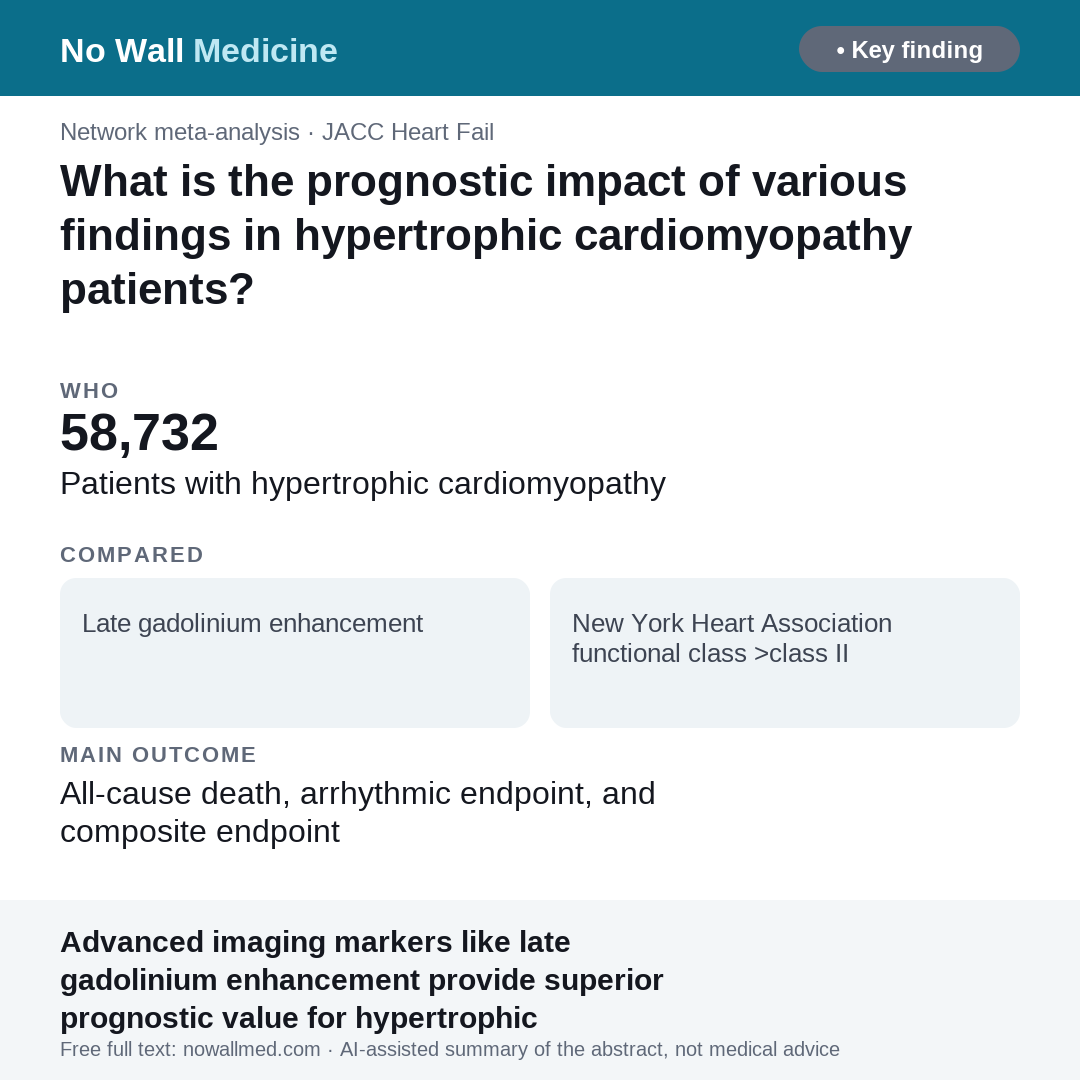
Comparison of Demographic, Clinical, Biochemical, and Imaging Findings in Hypertrophic Cardiomyopathy Prognosis: A Network Meta-Analysis
Network meta-analysisBenefit found
What is the prognostic impact of various findings in hypertrophic cardiomyopathy patients?
Who
58,732
Patients with hypertrophic cardiomyopathy
Compared
Late gadolinium enhancement
New York Heart Association functional class >class II
Main outcome
All-cause death, arrhythmic endpoint, and composite endpoint
Bottom line: Advanced imaging markers like late gadolinium enhancement provide superior prognostic value for hypertrophic cardiomyopathy risk stratification.
JACC Heart Fail · 2022-12-07Download image
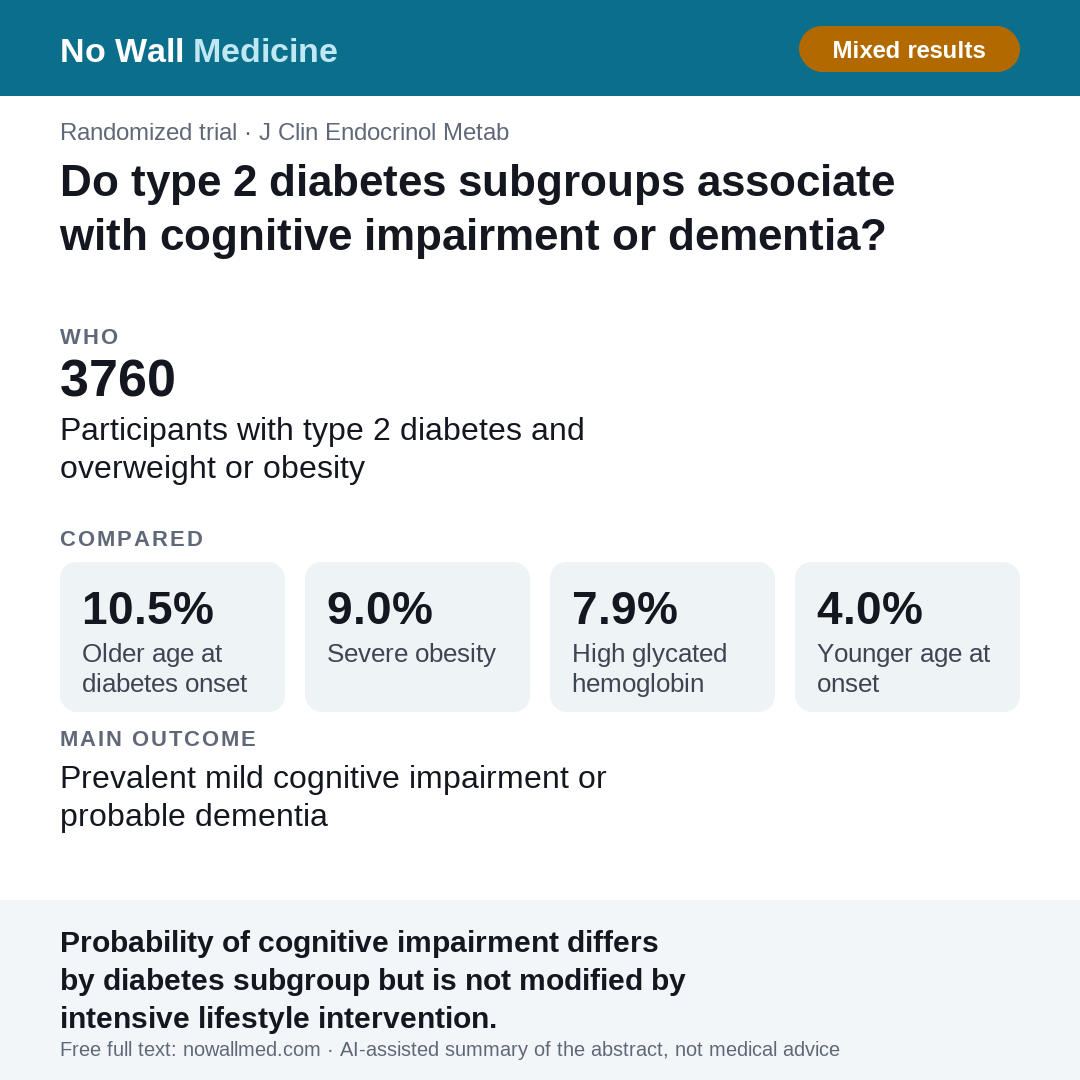
Association of Type 2 Diabetes Subgroups With Cognitive Status Without Modification From Lifestyle Intervention
Randomized trialMixed results
Do type 2 diabetes subgroups associate with cognitive impairment or dementia?
Who
3760
Participants with type 2 diabetes and overweight or obesity
Compared
10.5%Older age at diabetes onset
9.0%Severe obesity
7.9%High glycated hemoglobin
4.0%Younger age at onset
Main outcome
Prevalent mild cognitive impairment or probable dementia
Bottom line: Probability of cognitive impairment differs by diabetes subgroup but is not modified by intensive lifestyle intervention.
J Clin Endocrinol Metab · 2022-12-07Download image
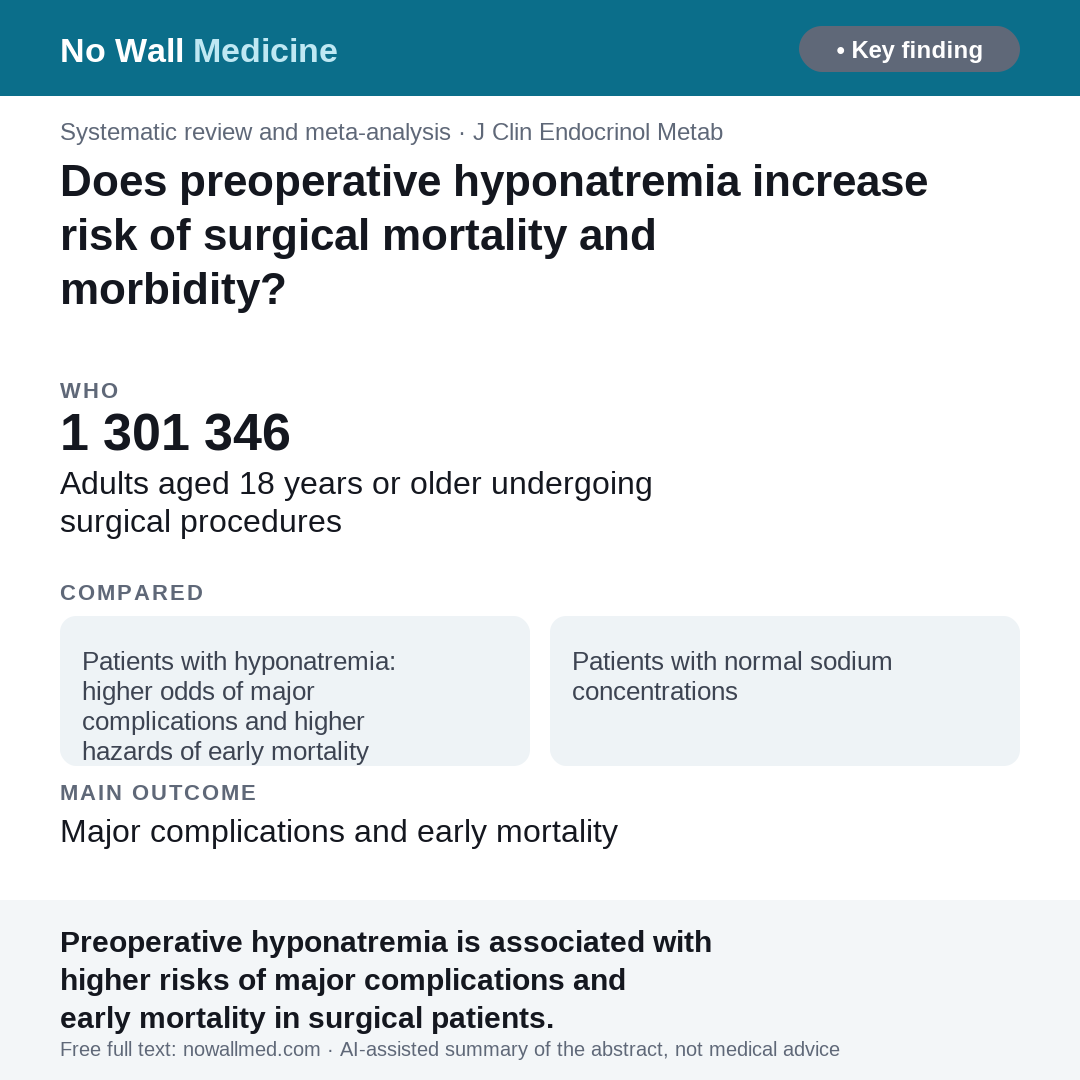
Association of Preoperative Hyponatremia With Surgical Outcomes: A Systematic Review and Meta-analysis of 32 Observational Studies
Systematic review and meta-analysisHarm found
Does preoperative hyponatremia increase risk of surgical mortality and morbidity?
Who
1 301 346
Adults aged 18 years or older undergoing surgical procedures
Compared
Patients with hyponatremia: higher odds of major complications and higher hazards of early mortality
Patients with normal sodium concentrations
Main outcome
Major complications and early mortality
Result: adjusted odds ratio 1.37 (95% CI 1.23-1.53); adjusted hazard ratio 1.27 (95% CI 1.13-1.43)
Bottom line: Preoperative hyponatremia is associated with higher risks of major complications and early mortality in surgical patients.
J Clin Endocrinol Metab · 2022-12-07Download image
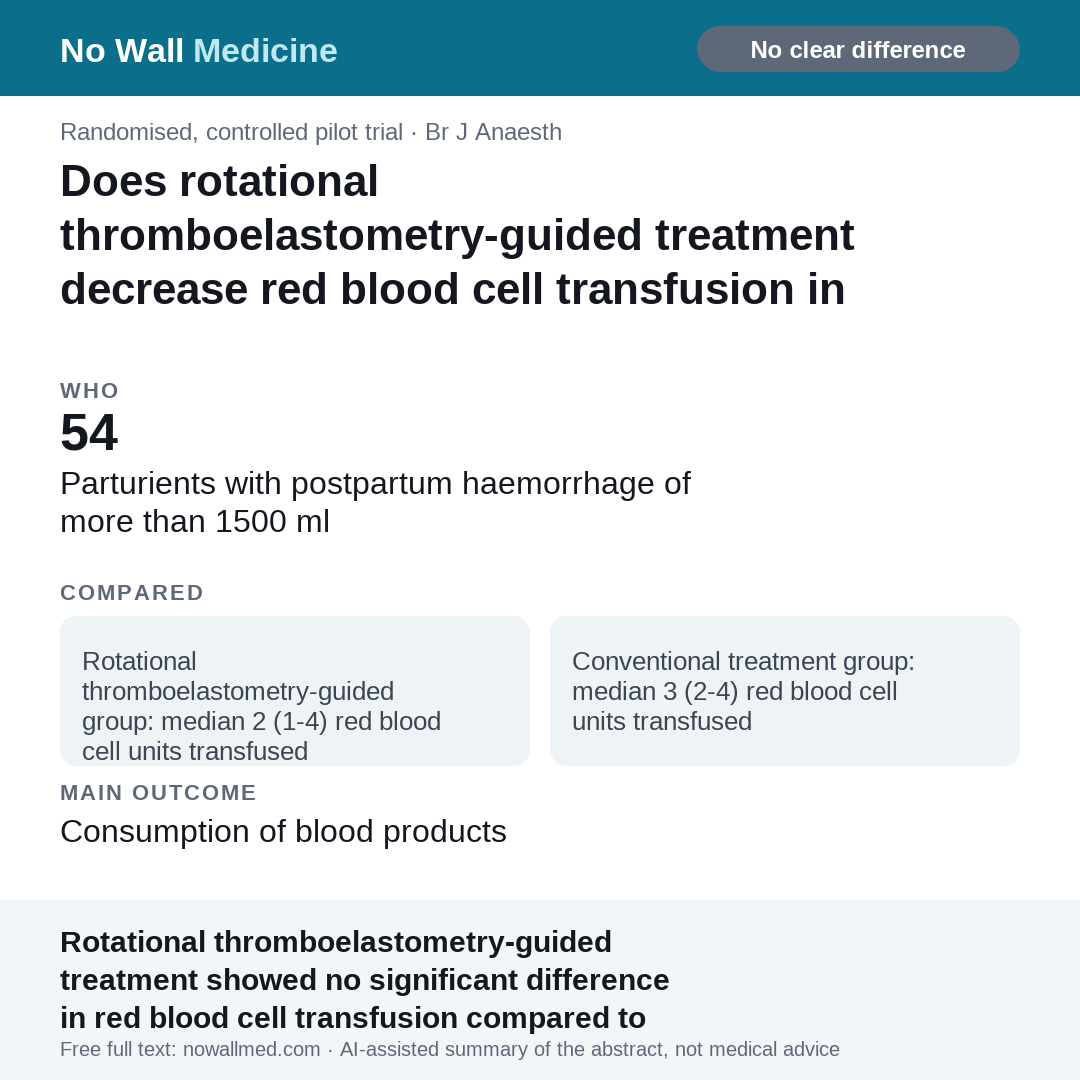
Thromboelastometry-guided treatment algorithm in postpartum haemorrhage: a randomised, controlled pilot trial
Randomised, controlled pilot trialNo clear difference
Does rotational thromboelastometry-guided treatment decrease red blood cell transfusion in postpartum haemorrhage?
Who
54
Parturients with postpartum haemorrhage of more than 1500 ml
Compared
Rotational thromboelastometry-guided group: median 2 (1-4) red blood cell units transfused
Conventional treatment group: median 3 (2-4) red blood cell units transfused
Main outcome
Consumption of blood products
Bottom line: Rotational thromboelastometry-guided treatment showed no significant difference in red blood cell transfusion compared to conventional treatment.
Br J Anaesth · 2022-12-07Download image
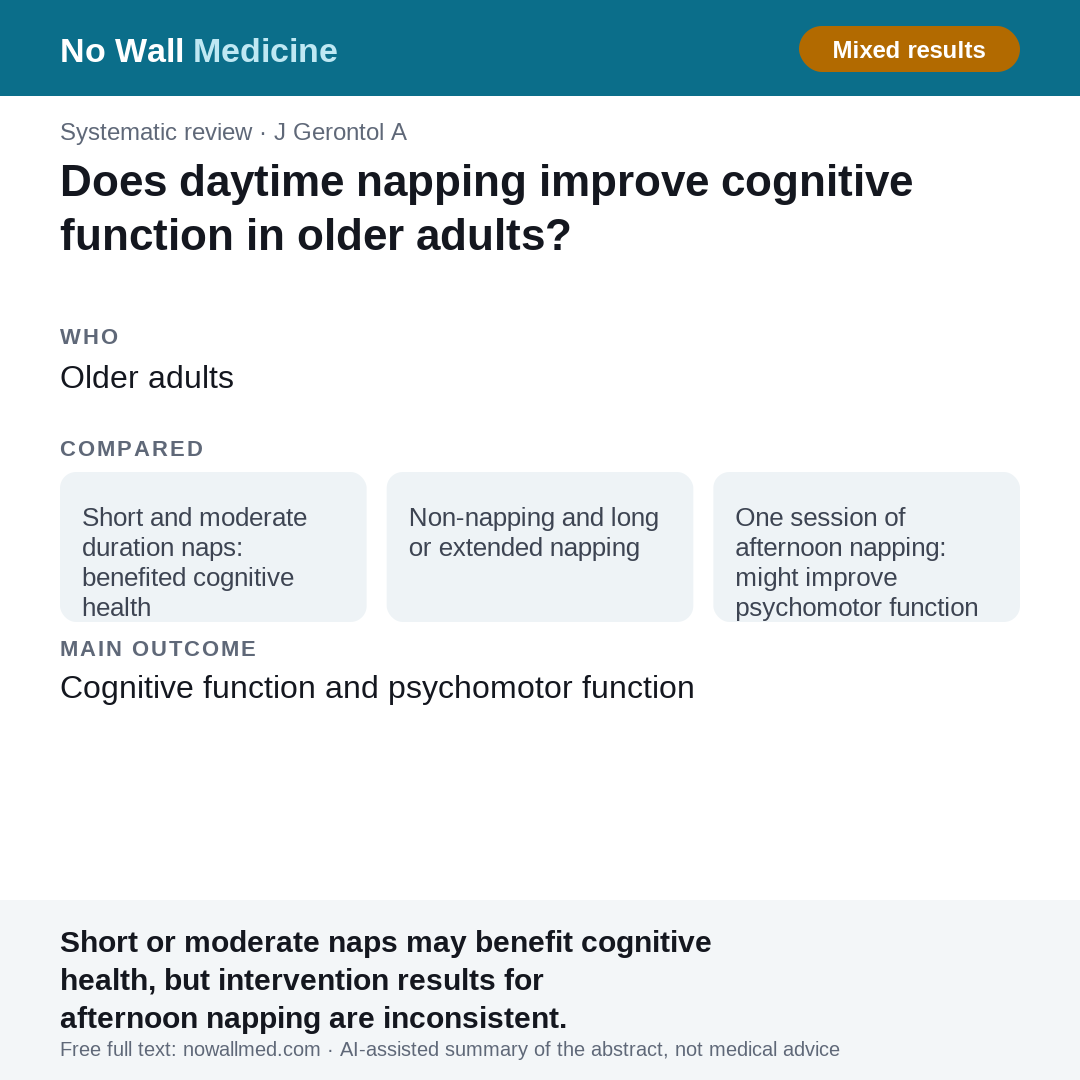
Daytime Napping and Cognitive Health in Older Adults: A Systematic Review
Systematic reviewMixed results
Does daytime napping improve cognitive function in older adults?
Who
Older adults
Compared
Short and moderate duration naps: benefited cognitive health
Non-napping and long or extended napping
One session of afternoon napping: might improve psychomotor function and working memory
Main outcome
Cognitive function and psychomotor function
Bottom line: Short or moderate naps may benefit cognitive health, but intervention results for afternoon napping are inconsistent.
Limitation: Inconclusive effect of multiple nap sessions due to a limited number of studies.
J Gerontol A · 2022-12-07Download image
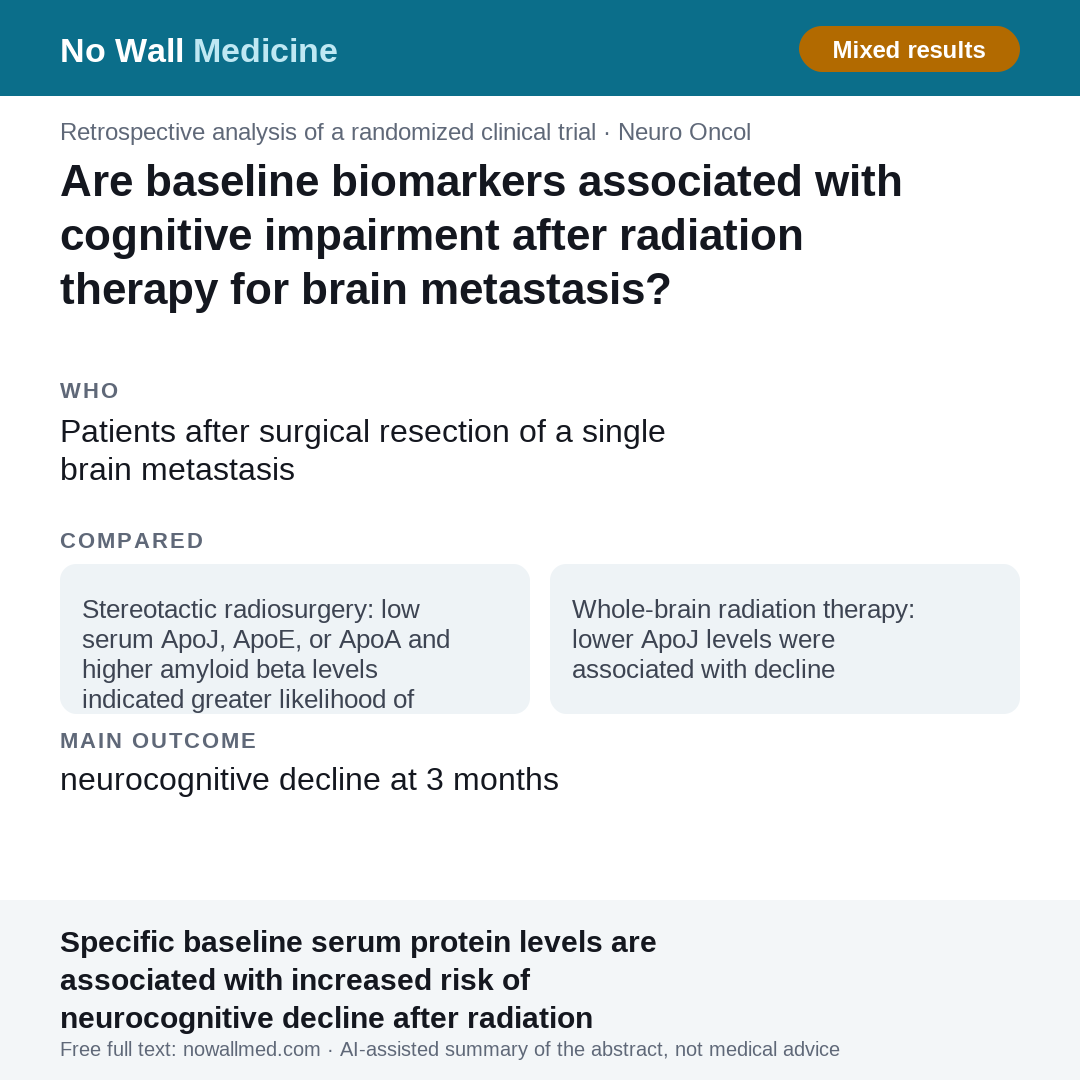
Association of circulating markers with cognitive decline after radiation therapy for brain metastasis
Retrospective analysis of a randomized clinical trialMixed results
Are baseline biomarkers associated with cognitive impairment after radiation therapy for brain metastasis?
Who
Patients after surgical resection of a single brain metastasis
Compared
Stereotactic radiosurgery: low serum ApoJ, ApoE, or ApoA and higher amyloid beta levels indicated greater likelihood of decline
Whole-brain radiation therapy: lower ApoJ levels were associated with decline
Main outcome
neurocognitive decline at 3 months
Bottom line: Specific baseline serum protein levels are associated with increased risk of neurocognitive decline after radiation therapy.
Neuro Oncol · 2022-12-07Download image