Visual abstracts
New randomized trials and meta-analyses from leading journals at a glance: who was studied, what was compared, and what was found. Every paper is free to read in full.
All specialtiesCardiology 4876Oncology 4133Gastroenterology & Hepatology 1942Infectious Disease 3832Neurology 1901Psychiatry & Mental Health 2273Pulmonology 2141Critical Care 1364Endocrinology & Diabetes 2579Pediatrics 2979Surgery 2555Orthopedics & Sports Medicine 931Neurosurgery 537Cardiothoracic & Vascular Surgery 674Plastic & Reconstructive Surgery 590Nephrology 1132Rheumatology 823Hematology 1109Dermatology 621Ophthalmology 543Obstetrics & Gynecology 1686Public & Global Health 1058Radiology & Imaging 647Anesthesiology 986Urology 764ENT (Otolaryngology) 503Emergency Medicine 511Allergy & Immunology 313Geriatrics 978Family Medicine & Primary Care 562Medical Genetics & Genomics 676Pathology & Laboratory Medicine 159Physical Medicine & Rehabilitation 757Palliative Care 444Nutrition 1588Digital Health & AI 2197General Medicine 319
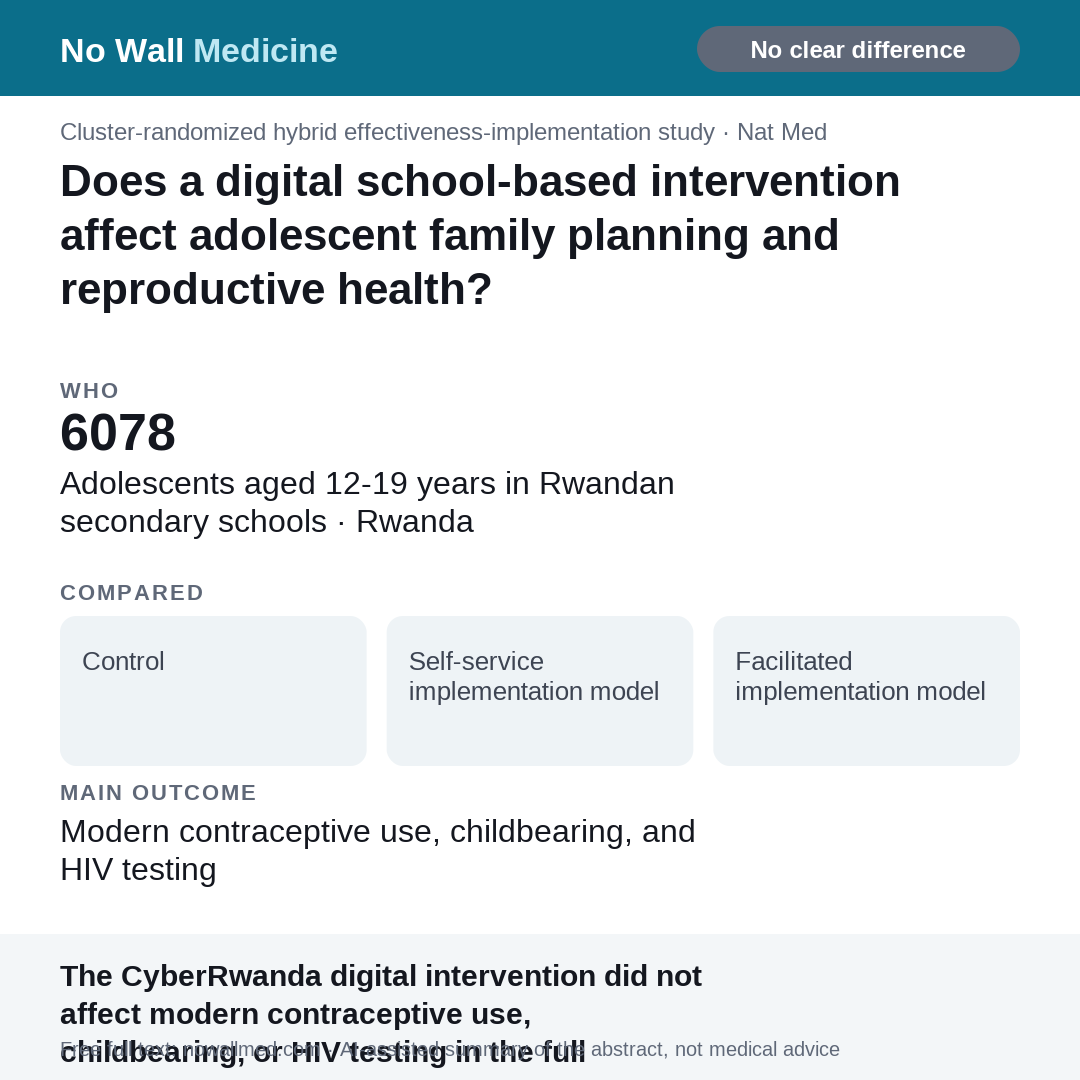
Effect of a digital school-based intervention on adolescent family planning and reproductive health in Rwanda: a cluster-randomized trial
Cluster-randomized hybrid effectiveness-implementation studyNo clear difference
Does a digital school-based intervention affect adolescent family planning and reproductive health?
Who
6078
Adolescents aged 12-19 years in Rwandan secondary schools · Rwanda
Compared
Control
Self-service implementation model
Facilitated implementation model
Main outcome
Modern contraceptive use, childbearing, and HIV testing
Result: prevalence ratio 1.04 (95% CI 0.76, 1.42)
Bottom line: The CyberRwanda digital intervention did not affect modern contraceptive use, childbearing, or HIV testing in the full sample.
Nat Med · 2024-08-23Download image
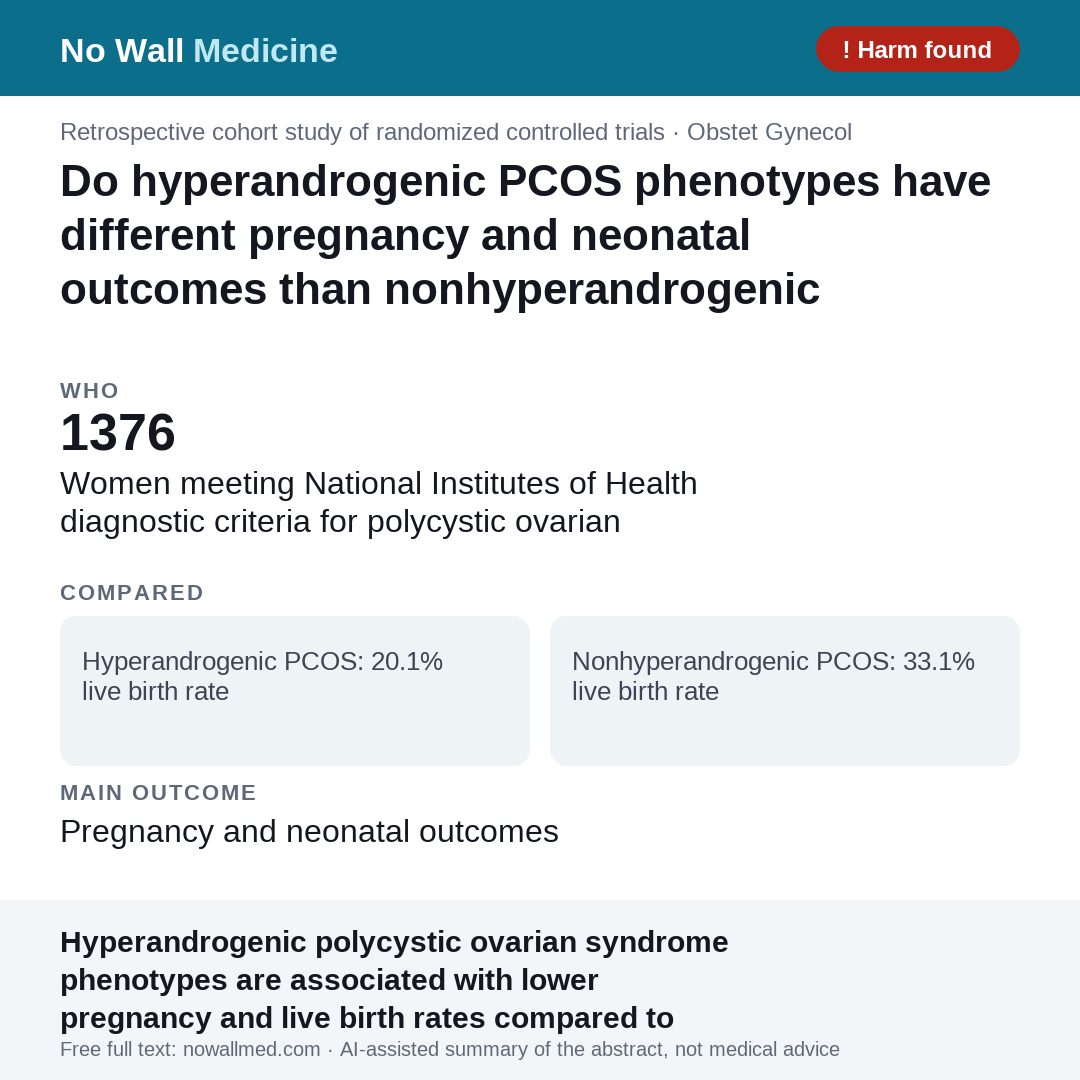
Correlation of Polycystic Ovarian Syndrome Phenotypes With Pregnancy and Neonatal Outcomes
Retrospective cohort study of randomized controlled trialsHarm found
Do hyperandrogenic PCOS phenotypes have different pregnancy and neonatal outcomes than nonhyperandrogenic phenotypes?
Who
1376
Women meeting National Institutes of Health diagnostic criteria for polycystic ovarian syndrome
Compared
Hyperandrogenic PCOS: 20.1% live birth rate
Nonhyperandrogenic PCOS: 33.1% live birth rate
Main outcome
Pregnancy and neonatal outcomes
Result: odds ratio 0.51 (CI, 0.34-0.76)
Bottom line: Hyperandrogenic polycystic ovarian syndrome phenotypes are associated with lower pregnancy and live birth rates compared to nonhyperandrogenic phenotypes.
Limitation: Low prevalence of prenatal complications and neonatal outcomes precluded a meaningful comparison.
Obstet Gynecol · 2024-08-22Download image
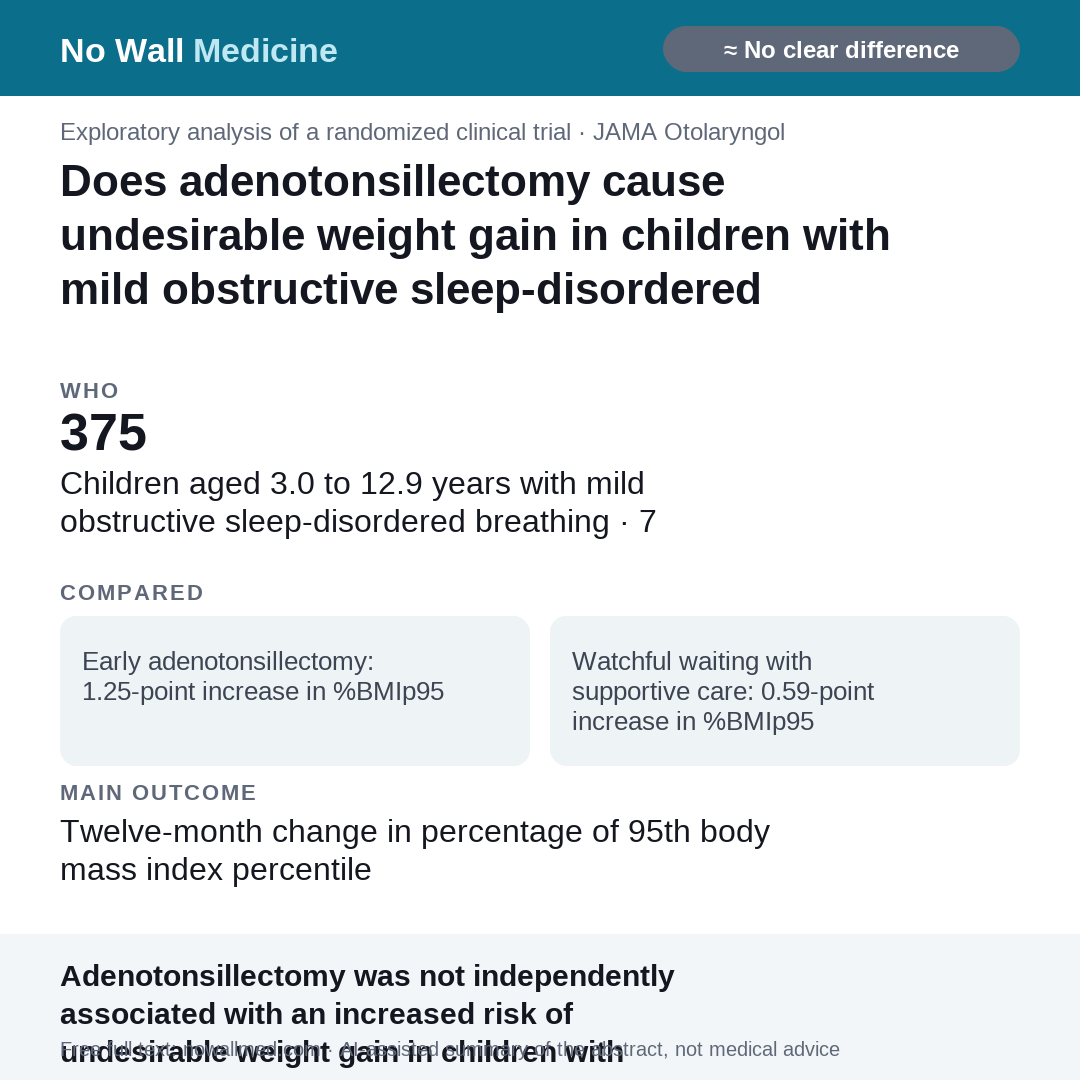
Weight Gain After Adenotonsillectomy in Children With Mild Obstructive Sleep-Disordered Breathing: Exploratory Analysis of the PATS Randomized Clinical Trial
Exploratory analysis of a randomized clinical trialNo clear difference
Does adenotonsillectomy cause undesirable weight gain in children with mild obstructive sleep-disordered breathing?
Who
375
Children aged 3.0 to 12.9 years with mild obstructive sleep-disordered breathing · 7 pediatric tertiary care centers across the US
Compared
Early adenotonsillectomy: 1.25-point increase in %BMIp95
Watchful waiting with supportive care: 0.59-point increase in %BMIp95
Main outcome
Twelve-month change in percentage of 95th body mass index percentile
Result: mean difference 0.93 (95% CI -0.39 to 2.25)
Bottom line: Adenotonsillectomy was not independently associated with an increased risk of undesirable weight gain in children with mild obstructive sleep-disordered breathing.
Limitation: This was an exploratory analysis of the Pediatric Adenotonsillectomy Trial for Snoring
JAMA Otolaryngol · 2024-08-22Download image
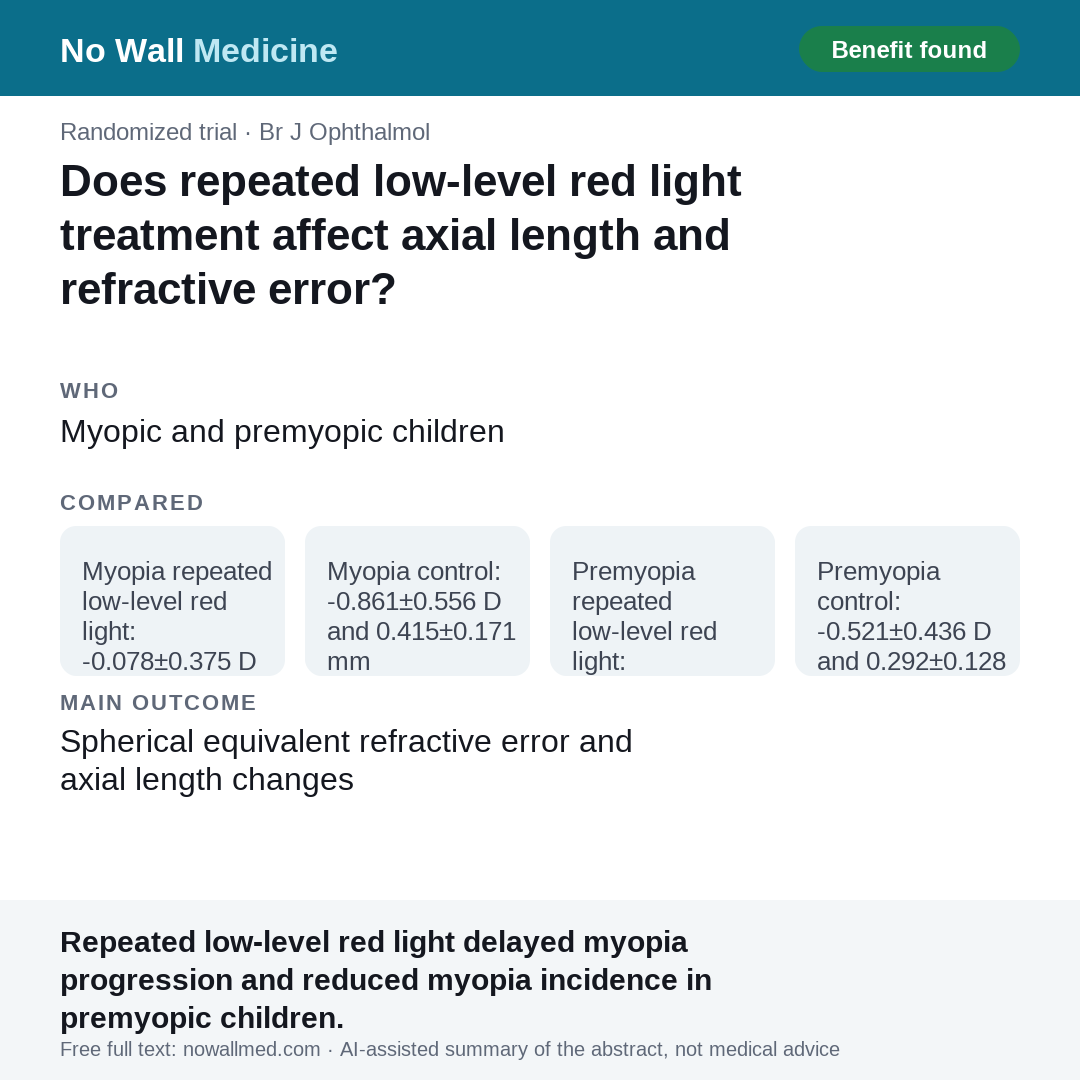
Effectiveness of repeated low-level red light in myopia prevention and myopia control
Randomized trialBenefit found
Does repeated low-level red light treatment affect axial length and refractive error?
Who
Myopic and premyopic children
Compared
Myopia repeated low-level red light: -0.078±0.375 D and 0.033±0.123 mm
Myopia control: -0.861±0.556 D and 0.415±0.171 mm
Premyopia repeated low-level red light: -0.181±0.417 D and 0.145±0.175 mm
Premyopia control: -0.521±0.436 D and 0.292±0.128 mm
Main outcome
Spherical equivalent refractive error and axial length changes
Bottom line: Repeated low-level red light delayed myopia progression and reduced myopia incidence in premyopic children.
Br J Ophthalmol · 2024-08-22Download image
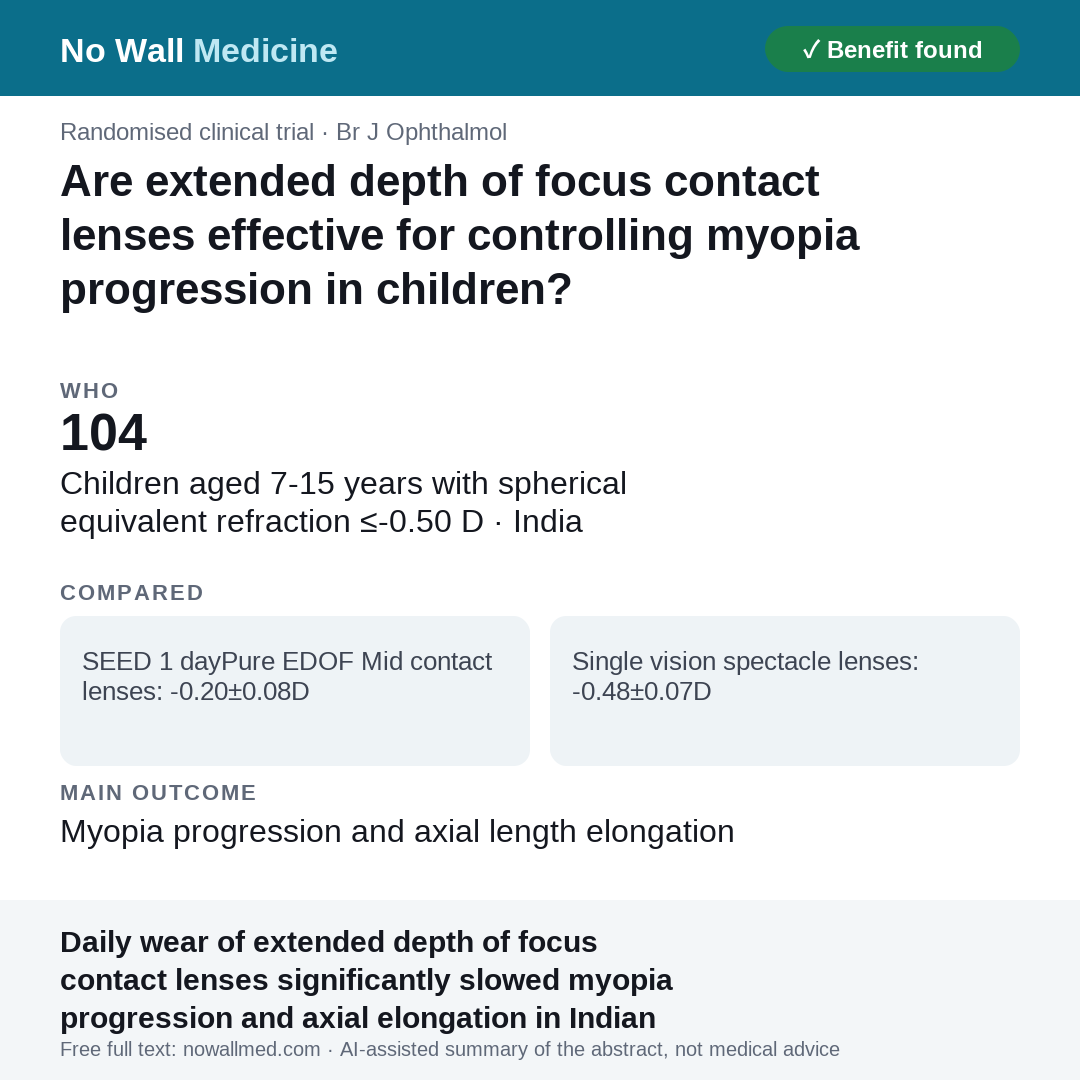
Randomised clinical trial of extended depth of focus lenses for controlling myopia progression: Outcomes from SEED LVPEI Indian Myopia Study
Randomised clinical trialBenefit found
Are extended depth of focus contact lenses effective for controlling myopia progression in children?
Who
104
Children aged 7-15 years with spherical equivalent refraction ≤-0.50 D · India
Compared
SEED 1 dayPure EDOF Mid contact lenses: -0.20±0.08D
Single vision spectacle lenses: -0.48±0.07D
Main outcome
Myopia progression and axial length elongation
Result: -0.28D (p=0.01) for spherical equivalent refraction
Bottom line: Daily wear of extended depth of focus contact lenses significantly slowed myopia progression and axial elongation in Indian children.
Br J Ophthalmol · 2024-08-22Download image
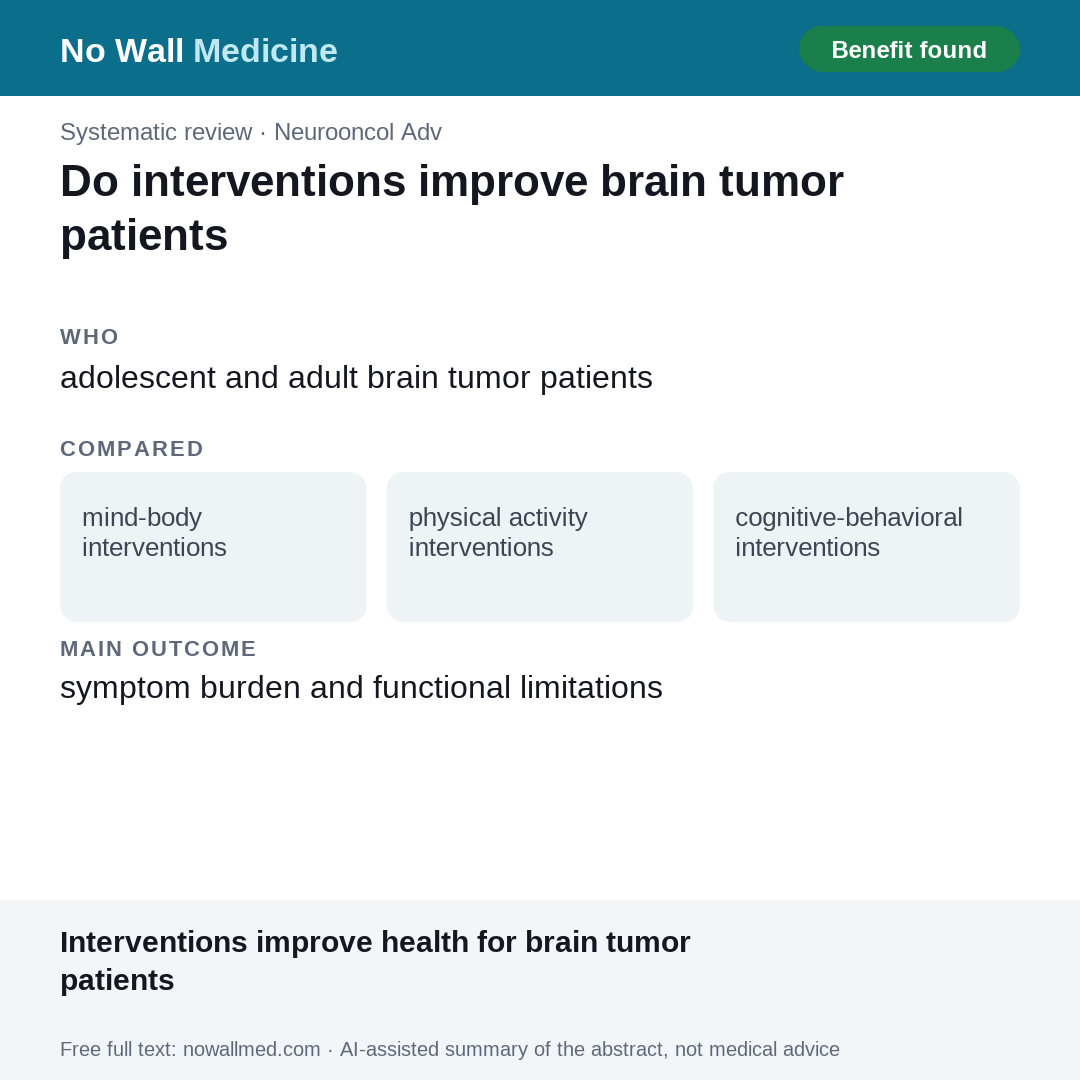
Landscape and impact of mind-body, cognitive-behavioral, and physical activity interventions in adolescent and adult brain tumor patients: A systematic review
Systematic reviewBenefit found
Do interventions improve brain tumor patients
Who
adolescent and adult brain tumor patients
Compared
mind-body interventions
physical activity interventions
cognitive-behavioral interventions
Main outcome
symptom burden and functional limitations
Bottom line: Interventions improve health for brain tumor patients
Limitation: underpowered analyses
Neurooncol Adv · 2024-08-22Download image
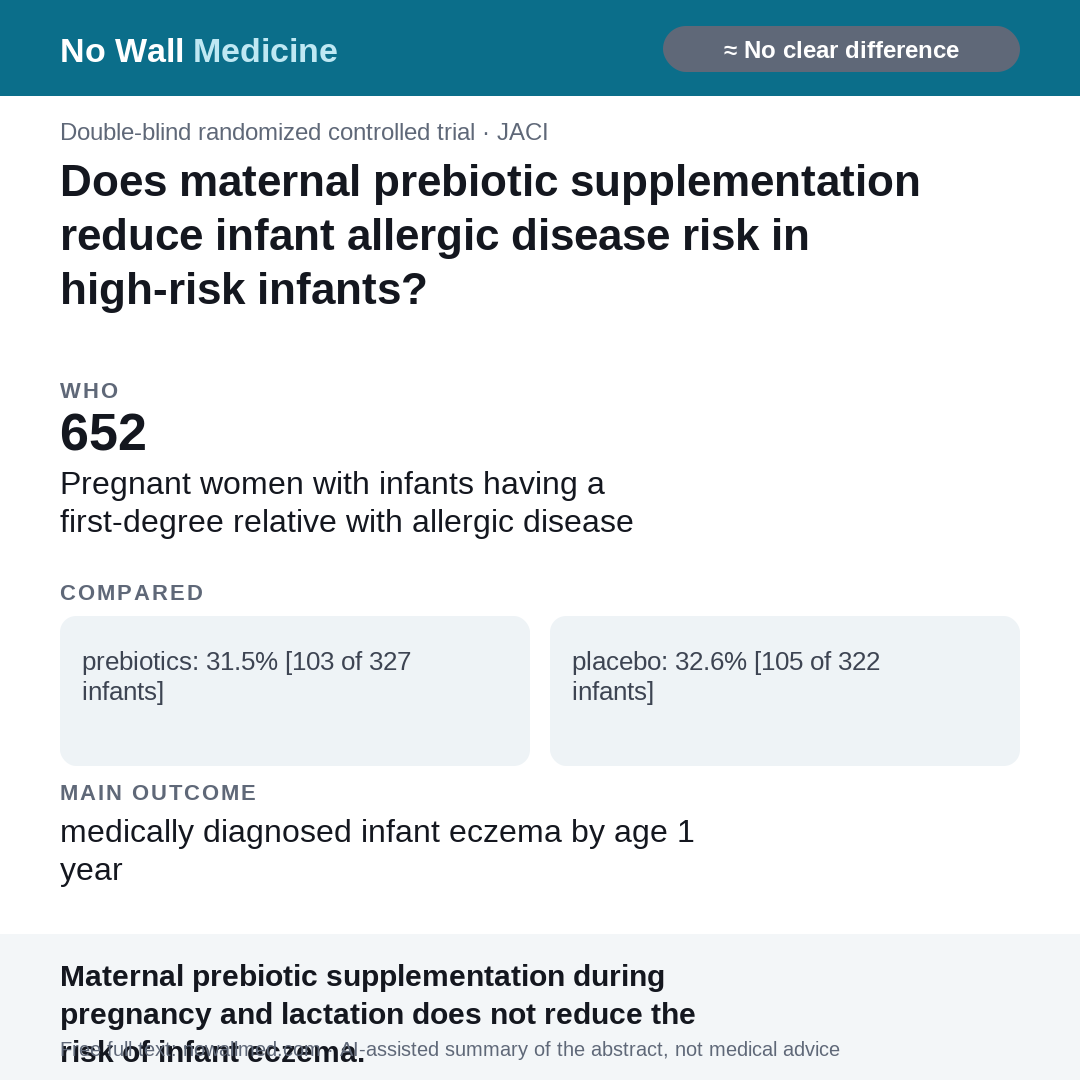
Effects of pregnancy and lactation prebiotics supplementation on infant allergic disease: A randomized controlled trial
Double-blind randomized controlled trialNo clear difference
Does maternal prebiotic supplementation reduce infant allergic disease risk in high-risk infants?
Who
652
Pregnant women with infants having a first-degree relative with allergic disease
Compared
prebiotics: 31.5% [103 of 327 infants]
placebo: 32.6% [105 of 322 infants]
Main outcome
medically diagnosed infant eczema by age 1 year
Result: adjusted relative risk 0.98 (95% CI 0.77-1.23)
Bottom line: Maternal prebiotic supplementation during pregnancy and lactation does not reduce the risk of infant eczema.
JACI · 2024-08-21Download image
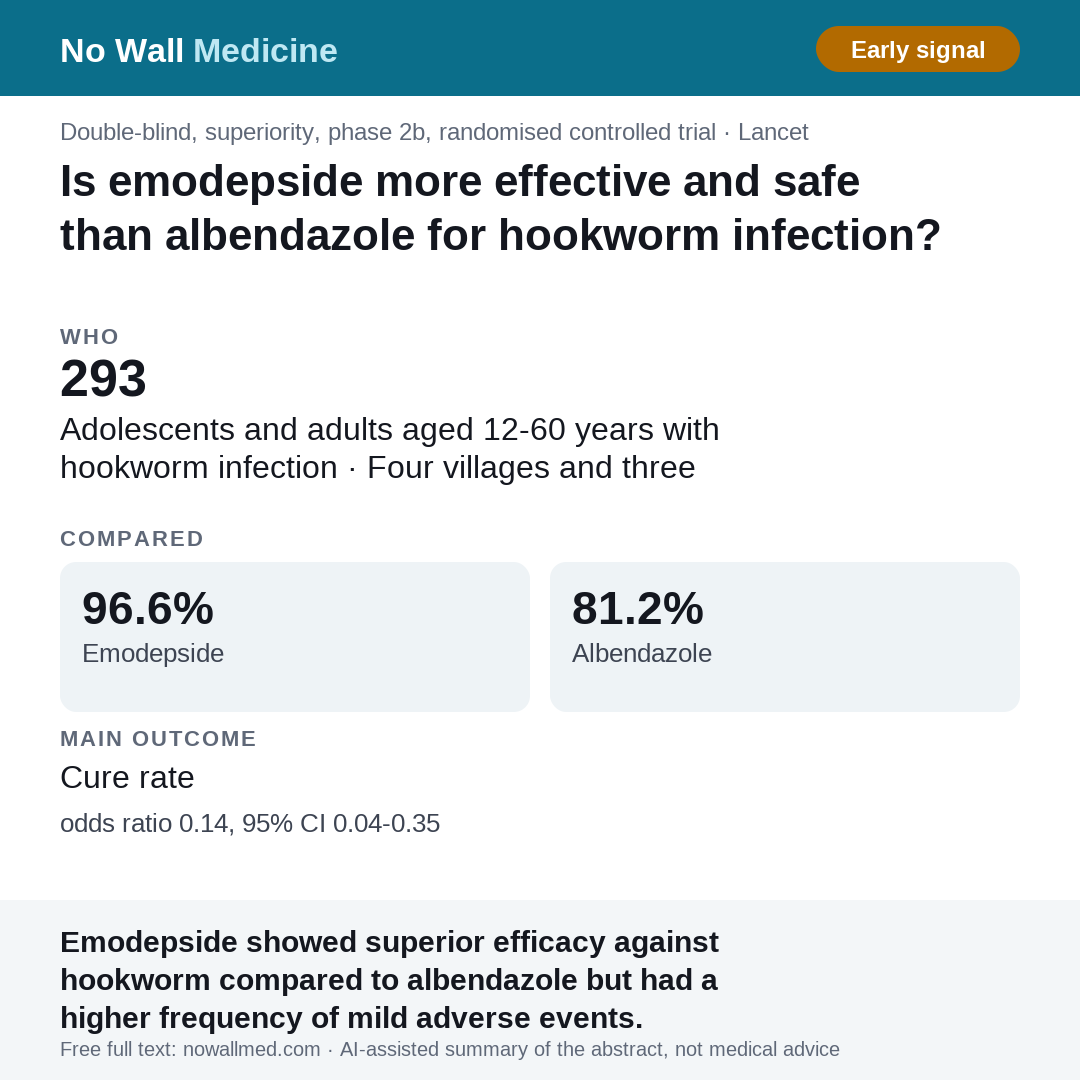
Early childcare arrangements and children's internalizing and externalizing symptoms: an individual participant data meta-analysis of six prospective birth cohorts in Europe
Individual participant data meta-analysisMixed results
Does early childcare attendance associate with children's internalizing and externalizing symptoms?
Who
87208
Children from six prospective birth cohorts in Europe · Five European countries
Compared
Centre-based childcare: lower levels of internalizing symptoms in all age groups
Informal childcare: elevated levels of internalizing and externalizing symptoms
Exclusive parental care
Main outcome
Internalizing and externalizing symptoms in middle childhood and young adolescence
Bottom line: Centre-based childcare is associated with lower internalizing symptoms, while informal childcare is associated with increased symptoms.
Funded by: ERC Consolidator grant RESEDA (Horizon Europe)
Lancet Reg Health Eur · 2024-08-21Download image
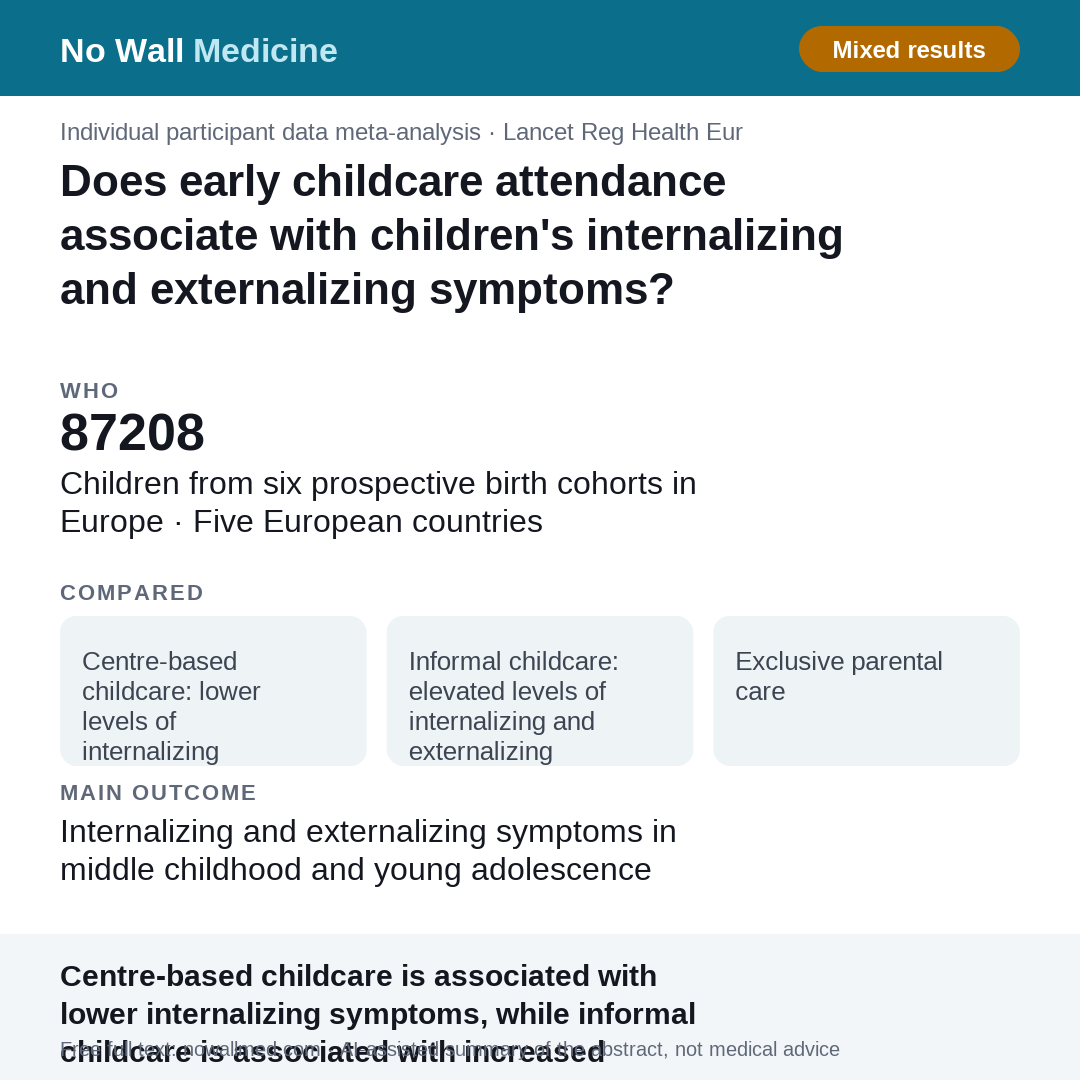
Point-of-care C-reactive protein measurement by community health workers safely reduces antimicrobial use among children with respiratory illness in rural Uganda: A stepped wedge cluster randomized trial
Stepped wedge cluster randomized trialBenefit found
Does C-reactive protein measurement by community health workers reduce antibiotic use in children?
Who
1280
Children aged 2 months to 5 years with fever and cough · 15 villages in Bugoye subcounty, Uganda
Compared
91.8%Control (Integrated Community Care Management) (539/587)
70.8%Intervention (STAR Sick Child Job Aid) (448/633)
Main outcome
Proportion of children given or prescribed an antibiotic at initial visit
Result: adjusted prevalence difference -24.6%, 95% CI: -36.1%, -13.1%
Bottom line: Adding C-reactive protein measurement to community health worker algorithms safely reduces antibiotic use among children with respiratory illness.
Limitation: The number of adverse events was low.
PLOS Med · 2024-08-19Download image
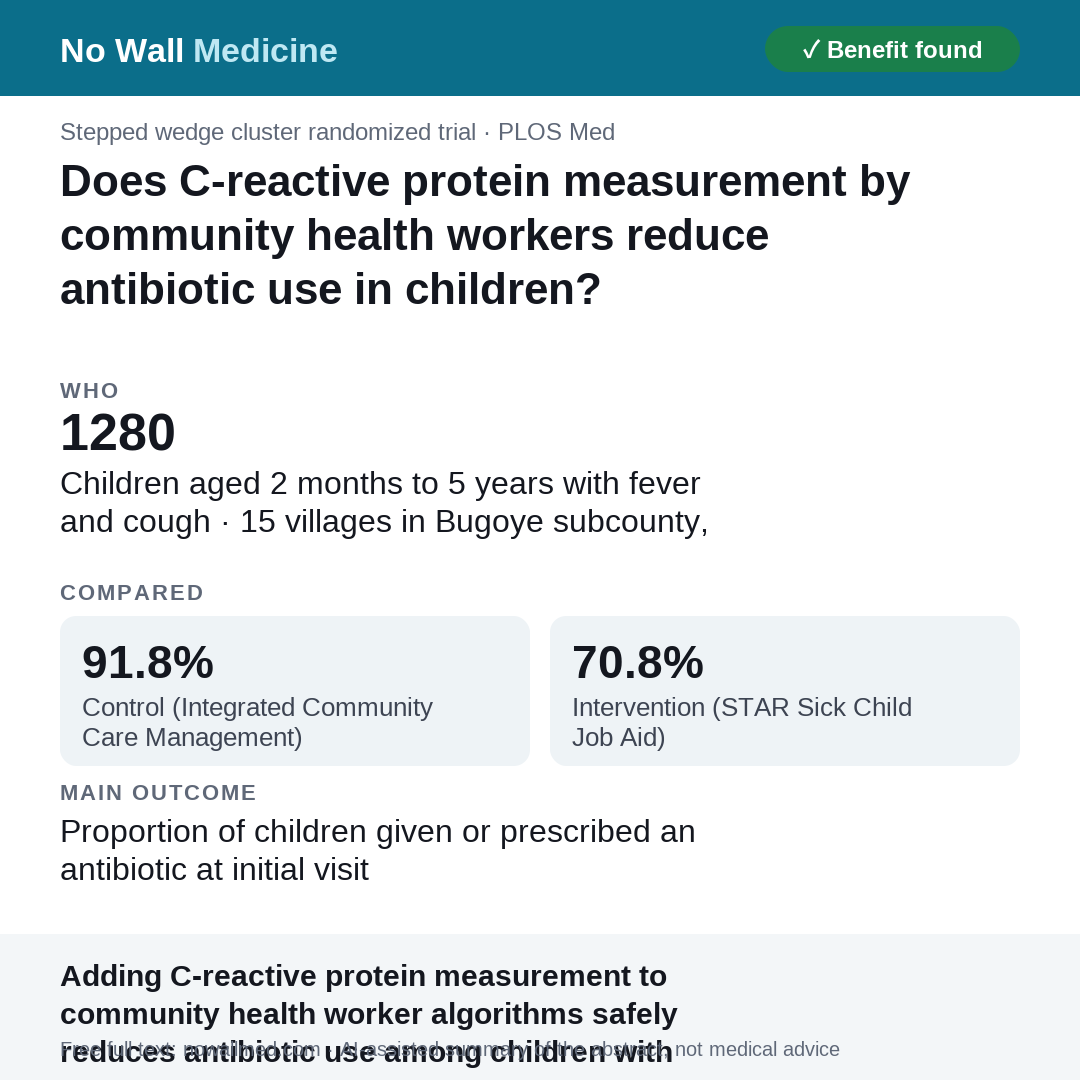
Effect of treatment for early gestational diabetes mellitus on neonatal respiratory distress: A secondary analysis of the TOBOGM study
Nested case-control analysis of a randomized trialBenefit found
Does early treatment for early gestational diabetes mellitus reduce neonatal respiratory distress?
Who
793
Pregnant women with gestational diabetes mellitus risk factors · Seventeen hospitals in Australia, Sweden, Austria and India
Compared
Immediate gestational diabetes mellitus treatment
Deferred gestational diabetes mellitus treatment
Main outcome
Neonatal respiratory distress
Result: odds ratio 0.50 (95% CI 0.31 to 0.79)
Bottom line: Starting gestational diabetes mellitus treatment early halves the incidence of neonatal respiratory distress.
BJOG · 2024-08-19Download image
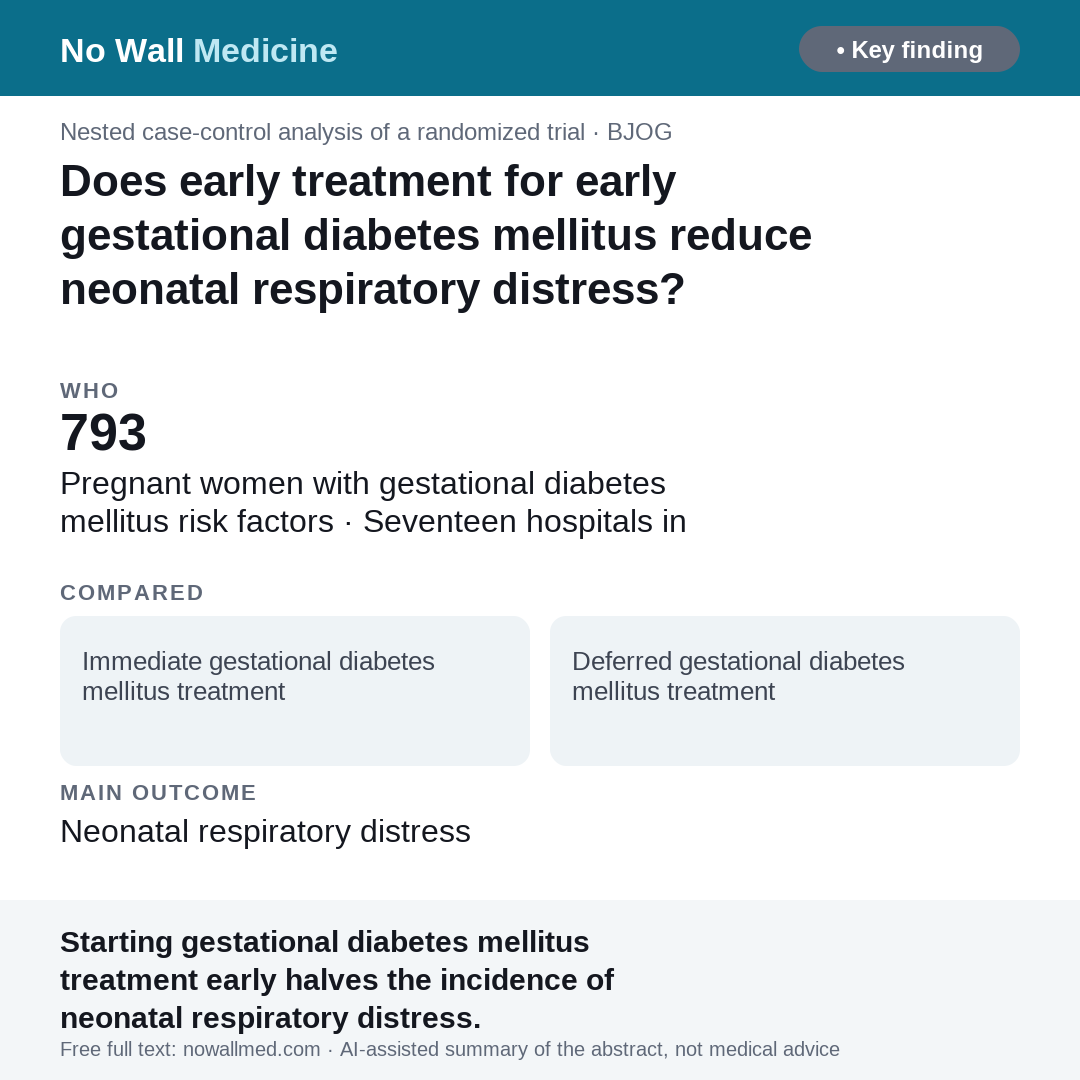
Efficacy and safety of emodepside compared with albendazole in adolescents and adults with hookworm infection in Pemba Island, Tanzania: a double-blind, superiority, phase 2b, randomised controlled trial
Double-blind, superiority, phase 2b, randomised controlled trialBenefit found
Is emodepside more effective and safe than albendazole for hookworm infection?
Who
293
Adolescents and adults aged 12-60 years with hookworm infection · Four villages and three schools, Pemba Island, Tanzania
Compared
96.6%Emodepside
81.2%Albendazole
Main outcome
Cure rate
Result: odds ratio 0.14, 95% CI 0.04-0.35
Bottom line: Emodepside showed superior efficacy against hookworm compared to albendazole but had a higher frequency of mild adverse events.
Limitation: Increased frequency of adverse events compared with albendazole must be balanced against efficacy.
Funded by: European Research Council
Lancet · 2024-08-18Download image
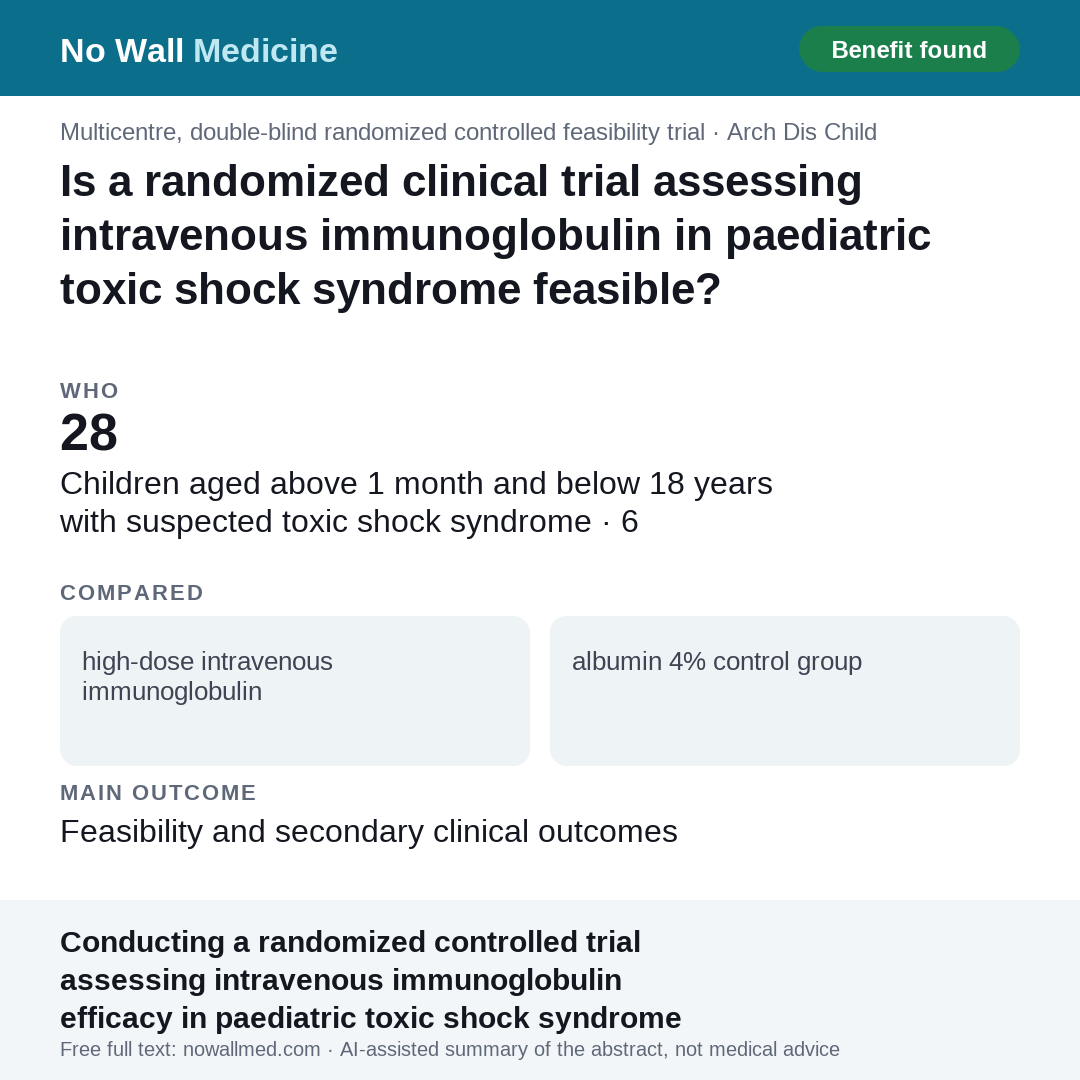
High-dose intravenous immunoglobulin versus albumin 4% in paediatric toxic shock syndrome: a randomised controlled feasibility study
Multicentre, double-blind randomized controlled feasibility trialBenefit found
Is a randomized clinical trial assessing intravenous immunoglobulin in paediatric toxic shock syndrome feasible?
Who
28
Children aged above 1 month and below 18 years with suspected toxic shock syndrome · 6 paediatric intensive care units
Compared
high-dose intravenous immunoglobulin
albumin 4% control group
Main outcome
Feasibility and secondary clinical outcomes
Bottom line: Conducting a randomized controlled trial assessing intravenous immunoglobulin efficacy in paediatric toxic shock syndrome is feasible.
Arch Dis Child · 2024-08-16Download image
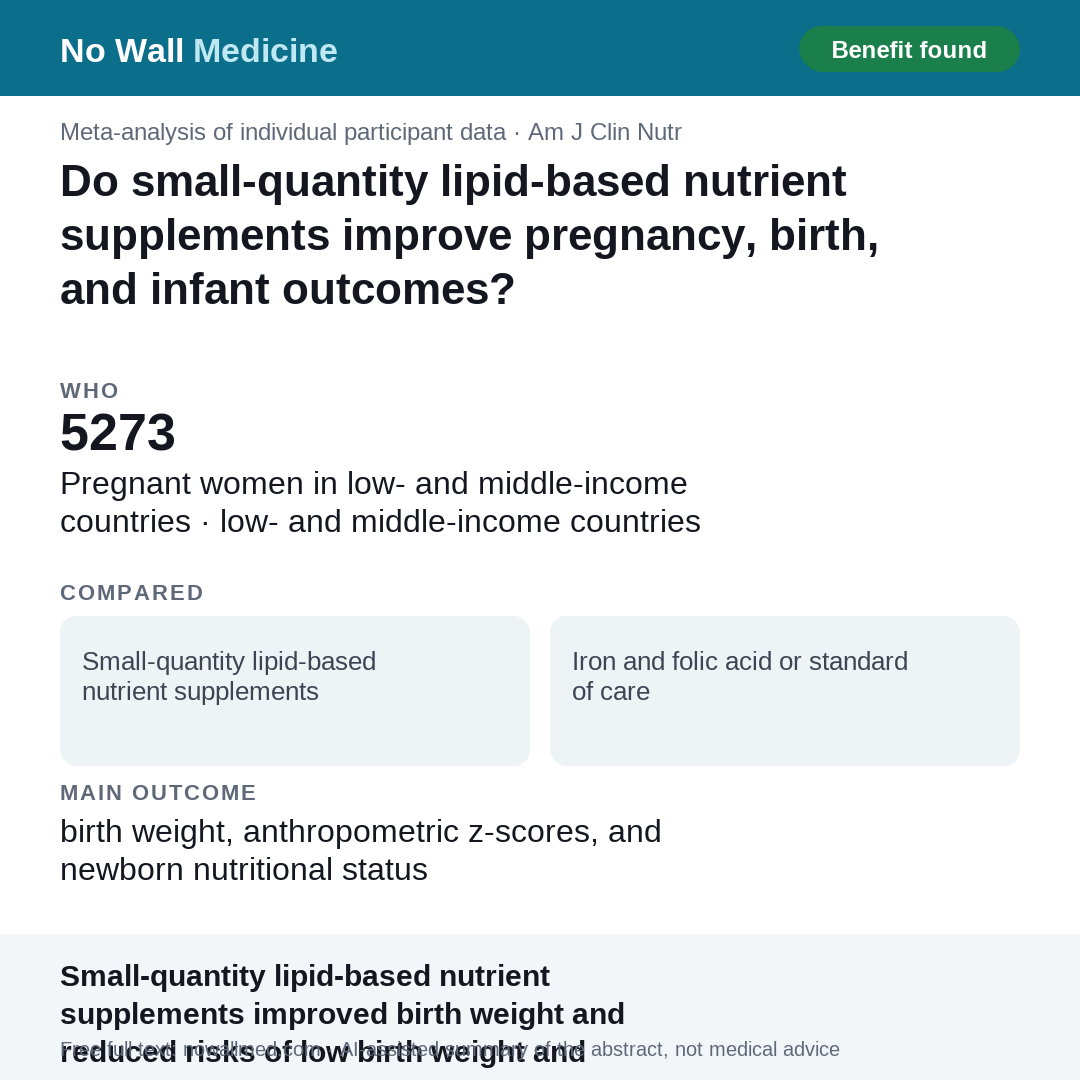
Effects of prenatal small-quantity lipid-based nutrient supplements on pregnancy, birth, and infant outcomes: a systematic review and meta-analysis of individual participant data from randomized controlled trials in low- and middle-income countries
Meta-analysis of individual participant dataBenefit found
Do small-quantity lipid-based nutrient supplements improve pregnancy, birth, and infant outcomes?
Who
5273
Pregnant women in low- and middle-income countries · low- and middle-income countries
Compared
Small-quantity lipid-based nutrient supplements
Iron and folic acid or standard of care
Main outcome
birth weight, anthropometric z-scores, and newborn nutritional status
Result: mean difference: +49 g; 95% confidence interval (CI): 26, 71 g
Bottom line: Small-quantity lipid-based nutrient supplements improved birth weight and reduced risks of low birth weight and newborn stunting.
Am J Clin Nutr · 2024-08-16Download image
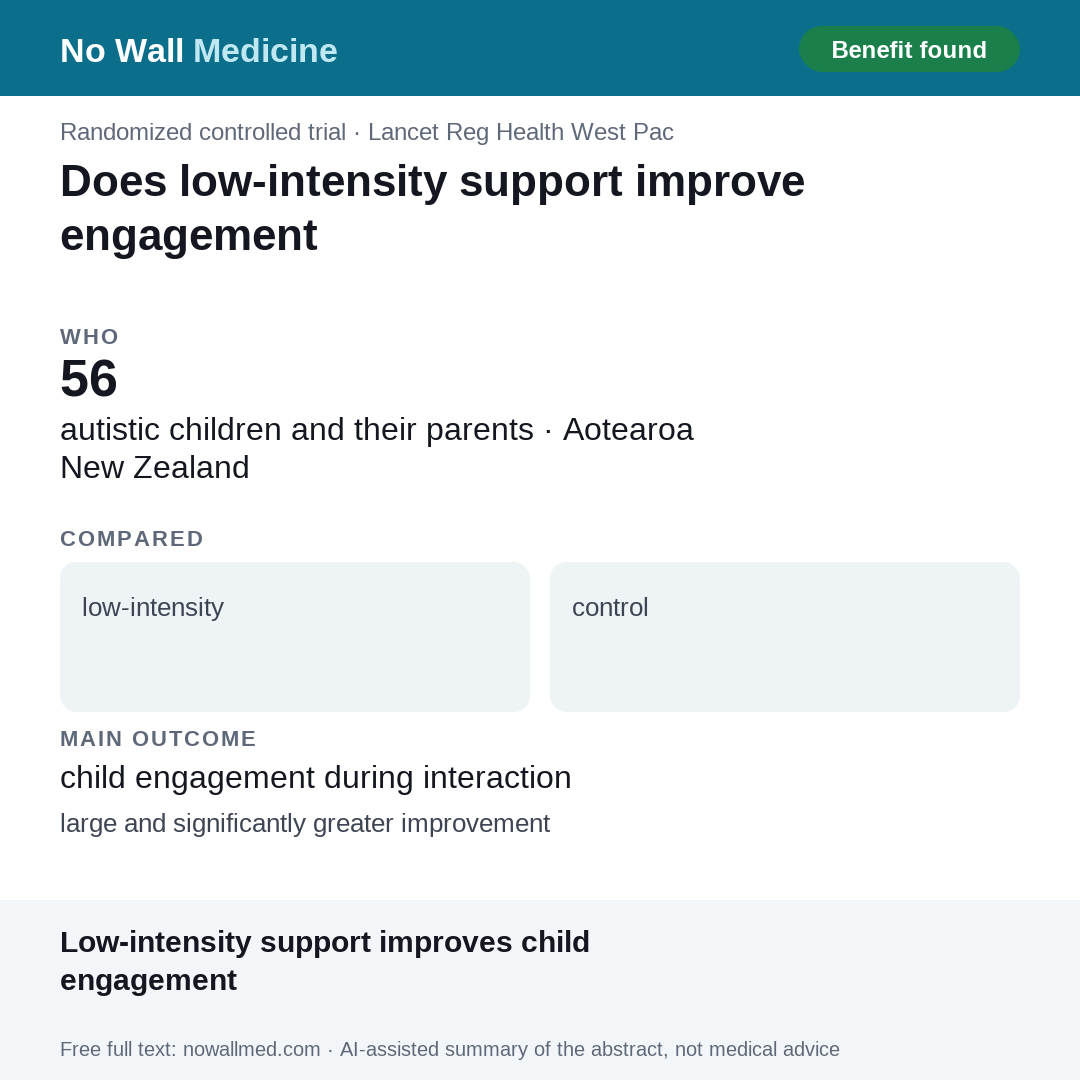
Low-intensity parent- and clinician-delivered support for young autistic children in Aotearoa New Zealand: a randomised controlled trial
Randomized controlled trialBenefit found
Does low-intensity support improve engagement
Who
56
autistic children and their parents · Aotearoa New Zealand
Compared
low-intensity
control
Main outcome
child engagement during interaction
Result: large and significantly greater improvement
Bottom line: Low-intensity support improves child engagement
Limitation: drop-outs occurred
Funded by: Health Research Council of New Zealand
Lancet Reg Health West Pac · 2024-08-16Download image
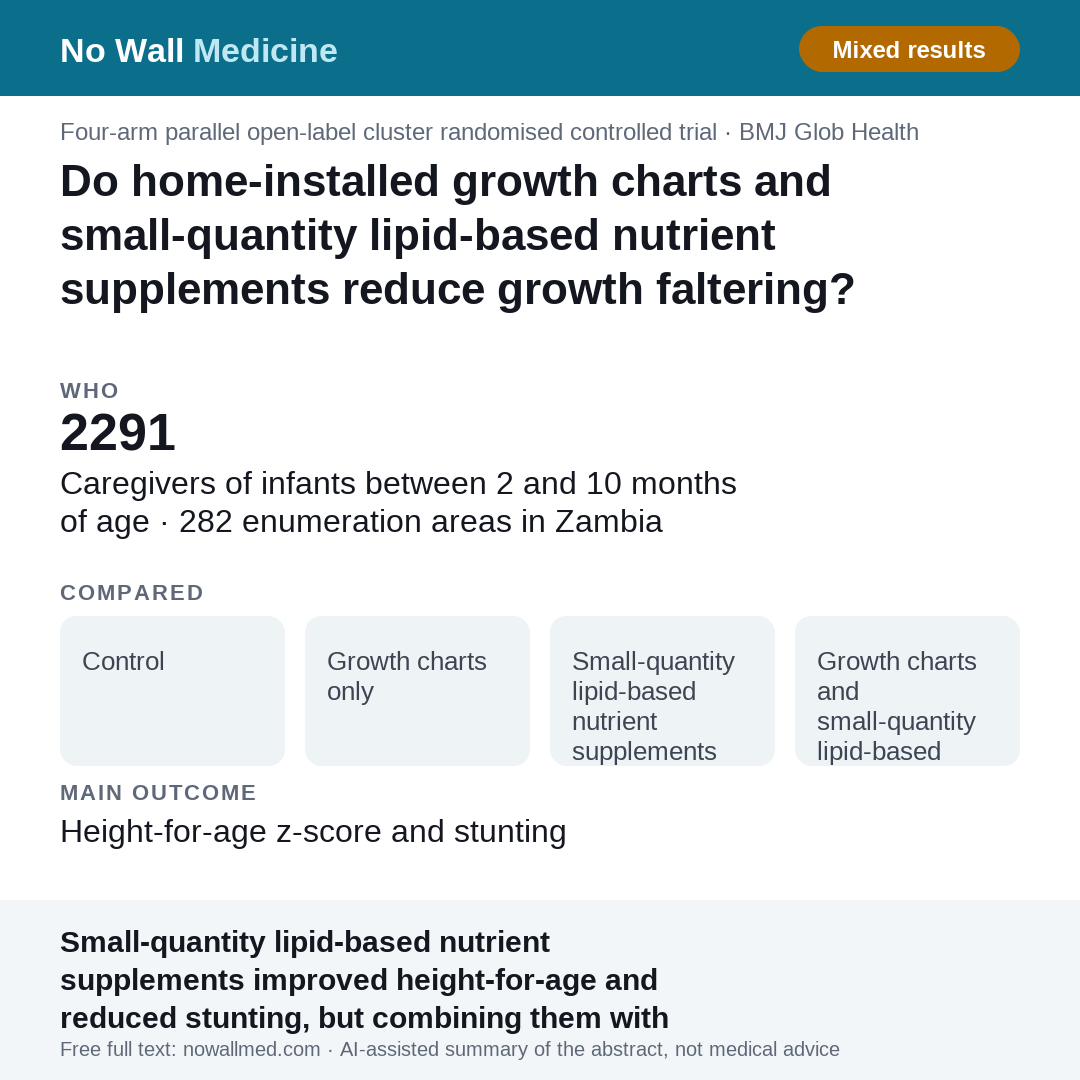
The impact of home-installed growth charts and small-quantity lipid-based nutrient supplements (SQ-LNS) on child growth in Zambia: a four-arm parallel open-label cluster randomised controlled trial
Four-arm parallel open-label cluster randomised controlled trialMixed results
Do home-installed growth charts and small-quantity lipid-based nutrient supplements reduce growth faltering?
Who
2291
Caregivers of infants between 2 and 10 months of age · 282 enumeration areas in Zambia
Compared
Control
Growth charts only
Small-quantity lipid-based nutrient supplements only: 0.21 SD (95% CI 0.06 to 0.36)
Growth charts and small-quantity lipid-based nutrient supplements
Main outcome
Height-for-age z-score and stunting
Result: hazard ratio 0.63 (95% CI 0.46 to 0.87)
Bottom line: Small-quantity lipid-based nutrient supplements improved height-for-age and reduced stunting, but combining them with growth charts showed no additional benefit.
BMJ Glob Health · 2024-08-16Download image
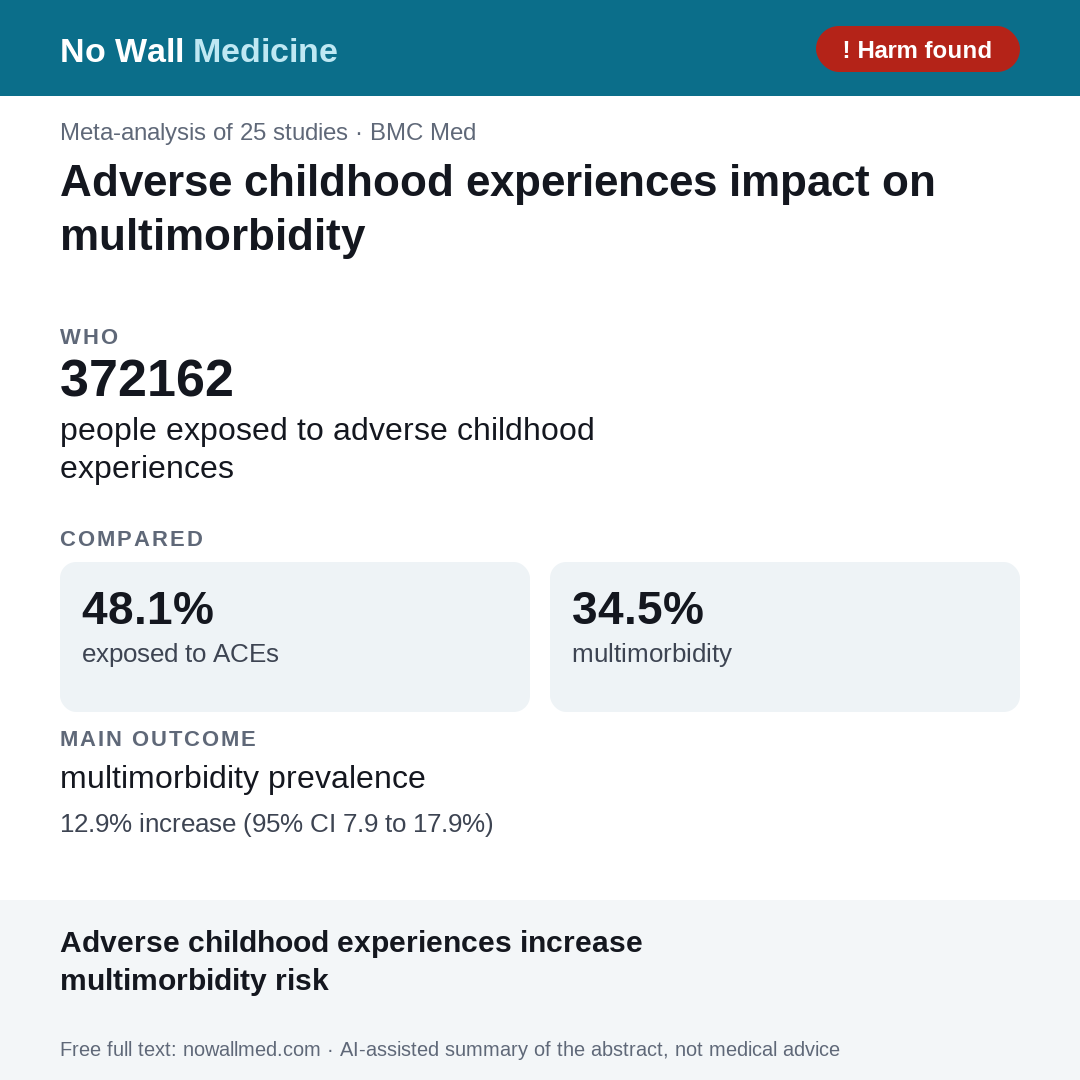
The impact of adverse childhood experiences on multimorbidity: a systematic review and meta-analysis
Meta-analysis of 25 studiesHarm found
Adverse childhood experiences impact on multimorbidity
Who
372162
people exposed to adverse childhood experiences
Compared
48.1%exposed to ACEs (95% CI 33.4 to 63.1%)
34.5%multimorbidity (95% CI 23.4 to 47.5%)
Main outcome
multimorbidity prevalence
Result: 12.9% increase (95% CI 7.9 to 17.9%)
Bottom line: Adverse childhood experiences increase multimorbidity risk
Limitation: heterogeneity among studies
BMC Med · 2024-08-15Download image
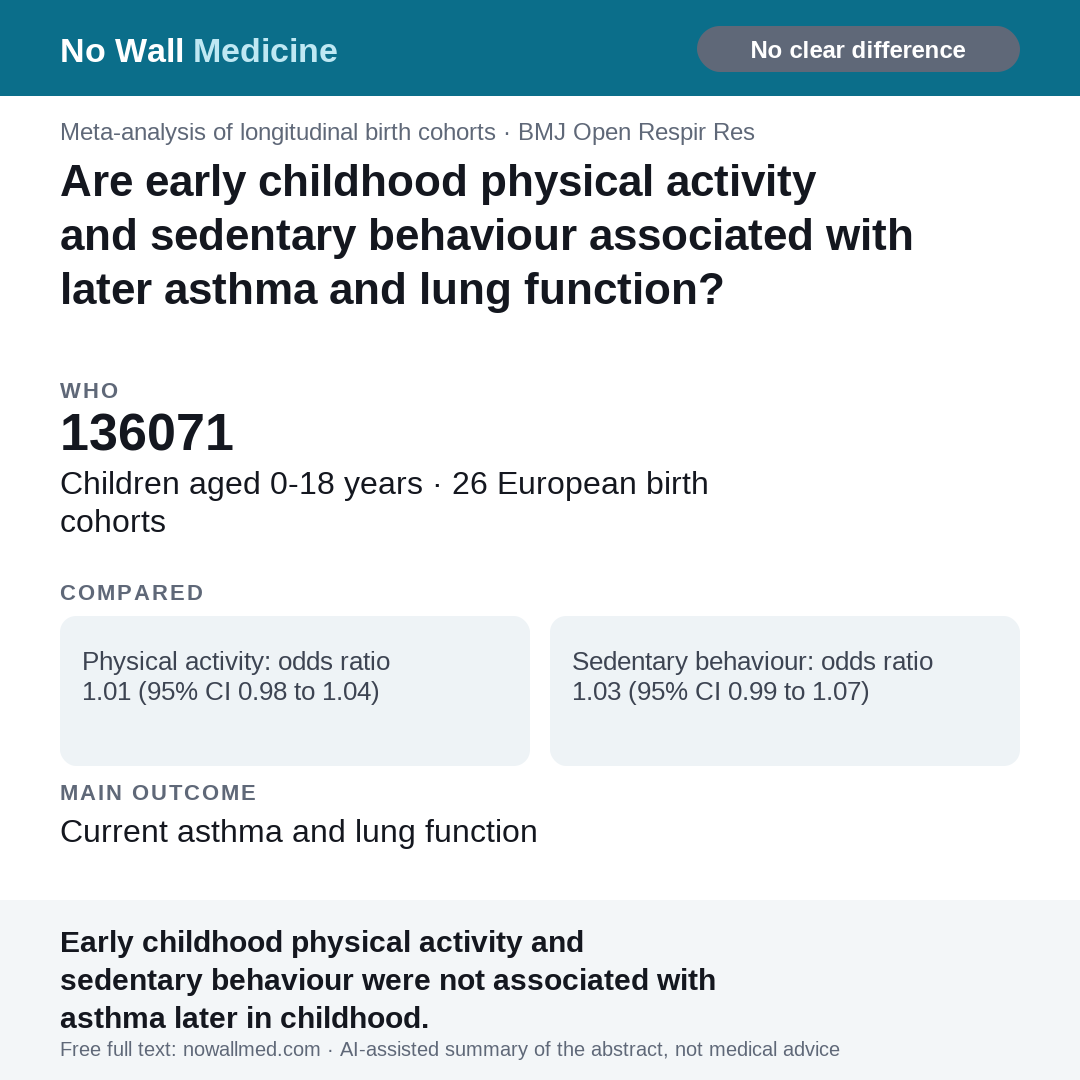
Physical activity, sedentary behaviour, and childhood asthma: a European collaborative analysis
Meta-analysis of longitudinal birth cohortsNo clear difference
Are early childhood physical activity and sedentary behaviour associated with later asthma and lung function?
Who
136071
Children aged 0-18 years · 26 European birth cohorts
Compared
Physical activity: odds ratio 1.01 (95% CI 0.98 to 1.04)
Sedentary behaviour: odds ratio 1.03 (95% CI 0.99 to 1.07)
Main outcome
Current asthma and lung function
Bottom line: Early childhood physical activity and sedentary behaviour were not associated with asthma later in childhood.
BMJ Open Respir Res · 2024-08-15Download image
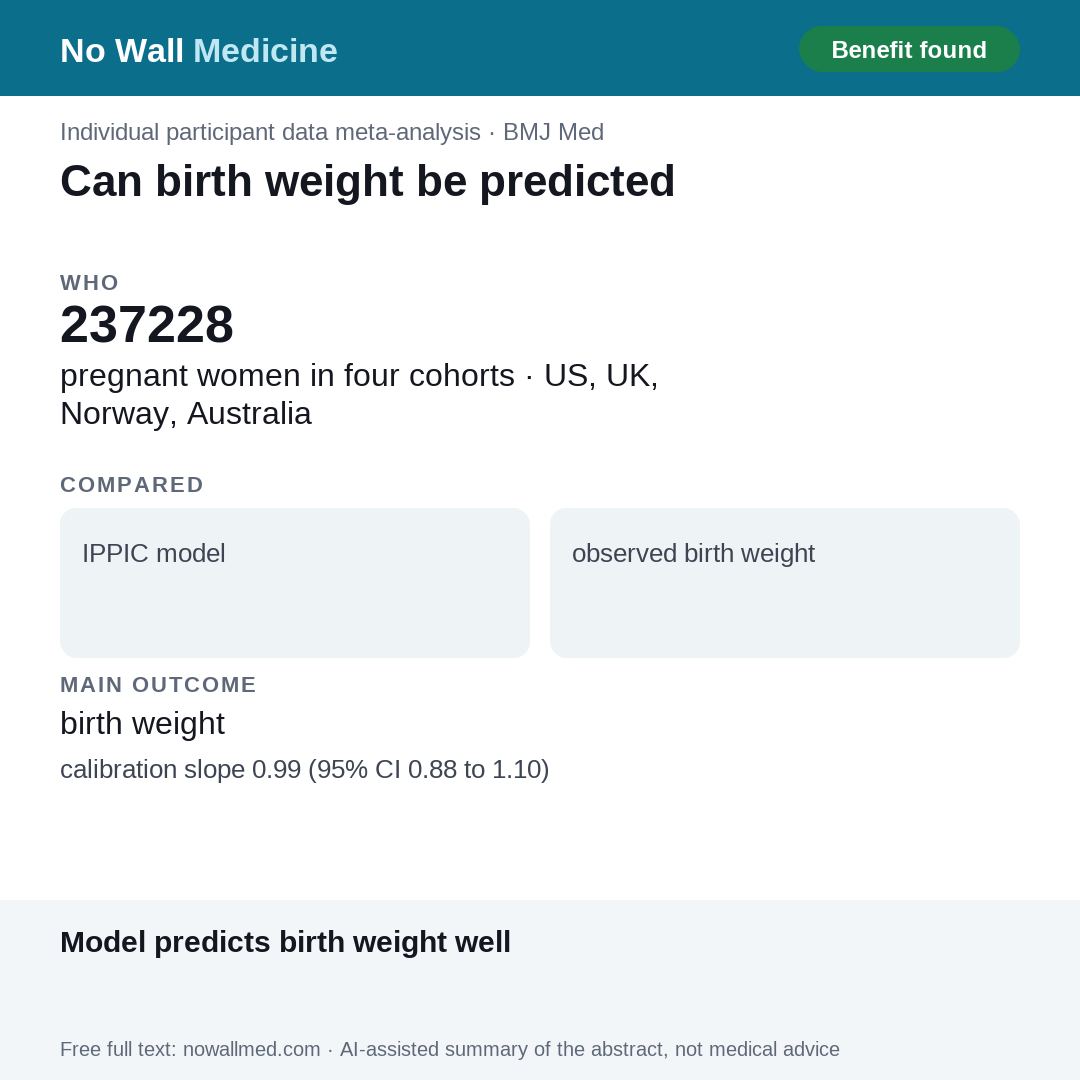
Development and validation of a prognostic model to predict birth weight: individual participant data meta-analysis
Individual participant data meta-analysisBenefit found
Can birth weight be predicted
Who
237228
pregnant women in four cohorts · US, UK, Norway, Australia
Compared
IPPIC model
observed birth weight
Main outcome
birth weight
Result: calibration slope 0.99 (95% CI 0.88 to 1.10)
Bottom line: Model predicts birth weight well
BMJ Med · 2024-08-14Download image
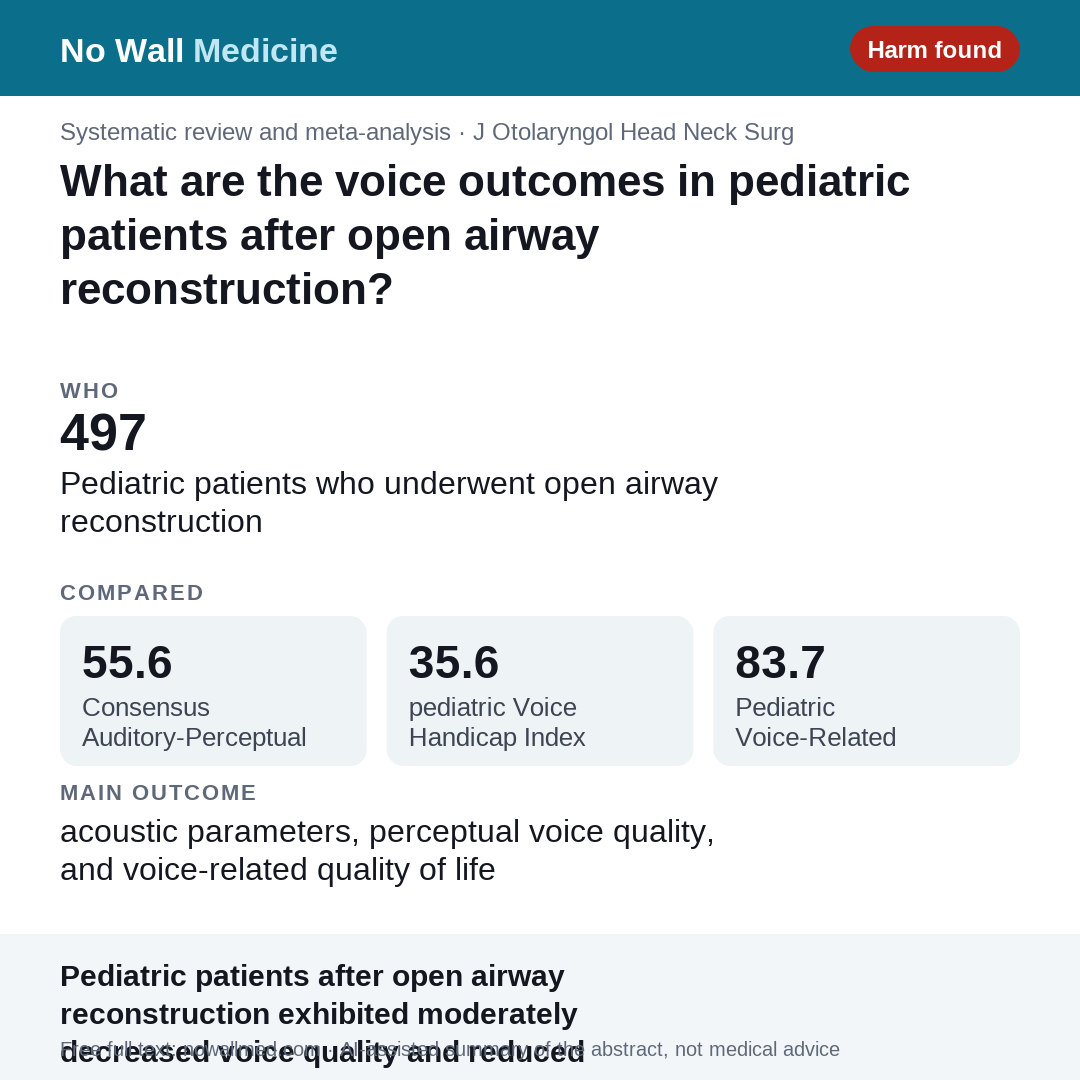
Characterizing Dysphonia After Pediatric Open Airway Reconstruction: Systematic Review and Meta-Analysis
Systematic review and meta-analysisHarm found
What are the voice outcomes in pediatric patients after open airway reconstruction?
Who
497
Pediatric patients who underwent open airway reconstruction
Compared
55.6Consensus Auditory-Perceptual Evaluation of Voice (95% CI: 47.9-63.3)
35.6pediatric Voice Handicap Index (95% CI: 21.4-49.7)
83.7Pediatric Voice-Related Quality of Life Survey (95% CI: 74.1-93.2)
Main outcome
acoustic parameters, perceptual voice quality, and voice-related quality of life
Bottom line: Pediatric patients after open airway reconstruction exhibited moderately decreased voice quality and reduced voice-related quality of life.
Limitation: There was inconsistency in study protocols and outcome measures used.
J Otolaryngol Head Neck Surg · 2024-08-14Download image
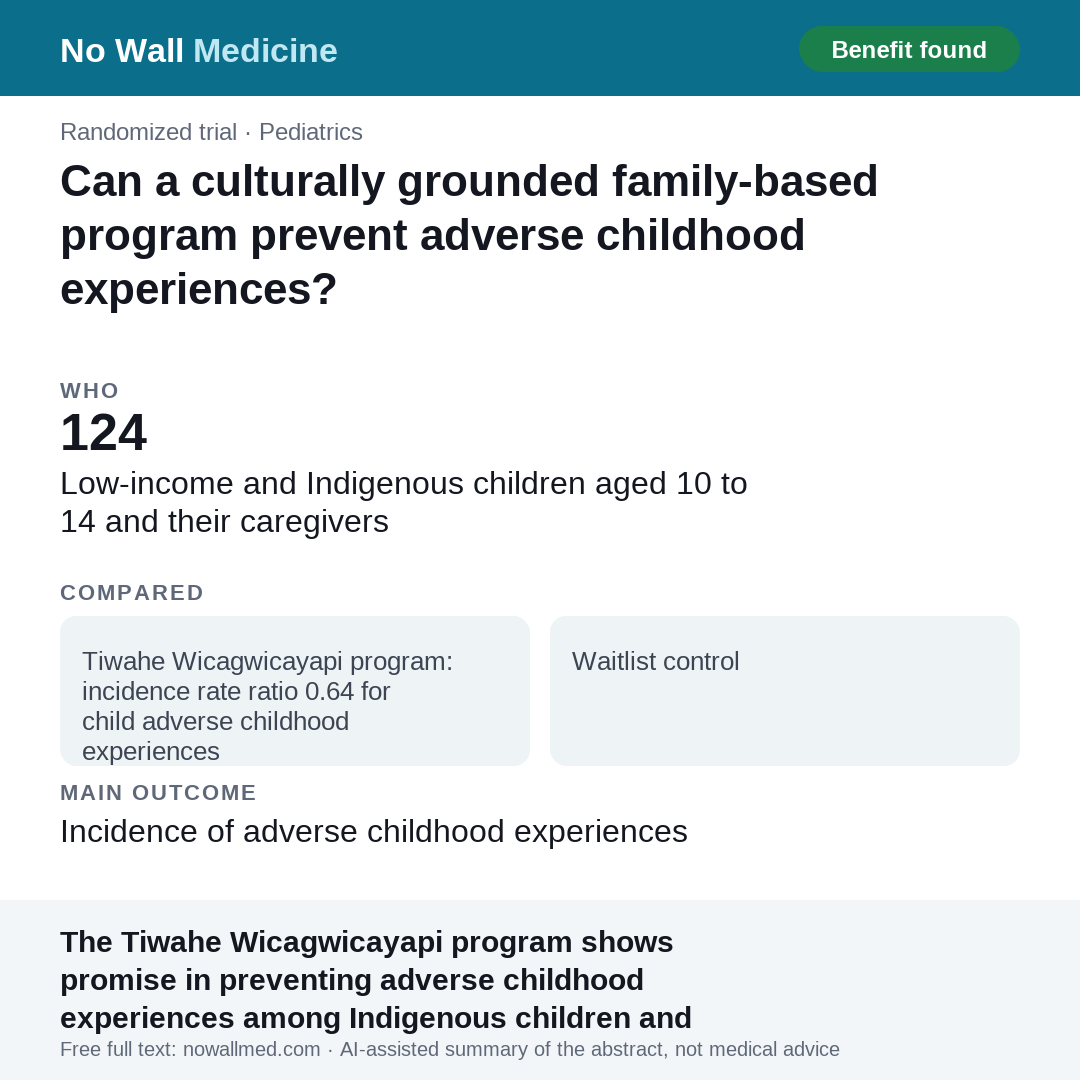
Preventing Adverse Childhood Experiences in a Sample of Largely Indigenous Children
Randomized trialBenefit found
Can a culturally grounded family-based program prevent adverse childhood experiences?
Who
124
Low-income and Indigenous children aged 10 to 14 and their caregivers
Compared
Tiwahe Wicagwicayapi program: incidence rate ratio 0.64 for child adverse childhood experiences
Waitlist control
Main outcome
Incidence of adverse childhood experiences
Result: incidence rate ratio 0.64
Bottom line: The Tiwahe Wicagwicayapi program shows promise in preventing adverse childhood experiences among Indigenous children and families.
Pediatrics · 2024-08-13Download image