Visual abstracts
New randomized trials and meta-analyses from leading journals at a glance: who was studied, what was compared, and what was found. Every paper is free to read in full.
All specialtiesCardiology 4800Oncology 4084Gastroenterology & Hepatology 1917Infectious Disease 3789Neurology 1886Psychiatry & Mental Health 2240Pulmonology 2061Critical Care 1335Endocrinology & Diabetes 2553Pediatrics 2914Surgery 2500Orthopedics & Sports Medicine 923Neurosurgery 532Cardiothoracic & Vascular Surgery 665Plastic & Reconstructive Surgery 585Nephrology 1115Rheumatology 815Hematology 1099Dermatology 619Ophthalmology 539Obstetrics & Gynecology 1661Public & Global Health 1044Radiology & Imaging 637Anesthesiology 959Urology 751ENT (Otolaryngology) 497Emergency Medicine 484Allergy & Immunology 310Geriatrics 974Family Medicine & Primary Care 538Medical Genetics & Genomics 662Pathology & Laboratory Medicine 156Physical Medicine & Rehabilitation 746Palliative Care 422Nutrition 1566Digital Health & AI 2191General Medicine 319
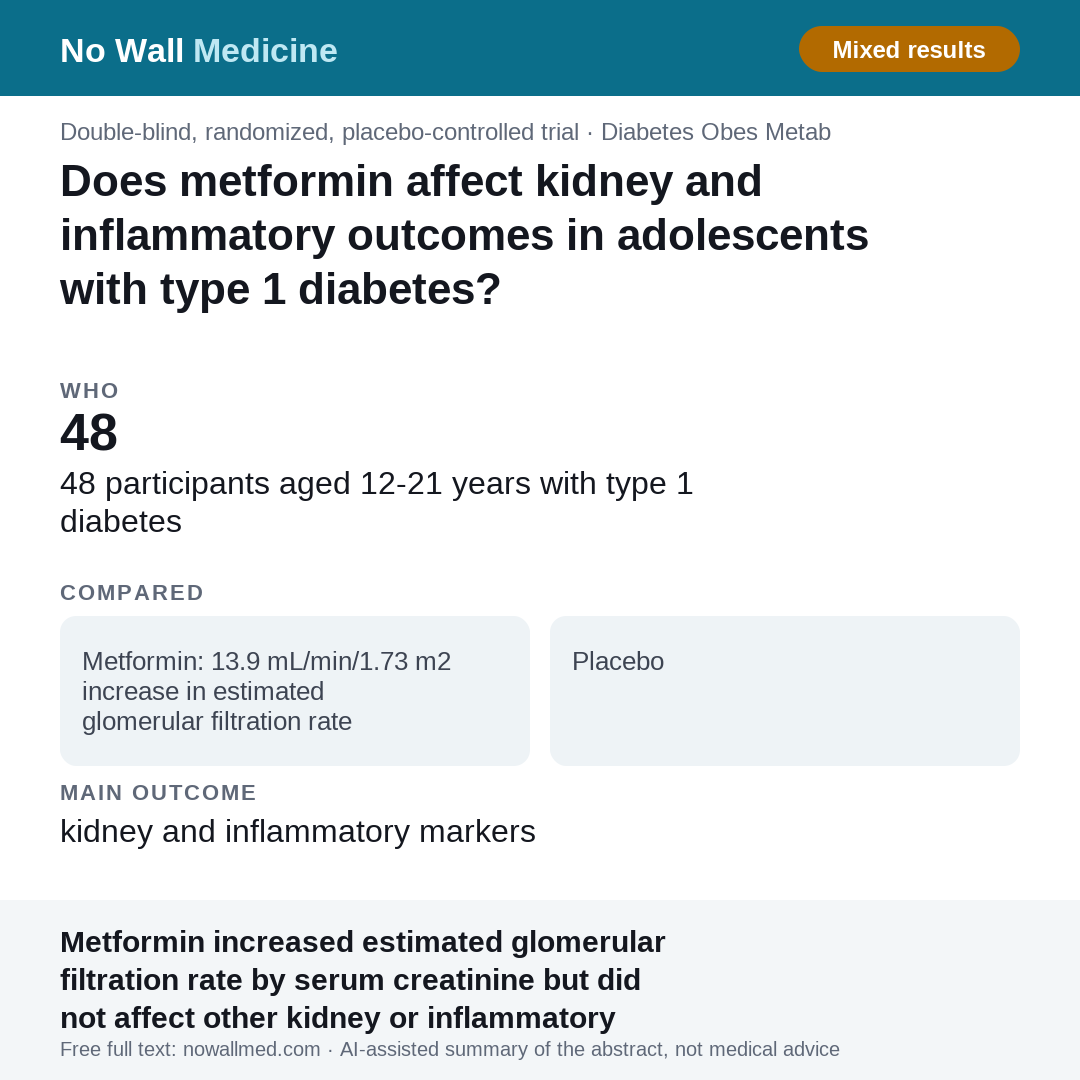
Results from the Effects of MEtformin on cardiovasculaR function in AdoLescents with type 1 Diabetes (EMERALD) study: A brief report of kidney and inflammatory outcomes
Double-blind, randomized, placebo-controlled trialMixed results
Does metformin affect kidney and inflammatory outcomes in adolescents with type 1 diabetes?
Who
48
48 participants aged 12-21 years with type 1 diabetes
Compared
Metformin: 13.9 mL/min/1.73 m2 increase in estimated glomerular filtration rate
Placebo
Main outcome
kidney and inflammatory markers
Result: 13.9 mL/min/1.73 m2 (95% confidence interval 4.7-23.1 mL/min/1.73 m2)
Bottom line: Metformin increased estimated glomerular filtration rate by serum creatinine but did not affect other kidney or inflammatory markers.
Diabetes Obes Metab · 2020-12-23Download image
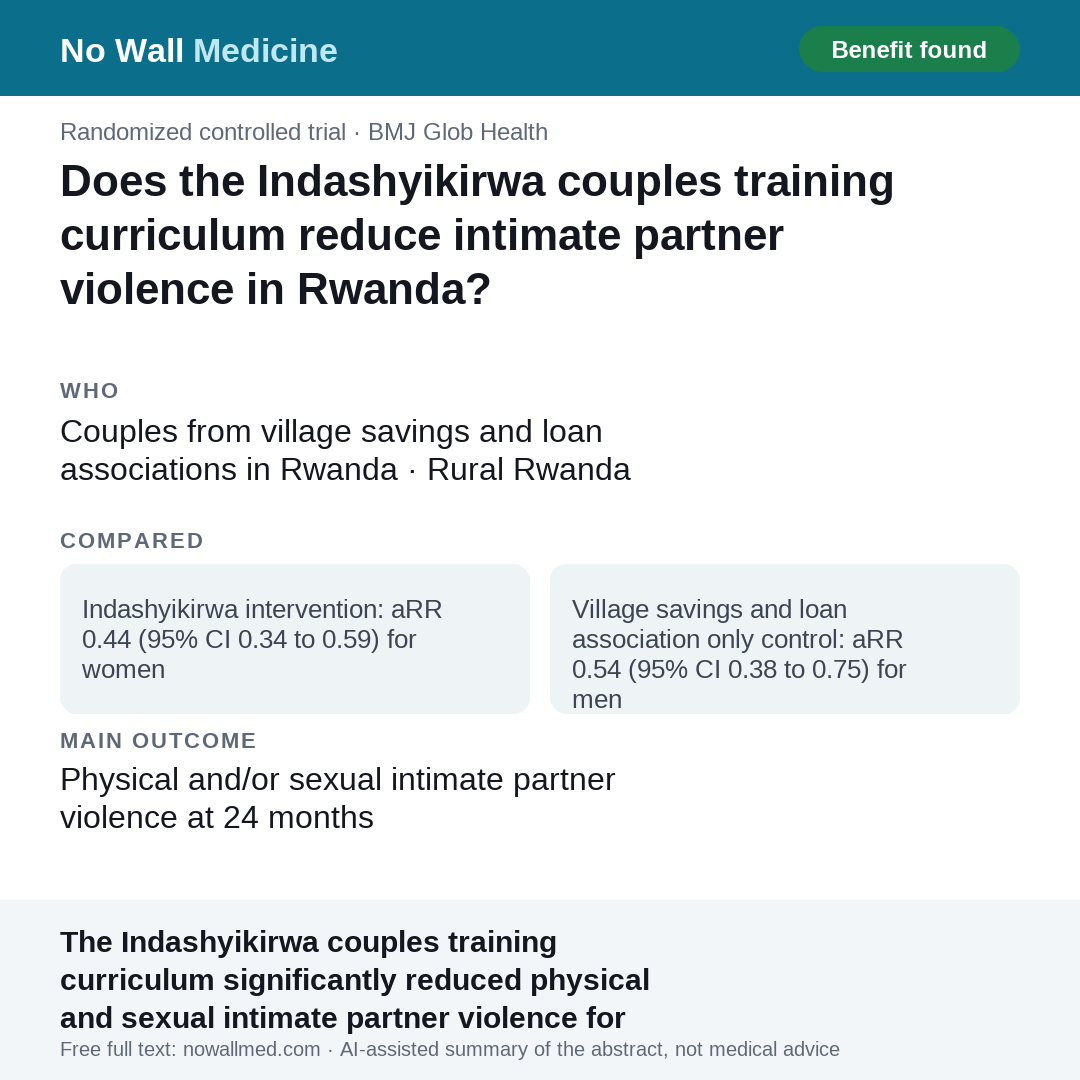
Effective prevention of intimate partner violence through couples training: a randomised controlled trial of Indashyikirwa in Rwanda
Randomized controlled trialBenefit found
Does the Indashyikirwa couples training curriculum reduce intimate partner violence in Rwanda?
Who
Couples from village savings and loan associations in Rwanda · Rural Rwanda
Compared
Indashyikirwa intervention: aRR 0.44 (95% CI 0.34 to 0.59) for women
Village savings and loan association only control: aRR 0.54 (95% CI 0.38 to 0.75) for men
Main outcome
Physical and/or sexual intimate partner violence at 24 months
Result: aRR 0.44 (95% CI 0.34 to 0.59) for women; aRR 0.54 (95% CI 0.38 to 0.75) for men
Bottom line: The Indashyikirwa couples training curriculum significantly reduced physical and sexual intimate partner violence for both women and men.
BMJ Glob Health · 2020-12-23Download image
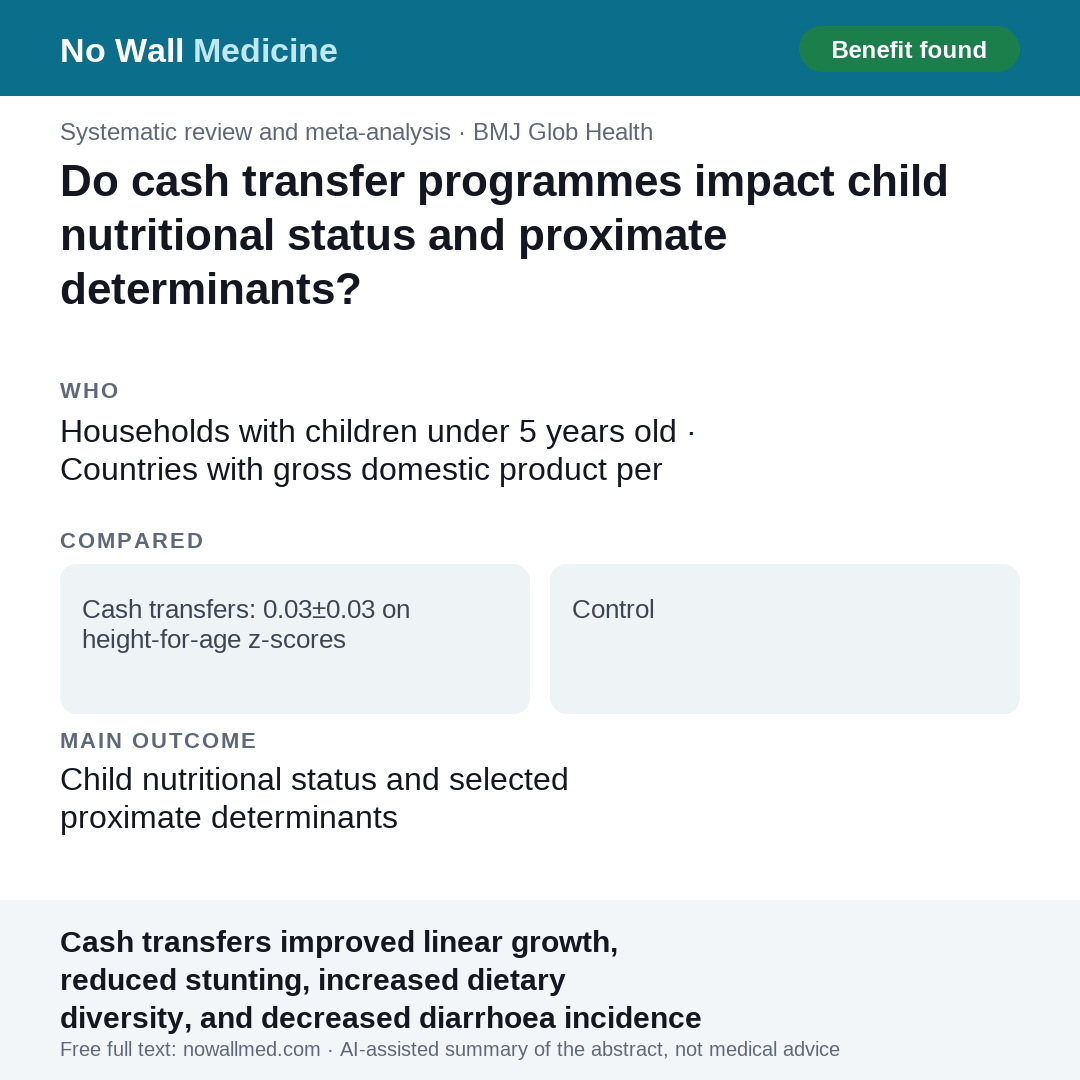
Cash transfers and child nutritional outcomes: a systematic review and meta-analysis
Systematic review and meta-analysisBenefit found
Do cash transfer programmes impact child nutritional status and proximate determinants?
Who
Households with children under 5 years old · Countries with gross domestic product per capita below US$10 000
Compared
Cash transfers: 0.03±0.03 on height-for-age z-scores
Control
Main outcome
Child nutritional status and selected proximate determinants
Result: decrease of 2.1% in stunting (95% CI -3.5% to -0.7%)
Bottom line: Cash transfers improved linear growth, reduced stunting, increased dietary diversity, and decreased diarrhoea incidence in young children.
BMJ Glob Health · 2020-12-23Download image
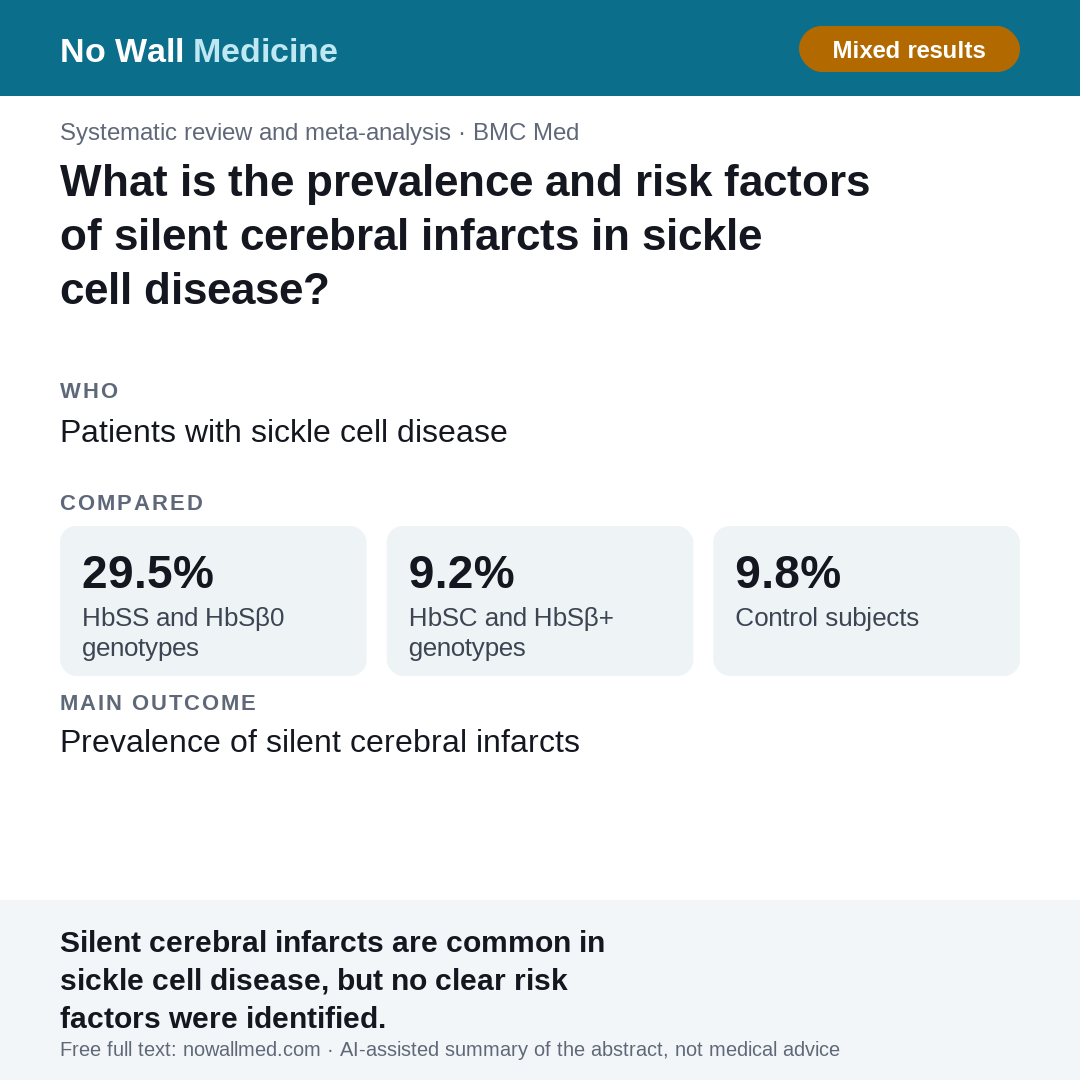
Silent cerebral infarcts in patients with sickle cell disease: a systematic review and meta-analysis
Systematic review and meta-analysisMixed results
What is the prevalence and risk factors of silent cerebral infarcts in sickle cell disease?
Who
Patients with sickle cell disease
Compared
29.5%HbSS and HbSβ0 genotypes
9.2%HbSC and HbSβ+ genotypes
9.8%Control subjects
Main outcome
Prevalence of silent cerebral infarcts
Bottom line: Silent cerebral infarcts are common in sickle cell disease, but no clear risk factors were identified.
BMC Med · 2020-12-22Download image
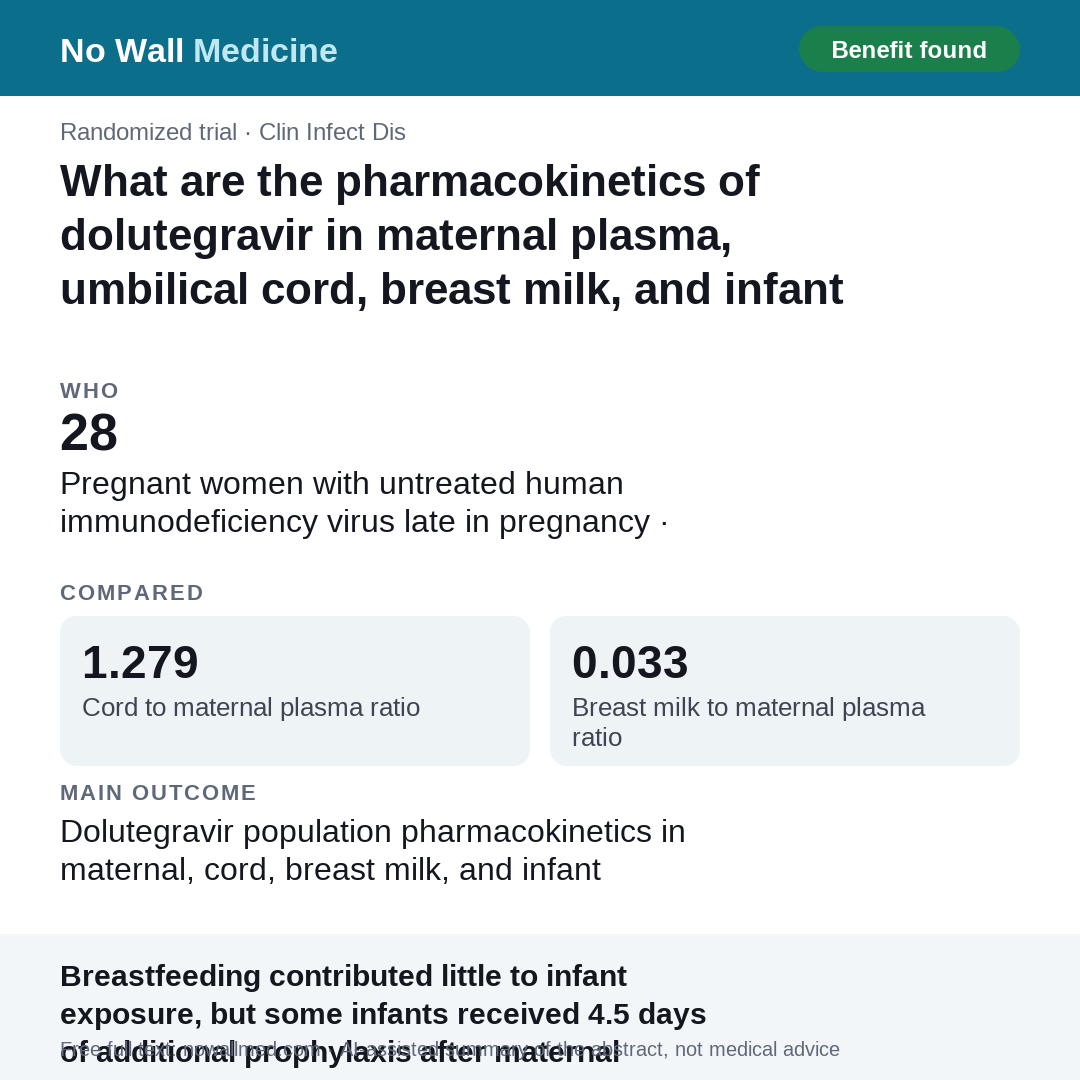
Infant Exposure to Dolutegravir Through Placental and Breast Milk Transfer: A Population Pharmacokinetic Analysis of DolPHIN-1
Randomized trialBenefit found
What are the pharmacokinetics of dolutegravir in maternal plasma, umbilical cord, breast milk, and infant plasma?
Who
28
Pregnant women with untreated human immunodeficiency virus late in pregnancy · Uganda and South Africa
Compared
1.279Cord to maternal plasma ratio (1.209-1.281)
0.033Breast milk to maternal plasma ratio (0.021-0.050)
Main outcome
Dolutegravir population pharmacokinetics in maternal, cord, breast milk, and infant samples
Bottom line: Breastfeeding contributed little to infant exposure, but some infants received 4.5 days of additional prophylaxis after maternal treatment cessation.
Clin Infect Dis · 2020-12-22Download image
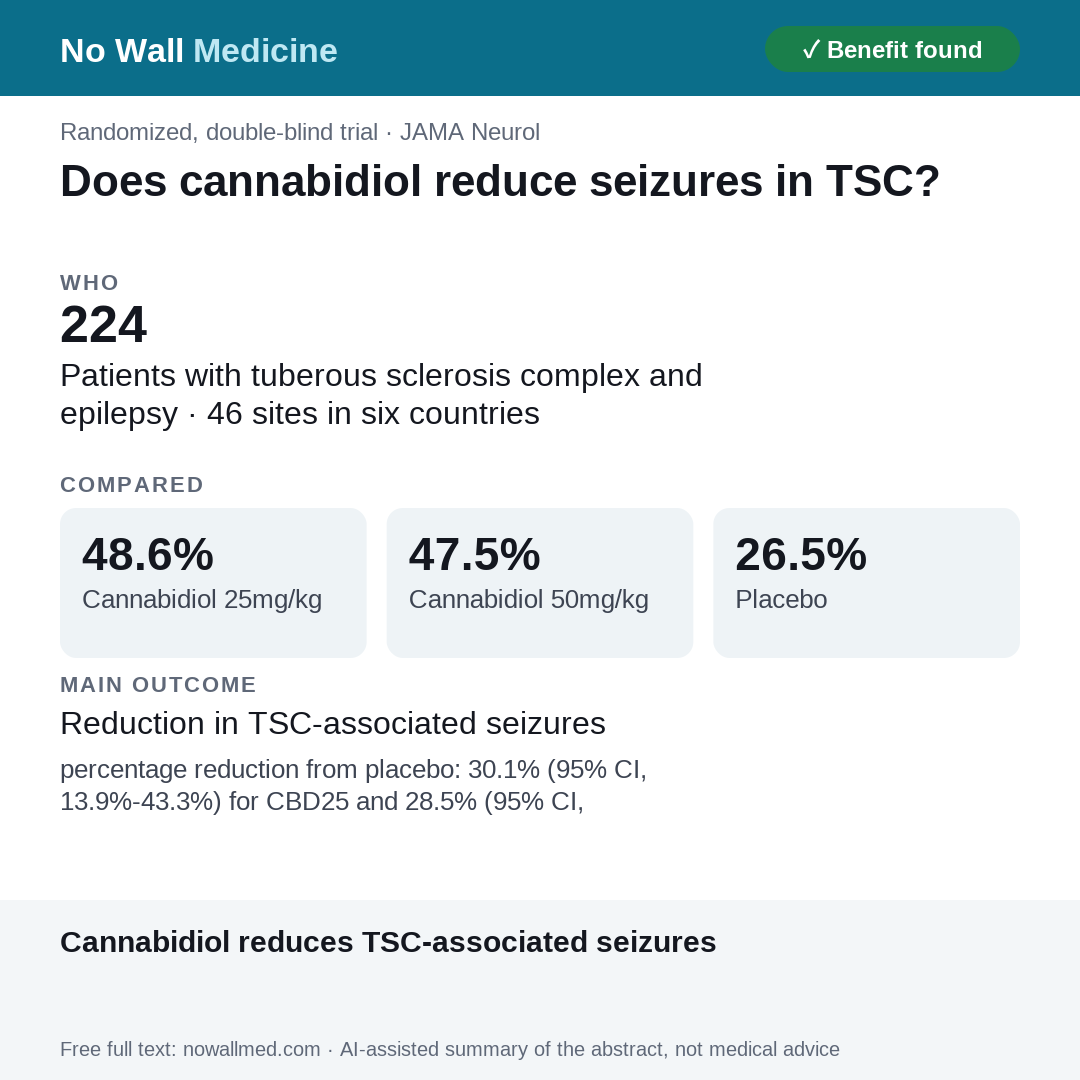
Add-on Cannabidiol Treatment for Drug-Resistant Seizures in Tuberous Sclerosis Complex: A Placebo-Controlled Randomized Clinical Trial
Randomized, double-blind trialBenefit found
Does cannabidiol reduce seizures in TSC?
Who
224
Patients with tuberous sclerosis complex and epilepsy · 46 sites in six countries
Compared
48.6%Cannabidiol 25mg/kg (95% CI, 40.4%-55.8%)
47.5%Cannabidiol 50mg/kg (95% CI, 39.0%-54.8%)
26.5%Placebo (95% CI, 14.9%-36.5%)
Main outcome
Reduction in TSC-associated seizures
Result: percentage reduction from placebo: 30.1% (95% CI, 13.9%-43.3%) for CBD25 and 28.5% (95% CI, 11.9%-42.0%) for CBD50
Bottom line: Cannabidiol reduces TSC-associated seizures
JAMA Neurol · 2020-12-22Download image
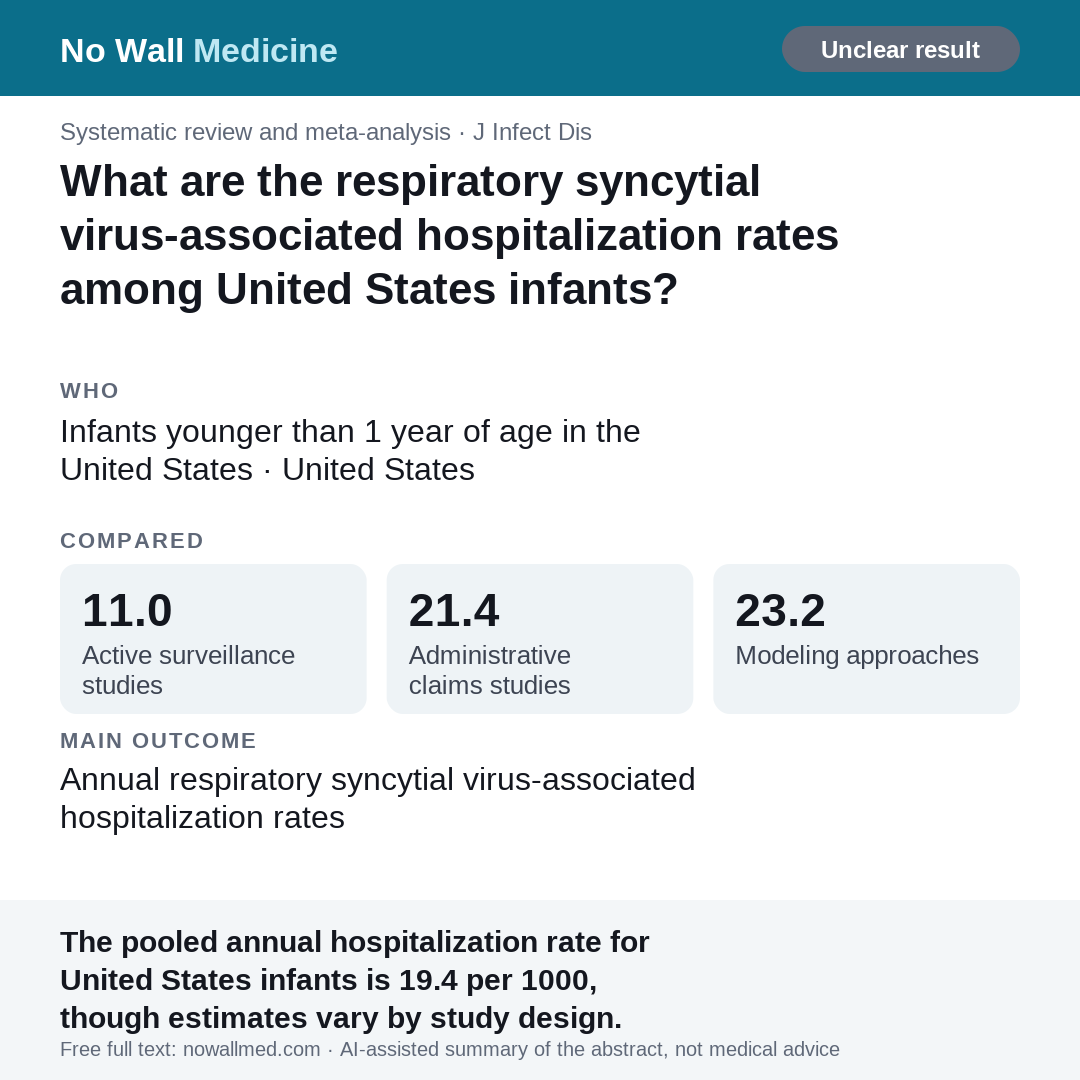
Respiratory Syncytial Virus-Associated Hospitalization Rates among US Infants: A Systematic Review and Meta-Analysis
Systematic review and meta-analysisUnclear result
What are the respiratory syncytial virus-associated hospitalization rates among United States infants?
Who
Infants younger than 1 year of age in the United States · United States
Compared
11.0Active surveillance studies (95% CI, 9.8-12.2)
21.4Administrative claims studies (19.5-23.3)
23.2Modeling approaches (20.2-26.2)
Main outcome
Annual respiratory syncytial virus-associated hospitalization rates
Result: pooled rate 19.4 (95% CI, 17.9-20.9)
Bottom line: The pooled annual hospitalization rate for United States infants is 19.4 per 1000, though estimates vary by study design.
J Infect Dis · 2020-12-22Download image
The Effects of Vitamin D Supplementation During Infancy on Growth During the First 2 Years of Life
Randomized, double-blinded, single-center intervention studyMixed results
How does vitamin D supplementation affect growth during the first 2 years of life?
Who
812
Term-born children · A maternity hospital
Compared
10 μg vitamin D3 daily: 87 nmol/L mean 2-year 25-hydroxyvitamin D concentration
30 μg vitamin D3 daily: 118 nmol/L mean 2-year 25-hydroxyvitamin D concentration
Main outcome
Anthropometry and growth rate
Bottom line: Vitamin D and early childhood growth may have an inverse U-shaped relationship.
J Clin Endocrinol Metab · 2020-12-22Download image
Extended Use of the Control-IQ Closed-Loop Control System in Children With Type 1 Diabetes
Randomized clinical trial and extended evaluationBenefit found
Is the Control-IQ closed-loop control system safe and effective in children?
Who
101
Children 6-13 years old with type 1 diabetes
Compared
Sensor-augmented pump to closed-loop cohort: mean percentage of time in range 70-180 mg/dL increased from 55 ± 13% to 65 ± 10%
Closed-loop continued use cohort: mean time in range remained reasonably stable at 66 ± 10%
Main outcome
Time in range 70-180 mg/dL
Bottom line: Control-IQ closed-loop control safely improves glycemic control in children and these improvements are sustained through 28 weeks.
Diabetes Care · 2020-12-21Download image
Time-efficient intervention to improve older adolescents' cardiorespiratory fitness: findings from the 'Burn 2 Learn' cluster randomised controlled trial
Two-arm cluster randomised controlled trialBenefit found
Does a time-efficient school-based intervention improve older adolescents' cardiorespiratory fitness?
Who
670
Older adolescents from 20 secondary schools · New South Wales, Australia
Compared
Burn 2 Learn intervention
Control
Main outcome
Cardiorespiratory fitness (20 m multi-stage fitness test)
Result: difference=4.1 laps, 95% CI 1.8 to 6.4
Bottom line: Implementing high-intensity interval training during curriculum time improved adolescents' cardiorespiratory fitness at six months.
Br J Sports Med · 2020-12-21Download image
Mechanisms of imipridones in targeting mitochondrial metabolism in cancer cells
Meta-analysisUnclear result
How imipridones target cancer cells
Who
539
human cancer cell lines
Compared
ONC201 responsive
ONC201 non-responsive
Main outcome
response to treatment
Bottom line: Imipridones target mitochondrial metabolism
Neuro Oncol · 2020-12-19Download image
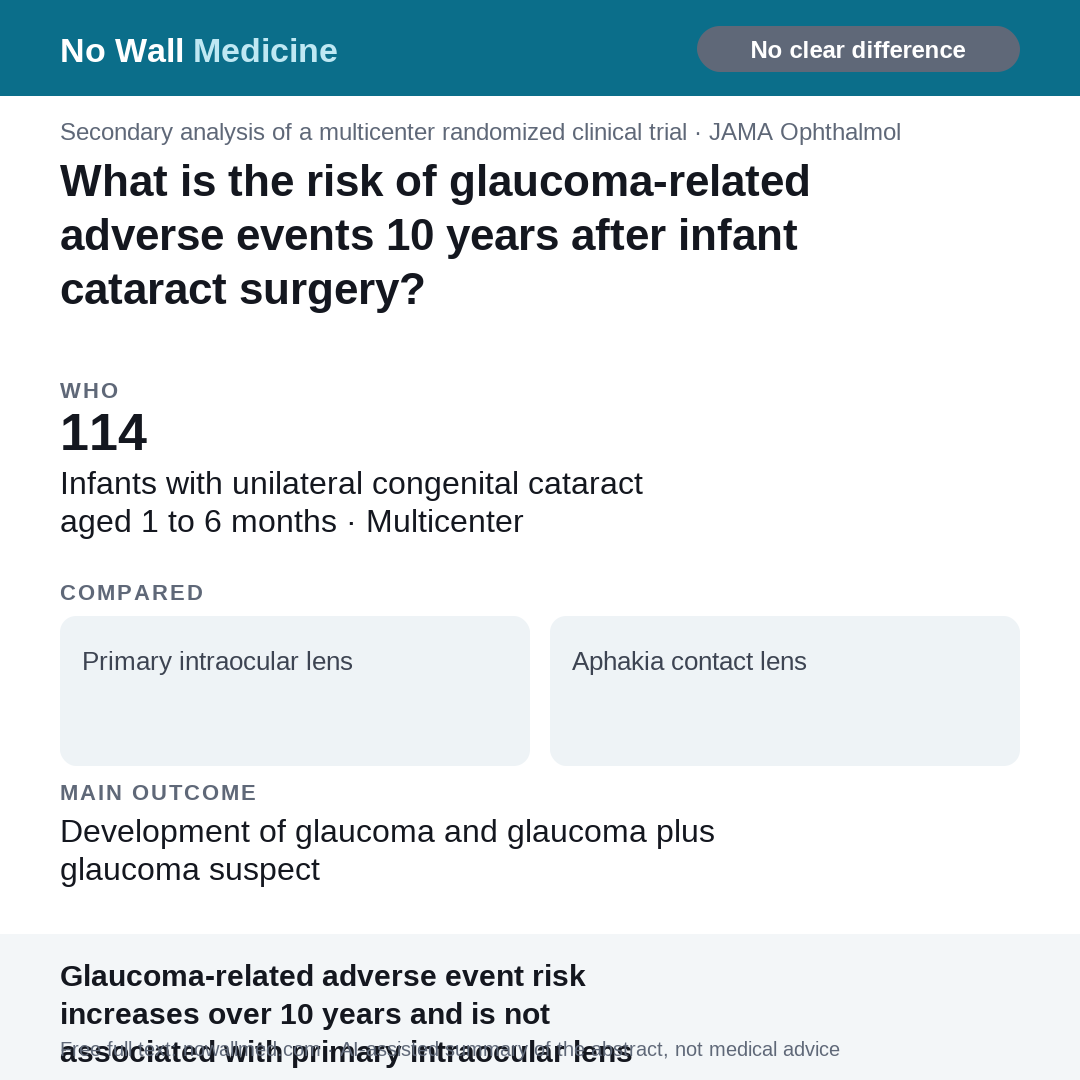
Glaucoma-Related Adverse Events at 10 Years in the Infant Aphakia Treatment Study: A Secondary Analysis of a Randomized Clinical Trial
Secondary analysis of a multicenter randomized clinical trialNo clear difference
What is the risk of glaucoma-related adverse events 10 years after infant cataract surgery?
Who
114
Infants with unilateral congenital cataract aged 1 to 6 months · Multicenter
Compared
Primary intraocular lens
Aphakia contact lens
Main outcome
Development of glaucoma and glaucoma plus glaucoma suspect
Result: 40% (95% CI, 32%-50%) risk of glaucoma plus glaucoma suspect at 10 years
Bottom line: Glaucoma-related adverse event risk increases over 10 years and is not associated with primary intraocular lens implantation.
JAMA Ophthalmol · 2020-12-18Download image
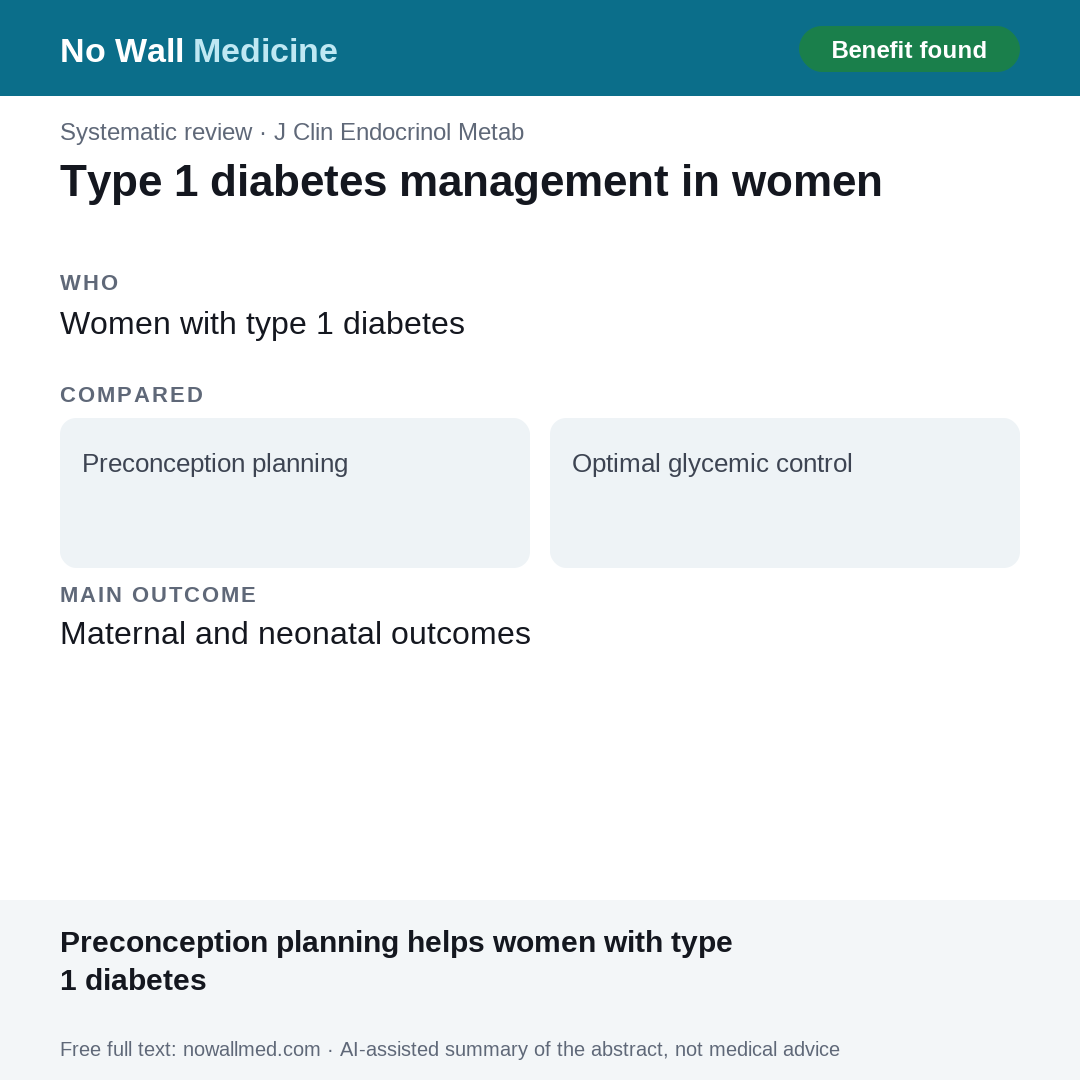
Type 1 Diabetes: Management in Women From Preconception to Postpartum
Systematic reviewBenefit found
Type 1 diabetes management in women
Who
Women with type 1 diabetes
Compared
Preconception planning
Optimal glycemic control
Main outcome
Maternal and neonatal outcomes
Bottom line: Preconception planning helps women with type 1 diabetes
J Clin Endocrinol Metab · 2020-12-18Download image
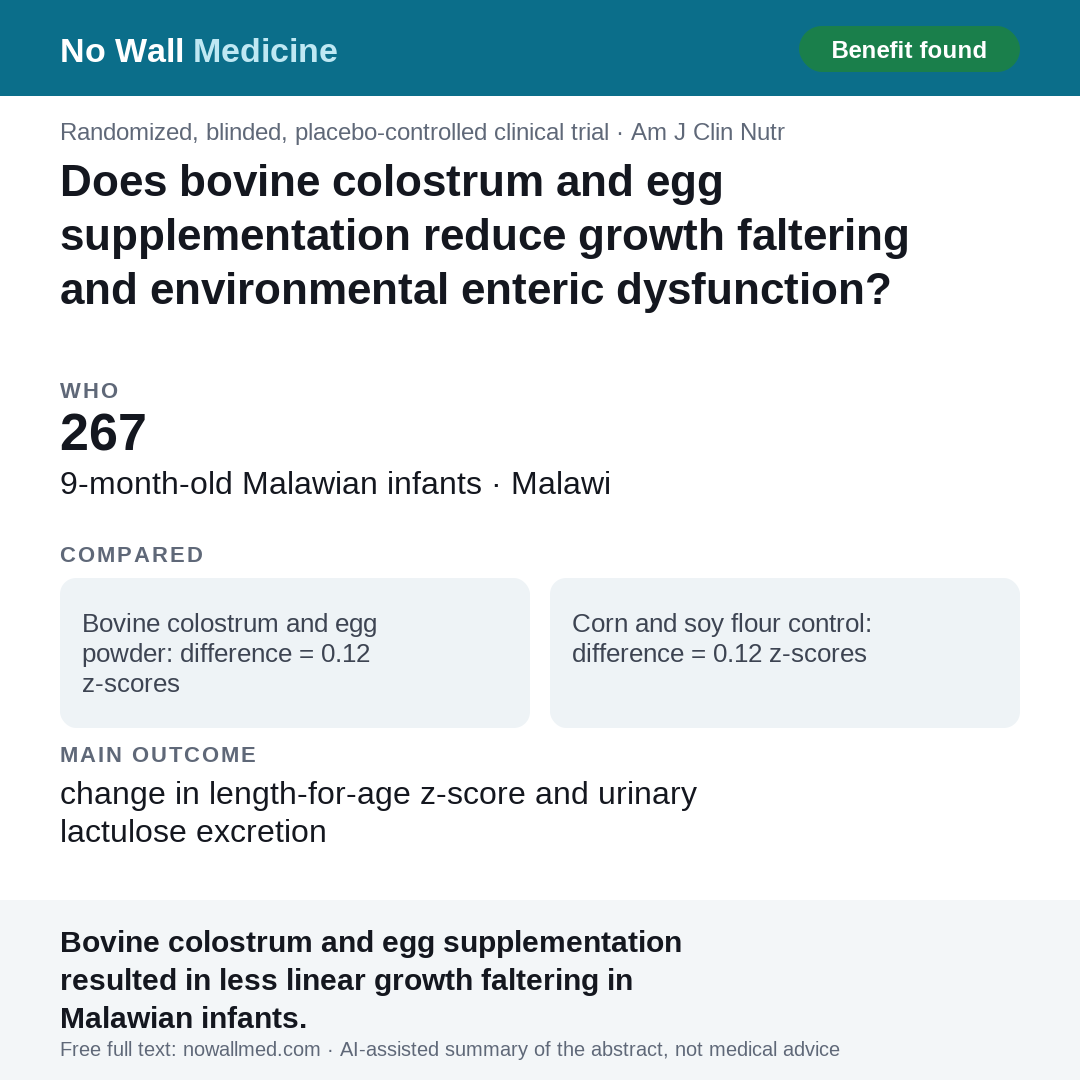
The effect of bovine colostrum/egg supplementation compared with corn/soy flour in young Malawian children: a randomized, controlled clinical trial
Randomized, blinded, placebo-controlled clinical trialBenefit found
Does bovine colostrum and egg supplementation reduce growth faltering and environmental enteric dysfunction?
Who
267
9-month-old Malawian infants · Malawi
Compared
Bovine colostrum and egg powder: difference = 0.12 z-scores
Corn and soy flour control: difference = 0.12 z-scores
Main outcome
change in length-for-age z-score and urinary lactulose excretion
Result: RR = 0.70 (95% CI: 0.52, 0.94) for stunting
Bottom line: Bovine colostrum and egg supplementation resulted in less linear growth faltering in Malawian infants.
Am J Clin Nutr · 2020-12-18Download image
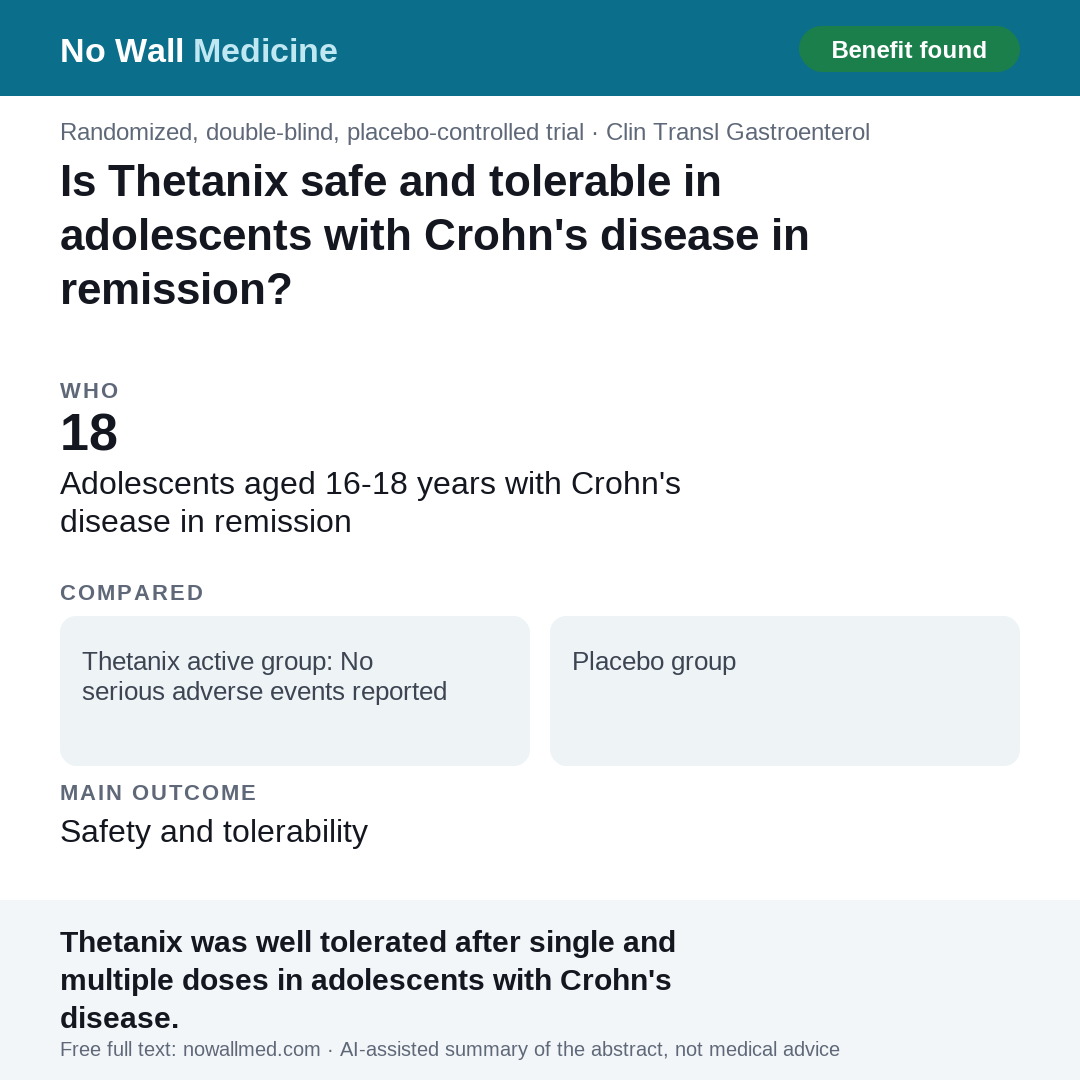
A Double-Blind, Placebo-Controlled Trial to Assess Safety and Tolerability of (Thetanix) Bacteroides thetaiotaomicron in Adolescent Crohn's Disease
Randomized, double-blind, placebo-controlled trialBenefit found
Is Thetanix safe and tolerable in adolescents with Crohn's disease in remission?
Who
18
Adolescents aged 16-18 years with Crohn's disease in remission
Compared
Thetanix active group: No serious adverse events reported
Placebo group
Main outcome
Safety and tolerability
Bottom line: Thetanix was well tolerated after single and multiple doses in adolescents with Crohn's disease.
Clin Transl Gastroenterol · 2020-12-18Download image
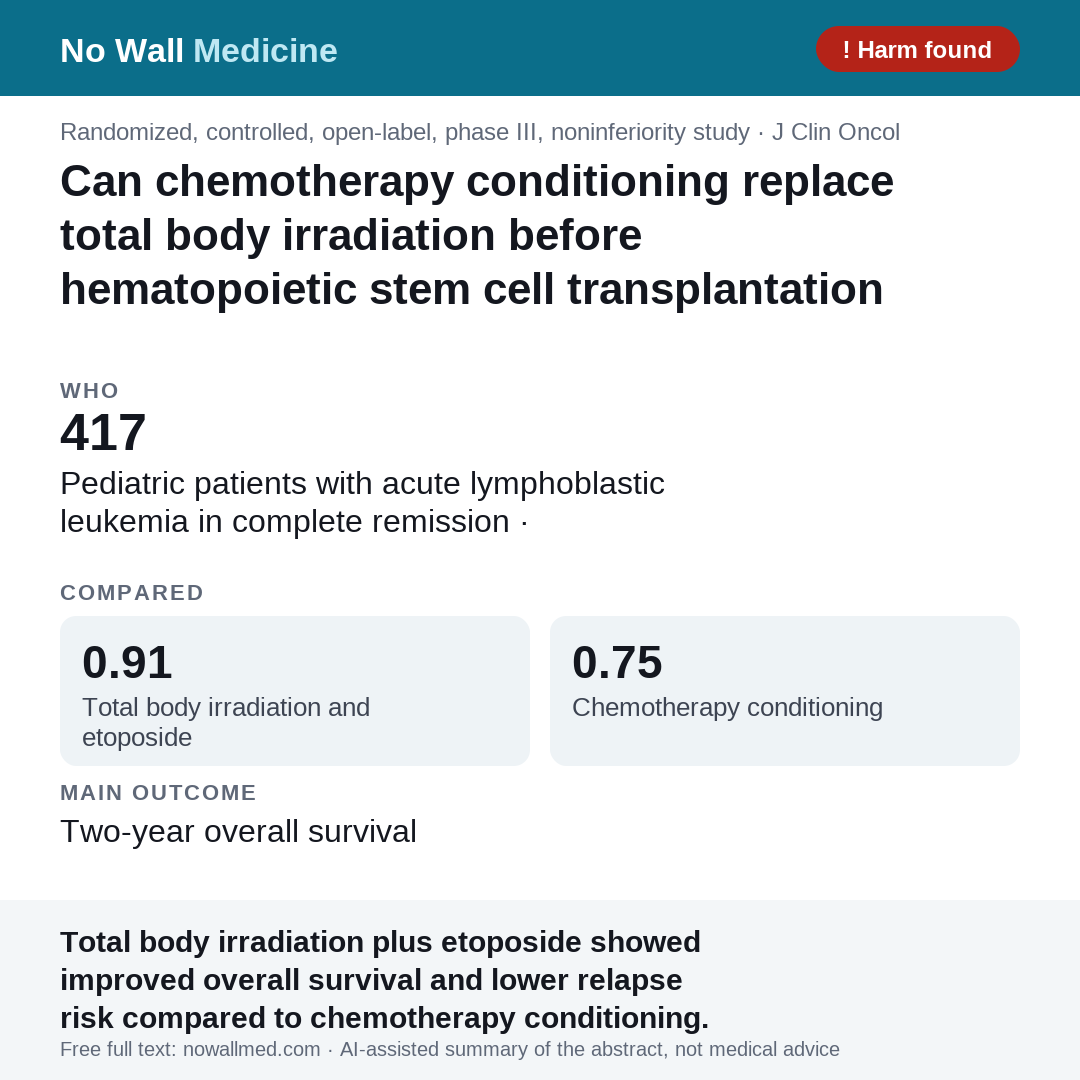
Total Body Irradiation or Chemotherapy Conditioning in Childhood ALL: A Multinational, Randomized, Noninferiority Phase III Study
Randomized, controlled, open-label, phase III, noninferiority studyHarm found
Can chemotherapy conditioning replace total body irradiation before hematopoietic stem cell transplantation in childhood acute lymphoblastic leukemia?
Who
417
Pediatric patients with acute lymphoblastic leukemia in complete remission · International, multicenter
Compared
0.91Total body irradiation and etoposide (95% CI, 0.86 to 0.95)
0.75Chemotherapy conditioning (95% CI, 0.67 to 0.81)
Main outcome
Two-year overall survival
Bottom line: Total body irradiation plus etoposide showed improved overall survival and lower relapse risk compared to chemotherapy conditioning.
J Clin Oncol · 2020-12-17Download image
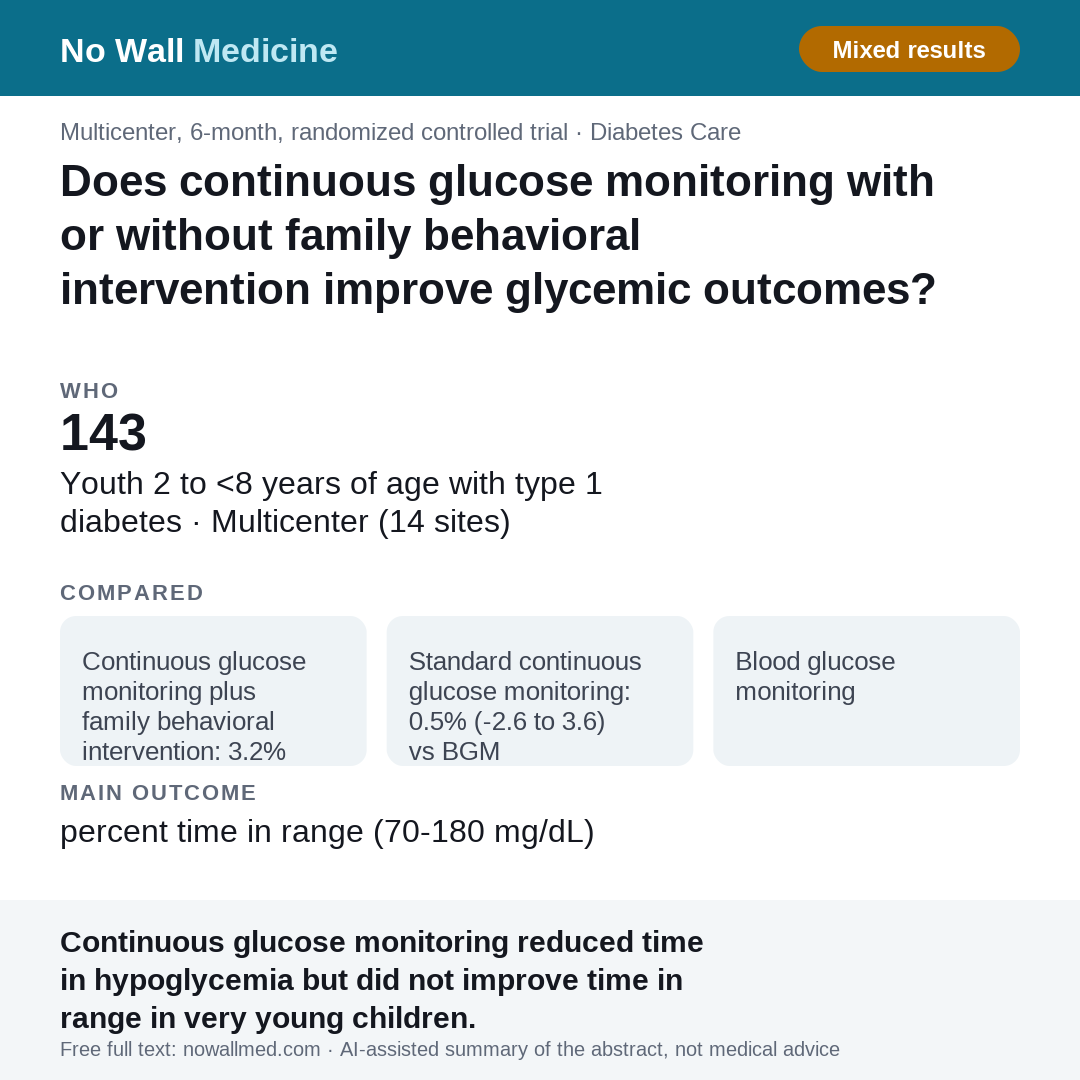
A Randomized Clinical Trial Assessing Continuous Glucose Monitoring (CGM) Use With Standardized Education With or Without a Family Behavioral Intervention Compared With Fingerstick Blood Glucose Monitoring in Very Young Children With Type 1 Diabetes
Multicenter, 6-month, randomized controlled trialMixed results
Does continuous glucose monitoring with or without family behavioral intervention improve glycemic outcomes?
Who
143
Youth 2 to <8 years of age with type 1 diabetes · Multicenter (14 sites)
Compared
Continuous glucose monitoring plus family behavioral intervention: 3.2% (95% CI -0.5, 7.0) vs BGM
Standard continuous glucose monitoring: 0.5% (-2.6 to 3.6) vs BGM
Blood glucose monitoring
Main outcome
percent time in range (70-180 mg/dL)
Result: 3.2% (95% CI -0.5, 7.0)
Bottom line: Continuous glucose monitoring reduced time in hypoglycemia but did not improve time in range in very young children.
Diabetes Care · 2020-12-17Download image
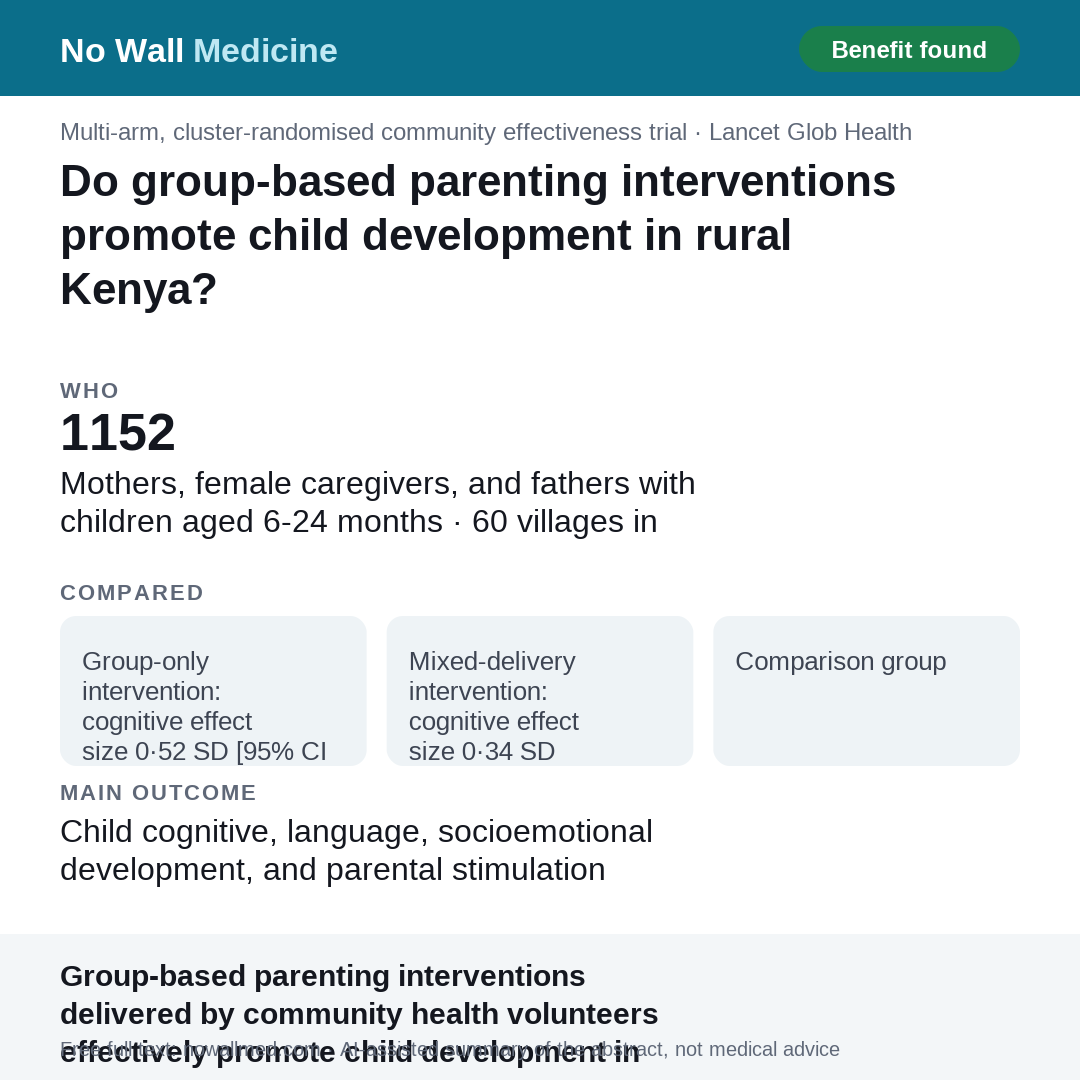
Group-based parenting interventions to promote child development in rural Kenya: a multi-arm, cluster-randomised community effectiveness trial
Multi-arm, cluster-randomised community effectiveness trialBenefit found
Do group-based parenting interventions promote child development in rural Kenya?
Who
1152
Mothers, female caregivers, and fathers with children aged 6-24 months · 60 villages in three rural subcounties, western Kenya
Compared
Group-only intervention: cognitive effect size 0·52 SD [95% CI 0·21-0·83]
Mixed-delivery intervention: cognitive effect size 0·34 SD [0·05-0·62]
Comparison group
Main outcome
Child cognitive, language, socioemotional development, and parental stimulation
Result: cognitive effect size 0·52 SD [95% CI 0·21-0·83]
Bottom line: Group-based parenting interventions delivered by community health volunteers effectively promote child development in low-resource settings.
Funded by: Eunice Kennedy Shriver National Institute of Child Health and Human Development
Lancet Glob Health · 2020-12-17Download image
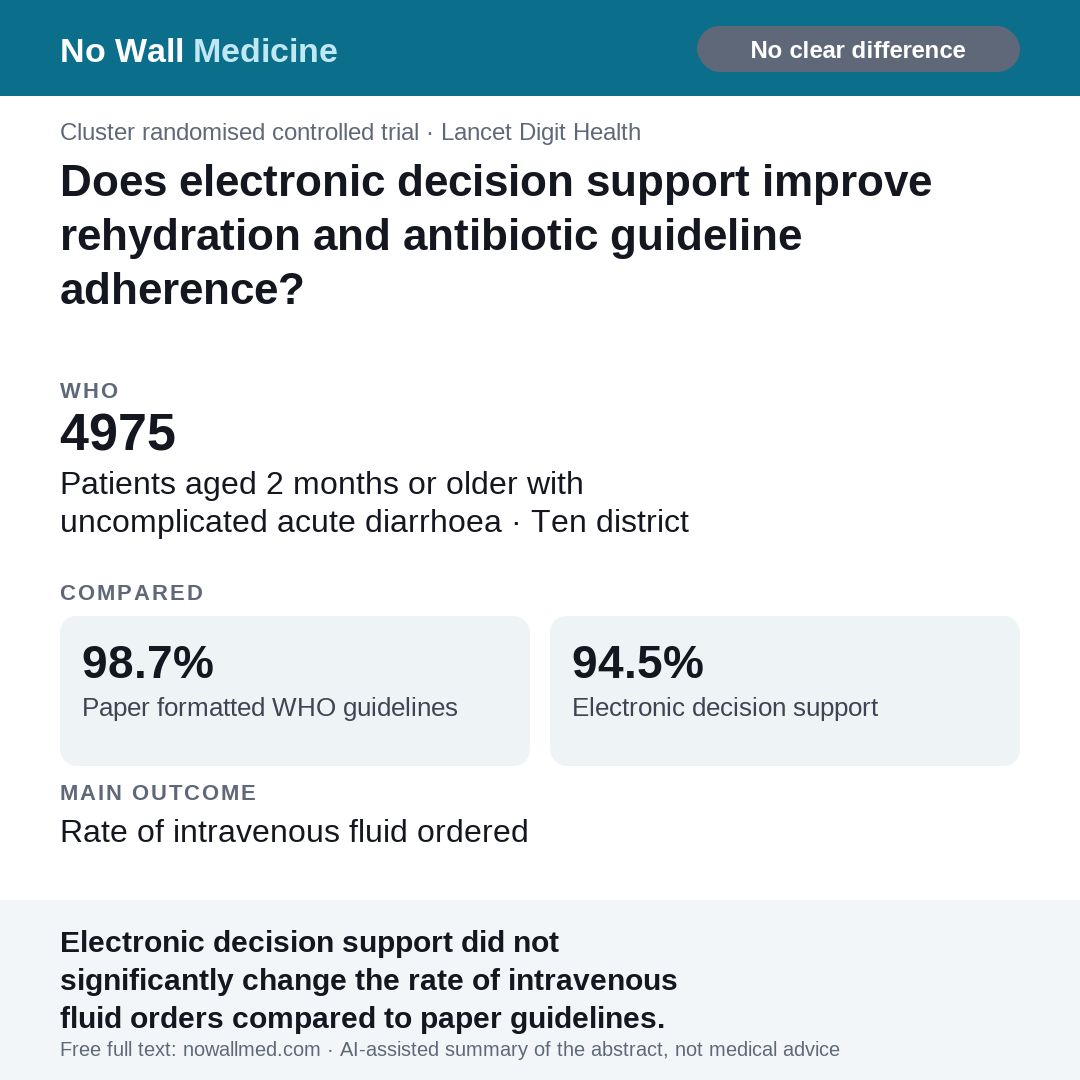
Electronic decision support and diarrhoeal disease guideline adherence (mHDM): a cluster randomised controlled trial
Cluster randomised controlled trialNo clear difference
Does electronic decision support improve rehydration and antibiotic guideline adherence?
Who
4975
Patients aged 2 months or older with uncomplicated acute diarrhoea · Ten district hospitals in Bangladesh
Compared
98.7%Paper formatted WHO guidelines (95% CI 91.8-99.8)
94.5%Electronic decision support (72.2-99.1)
Main outcome
Rate of intravenous fluid ordered
Result: 4.2-point difference (pinteraction=0.31)
Bottom line: Electronic decision support did not significantly change the rate of intravenous fluid orders compared to paper guidelines.
Limitation: Adverse events such as complications and mortality events could not be statistically estimated.
Funded by: US National Institutes of Health
Lancet Digit Health · 2020-12-17Download image
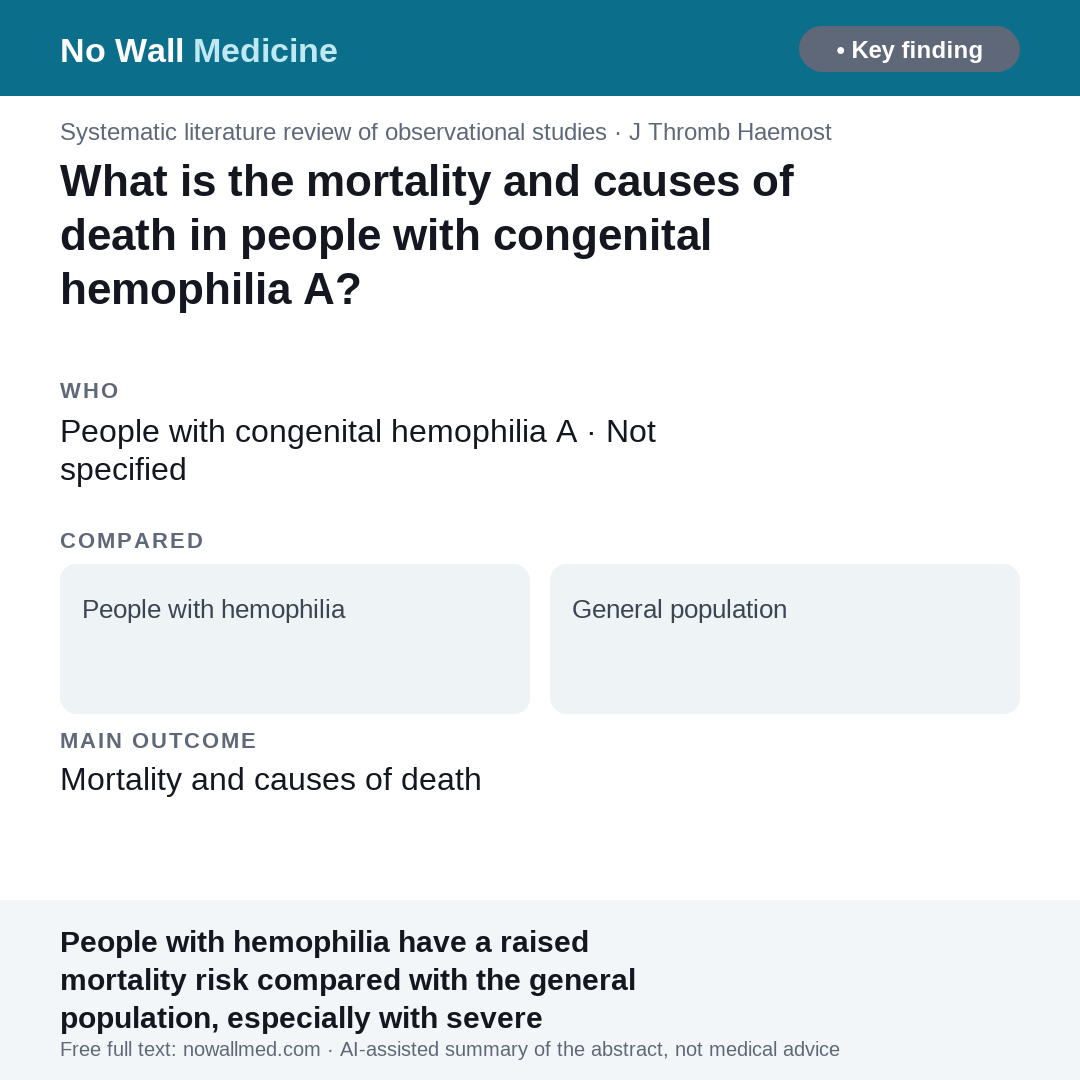
Mortality in congenital hemophilia A - a systematic literature review
Systematic literature review of observational studiesHarm found
What is the mortality and causes of death in people with congenital hemophilia A?
Who
People with congenital hemophilia A · Not specified
Compared
People with hemophilia
General population
Main outcome
Mortality and causes of death
Bottom line: People with hemophilia have a raised mortality risk compared with the general population, especially with severe hemophilia or viral infections.
Limitation: Incomplete and heterogeneous reporting limits evidence.
J Thromb Haemost · 2020-12-17Download image