Visual abstracts
New randomized trials and meta-analyses from leading journals at a glance: who was studied, what was compared, and what was found. Every paper is free to read in full.
All specialtiesCardiology 195Oncology 167Gastroenterology & Hepatology 95Infectious Disease 164Neurology 90Psychiatry & Mental Health 132Pulmonology 94Critical Care 53Endocrinology & Diabetes 126Pediatrics 86Surgery 61Orthopedics & Sports Medicine 38Neurosurgery 7Cardiothoracic & Vascular Surgery 18Plastic & Reconstructive Surgery 46Nephrology 37Rheumatology 39Hematology 49Dermatology 22Ophthalmology 37Obstetrics & Gynecology 52Public & Global Health 60Radiology & Imaging 16Anesthesiology 32Urology 47ENT (Otolaryngology) 24Emergency Medicine 21Allergy & Immunology 15Geriatrics 59Family Medicine & Primary Care 23Medical Genetics & Genomics 21Pathology & Laboratory Medicine 5Physical Medicine & Rehabilitation 49Palliative Care 26Nutrition 66Digital Health & AI 178General Medicine 29
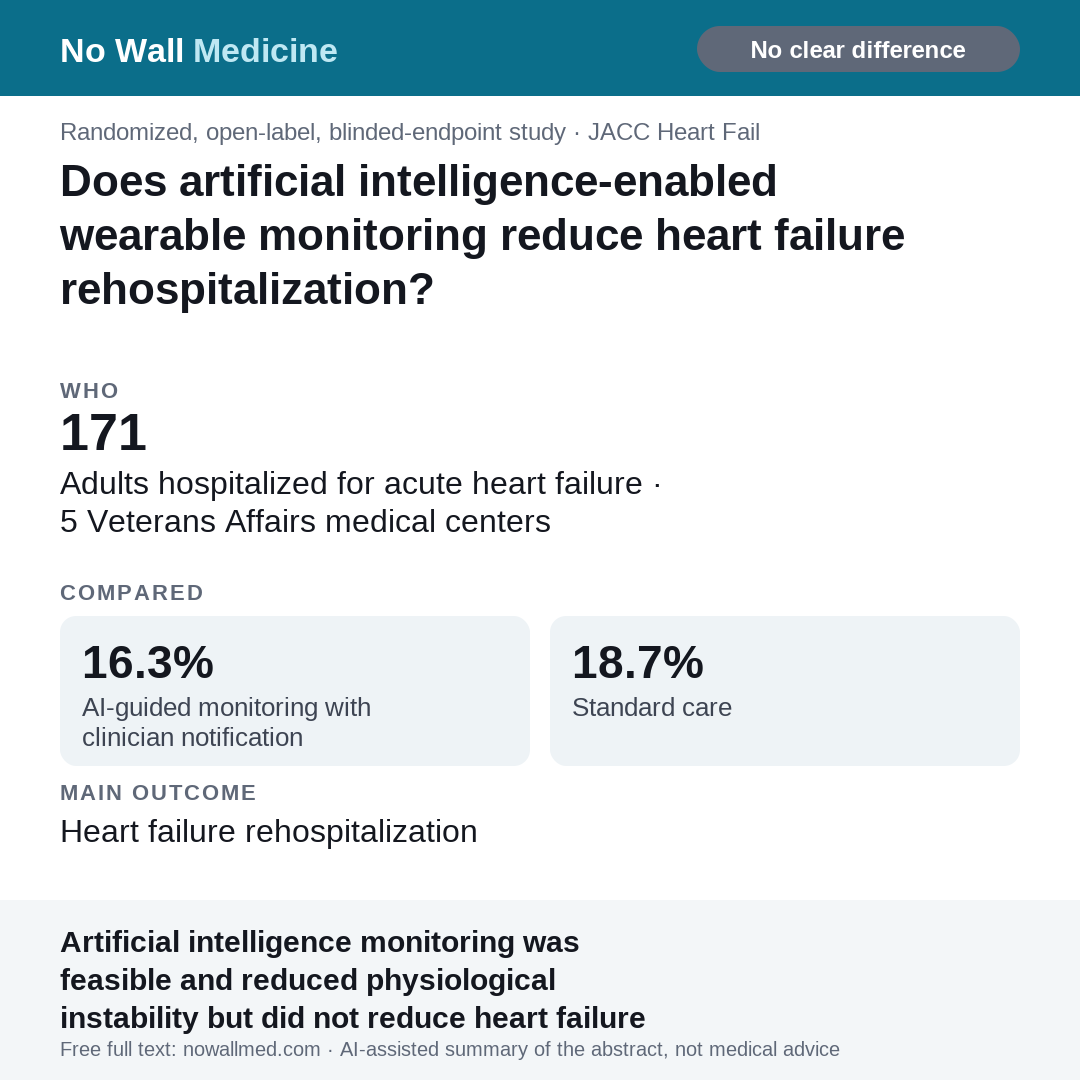
Artificial Intelligence-Enabled Detection and Management of Physiological Instability in Heart Failure: Results of the Randomized LINK-HF2 Trial
Randomized, open-label, blinded-endpoint studyNo clear difference
Does artificial intelligence-enabled wearable monitoring reduce heart failure rehospitalization?
Who
171
Adults hospitalized for acute heart failure · 5 Veterans Affairs medical centers
Compared
16.3%AI-guided monitoring with clinician notification
18.7%Standard care
Main outcome
Heart failure rehospitalization
Result: hazard ratio 0.90 (95% CI 0.43-1.84)
Bottom line: Artificial intelligence monitoring was feasible and reduced physiological instability but did not reduce heart failure rehospitalization.
JACC Heart Fail · 2026-10-09Download image
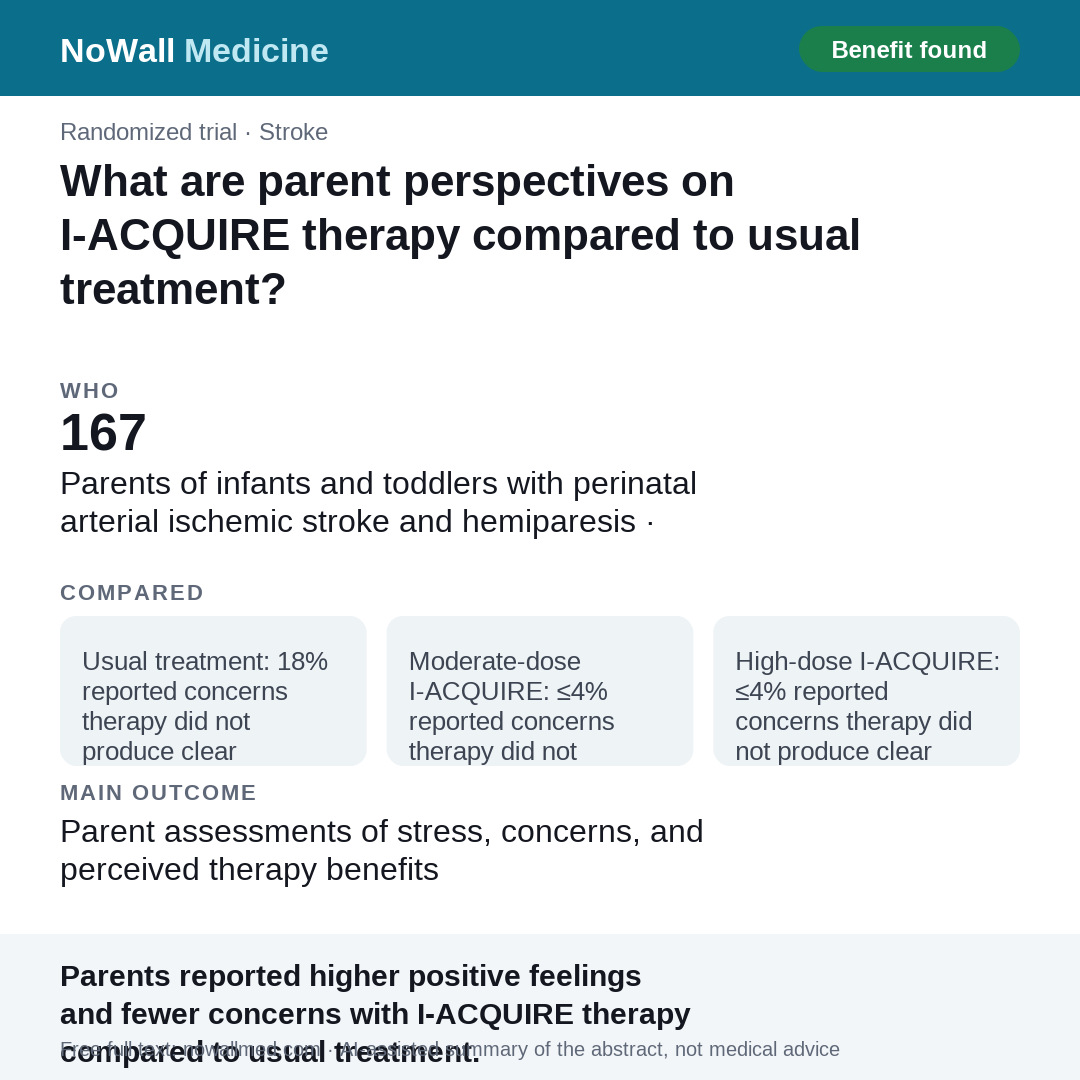
Parent Perspectives on I-ACQUIRE Therapy
Randomized trialBenefit found
What are parent perspectives on I-ACQUIRE therapy compared to usual treatment?
Who
167
Parents of infants and toddlers with perinatal arterial ischemic stroke and hemiparesis · United States 15-site
Compared
Usual treatment: 18% reported concerns therapy did not produce clear benefits
Moderate-dose I-ACQUIRE: ≤4% reported concerns therapy did not produce clear benefits
High-dose I-ACQUIRE: ≤4% reported concerns therapy did not produce clear benefits
Main outcome
Parent assessments of stress, concerns, and perceived therapy benefits
Bottom line: Parents reported higher positive feelings and fewer concerns with I-ACQUIRE therapy compared to usual treatment.
Stroke · 2026-10-09Download image
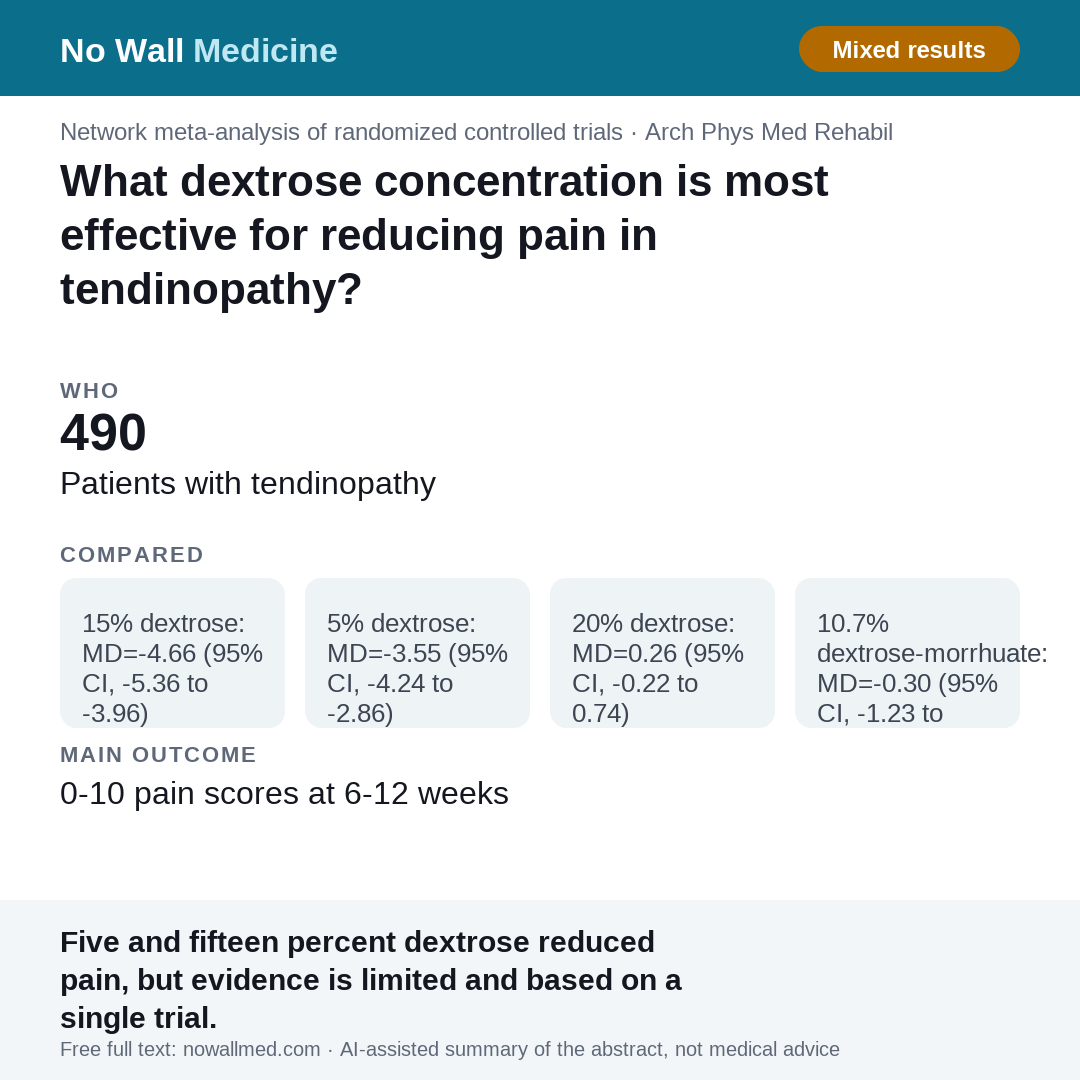
Optimal Dextrose Concentration for Prolotherapy in Tendinopathy: A Systematic Review and Network Meta-Analysis of Randomized Controlled Trials
Network meta-analysis of randomized controlled trialsMixed results
What dextrose concentration is most effective for reducing pain in tendinopathy?
Who
490
Patients with tendinopathy
Compared
15% dextrose: MD=-4.66 (95% CI, -5.36 to -3.96)
5% dextrose: MD=-3.55 (95% CI, -4.24 to -2.86)
20% dextrose: MD=0.26 (95% CI, -0.22 to 0.74)
10.7% dextrose-morrhuate: MD=-0.30 (95% CI, -1.23 to 0.63)
Main outcome
0-10 pain scores at 6-12 weeks
Bottom line: Five and fifteen percent dextrose reduced pain, but evidence is limited and based on a single trial.
Limitation: Evidence is limited, certainty is low to very low, and results may reflect differences in tendon site or schedule.
Arch Phys Med Rehabil · 2026-10-09Download image
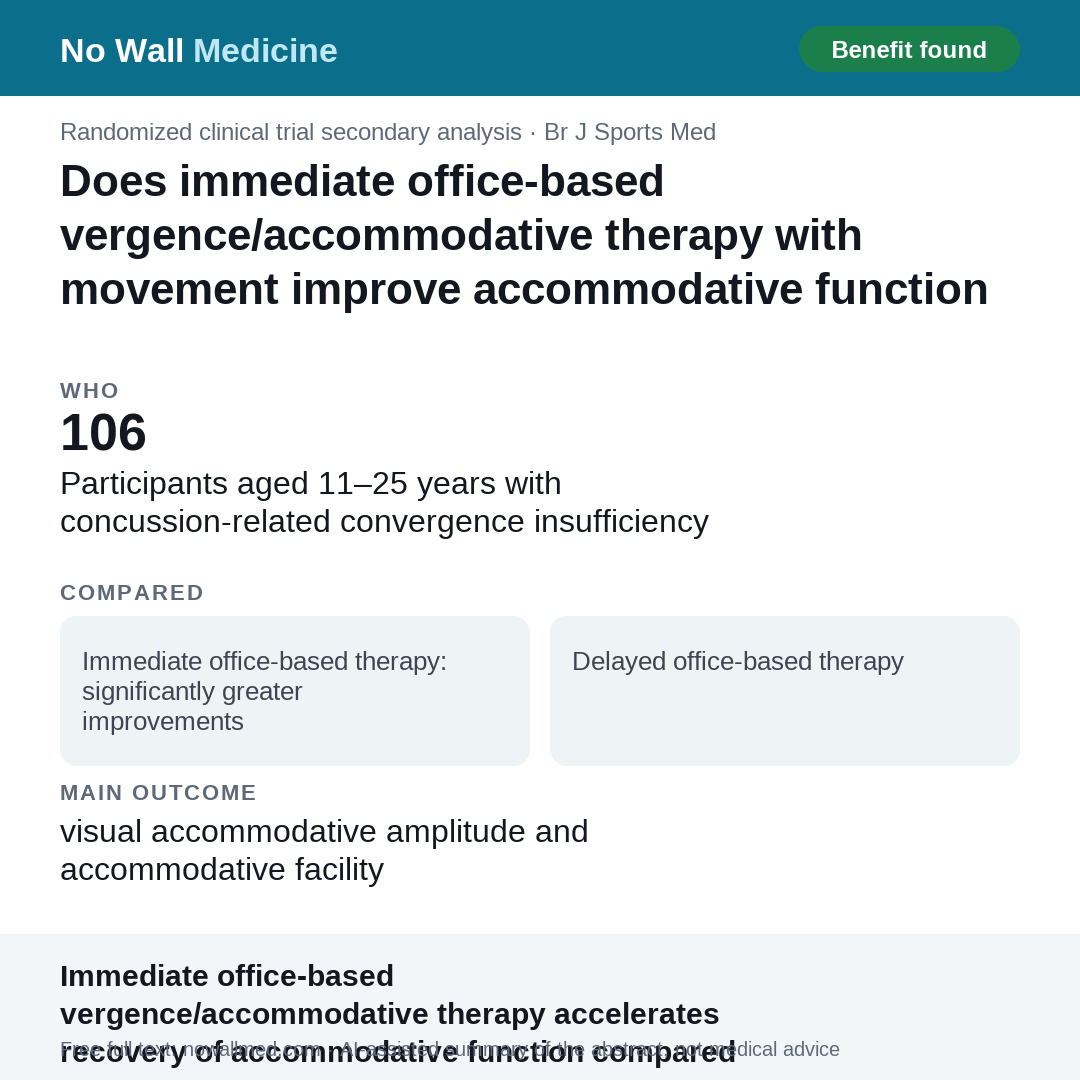
Effectiveness of office-based vergence/accommodative therapy with movement for accommodative dysfunction in concussion-related convergence insufficiency: a secondary analysis of the CONCUSS randomised clinical trial
Randomized clinical trial secondary analysisBenefit found
Does immediate office-based vergence/accommodative therapy with movement improve accommodative function after concussion?
Who
106
Participants aged 11–25 years with concussion-related convergence insufficiency
Compared
Immediate office-based therapy: significantly greater improvements
Delayed office-based therapy
Main outcome
visual accommodative amplitude and accommodative facility
Bottom line: Immediate office-based vergence/accommodative therapy accelerates recovery of accommodative function compared to delayed treatment.
Br J Sports Med · 2026-10-09Download image
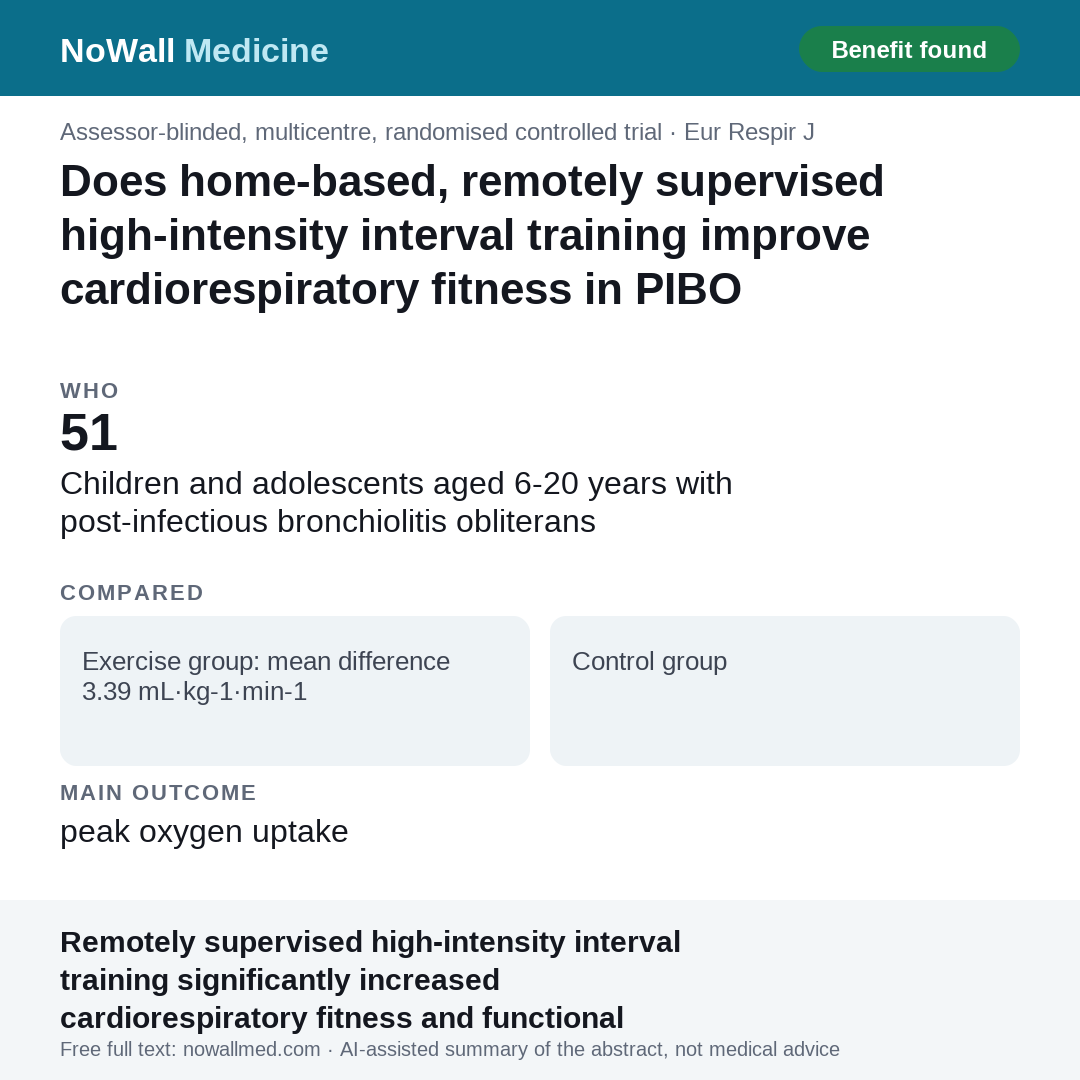
Home-based, remotely supervised, high-intensity interval training and cardiorespiratory fitness in children and adolescents with post-infectious bronchiolitis obliterans: a randomised controlled trial
Assessor-blinded, multicentre, randomised controlled trialBenefit found
Does home-based, remotely supervised high-intensity interval training improve cardiorespiratory fitness in PIBO patients?
Who
51
Children and adolescents aged 6-20 years with post-infectious bronchiolitis obliterans
Compared
Exercise group: mean difference 3.39 mL·kg-1·min-1
Control group
Main outcome
peak oxygen uptake
Result: mean difference 3.39 mL·kg-1·min-1; p=0.04
Bottom line: Remotely supervised high-intensity interval training significantly increased cardiorespiratory fitness and functional capacity in children with post-infectious bronchiolitis obliterans.
Eur Respir J · 2026-10-09Download image
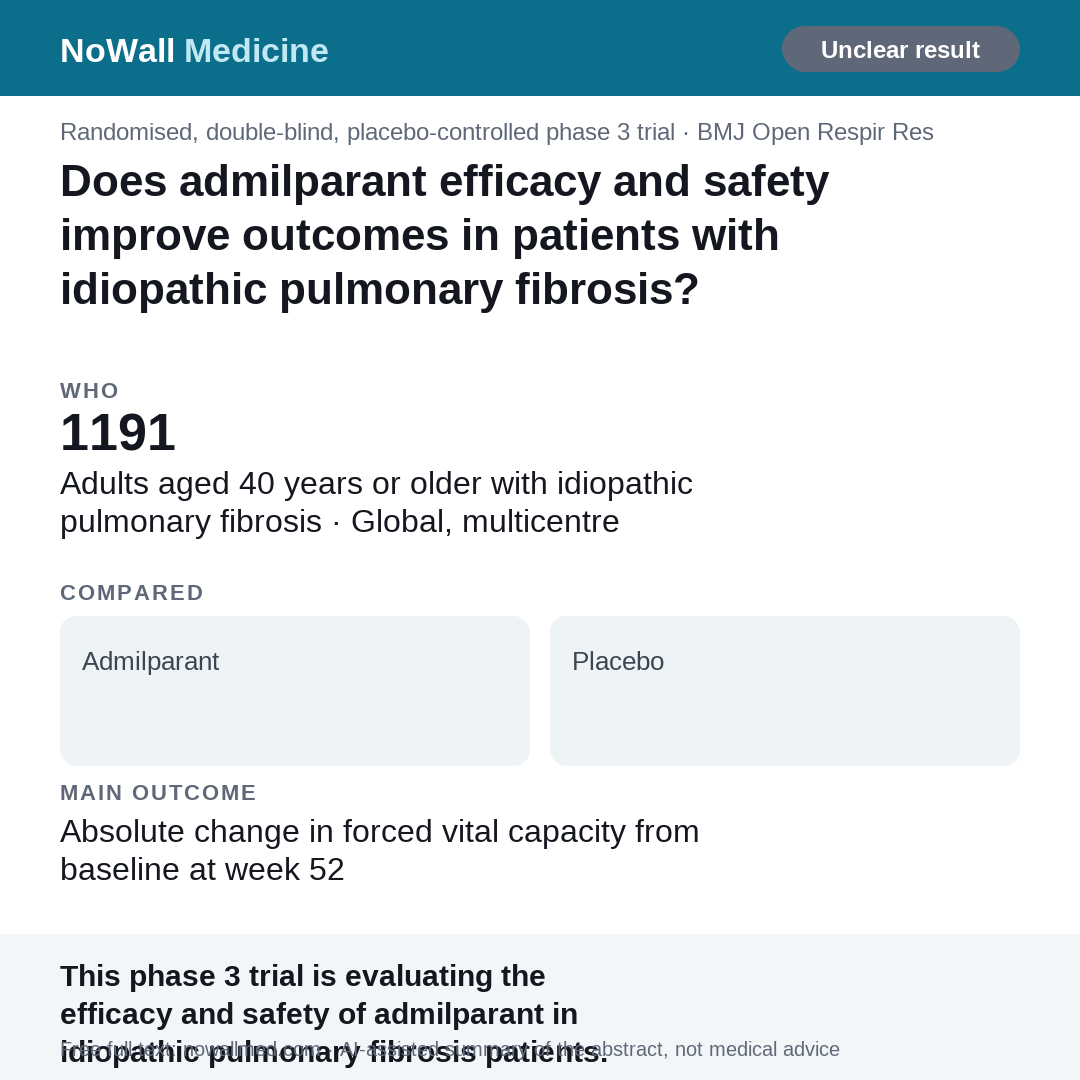
Protocol and rationale for a randomised, double-blind, placebo-controlled phase 3 trial of admilparant (BMS-986278), an oral lysophosphatidic acid receptor 1 antagonist, in patients with idiopathic pulmonary fibrosis: ALOFT-IPF
Randomised, double-blind, placebo-controlled phase 3 trialUnclear result
Does admilparant efficacy and safety improve outcomes in patients with idiopathic pulmonary fibrosis?
Who
1191
Adults aged 40 years or older with idiopathic pulmonary fibrosis · Global, multicentre
Compared
Admilparant
Placebo
Main outcome
Absolute change in forced vital capacity from baseline at week 52
Bottom line: This phase 3 trial is evaluating the efficacy and safety of admilparant in idiopathic pulmonary fibrosis patients.
BMJ Open Respir Res · 2026-10-09Download image
Imaging for diagnosis, monitoring and outcome prediction in polymyalgia rheumatica: a systematic literature review and meta-analysis informing an international task force
Systematic literature review and meta-analysisMixed results
What is the evidence for imaging in polymyalgia rheumatica diagnosis, monitoring, and outcome prediction?
Who
Patients with polymyalgia rheumatica
Compared
Imaging for diagnosis
Imaging for monitoring
Imaging for outcome prediction
Main outcome
Diagnostic, monitoring, prognostic, and technical aspects of imaging
Bottom line: Imaging can support polymyalgia rheumatica diagnosis, but evidence for monitoring and outcome prediction is sparse and heterogeneous.
Limitation: Available evidence was heterogeneous, of limited quality, and no study was graded as low risk of bias.
RMD Open · 2026-10-09Download image

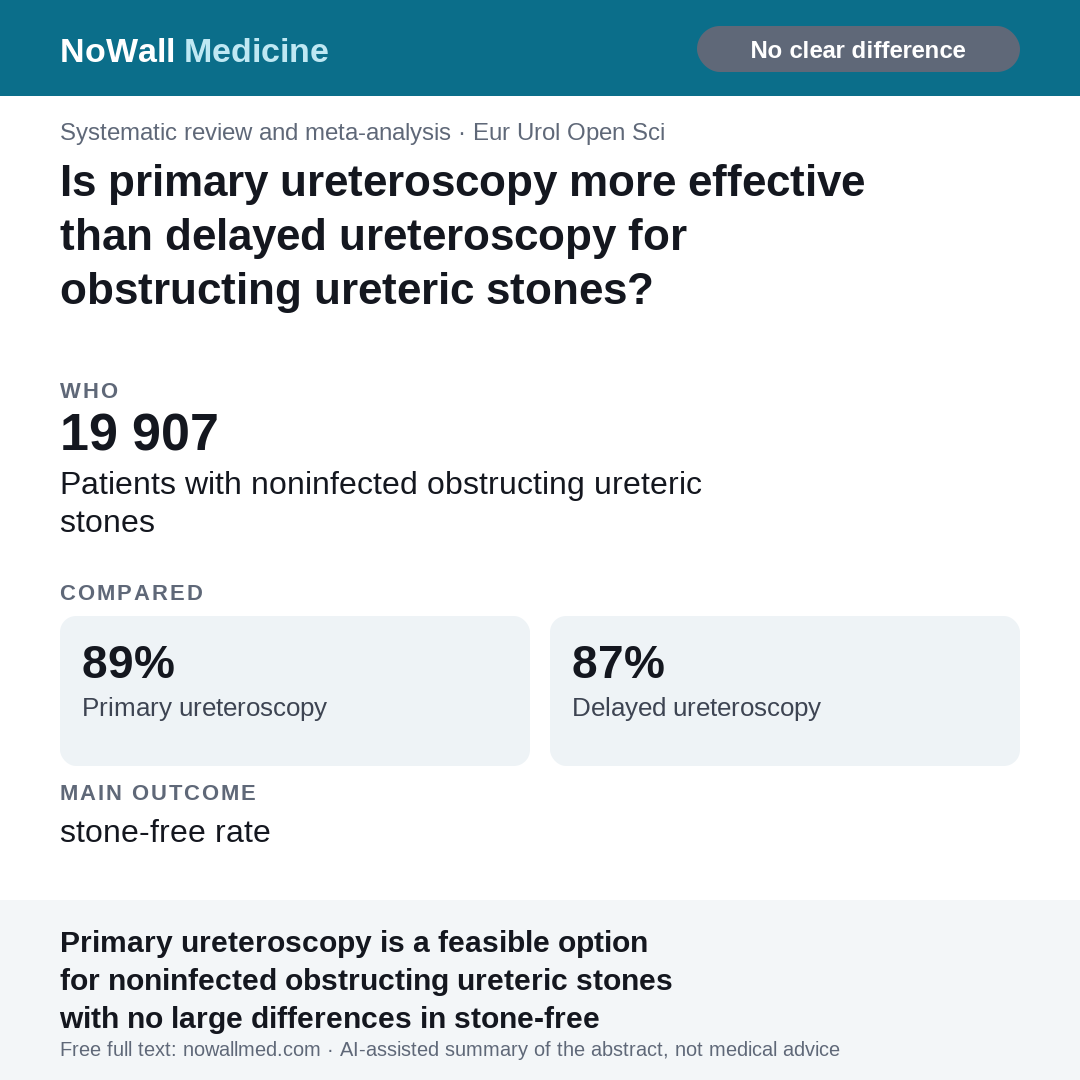
Primary Versus Delayed Ureteroscopy for Obstructing Ureteric Calculi: A Systematic Review and Meta-analysis from the European Association of Urology Endourology
Systematic review and meta-analysisNo clear difference
Is primary ureteroscopy more effective than delayed ureteroscopy for obstructing ureteric stones?
Who
19 907
Patients with noninfected obstructing ureteric stones
Compared
89%Primary ureteroscopy (95% CI 80-95)
87%Delayed ureteroscopy (95% CI 77-94)
Main outcome
stone-free rate
Result: odds ratio 1.20 (95% CI 0.75-1.92)
Bottom line: Primary ureteroscopy is a feasible option for noninfected obstructing ureteric stones with no large differences in stone-free rates.
Limitation: Methodological heterogeneity, predominantly retrospective designs, and sparse data using strict stone-free definitions.
Eur Urol Open Sci · 2026-10-09Download image
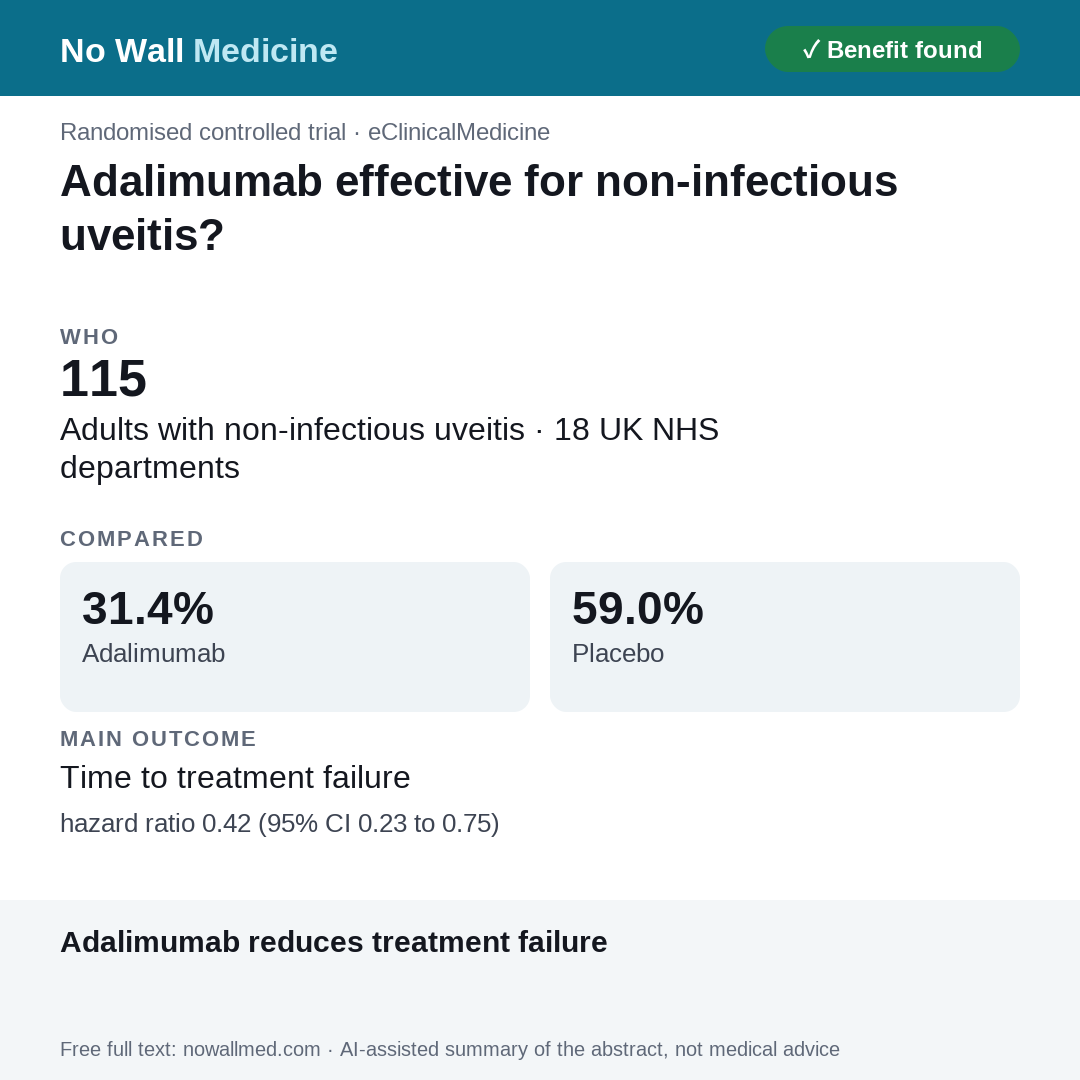
A randomised, open-label, phase II study of tobemstomig combinations in patients with previously untreated advanced clear-cell renal cell carcinoma
Randomised, open-label, phase II studyHarm found
Are tobemstomig combinations effective in untreated advanced clear-cell renal cell carcinoma?
Who
198
Untreated advanced clear-cell renal cell carcinoma with intermediate/poor risk
Compared
tobemstomig plus axitinib: 62.1% grade 3-4 adverse events
tobemstomig plus tiragolumab plus axitinib: 67.7% grade 3-4 adverse events
pembrolizumab plus axitinib: 56.7% grade 3-4 adverse events
Main outcome
Incidence and severity of adverse events
Bottom line: Tobemstogim-containing regimens were associated with increased toxicity and no meaningful efficacy improvement relative to control.
ESMO Open · 2026-10-09Download image
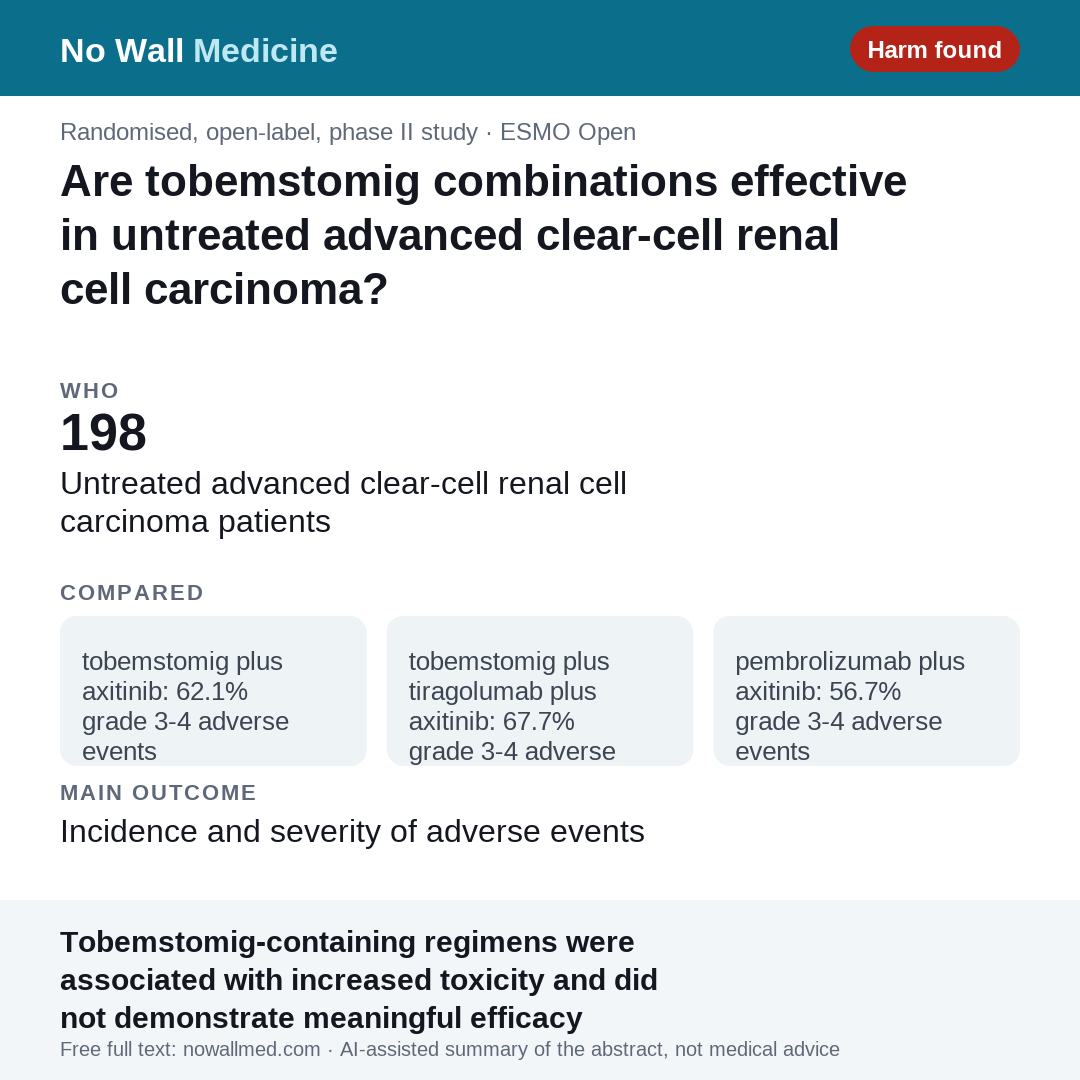
Oral deucrictibant for on-demand treatment of hereditary angioedema attacks: a phase 3, multicentre, randomised, double-blind, placebo-controlled crossover trial
Randomized, double-blind trialBenefit found
Does deucrictibant relieve hereditary angioedema attacks?
Who
134
Adolescent and adult hereditary angioedema patients · Multicentre
Compared
Deucrictibant: 1·28 h
Placebo: more than 12 h
Main outcome
Time to symptom relief
Result: median times of 1·28 h (95% CI 1·05 to 1·52) and more than 12 h
Bottom line: Deucrictibant relieves symptoms faster than placebo
Funded by: Pharvaris
Lancet · 2026-10-08Download image
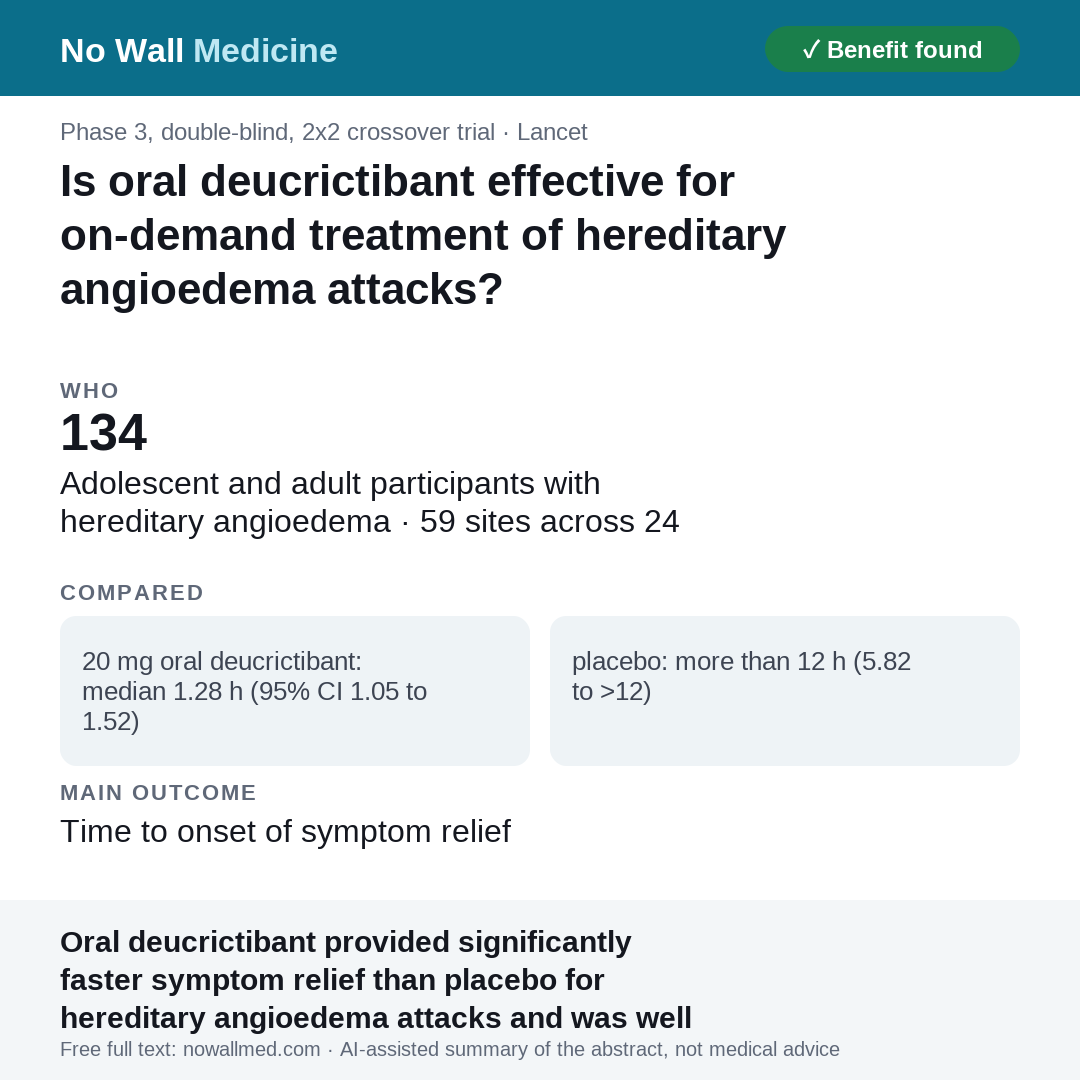
Genotype-informed docosahexaenoic acid dosing based on the FADS Indel to reduce preterm and prolonged gestation: A secondary analysis of the ADORE randomized trial
Randomized trialBenefit found
Does genotype modify DHA dose effect
Who
pregnant women at twelve to twenty weeks gestation · three US medical centers
Compared
I-allele high dose
D/D high dose
I-allele low dose
D/D low dose
Main outcome
preterm and early preterm birth
Bottom line: Genotype-informed DHA dosing reduces preterm birth
PLOS Med · 2026-10-08Download image
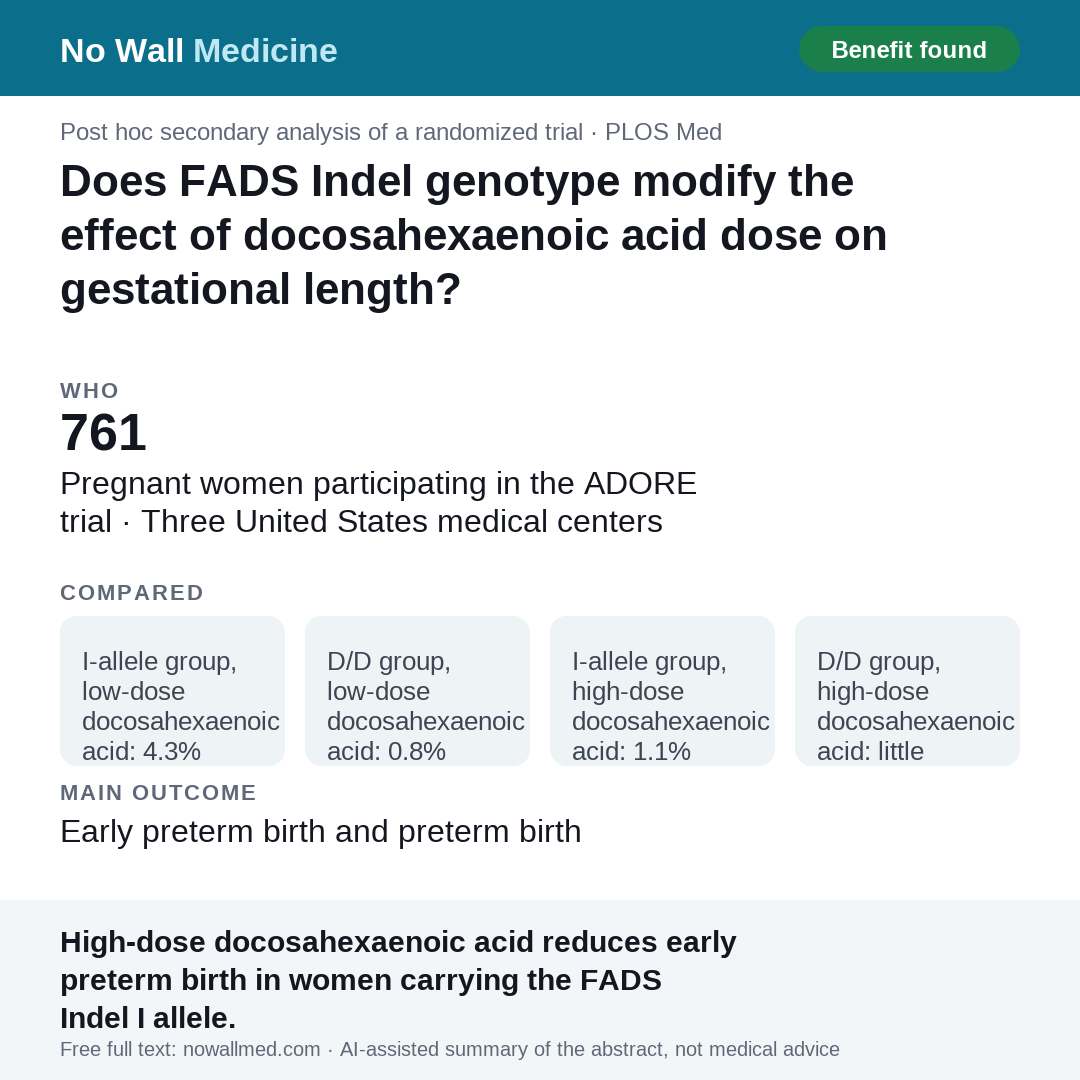
Adalimumab versus placebo as add-on to standard therapy for non-infectious uveitis in the United Kingdom: the ASTUTE randomised controlled trial with treatment run-in
Randomised controlled trialBenefit found
Adalimumab effective for non-infectious uveitis?
Who
115
Adults with non-infectious uveitis · 18 UK NHS departments
Compared
31.4%Adalimumab
59.0%Placebo
Main outcome
Time to treatment failure
Result: hazard ratio 0.42 (95% CI 0.23 to 0.75)
Bottom line: Adalimumab reduces treatment failure
Funded by: National Institute for Health and Care Research
eClinicalMedicine · 2026-10-08Download image
Supporting informed decisions about tubal sterilization with a patient-facing website: a randomized trial
Randomized controlled trialBenefit found
Does website improve access to birth control?
Who
350
Individuals considering tubal sterilization · United States
Compared
62%Intervention
58%Attention control
Main outcome
Perceived access to birth control
Result: adjusted mean difference, 3.24; 95% confidence interval, 1.81-4.67
Bottom line: Website increases access to birth control
AJOG · 2026-10-08Download image

DIEP versus SIEA flap in autologous breast reconstruction: A systematic review and meta-analysis
Systematic review and meta-analysisHarm found
Are DIEP flaps superior to SIEA flaps in autologous breast reconstruction?
Who
Patients undergoing autologous breast reconstruction
Compared
Deep inferior epigastric artery perforator flap
Superficial inferior epigastric artery flap
Main outcome
Total flap loss, partial flap loss, and take-back for vascular compromise
Result: total flap loss OR 5.42 (95% CI 2.76-10.63); take-back for vascular compromise OR 3.80 (95% CI 2.50-5.76)
Bottom line: The DIEP flap demonstrated superior vascular reliability compared with the SIEA flap in autologous breast reconstruction.
Limitation: Evidence comparing outcomes between these techniques continues to be heterogeneous and controversial.
J Plast Reconstr Aesthet Surg · 2026-10-08Download image

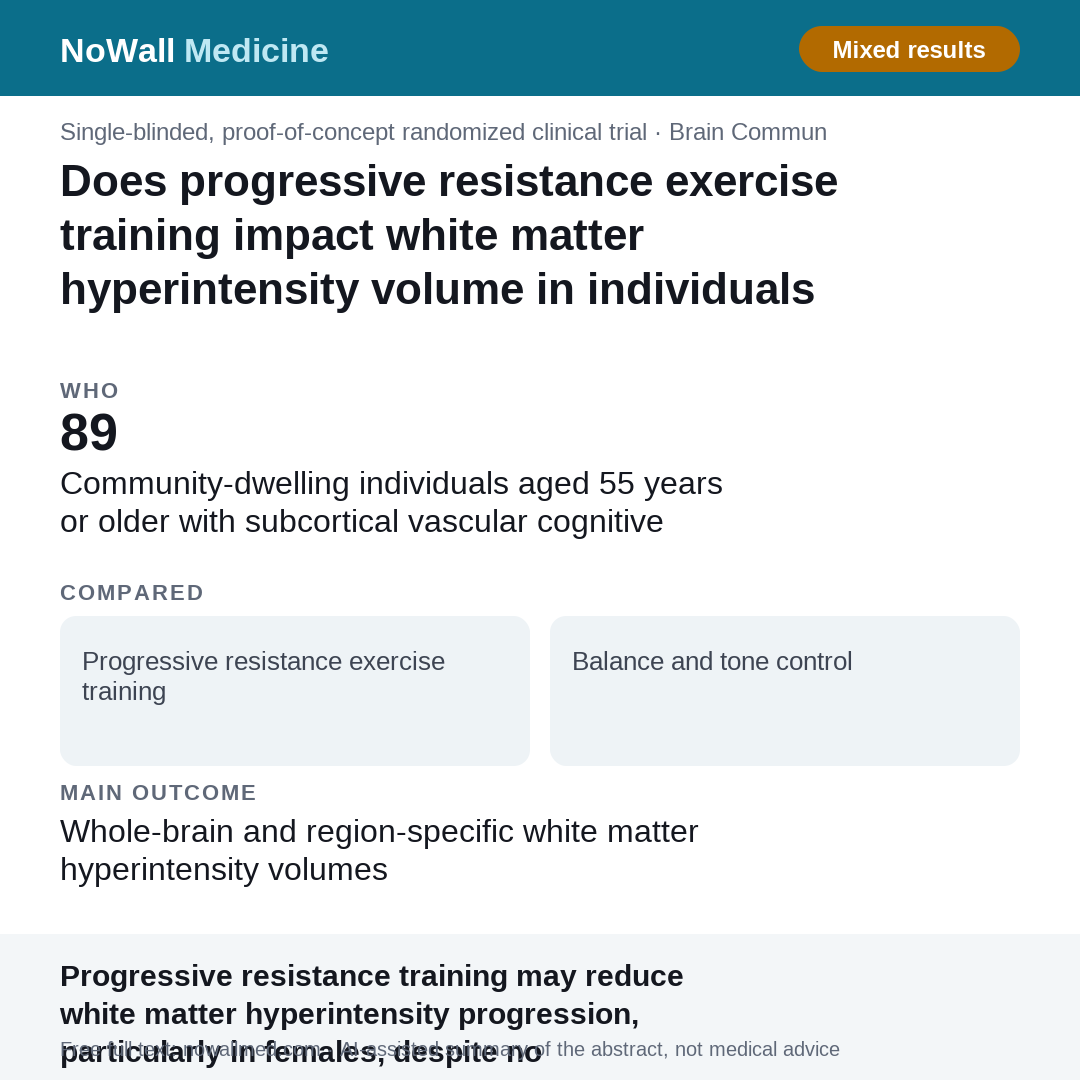
Exercise and white matter hyperintensities: a randomized clinical trial
Single-blinded, proof-of-concept randomized clinical trialMixed results
Does progressive resistance exercise training impact white matter hyperintensity volume in individuals with subcortical vascular cognitive impairment?
Who
89
Community-dwelling individuals aged 55 years or older with subcortical vascular cognitive impairment
Compared
Progressive resistance exercise training
Balance and tone control
Main outcome
Whole-brain and region-specific white matter hyperintensity volumes
Result: -0.016 (-0.052 to 0.019) log-transformed cm3
Bottom line: Progressive resistance training may reduce white matter hyperintensity progression, particularly in females, despite no significant whole-brain difference.
Brain Commun · 2026-10-08Download image
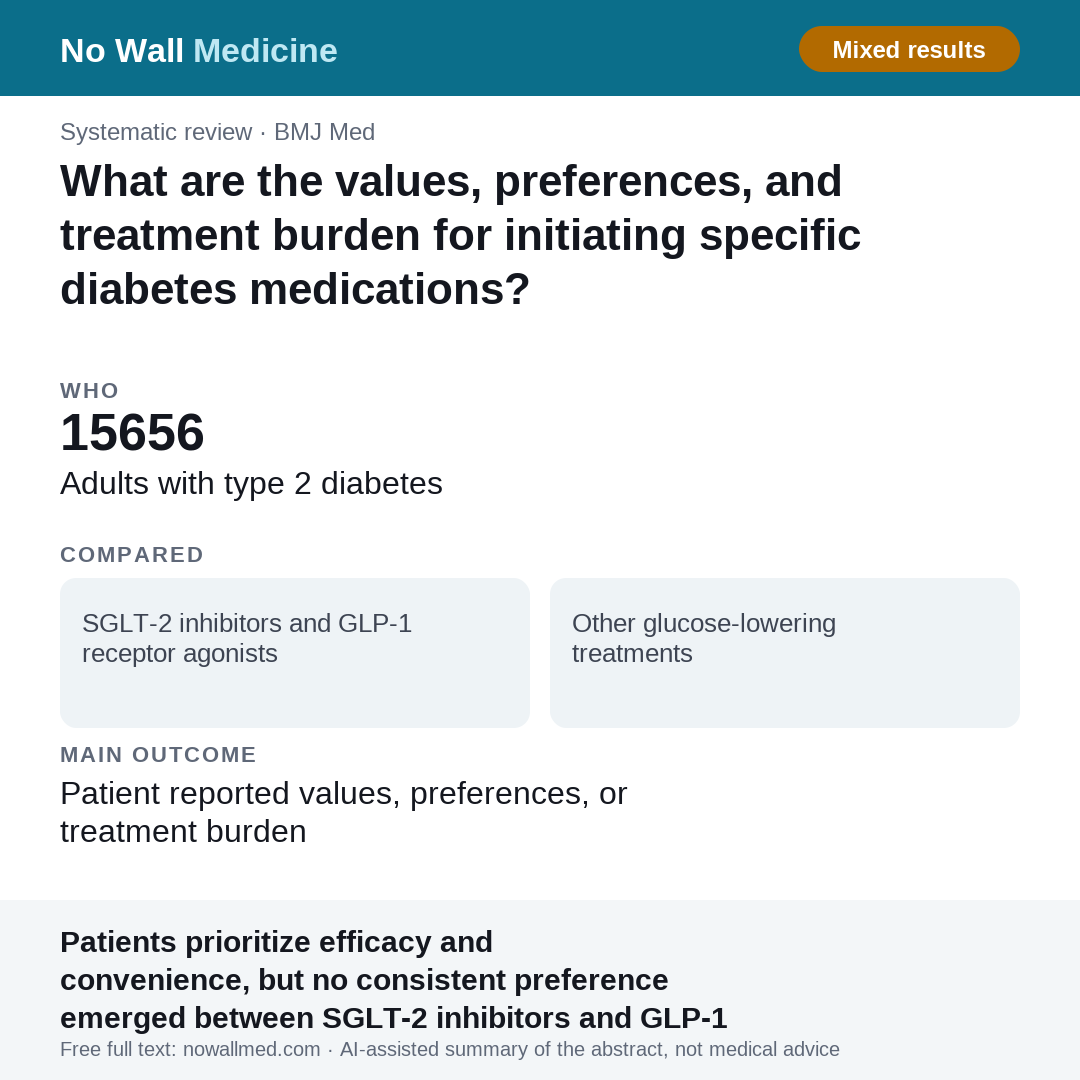
Values, preferences, and treatment burden for initiation of GLP-1 receptor agonists, SGLT-2 inhibitors, tirzepatide, and finerenone in adults with type 2 diabetes: systematic review
Systematic reviewMixed results
What are the values, preferences, and treatment burden for initiating specific diabetes medications?
Who
15656
Adults with type 2 diabetes
Compared
SGLT-2 inhibitors and GLP-1 receptor agonists
Other glucose-lowering treatments
Main outcome
Patient reported values, preferences, or treatment burden
Bottom line: Patients prioritize efficacy and convenience, but no consistent preference emerged between SGLT-2 inhibitors and GLP-1 receptor agonists.
Limitation: Certainty of evidence for all comparisons was low or very low certainty.
BMJ Med · 2026-10-08Download image
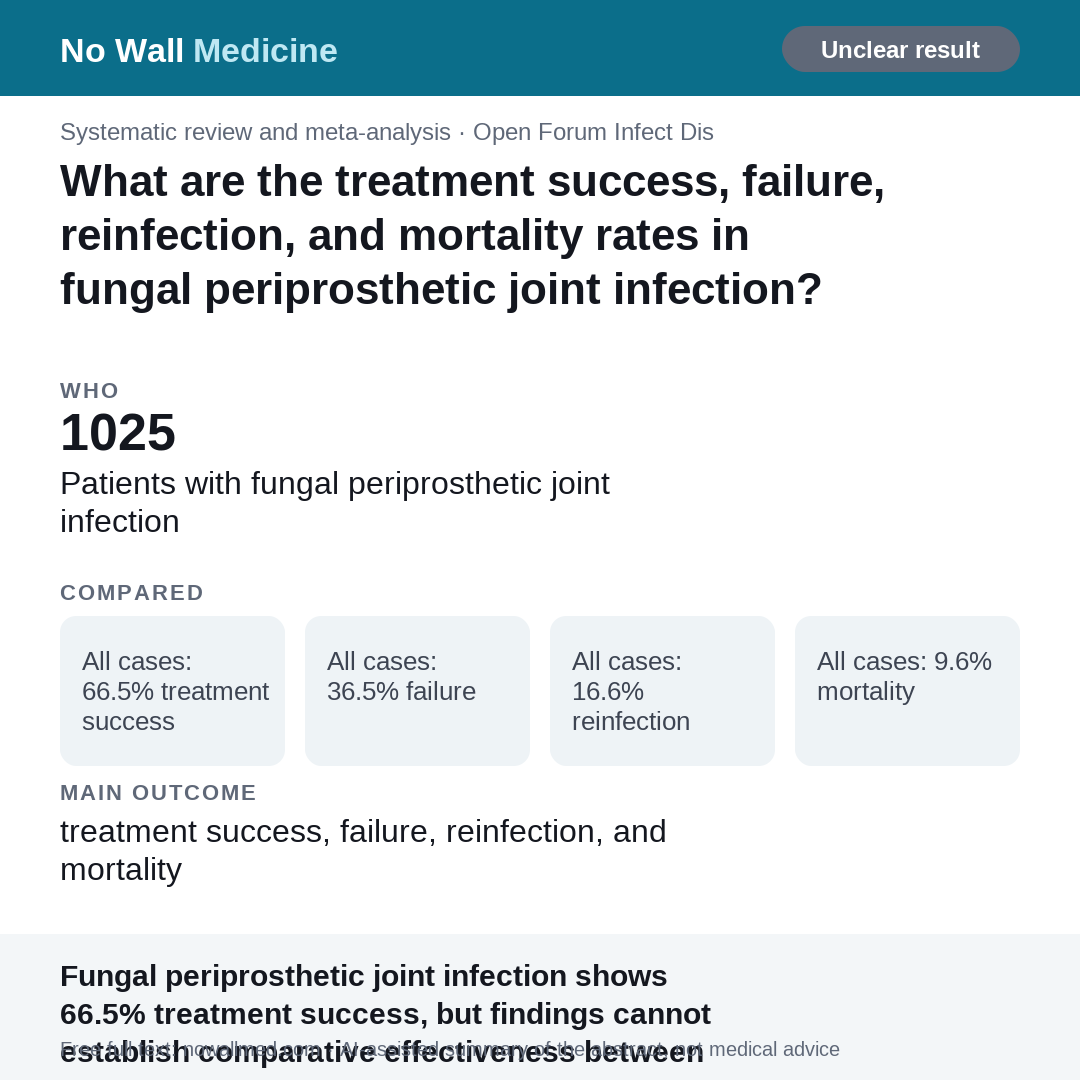
Fungal Periprosthetic Joint Infection: A Systematic Review and Meta-analysis of Treatment Approaches and Clinical Outcomes
Systematic review and meta-analysisUnclear result
What are the treatment success, failure, reinfection, and mortality rates in fungal periprosthetic joint infection?
Who
1025
Patients with fungal periprosthetic joint infection
Compared
All cases: 66.5% treatment success
All cases: 36.5% failure
All cases: 16.6% reinfection
All cases: 9.6% mortality
Main outcome
treatment success, failure, reinfection, and mortality
Bottom line: Fungal periprosthetic joint infection shows 66.5% treatment success, but findings cannot establish comparative effectiveness between treatment strategies.
Open Forum Infect Dis · 2026-10-08Download image
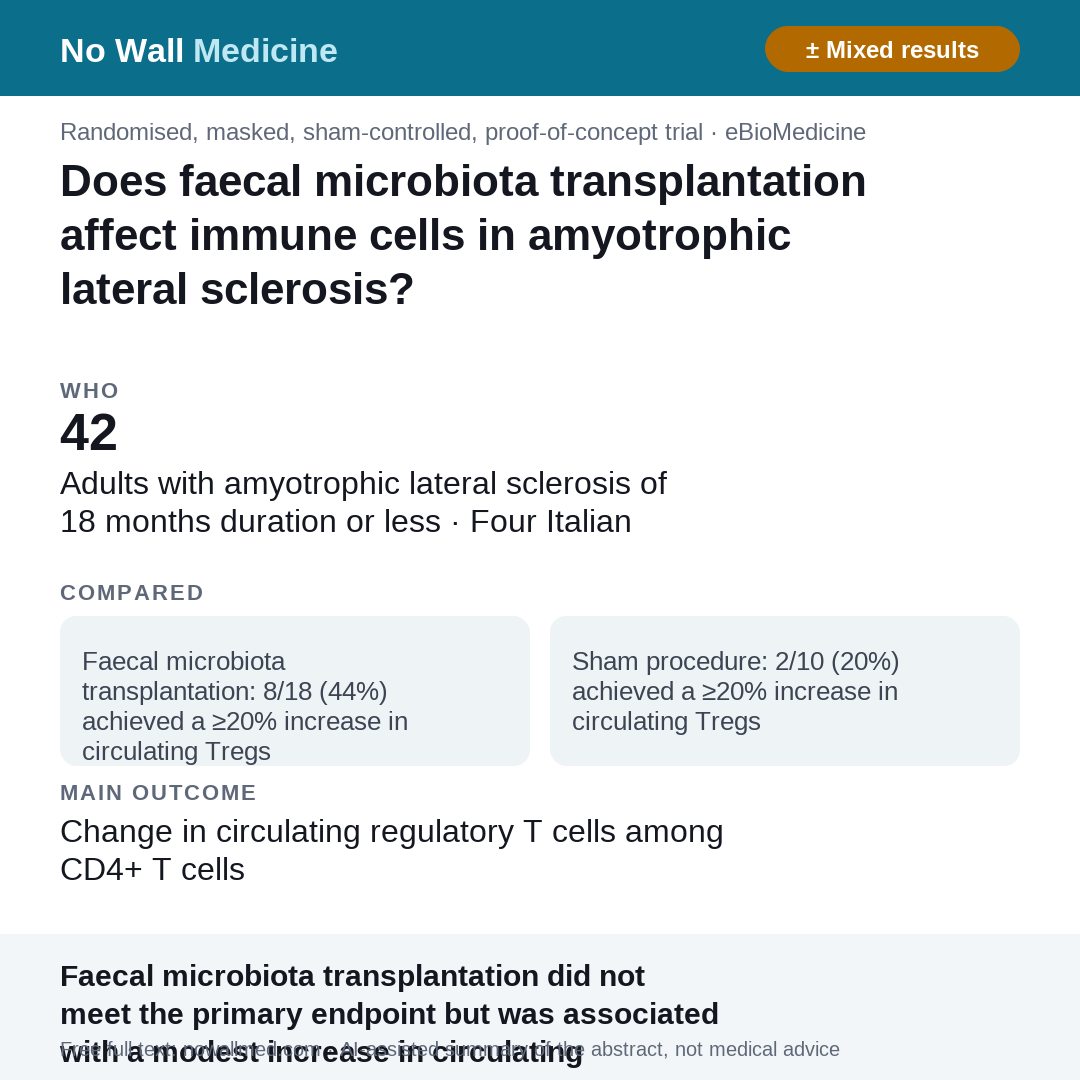
Immune effects of faecal microbiota transplantation in amyotrophic lateral sclerosis: a pilot multicentre, randomised, masked, sham-controlled, proof-of concept trial
Randomised, masked, sham-controlled, proof-of-concept trialMixed results
Does faecal microbiota transplantation affect immune cells in amyotrophic lateral sclerosis?
Who
42
Adults with amyotrophic lateral sclerosis of 18 months duration or less · Four Italian centres
Compared
Faecal microbiota transplantation: 8/18 (44%) achieved a ≥20% increase in circulating Tregs
Sham procedure: 2/10 (20%) achieved a ≥20% increase in circulating Tregs
Main outcome
Change in circulating regulatory T cells among CD4+ T cells
Result: odds ratio 3.20 (95% CI 0.59-25.36)
Bottom line: Faecal microbiota transplantation did not meet the primary endpoint but was associated with a modest increase in circulating regulatory T cells.
Funded by: Italian Ministry of Health
eBioMedicine · 2026-10-08Download image
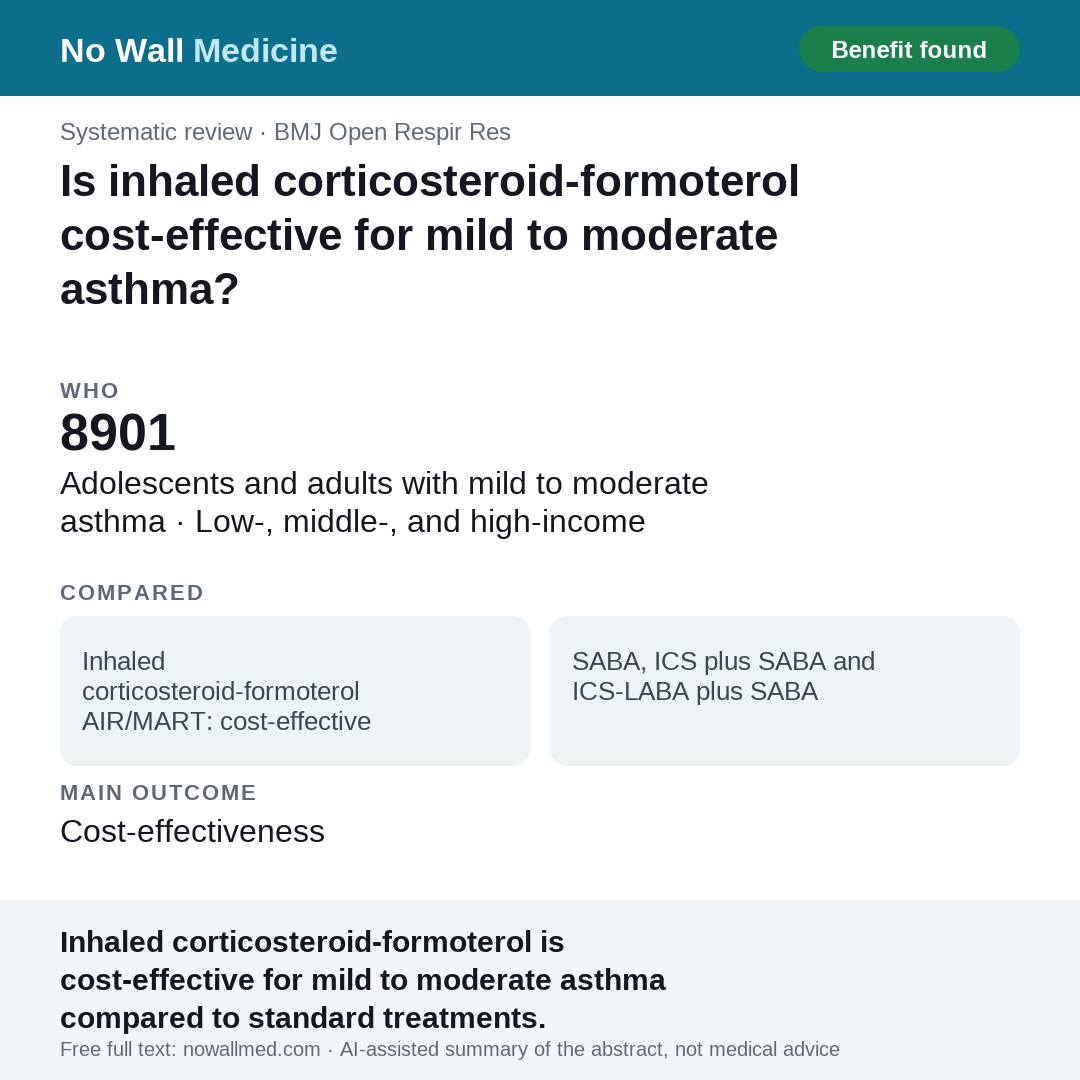
Cost-effectiveness of anti-inflammatory reliever (AIR) or maintenance and reliever therapy (MART) for mild to moderate asthma: a systematic review
Systematic reviewBenefit found
Is inhaled corticosteroid-formoterol cost-effective for mild to moderate asthma?
Who
8901
Adolescents and adults with mild to moderate asthma · Low-, middle-, and high-income countries
Compared
Inhaled corticosteroid-formoterol AIR/MART: cost-effective
SABA, ICS plus SABA and ICS-LABA plus SABA
Main outcome
Cost-effectiveness
Bottom line: Inhaled corticosteroid-formoterol is cost-effective for mild to moderate asthma compared to standard treatments.
BMJ Open Respir Res · 2026-10-08Download image
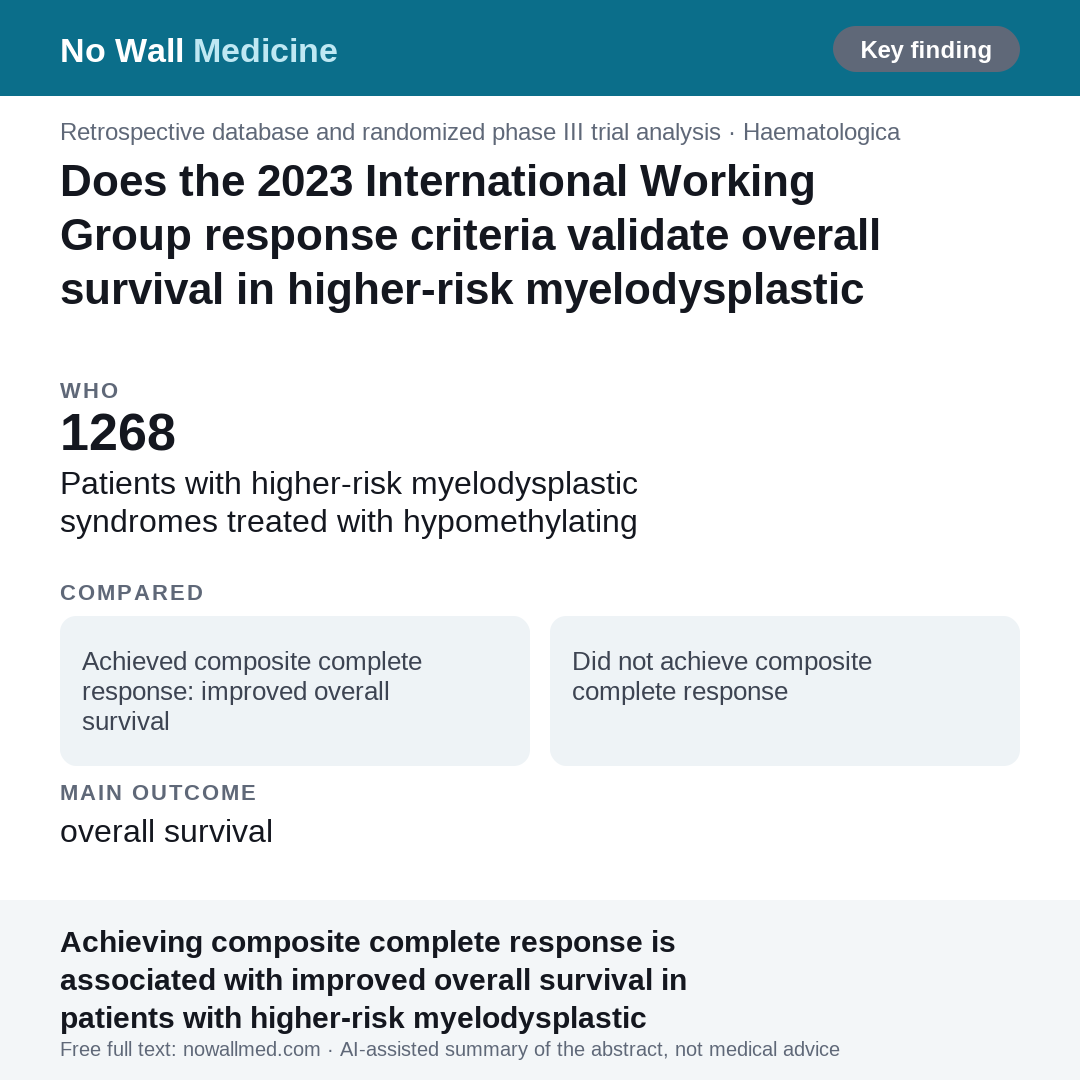
Validation of the International Working Group 2023 response criteria for higher risk myelodysplastic syndromes/neoplasms using the International Consortium for Myelodysplastic Syndromes VALIDATE database and a randomized phase III trial
Retrospective database and randomized phase III trial analysisBenefit found
Does the 2023 International Working Group response criteria validate overall survival in higher-risk myelodysplastic syndromes?
Who
1268
Patients with higher-risk myelodysplastic syndromes treated with hypomethylating agent-based therapies · International Consortium for Myelodysplastic Syndromes VALIDATE database and PANTHER trial
Compared
Achieved composite complete response: improved overall survival
Did not achieve composite complete response
Main outcome
overall survival
Result: hazard ratio 0.65 (95% CI 0.55-0.76)
Bottom line: Achieving composite complete response is associated with improved overall survival in patients with higher-risk myelodysplastic syndromes.
Haematologica · 2026-10-08Download image