Visual abstracts
New randomized trials and meta-analyses from leading journals at a glance: who was studied, what was compared, and what was found. Every paper is free to read in full.
All specialtiesCardiology 4877Oncology 4138Gastroenterology & Hepatology 1942Infectious Disease 3837Neurology 1905Psychiatry & Mental Health 2273Pulmonology 2143Critical Care 1365Endocrinology & Diabetes 2580Pediatrics 2980Surgery 2559Orthopedics & Sports Medicine 931Neurosurgery 537Cardiothoracic & Vascular Surgery 674Plastic & Reconstructive Surgery 591Nephrology 1133Rheumatology 823Hematology 1109Dermatology 621Ophthalmology 543Obstetrics & Gynecology 1686Public & Global Health 1058Radiology & Imaging 648Anesthesiology 986Urology 764ENT (Otolaryngology) 503Emergency Medicine 511Allergy & Immunology 313Geriatrics 981Family Medicine & Primary Care 562Medical Genetics & Genomics 676Pathology & Laboratory Medicine 159Physical Medicine & Rehabilitation 757Palliative Care 444Nutrition 1588Digital Health & AI 2201General Medicine 321
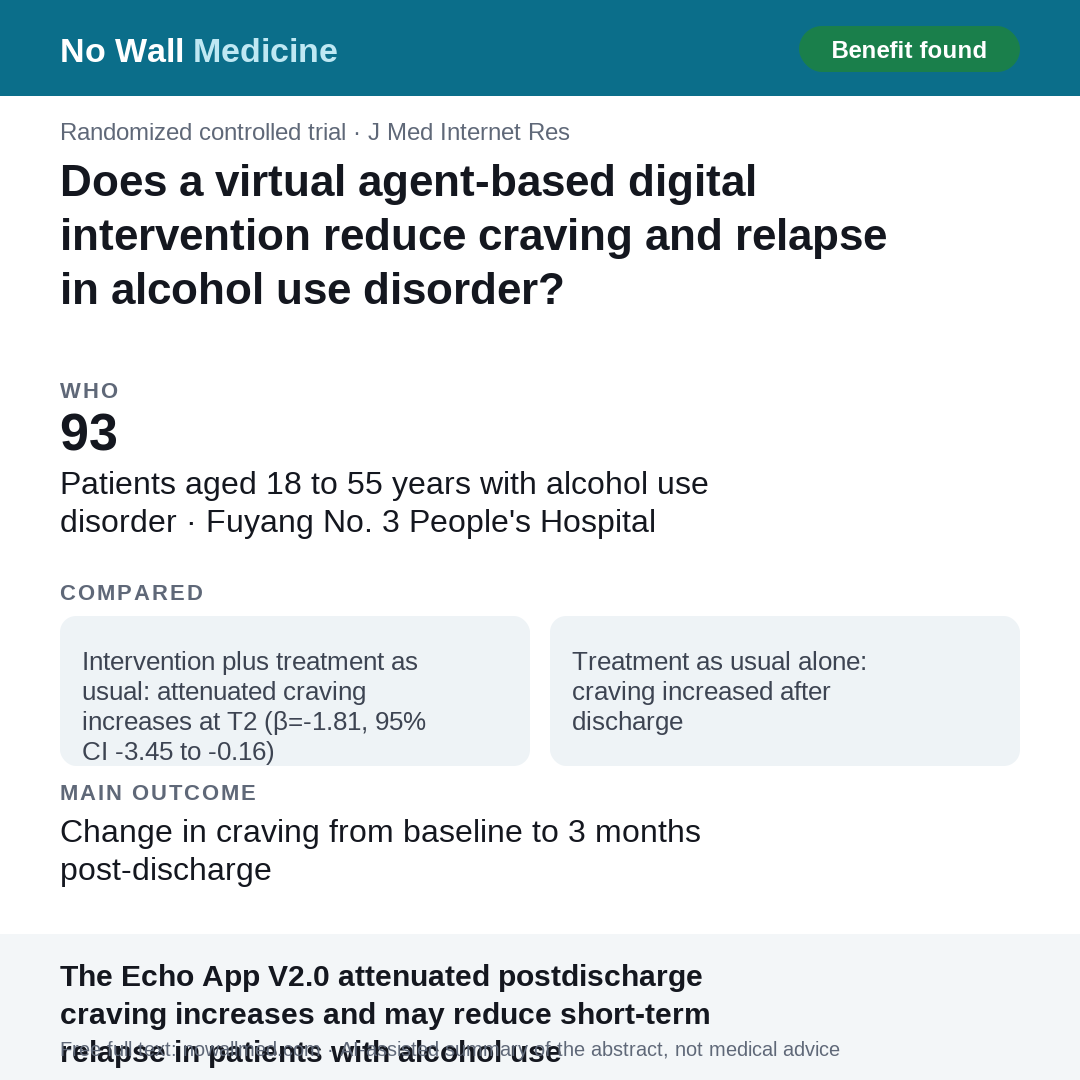
Efficacy of A Virtual Agent-Based Digital Intervention (Echo App V2.0) for Patients With Alcohol Use Disorder: Randomized Controlled Trial
Randomized controlled trialBenefit found
Does a virtual agent-based digital intervention reduce craving and relapse in alcohol use disorder patients?
Who
93
Patients aged 18 to 55 years with alcohol use disorder · Fuyang No. 3 People's Hospital
Compared
Intervention (Echo App V2.0 plus treatment as usual): attenuated craving increases at T2 (β=-1.81, 95% CI -3.45 to -0.16)
Control (treatment as usual alone)
Main outcome
Change in craving from baseline to 4 weeks and follow-up
Result: β=-1.81 (95% CI -3.45 to -0.16) at T2; β=-1.97 (95% CI -3.61 to -0.32) at T3
Bottom line: The Echo App V2.0 attenuated postdischarge craving increases and may reduce short-term relapse in patients with alcohol use disorder.
Limitation: Relapse benefit was sensitive to missing-data assumptions and was not sustained at 3 months.
J Med Internet Res · 2026-09-17Download image
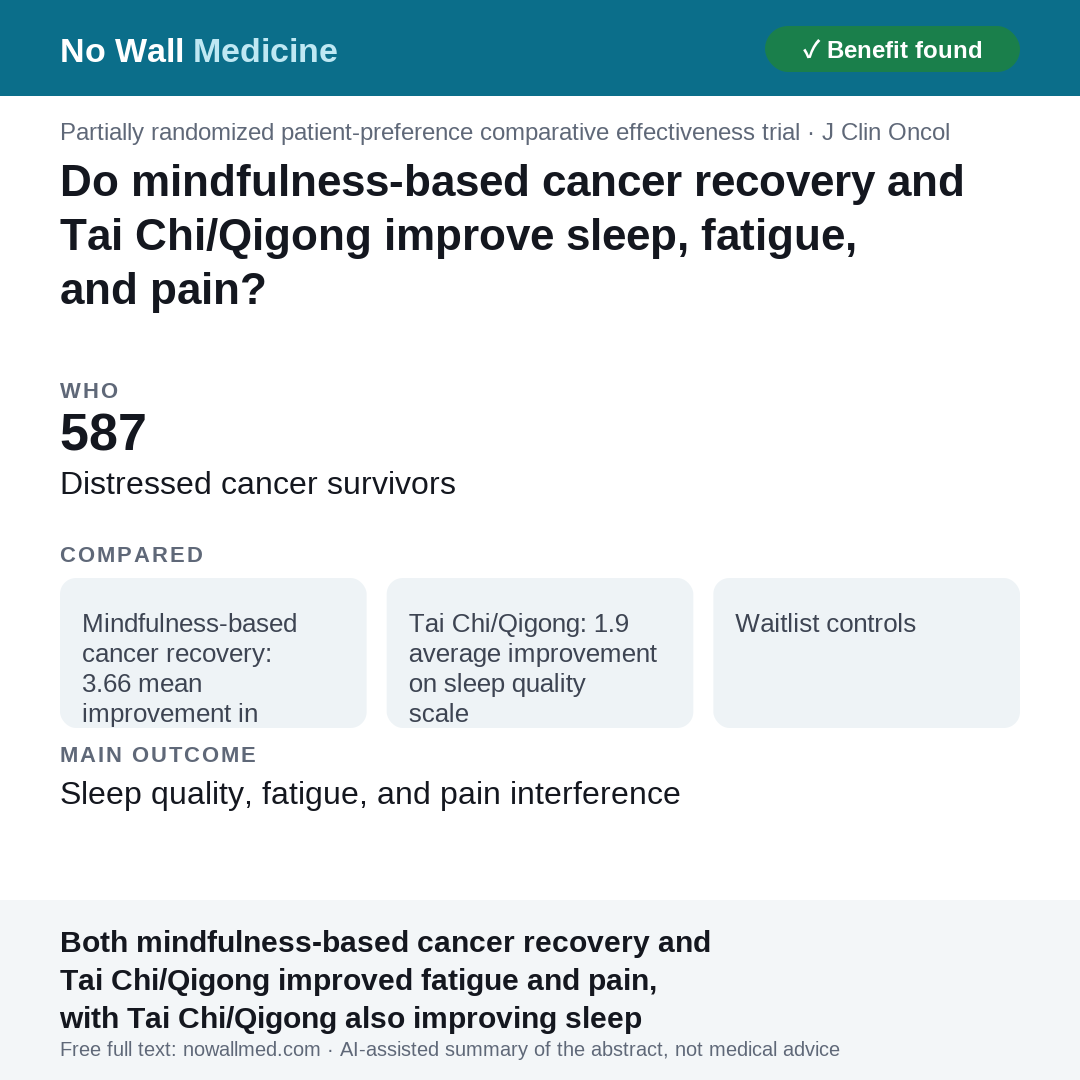
Mindfulness and Tai Chi for Sleep, Fatigue, and Pain in Distressed People After Cancer Treatment: A Partially Randomized Patient-Preference Comparative Effectiveness Trial
Partially randomized patient-preference comparative effectiveness trialBenefit found
Do mindfulness-based cancer recovery and Tai Chi/Qigong improve sleep, fatigue, and pain?
Who
587
Distressed cancer survivors
Compared
Mindfulness-based cancer recovery: 3.66 mean improvement in fatigue
Tai Chi/Qigong: 1.9 average improvement on sleep quality scale
Waitlist controls
Main outcome
Sleep quality, fatigue, and pain interference
Bottom line: Both mindfulness-based cancer recovery and Tai Chi/Qigong improved fatigue and pain, with Tai Chi/Qigong also improving sleep quality.
J Clin Oncol · 2026-09-16Download image
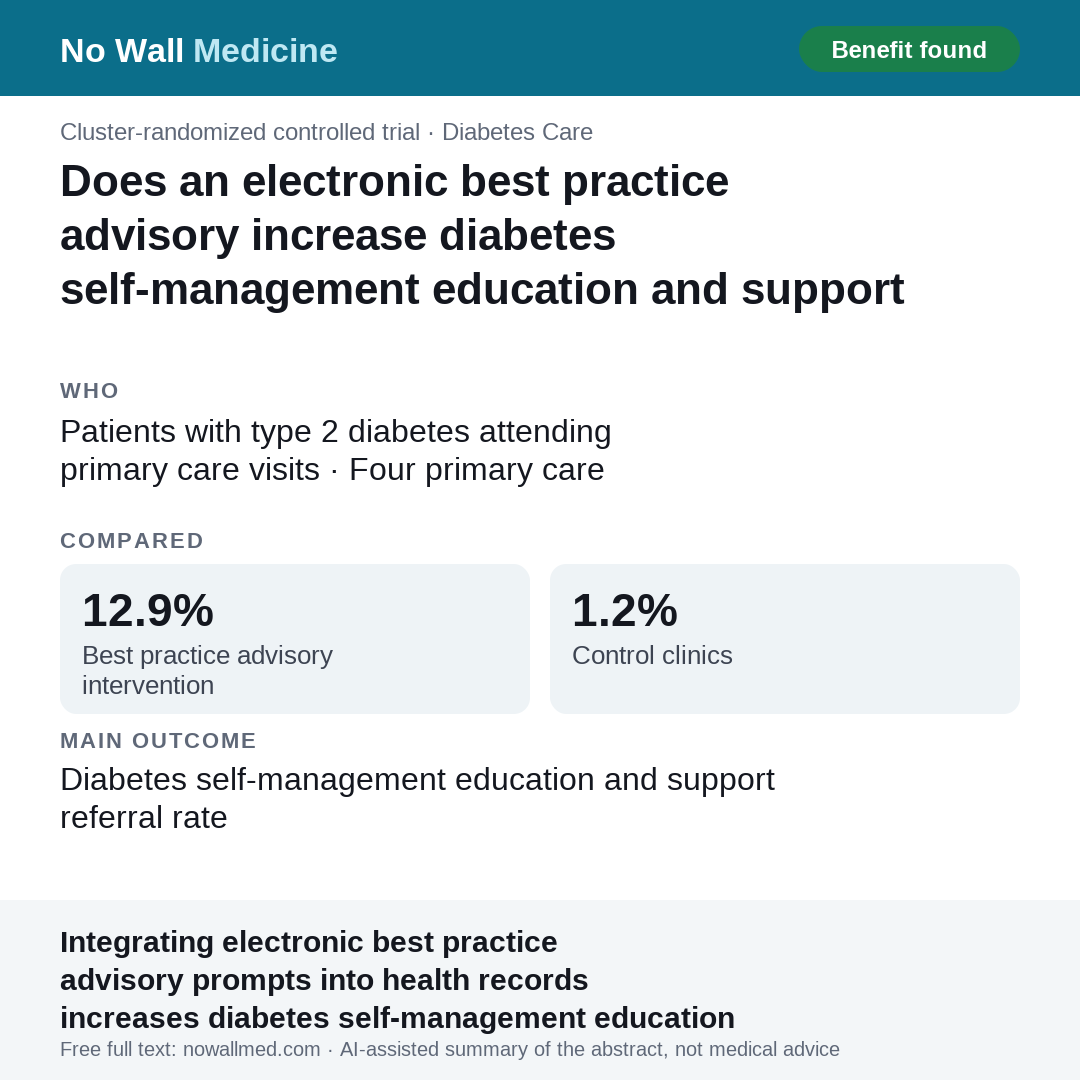
From Alert to Action: Electronic Practice Advisory Improves DSMES Referrals Over 18 Months
Cluster-randomized controlled trialBenefit found
Does an electronic best practice advisory increase diabetes self-management education and support referrals?
Who
Patients with type 2 diabetes attending primary care visits · Four primary care practices in central North Carolina
Compared
13.7%Best practice advisory intervention
1.6%Control clinics
Main outcome
Diabetes self-management education and support referral rate
Result: odds ratio 9.44 (95% CI 4.91-18.17)
Bottom line: Electronic best practice advisory prompts significantly increase diabetes self-management education and support referral rates.
Diabetes Care · 2026-09-16Download image
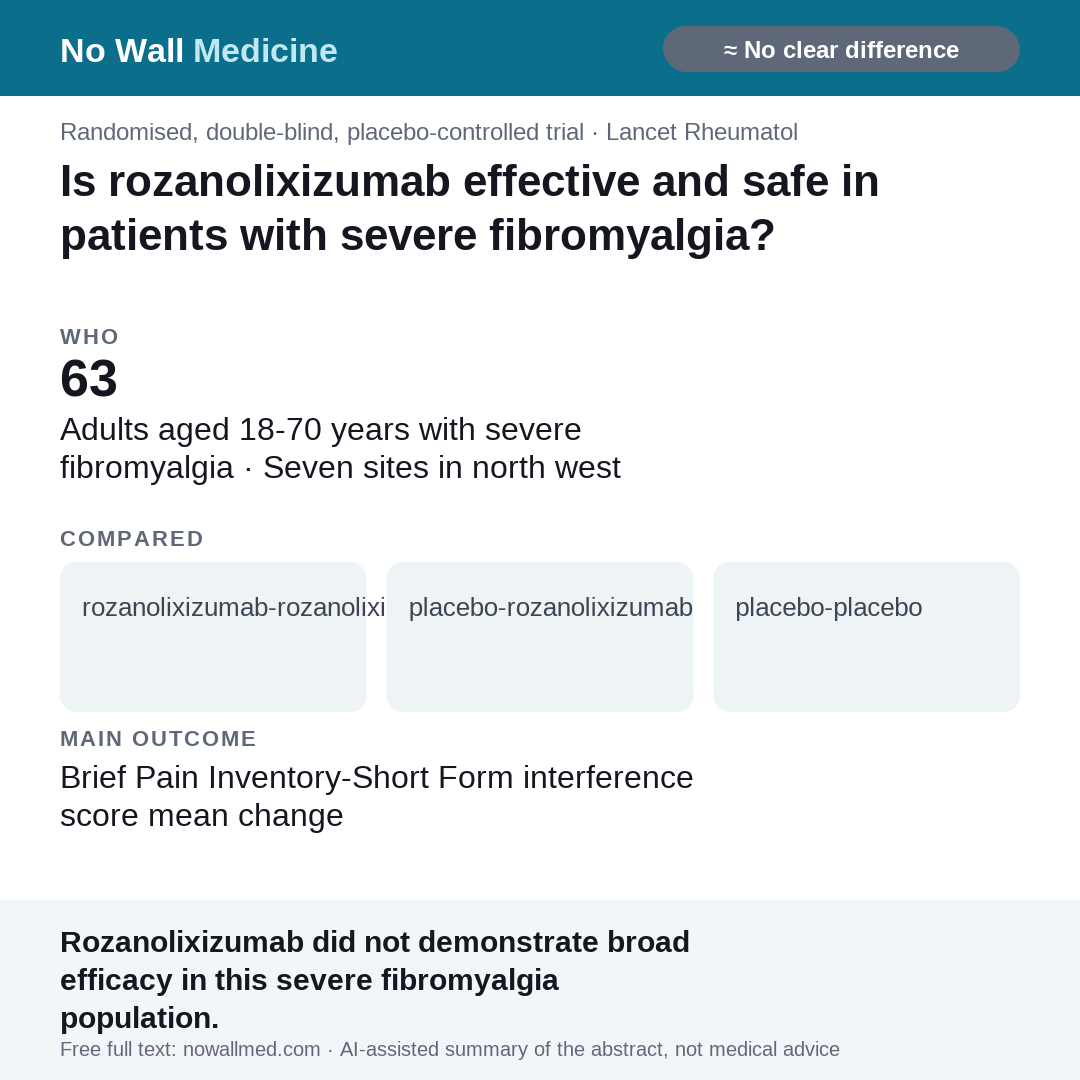
Efficacy and safety of rozanolixizumab in severe fibromyalgia: a phase 2A randomised, double-blind, placebo-controlled, multicentre trial
Randomised, double-blind, placebo-controlled trialNo clear difference
Is rozanolixizumab effective and safe in patients with severe fibromyalgia?
Who
63
Adults aged 18-70 years with severe fibromyalgia · Seven sites in north west England
Compared
rozanolixizumab-rozanolixizumab
placebo-rozanolixizumab
placebo-placebo
Main outcome
Brief Pain Inventory-Short Form interference score mean change
Result: least squares mean difference -0·5, 80% CI -1·0 to -0·1
Bottom line: Rozanolixizumab did not demonstrate broad efficacy in this severe fibromyalgia population.
Funded by: UCB
Lancet Rheumatol · 2026-09-16Download image
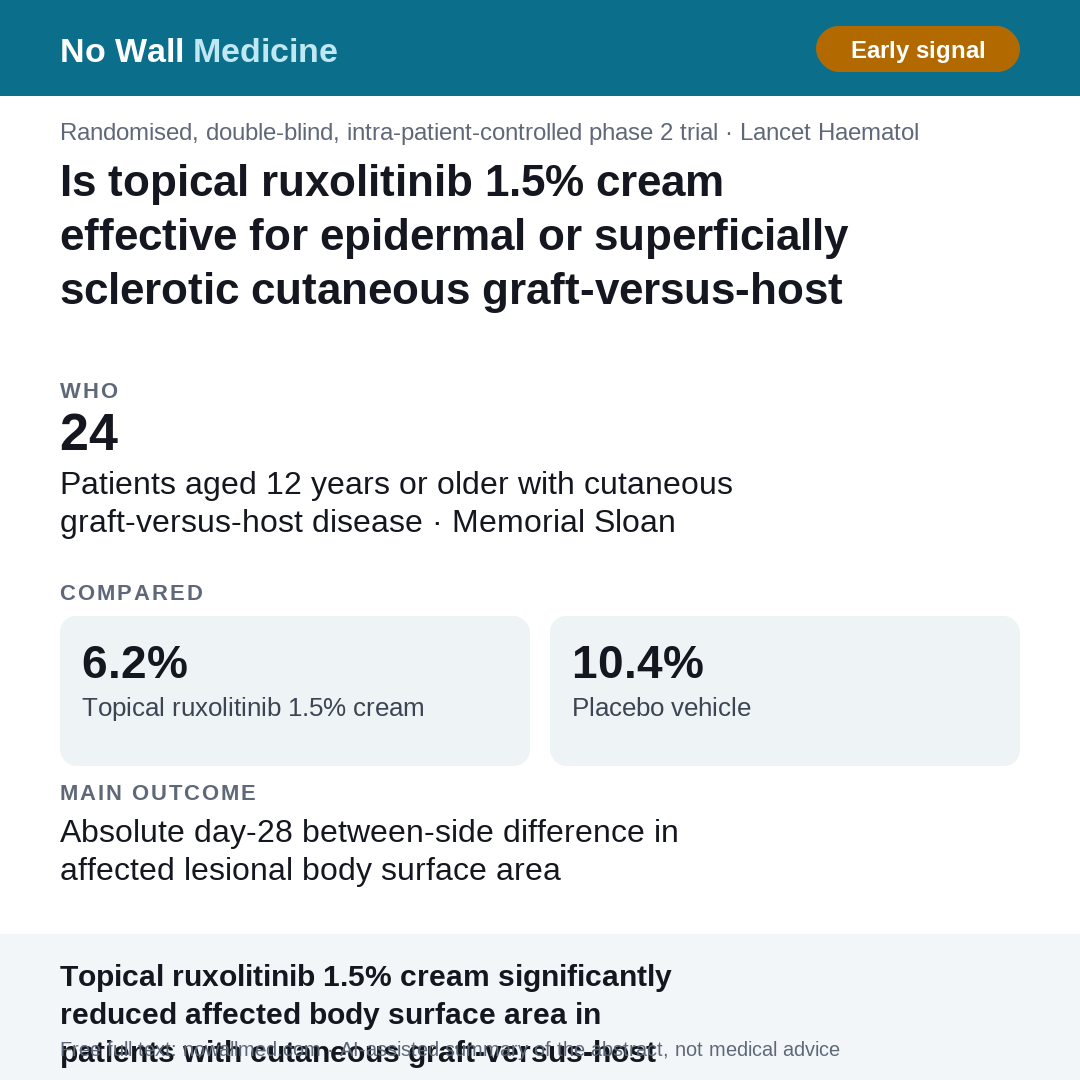
Topical ruxolitinib for chronic cutaneous graft-versus-host disease: a single-centre, randomised, double-blind, intra-patient-controlled phase 2 trial
Randomised, double-blind, intra-patient-controlled phase 2 trialBenefit found
Is topical ruxolitinib 1.5% cream effective for epidermal or superficially sclerotic cutaneous graft-versus-host disease?
Who
24
Patients aged 12 years or older with cutaneous graft-versus-host disease · Memorial Sloan Kettering Cancer Center (NY, USA)
Compared
6.2%Topical ruxolitinib 1.5% cream (SD 6.7)
10.4%Placebo vehicle (SD 9.1)
Main outcome
Absolute day-28 between-side difference in affected lesional body surface area
Result: -4.0 percentage points (-5.5 to -2.4; p<0.0010)
Bottom line: Topical ruxolitinib 1.5% cream significantly reduced affected body surface area in patients with cutaneous graft-versus-host disease.
Funded by: Incyte
Lancet Haematol · 2026-09-16Download image
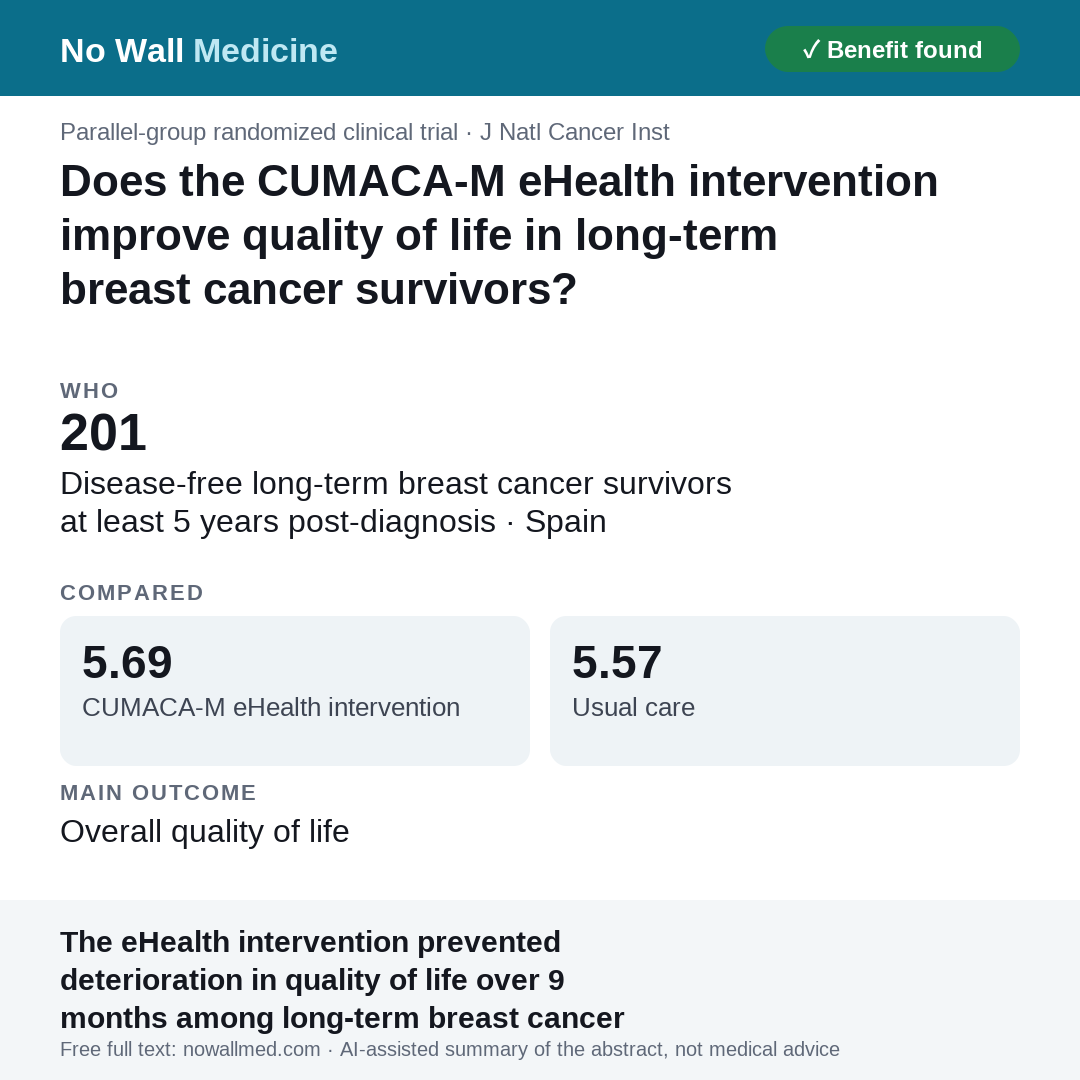
Effectiveness of an eHealth intervention to improve quality of life in long-term breast cancer survivors: a 9-month randomized controlled trial
Parallel-group randomized clinical trialBenefit found
Does the CUMACA-M eHealth intervention improve quality of life in long-term breast cancer survivors?
Who
201
Disease-free long-term breast cancer survivors at least 5 years post-diagnosis · Spain
Compared
5.69CUMACA-M eHealth intervention
5.57Usual care
Main outcome
Overall quality of life
Result: mean difference=0.24, 95% CI=0.03 to 0.44
Bottom line: The eHealth intervention prevented deterioration in quality of life over 9 months among long-term breast cancer survivors.
J Natl Cancer Inst · 2026-09-16Download image
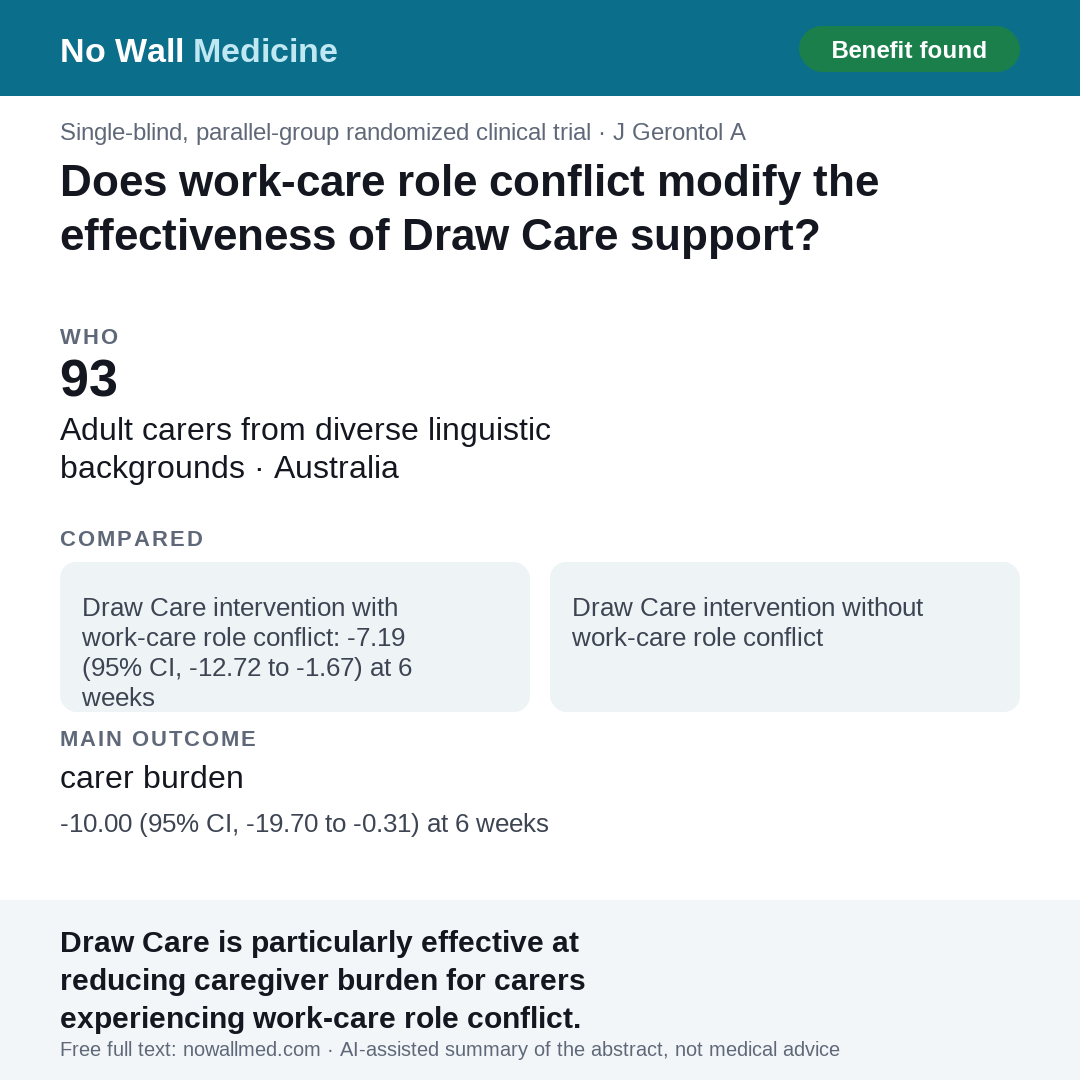
The modifying effect of work-care role conflict on the effectiveness of carer support: results from the Australian Draw Care randomized clinical trial
Single-blind, parallel-group randomized clinical trialBenefit found
Does work-care role conflict modify the effectiveness of Draw Care support?
Who
93
Adult carers from diverse linguistic backgrounds · Australia
Compared
Draw Care intervention with work-care role conflict: -7.19 (95% CI, -12.72 to -1.67) at 6 weeks
Draw Care intervention without work-care role conflict
Main outcome
carer burden
Result: -10.00 (95% CI, -19.70 to -0.31) at 6 weeks
Bottom line: Draw Care is particularly effective at reducing caregiver burden for carers experiencing work-care role conflict.
J Gerontol A · 2026-09-16Download image
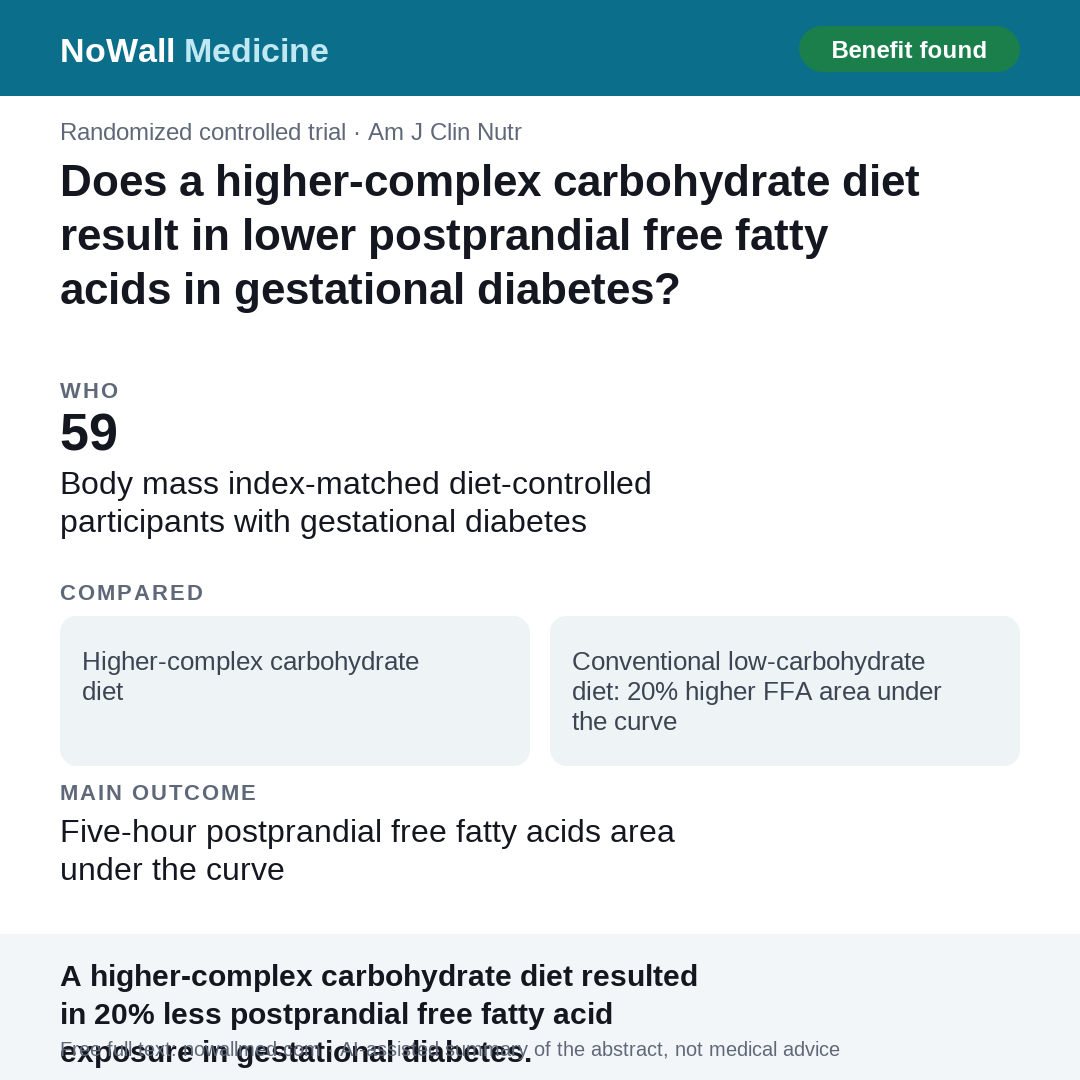
A higher-complex carbohydrate compared with conventional low-carbohydrate diet in gestational diabetes mellitus results in lower postprandial free fatty acids: a randomized controlled trial
Randomized controlled trialBenefit found
Higher complex carbs vs low carbs in gestational diabetes
Who
59
Women with gestational diabetes mellitus
Compared
Higher complex carbs
Conventional low carbs
Main outcome
Postprandial free fatty acids
Result: 20% lower on higher complex carbs
Bottom line: Higher complex carbs lower postprandial free fatty acids
Am J Clin Nutr · 2026-09-16Download image
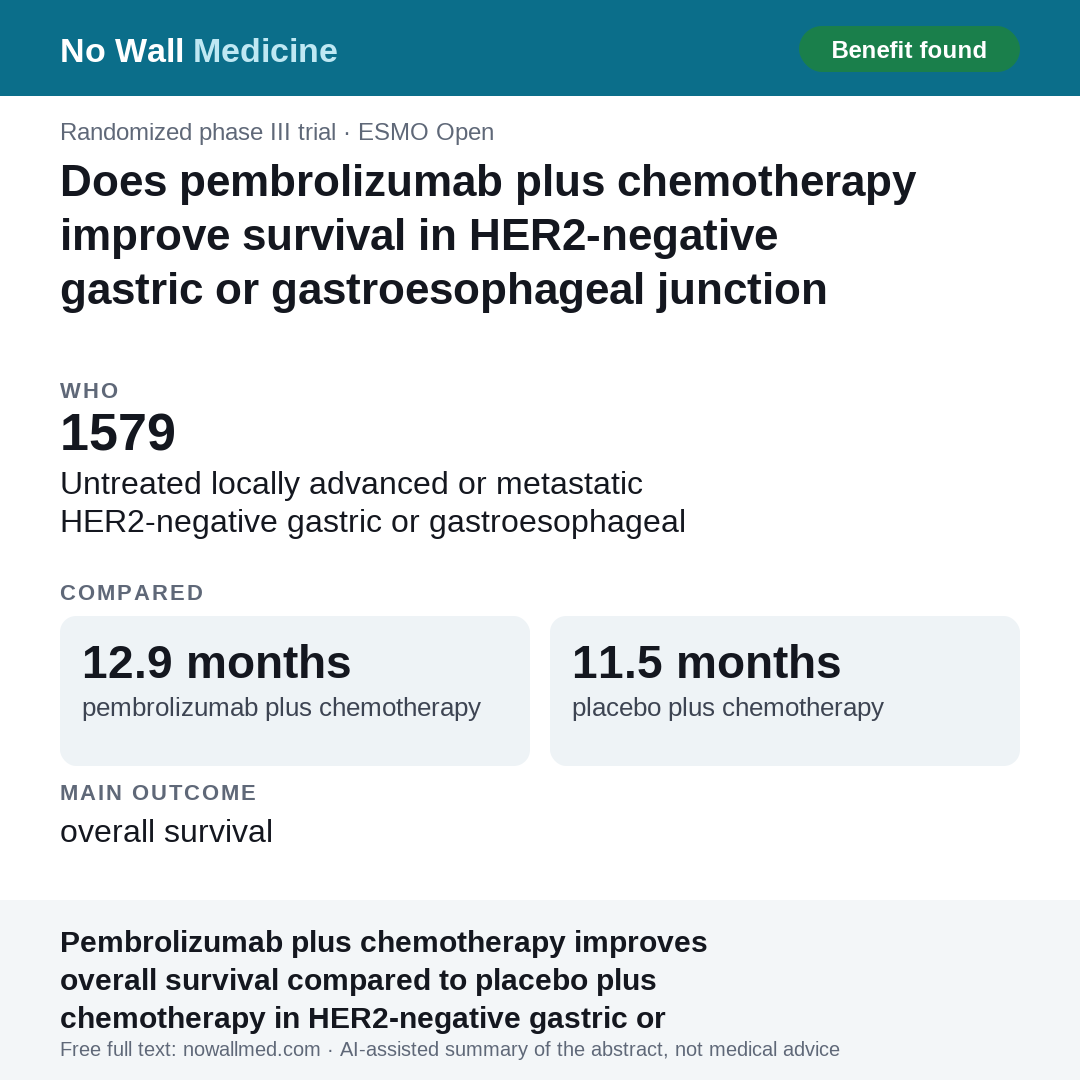
Pembrolizumab plus chemotherapy as first-line therapy for advanced HER2-negative gastric or gastroesophageal junction adenocarcinoma: 4.5-year follow-up from the randomized phase III KEYNOTE-859 study
Randomized phase III trialBenefit found
Does pembrolizumab plus chemotherapy improve survival in HER2-negative gastric or gastroesophageal junction adenocarcinoma?
Who
1579
Untreated locally advanced or metastatic HER2-negative gastric or gastroesophageal junction adenocarcinoma
Compared
12.9 monthspembrolizumab plus chemotherapy
11.5 monthsplacebo plus chemotherapy
Main outcome
overall survival
Result: hazard ratio 0.78 (95% CI 0.70-0.86)
Bottom line: Pembrolizumab plus chemotherapy improves overall survival compared to placebo plus chemotherapy in HER2-negative gastric or gastroesophageal junction adenocarcinoma.
ESMO Open · 2026-09-16Download image
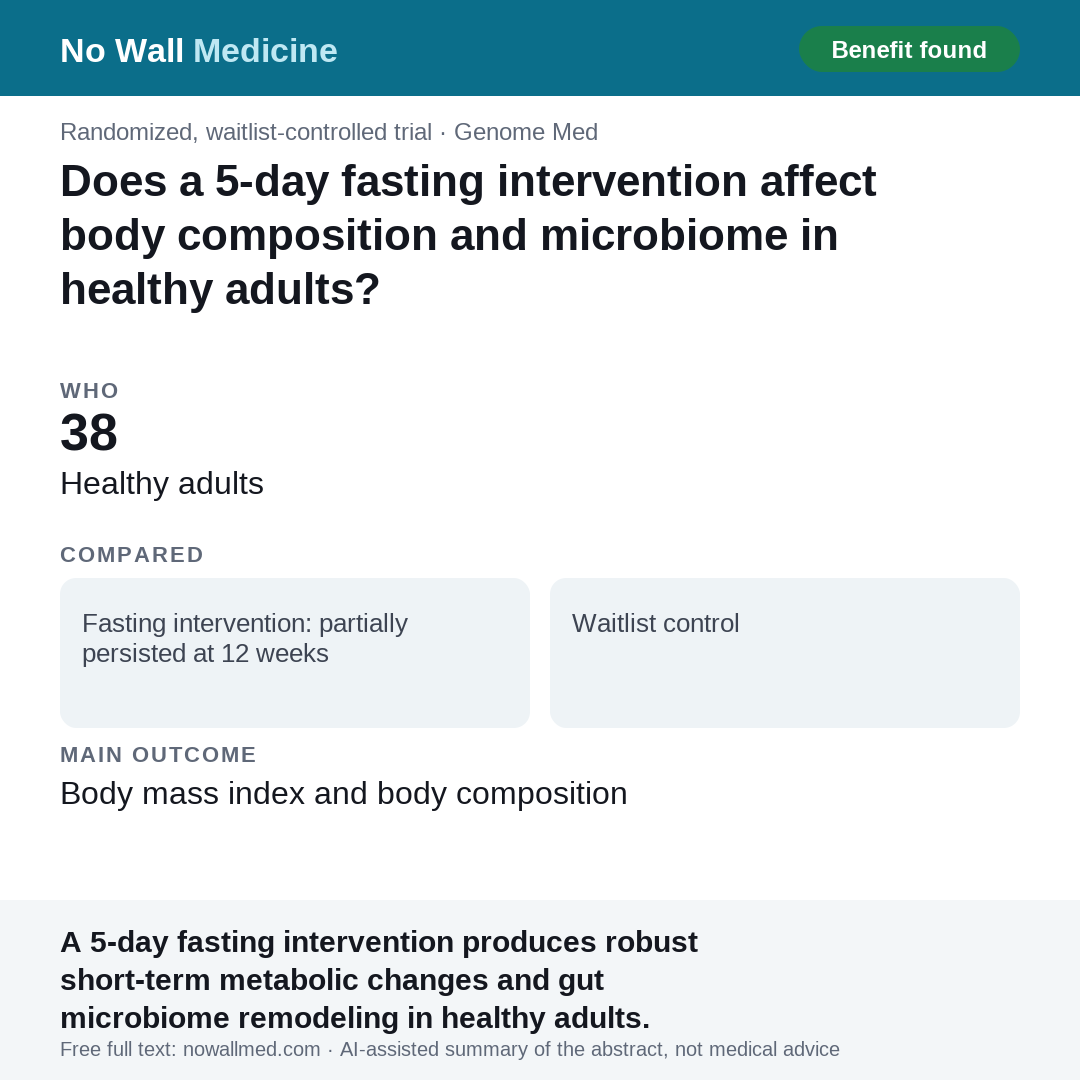
Machine learning identifies microbiome and clinical predictors of sustained weight loss following prolonged fasting
Randomized, waitlist-controlled trialBenefit found
Does a 5-day fasting intervention affect body composition and microbiome in healthy adults?
Who
38
Healthy adults
Compared
Fasting intervention: partially persisted at 12 weeks
Waitlist control
Main outcome
Body mass index and body composition
Bottom line: A 5-day fasting intervention produces robust short-term metabolic changes and gut microbiome remodeling in healthy adults.
Genome Med · 2026-09-16Download image
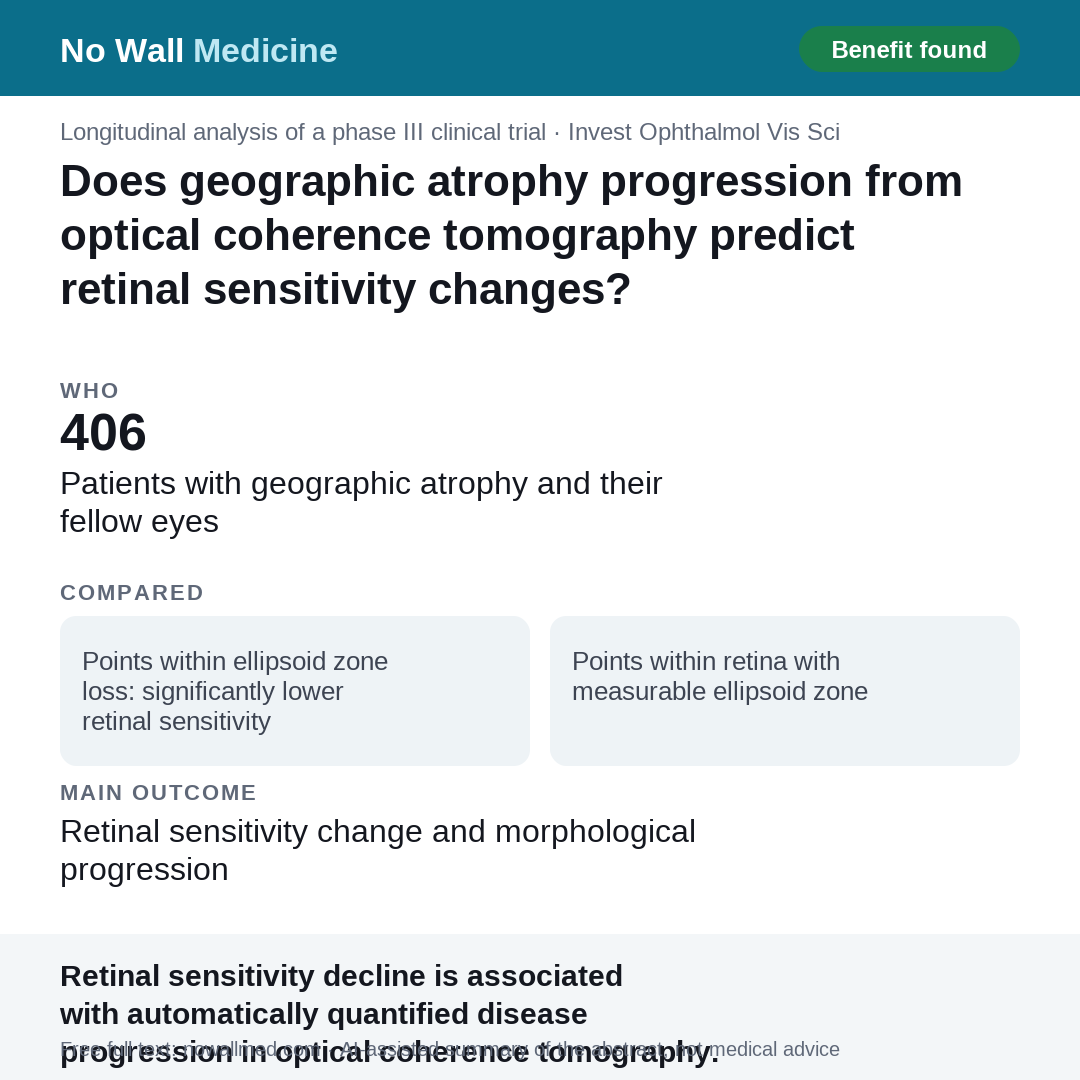
Longitudinal Prediction of Retinal Sensitivity Based on Disease Progression Quantified From Optical Coherence Tomography in Geographic Atrophy
Longitudinal analysis of a phase III clinical trialBenefit found
Does geographic atrophy progression from optical coherence tomography predict retinal sensitivity changes?
Who
406
Patients with geographic atrophy and their fellow eyes
Compared
Points within ellipsoid zone loss: significantly lower retinal sensitivity
Points within retina with measurable ellipsoid zone
Main outcome
Retinal sensitivity change and morphological progression
Bottom line: Retinal sensitivity decline is associated with automatically quantified disease progression in optical coherence tomography.
Invest Ophthalmol Vis Sci · 2026-09-15Download image
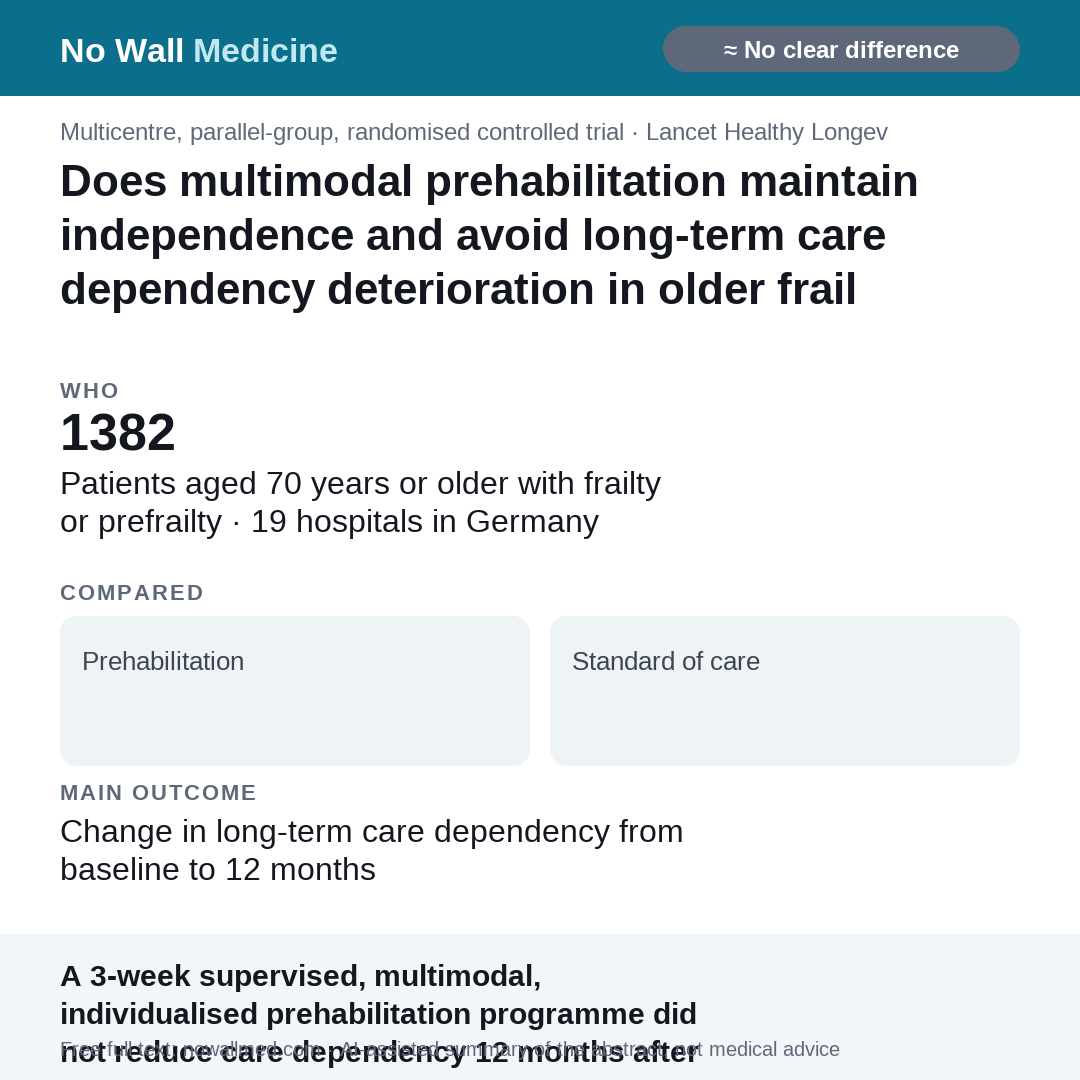
Supervised multimodal prehabilitation of older patients with frailty or prefrailty before elective surgery: a multicentre randomised controlled outcome assessor-blinded trial
Multicentre, parallel-group, randomised controlled trialNo clear difference
Does multimodal prehabilitation maintain independence and avoid long-term care dependency deterioration in older frail patients?
Who
1382
Patients aged 70 years or older with frailty or prefrailty · 19 hospitals in Germany
Compared
Prehabilitation
Standard of care
Main outcome
Change in long-term care dependency from baseline to 12 months
Result: absolute between-group difference in change over time of -0·1 (95% CI -0·25 to 0·07)
Bottom line: A 3-week supervised, multimodal, individualised prehabilitation programme did not reduce care dependency 12 months after surgery.
Funded by: Innovation Fund of the German Federal Joint Committee
Lancet Healthy Longev · 2026-09-15Download image
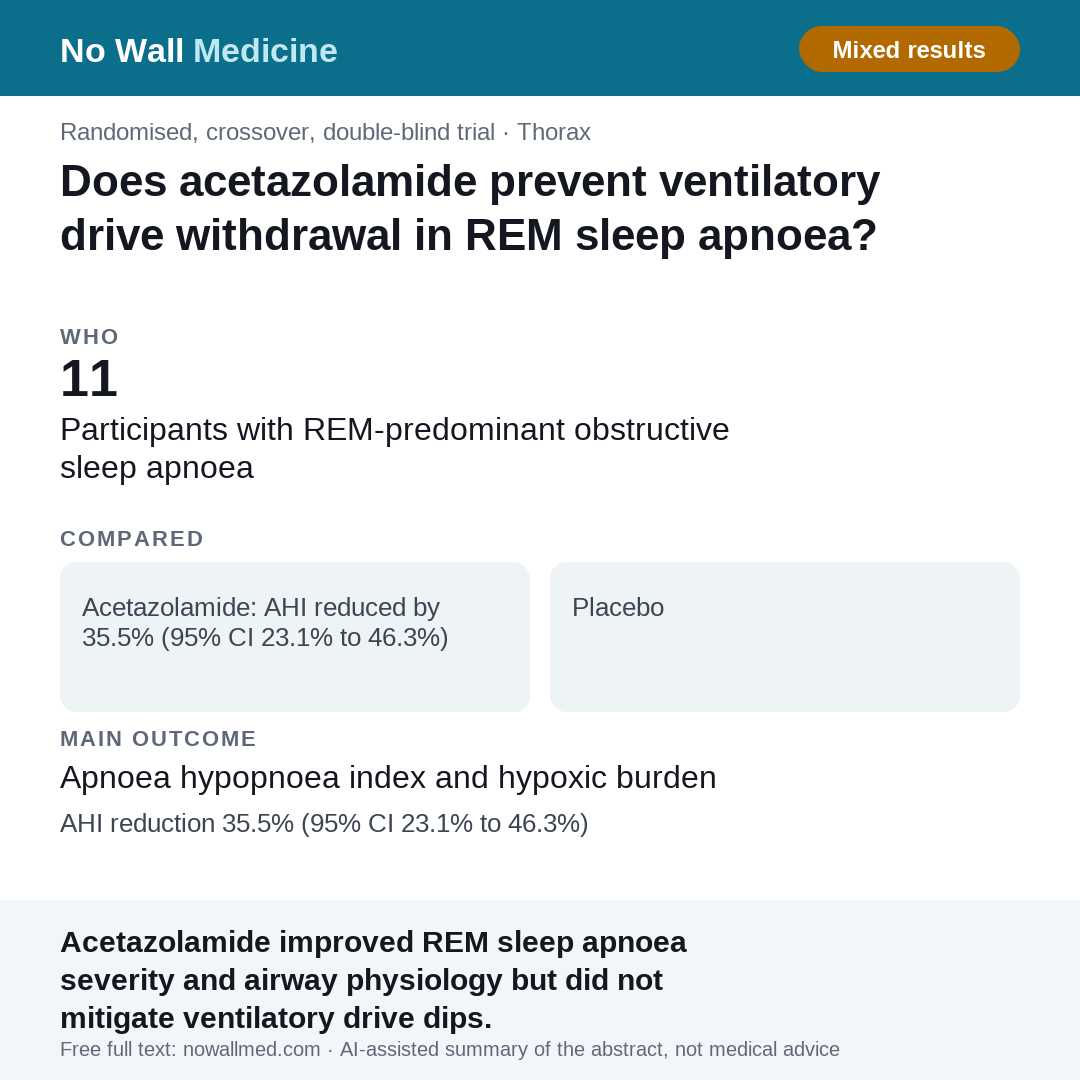
Acetazolamide to prevent ventilatory drive withdrawal in REM sleep apnoea: a randomised controlled trial
Randomised, crossover, double-blind trialMixed results
Does acetazolamide prevent ventilatory drive withdrawal in REM sleep apnoea?
Who
11
Participants with REM-predominant obstructive sleep apnoea
Compared
Acetazolamide: AHI reduced by 35.5% (95% CI 23.1% to 46.3%)
Placebo
Main outcome
Apnoea hypopnoea index and hypoxic burden
Result: AHI reduction 35.5% (95% CI 23.1% to 46.3%)
Bottom line: Acetazolamide improved REM sleep apnoea severity and airway physiology but did not mitigate ventilatory drive dips.
Thorax · 2026-09-15Download image
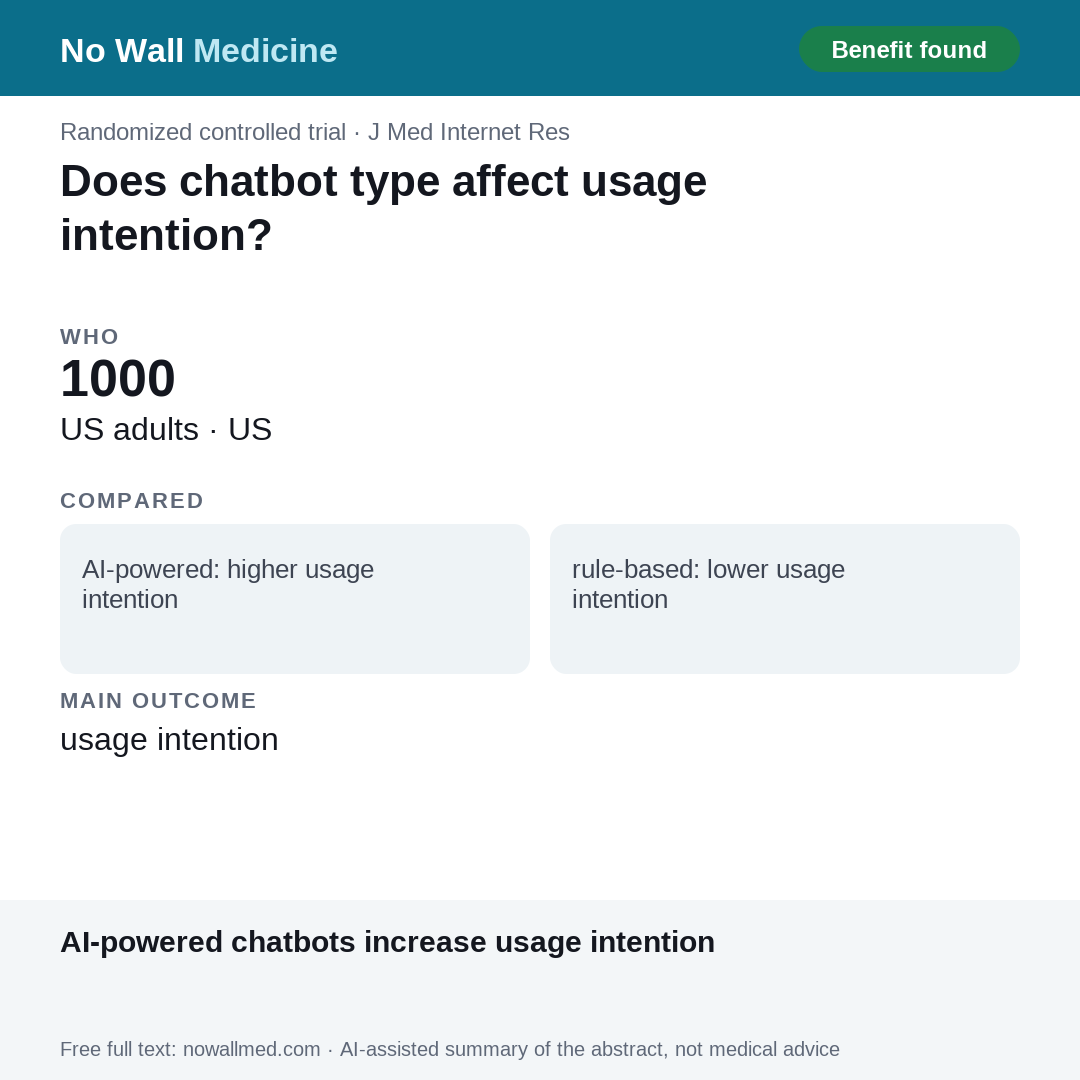
The Impact of Chatbot Type and Normative Messaging on Chatbot Usage Intention Based on the Health Technology Acceptance Model: Randomized Controlled Trial
Randomized controlled trialBenefit found
Does chatbot type affect usage intention?
Who
1000
US adults · US
Compared
AI-powered: higher usage intention
rule-based: lower usage intention
Main outcome
usage intention
Bottom line: AI-powered chatbots increase usage intention
J Med Internet Res · 2026-09-15Download image
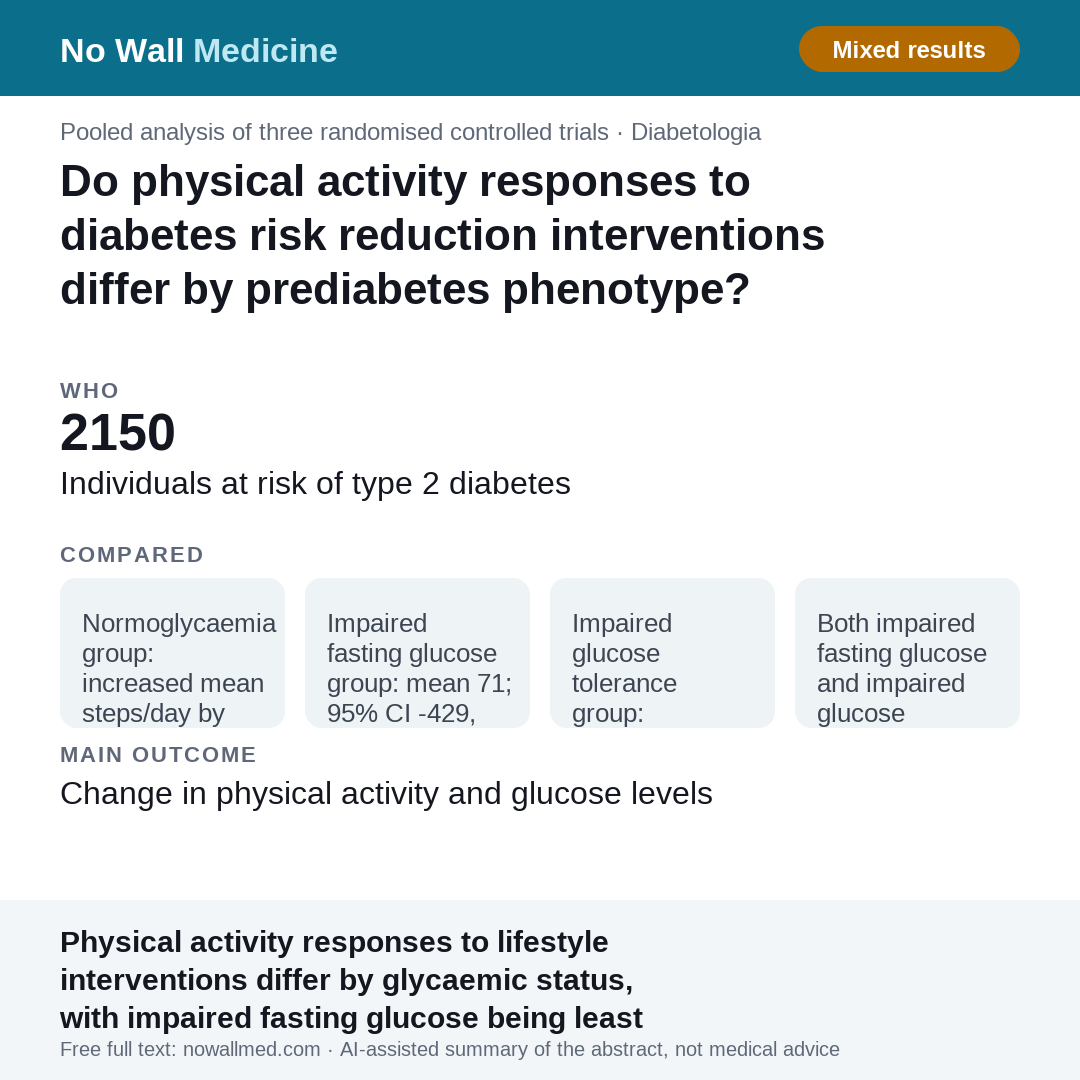
Differential physical activity responses to diabetes risk reduction interventions according to prediabetes phenotype in at-risk individuals: pooled analysis from three randomised controlled trials
Pooled analysis of three randomised controlled trialsMixed results
Do physical activity responses to diabetes risk reduction interventions differ by prediabetes phenotype?
Who
2150
Individuals at risk of type 2 diabetes
Compared
Normoglycaemia group: increased mean steps/day by 247 (95% CI 4, 491)
Impaired fasting glucose group: mean 71; 95% CI -429, 571
Impaired glucose tolerance group: increased mean steps/day by 523 (95% CI 229, 818)
Both impaired fasting glucose and impaired glucose tolerance: increased mean steps/day by 808 (95% CI 402, 1213)
Main outcome
Change in physical activity and glucose levels
Bottom line: Physical activity responses to lifestyle interventions differ by glycaemic status, with impaired fasting glucose being least responsive.
Diabetologia · 2026-09-14Download image
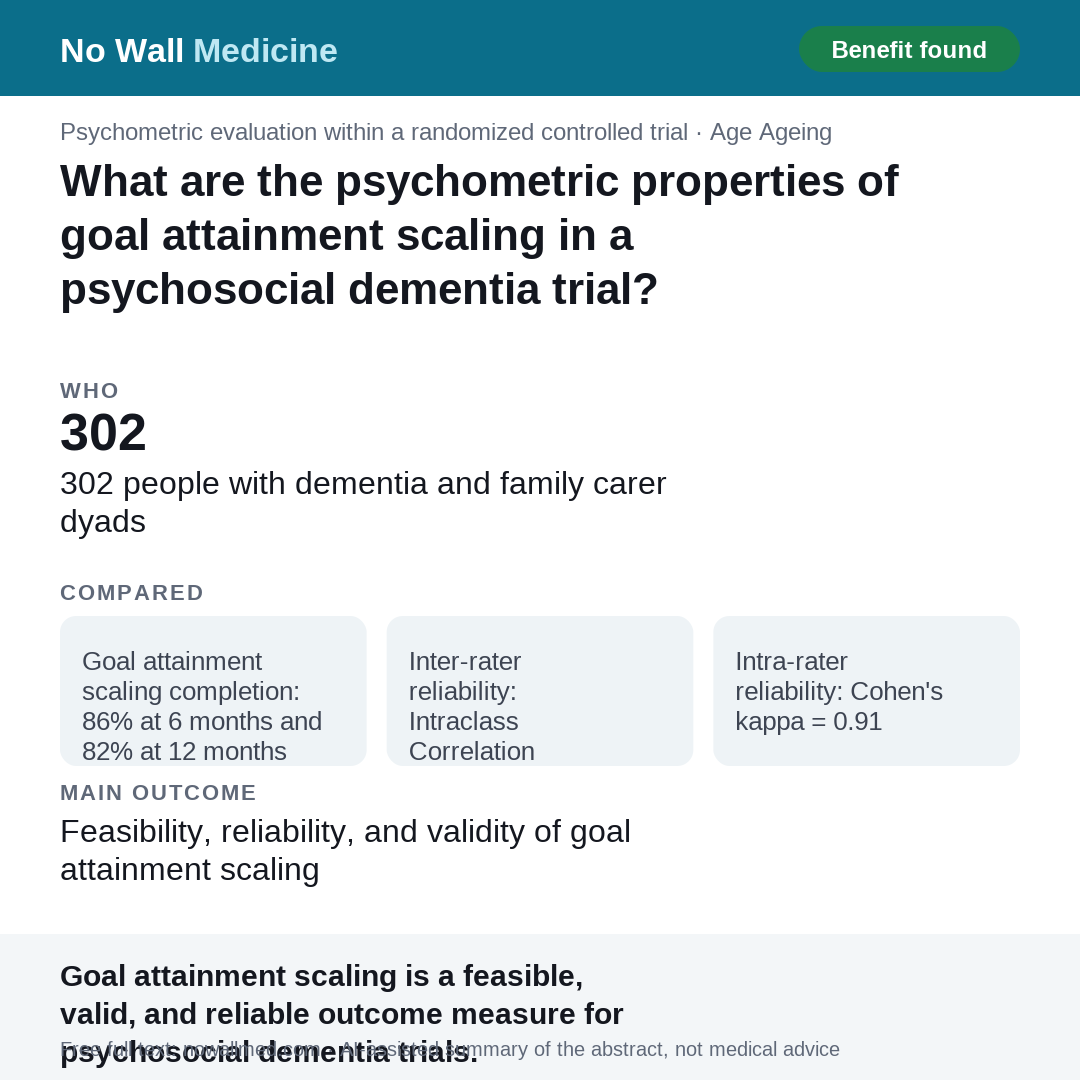
Measuring what matters: evaluating the psychometric properties of goal attainment scaling in a psychosocial dementia trial
Psychometric evaluation within a randomized controlled trialBenefit found
What are the psychometric properties of goal attainment scaling in a psychosocial dementia trial?
Who
302
302 people with dementia and family carer dyads
Compared
Goal attainment scaling completion: 86% at 6 months and 82% at 12 months
Inter-rater reliability: Intraclass Correlation Coefficient = 0.99
Intra-rater reliability: Cohen's kappa = 0.91
Main outcome
Feasibility, reliability, and validity of goal attainment scaling
Result: odds ratio 1.08 per point increase
Bottom line: Goal attainment scaling is a feasible, valid, and reliable outcome measure for psychosocial dementia trials.
Limitation: Correlations with global quality of life were significant but modest.
Age Ageing · 2026-09-14Download image
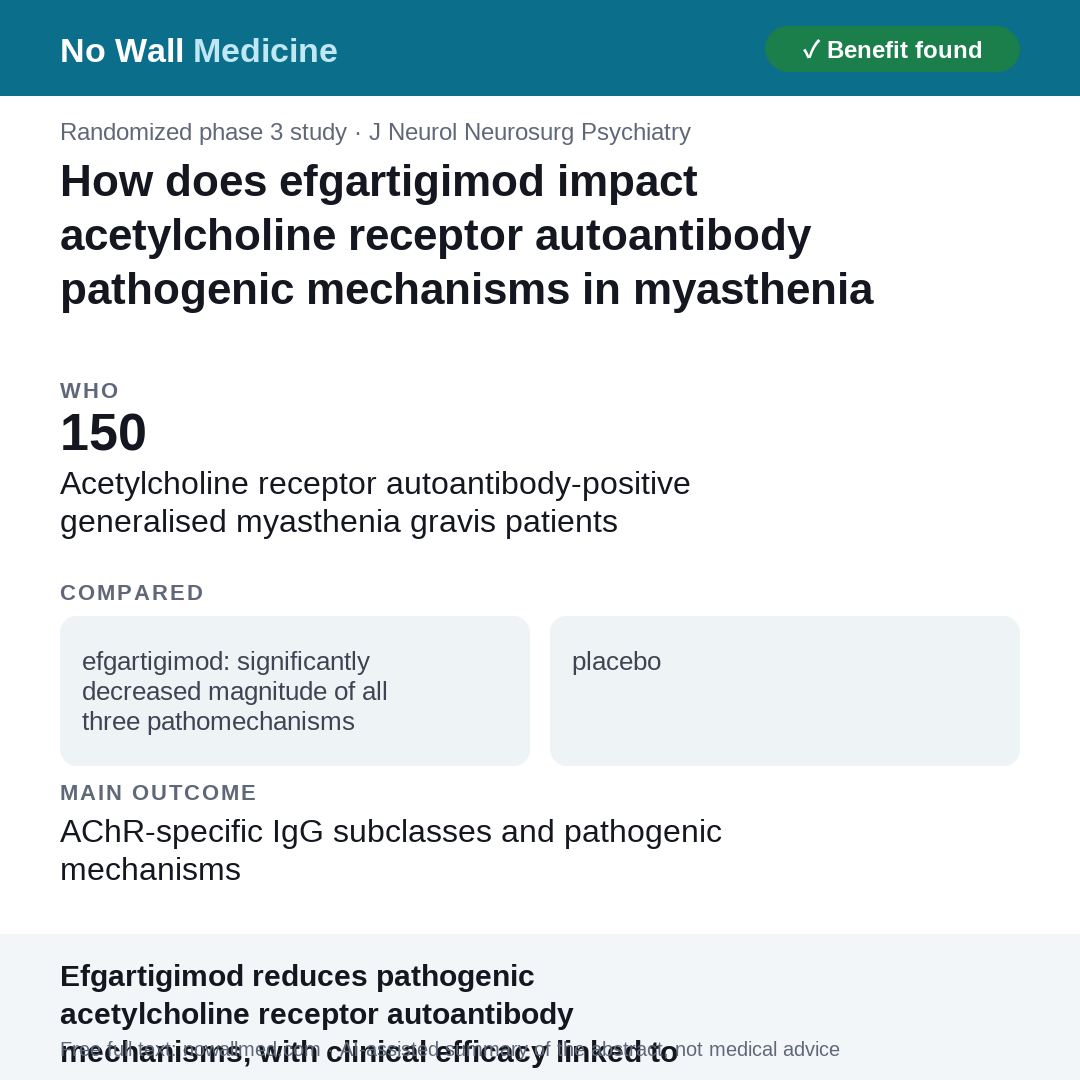
Pathogenic properties of myasthenia gravis AChR autoantibodies associate with clinical response to efgartigimod
Randomized phase 3 studyBenefit found
How does efgartigimod impact acetylcholine receptor autoantibody pathogenic mechanisms in myasthenia gravis?
Who
150
Acetylcholine receptor autoantibody-positive generalised myasthenia gravis patients
Compared
efgartigimod: significantly decreased magnitude of all three pathomechanisms
placebo
Main outcome
AChR-specific IgG subclasses and pathogenic mechanisms
Bottom line: Efgartigimod reduces pathogenic acetylcholine receptor autoantibody mechanisms, with clinical efficacy linked to functional modulation rather than absolute quantity.
J Neurol Neurosurg Psychiatry · 2026-09-14Download image
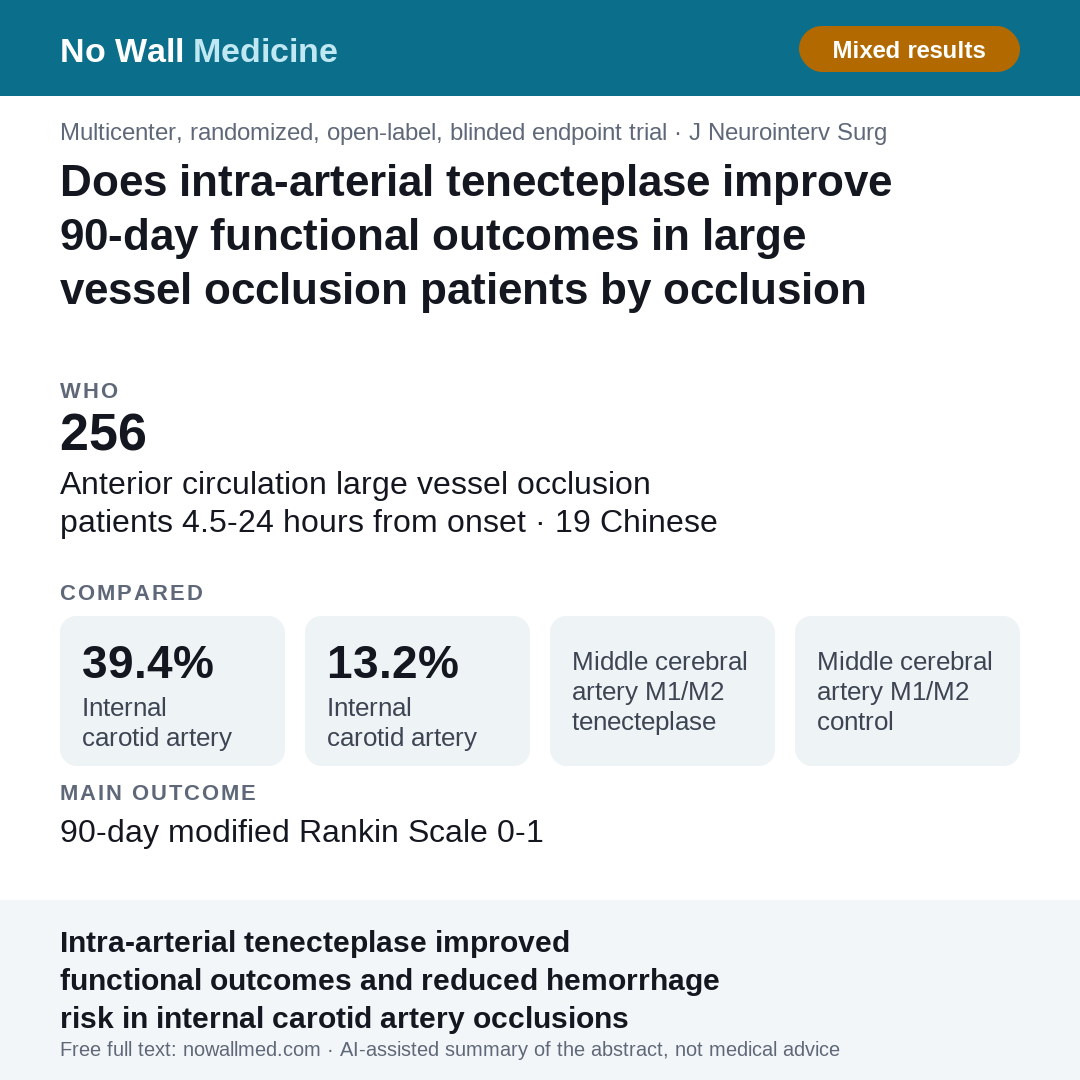
Occlusion site and outcomes in intra-arterial tenecteplase after successful endovascular therapy: a secondary analysis of the ANGEL-TNK trial
Multicenter, randomized, open-label, blinded endpoint trialMixed results
Does intra-arterial tenecteplase improve 90-day functional outcomes in large vessel occlusion patients by occlusion site?
Who
256
Anterior circulation large vessel occlusion patients 4.5-24 hours from onset · 19 Chinese stroke centers
Compared
39.4%Internal carotid artery tenecteplase
13.2%Internal carotid artery control
Middle cerebral artery M1/M2 tenecteplase
Middle cerebral artery M1/M2 control
Main outcome
90-day modified Rankin Scale 0-1
Result: relative risk 2.99 (95% CI 1.51 to 5.96)
Bottom line: Intra-arterial tenecteplase improved functional outcomes and reduced hemorrhage risk in internal carotid artery occlusions but not middle cerebral artery occlusions.
J Neurointerv Surg · 2026-09-14Download image
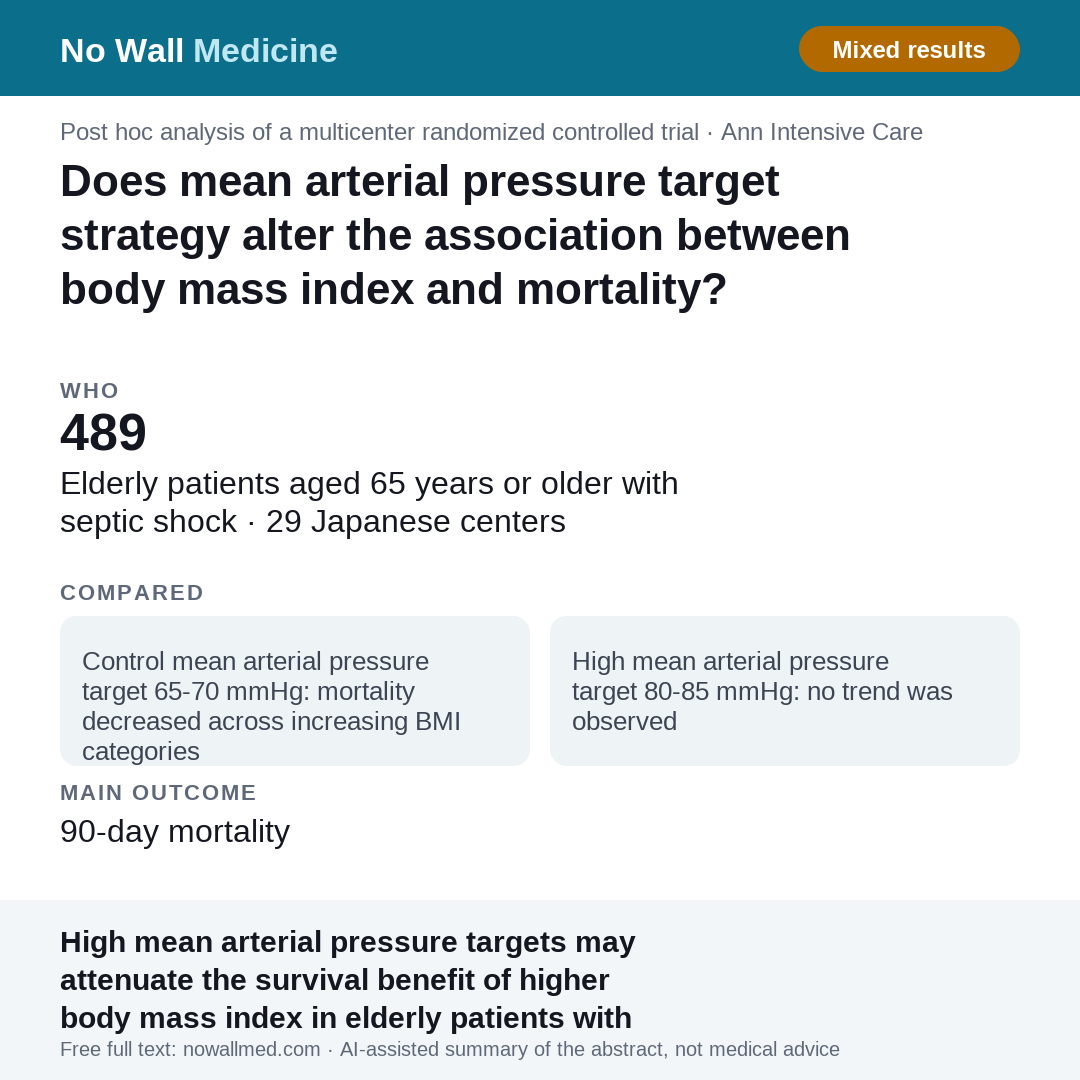
High blood pressure-targeted management associated with reduced benefits of higher body mass index in elderly patients with septic shock: a post hoc analysis of a multicenter randomized controlled trial
Post hoc analysis of a multicenter randomized controlled trialMixed results
Does mean arterial pressure target strategy alter the association between body mass index and mortality?
Who
489
Elderly patients aged 65 years or older with septic shock · 29 Japanese centers
Compared
Control mean arterial pressure target 65-70 mmHg: mortality decreased across increasing BMI categories
High mean arterial pressure target 80-85 mmHg: no trend was observed
Main outcome
90-day mortality
Result: adjusted HR 1.72 (95% CI 1.02 to 2.87) for higher-BMI in high-target group
Bottom line: High mean arterial pressure targets may attenuate the survival benefit of higher body mass index in elderly patients with septic shock.
Limitation: This was a post hoc analysis of the OPTPRESS trial
Ann Intensive Care · 2026-09-14Download image
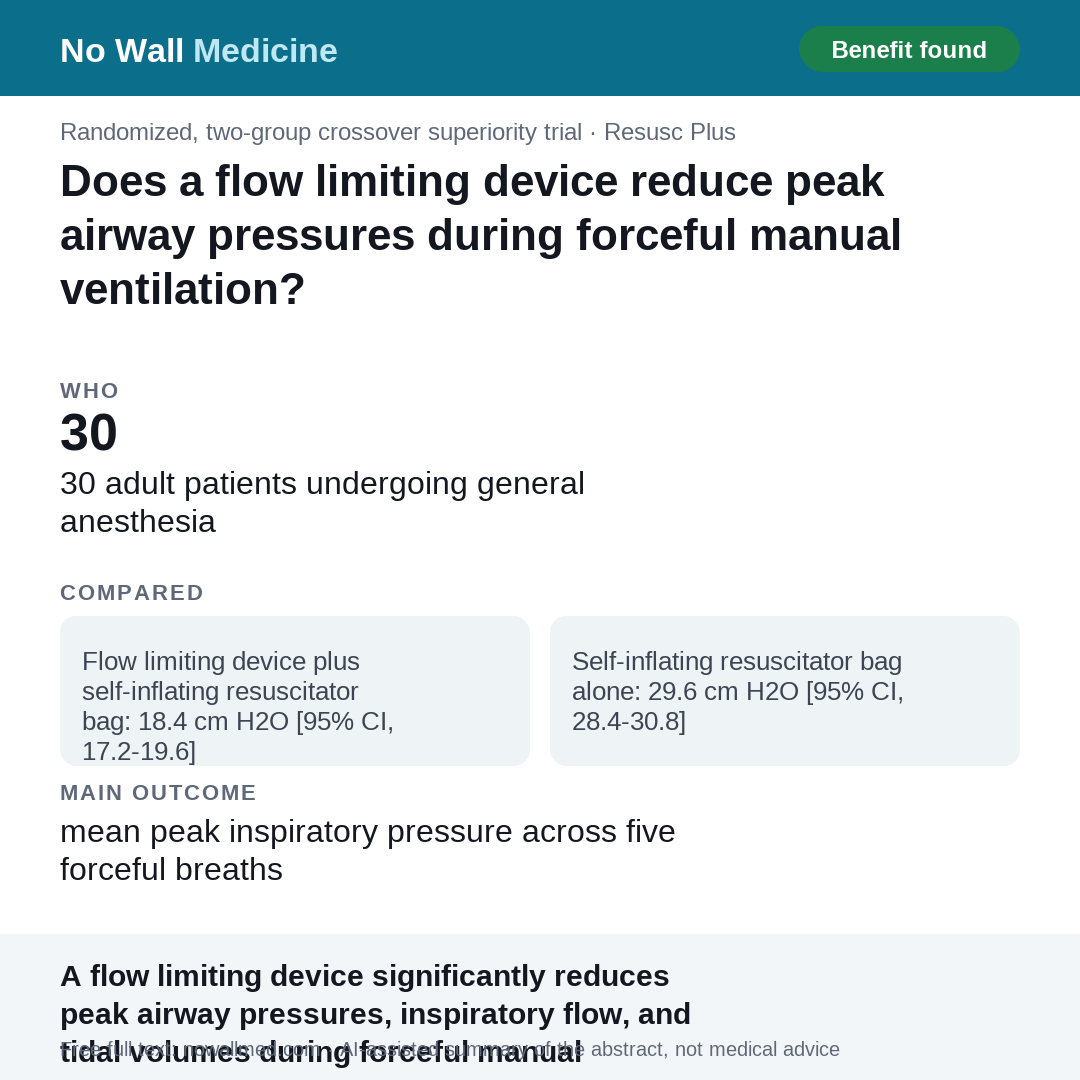
Manual ventilation with and without a flow limiting device during induction of general anesthesia: a randomized crossover trial
Randomized, two-group crossover superiority trialBenefit found
Does a flow limiting device reduce peak airway pressures during forceful manual ventilation?
Who
30
30 adult patients undergoing general anesthesia
Compared
Flow limiting device plus self-inflating resuscitator bag: 18.4 cm H2O [95% CI, 17.2-19.6]
Self-inflating resuscitator bag alone: 29.6 cm H2O [95% CI, 28.4-30.8]
Main outcome
mean peak inspiratory pressure across five forceful breaths
Result: mean difference of 11.2 cm H2O [95% CI, 10.5-11.9]
Bottom line: A flow limiting device significantly reduces peak airway pressures, inspiratory flow, and tidal volumes during forceful manual ventilation.
Limitation: Reduced tidal volumes may cause inadequate alveolar ventilation if not corrected over several breaths.
Resusc Plus · 2026-09-14Download image