Visual abstracts
New randomized trials and meta-analyses from leading journals at a glance: who was studied, what was compared, and what was found. Every paper is free to read in full.
All specialtiesCardiology 1015Oncology 915Gastroenterology & Hepatology 369Infectious Disease 694Neurology 432Psychiatry & Mental Health 534Pulmonology 444Critical Care 312Endocrinology & Diabetes 575Pediatrics 637Surgery 437Orthopedics & Sports Medicine 199Neurosurgery 148Cardiothoracic & Vascular Surgery 103Plastic & Reconstructive Surgery 165Nephrology 229Rheumatology 129Hematology 221Dermatology 97Ophthalmology 120Obstetrics & Gynecology 317Public & Global Health 191Radiology & Imaging 127Anesthesiology 186Urology 198ENT (Otolaryngology) 139Emergency Medicine 116Allergy & Immunology 68Geriatrics 206Family Medicine & Primary Care 134Medical Genetics & Genomics 107Pathology & Laboratory Medicine 31Physical Medicine & Rehabilitation 181Palliative Care 93Nutrition 264Digital Health & AI 534General Medicine 105
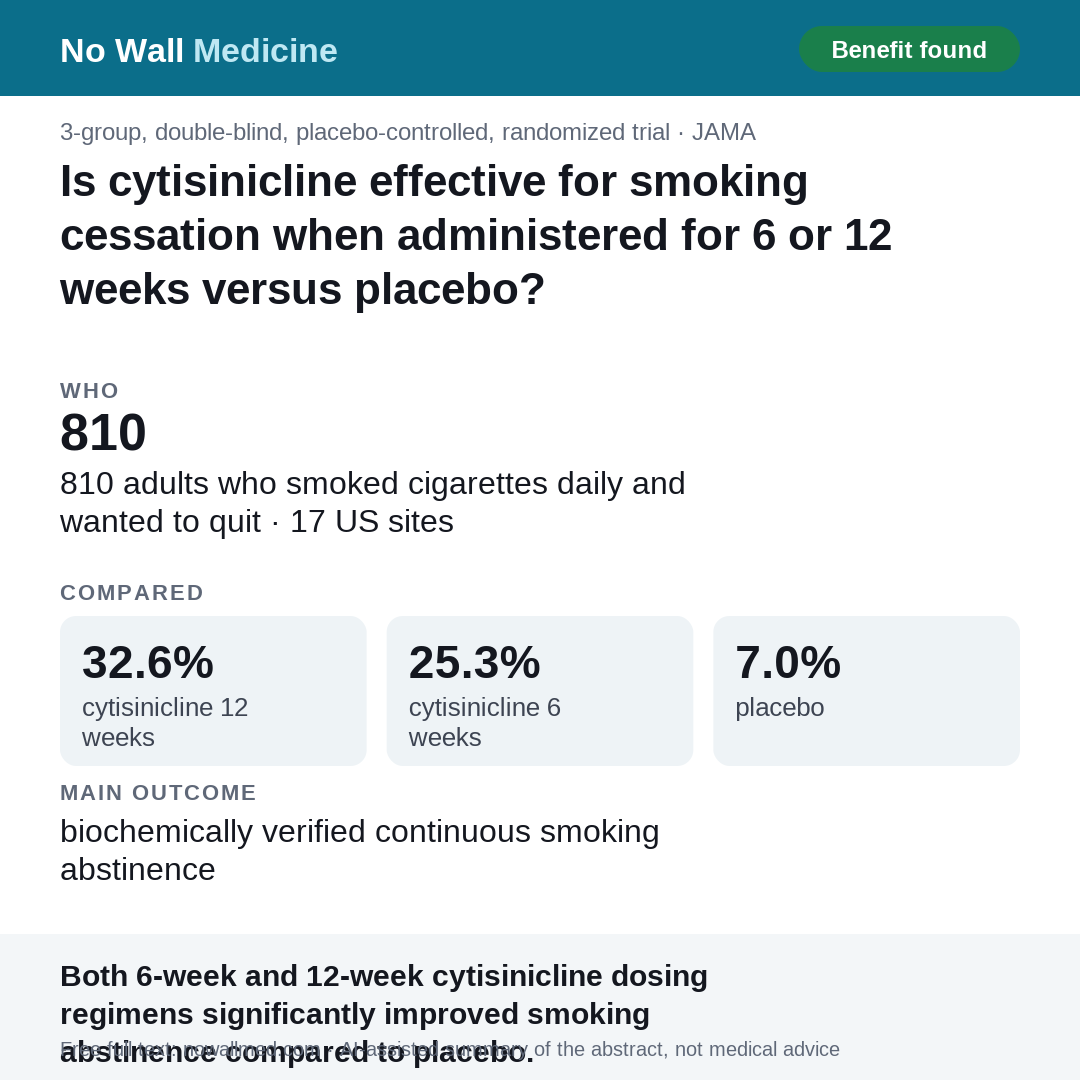
Cytisinicline for Smoking Cessation: A Randomized Clinical Trial
3-group, double-blind, placebo-controlled, randomized trialBenefit found
Is cytisinicline effective for smoking cessation when administered for 6 or 12 weeks versus placebo?
Who
810
810 adults who smoked cigarettes daily and wanted to quit · 17 US sites
Compared
32.6%cytisinicline 12 weeks (weeks 9 to 12)
25.3%cytisinicline 6 weeks (weeks 3 to 6)
7.0%placebo (weeks 9 to 12)
Main outcome
biochemically verified continuous smoking abstinence
Result: OR 6.3 (95% CI 3.7-11.6) for 12-week course
Bottom line: Both 6-week and 12-week cytisinicline dosing regimens significantly improved smoking abstinence compared to placebo.
JAMA · 2023-07-11Download image
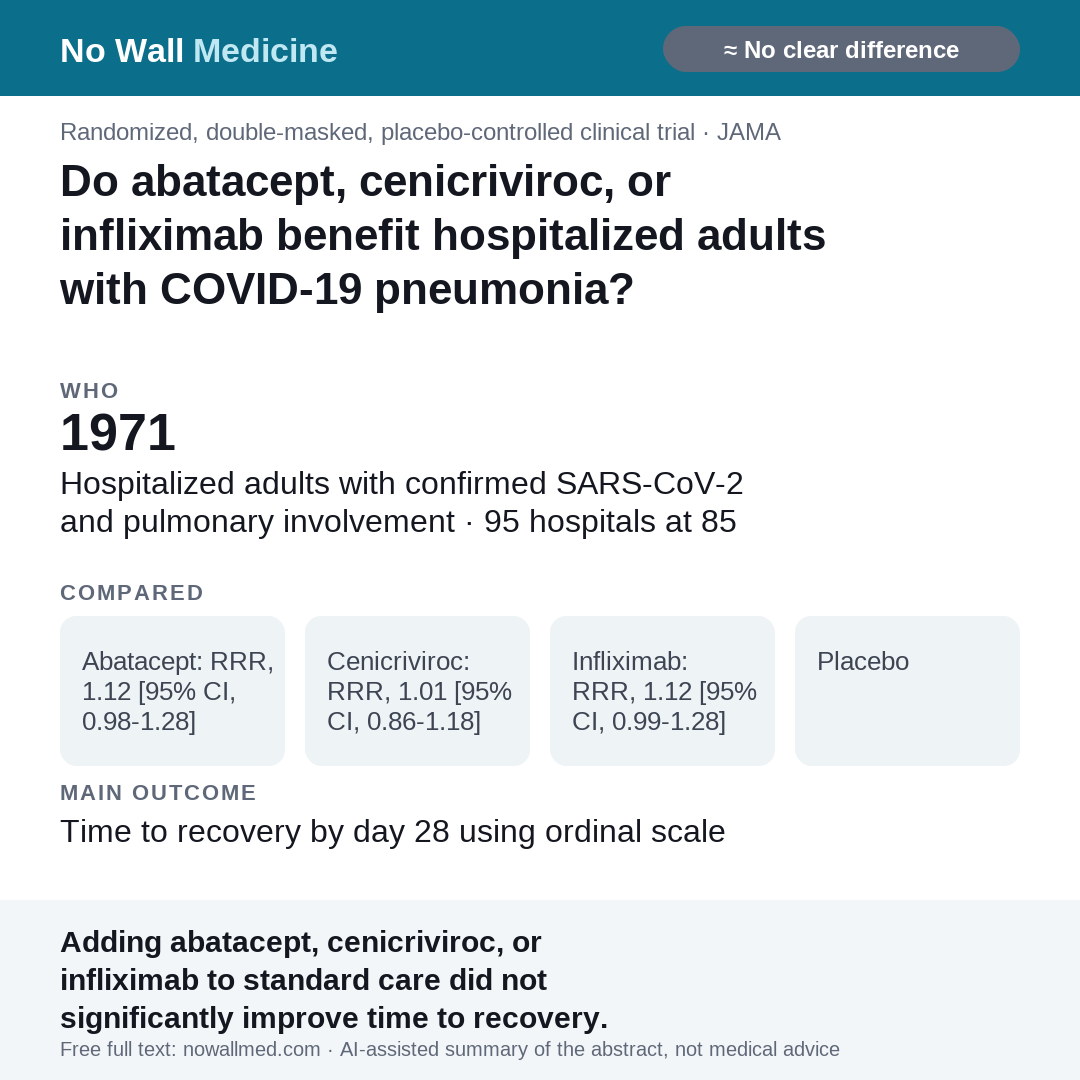
Abatacept, Cenicriviroc, or Infliximab for Treatment of Adults Hospitalized With COVID-19 Pneumonia: A Randomized Clinical Trial
Randomized, double-masked, placebo-controlled clinical trialNo clear difference
Do abatacept, cenicriviroc, or infliximab benefit hospitalized adults with COVID-19 pneumonia?
Who
1971
Hospitalized adults with confirmed SARS-CoV-2 and pulmonary involvement · 95 hospitals at 85 sites in US and Latin America
Compared
Abatacept: RRR, 1.12 [95% CI, 0.98-1.28]
Cenicriviroc: RRR, 1.01 [95% CI, 0.86-1.18]
Infliximab: RRR, 1.12 [95% CI, 0.99-1.28]
Placebo
Main outcome
Time to recovery by day 28 using ordinal scale
Bottom line: Adding abatacept, cenicriviroc, or infliximab to standard care did not significantly improve time to recovery.
JAMA · 2023-07-10Download image
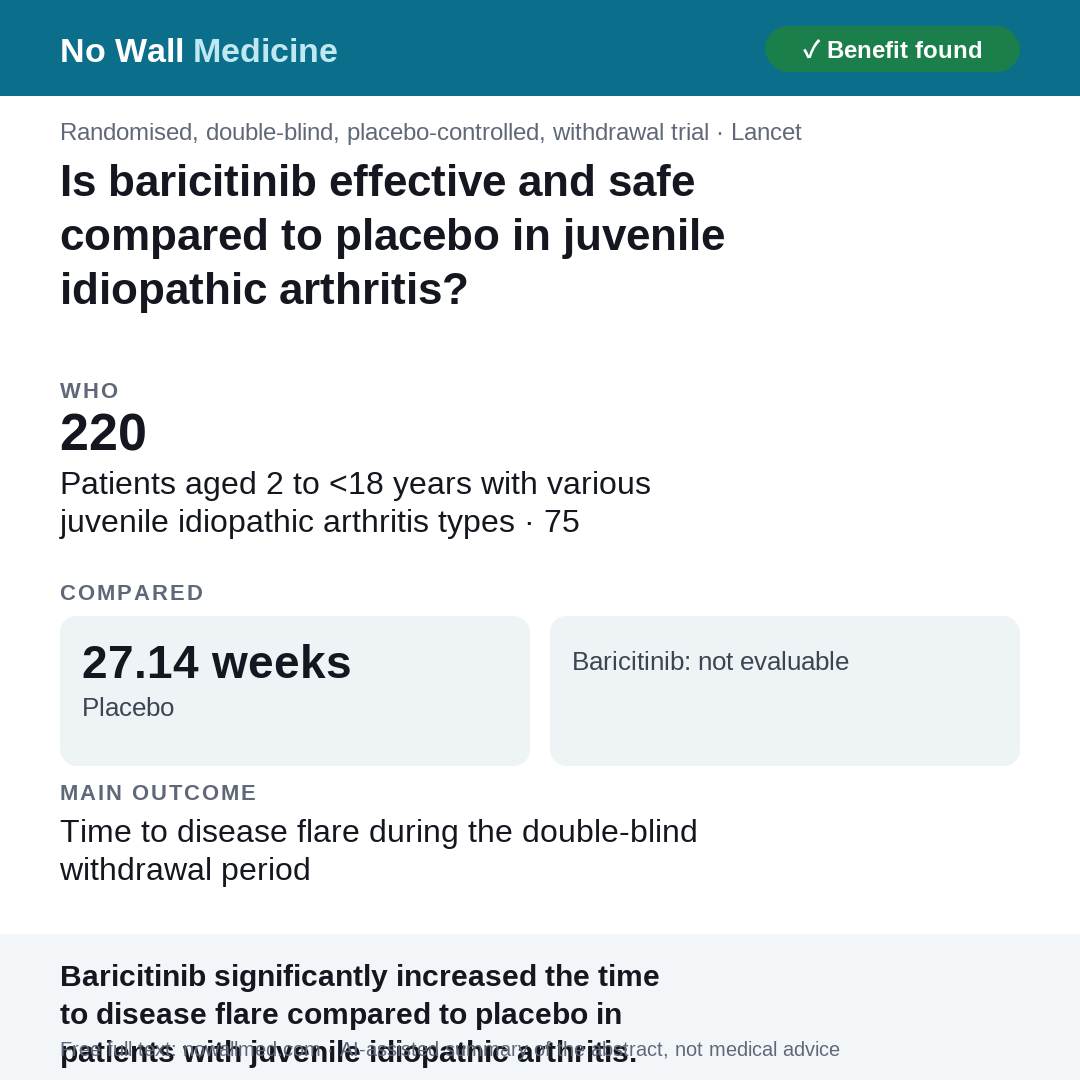
Baricitinib in juvenile idiopathic arthritis: an international, phase 3, randomised, double-blind, placebo-controlled, withdrawal, efficacy, and safety trial
Randomised, double-blind, placebo-controlled, withdrawal trialBenefit found
Is baricitinib effective and safe compared to placebo in juvenile idiopathic arthritis?
Who
220
Patients aged 2 to <18 years with various juvenile idiopathic arthritis types · 75 centres in 20 countries
Compared
27.14 weeksPlacebo (95% CI 15.29-not estimable)
Baricitinib: not evaluable
Main outcome
Time to disease flare during the double-blind withdrawal period
Result: hazard ratio 0.241 (95% CI 0.128-0.453)
Bottom line: Baricitinib significantly increased the time to disease flare compared to placebo in patients with juvenile idiopathic arthritis.
Lancet · 2023-07-06Download image
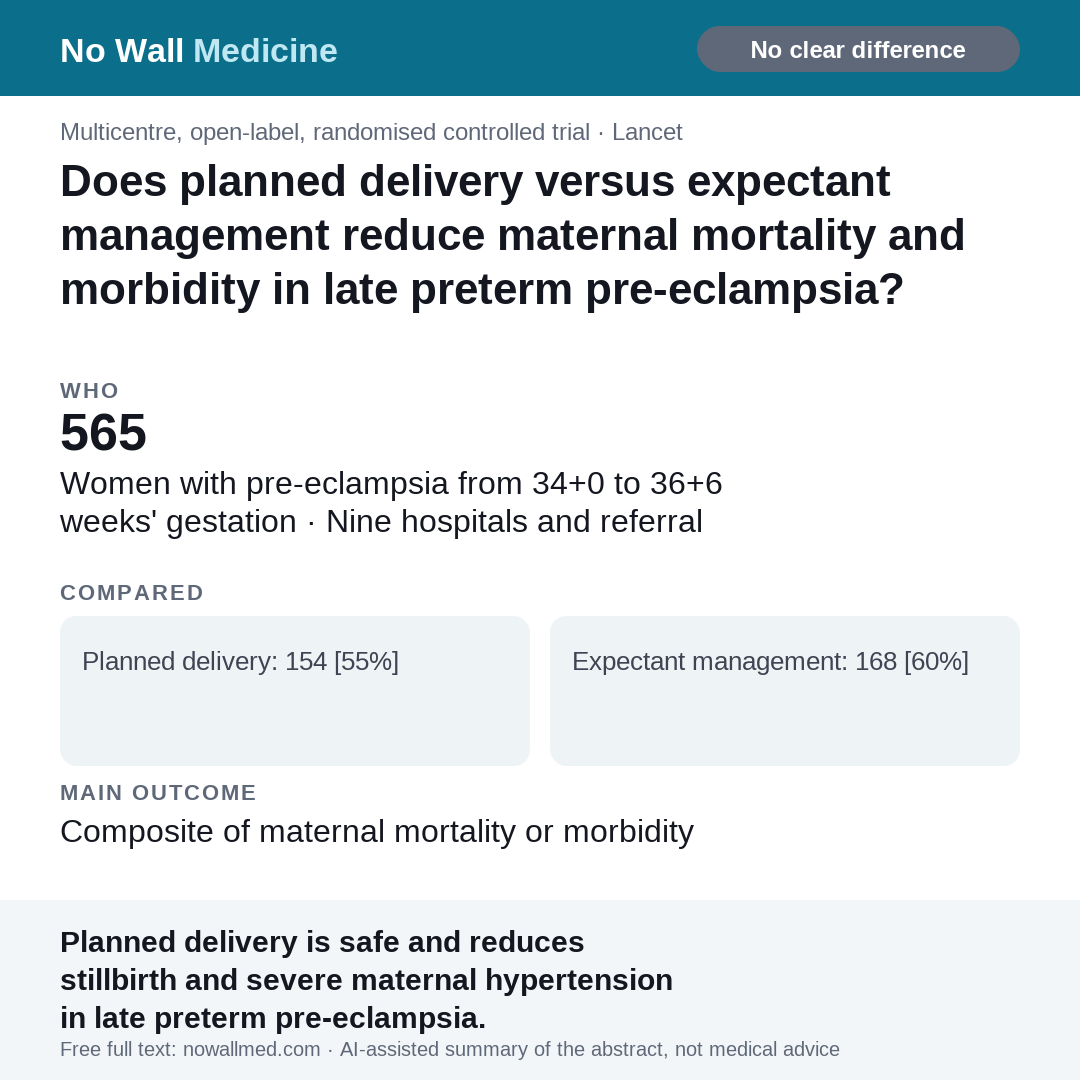
Planned delivery or expectant management for late preterm pre-eclampsia in low-income and middle-income countries (CRADLE-4): a multicentre, open-label, randomised controlled trial
Multicentre, open-label, randomised controlled trialNo clear difference
Does planned delivery versus expectant management reduce maternal mortality and morbidity in late preterm pre-eclampsia?
Who
565
Women with pre-eclampsia from 34+0 to 36+6 weeks' gestation · Nine hospitals and referral facilities in India and Zambia
Compared
Planned delivery: 154 [55%]
Expectant management: 168 [60%]
Main outcome
Composite of maternal mortality or morbidity
Result: adjusted risk ratio 0·91, 95% CI 0·79 to 1·05
Bottom line: Planned delivery is safe and reduces stillbirth and severe maternal hypertension in late preterm pre-eclampsia.
Funded by: UK Medical Research Council and Indian Department of Biotechnology
Lancet · 2023-06-29Download image
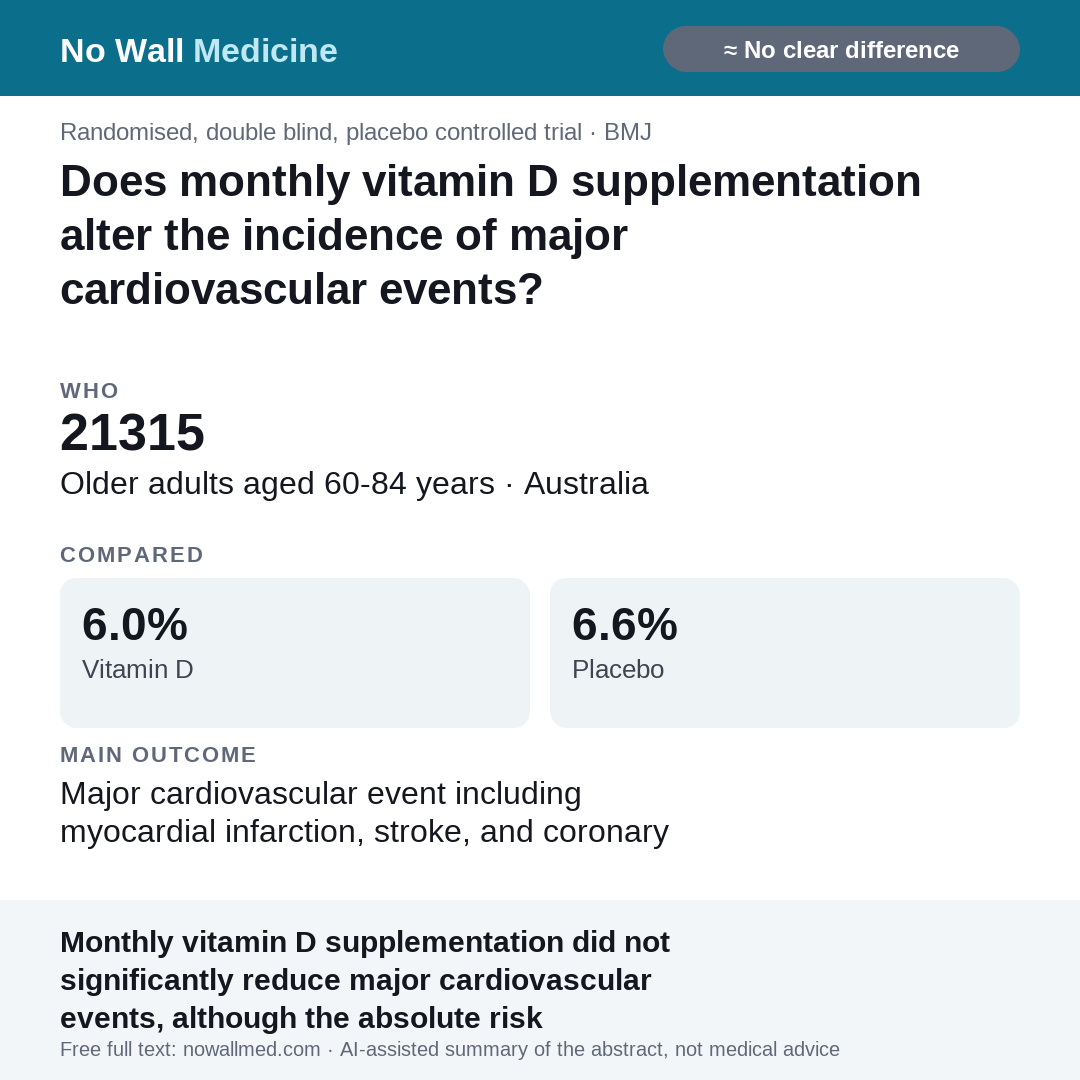
Vitamin D supplementation and major cardiovascular events: D-Health randomised controlled trial
Randomised, double blind, placebo controlled trialNo clear difference
Does monthly vitamin D supplementation alter the incidence of major cardiovascular events?
Who
21315
Older adults aged 60-84 years · Australia
Compared
6.0%Vitamin D
6.6%Placebo
Main outcome
Major cardiovascular event including myocardial infarction, stroke, and coronary revascularisation
Result: hazard ratio 0.91 (95% confidence interval 0.81 to 1.01)
Bottom line: Monthly vitamin D supplementation did not significantly reduce major cardiovascular events, although the absolute risk difference was small.
BMJ · 2023-06-28Download image
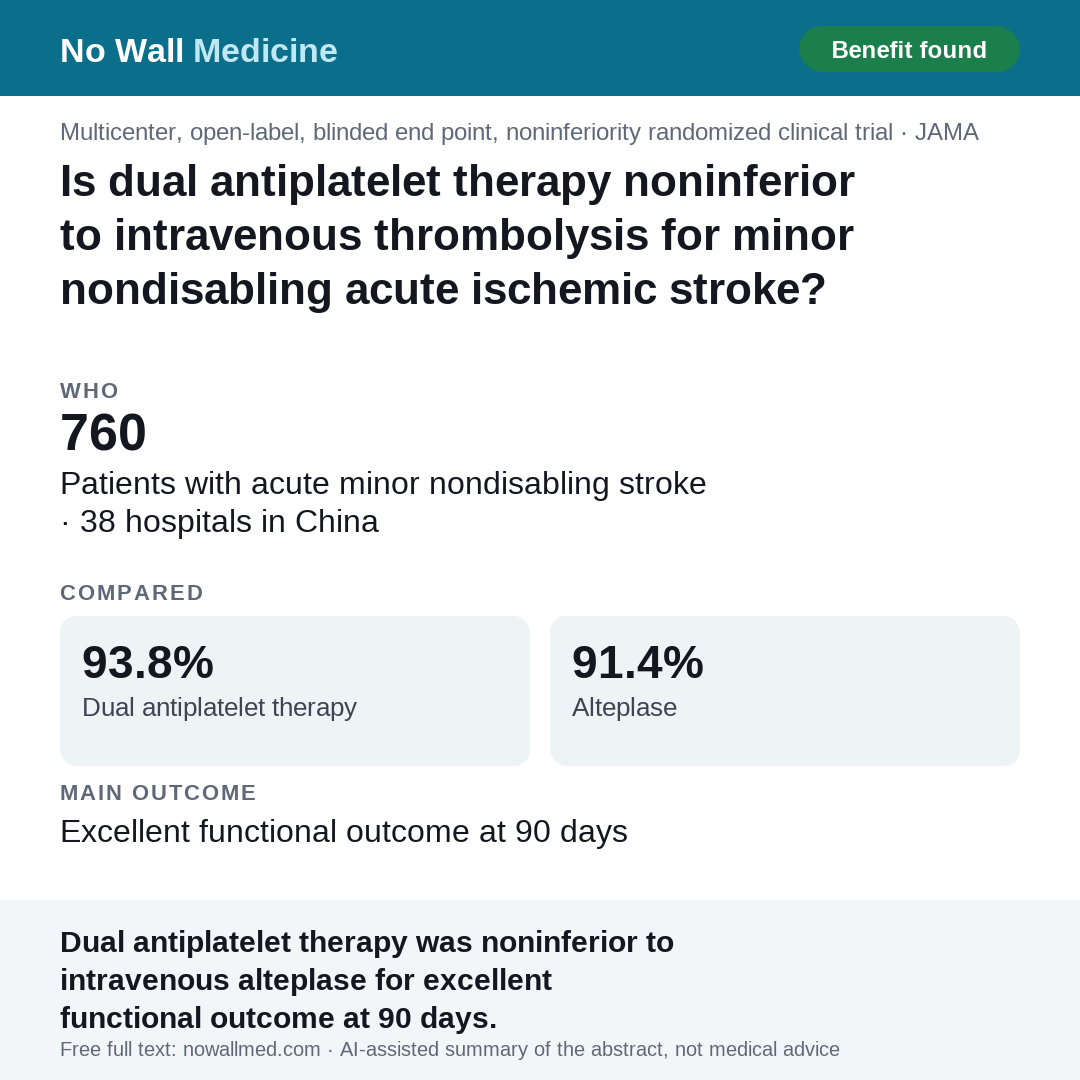
Dual Antiplatelet Therapy vs Alteplase for Patients With Minor Nondisabling Acute Ischemic Stroke: The ARAMIS Randomized Clinical Trial
Multicenter, open-label, blinded end point, noninferiority randomized clinical trialBenefit found
Is dual antiplatelet therapy noninferior to intravenous thrombolysis for minor nondisabling acute ischemic stroke?
Who
760
Patients with acute minor nondisabling stroke · 38 hospitals in China
Compared
93.8%Dual antiplatelet therapy (346/369)
91.4%Alteplase (320/350)
Main outcome
Excellent functional outcome at 90 days
Result: risk difference, 2.3% (95% CI, -1.5% to 6.2%)
Bottom line: Dual antiplatelet therapy was noninferior to intravenous alteplase for excellent functional outcome at 90 days.
JAMA · 2023-06-27Download image
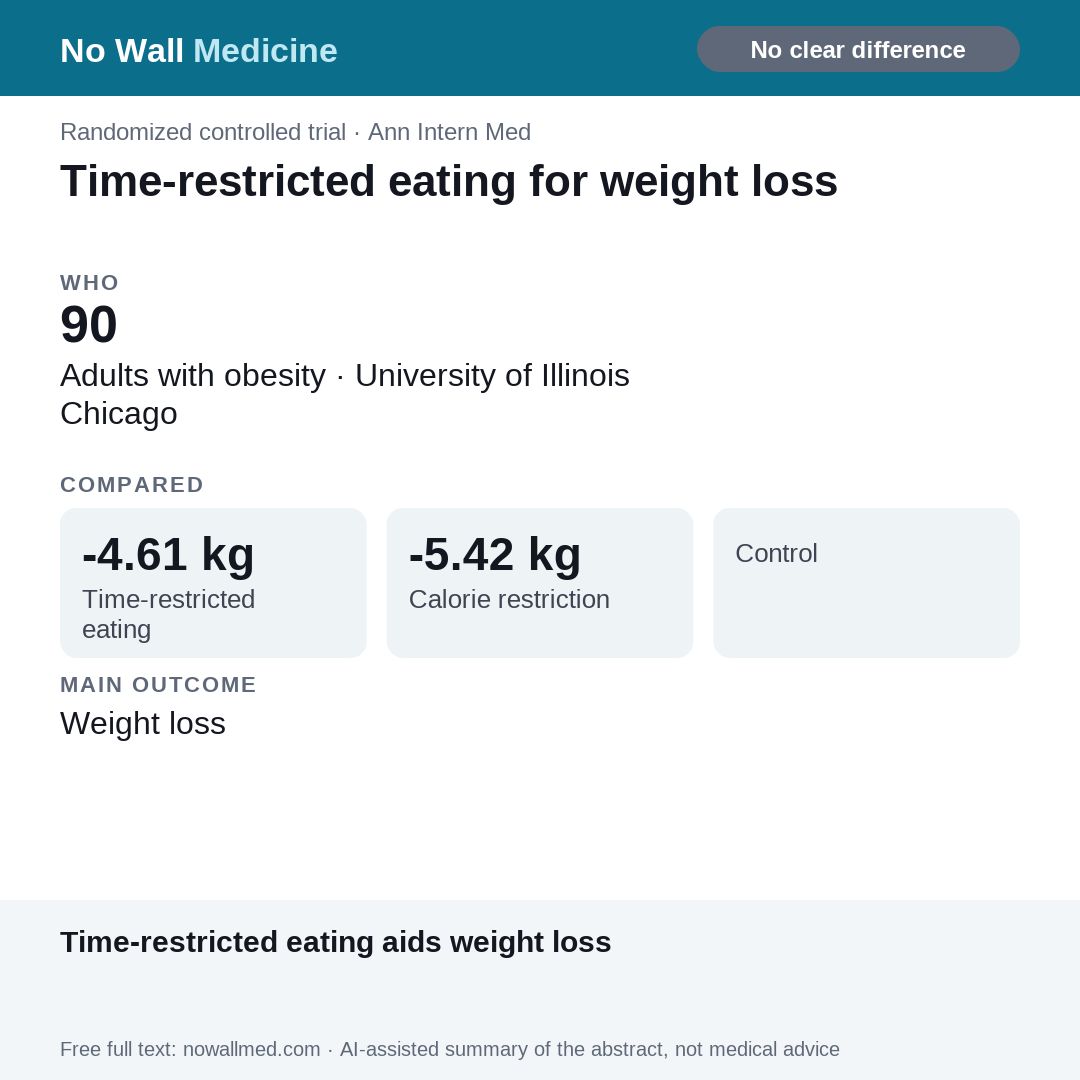
Time-Restricted Eating Without Calorie Counting for Weight Loss in a Racially Diverse Population : A Randomized Controlled Trial
Randomized controlled trialNo clear difference
Time-restricted eating for weight loss
Who
90
Adults with obesity · University of Illinois Chicago
Compared
-4.61 kgTime-restricted eating
-5.42 kgCalorie restriction
Control
Main outcome
Weight loss
Bottom line: Time-restricted eating aids weight loss
Limitation: Not blinded, underpowered
Funded by: National Institutes of Health
Ann Intern Med · 2023-06-27Download image
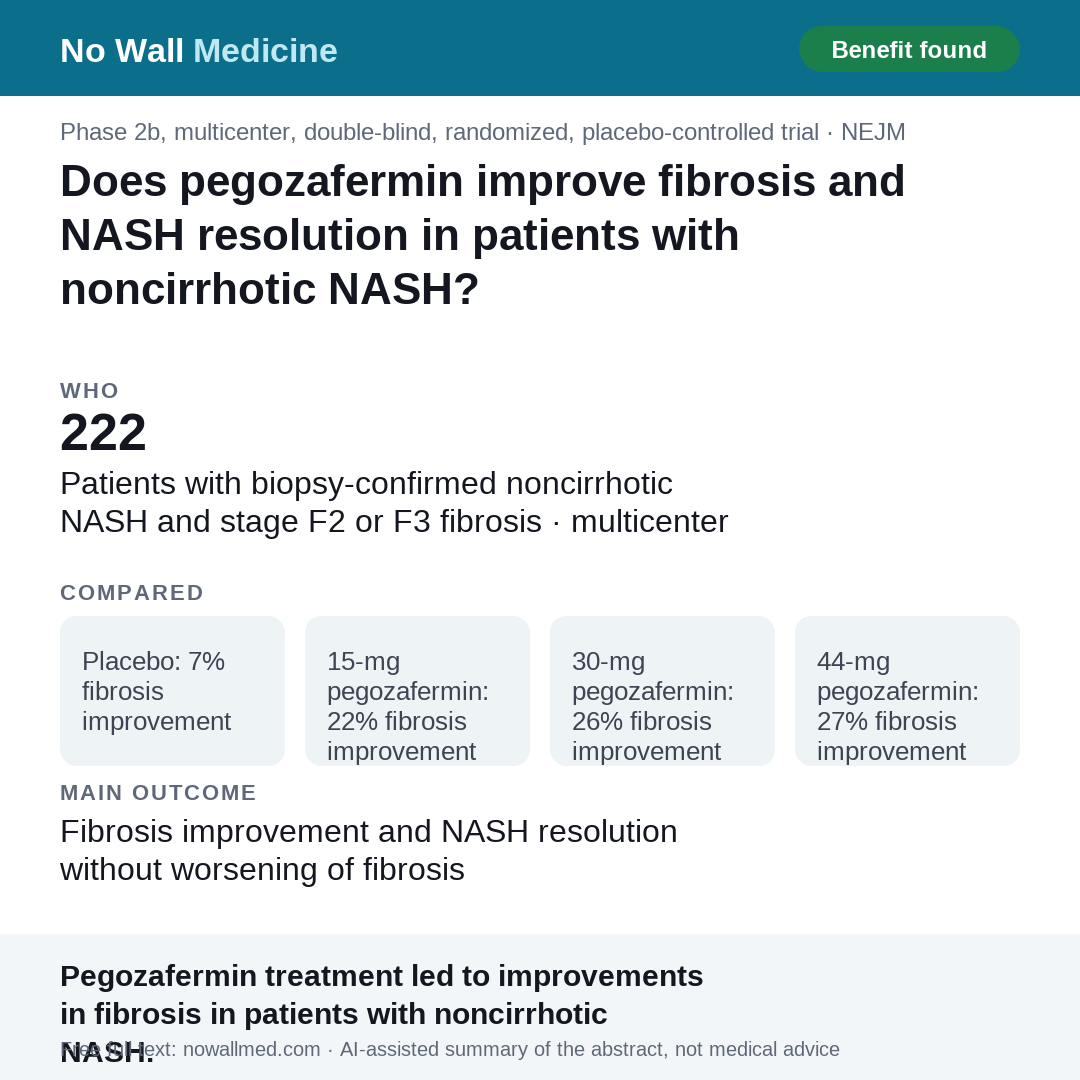
Randomized, Controlled Trial of the FGF21 Analogue Pegozafermin in NASH
Phase 2b, multicenter, double-blind, randomized, placebo-controlled trialBenefit found
Does pegozafermin improve fibrosis and NASH resolution in patients with noncirrhotic NASH?
Who
222
Patients with biopsy-confirmed noncirrhotic NASH and stage F2 or F3 fibrosis · multicenter
Compared
Placebo: 7% fibrosis improvement
15-mg pegozafermin: 22% fibrosis improvement
30-mg pegozafermin: 26% fibrosis improvement
44-mg pegozafermin: 27% fibrosis improvement
Main outcome
Fibrosis improvement and NASH resolution without worsening of fibrosis
Bottom line: Pegozafermin treatment led to improvements in fibrosis in patients with noncirrhotic NASH.
Funded by: 89bio
NEJM · 2023-06-24Download image
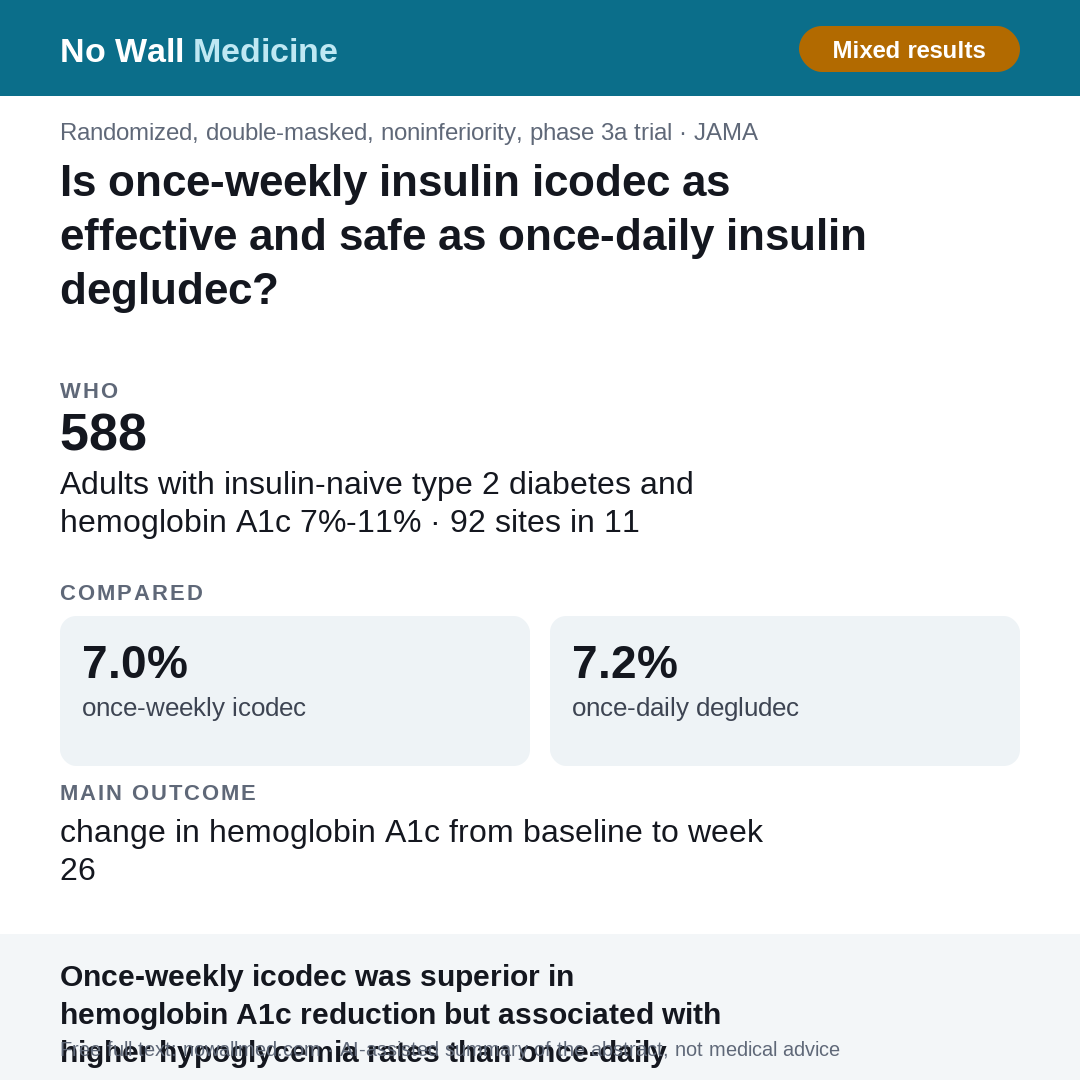
Once-Weekly Insulin Icodec vs Once-Daily Insulin Degludec in Adults With Insulin-Naive Type 2 Diabetes: The ONWARDS 3 Randomized Clinical Trial
Randomized, double-masked, noninferiority, phase 3a trialMixed results
Is once-weekly insulin icodec as effective and safe as once-daily insulin degludec?
Who
588
Adults with insulin-naive type 2 diabetes and hemoglobin A1c 7%-11% · 92 sites in 11 countries
Compared
7.0%once-weekly icodec (estimated)
7.2%once-daily degludec (estimated)
Main outcome
change in hemoglobin A1c from baseline to week 26
Result: estimated treatment difference -0.2 (95% CI -0.3 to -0.1) percentage points
Bottom line: Once-weekly icodec was superior in hemoglobin A1c reduction but associated with higher hypoglycemia rates than once-daily degludec.
JAMA · 2023-06-24Download image
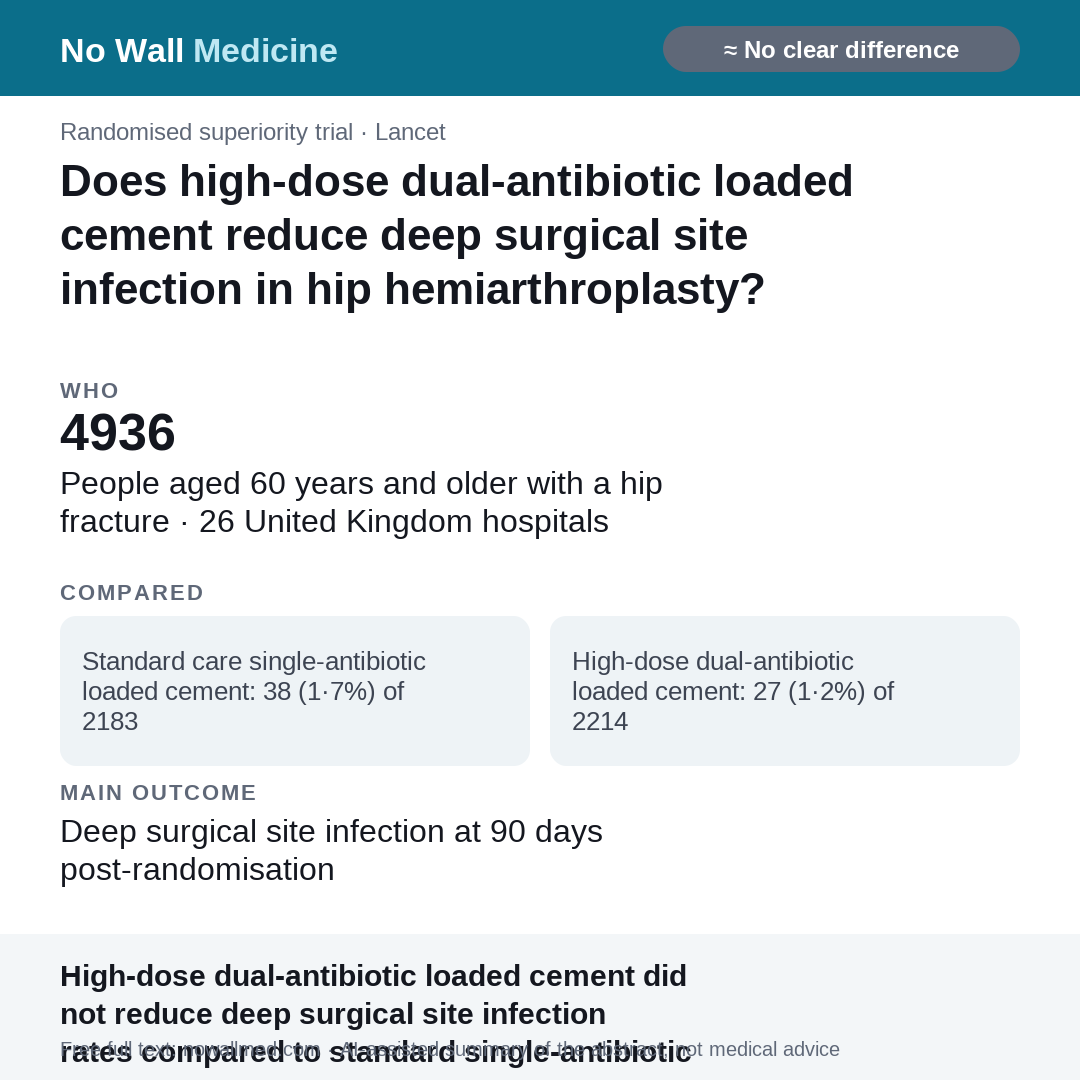
High-dose dual-antibiotic loaded cement for hip hemiarthroplasty in the UK (WHiTE 8): a randomised controlled trial
Randomised superiority trialNo clear difference
Does high-dose dual-antibiotic loaded cement reduce deep surgical site infection in hip hemiarthroplasty?
Who
4936
People aged 60 years and older with a hip fracture · 26 United Kingdom hospitals
Compared
Standard care single-antibiotic loaded cement: 38 (1·7%) of 2183
High-dose dual-antibiotic loaded cement: 27 (1·2%) of 2214
Main outcome
Deep surgical site infection at 90 days post-randomisation
Result: adjusted odds ratio 1·43 (95% CI 0·87-2·35)
Bottom line: High-dose dual-antibiotic loaded cement did not reduce deep surgical site infection rates compared to standard single-antibiotic cement.
Funded by: Heraeus Medical and UK National Institute for Health and Care Research
Lancet · 2023-06-21Download image
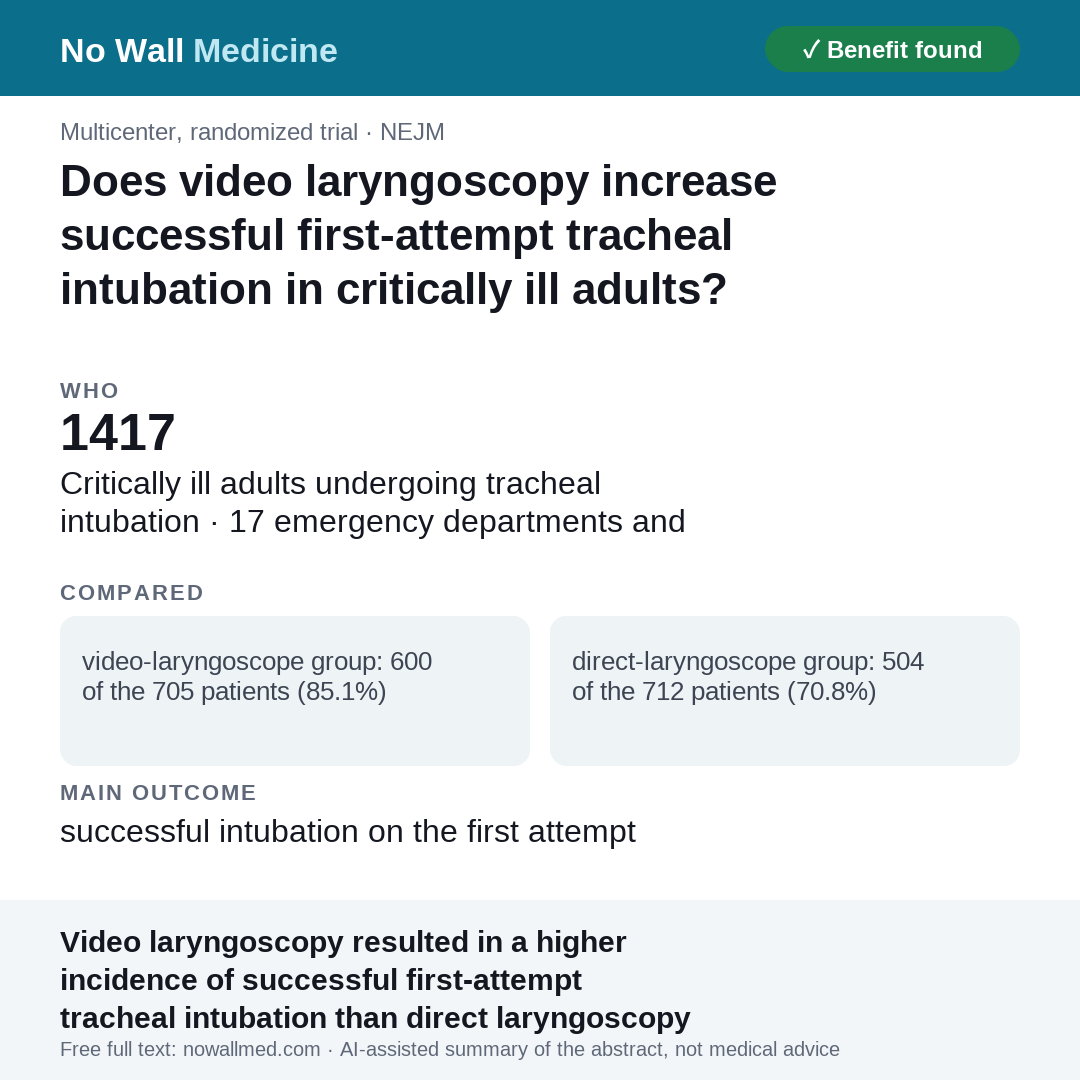
Video versus Direct Laryngoscopy for Tracheal Intubation of Critically Ill Adults
Multicenter, randomized trialBenefit found
Does video laryngoscopy increase successful first-attempt tracheal intubation in critically ill adults?
Who
1417
Critically ill adults undergoing tracheal intubation · 17 emergency departments and intensive care units
Compared
video-laryngoscope group: 600 of the 705 patients (85.1%)
direct-laryngoscope group: 504 of the 712 patients (70.8%)
Main outcome
successful intubation on the first attempt
Result: absolute risk difference, 14.3 percentage points; 95% confidence interval [CI], 9.9 to 18.7
Bottom line: Video laryngoscopy resulted in a higher incidence of successful first-attempt tracheal intubation than direct laryngoscopy in critically ill adults.
Funded by: U.S. Department of Defense
NEJM · 2023-06-16Download image
Continuous vs Intermittent Meropenem Administration in Critically Ill Patients With Sepsis: The MERCY Randomized Clinical Trial
Double-blind, randomized clinical trialNo clear difference
Does continuous meropenem administration reduce mortality and emergence of resistant bacteria compared to intermittent administration?
Who
607
Critically ill patients with sepsis or septic shock · 31 intensive care units in 4 countries
Compared
47%Continuous administration (142/303)
49%Intermittent administration (149/304)
Main outcome
Mortality and emergence of pandrug-resistant or extensively drug-resistant bacteria
Result: relative risk 0.96 (95% CI 0.81-1.13)
Bottom line: Continuous meropenem administration did not improve mortality or emergence of resistant bacteria compared to intermittent administration in sepsis.
JAMA · 2023-06-16Download image
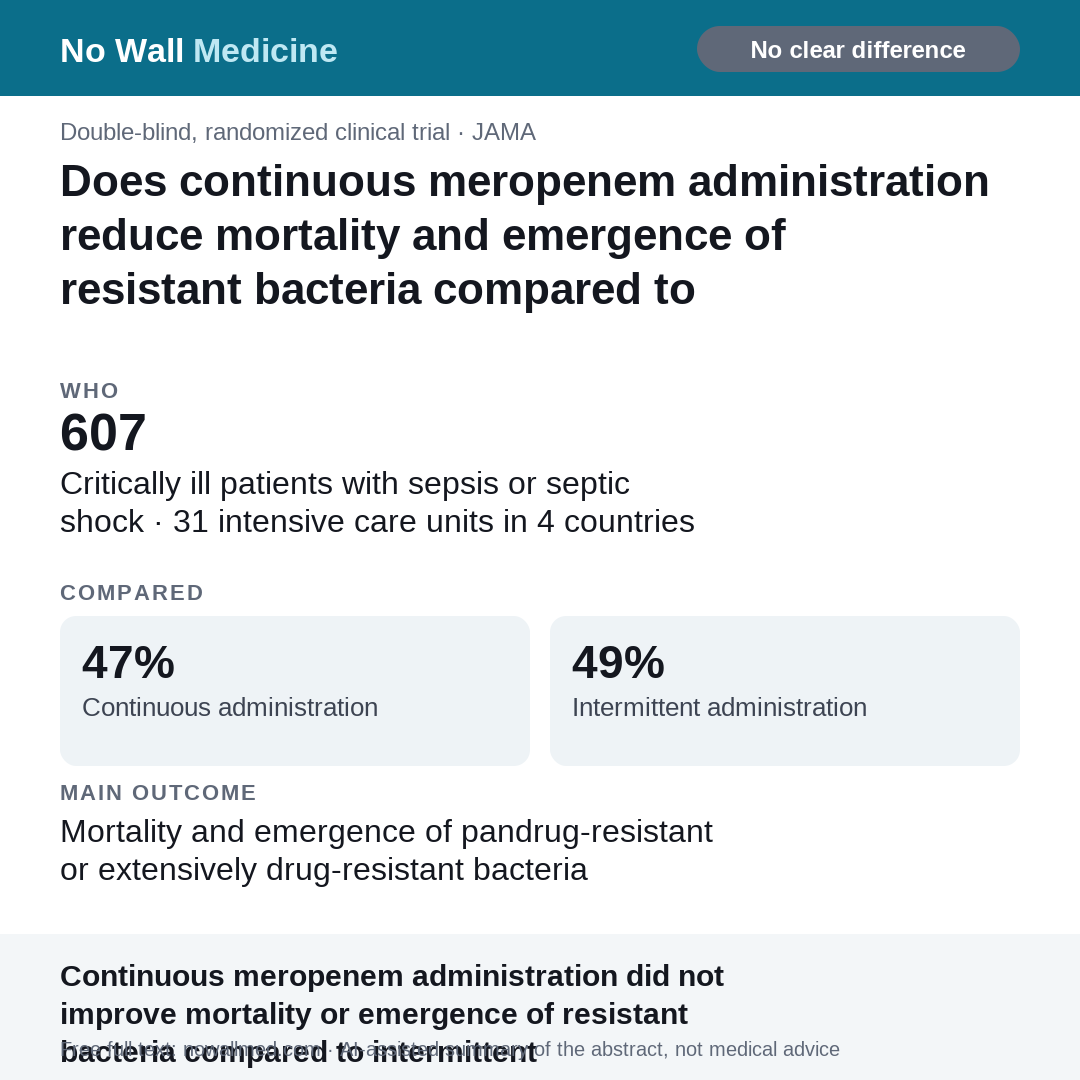
Self-administered intranasal etripamil using a symptom-prompted, repeat-dose regimen for atrioventricular-nodal-dependent supraventricular tachycardia (RAPID): a multicentre, randomised trial
Multicentre, randomised, placebo-controlled, event-driven trialBenefit found
Does intranasal etripamil convert paroxysmal supraventricular tachycardia to sinus rhythm within 30 minutes?
Who
692
Adults with atrioventricular-nodal-dependent paroxysmal supraventricular tachycardia · 160 sites in North America and Europe
Compared
64%Etripamil (63/99)
31%Placebo (26/85)
Main outcome
Conversion to sinus rhythm for at least 30 seconds within 30 minutes
Result: hazard ratio 2·62 (95% CI 1·66-4·15)
Bottom line: Self-administered intranasal etripamil is superior to placebo for rapid conversion of paroxysmal supraventricular tachycardia to sinus rhythm.
Funded by: Milestone Pharmaceuticals
Lancet · 2023-06-15Download image
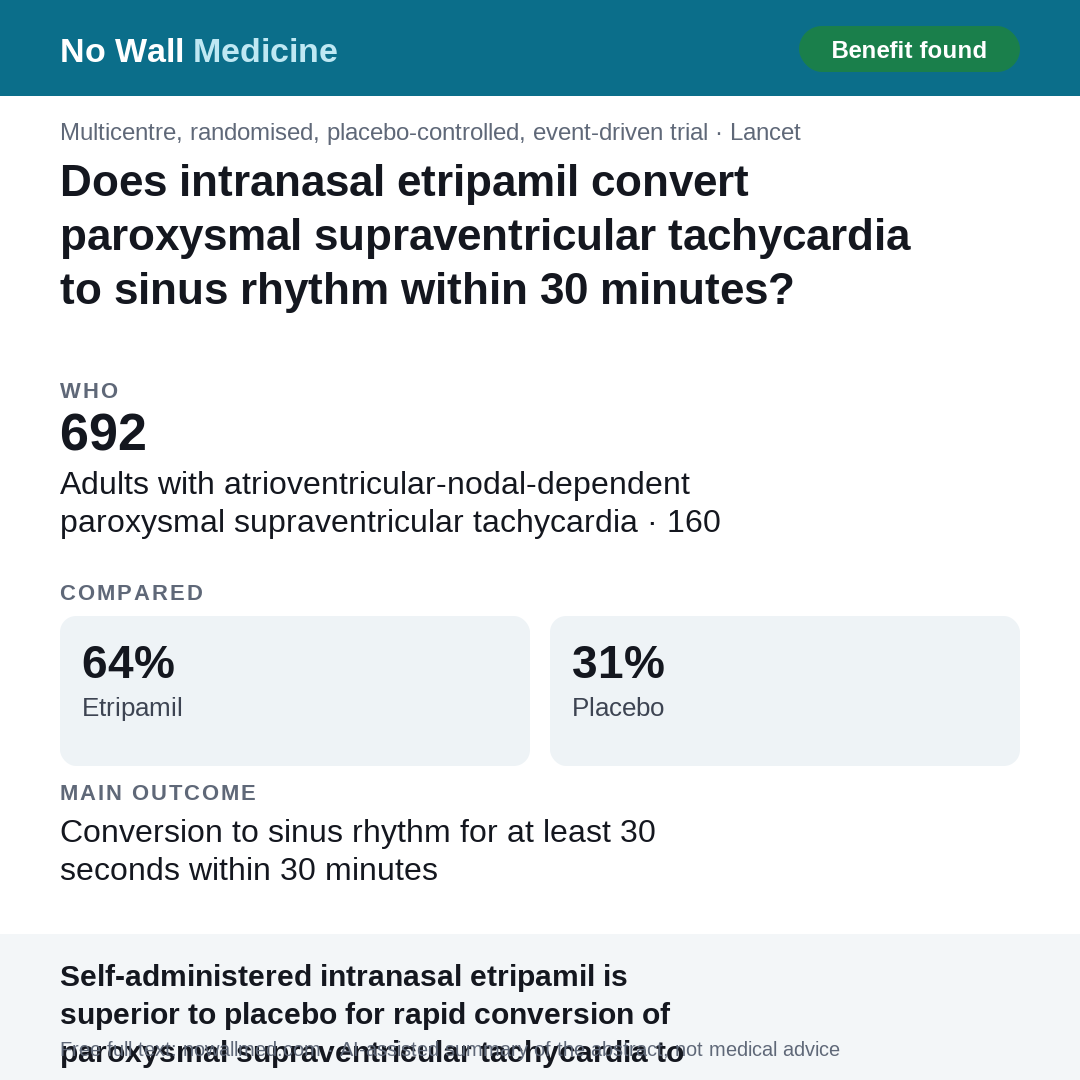
Minithoracotomy vs Conventional Sternotomy for Mitral Valve Repair: A Randomized Clinical Trial
Pragmatic, multicenter, superiority, randomized clinical trialNo clear difference
Is minithoracotomy as safe and effective as sternotomy for mitral valve repair?
Who
330
Adults with degenerative mitral regurgitation undergoing mitral valve repair surgery · 10 tertiary care institutions in the UK
Compared
0.68Minithoracotomy (95% CI, -1.89 to 3.26)
Sternotomy
Main outcome
Change from baseline in physical functioning at 12 weeks
Result: mean between-group difference 0.68 (95% CI, -1.89 to 3.26)
Bottom line: Minithoracotomy is not superior to sternotomy for physical function recovery and has similar safety outcomes at 1 year.
JAMA · 2023-06-14Download image
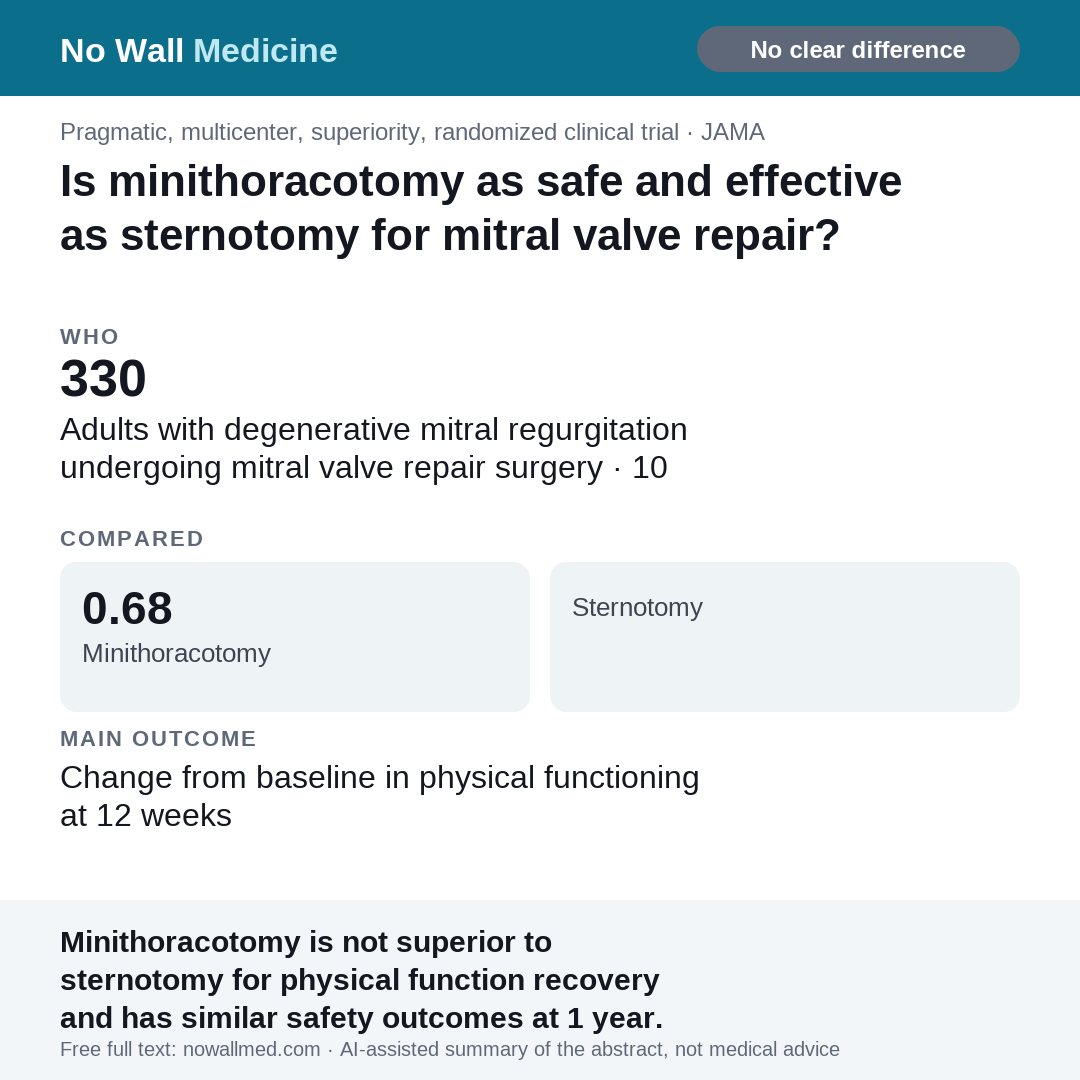
Family-Based Behavioral Treatment for Childhood Obesity Implemented in Pediatric Primary Care: A Randomized Clinical Trial
Randomized clinical trialBenefit found
Does family-based treatment in pediatric primary care improve weight outcomes for children and families?
Who
452
Children aged 6 to 12 years with overweight or obesity, parents, and siblings · 4 US settings
Compared
Family-based treatment: 0.00% [95% CI, -2.20% to 2.20%]
Usual care: 6.48% [95% CI, 4.35%-8.61%]
Main outcome
Change in percentage above the median body mass index
Result: -6.21% [95% CI, -10.14% to -2.29%]
Bottom line: Family-based treatment in primary care improved weight outcomes for children, parents, and siblings over 24 months.
JAMA · 2023-06-14Download image
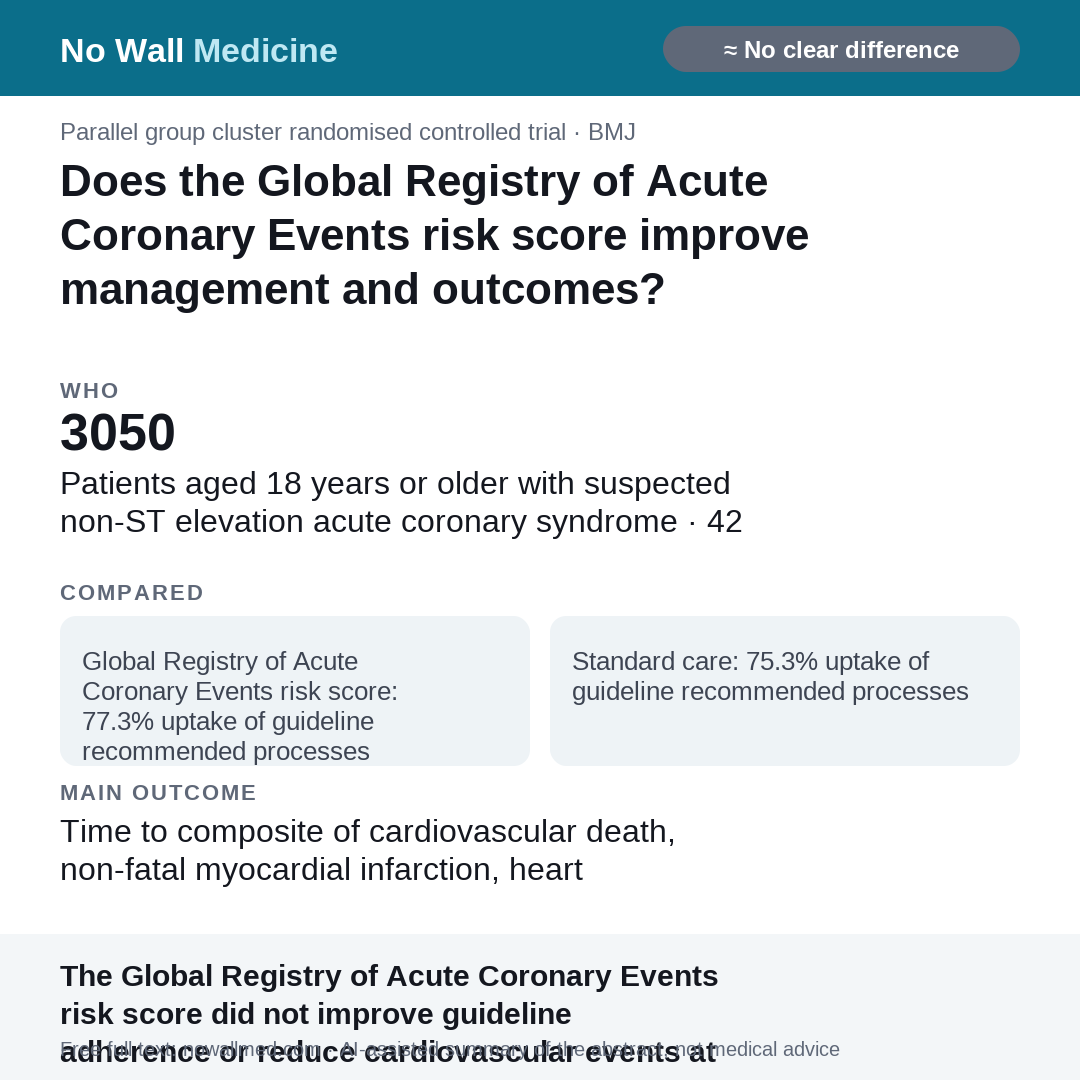
Effectiveness of GRACE risk score in patients admitted to hospital with non-ST elevation acute coronary syndrome (UKGRIS): parallel group cluster randomised controlled trial
Parallel group cluster randomised controlled trialNo clear difference
Does the Global Registry of Acute Coronary Events risk score improve management and outcomes?
Who
3050
Patients aged 18 years or older with suspected non-ST elevation acute coronary syndrome · 42 hospitals in England
Compared
Global Registry of Acute Coronary Events risk score: 77.3% uptake of guideline recommended processes
Standard care: 75.3% uptake of guideline recommended processes
Main outcome
Time to composite of cardiovascular death, non-fatal myocardial infarction, heart failure, and readmission
Result: hazard ratio 0.89 (95% confidence interval 0.68 to 1.16)
Bottom line: The Global Registry of Acute Coronary Events risk score did not improve guideline adherence or reduce cardiovascular events at 12 months.
BMJ · 2023-06-14Download image
Safety and immunogenicity of a single-shot live-attenuated chikungunya vaccine: a double-blind, multicentre, randomised, placebo-controlled, phase 3 trial
Double-blind, multicentre, randomised, phase 3 trialBenefit found
Is the VLA1553 vaccine safe and immunogenic in healthy adults?
Who
4128
Healthy volunteers aged 18 years and older · 43 professional vaccine trial sites in the USA
Compared
VLA1553 vaccine: 263 (98·9%) of 266 participants
Placebo
Main outcome
Seroprotective chikungunya virus antibody level at 28 days
Result: 98·9% (95% CI 96·7-99·8)
Bottom line: VLA1553 induced seroprotective antibody levels in almost all participants and was generally safe.
Funded by: Valneva, Coalition for Epidemic Preparedness Innovation, and EU Horizon 2020
Lancet · 2023-06-12Download image

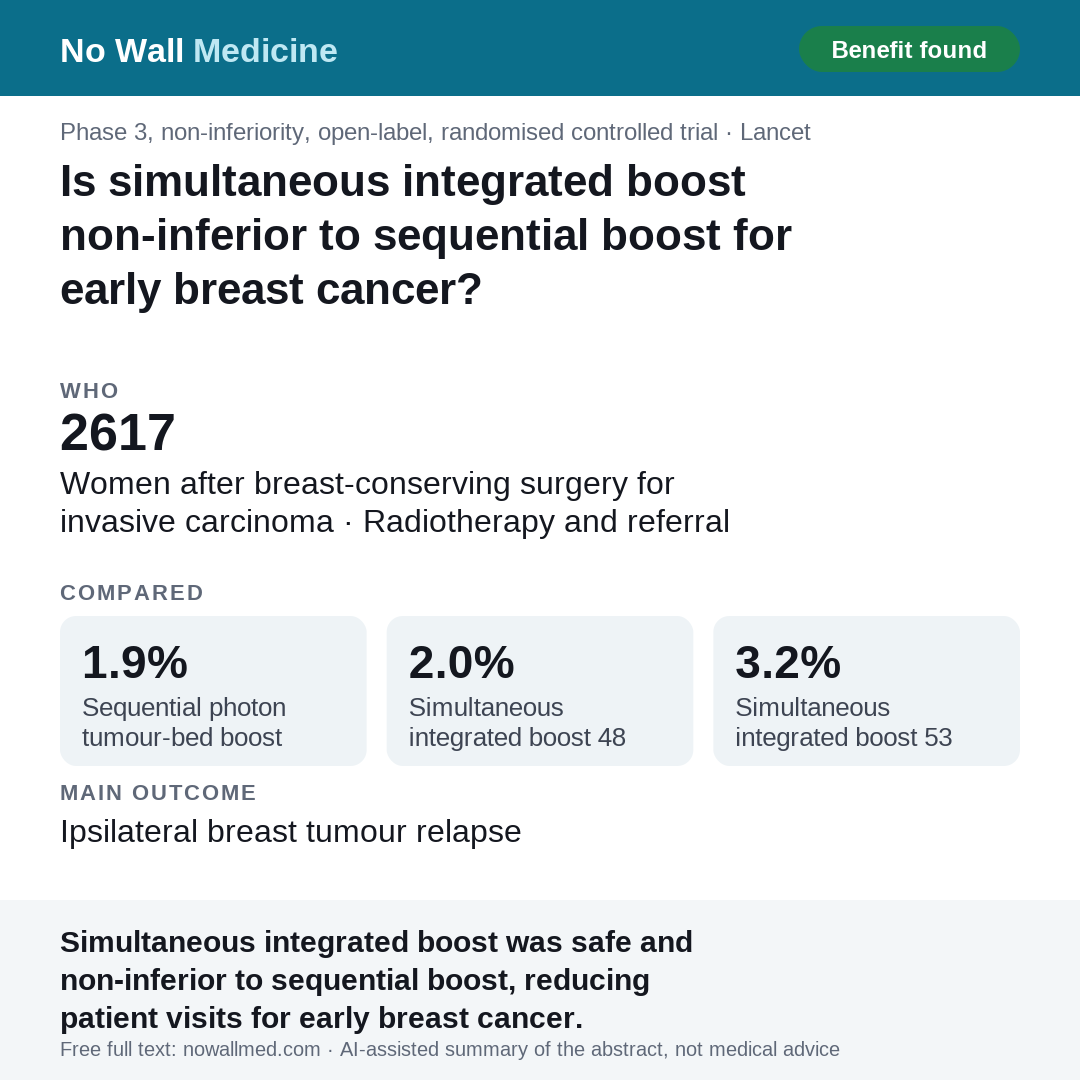
Dose-escalated simultaneous integrated boost radiotherapy in early breast cancer (IMPORT HIGH): a multicentre, phase 3, non-inferiority, open-label, randomised controlled trial
Phase 3, non-inferiority, open-label, randomised controlled trialBenefit found
Is simultaneous integrated boost non-inferior to sequential boost for early breast cancer?
Who
2617
Women after breast-conserving surgery for invasive carcinoma · Radiotherapy and referral centres in the United Kingdom
Compared
1.9%Sequential photon tumour-bed boost (95% CI 1.2 to 3.1)
2.0%Simultaneous integrated boost 48 Gy (1.2 to 3.2)
3.2%Simultaneous integrated boost 53 Gy (2.2 to 4.7)
Main outcome
Ipsilateral breast tumour relapse
Result: absolute difference 0.1% (-0.8 to 1.7) for test group 1; 1.4% (0.03 to 3.8) for test group 2
Bottom line: Simultaneous integrated boost was safe and non-inferior to sequential boost, reducing patient visits for early breast cancer.
Funded by: Cancer Research UK
Lancet · 2023-06-08Download image
Signaling-specific inhibition of the CB1 receptor for cannabis use disorder: phase 1 and phase 2a randomized trials
Phase 1 and phase 2a randomized trialsBenefit found
Is AEF0117 safe and effective for cannabis use disorder treatment?
Who
Healthy volunteers and volunteers with cannabis use disorder
Compared
AEF0117 0.06 mg: 19% reduction in cannabis positive subjective effects
AEF0117 1 mg: 38% reduction in cannabis positive subjective effects
Placebo
Main outcome
Safety, tolerability, and cannabis positive subjective effects
Bottom line: AEF0117 is safe and significantly reduces cannabis positive subjective effects in volunteers with cannabis use disorder.
Nat Med · 2023-06-08Download image

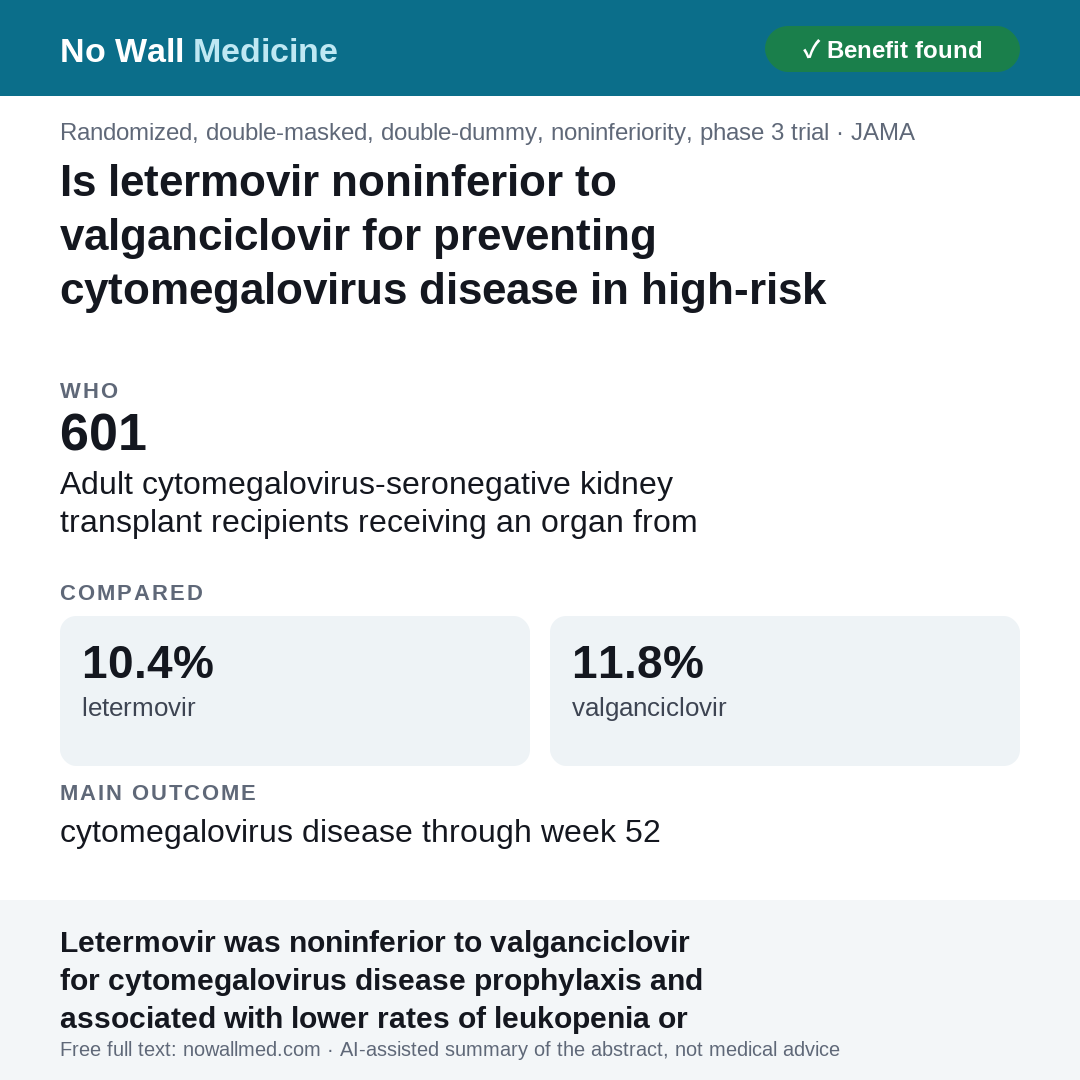
Letermovir vs Valganciclovir for Prophylaxis of Cytomegalovirus in High-Risk Kidney Transplant Recipients: A Randomized Clinical Trial
Randomized, double-masked, double-dummy, noninferiority, phase 3 trialBenefit found
Is letermovir noninferior to valganciclovir for preventing cytomegalovirus disease in high-risk kidney transplant recipients?
Who
601
Adult cytomegalovirus-seronegative kidney transplant recipients receiving an organ from a cytomegalovirus-seropositive donor · 94 participating sites
Compared
10.4%letermovir
11.8%valganciclovir
Main outcome
cytomegalovirus disease through week 52
Result: stratum-adjusted difference -1.4% (95% CI, -6.5% to 3.8%)
Bottom line: Letermovir was noninferior to valganciclovir for cytomegalovirus disease prophylaxis and associated with lower rates of leukopenia or neutropenia.
JAMA · 2023-06-07Download image