Visual abstracts
New randomized trials and meta-analyses from leading journals at a glance: who was studied, what was compared, and what was found. Every paper is free to read in full.
All specialtiesCardiology 4763Oncology 4042Gastroenterology & Hepatology 1902Infectious Disease 3756Neurology 1872Psychiatry & Mental Health 2214Pulmonology 2042Critical Care 1319Endocrinology & Diabetes 2544Pediatrics 2889Surgery 2479Orthopedics & Sports Medicine 917Neurosurgery 525Cardiothoracic & Vascular Surgery 656Plastic & Reconstructive Surgery 574Nephrology 1107Rheumatology 810Hematology 1090Dermatology 611Ophthalmology 532Obstetrics & Gynecology 1645Public & Global Health 1037Radiology & Imaging 617Anesthesiology 957Urology 745ENT (Otolaryngology) 494Emergency Medicine 481Allergy & Immunology 309Geriatrics 972Family Medicine & Primary Care 533Medical Genetics & Genomics 659Pathology & Laboratory Medicine 156Physical Medicine & Rehabilitation 734Palliative Care 421Nutrition 1560Digital Health & AI 2133General Medicine 318
Comparing the Diagnostic Performance of QuantiFERON-TB Gold Plus to Other Tests of Latent Tuberculosis Infection: A Systematic Review and Meta-analysis
Systematic review and meta-analysisNo clear difference
How does QuantiFERON-TB Gold Plus compare to other latent tuberculosis infection tests?
Who
Patients with active tuberculosis and healthy individuals
Compared
QuantiFERON-TB Gold Plus
QuantiFERON-TB Gold In-Tube
Main outcome
Sensitivity, specificity, reproducibility, and predictive ability
Result: Cohen's kappa statistic 0.83 (95% CI, 0.79 to 0.88)
Bottom line: QuantiFERON-TB Gold Plus has diagnostic performance very similar to QuantiFERON-TB Gold In-Tube.
Limitation: Lack of studies assessing predictive ability and immunocompromised patients or younger children.
Clin Infect Dis · 2020-12-09Download image

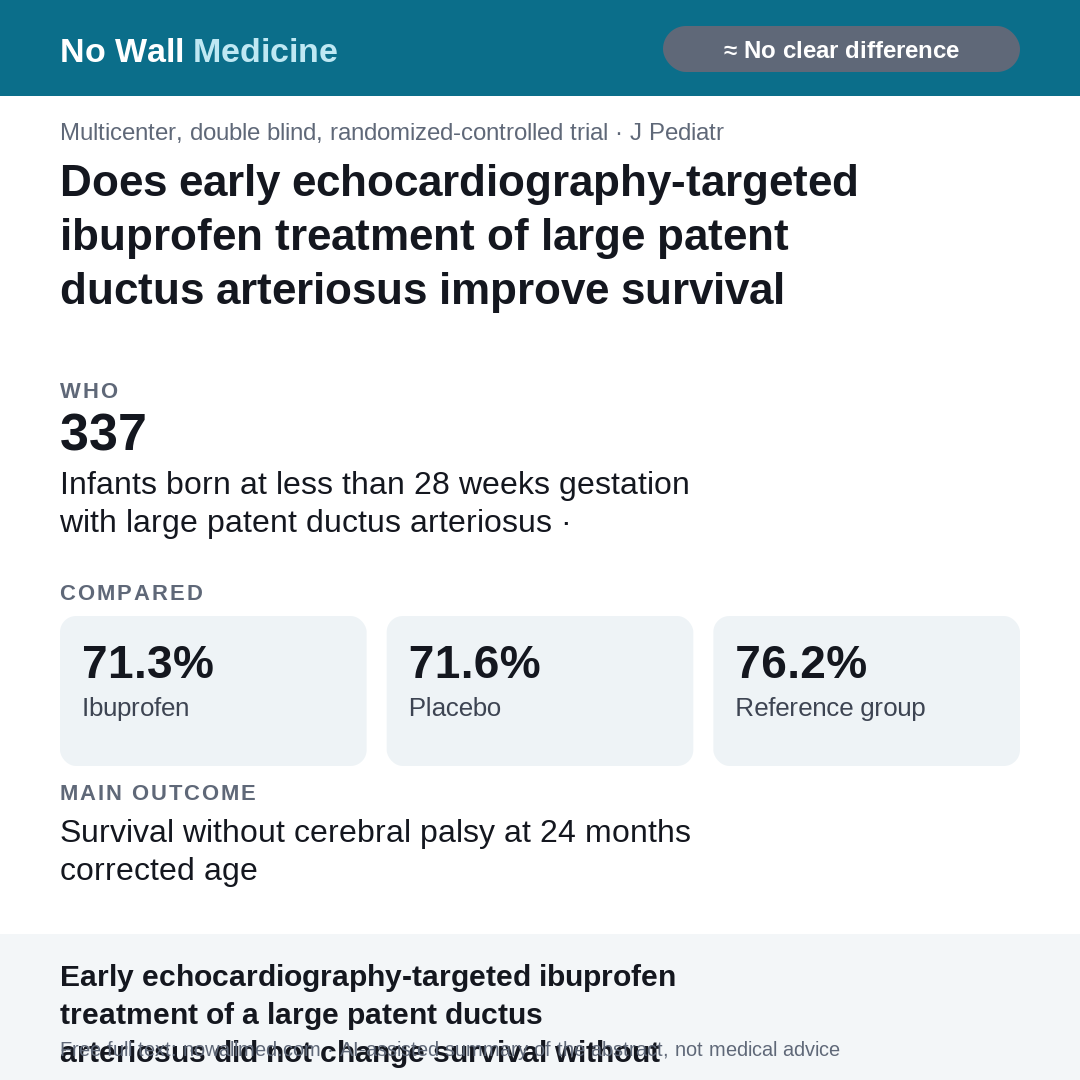
Effect of Early Targeted Treatment of Ductus Arteriosus with Ibuprofen on Survival Without Cerebral Palsy at 2 Years in Infants with Extreme Prematurity: A Randomized Clinical Trial
Multicenter, double blind, randomized-controlled trialNo clear difference
Does early echocardiography-targeted ibuprofen treatment of large patent ductus arteriosus improve survival without cerebral palsy?
Who
337
Infants born at less than 28 weeks gestation with large patent ductus arteriosus · Multicenter
Compared
71.3%Ibuprofen (77 of 108)
71.6%Placebo (73 of 102)
76.2%Reference group (77 of 101)
Main outcome
Survival without cerebral palsy at 24 months corrected age
Result: adjusted relative risk 0.98 (95% CI 0.83-1.16)
Bottom line: Early echocardiography-targeted ibuprofen treatment of a large patent ductus arteriosus did not change survival without cerebral palsy.
J Pediatr · 2020-12-09Download image
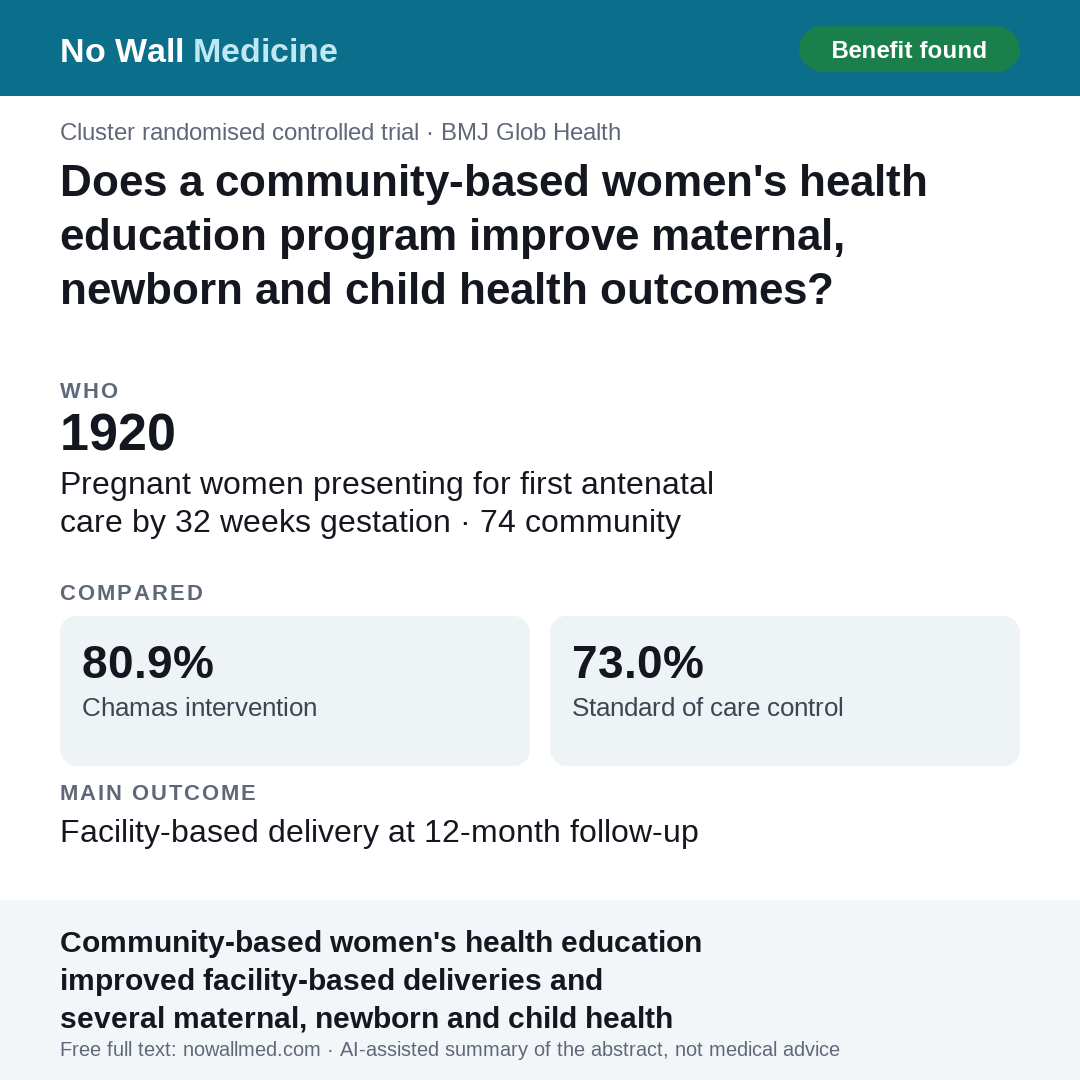
Improving maternal, newborn and child health outcomes through a community-based women's health education program: a cluster randomised controlled trial in western Kenya
Cluster randomised controlled trialBenefit found
Does a community-based women's health education program improve maternal, newborn and child health outcomes?
Who
1920
Pregnant women presenting for first antenatal care by 32 weeks gestation · 74 community health units in Trans Nzoia County, Kenya
Compared
80.9%Chamas intervention
73.0%Standard of care control
Main outcome
Facility-based delivery at 12-month follow-up
Result: risk difference 7.4%, 95% CI 3.0 to 12.5
Bottom line: Community-based women's health education improved facility-based deliveries and several maternal, newborn and child health outcomes.
BMJ Glob Health · 2020-12-09Download image
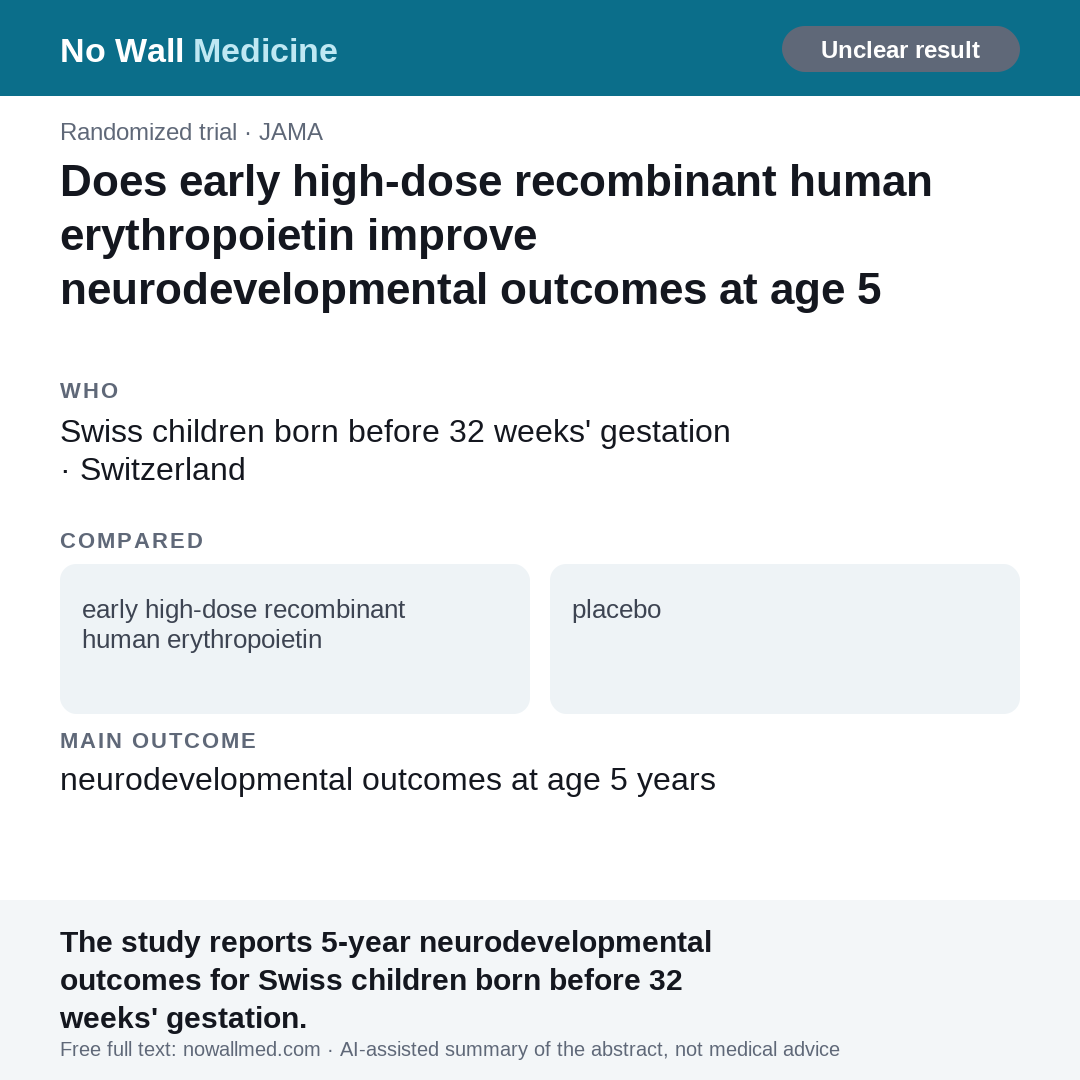
Neurodevelopmental Outcomes at Age 5 Years After Prophylactic Early High-Dose Recombinant Human Erythropoietin for Neuroprotection in Very Preterm Infants
Randomized trialUnclear result
Does early high-dose recombinant human erythropoietin improve neurodevelopmental outcomes at age 5 years?
Who
Swiss children born before 32 weeks' gestation · Switzerland
Compared
early high-dose recombinant human erythropoietin
placebo
Main outcome
neurodevelopmental outcomes at age 5 years
Bottom line: The study reports 5-year neurodevelopmental outcomes for Swiss children born before 32 weeks' gestation.
JAMA · 2020-12-08Download image
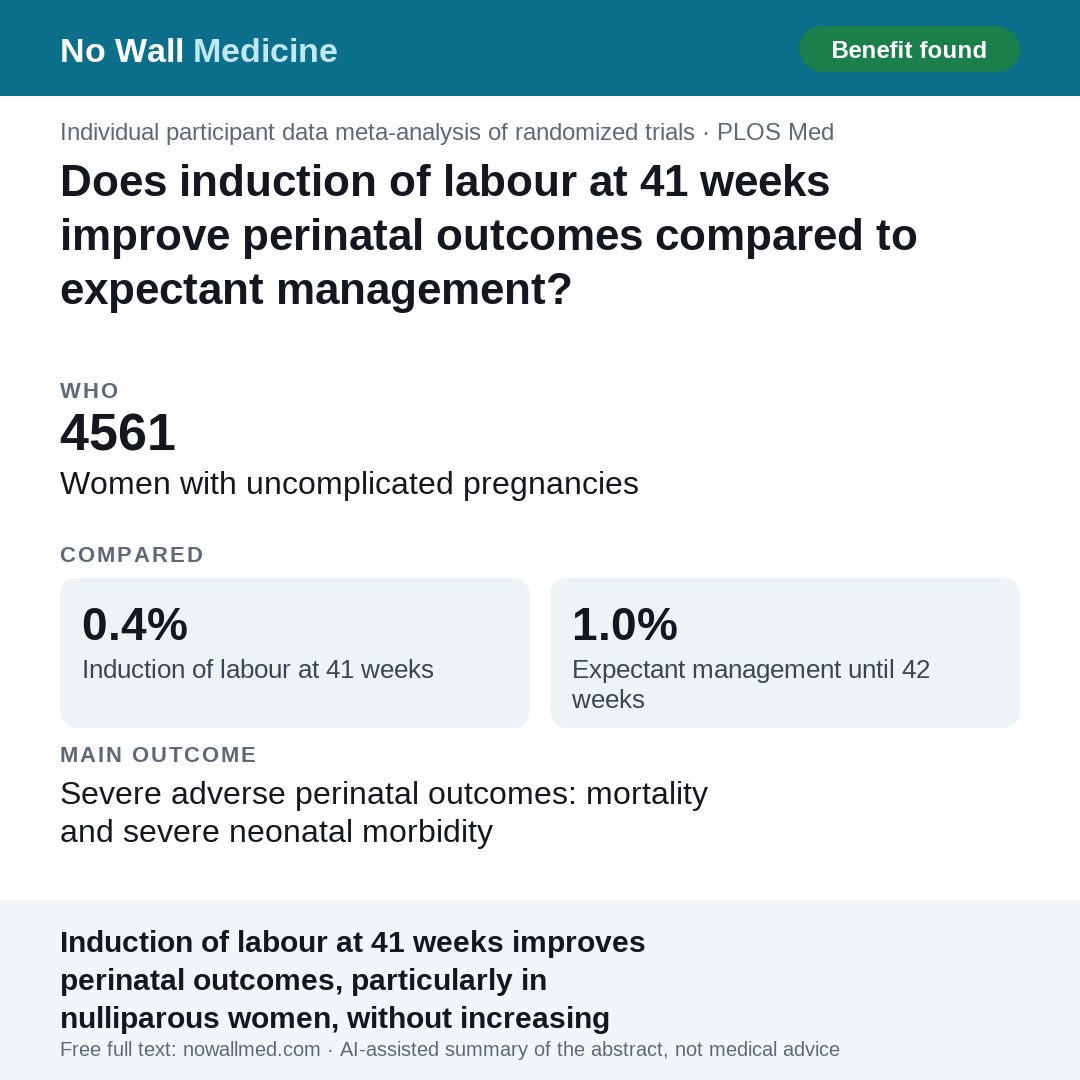
Induction of labour at 41 weeks or expectant management until 42 weeks: A systematic review and an individual participant data meta-analysis of randomised trials
Individual participant data meta-analysis of randomized trialsBenefit found
Does induction of labour at 41 weeks improve perinatal outcomes compared to expectant management?
Who
4561
Women with uncomplicated pregnancies
Compared
0.4%Induction of labour at 41 weeks (10/2,281)
1.0%Expectant management until 42 weeks (23/2,280)
Main outcome
Severe adverse perinatal outcomes: mortality and severe neonatal morbidity
Result: relative risk 0.43 (95% CI 0.21 to 0.91)
Bottom line: Induction of labour at 41 weeks improves perinatal outcomes, particularly in nulliparous women, without increasing cesarean delivery rates.
Limitation: Risk of overestimating effect on perinatal mortality due to early stopping of the largest trial for safety.
PLOS Med · 2020-12-08Download image
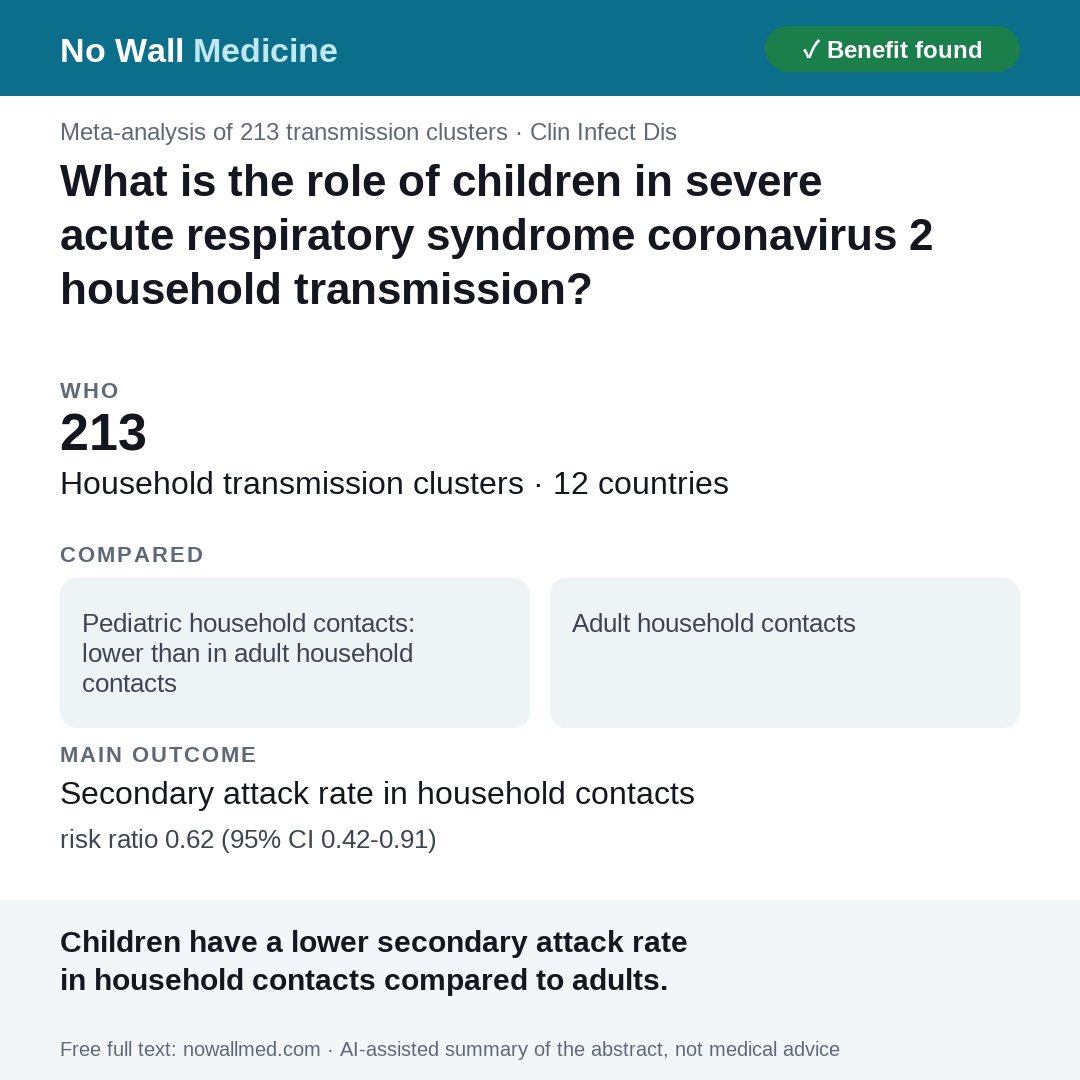
A Meta-analysis on the Role of Children in Severe Acute Respiratory Syndrome Coronavirus 2 in Household Transmission Clusters
Meta-analysis of 213 transmission clustersBenefit found
What is the role of children in severe acute respiratory syndrome coronavirus 2 household transmission?
Who
213
Household transmission clusters · 12 countries
Compared
Pediatric household contacts: lower than in adult household contacts
Adult household contacts
Main outcome
Secondary attack rate in household contacts
Result: risk ratio 0.62 (95% CI 0.42-0.91)
Bottom line: Children have a lower secondary attack rate in household contacts compared to adults.
Clin Infect Dis · 2020-12-08Download image
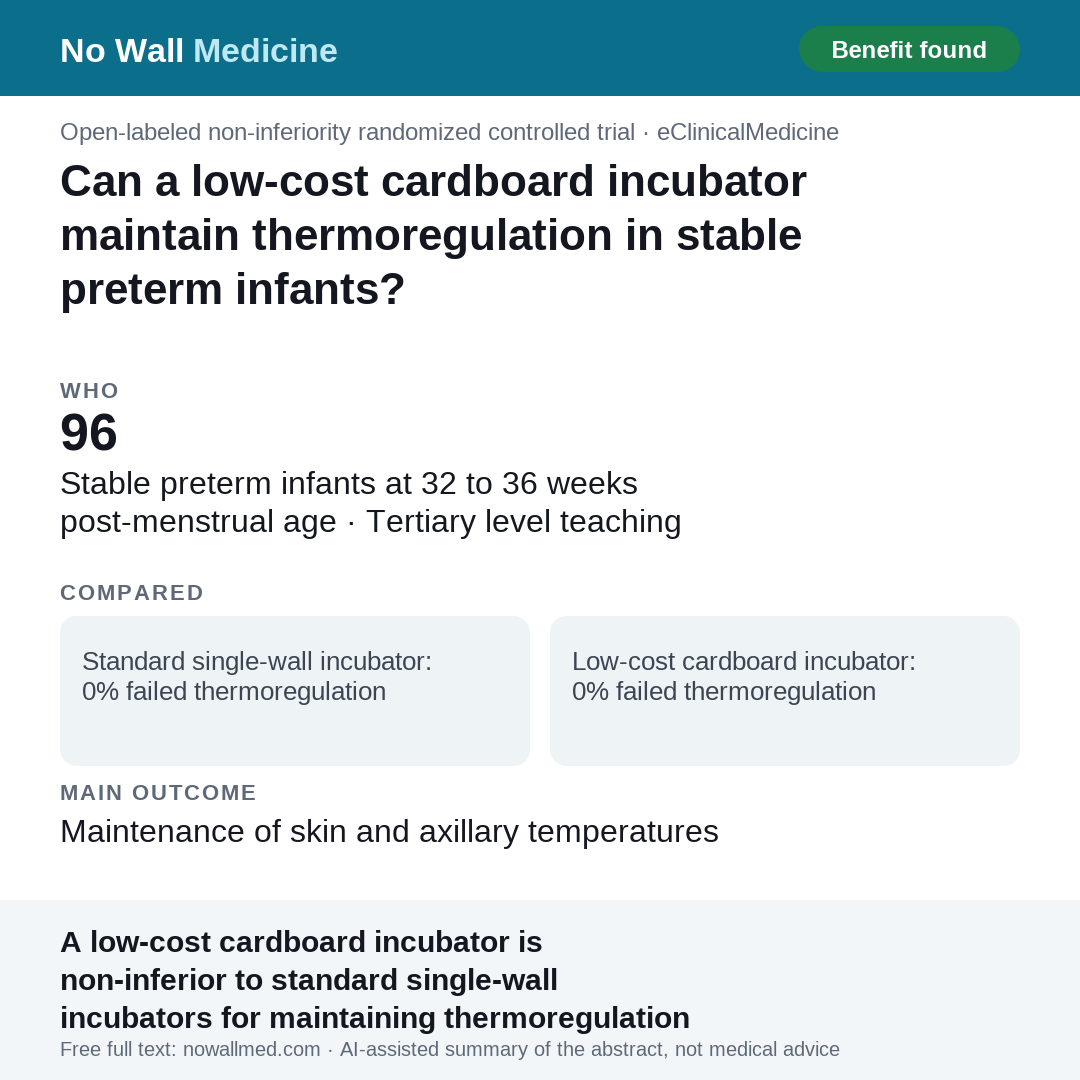
Disposable low-cost cardboard incubator for thermoregulation of stable preterm infant - a randomized controlled non-inferiority trial
Open-labeled non-inferiority randomized controlled trialBenefit found
Can a low-cost cardboard incubator maintain thermoregulation in stable preterm infants?
Who
96
Stable preterm infants at 32 to 36 weeks post-menstrual age · Tertiary level teaching hospital in India
Compared
Standard single-wall incubator: 0% failed thermoregulation
Low-cost cardboard incubator: 0% failed thermoregulation
Main outcome
Maintenance of skin and axillary temperatures
Result: -0.07 °C (95% CI -0.11 to -0.04) for skin and -0.06 °C (95% CI -0.095 to -0.02) for axillary
Bottom line: A low-cost cardboard incubator is non-inferior to standard single-wall incubators for maintaining thermoregulation in stable preterm infants.
Funded by: Food and Drug Administration
eClinicalMedicine · 2020-12-07Download image
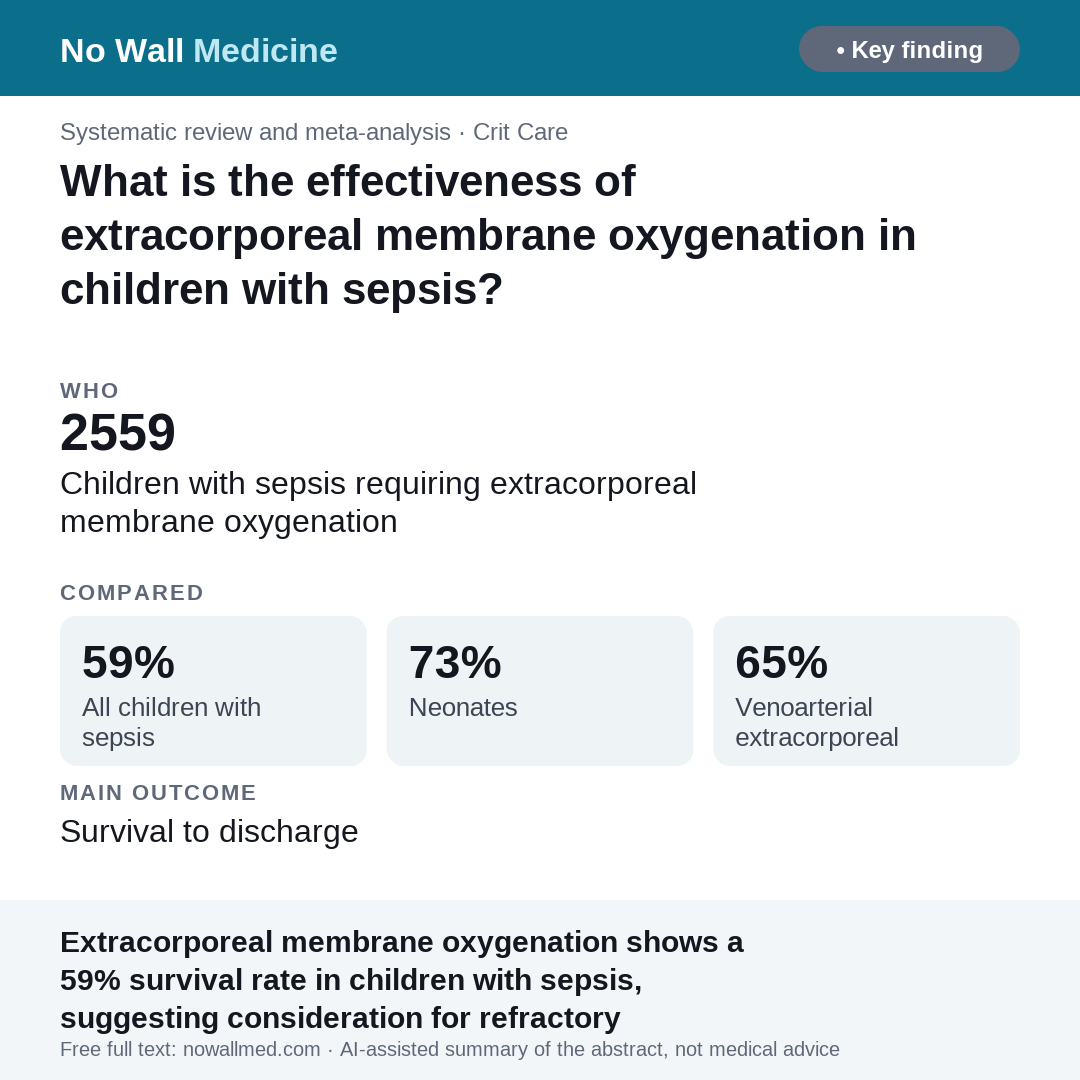
Role of extracorporeal membrane oxygenation in children with sepsis: a systematic review and meta-analysis
Systematic review and meta-analysisKey finding
What is the effectiveness of extracorporeal membrane oxygenation in children with sepsis?
Who
2559
Children with sepsis requiring extracorporeal membrane oxygenation
Compared
59%All children with sepsis (95%CI: 51-67%)
73%Neonates (95%CI: 56- 87%)
65%Venoarterial extracorporeal membrane oxygenation (95%CI: 50-80%)
Main outcome
Survival to discharge
Bottom line: Extracorporeal membrane oxygenation shows a 59% survival rate in children with sepsis, suggesting consideration for refractory septic shock.
Crit Care · 2020-12-07Download image
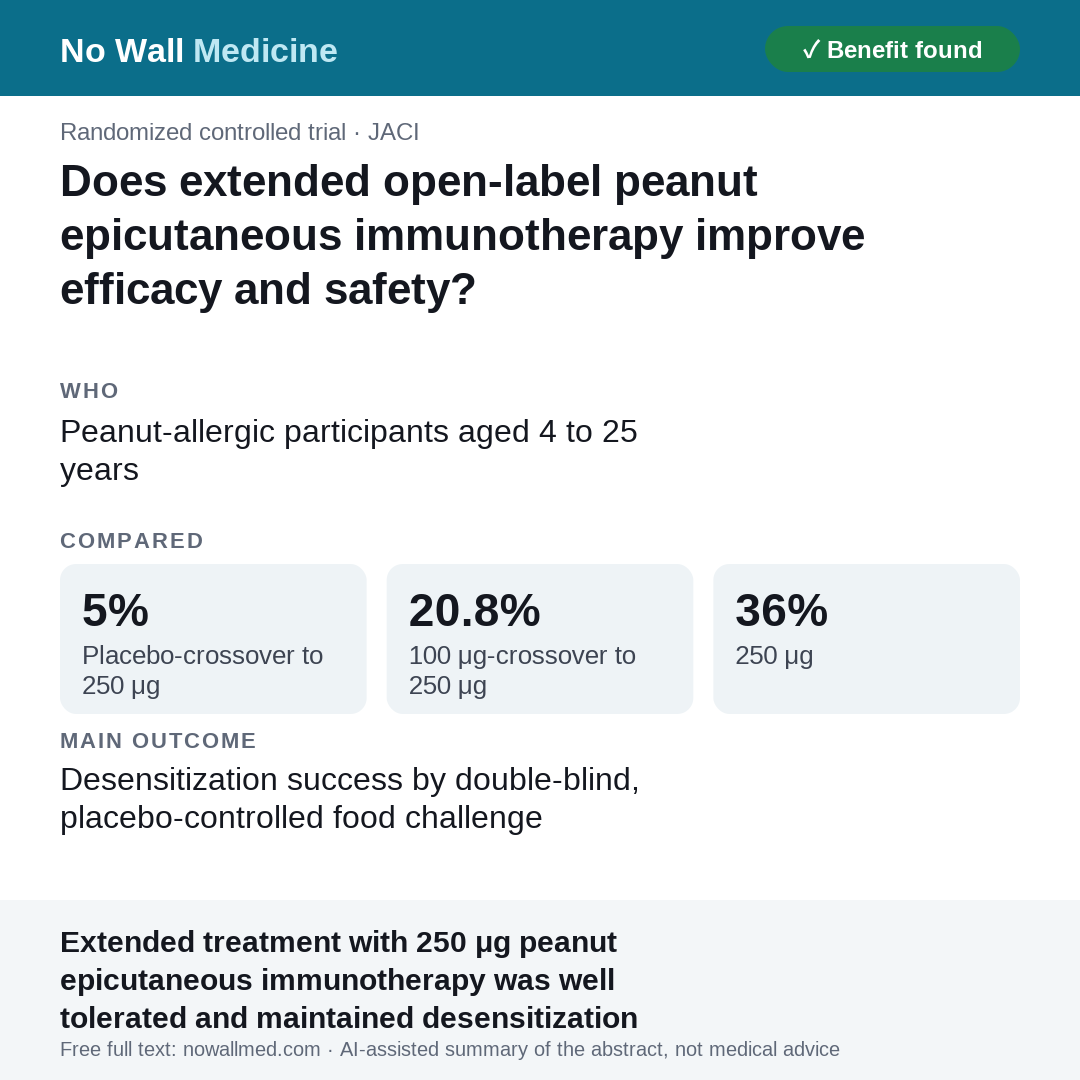
Epicutaneous immunotherapy for treatment of peanut allergy: Follow-up from the Consortium for Food Allergy Research
Randomized controlled trialBenefit found
Does extended open-label peanut epicutaneous immunotherapy improve efficacy and safety?
Who
Peanut-allergic participants aged 4 to 25 years
Compared
5%Placebo-crossover to 250 μg (1/20)
20.8%100 μg-crossover to 250 μg (5/24)
36%250 μg (9/25)
Main outcome
Desensitization success by double-blind, placebo-controlled food challenge
Bottom line: Extended treatment with 250 μg peanut epicutaneous immunotherapy was well tolerated and maintained desensitization success.
JACI · 2020-12-05Download image
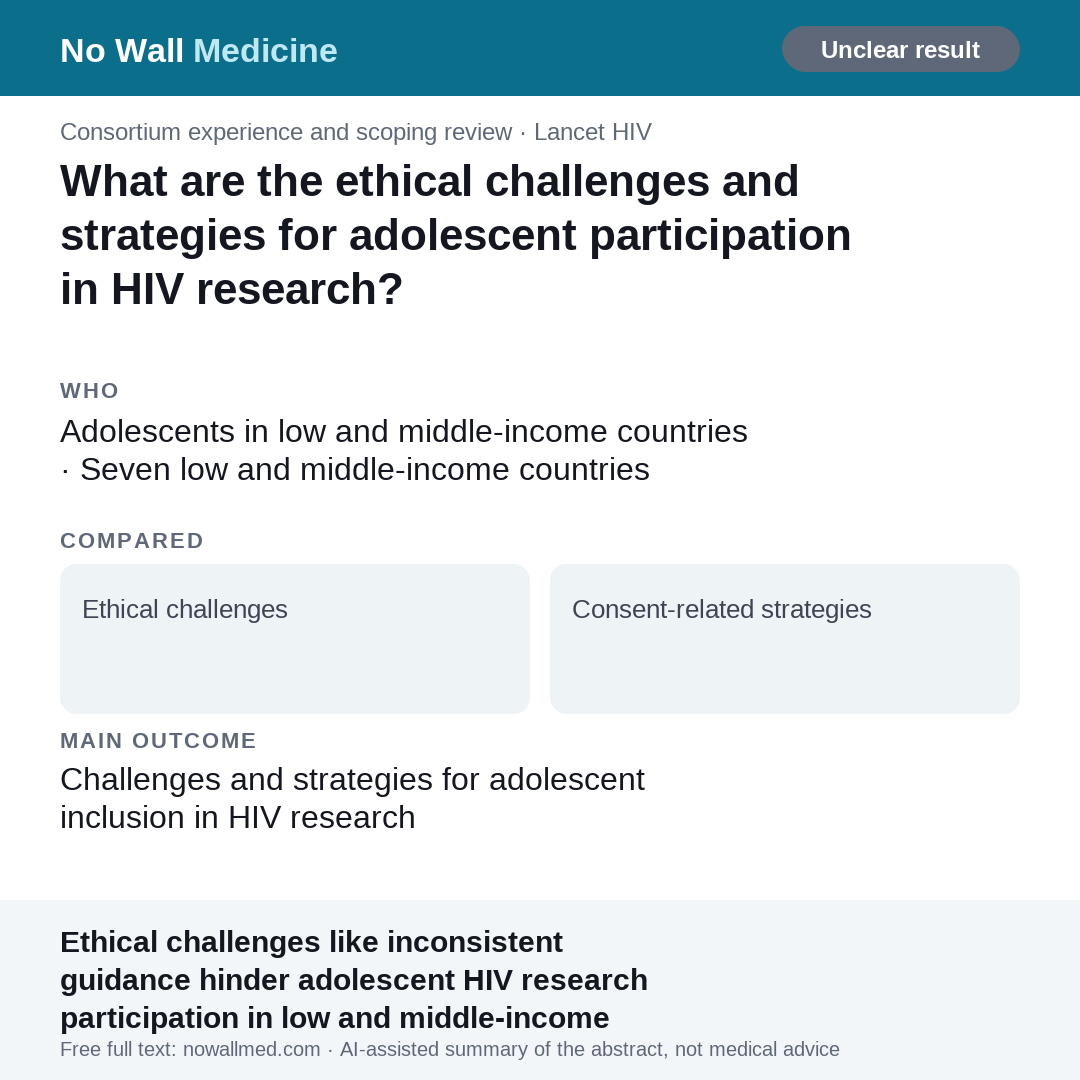
Adolescent participation in HIV research: consortium experience in low and middle-income countries and scoping review
Consortium experience and scoping reviewUnclear result
What are the ethical challenges and strategies for adolescent participation in HIV research?
Who
Adolescents in low and middle-income countries · Seven low and middle-income countries
Compared
Ethical challenges
Consent-related strategies
Main outcome
Challenges and strategies for adolescent inclusion in HIV research
Bottom line: Ethical challenges like inconsistent guidance hinder adolescent HIV research participation in low and middle-income countries.
Lancet HIV · 2020-12-04Download image
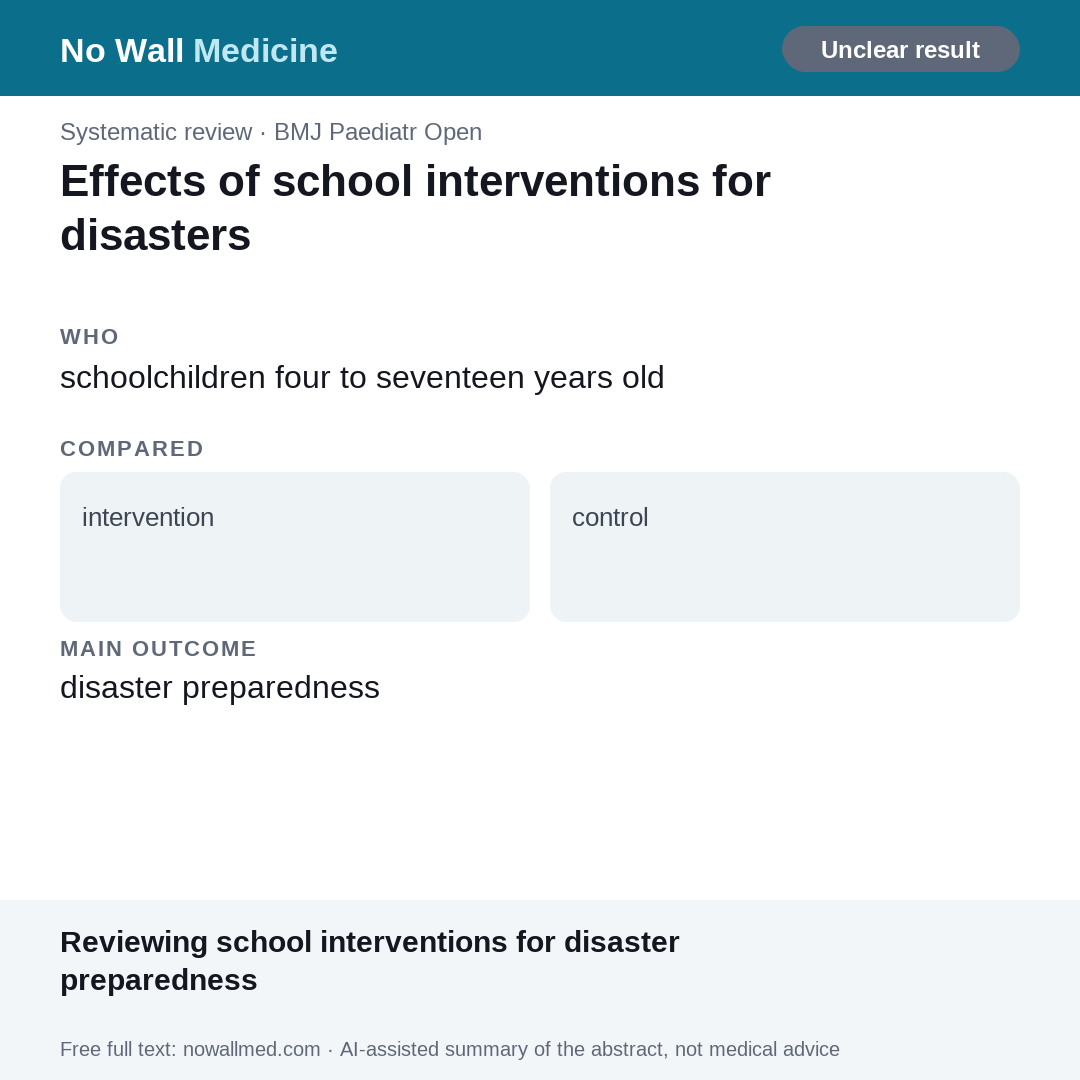
Students' preparedness for disasters in schools: a systematic review protocol
Systematic reviewUnclear result
Effects of school interventions for disasters
Who
schoolchildren four to seventeen years old
Compared
intervention
control
Main outcome
disaster preparedness
Bottom line: Reviewing school interventions for disaster preparedness
BMJ Paediatr Open · 2020-12-04Download image
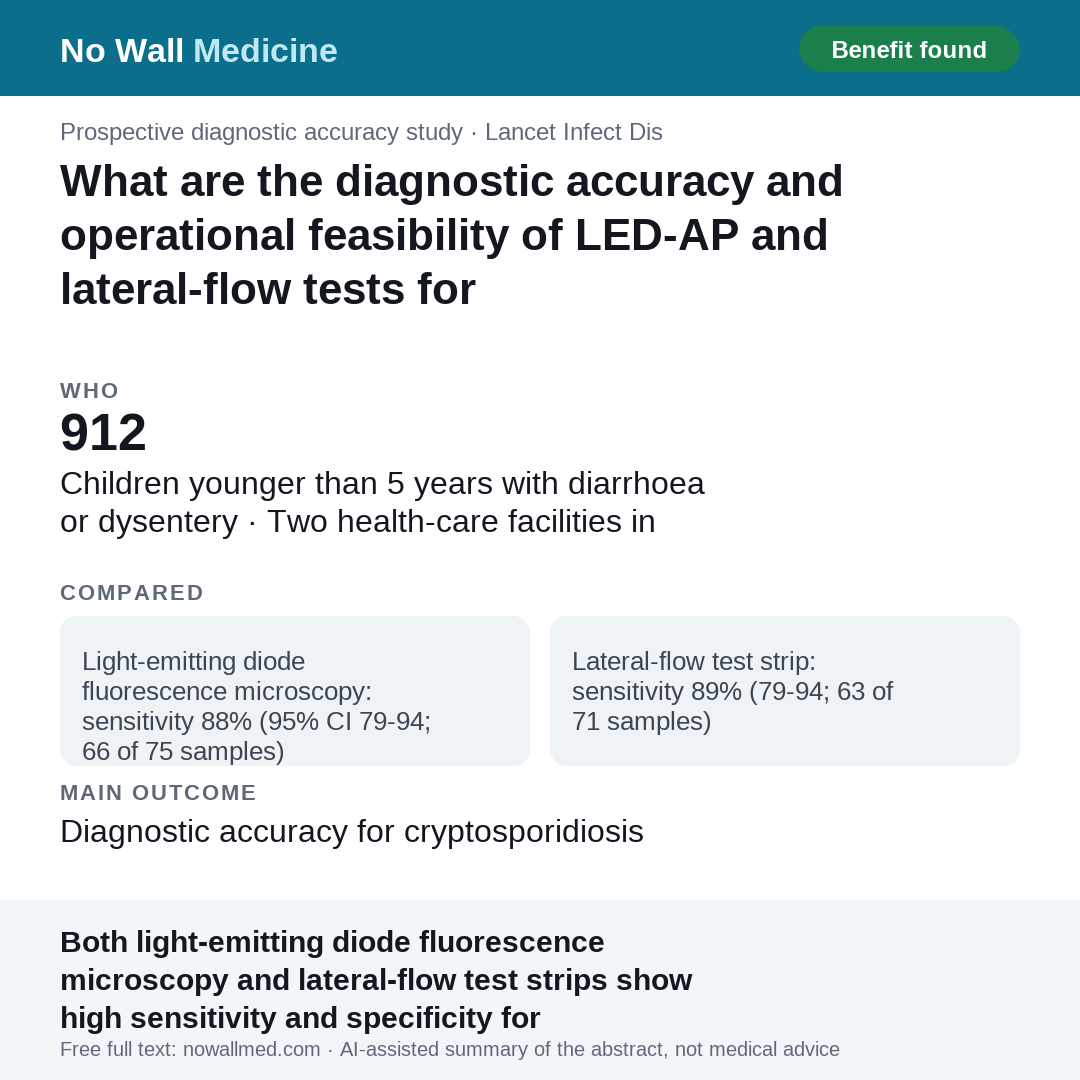
Performance and operational feasibility of two diagnostic tests for cryptosporidiosis in children (CRYPTO-POC): a clinical, prospective, diagnostic accuracy study
Prospective diagnostic accuracy studyKey finding
What are the diagnostic accuracy and operational feasibility of LED-AP and lateral-flow tests for cryptosporidiosis?
Who
912
Children younger than 5 years with diarrhoea or dysentery · Two health-care facilities in Ethiopia
Compared
Light-emitting diode fluorescence microscopy: sensitivity 88% (95% CI 79-94; 66 of 75 samples)
Lateral-flow test strip: sensitivity 89% (79-94; 63 of 71 samples)
Main outcome
Diagnostic accuracy for cryptosporidiosis
Bottom line: Both light-emitting diode fluorescence microscopy and lateral-flow test strips show high sensitivity and specificity for detecting cryptosporidiosis in children.
Funded by: Norwegian Research Council, Bill & Melinda Gates Foundation, and others
Lancet Infect Dis · 2020-12-03Download image
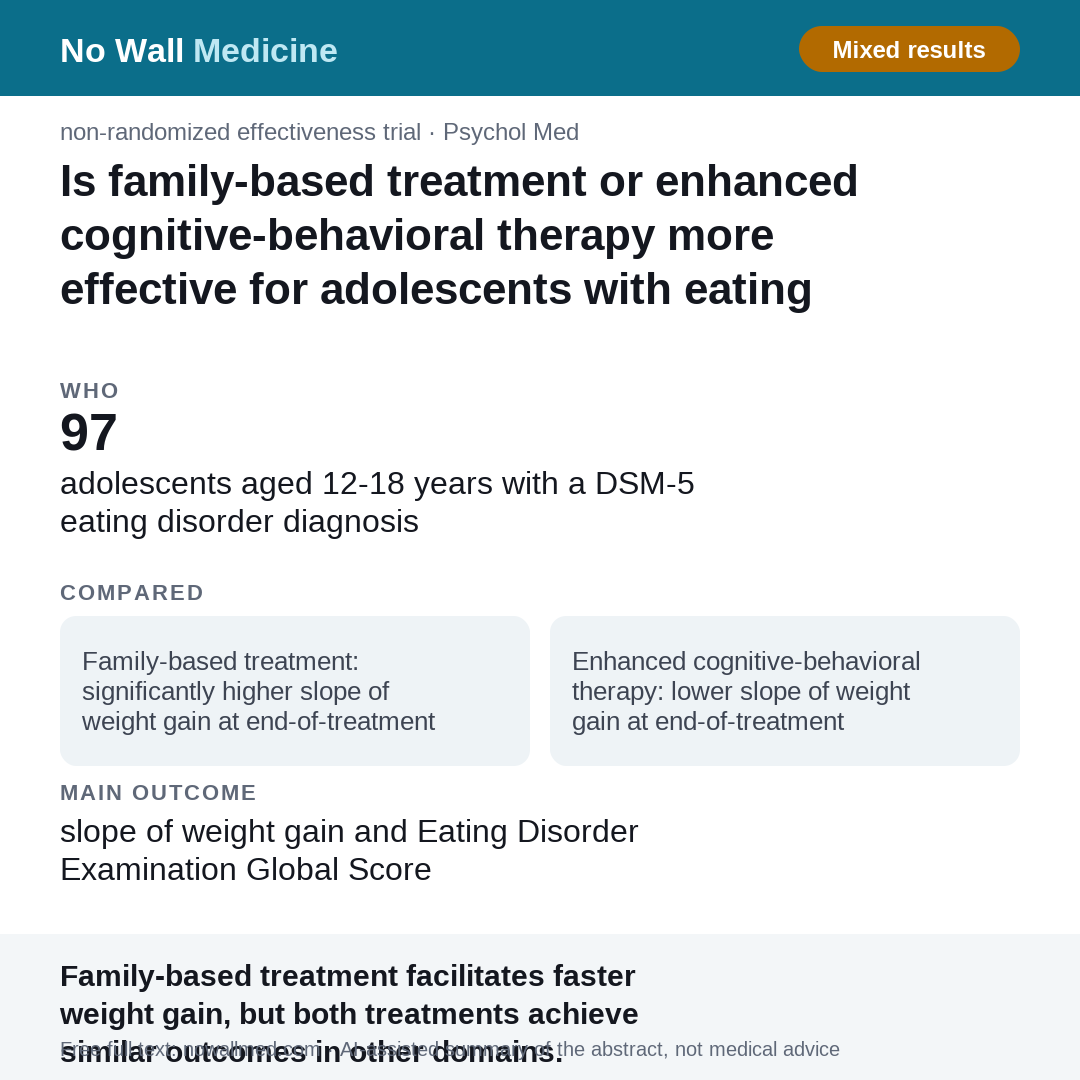
Enhanced cognitive-behavior therapy and family-based treatment for adolescents with an eating disorder: a non-randomized effectiveness trial
non-randomized effectiveness trialMixed results
Is family-based treatment or enhanced cognitive-behavioral therapy more effective for adolescents with eating disorders?
Who
97
adolescents aged 12-18 years with a DSM-5 eating disorder diagnosis
Compared
Family-based treatment: significantly higher slope of weight gain at end-of-treatment
Enhanced cognitive-behavioral therapy: lower slope of weight gain at end-of-treatment
Main outcome
slope of weight gain and Eating Disorder Examination Global Score
Bottom line: Family-based treatment facilitates faster weight gain, but both treatments achieve similar outcomes in other domains.
Psychol Med · 2020-12-03Download image
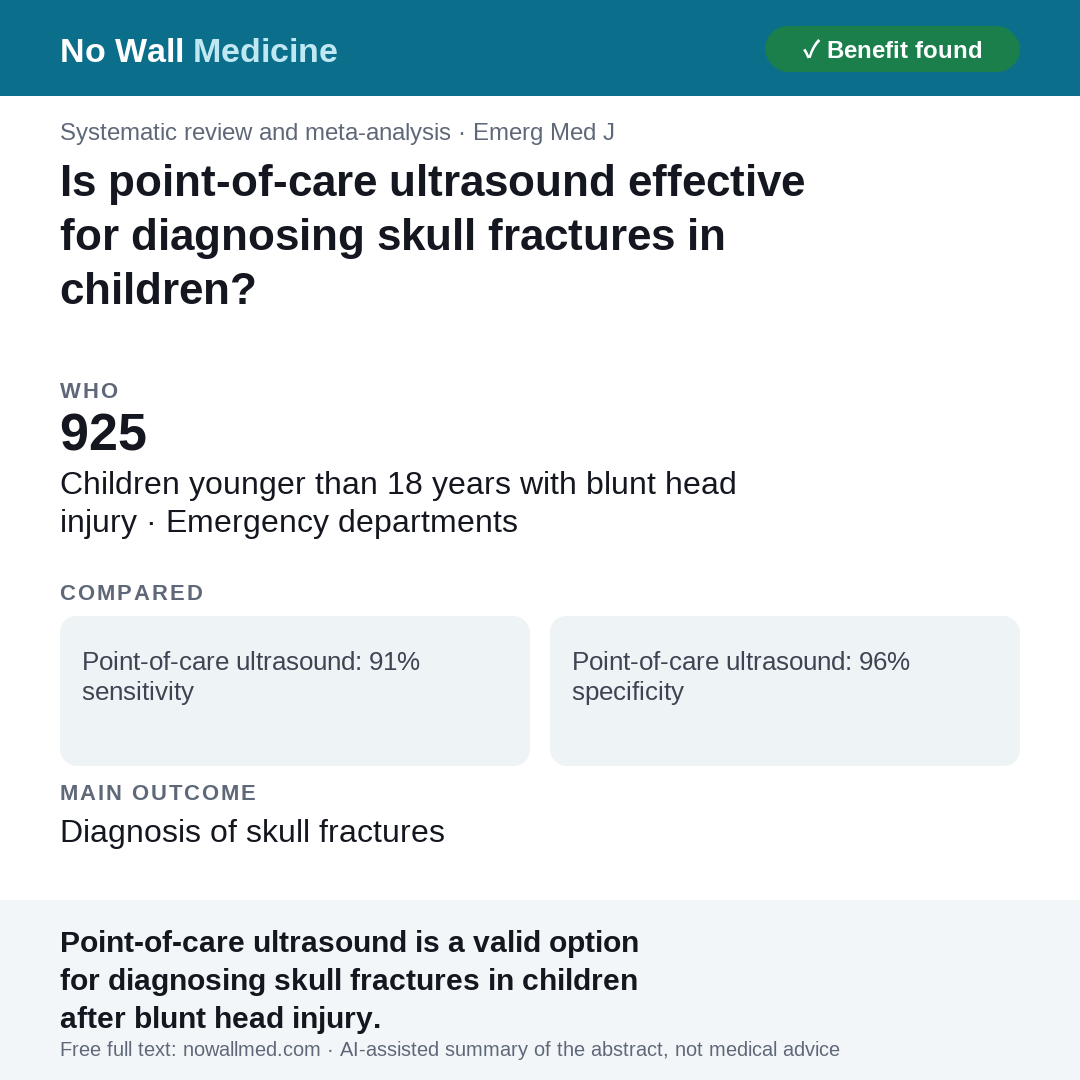
Evidence base for point-of-care ultrasound (POCUS) for diagnosis of skull fractures in children: a systematic review and meta-analysis
Systematic review and meta-analysisBenefit found
Is point-of-care ultrasound effective for diagnosing skull fractures in children?
Who
925
Children younger than 18 years with blunt head injury · Emergency departments
Compared
Point-of-care ultrasound: 91% sensitivity
Point-of-care ultrasound: 96% specificity
Main outcome
Diagnosis of skull fractures
Bottom line: Point-of-care ultrasound is a valid option for diagnosing skull fractures in children after blunt head injury.
Limitation: The included studies demonstrate minor methodological limitations.
Emerg Med J · 2020-12-03Download image
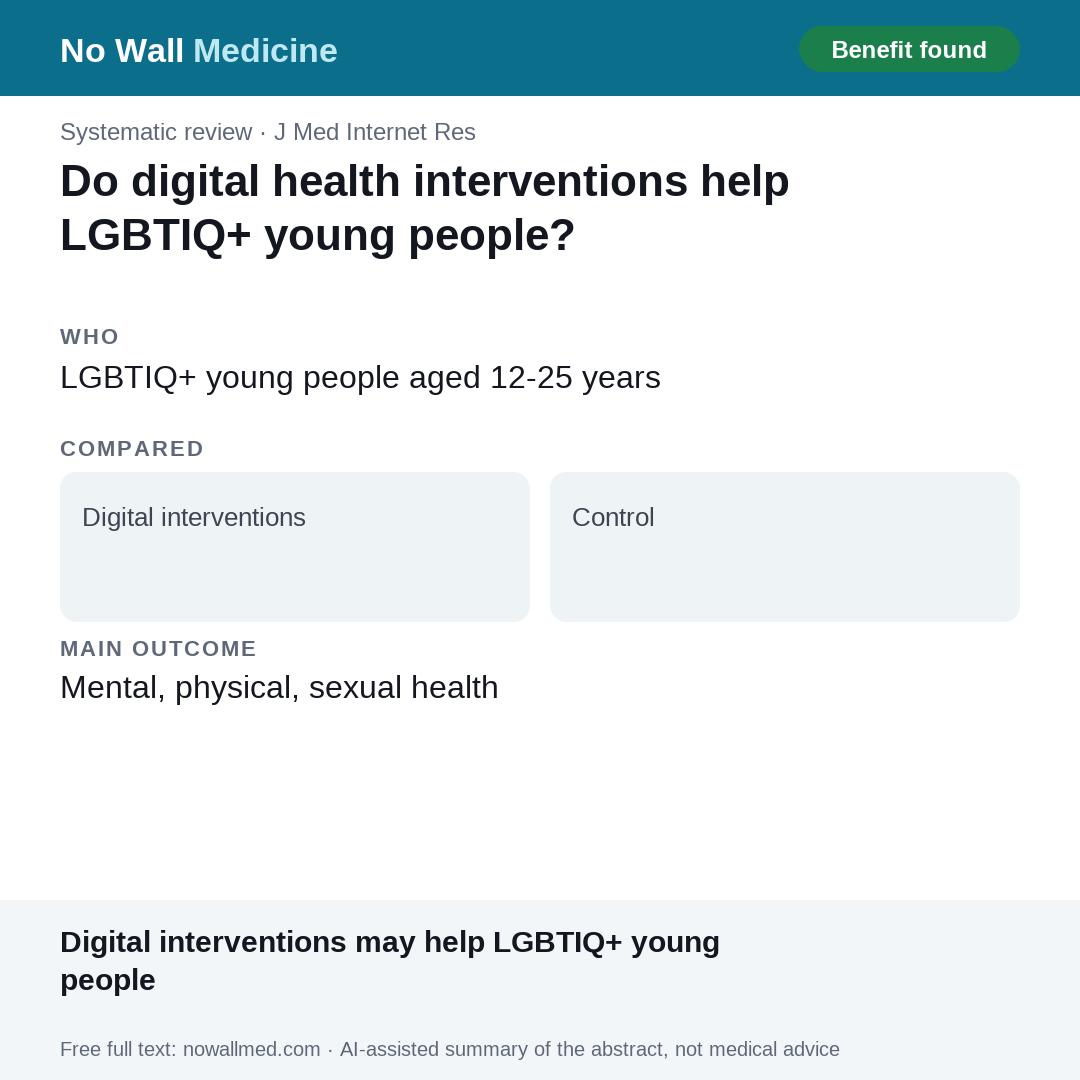
Effectiveness, Acceptability, and Feasibility of Digital Health Interventions for LGBTIQ+ Young People: Systematic Review
Systematic reviewBenefit found
Do digital health interventions help LGBTIQ+ young people?
Who
LGBTIQ+ young people aged 12-25 years
Compared
Digital interventions
Control
Main outcome
Mental, physical, sexual health
Bottom line: Digital interventions may help LGBTIQ+ young people
Limitation: Quality of evidence often lacking
J Med Internet Res · 2020-12-03Download image
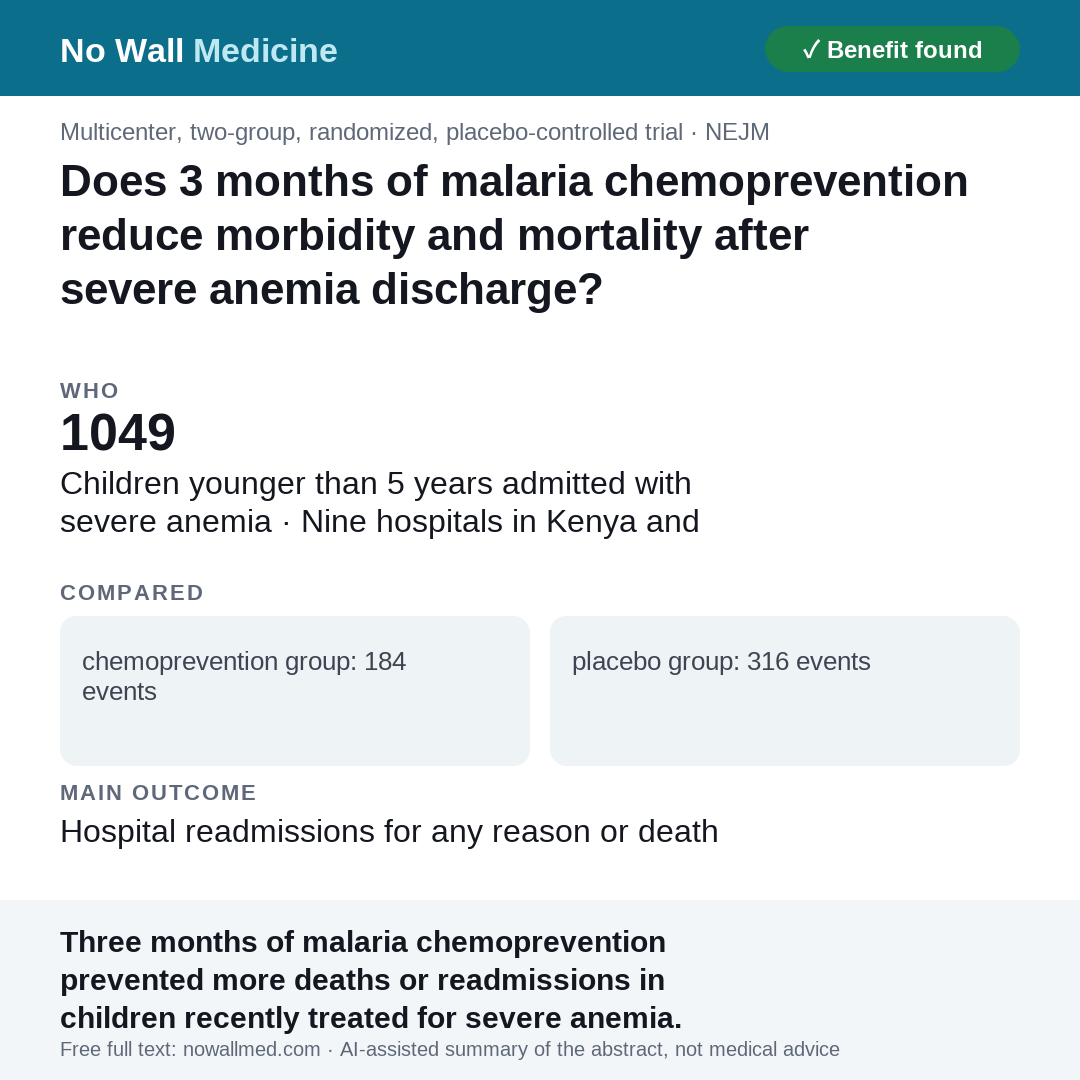
Malaria Chemoprevention in the Postdischarge Management of Severe Anemia
Multicenter, two-group, randomized, placebo-controlled trialBenefit found
Does 3 months of malaria chemoprevention reduce morbidity and mortality after severe anemia discharge?
Who
1049
Children younger than 5 years admitted with severe anemia · Nine hospitals in Kenya and Uganda
Compared
chemoprevention group: 184 events
placebo group: 316 events
Main outcome
Hospital readmissions for any reason or death
Result: hazard ratio 0.65 (95% CI 0.54 to 0.78)
Bottom line: Three months of malaria chemoprevention prevented more deaths or readmissions in children recently treated for severe anemia.
Funded by: Research Council of Norway and Centers for Disease Control and Prevention
NEJM · 2020-12-02Download image
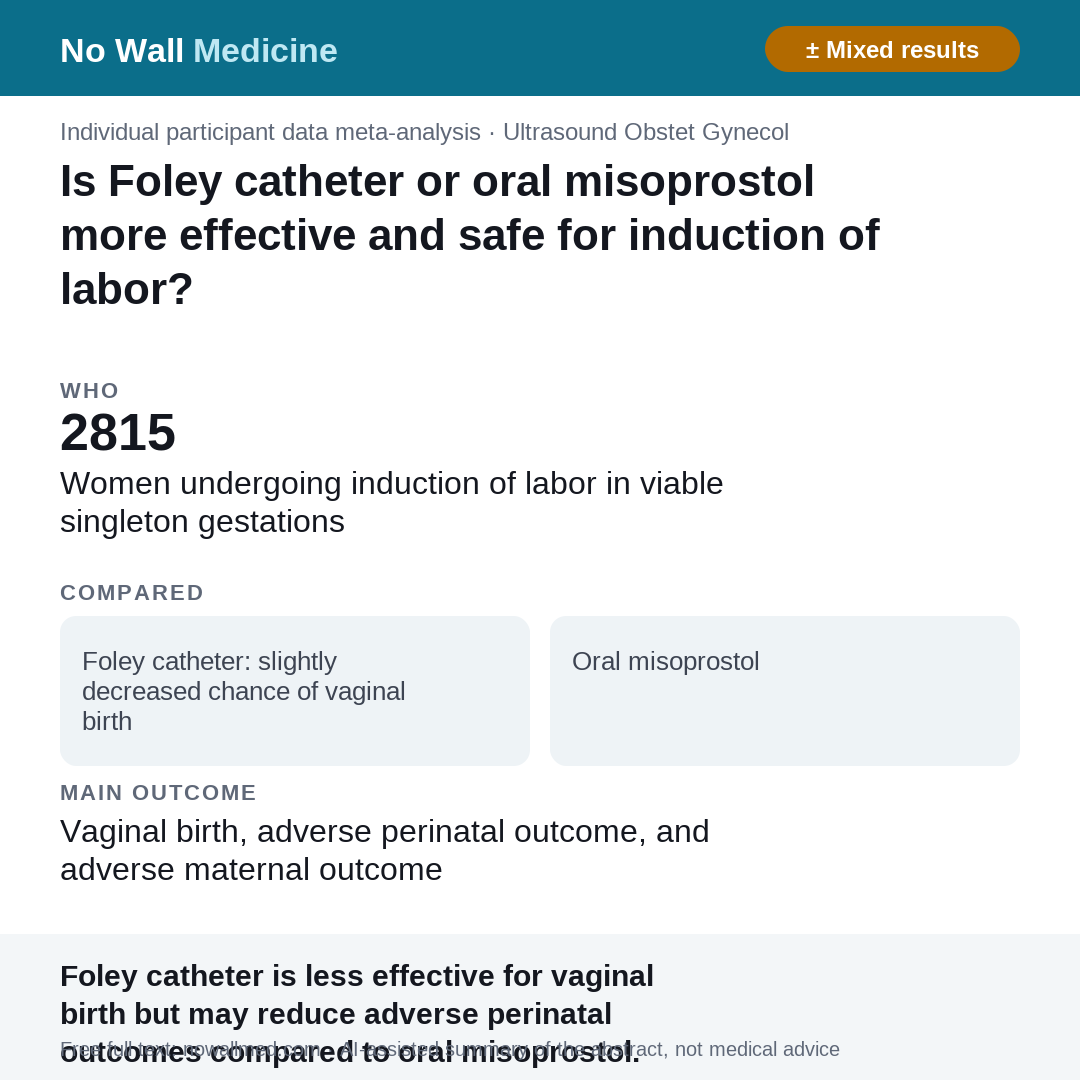
Foley catheter vs oral misoprostol for induction of labor: individual participant data meta-analysis
Individual participant data meta-analysisMixed results
Is Foley catheter or oral misoprostol more effective and safe for induction of labor?
Who
2815
Women undergoing induction of labor in viable singleton gestations
Compared
Foley catheter: slightly decreased chance of vaginal birth
Oral misoprostol
Main outcome
Vaginal birth, adverse perinatal outcome, and adverse maternal outcome
Result: risk ratio 0.95 (95% CI, 0.91-0.99) for vaginal birth
Bottom line: Foley catheter is less effective for vaginal birth but may reduce adverse perinatal outcomes compared to oral misoprostol.
Limitation: Low-certainty evidence for composite adverse perinatal outcomes
Ultrasound Obstet Gynecol · 2020-12-02Download image
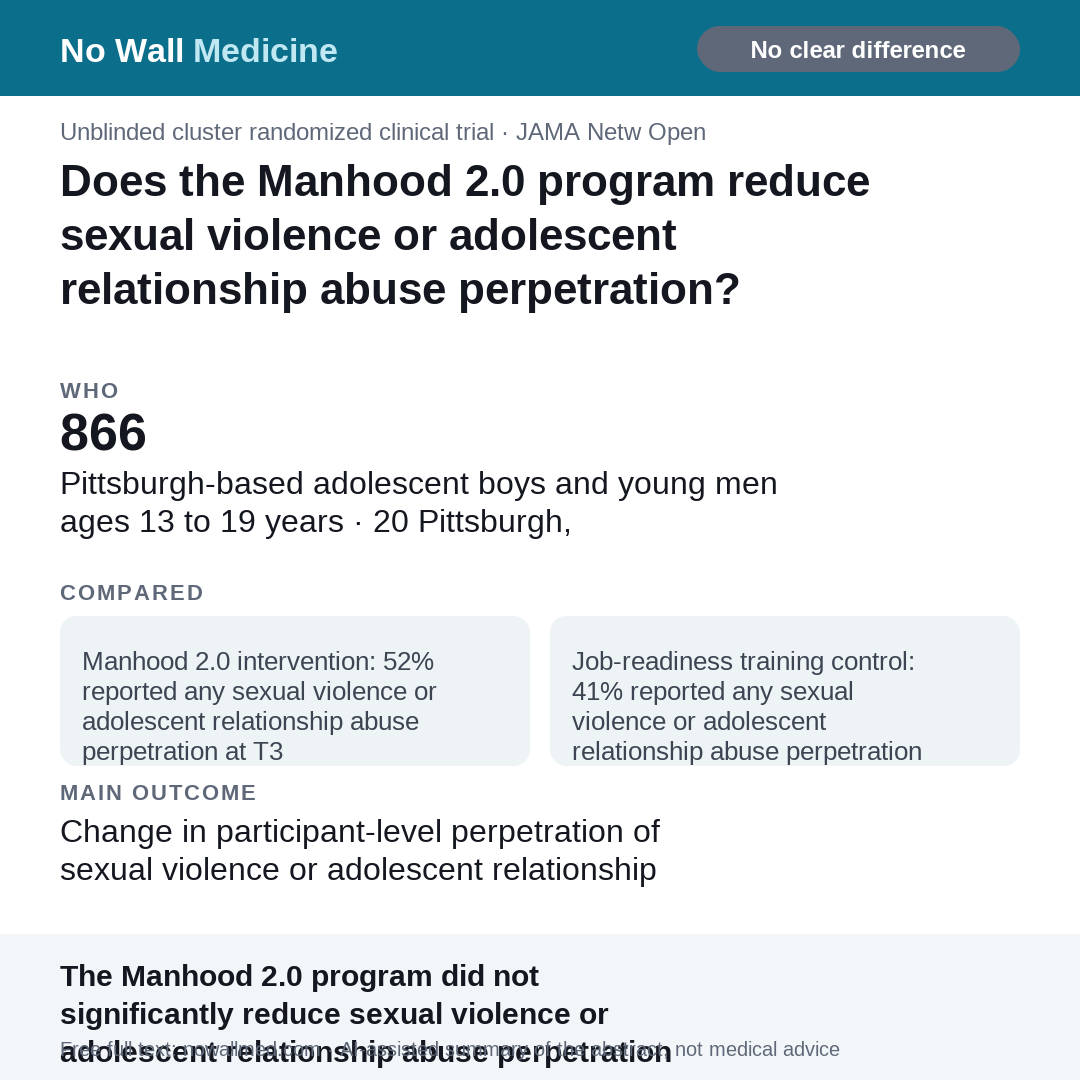
Effect of a Community-Based Gender Norms Program on Sexual Violence Perpetration by Adolescent Boys and Young Men: A Cluster Randomized Clinical Trial
Unblinded cluster randomized clinical trialNo clear difference
Does the Manhood 2.0 program reduce sexual violence or adolescent relationship abuse perpetration?
Who
866
Pittsburgh-based adolescent boys and young men ages 13 to 19 years · 20 Pittsburgh, Pennsylvania neighborhoods and 1 centrally located site
Compared
Manhood 2.0 intervention: 52% reported any sexual violence or adolescent relationship abuse perpetration at T3
Job-readiness training control: 41% reported any sexual violence or adolescent relationship abuse perpetration at T3
Main outcome
Change in participant-level perpetration of sexual violence or adolescent relationship abuse
Result: adjusted odds ratio 1.32 (95% CI 0.86-2.01)
Bottom line: The Manhood 2.0 program did not significantly reduce sexual violence or adolescent relationship abuse perpetration compared to job-readiness training.
JAMA Netw Open · 2020-12-01Download image
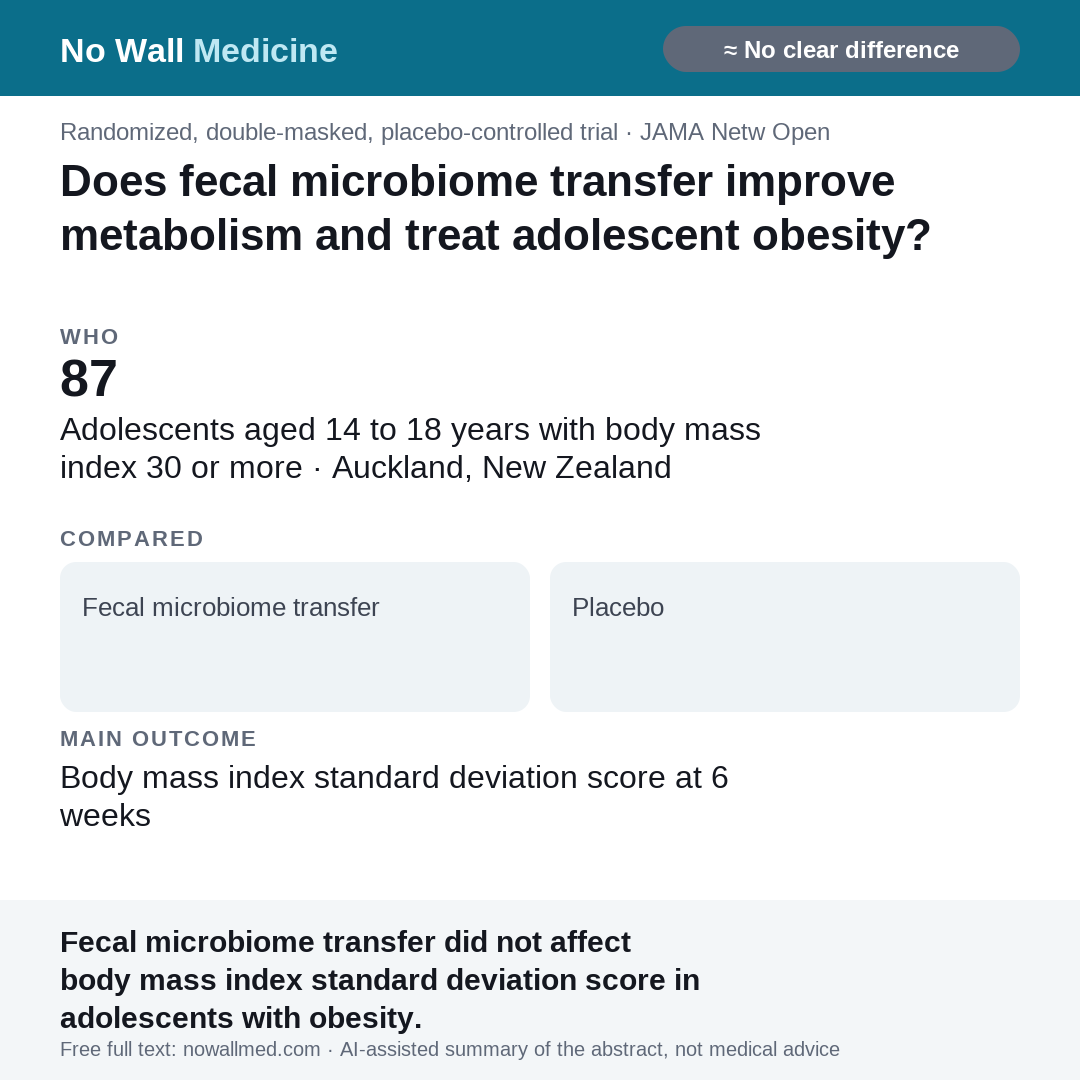
Effects of Fecal Microbiome Transfer in Adolescents With Obesity: The Gut Bugs Randomized Controlled Trial
Randomized, double-masked, placebo-controlled trialNo clear difference
Does fecal microbiome transfer improve metabolism and treat adolescent obesity?
Who
87
Adolescents aged 14 to 18 years with body mass index 30 or more · Auckland, New Zealand
Compared
Fecal microbiome transfer
Placebo
Main outcome
Body mass index standard deviation score at 6 weeks
Result: adjusted mean difference -0.026 (95% CI -0.074, 0.022)
Bottom line: Fecal microbiome transfer did not affect body mass index standard deviation score in adolescents with obesity.
JAMA Netw Open · 2020-12-01Download image
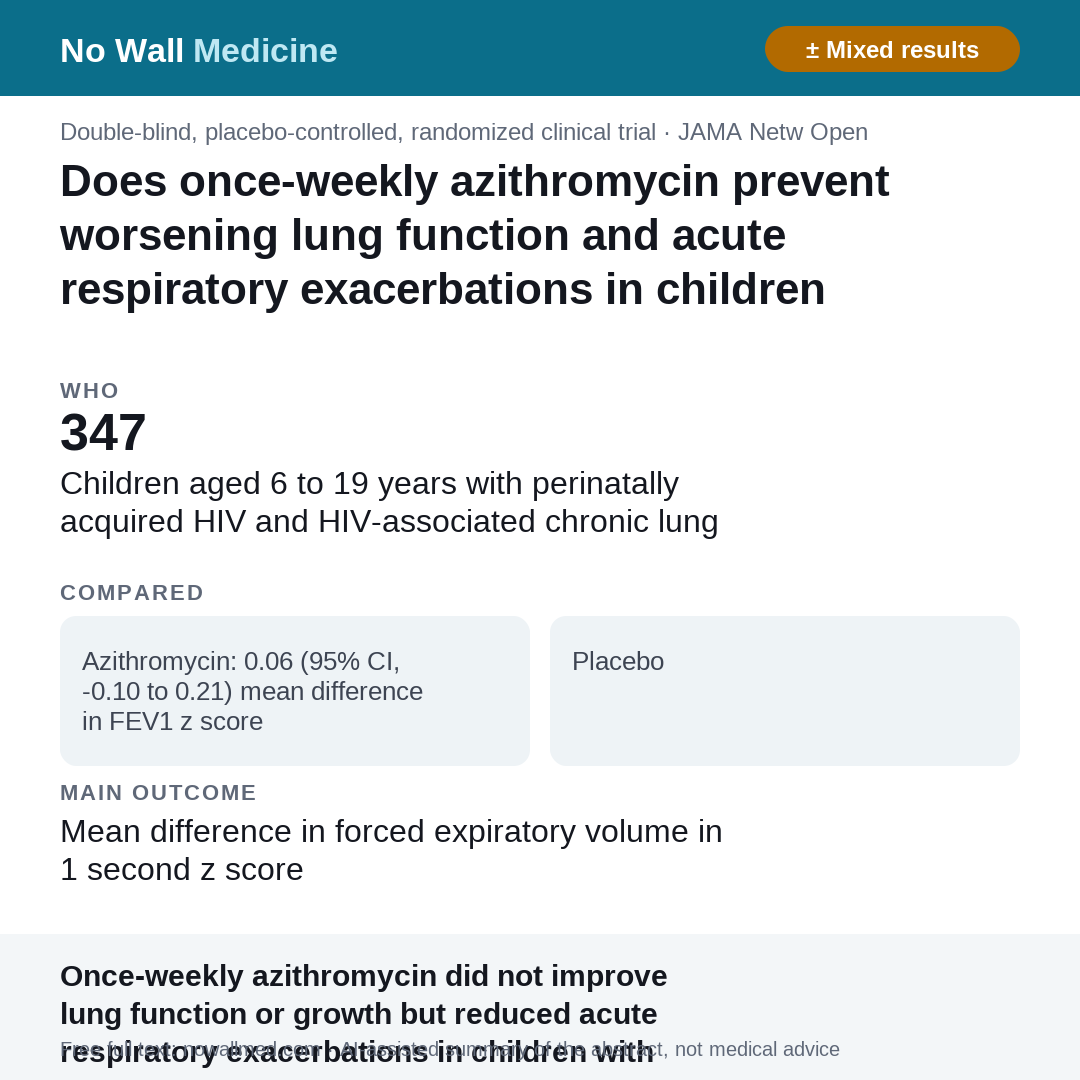
Effect of Once-Weekly Azithromycin vs Placebo in Children With HIV-Associated Chronic Lung Disease: The BREATHE Randomized Clinical Trial
Double-blind, placebo-controlled, randomized clinical trialMixed results
Does once-weekly azithromycin prevent worsening lung function and acute respiratory exacerbations in children with HIV-associated chronic lung disease?
Who
347
Children aged 6 to 19 years with perinatally acquired HIV and HIV-associated chronic lung disease · Outpatient HIV clinics in 2 public sector hospitals in Malawi and Zimbabwe
Compared
Azithromycin: 0.06 (95% CI, -0.10 to 0.21) mean difference in FEV1 z score
Placebo
Main outcome
Mean difference in forced expiratory volume in 1 second z score
Result: hazard ratio 0.50 (95% CI 0.27 to 0.93) for acute respiratory exacerbations
Bottom line: Once-weekly azithromycin did not improve lung function or growth but reduced acute respiratory exacerbations in children with HIV-associated chronic lung disease.
JAMA Netw Open · 2020-12-01Download image