Visual abstracts
New randomized trials and meta-analyses from leading journals at a glance: who was studied, what was compared, and what was found. Every paper is free to read in full.
All specialtiesCardiology 206Oncology 174Gastroenterology & Hepatology 100Infectious Disease 170Neurology 97Psychiatry & Mental Health 141Pulmonology 97Critical Care 55Endocrinology & Diabetes 140Pediatrics 90Surgery 67Orthopedics & Sports Medicine 40Neurosurgery 7Cardiothoracic & Vascular Surgery 21Plastic & Reconstructive Surgery 52Nephrology 41Rheumatology 40Hematology 50Dermatology 24Ophthalmology 38Obstetrics & Gynecology 54Public & Global Health 61Radiology & Imaging 17Anesthesiology 35Urology 50ENT (Otolaryngology) 27Emergency Medicine 21Allergy & Immunology 17Geriatrics 65Family Medicine & Primary Care 29Medical Genetics & Genomics 22Pathology & Laboratory Medicine 5Physical Medicine & Rehabilitation 54Palliative Care 26Nutrition 75Digital Health & AI 191General Medicine 30
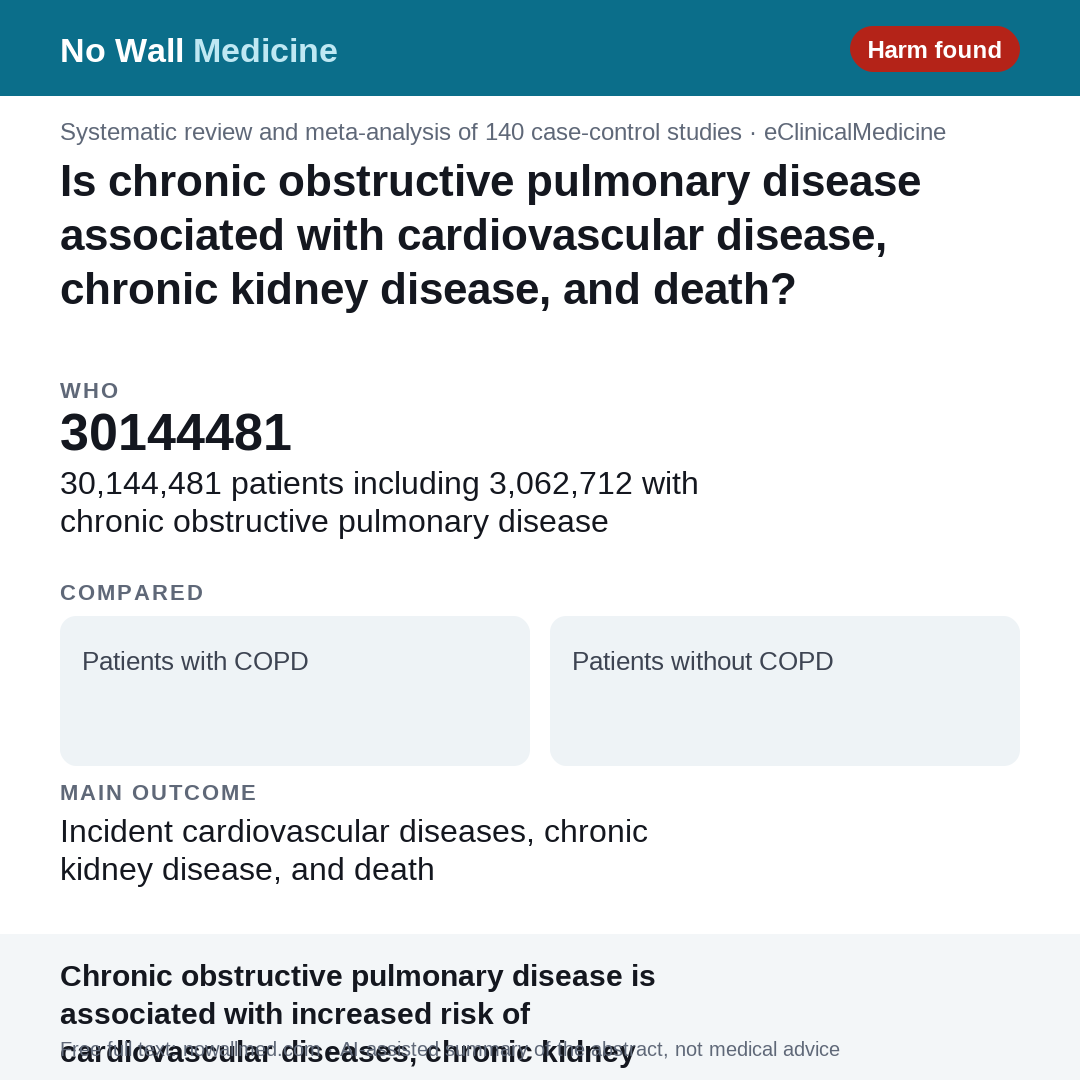
Chronic obstructive pulmonary disease and risk of incident cardiovascular disease, chronic kidney disease, and death: a systematic review and meta-analysis
Systematic review and meta-analysis of 140 case-control studiesHarm found
Is chronic obstructive pulmonary disease associated with cardiovascular disease, chronic kidney disease, and death?
Who
30144481
30,144,481 patients including 3,062,712 with chronic obstructive pulmonary disease
Compared
Patients with COPD
Patients without COPD
Main outcome
Incident cardiovascular diseases, chronic kidney disease, and death
Result: risk ratio varies by outcome (e.g., heart failure RR 2.33, 95% CI 1.78-3.06)
Bottom line: Chronic obstructive pulmonary disease is associated with increased risk of cardiovascular diseases, chronic kidney disease, and mortality.
Limitation: Substantial heterogeneity for all outcomes
Funded by: The British Heart Foundation
eClinicalMedicine · 2026-08-07Download image
Skin cell suspension autograft as an evidence-based innovation in burn and wound treatment: A systematic review of global evidence across two decades
Systematic reviewBenefit found
Is skin cell suspension autograft effective for burn and wound treatment?
Who
Patients with burns, surgical wounds, traumatic injuries, and chronic wounds · 13 countries
Compared
Skin cell suspension autograft: 61% healing outcomes favored SCSA
Control treatments: 39% reported equivalent outcomes
Main outcome
Wound healing, safety, and health economic outcomes
Bottom line: Skin cell suspension autograft supports epidermal coverage and offers clinical and economic benefits for various wounds.
Limitation: Heterogeneous study designs, variable outcome reporting, and predominance of non-randomized data.
J Plast Reconstr Aesthet Surg · 2026-08-07Download image

Rethinking Muscle Wasting in Critical Illness: A Systematic Review and Meta-Analysis of Myofiber Size and Protein Turnover
Meta-analysis of 75 studiesHarm found
Muscle wasting in critical illness
Who
2023
Adults with critical illness and controls
Compared
Patients: 22% lower cross-sectional area
Controls
Main outcome
Myofiber cross-sectional area
Result: mean difference -689 µm 2 (95% CI -1265 to -113 µm 2)
Bottom line: Muscle wasting reflects biological disturbances
Crit Care Med · 2026-08-07Download image

Peripheral Artery Disease and Atrial Fibrillation: A Systematic Review and Meta-analysis on 763,919 Patients
Meta-analysis of 7 observational studiesBenefit found
Is peripheral artery disease associated with new-onset atrial fibrillation risk?
Who
763919
763,919 patients including 56,207 with peripheral artery disease
Compared
Peripheral artery disease: HR: 1.34
Control
Main outcome
new-onset atrial fibrillation
Result: hazard ratio 1.34 (95% CI 1.18-1.50)
Bottom line: Peripheral artery disease is associated with a 34% increased risk of new-onset atrial fibrillation.
Limitation: High heterogeneity (I2 = 85%) in the pooled analysis.
JACC Adv · 2026-08-07Download image

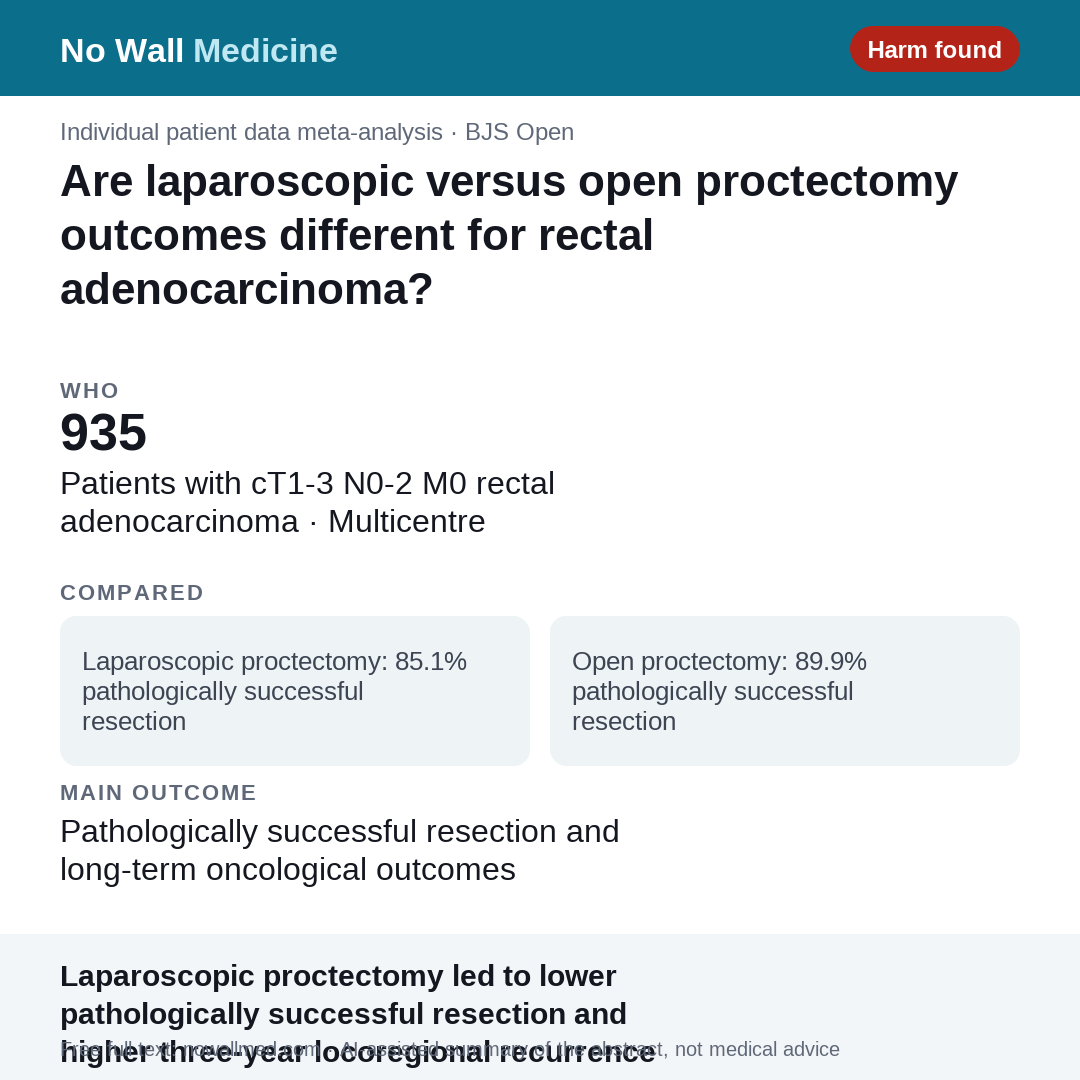
Laparoscopic versus open surgery for rectal cancer: individual patient data meta-analysis of the ALaCaRT and Z6051 randomized trials
Individual patient data meta-analysisHarm found
Are laparoscopic versus open proctectomy outcomes different for rectal adenocarcinoma?
Who
935
Patients with cT1-3 N0-2 M0 rectal adenocarcinoma · Multicentre
Compared
75.2%Laparoscopic (95% c.i. 71.1% to 79.2%)
76.5%Open (95% c.i. 72.5% to 80.6%)
Main outcome
Three-year disease-free survival
Result: pooled estimate difference -1.5%; 95% c.i. -7.2% to 4.2%
Bottom line: Laparoscopic proctectomy had lower successful resection rates and higher three-year locoregional recurrence than open surgery.
BJS Open · 2026-08-07Download image
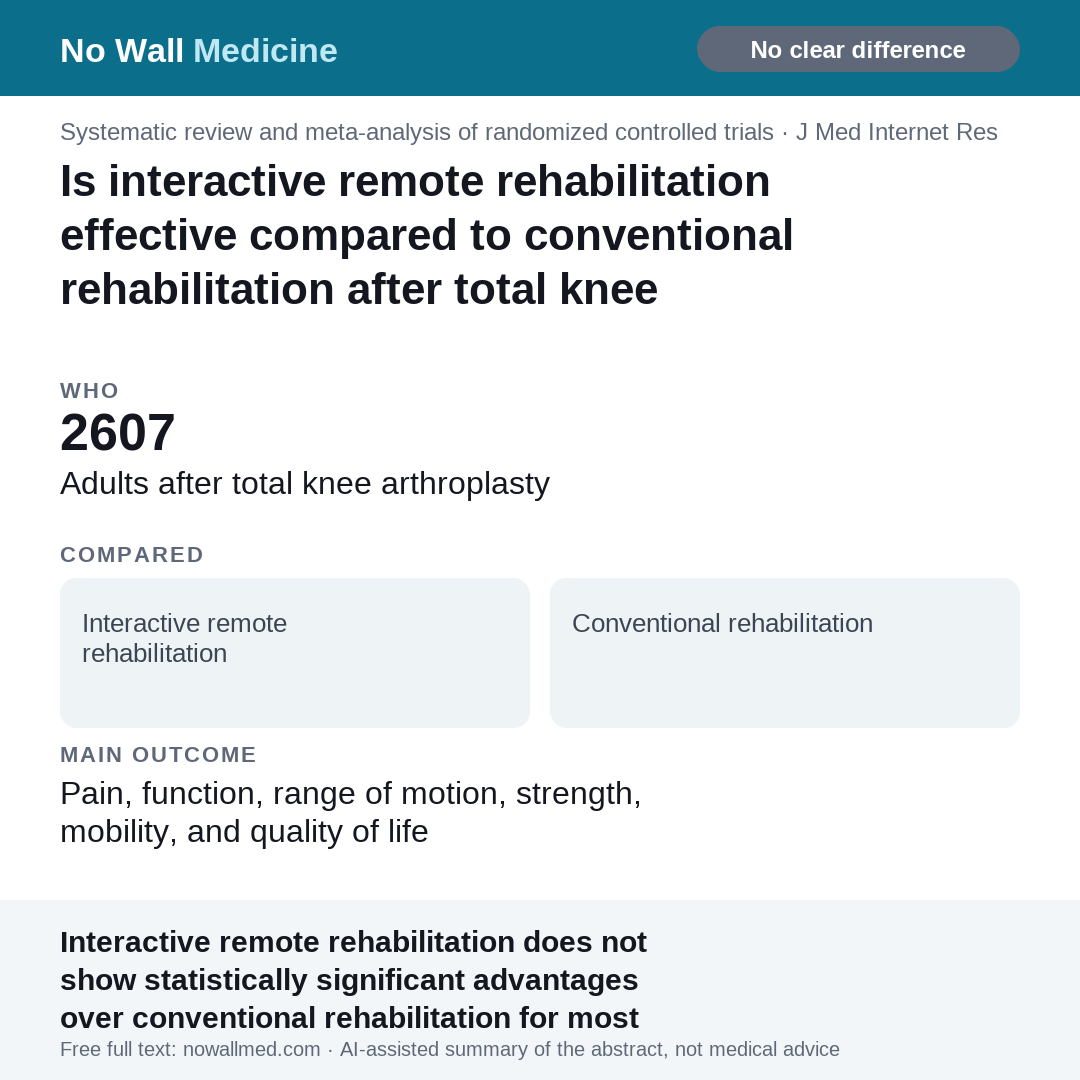
Effectiveness of Interactive Remote Rehabilitation After Total Knee Arthroplasty: Systematic Review and Meta-Analysis of Randomized Controlled Trials
Systematic review and meta-analysis of randomized controlled trialsNo clear difference
Is interactive remote rehabilitation effective compared to conventional rehabilitation after total knee arthroplasty?
Who
2607
Adults after total knee arthroplasty
Compared
Interactive remote rehabilitation
Conventional rehabilitation
Main outcome
Pain, function, range of motion, strength, mobility, and quality of life
Result: mean difference 0.26 (95% CI 0.04-0.48) for short-term active extension range of motion
Bottom line: Interactive remote rehabilitation does not show statistically significant advantages over conventional rehabilitation for most clinical outcomes after total knee arthroplasty.
Limitation: Heterogeneity was substantial, prediction intervals were frequently wide, and certainty of evidence was low to very low.
J Med Internet Res · 2026-08-07Download image
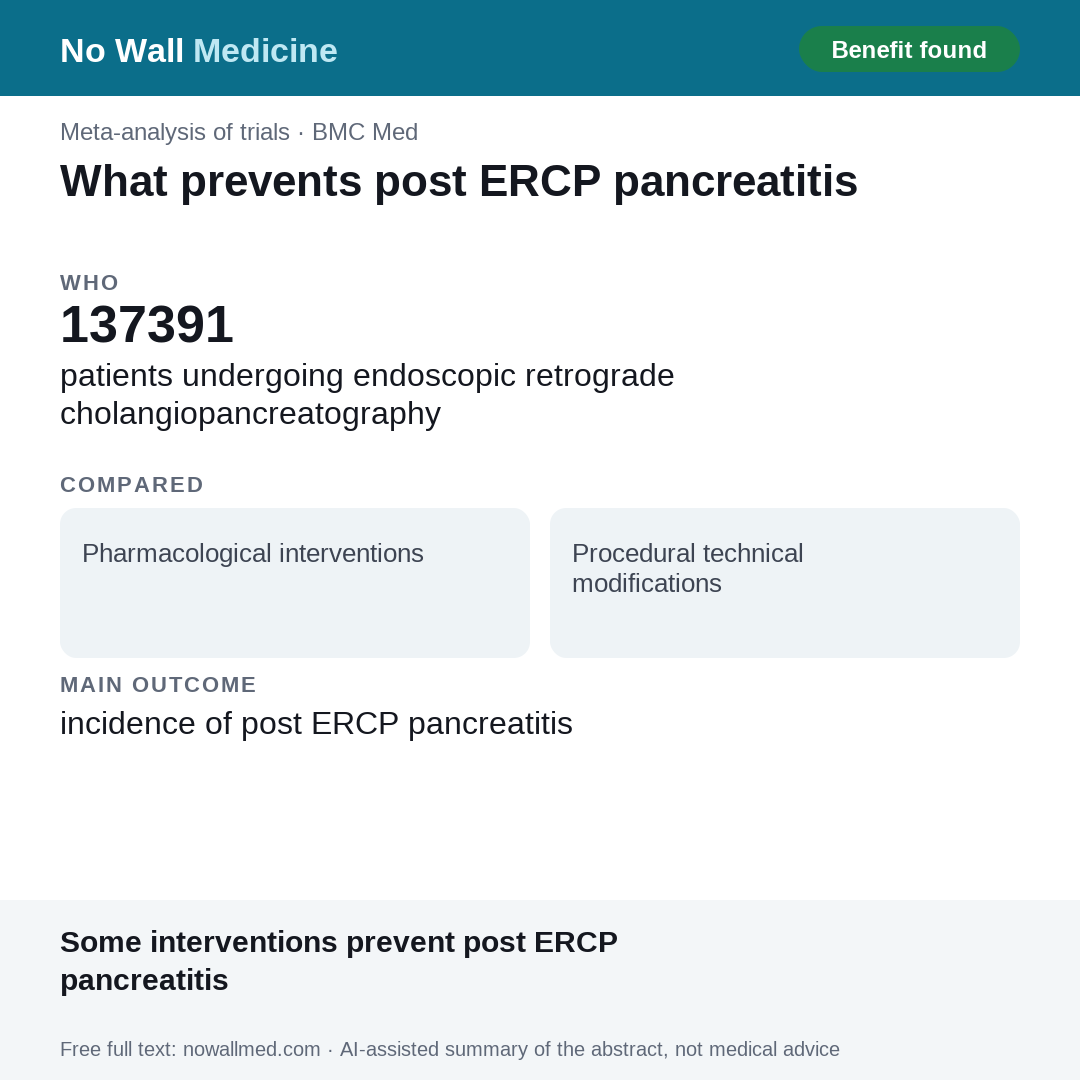
Pharmacological and procedural strategies to prevent post-ERCP pancreatitis: an umbrella review of meta-analyses of randomized controlled trials
Meta-analysis of trialsBenefit found
What prevents post ERCP pancreatitis
Who
137391
patients undergoing endoscopic retrograde cholangiopancreatography
Compared
Pharmacological interventions
Procedural technical modifications
Main outcome
incidence of post ERCP pancreatitis
Bottom line: Some interventions prevent post ERCP pancreatitis
BMC Med · 2026-08-06Download image
Artificial intelligence in cardiovascular care: a systematic review and meta-analysis of randomised controlled trials
Systematic review and meta-analysis of randomized controlled trialsMixed results
What is the effectiveness of artificial intelligence in cardiovascular care?
Who
1,614,689
Patients receiving artificial intelligence interventions in cardiovascular care · 13 regions
Compared
Artificial intelligence interventions
Control
Main outcome
Effectiveness of artificial intelligence in cardiovascular care
Bottom line: Artificial intelligence shows potential benefits in intermediate process measures but evidence for hard clinical outcomes remains limited.
Limitation: High risk of bias, trial heterogeneity, inadequate reporting, and limited generalisability.
eClinicalMedicine · 2026-08-06Download image

Growth dependence of welfare states: a semi-systematic review of drivers and policy responses
Semi-systematic reviewUnclear result
Can welfare states be growth independent
Who
all within planetary boundaries
Compared
growth dependent
growth independent
Main outcome
welfare state growth independence
Bottom line: Welfare states may not be growth independent
Lancet Planet Health · 2026-08-06Download image

Efficacy of redifferentiation therapy in radioactive iodine refractory thyroid cancer: a systematic review and meta-analysis
Systematic review and meta-analysisBenefit found
Is redifferentiation therapy effective in radioactive iodine refractory thyroid cancer?
Who
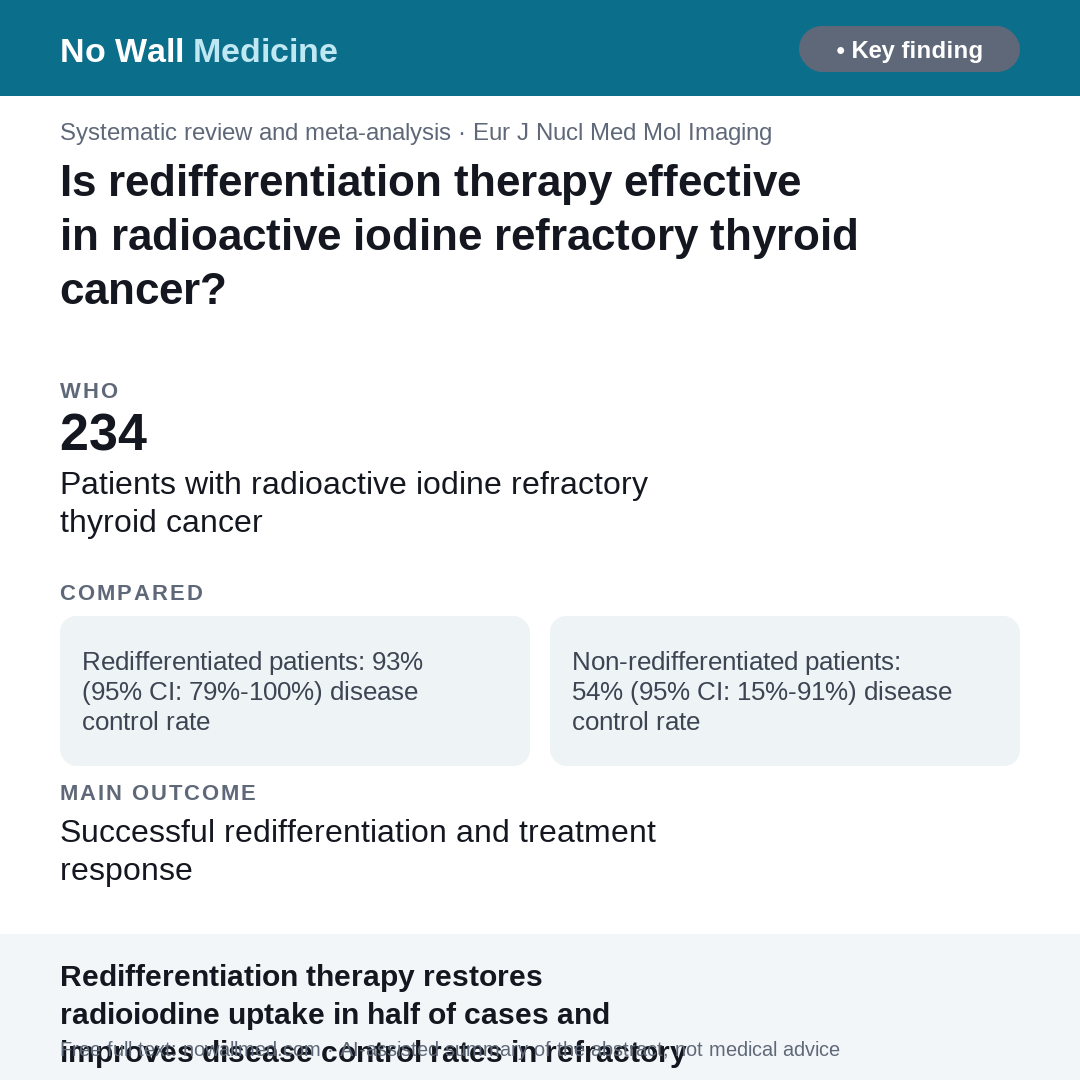
234
Patients with radioactive iodine refractory thyroid cancer
Compared
Redifferentiated patients: 93% (95% CI: 79%-100%) disease control rate
Non-redifferentiated patients: 54% (95% CI: 15%-91%) disease control rate
Main outcome
Successful redifferentiation and treatment response
Result: 93% (95% CI: 79%-100%) vs 54% (95% CI: 15%-91%)
Bottom line: Redifferentiation therapy restores radioiodine uptake in half of cases and improves disease control rates in refractory thyroid cancer.
Limitation: Statistically significant prognostic differences and long-term survival benefits remain to be demonstrated.
Eur J Nucl Med Mol Imaging · 2026-08-06Download image
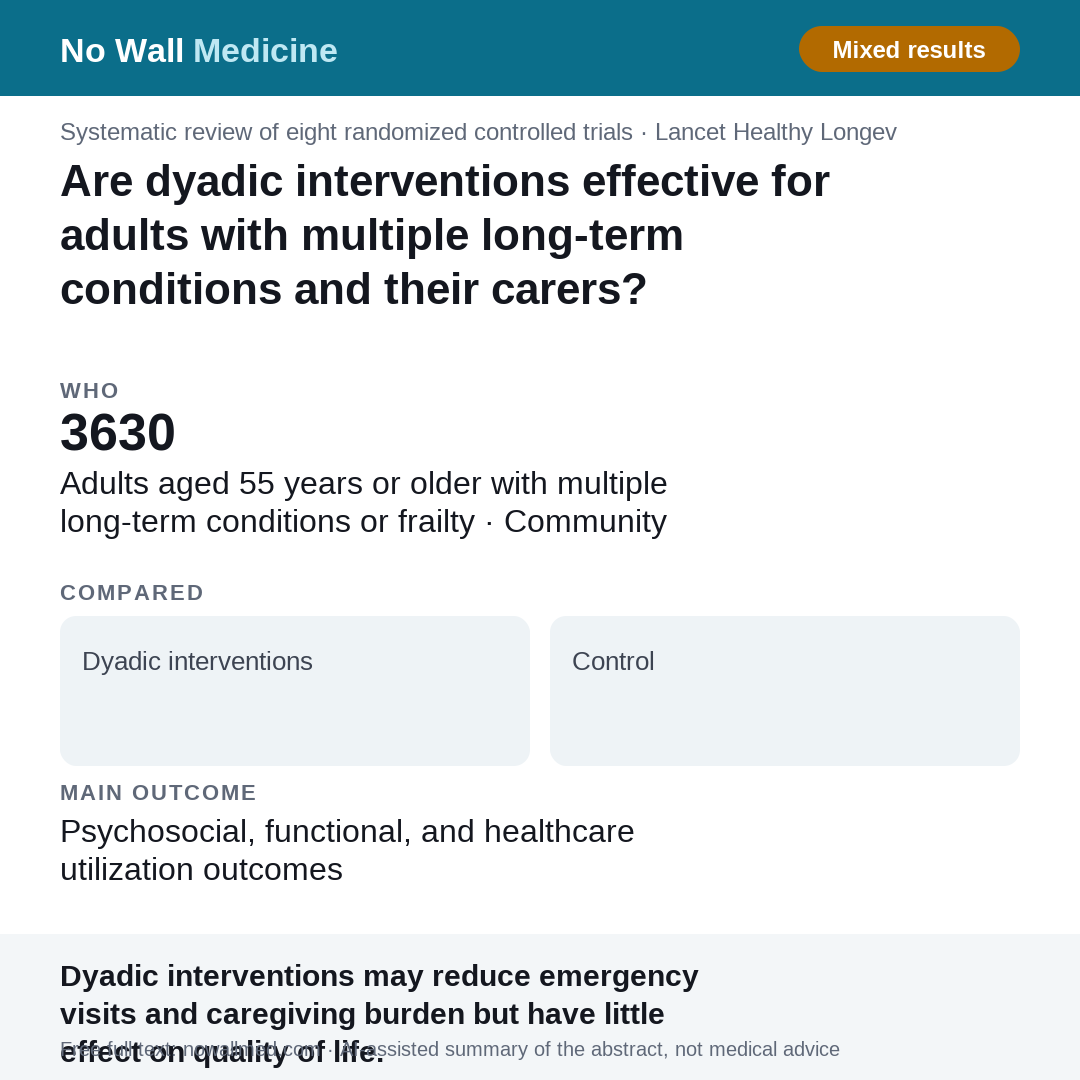
Effectiveness of dyadic interventions in improving outcomes for adults with multiple long-term conditions or frailty and their informal carers: a systematic review
Systematic review of eight randomized controlled trialsMixed results
Are dyadic interventions effective for adults with multiple long-term conditions and their carers?
Who
3630
Adults aged 55 years or older with multiple long-term conditions or frailty · Community
Compared
Dyadic interventions
Control
Main outcome
Psychosocial, functional, and healthcare utilization outcomes
Bottom line: Dyadic interventions may reduce emergency visits and caregiving burden but have little effect on quality of life.
Limitation: Low or very low certainty of evidence for most outcomes.
Lancet Healthy Longev · 2026-08-06Download image
Patient experiences of coercion in mental healthcare: systematic review and metasummary of qualitative studies from 1991 to 2025
Systematic review and metasummary of qualitative studiesHarm found
What are the reported patient experiences of coercion in mental healthcare?
Who
291
Patients experiencing coercion in mental healthcare · Global, including 18 studies from low-and middle-income countries
Compared
279Studies reporting negative experiences
166Studies reporting mixed experiences
167Studies reporting positive experiences
Main outcome
Qualitative categories of reported patient experiences of coercion
Bottom line: A large body of research shows a near-universal presence of negative patient experiences regarding coercion.
Limitation: Limited author reflexivity and lack of involvement of experts by experience.
BJPsych Open · 2026-08-06Download image

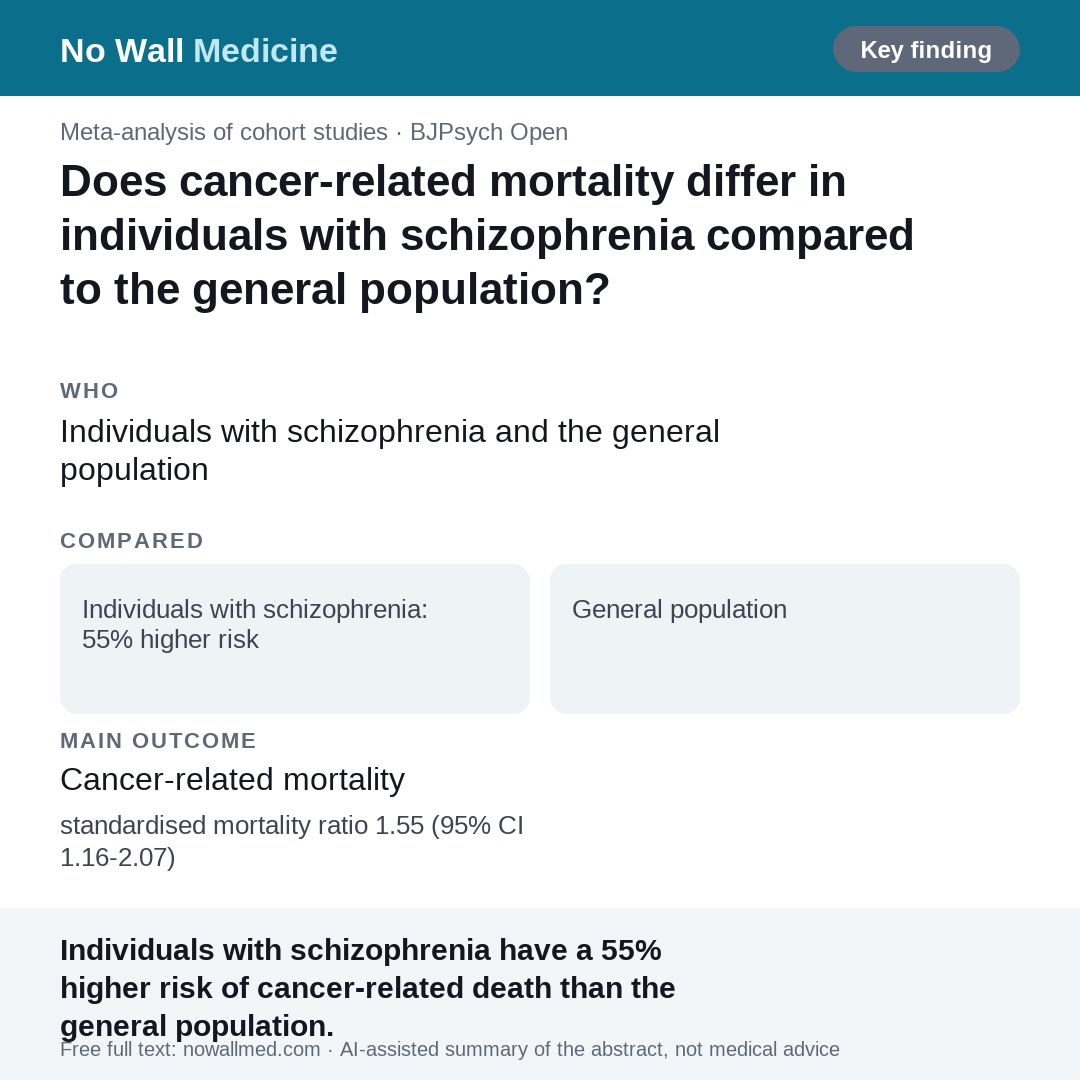
Cancer-related mortality among individuals with schizophrenia: systematic review and meta-analysis of cohort studies
Meta-analysis of cohort studiesHarm found
Does cancer-related mortality differ in individuals with schizophrenia compared to the general population?
Who
Individuals with schizophrenia and the general population
Compared
Individuals with schizophrenia: 55% higher risk
General population
Main outcome
Cancer-related mortality
Result: standardised mortality ratio 1.55 (95% CI 1.16-2.07)
Bottom line: Individuals with schizophrenia have a 55% higher risk of cancer-related death than the general population.
BJPsych Open · 2026-08-06Download image
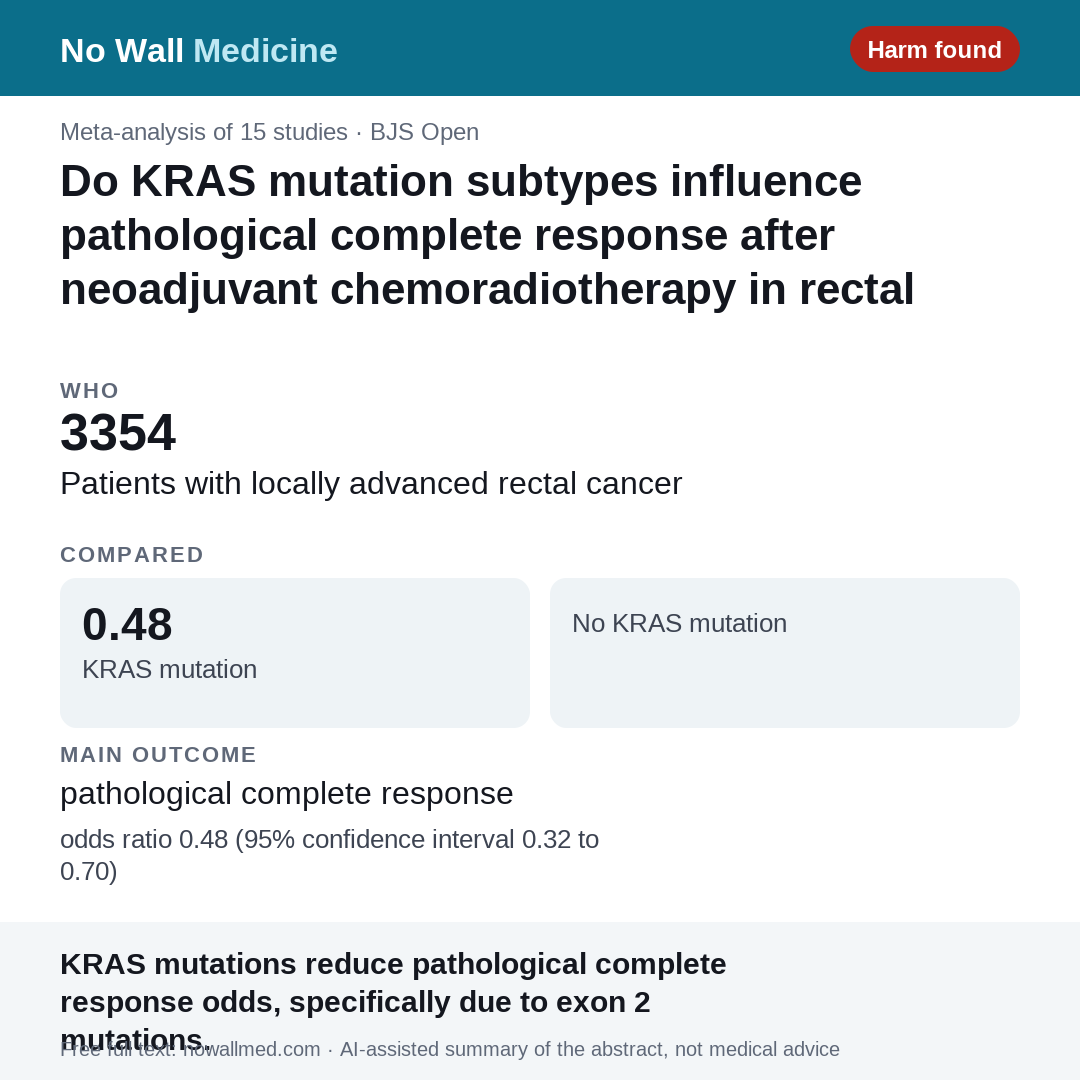
Influence of KRAS mutation subtypes on response to neoadjuvant chemoradiotherapy in locally advanced rectal cancer: meta-analysis
Meta-analysis of 15 studiesHarm found
Do KRAS mutation subtypes influence pathological complete response after neoadjuvant chemoradiotherapy in rectal cancer?
Who
3354
Patients with locally advanced rectal cancer
Compared
0.48KRAS mutation (95% confidence interval 0.32 to 0.70)
No KRAS mutation
Main outcome
pathological complete response
Result: odds ratio 0.48 (95% confidence interval 0.32 to 0.70)
Bottom line: KRAS mutations reduce pathological complete response odds, specifically due to exon 2 mutations.
BJS Open · 2026-08-06Download image
Mechanistic pathways linking gut microbial metabolites, microbial structural products, and host-microbe co-metabolites to mitochondrial function
Systematic reviewMixed results
How do gut microbial metabolites link to host mitochondrial function?
Who
Ten classes of gut-derived metabolites · PubMed, Scopus, and Web of Science
Compared
Butyrate and propionate: enhances mitochondrial biogenesis, ATP generation, and electron transport chain activity
Indoxyl sulfate: impaired mitochondrial function
Main outcome
Direct mitochondrial endpoints
Bottom line: Gut metabolites exert diverse effects on mitochondrial function, ranging from bioenergetic enhancement to direct toxicity.
Limitation: The evidence base is predominantly preclinical; findings should be considered hypothesis-generating.
Gut Microbes · 2026-08-06Download image

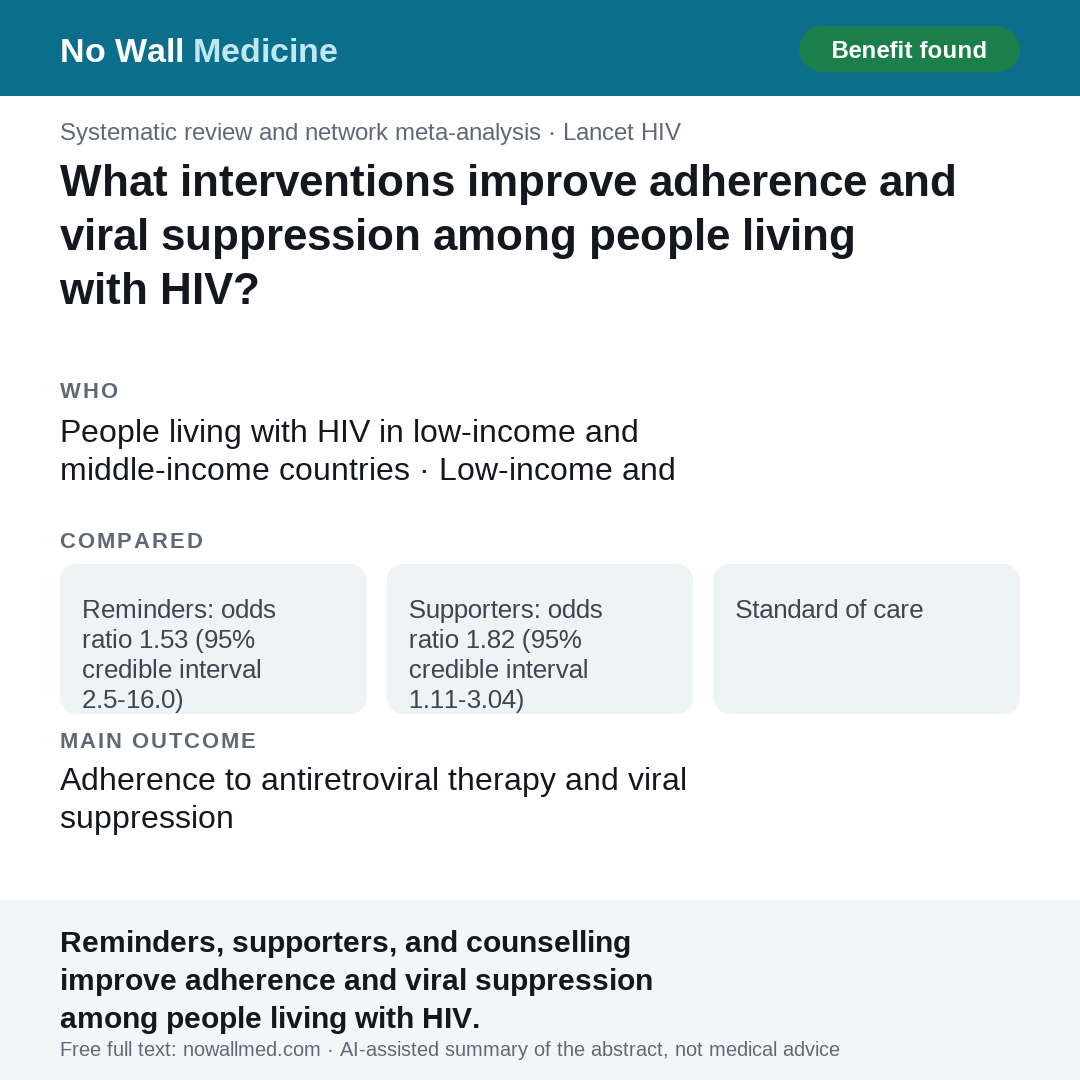
Interventions to improve viral suppression and adherence to antiretroviral therapy among people living with HIV: a systematic review and network meta-analysis
Systematic review and network meta-analysisBenefit found
What interventions improve adherence and viral suppression among people living with HIV?
Who
People living with HIV in low-income and middle-income countries · Low-income and middle-income countries
Compared
Reminders: odds ratio 1.53 (95% credible interval 2.5-16.0)
Supporters: odds ratio 1.82 (95% credible interval 1.11-3.04)
Standard of care
Main outcome
Adherence to antiretroviral therapy and viral suppression
Result: reminders odds ratio 1.53 (95% credible interval 2.5-16.0)
Bottom line: Reminders, supporters, and counselling improve adherence and viral suppression among people living with HIV.
Funded by: The Gates Foundation
Lancet HIV · 2026-08-05Download image
Radical, transformative, or decolonial? A systematic review of The Lancet Planetary Health's progress on embracing Indigenous Peoples' knowledge systems
Systematic reviewMixed results
Indigenous knowledge in planetary health
Who
1172
Indigenous Peoples
Compared
Articles with Indigenous features
Articles without Indigenous features: 1137/1172
Main outcome
Recognition of Indigenous knowledge
Bottom line: Most articles lack Indigenous perspectives
Lancet Planet Health · 2026-08-05Download image

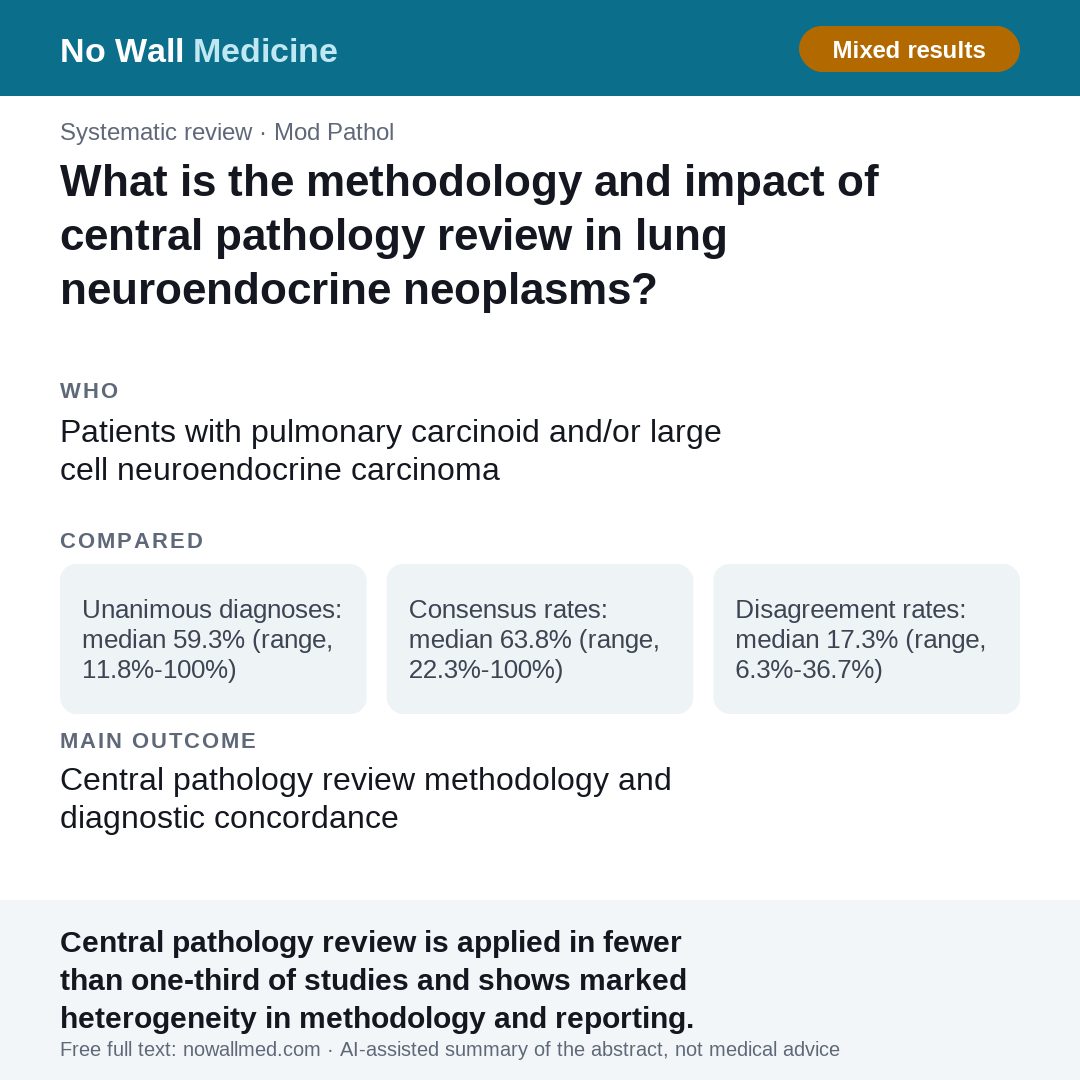
Quality in Central Pathology Assessment in Pulmonary Carcinoid and Large Cell Neuroendocrine Carcinoma: A Systematic Review
Systematic reviewMixed results
What is the methodology and impact of central pathology review in lung neuroendocrine neoplasms?
Who
Patients with pulmonary carcinoid and/or large cell neuroendocrine carcinoma
Compared
Unanimous diagnoses: median 59.3% (range, 11.8%-100%)
Consensus rates: median 63.8% (range, 22.3%-100%)
Disagreement rates: median 17.3% (range, 6.3%-36.7%)
Main outcome
Central pathology review methodology and diagnostic concordance
Bottom line: Central pathology review is applied in fewer than one-third of studies and shows marked heterogeneity in methodology and reporting.
Mod Pathol · 2026-08-05Download image
Digital Health Communication Engagement Experiences of Older Adults in Community Contexts: Qualitative Systematic Review and Meta-Ethnography
Qualitative systematic review and meta-ethnographyMixed results
How do older adults experience digital health communication in community contexts?
Who
Community-dwelling older adults aged 50 years or older · 8 countries
Compared
Themes of engagement: obtaining or sharing health information, maintaining health, and learning technology
Drivers of adaptation: social support, patient-provider trust, and technological affinity
Barriers to adaptation: insufficient digital literacy, technology anxiety, cost constraints, physiological limitations, and privacy concerns
Main outcome
Experiences of digital health communication engagement
Bottom line: Digital health communication engagement involves negotiating motivation, trust, and responsibility, shaped by both social drivers and technological barriers.
Limitation: Eligibility was limited to Chinese- or English-language abstracts, which may limit representativeness.
J Med Internet Res · 2026-08-05Download image

Comparing Video-Based and Face-to-Face Psychotherapy: Systematic Review and Multilevel Meta-Analysis Across Mental Disorders
Systematic review and multilevel meta-analysisNo clear difference
Are video-based and face-to-face psychotherapy equally effective for symptom reduction?
Who
900
Adults with various mental disorders · predominantly Western settings
Compared
Video-based psychotherapy
Face-to-face psychotherapy
Main outcome
posttreatment symptom severity
Result: Hedges g=-0.09 (95% CI -0.52 to 0.33)
Bottom line: Video-based psychotherapy shows no significant difference in symptom reduction compared to face-to-face psychotherapy.
Limitation: Limited size, scope, substantial heterogeneity, and few noninferiority trials.
J Med Internet Res · 2026-08-05Download image