Visual abstracts
New randomized trials and meta-analyses from leading journals at a glance: who was studied, what was compared, and what was found. Every paper is free to read in full.
All specialtiesCardiology 1050Oncology 944Gastroenterology & Hepatology 386Infectious Disease 717Neurology 450Psychiatry & Mental Health 553Pulmonology 471Critical Care 320Endocrinology & Diabetes 605Pediatrics 662Surgery 468Orthopedics & Sports Medicine 205Neurosurgery 151Cardiothoracic & Vascular Surgery 109Plastic & Reconstructive Surgery 171Nephrology 238Rheumatology 138Hematology 223Dermatology 99Ophthalmology 122Obstetrics & Gynecology 331Public & Global Health 209Radiology & Imaging 134Anesthesiology 193Urology 202ENT (Otolaryngology) 146Emergency Medicine 119Allergy & Immunology 73Geriatrics 215Family Medicine & Primary Care 137Medical Genetics & Genomics 113Pathology & Laboratory Medicine 33Physical Medicine & Rehabilitation 187Palliative Care 96Nutrition 280Digital Health & AI 552General Medicine 106
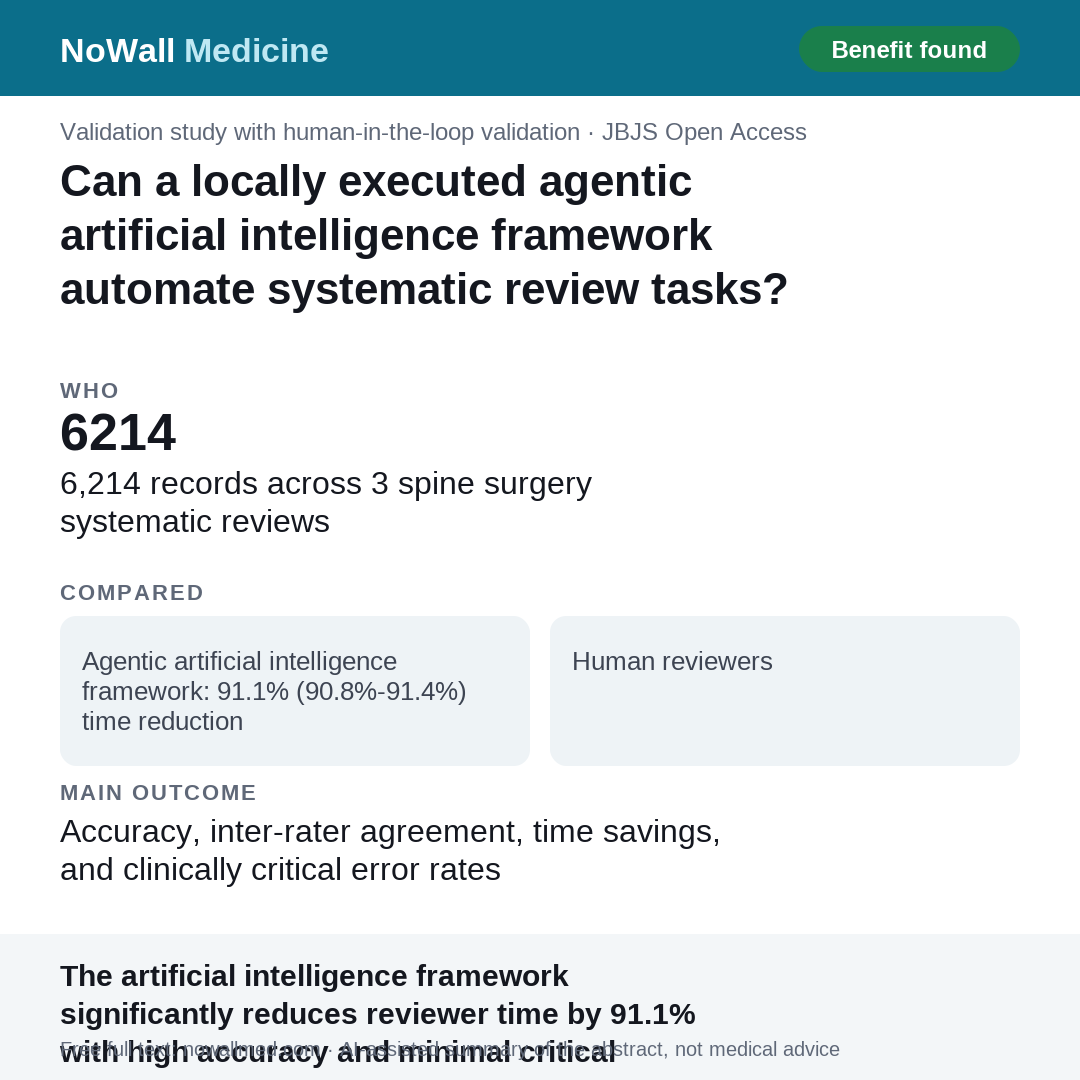
A Locally Executed Agentic Artificial Intelligence Framework for Deduplication, Screening, and Structured Data Extraction in Spine Surgery Systematic Reviews: A PRISMA-Transparent Reporting of Artificial Intelligence in Comprehensive Evidence Synthesis-Compliant Evaluation
Validation study with human-in-the-loop validationBenefit found
Can a locally executed agentic artificial intelligence framework automate systematic review tasks?
Who
6214
6,214 records across 3 spine surgery systematic reviews
Compared
Agentic artificial intelligence framework: 91.1% (90.8%-91.4%) time reduction
Human reviewers
Main outcome
Accuracy, inter-rater agreement, time savings, and clinically critical error rates
Bottom line: The artificial intelligence framework significantly reduces reviewer time by 91.1% with high accuracy and minimal critical errors.
JBJS Open Access · 2026-08-18Download image
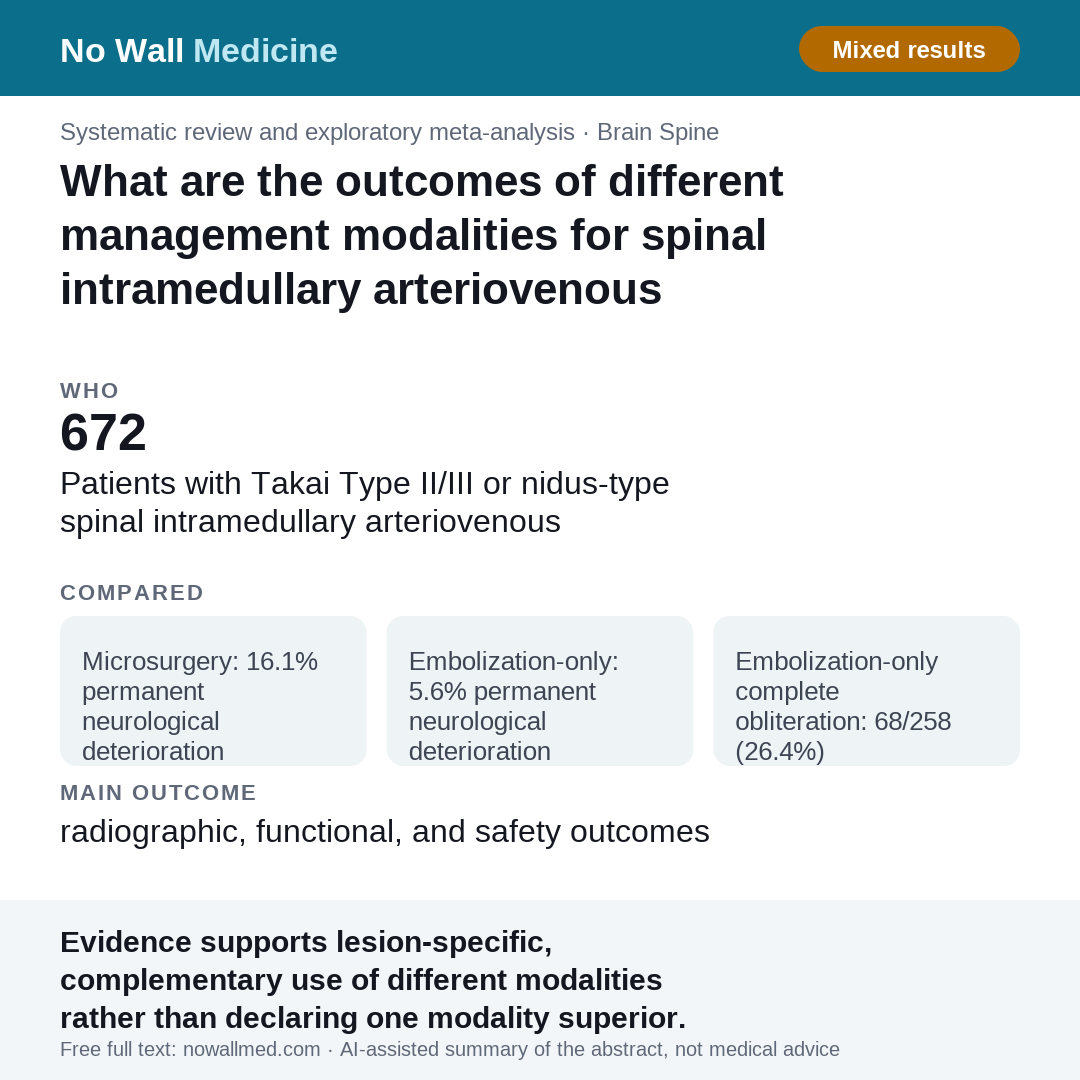
Outcomes of Microsurgical, Endovascular, Multimodal, and Radiosurgical Management of Spinal Intramedullary Arteriovenous Malformations: A Systematic Review and Exploratory Meta-Analysis
Systematic review and exploratory meta-analysisMixed results
What are the outcomes of different management modalities for spinal intramedullary arteriovenous malformations?
Who
672
Patients with Takai Type II/III or nidus-type spinal intramedullary arteriovenous malformations
Compared
Microsurgery: 16.1% permanent neurological deterioration
Embolization-only: 5.6% permanent neurological deterioration
Embolization-only complete obliteration: 68/258 (26.4%)
Main outcome
radiographic, functional, and safety outcomes
Bottom line: Evidence supports lesion-specific, complementary use of different modalities rather than declaring one modality superior.
Limitation: Outcome definitions were heterogeneous and comparisons are vulnerable to confounding by indication.
Brain Spine · 2026-08-18Download image
Body Composition Remodelling During GLP-1-Based Therapy: A Systematic Review and Meta-Analysis Using a Hierarchical Physiological Framework
Systematic review and meta-analysisUnclear result
How does glucagon-like peptide-1 based therapy affect body composition remodelling?
Who
Adults receiving glucagon-like peptide-1 receptor agonists or dual incretin therapies
Compared
Glucagon-like peptide-1 based therapy
Control
Main outcome
Adiposity, muscle quantity, muscle quality, and body weight
Bottom line: Limited evidence suggests possible greater adiposity reduction, but definitive conclusions regarding fat loss or muscle preservation cannot be made.
Limitation: Limited number of comparative studies, substantial heterogeneity, and low certainty of evidence.
Diabetes Obes Metab · 2026-08-17Download image

Genome-Wide Association Study of Corneal Dystrophy Uncovers Novel Risk Loci and Enables Improved Polygenic Prediction of Fuchs Endothelial Corneal Dystrophy
Meta-analysis and genome-wide association studyBenefit found
What are the risk loci for corneal dystrophy and improved polygenic prediction for Fuchs endothelial corneal dystrophy?
Who
Europeans with corneal dystrophy and African ancestry participants · UK Biobank, All of Us, FinnGen, and Million Veteran Program
Compared
Optimized polygenic risk score: AUC = 0.83 (95% confidence interval, 0.82-0.84)
Short tandem repeat expansion: AUC = 0.89 (odds ratio = 54)
Main outcome
Identification of risk loci and polygenic prediction performance
Result: odds ratio = 54
Bottom line: Integrating short tandem repeat expansion with polygenic risk scores improves prediction of Fuchs endothelial corneal dystrophy risk.
Invest Ophthalmol Vis Sci · 2026-08-17Download image

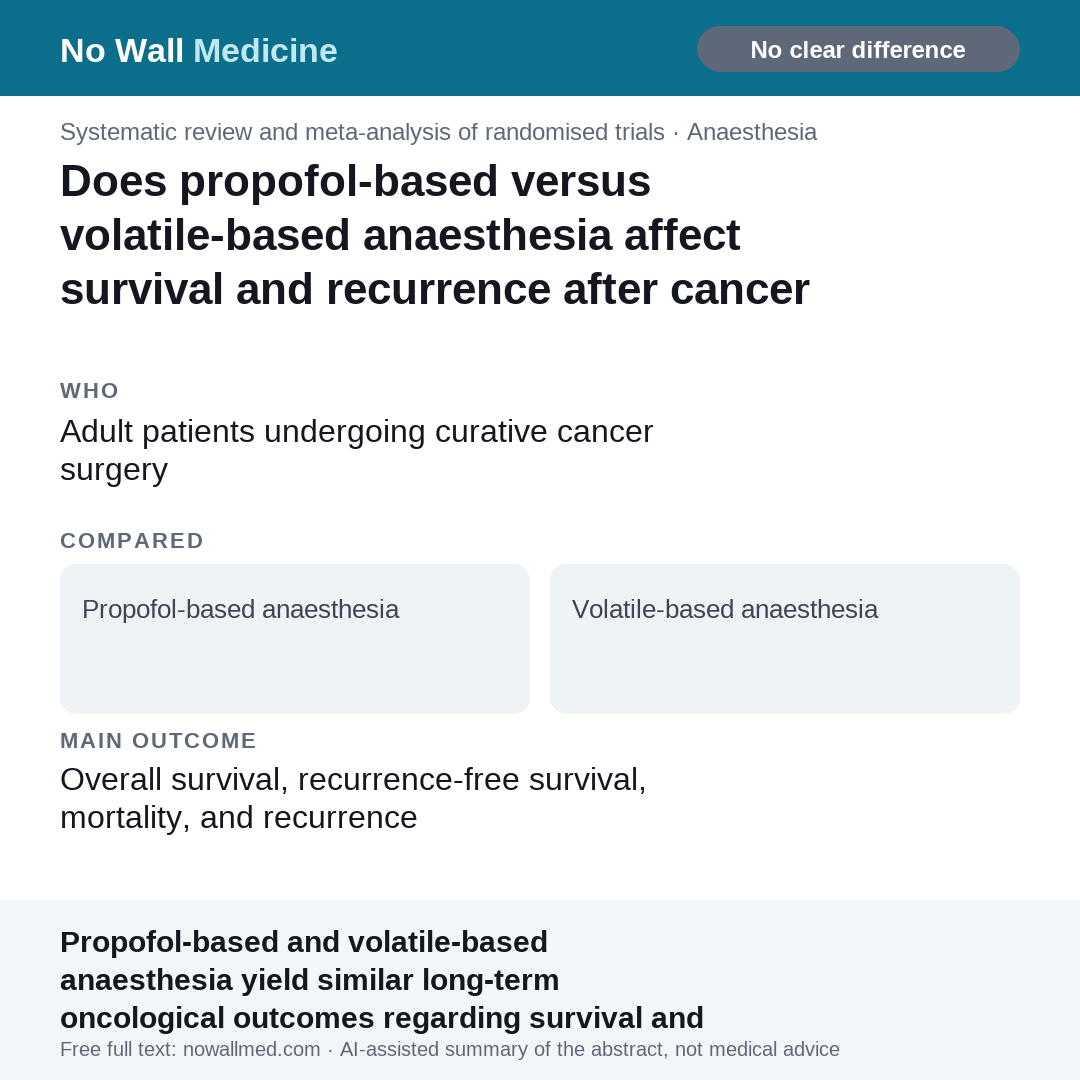
Impact of propofol-based vs. volatile-based anaesthesia on survival and recurrence after cancer surgery: a systematic review and meta-analysis of randomised trials
Systematic review and meta-analysis of randomised trialsNo clear difference
Does propofol-based versus volatile-based anaesthesia affect survival and recurrence after cancer surgery?
Who
Adult patients undergoing curative cancer surgery
Compared
Propofol-based anaesthesia
Volatile-based anaesthesia
Main outcome
Overall survival, recurrence-free survival, mortality, and recurrence
Result: hazard ratio 1.05 (95%CI 0.94-1.17)
Bottom line: Propofol-based and volatile-based anaesthesia yield similar long-term oncological outcomes regarding survival and recurrence.
Anaesthesia · 2026-08-17Download image
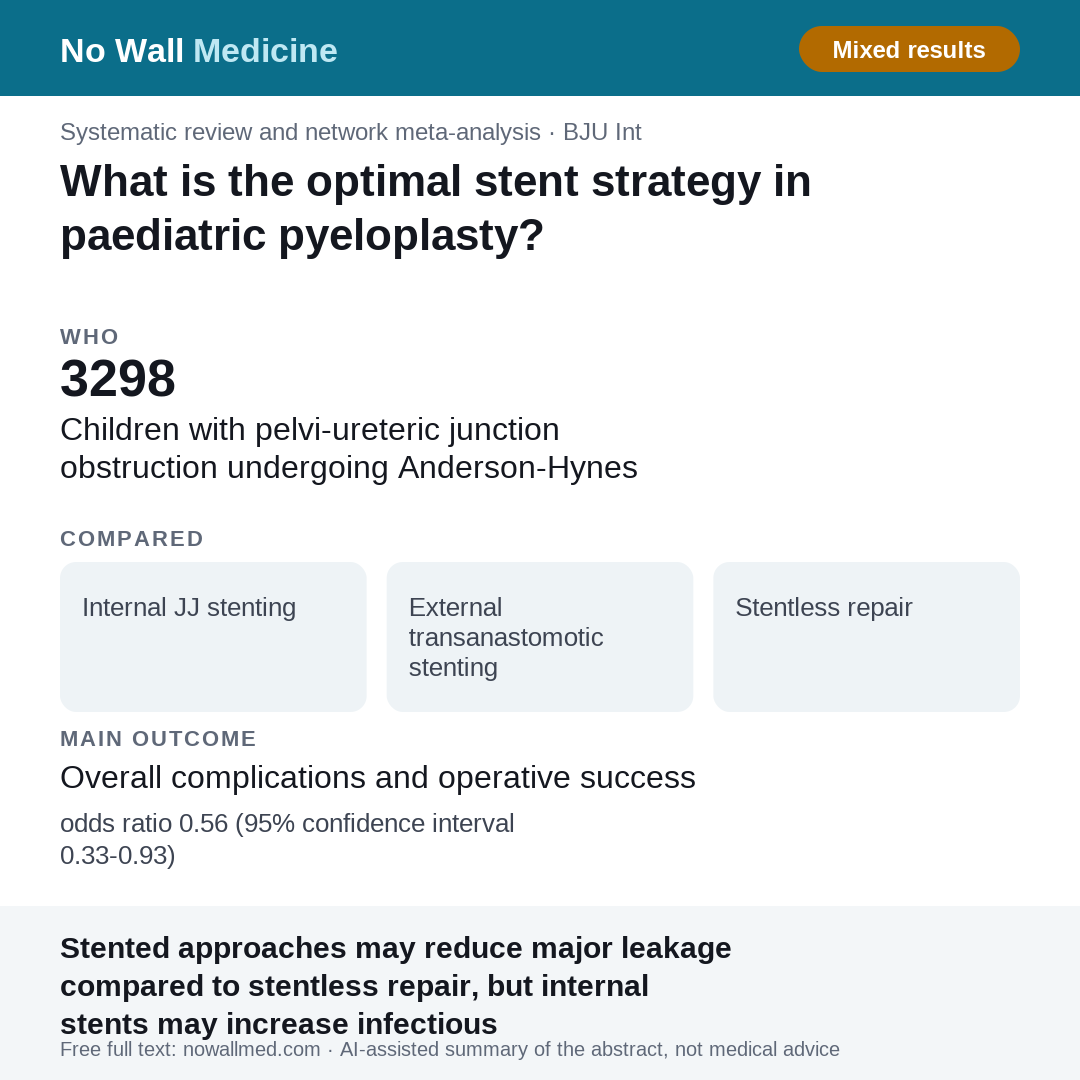
The optimal stent-strategy in paediatric pyeloplasty: a systematic review and network meta-analysis
Systematic review and network meta-analysisMixed results
What is the optimal stent strategy in paediatric pyeloplasty?
Who
3298
Children with pelvi-ureteric junction obstruction undergoing Anderson-Hynes pyeloplasty
Compared
Internal JJ stenting
External transanastomotic stenting
Stentless repair
Main outcome
Overall complications and operative success
Result: odds ratio 0.56 (95% confidence interval 0.33-0.93)
Bottom line: Stented approaches may reduce major leakage compared to stentless repair, but internal stents may increase infectious complications.
Limitation: Certainty of evidence was low or very low for most outcomes.
BJU Int · 2026-08-16Download image
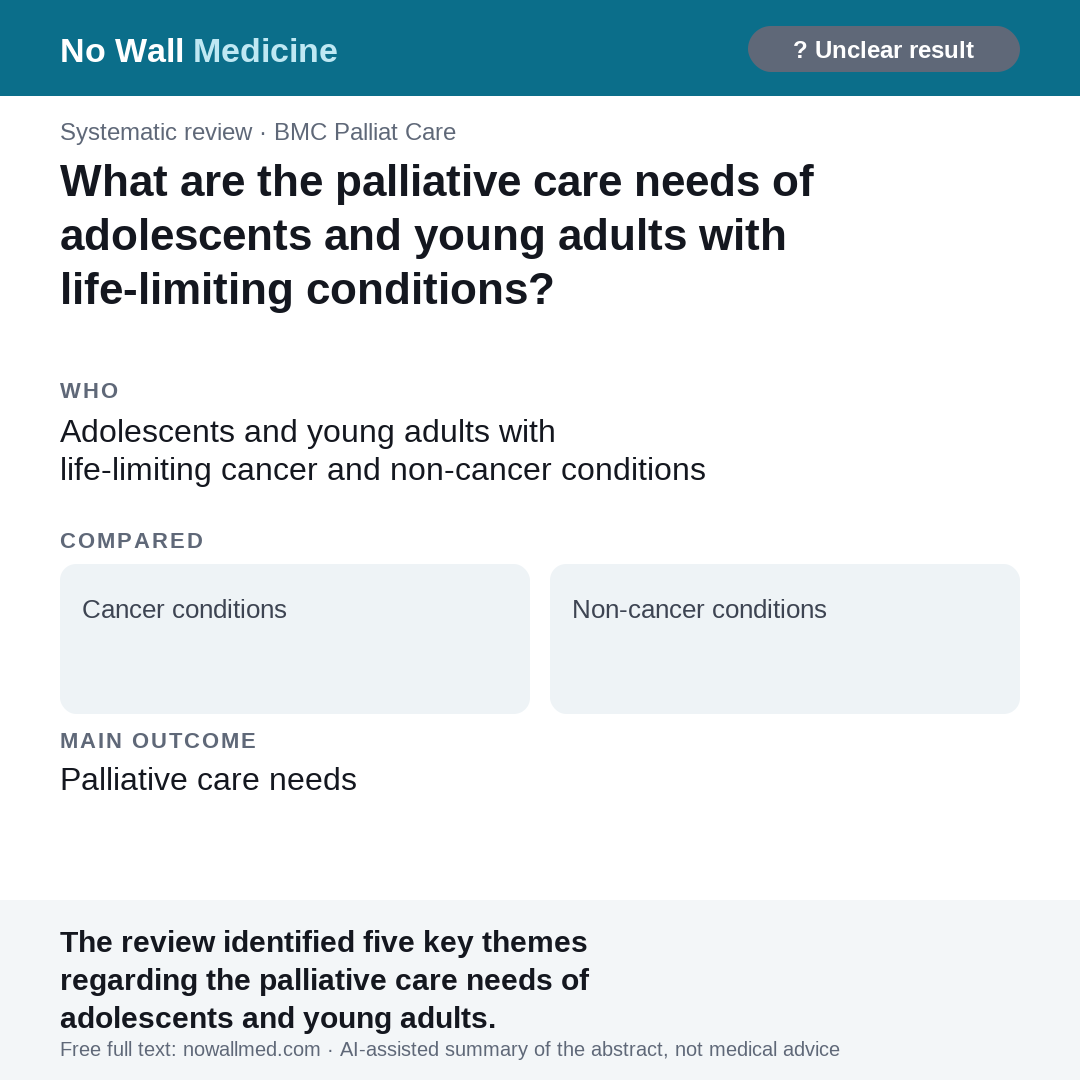
The palliative care needs of adolescents and young adults with a life limiting condition: a systematic review
Systematic reviewUnclear result
What are the palliative care needs of adolescents and young adults with life-limiting conditions?
Who
Adolescents and young adults with life-limiting cancer and non-cancer conditions
Compared
Cancer conditions
Non-cancer conditions
Main outcome
Palliative care needs
Bottom line: The review identified five key themes regarding the palliative care needs of adolescents and young adults.
BMC Palliat Care · 2026-08-15Download image
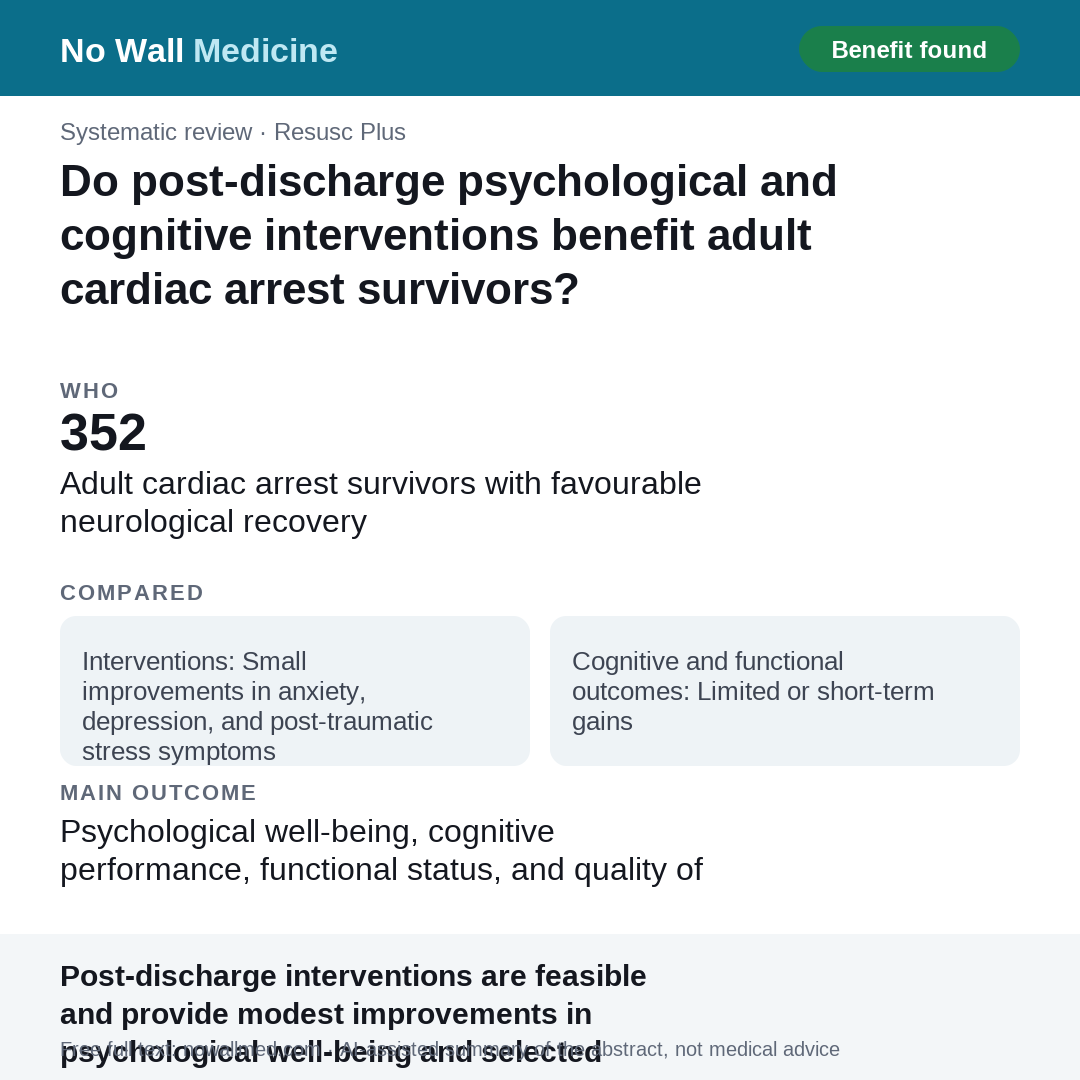
Psychological and cognitive support after cardiac arrest: a systematic review
Systematic reviewBenefit found
Do post-discharge psychological and cognitive interventions benefit adult cardiac arrest survivors?
Who
352
Adult cardiac arrest survivors with favourable neurological recovery
Compared
Interventions: Small improvements in anxiety, depression, and post-traumatic stress symptoms
Cognitive and functional outcomes: Limited or short-term gains
Main outcome
Psychological well-being, cognitive performance, functional status, and quality of life
Bottom line: Post-discharge interventions are feasible and provide modest improvements in psychological well-being and selected quality-of-life domains.
Limitation: Limited or short-term gains in cognitive, functional, and participation outcomes in small uncontrolled studies.
Resusc Plus · 2026-08-15Download image
First-line immune checkpoint inhibitors versus chemotherapy in delaying quality of life deterioration in advanced NSCLC: a systematic review and meta-analysis
Systematic review and meta-analysis of 15 randomized trialsBenefit found
Do immune checkpoint inhibitors delay quality of life deterioration versus chemotherapy in advanced non-small-cell lung cancer?
Who
7127
Patients with advanced non-small-cell lung cancer
Compared
Immune checkpoint inhibitor-based therapies
Chemotherapy
Main outcome
Time to deterioration of global quality of life
Result: hazard ratio 0.75 (95% CI 0.69-0.81)
Bottom line: Immune checkpoint inhibitor-based therapies, especially immunochemotherapy, delay health-related quality of life deterioration compared to chemotherapy.
BMC Med · 2026-08-14Download image

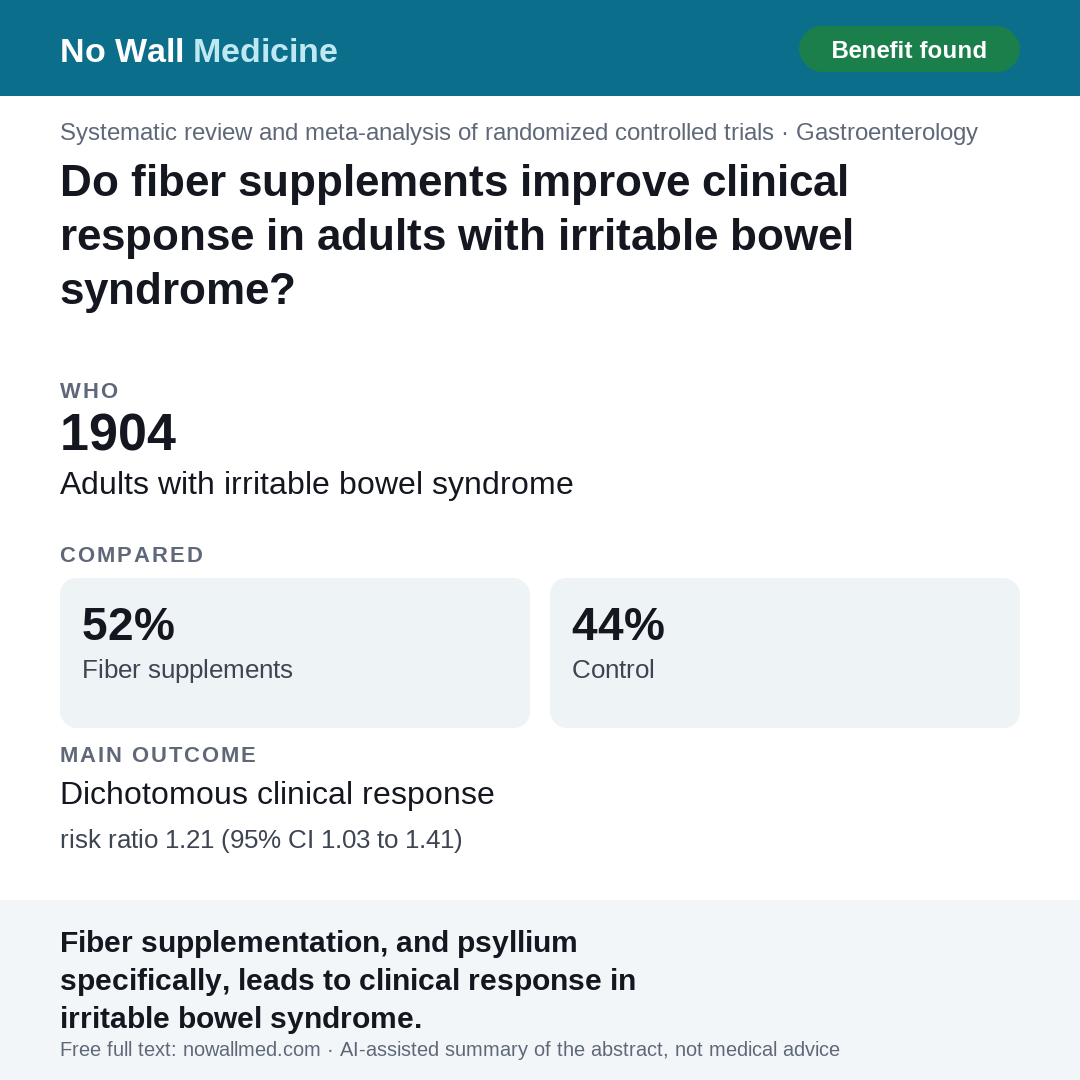
Fiber Supplementation in Irritable Bowel Syndrome: A Systematic Review and Meta-Analysis of Randomized Controlled Trials
Systematic review and meta-analysis of randomized controlled trialsBenefit found
Do fiber supplements improve clinical response in adults with irritable bowel syndrome?
Who
1904
Adults with irritable bowel syndrome
Compared
52%Fiber supplements
44%Control
Main outcome
Dichotomous clinical response
Result: risk ratio 1.21 (95% CI 1.03 to 1.41)
Bottom line: Fiber supplementation, and psyllium specifically, leads to clinical response in irritable bowel syndrome.
Limitation: Subgroup analysis for irritable bowel syndrome subtype was not possible for most outcomes.
Gastroenterology · 2026-08-14Download image
An updated systematic review on antimicrobial resistance among Salmonella Typhi worldwide
Systematic reviewMixed results
What are the prevalence and trends of antimicrobial resistance among Salmonella Typhi worldwide?
Who
132 174
Salmonella Typhi isolated from a normally sterile site in a person · 54 countries
Compared
Multidrug-resistant isolates: 22 320 (30.7%) of 72 731
Ciprofloxacin resistant isolates: 41 225 (42.4%) of 97 269
Azithromycin resistant isolates: 2086 (3.4%) of 62 186
Main outcome
Prevalence of antimicrobial resistance
Bottom line: Multidrug-resistant Salmonella Typhi is increasing in Africa, while extensively drug-resistant strains are emerging in Asia.
Clin Microbiol Infect · 2026-08-14Download image

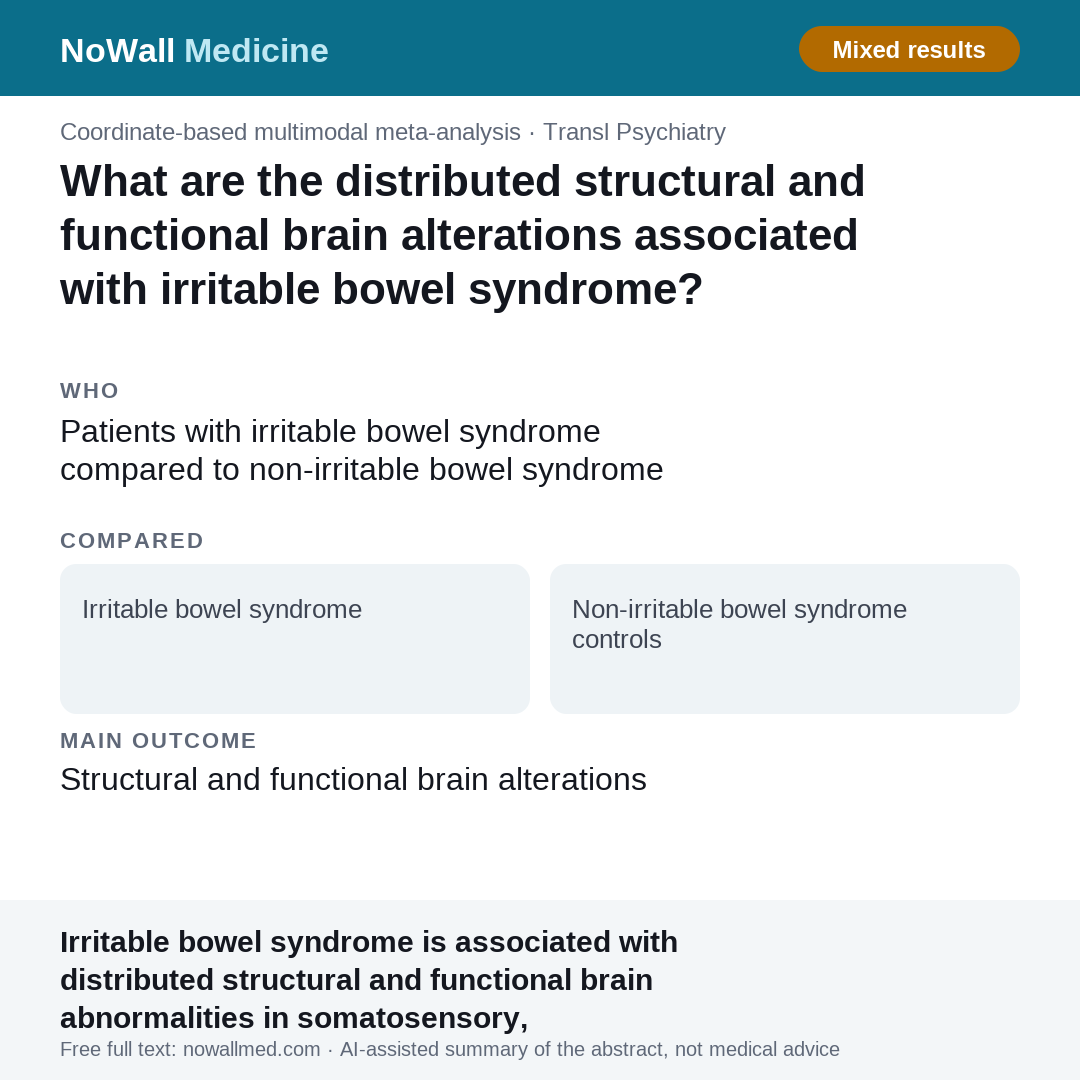
Distributed structural and functional brain alterations associated with irritable bowel syndrome: a coordinate-based multimodal meta-analysis
Coordinate-based multimodal meta-analysisMixed results
What are the distributed structural and functional brain alterations associated with irritable bowel syndrome?
Who
Patients with irritable bowel syndrome compared to non-irritable bowel syndrome controls
Compared
Irritable bowel syndrome
Non-irritable bowel syndrome controls
Main outcome
Structural and functional brain alterations
Bottom line: Irritable bowel syndrome is associated with distributed structural and functional brain abnormalities in somatosensory, interoceptive, affective, and cognitive processing.
Transl Psychiatry · 2026-08-14Download image
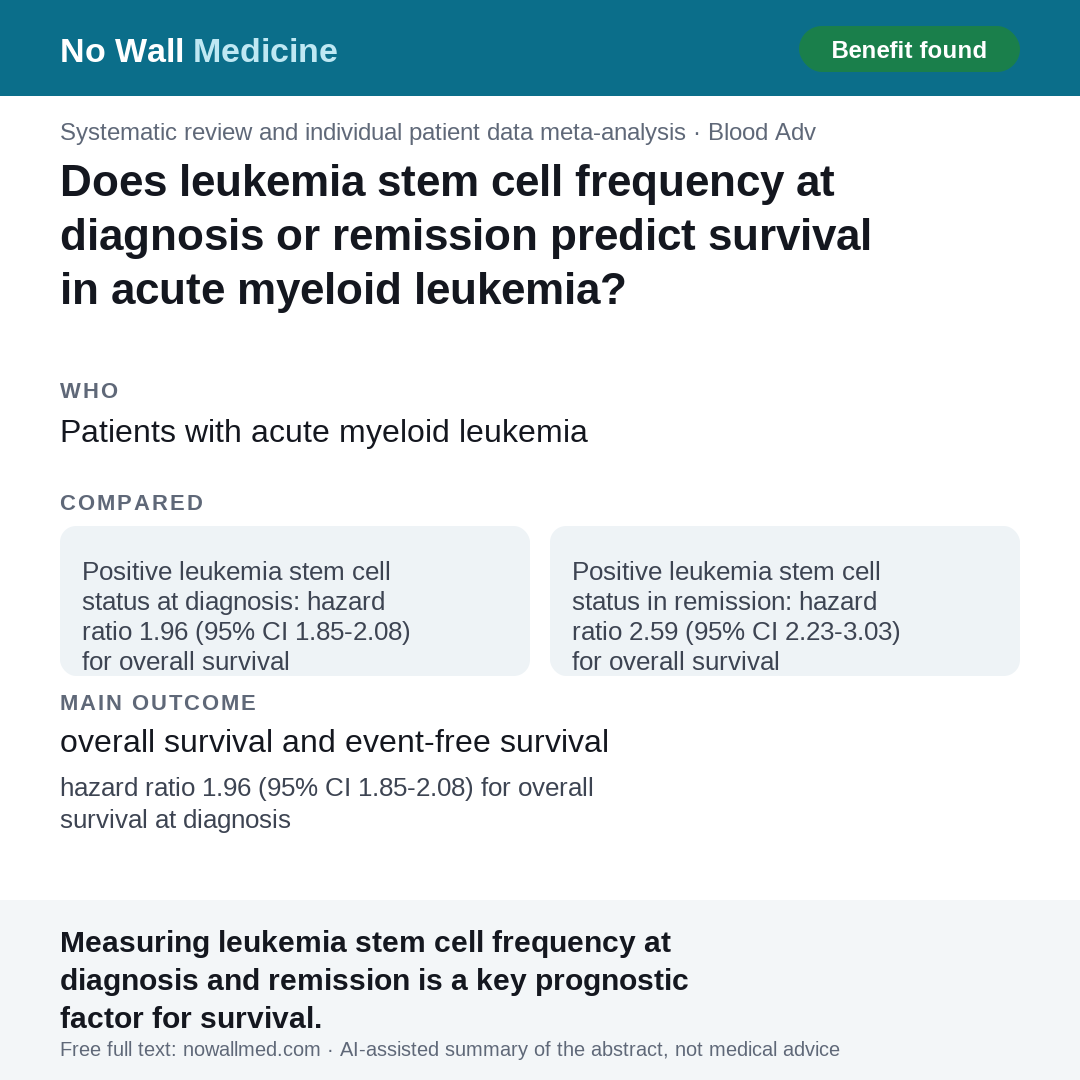
Prognostic value of measuring LSC frequency in AML: a systematic review and meta-analysis
Systematic review and individual patient data meta-analysisBenefit found
Does leukemia stem cell frequency at diagnosis or remission predict survival in acute myeloid leukemia?
Who
Patients with acute myeloid leukemia
Compared
Positive leukemia stem cell status at diagnosis: hazard ratio 1.96 (95% CI 1.85-2.08) for overall survival
Positive leukemia stem cell status in remission: hazard ratio 2.59 (95% CI 2.23-3.03) for overall survival
Main outcome
overall survival and event-free survival
Result: hazard ratio 1.96 (95% CI 1.85-2.08) for overall survival at diagnosis
Bottom line: Measuring leukemia stem cell frequency at diagnosis and remission is a key prognostic factor for survival.
Blood Adv · 2026-08-14Download image
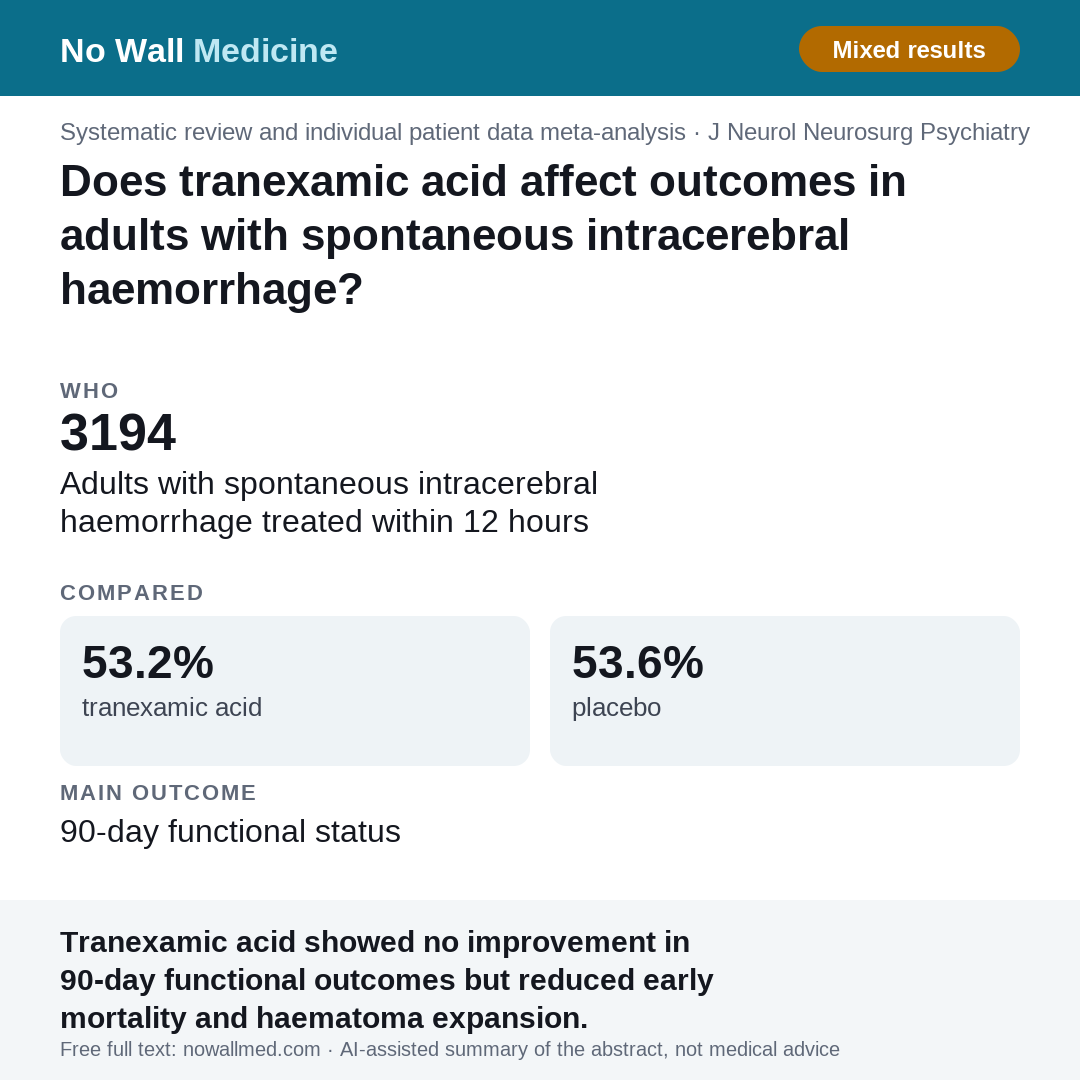
Effect of tranexamic acid for acute spontaneous intracerebral haemorrhage: a systematic review and individual patient data meta-analysis
Systematic review and individual patient data meta-analysisMixed results
Does tranexamic acid affect outcomes in adults with spontaneous intracerebral haemorrhage?
Who
3194
Adults with spontaneous intracerebral haemorrhage treated within 12 hours
Compared
53.2%tranexamic acid
53.6%placebo
Main outcome
90-day functional status
Result: adjusted common OR 0.93 (95% CI 0.81 to 1.07)
Bottom line: Tranexamic acid showed no improvement in 90-day functional outcomes but reduced early mortality and haematoma expansion.
J Neurol Neurosurg Psychiatry · 2026-08-13Download image
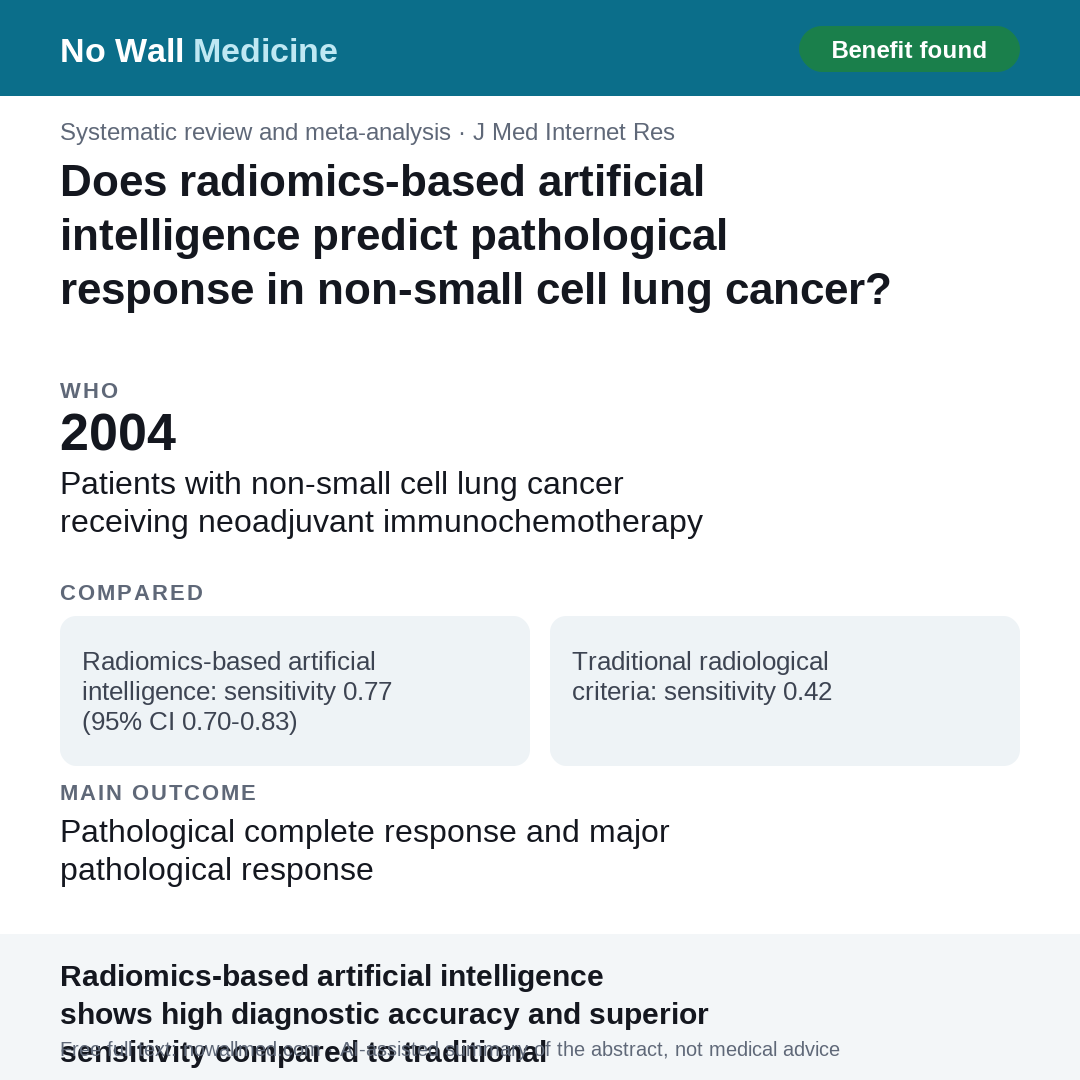
Radiomics-Based AI for Predicting Neoadjuvant Immunochemotherapy Pathological Response in Non-Small Cell Lung Cancer: Systematic Review and Meta-Analysis
Systematic review and meta-analysisBenefit found
Does radiomics-based artificial intelligence predict pathological response in non-small cell lung cancer?
Who
2004
Patients with non-small cell lung cancer
Compared
Radiomics-based artificial intelligence: AUC 0.85 for pathological complete response
Traditional radiological criteria: sensitivity 0.42 for pathological complete response
Main outcome
Pathological complete response and major pathological response
Result: AUC 0.85 for pathological complete response; AUC 0.88 for major pathological response
Bottom line: Radiomics-based artificial intelligence shows high diagnostic accuracy and superior sensitivity compared to traditional radiological criteria for predicting response.
Limitation: Heterogeneity and the retrospective design of current studies limit the evidence.
J Med Internet Res · 2026-08-13Download image
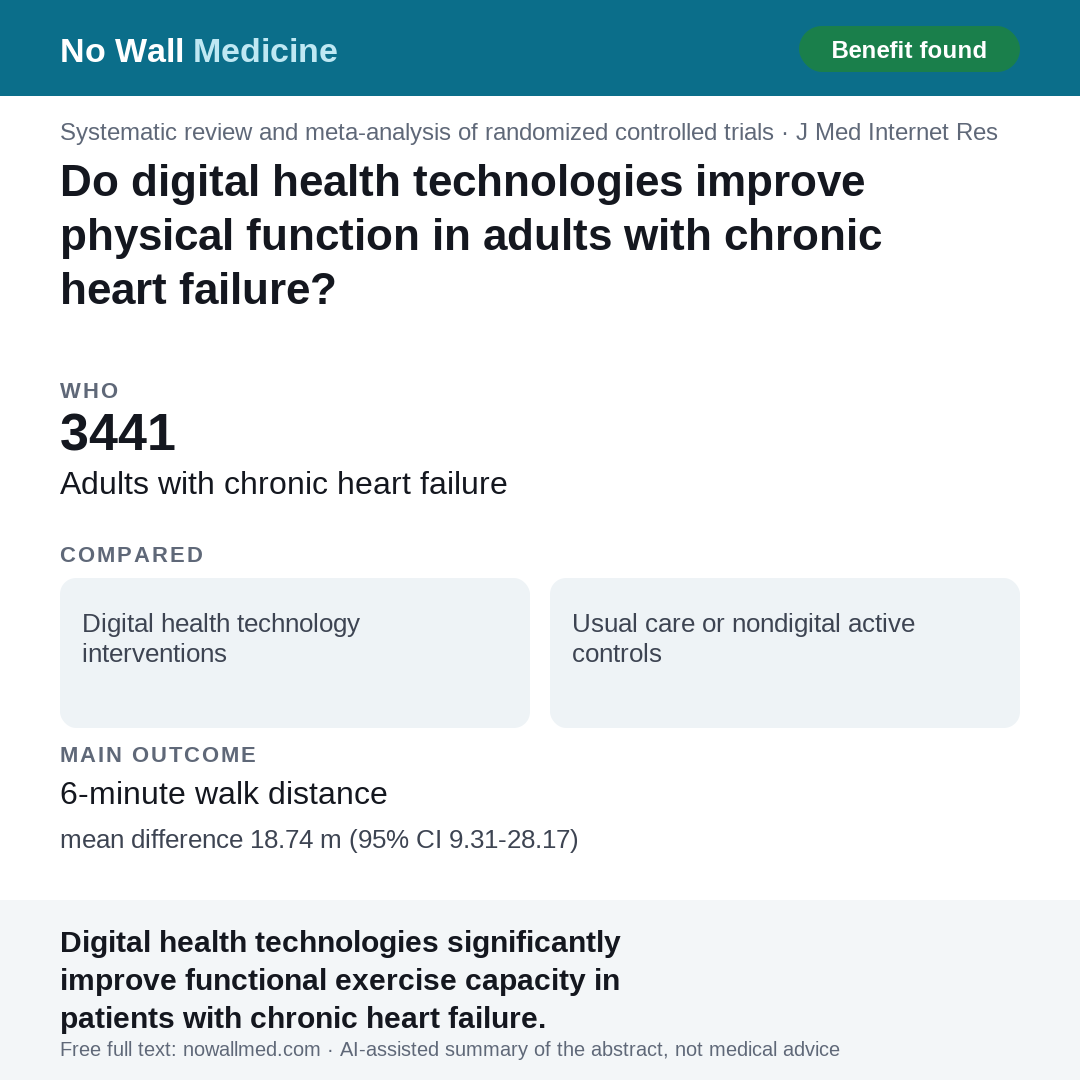
Digital Health Technology for Improving Physical Function in Adults With Chronic Heart Failure: Systematic Review and Meta-Analysis of Randomized Controlled Trials
Systematic review and meta-analysis of randomized controlled trialsBenefit found
Do digital health technologies improve physical function in adults with chronic heart failure?
Who
3441
Adults with chronic heart failure
Compared
Digital health technology interventions
Usual care or nondigital active controls
Main outcome
functional exercise capacity, cardiorespiratory fitness, and daily step count
Result: 6-minute walk distance mean difference 18.74 m (95% CI 9.31-28.17)
Bottom line: Digital health technologies improve functional capacity and cardiorespiratory fitness, especially through structured hybrid telerehabilitation models.
Limitation: Highly inconsistent effects on daily step counts and no significant impact on general health status.
J Med Internet Res · 2026-08-13Download image
Non-urgent emergency department utilization in adults: a systematic review of associated factors across diverse health systems
Systematic reviewMixed results
What factors are associated with non-urgent emergency department visits in adults?
Who
Adults making emergency department visits · 21 countries
Compared
Frequent previous emergency department visits: aOR up to 82.13
Perceived illness as non-serious: aOR up to 21.03
Main outcome
Factors associated with non-urgent emergency department visits
Bottom line: Non-urgent emergency department visits are influenced by demographic, health system, and clinical factors across diverse settings.
Scand J Trauma Resusc Emerg Med · 2026-08-13Download image

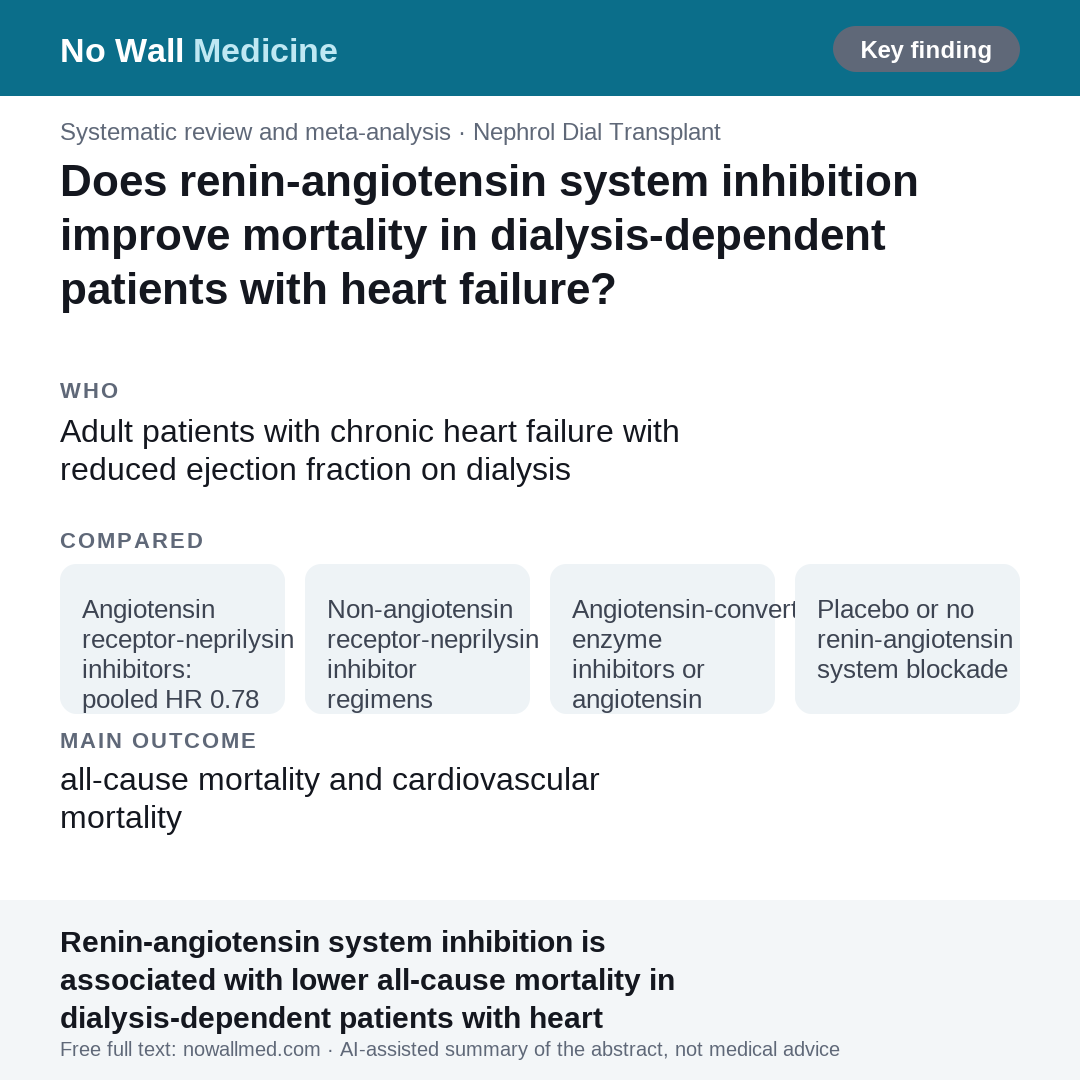
Renin-Angiotensin System Inhibition in Dialysis-Dependent Patients with Chronic Heart Failure due to Reduced Ejection Fraction: A Systematic Review and Meta-Analysis
Systematic review and meta-analysisBenefit found
Does renin-angiotensin system inhibition improve mortality in dialysis-dependent patients with heart failure?
Who
Adult patients with chronic heart failure with reduced ejection fraction on dialysis
Compared
Angiotensin receptor-neprilysin inhibitors: pooled HR 0.78 (95% CI 0.71-0.87) for all-cause mortality
Non-angiotensin receptor-neprilysin inhibitor regimens
Angiotensin-converting enzyme inhibitors or angiotensin receptor blockers: pooled HR 0.76 (95% CI 0.68-0.84) for all-cause mortality
Placebo or no renin-angiotensin system blockade
Main outcome
all-cause mortality and cardiovascular mortality
Result: pooled HR 0.78 (95% CI 0.71-0.87) for all-cause mortality with ARNIs
Bottom line: Renin-angiotensin system inhibition is associated with lower all-cause mortality in dialysis-dependent patients with heart failure.
Limitation: Findings are derived predominantly from observational studies and are susceptible to residual confounding.
Nephrol Dial Transplant · 2026-08-12Download image
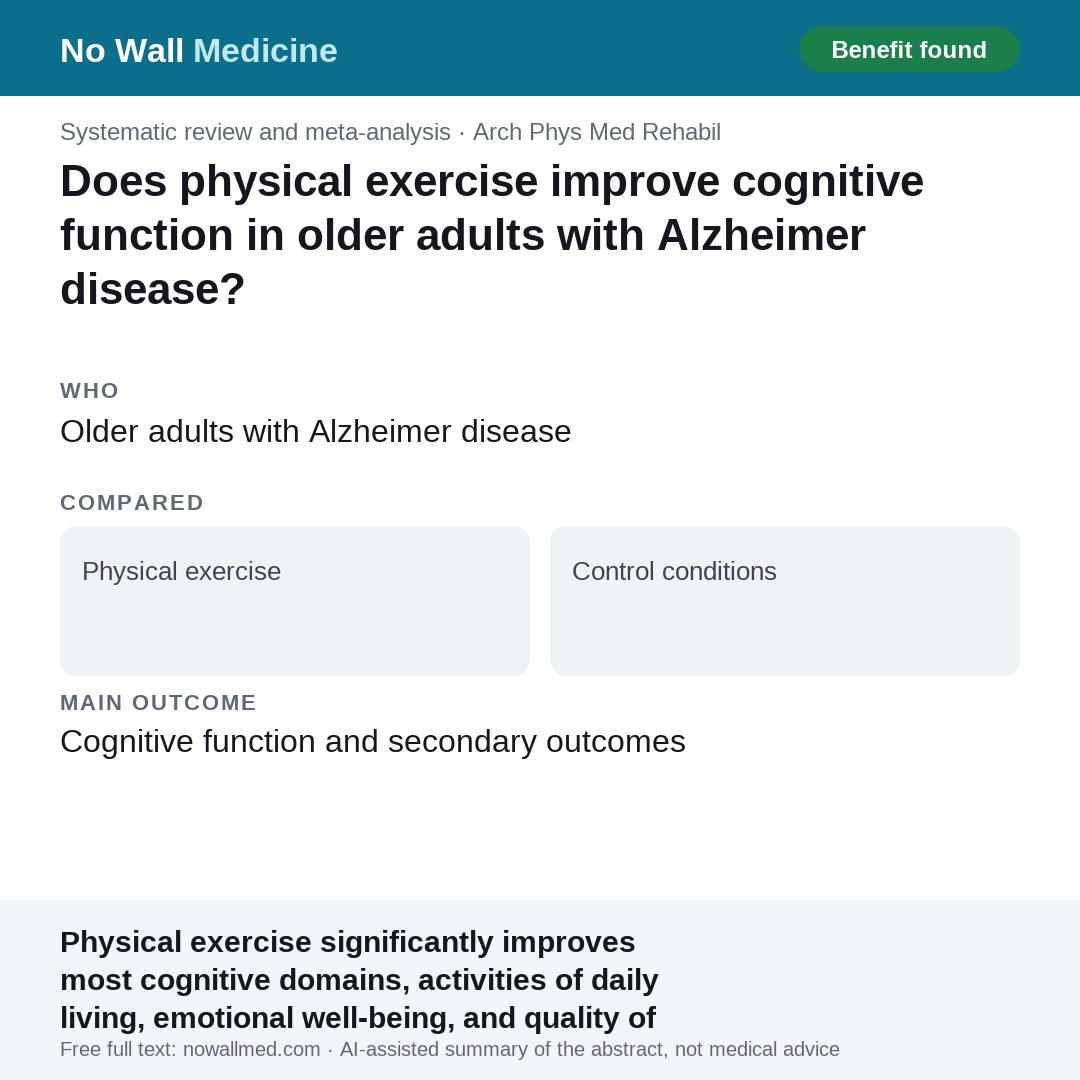
Exercise Interventions for Older Adults With Alzheimer Disease: A Systematic Review and Meta-analysis
Systematic review and meta-analysisBenefit found
Does physical exercise improve cognitive function in older adults with Alzheimer disease?
Who
Older adults with Alzheimer disease
Compared
Physical exercise
Control conditions
Main outcome
Cognitive function and secondary outcomes
Bottom line: Physical exercise significantly improves most cognitive domains, activities of daily living, emotional well-being, and quality of life.
Arch Phys Med Rehabil · 2026-08-12Download image
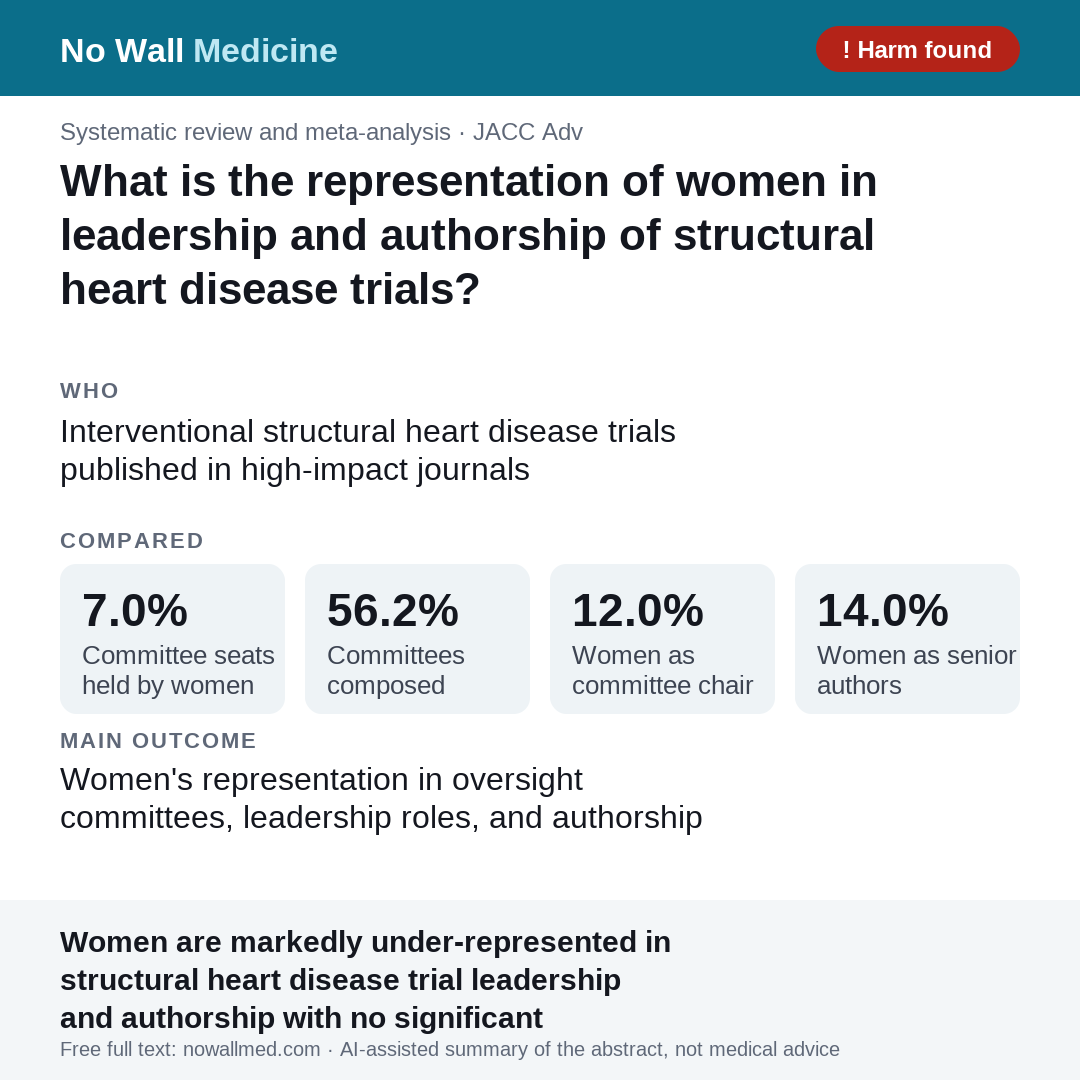
Women in the Leadership of Interventional Structural Heart Disease Trials: A Systematic Review and Meta-Analysis
Systematic review and meta-analysisHarm found
What is the representation of women in leadership and authorship of structural heart disease trials?
Who
88
Interventional structural heart disease trials published in high-impact journals
Compared
7.0%Committee seats held by women
56.2%Committees composed entirely of men
12.0%Women as committee chair
14.0%Women as senior authors
Main outcome
Women's representation in oversight committees, leadership roles, and authorship
Result: OR per year 1.02 (95% CI 0.93-1.12) for committee representation
Bottom line: Women are markedly under-represented in structural heart disease trial leadership and authorship with no significant improvement over time.
JACC Adv · 2026-08-12Download image