Visual abstracts
New randomized trials and meta-analyses from leading journals at a glance: who was studied, what was compared, and what was found. Every paper is free to read in full.
All specialtiesCardiology 1213Oncology 1053Gastroenterology & Hepatology 420Infectious Disease 795Neurology 500Psychiatry & Mental Health 614Pulmonology 511Critical Care 349Endocrinology & Diabetes 675Pediatrics 719Surgery 533Orthopedics & Sports Medicine 228Neurosurgery 163Cardiothoracic & Vascular Surgery 134Plastic & Reconstructive Surgery 187Nephrology 250Rheumatology 160Hematology 249Dermatology 117Ophthalmology 136Obstetrics & Gynecology 375Public & Global Health 236Radiology & Imaging 156Anesthesiology 215Urology 218ENT (Otolaryngology) 166Emergency Medicine 127Allergy & Immunology 82Geriatrics 247Family Medicine & Primary Care 150Medical Genetics & Genomics 126Pathology & Laboratory Medicine 36Physical Medicine & Rehabilitation 207Palliative Care 109Nutrition 313Digital Health & AI 609General Medicine 114
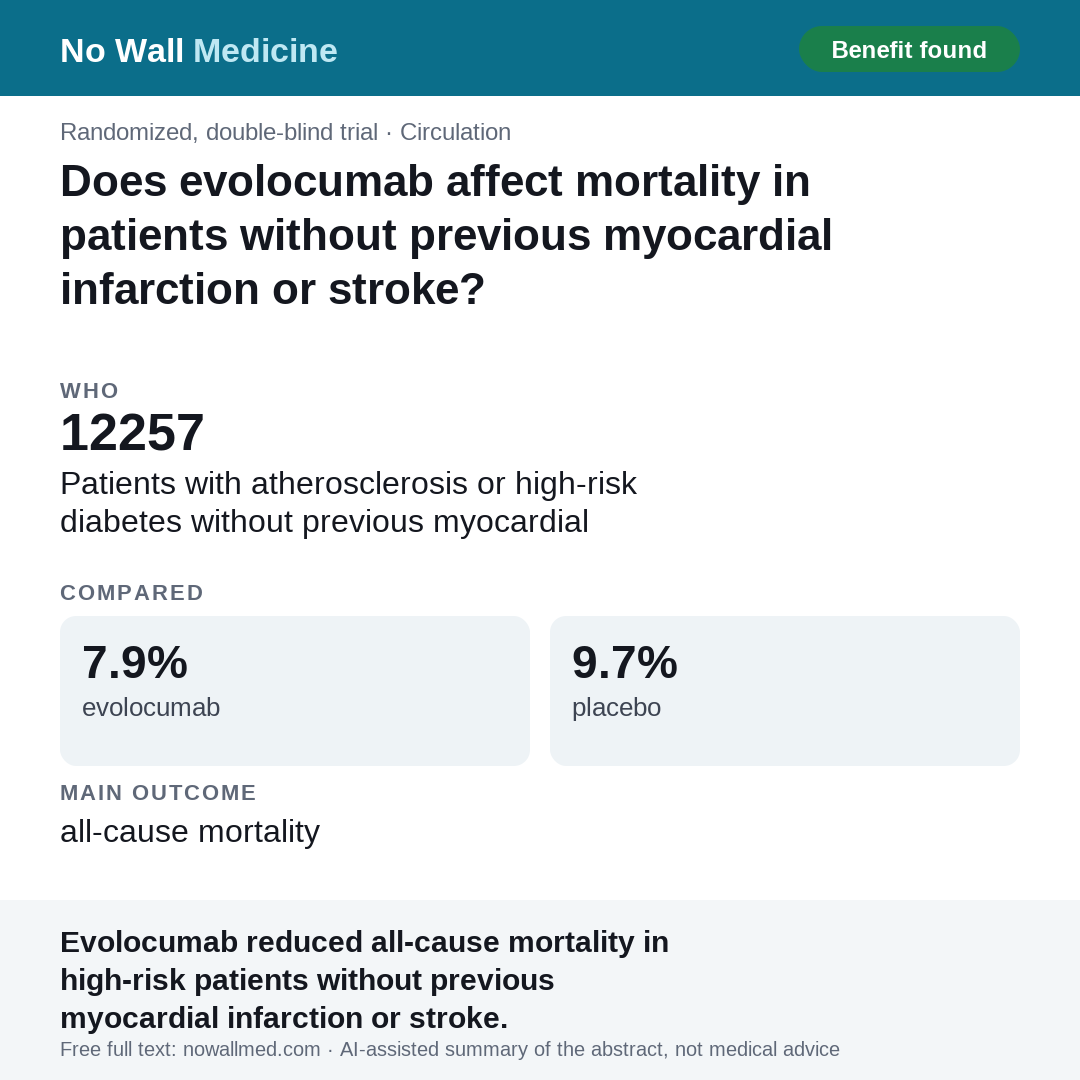
Desmodium styracifolium Total Flavone Capsules for Urolithiasis: A Phase 3 Randomized Clinical Trial
Double-blind, placebo-controlled, phase 3 randomized clinical trialBenefit found
Does Desmodium styracifolium total flavone capsules improve stone passage rates compared with placebo?
Who
606
Adults aged 18-70 years with diagnosed ureteral stones · 34 sites in China
Compared
Guang Jing: 204 of 457 [44.6%]
Placebo: 50 of 148 [33.8%]
Main outcome
stone passage rate by day 28 confirmed by computed tomography
Result: relative risk 1.32 (95% CI 1.03-1.69)
Bottom line: Guang Jing significantly increased the expulsion of ureteral stones by day 28 with a favorable safety profile.
JAMA Netw Open · 2026-09-01Download image
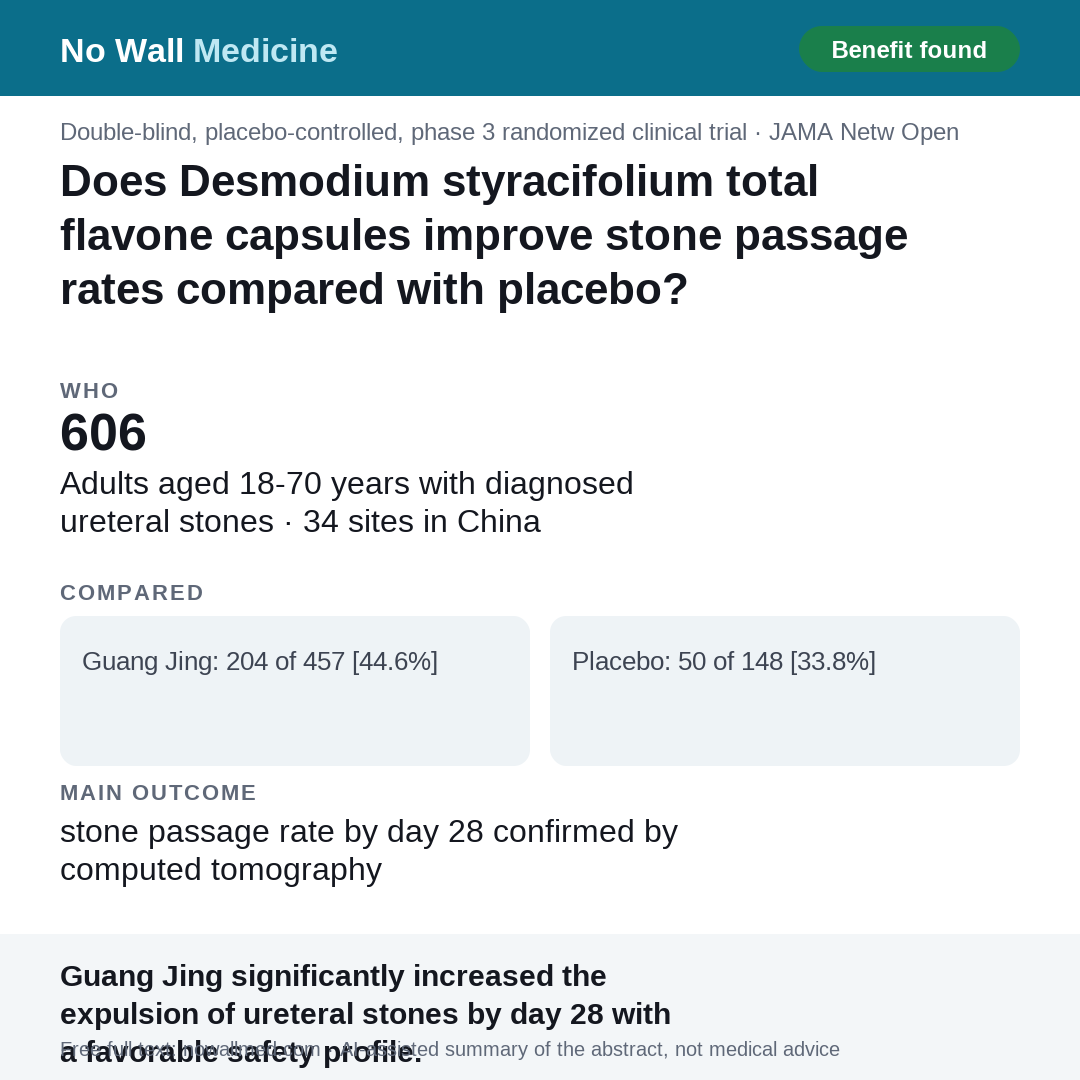
Intravenous ferric carboxymaltose and exercise capacity in iron-deficient kidney transplant recipients: a randomised, placebo-controlled trial in the Netherlands
Randomised, double-blind, placebo-controlled trialNo clear difference
Does intravenous ferric carboxymaltose improve exercise capacity in iron-deficient kidney transplant recipients?
Who
155
Adult kidney transplant recipients with iron deficiency · Two Dutch university hospitals
Compared
Ferric carboxymaltose: adjusted mean difference +9 m [95% CI -10 to +28]
Placebo
Main outcome
24-week change in 6-minute walk test distance
Result: adjusted mean difference +9 m [95% CI -10 to +28]
Bottom line: Intravenous ferric carboxymaltose did not improve exercise capacity or most secondary outcomes in iron-deficient kidney transplant recipients.
Funded by: Dutch Kidney Foundation, Dutch Heart Foundation, CSL Vifor
eClinicalMedicine · 2026-09-01Download image
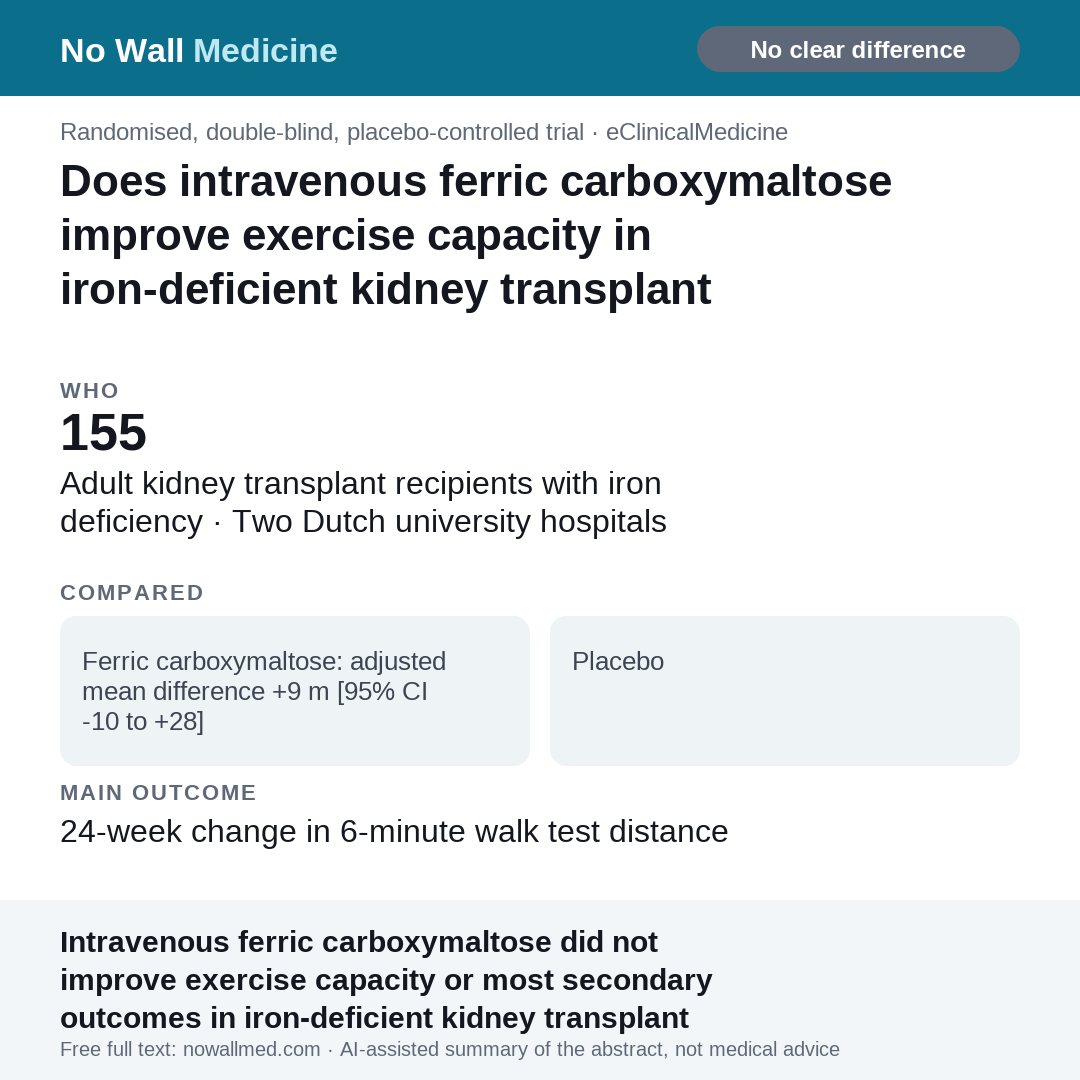
Restrictive vs Liberal Transfusion Strategy in Traumatic Brain Injury: A Secondary Analysis of the TRAIN Trial
Randomized clinical trialBenefit found
Liberal vs restrictive transfusion in TBI
Who
486
Patients with traumatic brain injury and anemia · 72 intensive care units, 22 countries
Compared
58.5%Liberal transfusion (138/236)
67.4%Restrictive transfusion (161/239)
Main outcome
Unfavorable neurological outcome
Result: relative risk 0.86 (95% CI 0.75 to 1.00)
Bottom line: Liberal transfusion reduces unfavorable outcomes
Limitation: inherent uncertainty of the estimate
JAMA Netw Open · 2026-09-01Download image
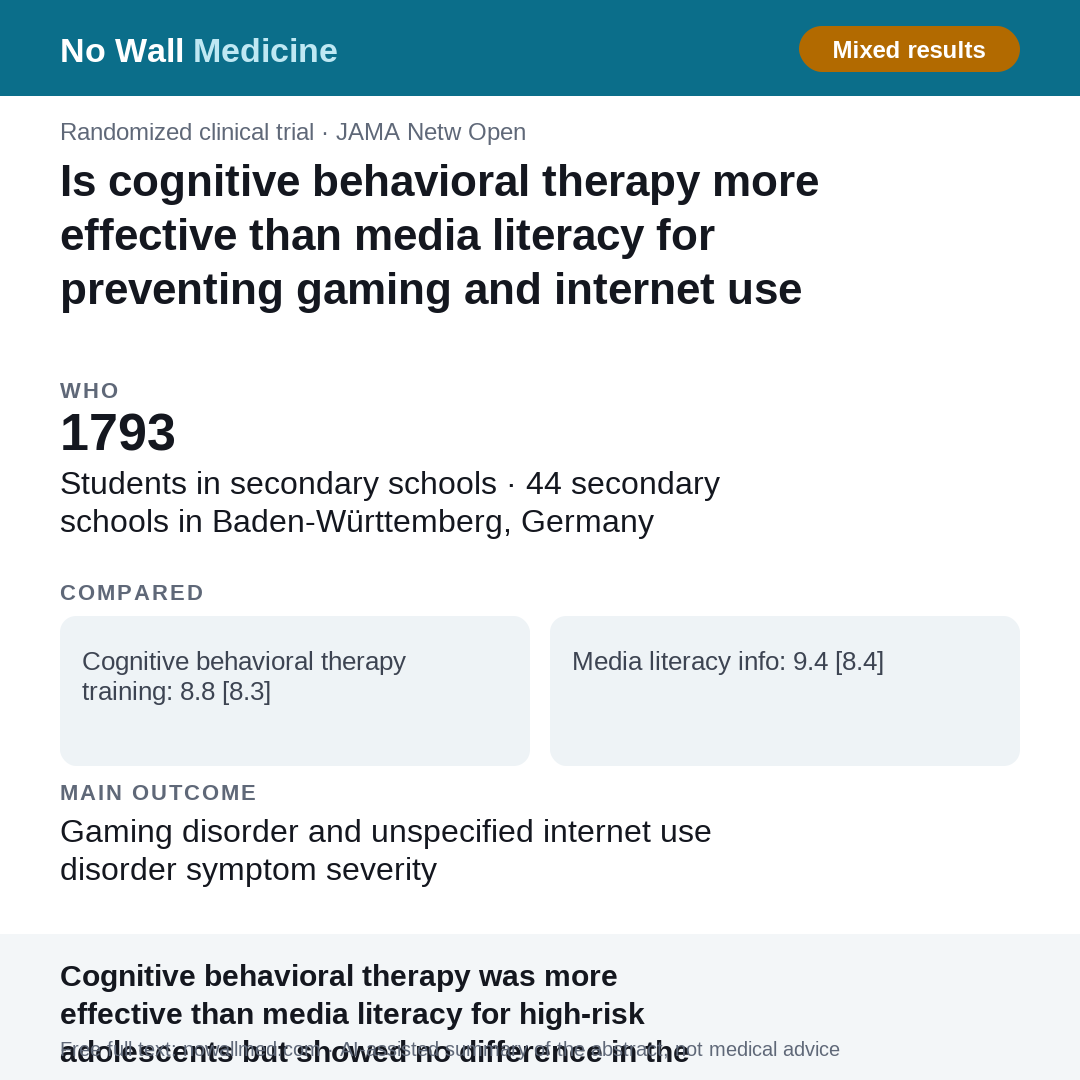
Cognitive Behavioral Therapy vs Media Literacy for Prevention of Gaming Disorder and Unspecified Internet Use Disorder: A Randomized Clinical Trial
Randomized clinical trialMixed results
Is cognitive behavioral therapy more effective than media literacy for preventing gaming and internet use disorders?
Who
1793
Students in secondary schools · 44 secondary schools in Baden-Württemberg, Germany
Compared
Cognitive behavioral therapy training: 8.8 [8.3]
Media literacy info: 9.4 [8.4]
Main outcome
Gaming disorder and unspecified internet use disorder symptom severity
Result: between-group Cohen d -0.07 (95% CI, -0.16 to 0.01)
Bottom line: Cognitive behavioral therapy was more effective than media literacy for high-risk adolescents but showed no difference in the total sample.
JAMA Netw Open · 2026-09-01Download image
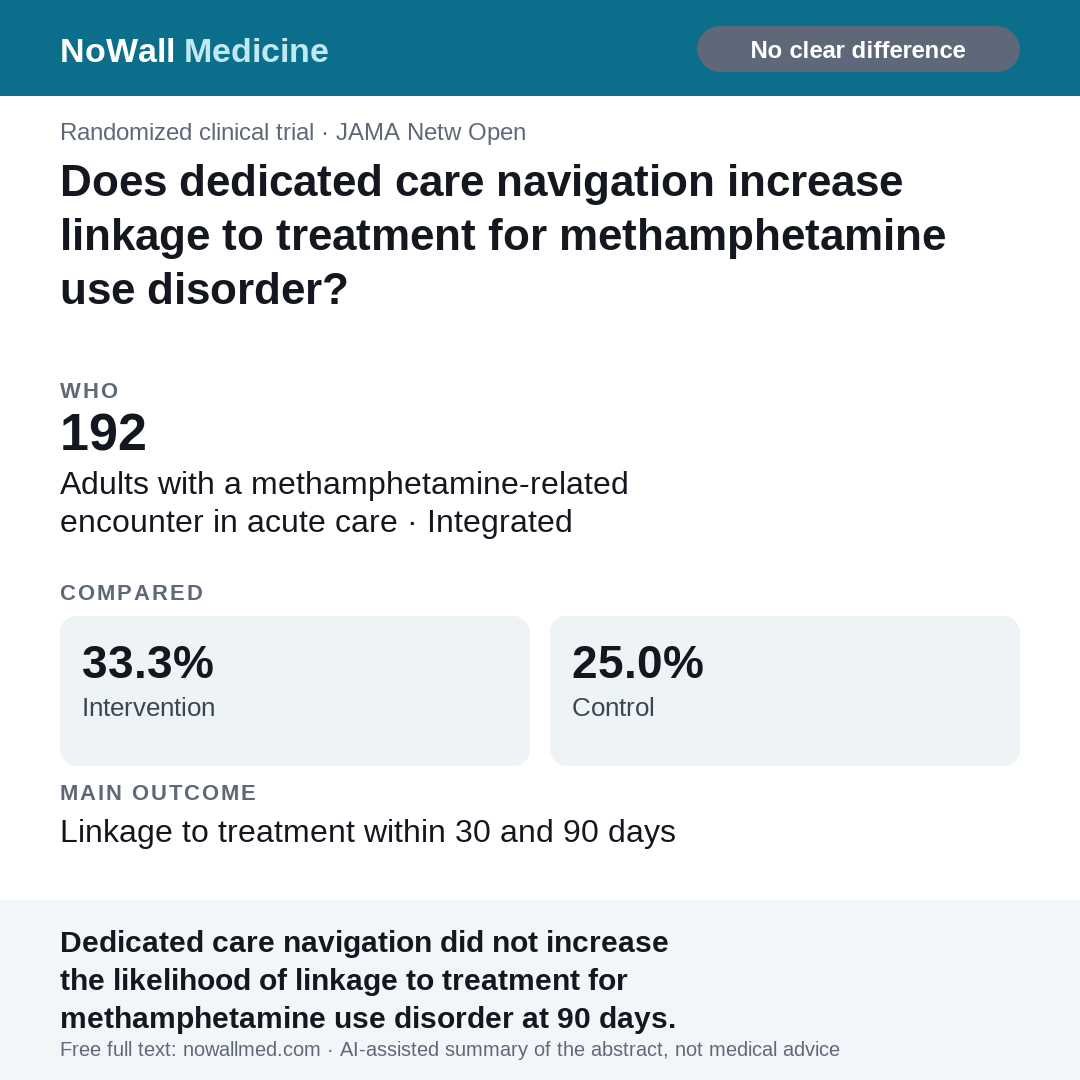
Care Navigation for Methamphetamine Use Disorder: A Randomized Clinical Trial
Randomized clinical trialNo clear difference
Does dedicated care navigation increase linkage to treatment for methamphetamine use disorder?
Who
192
Adults with a methamphetamine-related encounter in acute care · Integrated safety-net health system in Denver, Colorado
Compared
33.3%Intervention
25.0%Control
Main outcome
Linkage to treatment within 30 and 90 days
Result: risk ratio 1.33 (95% CI 0.85 to 2.09)
Bottom line: Dedicated care navigation did not increase the likelihood of linkage to treatment for methamphetamine use disorder at 90 days.
JAMA Netw Open · 2026-09-01Download image
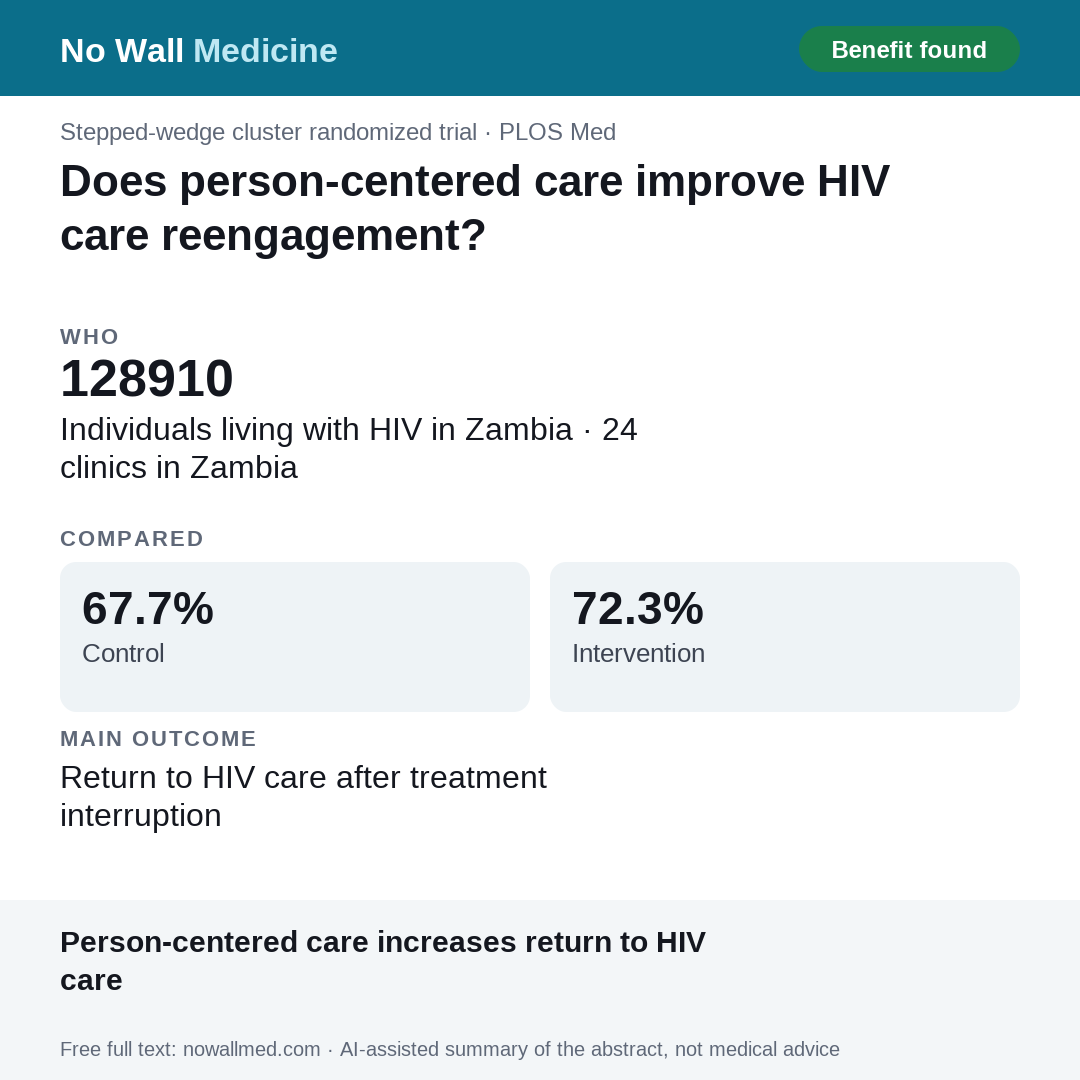
Effect of a person-centered care intervention on return and sustained reengagement after treatment interruptions from HIV care in Zambia: A post-hoc analysis of a stepped-wedged cluster randomized trial
Stepped-wedge cluster randomized trialBenefit found
Does person-centered care improve HIV care reengagement?
Who
128910
Individuals living with HIV in Zambia · 24 clinics in Zambia
Compared
67.7%Control
72.3%Intervention
Main outcome
Return to HIV care after treatment interruption
Result: Adjusted hazard ratio 1.16 (CI 1.12,1.20)
Bottom line: Person-centered care increases return to HIV care
Limitation: Post-hoc analysis and stepped-wedge design limitations
PLOS Med · 2026-09-01Download image
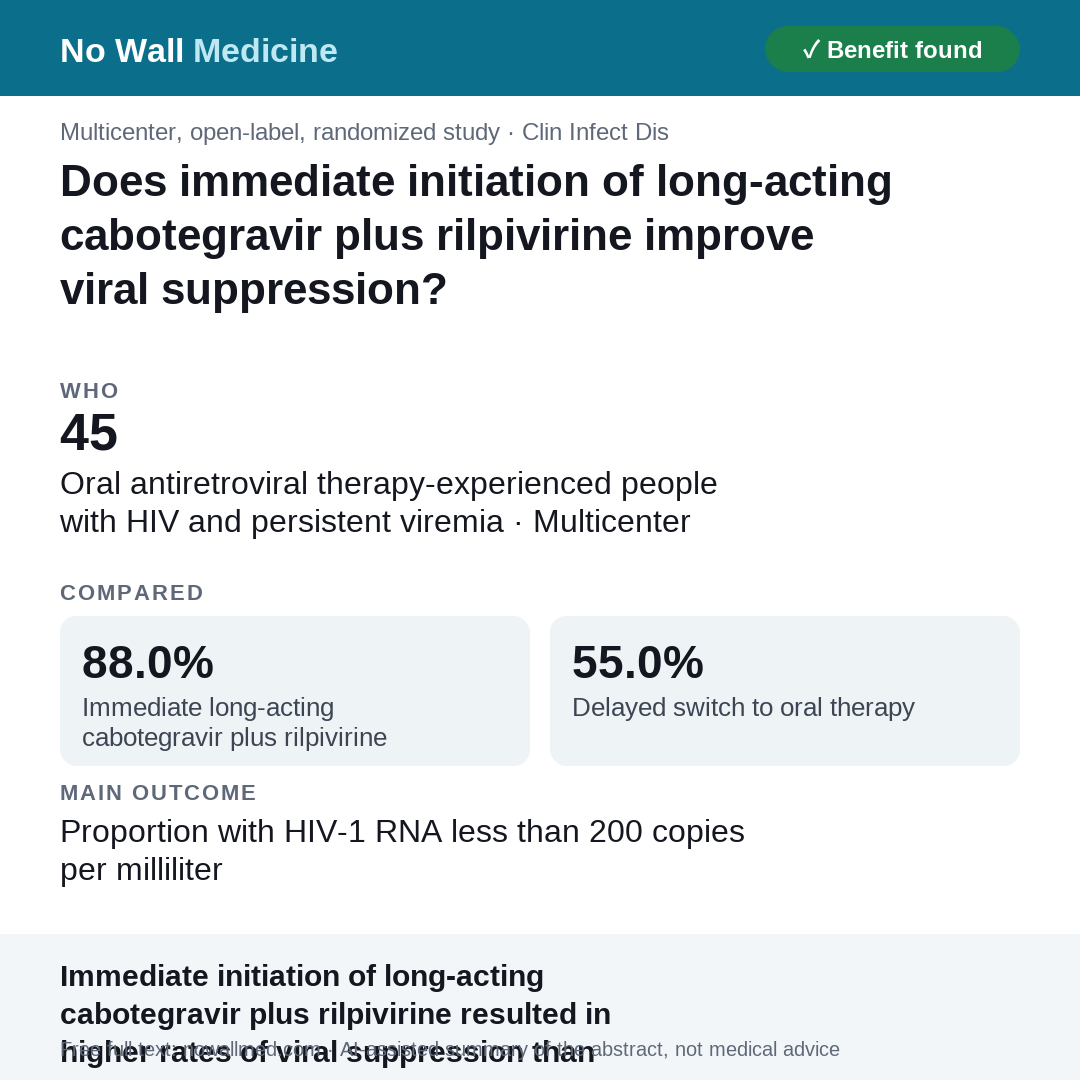
Direct Initiation of Long-Acting Cabotegravir Plus Rilpivirine in People with HIV and Suboptimal Virologic Suppression: A Randomized Trial
Multicenter, open-label, randomized studyBenefit found
Does immediate initiation of long-acting cabotegravir plus rilpivirine improve viral suppression?
Who
45
Oral antiretroviral therapy-experienced people with HIV and persistent viremia · Multicenter
Compared
88.0%Immediate long-acting cabotegravir plus rilpivirine (22/25)
55.0%Delayed switch to oral therapy (11/20)
Main outcome
Proportion with HIV-1 RNA less than 200 copies per milliliter
Result: relative risk for failure 0.27 (95% CI 0.08-0.86)
Bottom line: Immediate initiation of long-acting cabotegravir plus rilpivirine resulted in higher rates of viral suppression than continued oral therapy.
Clin Infect Dis · 2026-09-01Download image
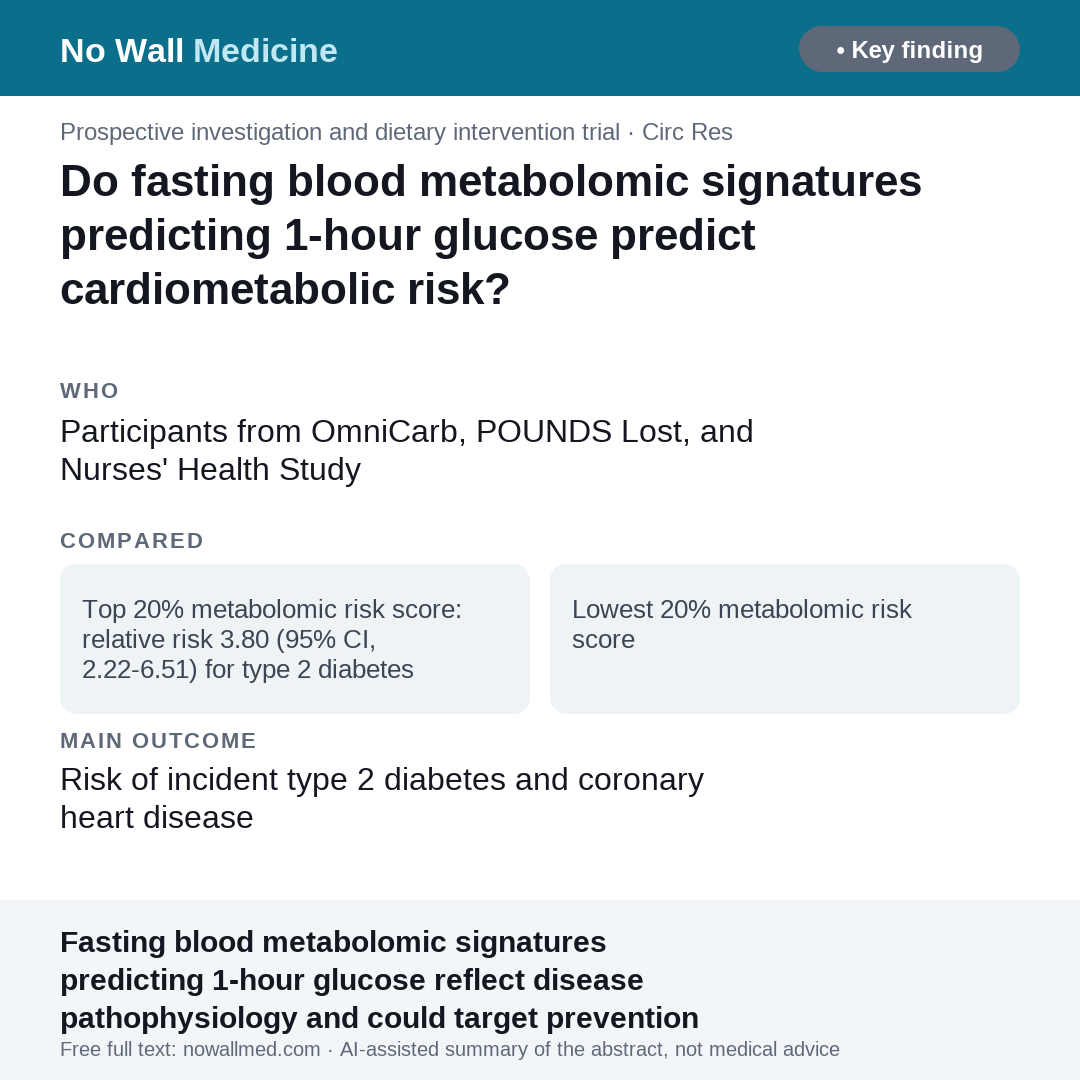
Blood Metabolomic Signatures of 1-Hour Glucose Predict Cardiometabolic Risk
Prospective investigation and dietary intervention trialBenefit found
Do fasting blood metabolomic signatures predicting 1-hour glucose predict cardiometabolic risk?
Who
Participants from OmniCarb, POUNDS Lost, and Nurses' Health Study
Compared
Top 20% metabolomic risk score: relative risk 3.80 (95% CI, 2.22-6.51) for type 2 diabetes
Lowest 20% metabolomic risk score
Main outcome
Risk of incident type 2 diabetes and coronary heart disease
Result: relative risk 3.80 (95% CI, 2.22-6.51) for type 2 diabetes
Bottom line: Fasting blood metabolomic signatures predicting 1-hour glucose reflect disease pathophysiology and could target prevention of cardiometabolic disease.
Circ Res · 2026-09-01Download image
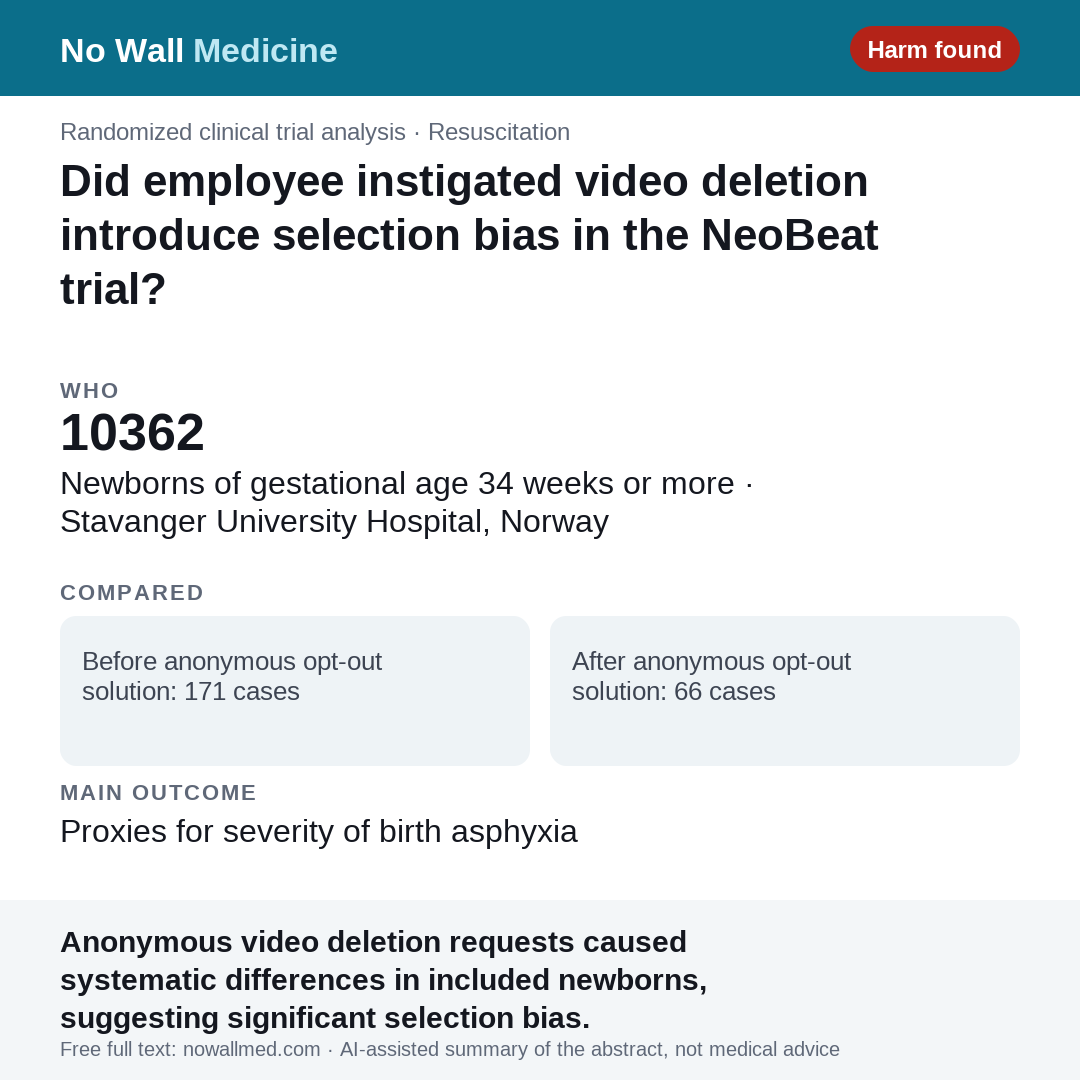
Selection bias introduced in a randomized clinical trial due to employee instigated deletion of newborn resuscitation videos
Randomized clinical trial analysisHarm found
Did employee instigated video deletion introduce selection bias in the NeoBeat trial?
Who
10362
Newborns of gestational age 34 weeks or more · Stavanger University Hospital, Norway
Compared
Before anonymous opt-out solution: 171 cases
After anonymous opt-out solution: 66 cases
Main outcome
Proxies for severity of birth asphyxia
Bottom line: Anonymous video deletion requests caused systematic differences in included newborns, suggesting significant selection bias.
Limitation: The trial was terminated halfway without power to conclude on outcomes.
Resuscitation · 2026-09-01Download image
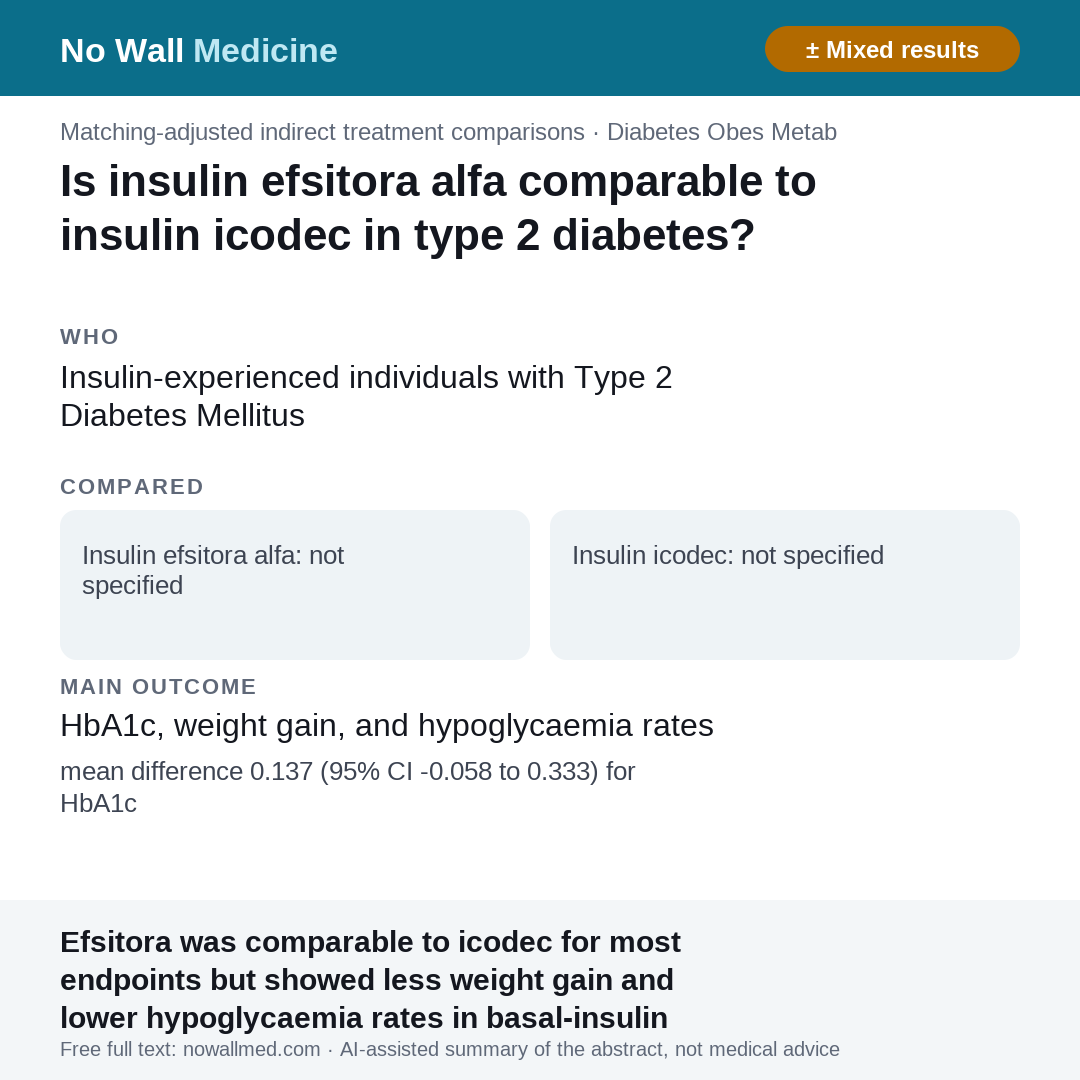
Insulin Efsitora Demonstrates Similar Efficacy and Safety Profiles to Insulin Icodec in Insulin-Experienced Individuals With Type 2 Diabetes Mellitus: Matching-Adjusted Indirect Comparisons of QWINT-3 Versus ONWARDS 2, and QWINT-4 Versus ONWARDS 4
Matching-adjusted indirect treatment comparisonsMixed results
Is insulin efsitora alfa comparable to insulin icodec in type 2 diabetes?
Who
Insulin-experienced individuals with Type 2 Diabetes Mellitus
Compared
Insulin efsitora alfa: not specified
Insulin icodec: not specified
Main outcome
HbA1c, weight gain, and hypoglycaemia rates
Result: mean difference 0.137 (95% CI -0.058 to 0.333) for HbA1c
Bottom line: Efsitora was comparable to icodec for most endpoints but showed less weight gain and lower hypoglycaemia rates in basal-insulin experienced participants.
Diabetes Obes Metab · 2026-09-01Download image
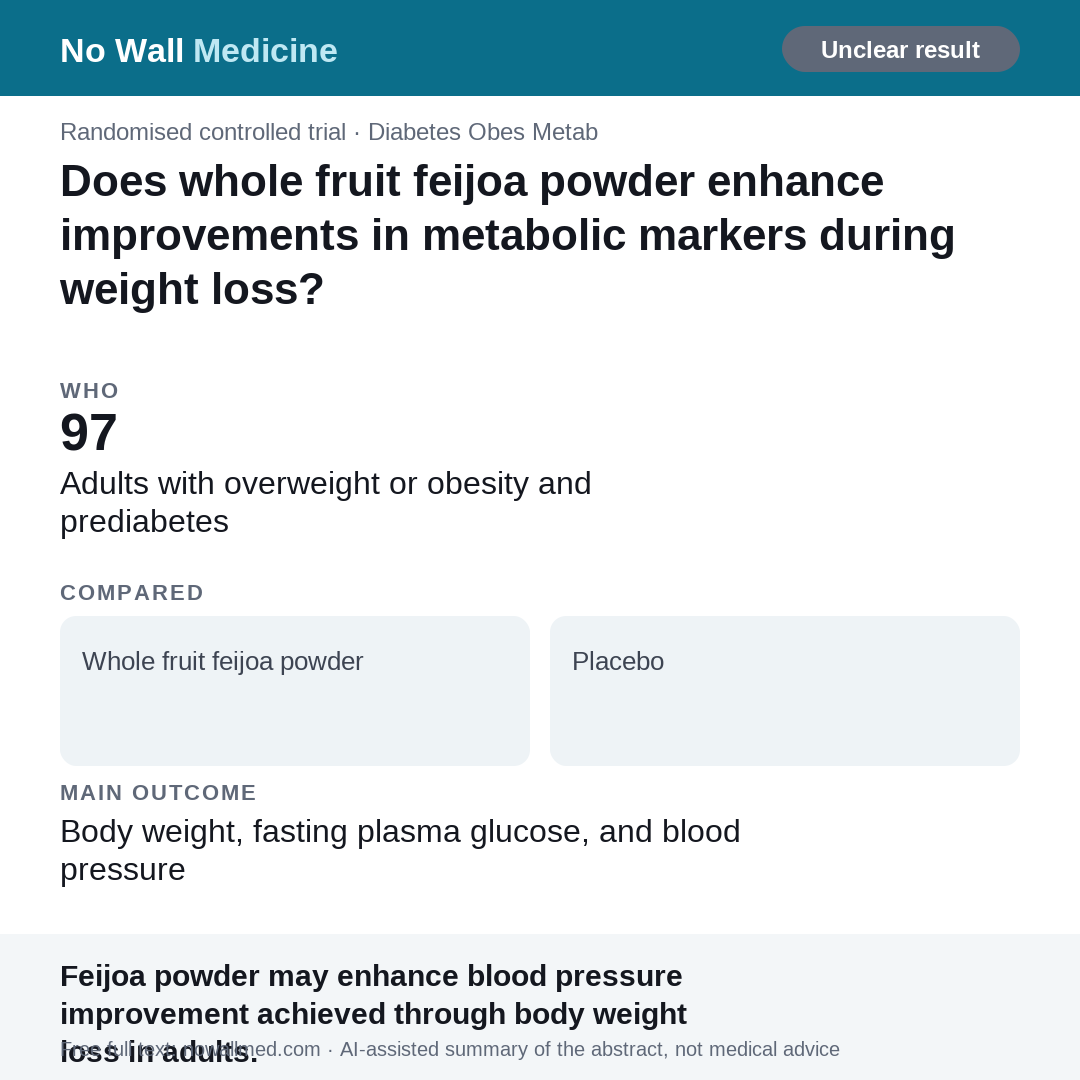
Evaluating Whole Fruit Feijoa Powder for Type 2 Diabetes Risk Prevention: A Randomised Controlled Trial
Randomised controlled trialMixed results
Does whole fruit feijoa powder enhance improvements in diabetes risk biomarkers during weight loss?
Who
97
Adults with overweight or obesity and prediabetes
Compared
Whole fruit feijoa powder
Placebo
Main outcome
Body weight, fasting plasma glucose, and blood pressure
Bottom line: Feijoa powder may enhance systolic blood pressure improvement but did not affect body weight or fasting plasma glucose.
Diabetes Obes Metab · 2026-09-01Download image
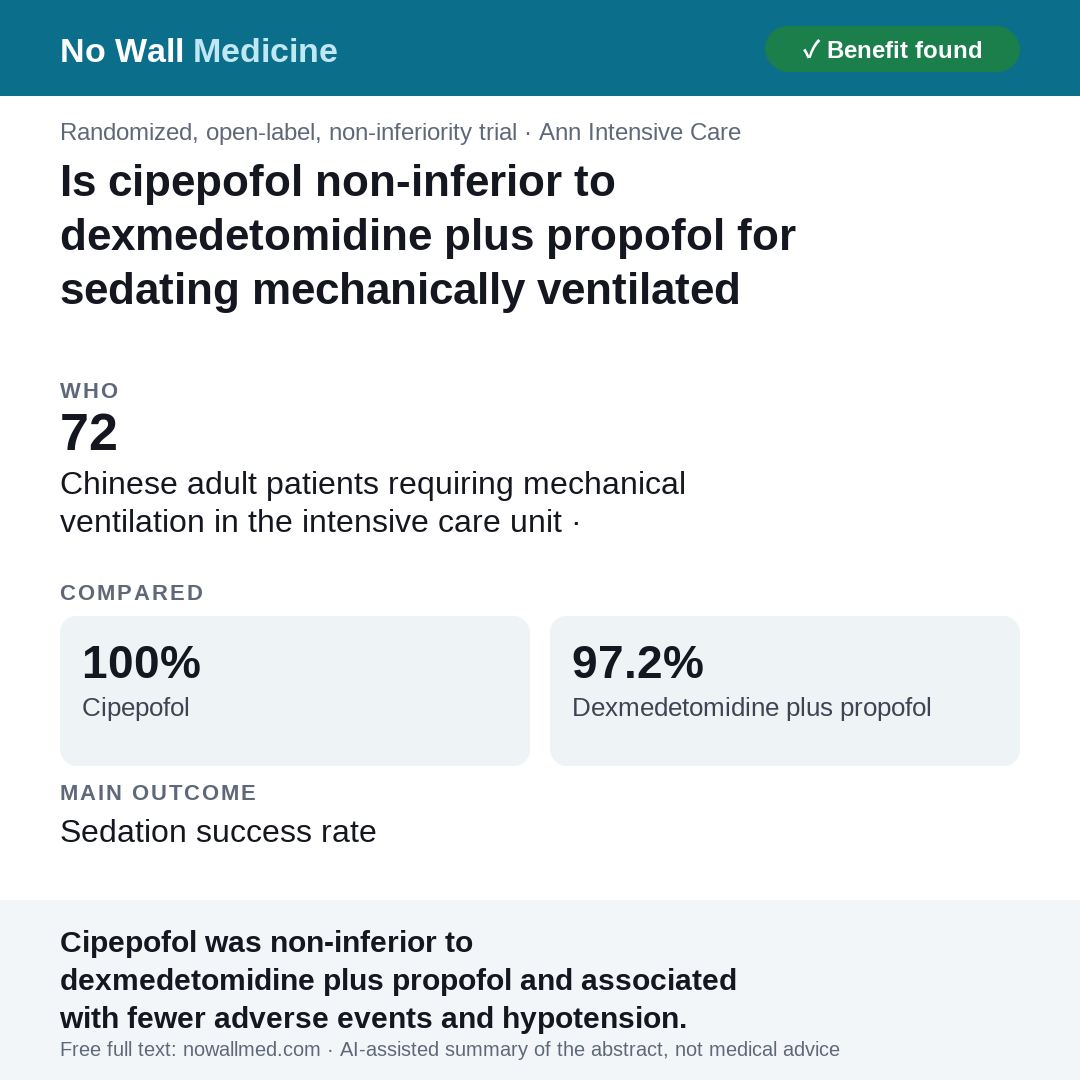
Efficacy and safety of sedation induced with cipepofol alone versus a dexmedetomidine plus propofol regimen for patients requiring mechanical ventilation: a randomized, open-label, non-inferiority trial
Randomized, open-label, non-inferiority trialBenefit found
Is cipepofol non-inferior to dexmedetomidine plus propofol for sedating mechanically ventilated patients?
Who
72
Chinese adult patients requiring mechanical ventilation in the intensive care unit · Single-center study
Compared
100%Cipepofol
97.2%Dexmedetomidine plus propofol
Main outcome
Sedation success rate
Result: -1.34% (95% CI for ITT analysis)
Bottom line: Cipepofol was non-inferior to dexmedetomidine plus propofol and associated with fewer adverse events and hypotension.
Ann Intensive Care · 2026-09-01Download image
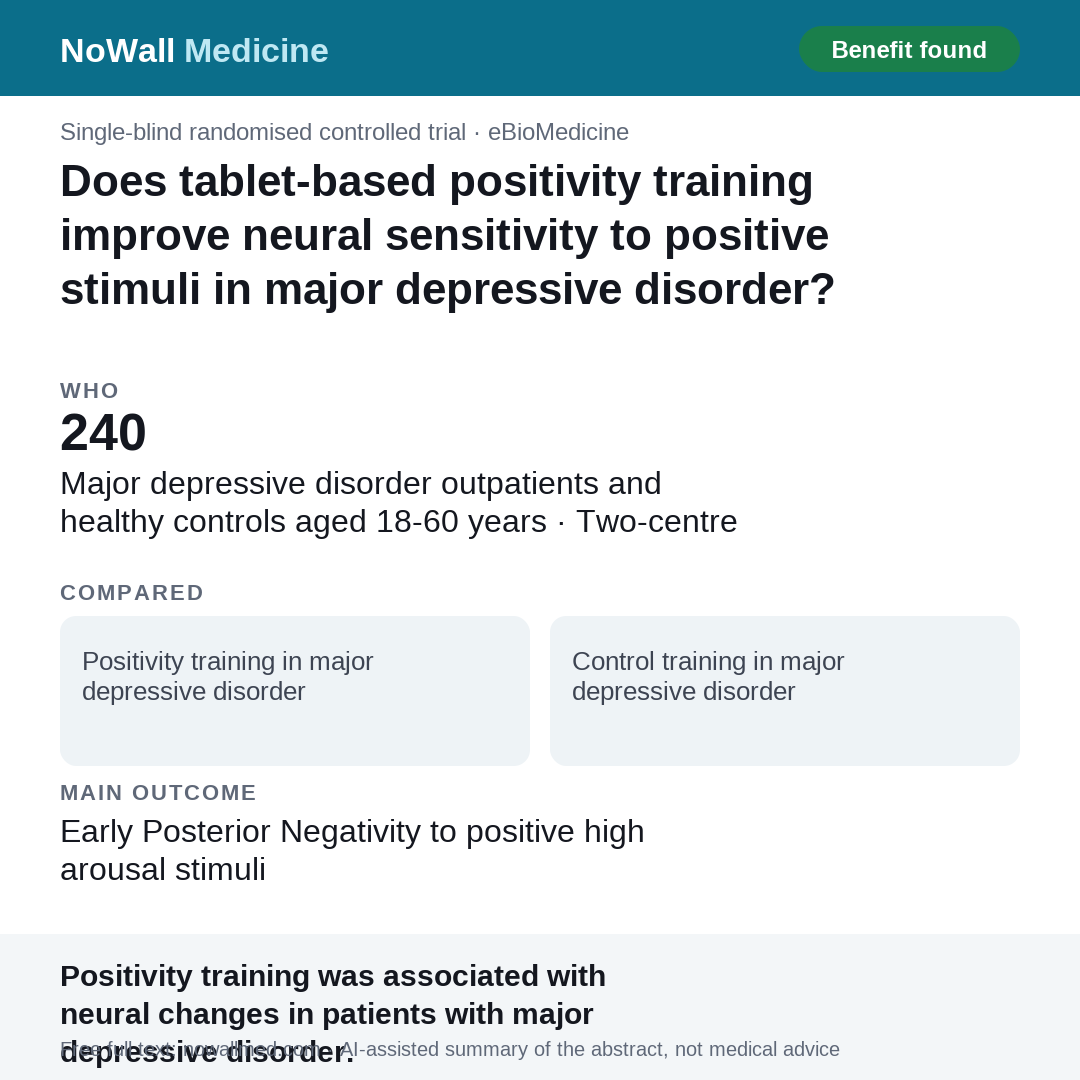
A tablet-based attentional cognitive bias modification intervention for positive emotion processing in major depressive disorder: a single-blind randomised controlled two-centre trial
Single-blind randomised controlled trialBenefit found
Does tablet-based positivity training improve neural sensitivity to positive stimuli in major depressive disorder?
Who
240
Major depressive disorder outpatients and healthy controls aged 18-60 years · Two-centre trial
Compared
Positivity training in major depressive disorder: 1.65 μV
Control training in major depressive disorder
Main outcome
Early Posterior Negativity EEG-derived neural sensitivity to positive stimuli
Result: 1.65 μV, 95% CI [0.19, 3.11]
Bottom line: Positivity training was associated with neural changes in patients with major depressive disorder regarding positive emotion processing.
Limitation: Further EEG follow-up and higher stimulus contrasts may clarify clinical relevance.
Funded by: DFG
eBioMedicine · 2026-09-01Download image
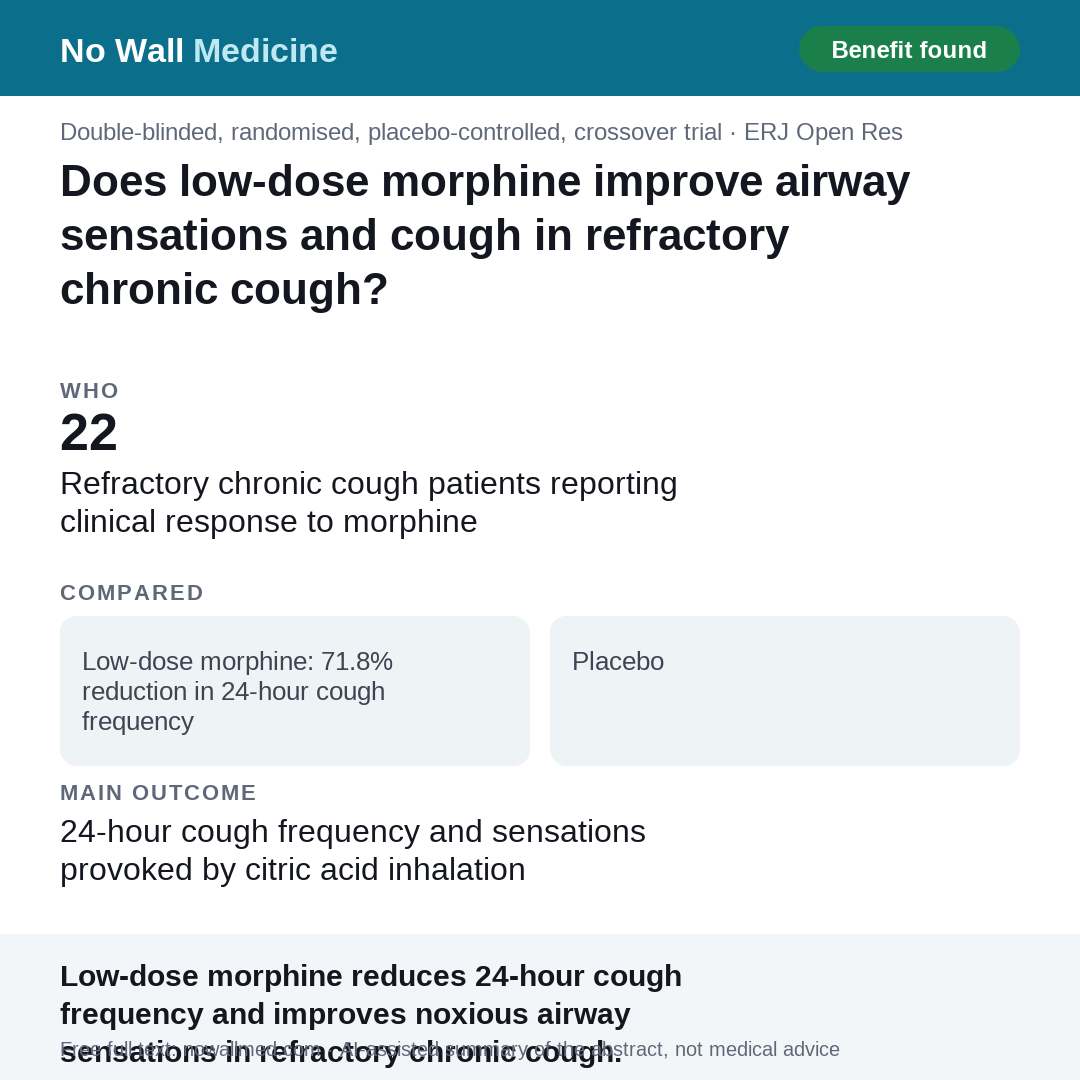
Low-dose morphine and airway sensations in refractory chronic cough: a randomised control trial
Double-blinded, randomised, placebo-controlled, crossover trialBenefit found
Does low-dose morphine improve airway sensations and cough in refractory chronic cough?
Who
22
Refractory chronic cough patients reporting clinical response to morphine
Compared
Low-dose morphine: 71.8% reduction in 24-hour cough frequency
Placebo
Main outcome
24-hour cough frequency and sensations provoked by citric acid inhalation
Bottom line: Low-dose morphine reduces 24-hour cough frequency and improves noxious airway sensations in refractory chronic cough.
ERJ Open Res · 2026-09-01Download image
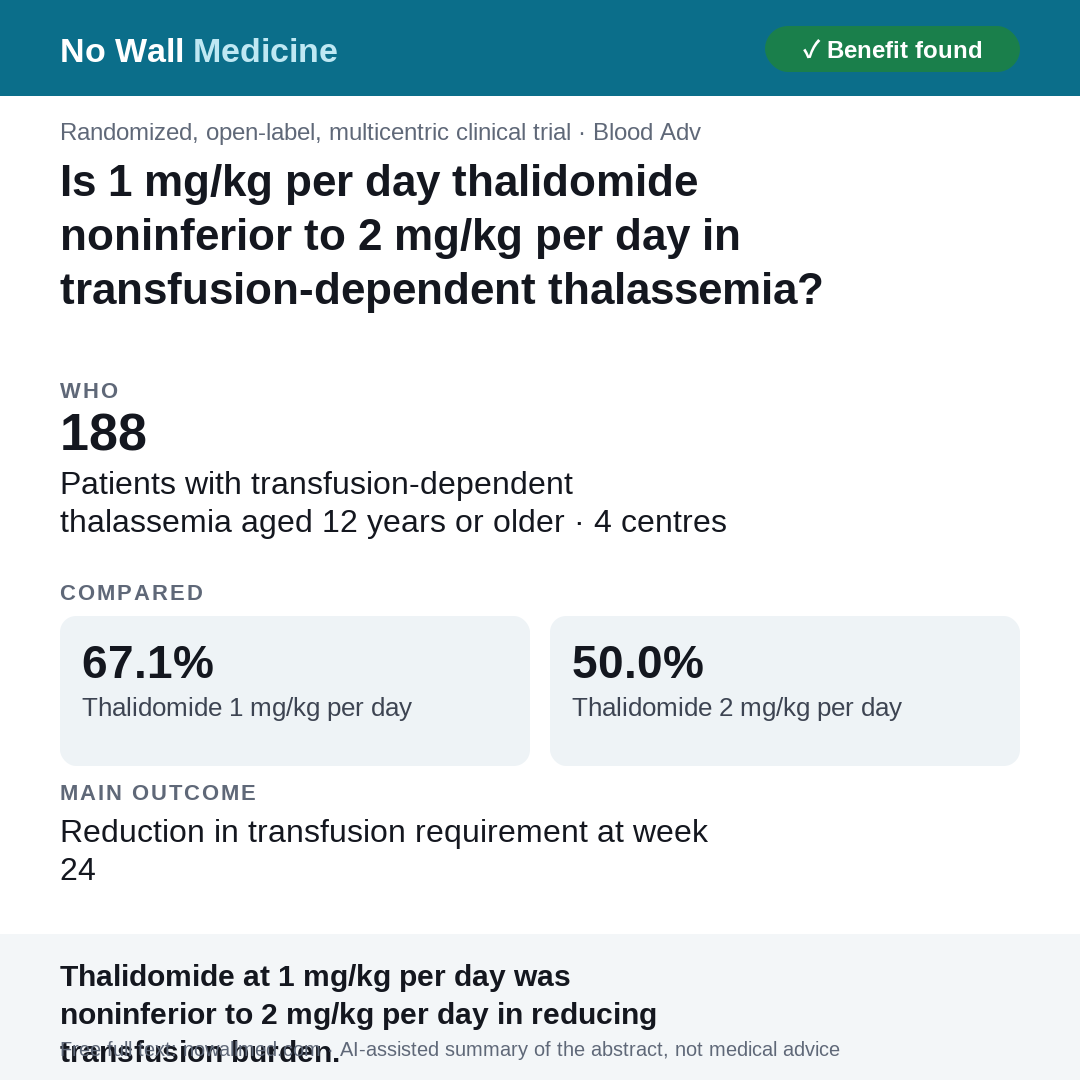
Efficacy and safety of thalidomide (1 vs 2 mg/kg per day) in transfusion-dependent thalassemia: a noninferiority trial
Randomized, open-label, multicentric clinical trialBenefit found
Is 1 mg/kg per day thalidomide noninferior to 2 mg/kg per day in transfusion-dependent thalassemia?
Who
188
Patients with transfusion-dependent thalassemia aged 12 years or older · 4 centres in India
Compared
67.1%Thalidomide 1 mg/kg per day
50.0%Thalidomide 2 mg/kg per day
Main outcome
Reduction in transfusion requirement at week 24
Bottom line: Thalidomide at 1 mg/kg per day was noninferior to 2 mg/kg per day in reducing transfusion burden.
Blood Adv · 2026-09-01Download image
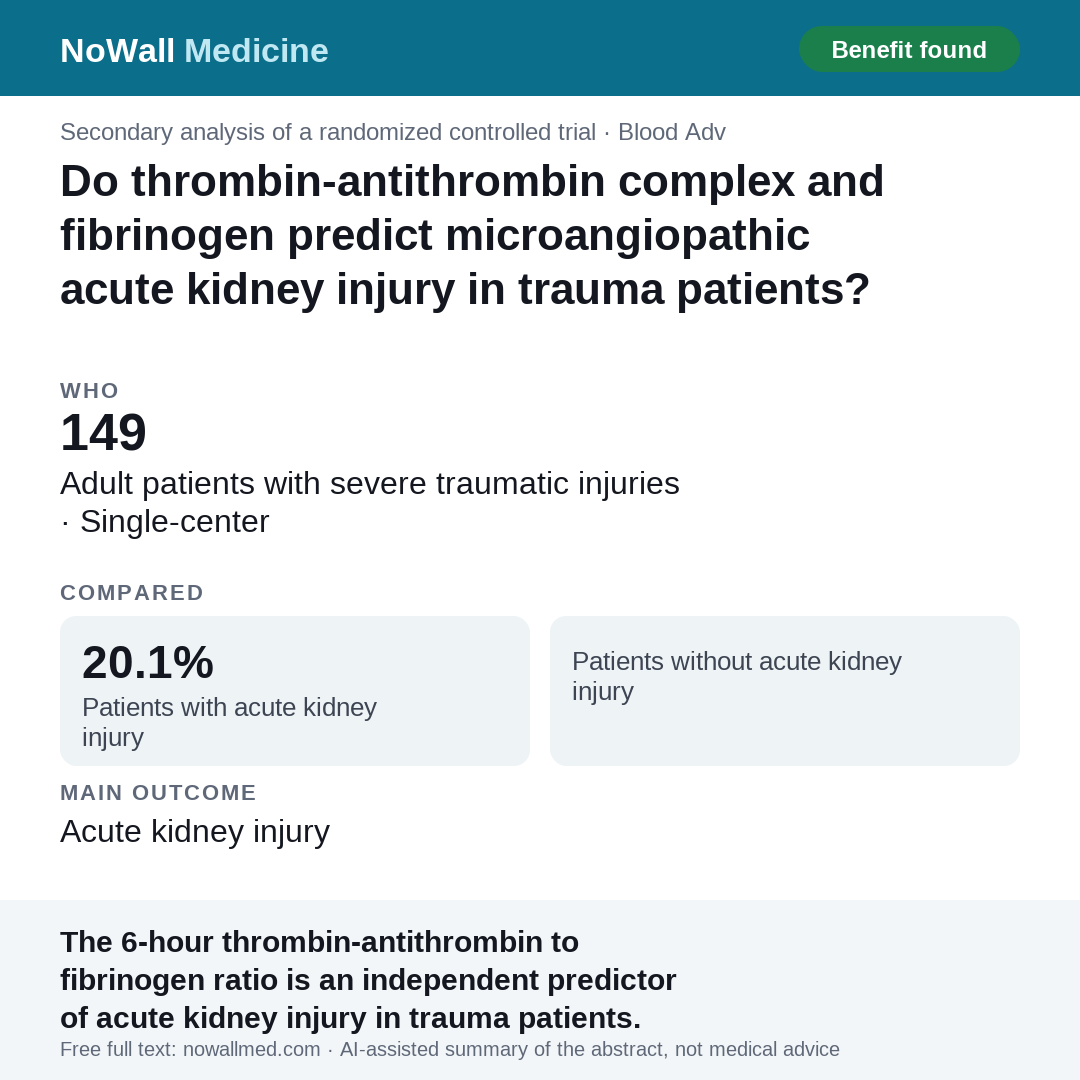
Thrombin-antithrombin complex and fibrinogen predict microangiopathic acute kidney injury in patients with traumatic injuries
Secondary analysis of a randomized controlled trialBenefit found
Do thrombin-antithrombin complex and fibrinogen predict microangiopathic acute kidney injury in traumatic injuries?
Who
149
Adult patients with severe traumatic injuries · Single-center
Compared
20.1%Patients with acute kidney injury
Patients without acute kidney injury
Main outcome
Acute kidney injury
Result: adjusted odds ratio 7.17 (95% confidence interval, 2.34-21.9)
Bottom line: The 6-hour thrombin-antithrombin to fibrinogen ratio is independently associated with acute kidney injury in trauma patients.
Blood Adv · 2026-09-01Download image
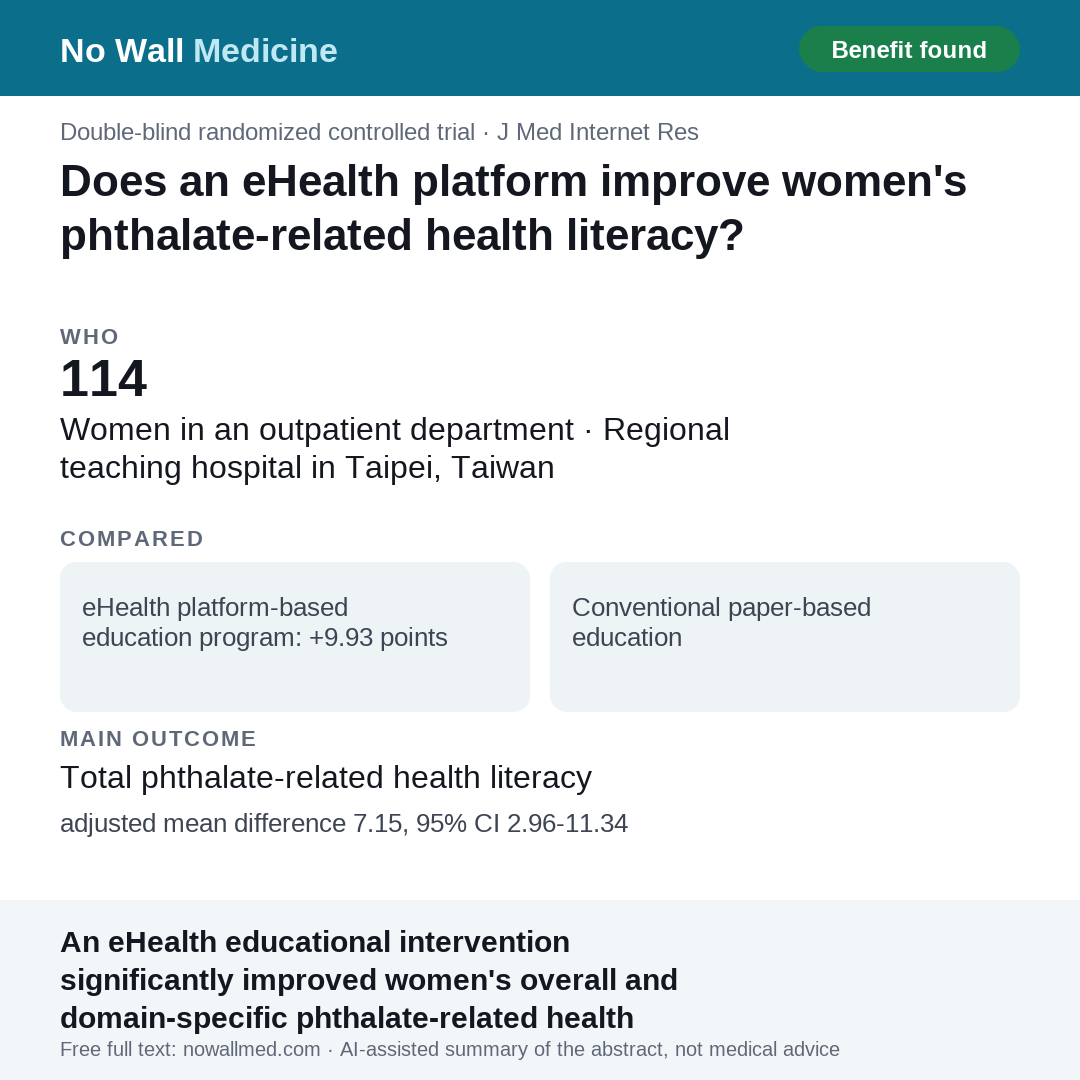
Effectiveness of a Web-Based Educational eHealth Platform on Women's Health Literacy About Phthalate Exposure: Randomized Controlled Trial
Double-blind randomized controlled trialBenefit found
Does an eHealth platform improve women's phthalate-related health literacy?
Who
114
Women in an outpatient department · Regional teaching hospital in Taipei, Taiwan
Compared
eHealth platform-based education program: +9.93 points
Conventional paper-based education
Main outcome
Total phthalate-related health literacy
Result: adjusted mean difference 7.15, 95% CI 2.96-11.34
Bottom line: An eHealth educational intervention significantly improved women's overall and domain-specific phthalate-related health literacy over 6 months.
J Med Internet Res · 2026-09-01Download image
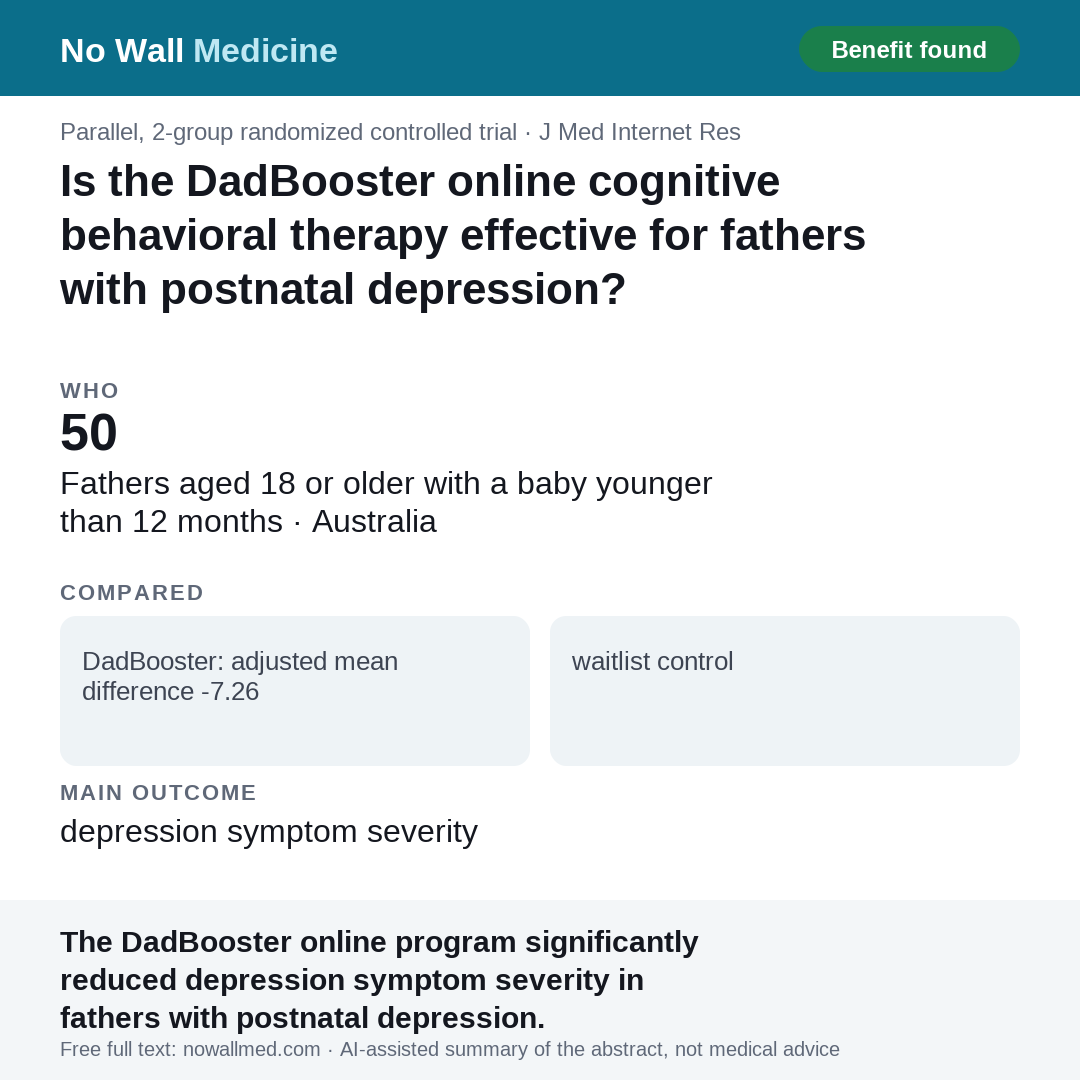
Internet-Delivered Cognitive Behavioral Therapy for Fathers With Postnatal Depression: Randomized Controlled Trial of DadBooster
Parallel, 2-group randomized controlled trialBenefit found
Is the DadBooster online cognitive behavioral therapy effective for fathers with postnatal depression?
Who
50
Fathers aged 18 or older with a baby younger than 12 months · Australia-wide
Compared
DadBooster: 72% reduction in average DASS-21 scores
Waitlist control: 40% reduction in average DASS-21 scores
Main outcome
Depression symptom severity and depressive episode remission
Result: adjusted mean difference -7.26 (95% CI -11.34 to -3.18)
Bottom line: DadBooster online cognitive behavioral therapy significantly reduced depression symptom severity in fathers with postnatal depression.
Limitation: Participants were not blinded.
J Med Internet Res · 2026-09-01Download image
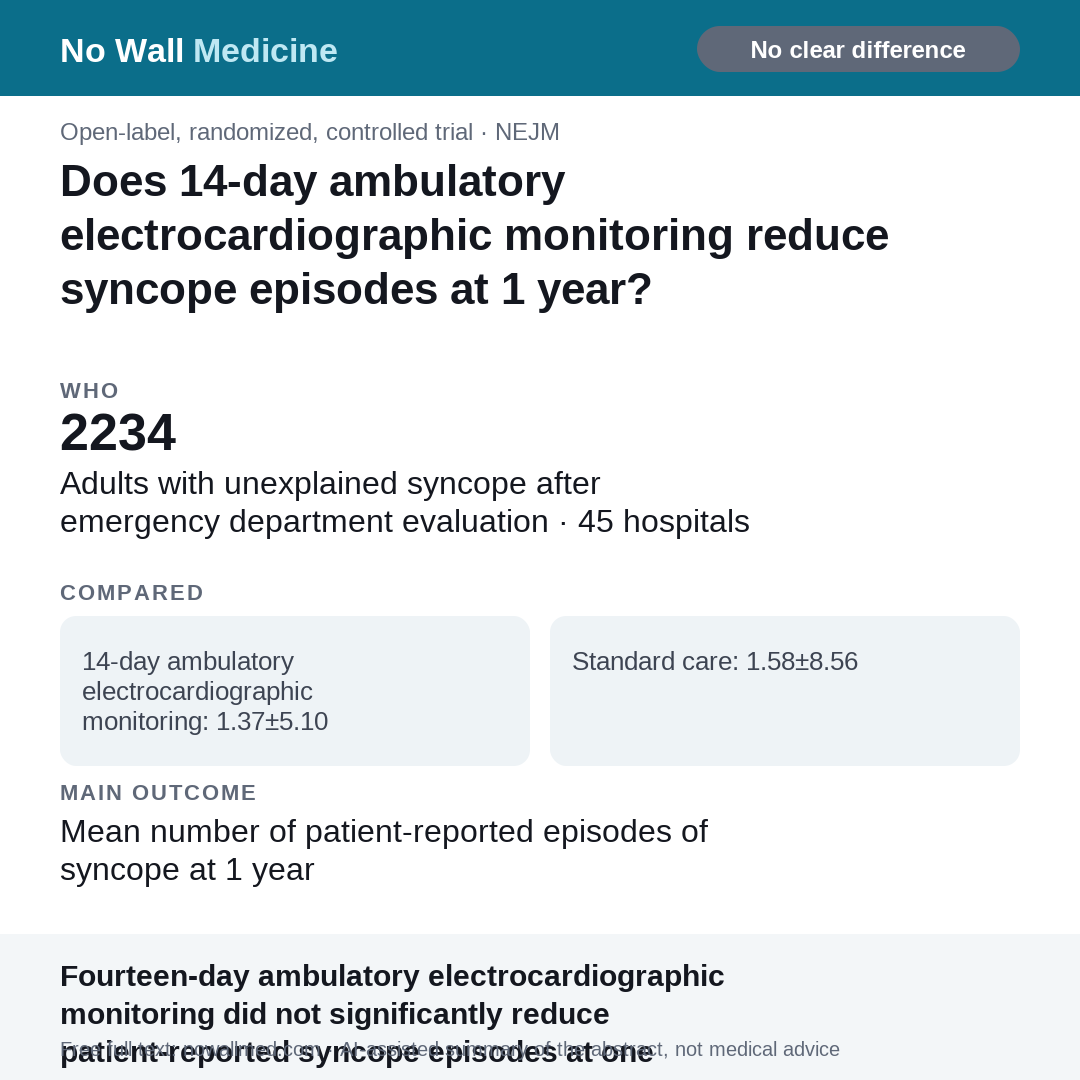
Immediate Ambulatory Electrocardiographic Monitoring in Syncope
Open-label, randomized, controlled trialNo clear difference
Does 14-day ambulatory electrocardiographic monitoring reduce syncope episodes at 1 year?
Who
2234
Adults with unexplained syncope after emergency department evaluation · 45 hospitals in the United Kingdom
Compared
14-day ambulatory electrocardiographic monitoring: 1.37±5.10
Standard care: 1.58±8.56
Main outcome
Mean number of patient-reported episodes of syncope at 1 year
Result: incidence rate ratio 0.89 (95% confidence interval 0.68 to 1.18)
Bottom line: Fourteen-day ambulatory electrocardiographic monitoring did not significantly reduce patient-reported syncope episodes at one year compared to standard care.
Funded by: British Heart Foundation and National Health Service Research Scotland
NEJM · 2026-08-31Download image
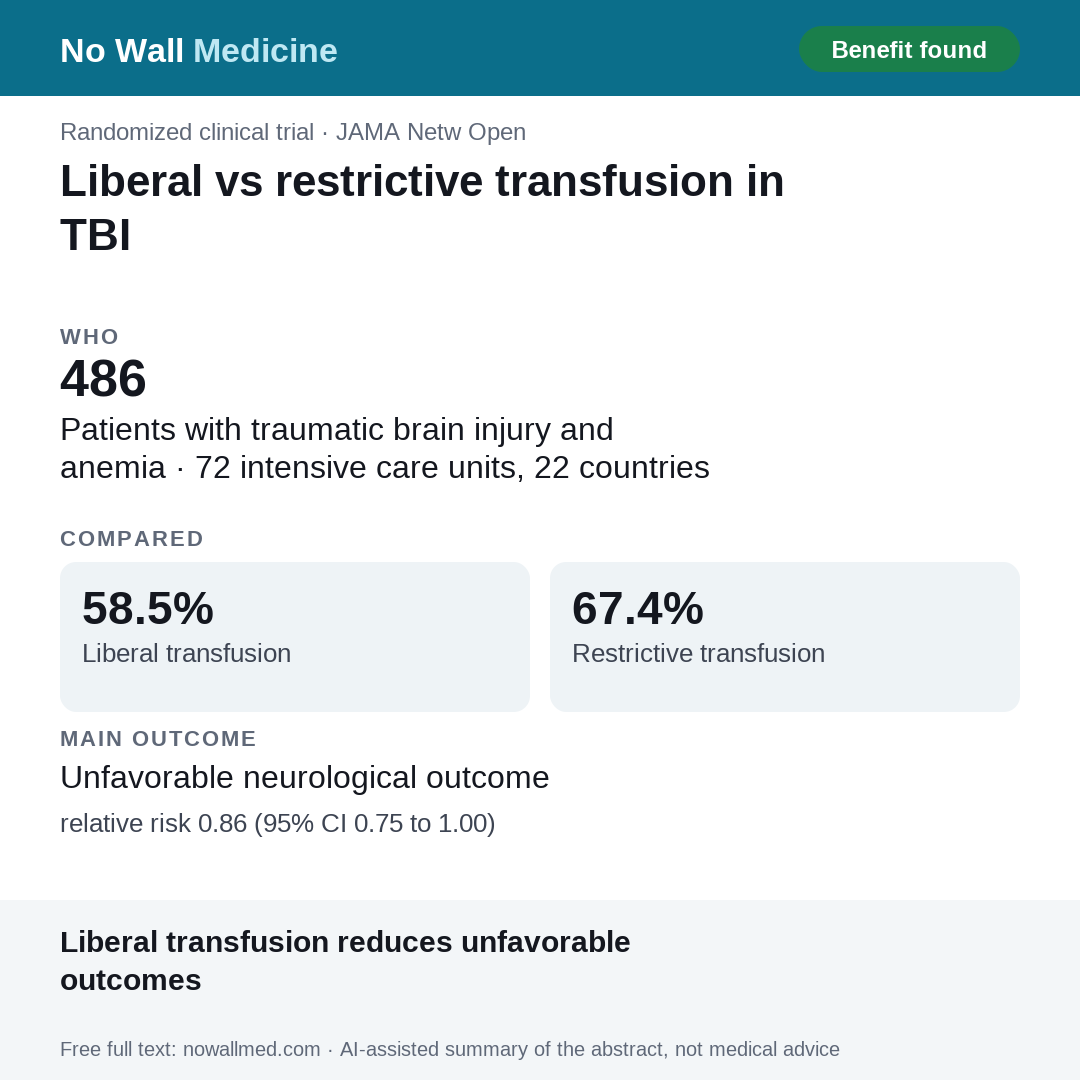
Effects of Evolocumab on Mortality Outcomes in Patients Without Previous Myocardial Infarction or Stroke: A Prespecified Analysis of the VESALIUS-CV Randomized Clinical Trial
Randomized, double-blind trialBenefit found
Does evolocumab affect mortality in patients without previous myocardial infarction or stroke?
Who
12257
Patients with atherosclerosis or high-risk diabetes without previous myocardial infarction or stroke
Compared
7.9%evolocumab
9.7%placebo
Main outcome
all-cause mortality
Result: hazard ratio 0.80 (95% CI 0.70-0.91)
Bottom line: Evolocumab reduced all-cause mortality in high-risk patients without previous myocardial infarction or stroke.
Circulation · 2026-08-31Download image