Visual abstracts
New randomized trials and meta-analyses from leading journals at a glance: who was studied, what was compared, and what was found. Every paper is free to read in full.
All specialtiesCardiology 4763Oncology 4043Gastroenterology & Hepatology 1903Infectious Disease 3756Neurology 1872Psychiatry & Mental Health 2216Pulmonology 2044Critical Care 1319Endocrinology & Diabetes 2544Pediatrics 2889Surgery 2480Orthopedics & Sports Medicine 917Neurosurgery 525Cardiothoracic & Vascular Surgery 656Plastic & Reconstructive Surgery 574Nephrology 1107Rheumatology 810Hematology 1090Dermatology 611Ophthalmology 532Obstetrics & Gynecology 1645Public & Global Health 1037Radiology & Imaging 619Anesthesiology 958Urology 745ENT (Otolaryngology) 494Emergency Medicine 481Allergy & Immunology 309Geriatrics 972Family Medicine & Primary Care 534Medical Genetics & Genomics 659Pathology & Laboratory Medicine 156Physical Medicine & Rehabilitation 734Palliative Care 421Nutrition 1560Digital Health & AI 2137General Medicine 318
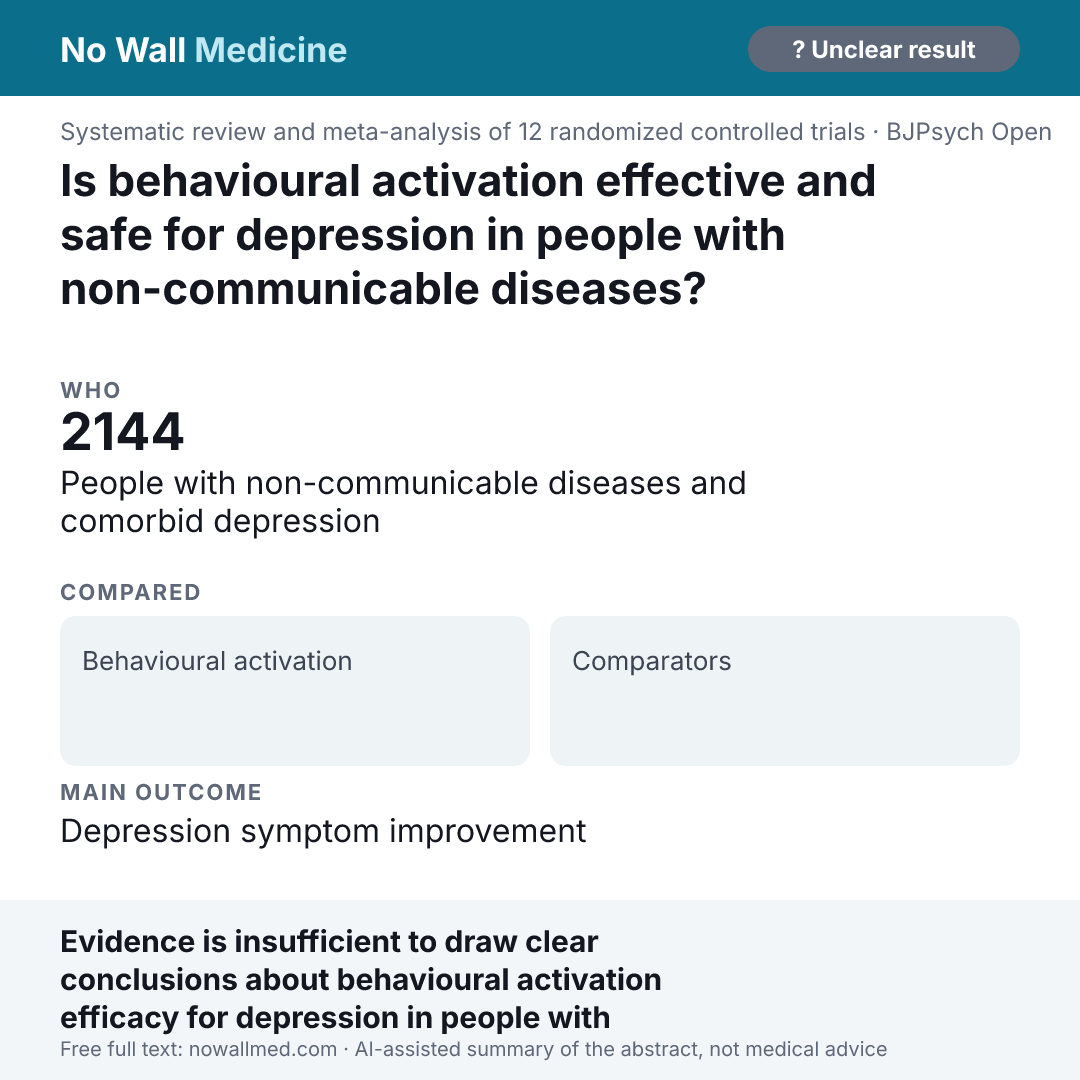
Efficacy and safety of behavioural activation on depression in people with co-occurring non-communicable diseases: systematic review and meta-analysis
Systematic review and meta-analysis of 12 randomized controlled trialsUnclear result
Is behavioural activation effective and safe for depression in people with non-communicable diseases?
Who
2144
People with non-communicable diseases and comorbid depression
Compared
Behavioural activation
Comparators
Main outcome
Depression symptom improvement
Result: Hedges' g = -0.24 (95% CI, -0.62 to 0.15)
Bottom line: Evidence is insufficient to draw clear conclusions about behavioural activation efficacy for depression in people with non-communicable diseases.
Limitation: High heterogeneity (I2 = 91.91%) and insufficient high-quality, well-designed randomized controlled trials.
BJPsych Open · 2025-03-24 · Save PNG
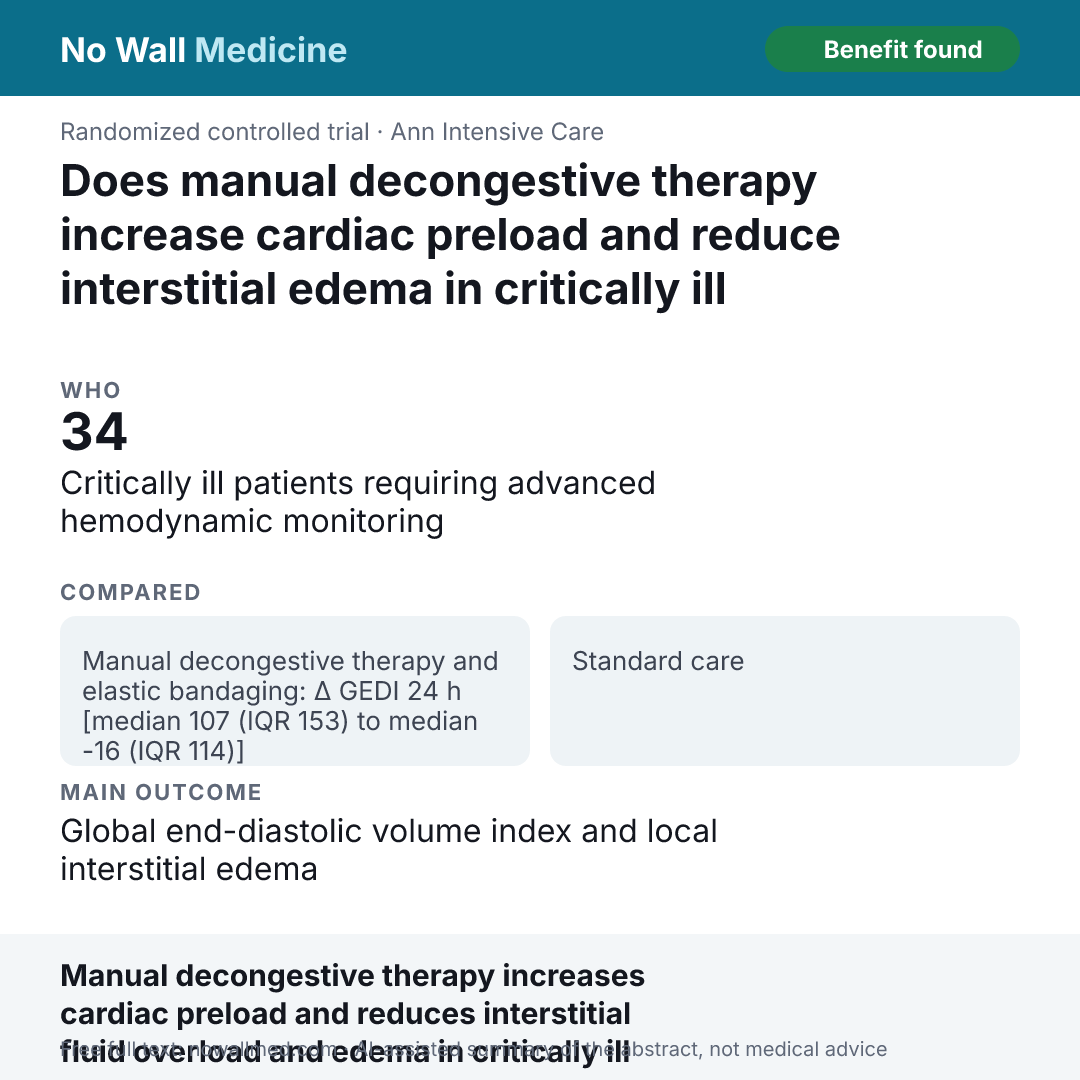
Effect of manual decongestive therapy on cardiac preload in critically ill patients: a randomized controlled trial
Randomized controlled trialBenefit found
Does manual decongestive therapy increase cardiac preload and reduce interstitial edema in critically ill patients?
Who
34
Critically ill patients requiring advanced hemodynamic monitoring
Compared
Manual decongestive therapy and elastic bandaging: Δ GEDI 24 h [median 107 (IQR 153) to median -16 (IQR 114)]
Standard care
Main outcome
Global end-diastolic volume index and local interstitial edema
Bottom line: Manual decongestive therapy increases cardiac preload and reduces interstitial fluid overload and edema in critically ill patients.
Ann Intensive Care · 2025-03-24 · Save PNG
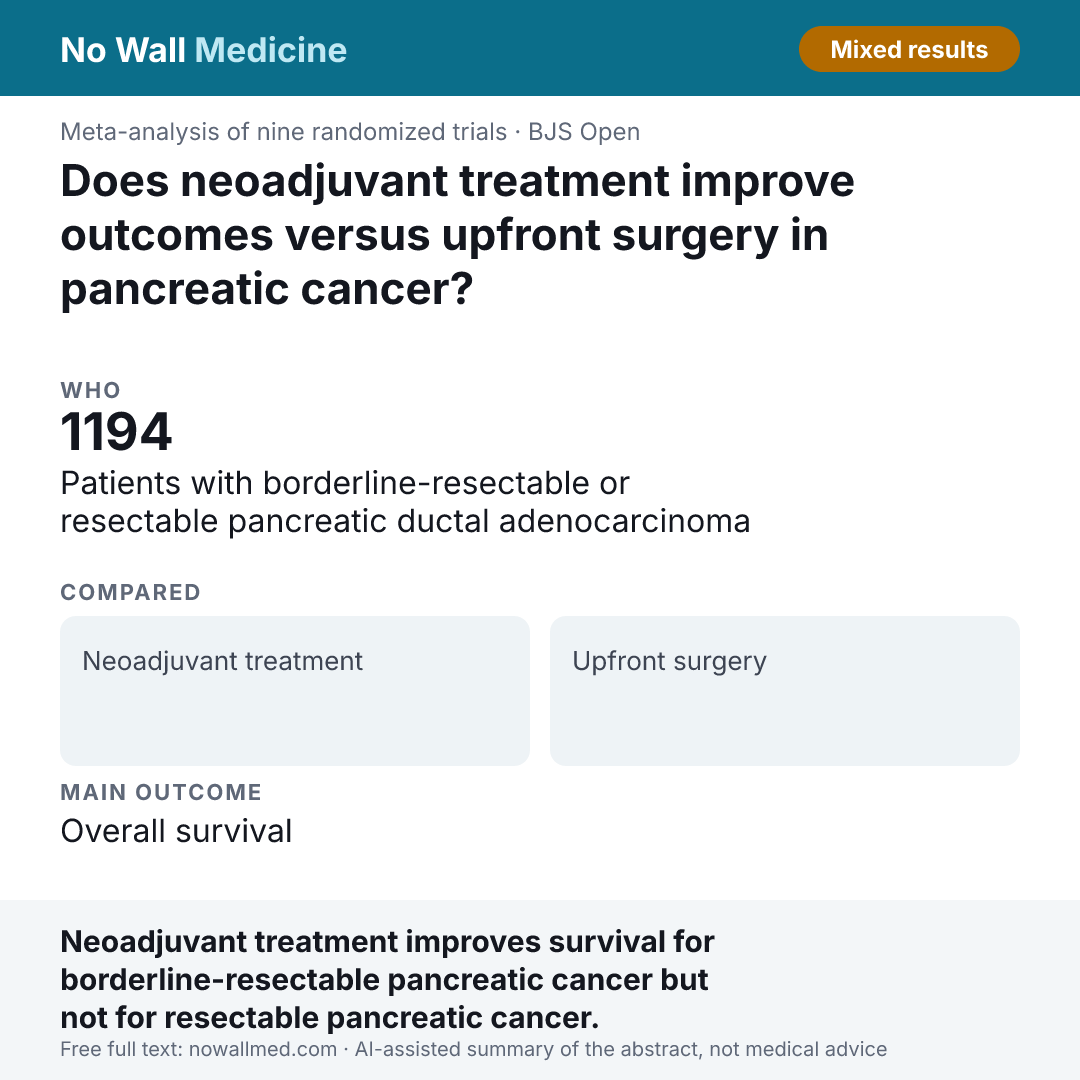
Neoadjuvant treatment versus upfront surgery in borderline resectable and resectable pancreatic ductal adenocarcinoma: meta-analysis
Meta-analysis of nine randomized trialsMixed results
Does neoadjuvant treatment improve outcomes versus upfront surgery in pancreatic cancer?
Who
1194
Patients with borderline-resectable or resectable pancreatic ductal adenocarcinoma
Compared
Neoadjuvant treatment
Upfront surgery
Main outcome
Overall survival
Result: hazard ratio 0.73 (95% c.i. 0.55 to 0.98)
Bottom line: Neoadjuvant treatment improves survival for borderline-resectable pancreatic cancer but not for resectable pancreatic cancer.
BJS Open · 2025-03-24 · Save PNG
Clonal relatedness as a prognostic marker in Richter transformation of chronic lymphocytic leukemia: a systematic review
Systematic reviewMixed results
Is clonal relatedness a prognostic marker in Richter transformation of chronic lymphocytic leukemia?
Who
336
Patients with Richter transformation of chronic lymphocytic leukemia
Compared
Clonally related Richter transformation: significantly poorer prognosis
Clonally unrelated Richter transformation
Main outcome
Survival outcomes
Bottom line: Clonal relatedness may confer poorer survival, but it is not independent of other known clinical and genomic variables.
Blood Adv · 2025-03-24 · Save PNG

AI-Derived Blood Biomarkers for Ovarian Cancer Diagnosis: Systematic Review and Meta-Analysis
Meta-analysis of 40 studiesBenefit found
AI for ovarian cancer diagnosis
Who
patients with ovarian cancer
Compared
85%Machine learning (sensitivity)
77%Deep learning (sensitivity)
Main outcome
diagnostic accuracy
Result: pooled sensitivity 85% (95% CI 83%-87%)
Bottom line: AI algorithms show satisfactory performance
Limitation: need for external validation
J Med Internet Res · 2025-03-24 · Save PNG

Acceptability and Effectiveness of a Fully Web-Based Nutrition and Exercise Program for Individuals With Chronic Disease During COVID-19: Randomized Controlled Trial
Randomized controlled trialMixed results
Web-based nutrition and exercise for chronic disease
Who
216
Adults with chronic disease history
Compared
Control
Heal-Me Light
Heal-Me Intensive
Main outcome
Lower Extremity Functional Scale score
Bottom line: Web-based program is acceptable and effective
J Med Internet Res · 2025-03-24 · Save PNG

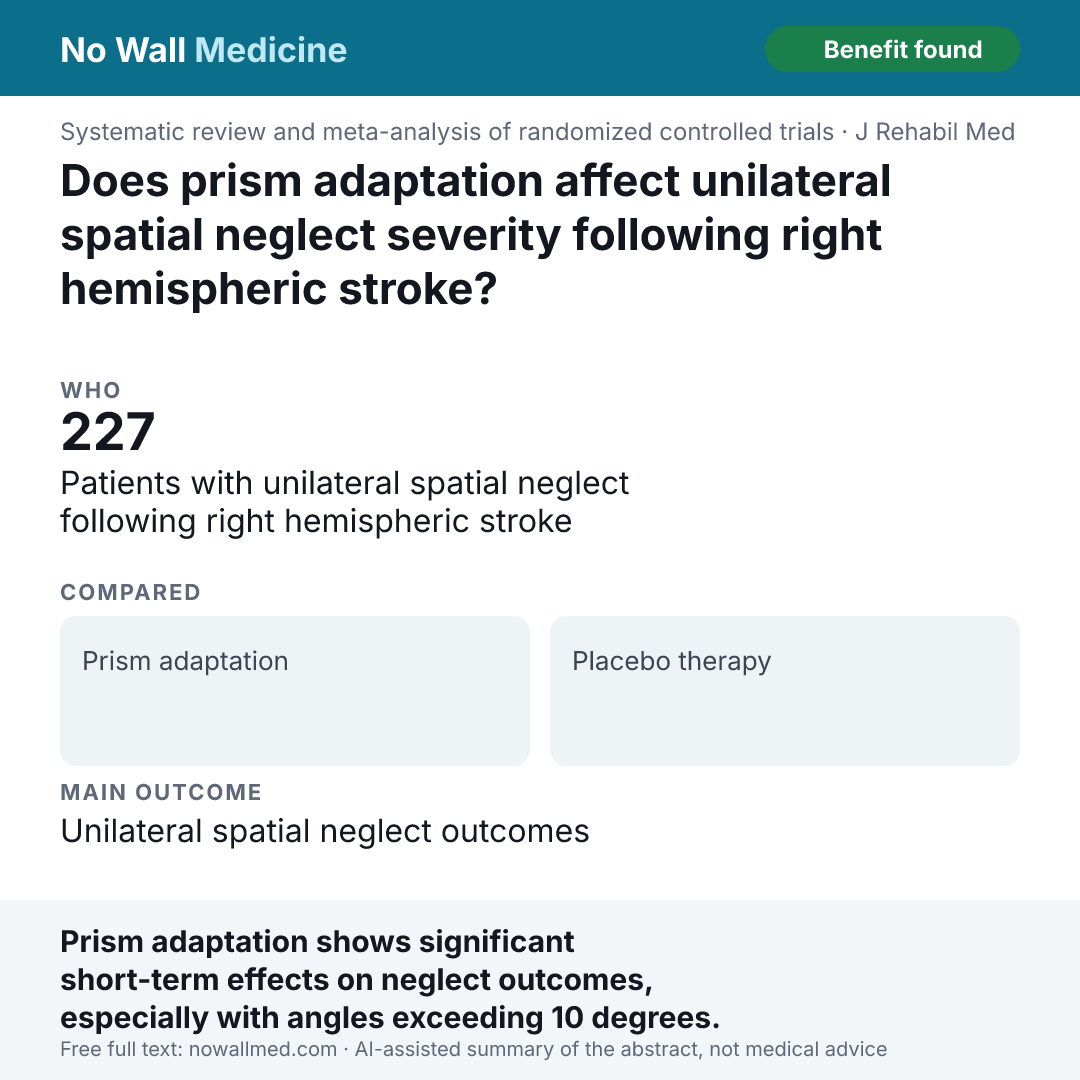
Short-term effect of prism adaptation treatment on severity of unilateral spatial neglect following right hemispheric stroke: a systematic review and meta-analysis
Systematic review and meta-analysis of randomized controlled trialsBenefit found
Does prism adaptation affect unilateral spatial neglect severity following right hemispheric stroke?
Who
227
Patients with unilateral spatial neglect following right hemispheric stroke
Compared
Prism adaptation
Placebo therapy
Main outcome
Unilateral spatial neglect outcomes
Result: standardized mean difference 0.49 (95% CI 0.07 to 0.92)
Bottom line: Prism adaptation shows significant short-term effects on neglect outcomes, especially with angles exceeding 10 degrees.
J Rehabil Med · 2025-03-24 · Save PNG
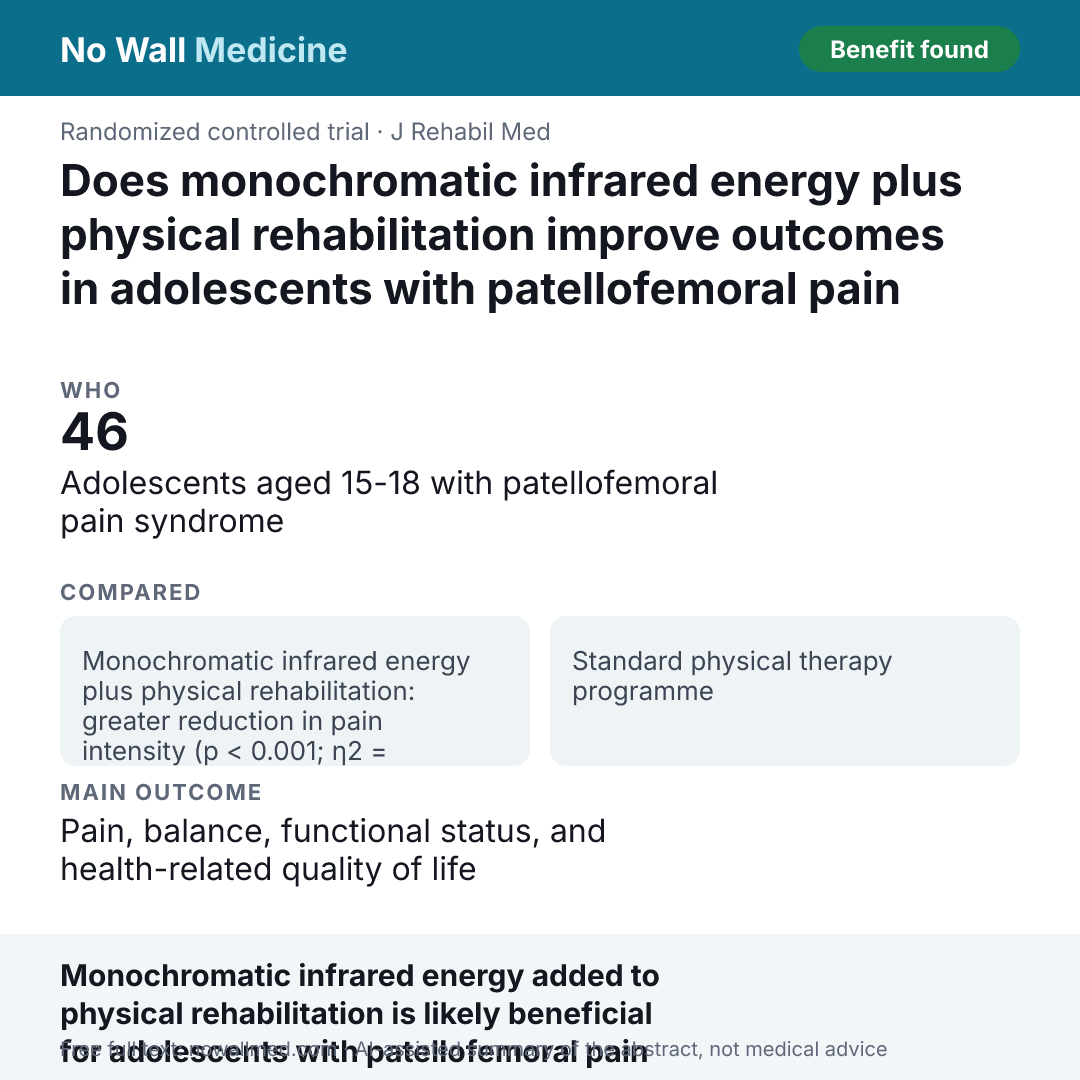
Would integrating monochromatic infrared energy into the physical rehabilitation of adolescents with patellofemoral pain syndrome have any advantageous effects? A randomized controlled trial
Randomized controlled trialBenefit found
Does monochromatic infrared energy plus physical rehabilitation improve outcomes in adolescents with patellofemoral pain syndrome?
Who
46
Adolescents aged 15-18 with patellofemoral pain syndrome
Compared
Monochromatic infrared energy plus physical rehabilitation: greater reduction in pain intensity (p < 0.001; η2 = 0.36)
Standard physical therapy programme
Main outcome
Pain, balance, functional status, and health-related quality of life
Bottom line: Monochromatic infrared energy added to physical rehabilitation is likely beneficial for adolescents with patellofemoral pain syndrome.
J Rehabil Med · 2025-03-24 · Save PNG
Factors influencing accessibility of palliative care: a systematic review and meta-analysis
Systematic review and meta-analysisMixed results
What factors influence the accessibility of palliative care?
Who
Patients with life-threatening illnesses
Compared
Facilitators: female gender (OR 1.18), higher income (OR 1.11), larger hospital bed capacity (OR 1.22)
Barriers: residing in rural areas (OR 0.80), being of African descent (OR 0.78)
Main outcome
accessibility of palliative care
Result: OR 1.18 (95% CI 1.14-1.23), OR 1.11 (95% CI 1.08-1.14), OR 1.22 (95% CI 1.14-1.32), OR 0.80 (95% CI 0.67-0.95), OR 0.78 (95% CI 0.68-0.90)
Bottom line: Sociodemographic, healthcare service, and disease-related factors significantly influence palliative care accessibility.
Limitation: Limited number of studies focusing on specific dimensions like availability, affordability, accessibility, and accommodation.
BMC Palliat Care · 2025-03-24 · Save PNG

The influence of an interactive educational approach on advance care planning counseling in individuals with psychiatric disorders
Randomized trialMixed results
Does an interactive educational approach influence advance care planning in individuals with psychiatric disorders?
Who
90
Individuals with psychiatric disorders · Taiwan
Compared
Control group
Intervention group: Knowledge improved by 3.31 points (p < 0.001) and Attitude by 4.91 points (p < 0.001)
Main outcome
Knowledge, attitudes, and intent to sign advance decisions
Bottom line: Interactive education significantly enhances knowledge and attitudes toward advance care planning but does not significantly impact intention to sign.
BMC Palliat Care · 2025-03-24 · Save PNG

Synthetic extracellular volume fraction as an imaging biomarker of the myocardial interstitium without blood sampling: a systematic review and meta-analysis
Systematic review and meta-analysisBenefit found
How well does synthetic extracellular volume fraction correlate with laboratory extracellular volume fraction?
Who
4492
Patients undergoing cardiac magnetic resonance imaging
Compared
1.5 Tesla magnetic resonance: correlation 0.95 (95% confidence interval: 0.92 to 0.97)
3.0 Tesla magnetic resonance: correlation 0.91 (95% confidence interval: 0.86 to 0.94)
Main outcome
Correlation and agreement between synthetic and laboratory extracellular volume fraction
Result: mean difference 0.61% (95% CI 0.23 to 0.98%) at 1.5T
Bottom line: Synthetic extracellular volume fraction correlates excellently with laboratory measurements, allowing noninvasive quantification without blood sampling.
J Cardiovasc Magn Reson · 2025-03-24 · Save PNG

Manikin physical realism for resuscitation education: A systematic review
Systematic review and meta-analysisMixed results
Does higher manikin physical realism improve resuscitation education outcomes?
Who
Participants in life support education studies
Compared
Higher physical realism manikins
Lower realism manikins
Main outcome
Simulation skill performance and knowledge at course conclusion
Result: standardized mean difference 0.66 (95% CI 0.08 - 1.25)
Bottom line: Higher manikin realism improves simulated clinical performance but does not affect knowledge at course conclusion.
Limitation: Significant risk of bias and a high degree of heterogeneity were found.
Resusc Plus · 2025-03-24 · Save PNG

Microultrasonography-Guided vs MRI-Guided Biopsy for Prostate Cancer Diagnosis: The OPTIMUM Randomized Clinical Trial
Multicenter, international, open-label, randomized, noninferiority trialBenefit found
Is microultrasonography-guided biopsy noninferior to MRI fusion-guided biopsy for prostate cancer diagnosis?
Who
678
Biopsy-naive men with clinical suspicion of prostate cancer · 20 centers in 8 countries
Compared
47.1%Microultrasonography-guided biopsy
42.6%MRI/conventional ultrasonography fusion-guided biopsy
46.9%Microultrasonography/MRI fusion-guided biopsy
Main outcome
Detection of Gleason Grade Group 2 or higher cancers
Result: difference, 3.52% (95% CI, -3.95% to 10.92%)
Bottom line: Microultrasonography-guided biopsy is noninferior to MRI fusion-guided biopsy for detecting Gleason Grade Group 2 or higher prostate cancer.
JAMA · 2025-03-23 · Save PNG

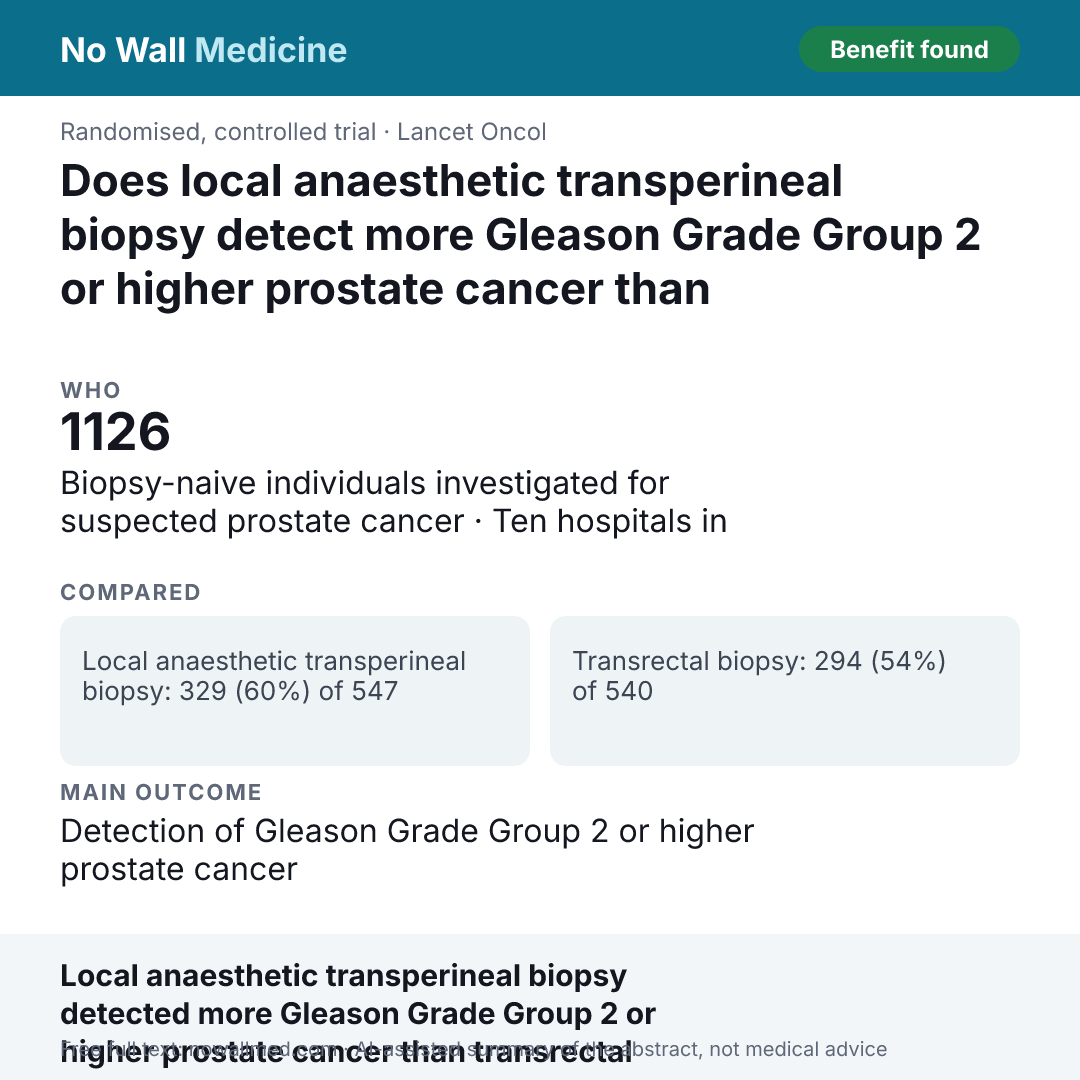
Local anaesthetic transperineal biopsy versus transrectal prostate biopsy in prostate cancer detection (TRANSLATE): a multicentre, randomised, controlled trial
Randomised, controlled trialBenefit found
Does local anaesthetic transperineal biopsy detect more Gleason Grade Group 2 or higher prostate cancer than transrectal biopsy?
Who
1126
Biopsy-naive individuals investigated for suspected prostate cancer · Ten hospitals in the United Kingdom
Compared
Local anaesthetic transperineal biopsy: 329 (60%) of 547
Transrectal biopsy: 294 (54%) of 540
Main outcome
Detection of Gleason Grade Group 2 or higher prostate cancer
Result: odds ratio 1·32 (95% CI 1·03-1·70)
Bottom line: Local anaesthetic transperineal biopsy detected more Gleason Grade Group 2 or higher prostate cancer than transrectal biopsy.
Lancet Oncol · 2025-03-23 · Save PNG
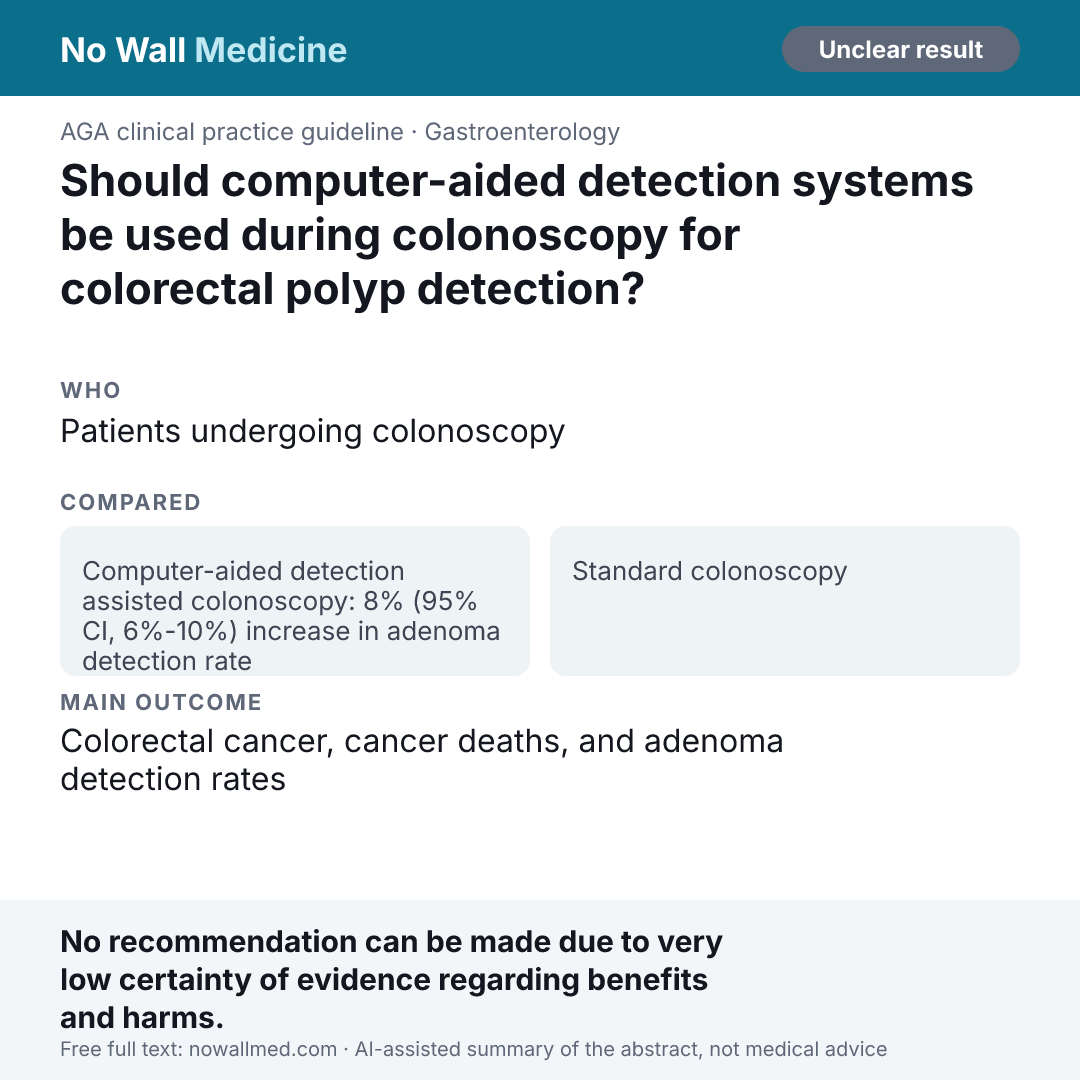
AGA Living Clinical Practice Guideline on Computer-Aided Detection-Assisted Colonoscopy
AGA clinical practice guidelineUnclear result
Should computer-aided detection systems be used during colonoscopy for colorectal polyp detection?
Who
Patients undergoing colonoscopy
Compared
Computer-aided detection assisted colonoscopy: 8% (95% CI, 6%-10%) increase in adenoma detection rate
Standard colonoscopy
Main outcome
Colorectal cancer, cancer deaths, and adenoma detection rates
Bottom line: No recommendation can be made due to very low certainty of evidence regarding benefits and harms.
Limitation: Very low certainty of evidence for critical outcomes and close tradeoff between effects.
Gastroenterology · 2025-03-23 · Save PNG
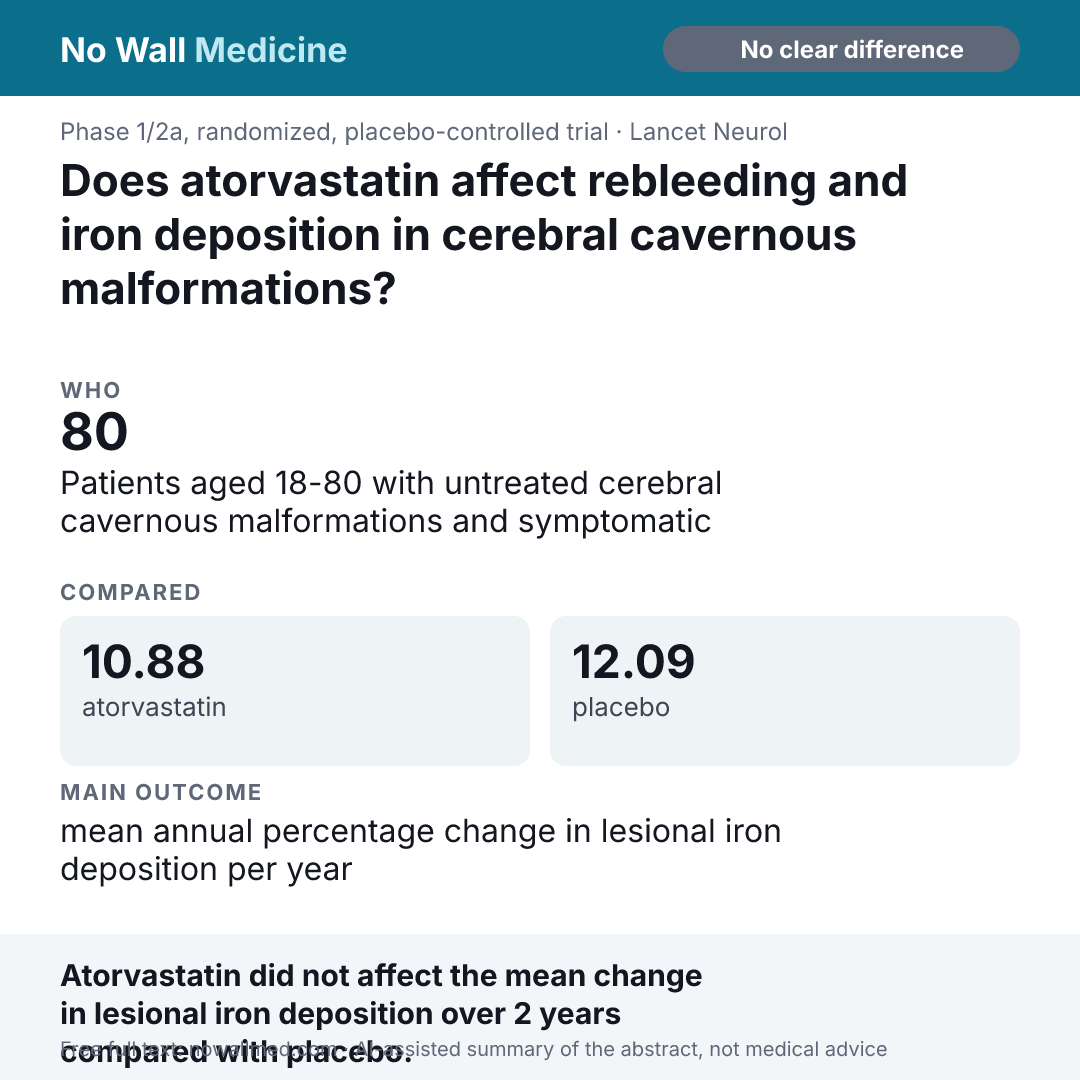
Safety and efficacy of atorvastatin for rebleeding in cerebral cavernous malformations (AT CASH EPOC): a phase 1/2a, randomised placebo-controlled trial
Phase 1/2a, randomized, placebo-controlled trialNo clear difference
Does atorvastatin affect rebleeding and iron deposition in cerebral cavernous malformations?
Who
80
Patients aged 18-80 with untreated cerebral cavernous malformations and symptomatic bleeding · University of Chicago's CCM Center of Excellence
Compared
10.88atorvastatin (SE 7.29)
12.09placebo (SE 7.54)
Main outcome
mean annual percentage change in lesional iron deposition per year
Result: treatment effect -1.22, 95% CI -22.25 to 19.81
Bottom line: Atorvastatin did not affect the mean change in lesional iron deposition over 2 years compared with placebo.
Funded by: US National Institutes of Health
Lancet Neurol · 2025-03-23 · Save PNG
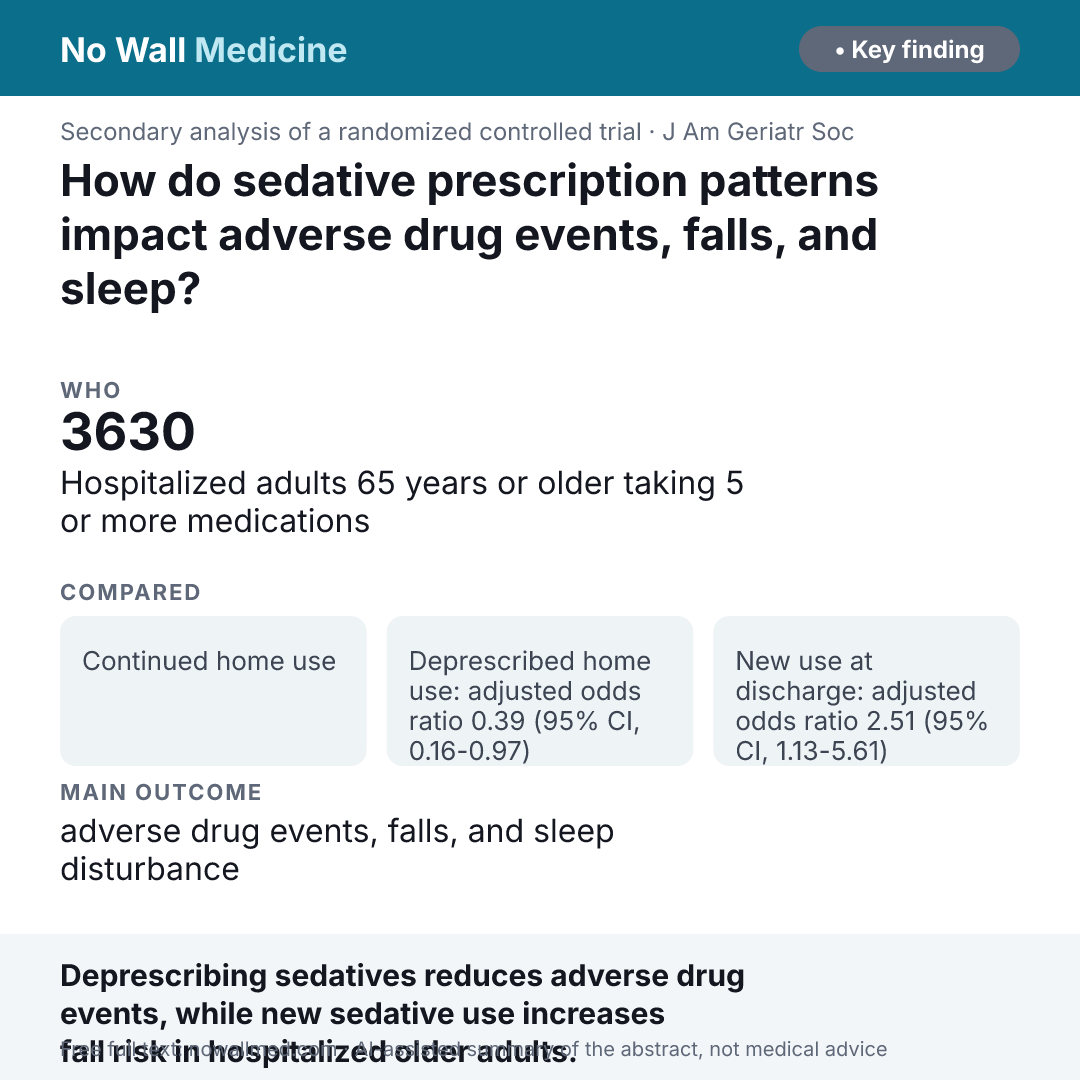
Prescribing Patterns and Impact of Sedatives in Hospitalized Older Adults: A Secondary Analysis of the MedSafer Study
Secondary analysis of a randomized controlled trialKey finding
How do sedative prescription patterns impact adverse drug events, falls, and sleep?
Who
3630
Hospitalized adults 65 years or older taking 5 or more medications
Compared
Continued home use
Deprescribed home use: adjusted odds ratio 0.39 (95% CI, 0.16-0.97)
New use at discharge: adjusted odds ratio 2.51 (95% CI, 1.13-5.61)
Main outcome
adverse drug events, falls, and sleep disturbance
Result: adjusted odds ratio 0.39 (95% CI, 0.16-0.97) for ADEs
Bottom line: Deprescribing sedatives reduces adverse drug events, while new sedative use increases fall risk in hospitalized older adults.
J Am Geriatr Soc · 2025-03-23 · Save PNG
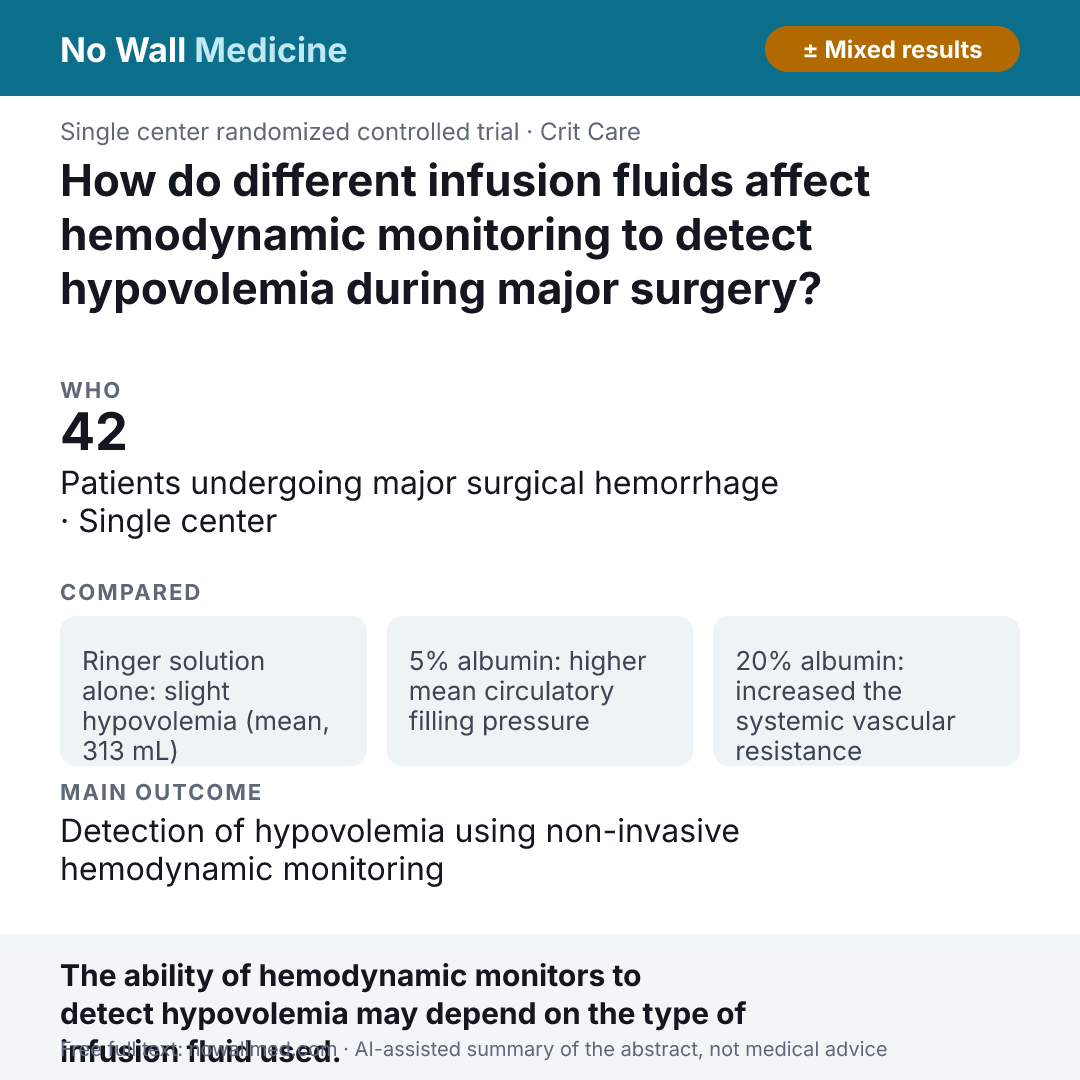
Detection of hypovolemia by non-invasive hemodynamic monitoring during major surgery using Ringer´s solution, 5% albumin, or 20% albumin as infusion fluid: a post-hoc analysis of a randomized clinical trial
Single center randomized controlled trialMixed results
How do different infusion fluids affect hemodynamic monitoring to detect hypovolemia during major surgery?
Who
42
Patients undergoing major surgical hemorrhage · Single center
Compared
Ringer solution alone: slight hypovolemia (mean, 313 mL)
5% albumin: higher mean circulatory filling pressure
20% albumin: increased the systemic vascular resistance
Main outcome
Detection of hypovolemia using non-invasive hemodynamic monitoring
Bottom line: The ability of hemodynamic monitors to detect hypovolemia may depend on the type of infusion fluid used.
Crit Care · 2025-03-23 · Save PNG
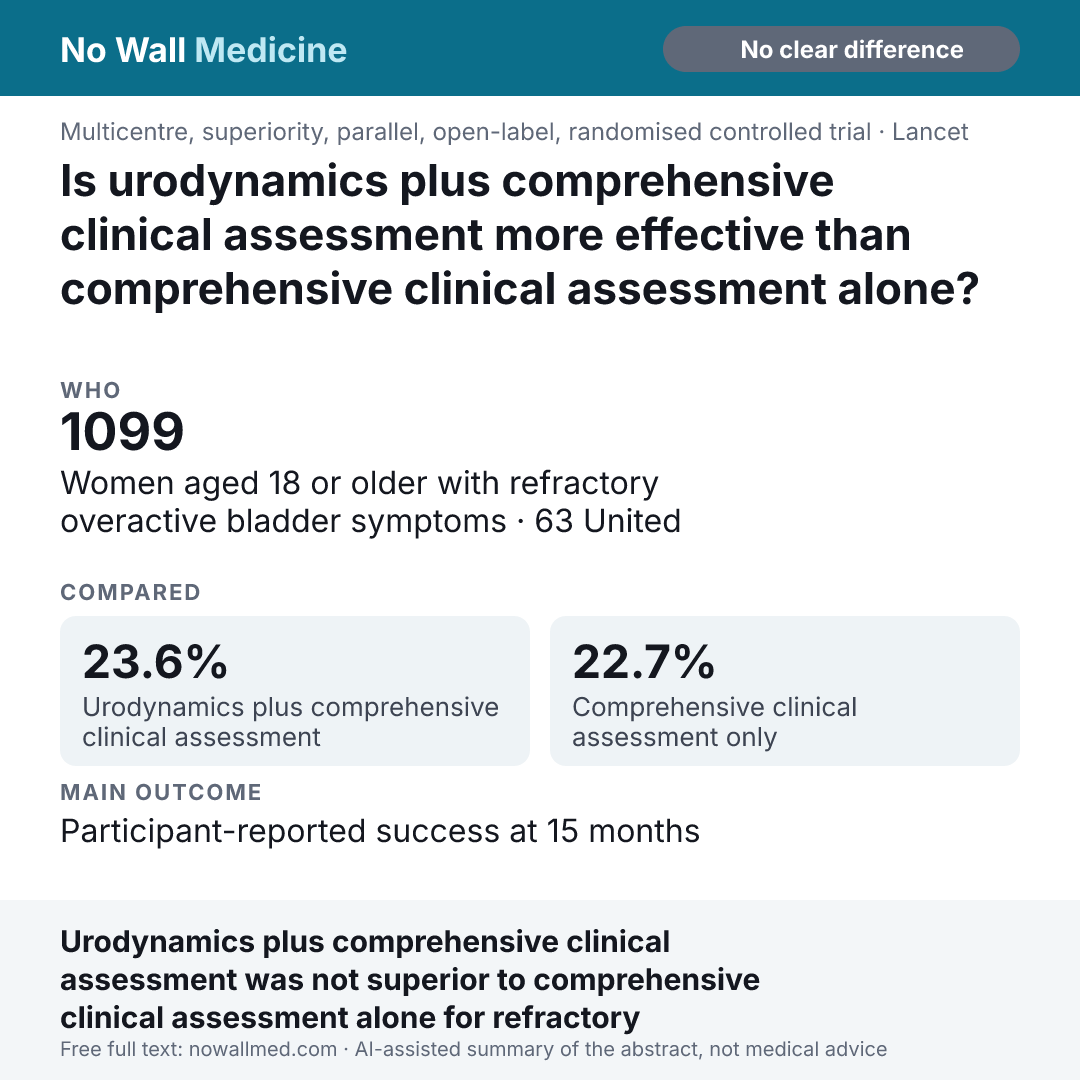
Invasive urodynamic investigations in the management of women with refractory overactive bladder symptoms (FUTURE) in the UK: a multicentre, superiority, parallel, open-label, randomised controlled trial
Multicentre, superiority, parallel, open-label, randomised controlled trialNo clear difference
Is urodynamics plus comprehensive clinical assessment more effective than comprehensive clinical assessment alone?
Who
1099
Women aged 18 or older with refractory overactive bladder symptoms · 63 United Kingdom hospitals
Compared
23.6%Urodynamics plus comprehensive clinical assessment (117/496)
22.7%Comprehensive clinical assessment only (114/503)
Main outcome
Participant-reported success at 15 months
Result: adjusted odds ratio 1.12 (95% CI 0.73 to 1.74)
Bottom line: Urodynamics plus comprehensive clinical assessment was not superior to comprehensive clinical assessment alone for refractory overactive bladder symptoms.
Funded by: UK National Institute for Health and Care Research
Lancet · 2025-03-22 · Save PNG
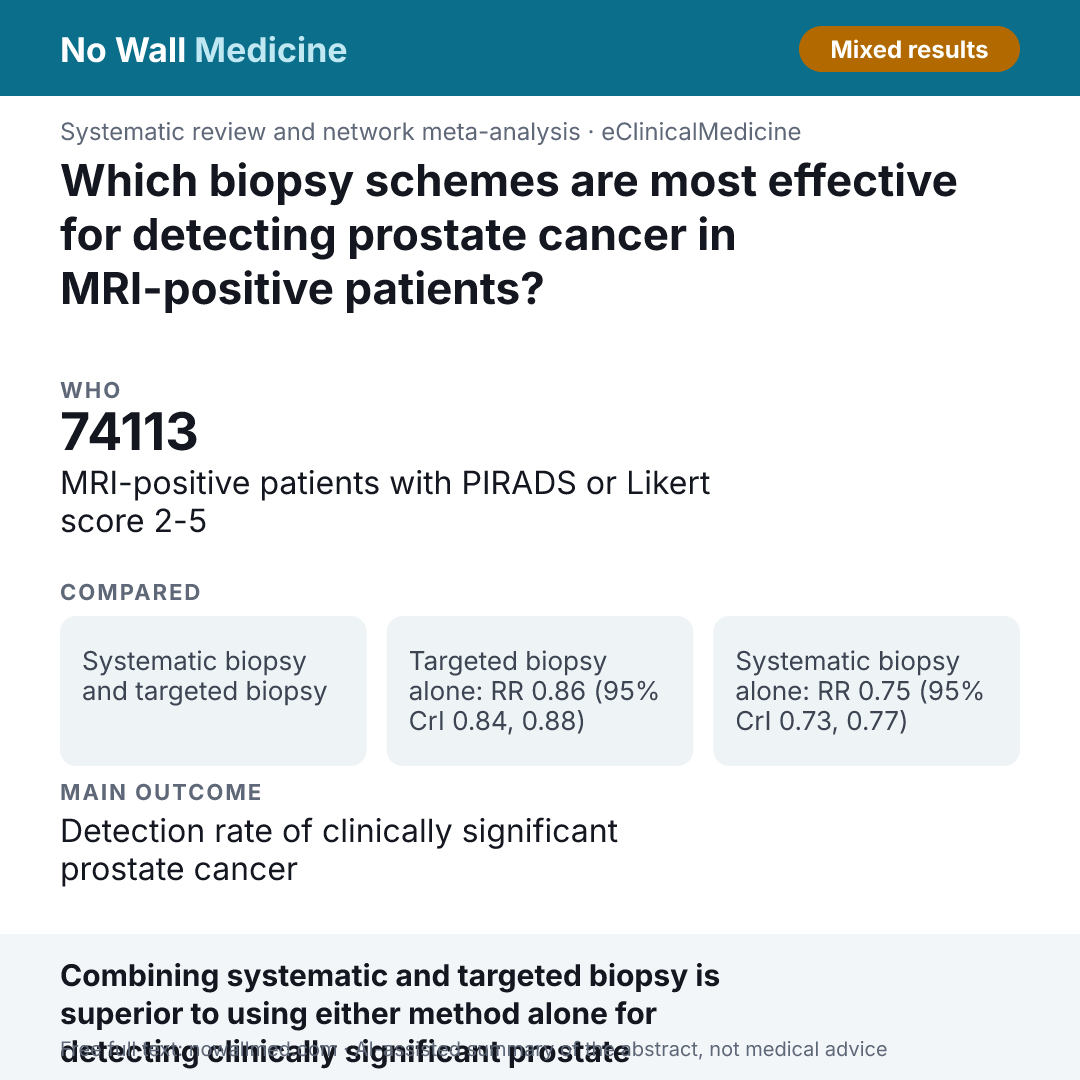
Optimizing the strategies to perform prostate biopsy in MRI-positive patients: a systematic review and network meta-analysis
Systematic review and network meta-analysisMixed results
Which biopsy schemes are most effective for detecting prostate cancer in MRI-positive patients?
Who
74113
MRI-positive patients with PIRADS or Likert score 2-5
Compared
Systematic biopsy and targeted biopsy
Targeted biopsy alone: RR 0.86 (95% CrI 0.84, 0.88)
Systematic biopsy alone: RR 0.75 (95% CrI 0.73, 0.77)
Main outcome
Detection rate of clinically significant prostate cancer
Bottom line: Combining systematic and targeted biopsy is superior to using either method alone for detecting clinically significant prostate cancer.
Funded by: National Natural Science Foundation of China and Sichuan Province
eClinicalMedicine · 2025-03-22 · Save PNG