Visual abstracts
New randomized trials and meta-analyses from leading journals at a glance: who was studied, what was compared, and what was found. Every paper is free to read in full.
All specialtiesCardiology 1190Oncology 1038Gastroenterology & Hepatology 413Infectious Disease 779Neurology 486Psychiatry & Mental Health 600Pulmonology 504Critical Care 346Endocrinology & Diabetes 659Pediatrics 706Surgery 527Orthopedics & Sports Medicine 225Neurosurgery 162Cardiothoracic & Vascular Surgery 132Plastic & Reconstructive Surgery 187Nephrology 249Rheumatology 157Hematology 244Dermatology 114Ophthalmology 134Obstetrics & Gynecology 366Public & Global Health 228Radiology & Imaging 154Anesthesiology 212Urology 215ENT (Otolaryngology) 165Emergency Medicine 127Allergy & Immunology 82Geriatrics 237Family Medicine & Primary Care 147Medical Genetics & Genomics 123Pathology & Laboratory Medicine 36Physical Medicine & Rehabilitation 203Palliative Care 107Nutrition 310Digital Health & AI 590General Medicine 112
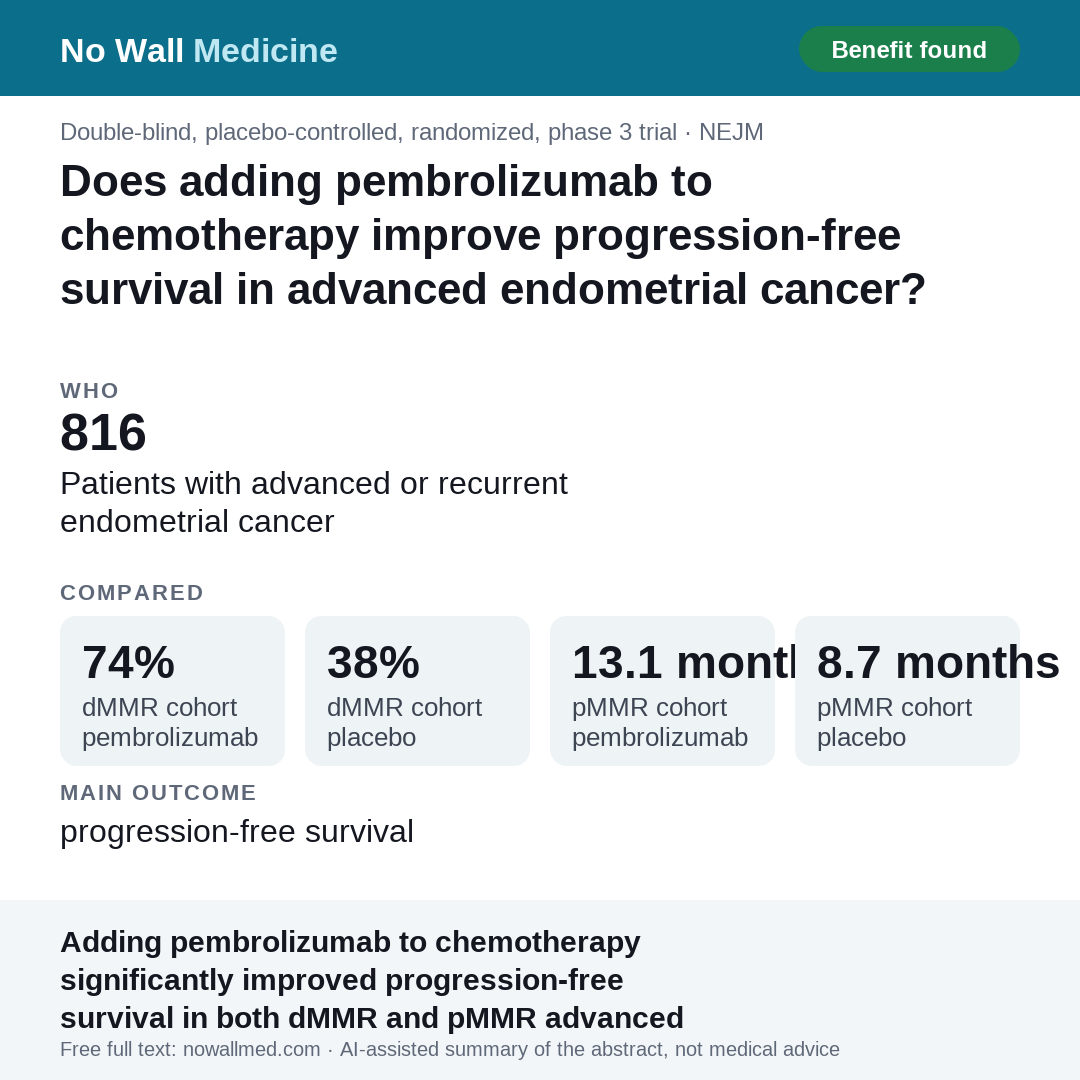
Pembrolizumab plus Chemotherapy in Advanced Endometrial Cancer
Double-blind, placebo-controlled, randomized, phase 3 trialBenefit found
Does adding pembrolizumab to chemotherapy improve progression-free survival in advanced endometrial cancer?
Who
816
Patients with advanced or recurrent endometrial cancer
Compared
74%dMMR cohort pembrolizumab
38%dMMR cohort placebo
13.1 monthspMMR cohort pembrolizumab
8.7 monthspMMR cohort placebo
Main outcome
progression-free survival
Result: hazard ratio 0.30 (95% CI 0.19 to 0.48) in dMMR; hazard ratio 0.54 (95% CI 0.41 to 0.71) in pMMR
Bottom line: Adding pembrolizumab to chemotherapy significantly improved progression-free survival in both dMMR and pMMR advanced endometrial cancer cohorts.
Funded by: National Cancer Institute and others
NEJM · 2023-03-27Download image
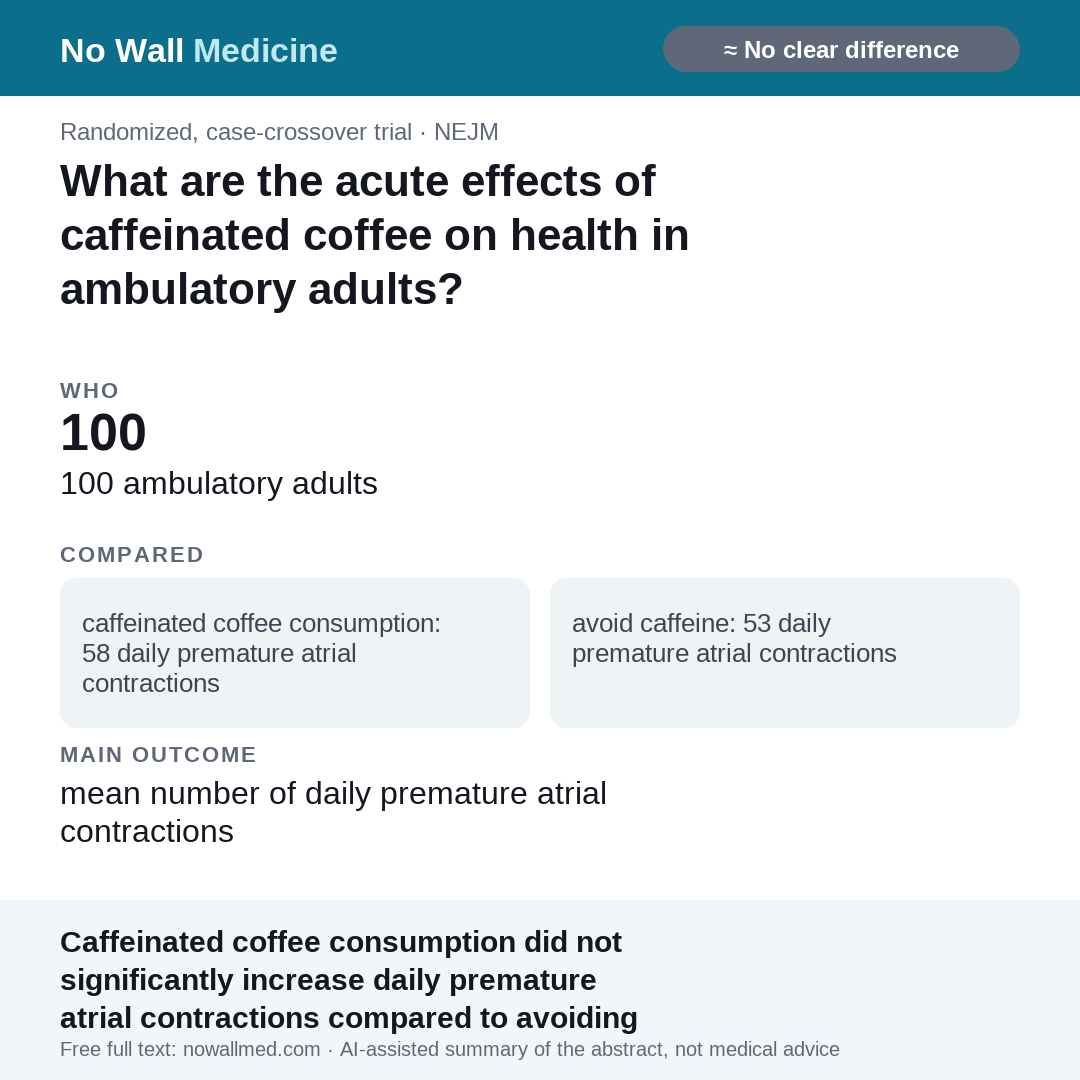
Acute Effects of Coffee Consumption on Health among Ambulatory Adults
Randomized, case-crossover trialNo clear difference
What are the acute effects of caffeinated coffee on health in ambulatory adults?
Who
100
100 ambulatory adults
Compared
caffeinated coffee consumption: 58 daily premature atrial contractions
avoid caffeine: 53 daily premature atrial contractions
Main outcome
mean number of daily premature atrial contractions
Result: rate ratio 1.09 (95% CI 0.98 to 1.20)
Bottom line: Caffeinated coffee consumption did not significantly increase daily premature atrial contractions compared to avoiding caffeine.
Funded by: University of California, San Francisco and National Institutes of Health
NEJM · 2023-03-22Download image
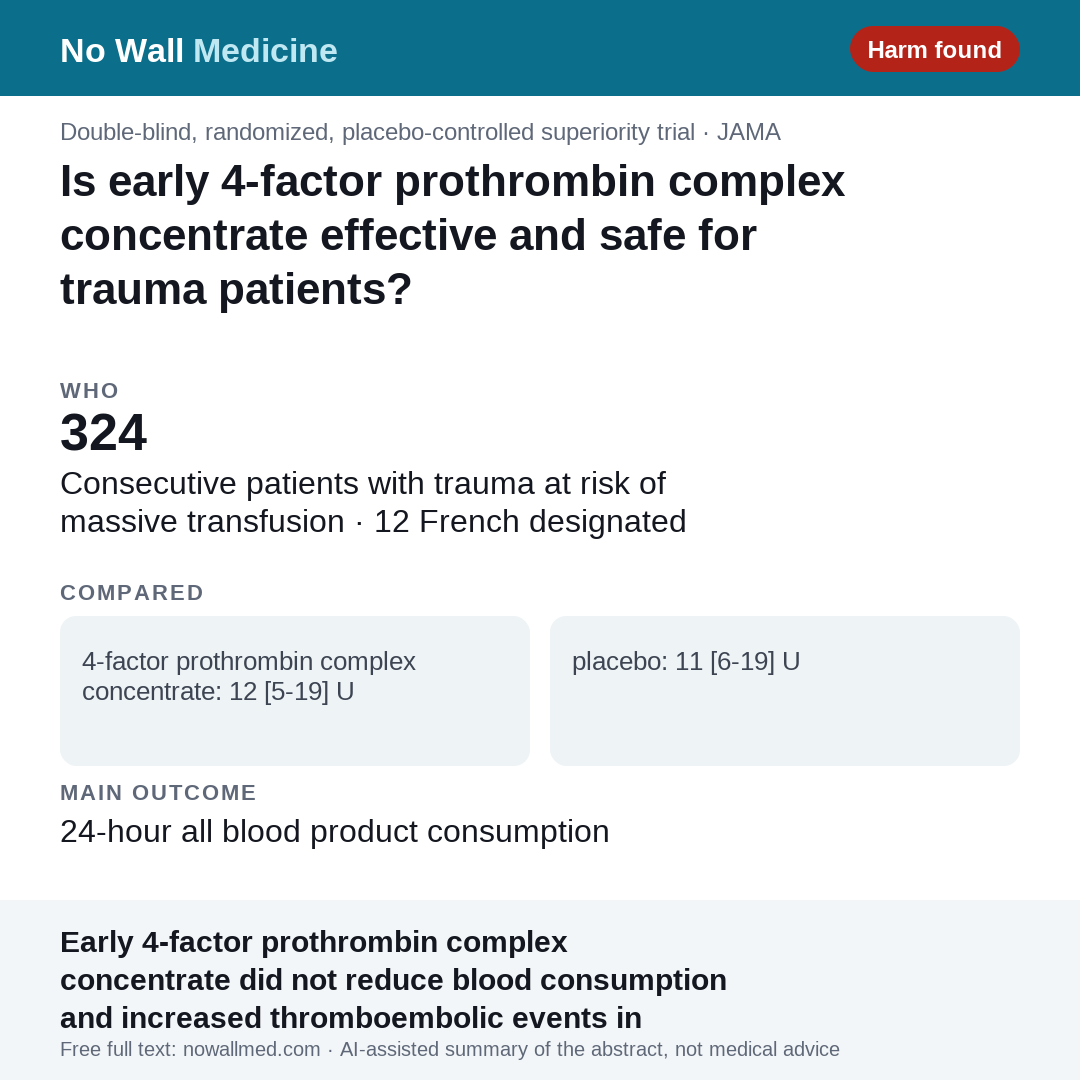
Efficacy and Safety of Early Administration of 4-Factor Prothrombin Complex Concentrate in Patients With Trauma at Risk of Massive Transfusion: The PROCOAG Randomized Clinical Trial
Double-blind, randomized, placebo-controlled superiority trialHarm found
Is early 4-factor prothrombin complex concentrate effective and safe for trauma patients?
Who
324
Consecutive patients with trauma at risk of massive transfusion · 12 French designated level I trauma centers
Compared
4-factor prothrombin complex concentrate: 12 [5-19] U
placebo: 11 [6-19] U
Main outcome
24-hour all blood product consumption
Result: absolute difference, 0.2 U [95% CI, -2.99 to 3.33]
Bottom line: Early 4-factor prothrombin complex concentrate did not reduce blood consumption and increased thromboembolic events in trauma patients.
JAMA · 2023-03-22Download image
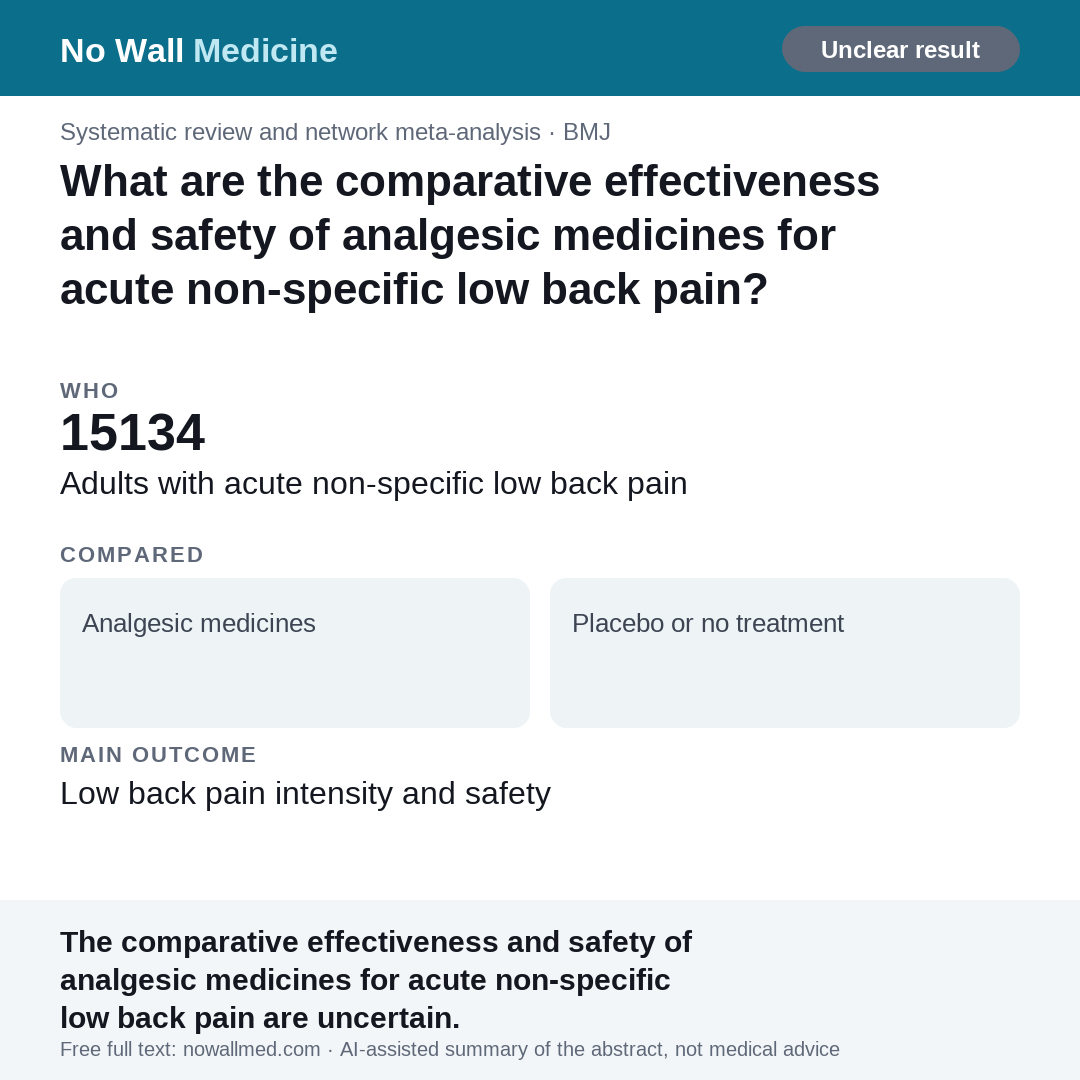
Comparative effectiveness and safety of analgesic medicines for adults with acute non-specific low back pain: systematic review and network meta-analysis
Systematic review and network meta-analysisUnclear result
What are the comparative effectiveness and safety of analgesic medicines for acute non-specific low back pain?
Who
15134
Adults with acute non-specific low back pain
Compared
Analgesic medicines
Placebo or no treatment
Main outcome
Low back pain intensity and safety
Bottom line: The comparative effectiveness and safety of analgesic medicines for acute non-specific low back pain are uncertain.
Limitation: Low or very low confidence in evidence for many medicines and secondary outcomes.
BMJ · 2023-03-22Download image
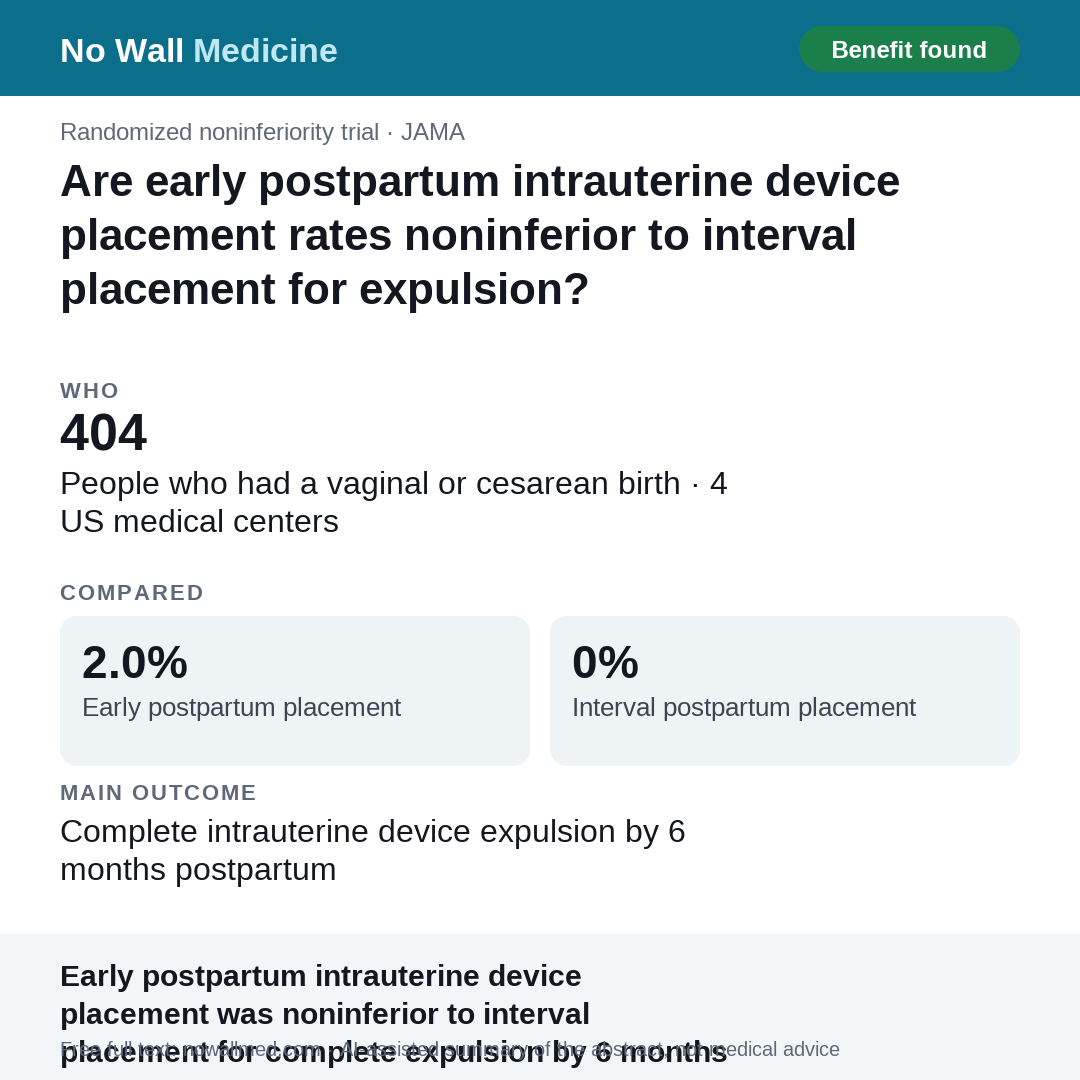
Early vs Interval Postpartum Intrauterine Device Placement: A Randomized Clinical Trial
Randomized noninferiority trialBenefit found
Are early postpartum intrauterine device placement rates noninferior to interval placement for expulsion?
Who
404
People who had a vaginal or cesarean birth · 4 US medical centers
Compared
2.0%Early postpartum placement (3/149)
0%Interval postpartum placement (0/145)
Main outcome
Complete intrauterine device expulsion by 6 months postpartum
Result: between-group difference, 2.0 (95% CI, -0.5 to 5.7) percentage points
Bottom line: Early postpartum intrauterine device placement was noninferior to interval placement for complete expulsion by 6 months postpartum.
JAMA · 2023-03-21Download image
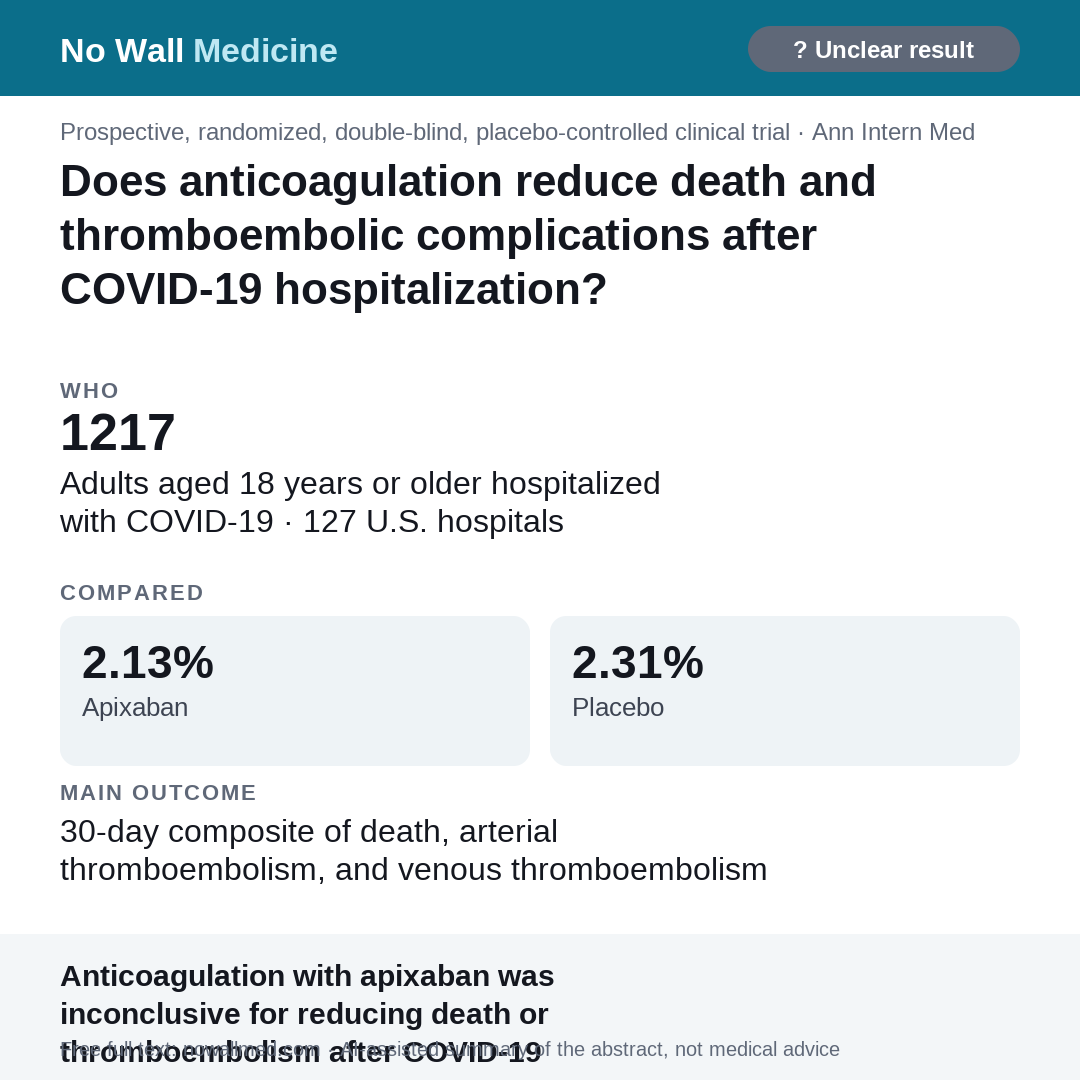
Effect of Thromboprophylaxis on Clinical Outcomes After COVID-19 Hospitalization
Prospective, randomized, double-blind, placebo-controlled clinical trialUnclear result
Does anticoagulation reduce death and thromboembolic complications after COVID-19 hospitalization?
Who
1217
Adults aged 18 years or older hospitalized with COVID-19 · 127 U.S. hospitals
Compared
2.13%Apixaban (95% CI, 1.14 to 3.62)
2.31%Placebo (CI, 1.27 to 3.84)
Main outcome
30-day composite of death, arterial thromboembolism, and venous thromboembolism
Bottom line: Anticoagulation with apixaban was inconclusive for reducing death or thromboembolism after COVID-19 hospitalization due to early termination.
Limitation: Early enrollment termination and changing SARS-CoV-2 variant peaks made results imprecise.
Funded by: National Institutes of Health
Ann Intern Med · 2023-03-21Download image
Immunogenicity, safety, and tolerability of a recombinant measles-vectored Lassa fever vaccine: a randomised, placebo-controlled, first-in-human trial
Randomised, placebo-controlled, first-in-human trialBenefit found
What are the safety, tolerability, and immunogenicity of the MV-LASV vaccine?
Who
60
Healthy adults aged 18-55 years · Single site in Antwerp, Belgium
Compared
Low-dose MV-LASV: 96% (24/25) local solicited adverse events
High-dose MV-LASV: 100% (23/23) local solicited adverse events
Placebo: 50% (6/12) local solicited adverse events
Main outcome
Rate of solicited and unsolicited adverse events
Bottom line: The MV-LASV vaccine showed an acceptable safety and tolerability profile and induced substantial Lassa virus-specific IgG concentrations.
Funded by: Coalition for Epidemic Preparedness Innovations
Lancet · 2023-03-16Download image

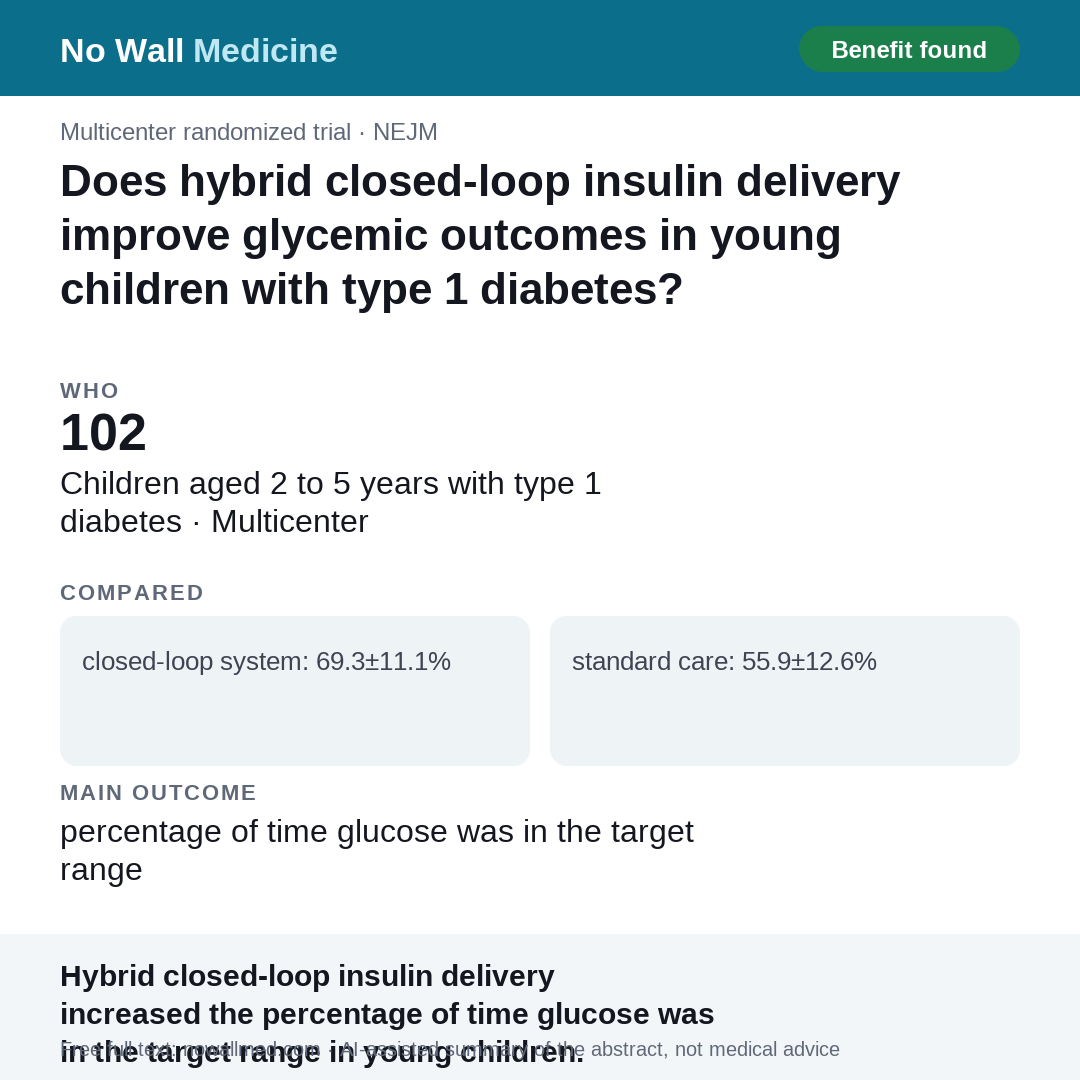
Trial of Hybrid Closed-Loop Control in Young Children with Type 1 Diabetes
Multicenter randomized trialBenefit found
Does hybrid closed-loop insulin delivery improve glycemic outcomes in young children with type 1 diabetes?
Who
102
Children aged 2 to 5 years with type 1 diabetes · Multicenter
Compared
closed-loop system: 69.3±11.1%
standard care: 55.9±12.6%
Main outcome
percentage of time glucose was in the target range
Result: mean adjusted difference, 12.4 percentage points (95% CI, 9.5 to 15.3)
Bottom line: Hybrid closed-loop insulin delivery increased the percentage of time glucose was in the target range in young children.
Funded by: National Institute of Diabetes and Digestive and Kidney Diseases
NEJM · 2023-03-15Download image
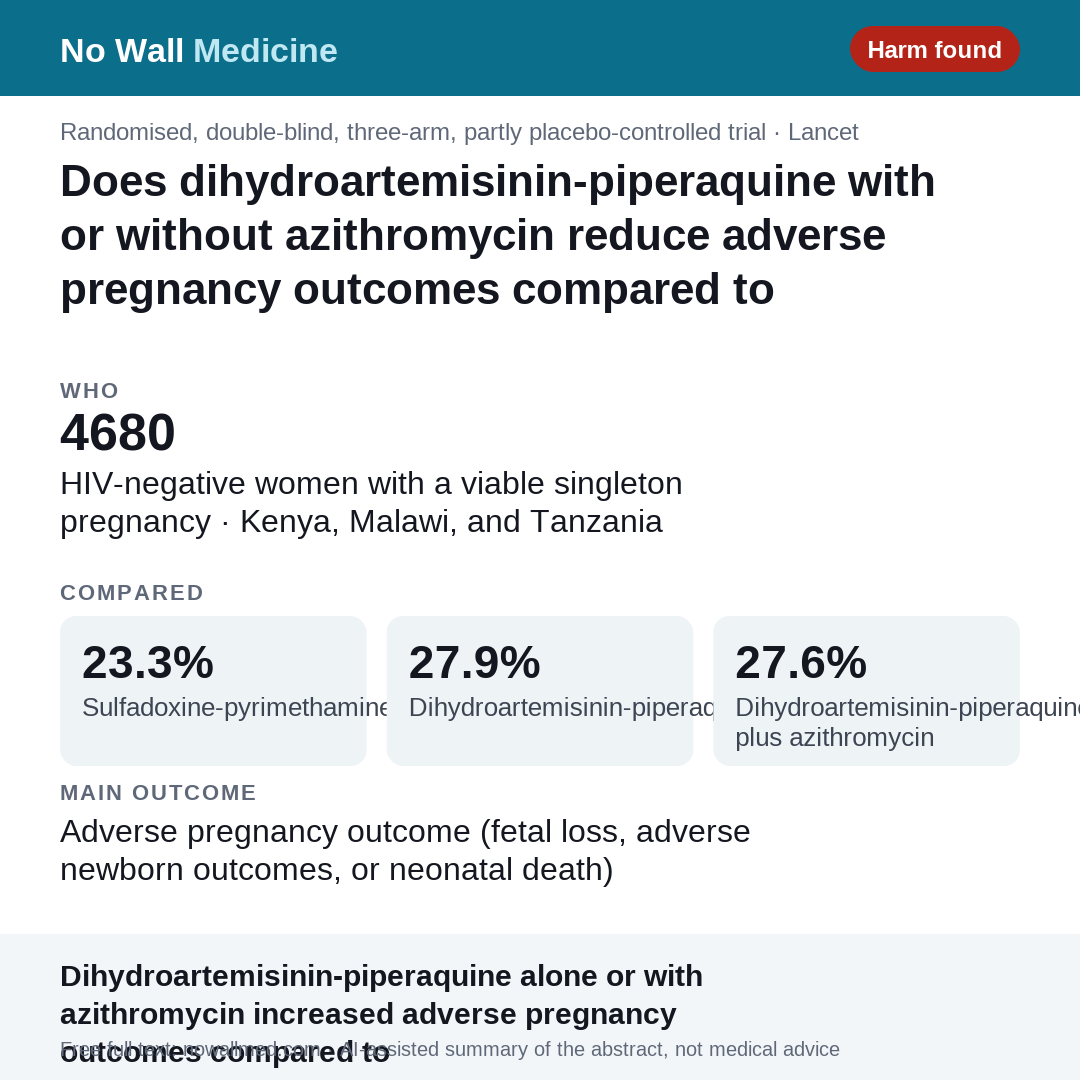
Effect of monthly intermittent preventive treatment with dihydroartemisinin-piperaquine with and without azithromycin versus monthly sulfadoxine-pyrimethamine on adverse pregnancy outcomes in Africa: a double-blind randomised, partly placebo-controlled trial
Randomised, double-blind, three-arm, partly placebo-controlled trialHarm found
Does dihydroartemisinin-piperaquine with or without azithromycin reduce adverse pregnancy outcomes compared to sulfadoxine-pyrimethamine?
Who
4680
HIV-negative women with a viable singleton pregnancy · Kenya, Malawi, and Tanzania
Compared
23.3%Sulfadoxine-pyrimethamine
27.9%Dihydroartemisinin-piperaquine
27.6%Dihydroartemisinin-piperaquine plus azithromycin
Main outcome
Adverse pregnancy outcome (fetal loss, adverse newborn outcomes, or neonatal death)
Result: risk ratio 1.20 (95% CI 1.06-1.36); risk ratio 1.16 (95% CI 1.03-1.32)
Bottom line: Dihydroartemisinin-piperaquine alone or with azithromycin increased adverse pregnancy outcomes compared to sulfadoxine-pyrimethamine.
Funded by: European & Developing Countries Clinical Trials Partnership 2, EU, UK FCDO, Medical Research Council
Lancet · 2023-03-10Download image
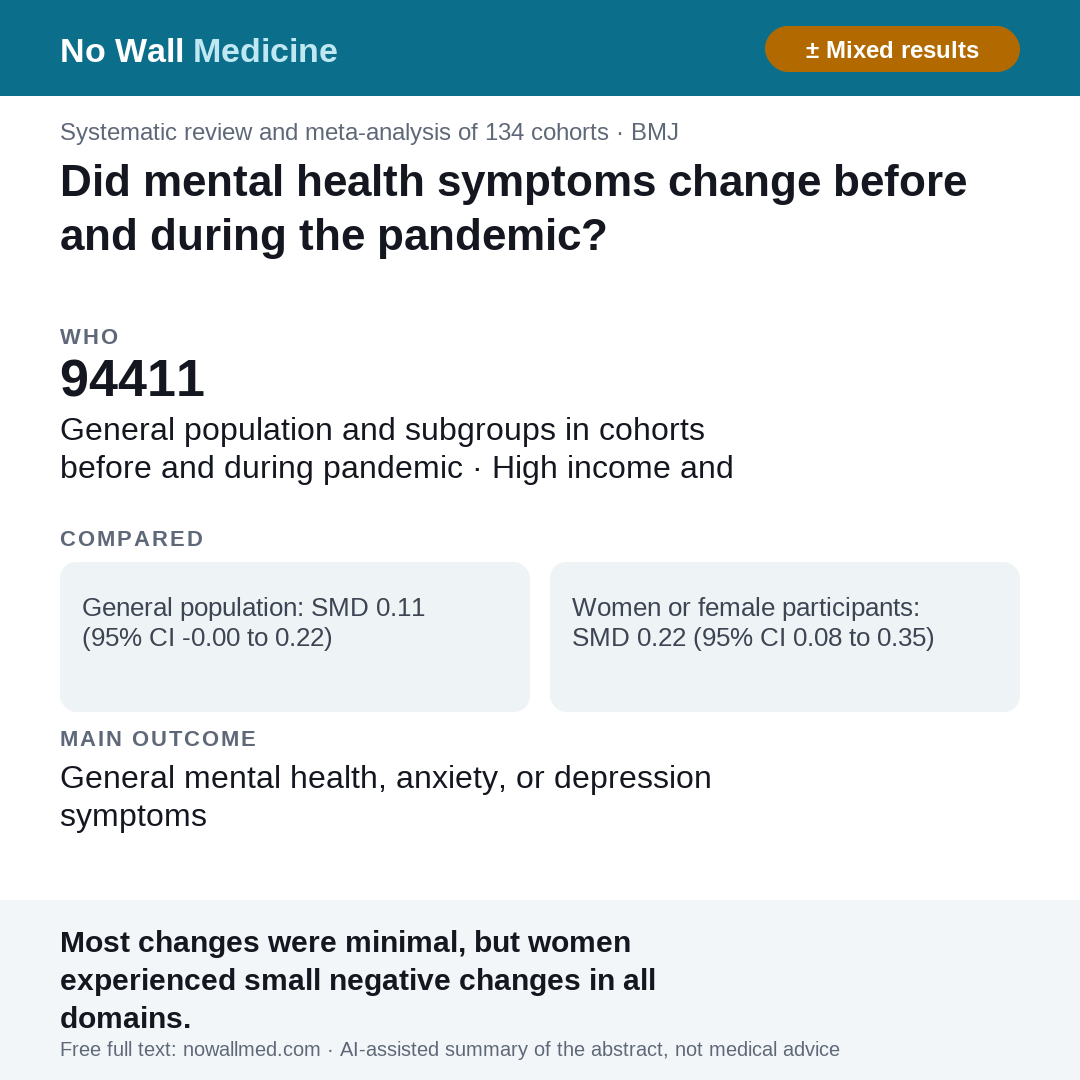
Comparison of mental health symptoms before and during the covid-19 pandemic: evidence from a systematic review and meta-analysis of 134 cohorts
Systematic review and meta-analysisMixed results
How did mental health symptoms change before and during the covid-19 pandemic?
Who
Any population in 134 cohorts · High income and upper middle income countries
Compared
General population: general mental health: standardised mean difference change 0.11
0.05General population: anxiety symptoms
0.12General population: depression symptoms
0.22Women or female participants: general mental health
Main outcome
General mental health, anxiety symptoms, or depression symptoms
Bottom line: Most symptom changes were minimal or not statistically significant, though women experienced small increases in mental health symptoms.
Limitation: Substantial heterogeneity and risk of bias were present across analyses.
BMJ · 2023-03-08Download image
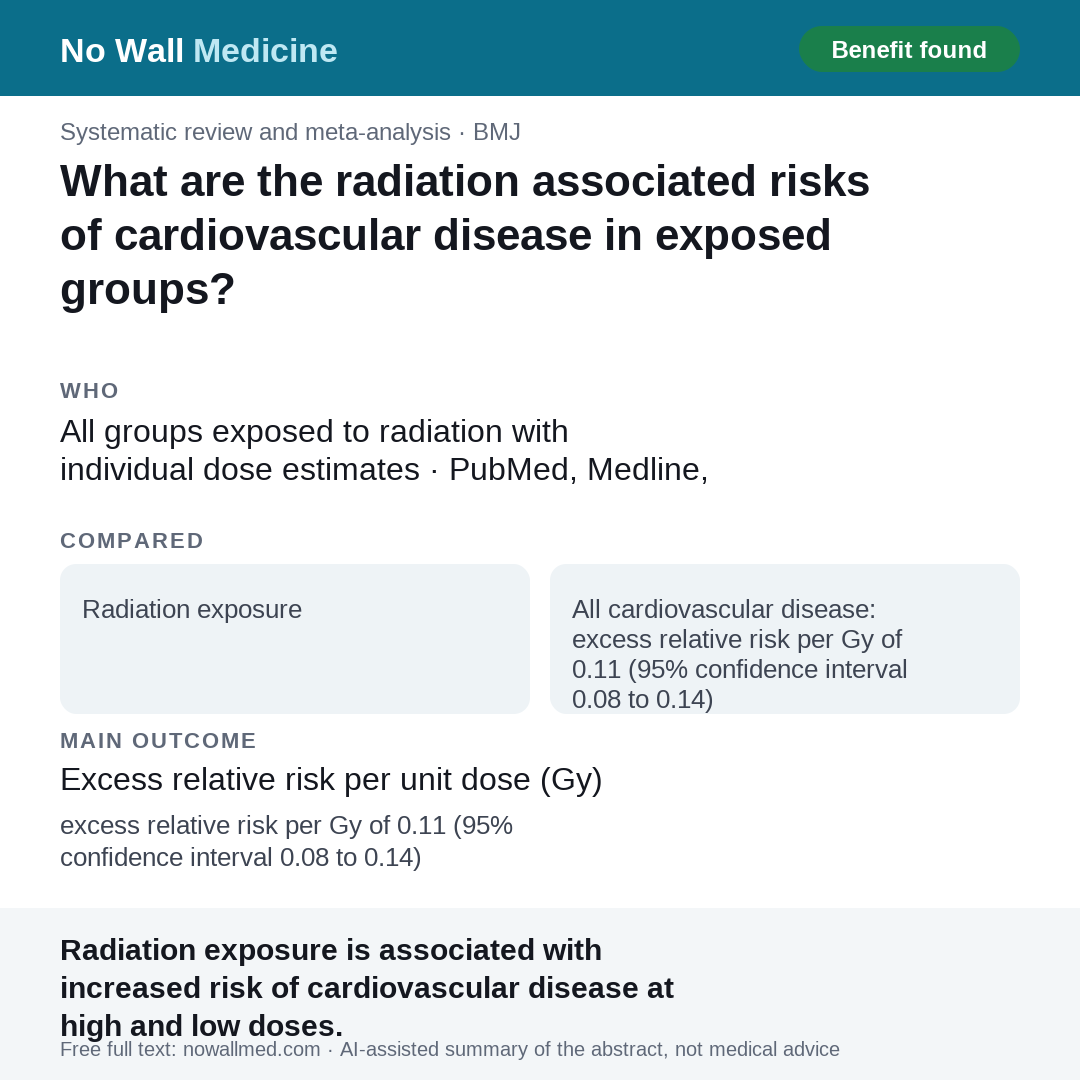
Ionising radiation and cardiovascular disease: systematic review and meta-analysis
Systematic review and meta-analysisBenefit found
What are the radiation associated risks of cardiovascular disease in exposed groups?
Who
All groups exposed to radiation with individual dose estimates · PubMed, Medline, Embase, Scopus, and Web of Science
Compared
Radiation exposure
All cardiovascular disease: excess relative risk per Gy of 0.11 (95% confidence interval 0.08 to 0.14)
Main outcome
Excess relative risk per unit dose (Gy)
Result: excess relative risk per Gy of 0.11 (95% confidence interval 0.08 to 0.14)
Bottom line: Radiation exposure is associated with increased risk of cardiovascular disease at high and low doses.
Limitation: Interstudy heterogeneity possibly resulting from unmeasured confounders or effect modifiers.
BMJ · 2023-03-08Download image
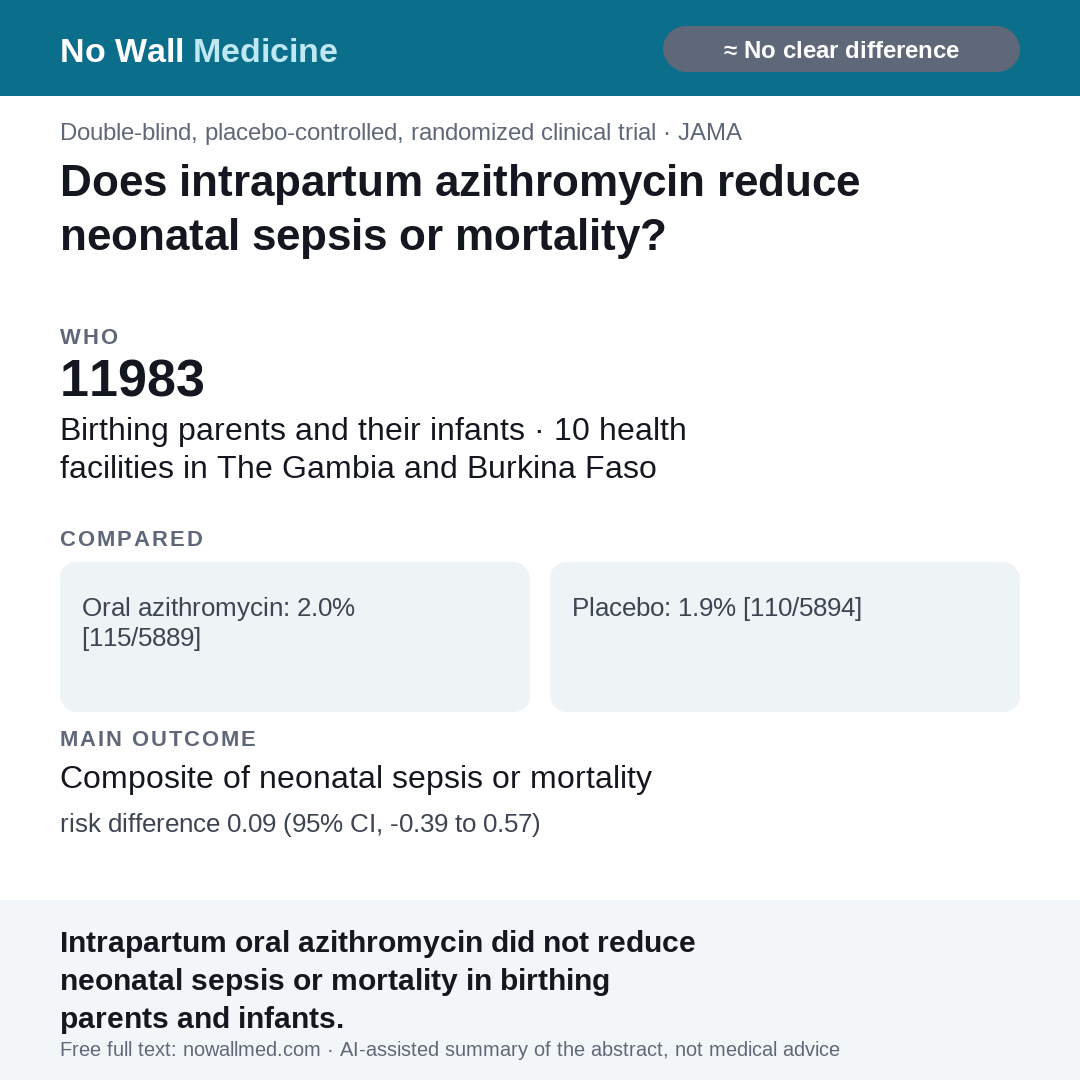
Effect of Intrapartum Azithromycin vs Placebo on Neonatal Sepsis and Death: A Randomized Clinical Trial
Double-blind, placebo-controlled, randomized clinical trialNo clear difference
Does intrapartum azithromycin reduce neonatal sepsis or mortality?
Who
11983
Birthing parents and their infants · 10 health facilities in The Gambia and Burkina Faso
Compared
Oral azithromycin: 2.0% [115/5889]
Placebo: 1.9% [110/5894]
Main outcome
Composite of neonatal sepsis or mortality
Result: risk difference 0.09 (95% CI, -0.39 to 0.57)
Bottom line: Intrapartum oral azithromycin did not reduce neonatal sepsis or mortality in birthing parents and infants.
JAMA · 2023-03-07Download image
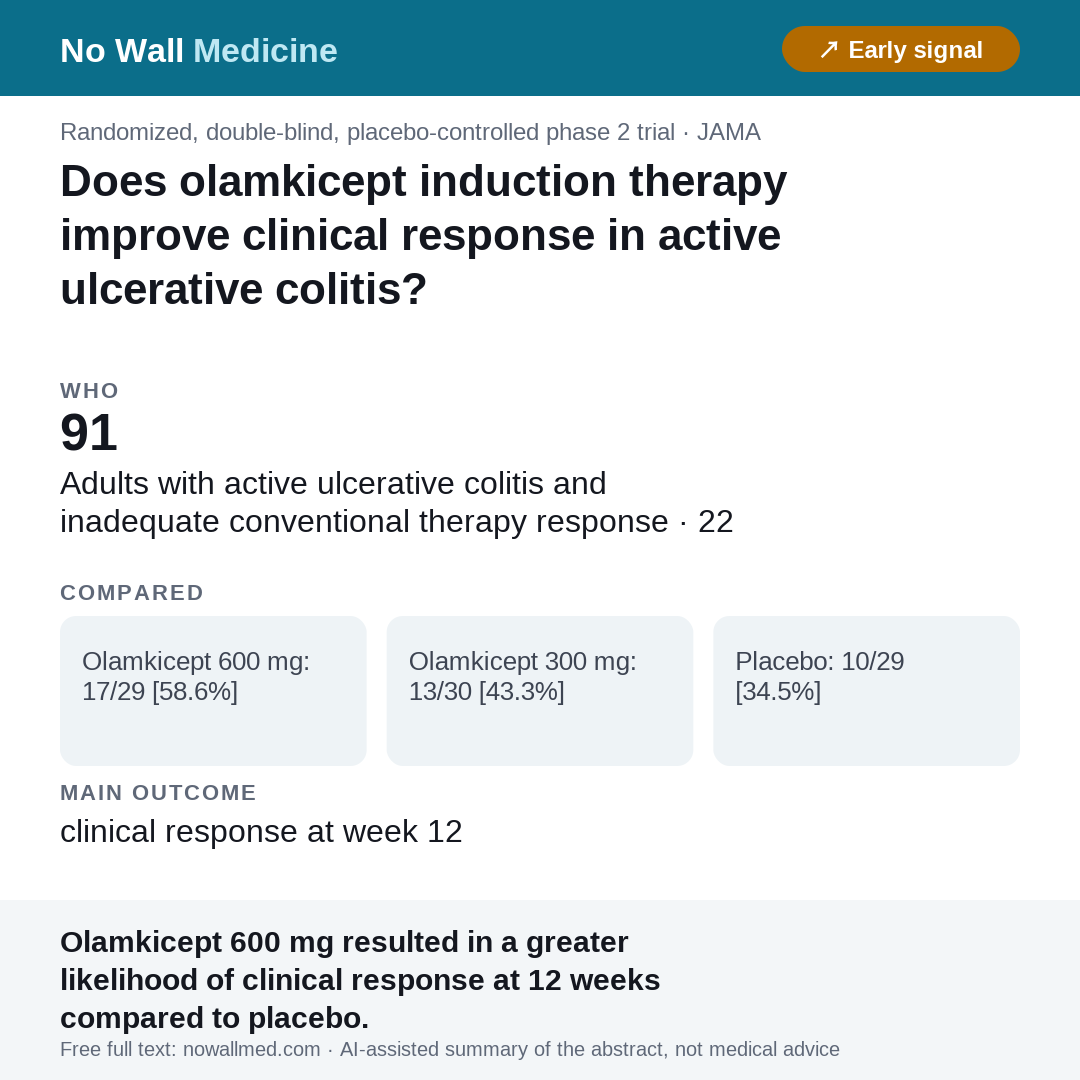
Effect of Induction Therapy With Olamkicept vs Placebo on Clinical Response in Patients With Active Ulcerative Colitis: A Randomized Clinical Trial
Randomized, double-blind, placebo-controlled phase 2 trialBenefit found
Does olamkicept induction therapy improve clinical response in active ulcerative colitis?
Who
91
Adults with active ulcerative colitis and inadequate conventional therapy response · 22 clinical study sites in East Asia
Compared
Olamkicept 600 mg: 17/29 [58.6%]
Olamkicept 300 mg: 13/30 [43.3%]
Placebo: 10/29 [34.5%]
Main outcome
clinical response at week 12
Result: adjusted difference vs placebo of 26.6% (90% CI, 6.2% to 47.1%)
Bottom line: Olamkicept 600 mg resulted in a greater likelihood of clinical response at 12 weeks compared to placebo.
JAMA · 2023-03-07Download image
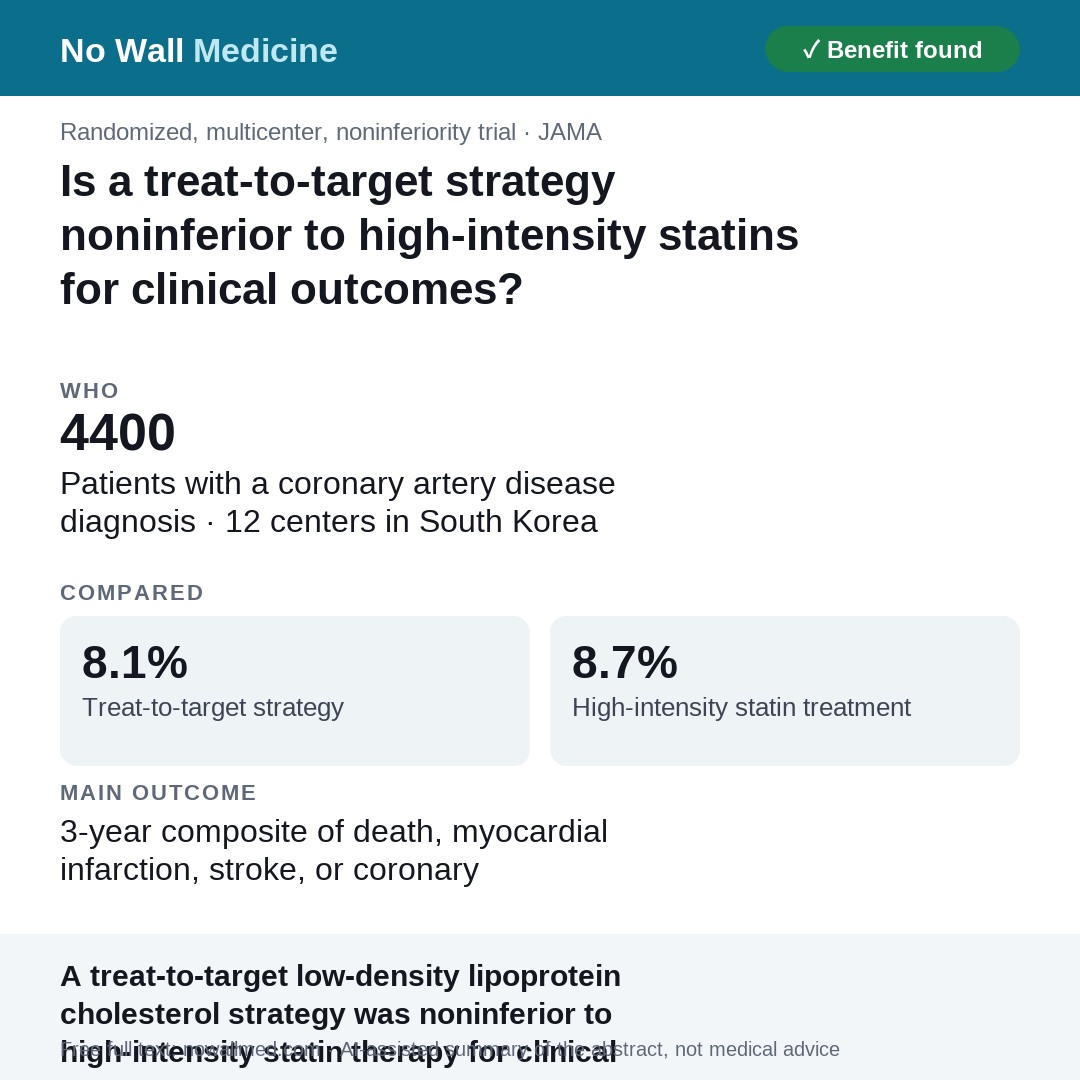
Treat-to-Target or High-Intensity Statin in Patients With Coronary Artery Disease: A Randomized Clinical Trial
Randomized, multicenter, noninferiority trialBenefit found
Is a treat-to-target strategy noninferior to high-intensity statins for clinical outcomes?
Who
4400
Patients with a coronary artery disease diagnosis · 12 centers in South Korea
Compared
8.1%Treat-to-target strategy
8.7%High-intensity statin treatment
Main outcome
3-year composite of death, myocardial infarction, stroke, or coronary revascularization
Result: absolute difference, -0.6 percentage points [upper boundary of the 1-sided 97.5% CI, 1.1 percentage points]
Bottom line: A treat-to-target low-density lipoprotein cholesterol strategy was noninferior to high-intensity statin therapy for clinical outcomes.
JAMA · 2023-03-07Download image
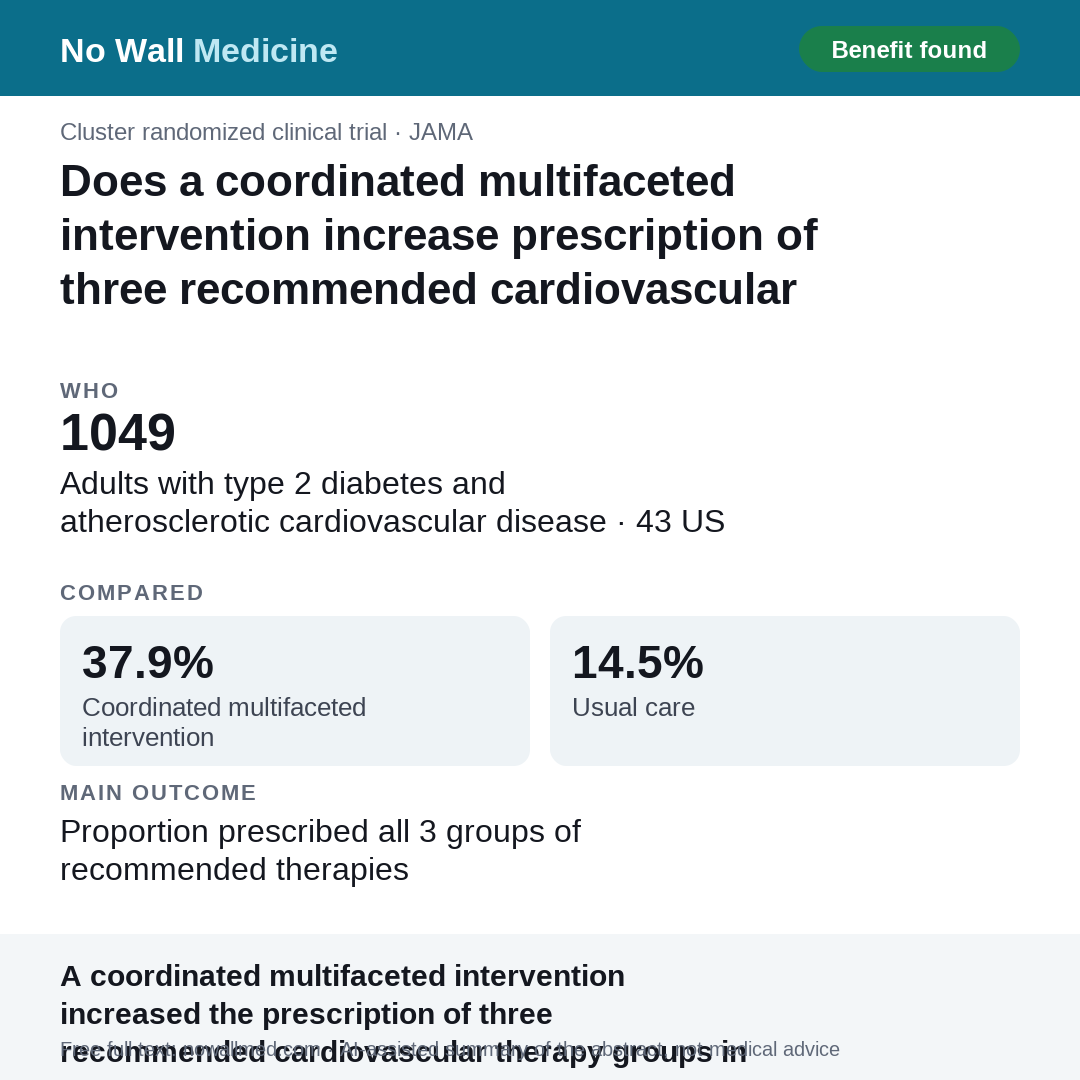
Coordinated Care to Optimize Cardiovascular Preventive Therapies in Type 2 Diabetes: A Randomized Clinical Trial
Cluster randomized clinical trialBenefit found
Does a coordinated multifaceted intervention increase prescription of three recommended cardiovascular therapies?
Who
1049
Adults with type 2 diabetes and atherosclerotic cardiovascular disease · 43 US cardiology clinics
Compared
37.9%Coordinated multifaceted intervention (173/457)
14.5%Usual care (85/588)
Main outcome
Proportion prescribed all 3 groups of recommended therapies
Result: adjusted odds ratio 4.38 (95% CI, 2.49 to 7.71)
Bottom line: A coordinated multifaceted intervention increased the prescription of three recommended cardiovascular therapy groups in adults with type 2 diabetes.
JAMA · 2023-03-07Download image
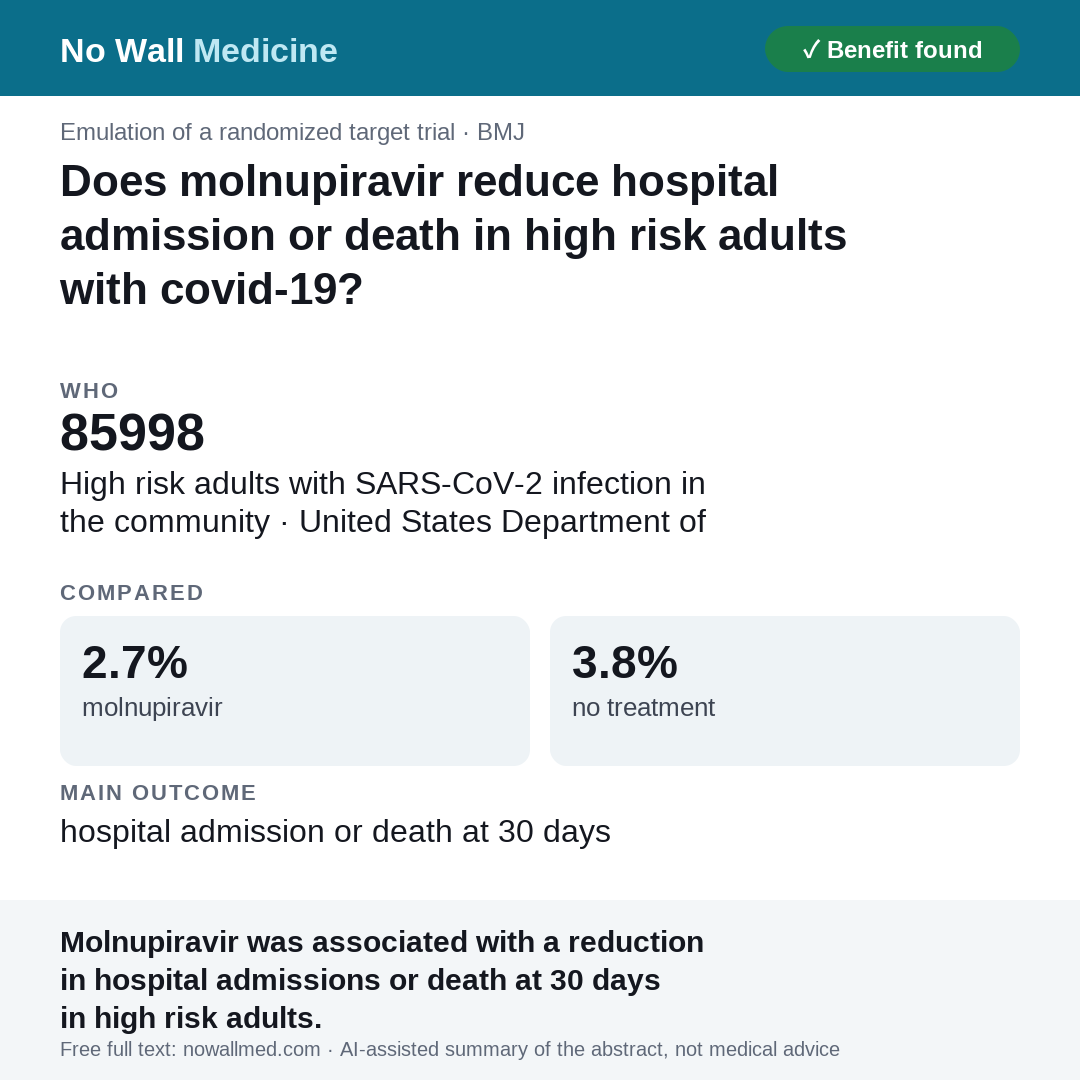
Molnupiravir and risk of hospital admission or death in adults with covid-19: emulation of a randomized target trial using electronic health records
Emulation of a randomized target trialBenefit found
Does molnupiravir reduce hospital admission or death in high risk adults with covid-19?
Who
85998
High risk adults with SARS-CoV-2 infection in the community · United States Department of Veterans Affairs
Compared
2.7%molnupiravir (95% confidence interval 2.5% to 3.0%)
3.8%no treatment (3.7% to 3.9%)
Main outcome
hospital admission or death at 30 days
Result: relative risk 0.72 (95% confidence interval 0.64 to 0.79)
Bottom line: Molnupiravir was associated with a reduction in hospital admissions or death at 30 days in high risk adults.
BMJ · 2023-03-07Download image
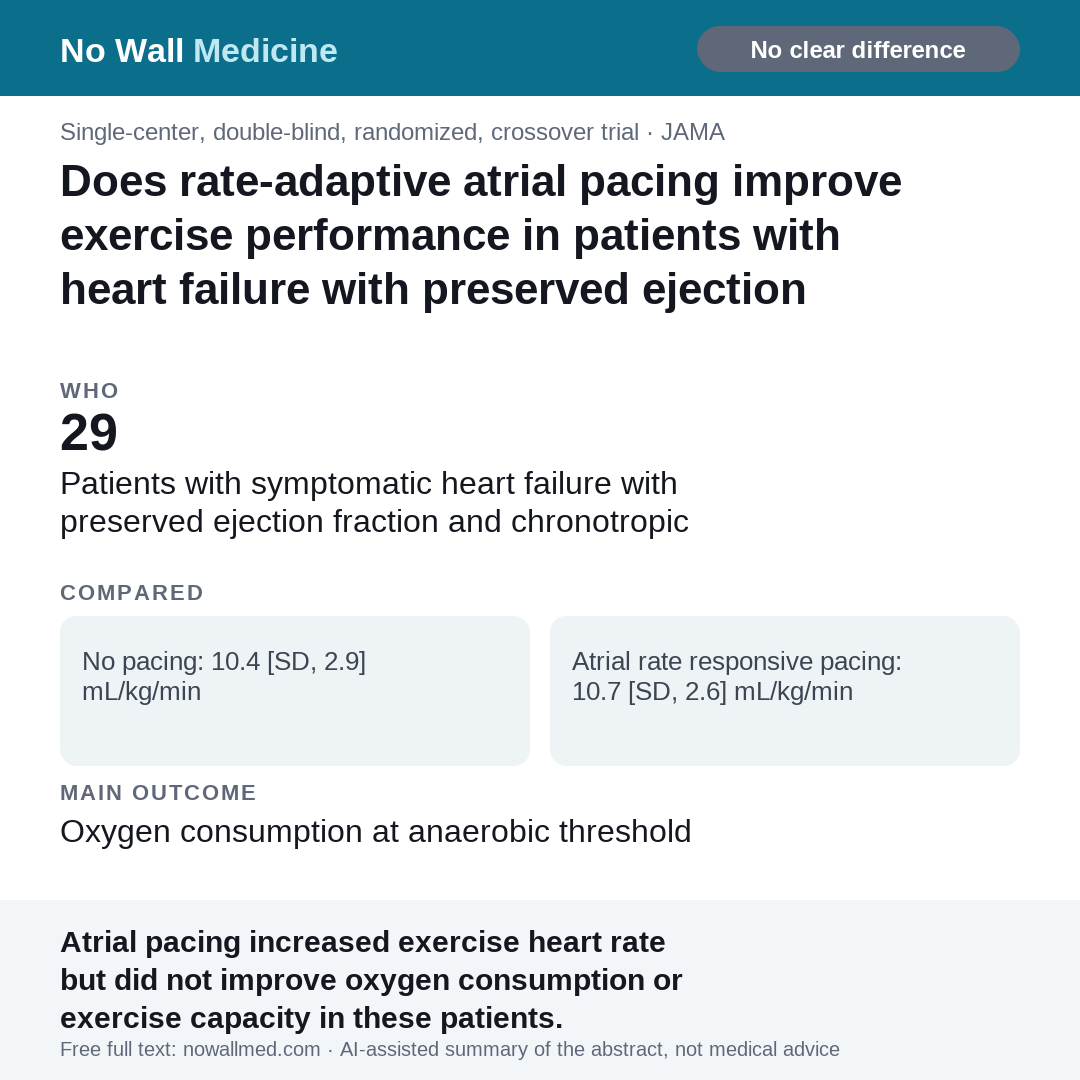
Rate-Adaptive Atrial Pacing for Heart Failure With Preserved Ejection Fraction: The RAPID-HF Randomized Clinical Trial
Single-center, double-blind, randomized, crossover trialNo clear difference
Does rate-adaptive atrial pacing improve exercise performance in patients with heart failure with preserved ejection fraction?
Who
29
Patients with symptomatic heart failure with preserved ejection fraction and chronotropic incompetence · Tertiary referral center, Rochester, Minnesota
Compared
No pacing: 10.4 [SD, 2.9] mL/kg/min
Atrial rate responsive pacing: 10.7 [SD, 2.6] mL/kg/min
Main outcome
Oxygen consumption at anaerobic threshold
Result: absolute difference, 0.3 [95% CI, -0.5 to 1.0] mL/kg/min
Bottom line: Atrial pacing increased exercise heart rate but did not improve oxygen consumption or exercise capacity in these patients.
JAMA · 2023-03-06Download image
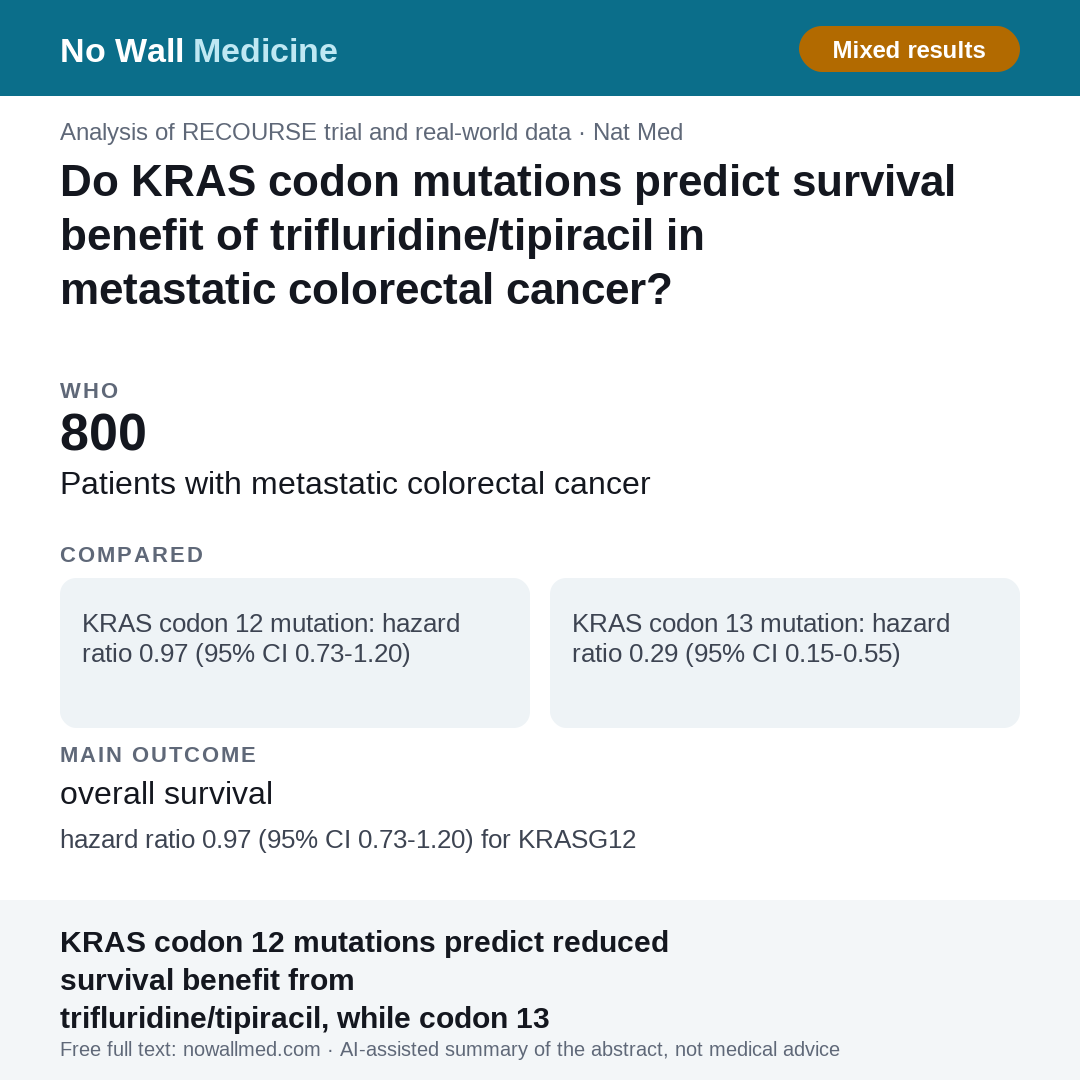
Codon-specific KRAS mutations predict survival benefit of trifluridine/tipiracil in metastatic colorectal cancer
Analysis of RECOURSE trial and real-world dataMixed results
Do KRAS codon mutations predict survival benefit of trifluridine/tipiracil in metastatic colorectal cancer?
Who
800
Patients with metastatic colorectal cancer
Compared
KRAS codon 12 mutation: hazard ratio 0.97 (95% CI 0.73-1.20)
KRAS codon 13 mutation: hazard ratio 0.29 (95% CI 0.15-0.55)
Main outcome
overall survival
Result: hazard ratio 0.97 (95% CI 0.73-1.20) for KRASG12
Bottom line: KRAS codon 12 mutations predict reduced survival benefit from trifluridine/tipiracil, while codon 13 mutations show improved survival.
Nat Med · 2023-03-02Download image
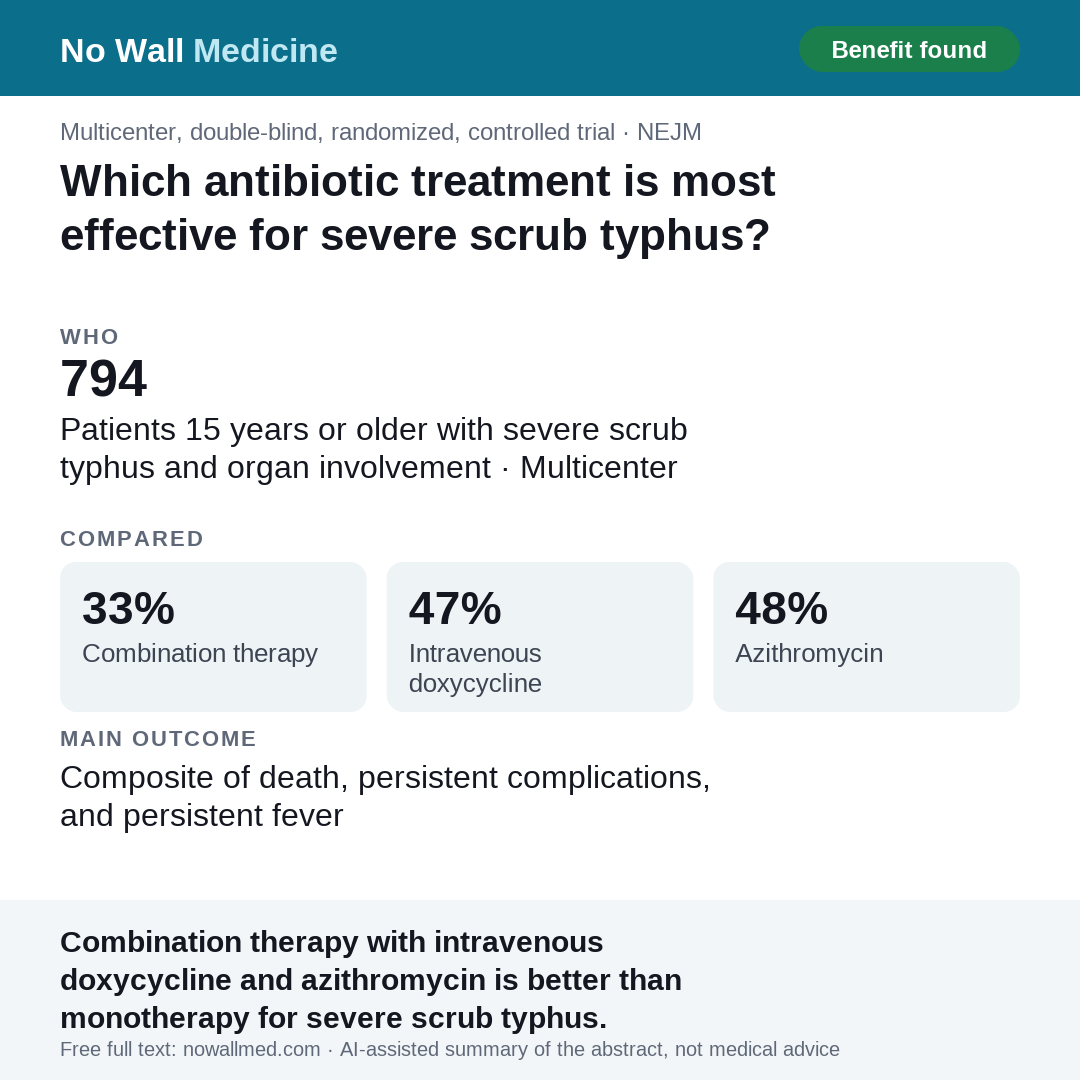
Intravenous Doxycycline, Azithromycin, or Both for Severe Scrub Typhus
Multicenter, double-blind, randomized, controlled trialBenefit found
Which antibiotic treatment is most effective for severe scrub typhus?
Who
794
Patients 15 years or older with severe scrub typhus and organ involvement · Multicenter
Compared
33%Combination therapy
47%Intravenous doxycycline
48%Azithromycin
Main outcome
Composite of death, persistent complications, and persistent fever
Result: risk difference -13.3 percentage points (95% CI -21.6 to -5.1) vs doxycycline; -14.8 percentage points (95% CI -23.1 to -6.5) vs azithromycin
Bottom line: Combination therapy with intravenous doxycycline and azithromycin is better than monotherapy for severe scrub typhus.
Funded by: India Alliance and Wellcome Trust
NEJM · 2023-03-01Download image
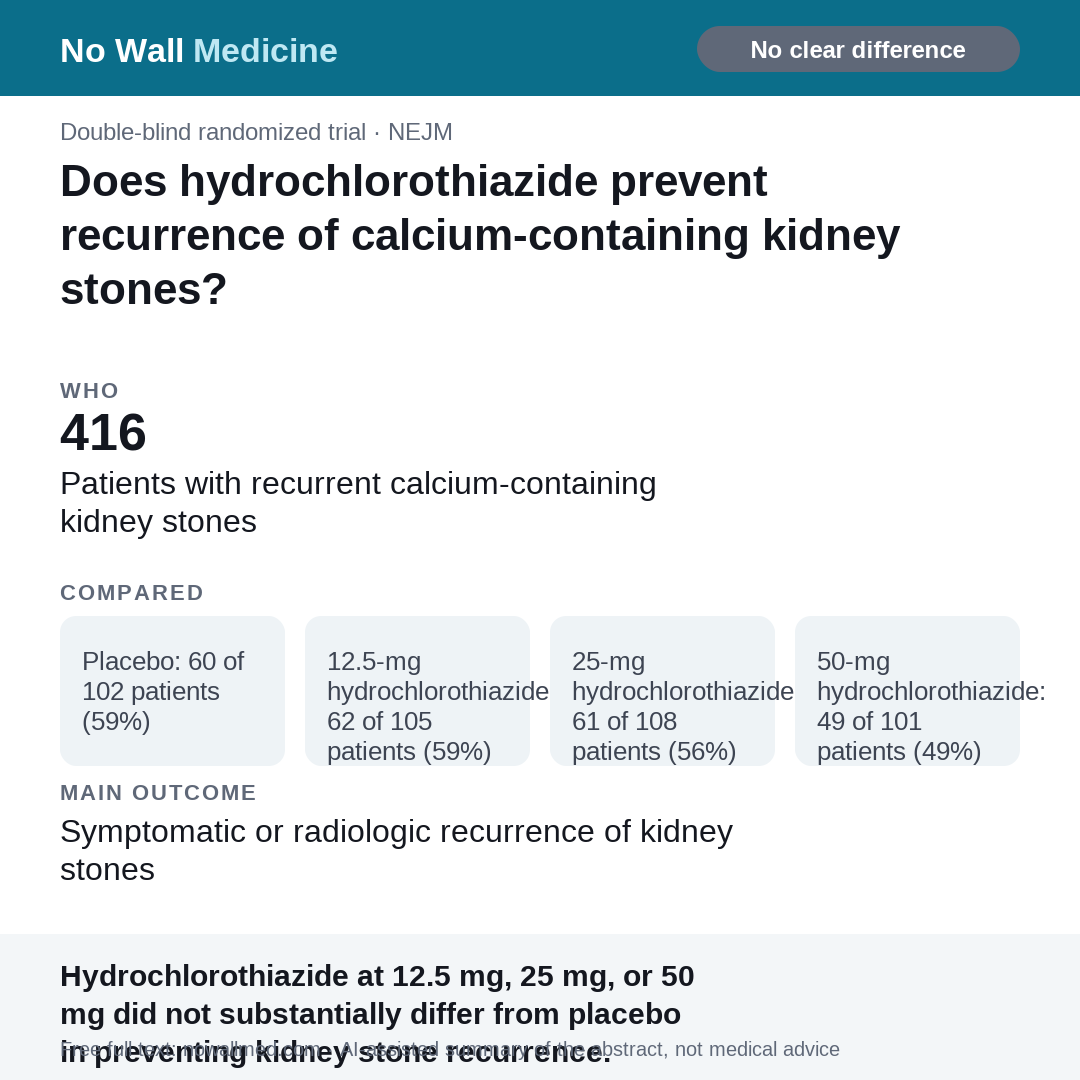
Hydrochlorothiazide and Prevention of Kidney-Stone Recurrence
Double-blind randomized trialNo clear difference
Does hydrochlorothiazide prevent recurrence of calcium-containing kidney stones?
Who
416
Patients with recurrent calcium-containing kidney stones
Compared
Placebo: 60 of 102 patients (59%)
12.5-mg hydrochlorothiazide: 62 of 105 patients (59%)
25-mg hydrochlorothiazide: 61 of 108 patients (56%)
50-mg hydrochlorothiazide: 49 of 101 patients (49%)
Main outcome
Symptomatic or radiologic recurrence of kidney stones
Bottom line: Hydrochlorothiazide at 12.5 mg, 25 mg, or 50 mg did not substantially differ from placebo in preventing kidney stone recurrence.
Funded by: Swiss National Science Foundation and Inselspital
NEJM · 2023-03-01Download image