Visual abstracts
New randomized trials and meta-analyses from leading journals at a glance: who was studied, what was compared, and what was found. Every paper is free to read in full.
All specialtiesCardiology 4763Oncology 4042Gastroenterology & Hepatology 1902Infectious Disease 3756Neurology 1872Psychiatry & Mental Health 2214Pulmonology 2042Critical Care 1319Endocrinology & Diabetes 2544Pediatrics 2889Surgery 2479Orthopedics & Sports Medicine 917Neurosurgery 525Cardiothoracic & Vascular Surgery 656Plastic & Reconstructive Surgery 574Nephrology 1107Rheumatology 810Hematology 1090Dermatology 611Ophthalmology 532Obstetrics & Gynecology 1645Public & Global Health 1037Radiology & Imaging 617Anesthesiology 957Urology 745ENT (Otolaryngology) 494Emergency Medicine 481Allergy & Immunology 309Geriatrics 972Family Medicine & Primary Care 533Medical Genetics & Genomics 659Pathology & Laboratory Medicine 156Physical Medicine & Rehabilitation 734Palliative Care 421Nutrition 1560Digital Health & AI 2133General Medicine 318
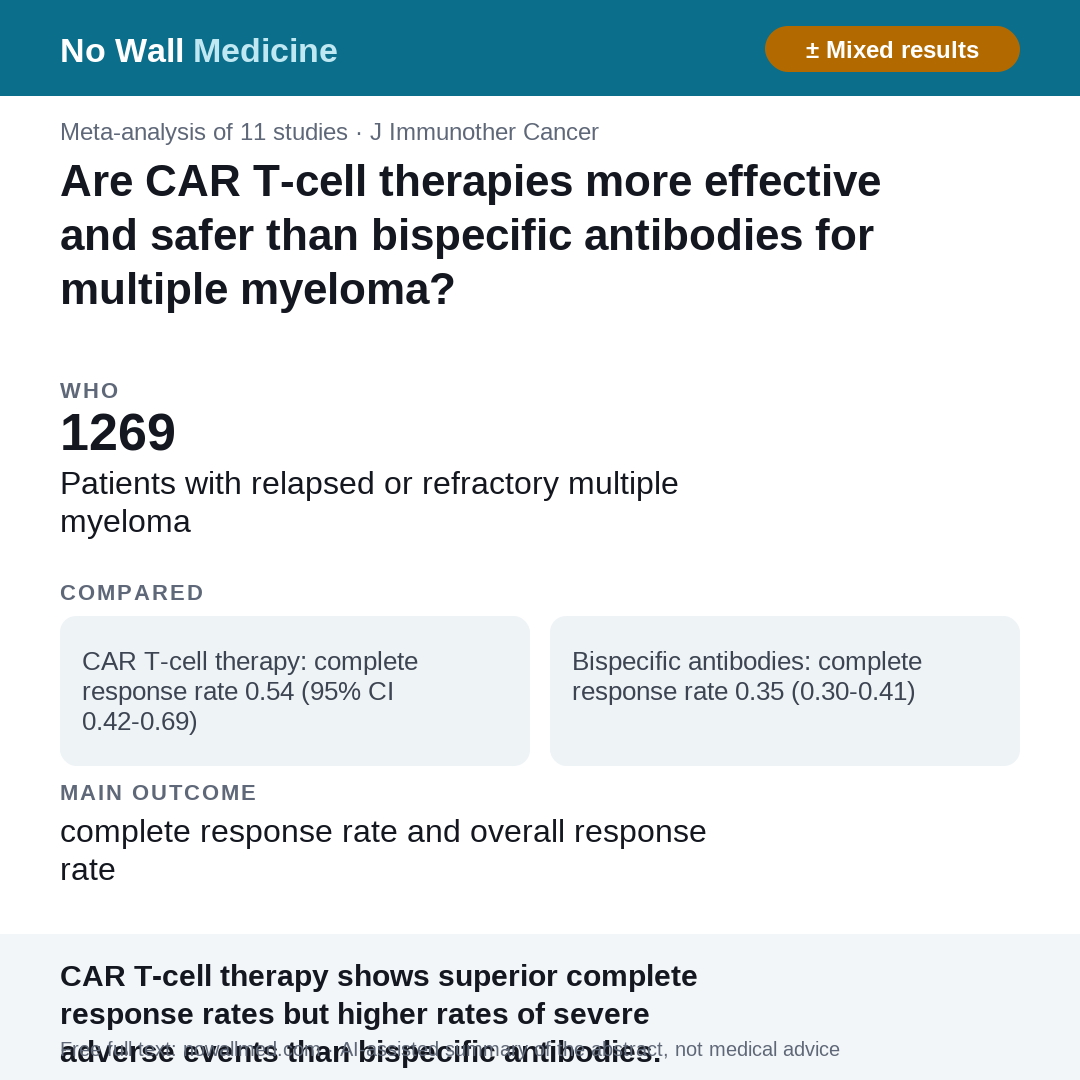
Comparison of CAR T-cell and bispecific antibody as third-line or later-line treatments for multiple myeloma: a meta-analysis
Meta-analysis of 11 studiesMixed results
Are CAR T-cell therapies more effective and safer than bispecific antibodies for multiple myeloma?
Who
1269
Patients with relapsed or refractory multiple myeloma
Compared
CAR T-cell therapy: complete response rate 0.54 (95% CI 0.42-0.69)
Bispecific antibodies: complete response rate 0.35 (0.30-0.41)
Main outcome
complete response rate and overall response rate
Result: complete response rate 0.54 (95% CI 0.42-0.69) vs 0.35 (0.30-0.41)
Bottom line: CAR T-cell therapy shows superior complete response rates but higher rates of severe adverse events than bispecific antibodies.
J Immunother Cancer · 2024-11-17Download image
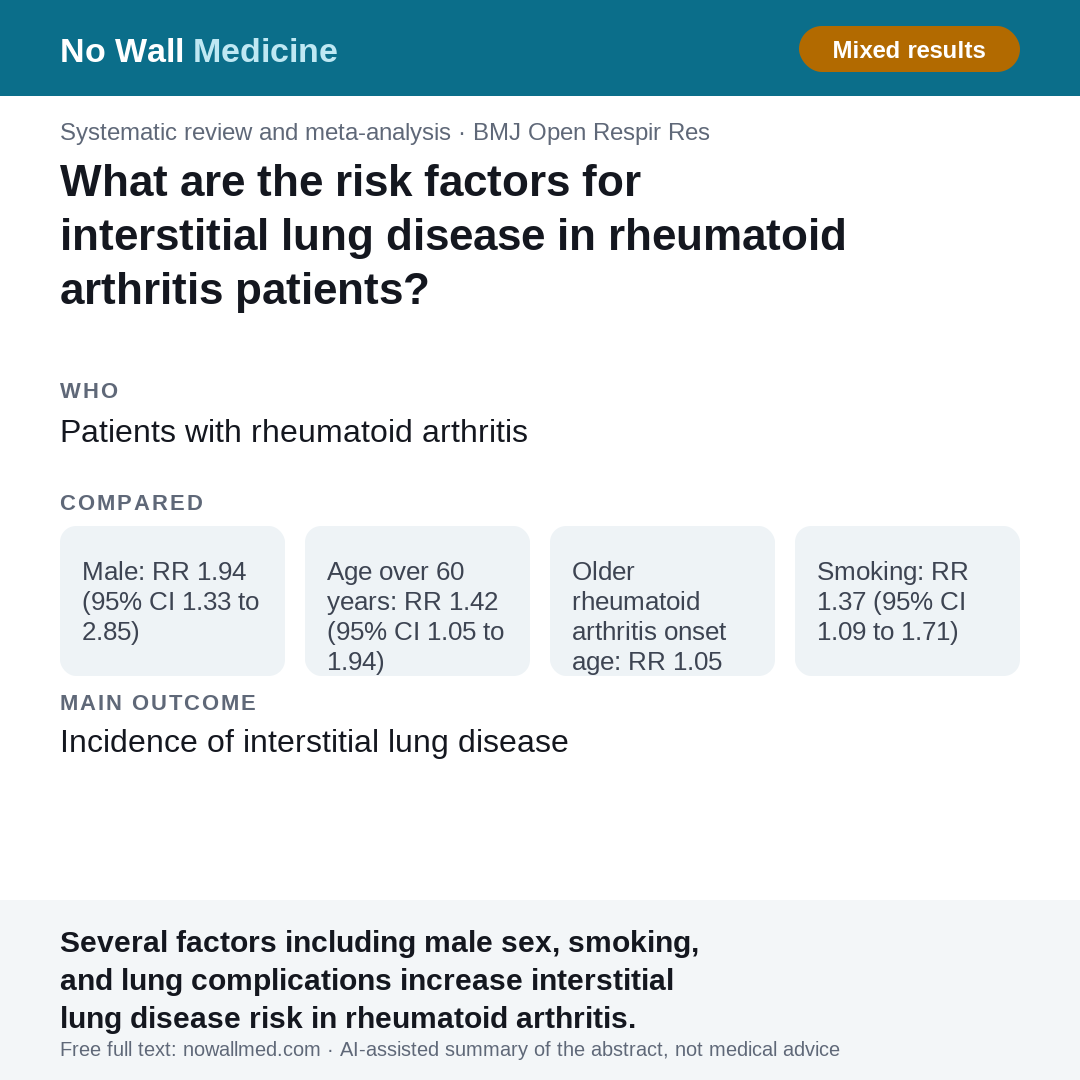
Risk factors for incidence of interstitial lung disease in patients with rheumatoid arthritis: a systematic review and meta-analysis
Systematic review and meta-analysisMixed results
What are the risk factors for interstitial lung disease in rheumatoid arthritis patients?
Who
Patients with rheumatoid arthritis
Compared
Male: RR 1.94 (95% CI 1.33 to 2.85)
Age over 60 years: RR 1.42 (95% CI 1.05 to 1.94)
Older rheumatoid arthritis onset age: RR 1.05 (95% CI 1.01 to 1.10)
Smoking: RR 1.37 (95% CI 1.09 to 1.71)
Main outcome
Incidence of interstitial lung disease
Bottom line: Several factors including male sex, smoking, and lung complications increase interstitial lung disease risk in rheumatoid arthritis.
BMJ Open Respir Res · 2024-11-17Download image
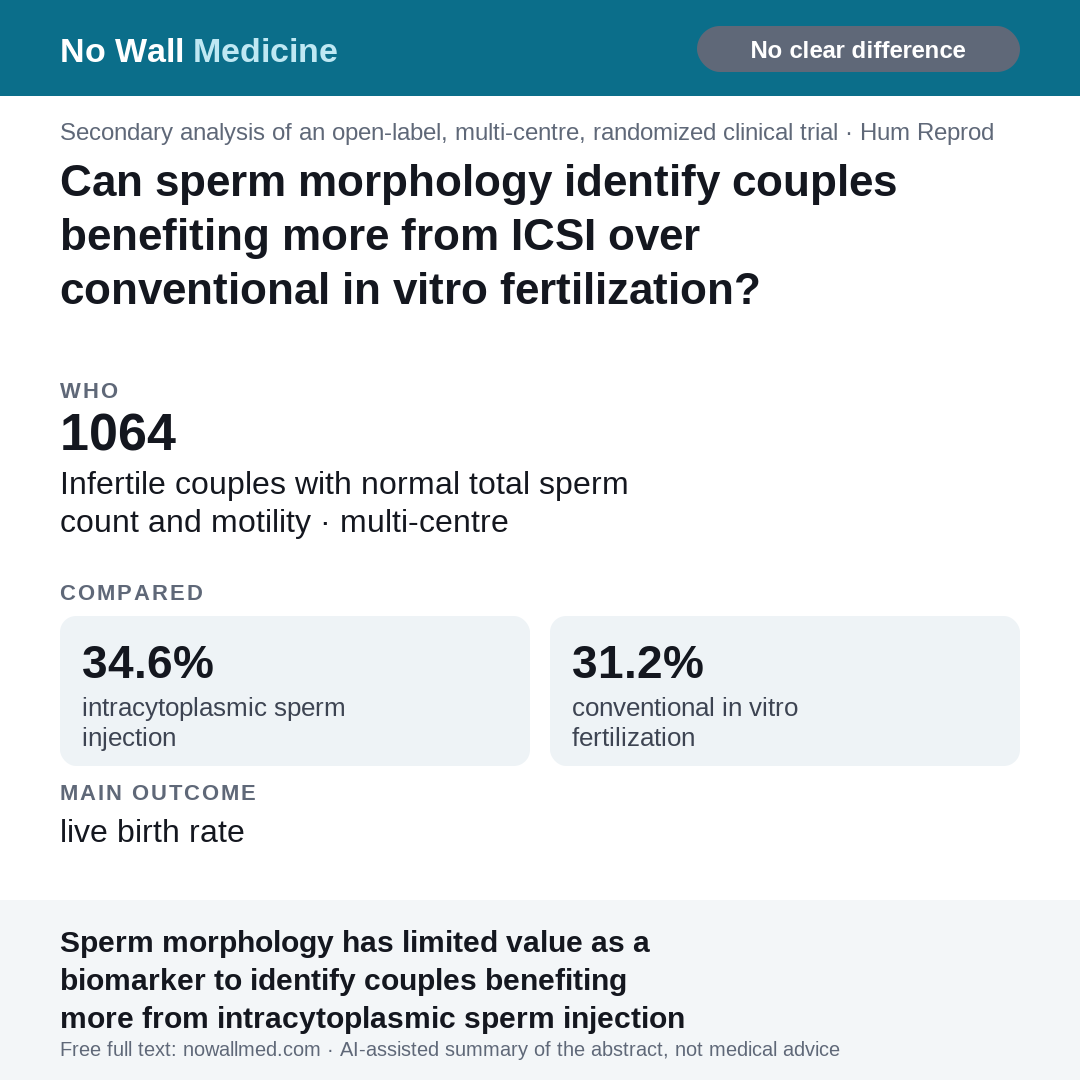
Intracytoplasmic sperm injection versus conventional in vitro fertilization in infertile couples with normal total sperm count and motility: does sperm morphology matter?
Secondary analysis of an open-label, multi-centre, randomized clinical trialNo clear difference
Can sperm morphology identify couples benefiting more from ICSI over conventional in vitro fertilization?
Who
1064
Infertile couples with normal total sperm count and motility · multi-centre
Compared
34.6%intracytoplasmic sperm injection (184/532)
31.2%conventional in vitro fertilization (166/532)
Main outcome
live birth rate
Bottom line: Sperm morphology has limited value as a biomarker to identify couples benefiting more from intracytoplasmic sperm injection over conventional in vitro fertilization.
Limitation: May be underpowered to detect differences at certain sperm morphology levels due to small number of events.
Funded by: My Duc Hospital, Ho Chi Minh City, Vietnam
Hum Reprod · 2024-11-16Download image
Associations Between Deficit Accumulation Frailty and Baseline Markers of Lifestyle in the U.S. POINTER Trial
Randomized trial analysisMixed results
Frailty index and lifestyle associations
Who
2111
Volunteers at risk for cognitive decline · U.S.
Compared
Higher frailty
Lower frailty
Main outcome
Frailty index score
Result: Higher scores with poorer diet and less activity
Bottom line: Frailty index associated with lifestyle markers
J Gerontol A · 2024-11-16Download image

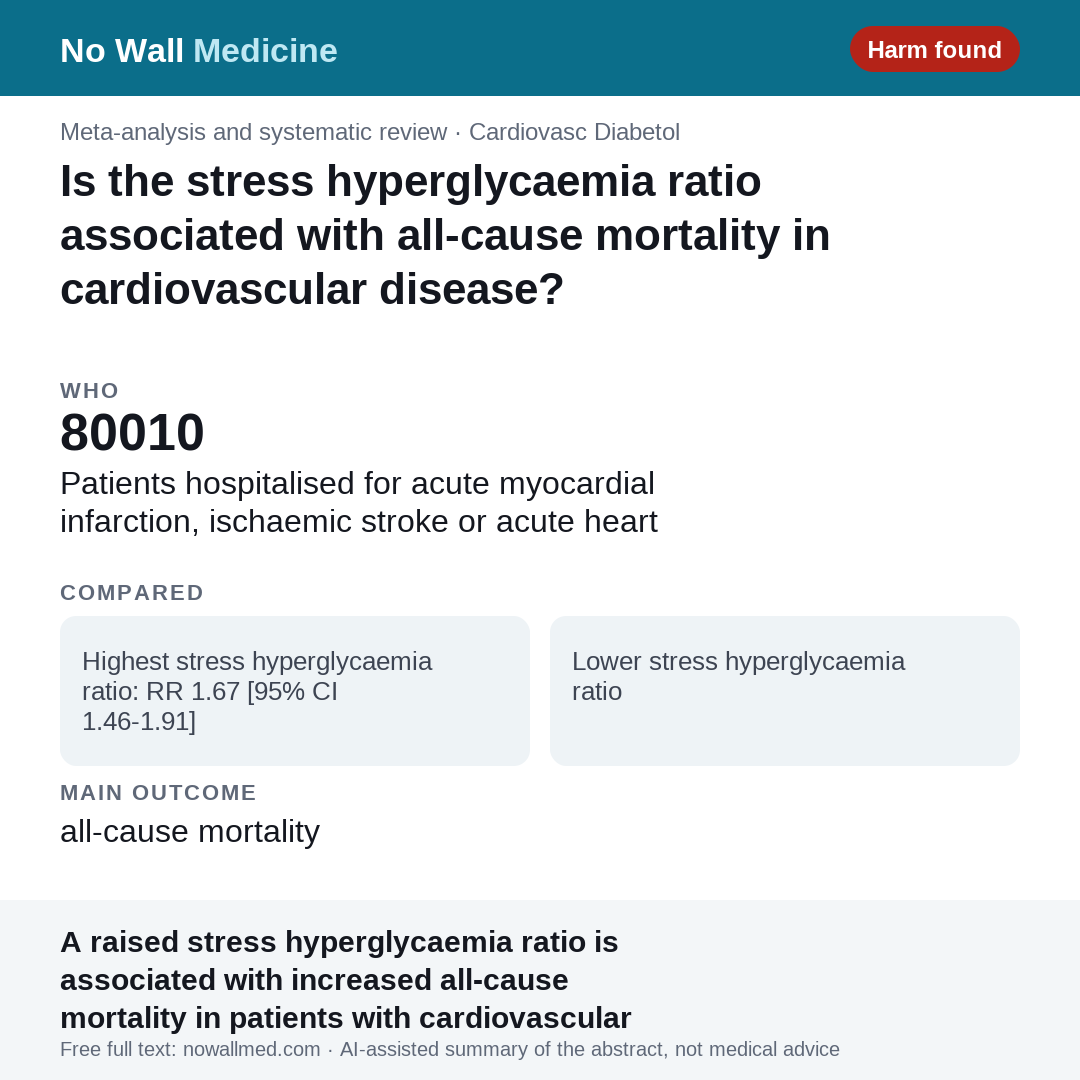
The association between the stress hyperglycaemia ratio and mortality in cardiovascular disease: a meta-analysis and systematic review
Meta-analysis and systematic reviewKey finding
Is the stress hyperglycaemia ratio associated with all-cause mortality in cardiovascular disease?
Who
80010
Patients hospitalised for acute myocardial infarction, ischaemic stroke or acute heart failure
Compared
Highest stress hyperglycaemia ratio: RR 1.67 [95% CI 1.46-1.91]
Lower stress hyperglycaemia ratio
Main outcome
all-cause mortality
Result: RR 1.67 (95% CI 1.46-1.91)
Bottom line: A raised stress hyperglycaemia ratio is associated with increased all-cause mortality in patients with cardiovascular disease.
Limitation: Further work is required to define reference values and investigate potential effects of relative hypoglycaemia.
Cardiovasc Diabetol · 2024-11-16Download image
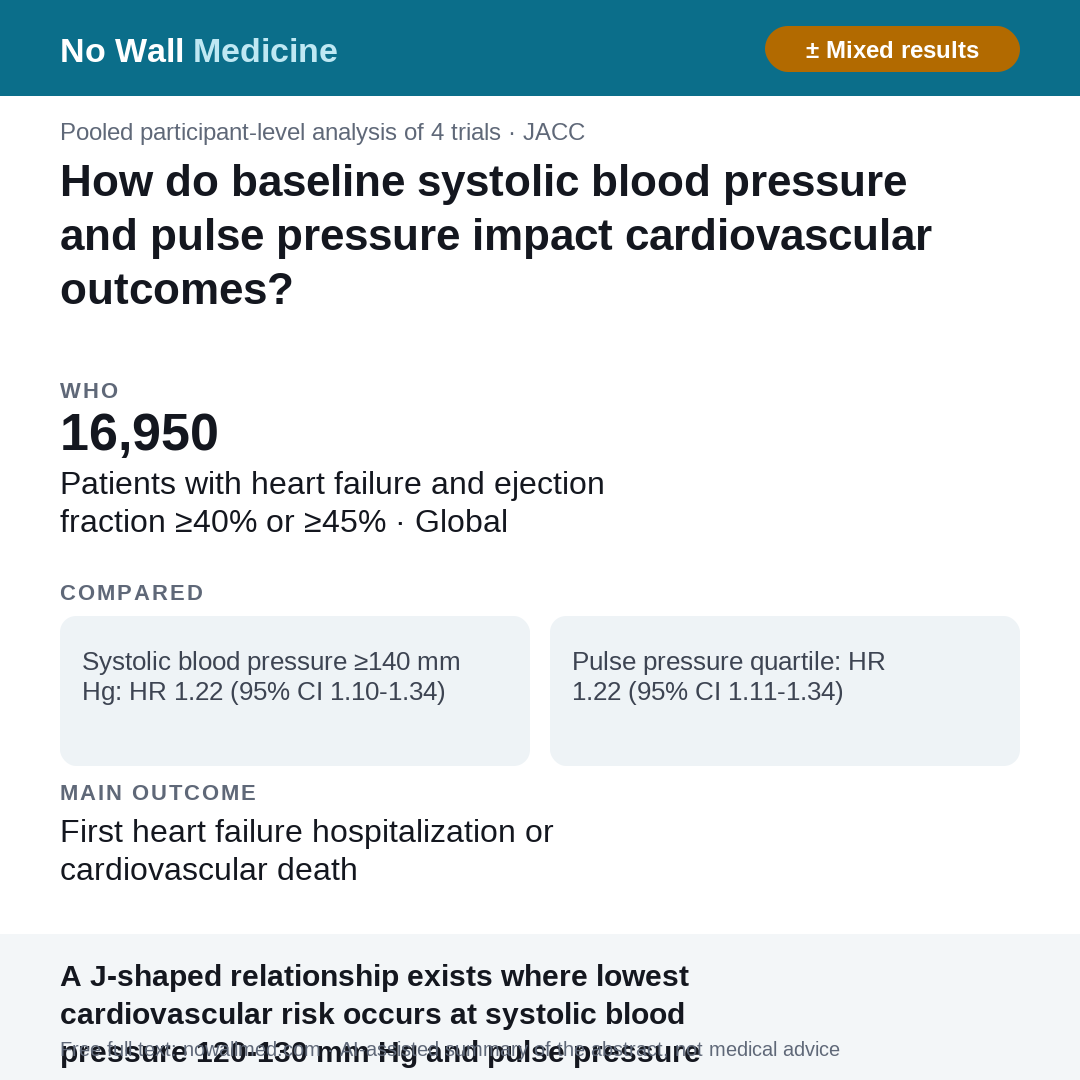
Systolic Blood Pressure and Pulse Pressure in Heart Failure: Pooled Participant-Level Analysis of 4 Trials
Pooled participant-level analysis of 4 trialsMixed results
How do baseline systolic blood pressure and pulse pressure impact cardiovascular outcomes?
Who
16,950
Patients with heart failure and ejection fraction ≥40% or ≥45% · Global
Compared
Systolic blood pressure ≥140 mm Hg: HR 1.22 (95% CI 1.10-1.34)
Pulse pressure quartile: HR 1.22 (95% CI 1.11-1.34)
Main outcome
First heart failure hospitalization or cardiovascular death
Result: HR 1.22 (95% CI 1.10-1.34) for SBP; HR 1.22 (95% CI 1.11-1.34) for PP
Bottom line: A J-shaped relationship exists where lowest cardiovascular risk occurs at systolic blood pressure 120-130 mm Hg and pulse pressure 50-60 mm Hg.
JACC · 2024-11-15Download image
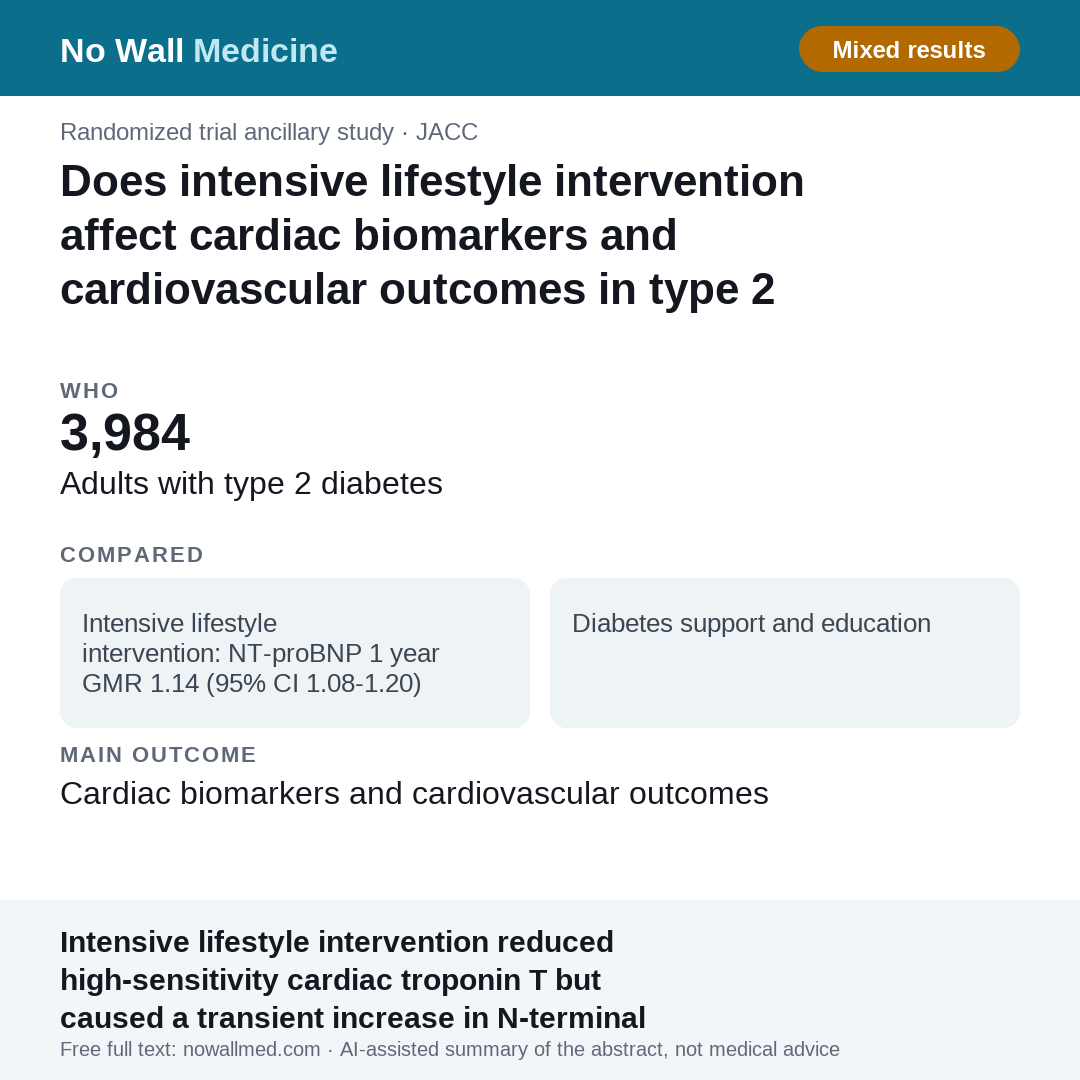
Intensive Lifestyle Intervention, Cardiac Biomarkers, and Cardiovascular Outcomes in Diabetes: Look AHEAD Cardiac Biomarker Ancillary Study
Randomized trial ancillary studyMixed results
Does intensive lifestyle intervention affect cardiac biomarkers and cardiovascular outcomes in type 2 diabetes?
Who
3,984
Adults with type 2 diabetes
Compared
Intensive lifestyle intervention: NT-proBNP 1 year GMR 1.14 (95% CI 1.08-1.20)
Diabetes support and education
Main outcome
Cardiac biomarkers and cardiovascular outcomes
Bottom line: Intensive lifestyle intervention reduced high-sensitivity cardiac troponin T but caused a transient increase in N-terminal pro-B-type natriuretic peptide.
JACC · 2024-11-15Download image
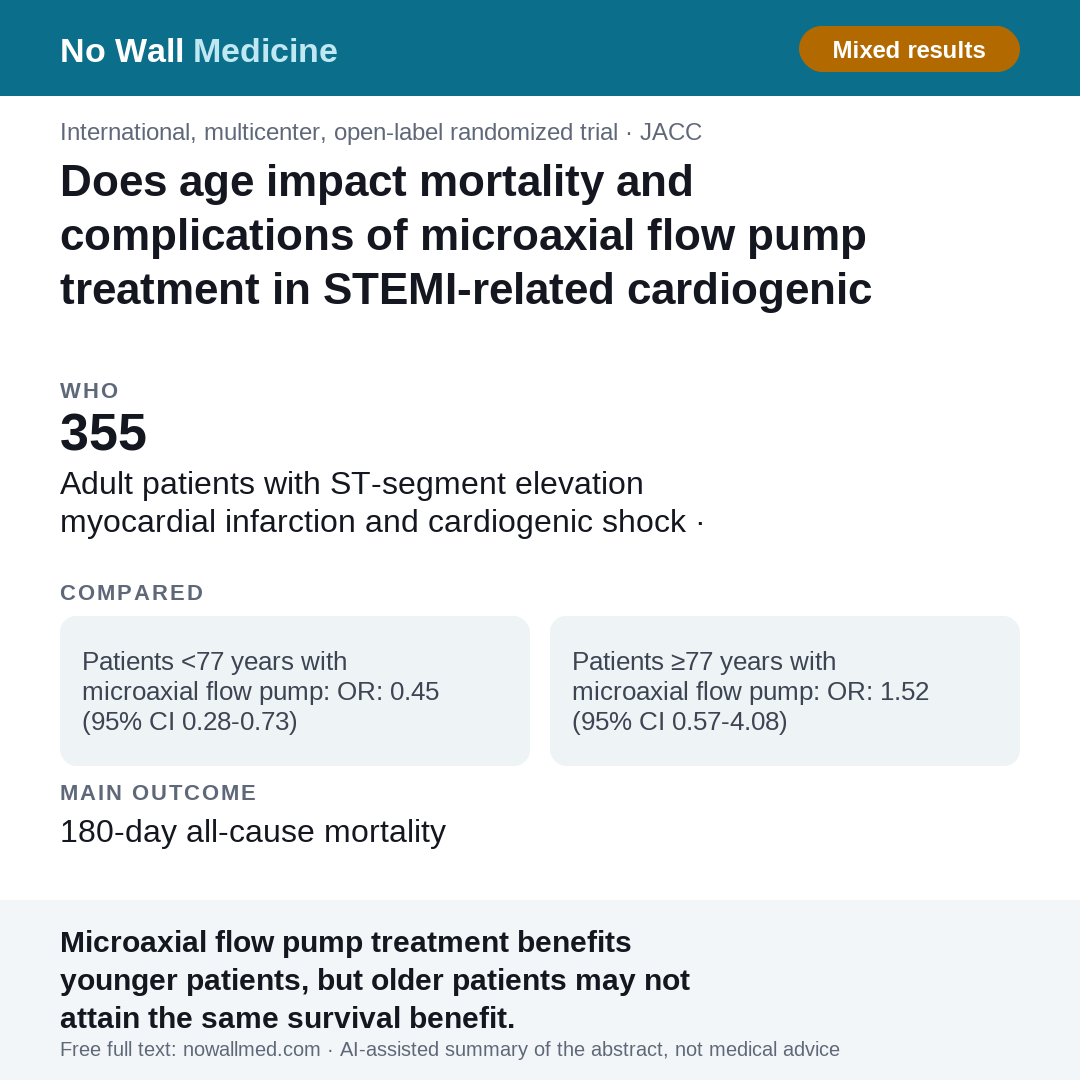
Treating Older Patients in Cardiogenic Shock With a Microaxial Flow Pump: Is it DANGERous?
International, multicenter, open-label randomized trialMixed results
Does age impact mortality and complications of microaxial flow pump treatment in STEMI-related cardiogenic shock?
Who
355
Adult patients with ST-segment elevation myocardial infarction and cardiogenic shock · International, multicenter
Compared
Patients <77 years with microaxial flow pump: OR: 0.45 (95% CI 0.28-0.73)
Patients ≥77 years with microaxial flow pump: OR: 1.52 (95% CI 0.57-4.08)
Main outcome
180-day all-cause mortality
Result: OR: 0.45 (95% CI 0.28-0.73) for patients <77 years
Bottom line: Microaxial flow pump treatment benefits younger patients, but older patients may not attain the same survival benefit.
JACC · 2024-11-15Download image
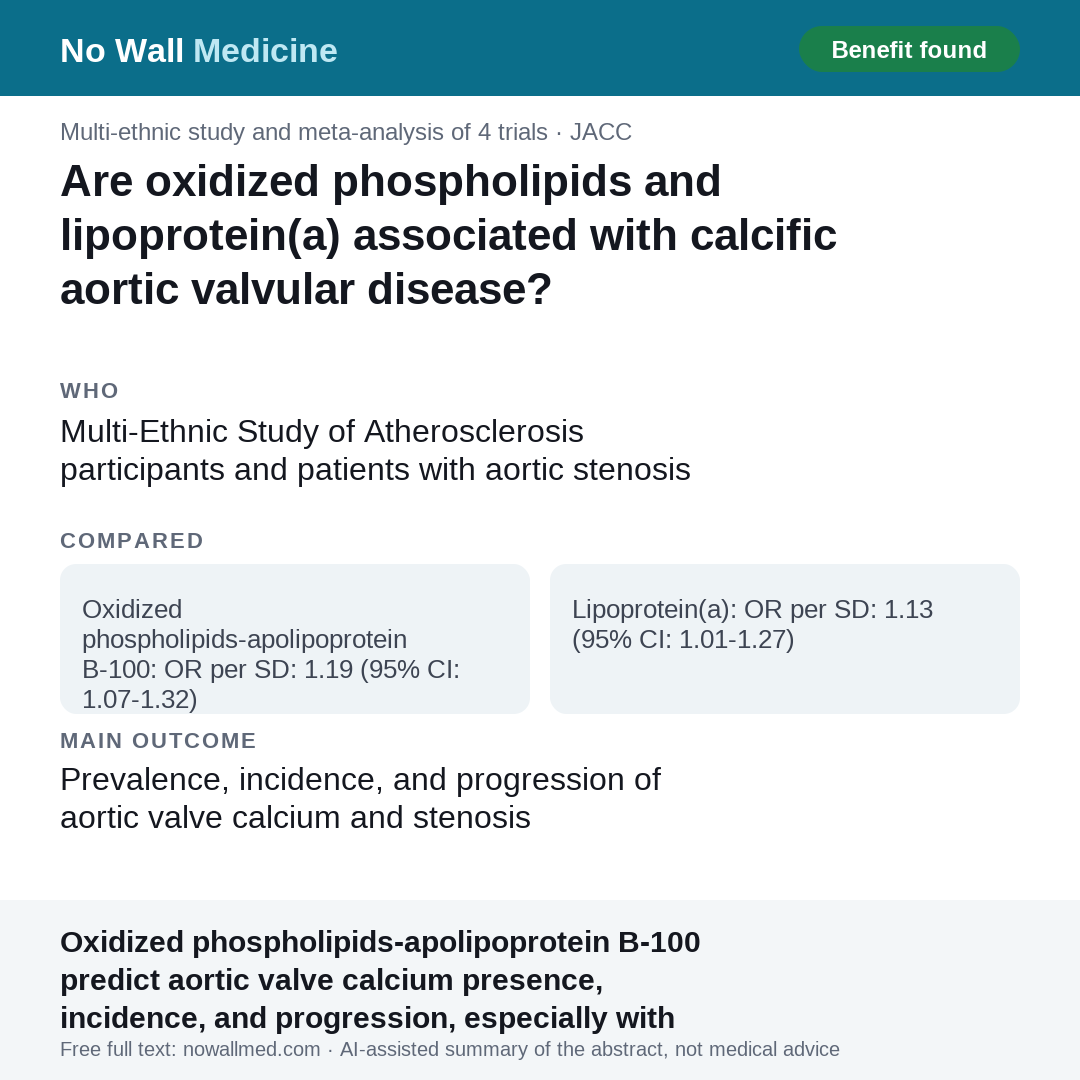
Oxidized Phospholipids and Calcific Aortic Valvular Disease
Multi-ethnic study and meta-analysis of 4 trialsBenefit found
Are oxidized phospholipids and lipoprotein(a) associated with calcific aortic valvular disease?
Who
Multi-Ethnic Study of Atherosclerosis participants and patients with aortic stenosis · Multi-Ethnic Study of Atherosclerosis and 4 randomized trials
Compared
Oxidized phospholipids-apolipoprotein B-100: OR per SD: 1.19 (95% CI: 1.07-1.32)
Lipoprotein(a): OR per SD: 1.13 (95% CI: 1.01-1.27)
Main outcome
Prevalence, incidence, and progression of aortic valve calcium and stenosis
Result: ß: 0.07; 95% CI: 0.01-0.12
Bottom line: Oxidized phospholipids-apolipoprotein B-100 predict aortic valve calcium presence, incidence, and progression, especially with high lipoprotein(a) levels.
JACC · 2024-11-15Download image
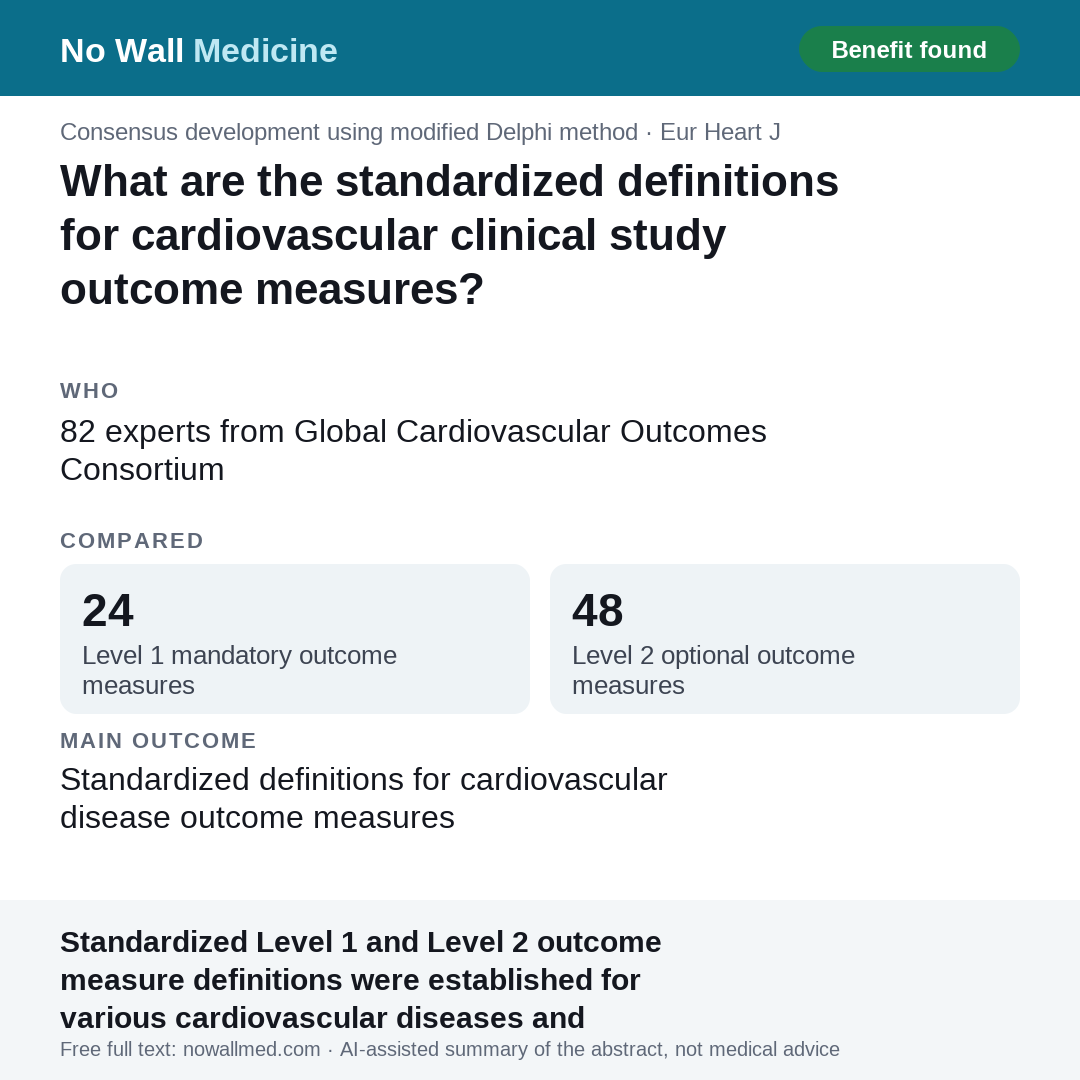
Definitions of clinical study outcome measures for cardiovascular diseases: the European Unified Registries for Heart Care Evaluation and Randomized Trials (EuroHeart)
Consensus development using modified Delphi methodBenefit found
What are the standardized definitions for cardiovascular clinical study outcome measures?
Who
82 experts from Global Cardiovascular Outcomes Consortium
Compared
24Level 1 mandatory outcome measures
48Level 2 optional outcome measures
Main outcome
Standardized definitions for cardiovascular disease outcome measures
Bottom line: Standardized Level 1 and Level 2 outcome measure definitions were established for various cardiovascular diseases and interventions.
Eur Heart J · 2024-11-15Download image
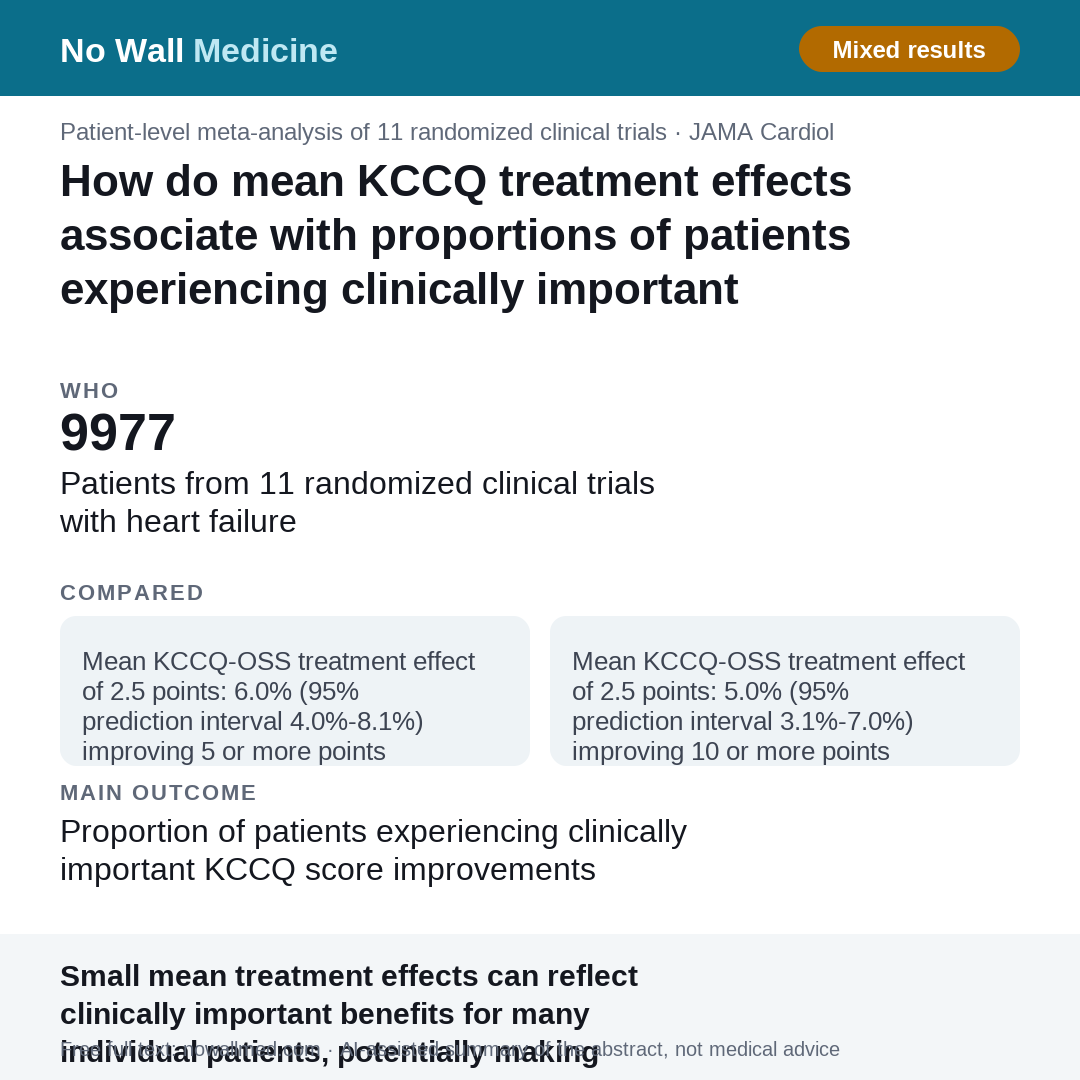
Interpreting Population Mean Treatment Effects in the Kansas City Cardiomyopathy Questionnaire: A Patient-Level Meta-Analysis
Patient-level meta-analysis of 11 randomized clinical trialsMixed results
How do mean KCCQ treatment effects associate with proportions of patients experiencing clinically important improvements?
Who
9977
Patients from 11 randomized clinical trials with heart failure
Compared
Mean KCCQ-OSS treatment effect of 2.5 points: 6.0% (95% prediction interval 4.0%-8.1%) improving 5 or more points
Mean KCCQ-OSS treatment effect of 2.5 points: 5.0% (95% prediction interval 3.1%-7.0%) improving 10 or more points
Main outcome
Proportion of patients experiencing clinically important KCCQ score improvements
Bottom line: Small mean treatment effects can reflect clinically important benefits for many individual patients, potentially making population-level inferences misleading.
JAMA Cardiol · 2024-11-15Download image
Machine learning models for risk prediction of cancer-associated thrombosis: a systematic review and meta-analysis
Meta-analysis of 32 studiesKey finding
Machine learning for cancer thrombosis risk
Who
cancer patients
Compared
Machine learning models
Traditional models
Main outcome
cancer-associated thrombosis risk
Bottom line: Machine learning predicts thrombosis well
Limitation: high risk of bias
J Thromb Haemost · 2024-11-15Download image
The impact of different radiology report formats on patient information processing: a systematic review
Systematic reviewBenefit found
How do different radiology report formats impact patient information processing?
Who
Patients receiving diagnostic radiology reports
Compared
Traditional unmodified reports
Glossaries, illustrations, or lay summaries: significantly improved participants' cognitive perception and perception of communication
Main outcome
Patient information processing including perception, decision, action, and memory
Bottom line: Modifying traditional radiology reports with glossaries, illustrations, or lay language enhances patient information processing.
Eur Radiol · 2024-11-15Download image

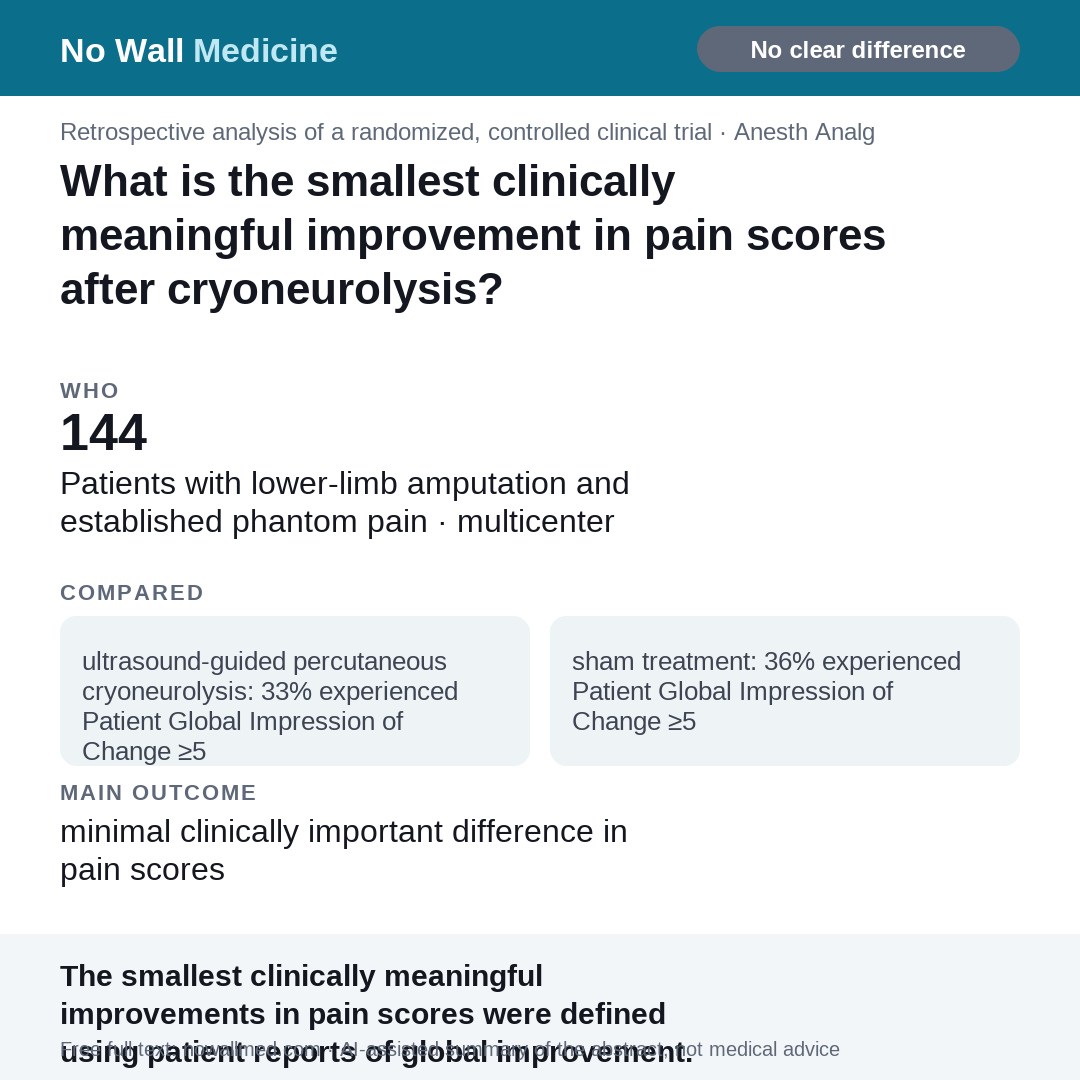
Smallest Clinically Meaningful Improvement in Amputation-Related Pain and Brief Pain Inventory Scores as Defined by Patient Reports of Global Improvement After Cryoneurolysis: a Retrospective Analysis of a Randomized, Controlled Clinical Trial
Retrospective analysis of a randomized, controlled clinical trialNo clear difference
What is the smallest clinically meaningful improvement in pain scores after cryoneurolysis?
Who
144
Patients with lower-limb amputation and established phantom pain · multicenter
Compared
ultrasound-guided percutaneous cryoneurolysis: 33% experienced Patient Global Impression of Change ≥5
sham treatment: 36% experienced Patient Global Impression of Change ≥5
Main outcome
minimal clinically important difference in pain scores
Result: relative risk 0.9 (95% CI 0.6-1.4)
Bottom line: The smallest clinically meaningful improvements in pain scores were defined using patient reports of global improvement.
Anesth Analg · 2024-11-15Download image
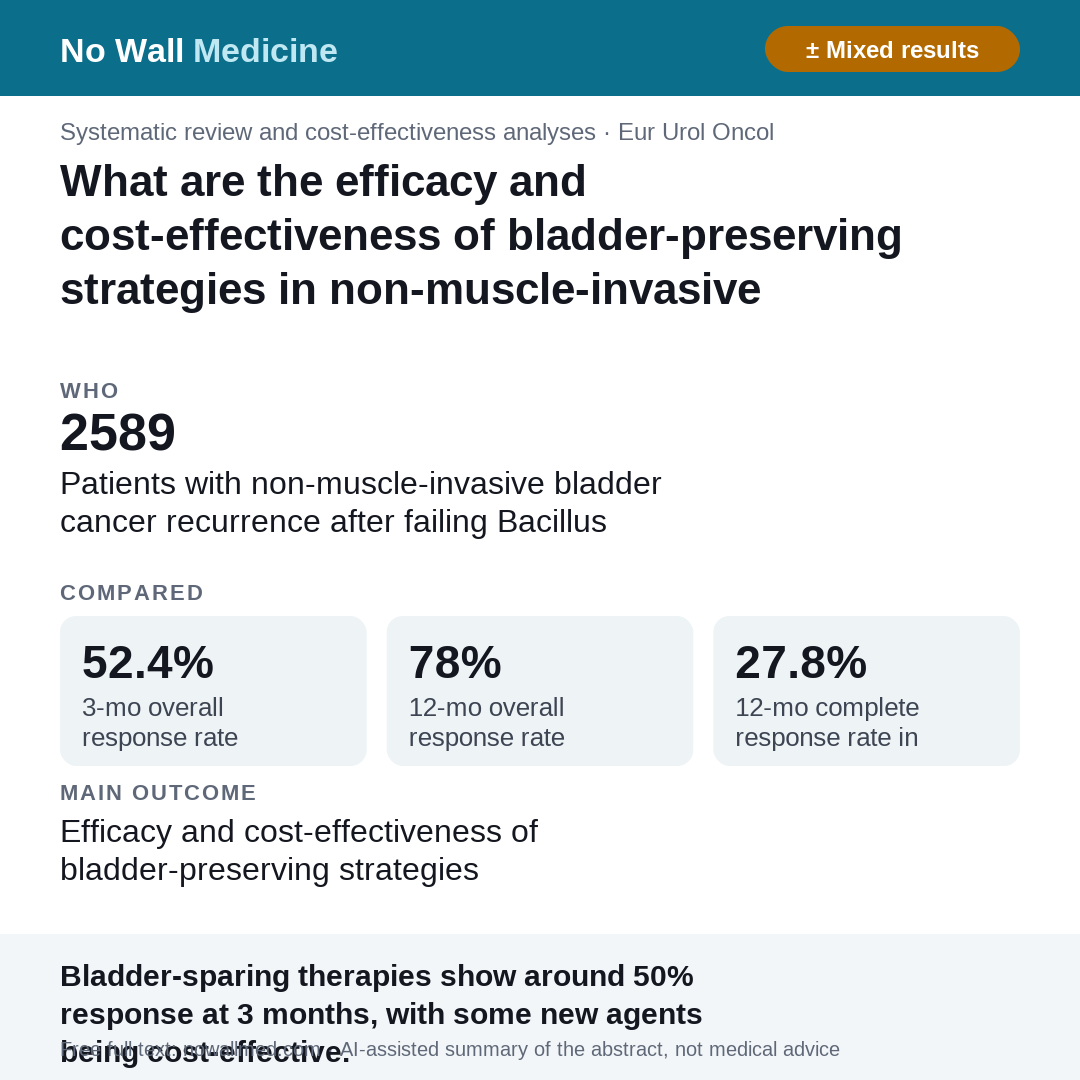
Unmet Need in Non-muscle-invasive Bladder Cancer Failing Bacillus Calmette-Guérin Therapy: A Systematic Review and Cost-effectiveness Analyses from the International Bladder Cancer Group
Systematic review and cost-effectiveness analysesMixed results
What are the efficacy and cost-effectiveness of bladder-preserving strategies in non-muscle-invasive bladder cancer failing Bacillus Calmette-Guérin therapy?
Who
2589
Patients with non-muscle-invasive bladder cancer recurrence after failing Bacillus Calmette-Guérin therapy
Compared
52.4%3-mo overall response rate (95% CI: 45.4-59.2)
78%12-mo overall response rate (95% CI: 52.9-91.8)
27.8%12-mo complete response rate in carcinoma in situ (95% CI: 21.3-35.4)
Main outcome
Efficacy and cost-effectiveness of bladder-preserving strategies
Bottom line: Bladder-sparing therapies show around 50% response at 3 months, with some new agents being cost-effective.
Limitation: Significant heterogeneity across the studies and long-term data are heterogeneous.
Eur Urol Oncol · 2024-11-15Download image
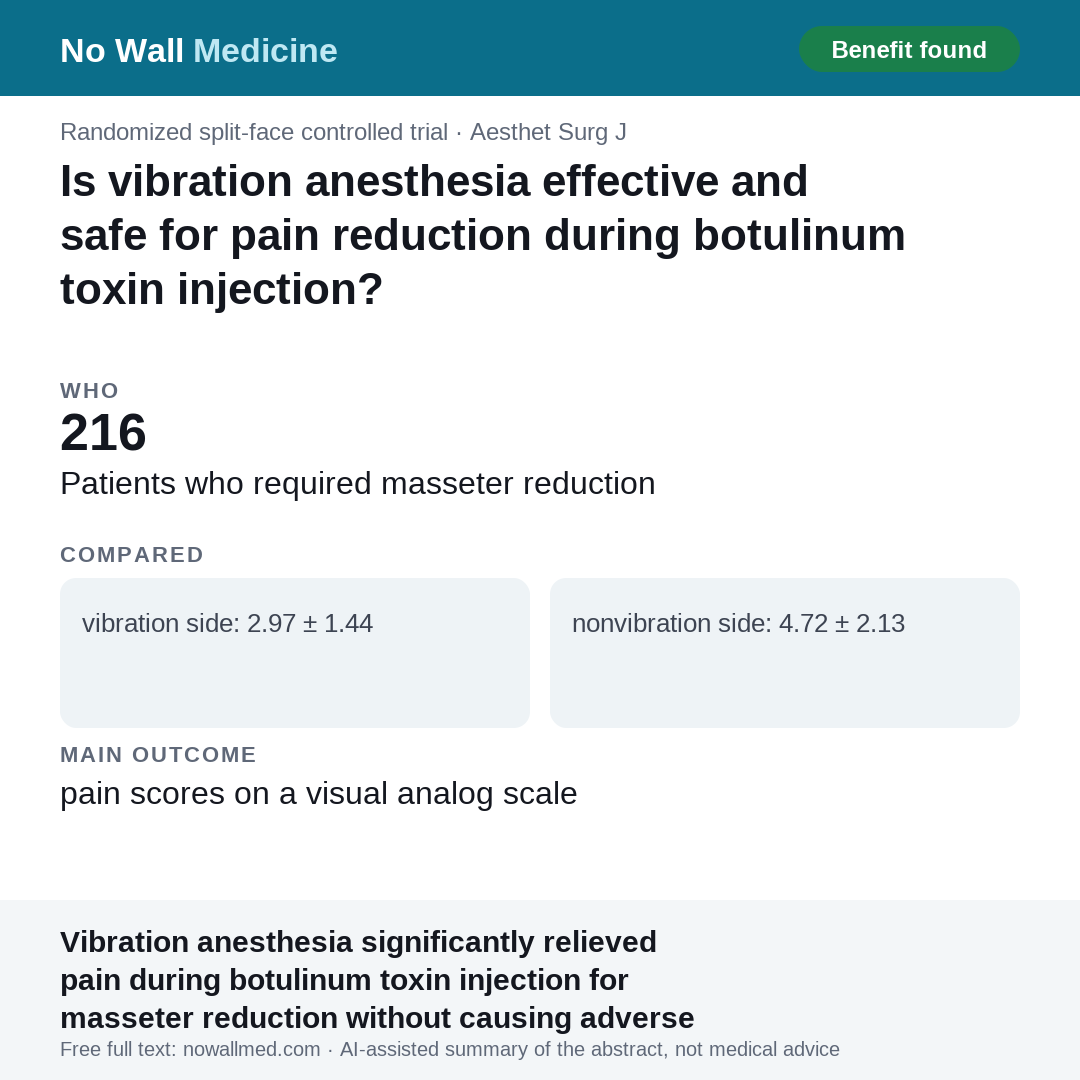
Is Vibration Anesthesia Effective and Safe for Pain Reduction in Botulinum Toxin Injection? A Randomized Split-Face Controlled Trial and Cadaver Experiment
Randomized split-face controlled trialBenefit found
Is vibration anesthesia effective and safe for pain reduction during botulinum toxin injection?
Who
216
Patients who required masseter reduction
Compared
vibration side: 2.97 ± 1.44
nonvibration side: 4.72 ± 2.13
Main outcome
pain scores on a visual analog scale
Bottom line: Vibration anesthesia significantly relieved pain during botulinum toxin injection for masseter reduction without causing adverse effects.
Aesthet Surg J · 2024-11-15Download image
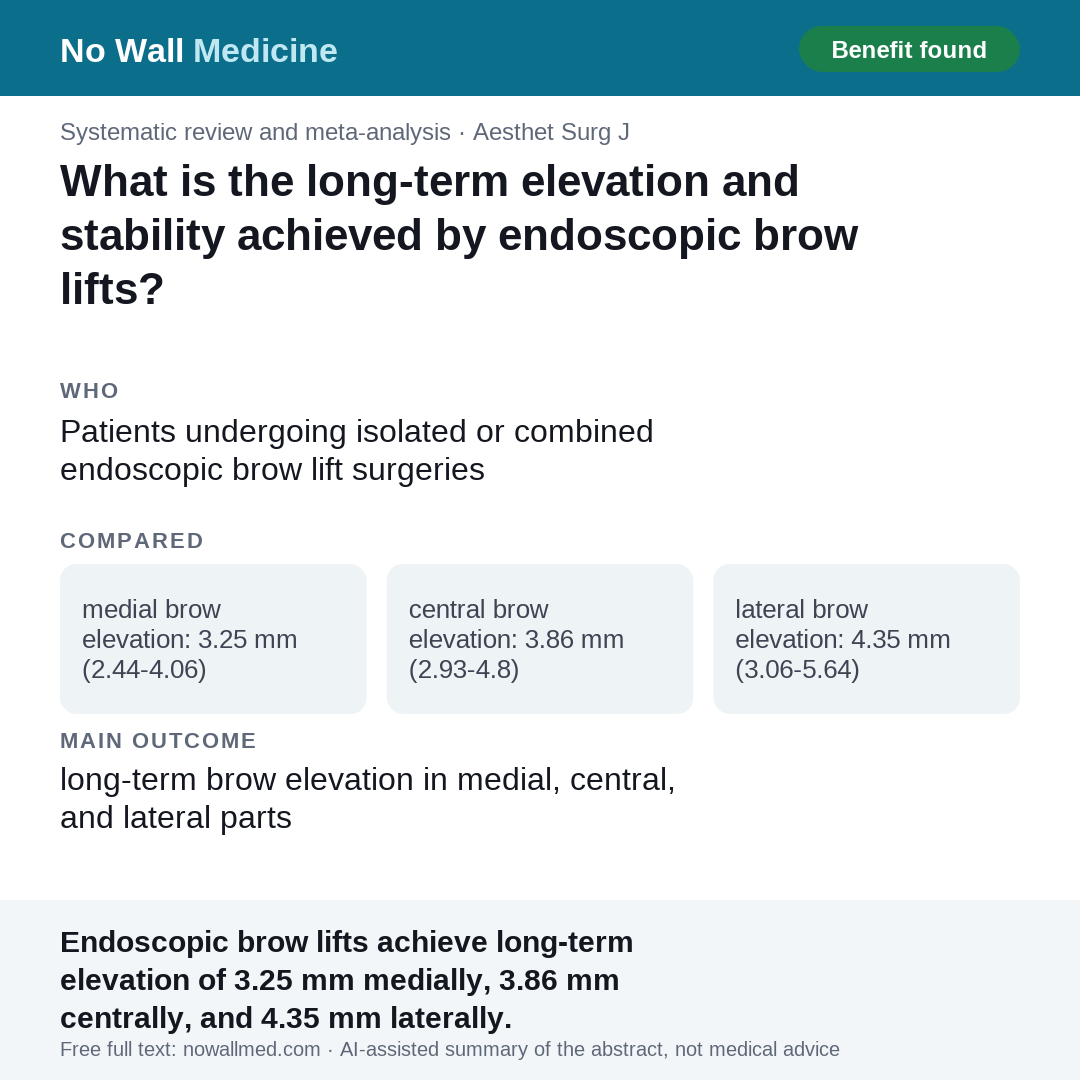
Long-term Stability in Endoscopic Brow Lift: A Systematic Review and Meta-Analysis of the Literature
Systematic review and meta-analysisBenefit found
What is the long-term elevation and stability achieved by endoscopic brow lifts?
Who
Patients undergoing isolated or combined endoscopic brow lift surgeries
Compared
medial brow elevation: 3.25 mm (2.44-4.06)
central brow elevation: 3.86 mm (2.93-4.8)
lateral brow elevation: 4.35 mm (3.06-5.64)
Main outcome
long-term brow elevation in medial, central, and lateral parts
Bottom line: Endoscopic brow lifts achieve long-term elevation of 3.25 mm medially, 3.86 mm centrally, and 4.35 mm laterally.
Aesthet Surg J · 2024-11-15Download image
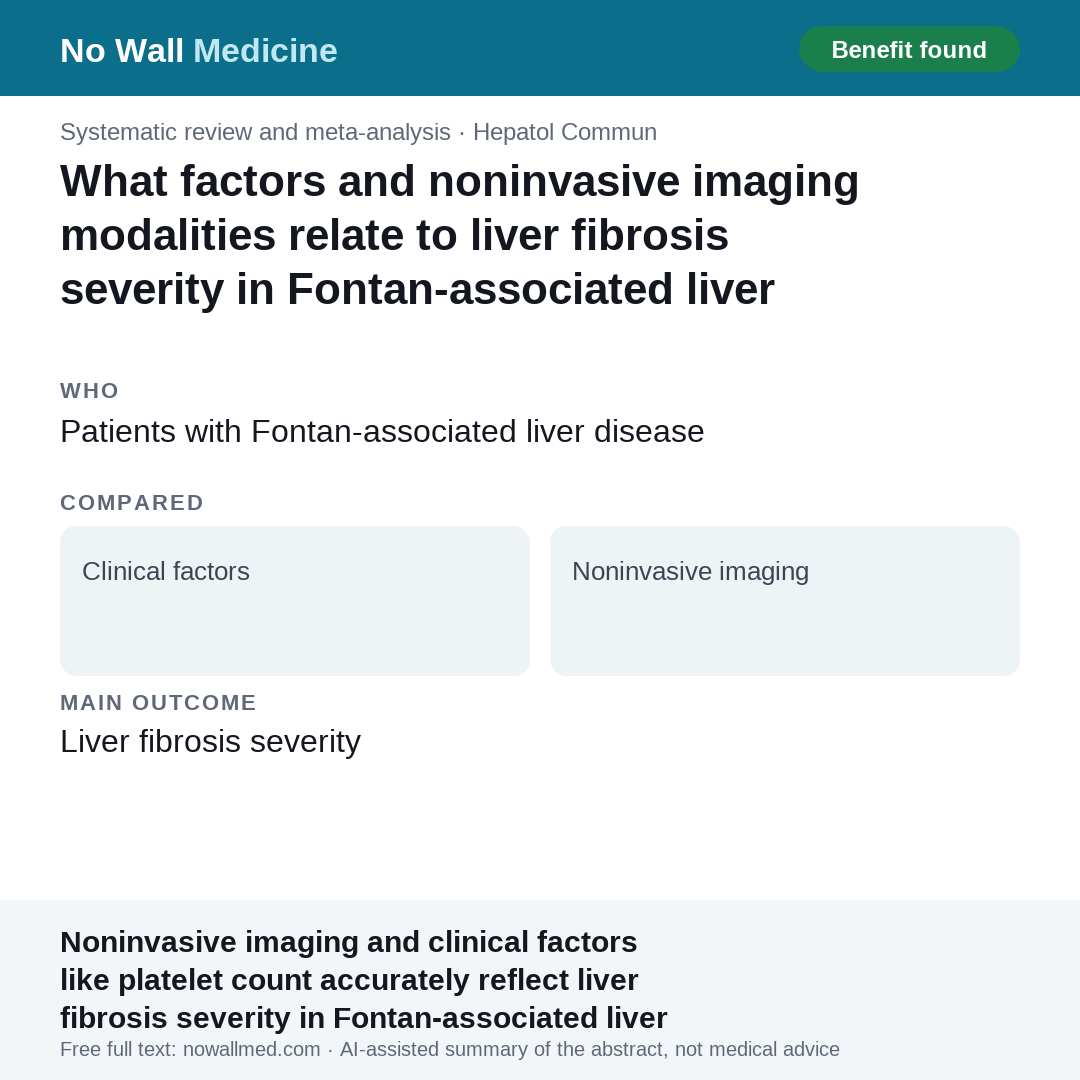
Clinical predictors and noninvasive imaging in Fontan-associated liver disease: A systematic review and meta-analysis
Systematic review and meta-analysisBenefit found
What factors and noninvasive imaging modalities relate to liver fibrosis severity in Fontan-associated liver disease?
Who
Patients with Fontan-associated liver disease
Compared
Clinical factors
Noninvasive imaging
Main outcome
Liver fibrosis severity
Bottom line: Noninvasive imaging and clinical factors like platelet count accurately reflect liver fibrosis severity in Fontan-associated liver disease.
Hepatol Commun · 2024-11-15Download image
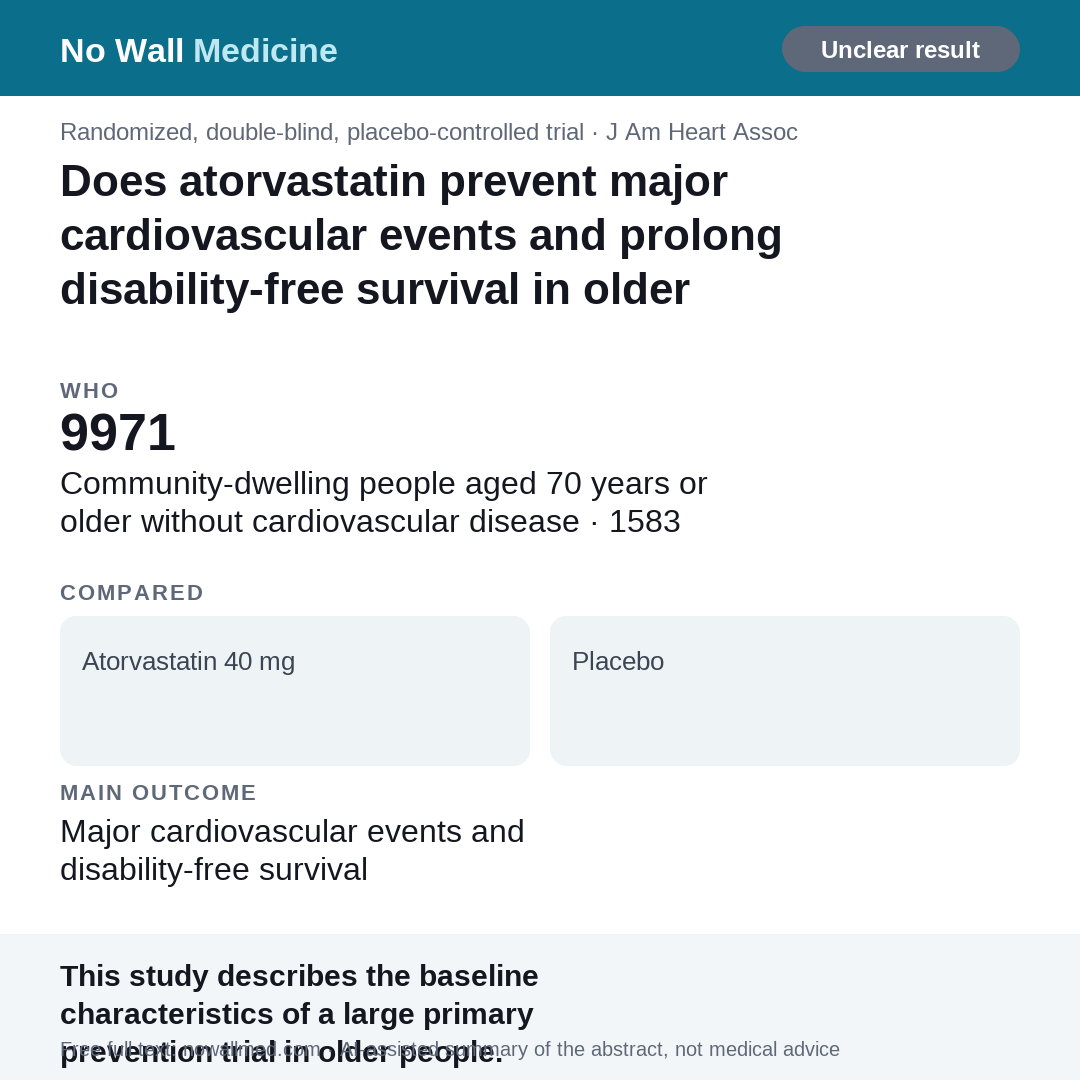
Baseline Characteristics of Participants in STAREE: A Randomized Trial for Primary Prevention of Cardiovascular Disease Events and Prolongation of Disability-Free Survival in Older People
Randomized, double-blind, placebo-controlled trialUnclear result
Does atorvastatin prevent major cardiovascular events and prolong disability-free survival in older people?
Who
9971
Community-dwelling people aged 70 years or older without cardiovascular disease · 1583 general practices across Australia
Compared
Atorvastatin 40 mg
Placebo
Main outcome
Major cardiovascular events and disability-free survival
Bottom line: This study describes the baseline characteristics of a large primary prevention trial in older people.
J Am Heart Assoc · 2024-11-15Download image
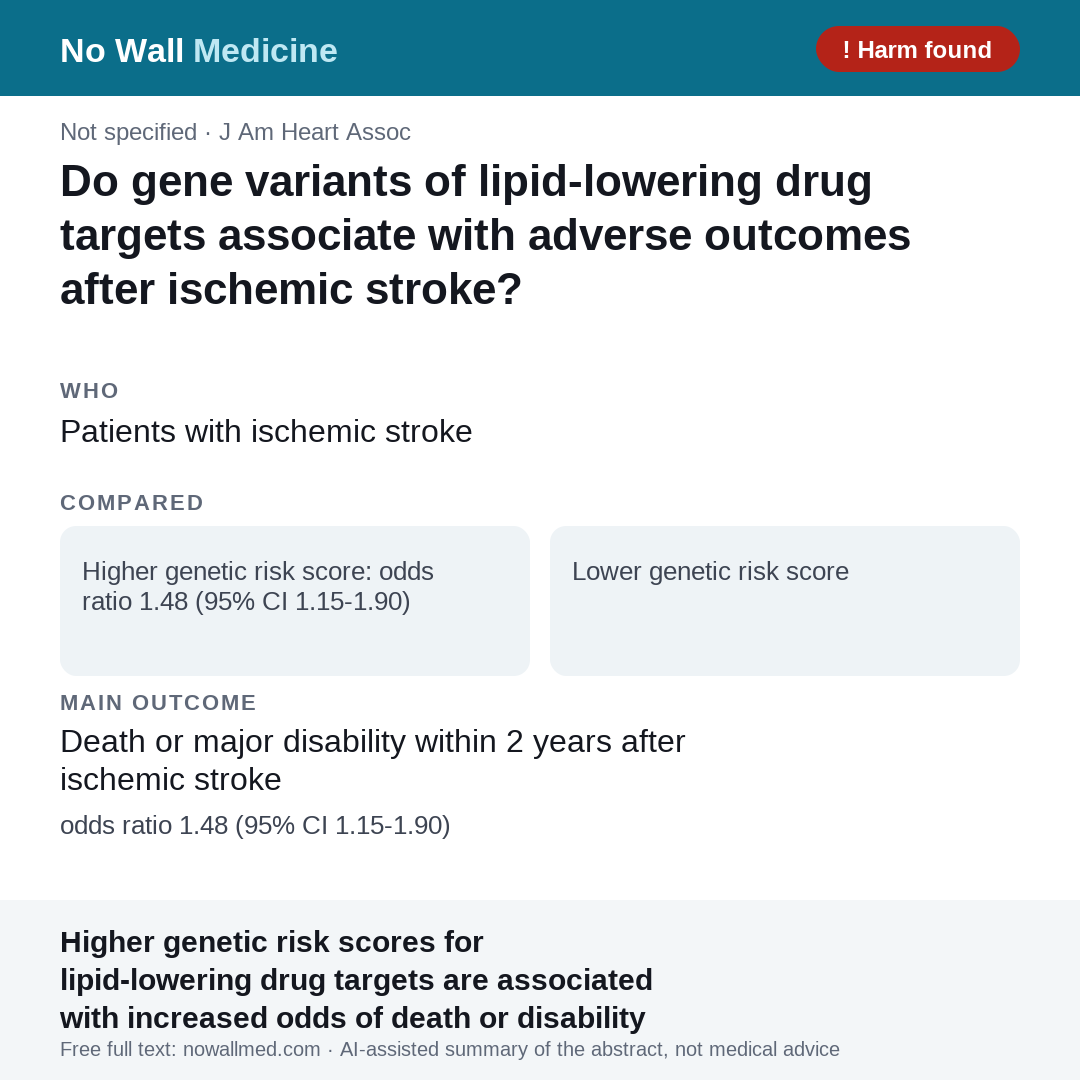
Associations Between Gene Variants of Lipid-Lowering Drug Targets and Adverse Outcomes After Ischemic Stroke
Not specifiedHarm found
Do gene variants of lipid-lowering drug targets associate with adverse outcomes after ischemic stroke?
Who
Patients with ischemic stroke
Compared
Higher genetic risk score: odds ratio 1.48 (95% CI 1.15-1.90)
Lower genetic risk score
Main outcome
Death or major disability within 2 years after ischemic stroke
Result: odds ratio 1.48 (95% CI 1.15-1.90)
Bottom line: Higher genetic risk scores for lipid-lowering drug targets are associated with increased odds of death or disability after ischemic stroke.
J Am Heart Assoc · 2024-11-15Download image