Visual abstracts
New randomized trials and meta-analyses from leading journals at a glance: who was studied, what was compared, and what was found. Every paper is free to read in full.
All specialtiesCardiology 242Oncology 193Gastroenterology & Hepatology 107Infectious Disease 189Neurology 112Psychiatry & Mental Health 161Pulmonology 110Critical Care 74Endocrinology & Diabetes 155Pediatrics 105Surgery 74Orthopedics & Sports Medicine 45Neurosurgery 10Cardiothoracic & Vascular Surgery 25Plastic & Reconstructive Surgery 53Nephrology 47Rheumatology 45Hematology 57Dermatology 25Ophthalmology 44Obstetrics & Gynecology 64Public & Global Health 74Radiology & Imaging 19Anesthesiology 37Urology 54ENT (Otolaryngology) 31Emergency Medicine 26Allergy & Immunology 19Geriatrics 74Family Medicine & Primary Care 32Medical Genetics & Genomics 27Pathology & Laboratory Medicine 5Physical Medicine & Rehabilitation 60Palliative Care 30Nutrition 85Digital Health & AI 215General Medicine 35
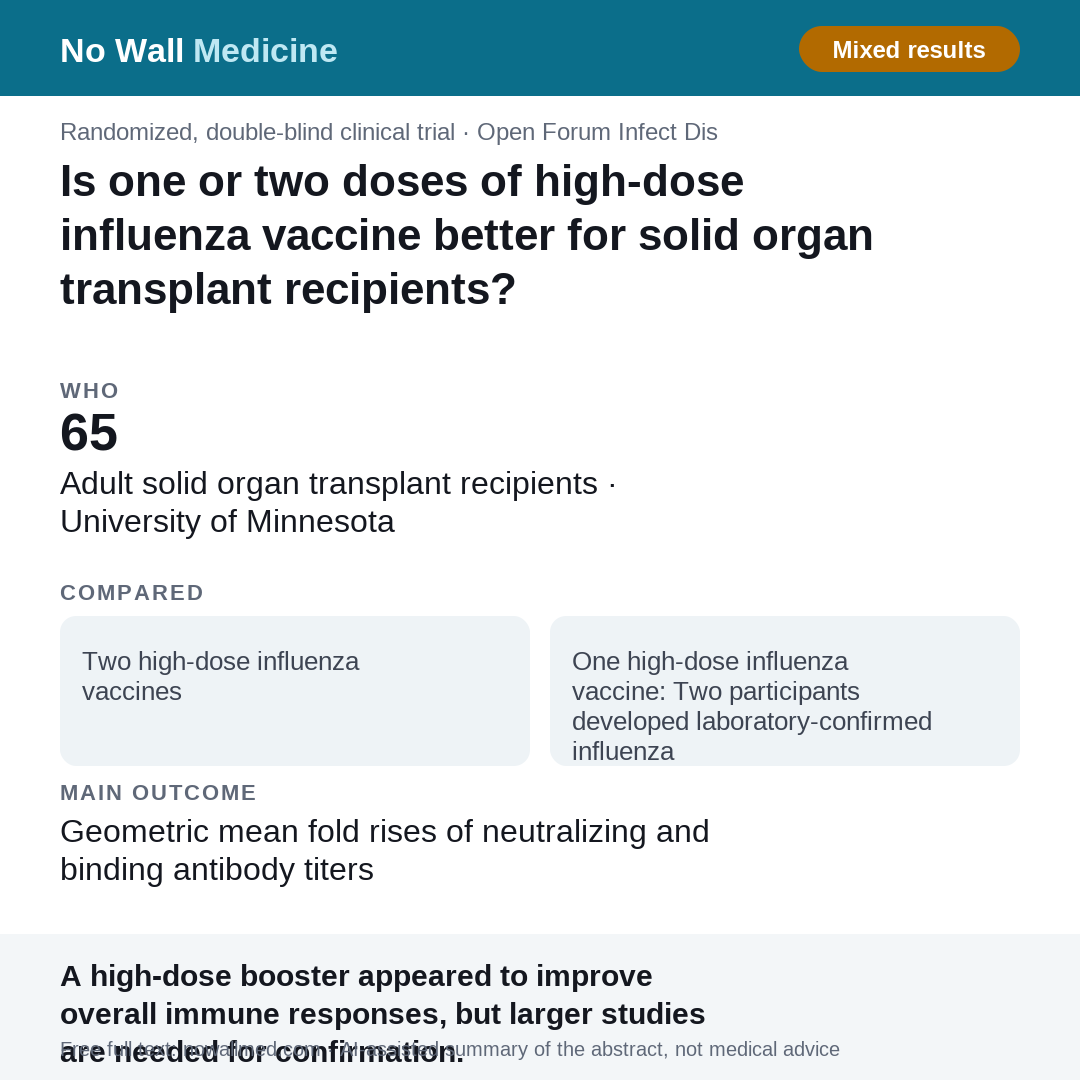
A Randomized, Double-Blind Clinical Trial of One vs Two Doses of High-Dose Influenza Vaccine in Solid Organ Transplant Recipients
Randomized, double-blind clinical trialMixed results
Is one or two doses of high-dose influenza vaccine better for solid organ transplant recipients?
Who
65
Adult solid organ transplant recipients · University of Minnesota
Compared
Two high-dose influenza vaccines
One high-dose influenza vaccine: Two participants developed laboratory-confirmed influenza
Main outcome
Geometric mean fold rises of neutralizing and binding antibody titers
Bottom line: A high-dose booster appeared to improve overall immune responses, but larger studies are needed for confirmation.
Limitation: Confirmation in larger, adequately powered studies is needed.
Open Forum Infect Dis · 2026-08-07Download image
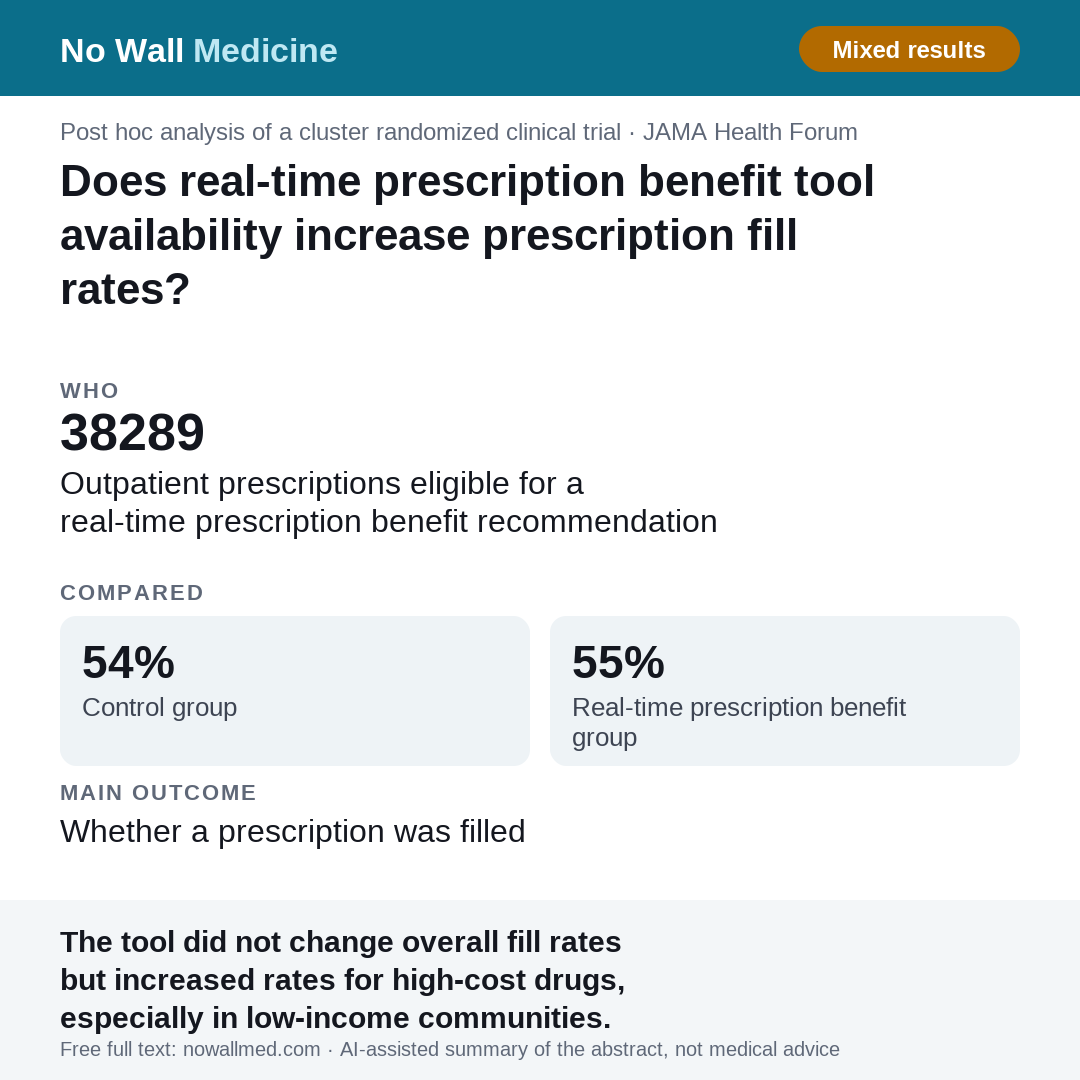
Real-Time Prescription Benefit Tool Availability and Prescription Medication Fill Rates: A Post Hoc Analysis of a Cluster Randomized Clinical Trial
Post hoc analysis of a cluster randomized clinical trialMixed results
Does real-time prescription benefit tool availability increase prescription fill rates?
Who
38289
Outpatient prescriptions eligible for a real-time prescription benefit recommendation · Urban ambulatory clinical network
Compared
54%Control group
55%Real-time prescription benefit group
Main outcome
Whether a prescription was filled
Result: adjusted difference: 1.2 percentage points (95% CI, -1.3 to 3.7 pp)
Bottom line: The tool did not change overall fill rates but increased rates for high-cost drugs, especially in low-income communities.
Limitation: Recommendations were made for a small proportion of orders, limiting applicability to a narrow population segment.
JAMA Health Forum · 2026-08-07Download image
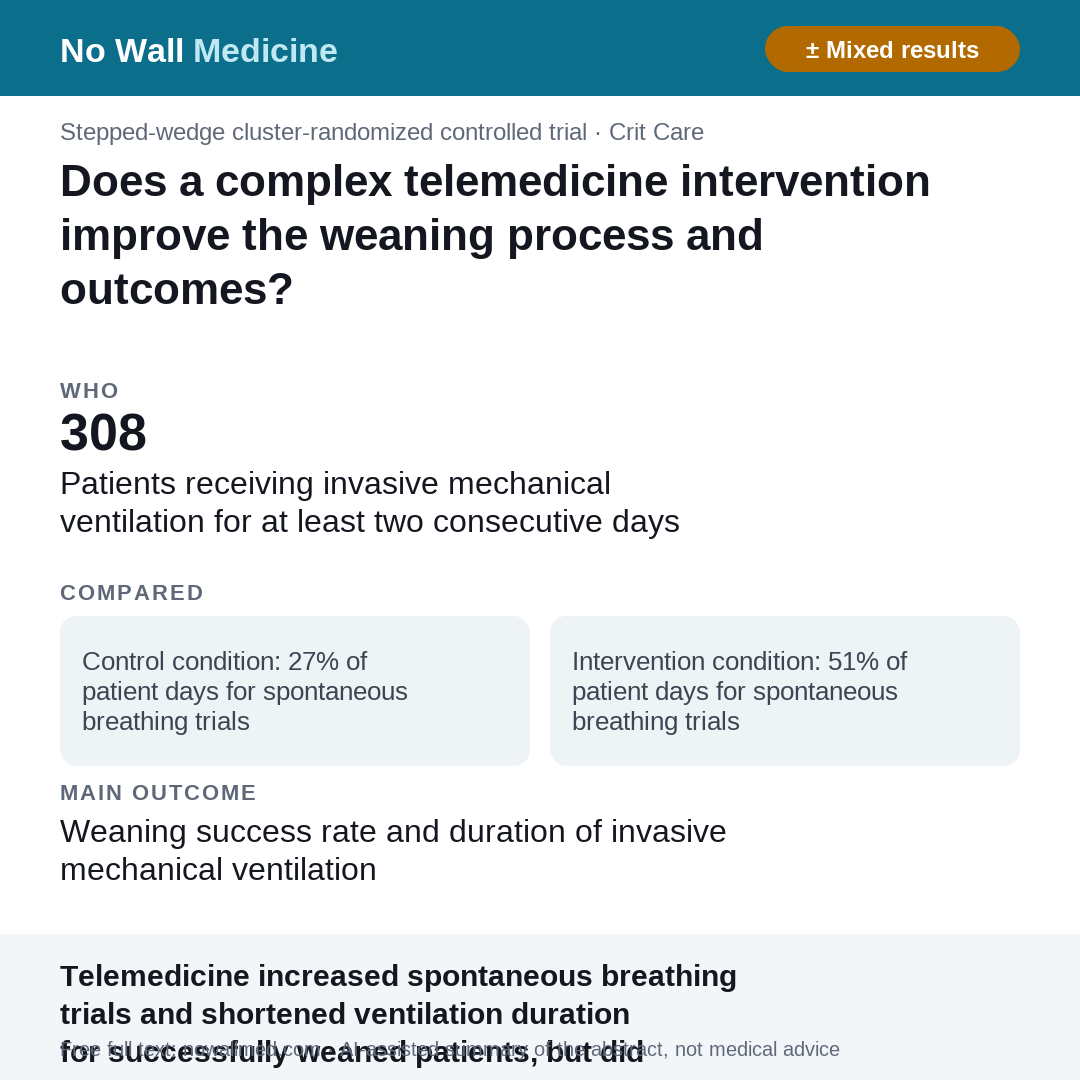
The impact of an intensive care telemedicine program on weaning from invasive ventilation: a secondary analysis of the ERIC trial
Stepped-wedge cluster-randomized controlled trialMixed results
Does a complex telemedicine intervention improve the weaning process and outcomes?
Who
308
Patients receiving invasive mechanical ventilation for at least two consecutive days · Ten intensive care unit clusters in Berlin, Germany
Compared
Control condition: 27% of the patient days
Intervention condition: 51% of the patient days
Main outcome
Spontaneous breathing trials and weaning success rate
Bottom line: Telemedicine increased spontaneous breathing trials and shortened ventilation duration but did not improve weaning success rate.
Crit Care · 2026-08-07Download image
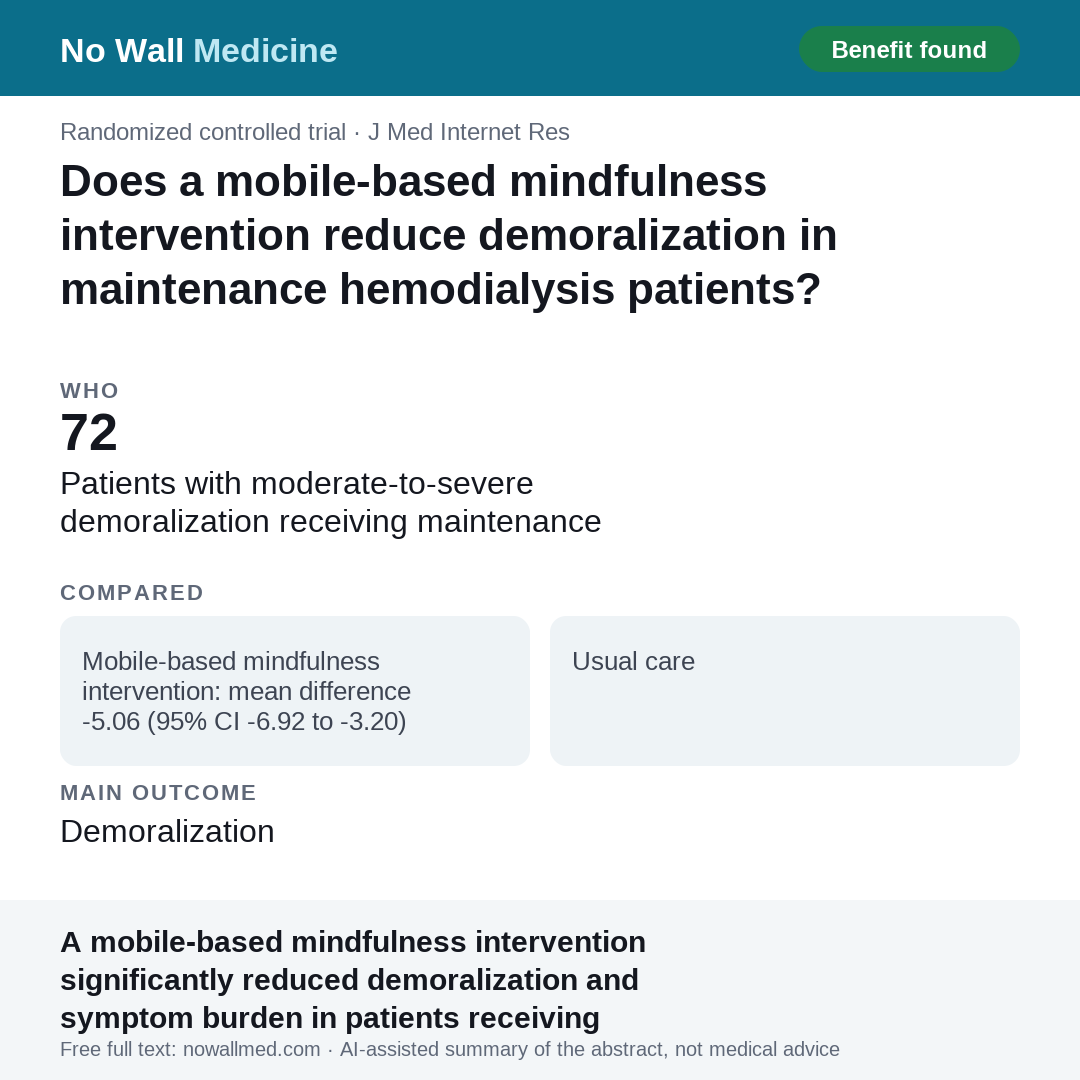
A Mobile-Based Mindfulness Intervention for Reducing Demoralization in Patients on Maintenance Hemodialysis: Randomized Controlled Trial
Randomized controlled trialBenefit found
Does a mobile-based mindfulness intervention reduce demoralization in maintenance hemodialysis patients?
Who
72
Patients with moderate-to-severe demoralization receiving maintenance hemodialysis
Compared
Mobile-based mindfulness intervention: mean difference -5.06 (95% CI -6.92 to -3.20)
Usual care
Main outcome
Demoralization
Result: mean difference -5.06 (95% CI -6.92 to -3.20)
Bottom line: A mobile-based mindfulness intervention significantly reduced demoralization and symptom burden in patients receiving maintenance hemodialysis.
J Med Internet Res · 2026-08-07Download image
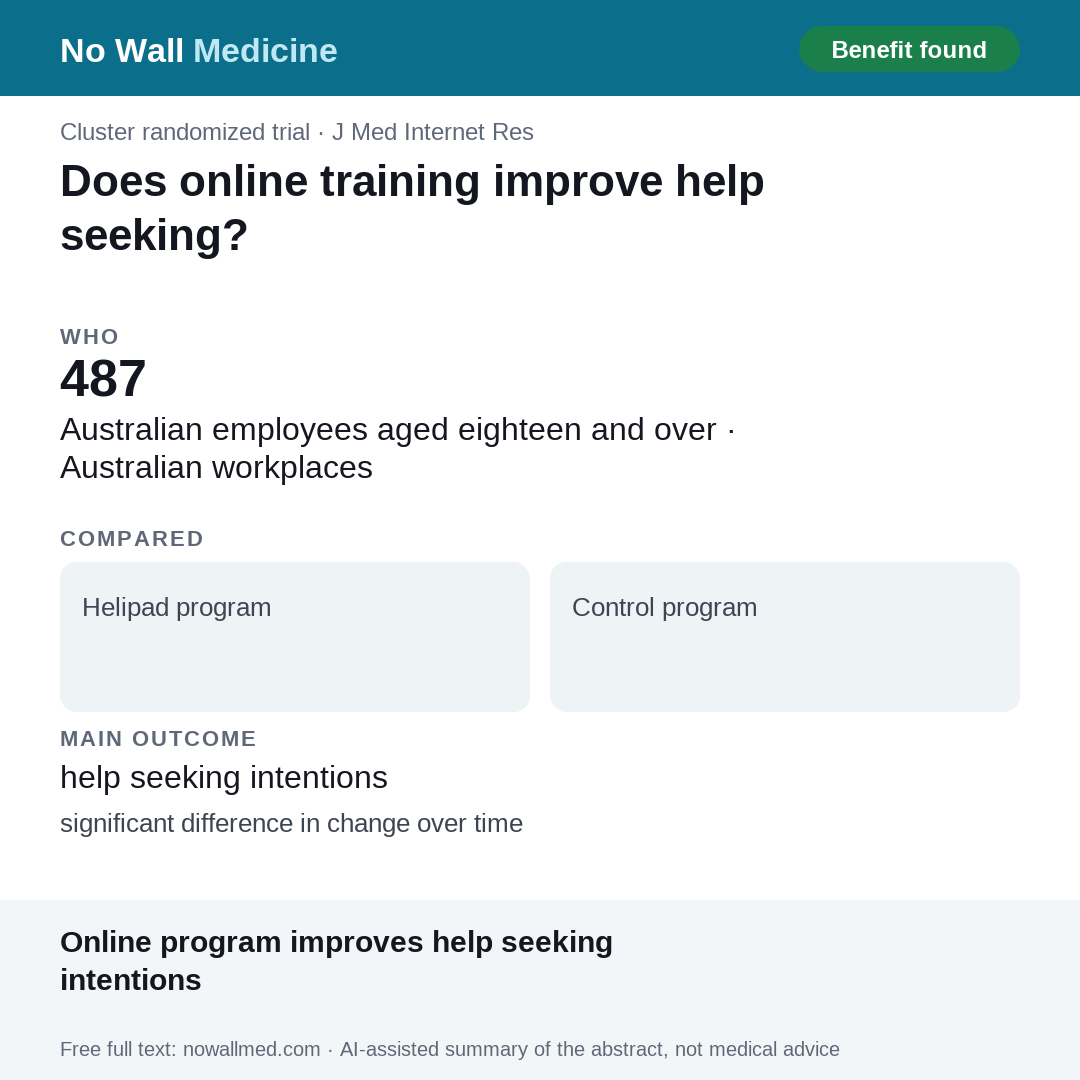
Effectiveness of a Brief Internet-Based Workplace Training Program to Support Help Seeking for Mental Ill-Health: Cluster Randomized Controlled Trial
Cluster randomized trialBenefit found
Does online training improve help seeking?
Who
487
Australian employees aged eighteen and over · Australian workplaces
Compared
Helipad program
Control program
Main outcome
help seeking intentions
Result: significant difference in change over time
Bottom line: Online program improves help seeking intentions
J Med Internet Res · 2026-08-07Download image
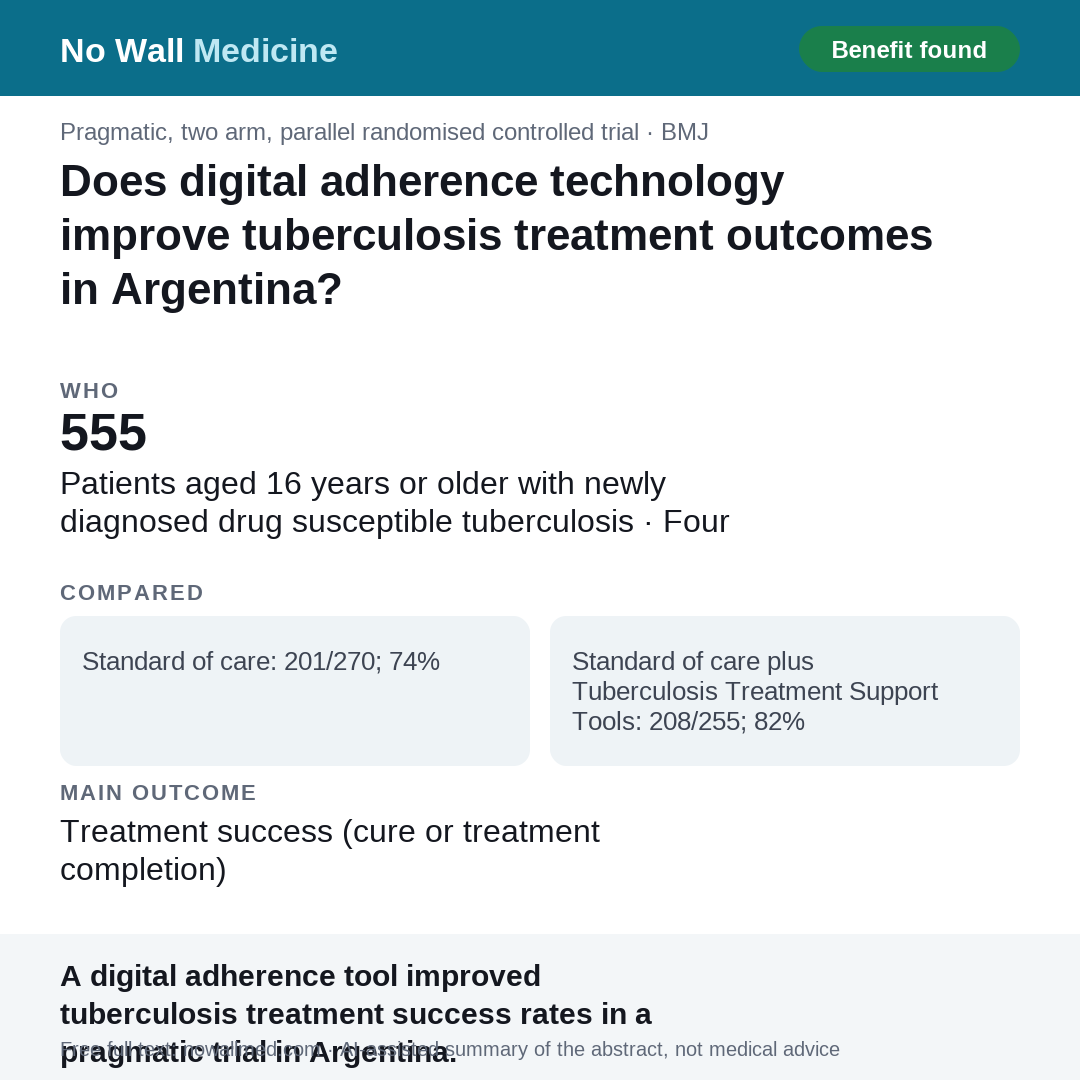
Evaluation of patient centred digital adherence technology for tuberculosis treatment outcomes: pragmatic randomised controlled trial
Pragmatic, two arm, parallel randomised controlled trialBenefit found
Does digital adherence technology improve tuberculosis treatment outcomes in Argentina?
Who
555
Patients aged 16 years or older with newly diagnosed drug susceptible tuberculosis · Four public reference hospitals in Buenos Aires, Argentina
Compared
Standard of care: 201/270; 74%
Standard of care plus Tuberculosis Treatment Support Tools: 208/255; 82%
Main outcome
Treatment success (cure or treatment completion)
Result: risk ratio 1.10 (1.00 to 1.20; P=0.04)
Bottom line: A digital adherence tool improved tuberculosis treatment success rates in a pragmatic trial in Argentina.
BMJ · 2026-08-06Download image
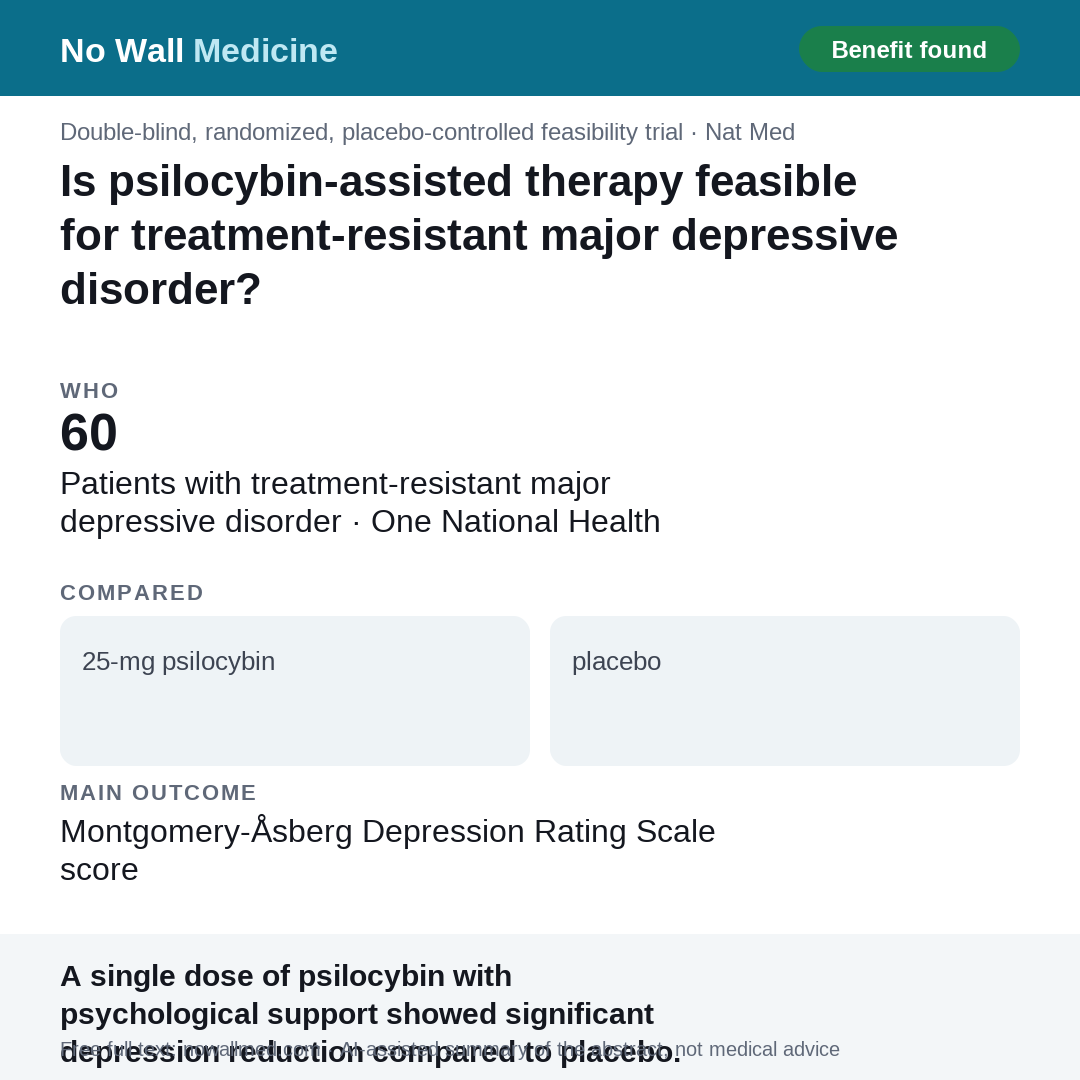
Psilocybin-assisted therapy for treatment-resistant major depressive disorder in a public healthcare setting: a randomized controlled trial
Double-blind, randomized, placebo-controlled feasibility trialBenefit found
Is psilocybin-assisted therapy feasible for treatment-resistant major depressive disorder?
Who
60
Patients with treatment-resistant major depressive disorder · One National Health Service site in England
Compared
25-mg psilocybin
placebo
Main outcome
Montgomery-Åsberg Depression Rating Scale score
Result: -10.41 (95% confidence interval: -14.86 to -5.95)
Bottom line: A single dose of psilocybin with psychological support showed significant depression reduction compared to placebo.
Nat Med · 2026-08-06Download image
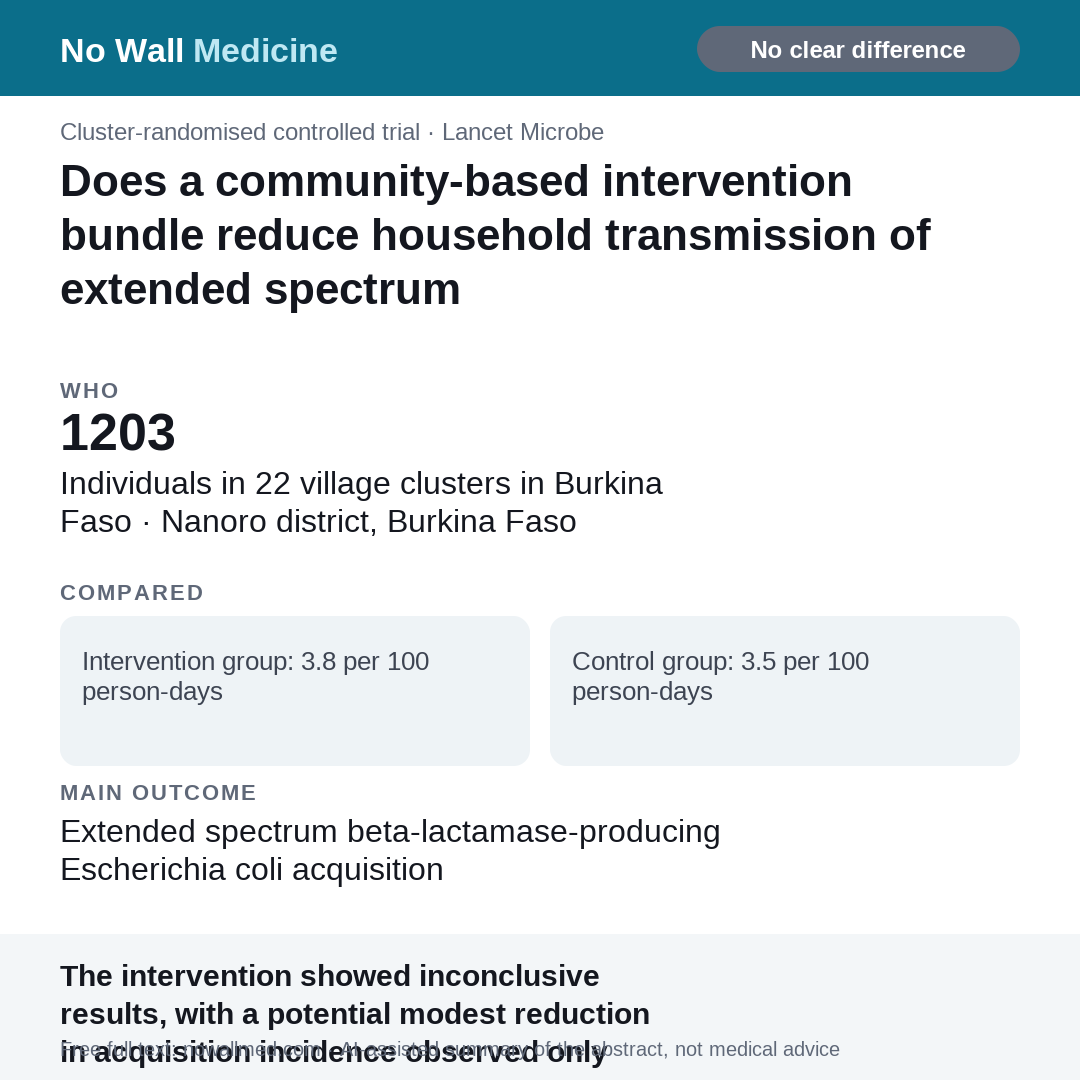
Efficacy and safety of flow diverter therapy for unruptured intracranial aneurysms compared to conventional endovascular therapy: a multicentre, randomised, open-label trial in South Korea
Multicentre, randomised, open-label trialHarm found
Is flow diversion more effective than conventional endovascular therapy for unruptured or recurrent intracranial aneurysms?
Who
160
Patients aged 19-75 with unruptured or recurrent intracranial aneurysms ≥7 mm · 13 tertiary institutions in South Korea
Compared
96.3%Conventional endovascular therapy
75.0%Flow diversion
Main outcome
Complete or near-complete aneurysm occlusion at 12 months
Result: adjusted odds ratio 6.46 (95% CI 1.94-29.98)
Bottom line: Conventional endovascular therapy resulted in higher rates of complete aneurysm occlusion compared to flow diversion without increased risk.
Limitation: Long-term follow-up is required to assess the durability of flow diversion.
Funded by: Korean Ministry of Health and Welfare
eClinicalMedicine · 2026-08-06Download image
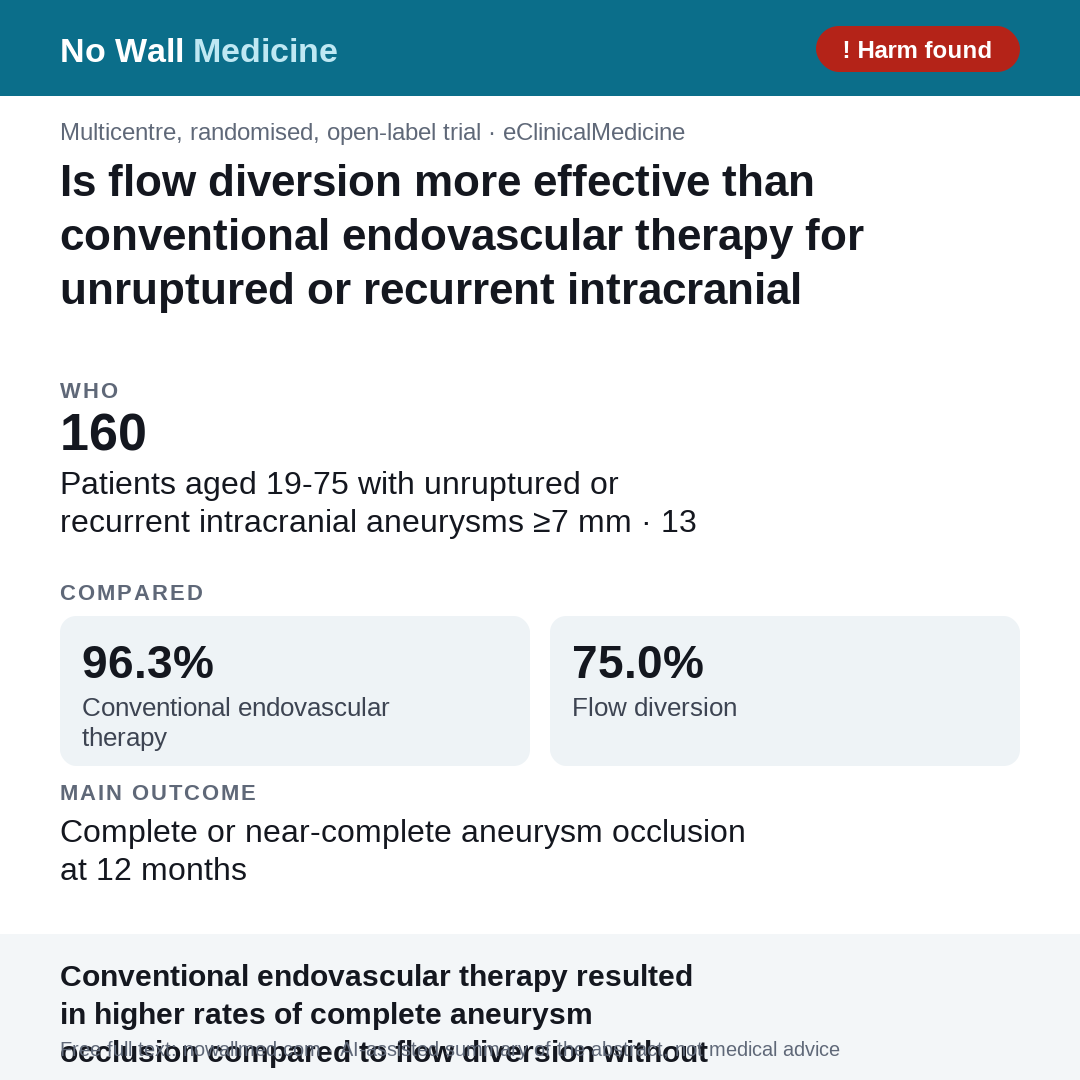
An expanded breakfast buffet increases daily energy and protein intakes in hospitalised patients: A prospective crossover quality improvement study
Prospective crossover quality improvement studyBenefit found
Does an expanded breakfast buffet increase daily energy and protein intakes in hospitalised patients?
Who
188
Hospitalised adults who consumed breakfast · Seven inpatient wards at a tertiary university hospital
Compared
Standard breakfast
Expanded breakfast: +198 kcal/day (95% CI 44 to 352) energy and +6.8 g/day (95% CI 1.0 to 12.5) protein
Main outcome
Total daily energy and protein intakes
Result: energy +198 kcal/day (95% CI 44 to 352); protein +6.8 g/day (95% CI 1.0 to 12.5)
Bottom line: An expanded breakfast buffet increased total daily energy and protein intakes in hospitalised patients without reducing other meal intakes.
Clin Nutr · 2026-08-06Download image
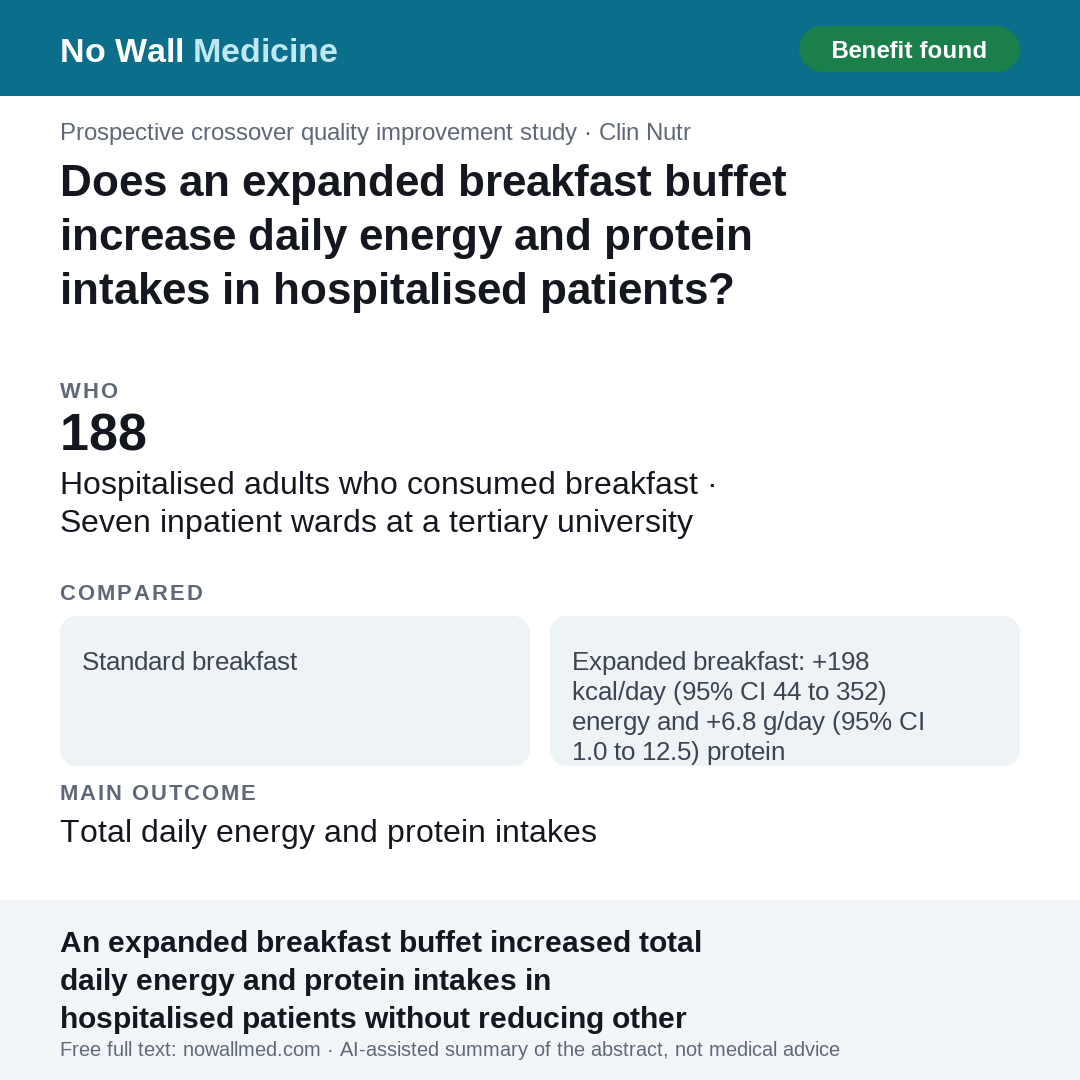
Electronic Patient-Reported Outcome Monitoring With Alert-Based Interventions in Metastatic Breast Cancer: A Randomized Clinical Trial
Multicenter randomized clinical trialBenefit found
Does digital patient-reported outcome monitoring with alert-based responses reduce fatigue in metastatic breast cancer?
Who
909
Women aged 18 years or older with metastatic breast cancer · 52 breast cancer centers in Germany
Compared
Intervention group
Control group
Main outcome
Fatigue at 6 months
Bottom line: Digital patient-reported outcome monitoring was associated with clinically meaningful reductions in fatigue and improved physical functioning.
JAMA Oncol · 2026-08-06Download image
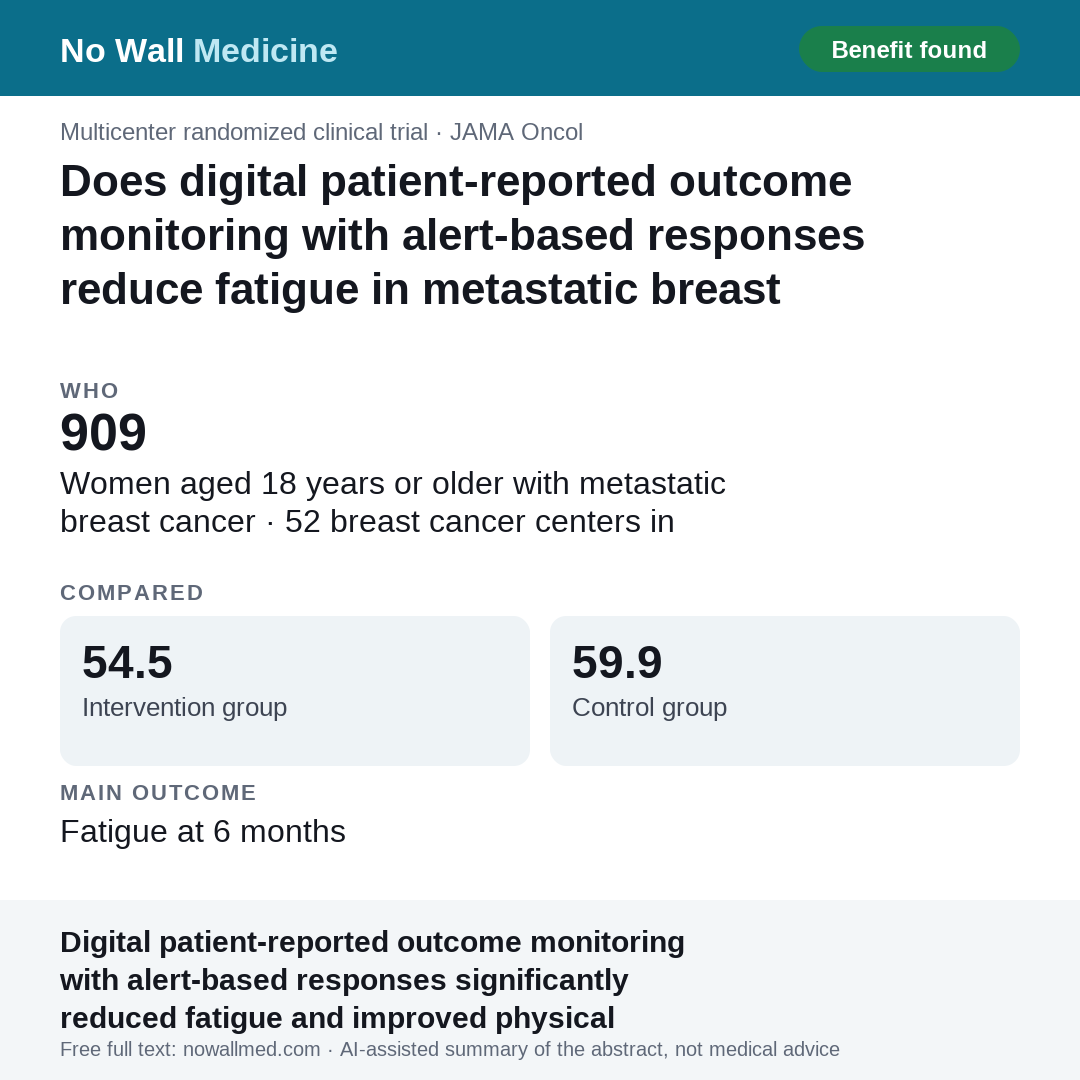
Effects of a community-based intervention bundle on household transmission of extended spectrum β-lactamase-producing Escherichia coli in rural Burkina Faso to target community-level drivers of antimicrobial resistance in sub-Saharan Africa: a cluster-randomised trial
Cluster-randomised controlled trialNo clear difference
Does a community-based intervention bundle reduce household transmission of extended spectrum beta-lactamase-producing Escherichia coli?
Who
1203
Individuals in 22 village clusters in Burkina Faso · Nanoro district, Burkina Faso
Compared
Intervention group: 3.8 per 100 person-days
Control group: 3.5 per 100 person-days
Main outcome
Extended spectrum beta-lactamase-producing Escherichia coli acquisition
Result: hazard ratio 1.02 (95% CrI 0.78-1.31) for months 1-6
Bottom line: The intervention showed inconclusive results, with a potential modest reduction in acquisition incidence observed only between months 6 and 9.
Funded by: EU Joint Programme Initiative on Antimicrobial Resistance CABU-EICO
Lancet Microbe · 2026-08-06Download image
Colchicine for the Prevention of Vascular Events After an Acute Intracerebral Hemorrhage: A Placebo-Controlled Trial
Double-blind, placebo-controlled, pilot randomized clinical trialBenefit found
Is it feasible to test colchicine after an acute intracerebral hemorrhage?
Who
100
Adults presenting within 48 hours of intracerebral hemorrhage onset · 11 centers across Canada
Compared
Colchicine 0.5 mg daily: 91% retention at 6 months
Placebo daily: 93% retention at 6 months
Main outcome
Recruitment rate, retention, and medication adherence
Bottom line: Testing low-dose colchicine after acute intracerebral hemorrhage is feasible, though early drug discontinuation rates are high.
Stroke · 2026-08-06Download image
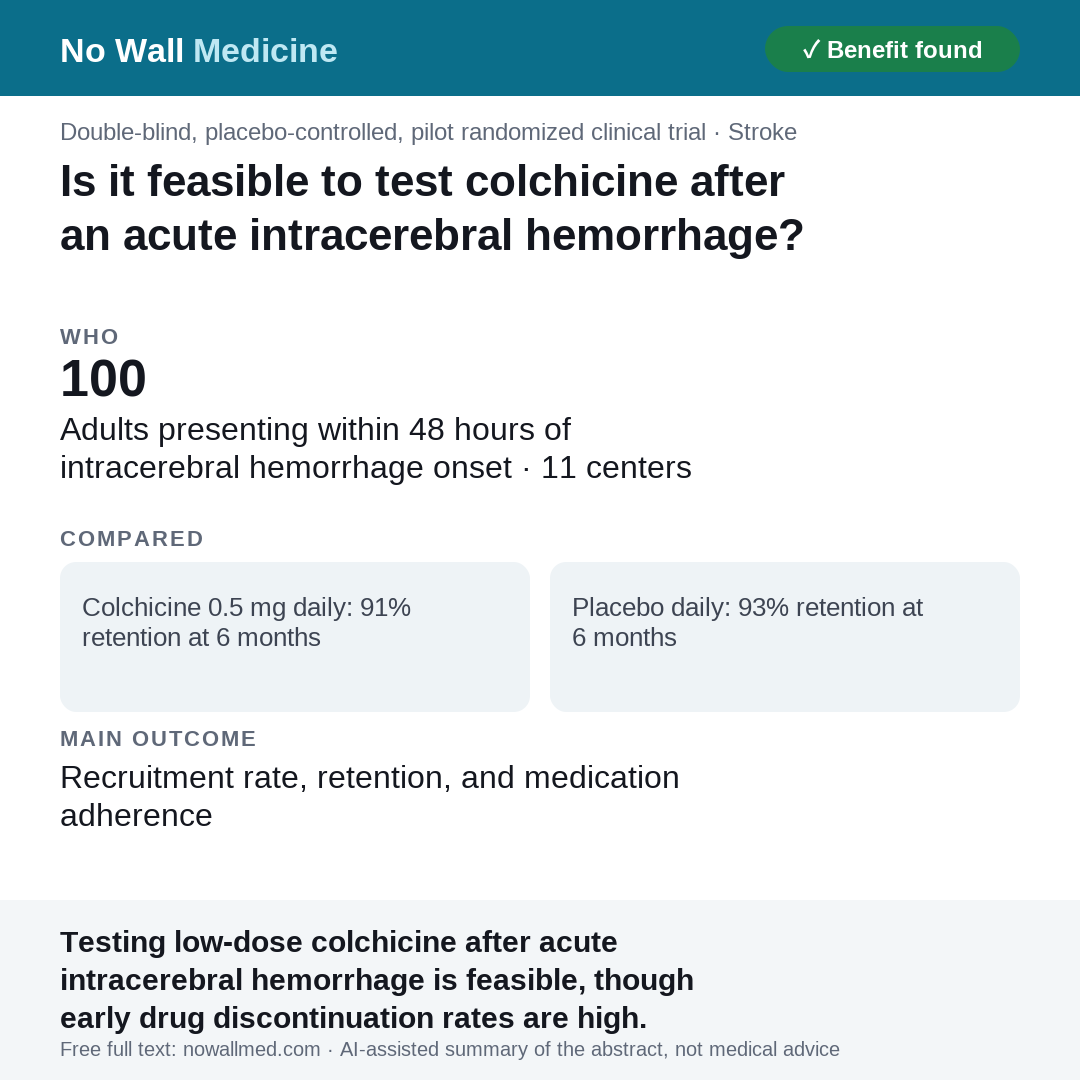
Effects of NDURE on Timely Adjuvant Radiotherapy in HNSCC: Subgroup Analysis of an RCT
Post hoc subgroup analysis of a randomized clinical trialBenefit found
Does NDURE improve timely initiation of postoperative radiation therapy in head and neck cancer?
Who
145
Adults with locally advanced head and neck squamous cell carcinoma · Single-center
Compared
NDURE
Usual care
Main outcome
Initiation of timely postoperative radiation therapy within 6 weeks
Bottom line: NDURE improved timely postoperative radiation therapy initiation across nearly all demographic and clinical subgroups.
Limitation: This was an exploratory, post hoc subgroup analysis
Laryngoscope · 2026-08-06Download image
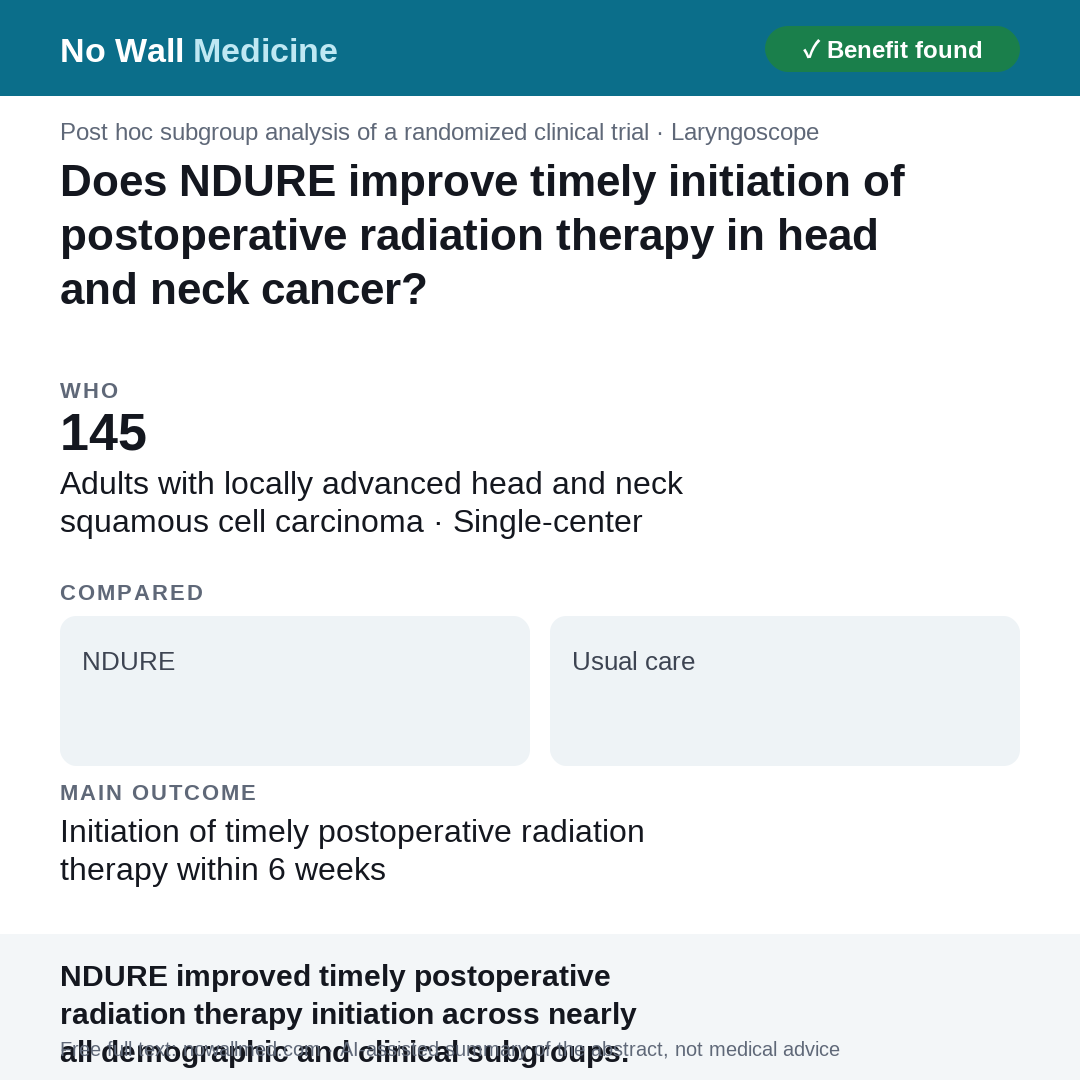
The Long-Term Impact of a Teleprehabilitation Programme on Modifiable Risk Factors and Quality of Life After Cardiac Surgery
Randomized controlled trialBenefit found
Does teleprehabilitation affect modifiable risk factors and quality of life after cardiac surgery?
Who
Patients undergoing elective cardiac surgery
Compared
Multimodal teleprehabilitation
Standard care
Main outcome
Modifiable risk factors and quality of life
Bottom line: Teleprehabilitation may provide long-term benefits for lifestyle and quality of life after cardiac surgery.
Eur J Cardiothorac Surg · 2026-08-06Download image
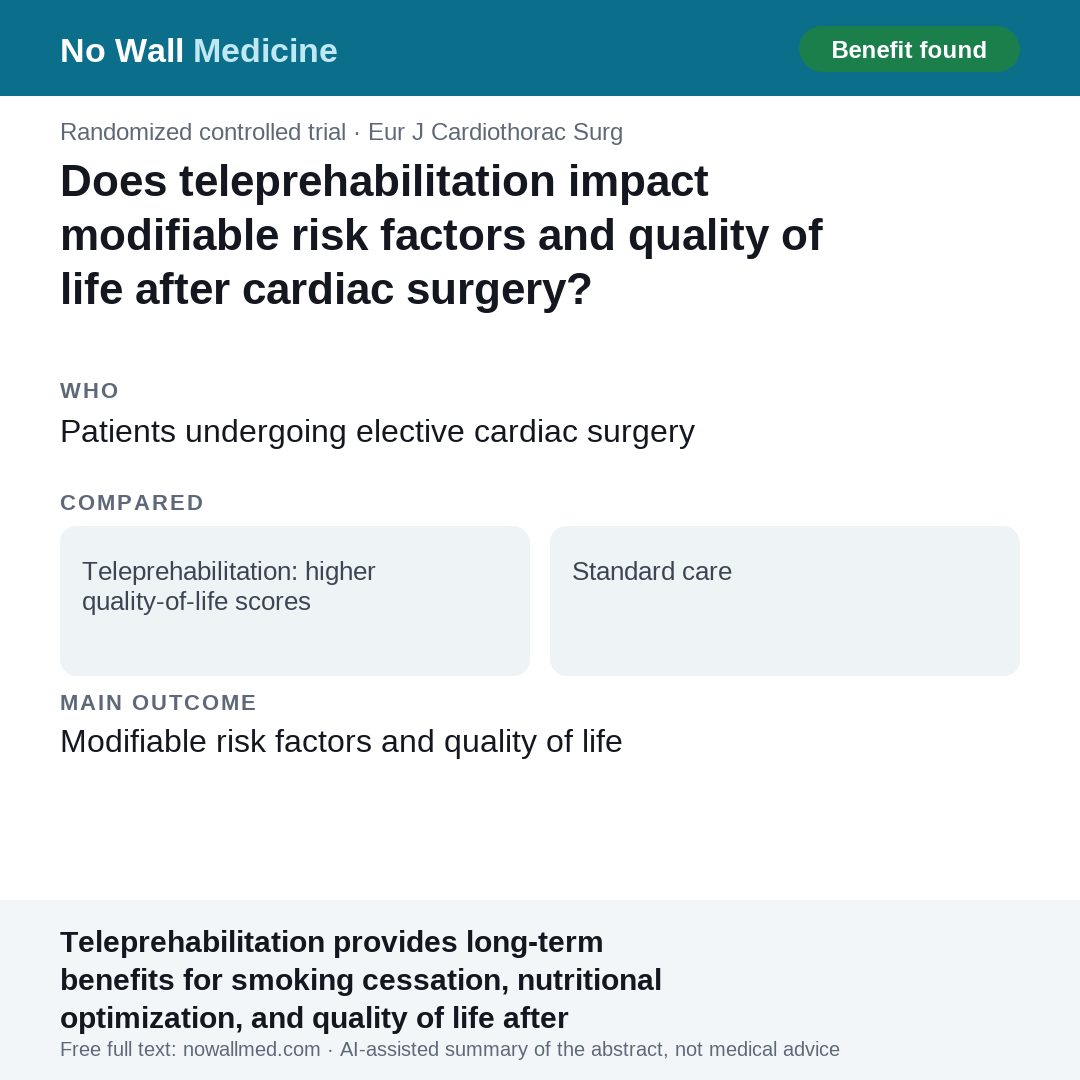
Fentanyl or morphine for persistent dyspnoea in COPD: a multicentre randomised crossover trial
Multicentre, crossover, double-dummy randomised controlled trialNo clear difference
Is transdermal fentanyl or oral morphine effective for persistent dyspnoea in COPD?
Who
58
Patients with persistent dyspnoea and modified Medical Research Council score ≥3 · Multicentre
Compared
Transdermal fentanyl
Morphine
Placebo
Main outcome
Mean and worst dyspnoea, sleep, health status, and anxiety
Bottom line: Transdermal fentanyl and oral morphine showed no significant benefit compared to placebo for persistent dyspnoea in COPD.
Limitation: High discontinuation rates due to exacerbations and side-effects.
Eur Respir J · 2026-08-06Download image
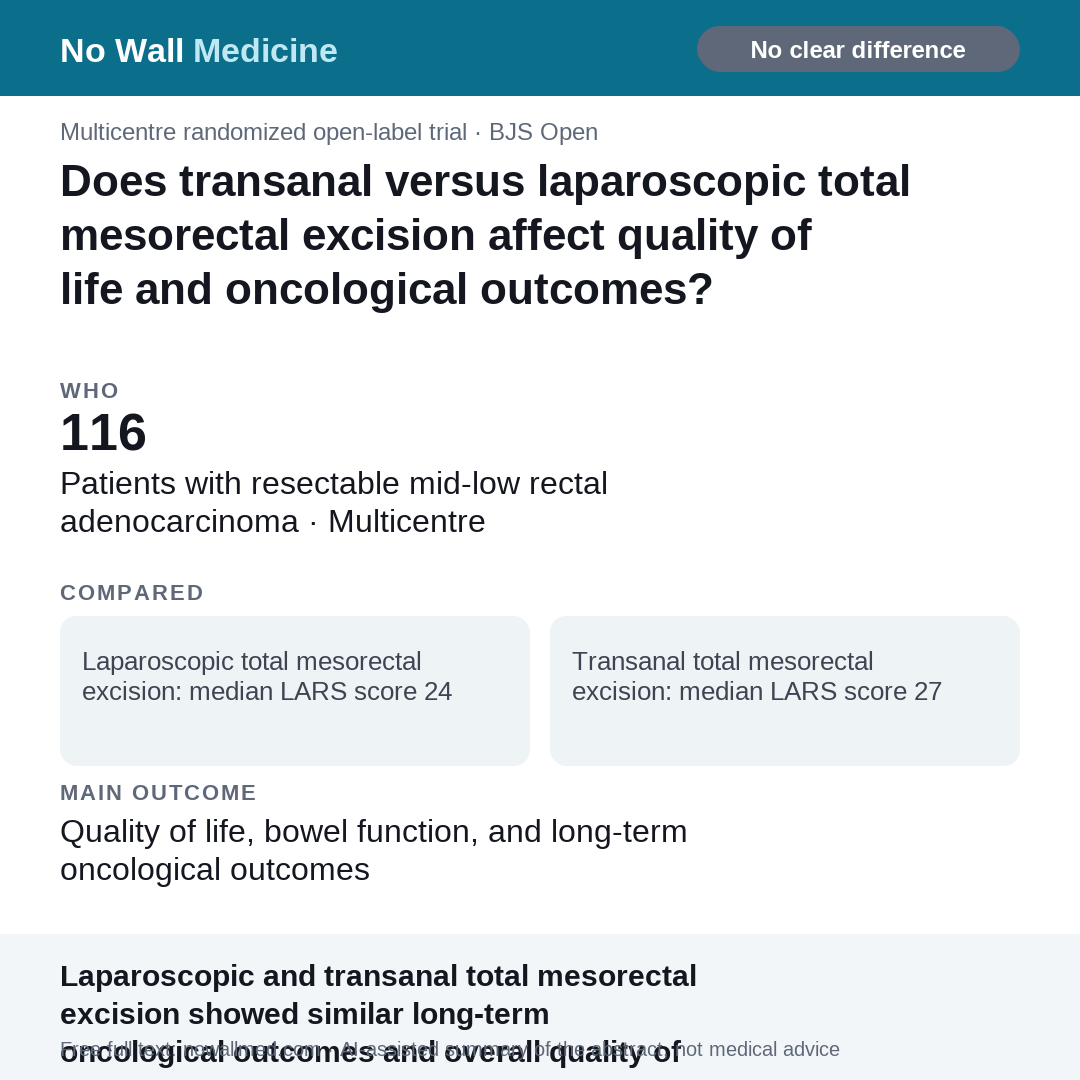
Quality of life, bowel dysfunction, and long-term oncological outcomes after transanal versus laparoscopic total mesorectal excision for mid- and low- rectal cancer (Ta-LaTME study): multicentre randomized open-label trial
Multicentre randomized open-label trialNo clear difference
Does transanal versus laparoscopic total mesorectal excision affect quality of life and oncological outcomes?
Who
116
Patients with resectable mid-low rectal adenocarcinoma · Multicentre
Compared
Laparoscopic total mesorectal excision: median LARS score 24
Transanal total mesorectal excision: median LARS score 27
Main outcome
Quality of life, bowel function, and long-term oncological outcomes
Bottom line: Laparoscopic and transanal total mesorectal excision showed similar long-term oncological outcomes and overall quality of life.
BJS Open · 2026-08-06Download image
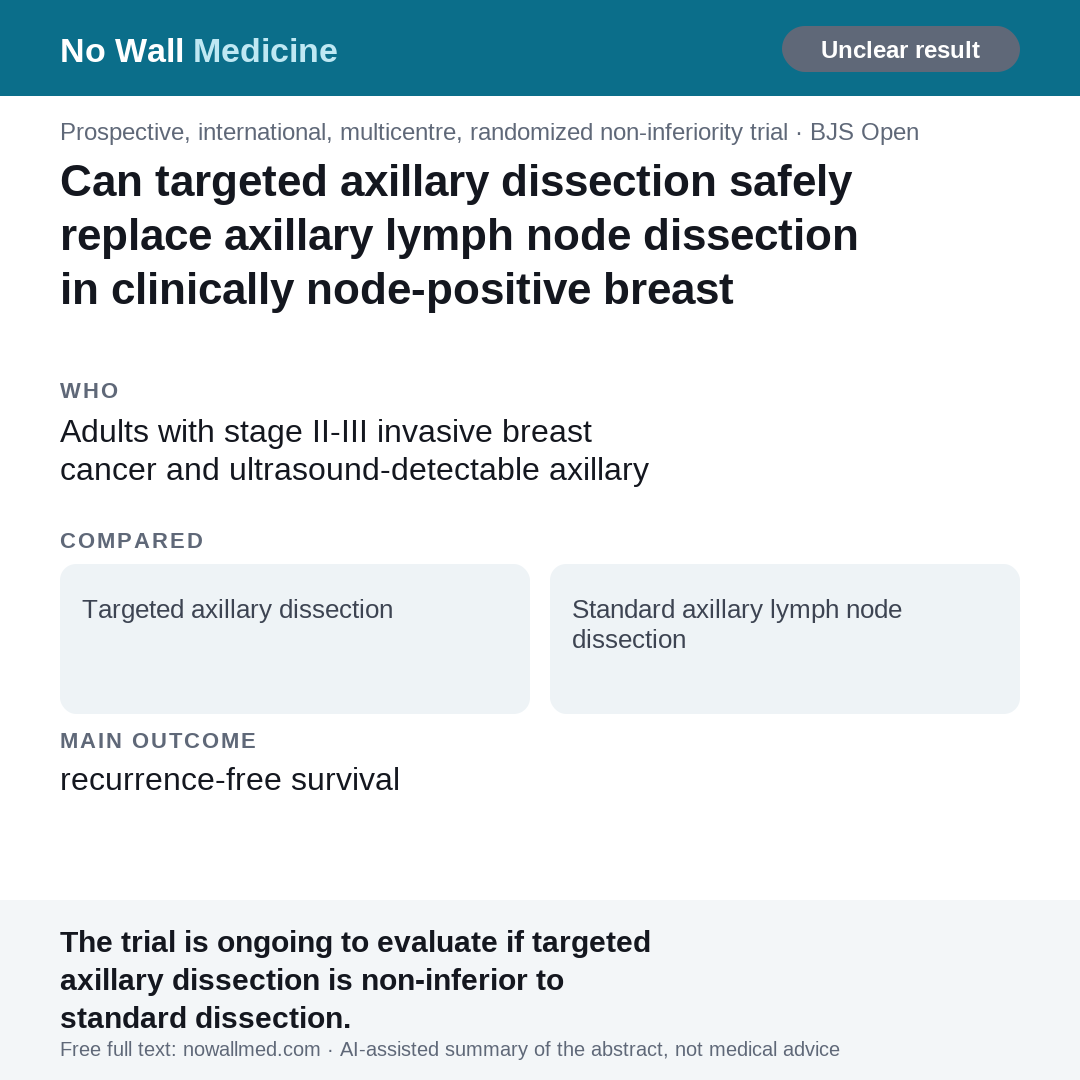
Omission of axillary lymph node dissection in ultrasound-detectable axillary metastases in primary breast cancer treated by upfront surgery: prospective randomized SENOMAC-ULTRA non-inferiority trial
Prospective, international, multicentre, randomized non-inferiority trialUnclear result
Can targeted axillary dissection safely replace axillary lymph node dissection in clinically node-positive breast cancer?
Who
Adults with stage II-III invasive breast cancer and ultrasound-detectable axillary metastases · International, multicentre
Compared
Targeted axillary dissection
Standard axillary lymph node dissection
Main outcome
recurrence-free survival
Bottom line: The trial is ongoing to evaluate if targeted axillary dissection is non-inferior to standard dissection.
BJS Open · 2026-08-06Download image
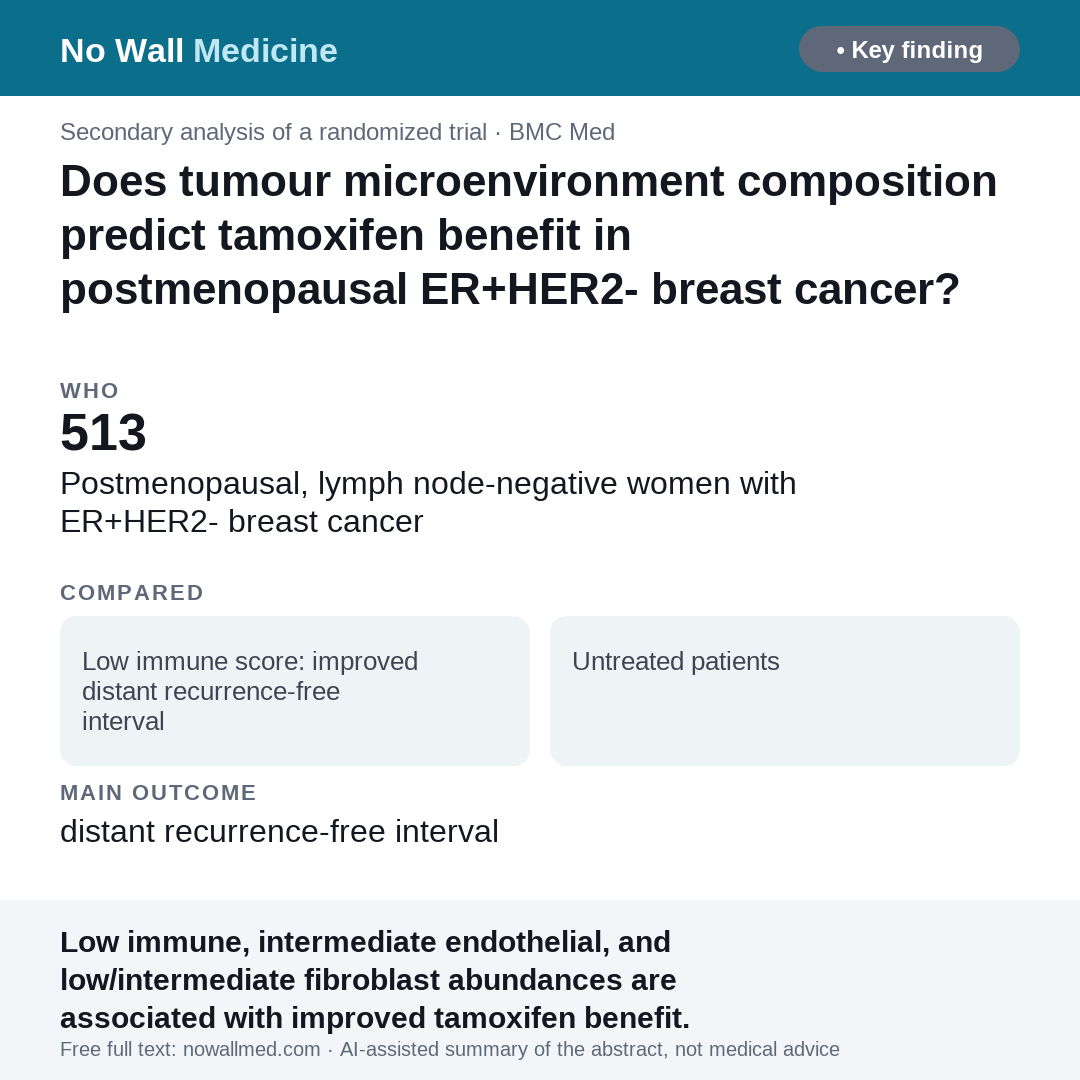
The tumour microenvironment influences long-term tamoxifen benefit in postmenopausal ER+/HER2- breast cancer patients: a secondary analysis of the randomised Stockholm Tamoxifen (STO-3) trial
Secondary analysis of a randomized trialMixed results
Does tumour microenvironment composition predict tamoxifen benefit in postmenopausal ER+HER2- breast cancer patients?
Who
513
Postmenopausal, lymph node-negative women with oestrogen receptor-positive, HER2-negative breast cancer · Stockholm Tamoxifen trial
Compared
Tamoxifen
No endocrine therapy
Main outcome
Tamoxifen benefit
Bottom line: Low immune, intermediate endothelial, and low/intermediate fibroblast abundances are associated with improved tamoxifen benefit.
BMC Med · 2026-08-05Download image
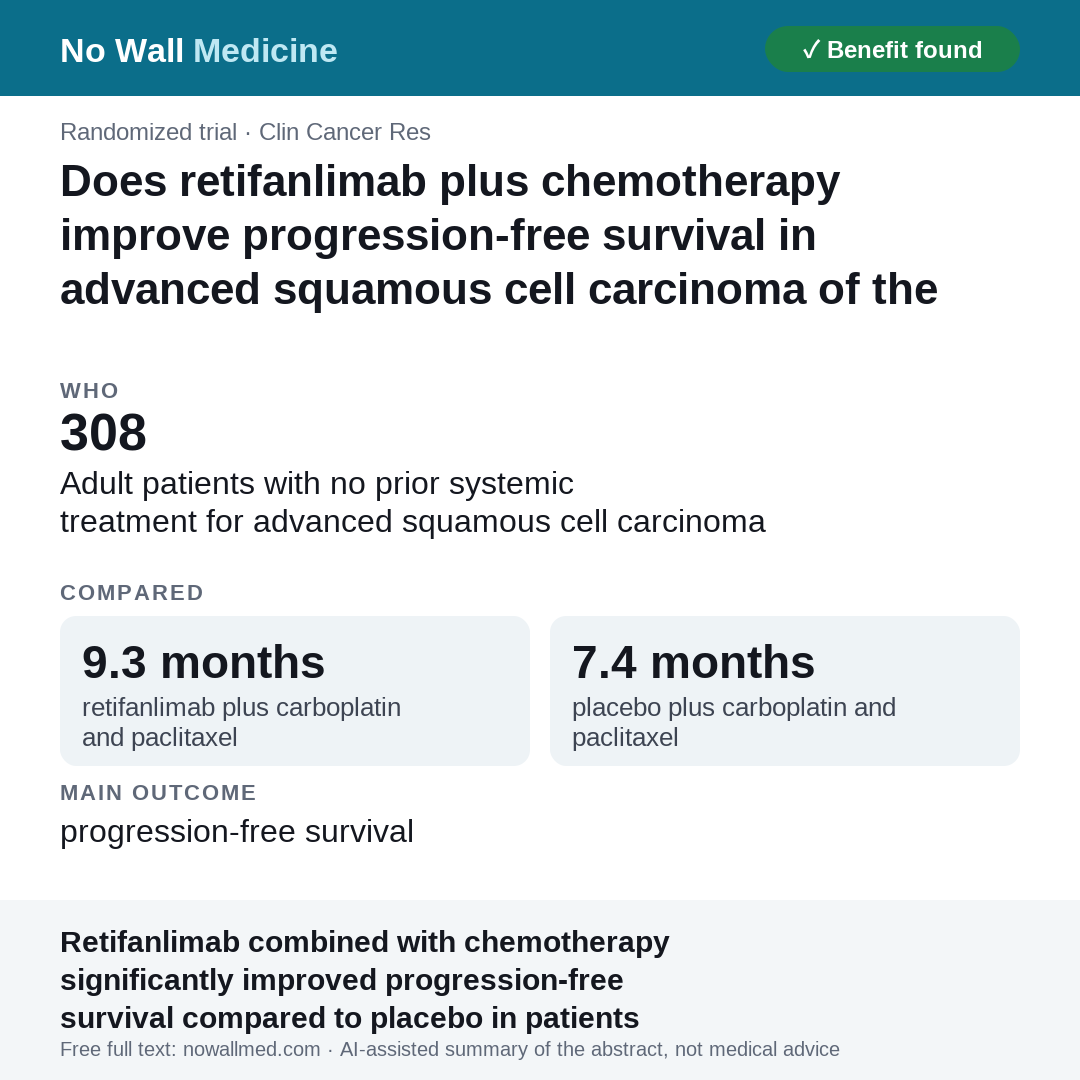
FDA Approval Summary: Retifanlimab for the Treatment of Adult Patients with Metastatic or Inoperable Locally Recurrent Squamous Cell Carcinoma of the Anal Canal
Randomized trialBenefit found
Does retifanlimab plus chemotherapy improve progression-free survival in advanced squamous cell carcinoma of the anal canal?
Who
308
Adult patients with no prior systemic treatment for advanced squamous cell carcinoma of the anal canal
Compared
9.3 monthsretifanlimab plus carboplatin and paclitaxel (95% CI, 7.5-11.3)
7.4 monthsplacebo plus carboplatin and paclitaxel (95% CI, 7.1-7.7)
Main outcome
progression-free survival
Result: hazard ratio 0.63 (95% CI 0.47-0.84)
Bottom line: Retifanlimab combined with chemotherapy significantly improved progression-free survival compared to placebo in patients with advanced squamous cell carcinoma of the anal canal.
Clin Cancer Res · 2026-08-05Download image
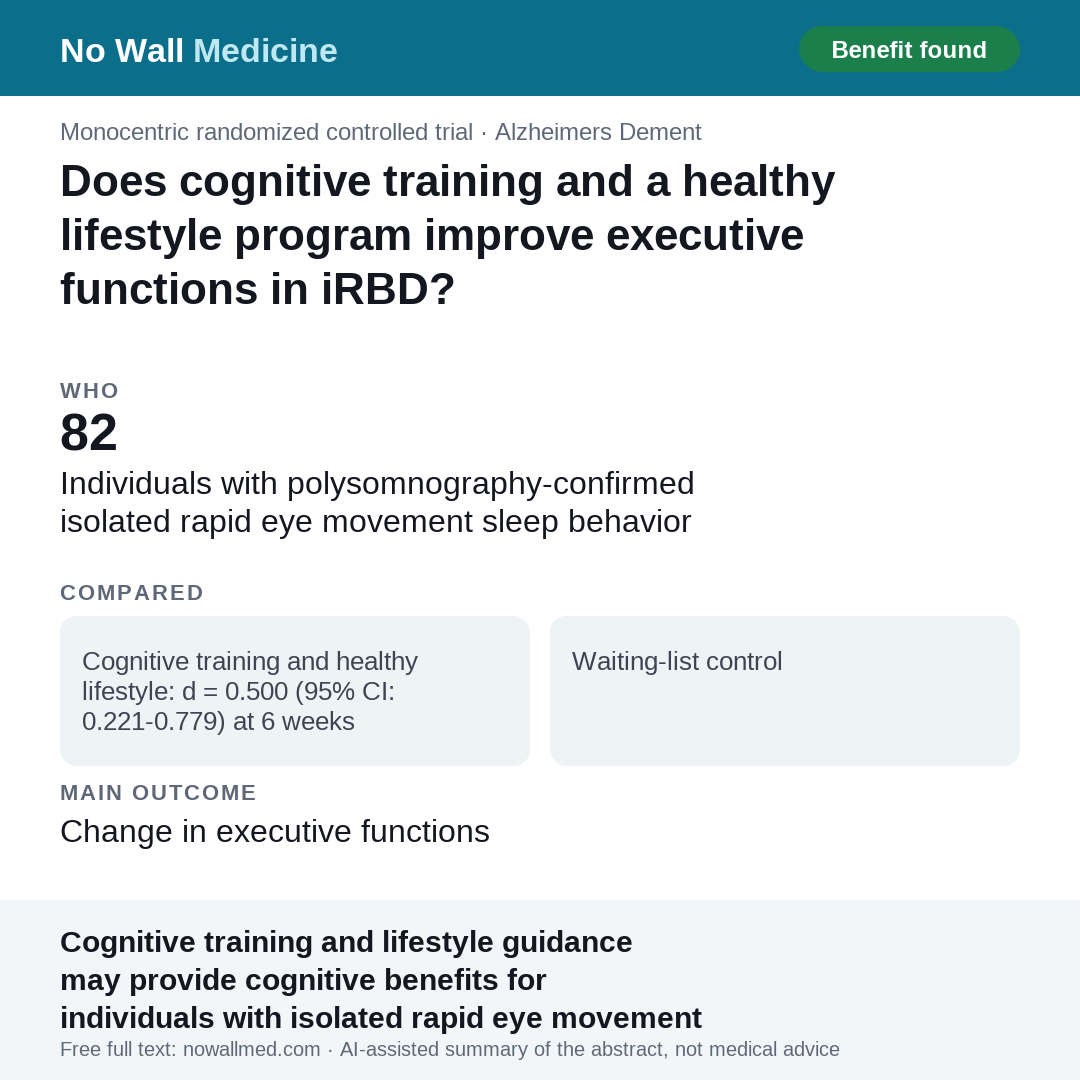
Cognitive training and promoting a healthy lifestyle in isolated REM sleep behavior disorder: The randomized controlled trial CogTrAiL-RBD
Monocentric randomized controlled trialBenefit found
Does cognitive training and a healthy lifestyle program improve executive functions in iRBD?
Who
82
Individuals with polysomnography-confirmed isolated rapid eye movement sleep behavior disorder · Monocentric
Compared
Cognitive training and healthy lifestyle: d = 0.500 (95% CI: 0.221-0.779) at 6 weeks
Waiting-list control
Main outcome
Change in executive functions
Result: d = 0.500 (95% CI: 0.221-0.779) at 6 weeks; d = 0.397 (95% CI: 0.115-0.679) at 6 months
Bottom line: Cognitive training and lifestyle guidance may provide cognitive benefits for individuals with isolated rapid eye movement sleep behavior disorder.
Alzheimers Dement · 2026-08-05Download image