Visual abstracts
New randomized trials and meta-analyses from leading journals at a glance: who was studied, what was compared, and what was found. Every paper is free to read in full.
All specialtiesCardiology 1390Oncology 1235Gastroenterology & Hepatology 498Infectious Disease 900Neurology 575Psychiatry & Mental Health 693Pulmonology 596Critical Care 407Endocrinology & Diabetes 760Pediatrics 831Surgery 656Orthopedics & Sports Medicine 263Neurosurgery 188Cardiothoracic & Vascular Surgery 155Plastic & Reconstructive Surgery 218Nephrology 295Rheumatology 186Hematology 292Dermatology 146Ophthalmology 157Obstetrics & Gynecology 440Public & Global Health 273Radiology & Imaging 177Anesthesiology 269Urology 259ENT (Otolaryngology) 188Emergency Medicine 154Allergy & Immunology 92Geriatrics 290Family Medicine & Primary Care 174Medical Genetics & Genomics 147Pathology & Laboratory Medicine 42Physical Medicine & Rehabilitation 244Palliative Care 126Nutrition 367Digital Health & AI 723General Medicine 123
Detection and Management of Geographic Atrophy Secondary to Age-Related Macular Degeneration Using Noninvasive Retinal Images and Artificial Intelligence: Systematic Review
Systematic reviewBenefit found
How does artificial intelligence perform in detecting and managing geographic atrophy?
Who
24592
Patients with geographic atrophy secondary to dry age-related macular degeneration · Multiple countries including United States, United Kingdom, and China
Compared
Artificial intelligence
Clinical experts
Main outcome
Performance in geographic atrophy detection, assessment, progression, and lesion prediction
Bottom line: Deep learning algorithms show remarkable performance in geographic atrophy management, comparable to clinical experts using noninvasive retinal imaging.
Limitation: Need for enhanced reporting, data diversity, and rigorous external validation in prospective multicenter studies.
J Med Internet Res · 2025-11-21Download image

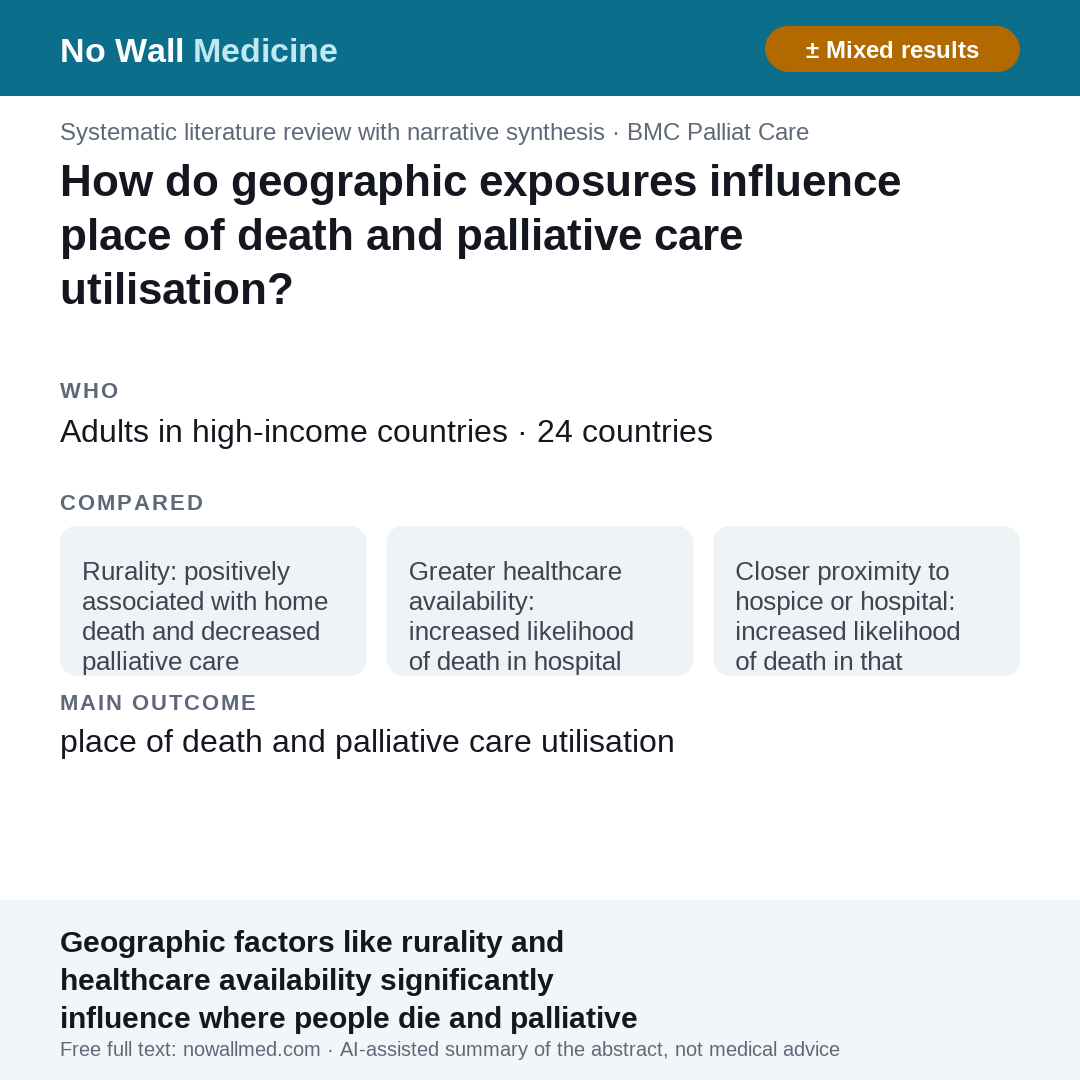
Geographic variations in place of death and palliative care utilisation in the last three months of life in high-income countries: a systematic review
Systematic literature review with narrative synthesisMixed results
How do geographic exposures influence place of death and palliative care utilisation?
Who
51
Adults in high-income countries · 24 countries
Compared
Rurality: positively associated with home death and decreased palliative care utilisation
Greater healthcare availability: increased likelihood of death in hospital or long-term care facilities
Closer proximity to hospice or hospital: increased likelihood of death in that facility
Main outcome
place of death and palliative care utilisation
Bottom line: Geographic factors like rurality and healthcare availability significantly influence where people die and palliative care use.
BMC Palliat Care · 2025-11-21Download image
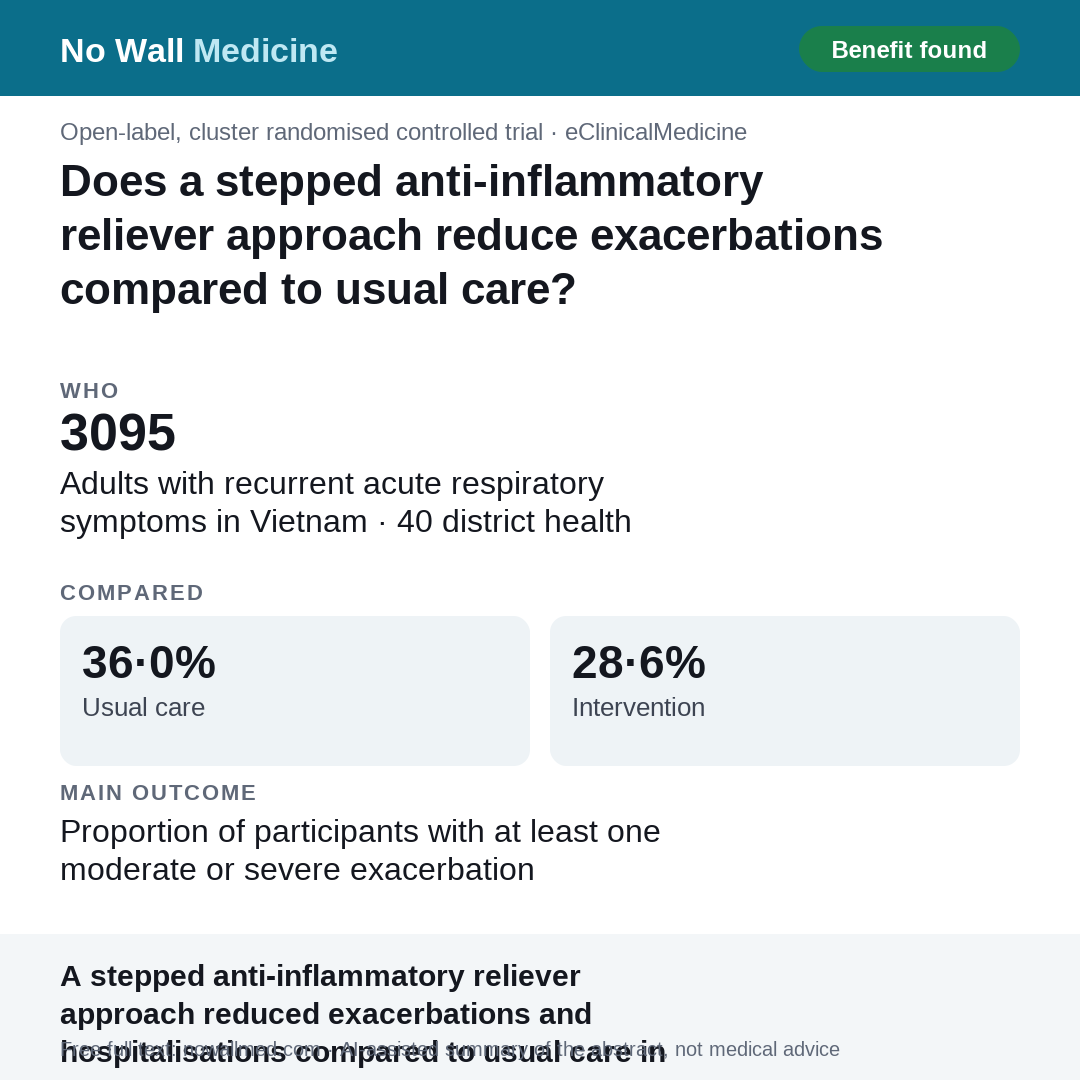
Implementation of a stepped anti-inflammatory reliever therapy intervention with budesonide-formoterol 160/4·5 mcg by Turbuhaler versus usual care for adults presenting during exacerbations of obstructive lung disease suggestive of asthma or chronic obstructive pulmonary disease in a resource-limited setting: an open-label, cluster randomised trial
Open-label, cluster randomised controlled trialBenefit found
Does a stepped anti-inflammatory reliever approach reduce exacerbations compared to usual care?
Who
3095
Adults with recurrent acute respiratory symptoms in Vietnam · 40 district health facilities in Vietnam
Compared
36·0%Usual care (511/1421)
28·6%Intervention (478/1674)
Main outcome
Proportion of participants with at least one moderate or severe exacerbation
Result: relative risk (RR) 0·794; 95% CI 0·649-0·971
Bottom line: A stepped anti-inflammatory reliever approach reduced exacerbations and hospitalisations compared to usual care in resource-limited settings.
Funded by: National Health and Medical Research Council of Australia
eClinicalMedicine · 2025-11-20Download image
Omadacycline versus moxifloxacin for community-acquired bacterial pneumonia (OPTIC-2): a phase 3b, randomised, double-blind, multicentre, controlled, noninferiority trial
Randomised, double-blind, multicentre, noninferiority trialBenefit found
Is omadacycline noninferior to moxifloxacin for community-acquired bacterial pneumonia?
Who
670
Adults in Eastern Europe with community-acquired bacterial pneumonia · Eastern Europe
Compared
89.6%omadacycline
87.7%moxifloxacin
Main outcome
early clinical response at 72-120 hours after first dose
Result: treatment difference [95% CI]: 1.9 [-3.0, 6.8]
Bottom line: Omadacycline was noninferior to moxifloxacin for treating community-acquired bacterial pneumonia.
Funded by: Paratek Pharmaceuticals, Inc. and U.S. Department of Health and Human Services
eClinicalMedicine · 2025-11-20Download image

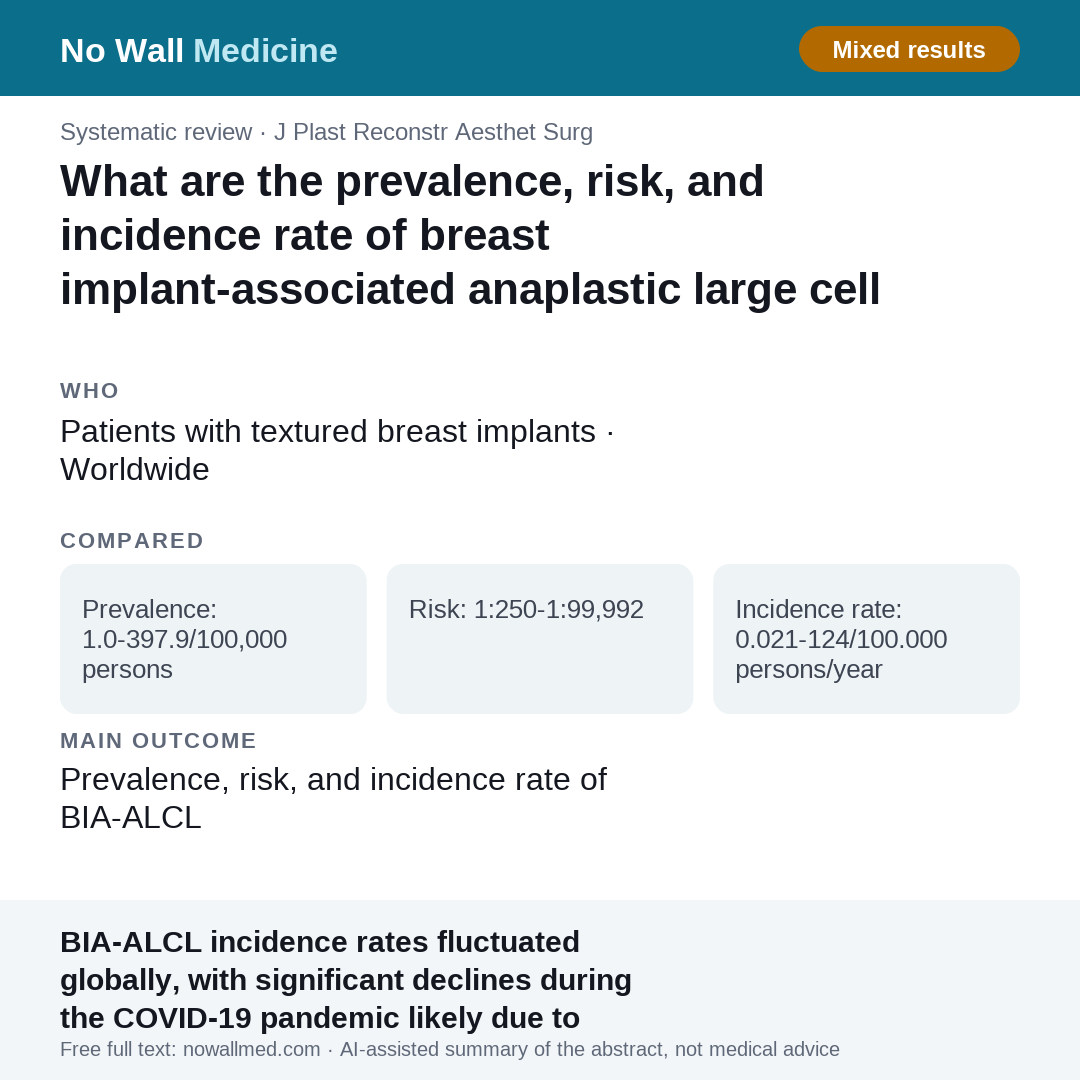
Epidemiology of Breast Implant-Associated Anaplastic Large Cell Lymphoma - A systematic review of literature
Systematic reviewMixed results
What are the prevalence, risk, and incidence rate of breast implant-associated anaplastic large cell lymphoma?
Who
Patients with textured breast implants · Worldwide
Compared
Prevalence: 1.0-397.9/100,000 persons
Risk: 1:250-1:99,992
Incidence rate: 0.021-124/100.000 persons/year
Main outcome
Prevalence, risk, and incidence rate of BIA-ALCL
Bottom line: BIA-ALCL incidence rates fluctuated globally, with significant declines during the COVID-19 pandemic likely due to underreporting and diagnostic delays.
J Plast Reconstr Aesthet Surg · 2025-11-20Download image
Direct and indirect protection against scabies through ivermectin mass drug administration designed for malaria in Mozambique: a substudy nested within a cluster-randomised, controlled trial
Open-label, assessor-masked, cluster-randomised trialBenefit found
Does ivermectin mass drug administration provide direct and indirect protection against scabies?
Who
1951
Participants in malaria and scabies co-endemic communities in Mozambique · Mozambique
Compared
2.11%Ivermectin 400 μg/kg to humans (95% CI 1.21-3.41)
13.71%Albendazole 400 mg in humans only (10.81-17.05)
Main outcome
Scabies prevalence at 3 months
Result: adjusted odds ratio 0.18 (95% CI 0.07-0.45)
Bottom line: Ivermectin mass drug administration significantly reduces scabies prevalence in both directly exposed participants and indirectly exposed children.
Funded by: Unitaid
Lancet Microbe · 2025-11-20Download image

Pharmacotherapy for Chronic & Intractable Hiccups in Palliative Care: A Mixed Methods Systematic & Umbrella Review
Mixed methods systematic and umbrella reviewUnclear result
What are the pharmacological management options for chronic and intractable hiccups in palliative care?
Who
156
Adults receiving palliative care with chronic and intractable hiccups
Compared
Gabapentin and baclofen: most frequently reported effective agents
Other pharmacological agents: dopamine antagonists, benzodiazepines, medication rotation, combination therapies
Main outcome
hiccup reduction or cessation and patient and clinician experiences
Bottom line: Evidence for pharmacological management is of very low certainty, suggesting a shift toward palliative control over cure.
Limitation: Evidence is of very low certainty and likely subject to significant publication bias.
J Pain Symptom Manage · 2025-11-20Download image

Food Environment and Childhood Overweight/Obesity: A Systematic Review
Systematic review and narrative synthesisUnclear result
How do food environment indicators associate with childhood overweight and obesity?
Who
Children with overweight or obesity · Worldwide
Compared
Availability and accessibility indicators
Affordability and appeal indicators
Main outcome
Food environment indicators associated with childhood overweight and obesity
Bottom line: Current evidence shows deficiencies in measuring and monitoring the food environment for children to prevent overweight and obesity.
Adv Nutr · 2025-11-20Download image

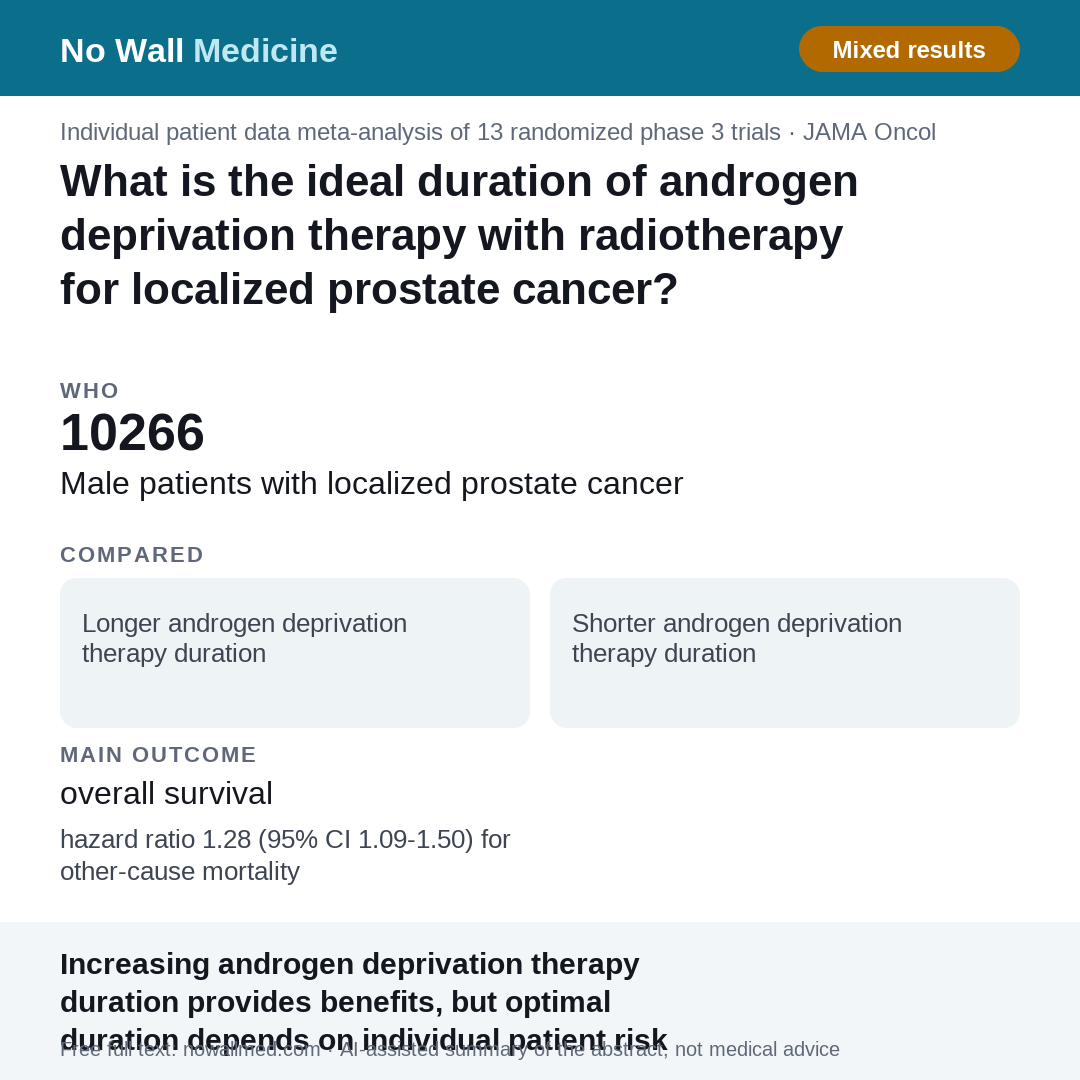
Optimal Duration of Androgen Deprivation Therapy With Definitive Radiotherapy for Localized Prostate Cancer: A Meta-Analysis
Individual patient data meta-analysis of 13 randomized phase 3 trialsMixed results
What is the ideal duration of androgen deprivation therapy with radiotherapy for localized prostate cancer?
Who
10266
Male patients with localized prostate cancer
Compared
Longer androgen deprivation therapy duration
Shorter androgen deprivation therapy duration
Main outcome
overall survival
Result: hazard ratio 1.28 (95% CI 1.09-1.50) for other-cause mortality
Bottom line: Increasing androgen deprivation therapy duration provides benefits, but optimal duration depends on individual patient risk factors.
JAMA Oncol · 2025-11-20Download image
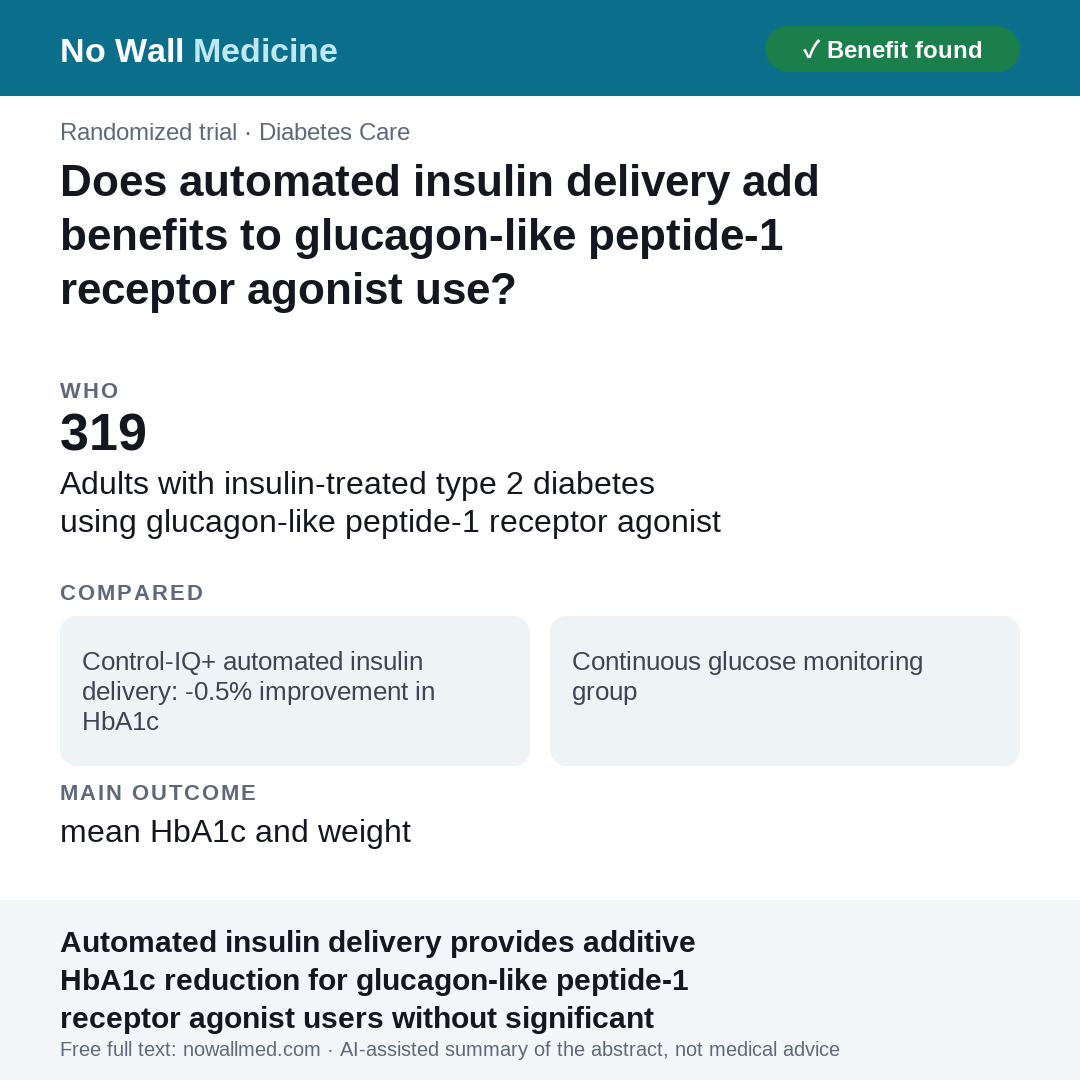
Additive Benefits of Control-IQ+ AID to GLP-1 Receptor Agonist Use in Adults With Type 2 Diabetes
Randomized trialBenefit found
Does automated insulin delivery add benefits to glucagon-like peptide-1 receptor agonist use?
Who
319
Adults with insulin-treated type 2 diabetes using glucagon-like peptide-1 receptor agonist
Compared
Control-IQ+ automated insulin delivery: -0.5% improvement in HbA1c
Continuous glucose monitoring group
Main outcome
mean HbA1c and weight
Result: mean improvement of -0.5% (95% CI -0.8 to -0.3, P < 0.001)
Bottom line: Automated insulin delivery provides additive HbA1c reduction for glucagon-like peptide-1 receptor agonist users without significant weight gain.
Diabetes Care · 2025-11-20Download image
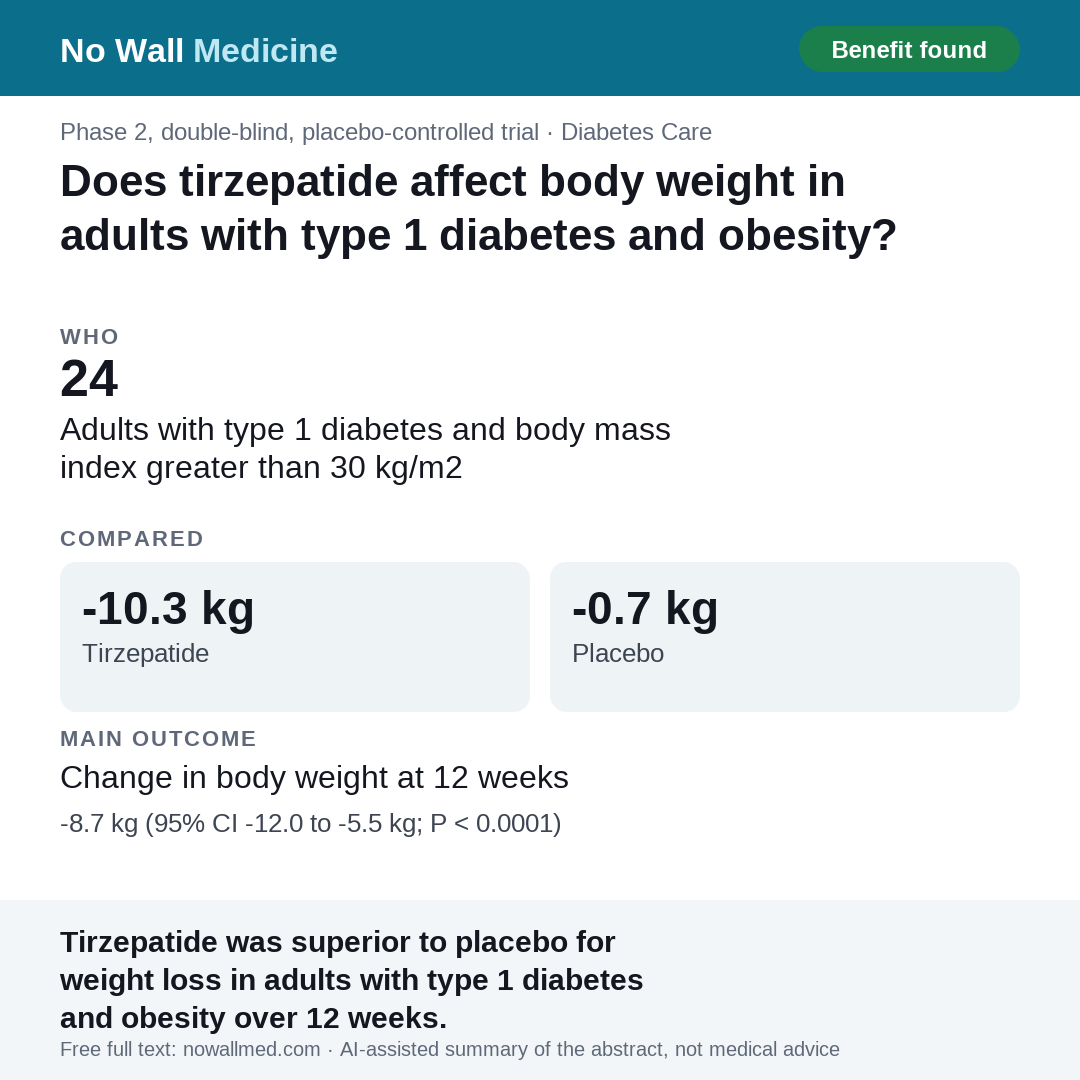
Tirzepatide in Adults With Type 1 Diabetes: A Phase 2 Randomized Placebo-Controlled Clinical Trial
Phase 2, double-blind, placebo-controlled trialBenefit found
Does tirzepatide affect body weight in adults with type 1 diabetes and obesity?
Who
24
Adults with type 1 diabetes and body mass index greater than 30 kg/m2
Compared
-10.3 kgTirzepatide (95% CI -12.8 to -7.7 kg)
-0.7 kgPlacebo (95% CI -1.4 to 2.8 kg)
Main outcome
Change in body weight at 12 weeks
Result: -8.7 kg (95% CI -12.0 to -5.5 kg; P < 0.0001)
Bottom line: Tirzepatide was superior to placebo for weight loss in adults with type 1 diabetes and obesity over 12 weeks.
Diabetes Care · 2025-11-20Download image
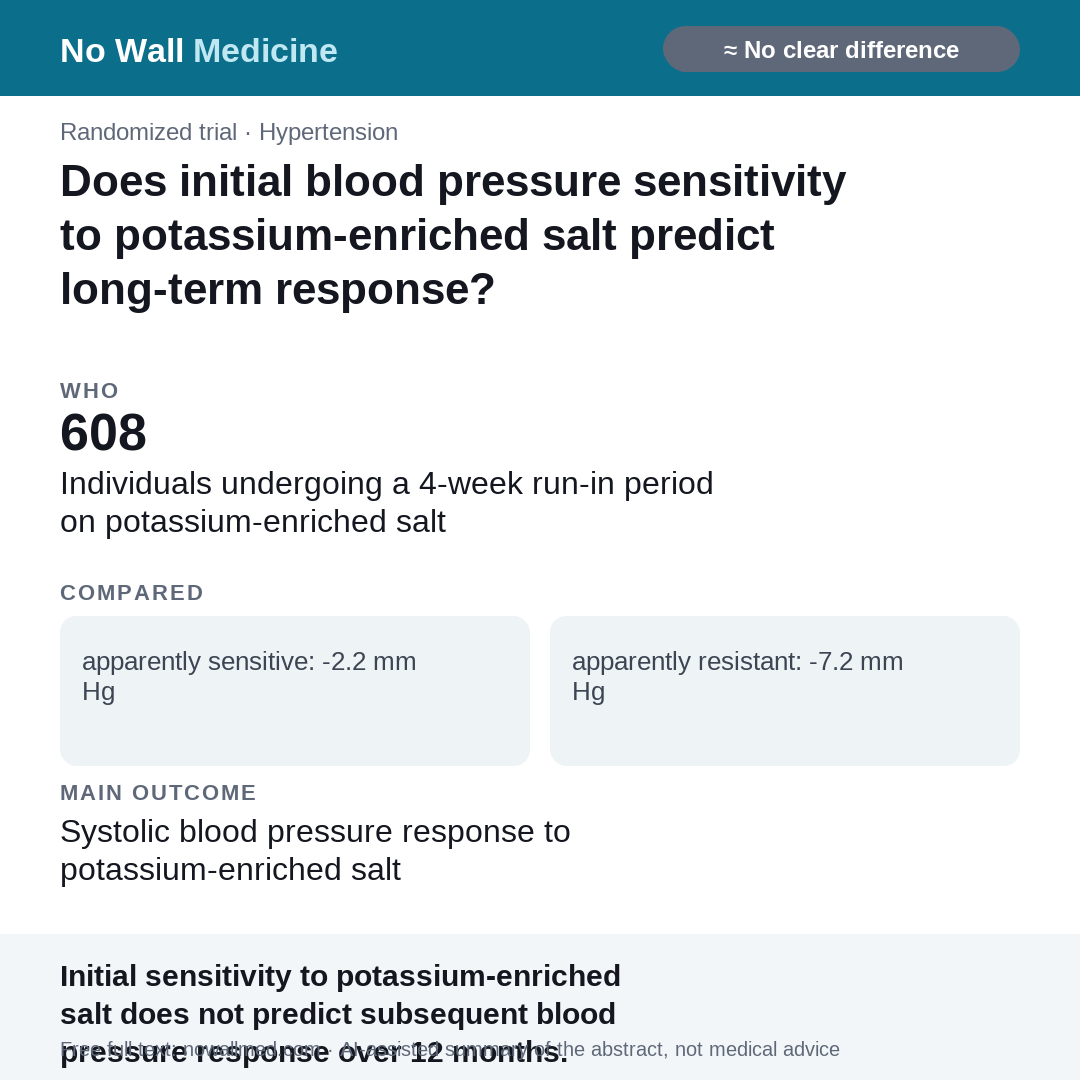
Consistency of Blood Pressure Response to Potassium-Enriched Salt in the China Salt Substitute Study
Randomized trialNo clear difference
Does initial blood pressure sensitivity to potassium-enriched salt predict long-term response?
Who
608
Individuals undergoing a 4-week run-in period on potassium-enriched salt
Compared
apparently sensitive: -2.2 mm Hg
apparently resistant: -7.2 mm Hg
Main outcome
Systolic blood pressure response to potassium-enriched salt
Result: no difference between the 2 groups (P=0.068)
Bottom line: Initial sensitivity to potassium-enriched salt does not predict subsequent blood pressure response over 12 months.
Hypertension · 2025-11-20Download image
Accelerating Drug Development in Hormone-Naïve Prostate Cancer through Multimodal Therapy Strategies: The MetaCURE Phase 2 Randomized Clinical Trial
Randomized trialBenefit found
Is multimodal therapy effective for prostate cancer?
Who
Patients with untreated high-risk prostate cancer
Compared
Apalutamide
Apalutamide and abiraterone
Main outcome
Pathologic complete response or minimal residual disease
Bottom line: Multimodal therapy is feasible and safe
Clin Cancer Res · 2025-11-20Download image

Efficacy and safety of bi-weekly cofrogliptin treatment replacing daily dipeptidyl peptidase-4 inhibitors in Chinese patients with type 2 diabetes mellitus: A multicenter, open-label, randomized controlled phase 2 trial
Multicenter, open-label, randomized controlled phase 2 trialBenefit found
Is bi-weekly cofrogliptin effective and safe replacing daily dipeptidyl peptidase-4 inhibitors in Chinese patients?
Who
64
Chinese patients with type 2 diabetes mellitus · Multicenter
Compared
10 mg cofrogliptin: 0.037% ± 2.506%
Daily dipeptidyl peptidase-4 inhibitors: -9.891% ± 2.435%
Main outcome
Change in glucose time in range from baseline to week 24
Result: LS mean difference 9.929% (95% confidence interval: 3.064%-16.793%)
Bottom line: Bi-weekly cofrogliptin effectively controls blood glucose levels and fluctuations compared to daily dipeptidyl peptidase-4 inhibitors in Chinese patients.
Diabetes Obes Metab · 2025-11-20Download image

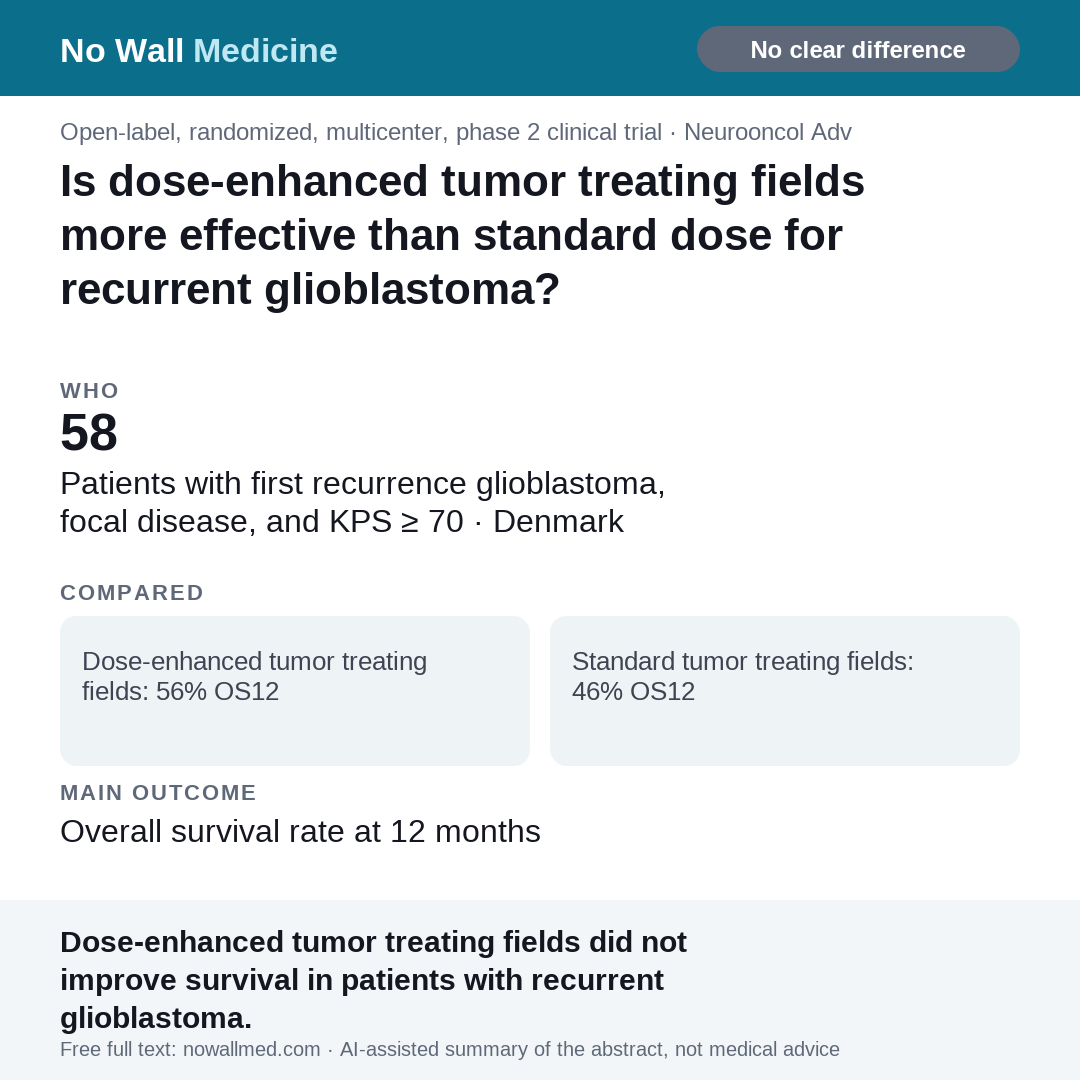
Dose-enhanced versus standard TTFields for first recurrence of glioblastoma: A randomized phase 2 clinical trial
Open-label, randomized, multicenter, phase 2 clinical trialNo clear difference
Is dose-enhanced tumor treating fields more effective than standard dose for recurrent glioblastoma?
Who
58
Patients with first recurrence glioblastoma, focal disease, and KPS ≥ 70 · Denmark
Compared
Dose-enhanced tumor treating fields: 56% OS12
Standard tumor treating fields: 46% OS12
Main outcome
Overall survival rate at 12 months
Bottom line: Dose-enhanced tumor treating fields did not improve survival in patients with recurrent glioblastoma.
Limitation: Low study power
Neurooncol Adv · 2025-11-20Download image
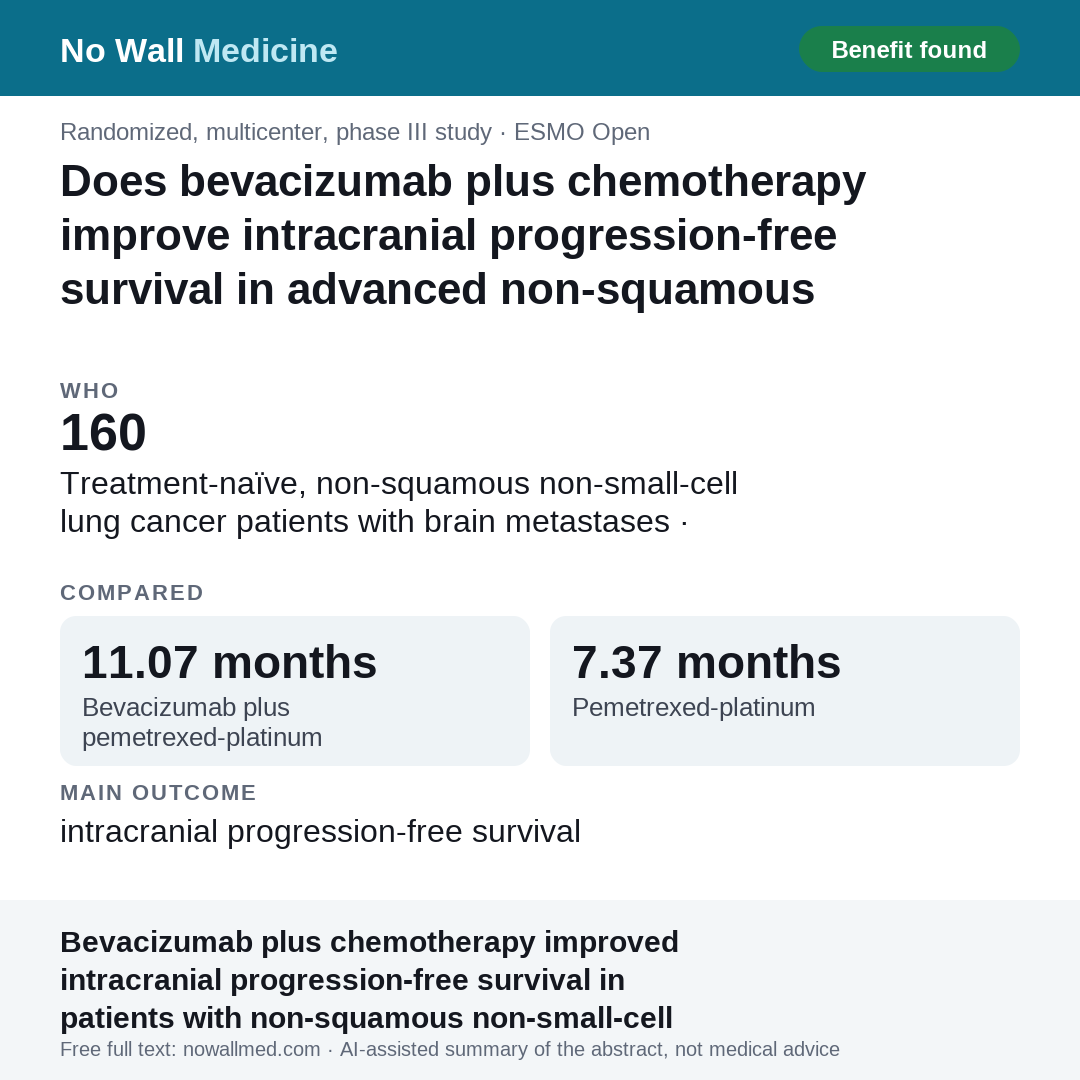
Bevacizumab plus chemotherapy versus chemotherapy in untreated advanced non-squamous non-small-cell lung cancer patients with brain metastases (BAP BRAIN): an open-label, randomized, multicenter, phase III study
Randomized, multicenter, phase III studyBenefit found
Does bevacizumab plus chemotherapy improve intracranial progression-free survival in advanced non-squamous non-small-cell lung cancer?
Who
160
Treatment-naïve, non-squamous non-small-cell lung cancer patients with brain metastases · 11 centers in China
Compared
11.07 monthsBevacizumab plus pemetrexed-platinum
7.37 monthsPemetrexed-platinum
Main outcome
intracranial progression-free survival
Result: hazard ratio 0.494, P < 0.001
Bottom line: Bevacizumab plus chemotherapy improved intracranial progression-free survival in patients with non-squamous non-small-cell lung cancer and brain metastases.
ESMO Open · 2025-11-20Download image
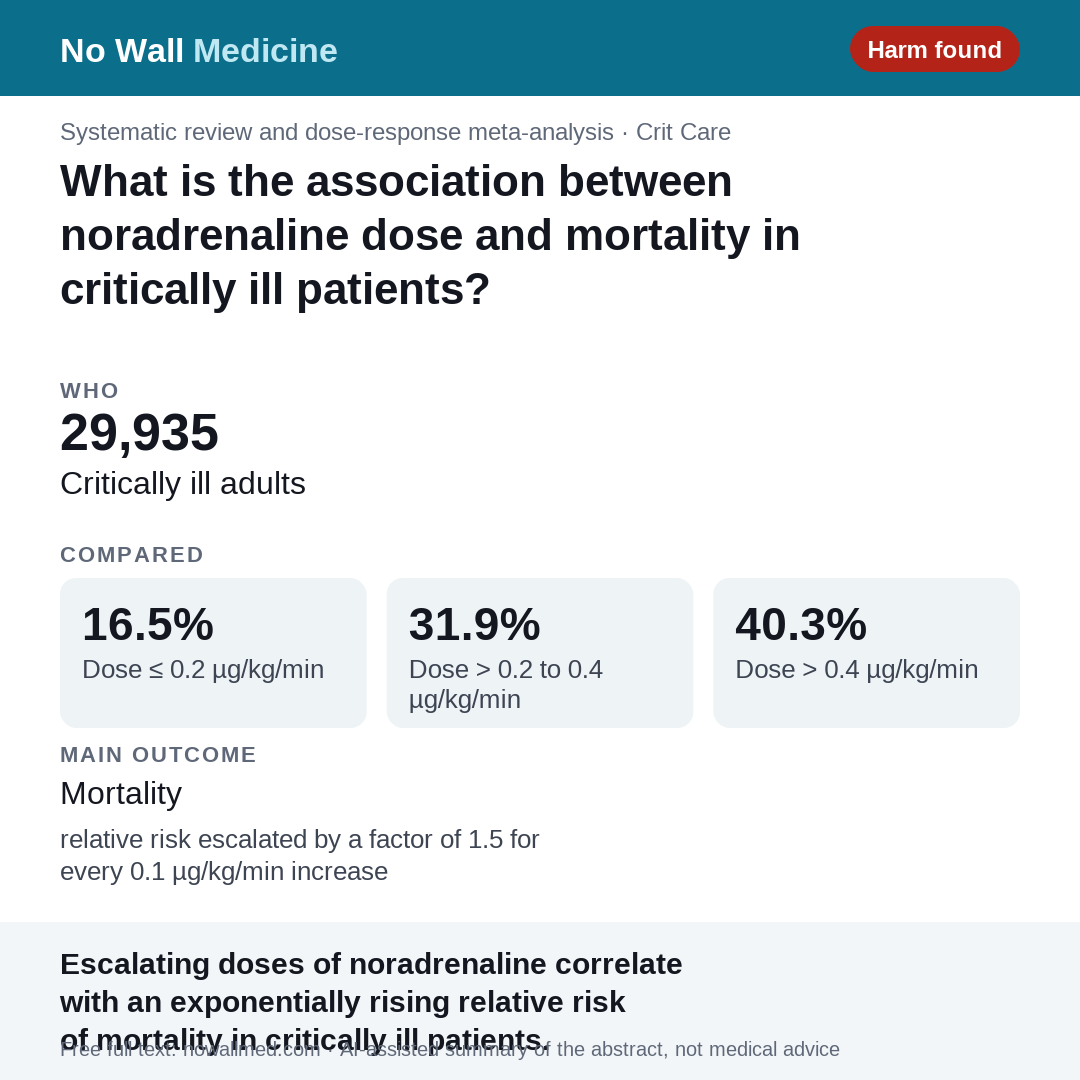
Association of noradrenaline dose with mortality in critically ill patients: a systematic review and dose-response meta-analysis
Systematic review and dose-response meta-analysisHarm found
What is the association between noradrenaline dose and mortality in critically ill patients?
Who
29,935
Critically ill adults
Compared
16.5%Dose ≤ 0.2 µg/kg/min
31.9%Dose > 0.2 to 0.4 µg/kg/min
40.3%Dose > 0.4 µg/kg/min
Main outcome
Mortality
Result: relative risk escalated by a factor of 1.5 for every 0.1 µg/kg/min increase
Bottom line: Escalating doses of noradrenaline correlate with an exponentially rising relative risk of mortality in critically ill patients.
Crit Care · 2025-11-20Download image
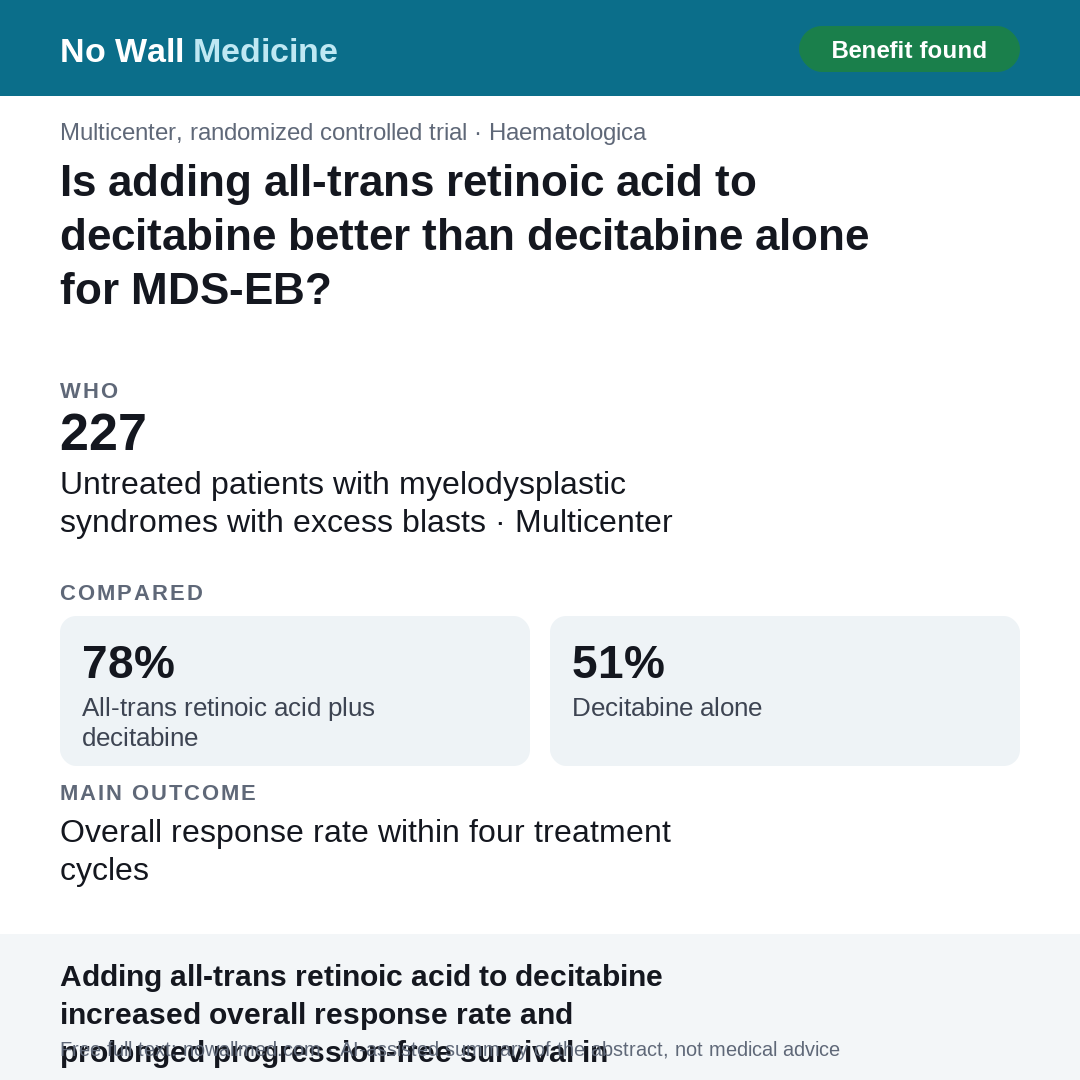
Decitabine plus all-trans retinoic acid versus decitabine monotherapy for myelodysplastic syndromes with excess blasts: a multicenter, randomized controlled trial
Multicenter, randomized controlled trialBenefit found
Is adding all-trans retinoic acid to decitabine better than decitabine alone for MDS-EB?
Who
227
Untreated patients with myelodysplastic syndromes with excess blasts · Multicenter
Compared
78%All-trans retinoic acid plus decitabine (86/110)
51%Decitabine alone (58/113)
Main outcome
Overall response rate within four treatment cycles
Result: odds ratio =3.40; 95% confidence interval [CI]: 1.90-6.09
Bottom line: Adding all-trans retinoic acid to decitabine increased overall response rate and prolonged progression-free survival in MDS-EB patients.
Haematologica · 2025-11-20Download image
Natural language processing techniques to detect delirium in hospitalized patients from clinical notes: a systematic review
Systematic reviewMixed results
Can natural language processing techniques detect delirium in hospitalized patients from clinical notes?
Who
450,000
Hospitalized patients
Compared
Rule-based methods
Machine learning
Deep learning
Transformer models: AUROC 0.984
Main outcome
Detection performance of natural language processing techniques
Result: sensitivity ranged from 28.5% to 99.1%
Bottom line: Transformer models show high performance, but high risk of bias and lack of external validation hinder clinical deployment.
Limitation: High risk of bias due to inadequate validation and lack of prospective implementation studies.
NPJ Digit Med · 2025-11-20Download image

Targeted therapy in advanced BRAF-mutated colorectal cancer: systematic review and network meta-analysis
Systematic review and network meta-analysisBenefit found
What are the efficacy and safety of targeted therapy strategies in advanced BRAF-mutated colorectal cancer?
Who
4633
Patients with advanced BRAF-mutated colorectal cancer
Compared
Doublet chemotherapy-anti-epidermal growth factor receptor/BRAF: best overall survival
Doublet chemotherapy-anti-vascular endothelial growth factor
Triplet chemotherapy-anti-vascular endothelial growth factor
Anti-epidermal growth factor receptor/BRAF
Main outcome
overall survival
Result: hazard ratio 0.49 (95% CrI 0.36 to 0.66)
Bottom line: Combining doublet chemotherapy with anti-epidermal growth factor receptor/BRAF therapy offers the best survival benefit for initial treatment.
BMJ · 2025-11-19Download image