Visual abstracts
New randomized trials and meta-analyses from leading journals at a glance: who was studied, what was compared, and what was found. Every paper is free to read in full.
All specialtiesCardiology 829Oncology 753Gastroenterology & Hepatology 306Infectious Disease 618Neurology 346Psychiatry & Mental Health 426Pulmonology 361Critical Care 234Endocrinology & Diabetes 473Pediatrics 529Surgery 332Orthopedics & Sports Medicine 157Neurosurgery 75Cardiothoracic & Vascular Surgery 86Plastic & Reconstructive Surgery 100Nephrology 196Rheumatology 107Hematology 171Dermatology 72Ophthalmology 97Obstetrics & Gynecology 261Public & Global Health 166Radiology & Imaging 91Anesthesiology 105Urology 161ENT (Otolaryngology) 72Emergency Medicine 88Allergy & Immunology 58Geriatrics 158Family Medicine & Primary Care 110Medical Genetics & Genomics 92Pathology & Laboratory Medicine 22Physical Medicine & Rehabilitation 146Palliative Care 81Nutrition 222Digital Health & AI 457General Medicine 97
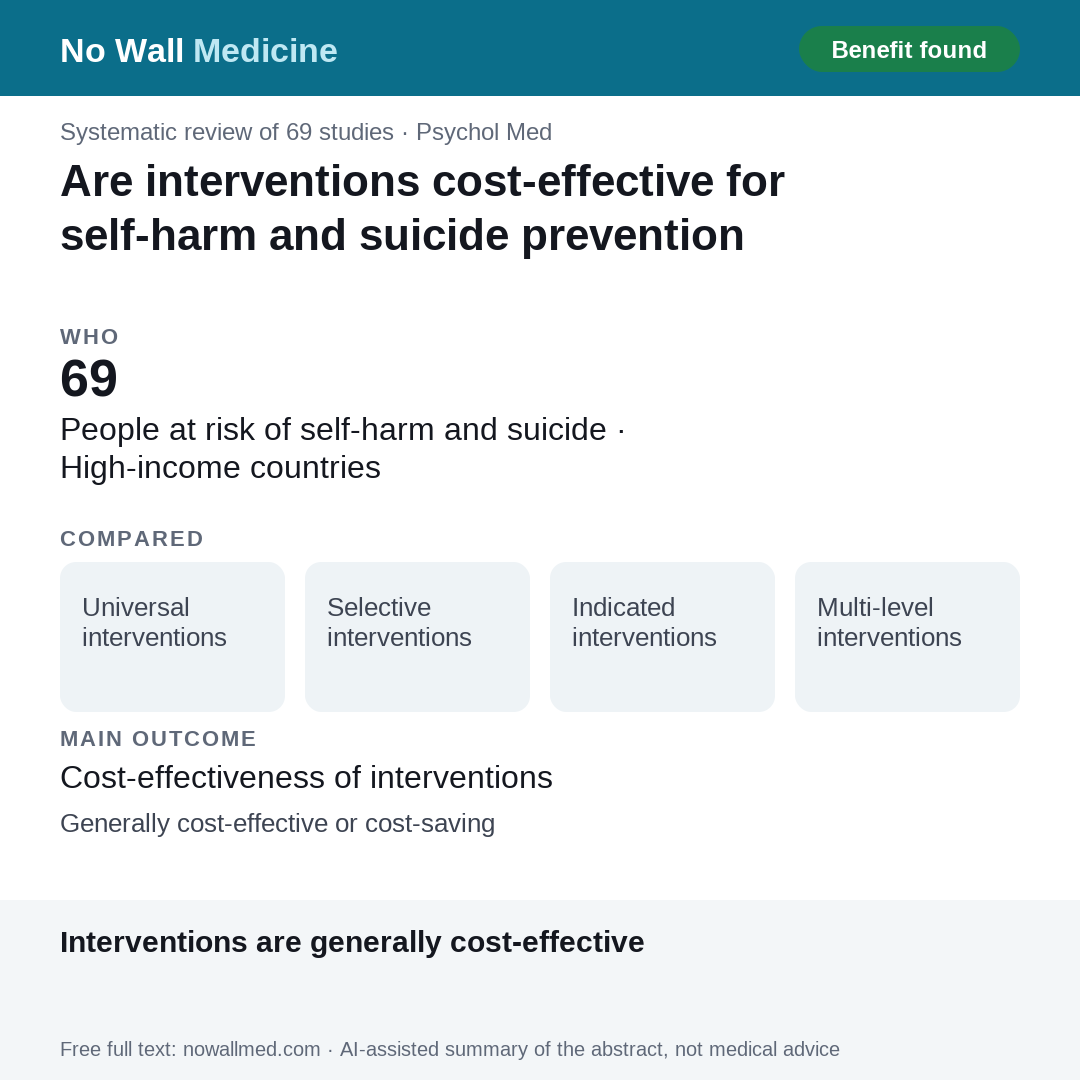
Economic evaluations of preventive interventions for self-harm and suicide: a systematic review
Systematic review of 69 studiesBenefit found
Are interventions cost-effective for self-harm and suicide prevention
Who
69
People at risk of self-harm and suicide · High-income countries
Compared
Universal interventions
Selective interventions
Indicated interventions
Multi-level interventions
Main outcome
Cost-effectiveness of interventions
Result: Generally cost-effective or cost-saving
Bottom line: Interventions are generally cost-effective
Limitation: Lack of evidence for older adults and children
Psychol Med · 2026-06-17Download image
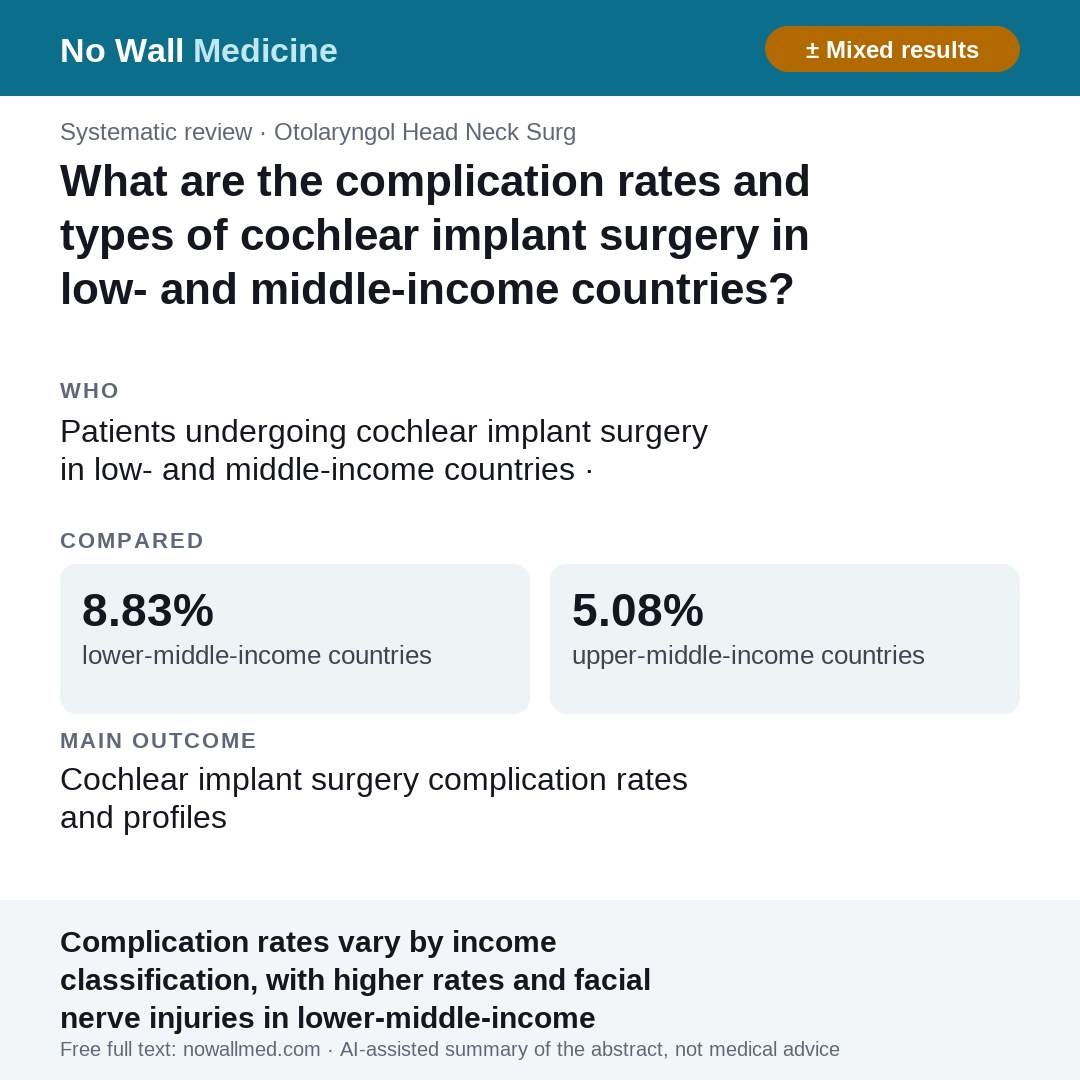
Complications of Cochlear Implant Surgery in Low- and Middle-Income Countries: A Systematic Review
Systematic reviewMixed results
What are the complication rates and types of cochlear implant surgery in low- and middle-income countries?
Who
Patients undergoing cochlear implant surgery in low- and middle-income countries · Seventeen countries
Compared
8.83%lower-middle-income countries
5.08%upper-middle-income countries
Main outcome
Cochlear implant surgery complication rates and profiles
Bottom line: Complication rates vary by income classification, with higher rates and facial nerve injuries in lower-middle-income countries.
Limitation: Data may be underreported due to limited follow-up.
Otolaryngol Head Neck Surg · 2026-06-17Download image
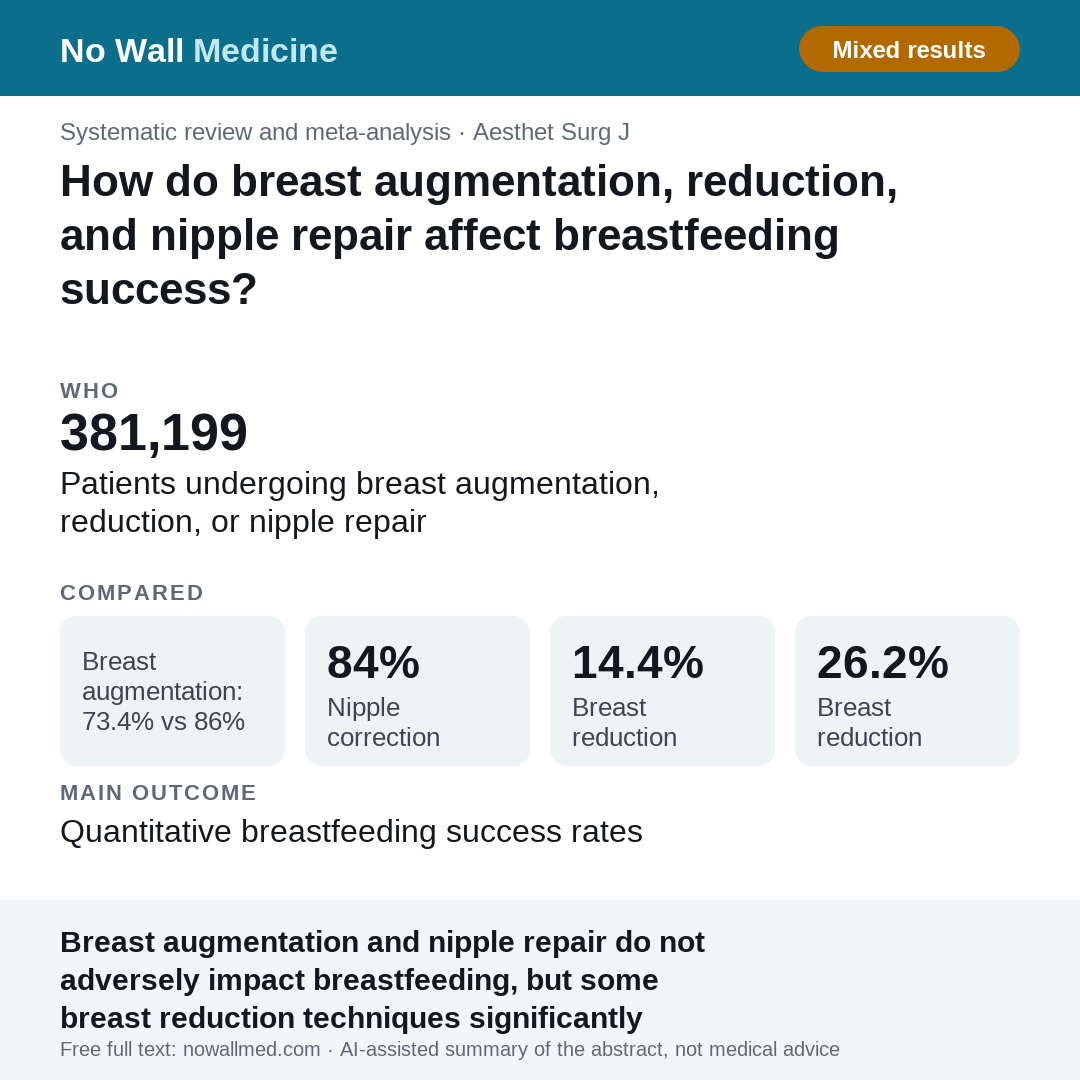
Impact of Breast Augmentation, Reduction, and Nipple Repair on Breastfeeding Success: A Systematic Review and Meta-analysis
Systematic review and meta-analysisMixed results
How do breast augmentation, reduction, and nipple repair affect breastfeeding success?
Who
381,199
Patients undergoing breast augmentation, reduction, or nipple repair
Compared
Breast augmentation: 73.4% vs 86%
84%Nipple correction (95% CI 76-89%)
14.4%Breast reduction (horizontal pedicle) (CI 0-96%)
26.2%Breast reduction (vertical pedicle) (CI 2-88%)
Main outcome
Quantitative breastfeeding success rates
Bottom line: Breast augmentation and nipple repair do not adversely impact breastfeeding, but some breast reduction techniques significantly reduce success.
Aesthet Surg J · 2026-06-17Download image
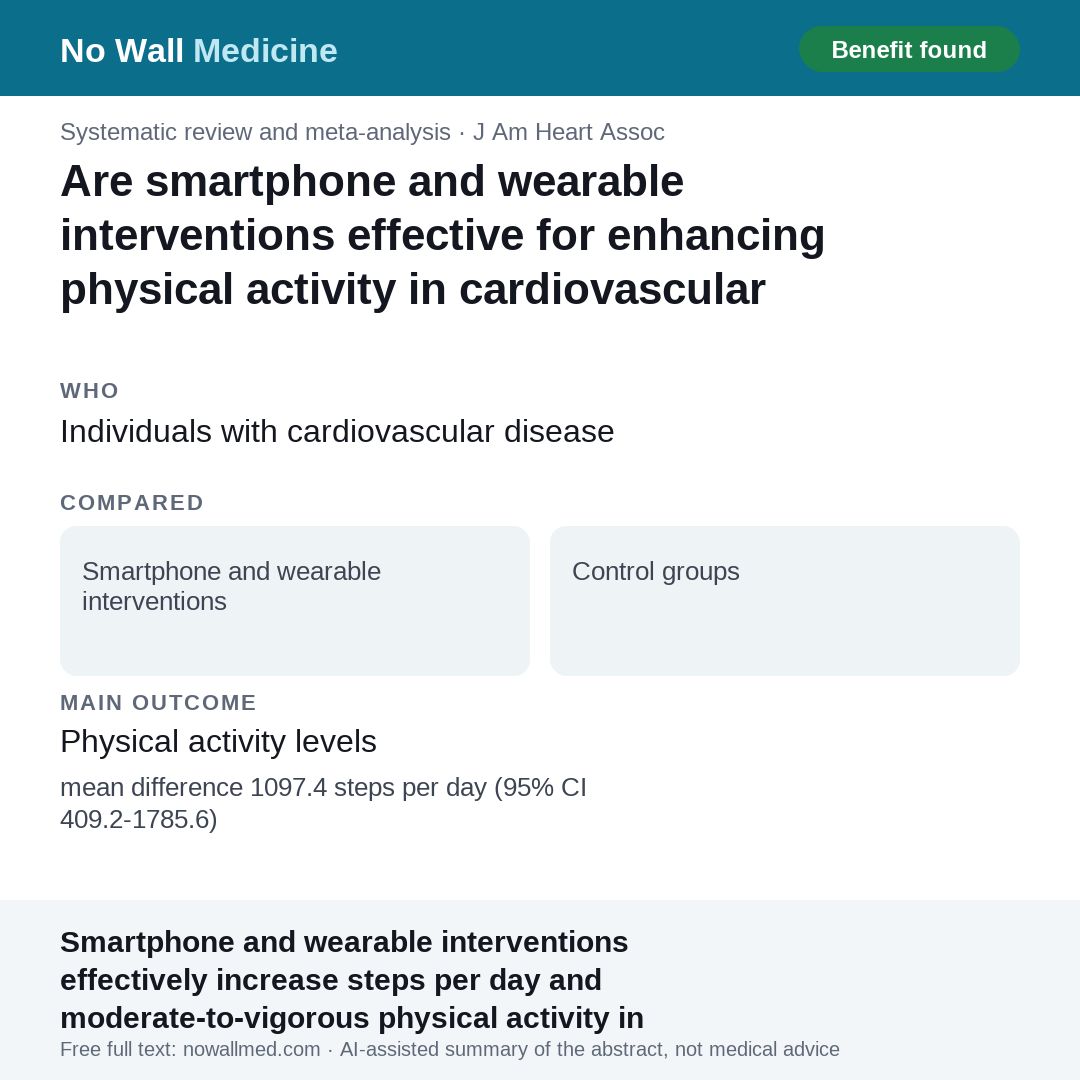
Effectiveness of Physical Activity Interventions Using Wearables and Smartphone Applications for Individuals With Cardiovascular Diseases and Stroke: A Systematic Review and Meta-Analysis
Systematic review and meta-analysisBenefit found
Are smartphone and wearable interventions effective for enhancing physical activity in cardiovascular disease?
Who
Individuals with cardiovascular disease
Compared
Smartphone and wearable interventions
Control groups
Main outcome
Physical activity levels
Result: mean difference 1097.4 steps per day (95% CI 409.2-1785.6)
Bottom line: Smartphone and wearable interventions effectively increase steps per day and moderate-to-vigorous physical activity in cardiovascular disease patients.
J Am Heart Assoc · 2026-06-17Download image
The role of artificial intelligence in predicting COPD exacerbations using multimodal data: a systematic review
Systematic reviewBenefit found
Can artificial intelligence using multimodal data predict chronic obstructive pulmonary disease exacerbations?
Who
Patients with chronic obstructive pulmonary disease · PubMed, Embase and Google Scholar
Compared
Multimodal artificial intelligence models: area under the curve 0.73 to 0.92
Wearable-driven models: sensitivity 0.94
Main outcome
Predictive performance for chronic obstructive pulmonary disease exacerbations
Bottom line: Multimodal artificial intelligence shows potential for predicting exacerbations, but requires more external validation and transparent reporting.
Limitation: Methodological heterogeneity, limited external validation, and incomplete reporting of preprocessing and explainability methods.
ERJ Open Res · 2026-06-17Download image

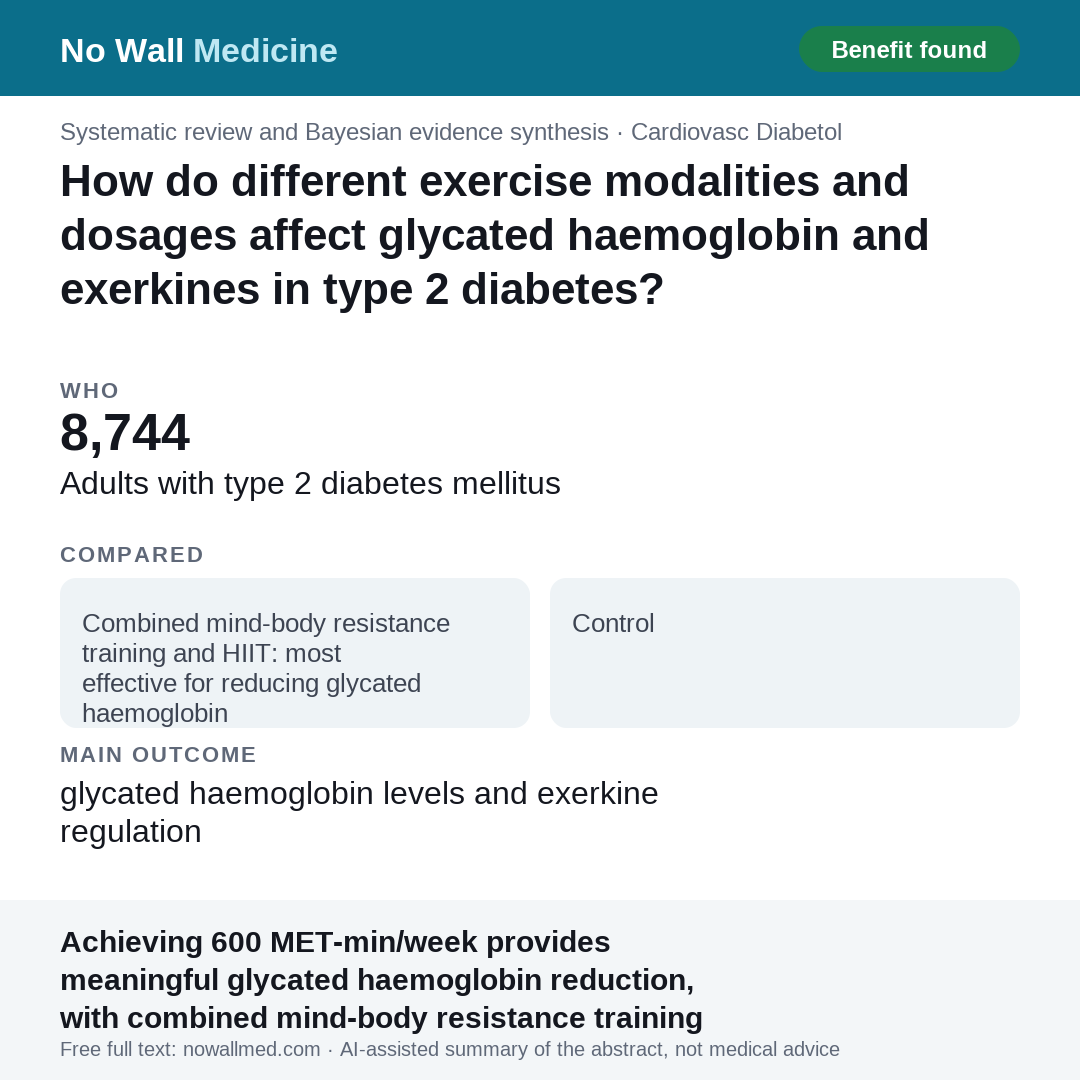
Exercise modalities and dosages on glycated haemoglobin and exerkines in type 2 diabetes: a systematic review with pairwise, network, and dose-response meta-analyses
Systematic review and Bayesian evidence synthesisBenefit found
How do different exercise modalities and dosages affect glycated haemoglobin and exerkines in type 2 diabetes?
Who
8,744
Adults with type 2 diabetes mellitus
Compared
Combined mind-body resistance training and HIIT: most effective for reducing glycated haemoglobin
Control
Main outcome
glycated haemoglobin levels and exerkine regulation
Result: mean difference: -0.57% (95% credible interval: -0.72, -0.42) at 600 MET-min/week
Bottom line: Achieving 600 MET-min/week provides meaningful glycated haemoglobin reduction, with combined mind-body resistance training and high-intensity interval training being most effective.
Limitation: evidence concerning combined mind-body resistance training remains preliminary in nature
Cardiovasc Diabetol · 2026-06-17Download image
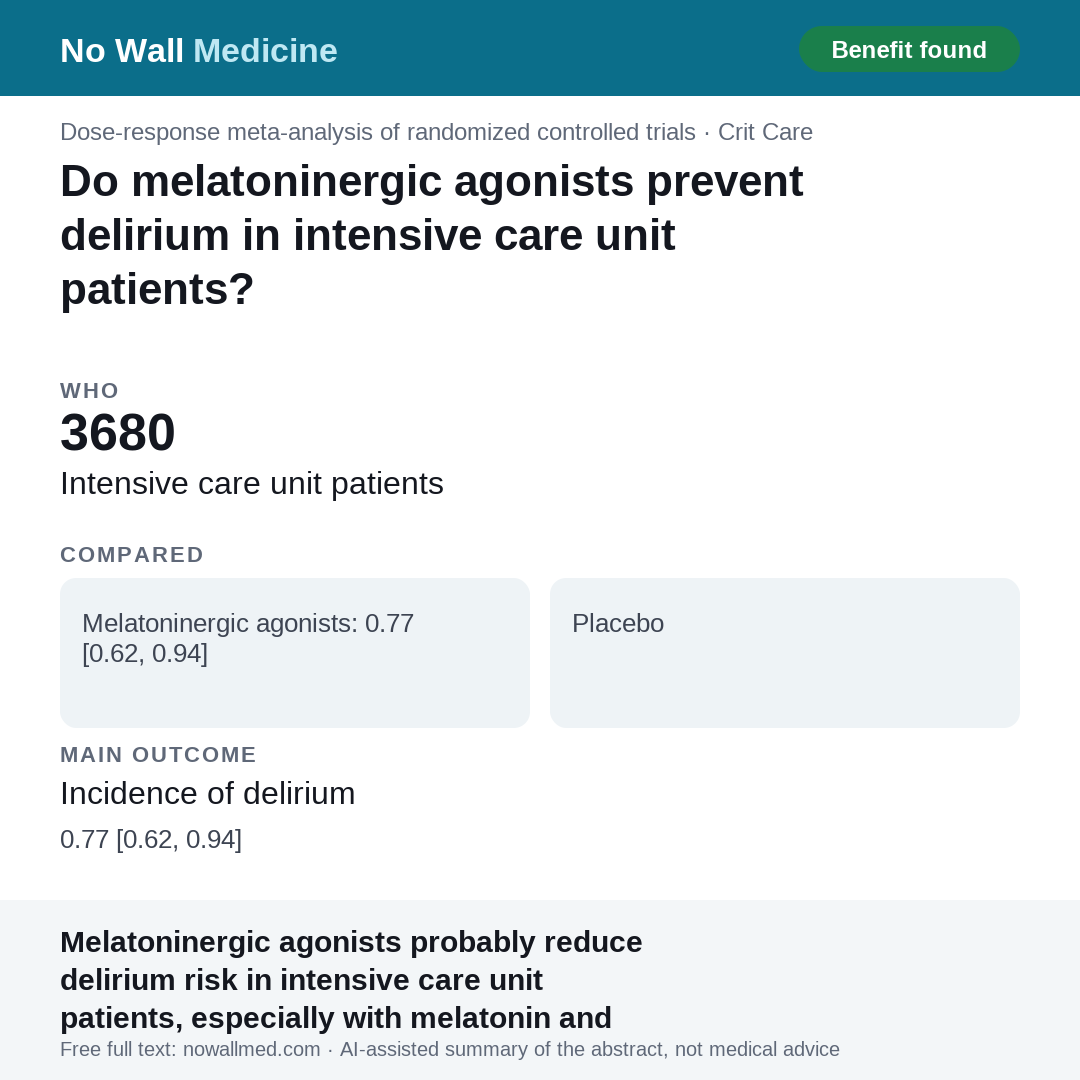
Effectiveness and safety of melatoninergic agonists in preventing delirium in the ICU: an updated dose‒response meta-analysis of randomized controlled trials
Dose-response meta-analysis of randomized controlled trialsBenefit found
Do melatoninergic agonists prevent delirium in intensive care unit patients?
Who
3680
Intensive care unit patients
Compared
Melatoninergic agonists: 0.77 [0.62, 0.94]
Placebo
Main outcome
Incidence of delirium
Result: 0.77 [0.62, 0.94]
Bottom line: Melatoninergic agonists probably reduce delirium risk in intensive care unit patients, especially with melatonin and longer intervention durations.
Limitation: Low-certainty evidence, modest effect magnitude, and moderate heterogeneity.
Crit Care · 2026-06-17Download image
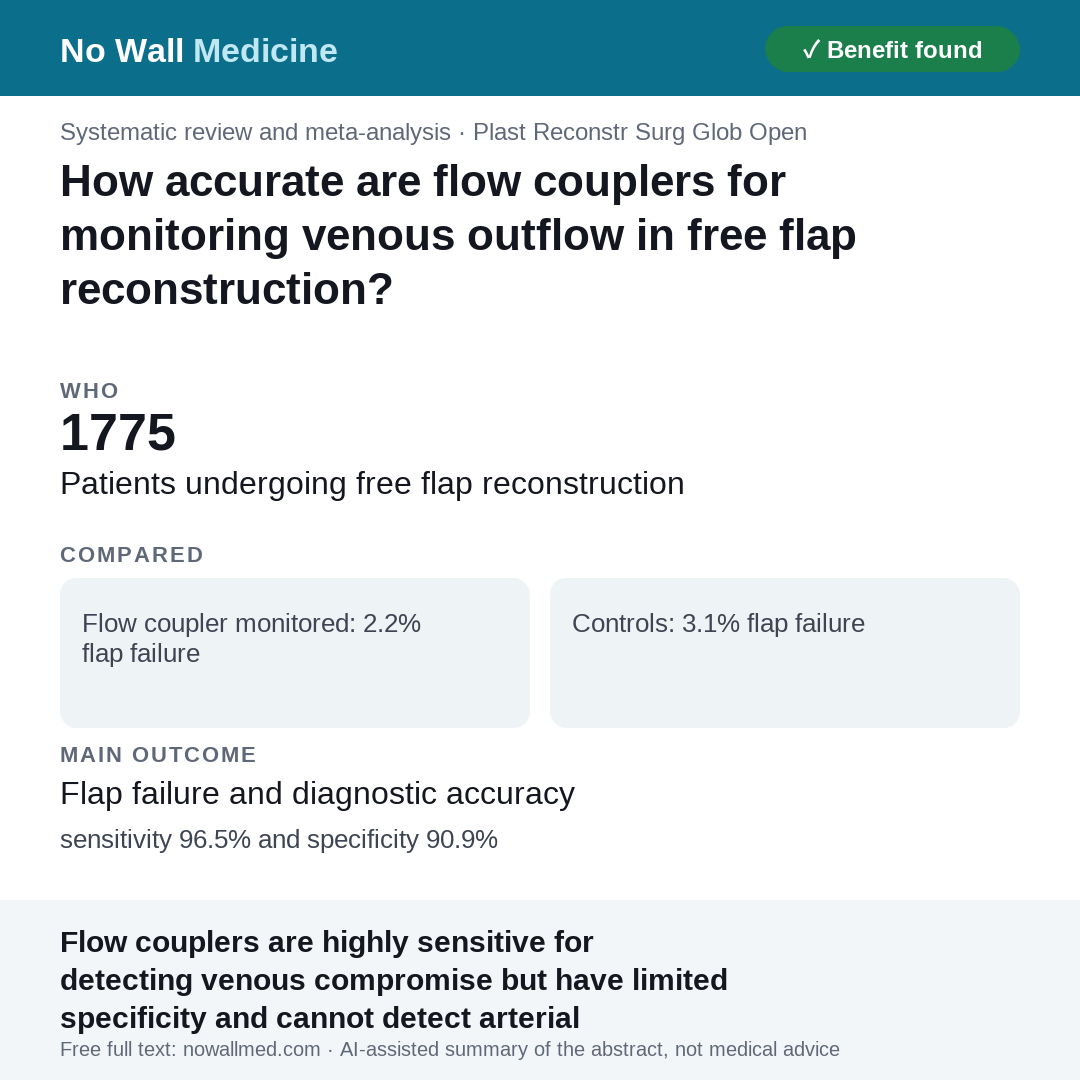
The Role of Flow Couplers in Free Flap Monitoring: Evidence From a Systematic Review and Meta-analysis
Systematic review and meta-analysisBenefit found
How accurate are flow couplers for monitoring venous outflow in free flap reconstruction?
Who
1775
Patients undergoing free flap reconstruction
Compared
Flow coupler monitored: 2.2% flap failure
Controls: 3.1% flap failure
Main outcome
Flap failure and diagnostic accuracy
Result: sensitivity 96.5% and specificity 90.9%
Bottom line: Flow couplers are highly sensitive for detecting venous compromise but have limited specificity and cannot detect arterial insufficiency.
Limitation: Limited specificity and inability to detect arterial insufficiency.
Plast Reconstr Surg Glob Open · 2026-06-17Download image
Efficacy and effectiveness of long-acting monoclonal antibodies and vaccines against RSV: a systematic review and meta-analysis of studies from 2018 to 2025
Systematic review and meta-analysisBenefit found
What is the efficacy and effectiveness of monoclonal antibodies and vaccines against RSV?
Who
Infants, pregnant women, and older adults
Compared
81%Palivizumab in infants (95% CI: 57%-91%)
84%Nirsevimab in infants (95% CI: 78%-88%)
67%Maternal vaccine (95% CI: 53%-77%)
77%Vaccination in older adults (95% CI: 69%-82%)
Main outcome
Respiratory syncytial virus-associated lower respiratory tract infection hospitalisation
Bottom line: Monoclonal antibodies and vaccines are effective in reducing respiratory syncytial virus-associated lower respiratory tract infection hospitalisations.
Funded by: General Research Fund, AIR@InnoHK
eClinicalMedicine · 2026-06-16Download image

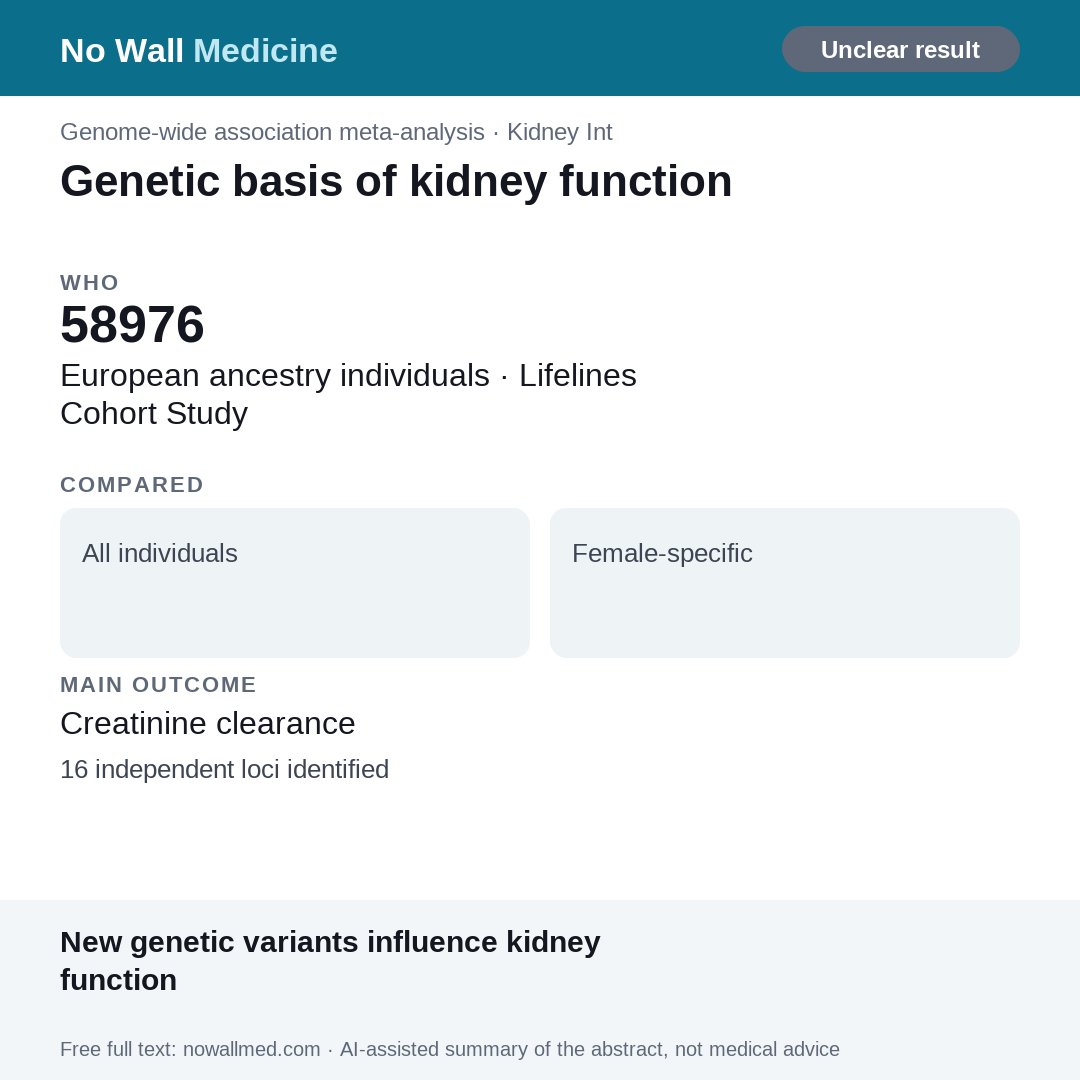
Genome-wide association study of creatinine clearance identifies new loci for kidney function
Genome-wide association meta-analysisUnclear result
Genetic basis of kidney function
Who
58976
European ancestry individuals · Lifelines Cohort Study
Compared
All individuals
Female-specific
Main outcome
Creatinine clearance
Result: 16 independent loci identified
Bottom line: New genetic variants influence kidney function
Kidney Int · 2026-06-16Download image
Comparative Effects of Antidiabetic Drugs on Body Composition: A Systematic Review and Network Meta-Analysis
Systematic review and network meta-analysisMixed results
How do major antidiabetic drugs compare in their effects on body composition?
Who
2906
Participants in randomized controlled trials
Compared
Tirzepatide: fat mass reduction MD -10.70 kg
Placebo
Main outcome
Changes in fat mass and lean body mass
Result: fat mass MD -10.70 kg (95% CI: -13.42 to -7.99)
Bottom line: Glucagon-like peptide-1 and dual agonists reduce fat mass most but also decrease lean body mass.
Diabetes Obes Metab · 2026-06-16Download image

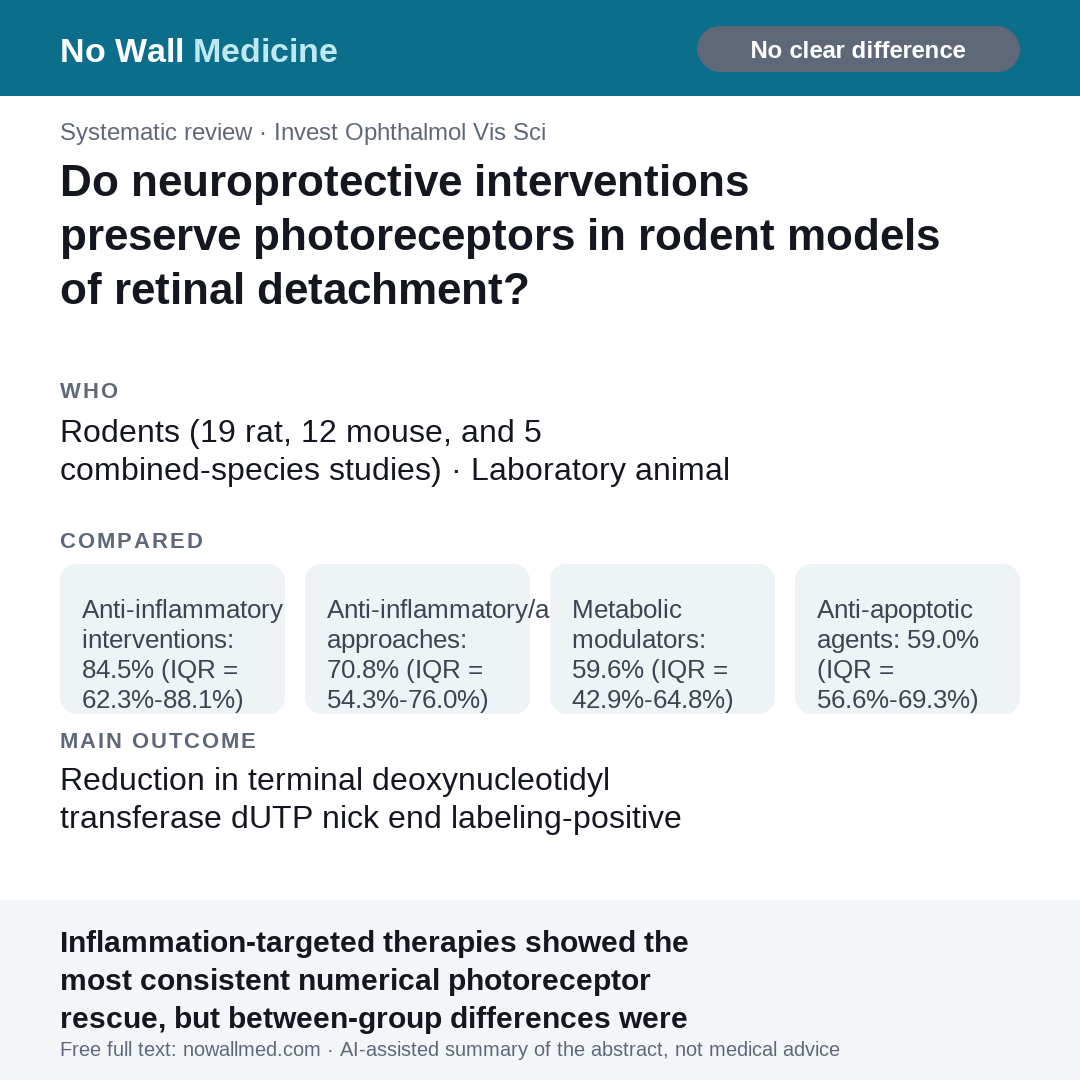
Neuroprotective Agents for Photoreceptor Rescue Following Experimental Retinal Detachment in Rodents: A Systematic Review
Systematic reviewNo clear difference
Do neuroprotective interventions preserve photoreceptors in rodent models of retinal detachment?
Who
Rodents (19 rat, 12 mouse, and 5 combined-species studies) · Laboratory animal models
Compared
Anti-inflammatory interventions: 84.5% (IQR = 62.3%-88.1%) TUNEL reduction
Anti-inflammatory/antioxidant approaches: 70.8% (IQR = 54.3%-76.0%) TUNEL reduction
Metabolic modulators: 59.6% (IQR = 42.9%-64.8%) TUNEL reduction
Anti-apoptotic agents: 59.0% (IQR = 56.6%-69.3%) TUNEL reduction
Main outcome
Reduction in terminal deoxynucleotidyl transferase dUTP nick end labeling-positive cells
Result: Kruskal-Wallis P = 0.32
Bottom line: Inflammation-targeted therapies showed the most consistent numerical photoreceptor rescue, but between-group differences were not statistically significant.
Limitation: Risk of bias was largely unclear across selection and performance domains.
Invest Ophthalmol Vis Sci · 2026-06-16Download image
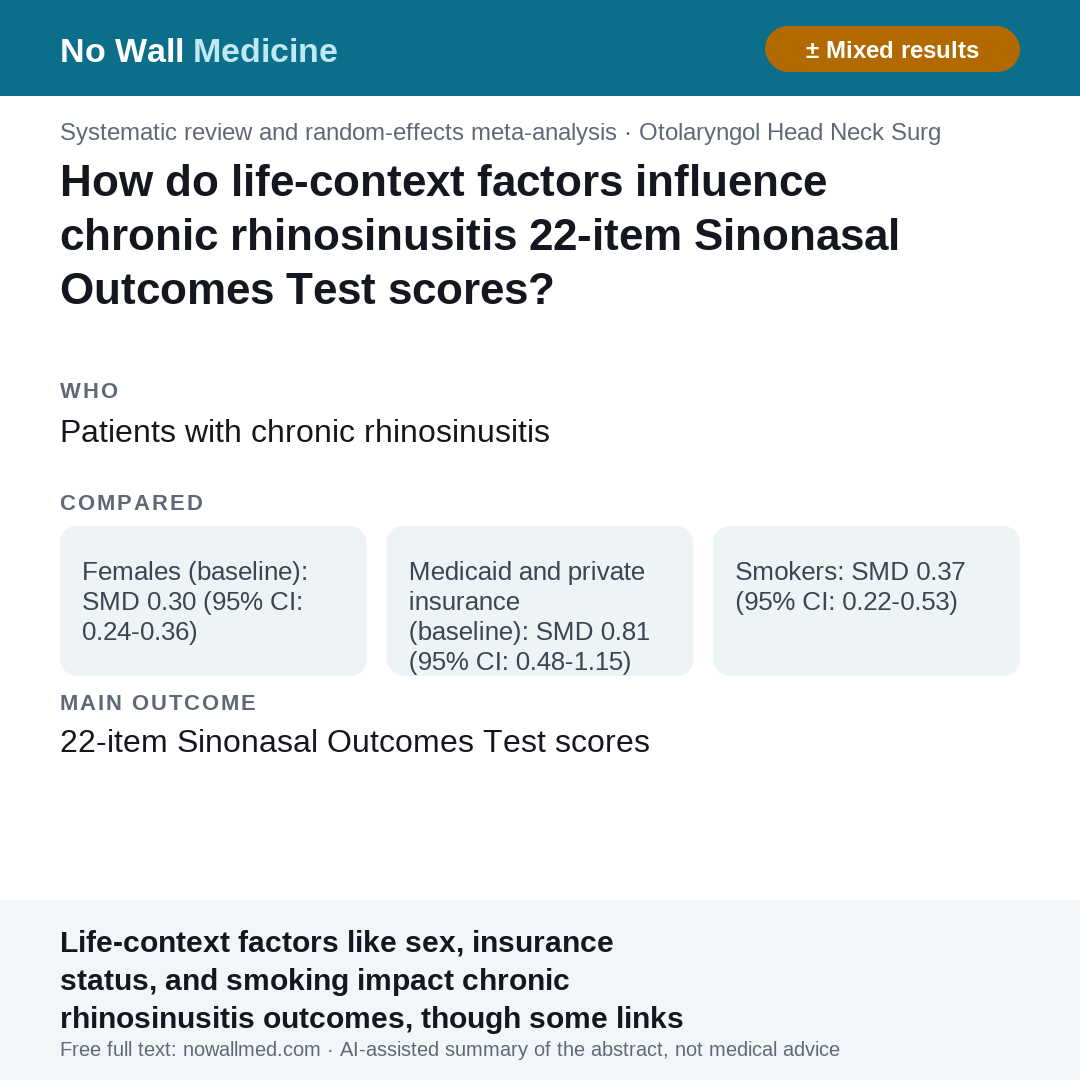
Impact of Life-Context Factors on Chronic Rhinosinusitis 22-Item Sinonasal Outcomes Test: Systematic Review + Meta-Analysis
Systematic review and random-effects meta-analysisMixed results
How do life-context factors influence chronic rhinosinusitis 22-item Sinonasal Outcomes Test scores?
Who
Patients with chronic rhinosinusitis
Compared
Females (baseline): SMD 0.30 (95% CI: 0.24-0.36)
Medicaid and private insurance (baseline): SMD 0.81 (95% CI: 0.48-1.15) and 0.30 (95% CI: 0.10-0.49)
Smokers: SMD 0.37 (95% CI: 0.22-0.53)
Main outcome
22-item Sinonasal Outcomes Test scores
Bottom line: Life-context factors like sex, insurance status, and smoking impact chronic rhinosinusitis outcomes, though some links remain inconsistent.
Limitation: Variability in studies and reporting methods hinder clear conclusions.
Otolaryngol Head Neck Surg · 2026-06-16Download image
Effectiveness of infection prevention and control interventions in reducing health-care-associated infections in long-term care facilities for older people: a systematic review
Systematic reviewBenefit found
Are infection prevention and control interventions effective in long-term care facilities?
Who
25
Older people in long-term care facilities · High-income settings
Compared
Multifaceted interventions: effective
Vaccination: effective
Other interventions: inconclusive
Main outcome
health-care-associated infections and antimicrobial resistance
Bottom line: Multifaceted interventions and vaccination are effective for preventing infections in long-term care facilities.
Limitation: High or unclear risk of bias, heterogeneity, and reliance on high-income settings.
Lancet Healthy Longev · 2026-06-16Download image

Genome-wide analysis implicates inner ear development in Ménière disease
Genome-wide meta-analysisUnclear result
Genetic basis of Ménière disease
Who
8969, 1962542
Ménière disease case subjects and control subjects · five biobanks
Compared
case subjects
control subjects
Main outcome
Ménière disease risk
Result: odds ratios between 1.1 and 1.25
Bottom line: Genetic variation contributes to Ménière disease risk
Am J Hum Genet · 2026-06-16Download image

Surgical Challenges and Harm-reduction Strategies in Xylazine-associated Wounds: A Systematic Review
Systematic reviewMixed results
What are the clinical features and management strategies of xylazine-associated wounds?
Who
92
Patients with xylazine-associated wounds
Compared
Patients with detailed case-level data: 100% extremity involvement
Patients with detailed case-level data: 56% bone or tendon exposure
Patients with detailed case-level data: 30% osteomyelitis
Main outcome
Clinical features and surgical management of xylazine-associated wounds
Bottom line: Xylazine-associated wounds involve high rates of extremity involvement, bone exposure, and require significant surgical management.
Plast Reconstr Surg Glob Open · 2026-06-16Download image

Systematic Review of Kidney Involvement in Antisynthetase Syndrome
Systematic reviewMixed results
What are the characteristics and outcomes of kidney involvement in antisynthetase syndrome?
Who
52
Adults with biopsy-proven or clinically defined kidney involvement in antisynthetase syndrome
Compared
Non-Jo1 antibodies: 4.7 mg/dl peak creatinine
Anti-Jo1 antibodies: 2.3 mg/dl peak creatinine
Main outcome
Kidney disease characteristics and clinical outcomes
Bottom line: Kidney involvement in antisynthetase syndrome is clinically significant, with non-Jo1 antibodies potentially predicting worse outcomes.
Limitation: Association requires confirmation in prospective cohorts with multivariable adjustment.
Kidney Int Rep · 2026-06-16Download image

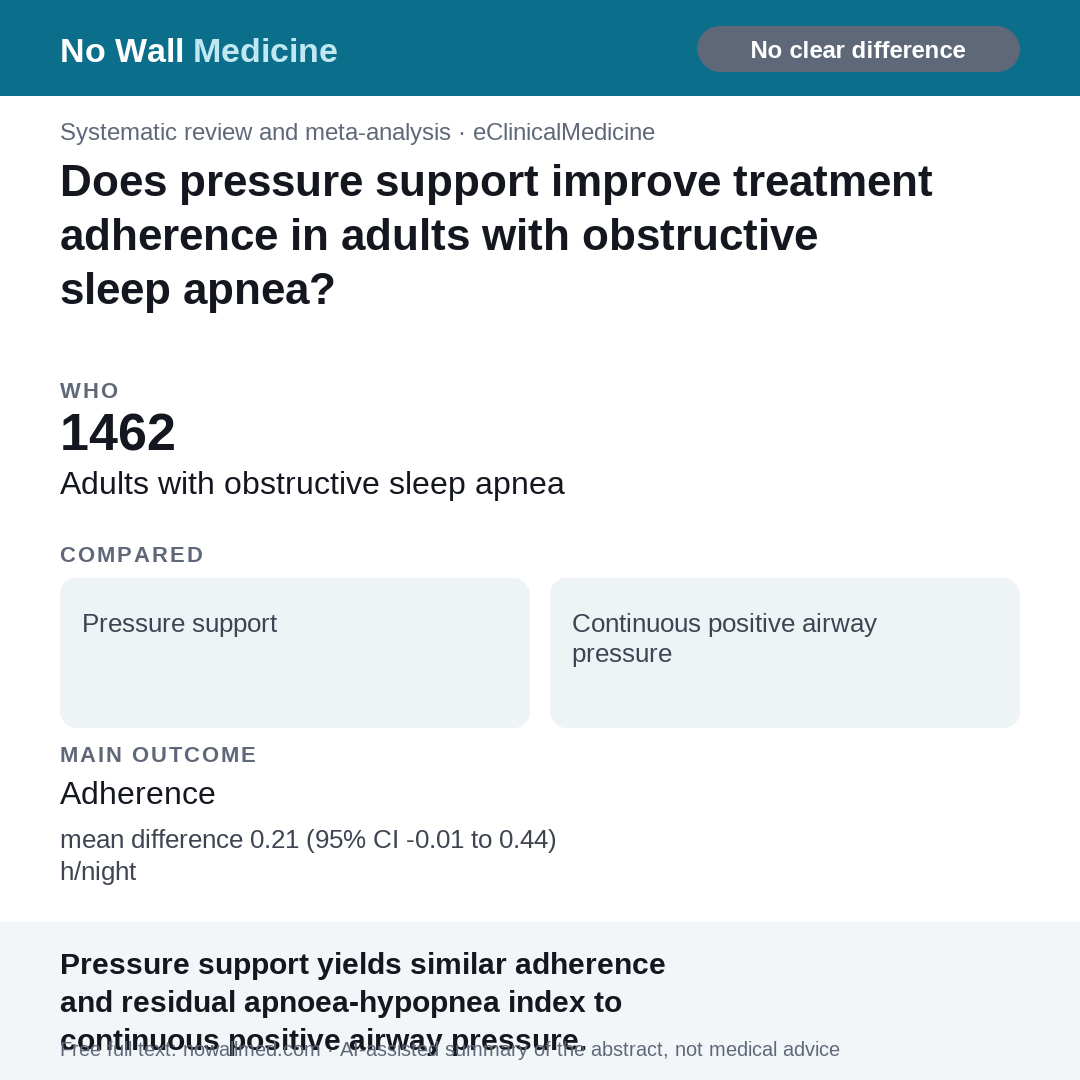
Advancing dermatology patients' quality of life through digital health innovations: a comprehensive systematic review
Systematic review of 14 studiesMixed results
Do digital health interventions improve quality of life in dermatology patients?
Who
Dermatology patients
Compared
Telemedicine: six reported non inferior or superior quality of life
Targeted client communication: mixed quality of life effects
Personal health tracking: did not significantly improve quality of life
Client to client communication: provided psychosocial support
Main outcome
Quality of life and related psychosocial outcomes
Bottom line: Digital health interventions may improve quality of life in dermatology, though evidence is limited by heterogeneity and risk of bias.
Limitation: Methodological heterogeneity, risk of bias, and short follow up.
NPJ Digit Med · 2026-06-16Download image
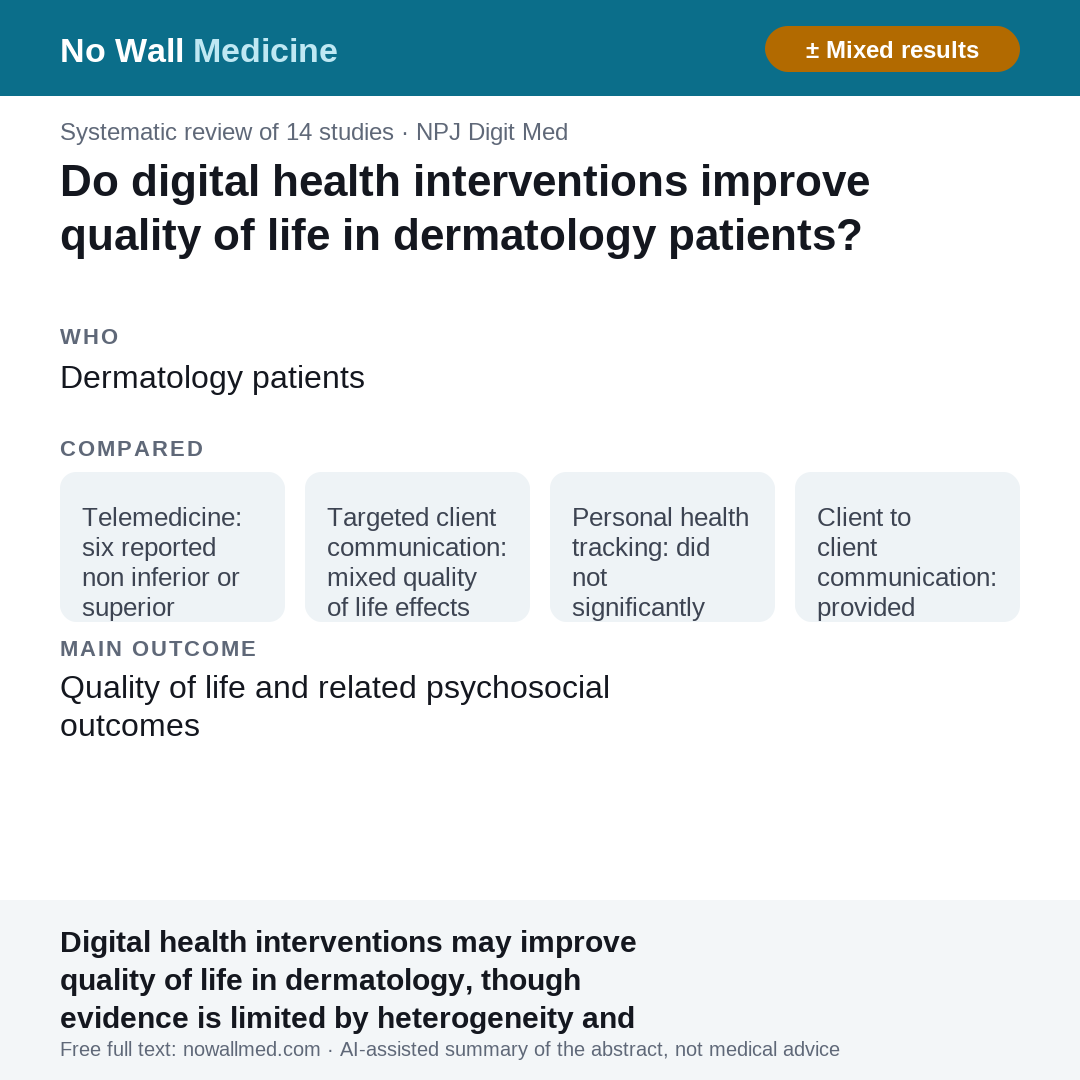
The effect of bilevel ventilation or modified continuous positive airway pressure on treatment adherence in adults with obstructive sleep apnea: a systematic review and meta-analysis
Systematic review and meta-analysisNo clear difference
Does pressure support improve treatment adherence in adults with obstructive sleep apnea?
Who
1462
Adults with obstructive sleep apnea
Compared
Pressure support
Continuous positive airway pressure
Main outcome
Adherence
Result: mean difference 0.21 (95% CI -0.01 to 0.44) h/night
Bottom line: Pressure support yields similar adherence and residual apnoea-hypopnea index to continuous positive airway pressure.
Limitation: Certainty of evidence was very-low-to-moderate.
eClinicalMedicine · 2026-06-15Download image
The Effect of Semaglutide on Quality of Life in Adults With Overweight or Obesity: A Brief Systematic Review and Meta-Analysis
Systematic review and meta-analysisMixed results
Does once-weekly subcutaneous semaglutide 2.4 mg improve physical functioning and weight-related quality of life?
Who
4182
Adults with overweight or obesity
Compared
Semaglutide
Placebo
Main outcome
SF-36v2 Physical Functioning and weight-related quality-of-life outcomes
Result: mean difference 1.71 points (95% CI 1.07 to 2.35)
Bottom line: Semaglutide statistically improves physical functioning, but average gains remain below clinically meaningful thresholds.
Limitation: The available randomised evidence comes from the semaglutide development programme.
Diabetes Obes Metab · 2026-06-15Download image