Visual abstracts
New randomized trials and meta-analyses from leading journals at a glance: who was studied, what was compared, and what was found. Every paper is free to read in full.
All specialtiesCardiology 275Oncology 220Gastroenterology & Hepatology 124Infectious Disease 229Neurology 128Psychiatry & Mental Health 189Pulmonology 130Critical Care 83Endocrinology & Diabetes 178Pediatrics 127Surgery 83Orthopedics & Sports Medicine 52Neurosurgery 17Cardiothoracic & Vascular Surgery 31Plastic & Reconstructive Surgery 59Nephrology 55Rheumatology 54Hematology 68Dermatology 27Ophthalmology 49Obstetrics & Gynecology 81Public & Global Health 86Radiology & Imaging 22Anesthesiology 45Urology 61ENT (Otolaryngology) 36Emergency Medicine 28Allergy & Immunology 28Geriatrics 86Family Medicine & Primary Care 39Medical Genetics & Genomics 28Pathology & Laboratory Medicine 5Physical Medicine & Rehabilitation 72Palliative Care 40Nutrition 105Digital Health & AI 248General Medicine 40
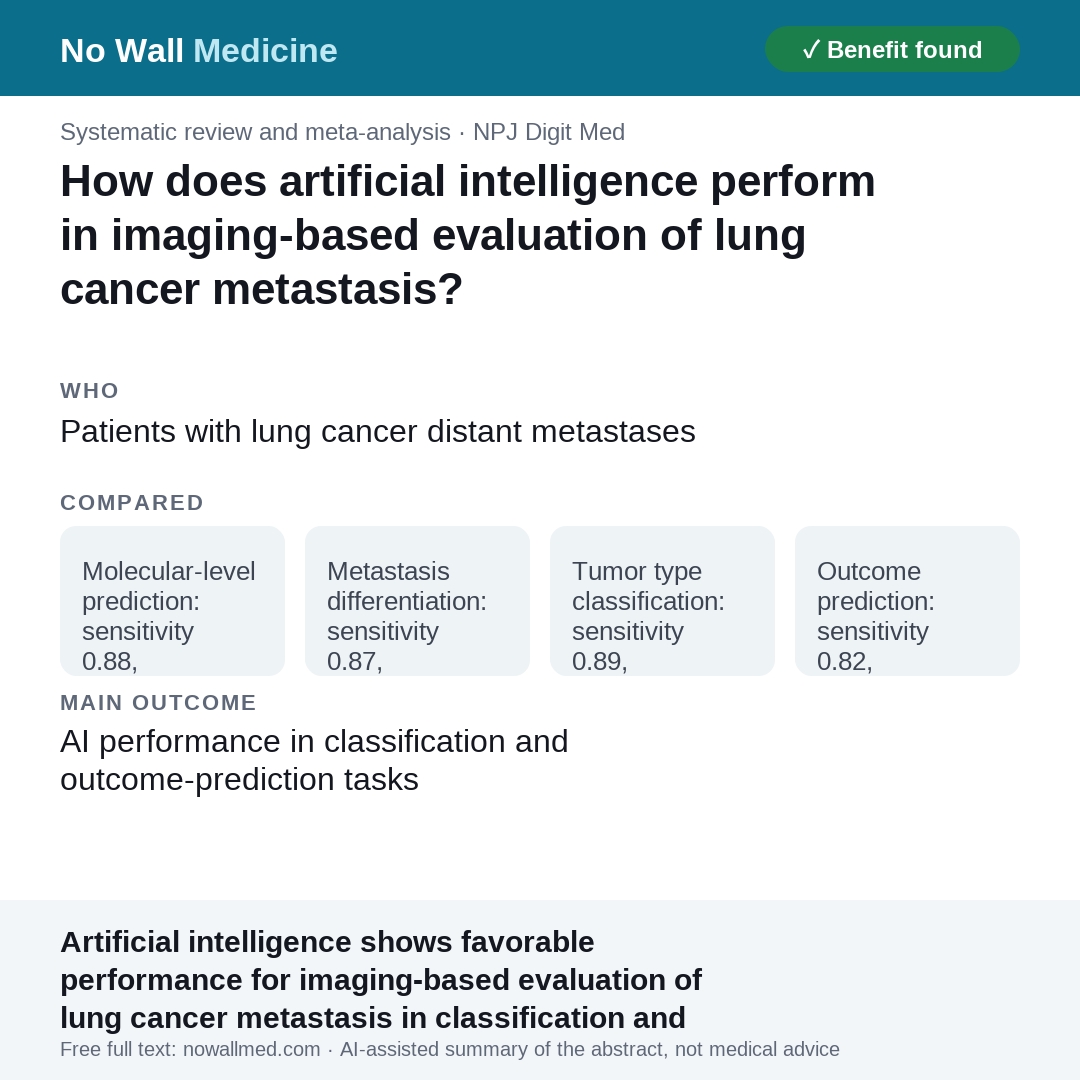
Systematic review and meta-analysis of AI in lung cancer metastasis imaging for diagnosis and prognosis
Systematic review and meta-analysisBenefit found
How does artificial intelligence perform in imaging-based evaluation of lung cancer metastasis?
Who
59
Patients with lung cancer distant metastases
Compared
Molecular-level prediction: sensitivity 0.88, specificity 0.87, area under the curve 0.91
Metastasis differentiation: sensitivity 0.87, specificity 0.90, area under the curve 0.93
Tumor type classification: sensitivity 0.89, specificity 0.94, area under the curve 0.90
Outcome prediction: sensitivity 0.82, specificity 0.86, area under the curve 0.89
Main outcome
AI performance in classification and outcome-prediction tasks
Bottom line: Artificial intelligence shows favorable performance for imaging-based evaluation of lung cancer metastasis in classification and outcome prediction.
NPJ Digit Med · 2026-06-05Download image
Oncofertility outcomes in early-onset patients with non-breast solid malignancies: a systematic review
Systematic review of 102 studiesMixed results
What are the gonadal toxicity, fertility outcomes, and preservation strategies in non-breast solid malignancies?
Who
102
Adults with gastrointestinal, sarcoma, lung, and melanoma cancers
Compared
Melanoma: most survivors appear to retain fertility
Sarcoma: highest risk of persistent gonadal failure
Gastrointestinal cancers: near-universal ovarian failure with pelvic radiotherapy
Lung cancer: platinum-based regimens associated with premature menopause
Main outcome
treatment-related fertility impairment and reproductive outcomes
Bottom line: Gonadal toxicity risk varies by cancer type and treatment, but robust evidence for emerging young-onset malignancies is lacking.
Limitation: High heterogeneity in design, treatment exposures, and outcome definitions; formal assessment of publication bias was not undertaken.
Funded by: internal institutional support
eClinicalMedicine · 2026-06-04Download image

Efficacy of pharmacological and microbiota-based therapies in preclinical models of autism spectrum disorder: a systematic review
Systematic review of 52 studiesMixed results
Do therapies improve autism spectrum disorder
Who
52
animal models of autism spectrum disorder
Compared
pharmacological therapies
microbiota-based therapies
Main outcome
autism spectrum disorder behavioral outcomes
Bottom line: Therapies modulate autism-like behavioral deficits
Limitation: methodological differences and outcome variability
Mol Psychiatry · 2026-06-04Download image

Comparative Effects of Emerging Lp(a)-Lowering Agents and PCSK9-Directed Therapies on Lipoprotein(a): A Network Meta-Analysis of Randomised Clinical Trials
Network meta-analysisBenefit found
Lp(a) reduction with new therapies
Who
17810
adults with elevated lipoprotein(a)
Compared
Lp(a)-targeted therapies: -98.94 pp
PCSK9-directed therapies: -31.58 pp
Main outcome
lipoprotein(a) reduction
Bottom line: Lp(a)-targeted therapies reduce Lp(a) more
Diabetes Obes Metab · 2026-06-04Download image

Safety Profile of Sclerosing Agents in the Management of Low-Flow Vascular Malformations of the Head and Neck-A Systematic Review
Systematic reviewMixed results
What are the safety profiles of different sclerosing agents for head and neck vascular malformations?
Who
2508
Patients with low-flow vascular malformations of the head and neck
Compared
Bleomycin: 13.5% complication rate
Ethanol: 9% complication rate
Sodium tetradecyl sulfate: 9.5% complication rate
Polidocanol and doxycycline: 4.2% and 3.8% complication rates
Main outcome
Complication rates per sclerotherapy session
Bottom line: Sclerotherapy is generally safe, but safety profiles vary significantly among different sclerosing agents used.
Limitation: Absence of standardized guidelines and comparative efficacy data
Head Neck · 2026-06-04Download image

A Meta-Analysis of Anti-Thyroid Peroxidase Antibody and Omalizumab Response in Chronic Spontaneous Urticaria
Meta-analysisBenefit found
Does anti-thyroid peroxidase antibody status predict omalizumab response in chronic spontaneous urticaria?
Who
Patients with chronic spontaneous urticaria
Compared
Anti-thyroid peroxidase antibody negative
Anti-thyroid peroxidase antibody positive
Main outcome
Response to omalizumab
Bottom line: Anti-thyroid peroxidase antibody negative patients are more likely to respond to omalizumab treatment.
Clin Exp Allergy · 2026-06-04Download image

Revascularization for Coronary Artery Disease and Mitral Regurgitation: A Systematic Review and Meta-analysis
Meta-analysis of 8 studiesBenefit found
CABG vs PCI for CAD and IMR
Who
patients with multivessel CAD and IMR
Compared
CABG
PCI
Main outcome
long-term mortality
Result: odds ratio 1.39 (95% CI 1.06 to 1.83)
Bottom line: CABG reduces mortality and heart failure
Limitation: considerable heterogeneity between studies
Ann Surg Open · 2026-06-04Download image

Mental health of internally displaced persons: a meta-analysis
Meta-analysisHarm found
What is the prevalence of mental disorders among internally displaced persons?
Who
195741
Adult internally displaced persons
Compared
Internally displaced persons: 39.8% PTSD
Non-displaced controls
Main outcome
Prevalence of mental disorders
Bottom line: Internally displaced persons face a high burden of mental disorders including post-traumatic stress disorder and depression.
Limitation: High risk of selection and outcome measurement bias was observed.
BMJ Glob Health · 2026-06-04Download image

Novel Technologies for Gastrointestinal Cancer Detection: A Systematic Review and Meta-Analysis of Diagnostic Accuracy
Systematic review and meta-analysisBenefit found
What is the diagnostic accuracy of novel gastrointestinal cancer detection technologies?
Who
Patients with incident gastrointestinal cancer · Clinical setting
Compared
Colorectal cancer (Stool DNA testing): area under the receiver operating characteristic curve 0.94-0.98
Pancreatic cancer (Q-Cancer): area under the receiver operating characteristic curve 0.89-0.92
Hepatocellular carcinoma (GALADUS model): area under the receiver operating characteristic curve 0.94
Esophageal cancer (Artificial intelligence model): area under the receiver operating characteristic curve 0.87
Main outcome
Diagnostic accuracy of novel gastrointestinal cancer detection approaches
Bottom line: Several novel diagnostic technologies show promising accuracy for detecting various gastrointestinal cancers.
Limitation: Need for external validation, population-level studies, and health economic evaluation.
Clin Transl Gastroenterol · 2026-06-04Download image

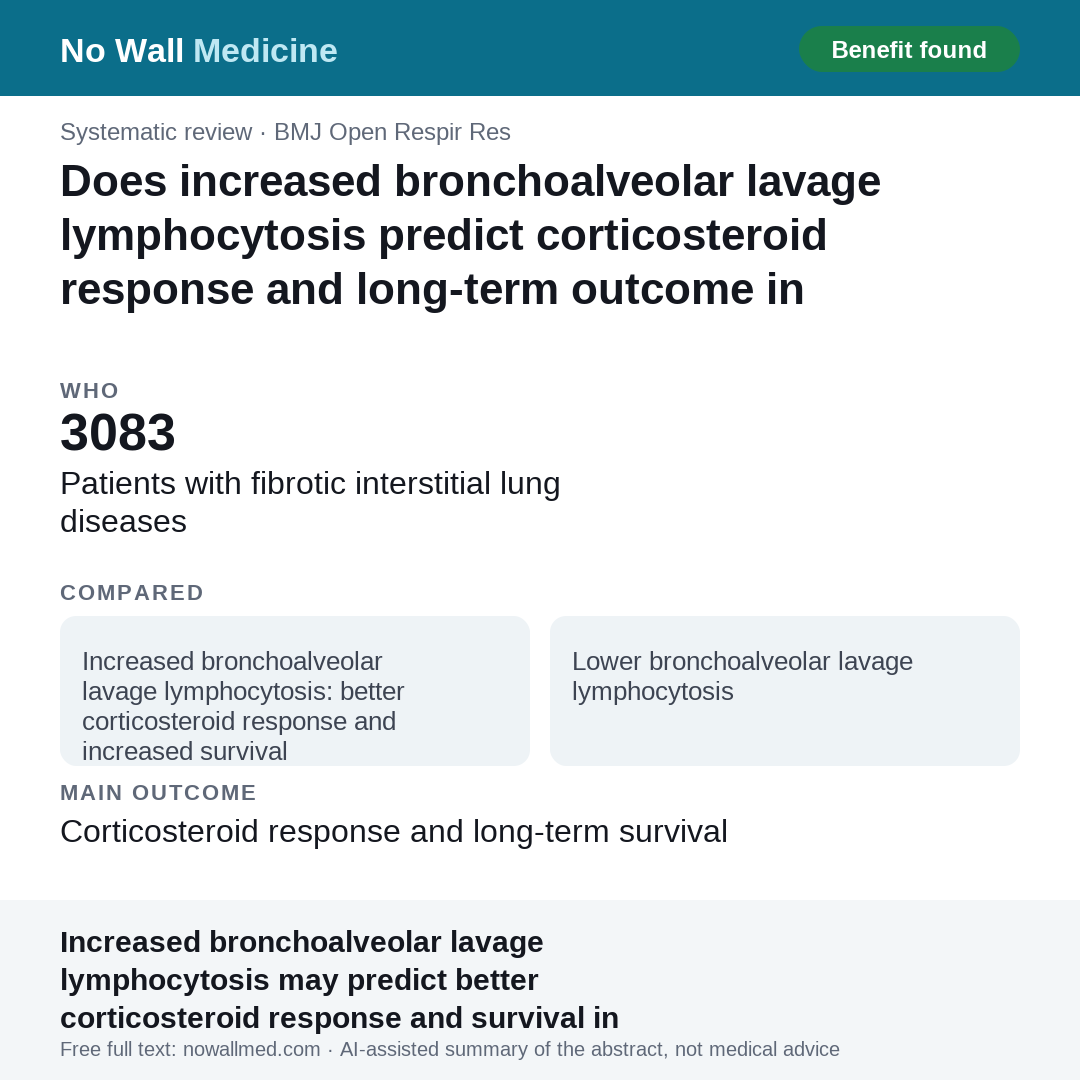
BAL lymphocytosis as a predictive marker for drug response and long-term outcome in fibrotic ILD: systematic review
Systematic reviewBenefit found
Does increased bronchoalveolar lavage lymphocytosis predict corticosteroid response and long-term outcomes in fibrotic interstitial lung diseases?
Who
3083
Patients with fibrotic interstitial lung diseases
Compared
Increased bronchoalveolar lavage lymphocytosis: better corticosteroid response and increased survival
Lower bronchoalveolar lavage lymphocytosis
Main outcome
Corticosteroid response and long-term survival
Bottom line: Increased bronchoalveolar lavage lymphocytosis may predict better corticosteroid response and survival in certain fibrotic interstitial lung diseases.
Limitation: Predominantly observational studies, inconsistent thresholds, and study heterogeneity precluded meta-analysis.
BMJ Open Respir Res · 2026-06-04Download image
Self-management interventions for burn survivors: A literature review among patients with burns and other comparable chronic conditions
Systematic literature reviewBenefit found
What are the effectiveness of self-management interventions for burn survivors and comparable conditions?
Who
1606
Burn survivors, myocardial infarction, and lower extremity trauma patients
Compared
Burn survivors
Myocardial infarction: statistically significant improvements
Lower extremity trauma
Main outcome
Effectiveness of self-management interventions
Bottom line: Self-management interventions showed positive effects, but there is a critical scarcity of rigorous studies for burn survivors.
Limitation: Only two studies focused on burn survivors, providing limited data to draw conclusions.
Burns · 2026-06-03Download image

Evaluating Reduced Use and Abstinence as Outcomes in Pharmacotherapy Trials for Stimulant Use Disorder: A Meta-Analysis of 12 Randomized Controlled Trials
Meta-analysis of 12 randomized controlled trialsNo clear difference
Does pharmacological intervention compare better for reduced use versus total abstinence in stimulant use disorder?
Who
2000
People seeking treatment for cocaine or methamphetamine dependence · United States multisite trials
Compared
Active treatment: 31.2% (weighted) achieved reduced use
Placebo: 13.3% (weighted) achieved abstinence
Main outcome
Reduced drug use and abstinence
Bottom line: No significant differences were observed between active treatment and placebo for reduced use or abstinence overall.
Funded by: National Institute on Drug Abuse
JAMA Psychiatry · 2026-06-03Download image

Fibrin-Based Scaffold Augmentation During Meniscal Repair May Enhance Healing and Functional Outcomes: A Systematic Review
Systematic reviewBenefit found
Does fibrin-based scaffold augmentation enhance healing and functional outcomes after meniscal repair?
Who
438
Patients with meniscal tears, mostly in avascular zones
Compared
Fibrin-based augmentation: superior outcomes
Nonaugmented repair
Main outcome
Healing rate, complication rate, and patient-reported outcome scores
Bottom line: Fibrin-based scaffolds achieved better healing and function compared to nonaugmented meniscal repair.
Am J Sports Med · 2026-06-03Download image

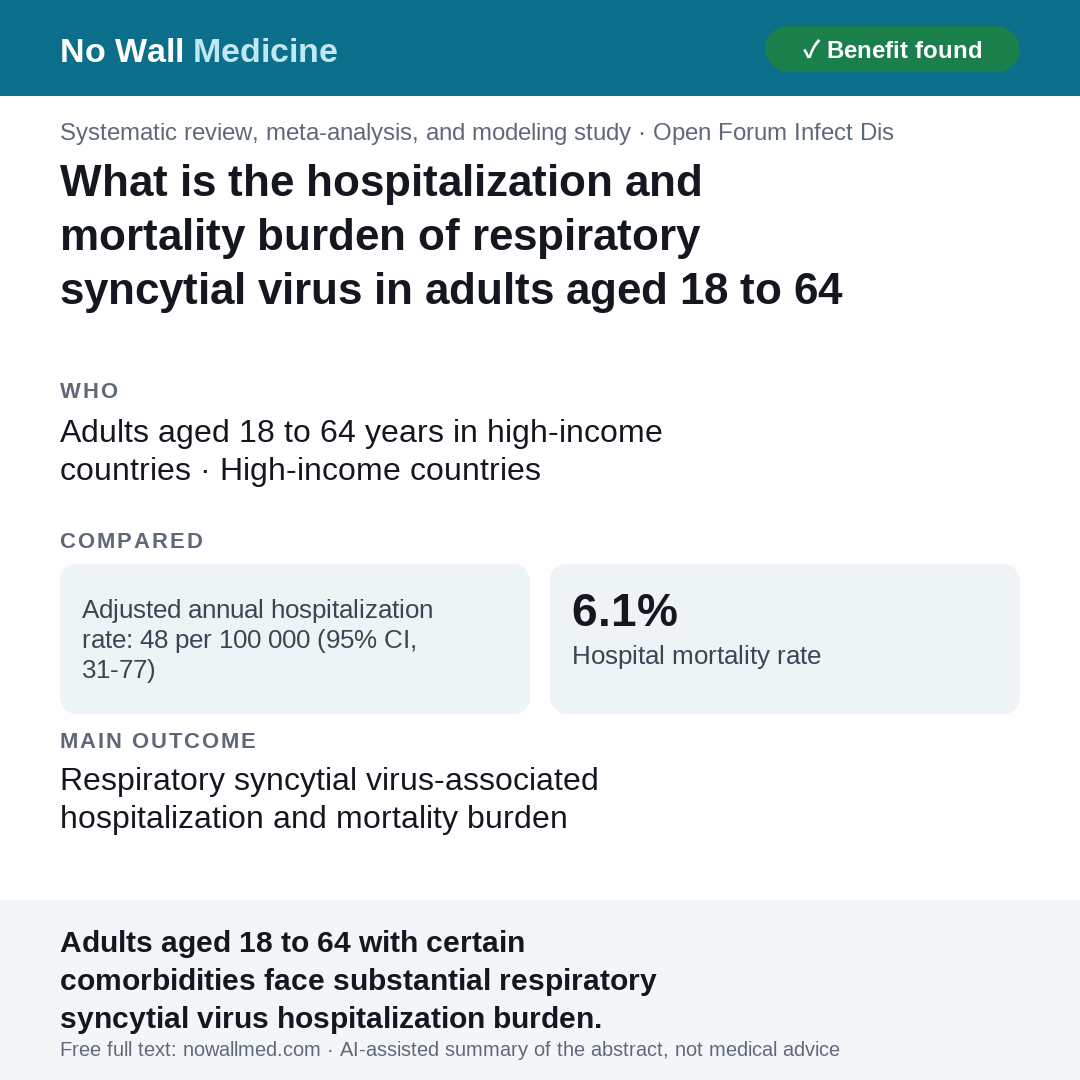
Hospitalization Burden Estimates of Respiratory Syncytial Virus With Adjustment for Case Underascertainment in Adults Aged 18 to 65 Years in High-Income Countries: A Systematic Review, Meta-Analysis, and Modeling Study
Systematic review, meta-analysis, and modeling studyBenefit found
What is the respiratory syncytial virus hospitalization and mortality burden in adults aged 18 to 64 years?
Who
Adults aged 18 to 64 years in high-income countries · High-income countries
Compared
Adjusted annual hospitalization rate: 48 per 100 000 (95% CI, 31-77)
6.1%In-hospital mortality rate (95% CI, 5.2%-7.1%)
Main outcome
Respiratory syncytial virus associated hospitalization and mortality burden
Bottom line: Adults aged 18 to 64 with certain comorbidities face substantial respiratory syncytial virus hospitalization burden.
Open Forum Infect Dis · 2026-06-03Download image
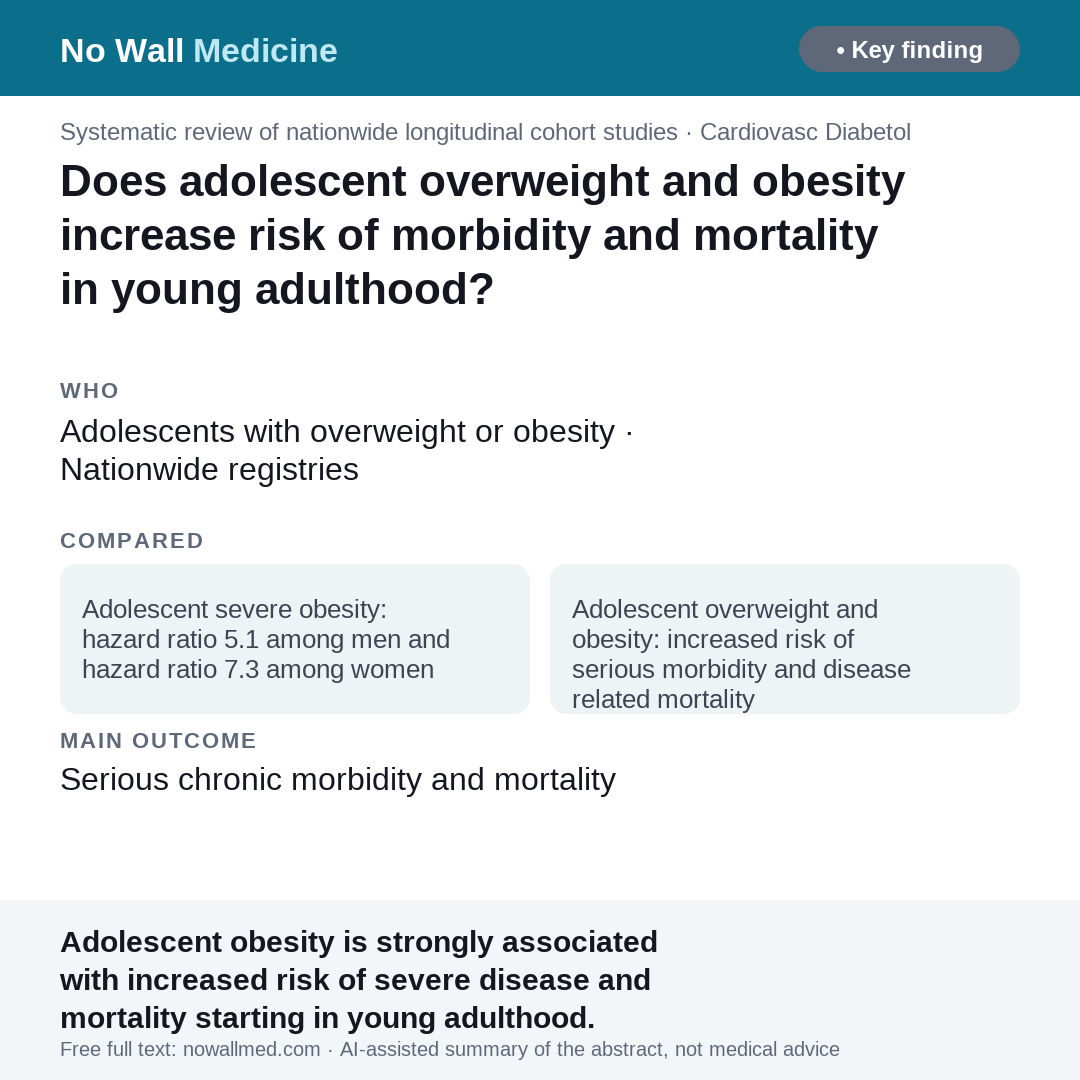
Adolescent obesity and risk of serious chronic morbidity and mortality in young adulthood: a systematic review of cohorts from national registries
Systematic review of longitudinal cohort studiesHarm found
Does adolescent overweight and obesity increase risk of morbidity and mortality in young adulthood?
Who
Adolescents with overweight or obesity · Nationwide longitudinal cohort studies using national registries
Compared
Adolescent overweight and obesity
Control
Main outcome
Severe chronic morbidity and mortality
Bottom line: Adolescent obesity is strongly associated with increased risk of severe disease morbidity and mortality starting in young adulthood.
Cardiovasc Diabetol · 2026-06-03Download image
Incidence and treatment-modifying impact of immune checkpoint inhibitor-associated peripheral edema: a systematic review and meta-analysis
Systematic review and meta-analysis of 58 randomized controlled trialsBenefit found
What is the incidence and risk of peripheral edema with immune checkpoint inhibitors?
Who
22590
Patients receiving immune checkpoint inhibitor therapy
Compared
2.80%Immune checkpoint inhibitor monotherapy (n = 195 of 6969)
4.96%Immune checkpoint inhibitor with chemotherapy (n = 112 of 2257)
8.73%Immune checkpoint inhibitor with targeted therapy (n = 205 of 2349)
Main outcome
Incidence of treatment-related peripheral edema
Result: OR 0.45 (95% CI 0.27 to 0.73)
Bottom line: Immune checkpoint inhibitors have a lower risk of peripheral edema compared to chemotherapy, especially taxane chemotherapy.
JNCI Cancer Spectr · 2026-06-03Download image

Safety and benefits of adult-worn slings and baby carriers: a narrative systematic review to inform guidance for parents
Narrative systematic reviewMixed results
What are the risks, benefits, harms, and parental motivations for adult-worn slings and carriers?
Who
Caregivers and infants using adult-worn slings and carriers · Global (North America, Europe, Africa, Asia, and Australia)
Compared
Adult-worn slings and carriers use: benefits for both caregivers and infants
Poorly fitting or positioned use: infrequent accidental infant deaths and injuries
Main outcome
Risks, benefits, harms, and parental motivations for use
Bottom line: Adult-worn slings and carriers offer benefits but carry risks of infant death or injury if poorly fitted.
Limitation: Most research involved small numbers of participants.
BMJ Paediatr Open · 2026-06-03Download image

Effectiveness of eHealth Interventions in Alleviating Burden on Informal Caregivers of People With Dementia: Systematic Review and Meta-Analysis of Randomized Controlled Trials
Systematic review and meta-analysis of randomized controlled trialsBenefit found
Do eHealth interventions reduce burden and depressive symptoms in informal dementia caregivers?
Who
3388
Informal caregivers of people with dementia
Compared
eHealth interventions
Usual care or inactive controls
Main outcome
Caregiver burden and depressive symptoms
Result: standardized mean difference -0.26 (95% CI -0.42 to -0.10) for burden
Bottom line: eHealth interventions provide modest but variable benefits in reducing caregiver burden and depressive symptoms.
Limitation: Wide prediction intervals indicate substantial between-study heterogeneity and variability in real-world effectiveness.
J Med Internet Res · 2026-06-03Download image

Optimal hypertension screening frequency in adults: a systematic review
Systematic reviewUnclear result
What is the optimal frequency of hypertension screening in adults?
Who
Adults
Compared
Primary research studies
Guideline publications
Main outcome
Optimal frequency of hypertension screening
Bottom line: There is a paucity of primary research addressing the optimal frequency of hypertension screening.
Limitation: Available evidence is limited and indirect with no studies evaluating hypertension-related complications.
BMC Prim Care · 2026-06-03Download image

EEG biomarkers for assessment, prognosis, and monitoring of natural upper limb recovery after stroke: a systematic review
Systematic reviewUnclear result
Can electroencephalogram biomarkers assess, predict, or monitor natural upper limb recovery after stroke?
Who
Adults with stroke
Compared
Assessment biomarkers: correlated with impairment severity
Prognostic biomarkers: showed predictive potential
Monitoring biomarkers: paralleled functional gains
Main outcome
upper limb motor outcomes
Bottom line: Electroencephalogram metrics like the brain symmetry index show potential for monitoring and predicting stroke recovery.
Limitation: The immediate clinical translation is limited by the predominantly fair methodological quality of the evidence.
J Neuroeng Rehabil · 2026-06-03Download image