Visual abstracts
New randomized trials and meta-analyses from leading journals at a glance: who was studied, what was compared, and what was found. Every paper is free to read in full.
All specialtiesCardiology 4763Oncology 4042Gastroenterology & Hepatology 1902Infectious Disease 3756Neurology 1872Psychiatry & Mental Health 2214Pulmonology 2042Critical Care 1319Endocrinology & Diabetes 2544Pediatrics 2889Surgery 2479Orthopedics & Sports Medicine 917Neurosurgery 525Cardiothoracic & Vascular Surgery 656Plastic & Reconstructive Surgery 574Nephrology 1107Rheumatology 810Hematology 1090Dermatology 611Ophthalmology 532Obstetrics & Gynecology 1645Public & Global Health 1037Radiology & Imaging 617Anesthesiology 957Urology 745ENT (Otolaryngology) 494Emergency Medicine 481Allergy & Immunology 309Geriatrics 972Family Medicine & Primary Care 533Medical Genetics & Genomics 659Pathology & Laboratory Medicine 156Physical Medicine & Rehabilitation 734Palliative Care 421Nutrition 1560Digital Health & AI 2133General Medicine 318
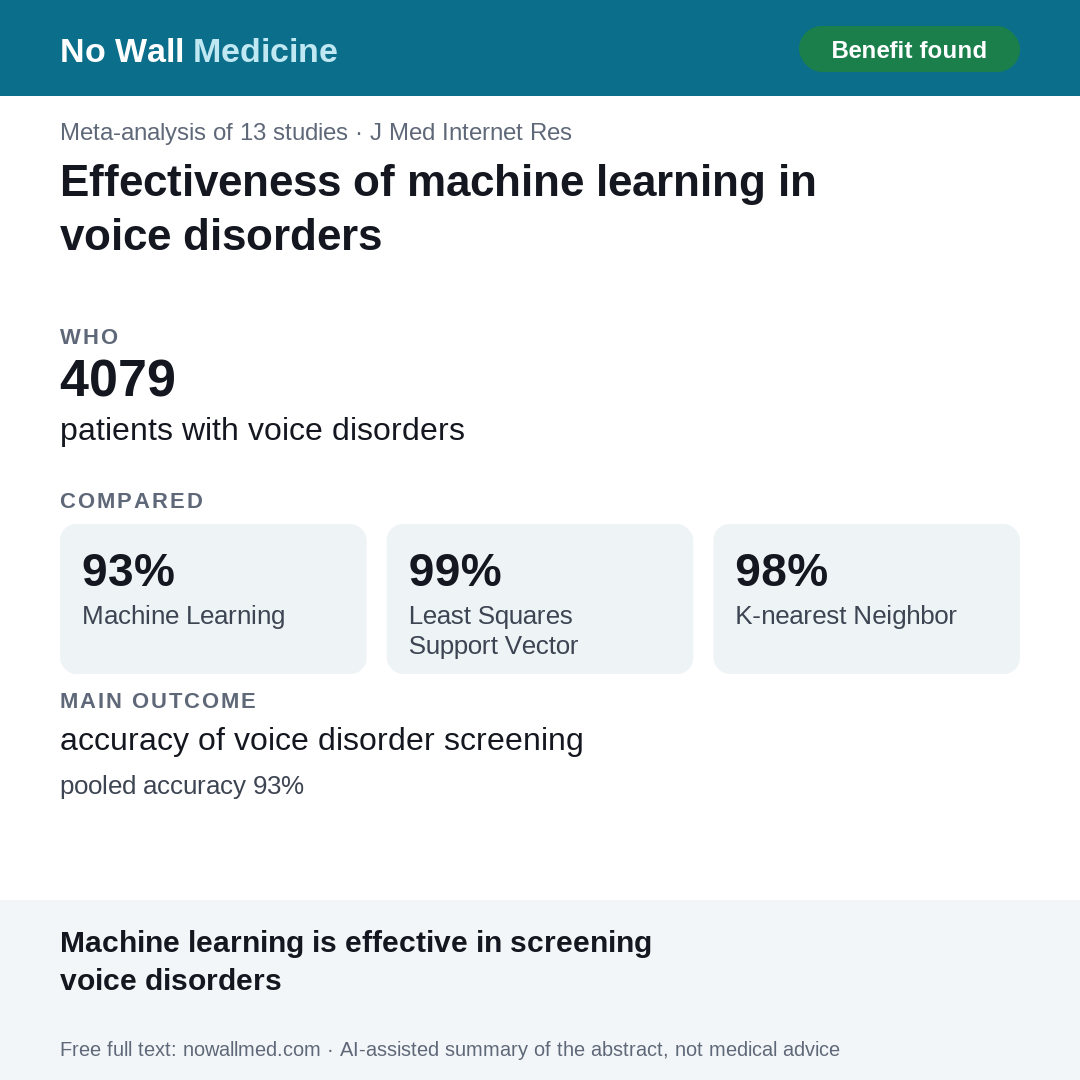
The Effectiveness of Supervised Machine Learning in Screening and Diagnosing Voice Disorders: Systematic Review and Meta-analysis
Meta-analysis of 13 studiesKey finding
Effectiveness of machine learning in voice disorders
Who
4079
patients with voice disorders
Compared
93%Machine Learning
99%Least Squares Support Vector Machine
98%K-nearest Neighbor
Main outcome
accuracy of voice disorder screening
Result: pooled accuracy 93%
Bottom line: Machine learning is effective in screening voice disorders
Limitation: limited number of diagnostic studies
J Med Internet Res · 2022-10-14Download image
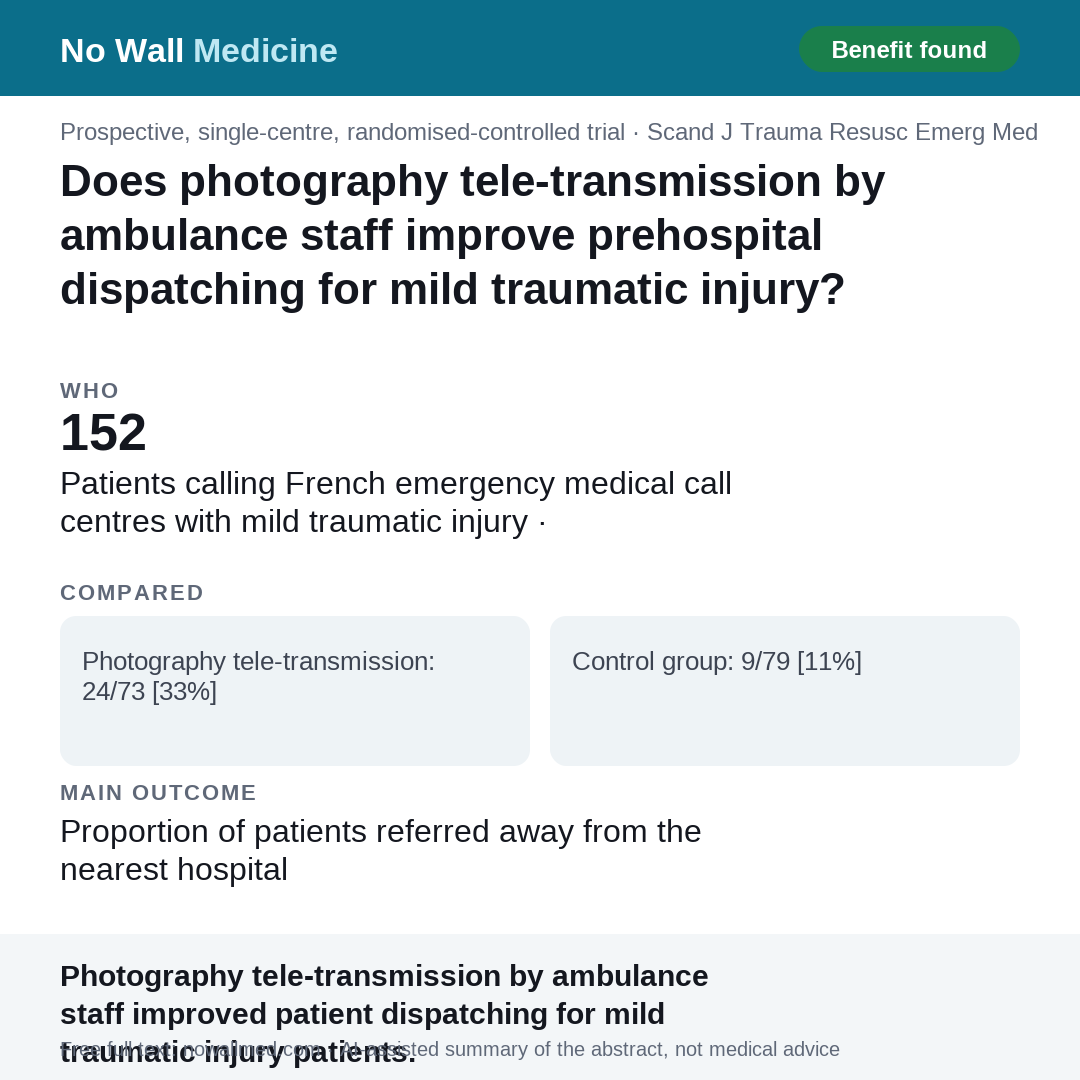
Photography tele-transmission by regular ambulance staff for the management of mild traumatic injury: the NiCEPHORE randomised-controlled trial
Prospective, single-centre, randomised-controlled trialBenefit found
Does photography tele-transmission by ambulance staff improve prehospital dispatching for mild traumatic injury?
Who
152
Patients calling French emergency medical call centres with mild traumatic injury · Single-centre in France
Compared
Photography tele-transmission: 24/73 [33%]
Control group: 9/79 [11%]
Main outcome
Proportion of patients referred away from the nearest hospital
Result: OR 3.80 [1.63-8.90]
Bottom line: Photography tele-transmission by ambulance staff improved patient dispatching for mild traumatic injury patients.
Scand J Trauma Resusc Emerg Med · 2022-10-14Download image
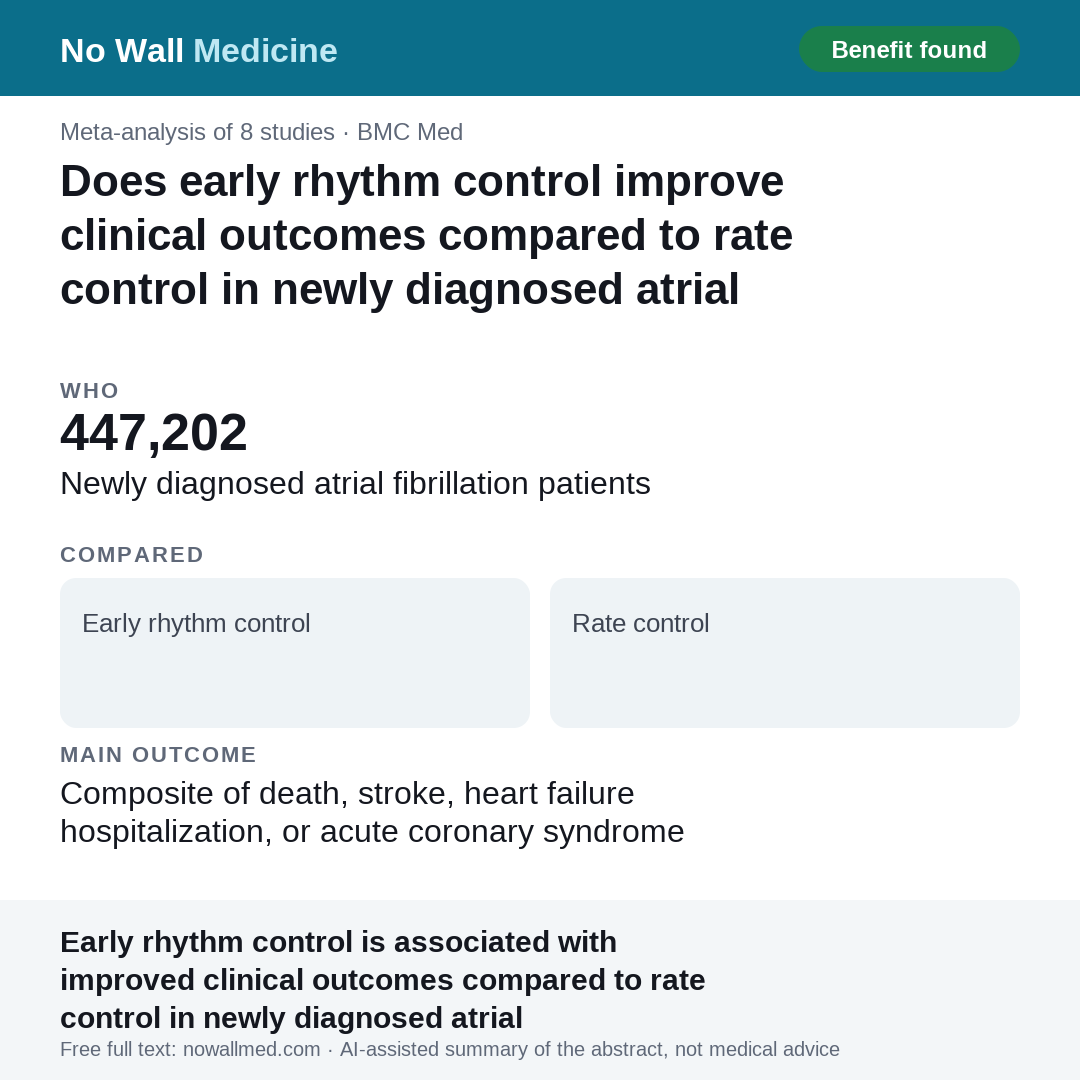
Effectiveness of early rhythm control in improving clinical outcomes in patients with atrial fibrillation: a systematic review and meta-analysis
Meta-analysis of 8 studiesKey finding
Does early rhythm control improve clinical outcomes compared to rate control in newly diagnosed atrial fibrillation?
Who
447,202
Newly diagnosed atrial fibrillation patients
Compared
Early rhythm control
Rate control
Main outcome
Composite of death, stroke, heart failure hospitalization, or acute coronary syndrome
Result: hazard ratio 0.88 (95% CI: 0.86-0.89)
Bottom line: Early rhythm control is associated with improved clinical outcomes compared to rate control in newly diagnosed atrial fibrillation patients.
BMC Med · 2022-10-13Download image
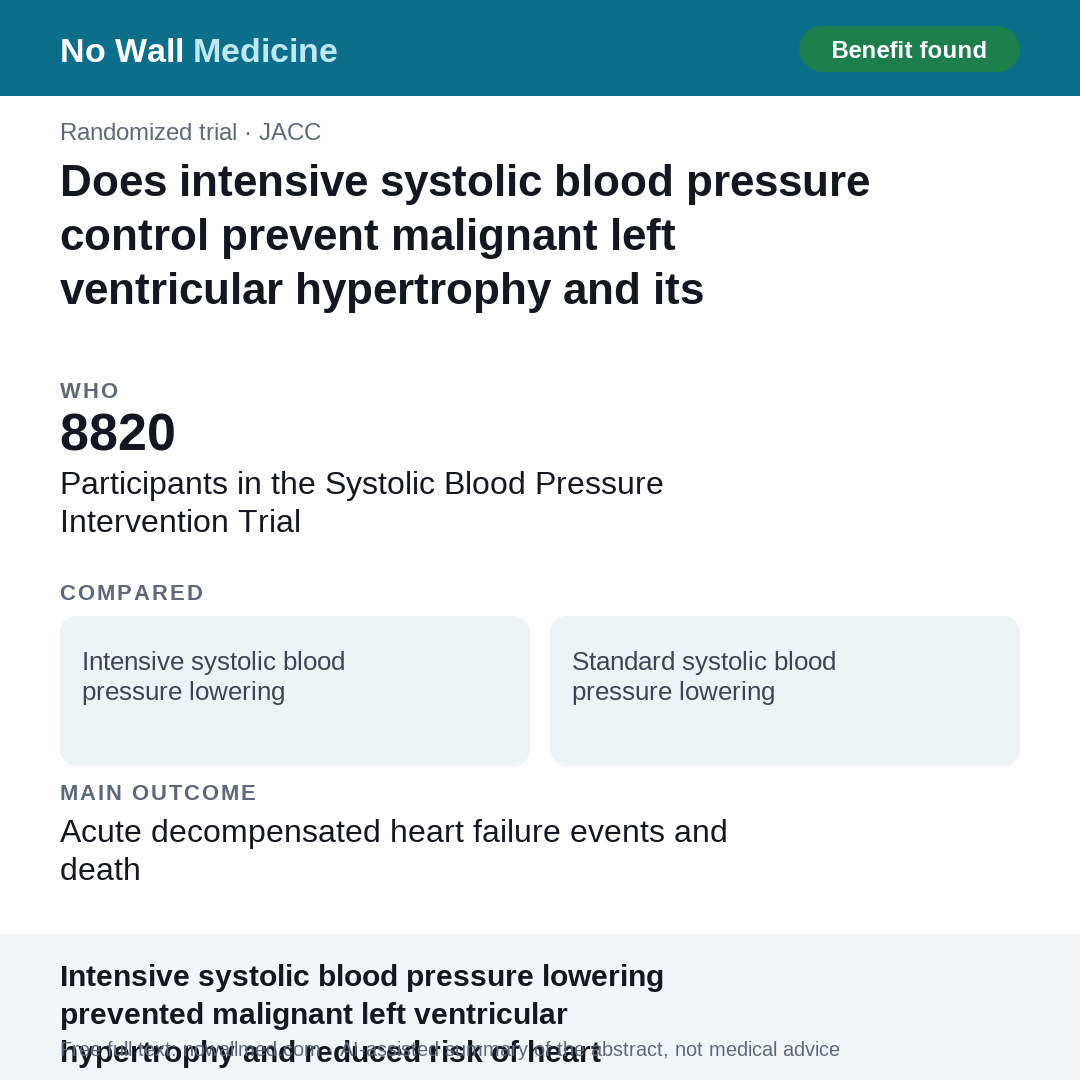
Intensive Blood Pressure Lowering in Patients With Malignant Left Ventricular Hypertrophy
Randomized trialBenefit found
Does intensive systolic blood pressure control prevent malignant left ventricular hypertrophy and its consequences?
Who
8820
Participants in the Systolic Blood Pressure Intervention Trial
Compared
Intensive systolic blood pressure lowering
Standard systolic blood pressure lowering
Main outcome
Acute decompensated heart failure events and death
Result: OR: 0.44 (95% CI: 0.30-0.63)
Bottom line: Intensive systolic blood pressure lowering prevented malignant left ventricular hypertrophy and reduced risk of heart failure and death.
JACC · 2022-10-13Download image
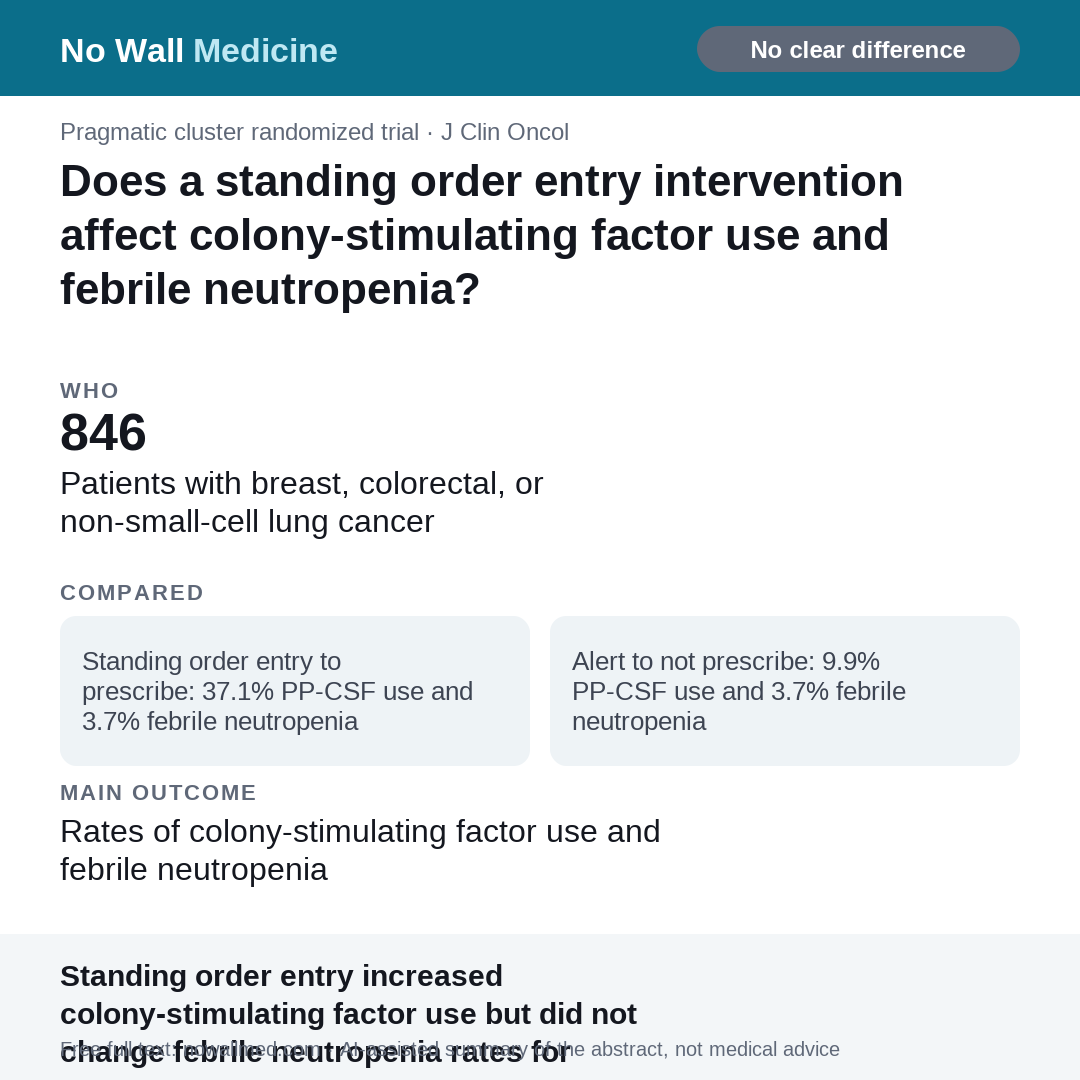
A Pragmatic Cluster-Randomized Trial of a Standing Order Entry Intervention for Colony-Stimulating Factor Use Among Patients at Intermediate Risk for Febrile Neutropenia
Pragmatic cluster randomized trialNo clear difference
Does a standing order entry intervention affect colony-stimulating factor use and febrile neutropenia?
Who
846
Patients with breast, colorectal, or non-small-cell lung cancer
Compared
Standing order entry to prescribe: 37.1% PP-CSF use and 3.7% febrile neutropenia
Alert to not prescribe: 9.9% PP-CSF use and 3.7% febrile neutropenia
Main outcome
Rates of colony-stimulating factor use and febrile neutropenia
Result: odds ratio 5.91 (95% CI 1.77 to 19.70)
Bottom line: Standing order entry increased colony-stimulating factor use but did not change febrile neutropenia rates for intermediate-risk patients.
J Clin Oncol · 2022-10-13Download image
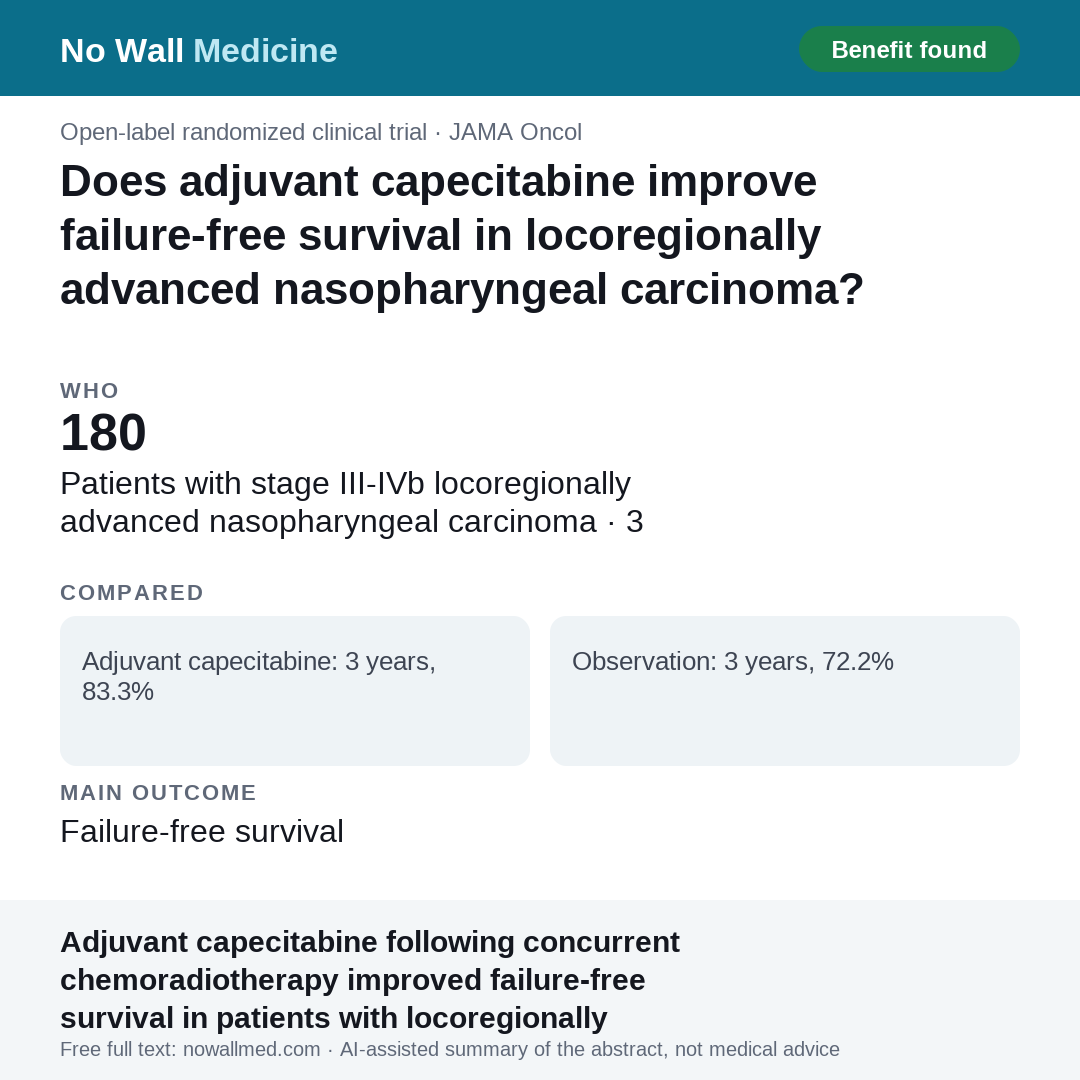
Adjuvant Capecitabine Following Concurrent Chemoradiotherapy in Locoregionally Advanced Nasopharyngeal Carcinoma: A Randomized Clinical Trial
Open-label randomized clinical trialBenefit found
Does adjuvant capecitabine improve failure-free survival in locoregionally advanced nasopharyngeal carcinoma?
Who
180
Patients with stage III-IVb locoregionally advanced nasopharyngeal carcinoma · 3 institutions in China
Compared
Adjuvant capecitabine: 3 years, 83.3%
Observation: 3 years, 72.2%
Main outcome
Failure-free survival
Result: hazard ratio, 0.53 (95% CI, 0.30-0.94)
Bottom line: Adjuvant capecitabine following concurrent chemoradiotherapy improved failure-free survival in patients with locoregionally advanced nasopharyngeal carcinoma.
Limitation: Further investigations assessing optimal dose and duration are warranted.
JAMA Oncol · 2022-10-13Download image
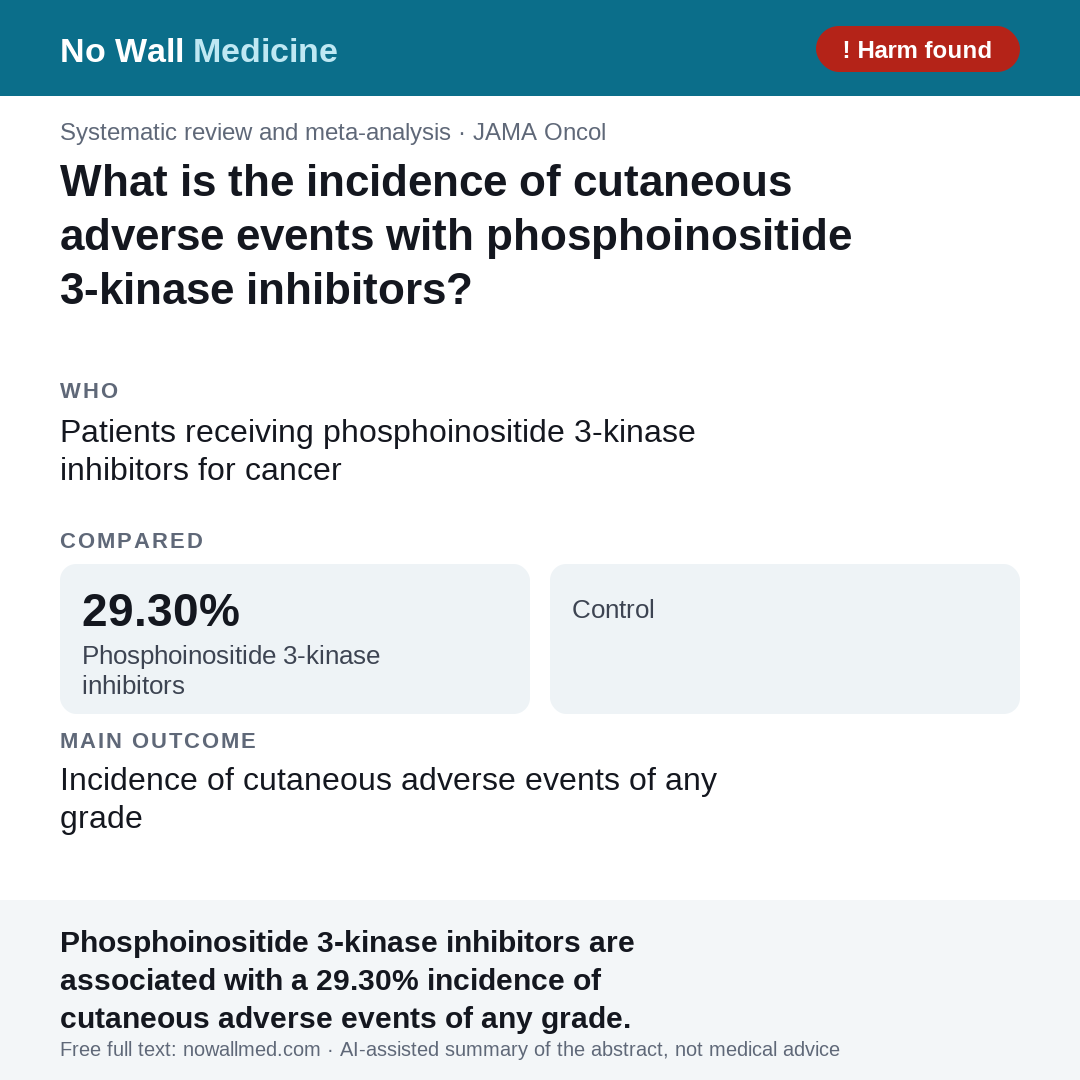
Incidence of Cutaneous Adverse Events With Phosphoinositide 3-Kinase Inhibitors as Adjuvant Therapy in Patients With Cancer: A Systematic Review and Meta-analysis
Systematic review and meta-analysisHarm found
What is the incidence of cutaneous adverse events with phosphoinositide 3-kinase inhibitors?
Who
Patients receiving phosphoinositide 3-kinase inhibitors for cancer
Compared
29.30%Phosphoinositide 3-kinase inhibitors
Control
Main outcome
Incidence of cutaneous adverse events of any grade
Result: odds ratio 2.55 (95% CI 1.74-3.75)
Bottom line: Phosphoinositide 3-kinase inhibitors are associated with a 29.30% incidence of cutaneous adverse events of any grade.
JAMA Oncol · 2022-10-13Download image
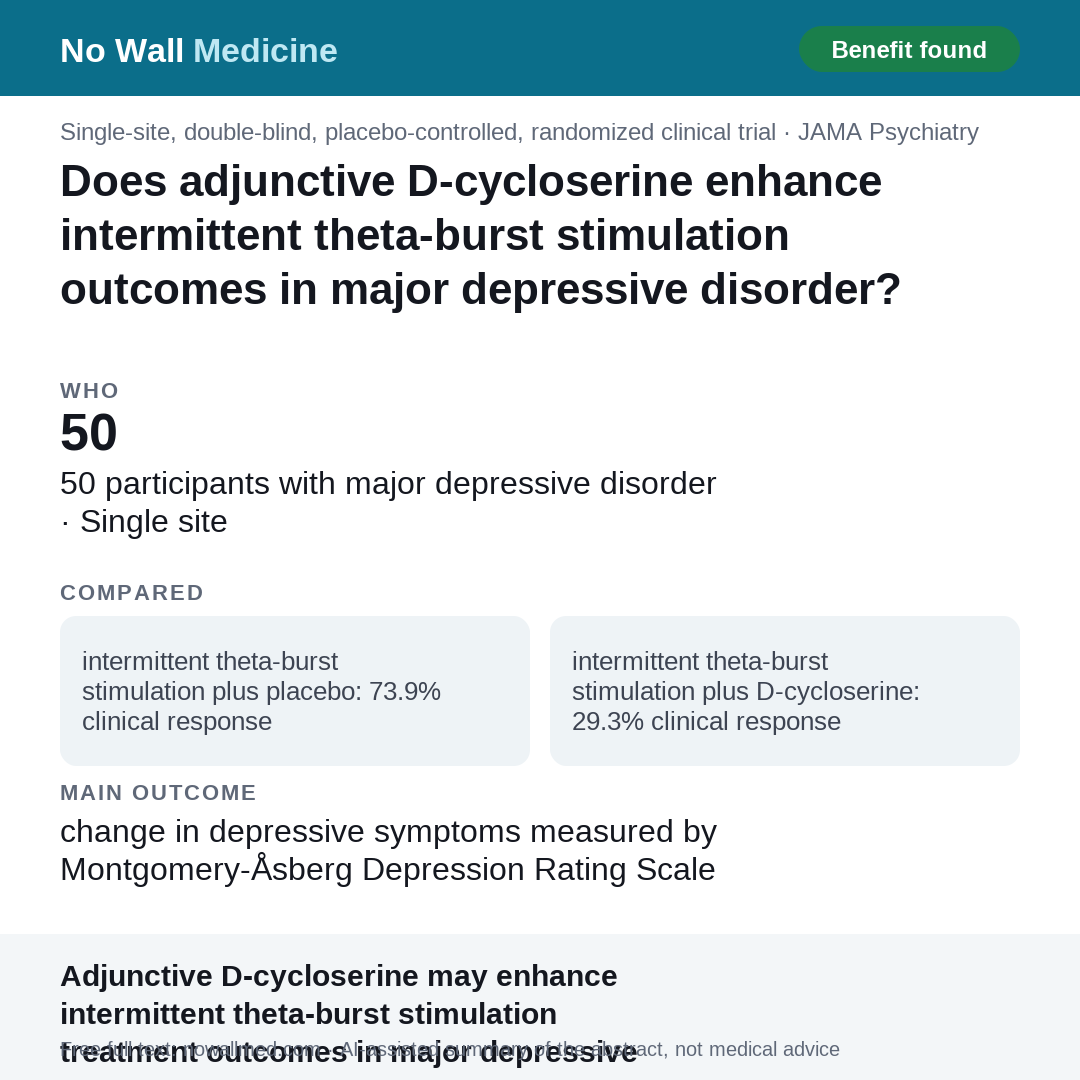
Efficacy of Adjunctive D-Cycloserine to Intermittent Theta-Burst Stimulation for Major Depressive Disorder: A Randomized Clinical Trial
Single-site, double-blind, placebo-controlled, randomized clinical trialBenefit found
Does adjunctive D-cycloserine enhance intermittent theta-burst stimulation outcomes in major depressive disorder?
Who
50
50 participants with major depressive disorder · Single site
Compared
intermittent theta-burst stimulation plus placebo: 73.9% clinical response
intermittent theta-burst stimulation plus D-cycloserine: 29.3% clinical response
Main outcome
change in depressive symptoms measured by Montgomery-Åsberg Depression Rating Scale
Result: mean difference -6.15 (95% CI -2.43 to -9.88)
Bottom line: Adjunctive D-cycloserine may enhance intermittent theta-burst stimulation treatment outcomes in major depressive disorder.
JAMA Psychiatry · 2022-10-13Download image
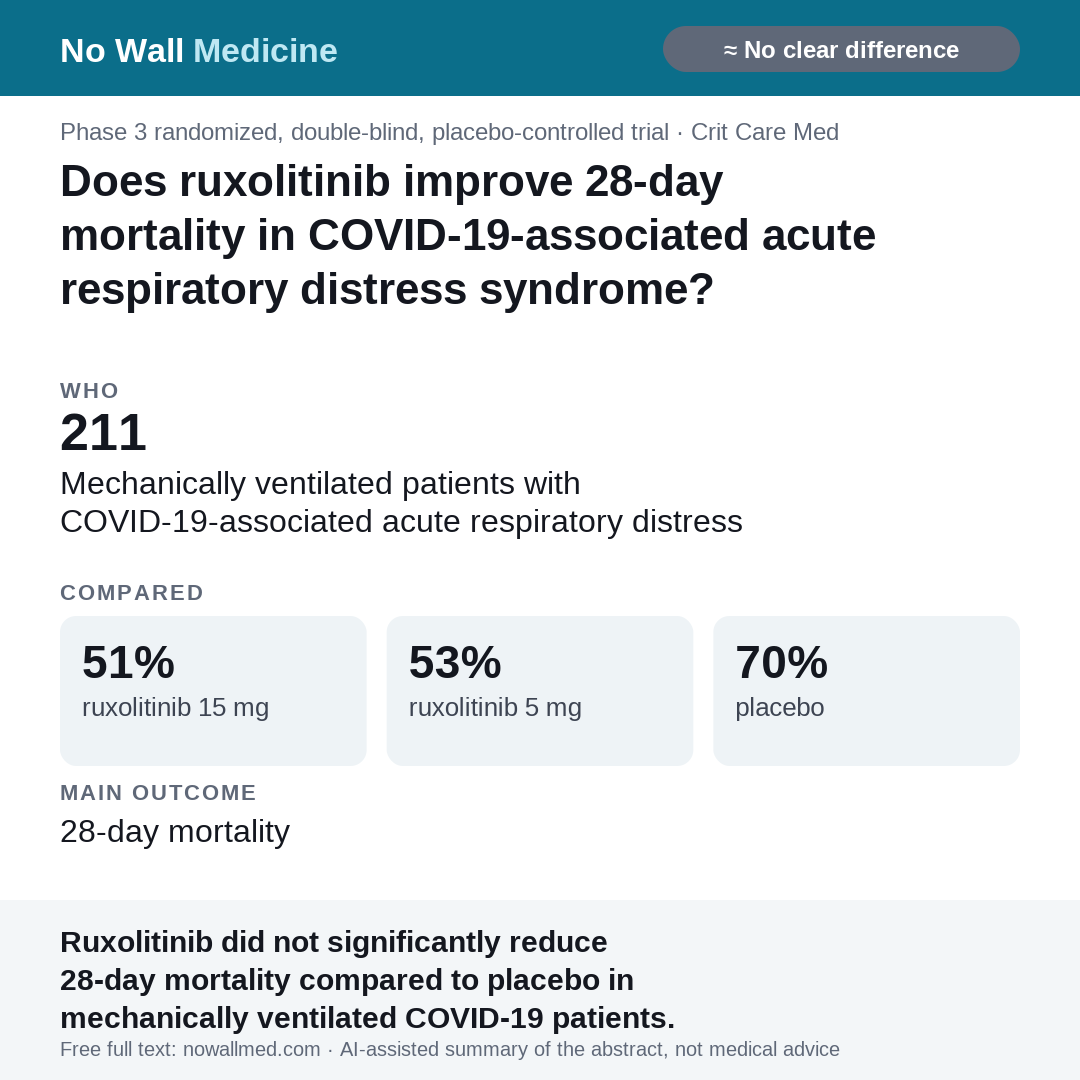
Randomized Phase 3 Trial of Ruxolitinib for COVID-19-Associated Acute Respiratory Distress Syndrome
Phase 3 randomized, double-blind, placebo-controlled trialNo clear difference
Does ruxolitinib improve 28-day mortality in COVID-19-associated acute respiratory distress syndrome?
Who
211
Mechanically ventilated patients with COVID-19-associated acute respiratory distress syndrome · United States and Russia (33 sites)
Compared
51%ruxolitinib 15 mg (39/77; 95% CI, 39-62%)
53%ruxolitinib 5 mg (45/85; 95% CI, 42-64%)
70%placebo (33/47; 95% CI, 55-83%)
Main outcome
28-day mortality
Result: odds ratio 0.46 (95% CI, 0.201-1.028) for 15 mg; 0.42 (95% CI, 0.171-1.023) for 5 mg
Bottom line: Ruxolitinib did not significantly reduce 28-day mortality compared to placebo in mechanically ventilated COVID-19 patients.
Limitation: The trial was underpowered owing to early termination.
Crit Care Med · 2022-10-13Download image
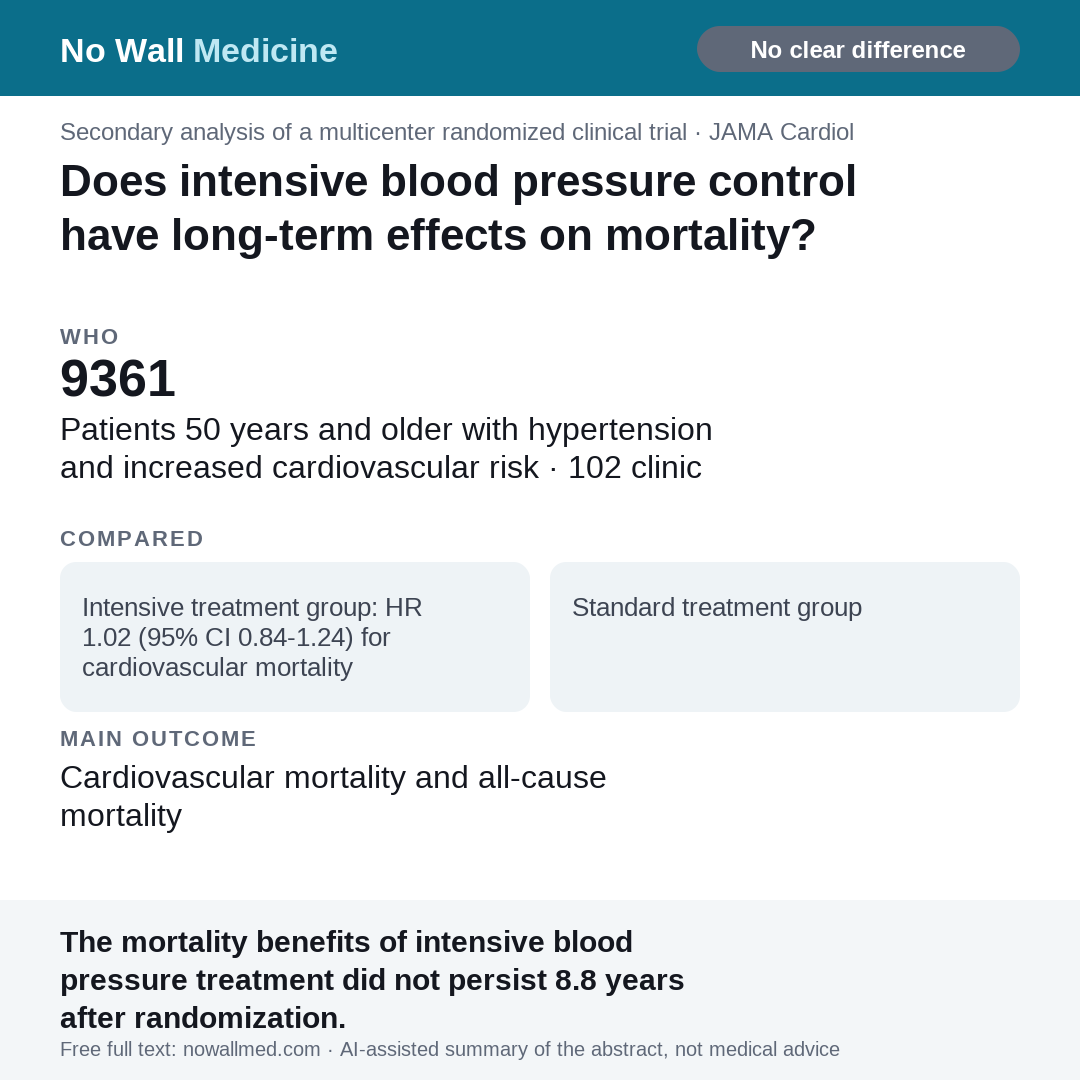
Longer-Term All-Cause and Cardiovascular Mortality With Intensive Blood Pressure Control: A Secondary Analysis of a Randomized Clinical Trial
Secondary analysis of a multicenter randomized clinical trialNo clear difference
Does intensive blood pressure control have long-term effects on mortality?
Who
9361
Patients 50 years and older with hypertension and increased cardiovascular risk · 102 clinic sites in the US and Puerto Rico
Compared
Intensive treatment group: HR 1.02 (95% CI 0.84-1.24) for cardiovascular mortality
Standard treatment group
Main outcome
Cardiovascular mortality and all-cause mortality
Result: HR 1.02 (95% CI 0.84-1.24) for cardiovascular mortality; HR 1.08 (95% CI 0.94-1.23) for all-cause mortality
Bottom line: The mortality benefits of intensive blood pressure treatment did not persist 8.8 years after randomization.
Limitation: Increasing outpatient systolic blood pressure levels were observed in the intensive treatment group following the trial.
JAMA Cardiol · 2022-10-13Download image
Diagnostic, prognostic and differential-diagnostic relevance of pulmonary haemodynamic parameters during exercise: a systematic review
Systematic review and random-effects meta-analysesKey finding
What is the diagnostic and prognostic relevance of pulmonary haemodynamic parameters during exercise?
Who
5598
5598 subjects across 45 eligible studies
Compared
mPAP/CO slope >3 Wood units: associated with impaired survival
PAWP/CO slope >2 Wood units: best differentiated pre- from post-capillary causes
Main outcome
Prognostic and differential-diagnostic value of haemodynamic parameters
Bottom line: Increased mPAP/CO slope and PAWP/CO slope are useful for prognosis and differentiating pulmonary arterial pressure causes.
Eur Respir J · 2022-10-13Download image

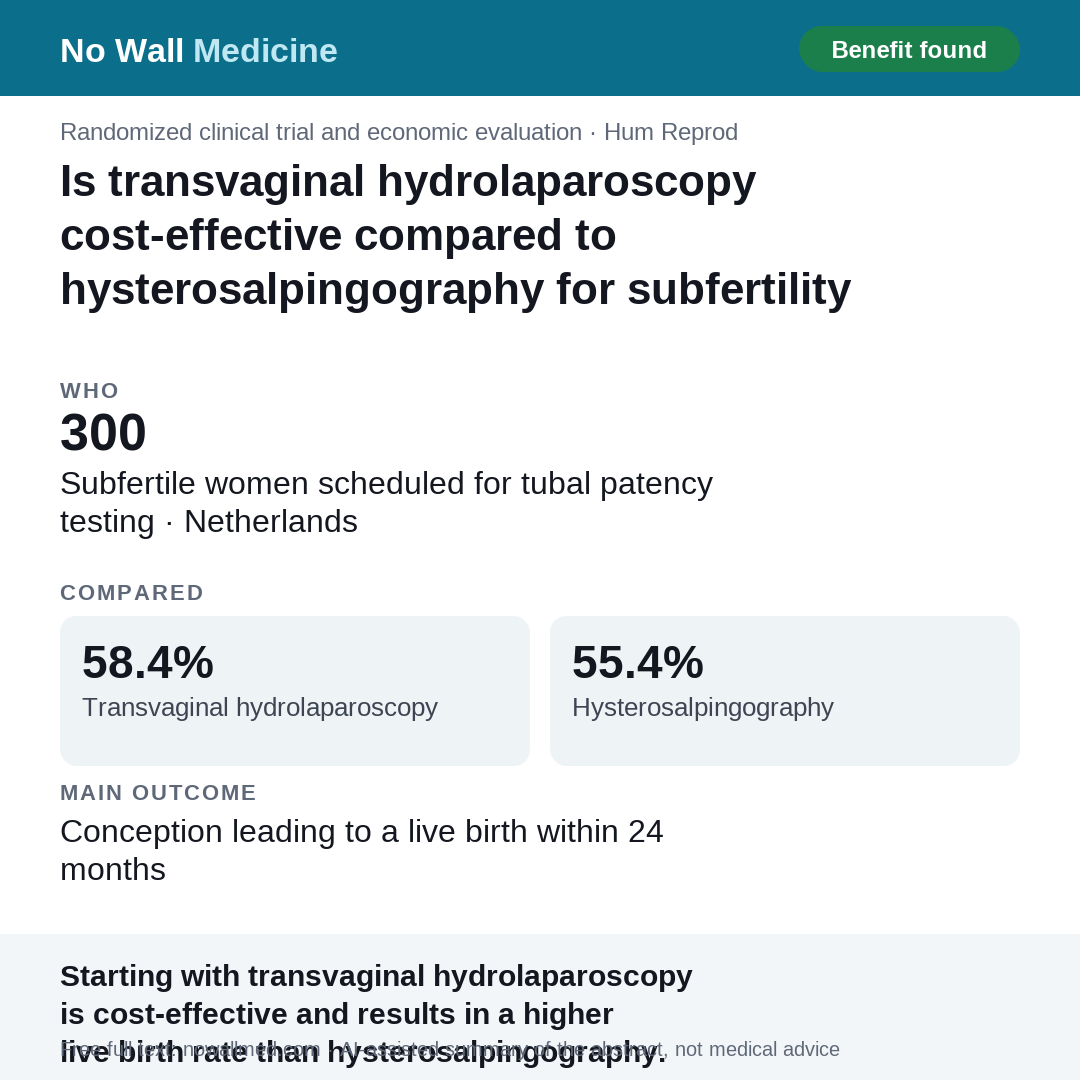
The cost-effectiveness of transvaginal hydrolaparoscopy versus hysterosalpingography in the work-up for subfertility
Randomized clinical trial and economic evaluationBenefit found
Is transvaginal hydrolaparoscopy cost-effective compared to hysterosalpingography for subfertility work-up?
Who
300
Subfertile women scheduled for tubal patency testing · Netherlands
Compared
58.4%Transvaginal hydrolaparoscopy
55.4%Hysterosalpingography
Main outcome
Conception leading to a live birth within 24 months
Bottom line: Starting with transvaginal hydrolaparoscopy is cost-effective and results in a higher live birth rate than hysterosalpingography.
Limitation: Results may not generalize to women with high risk of tubal pathology or different healthcare systems.
Hum Reprod · 2022-10-13Download image
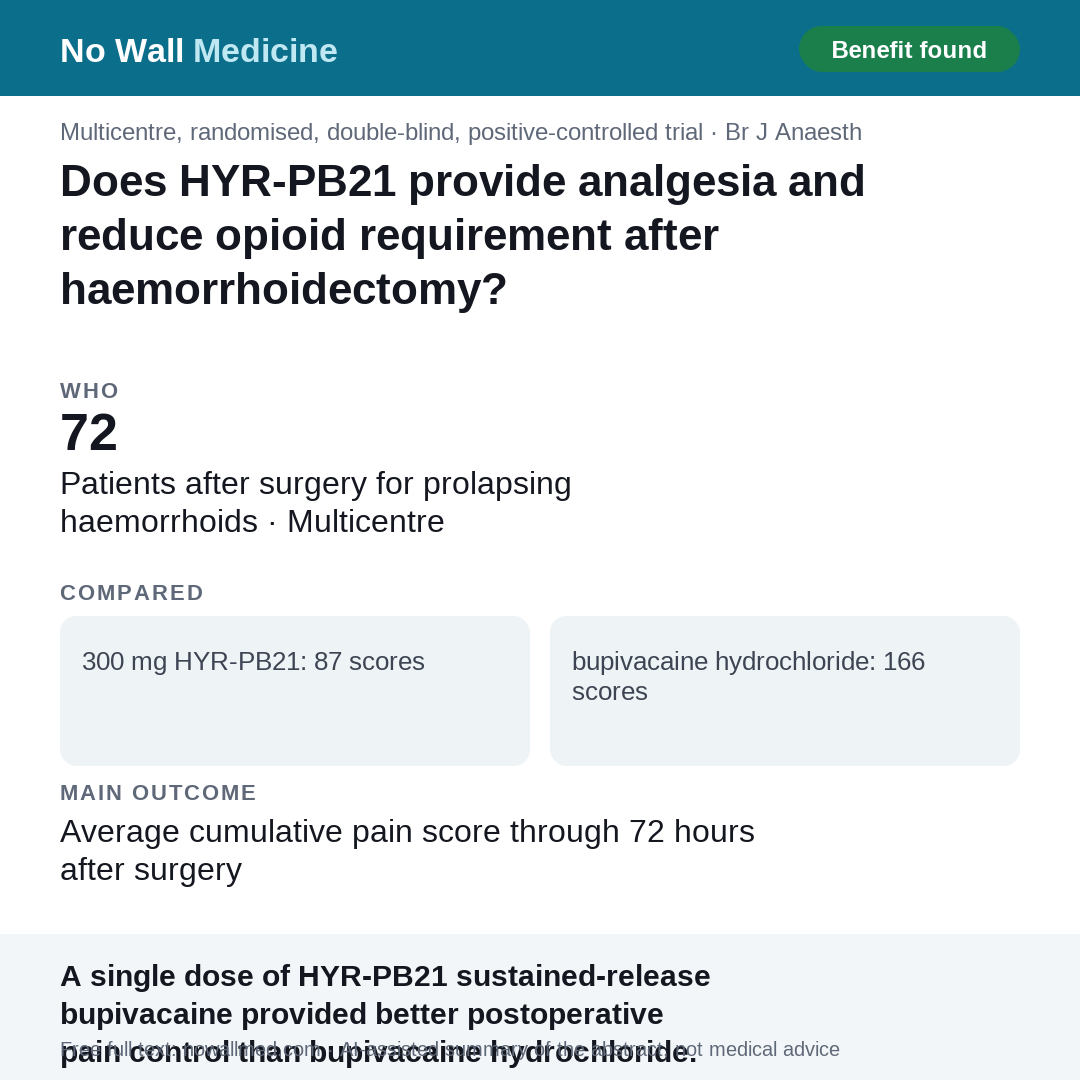
Local infiltration of HYR-PB21, a sustained-release formulation of bupivacaine, provides analgesia and reduces opioid requirement after haemorrhoidectomy: a randomised controlled trial
Multicentre, randomised, double-blind, positive-controlled trialBenefit found
Does HYR-PB21 provide analgesia and reduce opioid requirement after haemorrhoidectomy?
Who
72
Patients after surgery for prolapsing haemorrhoids · Multicentre
Compared
300 mg HYR-PB21: 87 scores
bupivacaine hydrochloride: 166 scores
Main outcome
Average cumulative pain score through 72 hours after surgery
Bottom line: A single dose of HYR-PB21 sustained-release bupivacaine provided better postoperative pain control than bupivacaine hydrochloride.
Br J Anaesth · 2022-10-13Download image
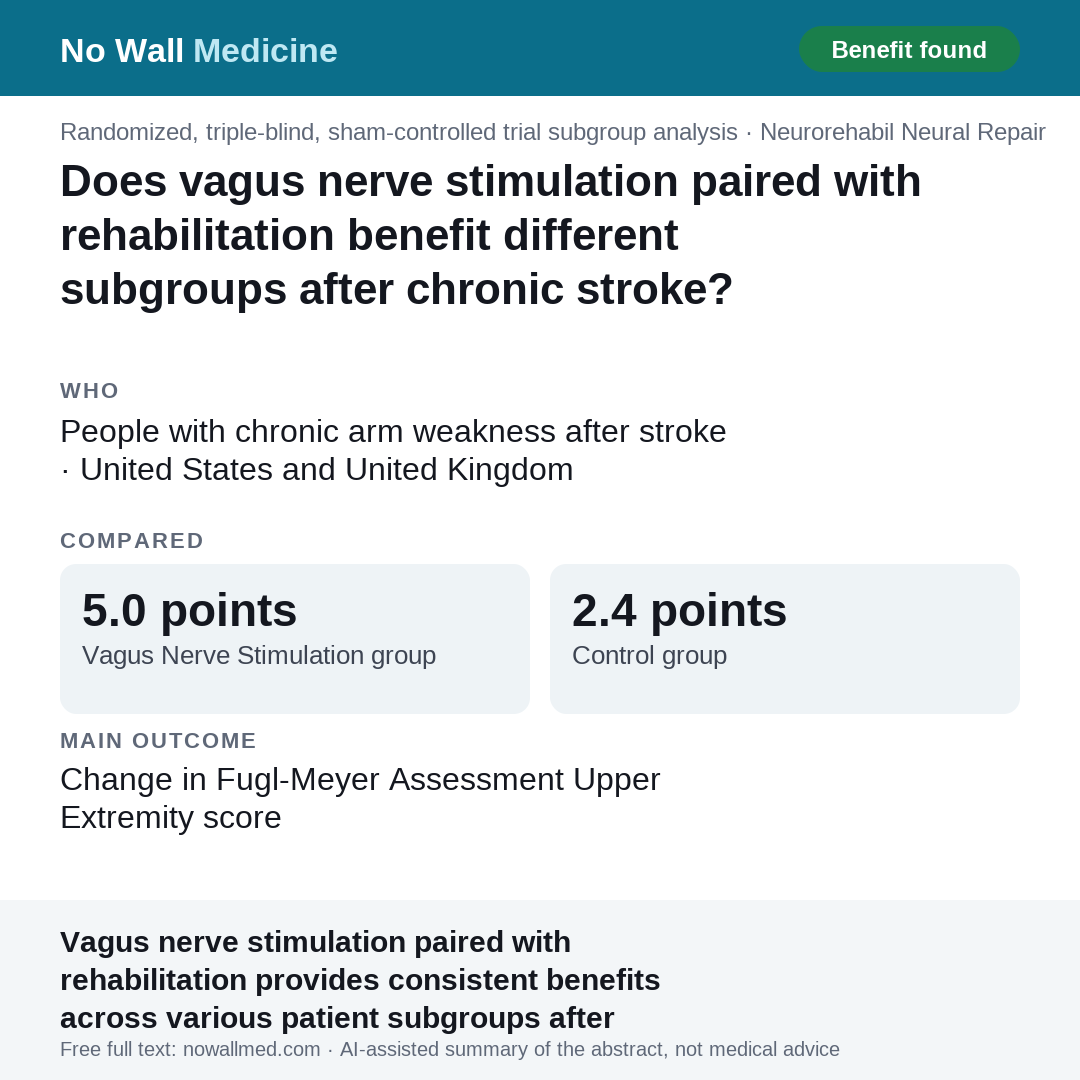
Vagus Nerve Stimulation Paired With Rehabilitation for Upper Limb Motor Impairment and Function After Chronic Ischemic Stroke: Subgroup Analysis of the Randomized, Blinded, Pivotal, VNS-REHAB Device Trial
Randomized, triple-blind, sham-controlled trial subgroup analysisBenefit found
Does vagus nerve stimulation paired with rehabilitation benefit different subgroups after chronic stroke?
Who
People with chronic arm weakness after stroke · United States and United Kingdom
Compared
5.0 pointsVagus Nerve Stimulation group (SD 4.4)
2.4 pointsControl group (SD 3.8)
Main outcome
Change in Fugl-Meyer Assessment Upper Extremity score
Result: between group difference 2.6, 95% CI 1.03-4.2
Bottom line: Vagus nerve stimulation paired with rehabilitation provides consistent benefits across various patient subgroups after chronic stroke.
Neurorehabil Neural Repair · 2022-10-13Download image
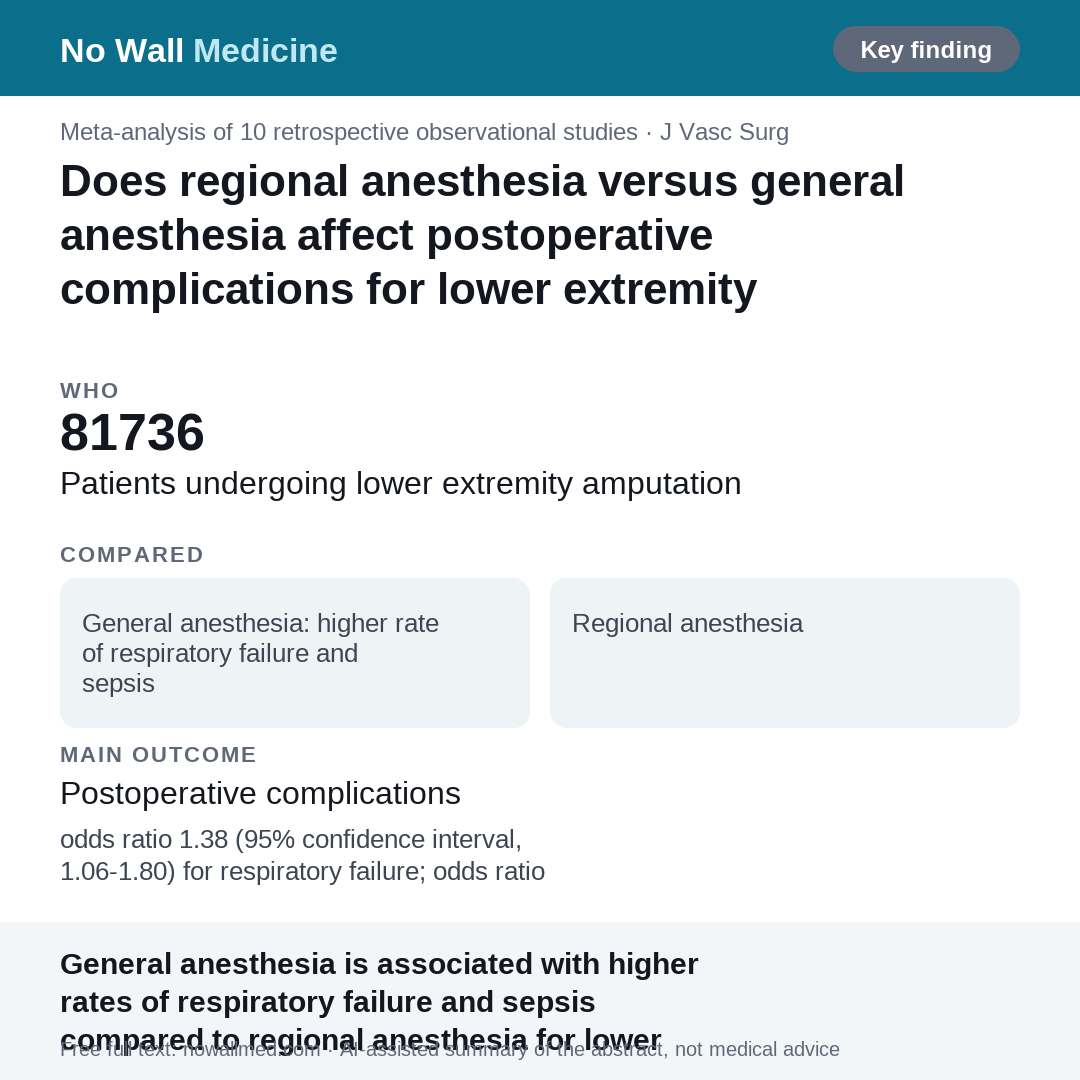
A systematic review and meta-analysis of general versus regional anesthesia for lower extremity amputation
Meta-analysis of 10 retrospective observational studiesKey finding
Does regional anesthesia versus general anesthesia affect postoperative complications for lower extremity amputation?
Who
81736
Patients undergoing lower extremity amputation
Compared
General anesthesia: higher rate of respiratory failure and sepsis
Regional anesthesia
Main outcome
Postoperative complications
Result: odds ratio 1.38 (95% confidence interval, 1.06-1.80) for respiratory failure; odds ratio 1.21 (95% confidence interval, 1.11-1.33) for sepsis
Bottom line: General anesthesia is associated with higher rates of respiratory failure and sepsis compared to regional anesthesia for lower extremity amputation.
J Vasc Surg · 2022-10-13Download image
Circulating fatty acids from high-throughput metabolomics platforms as potential biomarkers of dietary fatty acids
Observational study across multiple cohortsMixed results
Do NMR and LC-MS platforms provide similar fatty acid information compared to gas chromatography?
Who
Pooled population-based cohort, patient cohort, and randomized controlled trial
Compared
NMR platform: r = 0.51-0.81
LC-MS platform: r = 0.44
Main outcome
Correlation of fatty acids between metabolomics platforms and gas chromatography
Bottom line: Nuclear magnetic resonance might be a better option than liquid chromatography mass-spectrometry for certain polyunsaturated fatty acid biomarkers.
Clin Nutr · 2022-10-13Download image

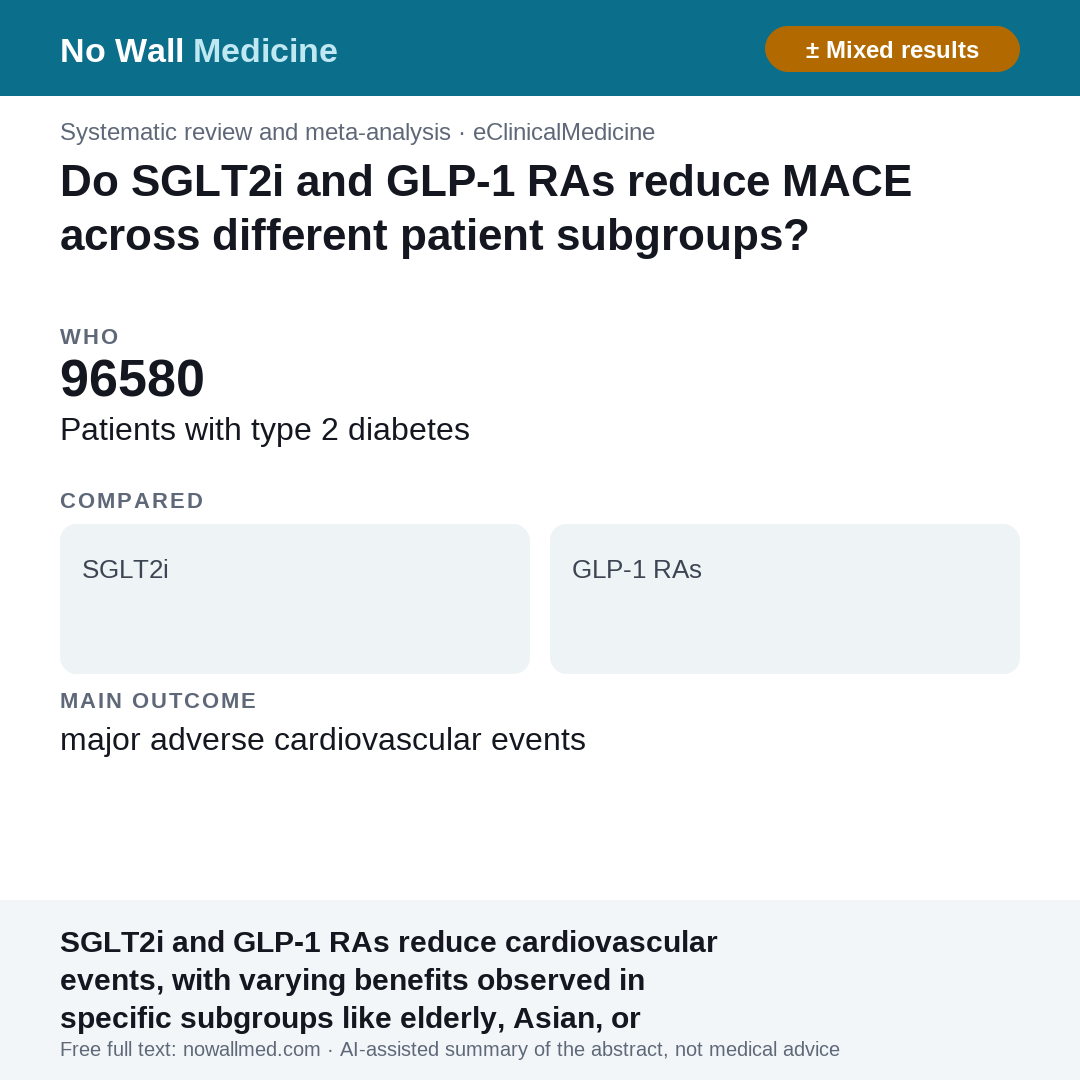
Age, sex, race, BMI, and duration of diabetes differences in cardiovascular outcomes with glucose lowering drugs in type 2 diabetes: A systematic review and meta-analysis
Systematic review and meta-analysisMixed results
Do SGLT2i and GLP-1 RAs reduce MACE across different patient subgroups?
Who
96580
Patients with type 2 diabetes
Compared
SGLT2i
GLP-1 RAs
Main outcome
major adverse cardiovascular events
Bottom line: SGLT2i and GLP-1 RAs reduce cardiovascular events, with varying benefits observed in specific subgroups like elderly, Asian, or long-duration diabetes patients.
Limitation: pooled individual patient-level data are urgently needed to support conclusions and derive definitive evidence
eClinicalMedicine · 2022-10-12Download image
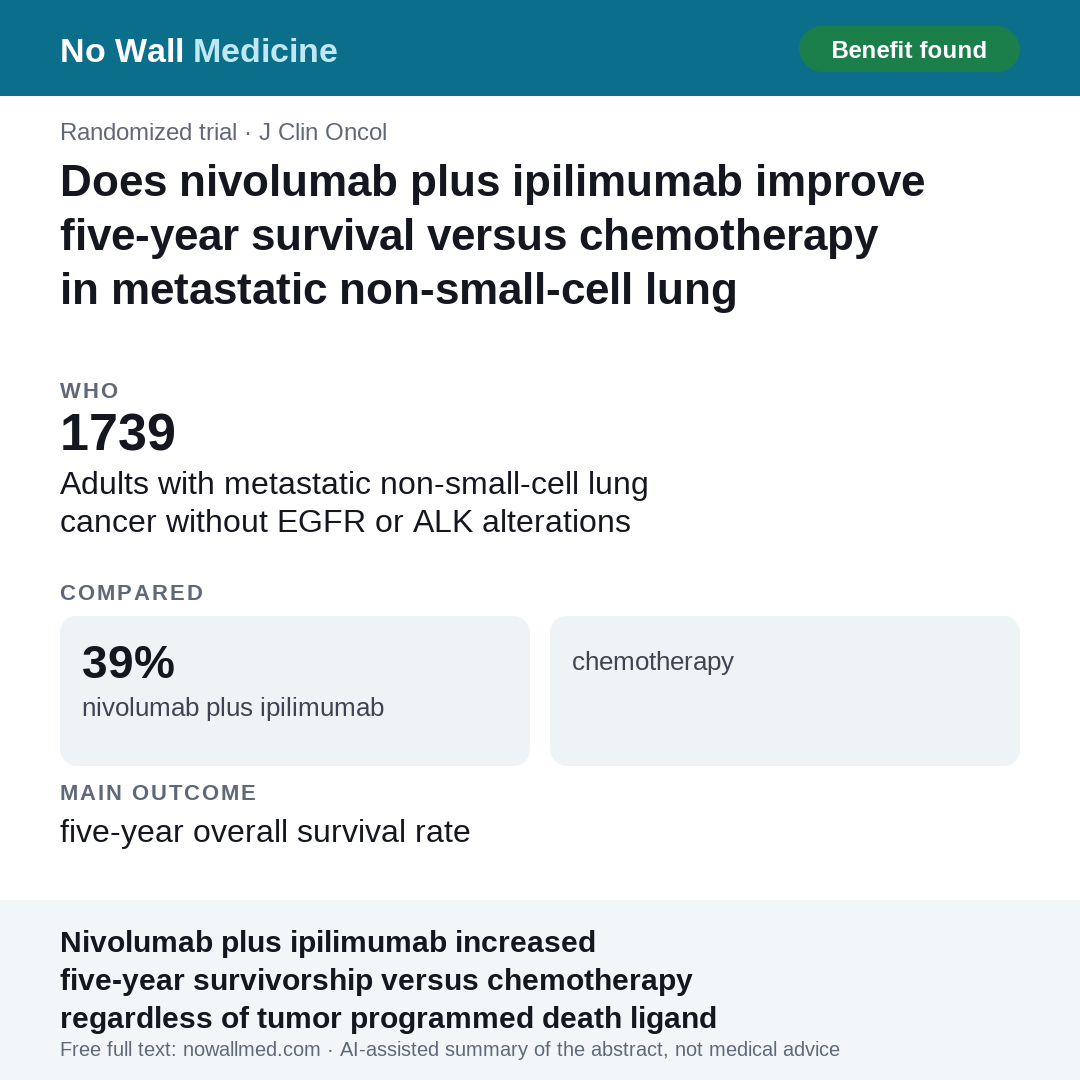
Five-Year Survival Outcomes With Nivolumab Plus Ipilimumab Versus Chemotherapy as First-Line Treatment for Metastatic Non-Small-Cell Lung Cancer in CheckMate 227
Randomized trialBenefit found
Does nivolumab plus ipilimumab improve five-year survival versus chemotherapy in metastatic non-small-cell lung cancer?
Who
1739
Adults with metastatic non-small-cell lung cancer without EGFR or ALK alterations
Compared
39%nivolumab plus ipilimumab
chemotherapy
Main outcome
five-year overall survival rate
Bottom line: Nivolumab plus ipilimumab increased five-year survivorship versus chemotherapy regardless of tumor programmed death ligand 1 expression.
J Clin Oncol · 2022-10-12Download image
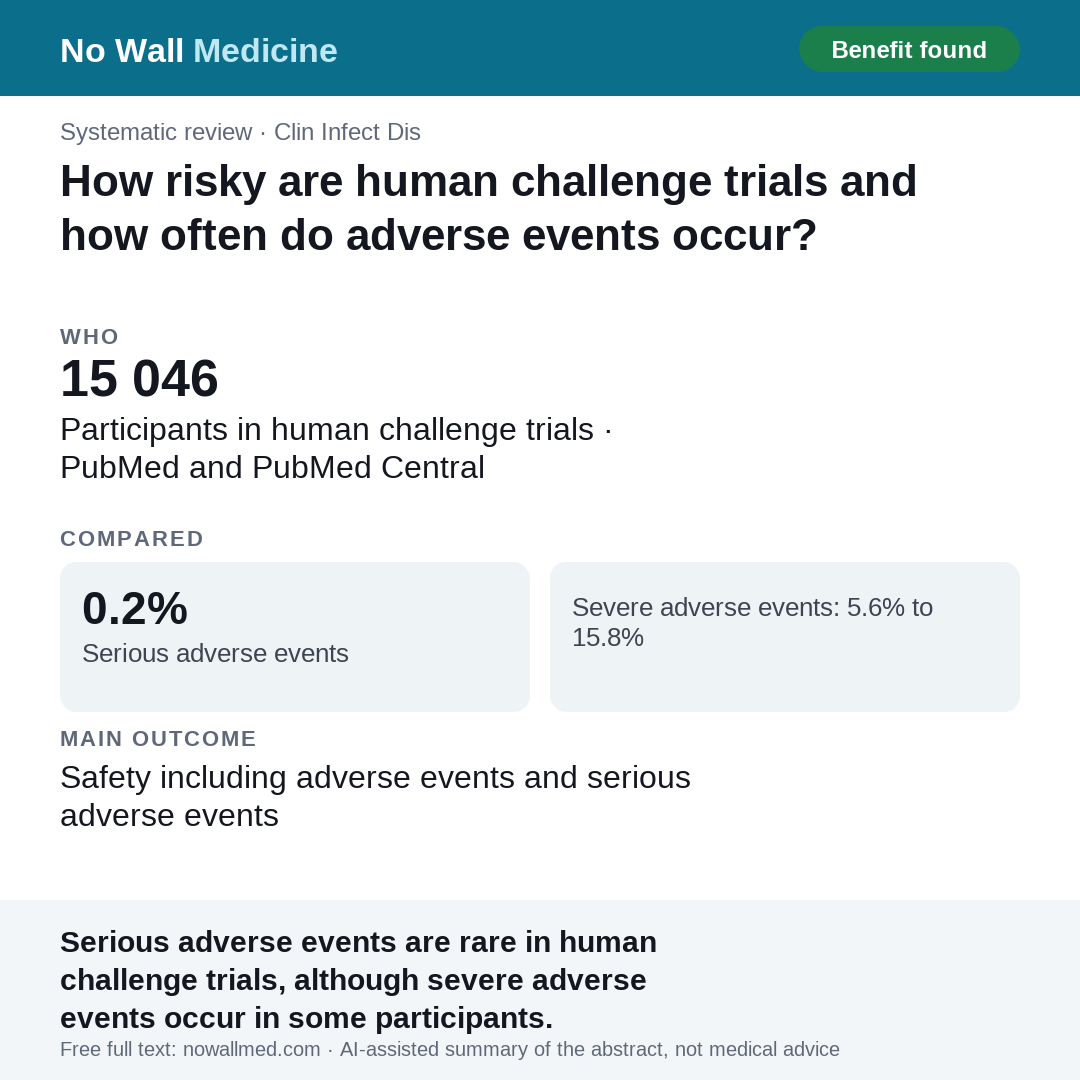
A Systematic Review of Human Challenge Trials, Designs, and Safety
Systematic reviewBenefit found
How risky are human challenge trials and how often do adverse events occur?
Who
15 046
Participants in human challenge trials · PubMed and PubMed Central
Compared
0.2%Serious adverse events
Severe adverse events: 5.6% to 15.8%
Main outcome
Safety including adverse events and serious adverse events
Bottom line: Serious adverse events are rare in human challenge trials, although severe adverse events occur in some participants.
Clin Infect Dis · 2022-10-12Download image
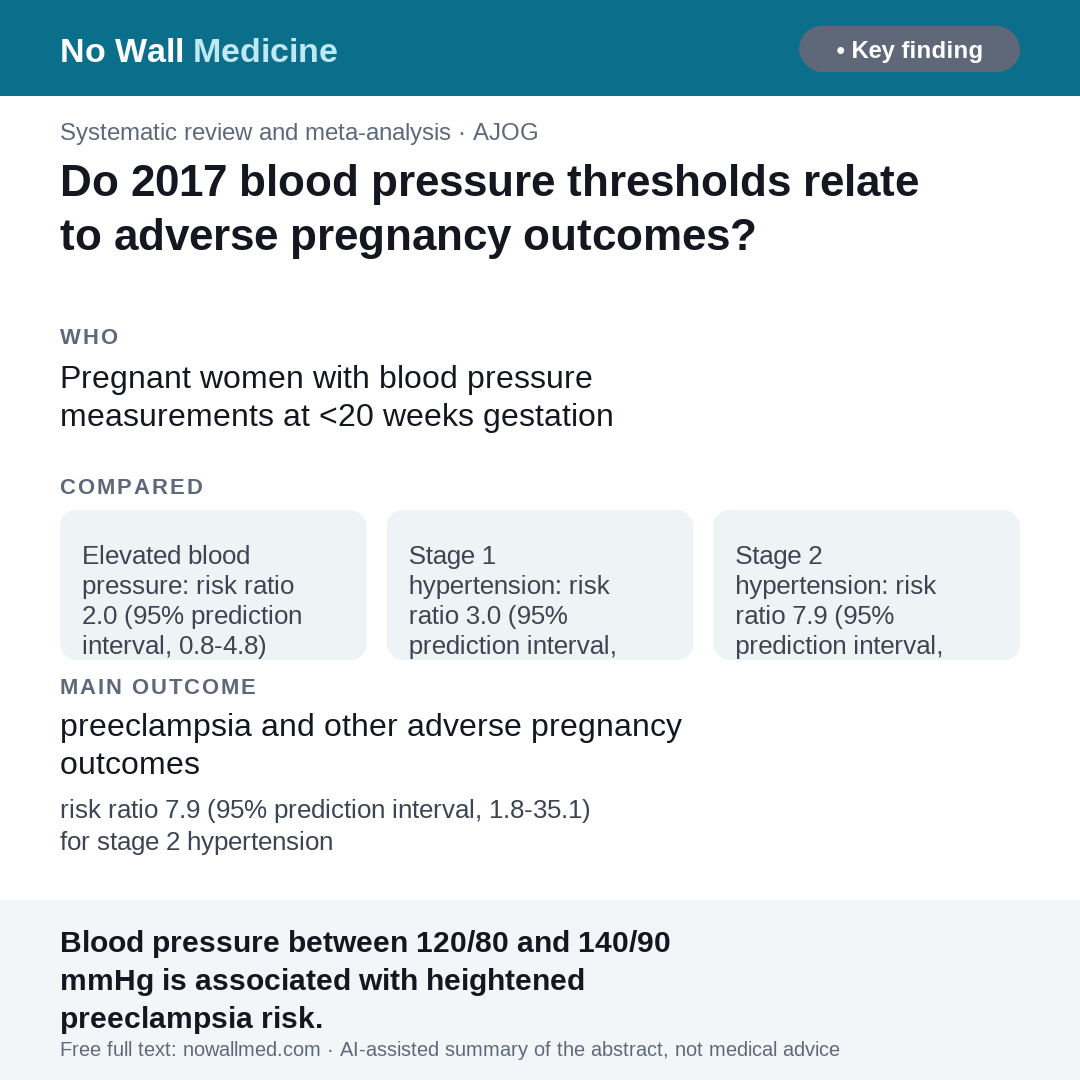
American College of Cardiology and American Heart Association blood pressure categories-a systematic review of the relationship with adverse pregnancy outcomes in the first half of pregnancy
Systematic review and meta-analysisKey finding
Do 2017 blood pressure thresholds relate to adverse pregnancy outcomes?
Who
Pregnant women with blood pressure measurements at <20 weeks gestation
Compared
Elevated blood pressure: risk ratio 2.0 (95% prediction interval, 0.8-4.8)
Stage 1 hypertension: risk ratio 3.0 (95% prediction interval, 1.1-8.5)
Stage 2 hypertension: risk ratio 7.9 (95% prediction interval, 1.8-35.1)
Main outcome
preeclampsia and other adverse pregnancy outcomes
Result: risk ratio 7.9 (95% prediction interval, 1.8-35.1) for stage 2 hypertension
Bottom line: Blood pressure between 120/80 and 140/90 mmHg is associated with heightened preeclampsia risk.
Limitation: Between-study variability was related to the magnitude of the association.
AJOG · 2022-10-12Download image