Visual abstracts
New randomized trials and meta-analyses from leading journals at a glance: who was studied, what was compared, and what was found. Every paper is free to read in full.
All specialtiesCardiology 2428Oncology 2075Gastroenterology & Hepatology 927Infectious Disease 1514Neurology 976Psychiatry & Mental Health 1140Pulmonology 1018Critical Care 678Endocrinology & Diabetes 1265Pediatrics 1427Surgery 1242Orthopedics & Sports Medicine 446Neurosurgery 299Cardiothoracic & Vascular Surgery 268Plastic & Reconstructive Surgery 365Nephrology 506Rheumatology 345Hematology 528Dermatology 278Ophthalmology 286Obstetrics & Gynecology 795Public & Global Health 444Radiology & Imaging 331Anesthesiology 490Urology 408ENT (Otolaryngology) 306Emergency Medicine 277Allergy & Immunology 152Geriatrics 513Family Medicine & Primary Care 282Medical Genetics & Genomics 262Pathology & Laboratory Medicine 77Physical Medicine & Rehabilitation 407Palliative Care 205Nutrition 634Digital Health & AI 1197General Medicine 177
Psychiatric Risk Implications From Behavioral and Neural Effects of Adolescent Exposure to Environmental Insecticides: A Systematic Review of Rodent Studies
Systematic review of rodent studiesHarm found
How does adolescent insecticide exposure affect neurocognitive, neuropsychiatric, and neurobiological outcomes in rodents?
Who
Rodents exposed to insecticides during early, middle, and late adolescence
Compared
Insecticide exposed rodents: learning and memory impairments, increased depression-relevant behaviors, altered locomotor activity
Control rodents
Main outcome
neurocognitive, neuropsychiatric, neurobiological, and general neurotoxicity outcomes
Bottom line: Adolescent insecticide exposure disrupts multiple neural systems, leading to learning impairments and behaviors relevant to psychiatric risk.
Limitation: Future research should model real-world exposures like dose and timing.
Biol Psychiatry · 2026-05-15Download image
Type, severity, frequency and management of adverse reactions associated with ultrasound contrast agents: a systematic review and meta-analysis
Systematic review and meta-analysisBenefit found
What is the incidence, type, and severity of adverse drug reactions associated with ultrasound contrast agents?
Who
Adults and children
Compared
Adults: 6 severe acute cases per 100,000
Children: 16 severe acute cases per 100,000
Main outcome
Incidence of acute and delayed adverse drug reactions
Bottom line: Ultrasound contrast agents show an excellent safety profile with very rare severe adverse reactions in adults and children.
Eur Radiol · 2026-05-15Download image

Effectiveness of interventions on cognitive decline risk for people living with HIV on antiretroviral therapy: a systematic review
Systematic reviewNo clear difference
Do additional interventions reduce cognitive decline risk for people living with HIV on antiretroviral therapy?
Who
Adults aged 18 years and older living with HIV on antiretroviral therapy
Compared
Pharmacological interventions
Non-pharmacological interventions
Main outcome
Incident dementia, incident mild cognitive impairment, or change in cognitive function
Bottom line: No evidence that antiretroviral therapy modification or intensification improves cognitive outcomes or prevents cognitive decline or dementia.
Limitation: Clinical and methodological heterogeneity, incomplete reporting, and uniformly very low certainty evidence.
Lancet Healthy Longev · 2026-05-15Download image

Rapid Relief of Breathlessness With Fast-Acting Opioids and Benzodiazepines: A Systematic Review
Systematic review with narrative synthesisMixed results
Are fast-acting centrally acting drugs effective for rapid relief of spontaneous breathlessness?
Who
334
Adults with advanced or severe acute disease
Compared
Intravenous morphine: mean difference -1.8 cm
Placebo
Subcutaneous morphine: -1.1 cm
Placebo
Main outcome
Breathlessness relief within 20 minutes post-treatment
Result: mean difference -1.8 cm (95% CI -3.0 to -0.6) and -1.1 cm (95% CI -1.9 to -0.3)
Bottom line: Fast-acting morphine may provide relief, but other drugs showed no benefit and serious adverse events occurred.
Limitation: Mostly small crossover trials, varying route, dose, and setting; limited adverse-event monitoring.
J Pain Symptom Manage · 2026-05-15Download image
Healthcare consumers' acceptance and use of digital health technology in LMICs and the role of self-efficacy and facilitating conditions: a systematic review and meta-analysis
Systematic review and meta-analysisMixed results
What are the facilitators and barriers to digital health technology acceptance and use in low- and middle-income countries?
Who
78
Healthcare consumers in low- and middle-income countries
Compared
Attitude: r = 0.5644; 95% CI: 0.4498, 0.6607
Trust: r = 0.5239; 95% CI: 0.4243, 0.6109
Performance expectancy: r = 0.4851; 95% CI: 0.4335, 0.5335
Technology self-efficacy: r = 0.4430; 95% CI: 0.2504, 0.6018
Main outcome
Intentions to use digital health technology
Bottom line: Attitude, trust, and performance expectancy positively influence digital health technology use intentions in low- and middle-income countries.
Lancet Reg Health West Pac · 2026-05-15Download image
Definition and prognostic value of response to prone positioning in ARDS: a systematic review and meta-analysis
Systematic review and meta-analysisUnclear result
How is response to prone positioning defined and associated with mortality in ARDS?
Who
Invasively ventilated patients with acute respiratory distress syndrome
Compared
68%Oxygenation response responders (95% C.I. 63-72%)
Alternative definition responders: 45% to 53%
Main outcome
Proportion of responders and association with mortality
Result: OR 0.41 (95% CI 0.25-0.68)
Bottom line: Definitions of responsiveness vary widely, and the association between physiological response and survival remains limited by bias and heterogeneity.
Limitation: High risk of bias, residual confounding, and substantial between-study heterogeneity.
Crit Care · 2026-05-15Download image
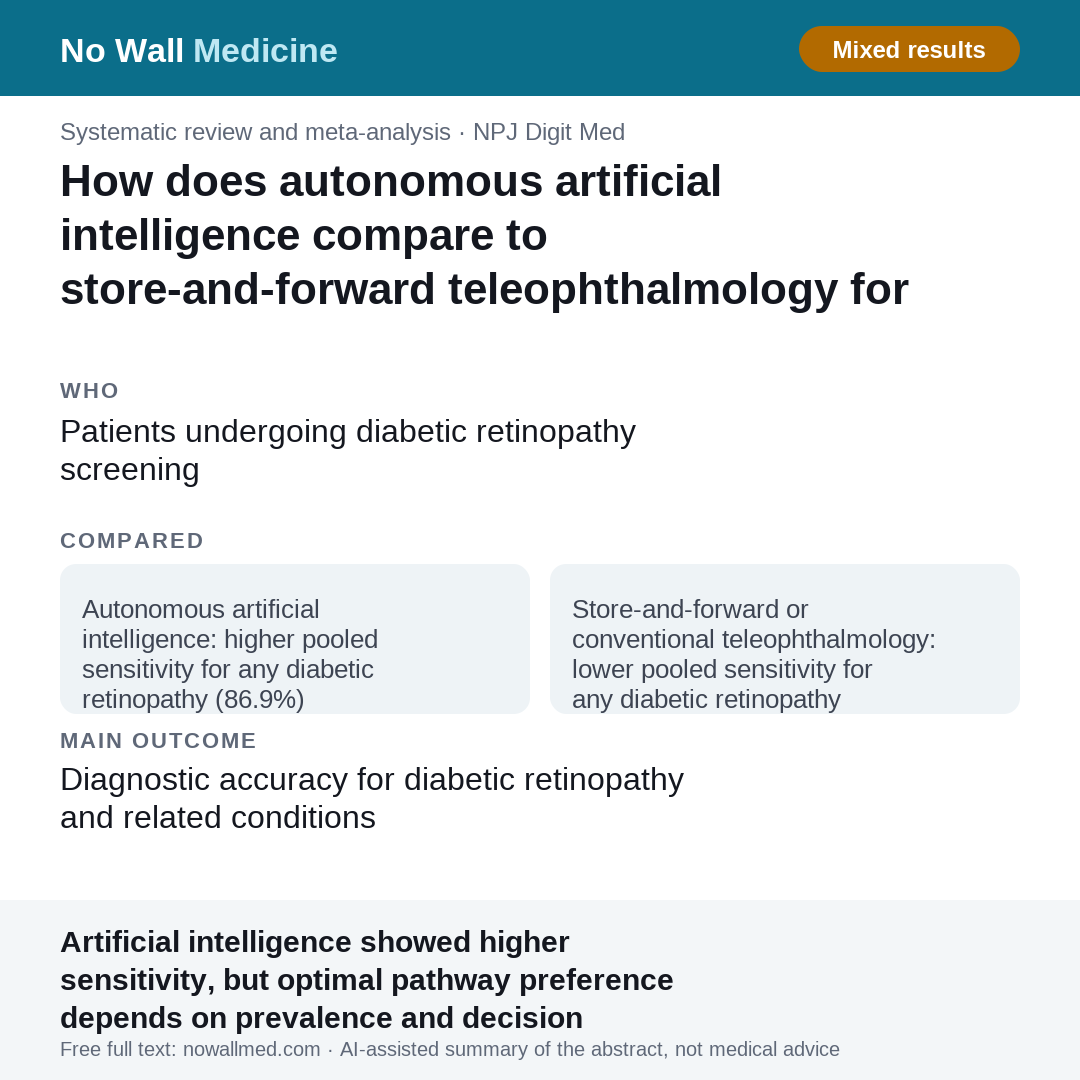
Clinical setting-dependent diagnostic accuracy of artificial intelligence and store-and-forward diabetic retinopathy screening: a systematic review and meta-analysis
Systematic review and meta-analysisMixed results
How does autonomous artificial intelligence compare to store-and-forward teleophthalmology for diabetic retinopathy screening?
Who
Patients undergoing diabetic retinopathy screening
Compared
Autonomous artificial intelligence: higher pooled sensitivity for any diabetic retinopathy (86.9%)
Store-and-forward or conventional teleophthalmology: lower pooled sensitivity for any diabetic retinopathy (80.9%)
Main outcome
Diagnostic accuracy for diabetic retinopathy and related conditions
Bottom line: Artificial intelligence showed higher sensitivity, but optimal pathway preference depends on prevalence and decision thresholds.
NPJ Digit Med · 2026-05-15Download image
Concerns of Using Large Language Models in Health Care Research and Practice: Umbrella Review
Umbrella reviewMixed results
What are the concerns of health care professionals and researchers regarding large language models?
Who
42
Researchers and clinicians in various medical specialties
Compared
Technical capability
Ethical, legal, and societal
Costs
Main outcome
Commonly raised concerns regarding large language model use
Bottom line: Concerns include technical capability, ethical, legal, and societal issues, and costs regarding large language model use in health care.
Limitation: The included reviews were of very poor quality and overlap between primary studies could not be determined.
J Med Internet Res · 2026-05-15Download image

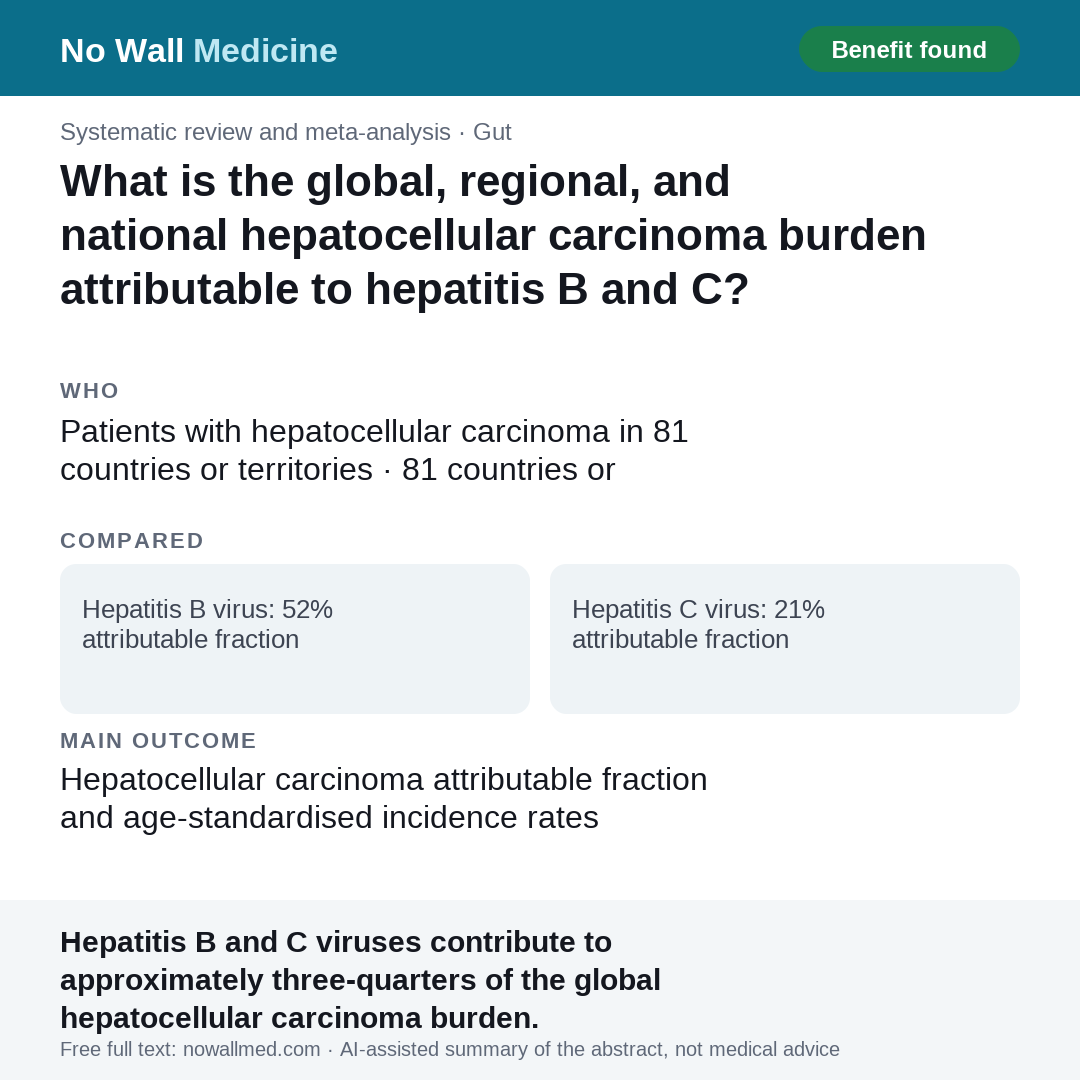
Hepatocellular carcinoma attributable to hepatitis B, hepatitis C and other risk factors at global, regional and national levels: an updated systematic review and meta-analysis
Systematic review and meta-analysisBenefit found
What is the global, regional, and national hepatocellular carcinoma burden attributable to hepatitis B and C?
Who
Patients with hepatocellular carcinoma in 81 countries or territories · 81 countries or territories
Compared
Hepatitis B virus: 52% attributable fraction
Hepatitis C virus: 21% attributable fraction
Main outcome
Hepatocellular carcinoma attributable fraction and age-standardised incidence rates
Bottom line: Hepatitis B and C viruses contribute to approximately three-quarters of the global hepatocellular carcinoma burden.
Gut · 2026-05-14Download image
Rectus sheath catheters versus thoracic epidural analgesia for pain management after open surgery: systematic review and meta-analysis
Meta-analysis of randomized trialsBenefit found
Are rectus sheath catheters or thoracic epidural analgesia better for pain management after open surgery?
Who
2162
Adult patients undergoing open abdominal, pelvic, thoracic, or vascular surgery
Compared
Rectus sheath catheters
Thoracic epidural analgesia
Main outcome
Analgesic efficacy, complications, recovery, patient satisfaction, and costs
Result: standardized mean difference -0.35 (95% c.i. -2.01 to 1.32) for postoperative pain
Bottom line: Rectus sheath catheters provide comparable analgesia to thoracic epidural analgesia with fewer complications and potential cost savings.
Br J Surg · 2026-05-14Download image

A meta-analysis of preventive psychosocial interventions against depressive and anxiety symptoms in older adults
Meta-analysis of 58 randomized controlled trialsBenefit found
Are psychosocial interventions effective in preventing depressive and anxiety symptoms in older adults?
Who
Older adults aged 60 years or older with subclinical symptoms
Compared
Psychosocial interventions: depression d = -0.474; anxiety d = -0.333
Control
Main outcome
Depressive and anxiety symptoms
Result: depression d = -0.474; anxiety d = -0.333
Bottom line: Psychosocial interventions provide moderate reductions in depressive symptoms and small-to-moderate reductions in anxiety symptoms in older adults.
Psychol Med · 2026-05-14Download image

Shared genetic architecture of gray matter deficits in schizophrenia and bipolar disorder: evidence from structural neuroimaging-genetic analyses
Meta-analysis and genome-wide association studiesBenefit found
What are the shared genetic and neuroanatomical mechanisms of gray matter deficits in schizophrenia and bipolar disorder?
Who
Patients with schizophrenia and bipolar disorder · UK Biobank
Compared
Schizophrenia and bipolar disorder patients: consistent overlapping gray matter volume reductions
Controls
Main outcome
Gray matter volume alterations and genetic associations
Bottom line: Schizophrenia and bipolar disorder share overlapping gray matter volume reductions linked to specific genetic risk and pleiotropic single nucleotide polymorphisms.
Psychol Med · 2026-05-14Download image

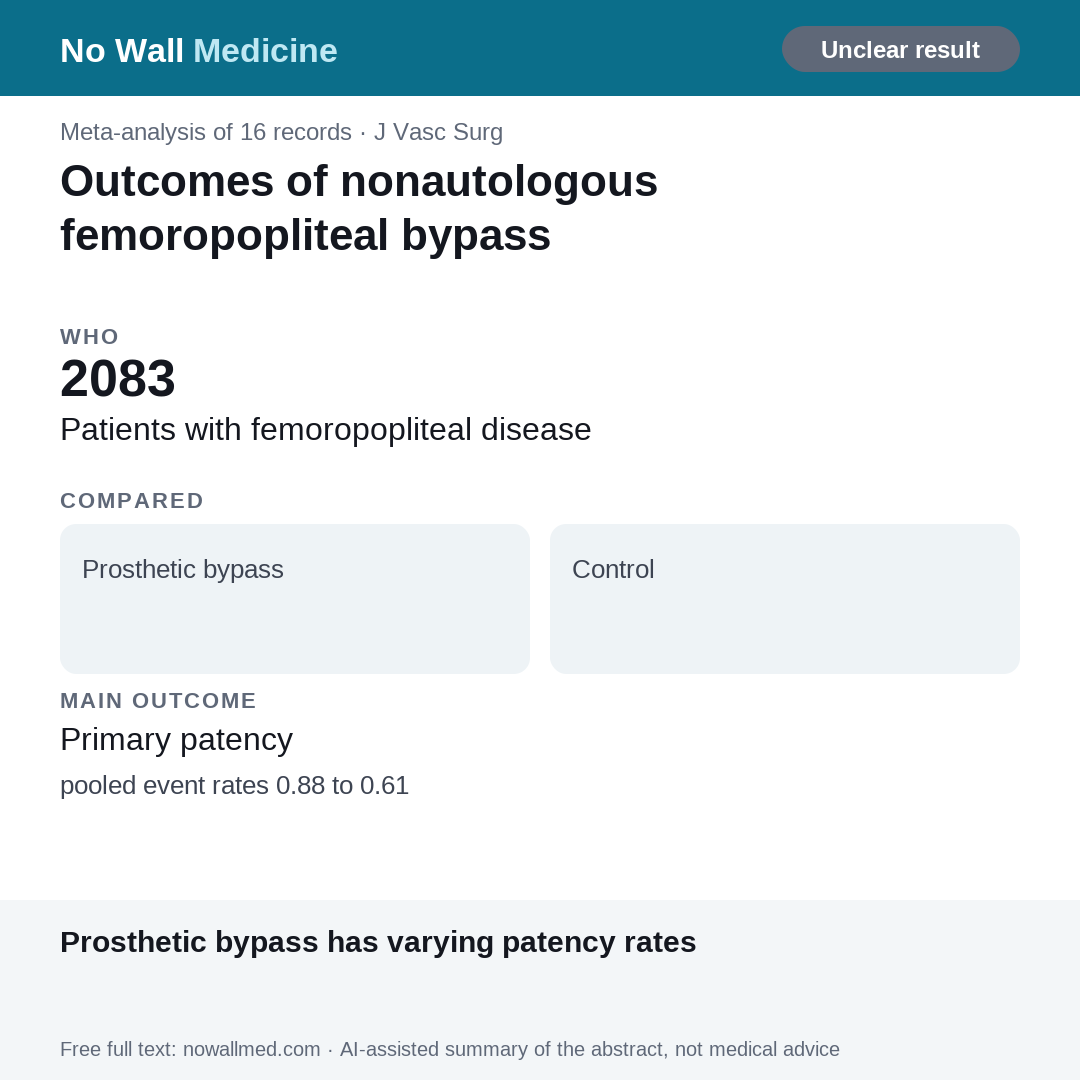
Contemporary systematic review and meta-analysis of outcomes associated with femoropopliteal above-the-knee nonautologous surgical bypass
Meta-analysis of 16 recordsUnclear result
Outcomes of nonautologous femoropopliteal bypass
Who
2083
Patients with femoropopliteal disease
Compared
Prosthetic bypass
Control
Main outcome
Primary patency
Result: pooled event rates 0.88 to 0.61
Bottom line: Prosthetic bypass has varying patency rates
J Vasc Surg · 2026-05-14Download image
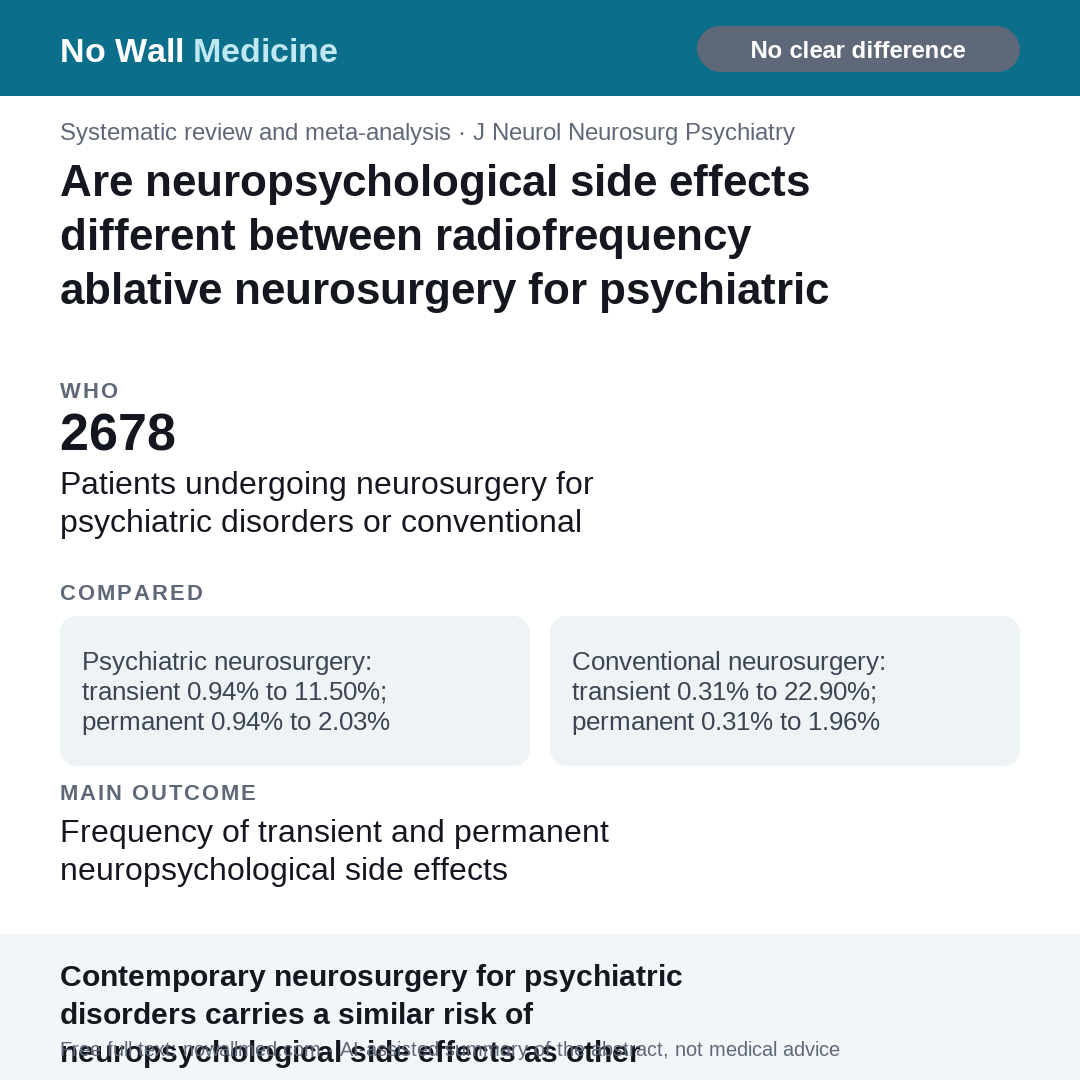
Comparison of neuropsychological side effects between contemporary radiofrequency ablative neurosurgery for psychiatric disorders and conventional neurosurgical procedures: systematic review and meta-analysis
Systematic review and meta-analysisNo clear difference
Are neuropsychological side effects different between radiofrequency ablative neurosurgery for psychiatric disorders and conventional neurosurgery?
Who
2678
Patients undergoing neurosurgery for psychiatric disorders or conventional neurosurgical procedures
Compared
Psychiatric neurosurgery: transient 0.94% to 11.50%; permanent 0.94% to 2.03%
Conventional neurosurgery: transient 0.31% to 22.90%; permanent 0.31% to 1.96%
Main outcome
Frequency of transient and permanent neuropsychological side effects
Bottom line: Contemporary neurosurgery for psychiatric disorders carries a similar risk of neuropsychological side effects as other conventional neurosurgical procedures.
J Neurol Neurosurg Psychiatry · 2026-05-14Download image
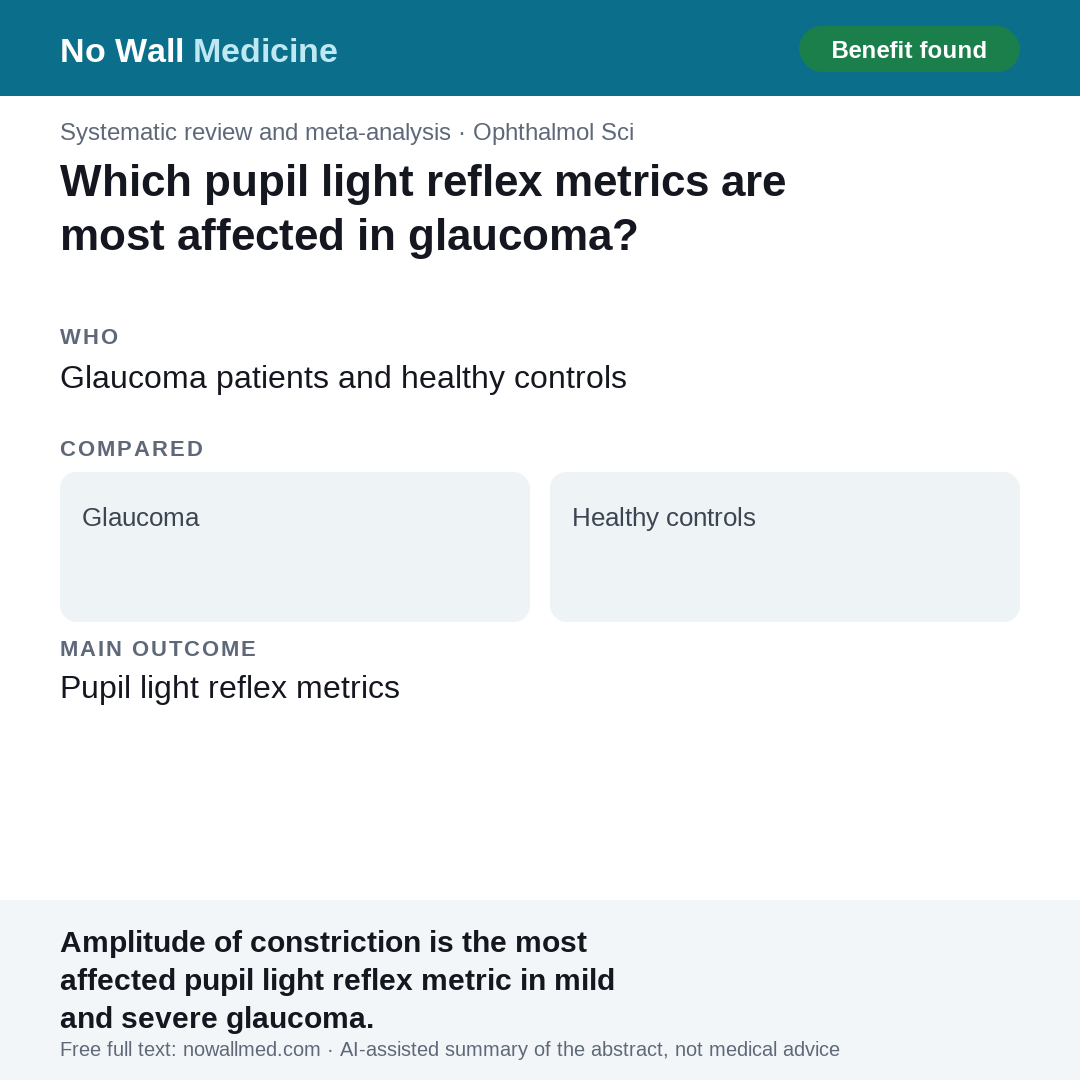
Assessing Pupil Light Reflex Metrics in Glaucoma: Insights from a Systematic Review and Meta-Analysis
Systematic review and meta-analysisBenefit found
Which pupil light reflex metrics are most affected in glaucoma?
Who
Glaucoma patients and healthy controls
Compared
Glaucoma
Healthy controls
Main outcome
Pupil light reflex metrics
Bottom line: Amplitude of constriction is the most affected pupil light reflex metric in mild and severe glaucoma.
Ophthalmol Sci · 2026-05-14Download image
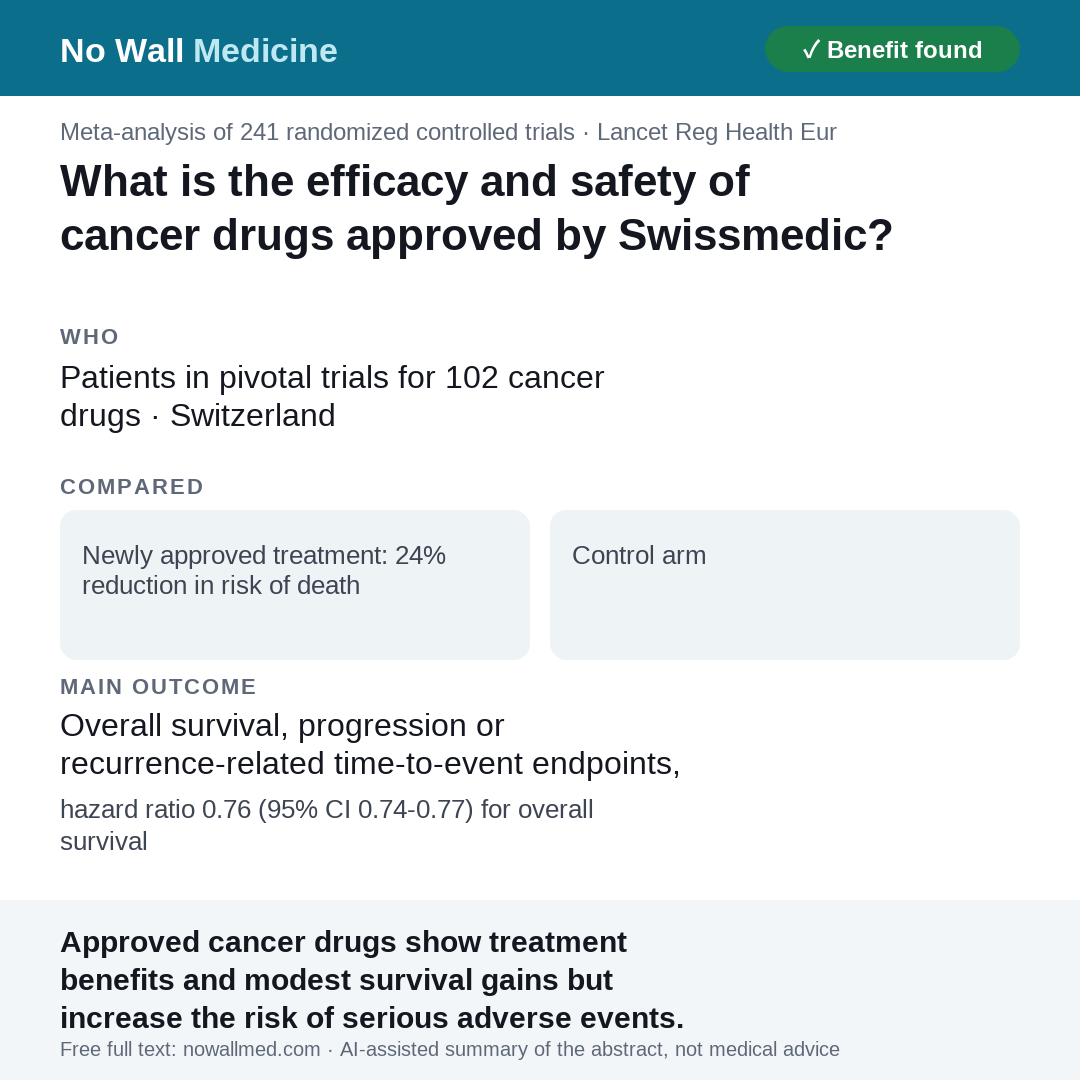
Efficacy and Safety Evidence Supporting Cancer Drug Approvals in Switzerland (2001-2020): A Meta-Analysis of Pivotal Randomised Controlled Trials
Meta-analysis of 241 randomized controlled trialsBenefit found
What is the efficacy and safety of cancer drugs approved by Swissmedic?
Who
241
Patients in pivotal trials for 102 cancer drugs · Switzerland
Compared
Newly approved treatment: 24% reduction in risk of death
Control arm
Main outcome
Overall survival, progression or recurrence-related time-to-event endpoints, and serious adverse events
Result: hazard ratio 0.76 (95% CI 0.74-0.77) for overall survival
Bottom line: Approved cancer drugs show treatment benefits and modest survival gains but increase the risk of serious adverse events.
Limitation: Reliance on early endpoints and limited availability of long-term overall survival data.
Funded by: University of Zurich
Lancet Reg Health Eur · 2026-05-14Download image
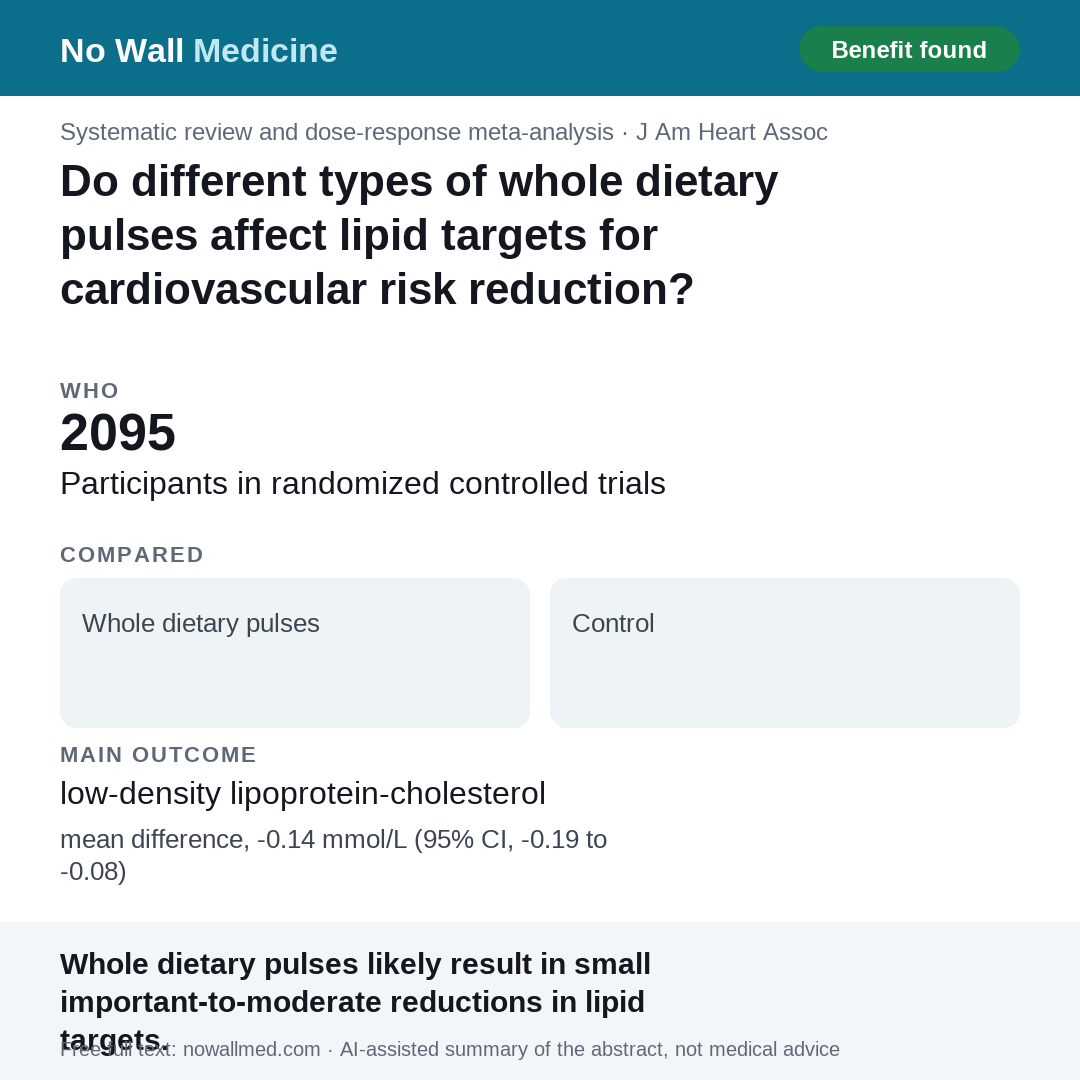
Effect of Different Types of Whole Dietary Pulses on Established Therapeutic Lipid Targets for Cardiovascular Risk Reduction: An Updated Systematic Review and Dose-Response Meta-Analysis of Randomized Controlled Trials
Systematic review and dose-response meta-analysisBenefit found
Do different types of whole dietary pulses affect lipid targets for cardiovascular risk reduction?
Who
2095
Participants in randomized controlled trials
Compared
Whole dietary pulses
Control
Main outcome
low-density lipoprotein-cholesterol
Result: mean difference, -0.14 mmol/L (95% CI, -0.19 to -0.08)
Bottom line: Whole dietary pulses likely result in small important-to-moderate reductions in lipid targets.
Limitation: Certainty of evidence was very low for apolipoprotein B.
J Am Heart Assoc · 2026-05-14Download image
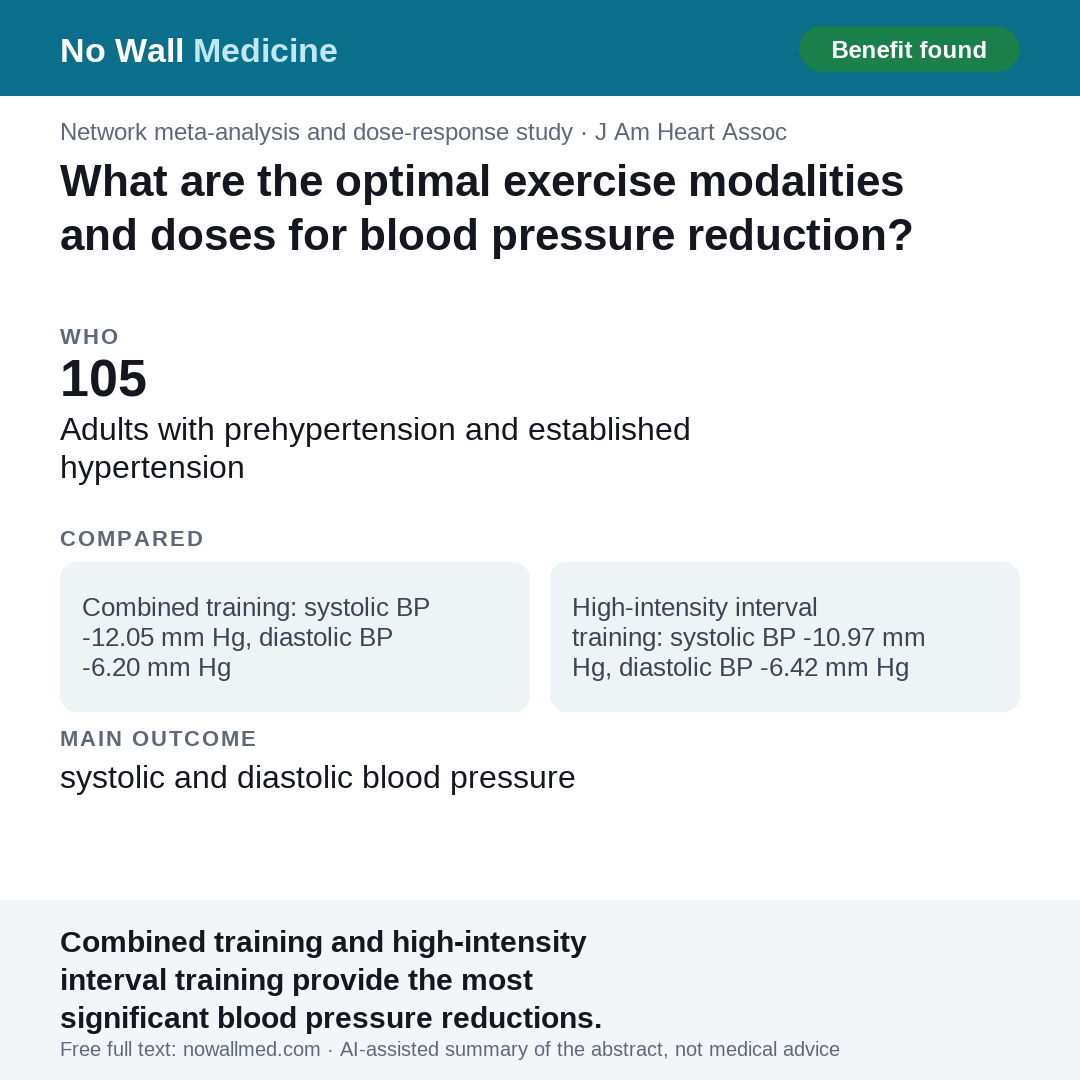
Optimal Exercise Modalities and Dosages for Blood Pressure Reduction in Adults With Prehypertension and Established Hypertension: A Network Meta-Analysis and Dose-Response Relationship Study
Network meta-analysis and dose-response studyBenefit found
What are the optimal exercise modalities and doses for blood pressure reduction?
Who
105
Adults with prehypertension and established hypertension
Compared
Combined training: systolic BP -12.05 mm Hg, diastolic BP -6.20 mm Hg
High-intensity interval training: systolic BP -10.97 mm Hg, diastolic BP -6.42 mm Hg
Main outcome
systolic and diastolic blood pressure
Bottom line: Combined training and high-intensity interval training provide the most significant blood pressure reductions.
J Am Heart Assoc · 2026-05-14Download image
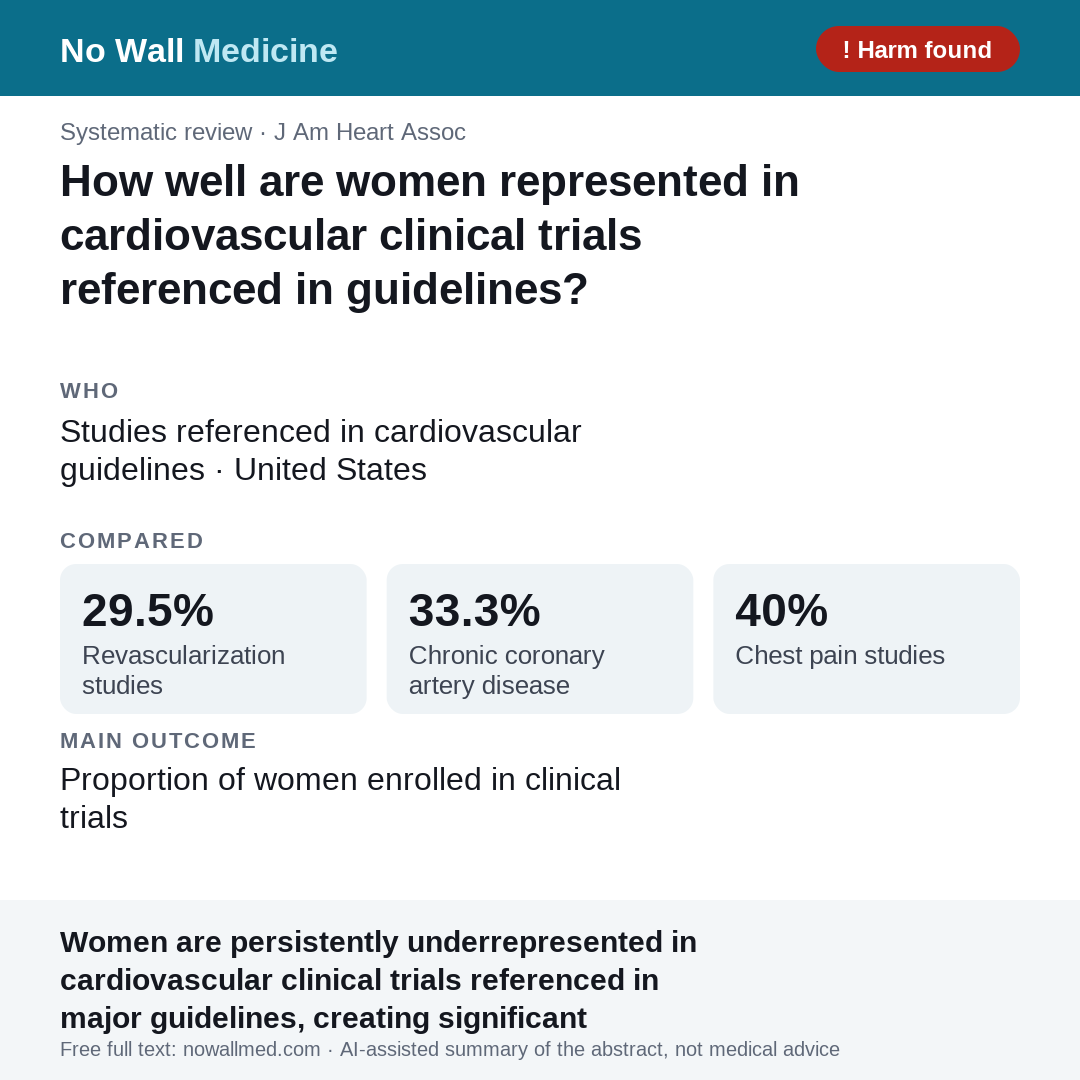
Closing the Gap: Examining Representation of Women in Ischemic Heart Disease Guideline Studies
Systematic reviewHarm found
How well are women represented in cardiovascular clinical trials referenced in guidelines?
Who
1690
Studies referenced in cardiovascular guidelines · United States
Compared
29.5%Revascularization studies
33.3%Chronic coronary artery disease studies
40%Chest pain studies
Main outcome
Proportion of women enrolled in clinical trials
Bottom line: Women are persistently underrepresented in cardiovascular clinical trials referenced in major guidelines, creating significant representation gaps.
J Am Heart Assoc · 2026-05-14Download image
Machine Learning and Deep Learning Models for Predicting Future Falls in Community-Dwelling Older Adults: Systematic Review and Meta-Analysis of Longitudinal Evidence
Meta-analysis of 28 studiesBenefit found
Can machine learning predict falls
Who
community-dwelling older adults
Compared
Machine Learning
Deep Learning
Main outcome
future falls
Result: pooled AUC 0.79 (95% CI 0.69-0.87)
Bottom line: Machine learning models predict falls
Limitation: high risk of bias and limited validation
J Med Internet Res · 2026-05-14Download image