Visual abstracts
New randomized trials and meta-analyses from leading journals at a glance: who was studied, what was compared, and what was found. Every paper is free to read in full.
All specialtiesCardiology 4763Oncology 4042Gastroenterology & Hepatology 1902Infectious Disease 3756Neurology 1872Psychiatry & Mental Health 2214Pulmonology 2042Critical Care 1319Endocrinology & Diabetes 2544Pediatrics 2889Surgery 2479Orthopedics & Sports Medicine 917Neurosurgery 525Cardiothoracic & Vascular Surgery 656Plastic & Reconstructive Surgery 574Nephrology 1107Rheumatology 810Hematology 1090Dermatology 611Ophthalmology 532Obstetrics & Gynecology 1645Public & Global Health 1037Radiology & Imaging 617Anesthesiology 957Urology 745ENT (Otolaryngology) 494Emergency Medicine 481Allergy & Immunology 309Geriatrics 972Family Medicine & Primary Care 533Medical Genetics & Genomics 659Pathology & Laboratory Medicine 156Physical Medicine & Rehabilitation 734Palliative Care 421Nutrition 1560Digital Health & AI 2133General Medicine 318
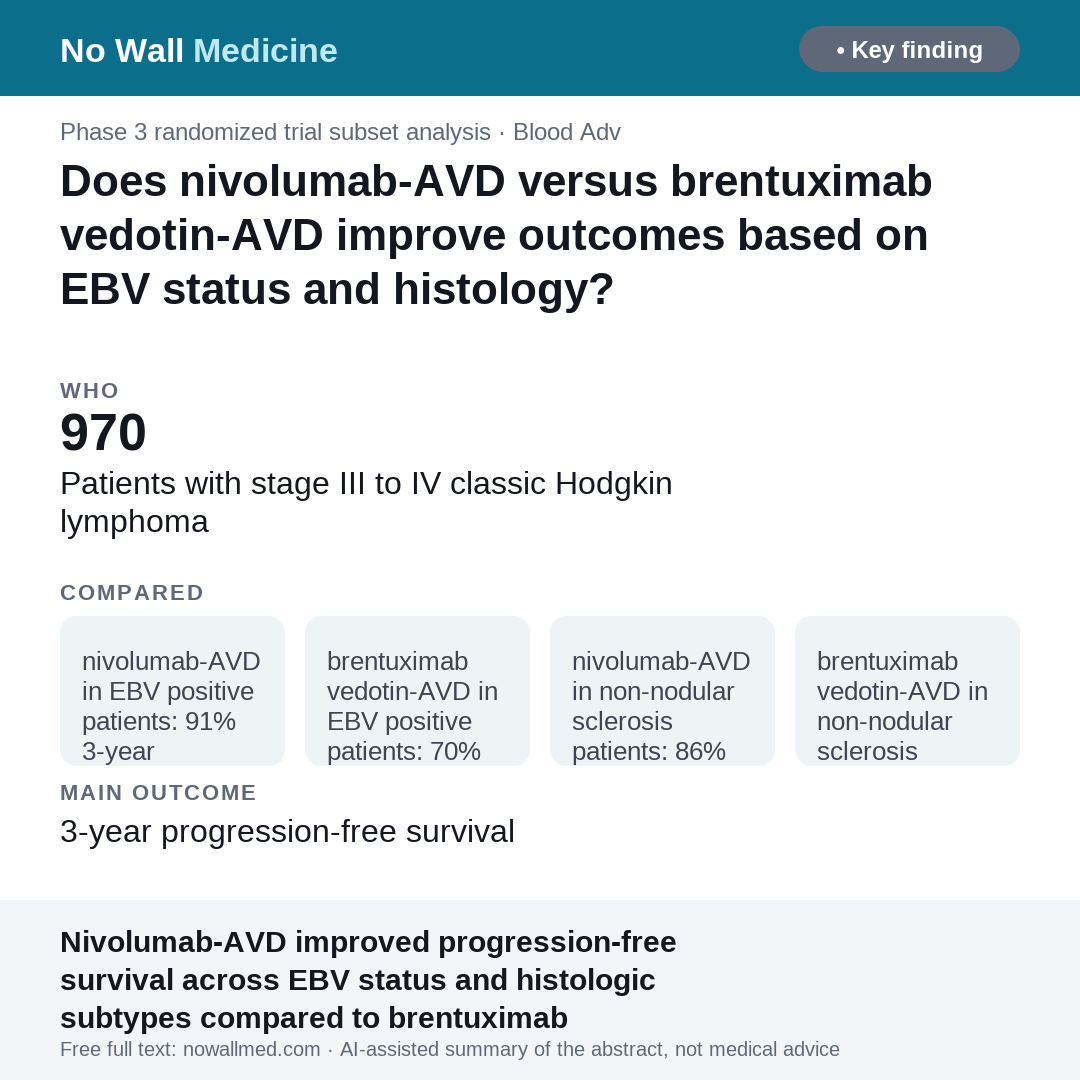
Impact of EBV status and histology on patient outcomes with nivolumab-AVD vs BV-AVD in advanced classic Hodgkin lymphoma (S1826)
Phase 3 randomized trial subset analysisKey finding
Does nivolumab-AVD versus brentuximab vedotin-AVD improve outcomes based on EBV status and histology?
Who
970
Patients with stage III to IV classic Hodgkin lymphoma
Compared
nivolumab-AVD in EBV positive patients: 91% 3-year progression-free survival
brentuximab vedotin-AVD in EBV positive patients: 70% 3-year progression-free survival
nivolumab-AVD in non-nodular sclerosis patients: 86% 3-year progression-free survival
brentuximab vedotin-AVD in non-nodular sclerosis patients: 63% 3-year progression-free survival
Main outcome
3-year progression-free survival
Result: hazard ratio 0.30 (EBV+) and hazard ratio 0.33 (non-NS)
Bottom line: Nivolumab-AVD improved progression-free survival across EBV status and histologic subtypes compared to brentuximab vedotin-AVD.
Limitation: Subset analysis based on known EBV status and available histology slides.
Blood Adv · 2026-07-30Download image
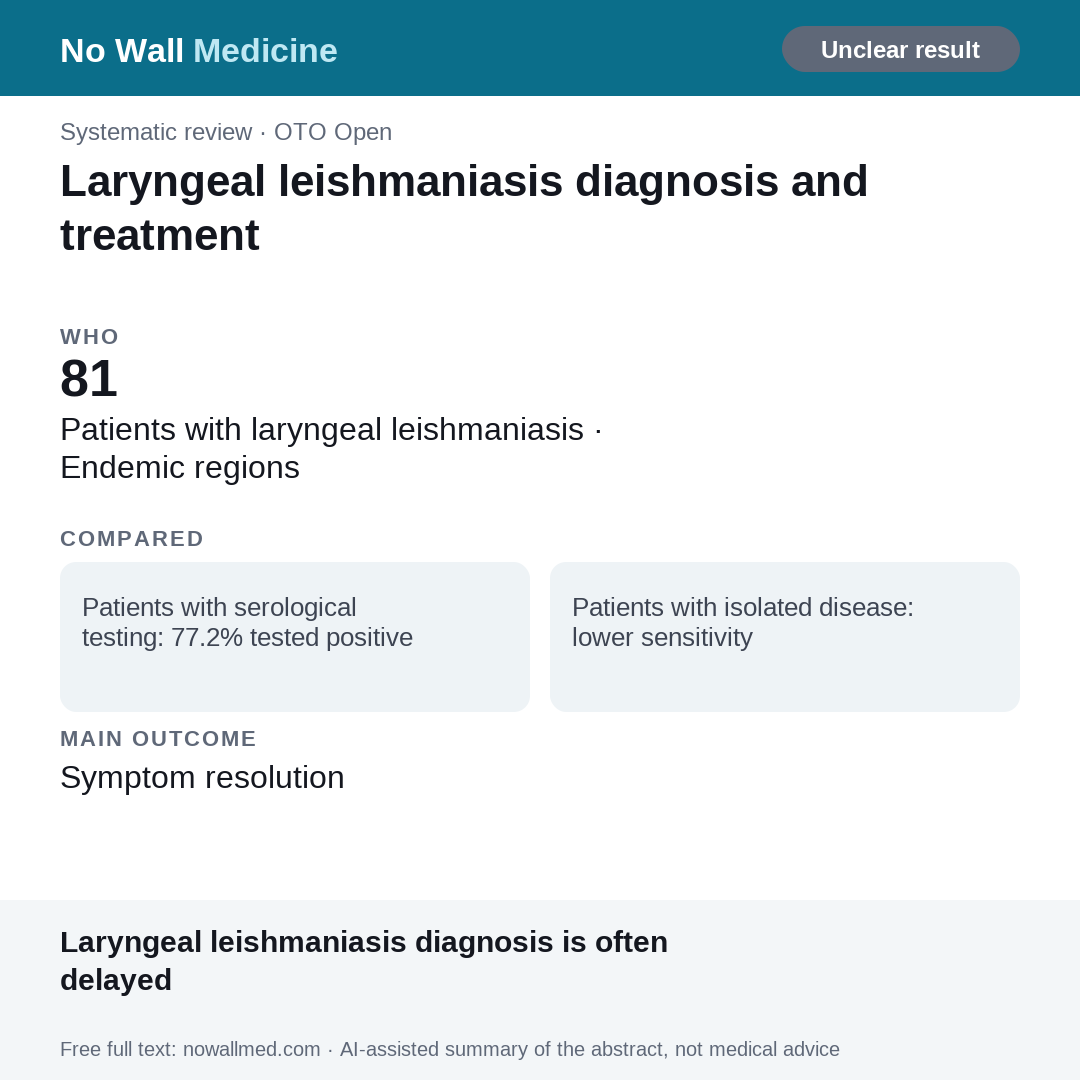
Clinical and Diagnostic Considerations in Laryngeal Leishmaniasis: A Systematic Review
Systematic reviewUnclear result
Laryngeal leishmaniasis diagnosis and treatment
Who
81
Patients with laryngeal leishmaniasis · Endemic regions
Compared
Patients with serological testing: 77.2% tested positive
Patients with isolated disease: lower sensitivity
Main outcome
Symptom resolution
Bottom line: Laryngeal leishmaniasis diagnosis is often delayed
OTO Open · 2026-07-30Download image
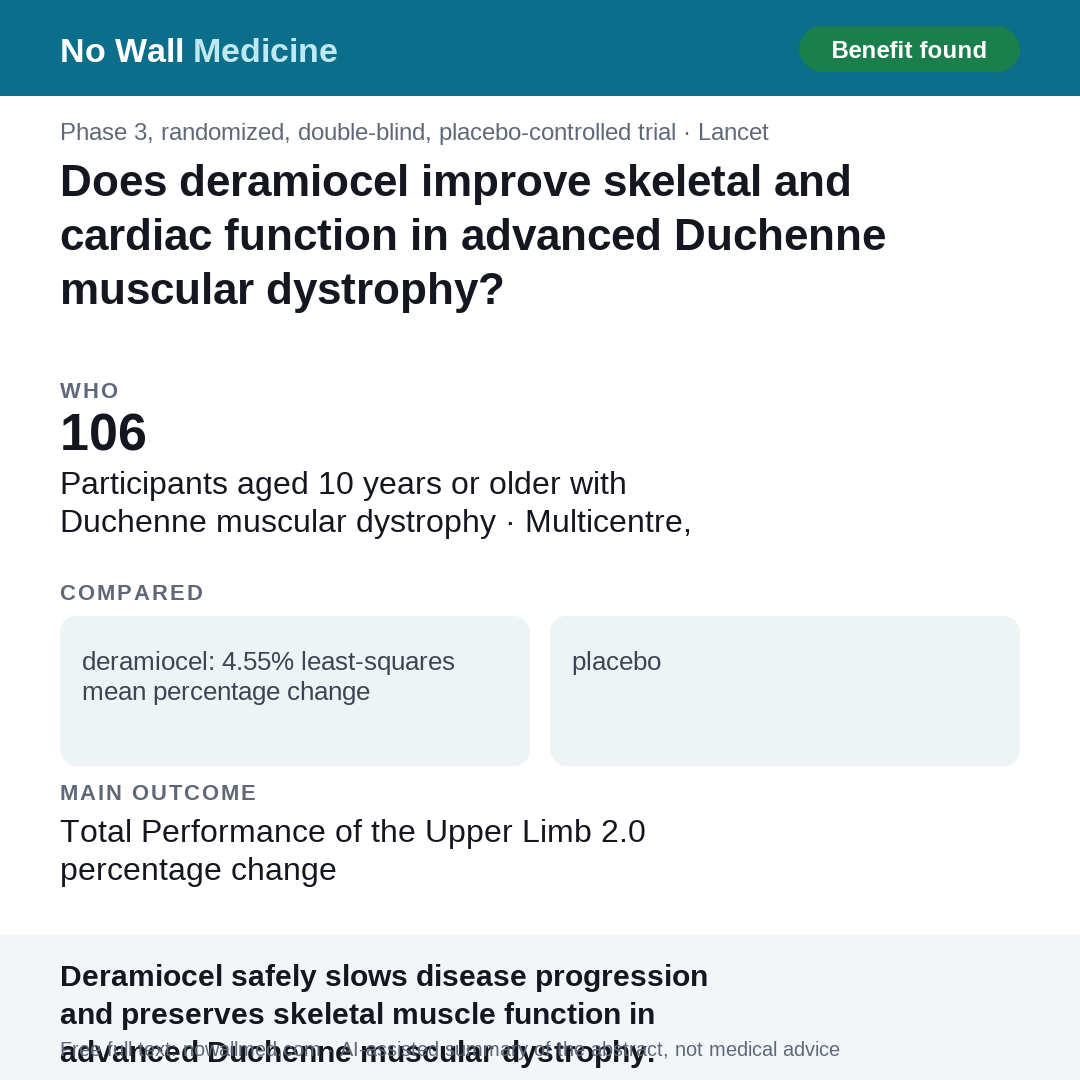
Deramiocel heart-derived cellular therapy in advanced Duchenne muscular dystrophy (HOPE-3): a phase 3, randomised, double-blind, placebo-controlled trial
Phase 3, randomized, double-blind, placebo-controlled trialBenefit found
Does deramiocel improve skeletal and cardiac function in advanced Duchenne muscular dystrophy?
Who
106
Participants aged 10 years or older with Duchenne muscular dystrophy · Multicentre, outpatient settings
Compared
deramiocel: 4.55% least-squares mean percentage change
placebo
Main outcome
Total Performance of the Upper Limb 2.0 percentage change
Result: 4.55% (95% CI 0.47-8.63; p=0.029)
Bottom line: Deramiocel safely slows disease progression and preserves skeletal muscle function in advanced Duchenne muscular dystrophy.
Funded by: Capricor Therapeutics
Lancet · 2026-07-29Download image
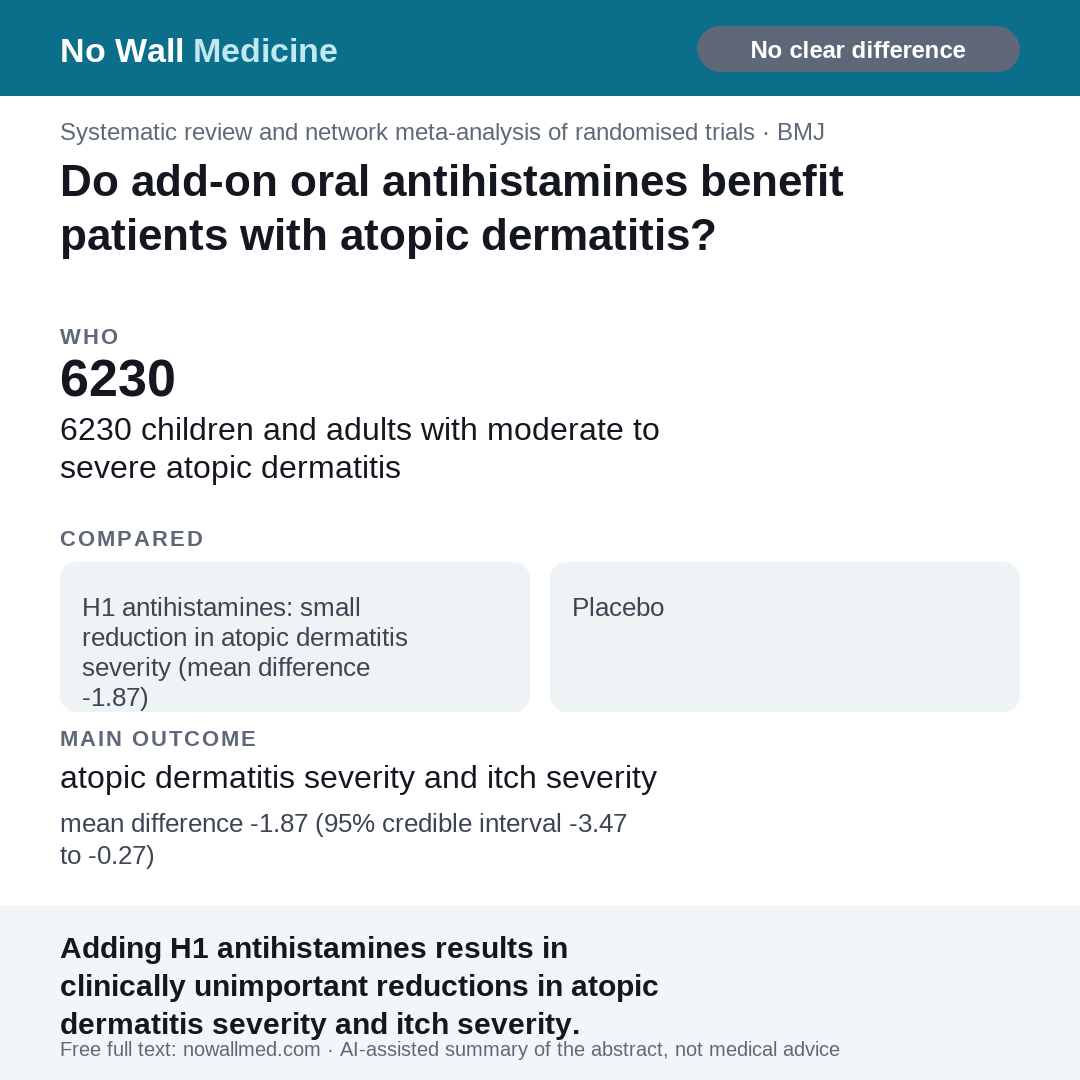
Antihistamines for atopic dermatitis (eczema): systematic review and network meta-analysis of randomised trials
Systematic review and network meta-analysis of randomised trialsNo clear difference
Do add-on oral antihistamines benefit patients with atopic dermatitis?
Who
6230
6230 children and adults with moderate to severe atopic dermatitis
Compared
H1 antihistamines: small reduction in atopic dermatitis severity (mean difference -1.87)
Placebo
Main outcome
atopic dermatitis severity and itch severity
Result: mean difference -1.87 (95% credible interval -3.47 to -0.27)
Bottom line: Adding H1 antihistamines results in clinically unimportant reductions in atopic dermatitis severity and itch severity.
Limitation: Effects are well below established minimal important differences.
BMJ · 2026-07-29Download image
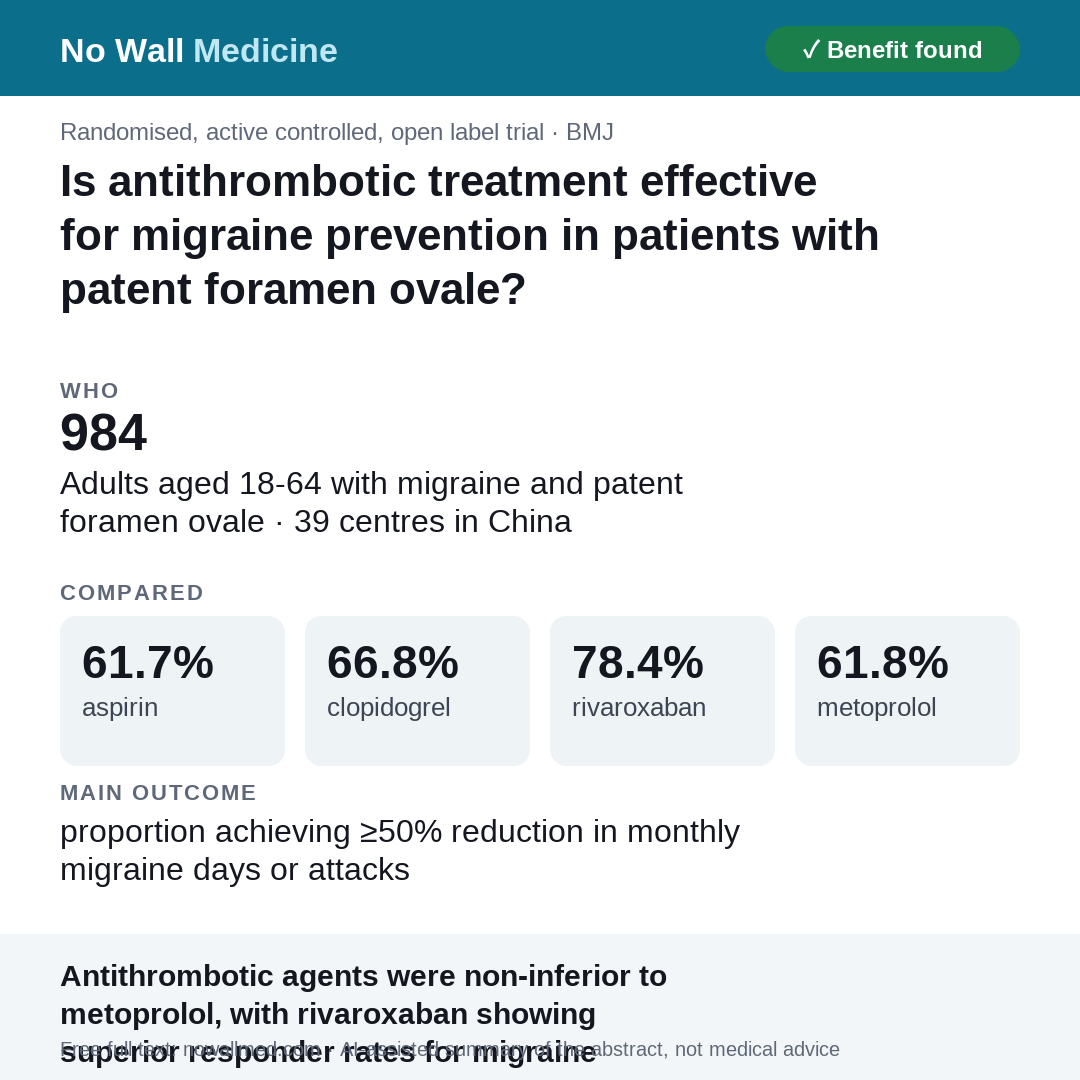
Antithrombotic treatment for migraine in patients with patent foramen ovale: multicentre, randomised, active controlled, open label trial
Randomised, active controlled, open label trialBenefit found
Is antithrombotic treatment effective for migraine prevention in patients with patent foramen ovale?
Who
984
Adults aged 18-64 with migraine and patent foramen ovale · 39 centres in China
Compared
61.7%aspirin (148/240)
66.8%clopidogrel (157/235)
78.4%rivaroxaban (185/236)
61.8%metoprolol (144/233)
Main outcome
proportion achieving ≥50% reduction in monthly migraine days or attacks
Result: absolute difference 16.2% (98.33% confidence interval 6.0 to 26.4)
Bottom line: Antithrombotic agents were non-inferior to metoprolol, with rivaroxaban showing superior responder rates for migraine prevention.
BMJ · 2026-07-29Download image
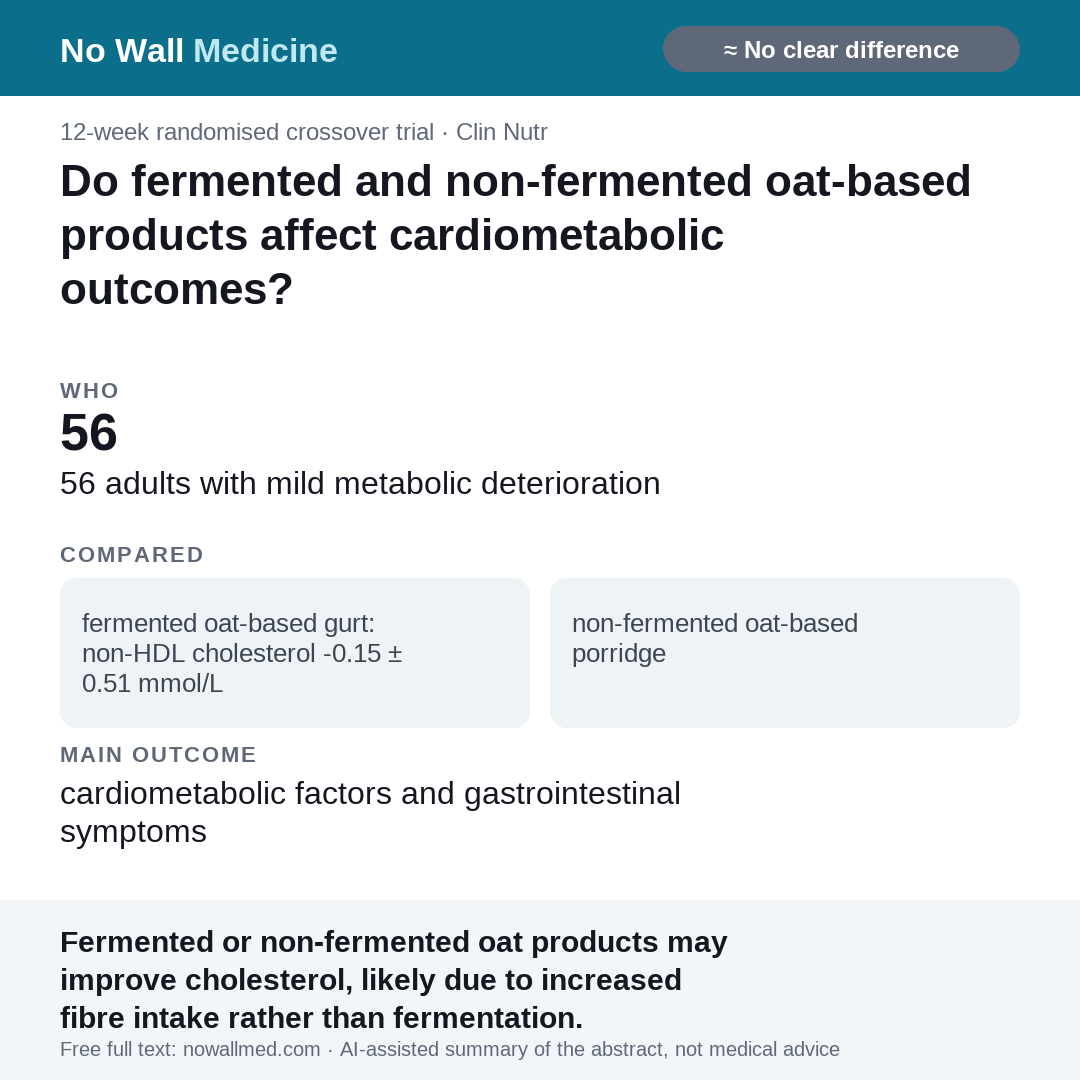
Role of bioprocessing in modifying cardiometabolic outcomes of an oat-based dairy alternative in a randomised controlled clinical intervention
12-week randomised crossover trialNo clear difference
Do fermented and non-fermented oat-based products affect cardiometabolic outcomes?
Who
56
56 adults with mild metabolic deterioration
Compared
fermented oat-based gurt: non-HDL cholesterol -0.15 ± 0.51 mmol/L
non-fermented oat-based porridge
Main outcome
cardiometabolic factors and gastrointestinal symptoms
Bottom line: Fermented or non-fermented oat products may improve cholesterol, likely due to increased fibre intake rather than fermentation.
Clin Nutr · 2026-07-29Download image
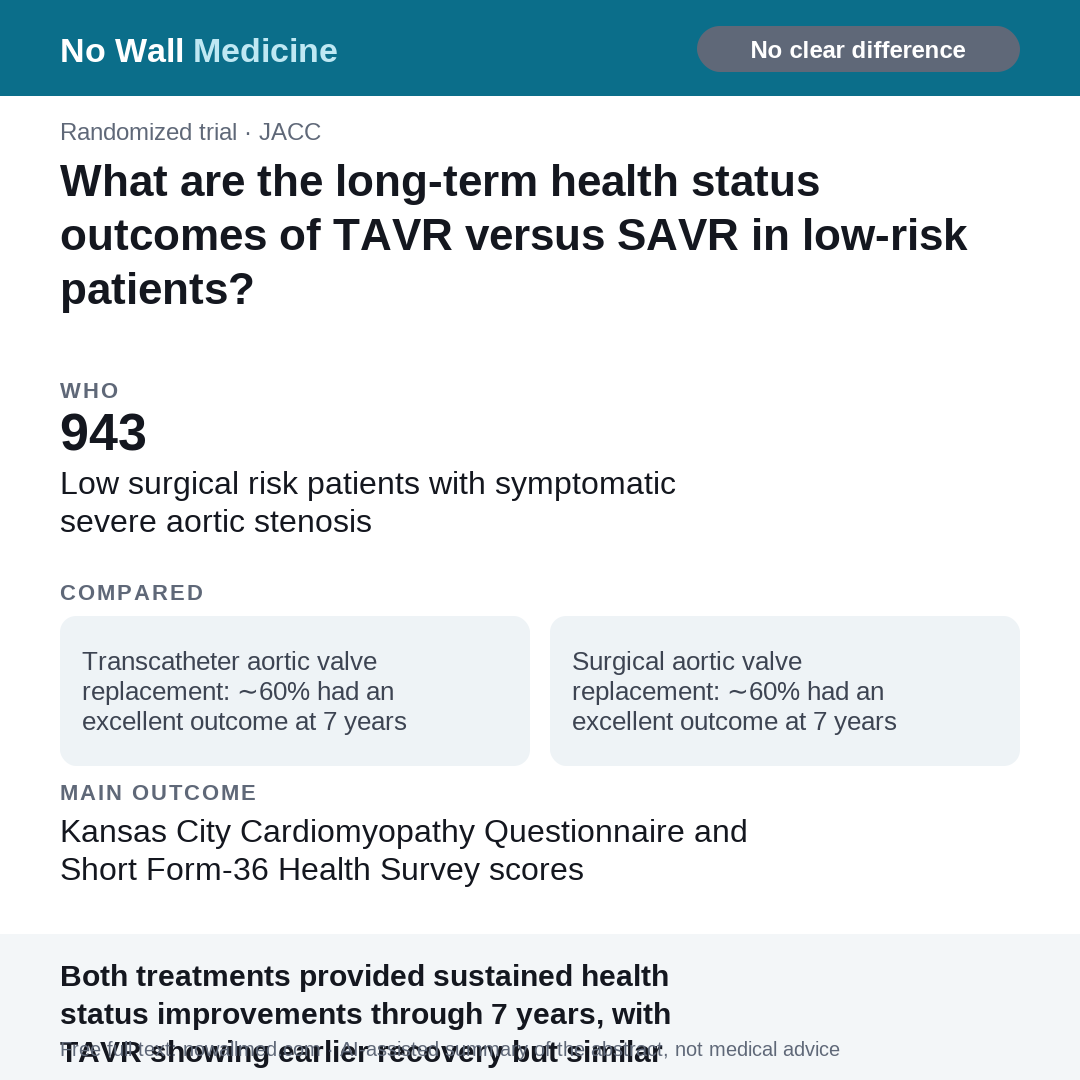
Health Status Outcomes 7 Years After Transcatheter or Surgical Aortic Valve Replacement in Low-Surgical Risk Patients With Aortic Stenosis
Randomized trialNo clear difference
What are the long-term health status outcomes of TAVR versus SAVR in low-risk patients?
Who
943
Low surgical risk patients with symptomatic severe aortic stenosis
Compared
Transcatheter aortic valve replacement: ∼60% had an excellent outcome at 7 years
Surgical aortic valve replacement: ∼60% had an excellent outcome at 7 years
Main outcome
Kansas City Cardiomyopathy Questionnaire and Short Form-36 Health Survey scores
Result: mean difference at 2 years: +1.9 points (95% CI 0.2-3.7)
Bottom line: Both treatments provided sustained health status improvements through 7 years, with TAVR showing earlier recovery but similar long-term outcomes.
JACC · 2026-07-29Download image
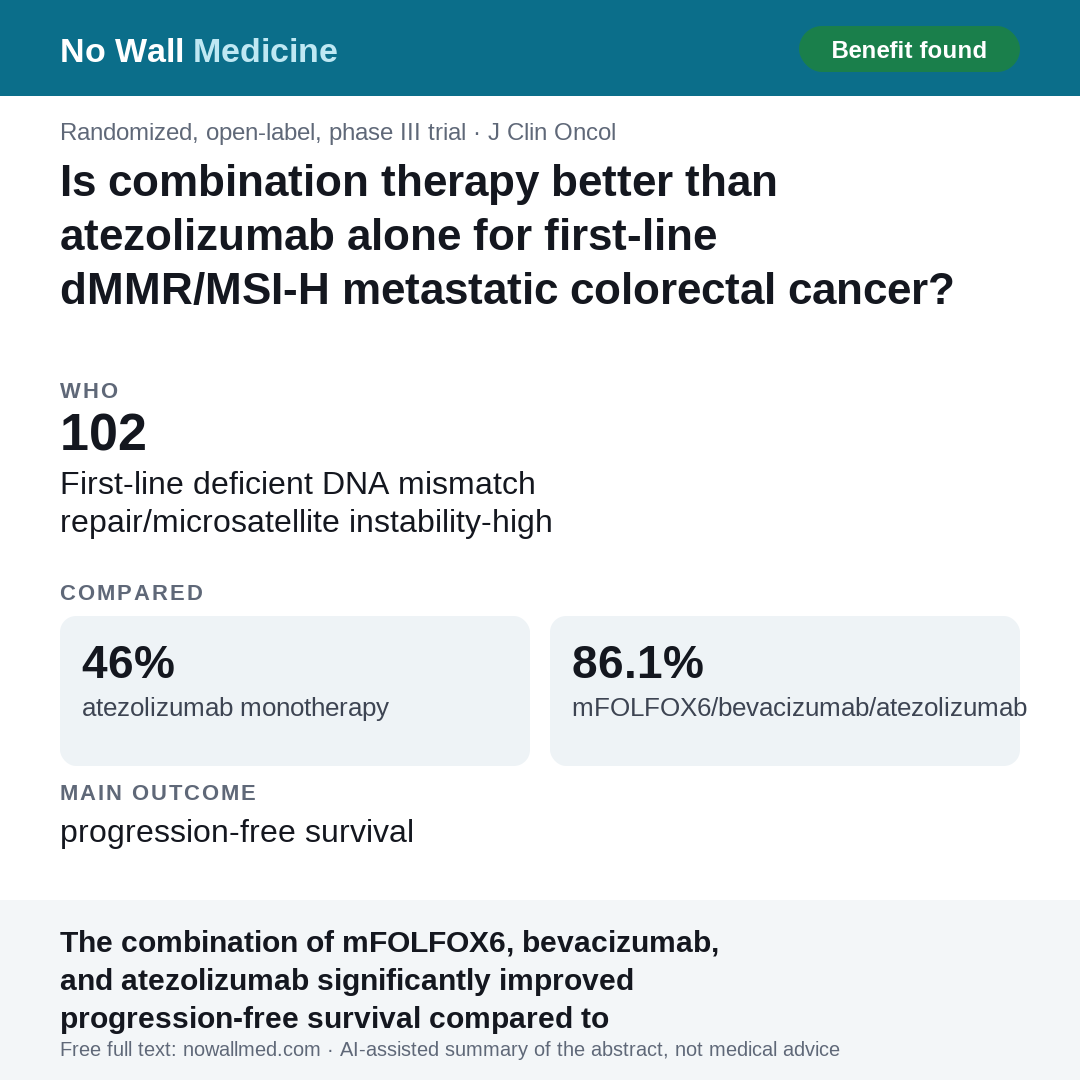
COMMIT: A Randomized Study of mFOLFOX6/Bevacizumab/Atezolizumab or Atezolizumab Alone as First-Line Treatment of Deficient DNA Mismatch Repair Metastatic Colorectal Cancer
Randomized, open-label, phase III trialBenefit found
Is combination therapy better than atezolizumab alone for first-line dMMR/MSI-H metastatic colorectal cancer?
Who
102
First-line deficient DNA mismatch repair/microsatellite instability-high metastatic colorectal cancer patients
Compared
46%atezolizumab monotherapy
86.1%mFOLFOX6/bevacizumab/atezolizumab
Main outcome
progression-free survival
Result: hazard ratio 0.439 (95% CI 0.23 to 0.84)
Bottom line: The combination of mFOLFOX6, bevacizumab, and atezolizumab significantly improved progression-free survival compared to atezolizumab alone.
J Clin Oncol · 2026-07-29Download image
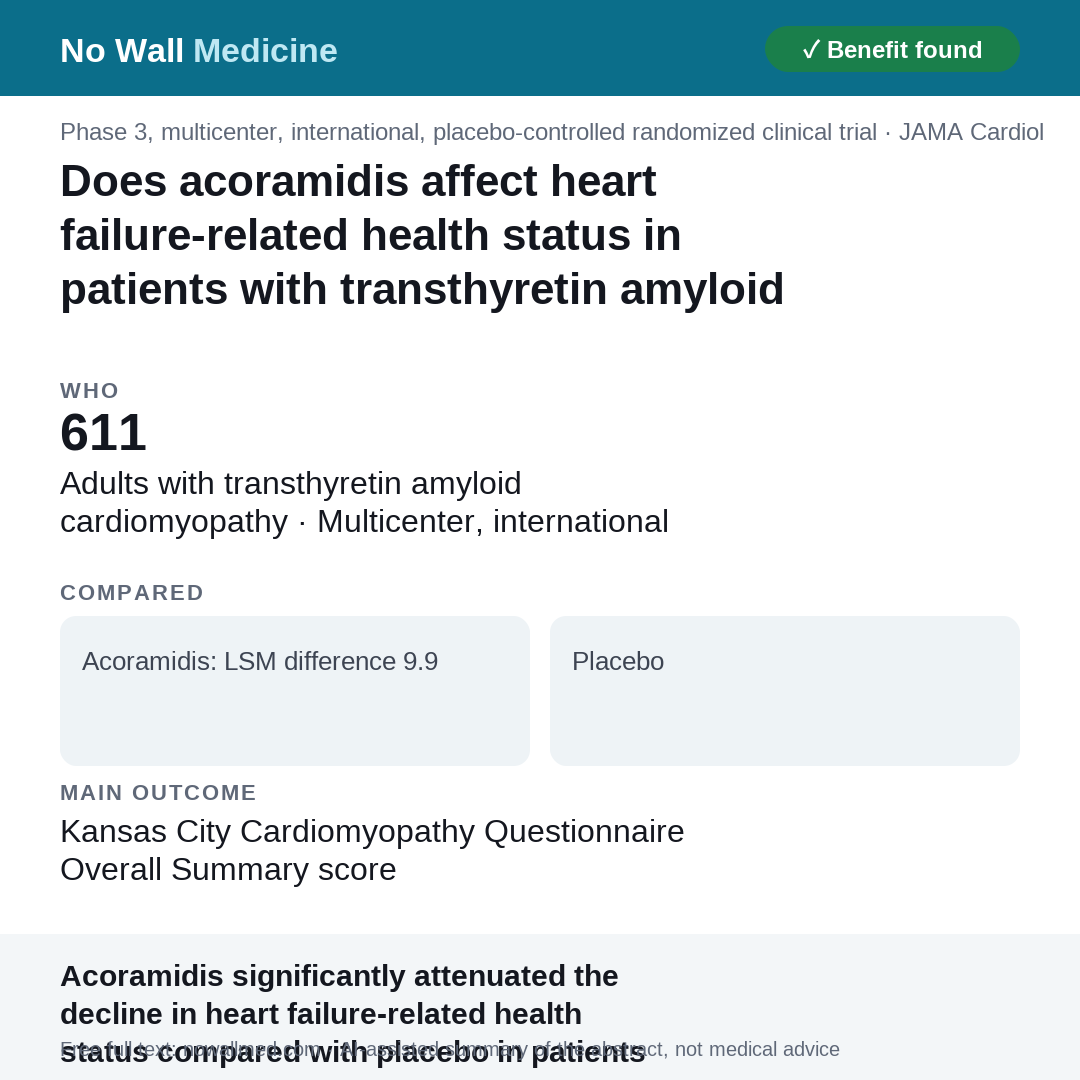
Effect of Acoramidis on Heart Failure-Related Health Status: A Secondary Analysis of the ATTRibute-CM Randomized Clinical Trial
Phase 3, multicenter, international, placebo-controlled randomized clinical trialBenefit found
Does acoramidis affect heart failure-related health status in patients with transthyretin amyloid cardiomyopathy?
Who
611
Adults with transthyretin amyloid cardiomyopathy · Multicenter, international
Compared
Acoramidis: LSM difference 9.9
Placebo
Main outcome
Kansas City Cardiomyopathy Questionnaire Overall Summary score
Result: LSM difference 9.9 (95% CI 6.0-13.9)
Bottom line: Acoramidis significantly attenuated the decline in heart failure-related health status compared with placebo in patients with transthyretin amyloid cardiomyopathy.
JAMA Cardiol · 2026-07-29Download image
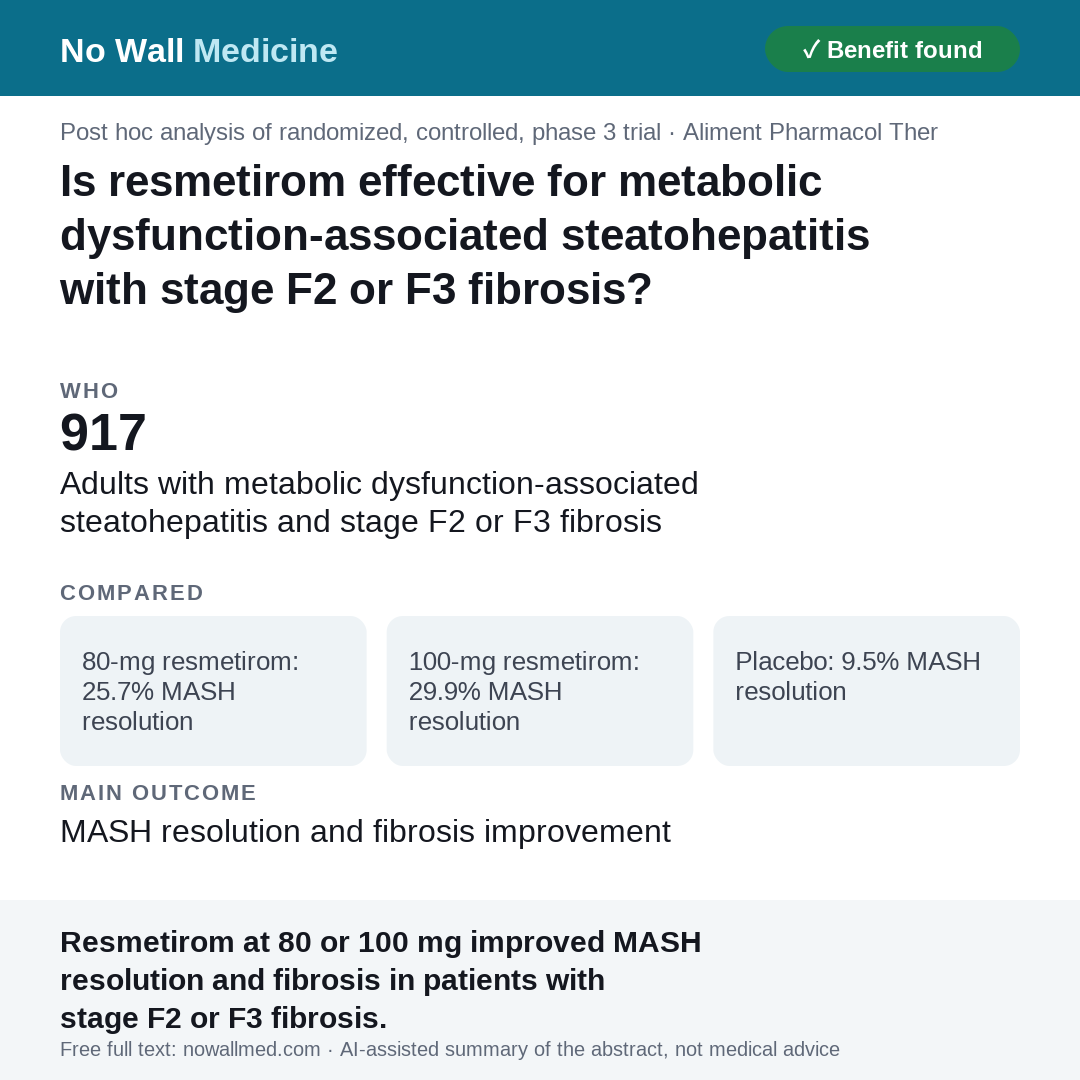
Clinical Trial: Phase 3 Trial of Resmetirom Versus Placebo in Metabolic Dysfunction-Associated Steatohepatitis-Reanalysis of Fibrosis Stage 2-3 Subset
Post hoc analysis of randomized, controlled, phase 3 trialBenefit found
Is resmetirom effective for metabolic dysfunction-associated steatohepatitis with stage F2 or F3 fibrosis?
Who
917
Adults with metabolic dysfunction-associated steatohepatitis and stage F2 or F3 fibrosis
Compared
80-mg resmetirom: 25.7% MASH resolution
100-mg resmetirom: 29.9% MASH resolution
Placebo: 9.5% MASH resolution
Main outcome
MASH resolution and fibrosis improvement
Bottom line: Resmetirom at 80 or 100 mg improved MASH resolution and fibrosis in patients with stage F2 or F3 fibrosis.
Aliment Pharmacol Ther · 2026-07-29Download image
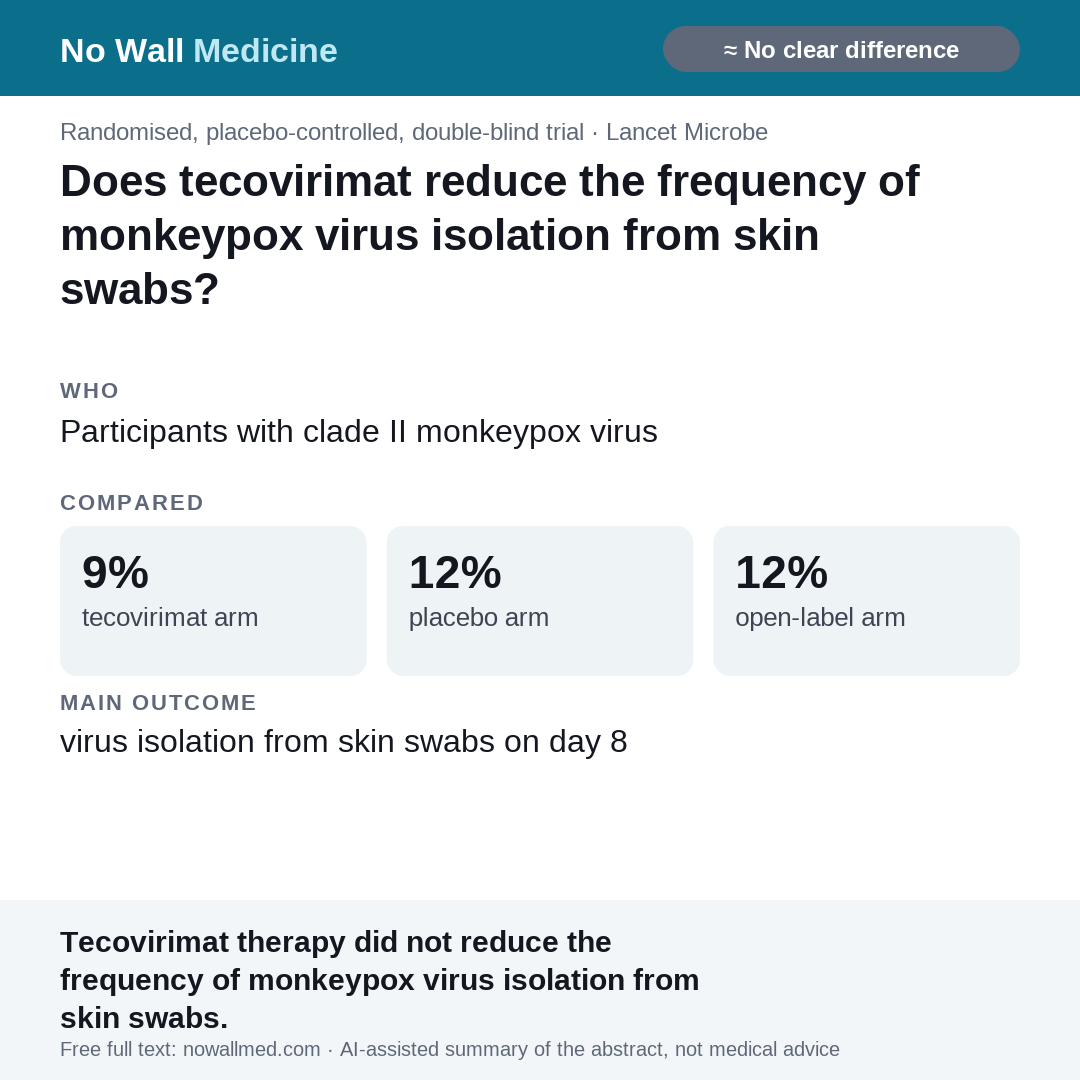
Tecovirimat treatment of clade II mpox: a virological analysis of a randomised, double-blind, phase 3 trial
Randomised, placebo-controlled, double-blind trialNo clear difference
Does tecovirimat reduce the frequency of monkeypox virus isolation from skin swabs?
Who
Participants with clade II monkeypox virus
Compared
9%tecovirimat arm (5/53)
12%placebo arm (3/25)
12%open-label arm (8/67)
Main outcome
virus isolation from skin swabs on day 8
Bottom line: Tecovirimat therapy did not reduce the frequency of monkeypox virus isolation from skin swabs.
Funded by: Advancing Clinical Therapeutics Globally and the National Institute of Allergy and Infectious Diseases
Lancet Microbe · 2026-07-29Download image
Mechanisms underpinning flourishing at the interface of humans and other natural entities: an umbrella review
Umbrella review of systematic reviewsMixed results
What are the mechanisms driving ecological-collective-flourishing at the human and natural interface?
Who
Human and non-human natural entities
Compared
Psychological mechanisms: most consistent support
Other mechanism domains: mixed
Main outcome
Mechanisms driving change across human and ecological systems
Bottom line: Psychological mechanisms show consistent support, but evidence for other domains is mixed and causality remains weak.
Lancet Planet Health · 2026-07-29Download image

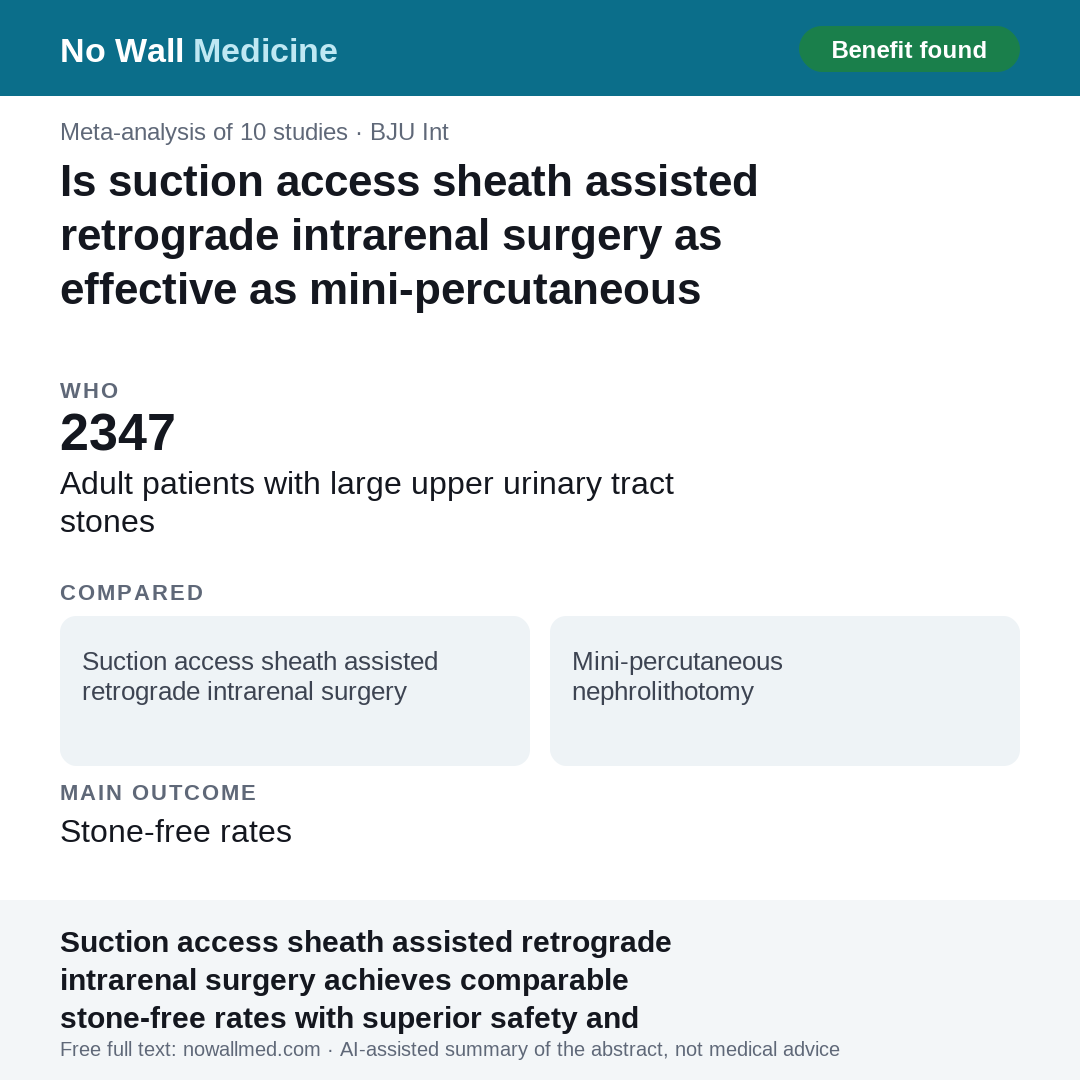
Retrograde intrarenal surgery with flexible and navigable suction access sheaths vs mini-percutaneous nephrolithotomy for large upper urinary tract stones: a systematic review and meta-analysis
Meta-analysis of 10 studiesBenefit found
Is suction access sheath assisted retrograde intrarenal surgery as effective as mini-percutaneous nephrolithotomy?
Who
2347
Adult patients with large upper urinary tract stones
Compared
Suction access sheath assisted retrograde intrarenal surgery
Mini-percutaneous nephrolithotomy
Main outcome
Stone-free rates
Result: odds ratio 0.90 (95% CI 0.70-1.17)
Bottom line: Suction access sheath assisted retrograde intrarenal surgery achieves comparable stone-free rates with superior safety and shorter hospital stays.
Limitation: Predominance of Asian studies, variability of practice, and inclusion of non-randomised studies.
BJU Int · 2026-07-29Download image
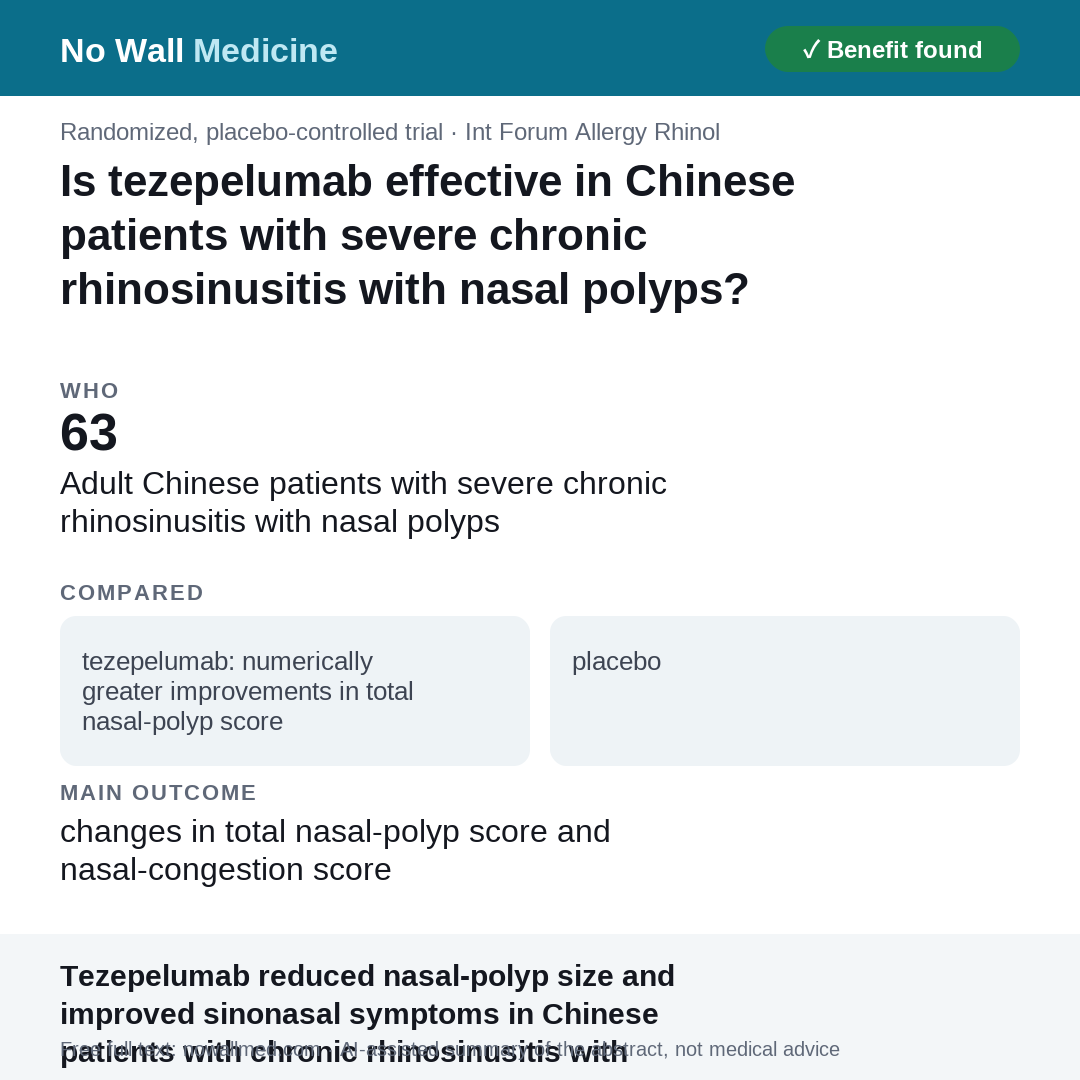
Tezepelumab in Chinese Patients With Severe Chronic Rhinosinusitis With Nasal Polyps: A Prespecified Subgroup Analysis of the Phase 3 WAYPOINT Trial
Randomized, placebo-controlled trialBenefit found
Is tezepelumab effective in Chinese patients with severe chronic rhinosinusitis with nasal polyps?
Who
63
Adult Chinese patients with severe chronic rhinosinusitis with nasal polyps
Compared
tezepelumab: numerically greater improvements in total nasal-polyp score
placebo
Main outcome
changes in total nasal-polyp score and nasal-congestion score
Result: least-squares mean difference vs. placebo [95% CI]: -2.03 [-2.88, -1.19]
Bottom line: Tezepelumab reduced nasal-polyp size and improved sinonasal symptoms in Chinese patients with chronic rhinosinusitis with nasal polyps.
Limitation: Further investigation is warranted to assess generalizability to the broader Chinese population.
Int Forum Allergy Rhinol · 2026-07-29Download image
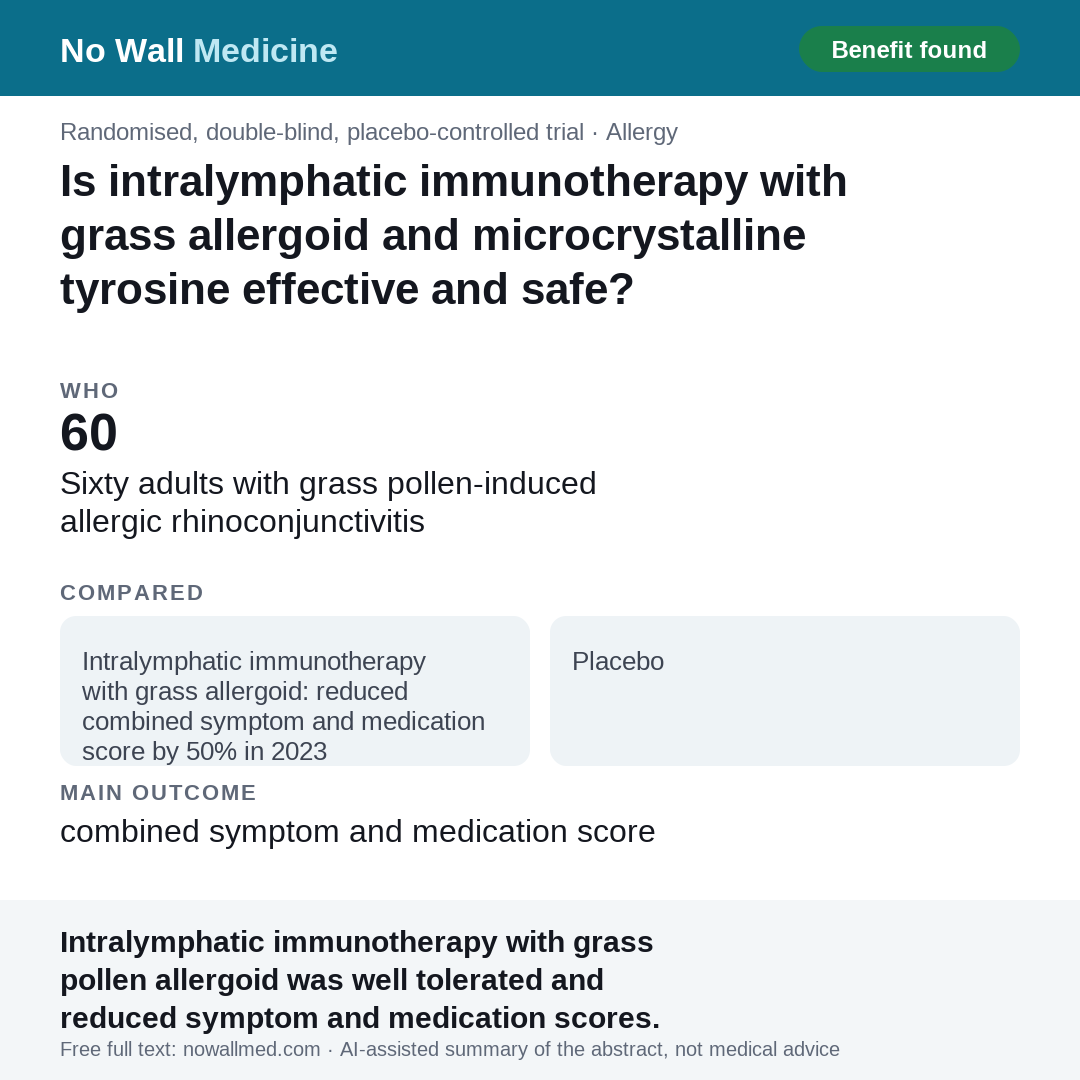
Efficacy and Safety of Intralymphatic Immunotherapy With Grass Allergoid and Microcrystalline Tyrosine: A Double-Blind Randomised Placebo-Controlled Trial
Randomised, double-blind, placebo-controlled trialBenefit found
Is intralymphatic immunotherapy with grass allergoid and microcrystalline tyrosine effective and safe?
Who
60
Sixty adults with grass pollen-induced allergic rhinoconjunctivitis
Compared
Intralymphatic immunotherapy with grass allergoid: reduced combined symptom and medication score by 50% in 2023
Placebo
Main outcome
combined symptom and medication score
Result: 50% (p < 0.05) in 2023
Bottom line: Intralymphatic immunotherapy with grass pollen allergoid was well tolerated and reduced symptom and medication scores.
Allergy · 2026-07-29Download image
Abnormalities of intrinsic brain activity in late-life depression: a meta-analysis of resting-state functional imaging studies
Meta-analysis of 13 studiesMixed results
What are the abnormalities of intrinsic brain activity in late-life depression?
Who
Patients with late-life depression and healthy controls
Compared
Late-life depression
Healthy controls
Main outcome
Whole-brain resting-state functional neuroimaging activity
Bottom line: Late-life depression shows inconsistent patterns of higher and lower spontaneous brain activity compared to healthy controls.
Limitation: Findings are variable and often inconsistent across studies.
Transl Psychiatry · 2026-07-29Download image

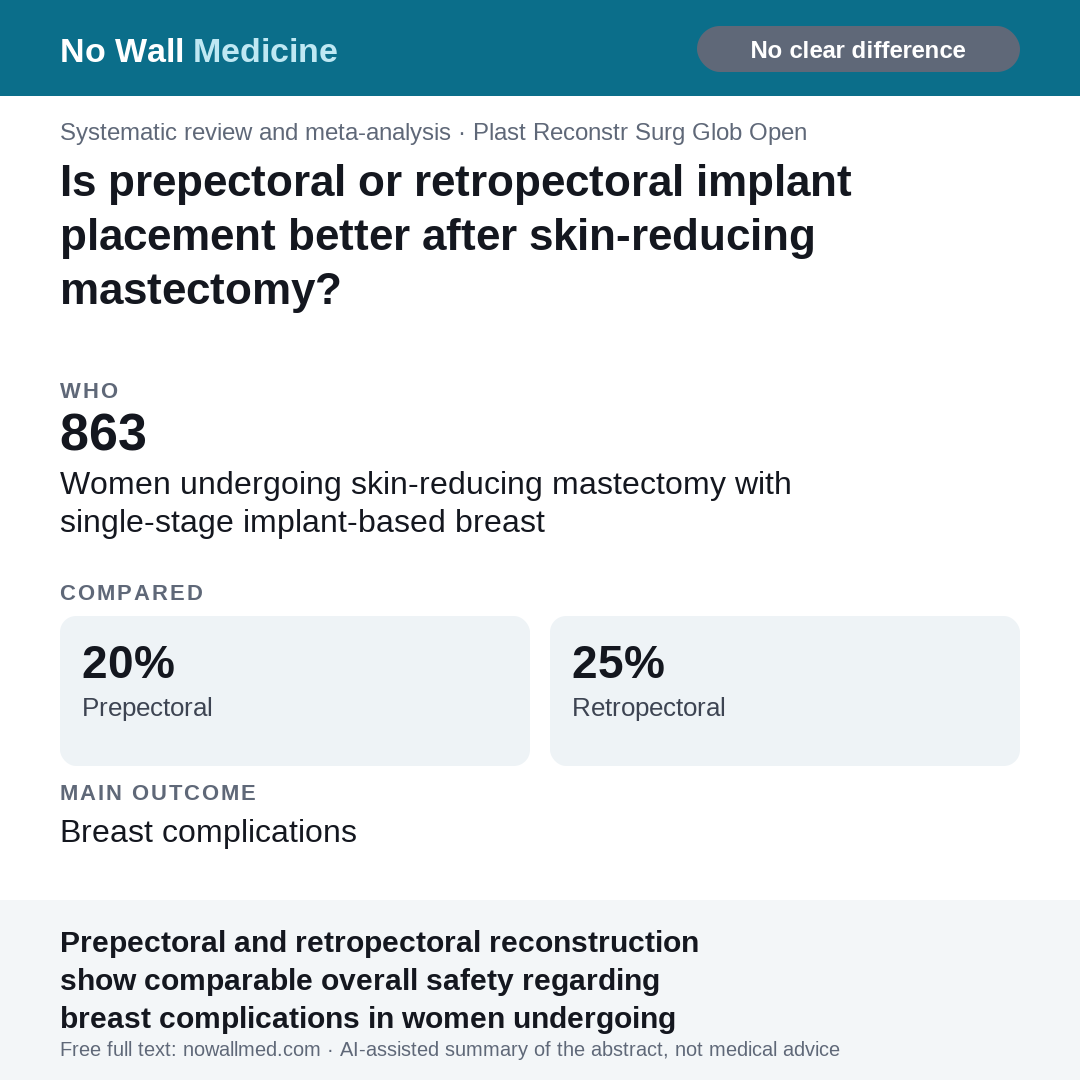
Prepectoral versus Retropectoral Direct to Implant Breast Reconstruction after Skin-reducing Mastectomy: A Systematic Review and Meta-analysis
Systematic review and meta-analysisNo clear difference
Is prepectoral or retropectoral implant placement better after skin-reducing mastectomy?
Who
863
Women undergoing skin-reducing mastectomy with single-stage implant-based breast reconstruction
Compared
20%Prepectoral
25%Retropectoral
Main outcome
Breast complications
Bottom line: Prepectoral and retropectoral reconstruction show comparable overall safety regarding breast complications in women undergoing skin-reducing mastectomy.
Plast Reconstr Surg Glob Open · 2026-07-29Download image
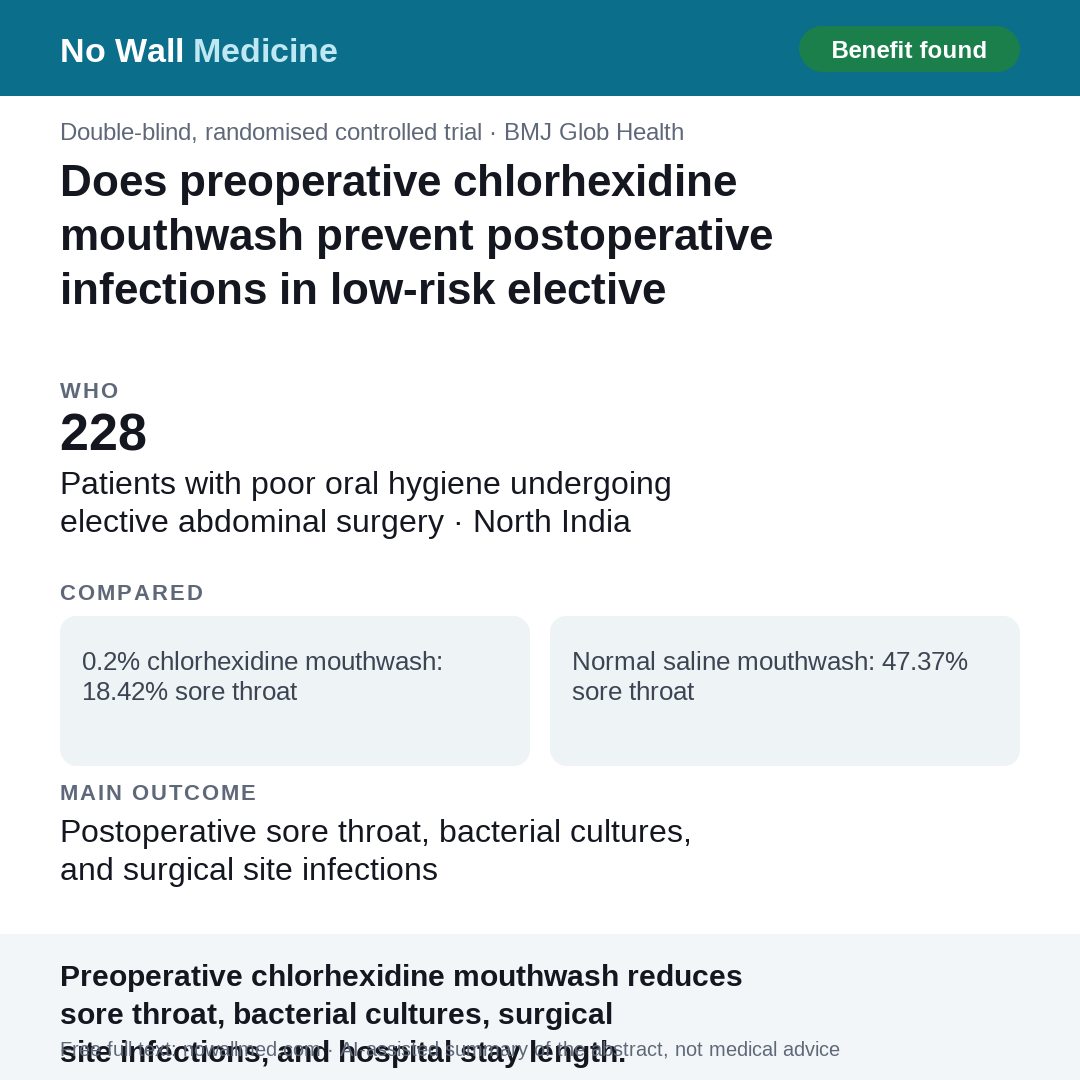
Preoperative chlorhexidine mouthwash to prevent postoperative infections in low-risk elective abdominal surgeries: a double-blind RCT from North India among patients with poor oral hygiene
Double-blind, randomised controlled trialBenefit found
Does preoperative chlorhexidine mouthwash prevent postoperative infections in low-risk elective abdominal surgeries?
Who
228
Patients with poor oral hygiene undergoing elective abdominal surgery · North India
Compared
0.2% chlorhexidine mouthwash: 18.42% sore throat
Normal saline mouthwash: 47.37% sore throat
Main outcome
Postoperative sore throat, bacterial cultures, and surgical site infections
Bottom line: Preoperative chlorhexidine mouthwash reduces sore throat, bacterial cultures, surgical site infections, and hospital stay length.
BMJ Glob Health · 2026-07-29Download image
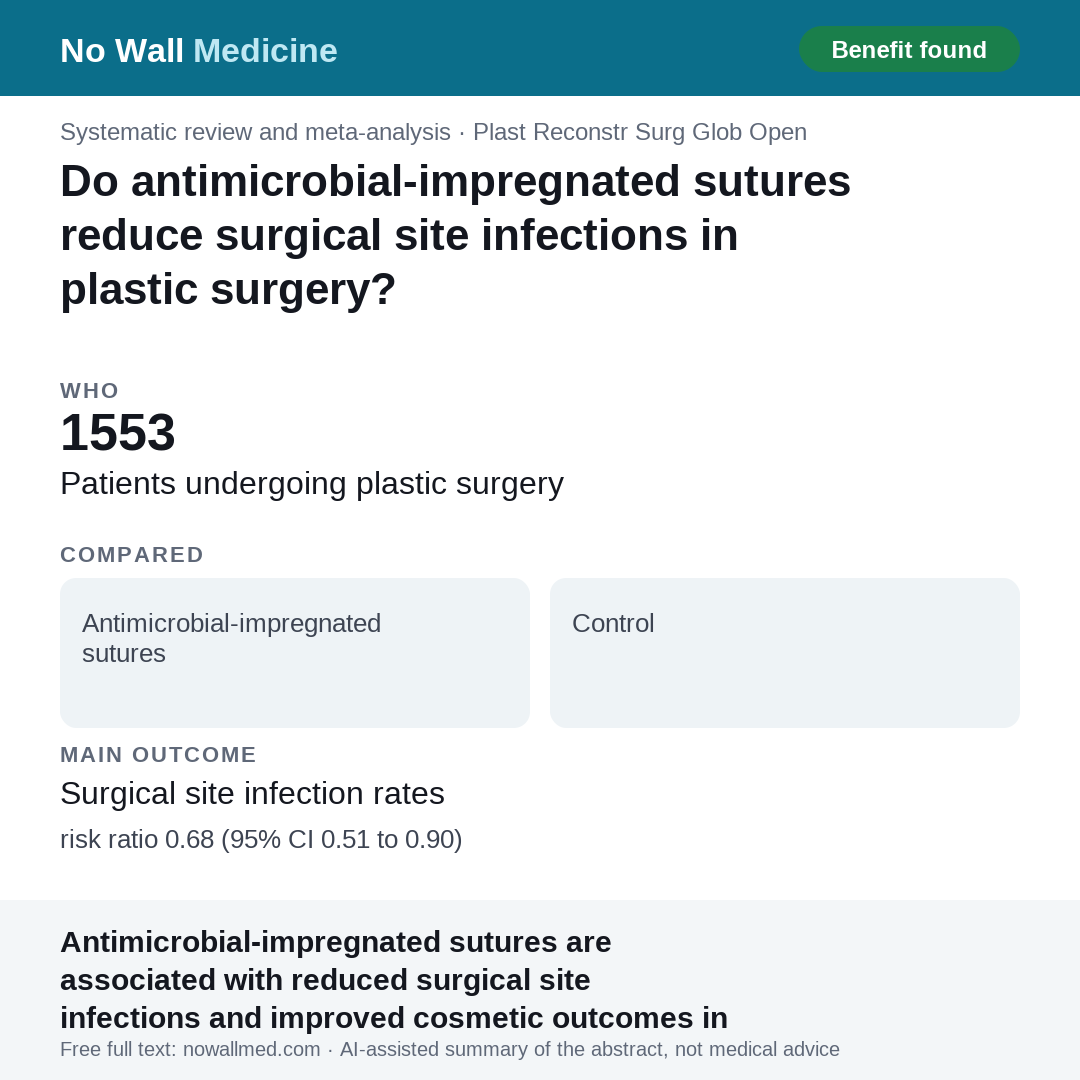
Antimicrobial-impregnated Sutures Reduce Surgical Site Infections in Plastic Surgery: A Systematic Review and Meta-analysis
Systematic review and meta-analysisBenefit found
Do antimicrobial-impregnated sutures reduce surgical site infections in plastic surgery?
Who
1553
Patients undergoing plastic surgery
Compared
Antimicrobial-impregnated sutures
Control
Main outcome
Surgical site infection rates
Result: risk ratio 0.68 (95% CI 0.51 to 0.90)
Bottom line: Antimicrobial-impregnated sutures are associated with reduced surgical site infections and improved cosmetic outcomes in plastic surgery.
Limitation: Randomized controlled trials in different anatomical areas are warranted to establish definitive clinical guidelines.
Plast Reconstr Surg Glob Open · 2026-07-29Download image
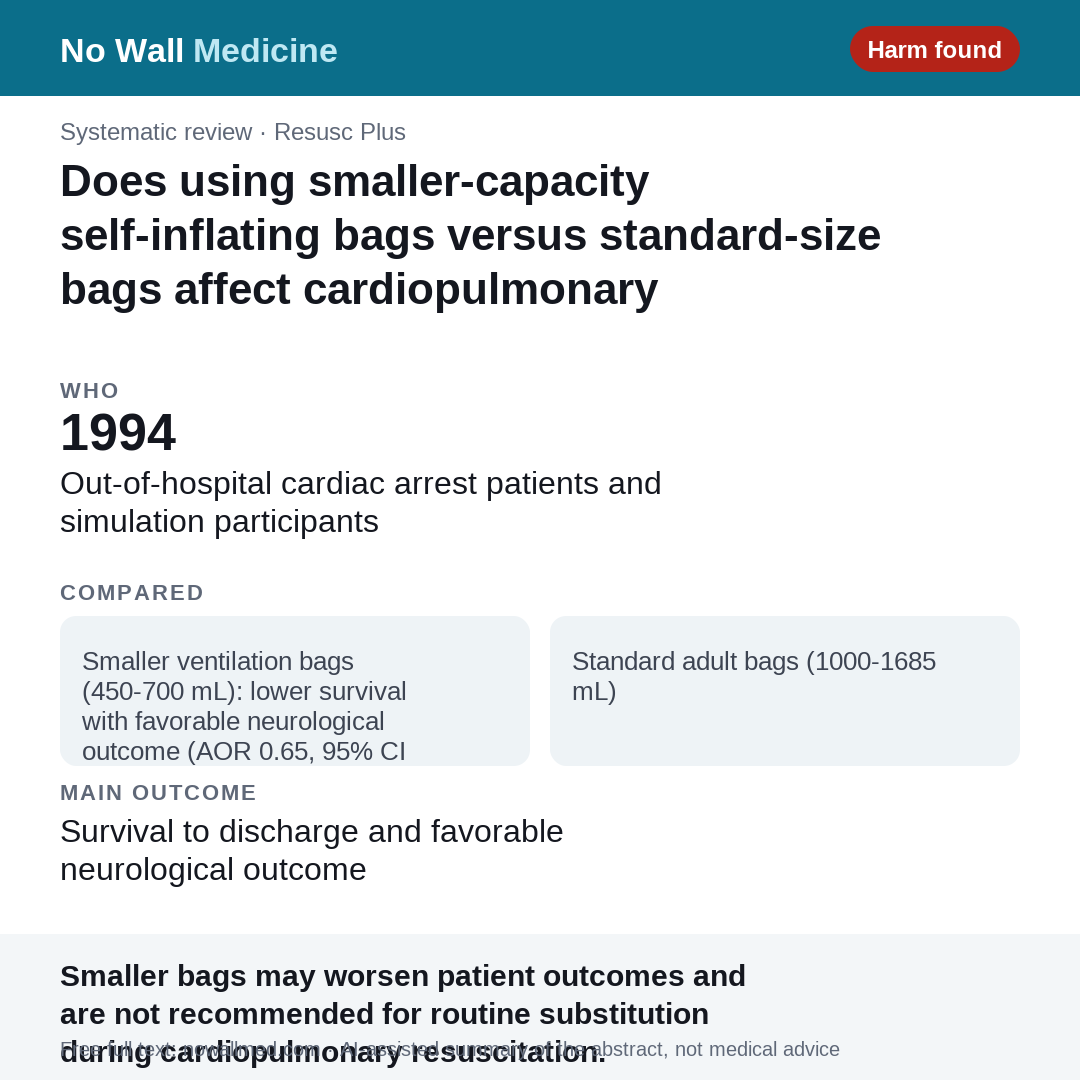
Bag size for manual ventilation during cardiopulmonary resuscitation in adult cardiac arrest: a systematic review
Systematic reviewHarm found
Does using smaller-capacity self-inflating bags versus standard-size bags affect cardiopulmonary resuscitation outcomes?
Who
1994
Out-of-hospital cardiac arrest patients and simulation participants
Compared
Smaller ventilation bags (450-700 mL): lower survival with favorable neurological outcome (AOR 0.65, 95% CI 0.43-0.99)
Standard adult bags (1000-1685 mL)
Main outcome
Survival to discharge and favorable neurological outcome
Result: AOR 0.65 (95% CI 0.43-0.99)
Bottom line: Smaller bags may worsen patient outcomes and are not recommended for routine substitution during cardiopulmonary resuscitation.
Limitation: No randomized trials were identified and certainty of evidence was very low.
Resusc Plus · 2026-07-29Download image