Visual abstracts
New randomized trials and meta-analyses from leading journals at a glance: who was studied, what was compared, and what was found. Every paper is free to read in full.
All specialtiesCardiology 2469Oncology 2099Gastroenterology & Hepatology 935Infectious Disease 1528Neurology 984Psychiatry & Mental Health 1150Pulmonology 1023Critical Care 681Endocrinology & Diabetes 1277Pediatrics 1440Surgery 1259Orthopedics & Sports Medicine 453Neurosurgery 301Cardiothoracic & Vascular Surgery 272Plastic & Reconstructive Surgery 370Nephrology 511Rheumatology 348Hematology 534Dermatology 280Ophthalmology 290Obstetrics & Gynecology 802Public & Global Health 449Radiology & Imaging 335Anesthesiology 492Urology 415ENT (Otolaryngology) 307Emergency Medicine 278Allergy & Immunology 153Geriatrics 518Family Medicine & Primary Care 284Medical Genetics & Genomics 267Pathology & Laboratory Medicine 77Physical Medicine & Rehabilitation 409Palliative Care 206Nutrition 640Digital Health & AI 1202General Medicine 181
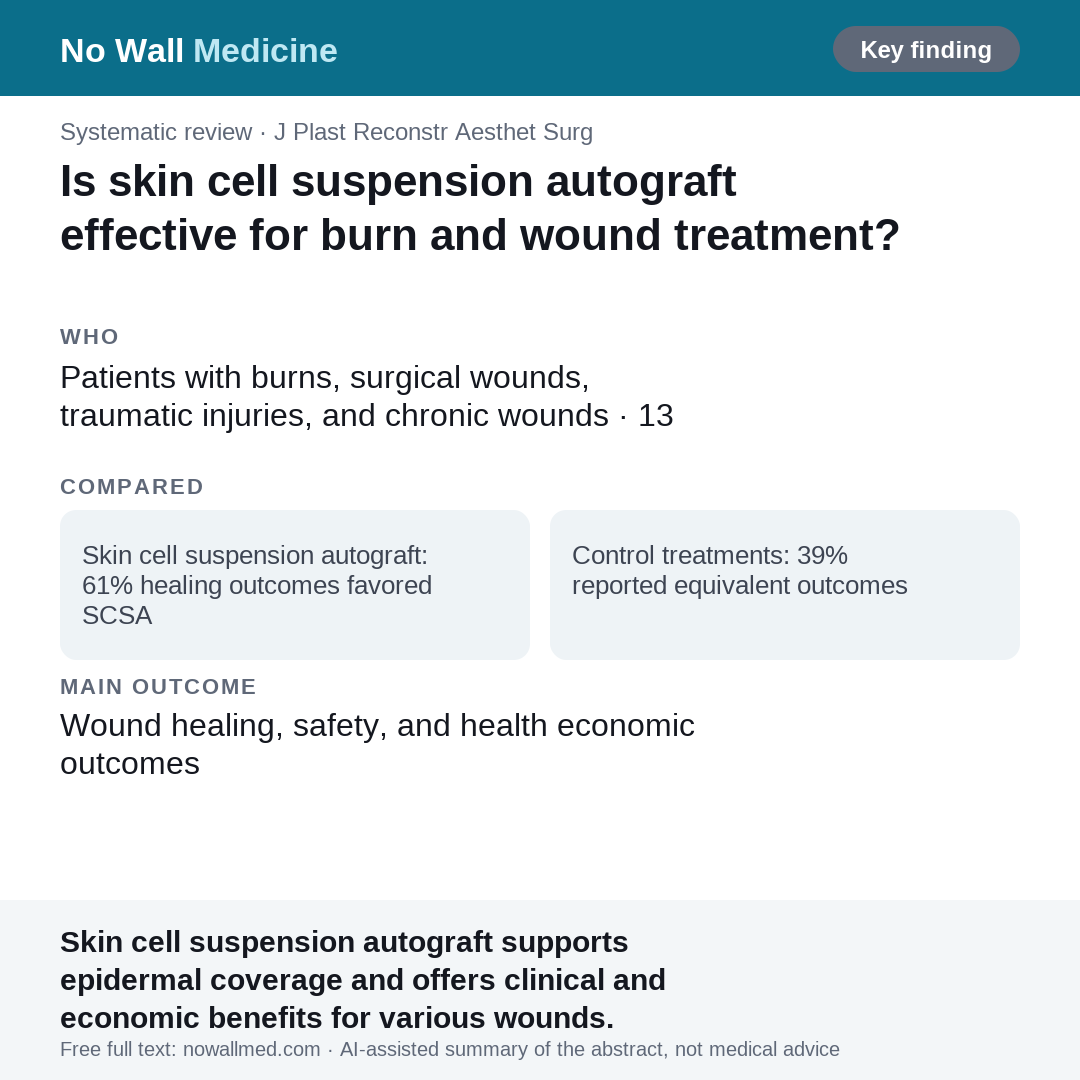
Skin cell suspension autograft as an evidence-based innovation in burn and wound treatment: A systematic review of global evidence across two decades
Systematic reviewBenefit found
Is skin cell suspension autograft effective for burn and wound treatment?
Who
Patients with burns, surgical wounds, traumatic injuries, and chronic wounds · 13 countries
Compared
Skin cell suspension autograft: 61% healing outcomes favored SCSA
Control treatments: 39% reported equivalent outcomes
Main outcome
Wound healing, safety, and health economic outcomes
Bottom line: Skin cell suspension autograft supports epidermal coverage and offers clinical and economic benefits for various wounds.
Limitation: Heterogeneous study designs, variable outcome reporting, and predominance of non-randomized data.
J Plast Reconstr Aesthet Surg · 2026-08-07Download image
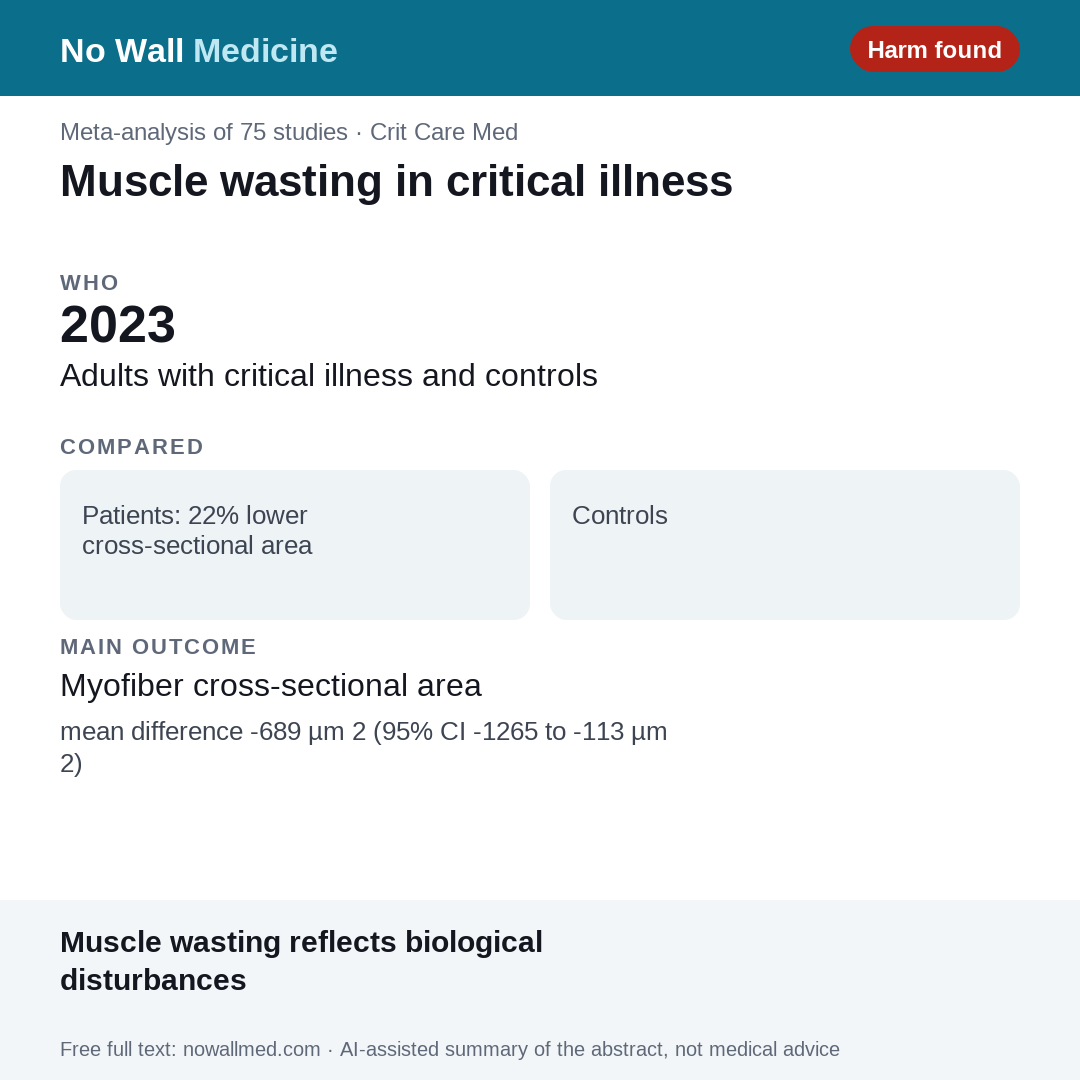
Rethinking Muscle Wasting in Critical Illness: A Systematic Review and Meta-Analysis of Myofiber Size and Protein Turnover
Meta-analysis of 75 studiesHarm found
Muscle wasting in critical illness
Who
2023
Adults with critical illness and controls
Compared
Patients: 22% lower cross-sectional area
Controls
Main outcome
Myofiber cross-sectional area
Result: mean difference -689 µm 2 (95% CI -1265 to -113 µm 2)
Bottom line: Muscle wasting reflects biological disturbances
Crit Care Med · 2026-08-07Download image
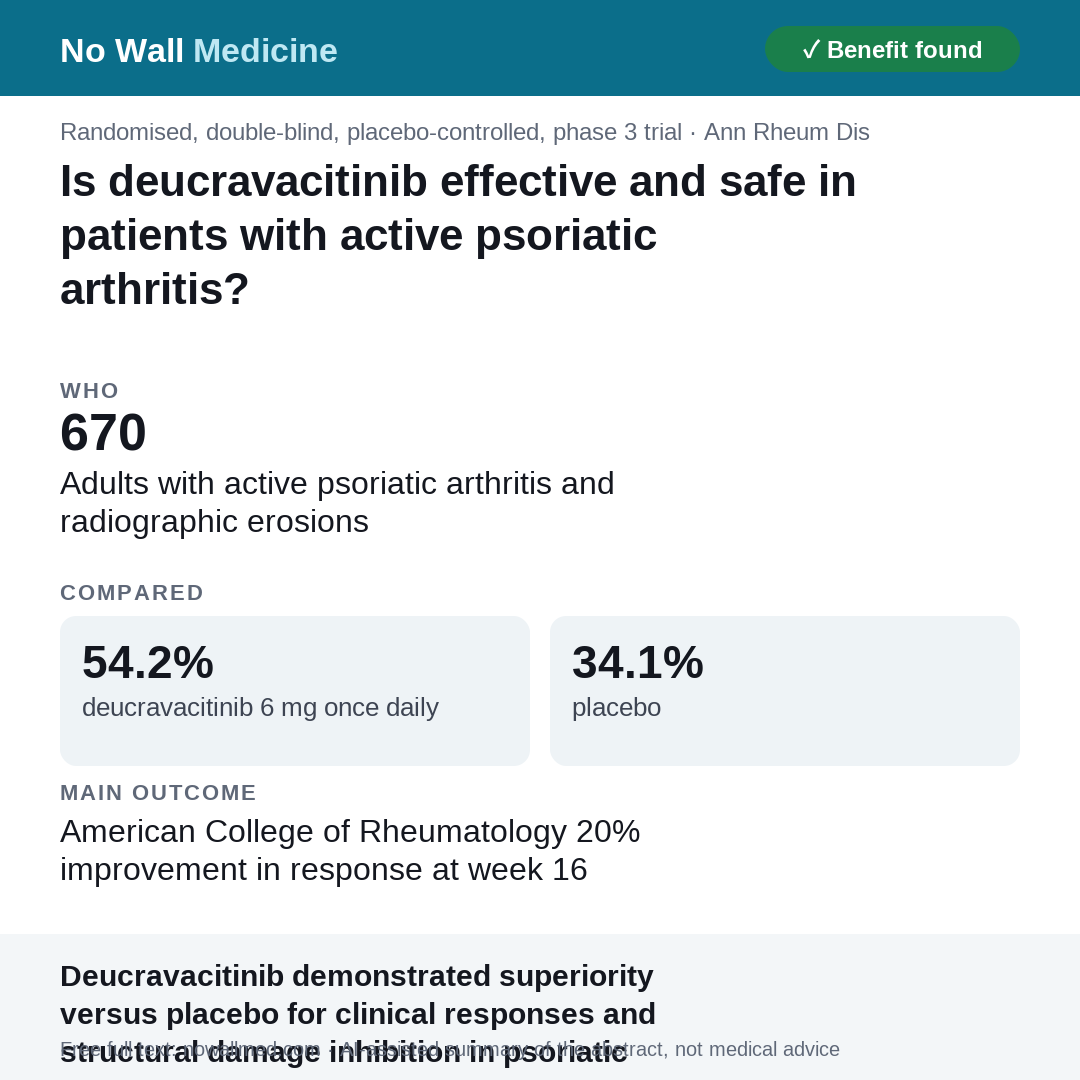
Efficacy and safety of deucravacitinib, an oral, selective tyrosine kinase 2 inhibitor, in patients with active psoriatic arthritis: 52-week results from the randomised, double-blind, placebo-controlled phase 3 POETYK PsA-1 trial
Randomised, double-blind, placebo-controlled, phase 3 trialBenefit found
Is deucravacitinib effective and safe in patients with active psoriatic arthritis?
Who
670
Adults with active psoriatic arthritis and radiographic erosions
Compared
54.2%deucravacitinib 6 mg once daily (ACR20 at week 16)
34.1%placebo (ACR20 at week 16)
Main outcome
American College of Rheumatology 20% improvement in response at week 16
Bottom line: Deucravacitinib demonstrated superiority versus placebo for clinical responses and structural damage inhibition in psoriatic arthritis.
Ann Rheum Dis · 2026-08-07Download image
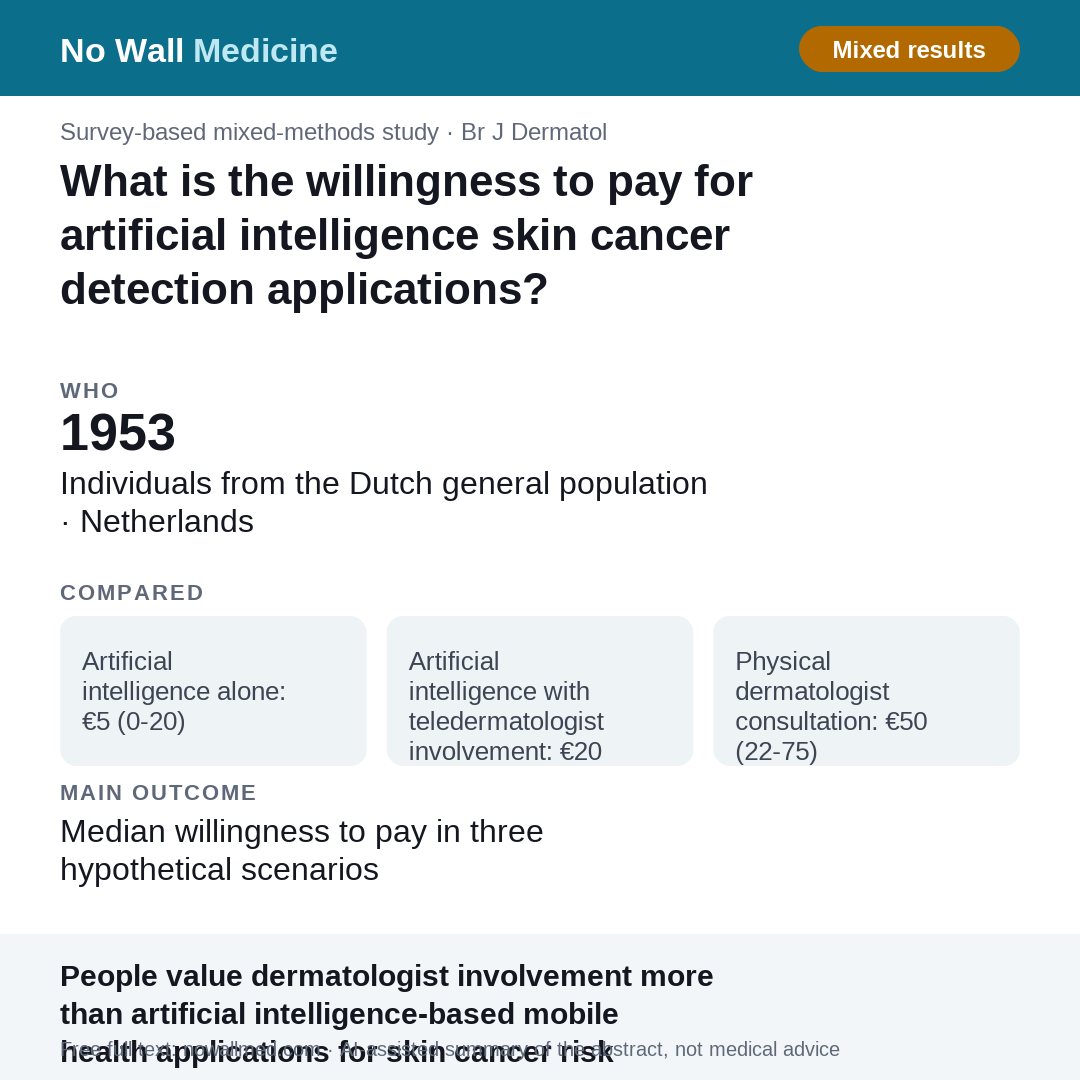
Willingness to pay among individuals from the Dutch general population for artificial intelligence-based applications for skin cancer detection: a survey-based mixed-methods study
Survey-based mixed-methods studyMixed results
What is the willingness to pay for artificial intelligence skin cancer detection applications?
Who
1953
Individuals from the Dutch general population · Netherlands
Compared
Artificial intelligence alone: €5 (0-20)
Artificial intelligence with teledermatologist involvement: €20 (0-45)
Physical dermatologist consultation: €50 (22-75)
Main outcome
Median willingness to pay in three hypothetical scenarios
Bottom line: People value dermatologist involvement more than artificial intelligence-based mobile health applications for skin cancer risk detection.
Limitation: Willingness to pay does not always reflect perceived importance.
Br J Dermatol · 2026-08-07Download image
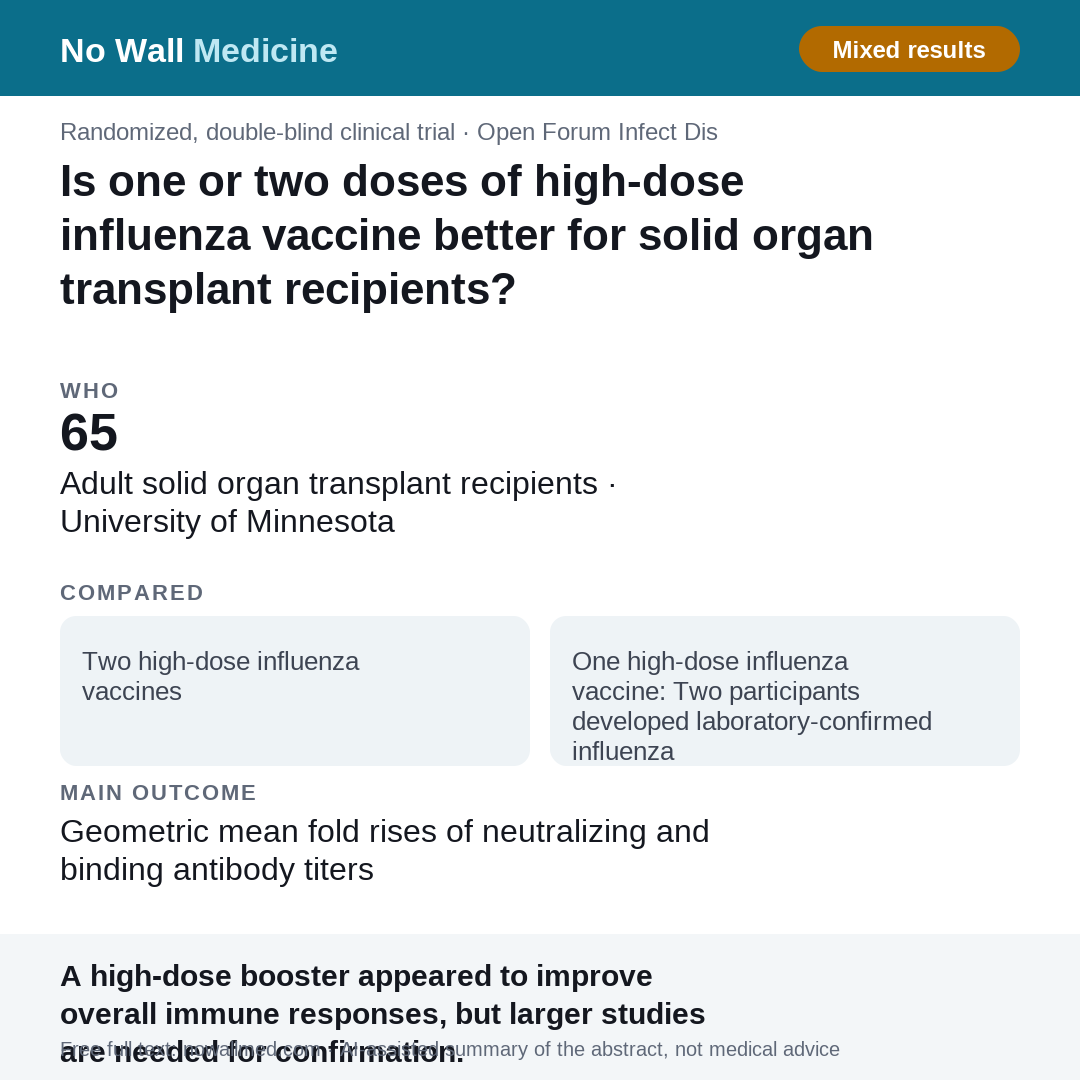
A Randomized, Double-Blind Clinical Trial of One vs Two Doses of High-Dose Influenza Vaccine in Solid Organ Transplant Recipients
Randomized, double-blind clinical trialMixed results
Is one or two doses of high-dose influenza vaccine better for solid organ transplant recipients?
Who
65
Adult solid organ transplant recipients · University of Minnesota
Compared
Two high-dose influenza vaccines
One high-dose influenza vaccine: Two participants developed laboratory-confirmed influenza
Main outcome
Geometric mean fold rises of neutralizing and binding antibody titers
Bottom line: A high-dose booster appeared to improve overall immune responses, but larger studies are needed for confirmation.
Limitation: Confirmation in larger, adequately powered studies is needed.
Open Forum Infect Dis · 2026-08-07Download image
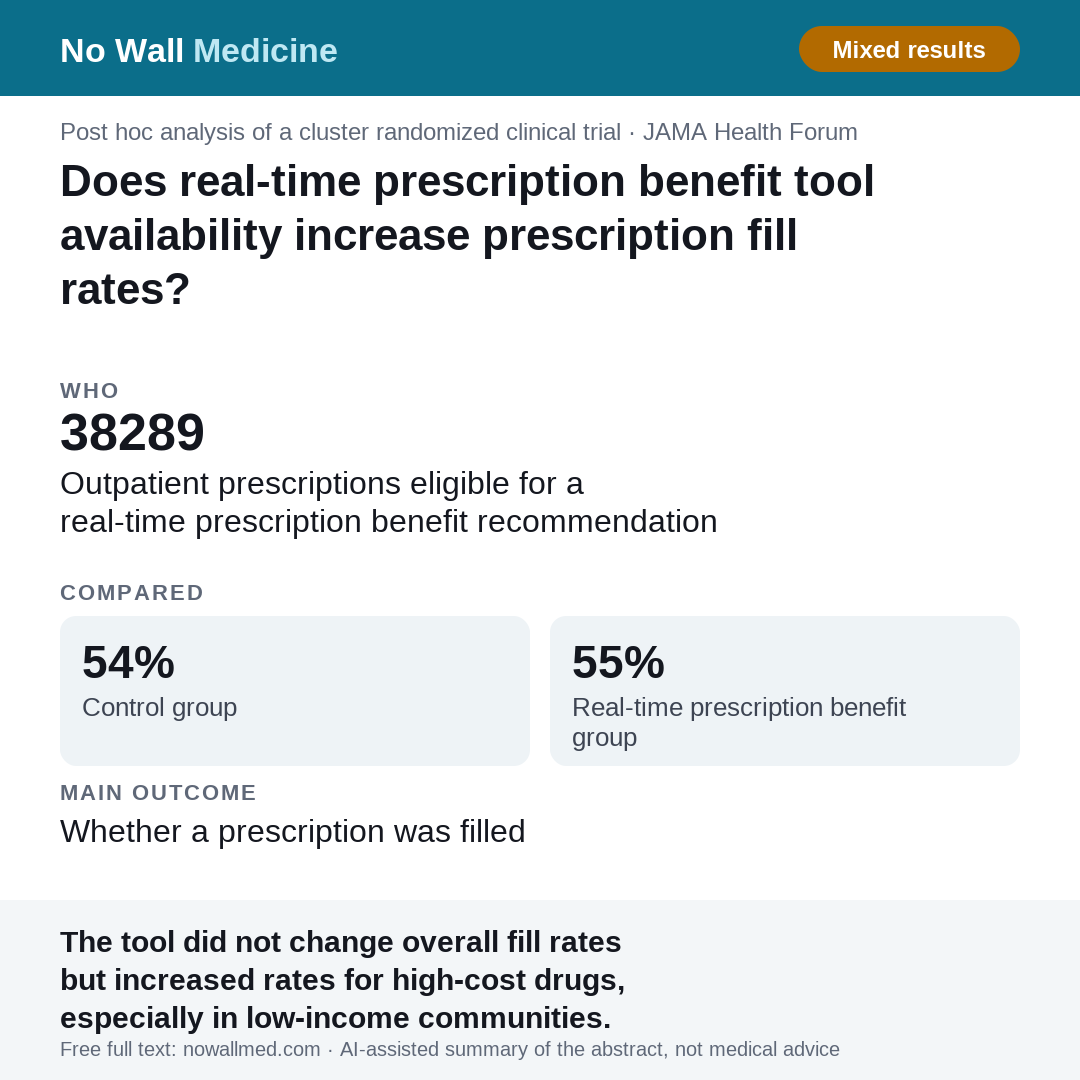
Real-Time Prescription Benefit Tool Availability and Prescription Medication Fill Rates: A Post Hoc Analysis of a Cluster Randomized Clinical Trial
Post hoc analysis of a cluster randomized clinical trialMixed results
Does real-time prescription benefit tool availability increase prescription fill rates?
Who
38289
Outpatient prescriptions eligible for a real-time prescription benefit recommendation · Urban ambulatory clinical network
Compared
54%Control group
55%Real-time prescription benefit group
Main outcome
Whether a prescription was filled
Result: adjusted difference: 1.2 percentage points (95% CI, -1.3 to 3.7 pp)
Bottom line: The tool did not change overall fill rates but increased rates for high-cost drugs, especially in low-income communities.
Limitation: Recommendations were made for a small proportion of orders, limiting applicability to a narrow population segment.
JAMA Health Forum · 2026-08-07Download image
Peripheral Artery Disease and Atrial Fibrillation: A Systematic Review and Meta-analysis on 763,919 Patients
Systematic review and meta-analysis of observational studiesBenefit found
Is peripheral artery disease associated with new-onset atrial fibrillation risk?
Who
763919
763,919 patients including 56,207 with peripheral artery disease
Compared
Peripheral artery disease: HR: 1.34
No peripheral artery disease
Main outcome
new-onset atrial fibrillation
Result: hazard ratio 1.34 (95% CI 1.18-1.50)
Bottom line: Peripheral artery disease is associated with a 34% increased risk of new-onset atrial fibrillation.
Limitation: The certainty of the evidence according to GRADE was low.
JACC Adv · 2026-08-07Download image

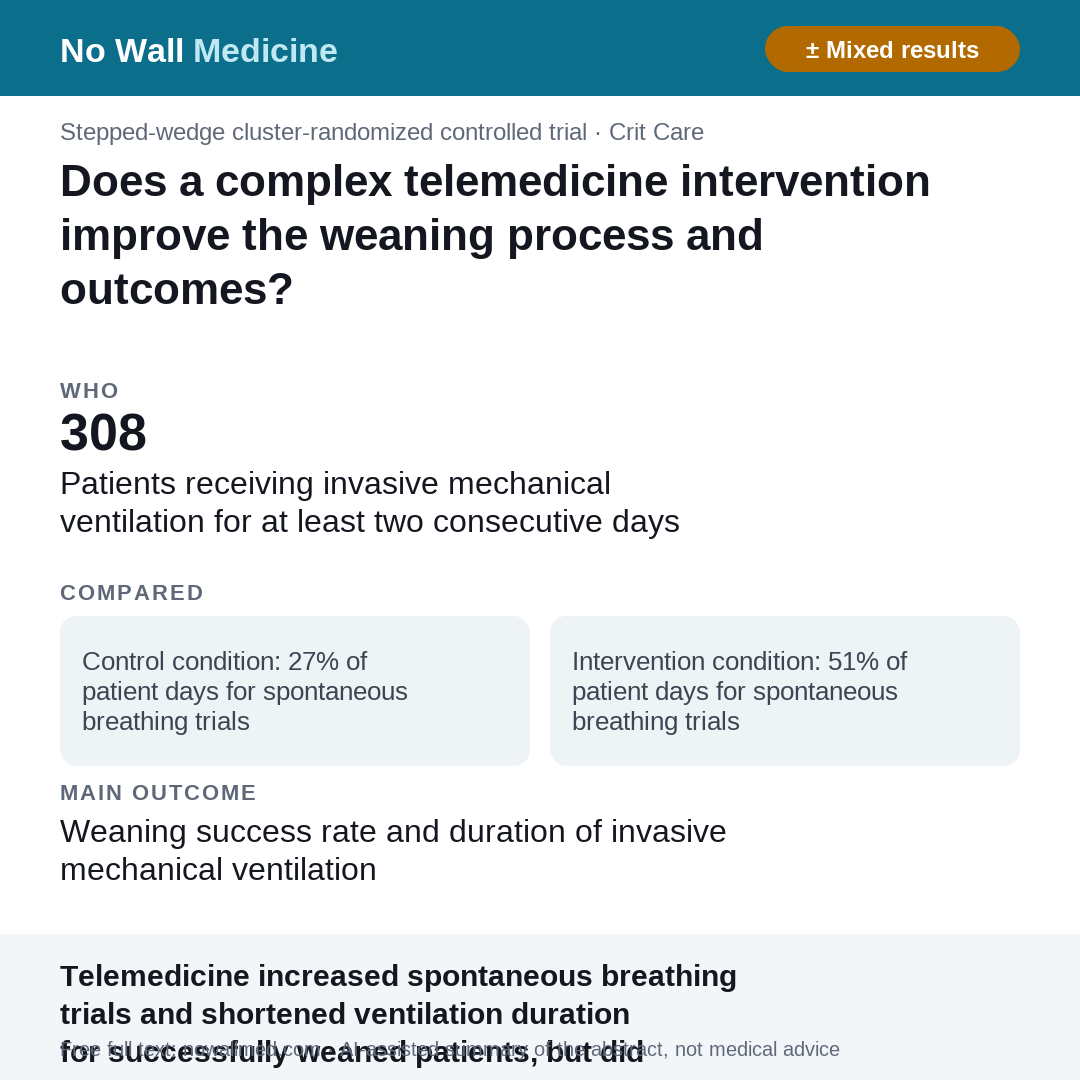
The impact of an intensive care telemedicine program on weaning from invasive ventilation: a secondary analysis of the ERIC trial
Stepped-wedge cluster-randomized controlled trialMixed results
Does a complex telemedicine intervention improve the weaning process and outcomes?
Who
308
Patients receiving invasive mechanical ventilation for at least two consecutive days · Ten intensive care unit clusters in Berlin, Germany
Compared
Control condition: 27% of patient days for spontaneous breathing trials
Intervention condition: 51% of patient days for spontaneous breathing trials
Main outcome
Weaning success rate and duration of invasive mechanical ventilation
Result: OR for weaning failure 1.45 (95%-CI 0.71-2.95)
Bottom line: Telemedicine increased spontaneous breathing trials and shortened ventilation duration for successfully weaned patients, but did not improve weaning success.
Crit Care · 2026-08-07Download image
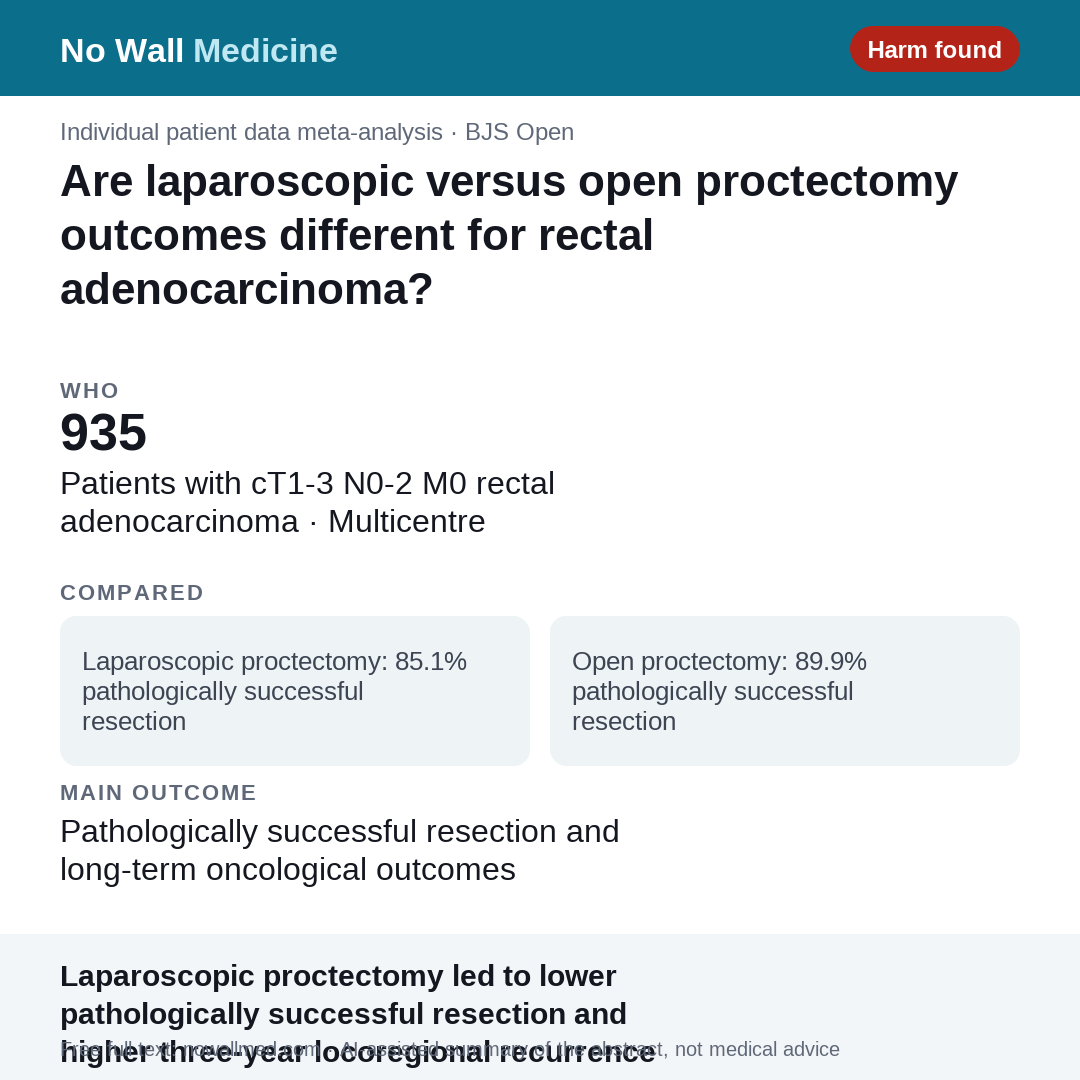
Laparoscopic versus open surgery for rectal cancer: individual patient data meta-analysis of the ALaCaRT and Z6051 randomized trials
Individual patient data meta-analysisHarm found
Are laparoscopic versus open proctectomy outcomes different for rectal adenocarcinoma?
Who
935
Patients with cT1-3 N0-2 M0 rectal adenocarcinoma · Multicentre
Compared
Laparoscopic proctectomy: 85.1% pathologically successful resection
Open proctectomy: 89.9% pathologically successful resection
Main outcome
Pathologically successful resection and long-term oncological outcomes
Result: pooled estimate difference -1.5%; 95% c.i. -7.2% to 4.2%
Bottom line: Laparoscopic proctectomy led to lower pathologically successful resection and higher three-year locoregional recurrence compared to open surgery.
BJS Open · 2026-08-07Download image
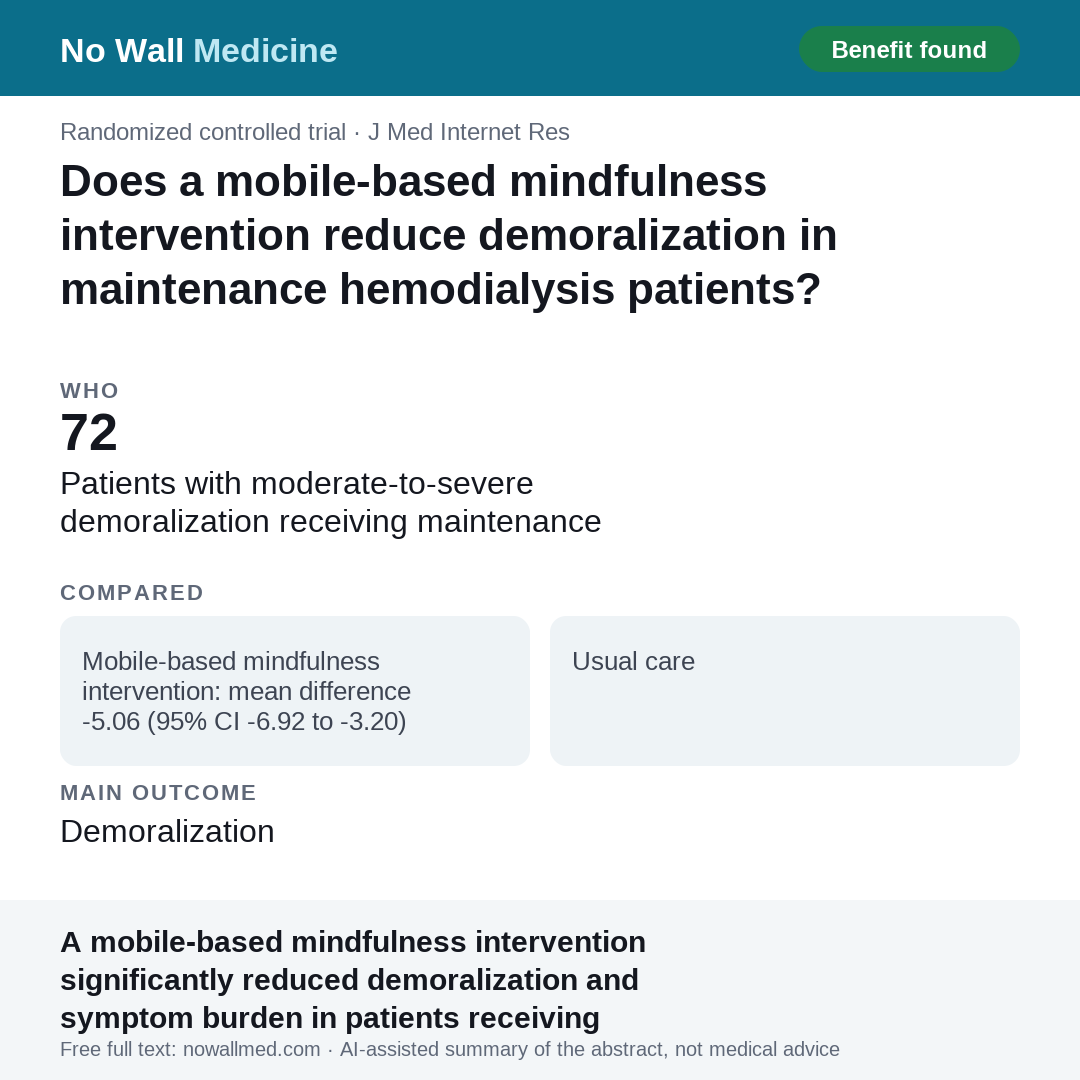
A Mobile-Based Mindfulness Intervention for Reducing Demoralization in Patients on Maintenance Hemodialysis: Randomized Controlled Trial
Randomized controlled trialBenefit found
Does a mobile-based mindfulness intervention reduce demoralization in maintenance hemodialysis patients?
Who
72
Patients with moderate-to-severe demoralization receiving maintenance hemodialysis
Compared
Mobile-based mindfulness intervention: mean difference -5.06 (95% CI -6.92 to -3.20)
Usual care
Main outcome
Demoralization
Result: mean difference -5.06 (95% CI -6.92 to -3.20)
Bottom line: A mobile-based mindfulness intervention significantly reduced demoralization and symptom burden in patients receiving maintenance hemodialysis.
J Med Internet Res · 2026-08-07Download image
Effectiveness of a Brief Internet-Based Workplace Training Program to Support Help Seeking for Mental Ill-Health: Cluster Randomized Controlled Trial
Cluster randomized controlled trialBenefit found
Does online training increase help seeking?
Who
487
Australian employees aged eighteen and over · Australian workplaces
Compared
Helipad program
Control program
Main outcome
professional help seeking intentions
Result: significant difference in change over time
Bottom line: Online training increases help seeking intentions
J Med Internet Res · 2026-08-07Download image

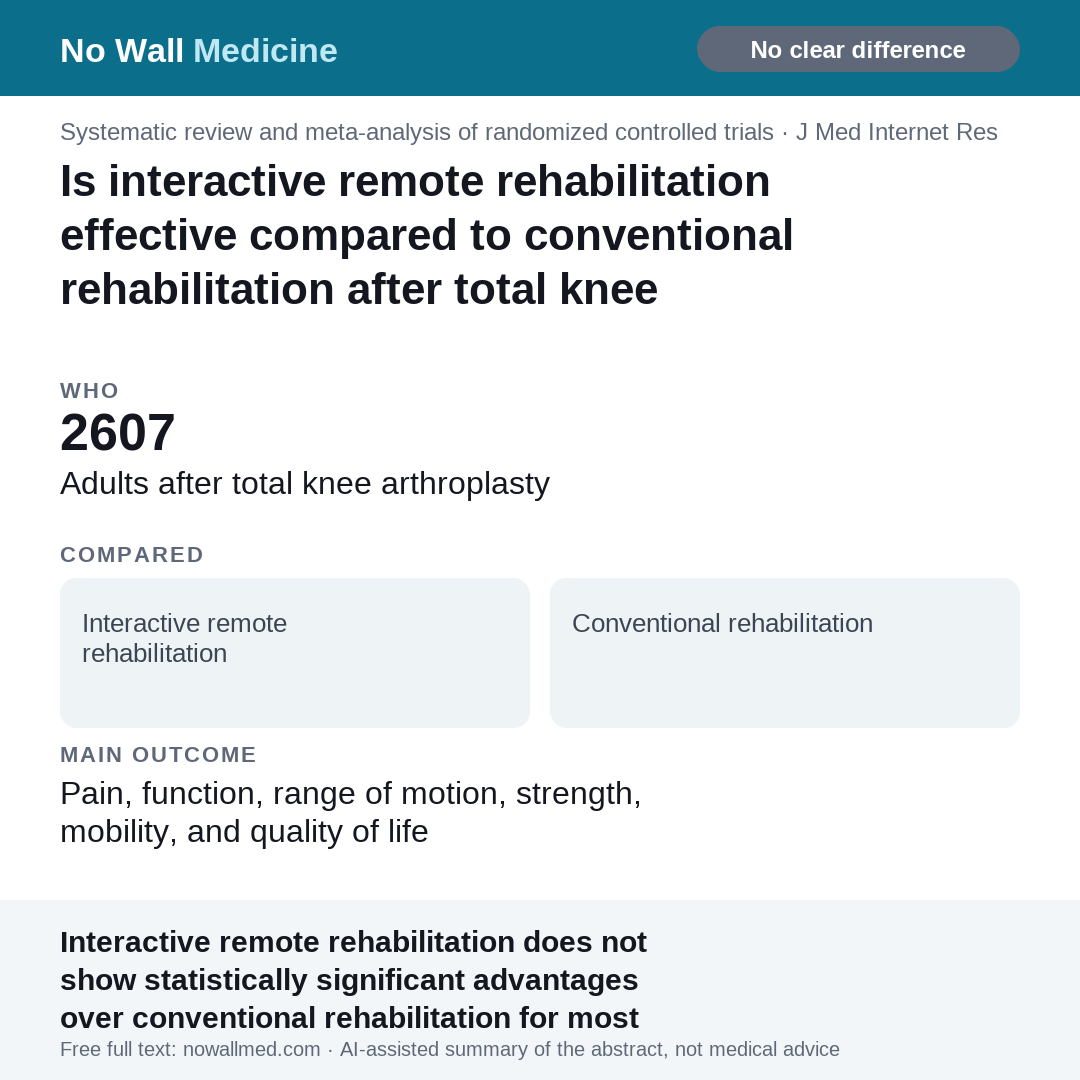
Effectiveness of Interactive Remote Rehabilitation After Total Knee Arthroplasty: Systematic Review and Meta-Analysis of Randomized Controlled Trials
Systematic review and meta-analysis of randomized controlled trialsNo clear difference
Is interactive remote rehabilitation effective compared to conventional rehabilitation after total knee arthroplasty?
Who
2607
Adults after total knee arthroplasty
Compared
Interactive remote rehabilitation
Conventional rehabilitation
Main outcome
Pain, function, range of motion, strength, mobility, and quality of life
Result: mean difference 0.26 (95% CI 0.04-0.48) for short-term active extension range of motion
Bottom line: Interactive remote rehabilitation does not show statistically significant advantages over conventional rehabilitation for most clinical outcomes after total knee arthroplasty.
Limitation: Heterogeneity was substantial, prediction intervals were frequently wide, and certainty of evidence was low to very low.
J Med Internet Res · 2026-08-07Download image
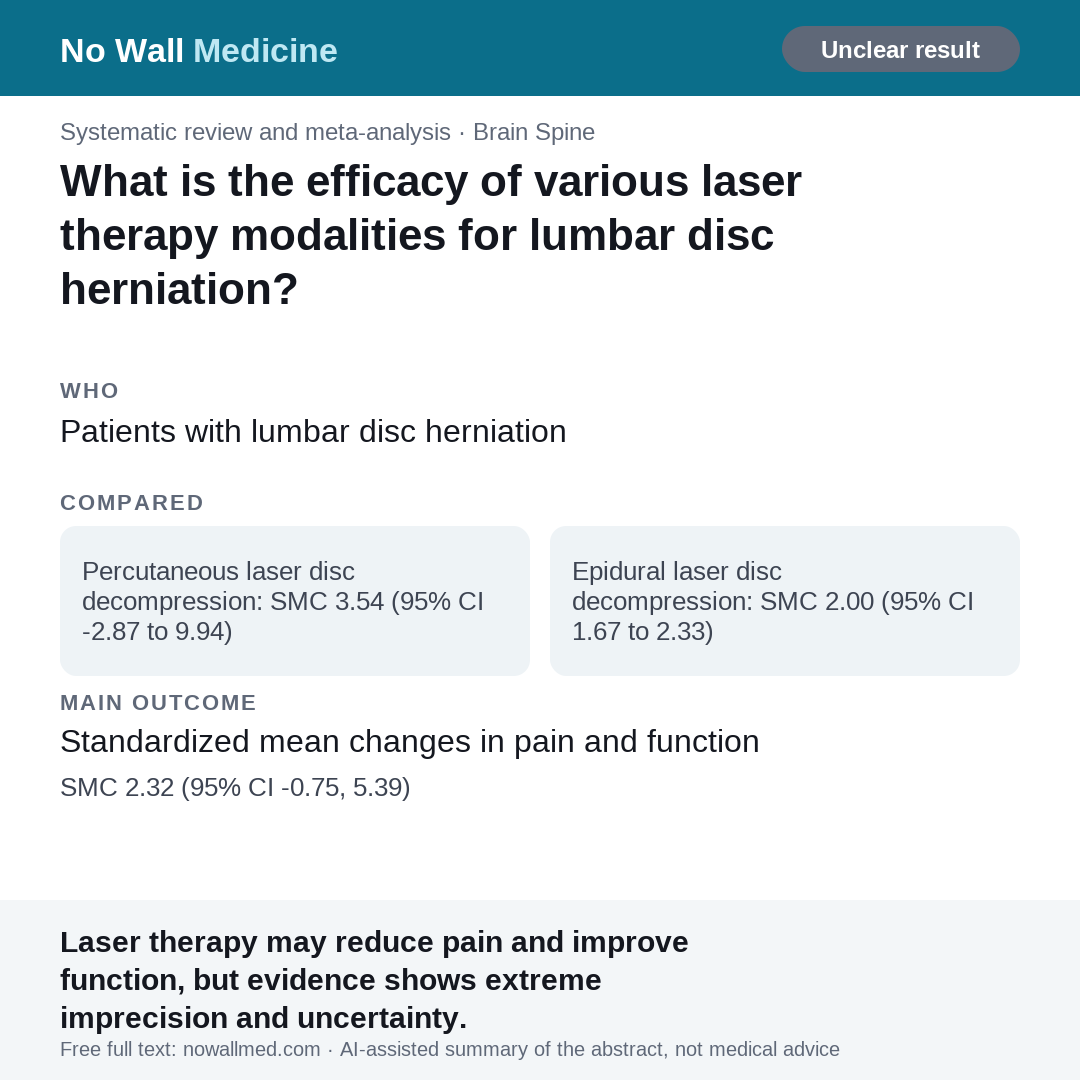
Laser disc decompression in the management of lumbar disc herniation: A systematic review and meta-analysis
Systematic review and meta-analysisUnclear result
What is the efficacy of various laser therapy modalities for lumbar disc herniation?
Who
Patients with lumbar disc herniation
Compared
Percutaneous laser disc decompression: SMC 3.54 (95% CI -2.87 to 9.94)
Epidural laser disc decompression: SMC 2.00 (95% CI 1.67 to 2.33)
Main outcome
Standardized mean changes in pain and function
Result: SMC 2.32 (95% CI -0.75, 5.39)
Bottom line: Laser therapy may reduce pain and improve function, but evidence shows extreme imprecision and uncertainty.
Limitation: Significant heterogeneity, methodological inconsistency, and low study power were present.
Brain Spine · 2026-08-07Download image
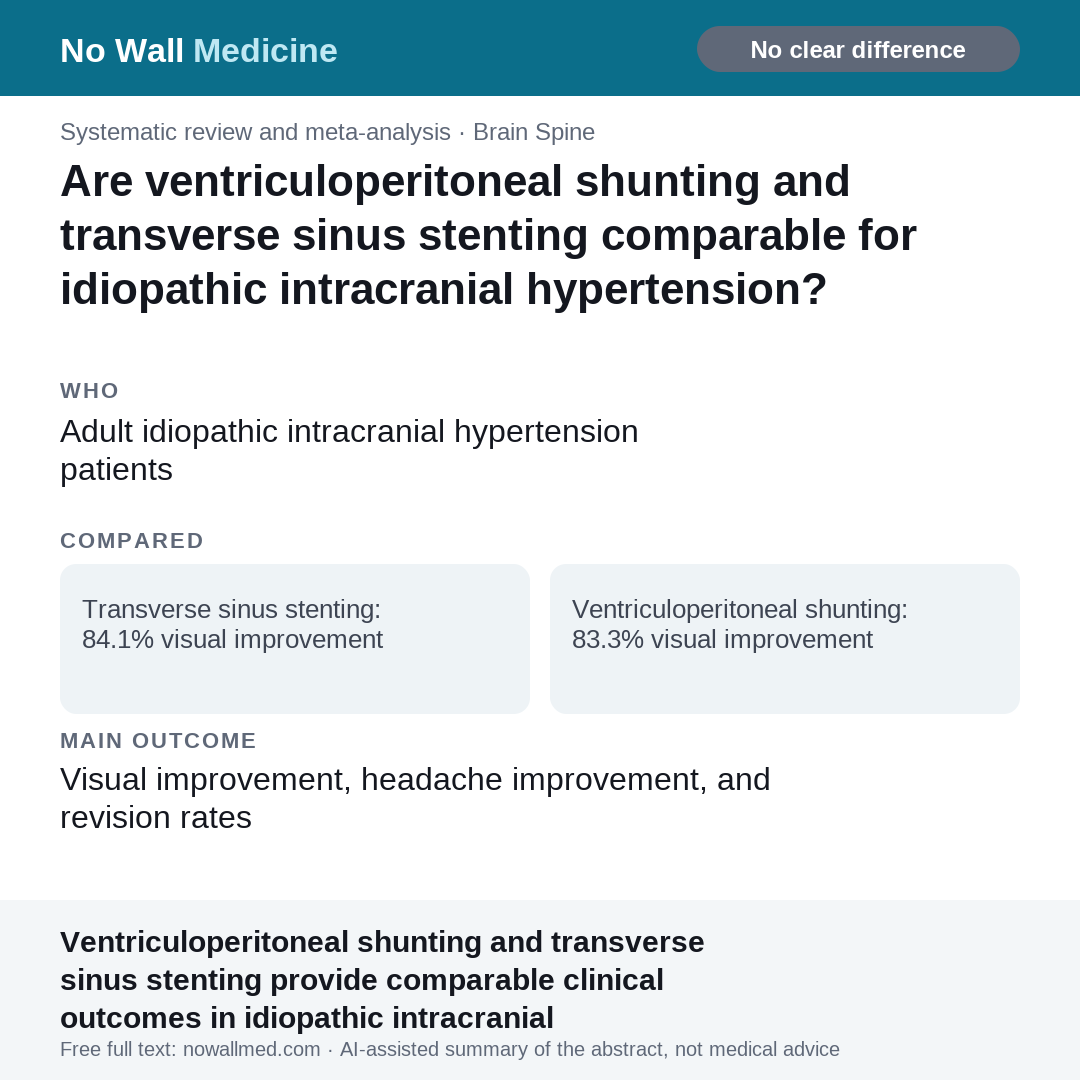
Ventriculoperitoneal shunt versus transverse sinus stenting in idiopathic intracranial hypertension: A systematic review and meta-analysis
Systematic review and meta-analysisNo clear difference
Are ventriculoperitoneal shunting and transverse sinus stenting comparable for idiopathic intracranial hypertension?
Who
Adult idiopathic intracranial hypertension patients
Compared
Transverse sinus stenting: 84.1% visual improvement
Ventriculoperitoneal shunting: 83.3% visual improvement
Main outcome
Visual improvement, headache improvement, and revision rates
Bottom line: Ventriculoperitoneal shunting and transverse sinus stenting provide comparable clinical outcomes in idiopathic intracranial hypertension.
Limitation: Evidence derived from non-randomized, indirect comparisons with substantial indication bias.
Brain Spine · 2026-08-07Download image
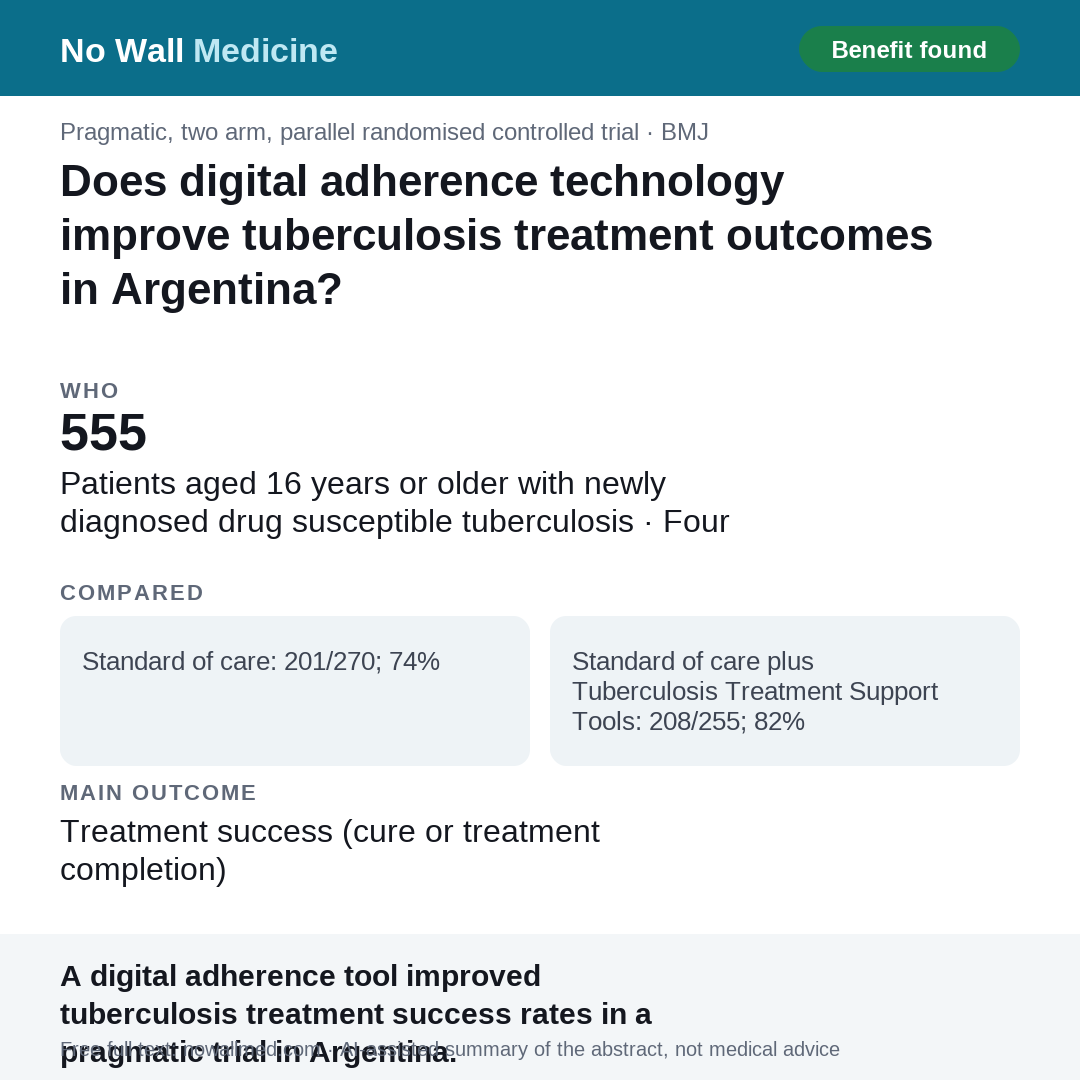
Evaluation of patient centred digital adherence technology for tuberculosis treatment outcomes: pragmatic randomised controlled trial
Pragmatic, two arm, parallel randomised controlled trialBenefit found
Does digital adherence technology improve tuberculosis treatment outcomes in Argentina?
Who
555
Patients aged 16 years or older with newly diagnosed drug susceptible tuberculosis · Four public reference hospitals in Buenos Aires, Argentina
Compared
Standard of care: 201/270; 74%
Standard of care plus Tuberculosis Treatment Support Tools: 208/255; 82%
Main outcome
Treatment success (cure or treatment completion)
Result: risk ratio 1.10 (1.00 to 1.20; P=0.04)
Bottom line: A digital adherence tool improved tuberculosis treatment success rates in a pragmatic trial in Argentina.
BMJ · 2026-08-06Download image
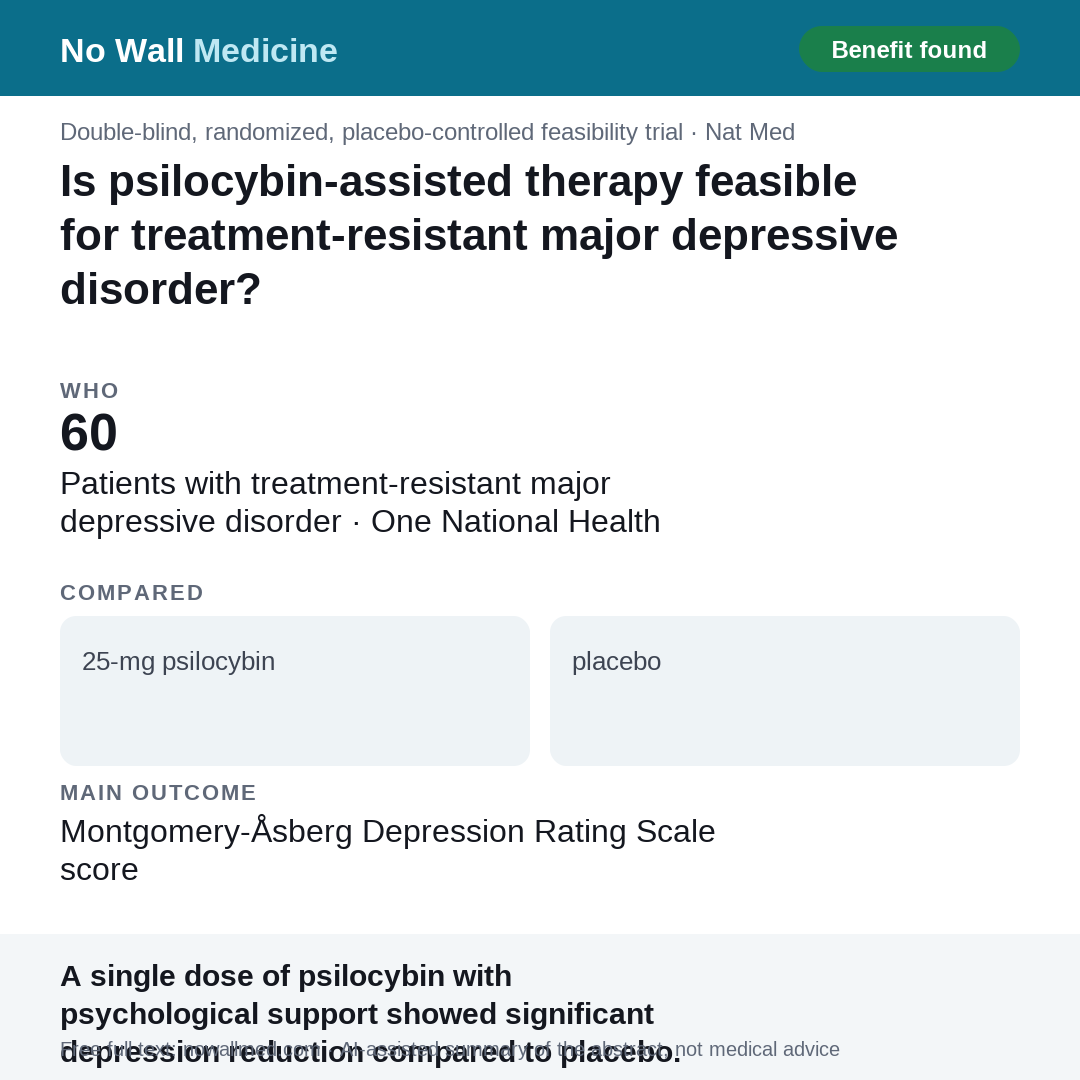
Psilocybin-assisted therapy for treatment-resistant major depressive disorder in a public healthcare setting: a randomized controlled trial
Double-blind, randomized, placebo-controlled feasibility trialBenefit found
Is psilocybin-assisted therapy feasible for treatment-resistant major depressive disorder?
Who
60
Patients with treatment-resistant major depressive disorder · One National Health Service site in England
Compared
25-mg psilocybin
placebo
Main outcome
Montgomery-Åsberg Depression Rating Scale score
Result: -10.41 (95% confidence interval: -14.86 to -5.95)
Bottom line: A single dose of psilocybin with psychological support showed significant depression reduction compared to placebo.
Nat Med · 2026-08-06Download image
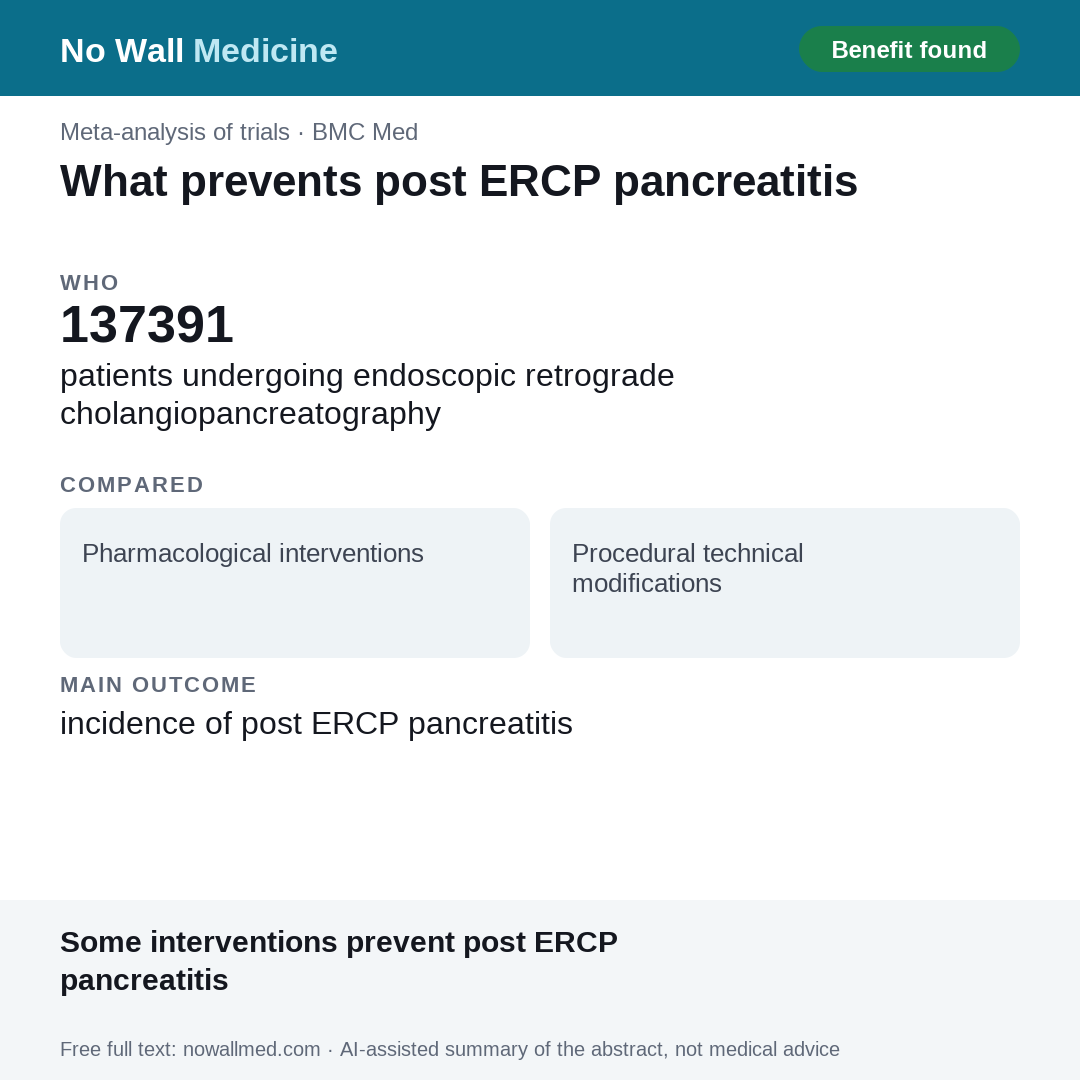
Pharmacological and procedural strategies to prevent post-ERCP pancreatitis: an umbrella review of meta-analyses of randomized controlled trials
Meta-analysis of trialsBenefit found
What prevents post ERCP pancreatitis
Who
137391
patients undergoing endoscopic retrograde cholangiopancreatography
Compared
Pharmacological interventions
Procedural technical modifications
Main outcome
incidence of post ERCP pancreatitis
Bottom line: Some interventions prevent post ERCP pancreatitis
BMC Med · 2026-08-06Download image
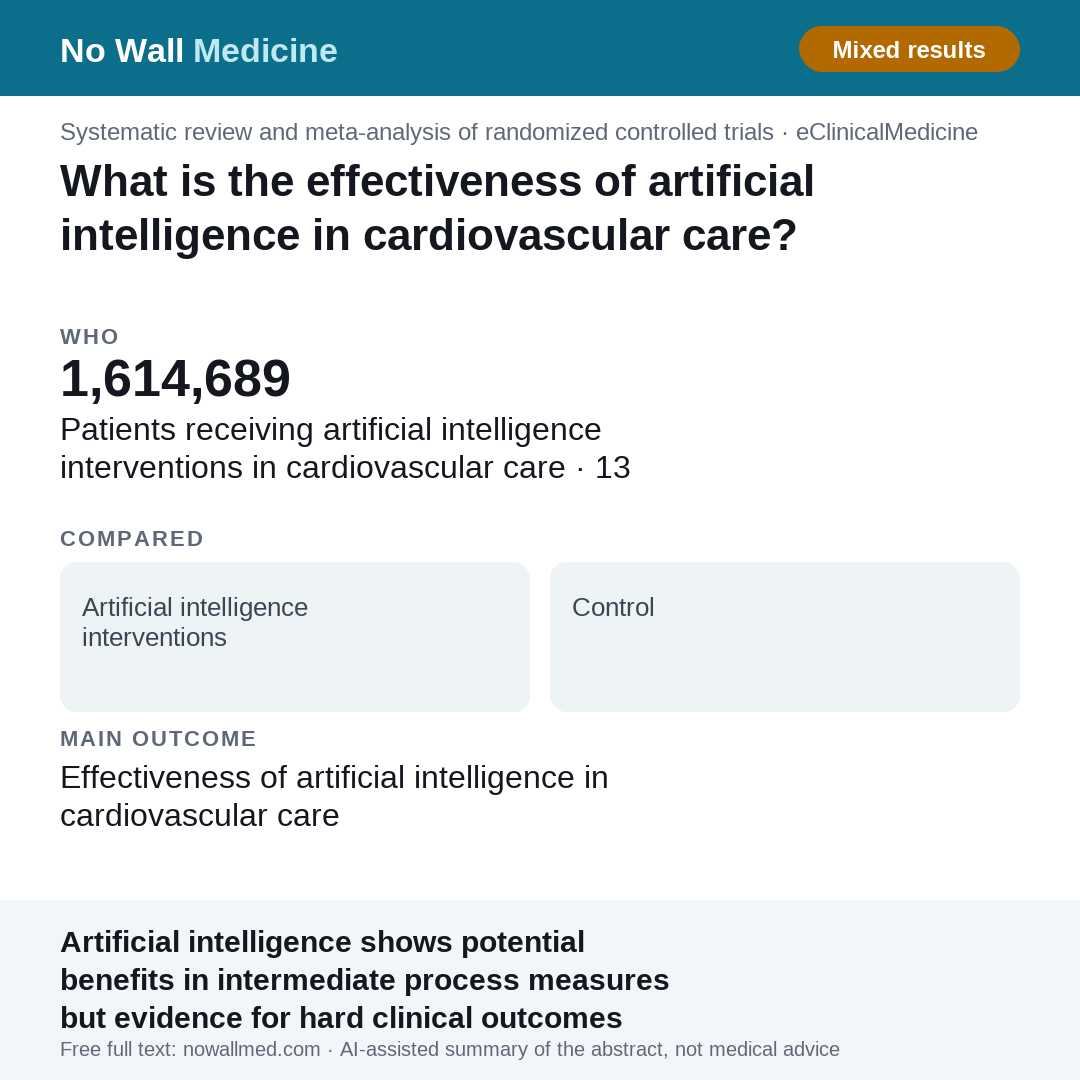
Artificial intelligence in cardiovascular care: a systematic review and meta-analysis of randomised controlled trials
Systematic review and meta-analysis of randomized controlled trialsMixed results
Is artificial intelligence effective in cardiovascular care?
Who
1,614,689
Patients in cardiovascular care · 13 regions
Compared
Image-based artificial intelligence clinical decision support system: significant effect on major adverse cardiovascular events
Routine care
Main outcome
Effectiveness of artificial intelligence interventions in cardiovascular care
Result: risk ratio 0.74 (95% CI 0.58-0.96)
Bottom line: Artificial intelligence shows potential benefits in intermediate process measures, but evidence for hard clinical outcomes remains limited.
Limitation: High risk of bias, trial heterogeneity, inadequate reporting, and scarcity of trials with clinically meaningful endpoints.
eClinicalMedicine · 2026-08-06Download image
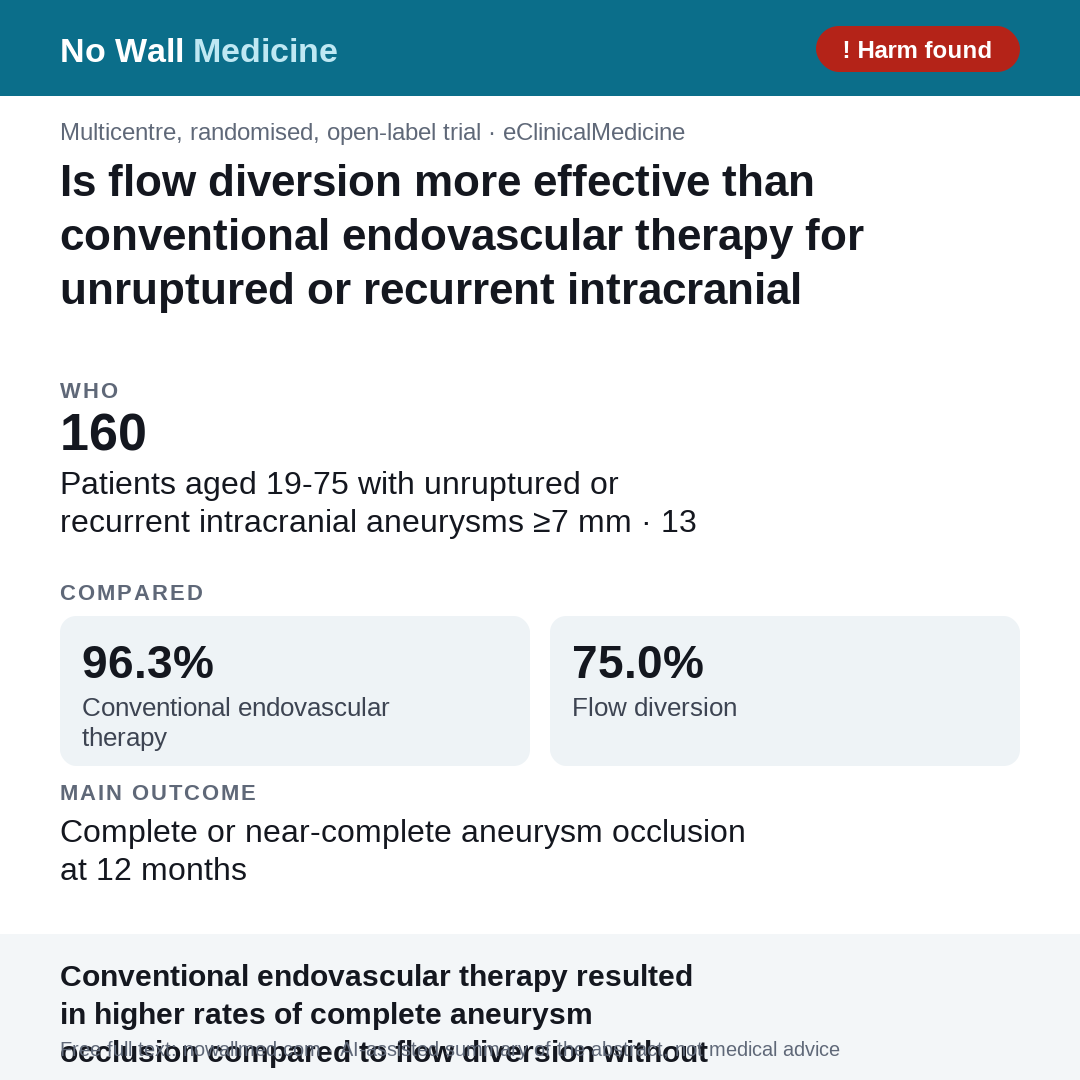
Efficacy and safety of flow diverter therapy for unruptured intracranial aneurysms compared to conventional endovascular therapy: a multicentre, randomised, open-label trial in South Korea
Multicentre, randomised, open-label trialHarm found
Is flow diversion more effective than conventional endovascular therapy for unruptured or recurrent intracranial aneurysms?
Who
160
Patients aged 19-75 with unruptured or recurrent intracranial aneurysms ≥7 mm · 13 tertiary institutions in South Korea
Compared
96.3%Conventional endovascular therapy
75.0%Flow diversion
Main outcome
Complete or near-complete aneurysm occlusion at 12 months
Result: adjusted odds ratio 6.46 (95% CI 1.94-29.98)
Bottom line: Conventional endovascular therapy resulted in higher rates of complete aneurysm occlusion compared to flow diversion without increased risk.
Limitation: Long-term follow-up is required to assess the durability of flow diversion.
Funded by: Korean Ministry of Health and Welfare
eClinicalMedicine · 2026-08-06Download image
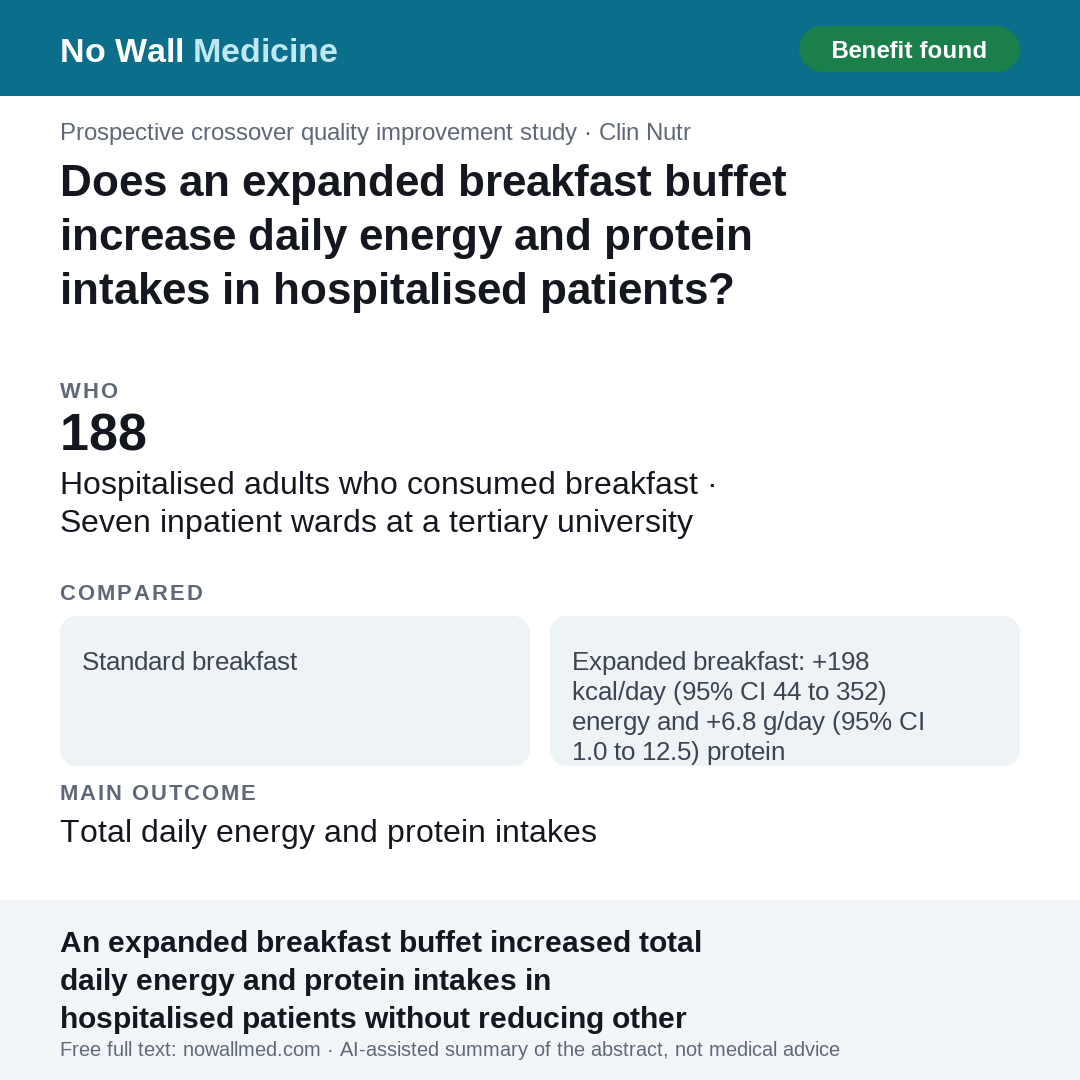
An expanded breakfast buffet increases daily energy and protein intakes in hospitalised patients: A prospective crossover quality improvement study
Prospective crossover quality improvement studyBenefit found
Does an expanded breakfast buffet increase daily energy and protein intakes in hospitalised patients?
Who
188
Hospitalised adults who consumed breakfast · Seven inpatient wards at a tertiary university hospital
Compared
Standard breakfast
Expanded breakfast: +198 kcal/day (95% CI 44 to 352) energy and +6.8 g/day (95% CI 1.0 to 12.5) protein
Main outcome
Total daily energy and protein intakes
Result: energy +198 kcal/day (95% CI 44 to 352); protein +6.8 g/day (95% CI 1.0 to 12.5)
Bottom line: An expanded breakfast buffet increased total daily energy and protein intakes in hospitalised patients without reducing other meal intakes.
Clin Nutr · 2026-08-06Download image