Visual abstracts
New randomized trials and meta-analyses from leading journals at a glance: who was studied, what was compared, and what was found. Every paper is free to read in full.
All specialtiesCardiology 4877Oncology 4138Gastroenterology & Hepatology 1942Infectious Disease 3837Neurology 1905Psychiatry & Mental Health 2273Pulmonology 2143Critical Care 1365Endocrinology & Diabetes 2580Pediatrics 2980Surgery 2559Orthopedics & Sports Medicine 931Neurosurgery 537Cardiothoracic & Vascular Surgery 674Plastic & Reconstructive Surgery 591Nephrology 1133Rheumatology 823Hematology 1109Dermatology 621Ophthalmology 543Obstetrics & Gynecology 1686Public & Global Health 1058Radiology & Imaging 648Anesthesiology 986Urology 764ENT (Otolaryngology) 503Emergency Medicine 511Allergy & Immunology 313Geriatrics 981Family Medicine & Primary Care 562Medical Genetics & Genomics 676Pathology & Laboratory Medicine 159Physical Medicine & Rehabilitation 757Palliative Care 444Nutrition 1588Digital Health & AI 2201General Medicine 321
School-age outcomes of children after perinatal brain injury: a systematic review and meta-analysis
Systematic review and meta-analysisHarm found
What are the school-aged neurodevelopmental outcomes of children after perinatal brain injury?
Who
Children with perinatal brain injury compared to those without
Compared
Preterm infants with intraventricular haemorrhage grades 3-4: threefold greater risk of moderate-to-severe neurodevelopmental impairment
Preterm infants without intraventricular haemorrhage
Infants with perinatal stroke: 61% (95% CI 39.2% to 82.9%) incidence of hemiplegia
Children without perinatal stroke
Main outcome
neurodevelopmental impairment
Result: OR 3.69 (95% CI 1.7 to 7.98)
Bottom line: Perinatal brain injury is associated with increased risks of neurodevelopmental, cognitive, and language impairments at school age.
Limitation: Limited comparative studies across domains, few adjusted data, and findings were limited by heterogeneity of studies.
BMJ Paediatr Open · 2023-06-04Download image

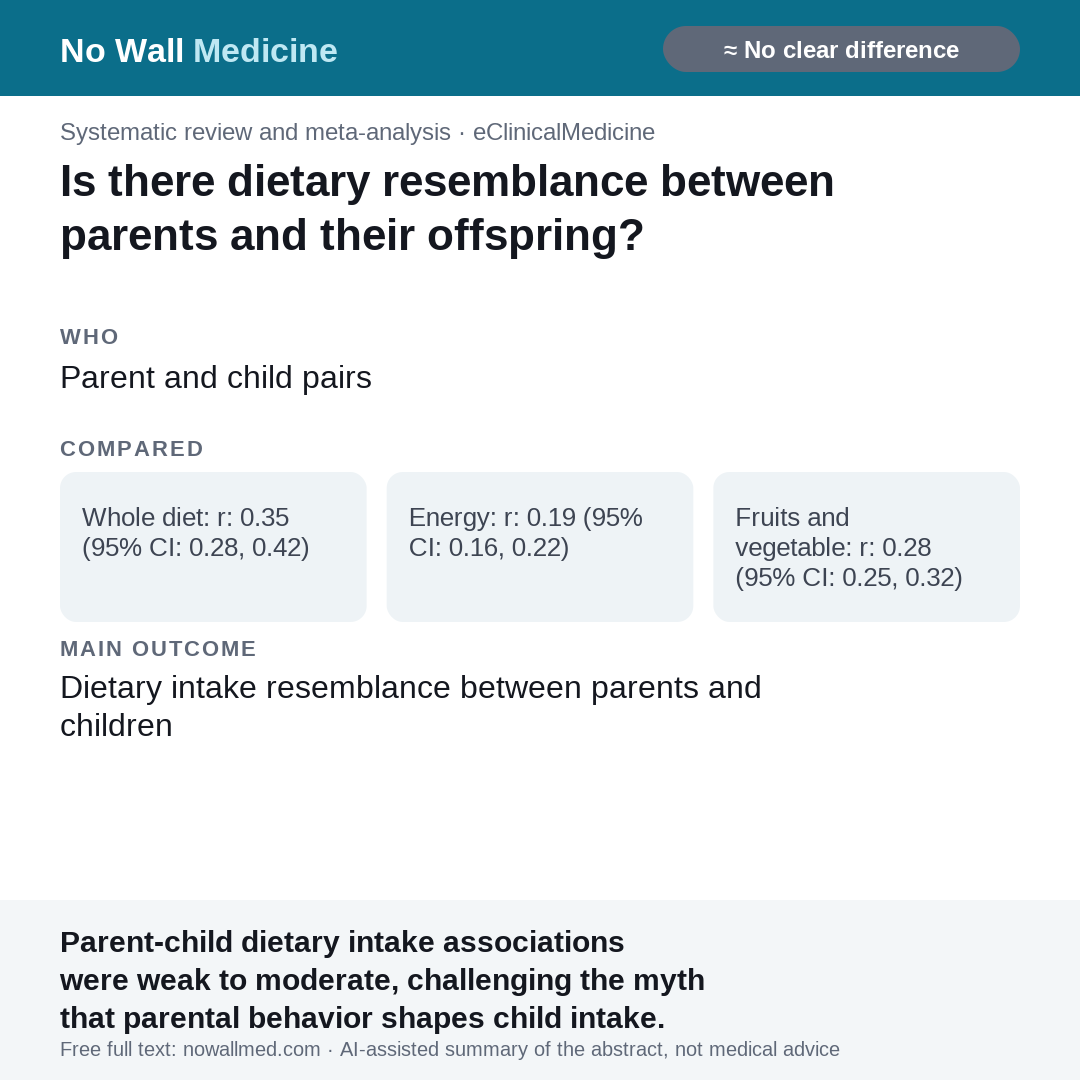
The myth and reality of familial resemblance in dietary intake: a systematic review and meta-analysis on the resemblance of dietary intake among parent and offspring
Systematic review and meta-analysisNo clear difference
Is there dietary resemblance between parents and their offspring?
Who
Parent and child pairs
Compared
Whole diet: r: 0.35 (95% CI: 0.28, 0.42)
Energy: r: 0.19 (95% CI: 0.16, 0.22)
Fruits and vegetable: r: 0.28 (95% CI: 0.25, 0.32)
Main outcome
Dietary intake resemblance between parents and children
Bottom line: Parent-child dietary intake associations were weak to moderate, challenging the myth that parental behavior shapes child intake.
eClinicalMedicine · 2023-06-02Download image
Nucleoside/nucleotide reverse transcriptase inhibitor sparing regimen with once daily integrase inhibitor plus boosted darunavir is non-inferior to standard of care in virologically-suppressed children and adolescents living with HIV - Week 48 results of the randomised SMILE Penta-17-ANRS 152 clinical trial
Randomised non-inferiority trialBenefit found
Is once daily integrase inhibitor plus boosted darunavir non-inferior to standard of care in children?
Who
318
Virologically-suppressed children and adolescents living with HIV aged 6-18 years · Africa, Europe, Thailand and Latin America
Compared
8Integrase inhibitor plus boosted darunavir
12Standard of care
Main outcome
Proportion with confirmed HIV-RNA ≥50 copies/mL by week 48
Result: difference -2.5% (95% CI: -7.6, 2.5%)
Bottom line: Switching to integrase inhibitor plus boosted darunavir was non-inferior to standard of care for virological suppression.
Funded by: Fondazione Penta Onlus, Gilead, Janssen, INSERM/ANRS and UK MRC
eClinicalMedicine · 2023-06-02Download image

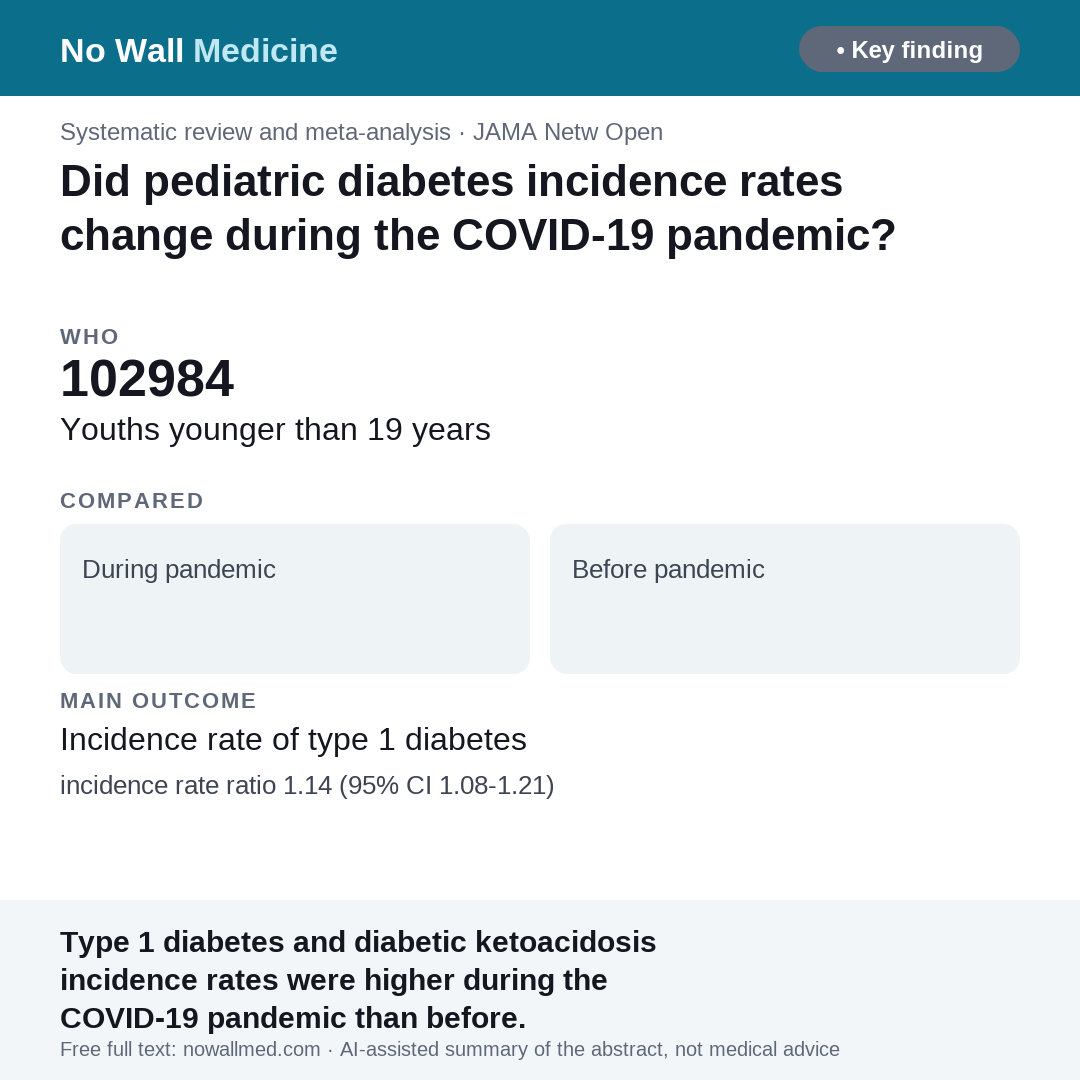
Incidence of Diabetes in Children and Adolescents During the COVID-19 Pandemic: A Systematic Review and Meta-Analysis
Systematic review and meta-analysisHarm found
Did pediatric diabetes incidence rates change during the COVID-19 pandemic?
Who
102984
Youths younger than 19 years
Compared
During pandemic
Before pandemic
Main outcome
Incidence rate of type 1 diabetes
Result: incidence rate ratio 1.14 (95% CI 1.08-1.21)
Bottom line: Type 1 diabetes and diabetic ketoacidosis incidence rates were higher during the COVID-19 pandemic than before.
Limitation: Future studies are needed to assess whether this trend persists.
JAMA Netw Open · 2023-06-01Download image
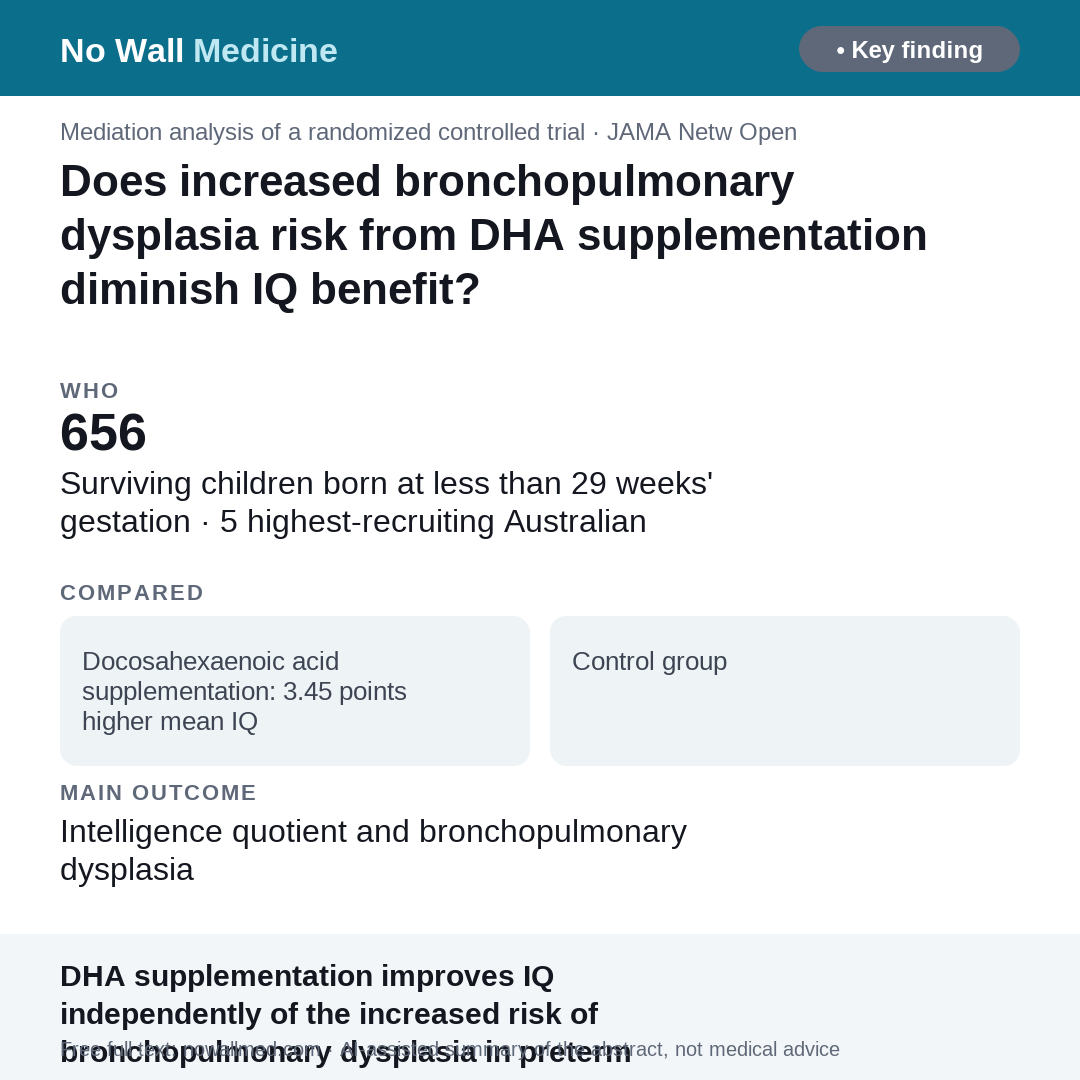
Mediation Analysis to Untangle Opposing Associations of High-Dose Docosahexaenoic Acid With IQ and Bronchopulmonary Dysplasia in Children Born Preterm
Mediation analysis of a randomized controlled trialBenefit found
Does increased bronchopulmonary dysplasia risk from DHA supplementation diminish IQ benefit?
Who
656
Surviving children born at less than 29 weeks' gestation · 5 highest-recruiting Australian hospitals
Compared
Docosahexaenoic acid supplementation: 3.45 points higher mean IQ
Control group
Main outcome
Intelligence quotient and bronchopulmonary dysplasia
Result: indirect effect -0.17 points (95% CI -0.62 to 0.13 points)
Bottom line: DHA supplementation improves IQ independently of the increased risk of bronchopulmonary dysplasia in preterm children.
JAMA Netw Open · 2023-06-01Download image
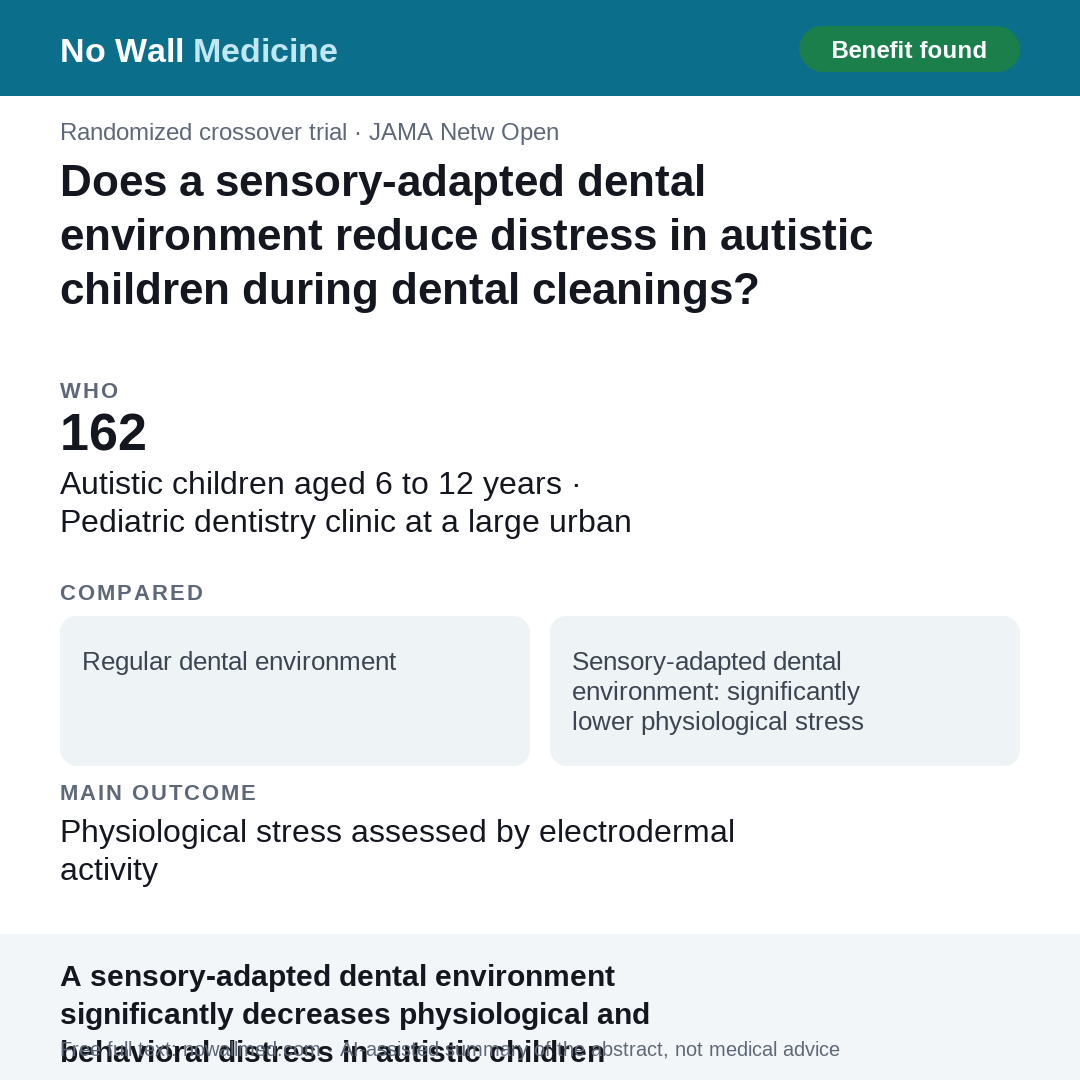
Sensory Adaptations to Improve Physiological and Behavioral Distress During Dental Visits in Autistic Children: A Randomized Crossover Trial
Randomized crossover trialBenefit found
Does a sensory-adapted dental environment reduce distress in autistic children during dental cleanings?
Who
162
Autistic children aged 6 to 12 years · Pediatric dentistry clinic at a large urban children's hospital
Compared
Regular dental environment
Sensory-adapted dental environment: significantly lower physiological stress
Main outcome
Physiological stress assessed by electrodermal activity
Result: mean difference in skin conductance level, -1.22 (95% CI, -2.17 to -0.27) μS
Bottom line: A sensory-adapted dental environment significantly decreases physiological and behavioral distress in autistic children during dental cleanings.
JAMA Netw Open · 2023-06-01Download image
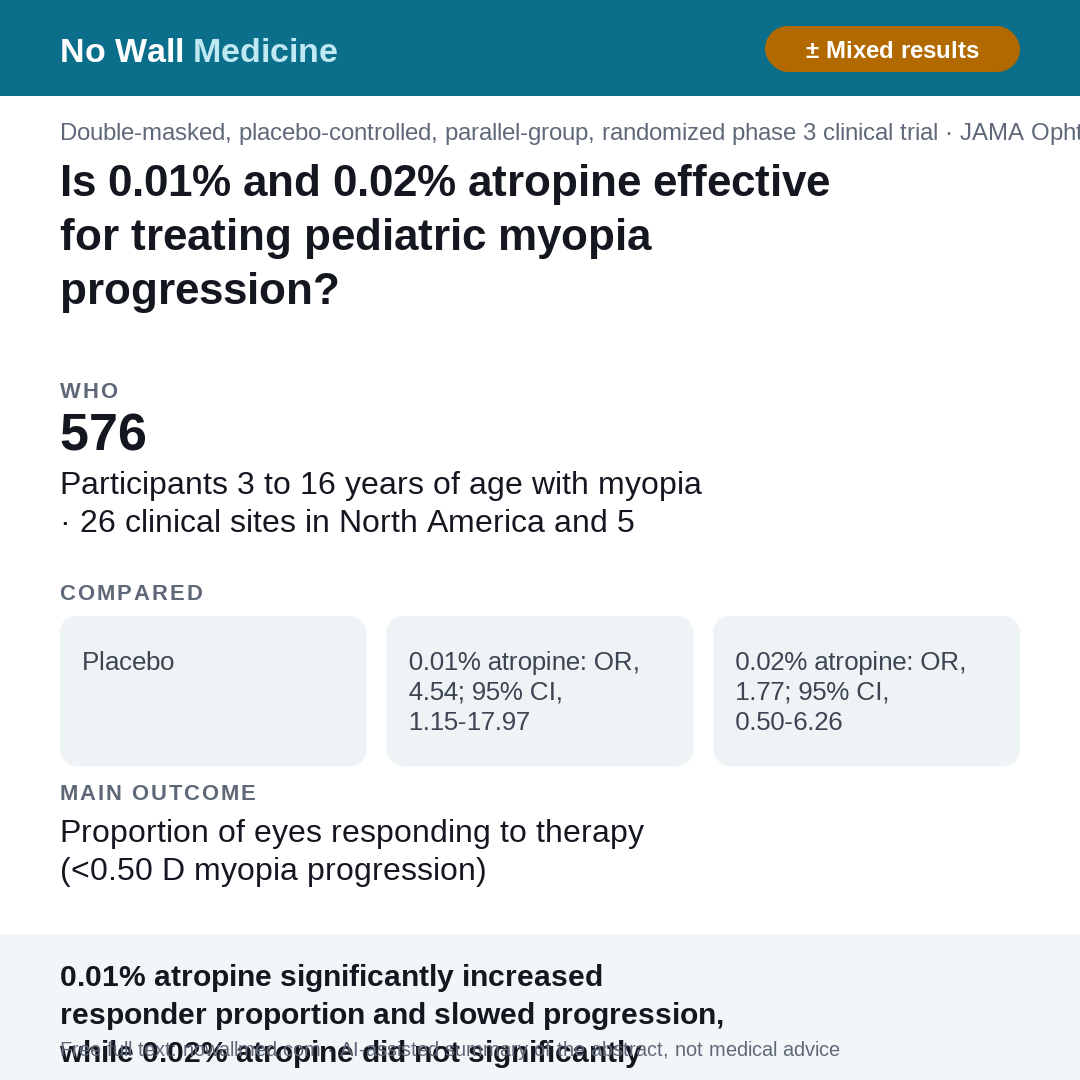
Efficacy and Safety of 0.01% and 0.02% Atropine for the Treatment of Pediatric Myopia Progression Over 3 Years: A Randomized Clinical Trial
Double-masked, placebo-controlled, parallel-group, randomized phase 3 clinical trialMixed results
Is 0.01% and 0.02% atropine effective for treating pediatric myopia progression?
Who
576
Participants 3 to 16 years of age with myopia · 26 clinical sites in North America and 5 European countries
Compared
Placebo
0.01% atropine: OR, 4.54; 95% CI, 1.15-17.97
0.02% atropine: OR, 1.77; 95% CI, 0.50-6.26
Main outcome
Proportion of eyes responding to therapy (<0.50 D myopia progression)
Result: OR, 4.54; 95% CI, 1.15-17.97 for 0.01% atropine
Bottom line: 0.01% atropine significantly increased responder proportion and slowed progression, while 0.02% atropine did not significantly increase responder proportion.
JAMA Ophthalmol · 2023-06-01Download image
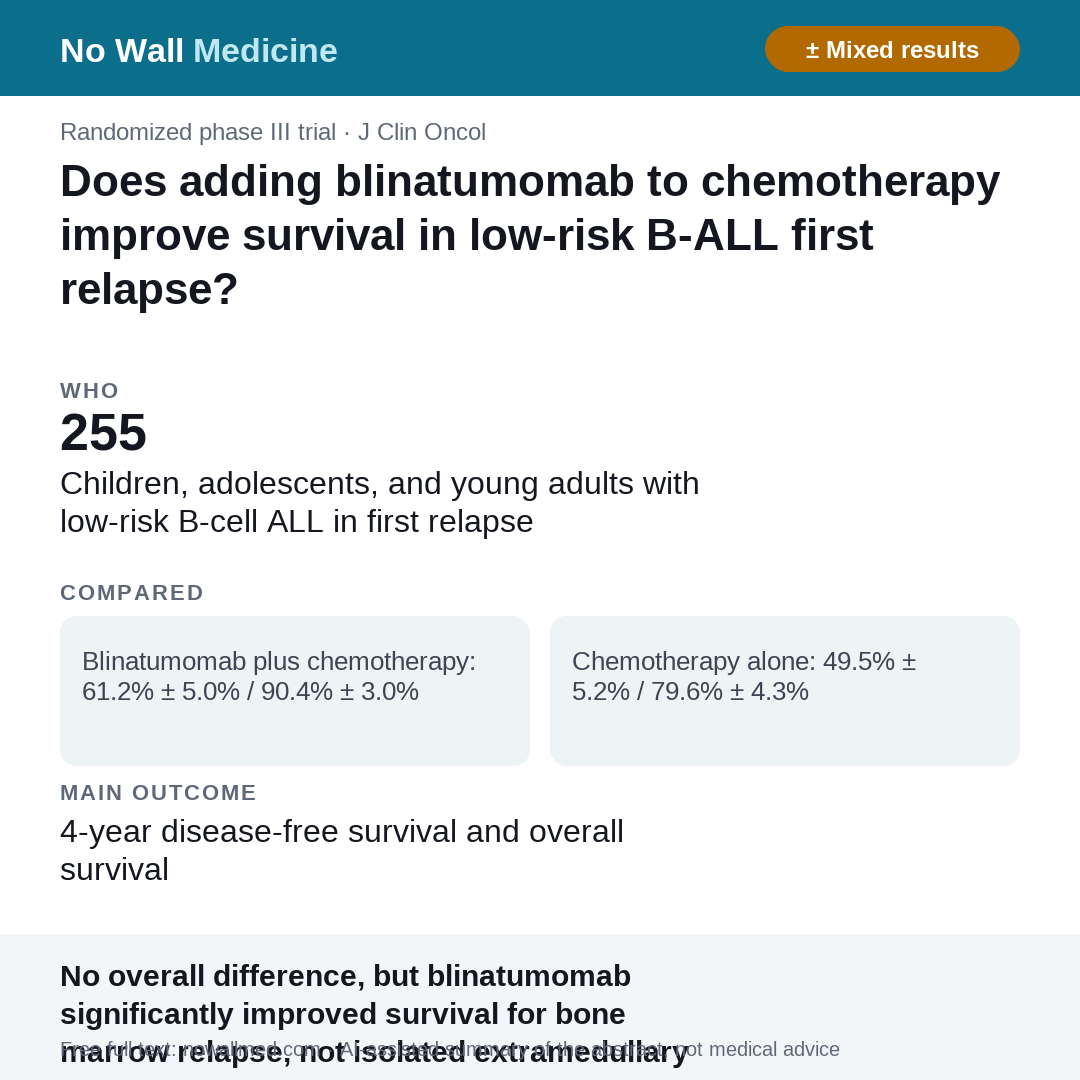
Children's Oncology Group AALL1331: Phase III Trial of Blinatumomab in Children, Adolescents, and Young Adults With Low-Risk B-Cell ALL in First Relapse
Randomized trialBenefit found
Blinatumomab vs chemotherapy in low-risk B-ALL relapse
Who
255
Children, adolescents, and young adults with B-ALL
Compared
Blinatumomab: 61.2% ± 5.0%
Chemotherapy: 49.5% ± 5.2%
Main outcome
Disease-free survival
Bottom line: Blinatumomab improved survival in some patients
J Clin Oncol · 2023-05-31Download image
Kidney Ultrasonography After First Febrile Urinary Tract Infection in Children: A Systematic Review and Meta-analysis
Systematic review and meta-analysisMixed results
What is the prevalence of urinary tract abnormalities on kidney ultrasonography after first febrile urinary tract infection?
Who
9170
Children with first febrile urinary tract infection
Compared
22.1%All ages (95% CI, 16.8-27.9)
Clinically important abnormalities: 1 in 32
Main outcome
Prevalence of urinary tract abnormalities on kidney ultrasonography
Bottom line: Approximately 1 in 4 to 5 children with first febrile urinary tract infection have abnormalities on kidney ultrasonography.
JAMA Pediatr · 2023-05-30Download image

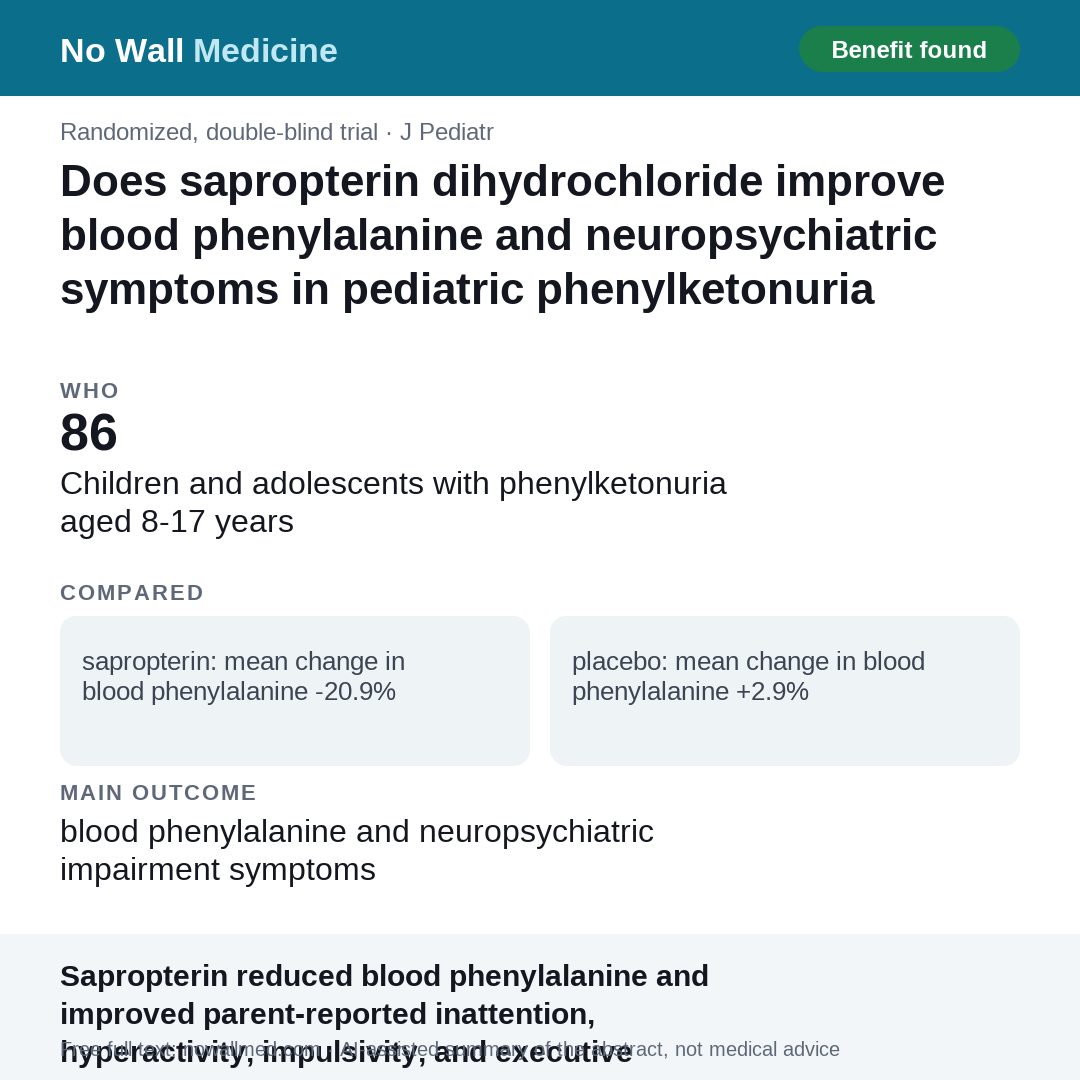
Neuropsychiatric Function Improvement in Pediatric Patients with Phenylketonuria
Randomized, double-blind trialBenefit found
Does sapropterin dihydrochloride improve blood phenylalanine and neuropsychiatric symptoms in pediatric phenylketonuria patients?
Who
86
Children and adolescents with phenylketonuria aged 8-17 years
Compared
sapropterin: mean change in blood phenylalanine -20.9%
placebo: mean change in blood phenylalanine +2.9%
Main outcome
blood phenylalanine and neuropsychiatric impairment symptoms
Bottom line: Sapropterin reduced blood phenylalanine and improved parent-reported inattention, hyperactivity, impulsivity, and executive functioning symptoms.
J Pediatr · 2023-05-30Download image
Polygenic prediction of preeclampsia and gestational hypertension
Multi-ancestry meta-analysisBenefit found
Can polygenic risk scores predict preeclampsia and gestational hypertension?
Who
Maternal DNA sequence variants in cases and controls
Compared
Preeclampsia and eclampsia: 20,064 cases and 703,117 control individuals
Gestational hypertension: 11,027 cases and 412,788 control individuals
Main outcome
Association of maternal DNA sequence variants with hypertensive pregnancy disorders
Bottom line: Polygenic risk scores predicted hypertensive pregnancy disorders and reclassified eligibility for low-dose aspirin prevention.
Nat Med · 2023-05-29Download image

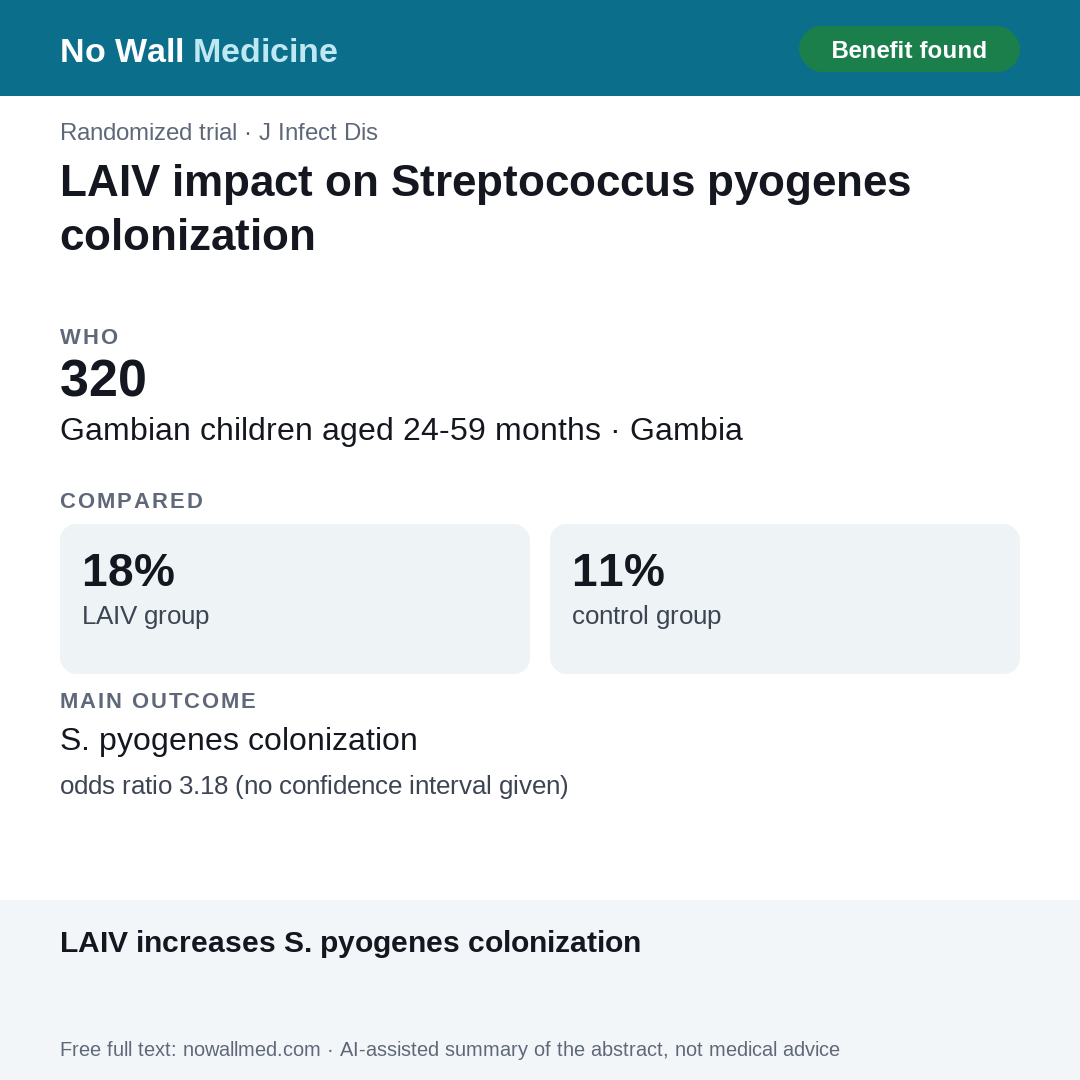
Streptococcus pyogenes Colonization in Children Aged 24-59 Months in the Gambia: Impact of Live Attenuated Influenza Vaccine and Associated Serological Responses
Randomized trialBenefit found
LAIV impact on Streptococcus pyogenes colonization
Who
320
Gambian children aged 24-59 months · Gambia
Compared
18%LAIV group
11%control group
Main outcome
S. pyogenes colonization
Result: odds ratio 3.18 (no confidence interval given)
Bottom line: LAIV increases S. pyogenes colonization
J Infect Dis · 2023-05-29Download image
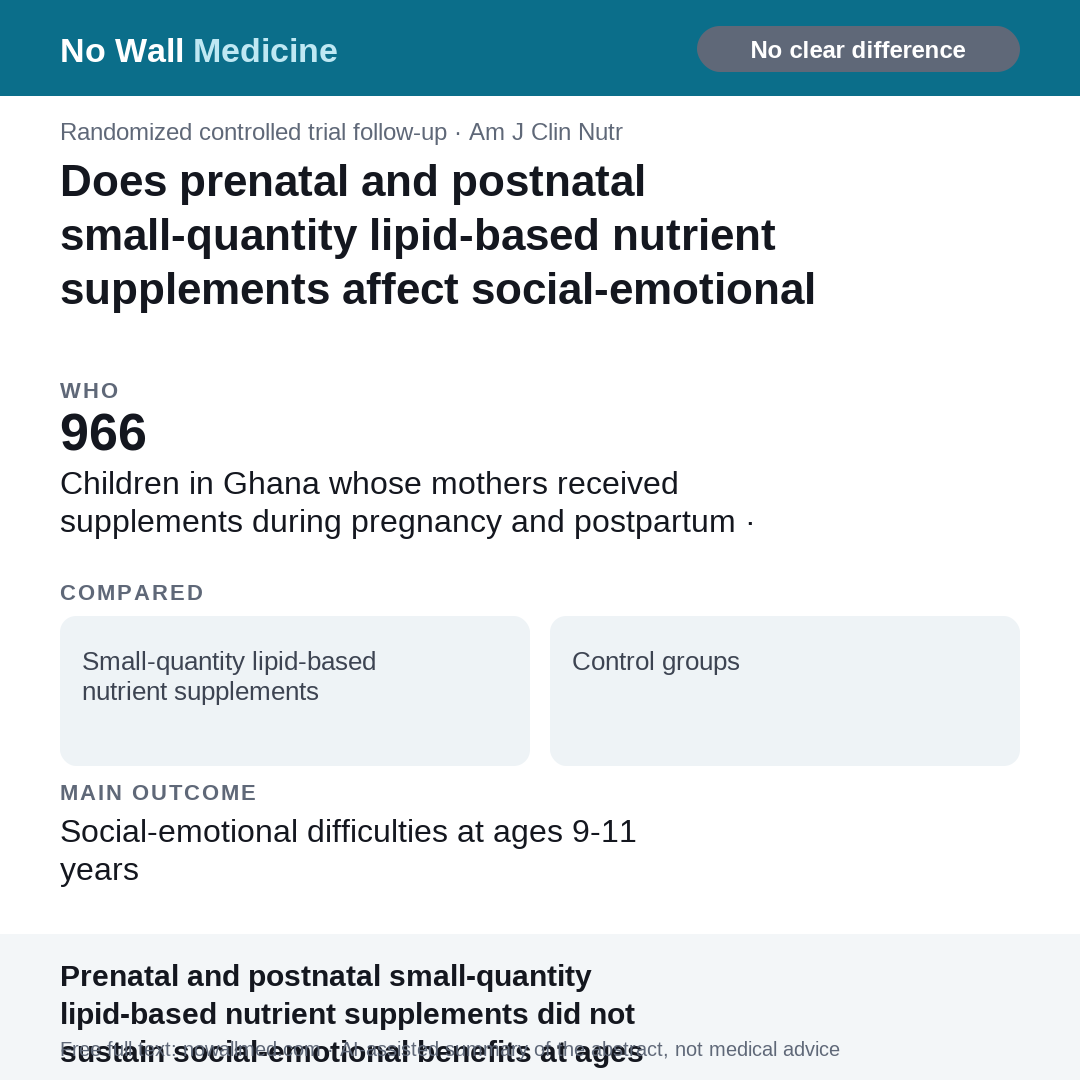
Prenatal and postnatal small-quantity lipid-based nutrient supplements and children's social-emotional difficulties at ages 9-11 y in Ghana: follow-up of a randomized controlled trial
Randomized controlled trial follow-upNo clear difference
Does prenatal and postnatal small-quantity lipid-based nutrient supplements affect social-emotional difficulties at ages 9-11?
Who
966
Children in Ghana whose mothers received supplements during pregnancy and postpartum · Ghana
Compared
Small-quantity lipid-based nutrient supplements
Control groups
Main outcome
Social-emotional difficulties at ages 9-11 years
Bottom line: Prenatal and postnatal small-quantity lipid-based nutrient supplements did not sustain social-emotional benefits at ages 9-11 years.
Limitation: Low prevalence of social-emotional problems at preadolescence may have limited the potential to benefit.
Am J Clin Nutr · 2023-05-29Download image
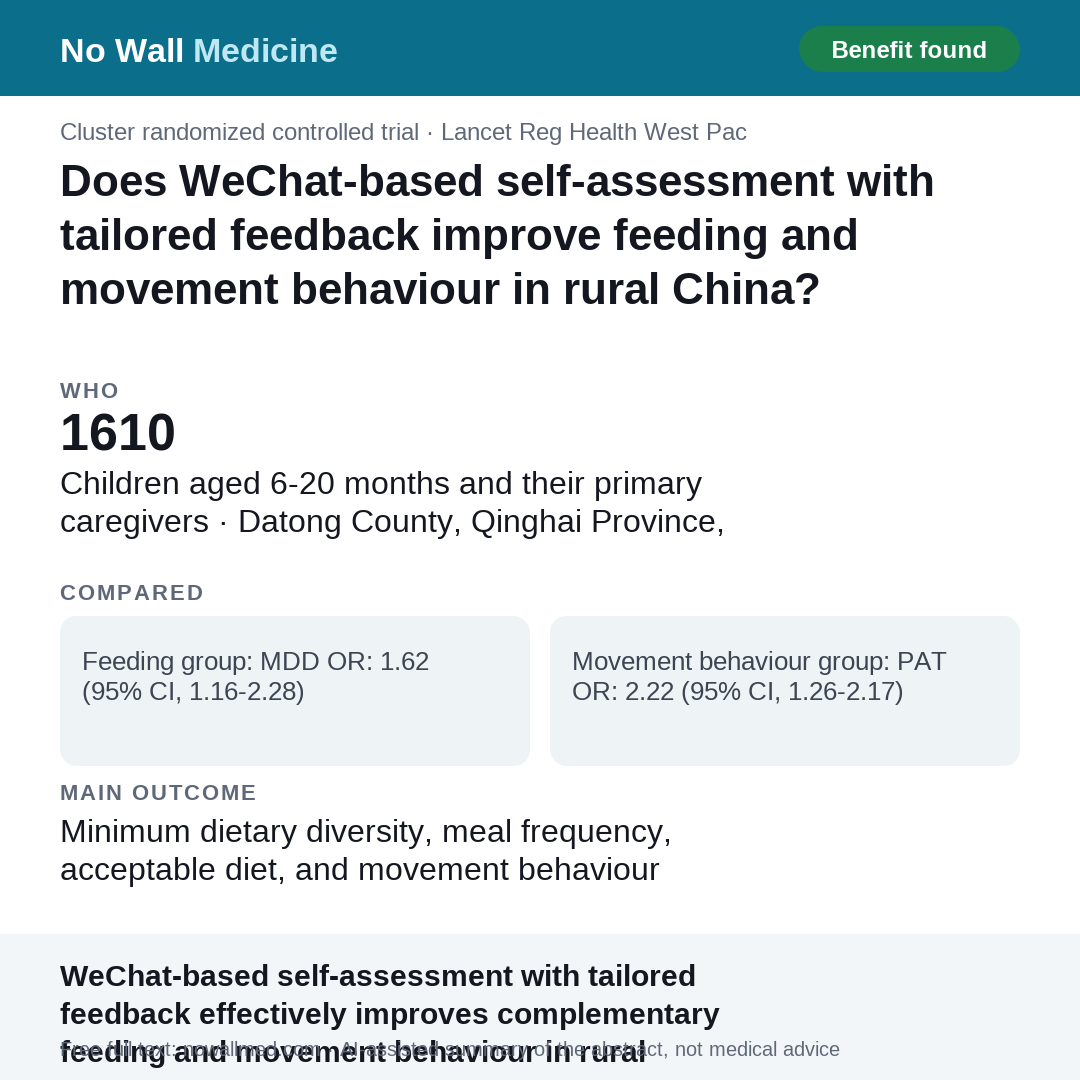
The effectiveness of a WeChat-based self-assessment with a tailored feedback report on improving complementary feeding and movement behaviour of children aged 6-20 months in rural China: a cluster randomized controlled trial
Cluster randomized controlled trialBenefit found
Does WeChat-based self-assessment with tailored feedback improve feeding and movement behaviour in rural China?
Who
1610
Children aged 6-20 months and their primary caregivers · Datong County, Qinghai Province, China
Compared
Feeding group: MDD OR: 1.62 (95% CI, 1.16-2.28)
Movement behaviour group: PAT OR: 2.22 (95% CI, 1.26-2.17)
Main outcome
Minimum dietary diversity, meal frequency, acceptable diet, and movement behaviour
Result: MDD OR: 1.62 (95% CI, 1.16-2.28); PAT OR: 2.22 (95% CI, 1.26-2.17)
Bottom line: WeChat-based self-assessment with tailored feedback effectively improves complementary feeding and movement behaviour in rural China.
Funded by: Capital Institute of Pediatrics
Lancet Reg Health West Pac · 2023-05-29Download image
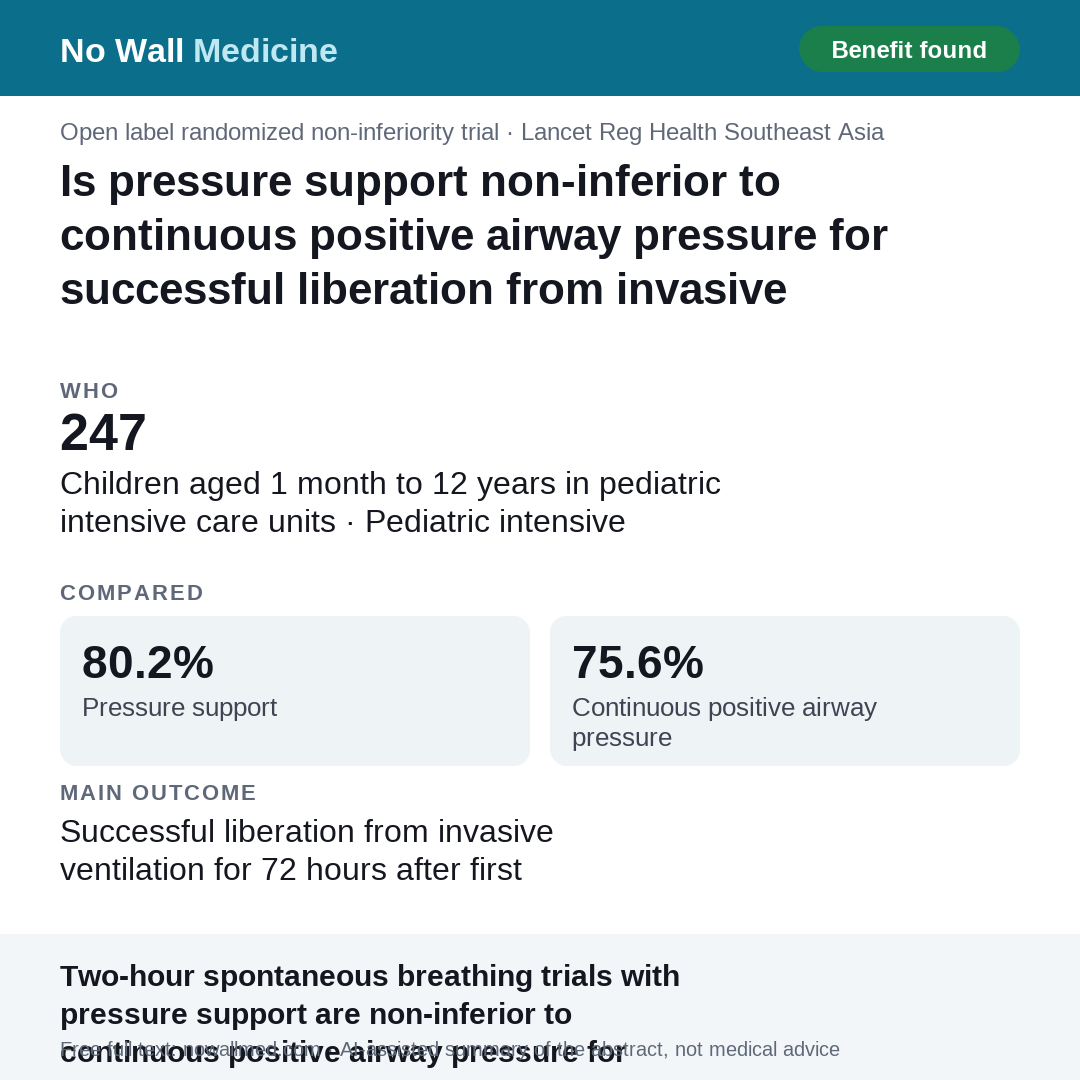
Pressure support versus continuous positive airway pressure for predicting successful liberation from invasive ventilation in children: an open label, randomized non-inferiority trial
Open label randomized non-inferiority trialBenefit found
Is pressure support non-inferior to continuous positive airway pressure for successful liberation from invasive ventilation?
Who
247
Children aged 1 month to 12 years in pediatric intensive care units · Pediatric intensive care unit
Compared
80.2%Pressure support
75.6%Continuous positive airway pressure
Main outcome
Successful liberation from invasive ventilation for 72 hours after first spontaneous breathing trial
Result: difference 4.6; 95% CI (-5.8, 15)
Bottom line: Two-hour spontaneous breathing trials with pressure support are non-inferior to continuous positive airway pressure for successful liberation in children.
Lancet Reg Health Southeast Asia · 2023-05-29Download image
Securement of Umbilical Venous Catheter Using Cyanoacrylate Glue: A Randomized Controlled Trial
Randomized, controlled, nonblinded trialBenefit found
Does cyanoacrylate glue reduce umbilical venous catheter dislodgement?
Who
Infants requiring an umbilical venous catheter with a centrally located tip · Single-center
Compared
7.7%Cyanoacrylate glue plus cord-anchored suture
24.6%Suture alone
Main outcome
Dislodgement of the external tract of the catheter
Bottom line: Cyanoacrylate glue plus suture is effective in decreasing umbilical venous catheter dislodgement compared to suture alone.
J Pediatr · 2023-05-26Download image

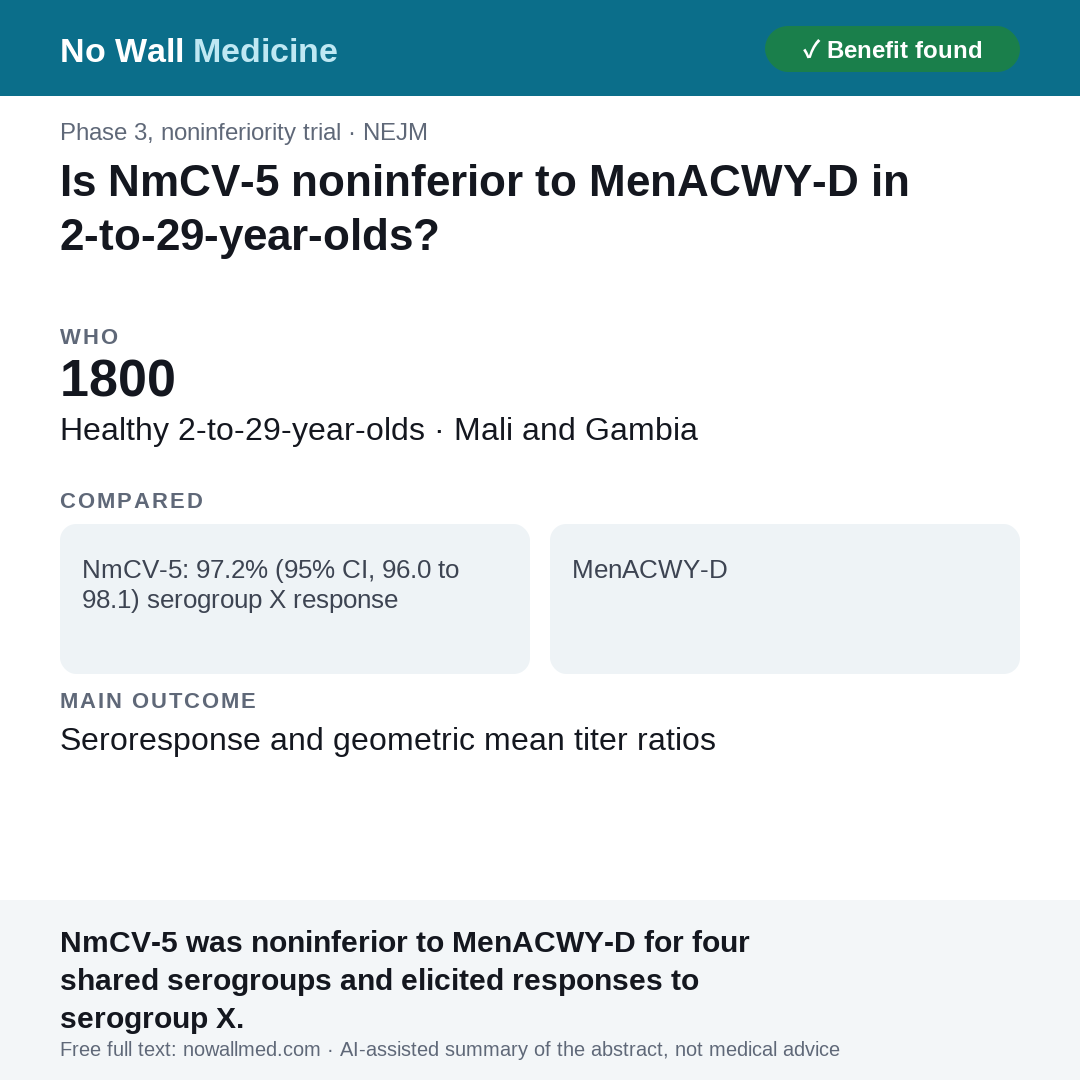
Meningococcal ACWYX Conjugate Vaccine in 2-to-29-Year-Olds in Mali and Gambia
Phase 3, noninferiority trialBenefit found
Is NmCV-5 noninferior to MenACWY-D in 2-to-29-year-olds?
Who
1800
Healthy 2-to-29-year-olds · Mali and Gambia
Compared
NmCV-5: 97.2% (95% CI, 96.0 to 98.1) serogroup X response
MenACWY-D
Main outcome
Seroresponse and geometric mean titer ratios
Bottom line: NmCV-5 was noninferior to MenACWY-D for four shared serogroups and elicited responses to serogroup X.
Funded by: United Kingdom Foreign, Commonwealth, and Development Office and others
NEJM · 2023-05-24Download image
Effect of milk protein and whey permeate in large quantity lipid-based nutrient supplement on linear growth and body composition among stunted children: A randomized 2 × 2 factorial trial in Uganda
Randomized, double-blind, 2 × 2 factorial trialMixed results
Do milk protein and whey permeate in lipid-based nutrient supplements affect growth and body composition?
Who
750
Stunted children aged 12 to 59 months · Uganda
Compared
Lipid-based nutrient supplement: 0.56 (95% CI [0.42, 0.70]) cm height increase
No supplementation: 0.06 (95% CI [0.02, 0.10]) decline in height-for-age z-score
Main outcome
Change in height, knee-heel length, and body composition
Result: 0.56 (95% CI [0.42, 0.70]) cm height increase for LNS
Bottom line: Lipid-based nutrient supplementation supports linear growth and fat-free mass, but adding milk protein or whey permeate provides no additional benefit.
Limitation: Lack of blinding of caregivers and short study duration.
PLOS Med · 2023-05-23Download image

Systematic review of clinical practice guidelines for acne vulgaris published between January 2017 and July 2021
Systematic reviewMixed results
How do clinical practice guidelines for acne vulgaris compare in reporting and treatment recommendations?
Who
Guidelines on medical treatment of acne vulgaris in adults and children
Compared
New guidelines (2017-2021)
Previous systematic review
Main outcome
Reporting quality and treatment guidance for acne
Bottom line: Reporting has improved, but considerable variation remains regarding acne severity classification and oral antibiotic use.
Limitation: Substantial differences in classification of acne severity hampered comparisons between guidelines.
Skin Health Dis · 2023-05-23Download image

A Comprehensive Multilevel Analysis of the Bucharest Early Intervention Project: Causal Effects on Recovery From Early Severe Deprivation
Randomized controlled trialBenefit found
Does foster care improve outcomes for children transitioning from institutional care?
Who
136
Children residing in institutions in Bucharest, Romania · Bucharest, Romania
Compared
foster care: better cognitive and physical outcomes and less severe psychopathology
care as usual
Main outcome
IQ, physical growth, brain electrical activity, and psychopathology symptoms
Bottom line: Foster care provides stable, long-term benefits for previously institutionalized children across multiple developmental domains.
Am J Psychiatry · 2023-05-22Download image