Visual abstracts
New randomized trials and meta-analyses from leading journals at a glance: who was studied, what was compared, and what was found. Every paper is free to read in full.
All specialtiesCardiology 3890Oncology 3333Gastroenterology & Hepatology 1541Infectious Disease 2853Neurology 1544Psychiatry & Mental Health 1830Pulmonology 1673Critical Care 1097Endocrinology & Diabetes 2005Pediatrics 2351Surgery 2062Orthopedics & Sports Medicine 736Neurosurgery 451Cardiothoracic & Vascular Surgery 480Plastic & Reconstructive Surgery 523Nephrology 853Rheumatology 634Hematology 874Dermatology 492Ophthalmology 426Obstetrics & Gynecology 1359Public & Global Health 769Radiology & Imaging 528Anesthesiology 790Urology 634ENT (Otolaryngology) 427Emergency Medicine 418Allergy & Immunology 244Geriatrics 809Family Medicine & Primary Care 463Medical Genetics & Genomics 526Pathology & Laboratory Medicine 135Physical Medicine & Rehabilitation 597Palliative Care 353Nutrition 1191Digital Health & AI 1801General Medicine 273
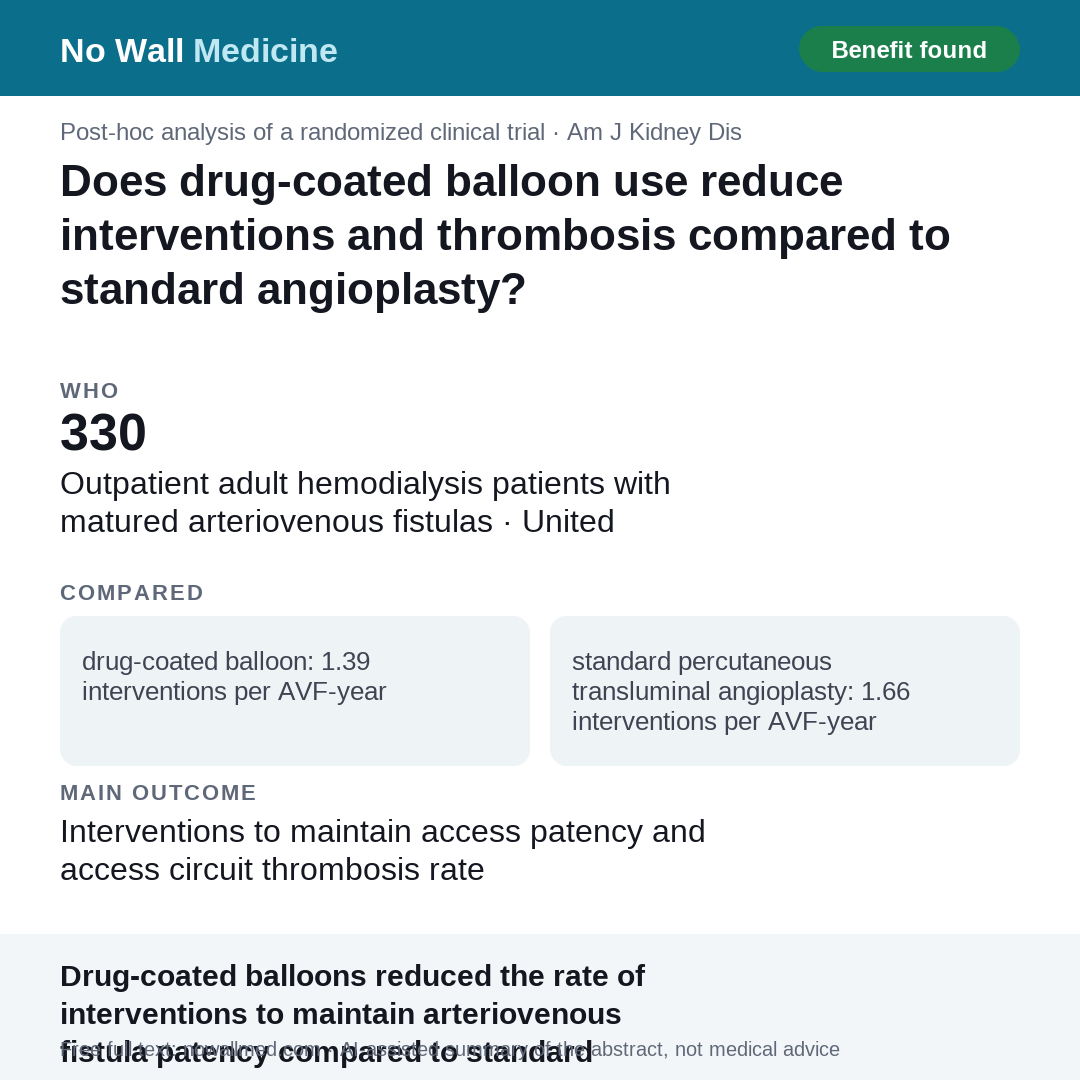
Evaluating Intervention Rates for Dysfunctional Arteriovenous Fistulas: Post-hoc Analysis of the IN.PACT AV Access Trial
Post-hoc analysis of a randomized clinical trialBenefit found
Does drug-coated balloon use reduce interventions and thrombosis compared to standard angioplasty?
Who
330
Outpatient adult hemodialysis patients with matured arteriovenous fistulas · United States, Japan, and New Zealand
Compared
drug-coated balloon: 1.39 interventions per AVF-year
standard percutaneous transluminal angioplasty: 1.66 interventions per AVF-year
Main outcome
Interventions to maintain access patency and access circuit thrombosis rate
Result: rate difference, -0.28 (95% CI, -0.47 to -0.08)
Bottom line: Drug-coated balloons reduced the rate of interventions to maintain arteriovenous fistula patency compared to standard angioplasty.
Limitation: Exclusion of arteriovenous fistulas with prior thrombosis and small sample size at 36 months.
Am J Kidney Dis · 2025-08-13Download image
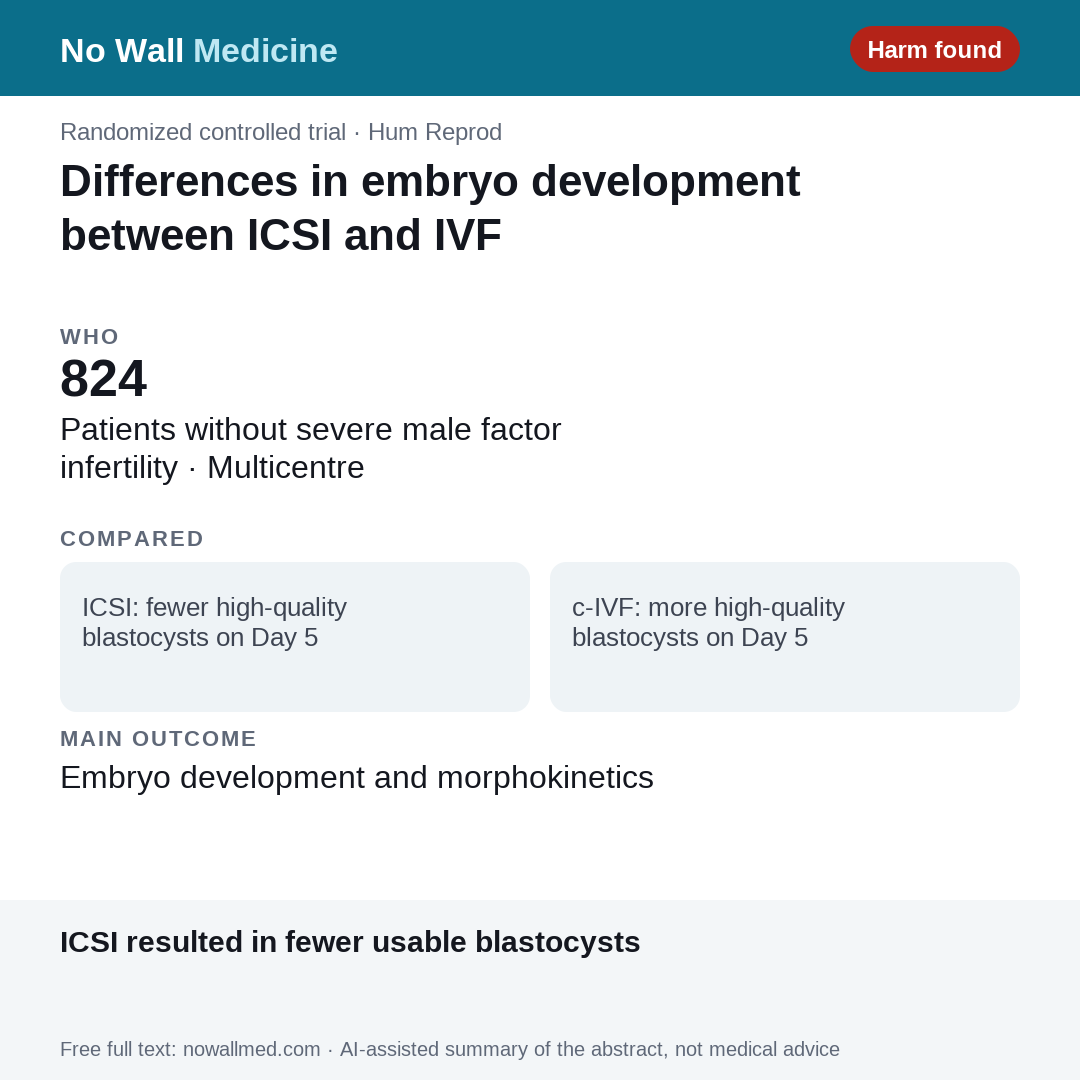
Early embryo developmental kinetics following IVF versus ICSI in patients without severe male factor infertility: a secondary analysis of a multicentre, randomized controlled trial (INVICSI)
Randomized controlled trialHarm found
Differences in embryo development between ICSI and IVF
Who
824
Patients without severe male factor infertility · Multicentre
Compared
ICSI: fewer high-quality blastocysts on Day 5
c-IVF: more high-quality blastocysts on Day 5
Main outcome
Embryo development and morphokinetics
Bottom line: ICSI resulted in fewer usable blastocysts
Limitation: Did not assess sperm DNA fragmentation
Funded by: INVICSI
Hum Reprod · 2025-08-13Download image
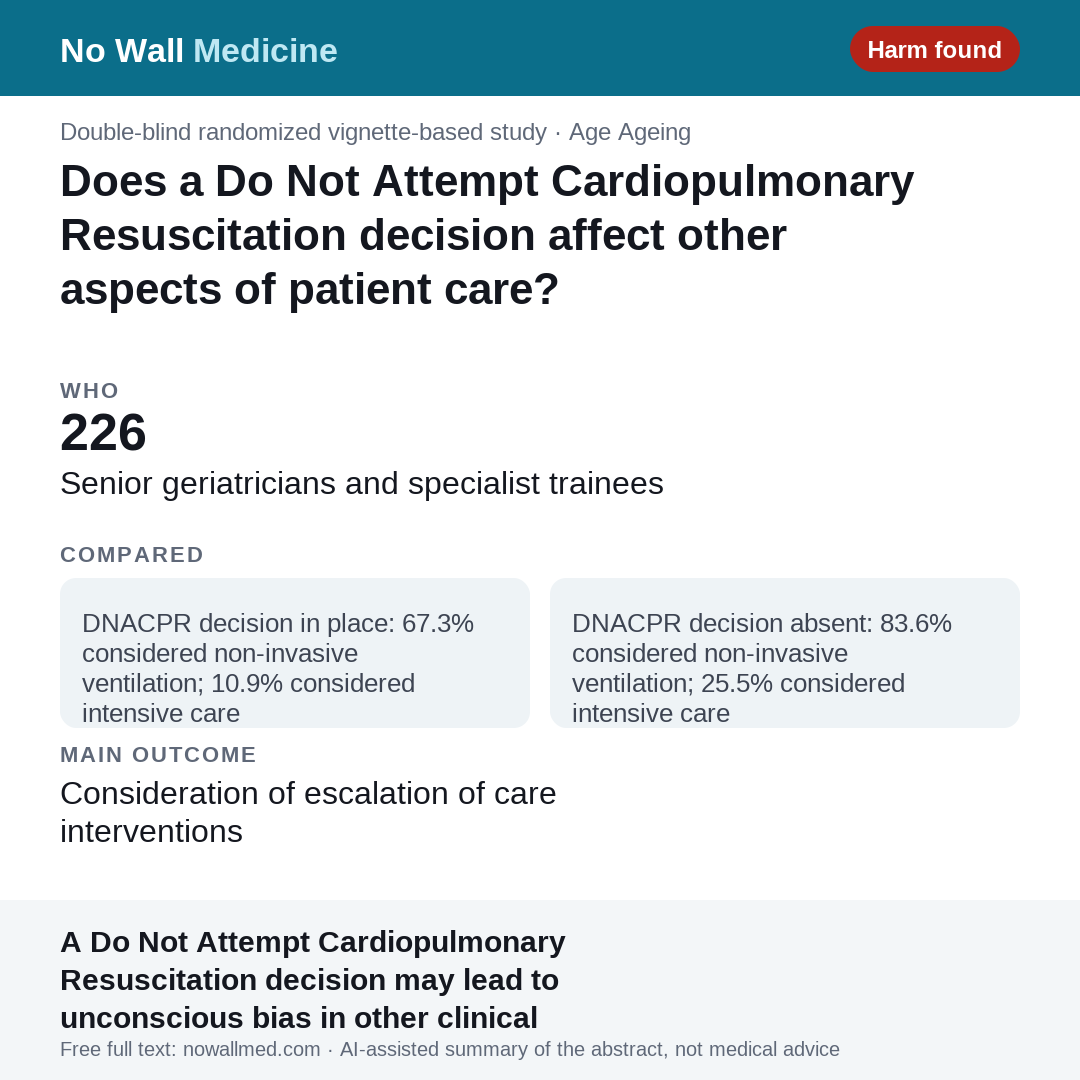
How might a 'Do Not Attempt Cardiopulmonary Resuscitation' (DNACPR) decision affect other aspects of patient care? A vignette-based randomised study
Double-blind randomized vignette-based studyHarm found
Does a Do Not Attempt Cardiopulmonary Resuscitation decision affect other aspects of patient care?
Who
226
Senior geriatricians and specialist trainees
Compared
DNACPR decision in place: 67.3% considered non-invasive ventilation; 10.9% considered intensive care
DNACPR decision absent: 83.6% considered non-invasive ventilation; 25.5% considered intensive care
Main outcome
Consideration of escalation of care interventions
Bottom line: A Do Not Attempt Cardiopulmonary Resuscitation decision may lead to unconscious bias in other clinical escalation decisions.
Age Ageing · 2025-08-13Download image
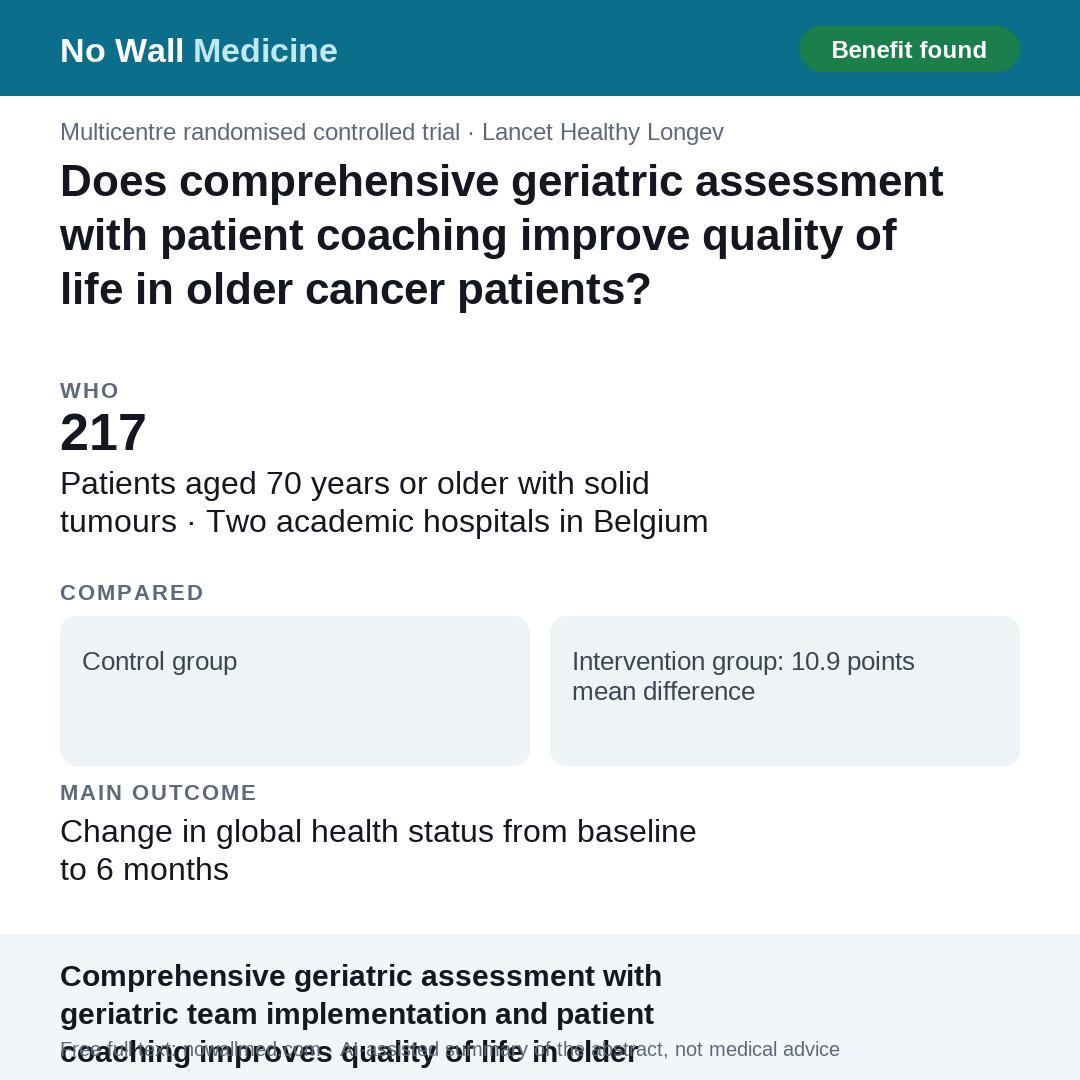
Effectiveness of comprehensive geriatric assessment with extensive patient coaching for improving quality of life in older patients with solid tumours receiving systemic therapy (G-oncoCOACH): a multicentre randomised controlled trial
Multicentre randomised controlled trialBenefit found
Does comprehensive geriatric assessment with patient coaching improve quality of life in older cancer patients?
Who
217
Patients aged 70 years or older with solid tumours · Two academic hospitals in Belgium
Compared
Control group
Intervention group: 10.9 points mean difference
Main outcome
Change in global health status from baseline to 6 months
Result: mean difference 10.9 points (95% CI 3.7-18.0)
Bottom line: Comprehensive geriatric assessment with geriatric team implementation and patient coaching improves quality of life in older cancer patients.
Funded by: Stand Up to Cancer (Kom op tegen Kanker)
Lancet Healthy Longev · 2025-08-13Download image
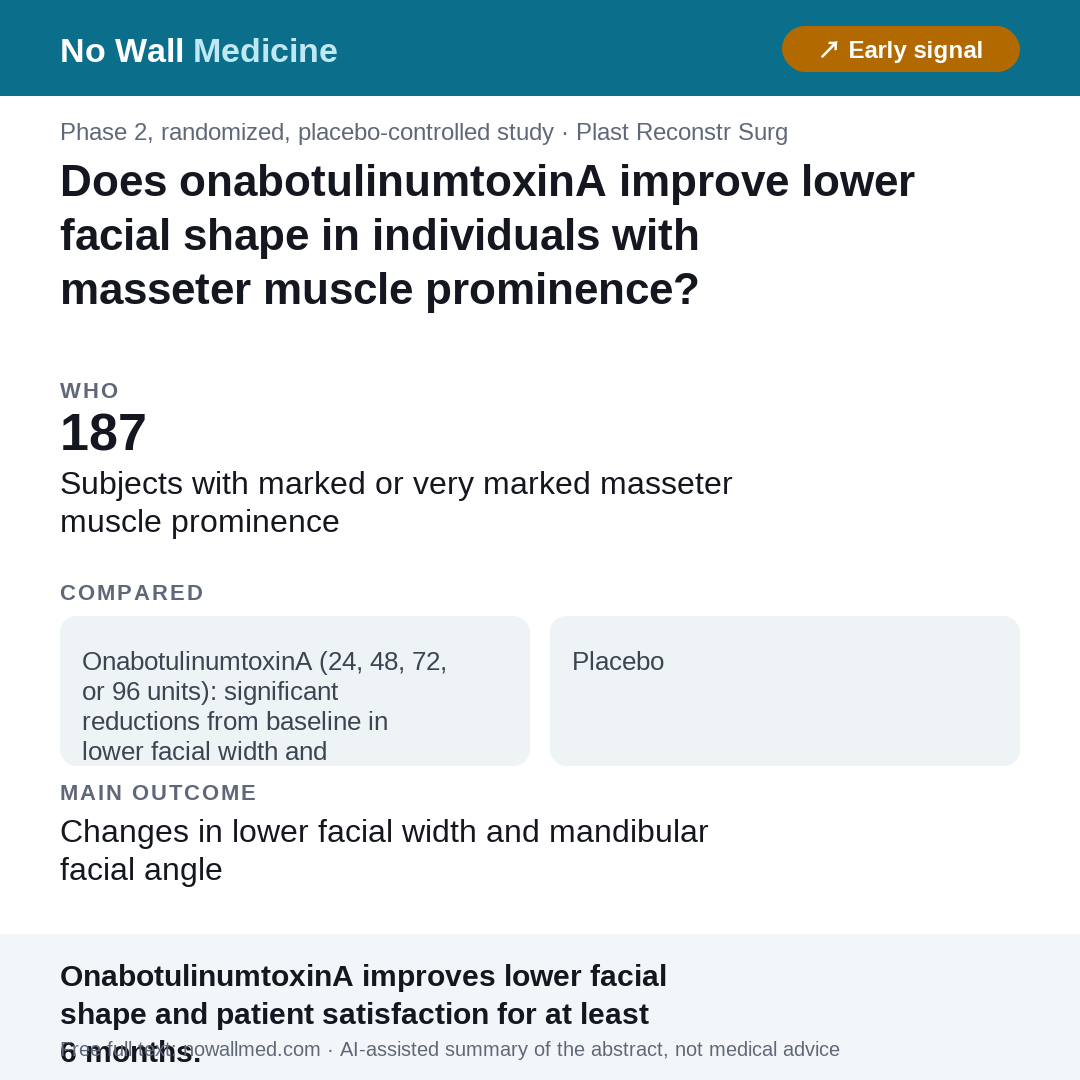
Improvement of Lower Facial Shape after Treatment with OnabotulinumtoxinA: Secondary Results from a Phase 2 Dose Escalation Study
Phase 2, randomized, placebo-controlled studyBenefit found
Does onabotulinumtoxinA improve lower facial shape in individuals with masseter muscle prominence?
Who
187
Subjects with marked or very marked masseter muscle prominence
Compared
OnabotulinumtoxinA (24, 48, 72, or 96 units): significant reductions from baseline in lower facial width and mandibular angle
Placebo
Main outcome
Changes in lower facial width and mandibular facial angle
Bottom line: OnabotulinumtoxinA improves lower facial shape and patient satisfaction for at least 6 months.
Plast Reconstr Surg · 2025-08-13Download image
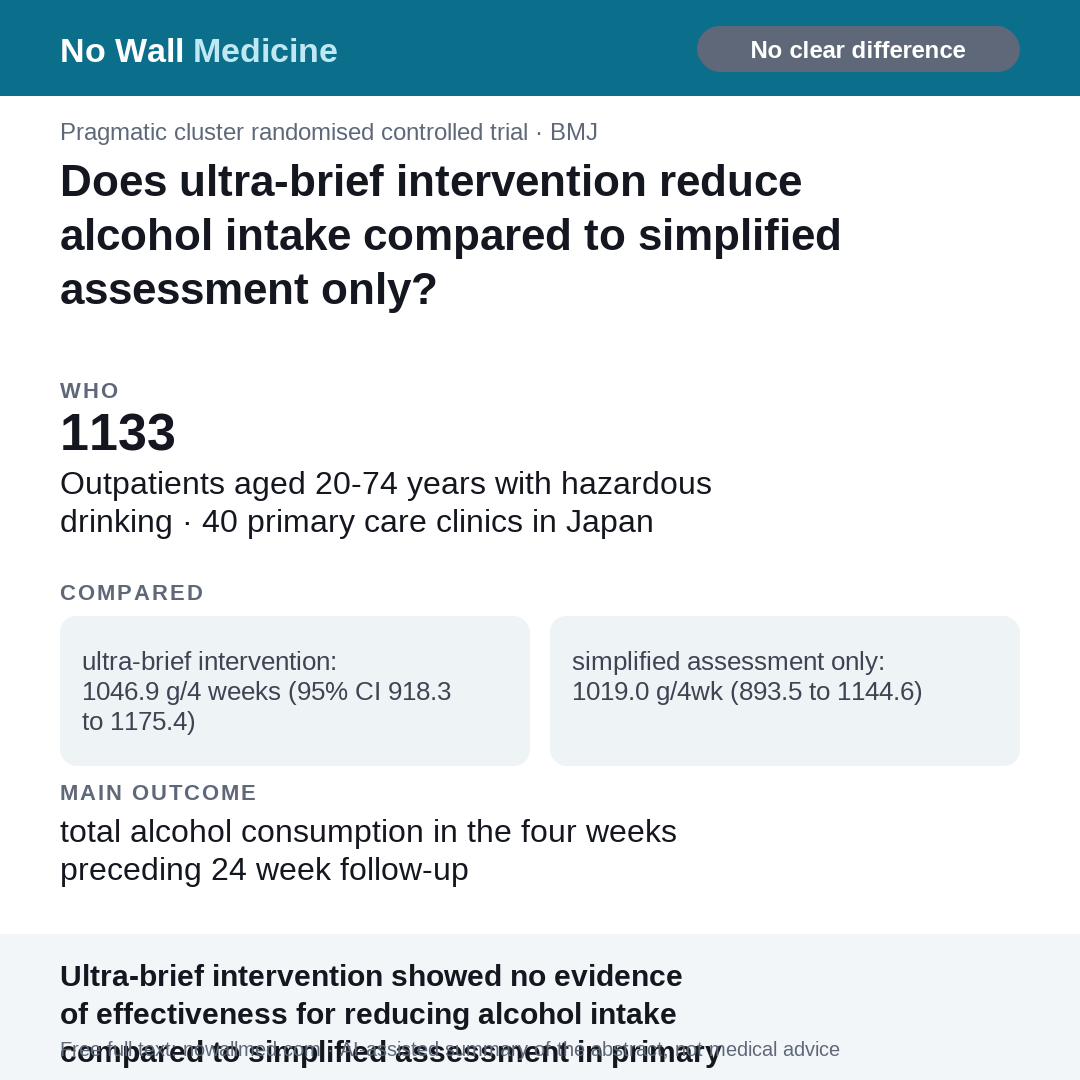
Effectiveness of screening and ultra-brief intervention for hazardous drinking in primary care: pragmatic cluster randomised controlled trial
Pragmatic cluster randomised controlled trialNo clear difference
Does ultra-brief intervention reduce alcohol intake compared to simplified assessment only?
Who
1133
Outpatients aged 20-74 years with hazardous drinking · 40 primary care clinics in Japan
Compared
ultra-brief intervention: 1046.9 g/4 weeks (95% CI 918.3 to 1175.4)
simplified assessment only: 1019.0 g/4wk (893.5 to 1144.6)
Main outcome
total alcohol consumption in the four weeks preceding 24 week follow-up
Result: difference 27.8 g/4wk (-149.7 to 205.4, P=0.75)
Bottom line: Ultra-brief intervention showed no evidence of effectiveness for reducing alcohol intake compared to simplified assessment in primary care.
BMJ · 2025-08-12Download image
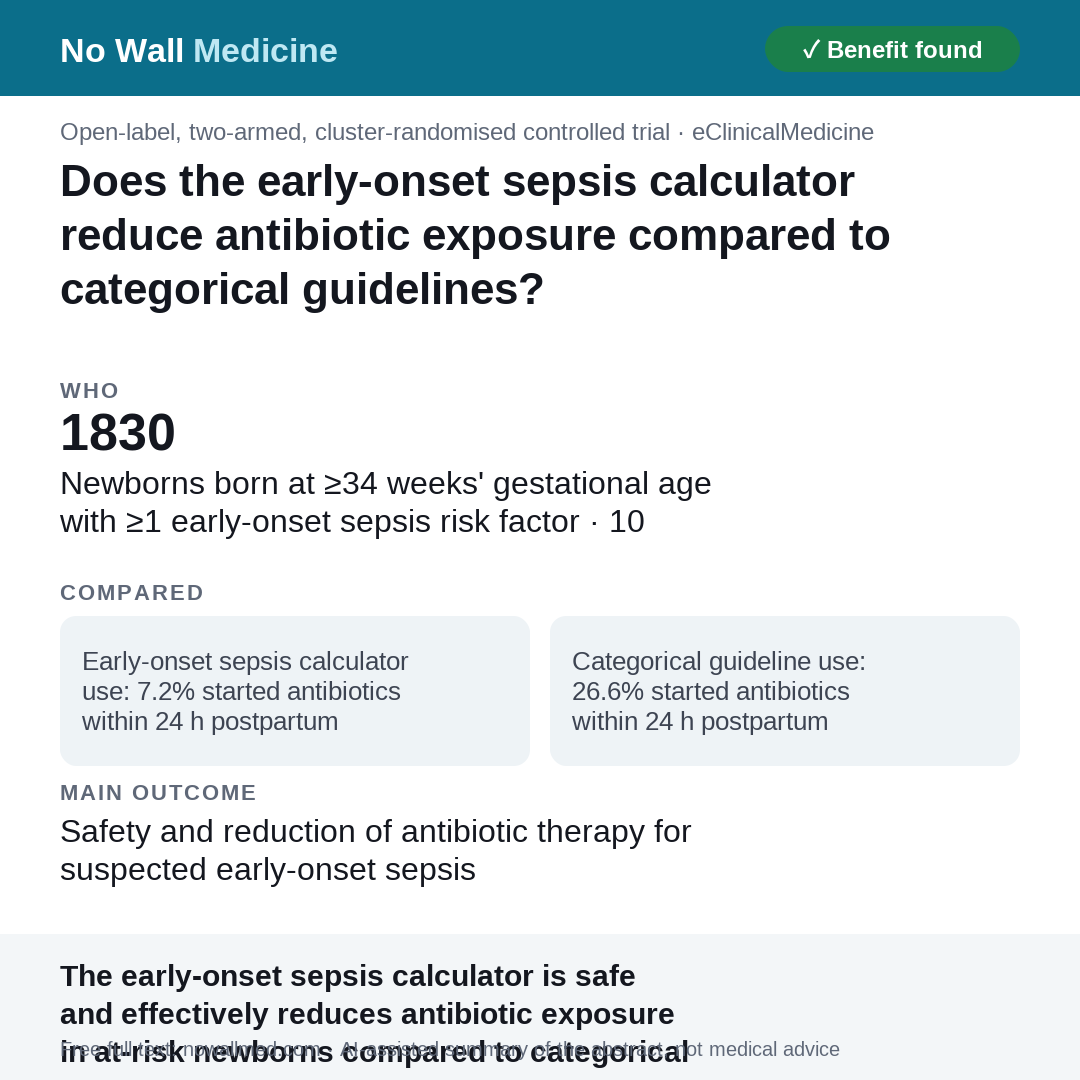
Safety and effectiveness of the early-onset sepsis calculator to reduce antibiotic exposure in at-risk newborns: a cluster-randomised controlled trial
Open-label, two-armed, cluster-randomised controlled trialBenefit found
Does the early-onset sepsis calculator reduce antibiotic exposure compared to categorical guidelines?
Who
1830
Newborns born at ≥34 weeks' gestational age with ≥1 early-onset sepsis risk factor · 10 hospitals
Compared
Early-onset sepsis calculator use: 7.2% started antibiotics within 24 h postpartum
Categorical guideline use: 26.6% started antibiotics within 24 h postpartum
Main outcome
Safety and reduction of antibiotic therapy for suspected early-onset sepsis
Result: relative risk 0.48 (95% CI 0.36-0.63)
Bottom line: The early-onset sepsis calculator is safe and effectively reduces antibiotic exposure in at-risk newborns compared to categorical guidelines.
Funded by: SPIN, General Paediatrics Research Network of the Dutch Association for Paediatrics
eClinicalMedicine · 2025-08-12Download image
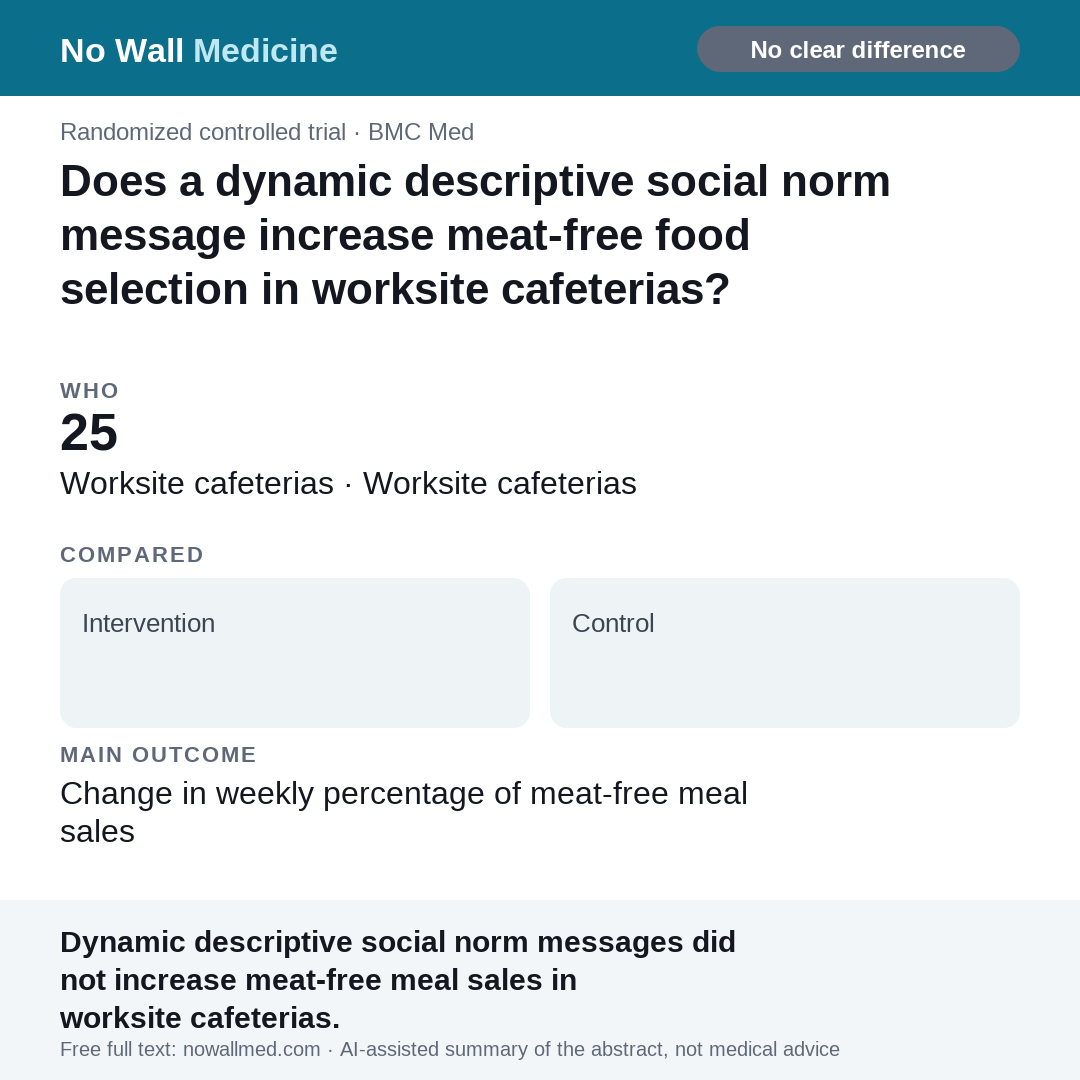
Testing the effect of a dynamic descriptive social norm message on meat-free food selection in worksite cafeterias: a randomized controlled trial
Randomized controlled trialNo clear difference
Does a dynamic descriptive social norm message increase meat-free food selection in worksite cafeterias?
Who
25
Worksite cafeterias · Worksite cafeterias
Compared
Intervention
Control
Main outcome
Change in weekly percentage of meat-free meal sales
Result: -2.22 percentage point change, 95% CIs [-7.33, 2.90]
Bottom line: Dynamic descriptive social norm messages did not increase meat-free meal sales in worksite cafeterias.
BMC Med · 2025-08-12Download image
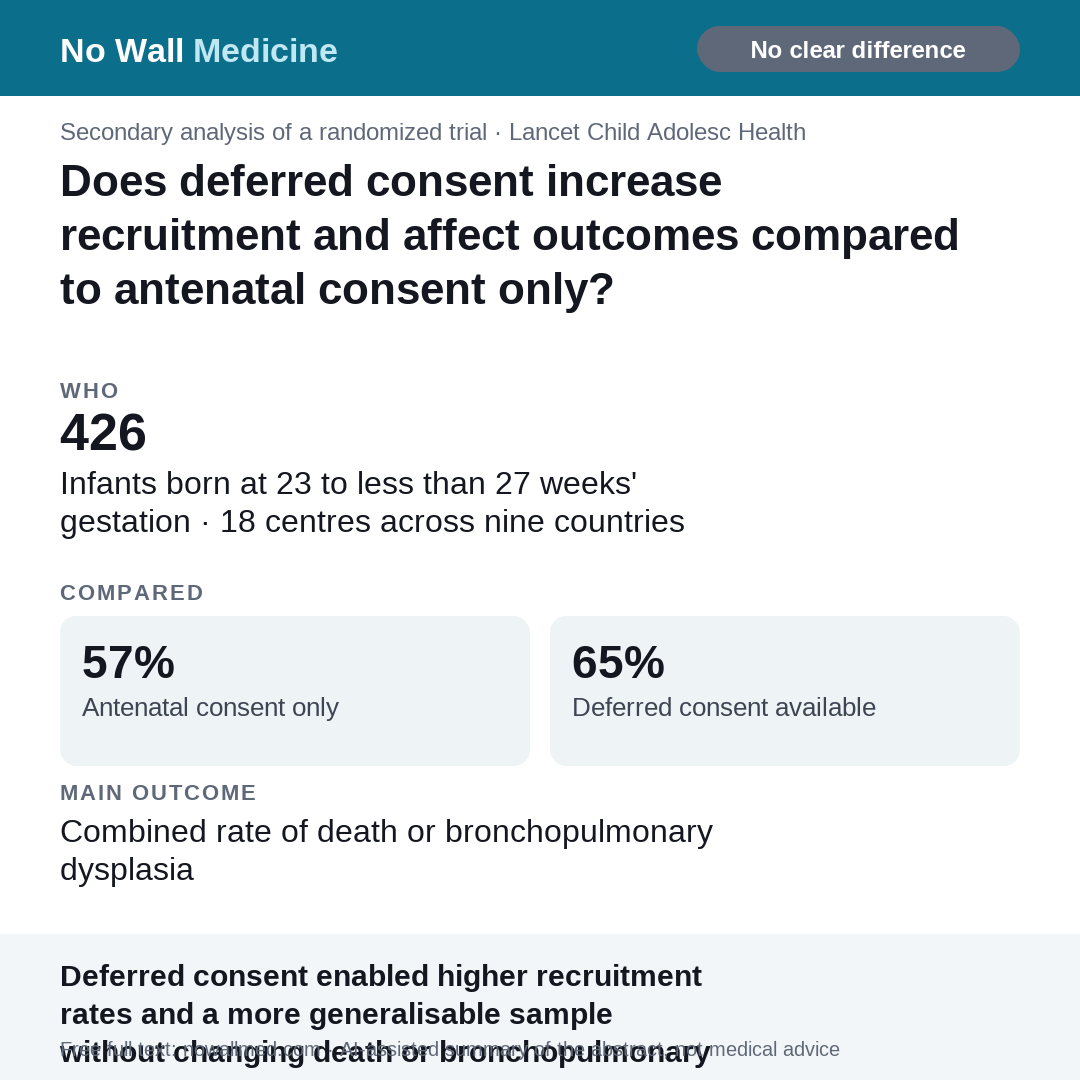
Alternative consent processes in a neonatal resuscitation trial (SAIL): secondary analysis of an open-label, international, multicentre, randomised trial
Secondary analysis of a randomized trialNo clear difference
Does deferred consent increase recruitment and affect outcomes compared to antenatal consent only?
Who
426
Infants born at 23 to less than 27 weeks' gestation · 18 centres across nine countries
Compared
57%Antenatal consent only (113/197)
65%Deferred consent available (149/229)
Main outcome
Combined rate of death or bronchopulmonary dysplasia
Result: adjusted relative risk 1.18 (95% CI 0.98 to 1.42)
Bottom line: Deferred consent enabled higher recruitment rates and a more generalisable sample without changing death or bronchopulmonary dysplasia rates.
Funded by: Eunice Kennedy Shriver National Institute of Child Health and Human Development
Lancet Child Adolesc Health · 2025-08-12Download image
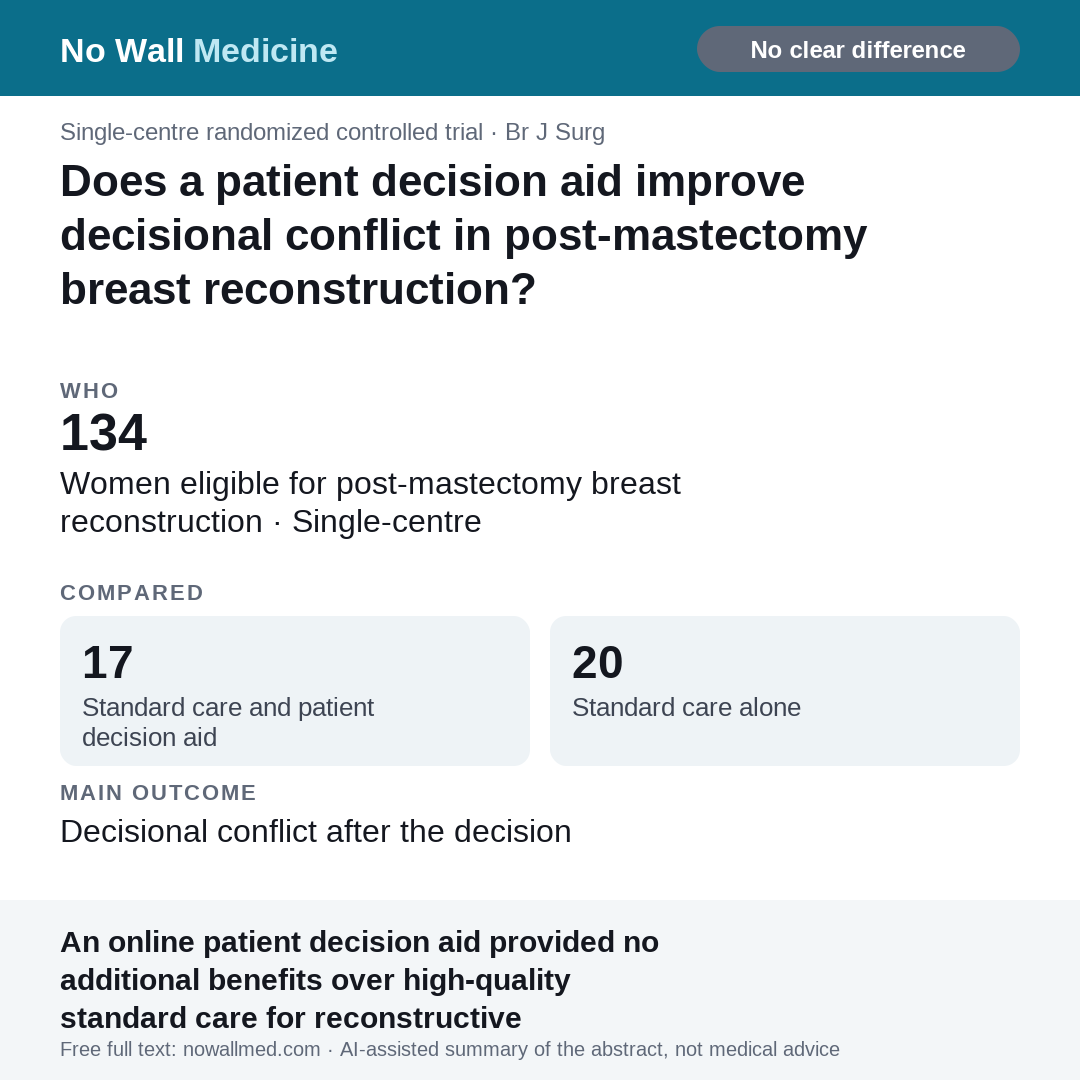
Effectiveness of a patient decision aid for women considering post-mastectomy breast reconstruction: randomized controlled trial
Single-centre randomized controlled trialNo clear difference
Does a patient decision aid improve decisional conflict in post-mastectomy breast reconstruction?
Who
134
Women eligible for post-mastectomy breast reconstruction · Single-centre
Compared
17Standard care and patient decision aid
20Standard care alone
Main outcome
Decisional conflict after the decision
Result: mean difference -2.8 (95% confidence interval -8.4 to 2.8)
Bottom line: An online patient decision aid provided no additional benefits over high-quality standard care for reconstructive decision-making.
Br J Surg · 2025-08-12Download image
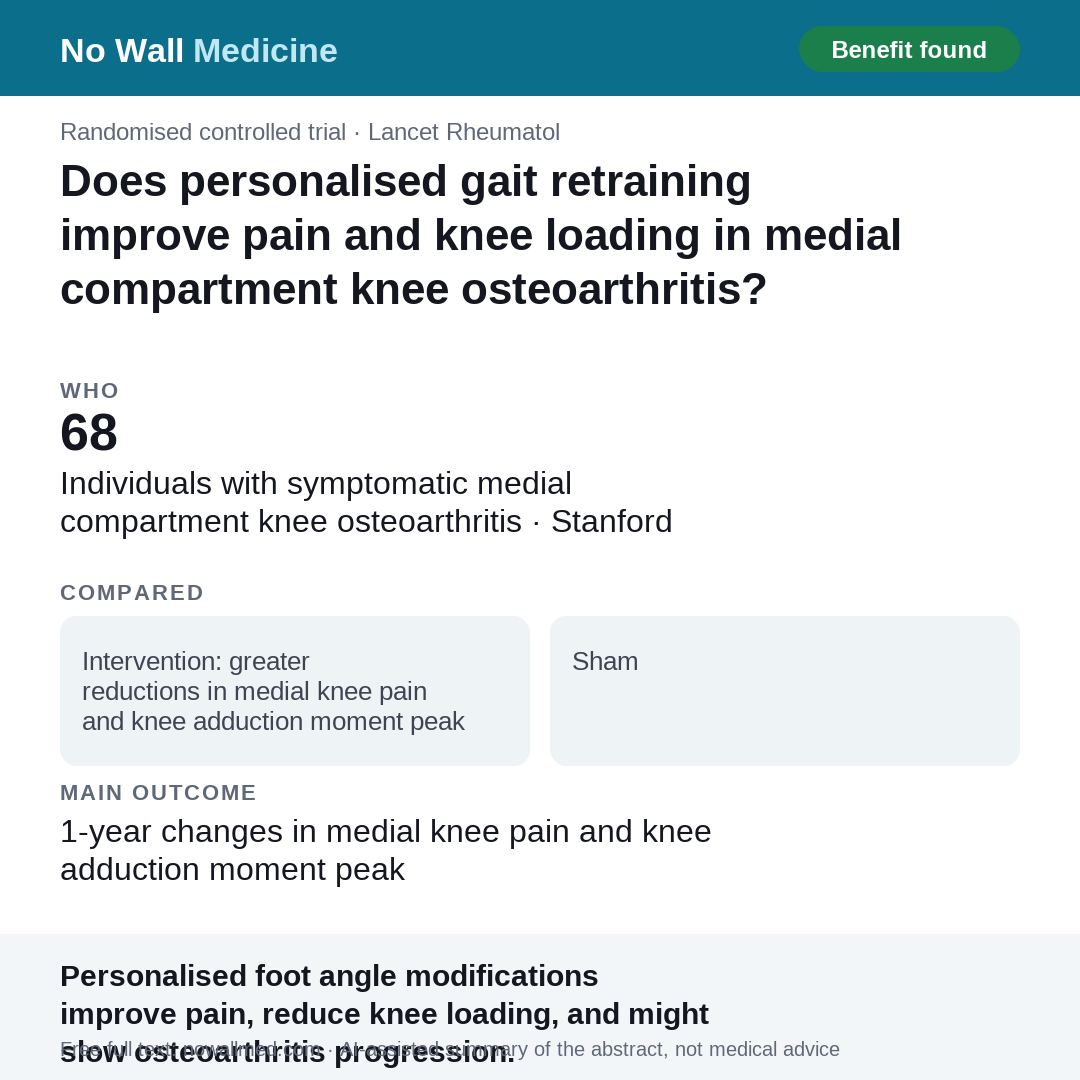
Personalised gait retraining for medial compartment knee osteoarthritis: a randomised controlled trial
Randomised controlled trialBenefit found
Does personalised gait retraining improve pain and knee loading in medial compartment knee osteoarthritis?
Who
68
Individuals with symptomatic medial compartment knee osteoarthritis · Stanford University, CA, USA
Compared
Intervention: greater reductions in medial knee pain and knee adduction moment peak
Sham
Main outcome
1-year changes in medial knee pain and knee adduction moment peak
Result: between-group difference -1·2, 95% CI -1·9 to -0·5 for pain
Bottom line: Personalised foot angle modifications improve pain, reduce knee loading, and might slow osteoarthritis progression.
Limitation: Staff performing the gait analysis visits were not masked to group allocation.
Funded by: US Department of Veterans Affairs
Lancet Rheumatol · 2025-08-12Download image
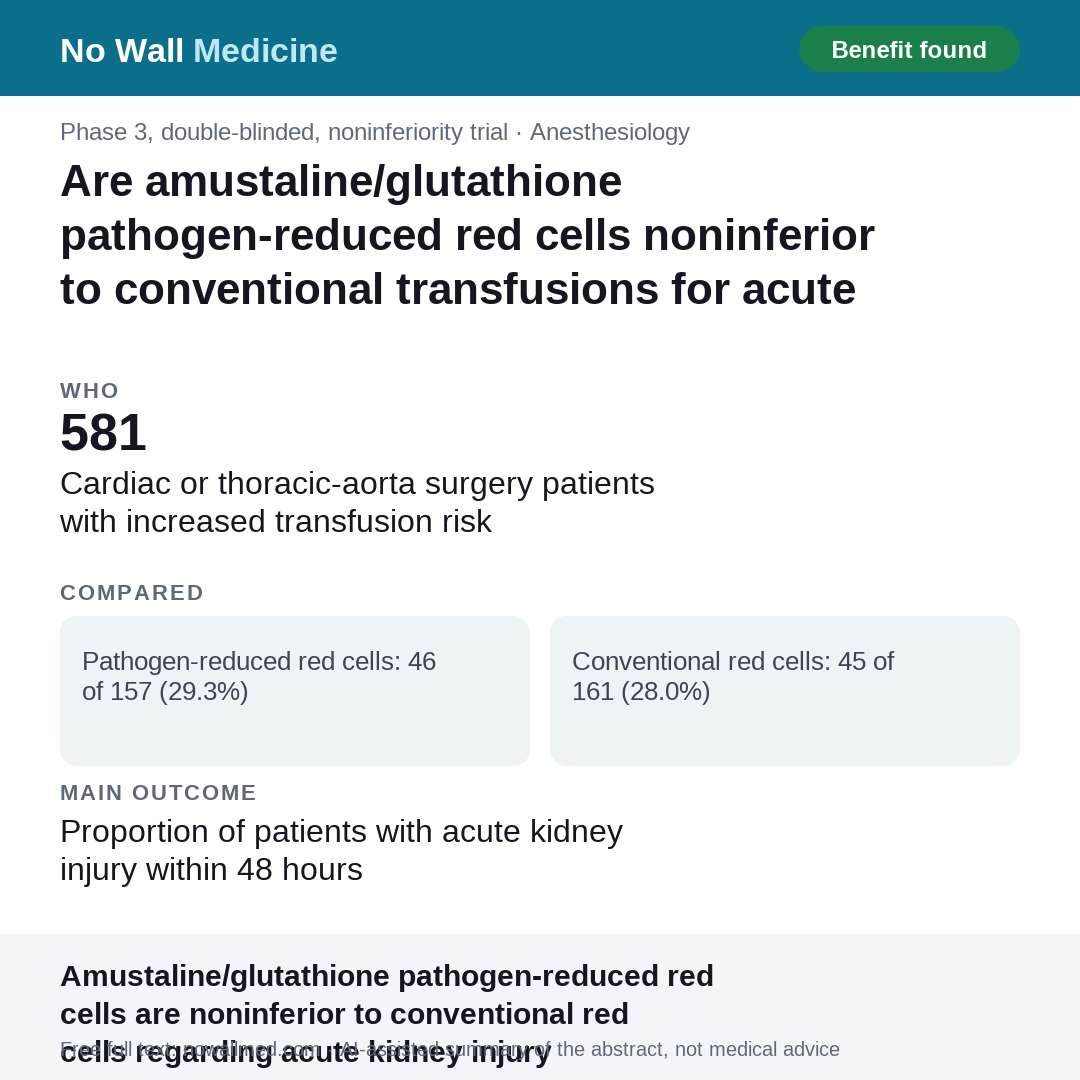
Transfusion of Amustaline/Glutathione Pathogen-reduced Red Blood Cells in Cardiac Surgery: A Randomized Phase 3 Clinical Trial
Phase 3, double-blinded, noninferiority trialBenefit found
Are amustaline/glutathione pathogen-reduced red cells noninferior to conventional transfusions for acute surgical blood loss?
Who
581
Cardiac or thoracic-aorta surgery patients with increased transfusion risk
Compared
Pathogen-reduced red cells: 46 of 157 (29.3%)
Conventional red cells: 45 of 161 (28.0%)
Main outcome
Proportion of patients with acute kidney injury within 48 hours
Result: treatment difference, 0.7%; 95% CI, -8.9 to 10.4%
Bottom line: Amustaline/glutathione pathogen-reduced red cells are noninferior to conventional red cells regarding acute kidney injury incidence.
Anesthesiology · 2025-08-12Download image
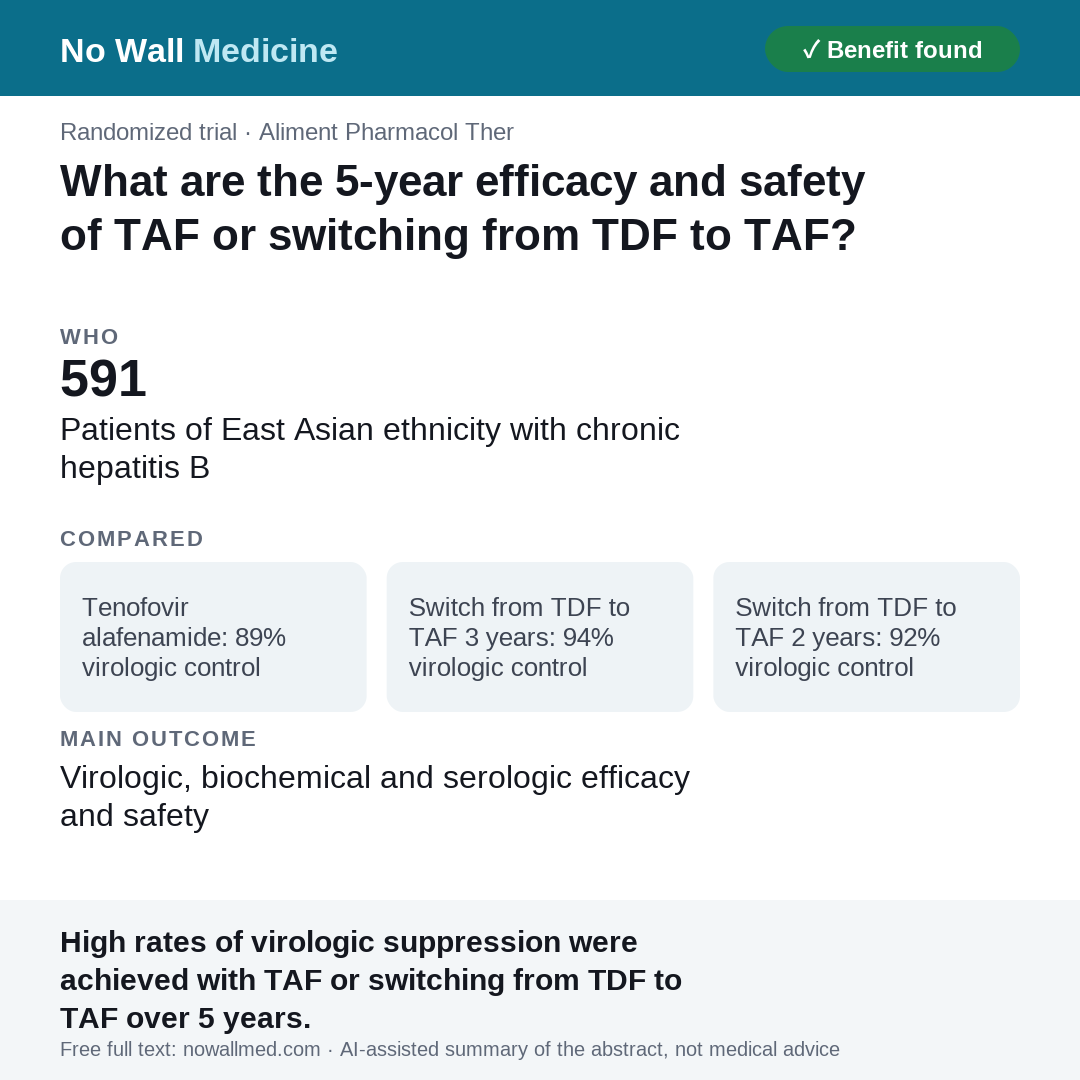
Efficacy and Safety of Tenofovir Alafenamide (TAF) and Tenofovir Disoproxil Fumarate (TDF) Followed by TAF in Chronic Hepatitis B Patients of East Asian Ethnicity Following 5 Years of Treatment
Randomized trialBenefit found
What are the 5-year efficacy and safety of TAF or switching from TDF to TAF?
Who
591
Patients of East Asian ethnicity with chronic hepatitis B
Compared
Tenofovir alafenamide: 89% virologic control
Switch from TDF to TAF 3 years: 94% virologic control
Switch from TDF to TAF 2 years: 92% virologic control
Main outcome
Virologic, biochemical and serologic efficacy and safety
Bottom line: High rates of virologic suppression were achieved with TAF or switching from TDF to TAF over 5 years.
Aliment Pharmacol Ther · 2025-08-12Download image
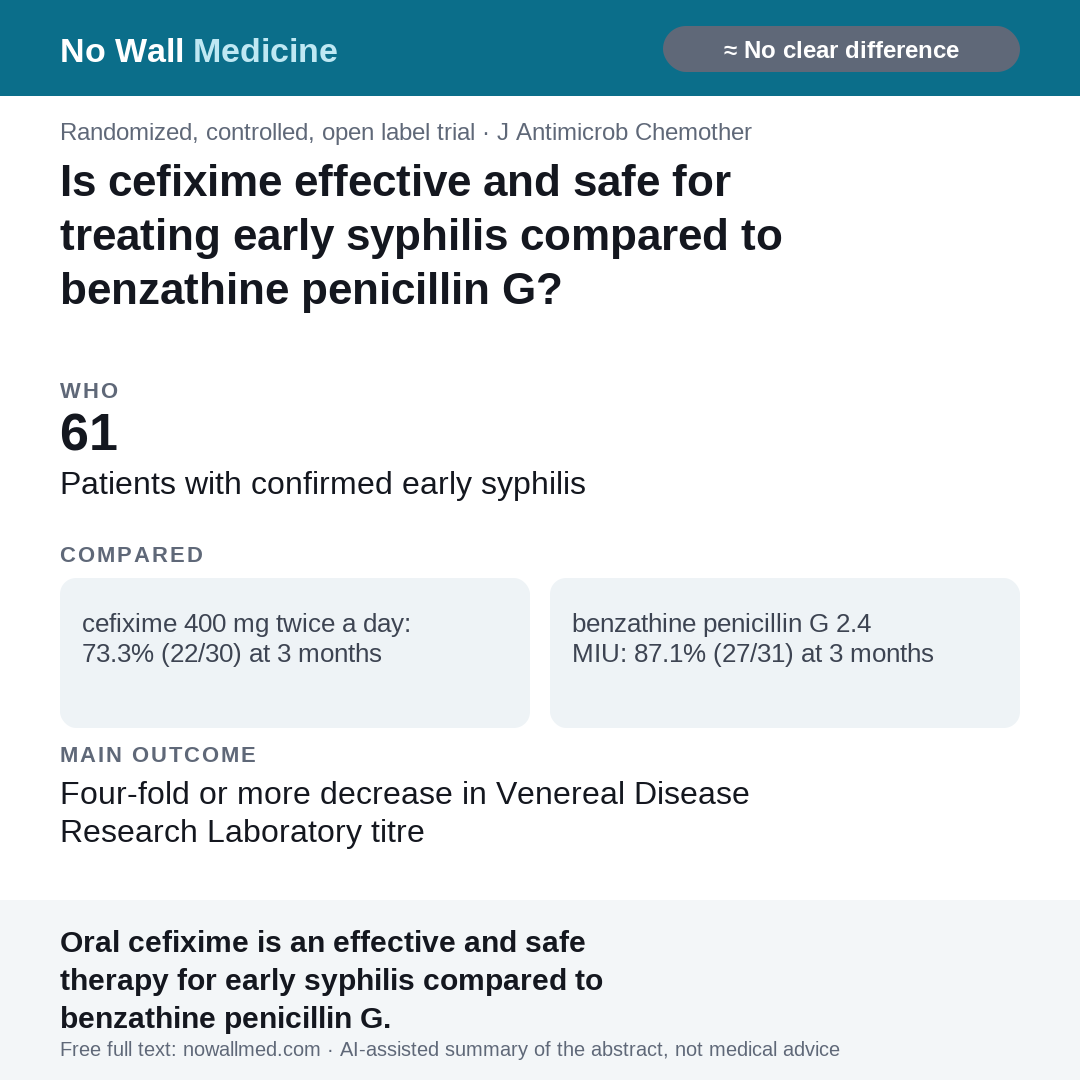
Cefixime versus benzathine penicillin G for the treatment of early syphilis-a randomized, controlled open label trial
Randomized, controlled, open label trialNo clear difference
Is cefixime effective and safe for treating early syphilis compared to benzathine penicillin G?
Who
61
Patients with confirmed early syphilis
Compared
cefixime 400 mg twice a day: 73.3% (22/30) at 3 months
benzathine penicillin G 2.4 MIU: 87.1% (27/31) at 3 months
Main outcome
Four-fold or more decrease in Venereal Disease Research Laboratory titre
Bottom line: Oral cefixime is an effective and safe therapy for early syphilis compared to benzathine penicillin G.
Limitation: Additional efficacy data from larger treatment studies are imperative.
J Antimicrob Chemother · 2025-08-12Download image
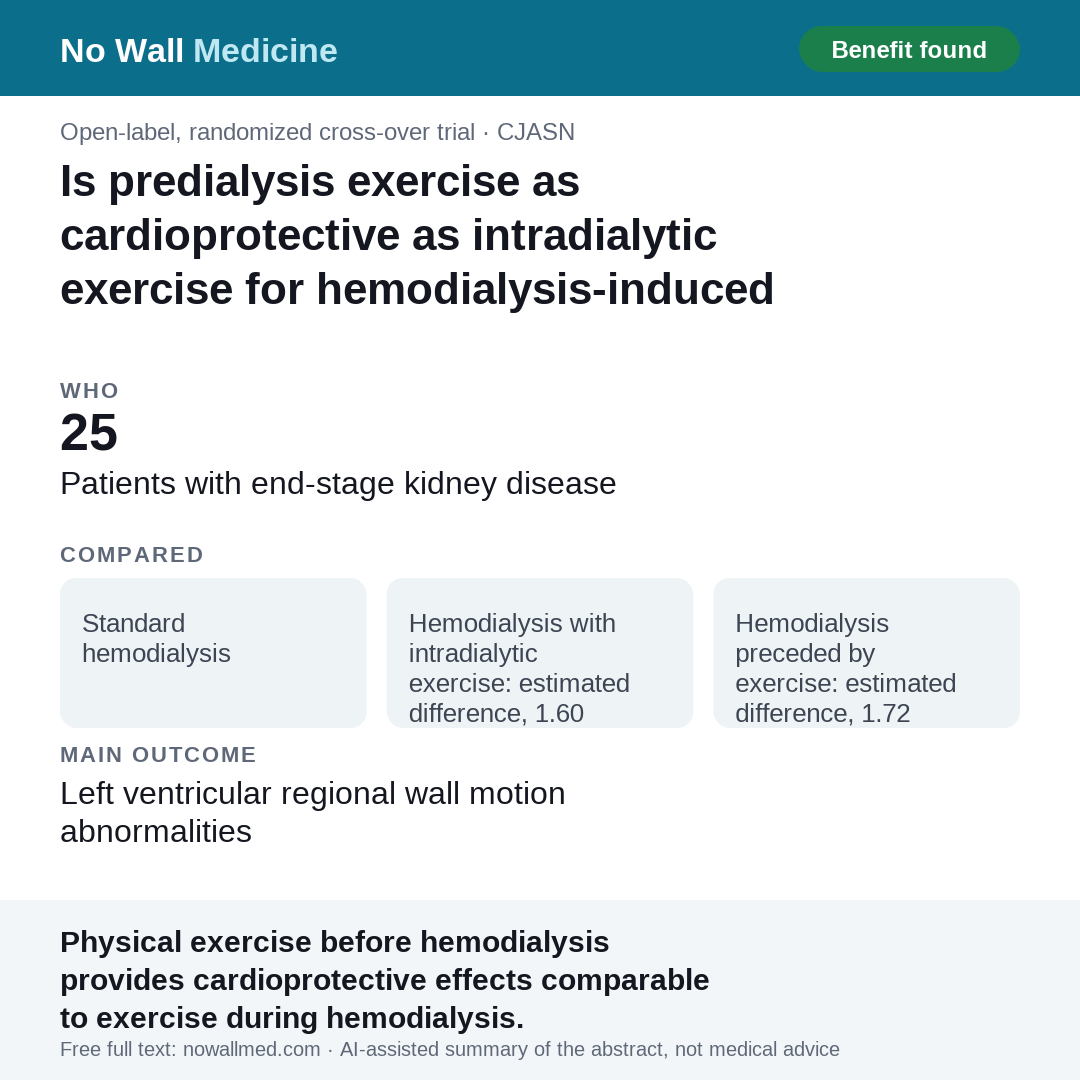
Acute Exercise before Dialysis Is as Cardioprotective as during Dialysis: A Randomized Controlled Trial
Open-label, randomized cross-over trialBenefit found
Is predialysis exercise as cardioprotective as intradialytic exercise for hemodialysis-induced myocardial stunning?
Who
25
Patients with end-stage kidney disease
Compared
Standard hemodialysis
Hemodialysis with intradialytic exercise: estimated difference, 1.60 segments (95% confidence interval, 0.09 to 3.10)
Hemodialysis preceded by exercise: estimated difference, 1.72 segments (95% confidence interval, 0.21 to 3.22)
Main outcome
Left ventricular regional wall motion abnormalities
Bottom line: Physical exercise before hemodialysis provides cardioprotective effects comparable to exercise during hemodialysis.
CJASN · 2025-08-12Download image
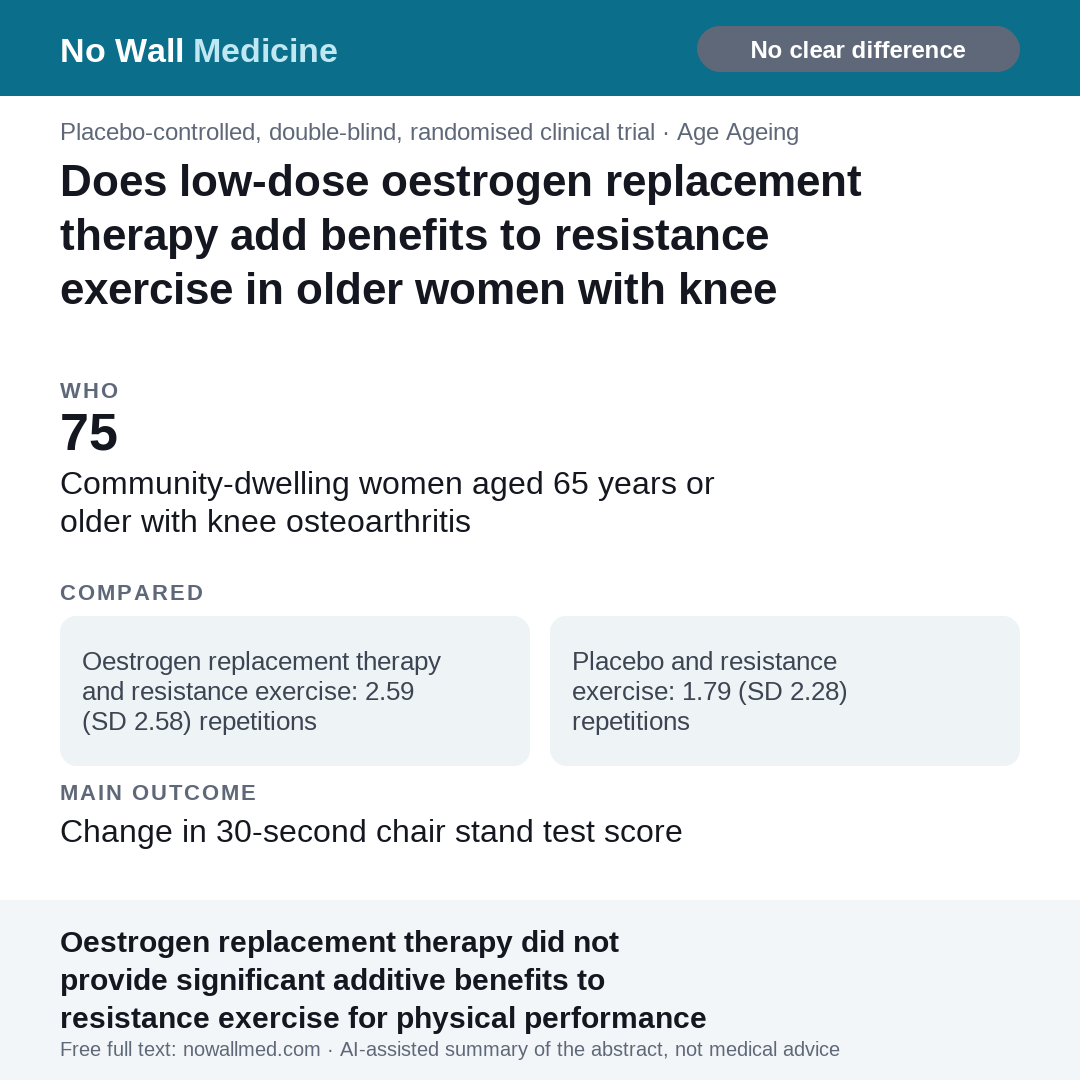
Oestrogen replacement combined with resistance exercise in older women with knee osteoarthritis: a randomised, double-blind, placebo-controlled clinical trial
Placebo-controlled, double-blind, randomised clinical trialNo clear difference
Does low-dose oestrogen replacement therapy add benefits to resistance exercise in older women with knee osteoarthritis?
Who
75
Community-dwelling women aged 65 years or older with knee osteoarthritis
Compared
Oestrogen replacement therapy and resistance exercise: 2.59 (SD 2.58) repetitions
Placebo and resistance exercise: 1.79 (SD 2.28) repetitions
Main outcome
Change in 30-second chair stand test score
Result: regression coefficient: 0.81 (95% CI: -0.31, 1.92)
Bottom line: Oestrogen replacement therapy did not provide significant additive benefits to resistance exercise for physical performance in older women.
Age Ageing · 2025-08-12Download image
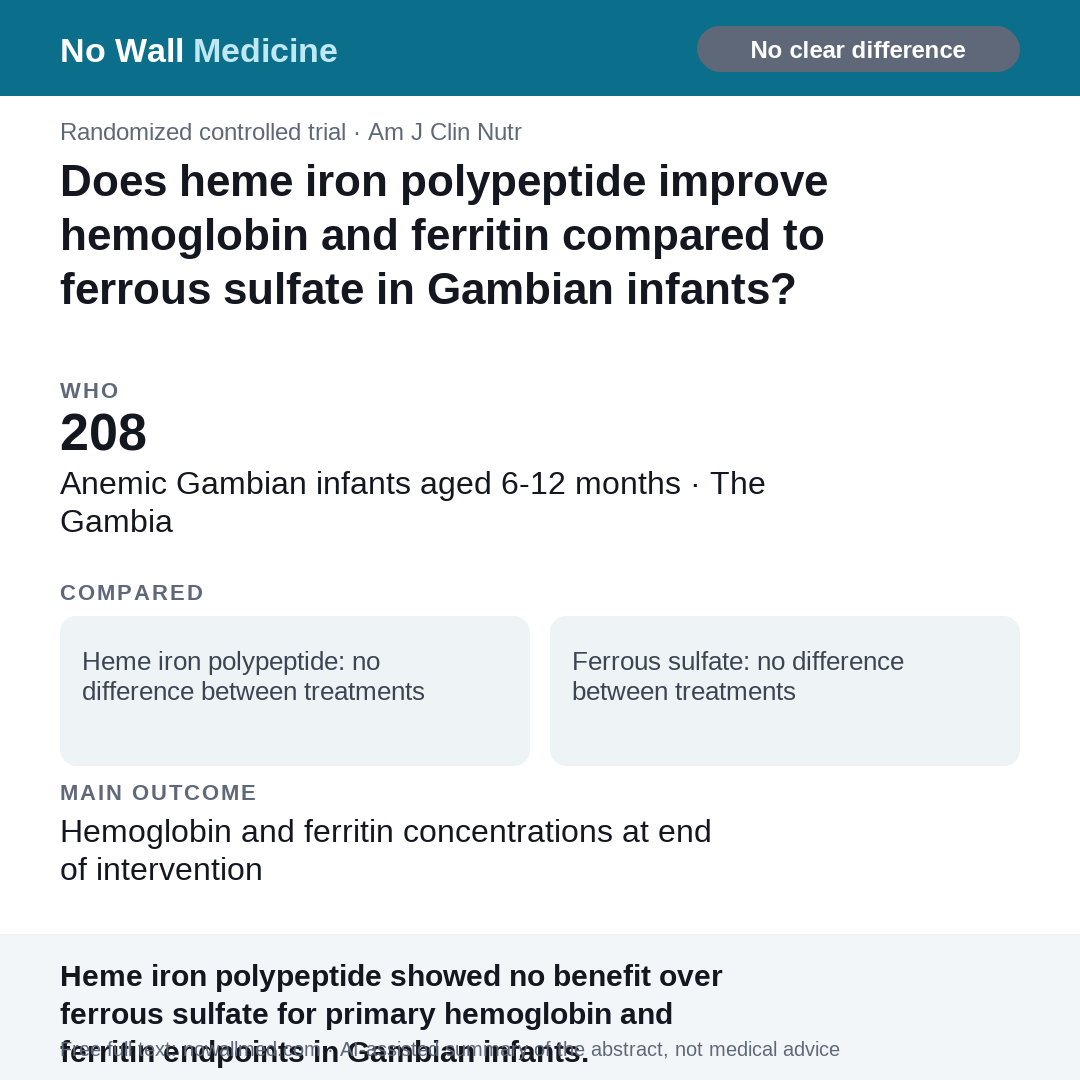
Heme iron compared with ferrous iron salts to treat iron deficiency anemia in Gambian children: a randomized controlled trial
Randomized controlled trialNo clear difference
Does heme iron polypeptide improve hemoglobin and ferritin compared to ferrous sulfate in Gambian infants?
Who
208
Anemic Gambian infants aged 6-12 months · The Gambia
Compared
Heme iron polypeptide: no difference between treatments
Ferrous sulfate: no difference between treatments
Main outcome
Hemoglobin and ferritin concentrations at end of intervention
Bottom line: Heme iron polypeptide showed no benefit over ferrous sulfate for primary hemoglobin and ferritin endpoints in Gambian infants.
Am J Clin Nutr · 2025-08-12Download image
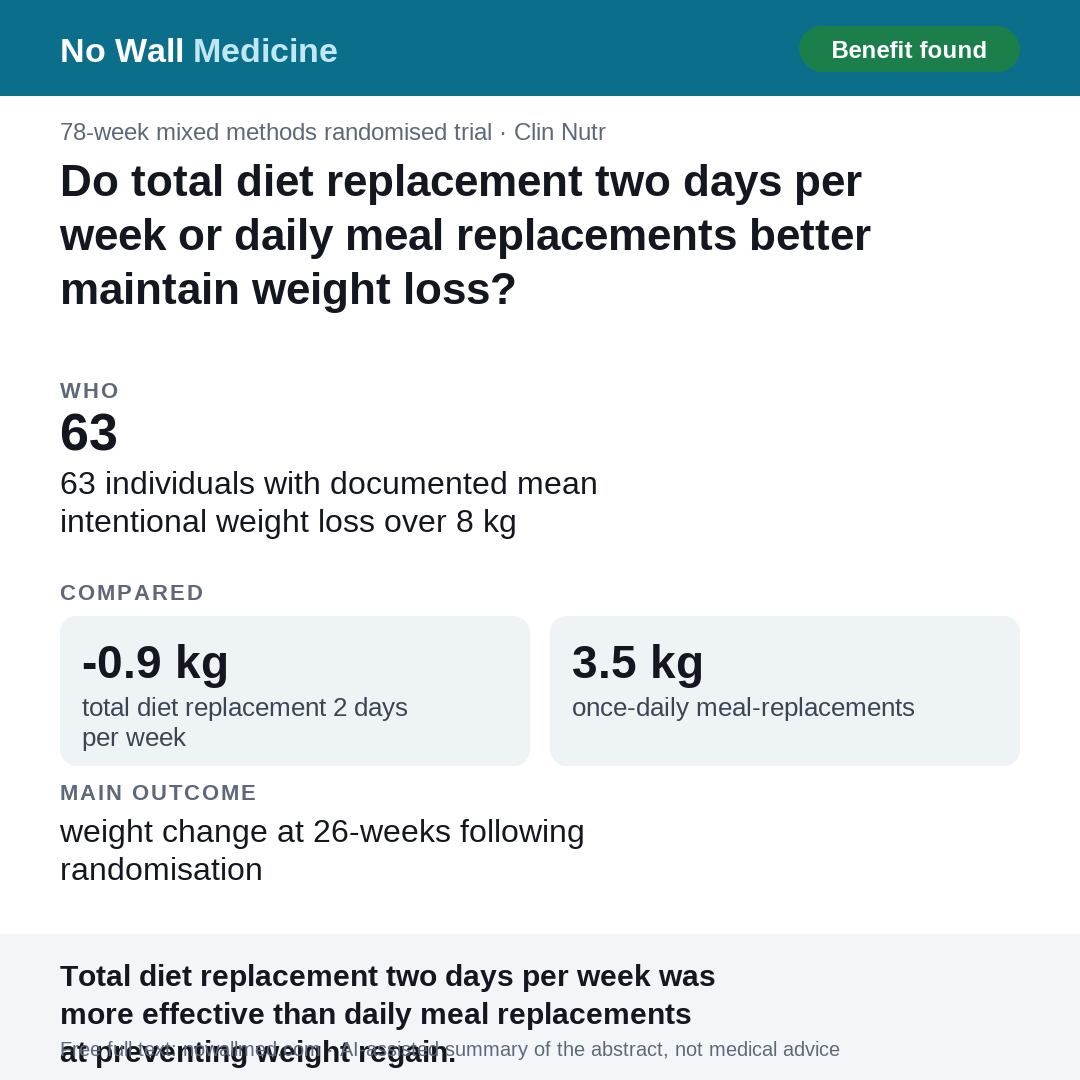
Diet strategies for maintaining substantial therapeutic weight loss: 78-week mixed methods randomised trial
78-week mixed methods randomised trialBenefit found
Do total diet replacement two days per week or daily meal replacements better maintain weight loss?
Who
63
63 individuals with documented mean intentional weight loss over 8 kg
Compared
-0.9 kgtotal diet replacement 2 days per week (95% CI -2.9, 1.5 kg)
3.5 kgonce-daily meal-replacements (95% CI 1.3, 5.5 kg)
Main outcome
weight change at 26-weeks following randomisation
Result: -4.4 kg (95% CI -7.3, -1.6 kg)
Bottom line: Total diet replacement two days per week was more effective than daily meal replacements at preventing weight regain.
Clin Nutr · 2025-08-12Download image
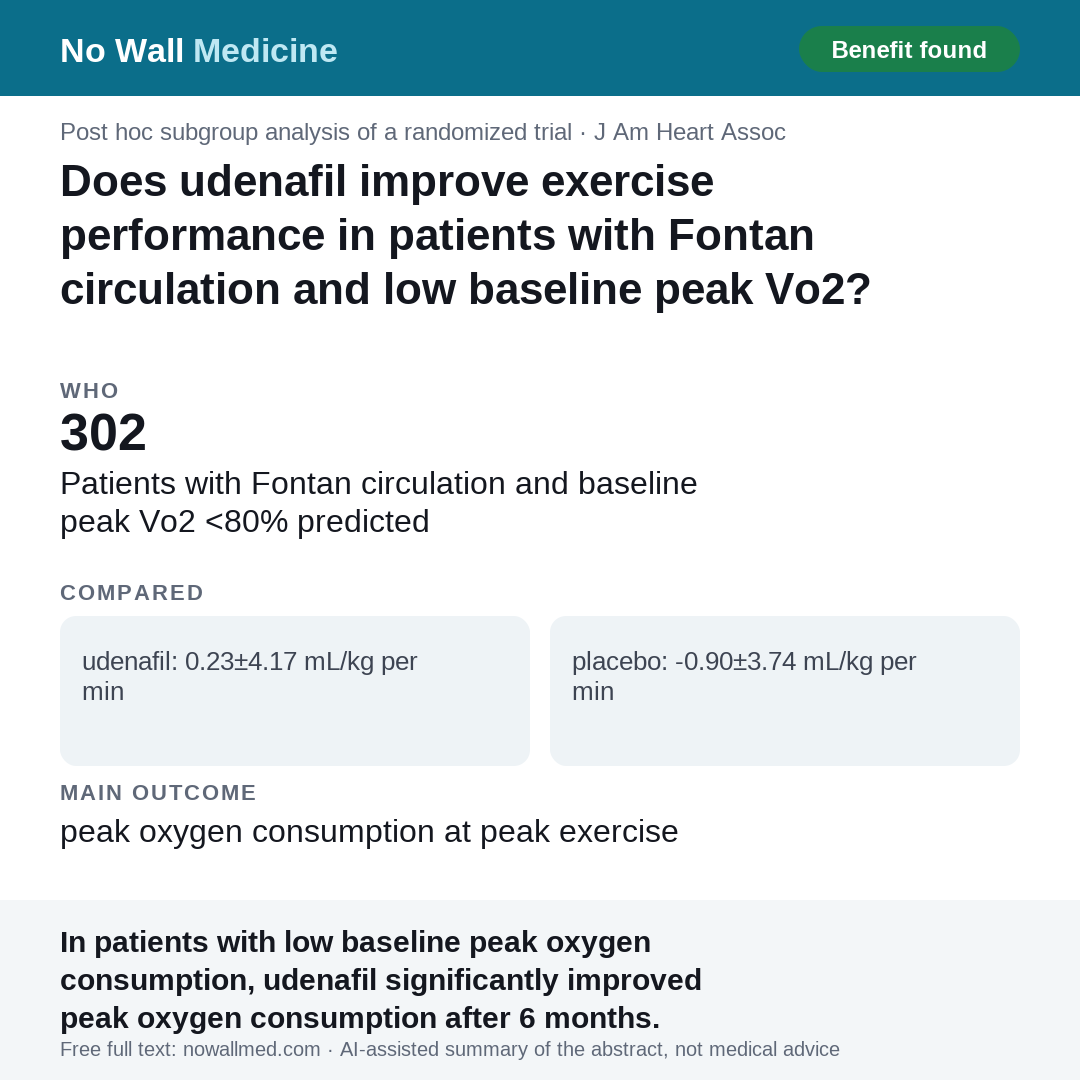
Revisiting the Effect of Udenafil on Exercise Performance in Patients With Fontan Circulation: Results of a Post Hoc Analysis of the FUEL Trial
Post hoc subgroup analysis of a randomized trialBenefit found
Does udenafil improve exercise performance in patients with Fontan circulation and low baseline peak Vo2?
Who
302
Patients with Fontan circulation and baseline peak Vo2 <80% predicted
Compared
udenafil: 0.23±4.17 mL/kg per min
placebo: -0.90±3.74 mL/kg per min
Main outcome
peak oxygen consumption at peak exercise
Bottom line: In patients with low baseline peak oxygen consumption, udenafil significantly improved peak oxygen consumption after 6 months.
J Am Heart Assoc · 2025-08-12Download image
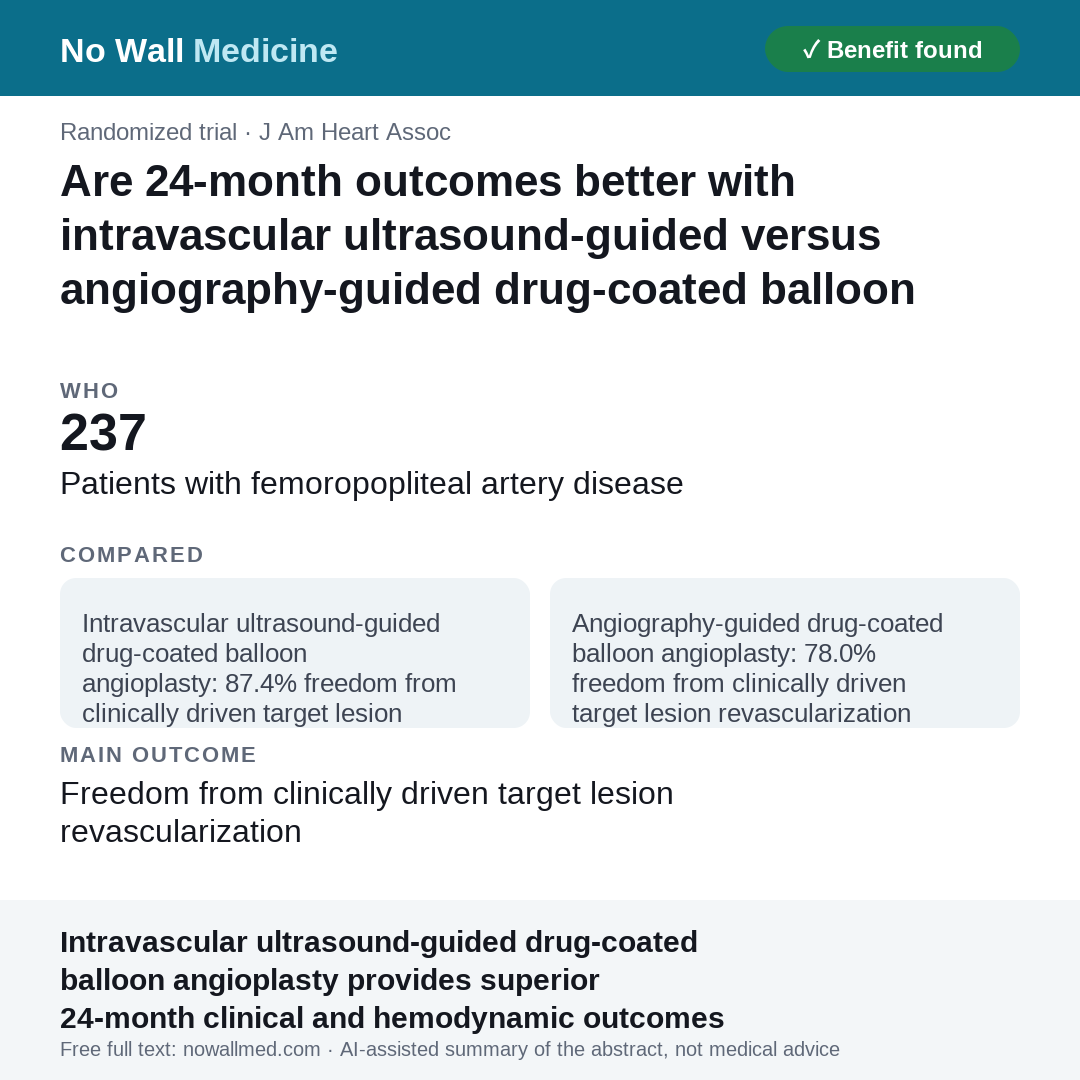
Twenty-Four-Month Outcomes of Intravascular Ultrasound-Guided Drug-Coated Balloon Angioplasty for Femoropopliteal Artery Disease
Randomized trialBenefit found
Are 24-month outcomes better with intravascular ultrasound-guided versus angiography-guided drug-coated balloon angioplasty?
Who
237
Patients with femoropopliteal artery disease
Compared
Intravascular ultrasound-guided drug-coated balloon angioplasty: 87.4% freedom from clinically driven target lesion revascularization
Angiography-guided drug-coated balloon angioplasty: 78.0% freedom from clinically driven target lesion revascularization
Main outcome
Freedom from clinically driven target lesion revascularization
Result: hazard ratio 0.46 (95% CI 0.24-0.88)
Bottom line: Intravascular ultrasound-guided drug-coated balloon angioplasty provides superior 24-month clinical and hemodynamic outcomes for femoropopliteal artery disease.
J Am Heart Assoc · 2025-08-12Download image