Visual abstracts
New randomized trials and meta-analyses from leading journals at a glance: who was studied, what was compared, and what was found. Every paper is free to read in full.
All specialtiesCardiology 4763Oncology 4043Gastroenterology & Hepatology 1903Infectious Disease 3756Neurology 1872Psychiatry & Mental Health 2216Pulmonology 2044Critical Care 1319Endocrinology & Diabetes 2544Pediatrics 2889Surgery 2480Orthopedics & Sports Medicine 917Neurosurgery 525Cardiothoracic & Vascular Surgery 656Plastic & Reconstructive Surgery 574Nephrology 1107Rheumatology 810Hematology 1090Dermatology 611Ophthalmology 532Obstetrics & Gynecology 1645Public & Global Health 1037Radiology & Imaging 619Anesthesiology 958Urology 745ENT (Otolaryngology) 494Emergency Medicine 481Allergy & Immunology 309Geriatrics 972Family Medicine & Primary Care 534Medical Genetics & Genomics 659Pathology & Laboratory Medicine 156Physical Medicine & Rehabilitation 734Palliative Care 421Nutrition 1560Digital Health & AI 2137General Medicine 318
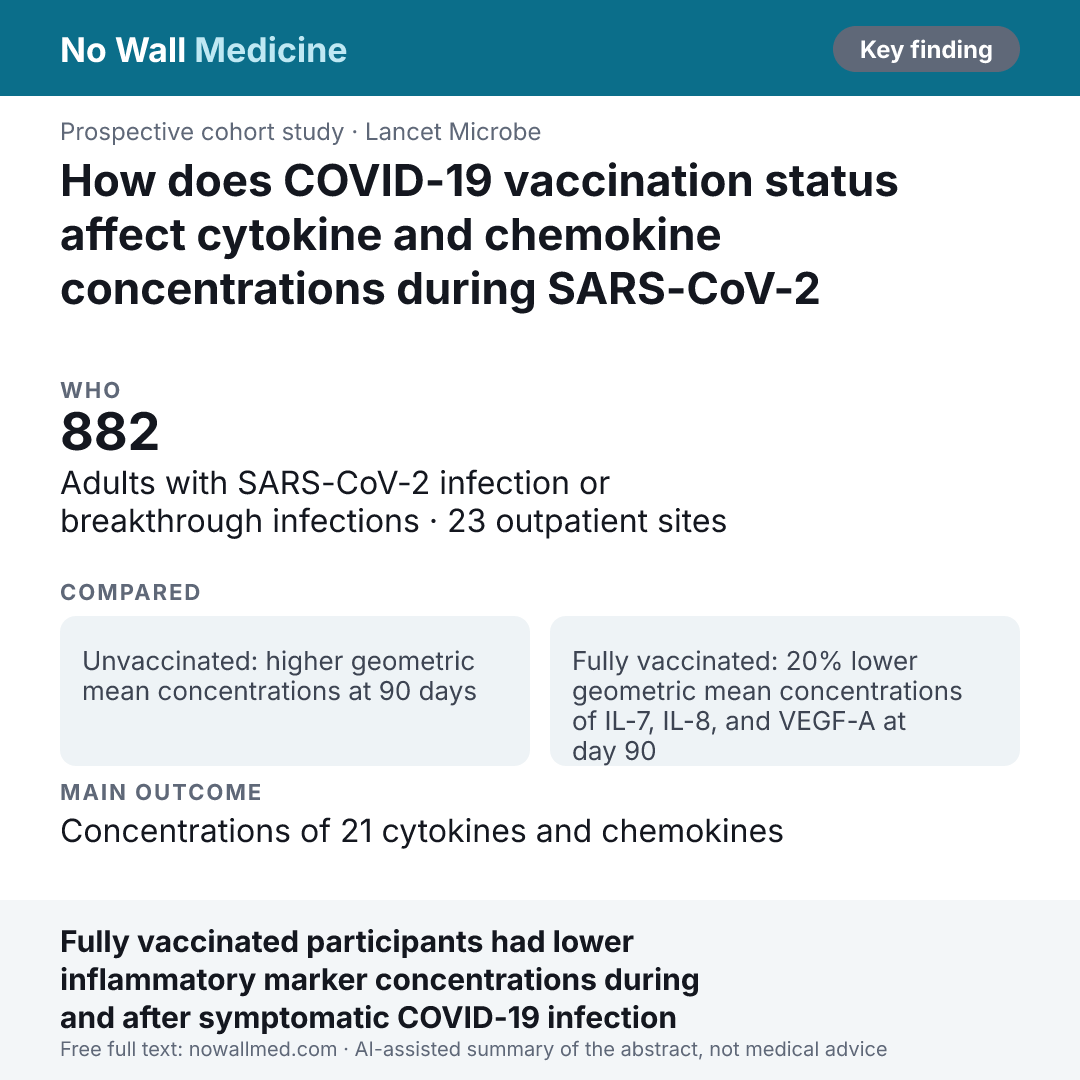
Dynamics of inflammatory responses after SARS-CoV-2 infection by vaccination status in the USA: a prospective cohort study
Prospective cohort studyKey finding
How does COVID-19 vaccination status affect cytokine and chemokine concentrations during SARS-CoV-2 infection?
Who
882
Adults with SARS-CoV-2 infection or breakthrough infections · 23 outpatient sites in the USA
Compared
Unvaccinated: higher geometric mean concentrations at 90 days
Fully vaccinated: 20% lower geometric mean concentrations of IL-7, IL-8, and VEGF-A at day 90
Main outcome
Concentrations of 21 cytokines and chemokines
Bottom line: Fully vaccinated participants had lower inflammatory marker concentrations during and after symptomatic COVID-19 infection compared to unvaccinated participants.
Funded by: US Department of Defense, NIH, Bloomberg Philanthropies, and others
Lancet Microbe · 2023-08-07 · Save PNG
Cluster Headache Genomewide Association Study and Meta-Analysis Identifies Eight Loci and Implicates Smoking as Causal Risk Factor
Genomewide association study meta-analysisKey finding
What are the genetic risk variants and biological insights for cluster headache?
Who
4,777 cases and 21,729 controls · 10 European and 1 East Asian cohorts
Compared
Cases
Controls
Main outcome
Identification of genetic risk variants and biological insights
Bottom line: Meta-analysis identified eight loci and indicated that cigarette smoking is a causal risk factor for cluster headache.
Ann Neurol · 2023-08-07 · Save PNG

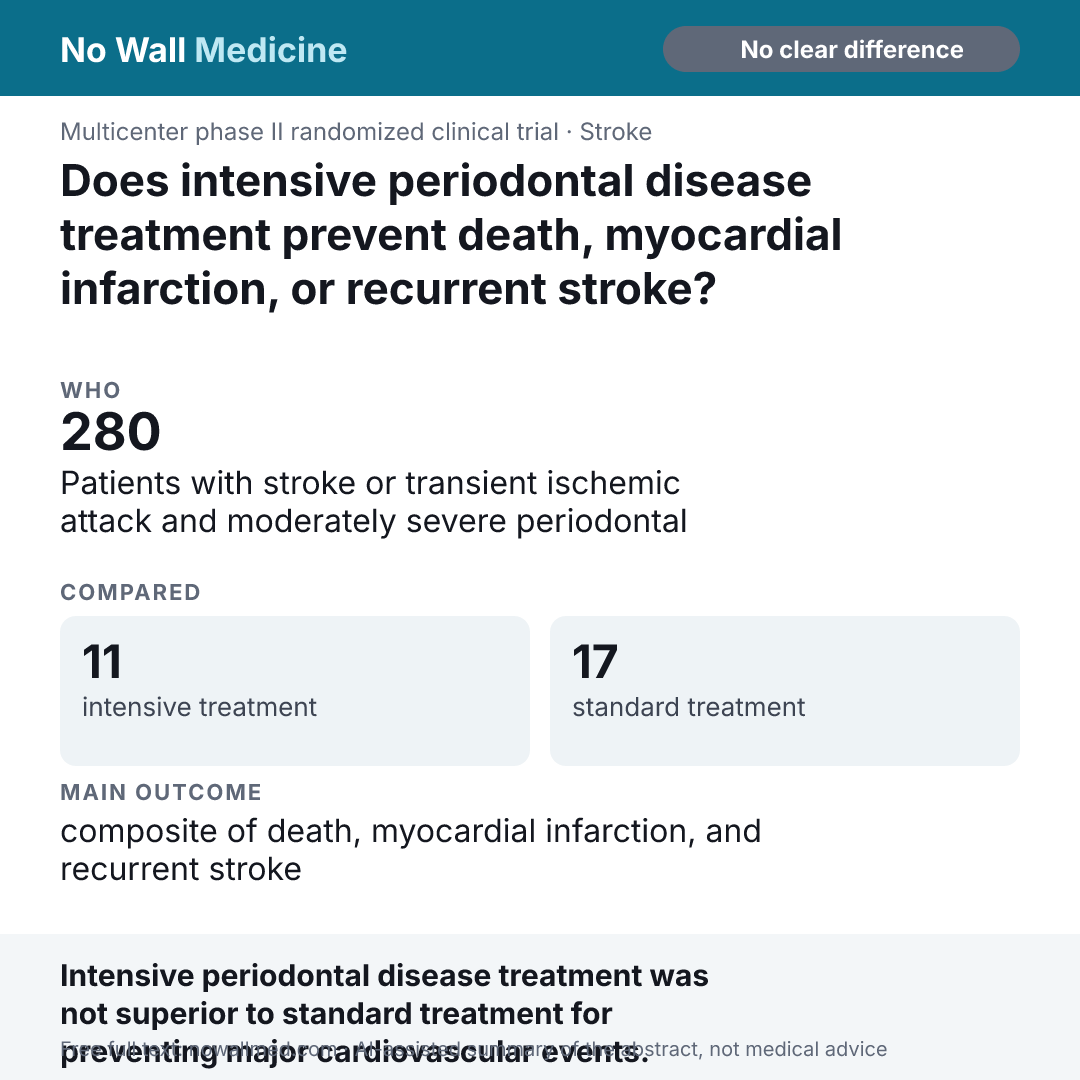
Periodontal Disease Treatment After Stroke or Transient Ischemic Attack: The PREMIERS Study, a Randomized Clinical Trial
Multicenter phase II randomized clinical trialNo clear difference
Does intensive periodontal disease treatment prevent death, myocardial infarction, or recurrent stroke?
Who
280
Patients with stroke or transient ischemic attack and moderately severe periodontal disease · Multicenter
Compared
11intensive treatment (8%)
17standard treatment (12%)
Main outcome
composite of death, myocardial infarction, and recurrent stroke
Result: hazard ratio 0.65 (95% CI 0.30-1.38)
Bottom line: Intensive periodontal disease treatment was not superior to standard treatment for preventing major cardiovascular events.
Stroke · 2023-08-07 · Save PNG
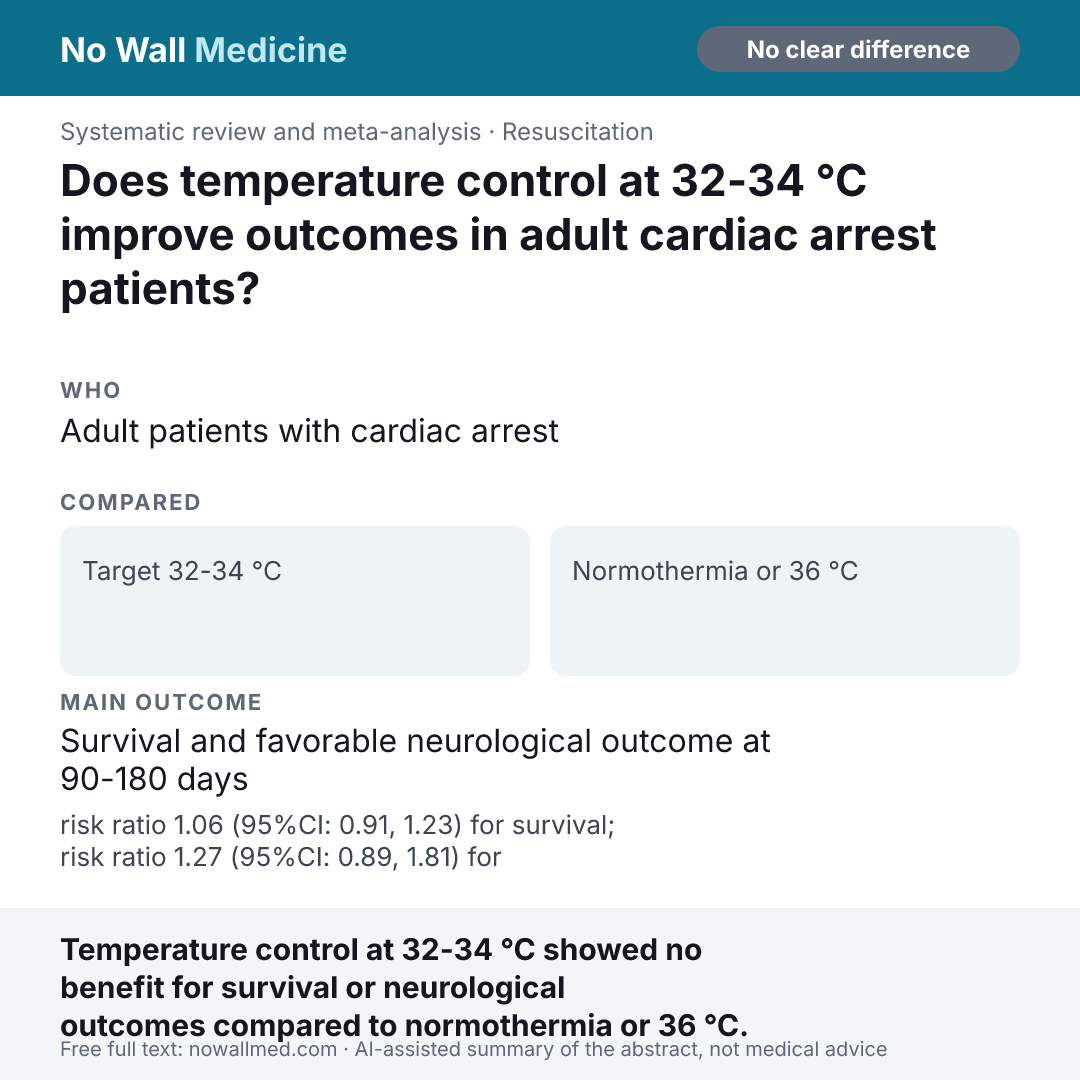
Temperature control after adult cardiac arrest: An updated systematic review and meta-analysis
Systematic review and meta-analysisNo clear difference
Does temperature control at 32-34 °C improve outcomes in adult cardiac arrest patients?
Who
Adult patients with cardiac arrest
Compared
Target 32-34 °C
Normothermia or 36 °C
Main outcome
Survival and favorable neurological outcome at 90-180 days
Result: risk ratio 1.06 (95%CI: 0.91, 1.23) for survival; risk ratio 1.27 (95%CI: 0.89, 1.81) for neurological outcome
Bottom line: Temperature control at 32-34 °C showed no benefit for survival or neurological outcomes compared to normothermia or 36 °C.
Limitation: Low certainty evidence and knowledge gaps exist regarding temperature targets, rewarming rates, and fever control.
Resuscitation · 2023-08-07 · Save PNG
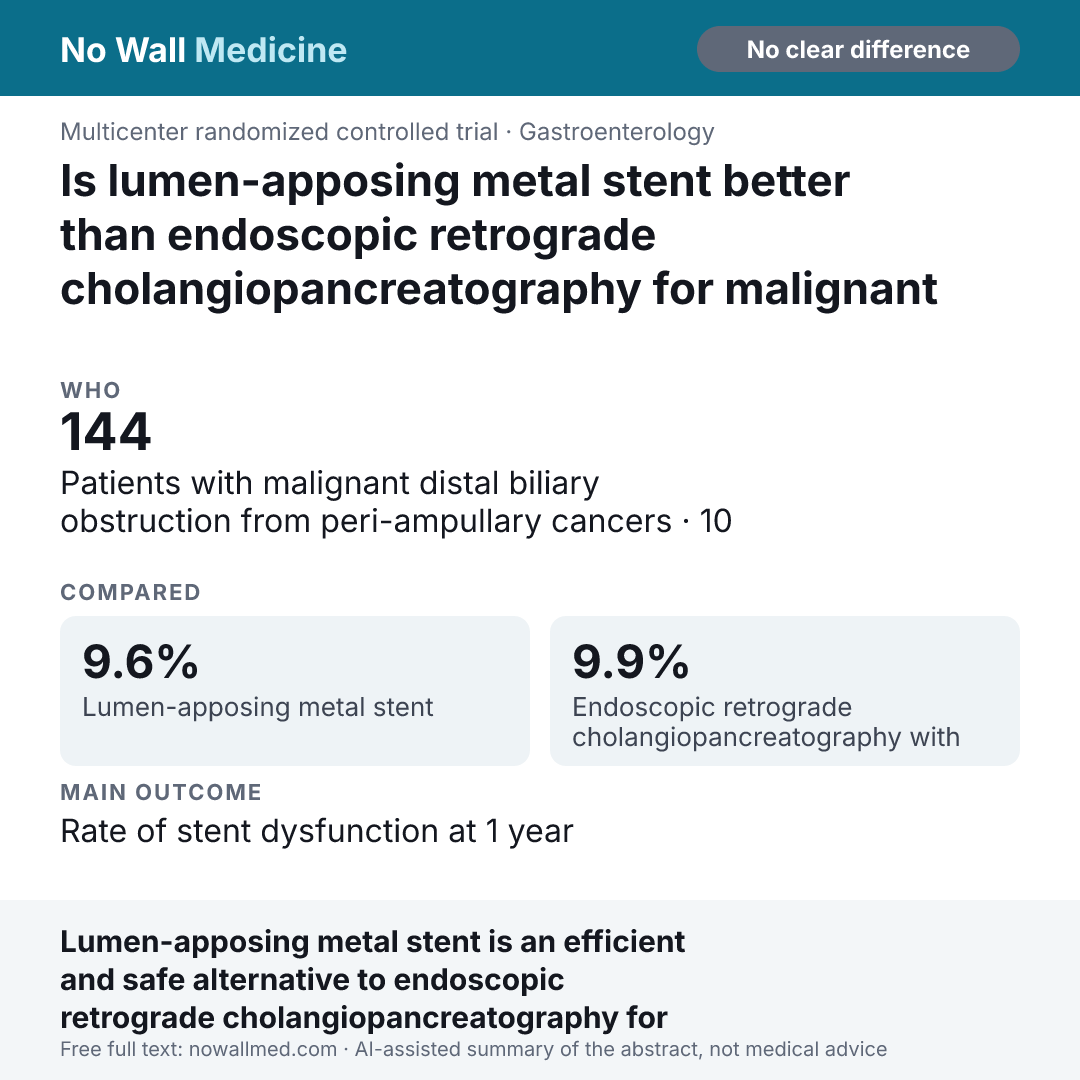
Treatment of Low-grade Intermediate-risk Nonmuscle-invasive Bladder Cancer With UGN-102 ± Transurethral Resection of Bladder Tumor Compared to Transurethral Resection of Bladder Tumor Monotherapy: A Randomized, Controlled, Phase 3 Trial (ATLAS)
Randomized, controlled, phase 3 trialBenefit found
Is UGN-102 with or without resection better than resection monotherapy for bladder cancer?
Who
282
Patients with low-grade intermediate-risk nonmuscle-invasive bladder cancer
Compared
72%UGN-102 plus or without resection
50%Transurethral resection of bladder tumor monotherapy
Main outcome
Disease-free survival
Result: hazard ratio 0.45
Bottom line: UGN-102 offers a potential therapeutic alternative to transurethral resection of bladder tumor monotherapy for this cancer.
J Urol · 2023-08-07 · Save PNG
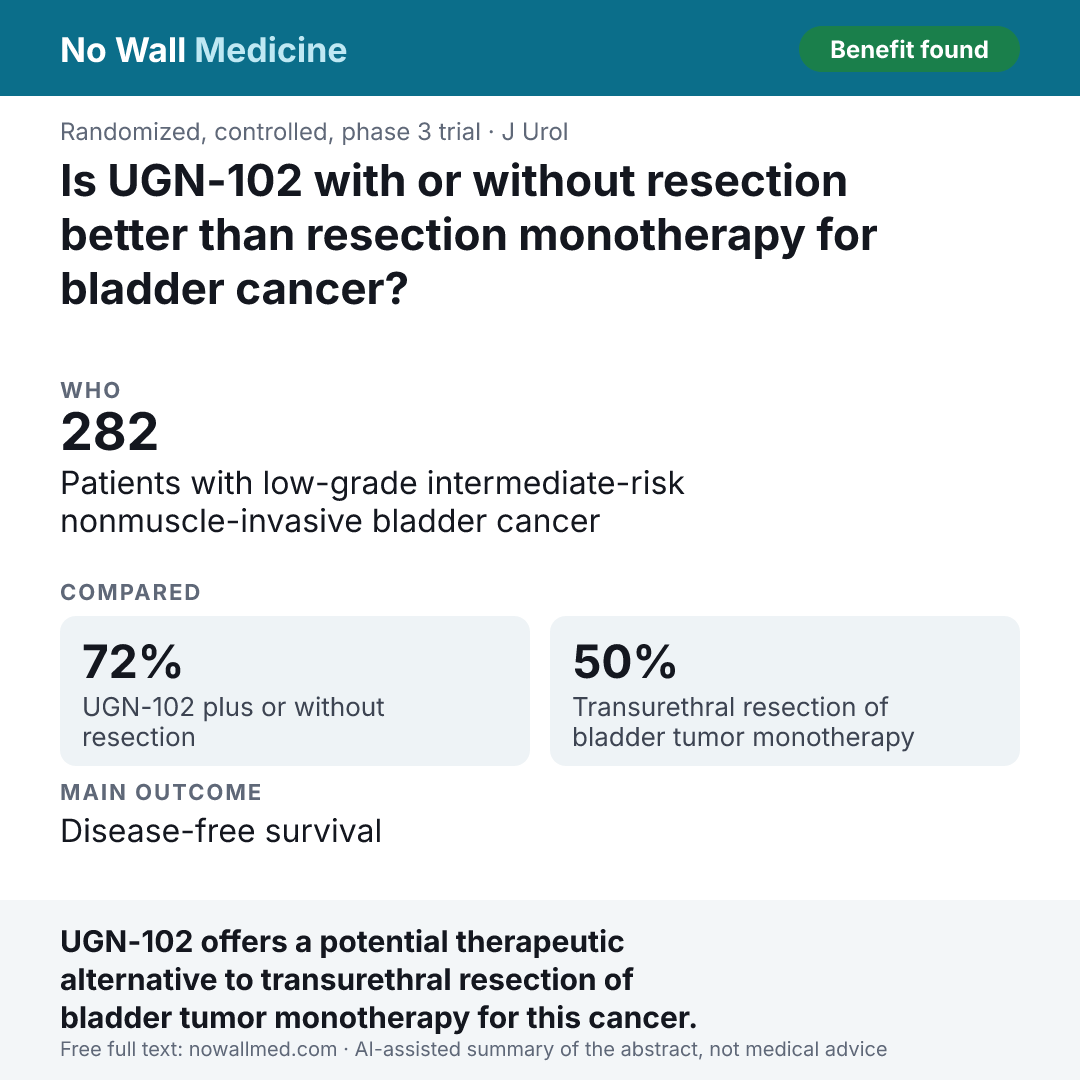
The Impact of a Mobile Support Group on Distress and Physical Activity in Breast Cancer Survivors: Randomized, Parallel-Group, Open-Label, Controlled Trial
Randomized controlled trialBenefit found
Mobile support group impact on breast cancer survivors
Who
202
Women with stage 0 to III breast cancer · Single center
Compared
Intervention: odds ratio 0.572
Control
Main outcome
Moderate to severe distress
Result: odds ratio 0.572
Bottom line: Mobile community reduces distress and increases activity
J Med Internet Res · 2023-08-07 · Save PNG
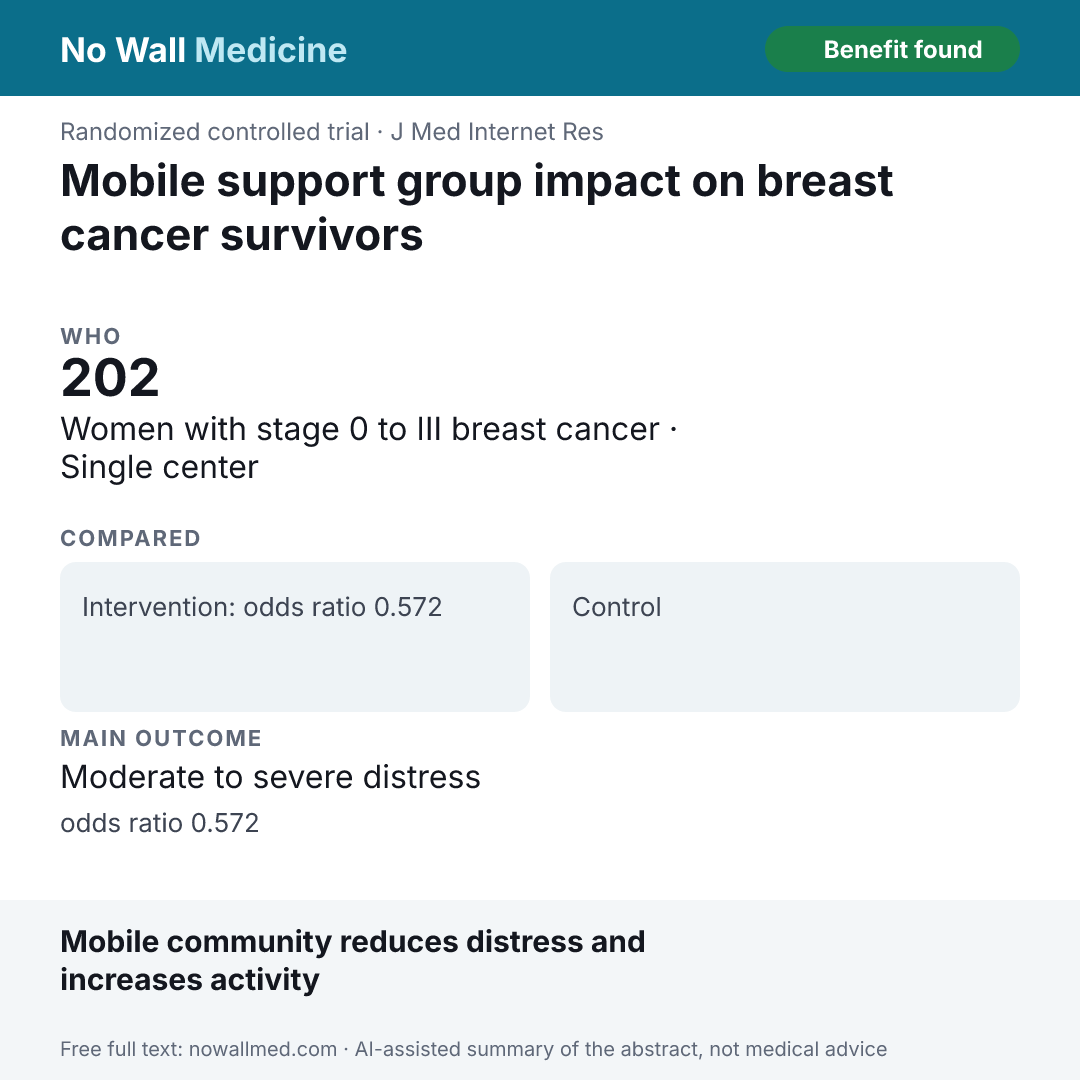
Comparing the Effect of Implanted Peroneal Nerve Stimulation and Ankle-Foot Orthosis on Gait Kinematics in Chronic Hemiparesis: A Randomized Controlled Trial
Randomized controlled trialNo clear difference
How do peroneal nerve stimulation and ankle-foot orthosis compare for gait kinematics in hemiparesis?
Who
27
Subjects with chronic hemiparesis
Compared
Ankle-foot orthosis: -60% ankle dorsiflexion speed at month 6
Semi-implanted selective functional electrical stimulation: non significant ankle dorsiflexion speed change
Main outcome
Gait kinematics
Bottom line: Both treatments similarly impacted gait kinematics, though ankle-foot orthosis showed deteriorated ankle dorsiflexion speed at six months.
J Rehabil Med · 2023-08-07 · Save PNG
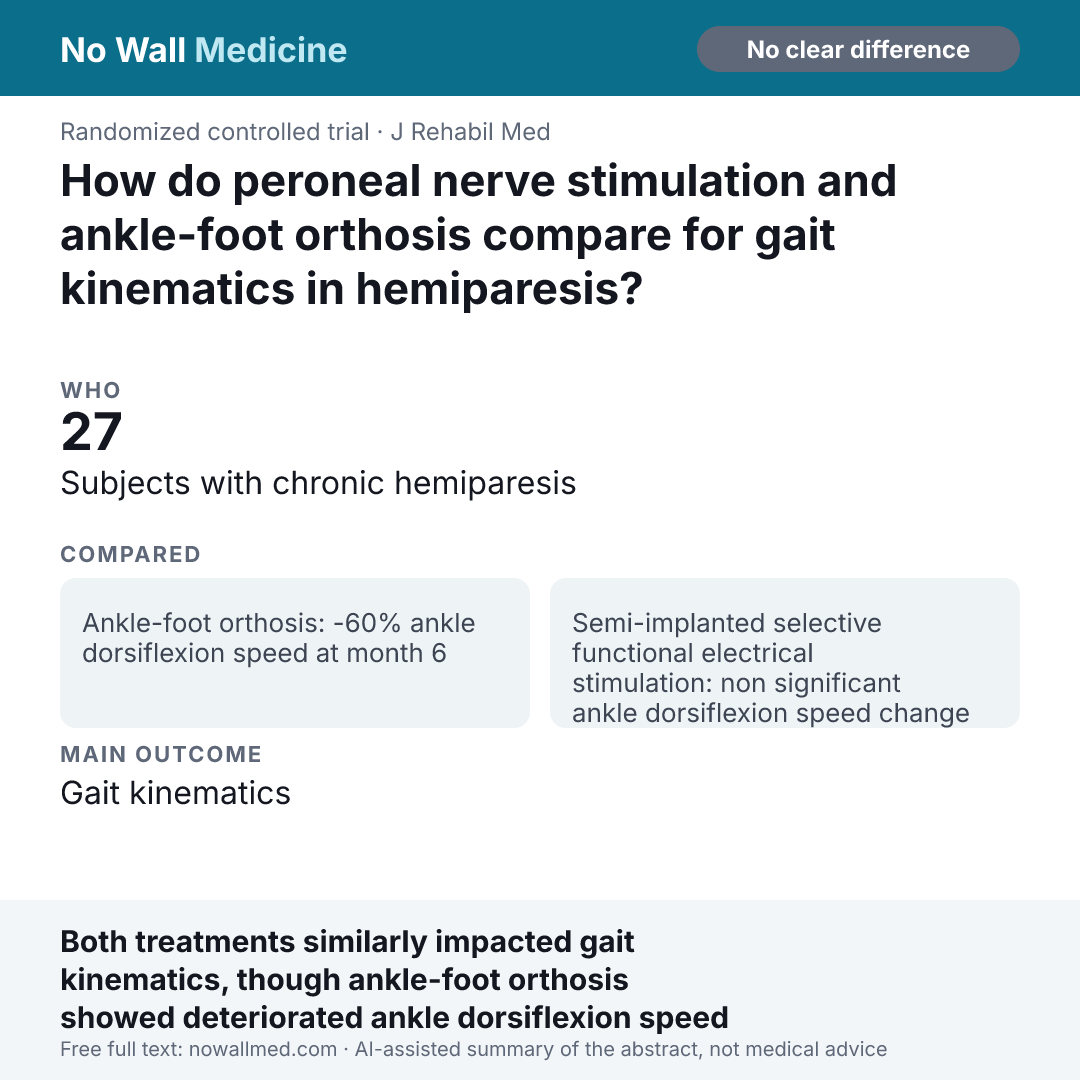
Endoscopic Ultrasound-Guided Biliary Drainage of First Intent With a Lumen-Apposing Metal Stent vs Endoscopic Retrograde Cholangiopancreatography in Malignant Distal Biliary Obstruction: A Multicenter Randomized Controlled Study (ELEMENT Trial)
Multicenter randomized controlled trialNo clear difference
Is lumen-apposing metal stent better than endoscopic retrograde cholangiopancreatography for malignant distal biliary obstruction?
Who
144
Patients with malignant distal biliary obstruction from peri-ampullary cancers · 10 Canadian and 1 French institutions
Compared
9.6%Lumen-apposing metal stent
9.9%Endoscopic retrograde cholangiopancreatography with metal stenting
Main outcome
Rate of stent dysfunction at 1 year
Bottom line: Lumen-apposing metal stent is an efficient and safe alternative to endoscopic retrograde cholangiopancreatography for malignant distal biliary obstruction.
Gastroenterology · 2023-08-06 · Save PNG
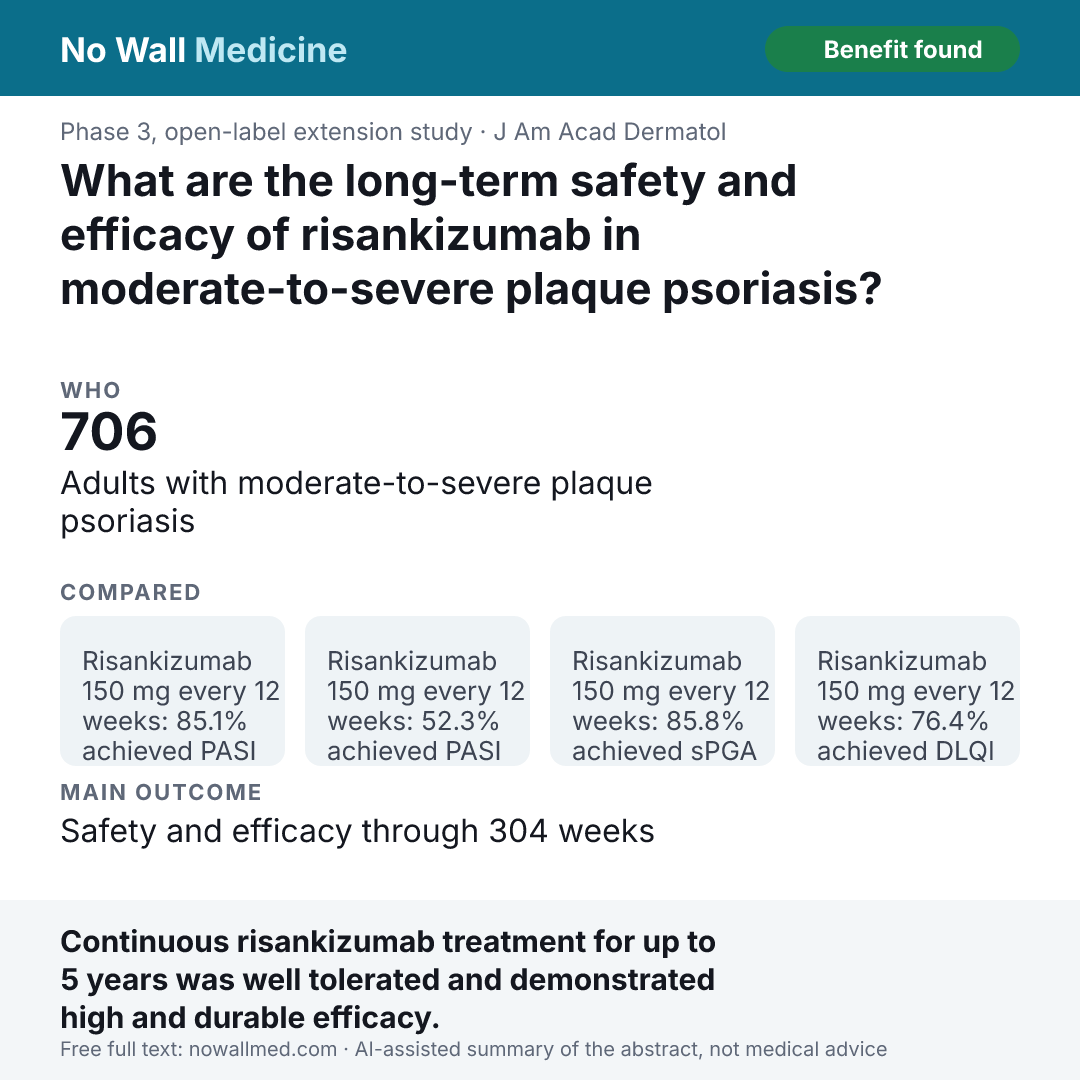
Long-term safety and efficacy of risankizumab for the treatment of moderate-to-severe plaque psoriasis: Interim analysis of the LIMMitless open-label extension trial up to 5 years of follow-up
Phase 3, open-label extension studyBenefit found
What are the long-term safety and efficacy of risankizumab in moderate-to-severe plaque psoriasis?
Who
706
Adults with moderate-to-severe plaque psoriasis
Compared
Risankizumab 150 mg every 12 weeks: 85.1% achieved PASI 90 at week 256
Risankizumab 150 mg every 12 weeks: 52.3% achieved PASI 100 at week 256
Risankizumab 150 mg every 12 weeks: 85.8% achieved sPGA 0/1 at week 256
Risankizumab 150 mg every 12 weeks: 76.4% achieved DLQI 0/1 at week 256
Main outcome
Safety and efficacy through 304 weeks
Bottom line: Continuous risankizumab treatment for up to 5 years was well tolerated and demonstrated high and durable efficacy.
Limitation: Open-label study with no placebo or active-comparator group.
J Am Acad Dermatol · 2023-08-06 · Save PNG
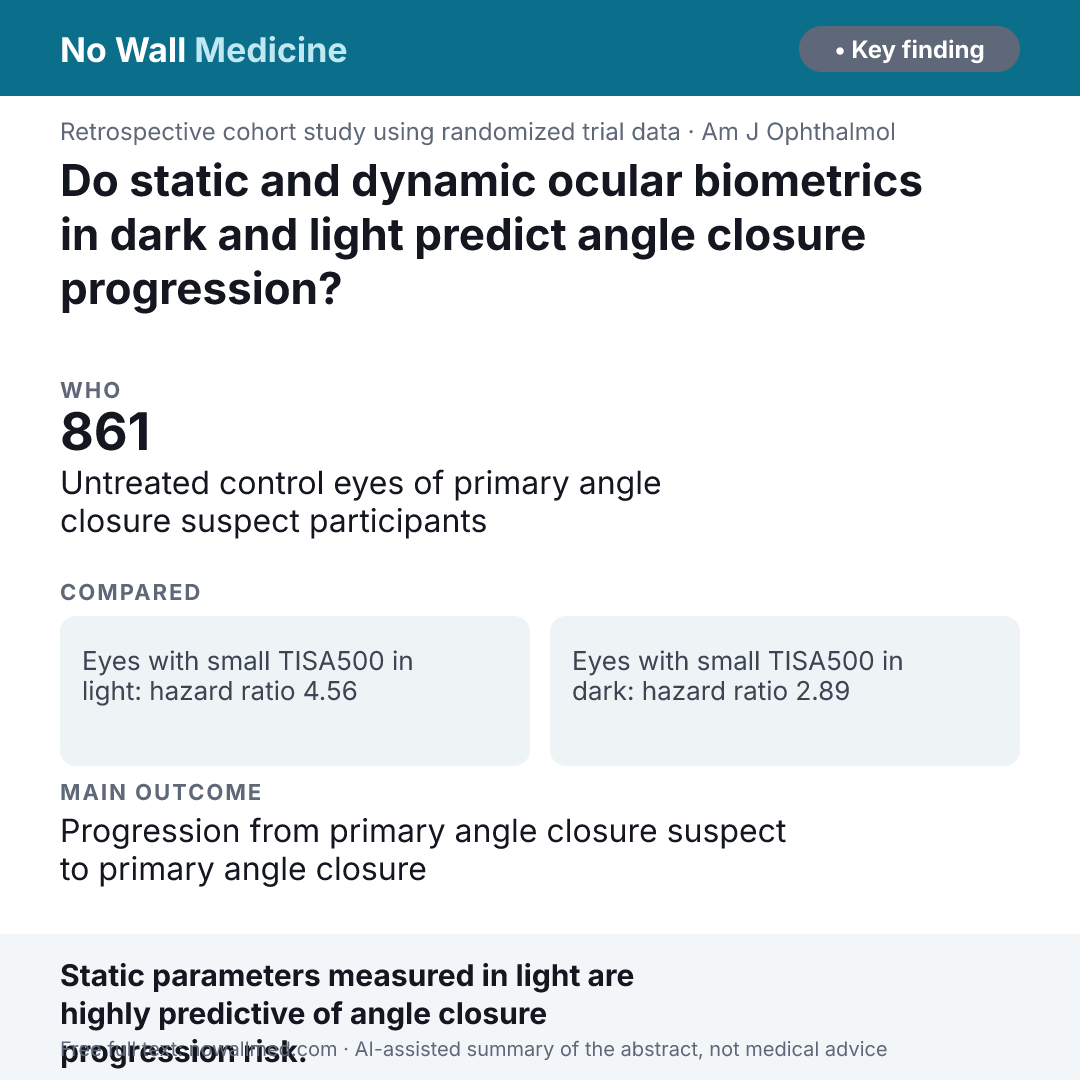
Role of Static and Dynamic Ocular Biometrics Measured in the Dark and Light as Risk Factors for Angle Closure Progression
Retrospective cohort study using randomized trial dataKey finding
Do static and dynamic ocular biometrics in dark and light predict angle closure progression?
Who
861
Untreated control eyes of primary angle closure suspect participants
Compared
Eyes with small TISA500 in light: hazard ratio 4.56
Eyes with small TISA500 in dark: hazard ratio 2.89
Main outcome
Progression from primary angle closure suspect to primary angle closure
Result: hazard ratio 1.28 per 0.01 mm2 for TISA500 in the light
Bottom line: Static parameters measured in light are highly predictive of angle closure progression risk.
Am J Ophthalmol · 2023-08-06 · Save PNG
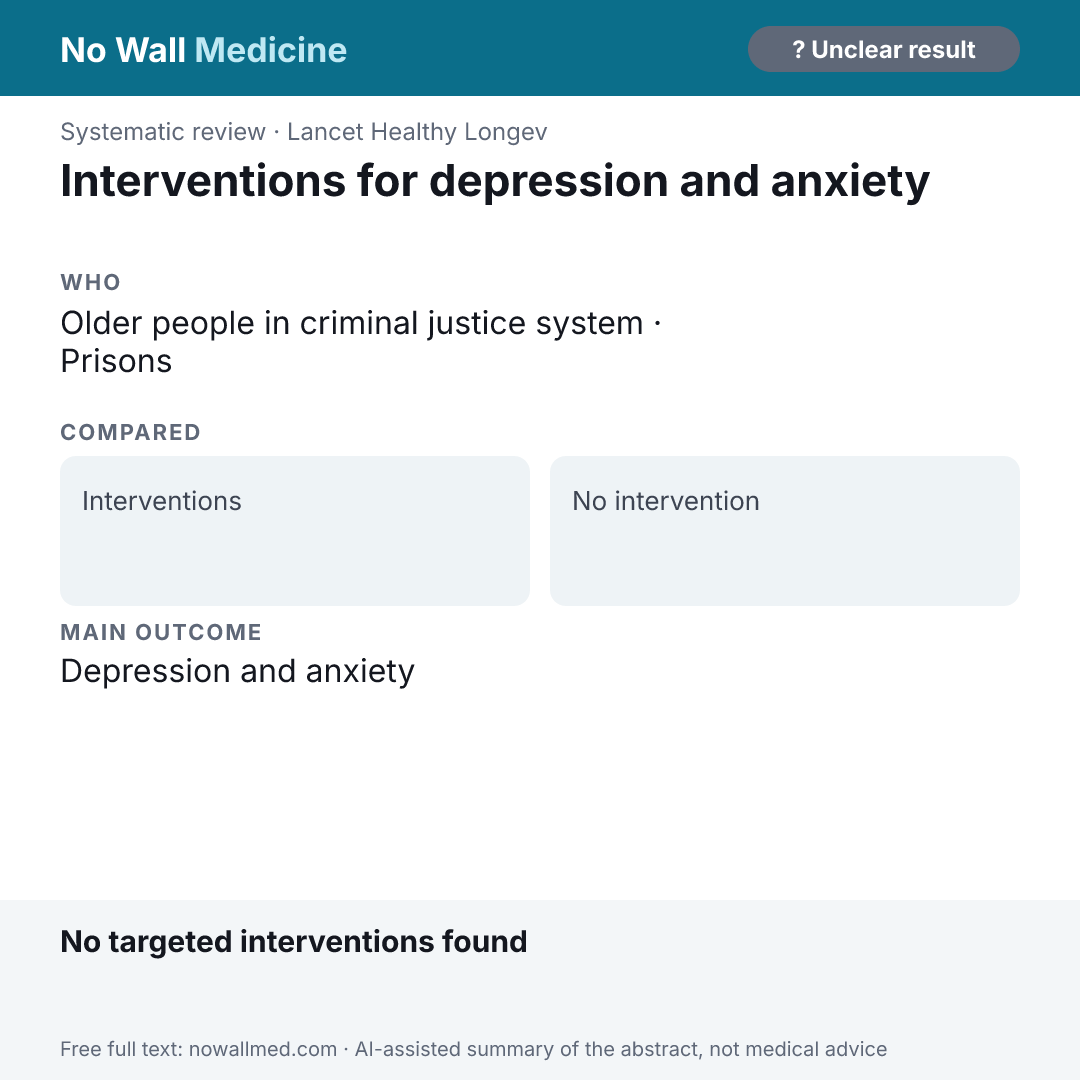
Effects of interventions on depression and anxiety in older people with physical health problems in the criminal justice system: a systematic review
Systematic reviewUnclear result
Interventions for depression and anxiety
Who
Older people in criminal justice system · Prisons
Compared
Interventions
No intervention
Main outcome
Depression and anxiety
Bottom line: No targeted interventions found
Lancet Healthy Longev · 2023-08-06 · Save PNG
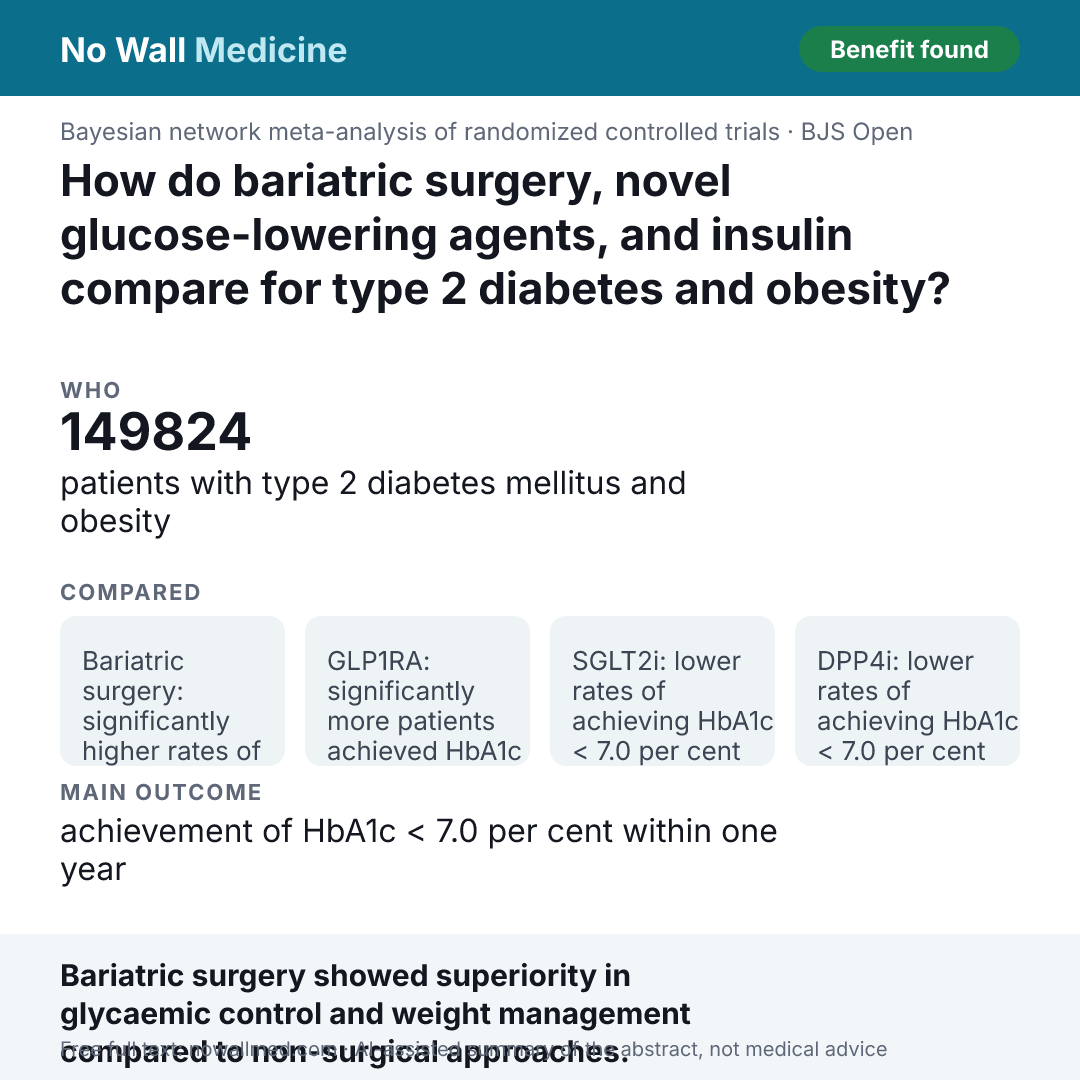
Bariatric surgery, novel glucose-lowering agents, and insulin for type 2 diabetes and obesity: Bayesian network meta-analysis of randomized controlled trials
Bayesian network meta-analysis of randomized controlled trialsBenefit found
How do bariatric surgery, novel glucose-lowering agents, and insulin compare for type 2 diabetes and obesity?
Who
149824
patients with type 2 diabetes mellitus and obesity
Compared
Bariatric surgery: significantly higher rates of achieving HbA1c < 7.0 per cent
GLP1RA: significantly more patients achieved HbA1c < 7.0 per cent
SGLT2i: lower rates of achieving HbA1c < 7.0 per cent
DPP4i: lower rates of achieving HbA1c < 7.0 per cent
Main outcome
achievement of HbA1c < 7.0 per cent within one year
Bottom line: Bariatric surgery showed superiority in glycaemic control and weight management compared to non-surgical approaches.
BJS Open · 2023-08-06 · Save PNG
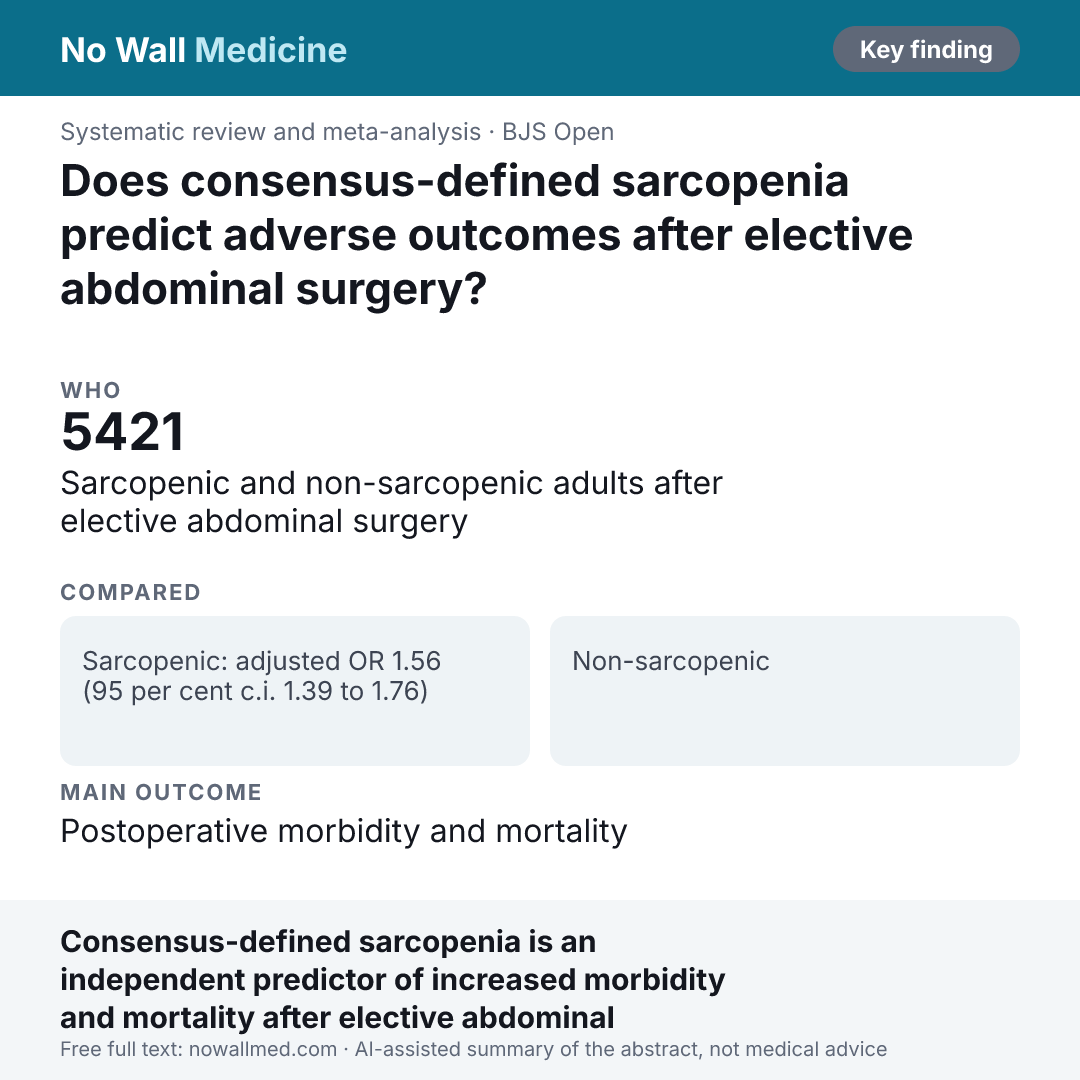
Consensus-defined sarcopenia predicts adverse outcomes after elective abdominal surgery: meta-analysis
Systematic review and meta-analysisKey finding
Does consensus-defined sarcopenia predict adverse outcomes after elective abdominal surgery?
Who
5421
Sarcopenic and non-sarcopenic adults after elective abdominal surgery
Compared
Sarcopenic: adjusted OR 1.56 (95 per cent c.i. 1.39 to 1.76)
Non-sarcopenic
Main outcome
Postoperative morbidity and mortality
Result: adjusted OR 1.56 (95 per cent c.i. 1.39 to 1.76)
Bottom line: Consensus-defined sarcopenia is an independent predictor of increased morbidity and mortality after elective abdominal surgery.
BJS Open · 2023-08-06 · Save PNG
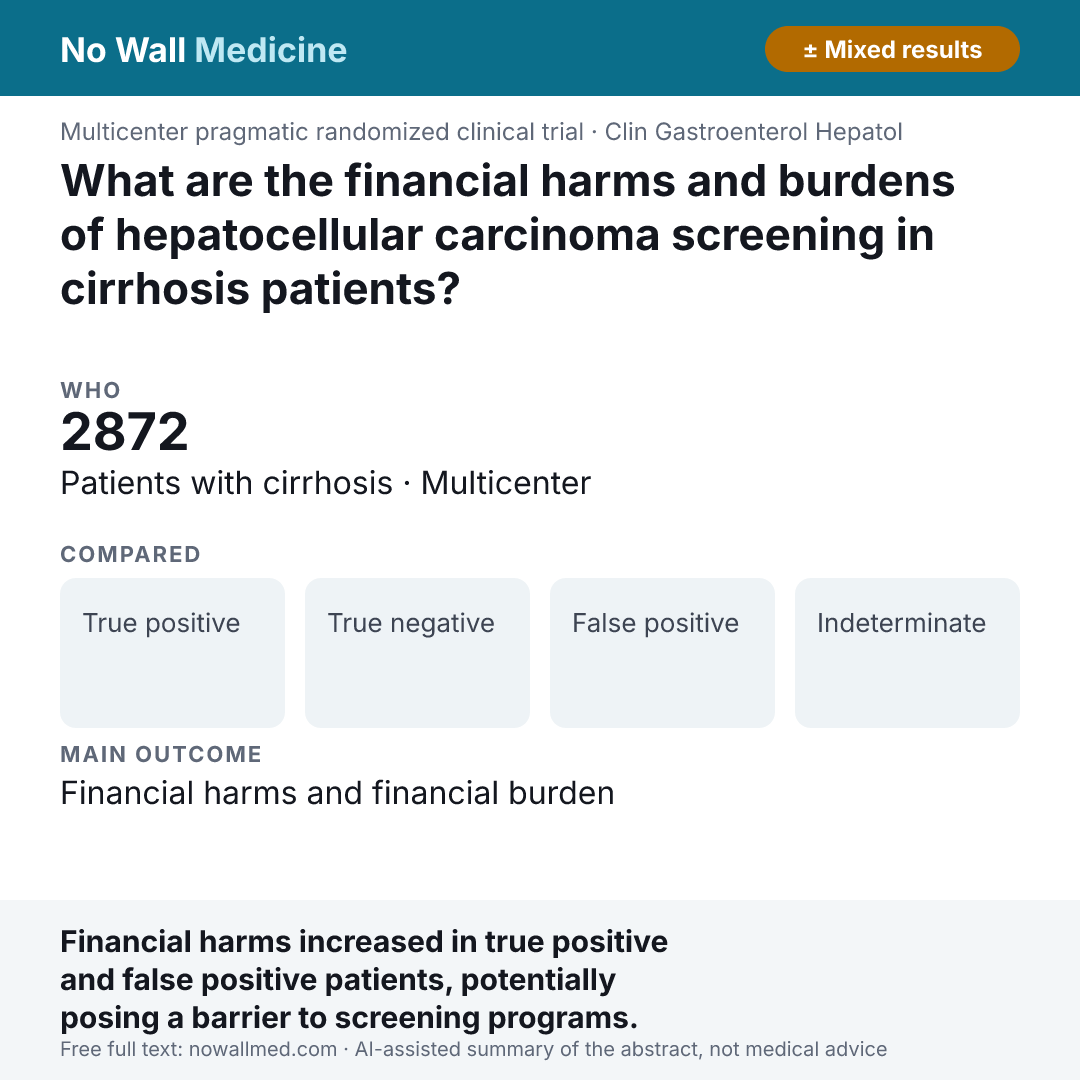
Financial Burden of Hepatocellular Carcinoma Screening in Patients With Cirrhosis
Multicenter pragmatic randomized clinical trialMixed results
What are the financial harms and burdens of hepatocellular carcinoma screening in cirrhosis patients?
Who
2872
Patients with cirrhosis · Multicenter
Compared
True positive
True negative
False positive
Indeterminate
Main outcome
Financial harms and financial burden
Bottom line: Financial harms increased in true positive and false positive patients, potentially posing a barrier to screening programs.
Clin Gastroenterol Hepatol · 2023-08-05 · Save PNG
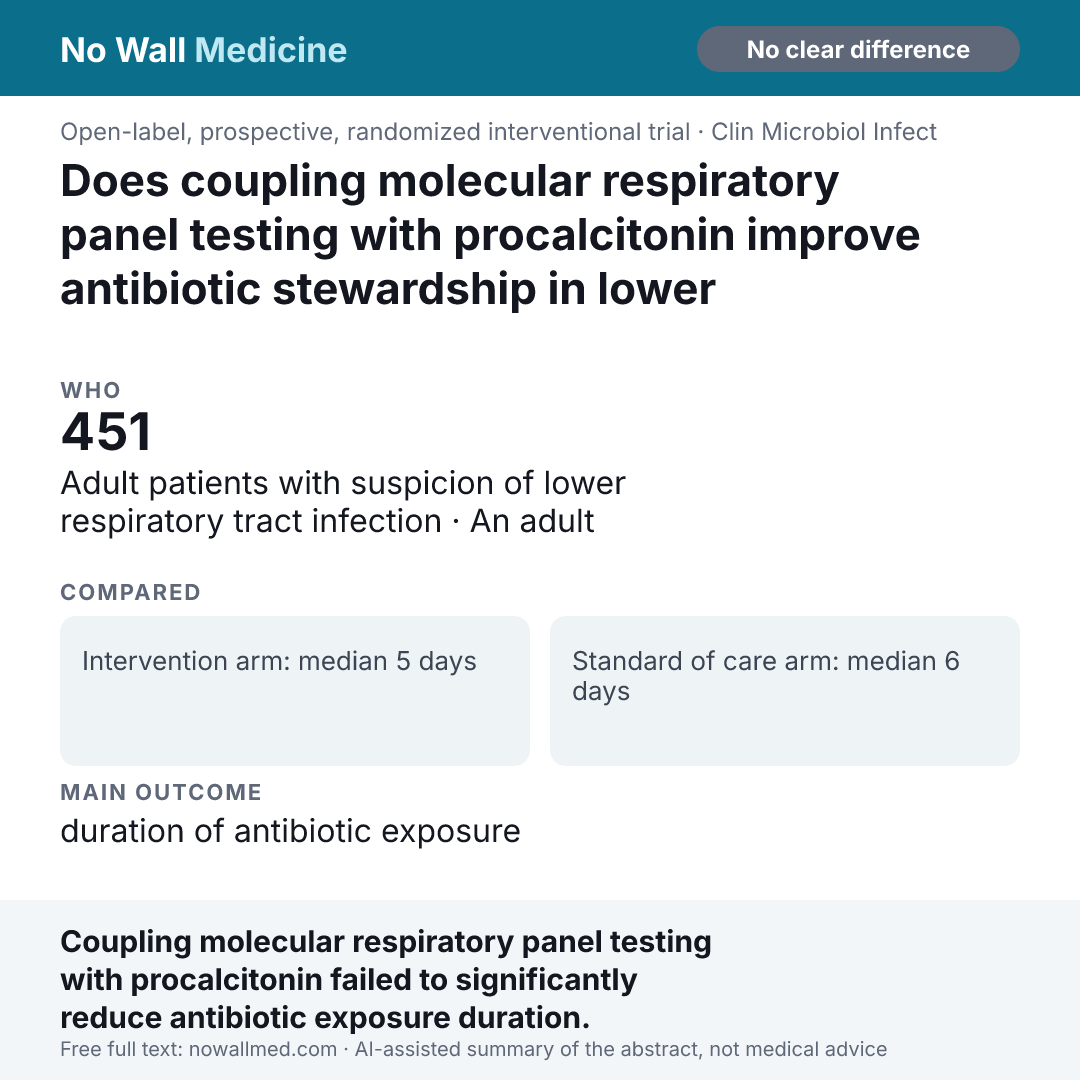
Point-of-care multiplex molecular diagnosis coupled with procalcitonin-guided algorithm for antibiotic stewardship in lower respiratory tract infection: a randomized controlled trial
Open-label, prospective, randomized interventional trialNo clear difference
Does coupling molecular respiratory panel testing with procalcitonin improve antibiotic stewardship in lower respiratory tract infection?
Who
451
Adult patients with suspicion of lower respiratory tract infection · An adult emergency department
Compared
Intervention arm: median 5 days
Standard of care arm: median 6 days
Main outcome
duration of antibiotic exposure
Result: p = 0.71
Bottom line: Coupling molecular respiratory panel testing with procalcitonin failed to significantly reduce antibiotic exposure duration.
Clin Microbiol Infect · 2023-08-05 · Save PNG
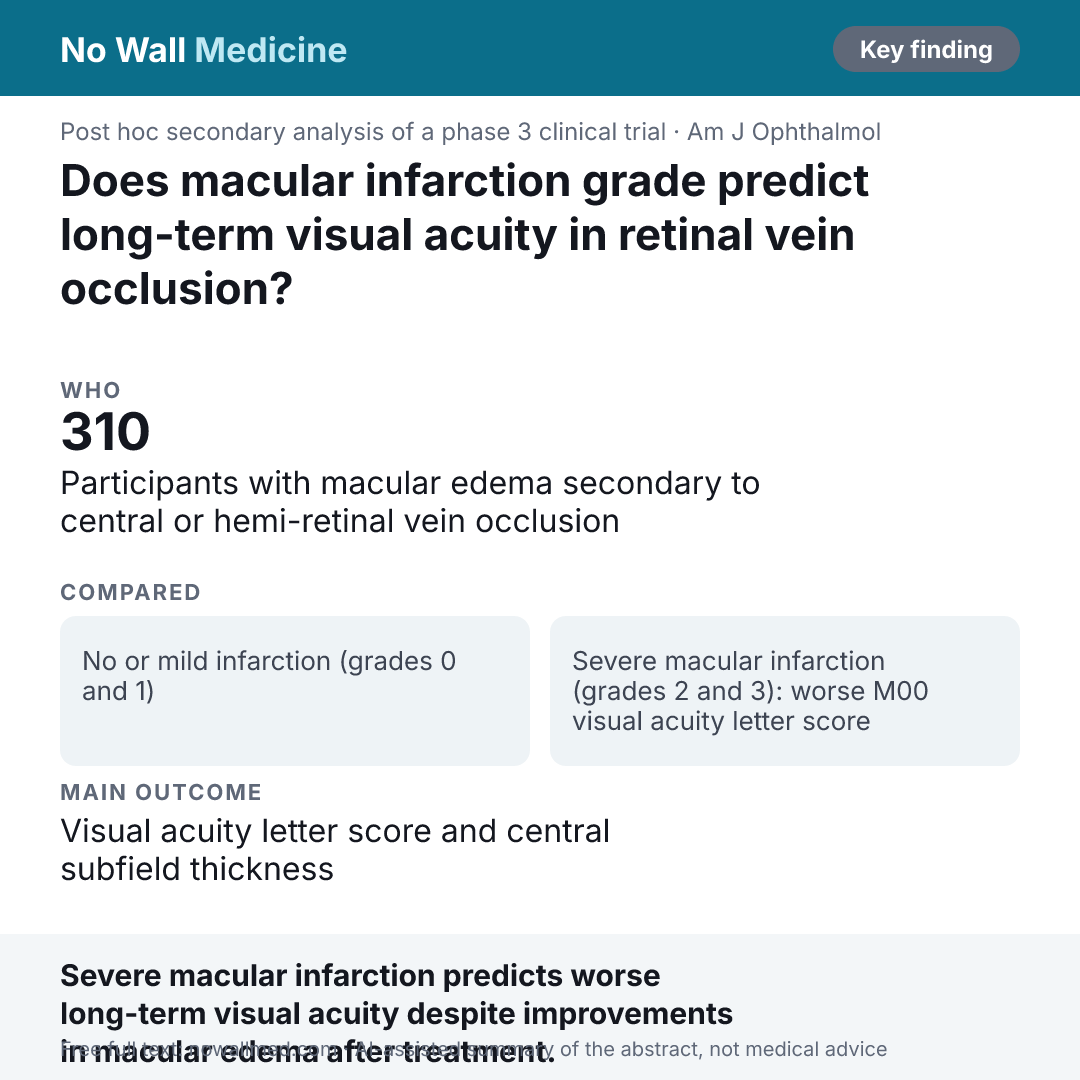
OCT Grading System of Macular Infarction Predicts Vision in Participants With Central Retinal or Hemiretinal Vein Occlusion: A Secondary Analysis of SCORE2
Post hoc secondary analysis of a phase 3 clinical trialKey finding
Does macular infarction grade predict long-term visual acuity in retinal vein occlusion?
Who
310
Participants with macular edema secondary to central or hemi-retinal vein occlusion
Compared
No or mild infarction (grades 0 and 1)
Severe macular infarction (grades 2 and 3): worse M00 visual acuity letter score
Main outcome
Visual acuity letter score and central subfield thickness
Bottom line: Severe macular infarction predicts worse long-term visual acuity despite improvements in macular edema after treatment.
Am J Ophthalmol · 2023-08-05 · Save PNG
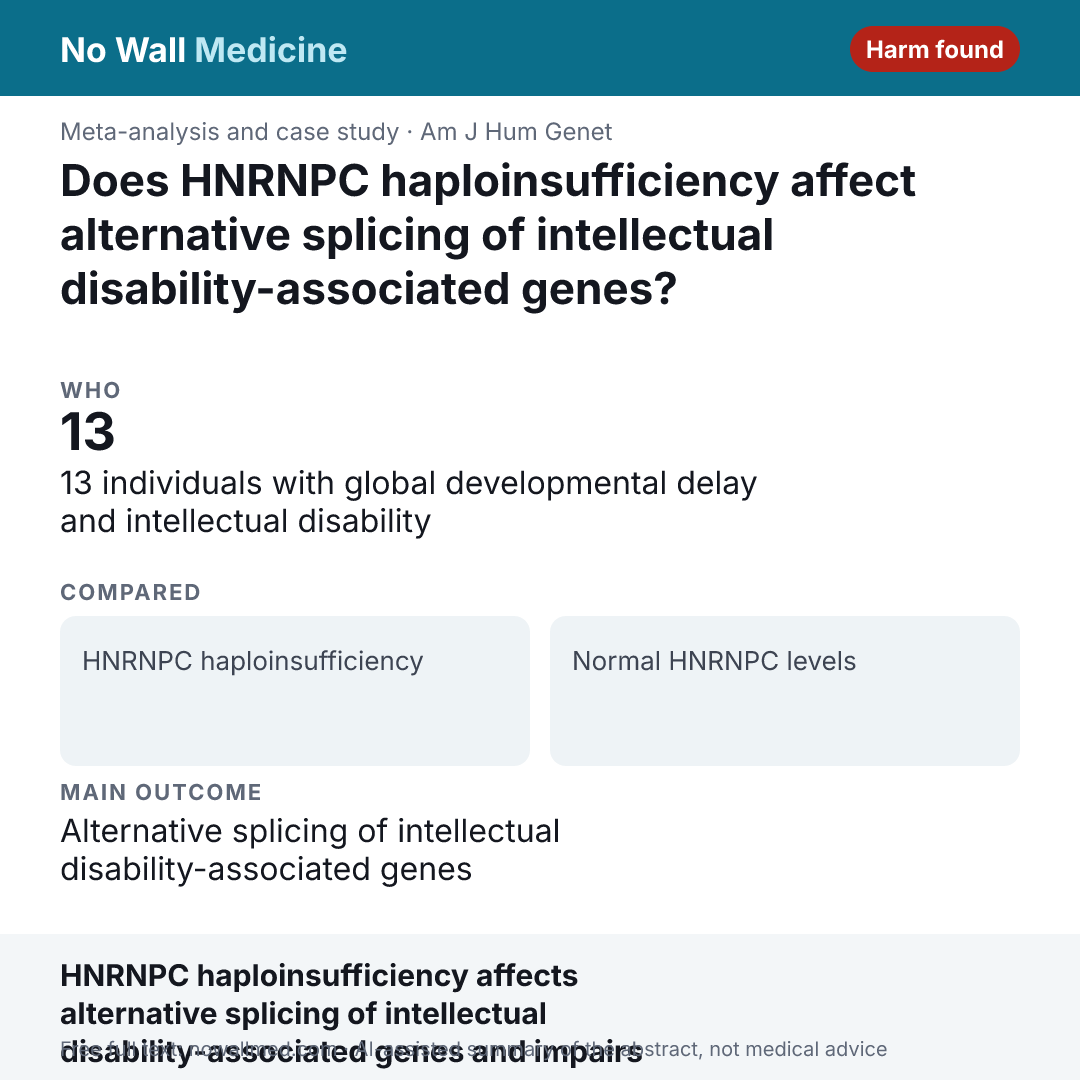
HNRNPC haploinsufficiency affects alternative splicing of intellectual disability-associated genes and causes a neurodevelopmental disorder
Meta-analysis and case studyHarm found
Does HNRNPC haploinsufficiency affect alternative splicing of intellectual disability-associated genes?
Who
13
13 individuals with global developmental delay and intellectual disability
Compared
HNRNPC haploinsufficiency
Normal HNRNPC levels
Main outcome
Alternative splicing of intellectual disability-associated genes
Bottom line: HNRNPC haploinsufficiency affects alternative splicing of intellectual disability-associated genes and impairs neuronal function.
Am J Hum Genet · 2023-08-05 · Save PNG
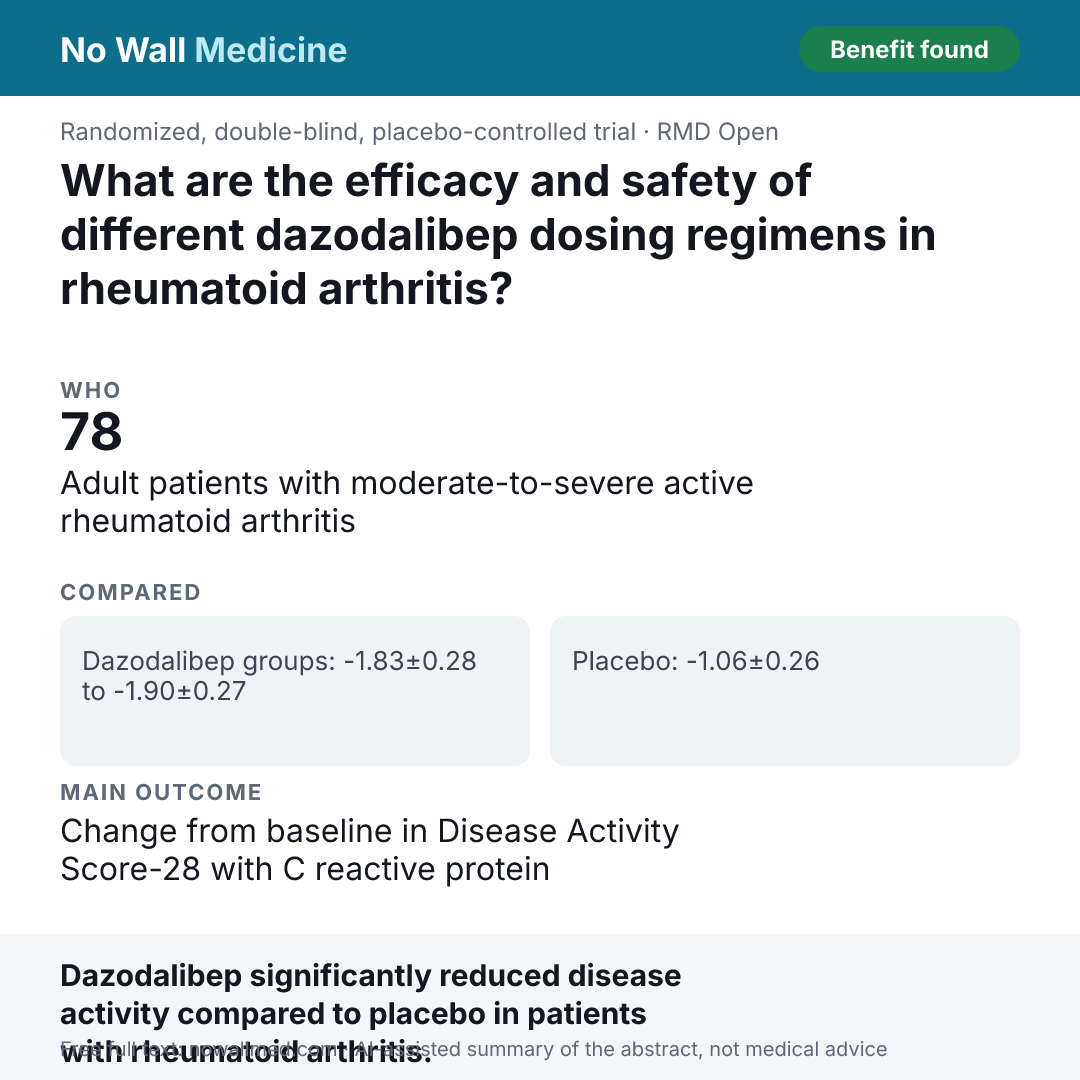
The MIDORA trial: a phase II, randomised, double-blind, placebo-controlled, mechanistic insight and dosage optimisation study of the efficacy and safety of dazodalibep in patients with rheumatoid arthritis
Randomized, double-blind, placebo-controlled trialBenefit found
What are the efficacy and safety of different dazodalibep dosing regimens in rheumatoid arthritis?
Who
78
Adult patients with moderate-to-severe active rheumatoid arthritis
Compared
Dazodalibep groups: -1.83±0.28 to -1.90±0.27
Placebo: -1.06±0.26
Main outcome
Change from baseline in Disease Activity Score-28 with C reactive protein
Bottom line: Dazodalibep significantly reduced disease activity compared to placebo in patients with rheumatoid arthritis.
RMD Open · 2023-08-05 · Save PNG
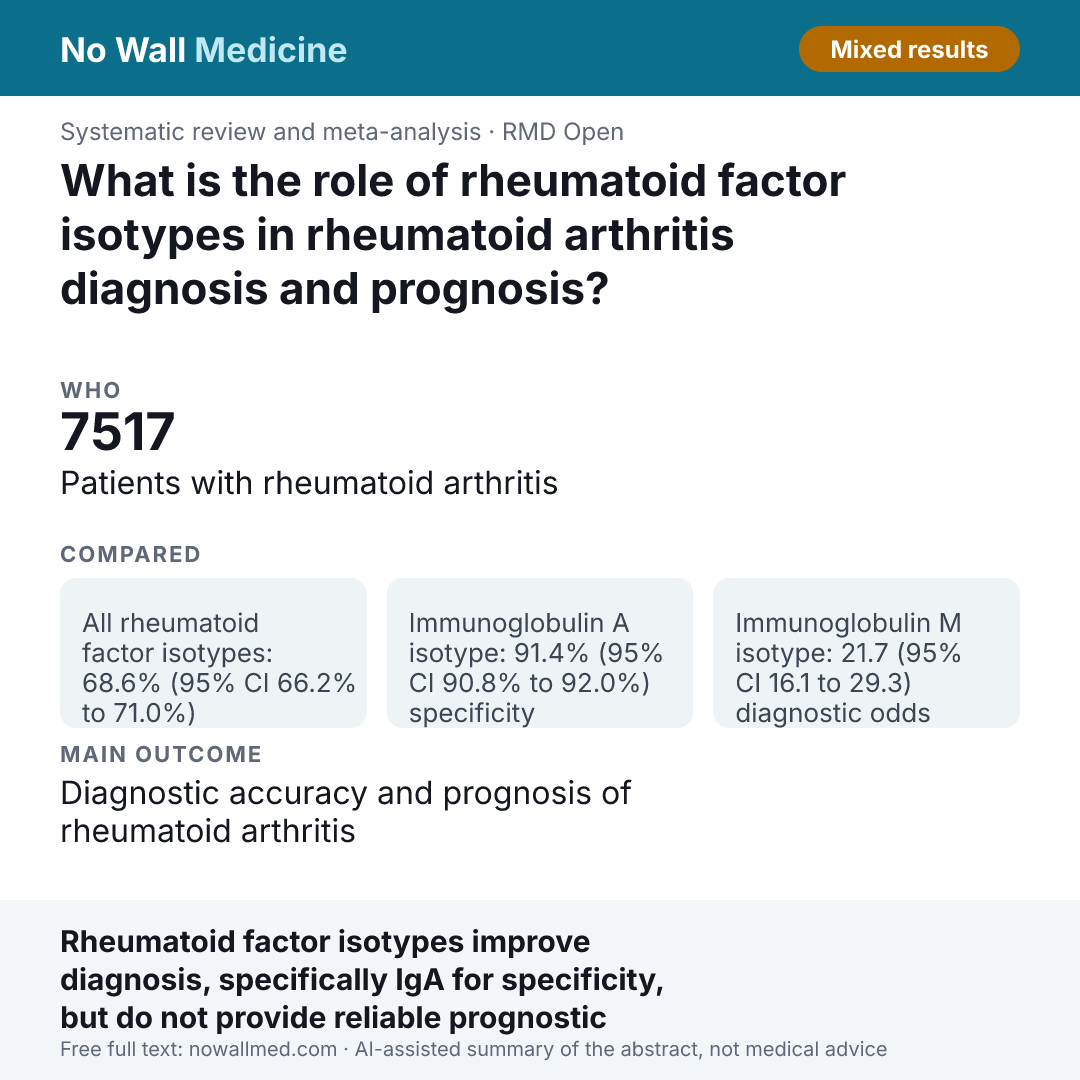
Rheumatoid factor isotypes in rheumatoid arthritis diagnosis and prognosis: a systematic review and meta-analysis
Systematic review and meta-analysisMixed results
What is the role of rheumatoid factor isotypes in rheumatoid arthritis diagnosis and prognosis?
Who
7517
Patients with rheumatoid arthritis
Compared
All rheumatoid factor isotypes: 68.6% (95% CI 66.2% to 71.0%) sensitivity
Immunoglobulin A isotype: 91.4% (95% CI 90.8% to 92.0%) specificity
Immunoglobulin M isotype: 21.7 (95% CI 16.1 to 29.3) diagnostic odds ratio
Main outcome
Diagnostic accuracy and prognosis of rheumatoid arthritis
Bottom line: Rheumatoid factor isotypes improve diagnosis, specifically IgA for specificity, but do not provide reliable prognostic information.
Limitation: Data for prognostic information are limited and heterogeneous.
RMD Open · 2023-08-05 · Save PNG
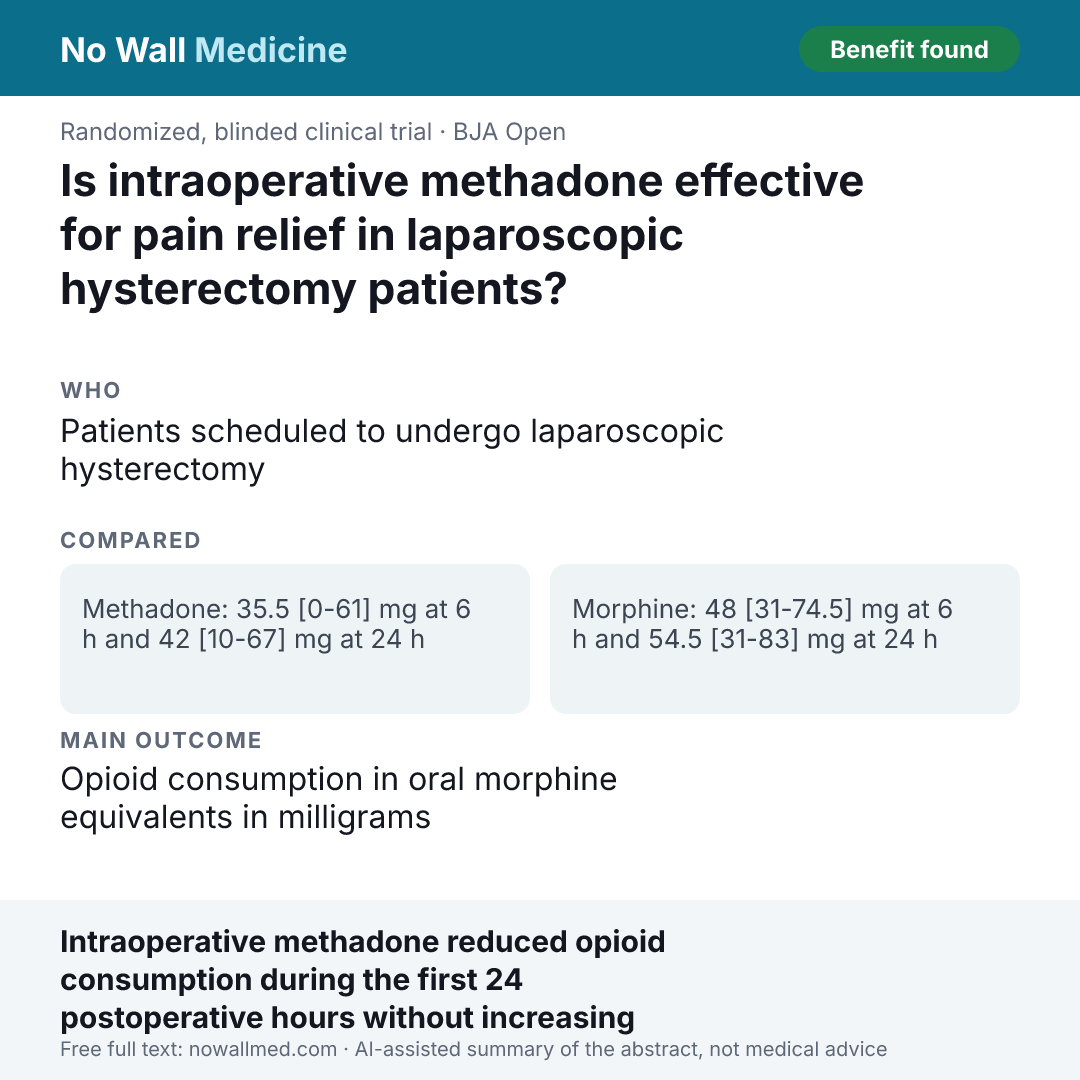
Clinical effectiveness and safety of intraoperative methadone in patients undergoing laparoscopic hysterectomy: a randomised, blinded clinical trial
Randomized, blinded clinical trialBenefit found
Is intraoperative methadone effective for pain relief in laparoscopic hysterectomy patients?
Who
Patients scheduled to undergo laparoscopic hysterectomy
Compared
Methadone: 35.5 [0-61] mg at 6 h and 42 [10-67] mg at 24 h
Morphine: 48 [31-74.5] mg at 6 h and 54.5 [31-83] mg at 24 h
Main outcome
Opioid consumption in oral morphine equivalents in milligrams
Bottom line: Intraoperative methadone reduced opioid consumption during the first 24 postoperative hours without increasing adverse events.
Limitation: The difference observed might be considered as small and of limited clinical relevance.
BJA Open · 2023-08-05 · Save PNG