Visual abstracts
New randomized trials and meta-analyses from leading journals at a glance: who was studied, what was compared, and what was found. Every paper is free to read in full.
All specialtiesCardiology 4877Oncology 4138Gastroenterology & Hepatology 1942Infectious Disease 3837Neurology 1905Psychiatry & Mental Health 2273Pulmonology 2143Critical Care 1365Endocrinology & Diabetes 2580Pediatrics 2980Surgery 2559Orthopedics & Sports Medicine 931Neurosurgery 537Cardiothoracic & Vascular Surgery 674Plastic & Reconstructive Surgery 591Nephrology 1133Rheumatology 823Hematology 1109Dermatology 621Ophthalmology 543Obstetrics & Gynecology 1686Public & Global Health 1058Radiology & Imaging 648Anesthesiology 986Urology 764ENT (Otolaryngology) 503Emergency Medicine 511Allergy & Immunology 313Geriatrics 981Family Medicine & Primary Care 562Medical Genetics & Genomics 676Pathology & Laboratory Medicine 159Physical Medicine & Rehabilitation 757Palliative Care 444Nutrition 1588Digital Health & AI 2201General Medicine 321
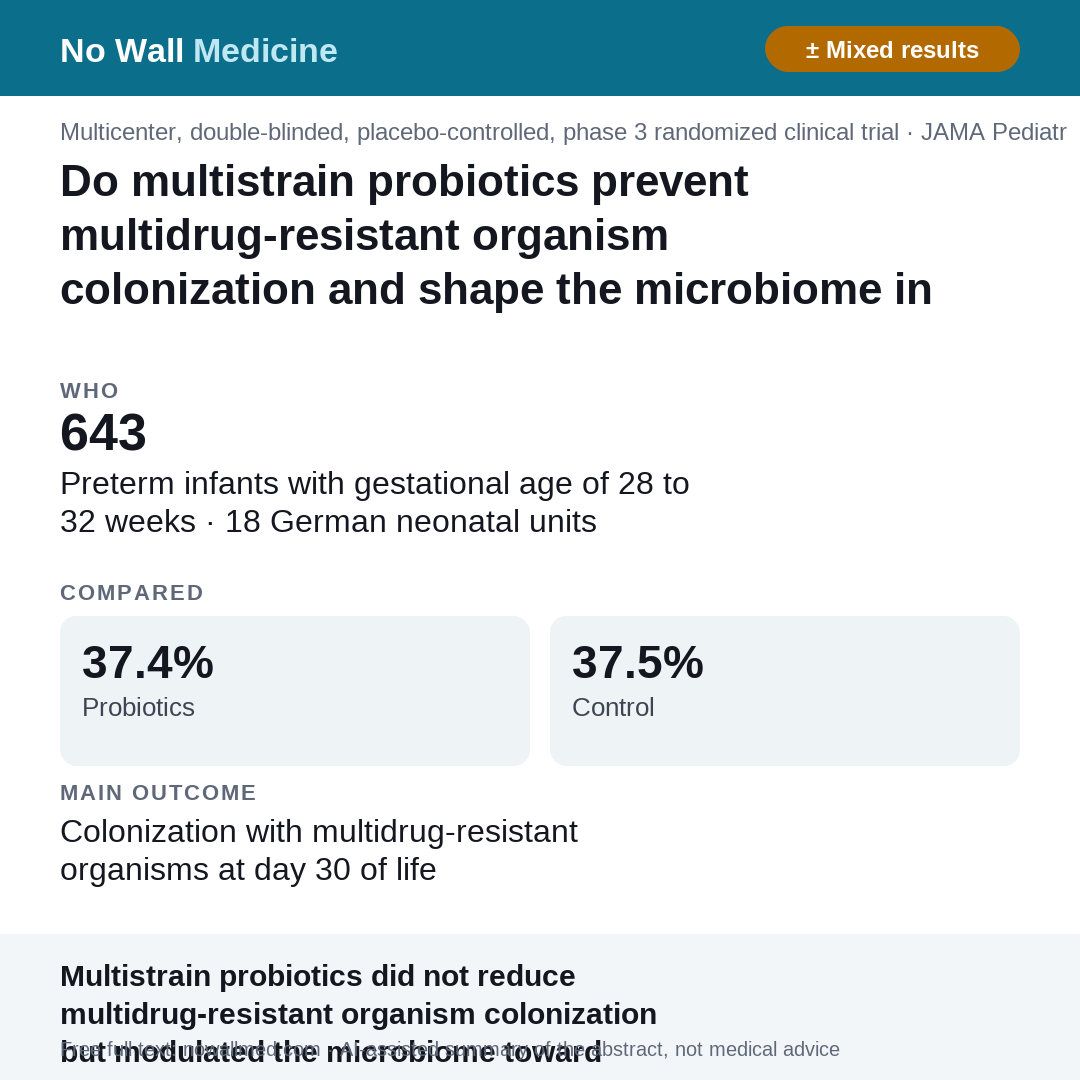
Bifidobacterium and Lactobacillus Probiotics and Gut Dysbiosis in Preterm Infants: The PRIMAL Randomized Clinical Trial
Multicenter, double-blinded, placebo-controlled, phase 3 randomized clinical trialMixed results
Do multistrain probiotics prevent multidrug-resistant organism colonization and shape the microbiome in preterm infants?
Who
643
Preterm infants with gestational age of 28 to 32 weeks · 18 German neonatal units
Compared
37.4%Probiotics
37.5%Control
Main outcome
Colonization with multidrug-resistant organisms at day 30 of life
Result: adjusted risk ratio 0.99 (95% CI 0.54 to 1.81)
Bottom line: Multistrain probiotics did not reduce multidrug-resistant organism colonization but modulated the microbiome toward eubiosis.
JAMA Pediatr · 2024-08-05Download image
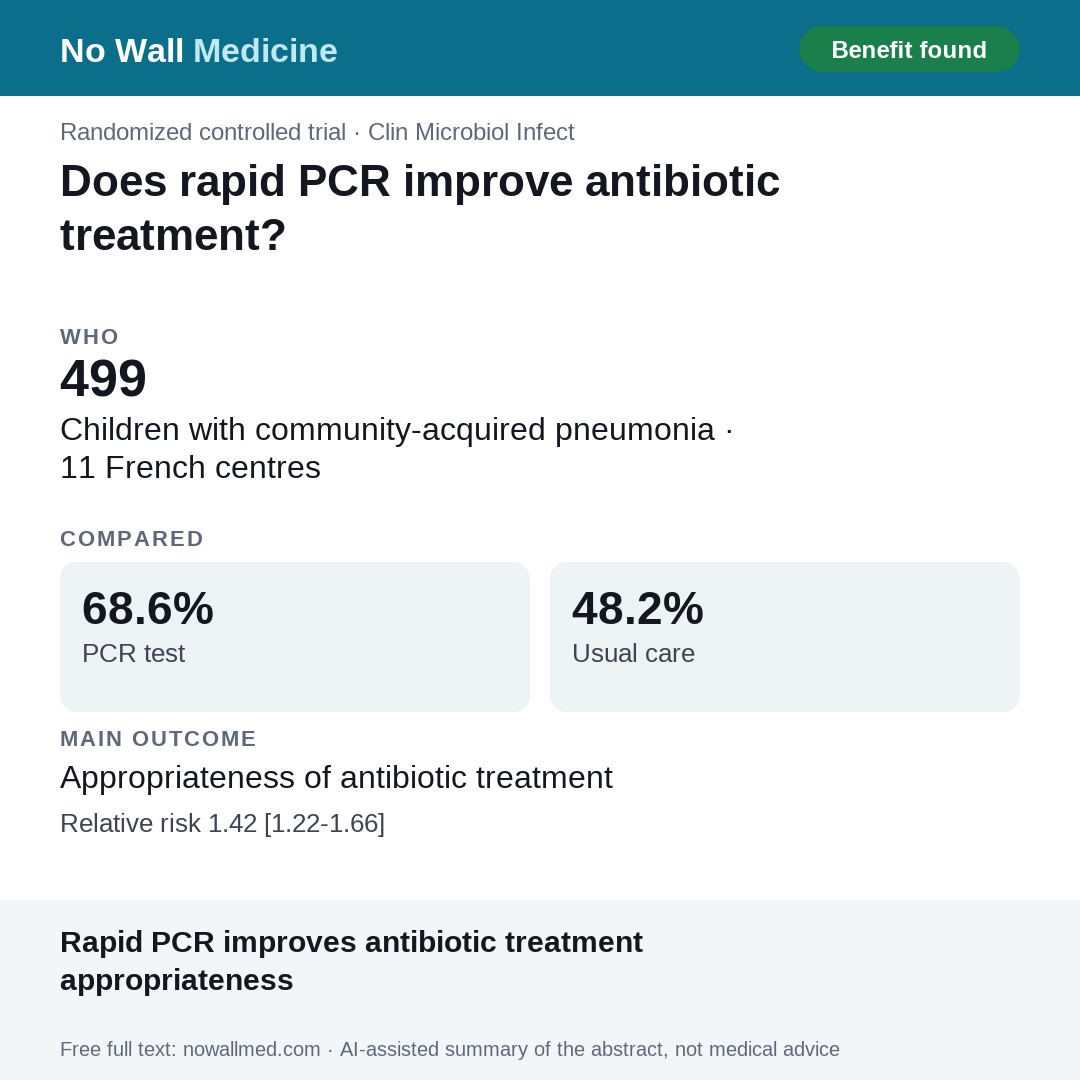
Impact of respiratory pathogens detection by a rapid multiplex polymerase chain reaction assay on the management of community-acquired pneumonia for children at the paediatric emergency department. A randomized controlled trial, the Optimization of Pneumonia Acute Care (OPTIPAC) study
Randomized controlled trialBenefit found
Does rapid PCR improve antibiotic treatment?
Who
499
Children with community-acquired pneumonia · 11 French centres
Compared
68.6%PCR test (168/245)
48.2%Usual care (120/249)
Main outcome
Appropriateness of antibiotic treatment
Result: Relative risk 1.42 [1.22-1.66]
Bottom line: Rapid PCR improves antibiotic treatment appropriateness
Clin Microbiol Infect · 2024-08-05Download image
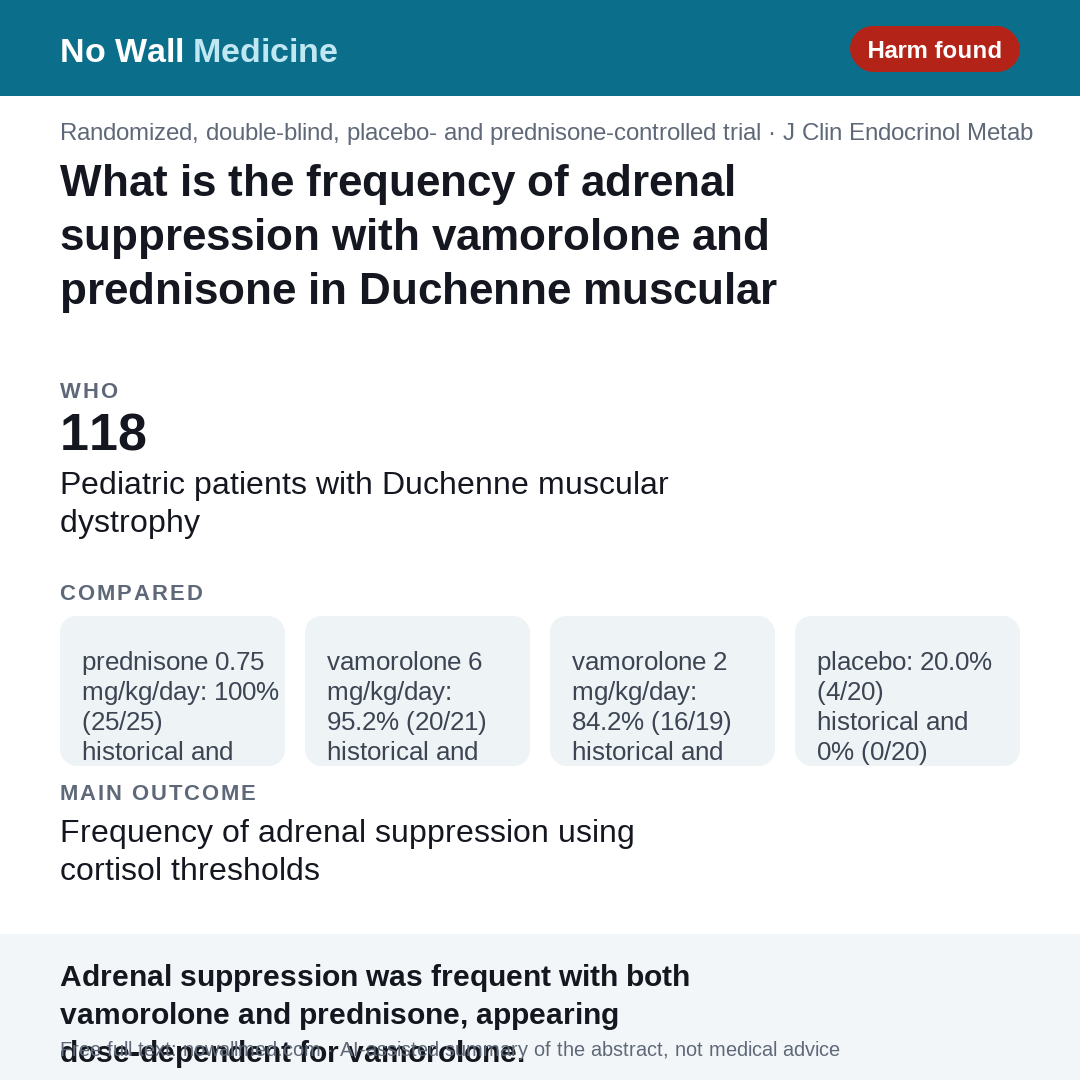
Adrenal Suppression From Vamorolone and Prednisone in Duchenne Muscular Dystrophy: Results From the Phase 2b Clinical Trial
Randomized, double-blind, placebo- and prednisone-controlled trialHarm found
What is the frequency of adrenal suppression with vamorolone and prednisone in Duchenne muscular dystrophy?
Who
118
Pediatric patients with Duchenne muscular dystrophy
Compared
prednisone 0.75 mg/kg/day: 100% (25/25) historical and 92.0% (23/25) revised threshold
vamorolone 6 mg/kg/day: 95.2% (20/21) historical and 90.5% (19/21) revised threshold
vamorolone 2 mg/kg/day: 84.2% (16/19) historical and 47.5% (9/19) revised threshold
placebo: 20.0% (4/20) historical and 0% (0/20) revised threshold
Main outcome
Frequency of adrenal suppression using cortisol thresholds
Bottom line: Adrenal suppression was frequent with both vamorolone and prednisone, appearing dose-dependent for vamorolone.
J Clin Endocrinol Metab · 2024-08-04Download image
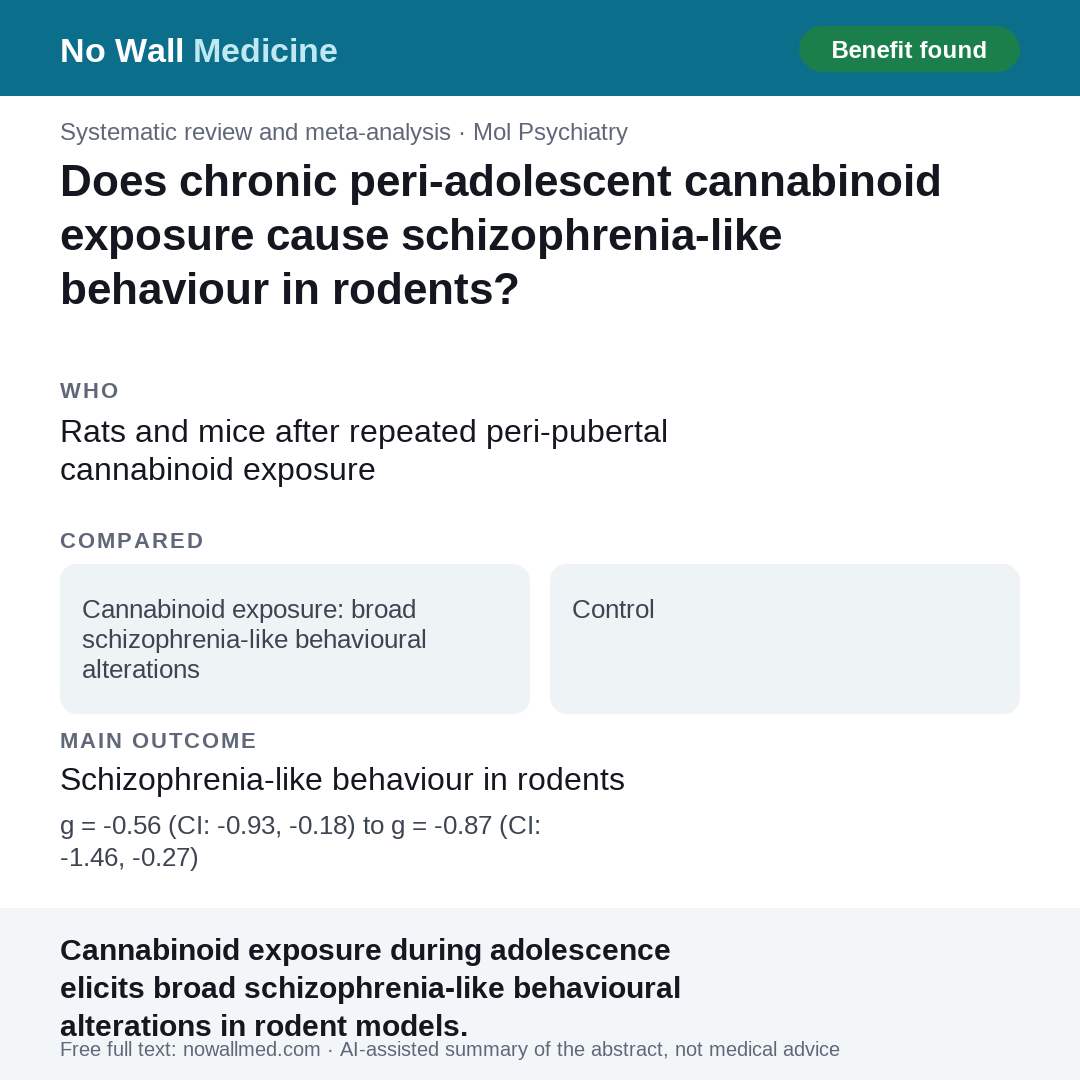
Systematic review and meta-analysis on the effects of chronic peri-adolescent cannabinoid exposure on schizophrenia-like behaviour in rodents
Systematic review and meta-analysisBenefit found
Does chronic peri-adolescent cannabinoid exposure cause schizophrenia-like behaviour in rodents?
Who
Rats and mice after repeated peri-pubertal cannabinoid exposure
Compared
Cannabinoid exposure: broad schizophrenia-like behavioural alterations
Control
Main outcome
Schizophrenia-like behaviour in rodents
Result: g = -0.56 (CI: -0.93, -0.18) to g = -0.87 (CI: -1.46, -0.27)
Bottom line: Cannabinoid exposure during adolescence elicits broad schizophrenia-like behavioural alterations in rodent models.
Limitation: Substantial variance in protocols and moderate-to-high heterogeneity in behavioural outcomes.
Mol Psychiatry · 2024-08-02Download image
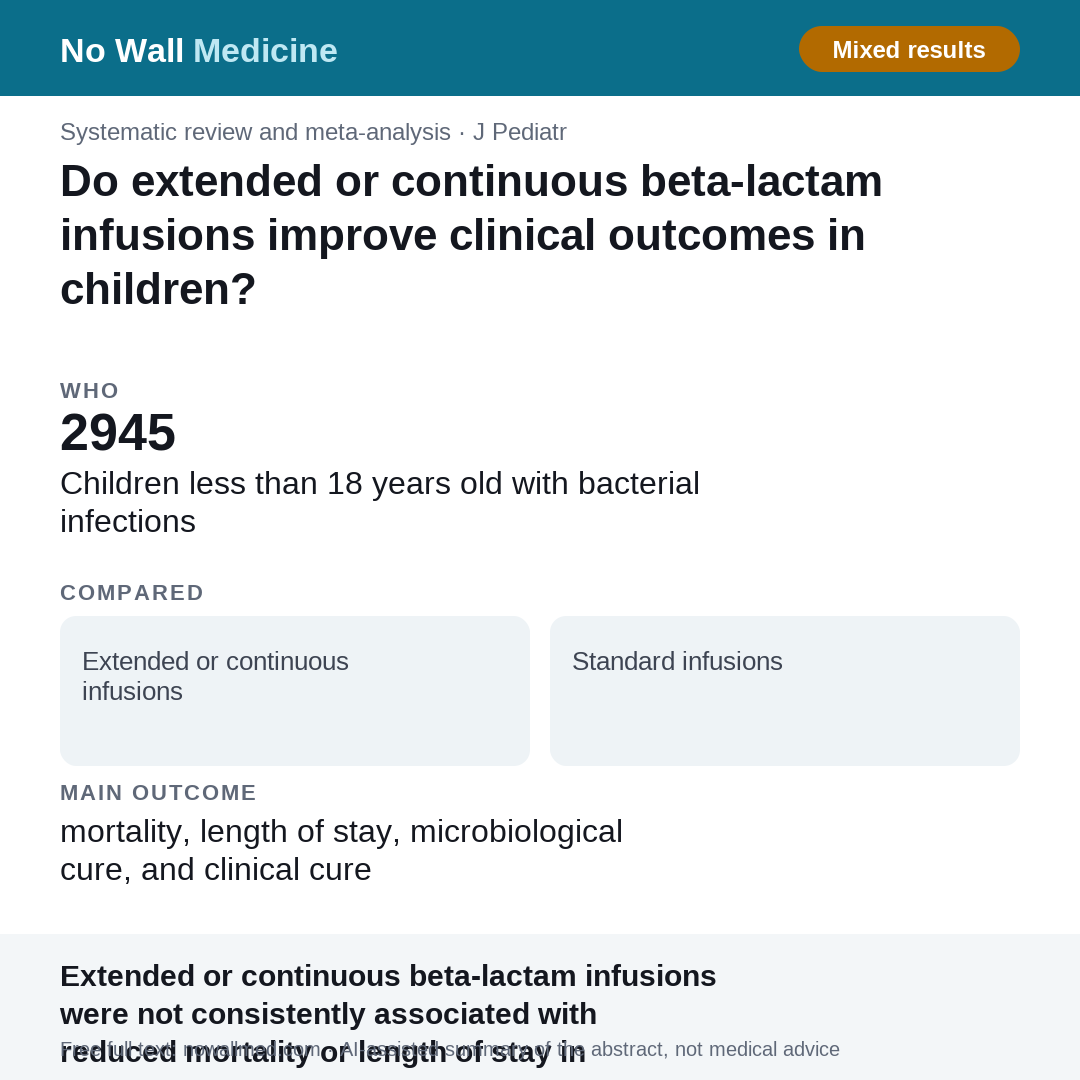
Prolonged Beta-Lactam Infusions in Children: A Systematic Review and Meta-Analysis
Systematic review and meta-analysisMixed results
Do extended or continuous beta-lactam infusions improve clinical outcomes in children?
Who
2945
Children less than 18 years old with bacterial infections
Compared
Extended or continuous infusions
Standard infusions
Main outcome
mortality, length of stay, microbiological cure, and clinical cure
Result: RR 0.93 (95% CI 0.71, 1.21) in randomized control trials
Bottom line: Extended or continuous beta-lactam infusions were not consistently associated with reduced mortality or length of stay in children.
J Pediatr · 2024-08-02Download image
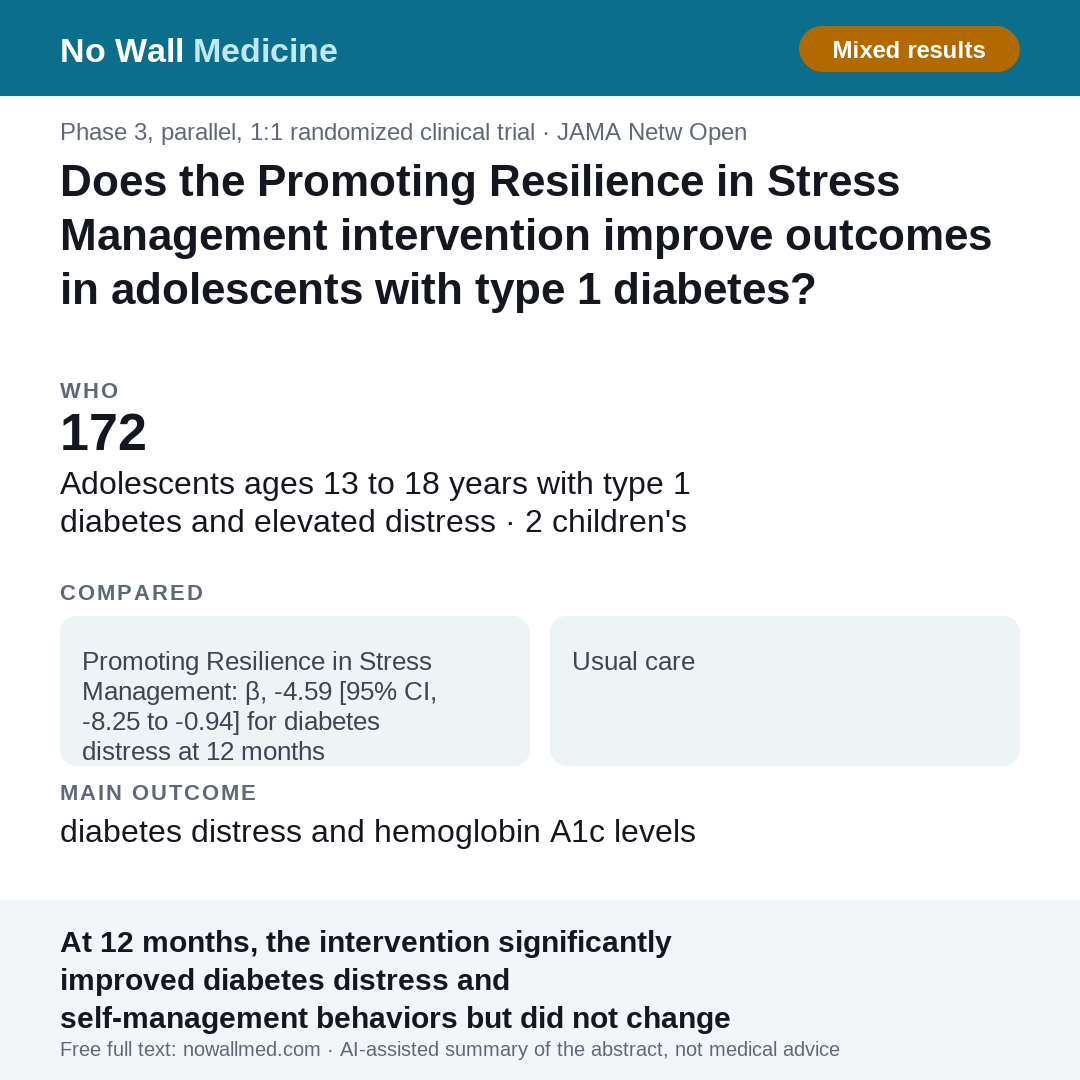
Promoting Resilience in Stress Management for Adolescents With Type 1 Diabetes: A Randomized Clinical Trial
Phase 3, parallel, 1:1 randomized clinical trialMixed results
Does the Promoting Resilience in Stress Management intervention improve outcomes in adolescents with type 1 diabetes?
Who
172
Adolescents ages 13 to 18 years with type 1 diabetes and elevated distress · 2 children's hospitals in Seattle and Houston
Compared
Promoting Resilience in Stress Management: β, -4.59 [95% CI, -8.25 to -0.94] for diabetes distress at 12 months
Usual care
Main outcome
diabetes distress and hemoglobin A1c levels
Result: diabetes distress β, -4.59 (95% CI, -8.25 to -0.94)
Bottom line: At 12 months, the intervention significantly improved diabetes distress and self-management behaviors but did not change hemoglobin A1c levels.
JAMA Netw Open · 2024-08-01Download image
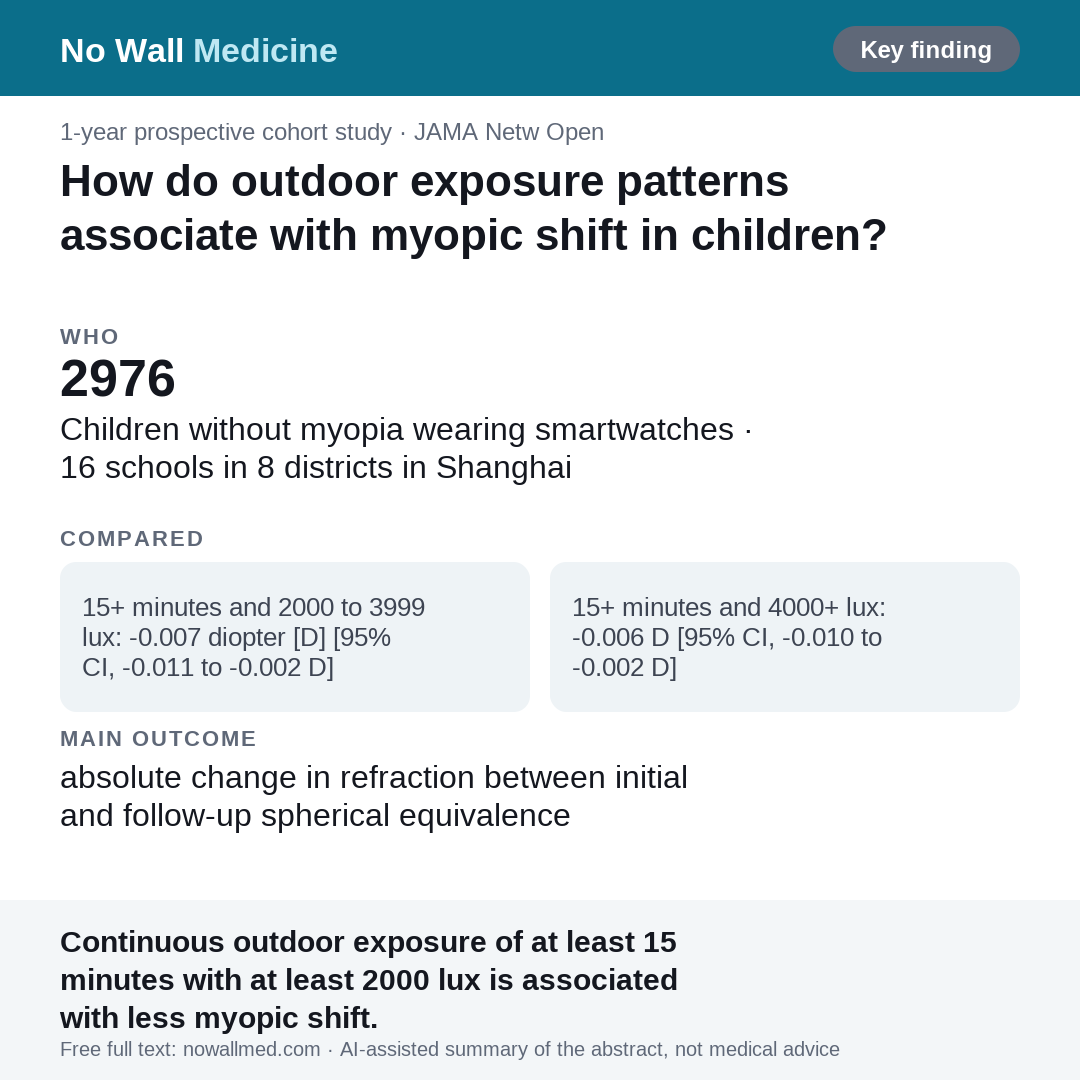
Smartwatch Measures of Outdoor Exposure and Myopia in Children
1-year prospective cohort studyBenefit found
How do outdoor exposure patterns associate with myopic shift in children?
Who
2976
Children without myopia wearing smartwatches · 16 schools in 8 districts in Shanghai
Compared
15+ minutes and 2000 to 3999 lux: -0.007 diopter [D] [95% CI, -0.011 to -0.002 D]
15+ minutes and 4000+ lux: -0.006 D [95% CI, -0.010 to -0.002 D]
Main outcome
absolute change in refraction between initial and follow-up spherical equivalence
Bottom line: Continuous outdoor exposure of at least 15 minutes with at least 2000 lux is associated with less myopic shift.
JAMA Netw Open · 2024-08-01Download image
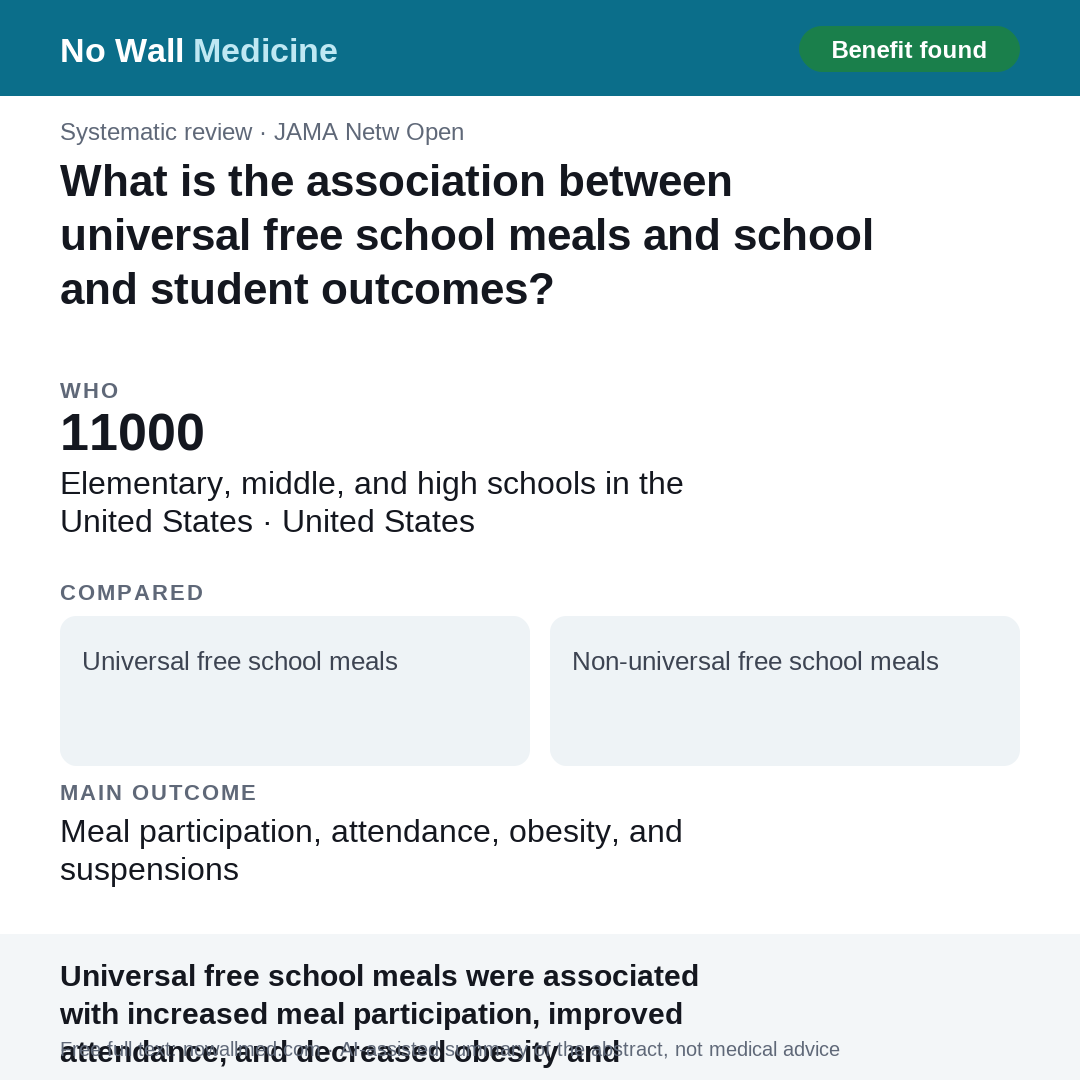
Universal Free School Meals and School and Student Outcomes: A Systematic Review
Systematic reviewBenefit found
What is the association between universal free school meals and school and student outcomes?
Who
11000
Elementary, middle, and high schools in the United States · United States
Compared
Universal free school meals
Non-universal free school meals
Main outcome
Meal participation, attendance, obesity, and suspensions
Bottom line: Universal free school meals were associated with increased meal participation, improved attendance, and decreased obesity and suspension rates.
Limitation: Indirectness of data and inconsistency due to a small number of studies.
JAMA Netw Open · 2024-08-01Download image
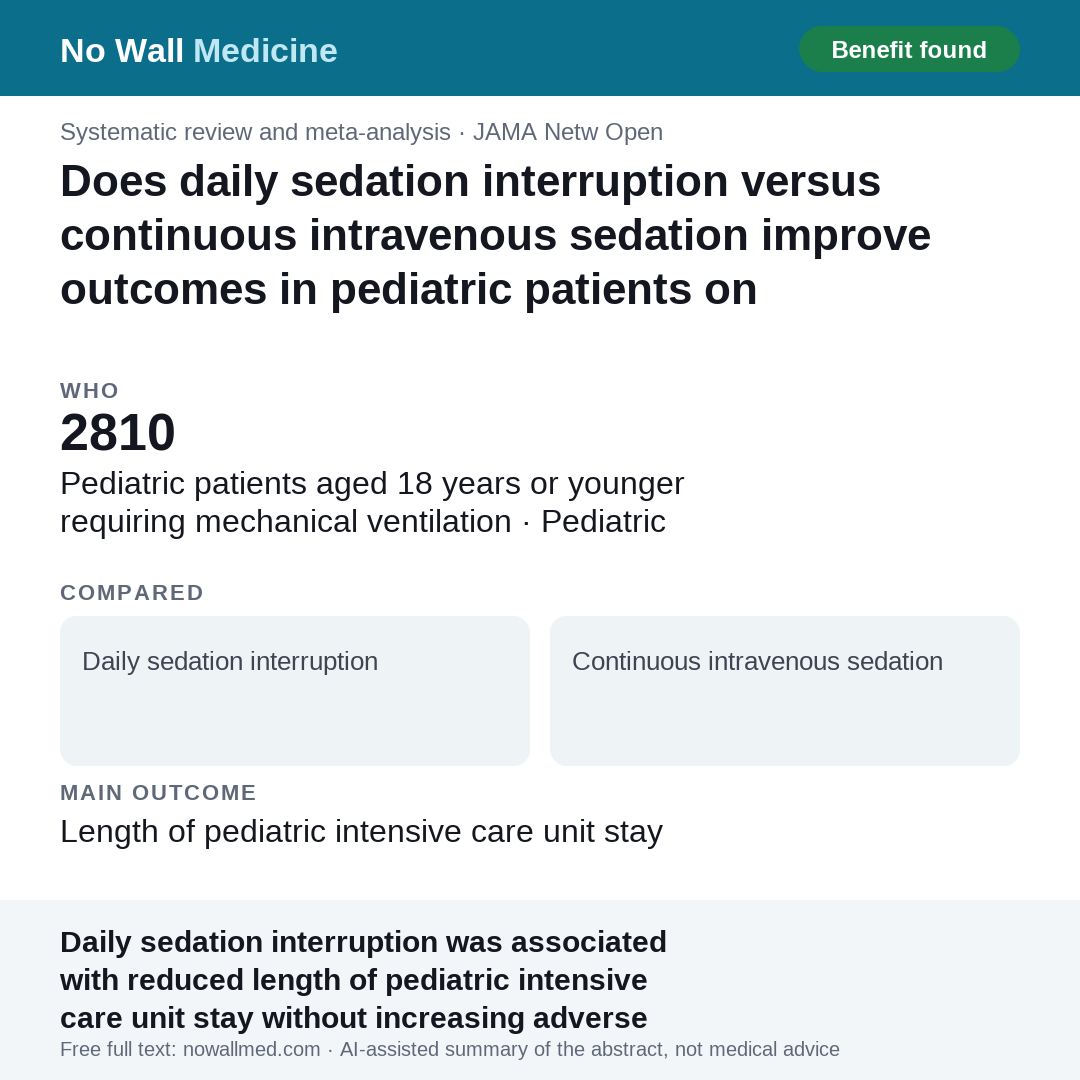
Daily Sedation Interruption vs Continuous Sedation in Pediatric Patients Receiving Mechanical Ventilation: A Systematic Review and Meta-analysis
Systematic review and meta-analysisBenefit found
Does daily sedation interruption versus continuous intravenous sedation improve outcomes in pediatric patients on mechanical ventilation?
Who
2810
Pediatric patients aged 18 years or younger requiring mechanical ventilation · Pediatric intensive care unit
Compared
Daily sedation interruption
Continuous intravenous sedation
Main outcome
Length of pediatric intensive care unit stay
Result: mean difference -1.45 (95% CI -2.75 to -0.15) days
Bottom line: Daily sedation interruption was associated with reduced length of pediatric intensive care unit stay without increasing adverse events.
JAMA Netw Open · 2024-08-01Download image
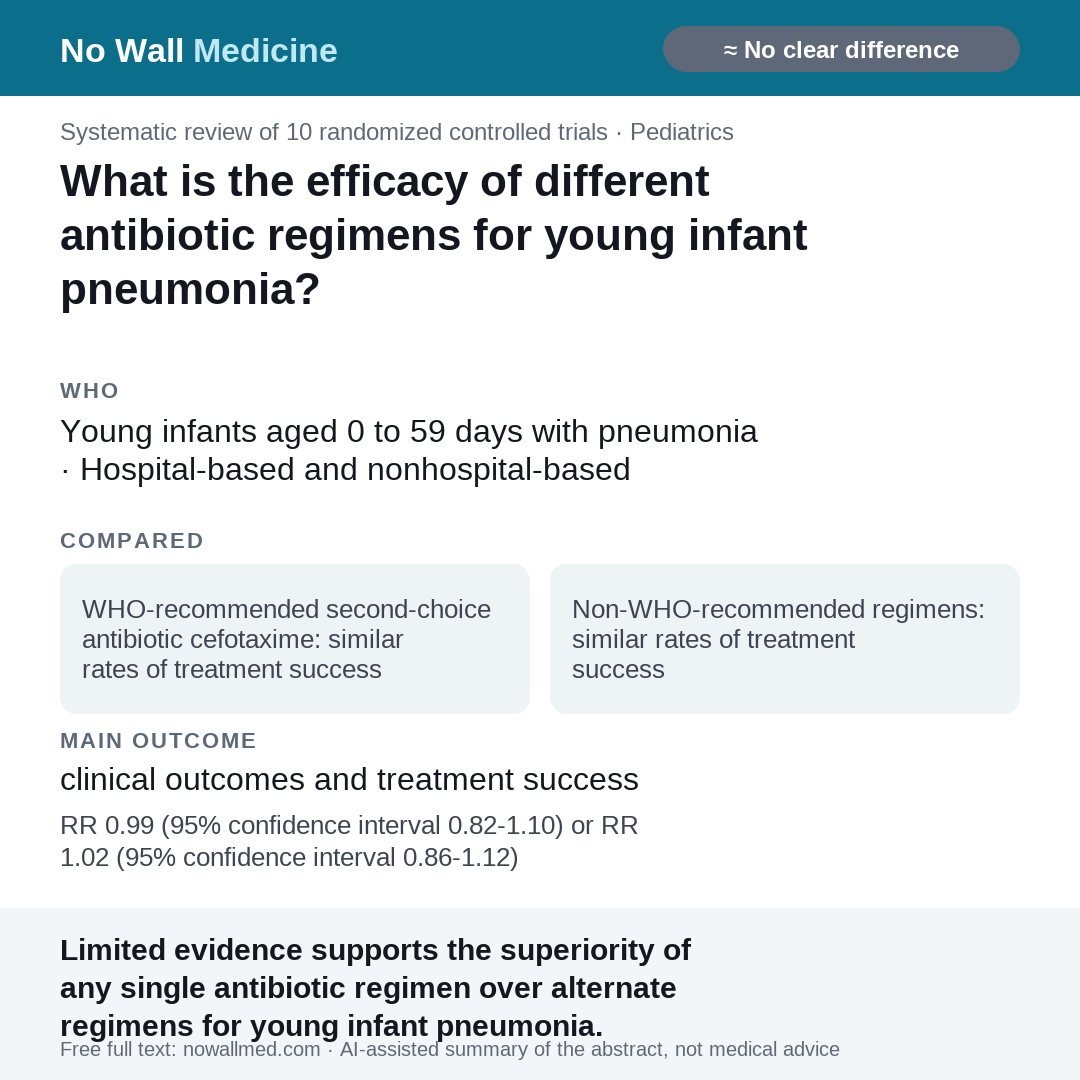
Efficacy of Antibiotic Regimens for Pneumonia in Young Infants Aged 0-59 Days: A Systematic Review
Systematic review of 10 randomized controlled trialsNo clear difference
What is the efficacy of different antibiotic regimens for young infant pneumonia?
Who
Young infants aged 0 to 59 days with pneumonia · Hospital-based and nonhospital-based settings
Compared
WHO-recommended second-choice antibiotic cefotaxime: similar rates of treatment success
Non-WHO-recommended regimens: similar rates of treatment success
Main outcome
clinical outcomes and treatment success
Result: RR 0.99 (95% confidence interval 0.82-1.10) or RR 1.02 (95% confidence interval 0.86-1.12)
Bottom line: Limited evidence supports the superiority of any single antibiotic regimen over alternate regimens for young infant pneumonia.
Limitation: Trials were heterogeneous, which precluded data pooling and certainty of evidence was low or very low.
Pediatrics · 2024-08-01Download image
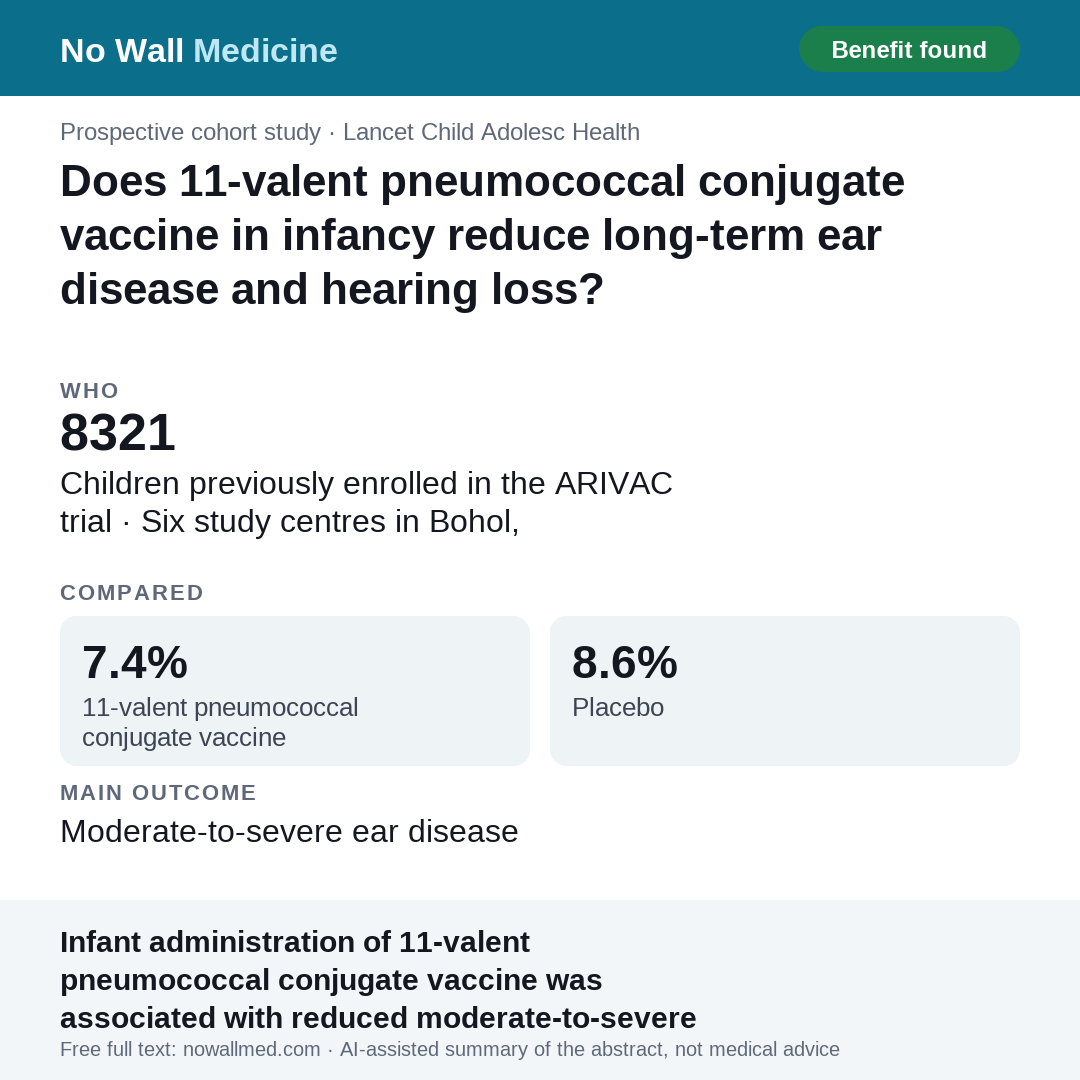
Otitis media sequelae and hearing in adolescence after administration of an 11-valent conjugate pneumococcal vaccine in infancy: a prospective cohort study with long-term follow-up of the ARIVAC trial
Prospective cohort studyBenefit found
Does 11-valent pneumococcal conjugate vaccine in infancy reduce long-term ear disease and hearing loss?
Who
8321
Children previously enrolled in the ARIVAC trial · Six study centres in Bohol, Philippines
Compared
7.4%11-valent pneumococcal conjugate vaccine (310/4188)
8.6%Placebo (356/4133)
Main outcome
Moderate-to-severe ear disease
Result: absolute risk reduction 1.2% (95% CI 0.0-2.4)
Bottom line: Infant administration of 11-valent pneumococcal conjugate vaccine was associated with reduced moderate-to-severe ear disease in adolescence.
Funded by: Bill & Melinda Gates Foundation
Lancet Child Adolesc Health · 2024-07-31Download image
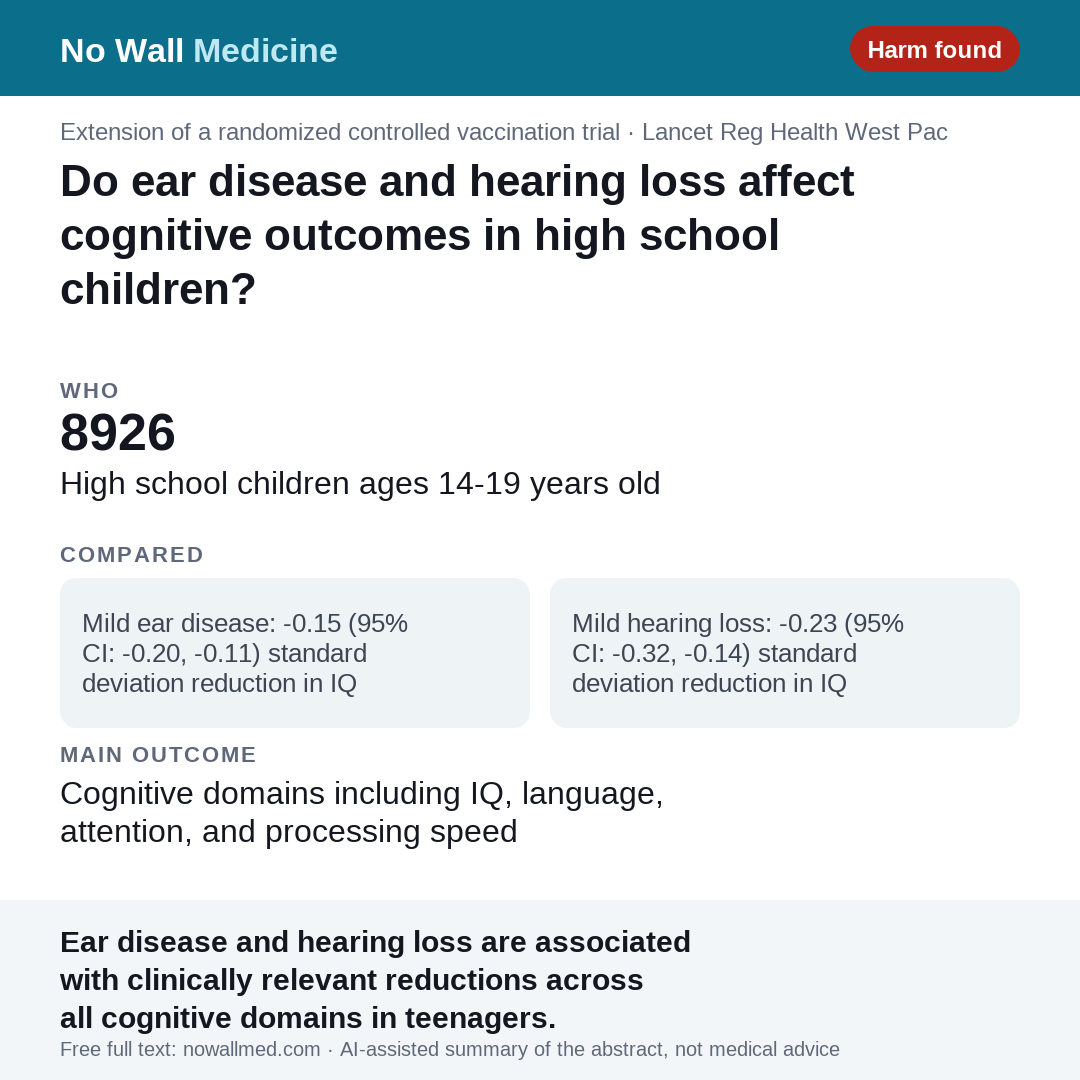
Ear disease, hearing loss, and cognitive outcomes in high school children who were previous participants in a randomized placebo controlled trial of an 11 valent conjugate pneumococcal vaccine administered in infancy
Extension of a randomized controlled vaccination trialHarm found
Do ear disease and hearing loss affect cognitive outcomes in high school children?
Who
8926
High school children ages 14-19 years old
Compared
Mild ear disease: -0.15 (95% CI: -0.20, -0.11) standard deviation reduction in IQ
Mild hearing loss: -0.23 (95% CI: -0.32, -0.14) standard deviation reduction in IQ
Main outcome
Cognitive domains including IQ, language, attention, and processing speed
Bottom line: Ear disease and hearing loss are associated with clinically relevant reductions across all cognitive domains in teenagers.
Funded by: Bill and Melinda Gates Foundation
Lancet Reg Health West Pac · 2024-07-31Download image
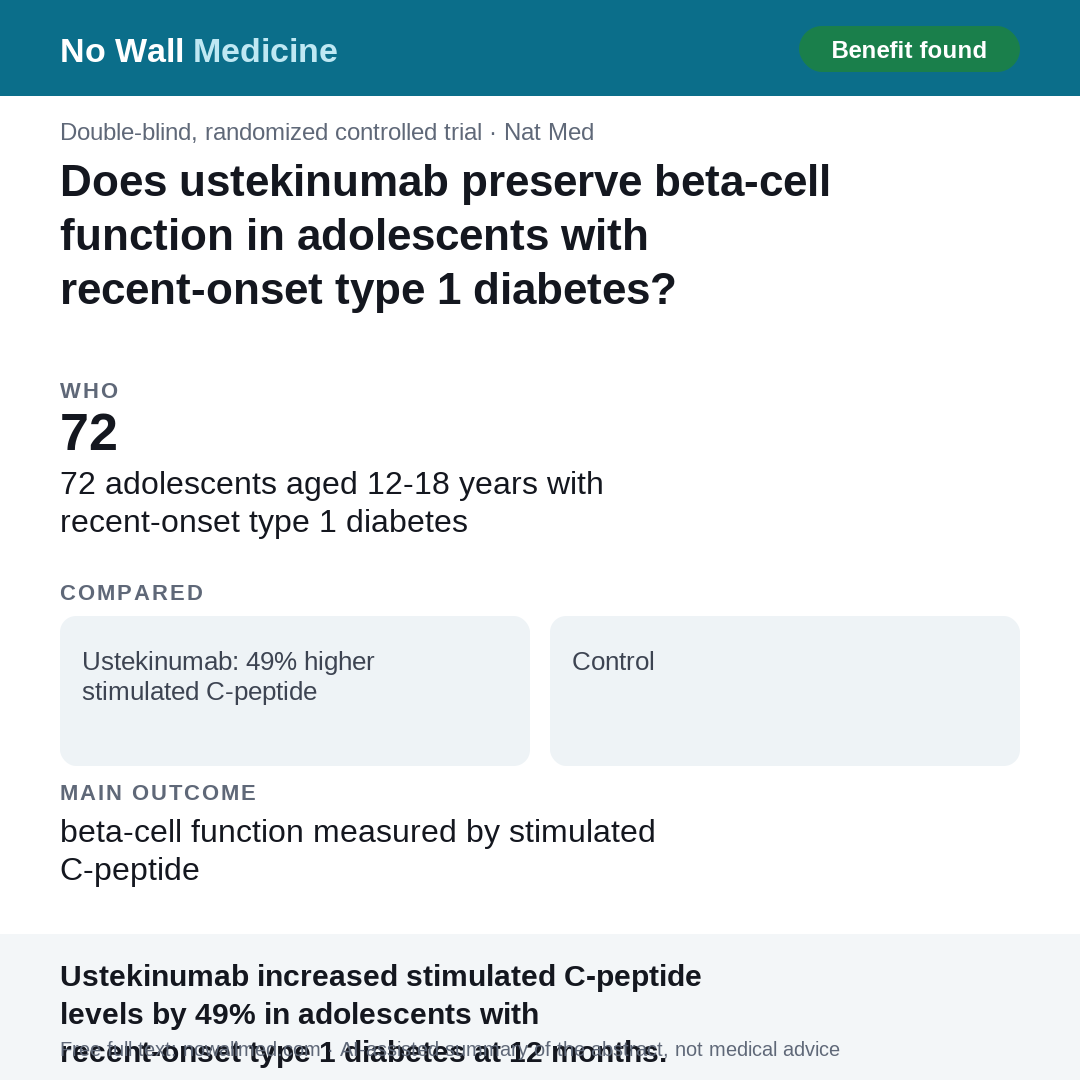
Ustekinumab for type 1 diabetes in adolescents: a multicenter, double-blind, randomized phase 2 trial
Double-blind, randomized controlled trialBenefit found
Does ustekinumab preserve beta-cell function in adolescents with recent-onset type 1 diabetes?
Who
72
72 adolescents aged 12-18 years with recent-onset type 1 diabetes
Compared
Ustekinumab: 49% higher stimulated C-peptide
Control
Main outcome
beta-cell function measured by stimulated C-peptide
Bottom line: Ustekinumab increased stimulated C-peptide levels by 49% in adolescents with recent-onset type 1 diabetes at 12 months.
Nat Med · 2024-07-30Download image
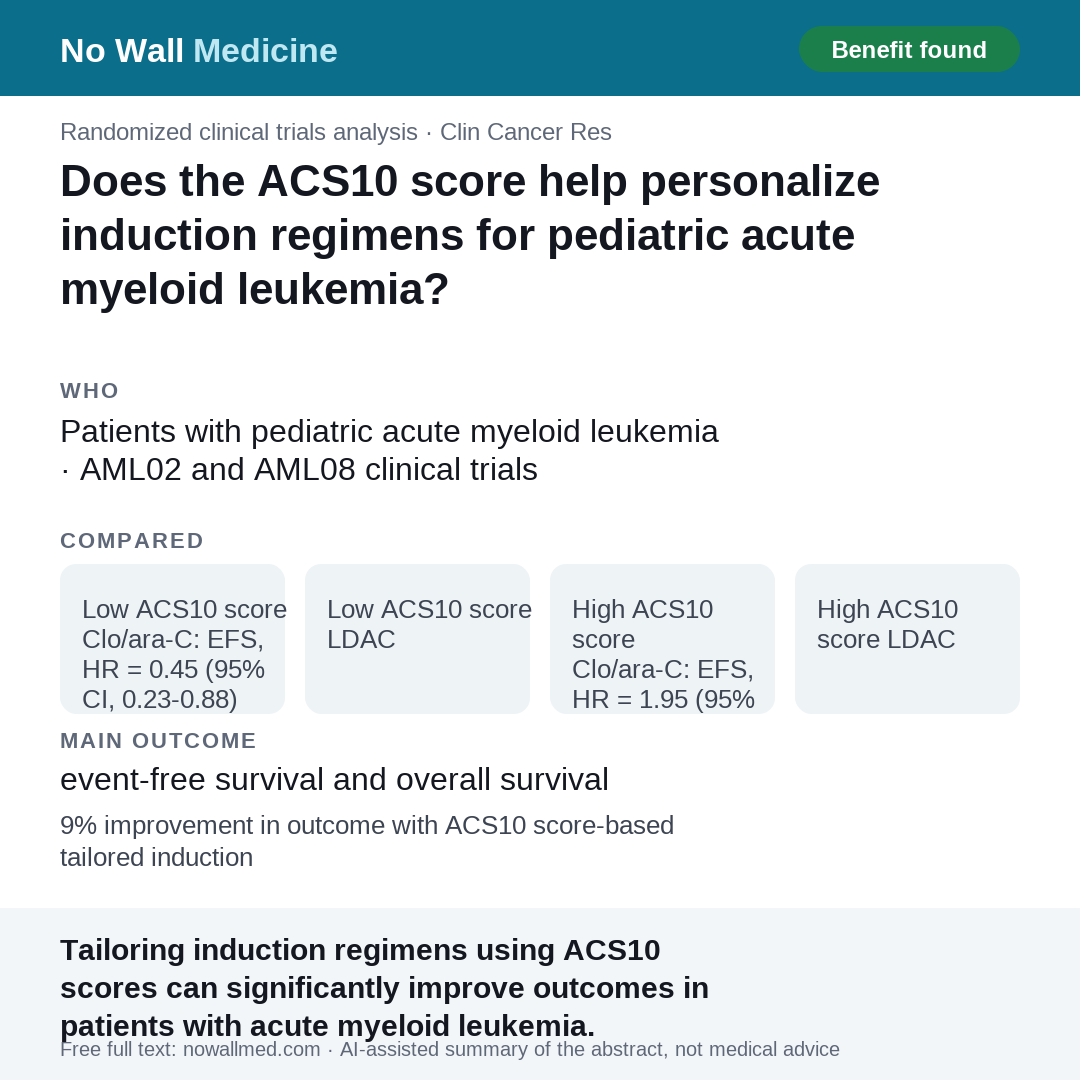
Pharmacogenomic Score Effectively Personalizes Treatment of Acute Myeloid Leukemia
Randomized clinical trials analysisBenefit found
Does the ACS10 score help personalize induction regimens for pediatric acute myeloid leukemia?
Who
Patients with pediatric acute myeloid leukemia · AML02 and AML08 clinical trials
Compared
Low ACS10 score Clo/ara-C: EFS, HR = 0.45 (95% CI, 0.23-0.88)
Low ACS10 score LDAC
High ACS10 score Clo/ara-C: EFS, HR = 1.95 (95% CI, 1.05-3.63)
High ACS10 score LDAC
Main outcome
event-free survival and overall survival
Result: 9% improvement in outcome with ACS10 score-based tailored induction
Bottom line: Tailoring induction regimens using ACS10 scores can significantly improve outcomes in patients with acute myeloid leukemia.
Clin Cancer Res · 2024-07-30Download image
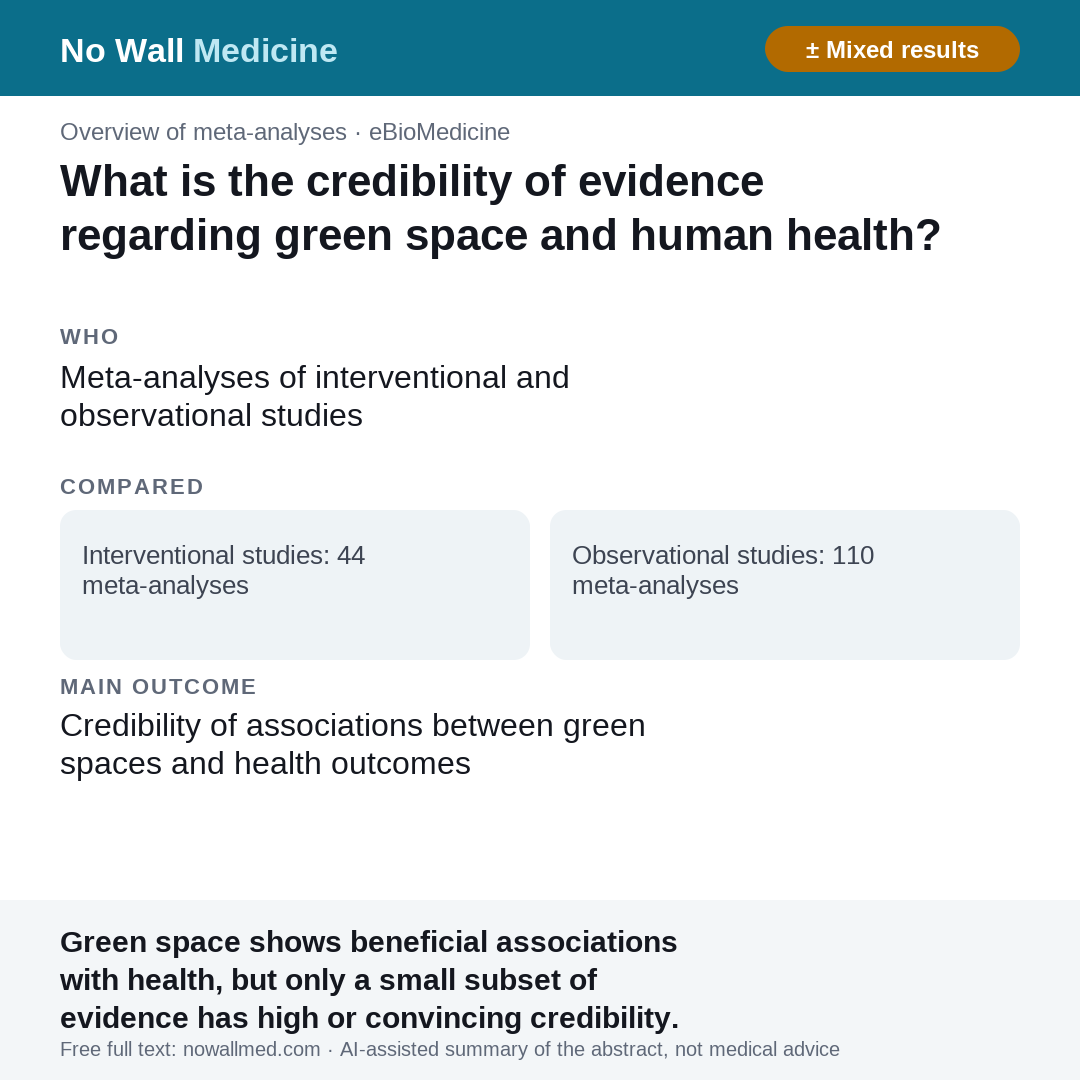
Credibility of the evidence on green space and human health: an overview of meta-analyses using evidence grading approaches
Overview of meta-analysesMixed results
What is the credibility of evidence regarding green space and human health?
Who
Meta-analyses of interventional and observational studies
Compared
Interventional studies: 44 meta-analyses
Observational studies: 110 meta-analyses
Main outcome
Credibility of associations between green spaces and health outcomes
Bottom line: Green space shows beneficial associations with health, but only a small subset of evidence has high or convincing credibility.
Limitation: Future better designed primary studies and meta-analyses are needed to provide higher quality evidence.
Funded by: National Natural Science Foundation of China and others
eBioMedicine · 2024-07-29Download image
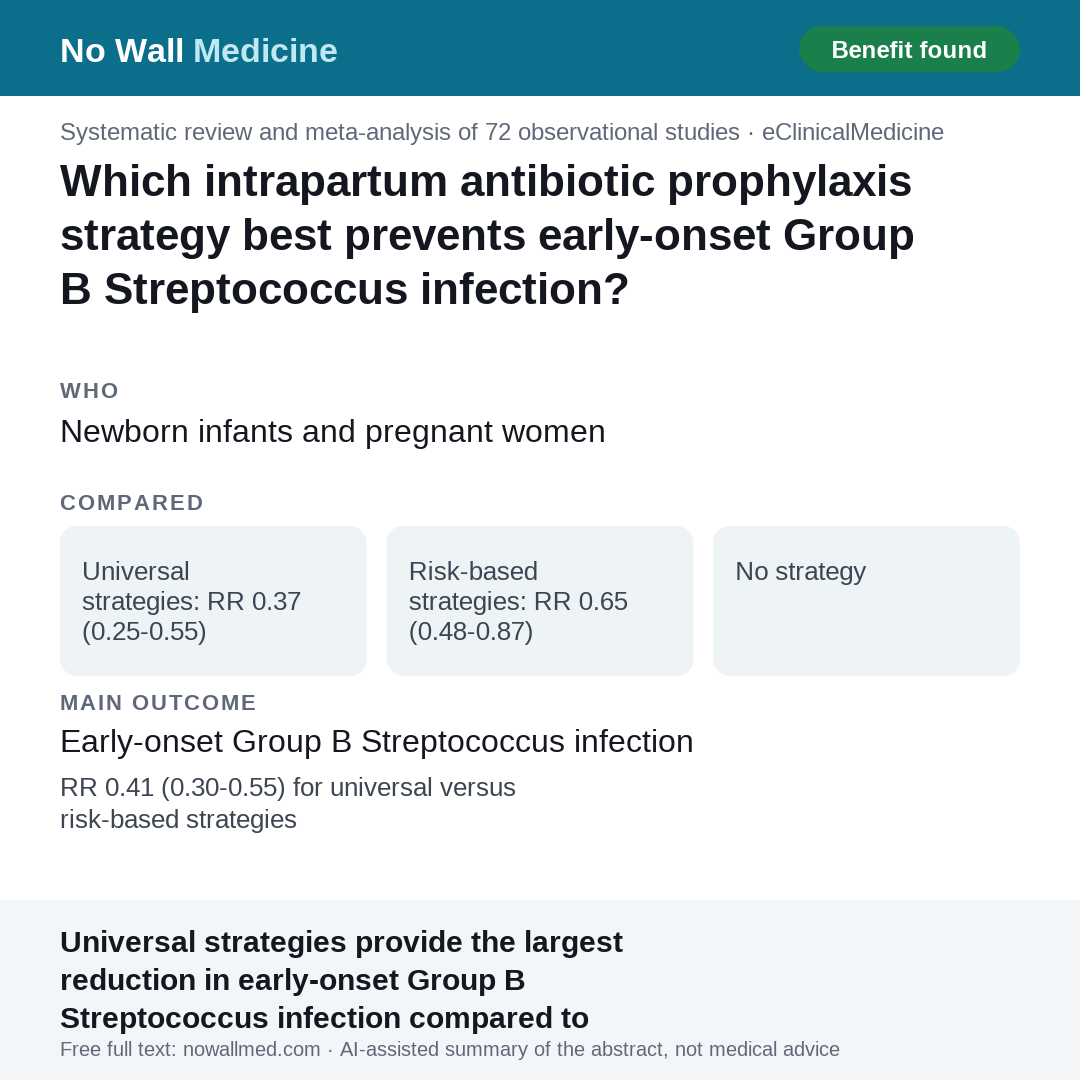
Intrapartum antibiotic prophylaxis to prevent Group B streptococcal infections in newborn infants: a systematic review and meta-analysis comparing various strategies
Systematic review and meta-analysis of 72 observational studiesBenefit found
Which intrapartum antibiotic prophylaxis strategy best prevents early-onset Group B Streptococcus infection?
Who
Newborn infants and pregnant women
Compared
Universal strategies: RR 0.37 (0.25-0.55)
Risk-based strategies: RR 0.65 (0.48-0.87)
No strategy
Main outcome
Early-onset Group B Streptococcus infection
Result: RR 0.41 (0.30-0.55) for universal versus risk-based strategies
Bottom line: Universal strategies provide the largest reduction in early-onset Group B Streptococcus infection compared to risk-based strategies.
Funded by: UNDP-UNFPA-UNICEF-WHO-World Bank Special Programme
eClinicalMedicine · 2024-07-28Download image
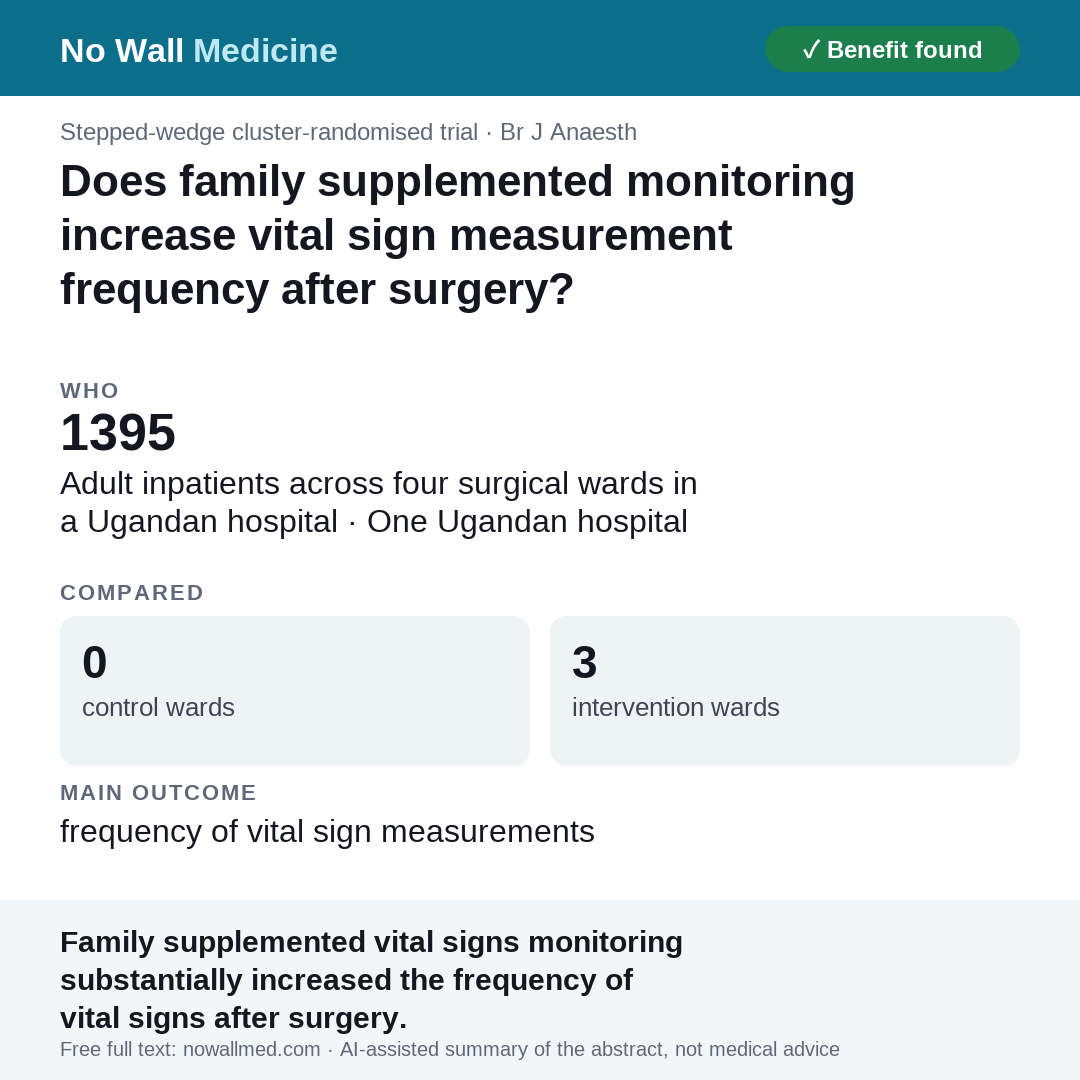
Family supplemented patient monitoring after surgery (SMARTER): a pilot stepped-wedge cluster-randomised trial
Stepped-wedge cluster-randomised trialBenefit found
Does family supplemented monitoring increase vital sign measurement frequency after surgery?
Who
1395
Adult inpatients across four surgical wards in a Ugandan hospital · One Ugandan hospital
Compared
0control wards (0-1)
3intervention wards (1-8)
Main outcome
frequency of vital sign measurements
Result: incident rate ratio 12.4, 95% confidence interval 8.8-17.5
Bottom line: Family supplemented vital signs monitoring substantially increased the frequency of vital signs after surgery.
Br J Anaesth · 2024-07-27Download image
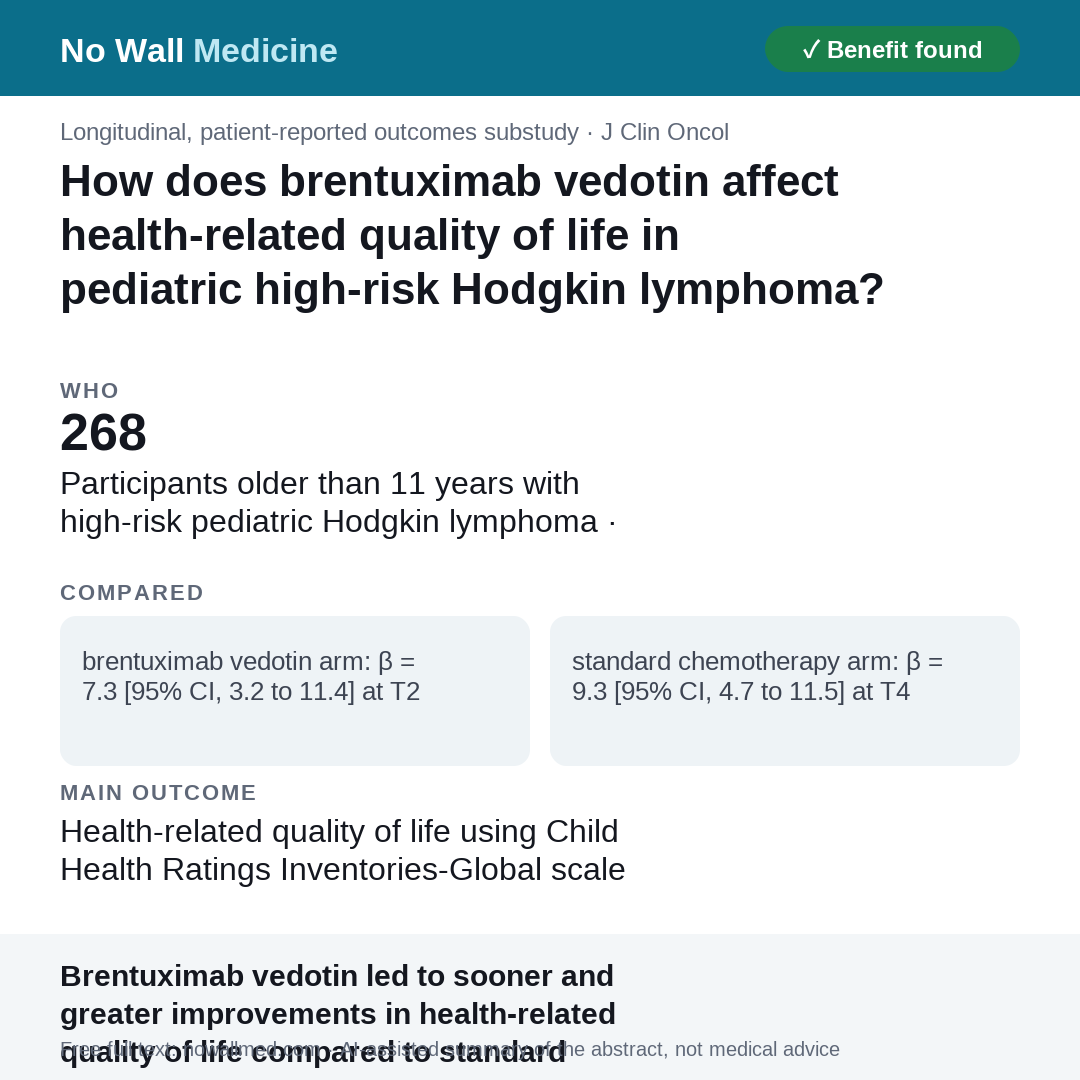
Longitudinal Health-Related Quality of Life Among Patients With High-Risk Pediatric Hodgkin Lymphoma Treated on the Children's Oncology Group AHOD 1331 Study
Longitudinal, patient-reported outcomes substudyBenefit found
How does brentuximab vedotin affect health-related quality of life in pediatric high-risk Hodgkin lymphoma?
Who
268
Participants older than 11 years with high-risk pediatric Hodgkin lymphoma · Children's Oncology Group AHOD 1331 study
Compared
brentuximab vedotin arm: β = 7.3 [95% CI, 3.2 to 11.4] at T2
standard chemotherapy arm: β = 9.3 [95% CI, 4.7 to 11.5] at T4
Main outcome
Health-related quality of life using Child Health Ratings Inventories-Global scale
Result: difference in change β = 5.1 [95% CI, -0.2 to 10.3]
Bottom line: Brentuximab vedotin led to sooner and greater improvements in health-related quality of life compared to standard chemotherapy.
J Clin Oncol · 2024-07-26Download image
Early Childhood Care Coordination Through 211: A Randomized Clinical Trial
Randomized trialBenefit found
Does care coordination improve services for children?
Who
565
children with upcoming well-child visits · Los Angeles County
Compared
25%intervention
16%control
Main outcome
referral to services
Result: adjusted odds ratio 2.25
Bottom line: Care coordination increases service referrals
Pediatrics · 2024-07-26Download image

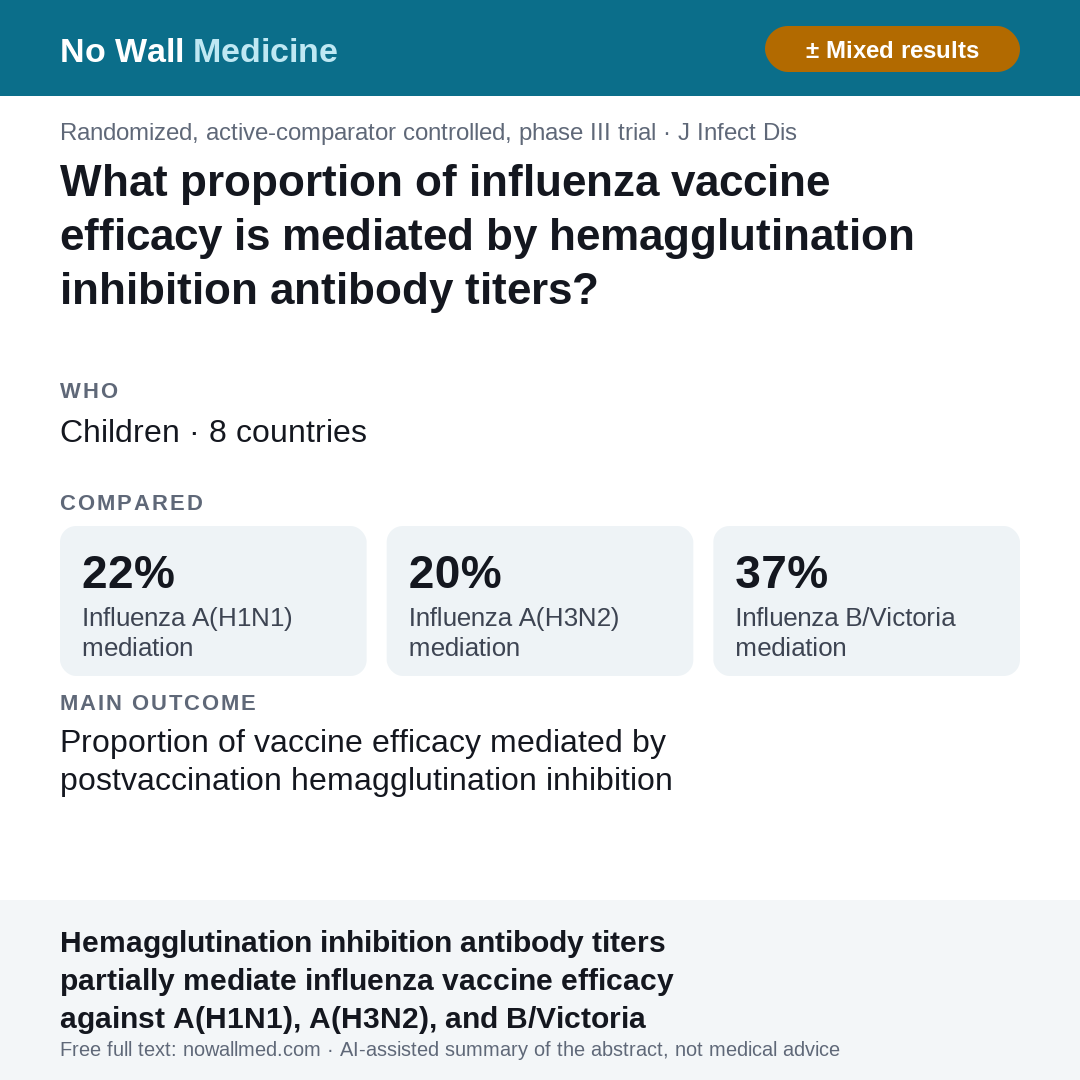
Hemagglutination Inhibition Antibody Titers as Mediators of Influenza Vaccine Efficacy Against Symptomatic Influenza A(H1N1), A(H3N2), and B/Victoria Virus Infections
Randomized, active-comparator controlled, phase III trialMixed results
What proportion of influenza vaccine efficacy is mediated by hemagglutination inhibition antibody titers?
Who
Children · 8 countries
Compared
22%Influenza A(H1N1) mediation (95% confidence interval, 18%--47%)
20%Influenza A(H3N2) mediation (16%-39%)
37%Influenza B/Victoria mediation (26%-85%)
Main outcome
Proportion of vaccine efficacy mediated by postvaccination hemagglutination inhibition antibody titers
Bottom line: Hemagglutination inhibition antibody titers partially mediate influenza vaccine efficacy against A(H1N1), A(H3N2), and B/Victoria viruses.
J Infect Dis · 2024-07-26Download image