Visual abstracts
New randomized trials and meta-analyses from leading journals at a glance: who was studied, what was compared, and what was found. Every paper is free to read in full.
All specialtiesCardiology 189Oncology 153Gastroenterology & Hepatology 87Infectious Disease 155Neurology 85Psychiatry & Mental Health 124Pulmonology 92Critical Care 52Endocrinology & Diabetes 118Pediatrics 79Surgery 59Orthopedics & Sports Medicine 38Neurosurgery 6Cardiothoracic & Vascular Surgery 17Plastic & Reconstructive Surgery 44Nephrology 37Rheumatology 38Hematology 49Dermatology 19Ophthalmology 33Obstetrics & Gynecology 50Public & Global Health 55Radiology & Imaging 15Anesthesiology 30Urology 45ENT (Otolaryngology) 24Emergency Medicine 18Allergy & Immunology 15Geriatrics 58Family Medicine & Primary Care 22Medical Genetics & Genomics 19Pathology & Laboratory Medicine 5Physical Medicine & Rehabilitation 48Palliative Care 24Nutrition 63Digital Health & AI 172General Medicine 27
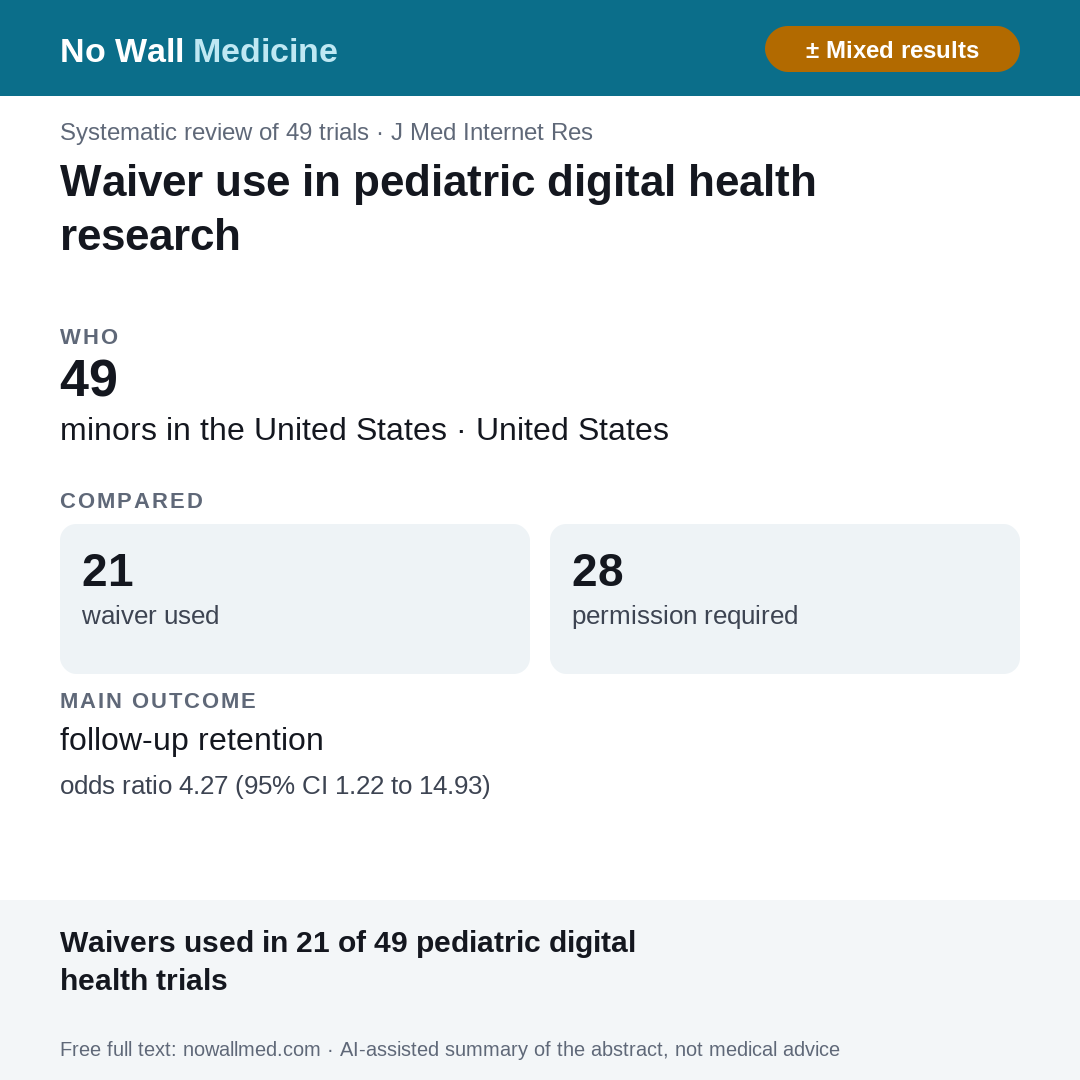
The Use of Waivers of Guardian Permission in the United States for Pediatric Digital Health Intervention Research Since 2020: Systematic Review
Systematic review of randomized controlled trialsNo clear difference
How are guardian permission waivers used in pediatric digital health intervention research?
Who
49
Minors in United States digital health intervention research · United States
Compared
Studies with waivers
Studies without waivers
Main outcome
Study characteristics and practices related to guardian permission
Result: odds ratio 4.27 (95% CI 1.22-14.93) for gender assessment
Bottom line: No significant differences in sample characteristics were found between studies using permission waivers and those requiring permission.
Limitation: Small sample sizes and variable reporting practices limited statistical power.
J Med Internet Res · 2026-09-25Download image
Evidence and Future Directions for Pediatric Health Care Chatbots: Systematic Review
Systematic reviewUnclear result
What is the evidence for pediatric health care chatbots evaluated for health-related outcomes?
Who
9
Children and caregivers
Compared
5Pediatric participants only (55.6%)
4Caregivers (44.4%)
Main outcome
Health and psychosocial outcomes
Bottom line: Current evidence for pediatric health care chatbots is limited and heterogeneous, with mixed health and psychosocial outcomes.
Limitation: Lack of active comparator groups, reliance on short-term metrics, and significant study heterogeneity.
J Med Internet Res · 2026-09-25Download image

Meta-Analysis: The Placebo Response in Modern Treatments for Cholestatic Pruritus: A Systematic Review and Meta-Analysis of Randomized Controlled Trials
Systematic review and meta-analysisMixed results
What is the magnitude of the placebo response in cholestatic pruritus treatments?
Who
548
Patients in randomized controlled trials for cholestatic pruritus
Compared
Placebo: 30.0% response rate
-0.49Overall standardized mean change
Main outcome
Standardized mean change of pruritus intensity
Result: standardized mean change -0.49 (95% CI, -0.72 to -0.27)
Bottom line: Placebo response magnitude varies across outcome instruments and may affect treatment effect interpretation in cholestatic pruritus trials.
Aliment Pharmacol Ther · 2026-09-24Download image

A cell-type-resolved meta-analysis reveals glial DNA methylation changes associated with aging and Alzheimer's disease
Meta-analysis of 13 cohortsMixed results
What are the glial cell DNA methylation changes associated with aging and Alzheimer's disease?
Who
Archived DNA methylation data from 13 cohorts · Prefrontal cortex and entorhinal cortex
Compared
Aging
Alzheimer's disease
Main outcome
Glial cell DNA methylation signatures
Bottom line: Glial-specific methylation patterns are associated with epigenetic aging and Alzheimer's disease in specific brain regions.
Alzheimers Dement · 2026-09-24Download image

Prevalence, Ocular Manifestations, and Treatment Response in Postbariatric Vitamin A Deficiency: A Systematic Review and Meta-Analysis
Systematic review and meta-analysisBenefit found
What is the prevalence and ocular manifestation of vitamin A deficiency after bariatric surgery?
Who
455
Patients undergoing various bariatric surgery procedures
Compared
18.0%Roux-en-Y gastric bypass
59.0%Biliopancreatic diversion
37.8%BPD with duodenal switch
42.5%Jejunoileal bypass
Main outcome
Prevalence of biochemical vitamin A deficiency
Result: 26.1% (95% CI, 18.5-35.4)
Bottom line: Vitamin A deficiency is common after bariatric surgery and ocular symptoms often improve with timely repletion.
Limitation: Certainty limited by heterogeneity, small subgroup cohorts, and selective reporting of ocular outcomes.
Am J Ophthalmol · 2026-09-24Download image

Molecular imaging tracers targeting c-MET: a systematic review of preclinical evidence and clinical translation
Systematic reviewMixed results
What is the performance of radioactive and fluorescent c-MET-targeting tracers?
Who
Preclinical and clinical studies of c-MET-targeting tracers
Compared
EMI-137 fluorescent tracer: sensitivity 81.7% and specificity 39.3%
cMBP-ICG fluorescent tracer: sensitivity 85.5% and specificity 91.1%
Main outcome
Tracer characteristics, imaging performance, and safety
Bottom line: c-MET-targeted imaging is feasible but limited by variable diagnostic performance and methodological heterogeneity.
Limitation: Methodological heterogeneity, small sample sizes, limited biological validation, and variable diagnostic performance.
Eur J Nucl Med Mol Imaging · 2026-09-24Download image

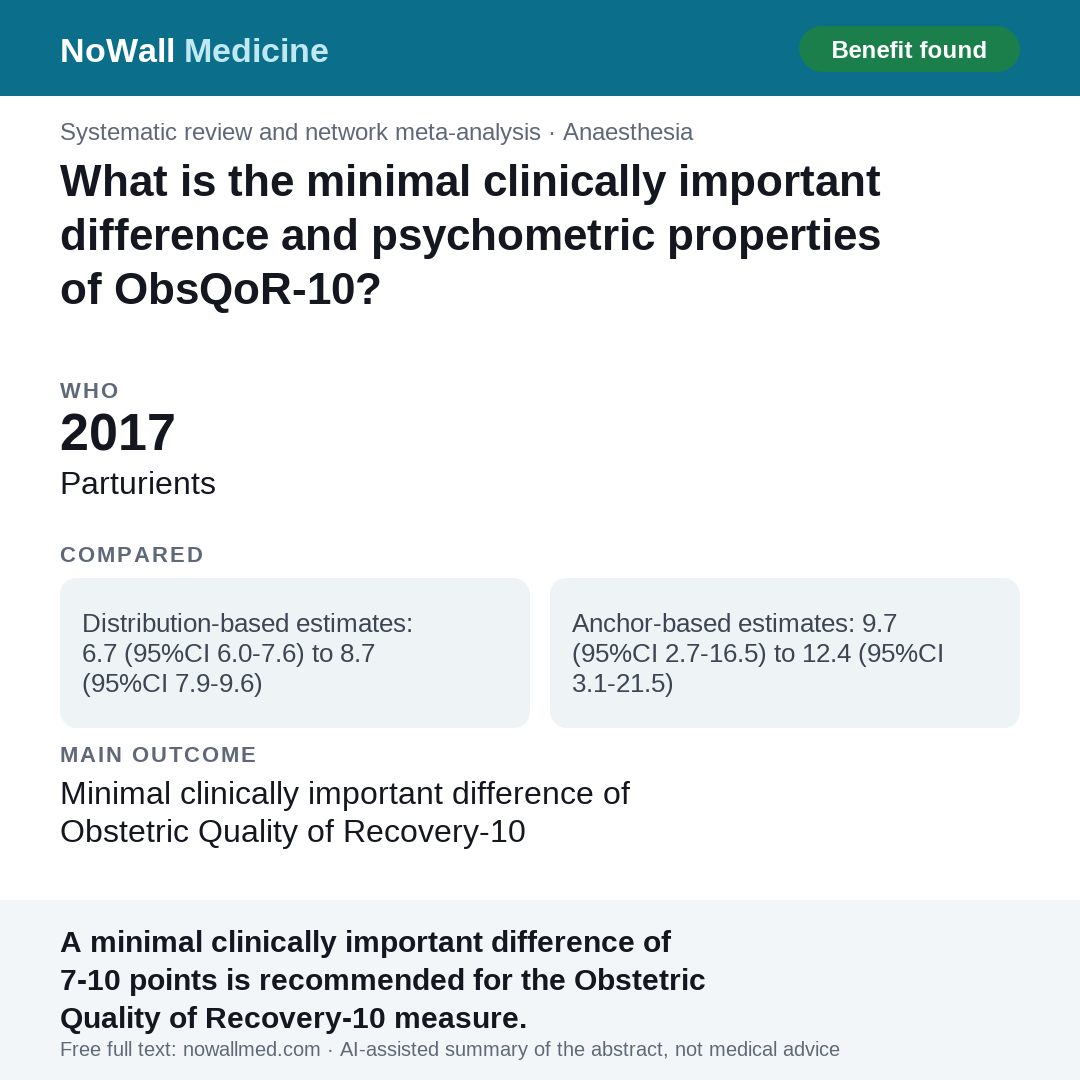
Minimal clinically important difference and psychometric properties of the Obstetric Quality of Recovery-10 measure: a systematic review and network meta-analysis
Systematic review and network meta-analysisBenefit found
What is the minimal clinically important difference and psychometric properties of ObsQoR-10?
Who
2017
Parturients
Compared
Distribution-based estimates: 6.7 (95%CI 6.0-7.6) to 8.7 (95%CI 7.9-9.6)
Anchor-based estimates: 9.7 (95%CI 2.7-16.5) to 12.4 (95%CI 3.1-21.5)
Main outcome
Minimal clinically important difference of Obstetric Quality of Recovery-10
Bottom line: A minimal clinically important difference of 7-10 points is recommended for the Obstetric Quality of Recovery-10 measure.
Anaesthesia · 2026-09-24Download image
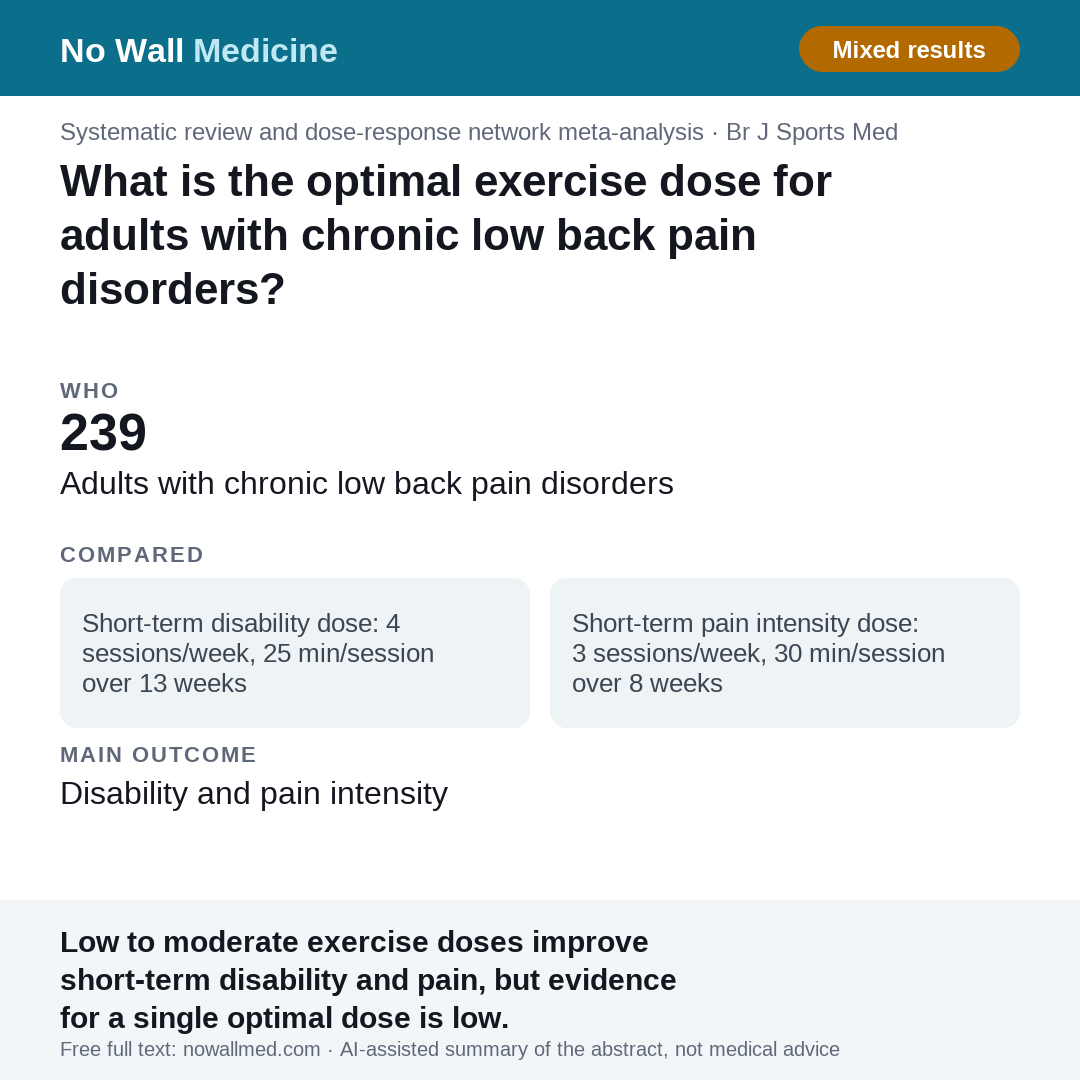
Optimal exercise dose in adults with chronic low back pain disorders: systematic review with dose-response network meta-analysis
Systematic review and dose-response network meta-analysisMixed results
What is the optimal exercise dose for adults with chronic low back pain disorders?
Who
239
Adults with chronic low back pain disorders
Compared
Short-term disability dose: 4 sessions/week, 25 min/session over 13 weeks
Short-term pain intensity dose: 3 sessions/week, 30 min/session over 8 weeks
Main outcome
Disability and pain intensity
Bottom line: Low to moderate exercise doses improve short-term disability and pain, but evidence for a single optimal dose is low.
Limitation: 84% of trials were at high risk of bias and certainty was very low to low.
Br J Sports Med · 2026-09-24Download image
Serum biomarkers for the diagnosis and management of adolescent polyendocrine metabolic ovarian syndrome: a systematic review and meta-analysis
Systematic review and meta-analysisBenefit found
What are the serum biomarkers for diagnosing and managing adolescent polyendocrine metabolic ovarian syndrome?
Who
4892
Adolescents with polyendocrine metabolic ovarian syndrome and healthy controls
Compared
Adolescents with PMOS
Healthy controls
Main outcome
Effect sizes of serum reproductive hormones, insulin indices, and adipokines
Bottom line: Total testosterone and free androgen index are primary diagnostic biomarkers for adolescent polyendocrine metabolic ovarian syndrome.
Limitation: Certainty of evidence ranged from low to moderate.
Funded by: HMRF, CUHK, and Chulalongkorn University
eBioMedicine · 2026-09-24Download image

Clinical Outcomes of Left Atrial Appendage Occlusion During Cardiac Surgery in Patients Without Atrial Fibrillation: A Systematic Review and Meta-Analysis
Systematic review and meta-analysisMixed results
Does surgical left atrial appendage occlusion reduce risks in patients without atrial fibrillation?
Who
12145
Patients in sinus rhythm undergoing cardiac surgery
Compared
Surgical left atrial appendage occlusion
No left atrial appendage occlusion
Main outcome
new-onset transient ischemic attack, stroke, postoperative atrial fibrillation, and all-cause death
Result: odds ratio 0.75 (95% CI 0.62-0.90) for new-onset TIA/stroke
Bottom line: Surgical occlusion reduces transient ischemic attack, stroke, and bleeding but increases postoperative atrial fibrillation risk.
Limitation: low to moderate certainty of evidence
J Am Heart Assoc · 2026-09-24Download image

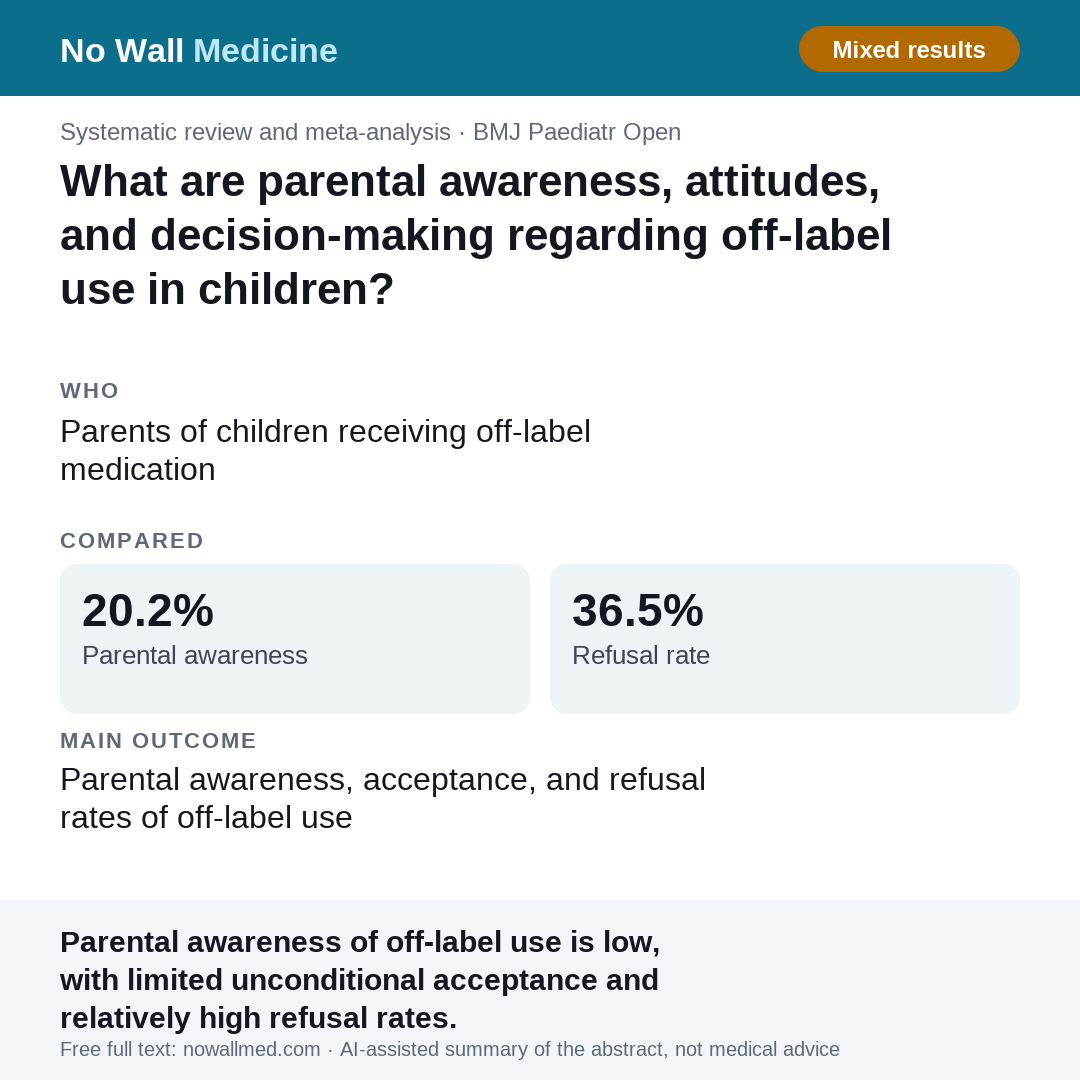
Parental awareness, attitudes and decision-making of off-label use in children: a systematic review and meta-analysis
Systematic review and meta-analysisMixed results
What are parental awareness, attitudes, and decision-making regarding off-label use in children?
Who
Parents of children receiving off-label medication
Compared
20.2%Parental awareness (95% CI: 10.6% to 31.9%)
36.5%Refusal rate (95% CI: 14.6% to 61.8%)
Main outcome
Parental awareness, acceptance, and refusal rates of off-label use
Bottom line: Parental awareness of off-label use is low, with limited unconditional acceptance and relatively high refusal rates.
Limitation: Extreme heterogeneity in operational definitions for conditional acceptance rates.
BMJ Paediatr Open · 2026-09-24Download image
AI Decision Support for Emergency Triage of Large Vessel Occlusion Using Noncontrast Computed Tomography: Systematic Review and Bayesian Diagnostic Test Accuracy Network Meta-Analysis
Bayesian diagnostic test accuracy network meta-analysisBenefit found
How does AI compare to human readers for detecting large vessel occlusion on noncontrast computed tomography?
Who
3632
Patients with suspected anterior circulation large vessel occlusion
Compared
Unimodal imaging AI: sensitivity 0.78 (95% credible interval 0.68-0.86)
Expert readers: sensitivity 0.62 (95% credible interval 0.48-0.75)
Nonexpert readers: sensitivity 0.60 (95% credible interval 0.45-0.75)
Main outcome
Detection of anterior circulation large vessel occlusion
Result: sensitivity difference 0.16 (95% credible interval 0.03-0.29) vs experts
Bottom line: Unimodal imaging AI showed higher sensitivity than expert and nonexpert readers for detecting large vessel occlusion in retrospective studies.
Limitation: Evidence is accuracy based and does not establish workflow effectiveness or functional outcome benefit.
J Med Internet Res · 2026-09-24Download image

Clinical Surveillance Technologies in Nonintensive Care Unit Hospital Settings: Systematic Review and Bayesian Network Meta-Analysis of Randomized Trials
Network meta-analysis of 28 trialsNo clear difference
How do electronic surveillance and continuous monitoring compare to standard care?
Who
Hospitalized patients in nonintensive care unit settings · Nonintensive care unit hospital settings
Compared
Rule-based electronic surveillance: odds ratio 0.91 (95% credible interval 0.35-2.30)
Predictive model-based electronic surveillance: odds ratio 1.22 (95% credible interval 0.61-2.31)
Continuous physiologic monitoring: odds ratio 0.70 (95% credible interval 0.36-1.29)
Local standard care
Main outcome
All-cause in-hospital or up-to-30-day mortality
Bottom line: Evidence does not establish a reliable clinical-effectiveness hierarchy among electronic surveillance and continuous monitoring technologies.
Limitation: Confidence in all network comparisons was very low.
J Med Internet Res · 2026-09-24Download image

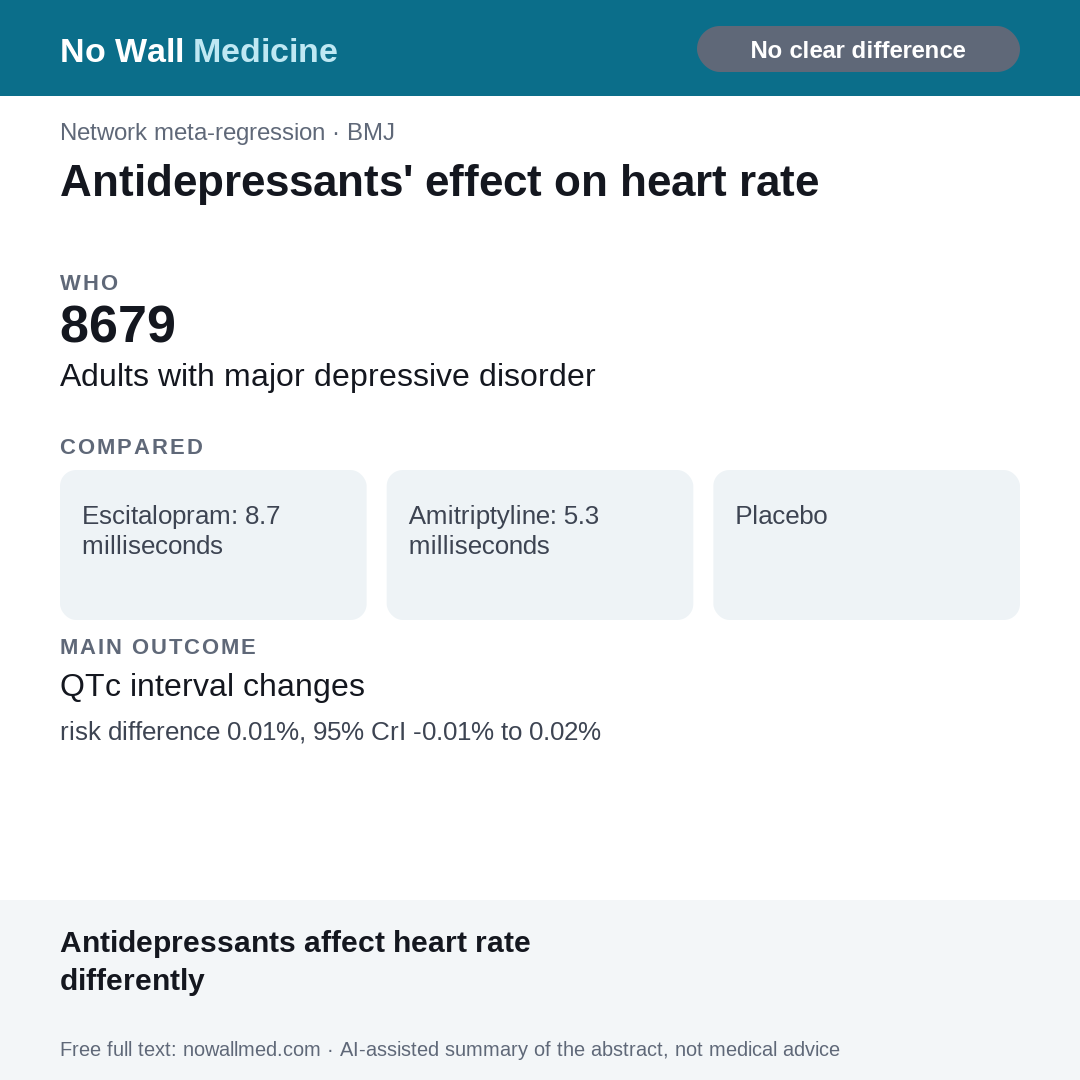
QTc changes and early major adverse cardiovascular events associated with antidepressant treatment for major depressive disorder in adults: individual participant data network meta-regression of double blind randomised trials
Network meta-regressionNo clear difference
Antidepressants' effect on heart rate
Who
8679
Adults with major depressive disorder
Compared
Escitalopram: 8.7 milliseconds
Amitriptyline: 5.3 milliseconds
Placebo
Main outcome
QTc interval changes
Result: risk difference 0.01%, 95% CrI -0.01% to 0.02%
Bottom line: Antidepressants affect heart rate differently
BMJ · 2026-09-23Download image
Comparative efficacy of vitamin B12 supplementation routes in adults with replacement indication: a systematic review
Systematic review of 13 studiesMixed results
Vitamin B12 supplementation routes efficacy
Who
Adults with vitamin B12 replacement indication · 10 countries, multiple sites
Compared
Oral supplementation
Intramuscular supplementation
Sublingual supplementation
Main outcome
Serum vitamin B12 or clinical response
Bottom line: All routes increase serum vitamin B12 levels
Limitation: Risk of bias in included studies
Funded by: Myralis Industria Farmacêutica Ltda
eClinicalMedicine · 2026-09-23Download image

The effect of lifestyle interventions in women with polyendocrine metabolic ovarian syndrome: A systematic review and meta-analysis
Systematic review and meta-analysisBenefit found
Do lifestyle interventions improve reproductive, anthropometric, and metabolic outcomes in women with polyendocrine metabolic ovarian syndrome?
Who
1,871
Women with polyendocrine metabolic ovarian syndrome
Compared
Lifestyle interventions
Minimal or no treatment
Main outcome
Reproductive, anthropometric, and metabolic outcomes
Result: odds ratio 4.03 (95% CI 1.16 to 14.05) for regular menstrual cycles
Bottom line: Lifestyle interventions improve menstrual regularity, waist circumference, fasting glucose, and fasting insulin in women with polyendocrine metabolic ovarian syndrome.
Limitation: High between-study heterogeneity in pooled estimates across many outcomes.
PLOS Med · 2026-09-23Download image

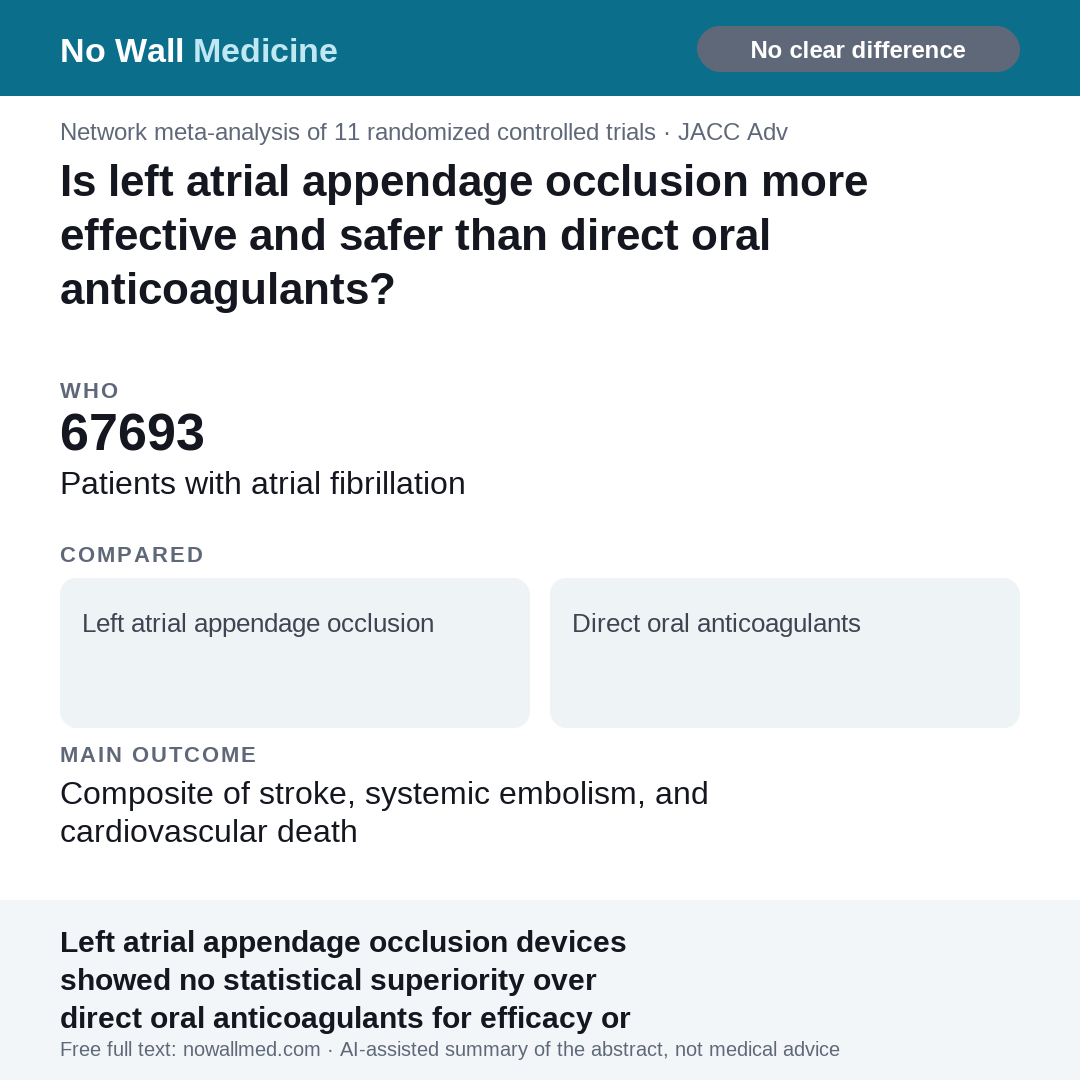
Left Atrial Appendage Occlusion vs Direct Oral Anticoagulants for Atrial Fibrillation: Network Meta-Analyses
Network meta-analysis of 11 randomized controlled trialsNo clear difference
Is left atrial appendage occlusion more effective and safer than direct oral anticoagulants?
Who
67693
Patients with atrial fibrillation
Compared
Left atrial appendage occlusion
Direct oral anticoagulants
Main outcome
Composite of stroke, systemic embolism, and cardiovascular death
Result: hazard ratio 1.02 (95% CI 0.88-1.19)
Bottom line: Left atrial appendage occlusion devices showed no statistical superiority over direct oral anticoagulants for efficacy or safety.
Limitation: Further trials are warranted to define patients who may benefit most.
JACC Adv · 2026-09-23Download image
Safety profile of BCG with or without immunotherapy in non-muscle-invasive bladder cancer (NMIBC): a systematic review and meta-analysis
Meta-analysis of three phase III trialsHarm found
Is adding immune checkpoint inhibitors to BCG safe for high-risk non-muscle-invasive bladder cancer?
Who
1895
BCG-naïve high-risk non-muscle-invasive bladder cancer patients
Compared
BCG plus immune checkpoint inhibitors
BCG alone
Main outcome
Incidence of treatment-related adverse events
Result: relative risk 1.25 (95% confidence interval 1.20-1.31)
Bottom line: Adding immune checkpoint inhibitors to BCG increases the risk of treatment-related adverse events.
ESMO Open · 2026-09-23Download image

Leadership, Resources, and Workforce Stability in Long-Term Care: A Systematic Review
Systematic review with narrative synthesisBenefit found
How does frontline leadership influence staff turnover and retention in long-term care?
Who
14
Staff in long-term care settings · Nursing homes, residential care, and aged care facilities
Compared
Supportive leadership: more favorable retention-related outcomes
Higher job demands: less favorable outcomes
Main outcome
Staff turnover and retention
Bottom line: Leadership factors influence workforce stability through organizational, psychological, and relational pathways in long-term care.
J Am Med Dir Assoc · 2026-09-22Download image

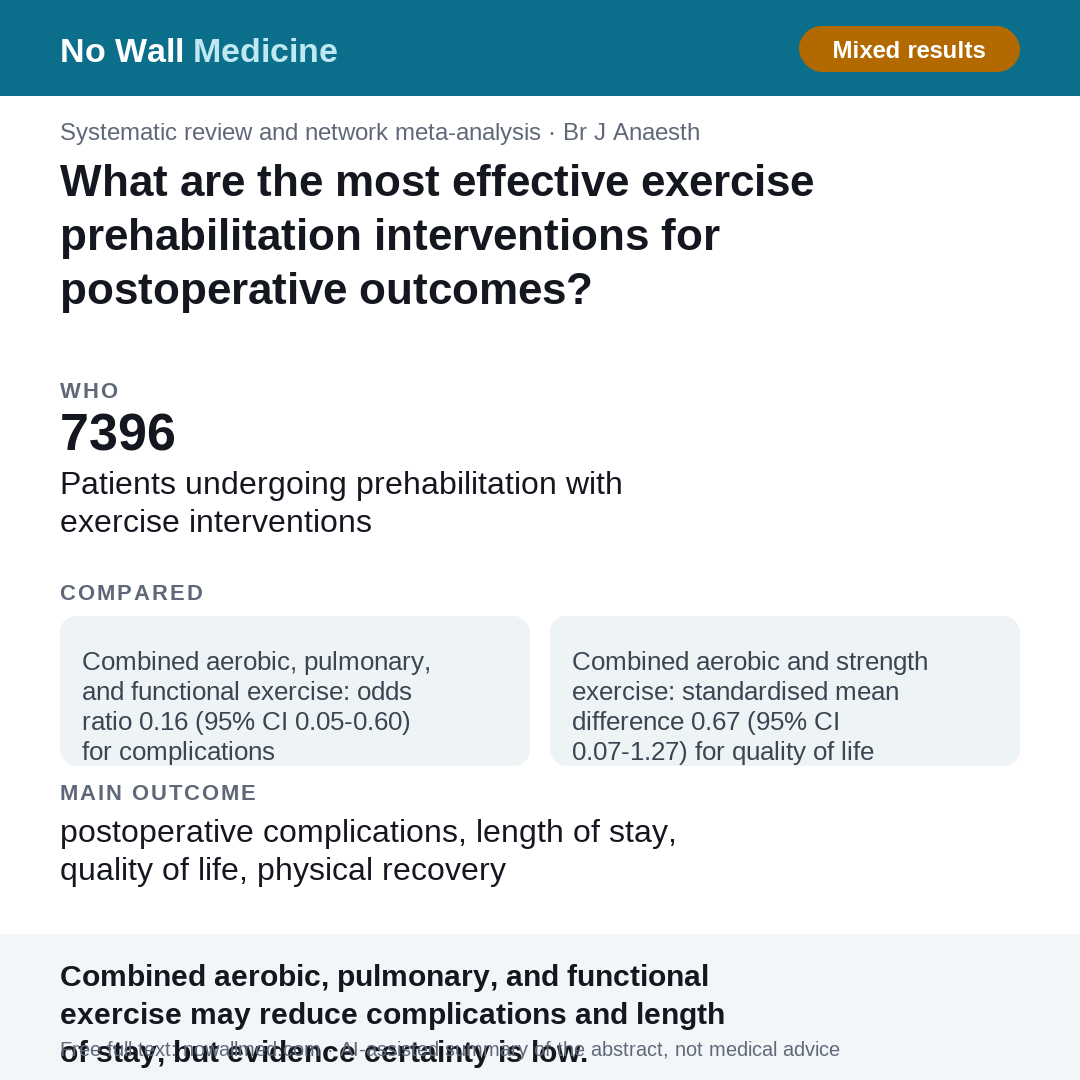
Relative efficacy of exercise prehabilitation interventions and their components: a systematic review and network meta-analysis of randomised controlled trials
Systematic review and network meta-analysisMixed results
What are the most effective exercise prehabilitation interventions for postoperative outcomes?
Who
7396
Patients undergoing prehabilitation with exercise interventions
Compared
Combined aerobic, pulmonary, and functional exercise: odds ratio 0.16 (95% CI 0.05-0.60) for complications
Combined aerobic and strength exercise: standardised mean difference 0.67 (95% CI 0.07-1.27) for quality of life
Main outcome
postoperative complications, length of stay, quality of life, physical recovery
Bottom line: Combined aerobic, pulmonary, and functional exercise may reduce complications and length of stay, but evidence certainty is low.
Limitation: Available data are mostly low certainty and require low-risk-of-bias trials.
Br J Anaesth · 2026-09-22Download image