Visual abstracts
New randomized trials and meta-analyses from leading journals at a glance: who was studied, what was compared, and what was found. Every paper is free to read in full.
All specialtiesCardiology 4763Oncology 4043Gastroenterology & Hepatology 1903Infectious Disease 3756Neurology 1872Psychiatry & Mental Health 2216Pulmonology 2044Critical Care 1319Endocrinology & Diabetes 2544Pediatrics 2889Surgery 2480Orthopedics & Sports Medicine 917Neurosurgery 525Cardiothoracic & Vascular Surgery 656Plastic & Reconstructive Surgery 574Nephrology 1107Rheumatology 810Hematology 1090Dermatology 611Ophthalmology 532Obstetrics & Gynecology 1645Public & Global Health 1037Radiology & Imaging 619Anesthesiology 958Urology 745ENT (Otolaryngology) 494Emergency Medicine 481Allergy & Immunology 309Geriatrics 972Family Medicine & Primary Care 534Medical Genetics & Genomics 659Pathology & Laboratory Medicine 156Physical Medicine & Rehabilitation 734Palliative Care 421Nutrition 1560Digital Health & AI 2137General Medicine 318
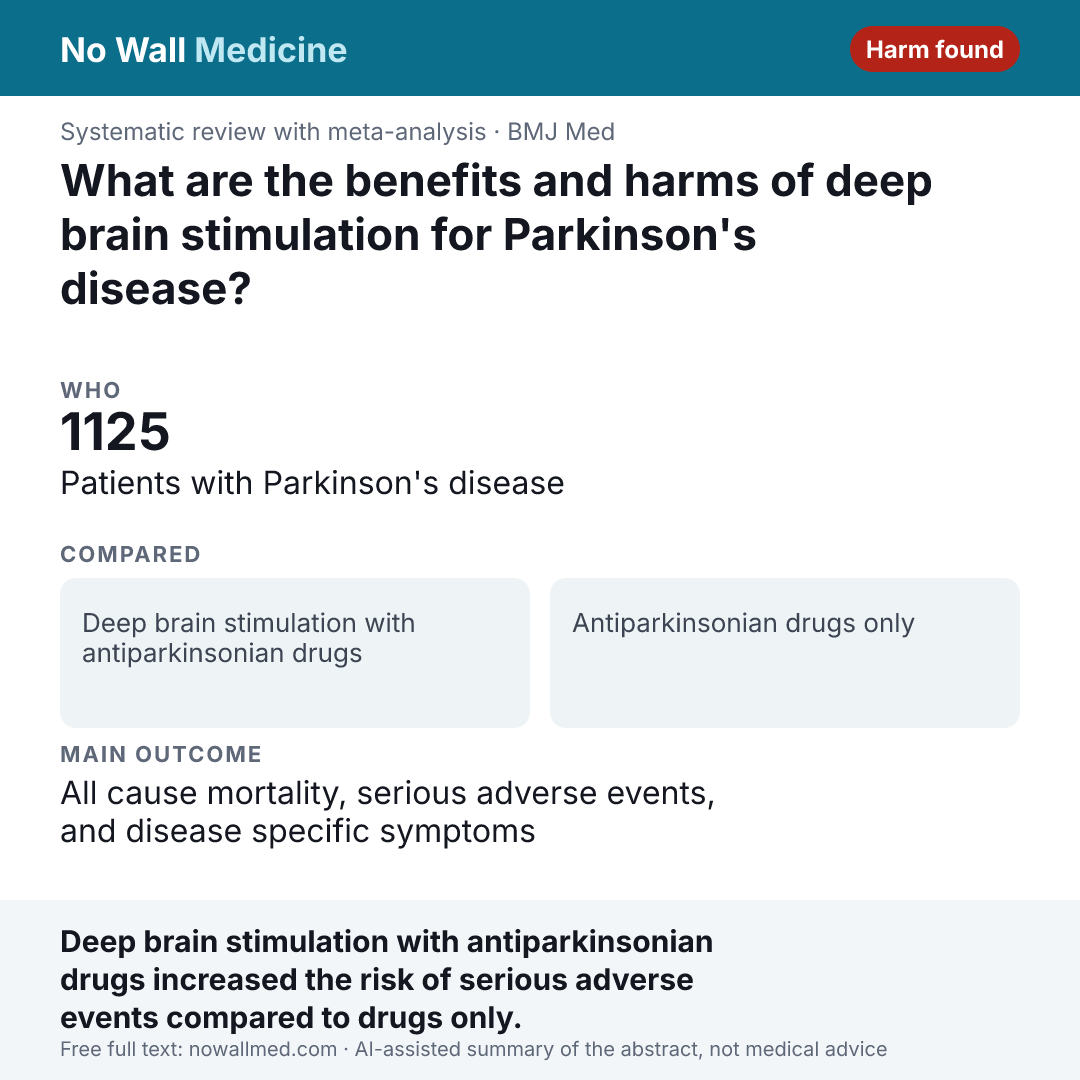
Deep brain stimulation for Parkinson's disease: systematic review with meta-analysis and trial sequential analysis
Systematic review with meta-analysisHarm found
What are the benefits and harms of deep brain stimulation for Parkinson's disease?
Who
1125
Patients with Parkinson's disease
Compared
Deep brain stimulation with antiparkinsonian drugs
Antiparkinsonian drugs only
Main outcome
All cause mortality, serious adverse events, and disease specific symptoms
Result: risk ratio 2.36 (95% CI 1.37 to 4.09) for serious adverse events
Bottom line: Deep brain stimulation with antiparkinsonian drugs increased the risk of serious adverse events compared to drugs only.
Limitation: High risk of bias and very low certainty of evidence for all primary outcomes.
BMJ Med · 2024-08-16 · Save PNG
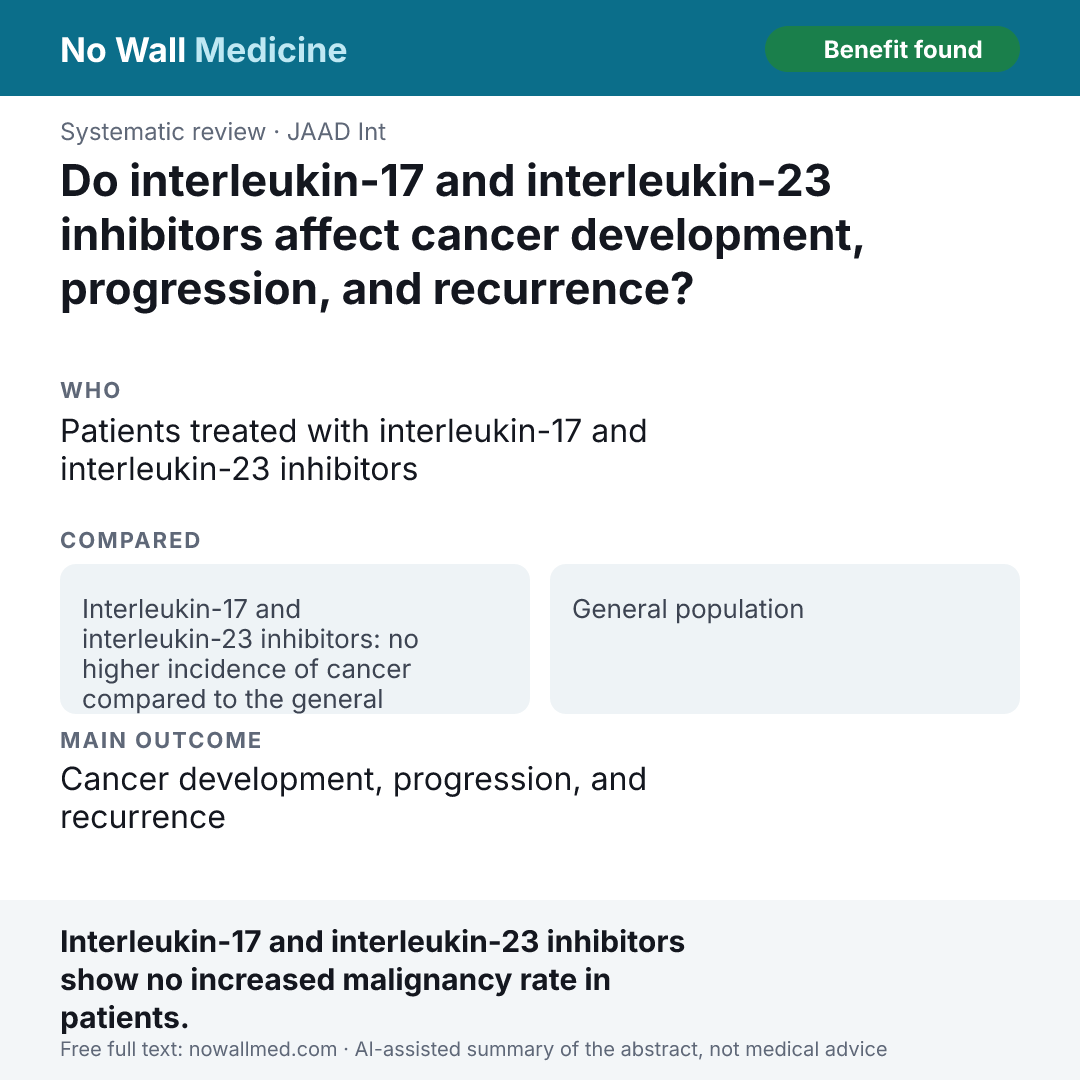
The role of interleukin-17 and interleukin-23 inhibitors in the development, progression, and recurrence of cancer: A systematic review
Systematic reviewBenefit found
Do interleukin-17 and interleukin-23 inhibitors affect cancer development, progression, and recurrence?
Who
Patients treated with interleukin-17 and interleukin-23 inhibitors
Compared
Interleukin-17 and interleukin-23 inhibitors: no higher incidence of cancer compared to the general population
General population
Main outcome
Cancer development, progression, and recurrence
Bottom line: Interleukin-17 and interleukin-23 inhibitors show no increased malignancy rate in patients.
Limitation: Variations in study designs, outcomes, and small sample sizes.
JAAD Int · 2024-08-16 · Save PNG
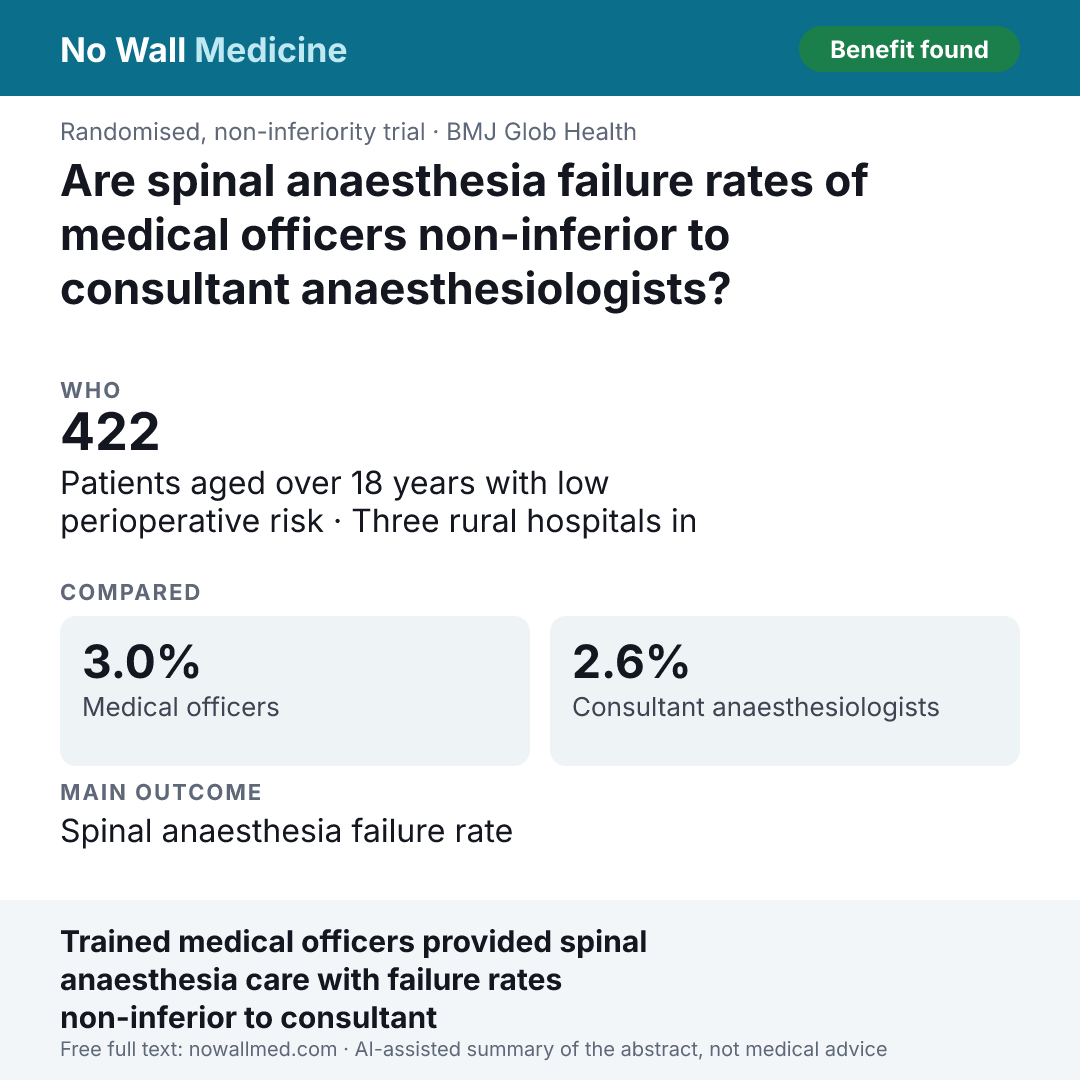
Task-sharing spinal anaesthesia care in three rural Indian hospitals: a non-inferiority randomised controlled clinical trial
Randomised, non-inferiority trialBenefit found
Are spinal anaesthesia failure rates of medical officers non-inferior to consultant anaesthesiologists?
Who
422
Patients aged over 18 years with low perioperative risk · Three rural hospitals in Tamil Nadu and Chhattisgarh, India
Compared
3.0%Medical officers
2.6%Consultant anaesthesiologists
Main outcome
Spinal anaesthesia failure rate
Result: difference in success rate of 0.4% (95% CI=0.36-0.43%; p=0.80)
Bottom line: Trained medical officers provided spinal anaesthesia care with failure rates non-inferior to consultant anaesthesiologists in low-risk patients.
BMJ Glob Health · 2024-08-16 · Save PNG
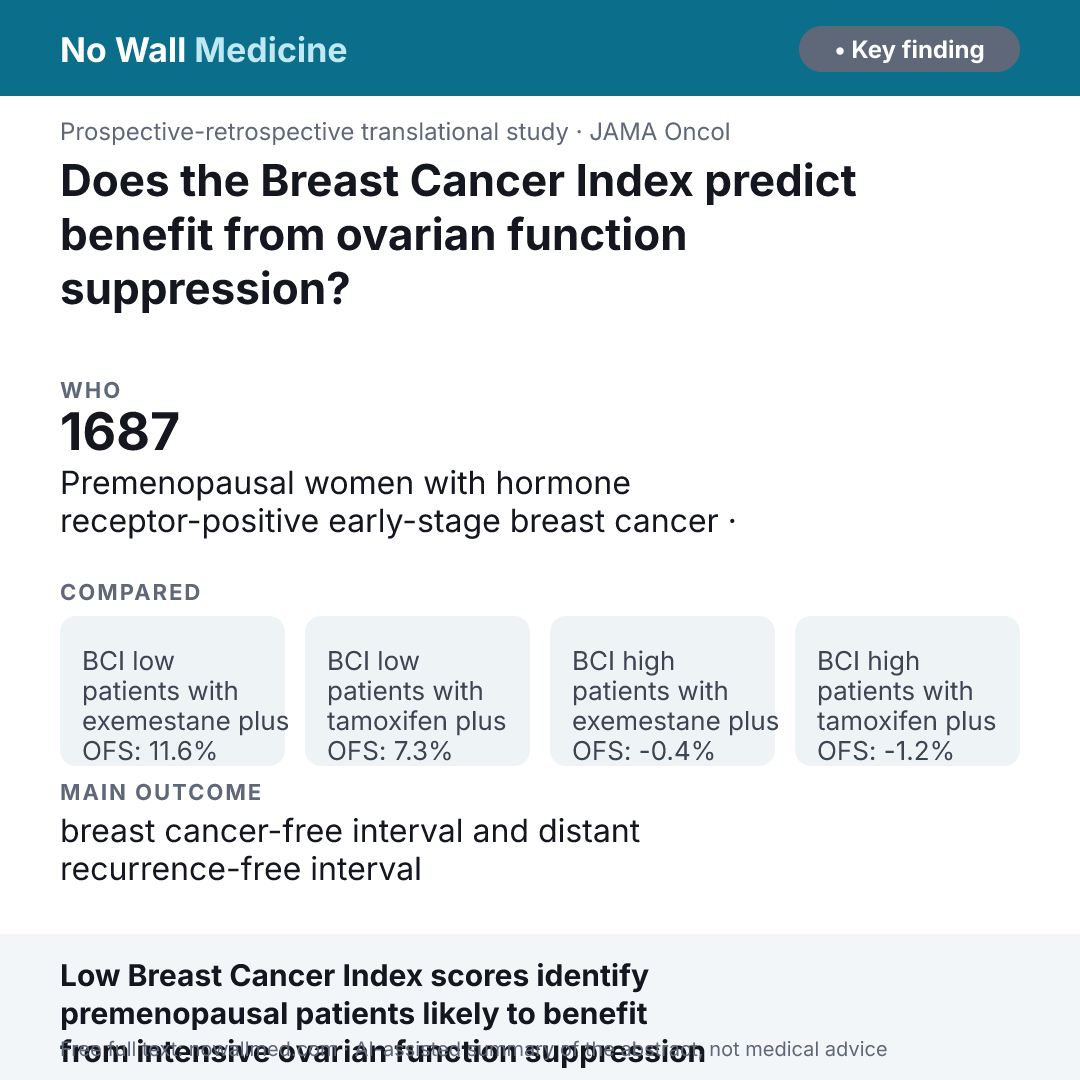
Rate and risk factors of kidney function decline among South Asians with type 2 diabetes: analysis of the CARRS Trial
Analysis of the CARRS TrialNo clear difference
What is the rate and predictors of kidney function decline in South Asian type 2 diabetes?
Who
1146
People with type 2 diabetes in South Asia · 10 diabetes clinics in India and Pakistan
Compared
Intervention
Usual care
Main outcome
estimated glomerular filtration rate slope
Bottom line: South Asians with type 2 diabetes experienced an annual kidney function decline of -1.33 mL/min/1.73 m2/year.
BMJ Open Diabetes Res Care · 2024-08-16 · Save PNG
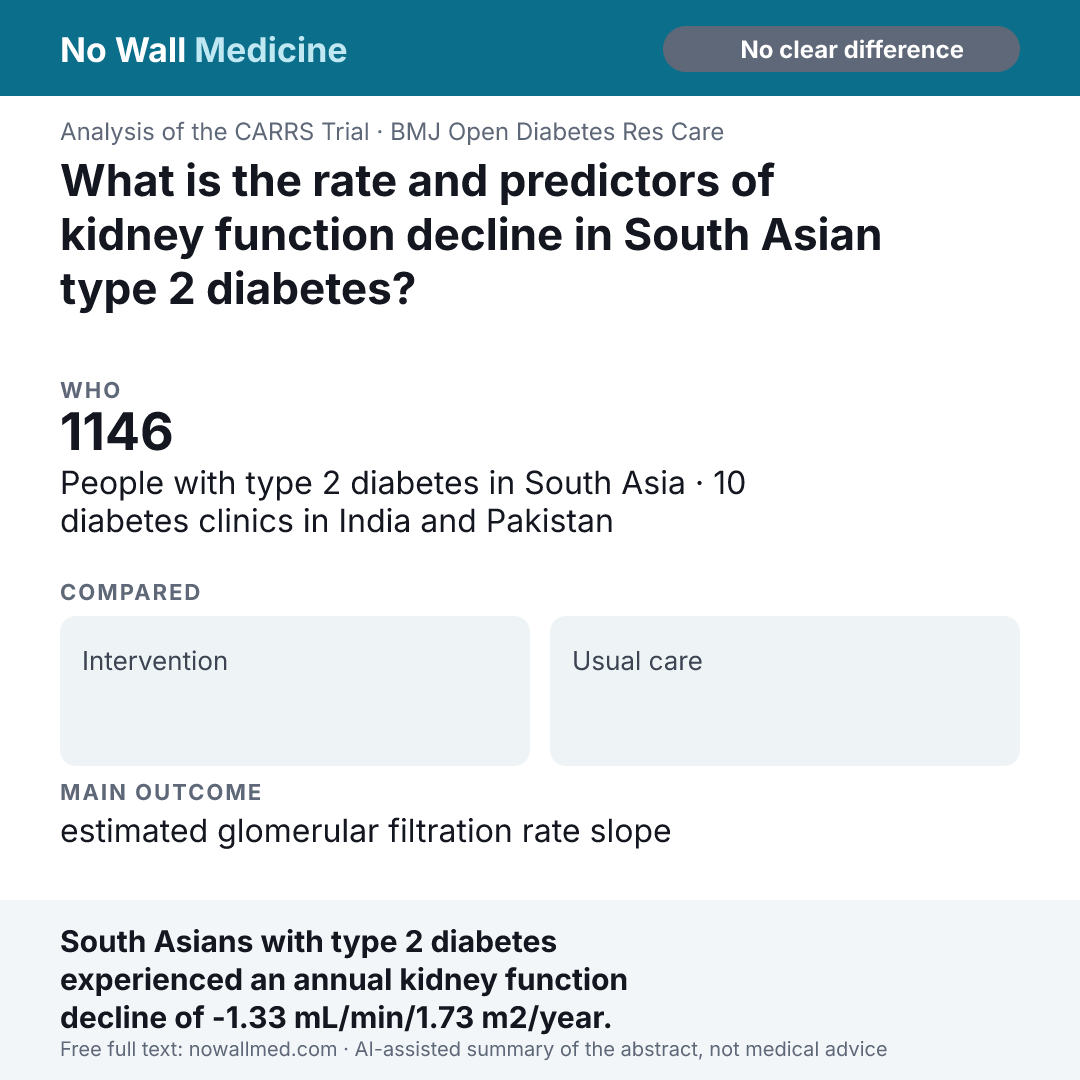
Short-Term Effects of an eHealth Care Experiential Learning Program Among Patients With Type 2 Diabetes: Randomized Controlled Trial
Randomized controlled trialBenefit found
Does eHealth program improve literacy?
Who
92
Patients with type 2 diabetes · Taiwan
Compared
19.94Intervention
Control
Main outcome
eHealth literacy
Bottom line: eHealth program improves literacy and engagement
J Med Internet Res · 2024-08-16 · Save PNG
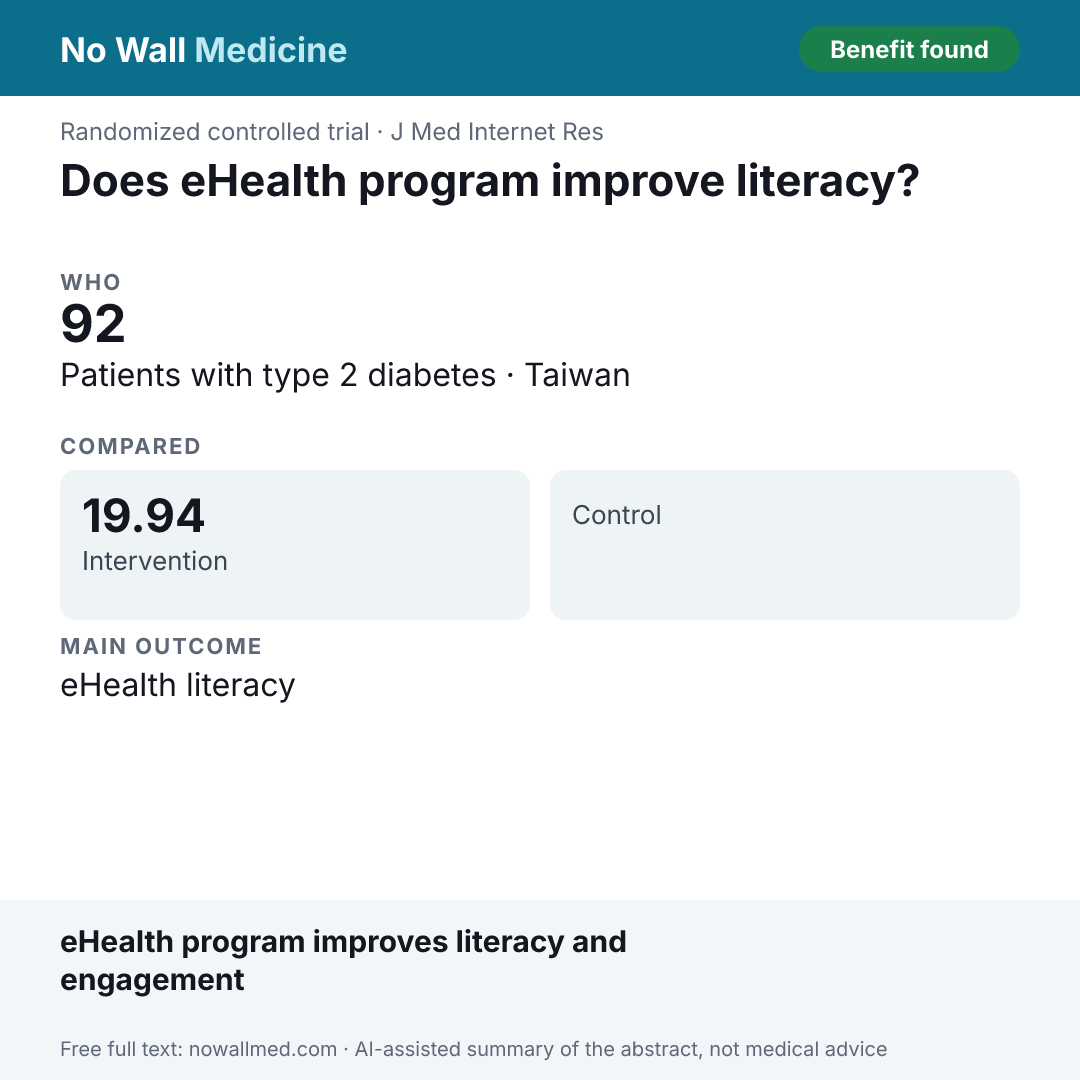
Impact of 25 Years of Mobile Health Tools for Pain Management in Patients With Chronic Musculoskeletal Pain: Systematic Review
Systematic reviewBenefit found
What is the 25-year trend of mobile health tools for chronic musculoskeletal pain management?
Who
26,429
Patients and health care providers with chronic musculoskeletal pain
Compared
Studies assessing adherence impact: significant improvements in 93% (25/27) of studies
Randomized controlled trials for clinical outcomes: significant differences in 27 of the 29 (93%) RCTs
Main outcome
adherence, usability, feasibility, acceptability, and clinical outcomes
Bottom line: Mobile health tools show high potential for improving adherence and clinical outcomes in chronic musculoskeletal pain management.
J Med Internet Res · 2024-08-16 · Save PNG
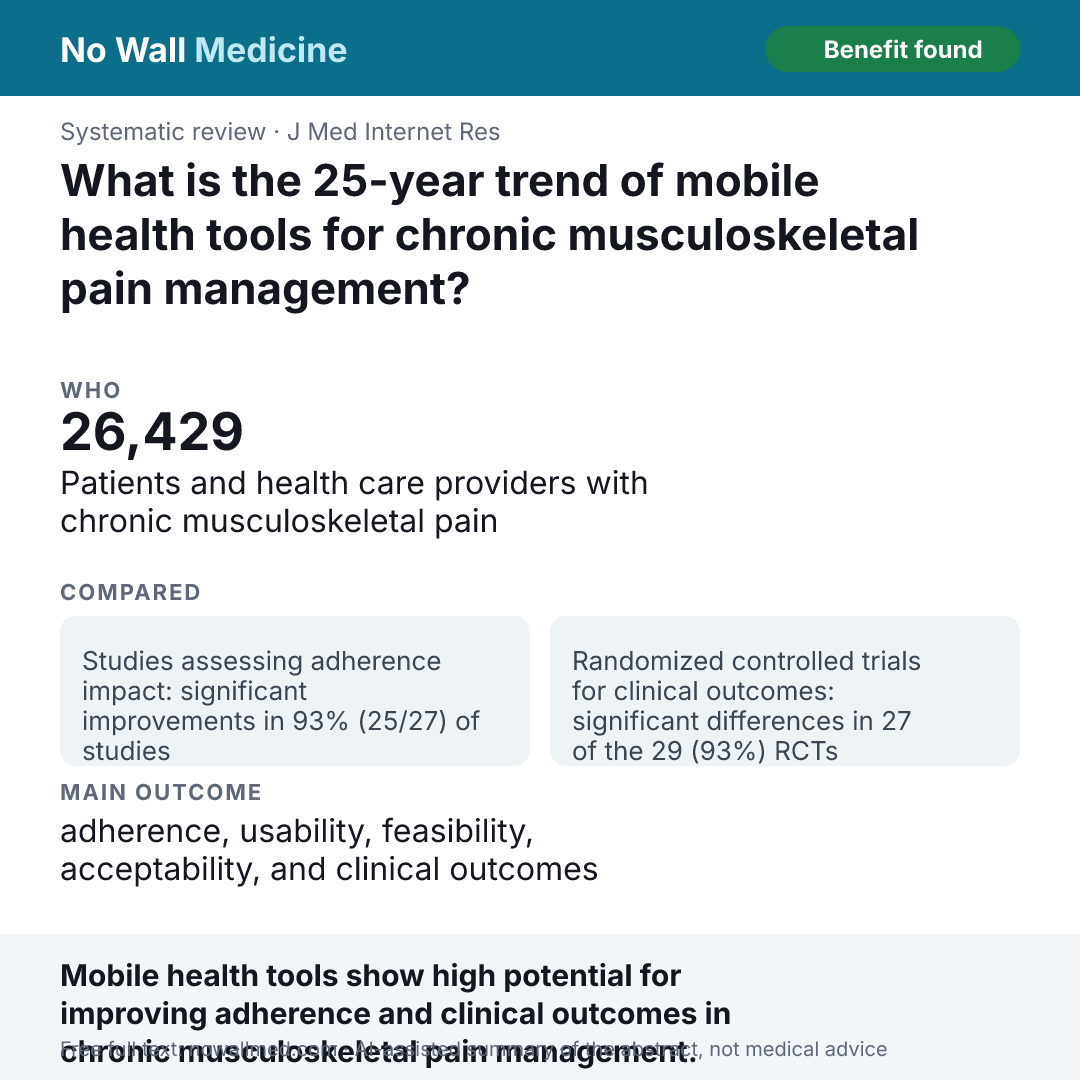
Breast Cancer Index in Premenopausal Women With Early-Stage Hormone Receptor-Positive Breast Cancer
Prospective-retrospective translational studyKey finding
Does the Breast Cancer Index predict benefit from ovarian function suppression?
Who
1687
Premenopausal women with hormone receptor-positive early-stage breast cancer · Multiple centers internationally
Compared
BCI low patients with exemestane plus OFS: 11.6% absolute benefit in breast cancer-free interval
BCI low patients with tamoxifen plus OFS: 7.3% absolute benefit in breast cancer-free interval
BCI high patients with exemestane plus OFS: -0.4% absolute benefit
BCI high patients with tamoxifen plus OFS: -1.2% absolute benefit
Main outcome
breast cancer-free interval and distant recurrence-free interval
Result: hazard ratio 0.48 (95% CI 0.33-0.71) for BCI low exemestane plus OFS
Bottom line: Low Breast Cancer Index scores identify premenopausal patients likely to benefit from intensive ovarian function suppression therapy.
JAMA Oncol · 2024-08-15 · Save PNG
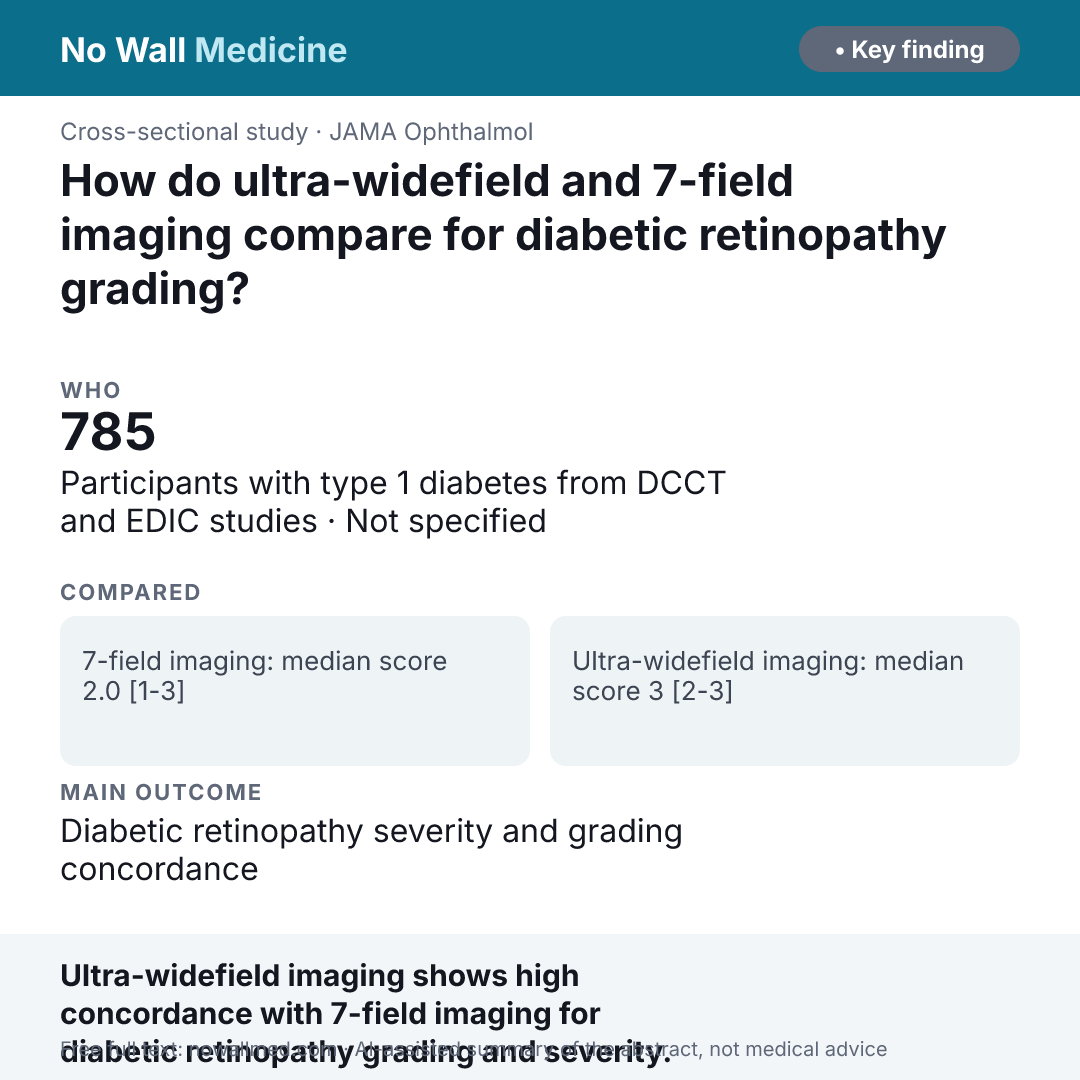
Ultra-Widefield and Early Treatment Diabetic Retinopathy Study 7-Field Grading of Diabetic Retinopathy
Cross-sectional studyKey finding
How do ultra-widefield and 7-field imaging compare for diabetic retinopathy grading?
Who
785
Participants with type 1 diabetes from DCCT and EDIC studies · Not specified
Compared
7-field imaging: median score 2.0 [1-3]
Ultra-widefield imaging: median score 3 [2-3]
Main outcome
Diabetic retinopathy severity and grading concordance
Result: κ, 0.73 for severe nonproliferative diabetic retinopathy; κ, 0.74 for proliferative diabetic retinopathy
Bottom line: Ultra-widefield imaging shows high concordance with 7-field imaging for diabetic retinopathy grading and severity.
JAMA Ophthalmol · 2024-08-15 · Save PNG
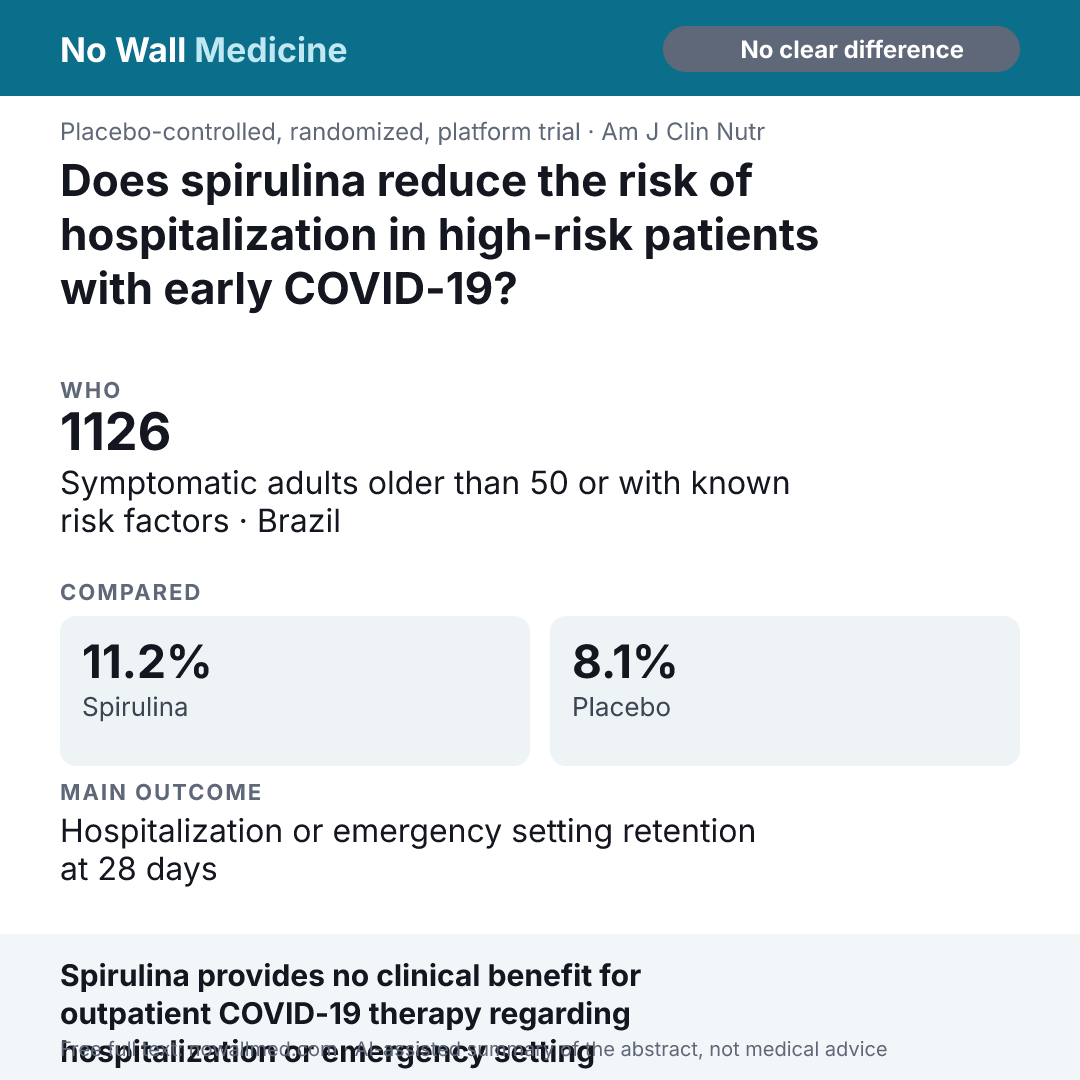
Effect of spirulina on risk of hospitalization among patients with COVID-19: the TOGETHER randomized trial
Placebo-controlled, randomized, platform trialNo clear difference
Does spirulina reduce the risk of hospitalization in high-risk patients with early COVID-19?
Who
1126
Symptomatic adults older than 50 or with known risk factors · Brazil
Compared
11.2%Spirulina
8.1%Placebo
Main outcome
Hospitalization or emergency setting retention at 28 days
Result: odds ratio 1.24 (95% credible interval: 0.84, 1.86)
Bottom line: Spirulina provides no clinical benefit for outpatient COVID-19 therapy regarding hospitalization or emergency setting retention.
Am J Clin Nutr · 2024-08-15 · Save PNG
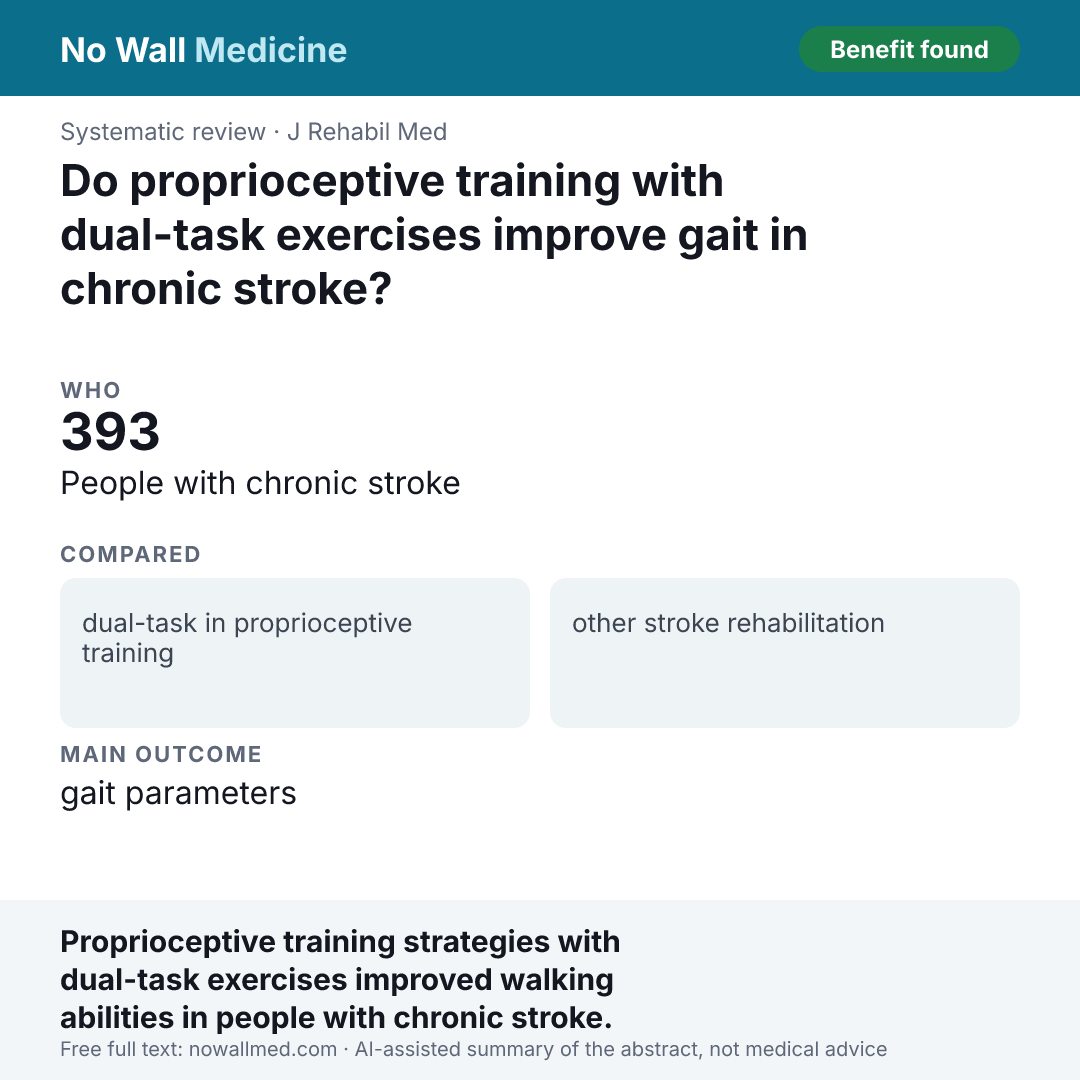
Do proprioceptive training strategies with dual-task exercises positively influence gait parameters in chronic stroke? A systematic review
Systematic reviewBenefit found
Do proprioceptive training with dual-task exercises improve gait in chronic stroke?
Who
393
People with chronic stroke
Compared
dual-task in proprioceptive training
other stroke rehabilitation
Main outcome
gait parameters
Bottom line: Proprioceptive training strategies with dual-task exercises improved walking abilities in people with chronic stroke.
J Rehabil Med · 2024-08-15 · Save PNG
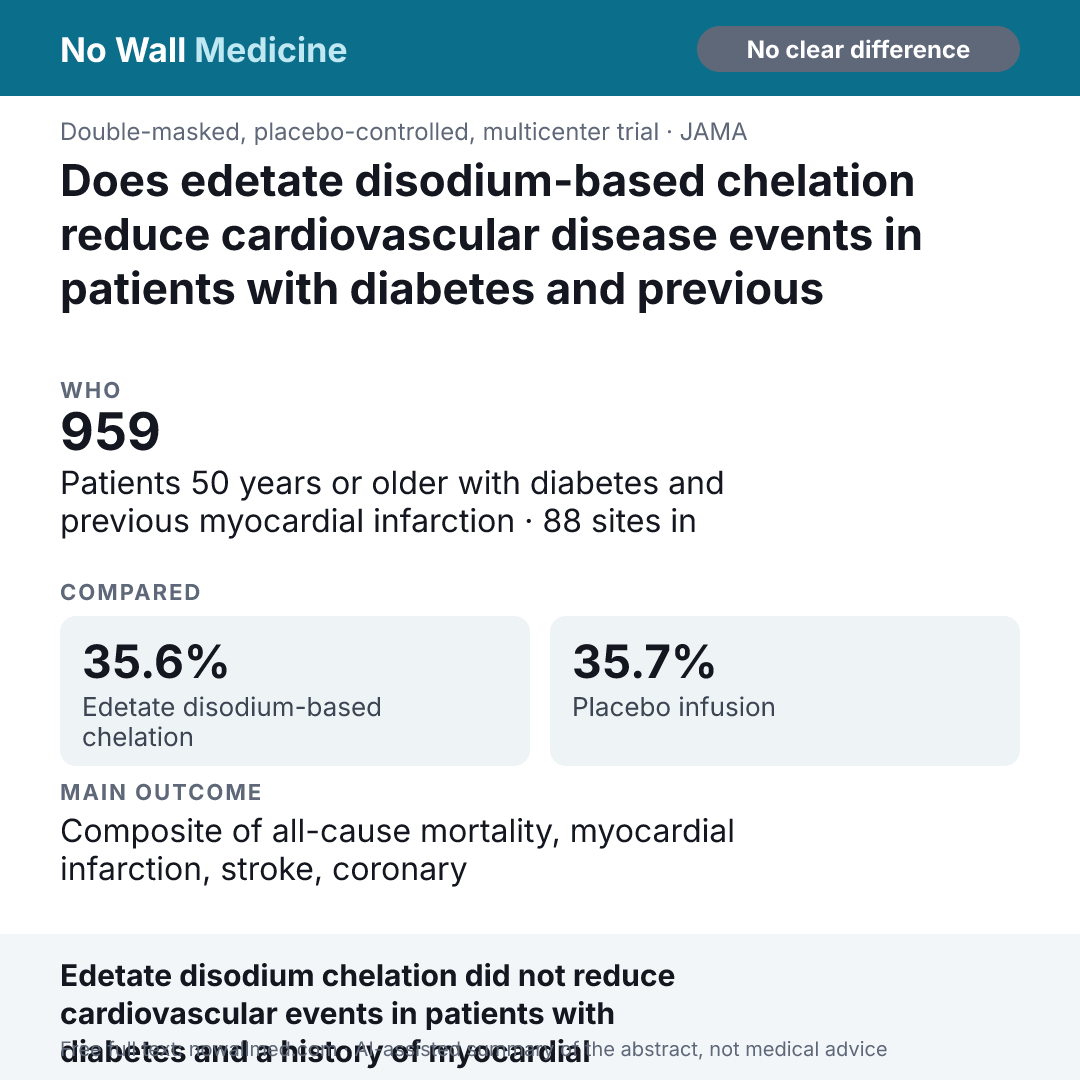
Edetate Disodium-Based Chelation for Patients With a Previous Myocardial Infarction and Diabetes: TACT2 Randomized Clinical Trial
Double-masked, placebo-controlled, multicenter trialNo clear difference
Does edetate disodium-based chelation reduce cardiovascular disease events in patients with diabetes and previous myocardial infarction?
Who
959
Patients 50 years or older with diabetes and previous myocardial infarction · 88 sites in the US and Canada
Compared
35.6%Edetate disodium-based chelation
35.7%Placebo infusion
Main outcome
Composite of all-cause mortality, myocardial infarction, stroke, coronary revascularization, or unstable angina hospitalization
Result: adjusted hazard ratio 0.93 (95% CI 0.76 to 1.16)
Bottom line: Edetate disodium chelation did not reduce cardiovascular events in patients with diabetes and a history of myocardial infarction.
JAMA · 2024-08-14 · Save PNG
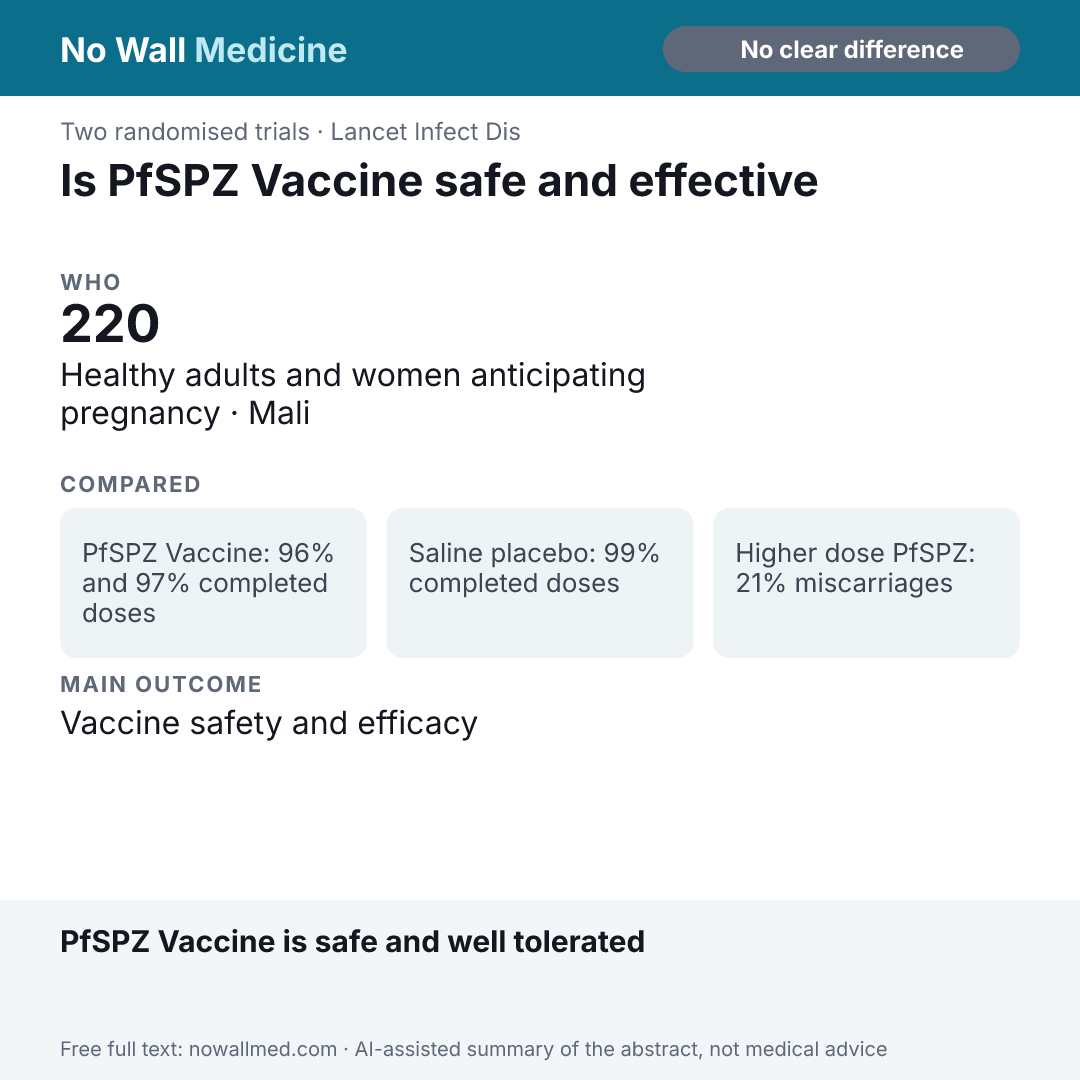
Safety and efficacy of PfSPZ Vaccine against malaria in healthy adults and women anticipating pregnancy in Mali: two randomised, double-blind, placebo-controlled, phase 1 and 2 trials
Two randomised trialsNo clear difference
Is PfSPZ Vaccine safe and effective
Who
220
Healthy adults and women anticipating pregnancy · Mali
Compared
PfSPZ Vaccine: 96% and 97% completed doses
Saline placebo: 99% completed doses
Higher dose PfSPZ: 21% miscarriages
Main outcome
Vaccine safety and efficacy
Bottom line: PfSPZ Vaccine is safe and well tolerated
Lancet Infect Dis · 2024-08-14 · Save PNG
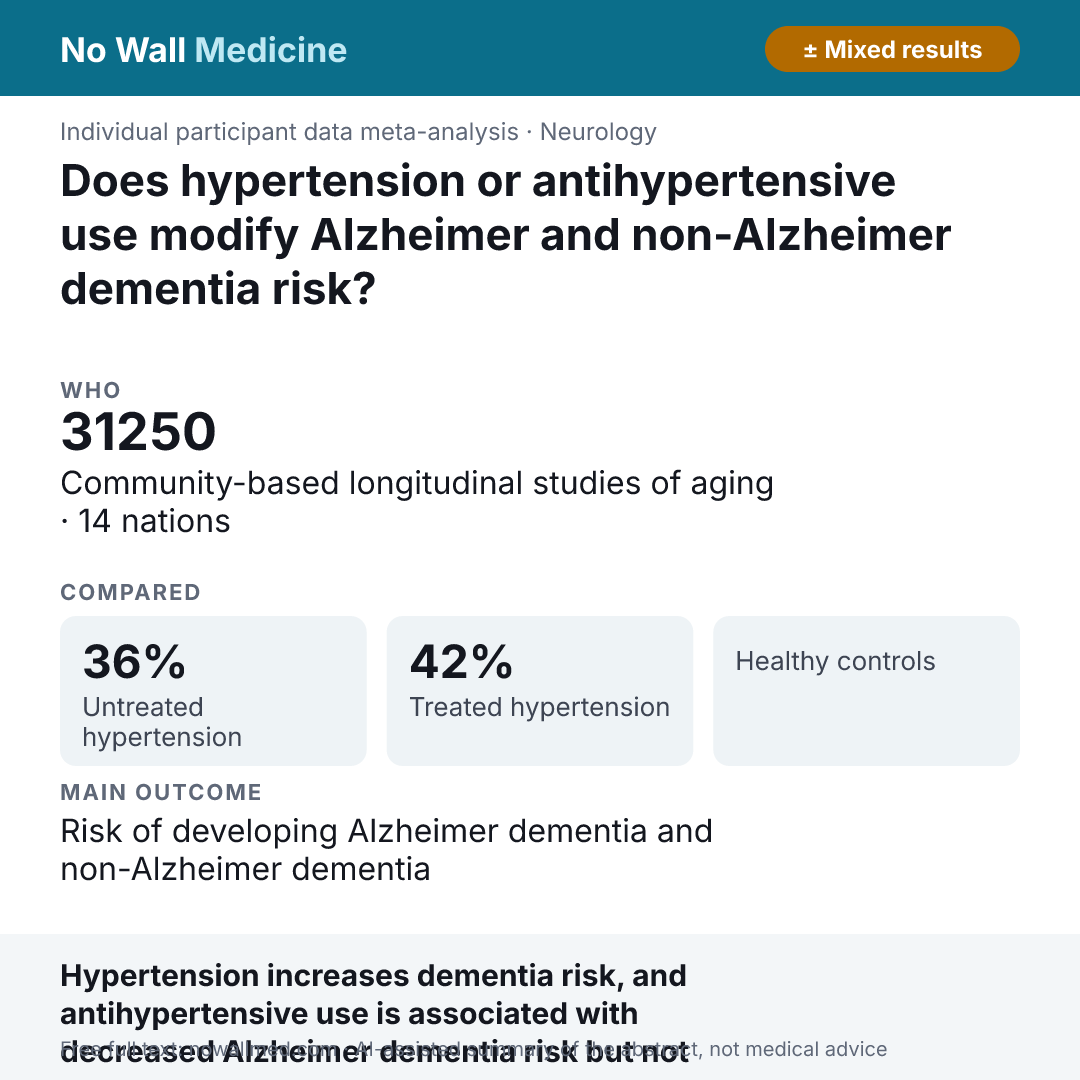
Blood Pressure, Antihypertensive Use, and Late-Life Alzheimer and Non-Alzheimer Dementia Risk: An Individual Participant Data Meta-Analysis
Individual participant data meta-analysisMixed results
Does hypertension or antihypertensive use modify Alzheimer and non-Alzheimer dementia risk?
Who
31250
Community-based longitudinal studies of aging · 14 nations
Compared
36%Untreated hypertension (hazard ratio 1.36, 95% CI 1.01-1.83)
42%Treated hypertension (hazard ratio 1.42, 95% CI 1.08-1.87)
Healthy controls
Main outcome
Risk of developing Alzheimer dementia and non-Alzheimer dementia
Bottom line: Hypertension increases dementia risk, and antihypertensive use is associated with decreased Alzheimer dementia risk but not non-Alzheimer dementia risk.
Neurology · 2024-08-14 · Save PNG
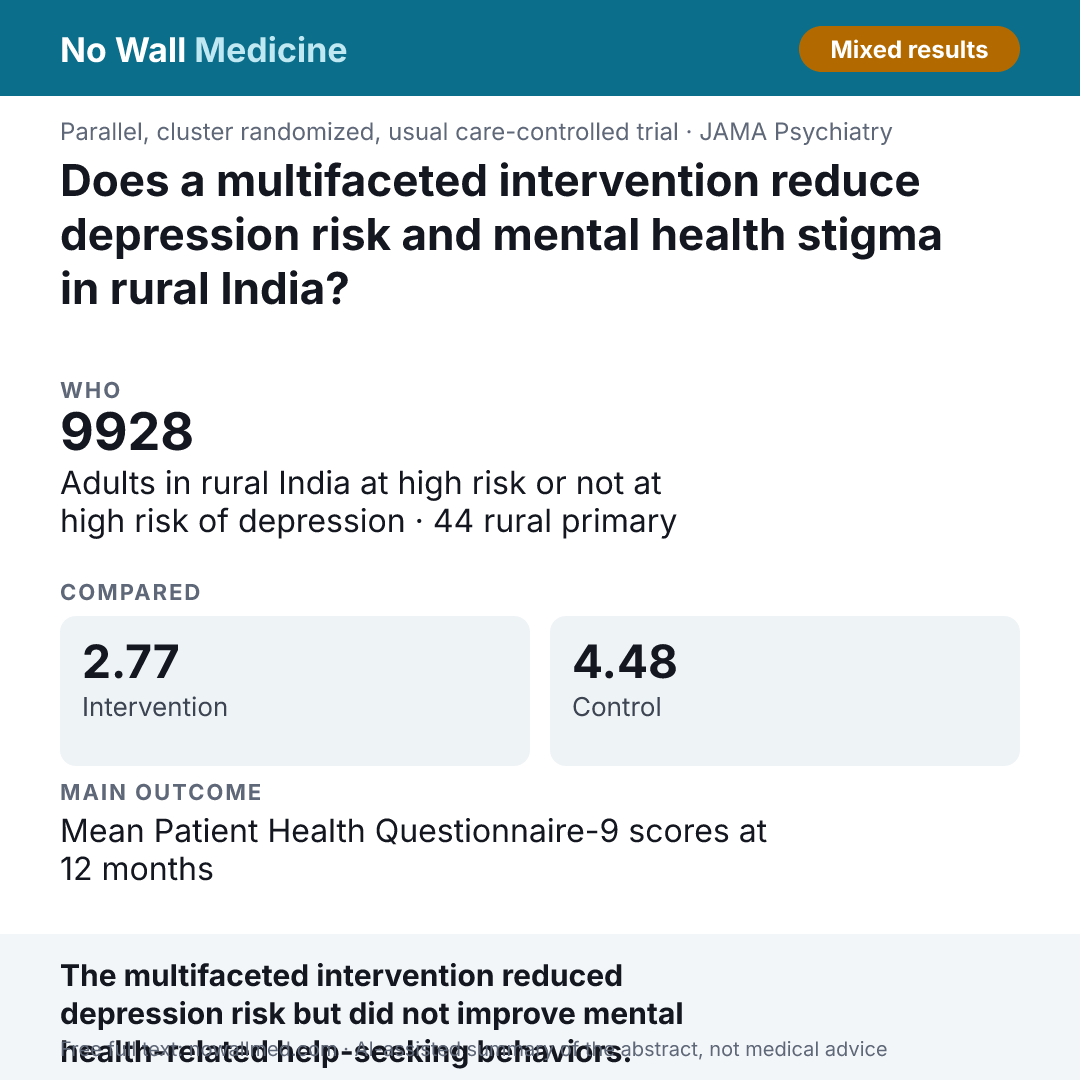
Mental Health Care Support in Rural India: A Cluster Randomized Clinical Trial
Parallel, cluster randomized, usual care-controlled trialMixed results
Does a multifaceted intervention reduce depression risk and mental health stigma in rural India?
Who
9928
Adults in rural India at high risk or not at high risk of depression · 44 rural primary health centers in India
Compared
2.77Intervention
4.48Control
Main outcome
Mean Patient Health Questionnaire-9 scores at 12 months
Result: mean difference, -1.71 (95% CI, -2.53 to -0.89)
Bottom line: The multifaceted intervention reduced depression risk but did not improve mental health-related help-seeking behaviors.
JAMA Psychiatry · 2024-08-14 · Save PNG
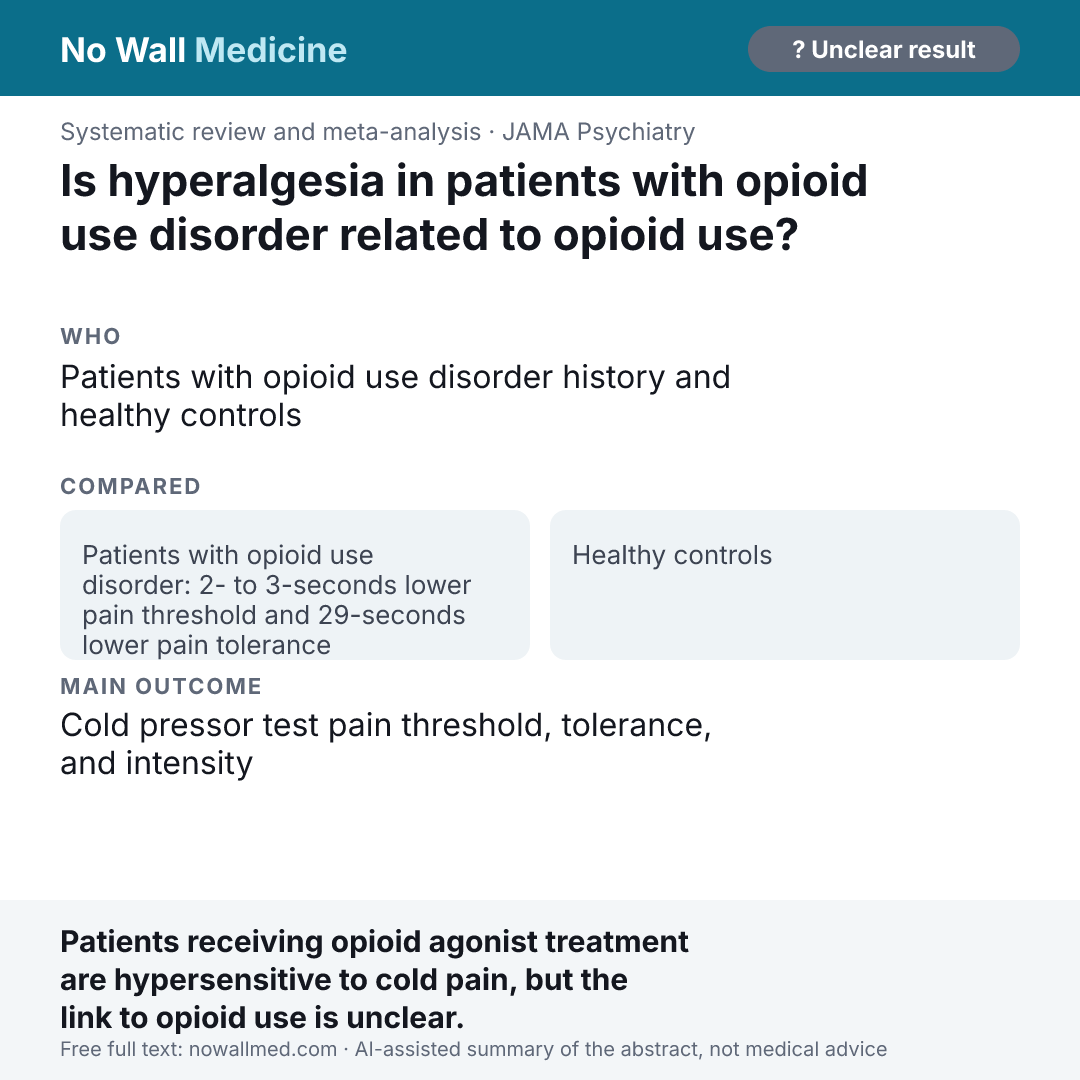
Hyperalgesia in Patients With a History of Opioid Use Disorder: A Systematic Review and Meta-Analysis
Systematic review and meta-analysisUnclear result
Is hyperalgesia in patients with opioid use disorder related to opioid use?
Who
Patients with opioid use disorder history and healthy controls
Compared
Patients with opioid use disorder: 2- to 3-seconds lower pain threshold and 29-seconds lower pain tolerance
Healthy controls
Main outcome
Cold pressor test pain threshold, tolerance, and intensity
Bottom line: Patients receiving opioid agonist treatment are hypersensitive to cold pain, but the link to opioid use is unclear.
Limitation: Differences may be overestimated; concerns of bias due to inadequate sample matching and participant dropout.
JAMA Psychiatry · 2024-08-14 · Save PNG
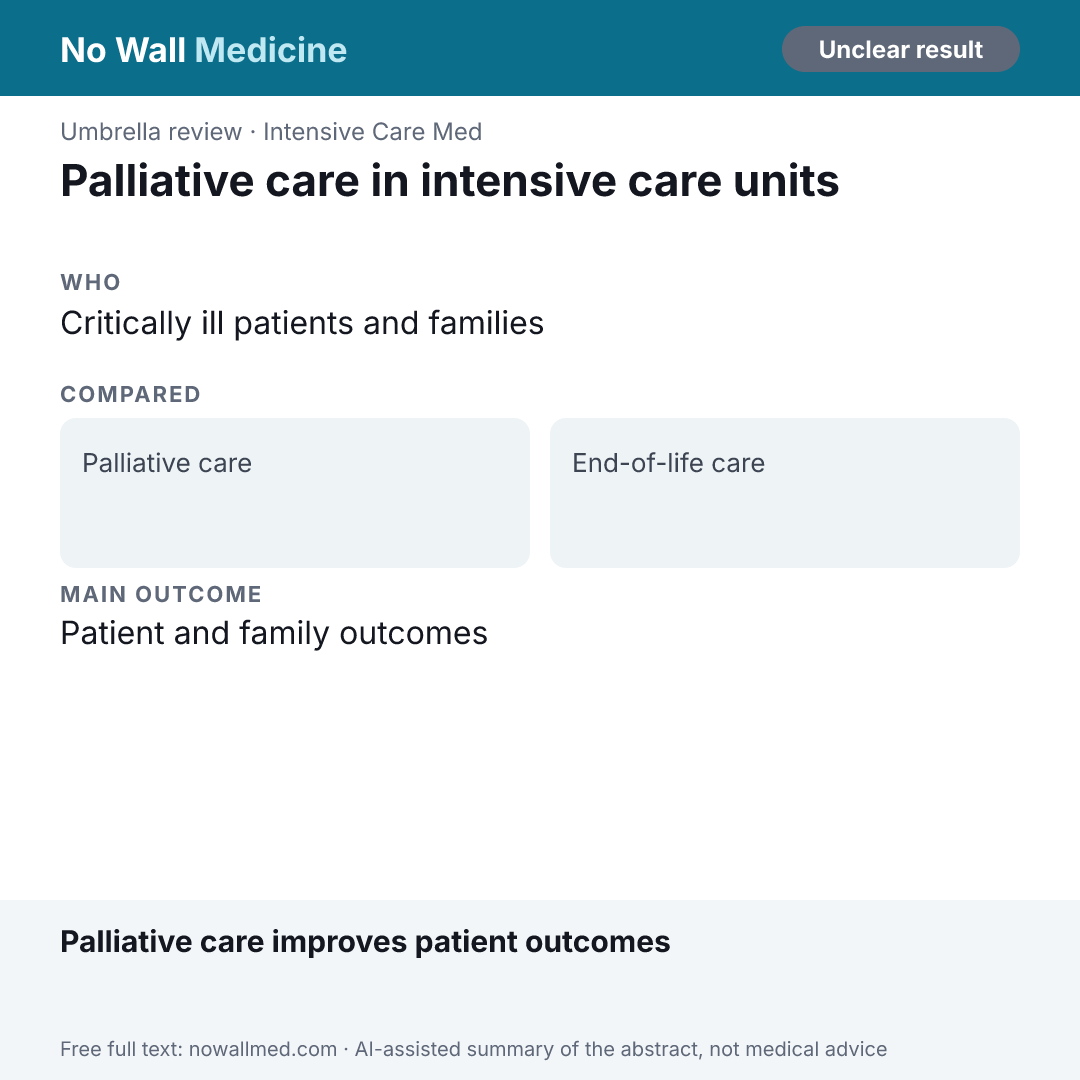
Assessing palliative care practices in intensive care units and interpreting them using the lens of appropriate care concepts. An umbrella review
Umbrella reviewUnclear result
Palliative care in intensive care units
Who
Critically ill patients and families
Compared
Palliative care
End-of-life care
Main outcome
Patient and family outcomes
Bottom line: Palliative care improves patient outcomes
Intensive Care Med · 2024-08-14 · Save PNG
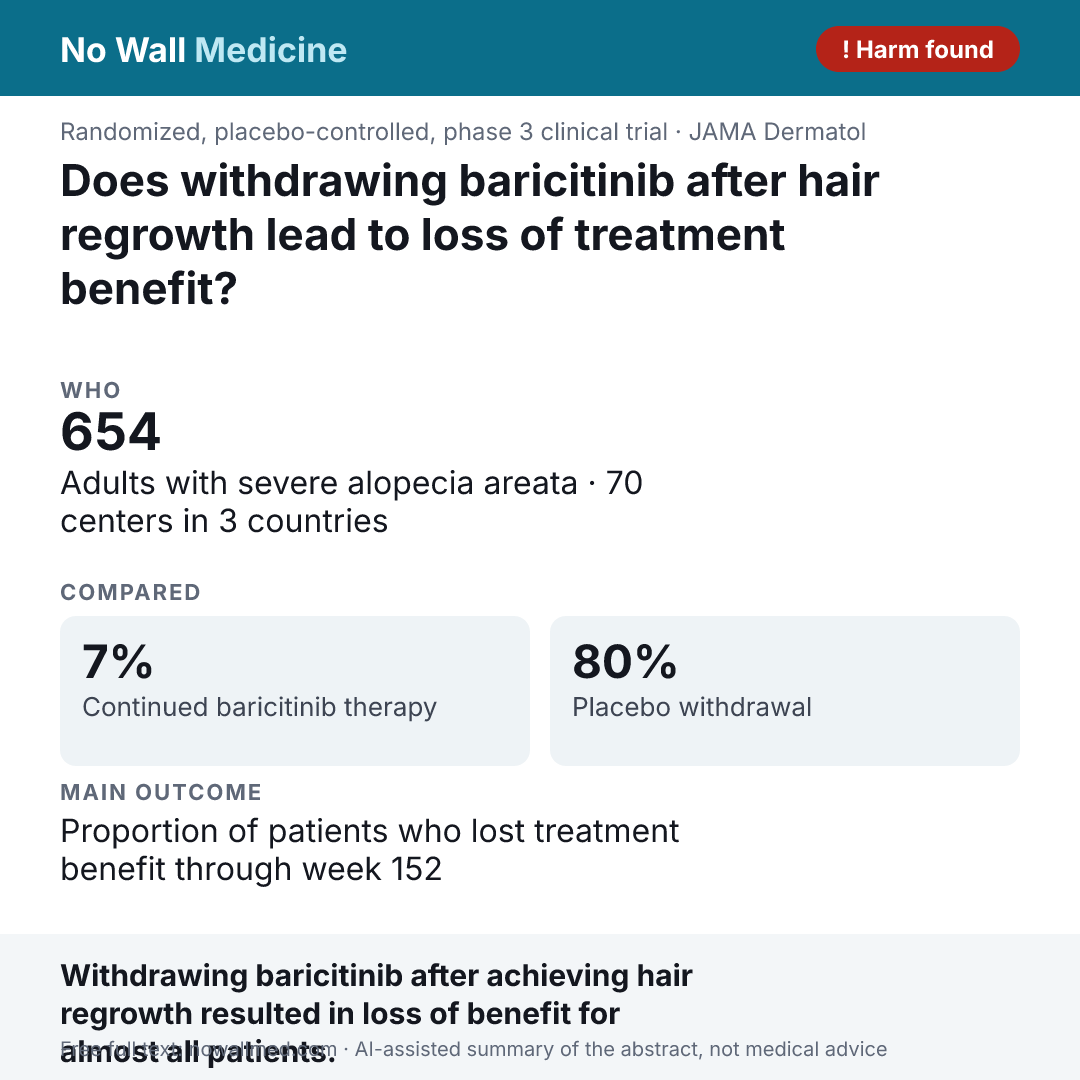
Baricitinib Withdrawal and Retreatment in Patients With Severe Alopecia Areata: The BRAVE-AA1 Randomized Clinical Trial
Randomized, placebo-controlled, phase 3 clinical trialHarm found
Does withdrawing baricitinib after hair regrowth lead to loss of treatment benefit?
Who
654
Adults with severe alopecia areata · 70 centers in 3 countries
Compared
7%Continued baricitinib therapy
80%Placebo withdrawal
Main outcome
Proportion of patients who lost treatment benefit through week 152
Bottom line: Withdrawing baricitinib after achieving hair regrowth resulted in loss of benefit for almost all patients.
JAMA Dermatol · 2024-08-14 · Save PNG
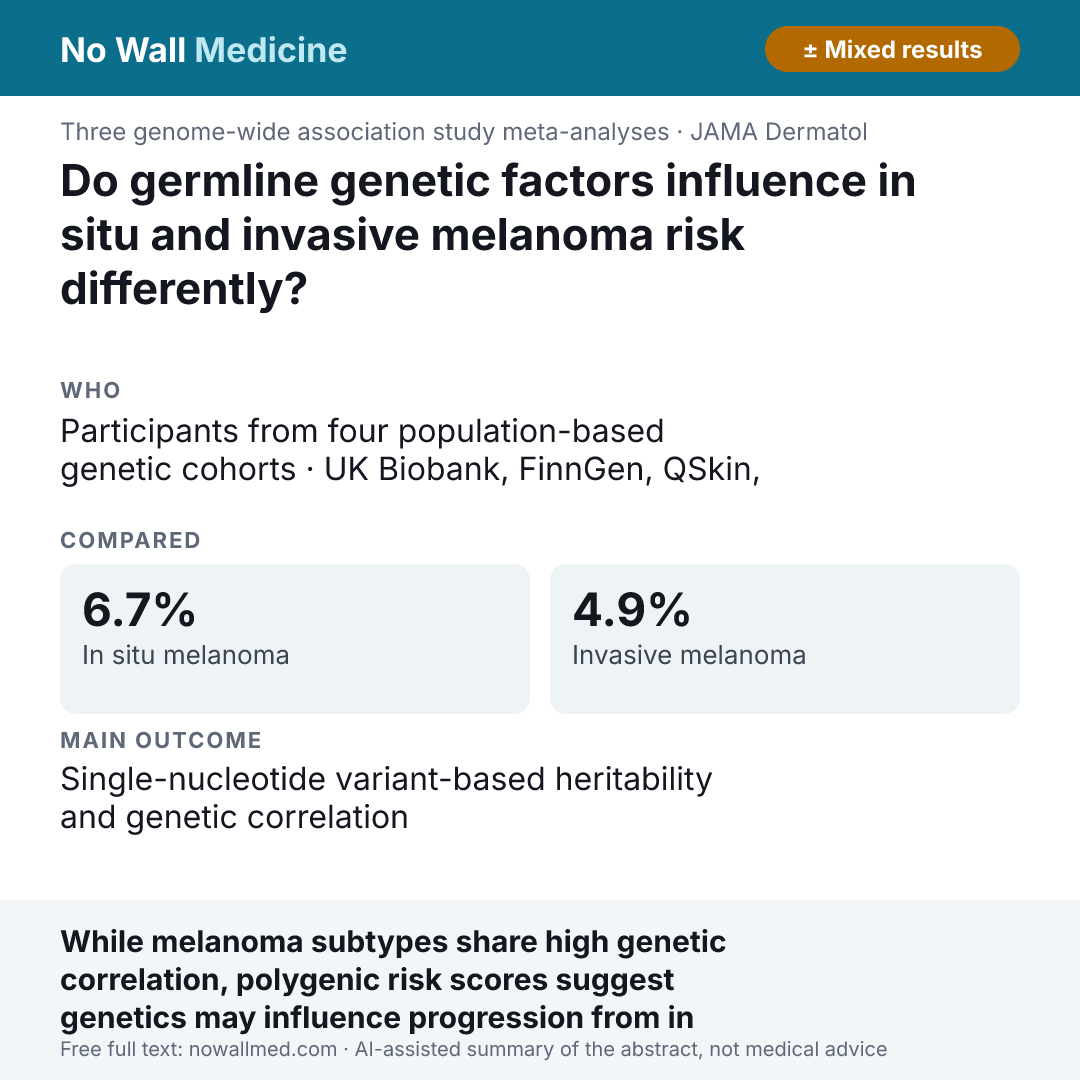
Exploring the Germline Genetics of In Situ and Invasive Cutaneous Melanoma: A Genome-Wide Association Study Meta-Analysis
Three genome-wide association study meta-analysesMixed results
Do germline genetic factors influence in situ and invasive melanoma risk differently?
Who
Participants from four population-based genetic cohorts · UK Biobank, FinnGen, QSkin, and Q-MEGA cohorts
Compared
6.7%In situ melanoma (95% CI, 4.1-9.3)
4.9%Invasive melanoma (95% CI, 2.8-7.2)
Main outcome
Single-nucleotide variant-based heritability and genetic correlation
Result: genetic r = 0.96; 95% CI, 0.76-1.15
Bottom line: While melanoma subtypes share high genetic correlation, polygenic risk scores suggest genetics may influence progression from in situ to invasive.
JAMA Dermatol · 2024-08-14 · Save PNG
Disease Activity and Therapeutic Response to Pegcetacoplan for Geographic Atrophy Identified by Deep Learning-Based Analysis of OCT
Post hoc longitudinal image analysisBenefit found
How does pegcetacoplan affect retinal pigment epithelium and photoreceptor loss in geographic atrophy?
Who
897
Patients with geographic atrophy due to age-related macular degeneration
Compared
Pegcetacoplan monthly or every other month: 22% and 20% RPE loss reduction in OAKS and DERBY
Sham
Main outcome
Change in mean area of retinal pigment epithelium and ellipsoid zone loss
Bottom line: Pegcetacoplan reduces retinal pigment epithelium and photoreceptor loss in patients with geographic atrophy.
Ophthalmology · 2024-08-14 · Save PNG

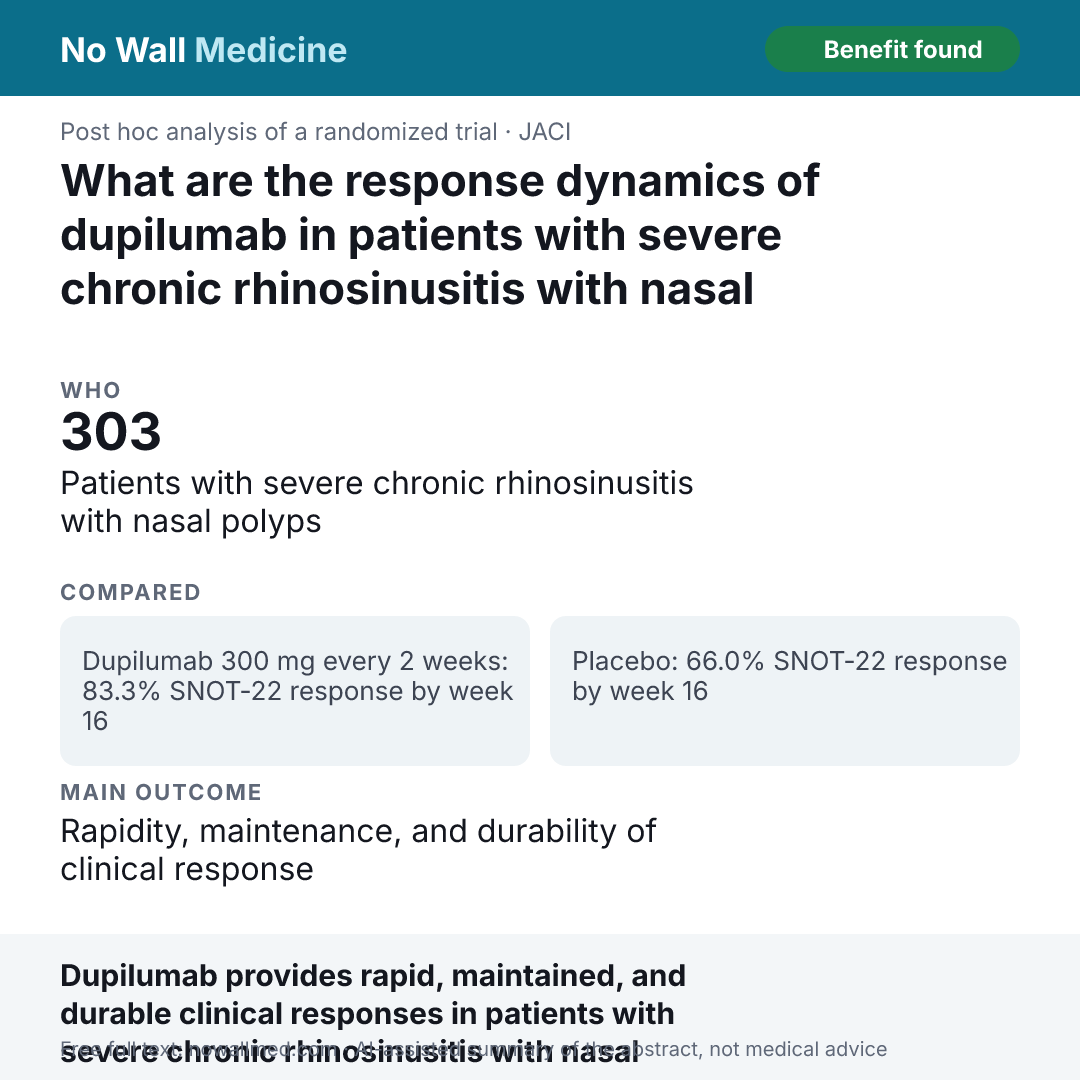
Dupilumab response onset, maintenance, and durability in patients with severe CRSwNP
Post hoc analysis of a randomized trialBenefit found
What are the response dynamics of dupilumab in patients with severe chronic rhinosinusitis with nasal polyps?
Who
303
Patients with severe chronic rhinosinusitis with nasal polyps
Compared
Dupilumab 300 mg every 2 weeks: 83.3% SNOT-22 response by week 16
Placebo: 66.0% SNOT-22 response by week 16
Main outcome
Rapidity, maintenance, and durability of clinical response
Bottom line: Dupilumab provides rapid, maintained, and durable clinical responses in patients with severe chronic rhinosinusitis with nasal polyps.
JACI · 2024-08-14 · Save PNG