Visual abstracts
New randomized trials and meta-analyses from leading journals at a glance: who was studied, what was compared, and what was found. Every paper is free to read in full.
All specialtiesCardiology 969Oncology 858Gastroenterology & Hepatology 352Infectious Disease 668Neurology 400Psychiatry & Mental Health 487Pulmonology 422Critical Care 285Endocrinology & Diabetes 539Pediatrics 605Surgery 407Orthopedics & Sports Medicine 186Neurosurgery 137Cardiothoracic & Vascular Surgery 101Plastic & Reconstructive Surgery 155Nephrology 216Rheumatology 124Hematology 206Dermatology 90Ophthalmology 116Obstetrics & Gynecology 294Public & Global Health 187Radiology & Imaging 120Anesthesiology 160Urology 185ENT (Otolaryngology) 131Emergency Medicine 107Allergy & Immunology 66Geriatrics 184Family Medicine & Primary Care 130Medical Genetics & Genomics 96Pathology & Laboratory Medicine 30Physical Medicine & Rehabilitation 167Palliative Care 90Nutrition 243Digital Health & AI 498General Medicine 105
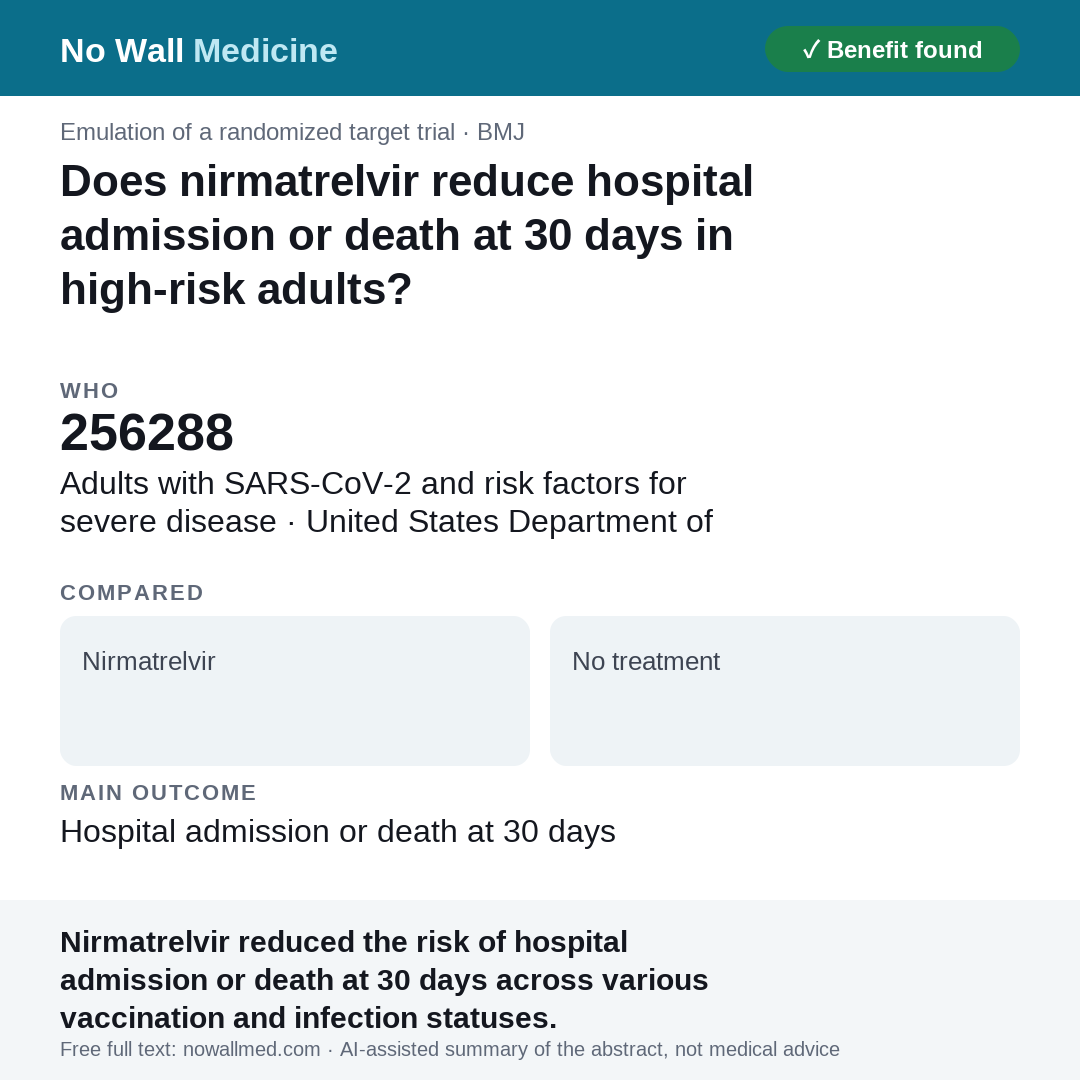
Nirmatrelvir and risk of hospital admission or death in adults with covid-19: emulation of a randomized target trial using electronic health records
Emulation of a randomized target trialBenefit found
Does nirmatrelvir reduce hospital admission or death at 30 days in high-risk adults?
Who
256288
Adults with SARS-CoV-2 and risk factors for severe disease · United States Department of Veterans Affairs healthcare databases
Compared
Nirmatrelvir
No treatment
Main outcome
Hospital admission or death at 30 days
Bottom line: Nirmatrelvir reduced the risk of hospital admission or death at 30 days across various vaccination and infection statuses.
BMJ · 2023-04-11Download image
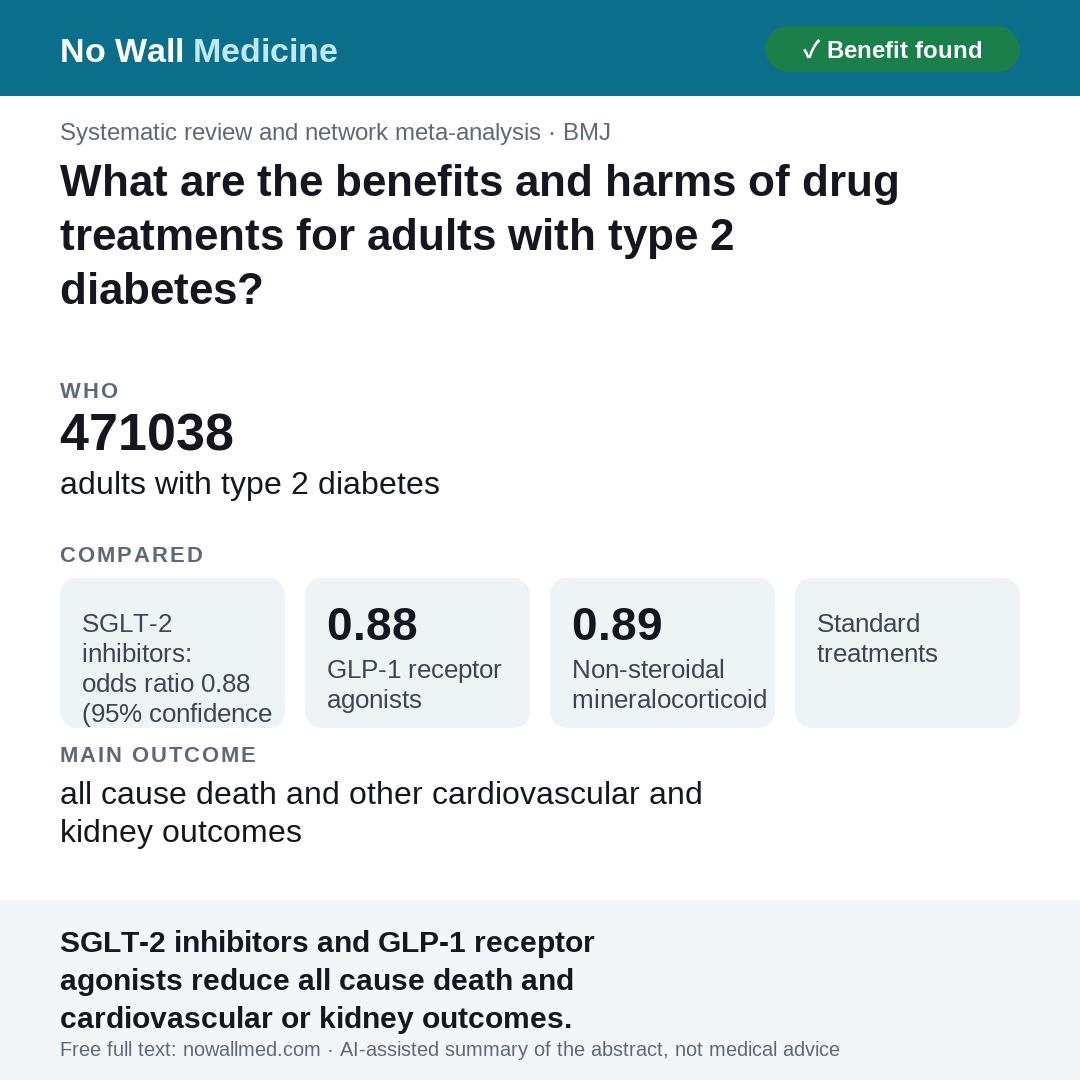
Benefits and harms of drug treatment for type 2 diabetes: systematic review and network meta-analysis of randomised controlled trials
Systematic review and network meta-analysisBenefit found
What are the benefits and harms of drug treatments for adults with type 2 diabetes?
Who
471038
adults with type 2 diabetes
Compared
SGLT-2 inhibitors: odds ratio 0.88 (95% confidence interval 0.83 to 0.94)
0.88GLP-1 receptor agonists (0.82 to 0.93)
0.89Non-steroidal mineralocorticoid receptor antagonists (0.79 to 1.00)
Standard treatments
Main outcome
all cause death and other cardiovascular and kidney outcomes
Result: odds ratio 0.88 (95% CI 0.83 to 0.94) for SGLT-2 inhibitors
Bottom line: SGLT-2 inhibitors and GLP-1 receptor agonists reduce all cause death and cardiovascular or kidney outcomes.
BMJ · 2023-04-06Download image
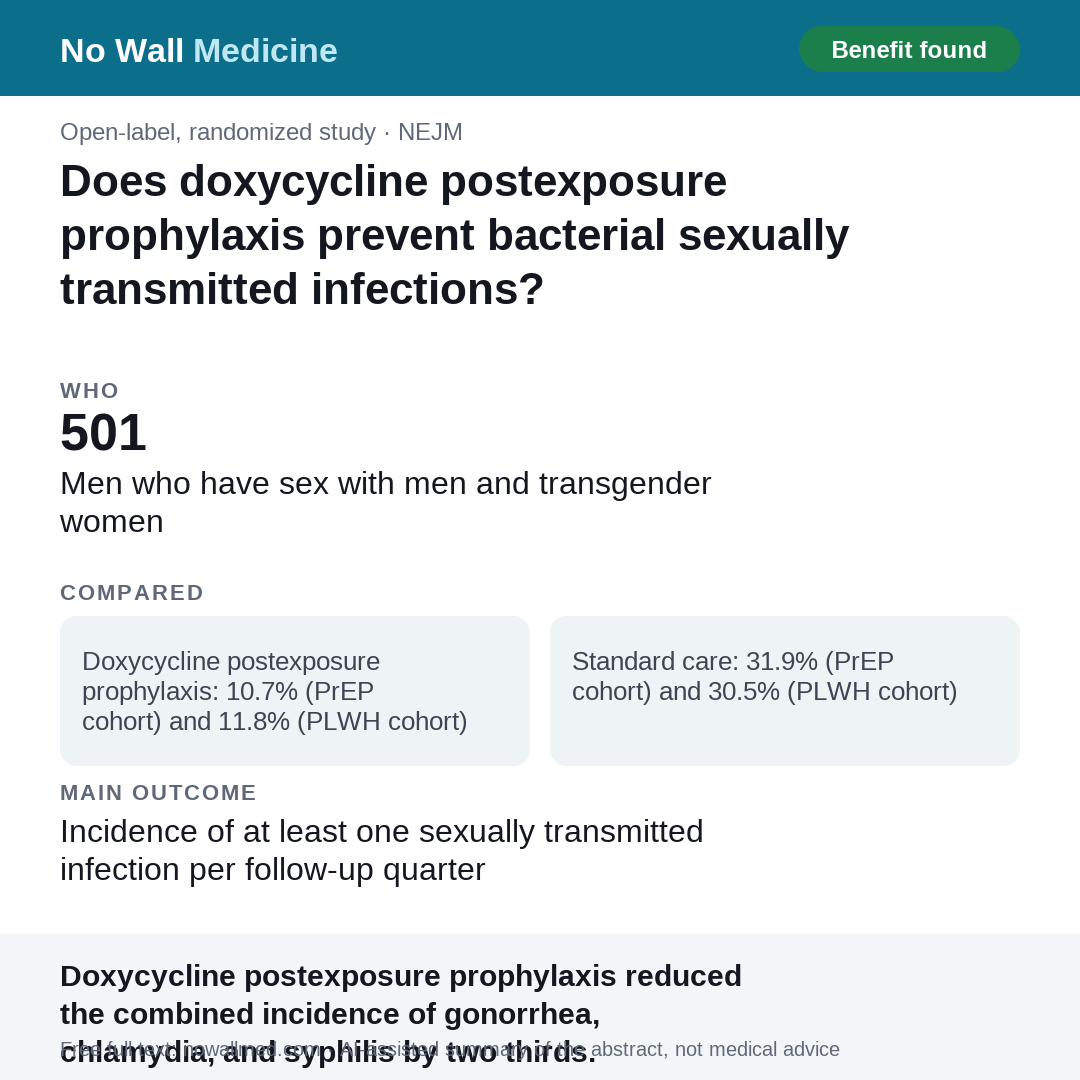
Postexposure Doxycycline to Prevent Bacterial Sexually Transmitted Infections
Open-label, randomized studyBenefit found
Does doxycycline postexposure prophylaxis prevent bacterial sexually transmitted infections?
Who
501
Men who have sex with men and transgender women
Compared
Doxycycline postexposure prophylaxis: 10.7% (PrEP cohort) and 11.8% (PLWH cohort)
Standard care: 31.9% (PrEP cohort) and 30.5% (PLWH cohort)
Main outcome
Incidence of at least one sexually transmitted infection per follow-up quarter
Result: relative risk 0.34 (95% CI, 0.24 to 0.46) in PrEP cohort
Bottom line: Doxycycline postexposure prophylaxis reduced the combined incidence of gonorrhea, chlamydia, and syphilis by two thirds.
Funded by: National Institutes of Health
NEJM · 2023-04-05Download image
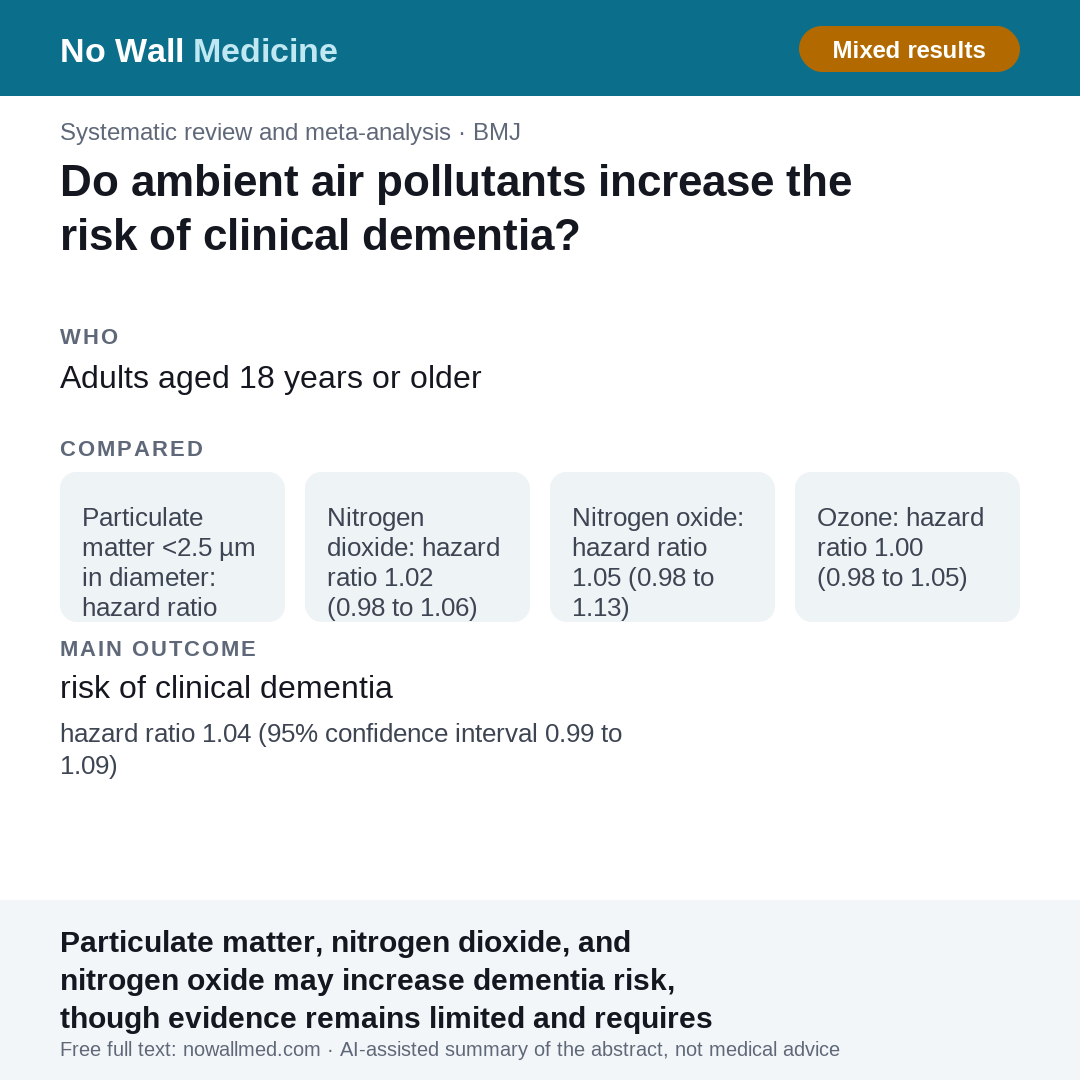
Ambient air pollution and clinical dementia: systematic review and meta-analysis
Systematic review and meta-analysisMixed results
Do ambient air pollutants increase the risk of clinical dementia?
Who
Adults aged 18 years or older
Compared
Particulate matter <2.5 µm in diameter: hazard ratio 1.04 (95% confidence interval 0.99 to 1.09)
Nitrogen dioxide: hazard ratio 1.02 (0.98 to 1.06)
Nitrogen oxide: hazard ratio 1.05 (0.98 to 1.13)
Ozone: hazard ratio 1.00 (0.98 to 1.05)
Main outcome
risk of clinical dementia
Result: hazard ratio 1.04 (95% confidence interval 0.99 to 1.09)
Bottom line: Particulate matter, nitrogen dioxide, and nitrogen oxide may increase dementia risk, though evidence remains limited and requires cautious interpretation.
Limitation: Most studies were at high risk of bias and outcome ascertainment approaches differ across studies.
BMJ · 2023-04-05Download image
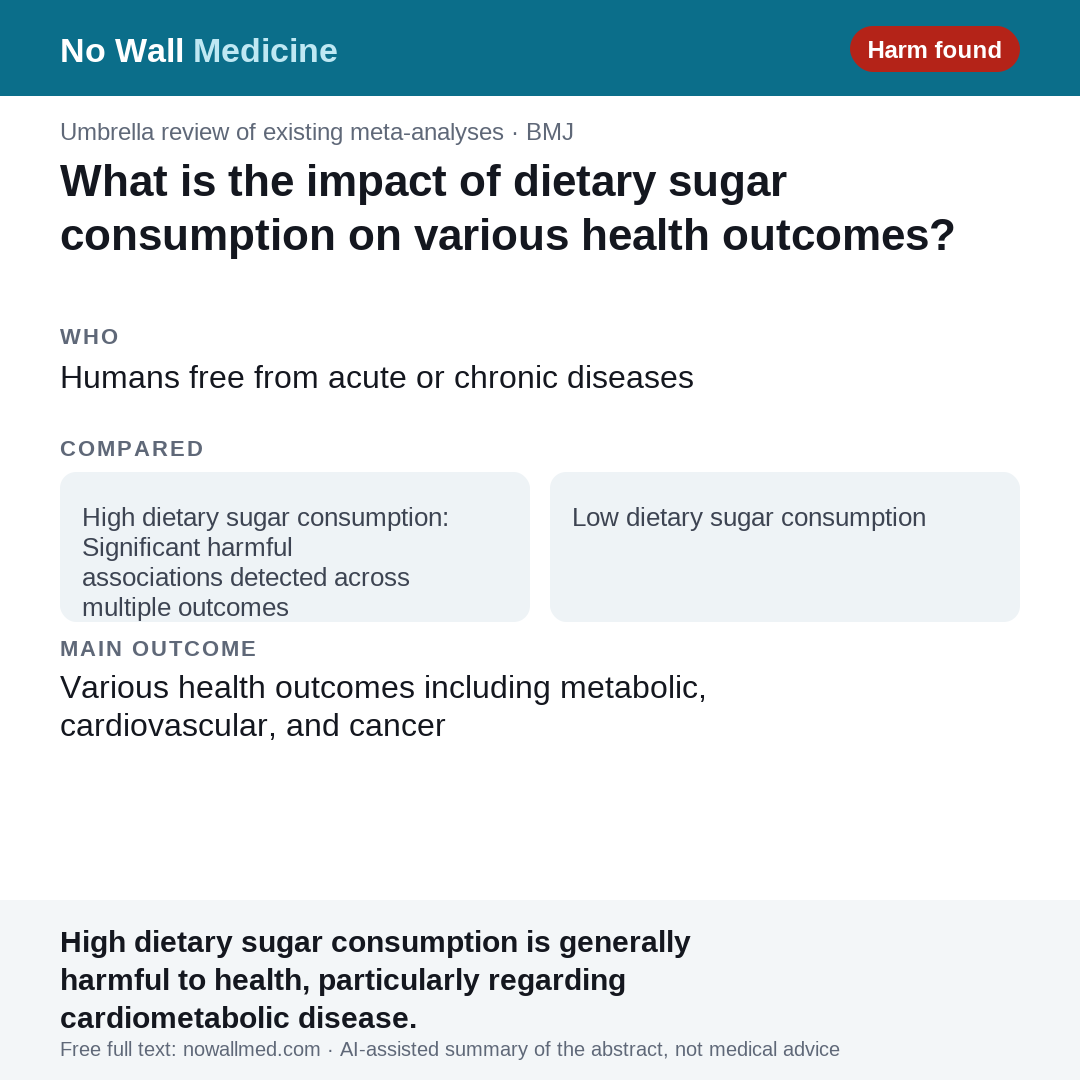
Dietary sugar consumption and health: umbrella review
Umbrella review of existing meta-analysesHarm found
What is the impact of dietary sugar consumption on various health outcomes?
Who
Humans free from acute or chronic diseases
Compared
High dietary sugar consumption: Significant harmful associations detected across multiple outcomes
Low dietary sugar consumption
Main outcome
Various health outcomes including metabolic, cardiovascular, and cancer
Bottom line: High dietary sugar consumption is generally harmful to health, particularly regarding cardiometabolic disease.
BMJ · 2023-04-05Download image
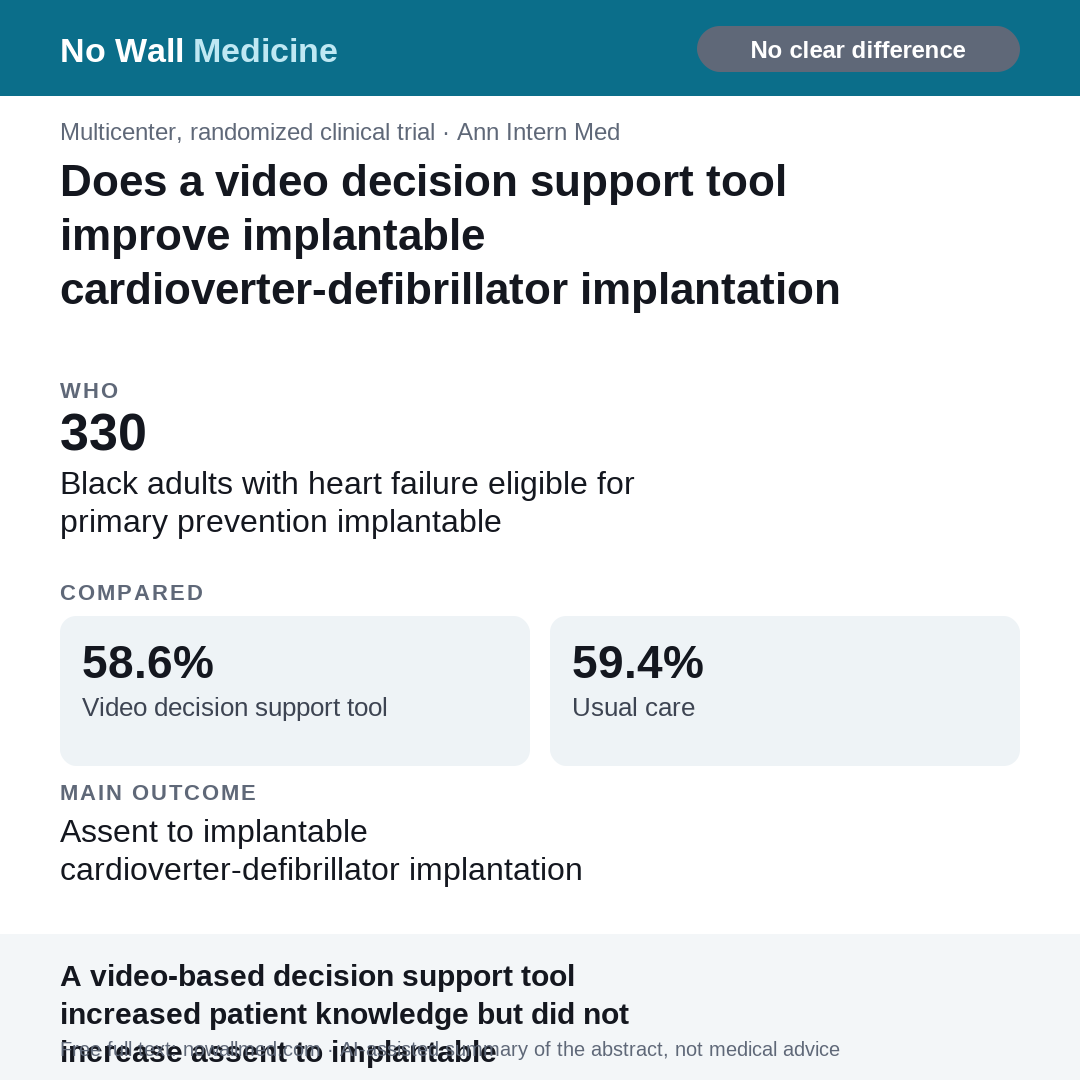
Facilitating Shared Decision Making Among Black Patients at Risk for Sudden Cardiac Arrest : A Randomized Clinical Trial
Multicenter, randomized clinical trialNo clear difference
Does a video decision support tool improve implantable cardioverter-defibrillator implantation decisions among Black patients?
Who
330
Black adults with heart failure eligible for primary prevention implantable cardioverter-defibrillator · Fourteen academic and community-based electrophysiology clinics in the United States
Compared
58.6%Video decision support tool
59.4%Usual care
Main outcome
Assent to implantable cardioverter-defibrillator implantation
Result: difference, -0.8 percentage point (95% CI, -13.2 to 11.1 percentage points)
Bottom line: A video-based decision support tool increased patient knowledge but did not increase assent to implantable cardioverter-defibrillator implantation.
Limitation: Centers for Medicare & Medicaid Services implemented a requirement for shared decision making during the study.
Funded by: Patient-Centered Outcomes Research Institute
Ann Intern Med · 2023-04-04Download image
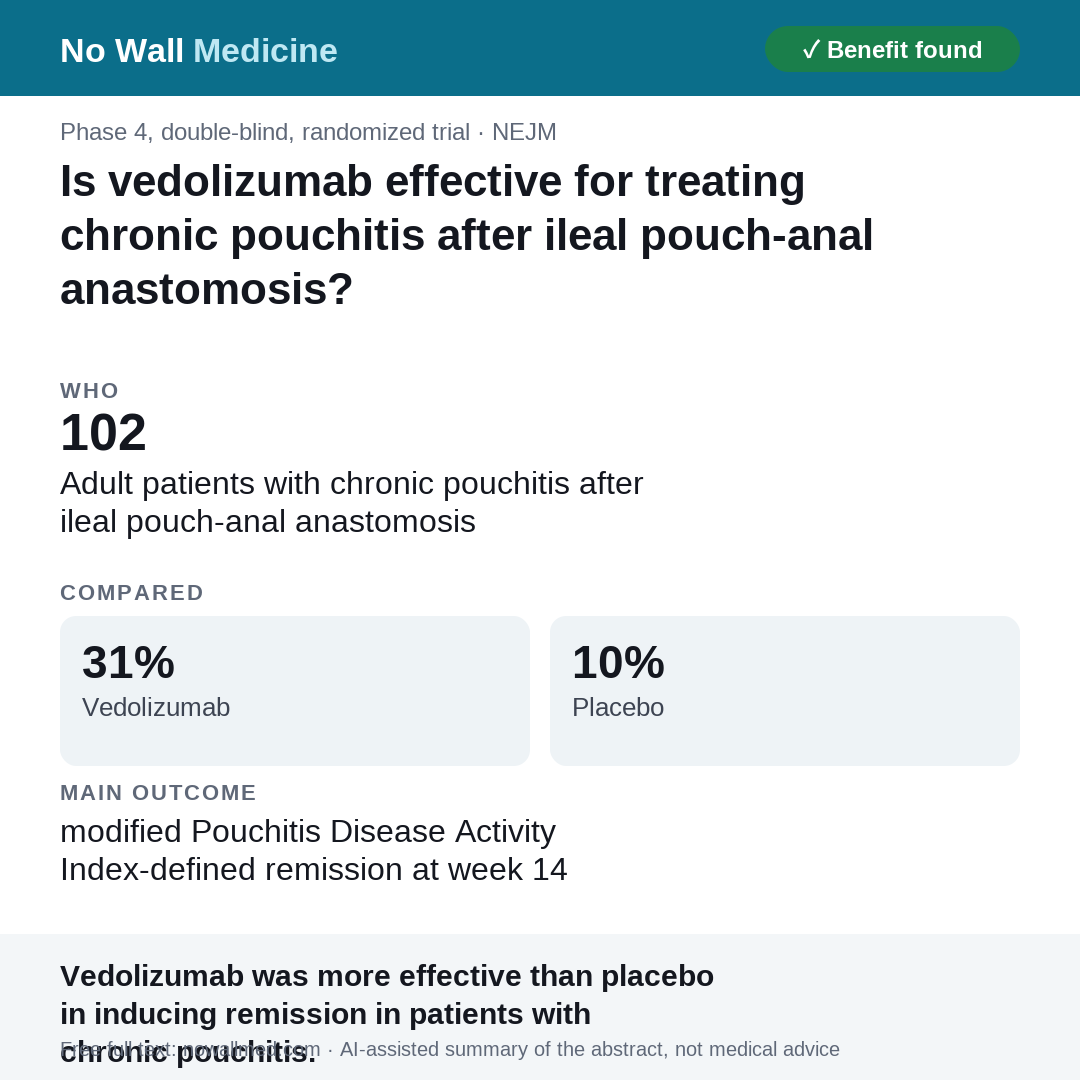
Vedolizumab for the Treatment of Chronic Pouchitis
Phase 4, double-blind, randomized trialBenefit found
Is vedolizumab effective for treating chronic pouchitis after ileal pouch-anal anastomosis?
Who
102
Adult patients with chronic pouchitis after ileal pouch-anal anastomosis
Compared
31%Vedolizumab (16 of 51 patients)
10%Placebo (5 of 51 patients)
Main outcome
modified Pouchitis Disease Activity Index-defined remission at week 14
Result: difference, 21 percentage points; 95% confidence interval, 5 to 38
Bottom line: Vedolizumab was more effective than placebo in inducing remission in patients with chronic pouchitis.
Funded by: Takeda
NEJM · 2023-03-29Download image
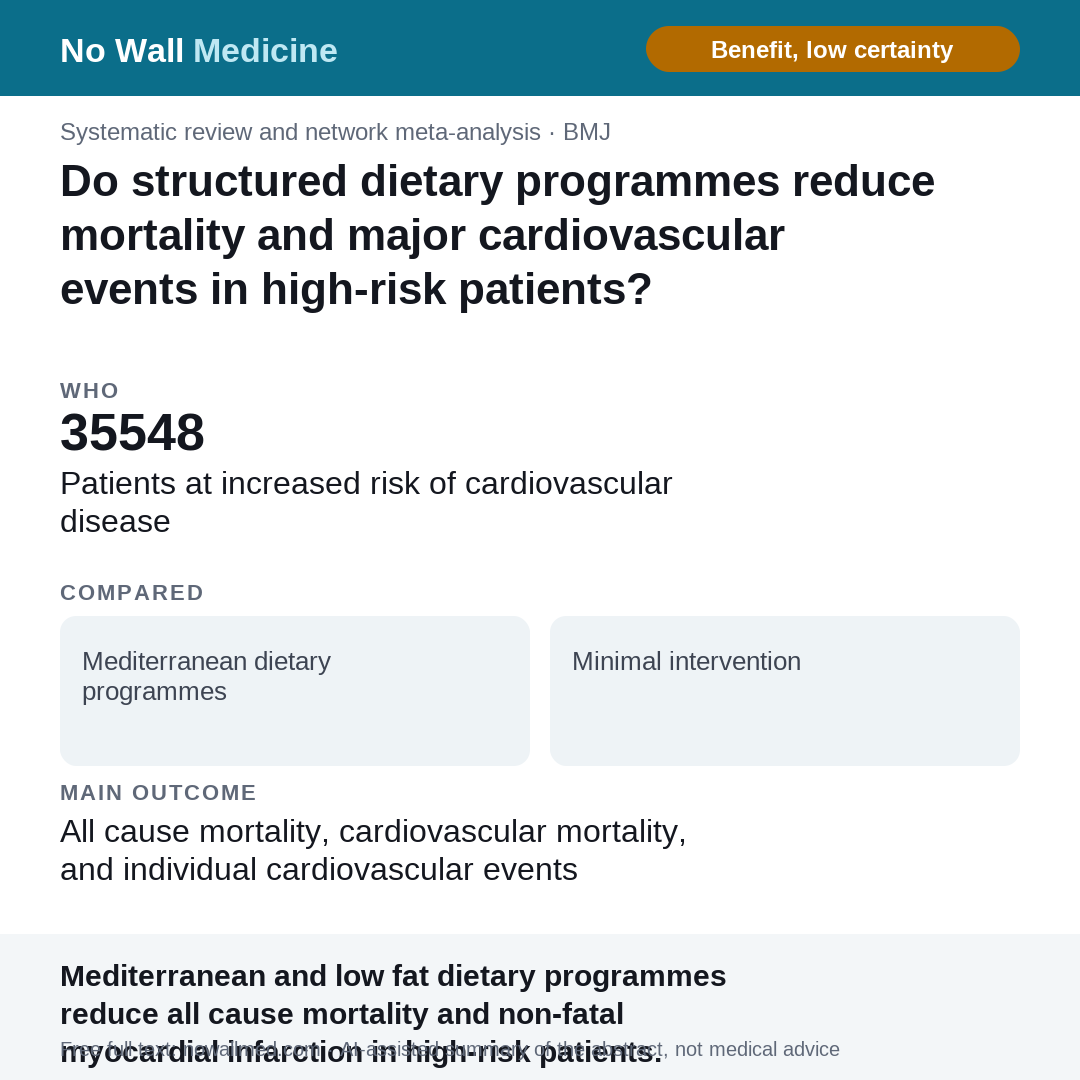
Comparison of seven popular structured dietary programmes and risk of mortality and major cardiovascular events in patients at increased cardiovascular risk: systematic review and network meta-analysis
Systematic review and network meta-analysisBenefit found
Do structured dietary programmes reduce mortality and major cardiovascular events in high-risk patients?
Who
35548
Patients at increased risk of cardiovascular disease
Compared
Mediterranean dietary programmes
Minimal intervention
Main outcome
All cause mortality, cardiovascular mortality, and individual cardiovascular events
Result: odds ratio 0.72 (95% confidence interval 0.56 to 0.92) for all cause mortality
Bottom line: Mediterranean and low fat dietary programmes reduce all cause mortality and non-fatal myocardial infarction in high-risk patients.
BMJ · 2023-03-29Download image
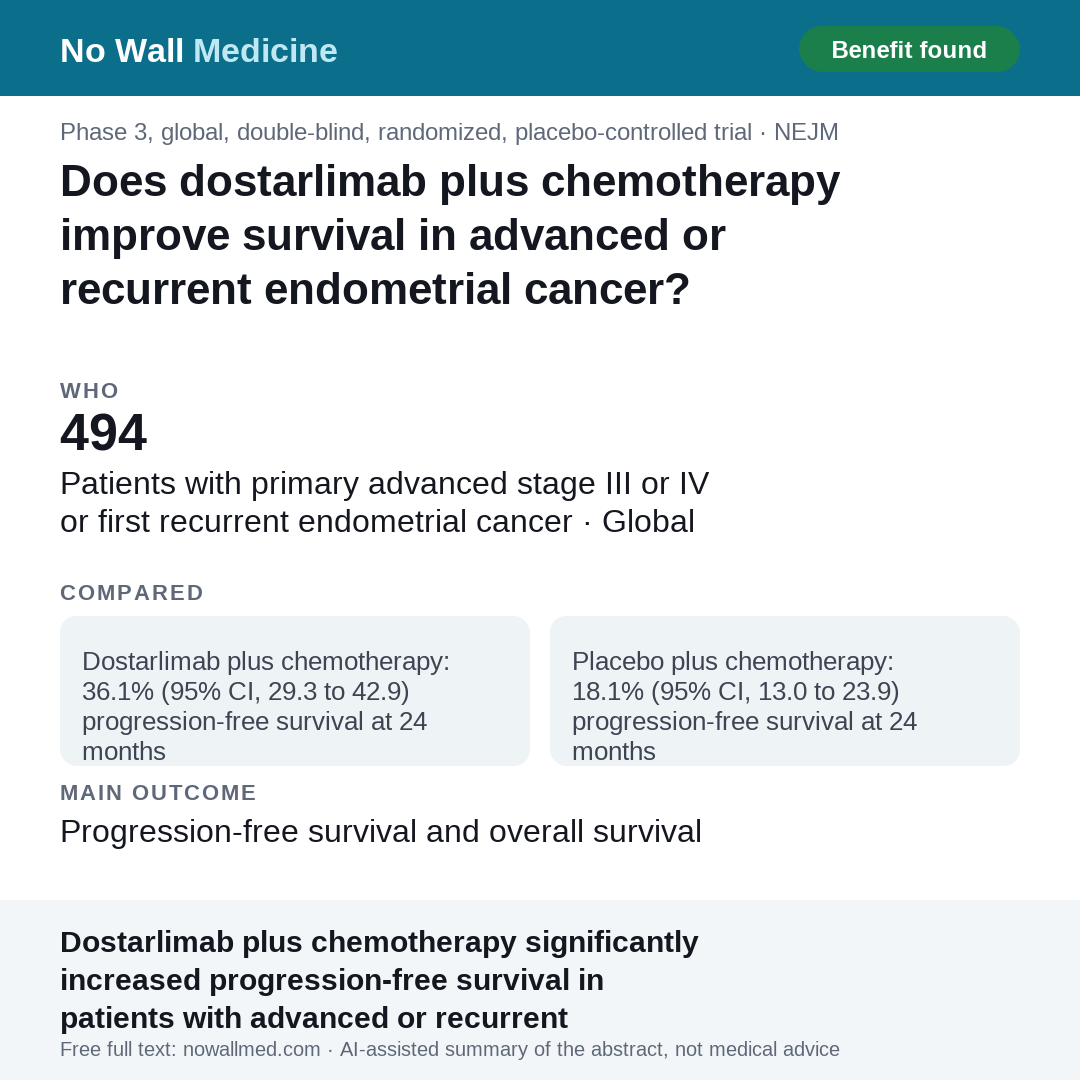
Dostarlimab for Primary Advanced or Recurrent Endometrial Cancer
Phase 3, global, double-blind, randomized, placebo-controlled trialBenefit found
Does dostarlimab plus chemotherapy improve survival in advanced or recurrent endometrial cancer?
Who
494
Patients with primary advanced stage III or IV or first recurrent endometrial cancer · Global
Compared
Dostarlimab plus chemotherapy: 36.1% (95% CI, 29.3 to 42.9) progression-free survival at 24 months
Placebo plus chemotherapy: 18.1% (95% CI, 13.0 to 23.9) progression-free survival at 24 months
Main outcome
Progression-free survival and overall survival
Result: hazard ratio 0.64 (95% CI, 0.51 to 0.80)
Bottom line: Dostarlimab plus chemotherapy significantly increased progression-free survival in patients with advanced or recurrent endometrial cancer.
Funded by: GSK
NEJM · 2023-03-27Download image
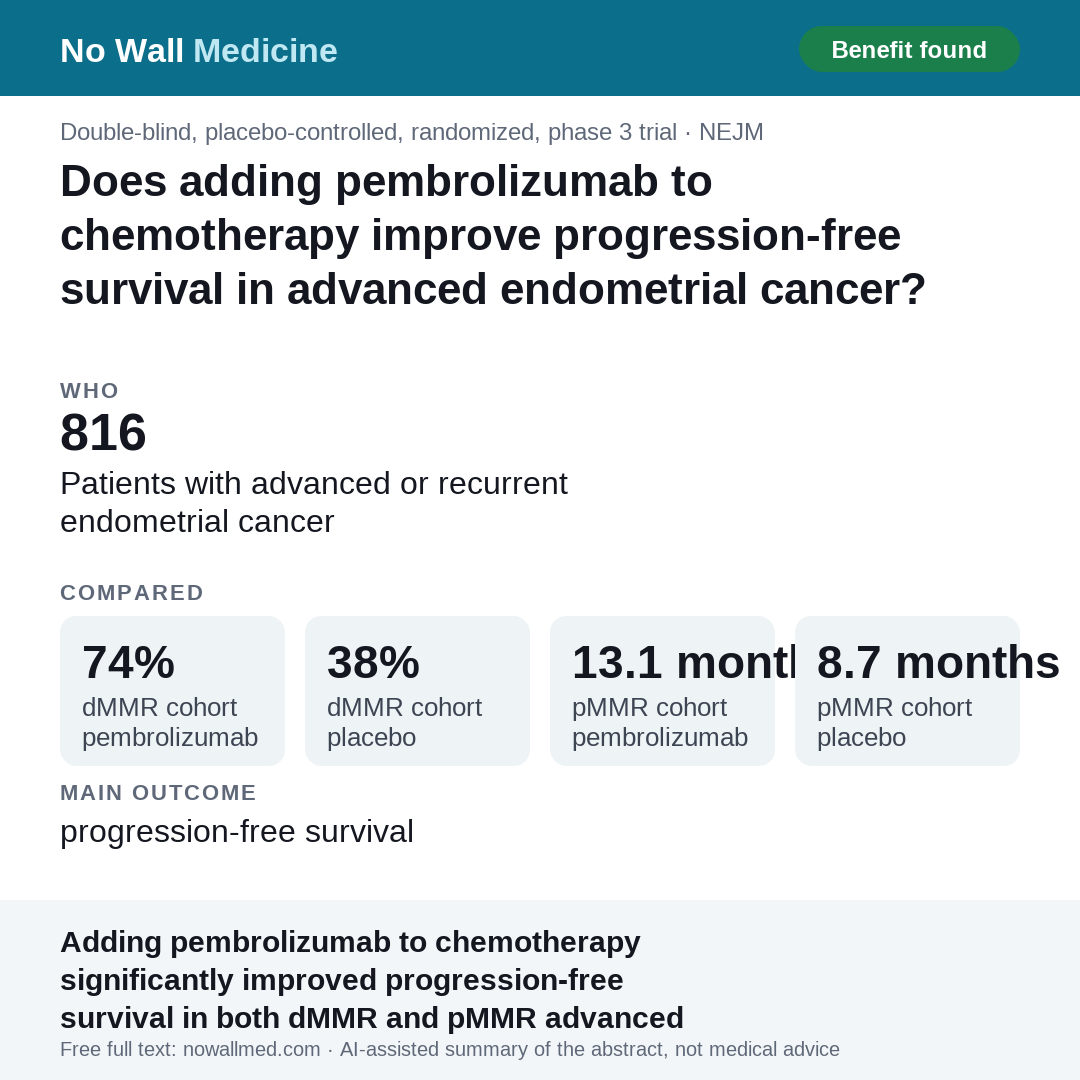
Pembrolizumab plus Chemotherapy in Advanced Endometrial Cancer
Double-blind, placebo-controlled, randomized, phase 3 trialBenefit found
Does adding pembrolizumab to chemotherapy improve progression-free survival in advanced endometrial cancer?
Who
816
Patients with advanced or recurrent endometrial cancer
Compared
74%dMMR cohort pembrolizumab
38%dMMR cohort placebo
13.1 monthspMMR cohort pembrolizumab
8.7 monthspMMR cohort placebo
Main outcome
progression-free survival
Result: hazard ratio 0.30 (95% CI 0.19 to 0.48) in dMMR; hazard ratio 0.54 (95% CI 0.41 to 0.71) in pMMR
Bottom line: Adding pembrolizumab to chemotherapy significantly improved progression-free survival in both dMMR and pMMR advanced endometrial cancer cohorts.
Funded by: National Cancer Institute and others
NEJM · 2023-03-27Download image
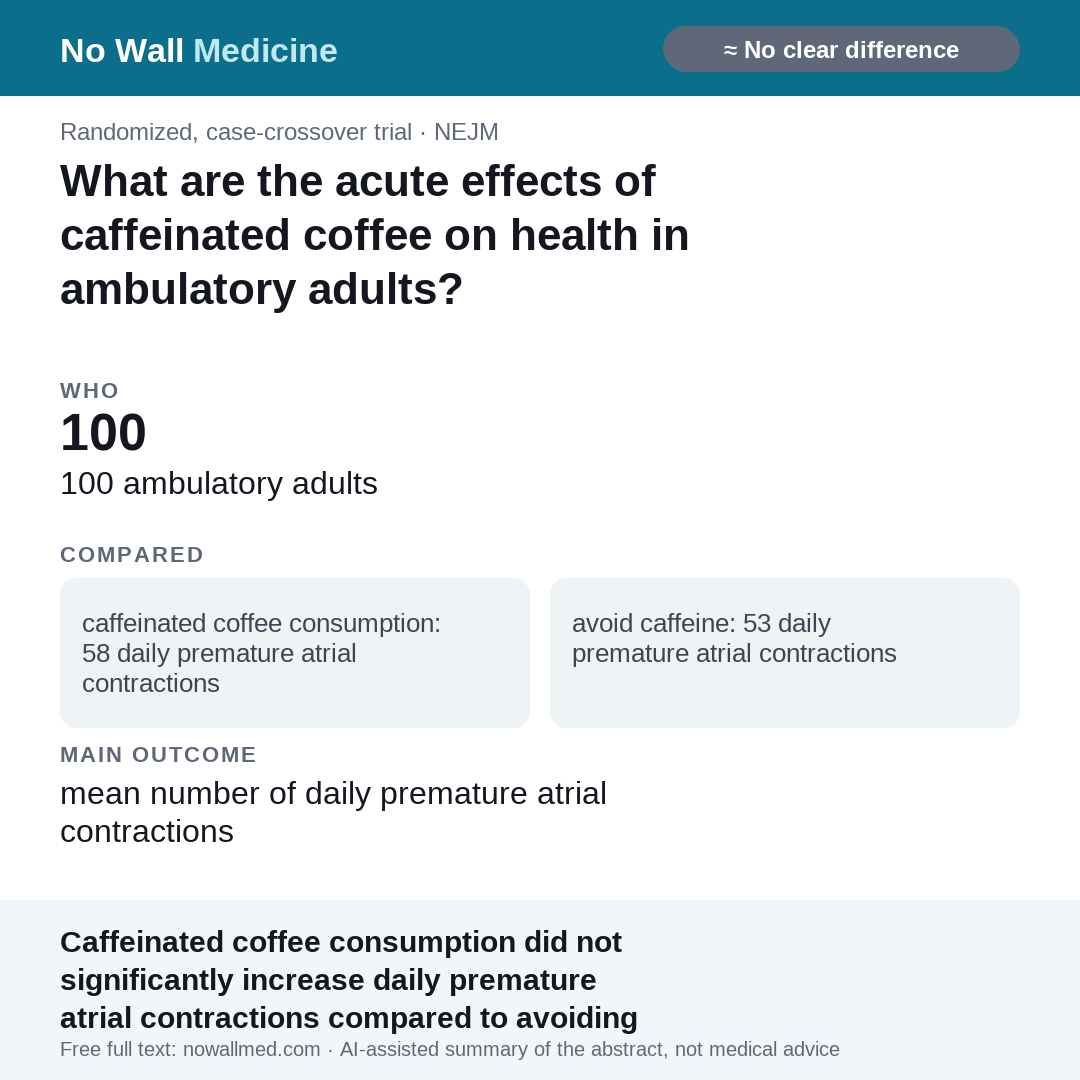
Acute Effects of Coffee Consumption on Health among Ambulatory Adults
Randomized, case-crossover trialNo clear difference
What are the acute effects of caffeinated coffee on health in ambulatory adults?
Who
100
100 ambulatory adults
Compared
caffeinated coffee consumption: 58 daily premature atrial contractions
avoid caffeine: 53 daily premature atrial contractions
Main outcome
mean number of daily premature atrial contractions
Result: rate ratio 1.09 (95% CI 0.98 to 1.20)
Bottom line: Caffeinated coffee consumption did not significantly increase daily premature atrial contractions compared to avoiding caffeine.
Funded by: University of California, San Francisco and National Institutes of Health
NEJM · 2023-03-22Download image
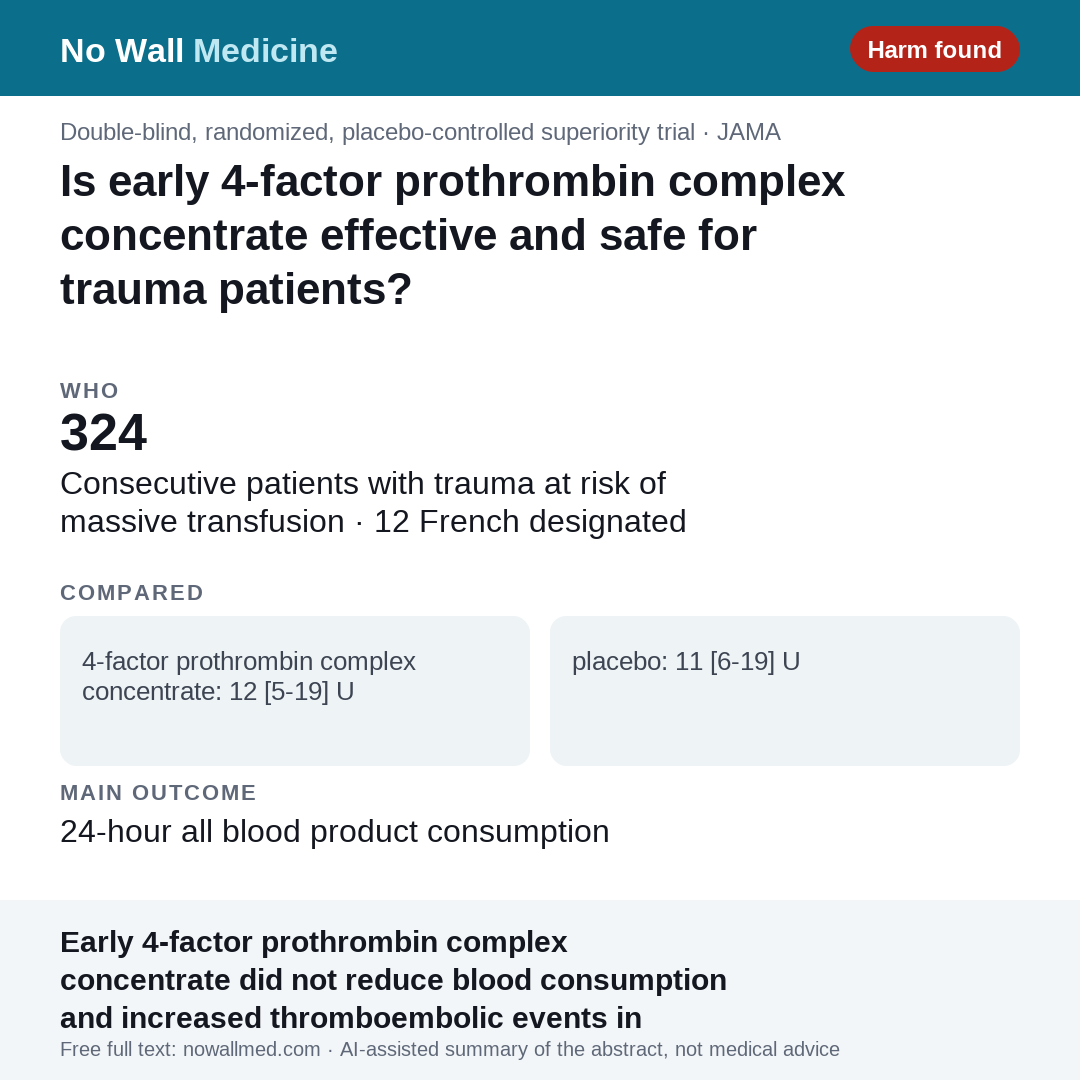
Efficacy and Safety of Early Administration of 4-Factor Prothrombin Complex Concentrate in Patients With Trauma at Risk of Massive Transfusion: The PROCOAG Randomized Clinical Trial
Double-blind, randomized, placebo-controlled superiority trialHarm found
Is early 4-factor prothrombin complex concentrate effective and safe for trauma patients?
Who
324
Consecutive patients with trauma at risk of massive transfusion · 12 French designated level I trauma centers
Compared
4-factor prothrombin complex concentrate: 12 [5-19] U
placebo: 11 [6-19] U
Main outcome
24-hour all blood product consumption
Result: absolute difference, 0.2 U [95% CI, -2.99 to 3.33]
Bottom line: Early 4-factor prothrombin complex concentrate did not reduce blood consumption and increased thromboembolic events in trauma patients.
JAMA · 2023-03-22Download image
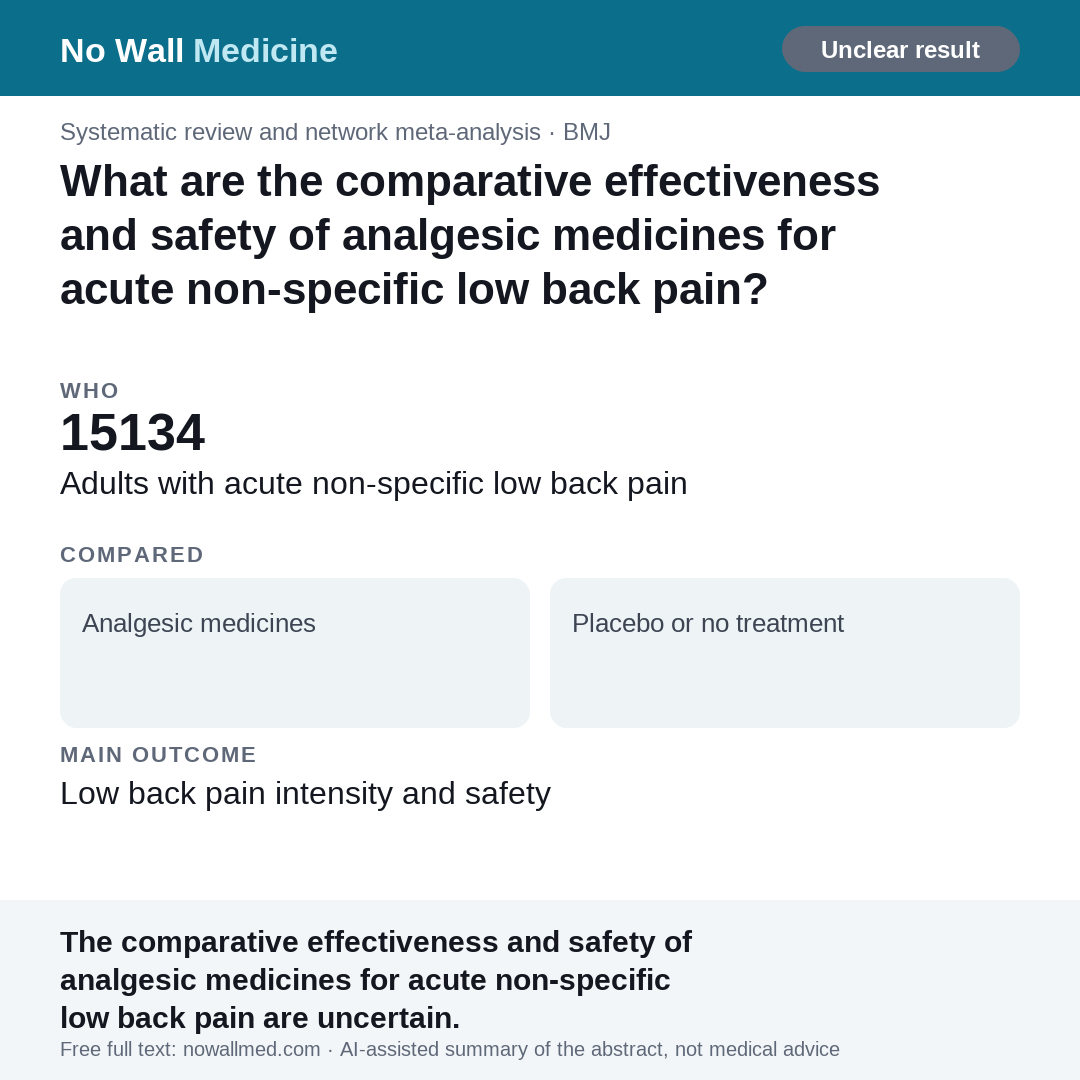
Comparative effectiveness and safety of analgesic medicines for adults with acute non-specific low back pain: systematic review and network meta-analysis
Systematic review and network meta-analysisUnclear result
What are the comparative effectiveness and safety of analgesic medicines for acute non-specific low back pain?
Who
15134
Adults with acute non-specific low back pain
Compared
Analgesic medicines
Placebo or no treatment
Main outcome
Low back pain intensity and safety
Bottom line: The comparative effectiveness and safety of analgesic medicines for acute non-specific low back pain are uncertain.
Limitation: Low or very low confidence in evidence for many medicines and secondary outcomes.
BMJ · 2023-03-22Download image
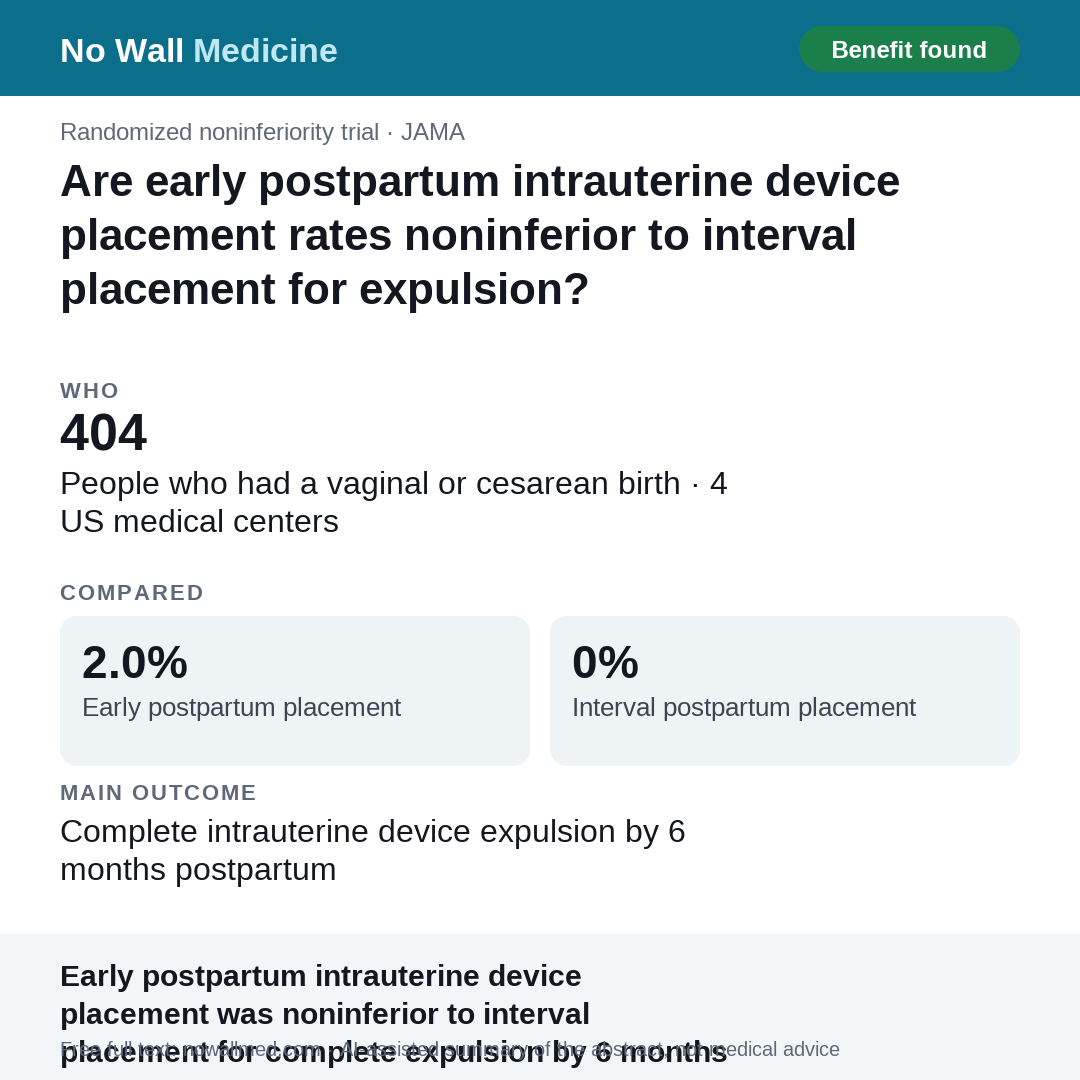
Early vs Interval Postpartum Intrauterine Device Placement: A Randomized Clinical Trial
Randomized noninferiority trialBenefit found
Are early postpartum intrauterine device placement rates noninferior to interval placement for expulsion?
Who
404
People who had a vaginal or cesarean birth · 4 US medical centers
Compared
2.0%Early postpartum placement (3/149)
0%Interval postpartum placement (0/145)
Main outcome
Complete intrauterine device expulsion by 6 months postpartum
Result: between-group difference, 2.0 (95% CI, -0.5 to 5.7) percentage points
Bottom line: Early postpartum intrauterine device placement was noninferior to interval placement for complete expulsion by 6 months postpartum.
JAMA · 2023-03-21Download image
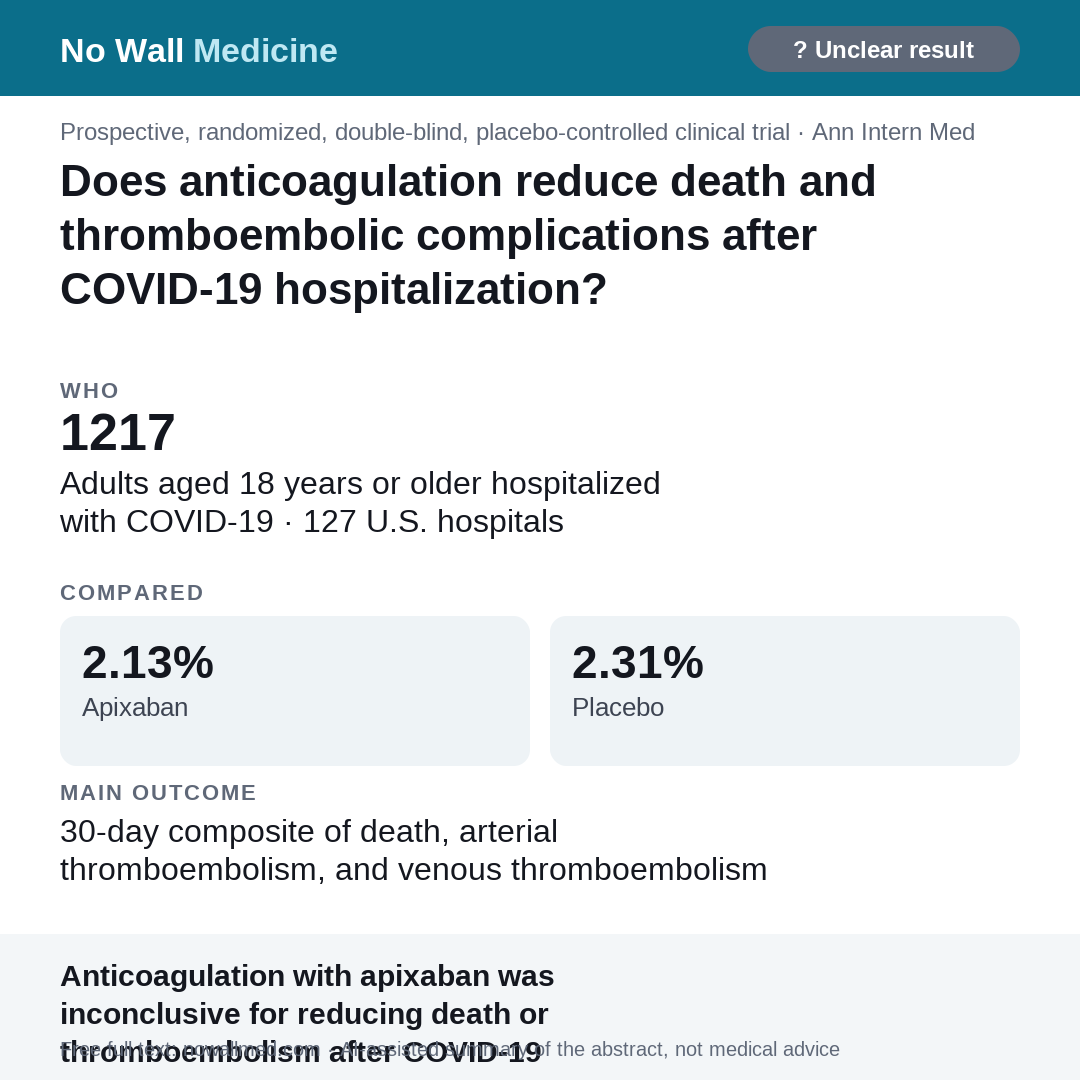
Effect of Thromboprophylaxis on Clinical Outcomes After COVID-19 Hospitalization
Prospective, randomized, double-blind, placebo-controlled clinical trialUnclear result
Does anticoagulation reduce death and thromboembolic complications after COVID-19 hospitalization?
Who
1217
Adults aged 18 years or older hospitalized with COVID-19 · 127 U.S. hospitals
Compared
2.13%Apixaban (95% CI, 1.14 to 3.62)
2.31%Placebo (CI, 1.27 to 3.84)
Main outcome
30-day composite of death, arterial thromboembolism, and venous thromboembolism
Bottom line: Anticoagulation with apixaban was inconclusive for reducing death or thromboembolism after COVID-19 hospitalization due to early termination.
Limitation: Early enrollment termination and changing SARS-CoV-2 variant peaks made results imprecise.
Funded by: National Institutes of Health
Ann Intern Med · 2023-03-21Download image
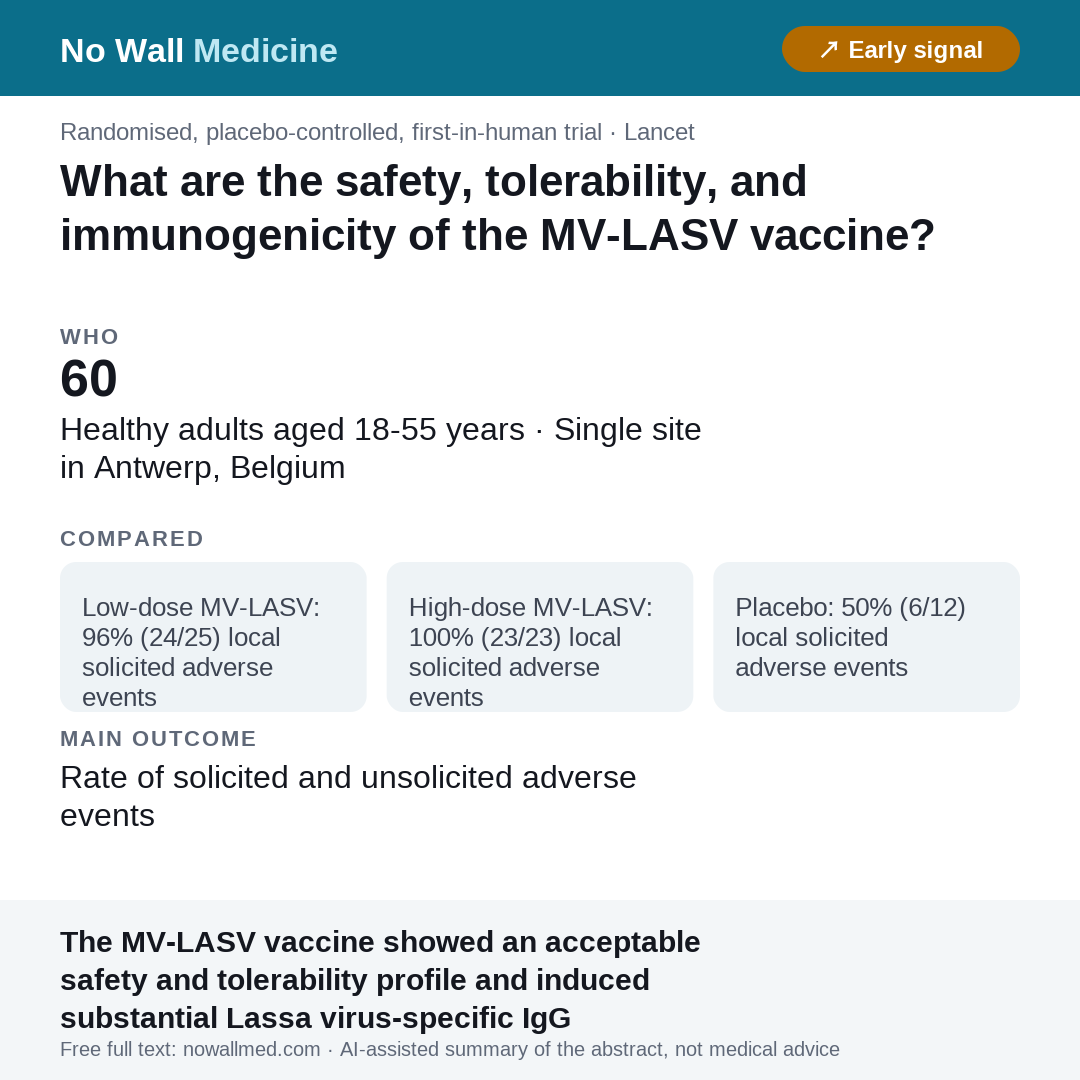
Immunogenicity, safety, and tolerability of a recombinant measles-vectored Lassa fever vaccine: a randomised, placebo-controlled, first-in-human trial
Randomised, placebo-controlled, first-in-human trialBenefit found
What are the safety, tolerability, and immunogenicity of the MV-LASV vaccine?
Who
60
Healthy adults aged 18-55 years · Single site in Antwerp, Belgium
Compared
Low-dose MV-LASV: 96% (24/25) local solicited adverse events
High-dose MV-LASV: 100% (23/23) local solicited adverse events
Placebo: 50% (6/12) local solicited adverse events
Main outcome
Rate of solicited and unsolicited adverse events
Bottom line: The MV-LASV vaccine showed an acceptable safety and tolerability profile and induced substantial Lassa virus-specific IgG concentrations.
Funded by: Coalition for Epidemic Preparedness Innovations
Lancet · 2023-03-16Download image
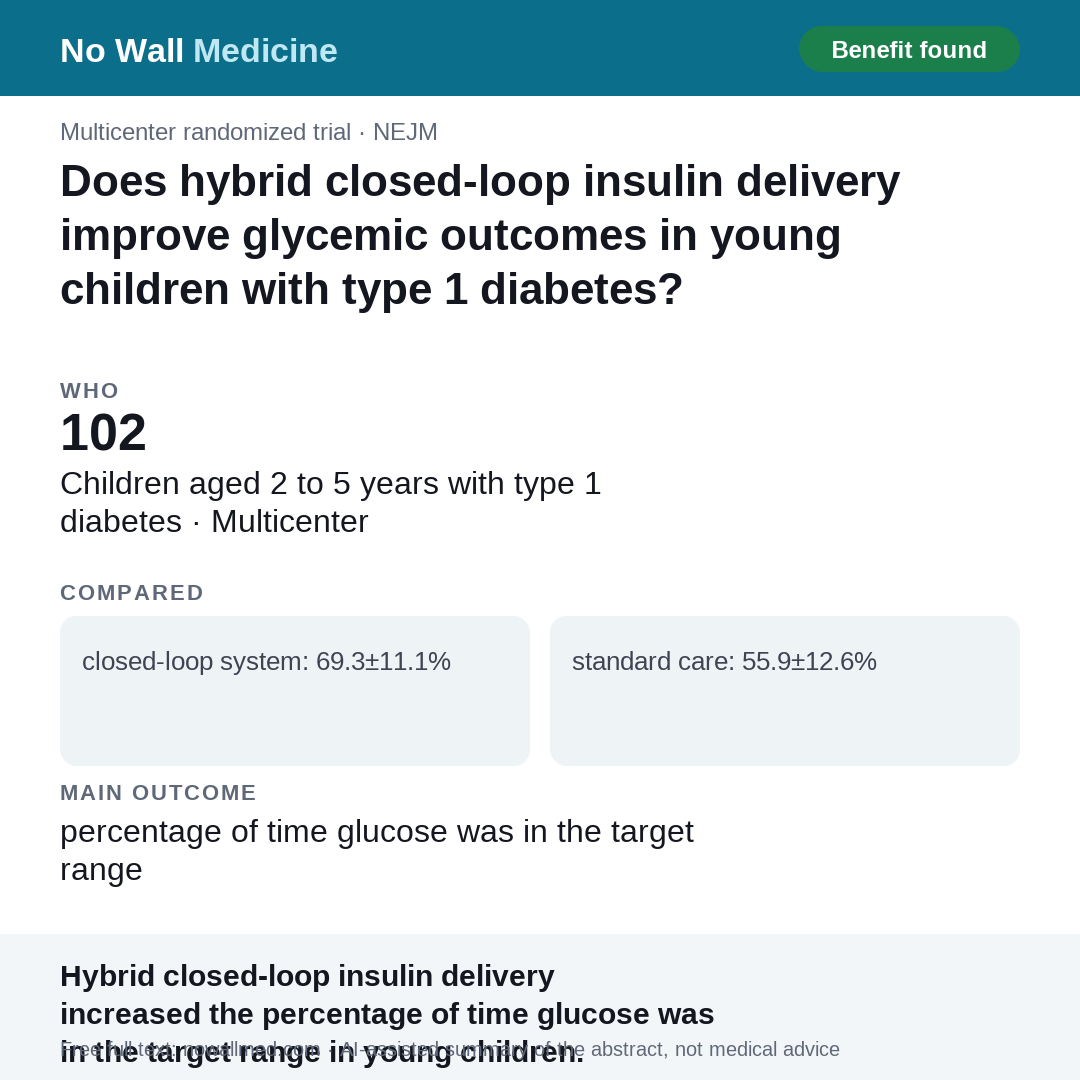
Trial of Hybrid Closed-Loop Control in Young Children with Type 1 Diabetes
Multicenter randomized trialBenefit found
Does hybrid closed-loop insulin delivery improve glycemic outcomes in young children with type 1 diabetes?
Who
102
Children aged 2 to 5 years with type 1 diabetes · Multicenter
Compared
closed-loop system: 69.3±11.1%
standard care: 55.9±12.6%
Main outcome
percentage of time glucose was in the target range
Result: mean adjusted difference, 12.4 percentage points (95% CI, 9.5 to 15.3)
Bottom line: Hybrid closed-loop insulin delivery increased the percentage of time glucose was in the target range in young children.
Funded by: National Institute of Diabetes and Digestive and Kidney Diseases
NEJM · 2023-03-15Download image
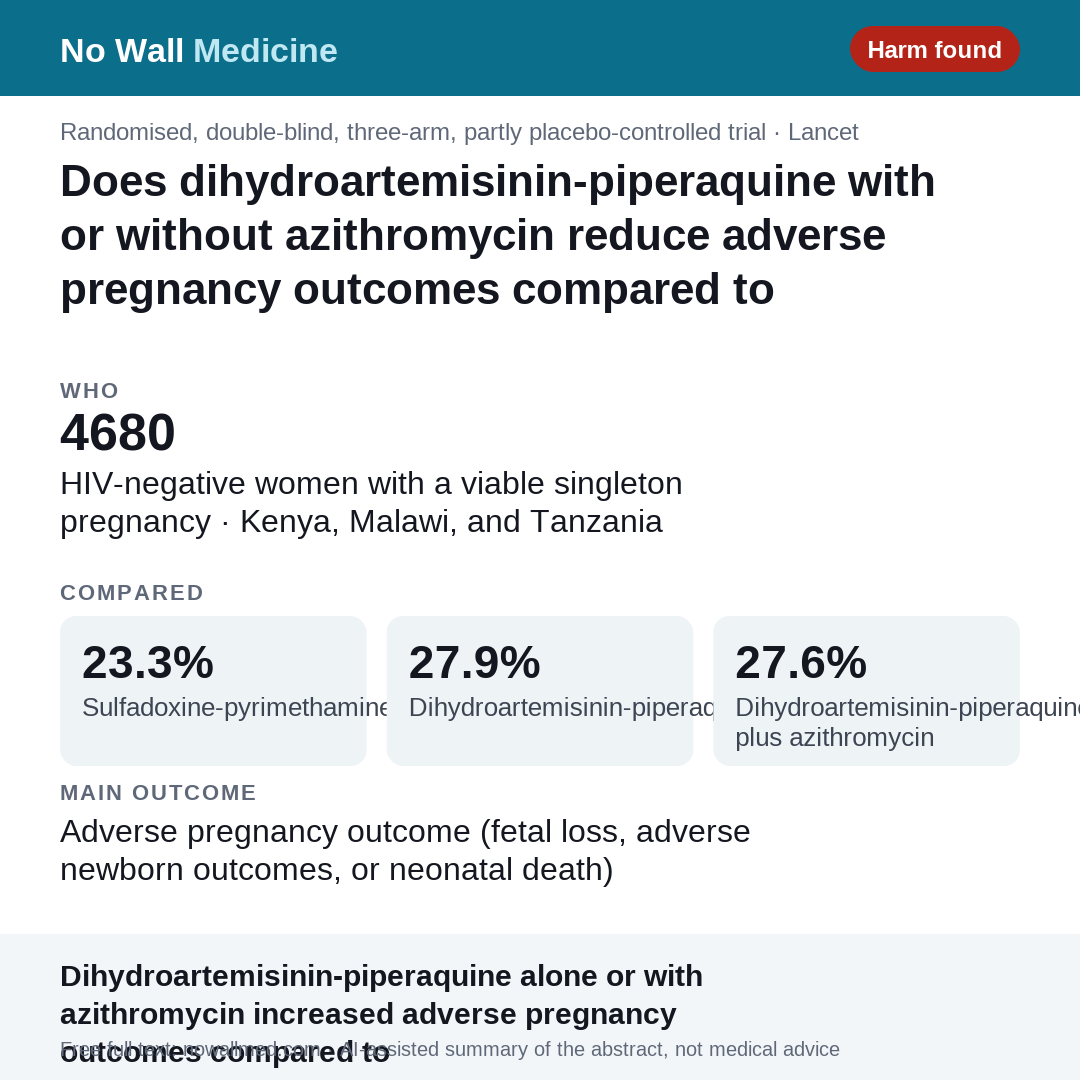
Effect of monthly intermittent preventive treatment with dihydroartemisinin-piperaquine with and without azithromycin versus monthly sulfadoxine-pyrimethamine on adverse pregnancy outcomes in Africa: a double-blind randomised, partly placebo-controlled trial
Randomised, double-blind, three-arm, partly placebo-controlled trialHarm found
Does dihydroartemisinin-piperaquine with or without azithromycin reduce adverse pregnancy outcomes compared to sulfadoxine-pyrimethamine?
Who
4680
HIV-negative women with a viable singleton pregnancy · Kenya, Malawi, and Tanzania
Compared
23.3%Sulfadoxine-pyrimethamine
27.9%Dihydroartemisinin-piperaquine
27.6%Dihydroartemisinin-piperaquine plus azithromycin
Main outcome
Adverse pregnancy outcome (fetal loss, adverse newborn outcomes, or neonatal death)
Result: risk ratio 1.20 (95% CI 1.06-1.36); risk ratio 1.16 (95% CI 1.03-1.32)
Bottom line: Dihydroartemisinin-piperaquine alone or with azithromycin increased adverse pregnancy outcomes compared to sulfadoxine-pyrimethamine.
Funded by: European & Developing Countries Clinical Trials Partnership 2, EU, UK FCDO, Medical Research Council
Lancet · 2023-03-10Download image
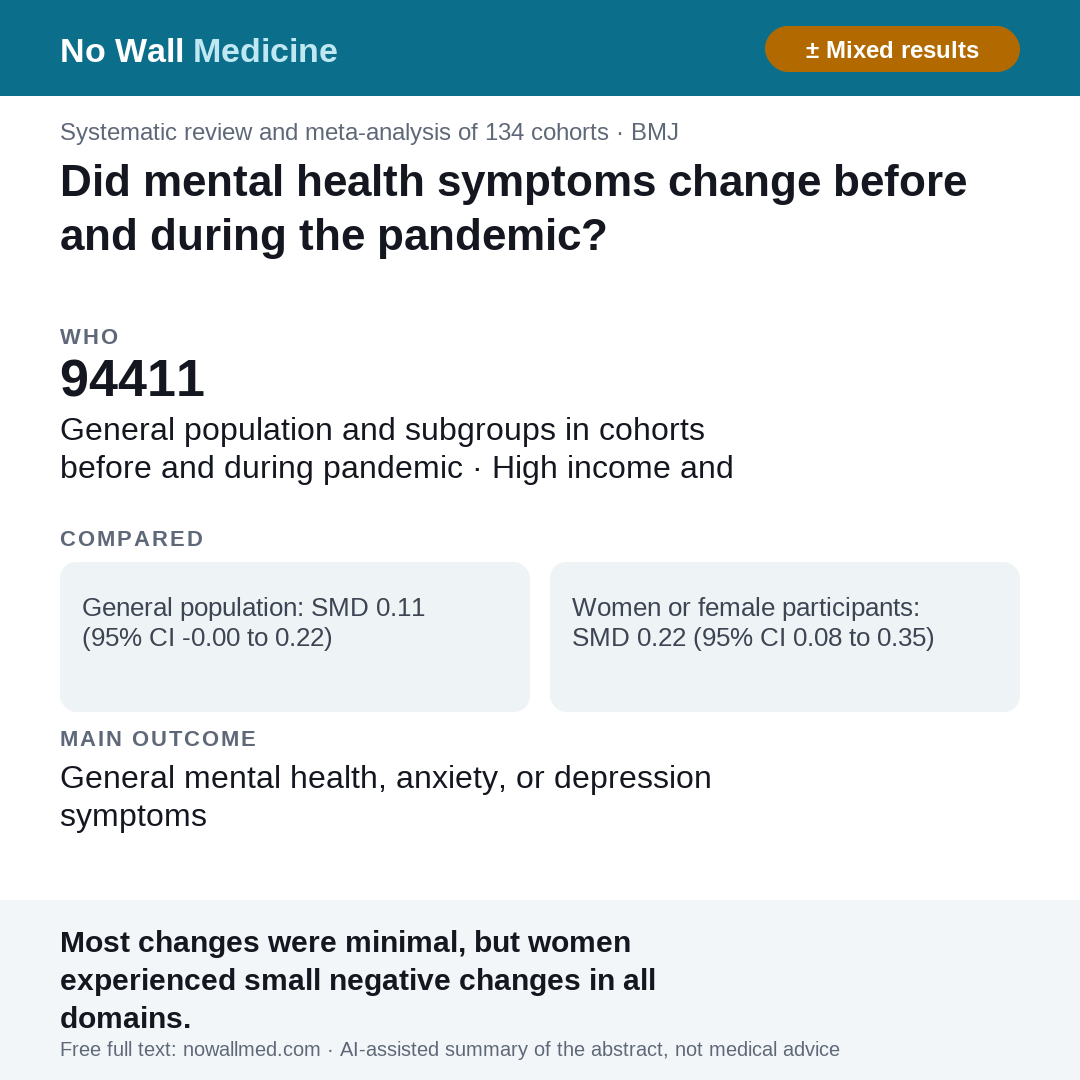
Comparison of mental health symptoms before and during the covid-19 pandemic: evidence from a systematic review and meta-analysis of 134 cohorts
Systematic review and meta-analysisMixed results
How did mental health symptoms change before and during the covid-19 pandemic?
Who
Any population in 134 cohorts · High income and upper middle income countries
Compared
General population: general mental health: standardised mean difference change 0.11
0.05General population: anxiety symptoms
0.12General population: depression symptoms
0.22Women or female participants: general mental health
Main outcome
General mental health, anxiety symptoms, or depression symptoms
Bottom line: Most symptom changes were minimal or not statistically significant, though women experienced small increases in mental health symptoms.
Limitation: Substantial heterogeneity and risk of bias were present across analyses.
BMJ · 2023-03-08Download image
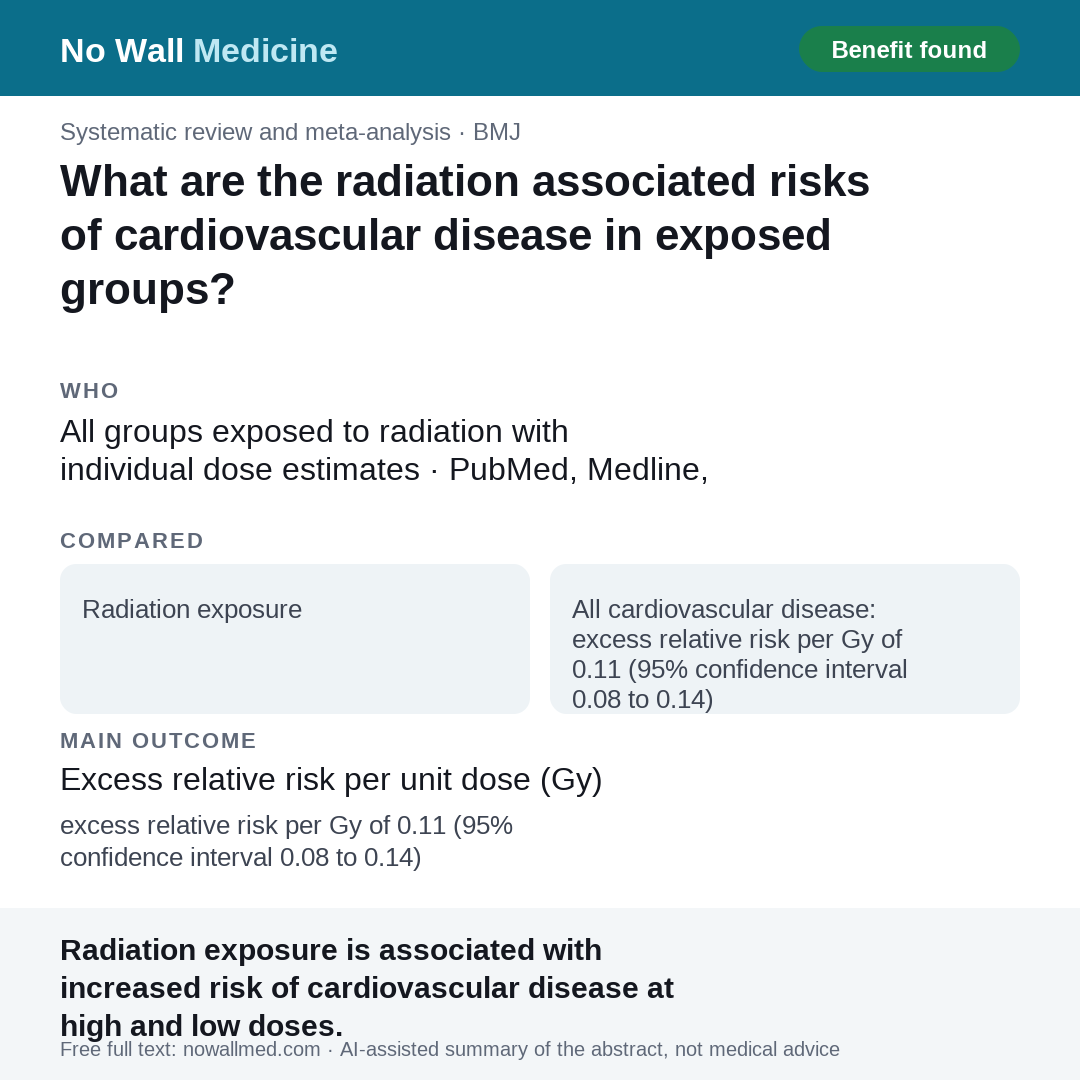
Ionising radiation and cardiovascular disease: systematic review and meta-analysis
Systematic review and meta-analysisBenefit found
What are the radiation associated risks of cardiovascular disease in exposed groups?
Who
All groups exposed to radiation with individual dose estimates · PubMed, Medline, Embase, Scopus, and Web of Science
Compared
Radiation exposure
All cardiovascular disease: excess relative risk per Gy of 0.11 (95% confidence interval 0.08 to 0.14)
Main outcome
Excess relative risk per unit dose (Gy)
Result: excess relative risk per Gy of 0.11 (95% confidence interval 0.08 to 0.14)
Bottom line: Radiation exposure is associated with increased risk of cardiovascular disease at high and low doses.
Limitation: Interstudy heterogeneity possibly resulting from unmeasured confounders or effect modifiers.
BMJ · 2023-03-08Download image