Visual abstracts
New randomized trials and meta-analyses from leading journals at a glance: who was studied, what was compared, and what was found. Every paper is free to read in full.
All specialtiesCardiology 4877Oncology 4138Gastroenterology & Hepatology 1942Infectious Disease 3837Neurology 1905Psychiatry & Mental Health 2273Pulmonology 2143Critical Care 1365Endocrinology & Diabetes 2580Pediatrics 2980Surgery 2559Orthopedics & Sports Medicine 931Neurosurgery 537Cardiothoracic & Vascular Surgery 674Plastic & Reconstructive Surgery 591Nephrology 1133Rheumatology 823Hematology 1109Dermatology 621Ophthalmology 543Obstetrics & Gynecology 1686Public & Global Health 1058Radiology & Imaging 648Anesthesiology 986Urology 764ENT (Otolaryngology) 503Emergency Medicine 511Allergy & Immunology 313Geriatrics 981Family Medicine & Primary Care 562Medical Genetics & Genomics 676Pathology & Laboratory Medicine 159Physical Medicine & Rehabilitation 757Palliative Care 444Nutrition 1588Digital Health & AI 2201General Medicine 321
Assessing palliative care practices in intensive care units and interpreting them using the lens of appropriate care concepts. An umbrella review
Umbrella reviewUnclear result
Palliative care in intensive care units
Who
Critically ill patients and families
Compared
Palliative care
End-of-life care
Main outcome
Patient and family outcomes
Bottom line: Palliative care improves patient outcomes
Intensive Care Med · 2024-08-14Download image

Baricitinib Withdrawal and Retreatment in Patients With Severe Alopecia Areata: The BRAVE-AA1 Randomized Clinical Trial
Randomized, placebo-controlled, phase 3 clinical trialHarm found
Does withdrawing baricitinib after hair regrowth lead to loss of treatment benefit?
Who
654
Adults with severe alopecia areata · 70 centers in 3 countries
Compared
7%Continued baricitinib therapy
80%Placebo withdrawal
Main outcome
Proportion of patients who lost treatment benefit through week 152
Bottom line: Withdrawing baricitinib after achieving hair regrowth resulted in loss of benefit for almost all patients.
JAMA Dermatol · 2024-08-14Download image

Exploring the Germline Genetics of In Situ and Invasive Cutaneous Melanoma: A Genome-Wide Association Study Meta-Analysis
Three genome-wide association study meta-analysesMixed results
Do germline genetic factors influence in situ and invasive melanoma risk differently?
Who
Participants from four population-based genetic cohorts · UK Biobank, FinnGen, QSkin, and Q-MEGA cohorts
Compared
6.7%In situ melanoma (95% CI, 4.1-9.3)
4.9%Invasive melanoma (95% CI, 2.8-7.2)
Main outcome
Single-nucleotide variant-based heritability and genetic correlation
Result: genetic r = 0.96; 95% CI, 0.76-1.15
Bottom line: While melanoma subtypes share high genetic correlation, polygenic risk scores suggest genetics may influence progression from in situ to invasive.
JAMA Dermatol · 2024-08-14Download image

Disease Activity and Therapeutic Response to Pegcetacoplan for Geographic Atrophy Identified by Deep Learning-Based Analysis of OCT
Post hoc longitudinal image analysisBenefit found
How does pegcetacoplan affect retinal pigment epithelium and photoreceptor loss in geographic atrophy?
Who
897
Patients with geographic atrophy due to age-related macular degeneration
Compared
Pegcetacoplan monthly or every other month: 22% and 20% RPE loss reduction in OAKS and DERBY
Sham
Main outcome
Change in mean area of retinal pigment epithelium and ellipsoid zone loss
Bottom line: Pegcetacoplan reduces retinal pigment epithelium and photoreceptor loss in patients with geographic atrophy.
Ophthalmology · 2024-08-14Download image

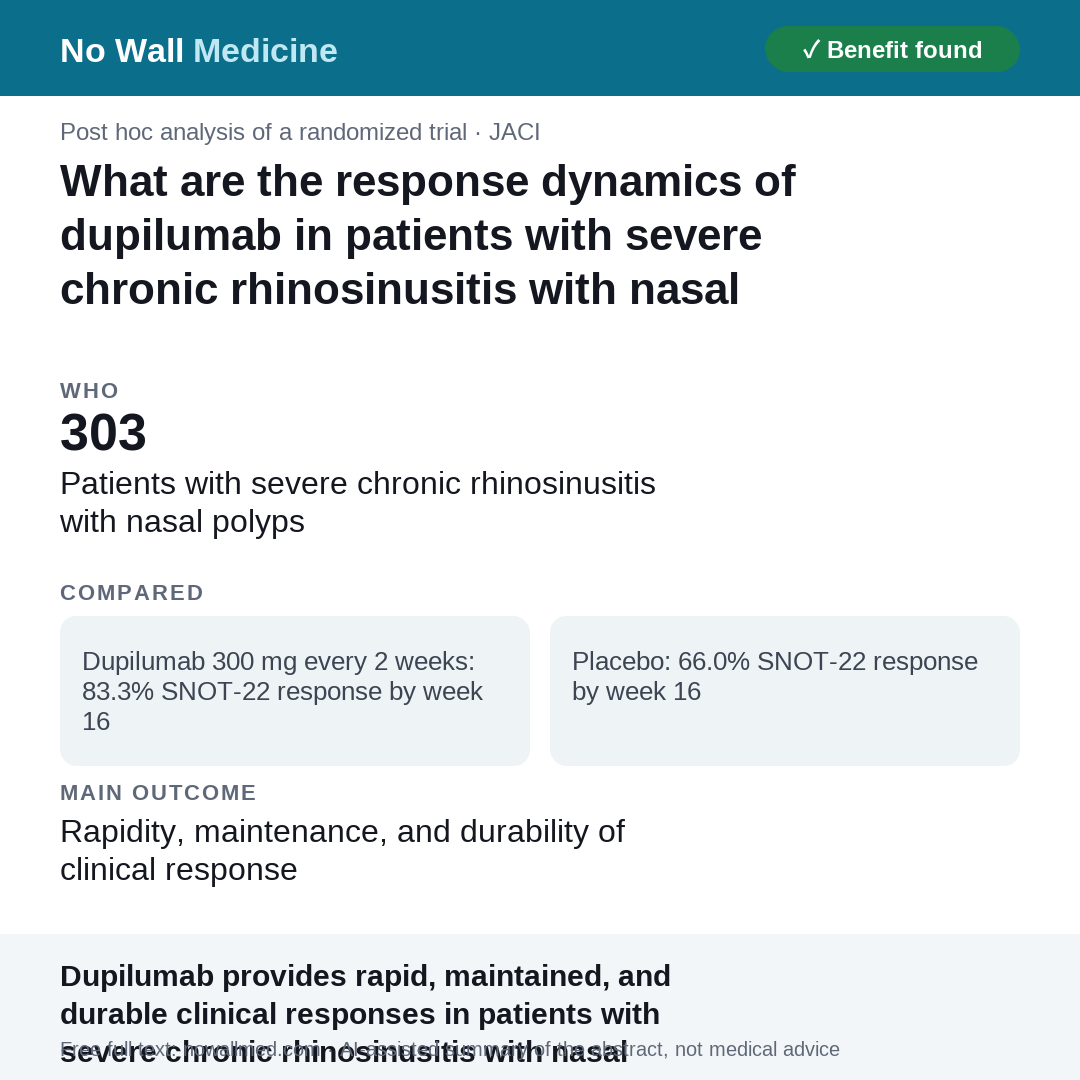
Dupilumab response onset, maintenance, and durability in patients with severe CRSwNP
Post hoc analysis of a randomized trialBenefit found
What are the response dynamics of dupilumab in patients with severe chronic rhinosinusitis with nasal polyps?
Who
303
Patients with severe chronic rhinosinusitis with nasal polyps
Compared
Dupilumab 300 mg every 2 weeks: 83.3% SNOT-22 response by week 16
Placebo: 66.0% SNOT-22 response by week 16
Main outcome
Rapidity, maintenance, and durability of clinical response
Bottom line: Dupilumab provides rapid, maintained, and durable clinical responses in patients with severe chronic rhinosinusitis with nasal polyps.
JACI · 2024-08-14Download image
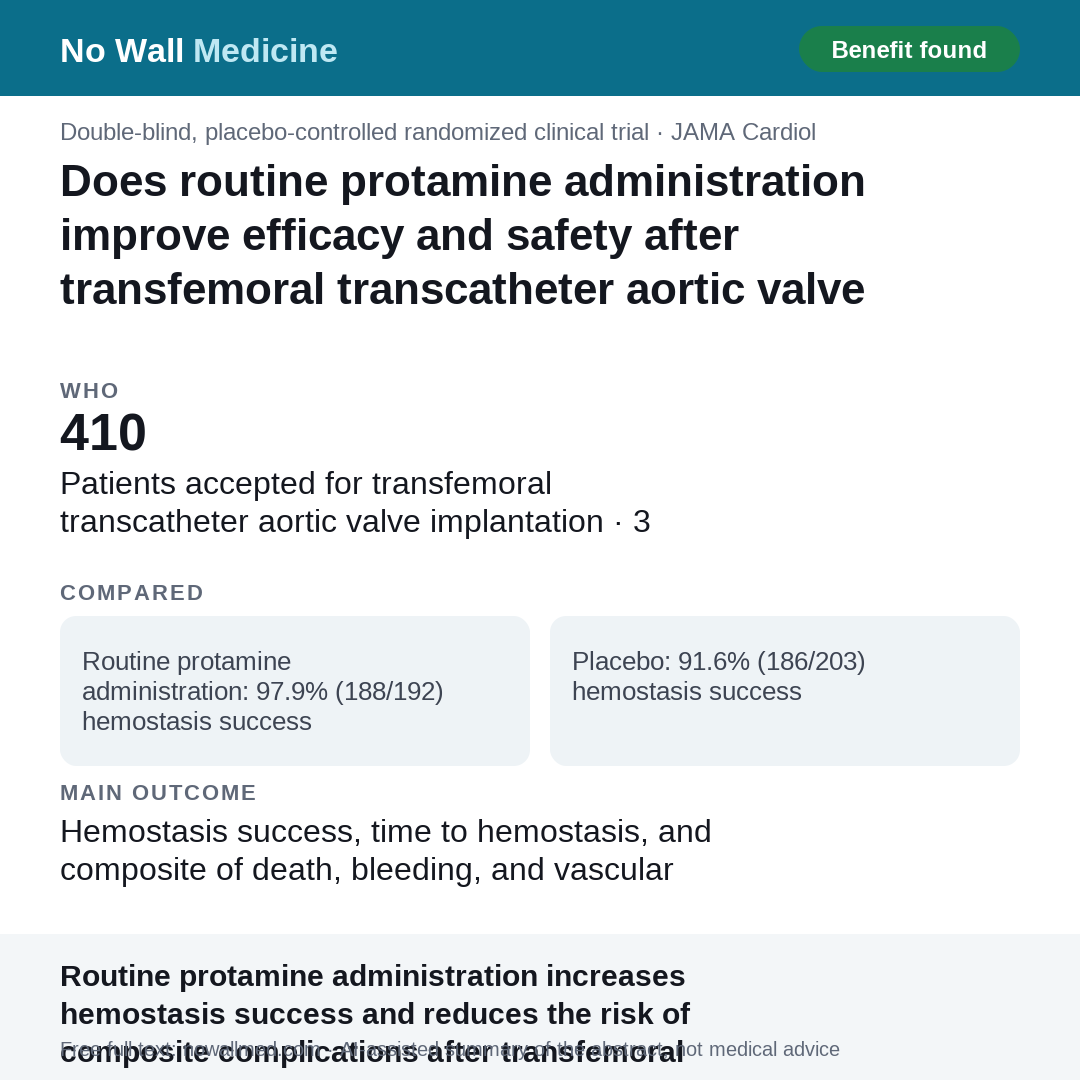
Routine Protamine Administration for Bleeding in Transcatheter Aortic Valve Implantation: The ACE-PROTAVI Randomized Clinical Trial
Double-blind, placebo-controlled randomized clinical trialBenefit found
Does routine protamine administration improve efficacy and safety after transfemoral transcatheter aortic valve implantation?
Who
410
Patients accepted for transfemoral transcatheter aortic valve implantation · 3 Australian hospitals
Compared
Routine protamine administration: 97.9% (188/192) hemostasis success
Placebo: 91.6% (186/203) hemostasis success
Main outcome
Hemostasis success, time to hemostasis, and composite of death, bleeding, and vascular complications
Result: OR, 0.37 (95% CI, 0.1-0.8)
Bottom line: Routine protamine administration increases hemostasis success and reduces the risk of composite complications after transfemoral transcatheter aortic valve implantation.
JAMA Cardiol · 2024-08-14Download image
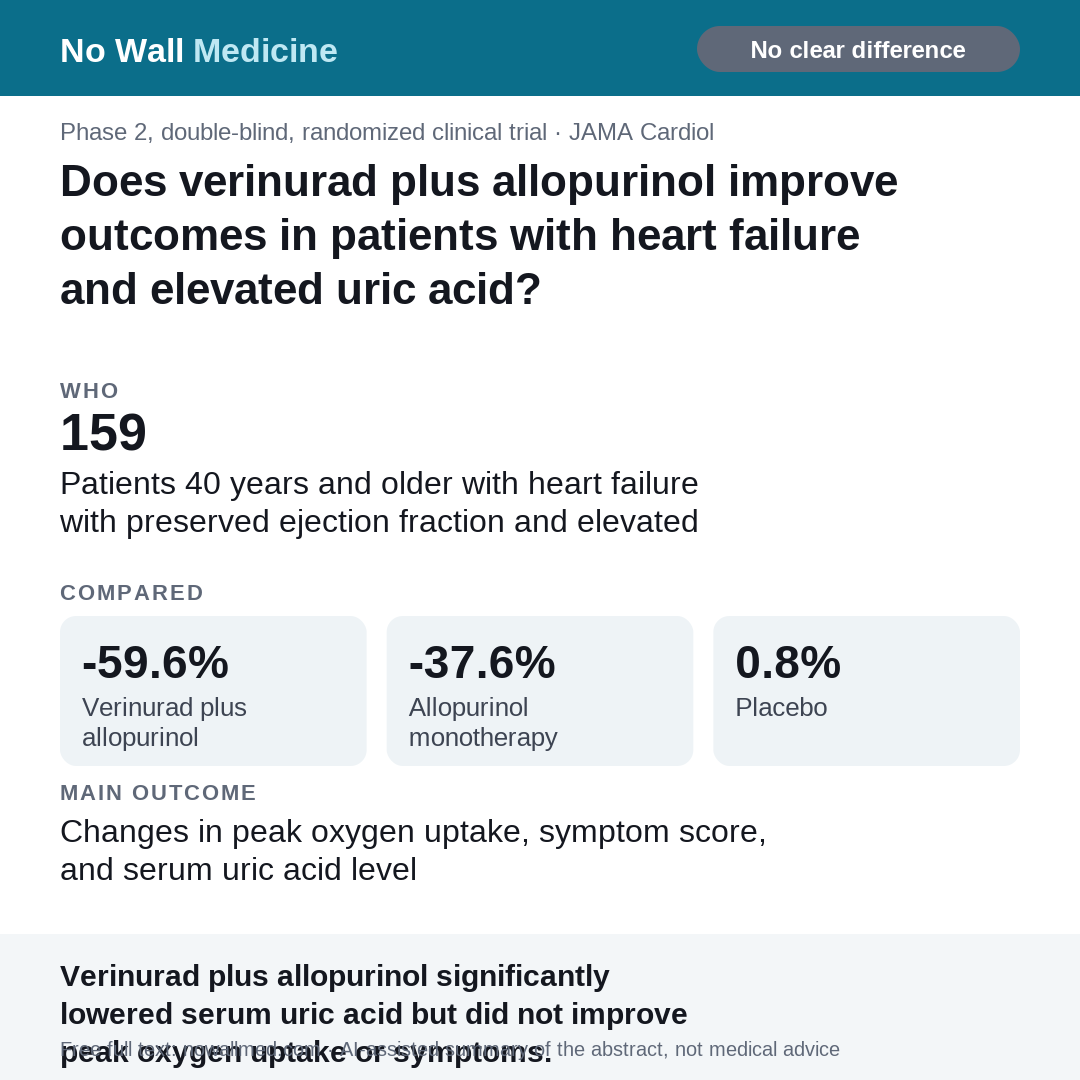
Verinurad Plus Allopurinol for Heart Failure With Preserved Ejection Fraction: The AMETHYST Randomized Clinical Trial
Phase 2, double-blind, randomized clinical trialNo clear difference
Does verinurad plus allopurinol improve outcomes in patients with heart failure and elevated uric acid?
Who
159
Patients 40 years and older with heart failure with preserved ejection fraction and elevated serum uric acid · 59 centers in 12 countries
Compared
-59.6%Verinurad plus allopurinol (mean change in serum uric acid)
-37.6%Allopurinol monotherapy (mean change in serum uric acid)
0.8%Placebo (mean change in serum uric acid)
Main outcome
Changes in peak oxygen uptake, symptom score, and serum uric acid level
Bottom line: Verinurad plus allopurinol significantly lowered serum uric acid but did not improve peak oxygen uptake or symptoms.
JAMA Cardiol · 2024-08-14Download image
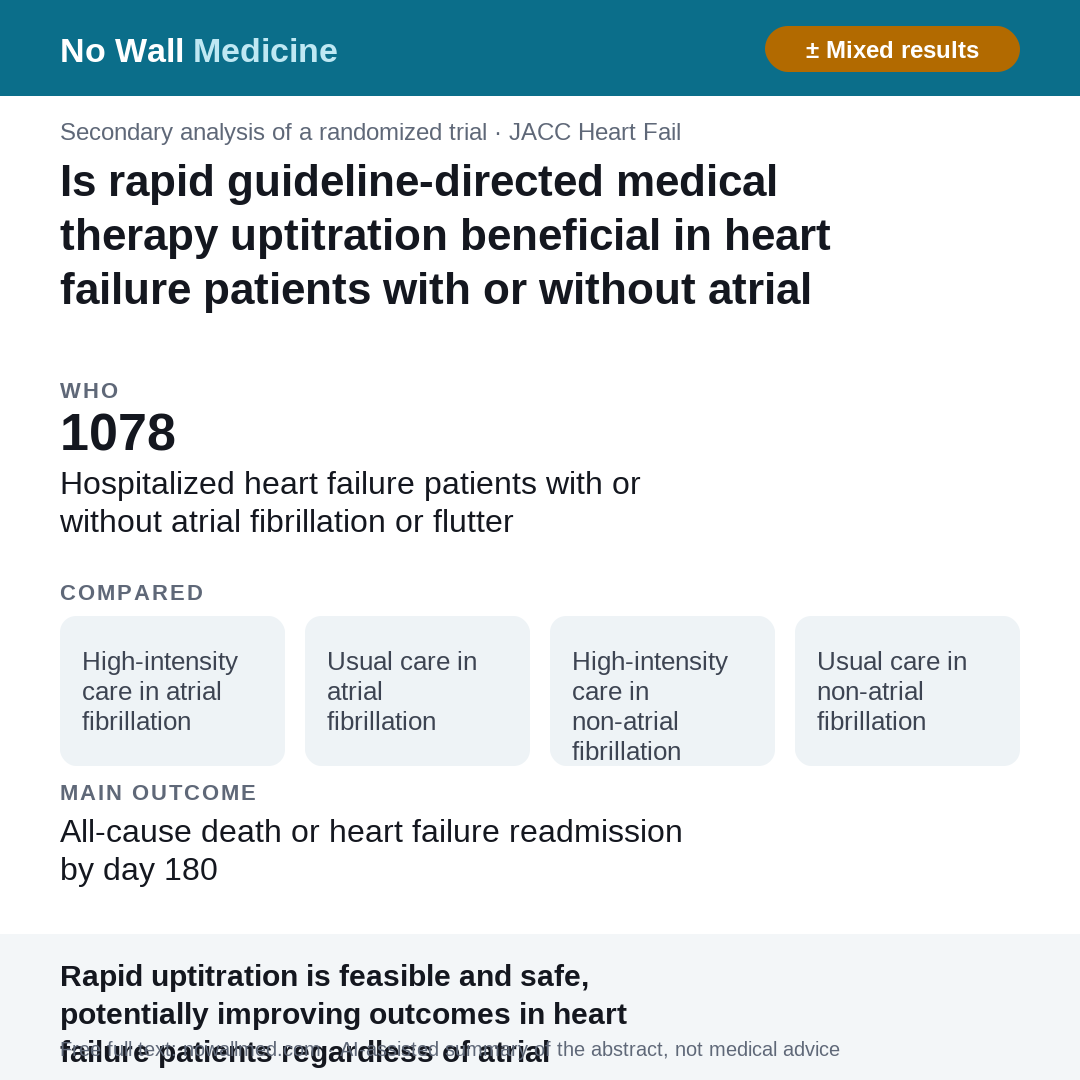
Rapid Uptitration of Guideline-Directed Medical Therapies in Acute Heart Failure With and Without Atrial Fibrillation
Secondary analysis of a randomized trialMixed results
Is rapid guideline-directed medical therapy uptitration beneficial in heart failure patients with or without atrial fibrillation?
Who
1078
Hospitalized heart failure patients with or without atrial fibrillation or flutter
Compared
High-intensity care in atrial fibrillation
Usual care in atrial fibrillation
High-intensity care in non-atrial fibrillation
Usual care in non-atrial fibrillation
Main outcome
All-cause death or heart failure readmission by day 180
Result: adjusted hazard ratio 0.75 (95% CI 0.48-1.19) in atrial fibrillation; adjusted hazard ratio 0.50 (95% CI 0.31-0.79) in non-atrial fibrillation
Bottom line: Rapid uptitration is feasible and safe, potentially improving outcomes in heart failure patients regardless of atrial fibrillation status.
JACC Heart Fail · 2024-08-14Download image
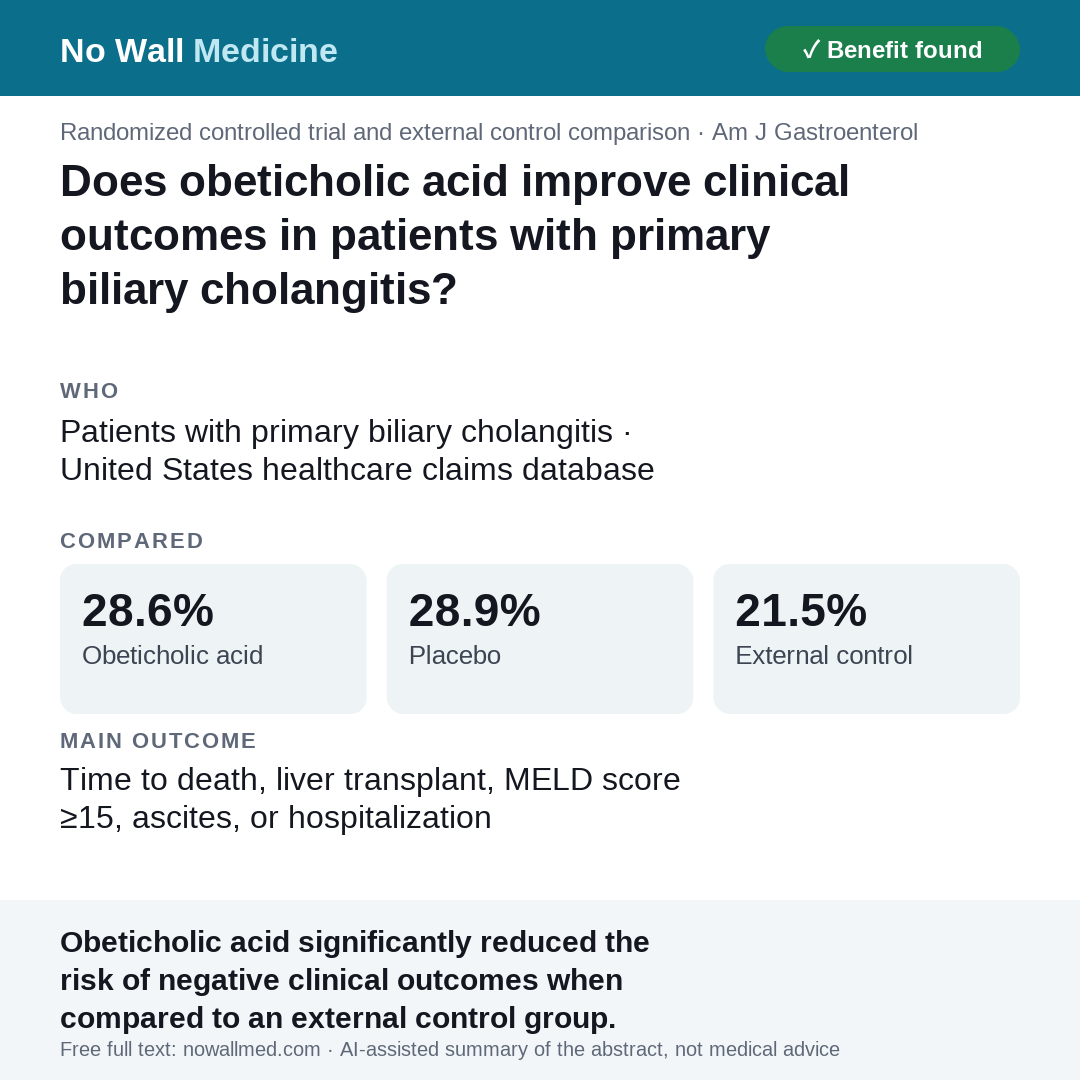
COBALT: A Confirmatory Trial of Obeticholic Acid in Primary Biliary Cholangitis With Placebo and External Controls
Randomized controlled trial and external control comparisonBenefit found
Does obeticholic acid improve clinical outcomes in patients with primary biliary cholangitis?
Who
Patients with primary biliary cholangitis · United States healthcare claims database
Compared
28.6%Obeticholic acid (in randomized controlled trial)
28.9%Placebo (in randomized controlled trial)
21.5%External control
Main outcome
Time to death, liver transplant, MELD score ≥15, ascites, or hospitalization
Result: hazard ratio 0.39 (95% confidence interval 0.22-0.69)
Bottom line: Obeticholic acid significantly reduced the risk of negative clinical outcomes when compared to an external control group.
Limitation: Functional unblinding and treatment crossover confounded the intent-to-treat estimate in the randomized controlled trial.
Am J Gastroenterol · 2024-08-14Download image
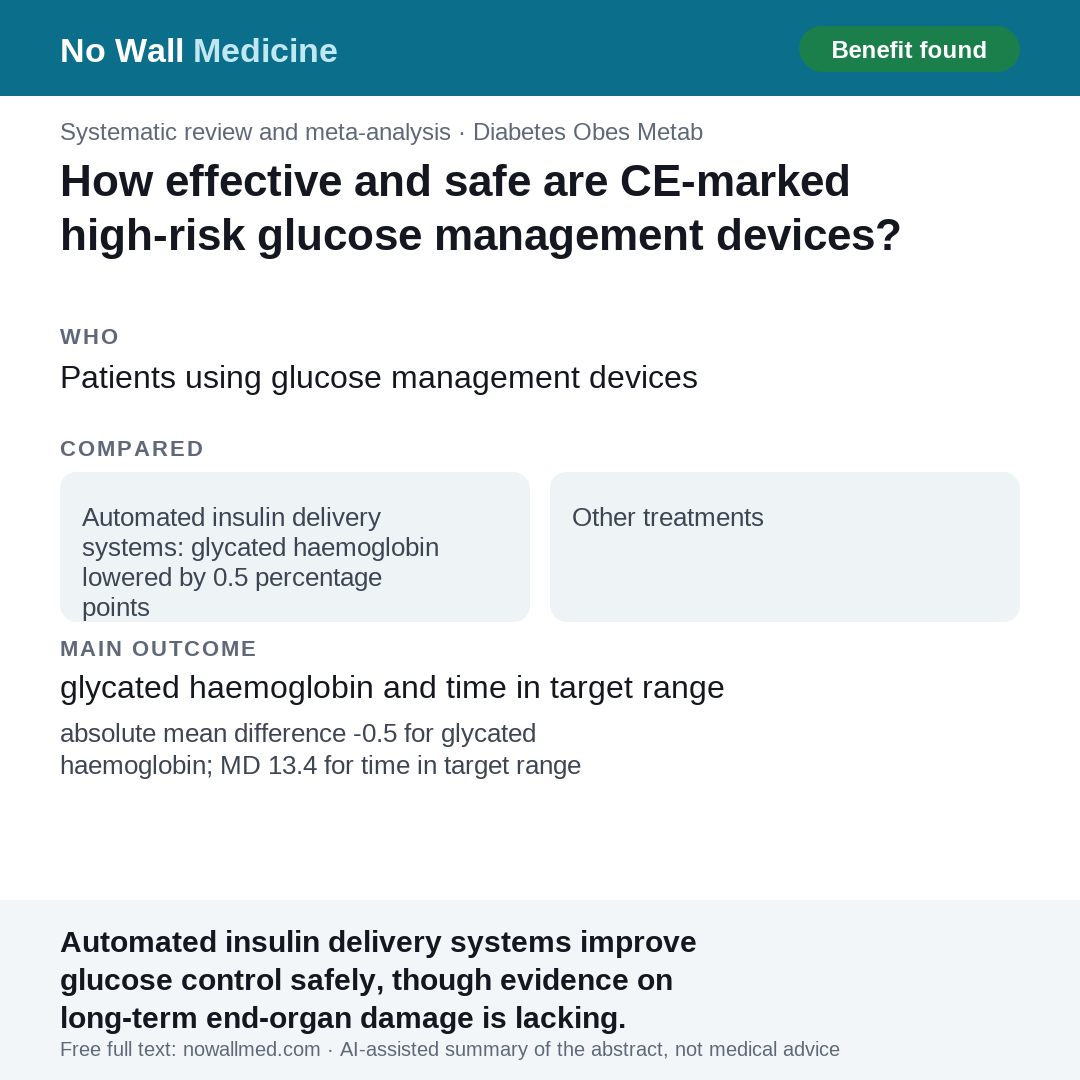
Clinical evidence for high-risk CE-marked medical devices for glucose management: A systematic review and meta-analysis
Systematic review and meta-analysisBenefit found
How effective and safe are CE-marked high-risk glucose management devices?
Who
Patients using glucose management devices
Compared
Automated insulin delivery systems: glycated haemoglobin lowered by 0.5 percentage points
Other treatments
Main outcome
glycated haemoglobin and time in target range
Result: absolute mean difference -0.5 for glycated haemoglobin; MD 13.4 for time in target range
Bottom line: Automated insulin delivery systems improve glucose control safely, though evidence on long-term end-organ damage is lacking.
Diabetes Obes Metab · 2024-08-14Download image
Intrapartum and postpartum antibiotic use in seven low- and middle-income countries: Findings from the A-PLUS trial
Prospective, observational sub-studyMixed results
What are the patterns of non-study antibiotic use during intrapartum and postpartum periods?
Who
29278
Pregnant women admitted to a facility for delivery · Eight sites in seven low- and middle-income countries
Compared
17.1%Prior to delivery in facility (5020/29278)
40.8%After delivery until facility discharge (11956/29278)
47.6%After discharge to 42 days postpartum (13390/29278)
Main outcome
Non-study antibiotic use for treatment or prophylaxis
Bottom line: Antibiotics were used frequently across all periods, but use was highly variable by site and time-period.
BJOG · 2024-08-14Download image

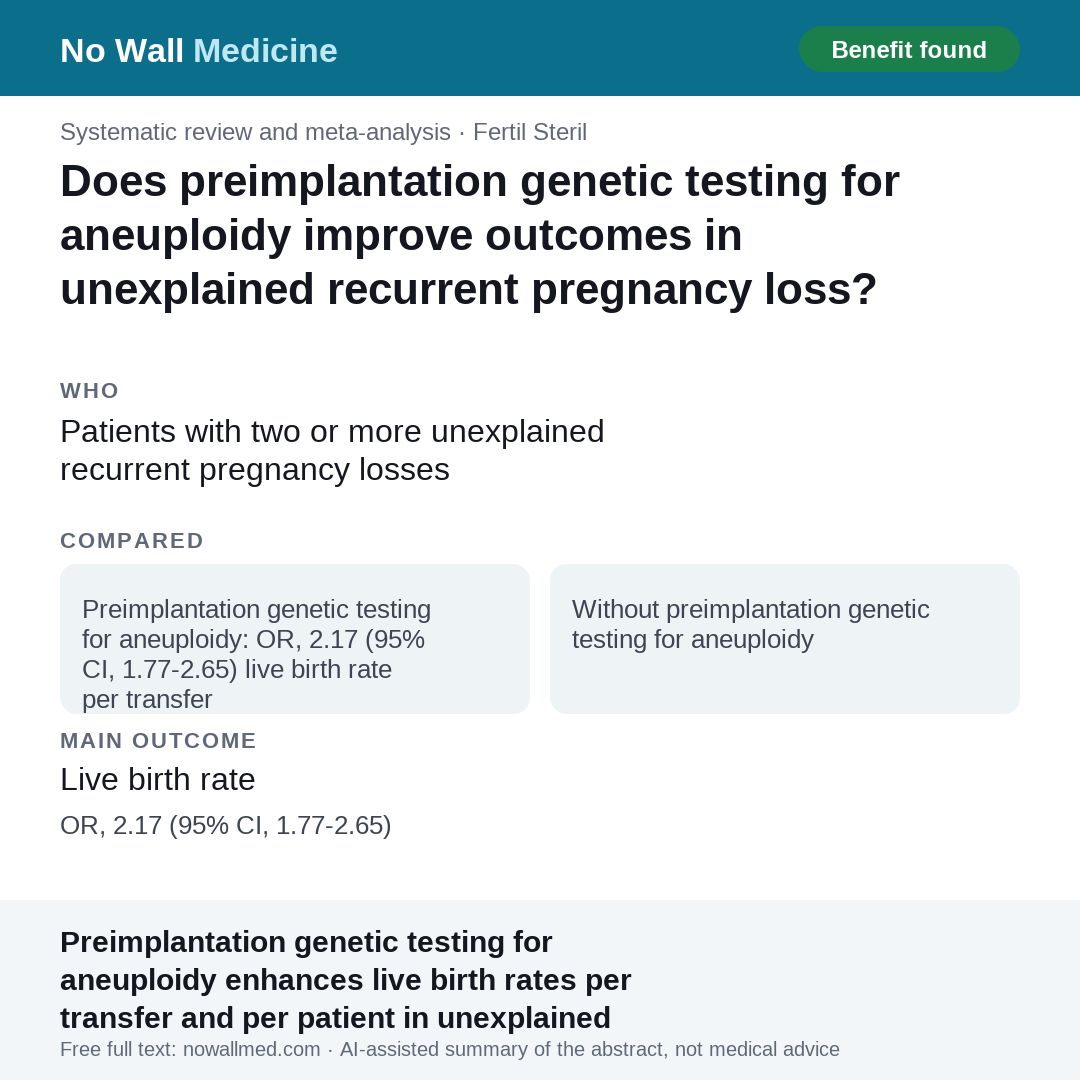
Preimplantation genetic testing for aneuploidy in unexplained recurrent pregnancy loss: a systematic review and meta-analysis
Systematic review and meta-analysisBenefit found
Does preimplantation genetic testing for aneuploidy improve outcomes in unexplained recurrent pregnancy loss?
Who
Patients with two or more unexplained recurrent pregnancy losses
Compared
Preimplantation genetic testing for aneuploidy: OR, 2.17 (95% CI, 1.77-2.65) live birth rate per transfer
Without preimplantation genetic testing for aneuploidy
Main outcome
Live birth rate
Result: OR, 2.17 (95% CI, 1.77-2.65)
Bottom line: Preimplantation genetic testing for aneuploidy enhances live birth rates per transfer and per patient in unexplained recurrent pregnancy loss.
Fertil Steril · 2024-08-14Download image
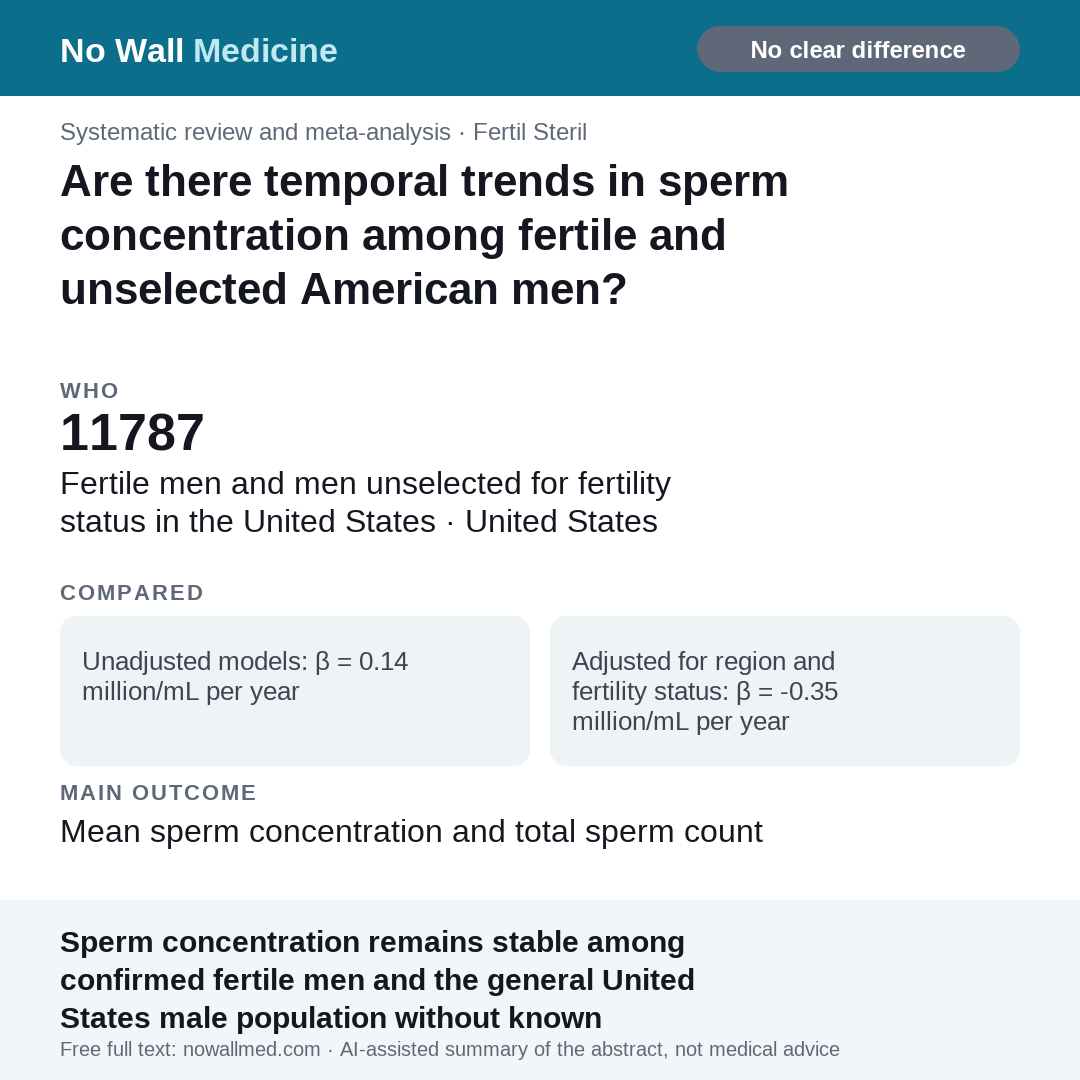
Sperm concentration remains stable among fertile American men: a systematic review and meta-analysis
Systematic review and meta-analysisNo clear difference
Are there temporal trends in sperm concentration among fertile and unselected American men?
Who
11787
Fertile men and men unselected for fertility status in the United States · United States
Compared
Unadjusted models: β = 0.14 million/mL per year
Adjusted for region and fertility status: β = -0.35 million/mL per year
Main outcome
Mean sperm concentration and total sperm count
Bottom line: Sperm concentration remains stable among confirmed fertile men and the general United States male population without known infertility.
Limitation: Further studies are necessary to better understand this important topic.
Fertil Steril · 2024-08-14Download image
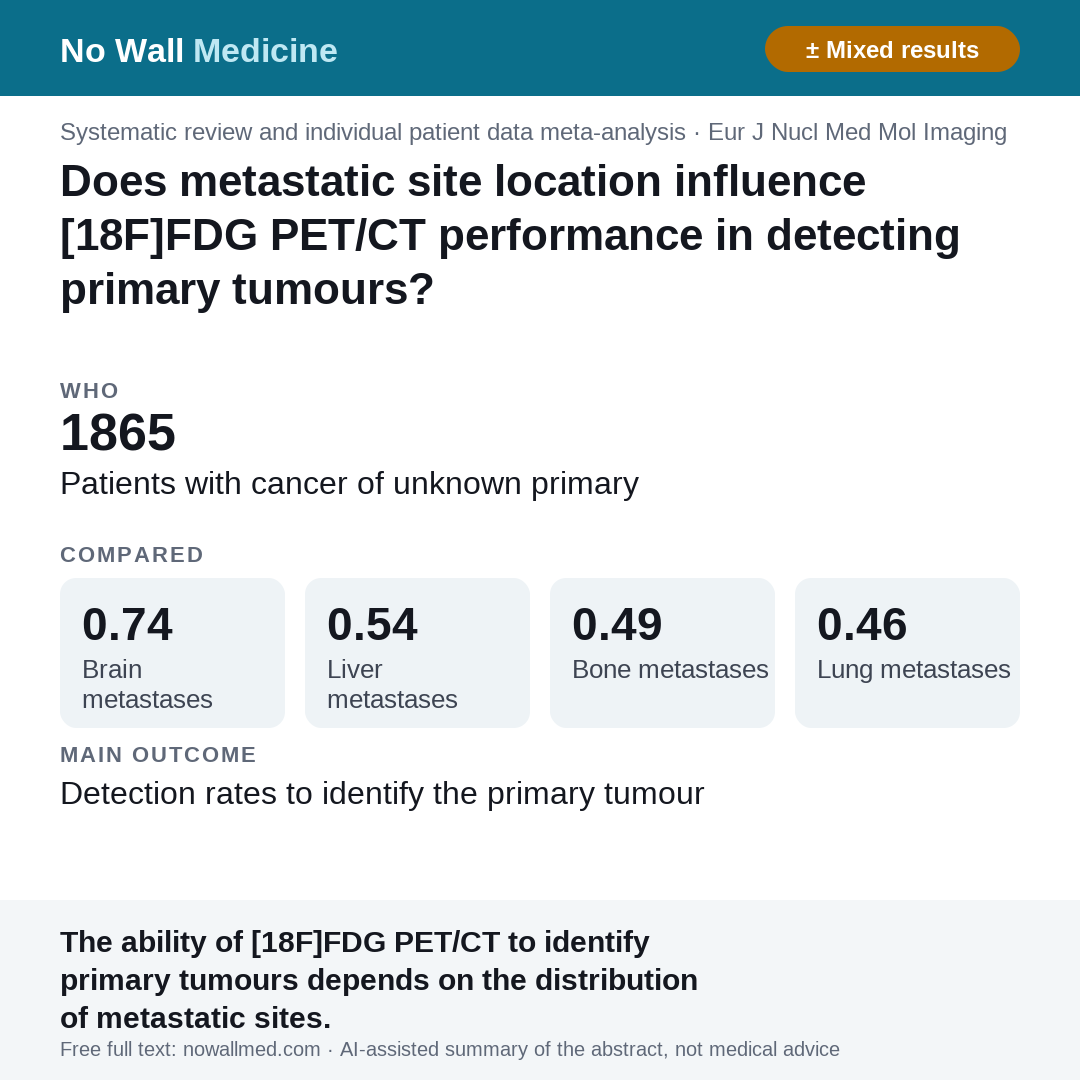
Identifying the primary tumour in patients with cancer of unknown primary (CUP) using [18F]FDG PET/CT: a systematic review and individual patient data meta-analysis
Systematic review and individual patient data meta-analysisMixed results
Does metastatic site location influence [18F]FDG PET/CT performance in detecting primary tumours?
Who
1865
Patients with cancer of unknown primary
Compared
0.74Brain metastases
0.54Liver metastases
0.49Bone metastases
0.46Lung metastases
Main outcome
Detection rates to identify the primary tumour
Bottom line: The ability of [18F]FDG PET/CT to identify primary tumours depends on the distribution of metastatic sites.
Eur J Nucl Med Mol Imaging · 2024-08-14Download image
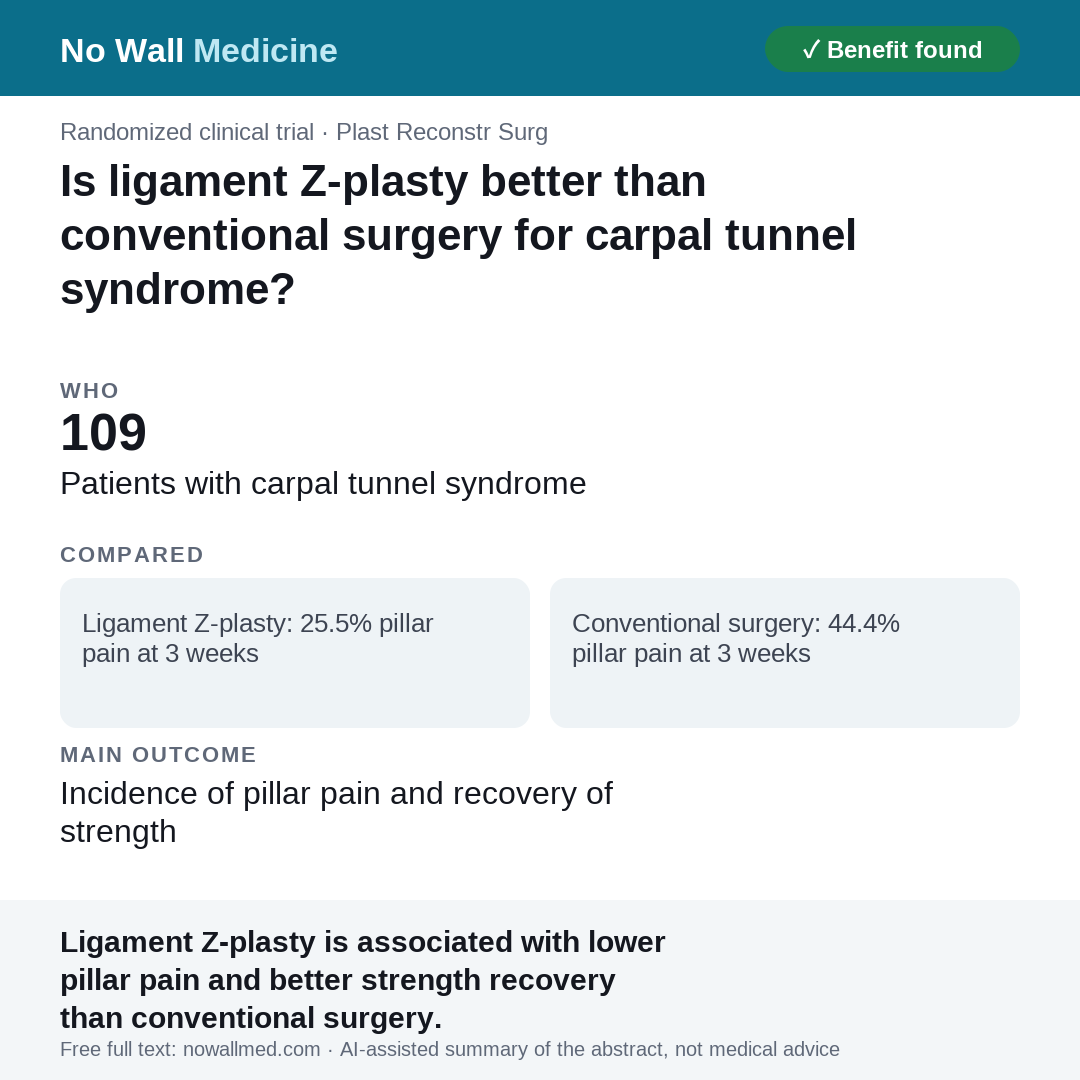
Comparison of Ligament Z-Plasty and Conventional Surgery for the Treatment of Carpal Tunnel Syndrome: A Randomized Clinical Trial
Randomized clinical trialBenefit found
Is ligament Z-plasty better than conventional surgery for carpal tunnel syndrome?
Who
109
Patients with carpal tunnel syndrome
Compared
Ligament Z-plasty: 25.5% pillar pain at 3 weeks
Conventional surgery: 44.4% pillar pain at 3 weeks
Main outcome
Incidence of pillar pain and recovery of strength
Bottom line: Ligament Z-plasty is associated with lower pillar pain and better strength recovery than conventional surgery.
Plast Reconstr Surg · 2024-08-14Download image
Impact of Tranexamic Acid on Bleeding Outcomes and Complication Rates in Facelift: A Systematic Review and Meta-analysis
Systematic review and meta-analysisBenefit found
Does tranexamic acid reduce bleeding and complications in facelift surgery?
Who
388
Patients undergoing facelift surgery
Compared
Tranexamic acid recipients: minor hematoma OR 0.18 (95% CI 0.05-0.62)
Controls
Main outcome
hematoma, drain output, and complications
Result: minor hematoma OR 0.18 (95% CI 0.05-0.62); drain output mean difference -25.59 (95% CI -30.4 to -20.77)
Bottom line: Tranexamic acid significantly reduces minor hematomas and postoperative drain output in facelift surgery without increasing major complications.
Limitation: further studies are required to explore efficacy with different dosages and administration routes
Aesthet Surg J · 2024-08-14Download image

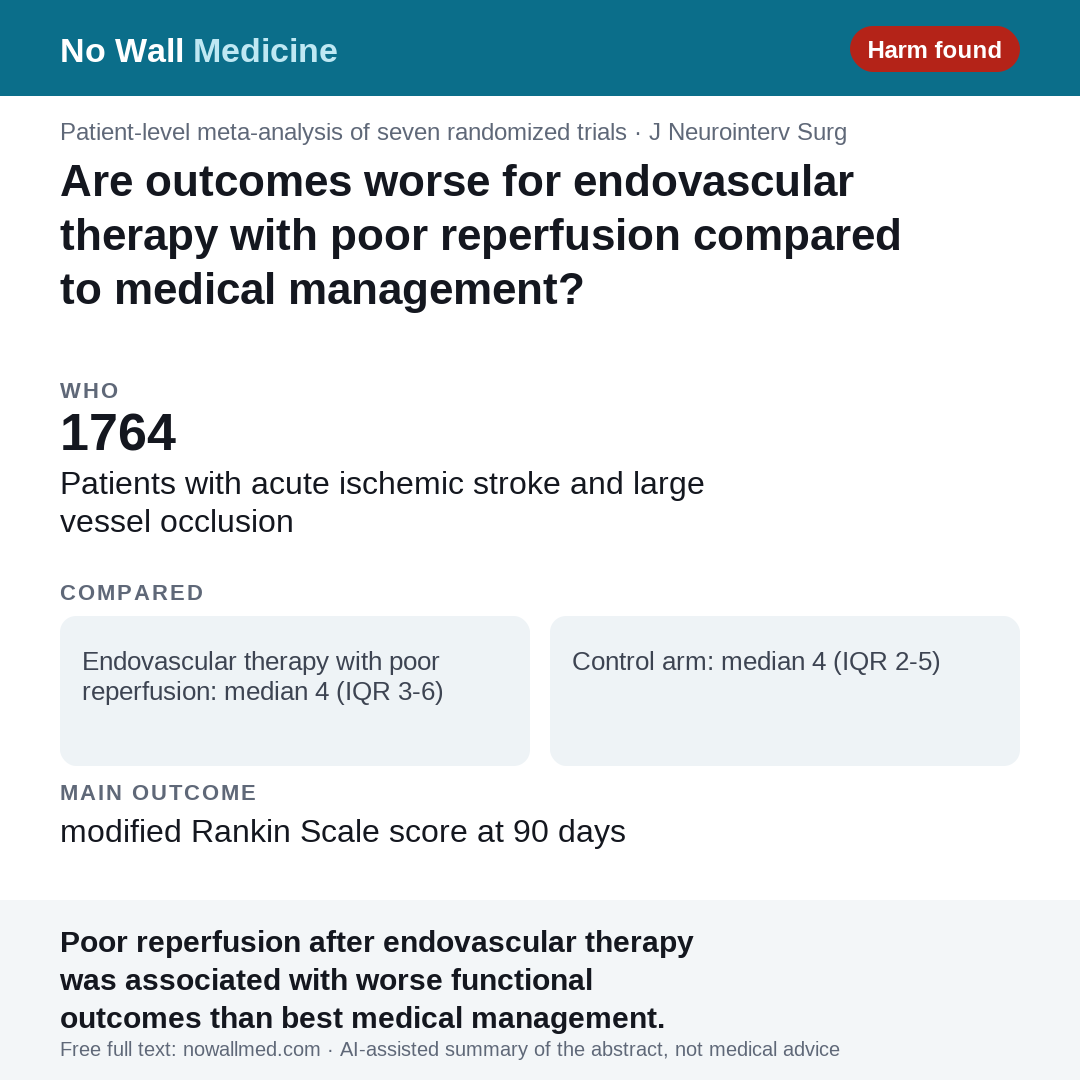
Endovascular therapy in acute ischemic stroke with poor reperfusion is associated with worse outcomes compared with best medical management: a HERMES substudy
Patient-level meta-analysis of seven randomized trialsHarm found
Are outcomes worse for endovascular therapy with poor reperfusion compared to medical management?
Who
1764
Patients with acute ischemic stroke and large vessel occlusion
Compared
Endovascular therapy with poor reperfusion: median 4 (IQR 3-6)
Control arm: median 4 (IQR 2-5)
Main outcome
modified Rankin Scale score at 90 days
Result: adjusted common OR 0.59 (95% CI 0.38 to 0.91)
Bottom line: Poor reperfusion after endovascular therapy was associated with worse functional outcomes than best medical management.
J Neurointerv Surg · 2024-08-14Download image
Development and validation of a prognostic model to predict birth weight: individual participant data meta-analysis
Individual participant data meta-analysisBenefit found
Can birth weight be predicted
Who
237228
pregnant women in four cohorts · US, UK, Norway, Australia
Compared
IPPIC model
observed birth weight
Main outcome
birth weight
Result: calibration slope 0.99 (95% CI 0.88 to 1.10)
Bottom line: Model predicts birth weight well
BMJ Med · 2024-08-14Download image

Ultrasound elastography of back muscle biomechanical properties: a systematic review and meta-analysis of current methods
Systematic review and meta-analysisBenefit found
How reliable, valid, and responsive are ultrasound elastography methods for back muscle biomechanics?
Who
3178
Patients with musculoskeletal disorders and controls
Compared
Strain imaging: pICC > 0.70
Shear wave imaging: pICC > 0.70
Vibration sonoelastography
Main outcome
Reliability, validity, and responsiveness of elastography methods
Bottom line: Ultrasound elastography reliably quantifies back muscle biomechanics and moderately discriminates musculoskeletal disorders from control conditions.
Insights Imaging · 2024-08-14Download image

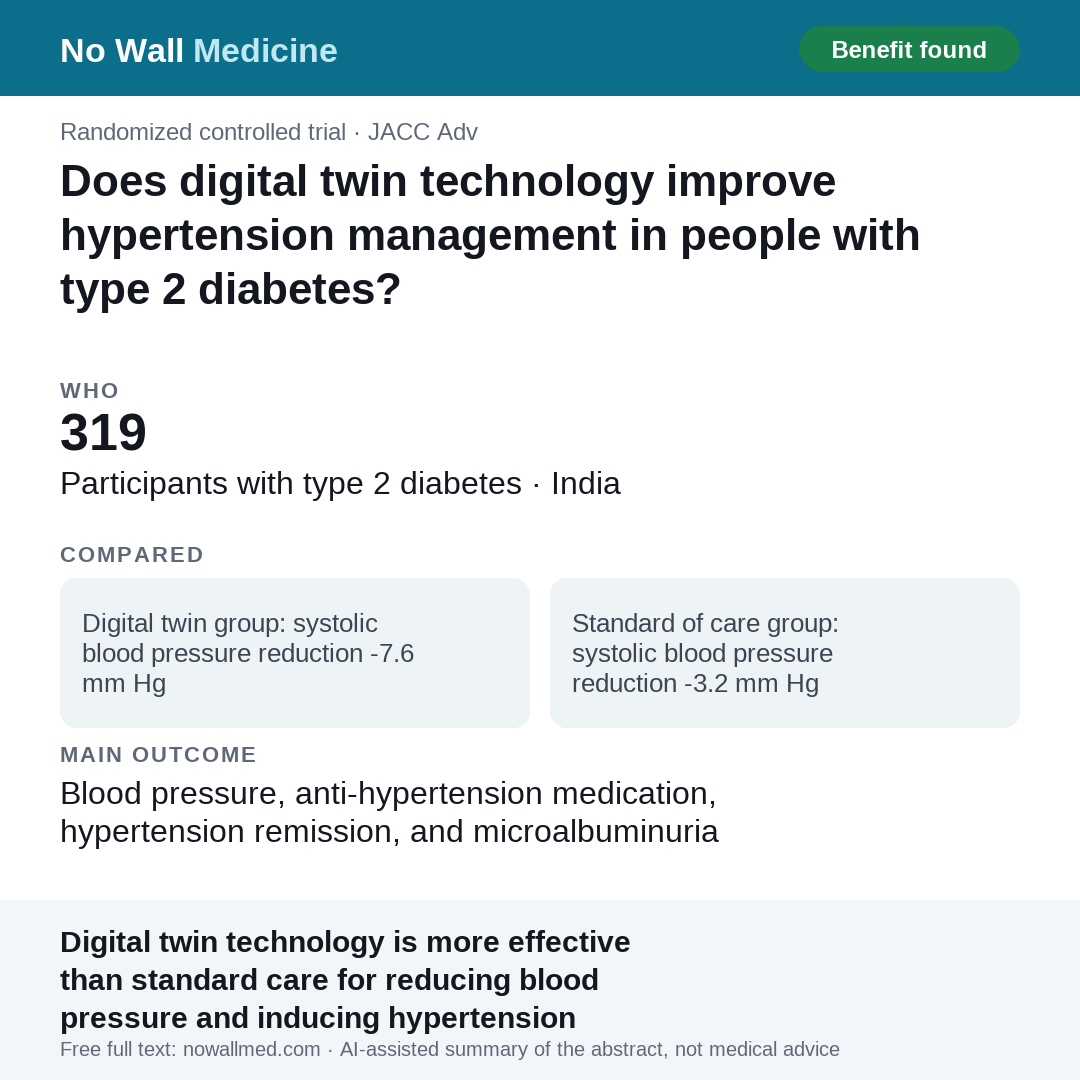
Digital Twin in Managing Hypertension Among People With Type 2 Diabetes: 1-Year Randomized Controlled Trial
Randomized controlled trialBenefit found
Does digital twin technology improve hypertension management in people with type 2 diabetes?
Who
319
Participants with type 2 diabetes · India
Compared
Digital twin group: systolic blood pressure reduction -7.6 mm Hg
Standard of care group: systolic blood pressure reduction -3.2 mm Hg
Main outcome
Blood pressure, anti-hypertension medication, hypertension remission, and microalbuminuria
Bottom line: Digital twin technology is more effective than standard care for reducing blood pressure and inducing hypertension remission.
JACC Adv · 2024-08-14Download image