Visual abstracts
New randomized trials and meta-analyses from leading journals at a glance: who was studied, what was compared, and what was found. Every paper is free to read in full.
All specialtiesCardiology 4877Oncology 4138Gastroenterology & Hepatology 1942Infectious Disease 3837Neurology 1905Psychiatry & Mental Health 2273Pulmonology 2143Critical Care 1365Endocrinology & Diabetes 2580Pediatrics 2980Surgery 2559Orthopedics & Sports Medicine 931Neurosurgery 537Cardiothoracic & Vascular Surgery 674Plastic & Reconstructive Surgery 591Nephrology 1133Rheumatology 823Hematology 1109Dermatology 621Ophthalmology 543Obstetrics & Gynecology 1686Public & Global Health 1058Radiology & Imaging 648Anesthesiology 986Urology 764ENT (Otolaryngology) 503Emergency Medicine 511Allergy & Immunology 313Geriatrics 981Family Medicine & Primary Care 562Medical Genetics & Genomics 676Pathology & Laboratory Medicine 159Physical Medicine & Rehabilitation 757Palliative Care 444Nutrition 1588Digital Health & AI 2201General Medicine 321
High variability in reporting of right ventricle contouring technique and body surface area methodology in cardiac magnetic resonance studies of patients with repaired tetralogy of Fallot: A systematic review
Systematic reviewUnclear result
How are right ventricle contouring and body surface area methodologies reported in cardiac magnetic resonance studies?
Who
27
Adults with repaired tetralogy of Fallot · Electronic databases Embase and MEDLINE
Compared
Included studies: 81% (22/27) did not specify right ventricle contouring technique
Included studies: none defined the right ventricle basal slice
Included studies: No studies reported the formula used to calculate actual body surface area
Main outcome
Reporting of right ventricle contouring and body surface area methodology
Bottom line: Reporting of right ventricle contouring and body surface area methodology in cardiac magnetic resonance studies is poor and lacks standardization.
Limitation: All studies were of only level III or level IV levels of evidence.
J Cardiovasc Magn Reson · 2025-08-13Download image

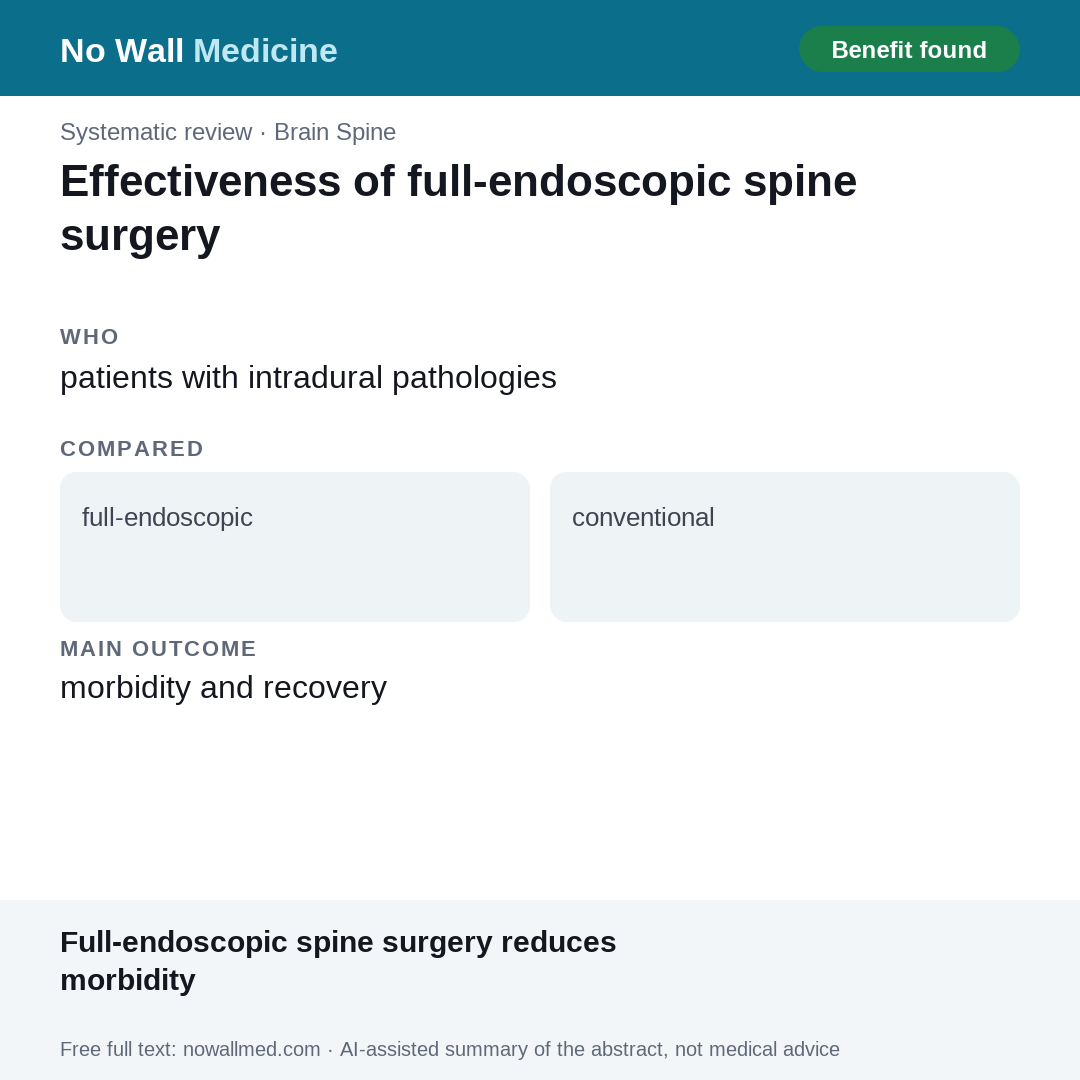
Full-endoscopic spine surgery for intradural pathologies: A systematic review of innovations, challenges, and future prospects
Systematic reviewBenefit found
Effectiveness of full-endoscopic spine surgery
Who
patients with intradural pathologies
Compared
full-endoscopic
conventional
Main outcome
morbidity and recovery
Bottom line: Full-endoscopic spine surgery reduces morbidity
Limitation: technical challenges
Brain Spine · 2025-08-13Download image
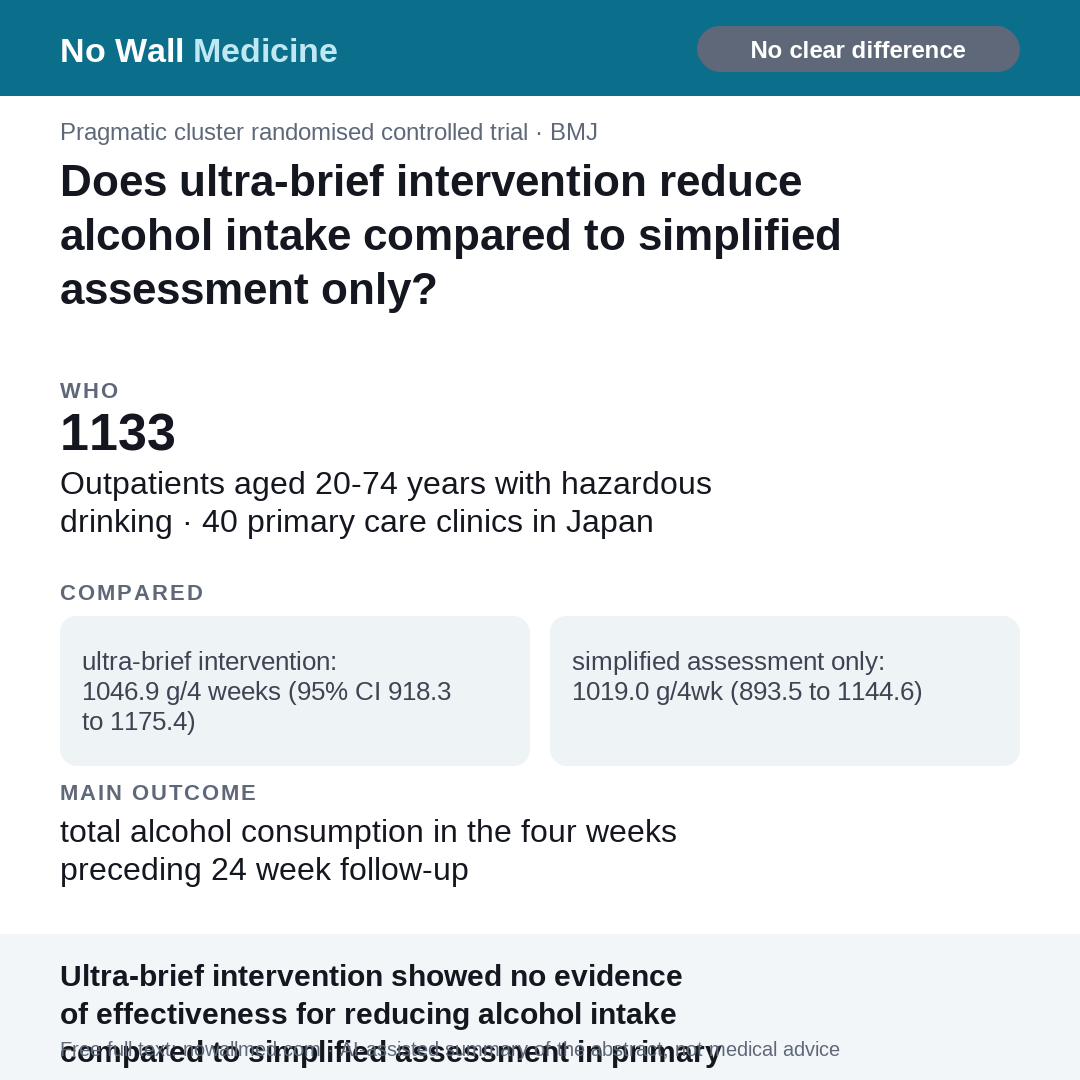
Effectiveness of screening and ultra-brief intervention for hazardous drinking in primary care: pragmatic cluster randomised controlled trial
Pragmatic cluster randomised controlled trialNo clear difference
Does ultra-brief intervention reduce alcohol intake compared to simplified assessment only?
Who
1133
Outpatients aged 20-74 years with hazardous drinking · 40 primary care clinics in Japan
Compared
ultra-brief intervention: 1046.9 g/4 weeks (95% CI 918.3 to 1175.4)
simplified assessment only: 1019.0 g/4wk (893.5 to 1144.6)
Main outcome
total alcohol consumption in the four weeks preceding 24 week follow-up
Result: difference 27.8 g/4wk (-149.7 to 205.4, P=0.75)
Bottom line: Ultra-brief intervention showed no evidence of effectiveness for reducing alcohol intake compared to simplified assessment in primary care.
BMJ · 2025-08-12Download image
The Effect of Weight Loss Before In Vitro Fertilization on Reproductive Outcomes in Women With Obesity : A Systematic Review and Meta-analysis
Systematic review and meta-analysis of randomized controlled trialsBenefit found
Does weight loss before in vitro fertilization improve reproductive outcomes in women with obesity?
Who
1921
Women with obesity undergoing planned in vitro fertilization
Compared
Weight loss intervention
Control
Main outcome
Pregnancy and live birth rates
Result: risk ratio 1.21 (95% CI, 1.02 to 1.44)
Bottom line: Weight loss interventions before in vitro fertilization increase total pregnancy rates and unassisted conception rates in women with obesity.
Limitation: Small studies, high risk of bias, and substantial unexplained clinical and methodological heterogeneity.
Funded by: National Institute for Health and Care Research
Ann Intern Med · 2025-08-12Download image

Evaluation of safety of preoperative GLP-1 receptor agonists in patients undergoing elective surgery: a systematic review, meta-analysis and meta-regression
Systematic review and meta-analysisNo clear difference
Is preoperative glucagon-like peptide-1 receptor agonist therapy safe for elective surgery patients?
Who
97059
Adults undergoing elective surgery · High-income countries
Compared
Glucagon-like peptide-1 receptor agonist users
Non-users
Main outcome
Perioperative safety defined as any complication within 90 days
Result: odds ratio 0.78 (95% CI 0.59-1.05)
Bottom line: Preoperative glucagon-like peptide-1 receptor agonist therapy shows no increased perioperative risk, though evidence certainty is very low.
Limitation: Most studies were observational in design and the certainty of evidence was very low.
Funded by: NIHR Doctoral Research Fellowship and NIHR Exeter Biomedical Research Centre
eClinicalMedicine · 2025-08-12Download image

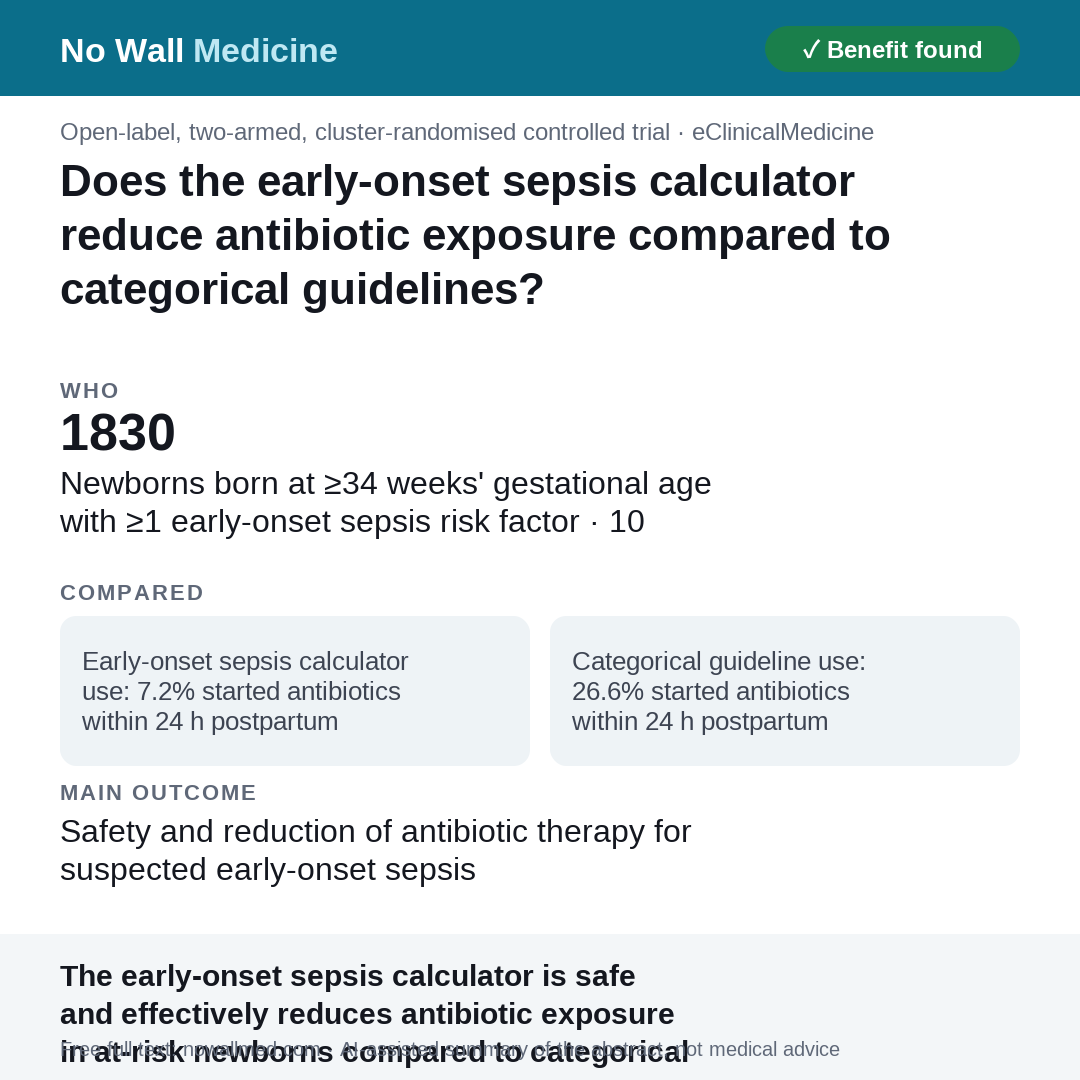
Safety and effectiveness of the early-onset sepsis calculator to reduce antibiotic exposure in at-risk newborns: a cluster-randomised controlled trial
Open-label, two-armed, cluster-randomised controlled trialBenefit found
Does the early-onset sepsis calculator reduce antibiotic exposure compared to categorical guidelines?
Who
1830
Newborns born at ≥34 weeks' gestational age with ≥1 early-onset sepsis risk factor · 10 hospitals
Compared
Early-onset sepsis calculator use: 7.2% started antibiotics within 24 h postpartum
Categorical guideline use: 26.6% started antibiotics within 24 h postpartum
Main outcome
Safety and reduction of antibiotic therapy for suspected early-onset sepsis
Result: relative risk 0.48 (95% CI 0.36-0.63)
Bottom line: The early-onset sepsis calculator is safe and effectively reduces antibiotic exposure in at-risk newborns compared to categorical guidelines.
Funded by: SPIN, General Paediatrics Research Network of the Dutch Association for Paediatrics
eClinicalMedicine · 2025-08-12Download image
Testing the effect of a dynamic descriptive social norm message on meat-free food selection in worksite cafeterias: a randomized controlled trial
Randomized controlled trialNo clear difference
Does a dynamic descriptive social norm message increase meat-free food selection in worksite cafeterias?
Who
25
Worksite cafeterias · Worksite cafeterias
Compared
Intervention
Control
Main outcome
Change in weekly percentage of meat-free meal sales
Result: -2.22 percentage point change, 95% CIs [-7.33, 2.90]
Bottom line: Dynamic descriptive social norm messages did not increase meat-free meal sales in worksite cafeterias.
BMC Med · 2025-08-12Download image

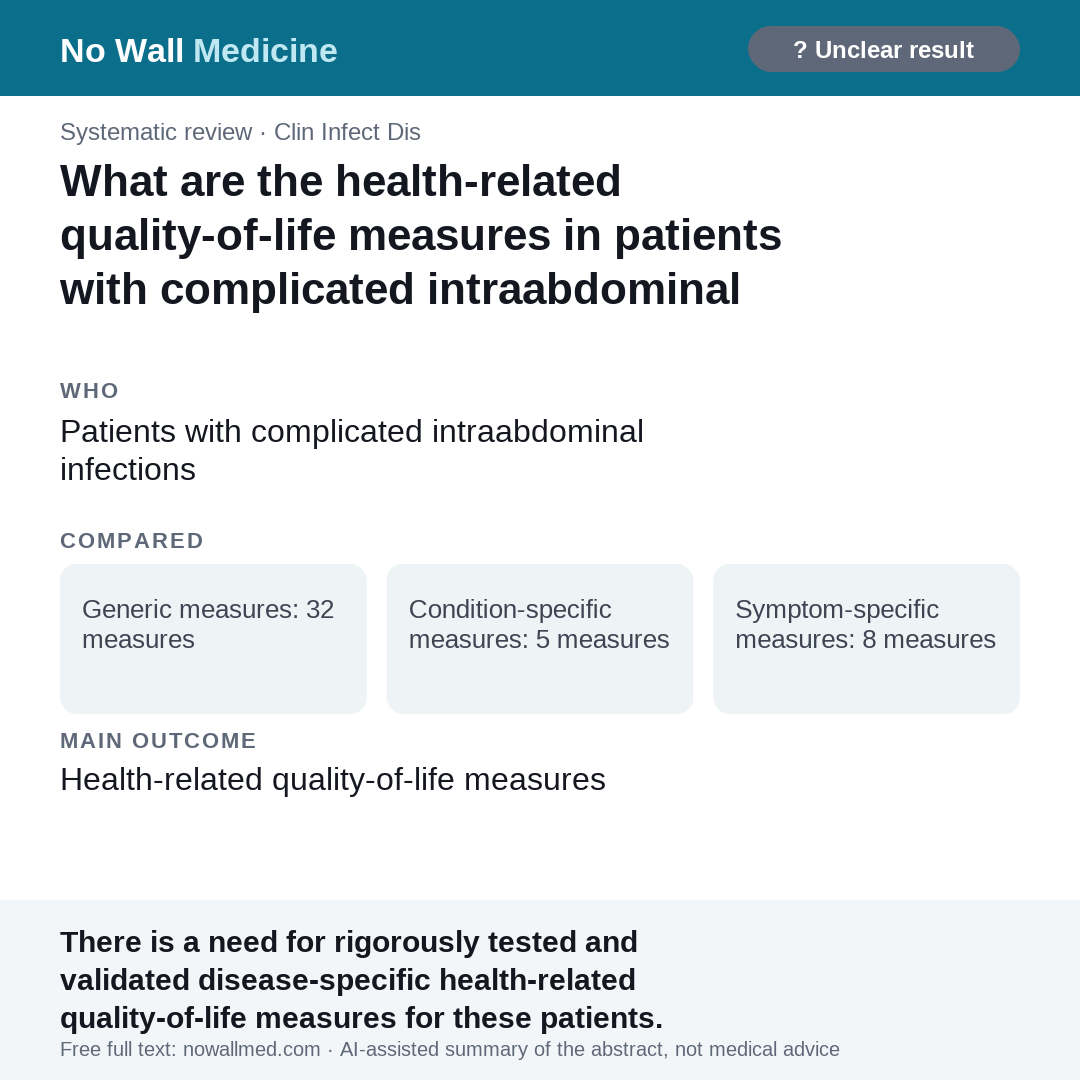
A Systematic Review of Health-Related Quality-of-Life Measurement in Patients With Complicated Intraabdominal Infections
Systematic reviewUnclear result
What are the health-related quality-of-life measures in patients with complicated intraabdominal infections?
Who
Patients with complicated intraabdominal infections
Compared
Generic measures: 32 measures
Condition-specific measures: 5 measures
Symptom-specific measures: 8 measures
Main outcome
Health-related quality-of-life measures
Bottom line: There is a need for rigorously tested and validated disease-specific health-related quality-of-life measures for these patients.
Clin Infect Dis · 2025-08-12Download image
A Systematic Review of Health-Related Quality-of-Life Measurement in Patients With Acute Bacterial Skin and Skin Structure Infections
Systematic reviewUnclear result
How has health-related quality of life been measured in patients with acute bacterial skin infections?
Who
Patients with acute bacterial skin and skin structure infections
Compared
26Generic measures
14Condition-specific measures
2Author-developed questionnaires
Main outcome
Health-related quality of life measurement methods
Bottom line: No repurposed or novel tool was identified that best captures health-related quality of life in these patients.
Clin Infect Dis · 2025-08-12Download image

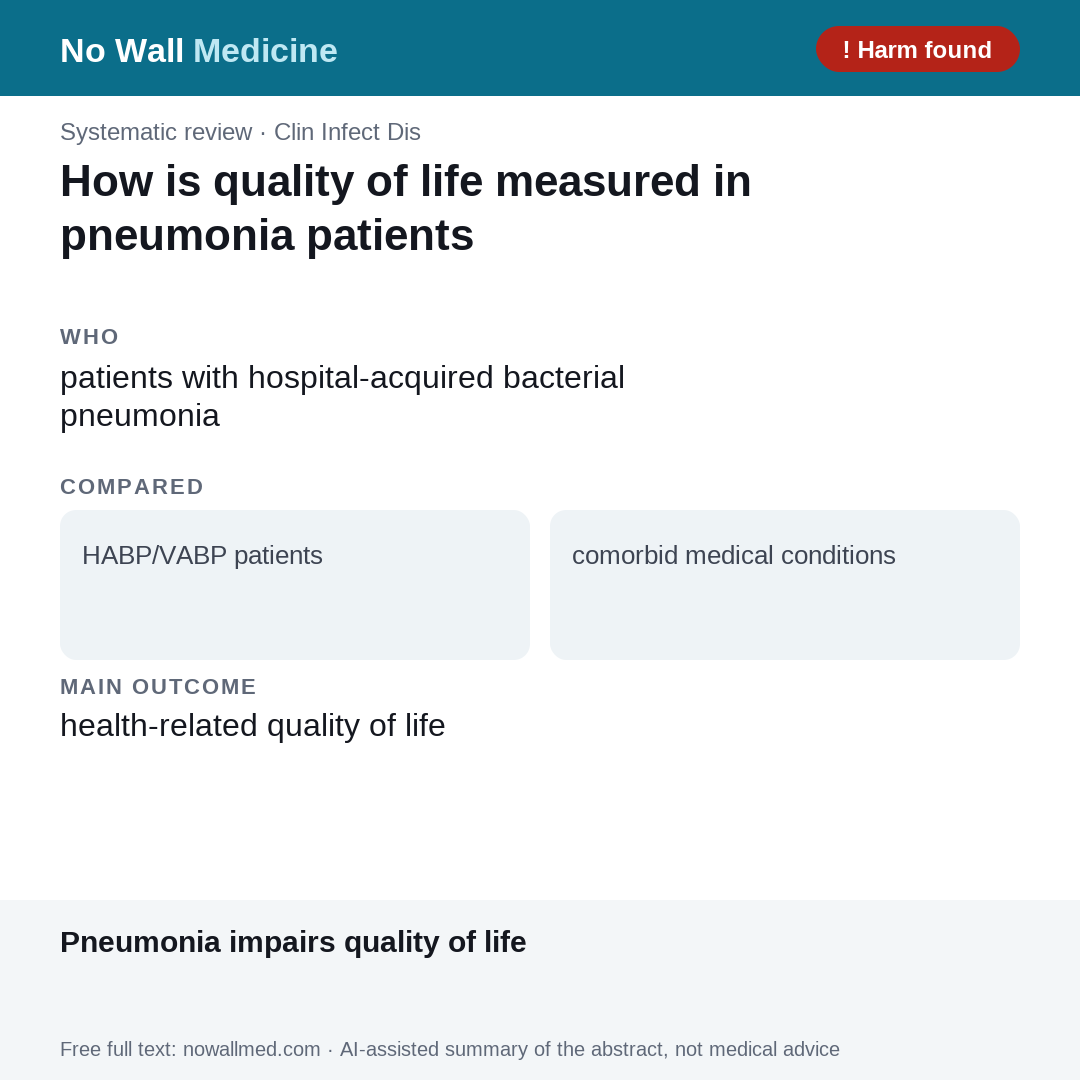
A Systematic Review of Health-Related Quality-of-Life Measurement in Patients With Hospital-Acquired/Ventilator-Associated Bacterial Pneumonia
Systematic reviewHarm found
How is quality of life measured in pneumonia patients
Who
patients with hospital-acquired bacterial pneumonia
Compared
HABP/VABP patients
comorbid medical conditions
Main outcome
health-related quality of life
Bottom line: Pneumonia impairs quality of life
Limitation: limited measurement of quality of life
Clin Infect Dis · 2025-08-12Download image
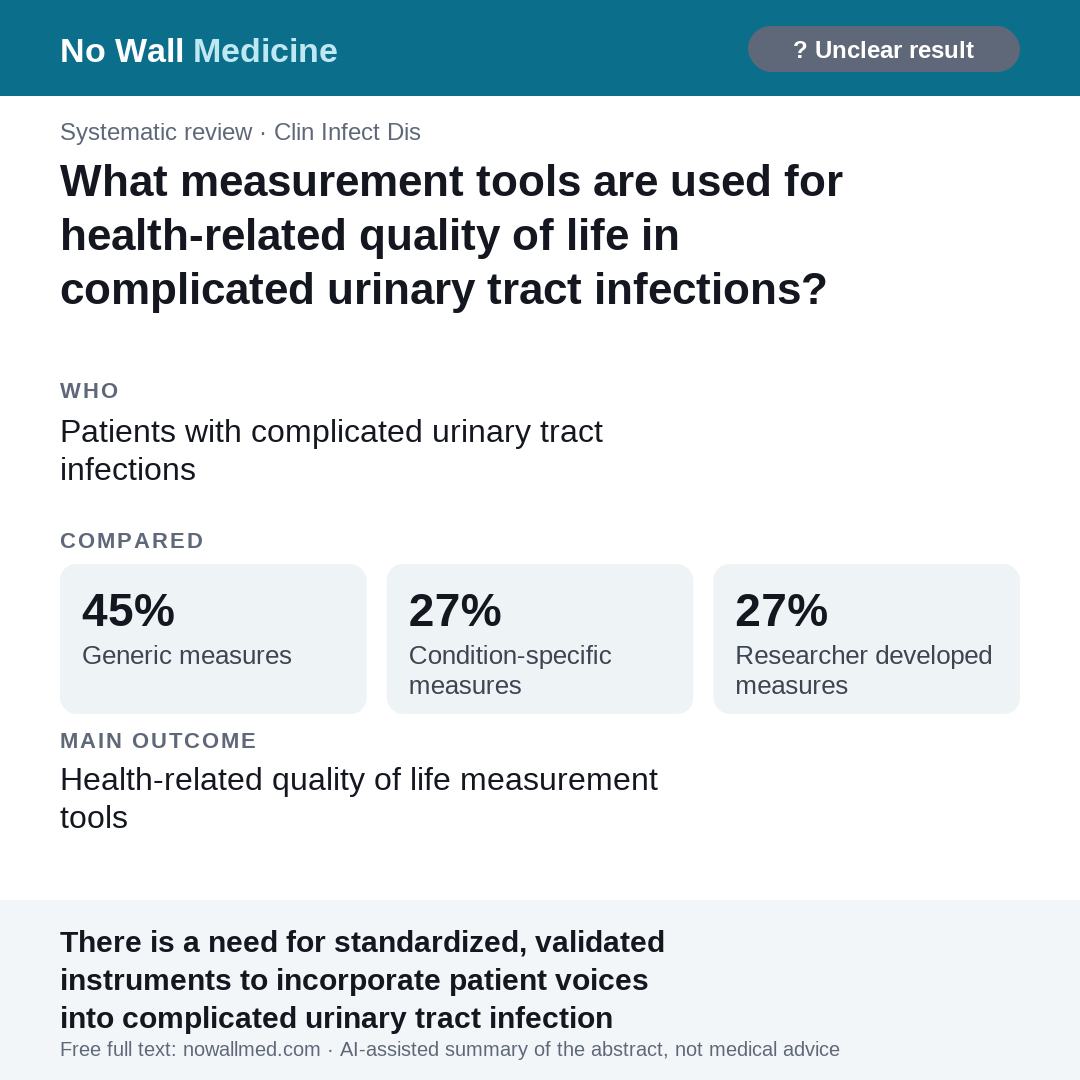
A Systematic Review of Health-Related Quality-of-Life Measurement in Patients With Complicated Urinary Tract Infections
Systematic reviewUnclear result
What measurement tools are used for health-related quality of life in complicated urinary tract infections?
Who
Patients with complicated urinary tract infections
Compared
45%Generic measures
27%Condition-specific measures
27%Researcher developed measures
Main outcome
Health-related quality of life measurement tools
Bottom line: There is a need for standardized, validated instruments to incorporate patient voices into complicated urinary tract infection trials.
Clin Infect Dis · 2025-08-12Download image
The Association Between Patient-Ventilator Asynchrony and Clinical Outcomes in Mechanically Ventilated Patients: A Systematic Review
Systematic review and meta-analysisHarm found
Is patient-ventilator asynchrony associated with clinical outcomes in mechanically ventilated patients?
Who
2672
Mechanically ventilated patients
Compared
Patient-ventilator asynchrony
No asynchrony
Main outcome
mechanical ventilation duration, ICU length of stay, and mortality
Result: mean difference 3.29 d (95% CI 0.13-6.44 d) for ventilation duration
Bottom line: Patient-ventilator asynchrony is associated with longer mechanical ventilation and longer intensive care unit stay.
Crit Care Med · 2025-08-12Download image

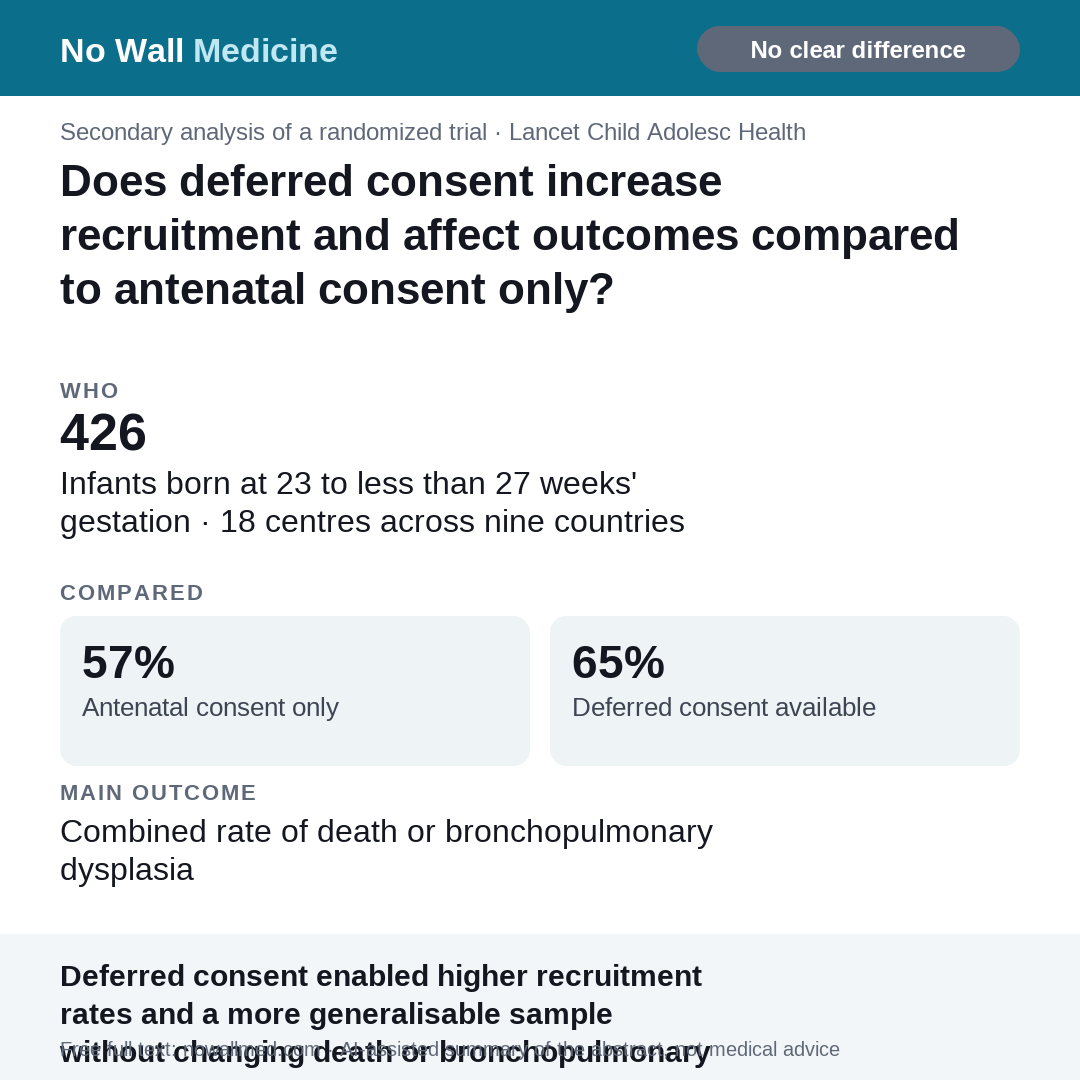
Alternative consent processes in a neonatal resuscitation trial (SAIL): secondary analysis of an open-label, international, multicentre, randomised trial
Secondary analysis of a randomized trialNo clear difference
Does deferred consent increase recruitment and affect outcomes compared to antenatal consent only?
Who
426
Infants born at 23 to less than 27 weeks' gestation · 18 centres across nine countries
Compared
57%Antenatal consent only (113/197)
65%Deferred consent available (149/229)
Main outcome
Combined rate of death or bronchopulmonary dysplasia
Result: adjusted relative risk 1.18 (95% CI 0.98 to 1.42)
Bottom line: Deferred consent enabled higher recruitment rates and a more generalisable sample without changing death or bronchopulmonary dysplasia rates.
Funded by: Eunice Kennedy Shriver National Institute of Child Health and Human Development
Lancet Child Adolesc Health · 2025-08-12Download image
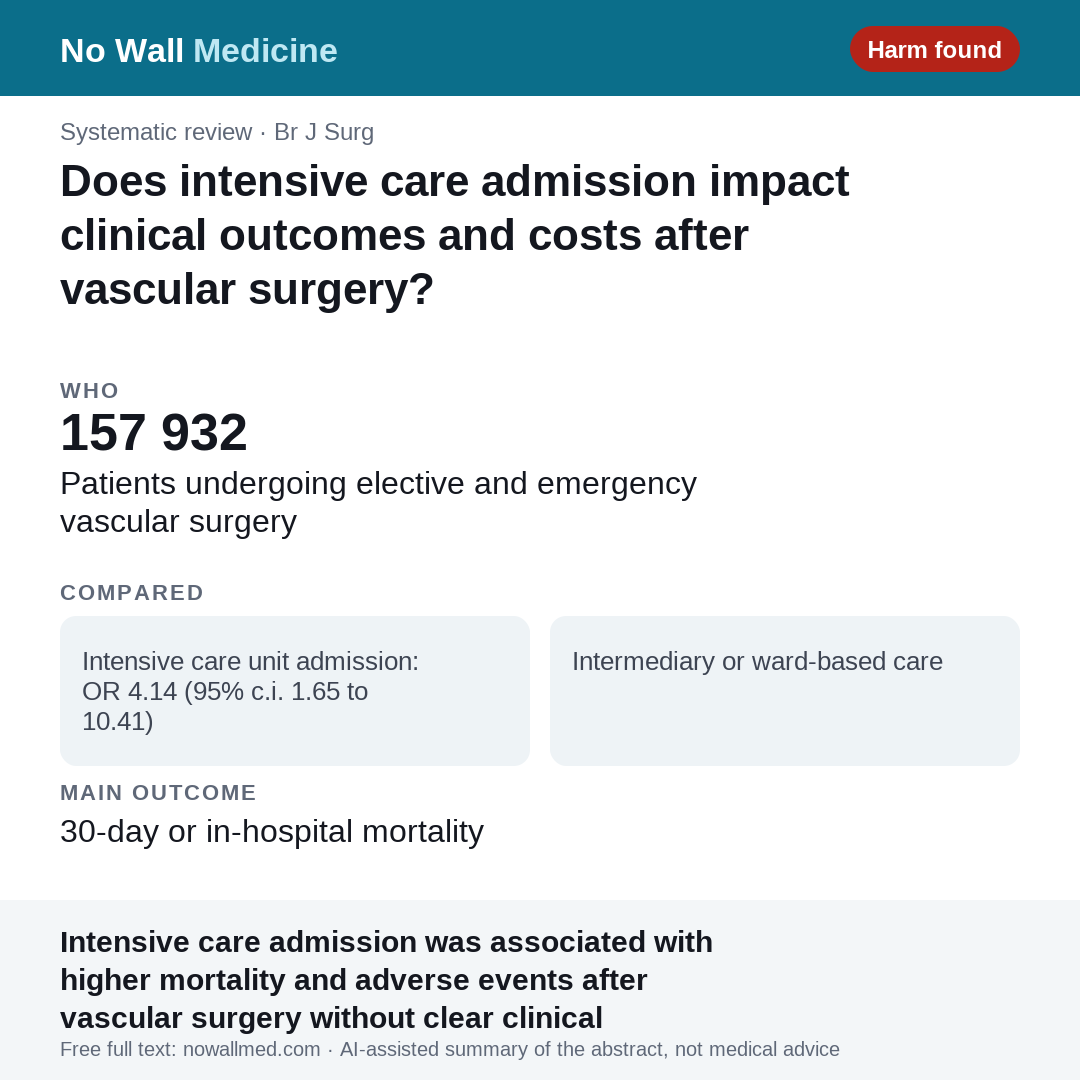
Intensive care after vascular surgery: systematic review
Systematic reviewHarm found
Does intensive care admission impact clinical outcomes and costs after vascular surgery?
Who
157 932
Patients undergoing elective and emergency vascular surgery
Compared
Intensive care unit admission: OR 4.14 (95% c.i. 1.65 to 10.41)
Intermediary or ward-based care
Main outcome
30-day or in-hospital mortality
Result: odds ratio 4.14 (95% c.i. 1.65 to 10.41)
Bottom line: Intensive care admission was associated with higher mortality and adverse events after vascular surgery without clear clinical benefit.
Limitation: Potential residual confounding and insufficient risk stratification.
Br J Surg · 2025-08-12Download image
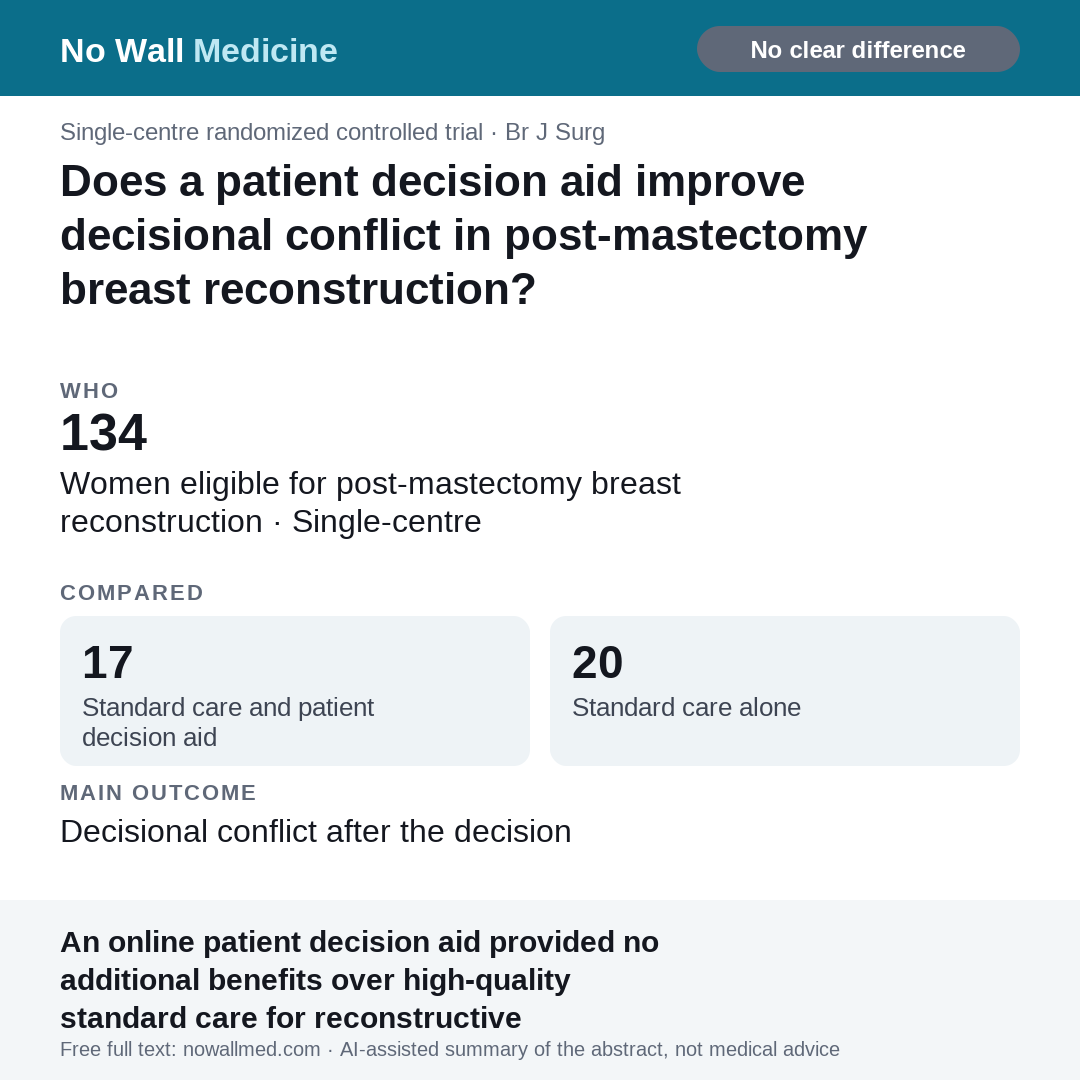
Effectiveness of a patient decision aid for women considering post-mastectomy breast reconstruction: randomized controlled trial
Single-centre randomized controlled trialNo clear difference
Does a patient decision aid improve decisional conflict in post-mastectomy breast reconstruction?
Who
134
Women eligible for post-mastectomy breast reconstruction · Single-centre
Compared
17Standard care and patient decision aid
20Standard care alone
Main outcome
Decisional conflict after the decision
Result: mean difference -2.8 (95% confidence interval -8.4 to 2.8)
Bottom line: An online patient decision aid provided no additional benefits over high-quality standard care for reconstructive decision-making.
Br J Surg · 2025-08-12Download image
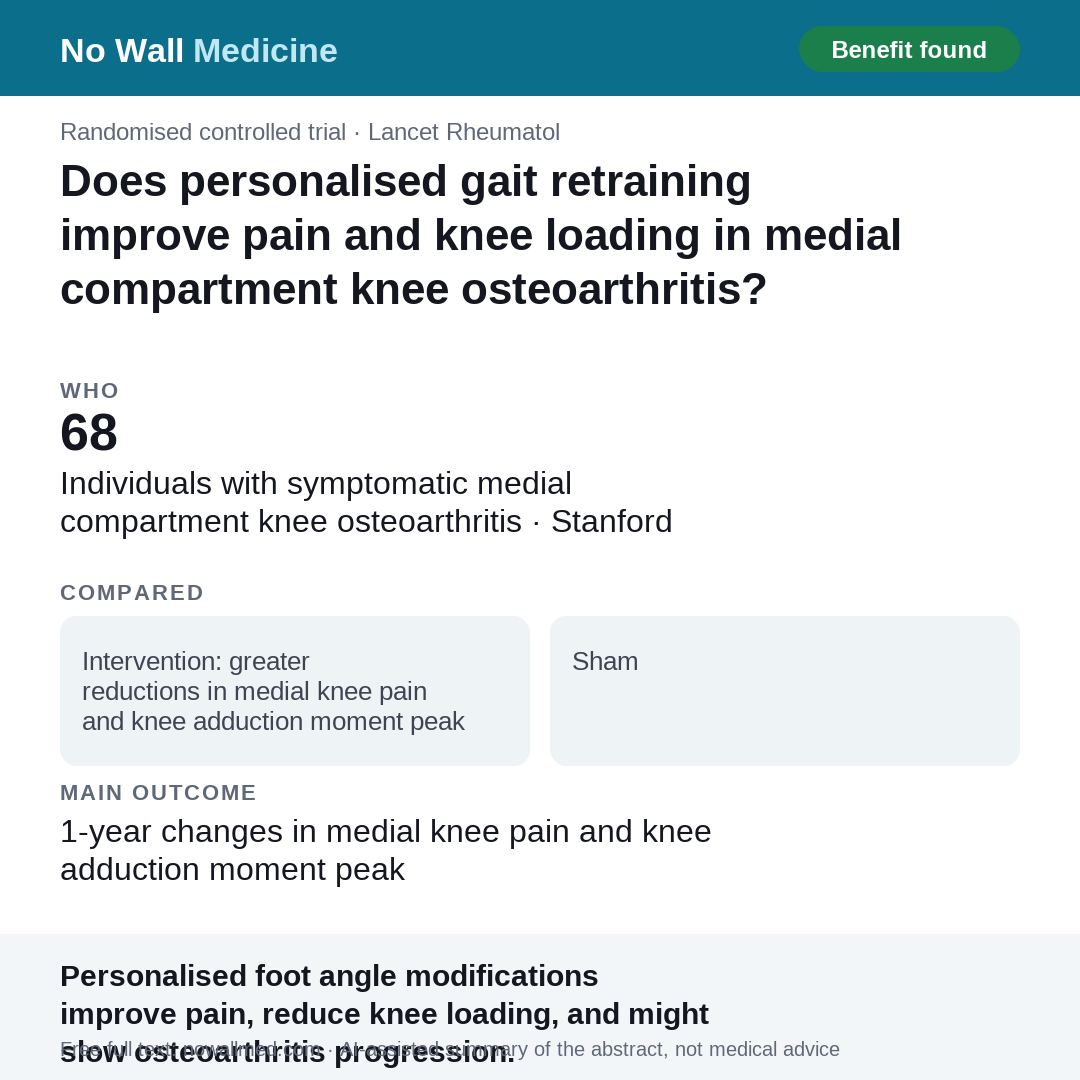
Personalised gait retraining for medial compartment knee osteoarthritis: a randomised controlled trial
Randomised controlled trialBenefit found
Does personalised gait retraining improve pain and knee loading in medial compartment knee osteoarthritis?
Who
68
Individuals with symptomatic medial compartment knee osteoarthritis · Stanford University, CA, USA
Compared
Intervention: greater reductions in medial knee pain and knee adduction moment peak
Sham
Main outcome
1-year changes in medial knee pain and knee adduction moment peak
Result: between-group difference -1·2, 95% CI -1·9 to -0·5 for pain
Bottom line: Personalised foot angle modifications improve pain, reduce knee loading, and might slow osteoarthritis progression.
Limitation: Staff performing the gait analysis visits were not masked to group allocation.
Funded by: US Department of Veterans Affairs
Lancet Rheumatol · 2025-08-12Download image
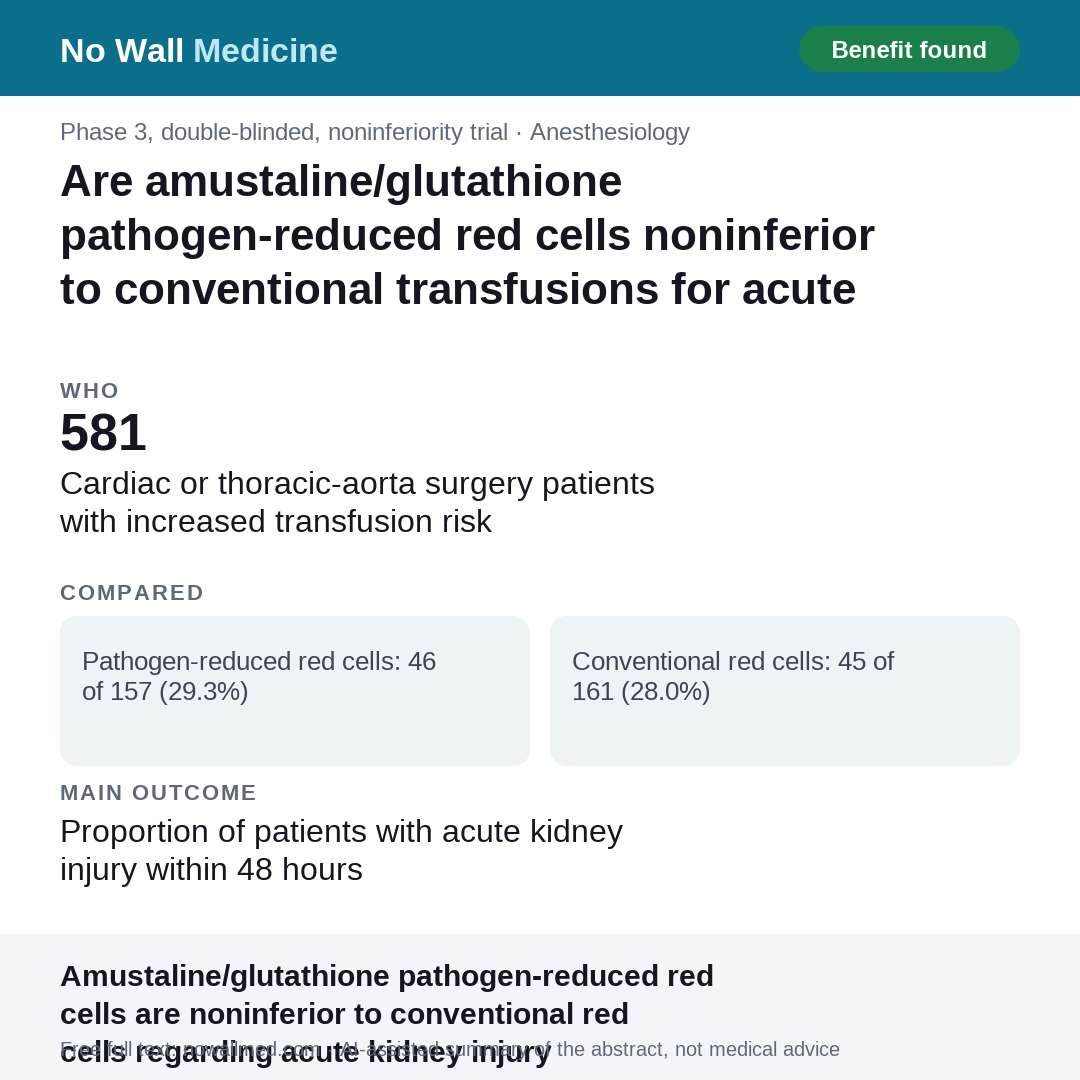
Transfusion of Amustaline/Glutathione Pathogen-reduced Red Blood Cells in Cardiac Surgery: A Randomized Phase 3 Clinical Trial
Phase 3, double-blinded, noninferiority trialBenefit found
Are amustaline/glutathione pathogen-reduced red cells noninferior to conventional transfusions for acute surgical blood loss?
Who
581
Cardiac or thoracic-aorta surgery patients with increased transfusion risk
Compared
Pathogen-reduced red cells: 46 of 157 (29.3%)
Conventional red cells: 45 of 161 (28.0%)
Main outcome
Proportion of patients with acute kidney injury within 48 hours
Result: treatment difference, 0.7%; 95% CI, -8.9 to 10.4%
Bottom line: Amustaline/glutathione pathogen-reduced red cells are noninferior to conventional red cells regarding acute kidney injury incidence.
Anesthesiology · 2025-08-12Download image
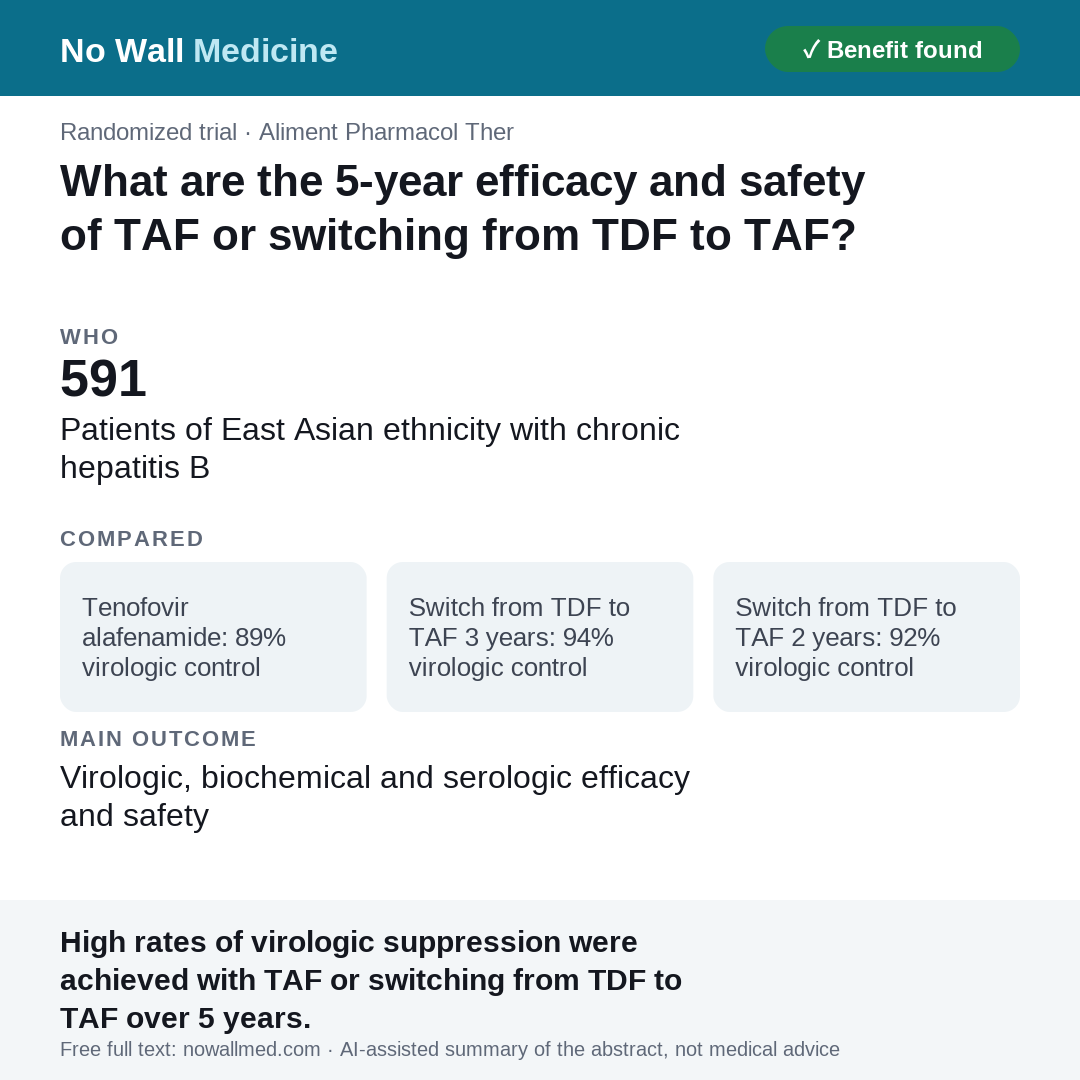
Efficacy and Safety of Tenofovir Alafenamide (TAF) and Tenofovir Disoproxil Fumarate (TDF) Followed by TAF in Chronic Hepatitis B Patients of East Asian Ethnicity Following 5 Years of Treatment
Randomized trialBenefit found
What are the 5-year efficacy and safety of TAF or switching from TDF to TAF?
Who
591
Patients of East Asian ethnicity with chronic hepatitis B
Compared
Tenofovir alafenamide: 89% virologic control
Switch from TDF to TAF 3 years: 94% virologic control
Switch from TDF to TAF 2 years: 92% virologic control
Main outcome
Virologic, biochemical and serologic efficacy and safety
Bottom line: High rates of virologic suppression were achieved with TAF or switching from TDF to TAF over 5 years.
Aliment Pharmacol Ther · 2025-08-12Download image
Systematic Review: The Relationship Between the Faecal Microbiome and Colorectal Neoplasia in Shotgun Metagenomic Studies
Systematic review of shotgun metagenomic studiesMixed results
What is the relationship between the faecal microbiome and colorectal neoplasia?
Who
Patients with colorectal neoplasia and control populations · Asia, Europe, and North America
Compared
Colorectal cancer patients: significant enrichment of Fusobacterium nucleatum and Parvimonas micra
Controls
Main outcome
Association between gut microbiome organisms and colorectal neoplasia
Bottom line: Fusobacterium nucleatum and Parvimonas micra are enriched in colorectal cancer, but findings require caution due to heterogeneity.
Limitation: Poor quality appraisal regarding selection of cases and controls and varied control definitions.
Aliment Pharmacol Ther · 2025-08-12Download image

Cefixime versus benzathine penicillin G for the treatment of early syphilis-a randomized, controlled open label trial
Randomized, controlled, open label trialNo clear difference
Is cefixime effective and safe for treating early syphilis compared to benzathine penicillin G?
Who
61
Patients with confirmed early syphilis
Compared
cefixime 400 mg twice a day: 73.3% (22/30) at 3 months
benzathine penicillin G 2.4 MIU: 87.1% (27/31) at 3 months
Main outcome
Four-fold or more decrease in Venereal Disease Research Laboratory titre
Bottom line: Oral cefixime is an effective and safe therapy for early syphilis compared to benzathine penicillin G.
Limitation: Additional efficacy data from larger treatment studies are imperative.
J Antimicrob Chemother · 2025-08-12Download image